News & Articles on Burma
Saturday 25 June, 2011
--------------------------------
Chinese-Burmese military officers meet in Mangshi on KIA
US will support UN-backed Myanmar rights probe
Kevin Rudd to visit Burma
Myanmar-Thailand bilateral trade doubled in five years
Rudd to be pressed on Burma inquiry
U.S. concerned over violence, human rights abuses in Burma
---------------------------------------
Chinese-Burmese military officers meet in Mangshi on KIA
Saturday, 25 June 2011 21:05 KNG
Two high ranking military officers from China and Burma met secretly in Mangshi on June 23 night in China’s southwest Yunnan province, bordering Burma for talks on capturing Laiza, the headquarters of the Kachin Independence Army (KIA), said Mangshi sources.
At the meeting the Burmese Army officer asked China to permit crossing of the border by Burmese troops and its allies to attack and capture Laiza, said sources.
The meeting was joined by regional Chinese military officials and Burmese military officials from Naypyidaw and Lashio-based Northeastern Regional Command including officers from Konghka militia group, formerly known as Kachin Defense Army (KDA), said sources close to the meeting.
Laiza, the Capital of KIO/KIA near China border in eastern Kachin State, Northern Burma.
Permission was sought to allow Burmese troops to cross the Chinese border marching from Ruili (Shweli) River from the Burmese side to the Chinese side to attack the KIA’s Brigade 3 based near the China border, added sources.
China was also informed in the meeting by the Burmese military officer that the joint forces of Burmese troops and Konghka militia group (KDA) led by Mahtu Naw, which split from KIA in 1990, will launch the military operation to capture KIA’s Laiza headquarters and 3rd brigade, said sources among Chinese border authorities.
The Burmese military officer also explained to the Chinese the need to use some Kachin troops of the former KDA in the military mission for two reasons--- avoid racism and to look for an opportunity for negotiations. Only Burmese troops in the military mission to capture KIA’s Laiza headquarters may seem like a form of racism and make negotiations difficult.
China declined to comment on the war with KIA, but granted permission to cross the border to Burmese troops and the Konghka militia (KDA) during military operations, said sources among Chinese authorities.
Sources close to Konghka militia group said the group has over 800 military personnel and they are going to march to the frontline today to capture KIA’s Laiza headquarters and the 3rd brigade.
The renewed civil war started in Kachin State and Northern Shan State when the military-dominated Burmese government launched an offensive against the KIA at Sang Gang in N’mawk (Momauk) Township in Manmaw district in Kachin State on June 9.
Over 20,000 Kachin refugees from Burmese government controlled areas have fled to KIA’s territories near China border but China has refused to accept them into its territories, according to KIA officials.
The main reason for the refugees fleeing to KIA areas is fear of torture, interrogation and use as porters by government troops, said refugees. http://www.kachinnews.com/news/1988-chinese-burmese-military-officers-meet-in-mangshi-on-kia.html
---------------------------------------
STRAITS TIMES: Jun 25, 2011
US will support UN-backed Myanmar rights probe
WASHINGTON - THE United States said on Saturday it is prepared to support a UN-backed human rights probe in Myanmar, after opposition icon Aung San Suu Kyi urged such an investigation.
The United States 'is committed to seeking accountability for the human rights violations that have occurred in Burma by working to establish an international commission of inquiry,' said the State Department, using the older term for the South-east Asian country.
'We are consulting closely with our friends, allies, and other partners at the United Nations,' US officials said in the statement.
Ms Suu Kyi, who was released in November after spending most of the past two decades under house arrest, spoke by video on Wednesday in a first-ever message to the US Congress, a stronghold of support for the Nobel Peace Prize winner.
She asked lawmakers to do 'whatever you can' to support the work of the UN special rapporteur on human rights in Myanmar and assured that a so-called commission of inquiry would not be a tribunal.
The United States has publicly supported a UN-led probe - a longstanding demand of activists. But it has done little to make it a reality, worrying its efforts would be futile so long as Asian countries - particularly China - are opposed. -- AFP http://www.straitstimes.com/BreakingNews/SEAsia/Story/STIStory_683976.html
--------------------------------------
Kevin Rudd to visit Burma
By THE IRRAWADDY Saturday, June 25, 2011
Australian foreign minister Kevin Rudd will visit Burma next week and he will meet Nobel Peace Laureate Aung San Suu Kyi and government leaders.
During the visit, Mr Rudd will have discussions with members of Burma's new government and opposition figures including Suu Kyi.
“I will use these meetings to reiterate Australia's long-standing calls for genuine progress towards national reconciliation and democratic reform,” Mr Rudd said in a media release. “This visit comes at a critical juncture in Burma's history and will allow the Australian government to assess how it can best support reform and economic development.”
In 2002, Australian Foreign Minister Alexander Downer visited Burma. Mr Rudd’s visit will be the first high-ranking official visit since 2002.
Opposition members say that Suu Kyi is likely to press Canberra to take a more active role in the setting up of a United Nations commission of inquiry into human rights in Burma. Australia supported calls by the UN's Special Rapporteur on the Human Rights situation in Burma, Tomas Ojea Quintana, for an independent commission into rights abuses in Burma.
This week, Suu Kyi urged US lawmakers to support the establishment of a Commission of Inquiry (CoI) by the United Nations into alleged human rights violations in Burma. http://www.irrawaddy.org/article.php?art_id=21568
------------------------------------
Myanmar-Thailand bilateral trade doubled in five years
Posted: 2010/09/07
YANGON, Sept. 7 (mathaba) -- In 2005-06, the bilateral trade was 1.593 billion dollars ,the Union of Myanmar Federation of Chambers of Commerce and Industry ( UMFCCI) was quoted as saying.
Myanmar and Thai entrepreneurs had met for promoting bilateral trade cooperation this month.
Besides the normal trade, border trade has also been improving comparing the two fiscal years' Myanmar-Thai bilateral trade, according to vice chairman of UMFCCI U Tun Aung who added that the border trade at Tachilek, Myawady, Kawthaung and Myeik hit 199 million dollars in 2005-06 and rose to 295 million dollars in 2009- 10.
Thailand stood first in Myanmar's normal foreign trade partner line-up, followed by Singapore, China, India, China's Hong Kong region, Malaysia, Japan, South Korea and Indonesia.
But it stood the second in border trade with neighboring countries.
Thailand exports to Myanmar textile, shoes, marine products, rice, rubber, jewelry, motor cars, computer and electronic accessories and vice versa, while importing from Myanmar forestry products, marine products, agricultural produces and natural gas.
Meanwhile, Thailand is leading in the Myanmar's foreign investment which is followed by the United Kingdom and Singapore.
Thailand injected 7.41 billion dollars into Myanmar during the 21 years' period from 1988 to 2009, of which 81.7 percent went to electric power, while 8.33 percent and 3.1 percent in manufacturing and hotel and tourism sectors respectively.
(Mathaba and Agencies) # http://www.mathaba.net/news/?x=624607?rss
-----------------------------
Rudd to be pressed on Burma inquiry
June 25, 2011 - 2:00PM
Save up to 75% on Asia hotels Lowest rate and good availability
Burma's opposition leader, Aung San Suu Kyi, is likely to press Australia to take a more active role in the setting up of a United Nations commission of inquiry into human rights in Burma, rights groups say.
The call by Ms Suu Kyi is set to take place during talks with Australia's Foreign Minister Kevin Rudd during an official visit to Burma next week.
Mr Rudd, who yesterday announced plans to go to Burma, said the visit, the first by an Australian foreign minister since 2002, came at a "critical juncture in Burma's history".
Read more: http://www.brisbanetimes.com.au/national/rudd-to-be-pressed-on-burma-inquiry-20110625-1gkeo.html#ixzz1QIgAO7D8
----------------------------
U.S. concerned over violence, human rights abuses in Burma
Politics 6/25/2011 9:14:00 AM
WASHINGTON, June 25 (KUNA) -- The U.S. voiced here late Friday its concern over the ongoing violence in Burma, in addition to reports of human rights abuses in that country.
State Department Spokesman Victoria Nuland said in a statement "the United States is concerned by on-going violence in Burma's northern Kachin State and other regions of the country and calls for a halt to hostilities." She indicated that the Burmese Army and the Kachin Independence Army began fighting on June 9 and have continued over the past three weeks. "We are particularly concerned by the reports of human rights abuses in the area, including reports of casualties, rape, and displacement of thousands of local residents. There have also been reports of clashes in Karen and Shan state," she stressed.
Nuland noted "we urge all appropriate authorities to ensure, in line with international standards, adequate support, safety, and protection for those persons fleeing conflict along Burma's borders." She affirmed "this recent violence underscores the need for an inclusive dialogue between the Government of Burma and opposition and ethnic minority groups to begin a process of genuine national reconciliation." (end) si.nfm KUNA 250914 Jun 11NNNN http://www.kuna.net.kw/NewsAgenciesPublicSite/ArticleDetails.aspx?id=2176172&Language=en
Sunday, June 26, 2011
News & Articles on Burma-Saturday 25 June, 2011


Saturday, June 25, 2011
News & Articles on Burma-Friday 24 June, 2011
News & Articles on Burma
Friday 24 June, 2011
--------------------------------
Burma: Blasts strike three towns and cities
ASEAN-Russia Senior Officials Meeting held in Myanmar capital
Moscow's Nuclear Envoy Visits Burma
Japan envoy to meet Suu Kyi, Myanmar government
Burma’s ‘lady’ is free, but her country still in chains
House Speaker Warns Against 'Arab Spring'
Explosions rock three Myanmar cities
Bomb blasts rattle two Burma cities
Explosions rock Myanmar's capital
Blasts rock three Burmese cities
Bomb blasts rattle three Myanmar cities
Rising demand of heroin propelling more opium acreage
Burma’s poppy fields increase as permit given in elections period
Burma’s war against ethnic Kachin produces more refugees
----------------------------------------------
BBC NEWS
Burma: Blasts strike three towns and cities
People take picture of a damaged car after a blast in Mandalay The first blast occurred in Mandalay, destroying a car and shattering windows
Several near-simultaneous blasts have hit three towns and cities in Burma.
The explosions, thought to have been caused by bombs, struck the capital Naypyitaw, Mandalay and the garrison town of Pyin Oo Lwin.
At least three people are reported to have been hurt but there are no reports of deaths. It was not immediately clear who was behind the attacks.
Burma's military-backed government has blamed similar attacks on ethnic armed groups fighting for more autonomy.
The first blast destroyed a car and shattered windows near the main market in Burma's second-biggest city, Mandalay late in the morning, according to reports citing government officials.
Local residents told the BBC that three people were wounded.
Another explosion followed soon after in a disused building in the capital, Naypyitaw, close to the main market. There were no reports of casualties.
A third blast hit Pyin Oo Lwin in central Burma, where there is a military training academy.
The blasts come amid an armed conflict near the border with China between government troops and the Kachin Independence Army, Burma's second largest ethnic armed group.
The government blamed a bomb attack in Naypyitaw earlier this month on ethnic Karen rebels. http://www.bbc.co.uk/news/world-asia-pacific-13901513
--------------------------------------------
ASEAN-Russia Senior Officials Meeting held in Myanmar capital
15:17, June 24, 2011
The 8th ASEAN-Russia Senior Officials Meeting (SOM) has been held in Myanmar's capital of Nay Pyi Taw, attended by representatives and senior officials from member states of the Association of Southeast Asian Nations (ASEAN) and the Russian Federation, official media reported Friday.
Co-chaired by visiting Deputy Foreign Minister of the Russian Federation Alexei N. Borodavkin and Director-General of ASEAN Affairs Department of the Myanmar Foreign Ministry U Tint Swai, the meeting on Thursday discussed development of ASEAN-Russia cooperation and exchanged views on regional and international issue, said the New Light of Myanmar.
The meeting reviewed ASEAN-Russia dialogue relations and discussed issues concerning future direction including implementation of ASEAN-Russia energy cooperation work plan, cooperation in countering terrorism, working on emergency management, implementation of comprehensive program of action plan 2005-2015 to promote cooperation between ASEAN and Russia Federation, road map of trade and economic cooperation and interaction in field of science and technology, the report added.
The meeting agreed to hold the next ASEAN-Russia SOM in Russia in 2012.
Myanmar has been serving as the country coordinator of ASEAN- Russia dialogue relations for three years since 2009.
Myanmar hosted the 8th ASEAN-Russia Joint Coordination Committee Meeting, the 7th ASEAN-Russia Joint Planning and Management Committee Meeting, the 2nd ASEAN-Russia Working Group Meeting for 2nd ASEAN-Russia Summit in November 2009.
Meanwhile, foreign ministries of Myanmar and Russia held consultations on Wednesday on promotion of bilateral relations and enhancement of cooperation in regional and international organizations with the two delegations represented by Deputy Union Foreign Minister U Maung Myint and his Russian counterpart Borodavkin respectively.
The two deputy foreign ministers exchanged views on current international issues.
Borodavkin arrived in Nay Pyi Taw earlier on Wednesday for the 5th regular consultations between the two foreign ministries.
On the same day, Myanmar Vice President U Tin Aung Myint Oo and speaker of the House of Representatives U Shwe Mann met with Borodavkin.
Source:Xinhua http://english.peopledaily.com.cn/90001/90777/90851/7419986.html
-----------------------------------------
Moscow's Nuclear Envoy Visits Burma
By KO HTWE Friday, June 24, 2011
Moscow's nuclear envoy to North Korea Alexey Borodavkin (right) talks with a South Korean nuclear delegation in Seoul in January.
Russia's Deputy Minister of Foreign Affairs Alexey N. Borodavkin, who is also the country's nuclear envoy to North Korea, led a delegation to Naypyidaw on Wednesday to meet Burmese counterparts.
According to Burma's state-run The New Light of Myanmar, Borodavkin met with Burma's Vice-President Tin Aung Myint Oo, Minister for Foreign Affairs Wunna Maung Lwin, house speaker Shwe Mann, and Minister for Science and Technology Aye Myint.
Observers said the talks are expected to focus on weapons deals between the two countries. The foreign mission from Moscow follows hot on the heels of an upgrade in the strategic partnership between China and Burma.
Aung Naing Oo, a political analyst based in Thailand, said relations are close between Burma and Russia. While Burma sends students to Russia to study, Russia sells weapons to Burma.
If the Burmese authorities' relationship with China and India breaks down, they can always turn to Russia, he said.
Like China, Russia remains a staunch ally of Burma at the United Nations, frequently vetoing Western attempts at the Security Council to impose resolutions on the Burmese government. It also has a track record of selling weapons, including MiG-29 fighter jets, and conducting officer training regarding nuclear and missile technology.
According to previous reports, Russia had plans to build a “nuclear studies” center in Burma, which would include a 10-megawatt, light water-moderated nuclear reactor, but later the plan was canceled.
Beijing and Naypyidaw have enjoyed a marked upgrade in their strategic partnership since Burma's new president, Thein Sein, visited China in May. Other nations, including the US, India, the EU and now Russia have been quick to mobilize delegations to the southeast Asian country, which is recognized as rich in natural resources yet boasts one of the poorest economies in the world.
Thakhin Chan Tun, a former diplomat who previously served as Burma’s ambassador to North Korea, and the People’s Republic of China, said that the recent diplomatic missions from Russia and India helps to balanced the outside influences on Burma.
“Burma has to rely on Russia, China and India, because the European Union is leading a boycott,” he said. “India doesn't want Burma to side with China. They want to do what they can in terms of trade and commerce.”
In recent years Russian companies have been involved in Burma's mining sector.
A Russian-trained Burmese army defector and missiles expert, Maj Sai Thein Win, said that Russian companies were exploring for thorium in northern Burma. Thorium is a naturally occurring radioactive chemical element which can be used for nuclear power plants, and is highly sought for its safety benefits.
“Russia especially wants thorium from Burma,” he said. “However, China has been smuggling it out in the metal-rich sand and silt from the U Ru Hka stream in Kachin State since 2006.
He said the Burmese government only recently became aware that Chinese companies were secretly smuggling the riverine sand and extracting thorium from it.
Meanwhile, Russian company Dalmorneftegeophysica, or DMNG, which provides an extensive range of geophysical services for the petroleum industry worldwide, including surveys planning, data acquisition, processing, interpretation and hydrocarbon resource evaluation, opened an office in Rangoon on June 18, according to The Myanmar Times.
DMNG has 10 years experience working in Burma on oil and gas projects, and its exploration contract with Thai state company PTTEP expired in January, said the Rangoon journal. http://www.irrawaddy.org/article.php?art_id=21567
----------------------------------------------
STRAITS TIMES: Jun 24, 2011
Japan envoy to meet Suu Kyi, Myanmar government
Myanmar democracy icon Aung San Suu Kyi talks to reporters following a meeting with US Senator John McCain (not pictured), at her house in Yangon on June 2, 2011. -- PHOTO: AFP
TOKYO - JAPAN will send a senior diplomat to Myanmar next week to meet pro-democracy leader Aung San Suu Kyi and hold talks with the government, the foreign ministry in Tokyo said on Friday.
Parliamentary Vice Foreign Minister Makiko Kikuta said she will discuss financial aid with Myanmar officials, although Tokyo believes more has to be done to fully democratise the country after recent polls.
She will be Japan's first senior official to meet Nobel Peace laureate Ms Suu Kyi in nine years. She will also meet Foreign Minister Wunna Maung Lwin for the first senior-level talks since elections last year.
Myanmar's regime said the November 2010 poll was a step toward democracy, and it later handed over to nominally civilian rulers. But many outside observers say that the changes are purely cosmetic.
'I hope my visit will be the first step toward building a new relationship between the Japanese government and the new administration which is moving toward democratisation,' Ms Kikuta said.
Tokyo has suspended economic assistance since 2003, except for humanitarian and emergency aid, due to Ms Suu Kyi's arrest and long-term house arrest, and a crackdown on democracy advocates. -- AFP http://www.straitstimes.com/BreakingNews/Asia/Story/STIStory_683462.html
--------------------------------------
Burma’s ‘lady’ is free, but her country still in chains
Published On Thu Jun 23 2011
By Olivia Ward Foreign Affairs Reporter
She’s directed Britain’s biggest summer festival, won applause from a Canadian conference and delivered a ringing human rights message to the U.S. Congress.
But seven months after her release from house arrest — and two decades of on-and-off detention — Burma’s iconic democracy leader Aung San Suu Kyi spends most of her time in her cramped Rangoon office, and has yet to leave her authoritarian country for fear of permanent exile.
She has answered a flurry of international invitations with virtual, videotaped appearances that give her a global presence and polish her already glowing image as Burma’s face of principled resistance. And a new film on her life and career is attracting plaudits at festivals worldwide.
She has also met with international officials and visitors in Rangoon.
But opinion is sharply divided about the effectiveness of her stance in pushing Burma down the road to democracy. And she herself cast doubt on the progress the isolated country has made since its widely condemned elections last November, in which senior generals left their army posts to run as civilians.
If the government were sincere it would not be holding some 2,000 political prisoners, Suu Kyi told American lawmakers. And she called for a commission of enquiry into Burma’s many human rights abuses, but did not mention the sanctions that are a major bone of contention for policy makers.
“She’s still iconic, but the game has moved on,” says Justin Wintle, London-based author of her biography Perfect Hostage.
“The elections were obviously fixed, particularly with the generals leaving the army and becoming ‘civilians’ (in the new government). But there is a feeling that Suu Kyi’s party made a mistake in not contesting them, and it split the party. She has not played her political hand well.”
Suu Kyi’s National League for Democracy was de-registered when it boycotted the polls, which were skewed in advance against the opposition.
Many Burmese, as well as international observers, are fiercely loyal to Suu Kyi and believe her firm stand on maintaining sanctions against Burma must continue until there are signs of real democracy.
But says Roberto Herrera-Lim of the Eurasia Group in Foreign Policy, the outcome may be deeper ties between Burma and Asian countries who are less interested in its democratic credentials than its gas and mineral reserves.
“No matter what the country’s politics, they want access to its natural resources,” he said.
Last month Suu Kyi said she was “saddened” by India’s “disappointing role” in tightening its ties with the Burmese regime.
Meanwhile, reports have surfaced about worsening human rights abuses against political prisoners, and in Burma’s restive border areas, where minority groups have been fighting for rights and autonomy for half a century. Suu Kyi, who is closely watched by the authorities, said she planned to travel upcountry, a move they are likely to block.
“I admire her greatly, but she has not addressed the question of the civil war,” says Ngun Cung Lian, assistant director of the Center for Constitutional Democracy at Indiana University, and a former Burmese freedom fighter. “There are about half a million people without homes because of it. That should be a priority for a leader.”
Last month Suu Kyi told a group of Danish students that “all this injustice” to minorities must stop, and that it was wrong for displaced people to be living in fear in their own country. “We must make them feel that they enjoy equal rights,” she said.
But Suu Kyi’s biggest tests lie ahead. She must not only strengthen her party, but convince younger activists who went through the brutally suppressed “saffron revolution” that gradual change is the best route to democracy.
And she must grapple with the fact that some Western countries, especially Europeans, believe that her release is reason to thaw relations with the out-of-uniform ruling Burmese generals. Yet if that fails to happen, the backlash from an embittered government may hit her directly, and her period of freedom be all too brief.http://www.thestar.com/news/world/article/1014175--burma-s-lady-is-free-but-her-country-still-in-chains
-----------------------------------------
House Speaker Warns Against 'Arab Spring'
By THE IRRAWADDY Friday, June 24, 2011
The people of Burma should work together to help prevent an “Arab spring� that could damage the interests of the nation, Shwe Mann, the speaker of the Lower House of Burma’s Parliament, said at a meeting on Friday.
“As US Senator John McCain said when he visited Burma, we have to make sure that the kind of unrest that has happened in the Middle East doesn't happen here,� said Shwe Mann, speaking to members of the Rangoon regional Parliament.
At the meeting, he also said that an MP helped to ease tensions in Kachin State, where government troops and the Kachin Independence Army (KIA) have been fighting since the second week of June.
Shwe Mann takes part in an Independence Day dinner in Naypyidaw on Jan. 4, 2011. (Photo: AP)
The MP, Thein Zaw, represents a constituency in Myitkyina, the Kachin State capital. On June 17, he sent a letter to the KIA telling them that Burmese commanders have given the order to stop fighting, and urging KIA leaders to do the same.
However, the KIA has rejected the letter's claims as “insincere,� and says it wants proof that the Burmese army has really ended its military operations against the group.
There were no clashes reported today, although more than 10,000 refugees remain sheltered in China as fears of a resumption of fighting persist.
Copyright © 2008 Irrawaddy Publishing Group | www.irrawaddy.org http://www.irrawaddy.org/article.php?art_id=21566
-------------------------------------
Explosions rock three Myanmar cities
Reports indicate two people wounded after blasts in Mandalay, Naypyidaw and Pyin Oo Lwin.
Last Modified: 24 Jun 2011 10:45
Residents said two people were wounded in a blast which hit a vehicle in Mandalay [Reuters]
Near simultaneous bomb explosions in three Myanmar cities have wounded at least two people, the government and residents say.
The first explosion destroyed a car and shattered windows near the main market in the central city of Mandalay shortly before noon on Friday, a government official said.
There was no confirmation of the number of casualties, but residents said that two people had been wounded in the blast, with a government official saying that one of those injured was a traffic policeman.
The market was closed at the time of the blast.
Another explosion hit an abandoned home in the capital, Naypyidaw, a government official said.
"There was a bomb blast at an old house near the Thabyaykone market in Naypyidaw. There were no casualties," the official, who spoke on condition of anonymity, said.
A third blast hit in the resort town of Pyin Oo Lwin, in the central part of the country, which is also home to a military training academy.
It was not immediately clear what kind of explosives were used in the attacks, nor who had carried them out.
Bombings have become increasingly common in Myanmar, where pro-democracy activists and various ethnic groups have been battling the military-backed government.
The government has blamed ethnic Karen rebels for a bombing in Naypyitaw earlier this month, and a train attack in May that killed two people and injured nine others.
Myanmar held its first elections in 20 years last November, formally ending the military rule which began in 1962.
The new government, however, comprises mostly retired army officers and critics say that the vote was arranged in order to keep power in military hands. http://english.aljazeera.net/news/asia-pacific/2011/06/2011624101344496681.html
----------------------------------------
BANGKOK POST
Bomb blasts rattle two Burma cities
Published: 24/06/2011 at 03:32 PM
Online news: Asia
Two bombs exploded in Burma's capital and the central city of Mandalay on Friday, the latest in a series of blasts in the military-dominated country, an official said.
Two bombs exploded in Myanmar's capital Naypyidaw and in the central city of Mandalay on Friday, the latest in a series of blasts in the military-dominated country, an official said.
The first explosion destroyed a car near Mandalay's main market shortly before noon, a government official said.
There was no confirmation of any casualties although local residents reported two people were wounded.
Soon afterwards an explosion occurred at a disused home in the capital Naypyidaw, said the official, who did not want to be named.
"There was a bomb blast at an old house near the Thabyaykone market in Naypyidaw. There were no casualties," he said.
It was unclear what type of explosive devices were used.
The military-dominated nation has been hit by several mostly minor bomb blasts in recent years, which the authorities have blamed on armed exile groups or ethnic minority rebels.
An explosion on a passenger train near the capital last month killed two people and wounded nine others, according to the authorities, who blamed Karen ethnic minority rebels.
Another bomb exploded at a Naypyidaw market on June 10, slightly injuring two people.
In April last year, in the worst attack in five years in Rangoon, a series of blasts left 10 people dead and about 170 wounded as thousands of people gathered for festivities to mark the Buddhist New Year.
Burma's military junta handed over power to a nominally civilian administration in March after nearly half a century of army rule, following an election marred by complaints of intimidation and fraud. http://www.bangkokpost.com/news/asia/243815/bomb-blasts-rattle-two-burma-cities
-------------------------------------------
Explosions rock Myanmar's capital
YANGON (Reuters) – Three explosions rocked Myanmar's capital, Naypyitaw, and two other towns within minutes of each other on Friday, residents said, adding several people were wounded but there were no reports of deaths.
There was no immediate claim of responsibility or response from the authorities on the apparent bombings, which Myanmar's government typically blames on ethnic separatists.
A suspected bomb exploded in a jeep in Mandalay, the country's second-biggest city after the former capital, Yangon, at about 12:10 p.m. (0540 GMT).
The incident happened near Zaygyo Market, a major shopping center in Mandalay, which is about 400 miles north of Yangon.
"We heard the car was badly damaged and four people were wounded," a Mandalay shopkeeper told Reuters by telephone, adding the market was closed, otherwise the number of casualties would have been higher.
A bomb was also blamed for the second explosion in an unoccupied house opposite a market in Naypyitaw, the new capital about 205 miles north of Yangon at about 12:20 p.m. (0550 GMT).
"It was very powerful. We all heard a very loud explosion," said a government official who had been in a bookshop near the market at the time.
"So far as I heard, there were no casualties. Security officials are now combing the area," said the official, who asked not to be named.
The third explosion hit Pyin Oo Lwin, a town about 45 miles north of Mandalay, at about 12:30 p.m. (0600 GMT), the Mandalay shopkeeper told Reuters after speaking with relatives living there.
Also known as May Myo, Pyin Oo Lwin is a garrison town as well as a hill resort, home to four military institutes including the elite Defense Services Academy.
There have been about half a dozen bomb blasts in Myanmar cities, including Naypyitaw and Kachin State capital Myitkyina, in the past few weeks.
On May 18 two passengers were killed and nine others wounded when a bomb exploded on a train near Naypyitaw.
The government normally blames ethnic armed groups that have been fighting successive central governments for greater autonomy since the country won independence in 1948.
A few weeks ago fierce battles broke out between Kachin separatist rebels and Myanmar's army in northeast Myanmar near the Chinese border.
(Reporting by Aung Hla Tun; Editing by Alan Raybould / Daniel Magnowski) http://news.yahoo.com/s/nm/20110624/wl_nm/us_myanmar_blasts
------------------------------------
Blasts rock three Burmese cities
By AHUNT PHONE MYAT
Published: 24 June 2011
The remains of a car are seen following the Mandalay explosion (Source: unknown)
A series of explosions on Friday struck several major cities in Burma, including Mandalay and the capital Naypyidaw.
Shortly after midday, a bomb detonated underneath a car in Mandalay, shattering windows of nearby buildings, including Zegyo Hotel, and injuring a bystander. A second explosion then occurred inside a disused home in the capital Naypyidaw.
“It was a powerful bomb,” said a Mandalay resident. “Shrapnel and a wheel from the car were blown away about 300 feet. Today the market is closed – normally there is a heavy traffic jam with a lot of motorbikes at the area. The whole town is now in panic.”
Confusion has surrounded the second explosion, with doubt over whether it came from a planted device.
An anonymous government official told AFP that there was a “bomb blast at an old house near the Thabyaykone market in Naypyidaw”, and that no casualties had been reported.
But a Naypyidaw resident told DVB: “It wasn’t a bomb – just a gas tank explosion from a refrigerator and air-conditioner repair shop. The whole town went into panic assuming it was a bomb explosion but it later turned out not to be.”
According to the Rangoon-based The Voice journal, an explosions occurred in Pyin Oo Lwin, close to Mandalay and the headquarters of the Burmese army’s top training academy.
The journal said that it occurred near to a park in Ward 3. Around 3pm, another suspicious device was removed by police on 84th street outside a jewellers shop, according to The Voice.
Images released from the scene of the Mandalay incident suggest that the device had been packed full of shrapnel.
Rumours are also circulating that an explosion has occurred in Rangoon, although there has been no confirmation of this.
http://news.yahoo.com/s/nm/20110624/wl_nm/us_myanmar_blasts
----------------------------------------------
STRAITS TIMES: Jun 24, 2011
Bomb blasts rattle three Myanmar cities
YANGON - BOMBS exploded almost simultaneously in three cities across Myanmar on Friday, wounding at least two people but causing no fatalities, the government and residents said.
It was not immediately clear who carried out the attacks, but bombings have become increasingly frequent in Myanmar, where pro-democracy activists and ethnic groups are at odds with the military-backed regime.
A government official told The Associated Press that one blast hit near a market in the administrative capital, Naypyitaw, not far from a zone housing most of the new city's hotels.
Another explosion occurred around the same time near another market in the country's second-largest city, Mandalay. The blast destroyed a car and wounded two people, including a traffic policeman, the official said, speaking on condition of anonymity because he was not authorised to speak to the media.
About 20 miles (30km) to the north, a third explosion hit the town of Pyinoolwin, home to a defence academy, a resident reached by phone there said.
There was no claim of responsibility for Friday's violence. The government blamed ethnic Karen rebels for a bombing in Naypyitaw this month, as well as a May train attack near the town that killed two and injured nine. -- AP http://www.straitstimes.com/BreakingNews/SEAsia/Story/STIStory_683460.html
--------------------------------------
Rising demand of heroin propelling more opium acreage
Friday, 24 June 2011 12:41 S.H.A.N.
The price of raw opium has gone up to 45,000 baht ($1,500) per viss (1.6 kg) and is likely to go up as much as 50,000 baht ($1,600) by the end of the month due to increased demand, according to sources coming across the border.
“This is twice as much as the price during harvest time”, a young migrant worker returning from Shan State East told SHAN. “My friends were even saying I need not go to Thailand anymore, since income from opium is better.”
Another source confirmed the report adding he saw hundreds of people coming from as far as Taunggyi to work in the poppy fields in one of the townships of Shan State East.
The name of the township and locations have been withheld by request, as previous reports by SHAN had led to order from Naypyitaw to destroy them.
“The officials don’t want to, because they are getting tax from them,” one businessman had told SHAN in 2009. “The farmers are also worried because their fields might be destroyed despite having paid tax.”
[Poppy field in Langkher township, Shan State South, during harvest time in January 2011]
Poppy field in Langkher township, Shan State South, during harvest time in January 2011
Preliminary reports from Shan State South, across the Salween, also say the seeds for the first season of the year have been sown in several townships, including Namzang, Hopong, Hsihseng, Laikha and Mongkeung.
The first season is during the rainy season, the second and main season toward its end and the third during the dry season (grown mostly on the mountains where there is dew for irrigation).
The current price of heroin on the Golden Triangle, where Burma and Thailand meet Laos, is 310,000-320,000 baht ($10,330-10,660), up from $9,700 earlier.
According to the UN Office on Drugs and Crime (UNODC), the output from Afghanistan, #1 opium producer, was down during the last season. http://www.shanland.org/index.php?option=com_content&view=article&id=3802:rising-demand-of-heroin-propelling-more-opium-acreage&catid=89:drugs&Itemid=286
---------------------------------------
Burma’s poppy fields increase as permit given in elections period
Thursday, 23 June 2011 17:26 Hseng Khio Fah
The number of poppy fields has increased in every part of Shan State in the 2010-2011season, resulting in increasing output of opium. The reasons for these increases range from more preferable weather conditions, to less restriction by local authorities, according to local sources.
Shan Drug Watch Issue 3
The fields are mostly seen flourishing in areas in Shan State East and South, especially in the Burma Army run People’s Militia areas, and most particularly in areas that have elected militia leaders known for their heavy involvement in the drug business.
According to villagers, there are three reasons for the increase in poppy plantations. One reason is more preferable weather conditions compared to previous years, where large numbers of poppy fields were washed away by heavy rains, frost and drought.
“If the weather favors us, we hope to gain a good harvest the coming season,” said one of the farmers from Shan State South.
Another reason for increased poppy production was campaign promises by candidates from the junta-backed Union Solidarity Development Party (USDP), better known as the “Lion Party”, to allow people to cultivate the opium freely if they voted for the party, according to Shan Drug Watch report to be released after 26 June, world anti-Narcotics Day.
One of the villagers in Shan State South recalled one of the promises, “Vote for us and you’ll be free to grow poppies.”
Some of the candidates, who are dubbed as drug dealers among the local villagers like Liu Guoxi, from Kokang constituency, Ho Xiaochang from Kunlong, T. Hkun Myat from Kutkhai, Panhsay Kyaw Myint from Namkham, Kengmai from Muse, Bai Xuoqian from Laogai are now MPs in the parliament, the report said.
Accordingly, another saying that became popular among the villagers was “The Army gets (drug) taxes (and) The Lion gets votes”.
The third reason for increased production is local militia groups were given more authority than ceasefire groups to become involved in the drug trade as they are part of its regime’s anti-insurgency apparatus, the report added.
During the 2009-2010 poppy season, there were 46 out of 55 townships in Shan State growing opium. More were grown in northern Shan State, particularly in areas under the control of the Burmese Army. However, the Burmese regime could make only 32 out of 42 targeted townships “poppy free” in the first two phases of its drug elimination plan, between 1999 and 2009, the previous 2009-2010 report said.
One of the townships that have long disappeared from the “Not free” list, Kunggyan, one of the two townships in the now Kokang Self Administered Zone, has returned to the list, local sources said.
In 1999, the State Peace and Development Council (SPDC) embarked on a 15-year plan to eradicate the cultivation and production of all drugs in Burma by 2014. The total townships targeted were 51: 43 in Shan State, 4 in Kachin, 2 in Kayah or Karenni and 2 in Chin. http://www.shanland.org/index.php?option=com_content&view=article&id=3799:burmas-poppy-fields-increase-as-permit-given-in-elections-period&catid=89:drugs&Itemid=286
-----------------------------------
Burma’s war against ethnic Kachin produces more refugees
By Zin Linn Jun 24, 2011 12:19AM UTC
The Kachin Independence Organization and Army (KIO & KIA) has condemned the orchestrated propaganda by the Burma’s Thein Sein government which accused KIO of instigating recent armed conflict in the state, as reported by the New Light of Myanmar newspaper on June 18.
According to Kachin News Group (KNG), KIO’s information department: “It is totally false propaganda published by the government saying the ‘KIA started the war.”
The June 20-dated statement released by KIO said the military offensive was launched by the Burmese government on purpose. In fact, armed conflicts between the Burma armed forces and KIA has widened since the ethnic armed group refused to accept the junta’s new constitution which says Burma Army is the only military institution in the country.
KIA detained two officers and one Burmese soldier on June 8, who intruded into their area of control with weapons but later released them given the request from the Northern military commander of the Burmese Army. The Kachin armed group said they treat prisoners of war well in accordance with the international law and released them with their weapons.
On June 9, Burmese government’s Battalion 437 and 348 started firing on the KIA camp in Sang Gang village. They captured the KIA liaison officer Chang Ying at Sang Gang post and detained him.
The KIA pulled out its battalion 15 to Bum Sen post near Sang Gang village. To avoid widespread war, the KIA refrained from shooting back at Burmese soldiers. However, on June 9, Burmese armed forces marched and attacked the KIA camp in Bum Sen. Then, KIA had to shoot back in self defense, said the KIO’s statement.
Furthermore, the Burmese Army murdered KIA’s Lance Corporal Chang Ying in an act of brutish cruelty, who they abducted from the liaison office at Sang Gang post on June 9.
The Burmese Army lied about the death of Corporal Chang Ying, telling KIA that the officer died in action due to injuries during fighting. But when the KIA checked his body, several marks of injuries and signs of gruesome torture were found on the whole body, including stab wounds.
“They are lying. They killed him by torturing him severely, when we treated their soldiers well,” the KIO said in the statement.
On the contrary, “The only objective of the Burma Army in launching attacks on the KIA was to protect its members and import hydropower to the nation without any intention of aggression or oppression,” said the state run media the New Light of Myanmar.
If it was true that Burma’s army intended only to protect its members and the hydro-power site, who were the culprits of rapes and killings in the disputed area? Yet, sources from Kachin State said rapes, killings, tortures and recruitment of civilians as porters by Burmese soldiers are apparently happening all through the Kachin state.
According to the statement on June 17 by Kachin Women’s Association Thailand (KWAT), at least six women and girls have been raped by Burmese soldiers, and three were killed after rape.
The current civil war between in Kachin State has forced almost 20,000 Kachin refugees to flee to the Sino-Burma border fearing continuous clashes, said the KNG referring a doctor helping refugees. The number of refugees has reached 13,000 in five refugee camps in the area of the Laiza headquarters of the Kachin Independence Organization (KIO) on the China border said the doctor. The KIO is providing rice to the refugees, while locally based Non Government Organizations (NGO) are providing health care.
However, the refugees hiding in the forests are suffering from cholera and malaria in the rainy season. They have to endure heavy rainfall without proper shelter. Almost all refugees are from the villages on the road between Myitkyina, Manmaw (Bhamo) and Loije and more than 20,000 refugees have fled to KIO controlled areas since the war began on June 9. Some refugees are staying on the other side of Laiza in China, KNG reported.
The KIO/KIA has already said they are ready to end fighting. But first, they want a promise that any amnesty will be respected by Burmese military commanders.
President Thein Sein himself is violating his own promises that he has guaranteed in his inaugural speeches in March. If he wants to build peaceful Burma under good governance, he must sit together with key stakeholders including ethnic leaders .
Refusing political talks to address the political question will intensify the civil war so as to protect the reign of military might in the deprived country. http://asiancorrespondent.com/58150/burma%E2%80%99s-immoral-war-against-ethnic-kachin-produces-more-refugees/
__._,_.___
Friday, June 24, 2011
News & Articles on Burma-Thursday 23 June, 2011
News & Articles on Burma
Thursday 23 June, 2011
--------------------------------
Honorary doctorate for Suu Kyi
Suu Kyi urges US push for rights probe
Suu Kyi urges Congress to push Myanmar democracy
Suu Kyi: Does junta really want democracy?
Refugees struggle as EU cuts aid
Suu Kyi asks US to back war crimes probe
Suu Kyi Urges US Support for CoI
EU mission to Myanmar finds some optimistic signs
Suu Kyi Asks Congress to Help Myanmar Democracy
KIA is Ready for Ceasefire, if Offered Through Proper Channels
War snowballs; Kachin refugees influx to China border
Shwe Mahn to meet with MPs from Rangoon Region Assembly
----------------------------------------
Honorary doctorate for Suu Kyi
June 23 2011 at 05:12pm
REUTERS
An honorary doctorate is to be awarded to Nobel Peace Laureate Aung San Suu Kyi by the University of Johannesburg's humanities faculty, it said.
An honorary doctorate is to be awarded to Nobel Peace Laureate Aung San Suu Kyi by the University of Johannesburg's humanities faculty, it said on Thursday.
Executive dean Professor Rory Ryan said that Suu Kyi represented the university's principles.
These included its respect for diversity and human dignity, and its call for academic freedom and accountability, he said.
Suu Kyi, a world-renowned advocate for human rights, was placed under house arrest in 1989.
The military offered to release her if she would agree to leave Burma, which has been renamed by the military junta as the Democratic Republic of Myanmar, but she refused.
She has spent 15 of the last 21 years under house arrest.
In 1990 she led National League for Democracy to win the election, but the military refused to recognise the party.
In March 2010 power was handed over to a nominally civilian government and Suu Kyi was released.
The university said it would award her a doctor litterarum et philosophiae (honoris causa) during a graduation ceremony in October. -
Sapa http://www.iol.co.za/news/world/honorary-doctorate-for-suu-kyi-1.1087851
------------------------------------
THE MANILA TIMES
Suu Kyi urges US push for rights probe
WASHINGTON, D.C.: Myanmar’s opposition icon Aung San Suu Kyi on Wednesday (Thursday in Manila) urged US lawmakers to push for a United Nations (UN)-backed probe into human rights in her country as she warned of a long and difficult road to democracy.
Suu Kyi, who was released in November after spending most of the past two decades under house arrest, spoke on a video in a first-ever message to the US Congress, a stronghold of support for the Nobel Peace Prize winner.
She asked lawmakers to do “whatever you can” to support the work of the UN special rapporteur on human rights in Myanmar, also known as Burma, and assured that a so-called commission of inquiry would not be a tribunal.
“It is simply a commission of inquiry to find out what human rights violations have taken place and what we can do to ensure that such violations do not take place in the future,” she told a House of Representatives hearing.
Suu Kyi, whose National League for Democracy won elections in 1990 but was never allowed to take power, warned that it would take time to reform Myanmar.
“It is going to be a long road; it has already been a long road and a difficult one, and no doubt the road ahead will have its difficulties as well,” she said.
But she added, “With the help and support of true friends, I’m sure we will be able to tread the path of democracy, not easily and perhaps not as quickly as we would like, but surely and steadily.”
The United States has publicly supported a UN-led probe—a longstanding demand of activists—but it has done little to make the investigation a reality, worrying that its efforts may be wasted so long as Asian countries—particularly China—are opposed.
UN-led commissions of inquiry elsewhere in the world have led to charges and prosecution, with Sudan’s President Omar al-Bashir risking arrest if he travels to countries that recognize the International Criminal Court.
Human rights groups say that Myanmar has a record of severe human rights abuses, including extrajudicial killings, custodial deaths, torture and frequent rape of displaced women from minority groups.
Recent deadly clashes in far-northern Kachin State have triggered an exodus of refugees toward the border with China.
Suu Kyi has called on Myanmar’s rulers to free some 2,000 other prisoners, which rights groups say are detained for political reasons and often held in poor conditions.
“Why are they still in prison if this government is really intent on making good progress toward democracy? If it is sincere in its claims that it wishes to bring democracy to Burma, there is no need for any prisoners of conscience to exist in this country,” she said.
AFP http://www.manilatimes.net/news/world/suu-kyi-urges-us-push-for-rights-probe/
-------------------------------------------
Suu Kyi urges Congress to push Myanmar democracy
By: MATTHEW PENNINGTON | Associated Press | 06/22/11 10:59 AM
In this photo taken Tuesday, June 21, 2011, Robert Cooper, right, general secretariat of the Council of the European Union, External Economic Relations, Politico-Military Affairs, talks to journalists after meeting with Myanmar pro-democracy leader Aung San Suu Kyi at her home in Yangon, Myanmar.
Nobel laureate Aung San Suu Kyi addressed U.S. lawmakers by video on Wednesday, calling for a commission of inquiry into rights abuses in Myanmar and urging lawmakers' support for steps to open up "the real road to democracy" there.
Suu Kyi, freed from house arrest seven months ago, questioned whether Myanmar, also known as Burma, has made any real progress toward democracy since flawed elections in November that were meant to end of five decades of military rule.
"If (the government) is sincere in its claims that it wishes to bring democracy into Burma, there is no need for any prisoners of conscience to exist in this country," Suu Kyi said.
Her National League for Democracy party that swept 1990 elections but was barred from taking power has faced years of persecution by authorities.
Rights groups say Myanmar holds more than 2,000 political prisoners. Freeing them is a key demand of the U.S. and other countries that currently maintain tough sanctions against Myanmar and its military leaders.
Suu Kyi called for access to Myanmar for U.N. human rights envoy Tomas Ojea Quintana, who is barred from visiting. She supported his call for a commission of inquiry into rights abuses that have taken place in Myanmar, but stressed it would be intended not as a tribunal to punish violators but to ensure rights violations do not recur.
Suu Kyi's comments were made in videotape statement recorded in Myanmar and aired at a hearing in Washington of the House Foreign Affairs Asia and the Pacific subcommittee. It is the first time the 66-year old democracy leader, who has spent about 15 of the past 22 years under some form of detention, has submitted such a statement to a U.S. congressional committee.
She urged lawmakers to do whatever they can to get Myanmar to implement the demands of a resolution adopted by the U.N. Human Rights Council in March. The resolution — the latest of many adopted by the world body over the years against Myanmar, but with little impact — calls for prisoner releases, freedom of information and association, an independent judiciary and political reconciliation.
Ending a former U.S. policy of diplomatic isolation of the military regime, the Obama administration has attempted to engage Myanmar in the past 18 months but has made little progress.
The subcommittee chairman, Rep. Donald Manzullo, R-Ill., was skeptical about the Obama administration's engagement policy, saying neither Myanmar's relations with Washington nor the situation in the country had changed.
"If proponents of pragmatic engagement are correct, then Burmese leaders should recognize this unprecedented opportunity being offered by the Obama administration and seek to improve relations with the U.S. by demonstrating tangible change. Unfortunately, this is not the case," he said.
http://www.sfexaminer.com/politics/2011/06/suu-kyi-urges-congress-push-myanmar-democracy
-------------------------------------------------
UPI.com
Suu Kyi: Does junta really want democracy?
Published: June 23, 2011 at 4:00 AM
WASHINGTON, June 23 (UPI) -- Fulfilling U.N. rights demands is crucial to making Myanmar the democracy the ruling junta claims it wants, Nobel laureate Aung San Suu Kyi told U.S. lawmakers.
Freeing the estimated 2,000 political prisoners held by the army government will show that the junta truly wants to create a modern, democratic nation, the pro-democracy activist said in videotaped testimony to the House Foreign Affairs Asia and the Pacific subcommittee.
Getting the military, which has ruled the country since 1962, to free political prisoners is a key demand of a March U.N. Human Rights Council Resolution.
"If [the government] is sincere in its claims that it wishes to bring democracy to Burma, there is no need for any prisoners of conscience to exist in this country," Suu Kyi said, using the earlier name for Myanmar preferred among dissident groups.
"Surely democracy means that we all have the right to our own beliefs," said Suu Kyi, whose democracy party won an overwhelming victory in 1990 elections but was prevented by the military from assuming power.
Freeing political prisoners is a key demand of the United States and other Western countries maintaining tough sanctions against Myanmar and its government, which human-rights groups allege engages in child labor, forced labor, human trafficking and rampant use of sexual violence as an instrument of control.
The junta is eager to remove the sanctions, which bar some leaders from carrying out financial transactions through Western banks and from traveling to the United States, European Union or Australia, The New York Times reported.
Suu Kyi urged U.S. lawmakers to do all within their power to get the junta to comply with the U.N. demands, which also call for an independent judiciary, freedom of information and association, and political reconciliation.
"Without an independent judiciary we cannot have the rule of law, and without the rule of law none of our people can be secure," she said.
Suu Kyi, released from house arrest Nov. 13, 2010, after spending 15 of the previous 21 years in confinement, made the video secretly.
Rep. Donald Manzullo, R-Ill., who asked her to testify and arranged for the video testimony, would not say how the video was obtained, The Washington Post reported.
Lawmakers awarded Suu Kyi the Congressional Gold Medal in 2008 -- the highest civilian U.S. award, equal to the Presidential Medal of Freedom -- but are holding off giving it to her until she is able to accept it in person.
Read more: http://www.upi.com/Top_News/US/2011/06/23/Suu-Kyi-Does-junta-really-want-democracy/UPI-79061308816000/#ixzz1Q5bv2K55
-------------------------------------------
Refugees struggle as EU cuts aid
By MAHN SAIMON
Published: 23 June 2011
Burmese refugees living in camps along the Thai border say they have been receiving less food and housing material since the EU reduced border aid earlier this year, triggering concerns about the extent to which already difficult conditions in the camps will be exacerbated.
An official at the Umpiem camp, south of the Thai border town of Mae Sot, said that each house was receiving three wooden poles and only 30 sheets of leaf roofing – “not even enough to build a loo”.
He said that funding was cut in all major sectors of the camp, including food, health, education and social projects. “Now we no longer receive chilli, and rice was also cut down to 13.5kg from 15kg.”
Veerawit Tianchainan, director of the Thai Committee for Refugees, said that following the EU’s decision to cut funding, other civil society groups had followed suit.
During a visit to the populous Mae La camp in March, EU official Kristalina Georgieva told refugees that funding would be reduced as the bloc looks to develop capacity training for its inhabitants in areas like agriculture, livestock and handicrafts.
Nine official camps that house close to 145,000 Burmese, mostly Karen, exist along the Thai-Burma border. The EU has been providing aid since 1995, but announced this year that it would be increasing funding to civil society groups working inside Burma.
The decision to reduce financial assistance before completing career training was criticised by Surapong Kongchantuk, chairman of the sub-committee of the Lawyers’ Council of Thailand.
“If they want to bring comfort for the refugees, they should give them professional training to make them capable of looking after themselves, and then cut down the aid only after that.”
He said that the move compounded concerns about the future of refugees in Thailand, following the Thai government’s campaign to register illegal migrants. Those who do not register face deportation.
Burma was named in a recent UN report as the world’s fifth-highest source country for refugees, higher than that of Colombia and Sudan. Along with the 145,000 in camps in Thailand, the majority of whom have fled decades of conflict in neighbouring Karen state, more than 200,000 ethnic Rohingya live a precarious existence in unofficial camps in Bangladesh.
http://www.dvb.no/news/refugees-struggle-as-eu-cuts-aid/16278
-------------------------------------------
Suu Kyi asks US to back war crimes probe
By AFP
Published: 23 June 2011
Burma’s opposition icon Aung San Suu Kyi on Wednesday urged US lawmakers to push for a UN-backed probe into human rights in her country as she warned of a long and difficult road to democracy.
Suu Kyi, who was released in November after spending most of the past two decades under house arrest, spoke on a video in a first-ever message to the US Congress, a stronghold of support for the Nobel Peace Prize winner.
She asked lawmakers to do “whatever you can” to support the work of the UN special rapporteur on human rights in Burma and assured that a so-called commission of inquiry would not be a tribunal.
“It is simply a commission of inquiry to find out what human rights violations have taken place and what we can do to ensure that such violations do not take place in the future,” she told a House of Representatives hearing.
Suu Kyi, whose National League for Democracy won 1990 elections but was never allowed to take power, warned it will take time to reform Burma
“It is going to be a long road; it has already been a long road and a difficult one, and no doubt the road ahead will have its difficulties as well,” she said.
But she added: “With the help and support of true friends, I’m sure we will be able to tread the path of democracy, not easily and perhaps not as quickly as we would like, but surely and steadily.”
The United States has publicly supported a UN-led probe – a longstanding demand of activists. But it has done little to make it a reality, worrying its efforts would be futile so long as Asian countries – particularly China – are opposed.
UN-led commissions of inquiry elsewhere in the world have led to charges and prosecution, with Sudan’s President Omar al-Bashir risking arrest if he travels to countries that recognize the International Criminal Court.
Human rights groups say that Burma has a record of severe human rights abuses including extrajudicial killings, custodial deaths, torture and frequent rape of displaced women from minority groups.
Recent deadly clashes in far-northern Kachin state have triggered an exodus of refugees toward the border with China.
Suu Kyi called on Burma’s rulers to free some 2,000 other prisoners which rights groups say are detained for political reasons and often held in poor conditions.
“Why are they still in prison if this government is really intent on making good progress toward democracy? If it is sincere in its claims that it wishes to bring democracy to Burma, there is no need for any prisoners of conscience to exist in this country,” she said.
Burma held elections in November 2010 which the regime said was a step toward democracy, with the junta later handing over to nominally civilian rulers. But many outside observers say that the changes are purely cosmetic.
A recent joint study by Physicians for Human Rights and Johns Hopkins University found that in western Chin state, 91.7 percent of households had at least one family member who had been forced to work for the military in the past year.
One area of Chin state with particularly high rates of child conscription and sexual assault was under the command of Colonel Zaw Min Oo, who is now in parliament, said Chris Beyrer of the Johns Hopkins Bloomberg School of Public Health.
“In post-election Burma, a military commander whose forces violently repressed the Chin people now represents those same households and communities in the new parliament. That is not change, it is impunity,” Beyrer told the committee.
“The US has recently shown swift and effective leadership in diplomacy on calling for investigations into the killing of civilians by the Kadhafi regime in Libya. Why not Burma, where the evidence is overwhelming?” he said.
President Barack Obama’s administration in 2009 launched a dialogue with Burma, concluding that the previous Western policy of trying to isolate the government had failed.
The administration has repeatedly said it plans to keep pursuing diplomacy despite deep disappointment over the results.
http://www.dvb.no/news/suu-kyi-asks-us-to-back-war-crimes-probe/16272
--------------------------------------------
Suu Kyi Urges US Support for CoI
By KO HTWE and LALIT K JHA Thursday, June 23, 2011
Burmese pro-democracy leader Aung San Suu Kyi has urged US lawmakers to support the establishment of a Commission of Inquiry (CoI) by the United Nations into alleged human rights violations in Burma.
Suu Kyi delivered the message at a hearing of the House Foreign Affairs Subcommittee on Asia and the Pacific through a pre-recorded video message. Chaired by Donald Manzullo, the congressional subcommittee convened the hearing on Wednesday.
“Professor Quintana has spoken of the need for a CoI into human rights violations in Burma,” said Suu Kyi in her address to the congressional subcommittee. “I support his call for such a commission.”
The United Nations Special Rapporteur on Human Rights in Burma, Tomás Ojea Quintana, has recommended that the UN should consider establishing a CoI into war crimes and crimes against humanity by the Burmese government.
Many human rights groups have claimed that the Burmese military regime is guilty of crimes such as the forced displacement of people, murder, sexual violence including rape and sex trafficking, torture, and the persecution of people based on religious or ethnic identity, among others.
Suu Kyi also questioned why the new government continues to detain political prisoners if it really intends to progress toward democracy.
"If [the government] is sincere in its claims that it wishes to bring democracy into Burma, there is no need for any prisoners of conscience to exist in this country," said Suu Kyi.
She also urged the US to look at the Burmese situation in the light of the United Nations Human Rights Council resolution which came out in March. The resolution, she said, includes such very important issues as political prisoners, freedom of association and information, independence of the judiciary, and the right of Professor Quintana to visit Burma whenever he thinks it is necessary.
It also includes the need for an inclusive political process in Burma and conditions where there can be a negotiated settlement leading to national reconciliation.
“All [the issues] that the United Nations Human Rights Council resolution has called for are essential if Burma is to enjoy constitutional liberalism and democratic institutions,” she said.
The hearing also featured testimony from Aung Din, the executive director and co-founder of the US Campaign for Burma, as well as Chris Beyrer, the director of the Johns Hopkins Center for Public Health and Human Rights.
Manzullo, who has also kept pressure on the military junta in Burma by working annually to renew economic sanctions against the junta and its cronies, said in his statement that one should not forget that there are still 2,200 political prisoners languishing in Burmese gulags, including peaceful monks and citizens that took part in the Saffron Revolution four years ago.
The timing of the hearing also coincided with the Burmese army launching military offensives against ethnic resistance groups in Shan State and Kachin State, a maneuver that has driven nearly 20,000 refugees into hiding along the China-Burma border and into China.
“The recent news of clashes in Burma’s Kachin province between government troops and ethnic minorities, which has been the heaviest fighting in 17 years, adds further evidence to the argument that the situation in Burma has not changed,” wrote Manzullo in his statement.
Manzullo said the Saffron Revolution of September, 2007 exposed the Burmese regime for what it is—a brutal authoritarian regime willing to stop at nothing to crack down on thousands of peaceful, nonviolent protesters simply because they demanded their basic human rights.
“The recruitment of child soldiers, detention and torture of political dissidents, restrictions on freedoms of press, speech, assembly and association, and limited religious freedoms continue to prevail in Burma under the highly authoritarian military regime of General Thein Sein,” he said. http://www.irrawaddy.org/article.php?art_id=21551
----------------------------------------
STRAITS TIMES: Jun 23, 2011
EU mission to Myanmar finds some optimistic signs
YANGON (Myanmar) - A EUROPEAN Union delegation saw encouraging signs from Myanmar's new government but promises of reform must be matched by actions, the mission chief said on Wednesday.
The fact-finding mission was meant to measure the extent of change under the new nominally civilian regime as well as prospects for the EU to engage more with it, delegation chief Robert Cooper of Britain said.
Myanmar, under military rule since 1962, held its first elections in 20 years last November. The new government, comprising mostly retired military officers, has promised democratic reforms but made no major gestures in that direction. Critics say the vote was orchestrated to keep power in the military's hands.
The EU, like the United States, maintains economic and political sanctions against Myanmar because of its failure to implement democratic reforms and its poor human rights record. Myanmar has long pushed for the sanctions to be lifted.
It was the first high-ranking EU delegation to visit since the elected government took office in March. Mr Cooper asserted that the visit did not represents a change of policy by the European Union. 'The message of our visit was that we are also open to change ourselves in the relationship in response to developments here,' he said. 'We are also ready to change.'
'We see that something is happening in this country. We are trying to understand it a little better,' said Mr Cooper, who added that it met with a wide range of people. He met with pro-democracy leader Aung San Suu Kyi on Tuesday. -- AP http://www.straitstimes.com/BreakingNews/SEAsia/Story/STIStory_682974.html
---------------------------------------
The Wall Street Journal
Suu Kyi Asks Congress to Help Myanmar Democracy
Associated Press
WASHINGTON–Nobel laureate Aung San Suu Kyi addressed U.S. lawmakers by video on Wednesday, calling for a commission of inquiry into rights abuses in Myanmar and urging lawmakers' support for steps to open up "the real road to democracy" there.
Myanmar democracy leader Aung San Suu Kyi talks to media after her meeting with an EU foreign affairs department official earlier this week in Myanmar. Ms. Suu Kyi addressed U.S. lawmakers via video on Wednesday, urging support for democratic reforms.
Ms. Suu Kyi, freed from house arrest seven months ago, questioned whether Myanmar has made any real progress toward democracy since the elections in November that were meant to end of five decades of military rule.
"If (the government) is sincere in its claims that it wishes to bring democracy into Burma, there is no need for any prisoners of conscience to exist in this country," Ms. Suu Kyi said, using the alternative name for Myanmar preferred among dissident groups.
Video
Watch Suu Kyi's Remarks to the U.S. Congress
http://foreignaffairs.house.gov/hearings_livestream.asp
Ms. Suu Kyi's remarks were made in a videotaped statement recorded in Myanmar and aired at a hearing in Washington of the House Foreign Affairs Asia and the Pacific subcommittee. It is the first time the 66-year old democracy leader, who has spent about 15 of the past 22 years under some form of detention, has submitted such a statement to a U.S. congressional committee.
Her National League for Democracy party that swept the 1990 elections but was barred from taking power has faced years of persecution by authorities.
Rights groups say Myanmar holds more than 2,000 political prisoners. Freeing them is a key demand of the U.S. and other countries that currently maintain tough sanctions against Myanmar and its military leaders.
Ms. Suu Kyi called for access to Myanmar for U.N. human rights envoy Tomas Ojea Quintana, who is barred from visiting. She supported his call for a commission of inquiry into rights abuses that have taken place in Myanmar, but stressed it would be intended not as a tribunal to punish violators but to ensure rights violations do not recur.
She urged lawmakers to do whatever they can to get Myanmar to implement the demands of a resolution adopted by the U.N. Human Rights Council in March. The resolution—the latest of many adopted by the world body over the years against Myanmar, but with little impact—calls for prisoner releases, freedom of information and association, an independent judiciary and political reconciliation.
Ending a former U.S. policy of diplomatic isolation of the military regime, the Obama administration has attempted to engage Myanmar in the past 18 months but has made little progress.
The subcommittee chairman, Rep. Donald Manzullo, R-Ill., was skeptical about the Obama administration's engagement policy, saying neither Myanmar's relations with Washington nor the situation in the country had changed.
"If proponents of pragmatic engagement are correct, then Burmese leaders should recognize this unprecedented opportunity being offered by the Obama administration and seek to improve relations with the U.S. by demonstrating tangible change. Unfortunately, this is not the case," he said. http://online.wsj.com/article/SB10001424052702304791204576402130123153822.html
--------------------------------------------
KIA is Ready for Ceasefire, if Offered Through Proper Channels
By SAI ZOM HSENG Thursday, June 23, 2011
The Kachin Independence Army (KIA) is ready to stop fighting, but first it wants guarantees that any ceasefire proposal offered on behalf of the government will be respected by Burmese military commanders, according to officials from the group's political wing.
“We want the Burmese government or a leading member of the Burmese army to offer proof that they will stop firing. We can't just accept a short letter saying that they will stop,” said La Nan, the joint-secretary of the Kachin Independence Organization (KIO).
Speaking to The Irrawaddy on Thursday, La Nan said that the KIO recently received a letter from Thein Zaw, the former Minister of Communications, Posts and Telegraphs, stating that “Northern Regional Military Commander Brig-Gen Zeyar Aung has already ordered his troops to stop firing, and the KIA needs to stop firing as well.”
He said that the letter was written by Thein Zaw in his capacity as an MP for Myitkyina, the Kachin State capital, and therefore could not be regarded as representative of the government's position or that of the Burmese military.
La Nan noted that when the KIO agreed to a ceasefire with the Burmese government in 1994, leaders of both sides were present and the agreement was signed in front of several witnesses.
“Even then, we found that the Burmese army couldn't be trusted not to attack our troops. For example, in 2001, they killed about 10 KIA Brigade 4 soldiers in northern Shan State for no reason. We don’t want problems like that in the future. That’s why we're asking for guarantees,” he said.
La Nan said that the KIO also recently received a letter from Zeyar Aung, the Burmese army's northern regional commander, but it made no mention of a ceasefire.
The letter denied that the recent fighting was part of a Burmese military operation, claiming that the conflict started because the army had to “protect a state-level project being carried out in cooperation with a neighboring country”—referring to a hydropower dam being built on the Taping River by a Chinese company.
Clashes between the two sides erupted in the second week of June. Although there has been no major fighting in recent days, there were reports of skirmishes in Putao Township, in the far north of the state, on Wednesday, suggesting that the conflict is spreading.
Despite the relative quiet that has prevailed so far this week, the number of refugees fleeing the affected areas is still high. Many have crossed the border into China, but some have already returned to Kachin State under pressure from the Chinese authorities, according to Mai Ja of the Kachin Women's Association Thailand, one of the groups assisting the refugees.
“Some refugees who are currently in China can't get food or medicine, so they will come back to Kachin State,” she said. “They are forced to stay in small rooms, and conditions aren't very sanitary, so they are having health problems.”
Most of the refugees in China are staying in the villages of Phin Chan, Loi Leng, Jang Fone, Naung Ang and Naung Tao in Yunnan Province's Yingjiang Township. The refugees in Kachin State are receiving assistance from an umbrella group of seven local NGOs known as Wunpawng Ning Htoi (“Lights for the Kachin People”). http://www.irrawaddy.org/article.php?art_id=21555
-------------------------------------------
War snowballs; Kachin refugees influx to China border
Thursday, 23 June 2011 08:29 KNG
The civil war between the Burmese Army and the Kachin Independence Army (KIA) has forced nearly 20,000 Kachin refugees to flee to the China border fearing continuous clashes, said a doctor helping refugees.
The number of refugees has touched the figure of 13,000 in five refugee camps in Myu Lawt Wunli, Manau Wang, No. 3 Market place, Hpung Lung Yang and Nawng E Hku camp at the Laiza headquarters of the Kachin Independence Organization (KIO) on the China border said, the doctor.
kachin_refugee_laiza2
Kachin refugees, Laiza.
The KIO, the political wing of KIA is providing each refugee with two cans of rice, while locally based Non Government Organizations (NGO) are providing health care.
In Waingmaw Township on the other side of Mali Hka River of Myitkyina, the Capital of Kachin State, there are over 800 refugees sheltered in a Buddhist monastery and a Christian Mission School said, a pastor from the township.
In Lah Ying village in China near China-Loije on the Burma side there are about 5,000 refugees staying in camps and over 150 refugees fled to the Mahtan village according to lists compiled from those camps.
However, the refugees hiding in the forests are sick from cholera and malaria in the rainy season. They are facing downpour without proper shelter or roof.
Almost all refugees are from the villages on the road between Myitkyina, Manmaw (Bhamo) and Loije and more than 20,000 refugees have fled to KIO controlled areas since the war began on June 9. Some refugees are staying on the other side of Laiza in China.
A bomb exploded in Myitkyina Tuesday night for the first time since the KIA and Burmese took on each other on June 9. http://www.kachinnews.com/news/1978-war-snowballs-kachin-refugees-influx-to-china-border.html
------------------------------------------
Shwe Mahn to meet with MPs from Rangoon Region Assembly
Thursday, 23 June 2011 13:13 Myo Thant
Chiang Mai (Mizzima) – The speaker of Burma’s Lower House of Parliament, Thura Shwe Mahn, will meet with MPs from the Rangoon Region Legislative Assembly on Friday. The purpose of the meeting was not announced.
Lower House Speaker Shwe Mann.
Lower House Speaker Shwe Mann.
According to the agenda, the speaker will meet separately with members of the Lower House and the Upper House.
Legislators from the Rangoon assembly told Mizzima that the body would be convened on Wednesday and Thursday.
In the Rangoon assembly, there are 92 elected legislators and 31 legislators named by the Tatmadaw (armed forces).
Similarly, the Mon Regional Legislative Assembly session will be convened on July 7 and 8.
There has been no agenda announced, said Mon State legislative assembly member Dr. Aung Naing Oo of the All Mon Region Democracy Party.
Sessions of the legislative assemblies in other states and regions are likely to be convened at the end of this month or in early July. http://www.mizzima.com/news/election-2010-/5473-shwe-mahn-to-meet-with-mps-from-rangoon-region-assembly.html
Thursday, June 23, 2011
News & Articles on Burma-Wednesday 22 June, 2011
News & Articles on Burma
Wednesday 22 June, 2011
--------------------------------
Aung San Suu Kyi speaks
KIA Launches Targeted Urban Attacks
New Delhi Raises Security Issue with Naypyidaw
Rao meets Suu Kyi in first high-level Indian contact with her
Kachin Women slam Burma Army for using rape as a weapon of war
18 women gang-raped in Kachin state
Burmese Army Accused of Raping Kachin Civilians
Mass defections hit govt border forces
Burma pledges to rout Indian separatists
Burma chamber of commerce members have ‘dialogue’ in Sweden
-------------------------------------
Aung San Suu Kyi speaks
Editorial Desk
The Statesman
Publication Date : 22-06-2011
There are two facets of Aung San Suu Kyi’s BBC lectures that have been smuggled out of Burma, coinciding with her 66th birthday. Quite the most critical, decidedly a deviation from her hitherto non-violent struggle for democracy, is the hint that ‘it’s possible’ to change her commitment to non-violence. She has spoken as a free citizen in a country that uses a spurious brand of democracy to serve as a shambolic facade to the rule of the junta.
The icon of democracy has referred to Mahatma Gandhi, who in her reckoning is the father of non-violence, to say, “between cowardice and violence he would choose violence any time”. Indeed, Suu Kyi has drawn a fine distinction while dwelling on the rationale of non-violence.
“I do not hold to non-violence for moral reasons but practical and political reasons.” Clearly, after two decades of detention and denial of power, she is now in a position to reflect, and with a remarkable degree of mental freedom. Implicitly does she realise that the non-violent struggle for democracy has led Burma nowhere. On the contrary, it has reinforced the repression of the junta, borne out by her extended detention and the ruthless suppression of the peaceful movement by the Buddhist clergy some years ago.
Is it possible that Suu Kyi has been influenced by the Arab Spring? Notably, she has been impressed by the internet technology that has lent an impetus to the movements in the Arab world. Hence perhaps her touching faith in a violent struggle should the need arise. It is significant too that she has compared Burma’s 23-year-old movement for democracy with the jasmine revolution in Egypt and Tunisia. She has been emphatic in her assertion that “the similarities between Tunisia and Burma are the similarities that bind people all over the world who yearn for freedom.” Yet the jasmine whiff is unlikely to stir her country just yet given the divisions within the National League for Democracy.
One section has played into the junta’s hands by participating in the elections. No less crucially, the military remains firmly entrenched unlike the occupants of the rusted thrones. Nonetheless, it is the change in perception that the world must take note of. Non-violence may have reached its sell-by date in Burma. As a free citizen, Aung San Suu Kyi has spoken the language of an intrepid crusader. She has exercised what she calls her ‘right of freedom of communication’. http://www.asianewsnet.net/home/news.php?id=19555&sec=3
----------------------------------------
KIA Launches Targeted Urban Attacks
By SAW YAN NAING Wednesday, June 22, 2011
Although fighting between the Kachin Independence Army (KIA) and Burmese government troops in Kachin State has diminished in recent days, tension remains and the KIA continues to launch targeted attacks in urban areas, according to local sources.
On Tuesday night, two bombs went off at government’s buildings—a police station and an immigration office—in Myitkyina, the capital of Kachin State in northern Burma.
A police official at Police Station No. 1 in Myitkyina confirmed the explosion, but said there were no casualties. He said he believed the KIA was behind the plot.
La Nan, the joint-secretary of the KIA’s political wing, the Kachin Independence Organization (KIO), said that the bomb attacks were launched by the KIA in accordance with its policy of choosing targets where civilians would not be injured.
“The bombs went off at an immigration office and at Police Station No. 1, and no civilian was hurt. We attacked in places where we should attack. We only target the government’s important sectors,” said La Nan.
Seng Aung, a Kachin youth living in Laiza, the KIA’s headquarters on the Sino-Burma border, said that there was also an explosion last night at a bridge near Baw Hpum Yan, which is located on the route from Bhamo to Myitkyina.
In addition, the Thailand-based Kachin News Group reported that on Tuesday at midnight the KIA used mines to blow up a strategic railway bridge located on the Namkoi River between Myitkyina and Mandalay. The KIA targeted the railway because it is the main route used by the government to send reinforcements and supplies to Kachin State.
The KIA said it has not had any contact with the government following their last talks on June 19, and despite the fact that skirmishes between government troops and the KIA have died down for now, the KIA has not called a cease fire.
“We haven’t ordered our troops at the frontline to cease fire with the government troops,” said La Nan.
Meanwhile, on June 18-19, the KIA released 18 government soldiers that it arrested and detained during fighting with the government troops.
Some villagers in Maijayang Village, Momauk Township who fled home recently returned home two days ago and recommenced farming, said La Aung, a resident of Maijayang.
He said the situation has become more stable, but many villagers are still seeking refuge in Laiza.
Some 10,000 Kachin people previously fled their homes and sought refuge in Laiza and other locations on the Sino-Burma border due to the hostilities that first broke out between the government and the KIA troops in northern Burma on June 9. http://www.irrawaddy.org/article.php?art_id=21543
-----------------------------------------
New Delhi Raises Security Issue with Naypyidaw
By SAI ZOM HSENG Wednesday, June 22, 2011
During an official three-day visit to Burma, India's Foreign Minister S.M. Krishna raised the issue of border security in bilateral talks with his Burmese counterpart, Wunna Maung Lwin, on Tuesday in Naypyidaw.
According to news agency Press Trust of India, Burma reiterated its firm assurance that it will not allow its territory to be used as a base for any anti-India activities. Security cooperation has been a major part of India-Burma relations because of the long border—1,463 km—that the countries share.
One of the members of the Indian delegation was quoted by the Indian news agency as saying that “the talks were excellent, positive, constructive and forward looking.”
The delegation also reportedly congratulated Burma on holding successful elections that saw the formation of its first civilian government in decades.
Tint Swe, a New Delhi-based Burma observer, said that India is concerned Burma's growing dependence on China.
Burma's new president, Thein Sein, visited Beijing on his first overseas trip as president last month when he discussed with the Chinese government conditions for the Chinese navy to dock in Burmese ports and secure direct access to the Bay of Bengal and the Indian Ocean.
London-based The Economist reported on June 9 that China is now the country with the greatest influence on Burma, and is the biggest investor in the Southeast Asian nation's energy, dams, mines and other natural resources.
“As its economic interests have grown, China has pressed for more access to Burma’s harbours and territorial waters, to monitor the security of the new port and pipelines and to keep an eye out for pirates. But this is a neuralgic issue for a country with a deep-seated suspicion of its powerful northern neighbor,” the report said.
Tint Swe said that the Indian government is also concerned about the ongoing armed conflicts in northern Burma, and the recent outbreak of hostilities between Burmese government forces and the Kachin Independence Army.
Speaking to The Irrawaddy on Wednesday, Tint Swe said, “Kachin State borders Sagaing Division in Burma, and it is in Sagaing that the Naga insurgents who fight against the Indian army are based. The Indian government wants to apply pressure on the Naga insurgents via its military cooperation with Naypyidaw.”
Earlier this month, the Burmese army reinforced its troop strength in the Ta-nai region of Sagaing Division ahead of clashes in Kachin State. Military observers speculated that the maneuver was directed toward the Naga insurgents, the National Socialist Council of Nagaland.
Prior to his visit to Burma, the Indian foreign minister launched a press release saying that he would discuss 110 million-dollar Kaladan Multi-Modal Transit Transport Project. “We also propose to initiate a few new projects,” he said in the statement.
Several political observers have said that since India lost the opportunity to invest in the Lido highway project and the Tamanthi dam project, the Kaladan project is its last hope in Burma.
Burma’s government singed an MoU with India’s National Hydroelectric Power Corporation (NHPC) in 2004 for the development of the Tamanthi Dam on the Chindwin River in western Sagaing Division. However, Naypyidaw reneged on the deal in May with economic observers saying that the contract would soon be issued to China instead.
The 1,079-km Lido highway, or “Stillwell Road,” was built during World War II by American general Joe "Vinegar" Stillwell to supply Kuomintang forces against Japan. It passes through the towns of Shingbwiyang, Myitkyina and Bhamo in Kachin State.
However, India abandoned plans in 2009 to reopen the road that could have connected its remote northeastern states to China's Yunnan province via Burma.
According to Aung Linn Htut, a former Burmese military intelligence officer, relations between the two countries are largely based on the countries' intelligence services. In 1992, India proposed to Burma's new military junta that the two countries agree to cooperate militarily—channeling military equipment and supplies, exchanging intelligence, and initiating training programs for Burmese military officers in India.
According to Burma's state-run The New Light of Myanmar, the Indian delegation also handed over the paperwork on a 500-ton capacity food security shelter, which was built in the Irrawaddy delta under a Burma-India friendship program. http://www.irrawaddy.org/article.php?art_id=21546
------------------------------------
Rao meets Suu Kyi in first high-level Indian contact with her
Yangon, Jun 22 (PTI)
In the first high-level Indian contact with Myanmar's pro-democracy icon Aung San Suu Kyi, Foreign Secretary Nirupama Rao met the Nobel laureate here and both expressed a desire for the bilateral relationship to ''blossom and grow''.
Rao, who was here as part of the delegation of External Affairs Minister S M Krishna during his three-day visit to Myanmar that ended today, called on Suu Kyi on Monday at her residence, official sources said.
The meeting, which was not part of Rao's schedule here, lasted for an hour, during which she "felicitated" Suu Kyi on her 66th birthday which was on Sunday, they said.
"Both expressed a desire for this relationship to blossom and grow," a source said.
Asked why Krishna, who headed the Indian delegation, did not meet Suu Kyi, the sources said he had a tight schedule and that the Indian Ambassador to Myanmar, V S Seshadri, had met her earlier.
Rao's meeting with Suu Kyi was, however, kept under wraps till the Indian delegation left the country.
The sources privy to the conversation that took place between the two said that Suu Kyi recalled her days in India, including the time she spent with her Indian friends.
Suu Kyi, who was recently freed from several years of house arrest, had done her Bachelors in Political Science from Lady Sri Ram College in New Delhi from where she graduated in 1964. She also lived in Shimla prior to her return to Myanmar in 1988.The sources said Rao spoke to Suu Kyi about India's relationship with Myanmar, which recently got its first civilian government in years, and New Delhi's help to this country in various fields.
Suu Kyi, welcoming India's role as a partner in economic development of Myanmar, spoke about the need for greater people-to-people contacts, the sources said.
She also spoke about the emotional and religious ties between the two countries.
As a prisoner in her own country, locked in her lakeside home in Yangon, Suu Kyi spent 15 of the past 21 years under house arrest. She was freed in November last year.
http://www.deccanherald.com/content/170725/rao-meets-suu-kyi-first.html
----------------------------------------
Kachin Women slam Burma Army for using rape as a weapon of war
By Zin Linn Jun 22, 2011 7:48PM UTC
The Kachin Women’s Association Thailand (KWAT) released a press statement on Tuesday (21 June) denouncing Burmese government’s armed forces for using use of rape as a weapon of war in northern Burma offensive. Moreover, KWAT also demands an immediate end to the Burmese military regime’s widespread use of sexual violence in their offensive against the Kachin Independence Army (KIA). Burma.
According to the press release, at least 18 women and girls have been gang-raped by government soldiers. It happened between June 10 and 18, last week, during Burma Army assaults on KIA positions along the Sino-Burma border. Four of these women were killed after being raped. One incident was so inhumane that the victim was raped in front of her husband, who was tied up and forced to watch. Another woman died from her injuries due to gang-rape.
KWAT also said in its statement that soldiers from five Burma Army’s battalions (Light Infantry Battalion 437 and Infantry Battalions 237, 141, 142, 139 and 437) had committed rapes, in four townships in Bhamo District. Two particularly brutal incidents took place on June 18, in Dum Bung village, Mo Mauk township of Bhamo. Government soldiers from LIB 437 caught three families who had not managed to flee in time. Six women and girls were gang- raped, and 7 kids were killed cruelly. In Je Sawn village, Man Si township of Bhamo, soldiers from LIB 139 gang-raped a 7-year-old girl and her grandmother and Killed them.
According to Kachin News Group [KNG], a local source said that Burmese troops raped women and small girls and also killed small children in Dum Bung village on Ledo road in western Kachin State. They took away men from three families to use as porters as they could not escape from government troops.
On June 17 in Sinbo, where 17 Burmese soldiers from Light Infantry 141were killed in action by Kachin Independence Army (KIA) battalion 5, a woman with four children and three other girls under 20 years of age were raped by Burmese troops. Although the three girls were not killed the woman died after the incident, the source said.
Another source said a couple was tortured and the wife died after being raped in Dawhpumyang village near Myitkyina the capital of Kachin State. In addition, a KIA officer on the front line informed KNG that Burmese troops deployed in Manje (Mansi) township in southern Kachin State are arresting and killing civilians. Three Kachin residents from these areas have been killed by the soldiers.
These incidents are not random acts of violence, said KWAT spokesperson Shirley Seng, according to Shan Herald Agency for News (S.H.A.N.). The Burma Army is committing gang-rape and killing on a wide scale. It is clear they are acting under orders, Shirley Seng said.
KWAT demands that the regime immediately stops using rape as a weapon of war, ends the offensive against Kachin and other ethnic groups, and withdraws from the ethnic areas.
KWAT is also urging China to provide safe haven and humanitarian aid to those fled for their security, and to act as a go-between in the conflict.
The regime is committing atrocities on China doorstep, and destabilizing the border area, said Shirley Seng. She also said that it will be beneficial to China mediating the root causes of the political conflict of the nation en route for a genuine resolution. http://asiancorrespondent.com/58046/kachin-women-slam-burma-army-for-using-rape-as-a-weapon-of-war/
------------------------------------------
18 women gang-raped in Kachin state
By NAW NOREEN
Published: 22 June 2011
18 women gang-raped in Kachin state thumbnail
Burmese troops sit by the side of a street in Rangoon. Use of rape as a weapon of war by the Burmese army is well-documented (Reuters)
Eighteen cases of gang-rape of Kachin women by Burmese troops have been confirmed by a Thailand-based rights group in the past three weeks, but it says the total could be nearer to 30.
A statement released today by the Kachin Women’s Association Thailand (KWAT), which on Monday reported the rape of seven women, four of whom were then murdered, said that the 18 gang-rapes happened in an eight-day period between 10 and 18 June.
“Soldiers from five different battalions … committed the rapes, in four townships of Bhamo District,” the statement said. Bhamo has been the epicentre of fighting since 9 June between Burmese forces and the Kachin Independence Army (KIA).
It added that two particularly horrific incidents had occurred in two villages in Bhamo. In the first case, in Dum Bung village, Burmese troops “caught three families who had not managed to flee in time. Six women and girls were gang-raped, and seven small children killed”.
In Je Sawn village, soldiers “killed a 7-year-old girl and then gang-raped and killed her grandmother”.
While the allegations cannot be independently verified by DVB, there has been extensive historical documentation of rape by Burmese troops during military offensives in ethnic regions.
Opposition icon Aung San Suu Kyi told a summit of Nobel prize winners in May that rape in Burma is a “very real problem” and “is used as a weapon by armed forces to intimidate the ethnic nationalities and to divide our country”.
Shirley Seing from KWAT said that reports of rape had come from five locations along the route being used by the Burmese army to mobilise columns as they continue their offensive against the KIA, which has launched several counterattacks in recent weeks.
“We only reported the 18 cases we could confirm, based on accounts from refugees and porters – we learnt there were about 30 cases,” said Shirley Seng.
The fighting is estimated to have displaced around 10,000 people, some of whom have crossed into China and some of whom have travelled to the KIA headquarters in Laiza, north of Bhamo.
The KWAT statement urged China to provide aid to the refugees and mediate in the conflict.
“The regime is committing atrocities on China doorstep, and destabilizing the border area … We believe it is in China’s interest to mediate towards a genuine resolution of the political root causes of the conflict.”
http://www.dvb.no/news/18-women-gang-raped-in-kachin-state/16265
--------------------------------------------------
Burmese Army Accused of Raping Kachin Civilians
By KO HTWE Wednesday, June 22, 2011
A Kachin human rights group has accused Burmese government troops of multiple cases of rape during the recent armed conflict with the Kachin Independence Army in Kachin State, northern Burma.
In the statement released on Tuesday, Kachin Women’s Association Thailand (KWAT) claims that at least 18 female Kachins—aged between 15 and 50 years old—were gang-raped by five different Burmese Army battalions in four different townships of Bhamo District from June 10-18.
Light Infantry Battalion (LIB) 437 and Infantry Battalions (IB) 237, 141, 142, 139 and 437 committed the rapes in Momauk, Monyin, Mansi and Bhamo townships, KWAT alleges.
The statement also highlights evidence that IB 437 soldiers detained three families in Dum Bung Village of Momauk Township, gang-raped six women and girls and killed seven small children. The group also accuses soldiers from IB 139 of murdering a seven-year-old girl in Je Sawn Village of Man Si Township before gang-raping and killing her grandmother.
“I received this evidence from residents, porters and members of our group who are helping refugees in the area. We heard nearly 25 women have been raped in the war zone but 18 of them have been confirmed,” said KWAT spokesperson Shirley Seng to The Irrawaddy on Wednesday.
La Nan, joint-secretary of the Kachin Independence Organization, said that cases of rape in the area are difficult to investigate as it is currently under government control.
“The number of victims is likely to be higher than that mentioned by KWAT because there are villages that we cannot reach. We are trying to collect evidence regarding these matters,” explained La Nan.
While The Irrawaddy cannot independently verify any of these cases, the Burmese government has not yet responded to these allegations.
Roi Htoi, a young resident of Liaza, said that villagers far from the town are victims of gang rape. A local Kachin youth group, Education Economics Development for Youth, also distributed a statement on June 16 advising local residents, especially women, to move to safer places.
Another ethnic women’s group, the Shan Women’s Action Network, based in Thailand, released a report entitled License to Rape in 2002, which documented over 600 rapes and sexual assaults committed by Burmese government troops in Shan State.
In 2007, Thailand-based Karen Women’s Organization also released a report called State of Terror which documented more than 4,000 cases of abuse, rape, murder, torture and forced labor by the Burmese regime’s forces in recent years in around 200 Karen villages.
“Gang-rape has been one of the regular tactics of the military regime,” said Tin Tin Nyo, general secretary of Thailand-based NGO Women’s League of Burma (WLB), comprised of 12 Burmese women’s ethnic groups.
“Women don't create the war, but negative consequences of the conflict directly affect them with gang-rape taking place whenever there is a clash. That is why I was worried that the fighting is occurring again,” she said.
“They [military regime] say that a civilian government has now been sworn into power, but the rape cases that still take place demonstrate that nothing is different. Although the government has apparently changed, I'm sure that women are still victims of rape,” added Tin Tin Nyo.
Women's rights groups have long accused Burmese government soldiers of using systematic rape against ethnic women as a weapon and strategy to terrorize the ethnic population.
Since 1997, the Burmese regime has destroyed more than 3,000 villages and displaced over half-a-million civilians in eastern Burma, according to the Thailand Burma Border Consortium, an umbrella organization responsible for the distribution of aid at the Thai-Burmese border.
Recently, international and regional human rights groups —including the International Federation for Human Rights, Altsean-Burma and Burma Lawyers’ Council—urged the European Union to support the establishment of a UN Security Council Commission of Inquiry into crimes against humanity and war crimes committed in Burma. http://www.irrawaddy.org/article.php?art_id=21544
--------------------------------------------------
Mass defections hit govt border forces
By NAW NOREEN
Published: 22 June 2011
Troops from four Border Guard Force units in a Karen state region have mutinied as Burmese army battalions are deployed in preparation for a retaliatory offensive.
The majority of the defectors have joined the ranks of the opposition Democratic Karen Buddhist Army (DKBA), according to DKBA Colonel Kyaw Thu, while some have returned to their original Burmese army brigades.
Kyaw Thu said that the DKBA, which steadfastly refused to transform into a government-controlled border force, has been bolstered by as many as 1000 soldiers since the series of defections on 12 June.
Two Light Infantry Divisions (LID) of the Burmese army are now mobilising in the Myainggyingu region of Karen state where the renegade units are based. The Border Guard Force (BGF) 1012 was the first to break rank last month when around 500 soldiers joined the DKBA.
Reports are circulating that two more LIDs have been sent but are yet to reach the Myainggyingu, which lies around 35km from the Thai border. Each LID is made up of 10 Light Infantry Brigades which are specially trained in counter-insurgency and jungle warfare.
Kyaw Thu, who belongs to the DKBA unit led by Brigadier General Na Kham Mwe, said that the “situation was getting worse” in Myainggyingu as more Burmese army units arrive. He added that the DKBA had “special plans” for a counterattack, and would be joined by the KNLA.
Last year the government threatened force against ethnic armies that refused to transform into BGFs. Only a handful agreed, while decades-old ceasefires between the government and some of Burma’s most prominent insurgent groups have collapsed.
The recent manoeuvres by government troops mark a further escalation of hostilities in Burma’s border regions, where several groups have refused to transform into government-controlled BGFs. Fighting has raged in Kachin state over the past fortnight, while Burmese troops have also launched assaults on the Shan State Army.
http://www.dvb.no/news/mass-defections-hit-govt-border-forces/16259
--------------------------------------------
Burma pledges to rout Indian separatists
By FRANCIS WADE
Published: 22 June 2011
An Indian paramilitary searches for ULFA troops in Assam state in northeast India, close to the border with Burma (Reuters)
Indian separatists sheltering in northwest Burma will be purged and the shared border tightened to prevent arms and insurgents from crossing between the two countries, the Burmese government has told a visiting Indian minister.
Several rebel groups, notably the United Liberation Front of Assam (ULFA), are believed to have bases inside Kachin state in Burma from which they can exploit the porous border. The two countries have signed counter-terror pacts aimed at stemming cross-border movement of rebels and weapons, and Delhi has bolstered security on its side of the border, but so far little has been done by Burma.
Indian external affairs minister, S M Krishna, who is in Naypyidaw for talks with the Burmese government, was given “firm assurances” that the mountainous frontier region will not be used as a launch pad by groups like the ULFA for attacks against the Indian government, according to the Press Trust of India (PTI).
Krishna met with both the Burmese Foreign Minister Wunna Maung Lwin and Vice President Tin Aung Myint Oo. He is the first high-level Indian official to visit Burma since the new government came to power in March.
India has long been attempting to court the Burmese government, both due to the country’s sizeable energy reserves and its strategic position as a gateway to ASEAN economies. Burma is the only country in ASEAN that shares a border with India.
A gesture of closer economic relations came from Krishna in the form of 10 heavy duty rice silos designed to protect grains during natural disasters, such as the powerful cyclone that destroyed southern Burma in 2008.
According to the Kolkata-based The Statesman newspaper, bilateral trade between the two countries reached $US1.2 billion in the last fiscal year, doubling from the 12 months prior. Although India is Burma’s fourth largest trade partner, the volume still falls well behind China, which invested up to US$12 billion in the same period.
India’s campaign to build closer economic ties with Naypyidaw is seen as a wider attempt by Delhi to counter China’s growing influence in the Asia region, which will grow considerably once the China-ASEAN Free Trade Agreement starts bearing fruit. Burma is a member of the Association of Southeast Asian Nations (ASEAN) and has opened its doors to substantial Chinese investment.
But Burma is also known for its ability to play competing countries off against one another, and may be looking to economic investment from India as a countervailing force to its dependence on China, which is behind the vast majority of energy projects in its southern neighbour.
India has made moves towards developing its northeast region where four states border Burma, both to facilitate increased cross-border trade and to help boost security. The plans include the construction of a 1,500km road along the borderline, as well as 50 helipads that will allow quicker deployment of border forces to separatist territory.
The Indian government has also looked to expand on its transport routes along the border with China, also as means to more effectively deploy troops in the event of unrest. That frontier is undermanned as India’s 4.5 million-strong military focuses its efforts on the volatile Pakistan border, as well as tackling several insurgent groups.
http://www.dvb.no/news/burma-pledges-to-rout-indian-separatists/16252
---------------------------------------------
Burma chamber of commerce members have ‘dialogue’ in Sweden
Wednesday, 22 June 2011 14:42 Thomas Maung Shwe
Chiang Mai (Mizzima) - The Swedish government has confirmed that several members of the Union of Myanmar Federation of Chambers of Commerce and Industry (UMFCCI) traveled to Sweden in May as part of Swedish initiative to promote sustainable development and corporate social responsibility.
Myanmar Egress founder and Burmese newspaper and magazine publisher Dr. Nay Win Maung, one of the members of the delegation to Sweden.
Myanmar Egress founder and Burmese newspaper and magazine publisher Dr. Nay Win Maung, one of the members of the delegation to Sweden.
The delegates were visiting at the invitation of the International Council of Swedish Industry (NIR), which is funded by the Swedish International Development Cooperation Agency (SIDA).
According to a statement issued by SIDA in response to the controversy created in Sweden by the visit, the Burmese delegates were invited as part of a SIDA-funded program that NIR has embarked on that involves promoting the ‘objective to create a dialogue with industry and commerce representatives on issues such as market principles in several countries, including Burma’.
Burma continues to face trade sanctions despite elections in November 2010 that brought in a democratically elected government, one that critics claim is run behind the scenes by the military.
According to the Swedish media, Jytte Guteland, the head of the youth wing of the opposition Social Democrats, issued a press release demanding that the Swedish government explain the delegation’s visit and answer whether the visit meant that Swedish policy towards Burma had changed.
The SIDA statement indicated that the delegates were brought to Sweden to have a dialogue with NIR that ‘focused on corporate social responsibility, transparency and sustainable development’.
According to SIDA, to carry out this programme NIR has 'been in contact with reform-minded individuals in business organizations. The invitees were individual representatives of Burmese industry and commerce, known for wanting to pursue economic reforms’.
The Swedish news site Omvärlden first reported that the delegation included members of the Myanmar Chamber of Commerce. Both Omvärlden and Mizzima receive financial support from SIDA.
SIDA spokesperson Tove Silveira Wennergren told Mizzima that although representatives of the Myanmar Chamber of Commerce were included in the delegation they ‘were not invited as representatives of the Chamber, and there has been no direct contact with the Chamber as an institution’.
The Myanmar Chamber of Commerce was until recently headed by the EU blacklisted Burmese businessman Win Myint, Burma’s new commerce minister. While the chamber itself was never blacklisted by the EU, it does appear on the American sanctions list of entities that are identified and targeted for being close to the Burmese military regime.
SIDA spokesperson Silveira Wennergren declined to tell Mizzima what other organizations or businesses the rest of the delegation came from. ‘Unfortunately, due to the nature of this visit and in consideration of the security of the participants, SIDA cannot disclose detailed information about the participants and their respective affinities’, she said.
Last month, NIR director of operations Sofia Svingby told Omvärlden that the delegation included members of Myanmar Egress, a self-declared civil society organization that is a registered business in Burma and charges tuition for students to take ‘civil society’ classes at the organization’s head office located in a Rangoon hotel.
Photos of the delegation posted on the Omvärlden Web site show that Myanmar Egress founder, Burmese newspaper and magazine publisher Dr. Nay Win Maung, was part of the delegation. Nay Win Maung, who started his first magazine with the help of Ye Naing Win, son of then SPDC Prime Minister and Military Intelligence Chief Khin Nyunt, remains a controversial figure in Burmese opposition circles.
http://www.mizzima.com/news/world/5466-burma-chamber-of-commerce-members-have-dialogue-in-sweden.html
__._,_.___


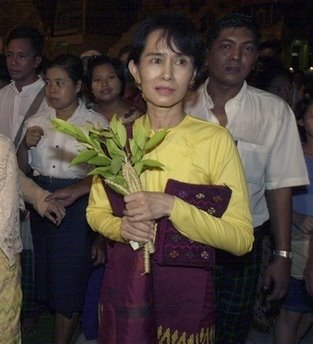


 Posts
Posts


