News & Articles on Burma
Thursday 9 June, 2011
-------------------------------------------------------------
No Time to Waste on Burma: Ban Ki-moon
Rising Myanmar currency adds to economic hardship
Burmese Journalists Cautious on New Censorship Policy
UN Chief Touts Burma Performance in Re-election Bid
Overnight Clash in Kachin State
Fighting between Kachin and Burmese troops for three hours
Burma gets a record $20bn in foreign investment
------------------------------------------------
No Time to Waste on Burma: Ban Ki-moon
By Lalit K Jha Thursday, June 9, 2011
CHICAGO — The UN Secretary-General, Ban Ki-moon, told a meeting of the Group of Friends on Burma on Wednesday that there is “no time to waste” in this Southeast Asian country, which even after the formation of a new government continues to face its challenges in the fields of human rights and democracy.
“There is no time to waste,” UN spokesman Martin Nesirky said at his daily noon briefing at the United Nation headquarters in New York.
Releasing all political prisoners and reaching out as broadly as possible through dialogue to all those who have a contribution to make, including Aung San Suu Kyi and political forces inside and outside Parliament, will be key to ensuring that any reforms enjoy broad support, he said.
Both the secretary-general and his special envoy on Burma, Vijay Nambiar, briefed the Group of Friends on Burma during its first meeting since last year’s elections and the formation of the new government in Burma, which pro-democracy activists say is military rule in new garb.
“Whether the new government has the political will, capacity and support to live up to its commitments and promises is yet to be seen. In order for Burma to move forward, all citizens should be allowed to participate in building their country,” said Nesirky.
President Thein Sein’s stated recognition of the need to move forward in a way that strengthens national unity, including through wide-ranging reforms, is welcome, he said. Nesirky also stated the meeting took place against a backdrop of significant recent developments that could affect the country’s future direction and standing regionally and globally.
Collectively too, the international community has a shared responsibility towards the people of Burma, the UN spokesman said, adding that enabling the current process to result in a successful transition requires the global community to follow events closely, but also to recognize efforts and maximize opportunities for meaningful change.
“That is why, with the cooperation of the new government and the continued support of member states, the secretary-general is personally committed to the United Nations’ long-term engagement with Burma in the political, humanitarian and development areas, all of which are important to advance durable peace and democracy,” Nesirky said.
Meanwhile, Burma figured into a White House state dinner hosted by US President Barack Obama in honor of German Chancellor Angela Merkel.
“Freedom is indivisible. Each and every one has the same right to freedom, be it in North Africa or Belarus, in Myanmar [Burma] or Iran,” Merkel said in a toast. http://www.irrawaddy.org/article.php?art_id=21459
----------------------------------------------
Bloomberg Businessweek
Rising Myanmar currency adds to economic hardship
YANGON, Myanmar
A strengthening of Myanmar's kyat currency is causing further hardship in the impoverished Asian country, hitting exporters and workers paid in dollars, with farmers also set to suffer.
The kyat's rise over the past three months is in part linked to the U.S. dollar's weakness, but also reflects other factors, some of which stem from the military-dominated government's attempts to pump up economic growth and create more wealth for the country's elite.
Among them: wealthy locals selling their U.S. dollar savings to snap up land in newly created special economic zones, higher foreign investment from neighboring countries, and increased sales of exports such as gems despite extensive U.S. and European sanctions.
Officially, the kyat is pegged at about six to the dollar and is not freely convertible into other currencies. But virtually all business and most currency transactions in Myanmar -- also known as Burma -- are conducted using a black market rate.
That rate has strengthened steadily from 860 kyats to a dollar in April to 830 in May and around 770 kyats this month. Myanmar's ruling generals generally tolerate the black market for currency exchange as the only practical way of allowing commerce to continue in a country that is among the world's poorest.
Because people recall instances of sharp inflation, as well as the cancellation of many bank notes in 1987 -- an event that helped spark a failed pro-democracy uprising -- it is common for Burmese to keep savings in dollars, generally illegally.
"Since the movement for the U.S. dollar of late has been down, especially against currencies of countries that produce commodities, the rise of the unofficial kyat is not that remarkable," said Sean Turnell, an expert in Myanmar economics at Australia's Macquarie University.
But he said other factors also have a role in driving the kyat higher such as increased real estate purchases by buyers from neighboring China, usually disguised as transactions by individual Burmese.
The government is also selling state assets to favored businesses, who are financing the deals by exchanging their holdings of dollars for kyat.
Sales, meanwhile, are up for export commodities such as gems, logs, beans and pulses, which could drive up the black market rate when U.S. dollar payments are exchanged into kyat. The country has earned more the $3 billion in the past six months from the sale of gems and jade.
Myanmar's extensive underground economy, particularly the drug trade, has also been known to cause swings in the black market exchange rate.
"Burma's production of narcotics is up, and payments on this do filter through into foreign currency conversions into kyats to pay the ultimate producers," Turnell said.
Myanmar is a major producer of the stimulant methamphetamine and heroin.
Yangon-based economist Khin Maung Nyo said it is impossible to pinpoint a single reason behind the kyat's appreciation.
A large increase in foreign direct investment from countries such as China and rumors the government could change the official exchange rate could be among the reasons, he said.
Exporters are among those being squeezed by a stronger kyat. Farmers are also likely to feel some pain.
"The strong currency is stifling exports. Exporters earn less and the bad business will affect other businesses, ranging from producers and transportation to restaurants," said Kyaw Myint, an exporter of beans.
Kyaw Myint said that because his income from bean exporting has been reduced by about 9 percent, he will not be able to pay a good price to the farmers for the next harvest. He is uncertain if he will continue in the export business.
Meanwhile, others hit hard by the kyat's rise are employees whose salaries are pegged to the dollar.
Some foreign embassies and foreign companies have adjusted their payments to their employees, but at a fixed rate that does not keep pace with the currency's real value.
Thin Thin, a 35-year old accountant for a foreign company, said her real income had fallen so much she has trouble eking out a living. She gets about $120 dollars a month, which was worth 102,840 kyats two months ago, but now brings only 93,600 kyats.
She said the monthly rent for the apartment she shares with a friend remains 25,000 kyats per month and food prices likewise haven't fallen, making it impossible for her to survive if it were not for extra income she gets from tutoring several young students. http://www.businessweek.com/ap/financialnews/D9NNNLK80.htm
-------------------------------------------------
Burmese Journalists Cautious on New Censorship Policy
By KO HTWE Thursday, June 9, 2011
Journalists in Burma say that plans by the country's censorship board, the Press Scrutiny and Registration Division (PSRD), to allow publishers to send some stories to print without prior inspection will put a greater burden on publishers, but won't necessarily lead to greater press freedom.
Beginning on June 10, publishers will be permitted to run stories on sports, entertainment, technology, health and children's literature without PSRD approval. However, they will still have to follow the “Three National Causes”—the basic principles espoused by Burma's military rulers—and avoid any writing that damages “state instability”.
Speaking to The Irrawaddy on Thursday, Rangoon-based poet and former editor Pyapon Ni Lon Oo said the new policy will only make matter worse for the publishing industry.
“The editor of a magazine told me that the new rules will be stricter, and will put more pressure on editors,” he said.
He added that the new “post-censorship” policy is actually similar to the one that was in place before the military takeover in 1988.
At that time, he said, fiction and poetry that dealt with issues such as poverty or corruption were rarely published, but when they were, they often appeared with many passages blacked out, after PSRD officials decided they were too “sensitive” for public consumption.
“Readers knew it was censored when the saw black ink covering entire paragraphs,” he said.
Not everyone, however, felt that new policy was a step backwards. Some veteran journalists and the Myanmar Writers and Journalists Association (MWJA) welcomed the change as the first step toward media freedom.
“We have to proceed step by step to achieve press freedom, because the government has no experience with democracy and is anxious about what will happen if they give absolute freedom. So now they are just testing the waters,” said Ko Ko, the secretary of the MWJA and editor of two leading journals, Flower News and Yangon Times.
He also said that they will have to wait and see if the changes will eventually be extended to other news topics, such as business or politics.
Under the new rules, publishers will have to pay a deposit of five million kyat (around US $6,500) as a guarantee that they will follow the regulations. In the event of a violation, they will lose their deposit and be suspended for an unspecified period or until they are able to pay a fine.
Some editors said the challenge will be to balance the demands of their readers with the requirements of the law.
“If we try to give our young readers what they want, it could make problems for us, so we have deal with this carefully. But little by little, control could loosen,” said Tun Tun Oo, a news editor for the Rangoon-based Olympic sports journal.
Others, however, worried that the new policy was full of pitfalls, as there was always the danger of inadvertently getting on the wrong side of the censors.
“I think this could lead to trouble,” said Ko Myo of the Popular journal. “Publishers and the authorities may interpret stories differently, and this may cause misunderstandings.”http://www.irrawaddy.org/article.php?art_id=21464
----------------------------------------------
UN Chief Touts Burma Performance in Re-election Bid
By BA KAUNG Thursday, June 9, 2011
UN Secretary-General Ban Ki-Moon touted his humanitarian efforts for Burma and other countries in announcing on Monday his candidacy for a second-term.
In a statement, the former South Korean diplomat said that the UN can be proud of its accomplishments during his current term, citing its quick and rapid response to the cyclone disasters in Burma, earthquake in Haiti and floods in Pakistan.
In 2008, when Burmese military rulers were refusing international relief aid in the aftermath of Cyclone Nargis, which killed more than 130,000 people in the Irrawaddy Delta, Ban Ki-Moon traveled to Burma and successfully talked the military rulers into accepting outside help.
A day after his formal announcement for re-election in New York, the UN chief presided over a meeting of his Groups of Friends on Burma at the UN headquarters, the first meeting since the country's new civilian government came into office. The group, which includes China and the US, was formed by Ban Ki-Moon in 2007 to review the world body’s policy on the Southeast Asian nation.
Following the meeting, the UN chief said that the new government in Burma continues to face the same challenges of serious and deep-seated political and economic problems, and the United Nations remains engaged with the country on its path to peace and democracy.
“Whether the new Government has the political will, capacity and support to live up to its commitments and promises is yet to be seen,” he said in a statement. “In order for Myanmar [Burma] to move forward, all citizens should be allowed to participate in building their country’s future.”
Ban Ki-moon is now almost assured of winning his second five-year term because all the permanent members of the UN Security Council, including the United States and China, the consistent defender of Burma on the international stage, have declared their support of his candidacy for re-election.
In 2007, during the first year of Ban Ki-Moon's current term in office, mass anti-government protests took place in Burma, which was followed by a violent government crackdown.
The UN chief dispatched his special envoy, Ibrahim Gambari, to Burma for a number of visits, but Gambari was unsuccessful in his attempts to bring about talks between Suu Kyi and the military generals.
Ban Ki-Moon visited Burma for the second time in 2009 and met with the former military chief Than Shwe while Suu Kyi was facing trial on charges of violating the terms of her house arrest, but his request for a meeting with the Nobel Peace Laureate was rejected.
Despite his strong statements on continued government crackdowns on democracy movements in the Arab world, democracy activists and rights groups have criticized the UN chief for focusing on rhetoric rather than actions regarding human rights issues in countries like China and Burma.
“He does not want to upset China, Russia or any key players in the UN who have a say over his job. He was making a lot of trips, but he did not deliver any significant change on Burma,” said Debbie Stothard, coordinator of the Alternative Asean Network on Burma.
“Ban Ki-moon has been playing it safe and been in a holding pattern on Burma, but if he does get a second term, I hope he will take the gloves off and really push hard for change in Burma,” she said.
Similarly, Tin Oo, the deputy of Suu Kyi's National League for Democracy (NLD), said that Ban Ki-Moon was more interested in courting China's support for a second term than achieving progress with Burma.
“Though we appreciate the fact that he is an Asian, we were not very satisfied with his performance for Burma's democratic struggle,” he said in an interview with The Irrawaddy on Thursday.
However, Min Zin, a Burmese researcher at the University of California in Berkeley, said that the UN chief's overall performance for Burma can be evaluated positively, and Ban Ki-Moon is in no position to enforce his agendas without cooperation from the Burmese government and support from China.
Since Gambari left his position in 2009, Ban Ki-Moon has not made any replacement and his chief of staff, Indian diplomat Vijay Nambiar, is currently acting as his special adviser on Burma.
The US government sought the removal of Gambari from his post in late 2008—more than a year before he stepped down, according to a confidential US diplomatic document released by Wikileaks.
The cable noted that Gambari was unable to secure significant progress from the Burmese regime on critical issues such as the release of political prisoners and a meaningful and time-bound dialogue between military leaders and the democratic opposition, including Suu Kyi.
Under the new government in Burma, the UN agencies in Rangoon are still facing restrictions on their activities.
And during a meeting with Vijay Nambiar last month, Suu Kyi requested the appointment of a full-time UN envoy in Burma.
Ban Ki-Moon is the second UN chief from Asia, after Burma's U Thant who served at the world body for two consecutive terms from 1961 to 1971. His current term is due to end in December.
http://www.irrawaddy.org/article.php?art_id=21462
--------------------------------------
Overnight Clash in Kachin State
By SAW YAN NAING Thursday, June 9, 2011
Tensions finally snapped in Kachin State on Thursday when fighting broke out between Burmese government troops and the Kachin Independence Army (KIA) in Momauk Township, according to Kachin sources.
Speaking with The Irrawaddy on Thursday, Seng Aung, a local resident of Laiza, the KIA headquarters near the Sino-Burmese border, said that an armed clash broke out before at 2 am on Thursday and continued until noon.
“It is like the government troops are intimidating the KIA,” he said. “They want to test the Kachin army because it had previously warned them not to cross into its area.”
Seng Aung said the fighting involved KIA Brigade 3's Battalion 15 and Burmese Battalion 437. Causalities are as yet unknown, but both sides have suffered losses, he said.
Momauk Township lies under the control of KIA Brigade 3 where tension between the government and KIA troops had been rising for months, said a source close to the KIA.
On Feb. 7, an armed clash between government troops and the KIA occurred just southeast of Bhamo, another area that is under the control of KIA Brigade 3. Kachin sources claim that one Burmese battalion commander was killed.
Although the Kachins had signed a ceasefire with the Burmese government in 1994, tensions had been mounting since last year when the KIA rejected Naypyidaw's border guard force (BGF) order.
“Becoming a BGF means submitting yourself to the total control of the government,” said Col. James Lun Dau, a KIO central committee member.
On Oct. 18 2010, an office of the KIA’s political wing, the Kachin Independence Organization (KIO), was raided by government troops who arrested two KIO officials. A few days later, the regime's state-run media The New Light of Myanmar referred to the KIA as “insurgents” for the first time in years, and the long-held but fragile ceasefire was all but declared broken.
In September, the KIA troops also fired at a helicopter owned by the government-friendly Htoo Group of Companies while it flew over KIO headquarters in Laiza, according to Kachin sources.
Meanwhile, tensions also appear ready to boil over in Karen State, sources say.
Karen sources reported that the Burmese army has reinforced three battalions near ethnic Karen rebel-controlled areas of Kawkareik Township in southern Karen State.
A Burmese official in Myawaddy in southern Karen state said that three government battalions under Light Infantry Division 22 were sent to south of Kawkareik with the aim of launching an offensive against the Karen troops from Karen National Liberation Army (KNLA) Brigade 6.
On May 24, an internal conflict broke out within the Karen BGF, formerly known as the Democratic Karen Buddhist Army (DKBA), at the group's former headquarters, Myaing Gyi Nyu in southwestern Karen State. A faction of the Karen BGF, Battalion 1012, seized total control of Myaing Gyi Nyu after defecting from the BGF.
Tensions between the government troops and Battalion 1012 have remained high ever since. Other Karen armed groups are reportedly prepared to provide military assistance to any breakaway Karen BGF if it is attacked by government troops.
Maj-Gen Thet Naing Win, the chief of the Bureau of Special Operations-4 arrived earlier this week in Pa-an, the capital of Karen State, to discuss with colleagues the latest military developments in the region.
In recent weeks, both major clashes and minor skirmishes have been reported on an almost daily basis from southern Karen State, most notably in and around Three Pagoda Pass, Kawkareik and Kyainseikgyi.
Most of the confrontations have occurred between government troops and a coalition of Karen armies, including the DKBA and the KNLA.
Meanwhile Burma’s state-run New Light of Myanmar newspaper has blamed ethnic Karen rebels for a bombing on a passenger train last month that killed two people.
The report said Thursday that a suspect was arrested in Karen state 10 days after the May 19 bombing. The report said he confessed he was assigned by senior members of the KNLA and provided with explosives. http://www.irrawaddy.org/article.php?art_id=21463
-------------------------------------------
Fighting between Kachin and Burmese troops for three hours
Thursday, 09 June 2011 17:58 KNG
Fighting broke out for nearly three hours this morning at 7 a.m. local time between Kachin and Burmese troops in Bhamo District in Kachin State, northern Burma, Kachin officers confirmed.
The fighting was between the Burmese Army’s Momauk-based Light Infantry Battalion (LIB) No. 437 and the Kachin Independence Army’s (KIA) Battalion No. 15, under Brigade 3, at the KIA-controlled Sang Gang Village in Momauk Township in Bhamo District, according to KIA officials at the Laiza headquarters, in eastern Kachin State.
kia_soldier_0906
A KIA soldier temporarily stopped at Uru Hka riverbank in Hpakant jade Mining Township in Kachin State, Northern Burma.
The fighting was located close to the Taping River on the road heading to the Taping No. 1 and Taping No. 2 hydropower plants, from Myitkyina-Bhamo Highway. The two hydropower plants were constructed by the China Datang Corporation (CDT).
According to a KIA official in Laiza, this morning’s fighting intensified when over 200 Burmese troops marched into the KIA’s Sang Gang Post and started shooting at the KIA post near Prang Kadung Village.
At least three Burmese soldiers were killed and six injured in the morning fighting. However, only two KIA were injured, a KIA officer in the frontline said.
The major fighting stopped this morning. However, shots can be heard occasionally, KIA officials said.
Yesterday, the KIA’s Battalion 15 arrested three Burmese soldiers, including two officers, from LIB No. 437. They were carrying two machine guns and two pistols, said KIA officers.
An armed Burmese soldier was arrested in the morning when he and his comrade entered the KIA controlled area. However, his comrade escaped, after throwing away his gun.
His two officers were arrested in the evening when they entered the KIA controlled area to secure the release of the captive soldier, carrying two machine guns, added KIA officers.
The KIA officers in Laiza said all three were arrested for security reasons and negotiations regarding the captive Burmese soldiers are still taking place.
Small skirmishes between the Burmese army and KIA gradually increased in the KIA’s Brigade 3 area, in eastern Kachin State, and Brigade 2, in Western Kachin State.
All KIA troops in Kachin State and Northern Shan State have been on alert to stop government troops by force when they try to enter KIA territories.
------------------------------------
9 June 2011 Last updated at 12:30 GMT
Burma gets a record $20bn in foreign investment
Burma received a record $20bn (£12.2bn) in foreign investment in the past year, the country has said, dwarfing previous pledges for the isolated nation.
The amount compares with just $302m in 2010 and a total of $16bn for the prior two decades combined.
Neighbouring China was the biggest foreign investor, most of which will be invested in power projects.
The country, long ruled by a military junta, held elections last year for the first time in 22 years.
The figures suggest that the elections may succeed in opening the economy of the country, for years under sanctions over its human rights record.
China invested $8.27bn in the year to March 2011, followed by Hong Kong with $5.39bn and Thailand with $2.94bn, according to the Ministry of National Planning Development.
Elections
Military-backed parties won by far the largest number of seats in the November polls in Burma, officially known as Myanmar.
Under the 2008 constitution, 25% of seats were reserved for the military.
Opposition groups and Western nations have criticised laws under which the polls were held and condemned the elections as a sham.
The party that won Burma's elections in 1990 - the National League for Democracy led by Nobel Peace Prize-winner Aung San Suu Kyi - is not represented in parliament.
The new president, Thein Sein, is a retired general, former prime minister and seen as loyal to junta leader Gen Than Shwe.
http://www.bbc.co.uk/news/business-13710466
__._,_.___
Friday, June 10, 2011
News & Articles on Burma-Thursday 9 June, 2011


Thursday, June 9, 2011
Eleven Media Group ၏ Chairman & CEO ေဒါက္တာ သန္းထြဋ္ေအာင္ မွ ေက်းဇူးတင္ စကားႏွင့္ ေရွ႕ဆက္မည့္ မူ၀ါဒ လမ္းစဥ္မ်ားအား ရွင္းလင္းေျပာၾကားစဥ္
အားလံုးမဂၤလာပါ။ ဒီပြဲကို လာေရာက္ခ်ီးျမႇင့္တဲ့အတြက္ အားလံုးကိုေက်းဇူး အထူးတင္ပါတယ္။ ဒီႏွစ္ ၂၀၁၁ ခုႏွစ္ဟာ
၁ ဂဏန္းေတြအတြက္ ထူးျခားတဲ့ ႏွစ္တစ္ႏွစ္ျဖစ္ပါတယ္။ ၁-၁-၁၁၊ ၁၁-၁-၁၁၊ ၁-၁၁-၁၁၊ ၁၁-၁၁-၁၁ ၁ ဂဏန္းေတြ
ႀကီးစိုးတဲ့ႏွစ္မွာ Eleven Media Group ရဲ႕ ၁၁ ႏွစ္ျပည့္ အခမ္းအနား လုပ္ခြင့္ရတဲ့အတြက္ ကြၽန္ေတာ့္အေနနဲ႔မ်ားစြာ
ဂုဏ္ယူမိပါတယ္။ ဒီပြဲကိုတက္ေရာက္လာၾကတဲ့သူေတြဟာ Eleven Media Group ရဲ႕မိသားစုေတြ၊
ခင္မင္ရင္းႏွီးသူေတြအျပင္ Eleven Media Group ကိုနည္းမ်ဳိးစံုနဲ႔ အကူအညီေပးခဲ့ၾကတဲ့သူေတြ၊ သက္ဆိုင္ရာ
ႏိုင္ငံေရး၊ စီးပြားေရး၊ လူမႈေရး၊ က်န္းမာေရး၊ စာေပ၊ အႏုပညာနဲ႔ သတင္းမီဒီယာ နယ္ပယ္အသီးသီးမွာ မိမိတို႔ရဲ႕
အရည္အခ်င္းနဲ႔ လုပ္ေဆာင္မႈမ်ားနဲ႔ပတ္သက္ၿပီး လူအမ်ားအတြက္ ေလးစားဂုဏ္ယူေလာက္တဲ့ အရည္အခ်င္း၊
စိတ္ေနစိတ္ထား၊ လုပ္ေဆာင္မႈေတြရွိသူေတြကို ကြၽန္ေတာ္တို႔ ေရြးခ်ယ္ ဖိတ္ၾကားခဲ့တာပဲျဖစ္ပါတယ္။ ၁၁
ႏွစ္ျပည့္ေျမာက္ပြဲလို႔ ဆိုရေပမယ့္ တကယ္ေတာ့ ၾကြေရာက္ခ်ီးျမႇင့္သူေတြရဲ႕ လုပ္ေဆာင္မႈေတြ၊ သူတို႔ရဲ႕
စိတ္ထားသေဘာထားေတြ၊ သူတို႔ရဲ႕အတိတ္၊ အနာဂတ္၊ ပစၥပၸဳန္မွာရွိေနတဲ့ သူတို႔ရဲ႕စြမ္းေဆာင္ႏိုင္မႈေတြကို ဂုဏ္ယူ
အသိအမွတ္ျပဳတဲ့အေနနဲ႔ ကြၽန္ေတာ္ဖိတ္ၾကားၿပီး ျပဳလုပ္တဲ့ပြဲျဖစ္ပါတယ္။ အခုတက္ေရာက္လာၾကတဲ့သူေတြဟာ
သက္ဆိုင္ရာနယ္ပယ္ အသီးသီးမွာ အမွန္တကယ္ေအာင္ျမင္ၿပီးေတာ့ အခ်ိန္ရွားပါးတဲ့ၾကားက
ဒီပြဲကိုတက္ေရာက္ခဲ့တဲ့အတြက္ အားလံုးကို အထူးပဲေက်းဇူးတင္ရွိပါတယ္။ ကြၽန္ေတာ္တုိ႔ Eleven Media Group ရဲ႕
ေရွ႕လုပ္ငန္းစဥ္နဲ႔ပတ္သက္ၿပီး ကြၽန္ေတာ္ရွင္းျပခ်င္ပါတယ္။ ကြၽန္ေတာ္တို႔ဟာ သတင္းစာထုတ္ဖို႔အဆင္သင့္
ျဖစ္ေနပါတယ္။ ဒီမိုကေရစီႏိုင္ငံတစ္ႏိုင္ငံ၊ (သို႔မဟုတ္) ဒီမိုကေရစီမရတဲ့ ဗီယက္နမ္လိုႏိုင္ငံမ်ဳိးမွာေတာင္
ပုဂၢလိကသတင္းစာရွိပါတယ္။ ကြၽန္ေတာ္တို႔ သတင္းစာထုတ္လုိ႔မရတဲ့အခါမွာ ကြၽန္ေတာ္တို႔အေနနဲ႔
ႏိုင္ငံရဲ႕လက္ရွိအေျခအေန၊ ျဖတ္သန္းလာတဲ့ အေၾကာင္းအရာ၊ လက္ရွိစာဖတ္ပရိသတ္ေတြရဲ႕ endurance နဲ႔
ကြၽန္ေတာ္တို႔အေနနဲ႔ အေနာက္ႏိုင္ငံလိုပဲ၊ ထိုင္းႏိုင္ငံလိုပဲျဖစ္ျဖစ္ ဒီလိုလြတ္လပ္မႈမ်ဳိးကိုေတာ့ ကြၽန္ေတာ္တို႔
ခ်က္ျခင္းေတာင္းဆိုေနတာေတာ့ မဟုတ္ပါဘူး။ သီးျခားဆန္တဲ့ ထိန္းခ်ဳပ္မႈအနည္းငယ္ရွိတဲ့ ထိန္းခ်ဳပ္မႈရွိတဲ့
သတင္းမီဒီယာလြတ္လပ္ခြင့္မ်ဳိးကို ကြၽန္ေတာ္တို႔ ေတာင္းဆိုေနတာပဲျဖစ္ပါတယ္။ ဒါမွသာ ကြၽန္ေတာ္တို႔ႏိုင္ငံရဲ႕
လက္ရွိေရေျမသဘာ၀၊ ေလာေလာဆယ္ျဖစ္ပ်က္ေနတဲ့ လုိက္ေလ်ာညီေထြရွိမွာပဲျဖစ္ပါတယ္။
ေနာက္သတင္းစာအျပင္ ဒုတိယအလုပ္က ကြၽန္ေတာ္တို႔အေနနဲ့ News Channel တစ္ခုျပဳလုပ္ႏိုင္တဲ့ အရည္အေသြး
ႏွစ္ႏွစ္အတြင္းမွာရွိေနပါတယ္။ လြတ္လပ္ၿပီး တာ၀န္ယူတတ္တဲ့ သတင္းမီဒီယာတစ္ခုဟာ ႏိုင္ငံအတြက္ေရာ၊
ျပည္သူလူထုအတြက္ေရာ တိုင္းျပည္ရဲ႕ အနာဂတ္အတြက္ပါ ဘယ္လိုလုပ္ေဆာင္မလဲဆိုတာ သက္ေသျပၿပီးျဖစ္သလို
ထပ္မံသက္ေသျပဖို႔အတြက္လဲ ကြၽန္ေတာ္တို႔ News Media ကိုခ်ဲ႕ထြင္လိုပါတယ္။ အေရးအႀကီးဆံုး ကြၽန္ေတာ္တို႔ရဲ႕
ေရွ႕လုပ္ငန္းစဥ္ကိုေျပာရမယ္ဆိုရင္ ေနာက္ ၃ ႏွစ္ ၄ ႏွစ္အၾကာမွာ ကြၽန္ေတာ္တို႔ တစ္ဦးတည္း ကြၽန္ေတာ္တို႔
ကုမၸဏီတစ္ခုတည္း ပိုင္ဆိုင္ထားတဲ့ ေနရာကေန အမ်ားျပည္သူပိုင္ဆိုင္တဲ့ လုပ္ငန္းအျဖစ္ publicize
လုပ္ပစ္မယ္လို႔ဆိုတာကို ဒီေနရာကေန ကတိျပဳေျပာၾကားလိုပါတယ္။ ဒီလိုလုပ္ရတဲ့ အေၾကာင္းအရင္းက
ဒီအာင္ျမင္မႈေတြ၊ ဒီေငြေၾကးေတြမရခင္က ကြၽန္ေတာ္တုိ႔ လူသံုးေယာက္နဲ႔ပဲစခဲ့တာပါ။ ဒီေအာင္ျမင္မႈေတြ၊
ဒီေငြေၾကးေတြ ရရွိခဲ့မယ္လို႔လဲ မထင္ခဲ့ပါဘူး။ ကြၽန္ေတာ္စီးပြားေရးလုပ္ခဲ့တယ္။ ကြၽန္ေတာ္စီးပြားေရးနဲ႔ ေငြရွာခဲ့တယ္။
ဒါေပမယ့္ ဒီလုပ္ငန္းနဲ႔ေငြအမ်ားႀကီးရလာမယ္လုိ႔လဲ မေမွ်ာ္လင့္ပါဘူး။ ဒါေၾကာင့္ ဒီလုပ္ငန္းနဲ႔ပတ္သက္ရင္
ကြၽန္ေတာ္တို႔ပိုင္ဆိုင္တာဟာ ကြၽန္ေတာ္တစ္ေယာက္တည္းပိုင္ဆိုင္တယ္လို႔ ဒါမွမဟုတ္ ကြၽန္ေတာ္တို႔အဖြဲ႔ပဲ
ပိုင္ဆိုင္တယ္လို႔ မသတ္မွတ္ပါဘူး။ ဒါဟာ ကြၽန္ေတာ္တို႔ဆီမွာရွိေနတဲ့ ျပည္သူလူထု ဒါမွမဟုတ္
ကြၽန္ေတာ္တို႔ကိုအားေပးတဲ့ ပရိသတ္၊ ကြၽန္ေတာ္တို႔ ႏိုင္ငံက ပိုင္ဆိုင္သင့္တဲ့ News Media တစ္ခုျဖစ္သင့္တယ္လို႔
ယူဆတဲ့အတြက္ publicize အမ်ားပိုင္ကုမၸဏီအျဖစ္ ေျပာင္းလဲသြားဖို႔ အစီအစဥ္ ရွိတယ္လို႔ဆိုတာကို ဒီေနရာက
အာမခံေျပာၾကားလိုပါတယ္။ ႏိုင္ငံတစ္ႏိုင္ငံရဲ႕ ေျပာင္းလဲမႈဟာ မ႑ိဳင္ႀကီး သံုးရပ္အေရးပါသလို စတုတၴမ႑ိဳင္အနနဲ႔
အေရးပါတယ္ဆိုတာကို Eleven Media Group အေနနဲ႔ အခိုင္အမာသက္ေသျပႏိုင္ပါတယ္။ အခု ၾကြေရာက္လာတဲ့
ပုဂၢဳိလ္အားလံုးဟာ သက္ဆိုင္ရာနယ္ပယ္ အသီးသီးမွာ မိမိတို႔အရည္အခ်င္းနဲ႔ မိမိတို႔ရဲ႕ လုပ္ေဆာင္ခဲ့မႈေတြ၊
မိမိတို့ရဲ႔စိတ္ေနသေဘာထားေတြ၊ မိမိတို႔ရဲ႕ စြန္႔လႊတ္အနစ္နာခံ ကိုယ္က်ဳိးစြန္႔ခဲ့မႈေတြနဲ႔ ပတ္သက္ၿပီး
မွတ္ေက်ာက္တင္ႏိုင္ခဲ့သူေတြျဖစ္ပါတယ္။ ဒီမွတ္ေက်ာက္ တင္ႏိုင္တဲ့သူေတြဟာ တိုင္းျပည္ကို တကယ္ခ်စ္ျမတ္ႏိုးၿပီး
အမ်ားျပည္သူ အက်ဳိးစီးပြားကို အမွန္တကယ္ ေဆာင္ရြက္ႏိုင္မယ့္သူေတြလို႔လည္း ကြၽန္ေတာ္ယံုၾကည္ပါတယ္။
ဒါေၾကာင့္လဲ ဖိတ္စာမွာကို ဂုဏ္ယူေလးစားစြာနဲ႔ ဖိတ္ၾကားခဲ့တာျဖစ္ပါတယ္။ အဓိကတင္ျပခ်င္တာကေတာ့
ကြၽန္ေတာ္တို႔ႏိုင္ငံမွာ ေနာက္လာမယ့္ အႏွစ္ ၂၀၊ ၃၀ အတြင္း အဓိကရင္ဆိုင္ႏိုင္ရမယ့္ ျပႆနာႏွစ္ခုနဲ႔
ပတ္သက္ၿပီးတင္ျပခ်င္ပါတယ္။ နံပါတ္ ၁ ျပႆနာကေတာ့ Human Resources ျဖစ္ပါတယ္။
ႏွစ္ေပါင္းမ်ားစြာနိမ့္က်ခဲ့ တဲ့ ပညာေရးနဲ႔ ပတ္သက္ၿပီး ကြၽန္ေတာ္တို႔ႏိုင္ငံမွာ Human Resource
ျပႆနာျဖစ္ေနပါတယ္။ စီးပြားေရးလုပ္ငန္းရွင္ေတြ၊ ဌာနဆိုင္ရာအႀကီးအကဲ ေတြသိမွာပါ။ ကိုယ္အင္တာဗ်ဴးလုပ္ရင္
အင္တာဗ်ဴးလုပ္ရမယ့္ အရည္အေသြးမီတဲ့ ပုဂၢဳိလ္ဘယ္ႏွေယာက္မ်ားရပါသလဲ။ ကြၽန္ေတာ္တို႔ သတင္းမီဒီယာမွာကို
အိမ္နီးနားခ်င္းႏိုင္ငံ ငါးႏိုင္ငံကိုေတာင္မသိတဲ့သူေတြ အမ်ားႀကီးျဖစ္ေနပါတယ္။ ဗိုလ္ခ်ဳပ္ေအာင္ဆန္းအသက္
ဘယ္ေလာက္မွာ က်ဆံုးသြားလဲ ဆိုတာမေျပာႏိုင္တဲ့သူေတြ အမ်ားႀကီးျဖစ္ေနပါတယ္။ ဒါလက္ေတြ႔ႀကံဳေနရတဲ့
သတင္းေထာက္ေလာကမွာကို ဒီေလာက္ျဖစ္ေနပါတယ္။ ဒီလုပ္ငန္းဆိုင္ရာ မကြၽမ္းက်င္မႈေတြက
နယ္ပယ္အသီးသီးမွာျပန္႔ေနပါတယ္။ တကယ္ကြၽမ္းက်င္တဲ့သူ၊ တကယ္ထူးခြၽန္တဲ့သူ ဘယ္ေရာက္ကုန္လဲ။ တကယ္
အလုပ္လုပ္ႏိုင္တဲ့သူ တကယ္အလုပ္လုပ္ႏိုင္တဲ႕ Working Force ေတြဘယ္ေရာက္ကုန္လဲ။ အခုလယ္ေတြထဲမွာ
လုပ္သားရွားပါးတဲ့ျပႆနာေတြ႔ေနၿပီ။ အလုပ္ၾကမ္းသမားရွားပါးတဲ့ ျပႆနာေတြ႔ေနၿပီး ေတာရြာေတြမွာ
တကယ္အလုပ္လုပ္ႏိုင္တဲ့အရြယ္ေကာင္းေတြမရွိေတာ့ဘူး။ ႏွစ္ေပါင္း ၂၀ ေက်ာ္ ၃၀ အတြင္းမွာ
ကြၽန္ေတာ္တို႔ႏိုင္ငံဟာ လူဦးေရေလးသန္းရဲ႕ေျခာက္သန္းၾကား ႏိုင္ငံျခားကို ေရာက္ေနၿပီး တခ်ဳိ႕က
ႏိုင္ငံေရးေၾကာင့္ျဖစ္ျဖစ္၊ ပညာေရးေၾကာင့္ ျဖစ္ျဖစ္၊ စီးပြားေရးေၾကာင့္ ျဖစ္ျဖစ္ ႏိုင္ငံကို စြန္႔ခြာသြားၾကတယ္။
ဒီျပႆနာဟာ ေသးတယ္လို႔ဆိုရေပမယ့္ တကယ္ႏိုင္ငံကို ႀကီးပြားဖြံ႔ၿဖိဳးတိုးတက္ေအာင္ ေဆာင္ရြက္မယ္ဆိုရင္
ဒီျပႆနာဟာ အရမ္းႀကီးပါတယ္။ ႏိုင္ငံျခားကို ေရာက္ေနတဲ့သူေတြ မျပန္လာဘဲနဲ႔ ကြၽန္ေတာ္တို႔ႏိုင္ငံ ဟာ
ဖြံ႔ၿဖိဳးတိုးတက္တဲ့ ႏိုင္ငံတစ္ခု ထူေထာင္ႏိုင္ဖို႔ မလြယ္ပါဘူး။ ဥပမာ- နမူနာအားျဖင့္ ဗီယက္နမ္ႏိုင္ငံဟာ သူတို႔ႏိုင္ငံက
ထြက္သြားတဲ့သူေတြ ျပန္လာႏိုင္ေအာင္ အေျခအေနေကာင္းေတြ၊ ႏိုင္ငံေရး၊ စီးပြားေရး အေျခအေနေကာင္းေတြ
ဖန္တီးေပးတဲ့အတြက္ ဗီယက္နမ္ႏိုင္ငံက လွ်င္ျမန္စြာ တိုးတက္လာခဲ့ပါတယ္။ ဒါေၾကာင့္မို႔လုိ႔ ဒီမွာရွိတဲ့
ပညာေရးစနစ္ကို ျမႇင့္တင္႐ုံတင္မကဘဲ ႏုိင္ငံျခားမွာရွိေနတဲ့ အေၾကာင္းေၾကာင္းေၾကာင့္ ထြက္သြားတဲ့သူေတြ
ျပန္လာႏုိင္ေအာင္ ကြၽန္ေတာ္တို႔ ႏုိင္ငံေရး၊ စီးပြားေရး၊ လူမႈေရး အေျခအေနေကာင္းေတြ ဖန္တီးေပး ဖို႔လိုအပ္ပါတယ္။
ဒီႏုိင္ငံကို မလႊဲမေရွာင္သာဘဲ ထြက္ခြာသြားရေပမယ့္ ျပန္လာခ်င္တဲ့သူေတြဟာ သူတို႔ဆီမွာ ၉၅ ရာခုိင္ႏႈန္းေလာက္
ရွိေနပါတယ္။ ဒါေၾကာင့္မို႔လို႔ ကြၽန္ေတာ္တုိ႔ Human Resources ျပႆနာကို ႏွစ္ေပါင္း ၂၀၊ ၃၀ အတြင္းမွာ
တက္လာမယ့္ ျပႆနာကို ေျဖရွင္းဖုိ႔အတြက္ ၀ိုင္း၀န္း အေျဖရွာစဥ္းစားရပါမယ္။ ဒုတိယအခ်က္ကေတာ့
ကမၻာ့သမုိင္းကိုၾကည့္ရင္ သမုိင္းအစဥ္အလာအားျဖင့္ ႏုိင္ငံႀကီးေတြ အင္အားႀကီးလာရင္Super Power ျဖစ္လာရင္
သမုိင္းမွာ ႏုိင္ငံငယ္ေတြ စေတးခံရပါတယ္။ ၁၉ ရာစုႏွစ္မွာ ဥေရာပမွာ စက္မႈေတာ္လွန္ေရး ျဖစ္တယ္။
စက္မႈေတာ္လွန္ေရး အက်ဳိးဆက္ေၾကာင့္ အဂၤလန္တို႔ ျပင္သစ္တုိ႔ အရမ္းခ်မ္းသာလာၾကတယ္။ ကိုလိုနီခ်ဲ႕တယ္။
အာဖရိကရဲ႕ ကြၽန္ေတာ္တို႔ အာရွႏုိင္ငံေတြ စေတးခံရတယ္။ ကြၽန္ေတာ္တို႔ ကြၽန္ျဖစ္ခဲ့တယ္။ ၂၀ ရာစုႏွစ္က်ေတာ့
Super Powerအျဖစ္ ဆိုဗီယက္ရဲ႕ အေမရိကန္တို႔ ျဖစ္လာတယ္။ သူတို႔ၾကားမွာ ေတာင္ဗီယက္နမ္၊ ေျမာက္
ဗီယက္နမ္၊ ေတာင္ကိုရီးယား၊ ေျမာက္ကိုရီးယား၊ အေရွ႕ ဂ်ာမနီ၊ အေနာက္ ဂ်ာမနီ၊ ကြၽန္ေတာ္တို႔ႏုိင္ငံေတာင္
အဖ်ားခတ္ခံရတယ္လို႔ ကြန္ျမဴနစ္၊ ဆိုရွယ္လစ္၊ အကြဲအျပဲရဲ႕ ျပည္တြင္းစစ္က ႏွစ္သက္ၾကာရွည္ခဲ့တယ္။ ၂၁ ရာစုမွာ
Super Power ျဖစ္မွာဘယ္သူလဲဆိုတာ ကြၽန္ေတာ္တုိ႔အားလံုး သိၿပီးသားျဖစ္မွာပါ။ Super Power ျဖစ္လာမယ့္
ႏိုင္ငံတစ္ႏုိင္ငံရဲ႕အနီးနားမွာ ကြၽန္ေတာ္တို႔ ကိုယ္ခံအားမရွိဘဲနဲ႔ ရပ္တည္လို႔ မရႏုိင္ပါဘူး။ ေငြေၾကး
အရမ္းခ်မ္းသာလာၿပီးေတာ့ အင္အားႀကီးမားတဲ့ ႏုိင္ငံတစ္ႏုိင္ငံရဲ႕အနားမွာ ကြၽန္ေတာ္တို႔ရဲ႕ဆင္းရဲတဲ့ ျပည္သူေတြက
ဘယ္လိုမွခုခံႏုိင္စြမ္းမရွိပါဘူး။ လူကုန္ကူးခံရတယ္။ ေရာင္းစားခံရတယ္။ ဒါေတြအားလံုးဟာ စီမံခ်က္ရဲ႕လည္း
လုပ္လို႔မရပါဘူး။ ကြၽန္ေတာ္တို႔ႏုိင္ငံမွာ ကိုယ္ခံအား တကယ္ရွိမွပဲ လုပ္ေဆာင္လို႔ရမွာပါ။ ဒီလိုကိုယ္ခံအား
လုပ္ေဆာင္မႈမရွိဘူးဆိုရင္ ကြၽန္ေတာ္တို႔ႏုိင္ငံဟာ ႏွစ္ေပါင္း ၂၀၊ ၃၀ ေတာင္ မၾကာပါဘူး။ ကြၽန္ေတာ္တို႔
အေျခအေနေတြ ဆိုးရြားသြားႏုိင္ပါတယ္။ ေငြေၾကးတစ္ခုတည္းတင္ မဟုတ္ဘဲနဲ႔ ေယာက်္ား၊ မိန္းမ
အခ်ဳိးအစားကြာဟမႈေၾကာင့္ တစ္ႏွစ္ကို သတို႔သမီး သန္း ၂၀ လိုအပ္တဲ့ ႏုိင္ငံတစ္ႏုိင္ငံရဲ႕ေဘးမွာ
ရပ္တည္ေနထိုင္ရတာ ကြၽန္ေတာ္တို႔အတြက္ အႏၱရာယ္အမ်ားႀကီးရွိပါတယ္။ ကြၽန္ေတာ္တုိ႔ႏုိင္ငံရဲ႕ Energy အားလံုးကို
ေရာင္းစားၿပီးေတာ့ ကြၽန္ေတာ္တုိ႔ ဘယ္လိုစက္မႈ ဖြံ႔ၿဖိဳးတိုးတက္ေအာင္ လုပ္ေဆာင္မွာလဲ။ ဒီလိုေျပာရျခင္း
အေၾကာင္းရင္းက ႏွစ္ႏုိင္ငံဆက္ဆံေရး ပ်က္ျပားေစလိုတဲ့ ဆႏၵမရွိပါဘူး။ လူမ်ဳိးေရးမုန္းတီးမႈလည္းမရွိပါဘူး။
ကိုယ့္ႏုိင္ငံကိုကာကြယ္လိုတဲ့ဆႏၵ၊ ကိုယ့္ႏုိင္ငံကို အဓြန္႔ရွည္ တည္တံ့လိုတဲ့ဆႏၵ၊ ကိုယ္ႏုိင္ငံရဲ႕ လြတ္လပ္ေရး
တည္တံ့ခိုင္ျမဲလိုတဲ့ ဆႏၵပဲရွိပါတယ္။ ဒီအႏၱရာယ္ကို ကာကြယ္ဖုိ႔အတြက္ တစ္ခုတည္းေသာ
လုပ္ေဆာင္ႏုိင္တဲ့အရာဟာ ဒီႏုိင္ငံရဲ႕ ဆက္ဆံေရး ပ်က္ျပားသြားတဲ့ မုန္းတီးစိတ္ျဖစ္ဖုိ႔ မဟုတ္ပါဘူး။ ကြၽန္ေတာ္တို႔ဟာ
ႏုိင္ငံတကာ အသိုင္းအ၀ိုင္းထဲကို ျပန္လည္၀င္ေရာက္ဖုိ႔ပဲ ျဖစ္ပါတယ္။ ႏုိင္ငံတကာ အသိုင္းအ၀ိုင္းျဖစ္တဲ့ အာဆီယံ၊
အေနာက္အုပ္စုႏုိင္ငံေတြရဲ႕ မဆက္ဆံဘဲနဲ႔ ေနထုိင္ခဲ့မယ္ဆုိရင္ ကြၽန္ေတာ္တို႔ႏုိင္ငံ အေျခအေန
ဆိုးရြားသြားႏုိင္ပါတယ္။ ဥပမာ တျခားမၾကည့္ပါနဲ႔ ဧရာ၀တီျမစ္ကိစၥ၊ ဧရာ၀တီျမစ္ရဲ႕ ပတ္သတ္လို႔ရွိရင္
ကြၽန္ေတာ္တို႔ဟာ ပညာရွင္ေတြ မဟုတ္တဲ့အတြက္ ပညာရွင္တြ ထပ္မံတြက္ခ်က္ဖုိ႔ လိုတာကေတာ့ ဒီလိုဆက္လက္ၿပီး
လုပ္ေဆာင္မယ္ဆိုရင္ ေနာင္အႏွစ္ ၂၀၊ ၃၀ မွာ ဧရာ၀တီျမစ္၀ကြၽန္းေပၚ ပေပ်ာက္သြားမယ္။
ပင္လယ္ေရမ်က္နာျပင္ဟာ ေနာင္အႏွစ္ ၂၀၊ ၃၀ မွာ တစ္ေပတက္မယ္။ ျမစ္ေခ်ာင္းေတြေကာ လာမယ္။
စပါးစိုက္ဧကေတြ ေလ်ာ့လာမယ္။ ေရခ်ဳိရရွိမႈေတြ ေလ်ာ့လာမယ္။ စပါးေတြဟာ ဧရာ၀တီျမစ္၀ကြၽန္းေပၚမွာ
မထြက္ႏုိင္ေတာ့ဘူး။ ဒီျပႆနာကို ဘယ္လိုရွင္းမလဲ၊ ျမစ္၀ါျမစ္ရဲ႕ အဓိကျမစ္ႀကီးေတြမွာ ဆည္ႀကီးေတြ
တည္ေဆာက္တဲ့အတြက္ ဒါေတာင္မွ ဥေရာပက ပညာရွင္ေတြ ေခၚေဆာက္တာေတာင္ သူတို႔ Problem
ျဖစ္တဲ့အတြက္ ၿမိဳ႕ႀကီးေတြ ေရလႊမ္းတယ္။ မႏၱေလးၿမိဳ႕ေရလႊမ္းရင္ ဘယ္လိုလုပ္မလဲ။ မႏၱေလးၿမိဳ႕ဟာ ဧရာ၀
တီျမစ္ေရျပင္အထက္ စိုးရိမ္ေရအမွတ္က ႏွစ္ေပပဲရွိတယ္။ ဒီလိုျပႆနာမ်ဳိးေတြကို Transparency ရွိရွိ ကြၽန္ေတာ္တို႔
ေရကာတာေဆာက္တယ္။ ကြၽန္ေတာ္တို႔ ႏုိင္ငံအတြက္ ဘယ္ေလာက္ အက်ဳိးအျမတ္ရွိမလဲ။ ကြၽန္ေတာ္တို႔ေရရွည္
ဘယ္ေလာက္ဆံုး႐ႈံးသြားမလဲ။ ကြၽန္ေတာ္တို႔ ဒါေတြ တြက္ခ်က္ဖို႔ လိုပါတယ္။ ဒါေတြဟာ ၾကည့္လိုက္ရင္
ကြၽန္ေတာ္တို႔ႏုိင္ငံဟာ အင္အားႀကီးႏိုင္ငံရဲ႕ ပူးတြဲယွဥ္ေနထုိင္တဲ့အခါ ကြၽန္ေတာ္တုိ႔ ဘယ္လိုလုပ္ေဆာင္ရမယ္၊
ဘယ္လိုကာကြယ္ရမယ္၊ ကြၽန္ေတာ္တို႔ လြတ္လပ္ေရးကို ဘယ္လိုထိန္းသိမ္း ေစာင့္ေရွာက္ရမလဲဆိုတာ
ကြၽန္ေတာ္တို႔ႏုိင္ငံရဲ႕ ဂုဏ္သိကၡာကို ဘယ္လိုထိန္းသိမ္း ေစာင့္ေရွာက္ရမလဲဆိုတာ ထင္ရွားပါတယ္။ ဒါေၾကာင့္မို႔
ႏုိင္ငံတကာ အသိုင္းအ၀ုိင္းကို ၀င္ေရာက္ေတာ့မယ္ဆုိရင္ ႏုိင္ငံတကာစံႏႈန္းေတြရဲ႕ ညီညြတ္ေအာင္ ကြၽန္ေတာ္တို႔
လုပ္ေဆာင္ရပါမယ္။ ႏုိင္ငံတကာစံႏႈန္းေတြရဲ႕ ၀င္ေရာက္ လုပ္ေဆာင္ဖုိ႔ဆိုရင္ ကြၽန္ေတာ္တုိ႔အေနနဲ႔ ညီညြတ္မႈက
သိပ္အေရးႀကီးပါတယ္။ အမ်ဳိးသား စည္းလံုးညီညြတ္ေရးအရ ျပန္လည္တည္ေဆာက္ဖုိ႔က
အမွန္တကယ္အေရးႀကီးတဲ့ အခန္းက႑ကို ေရာက္ရွိေနပါၿပီ။ ဒါေၾကာင့္ အမ်ဳိးသားစည္းလံုးညီၫြတ္ေရးကို
လုပ္ေဆာင္ႏိုင္မယ့္ အရာအားလံုး ကို လုပ္ေဆာင္ၿပီးေတာ့ ႏုိင္ငံကို ဖြံ႔ၿဖိဳးတိုးတက္ေအာင္ ေဆာင္ရြက္ဖုိ႔
လာတဲ့သူေတြေရာ၊ အစိုးရေရာ၊ သက္ဆုိင္ရာ အတုိက္အခံ အဖြဲ႔အစည္းေတြကိုေရာ ကြၽန္ေတာ္ဒီေနရာက
တိုက္တြန္းပါတယ္။ ကြၽန္ေတာ္တို႔ ႏုိင္ငံရဲ႕အနာဂတ္ ကြၽန္ေတာ္တို႔ရဲ႕ သားသမီးေျမးျမစ္ေတြရဲ႕ အနာဂတ္အတြက္
လုပ္ေဆာင္ဖုိ႔ တုိက္တြန္းပါတယ္။ ေနာက္ဆံုး နိဂံုးခ်ဳပ္အေနနဲ႔ ေျပာရရင္ တ႐ုတ္ေခါင္းေဆာင္ႀကီး တိန္႔ေရွာင္ဖိန္
ေျပာတဲ့ စကားတစ္ခြန္းလိုပါပဲ။ ‘ျပတင္းတံခါးေတြ ကိုဖြင့္ထားလိုက္ပါ၊ သန္႔ရွင္းတဲ့ေလရဲ႕အတူ ျခင္ေတြ၊ ပိုးမႊားေတြ ၀
င္လာပါလိမ့္မယ္’။ ကြၽန္ေတာ္တို႔ဒီေနရာမွာ တိန္႔ေရွာင္ဖိန္စကားကို ထပ္ျဖည့္စြက္ ၿပီးေျပာရရင္ ပိတ္ထားတာၾကာၿပီ
ျဖစ္တဲ့တံခါးကို ဖြင့္မယ္ဆိုရင္ ေလေကာင္းေလသန္႔ နဲ႔အတူ ျခင္၊ ယင္၊ ပိုးမႊားေတြ၀င္မယ္။ ဒါမွမဟုတ္ဘဲ မပိတ္ဘဲနဲ႔
ဖြင့္လိုက္ပိတ္လိုက္ လုပ္မယ္။ ဒါမွမဟုတ္ နည္းနည္းေလးပဲ ဖြင့္မယ္ဆိုရင္ေတာ့ ေလေကာင္းေလသန္႔မရဘဲ ျခင္၊
ယင္။ ပိုးမႊားေတြပဲ ၀င္လာပါလိမ့္မယ္။ ဒါေၾကာင့္မို႔လို႔ ႏုိင္ငံေတာ္အစိုးရကိုလည္း တုိက္တြန္းခ်င္တာက တံခါးကို
ရဲရဲတင္းတင္း ဖြင့္လိုက္ပါ။ ႏုိင္ငံအတြက္ ျဖစ္လာမယ့္ ျပႆနာေတြ အားလံုးကို ကြၽန္ေတာ္တို႔ ဒီေနရာကေန ရဲရဲႀကီး
ကာကြယ္သြားမွာပါ။ ရဲရဲတင္းတင္း ဖြင့္တဲ့တံခါးေတြရဲ႕ေနာက္ကြယ္မွာ ကြၽန္ေတာ္တို႔ အစိုးရကိုအားလံုး ကူညီသြားဖုိ႔
အဆင္သင့္ရွိေနတယ္ဆိုတာ ႏုိင္ငံေတာ္အစိုးရကို ေျပာၾကားရင္း နိဂံုးခ်ဳပ္ပါတယ္။
News & Articles on Burma-Wednesday 8 June, 2011
News & Articles on Burma
Wednesday 8 June, 2011
-------------------------------------------------------------
Myanmar port to displace 10,000 people
Italian-Thai Lowers Myanmar Project Cost Estimate
ITD kicks off Asian roadshow to seek partners for Dawei
EU May Consider Possibility Of Allowing Myanmar To Join Asean Peers In FTA Talks
Rising Myanmar currency adds to economic hardship
ILO strives to eliminate forced labour in Burma
Govt. Pressure Wrecks NLD Study Program
Burmese Censors Ease Conditions
Thai Developer Touts Burma Port Project
Forced labour complaints soar in Burma
---------------------------------------------------
Jun 8, 2011
Myanmar port to displace 10,000 people
BANGKOK - THE Thai industrial giant behind a controversial deep-sea port project in Myanmar said on Wednesday that 10,000 people would have to leave their homes to make way for the development.
Ital-Thai Group is in charge of building and attracting investors to the Dawei Development Project, which is set to transform a sleepy strip of southern coastline with a deep-sea port and 250 sq km industrial estate.
The company confirmed the project would uproot local people, but insisted the villagers would be well catered for with new settlements.
'There is a population of only a little more than 10,000 people that have to be relocated,' said Premchai Kanasuta, president of Italian-Thai Development, the subsidiary in charge of the project.
Concerns about human rights and the environment have been raised about the scale and nature of the port plans because of a lack of regulation in Myanmar, which remains military-dominated despite a new nominally-civilian parliament.
The 10-year, US$8 billion (S$9.8 billion) project will include a steel mill, fertiliser plant, a coal-fired power station and oil refinery. -- AFP http://www.straitstimes.com/BreakingNews/SEAsia/Story/STIStory_677645.html
--------------------------------------------------------
THE WALL STREET JOURNAL
Wednesday, June 8, 2011 As of 9:00 PM
Italian-Thai Lowers Myanmar Project Cost Estimate
By PIYARAT SETTHASIRIPHAIBOON
BANGKO—Italian-Thai Development PCL President Premchai Karnasuta said Wednesday the investment cost of a planned infrastructure project in Myanmar is likely to be less than the $8 billion it had expected.
He said the firm's financial adviser, Siam Commercial Bank PCL, is working on the financing structure of the project and expects to determine the size of the loans needed for the project in the next few months.
The cost of building a deep-sea port, roads and railways in the first stage of infrastructure development at the 250-square-kilometer Dawei Special Economic Zone in southern Myanmar will cost less than the $4 billion earlier projected, Mr. Premchai told reporters.
The projected $4 billion construction costs for other infrastructure projects the firm will build in the special economic zone, including an industrial estate and a waste-water treatment system, will be reviewed later, he said.
Mr. Premchai said financial institutions from Japan, China and elsewhere have shown an interest in the projects, despite Myanmar remaining under sanctions from the international community. "They can fund the projects through Thailand," he said.
He said infrastructure construction at the special zone is likely to start early next year and finish in late 2015.
Italian-Thai expects to reduce its stake in its wholly owned Dawei Development Co., the developer of the economic zone, to 51% in a move to raise funds.
The firm will meet Japanese investors and business operators next week, followed by China and South Korea to attract partners to develop the international industrial hub.
Italian-Thai expects to hold a 10%-30% stake in each project built after the infrastructure is completed, through Daiwei Development, Mr. Premchai said.
The developer expects to build a power-generating plant in Dawei that will supply 6,000 megawatts of electric power to business operations in the area, Mr. Premchai said. The power plant is likely to need a total investment of $15 billion and the firm is seeking partners to operate the plant, he added.
PTT PCL, Electricity Generating PCL, Ratchaburi Electricity Holding PCL, state-owned Electricity Generating Authority of Thailand, and power-generating firms from Japan and China have expressed an interest, Mr. Premchai said.
Italian-Thai is also in talks to sell an additional 3,600 megawatts of power to EGAT from the plant, and this project may need about $5 billion of investment, he said.
The construction of the port in Dawei would markedly cut transportation costs to Europe as ships could bypass Indonesian waters.
Italian-Thai signed a deal with the Myanmar government in 2010 to build roads linking Thailand to Dawei, a deep-sea port, a power plant, and an industrial estate. Under the agreement, Italian-Thai has the rights to a 75-year leasehold on 27,200 hectares of land.
Dawei is 300 kilometers from the Thai capital of Bangkok, and Italian-Thai plans to develop it into a trading hub on the Andaman Sea. http://online.wsj.com/article/SB10001424052702304259304576373132737217912.html
----------------------------------------------------
ITD kicks off Asian roadshow to seek partners for Dawei
By Somluck Srimalee
The Nation
ItalianThai Development will take a roadshow to China, Japan, South Korea and India this month in a bid to find strategic partners that will hold a 49percent stake in the concession to develop the multibilliondollar Dawei project in Burma.
The roadshow kicked off in Bangkok yesterday.
ITD currently holds a 100percent stake with registered capital of Bt500 mil?lion in Dawei Development, which has a 75year concession to develop a Dawei deepsea port, an industrial estate and a transborder corridor link on a 250squarekilometre site in Burma's Dawei district.
ITD president Premchai Karnasuta said the company is prepared to reduce its stake in Dawei Development to 51 per cent, as it will seek strategic partners over?seas for the remaining 49 per cent.
The overall Dawei project requires an investment budget of more than US$8 billion (about Bt240 billion).
ITD has appointed Siam Commercial Bank as its financial adviser and lead manager for loan syndication.
Premchai said the company is also interested in investing in both the infra?structure and industrial activity that will take place at the Dawei site, such as a power plant and cement, paper and steel plants.
"Dawei Development, which will develop the Dawei project, will hold between 10 and 30 per cent in both the infrastructure and industries in Dawei, with the rest being held as an overall majority stake by our strategic partners," he added.
The project will start construction next year, now that ITD has invested about Bt500 million to develop basic infra?structure such as roads.
The company will inject a further Bt2 billion to develop the infrastructure sys?tem.
The investment budget for this phase comes from the company's cash flow and a debenture that will be issued in the second half of this year, he said.
The company's president said the project would require about 10 years for full development of the infrastructure and the industrial estate.
The estate will eventually comprise a power plant, as well as petrochemicals, steel and other major industrial plants, with a focus on the export market.
The development period will entail costs of about $4 billion for the Dawei infrastructure, half of which will be spent on infrastructure for the projects themselves, which will be developed by ITD.
Industrial projects at the estate will receive tax privileges following the Burmese government's promulgation of the Dawei Special Economic Zone law. These include a waiver of business income tax for the first five years, followed by five years of paying half the normal rate of 30 per cent. Project owners can also sign long leases of between 30 and 75 years, Premchai said. http://www.nationmultimedia.com/home/2011/06/09/business/ITD-kicks-off-Asian-roadshow-to-seek-partners-for--30157349.html
-----------------------------------------------
June 08, 2011 21:30 PM
EU May Consider Possibility Of Allowing Myanmar To Join Asean Peers In FTA Talks
By Tengku Noor Shamsiah Tengku Abdullah
SINGAPORE, June 7 (Bernama) -- The European Union (EU) may look into the possibility of allowing Myanmar to join its Association of South-East Asian Nations (Asean) peers to negotiate for a free trade agreement (FTA).
Head of EU Delegation and EU Ambassador to Singapore, Marc Ungeheuer, said Myanmar has not requested to have an FTA with the EU.
"But it is clear that for the moment the EU will wait for further progress in democratisation inside Myanmar.
"If Myanmar adopts the same standards on human rights and democracy like other Asean countries there would be no reason not to," he said at a media briefing on the EU-Singapore Trade and Investment 2011 here Wednesday.
However, Ungeheuer said, at the moment EU's assessment was that it was not the time and it has maintained the sanctions even if they were less strict than before.
EU had initiated efforts to form a regional pact with Asean as early as 2007, which if materialised, would have created one of the largest trading bloc in the world by bringing nearly one billion people under it.
But the efforts were halted because of the varying degree of economic development among the ten-member Asean and also because of the tumultuous political situation in member countries such as Myanmar.
However since the Union Solidarity and Development Party was sworn in as Myanmar's governing party, under the new president, Gen (R) Thein Sein, political analysts saw there had been changes in the country's political landscape where the government has given some face to the media unlike in the past.
Ungeheuer said the EU was Asean's second overall trading partner and its largest foreign investor.
-- BERNAMA http://www.bernama.com/bernama/v5/newsbusiness.php?id=592516
---------------------------------------------
Rising Myanmar currency adds to economic hardship
ASSOCIATED PRESS
Published:June 8, 2011, 9:36 AM
Updated: June 8, 2011, 9:40 AM
YANGON, Myanmar (AP) - A strengthening of Myanmar's kyat currency is causing further hardship in the impoverished Asian country, hitting exporters and workers paid in dollars, with farmers also set to suffer.
The kyat's rise over the past three months is in part linked to the U.S. dollar's weakness, but also reflects other factors, some of which stem from the military-dominated government's attempts to pump up economic growth and create more wealth for the country's elite.
Among them: wealthy locals selling their U.S. dollar savings to snap up land in newly created special economic zones, higher foreign investment from neighboring countries, and increased sales of exports such as gems despite extensive U.S. and European sanctions.
Officially, the kyat is pegged at about six to the dollar and is not freely convertible into other currencies. But virtually all business and most currency transactions in Myanmar - also known as Burma - are conducted using a black market rate.
That rate has strengthened steadily from 860 kyats to a dollar in April to 830 in May and around 770 kyats this month. Myanmar's ruling generals generally tolerate the black market for currency exchange as the only practical way of allowing commerce to continue in a country that is among the world's poorest.
Because people recall instances of sharp inflation, as well as the cancellation of many bank notes in 1987 - an event that helped spark a failed pro-democracy uprising - it is common for Burmese to keep savings in dollars, generally illegally.
"Since the movement for the U.S. dollar of late has been down, especially against currencies of countries that produce commodities, the rise of the unofficial kyat is not that remarkable," said Sean Turnell, an expert in Myanmar economics at Australia's Macquarie University.
But he said other factors also have a role in driving the kyat higher such as increased real estate purchases by buyers from neighboring China, usually disguised as transactions by individual Burmese.
The government is also selling state assets to favored businesses, who are financing the deals by exchanging their holdings of dollars for kyat.
Sales, meanwhile, are up for export commodities such as gems, logs, beans and pulses, which could drive up the black market rate when U.S. dollar payments are exchanged into kyat. The country has earned more the $3 billion in the past six months from the sale of gems and jade.
Myanmar's extensive underground economy, particularly the drug trade, has also been known to cause swings in the black market exchange rate.
"Burma's production of narcotics is up, and payments on this do filter through into foreign currency conversions into kyats to pay the ultimate producers," Turnell said.
Myanmar is a major producer of the stimulant methamphetamine and heroin.
Yangon-based economist Khin Maung Nyo said it is impossible to pinpoint a single reason behind the kyat's appreciation.
A large increase in foreign direct investment from countries such as China and rumors the government could change the official exchange rate could be among the reasons, he said.
Exporters are among those being squeezed by a stronger kyat. Farmers are also likely to feel some pain.
"The strong currency is stifling exports. Exporters earn less and the bad business will affect other businesses, ranging from producers and transportation to restaurants," said Kyaw Myint, an exporter of beans.
Kyaw Myint said that because his income from bean exporting has been reduced by about 9 percent, he will not be able to pay a good price to the farmers for the next harvest. He is uncertain if he will continue in the export business.
Meanwhile, others hit hard by the kyat's rise are employees whose salaries are pegged to the dollar.
Some foreign embassies and foreign companies have adjusted their payments to their employees, but at a fixed rate that does not keep pace with the currency's real value.
Thin Thin, a 35-year old accountant for a foreign company, said her real income had fallen so much she has trouble eking out a living. She gets about $120 dollars a month, which was worth 102,840 kyats two months ago, but now brings only 93,600 kyats.
She said the monthly rent for the apartment she shares with a friend remains 25,000 kyats per month and food prices likewise haven't fallen, making it impossible for her to survive if it were not for extra income she gets from tutoring several young students.
http://www.buffalonews.com/business/24-hour-business-news/article447950.ece
----------------------------------------------
ILO strives to eliminate forced labour in Burma
By Zin Linn Jun 08, 2011 11:30PM UTC
Burma or Myanmar has seen a “dramatic” rise in complaints about forced labour owing to increased public awareness about the problem, a UN agency working in the country said Tuesday, according to AFP News.
The International Labour Organization (ILO) branch in Rangoon (Yangon) has received 506 complaints since the start of 2010 — more than double the number seen during the previous three years.
“This dramatic increase can be put down to extensive awareness raising activity,” said the ILO’s Myanmar liaison officer, Steve Marshall, in an email to AFP.
Of 749 complaints received since early 2007, 582 fell within the ILOs restricted mandate in Burma. Many involve child soldiers. The government allows the group to work in support of their policies to eliminate forced labour, including underage army recruitment.
Marshall said the distribution of a Burma-language brochure explaining the law was likely to be the main driver behind the rise in complaints, rather than an actual increase in the use of forced labour.
According to the Myanmar Times January issue, ILO office in Yangon has made a proposal to publish educational pamphlets in minority languages – including Shan, Kayin and Kachin – that aim to eliminate forced labour. The pamphlets would be translated from a Myanmar-language document the ILO began distributing in the middle of 2010.
An increase in complaints about forced labour since ILO began distributing the pamphlets showed the message was reaching its intended audience, Mr Marshall said.
On 25 February this year, Burma’s Nobel laureate and opposition figure Aung San Suu Kyi had a meeting with an International Labour Organization (ILO) team in Rangoon led by Executive Director Guy Ryder. The meeting incorporated Guy Ryder, ILO liaison officer Steve Marshall and three other ILO representatives, in addition to Nyan Win and Hanthar Myint of the NLD.
Guy Ryder led ILO team met regarding 80 human rights activists at Traders Hotel in Rangoon on 24 February. At the said meeting, participant voiced apprehension about the recruitment of child soldiers in the country. And ILO officials explained their preparation to continue paying attention to complaints from general public. At the same time, they will work together with the regime to take out child soldiers from the armed forces.
Apart from the child soldier issue, forced portering has come to be known as one of the worst types of human rights abuse by the Burmese military. Many people have heard the continuous reports about kidnapping of civilians who were driven to the warzone to carry heavy loads of bullets and bombs. The Burmese soldiers used those porters like cattle under malnourishment and then killed as soon as they can no longer bring the burdens.
Forced labour question – including child recruitment and forced portering – is a cancerous syndrome especially made by General Ne Win’s socialist regime which took power by means of coup d’état in 1962.
Undeniably, countless reports have documented a reliable pattern of human rights abuses committed by the consecutive regimes in Burma which require to be addressed, such as the use of child soldiers, the flattening of villages and the dislocation of ethnic minorities, the use of rape as a weapon of war, extrajudicial killings, forced relocation, and forced labor.
At the 13th regular session of the UN Human Rights Council in March, UN Special Rapporteur for the Human Rights Situation in Burma, Mr. Tomas Ojea Quintana, released his latest report and urged the United Nations “to consider the possibility to establish a commission of inquiry with a specific fact finding mandate to address the question of international crimes” in Burma.
If the current President Thein Sein government stayed away from addressing the use of child soldiers and forced labor, ILO also may become a force pushing the UN to establish a commission of inquiry which helps promoting human rights situation in the country.
http://asiancorrespondent.com/56981/ilo-strives-to-eliminate-forced-labour-in-burma/
-----------------------------------------------
Govt. Pressure Wrecks NLD Study Program
By KO HTWE Wednesday, June 8, 2011
Foreign scholars withdrew from a planned study meeting at the National League for Democracy (NLD) headquarters after pressure from the Burmese government, according to sources.
Win Htein, of the NLD, told The Irrawaddy that many scholars were very keen to come and meet the opposition party's leader Aung San Suu Kyi and train its members, but their planned visit had to be been canceled.
The group were due to lecture students at the Bayda Institute from June 6 to 25 before addressing NLD members from June 20 to 28, but now even the first session has been moved to pro-government NGO Myanmar Egress instead.
“I think Kyaw Yin Hlaing, who currently works in Hong Kong, is afraid the government will revoke his passport if he speaks to NLD members. If Kyaw Yin Hlaing came to visit the NLD he could get into trouble, but he should still take the risk to find out what the result would be,” said Win Htein.
Dr. Kyaw Yin Hlaing is director of Myanmar Egress and also assistant professor of the Department of Asian and International Studies at the City University of Hong Kong.
Myanmar Egress is controversial for being closely associated with individuals connected to the Burmese Chamber of Commerce, and Kyaw Yin Hlaing also supported last year's sham election in Burma.
Htike Zaw Oo, from Tavoy Township, Tenasserim Division, is studying at the Bayda Institute and says he feels cheated by the renowned foreign-based professors who have shunned the seat of learning.
“At first we were very happy that professors from foreign countries would be teaching us. We have been preparing for the training for nearly three months. But when the fixed date arrived they [professors] canceled these plans very easily,” said Htike Zaw Oo.
The NLD study course on “the principles of political science” was the first offered by the party for two decades and was scheduled to be taught by almost a dozen foreign scholars. Young NLD members from across Burma have already arrived in Rangoon to attended the session.
“The teachers did not arrive at the opening ceremony of the Badya Institute and it is hard for them to come to the NLD. Although they did not come to the opening of the Bayda Institute, they are still teaching at Myanmar Egress. It is like a balloon which has been pierced with a needle,” said Win Htein.
“We have been planning this tuition since March but Kyaw Yin Hlaing said on the phone that he cannot give the lecture because the government put pressure on him. The professors would be teaching at Myanmar Egress and Bayda at the same time,” said Myo Yan Naung Thein of Bayda Institute.
The Irrawaddy contacted Kyaw Yin Hlaing but he refused to comment.
Burmese scholars Kyaw Yin Hlaing, Tin Maung Maung Than and US attorney Thi Han Myo Nyun will all contribute to the training program.
They will be joined by foreign scholars Robert Taylor, Robert Gregory, Martin Painter, Mark Thompson, Federico Ferrara and Brad Williams from City University of Hong Kong; Michael Montesano from Singapore's Institute of South East Asia Study; Eric Thompson from the National University of Singapore; and N. Ganesan from the Hiroshima Peace Institute in Japan. http://www.irrawaddy.org/article.php?art_id=21454
-----------------------------------------------
Burmese Censors Ease Conditions
By THE IRRAWADDY Wednesday, June 8, 2011
Burma’s Ministry of Information said on Wednesday that as of June 10 censorship regulations have conditionally changed from a “pre-censorship” to a “post-censorship” mode on five topics— sports, entertainment, technology, health and children's literature. However, publishers have been warned to follow “Three National Causes” and avoid “state instability.”
Currently, all weekly journals, monthly magazines and books in Burma have to submit their proposed drafts to the Burmese censorship board ahead of publication.
Media sources in Rangoon said the Ministry’s censorship board, officially called the Press Scrutiny and Registration Division (PSRD), told officials of private journals about the new regulation at its office in Rangoon on Wednesday afternoon.
Although the five topics mentioned will still be monitored after publication, the media is obliged to follow 12 censorship rules, which include abiding by the “Three National Causes”: non-disintegration of the Union, non-disintegration of national solidarity; and perpetuation of sovereignty.
The PSRD has also told some 500 officials of Burmese journals, writers and publishers to deposit five million kyat (over US $5,000) as a guarantee they will follow the regulations.
Any publisher deemed to break the PSRD's rules will lose their deposit and be suspended for an unspecified period or until they are able to pay the fine.
With the exceptions of sport, entertainment, health, technology and children's literature, other topics of publication have to pass the censorship board agreement before publication.
According to Washington-based Freedom House’s May 2 report, Burma is one of the 10 worst countries in the world for press freedom alongside Cuba and North Korea. http://www.irrawaddy.org/article.php?art_id=21453
------------------------------------------
Thai Developer Touts Burma Port Project
By SIMON ROUGHNEEN Wednesday, June 8, 2011
BANGKOK — “A gateway to Indochina and south China” and “a short-cut pioneer of global transformation”—that is how the Thai conglomerate responsible for developing the Dawei (Tavoy) port project in southern Burma described the complex in Bangkok on Wednesday.
Speaking at a conference organized by the Italian-Thai Development Public Company, which was selected to run the US $8 billion project on Nov. 2, 2010, the company's president, Premchai Karnasuta, painted an impressive picture of what it will mean for Thailand and the region.
“When completed, Dawei will save time and money, cutting four to five days off import and export calendars,” said Premchai.
As things stand, Thailand's exports are sent around Singapore via the Strait of Malacca—a narrow and congested sea lane through which 50 percent of the world's maritime trade passes—before being shipped to the West and elsewhere.
Three and a half years after the Burmese and Thai governments signed an agreement to jointly develop a port project at Tavoy in southern Burma's Tenasserim Region, Italian-Thai is billing it as a major turning point for Burma and its more economically advanced neighbors.
If completed according to current plans, the facility will measure 250 square kilometers (100 square miles) and comprise deep-water harbor facilities, an oil refinery and an industrial estate—all linked by road to Thailand's capital Bangkok, with transport infrastructure running alongside oil and gas pipelines.
“It could be the world's biggest industrial estate,” said Somchet Thinaphong, the managing director of the Dawei Development Co Ltd, a subsidiary of Italian-Thai.
Officials from Thailand's Ministry of Finance and National Economic and Social Development Board spoke of the project as a potential global fulcrum for trade, linking East and Southeast Asia to distant markets and investors, from India to the Persian Gulf and beyond.
The project's backers hope to link into Chinese rail projects underway or proposed for mainland Southeast Asia, as well as port development plans close to Vietnam's commercial capital, Ho Chi Minh City.
The Tavoy port and its oil and gas facilities could also provide a new route for energy supplies coming from the Middle East and Africa, akin to the pipeline being built to link the port of Kyaukpyu in western Burma's Arakan State with Yunnan Province in southern China.
With this in mind, Somchet said the project would have “geo-economic and geopolitical implications,” highlighting the growing importance of the Indian Ocean in world affairs.
Though the details were left unexplained, it was claimed that the new project would also result in an increase in tourism for this remote part of Burma, which features pristine white-sand beaches.
The discussion made only passing reference to the social and environmental impact of the project, which some observers fear will be enormous. Speaking to journalists and others in attendance today, the developers cited only plans for a waste-water management system as part of a proposed gated-community-style residence for workers who will move to Tavoy once the project is fully operational.
However, in its promotional literature, Dawei Development Co discussed a relocation plan for Burmese residents of the area who will be affected by the project, saying that “the relocation assessment plan will be conducted with the support of the Myanmar [Burmese] Government” and will be “developed with the local people based on a two-way communication scheme.”
Italian-Thai estimated that the project could generate 100,000 jobs, and officials today said that one of the attractions of Burma was its low-cost labor force, described as “the cheapest in Asia, even less than in Bangladesh.”
Despite being listed as the opening speaker, Burma's ambassador to Thailand, Aung Thein, did not address today's event, leaving the entire discussion to Thai representatives.
Among the issues discussed was the Dawei Special Economic Zone Law, which was promulgated by the Burmese regime on Jan. 27. The law aims to create a China-style foreign investment magnet around Tavoy, promising tax breaks for companies as well as speedy work- and trade-permit facilitation, and a promise from the Burmese government not to nationalize any industry or project established in the special economic zone.
Accountancy firm KPMG gave an overview of the legal context for investment in Burma, including a list of restrictions on foreign investment. However, no mention was made of Western sanctions on Burma, some of which prohibit investment in the country.
On the contrary, Premchai said that Burma is “beginning to open up,” adding that the Tavoy project “will help bring the country more investment.” http://www.irrawaddy.org/article.php?art_id=21452
-----------------------------------------
Forced labour complaints soar in Burma
By AFP
Published: 8 June 2011
Burma has seen a “dramatic” rise in complaints about forced labour owing to increased public awareness about the problem, a UN agency working in the country said Tuesday.
The International Labour Organisation (ILO) branch in Rangoon has received 506 complaints since the start of 2010 – more than double the number seen during the previous three years.
“This dramatic increase can be put down to extensive awareness raising activity,” said the ILO’s Burma liaison officer, Steve Marshall, in an email to AFP.
Of 749 complaints received since early 2007, 582 fell within the ILO’s restricted mandate in Burma. Many involve child soldiers.
The government allows the group to work in support of their policies to eliminate forced labour, including underage army recruitment.
Marshall said the distribution of a Burma-language brochure explaining the law was likely to be the main driver behind the rise in complaints, rather than an actual increase in the use of forced labour.
“But similarly the number of complaints cannot be used to reflect the size of the problem,” he said. “Many people are still either unaware of their rights or are not in a position to attempt to exercise them.”
Burma’s military junta handed over power to a nominally civilian administration in March after nearly half a century of army rule.
The ILO’s agreement to work in the country, extended in February this year for another 12 months, first came into effect in Febuary 2007.
Since then, 174 people recruited underage by the military have been released to their families, the ILO said, and in response 20 officers and 110 other ranks have been disciplined, according to defence officials.
Rights activists believe there are thousands of child soldiers in the state military, while some of Burma’s ethnic armed groups have also been named by the UN for recruiting and using children in conflict.
Marshall said they had “serious difficulty” assessing allegations against non-state armed groups, but they were negotiating with the government to get access at least to groups with which there are ceasefire agreements.
He pointed out that while each army recruitment case recorded by the ILO related to one victim, for other forms of forced labour a single case could relate to hundreds of complainants.
“There is still a long way to go,” he said, adding that complaints falling outside the ILO’s mandate mainly concerned land confiscation, corruption and industrial disputes.
http://www.dvb.no/news/forced-labour-complaints-soar-in-burma/16009
__._,_.___
Tuesday, June 7, 2011
News & Articles on Burma-Monday 6 June, 2011
News & Articles on Burma
Monday 6 June, 2011
-------------------------------------------------------------
NLD Youth to Provide Security for Suu Kyi
McCain Cold to Warmer U.S.-Burma Ties
Fears over Myanmar’s $8bn development plans
Burma must allow political space for Aung San Suu Kyi
Small Statue a Big Victory for Arakanese
Two Killed, 4 Wounded in Three Pagodas Attack
Trial of ex-army captain nears end
Politician-led prisoner demo blocked
Burma-China alliance threatens ASEAN unity
Chinese plane maker to sell 2 jets to Myanmar
----------------------------------------------
NLD Youth to Provide Security for Suu Kyi
By LIN THANT Monday, June 6, 2011
Youth members of the National League for Democracy (NLD) and pro-democracy activists have called on the general public in Burma to pay particular attention to Aung San Suu Kyi's personal security during her forthcoming trips outside Rangoon.
“In the interests of security, Suu Kyi will let the government know about her trip and provide travel dates, places and times,” said Win Tin, a leading member of the NLD. “However, that does not mean that she is asking for permission to travel. She is not.”
Win Tin added that she will likely begin her provincial tour on June 22, just three days after her 66th birthday.
Although no itinerary has yet been announced, sources in the former capital said security for Suu Kyi's trips will be taken care of by members of the the NLD youth network, who intend to recruit local supporters to help provide security detail for Suu Kyi, Burma's pro-democracy icon and a former Nobel Peace prize winner.
The NLD Youth Network was formed earlier this year at Suu Kyi's request.
“We can only guard her with manpower, because we don't have any authority to act officially,” Phyo Min Thein, a leader of the Network, told The Irrawaddy.
Yar Zar, an NLD youth leader, said that although NLD youth members and the Network will take care of Suu Kyi's security voluntarily, they are yet to be systematically trained for security-related situations.
Even though NLD members are worried about Suu Kyi, government authorities must be held responsible for her safety, NLD sources said.
John McCain, the US senator who visited Burma last week, told reporters on Friday that the Burmese government should be responsible for security during Suu Kyi's trips. McCain echoed comments by Joseph Y. Yun, the US's Deputy Assistant Secretary of State for East Asian and Pacific Affairs, who visited Burma in May.
Fears for Suu Kyi's security are high after she was threatened and stopped by local authorities during her campaign trips in 1989 and 1996. In May 2003, when she was in Depayin in Sagaing Division, her entourage was attacked by up to 5,000 well-armed thugs allegedly backed by the military regime. At least 70 NLD supporters were killed in what has become known as the Depayin Massacre.
Thakin Chan Htun, a Burmese veteran politician, said he does not want to stop Suu Kyi from making trips, but she should be cautious about her security. “Any disturbance during Suu Kyi's tour must be regarded as an act aimed at destroying democracy,” he said. “In any case, she should travel during the daytime and not move from place to place after 4 pm.”
Whenever Burma's military authorities tried to repress political activists in the past, they were reported to have used not only armed security forces but also civilian thugs known as Swan Arr Shin.
After the new government led by President Thein Sein was sworn in, Swan Arr Shin was reportedly re-consolidated and formed as the People's Security Force (PSF). Aung Thaung, a secretary of the ruling Union Solidarity and Development Party, is said to lead the PSF.
PSF members will reportedly wear green military uniforms and hold shields and batons if they are deployed.
A foreign embassy staffer in Rangoon said that several members of the diplomatic corps had suggested it would be safer if Rangoon-based diplomats and journalists joined Suu Kyi on the tour to the provinces. http://www.irrawaddy.org/article.php?art_id=21438
---------------------------------------------------
McCain Cold to Warmer U.S.-Burma Ties
By Marwaan Macan-Markar
BANGKOK, Jun 6, 2011 (IPS) - If Burma’s quasi-civilian government was hoping for warmer ties with the U.S. government, Senator John McCain’s visit to this South-east Asian nation has placed such hopes on ice.
By the end of his three-day visit to the country, also known as Myanmar, the U.S. foreign policy heavyweight dropped hints he was giving Burma a failing grade over its supposed reforms toward democracy.
"Without concrete actions by this government that signal a deeper commitment towards democratic change, there should be no easing or lifting of sanctions," the leading member of the Republican Party, who lost to President Barack Obama in the 2008 presidential race, told an audience in the former Burmese capital Rangoon.
McCain’s warning on the last day of his visit to Burma from Jun.1-3, targeted the government of President Thein Sein, a retired general whose administration took power in March following a flawed general election last November that ended half a century’s rule by a military junta.
McCain’s trip to Burma followed a visit last month by senior U.S. diplomat Joseph Yun and comes ahead of the Senate hearings to confirm Derek Mitchell, poised to become the first U.S. special envoy to Burma.
In 2009, Assistant Secretary of State for East Asia Kurt Campbell visited Burma, the highest-ranking U.S. diplomat to do so in 14 years, helping set the tone of the Obama administration’s Burma policy. That policy offers the carrot of greater engagement while wielding the stick of economic sanctions.
Before that policy, U.S. administrations had been steadfast in punishing the resource-rich but impoverished nation through a raft of sanctions. Since the mid-1990s, they included bans on imports of Burmese products into the U.S., prohibiting new American investments in Burma, and stopping the transfer of funds between the two countries.
Midway through McCain’s visit on Jun. 2, his fellow lawmakers at the House of Representatives in Washington D.C. held a hearing and echoed his views on Burma. "This engagement policy appears to have borne little fruit," said Republican Congresswoman Ileana Ros-Lehtinen, chair of the House Committee on Foreign Affairs, according to a story datelined Washington in The Irrawaddy, a current affairs website run by Burmese journalists in exile.
"Since its adoption, we have seen an American citizen imprisoned and tortured, Burmese generals engaged in possible nuclear proliferation with North Korea, a flawed election last year, and the continued imprisonment of over 2,000 political prisoners with only one, Aung San Suu Kyi, released," she added, referring to the Nobel Peace laureate and pro-democracy leader who was freed from seven years of house arrest last November.
But the message McCain takes home to Washington is not all the Obama administration has to grapple with. Another challenge comes from Tomas Ojea Quintana, U.N. Special Rapporteur on Human Rights in Burma, who wants a commission of inquiry (CoI) to investigate gross human rights violations committed by Burmese troops along the country’s eastern and northern borders which are home to ethnic minorities.
"The government must undertake an independent and impartial inquiry of human rights violations," the Argentine lawyer said in Bangkok recently, following a visit to Thailand to meet Burma’s ethnic minorities who have fled their country’s decades-long conflict.
"Systematic militarisation contributes to human rights abuses," added Quintana, who made his first call for a CoI in March 2009, a move that is now supported by 16 countries. "These abuses include land confiscation, forced labour, internal displacement, extrajudicial killings and sexual violence."
Among the recent victims are women from Burma’s ethnic Shan minority, whose accounts of suffering were shared with the U.N. envoy by the Shan Women’s Action Network (SWAN), a non-governmental group monitoring human rights violations in eastern Burma.
"Three Shan women were gang raped by soldiers from a Burmese light infantry brigade on Mar. 21," revealed Charm Tong, a SWAN spokeswoman.
But while such disturbing accounts may strengthen the case for sanctions, critics of the measures imposed by the U.S. and European governments offer an equally disturbing parallel. The combination of economic sanctions and pressure to limit international humanitarian assistance to Burma has resulted in tens of thousands of children under five years dying from "preventable diseases," including 1, they say.
The U.N. says Burma has the second worst child mortality rate in Asia, following war-ravaged Afghanistan. For every 1,000 babies born, an estimated 66 die before reaching the age of five, or one in every 15 children.
But humanitarian workers in Burma complain that such deaths – one estimate puts it at over 70,000 a year – have not triggered a rise in aid from the West. They point out that the country gets between five to six U.S. dollars per capita of aid, just one-tenth the amount Western donors spend per citizen in neighbouring and equally repressive Laos.
Western sanctions "have been incredibly counter-productive," says Thant Myint-U, a respected Burmese historian. "The argument was that providing aid through the government would only strengthen repressive structures. But in thinking of the future, we need to rethink this equation." (END) http://ipsnews.net/news.asp?idnews=55932
-----------------------------------------------
Peninsula News Paper
Fears over Myanmar’s $8bn development plans
Monday, 06 June 2011 03:06
YANGON: Mechanical diggers on the pristine beaches near the sleepy fishing town of Dawei are a sign that change is coming to the remote corner of Myanmar -- but not necessarily for the better.
The area has been chosen for a vast port complex that is the latest example of how foreign investment from Asian allies like China and Thailand is transforming the military-dominated nation despite Western sanctions.
Some believe the 10-year, $8bn Dawei Development Project, led by a Thai industrial giant, could invigorate the country’s impoverished economy and revolutionise regional trade.
But hopes that the planned deep-sea port and giant industrial estate will inject much-needed investment have been tempered by fears about a potential influx of “dirty” industry and concerns that it will displace thousands.
“Myanmar still ignores environmental issues”, said Tanit Sorat of the Federation of Thai Industries, citing lack of regulation as a key advantage of Dawei.
“Dawei is the world’s solution for industry that affects the environment, heavy industry and the industry that is banned in other countries,” he said, adding the entire project could be worth $60 billion dollars or more.
A local aid worker and campaigner, who estimates 23,000 people will have to move, said the first phase of construction was already altering the quiet tropical town of his childhood.
“The shores are so beautiful, with their long white sands, but in a couple of years it will all be gone,” said the activist.
He said that because of a lack of regulation and entrenched cronyism in Myanmar the development is likely to be “very corrupt”, while soaring property prices are already putting pressure on local people.“The government does not consider the people, it just does what it does,” he said.
David Mathieson of Human Rights Watch said there were few details available on Dawei’s potential impact on communities, but previous experience of large scale developments was of misery for local people.
“Human rights abuses always accompany these projects, including displacement, land confiscation, forced labour and abuses related to increased military/security presence,” he said.
Rights abuses
Such abuses have already been linked to two of Myanmar’s major energy projects currently under construction -- pipelines to transport gas from the coast of western Rakhine state and oil from the Middle East and Africa across the country to China.
Dawei, on the Andaman coast facing the Indian Ocean, has long been a strategic prize -- it was one of Britain’s first colonial conquests in the country in the 19th Century. Somchet Thinaphong, who is managing the project for its developer, Italthai Group, said the port project could create up to 100,000 jobs.
“It will lift employment and education very much -- think about Thailand 30 years ago,” he said, adding that the Myanmar government sees the project as a link to the outside world.
Economic mismanagement and cronyism during half a century of army rule has left the country, also known as Burma, isolated and impoverished, despite abundant natural resources.
The handover to a nominally-civilian government, following last November’s controversial election, has raised tentative hopes among some for change.
But Sean Turnell, Myanmar economic expert at Macquarie University in Sydney, was sceptical over how much of the investment in the port project would trickle down to local people.
“The idea that there will be hundreds of thousands of jobs is absurd,” he said.
Indeed, the main beneficiary of Dawei looks likely to be Thailand.
Goods from Thai exporters are currently shipped from the Gulf of Thailand, around Singapore and through the Malacca Straits before heading west, but it is hoped a road and rail link to Dawei could end the costly detour.
Dawei would also provide a “short cut” for crude oil coming into Southeast Asia from the Middle East, according to an Italthai presentation, which also envisaged a train link to Kunming in southern China.
Plans for the 250 sq km site include a steel mill, fertiliser plant, a coal-fired power station and oil refinery -- potential boons for Myanmar’s energy-hungry neighbour.
It comes as resistance to large industrial estates grows in Thailand -- as seen in an ultimately unsuccessful but high profile case against the vast Map Ta Phut development on its eastern seaboard last year. AFP http://www.thepeninsulaqatar.com/s.-asia/philippines/154792-fears-over-myanmars-8bn-development-plans.html
-----------------------------------------------
Burma must allow political space for Aung San Suu Kyi
By Zin Linn Jun 06, 2011 12:15AM UTC
0 Comments and 7 Reactions
United States Senator John McCain warned Friday that Burma (Myanmar) could face a Middle East-style revolution if the new military-backed government fails to make serious democratic change and improve human rights.
McCain was in Burma to evaluate growth on transformation since a nominal civilian government took over from a military junta in March. Rights groups and critics say little has changed as the new government is merely a proxy for the military that has controlled power for decades.
However, McCain acknowledged that the new Thein Sein government has represented some change from the past, and one illustration of this change was their willingness to allow him to return to Burma after 15 years worth of attempts to do so on his part were rejected. But “without concrete actions by this government that signal a deeper commitment to democratic change, there should be no easing or lifting of sanctions,” Senator John McCain said.
Speaking to reporters at the end of a three-day visit, the Republican from Arizona said both countries want better relations, but that Burma’s government needs to take more steps toward democracy — including “the unconditional release of all prisoners of conscience.”
He also underscores the important of its human rights record in his press release. “But as I told the government leaders I met yesterday, any improvement in relations will need to be built not on warm words, but on concrete actions. I and other U.S. leaders, including in Congress, will evaluate this new government’s commitment to real democratic change, and thus the willingness of the United States to make reciprocal changes, based on several tangible actions, as called for by the United Nations Human Rights Council in its Resolution of March 18, 2011,” the Republican from Arizona said.
The release of 2,000 political prisoners has been a top demand of Western nations that criticize Burma’s human rights record and are maintaining long-standing political and economic sanctions against military-backed government until it carries out reforms. McCain called on Burma to let the International Committee of the Red Cross (ICRC) “unfettered” access to all prisoners in the country.
The organization has been unable to visit inmates here since the former military junta halted access in 2006. The ICRC, whose offices were ordered to be closed in 2006, released a press statement on this issue for the first time, 29 June 2007. The statement denounced the military regime for committing human rights violations against detainees and civilians. ”The repeated abuses committed against men, women and children living along the Thai-Myanmar border violate many provisions of international humanitarian law,” said Mr. Jakob Kellenberger, ICRC president. ICRC also demanded that the Burmese government take urgent action to end its abuses: “We urged the government of Myanmar to put a stop to all violations of international humanitarian law and to ensure that they do not recur”.
Actually, political prisoners have been unilaterally thrown into jail under unfair laws and trials in the absence of their lawyers. The government’s penal code allows giving excessive sentences against political activists. For instance, article 5 (j) of the penal code allows authorities to impose 7 to 20 year prison terms on anyone who joined in peaceful protest or showing different opinion against the regime. Another article 505 provides an indefinite prison term for criticizing the authorities’ policies or behaviors.
Besides, the regime time and again prosecuted political prisoners under the Emergency Provision Act, Law to Safeguard the State against the Dangers of Those Desiring to Cause Subversive Acts, Television and Video Act, Unlawful Association Act, Electronic Transactions Law, and Law Relating to the Forming of Organizations. The worst is that the regime usually extended prison sentences under the Law Safeguarding the State from the Dangers of Subversive Elements.
According to international legal standard, all 2,000 political prisoners have committed no crime at all. So, releasing of political prisoners should be the first and foremost of the political reform. Subsequently, the above mentioned undemocratic laws must be done away with as a necessity for change.
According to critics and watchdogs, the 7 November election, won by the military-backed political proxies, was flawed by widespread complaints of vote rigging and the exclusion of the party led by Aung San Suu Kyi, who was released from house arrest shortly after the polls.
Remarkably, McCain urged the Thein Sein government to guarantee the security of Suu Kyi, who planned to carry out a tour around the country that will be a key test of her freedom following her release. In 2003, her convoy on a similar tour was attacked in an ambush apparently organized by a regime frightened by her popularity and she was arrested.
If Thein Sein government has capability and readiness to go along the political reform path, it must ensure the existence of the National League for Democracy and the essential role of Aung San Suu Kyi. To allow political space for Suu Kyi and starting a dialogue with her will be the concrete steps that needn’t take a lot of time for the new government.
http://asiancorrespondent.com/56696/burma-must-allow-political-space-for-aung-san-suu-kyi/
-------------------------------------------
Small Statue a Big Victory for Arakanese
By KHIN OO THAR and BA KAUNG Monday, June 6, 2011
The Arakan ethnic minority in western Burma scored a big moral victory over the new government by successfully preventing national officials from taking an ancient gold Buddha image recently excavated in their region to Naypyidaw.
On May 30, local authorities discovered nearly 40 Buddha statues from an old temple in the ancient city of Mrauk U in Arakan State, one of which turned out to be made of gold and weighing 6.52 kg. A local archaeologist said that the statue dates back to the eighth century A.D.
When government officials prepared to bring the golden statue to Naypyidaw, hundreds of locals came to the monastery where the statue was kept and protested against its transfer. The protests only subsided after the authorities agreed that the statue will not be moved.
Although the incident seemed minor, it reminded the Arakanese people of their loss of sovereignty to the Burmese majority over two centuries ago, when the Burmese king moved their giant Maha Muni Buddha image to his capital in central Burma as a war trophy.
The Maha Muni image is now a major religious landmark in Mandalay.
Following the protests on Saturday, the regional minister for cultural affairs said that the golden statue will be worshiped in the town, and many locals welcomed the news as a rare victory over the national government.
“It is not important whether it is gold or not. This is a win for us.” said a retired school teacher in the town. “This is Arakanese heritage, which we will defend with our life.”
She said that the Burmese authorities often took away local historical artifacts, saying they intended to study the items, but they were never returned.
Arakan people often express resentment of Burman majority rule and Arakan activists have often protested that their people are not benefiting from the billion-dollar oil and natural gas projects along the Arakan coast.
Dr. Aye Maung, the leader of an Arakan opposition party and MP in the national Parliament, said that just as the British returned Burma's royal throne to its former colony after the country's independence, so also the return of the Maha Muni image to Arakan State will be a good token for Burma's national reconciliation process.
Although the return of the Burmese royal throne was seen by some to be a British attempt to appease former Burmese dictator Ne Win, Aye Maung said, “The British did it because they have democracy. But with our country ruled by people with different ideas, it will be a long time before we get back our Maha Muni.” http://irrawaddy.org/article.php?art_id=21432
--------------------------------------------
Two Killed, 4 Wounded in Three Pagodas Attack
By LAWI WENG Monday, June 6, 2011
One Burmese military intelligence officer and a nine-year-old girl were killed and four others were wounded when an unknown armed group attacked the Military Affairs Security (MAS) office at Three Pagodas Pass, close to the Thai-Burmese border, at around 3 pm on Sunday.
Eyewitnesses said that about seven people wearing masks threw hand grenades inside the office and the Buddhist assembly hall where Burmese government troops were resting.
Kyaw Kyaw Aung, an officer with the MAS, formerly known as the military intelligence service, was killed from the bomb blast. The girl, who has not been named, was shot by a spray of bullets from the attackers as she was walking in the street nearby.
Also wounded was Win Soe, an officer with the MAS, and Oung Chan, a member of the New Mon State Party (NMSP) who was visiting the office at the time of the attack. Two motorbike taxi drivers were also wounded in the attack.
“The attackers must have thought the NMSP member was a member of Military Intelligence because he was wearing a camouflage shirt. He was shot in the leg and shoulder while he was running out of the office,” said an eyewitness.
Witnesses said the group drove motorbikes into the town at 3:45 pm on the road from Taung Wine, an area predominantly inhabited by ethnic Karens.
One eyewitness said, “Seven people pulled up on their motorbikes about 10 feet in front of me. They took out their guns and began spraying the office.
“After that, they threw grenades in,” he said. “Then a car pulled up, they got in, and drove away.”
No witness or official said they could identify the gang, and no one has claimed responsibility for the attack. However, several residents in Three Pagodas Pass who asked to remain anonymous said they suspected that the attackers were members of DKBA Brigade 5, which is led by Brig-Gen Saw Lah Pwe.
According to one eyewitness, the attackers seemed very familiar with the geography of the town and spoke in Karen when they opened fire on the Military Intelligence office.
Sources said the Burmese authorities in Three Pagodas Pass have tightened security since last week after they received information that the Democratic Karen Buddhist Army (DKBA) had plans to attack the town.
However, at the time when the armed gang attacked, the security guards were in the process of rotating, and the office front was temporarily unguarded, said sources.
“I think the attackers had their own people in the town as they must have known the security was rotating,” said one eyewitness.
The town was attacked by the DKBA on Nov. 8, 2010, one day after Burma held a general election.
The area around Three Pagodas Pass has been a common ground for conflict between the government troops and Karen rebels in recent years.
The Burmese army has recently deployed three battalions to Three Pagodas Pass: Light Infantry Battalions No. 373 and 563, both under the control of the Western Command in Arakan State, and Infantry Battalion 283, which is under the control of the Regional Southeast Command in Moulmein.
There are three ethnic armed groups based near Three Pagodas Pass: the NMSP, the Karen National Union, and the DKBA.
Meanwhile, markets and gold shops in the town were closed on Monday, and hundreds of migrants did not go to work as much of the local population avoid the town center for fear of further attacks, sources said.
About 4,000 Burmese migrant workers live in Three Pagodas Pass, but go to work in textile factories or shoe factories on the Thai side of the border each day.
“The security in the town is still unstable,” said the father of a migrant worker. “Some people believe that members of the armed group are still lurking around the town, planning another attack.” http://irrawaddy.org/article.php?art_id=21434
---------------------------------------
Trial of ex-army captain nears end
By NAW NOREEN
Published: 6 June 2011
The separate compound outside of the main wall of Insein prison is where political trials normally take place (Google Earth)
Another witness has testified for the prosecution in the trial of a former army captain arrested after police allegedly found a document in his email inbox entitled ‘National Reconciliation’.
Nay Myo Zin’s family was barred from the closed court inside Rangoon’s Insein prison, where judges on Thursday last week heard a statement from deputy-police commander Swe Linn, who conducted the search at his house in early April that turned up the file.
Only three of the nine witnesses still have to testify, with the next hearing appointed for 9 June. He is being charged with the Electronics Act, although no detail has been given on the content of the document.
His mother, Khin Thi, said last month that the document, allegedly the only thing intelligence had discovered, was destined for a friend. Nay Myo Zin’s lawyer, Hla Myo Myint, said the defence team had questioned the legality of the prosecutors’ statements, as well as their demands that the 36-year-old had over his email password.
Shortly after leaving the army in 2005, Nay Myo Zin turned his attention to charity work, and volunteered for a Rangoon-based blood donor group run by a member of the opposition National League for Democracy (NLD).
His mother earlier told DVB that he had left the army on his own volition because “he didn’t enjoy it there… He is a morally strong kid who is very devoted to charity work but [has] no involvement in politics”.
If convicted under the Electronics Act, which is often used to imprison opposition activists and which can carry a 20-year jail term, Nay Myo Zin will become the first so-called political prisoner since the new Burmese government came to power in March.
His family told DVB several weeks after his arrest that they feared he had been tortured during interrogation, although he reportedly appeared healthy when they were allowed access to him following Thursday’s hearing.
http://www.dvb.no/news/trial-of-ex-army-captain-nears-end/15982
----------------------------------
Politician-led prisoner demo blocked
By SHWE AUNG
Published: 6 June 2011
Prisoners seen leaving Insein jail during the recent amnesty in which only 55 jailed activists and politicians were freed (Reuters)
Coordinated protests for the release of political prisoners in Burma were blocked by authorities last week after they claimed organisers had failed to seek approval from the government.
Three separate demonstrations were due to be held on 5 June in Rangoon led by Nay Myo Wei, general secretary of the Peace and Diversity Party. But the November 2010 election hopeful was summoned to a local police station three days before and told the event would not be allowed.
The Burmese government tightly monitors any political organising, but Nay Myo Wei claims that police acknowledged protests were a “fundamental right”, as enshrined in the Burmese constitution. Their reasoning, however, was that amendments needed to be done to the new government and parliaments before such rights were brought into practice.
Several members of other parties, including the Democratic Party Myanmar and the National Democratic Force, signed the original letter requesting permission to stage the protests. The parties would now raise the ban in parliament.
The issue of the nearly 2,100 political prisoners behind bars remains an albatross around the neck of the Burmese government, whose amnesty last month was criticised after it commuted the sentences of only 55 jailed activists and politicians.
It remains unclear whether the government will follow through on its pledge to soften its stance on protests – during the 2007 monk-led uprising, gatherings of more than five people in public places were banned, a rule that is yet to be formally rescinded.
http://www.dvb.no/news/politician-led-prisoner-demo-blocked/15991
--------------------------------------------
Burma-China alliance threatens ASEAN unity
Burma is asking China to back its bid for chairmanship of partnership in 2014
By Jonathan Manthorpe, Vancouver Sun June 6, 2011 1:07 AM
Vancouver Sun
Burma has marked its unconvincing transition from military regime to civilian government by delivering a couple of slaps round the face to its nine long-suffering partners in the Association of Southeast Asian Nations (ASEAN).
The actions by the Burmese regime raise serious questions over whether ASEAN will be able to achieve its objective of creating a fully integrated community by 2015 with a high degree of economic unification and common policies on key regional and global issues.
Burma's maverick activities come at a time when ASEAN is not only facing another internal friction with the Thailand-Cambodia border conflict, but is under pressure from China, which appears to be pursuing a divide-and-conquer strategy to disrupt association unity.
Burma's general-turned-President Thein Sein managed the one-two punch while leading a large delegation of ministers and officials from the new regime to Beijing last week.
First he announced that his government fully backs China in its long-running dispute with ASEAN members Vietnam, Philippines, Brunei and Malaysia over the ownership of clusters of islands and reefs in the South China Sea.
This craven piece of sycophancy was not only a gross act of disloyalty to Thein Sein's fellow ASEAN members, it flies in the face of a 2002 agreement between the association and China on how to manage their dispute.
Then Thein Sein added a further insult by asking China's President Hu Jintao to assist Burma to get the 2014 chairmanship of ASEAN.
The implication is that Thein Sein wants Beijing to use its regional economic and political muscle to press ASEAN to guarantee Burma the host status that has only been pencilled in at the moment.
Thein Sein's unequivocal siding with China will undoubtedly reinforce the qualms and misgivings several ASEAN leaders have about whether Burma has the political maturity and administrative capacity to play the roll of association figurehead in 2014.
ASEAN faced down much international criticism in 1997 when it admitted Burma, which its regime calls Myanmar, in a purposeful piece of intimidation aimed at the country's many minority groups, suggesting they have a junior and servile status to the majority Burmans.
The military regime was under multiple sanctions and embargoes for its appalling human rights record, and political suppression symbolized by the detention of opposition leader Aung San Suu Kyi.
But ASEAN leaders maintained the "constructive engagement" with the junta was the way forward.
It was not successful. Late last year elections were held in Burma on the basis of a new constitution that leaves all ultimate power in the hands of the military, which also has control of key ministries and an allocated block of seats in parliament.
Very many of the most senior positions, such as that of President Thein Sein, are held by military men who hung up their uniforms to join the "civilian" government.
Thein Sein took up office at the end of March.
Beijing has been lavishing attention on Burma in recent years to the extent that the country is often called an "economic colony" of China.
As well as investing heavily in Burma's abundant natural resources, China sees its southeast Asian neighbour as an important strategic partner in foiling what Beijing sees as efforts by the United States to contain China's growing regional influence.
China is in the process of building a pipeline from Burma's western coast in the Bay of Bengal to China's southwestern Yunnan province. This will allow China to import oil from the Middle East without tankers having to pass through the Malacca Strait choke point between Singapore and Indonesia.
Burma's expressions of loyalty to Beijing come as China is acting more aggressively toward other claimants to sovereignty over areas of the South China Sea than it has in years.
This coincides with evidence from ongoing exploration that there are much greater submarine oil and gas reserves than was previously suspected.
There was a serious incident early in March when the Philippine oil exploration ship, MV Veritas Voyager, was harassed by Chinese Navy patrol boats at Reed Bank off the coast of the Philippines.
Then, a week ago, Chinese patrol boats cut the sonar cable of an exploration ship, the Binh Minh 2, working for the state-owned Petro Vietnam company.
The encounter took place 120 nautical miles off the central Vietnamese coast and 600 kilometres south of China's Hainan island.
Beijing has sent curt warnings to both the Hanoi and Manila governments not to challenge China's maritime territorial claims, which are based on the view of imperial Chinese emperors hundreds of years ago that all surrounding countries were vassal states.
jmanthorpe@vancouversun.com
© Copyright (c) The Vancouver Sun
Read more: http://www.vancouversun.com/news/Burma+China+alliance+threatens+ASEAN+unity/4898900/story.html#ixzz1OUv1YBzt
------------------------------------------------
Chinese plane maker to sell 2 jets to Myanmar
(Xinhua) Updated: 2011-06-06 16:10
BEIJING - The Commercial Aircraft Corporation of China (COMAC), a state-owned aircraft manufacturer, has signed an agreement to sell two ARJ21-700 aircraft to the Myanmar Airways, a statement from the country's state-assets supervisor said.
The delivery time for the two models were also not disclosed, but the statement said the signing of the agreement has marked big progress made by COMAC in promoting the ARJ21 aircraft to the overseas markets.
The statement added the agreement has paved the way for the long-term cooperation between COMAC and Myanmar Airways in the future.
The ARJ21 is China's first homegrown commercial regional aircraft, which earlier made an international debut at the Zhuhai air show in November last year.
The 78- to 90-seat craft has a maximum flight range of 3,700 kilometers and maximum altitude of 11,900 meters. The statement said COMAC plans to deliver its first ARJ21-700 regional aircraft to its first client, the Chengdu Airlines. http://www.chinadaily.com.cn/bizchina/2011-06/06/content_12645410.htm
__._,_.___


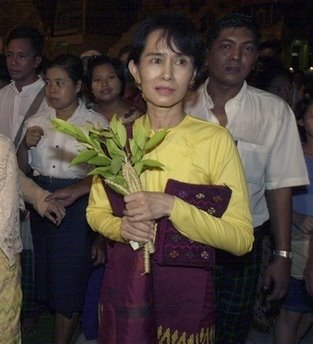


 Posts
Posts


