News & Articles on Burma
Monday, 23 May, 2011
-------------------------------------------------------------
Letter from Burma: Travelers
UN envoy: Burma does little to stop rights abuse
Myanmar seeks to improve US ties
Myanmar president plans first state visit to China
UN envoy says inquiry needed over rights abuses by Myanmar
UN envoy: Myanmar does little to stop rights abuse
Burma refugees living in Thai jungle fear
-----------------------------------------------
Letter from Burma: Travelers
Truman Capote's inimitable heroine Holly Golightly, that most worldly of waifs, kept her possessions in suitcases with luggage tags that, in place of an address, bore the single word, "Traveling". I was barely out of my teens when I first came across this original approach to abode and I thought it was wonderful and adventurous and interpreted it purely in terms of physical movement.
This perception was strengthened after I was married as Michael's dedication to Himalayan studies frequently took us to remote parts of the world and kept us on the move. Whenever we came back from our long journeys I was surprised to find that many of our friends were still at their old addresses. The peripatetic way of life seemed, to us, the normal one. Even after both our sons were born, travel remained an integral part of our existence. The last three years before I became caught up in the movement for democracy in Burma, our homes moved between England, Japan and India.
Lives that have been described as journeys are, in general, eventful. The mere passing of ordinary days are not usually seen as worthy of the term "travel." Events that have been smoothed featureless by repetition enter into glacier mode, the slow movement frozen into apparent standstill. It is only stillness itself that sharpens our senses to the ebb and flow of the universe around us.
It was during my years of house arrest that I began to know life as travel rather than travel as life. The sameness of my daily routine heightened my sensitivity to the fleetness of time and to the dissimilarity between every single one of the minutes and the hours that made up the mosaic of each fast paced day. Impermanence ceased to be mere philosophy, it became fact, the stuff of daily life, the appearing and disappearing of moments that turned into weeks and months and years.
Regular practice of meditation no doubt did much to sharpen such awareness. As I consciously crossed over from one state of consciousness to another I began to feel that my permanent address was indeed "Traveling." I learnt to assess my "baggage" from time to time that I might discard whatever should be discarded. Since I knew I would always be traveling, I wanted to travel light.
The sense that I was on a long errantry through time and through samsara, like a character out of a fantasy tale, made me feel I could reach out to fellow travelers despite high gates, barbed wire barricades and endless miles. Surely they who are aware that they are on a journey even if they do not know where it would lead and when it would end are linked to one another by an understanding that transcends language and culture as well as time and space? Those who travel uncharted territory develop mutual empathy based on common experience of the hazards of venturing into the unknown with only faith and daring as shield and armor.
My colleagues and I have traveled a rough road over the last two decades and when we see the people of Japan embarking on the uphill path of one of the most challenging rehabilitation and reconstruction programs the world has ever known, we not only sympathize deeply with them, we fervently wish them all success. We want them to overcome all trials and difficulties as we wish to overcome our own trials and difficulties.
The National League for Democracy has had to ride out many waves of repression. In the worst of times we started each day by enquiring who had been taken away in the night. Mondays were particularly bad as the security forces liked to go about their sinister business during the weekends when it was difficult for the members of our party to contact one another. The telephones at our office and my house had been cut off for years and from time to time the telephones of our most active colleagues were also made inoperative. Those were the days before the advent of the cell phone, may it be many times blessed, and we had to send our young people running around collecting information on those who had been whisked away when by all norms of justice and decency they should have been left to sleep peacefully in their own beds.
What enabled us to get through those days of unrelenting persecution with our sanity and even our sense of humor intact? It was our strong sense of solidarity. It straightened our backs and kept us going however heavy the oppression. We offer our solidarity to the peoples of the devastated regions of Japan, we are with you as you travel the road to recovery and renewal.
Trying to decide on the subject of this month's letter, I asked myself: at such a time is there a place for any writing that is not relevant to the chief preoccupation of Japan today? Or would an article that has nothing to do with the tsunami or its aftermath be a welcome change for weary people? Last month I decided to postpone Animal Talk 2, as I did not think that ruminations on animals would have been appropriate at such a time of crisis. "Next month," I thought. Now that "next month" has become this month, I still hesitate: is it yet appropriate? Then it occurred to me that it would be good if I could have some idea of what the Japanese people would like to read at a time like this. Could my readers let me know how best my letters might be of some help to them? (By Aung San Suu Kyi)
http://mdn.mainichi.jp/perspectives/news/20110523p2a00m0na001000c.html
-----------------------------------------------------
UN envoy: Burma does little to stop rights abuse
By AP News May 23, 2011 6:59PM UTC
BANGKOK (AP) — The United Nations’ human rights envoy to Burma said Monday that the country’s nascent civilian government has done little to address widespread abuses, including forced labor and extrajudicial killings, since replacing the ruling junta in March.
Elections last year for a new parliament and the installation of civilian leaders this spring were supposed to be the final steps of what Burma’s military leaders had hailed as their “roadmap to democracy.” But U.N. envoy Tomas Ojea Quintana told reporters in Bangkok that “democracy requires much more.”
Burma’s government is currently refusing to allow Quintana to visit the Southeast Asian nation. The envoy spoke after a weeklong trip to Thailand to talk with refugees from Burma. Thailand is home to more than 100,000 people who have fled the neighboring country.
Quintana said violence continues along Burma’s eastern border region, and ethnic minority groups there are victims of “land confiscation, forced labor, internal displacement, extrajudicial killings and sexual violence.”
These abuses “are widespread, they continue today, and they remain essentially unaddressed by the authorities,” Quintana said.
In Burma’s eastern Kayah state, for example, both men and women have fled out of fear of being conscripted into the military, he said. There is such a deficit of schools there that some parents send their children to refugee camps in Thailand for basic education, he added.
Ethnic groups living in the eastern and northern border areas have sought more autonomy since Burma’s independence in 1948, and the government maintains uneasy cease-fires with them. Human rights organizations have long accused the military of forcing civilians into forced labor, particularly as porters.
The military has ruled Burma with an iron hand since 1962, and critics charge the new government is merely the latest iteration of the repressive regime.
Last week, Washington’s deputy assistant secretary of state for East Asian and Pacific Affairs, Joseph Yun, also expressed concern about the new government’s human rights policies.
The Burma Times, meanwhile, quoted Foreign Minister Wunna Maung Lwin as urging Yun to refer to the country as Burma rather than Burma.
The former junta changed the country’s name from Burma to Burma in 1989, but many regime opponents and pro-democracy leader Aung San Suu Kyi still call the country by its former name.
The paper quoted the minister as telling Yun: “You might think this is a small matter, but the use of ‘Burma’ is a matter of national integrity. … Using the correct name of the country shows equality and mutual respect.”
The U.S. Embassy in Burma declined to comment on the report.
http://asiancorrespondent.com/55564/un-envoy-burma-does-little-to-stop-rights-abuse/
---------------------------------------------------
GULF TIMES
Latest Update: Monday23/5/2011May, 2011, 02:18 AM Doha Time
Myanmar seeks to improve US ties
Myanmar has told the US it will not accept preconditions to improve relations, saying sanctions imposed by Washington remain the biggest obstacle to better ties, a report said yesterday.
“We would like to urge the US to build mutual trust in the first place and only then will we be able to frankly discuss ways of promoting the relationship between the two countries,” Foreign Minister Wunna Maung Lwin was quoted as saying by the weekly Myanmar Times.
The minister was speaking on Wednesday to Joseph Yun, deputy US assistant secretary of state for East Asia and Pacific Affairs, in the highest-level meeting between the two nations since the advent of a nominally civilian government.
The newspaper quoted a transcript from the talks in the capital Naypyidaw that was released by the office of President Thein Sein, suggesting the new government is pursuing a more sophisticated communications policy.
Myanmar would “not accept any preconditions to promote bilateral relations,” Wunna Maung Lwin said, citing US sanctions as the main obstacle towards achieving closer ties.
The US therefore needs to show “goodwill” towards Myanmar, he said, also calling on Washington to use the country’s official name of Myanmar, which it rejects in favour of the former name of Burma. AFP
http://www.gulf-times.com/site/topics/article.asp?cu_no=2&item_no=436417&version=1&template_id=44&parent_id=24
----------------------------------------------
Myanmar president plans first state visit to China
May 23, 2011, 4:40 GMT
Yangon - Myanmar President Thein Sein is to travel to China this week, his first state visit since taking office on March 30, state media reported Monday.
Thein Sein will be in China Thursday to Saturday at the invitation of President Hu Jintao, the New Light of Myanmar reported.
A Chinese delegation was the first foreign group to meet with the former general after he took office.
The leader of the pro-military Union Solidarity and Development Party (USDP) that won the November 7 general election has replaced Senior General Than Shwe, junta chief from 1992 to 2011, as the new head of state.
Thein Sein's first trip abroad as president was earlier this month when he joined the summit of the Association of South-East Asian Nations in Jakarta.
China is military-run Myanmar's strongest ally, and recently became the South-East Asian nation's largest private investor.
State-run Chinese firms are investing heavily in infrastructure projects, such as a 1,000 kilometre-long pipeline from Rakhine state on Myanmar's coast to Yunnan province in southern China.
China has provided Myanmar with a 2.4-billion-dollar loan to construct the pipeline.
Myanmar was ruled by military juntas from 1988, and before that by a military-socialist regime, starting in 1962.
Although now under an elected government, Western democracies had condemned the November 7 polls for failing to include the National League for Democracy opposition party led by Nobel laureate Aung San Suu Kyi and for favouring the victory of the USDP.
The USDP is packed with ex-miliary men and ministers who served under the junta. Some 82 per cent of the new ministers are either former or active military men.
http://www.monstersandcritics.com/news/asiapacific/news/article_1640787.php/Myanmar-president-plans-first-state-visit-to-China
-------------------------------------------
UN envoy says inquiry needed over rights abuses by Myanmar
May 23, 2011, 10:57 GMT
Bangkok - A United Nations commission of inquiry should be set up to address Myanmar's human rights abuses which have not stopped under the new government, a senior UN official said Monday.
Tomas Ojea Quintana, the UN special rapporteur on human rights, said the Myanmar military has continued to commit widespread human rights abuses in areas with ethnic minority insurgencies along the border with Thailand, which he visited last week.
'These abuses include land confiscation, forced labour, internal displacement, extrajudicial killings and sexual violence,' Quintana said.
Quintana has not been issued a visa to visit Myanmar since March 2010, when he suggested an inquiry.
His latest assessment follows the November 7 election won by the pro-military Union Solidarity and Development Party. Quintana said he would continue to push the UN General Assembly to set up a commission at its next session in October.
'A commission of inquiry is an option, and I'm not dropping it,' Quintana told a press conference.
The UN has launched 50 commissions of inquiry in its history, including a special probe of Myanmar labour rights abuses conducted by the Intenational Labour Organization (ILO) several years ago.
Although the ILO report failed to stop forced labour in Myanmar, it did pressure the government to allowing the organisation to set up an office in the country, Quintana said.
He said the new parliament is too weak institutionally to address the complex issue of human rights abuses in areas controlled by ethnic minorities fighting the government for six decades.
'These democratic institutions are very new and I see some positive signs in them but it is too early for them to function effectively,' he said.
Myanmar was under military rule from 1962 to 2010, and the current government is run by either former or serving military men.
Quintana also criticized the government's 'amnesty' of thousands of prisoners last week, noting that it had only commuted sentences by a year and included only a handful of political prisoners among those released.
There are an estimated 2,100 political prisoners in Myanmar jails, of whom some 55 were released last week.
'I would like to see a concrete and time-bound plan announced by the government for the systematic release of all prisoners of conscience,' Quintana said.
http://www.monstersandcritics.com/news/asiapacific/news/article_1640844.php/UN-envoy-says-inquiry-needed-over-rights-abuses-by-Myanmar
----------------------------------------------------
UN envoy: Myanmar does little to stop rights abuse
(May 23rd, 2011 @ 3:29am)
By TODD PITMAN
Associated Press
BANGKOK (AP) - The United Nations' human rights envoy to Myanmar said Monday that the country's nascent civilian government has done little to address widespread abuses, including forced labor and extrajudicial killings, since replacing the ruling junta in March.
Elections last year for a new parliament and the installation of civilian leaders this spring were supposed to be the final steps of what Myanmar's military leaders had hailed as their "roadmap to democracy." But U.N. envoy Tomas Ojea Quintana told reporters in Bangkok that "democracy requires much more."
Myanmar's government is currently refusing to allow Quintana to visit the Southeast Asian nation. The envoy spoke after a weeklong trip to Thailand to talk with refugees from Myanmar. Thailand is home to more than 100,000 people who have fled the neighboring country.
Quintana said violence continues along Myanmar's eastern border region, and ethnic minority groups there are victims of "land confiscation, forced labor, internal displacement, extrajudicial killings and sexual violence."
These abuses "are widespread, they continue today, and they remain essentially unaddressed by the authorities," Quintana said.
In Myanmar's eastern Kayah state, for example, both men and women have fled out of fear of being conscripted into the military, he said. There is such a deficit of schools there that some parents send their children to refugee camps in Thailand for basic education, he added.
Ethnic groups living in the eastern and northern border areas have sought more autonomy since Myanmar's independence in 1948, and the government maintains uneasy cease-fires with them. Human rights organizations have long accused the military of forcing civilians into forced labor, particularly as porters.
The military has ruled Myanmar with an iron hand since 1962, and critics charge the new government is merely the latest iteration of the repressive regime.
Last week, Washington's deputy assistant secretary of state for East Asian and Pacific Affairs, Joseph Yun, also expressed concern about the new government's human rights policies.
The Myanmar Times, meanwhile, quoted Foreign Minister Wunna Maung Lwin as urging Yun to refer to the country as Myanmar rather than Burma.
The former junta changed the country's name from Burma to Myanmar in 1989, but many regime opponents and pro-democracy leader Aung San Suu Kyi still call the country by its former name.
The paper quoted the minister as telling Yun: "You might think this is a small matter, but the use of 'Myanmar' is a matter of national integrity. ... Using the correct name of the country shows equality and mutual respect."
The U.S. Embassy in Myanmar declined to comment on the report.
(Copyright 2011 The Associated Press. All rights reserved. This material may not be published, broadcast, rewritten or redistributed.) http://www.620ktar.com/category/world-news-articles/20110523/UN-envoy:-Myanmar-does-little-to-stop-rights-abuse/
-------------------------------------------
Burma refugees living in Thai jungle fear
Published: 23/05/2011 at 01:31 PM
Online news: Asia
At first sight the bamboo huts nestled at the foot of soaring limestone cliffs in the jungle could be mistaken for an eco-tourism haven -- except for the barbed wire and armed guards.
A refugee crosses a wooden bridge at the Mae La refugee camp close to the Thai-Myanmar border. Thailand's announcement in April that it wants to close nine border camps, holding more than 140,000 displaced people, has sent ripples of anxiety through the traumatised communities after a more than two-decade presence.
Beyond the perimeter fence and security checkpoints, designed to keep the residents in and unwanted visitors out, tens of thousands of refugees from war-torn eastern Burma are living in fear of being sent home.
Thailand's announcement in April that it wants to close nine border camps, holding more than 140,000 displaced people, has sent ripples of anxiety through the traumatised communities after a more than two-decade presence.
"We're scared to go back," said Suai Pu, 27, who fled Burma six years ago with his wife and son and lives in the biggest camp, Mae La, home to about 46,000 people packed into around four square kilometres (1.5 square miles).
"People are so worried. They are praying. They cannot sleep," he said. "We don't have a home. We don't have land. If we go back, what can we do?"
According to the Thailand Burma Border Consortium, a group of international non-governmental organisations operating along the border, as of March the camps held about 143,000 refugees from Burma, also known as Burma.
Most are Karen, whose eastern state is the scene of one of the world's longest-running civil wars, stretching back six decades. Others include minority Chin, Mon and long-suffering Rohingya, as well as majority Burmans.
About 93,000 residents have been registered with the UN as refugees, but while an ongoing resettlement programme has allowed tens of thousands to move to third countries, they are soon replaced by new arrivals who trickle across the Moei river every day on doughnut-shaped inflated rubber tubes.
Many others live illegally outside the camps.
Vast numbers of people have fled the Burma government's counter-insurgency campaign, which rights groups say deliberately targets civilians, driving them from their homes, destroying villages and forcing them to work for the army.
"Their safety would be seriously at risk if they went back," said David Mathieson, a Burma expert for New York-based Human Rights Watch.
"There's still lots of fighting and landmines and no infrastructure such as clinics and schools. Most of the refugees are in camps because of persecution and if they go back the possibility of retribution from either side is high."
Many of the children in the camps have grown up there and know no other life, leaving them unprepared for a return to the insurgency-plagued jungles of eastern Burma just a few kilometres away across the border.
Thailand's renewed talk of shutting the camps followed the March handover of power from the long-ruling Burma junta to a nominally civilian government, after an election marred by widespread complaints of cheating and boycotted by Aung San Suu Kyi's National League for Democracy.
Thailand's National Security Council chief Tawin Pleansri said it had become the country's "burden" to take care of the refugees.
The Thai government has stressed that it will only send them back when it is safe and no timetable has been set for their return, but inside the camps there are some signs of change in the air.
"The Thai officials called a meeting in the camp to start a preliminary screening process. Once that's finished, they will send them back -- although they're not talking about that yet," said Ehkler, a community leader in Mae La.
Sitting in a simple bamboo hut he built with his own hands on a pocket of dusty red ground in the camp, Kyaw Dee remembers constantly fleeing fighting as a child. His uncle was not so lucky.
"He was accused of being a rebel and taken to the Burmese army camp. Nobody dared to vouch for him so he was killed," he said.
Kyaw Dee's story is a familiar one in Mae La: forced to work as a porter for the government army, carrying ammunition and firewood, he left his home and parents behind six years ago to seek refuge across the border.
"Life was hard because we were trapped between the rebels and the government. We paid money to the rebels and had to work for the state army," recalled the 38-year-old father of three.
"I don't like living here but I manage. I want our children to have a better life. We want our country to be peaceful," he said. http://www.bangkokpost.com/news/asia/238460/burma-refugees-living-in-thai-jungle-fear
__._,_.___
Tuesday, May 24, 2011
News & Articles on Burma-Monday, 23 May, 2011


Thursday, May 19, 2011
News & Articles on Burma-Wednesday, 18 May, 2011
News & Articles on Burma
Wednesday, 18 May, 2011
-------------------------------------------------------------
Bomb kills two near Burmese capital as US envoy visits
Train explodes on passenger train near Myanmar's capital, two killed
Bomb Blast on Train Near Naypyidaw
Only 47 political prisoners freed in Myanmar amnesty
Karen State Conflict Intensifies
Burma Censors Reports on UN Envoy Press Briefing
Suu Kyi risks arrest over Australian message
UK cautions ASEAN from allowing Myanmar to assume regional leadership
US Diplomat Begins Visit to Burma
US Sending Senior Diplomat to Meet New Burmese Government
PTTEP drops Myanmar exploration block
------------------------------------------
Bomb kills two near Burmese capital as US envoy visits
AFP / NEWSCORE
Last Updated: 9:29 AM, May 18, 2011
NAYPYIDAW, Burma -- A bomb blast on a train near the Burmese capital Naypyidaw left at least two people dead Wednesday during a visit by a US envoy for talks with the new government.
Officials said the bomb was on a timer and blamed it on rebels of the Karen ethnic group. Seven people were injured in the blast, in Tatkone township near the capital. The junta moved the capital from Rangoon in 2005.
The explosion came shortly after Joseph Yun, the deputy US assistant secretary for East Asia and Pacific affairs, arrived in Burma for talks. Yun is also expected to meet with democracy champion Aung San Suu Kyi during his four-day visit to the military-dominated country.
President Barack Obama's administration in 2009 launched a drive to engage with Burma''s junta, which in March this year made way for a nominally civilian government after the first election in 20 years.
Read more: http://www.nypost.com/p/news/international/bomb_kills_two_near_burmese_capital_ugiJqgcZ4A9ZOO0Y4LzKLO#ixzz1MiQyheEc
----------------------------------------
Train explodes on passenger train near Myanmar's capital, two killed
Yangon, Myanmar— The Associated Press
Published Wednesday, May. 18, 2011 9:40AM EDT
An official says a bomb has exploded on a passenger train near Myanmar's capital, killing two people and injuring seven.
The public security official says the explosion occurred Wednesday evening about 40 kilometres north of the capital Naypyitaw on the line to Mandalay. It appeared that none of the victims were foreigners. He spoke on condition of anonymity because he is not authorized to release information.
No one has taken responsibility for the blast and no suspects have been named.
Bombing are rare but not unknown in Myanmar, where pro-democracy activists and ethnic minority groups are at odds with the military-backed government. The government usually blames opposition militants for such blasts, but most remain shrouded in mystery.
http://www.theglobeandmail.com/news/world/asia-pacific/train-explodes-on-passenger-train-near-myanmars-capital-two-killed/article2026365/
--------------------------------------------
Bomb Blast on Train Near Naypyidaw
By The Irrawaddy Wednesday, May 18, 2011
At least two people died in a bomb blast on a train at Sinthay Railway Station near Burma’s capital of Naypyidaw on Wednesday, according to sources in Naypyidaw.
A police official in Naypyidaw told The Irrawaddy, “A woman and a man died instantly on the spot. Seven others were injured and hospitalized in Naypyidaw-Tatkon.”
An investigation is now being conducted by the police in Naypyidaw.
“Police officers visited the hospital where the injured people are hospitalized and questioned them about the incident,” the police said.
The train originated in Rangoon and was headed to Mandalay.
This is the first bomb blast in Burma since the new government led by President Thein Sein took office in March.
The blast happened on the same day a high ranking US official arrived in Naypyidaw to meet with government officials. http://www.irrawaddy.org/article.php?art_id=21317
----------------------------------------------------
May 18, 2011
Only 47 political prisoners freed in Myanmar amnesty
Just 47 political prisoners were among those freed in a mass amnesty in Myanmar this week, an opposition group said on Wednesday, urging the military-backed government to release the estimated 2,100 that remain behind bars. -- PHOTO: AFP
YANGON - JUST 47 political prisoners were among those freed in a mass amnesty in Myanmar this week, an opposition group said on Wednesday, urging the military-backed government to release the estimated 2,100 that remain behind bars.
The National League for Democracy (NLD), a banned political party and Myanmar's biggest pro-democracy group, said 23 of its members were among the 47 activists released on Tuesday, too few to be taken seriously as a gesture of reconciliation.
In all, 14,600 people were freed.
Myanmar's government insists there are no political prisoners in its jails. Rights groups say hundreds of jailed politicians, students and activists were convicted on trumped-up charges to justify their incarceration.
'There was no general amnesty granted for the prisoners of conscience, just a reduction in prison terms of criminal convicts,' said Nyan Win, spokesman for the NLD, the popular movement led by Nobel laureate Aung San Suu Kyi, herself a former political detainee.
The issue of political prisoners in Myanmar has been key to the imposition of economic sanctions on the country since a bloody crackdown on pro-democracy protests in 1988. Critics say the embargoes have failed and have only alienated Myanmar's leaders from the international community. -- REUTERS http://www.straitstimes.com/BreakingNews/SEAsia/Story/STIStory_669962.html
------------------------------------------
Karen State Conflict Intensifies
By SAW YAN NAING Wednesday, May 18, 2011
Armed clashes have been occurring across Karen State on a near-daily basis for the past four months with no end in sight.
Divided loyalties following the split in Buddhist Karen ranks over last year's border guard force (BGF) proposal, and a lack of confidence in Naypyidaw's new government have cemented the Karen rebels' resolve against the Burmese army, rebel sources say.
According to a report from the headquarters of the Karen National Union (KNU), between January and April, a total of 359 clashes have taken place, mostly in southern Karen State, between Burmese government troops and a combined force of the Karen National Liberation Army (KNLA) and renegade fighters from Brigade 5 of the Democratic Karen Buddhist Army (DKBA).
During that four-month period, the KNU report claims that just six Karen rebels have been killed, and seven injured, while the Burmese army have reportedly lost 611 soldiers, with 848 injured.
Government sources confirmed to The Irrawaddy that the Burmese army has lost soldiers on a near-daily basis.
While most battalions of the DKBA remain loyal to the ceasefire agreement the group signed with the Burmese government, a breakaway faction, Brigade 5, led by Brig-Gen Saw Lah Pwe, has turned sides and joined forces with the KNU's military wing, the KNLA.
Brig-Gen Saw Johnny, the commander of KNLA Brigade 7, said, “So far, we have not seen any positive signs from this new government,” said Johnny. “They [the government] needs to put an end to this armed conflict and bring about peace. They have to call an immediate halt to their assaults in ethnic areas.
“They have to sit down at the negotiating table with ethnic and opposition leaders and find a solution to the problems,” he added.
Since Burma staged a general election in November last year, armed conflict has intensified across Karen State in both urban and rural areas.
The day after the election, on Nov. 8, a serious clash broke out in Myawaddy Township between Burmese government troops and DKBA Brigade 5, forcing more than 20,000 local residents to seek refuge temporarily in Thailand.
Sources said that the Karen rebels have become markedly stronger since Brigade 5 led split from government ranks and rejoined its old ally, the KNLA.
Karen rebel sources have claimed that there is a great deal of internal conflict within the newly founded BGF units, which are formed by former members of the DKBA. Some of the Karen BGF members have reportedly deserted and defected to the KNLA and the DKBA.
“We are stronger than before,” said Col Paw Doh of the KNLA. “Our troops can now patrol areas that we had abandoned in the past.”
“If the government wants to meet and talk with us in the interest of peace, we will ensure a reduction in hostilities,” he said. “Otherwise, the conflict will go on. It all depends on the new government.”
According to a recent Karen Human Rights Group (KHRG) report, at least three civilians died and eight were injured during battles between April 22-30 in Kya In Township in southern Karen State. The firing of mortars by the Burmese army in civilian villages also forced at least 143 villagers from four villages to seek refuge across the Thai border.
On May 13, the KHRG reported that the firing of mortars and light skirmishes were ongoing in the areas of K' Lay Kee and Noh Taw Plah, and that some villagers continued to seek refuge at discreet locations in Thailand. http://www.irrawaddy.org/article.php?art_id=21316
---------------------------------------------------
Burma Censors Reports on UN Envoy Press Briefing
By THE IRRAWADDY Wednesday, May 18, 2011
The Burmese Press Scrutiny and Registration Division (PSRD) has rejected attempts by local journals to print the words spoken by UN Special Envoy to Burma Vijay Nambiar at a press briefing following his three-day visit to Burma, according to sources from the Rangoon media community.
During his press briefing at the Rangoon International Airport, Nambiar told reporters that when he met with top Burmese government leaders he demanded that the government release all political prisoners and start a tripartite dialog for national reconciliation, according to the media sources.
The sources said that the PSRD rejected attempts to print any of this information.
Speaking to The Irrawaddy, a local reporter said, “It seems that the Burmese government won't accept the use of the term 'political prisoner.' That’s why they rejected all of the information through the PSRD, but allowed descriptions such as: We welcome the new government; We welcome the speech of the president; etc.”
The PSRD also rejected the use of any part of Aung San Suu Kyi’s press briefing but allowed descriptions on the journals' inside pages of the meeting between Nambiar and Aung San Suu Kyi.
An executive editor of a local journal who spoke on condition of anonymity told The Irrawaddy that, “A reporter asked Aung San Suu Kyi during her press briefing what she thought of the Burmese government trying to become the chairman of Asean (The Association of Southeast Asian Nations). She replied that it is more important to have a change in the country than to become the chairman of Asean. The PSRD rejected this part.”
Many from the local media community said that the PSRD will not allow descriptions of Aung San Suu Kyi or her National League for Democracy's (NLD) political and social activities.
“Although the PSRD blocked descriptions of the NLD and Aung San Suu Kyi’s activities, they forced us to put in descriptions of the [government backed] Union Solidarity and Development Party’s activities,” said a Rangoon-based reporter.
Meanwhile, the PSRD suspended publication of the Rangoon-based weekly True News for two weeks after the PSRD accused the journal of misreporting a mobile phone offer by the Ministry of Communications, Posts and Telegraphs (MCPT). It is the first suspension of a local journal since the new civilian government took office.
Reporters Without Borders issued a statement on Tuesday which said that press freedom and online freedom of information are still being restricted in Burma despite the formation of the new civilian government.
“He [Burmese President Thein Sein] promised to respect the role of the media, but heavy jail sentences for journalists, suspension of newspapers and police raids on Internet cafes show that there has been no let-up in controls and intimidation,” the statement said.
Recently, the MCPT sent a new set of rules to the public Internet cafes which are more restrictive than before.
The rules require 12 commitments, including: to record the personal information (name, identity card number, contact address, phone number, etc) of the Internet users; to submit the records of the users (date, time, screen shot, URLs) to the Directorate of Communication once a month; to not allow the use of floppy drives, USB ports and other external drives by the users; to not allow VoIP calls (Gtalk, Skype, Pfingo, etc) by the users; and to permit inspections by the Internet service providers and the authorities.
Rule number 12 said that information that could harm the state's security and interest must not be leaked. Perpetrators who leak such information will be punished under the State Secrets Act.
Reporters Without Borders said that Burma is still on a list of “Enemies of the Internet.” Seventeen video journalists are still in jail and serving long prison sentences, and three of the most prominent—Zarganar, a famous comedian; Nay Phone Latt, a blogger; and Kaung Myat Hlaing, also known as Nat Soe in the Burmese bloggers community—are sserving long sentences for freely expressing their views online. http://www.irrawaddy.org/article.php?art_id=21313
-----------------------------------------
ABC News: 18 May, 2011
Suu Kyi risks arrest over Australian message
By Jeff Waters
Burmese democracy leader Aung San Suu Kyi could be arrested again for recording a video message aimed at Australian MPs.
In the three-minute video, Ms Suu Kyi says there have been no real moves toward democracy in the 100 days or so since the Burmese junta held a national election, which was widely described as fraudulent.
The recording appears to have been made on a home video camera.
"We have not seen any positive, definite move towards a truly democratic process. I am particularly grateful to the members of the Australian Parliament," she said.
Ms Suu Kyi says if there was genuine democracy in Burma, all political prisoners would be released.
Supporters say she is risking rearrest by distributing the video. http://www.abc.net.au/news/stories/2011/05/18/3220564.htm?section=justin
-------------------------------------
UK cautions ASEAN from allowing Myanmar to assume regional leadership
By Associated Press, Updated: Wednesday, May 18, 2:11 PM
MANILA, Philippines — The British government has cautioned Southeast Asian countries not to allow Myanmar to take the leadership of their regional bloc.
It says Myanmar will need to show “enormous political progress” to deserve the prestigious role that it now seeks.
Myanmar, among the members of the Association of Southeast Asian Nations, has sought the annual chairmanship of the 10-member bloc in 2014. Fellow members have not raised any objection but urged it to continue taking steps to realize a long-unfulfilled promise to fully democratize.
U.S. Ambassador to ASEAN David Carden says it’s up to ASEAN to decide on Myanmar’s leadership role.
He says Washington hopes Myanmar will take seriously the new ASEAN charter, which includes promotion of human rights. http://www.washingtonpost.com/world/uk-cautions-asean-from-allowing-myanmar-to-assume-regional-leadership/2011/05/18/AFW4iK6G_story.html
---------------------------------------------
US Diplomat Begins Visit to Burma
By HTET AUNG AND LALIT K JHA Wednesday, May 18, 2011
US Deputy Assistant Secretary of State Joseph Yun began a four-day trip to Burma on Wednesday for introductory meetings with members of the country's new government.
“Deputy Assistant Secretary Joseph Yun of the East Asia and Pacific Affairs Bureau is scheduled to travel to Burma from May 18-21,� said State Department spokesperson Mark Toner. “His visit reflects our continued willingness to engage with the government of Burma and to continue consultations with civil society as well as the Burmese people.�
Toner added that Yun will hold introductory meetings with senior government officials in Burma.
Yun’s trip to Burma comes soon after US President Barack Obama's Monday announcement that his administration would extend the national emergency with respect to Burma, and the resulting sanctions, for one more year.
“These actions and policies are hostile to US interests and pose a continuing unusual and extraordinary threat to the national security and foreign policy of the United States,� said Obama in his notification to the US Congress about his decision to extend the national emergency regarding Burma, which commenced on May 20, 1997.
“For this reason, I have determined that it is necessary to continue the national emergency with respect to Burma and maintain in force the sanctions against Burma to respond to this threat,� he added.
Also on Monday, Burma's new President Thein Sein announced “a clemency program,� releasing more than 14,000 prisoners. However, only about 40-50 of Burma's approximately 2,100 political prisoners were included in the release.
Asked about whether the US has seen changes in Burma since the election last November, Toner said in his press briefing on Tuesday: “There’s been some developments. Aung San Suu Kyi was obviously released, and we applauded that, but we remain steadfast in our call that all political prisoners should be released.
“We recognize that there’s some fairly serious challenges to address in this relationship, but we’re going to continue to pursue a dual-track policy that involves pressure but also principled engagement.�
Yun's visit to Burma also comes less than a week after the visit to Burma by Vijai Nambiar, the UN Secretary-General's acting Special Envoy to Burma. Nambiar also called on the new government to release all the political prisoners during his meetings with Burmese government officials.
Burma political observers said that Yun will probably address two key interlinked issues on his trip. The first issue is Burma's desire to chair the Association of Southeast Asian Nations (Asean) in 2014, to which the US has already announced its opposition due to the lack of the meaningful political change in Burma as reflected by the second key issue—the government's failure to release all political prisoners.
In a recent editorial, the Bangkok-based English newspaper The Nation wrote: "One day before the 18th Asean summit began in Jakarta, the US sent an urgent message to Indonesia—the Asean chair—Thailand, Singapore and the Philippines simultaneously, saying now was the time to push for real progress in Burma, otherwise it would be difficult to envisage any US president attending the East Asia Summit there in 2014."
Yun is scheduled to meet pro-democracy leader Aung San Suu Kyi on the evening of May 19. He will also consult with a variety of Burmese stakeholders, including representatives of political parties, nongovernmental organizations, ethnic minorities and the business community.
“As far as I know now, Yun will meet Daw Aung San Suu Kyi tomorrow evening,� said Nyan Win, spokesperson of the National League for Democracy (NLD).
Asked about the NLD's response to Obama's decision to extend the national emergency with respect to Burma, Nyan Win said, “The US sanctions are designed to improve democratic and human rights in Burma. Therefore, this extension is a reflection of the lack of change from the side of Burma.�
Although the UN, the US and the Asean—of which Burma is a member state—have all recently tried to persuade Burma's new government to release all political prisoners as a first step to show change in Burma, President Thein Sein's announcement ignored their efforts.
Some members of Burma's new parliament also expressed a desire to have more political prisoners released.
“Any amnesty is better than no amnesty, and firstly I welcome the president's announcement,� said Myat Nyana Soe, a member of the Amyotha Hluttaw, or Upper House of Parliament. “But considering the long prison terms, it would be good if the government could consider including those prisoners in this amnesty.�
“To reflect the desire of the people through the people's parliamentary representatives, they expected the government to release many more political prisoners. They even had a specific desire to release some specific persons, like the release of Daw Aung San Suu Kyi. If the government listens to the desire of the people and responds to them, it will be a good deed and all the people will be happy,� Myat Nyana Soe said.
Myat Nyana Soe added that releasing all political prisoners would not be bending to pressure from outside countries, but rather fulfilling the desire of the people.
Copyright © 2008 Irrawaddy Publishing Group | www.irrawaddy.org http://www.irrawaddy.org/article.php?art_id=21314
-----------------------------------------
US Sending Senior Diplomat to Meet New Burmese Government
David Gollust | The State Department May 17, 2011
The United States is sending a senior diplomat for “introductory” talks with leaders of Burma’s new, nominally-civilian, government. The new government was seated in late March to replace a military junta but U.S. officials say the military retains effective control.
Officials here say the dispatch of the diplomat to Burma does not reflect any easing of the critical U.S. view of the political changes there, but that the Obama administration remains committed to trying dialogue with Burma.
Deputy Assistant Secretary of State for East Asian and Pacific Affairs Joseph Yun is due to leave Washington Wednesday for a visit to Burma spanning three days.
The senior diplomat last visited Burma in December and so his visit his week will be the first since the new government was sworn in on March 30th.
The military junta that ruled Burma for decades ceded power at that time, following a national election in November that was widely criticized as a sham.
A quarter of the seats in the new parliament were set aside for military officers and more than half of the remaining seats were won by a pro-military party.
Announcing the Yun visit, State Department Acting Deputy Spokesman Mark Toner said the United States still considers the political process in Burma badly flawed and does not approach this week’s talks with any illusions. “It’s consistent with our two-track approach to Burma. There’s nothing [unduly optimistic] about this. We recognize that there’s some fairly serious challenges to address in this relationship. But we’re going to continue to pursue a dual-track policy that involves pressure, but also principled engagement," he said.
A senior official who spoke to reporters said that in addition to meeting government officials and civil society members, Yun will try to meet opposition leader Aung San Suu Kyi, who was freed last November after spending most of the previous 20 years in detention.
Aung San Suu Kyi’s National League for Democracy Party won Burmese elections in 1990 but was barred by the military from taking power. The November elections were largely boycotted by the opposition.
In a notice to Congress Monday, President Barack Obama renewed U.S. economic sanctions against Burma, including a near-total trade ban, that would have otherwise expired this month.
The routine extension notice said Burma is still engaged in actions hostile to U.S. interests including the large-scale repression of the democratic opposition.
The State Department also Monday dismissed a limited clemency program announced by Burmese President Thein Sein that would among other things cut sentences for all Burmese prisoners by a year.
It said Burma should immediately free all of the country’s estimated 2,200 political prisoners.
http://www.voanews.com/english/news/asia/US-Sending-Senior-Diplomat-to-Meet-New-Burmese-Government-122064264.html
----------------------------------------------------
PTTEP drops Myanmar exploration block
Published: May 18, 2011
Offshore staff
BANGKOK, Thailand – PTTEP International Ltd. has relinquished the entire exploration block M4 in the Gulf of Martaban offshore Myanmar. PTTEP has completed its exploration work commitment on the tract.
PTTEP retains three exploration projects, Myanmar M3, M7, and M11; one development project, Myanmar Zawtika, which is expected to begin production in 2013; and two joint ventures now in production, Yadana and Yetagun projects.
05/18/2011 http://www.offshore-mag.com/index/article-display/4296390213/articles/offshore/regional-reports/asia-pacific/2011/may/pttep-drops_myanmar.html
Wednesday, May 18, 2011
News & Articles on Burma-Tuesday, 17 May, 2011
News & Articles on Burma
Tuesday, 17 May, 2011
-------------------------------------------------------------
Burma Frees Prisoners as US Renews Sanctions
Surveillance of media and Internet stepped up under new civilian president
Myanmar: Prison sentence reductions are not enough
US renews Myanmar sanctions
Burma to free 17,000 from jail
Burma frees 14,600, but few political prisoners
---------------------------------------------
Burma Frees Prisoners as US Renews Sanctions
VOA News May 17, 2011
Burma began releasing thousands of prisoners Tuesday under a limited clemency program that will have little impact on the nation's political prisoners.
Human rights groups and the U.S. State Department have said the government must go further and immediately release Burma's estimated 2,200 political prisoners. U.S. President Barack Obama renewed American economic sanctions on Burma for another year Monday, saying the large-scale repression of the democratic opposition in that country has not been resolved.
The clemency program, proclaimed Monday by President Thein Sein, commuted death sentences to life imprisonment and reduced all other jail terms by one year.
The government Tuesday began releasing more than 14,000 prisoners who had less than one year left on their terms. However the release was expected to affect very few political prisoners, most of who are serving terms of up to 65 years.
The French news agency AFP quoted an unidentified Burmese official saying the release would include some intelligence officers who were on the losing side of a power struggle in 2004. However former prime minister and intelligence chief Khin Nyunt is serving a 44-year sentence and was not expected to be freed.
Human Rights Watch on Monday dismissed the clemency program as a "pathetic response" to demands for increased political freedom. It called the program a "slap in the face" for a senior United Nations envoy who had just urged the release of all political prisoners in Burma.
Vijay Nambiar, the chief of staff to U.N. Secretary-General Ban Ki-moon, made the call at the end of a visit to Burma last week. http://www.voanews.com/english/news/asia/southeast/Burma-Frees-Prisoners-as-US-Renews-Sanctions-121988499.html
--------------------------------------------
Surveillance of media and Internet stepped up under new civilian president
Reporters without Borders:
Published on Tuesday 17 May 2011.
Press freedom and online freedom of information are still being flouted in Burma, three months after Thein Sein’s election as a civilian president. He promised to “respect the role of the media” but heavy jail sentences for journalists, suspension of newspapers and police raids on Internet cafés show that there has been no let-up in controls and intimidation. And now a string of new measures have just tightened control over Internet use.
“Thein Sein announced a general amnesty on 16 April for prisoners sentenced to death but there has been no pardon for Burma’s 2,000 political prisoners,” Reporters Without Borders said. “The regime’s professions of good intentions aim to deflect attention from recent measures designed to reinforce restrictions on news and information.
“The authorities clearly fear that the Arab Spring could spread. The new regulations are intended to intimidate Burmese Internet users and cut them off from the outside world. It is unacceptable that Burma is reacting in this way while chairing ASEAN, whose charter mentions respect for fundamental freedoms, the promotion and protection of human rights and the promotion of social justice.”
The press freedom organization added: “We urge ASEAN’s members including Indonesia, which takes over its presidency this year, to put pressure on Burma to adhere to this regional organization’s principles.”
Reporters Without Borders learned last week that the Burmese government’s censorship bureau, called the Press Scrutiny and Registration Division (PSRD), has suspended the Rangoon-based weekly True News for two weeks – supposedly for misreporting a mobile phone offer by the Ministry of Communications, Posts and Telegraphs (MCPT).
According to the exile news outlet Irrawaddy, the MCPT objected to a report quoting its chief telecommunications engineer, Zaw Min Oo, as saying anyone who owned a GSM mobile phone, which retail for 1.5 million kyat (US $1,830), would be able to get a second one for just 50,000 kyat ($60). But a True News reporter who requested anonymity said other articles published by weekly were the real reason for the suspension.
At the same time, the MCPT has just sent a new set of rules to Internet cafés, which were already subject to draconian regulations imposed by the ministry, including a requirement to keep the personal data of all their clients along with a record of all the websites they visit, and make it available to the authorities.
The new set of directives includes a ban on the use of portable hard disks, USB flash drives and CDs in Internet cafés, and a ban on the use of Internet telephony (VoIP) services to call abroad. The grounds given by the ministry is the need to protect the state’s income from international phone calls but it will isolate dissidents more and discourage Internet users from expressing themselves freely. Above all, it will affect users of services such as Skype, Gtalk, Pfingo and VZO, which are hard to monitor for the authorities.
Reporters Without Borders has obtained a copy of the directives, which were emailed to Internet cafés earlier this month. How they will be implemented is not always clear:
Rules for Owners of Public Access Centres
1. Personal information of PAC users such as name, National Registration Card number, passport number (if the user is a foreigner), contact address, telephone number etc. must be registered.
2. Service Records of all PAC users (date, time, screen shot, URLs) must be submitted once a month to the Directorate of Communication.
3. Utilizing Internet for international phone calls is prohibited as it is illegal and not permitted by the Department of Communication.
4. PACs are not allowed to use software, programs and technologies banned by the Ministry of Post and Telecommunication, Directorate of Communication and Department of Communication. PACs must also make sure that such software, programs and technologies are not utilized by their customers.
5. PAC users must be informed by means of written notice that cyber crimes (hacking, virus distribution, port scanning etc.) and viewing, copying and distributing of media that is not in line with Myanmar culture are prohibited.
6. Computers at the PACs are not allowed to have floppy drive, CD drive, USB port and other external drives.
7. PAC license holders are obliged to permit inspections by PAC service providers, and officials from the ministry and the directorate, and local authorities.
8. Leasing or transferring of PAC license is prohibited. Owners can apply permission from the directorate if they wish to change the location of PAC or technologies used.
9. Owners may submit application to renew PAC license 30 days prior to the expiry date. Renewal fee / annual fee has to be prepaid. Owners who failed to pay in time will be fined 30,000 kyats per every delayed month. License will be revoked if required payment is not made within 90 days.
10. In case of lost or damage of the original document (license), a copy of it may be issued against payment.
11. Computer Development Law must be observed and restrictions stipulated by Ministry of Post and Telecommunication’s WAN-order no. 3/2002 must be followed. Orders and instructions made by the government, ministries, Department of Communication and Directorate of Communication must be observed. Perpetrators will not only have their PAC license revoked but also be punished according to the existing laws.
12. Information that could harm State’s security and interest must not be leaked. Perpetrators who leak such information will be punished with State Secret Act.
At the end of 2010, the authorities gave themselves the means to cut off the public’s Internet access during any social or political crisis without having to disconnect themselves at the same time. A reorganization of Internet Service Providers, billed as major step forward, has enabled the authorities to increase online surveillance and repression while improving the quality of their own Internet connections.
Reporters Without Borders and the Burma Media Association released an exclusive report on the subject, entitled “National Web portal – development or repression,” last November.
Burma’s Internet legislation is long been one of the most repressive in the world. Under the 1996 Electronic Act, which covers the Internet, TV and radio, importing, owning or using a modem without an official permit is punishable by up to 15 years in prison as a “violation of state security, national unity, culture, the national economy, law and order.”
Three netizens – Zarganar, Nay Phone Latt and Kaung Myat Hlaing (also known as "Nat Soe") – are still serving long jail sentences for expressing their views freely online.
Burma is on the Reporters Without Borders list of “Enemies of the Internet.” Amnesty International puts the number of Burmese political prisoners at more than 2,200. They include 17 video journalists (VJ) employed by the exile TV and radio station Democratic Voice of Burma, which recently launched a campaign for their release with support from Reporters Without Borders.
http://en.rsf.org/burma-surveillance-of-media-and-internet-17-05-2011,40296.html
----------------------------------------------------
Myanmar: Prison sentence reductions are not enough
Prisoner of conscience Min Ko Naing faces a one-year reduction of his 65-year sentence
17 May 2011
The Myanmar government’s reduction of prison terms must be swiftly followed by the immediate and unconditional release of all prisoners of conscience, Amnesty International said today.
The Myanmar government said on Monday it had reduced by one year the sentences of all current prisoners and commuted all death sentences to life imprisonment.
“While the reductions are welcome news for political prisoners, they are astonishingly insufficient”, said Benjamin Zawacki, Amnesty International’s Myanmar researcher. “These actions fall well short of the comprehensive release of all prisoners of conscience desperately needed in Myanmar”.
Amnesty International also called upon Myanmar to go beyond commuting death sentences and join the worldwide trend towards the complete abolition of the death penalty.
While no death row prisoner in Myanmar is known to have been executed since 1988, the death penalty is still in the statute books and death sentences continue to be imposed.
“The commutation of these death sentences is encouraging, but the next move should be to bring about all necessary legislative changes to abolish the death penalty in Myanmar”, said Benjamin Zawacki.
The Myanmar authorities hold over 2,200 political prisoners, many of whom have been subjected to torture and other forms of cruel, inhuman or degrading treatment. They are held in poor conditions in prisons that lack adequate medical treatment and are often located far away from prisoners’ families.
The international community has repeatedly called on the Myanmar authorities to release political prisoners, especially in the run-up to the country’s first elections in 20 years that took place in November 2010. However, at the January 2011 United Nations Human Rights Council, Myanmar government representatives denied that there were any political prisoners in the country.
“The Myanmar government has for decades used imprisonment to silence peaceful dissent, opting for sentence reductions and selective periodic amnesties as a small concession to international criticism of its human rights record,” said Benjamin Zawacki.
Last week, Mr. Vijay Nambiar, Special Adviser to the UN Secretary-General, stressed the release of all political prisoners during his first post-elections visit to Myanmar.
Amnesty International also urged Myanmar to take concrete steps toward guaranteeing basic freedoms.
"The authorities should repeal or amend laws and practices that arbitrarily restrict rights, such as the Electronic Transactions Law that prevents the reporting of views critical of the government, and should ensure that the judiciary is free from political interference and other abuses", said Benjamin Zawacki.
http://www.amnesty.org/en/news-and-updates/myanmar-prison-sentence-reductions-are-not-enough-2011-05-17
------------------------------------------
US renews Myanmar sanctions
Posted: 17 May 2011 0836 hrs
WASHINGTON: The United States on Monday renewed its economic sanctions against Myanmar and urged the military-backed regime to go much further after it reduced prisoners' terms by just one year.
In a formal notice to Congress, President Barack Obama said that he was renewing sanctions that would otherwise have expired this month because Myanmar, also known as Burma, was taking actions "hostile to US interests."
Obama, using language nearly identical to previous years, criticized actions by the regime including the "large-scale repression of the democratic opposition" in deciding to extend the measures that limit trade with Myanmar.
The Obama administration in 2009 launched an engagement drive with Myanmar, concluding that the previous Western policy of trying to isolate the regime had failed.
But the administration has said that it is disappointed with the results of the dialogue and rejected calls by some Asian nations to ease sanctions on Myanmar after it last year held elections, which were widely criticized.
Myanmar's President Thein Sein, in a message read on state television Monday, said that the government was reducing all prisoners' sentences by one year and commuting the death penalty to life imprisonment.
The United States and democracy activists have called for a broader amnesty in Myanmar, where many political opponents are held under vague laws for double-digit terms.
"We would just reiterate our call that all political prisoners should be released immediately," US State Department spokesman Mark Toner told reporters.
The regime last year released Nobel Prize-winning opposition leader Aung San Suu Kyi, who has spent most of the last two decades under house arrest.
But human rights groups say more than 2,000 other political prisoners remain.
- AFP/cc http://www.channelnewsasia.com/stories/afp_asiapacific/view/1129339/1/.html
------------------------------------------
Burma to free 17,000 from jail
Published: 17/05/2011 at 02:31 PM
Online news: Bangkok Post
About 17,000 prisoners were due to be released nationwide in Burma, an official said Tuesday, after the president announced a limited jail-term reduction that was greeted with disappointment by critics.
A Myanmar soldier stands alert during a military event in the country's administrative capital Naypyidaw. About 17,000 prisoners were due to be released nationwide in the country, an official said Tuesday, after the president announced a limited jail-term reduction that was greeted with disappointment by critics.
Among those set to be released were some of the intelligence personnel purged after the ousting of former premier and army intelligence chief Khin Nyunt in a power struggle in 2004, the official told AFP.
But the vast majority were expected to be common criminals, despite human rights groups accusing Burma of holding more than 2,000 political prisoners.
Burma's President Thein Sein, in a message read on state television on Monday, said that the government was reducing all inmates' sentences by one year and commuting the death penalty to life imprisonment.
Human Rights Watch called the news a "sick joke" given the numbers of political prisoners in the country, while the United States urged the regime to go much further as it renewed economic sanctions against Burma.
The US and democracy activists have long called for a broader amnesty in the Southeast Asian nation, where the military handed over power to a nominally civilian government led by a retired general after an election last year.
Many political opponents remain held under vague laws for double-digit terms, and while it was unclear how many had less than one year to serve and so would be released, the numbers were expected to be extremely small.
"This is a pathetic response to international calls for the immediate release of all political prisoners," said Elaine Pearson, deputy Asia director at Human Rights Watch (HRW).
About 2,600 prisoners began to be released from Rangoon's notorious Insein prison on Tuesday.
"Altogether about 17,000 prisoners from the prisons around the country will be released. Jailed former intelligence personnel will be among those released," the official told AFP, declining to be named.
Opposition leader Aung San Suu Kyi was released from house arrest in November shortly after the election, Burma's first in 20 years.
The opposition and the West welcomed her freedom but criticised the poll as anything but free and fair, and have urged the government to do more to improve its human rights record.
In a formal notice to Congress on Monday, President Barack Obama said that he was renewing sanctions that would otherwise have expired this month because Burma, also known as Burma, was taking actions "hostile to US interests".
Obama, using language nearly identical to previous years, criticised actions by the regime including the "large-scale repression of the democratic opposition" in deciding to extend the measures that limit trade with Burma.http://www.bangkokpost.com/news/asia/237474/burma-frees-thousands-in-pathetic-jail-term-cut
--------------------------------------
Burma frees 14,600, but few political prisoners
The Associated Press
Date: Tuesday May. 17, 2011 5:38 AM ET
RANGOON, Burma — Burma is releasing more than 14,600 prisoners under a clemency program that will include very few political prisoners.
Prison Department Director General Zaw Win said most of the convicts, including 2,166 women, were being freed Tuesday from jails around the country.
The limited nature of the program -- commuting death sentences to life imprisonment and cutting one year from convicts' prison terms -- has drawn criticism from many who had expected more generous terms, similar to broader amnesties that have been announced in the past.
Most of the country's political prisoners, both from the pro-democracy movement and from out-of-favor factions in the government, are serving long prison terms that will keep them locked up.
"My hopes are shattered. I thought my husband would be released in a general amnesty," said Moe Moe, 33, the wife of a former military intelligence officer sentenced in 2005 to 15 years in prison, after the measure was announced Monday night.
Asked how many political prisoners were among those to be released, Zaw Win repeated the government's position that the country has no political detainees.
But he said "some prisoners who are charged under emergency laws and for links with illegal organizations will be among those freed." Emergency laws are broadly defined security statutes usually used to prosecute political activists, who are often accused of links to banned political groups.
Long-term detainees include prominent student activists such as Min Ko Naing who are serving 65-year prison sentences and politicians from ethnic minority parties such as Shan leader Hkun Htun Oo who have sentences of more than 80 years.
Apart from pro-democracy activists, many former intelligence officers who were on the losing side of a power struggle are serving lengthy prison sentences.
Former Prime Minister and military intelligence chief Khin Nyunt, who is serving a 44-year sentence under house arrest, is not benefiting from the clemency program, Zaw Win told reporters at Yangon's Insein Prison, where he gave a speech to inmates.
U.S. State Department spokesman Mark Toner said in Washington that the U.S. reiterated its call that all political prisoners be released immediately.
New York-based Human Rights Watch issued a statement calling the clemency "a pathetic response to international calls for the immediate release of all political prisoners."
"For the 2,100 political prisoners unjustly serving sentences of up to 65 years, the one-year reduction is a sick joke," the rights group said Tuesday.
The government in Burma generally grants amnesties to mark important national days. The last in 2009 freed 7,114 prisoners. Most recipients are petty criminals, but previous mass releases have usually included a handful of political detainees.
An amnesty had been expected when the country held its first elections in 20 years in November, when parliament convened in January, and then when the nominally civilian government was sworn in at the end of March.
The country has more than 60,000 prisoners in 42 prisons and 109 labor camps.
Zaw Win said 2,600 of the more than 8,000 inmates at Insein Prison were being released. He said 348 prisoners on death row will have their sentences commuted to life imprisonment.
Burma has been under the sway of the army since 1962, and critics say its recent transition to civilian rule is a charade that perpetuates military rule. http://www.ctv.ca/CTVNews/World/20110517/burma-prisoners-amnesty-110517/
__._,_.___
Tuesday, May 17, 2011
News & Articles on Burma-Monday, 16 May, 2011
News & Articles on Burma
Monday, 16 May, 2011
-------------------------------------------------------------
Myanmar announces limited cut to jail terms
Myanmar president announces clemency for prisoners
Quintana to Meet Burmese Exile Groups
Australia and Thailand Pressure Burma on Rights Record
Jailed MPs, monks lobby home minister
Imprisoned Shan army leader in need of urgent health treatment
Internet cafes ban CDs, USB drives
China to Be Thein Sein's First State Visit
Burma's Leadership Change to Nowhere
Thai FM says Burma unfit for ASEAN chair
True News Journal Suspended for Two Weeks
Flawed math behind Myanmar 'democracy'
------------------------------------------
May 16, 2011
Myanmar announces limited cut to jail terms
YANGON - MYANMAR'S military-backed government announced a limited amnesty on Monday by reducing all current prisoners' sentences by one year.
The news will come as a disappointment to those calling for the release of political prisoners, after an official said earlier this month that the government was preparing to grant an amnesty to some people in jail.
A message by President Thein Sein, read out on state TV news on Monday, said those who faced the death penalty would have their sentences reduced to life imprisonment.
'Prisoners will get amnesty on humanitarian grounds and through sympathy for their families,' said the announcement.
There are more than 2,200 political prisoners in Myanmar, according to rights group Amnesty International, being held under vague laws frequently used to criminalise peaceful political activists.
Many of them face double-digit jail sentences. -- AFP http://www.straitstimes.com/BreakingNews/SEAsia/Story/STIStory_669277.html
----------------------------------------
Myanmar president announces clemency for prisoners
YANGON, Myanmar (AP) -- Myanmar's new president has announced a clemency program for prisoners, but its terms are limited and its scope is unclear.
State television and radio announced Monday that President Thein Sein signed a "general amnesty" order commuting death sentences to life imprisonment and cutting one year from convicts' prison terms.
The announcement did not say how many prisoners are covered by the order or if any of the country's more than 2,000 political prisoners will be released.
Nyan Win, a spokesman for democracy leader Aung San Suu Kyi's political group, said the order would not help political prisoners because many are serving very long sentences.
http://hosted.ap.org/dynamic/stories/A/AS_MYANMAR_PRISONERS?SECTION=HOME&SITE=AP&TEMPLATE=DEFAULT
----------------------------------------
Quintana to Meet Burmese Exile Groups
By SAI ZOM HSENG Monday, May 16, 2011
The United Nations Special Rapporteur on Human Rights in Burma, Tomás Ojea Quintana, arrives in Chiang Mai, northern Thailand, on Monday to meet Burmese NGOs and human rights groups in exile.
Aung Myo Min, the director of the Human Rights Education Institute of Burma (HREIB), said that the Office of the High Commissioner for Human Rights in Bangkok organized a meeting with the rights groups for May 19 when some 50 representatives of various organizations will meet Quintana.
Speaking to The Irrawaddy on Monday, Aung Myo Min said, “We are going to discuss five main issues at the meeting—political prisoners; environment; education; accountability to human rights violations; and the transition to democracy.”
The issues on the agenda are to be presented individually by different organizations. The political prisoners issue will be presented by the Assistance Association for Political Prisoners-Burma; human rights by the Karen Human Rights Group; environment by the Karen Environmental and Social Action Network; the right to education by HREIB; and the transition to democracy by the Interfaith Council for Peace and Justice.
Burma's military regime has refused to issue a visa to Quintana since his trip to Burma in February 2010. During that visit, he met political prisoners and several leaders from the National League for Democracy (NLD). Although he requested permission to meet Aung San Suu Kyi while she was under house arrest, he was refused access by the military junta.
During his last visit, the UN envoy asked the military regime: to review its domestic laws which limit basic human rights; to release all political prisoners and detainees before the election; to educate the armed forces about human rights; and to ensure an independent judicial system.
Quintana recently applied for a visa from Burma's new government, which is led by President Thein Sein, a former prime minister under the military regime. To date, Naypyidaw has not responded to the envoy's request.
Observers say the military junta's angst toward Quintana was fueled by the Argentine's recommendation that the UN General Assembly establish a commission of inquiry to investigate human rights violations in Burma under the military junta.
Quintana submitted a report concerning the human rights situation in Burma at a conference in March. In the report, he urged the new government to open an inquiry into the charges and to initiate a policy of transparency. http://www.irrawaddy.org/article.php?art_id=21298
----------------------------------
Australia and Thailand Pressure Burma on Rights Record
Bangkok | Ron Corben May 15, 2011
Activists from the Free Burma Coalition holding masks of Burmese democracy icon Aung San Suu Kyi at a rally in front of the Burmese Embassy in Manila in November 2010.
Australia and Thailand have called for Burma to raise its human rights record, including the release of all political prisoners, before taking up the chair of the 10-member Association of South East Asian Nations in 2014.
Earlier this month, Laos was reported to have agreed to “swap” with Burma the chairmanship of ASEAN in 2014. Laos will chair in 2012.
The call came during weekend talks between Australian Foreign Minister Kevin Rudd and his Thai counterpart Kasit Piromya in the Thai capital, Bangkok.
Burma had foregone its right to chair ASEAN in 2005 amid international pressure over its human rights record. Burma now points to political reforms since then, including general elections last year and the formation of a new parliament together with the release of opposition leader, Aung San Suu Kyi, from house arrest last year.
But human rights groups argue the parliament is largely controlled by the military and military backed parties, while more than 2,000 political prisoners remain in jails throughout the country and attacks on ethnic communities continue.
The move by Burma to host ASEAN in 2014 is opening divisions within the organization.
Australia’s Rudd says Burma needs to make more progress before considering the ASEAN chairmanship.
“Our view as Australia is that we would want to see continued and sustained improvements in human rights and democracy in Burma. We in the past have welcomed the release of Aung San Suu Kyi, we have deep concerns about the continued detention of some 2,000 political prisoners.”
Rudd also pointed to issues such as the 110,000 Burmese living in refugee camps in western Thailand with ‘thousands’ more internally displaced in Burma due to fighting between ethnic groups and Burma’s army.
Indonesia Foreign Minister Marty Natelagawa, the current chairman of ASEAN, is due to visit Burma to assess its readiness to host the ASEAN meeting in 2014.
Thai Foreign Minister Kasit says an assessment has to include progress by Burma, also known as Myanmar, since the elections and Burma’s obligation under the ASEAN charter which includes recognition of human rights. Kasit says there remain outstanding issues.
“Especially the release of all the remaining political prisoners, the general overall freedom or liberalization of the whole political process as well as the long awaited dialogue between Daw Aung San Suu Kyi on behalf of the opposition with the newly installed government of Myanmar as part of the whole national reconciliation process and national building.”
Human rights groups welcomed the calls by Australia and Thailand for political reforms in Burma. Debbie Stothard is spokeswoman for the rights group Alternative ASEAN Network.
“Burma should not be allowed to chair ASEAN until it has engaged in genuine reform and that means release of all political prisoners and a cessation of war against all ethnic nationality communities.”
Stothard says if Burma took up the chair of ASEAN in 2014 without further reforms, key dialogue partner countries, that include Australia, Canada, the European Union and Japan as well as the United States, may boycott the meetings. http://www.voanews.com/english/news/and-Thailand-Pressure-Burma-on-Rights-Record--121859134.html
----------------------------------------
Jailed MPs, monks lobby home minister
By SHWE AUNG
Published: 16 May 2011
Four political prisoners in the remote Kale jail have addressed a letter to Burma’s home affairs minister, U Ko Ko, in which they claim they are being denied adequate healthcare, food and the freedom to communicate with their families.
Among the four is Ashin Gambira, who is serving a 63-year sentence for his pivotal role in the September 2007 uprising. His sister, Khin Thu Htay, who visited him on 14 May, said that the letter was sent on behalf of political prisoners and regular prisoners who “vowed to go on hunger strike if there is no response by 31 May”.
“There are over 16 other [political prisoners] in other wards [in Kale] and apparently they will also send out a letter today,” she added.
Nyi Pu, who was elected in 1990 to the People’s Parliament before being sentenced to 15 years, is also among the signatories. In September last year he was reported to be in poor health after not receiving help for a condition that lowers the level of potassium in the blood.
Among the other would-be recipients of the letter, which also asks for prisoners to be allowed reading books, radio and satellite television, will be President Thein Sein and the three vice-presidents, as well as the UN Human Rights Commission. Thein Sein has suggested that a prisoner amnesty is on the cards, but concrete details have not been given.
Ashin Gambira also reported that a Political Prisoners’ Union has been formed and will “work to form a regular Prisoners’ Union,” according to his sister. Previous demands he made for former junta chief Than Shwe to visit him in prison and begin dialogue were met with heavy treatment by authorities, who filled his mouth with a cloth, taped him up and repeatedly beat him.
Burma is estimated to have around 200,000 prisoners in 43 jails across the country. The Thailand-based Assistance Association for Political Prisoners-Burma (AAPPB) claims there is only one doctor for every 8,000 prisoners. Demands for better healthcare are frequently made by rights groups but protests by inmates are rare, and can result in heavy-handed punishments.
http://www.dvb.no/news/jailed-mps-monks-lobby-home-minister/15676
---------------------------------
Imprisoned Shan army leader in need of urgent health treatment
Monday, 16 May 2011 16:14 Hseng Khio Fah
One of the most prominent Shan political prisoners Maj-Gen Hso Ten of Shan State Army (SSA) ‘North’ that is fighting against the Burma Army since March, is in urgent need to receive medical treatment due to his failing health condition, according to Sai Leik, spokesperson of the defunct Shan Nationalities League for Democracy (SNLD).
Sao Hso Ten (Photo: S.H.A.N.)
“We were informed that he is seriously suffering from high blood pressure with 180 up and 80 down when his family visited him,” said Sai Leik. “This time the authorities have reportedly made a medical checkup.”
Gen Hso Ten has been suffering from high blood pressure and an eye problem as he is almost losing his eyesight since 2008, three years after his arrest. But authorities have mentioned nothing about his health problems.
“We believe his eye problem will also be considered if his high blood pressure condition becomes normal,” Sai Leik added.
But he is expected to be treated only in Sittwe hospital while his family wants to bring him to Rangoon.
He had been serving a 106 year term since 2005 along with Khun Htun Oo, chairman of SNLD the second winning party in 1990 and 7 other Shan politicians for defamation of the state, association with illegal parties and conspiracy against the state.
But they were separately imprisoned. In August, Gen Hso had been transferred from Khamti prison in Kachin State to Rakhaing State’s Sittwe, western part of Burma and is also one of the remotest areas.
Among the said 8 leaders, two were also reportedly seriously in poor health. Khun Htun Oo is reported to have been suffering bladder distention, peptic ulcer and arthritis both hands and knees and legs swelling due to lack adequate exercise and regular medical treatment while another one Sai Myo Win Tun, who is serving 79 years imprison in proper Burma’s Myingyan prison, is reportedly suffering from mental illness.
The 9th detainee “Math” Than Myint died in prison in 2006. http://www.shanland.org/index.php?option=com_content&view=article&id=3686:imprisoned-shan-army-leader-in-need-of-urgent-health-treatment&catid=93:general&Itemid=291
------------------------------------
Internet cafes ban CDs, USB drives
By SHWE AUNG and FRANCIS WADE
Published: 16 May 2011
Cyber café customers will no longer be allowed to use external drives in computers, according to a new regulation issued by Burma’s communications ministry that further tightens the clamp on the country’s growing population of internet users.
The ban on CDs, USB sticks and floppy drives comes two months after the government prohibited the use of services like Skype and VZOchat that allow internet users to make free or cheap international phone calls.
The justification then was that there had been a drop in income from overseas calls, although analysts claimed it more likely stemmed from the government’s inability to monitor VoIP (Voice over Internet Protocol) services, as these are known.
The external drive ban adds to a long list of regulations that govern ownership of internet cafes and that threaten heavy penalties if they are ignored. Already foreigners are required to hand over passport details, address and phone number before using an internet café computer, while café owners must submit monthly records of users’ internet usage data to the Myanma Post and Telecommunications Ministry.
At around two percent of the country, Burma’s internet penetration ranks among the lowest in the world, but numbers appear to be on the increase. Despite draconian laws surrounding the transfer of information, it has developed a thriving underground blogging community.
The evolution of social media in Burma, which is described by the Committee to Protect Journalists as both an ‘enemy of the internet’ and one of the world’s ‘worst countries in which to be a blogger’, appears to have concerned the government, particularly in light the internet-driven Arab uprisings this year.
A so-called upgrade of the country’s internet service shortly after the elections last year is claimed by media watchdogs to be used to reinforce surveillance and repression of national web users.
A joint report by Reporters Without Borders and Burma Media Association said that the Hantharwaddy National Gateway, Burma’s main link to the global internet, will be controlled exclusively by the military. Additionally, the introduction of an additional ISP means that the government can now shut off the civilian service during times of political unrest whilst keeping its own system online.
http://www.dvb.no/news/internet-cafes-ban-cds-usb-drives/15659
------------------------------------
China to Be Thein Sein's First State Visit
By WAI MOE Monday, May 16, 2011
Burmese President Thein Sein (right) shakes hands with China's Xu Caihou in Naypyidaw on May 13. (Photo : Xinhua)
Burma's new president, Thein Sein, is scheduled to visit China in late May, according to intelligence sources in Naypyidaw. The official visit will be his second overseas trip this month and his first state visit since being sworn in on March 30.
The Burmese delegation led by Thein Sein is looking to boost the Sino-Burmese bilateral relationship, the sources said. Beijing and Naypyidaw are likely to discuss security and strategic matters, including the possibility of Chinese naval ships docking at Kyaukpyu deep seaport in western Burma.
“Both sides are preparing for U Thein Sein’s state visit to China,” said a source who spoke on conditional of anonymity. “The date should be May 26. Commander-in-Chief Gen Min Aung Hlaing and other senior officials, such as Defense Minister Maj-Gen Hla Min, Home Minister Lt-Gen Ko Ko and Border Affairs Minister Maj-Gen Thein Htay will join the trip.”
Earlier this month, Thein Sein visited Indonesia to attend a regional summit of the Association of Southeast Asian Nations.
Thein Sein’s trip to China comes shortly after a high-level Chinese military visit to Burma led by Gen Xu Caihou, the vice-chairman of China's Central Military Commission, which visited Burma from May 12 to 15.
Xu met Thein Sein and other top officials, including both vice-presidents, Tin Aung Myint Oo and Sai Mauk Kham, in Naypyidaw on May 13, according to Burmese state-run newspaper The New Light of Myanmar.
Before meeting with Thein Sein, the Chinese general met Min Aung Hlaing and other top Burmese generals in the capital. The Burmese state media reported that Min Aung Hlaing and Xu Caihou signed “[an] agreement and exchanged emblems of Armed Forces.”
China’s Xinhua reported that Xu “made a three-point proposal for the development of the two armed forces— 1. enhancement of mutual trust strategically and consolidation of the friendly overall situation. 2. Strengthening of link and coordination and safeguarding of the two countries' common benefit, and 3. Pushing forward of practical cooperation and exchange and deepening of the two armed forces' friendly ties.” [sic]
"My present visit is to further enhance the China-Myanmar traditional friendship, boost understanding, expand consent, deepen cooperation, push the friendly and cooperative ties between the two countries and the two armed forces ahead and strive for the maintenance of regional peace and stability," Xu was quoted as saying by Xinhua.
Although neither national media reported it, officials sources in Naypyidaw said that the Chinese general also raised the prospect of the Chinese navy docking at Kyaukpyu to safeguard Chinese interests. http://irrawaddy.org/article.php?art_id=21301
----------------------------------
Burma's Leadership Change to Nowhere
The junta's new generation: Same as the old generation.
By BERTIL LINTNER
Some in Asia have looked to recent events in the Middle East for clues about whether similar uprisings against unpopular authoritarian regimes could happen in places like China or Burma. But that's not the only point to consider from Asia's perspective. Those stories also offer a warning about the nature of change within such regimes, a red flag that is particularly relevant for Burma right now: A younger set of leaders is not always as liberal as outsiders hope.
Burma's military junta is in the midst of a political transition to a new generation. Long-ruling general Than Shwe, 78, has stepped aside, replaced by Thein Sein, a "youthful" 66. Since his appointment, Thein Sein has made some seemingly conciliatory remarks regarding freedom of expression. The European Union in particular has greeted this change with cautious optimism, slightly easing its sanctions against the regime.
Diplomats hope that a new generation may be more liberal-minded—that the next round of elections will be freer and fairer than last November's rigged polling; that the release of pro-democracy leader and Nobel Peace Laureate Aung San Suu Kyi from her long house arrest will be lasting; and that recent media opening and better access for international aid agencies are the start of a trend.
But if the Middle East teaches something for Asia, it's that the new generation isn't always what it's cracked up to be. In Libya, Moammar Qadaffi's son Saif al Islam was educated at the London School of Economics and was once hailed as a reformist influence. Syrian ruler Bashar Assad is a doctor once greeted as a reformer when he took over power from his father. Both are now leading bloody crackdowns in their countries.
Sure enough, Burma's new leaders follow this pattern. Gen. Thein Sein is no closet liberal. A former major general, he served as chief of the army's Golden Triangle command from 1997-2001. As prime minister he visited North Korea in August last year, heaping praise on Kim Jong Il and saying that Burma would "strive to strengthen and develop friendly relations" with the Pyongyang regime.
And despite recent signs of openness, other signs show the regime is busily entrenching itself for another generation. The Burmese military did not implement a new constitution and hold "elections" last year because the generals wanted to change the system that has kept them in power for half a century. Those "reforms" were meant to institutionalize the present order with the aim of perpetuating it.
For instance, the new constitution gives the commander in chief of the armed forces the power to directly select one-fourth of all parliamentary seats, and allows the president to hand over power to the army in the event of a "national crisis"—a term so vaguely defined it could mean a popular pro-democracy uprising. There is no indication Gen. Thein Sein has any intention to change this.
Likewise, recent openness in other areas should not be viewed as a sign that newer leaders are more liberal-minded. Rather, this suggests that the new generation is perpetuating the same cycle of repression, openness and then repression again that the older generation perfected.
Consider 1988, when a massive uprising started after years of repression and economic mismanagement. After gunning down thousands of demonstrators in a crackdown that would make Syria's rulers blush, the Burmese military encouragingly moved toward reform. It abolished the one-party system and announced that free elections wound he held. For almost a year, Burma experienced an unprecedented openness. Political rallies were tolerated across the country.
But in July 1989, the army moved in when democracy grew too popular. Hundreds were arrested and Ms. Suu Kyi placed under house arrest. A year later, elections were held, and they were surprisingly free and fair. Foreign journalists were allowed to cover the event. But the people made the mistake of voting for Ms. Suu Kyi's party, the National League for Democracy, and another crackdown followed. The elected National Assembly was never convened. The international community was outraged—but mellowed when the military announced that a new constitution would be drafted and fresh elections held.
Since first being put under house arrest in 1989 around the time of the election, Ms. Suu Kyi's fate has tracked the junta's cycles. She was released in 1995 and allowed to hold political meetings and rallies. Then the military cracked down , and by 2000 she was under arrest again. And so on—released in 2002, re-arrested in 2003. Given this record, it would be premature to consider her latest release, in November last year, as a sign of permanent change for the better in the regime.
Nor is the international community's optimism itself a new phenomenon. When the original strongman, Ne Win, ruled from 1962 till 1981, Burma watchers used to say that things would change once he was gone from the scene. But the next generation turned out to be just as brutal, and perhaps even more so. Similarly, the new crop of military leaders under Gen. Thein Sein might turn out to be just as repressive as Gen. Than Shwe—or worse.
Burma is not immune to the democratic winds of change. Sooner or later, real change will come. But that will not be the type of "incremental improvements" some observers, especially in the European Union, think they're seeing now. Rather, it will be when those within the system turn against it—in other words, a crack within the ruling elite.
So far, there are no signs of such a crack in Burma. And by misreading current signals, outsiders could delay the arrival of that moment. Easing sanctions as a reward for false openness, for instance, removes a stress factor that could eventually cause some within the military to rethink the wisdom of the current regime.
Until the international community, and especially the EU, learns these bitter lessons of history, they will only encourage the junta to continue as it always has. That can only prolong the sufferings of the Burmese people.
Mr. Lintner is a Thailand-based correspondent for the Swedish daily Svenska Dagbladet and author of several books on Burma.
http://online.wsj.com/article/SB10001424052748703509104576324563051987194.html
------------------------------
Thai FM says Burma unfit for ASEAN chair
By FRANCIS WADE
Published: 16 May 2011
Thai FM Kasit Piromya is accompanied by his Indonesian counterpart Marty Natalegawa after a meeting in Jakarta April 28 2011 (Reuters)
Thailand’s foreign minister has reportedly told his Australian counterpart that Burma must release all 2,100 political prisoners at the very least before ASEAN considers giving it the 2014 chair.
Kasit Piromya was speaking with Australian FM Kevin Rudd during a meeting in Bangkok last week. The Australian Associated Press quoted Kasit as saying that Burma has an “obligation to itself, to the ASEAN community in terms of the credibility, respectability and also the internal position of the ASEAN community”, all of which would need to be scrutinised before taking the chair.
It also said that both parties agreed on the need for Burma to improve its human rights record, of which the continued imprisonment of thousands of activists, politicians, monks and journalists is a cause célèbre.
Controversy erupted ten days ago after ASEAN appeared close to handing Burma the revolving chair for 2014, despite stern warnings from rights groups about both the rewarding of Burma’s maligned elections last year, and the effect it would have on the image of the bloc.
Observers quickly levelled sharp criticism at ASEAN, which has come under persistent international pressure to do more about Burma’s myriad domestic crises.
The latest reports suggest the decision has now been delayed. The US had reportedly sent a statement to the current chair, Indonesia, prior to the summit warning that it would sour relations between the bloc and the world’s largest economy if Burma was appointed.
Kasit’s comments are a rarity from a government that is increasingly attempting to court the Burmese leaders in return for furthering its economic reach in the country. It also marks a break from the recent past when Thailand, as chair of ASEAN, was reluctant to criticise the regime. According to the Rangoon-based Myanmar Times, however, ASEAN chief Surin Pitsuwan, a veteran Thai politician, supports Burma’s bid for the chair.
Australia has approached with caution pledges made by the new Burmese government that the country is transitioning to civilian rule. In a video message beamed to a parliamentary forum in Canberra last week, opposition icon Aung San Suu Kyi said that there had been “no positive, definite move towards a truly democratic process” in Burma, and urged MPs to closely scrutinise the rhetoric of the government against signs of tangible progress in the country.
http://www.dvb.no/news/thai-fm-says-burma-unfit-for-asean-chair/15672
---------------------------------
True News Journal Suspended for Two Weeks
By KO HTWE Monday, May 16, 2011
Burma's Press Scrutiny and Registration Division (PSRD) has suspended Rangoon-based journal True News for two weeks after the Ministry of Communications, Posts and Telegraphs (MCPT) complained about a front-page report concerning a deal on mobile phones.
The suspension of the news journal marks the first such ban on media since the new government was sworn in on March 30.
True News is accused by the MCPT of falsely reporting that any person in Burma who owns a GSM mobile phone—retail price being 1.5 million kyat [US $1,830]—can now pay an additional 50,000 kyat [$60] and receive a second cellphone. The report quoted Zaw Min Oo, a telecommunications chief engineer at the MCPT.
It is unclear why the government department objected to this report, nor has it been established whether True News is accused of misquoting Zaw Min Oo.
“The reason for the suspension is because the report went to press without the permission of the censorship board,” said a source close to True News.
The source speculated that other reasons for the suspension may exist. He said that in the same May 3 issue, True News carried a cartoon by well-known Burmese cartoonist Aw Pi Kye, depicting the government changing uniform. The journal also carried an article by Shwe Zee Kwat from the influential NGO, Free Funeral Services Society (FFSS).
“We had strong evidence to support the GSM mobile phone report,” said a reporter from True News who requested anonymity. “That same week, we were also denied permission to published news regarding Aung San Suu Kyi's visit to the FFSS, and were told to postpone an interview with FFSS founder Kyaw Thu.”
In an address to parliament on March 31, Burma's new president, Thein Sein, said that the government “must respect the role of the media.”
However, according to Nyan Tun Oo, a minister within the Rangoon regional government, the new government will continue the previous junta's policy of censoring media coverage which is sensitive to national security or critical of the state.
True News was founded in June 2008. It was previously suspended for two months in October 2009 over a photograph showing Burmese children working in Thailand.
“As far as I know,the duty of the censorship board is to prohibit news and articles that affect the state, religion and nationalism,” said Kyaw Thu. “The suspension [we received] is just the same as the former government used to impose.”
However, a Rangoon-based editor told The Irrawaddy on Monday that he feels there is a slight improvement in the PSRD's attitude toward the media since the new government was sworn in.
“If the editor [of a journal or newspaper] takes responsibility for the news coverage, then they can publish without going through the censors,” he said. “Previously, everything had to be sent to the PSRD for approval.”
The PSRD routinely censors books, journals and newspapers. Any media criticism of the military junta is strictly forbidden. Despite their strict rules and regulations, and draconian censorship practices, the PSRD currently licenses the publication of 326 newspapers, magazines and journals in Burma.
The Irrawaddy reporter Hset Linn also contributed this article. http://irrawaddy.org/article.php?art_id=21300
----------------------------------
May 17, 2011
Flawed math behind Myanmar 'democracy'
By David Scott Mathieson
MAE SOT - What if you held an election and you weren't sure how many people showed up at the polls? To establish voting patterns and trends, one needs to have an accurate estimate of the population, clearly demarcated electorates and the eligible voters contained therein, and a system of tallying votes. It is not clear how closely these prerequisites were observed ahead of the November 7, 2010, vote in Myanmar when population estimates in the country vary widely.
Myanmar has not had an effective nationwide census for decades. Previous ones took place during British colonial rule in 1931, under the post war social democratic government in 1953, and by the socialist government in 1983. The last official census in 1983 calculated the population to be 35.4 million, despite that count not being able to access considerable parts of the country due to civil war. But what is Myanmar's population now, and how did authorities count the votes on November 7, 2010?
Population estimates between 2008 and 2010 vary from 44.2 million in 2009 according to the United Nations, based on Ministry of Home Affairs figures, to 59.1 million in 2010 according to the government's Ministry of Immigration and Population estimates. The figures stem from a survey of some kind conducted from 2007 in cooperation with the United Nations Population Fund (UNFPA) that estimated the population growth rate at 2.02% annually. From the lowest to highest figures over a two to three year period, there is a 15 million people differential in Myanmar government, UN and other international organizations' estimates.
Other estimates are as widely divergent. The Yangon-based UN agency, the Myanmar Information Management Unit (MIMU), released a map in 2009 with a breakdown of the population of all of Myanmar's 14 administrative units (states and divisions/regions) and the total population was 44.2 million based on ministry of home affairs figures. The 2009 Lonely Planet tourist guide claimed the population was 47.4 million. The US Central Intelligence Agency (CIA) estimates the population to be 48.1 million.
Many newspapers reporting on last year's elections in the past several months have variously estimated the population at 50, 51, 52, 54 or 57 million, all of the estimates likely based on Internet searches through the disparate figures on a variety of websites. According to data compiled by the United Nations Millennium Development Goals in 2008, the 2010 figure for Myanmar was projected at 50,495,000. In the 2008 Statistical Yearbook of Myanmar's Ministry of National Planning and Economic Development, the population figure was listed at 57,504,000.
So why the enormous fluctuation?
To understand the disparities in counting Myanmar's population, one has to know that estimating Myanmar's population is predominantly part of the system of authoritarian control. To monitor society, authorities have long employed a Draconian system of household registration.
Every house must have a list of inhabitants that are regularly reported to local authorities, at the suburb (or in Myanmar, the ward), or village level. Visitors are either denied permission to stay overnight or must be registered with the authorities. It is prohibited for foreigners to stay overnight in a private Myanmar home and all hotel registration lists are reported daily to local police and immigration authorities.
This system of control is vertically integrated. Regular population numbers of small communities are relayed up to the next stage of monitoring control: from village to village tract, next to township, then to state or region level, and ultimately to national authorities. This is not unique to authoritarian systems but in practice it grants latitude to local authorities to act in any way to ensure that good news flows up.
In a country such as Myanmar, where avoiding the attention of authorities is a basic survival strategy, compliance by officials and citizens to accord with expectations is often the norm - despite questions of veracity or efficiency of the gathered information. Supplying positive news is an essential measure of loyalty in repressive states.
For example, the swift counting of the vote at the 2008 constitutional referendum - not an arduous task in a simple yes or no vote but still a challenge considering Myanmar's lack of development and infrastructure - was reached within a couple of weeks and publicly announced down to the individual vote: a 92% approval of the constitution with a 98% voter turnout. It was clear that local authorities knew they must deliver positive, even if false, news to the next layer of control all the way up to central authorities in Naypyidaw.
Most observers agree that Myanmar's electoral process in 2010 was one gigantic fix to ensure continued military dominance: Electoral laws were rigged and interpreted by a pro-military Electoral Commission; 2,200 political prisoners, including many opposition party leaders, were barred from contesting the polls; and the military's Union Solidarity and Development Party (USDP), with 18 million nominal members and a nationwide structure of offices and financial assets, ensured that smaller upstart parties were at a competitive disadvantage.
On voting day, November 7, widespread irregularities were reported, including the use of advance voting ballots to swing seats in favor of the USDP during the closing stages of counting ballots. The USDP won more than 77% of the seats in the two national level parliaments and a clear majority in the 14 regional and state based assemblies. The Electoral Commission announced that 22 million of 29 million eligible voters cast ballots, equating to a turn-out of around 75%-80%.
Inconvenient intervening variables
Few analyses of the Myanmar population include demographic factors that challenge the prevailing official assessment: displacement through conflict and development projects, migration to neighboring countries or urban areas inside the country, statelessness of the Rohingya Muslim minority, hinterland hill-tribes, and other marginalized populations, and haphazard or incomplete citizenship registration.
Myanmar is an extremely poor country sharing rugged and underdeveloped borderlands with Bangladesh, China, India, Laos and Thailand, simmering insurgent conflicts in its especially eastern borderlands, and a bewildering ethno-linguistic patchwork of peoples that official estimates put at 135 "national race groups". The following is a short list of inconvenient intervening variables that any accurate assessment of Myanmar's demographics must consider:
Internal displacement. For more than a decade, there has been a major problem of conflict and development induced displacement in eastern Myanmar. The annual survey of the Thailand-Burma [Myanmar] Border Consortium (TBBC), an aid group that works with refugees, estimated 460,000 civilians were internally displaced in Myanmar in 2010 in a mixture of nominally government controlled areas, ceasefire militia enclaves and free-fire zones contested by state and anti-state forces.
These populations are a mix of recognized citizens of Myanmar and those whose births were not officially registered but have spent most of their lives under insurgent administration. Voting on November 7 was not held in several townships in border areas, such as the Wa special region in the north, and parts of the country where conflict is still raging in the Karen and Shan states.
Add to this tens of thousands of hill-tribe minorities, including Lahu, Akha, Palaung and others, especially in the northern states, who live on the fringes of state control and have never been officially counted. Ongoing conflict, or tensions between state forces and insurgents in border areas, meant that voting did not take place in parts of northern Shan State and eastern Myanmar, affecting parts of 32 townships (constituencies) and an estimated 350,000 people in total.
Refugees. There are more than 140,000 documented refugees in nine (unofficially) recognized camps in Thailand. These numbers have stayed largely constant since 1984 when the first major waves of refugees started to cross. More than 60,000 refugees have been resettled to third countries from these camps since 2005.
The ethnic Shan have only one very small recognized camp because most who have fled across the Thai border enter the migrant worker population. They easily number in the tens of thousands. India has approximately 50,000 ethnic Chin refugees in Mizoram and several thousand more in Delhi. Refugees also travel to Malaysia where some estimate 30,000-50,000 have fled to either work or apply for refugee status. Some refugees, however, retain their citizenship.
The Rohingya Muslim minority. Myanmar's most persecuted ethno-religious minority, the estimated one million Rohingya, have been the target of both large scale brutal military expulsions into Bangladesh (in 1978 and 1991) and denied citizenship and basic rights for three decades. Many Rohingya were paradoxically granted voting rights in 2008 and 2010 through the issuance of temporary ID cards and Rohingya political parties were permitted to contest the election (they were trounced).
Military-aligned Rohingya businessmen were permitted to contest and win seats through the USDP. An estimated 250,000 Rohingya live as refugees or as undocumented migrants in Bangladesh, while tens of thousands more work as migrant laborers in the Middle East and Pakistan.
Chinese migration to northern Myanmar. Chinese migration to Myanmar has demonstrably increased since the early 1990s, especially to Myanmar's second largest city, Mandalay.
Many Chinese migrants purchase citizenship, using business contacts with officials to secure it, while others are temporary laborers, such as the tens of thousands of road builders and dam construction workers now in Kachin State. There are no hard official figures on the size of this migration, but the presence of recent Chinese immigrants in northern Myanmar is clear to visitors and the source of periodic tension between ethnic Burmese and the new arrivals.
Migrant workers. Myanmar laborers leave their country in massive numbers, some for short-term work, others for many years. The standard estimate for Myanmar migrant workers in Thailand is two million. But in the absence of a fully functioning registration system, official Thai figures are much lower. In lesser numbers migrant workers from Myanmar also travel to Malaysia and Singapore, where working conditions are often marginally better.
Some of these workers were permitted to vote in last year's elections, if they were legally recognized as migrant workers, and cast advance ballots at Myanmar embassies. Some migrant workers refused to vote, fearing that officials would be able to extort money from them or their families back in Myanmar if they engaged with embassy officials.
Struck off household lists. Many people, especially Rohingya, who leave Myanmar because of persecution or for work are often struck off household registration lists because they have left the country illegally.
Many migrant workers leave their official ID cards inside Myanmar with their parents or family members because it is illegal to take the card outside of the country. Dissidents and others who have illegally left the country for clandestine training or work are regularly charged with breaches of the migration act and sentenced to long prison terms upon their return.
Internal labor migration. It became clear after 2008's Cyclone Nargis disaster that large numbers of landless laborers who had been working in the Irrawaddy Delta and may not have ever been counted either as temporary residents or as residents were amongst the official dead or missing count of 140,000.
The experience of the 2008 referendum, held soon after the disaster, is instructive in other ways. When Human Rights Watch interviewed survivors of the cyclone from 2008-2010, researchers encountered many who said they were not included in village household lists because of their isolated location.
Many said they were never given the opportunity to cast votes as local authorities completed their ballots for them. There are many other variables of transmigration not taken into account in official figures: how many people in Myanmar move within the country for work but fail to register with the authorities?
Authoritarian 'truth'. In his new book, Proofiness: The Dark Arts of Mathematical Deception, which details how governments and corporations bandy around deceitful figures, Charles Seife writes, “In skillful hands, phony data, bogus statistics, and bad mathematics can make the most fanciful idea, the most outrageous falsehood seem true. They can be used to bludgeon enemies, to destroy critics, and to squelch debate.”
The obsession with numerical detail by Myanmar's authoritarian system is a prime example of what Seife calls "disestimation": granting credibility to a figure that is derived with too much uncertainty. Accurately estimating Myanmar's population is not only crucial for conducting elections - and one hopes that a genuinely free and fair election will take place one day in the country - but it is also crucial for increasing development projects and the disbursal of humanitarian assistance.
What Myanmar's new parliament, a reshuffled version of the former ruling military council, needs to give priority to in 2011 are credible population statistics that serve the needs of local development in health, education, land management, and economic reforms, including urgently needed micro-financing projects. These fundamentals have been lost in the haze of a system of control and the various responses by communities to survive under continued military rule (with a thin civilian facade for now).
If the United Nations system bandies around widely divergent figures, how will they coordinate with the national authorities and local communities to reach those most in need? Any agenda for international engagement with Myanmar should include reconciling the variables of communities that are not included on official registers and give more consideration to people who are used by the state when it suits them, and ignored when it doesn't.
David Scott Mathieson is a senior researcher in the Asia Division of Human Rights Watch. http://www.atimes.com/atimes/Southeast_Asia/ME17Ae01.html


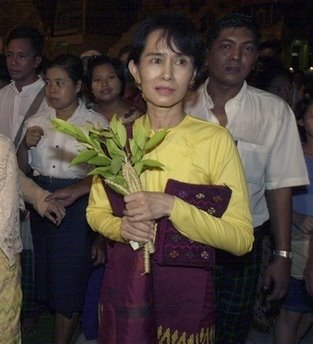


 Posts
Posts


