News & Articles on Burma
Tuesday, 10 May, 2011
-------------------------------------------------------------
China to break ground on huge Burma mine
US Official Seeks Feedback on Burma's New Government
Canada Urges Accreditation of Burma Ambassador
UN special envoy to visit Myanmar
Coal transport plan scrapped
Rangoon's Former Mayor in Corruption Scandal
---------------------------------------------
China to break ground on huge Burma mine
By FRANCIS WADE
Published: 10 May 2011
A trial operation will begin in July on the giant Tagaung Taung nickel mine in northern Burma run by the world’s largest steel manufacturer, but environmentalists have warned of “toxic” consequences.
The deal, signed in July last year, becomes the largest cooperation project for mining between China and Burma. Overseeing the operation will be Chinese metals giant Taiyuan Iron and Steel Group and the China Nonferrous Metal Mining Company (CNMC).
The two are set to sink around US$800 million into the project, located just 200kms from the China border, which will generate some 85,000 tonnes of nickel-iron each year to feed China’s soaring demands for steel.
The dwindling global reserves of nickel has pushed nations like China, the world’s leading steel producer, to rush for control of resources, according to environmentalist Steve Green. Nickel is a key component in steel manufacturing.
He said however that one of the main problems with such projects in Burma is the absence of any post-mining remediation, particularly the lack of tailings management where the waste from the manufacturing process is safely disposed of.
“This means there will be toxic downstream contamination for generations to come,” he said, as the chemicals used in the process seep into waterways. He added that such a large-scale project could also result in the confiscation of local land by the Burmese military.
Taiyuan, the largest steel manufacturer in the world, and CNMC will operate the mine for two decades. Smelting and “service” facilities are already under construction there.
Chinese weapons giant Norinco last year signed a lucrative deal to operate the Monywa copper mine, also in Sagaing division.
Matthew Smith, senior consultant at EarthRights International, told DVB that in both cases, the likelihood of an Environmental Impact Assessment (EIA) being made public prior to commencement of the projects was slim.
Although the Export Import Bank (EXIM) of China provided funding for Tagaung Taung, meaning an assessment may well have been done in keeping with its own environmental regulations, ERI claims that “the chances are no one’s seen it”.
Of Norinco, which reportedly won the contract following the sale of heavy artillery to Burma several weeks prior, Smith said: “Unfortunately Burmese law doesn’t require an EIA of international standards and there’s no evidence the company is guided by any sort of enlightened self-interest.” He added that the “same concerns would apply” for the Tagaung Taung mine.
China has been accused of outsourcing its pollutive industries to countries like Burma where environmental regulations are not enforced by the state. China is battling rising energy demands with rapidly depleting domestic resources.
http://www.dvb.no/news/china-to-break-ground-on-huge-burma-mine/15600
---------------------------------------------
US Official Seeks Feedback on Burma's New Government
By SAW YAN NAING Tuesday, May 10, 2011
A high-ranking US diplomat based in Rangoon is currently traveling in central Burma and speaking with a variety of people—including representatives from the government, civil society and political parties—to get their perspective on Burma's new government, said sources in Rangoon.
Western diplomatic sources based in Rangoon told The Irrawaddy on Tuesday that Larry Dinger, who has been the Chargé d’Affaires at the US embassy in Rangoon since 2008, is making the trip as part of an ongoing effort to engage with key stakeholders throughout Burma.
Myint Thein, the deputy-chairman of the National League for Democracy's (NLD) Chauk Township branch office in Magwe Division, said that Dinger met NLD members in Chauk Township on Monday.
“He [Dinger] asked us if we have any optimism regarding Thein Sein’s speech claiming that the government is building up a democratic country. Is it any change or not? Are there any restrictions still placed on the NLD's political movement?” Myint Thein said.
Myint Thein told Dinger that it is too early to have a positive perspective on the president’s speech. Instead, it is very important to have dialogue, national reconciliation—including with ethnic leaders—and the release of political prisoners while attempting political reform.
“We haven’t seen any progress, so we have to wait and see,” Myint Thein told the US official.
Dinger also met with 15 NLD members in Yenangyaung Township, Magwe Division. Khin Saw Htay, a local organizing committee member of the NLD who attended the meeting, said Dinger asked about her opinion of Thein Sein's speech as well.
“We told him that even though the government announced that it is working on building a democratic nation, they didn’t release political prisoners. We don't accept its announcement. We also don’t support the Constitution and the election,” said Khin Saw Htay.
Khin Saw Htay said she pointed out to Dinger that opposition poltical parties that contested the election can’t do anything for the people of Burma and the new government is dominated by ex-Burmese military leaders.
“I think he also wanted to know how alert the Burmese people are about politics. And he may want to know if the NLD maintains a political movement,” said Khin Saw Htay.
Dinger also met in central Burma with members of political parties who contested the general election in Nov. 2010, including the National Democratic Force (NDF), National Unity Party (NUP) and Democratic Party (Myanmar). His meeting with members of the NDF—a breakaway faction of the NLD—took place in Yenangyaung Township.
Party sources said that Dinger focused on Thein Sein's speech and the survival of the pro-democracy movement and opposition political parties.
Dinger previously held several meetings in Rangoon with opposition leaders and politicians, including NLD leader Aung San Suu Kyi and leaders of the NLD, NDF and Democratic Party (Myanmar), where he talked about US initiated economic sanctions on Burma. In these meetings, Dinger reportedly said the US sanctions were only aimed at putting pressure on Burma to speed up the process towards a democratic government.
The Obama administration said in April that it will continue to engage the Burmese leadership despite the fact that Burma has ignored, and often directly contradicted, the advice of the international community.
At a panel discussion on Burma in Washington D.C. in April, US Deputy Assistant Secretary of State for East Asia and the Pacific, Joseph Y. Yun, told the audience that the Obama administration is trying its best to engage with the Burmese junta, but without any success.
The NLD, which won a landslide victory in the 1990 general election only to have the ruling military junta refuse to transfer power, was dissolved by the Burmese government in 2010 for refusing to register for the November election. http://www.irrawaddy.org/article.php?art_id=21267
-------------------------------------
Canada Urges Accreditation of Burma Ambassador
By LALIT K JHA Tuesday, May 10, 2011
WASHINGTON — A reciprocal accreditation of ambassadors between Canada and Burma would provide Canada with more opportunities to effectively convey to the Burmese government its concerns about human rights and democracy, a Canadian Foreign Ministry official has said.
Canada has been made to wait several months for its ambassador-designate, Ron Hoffman, to present his credentials to Naypyidaw. Canada has said it hopes to finalize the matter soon given that the new Burmese envoy, Kyaw Tin, presented his credentials to Canadian Governor General David Johnston at a simple ceremony in Ottawa last month.
“The reciprocal accreditation of ambassadors will provide us with more opportunities to communicate our key concerns on security, human rights, and democratic development,” said Priya Sinha, a spokesperson for Canada’s Ministry of Foreign Affairs and International Trade.
Canada's most recent ambassador to Burma, Denis Comeau, completed his assignment in July 2007.
“The scheduling of ceremonies for ambassadors to present their credentials is determined by the host country. It is not uncommon for these ceremonies to take a number of months or longer to be organized,” Sinha said when asked why it is taking so long for Canada’s ambassador-designate to present his credentials.
“This new Canadian ambassador has been in Thailand for at least two years trying to get his credential accepted by the junta,” said Tin Maunghtoo, of Canadian Friends of Burma, adding that Hoffman went to Burma earlier this year to present his credentials. “But because of some situations such as the arrival of the new year, [an official visit from] senior officials from China, and the official inauguration of the new government and president, his credential process was not completed,” he said.
Although the ambassadorial posts have been vacant for the past few years, diplomatic relations between Canada and Burma were not broken off during this period.
“We commend individuals and organizations who have sought to increase awareness and understanding of democratic rights and processes among the Burmese people while operating in a repressive environment. We look forward to engaging with these stakeholders as they continue working to try and build a truly democratic Burma,” Sinha told The Irrawaddy. http://www.irrawaddy.org/article.php?art_id=21263
-----------------------------------
UN special envoy to visit Myanmar
May 10, 2011, 1:45 GMT
Yangon - United Nations special envoy to Myanmar Vijay Nambiar is to visit the country this week, a government official said Tuesday.
'Nambiar will visit here on Thursday,' an official who requested anonymity told the German Press Agency dpa. 'He will stay in Myanmar for three or four days and is scheduled to meet both government and opposition figures.'
Nambiar is expected to meet Myanmar's new president, Thein Sein, and opposition leader Aung San Suu Kyi, according to the official.
It would be Nambiar's first meeting with Suu Kyi, who was only released from six years of house detention on November 13. She has spent about 15 of the past 21 years under house arrest.
The UN special envoy last visited Myanmar five months ago, following the November 7 general election which brought the pro-military Union Solidarity and Development Party to power.
The polls were generally slammed by Western democracies as a sham, since they excluded democracy heroine Suu Kyi and her National League for Democracy (NLD) party.
Myanmar has been under military rule since 1962. An election in 1990 was won by the NLD but they were blocked from assuming power by the ruling junta.
The NLD boycotted the November polls after the military passed regulations that would have forced them to drop Suu Kyi from their party in order to contest the elections.
http://www.monstersandcritics.com/news/asiapacific/news/article_1638079.php/UN-special-envoy-to-visit-Myanmar
----------------------------------------
Bangkok Post
Coal transport plan scrapped
Published: 10/05/2011 at 12:00 AM
Newspaper section: News
CHIANG RAI : A lignite mining company has scrapped a plan to transport 5,200 tonnes of coal daily from Burma through Mae Fa Luang and Mae Chan districts after fierce local protests.
Saraburi Coal Co representative Pakon Ruamthong told authorities of the decision in a meeting yesterday.
The company tried in vain for two years to convince residents to allow the transportation of the imported coal.
The company planned to use up to 200 six and 10-wheel trucks a day to take lignite from the Mong Kok mine in the eastern Shan State via Ban Mong Kao Lang in Mae Fa Luang and use tambon Pa Sang in Mae Chan as a transit point.
The lignite was to be supplied to cement producing plants in Saraburi.
Protesters, including former beauty queen Preeyanuch Parnpradub, who has a house in Pa Sang, were worried the lignite would pollute the air and water enroute.
The company, an affiliate of Italthai Public Co, had proposed covering the coal in the trucks with canvas and limiting the trucks' speed to 25 kilometres per hour as they pass through communities.
Mr Pakon said the firm will now ask Burmese authorities to allow the lignite to be transported via the town of Tachilek, opposite Mae Sai district in Chiang Rai, instead.
http://www.bangkokpost.com/news/local/236193/coal-transport-plan-scrapped
--------------------------------------------
Rangoon's Former Mayor in Corruption Scandal
By THE IRRAWADDY Tuesday, May 10, 2011
TEXT SIZE
The former mayor of Rangoon, Aung Thein Linn, has been summoned to answer questions concerning allegations that he stole at least two billion kyat [more than US $2 million] of Rangoon Municipal Committee funds during his tenure in office from 2003 to 2011, said sources in the former capital.
Aung Thein Linn's successor Hla Myint summoned him last month to explain where the missing funds are, according to a source at Rangoon Municipal Committee. However, Aung Thein Linn is yet to appear.
Incumbent Rangoon Mayor Hla Myint is a retired army colonel and former diplomat.
"[Aung Thein Linn] sequestered hundreds of plots of land and a number of apartments,” said a civil servant. “He also awarded himself a massive slice of the budget for proposed road constructions. Very little was ever spent on roads during his time in office.”
Rumors that Aung Thein Linn had been arrested have circulated around Burma and abroad in recent days. However, his son-in law, Kyaw Thu Soe, told The Irrawaddy that he had not been detained.
Aung Thein Linn is currently a member of the Central Committee at the Rangoon Division branch of the ruling Union Solidarity and Development Party (USDP).
He won the parliamentary seat for South Okkalapa as a USDP candidate in November's election, but was widely alleged to have rigged the polls.
Aung Thein Linn reportedly seized for himself plots of land in Shwe Pyi Thar, South Dagon and North Dagon townships in Rangoon Division, while allegedly misusing hundreds of millions of kyat from a cement factory in Tharsi Township in Mandalay Division. http://www.irrawaddy.org/article.php?art_id=21265
Wednesday, May 11, 2011
News & Articles on Burma-Tuesday, 10 May, 2011


Tuesday, May 10, 2011
News & Articles on Burma-Monday, 09 May, 2011
News & Articles on Burma
Monday, 09 May, 2011
-------------------------------------------------------------
ASEAN must think twice before handing chair to Burma
Burma's Asean Chairmanship Still Uncertain
Burma Conference Banned From Chiang Mai
Asean Open to Burmese Leadership, But Democratic Reforms Still Needed
Local Authorities in Shan State Profit from Opium Production
Burma not confirmed as chair in 2014
ASEAN mulls single currency
Visa on arrival hopes dashed
-----------------------------------------
Asian Correspondent
ASEAN must think twice before handing chair to Burma
By Zin Linn May 09, 2011 3:18PM UTC
A communiqué issued at the end of the two-day ASEAN leaders’ summit in Jakarta said: “We considered the proposal of Myanmar (Burma) that it would host the ASEAN summits in 2014, in view of its firm commitment to the principles of ASEAN.”
It also emphasized that ASEAN leaders supported the “steady progress and political developments in Myanmar” after it held general elections and formed a new government in March, calling the ballot “successful.” But, ASEAN leaders overlook the true story about the November 7 election, which unfairly allowed the junta-backed party to rig the votes.
The election, Burma’s first in 20 years, was severely criticized by the opposition and critics in the West as undemocratic.
The Asian Network For Free Elections (ANFREL) released a statement dated November 9 calling attention to ballot counting procedures that made by the Union Election Commission (UEC). It said the counting process was not made transparent to the public and the media beginning with the first advance voting period.
Moreover, ethnic nationalities in Burma that fight for self-determination were prevented from participating in the election. More than 3,000 villages in ethnic nationality areas have also been excluded from the electoral exercise because of continuing armed conflict.
Thus, calling the ballot “successful” means ASEAN supports an undemocratic vote-rigging election in Burma.
Southeast Asian leaders have no objection to Burma or Myanmar’s request to chair the 10-member ASEAN bloc in 2014, as long as it continues making progress towards democracy, Indonesia’s president said on Sunday after the group’s latest summit.
“ASEAN leaders do not object in principle,” Susilo Bambang Yudhoyono said at his closing news conference. “But Myanmar, which is a focus of world attention, is expected to continue progress on democracy so when it becomes chair it does not generate negative views.”
However, the Thein Sein government has been reinforcing its troops in several areas where ethnic armed groups that did not follow the border guard force (BGF) plan are based, according to ethnic sources. Armed reinforcements have been reported in southern Karen State and in central and southern Shan State in eastern Burma since early this year.
Sporadic armed clashes have been going on recently between the junta’s troops and armed ethnic groups such as the Karen National Union (KNU), the Democratic Karen Buddhist Army (DKBA) Brigade 5, the Shan State Army–North (SSA-North) and Shan State Army-South (SSA-South).
So, the Burma Army has been going on with war against the ethnic minorities who are defending their basic civil rights, including self-determination. If ASEAN leaders consider offering the chair to Burma (Myanmar) in 2014, they should pressure Thein Sein government to stop the unjust war on the ethnic people. They ought to take facilitator role to stop the civil war in Burma. In this civil war, Burmese soldiers have been committing lots of crimes – lootings, rapes, burning villages, destroying crops, killing innocent ethnic villagers, forced-labor and forced conscription.
Moreover, the Thein Sein government still detains over 2,000 political prisoners including important ethnic leaders. To take the ASEAN chair, Burma must not keep political prisoners who really are committing no crime but expose their political beliefs.
In addition, the Thein Sein government must allow freedom of expression and a free press. Burma is one of the most autocratic and covered up countries in the world, due to both its restrictive press laws and its practice of punishing journalists. In recent elections, the Burmese junta did not allow press freedom for both Burmese and international news media.
It was a significant hindrance to Burma becoming a free society. So, the analysts state that in the absence of media freedom Burma (Myanmar) should not act as ASEAN chair since there will not be accountability and transparency.
Reporters Without Borders released its annual press freedom report in October 2010, ranking Burma 174th out of 178 countries. On October 18, Burma announced that foreign journalists would not be granted access to Burma to cover the news on elections.
Looking at the facts on the ground in Burma, there are more military attacks in the ethnic minority areas, more forced labor, more child soldiers, more political prisoners, more refugees, more restrictions toward media, more control on Internet users and civil societies.
So, ASEAN needs to be very cautious and to put more pressure on Burma until the fundamental benchmarks for chairmanship are carried out before 2014.
http://asiancorrespondent.com/54080/asean-should-not-decide-simply-on-chairmanship-to-burma/
---------------------------------------
Burma's Asean Chairmanship Still Uncertain
By SAW YAN NAING Monday, May 9, 2011
It is still uncertain if the Association of Southeast Asian Nations (Asean) will allow Burma to assume the bloc's chairmanship in 2014 despite concerns over the country's human rights record, according to sources close to Asean leaders.
According to a statement released yesterday, the leaders of Asean said they would consider Burma's proposal to host the Asean Summits in 2014 based on its firm commitment to the principles of the regional grouping.
“What we hear is that there need to be some missions into Burma, probably by Indonesia and maybe joined by the Philippines, to examine whether Burma is ready to chair Asean in 2014,” Phil Robertson, the deputy Asia director at Human Rights Watch (HRW), told The Irrawaddy on Monday.
Burmese President Thein Sein attended the May 7-8 Asean Summit in Jakarta, Indonesia, on his first trip abroad as president since he took office in March. He said that Burma is ready for the Asean chairmanship in 2014.
Singapore, one of the founding members of Asean, did not agree with Burma’s proposal. However, the Burmese regime's bid to become Asean's chairman will be discussed again at an upcoming Asean summit in Bali in October.
Burma skipped its turn to act as chairman of the grouping in 2006 due to international pressure over its poor human rights records.
“What Asean should be doing is putting human rights issues first. And they should be very clear and say that without human rights improvement in Burma, there is no way we can consider the Burmese government’s request to become the chair of Asean,” said Robertson.
Robertson said a major concern was that no one at the Asean meeting was talking about the release of 2,000 political prisoners, the continuing use of forced labor and offensives against ethnic nationalities.
Last weekend, HRW released a statement urging Asean to reject Burma’s request to become chairman until the Burmese government takes genuine steps towards improving human rights.
To improve its human rights record, Burma should release political prisoners, stop forced labor and work on political reconciliation with all stakeholders, including pro-democracy leader Aung San Suu Kyi and leaders of ethnic minorities, said Robertson.
Despite Burma's lack of action on addressing these issues, the Asean leaders said in their statement that they reiterated their support for the “steady progress and political developments” in Burma following the holding of general elections in 2010 and the formation of a new parliamentary government.
Debbie Stothard, the coordinator of the Alternative Asean Network on Burma (Altsean), said that Burma was not qualified to chair Asean in 2014 because the current Burmese leaders have not made an effort to achieve genuine democratic reform in the country.
She said that real change in Burma would include the release of all political prisoners, a national cease-fire, a tripartite dialogue between the ruling regime, the democratic opposition and ethnic groups, and ending war crimes and crimes against humanity committed by the Burmese army in its campaigns against ethnic minority groups.
Ohn Kyaing, a spokesperson of the dissolved main opposition party, the National League for Democracy, agreed that the regime still has far to go before it can take a leading role in Asean. “In fact, there has been no change in Burma, even though it has announced a new government,” he said, speaking to The Irrawaddy on Monday.
He also said he didn't think Asean would give the chairmanship to Burma, as it would damage the image of the bloc.
HRW also pointed out that Burma has failed to address concerns repeatedly raised by Asean leaders in past summits. It said that elections held last November were a sham, as international election observers were not allowed into the country for monitoring. The main military-backed party claimed around four-fifths of the seats in Parliament and now dominates the government.
Khin Maung Swe, a leader of the National Democratic Front, one of the opposition parties that contested the election, said: “It is reasonable for Burma to seek to become the chair of Asean because it is a member of the Asean bloc, and the decision will be made by Asean leaders. But to show progress on human rights and democracy, it is necessary to at least release political prisoners.”
Thu Wai, the chairman of the Rangoon-based Democratic Party (Myanmar), which also ran last year, said that Burma may be qualified to host the Asean Summit in 2014, but it is still doubtful that the current government is committed to real political reform.
Burma become a member of Asean in 1997 along with Laos, while Cambodia joined the grouping in 1999. Asean was firstly established in 1967 by Indonesia, Malaysia, the Philippines, Singapore and Thailand. It has since expanded to include 10 nations in the Southeast Asian region. http://www.irrawaddy.org/article.php?art_id=21259
----------------------------------------------
Burma Conference Banned From Chiang Mai
By KO HTWE Monday, May 9, 2011
Thailand's National Security Council (NSC) has banned a Burmese pro-democracy event in Chiang Mai following a complaint from Naypyidaw, according to sources in the northern Thai city.
The prohibition come after news leaked to Burmese officials that outlawed ethnic armed groups planned to hold a meeting at a hotel in Chiang Mai on May 3 to 7. According to a Thai official who asked to remain anonymous, the Burmese government then sent an objection to their Thai counterparts.
“The order came down from the NSC,” said the official. “The Burmese government got wind that the United Nationalities Federal Council [UNFC] had scheduled a conference in Chiang Mai. We don’t know who gave them the information. It seems that there is informer within that group.”
The UNFC is an umbrella group of Burmese resistance movements and ethnic militias, including the Karen national Union, the Kachin independence Organization, the Karenni National Progressive Party, the New Mon State Party, the Shan State Army and the Chin National Front.
Other Burmese events in Chiang Mai, including a celebration of Aung San Suu Kyi's birthday on June 19, have also been banned by the Thai authorities.
Burmese exile groups have enjoyed relative freedom in Chiang Mai in recent years. Many previously reported harassment and repression under the administration of former Prime Minister Thaksin Shinawatra in the early 2000s.
Speaking to The Irrawaddy on Monday, Khuensai Jaiyen, the editor of Chiang Mai-based Shan Herald Agency for News, said that previously the Burmese government only learned about the opposition groups' meetings after they had concluded.
“The Thai authorities told the organizers that they will not allow such a meeting on Thai soil,” he said. “They said that the ban includes any meeting involving groups that are opposed to the new Burmese government.
“It appears that there is an informer inside the opposition group,” he added. “It threatens unity within the alliance.”
The immigration office in Chiang Mai has also instructed hotels and conference centers in Chiang Mai to inform them of any suspected meeting scheduled by Burmese opposition group, according to a local hotelier.
At the 15th Asean Summit in Cha-am, Thailand, in 2009, Burma's then Prime Minister Thein Sein told his Thai counterpart Abhisit Vejjajiva that Burma will not allow anyone to use Burmese territory to attack Thailand. http://www.irrawaddy.org/article.php?art_id=21258
------------------------------------------------
Asean Open to Burmese Leadership, But Democratic Reforms Still Needed
By ISMIRA LUTFIA / JAKARTA GLOBE Monday, May 9, 2011
Indonesia, as the current chair of the Association of Southeast Asian Nations, says Burma still needs to prove its move toward democracy is sincere if it wants to lead the bloc in 2014.
In his closing remarks at the 18th Asean Summit in Jakarta, which ended on Sunday, President Susilo Bambang Yudhoyono said the regional grouping’s leaders “in principle” did not object to Burma becoming chair.
He said Laos, which was set to assume the rotating leadership of the 10-member bloc in 2014 based on the alphabetical order of member countries, had proposed it swap with Burma so it could concentrate on ongoing domestic issues.
“Based on Laos’s request, Myanmar [Burma] has been asked to take the chairmanship in 2014 and Laos will assume it in 2016,” he said. “In principle, Asean’s leaders do not object to the proposal.”
However, Yudhoyono said Burma was expected to show progress in its move toward democracy so it would not cast the bloc in a negative light.
Burma’s chairmanship will be discussed again at the next regional summit in November.
“We hope that Myanmar [Burma] will continue with the process since it has caught the world’s attention,” the president added.
The 2014 chairmanship will come at a critical time for Asean since it will be the last year before the planned single regional community is realized in 2015.
Foreign Affairs Minister Marty Natalegawa said on Thursday that Burma’s readiness to assume the chairmanship “extends beyond practical readiness” and that Indonesian officials would visit Burma to review developments in its new government and the process of becoming a more democratic country.
Burma’s military junta held general elections in November in an effort to transition to civilian rule, leading Asean members to push the United States and Europe to drop sanctions against it.
But many observers dismissed the elections as a sham and said the generals would still be pulling the strings behind the scenes. The country’s Parliament is still dominated by the military and its political proxies.
Any decision to allow Burma to chair Asean could provoke strong protests from Western governments and human rights groups, and could complicate efforts by Asean to work more closely with the US and the European Union.
Human Rights Watch sharply criticized Asean’s readiness to allow Burma to head the grouping in 2014. “This is unfortunately a decision of political convenience over political principle, and indicates once again that human rights is not a priority for Asean,” said Phil Robertson, HRW’s deputy Asia director.
Although the rotating chairmanship of Asean is determined by alphabetical order, Indonesia asked at the 16th Asean Summit in April 2009 to swap its turn with Brunei so it could focus on hosting the 21st Asia-Pacific Economic Cooperation Summit in 2013.
Following the 2009 summit in Hanoi, however, Asean leaders said such an exchange would not create a precedent, a principle that was reaffirmed by Asean Secretary General Surin Pitsuwan after the summit.
He said it would be a “one-off swap” and would not further affect the rotation system prescribed by the Asean Charter. http://www.irrawaddy.org/article.php?art_id=21254
-----------------------------------------------
Local Authorities in Shan State Profit from Opium Production
By NAYEE LIN LATT Monday, May 9, 2011
Local army and police units in southern Shan State are reportedly imposing a “tax” of up to 80,000 kyat (US $96) per acre on farmers growing opium poppies in exchange for turning a blind eye to cultivation of the illicit crop, according to local residents.
“The tax ranges from 50,000 to 80,000 kyat, depending on how far the farm is from the city,” said a poppy farmer in Mongpan.
There are many areas in southern Shan State known for opium production, including Inlone, Loilem, Mongpan, Hopong, Pinlaung, Laikha, Hsihseng, Kunhing and Panglong.
Farmers in these areas prefer to grow opium rather than other crops because they can make about 800,000 to 900,000 kyat ($964-1,084) per viss (1.63) of raw opium, according to the farmer.
“Even raw opium pays a good price, so farmers don't mind paying the tax if it means they can grow as many acres as they want. And the local authorities don't care how much opium is produced, as long as we pay the tax,” he added.
In July 2010, Burma was named the world's second-largest opium production country by the United Nations Office on Drugs and Crime (UNODC). Burma is also ranked Southeast Asia's fourth-largest producer of methamphetamines.
Most of the money for large-scale opium cultivation comes from wealthy Chinese businessmen, who have far more money to invest than local farmers. Some Chinese businessmen pay to grow hundreds of acres of poppies, said a Loilem resident.
“There is more interest in growing opium poppies in recent years because business is good. But it is mainly Chinese businesspeople fueling this growth, as local farmers are too poor and traditionally only plant enough to support themselves and their families,” said the resident.
“You can take as many acres as you want to grow opium poppies, as the land is considered to be wild. Wealthy Chinese are involved in a big way, purchasing many acres of land,” said a farmer in Mongpan.
In 2009, UNODC reported that Burma had 3,200 hectares of land under opium poppy cultivation, up 11 percent from the previous year, and 50 percent more than in 2006. Despite these increases, however, Burma's government claims it is committed to eliminating the production of narcotic drugs in the country.
Thein Nyunt, the secretary of the Central Committee for Progress of Border Areas and National Races, was quoted by The New Light of Myanmar on March 24 as saying that drug elimination remains a key part of a 15-year regional development plan due to end in 2014.
However, farmers say that government efforts to crack down on opium production have been minimal.
“The authorities sometimes destroy opium poppy fields, but only ones with a poor yield, or ones that have already been harvested,” said an opium farmer in Lai-Hla Township.
In addition to the local authorities, Pa-O cease-fire groups in Hopong, Hsihseng, Pekon and Panglong townships also demand payment for permission to grow opium poppies, he said.
Opium cultivation is also an important source of income for many others in this impoverished part of Shan State. Sap collectors, who make incisions on the poppy pods to extract the raw opium, can make more than 10,000 kyat ($12) per day during the harvest period, but wages are even higher if their services are urgently needed, according to local residents.
Local villagers are not the only ones earning these wages. Local people say that others, including university students and relatives of soldiers and police based in the area, are also seen harvesting the sticky liquid that is the raw material of a multi-billion drugs industry.
“Due to job scarcity and the lack of regular classes at university, many students from Panglong come to work in the fields. You can even see children and drug addicts out there, as well as family members of local soldiers and police, because it's an easy way to make money,” said a resident of Loilem.
A report by the US State Department said that the illicit drug trade in Burma is strongest in remote and conflict-affected ethnic areas of the country. It also notes that drug trafficking-related corruption among mid-level civilian and military officials is rampant, and accuses the Burmese regime of failing to make the fight against illicit drugs a priority. http://www.irrawaddy.org/article.php?art_id=21256
---------------------------------------
Bangkok Post
Burma not confirmed as chair in 2014
Achara Ashayagachat
Published: 9/05/2011 at 12:00 AM
Newspaper section: News
JAKARTA : Asean failed to resolve the issue of Burma's chairmanship yesterday, the last day of the bloc's 18th summit in Jakarta.
A statement from the current chair, Indonesia, only reiterated support for the steady progress and political development in Burma following a general election and the formation of a new government.
"We considered the proposal of Myanmar to host the Asean summit in 2014, based on its commitment to the principles of Asean," the statement said.
While the news was welcomed by some exiled Burmese dissidents, their concerns have not yet been rebutted as the majority of Asean members including Thailand have expressed support for Naypyidaw.
Previously, senior officials and foreign ministers had consented to Burma's request to assume the rotating chair, which it agreed not to take up in 2005 to pursue domestic political reform.
However, Indonesia reasserted that the question of Burma as chair was not urgent and could be discussed at the next Asean summit in October in Bali, sources said.
Foreign Minister Kasit Piromya said Thailand had no objection to Burma assuming the chair as its November election was a critical turning point.
Asean has also stipulated that whenever Burma had a new government, it could resume the chair, he added.
However, Burma should also undertake appropriate steps including the release of political prisoners, freer mobility for the people and liberalisation towards democracy, Mr Kasit said.
"These components could seal Burma's stronger chairmanship of Asean. It's like a score-card," he said.
Khin Ohnmar, from Burma Partnership, said it was a huge relief that Burma's formal request for the chair of Asean was not approved.
But she noted that Asean should not fall into the same trap as when they accepted Burma as a member in the hope that engagement would help bring about democratic change.
"Asean should start engaging with Daw Aung San Suu Kyi, ethnic representatives, the National League for Democracy and others to support the national reconciliation process," she said.
Aung Myo Min, director of the Human Rights Education Institute of Burma, said allowing Burma to take the chair of Asean in 2014 would jeopardise the bloc's community goal in 2015.
"How can a country with no respect for dialogue, for political and peaceful solutions, strengthen regional peace as a whole?" he said.
Writer:
http://www.bangkokpost.com/news/local/235999/burma-not-confirmed-as-chair-in-2014
-----------------------------------------
ASEAN mulls single currency
By JOSEPH ALLCHIN
Published: 6 May 2011
The prospect of a single ASEAN currency was raised at a high level ministerial meeting in Hanoi this week in a move that would ask serious questions of the regional bloc, not least its less developed economies like Burma.
A briefing paper was prepared for the ASEAN+3 meeting of deputy finance ministers and was the first time that such an idea has been studied “concretely”, according to Dow Jones financial news.
Experts suggest however that this could spell “the end of the regime” in Burma. Australian-based Burma economics expert Sean Turnell told DVB that such a move would bar the Burmese government from funding itself through printing money as it pleases. That practice, he said, has led to the “biggest divergence” between an official and unofficial currency in history.
The briefing paper was prepared by Japan’s Institute for International Monetary Affairs, Singapore’s Nanyang Technological University, and the University of Indonesia, with an eye to “accelerate the integration process”, the Dow Jones report said.
“As economic integration deepens further in East Asia, it would be more beneficial to East Asian countries to adopt an exchange rate regime that collectively floats against the US dollar and the euro while maintaining a stable intra-regional exchange rate.”
This could initially be achieved through what is known as a currency basket, where an average value of a group of regional currencies is worked out and traded against international currencies such as the dollar or the euro.
Burma’s dual exchange rate and massive inflation rates would be a major stumbling block, but the prospect of a single currency could alternatively be a way out of the country’s persistent currency woes.
Turnell believes that ASEAN ignoring Burma’s self-financing through printing money is a “massive problem… which would undermine any sought of single currency”. If this was prohibited, as it is in the EU, for example, which has a single currency, then the Burmese regime’s “main financing vehicle would disappear in a single stroke”.
Europe’s experience moreover, where economies such as Greece, Ireland and Portugal collapsed under the weight of enormous government debt, has warned other blocs away from seeking a single currency. And while the divergence between Greece and Germany is great, the two systems are not as alien as Singapore’s to Burma’s, for instance.
While the prospect of an ASEAN single currency or regional monetary unit (RMU) is at present a distant possibility, moves such as the China-ASEAN free trade agreement have encouraged many to look at such mechanisms as most East Asian economies continue to perform well.
http://www.dvb.no/news/asean-mulls-single-currency/15562
------------------------------------
Visa on arrival hopes dashed
By SHWE AUNG
Published: 9 May 2011
Burma will not be bringing back the visa-on-arrival scheme anytime in the near future because of a lack of improvement in tourism infrastructure, the tourism minister has stated.
The announcement dashes hopes of a reintroduction of the popular scheme that saw tourism numbers to the isolated country hit record highs last year, despite it only being active for four months.
A businessman who attended a recent meeting with Hotel and Tourism Minister Tint Hsan said it would instead be a step by step process.
“He [Tint Hsan] said it would be embarrassing if we open the visa on arrival when our country is not yet ready [to service tourists],” he said. “Last year, big crowds of tourists came in and it got out of control. We need to prepare a lot.”
Hotel and tourism business owners also reportedly urged the minister to appoint a ‘Visit Myanmar Year’ as it did in 1996, although that was roundly seen as a failure.
Burma remains Southeast Asia’s least travelled country, largely due to the controversy surrounding much of the tourism industry: rights groups claim that the money spent by tourists lines the pockets of the ruling regime, which has been known to use slave labour in the development of tourism infrastructure.
Numbers of visitors are rising however, with figures for last year showing a 33 percent increase on 2009. Still, however, the 300,000-odd that visited in 2010 pale ni comparison to the roughly 14 million that hit Thailand each year.
The visa scheme was halted in September last year after managing to attract 80,000 visitors in the four months of its existence. Observers speculated that it had been stopped to prevent journalists entering under the guise of tourists to cover the November elections.
http://www.dvb.no/news/visa-on-arrival-hopes-dashed/15568
__._,_.___
Monday, May 9, 2011
News & Articles on Burma-Monday, 08 May, 2011
News & Articles on Burma
Monday, 08 May, 2011
-------------------------------------------------------------
Asean Open to Burma Chairing Bloc: SBY
Asean considers giving Burma chairmanship in 2014
Myanmar to chair ASEAN chair despite rights record
Myanmar could lead ASEAN in 2014
ASEAN to agree to give Myanmar chairmanship
ASEAN considers giving Myanmar chairmanship in 2014
EU to negotiate FTA with all ASEAN countries, except Myanmar
----------------------------------------------
Asean Open to Burma Chairing Bloc: SBY
May 08, 2011
Southeast Asian leaders have no objection to Burma’s request to chair the 10-member Asean bloc in 2014, as long as it continues making progress towards democracy, Indonesia’s president said on Sunday after the group’s latest summit.
“Asean leaders do not object in principle,” Susilo Bambang Yudhoyono said at his closing news conference.
“But Burma, which is a focus of world attention, is expected to continue progress on democracy so when it becomes chair it does not generate negative views.”
A communique issued at the end of the two-day Asean leaders’ summit in Jakarta said: “We considered the proposal of Burma that it would host the Asean summits in 2014, in view of its firm commitment to the principles of Asean.”
It added that Asean leaders supported the “steady progress and political developments in Burma” after it held general elections and formed a new government in March, calling the ballot “successful”.
A previous draft communique said Asean had already “consented to the proposal” to chair the bloc in 2014. But the final draft, and Yudhoyono’s comments, suggest a final decision will be made at a later date.
Burma held elections earlier this year to switch from military to civilian rule, leading the Association of South East Asian Nations (Asean) to push the United States and Europe to drop sanctions against it.
But many observers dismissed the election as a sham that has kept the generals in power behind the scenes.
Any decision to allow Burma to chair Asean would provoke protests from Western governments and rights groups, and would complicate efforts by Asean to work more closely with the United States and the European Union.
Rights group Human Rights Watch sharply criticized Asean’s apparent readiness to allow Burma’s 2014 presidency.
“This is unfortunately a decision of political convenience over political principle, and indicates once again that human rights is not a priority for Asean,” said Phil Robertson, the HRW’s Asia deputy director.
Reuters http://www.thejakartaglobe.com/home/asean-open-to-burma-chairing-bloc-sby/439858
-----------------------------------------------
Asean considers giving Burma chairmanship in 2014
JAKARTA, INDONESIA - May 08 2011 14:03
South-east Asian leaders said on Sunday they were considering allowing Burma to chair the 10-member Asean group in 2014, backing away from an earlier draft statement that said they had already agreed to the country's request.
A communique issued at the end of a two-day Asean leaders' summit in Jakarta said: "We considered the proposal of Myanmar [Burma] that it would host the Asean summits in 2014, in view of its firm commitment to the principles of Asean."
It added that Asean leaders supported the "steady progress and political developments in Myanmar" after it held general elections and formed a new government in March, calling the ballot "successful".
A previous draft communiqué said Asean had already "consented to the proposal" to chair the bloc in 2014.
Burma held elections earlier this year to switch from military to civilian rule, leading the Association of South East Asian Nations (Asean) to push the United States and Europe to drop sanctions against it.
But many observers dismissed the election as a sham that has kept the generals in power behind the scenes.
Any decision to allow Burma to chair Asean would provoke protests from Western governments and rights groups, and would complicate efforts by Asean to work more closely with the United States and the European Union. - Reuters http://mg.co.za/article/2011-05-08-asean-considers-giving-burma-chairmanship-in-2014/
-----------------------------------------
Myanmar to chair ASEAN chair despite rights record
STAFF WRITER 12:28 HRS IST
Jakarta, May 8 (AP) Myanmar will likely take over the rotating chair of the Association of Southeast Asian Nations in 2014 despite the military-dominated country's record on human rights.
The regional grouping is supposed to rotate the post every year between its 10 member countries.
Myanmar was forced to skip its turn in 2005 after coming under heavy pressure from the international community over slow progress on national reconciliation and human rights.
A draft of the ASEAN chairman statement seen by The Associated Press and to be issued at the close of a two-day summit later today says Southeast Asian leaders "consented to the proposal of Myanmar that it would host the ASEAN Summits in 2014. http://www.ptinews.com/news/1575244_Myanmar-to-chair-ASEAN-chair-despite-rights-record-
--------------------------------------
Myanmar could lead ASEAN in 2014
Dina Indrasafitri, The Jakarta Post, Jakarta | Sun, 05/08/2011 8:00 AM | World
ASEAN leaders will discuss Myanmar’s request to chair the grouping in 2014 on Sunday, but as Indonesia wants to maintain engagement with Myanmar, ASEAN will likely let the reclusive country take the post.
Myanmar president Thein Sein, who heads the military-backed party that overwhelmingly won controversial general elections late last year, requested the country chair ASEAN in 2014 at Saturday’s leaders’ meeting.
“Today we heard Myanmar’s request, which will be discussed [Sunday],” Indonesian Foreign Ministry director general for ASEAN cooperation Djauhari Oratmangun said on the sidelines of the 18th ASEAN Summit in Jakarta on Saturday.
Foreign Ministry director for ASEAN political cooperation Ade Padmo Sarwono said Indonesia, a supporter of engaging Myanmar, would listen to the views of other member states before making a decision.
Officials said Saturday that Laos supported Myanmar’s bid while Thailand and several other countries indicated they weren’t opposed to Myanmar chairing ASEAN in 2014, while Singapore is reported to have said it would be better to push back the date because of human rights concerns.
Given the way ASEAN makes decision, officials said there was no reason to reject Myanmar’s bid as Indonesia and the other ASEAN states backed the results of the country’s election.
“Myanmar feels they have completed their democratization process with the election, and with the release of [pro-democracy icon] Aung San Suu Kyi they want to claim their right as possible chair,” an ASEAN official said on condition of anonymity.
The grouping rotates its chair every year. However, Myanmar was forced to skip its turn in 2005 after coming under heavy pressure from the international community over its stalled progress on national reconciliation and human rights issues.
ASEAN’s likely decision to allow Myanmar to chair the group in 2014 will face criticism from regional and international civil society groups.
New York-based Human Rights Watch urged ASEAN to reject Myanmar’s request until the country’s government took genuine steps toward improving human rights, including the release of more than 2,000 political prisoners.
HRW pointed out that Myanmar failed to address concerns repeatedly raised by ASEAN leaders in past summits.
It said Myanmar held sham elections in November 2010, with widespread restrictions on opposition parties, continued detention of political activists, and severe limits on basic freedoms of expression, association, and assembly, with international election monitoring not allowed inside as the main military-backed party swept the large majority of seats and now dominates the government.
“Rewarding Burma [Myanmar] with ASEAN’s chairmanship aft er it staged sham elections and still holds 2,000 political prisoners would be an embarrassment for the region,” Elaine Pearson, HRW’s deputy Asia director, said. http://www.thejakartapost.com/news/2011/05/08/myanmar-could-lead-asean-2014.html
------------------------------------------
ASEAN to agree to give Myanmar chairmanship
(Reuters)
8 May 2011
JAKARTA - Southeast Asian leaders on Sunday will agree on Sunday to allow Myanmar to chair the 10-member ASEAN group in 2014, a draft statement seen by Reuters said, a move likely to spur protests from Western nations and rights groups.
Myanmar held elections earlier this year to switch from military to civilian rule, leading the Association of South East Asian Nations (ASEAN) to push the United States and Europe to drop sanctions against it.
But many observers dismissed the election as a sham that has kept the generals in power behind the scenes.
“(We) consented to the proposal of Myanmar that it would host the ASEAN summits in 2014, in view of its firm commitment and dedication to implement the ASEAN community building as well as to ASEAN solidarity,” said the draft statement to be released on Sunday.
The draft added that ASEAN leaders supported the “steady progress and political developments in Myanmar” after it held general elections and formed a new government in March, calling the ballot “successful”.
ASEAN has in the past, along with Western nations, called on Myanmar to include pro-democracy opposition leader Aung San Suu Kyi in any political solution, and so the decision appears to be a change of stance.
Rights group Human Rights Watch slammed the ASEAN decision.
“This is unfortunately a decision of political convenience over political principle, and indicates once again that human rights is not a priority for ASEAN,” Phil Robertson, the HRW’s Asia deputy director said.
http://www.khaleejtimes.com/displayarticle.asp?xfile=data/international/2011/May/international_May359.xml§ion=international&col =
-------------------------------------------
ASEAN considers giving Myanmar chairmanship in 2014
JAKARTA | Sun May 8, 2011 3:43pm IST
Regional leaders pose for a group photo prior to a dinner upon arrival at the 18th ASEAN Summit in Jakarta, Indonesia May 7, 2011. REUTERS/Achmad Ibrahim/Pool
(Reuters) - Southeast Asian leaders said on Sunday they were considering allowing Myanmar to chair the 10-member ASEAN group in 2014, backing away from an earlier draft statement that said they had already agreed to the country's request.
A communique issued at the end of a two-day ASEAN leaders' summit in Jakarta said: "We considered the proposal of Myanmar that it would host the ASEAN summits in 2014, in view of its firm commitment to the principles of ASEAN."
It added that ASEAN leaders supported the "steady progress and political developments in Myanmar" after it held general elections and formed a new government in March, calling the ballot "successful".
A previous draft communique said ASEAN had already "consented to the proposal" to chair the bloc in 2014.
Myanmar held elections earlier this year to switch from military to civilian rule, leading the Association of South East Asian Nations (ASEAN) to push the United States and Europe to drop sanctions against it.
But many observers dismissed the election as a sham that has kept the generals in power behind the scenes.
Any decision to allow Myanmar to chair ASEAN would provoke protests from Western governments and rights groups, and would complicate efforts by ASEAN to work more closely with the United States and the European Union.
(Reporting by Olivia Rondonuwu; Editing by Andrew Marshall) http://in.reuters.com/article/2011/05/08/idINIndia-56855220110508?rpc=401&feedType=RSS&feedName=worldNews&rpc=401
--------------------------------
EU to negotiate FTA with all ASEAN countries, except Myanmar
Sunday, 08 May 2011 02:37
The Jakarta Post, Jakarta | Sat, 05/07/2011
The European Union is looking forward to engaging in free trade agreements with ASEAN member nations. EU Trade Commissioner Karel De Gucht talked to The Jakarta Post’s Sita Winiawati Dewi and other reporters in Jakarta on Friday.
What is the progress of FTA negotiations with Indonesia?
With Indonesia, the idea last year was to have a Vision Group to assemble a report, and they have come up with their report and it will be officially presented in June in Europe. All we are waiting for are signatures from Indonesia to start the official scope exercise and subsequent negotiations. I think we have made very good progress. I don’t want to put a date on it because of the responsibility of our Indonesian counterparts. It’s up to them.
Would that be a region-to-region approach or region-to-country approach. How does it work?
We started the negotiations with ASEAN as a bloc, but we had to stop this for two main reasons. There’s a very different level of development in each of the countries, which has made negotiations very difficult.
Secondly, because of Myanmar. But even if we were to negotiate under present circumstances, region-to-region, in practice, it would be largely a discussion with each individual country, because there is no common external tariff, custom union nor internal market, which means that in any case, you would have different arrangements from one country to another. We are now negotiating to take care so that all of these negotiations have the same backbone. That’s one of the discussion [points] with Vietnam. We want them to agree on the level of ambitions that coincide with a common backbone. Once we have completed these negotiations with all of the individual member states interested in doing so, there’s where the economic community comes about. I think that would be the right moment to move into the region-to-region approach.
The whole ASEAN region has poor human rights and democracy track records. Some members are stuck, or even moving backwards. So why is Myanmar singled-out, and do you think this problem could be overcome?
First of all, I wouldn’t say that the only country that has been shaved from the region-to-region approach is Myanmar. That is certainly not true. I would say that if you were to continue a bloc-to-bloc [approach], it would take years. You would be better to take it one after another to achieve practical results. There is not only the link to Myanmar. That is not true. What is true is that the Myanmar topic is extremely sensitive in Europe. But we are also open to changes. For example, there has been a recent election and there also has been the freeing of Aung San Suu Kyi. We have reacted by softening some of the sanctions. We are ready to be reactive to positive developments in that country. But much more should be done. And by the way, I believe ASEAN is playing a positive role by putting pressure on Myanmar to walk in the right direction. Now, as you say there are human rights problems in some of these countries, I don’t want to single out any one. We are going to address it in the Free Trade Agreement (FTA) and also in the Partnership Cooperation Agreement (PCA), which are political angles in these kinds of agreements. And we have the policy that a PCA comes before the FTA, or at least simultaneously.
Would the EU negotiate one-by-one until the tenth country? Would there be a limitation on the number of countries that will negotiate with the EU?
We negotiate with any country that asks us to negotiate. I think it’s clear that in the moment we would not be ready to engage FTA negotiations with Myanmar. There’s no certain limitation and I hope that limitations will disappear. But for now, if Myanmar were to ask us to negotiate on a free trade agreement, we would say no. http://www.eastwindburma.net/eng/index.php?option=com_content&view=article&id=812:eu-to-negotiate-fta-with-all-asean-countries-except-myanmar&catid=81:myanmar-news&Itemid=458
Sunday, May 8, 2011
News & Articles on Burma-Saturday, 07 May, 2011
News & Articles on Burma
Saturday, 07 May, 2011
-------------------------------------------------------------
Leaders to discuss Myanmar's bid to chair ASEAN in 2014
Burma’s New President Is No Moderate
Southeast Asian leaders gather in Jakarta
ASEAN must thoughtfully handle Burma's proposal for chair
EU to negotiate FTA with all ASEAN countries, except Myanmar
Southeast Asian leaders meet in Indonesia
--------------------------------------------
Leaders to discuss Myanmar's bid to chair ASEAN in 2014
AMITA O. LEGASPI, GMA News
05/07/2011 | 02:35 PM
The leaders of the Association of Southeast Asian Nations (ASEAN) are set to discuss Myanmar’s bid to chair the 10-country regional bloc in 2014, but would most likely not issue a decision on the request yet.
Indonesian foreign minister Marty Natalegawa told reporters the ASEAN leaders would definitely look into the matter but “I have a feeling personally that this is not a matter that will be decided here."
In a separate interview, Philippine Foreign Affairs Secretary Albert del Rosario said the ministers "agreed to recommend Myanmar's bid for chairmanship to the leaders."
If the matter will not be decided in this Summit, Myanmar would have to wait until the next ASEAN meet in November to be held in Bali, Indonesia.
Indonesia is the current chair of the ASEAN.
Myanmar had formally submitted its request to exchange its chairmanship with Laos but sources said Myanmar still hopes to get the chairmanship.
The ASEAN chairmanship is a matter decided by the leaders of the member-states years ahead.
After Indonesia, Cambodia will take over the chairmanship for 2012 and will be followed by Brunei for 2013.
In 2006, Myanmar skipped its turn to chair ASEAN due to international pressure for democratic reforms on the condition that it could ask to lead the group at a later time if it felt it was ready.
Myanmar President Thein Sein, appointed in March 2011, brought up the issue when he met with Indonesian President Susilo Bambang Yudhoyono when he arrived last Thursday in Indonesia for the Summit.
Marty said “the matter was discussed and the chairman of ASEAN, our President, mentioned that this will be brought to the attention of the other leaders for their perusal and consideration."
“There will be a process to ascertain the readiness of Myanmar to assume chairmanship in 2014," Marty said.
He will be going to Myanmar soon to assess the progress and political situation there. He said other ASEAN countries are welcome to come also.
In a separate interview, Philippine House Speaker Feliciano Belmonte expressed hope that Myanmar will be able to implement changes in its political system by 2014.
“Matagal pa rin naman yun (That’s still a long way from now). I think a lot of things will happen before that. Let’s hope that by that time they will be up to it. I believe they are up in terms of competence, but there is a question on the philosophy of their government and in its human rights record)," he said.
A international human rights group earlier said the ASEAN leaders should reject Myanmar's bid for chairmanship until its government takes genuine steps toward improving human rights, including the release of more than 2,000 political prisoners.
Human Rights Watch said Myanmar has failed to address concerns repeatedly raised by ASEAN leaders in past summits.
It said Myanmar held sham elections in November 2010, with widespread restrictions on opposition parties, continued detention of political activists, and severe limits on basic freedoms of expression, association, and assembly. International election monitoring was also not allowed.
The military-backed party won a large majority of seats and now dominates the government.
"Rewarding Burma with ASEAN's chairmanship after it staged sham elections and still holds 2,000 political prisoners would be an embarrassment for the region," said Elaine Pearson, deputy Asia director at Human Rights Watch.
"ASEAN leaders need to decide if they will let Burma demote ASEAN to the laughingstock of intergovernmental forums," she added.
Since the election, Burma freed democracy leader Aung San Suu Kyi when her house detention order expired. But more than 2,000 activists, journalists, artists, aid workers, and members of political parties remain in Burma's squalid prisons, locked up for peaceful acts expressing opposition.
She added ASEAN member states should set clear benchmarks for Burma to earn the right to be chair, starting with the immediate release of all political prisoners in Burma, an inclusive dialogue with all political and ethnic parties, and cooperation with international efforts to promote accountability for human rights abuses.
"ASEAN leaders should not be fooled into thinking Aung San Suu Kyi's release means any progress on reform in Burma," said Pearson. "They should join Indonesia and the Philippines in calling for Burma to release all political prisoners." — LBG, GMA News http://www.gmanews.tv/story/219931/world/leaders-to-discuss-myanmars-bid-to-chair-asean-in-2014
-----------------------------------------------
Burma’s New President Is No Moderate
David Scott Mathieson | May 07, 2011
The Asean summit that starts on Saturday is a debut for Burma’s new President Thein Sein and the now ostensibly civilian, but still tightly military-controlled government formed on March 30.
Since the elections of Nov. 2010 and the release of dissident Aung San Suu Kyi, many governments in Asia and the West have intensified their search for moderates in Burma’s new military-parliamentary complex, in order to increase engagement with the government. Thein Sein’s inaugural speech is being lauded as a blueprint for a new moderate government, with his emphasis on tackling corruption, promoting the role of the media, and emphasizing health and education. But these are just words; there has been no discernible improvement in the human rights situation of Burma at all since the elections, no release of political prisoners, no letup in fighting in ethnic conflict zones or granting basic freedoms to Burma’s 59 million citizens.
It is thus disquieting to hear many informed observers on Burma refer to Thein Sein as “Mr Clean.” Without questioning the commentators’ standards of hygiene, it is safe to say that the former Lt. Gen. Thein Sein is actually a ruthless loyalist with a well-established past in command positions during some of Burma’s darker and most corrupt periods.
It is a matter of public record that Thein Sein was the commander of the Triangle Region Military Command from 1997 to 2001. This is the area infamously known as the Golden Triangle, long a redoubt of drug lords and warring ethnic and Communist armies. During his tenure, there was a decline in opium and heroin production in his area of operations, but there are two main reasons for this — neither necessarily due to a firm commitment to drug eradication.
First, Afghanistan heroin production was booming at the end of the 1990s, so Burmese syndicates such as the massive United Wa State Army couldn’t compete on global markets because of the more labor-intensive production of opium in Burma, and overwhelming new supply. Second, the main drug producers were actually branching into massive methamphetamine production, which was proving easier to manufacture, supply, and sell. The UWSA’s central narco-financier, Wei Hsueh-kang, has been under indictment by the United States since 1998, with a $2 million price tag on his head (eight other senior leaders were indicted in 2005).
Neighboring Thailand paid the highest price for the surge in meth exports, which was the main catalyst for then-Thai Prime Minister Thaksin Shinawatra’s murderous domestic “war on drugs” in 2003. The new town of Mong Yawn close to the Thai border was the lynchpin in the UWSA’s strategy to increase drug supply into Thailand. To help Mong Yawn grow, the UWSA forcibly relocated nearly 100,000 civilians from northern Shan State from 1999 to 2001, ostensibly to break their dependence on opium cultivation. As the Lahu National Development Organization (an ethnic community development NGO from Burma), and numerous Western and Thai journalists who covered the operation reported, in this draconian transmigration hundreds are suspected to have died from abuses and disease, including an anthrax outbreak. I lived in this area in 2003, with ethnic Shan, Lahu and Akha refugees, who could see their seized land on the other side of the valley, occupied by relocated ethnic Wa, guarded by UWSA and Burmese army camps. Thein Sein’s headquarters in the town of Kengtung was right in the middle of this nearly year-long relocation.
What Thein Sein’s specific role was in the Mong Yawn project is not known, but he could not have been unaware of it, nor could he have been unwitting to the explosion of drug money in his area of operations. At the time, senior Thai army commanders claimed that Thein Sein not only knew the drug plants were there, but was actively protecting them: then Third Army Commander Lt. Gen. Wattanachai Chaimuenwong and Thai army commander Gen. Surayud Chulanont raised this fact on a regular basis, during frequent border skirmishes between Burmese and Thai forces during this period due to massive drug smuggling being protected by units within Thein Sein’s command area. According to Bertil Lintner, a noted expert on the regional drug trade, and numerous academics and researchers on Burma’s military such as Mary Callahan, Burma’s regional commanders have long been suspected to be sitting on top of a corrupt patronage system that maintains order through regulating rackets and illicit trade, not interdicting them.
Thein Sein’s recent past suggests no grounds for optimism either. Following his stint in the Golden Triangle, Thein Sein was the military adjutant general and then secretary no. 1 of the ruling State Peace and Development Council. He has since been a senior member of the regime, including serving as prime minister when scores of protesters were killed on the streets of Rangoon in a peaceful uprising in September 2007. He was in charge of the government when Western relief agencies were denied access to Burma following the devastating Cyclone Nargis in 2008. Instead of giving priority to aid for the sick and injured, the government focused on its sham constitutional referendum that is the blueprint for continued authoritarian rule. Perhaps most disturbing, since he became prime minister in 2007, the number of political prisoners doubled to more than 2,200.
The search for “pragmatists over hard-liners” within the ruling elite has been a central fault-line in the speculative trade of Burmese political analysis for years. Many Western journalists, academics, aid workers and diplomats believed former Prime Minister and military intelligence chief Lt. Gen. Khin Nyunt was the pragmatic player who was negotiating between his intelligence faction, Suu Kyi and the West to broker a deal for democratic reforms. This apocryphal glasnost was ruptured in October 2004 when Khin Nyunt and his intelligence clique, more than 800 officers, were rounded up by the so-called hard-liners. Most are in prison or under house arrest.
It remains unclear why Khin Nyunt was considered to be a moderate given his long years of ruthless repression of the opposition, widespread use of torture against dissidents and lucrative cease-fire deals with drug lords. Perhaps it was because he would talk about possible reform with outsiders, yet his vision was of a Burma no longer ostracized by the rest of the world, not a free and democratic country. The Burmese academic Kyaw Yin Hlaing in a recent article disputed the view of Khin Nyuint as a clandestine liberal: “He was only liberal to the extent that being liberal served his interest.”
Since the November 2010 elections, most Asian and some Western countries have adopted a “glass half-full” view of Burma, seeing the release of Suu Kyi as a key concession and searching for avenues of enhanced interaction. Pragmatic policy makers may well subscribe to this Ouija-board political analysis, but in the absence of hard evidence of the new government’s sincerity to engage in reforms, including improving the rights situation, they should also take a glance at the ruthless past of these fledgling faux-democrats.
Admitting that many of Burma’s power-holders have a brutal past does not suggest that the rest of the world doesn’t have to deal with them: Asean and its dialogue partners must increase engagement on a number of fronts. However, engagement is best approached with some basic principles in hand and a clear view of whom you are dealing with, not who you would like them to be.
David Scott Mathieson is a senior researcher in the Asia Division of Human Rights Watch. http://www.thejakartaglobe.com/opinion/burmas-new-president-is-no-moderate/439595
--------------------------------------------
Southeast Asian leaders gather in Jakarta
Niniek Karmini
May 7, 2011 - 6:54PM AP
A bloody border dispute between Thailand and Cambodia threatened to dominate an annual summit of Southeast Asian nations on Saturday, with Burma's bid to become chair of the regional grouping and talks on easing economic disparities across borders also on the agenda.
In his speech that opened the two-day summit, Indonesian President Susilo Bambang Yudhoyono said the Association of Southeast Asian Nations, or ASEAN, was formed based on a desire to create peace and promote stability through regional integration and cooperation.
"We realise that to ensure peace and stability in East Asia, ASEAN must first be able to guarantee peace in its own region," said Yudhoyono, the group's current chair.
Advertisement: Story continues below
"ASEAN is obliged to respond to the dynamics of conflict, which can affect the image of ASEAN and sustainable peace in the region," he said, apparently referring to the deadly dispute between Thailand and Cambodia that began last month.
Another hot topic at the summit was expected to be Burma's request to chair ASEAN in 2014. Some countries say Burma is ready, but others argue the government has not yet done enough to improve human rights.
Presidents and prime ministers filed into the tightly guarded summit venue in the Indonesian capital to talk about their long-stated goal of building a competitive and highly integrated economic region.
That will mean everything from improving road, rail and other transportation links to finding ways to guarantee food security and overcome vast energy challenges.
But regional security concerns such as the potentially oil-rich Spratly islands claimed by China and several ASEAN nations - a dispute that worries the US as well - and terrorism following the death of Osama bin Laden were likely to steal the show.
The most pressing issue, however, is renewed fighting along the border of Thailand and Cambodia, which has claimed nearly 20 lives in the last two weeks, sending tens of thousands of people fleeing their homes, though fighting has eased in recent days.
Meeting on Friday ahead of the ASEAN leaders' weekend summit, several foreign ministers urged both countries to settle the issue peacefully, citing the regional bloc's bedrock principle of settling disputes amicably.
When Cambodia spoke about the border dispute, however, Thai Foreign Minister Kasit Promya, visibly irked, said he was ready to argue with anyone who would attempt to discuss the bilateral conflict in detail during the annual gathering. After the outburst, the other ministers evaded the issue, according to two ASEAN diplomats who attended the meeting and spoke on condition of anonymity because of the sensitivity of the dispute.
As current chair of ASEAN, Indonesia has been trying to help mediate the dispute over small parcels of land claimed by both countries, but has so far made little headway.
Cambodian Prime Minister Hun Sen said he wants ASEAN to oversee a permanent ceasefire, according to his top adviser, Sri Thamrong, but Thailand still believes the problem should be settled bilaterally or through the International Court of Justice.
Philippine Foreign Secretary Albert del Rosario told reporters that during the ministerial meeting, he raised the need for ASEAN to end a nine-year disagreement with China that has prevented both sides from completing the guidelines of a 2002 accord aimed at preventing armed conflicts over the disputed Spratly Islands.
The guidelines would allow China and claimant countries to pursue joint development projects to ease tensions in the disputed South China Sea region, he said.
Four ASEAN members - Brunei, Malaysia, the Philippines and Vietnam - are among the claimants. They have agreed to pursue their claim as a bloc through ASEAN, but China has disagreed, preferring to discuss the dispute bilaterally.
Meanwhile, Burma's president, Thein Sein, who heads the military-backed party that overwhelmingly won general elections late last year, was expected to ask for the right to chair ASEAN in 2014.
The regional grouping is supposed to rotate its chair every year between member countries - Brunei, Cambodia, Indonesia, Laos, Malaysia, Burma, the Philippines, Singapore, Thailand and Vietnam.
However, Burma was forced to skip its turn in 2005 after coming under heavy pressure from the international community over slow progress on national reconciliation and human rights.
Thailand and several other countries have indicated they wouldn't be opposed to Burma chairing ASEAN in 2014, but Singapore said it would be better to push back the date because of lingering concerns about human rights abuses.
http://news.smh.com.au/breaking-news-world/southeast-asian-leaders-gather-in-jakarta-20110507-1ed9b.html
--------------------------------------
ASEAN must thoughtfully handle Burma's proposal for chair
Sat, 2011-05-07 02:07
By - Zin Linn
The Association of Southeast Asian Nations (ASEAN) has been considered granting military-led Myanmar (Burma) the chair of the grouping in 2014, regardless of grave concerns about human rights violations and sham democratic system.
Senior ASEAN officials meeting in Jakarta ahead of a leadership summit at the weekend said Myanmar (Burma) had sought the chair of the 10-nation bloc in 2014, when communist Laos was due to take the job. At the meeting, the Laotian officials said that they would not mind switching with Burma with its chair in 2014. Cambodia and Brunei will the AEAN chair in 2012 and 2013 respectively.
The new ex-general Thein Sein-led namesake civilian government of Burma is upset to acquire ASEAN’s endorsement. If it accepted as chairman of the organization would definitely provide them crucial recognition. Burma under the former military junta missed out its turn as chair of ASEAN in 2006 because of strong international objections led by Western countries.
In 2004 August, activists in ASEAN area launched an international campaign calling for Burma to be disqualified from chairing the regional bloc in 2006, saying it would affects the grouping's credibility and reputation.
At that time, a delegation led by Dr Gothom Ariya, the then secretary-general of the Asian Forum for Human Rights and Development (Forum-Asia) presented Thai Foreign Ministry officials an open letter with signatures by organizations from the region, East Asia, Europe and North America. Copies of the letter addressed to respective ASEAN governments were delivered by a group of activists to member nations' embassies in Bangkok.
Burma abandoned the opportunity to preside over ASEAN in 2006 due to international objections for its lack of political improvement. Burma has often pledged to perform economic and political reforms but all of those promises to ASEAN have been broken.
Human Rights Watch pointed out in its 6 May Statement that Burma has failed to address concerns repeatedly raised by ASEAN leaders in past summits.
“Rewarding Burma with ASEAN’s chairmanship after it staged sham elections and still holds 2,000 political prisoners would be an embarrassment for the region,” said Elaine Pearson, deputy Asia director at Human Rights Watch.
“ASEAN leaders need to decide if they will let Burma demote ASEAN to the laughingstock of intergovernmental forums.”
Burma‘s President Thein Sein has already arrived in Indonesia, the current chair of ASEAN, to be present at the two-day summit opening Saturday. He met Indonesian President Susilo Bambang Yudhoyono on Thursday on what is his first journey overseas as president since he was sworn in on March 30.
On the other hand, The ASEAN Inter-Parliamentary Myanmar Caucus (AIPMC) also calls on ASEAN leaders attending the 18th ASEAN Summit in Jakarta, Indonesia on 7-8 May 2011 to reject the application by Myanmar (Burma) to chair ASEAN in 2014, unless real democratic and human rights reforms are made by the Myanmar government.
The AIPMC says in its statement that oppression in Myanmar make up a black stain on the credibility of ASEAN. It will be an obstacle to efforts by ASEAN to build an ASEAN Community by 2015. ASEAN should rather consider suspending Myanmar from the organization over its flagrant violations of the ASEAN Charter.
The AIPMC underlines: “We urge Thailand in particular to refrain from any considerations to repatriate refugees from Myanmar currently on Thai soil. Most importantly, we call on ASEAN to support the call for a UN-led Commission of Inquiry to investigate war crimes and crimes against humanity in Myanmar as a step towards ensuring that this region will no longer tolerate impunity and violations of human rights and to press upon Myanmar the need for tangible steps towards inclusive democracy in the country.”
AIPMC gives a clear message to Burma that genuine political reform was expected before Burma could become the chairman of ASEAN.
However, the chairmanship remains ASEAN’s only influence with the Burmese government and the group should take advantage of it more efficiently. ASEAN ought to take part to start a meaningful dialogue between Thein Sein government and the political dissident groups including key opposition party led by Aung San Suu Kyi.
ASEAN should make use of Burma's bid for chair in three years' time as a useful bargaining chip. This opportunity may be a delicate diplomatic attempt for ASEAN to play as a facilitator between President Thein Sein and the democracy icon Aung San Suu Kyi. All at once, the grouping can take part in addressing relationship between Burma and the Western democracy countries as well.
I n brief, ASEAN should persuade its member Burma to organize a national reconciliation talk among the Burma’s stake-holders. At this point, the most important thing ASEAN has to do is driving the new Thein Sein government to release all political prisoners as a sign of benevolence message not only to its own people but also to the International Community.
In brief, while coping with the Burma topic, ASEAN must abide by the ASEAN Charter that specifies the loyalty “to the principles of democracy, the rule of law and good governance, respect for and protection of human rights and fundamental freedoms”.
- Asian Tribune - http://www.asiantribune.com/news/2011/05/06/asean-must-thoughtfully-handle-burmas-proposal-chair
---------------------------------------------
EU to negotiate FTA with all ASEAN countries, except Myanmar
The Jakarta Post, Jakarta | Sat, 05/07/2011 11:16 PM |
The European Union is looking forward to engaging in free trade agreements with ASEAN member nations. EU Trade Commissioner Karel De Gucht talked to The Jakarta Post’s Sita Winiawati Dewi and other reporters in Jakarta on Friday.
What is the progress of FTA negotiations with Indonesia?
With Indonesia, the idea last year was to have a Vision Group to assemble a report, and they have come up with their report and it will be officially presented in June in Europe. All we are waiting for are signatures from Indonesia to start the official scope exercise and subsequent negotiations. I think we have made very good progress. I don’t want to put a date on it because of the responsibility of our Indonesian counterparts. It’s up to them.
Would that be a region-to-region approach or region-to-country approach. How does it work?
We started the negotiations with ASEAN as a bloc, but we had to stop this for two main reasons. There’s a very different level of development in each of the countries, which has made negotiations very difficult.
Secondly, because of Myanmar. But even if we were to negotiate under present circumstances, region-to-region, in practice, it would be largely a discussion with each individual country, because there is no common external tariff, custom union nor internal market, which means that in any case, you would have different arrangements from one country to another. We are now negotiating to take care so that all of these negotiations have the same backbone. That’s one of the discussion [points] with Vietnam. We want them to agree on the level of ambitions that coincide with a common backbone. Once we have completed these negotiations with all of the individual member states interested in doing so, there’s where the economic community comes about. I think that would be the right moment to move into the region-to-region approach.
The whole ASEAN region has poor human rights and democracy track records. Some members are stuck, or even moving backwards. So why is Myanmar singled-out, and do you think this problem could be overcome?
First of all, I wouldn’t say that the only country that has been shaved from the region-to-region approach is Myanmar. That is certainly not true. I would say that if you were to continue a bloc-to-bloc [approach], it would take years. You would be better to take it one after another to achieve practical results. There is not only the link to Myanmar. That is not true. What is true is that the Myanmar topic is extremely sensitive in Europe. But we are also open to changes. For example, there has been a recent election and there also has been the freeing of Aung San Suu Kyi. We have reacted by softening some of the sanctions. We are ready to be reactive to positive developments in that country. But much more should be done. And by the way, I believe ASEAN is playing a positive role by putting pressure on Myanmar to walk in the right direction. Now, as you say there are human rights problems in some of these countries, I don’t want to single out any one. We are going to address it in the Free Trade Agreement (FTA) and also in the Partnership Cooperation Agreement (PCA), which are political angles in these kinds of agreements. And we have the policy that a PCA comes before the FTA, or at least simultaneously.
Would the EU negotiate one-by-one until the tenth country? Would there be a limitation on the number of countries that will negotiate with the EU?
We negotiate with any country that asks us to negotiate. I think it’s clear that in the moment we would not be ready to engage FTA negotiations with Myanmar. There’s no certain limitation and I hope that limitations will disappear. But for now, if Myanmar were to ask us to negotiate on a free trade agreement, we would say no. http://www.thejakartapost.com/news/2011/05/07/eu-negotiate-fta-with-all-asean-countries-except-myanmar.html
--------------------------------------------
Southeast Asian leaders meet in Indonesia
AFPBy Romeo Gacad | AFP – Sat, May 7, 2011
An Association of Southeast Asian Nations (ASEAN) meeting in Jakarta. The talks wereovershadowed by conflict on the Thai-Cambodia border and ongoing rights abuses in MyanmarEnlarge Photo
An Association of Southeast Asian Nations (ASEAN) meeting in Jakarta. The talks wereovershadowed …
Leaders of the Association of Southeast Asian Nations (ASEAN) met in Indonesia on Saturday for talks overshadowed by conflict on the Thai-Cambodia border and ongoing rights abuses in Myanmar.
Indonesian President Susilo Bambang Yudhoyono opened the two-day summit in the Indonesian capital, which is expected to focus on long-term efforts to create a closely integrated regional economic zone by 2015.
Other issues expected to be addressed include the scourge of human trafficking in the region, food security, territorial disputes in the South China Sea, and East Timor's membership bid.
But even before they gathered in Jakarta, the 10-member group's leaders were already under pressure to reject a request by military-led Myanmar to chair the block in 2014.
Human rights activists said ASEAN would become a "laughing stock" if they agreed to give such an honour to a country like Myanmar, a pariah state in the democratic world and serial rights abuser.
They are also facing mounting pressure to do something to end a bloody border conflict between Thailand and Cambodia which has claimed 18 lives and temporarily displaced 85,000 people in recent months.
Indonesian Foreign Minister Marty Natalegawa met his counterparts from both countries in Jakarta on Friday and said the two sides had agreed to accept 15 Indonesian military observers on each side of the disputed frontier.
But he said the deployment of this modest observer mission, which would have no power to police a ceasefire, was still some way off due to unreconciled differences over troop deployments.
"We're seeing a status quo, meaning exchange of fire and artillery, as we talk about ASEAN community. That's not quite right. There's something wrong if we keep on doing this," he said.
ASEAN groups Brunei, Cambodia, Indonesia, Laos, Malaysia, Myanmar, the Philippines, Singapore, Thailand and Vietnam.
http://uk.news.yahoo.com/southeast-asian-leaders-meet-indonesia-013726259.html
__._,_.___
Saturday, May 7, 2011
News & Articles on Burma-Thursday, 06 May, 2011
News & Articles on Burma
Thursday, 06 May, 2011
-------------------------------------------------------------
Asean expected to reject Burma's chairmanship request
ASEAN must cautiously deal with Burma’s bid for chair
Asean to decide on Burma chairmanship
Rights group blasts Myanmar offer to host next ASEAN summit
Rights group says Myanmar not ready to chair ASEAN
Asean not easily swayed by Burma's bid for chair
NGOs call for observers, and end to hostilities
ASEAN: Reject Burma as Regional Group’s Chair
Leaked Cables Preempt EU-Asean Summit
Burma’s Commander-in-Chief to Visit China
-------------------------------------------------
Karen Refugees Sent Back to Burma
By THE IRRAWADDY Friday, May 6, 2011
MAE SOT, Thailand—More than 1,000 refugees who fled to Thailand earlier this week due to armed conflict in Karen State, Burma were reportedly forced back to the conflict areas, refugees said.
“Since Thursday afternoon, Thai authorities told us to go back, saying the fighting is over. But actually fighting continues around our village. Therefore, we choose to hide in the jungle instead of going back home,” said a villager from Kyar Inn Seik Gyi Township, Karen State.
He added that forcing refugees back to the conflict area puts them at risk.
Following fresh armed conflict in Kyar Inn Seik Gyi township between government troops and an alliance between the Karen National Union and the Democratic Karen Buddhist Army, hundreds of refugees crossed the border into Thailand.
The refugees sought safety in Umphang Township, Thailand, which is about 210 km from Mae Sot, which sits opposite Burma’s border town of Myawaddy.
The number of refugees exceeded 1,000 on Thursday, according to aid workers in Mae Sot.
An officer in the Thai border patrol force, who spoke on condition of anonymity, said “Skirmishes are far from the border. The situation is not very concerning for the refugees. That why they have to go back.”
Since the beginning of the conflict, the Thai authorities have tightened border security and increased troops. NGO workers in Mae Sot said that except for UNHCR and the Thailand Burma Border Consortium, NGOs have been barred from assisting the refugees. http://www.irrawaddy.org/article.php?art_id=21247
-------------------------------------------------
The Nation: May 06, 2011
Asean expected to reject Burma's chairmanship request
Jakarta -- Asean has gotten tough with Burma's appeal to chair Asean in2014 citing the need to preserve the grouping's creditability.
According to a source closed to the meeting, it is likely that the Asean leaders would defer the decision further.
Singapore strongly opposed to granting the 2014 chairmanship to Burma.
The source said that without any consensus, it is likely that Burma will chair the Asean in 2016 followed the annual rotation.
Cambodia, Brunei, Laos and Malaysia will take turn of the Asean chairmanship in 2012, 2013, 2014 and 2015.
http://www.nationmultimedia.com/home/Asean-expected-to-reject-Burmas-chairmanship-reque-30154748.html
-----------------------------------------------
ASEAN must cautiously deal with Burma’s bid for chair
By Zin Linn May 06, 2011 7:25PM UTC
0 Comments and 0 Reactions
The Association of Southeast Asian Nations (ASEAN) has been measured granting military-led Myanmar (Burma) the chair of the grouping in 2014, regardless of grave concerns about human rights violence and shamming democratic system.
Senior ASEAN officials meeting in Jakarta ahead of a leadership summit at the weekend said Myanmar (Burma) had sought the chair of the 10-nation bloc in 2014, when communist Laos was due to take the job. At the meeting, the Laotian officials said that they would not mind switching with Burma with its chair in 2014. Cambodia and Brunei will the Asean chair in 2012 and 2013 respectively.
The new ex-general Thein Sein-led namesake civilian government of Burma is upset to acquire ASEAN ‘s endorsement. If it accepted as chairman of the organization would definitely provide them crucial recognition. Burma under the former military junta missed out its turn as chair of Asean in 2006 because of strong international objections led by Western countries.
In 2004 August, activists in ASEAN area launched an international campaign calling for Burma to be disqualified from chairing the regional bloc in 2006, saying it would menace the grouping’s credibility and reputation.
At that time, a delegation led by Dr Gothom Ariya, the then secretary-general of the Asian Forum for Human Rights and Development (Forum-Asia), presented Thai Foreign Ministry officials an open letter with signatures by organizations from the region, East Asia, Europe and North America. Copies of the letter addressed to respective ASEAN governments were delivered by a group of activists to member nations’ embassies in Bangkok.
Burma abandoned the opportunity to preside over ASEAN in 2006 due to international objections for its lack of political improvement. Burma has often pledged to perform economic and political reforms but all of those promises to ASEAN have been broken.
Human Rights Watch pointed out in its 6 May Statement that Burma has failed to address concerns repeatedly raised by ASEAN leaders in past summits.
“Rewarding Burma with ASEAN’s chairmanship after it staged sham elections and still holds 2,000 political prisoners would be an embarrassment for the region,” said Elaine Pearson, deputy Asia director at Human Rights Watch.
“ASEAN leaders need to decide if they will let Burma demote ASEAN to the laughingstock of intergovernmental forums.”
Burma‘s President Thein Sein has already arrived in Indonesia, the current chair of ASEAN, to be present at the two-day summit opening Saturday. He met Indonesian President Susilo Bambang Yudhoyono on Thursday on what is his first journey overseas as president since he was sworn in on March 30.
On the other hand, The ASEAN Inter-Parliamentary Myanmar Caucus (AIPMC) also calls on ASEAN leaders attending the 18th ASEAN Summit in Jakarta, Indonesia on 7-8 May 2011 to reject the application by Myanmar (Burma) to chair ASEAN in 2014 unless real democratic and human rights reforms are made by the Myanmar government.
The AIPMC says in its statement that oppression in Myanmar make up a black stain on the credibility of ASEAN. It will be an obstacle to efforts by ASEAN to build an ASEAN Community by 2015. ASEAN should rather consider suspending Myanmar from the organization over its flagrant violations of the ASEAN Charter.
The AIPMC underlines: “We urge Thailand in particular to refrain from any considerations to repatriate refugees from Myanmar currently on Thai soil. Most importantly, we call on ASEAN to support the call for a UN-led Commission of Inquiry to investigate war crimes and crimes against humanity in Myanmar as a step towards ensuring that this region will no longer tolerate impunity and violations of human rights and to press upon Myanmar the need for tangible steps towards inclusive democracy in the country.”
AIPMC gives a clear message to Burma that genuine political reform was expected before Burma could become the chairman of ASEAN.
However, the chairmanship remains ASEAN’s only influence with the Burmese government and the group should take advantage of it more efficiently. ASEAN ought to take part to start a meaningful dialogue between Thein Sein government and the political dissident groups including key opposition party led by Aung San Suu Kyi.
ASEAN should make use of Burma’s bid for chair in three years’ time as a useful bargaining chip. This opportunity may be a delicate diplomatic attempt for ASEAN to play as a facilitator between President Thein Sein and the democracy icon Aung San Suu Kyi. All at once, the grouping can take part in addressing relationship between Burma and the Western democracy countries as well.
http://asiancorrespondent.com/53899/asean-must-cautiously-deal-with-burmas-bid-for-chair/
----------------------------------------------
Bangkok Post
Asean to decide on Burma chairmanship
Achara Ashayagachat
Published: 6/05/2011 at 05:59 PM
Online news:
Burma's request to resume its chairmanship in 2014 would be ascertained before the decision be agreed upon by the Asean leaders, said the Asean chairman, Indonesian Foreign Minister Marty Natalegawa, amidst dissident and international calls for Asean to press harder to the new-faced Burmese administration.
The Asean chair said on Friday Burma has formally submitted the letter to resume its chairmanship in 2014 and its new president Thein Sein has also raised the matter with President Susilo Bambang Yudhoyono yesterday.
Mr Yudhoyono has already told his Burmese counterparts that the he would forward the request for discussion among other Asean peers, said Mr Natalegawa.
"I have a feeling that this will not be decided here and now as we will ascertain the readiness of Burma," he said.
The Burmese junta has agreed to defer its annually-rotating chairmanship in 2005 as they were preparing for the "road map to democracy" and later the 2010 'sham' election. Burma believed its request could be processed automatically as they already had a civilian government, however, Asean has proposed that a fact-finding team should be sent to evaluate situation on the ground. Naypidaw has yet to respond to the Indonesian chair proposal.
Indonesia has switched its 2013 chairmanship with Brunei for the rotation this year, next year Cambodia will be the Asean chair and Laos in 2013.
The Asean Civil Society Conference and the Asean People's Forum held earlier this week here has already recommended the Asean summit review the Burmese request and support the UN Commission of Inquiry on the grave human rights abuses in the country.
The New York-based Human Rights Watch has also called on Asean members to reject Burma's request to chair the regional grouping in 2014 until the Burmese government has taken genuine steps towards improving human rights, including the release of more than 2,000 political prisoners.
Burma, Human Rights Watch said, has failed to address concerns repeatedly raised by ASEAN leaders in past summits.
"Rewarding Burma with ASEAN's chairmanship after it staged sham elections and still holds 2,000 political prisoners would be an embarrassment for the region," said Elaine Pearson, HRW deputy Asia director. "ASEAN leaders need to decide if they will let Burma demote ASEAN to the laughingstock of intergovernmental forums."
Ms Pearson also said an international inquiry in Burma would help protect the victims of serious abuses, advance accountability for international crimes, and generate broader respect for human rights.
"If ASEAN leaders really care about long-term stability and democratic rule in Burma, then supporting a commission of inquiry is the place to start," she said. http://www.bangkokpost.com/breakingnews/235674/asean-to-decide-on-burma-chairmanship
---------------------------------------------------
Rights group blasts Myanmar offer to host next ASEAN summit
May 6, 2011, 8:57 GMT
Jakarta - Myanmar's offer Friday to host the Association of South-East Asian Nations (ASEAN) summit in 2014 has drawn flak from human rights groups, which said the country's new elected government needs to improve its act first.
Indonesian Foreign Ministry spokesman Michael Tene confirmed that 'Myanmar and Laos have requested an exchange of chairmanships,' which would make Myanmar take the 2014 slot in ASEAN's usually alphabetical rotation of chair and host nation.
There is precedent for such swaps. Indonesia is chairing the summits this year instead of Brunei. Cambodia is to host the summits in 2012 and Brunei in 2013.
Indonesian Foreign Minister Marty Natalegawa hinted that it was unlikely that a decision on Myanmar's proposal would be reached at the 18th ASEAN summit, held on Saturday and Sunday.
'I have a feeling, personally, that this is not a matter to be decided on here and now there will be a process to ascertain the readiness of Myanmar to accept the chairmanship in 2014,' he said.
Military-run Myanmar, also called Burma, was originally scheduled to chair an ASEAN summit in 2005, but it bowed out due to widespread condemnation of its poor human rights record and refusal to implement political reforms.
The country held a general election in November that has brought to power a government led by the pro-military Union Solidarity and Development Party, headed by former general Thein Sein.
The election, which excluded opposition leader Aung San Suu Kyi, who was under house arrest at the time, and her National League for Democracy party, was condemned as a sham by most Western democracies.
'Rewarding Burma with ASEAN's chairmanship after it staged sham elections and still holds 2,000 political prisoners would be an embarrassment for the region,' said Elaine Pearson, deputy Asia director for activist group Human Rights Watch.
'ASEAN leaders need to decide if they will let Burma demote ASEAN to the laughing stock of intergovernmental forums,' she added.
http://www.monstersandcritics.com/news/asiapacific/news/article_1637457.php/Rights-group-blasts-Myanmar-offer-to-host-next-ASEAN-summit
--------------------------------------------
May 6, 2:19 AM EDT
Rights group says Myanmar not ready to chair ASEAN
By NINIEK KARMINI
Associated Press
JAKARTA, Indonesia (AP) -- Southeast Asian nations should reject Myanmar's request to chair their regional grouping in 2014 unless the government releases political prisoners and takes other concrete steps to improve human rights, a U.S.-based rights group said Friday.
Leaders of the 10-member Association of Southeast Asian Nations, or ASEAN, will gather in the Indonesian capital over the weekend to discuss regional security, economic developments and strategies to boost transportation links in the region.
Among those attending will be Myanmar's president, Thein Sein, who heads the military-backed party that overwhelmingly won general elections late last year.
After arriving in Jakarta on Thursday, Thein Sein asked Indonesian President Susilo Bambang Yudhoyono, ASEAN's current chair, to back Myanmar's bid to take over the position in 2014.
Yudhoyono agreed to raise the issue at the leaders' summit, and some countries have already indicated they would not oppose.
"Rewarding Burma with ASEAN's chairmanship after it staged sham elections and still holds 2,000 political prisoners would be an embarrassment for the region," Elaine Pearson, deputy Asia director at New York-based Human Rights Watch, said in a statement. Myanmar was formerly known as Burma.
Pearson said such a decision would turn ASEAN into a "laughingstock."
The regional grouping is supposed to rotate its chair between member countries - Brunei, Cambodia, Indonesia, Laos, Malaysia, Myanmar, the Philippines, Singapore, Thailand and Vietnam - every year.
Myanmar was forced to skip its turn in 2005, however, after coming under heavy pressure from the international community over slow progress on national reconciliation and human rights.
Human Rights Watch said Friday that - despite Myanmar's recent release of democracy leader Aung San Suu Kyi - much more needs to be done.
In addition to the release of political prisoners, member states should set clear benchmarks for Myanmar, including dialogue with all political and ethnic parties, the group said.
Indonesian Foreign Minister Marty Natalegawa told reporters he had been asked by Yudhoyono to visit Myanmar to find out whether it is prepared to take over the chairmanship.
"However, (Myanmar's) proposal needs to be discussed jointly by the other ASEAN leaders," Natalegawa said. "We need more detailed information on Myanmar's readiness."
http://hosted.ap.org/dynamic/stories/A/AS_ASEAN_SUMMIT?SECTION=HOME&SITE=AP&TEMPLATE=DEFAULT
-------------------------------------------
Bangkok Post
Asean not easily swayed by Burma's bid for chair
Larry Jagan
Published: 6/05/2011 at 12:00 AM
Newspaper section: News
Asean's decision on whether Burma will be allowed to chair the organisation in 2014 has been deferred until later in the year. Asean is in no rush to approve the Burmese bid to become head of Asean, Indonesia's Foreign Minister Marty Natalegawa told the Bangkok Post yesterday, just days ahead of the May 7-8 Asean summit in Jakarta.
Burmese President Thein Sein (left) is escorted by Indonesian President Susilo Bambang Yudhoyono at a welcoming ceremony at the Merdeka Palace in Jakarta yesterday. Mr Thein Sein is in Indonesia on a state visit and will attend the 18th Asean Summit from May 7-8.
As the current chair of Asean, Indonesia expects to first make a fact-finding mission to the country. Asean will only consider Burma's application to chair the organisation after that.
Mr Marty said he intended to meet Burmese opposition leader Aung San Suu Kyi during that visit, which is likely to occur in the coming weeks.
The new quasi-civilian government in Naypyidaw is desperate to get Asean's approval, and being accepted as chairman of the organisation would certainly give them much-needed credibility.
Burma under the old military regime skipped its turn as chair of Asean in 2006, in the face of strong international pressure led by Western countries, especially the United States, to have the oganisation disown its difficult ally because of human rights abuses and the lack of progress towards democracy.
Asean has no intention of being rushed into anything that might give the new government any form of legitimacy, the Indonesian foreign minister said. "We will not be pressured into bestowing credibility on the new regime without assessing first-hand the changes," Mr Marty said.
The new government and civilian administration are definitely developments, he said. "But we first have to digest these developments before considering Burma's bid to be the Asean chair. There is a process to go through involving procedures and technicalities."
The Burmese government has understood all along that a fact-finding mission would have to be conducted before Burma's candidacy for the chairmanship could be considered. This was made clear to Burma's foreign minister when he attended the special Asean foreign ministers meeting in Bangkok last month.
The new Thein Sein regime is anxious to have Asean give it legitimacy, by agreeing to its bid for the Asean chair in 2014. The government recently asked the Indonesian foreign minister to visit Burma. "Clearly I could not go at such short notice _ and there is too much to be done here in the lead-up to the summit," Mr Marty said. "Also I was concerned to avoid being used by the Myanmar government for its own purposes."
His planned trip to Burma last January was postponed by the regime because they were too busy forming the new government.
He smiled and said, "I know, I know. They are always busy."
At their retreat in Bogor in late January, the foreign ministers told Burma that an Asean delegation led by Indonesia was essential. This was reinforced last month when the new Burmese foreign minister formerly asked his Asean counterparts to agree to Burma taking the chair in 2014.
It will be a fact-finding mission, he said. "We need to see what changes have been introduced by the new civilian government and assess whether they are in a position to host the summit in three years' time."
It remains to be seen what concessions Asean, and the Indonesian foreign minister in particular, will try to extract from the Burmese government, using the latter's desire to be chairman of the organisation as a bargaining chip.
"We must avoid lecturing, bullying and threatening, as that will only be counter-productive. Instead we have to encourage and coax them," he said. This is an attitude shared by all the other Asean foreign ministers, though some countries like Cambodia, Laos and Vietnam are much more supportive than the organisation's original five members: Indonesia, Malaysia, Singapore,Thailand and the Philippines.
"We are all concerned about Burma," the Malaysian foreign minister told the Bangkok Post on the sidelines of an Asean foreign ministers' meeting in Hanoi last year.
"We understand that Burma is an embarrassment for us all. But the more we push, the more they resist. We've tried lots of carrots in a quiet way," he said, including offering training, technical advice and expert visits. But Burma has not been interested in these offers.
But with a new civilian government, and some civilians at least now in leading advisory roles, the Burmese leaders may be more accommodating, according to Asian diplomats. The hope is that Thein Sein will be more approachable and accommodating. "We have no option but to continue to engage Burma's leaders," Prime Minister Abhisit Vejjajiva said recently. "The situation for the Burmese people would be a lot worse if we hadn't." But privately he confided: "Change in Burma is going to take a very, very long time."
The Indonesian foreign minister would be an excellent envoy to visit Burma. All last year before the elections, he worked tirelessly to get the military regime to accept election monitors, or visitors, to "experience the election", as he liked to put it. He failed of course, but always remained optimistic to the very last minute.
"We understand how hard the transition to democracy is; we have valuable lessons to share with the Burmese government," he said.
Mr Marty told the Bangkok Post that he intends to try to meet with Aung San Suu Kyi during any future agreed trip to Burma. "That is certainly my intention," he said, but stopped short of saying it would be a prerequisite for the visit. http://www.bangkokpost.com/opinion/opinion/235555/asean-not-easily-swayed-by-burma-bid-for-chair
-----------------------------------------
Bangkok Post: BORDER CONFLICT
NGOs call for observers, and end to hostilities
Published: 6/05/2011 at 12:00 AM
Newspaper section: News
Achara Ashayagachat
JAKARTA : Thai and Cambodian non-government organisations have jointly called for a ceasefire between the two countries and urged Asean to quickly deploy observers in the disputed border area.
Suntaree Saeng-ging, secretary general of the Thai NGO Coordinating Committee, and Thun Saray, president of the Cambodian Human Rights and Development Association, announced the joint statement, which was signed by some 40 organisations from both countries. They also called on Asean to pay more attention to the plight of displaced people from both countries and to settle the conflict through negotiations.
The current border conflict has forced villagers, especially women and children, to abandon their homes and threatened to prolong the sporadic episodes of violence that started in February. Because soldiers from both sides continue exchanging artillery and small arms fire, it was crucial for Asean leaders to play a leading role in ending the conflict, the two activists said.
Thai and Cambodian NGO representatives attending the Asean Civil Society Conference and Asean People Forum, which are running parallel to the Asean summit here, met with the press to air ideas on how to end the border conflict and on ways the two countries might cooperate.
Participants at the events, organised by the People's Empowerment Foundation, noted that the media should go beyond simply regurgitating the official line of their governments and pay more attention to the suffering of the displaced border villagers.
Pa Nguon Teang, executive director of Radio Voice of Democracy, said it was important to have an independent mechanism for disseminating objective information about the conflict.
Like Thai politicians, Cambodian politicians are exploiting the border conflict for their own political gains, Mr Pa Nguon said.
It will take time for the two countries to keep their politicians from using the border conflict to stir up nationalistic sentiment and to reduce the animosity between the people of the two countries, he said.
Visit Duangkaew, a villager from Phum Srol village in Si Sa Ket's Kantaralak district who participated in a workshop on the sidelines of the Asean People Forum, said border communities did not know who was benefitting from the war.
The fighting has damaged property and made villagers fear for their lives, he said.
The villagers understand that Preah Vihear temple belonged to Cambodia and that the Thai government was insisting that Thailand owned the 4.6-square-km of land around it.
This conflict should be settled through political means and not by force, he said.
Mr Visit said most of the villagers believed the border problem would end once Thailand has a new government.
Meanwhile, the Southeast Asia Women's Caucus on Asean has appealed to regional leaders to urgently provide humanitarian assistance to the displaced villagers along the Thai-Cambodian border.
The letter signed by female NGO representatives from Vietnam, Indonesia and Cambodia will be delivered to Indonesia, the Asean chair, this weekend. http://www.bangkokpost.com/news/local/235548/ngos-call-for-observers-and-end-to-hostilities
--------------------------------------------------
ASEAN: Reject Burma as Regional Group’s Chair
Southeast Asian Leaders Should Endorse International Commission of Inquiry
May 5, 2011
Rewarding Burma with ASEAN's chairmanship after it staged sham elections and still holds 2,000 political prisoners would be an embarrassment for the region. ASEAN leaders need to decide if they will let Burma demote ASEAN to the laughingstock of intergovernmental forums.
Elaine Pearson, deputy Asia director at Human Rights Watch
(New York) - Members of the Association of Southeast Asian Nations (ASEAN) should reject Burma's request to chair the regional grouping in 2014 until the Burmese government takes genuine steps towards improving human rights, including the release of more than 2,000 political prisoners, Human Rights Watch said today.
Burmese President Thein Sein will be attending the May 7-8 ASEAN summit in Jakarta, Indonesia on his first trip abroad as president since he was appointed in March 2011.
Human Rights Watch pointed out that Burma has failed to address concerns repeatedly raised by ASEAN leaders in past summits. Burma held sham elections in November 2010, with widespread restrictions on opposition parties, continued detention of political activists, and severe limits on basic freedoms of expression, association, and assembly. International election monitoring was not allowed. The main military-backed party swept the large majority of seats and now dominates the government.
"Rewarding Burma with ASEAN's chairmanship after it staged sham elections and still holds 2,000 political prisoners would be an embarrassment for the region," said Elaine Pearson, deputy Asia director at Human Rights Watch. "ASEAN leaders need to decide if they will let Burma demote ASEAN to the laughingstock of intergovernmental forums."
Since the election, Burma freed democracy leader Aung San Suu Kyi when her house detention order expired. But more than 2,000 activists, journalists, artists, aid workers, and members of political parties remain in Burma's squalid prisons, locked up for peaceful acts of expression.
ASEAN countries such as the Philippines and Indonesia have long called for the release of political prisoners in Burma.
Human Rights Watch said ASEAN member states should set clear benchmarks for Burma to earn the right to be chair, starting with the immediate release of all political prisoners in Burma, an inclusive dialogue with all political and ethnic parties, and cooperation with international efforts to promote accountability for human rights abuses.
"ASEAN leaders should not be fooled into thinking Aung San Suu Kyi's release means any progress on reform in Burma," said Pearson. "They should join Indonesia and the Philippines in calling for Burma to release all political prisoners."
Human Rights Watch also pressed ASEAN leaders to support growing calls for an international commission of inquiry into violations of international humanitarian and human rights law in Burma. To date, 16 countries have publicly supported this call, though none from Asia. Burma's long-running internal armed conflict has led to numerous abuses against the civilian population. Since November 2010, Burmese army operations in eastern Burma's Karen State have caused tens of thousands of civilians to be displaced on both sides of the Burma-Thailand border. Civilians have been forced to serve as porters in areas containing anti-personnel landmines and improvised explosive devices. Large numbers of convicts from several prisons in Burma have also been forced to be porters for the army during military operations, including walking ahead of troops to trigger landmines in a practice known as "atrocity de-mining."
Human Rights Watch said an international inquiry in Burma would help protect the victims of serious abuses, advance accountability for international crimes, and generate broader respect for human rights.
"Establishing an international commission of inquiry would be a significant step to ending ongoing abuses and impunity in Burma," said Pearson. "If ASEAN leaders really care about long-term stability and democratic rule in Burma, then supporting a commission of inquiry is the place to start." http://www.hrw.org/en/news/2011/05/05/asean-reject-burma-regional-group-s-chair
---------------------------------------------------
Leaked Cables Preempt EU-Asean Summit
By SIMON ROUGHNEEN Friday, May 6, 2011
BANGKOK—Following the May 5 business summit in Jakarta between the European Union (EU) and the Association of Southeast Asian Nations (Asean)—combined with reports from recently leaked US diplomatic cables shedding light on several European countries' policies on Burma—suggestions are that the EU's post-election shift on Burma should not come as a major surprise.
The EU modified its sanctions against the Burmese authorities, relaxing visa restrictions against a number of officials, including the new foreign minister, Wunna Maung Lin, who is now deemed “an essential interlocutor� by the Council of the EU. The Council statement said that the amendments were intended “to encourage and respond to improvements in governance and progress, in the hope that a greater civilian character of the government will help in developing much needed new policies.�
Prior to the statement, there was speculation among Burma activists and analysts that the EU was engaged in a collective softening of its “common position� on Burma, after the November 2010 elections and the formation of a new government in Burma earlier in 2011.
However, recently leaked US diplomatic cables from various European embassies reminded observers that overlooking the EU travel ban for Burmese ministers is nothing new.
Prior to the September 2006 Asia-Europe (ASEM) meeting, the then-Finnish Presidency of the EU invited Nyan Win, who at the time was Burmese foreign minister, to attend the summit. This drew US attention, and the matter was raised in meetings between US diplomatic officials and counterparts in various European Union member-states in the weeks leading up to the ASEM gathering.
On Aug. 1, 2006, US officials in Dublin discussed the issue with Ireland's department of foreign affairs Asia section first secretary James McIntyre, who said that the Irish government “would not ask the EU Presidency to withdraw or downgrade their invitation for Burma� to attend the following month's meeting “because the decision is in line with the EU Common Position,� which allows Burmese officials to be exempted from the visa ban for multilateral meetings if the situation in Burma is addressed at the meeting.
On the same day, US officials in Vienna met with deputy director for Asia and Oceania in the Austrian ministry of foreign affairs Peter Storer who responded to US concerns about the invitation by saying that the ban imposed on the Burmese at the previous year's ASEM meeting by the Dutch EU Presidency resulted in Asean member-states boycotting the meeting.
Meanwhile, in Prague, the US embassy to the Czech Republic met with Czech foreign ministry official Ivan Grollova who said, according to the leaked cable, that the Czechs “supported the decision on the condition that the EU use the Burmese foreign minister's attendance at ASEM as an opportunity to have substantive discussions on human rights violations in Burma.�
On Aug. 1, US officials in The Netherlands spoke with the Dutch ministry for foreign affairs Southeast Asia officer Christian Pourchez, who said that his country would not challenge the Finnish invitation to Burma, despite refusing to issue a similar invite the previous year.
Pourchez said that the meeting would be an opportunity for the EU to press Burma on human rights issues and that—irrespective of the stance taken by other EU member-states—the Dutch government would take an aggressive approach with the Burmese foreign minister. The US responded that “according to Pourchez's own office, the Burmese foreign minister has relatively little influence within the regime and his presence at an EU forum can do little to further human rights in Burma.�
At that September 2006 ASEM summit, the Burmese foreign minister “assured us they were seriously striving for democratic reforms,� said a Finnish official who attended the meeting, which came a year before the Burmese crackdown on monks and protestors during the “Saffron Revolution.�
One of the listed speakers at the May 5 business meeting in Jakarta was Aung Khin Myint, the chairman of Myanmar International Freight Forwarders Association (AFFA). After the summit, Indonesian President Susilo Bambang Yudhoyono met with Burmese counterpart Thein Sein, who arrived in Jakarta for his first state visit since becoming president, before the Asean summit which takes place over the weekend.
Burma's president is expected to push for his country's candidacy as Asean Chair in 2014, and despite the EU's recent renewal of most of the current sanctions, there is no indication that the Europeans will oppose Burma's accession, irrespective of whether further reforms—such as release of political prisoners—takes place.
The EU describes itself as Asean's second largest trading partner and the biggest foreign investor in Asean, though these are cumulative figures based on investment by companies from EU member states and on trade between the 37 countries making up the two regional blocs.
The EU is seeking free trade agreements with Asean member states, such as Singapore and Malaysia, though Indonesia, the current chair, is pushing for a bloc-to-bloc deal, rather than individual countries cutting bilateral deals.
Copyright © 2008 Irrawaddy Publishing Group | www.irrawaddy.org http://www.irrawaddy.org/article.php?art_id=21245&page=2
-------------------------------------------
Burma’s Commander-in-Chief to Visit China
By WAI MOE Thursday, May 5, 2011
A high-level military delegation led by the commander-in-chief of Burma’s armed forces, Gen Min Aung Hlaing, is scheduled to visit the country's closest ally, China, in the middle of this month, on what will be the first top military visit to China since Burma's new government was sworn in in March.
While Min Aung Hlaing will take the opportunity to introduce his deputies to their Chinese counterparts, the Burmese delegation’s top priorities involve easing the ethnic tensions on the Sino-Burmese border, creating border stability and increasing military cooperation between the two countries, intelligence sources said.
Min Aung Hlaing took over on March 30 as commander-in-chief, succeeding Burmese junta supremo Snr-Gen Than Shwe. His last China visit was in September when he accompanied Than Shwe who introduced him to several leading Chinese officials.
Both Min Aung Hlaing and deputy commander-in-chief Lt-Gen Soe Win are reputed among Burma's military generals as being savvy on Sino-Burmese border issues as they served as regional commanders in the area.
Since Naypyidaw’s military offensive against the Kokang army—officially called the Myanmar National Democratic Alliance Army—in August 2009, when some 37,000 refugees fled onto Chinese soil, Beijing has raised concerns about “peace and stability” along its Burmese border.
In his first policy comment on ethnic issues, Thein Sein signaled at a meeting of the Central Committee for Progress of Border Areas and National Races on April 23 in Naypyidaw that the regime would maintain centralized power over ethnic issues.
“It is important that administration machinery of the Union Government to reach out to whole nation, [sic] including far-flung border areas,” Thein Sein was quoted as saying in state-run-newspaper The New Light of Myanmar.
“Peace and stability is essential in building a developing nation,” he reportedly said, adding that the country cannot enjoy peace and stability without national unity among its more than 100 national races.
Thein Sein also reportedly spoke about the three “main national causes”—non-disintegration of the Union, non-disintegration of national solidarity, and perpetuation of sovereignty— imposed by the previous military regime, which he served as prime minister from 2007 to 2011.
The new president referred to them collectively as “a national policy” of unity. He also vowed development in ethnic areas as a solution to ensure unity with ethnic minorities.
However, Thein Sein did not make any mention anything about a genuine dialogue with ethnic armed groups nor did he suggest greater autonomy and civil rights for Burma's ethnic people—issues that are demanded as a prerequisite to any agreement by the ethnic armies that have rejected Naypyidaw's Border Guard Force plan.
Meanwhile, Gen Xu Caihou, a vice chairman of the Central Military Commission of China, is scheduled to visit Burma after Min Aung Hlaing’s China trip, sources said.
Xu Caihou is one of three vice chairman of the Central Military Commission—alongside Gen Guo Boxiong and Vice-President Xi Jinping—under Hu Jintao’s chairmanship. He became vice chairman of the Central Military Commission in September 2004. http://www.irrawaddy.org/article.php?art_id=21239


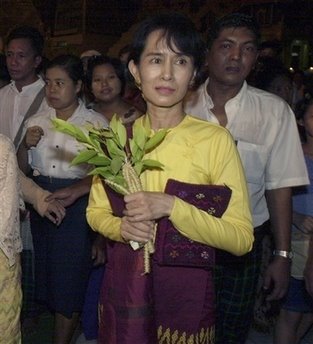


 Posts


