News & Articles on Burma
Monday, 28 March, 2011
-------------------------------------------------------------
The Man Who Foresees Storms
Ministry hatches plan to import more labour
Burma’s Censor-Board plays tricks on media personnel
MATRADE To Lead Business Delegation To Myanmar
Sports, supernatural bypass censor board
Parliament snubs ethnic harmony bill
Aid agencies update Myanmar quake casualty count
Aid to earthquake victims remains in high need
Relief teams pick through Shan rubble
Burma Marks Unusually Low-key Armed Forces Day
----------------------------------------------------------
The Man Who Foresees Storms
Monday, March 28, 2011
An apocalyptic series of earthquakes, cyclones, tsunamis and floods in the region has spooked everyone. Many people have turned to soothsayers and astrologers for advice about any impending natural disasters.
But rather than consult the Mayan calender or a fortune-teller, The Irrawaddy reporter Min Naing Thu interviewed Dr Tun Lwin, the former director-general of Burma's Department of Meteorology and Hydrology (DMH).
Since his resignation from the DMH in 2009, Tun Lwin has served as a technical adviser to the Regional Integrated Multi-hazard Early Warning System (RIMES) at the Asian Institute of Technology in Thailand. He also served as a consultant to the Myanmar Red Cross Society, CARE Myanmar, Action Aid Myanmar and Myanmar Egress's Network Activities Group. He has also been involved with the International Centre for Water Hazard and Risk Management (ICHARM), Myanmar Egress, World Vision Myanmar, Global Green and other organizations, focusing primarily on climate change and how to minimize damage caused by natural disasters.
Tun Lwin posts many of his articles concerning meteorological issues on his website, Myanmar Climate Change Watch.
U Tun Lwin
Question: What is the difference between presenting weather reports at the DMH and now?
Answer: It's very different. When I was a civil servant with the DMH, I had to follow regulations and had to seek permission or approval from my seniors before doing something. Now that I am working on my own I am free to do what I like. The main difference is freedom.
Q: What kind of references and tools do you use to predict weather conditions?
A: Basically, I use my experience combined with the meteorological knowledge I gained at Florida University. The only tool I have for my work is the Internet. Based on sources of information from various websites I predict what will happen in Burma.
Q: In a recent article, you said Burma needs radar equipment to measure and analyze rain clouds, tornadoes and tropical storms. You also said the DMH has been trying to procure the necessary tools and equipment since 1997. Why has it not happened?
A: In terms of tools and equipment, we just need a meteorological radar station [radar dish and antennae]. There are different types of radar and based on their capacity we can even see every little thing within range.
We don't have a good radar station. We used to have one in Kyaukpyu, but it was manufactured in 1974 and, I think, the radar was installed around 1976. We, the personnel at the DMH, used it frequently. However, with time it became worn out and needed to be repaired. The problem was that we couldn't find spare parts to fix it as it was an old model. Since then, we have been trying to get a new radar station. We asked the World Meteorological Organization, but it didn't transpire. We simply couldn't find any donors.
Q: How much would it cost to install a competent radar station?
A: The cost depends on what kind of radar station we are talking about. We have calculated that if we reinstall a radar dish in Kyaukpyu together with a monitoring station and staff quarters, it will cost about US $7 million.
Q: Internet users in Burma often complain about inefficient speed and service, and say that it crashes regularly. You said you use the Internet exclusively in your work to forecast meteorological conditions. How does this affect you?
A: Of course, I have found it difficult using the Internet [in Burma] as its speed is inconsistent. It makes it difficult for me to collect the information I need or to update my site. The best time to use the Internet here is when others are not using it. Sometimes I sit up all night because it has a faster connection. Sometimes, I go to high-speed Internet cafés. I have tried my best to update the weather forecasts in time, but if there is no Internet access then I can't do anything.
Q: Climate change in Burma has become worse lately. What do you think should be done?
A: It is not quite so easy—the whole world's climate has changed for the worse. But that doesn't mean that we have to give up. What we can do is prioritize reforestation.
A study has been made with regard to global climate change. It has shown that agriculture, industry, deforestation, population growth and a few other factors are the main effect on the global climate.
After examining the impact of these different sectors on climate change, the latest study shows that climate change within a country is mainly related to its GDP.
Q: People have alleged that, in the past, smugglers and those involved in illegal shipping paid off staff at the DMH in order to get them to release false reports about potential storms at sea, thereby deterring government patrol boats from going out and clearing the way for smugglers to land. Can you comment?
A: This is not true at all. There was no such case. There is no way the DMH could act like that. It was all just speculation by people who are unaware of DMH procedures. At that time, the weather forecasts were issued by the DMH headquarters in Rangoon. No individual person could release an independent news report.
Q: How do you feel when you think of Cyclone Nargis?
A: I have many suppressed feelings connected with Cyclone Nargis, because we knew about five days in advance that it would strike the country.
I don't want to blame anyone in particular, but we have paid a high price for not having the experience to deal of this kind of natural disaster. We underestimated it.
The only thing I have in my head now is never to let anything like that happen again. To do this, we have to add, fix and improve our system wherever possible. Taking our lesson from Nargis, we need to be fully prepared.
Copyright © 2008 Irrawaddy Publishing Group | www.irrawaddy.org
http://www.irrawaddy.org/article.php?art_id=21021
--------------------------------------------------
Ministry hatches plan to import more labour
Bangladesh, Indonesia targetted by ministry
Published: 28/03/2011 at 12:00 AM
Newspaper section: News
The Labour Ministry plans to import workers from Bangladesh and Indonesia as Thailand cannot get enough legal workers from nearby countries such as Burma, Laos and Cambodia.
Permanent secretary of the ministry, Somkiat Chayasriwong, said the ministry's committee on alien workers wants to bring in Bangladeshi workers to replace illegal workers from Burma, Laos and Cambodia who fail to register.
Bangladeshi workers will be another option for Thai operators who need more labour and to help solve security problems in the country where there is a growing number of illegal alien workers.
Mr Somkiat said the legal import of workers from Burma, Laos and Cambodia is subject to complicated procedures and regulations in their countries.
Bangladesh is more ready to supply labour as the country exports as many as 10 million workers.
The panel plans to import labourers, construction workers and maids from the country.
Thailand informed Burma that it wanted 100,000 workers but the country could supply only 1,803 workers. He said the supply was meagre compared with the demand.
Mr Somkiat said the alien labour committee would propose the import of workers from Indonesia later.
Regarding about 200,000 alien workers who failed to register for their work permits, the Labour Ministry had already asked relevant authorities to arrest them, he said.
Meanwhile, Adisorn Kerdmongkol, of the Action Network for Migrants, said alien workers were normally placed in fishery and related jobs and the labour import from Bangladesh would not serve local demands because people from that country "did not like jobs" in the fishery business. He suggested workers from Indonesia and southern China suit fishery and related jobs.
Setting aside the origins of workers, Mr Adisorn said Thailand needed a clear strategy to solve the problem of illegal immigrant workers.
Regarding the 200,000 alien workers who failed to register within the deadline at the end of February, he said that was a normal problem and that there were in fact about 1 million illegal immigrant workers in the country.
He said when people shifted to a new employer their old employer would often seize the worker's ID card. The registration of alien workers that happens only once every two years is a complicated procedure and the process can drive some alien workers out of the legal system.
The labour activist also proposed that the Labour Ministry clearly study the businesses that needed to hire alien workers and determine the exact number of workers they required. http://www.bangkokpost.com/news/local/228920/ministry-hatches-plan-to-import-more-labour
---------------------------------------------------
Burma’s Censor-Board plays tricks on media personnel
By Zin Linn Mar 28, 2011 7:52PM UTC
After freshly selected president Thein Sein and his 30-member cabinet sworn in, a few restrictions might become softer in the printing and publishing industries, according to a latest notice on last Friday.
Although such as political, economic, social and literary journals and magazines will not be permitted publishing without undergoing the censorship or the Press Scrutiny and Registration Division (PSRD), sport, entertainment, aesthetic, health, children’s literature, general knowledge, supernatural and technology publications will be allowed evading the PSRD.
There are more than 350 journals and magazines publishing in Burma. In contrast, roughly 200 publications bring out as sport and entertainment periodicals. The risky periodicals on politics and economics are the smallest number in military ruled Burma.
According the new instruction dated 25 March from Information Ministry, over half of Burma’s journals and magazines – mostly sport and entertainment journals – will get exemption to keep away from the infamous censor board or PSRD prior to publication.
Some cronies of the junta who invested in media industry said that the press freedom will come gradually and this might be a first step. But, most of the media related persons deem that the move seems to be trickery to pretend as if the new semi-civilian regime starts allowing press freedom. If the regime wants allowing press freedom honestly, they should let all periodicals and publications. Instead, the regime gives permission only on some selected issues and most influential journals have to maintain status quo under PSRD.
Before 1962 military rule, the then Prime Minister U Nu’s government had no literary censor board office similar to PSRD. Even the journalists and reporters were allowed to enter the PM office and parliament without any limitation. But, the current military rulers did not allow the media personnel entering into the parliamentary sessions to hear what the newly representatives-elect discussed about.
It is a remarkable move that did not allow freedom to every media related person. So, the writers and journalists have to carry on practicing self-censoring to escape severe jail-terms.
Journalists in Burma have received draconian jail sentences for reporting information challenging to the regime. In January 2010, DVB reporter Ms. Hla Hla Win received a 20-year sentence for violating the Electronic Act, and now in jail serving 27 years; her helper, Myint Naing got seven years.
Burma was at the vanguard of press freedom in Southeast Asia before the 1962 military coup. The country then enjoyed a free press; censorship was something unheard of. As many as three dozen newspapers, including English, Chinese and Hindi dailies, existed between 1948 and 1962.
On the contrary, Burma stands demoted from a free state to a prison state. All news media in Burma is stringently censored and tightly controlled by the military – all daily newspapers, radio and television stations are under control of the junta.
Critics disbelieve over the regime’s words that Burma is changing into a civilian government but it looks like merely an exterior change, not an essential one. Actually, the regime is attempting to quiet down denunciation of its press freedom records.
Analysts said the move was likely aimed at countering the flow of independent media, particularly social networking, that has spread as more Burmese log on to the internet.
The Committee to Protect Journalists (CPJ) released a press release on February 11 stating, “Burma’s new government under Prime Minister Thein Sein must put an end to the former military junta’s despicable policy of imprisoning independent journalists. The most recent case to come to light is the 13-year sentencing of Maung Maung Zeya in a trial held within Insein Prison on February 4.”
The court’s verdict remarkably came on the same day the junta-backed president Thein Sein was sworn into office.
http://asiancorrespondent.com/51318/burma%E2%80%99s-censor-board-plays-tricks-on-media-personnel/
----------------------------------------------------
MATRADE To Lead Business Delegation To Myanmar
KUALA LUMPUR, March 28 (Bernama) -- The Malaysia External Trade Development Corporation (MATRADE) will lead a 11-member marketing mission to Yangon, Myanmar, from March 28 to 30, led by its Deputy-Director of Professional and Business Services Section Haridass Nagalingam.
Malaysian companies, representing a wide range of Malaysian products and services, would also participate in the three-day mission which would include pre-arranged business matching sessions.
The mission will also include plant visits to Malaysian companies in Myanmar, a presentation by the Secretary-General of the Union of Myanmar Federation of Chambers of Commerce and Industry and a talk by the President of the Malaysia Myanmar Association.
There were over 40 Malaysian companies operating in Myanmar covering the oil and gas, automotive, palm oil, household products, processed food and building materials sectors, Haridass said in a statement on Monday.
In 2010, Malaysia's bilateral trade with Myanmar was valued at US$630 million (US$1.00 = RM3.02) with Malaysia's exports to Myanmar valued at US$390 million and imports from Myanmar valued at US$240 million.
The strong export performance was driven mainly by Myanmar's strong demand for palm oil, petroleum products, chemical and chemical products, iron and steel, machinery and processed food.
In January 2011, Malaysia's total exports to Myanmar increased 84.7 per cent to US$44 million, from US$23.4 million, registered in January 2010.
-- BERNAMA http://www.bernama.com/bernama/v5/newsbusiness.php?id=574251
-------------------------------------------
Sports, supernatural bypass censor board
By AHUNT PHONE MYAT
Published: 28 March 2011
More than half of Burma’s journals and magazines will no longer be forced to go via the country’s draconian censor board prior to publication, according to a new ruling that however maintains a tight clamp on political reporting.
Nearly 200 of Burma’s 350-odd journals and magazines will be subject to the easing of stringent laws surrounding publication, which is expected to take effect from the beginning of April when the new government is officially sworn in.
But only publications focusing on entertainment, general knowledge, sport, aesthetic, health, children’s literature, supernatural and technology will be allowed to bypass the Press Scrutiny and Registration Division (PSRD), which resides over some of the world’s harshest media laws. Anything deemed politically sensitive by the board – and the criteria surrounding that is highly arbitrary – will continue to be cut.
It bears resemblance to the system that was in place prior to the 1962 military coup, said prominent magazine editor, Hein Latt. Then, journalists weren’t forced to submit material to the censor board, but could still be punished if their writing angered the government.
He said that with the new ruling, “writers will have to take responsibility for what they write” – a case of self-censoring to avoid legal action and possible imprisonment.
More than 20 Burmese journalists are currently behind bars, some serving sentences of up to 27 years. The military-ruled nation consistently ranks at the tail-end of international press freedom indexes
Critics of the ruling junta have poured doubt over its claim that Burma is transitioning to civilian rule and would likely attack this ruling as merely a cosmetic change – given the strict rules that still surround so-called sensitive topics – aimed at appeasing condemnation of its media freedom record.
Ross Dunkley, the detained former editor of the Myanmar Times, the only newspaper in Burma with foreign funding, has said in the past that some 20 percent of its articles submitted to the censor board are rejected,
Yesterday the regime launched The Myawaddy, bringing to four the number of daily newspaper published in the country. Running the newspaper will be the Directorate of Public Relations and Psychological Warfare, which comes under the responsibility of military intelligence.
Analysts said the move was likely aimed at countering the flow of independent media, particularly social networking, that has spread as more Burmese log on to the internet.
http://www.dvb.no/news/sports-supernatural-to-bypass-censor-board/14983
------------------------------------------
Parliament snubs ethnic harmony bill
Published: 28 March 2011
Burma’s parliament has voted against a proposal that would urge the new government to work towards building stronger relations with the country’s marginalised ethnic groups.
The Union Solidarity and Development Party (USDP) will head the government, due to be officially instated on 1 April, but the overwhelming presence of former military generals and a very much pro-junta ideology has begged the question of whether it will break with a past in which ethnic minorities have faced rampant state-sanctioned persecution.
“When the parliament speaker asked whether to approve [the proposal] or not, there were both agreements and disagreements among the MPs,” said Hpone Myint Aung, a parliamentary representative for the National Democratic Force (NDF). “So they decided to vote, and the turnout was 106 votes in favour and 520 against.”
He added that of those who voted on Friday last week, “only around 100 [were] non-military representatives”. The USDP, whose senior ranks include powerful former junta ministers such as Thein Sein, Shwe Mann and Htay Oo, swept around 80 percent of the vote in last November’s elections and, added to the more than 300 pre-appointed army officials, leads an overwhelmingly military-dominated parliament.
Burma is home to around 135 different ethnic minorities, largely grouped in the country’s seven border states where conflict has stretched over decades. The regime’s war with the Karen National Union in the country’s east has lasted more than 60 years and is thought to be the world’s longest-running.
Attempts last year by the government to assimilate the 18 or so ethnic armies that agreed to ceasefire deals into the Burmese army has largely met with failure. Only a small handful have agreed to become Border Guard Forces, while those that refused have been the target of threats and small-scale skirmishes with the Burmese army.
But it is the civilians in these areas that take the brunt of the predominantly Burman junta’s attempts to rout ethnic armies, and perhaps the ethnic minorities themselves: what appear to be state-sanctioned abuses such as rape by Burmese troops of ethnic women, as documented by various rights groups, has led some observers to accuse the regime of an attempted ‘Burmanisation’ of the minorities.
Conflict in the volatile border regions had led to the internal displacement of more than half a million in the country’s east alone, while close to 150,000 refugees, mostly Karen, live in camps along the Thai border.
The parliamentary proposal was submitted by Banya Aung Moe, an MP from the All Mon Regions Democracy Party, one of 22 ethnic parties that competed in the elections. Another MP who voted in favour of the motion said that it’s rejection means there “will be no chance to discuss the issue of peace with ethnic armed groups”.
Meanwhile, the parliament also voted to make official its denouncement of international sanctions on Burma, with USDP members claiming that the policy of a number of Western nations was behind the country’s slow development.
The prospect of an amnesty of political prisoners to appease the international community was mooted by some opposition MPs but made no ground against opposition from the USDP.
Burma’s Minister of Finance and Revenue, Hla Htun, said the country was losing some $US2.5 billion every year to sanctions, which necessitated the need to sell its vast reserves of gas to neighbouring states, despite only 20 percent of the country having access to electricity. Critics have said however that the vast majority of the finance generated from energy sales have gone towards lining the generals’ pockets.
http://www.dvb.no/news/parliament-snubs-ethnic-harmony-bill/14991
--------------------------------------
Aid agencies update Myanmar quake casualty count
Mar 28, 2011, 11:19 GMT
Yangon - A consortium of UN and other aid agencies said Monday the official number of casualties from last Thursday's earthquake in the Shan State of eastern Myanmar stood at 74 deaths and 125 injuries.
The United Nations Office for the Coordination of Humanitarian Affairs said the magnitude-6.8 quake damaged 305 structures, including some government buildings, 31 religious buildings and 11 schools.
'There have been reports of sporadic disruption of basic facilities, including electricity, water supply and telecommunications in the affected areas,' the consortium's report said.
A total of eight aftershocks were reported between Thursday and Sunday night, and the threat of landslides remained high, the report added.
The report also described coordination between local authorities and agencies as efficient.
This was in stark contrast to the Myanmar government's reaction to the much bigger disaster of Cyclone Nargis in 2008 that claimed up to 140,000 lives in the Irrawaddy Delta.
Following Thursday's quake the government dispatched a team of doctors to the area and invited foreign aid agencies to assist the victims of the quake.
World Vision and other relief agencies such as Paris-based Doctors Without Borders were allowed immediate access to the area.
http://www.monstersandcritics.com/news/asiapacific/news/article_1629135.php/Aid-agencies-update-Myanmar-quake-casualty-count
--------------------------------------
Aid to earthquake victims remains in high need
Monday, 28 March 2011 16:54 Hseng Khio Fah
Hundreds of victims affected by Thursday’s ( 24 March) earthquake of magnitude-6.8 in Talerh (Talay) and Mong Lane (Monglin) village tracts of Shan State East’s Talerh sub-township, Tachilek district, are still reportedly lacking access to food and aid even though relief supplies are being distributed from local and international communities everyday, according to local sources.
Everyone is told to line up in queue to wait for food and medicine from the local authorities as supplies were controlled by the local authorities and were only given at the junta run relief center. Nevertheless, supplies are only being distributed in very small amounts although lots of support was pouring from several places and neighborhood, said a 65-year old elderly person from Talerh who went to ask for food on 26 March at the relief shelter.
“They [military junta] told us to go and sit in a line. Then they took our photos. Afterwards, we had to be in line at the relief center everyday from 8AM to 3 PM. But it was just a waste of time because we just received only one bag of instant noodles and a bottle of water each. No more than those,” he said.
Food and supplies like blankets, mats and tarpaulins for impacted villagers mainly come from people in Tachilek and Mae Sai, and some from Keng Tung. In addition, those impacted villagers are still living in tents in front of their damaged and collapsed houses.
Nang Lao from the same village also shared her experience that she had to wait for almost a day to receive the food until the ‘Phu Yai (superiors)’ came to give permission. “We had to wait for a long time for nothing, while worrying about more damage after the aftershocks.”
An aid worker from an NGO also told SHAN that they were not allowed to hand relief supplies directly to the villagers. They were only asked to drop their things at the junta’s relief shelters.
“We have to pile up all our supplies and donations at the aid centers and have to wait for ‘permission’ before delivering them to the villagers,” she said.
“Villagers are suffering as they do not have enough to eat or drink. Some family received only 2 bags of instant noodles. We know that it was not enough for them. But we could do nothing except tell them to share with each other,” she added.
There were only three relief centers being set up in the area: one in Mong Lane and two in Talerh, where hundreds of people are expected to have lost their lives under their collapsed buildings.
“One of the aid centers in Talerh is located at the head of the bridge (before crossing to Ta Lerh), opposite an army camp. There are a lot of security armed guards at the bridge, who have been temporarily repairing the damaged road, but causing traffic hold-ups for people bringing donations from Tachilek. Thus everyone has to leave their donations at the aid center before the bridge,” said the aid worker.
Apart from the local communities, even UN and NGO aid must be piled at the aid center even though they got permission from high level authorities. UNICEF and Myanmar Red Cross have provided support both in Mong Lane and Ta Lerh.
However, up to date, an accurate data of the deaths have yet been known as equipment to search for the dead bodies are insufficient. Currently, the death toll from the areas could rise to hundreds, approximately at least about 200, according to local relief workers who are currently still in the area.
But the official announcement from MRTV4, the junta-run television station only said that only 74 died and 125 injured.
The latest report from Office for the Coordination of Humanitarian Affairs (OCHA) which is in collaboration with humanitarian groups said that since the earthquake struck and as of 27 March evening, a total of eight aftershocks have been reported and the affected areas remain in the risk of landslides. And the number of damaged houses has increased from 224 to 305 including a number of government buildings.
The Talerh based Relief and Resettlement Department has estimated the damage of the earthquake approximately at Kyat 3 billion (US$ 3.6 million), the report said.
http://www.shanland.org/index.php?option=com_content&view=article&id=3546:aid-to-earthquake-victims-remains-in-high-need&catid=93:general&Itemid=291
-------------------------------------------
Relief teams pick through Shan rubble
By AFP
Published: 27 March 2011
Rescue teams struggled Sunday to reach those affected by a powerful earthquake that struck Burma’s east three days ago, as aid workers feared the death toll would increase.
Officials say 75 people were killed by the 6.8 magnitude quake that hit near the borders with Thailand and Laos late on Thursday, reducing homes and government buildings to rubble and affecting thousands of people.
“As we learn more it appears that the casualty figures will continue to increase,” an aid worker in the country told AFP, asking not to be named.
Tachileik town and nearby Tarlay and Mong Lin in Burma’s Shan state appeared to have been most severely affected by the quake, which was felt as far away as the Vietnamese capital Hanoi.
“We don’t know how many people were affected yet. We are still trying to get the figures,” a Burmese official said on Sunday.
“Transportation is difficult. We still haven’t reached some areas, we still don’t know what happened to them and we don’t know how many people are living in these mountainous areas,” he added, declining to be named.
An unnamed Red Cross worker in Tachileik told exile news group the Irrawaddy that at least 150 people had been killed, but the official said there was no confirmed increase from Friday’s toll of 74. One woman was also killed in Thailand.
The charity World Vision believes around 15,000 people may have been affected in the worst-hit areas.
“One of the things that’s really emerging is water as a critical need. That’s the immediate challenge in addition to temporary shelter,” said Chris Herink, the charity’s Burma country director in Rangoon.
The group, in partnership with the health ministry, is sending in tens of thousands of water purification tablets along with first aid kits and emergency shelter.
The affected region was already difficult to reach before the quake, while access to the area by foreigners is restricted and the military-dominated government tends to keep a tight grip on information.
The ruling junta was widely criticised for refusing foreign assistance for weeks after cyclone Nargis wrought devastation across the Irrawaddy delta in May 2008, leaving more than 138,000 people either killed or missing.
But Herink has said his organisation, which is working in the affected areas with the Myanmar Red Cross and UNICEF, had found the government had been proactively cooperating.
He said a report by authorities assessed the estimated financial damage in Tarlay alone at $US3.5 million.
Sunday’s state New Light of Myanmar newspaper detailed the official relief effort on its front page, after various ministers travelled to Tachileik from the capital Naypyidaw on Saturday.
“They comforted earthquake-hit victims and presented cash assistance to them,” the English-language paper said.
But many have been getting their news from Thai radio rather than sources in Burma, and one Tachileik resident, posting anonymously on Saturday on an internet forum, lamented the lack of “concrete assistance from authorities”.
In Tarlay, as strong aftershocks continued on Saturday, a few rescue teams were seen picking through the rubble of buildings, a bridge was destroyed and roads were riven with huge cracks.
“The whole village is gone,” said Nan Myint, tearfully explaining that she had lost her father, nephew and sister-in-law in the quake, which took place while she was in Rangoon.
http://www.dvb.no/news/relief-teams-pick-through-shan-rubble/14976
----------------------------------------
Burma Marks Unusually Low-key Armed Forces Day
By THE ASSOCIATED PRESS Monday, March 28, 2011
RANGOON — Burma's military government on Sunday held an unusually low-key ceremony marking Armed Forces Day, as anticipation mounts that it will soon turn over power to a nominally civilian administration.
The holiday commemorates the day when the army rose up against Japanese occupation forces 66 years ago. It is usually is observed on a grand scale with a military parade and a speech by the country's military leader in the capital, Naypyidaw.
There was no explanation given for why the ceremony was cut back for the first time since the junta took power in 1988.
However, the move comes as rumors swirl that a military-dominated civilian government formed after elections last year will soon be officially sworn in, perhaps in the next few days.
The state-run media gave the holiday normal treatment. They printed the speech that junta chief Snr-Gen Than Shwe gave at last year's commemoration, and an editorial in The New Light of Myanmar newspaper praised the military—known as the Tatmadaw—for "leading the nation and the people to the way to democracy by serving as a major national force."
The opposition led by Nobel laureate Aung San Suu Kyi, whose father Gen Aung San led the uprising against the Japanese, held its own ceremony for the holiday, which it refers to by its old name, Resistance Day. The name was changed in 1974 to avoid offending Japan, Burma's top aid donor in the 1970s.
Her National League for Democracy party issued a statement urging that a "dialogue be held urgently to eliminate the misunderstandings between the democratic forces and the Tatmadaw" and that political prisoners be released.
Suu Kyi's party boycotted last year's elections, saying they were being held under unfair and undemocratic conditions. The vote and a constitution pushed through by the military ensure that the army will hold ultimate authority over the government.
Asked if the rocky relationship between her party and the government will change when a new civilian administration takes power, Suu Kyi replied: "I don't know but we always want good relations with the government. I wish that the relationship will improve."
"Only they (the new government) will know how they intend to treat us but we will work for good relations," she said.
http://www.irrawaddy.org/article.php?art_id=21019
__._,_.___
Tuesday, March 29, 2011
News & Articles on Burma-Monday, 28 March, 2011


Monday, March 28, 2011
Japan's crises spark wide alarm and some unlikely sympathizers
By ROGER PULVERS
The outpouring of goodwill toward Japanese people since the triple calamities of March 11's earthquake and tsunami and subsequent nuclear crises has overwhelmed the nation. There is generally so much indifference to — and criticism of — Japan in the West and parts of Asia, that the Japanese have been taken aback, pleasantly, by this goodwill.
The world has reacted in two ways — with sympathy and alarm.
The sympathy comes first. To see hundreds of thousands of innocent victims being traumatized by the death of loved ones and friends, and then watch them stoically endure further great hardship in evacuation centers, has moved people outside Japan to empathize with the plight of the Japanese.
The alarm arises in countries with nuclear power plants. Could this happen to us, their citizens wonder and worry? Of course, it is a natural human trait to relate to tragedy in terms of one's own life. We empathize most deeply with those who are like us.
Perhaps the biggest shift in sentiment has come in China. Although the usual anti-Japan blogs have called this tragedy "divine punishment." How, I wonder, would these racist and chauvinist Chinese people have responded to foreigners saying the same thing of the Great Tangshan Earthquake, in which approximately 250,000 people perished? Tragedy is tragedy, irrespective of the politics, ideology or religion of the victims.
But one story emerging from the Tohoku earthquake and tsunami has touched the hearts of the Chinese public. Hopefully it will act as a turnaround mechanism in a country where public expressions of positive sentiment toward the Japanese, especially in schools and the media, have been few and far between.
The incident occurred in Onagawa, a fishing town in Miyagi Prefecture. That part of the coastline is called a ria, which is a drowned river system caused by either sea level having risen or the land having sunk. Rias are notoriously subject to horrendous flooding when struck by a tsunami.
The silver salmon and mackerel pike of Onagawa-cho are renowned in Japan; and the fishermen of the district also harvest scallops, abalone, sea squirt and oysters.
Sato Suisan is an established Onagawa firm that processes sea urchin for sale at Tokyo's Tsukiji Fish Market. It just so happens that a group of 20 young Chinese women were resident trainees at Sato Suisan on March 11. When the earthquake struck, they took refuge near their dormitory. Managing director Mitsuru Sato immediately realized that these young women were in great danger. He ran to them and rushed them up the hill to the shrine, then returned to the dormitory to make sure that no one was left behind. Some of the young women watched from the hill as Sato was swallowed up by the incoming tsunami.
Sometimes a single kind and selfless act can move an entire nation; and the Chinese media has run the story of Mr. Sato's altruism with these words that recognize a universal truth: "Love knows no national boundaries."
Another nation that has not been particularly well disposed toward Japan, particularly of late, is Russia. The Russians are wont to interpret relations with all neighboring countries almost solely in a political context, and Japan is no exception. Recent posturing over the four disputed islands north of Hokkaido attests to this.
Following the earthquake, a call went out to Muscovites on Twitter to demonstrate sympathy for the Japanese people in front of the Japanese embassy in the Russian capital. This is a place, I might add, that has often seen Russians burning the Japanese national flag and hurling eggs.
On the evening of March 19, however, answering the call, a group of mostly young people gathered in front of the embassy. They placed flowers, stuffed toys and origami cranes against the wall. They lit candles and left messages, largely in English. One message that I saw on television said, "Pray for Japan." Above it was a picture of a boy sitting cross-legged with his hands clasped together.
Workers in the embassy put out messages of their own. One of them, in Russian, read: "Thanks to your support we are able to endure. A million thanks to you!"
Such spontaneous outpourings of sympathy and affection toward Japan as demonstrated by those young people are rare in Russia.
As for the alarm, countries around the world with existing nuclear facilities or plans for new ones have stood up and taken notice. The Russians, with April 1986's unprecedented nuclear disaster at Chernobyl behind them — a disaster that spread radioactive particles for thousands of kilometers and resulted in several thousand premature deaths — have given much space in all their media to the ongoing events at the Fukushima nuclear power plant.
"The majority of nuclear plants in Russia are located in the European part of the country," said Bulat Nigmatullin, a former minister of atomic energy, to the leading newspaper Argumenty i Fakty. "The standards under which all our plants have been built enable them to withstand strong earthquakes. After the Chernobyl incident, our system of building nuclear plants became one of the best in the world. We are prepared for natural cataclysms."
Such assurances to the native population are common. How true they are remains to be seen.
Russian experts had predicted a disaster in a Japanese nuclear facility. Aleksandr Melik-Yolchyan, a Russian scientist based in Belgium, warned earlier this year of a catastrophe in Japan, adding, "When it will occur is a rhetorical question."
By and large, countries with nuclear power plants do not have to worry about a tsunami striking their facilities, even though — as in China and the United States in particular— earthquakes may pose a significant danger. The Fukushima plant would no doubt have been damaged by the earthquake alone; but all evidence suggests that the backup generators supplying electricity to the pumps would not have failed if it hadn't been for inundation from the tsunami.
In that sense, the planning of that facility was entirely lax. The backup system should have been located in a place invulnerable to a tsunami.
We humans are a bizarre species. We invent the technology to bomb each other with pinpoint accuracy from thousands of kilometers away, but we can't seem to get water — with the ocean a stone's throw away — into a building.
A frenzy of hatred can be fomented in a matter of days, so vicious that we can talk about "obliterating" an entire nation to punish it for its presumably wicked leaders; but it can take decades for us to realize that even those who once perpetrated evil upon us did it because they were misled and temporarily crazed.
We maintain our rage in the form of self-righteous superiority, often perpetrating similar aggression on others in its name.
Such a holocaust as that which began in Japan on March 11 may have the effect of showing those in the world not necessarily favourably disposed toward the Japanese people that they, and their nation, deserve sympathy, support and respect.
It is to that sentiment that I want to dedicate the words: "Never forget!"
News & Articles on Burma-Sunday, 27 March, 2011
News & Articles on Burma
Sunday, 27 March, 2011
-------------------------------------------------------------
Suu Kyi party seeks talks with Myanmar's generals
Slow relief efforts after Myanmar quake
ASEAN ready to help Myanmar following strong earthquake
Rescuers struggle in quake-hit Burma
Suu Kyi's party seeks talks with Myanmar's generals
Suu Kyi calls for better relations with Myanmar military
Myanmar military holds unusually low-key celebration of Armed Forces Day
Myanmar gems auction earns record $2.8 billion
-------------------------------------------------
Suu Kyi party seeks talks with Myanmar's generals
By Aung Hla Tun
YANGON | Sun Mar 27, 2011 6:36pm IST
YANGON (Reuters) - The party of Myamar's pro-democracy leader, Aung San Suu Kyi, called on Sunday for talks with the country's military rulers to clear up "misunderstandings" before a new government takes office.
The National League for Democracy (NLD) reiterated its demand for talks with the military, known locally as the "Tatmadaw", to seek the release of more than 2,100 political prisoners and a bigger role for democratic forces in the country's future.
"It is urged that dialogue be held urgently to eliminate the misunderstandings between the democratic forces and the Tatmadaw," the NLD said in a statement.
"The authority should create fair political conditions by holding politically meaningful dialogue and releasing all political prisoners unconditionally."
The call is likely to fall on deaf ears as the authoritarian junta prepares to make way for a civilian government it has hand-picked to maintain its half-century grip on power.
The regime has used everything in its power, from deadly force to contentious court rulings, to sideline the NLD and its supporters since its landslide election win in 1990, which the military ignored.
Suu Kyi was released from a seven-year detention in November last year and wants to start a process of national reconciliation involving the army, pro-democracy groups and ethnic militias that have fought the military for decades.
The Nobel Peace Prize winner has been given unprecedented freedom since her release but her calls for dialogue have been ignored.
The NLD has no political role because it boycotted last year's long-awaited election, won overwhelmingly by a pro-military party, and was effectively banned by the authorities.
The NLD's decision to continue backing Western sanctions angered the generals, who warned her via their media mouthpieces that she would meet a "tragic end" and demanded her party apologise to the Burmese people for blocking Western investment in the impoverished but resource-rich country.
Suu Kyi said on Sunday she would keep an open mind but hoped to have a better relationship with the new civilian-led government after two decades of animosity with the junta.
Only a handful of serving generals have been given cabinet portfolios but most other ministers are former soldiers who retired specifically to take political roles. The president and one vice-president were the fourth and fifth most powerful figures in the outgoing regime.
Asked if she felt positive about reconciliation, Suu Kyi said: "I'm neither optimistic nor pessimistic. We have to assess the situation objectively, but we hope for improvement in the interests of the nation."
(Writing by Martin Petty; Editing by Alan Raybould) http://in.reuters.com/article/2011/03/27/idINIndia-55913720110327?rpc=401&feedType=RSS&feedName=worldNews&rpc=401
--------------------------------------------
Slow relief efforts after Myanmar quake
Published: March. 27, 2011 at 9:48 AM
Comments (0)EmailPrintListen BANGKOK, March 27 (UPI) -- Witnesses say the death toll from the recent earthquake in Myanmar is at least double the official government estimate of 75.
Rescue efforts were described as relatively slow with large numbers of people forced to camp out in the open or seek shelter in monasteries, the Bangkok Post reported.
"Many people are still missing and their relatives have been trying in vain to search for their loved ones," journalist Puenkham Payakwong told the Bangkok Post by telephone from the Mai Sei district Sunday.
Payakwong estimated the death toll at 150 with several hundred injured.
The magnitude 6.8 quake that shook northeast Myanmar Thursday prompted the prime minister of neighboring Thailand to order a thorough evaluation of the nation's own earthquake plan.
The order included adding contingency plans for a potential tsunami along the coast, the Post said.
Read more: http://www.upi.com/Top_News/World-News/2011/03/27/Slow-relief-efforts-after-Myanmar-quake/UPI-23411301233697/#ixzz1HoHYI4HX
----------------------------------------------
ASEAN ready to help Myanmar following strong earthquake
(Xinhua)
Updated: 2011-03-27 22:09 Comments(0) PrintMail Large Medium Small
JAKARTA - ASEAN member states on Sunday expressed their readiness of providing Myanmar support and assistance in any way following a strong earthquake on March 24, a press statement said here.
They also expressed their deep sympathy and condolence to the government and people of Myanmar for the loss of lives and damage to property caused by the earthquake that occurred in northeastern territory and wished that they will make a speedy recovery.
The statement also said that ASEAN member states are confident that the government and people of Myanmar would be able to overcome this unfortunate natural disaster and challenge.
------------------------------------------------
Rescuers struggle in quake-hit Burma
Published: 27/03/2011 at 01:31 PM
Online news: Asia
Rescue teams struggled Sunday to reach those affected by a powerful earthquake that struck Burma's east three days ago, as aid workers feared the death toll would increase.
Myanmar residents look at large cracks on a road two days after an earthquake struck the area, in Tarlay township near the northeastern city of Tachilek. Rescue teams struggled Sunday to reach those affected by the powerful earthquake, as aid workers feared the death toll would increase.
Officials say 75 people were killed by the 6.8 magnitude quake that hit near the borders with Thailand and Laos late on Thursday, reducing homes and government buildings to rubble and affecting thousands of people.
"As we learn more it appears that the casualty figures will continue to increase," an aid worker in the country told AFP, asking not to be named.
Tachileik town and nearby Tarlay and Mong Lin in Burma's Shan state appeared to have been most severely affected by the quake, which was felt as far away as the Vietnamese capital Hanoi.
"We don't know how many people were affected yet. We are still trying to get the figures," a Burma official said on Sunday.
"Transportation is difficult. We still haven't reached some areas, we still don't know what happened to them and we don't know how many people are living in these mountainous areas," he added, declining to be named.
An unnamed Red Cross worker in Tachileik told exile news group the Irrawaddy that at least 150 people had been killed, but the official said there was no confirmed increase from Friday's toll of 74. One woman was also killed in Thailand.
The charity World Vision believes around 15,000 people may have been affected in the worst-hit areas.
"One of the things that's really emerging is water as a critical need. That's the immediate challenge in addition to temporary shelter," said Chris Herink, the charity's Burma country director in Rangoon.
The group, in partnership with the health ministry, is sending in tens of thousands of water purification tablets along with first aid kits and emergency shelter.
The affected region was already difficult to reach before the quake, while access to the area by foreigners is restricted and the military-dominated government tends to keep a tight grip on information.
The ruling junta was widely criticised for refusing foreign assistance for weeks after cyclone Nargis wrought devastation across the Irrawaddy Delta in May 2008, leaving more than 138,000 people either killed or missing.
But Herink has said his organisation, which is working in the affected areas with the Burma Red Cross and UNICEF, had found the government had been proactively cooperating.
He said a report by authorities assessed the estimated financial damage in Tarlay alone at US$3.5 million.
Sunday's state New Light of Burma newspaper detailed the official relief effort on its front page, after various ministers travelled to Tachileik from the capital Naypyidaw on Saturday.
"They comforted earthquake-hit victims and presented cash assistance to them," the English-language paper said.
But many have been getting their news from Thai radio rather than sources in Burma, and one Tachileik resident, posting anonymously on Saturday on an Internet forum, lamented the lack of "concrete assistance from authorities".
In Tarlay, as strong aftershocks continued on Saturday, a few rescue teams were seen picking through the rubble of buildings, a bridge was destroyed and roads were riven with huge cracks.
"The whole village is gone," said Nan Myint, tearfully explaining that she had lost her father, nephew and sister-in-law in the quake, which took place while she was in Rangoon.
http://www.bangkokpost.com/news/asia/228871/rescuers-struggle-in-quake-hit-burma
-----------------------------------------------
Suu Kyi's party seeks talks with Myanmar's generals
Share 0diggsdigg
Aung Hla Tun
Reuters
9:06 a.m. EDT, March 27, 2011
E-mail Print Share Text Size sns-rt-international-us-mytre72q170-20110327
YANGON (Reuters) - The party of Myanmar's pro-democracy leader, Aung San Suu Kyi, called on Sunday for talks with the country's military rulers to clear up "misunderstandings" before a new government takes office.
The National League for Democracy (NLD) reiterated its demand for talks with the military, known locally as the "Tatmadaw," to seek the release of more than 2,100 political prisoners and a bigger role for democratic forces in the country's future.
"It is urged that dialogue be held urgently to eliminate the misunderstandings between the democratic forces and the Tatmadaw," the NLD said in a statement.
"The authority should create fair political conditions by holding politically meaningful dialogue and releasing all political prisoners unconditionally."
The call is likely to fall on deaf ears as the authoritarian junta prepares to make way for a civilian government it has hand-picked to maintain its half-century grip on power.
The regime has used everything in its power, from deadly force to contentious court rulings, to sideline the NLD and its supporters since its landslide election win in 1990, which the military ignored.
Suu Kyi was released from a seven-year detention in November last year and wants to start a process of national reconciliation involving the army, pro-democracy groups and ethnic militias that have fought the military for decades.
The Nobel Peace Prize winner has been given unprecedented freedom since her release but her calls for dialogue have been ignored.
The NLD has no political role because it boycotted last year's long-awaited election, won overwhelmingly by a pro-military party, and was effectively banned by the authorities.
The NLD's decision to continue backing Western sanctions angered the generals, who warned her via their media mouthpieces that she would meet a "tragic end" and demanded her party apologize to the Burmese people for blocking Western investment in the impoverished but resource-rich country.
Suu Kyi said on Sunday she would keep an open mind but hoped to have a better relationship with the new civilian-led government after two decades of animosity with the junta.
Only a handful of serving generals have been given cabinet portfolios but most other ministers are former soldiers who retired specifically to take political roles. The president and one vice-president were the fourth and fifth most powerful figures in the outgoing regime.
Asked if she felt positive about reconciliation, Suu Kyi said: "I'm neither optimistic nor pessimistic. We have to assess the situation objectively, but we hope for improvement in the interests of the nation."
(Writing by Martin Petty; Editing by Alan Raybould)
http://www.courant.com/news/nation-world/sns-rt-international-us-mytre72q170-20110327,0,6044078.story
-----------------------------------
Suu Kyi calls for better relations with Myanmar military
Mar 27, 2011, 11:01 GMT
Yangon - Myanmar democracy campaigner Aung San Suu Kyi marked the 66th anniversary of the founding of the country's resistance movement against Japan Sunday with an appeal for better relations with Myanmar's military leadership.
Speaking at a ceremony attended by about 200 supporters, press and Yangon-based diplomats, Suu Kyi said she hoped to work with the new nominally civilian government which is to be installed by the end of March.
The new government, which was chosen in an election tightly controlled by the military last November, is widely seen as an attempt to give the ruling junta a more internationally acceptable civilian face.
Suu Kyi's National League for Democracy (NLD) boycotted the poll after the junta instituted rules deemed unfair and barred Suu Kyi from running for office.
She was released from house arrest less than a week after the election.
The Nobel Peace laureate said that despite political differences with the junta, she retains respect for the Myanmar military, known as the Tatmadaw.
'The NLD highly regards the Tatmadaw,' she said. 'The Tatmadaw was founded by my father. I personally value and cherish it very much.'
The ceremony marked the 66th anniversary of Anti-Fascist Resistance Day, when Suu Kyi's father, General Aung San, switched sides in World War II on March 27, 1945, to lead a short but successful resistance campaign against Japanese occupation.
She said the occasion was a time to promote unity between the public and the military.
'We also want better relations with the new government,' she said. 'We want to have better relations for the sake of the country.'
http://www.monstersandcritics.com/news/asiapacific/news/article_1628961.php/Suu-Kyi-calls-for-better-relations-with-Myanmar-military
--------------------------------------------
Myanmar military holds unusually low-key celebration of Armed Forces Day
By Associated Press, Sunday, March 27, 6:38 AM
YANGON, Myanmar — Myanmar’s military government on Sunday held an unusually low-key ceremony marking Armed Forces Day, as anticipation mounts that it will soon turn over power to a nominally civilian administration.
The holiday commemorates the day when the army rose up against Japanese occupation forces 66 years ago. It is usually is observed on a grand scale with a military parade and a speech by the country’s military leader in the capital, Naypyitaw.
There was no explanation given for why the ceremony was cut back for the first time since the junta took power in 1988.
However, the move comes as rumors swirl that a military-dominated civilian government formed after elections last year will soon be officially sworn in, perhaps in the next few days.
The state-run media gave the holiday normal treatment. They printed the speech that junta chief Senior Gen. Than Shwe gave at last year’s commemoration, and an editorial in the New Light of Myanmar newspaper praised the military — known as the Tatmadaw — for “leading the nation and the people to the way to democracy by serving as a major national force.”
The opposition led by Nobel laureate Aung San Suu Kyi, whose father Gen. Aung San led the uprising against the Japanese, held its own ceremony for the holiday, which it refers to by its old name, Resistance Day. The name was changed in 1974 to avoid offending Japan, Myanmar’s top aid donor in the 1970s.
Her National League for Democracy party issued a statement urging that a “dialogue be held urgently to eliminate the misunderstandings between the democratic forces and the Tatmadaw” and that political prisoners be released.
Suu Kyi’s party boycotted last year’s elections, saying they were being held under unfair and undemocratic conditions. The vote and a constitution pushed through by the military ensure that the army will hold ultimate authority over the government.
Asked if the rocky relationship between her party and the government will change when a new civilian administration takes power, Suu Kyi replied: “I don’t know but we always want good relations with the government. I wish that the relationship will improve.”
“Only they (the new government) will know how they intend to treat us but we will work for good relations,” she said.
Copyright 2011 The Associated Press. All rights reserved. This material may not be published, broadcast, rewritten or redistributed.
http://www.washingtonpost.com/world/myanmar-military-holds-unusually-low-key-celebration-of-armed-forces-day/2011/03/27/AFtLwZhB_story.html
-----------------------------------------
Myanmar gems auction earns record $2.8 billion
More from BusinessWeek
* Treasuries Decline as Geopolitical Concern Eases, Economy Gains
* Treasuries Drop as Plosser Urges Fed to Plan Stimulus Withdrawal
* Forget the Economy. Hire Now
* U.S. Economy Grew 3.1% in Fourth Quarter, Revised From 2.8%
* Bid & Ask
Story Tools
* order a reprint
* digg this
* save to del.icio.us
Click here to find out more!
YANGON, Myanmar
Myanmar earned more than $2.8 billion from the sale of jade, gems and pearls at its annual gems auction this month, a report said Saturday.
The weekly Voice news magazine said 16,939 lots of jade, 206 lots of gems and 255 lots of pearls were sold through competitive bidding to fetch the record-high revenue. It said 8,719 local and foreign gem merchants took part in the 48th annual event, held in the capital, Naypyitaw, according to an official from the Union of Myanmar Federation of Commerce and Industry.
The March 11-22 auction, held under the auspices of the Mines Ministry, is a major foreign exchange earner for the military-dominated government, which faces economic and political sanctions from the West because of its poor human rights record.
Myanmar is one of the world's biggest producers of jade as well as the source of up to 90 percent of its rubies, and gems from the country are specifically targeted by U.S. sanctions.
in 2008, the United States enacted legislation banning the import of gems from Myanmar, which already was the voluntary policy of retailers such as Tiffany's and Bulgari.
U.S. officials said at that time that Myanmar had evaded earlier gem-targeting sanctions by laundering stones in other countries before they were shipped to the United States.
Myanmar gem sellers say the sanctions have little impact on their business because they rely on Chinese and Thai gem merchants, who are the major buyers. http://www.businessweek.com/ap/financialnews/D9M6RRS00.htm
Sunday, March 27, 2011
News & Articles on Burma-Saturday, 26 March, 2011
News & Articles on Burma
Saturday, 26 March, 2011
-------------------------------------------------------------
China offers $500,000 to quake-hit Myanmar
Quake Victims Fill Tachilek Hospital
Swiss Government To Launch Investigation Into FIFA Spending In Burma - Report
Earthquake Death Toll Rising to 150
Myanmar earns a record $2.8 billion at annual gems auction
India offers assistance to quake-hit Myanmar
Chinese president extends condolences to Myanmar over earthquake
China extends condolences to quake-hit Myanmar
Libya Conflict Reopens R2P Debate on Burma
----------------------------------------------------------
China offers $500,000 to quake-hit Myanmar
(Xinhua)
Updated: 2011-03-26 22:31
BEIJING- China had decided to offer emergency humanitarian aid of $500,000 in cash to quake-stricken Myanmar, the Ministry of Commerce (MOC) said Saturday.
Related readings:
China offers $500,000 to quake-hit MyanmarPowerful quake in Myanmar kills more than 70
China offers $500,000 to quake-hit MyanmarEarthquake in Myanmar kills at least 75 people
The aid was extended to help Myanmar's disaster relief efforts and post-quake reconstruction, the MOC said in a statement on its website.
Chen Deming, Minister of the MOC, expressed condolences to Myanmar in a letter to his counterpart of Myanmar, Minister of National Planning and Economic Development U Soe Tha.
Chen also said in the letter that China was willing to provide Myanmar with any necessary help. http://www.chinadaily.com.cn/china/2011-03/26/content_12232161.htm
---------------------------------------------------------
Quake Victims Fill Tachilek Hospital
By SAW YAN NAING Saturday, March 26, 2011
TACHILEK, Shan State—Following Burma’s worst earthquake in decades, the hospital in this small trading town on the Thai-Burmese border is struggling to cope with an influx of people injured by the deadly magnitude-6.8 temblor that struck on Thursday.
Already filled to capacity, the hospital has been forced to leave many patients out in the open, in sight of passersby. Inside, many other patients, including children and the elderly, can be seen lying on beds or seated on the ground awaiting treatment.
According to local officials, around 700 people have filled the hospital and its compound, many of them suffering from life-threatening injuries.
“Every room is full,” said a woman waiting outside a room where members of her family were being treated. “Only the most serious cases have been admitted. Everyone else has to wait outside. Those who can are taking their relatives to hospitals in other places.”
In Mae Sai, opposite Tachilek on the Thai side of the border, local authorities said that Burmese officials were not allowing Thai and other foreign doctors to enter the country across the Friendship Bridge linking the two towns. Journalists have also been banned, they said.
According to MRTV4, a Burmese state-run television station, 73 people have died in the quake. However, local people told The Irrawaddy that they expected the final death toll to be much higher—perhaps in the hundreds.
Many of the casualties are from Tarlay, a town near the earthquake’s epicenter, where almost every building was damaged and many collapsed. It is believed that many bodies remain buried in the rubble.
Access to Tarlay has been restricted since the quake, with government troops blocking the road into the town to keep out everyone except people returning to search for relatives. Many of the dead and injured in the area are family members of military officials.
Meanwhile, cleaners are busy tidying up the compound of the hospital in Tachilek in anticipation of a visit by junta officials from the capital, Naypyidaw.
As the cleanup continues, fears of further aftershocks remain. In Mae Sai, an aftershock rattled local residents at 5:37 on Saturday morning.http://www.irrawaddy.org/article.php?art_id=21016
-------------------------------------------------
Swiss Government To Launch Investigation Into FIFA Spending In Burma - Report
FIFA will be questioned by the Swiss government after it reportedly did business with a man blacklisted by Switzerland, the US and the EU
By Patrick Devaney
Mar 26, 2011 11:45:00 AM
A probe is set to be launched by the government of Switzerland after FIFA conducted business with a blacklisted person at the head of the Burma Football Federation. Instead of money being directly given to the national football federation, it was awarded to a construction company to complete football projects on behalf of FIFA, according to Swiss news magazine Woz.
The head of the Myanmar Football Federation, President Zaw Zaw had funds allocated to complete football projects in the Burmese nation. However, he is also the founder of construction company Max Myanmar Group and it is believed the funds were diverted to his own private company when they should have been given to the national team's football federation. It is not yet known whether these funds were misused or not and the investigation is set to clarify any findings.
Being based in Zurich, Switzerland, it is the Swiss government's choice to investigate these claims that the funds were not used for their purpose. Sanctions could be imposed on the world footballing body.
A statement was released by the Swiss government earlier in light of the allegations: ''We will need to clarify this and contact FIFA.''
The rumours started when Sepp Blatter accepted an invitation from Zaw Zaw to visit his country. Zaw Zaw has been blacklisted by the EU, US and Swiss governments and with Blatter supposedly trying to extinguish corruption in the game, their meeting will only add fuel to the fire of crookedness in the game.
If anyone in FIFA, the Burmese Football Federation or the Max Myanmar Group is found guilty of improper use of these funds, heavy penalties could be imposed by Switzerland. A maximum term of one year in prison as well a $570,000 fine could be levied against anyone found involved if the allegations are proven to be true.
FIFA will do its best to resist any sort of investigation by the Swiss government and has already retaliated to growing speculation that an investigation will in fact be conducted.
‘'The details of contacts signed by FIFA are confidential,'' a FIFA spokesperson said to Mizzima. http://www.goal.com/en/news/14/asia/2011/03/26/2412132/swiss-government-to-launch-investigation-into-fifa-spending
-----------------------------------------------
Earthquake Death Toll Rising to 150
By WAI MOE Saturday, March 26, 2011
Local relief workers in eastern State Sate said on Saturday that the death toll from the powerful earthquake that shook Shan State on Thursday night could very likely rise to more than 150.
Burma’s state media reported on Saturday that 73 people had died as a result of the 7.0 magnitude tremor and its subsequent aftershocks on Thursday and Friday.
“At least 150 people were killed. The worst hit areas were Tahlay and Mong Linn, said a member of the Red Cross based in Tachilek on the Thai-Burmese border.
“The death toll could continue to rise because local people and relief workers are still rummaging through collapsed buildings,” he said. “The efforts are not helped by the fact that there is a lack of trained relief workers, equipment and sniffer dogs.”
Locals from the town of Tachilek and Mae Sai, on the opposite side of the border, have collected food and other emergency supplies for the victims.
“We collected rice, drinking water and blankets for victims, and sent them to Tahlay and Mong Linn,” said a store owner in Tachilek.
State-run newspaper The New Light of Myanmar reported the news of the Shan State earthquake on its back page on Saturday while the front page carried junta supremo Snr-Gen Than Shwe’s speech to mark Armed Forces Day on March 27, alongside a report that the Burmese leader’s had sent a message of felicitations to Bangladesh on the anniversary of the country’s independence.
“The earthquake, according to observation at 1:35 pm today [Friday], has claimed 73 lives and injured 125. A total of 224 houses, one six-unit quarter, 11 religious buildings and nine departmental buildings were reported to collapse down in Tachilek, Tahlay, Naywg Village, Monglin Village, Mongkoe Village tract, and Kyakuni Village,” said the The New Light of Myanmar.
The state newspaper also reported that Maj-Gen Aung Than Htut, the head of Bureau of Special Operations-2, and Brig-Gen Than Tun Oo, the commander of Triangle Regional Command, were inspecting the earthquake-hit areas.
While The New Light of Myanmar published a photo of a rescue center in Tachilek on Saturday, MRTV news showed security forces carrying relief supplies from a military cargo aircraft at a local airport.
“When I see the government action in Shan State, I remember the authorities’ relief mission in Cyclone Nargis,” said a Burmese staffer with a foreign NGO in Shan State who spoke on condition of anonymity. “The military generals used the catastrophe for photo opportunities and propaganda while people were dying.”
Other state media reported about the earthquake and said that the speaker of parliament in Naypyidaw had said “condolences go to the victims.”
MPs in the parliament clapped after the speaker’s announcement.
“Normally, MPs clap whenever a proposal is passed or recorded. It is a regular occurrence in parliament. So I suppose many of the MPs thought they were expected to cheer and clap when the announcement was made to offer condolences to the earthquake victims,” said an MP who attended Friday’s session.
Meanwhile Chinese President Hu Jintao sent a message of condolence on Friday to Thein Sein, the Burmese president-in-waiting, “over the losses of life and property inflicted by a strong earthquake,” Xinhua reported on Saturday.
“The Chinese president also voiced his belief that under the leadership of U Thein Sein, the Myanmar people would unite in a concerted effort to overcome the disaster and rebuild their homes,” the Chinese state media said.
Xinhua reported that more than 6,500 people in China’s southwest province of Yunnan have been affected by the earthquake. However, Burmese authorities have still not announced how many people have been affected or made homeless by the disaster.
http://irrawaddy.org/highlight.php?art_id=21017
------------------------------------
Myanmar earns a record $2.8 billion at annual gems auction
By The Associated Press
YANGON, Myanmar - Myanmar earned more than $2.8 billion from the sale of jade, gems and pearls at its annual gems auction this month, a report said Saturday.
The weekly Voice news magazine said 16,939 lots of jade, 206 lots of gems and 255 lots of pearls were sold through competitive bidding to fetch the record-high revenue. It said 8,719 local and foreign gem merchants took part in the 48th annual event, held in the capital, Naypyitaw, according to an official from the Union of Myanmar Federation of Commerce and Industry.
The March 11-22 auction, held under the auspices of the Mines Ministry, is a major foreign exchange earner for the military-dominated government, which faces economic and political sanctions from the West because of its poor human rights record.
Myanmar is one of the world's biggest producers of jade as well as the source of up to 90 per cent of its rubies, and gems from the country are specifically targeted by U.S. sanctions.
in 2008, the United States enacted legislation banning the import of gems from Myanmar, which already was the voluntary policy of retailers such as Tiffany's and Bulgari.
U.S. officials said at that time that Myanmar had evaded earlier gem-targeting sanctions by laundering stones in other countries before they were shipped to the United States.
Myanmar gem sellers say the sanctions have little impact on their business because they rely on Chinese and Thai gem merchants, who are the major buyers. http://www.canadianbusiness.com/markets/headline_news/article.jsp?content=b6370234
----------------------------------------------
India offers assistance to quake-hit Myanmar
PTI
India on Saturday offered help to Myanmar, hit by a powerful earthquake causing loss of lives and damage to property.
“As your government rallies to provide relief and other assistance to the people in the earthquake—affected region, I would like to assure you that India stands ready to render any assistance that your government may require of us,” Prime Minister Manmohan Singh said.
In a condolence message to Myanmar’s top military ruler General Than Shwe, Mr. Singh said that “on behalf of the people and government of India, I convey my heartfelt condolences to the people and government of Myanmar on this tragic natural disaster“.
A 6.8 magnitude quake that had struck north eastern Myanmar on March 24 has so far claimed 75 lives.
http://www.thehindu.com/news/national/article1573874.ece
---------------------------------------
Chinese president extends condolences to Myanmar over earthquake
English.news.cn 2011-03-26 16:07:38 FeedbackPrintRSS
BEIJING, March 26 (Xinhua) -- Chinese President Hu Jintao has delivered a message of condolences to his Myanmar counterpart U Thein Sein over the losses of life and property inflicted by a strong earthquake.
On behalf of the Chinese government and people, Hu extended heartfelt condolences on Friday to U Thein Sein and via him to the victims of the disaster which struck the country Thursday.
The Chinese president also voiced his belief that under the leadership of U Thein Sein, the Myanmar people would unite in a concerted effort to overcome the disaster and rebuild their homes.
The magnitude 7.0 earthquake that toppled homes in northeastern Myanmar has left 73 Myanmar people dead and 125 others injured as of Friday night, according to Myanmar authorities.
http://news.xinhuanet.com/english2010/china/2011-03/26/c_13799359.htm
---------------------------------
China extends condolences to quake-hit Myanmar
18:52, March 26, 2011
China's Ministry of Commerce (MOC) expressed condolences to Myanmar on Saturday after a 7.2-magnitude earthquake struck the country Thursday.
Yao Jian, a MOC spokesman, said the ministry extended condolences to victims of the disaster and paid tribute to workers conducting rescue and disaster relief operations in the country.
Yao said China and Myanmar are friendly neighbors, and that China is willing to provide Myanmar with any necessary assistance.
Myanmar authorities said the death toll from Thursday's major earthquake has reached 73, while 125 others were injured as of Friday night.
Source: Xinhua http://english.people.com.cn/90001/90776/90883/7332077.html
----------------------------------------
EDITORIAL
Libya Conflict Reopens R2P Debate on Burma
Thursday, March 24, 2011
Images of fighter jets and Tomahawk missiles streaking across the skies of Libya have quickly become popular viewing in military-ruled Burma.
Despite the fact that Naypyidaw heavily censors news about the recent uprisings in Libya and the Middle East, many Burmese have access to satellite TV and shortwave radio. Others go online to learn about the rise and fall of Col. Muammar el-Qaddafi.
Many Burmese believe that international intervention is necessary to stop the atrocities in Libya, and they hail UN Security Council Resolution 1973. Then they take a step back and ask: “Why Libya and not Burma?”
But although the UN and the US-led international community reserve the right to wage war on Islamic countries, and to buy and sell out dictators at will, the realpolitik of the situation is that they will never forcefully intervene in Burma.
In May 2008, France and the US sent warships with cargoes of humanitarian aid close to Burmese waters soon after Cyclone Nargis had wrought death and destruction in lower Burma. They offered to deliver emergency supplies to victims and survivors of the natural disaster in which nearly 140,000 people were killed and some 2 million left homeless. The Burmese regime rejected the offer. A Mexican standoff ensued and many in Burma anticipated that an intervention—or an invasion—was in the pipeline. But the West blinked first and the ships withdrew.
The international community had been faced with the option of overriding the junta's decision and landing on Burmese soil. Many in the UN argued that a legitimate case of intervention under the Responsibility to Protect framework, or “R2P,” was justified. The regime's refusal to allow aid to its citizens was argued to be a “crime against humanity” that fell under the loosely worded (and never employed) R2P mandate.
In the end, no foreign forces entered Burma's territorial waters. Some Burmese were bitterly disappointed, others were relieved.
But the blunt truth is that the majority of Burmese, of all classes and creeds, would embrace any form of humanitarian intervention.
Unfortunately, Burma is a messy affair; it is ravaged with geopolitical problems, not to mention one of the world's most endless civil conflicts. Foreign intervention alone will not solve its problems.
In early 2010, UN Special Rapporteur on Human Rights to Burma Tomás Ojea Quintana took an unprecedented move in a report to the UN's Human Rights Commission in calling for a Commission of Inquiry into possible crimes against humanity and war crimes in Burma.
More than 2,000 political prisoners still languish in Burma's gulags while hundreds of thousands of Burmese refugees and internally displaced persons cannot return to their homes for fear.
Many in Burma still believe that only violence will succeed in removing the junta from power. The optimism some felt toward the general election in November has dissipated as it becomes glaringly obvious that the regime's idea of a “disciplined democracy” is no more than a brand new parliament building filled with old junta loyalists.
Located between China and India, Burma is unlikely to ever attract any armed intervention from the Western alliance. In 2008, China, the junta's closest ally, immediately rejected international calls for humanitarian intervention in the Irrawaddy delta following the cyclone disaster.
In the event of a future catastrophe—whether it be a natural disaster or a crime against humanity— the roles that regional powers play are pivotal.
Burma is a member of the Association of Southeast Asia Nations (Asean). Just as the Arab League supported the UN resolution that led to “No Fly Zone”—in reality, a bombing campaign against government forces in Libya—it stands to reason that regional support is essential before the UN can tailor a resolution that will pave the way for military intervention.
For an R2P framework to be considered in Burma, it is paramount that regional powers Asean and China are on board. Without Eastern support for intervention, Burma's ruthless military leaders will continue to thumb their noses at the West for as long as they live.
http://irrawaddy.org/opinion_story.php?art_id=21006
Kan breaks silence, vows to help locals rebuild lives
By MASAMI ITO
Staff writer
Addressing the public for the first time in a week, Prime Minister Naoto Kan vowed Friday evening to do everything in his power to prevent the crisis at the Fukushima nuclear plant from escalating.
"The current situation at the Fukushima No. 1 plant is unpredictable and we are trying to prevent it from deteriorating," Kan told a news conference at the Prime Minister's Official Residence. "I believe we need to continue dealing with each problem with a strong sense of urgency."
Friday marked two weeks since the catastrophic earthquake and tsunami struck the Tohoku region, claiming the lives of more than 10,000 people and leaving over 17,000 unaccounted for. The disaster also sparked a nuclear crisis after tsunami wrecked four reactors at the Fukushima plant, causing people to increasingly fear the health effects from radiation leaking from the plant.
Kan has basically shunned the media during his handling of the crisis, and Chief Cabinet Secretary Yukio Edano has instead been giving daily briefings on the nuclear emergency and Tohoku disaster response.
During the news conference, Kan stressed the need to help Tohoku residents rebuild their lives, including in the areas of housing, medical treatment, education and jobs in the fishing and farming industries.
"From now on, we need to begin preparing for a full-scale reconstruction . . . of the region, as well as people's lives," Kan said.
"We shall not burden individuals or each household with the damages of the disaster — society and Japan as a whole will share the burden equally."
Ever since the March 11 disaster, confusion and fear has spread through foreign communities in Japan as embassies temporarily closed or relocated to the Kansai region, and helped their citizens' efforts to flee Tokyo.
But Kan said: "I think every country has their own way of thinking and is setting their own standards. We have been providing information with transparency to all nations and international organizations."
Saturday, March 26, 2011
It's in the water, food, soil: But what are the risks?
Friday, March 25, 2011
Q&A
It's in the water, food, soil: But what are the risks?
By MIZUHO AOKI and JUN HONGO
Staff writers
Radioactive materials from the crippled Fukushima No. 1 nuclear plant have been spreading, contaminating milk, vegetables, water and soil in Fukushima and neighboring prefectures.
On Wednesday, 210 becquerels of iodine-131 per liter of water, more than double the government-set safety level of 100 for infants, were detected in water at a purification plant in Tokyo, and 163,000 becquerels of cesium-137 per kg were detected in soil in Fukushima.
Following are questions and answers about the effects of radioactive materials, including iodine-131 and cesium-137, that have been detected in food, water and soil.
How does iodine-131 affect human health?
Once ingested, about 30 percent of iodine-131 concentrates in the thyroid gland, increasing the risk of thyroid cancer, according to Kunikazu Noguchi, a lecturer specializing in radiation safety at Nihon University School of Dentistry.
"The thyroid gland collects iodine to produce hormones. So once a body takes in iodine, the organ collects it, resulting in high concentrations of the radioactive iodine in the thyroid," explained Noguchi.
Iodine was blamed for cancer cases following the Chernobyl nuclear accident. Will that happen in Japan?
Apart from the difference in the amount of radiation leakage in the two cases, Japanese in general consume more foods rich in iodine, including fish and seaweed, than the people around Chernobyl. Some believe as a result the presence of more nonradioactive iodide in their thyroids will reduce the intake and accumulation of toxic iodine.
Iodine not accumulated in the thyroid tends to pass into the bloodstream and is expelled in urine, Noguchi said.
What about cesium-137?
Unlike iodine-131, radioactive cesium does not concentrate in a specific organ, experts say.
It spreads almost equally, but mostly in soft tissue, such as muscles, Noguchi said. But people need to bear in mind that the half-life of cesium-137 is much longer than iodine-131.
What is a half-life?
A half-life is the time it takes for the radioactivity of a specific substance to decrease by half. Iodine-131's half-life is about eight days, while the half-life of cesium-137 is about 30 years.
After 16 days, iodine-131 has decayed to about a quarter of its original level. Within about 90 days, it is effectively harmless, according to Noguchi.
Cesium-137, on the other hand, sticks around for about 300 years, he said.
Because soil contaminated with cesium-137 continues to emit radiation for hundreds of years, it's important for the government to analyze the soil around the power plant and inform the public of the levels, Noguchi said.
Is there any way to remove radioactive iodine and cesium from foods?
Although complete removal is difficult, rinsing food with water removes radioactive substances from the surface.
"Think of it like a stain. It's better to use boiling water rather than just water. And it's even better if you use detergent, although it's not an option," Noguchi said.
Is it safe to shower or wash your hands with the contaminated water detected in Tokyo and Fukushima?
There is no problem using the water to shower or for other daily uses, such as laundry, according to the health ministry.
But it's best to avoid soaking open wounds in the water because radiation can be more easily absorbed into the body through cuts, according to Noguchi.
Can iodine-131 be removed from water and air?
At its water purification plants, the Tokyo Metropolitan Government has opted to use activated carbon, which reacts with iodine-131 and, to an extent, absorbs it.
By the same token, household water purifiers that use activated carbon can filter out some radioactive iodine.
Boiling tap water can also be somewhat effective, a team of radiology experts at the University of Tokyo said via Twitter after the news of the contamination broke.
It's harder to remove iodine from the air, according to a spokesman for Shinwa Corp., which provides air filters to nuclear power plants. Their machines use special carbon sheets infused with iodide to extract radioactive iodine from the air.
Purchasing one for home use is not practical because each machine weighs a couple of tons and costs "probably about the price of the house itself," the spokesman said.
The spokesman also said Tokyo Electric Power Co. has asked Shinwa to keep some in stock as they may be needed.
Does iodine-131 have any medical uses?
According to the U.S. Environment Protection Agency, because radioactive iodine is taken up by the thyroid so readily, it can in some cases be given to patients with thyroid problems to aid doctors in making a diagnosis.
How can I know if I've been exposed to iodine-131?
According to the U.S. Environmental Protection Agency, some major medical centers are equipped to test for exposure.
But the Japan Radiological Society says those residing far from the Fukushima power plant don't need to take the test since even people evacuated from the vicinity haven't shown signs of serious exposure.
Why are children more vulnerable to iodine-131?
Preschoolers are about two to three times more likely to be affected by exposure to radiation than adults, according to the Japan Radiological Society.
This is because children's thyroids are smaller, explained Noguchi of Nihon University. A Japanese adult's thyroid weighs on average about 18 grams, whereas an infant's is about 1.8 grams, and a 1- or 2-year-old's is about 2.6 grams, he said.
Experts also point out that cell division is more active in children than adults.
But the special steps taken with children are only precautionary "just as every child needs extra care regarding any other issue," the society said.
News & Articles on Burma-Friday, 25 March, 2011
News & Articles on Burma
Friday, 25 March, 2011
-------------------------------------------------------------
UWSA Calls for Dialogue with Junta
Burma’s dissident groups demand removal of military’s homemade sanctions
Over 3,700 Burmese Fishermen Still Missing, Presumed Dead
Burmese Regime Urged to Respect Laws of War
Reading between the anti-sanctions line
Quake death toll could reach 100 and more
British activist deported from Burma
At least 75 killed in Burma quake: officials
Freedom of Association Law a Litmus Test for 'New' Burma
-------------------------------------------------
UWSA Calls for Dialogue with Junta
By KO HTWE Friday, March 25, 2011
In a statement issued last Saturday, Burma's largest ethnic armed group, the United Wa State Army (UWSA), called on the country's military junta to resume dialogue with cease-fire armies in order to avoid a resumption of hostilities.
The statement, issued during a conference attended by around 200 key members of the UWSA and addressed to the Burmese junta and the group's ethnic allies, said the regime and cease-fire groups should not allow their differences over the border guard force (BGF) issue and territorial claims to spark a new outbreak of war.
Although it urged a conciliatory approach, however, the statement was critical of the regime for pushing its agenda on cease-fire groups.
“One-way 'negotiations' that merely force ethnic representatives to listen to representatives of the military only lead to tension and fighting,” the statement said.
“For the development of the country and the good of the people, both sides must make an effort to avoid conflict,” it added.
The statement also mentioned that when the regime's chief negotiator, Lt-Gen Ye Myint, met with UWSA leader Bao Youxiang in June 2009, he said that junta head Snr-Gen Than Shwe recognized the group as a “partner”.
The UWSA is the most powerful armed cease-fire group in Burma. Like most of the other groups, it has rejected the BGF plan, which requires ethnic militias to transform themselves into special units under Burmese military command.
The regime has been pushing the plan since April 2009, with little success. Although a handful of groups have already joined the BGF scheme, others have rejected it, raising the specter of a return to hostilities after more than two decades of relative peace.
http://www.irrawaddy.org/article.php?art_id=21014
-----------------------------------------------
Burma’s dissident groups demand removal of military’s homemade sanctions
By Zin Linn Mar 25, 2011 9:36PM UTC
All Burma Monks’ Alliance, 88 Generation Students and All Burma Federation of Student Unions have made a joint statement on Wednesday demanding immediate withdraw Sanctions imposed by military regime upon people in the poor country.
The SPDC or military regime is constantly blaming and rebuking sanctions imposed by western democracies. In the same way, political parties that have contested in 2010 elections as well as ASEAN countries are also echoing the regime’s voice that foreign countries’ sanctions are cause of poverty in Burma. ASEAN countries and those political parties have been clamoring to get favor from the regime for their self-interest and business opportunities, the joint-statement also says.
Sanctions are made on the military regime and its cronies due to human rights violations, oppression of ethnic minorities, persecution and detention of political activists and abuse of power. If the junta wants to withdrawal of sanctions, it must improve in human rights situation, the statement says.
The group additionally highlights their criticism in their joint statement as follow.
Military’s monopolies, restrictions and mismanagement of country’s resources are cause to be poverty of immeasurable scale on Burmese people. International sanctions chiefly concentrate on arms embargo, freezing bank transactions of military junta and visa ban.
Poverty and living hardships of the people are not due to Western countries’ sanctions. It is just because of SPDC’s wrong policies intended to perpetuate its military ruling. It occurred as a result of expanding its arms and military buildup, seeking nepotism and self-enrichment, and waging a civil war upon ethnic nationalities and entire pro-democracy forces rather than making a political settlement through dialogue, as the group pointed out in their joint-statement.
With such fallacious policies, the regime is imposing sanctions upon its own people, nailing them eternally to poverty. For instance, freedom of political parties, unions, civil society organizations for education, health and social welfare has been banned or restricted under unreasonable laws and decrees. Even UN agencies such as UN Human Rights Council, International Committee of the Red Cross (ICRC) are restricted, rejected or ignored by the junta.
Though the regime forbids civil servants engaging in politics, it allows army personnel to participate in politics. Moreover, they are even allowed taking part in the parliamentary politics leading role without contesting in the elections or without people’s mandate.
Freedom of writing, printing, publishing and distribution through news media is restricted with all kinds of unfair set of laws. Freedom of gathering news is also banned. Foreign news agencies’ broadcasts are also forbidden in the armed forces. Installation of Satellite antennas are not allowed so as to shut eyes and ears of the military and the people.
All artistic creations such as poems and fiction, even including traditional astrology pamphlet and traditional hip-hop chanting for Thingyan (Water Festival) are banned or harshly censored.
Welfare services, free education charities, relief and assistance for victims of Cyclones Nargis or Giri and famine in Chin State are harassed, delayed or blocked under unfair laws and undue measures.
Internet users are restricted under many regulations; numerous websites are banned; Internet speed is slowed down intentionally; spying measures installed at Internet cafes invading into privacy; threatening with the Electronic Law; phone lines are tapped; mails are opened or undelivered. Citizens’ Freedom of travels is restricted with unnecessary decrees. Right of foreign travels is also not allowed by banning passports.
Such conditions are extracted as examples of junta’s sanctions imposed on the civilian people in realms of politics, economy, social affairs and culture, according to the groups’ joint-statement.
In realty, Military regime and most recent political parties’ should not call to Western countries to lift sanctions on the military rule country. Instead, they must call to the junta removing sanctions imposed on its own population.
The group – All Burma Monks’ Alliance, 88 Generation Students and All Burma Federation of Student Unions – seriously demand the incumbent military regime to do a pragmatic and honorable attempt removing those homemade sanctions on the people.
The joint statement also urges the junta initiating national reconciliation dialogue to create good political and economic surroundings in poverty-stricken Burma.
http://asiancorrespondent.com/51174/burma%E2%80%99s-dissident-groups-demand-removal-of-military%E2%80%99s-homemade-sanctions/
-----------------------------------------------
Over 3,700 Burmese Fishermen Still Missing, Presumed Dead
By NA YEE LIN LATT Friday, March 25, 2011
Of the 7,000 fishermen that were swept into the Andaman Sea during a tropical storm on March 14-16, a total of 3,374 have now been rescued, according to a source close to the Myanmar Marine Fishing Association (MMFA).
The remaining 3,700 are still missing. Nearly two weeks since 400 fishing vessels were overturned or destroyed in 70mph winds, little hope remains of anyone else surviving.
“There are currently about 400 fishing vessels at sea trying to rescue survivors of the storm,” said the source. “So far, more than 3,700 fishermen have been rescued and brought to Rangoon.”
Burma's state media reported on March 22 that naval ships, large fishing vessels and local fishing boats had jointly rescued 3,374 fishermen. While 3,152 have already gone home, 222 fishermen remain under government care, the report said, adding that the rescued fishermen had been provided medicine, clothes and food.
The tropical storm occurred off the Irrawaddy delta coast close to areas such as Bogalay and Laputta which were severely hit by Cyclone Nargis in May 2008.
“We already listed 7,000 people as missing at sea along with their vessels,” said an official from the Botahtaung Thanlyin naval compound. “But that figure does not include those people living in littoral areas. So the number of dead may be higher.”
He and other navy officers confirmed that more than 200 bodies had already been recovered from the sea.
“The majority of boats that were overturned were carrying local fishermen,” said the MMFA source. “Fishing vessels from Rangoon are generally larger, stronger and better equipped to resist the storm.”
Naval sources have estimated that the majority of missing fishermen are from Irrawaddy Division and Mon State.
State press reported that the Total E & P Myanmar Co. was involved in the rescue process. The company compensated each storm survivor with 20,000 kyat (US $20), medicine, clothes and other personal supplies, and arranged transportation for them.
However, a Rangoon-based journalist told The Irrawaddy that he was refused permission to talk to the survivors. “We [several Rangoon reporters] tried to talk with the storm refugees, but were not allowed.
The authorities sent them home right away. They even sent guards to accompany them to make sure they went straight home.”
State-run Myanmar Alin reported on March 13 that 100 houses and 38 huts in Rangoon and 20 houses in Irrawaddy Division were destroyed by the torrential winds.
Burma's Department of Meteorology and Hydrology reported on March 14 that the region would experience heavy winds and rain with some thunder and lightning, but did not predict the tropical storm.
http://www.irrawaddy.org/article.php?art_id=21012
----------------------------------------------------
Burmese Regime Urged to Respect Laws of War
By KO HTWE Friday, March 25, 2011
A US-based human rights group has sent an open letter to Burma's ruling regime urging it to respect international humanitarian laws, or “laws of war,” and cooperate with a UN investigation into alleged war crimes by the Burmese military.
The letter, addressed to the regime's judge advocate general, Maj-Gen Yar Pyae, and signed by James Ross, the legal and policy director of Human Rights Watch (HRW), also urged the regime to ensure that those responsible for abuses are held accountable.
“The army leadership needs to send the message that abuses must stop, and enforce that message by prosecuting the perpetrators,” the letter said.
Burmese military forces have long been accused of directly targeting civilians for attack in a number of ethnic minority areas, including in Karen, Karenni, Shan, Chin and Arakan states.
The letter cited a variety of offenses, including extrajudicial killings, torture, sexual violence against women and girls, forced labor, targeting of food production and other objects indispensable to the survival of the population, and confiscation of property.
The regime and other armed groups in Burma have also been criticized for using anti-personnel landmines and actively recruiting and deploying child soldiers. There have also been widespread reports of the junta using prisoners as army porters, in some cases even forcing them to act as human minesweepers.
The letter said that the regime should show it is serious about addressing these issues by “expressing a willingness to cooperate with a proposal to establish a United Nations Commission of Inquiry on laws-of-war and human rights violations.”
Such a move would “help curtail abuses by the country's warring parties,” Ross said. “It would also open the door within the country for serious discussions about justice and accountability.”
http://www.irrawaddy.org/article.php?art_id=21015
--------------------------------------------------
Reading between the anti-sanctions line
By JOSEPH ALLCHIN
Published: 25 March 2011
Most people arguing for the removal of sanctions tend to hark to a noble cause: the people of Burma, attending to an impoverishment that started long before sanctions were in place. But so a noble an argument is unfortunately wholly wrong, and whether wrong for the right reasons, or wrong because of ulterior motives, Burma’s poverty does not hinge upon trade.
If anything it is impossible to assert that sanctions have not worked, purely because they have barely existed – one cannot claim the policy is ‘counterproductive’ if those same sanctions allow German companies such as Deckel Maho Gildemeister (DMG) or Trumpf to sell machine parts to the military. The same goes for the major oil multinationals Total, Chevron and Transocean, whilst European countries seem to wilfully ignore their banks like UBS and Barclays who clean dirty money for those on the sanctions list.
Meanwhile in San Francisco’s Chinatown, vendors wilfully boast of the fact that their jade is Burmese, despite Bush’s JADE Act which banned the import of that commodity, and many more. The same cannot be said of Cuban cigars, however, the selling of which is viewed as almost treasonous.
It may then be worth remembering the embargo or ‘bloquero’ on that island as we look at Western policy to Burma, for Cuba makes Burma’s own much-discussed sanctions look like an Oval office joke, up there with Monica’s cigars.
Cuba’s sanctions came in 1962 when its government nationalised American-owned assets on the impoverished island, which had only just removed the US-backed Batista dictatorship. This crossing of such a fervent US threshold apparently warranted the most drastic sanctions ever known on the island, which was cursed by the proximity to its giant adversary.
Strangely, sanctions for a change in economic policy were much deeper and harder than anything that Burma has known, for the egregious human rights violations of the generals. As Obama suggested, sanctions on Cuba are “in the national interest of the United States”.
Over time Cuban sanctions have only gotten stricter, so much so that Clinton in 1996 closed the subsidiary clause, which happens to be the favoured mechanism for the likes of French-US telecoms giant Alcatel Lucent, which is alleged to supply the means for the Burmese junta to spy on their own people through the company’s Shanghai branch.
We do not hear people calling for the removal of US sanctions on Cuba, and they haven’t given the assets back to the US companies. But what have sanctions on Cuba done to the people of that country?
Pre-embargo Cuba was not dissimilar to Burma: a third of the population lived in poverty, only 15 percent of rural households had running water and the country was in thrall to US capital as vast swathes of the economy were owned by companies from the north.
Today however, after nearly 50 years of sanctions, Cuba has a higher level of human development than Hong Kong, and with a score of 0.863, ranks alongside Spain in the Human Development Index (HDI). It also has an infant mortality rate of 5.1 per 1000 live births, down from 39.2 at the time sanctions were enacted in 1962. The US’s meanwhile is 6.3, while Burma’s is 53.8.
In other words, sanctions on Cuba have not caused the ‘poor people’ of that country to fail that most basic of human indices, the right to survive their first birthday.
How would sanctions on Burma mean that 53.8 babies out of every 1000 don’t make their first birthday? Burma is not surrounded by a belligerent navy, and there is nothing stopping Burmese traders from importing a multitude of products from neighbouring countries. It also has an immense capability to grow food and under British rule was the world’s largest exporter of rice, hence its former nickname, ‘the rice bowl of Asia’.
Cuba does not have the finest jade, gems and rubies in the world, nor does she have billions of dollars worth of natural gas to sell, nor the last hardwood forests in Southeast Asia to plunder.
When ‘experts’ like Marie Lall from the British foreign policy think tank Chatham House assert that sanctions have undoubtedly “contributed to stagnation and impoverishment” what is she referring too? People don’t generally “stagnate” – economies do. It’s worth noting that Chatham House is funded by none other than Chevron and Total, the two oil companies who, contrary to sanctions, are busy profiting from Burma’s natural gas.
Lall claims to also advise the German government on their Burma policy. The so-called South Asia expert has 15 years experience in the region in countries which do not, as she laments of Burma, receive only $US5 per head in aid. She also has worked for Myanmar Egress, a position funded by the German think tank Friedrich Ebert Stiftung.
Indeed as European countries are dismantling their long-held aid missions to India, the nuclear powered ‘shining’ nation that started to open up to foreign business at around the time Lall was gaining her experience, we should all be aware that its openness has not achieved the desired results, with more than 40 percent of India’s children malnourished.
The openness and aid that Lall craves for Burma, as enunciated in her call to end sanctions, has not led to the results that she allegedly wants in other countries, with India’s infant mortality and child hunger levels remaining below those of Cuba.
In other words, there is no evidence that the supposed aims of the anti-sanctions lobby will be served by trade with the West. Their real reasons then are, if rational or informed, likely to be more political or economic than anything.
It is perfectly valid to believe that the practical political implications of sanctions are not effective – they haven’t resulted in a demonstrable change in the governance of Burma, despite the belief of many anti-sanctions people who assert that ‘we should do business” now the junta has held elections.
Why did the junta hold elections? The main reason most people would probably agree with is not that they are inherent democrats but that they craved legitimacy. Their illegitimacy was reinforced by sanctions and the sentiment they express. So if, as the International Crisis Group (whose corporate partners include Chevron) assert, small progress has been made with the elections, the assertion that sanctions do not work is logically flawed because for them they have had results – the elections.
Legitimacy is a major issue here, one which when viewed from the outside is often about as important to the West as Hosni Mubarak’s torture victims. The missing link with sanctions lifters is their relative appreciation of legitimacy – they would not be satisfied with the legitimacy of the current government in their own country, but are perfectly happy for it to suffice for the Burmese public.
Moreover if trade, as many claim, is good for the Burmese people, what’s wrong with the Chinese or Thais doing it? Why do we need your funders in there Marie?
If nations have a foreign policy it should reflect onto others the political legitimacy and aims with which they hold for themselves. If you believe in military rule, please send your DMG metal cutters and Chevron drills to help fund this “cause” (Lall may also get a pay rise), and if you believe in the right of a people to choose their own destiny then opposition is all you can offer to those that deny that right.
http://www.dvb.no/analysis/reading-between-the-anti-sanctions-line/14947
---------------------------------------------------
Quake death toll could reach 100 and more
Friday, 25 March 2011 11:36 S.H.A.N.
More than 80 coffins were sold out this morning in Tachilek, following last night’s 6.8 magnitude quake that centered in Talerh-Monglane area, 48 km north of Tachilek-Maesai border checkpoint, according to sources on the border.
More than an estimated hundred buildings, including the Talerh hospital, crumbled in Talerh, Monglane (20 km further northeast) and Mongphyak (35 km further northwest). “Half of a two-floored house was seen buried,” one source quoted an eye-witness as saying.
Estimates of the death toll range from 50 to more than 100, at the time of this writing. (10:30)
The bridge in Talerh (Talay), Chinese-constructed, is also unusable, as there were many cracks and earth on both banks of the river had collapsed.
Most of the people in Tachilek spent the night sleeping outdoors, as exhorted by the town authorities.
[Talerh (Talay): The town and the bridge] The convulsions reached as far as Mongyawng, Mongla, Panghsang and Namkham in the north and Monghsat and Mongton in the west. “I have never experienced an earthquake this strong throughout my whole life,” said a 50-year old native of Mongyang told SHAN.
This appears to be the third biggest natural disaster that has hit Burma. The first was the 2008 Cyclone Nargis and the second, the 2010 Cyclone Giri. http://www.shanland.org/index.php?option=com_content&view=article&id=3529:quake-death-toll-could-reach-100-and-more&catid=90:environment&Itemid=287
--------------------------------------------------
British activist deported from Burma
By FRANCIS WADE
Published: 25 March 2011
A British human rights campaigner and author of a biography on Burmese junta chief Than Shwe has been deported from the country after officials, suspected to be military intelligence, tracked him to a Rangoon hotel.
Benedict Rogers, East Asia team leader for Christian Solidarity Worldwide (CSW), had been in the country for a week before being ordered onto a Bangkok-bound flight on Wednesday morning.
“In some respects it’s a sign that they’re even more [paranoid] nowadays,” he told DVB from a taxi in Bangkok. “I’ve been in several times before and haven’t had any problem so it suggests that they’re watching people more closely now.”
Rogers, whose book ‘Than Shwe: Unmasking Burma’s Tyrant’ was published last year, had been in the bar of his Rangoon hotel on Tuesday evening when he was notified that authorities wanted to see him.
“I went up to my room and there were six people outside the door who said they were from the immigration department. I found that hard to believe – they were all in plain clothes, and must have been from MI [Military Intelligence]. They said, ‘Mr Rogers, we have instructions from Naypyidaw to deport you tomorrow’.”
Surprised, he asked why, claiming he was just on holiday in Burma. The officials replied that they were just following orders and then began searching the room. “They looked at my camera but I had no sensitive pictures on there.”
They then demanded to copy the photos despite appearing surprised that the only photos were of tourist sites. Questioned why, they said: “We have to show our superiors something”.
They also looked through his Kindle and searched his luggage, and after finding nothing untoward seemed to agree that he was “just a tourist”. But, said Rogers, he noticed one of the men flicking through a file and on one page was a photocopy of the front cover of his book.
The officials left around midnight, but told him to be ready by 7am the next morning and said he was allowed to stay in the hotel.
Rogers said that the cordial treatment he received from the officials reinforced his belief that “the issue is the system and not all the people in the system”.
The next morning at Rangoon airport he was met by large group of people – “MI, I’m sure, as well as genuine immigration officials and police”. He said the consistent photographing of him at the airport was “perhaps the most disappointing and unnerving aspect of the whole experience”.
One of the officials from the previous night then showed up and informed him of the reason for his deportation. “We know that you have written several books about Myanmar, including ‘Than Shwe: Unmaking Burma’s Tyrant’,” Rogers recalled.
Is it a crime to write a book, Rogers asked? And hadn’t Burma had elections in November and isn’t it now a democracy? He said the official was somewhat stumped. “He said, ‘Well, no no, Myanmar will be a democracy one day, but slowly, slowly.’ But I thought Myanmar was changing? is there no change? And he said, ‘No, no change’.”
The official then said: “I would be very interested to read your book – do you have a copy with you?” Rogers replied that he didn’t, but offered to take his address and send one, “and he didn’t respond to that”.
Questioned also whether the Burmese government deports many foreigners, the official smiled and said, “Yes, many”.
The activist, who has monitored the human rights situation in Burma for a number of years, added: “I would like to emphasise that I did not seek media coverage of my deportation, and at no point did I inform the media or request anyone else to do so. I am only commenting on it because somehow the media had already been informed and I then felt it important to clarify what actually happened.”
He finished that his deportation was symptomatic of the fact that it was business as usual in Burma. “From everyone I met, it’s abundantly clear that there’s been no change; that everyone from quite a range of perspectives was of the view that the elections have been incredibly disappointing, even more than people expected, I think.”
http://www.dvb.no/news/british-activist-deported-from-burma/14942
-------------------------------------------
BANGKOK POST
At least 75 killed in Burma quake: officials
* Published: 25/03/2011 at 03:31 PM
* Online news: Asia
At least 75 people were killed when a strong earthquake struck Burma, officials said Friday, with fears that the toll would rise as news filtered through from remote areas still cut off.
At least 75 people were killed when a strong earthquake struck Myanmar, officials said Friday, with fears that the toll would rise as news filtered through from remote areas still cut off.
Tremors were felt as far away as Bangkok, almost 800 kilometres (500 miles) from the epicentre, Hanoi and parts of China when the earthquake hit late on Thursday, which the US Geological Survey (USGS) measured at magnitude 6.8.
A Burma official said 74 people were killed and 110 were injured in five areas close to the epicentre. More than 240 buildings had collapsed.
"We are trying to reach the remote areas," the official said.
"The military, police and local authorities are trying to find some people injured in those affected areas but the roads are still closed."
Across the border, Thai authorities said a 52-year-old woman was killed in Mae Sai district after a wall in her house collapsed.
Terrified residents across the region fled their homes, tall buildings swayed and hospitals and schools were evacuated.
In Rangoon Chris Herink, Burma country director for the charity World Vision, said there did not appear to be "catastrophic infrastructure damage" in the affected areas of Kengtung and Tachileik, although buildings were cracked and water supplies disrupted in some parts.
"Of real concern though are the more rural areas. There will be more, I am afraid to say, unhappy information coming throughout the day," he said.
"It is a hilly area near the border between Thailand and Laos, the so-called Golden Triangle. There is a lot of commerce that goes on in the area."
World Vision helps care for around 7,000 children sponsored by overseas donors in the affected areas.
"We want to ensure that they and their families are safe, secure and accounted for and to offer assistance to them as a first priority but also to help anyone in the area that has humanitarian needs," he said.
The quake struck 90 kilometres (60 miles) north of Chiang Rai and 235 kilometres (150 miles) north-northeast of Chiang Mai, Thailand's second city and a popular tourist destination.
Thailand's meteorological department on Friday said it had registered six large aftershocks following the initial quake.
Residents in Chiang Rai city raced from their homes again on Friday morning as a large tremor again shook the ground.
Four pagodas in the historic town of Chiang Saen near the northern Thai border were damaged, including Chedi Luang, where its three-metre (10-foot) long pinnacle crashed to the ground.
The shaking was felt throughout China's southwestern province of Yunnan, according to state-run China National Radio, but no casualties or major structural damage had been reported as of Friday morning.
However, the earthquake reportedly caused cracks in some homes and schools in and around the rugged Xishuangbanna region that borders Burma, and fear of aftershocks forced many people in the area to spend the night outdoors.
Some residents of the Vietnamese capital Hanoi fled their homes when the quake shook the city.
Le Huy Minh, assistant director of the national Global Geophysics Institute in the capital, reported no victims or damage.
"There was big panic among the local residents," as high buildings shook for half a minute, said Nguyen Thai Son, of the institute's office in northwestern Dien Bien town, 350 kilometres from the epicentre.
But he added there were "neither victims nor material losses here".
Laos government spokesman Khenthong Nuanthasing said there had been no reports of casualties in his country from the earthquake.
"In Vientiane it was not strong," he said.
The quake comes two weeks after Japan was hit by a monster earthquake and tsunami that left around 27,000 people dead or missing and triggered a crisis at its Fukushima nuclear plant.
Burma and Japan sit on different tectonic plates, separated by the vast Eurasian plate.
No tsunami warning was issued after the Burma quake as US seismologists said it was too far inland to generate a devastating wave in the Indian Ocean.
The USGS initially recorded the quake as magnitude 7.0, but later revised it down to 6.8. http://www.bangkokpost.com/news/asia/228607/at-least-75-killed-in-burma-quake-officials
--------------------------------------------------
Freedom of Association Law a Litmus Test for 'New' Burma
By SIMON ROUGHNEEN Friday, March 25, 2011
BANGKOK—After a one-day strike by factory workers in Rangoon earlier this week proceeded unimpeded by Burmese police, thoughts are turning to the possible introduction of trade union legislation in the military-ruled country.
The recent downing of tools by around 500 mostly female workers at a Rangoon shoe factory follows a number of strikes during 2010 in a country where large public gatherings are rare and peaceful dissent is usually not tolerated.
What form the trade union laws take remains to be seen, however, with the terms currently undecided. On March 23, the International Labor Organization (ILO) asked the Burmese Government “to transmit to the Office, without delay, the draft law on Labor Organizations currently under preparation so as to allow a full and meaningful consultation.”
The request came after a June 2010 complaint sent to the ILO regarding Burma's violations of conventions regarding freedom of association and the rights of workers and others to organize. The complainants said that that there “is no legal framework to ensure freedom of association and, in practice, trade unionists are severely persecuted, including through the violation of their basic civil liberties.” The Burmese government labels the Federation of Trade Unions of Burma as a terrorist organization, with union figures among the country's more than 2100 political prisoners.
After requesting the Burmese authorities to submit the draft laws on freedom of association for review, the ILO deferred to Nov 2011 a decision on setting-up a Commission of Inquiry into Burma's alleged breaches of the freedom of association norms. This week's decision came after a late February “high-level” visit to Burma by an ILO delegation, which “received the full cooperation of the Government of Myanmar [Burma] in the organization and conduct of its program,” according to the ILO., which “was able to meet and hold a valuable discussion with Daw Aung San Suu Kyi” during the February 22-25 trip.
The Burmese government told the ILO that the proposed law is based on the country's 2008 Constitution, which contains provisions allowing for freedom of association. The Constitution is a much-criticized document that opponents say underpins continued military rule under a quasi-civilian guise. In what was widely seen as a rigged referendum, the Constitution was controversially voted upon in in the days and weeks after the 2008 Cyclone Nargis devastated the Irrawaddy Delta region of Burma, leaving an estimated 147,000 people dead and 3 million homeless.
During the visit, when asked about the proposed legislation, the Burmese government said that it had consulted the state-backed Union of Myanmar Federation of Chambers of Commerce and Industry (UMFCCI) on the draft law, “which would be presented to Parliament at its second or third session and would be in full conformity with Convention No. 87.”
However whether or not the Burmese Parliament will be allowed debate the new law or will be able to propose amendments remains to be seen. So far, opposition parties have had to submit topics for discussion 15 days in advance, with just 15 minutes allotted to date for individual house sittings. The Shan Nationalities Development Party (SNDP) has submitted a motion seeking to establish a procedure for forming private associations. However, according to Mizzima, the speaker of the Upper House of Parliament has said that motions featured in the media prior to their discussion in parliament will be dismissed.
The Burmese Home Affairs minister has already said that a motion seeking amnesty for Burma's political prisoners cannot be discussed in the new parliament, which was elected on Nov 7, 2010 in a vote dismissed as unfree by most observers. The army and the Union Solidarity and Development Party (USDP), which is dominated by retired soldiers, holds over 80% of seats at national and regional parliamentary levels. The amnesty motion was proposed by the National Democratic Force (NDF), a minor opposition party comprised of former members of Aung San Suu Kyi's National League for Democracy (NLD), which broke away after the NLD decided to boycott the 2010 elections, which it regarded as a facade aimed at perpetuating army rule in a civilian guise.
In the complaint against the Burmese government lodged at the ILO, ten union-affiliated political prisoners were mentioned. In response, the Burmese government told the ILO that the detainees are all criminals, in keeping with the official position that there are no political prisoners in Burma.The Burmese statement added that the prisoners are all being well-treated and are in good health. However the Assistance Association for Political Prisoners (AAPP) told The Irrawaddy that some of the names listed in the ILO documentation are in poor health and have been denied medical treatment in the various prisons across Burma where they are jailed. The AAPP is a Thailand-based organization which keeps track of prisoners of conscience in Burma.
While workers rights are routinely violated in Burma, according to human rights organizations, the ILO is working with the Burmese government to eradicate forced labor, one of the many transgressions noted in the latest ILO country report on Burma. According to the ILO statement, there are many forced-labor abuses taking place in Burma, such as “the exaction of forced labor by the civilian authorities and by the military, prison labor, forced labor related to the right to land use/occupancy, trafficking for forced labor and forced labor associated with both formal and informal sector commercial activities.”
The ILO notes that Burmese petitions to a complaints mechanism established in 2007 are increasing, reflecting what it believes is growing public awareness that some redress against worker rights violations is possible. The ILO says that “during the period from 21 October 2010 to 21 February 2011, a total of 127 new complaints were received, bringing the total number of complaints received since the inception of the complaints mechanism to 630.”
However, in a cautionary note, the ILO says that the government complaints concerning forced labor do not appear to be given the same level of priority as those about underage recruitment into the army, citing “ considerable delays being experienced before any response is received.” The ILO lamented that “in the case of complaints concerning the armed forces, the responses that are received usually make reference to voluntary community work or to citizens’ duties, or do not accept the complaint as genuine.”
http://www.irrawaddy.org/article.php?art_id=21011


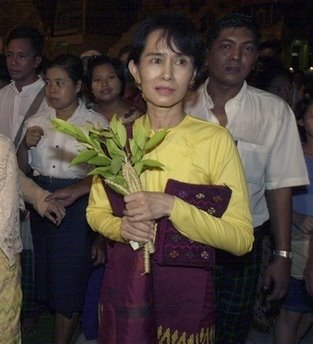


 Posts
Posts


