News & Articles on Burma
Monday, 14 March, 2011
-------------------------------------------------------------
Junta, Shan army exchange fire again
Burma expects PR boost from Blatter visit
Jealousies Divide 'United' Junta
EU Wants Burmese Refugees to Stand on Own Feet
Gem fair sees jade prices soar 10-fold
Parties lobby EU for end to sanctions
The EU continues humanitarian projects in Myanmar and Thailand
‘Buildings cracked; everything shook’
---------------------------------------------------
http://www.bbc.co.uk/news/world-12724473
=============================
Junta, Shan army exchange fire again
Monday, 14 March 2011 17:38 Hseng Khio Fah
E-mail Print PDF
Clashes between Shan State Army (SSA) ‘North’ and Burma Army troops were reported yesterday twice in the area of Shan State South’s Monghsu township, according to local sources.
The first attack took place at around 18:30 (local time) yesterday and the second one around 08:00 this morning, lasting about half an hour each. Both attacks took place in Mong Awd village tract, Monghsu, where the SSA troops are active. But no details of the attacks have been known so far.
The SSA side had about 60 men and while the Burma Army had 200, who were dispatched from proper Burma to Monghsu. They came in over 20 military trucks which were also carrying military supplies.
According to local villagers, it was the SSA that opened fire first. “The SSA knew that the junta authorities were sending more troops to its areas,” said a source.
During these days, the military junta is reported to have been busy deploying more troops to areas along the Salween, where the Shan State Army (SSA) is active in the west and the United Wa State Army is in the east, according to local sources.
The total number of troops sent yesterday to the two groups’ controlled territories was about 10 battalions, estimated around 1,000 soldiers, according to an officer from the SSA’s First Brigade.
They were dispatched from different parts. Some were deployed from Shan State North’s Lashio to Tangyan and Mongyai townships, northern part of SSA’s First Brigade Headquarters Wanhai, while others were sent from Shan State South’s Mongnawng sub-township to Monghsu township, east of Wanhai.
“The deployment coming from Mongnawng to Monghsu was about 200 soldiers. They came in about 40 military trucks also carrying military supplies. They arrived at around 3 or 4 pm,” said an eye witness from Monghsu.
Likewise, a source from Nampawng village located between Lashio and Tangyan said, “They [the military trucks] did not come together, only 10 to 15 trucks per convoy. All were filled with soldiers.”
The SSA said the Burma Army is planning to make another ‘Four Cuts campaign: cutting food, funds, information and recruits and an additional: communication routes.
The relationship between SSA and the Burma Army turned sour since the SSA refused to accept Naypyitaw’s militia force program in 2009.
The SSA First Brigade, now officially known as Shan State Progress Party/ Shan State Army (SSPP/SSA), is also allied with the United Wa State Army, the National Democratic Alliance Army and the Kachin Independence Organization (KIO). The United Nationalities Federal Council (UNFC) confirmed that the SSPP/SSA had decided to “wait and see instead of joining it.” The alliance, which was formed last month, has 11 member organizations. http://www.shanland.org/index.php?option=com_content&view=article&id=3505:junta-shan-army-exchange-fire-again&catid=86:war&Itemid=284
---------------------------------------------
Burma expects PR boost from Blatter visit
* Published: 14/03/2011 at 12:00 AM
* Newspaper section: News
Football crazy Burma is hosting the head of world football this week _ a visit which the regime's top generals hope to milk for all its worth.
Sepp Blatter, the president of the international football's governing body Fifa, is making a two-day official visit to Burma beginning tomorrow in what may be a diplomatic coup for the military junta.
In the first-ever visit by a senior Fifa official to the country, Mr Blatter will open the new Myanmar Football Academy, built with funds from Fifa and inspect some of the "Football for Hope" projects also initiated by the organisation.
These are part of Fifa's programmes all over the world that combine football and social development.
Mr Blatter was invited by the president of the Myanmar Football Federation, the wealthy businessman Zaw Zaw during the World Cup in South Africa last June.
While in Burma he will seek ways for the Myanmar Football Federation to strengthen the local professional leagues, said sources in Rangoon.
However, Western diplomats in the region fear that Mr Blatter, a controversial and outspoken 74-year-old Swiss, will be exploited by the regime for its own ends.
Mr Blatter is also scheduled to visit the secretive, new capital Naypyidaw, where he will meet the president-elect Thein Sein as well as the football-mad military supremo, Than Shwe.
"Such a high-profile visitor will undoubtedly be used to try to give credibility to the newly formed civilian government," said a western diplomat based in Rangoon.
For a regime struggling against international condemnation and isolation over its human rights record, especially by the West, this would be a welcome recognition.
Sources close to the Fifa delegation say Mr Blatter was reluctant to go to Naypyidaw _ where he will stay overnight tomorrow _ but had no choice for football's sake.
"The trip is purely to promote sport," said a football official in Rangoon on condition of anonymity.
The charismatic opposition leader, Aung San Suu Kyi _ recently released after more than seven years under house arrest _ is also a football fanatic, according to sources in her party.
Some western government officials tried to encourage the football boss to include a meeting with her on this visit, but this was turned down as the trip was confined to sport, and was not meant to be political.
But the Fifa head's visit is something of a diplomatic coup for the top general Than Shwe _ who is a keen follower of the English Premier League and watches it regularly on satellite television. He is reported to be an avid Manchester United fan, as is his eldest grandson _ Nay Shwethway Aung, nicknamed Pho La Pyit. Two years ago, he encouraged his grandfather to establish a professional football league in Burma.
Football is Burma's most popular sport. Each weekend the country comes to a virtual stop to watch the English league on pirated television transmissions illegally siphoned from Thailand.
Millions of kyat, the local currency, are wagered on each game.
Now that Burma has its own league, interest has peaked further. There are some 100 players on monthly salaries ranging from 300,000 kyat (9,000 baht) to one million kyat, including foreign players, mostly from Africa.
In January 2009, Than Shwe ordered the regime's cronies and businessmen to set up professional football teams, offering incentives including gem and jade mines.
Eight wealthy businessmen _ probably the richest businessmen in Burma _ with close ties to the top generals, established teams which took part in the first competition last year. Each team was encouraged to have foreign coaches and were allowed to have a maximum of five foreign players.
The eight new soccer clubs represented eight different regions of the country. The top general's grandson himself happens to be a player for the Delta United team owned by businessman Zaw Zaw, the key promoter of the Burmese football league.
Than Shwe, according to sources in Naypyidaw, immediately saw the political value of setting up a football league in a bid to capture credibility and support ahead of last year's elections.
If nothing else, it would be a distraction, one senior government official said.
Than Shwe apparently had grandiose ideas, including wanting to see former Manchester United star David Beckham play. That certainly would have been a coup as Becks is one of the best known and admired international superstars. Although the level of foreign players did not match the expected icons of the sport, the league proved popular.
Zaw Zaw, for his efforts in establishing the league, has now become the senior patron of the league and the titular head of the country's football body. He is renowned to be close to Than Shwe and his grandson.
His Max Myanmar group is notorious, and now one of the biggest companies in the country. He and his companies are subject to US sanctions.
The regime's top generals are quite convinced that they have the money and power to buy their way into the international sport.
Than Shwe briefly considered a take-over bid for the top English club, Manchester United, according to a secret document leaked by whistle-blowing website WikiLeaks.
A cable sent from the US embassy in Rangoon to Washington, revealed that military commander-in-chief Than Shwe was advised by his grandson before January 2009 to look into the possibility of buying the Barclays Premier League giants.
A bid of $1 billion was considered, before being dropped in favour of creating a new Burmese football league.
The US diplomatic cable said: "One source reports that the grandson wanted Than Shwe to offer $1 billion for Manchester United. He thought that sort of expenditure could look bad, so he opted to create for Burma a league of its own."
What this reveals though is Than Shwe clearly wants to use sport to bolster the popularity of his political puppets, and sees football as a major means to do that.
So Mr Blatter's visit to Burma this week fits neatly into the senior general's game plan _ even if FIFA try to avoid being used for propaganda purposes. http://www.bangkokpost.com/opinion/opinion/226522/burma-expects-pr-boost-from-blatter-visit
--------------------------------------
Jealousies Divide 'United' Junta
By WAI MOE Monday, March 14, 2011
One of the Burmese junta’s best known mottos is: “We will remain united whoever tries to break us up.” The military authorities ensure that plaques and signs are put up bearing this slogan in military schools, bases and public places across the country.
However, much as the slogan clearly prescribes an undivided approach to external threats, it does not appear to have generated the same team spirit when it comes to internal conflicts, in particular, splits and jealousies within the military hierarchy based on business interests.
Even some of Burma's top generals have fallen prey to the “dog eat dog” syndrome that plays out continually in Naypyidaw.
Most recently, over the weekend of March 5-6, several cabinet members and military cronies were left miffed when they were not included in a thinly veiled scheme by the Trade Policy Council to sell off cheaply into private hands a list of state-owned buildings and properties in Rangoon.
Many of the properties included colonial buildings that were former ministries, and other edifices located in the city's commercial hub. They were offered to many military officers and their friends and families, but certain potential investors missed out on the opportunity to take advantage on the discounted properties.
“The division in privileges has led to jealousies and rivalries between several military generals and cabinet ministers, as well as among the community of influential family members,” said a Rangoon businessman, speaking on condition of anonymity. “Now, some of them don't talk to each other. They compete fiercely to win contracts on any state property that is put up for sale.”
As an example, he said that ex-Brig-Gen Thein Zaw, the minister of Communications, Posts and Telegraphs, and Soe Tha, the minister of National Planning and Economic Development, are no longer on speaking terms following a dispute that arose when they both tried recently to buy out the same state firm in Rangoon.
Since the beginning of this year, the junta has announced the sell-off of five large state-owned corporations and buildings, including the former Offices of the Ministers, a British colonial edifice where Burma’s independence hero Aung San and eight of his colleagues were assassinated in 1947.
Observers have said that the property sellouts have no benefit to the people of Burma; instead, the public buildings—several of which feature unique Victorian architecture that is considered characteristic of Rangoon, and are popular with tourists—are being transferred into the hands of Burma's military and business elite.
Family members of many of the military's top generals, such as Snr-Gen Than Shwe, Vice Snr-Gen Maung Aye, Gen “Thura” Shwe Mann, Secretary-1 ex-Gen Tin Aung Myint Oo and ex-Lt-Gen Tin Aye, all own former state properties and/or have taken over formerly state-run business enterprises, such as hydropower and mining contracts.
Although junta chief Than Shwe’s favorite grandson Nay Shwe Thway Aung is only 21 years of age, his buying power in Rangoon is second to none.
Sources have said that Nay Shwe Thway Aung has recently purchased huge estates on Rangoon’s Parami Road and Kabar Aye Pagoda Road where he intends to construct shopping complexes and business centers.
“These are large plots of land he [Than Shwe's grandson] bought,” said a government official in Rangoon who wished to remain anonymous. “No other businessman has dared to even dream about acquiring these properties.
“But this is Nay Shwe Thway Aung’s era. He can do anything he wants,” he said.
Reports from Naypyidaw suggest that several military officers dislike Nay Shwe Thway Aung because he has assumed a high rank within military circles despite the fact he has never served in the army, and is reputed to be pretentious. Displeasure was also expressed by the military elite that Than Shwe's grandson was permitted to sit in the front row beside his grandfather at official photo shoots.
“Nay Shwe Thway Aung has been involved in several business disputes with the sons of other top generals, including Aung Thet Mann, Toe Naing Mann and Shwe Mann. But, in the end, they always have to concede to Nay Shwe Thway Aung,” he added.
The family of junta No.2 Maung Aye is thought to be the richest in the country. His daughter, Nandar Aye, and her husband, Pyi Aung, who is son of Industry-1 Minister Aung Thaung, own and run the largest multinational in Burma—the IGE Group. Their other partner is Nay Aung, the other son of Aung Thaung.
The company is involved in the oil and gas industries, the timber trade, mining, tourism, banking and construction, either directly or through its sister companies: UNOG Co. Ltd; the Amara Co. Ltd; MRT Co. Ltd; FCEC Co. Ltd; and various others.
Another contentious issue among the generals is Than Shwe’s “divide and rule” tactic of reshuffling his closest allies in the post-election political arena. Junta No.3 Shwe Mann became the Lower House speaker while his fellow generals former Prime Minister Thein Sein and Tin Aung Myint Oo were selected as president and vice-president respectively.
Even though no one dares complain to Than Shwehis orders are considered absoluteseveral high-ranking officers are reportedly very unhappy with the new lineup. Only one, Lt-Gen Myint Aung, dared to refuse Than Shwe’s appointment of him as defense minister. He was quickly dismissed and confined to virtual house arrest.
But the ill feeling does appear to have had some effect on Than Shwe. His four daughters who held symbolic positions at the Ministry of Foreign Affairs reportedly resigned earlier this year in what Burma observers see as a face-saving maneuver.
“Although Than Shwe's son-in-law Zaw Phyo Win is still with the ministry, the daughters’ resignations are good news for all other staff members,” said a former Burmese diplomat in Rangoon. “They [the daughters] just claimed fake salaries. They never actually went to work or did anything.”
http://irrawaddy.org/article.php?art_id=20929
------------------------------------------
EU Wants Burmese Refugees to Stand on Own Feet
By THE IRRAWADDY Monday, March 14, 2011
A visiting European Union (EU) delegation said it will provide career training to Burmese refugees on the Thai-Burmese border to empower them to support themselves, but that it must reduce annual aid and supplies to the displaced.
A representative for the EU delegation spoke during a visit to Mae La refugee camp, the biggest of its kind, which houses around 50,000 mostly ethnic Karen people who fled from their homes due to attacks by the Burmese Government Army. There are currently 150,000 Burmese refugees living on the Thai-Burmese border.
The project will aim to help Mae La refugees make enough income to support themselves, EU Commissioner for International Cooperation, Humanitarian Aid and Crisis Response Kristalina Georgieva told camp committees on Sunday evening while leading the delegation. The EU project will include agriculture, livestock and handicraft training.
Karen students walk in Mae La camp, near the Thai-Burmese border in Mae Sot district, Tak province, 600 km (373 miles) north of Bangkok. (Photo: Reuters)
Saw Htun Htun, the chairman of Mae La refugee camp, told The Irrawaddy: “The EU officials said they will reduce its current aid year by year. However, they said they will help the refugees until they can stand on their own feet. They will also provide career training to the refugees.”
Saw K’nyaw Poe, a Karen refugee in Mae La camp, said, “Many people here are interested in having a paid job inside or outside the camp to making their living. They are bored staying in the camp for years and are unable to travel freely outside. Those who illegally travel outside the camp can be arrested and tortured at any time.”
Htun Htun said the refugee camp committees also welcomed the project by the EU and believe that it will improve the life of residents by allowing them to support themselves.
Refugees in the nine camps on the Thai-Burmese border are not officially allowed to travel and work outside the camp, but the EU delegation said it will also urge Thai authorities to stop these restrictions.
The EU has been supporting Burmese refugees on the Thai-Burmese border since 1995. Food and supplies for refugees have been reduced as humanitarian relief funding for the West has decreased, according to a camp committee member.
The Thailand Burma Border Consortium (TBBC), which has been caring for Burmese refugees for the past 25 years, said that livelihood programs will likely operate inside the camp as the Thai authorities do not allow Burmese refugees to travel outside and seek employment.
Sally Thompson, the deputy director of the TBBC, said, “We all like to see the refugees becoming self-reliant. But there are limits that can be achieved within the current refugee policy here in Thailand.”
While non-governmental organizations have started to support self-reliance programs towards refugees, Thompson said she believes it is too early to reduce aid supplies as most still remain heavily dependent on humanitarian assistance for even their basic needs.
http://irrawaddy.org/highlight.php?art_id=20928
---------------------------------------------
Gem fair sees jade prices soar 10-fold
By AHUNT PHONE MYAT
Published: 14 March 2011
Sale prices for Burma’s iconic jade stone have jumped as much as ten times in the past year, according to gem merchants whom last week attended the 48th Gems Emporium in Naypyidaw.
Despite the price hike, as many as 17,000 sets of jade were bought, one gem business owner at the emporium told DVB.
“Jade prices are going very high – about 10 times more than last year’s price,” he said. “A piece of jade that was worth 200,000 kyat ($US230) to 300,000 kyat ($US340) about three years ago is now worth about 1.5 million kyat ($US1,705) to two million kyat ($US2,272).”
He added that the dramatic increase was largely down to growing demand from Chinese buyers, who are also hungrily snapping up Burmese pearl which was second bestselling gem at the emporium. Another gem businessman said that Chinese traders made up three-quarters of the buyers in Naypyidaw last week.
With bans on imports of Burmese jade to the US, China has quickly become the world’s top market for the coveted stone, which is mined heavily in Burma’s northern Kachin and Sagaing states, often in operations backed by Chinese businessmen.
“China has high buyer demand for jade as the country’s economy is growing,” said another man. “And the Burmese government, which is sanctioned by western countries, was looking to sell the gems, so it’s a win-win situation.”
He added that the Burmese government “doesn’t care about the international sanctions and they wanted to show off how much money they can still make from selling the gems”.
Burmese government figures claim that profits made from selling jade has climbed from $US198 million in 2005 to $US1,700 million in 2010, despite seeing falls in profit from other precious stones.
The last gems emporium in Naypyidaw in November last year made record sales of $US1.4 billion, suggesting that the sanctioned industry is buoyant.
Burma is thought to produce around 90 percent of the world’s jade and gems, much of which goes to China and other regional nations, such as Singapore.
Most of the produce comes from Burma’s ethnic regions, particularly the Hpakant mines in Kachin state where the conditions for workers are notoriously poor. Around 30 government-licensed companies mine precious stones in Kachin state, where they have had to vie for territory with the opposition Kachin Independence Army.
http://www.dvb.no/news/gem-fair-sees-jade-prices-soar-10-fold/14716
---------------------------------------
Parties lobby EU for end to sanctions
By DVB
Published: 14 March 2011
Ten opposition parties have joined together to call on the EU to terminate sanctions on Burma, claiming that the post-election “evolution” underway in the country warranted a rethink of European policy.
An open letter sent to Brussels last week and signed by the ‘Myanmar Fraternal Democratic Parties’ – a loose alliance that includes the National Democratic Force (NDF) and Democratic Party Myanmar (DPM), as well as a number of ethnic parties – criticised the current embargo as responsible for “[denying Burmese] the benefits of increased foreign investment that brings technology, better working conditions and modern global ideas”.
“Though sanctions are not the prime cause for poverty in our country, they have hit labor-intensive sectors like garments, seafood and wood processing, and prevent new jobs from being created”, it continued, adding that the EU should also lift its opposition to tourists travelling to Burma.
Khin Maung Swe, leader of the NDF, said that the group had also called on EU ministers to aid dialogue between the opposition and the Burmese junta.
The debate over whether sanctions should remain on the pariah has split the opposition: some say that measures such as the visa ban are making life uncomfortable for the ruling generals, while others see the approach as ineffective in the face of continued regional, particularly Chinese, investment in Burma. Some even claim the protracted debate is itself an obstacle to progress in the military-ruled country.
The letter’s signatories are all part of the body of democratic parties that competed and won seats in the November 2010 elections. The National League for Democracy (NLD), which despite its boycott of the polls is still considered to be the leading opposition force in Burma, continues to be the strongest proponent of sanctions but has acknowledged the need for a review.
In a statement released last month, the party led by Nobel laureate Aung San Suu Kyi said it would look to engage with Western nations in a bid to modify sanctions following a study in which it found that Burmese citizens were not affected by the embargo.
Suu Kyi herself has said however that greater foreign investment, provided it is done carefully, could improve conditions for Burmese who have been “left behind”.
Some analysts claim that the poor targeting of sanctions effectively amounts to a humanitarian boycott, with the quantity of overseas development assistance (ODA) going into Burma now lower than Cambodia, despite having a population three times the size.
The remaining signatories to the EU letter are the Chin National Party, Democracy and Peace Party, Nationla Political Alliance, Phalon-Sawaw Democratic Party, Rakhine Nationalities Democratic Party, Shan Nationalities Democratic Party, Union Democratic Partyand Wunthanu National League for Democracy.
http://www.dvb.no/news/parties-lobby-eu-for-end-to-sanctions/14721
----------------------------------
The European Union continues its steady support for humanitarian projects in Myanmar and Thailand in 2011
Reference: IP/11/300 Date: 14/03/2011
IP/11/300
Brussels, 14 March 2011
The European Union continues its steady support for humanitarian projects in Myanmar and Thailand in 2011
The European Union's humanitarian assistance for Myanmar and Thailand will reach €22.25 million this year. The size of the contribution was announced in Bangkok by Kristalina Georgieva, the European Commissioner for Humanitarian Aid, International Cooperation and Crisis Response. From the European humanitarian aid budget, €8 million will be allocated to refugees from Myanmar living in border camps in Thailand, and €14.25 million will provide help to vulnerable communities in Myanmar, including those affected by cyclone Giri.
"The European Union has long been a leading supporter to the people in need of humanitarian aid in Thailand and Myanmar; in 2011, our assistance will remain generous as we continue to work for sustainable solutions for the refugees and disaster-stricken communities in the region," Commissioner Georgieva said. She gave details of the Commission's 2011 humanitarian support in Myanmar and Thailand after visiting the Mae Sot - Mae La refugee camp in Western Thailand and after meeting Prime Minister Abhisit Vejjajiva and Foreign Minister Kasit Piromya.
The €8 million funding for the refugees in six of the nine camps along the border will mainly provide food assistance, health care, clean water and sanitation. Over 100,000 refugees will benefit from European aid.
The €14.25 million allocation for Myanmar includes €5m for the remaining humanitarian needs in the aftermath of cyclone Giri which hit Rakhine State in October 2010. Immediately after the disaster, the European Commission provided €3 million in aid, but four months on, the affected communities are still facing considerable challenges and need humanitarian support.
Background
Today, over 140,000 refugees from Myanmar live in nine camps in Thailand. The European Commission is among the largest donors to the camps and since 1995 has provided, including 2011 funding, €149 million: €103m for humanitarian aid and €46m through other longer-term assistance budgets.
Including Member States' donors (DFID, the Netherlands, Denmark, Sweden, the United Kingdom), the European Union has been providing € 25 million per year since 2007 in humanitarian aid to the refugee camps in Thailand. This is more than half of the overall humanitarian support to the refugees and displaced along the border.
The European humanitarian assistance covers food support, basic healthcare, water and sanitation. Essential food aid is provided to over 65,000 refugees, and 100,000 benefit from basic medical services. The projects that receive financing from the European Union are implemented primarily through international non-governmental organisations and UNHCR.
To ensure that refugees get not only immediate support, but also a chance for a better future and greater self-reliance, the European Commission plans to gradually refocus its aid to camp residents – from humanitarian relief toward more sustainable support.
The European Commission provided €110,000 to the Thai Red Cross to provide urgent humanitarian assistance to people affected by the floods which inundated the north-eastern and central provinces of Thailand in August and September 2010.
For more info
For information on the European Commission’s humanitarian support for refugees in Thailand:
http://ec.europa.eu/echo/aid/asia/thailand_en.htm
Commissioner Kristalina Georgieva’s website:
http://ec.europa.eu/commission_2010-2014/georgieva/index_en.htm
-----------------------------------------
‘Buildings cracked; everything shook’
By KHIN MIN ZAW
Published: 14 March 2011
First-hand accounts from Burmese nationals of the recent earthquake in Japan have described how communication is down across many parts of the country and thousands remain trapped in relief camps with little food.
Estimates of the number of those killed by Japan’s strongest earthquake on record vary, but the US Geological Survey says it is likely more than 10,000. Local reports say that two thousand bodies were found this morning in the worst-hit Miyagi Prefecture in the country’s northeastern region, which was submerged by the resulting tsunami, while 10,000 were reported missing in Minamisanriku alone.
Than Than Aye, 55, told DVB that she had been at her home in Tokyo, 230 miles from the epicentre, on Friday last week when the 9.0-magnitude quake struck.
“I was at home watching parliamentary news [on television] and an announcement about the earthquake appeared [on the screen],” she said. “Then the earthquake came; everything was shaking, and I hastily put on a helmet and ran out to the street.
“Electric wires were making banging sounds. A building nearby cracked and the water came along very strong. I didn’t know where to run. Someone shouted ‘duck! duck!’ so we ducked and then ran into [a nearby] school.
“My body was shaking so much when I made my way to the school I couldn’t even walk properly. There were kids in the school. No one dared to stay inside the school building – everyone was out in the compound. It was very cold too.”
Fears of further disaster are growing after an explosion occurred at a second nuclear reactor building at the Fukushima Daiichi atomic power plant this morning, although a government spokesperson told The Guardian that there was a “low possibility” of a dangerous radiation leak
Than Than Aye, who has now been moved to a relief camp, said telephone lines were down and there was no gas in Tokyo, which is home to nearly 13 million people, although electricity remained on in some parts of the city.
She said that people, including children, in the relief camp she was in had been given blankets but were struggling to find food.
According to Japan’s foreign ministry, nearly 6000 Burmese are registered in the country, although the figure for unregistered migrants is likely to be a lot higher. It is not clear whether Burmese are among the quake victims.
Taiwanese media said today that of the 5,450 Taiwanese in Japan, more than 1,700 had not been accounted for.
The UN’s Office for the Coordination of Humanitarian Affairs (OCHA) quoted the Japanese government as saying that 2.6 million households are without electricity and nearly 3.2 million people are running out of gas supplies, while 1.4 million people have no access to water. Nearly 600,000 have been evacuated from the country.
http://www.dvb.no/news/%E2%80%98buildings-cracked-everything-shook%E2%80%99/14710
__._,_.___
Sunday, March 13, 2011
News & Articles on Burma-Monday, 14 March, 2011


Friday, March 11, 2011
News & Articles on Burma-Thursday, 10 March, 2011
News & Articles on Burma
Thursday, 10 March, 2011
--------------------------------------------------------------
Green Shan: Dams part of junta strategy against rebels
1,700 Factory Workers Strike in Rangoon
Dams Will Displace Thousands, Threaten Existence of Ethnic Group: Report
Green Shan: Dams part of junta strategy against rebels
19 dead as quake rocks China near Burmese border
Regime troops reinforced in northern Shan State
UN Official Urges Inquiry into Burma Rights Abuses
President’s clout ‘is premature’, says NLD
Gems Emporium Opens in Naypyidaw
HIV quietly skyrockets in Burma
-------------------------------------------------
Green Shan: Dams part of junta strategy against rebels
Thursday, 10 March 2011 16:25 S.H.A.N.
Sai Sai, head of the Shan Sapawa environmental group and leading member of Burma Rivers Network (BRN), told SHAN today completion of the 7 mega dams on the Salween would strangle the struggle of the resistance armed movements fighting for self-rule.
[Salween Dam Map (map: Salween Watch)]
Salween Dam Map (map: Salween Watch)
Speaking on the sidelines of the press conference launching “Stop the Dam Offensive against the Karenni” at an undisclosed venue on the Thai-Burma border, he said, “There are 7 dams being planned on the Salween. 7 dams mean 7 man-made lakes, which wills be closely guarded by tens of thousands of the Burma Army troops. The resistance fighters trying to cross the river will become sitting ducks.”
The projected 7 dams, from north to south, are: Kunlong, Nawng Pha and Tasang in Shan State; Ywathit in Karenni (Kayah) State; and Weigyi, Dagwin and Hutgyi in Karen State.
The Kachin Independence Army (KIA), Shan State Army (SSA) ‘North’, Shan State Army (SSA) ‘South’, United Wa State Army (UWSA), Karenni Army (KA) and the Karen National Liberation Army (KNLA) are active on both sides of the Salween, whose headwaters are in China
Of the 7 projects, Hutgyi and Tasang appears to be the most advanced:
* Electricity Generating Authority of Thailand (Egat), China and Naypyitaw signed an MoA to go ahead in April 2010
* Egat, Burma and China’s Three Gorges Group Corporation signed MoU on Tasang on 11 November 2010, just 4 days after the elections were held
“Egat had taken over from the MDX group (that had been working on Tasang since (1997),” he explained. “And the projected expenditure has been raised from $ 6 billion to $ 10 billion now.”
The Karenni Development Research Group (KDRG) has expressed 6 main concerns that the dams are:
* Fueling conflict and instability
* Forging ahead in secret (without information or consultation to/ with the local population)
* Destroying forests and biodiversity
* Reducing agricultural production
* Threatening indigenous peoples
* Locating water surges and shortages
“We, the people, are the host,” complained a Kayah resident who requested anonymity. “It is insulting when the guest is doing what is wants without asking the host.
“It is also meaningless to call our state Kayah and then doing what it can to destroy the people of Kayah.”
Thaw Reh, who had made the main presentation, agreed. “They also like to say it is for the benefit of the community, while all the time it is for themselves,” he charged.
Thaw Reh said he was taking advantage of the fact that Beijing is currently holding the National People’s Congress (NPC) to organize the press conference. “There must be peace before development,” he maintained. “And for every development project to go ahead, the participation of the people is imperative.”
The SSA South, in whose operational territory the Tasang hydropower project is located, has said it would bow to the will of the people on the subject. In the meanwhile, the road construction from Mongpan, west of the Salween, to Monghta, east of the Salween, near Tasang, has been suspended because of warnings from the local activists, said Sai Sai. http://www.shanland.org/index.php?option=com_content&view=article&id=3502:green-shan-dams-part-of-junta-strategy-against-rebels&catid=90:environment&Itemid=287
-------------------------------------------------
1,700 Factory Workers Strike in Rangoon
By LINN THANT Thursday, March 10, 2011
Some 1,700 workers at a shoe factory in Rangoon have been on strike demanding better pay conditions since Tuesday, according to the factory workers.
Workers are involved in a sit-in at the Taiyi shoe factory in Hlaing Tharyar Industrial Zone, about 11 km from downtown Rangoon. One told The Irrawaddy that they were demanding better salaries and overtime pay, and that their demands have not been met to date.
Workers in Rangoon's Hlaing Tharyar Industrial Zone stage a sit-in in Feb. 2010. (Source: www.niknayman-niknayman.co.cc)
“We want to demand our rights peacefully,” said one of the factory workers. He said that the recent price hike in general commodities and transportation costs have pressured him and his fellow workers to demand better pay. “We can no longer survive on our current income. We are compelled to do this.”
The worker said that anti-riot police trucks have been stationed near the factory though this news cannot be independently verified.
Employees at Burmese factories generally earn an average monthly wage of US $30-50 while their counterparts in Cambodia and Vietnamese earn at least $120 a month.
The Taiyi shoe factory is one of at least 20 factories on the outskirts of Rangoon where industrial unrest broke out early last year. The disputes were resolved after the owners agreed to a monthly raise of 5,000 kyat ($5).
Last month, the International Labor Organization (ILO) renewed a memorandum of understanding with the Burmese government regarding procedures for lodging complaints against forced labor cases and child soldier conscription.
The ILO's executive director, Kari Tapiola, said last year that one of Burma's most fundamental issues was the complete absence of a legally functioning workers' organization.
Labor activists are hoping to form a labor union when Burma has a new government in the coming months. However, several factory workers have said that any future union will be formed of only the factory owners and government officials from the Labor Ministry, and would, therefore, not be representative of their needs.
http://www.irrawaddy.org/article.php?art_id=20913
--------------------------------------------------
Dams Will Displace Thousands, Threaten Existence of Ethnic Group: Report
By KO HTWE Thursday, March 10, 2011
At least 37,000 people will be displaced and the Yintale, a sub-group of the Karenni, could face extinction because of the damming of rivers across Karenni State, according to a new report released by local researchers.
The report, launched at a press conference in Thailand on Thursday by the Karenni Development Research Group (KDRG), exposes secret plans by the Burmese regime and the state-owned Datang Corporation of China to build three dams in the state under a memorandum of understanding signed in January 2010.
The three dams are the 600 MW Ywathit Dam on the Salween River; the 130 MW Pawn River Dam; and the 110 MW Thabet River Dam to the north of the Karenni State capital of Loikaw.
The Yintale, an ethnic group numbering only around 1,000, live as subsistence farmers on the banks of the Salween and Pawn rivers near the sites of two of the proposed dams, traditionally planting millet and sesame.
“If the dams go ahead, the income they generate will be stained with Karenni blood,” said Khu Thaw Reh of KDRG.
The KDRG report says that engineers guarded by armed soldiers are now surveying for the projects. Further evidence of their progress is the construction of shelters for engineers and workers and logging upstream from the dam sites, the report said, adding that local villagers have been told to stay away from the areas under development.
“These dams are killing off our people. We will have nowhere to go, even though this state belongs to us, at least in name,” said Khu Thaw, a KDRG member from inside Burma.
“It is sad for the future of the Karenni people. The regime shouldn't just come in here and do as it pleases just because there are so few of us,” he added.
Besides threatening indigenous people, the KDRG report says the projects could fuel conflict and instability in the area, destroy forests and diminish biodiversity, reduce agricultural production, and cause water surges and shortages.
Others agreed that the project would have a negative impact on the local environment.
“Nearly 50 species of animal in the area will be extinct because of these projects,” said Sai Sai, the coordinator of Burma Rivers Network, a coalition of organizations representing various dam-affected communities in Burma.
Another major concern is that the new hydropower dams could lead to the kinds of abuses that typically accompany major development projects in Burma.
“In the past, we experienced the building of the Lawpita hydropower dam. Even after we lost our land, we weren't able to demand compensation,” said Thaw Reh.
Lawpita, the first large-scale hydropower project built in Karenni State, forced over 12,000 people from their homes. An estimated 18,000 landmines were planted around the site and thousands of Burmese troops came in to secure the project, resulting in abuses against the local population, including forced labor, sexual violence and extrajudicial killings, according to the KDRG.
In total, the Burmese regime, working in partnership with Chinese and Thai companies, plans to build seven dams along the Salween River and its tributaries. Most are located in conflict zones and have exacerbated local resentment because almost all of the electricity expected to be generated will be sold to China and Thailand.
“How can investors think that this is just business as usual when armies are battling all around them and people are fleeing for their lives?” said Thaw Reh. “They should wake up to the risks of these dams and immediately stop their operations.”
At present, 21 major dam projects are under construction around the country, in Kachin, Shan and Karenni states and Mandalay and Sagaing divisions. The total output of these dams, many of which are being built by Chinese companies, is expected to be 35,640 MW of electricity.
Datang Corporation, the company involved in building the Karenni dams, belongs to the United Nations Global Compact, whose members commit to conducting business according to universally accepted principles of human rights and environmental and labor standards, according to the KDRG report. http://www.irrawaddy.org/article.php?art_id=20912
----------------------------------------
Green Shan: Dams part of junta strategy against rebels
Thursday, 10 March 2011 16:25 S.H.A.N.
Sai Sai, head of the Shan Sapawa environmental group and leading member of Burma Rivers Network (BRN), told SHAN today completion of the 7 mega dams on the Salween would strangle the struggle of the resistance armed movements fighting for self-rule.
[Salween Dam Map (map: Salween Watch)]
Salween Dam Map (map: Salween Watch)
Speaking on the sidelines of the press conference launching “Stop the Dam Offensive against the Karenni” at an undisclosed venue on the Thai-Burma border, he said, “There are 7 dams being planned on the Salween. 7 dams mean 7 man-made lakes, which wills be closely guarded by tens of thousands of the Burma Army troops. The resistance fighters trying to cross the river will become sitting ducks.”
The projected 7 dams, from north to south, are: Kunlong, Nawng Pha and Tasang in Shan State; Ywathit in Karenni (Kayah) State; and Weigyi, Dagwin and Hutgyi in Karen State.
The Kachin Independence Army (KIA), Shan State Army (SSA) ‘North’, Shan State Army (SSA) ‘South’, United Wa State Army (UWSA), Karenni Army (KA) and the Karen National Liberation Army (KNLA) are active on both sides of the Salween, whose headwaters are in China
Of the 7 projects, Hutgyi and Tasang appears to be the most advanced:
* Electricity Generating Authority of Thailand (Egat), China and Naypyitaw signed an MoA to go ahead in April 2010
* Egat, Burma and China’s Three Gorges Group Corporation signed MoU on Tasang on 11 November 2010, just 4 days after the elections were held
“Egat had taken over from the MDX group (that had been working on Tasang since (1997),” he explained. “And the projected expenditure has been raised from $ 6 billion to $ 10 billion now.”
The Karenni Development Research Group (KDRG) has expressed 6 main concerns that the dams are:
* Fueling conflict and instability
* Forging ahead in secret (without information or consultation to/ with the local population)
* Destroying forests and biodiversity
* Reducing agricultural production
* Threatening indigenous peoples
* Locating water surges and shortages
“We, the people, are the host,” complained a Kayah resident who requested anonymity. “It is insulting when the guest is doing what is wants without asking the host.
“It is also meaningless to call our state Kayah and then doing what it can to destroy the people of Kayah.”
Thaw Reh, who had made the main presentation, agreed. “They also like to say it is for the benefit of the community, while all the time it is for themselves,” he charged.
Thaw Reh said he was taking advantage of the fact that Beijing is currently holding the National People’s Congress (NPC) to organize the press conference. “There must be peace before development,” he maintained. “And for every development project to go ahead, the participation of the people is imperative.”
The SSA South, in whose operational territory the Tasang hydropower project is located, has said it would bow to the will of the people on the subject. In the meanwhile, the road construction from Mongpan, west of the Salween, to Monghta, east of the Salween, near Tasang, has been suspended because of warnings from the local activists, said Sai Sai. http://www.shanland.org/index.php?option=com_content&view=article&id=3502:green-shan-dams-part-of-junta-strategy-against-rebels&catid=90:environment&Itemid=287
--------------------------------------------
19 dead as quake rocks China near Burmese border
The Associated Press
Date: Thursday Mar. 10, 2011 5:25 AM ET
BEIJING — An earthquake toppled houses and damaged a hotel and supermarket in China's extreme southwest near the border with Burma on Thursday, killing at least 19 people and injuring more than 150, officials and state media said.
Witnesses reported that people were buried under debris from buildings damaged by the quake, centred in Yunnan province's Yingjiang county, the official Xinhua News Agency said.
China Central Television said the quake hit while many people, including students, were home for a customary midday rest. The report said at least two students were among those killed, but didn't give details. The state broadcaster showed several buildings with concrete foundations that had cracked and buckled.
The website of the Chinese government earthquake monitoring station said the magnitude-5.8 quake struck just before 1 p.m. (0500 GMT) at a depth of 10 kilometres. The U.S. Geological Survey measured the quake at a magnitude of 5.4 and at a deeper 35 kilometres.
At least 19 people were killed and 157 other people were hurt, said Ren Xueli, an official with the Yunnan Disaster Relief Centre. China Central Television said 166 were injured.
CCTV reported that about 100 armed police, firefighters and soldiers were using three excavators to try to rescue a man and a girl trapped inside a four-story building that had partially collapsed.
He Shuhui, head of an armed police squad, was quoted as saying they were trapped in a stairway on the ground floor of the building.
Another official on duty at the centre, Gao Shaotang, said many houses had been toppled. Xinhua said the army was sending 400 soldiers to the site for rescue efforts.
The epicentre was in Shiming Village, just over a kilometre from the county seat, but triggered a power outage across Yingjiang, which has a population of about 300,000 people, Xinhua said.
The mountainous area lies 2,400 kilometres southwest of Beijing, close to the border with Myanmar, and is home to many ethnic groups on both sides of the border, which sees heavy traffic in people and goods.
Xinhua said the quake-prone region has been hit by more than 1,000 minor tremors over the past two months.
The Myanmar Meteorological Department released a statement saying a quake had hit some 370 kilometres northeast of Mandalay, the country's second-largest city.
The statement did not mention injuries, damage or the specific area of Myanmar most affected by the quake. Authorities in the tightly ruled country tend not to immediately discuss the effects of natural disasters.
Much of the area on the Myanmar side been under the control of various armed ethnic groups, who have battled the Myanmar military to remain free from central government control. http://www.ctv.ca/CTVNews/World/20110310/yingjiang-yunnan-china-earthquake-110310/
--------------------------------------------
Regime troops reinforced in northern Shan State
Thursday, 10 March 2011 13:02 Jai Wan Mai
(Mizzima) - About 200 regime soldiers believed to be from the 1st Military Operations Command in Kyauk Mae have been dispatched to the Lashio area in northern Shan State, according to sources.
In early Feb, the Burmese junta also dispatched about 36 military vehicles from Mandalay to the Lashio area.
‘The aim of the reinforcements is to threaten the 1st Brigade of the Shan State Army-North (SSA-N)’, said the source, who added that the regime has banned vehicles from traveling through SSA-N areas.
Since the ban affects vehicles traveling to Wan Hai, the SSA-N headquarters area in Kesi Township, the prices of goods and cost of transportation have increased.
According to a trader in Mong La, many families of the SSA-N have moved into Nam Luap, Hselur and Mong Yang townships and about 2,000 homes have been built for the new arrivals. The source said the resettlement of SSA-N in the area is a concern for the regime and it makes the area a target for attack.
The relationship between the 1st Brigade of the SSA-N and the local authorities has deteriorated since the SSA-N has refused to transform itself into a militia force. As a consequence, regime troops launched four attacks on the group around Wan Hai in Kesi Township during the past year.
The 1st Brigade is lead by Sao Pang Pha. It is closely allied with the United Wa State Army and the National Democratic Alliance Army on the Burma-China border.
The SSA-N has joined in a political alliance with the Karen National Union, the Karenni National Progressive Party, the Kachin Independence Organization, the New Mon State Party and the Chin National Front, in which each army has agreed to come to each other’s aid if they are attacked by the Burmese regime. http://www.mizzima.com/news/inside-burma/4991-regime-troops-reinforced-in-northern-shan-state.html
------------------------------------------
UN Official Urges Inquiry into Burma Rights Abuses
By LALIT K JHA Thursday, March 10, 2011
One year after first recommending that the United Nations establish a Commission of Inquiry (CoI) on war crimes and crimes against humanity in Burma, Tomás Ojea Quintana, the UN's Special Rapporteur on human rights in the country, has reiterated his call in a new report.
In a progress report submitted to the UN General Assembly on March 7 and released to the press on Wednesday, Quintana said the human rights situation in Burma remains serious, but also notes that last year's election offers opportunities for positive developments, provided the government demonstrates the necessary political will.
The report, which suggested the establishment of a CoI as one option among others, also pointed out that while it is the role of Burmese authorities to undertake measures to improve the human rights situation in Burma, that responsibility falls to the international community if they fail to do so.
“While the Government has responded that allegations of violations of human rights are investigated already by competent authorities, in the context of the gross and systematic nature of human rights violations in Myanmar [Burma] over a period of many years, the Special Rapporteur reiterates that it is essential for investigations of human rights violations to be conducted in an independent, impartial and credible manner, without delay,” the 20-page report said.
Quintana, who hasn't visited Burma since February of last year, said his requests for a visa to return to the country to examine the post-election situation have been repeatedly rejected by the Burmese government. Since the Nov. 7 election, he has expressed concern over restrictions on parliamentarians' freedom of expression.
The report also noted that 2,189 prisoners of conscience remain in detention in Burma as of January 2011, and urged the Burmese military junta to immediately release all political prisoners.
Another area of concern is growing tensions between the regime and ethnic armed groups. The report said that the Kachin were excluded from the political process, while the Wa and Mongla groups refused to participate. There are reports of cease-fire groups re-arming in anticipation of resumption of renewed conflict.
The report also highlighted the Burmese regime's failure to adequately guarantee the basic right of citizens to an education, despite burgeoning revenue from exports of resources.
“Myanmar must take appropriate measures towards full realization of the right to education to the maximum of the available resources,” the report, noting that multi-billion-dollar profits from natural gas sales to Thailand have not been used to improve the educational infrastructure in the country.
Arguing that the new government must prioritize the economic, social and cultural rights of citizens, the report said there will have to be fundamental changes to how the government manages its budget.
Observing that funds from the sale of natural gas are estimated to account for 70 percent of the country’s total foreign exchange reserves, with sales totaling around $3 billion annually, the report said that if these funds had been included in the state budget, they would have accounted for 57 percent of total budget revenue.
“Instead, they contributed less than 1 percent of total budget revenue, with much of this revenue reportedly never entering Myanmar,” the report said, demanding that these funds need to be included in the government’s budget and managed transparently with proper checks and balances.
http://www.irrawaddy.org/article.php?art_id=20908
-----------------------------------------
President’s clout ‘is premature’, says NLD
By AHUNT PHONE MYAT
Published: 10 March 2011
Recent appointments of government ministers to cabinet positions by Burma’s president-elect contravenes domestic law, according to the National League for Democracy, which claims he cannot wield such power until he officially takes office.
The group, which was legally dissolved as a political party last year, released a statement highlighting what it called a discrepancy between Burmese law and practice.
Spokesperson Nyan Win told DVB that the 2008 constitution, which came in to force in February following the new parliament’s first session, “doesn’t approve a person who is still the president-elect to carry out those tasks”.
The constitution, which was rushed through in the weeks following the devastating cyclone Narigs in May 2008, remains a highly controversial document, with critics alleging it contains multiple decrees that are geared towards sidelining the opposition.
The vast majority of cabinet and committee positions have been awarded to ministers with military backgrounds, casting doubt on the ruling junta’s assertions that Burma is transitioning to civilian rule.
The NLD will be urging other parties to echo its disquiet about the alleged illegal manoeuvring by Thein Sein, who had been prime minister of Burma before being elected to the top position on 4 February, although he is yet to be sworn in.
The elected government, led by the Union Solidarity and Development Party (USDP), which won 80 percent of the November 2010 vote, is also yet to be installed.
Despite the disbanding of the NLD, whose leader Aung San Suu Kyi has remained a global icon of Burma’s pro-democracy movement, the party continues to provide strong opposition to the military junta and wields significant influence across Burma.
http://www.dvb.no/news/president%E2%80%99s-clout-%E2%80%98is-premature%E2%80%99-says-nld/14670
-----------------------------------------------------
Gems Emporium Opens in Naypyidaw
By WAI MOE Thursday, March 10, 2011
The Burmese military regime launched the 48th Gems Emporium in its administration capital Naypyidaw on Thursday, selling and exporting precious stones to international customers, mostly from China, despite Western sanctions.
The gems emporium follows the success of last year's fair when the junta netted an estimated US $1.7 billion in jade sales.
On Tuesday, ahead of the opening ceremony, junta chief Snr-Gen Than Shwe arrived at the venue along with five top generals: Maung Aye, Shwe Mann, Thein Sein, Tin Aung Myint Oo and Tin Aye, some of whom appeared in military uniform while others wore civilian dress. Their pictures appeared in a state-run-newspaper, The New Light of Myanmar, which highlighted the significant of the Gems Emporium.
Also attending were Gen Min Aung Hlaing, the current Joint-Chief of Staff (Army, Navy, Air Force) who was promoted to a four-star general last week, and another of Than Shwe’s favorite generals, Brig-Gen Maung Maung Aye, the commander of the Naypyidaw regional military command.
Two top military cronies, Aung Ko Win who is a patron of the Myanmar Gems Entrepreneurs Association, and Tay Za who chairs the association, were also at the venue during the generals’ visit.
According to state media, the emporium is scheduled to be held on March 10-22 ahead of the 66th anniversary of Armed Forces Day on March 27. The organizers said they expected 4,000 gems merchants from 10 countries to visit the emporium while over 5,000 merchants from 20 countries were invited.
“Altogether 16,939 jade lots, 206 gems lots and 255 pearl lots will be on sale at the 48th Myanma Gems Emporium,” The New Light of Myanmar reported.
Thanks to China’s giant economy, the Burmese regime has enjoyed increased earnings from exporting gems, even though Western countries' sanctions target Burmese gems.
Burma earned $1.7 billion from selling jade to neighboring countries in 2010, an increase from $198 million in 2005, officials said.
According to data and photographic evidence gleaned from gems emporiums in Naypyidaw over the past two years, the regime sells gems in Euros, not US dollars. One jade lot sold to a Chinese businessman at the emporium in late 2010 was valued at more than Euro 5 million.
Military-run Myanmar Economic Holdings Ltd and companies run by cronies, such as Tay Za's Htoo Group of Companies, Zaw Zaw’s Max Myanmar Group of Companies, and Ne Win Tun’s Ruby Dragon Jade & Gems Co Ltd, are involved in jade and other gem mining in Burma.
In recent years, Max Myanmar unearthed an enormous slab of jade weighing 115,000 kg from one of its sites in Hpakant Township, Kachin State.
Although Burma earned $1.7 billion from jade exports last year, few if any benefits are passed on to ordinary citizens, including local Kachin people who say they see nothing from the mining profits. Burma ranked second from bottom of Transparency International’s 2010 index out of 178 countries.
http://www.irrawaddy.org/highlight.php?art_id=20914
----------------------------------------------
HIV quietly skyrockets in Burma
Patrick Winn, March 9, 2011 03:12
Not only are anti-retroviral meds scarce, many Burmese don't know the virus exists
In recent years, Burma (also called Myanmar) has solidified its standing as one of the worst places to contract HIV.
The latest to document the reclusive nation's HIV/AIDS woes is the Globe and Mail, which reports the government is treating "only the sickest" patients. Young men well into their illness are being sent home, writes journalist Mark MacKinnon.
Only those clinging to life get drugs. Why? Because of the roughly 242,000 Burmese with HIV, according to the Globe and Mail, only 20,000 can get their hands on much-needed medicine.
Those medicines are anti-retrovirals: drugs largely responsible for transforming HIV from a death sentence to a chronic illness.
But that promise is only available to those who can access the drugs. Though they've plummeted in price, relieving some of the worst-hit parts of Africa, they're still scarce in Burma. As of 2008, according to the U.N., Burma's government spent only 0.3 percent of its GDP on health -- less than any other country on the planet.
There are other factors at play, according to this Inter-Press Report that blames rising HIV rates on laws criminalizing male-on-male sex. In Yangon, Burma's largest city, nearly 30 percent of new HIV cases are among gay men, according to the report.
And as for HIV awareness in Burma? Many foreign relief workers report that sick men and women first learn about the disease when they show up sick to clinics in Yangon.
http://www.globalpost.com/dispatches/globalpost-blogs/the-rice-bowl/hiv-quietly-skyrockets-burma
Thursday, March 10, 2011
News & Articles on Burma-Wednesday, 09 March, 2011
News & Articles on Burma
Wednesday, 09 March, 2011
-------------------------------------------------------------
Ex-British PM denied Burma visa
Mae Sot-Myawaddy Trade Banned
Myanmar Sets Up Satellite Launching Committee
Myanmar parliaments due on legislation process
Myanmar Times boss denies power struggle
Burma's Fallen First Family
Junta distributes propaganda letter aimed at the KIO
Military Security Trumps Human Security in Burma's Budget
----------------------------------------------------
Ex-British PM denied Burma visa
Former British Prime Minister Gordon Brown has been denied a second visa to visit Burma (Reuters)
By DVB
Published: 9 March 2011
Britain’s former prime minister Gordon Brown has been denied for the second time a visa to travel to Burma, where he says he had hoped to meet “the greatest fighter for democracy of our generation, Aung San Suu Kyi”.
Brown, who left office in May 2010 following a three-year term, has long supported the opposition icon and made a previous, but similarly unsuccessful, attempt to visit her.
Writing in The Independent yesterday to mark the 100th International Women’s Day, Brown said that while he had spoken to Suu Kyi over the phone, “her release from house arrest in November last year has not allowed her to meet visitors from abroad”.
While no official restrictions accompanied her freedom, measures such as blocking foreign dignitaries from entering the country are seen as an attempt to isolate the 65-year-old, who despite her banishment from the political arena continues to provide the greatest threat to the junta’s grip on power.
Suu Kyi featured prominently in a range of international tributes published yesterday to mark International Women’s Day, likely irking the ruling generals’ who have consistently tried to discredit her.
“The woman her people call Daw Suu has endured attempted assassinations, lengthy incarcerations and enforced separation from the husband she loved,” wrote Brown. “Hers is a courage born of the deepest of convictions – that people can endure almost anything when their cause is just.”
Days before leaving office last year, Brown wrote a letter to Suu Kyi in which he said “I will do everything I can to support you. You are, for me, what courage is and I will fight for you to be free and your people [to be] free”.
Several months after Brown quit, his successor, David Cameron, pledged to do more than the previous Labour government to help Burma’s beleaguered opposition, and sent a message to Suu Kyi’s National League for Democracy in which he said Britain would “take the lead in pushing for strong and effective international action on Burma”.
The British government’s Department for International Development (DFID) said last week that it would double aid to Burma, elevating it to the position of the world’s top international donor to the Southeast Asian pariah.
http://www.dvb.no/news/ex-british-pm-denied-burma-visa/14660
-------------------------------------------------
Mae Sot-Myawaddy Trade Banned
By THE IRRAWADDY Wednesday, March 9, 2011
MAE SOT — Trade at the Thai-Burmese border's major trading point, between Mae Sot and Myawaddy, came to a complete standstill on Wednesday as the Burmese authorities banned the illegal import of Thai commodities.
Burmese traders in Myawaddy said that they have been warned by the Burmese authorities to stop smuggling goods from Thailand.
“The instructions came from Naypyidaw,” said a trader in Myawaddy. “We were told to be patient, that the measure was a response to Thai government policy toward the Burmese government.”
The Burmese military authorities ordered the Friendship Bridge between Mae Sot and Myawaddy closed in July in an apparent attempt to pressure the Thai government, which has long allowed Burmese armed ethnic groups, including the Karen National Union (KNU) to operate along its border.
At least 20 crossing points between the two townships have been closed mostly by the Burmese authorities citing security issues.
Despite the closure of the border bridge, Burma has unofficially allowed the border trade to continue until Tuesday without interference.
“The main problem is that Myanmar [Burma] does not see the refugees in Tak as refugees,” Tak Governor Samart Loifah was quoted as saying to the DPA on Tuesday. “They see them as clandestine KNU supporters. This is why they refuse to open the bridge.”
Several Burmese traders said that this latest development might be also related to Thailand's control of its sugar export to Burma. They said that the Thai government's minister for trade visited Mae Sot on Monday and ordered the officials concerned to crackdown on the illegal export of sugar to Burma.
“The Burmese authorities in Naypyidaw were very angry with that move,” said another trader in Myawaddy, adding that he and other traders had been told by officials that Thai commodities already imported would not be confiscated, but that no more goods would be overlooked.
Myawaddy residents said that the Burmese army has increased security at crossing points along the river between Myawaddy and Mae Sot.
Before the border was closed, Burma was importing from Thailand an estimated 3 billion baht (US $3 million) of commodities per month. The volume of trade is currently estimated at 8 million baht ($8,000), according to a Thai trader.
http://www.irrawaddy.org/article.php?art_id=20903
----------------------------------------------------
March 09, 2011 14:38 PM
Myanmar Sets Up Satellite Launching Committee
YANGON, March 9 (Bernama) -- Myanmar has set up a central committee and a working committee for launching satellite in a bid to promote the capacity of the country's telecommunication and information sectors, says China's Xinhua news agency citing a local report on Wednesday.
With the first secretary of the ruling State Peace and Development Council (SPDC) as its patron, the central committee is made up of five members with the minister of communications, posts and telegraphs as chairman and its members comprise officials from the information and the defense ministries, a recent announcement of the SPDC was quoted by the Popular News as saying.
According to Xinhua, the seven-member working committee was formed with director of communications of the defence ministry as chairman and director- general of the Myanmar Posts and Telecommunications as the secretary.
The central committee for launching satellite will lay down policy with the launching of state-operated satellite, approve satellite-launching memorandums of understanding and other related documents, and carry out tasks aimed at obtaining space-related technology.
The establishment of Myanmar's committees for launching satellite signifies the country's entry into a higher stage of space technology, observers here said.
-- BERNAMA http://www.bernama.com/bernama/v5/newsworld.php?id=569661
------------------------------------------
Myanmar parliaments due on legislation process
14:10, March 09, 2011
Myanmar's ongoing parliaments are due to deal with legislation matter beginning later on Wednesday with the union parliament, a legislative body, being tasked to make laws.
The union parliament is composed up of the house of representatives (the lower house) and the house of nationalities ( the upper house), which includes members that were elected in the November-2010-general-election and 25-percent military-nominated officials.
Parliament representatives of both houses are urged to put forward questions about what is happening in their regions, cases and bills to the governing bodies and union-level organizations at the parliamentary sessions.
The parliament representatives are required properly use their power and right in the legislation process to shape the future of the nation without attachment to party concerned, personality, cult, dogmatism and racism.
The president-elect U Thein Sein has formed the union government, the union supreme court, the union judicature, the union constitutional tribunal, the union election commission and other union-level organs such as union attorney-general and union auditor-general as well as assignment of region or state ministers.
Besides, four committees of both lower house and upper house have been formed in the current parliamentary sessions, namely the Bill Committee, the Public Accounts Committee, the Parliament Rights Committee and the Government's Guarantees, Pledges and Undertakings Vetting Committee.
Since the parliaments are carrying out their functions, the union government would come into operation soon, according to official media.
The union parliament is yet to name specifically 30 union ministers with 34 related union ministries to form a union government and establish an 11-member national defense and security council as submitted by the president-elect.
In Myanmar's presidential election on Feb. 4 this year, Prime Minister U Thein Sein won the presidency, while U Tin Aung Myint Oo and Dr. Sai Mauk Kham were elected as the vice presidents.
Myanmar's three-level parliaments began its first sessions simultaneously on Jan. 31. The summon for the first parliamentary sessions in two decades by the ruling State Peace and Development Council (SPDC) came nearly three months after the end of the multi- party general election on Nov. 7, 2010.
The sessions of the lower house and upper house are taking place at the newly-built parliament buildings in the new capital of Nay Pyi Taw, while the sessions of region or state parliament in 14 respective regions or states.
In the sessions, No.3 Myanmar state leader Thura U Shwe Mann, who is SPDC member and previously a general holding the military post of chief of general staff of the army, the navy and the air force, was elected as speaker of the house of representatives, while U Khin Aung Myint, Minister of Culture, was elected as speaker of the house of nationalities as well as speaker of the union parliament.
In the 2010 general election, 1,154 candidates out of over 3, 000 representing political parties in contesting were elected as parliamentary representatives at three levels, in which 325 as representatives to the house of representatives, 168 as representatives to the house of nationalities and 661 as representatives to the region or state parliament.
A total of 37 political parties including 82 independents took part in the parliamentary election held across the country's seven regions and seven ethnic states in November last year.
Source: Xinhua http://english.people.com.cn/90001/90777/90851/7313316.html
-------------------------------------------
Myanmar Times boss denies power struggle
By AHUNT PHONE MYAT
Published: 9 March 2011
The detained former editor of Burma’s only overseas-funded newspaper was again refused bail yesterday as judges await a testimony from a drugs expert.
Ross Dunkley, who co-founded the Myanmar Times in 2000, will now have to wait until 17 March for further news on a case in which he is accused of immigration violations and assaulting a female sex worker, whom some reports claim he drugged.
The man who has taken his position at the newspaper, Tin Tun Oo, told DVB yesterday that another hearing has been scheduled for 23 March where forensic experts will present evidence.
“I met Ross in the morning – he was in good health. I also visited him in Insein prison [on Monday] and assisted him with his needs. He said he was doing okay when I asked.”
Speculation about the real motives behind Dunkley’s arrest last month have centred on a power struggle at the Myanmar Times and attempts by the ruling junta to eliminate foreign-funded groups.
David Armstrong, a business partner in Cambodia, where Dunkley is a key shareholder in the Phnom Penh Post daily, said in a statement last months that his arrest “coincides with tense and protracted discussions” between the foreign and the domestic investors in the paper
Tin Tun Oo, who in 2005 took a 51 percent stake in the paper’s publisher Myanmar Consolidated Media (MCM) after the jailing of his predecessor, Sonny Swe, is believed to be close to the regime’s information minister, Kyaw Hsan.
He told DVB however that “there is no politics behind [Dunkley’s arrest] and there is no personal issue” between him and the Australian national.
“I didn’t even know it was happening until later. I’m not that kind of person who would put someone else’s life in danger to take his position.” He continued that he is “100 percent innocent” and is “doing what I can, in the boundaries of the law, to get Ross released with as light a [punishment] as possible”.
The woman in question, Khine Zar Win, had earlier this month asked for her complaint against Dunkley to be withdrawn, saying she was pregnant and unable to travel to court, but her request was rejected.
Alongside the Myanmar Times, MCM, which employs 350 staff, also publishes the Burmese-language Crime Journal and Now! weekly magazine.
http://www.dvb.no/news/myanmar-times-boss-denies-power-struggle/14648
-----------------------------------------------------
Burma's Fallen First Family
By WAI MOE Wednesday, March 9, 2011
The fate of the family of Ne Win, the dictator who ruled Burma with an iron fist for more than a quarter of a century, is testament to the dog-eat-dog nature of military rule in this impoverished Southeast Asian country.
Since 2002, four members of the family—Ne Win's son-in-law Aye Zaw Win and his grandsons Aye Ne Win, Kyaw Ne Win and Zwe Ne Win—have been held in Rangoon's notorious Insein Prison for plotting to overthrow the current regime.
Sandar Win stands next to her father, former Burmese dictator Ne Win, at a party celebrating his 90th birthday. (Photo: AP)
Although they face the death penalty after being found guilty of committing treason, prison sources say that they continue to enjoy privileges that few other inmates would ever dream of receiving, including occasional permission to leave the prison.
“Officials have allowed U Ne Win’s relatives to bring their own TVs and DVD players into the prison, as well as other communication devices. Therefore a prison official was sacked at the time,” said a prison officer at Insein Prison.
“However, they have influence even over U Zaw Win, the director-general of the Corrections Department, since they are from the former No.1 family. Other low-ranking officials at the prison are like their tools,” he added.
When Win Tin, a prominent opposition leader, was in prison, he was detained at the Special Cellblock compound in Insein Prison where Ne Win’s family members are also held. At the time, the veteran journalist had some conversation with the former first family members.
Win Tin, who was released from prison in September 2009, once told The Irrawaddy that Aye Ne Win, who studied in the UK, said he wanted to see pro-democracy leader Aung San Suu Kyi and Min Ko Naing, a prominent leader of the 88 Generation Students group, released from detention.
The Special Cellblock, which is for top political dissidents and imprisoned seniors officials, consists of 10 cells and five small houses. It was directly overseen by the Military Intelligence (MI), but the Special Branch of the police now directs it after the MI was abolished in 2004. The Special Cellblock has a separate kitchen and provides daily state-run-newspapers to prisoners.
When Ne Win’s son-in-law and grandsons were arrested in February 2002, Ne Win spent his last days under house arrest with his favorite daughter, Sandar Win, until he died in December of the same year.
Although Ne Win was the founder of Burma's first military dictatorship, his funeral passed quietly, with only Sandar Win and his former colleague, Brig-Gen Aung Gyi, allowed to attend.
After Ne Win passed away, Sandar Win remained under house arrest at their home next to Rangoon's Inya Lake. Since her release in December 2008, she has kept a low profile to avoid trouble with the ruling generals.
“She regularly visits her beloved husband and sons in Insein Prison. Sometimes she hangs out at the Railway Hotel, where Rangoon elites and international NGO staff gather. But she seems quite depressed,” said a businessman in Rangoon who close to the family.
“The fate of U Ne Win’s family is a lesson for all, but particularly for the current people in power,” he added.
Recent information leaked from prison officials is that restrictions on Ne Win’s imprisoned relatives have been eased. There have even been reports that they have occasionally been given permission to go outside of the prison.
However, this kind of special favor by prison authorities is not reserved only for the former first family, but also for other privileged prisoners, including well-known businessmen.
One of them is Maung Waik, a tycoon who is imprisoned for drug charges. He was arrested for allegedly providing drugs to Nay Shwe Thaway Aung, the grandson of the junta supremo Snr-Gen Than Shwe.
“Maung Waik is not like prisoner serving a jail term on drug charges. He is more like a VIP guest at Insein Prison,” said the prison officer. “He mostly stays at a prison guesthouse which is outside Insein Prison. He can still use his mobile phones, doing his business as usual.”
Irrawaddy reporter Lin Thant contributed to this story.
http://www.irrawaddy.org/article.php?art_id=20904
---------------------------------------------
Junta distributes propaganda letter aimed at the KIO
Wednesday, 09 March 2011 12:22 Phanida
Chiang Mai (Mizzima) – Burmese authorities are distributing propaganda letters, saying the Kachin Independence Organisation (KIO) is causing the deaths of many civilian deaths through the planting of land mines.
Kachin Independence Army soldiers and civilians on a road leading to their headquarters in Laiza in Kachin State. Photo : Mizzima
Kachin Independence Army soldiers and civilians on a road leading to their headquarters in Laiza in Kachin State. Photo : Mizzima
Since March 5, the authorities have circulated the propaganda letters to restaurants and other locations along the Myitkyina-Laiza Road, according to local residents,
The letters, which include photographs of landmine victims, have been distributed in Waimaw, Ga Ra Yang, Nam Sang Yang, Laja Yang and Sadung in Kachin State.
Some of the letters are written in the Kachin language. ‘But, they don’t know the language very well’, one resident told Mizzima. ‘There are many mistakes’.
Military intelligence officers from the Northern Command and local police ordered shop owners, especially the owners of tea shops, noodle shops and bicycle repair shops, to distribute at least 50 letters among customers, according to a shop owner in Nam Sang Yang.
‘They said that it was the order of Northern Command, so I put the letters on a table. Anybody could take the letters’, he said.
The letter said, in part: ‘The KIO obtains money from civilians by extortion. Why does they (KIO) give people trouble?, their actions are cruel and selfish’, and, ‘The KIO is all talk. Although they say they are doing good things for the sake of the Kachin people, their actions say the opposite. It’s time to question what the KIO does for the welfare of Kachin people’.
The letters were also distributed in some wards in Myitkyina, according to residents.
A KIO officer in Laiza told Mizzima that the KIO has not responded to the letter, and that the people would not lose trust in the organization.
‘It’s similar to the propaganda of the Burma Socialist Programme Party (BSPP). At that time, the BSPP made anti-KIO propaganda when the KIO and the government were fighting. But, the Kachin people’s feelings for the KIO will not change. The authorities actions are very childish’, the officer said.
The KIO rejected the junta’s order in September 2010 to transform its troops into the Border Guard Force, causing increased tension between the junta and KIO.
On February 25, 10 remote-controlled mines, made from TNT gunpowder, were discovered outside the customs office in Loi Je Township in Bhamo District in Kachin State.
Lieutenant Colonel Thet Pone of the junta’s Northern Military Command Military Affairs Security (MAS) unit alleged that the mines were planted by the KIO and threatened the KIO, saying the regime would launch a major military offensive against it if it did not stop provoking the regime.
In October, two people died and one was injured after they stepped on a mine while climbing Nwalabo Hill in the Pinball Village tract of Mogaung Township in Kachin State. The junta said that the mine was planted by the KIO and state-run newspapers used the word “insurgents” to describe the KIO.
http://www.mizzima.com/news/inside-burma/4983-junta-distributes-propaganda-letter-aimed-at-the-kio.html
----------------------------------------------
NEWS ANALYSIS
Military Security Trumps Human Security in Burma's Budget
--------------------------------------------------------------------------------
By HTET AUNG Wednesday, March 9, 2011
--------------------------------------------------------------------------------
Burma's government budget for the 2011 – 2012 fiscal year shows that the country's new military-civilian government will keep military security as its top priority and lacks the political will to improve the country's human security.
But the budget for the new government was highhandedly drawn-up by the junta and enacted on Feb. 11 without any input from the already existing bicameral Union Parliament. In addition, it was signed into law by junta chief Snr-Gen Than Shwe, over-hadowing President-elect Thein Sein, who will take office under the 2008 Constitution as soon as the junta's ruling council, the State Peace and Development Council (SPDC), transfers power.
The new government will allocate 1.318 trillion kyat (US $1.48 billion) to the Ministry of Defensewhich constitutes about 20 percent of the 6.772 trillion kyat ($7.65 Billion) budget. Following defense, the energy, finance and revenue, electricity, construction and industrial sectors, in descending order, received the largest budget allocations (See the chart below).
Beginning in January, the junta used the 2008 Constitution's “Transitory Provisions” to issue a series of new laws. The budget, which is the latest of these enactments, was published only as a state gazette and not in the state media.
In concert with the budget, the junta also enacted a law whose title can be translated as: “The law of the special fund for the necessary expenditure of the perpetuation of the state sovereignty.”
The special fund can only be used by the commander-in-chief of the Armed Forces and the government is required to allocate to the state budget whatever special funds are requested by the commander-in-chief for each fiscal year.
The special fund is designated to be used for the vague purposes of “defense against enemies inside and outside the country and for safeguarding the Constitution.” The commander-in-chief is not accountable to any state organization or individualhe is only required to submit the balance sheet of the special fund to the president in each fiscal year.
The National League for Democracy (NLD), the disbanded opposition party led by Aung San Suu Kyi, issued a statement on Friday saying that the special fund law does not have the characteristics that a legitimate budget expenditure law must have because it is drawn from public revenues but lacks any accountability either to the people directly or to the legislators who represent the people.
Many academic research reports on the expenditures of the Burmese military estimate the junta has spent about 40 percent of its past budgets on defense. So at first glimpse, the new budget looks to include a 50 percent reduction in the military budget.
However, the special fund law allows the commander-in-chief to divert an unspecified amount of state revenue to the special fund. And because the entire budget has already been allocated to different government ministries, this begs the question: Where will the money for the special fund come from?
Will it be drawn from the budgets of all other government ministries? From the Ministry of Defense only? From a secret slush fund?
There is also a constitutional question as to whether the president on his own can allocate the special fund money requested by the commander-in-chief.
In addition, the special fund will be secretly used without the knowledge of either the legislative or the judicial branches of government.
Some military observers are concerned that the special funds could be channeled to secret military projects such as constructing secret tunnels, trying to obtain high-tech missile technology and attempting to build a nuclear power plant with the intention of becoming the first country in Southeast Asia with nuclear weapons.
The new budget also allocates 14.90 percent to the Ministry of Energy, 13.72 percent to the Ministry of Finance and Revenue and 9.93 percent to the Ministry of Electricity, which is divided into two ministries.
In this regard, the new budget is focused on investing in the exploitation of natural resources through onshore and offshore oil and natural gas wells and hydroelectric power production, which the new government intends to do both by entering into joint venture agreements with foreign companies and utilizing Burma's private business sector.
However, a major portion of Burma's economy is now effectively controlled by the junta through military-owned business enterprises such as the Union of Myanmar Economic Holdings Ltd. (UMEH) and the Myanmar Economic Corporation (MEC), which will increase the amount of money available to the military by an unknown amount, and it is expected that a substantial amount of the money generated by the country's major revenue sourcesenergy, electricity and miningwill go to the military fund as well.
With respect to the state's investment in education and health, a proper portion of the budget should be allocated to reducing poverty and enhancing the social welfare of the people who recently encountered two major natural disastersCyclone Nargis in the Irrawaddy Delta region in 2008 and Cyclone Giri in Arakan State in 2010.
However, the new budget allocates only 4.57 percent to the Ministry of Education, 1.31 percent to the Ministry of Health and 0.26 percent to the Ministry of Social Welfare, Relief and Resettlement.
The international community has sympathized with the suffering of the Burmese people and generously donated its own citizens' taxpayer money for the relief and recovery of the millions of victims of the two cyclones, as well as other social hardships associated with the gross poverty inside Burma.
But the new Burmese government's own budget continues to show the junta's negligence and irresponsibility toward its own people.
Copyright © 2008 Irrawaddy Publishing Group | www.irrawaddy.org
Wednesday, March 9, 2011
News & Articles on Burma-Tuesday, 08 March, 2011
News & Articles on Burma
Tuesday, 08 March, 2011
-------------------------------------------------------------
Aung San Suu Kyi
China to start delayed Myanmar rail link this year
Sponsors Step In to Help Political Prisoners
Wary of Jasmine Fever, Junta to Expand Spying
“Nowhere to be Home”
Thailand to cooperate with neighbours on rice trade
Burmese angry at ‘KNLA enclave’
Civilians to dominate scrutiny body
Burmese Nobel laureate speaks to Berkeley audience by phone
Thailand tires of six-decade Karen conflict - Feature
Heroin use up as supply goes unchecked
---------------------------------------------------
Aung San Suu Kyi
The Burmese pro-democracy leader who has inspired the world with her non-violent resistance to a brutal dictatorship
Sarah Brown
The Guardian, Tuesday 8 March 2011
Aung San Suu Kyi. Photograph: Getty Images
Burma's pro-democracy leader Aung San Suu Kyi for me embodies one of life's most important lessons; you don't need to be fierce to be strong.
Throughout decades of humiliation, a long imprisonment and searing severance from her husband and children, the woman the Burmese affectionately call "Daw Suu" an honorific title given to revered women, has inspired the world with her campaign of non-violent resistance to one of the most brutal dictatorships the world has known. The courage to face down the military regime has come from her belief that, in the end, no junta is stronger than a people's yearning to be free.
The daughter of Aung San, the leader of Burma's struggle for independence, Aung San Suu Kyi originally returned to Burma from the family life she had built in Oxford to nurse her dying and beloved mother. Once there, she was swept up in the pro-democracy movement and with her insight, integrity and quiet charisma soon found herself general secretary of the National League for Democracy (NLD).
She did not enter politics for personal power, nor even in pursuit of an ideology. She is sustained by only one mission: the right of a people to govern themselves and the belief that democracy is the means by which free people deliberate about a shared future. Her commitment to the cause has been total, causing her to endure more than 15 years in detention and physical attacks on her and her supporters.
Because the junta fears Aung San Suu Kyi so much, she has lived for many years with threats to her life and has suffered beyond our imaginings. But perhaps the saddest sacrifice of all has been the enforced separation from her family. Her husband, Michael Aris, lived with their children in the UK and last saw her in 1995. After being diagnosed with prostate cancer he made a final appeal to be allowed to see her, but the junta replied that if they wished to be reunited, Aung San Suu Kyi would have to leave Burma, with every indication she would never be allowed to return. He died in 1999.
At the end of last year a new chapter in her struggle began when she was released from house arrest. It is typical of her that thoughts of celebration soon turned to plans to free the 2,100 remaining political prisoners in Burma. Her campaign works to free "the faces the regime wants you to forget".
This is a time to reflect not just on the women who inspire us, but also on the lot of women around the world. The Burmese regime has brutalised so many of its people, but perhaps its women most of all. Women bear the brunt of the extreme poverty the dictatorship's mismanagement has caused and are subjected to abuse, including the use of rape as a weapon of war.
Throughout all this, Aung San Suu Kyi, 65, has remained resolute for non-violence and has fought for the freedom of her people with a dignity that has entranced the world. Aung San Suu Kyi's amazing life offers a snapshot of heroism as we celebrate 100 years of women changing our world.
http://www.guardian.co.uk/world/2011/mar/08/aung-san-suu-kyi-women
--------------------------------------------------
Mar 8, 2011
China to start delayed Myanmar rail link this year
The railway is part of a wide-ranging network that will connect south-west China with its Asian neighbours through a system of railways, roads, power grids, telecommunication networks, oil and gas pipelines and ports. -- PHOTO: AP
BEIJING - CONSTRUCTION of a rail link from China to Myanmar will likely start this year after being delayed by internal problems and mismatched gauges, the Chinese commerce minister said on Tuesday.
The railway is part of a wide-ranging network that will connect south-west China with its Asian neighbours through a system of railways, roads, power grids, telecommunication networks, oil and gas pipelines and ports.
'We originally wanted to start as soon as possible but because the (new) Myanmar government has just been formed and because of their internal problems, we have had to wait,' said Commerce Minister Chen Deming.
Myanmar held the country's first election in 20 years in November - a carefully choreographed vote denounced by pro-democracy parties as rigged to preserve authoritarian rule.
China has close trade and economic ties with Myanmar, which is subject to wide-ranging Western sanctions.
'We want to start construction this year and it (the Myanmar link) will be the first line to open,' Mr Chen said at a meeting of the Yunnan provincial delegation on the sidelines of China's annual meeting of parliament. -- REUTERS http://www.straitstimes.com/BreakingNews/Asia/Story/STIStory_642768.html
----------------------------------------
Sponsors Step In to Help Political Prisoners
By MIN NAING THU Tuesday, March 8, 2011
Some 500 new sponsors have stepped in to assist political prisoners affiliated with the National League for Democracy (NLD) under an initiative promoted by party leader Aung San Suu Kyi.
“The NLD started a new political prisoner assistance program on Burmese Independence Day [Jan. 4],” said party spokesperson Ohn Kyaing. “Party members, including Aung San Suu Kyi, took part in a lottery to assign sponsors to individual political prisoners. Since then, we've received more and more sponsors from both inside the country and abroad.”
The NLD says about 600 of its members are being held at prisons around the country. On Jan. 4, at its Rangoon headquarters, it held the draw, which included selecting a small broach clipped to a photograph of each NLD prisoner of conscience, to whom the sponsor would pledge to donate about US $5 a month, enough to feed and supply basic amenities, such as toiletries.
"On the first day of lottery, about 100 sponsors made pledges toward individual prisoners,” said Ohn Kyaing. “Since then, more donors have stepped forward, including several people abroad who asked us to sponsor a prisoner on their behalf. In fact, now we have only 20 political prisoners awaiting sponsorship.”
The NLD first began a program to assist its members in prison back in 1993. The pro-democracy party generally provides around 5,000 kyat [$5.60] per month to each political prisoner.
While the NLD have some 600 members to provide for, Thailand-based Assistance Association for Political Prisoners (Burma) says there area total of more than 2,200 political prisoners nationwide.
Speaking to The Irrawaddy, Ashin Zawana, the spokesperson for the International Burmese Monk Organization (IBMO), said, “We just released a list of 25 imprisoned monks who have had no outside support. We request assistance for them. They should not be forgotten as they sacrificed themselves in the Saffron Revolution for the wellbeing of their fellow man. Donations can be made anonymously or openly.”
He said the 25 imprisoned monks are not listed with either the NLD or the AAPP, probably because the regime sentenced them under criminal law rather than political acts.
To date, the IBMO says it has received sponsorship for eight monks.
Following a gathering with Suu Kyi and the families of political prisoners on Nov. 29, shortly after the Nobel Peace Prize laureate was released from house arrest, more people became interested in donating to the political prisoners program in Mandalay Division, according to the NLD.
NLD Mandalay Division organizer Ko Ko Lay said, “People heard about it on the radio, and quickly came to our office or contacted us. Since then, we have received several more donations.”
There are currently 41 NLD political prisoners in Mandalay Division. Each of them receive 5,000 kyat plus another 5,000 kyat from another political prisoners assistance program led by Ko Ko Lay.
The Burmese community of Los Angeles, USA, recently rallied and collected sponsorship for 200 political prisoners. The Burmese community in Singapore said it plans to do likewise.
“The Burmese community in Singapore has assisted political prisoners before,” said an organizer from the Burmese community. “Now we plan to sponsor 30 political prisoners by covering their monthly needs.”
The Burmese regime has continuously denied that there are any political prisoners in Burma.
Two motions at the Nationalities' Assembly calling for a blanket amnesty for political prisoners and Burmese exiles have so far failed to gain a response from the government.http://www.irrawaddy.org/article.php?art_id=20896
------------------------------------------
Wary of Jasmine Fever, Junta to Expand Spying
By WAI MOE Tuesday, March 8, 2011
Although the “Jasmine Revolution” uprisings taking place in the Arab world have not directly affected Burma, the military regime in Naypyidaw is reportedly planning to bring back the National Intelligence Bureau (NIB) and expand overall intelligence services in order to suppress similar mass anti-government movements.
Military sources said that with the Jasmine Revolution now spreading to China, the junta is concerned that the attempt by pro-democracy leader Aung San Suu Kyi to form a “people’s network” could spark mass protests in Burma. As a result, the regime will reinstitute the NIB and increase intelligence services in 2011, the sources said.
The decision to bring back the National Intelligence Bureau came during a meeting between the top six members of the junta led by Snr-Gen Than Shwe. (Photo: AP)
The decision to bring back the NIB—which had been abolished in 2004 after NIB chairman Gen Khin Nyunt and members of his Military Intelligence Service were purged by fellow military officers—came during a meeting between the top six members of the junta: Snr-Gen Than Shwe, Vice Snr-Gen Maung Aye, ex Gen Thura Shwe Mann, ex Gen Thein Sein and ex Lt-Gen Tin Aye, sources said.
Like the old NIB, the new bureau will include Military Affairs Security (formerly known as Military Intelligence) and other intelligence services such as the Special Branch and the Bureau of Special Investigation under the Ministry of Home Affairs and several other ministries related to administrative and security issues.
Following the lead of the mass uprisings in the Arab world, some Burmese activists operating both inside and outside the country recently began a social media campaign against military rule in Burma. The campaign launched a Facebook page called “Just Do It” on Feb.13, the birthday of the late Burmese independence hero Aung San—who was Suu Kyi’s father.
Nearly a month after the Just Do It campaign commenced, some Internet users in Rangoon, Mandalay and other cities are complaining that the Internet speed is slower than before. Some believe Burmese authorities have slowed down the Internet to deter social media driven anti-government movements such as Just Do It.
“It is usual that government agencies survey wire networks in the country, particularly since 2007 [when the monk-led Saffron Revolution uprising occurred]. However, these days there is tightened surveillance at Internet cafes and Yadanapon Cyber City [which oversees Internet traffic in and out of the country],” said a Burmese IT technician from Yadanapon City.
Also as a result of the Arab uprisings, Naypyidaw reportedly plans to put more military officials or former military officials in the Ministry of Foreign Affairs to make sure that Burmese diplomats do not follow the lead of Libyan diplomats.
“It is bad news for all civilian staffers of the ministry. It seems civilian staff cannot be promoted to high ranking positions within the ministry,” said a Ministry of Foreign Affairs official in the capital.
Meanwhile, military sources said the reported extra-constitutional “Supreme Council” headed by Than Shwe has been formed. The office of the council is located near the pagoda in Naypyidaw that has the same design as Rangoon’s famous Shwedagon Pagoda.
Sources said that once the new government becomes active, President Thein Sein, who is a member of the Supreme Council, will report to the council over security and administrative matters. Than Shwe will then give Thein Sein instructions about carrying out the junta chief’s plans and projects for the country.
Apart from Than Shwe and Thein Sein, other council members are Maung Aye, Shwe Mann, Tin Aye and two other generals.
“One of the reasons behind the Supreme Council is to calm potential power struggles between top generals after the new government lineup is in place,” said a military officer in Naypyidaw.
While the authorities are concerned about potential mass unrest in the country, they are still struggling to handle inflation in commodity prices. Burmese consumers have been facing sustained food price hikes since mid-February, which observers say is partially related to the junta’s reported plan to significantly increase government salaries.
“The rest of the people are not interested in the ongoing Hluttaw [parliament] meetings or what is going on in Naypyidaw.
They are suffering from the increasing food prices,” said a business reporter with a Rangoon business weekly.
Last week, a 49-kg broken-rice pack increased to 12,500 kyat (US $14.20) from the previous price of 11,000 kyat ($12.50), while good quality rice increased to 36,500 kyat ($ 41.47) per pack, up from 31,000 kyat ($ 35.22).
Businessmen in Rangoon said that despite government efforts to bring commodity prices back to normal levels, they have still not returned to early February prices.
Aung Thet Wine, a Rangoon-based correspondent for The Irrawaddy, also contributed to this story.
http://www.irrawaddy.org/article.php?art_id=20895
-------------------------------------------
“Nowhere to be Home”
By MA SU MON Tuesday, March 8, 2011
This month, Voice of Witness releases the book Nowhere to be Home: Narratives from Survivors of Burma’s Military Regime. Nowhere to be Home is a powerful collection of first-person testimonies from Burmese people who have been affected by the repression of Burma’s military regime. The testimonies were compiled and edited by writers Maggie Lemere and Zoë West. The book is the seventh title in the Voice of Witness series, and will be available in the US on March 15th, 2011. To learn more about the book and the work of Voice of Witness, visit www.voiceofwitness.org. The Irrawaddy has been given access to excerpts of some of those testimonies. This week, we feature Ma Su Mon.
MA SU MON’S STORY
Ma Su Mon became involved in Burma’s democracy movement in 1996, when the ruling military junta shut down all of the nation’s universities for four years. She began studying at the National League for Democracy office, where she met “Auntie”—Daw Aung San Suu Kyi—and was inspired to become a full youth member of the opposition group. As a result of her involvement with the NLD, Ma Su Mon was arrested by military intelligence officers and taken to Insein Prison, where she was subjected to cruel treatment, deprived of adequate food, and held in solitary confinement for eleven months. She was twenty-two years old. Since her release, she has become a journalist and is now living in Thailand, where she is pursuing her master’s degree in communications and a career in journalism.
When I became a full member of the NLD, I was just doing very simple things at first. But things changed after March 13, 2000, when we celebrated Human Rights Day in Burma. The NLD had a ceremony for Myanmar Human Rights Day, and we also had a poetry and picture competition. I wrote about my university experience in Burma, about how I was very worried about not being able to continue my education. I wrote that the military government’s oppression made me want to fully participate in the political movement; I realized that politics was the new university in my life. My poem won and Daw Aung San Suu Kyi handed me the prize at the ceremony.
We were really busy that month. Daw Aung San Suu Kyi was traveling to our towns to help set up networks of NLD members and to assign student leader positions. Each town had three top youth leaders—first leader, second leader, and third leader. I was chosen to be the third leader in my town.
We knew that we could get arrested, so some of my friends didn’t stay at their family’s homes. I knew that something would happen to us when our leaders gave us those positions, but I didn’t think it would happen so soon. Soon the government started arresting all the members, and then they came to my house.
They just entered my room and started searching everywhere. They found some papers—some official statements and the document from when I won the poetry prize. They took everything. I was really afraid at the time, really nervous. I couldn’t stand on my two feet.
It took about twenty-five minutes for the military officers to collect all of my papers. They had my mom and the local township authorities sign a paper saying they knew and approved that they were taking me from my home. They blindfolded me, and they were very rough when they put me in the car.
When they took me to the military intelligence compound, there were maybe a hundred people there who had been arrested and brought in for interrogation. I could see the others—some of my friends had been arrested—but we couldn’t talk to each other. The MI officers said, “If you sign this paper, you can go back home right now.” The paper said, “I will not be involved in any kind of political movement. I will not participate any more in politics. I will not support this any more.” Some of my friends signed the paper, but I never signed it. It would be shameful for me, because I could not promise that.
After I said I would not sign, they divided us all into two groups. They put hoods over our heads, like they do for people getting the death sentence. We couldn’t see anything. Then they put our group in a police van, the kind with the bars. There were so many people we couldn’t even breathe. We couldn’t see each other, we didn’t know who was who. Maybe the trip took just a minute, but it felt like an hour until they opened the door of the van. They had sent us to Insein Prison, the biggest prison in our country.
http://www.irrawaddy.org/article.php?art_id=20894
-------------------------------------------------
Thailand to cooperate with neighbours on rice trade
By PETCHANET PRATRUANGKRAI
THE NATION
Published on March 9, 2011
Meanwhile, the Thai government will directly purchase 2 million tonnes of paddy rice from farmers on March 16 as part of its strategy to shore up rice prices.
A senior source from the ministry said Thailand would tighten cooperation on rice trading with Burma and Cambodia by help them export rice overseas. However, the country will not import their rice to the Kingdom, but will set up polishing plants in border provinces, as Thailand has high expertise in rice polishing.
"Many Vietnamese and other foreign rice traders have tried to purchase rice from Burma and Cambodia, as it is good-quality but low-priced. Thailand will help both nations develop their rice polishing and exports to emphasise Thailand as a centre of rice trading," said the source.
The Cambodian government has called for Thailand's cooperation to halt decreases in its rice price after traders from Vietnam purchased rice from that country at very low prices. Cooperation with Thailand should increase the bargaining power for Cambodian farmers and traders, the source said.
Chookiat Ophaswongse, honourable president of the Thai Rice Exporters Association, has supported the government's plan to tighten cooperation with Burma and Cambodia. However, the government must ensure that it will prevent Thai rice seeds getting mixed up with other seeds, as that would destroy the reputation of Thai rice as having the best quality.
In addition, he said the government should concentrate on development of the quality of Thai rice and on reducing production costs rather than increasing its price guarantee.
Chookiat said the rice price had dropped slightly because of increased supply from Vietnam. Thai rice farmers will only enjoy a short-term benefit from increasing the guaranteed price of rice. The government should seek ways to help farmers reduce their costs of production and increase yield per rai in the long run.
The association reported the export price for 5-per-cent Thai white rice had dropped slightly from US$520-$530 a tonne last week to $510 (Bt15,490) a tonne this week. http://www.nationmultimedia.com/home/2011/03/09/business/Thailand-to-cooperate-with-neighbours-on-rice-trad-30150402.html
----------------------------------------
Burmese angry at ‘KNLA enclave’
By DVB
Published: 8 March 2011
Burma’s continued refusal to reopen a key border crossing and trading point to western Thailand is down to what it sees as Thailand’s hosting of anti-Burmese government armed groups, the Tak governor has claimed.
The Friendship Bridge connecting Karen state’s Myawaddy town to Thaland’s Mae Sot closed in July last year, with initial speculation that Naypyidaw was protesting perceived attempts by Thailand to re-route the Moei river, which divides the two countries.
But that claim has been rubbished by the governor of Tak province, of which Mae Sot is a principal town. Samart Loifah told Deutsche-Presse Agentur (DPA) that Burma believed Mae Sot and the surrounding area had become a second home for members of the Karen National Liberation Army (KNLA) and its political wing, the Karen National Union (KNU).
“The main problem is that Myanmar [Burma] does not see the refugees in Tak as refugees,” he told DPA. “They see them as hidden KNU supporters. This is why they refuse to open the bridge.”
The KNLA has been fighting against the Burmese government for nearly six decades in what is perhaps the world’s most protracted civil war. A number of KNLA bases lie in the mountainous region along the porous frontier with Thailand where cross-border movement is easy.
This factor, as well as Thailand’s once lauded open-door policy for refugees, has led to hundreds of thousands of refugees crossing into Thailand to escape regular fighting in Karen state. Nearly 150,000 live in camps along the border, while thousands more are scattered in unofficial locations along the river. According to Loifah, the Burmese junta believes supporters of the insurgency lie among these.
Thailand’s Foreign Trade Department estimated in October last year that around $US3 million was being lost each day due to the closure of the bridge, the main land-crossing between the two countries. In 2009 trade through Mae Sot was worth about $US860 million, nearly a quarter of the total annual bilateral trade.
Perhaps as a result of the bridge’s closure, as well as attempts by Thailand to curry favour with the junta in return for winning lucrative investment contracts, Thai policy toward refugees has become stricter, and some 10,000 Karen who fled earlier this year have been forced to find shelter in makeshift camps along the river, with little access to food and healthcare.
http://www.dvb.no/news/burmese-angry-at-%E2%80%98knla-enclave%E2%80%99/14637
---------------------------------------
Civilians to dominate scrutiny body
By AHUNT PHONE MYAT
Published: 8 March 2011
A new committee tasked with scrutinising decisions made by Burma’s new parliament will consist wholly of civilian MPs, signalling a break from recent weeks which have seen the military’s political clout increasingly permeating key government bodies.
The Government’s Guarantees, Pledges and Undertakings Vetting Committee is the fourth and final parliamentary body to be formed, as dictated by the constitution. Fifteen civilians will make up the membership, among them Dr Aye Maung, who heads the Rakhine Nationalities Development Party (RNDP) and who was voted to chair the new committee.
The RNDP came fourth in the elections, having surprised the pro-junta Union Solidarity and Development Party (USDP) in many constituencies in the country’s western Arakan state.
What may surprise observers is the elevation of a so-called opposition politician, or at least one that is not allied to the ruling junta, to a senior position in a body dedicated to examining whether any suspicious behaviour is evident in the policy-making process.
Political corruption and favouritism is rife in Burma, which has been under military rule for nearly five decades, and the junta’s repeated assertions that it is transitioning to civilian rule and “disciplined democracy” have been met with widespread doubt.
Of the 15 members voted to the committee, eight are from the USDP and the remaining seven from a mixture of junta-backed and opposition parties, including the All Mon Region Democratic Party (AMRDP) and the Shan Nationalities Democratic Party (SNDP). A USDP member will be president of the committee.
Burma’s parliament is dominated by members of the pro-junta Union Solidarity and Development Party (USDP), which won 80 percent of the vote in last November’s elections and who are likely receive the tacit support of the 388 military personnel – comprising a quarter of the seats – who were appointed prior to the vote.
A significant proportion of the USDP’s upper ranks were once military, but shed their uniforms last year in order to compete in the polls. Many of these have been promoted to senior positions in a number of ministries and committees, despite assertions by the ruling junta that Burma’s is transitioning to civilian rule.
In contrast to a number of other ministries and committees, however, none of the Government’s Guarantees, Pledges and Undertakings Vetting Committee members have military backgrounds, although the majority USDP will likely sway any vote in favour of the pro-junta stance.
The three other committees already formed are Bill Committee, Public Accounts Committee and Hluttaw Rights Committee. The constitution however includes a clause allowing for the creation of a Defence and Security Committee, which it says will come into force “when the occasion arises to have studies made and submitted on defence and security matters or military affairs”.
http://www.dvb.no/news/civilians-to-dominate-scrutiny-body/14632
-----------------------------------------
Burmese Nobel laureate speaks to Berkeley audience by phone
By Matt O'Brien
Oakland Tribune
Posted: 03/07/2011 09:52:42 PM PST
Updated: 03/07/2011 10:30:51 PM PST
BERKELEY -- Speaking for the first time to a Bay Area audience, Burmese pro-democracy leader and Nobel Peace laureate Aung San Suu Kyi had an intimate conversation Monday night with an auditorium full of supporters at UC Berkeley.
She spoke by telephone from 8,000 miles away, in the Myanmar city of Yangon, answering questions from students and Burmese refugees over a faint connection for more than 45 minutes.
"What the people of Burma want is to be able to live not just in security, but with dignity," the 65-year-old political leader said.
Military rulers in Myanmar, formerly known as Burma, released Suu Kyi in November after keeping her under house arrest for 15 of the past 21 years.
The newfound freedom has allowed Suu Kyi, who advocates a nonviolent path to democratizing her tightly controlled homeland, to jump back into political activism and connect with her legion of supporters abroad.
She was the guest Monday night of a student-run class on Burmese politics. Students said Suu Kyi agreed to speak to their 30-person class, but when word got out to the larger Burmese community in the Bay Area, they decided to make the event public.
Suu Kyi spoke frankly about what she called the lack of competence of Myanmar's ruling authorities, but said they could improve the country by trying to win the people's respect "rather than to crush them."
"Democracy is something for them as well as all of the people in Burma," she
Advertisement
said. "It's not an us-versus-them situation."
Students lined up to ask Suu Kyi questions, as did a handful of the thousands of Burmese immigrants who have immigrated to the Bay Area after fleeing political repression in their homeland. They asked her about her life, her family, her views on worldwide and Burmese conflicts and if her gender was ever an obstacle in a country ruled by military men.
"The people in general do not seem to mind that I am not a man," she answered.
Union City resident Saw Myatmar, a former political prisoner in Myanmar, broke down in tears after Suu Kyi appeared to recognize her voice.
Her clearest message was to local students whose families fled Myanmar when they were children.
"You should not forget your roots. It will enrich you," she said. "I would not like you to forget Burma."
She added that Burmese living in the United States can build networks to raise money to help impoverished people suffering in Myanmar.
"I would like you to do something practical in addition to giving us your moral support," she said.
http://www.contracostatimes.com/bay-area-news/ci_17561251?nclick_check=1
-------------------------------
Thailand tires of six-decade Karen conflict - Feature
Posted : Tue, 08 Mar 2011 03:14:59 GMT
Category : Asia (World)
Mae Sot, Thailand - The Thai-Myanmar Friendship Bridge has been closed to traffic since July 12, an indication that not all is well in the Thai-Myanmar relationship.
Myanmar's military regime closed the bridge to tourism and trade eight months ago, claiming that Thailand was deliberately trying to alter the course of the Moei River, which defines the common border, with construction of an embarkment on their side.
Thai authorities said the real reason for the closure was Myanmar's conviction that Mae Sot, a border town in the north-western province of Tak, is an enclave for the Karen National Union (KNU), possibly the world's oldest insurgency.
Mae Sot has a long history of close ties with the Karen, an ethnic minority group that has been fighting Myanmar governments for semi-autonomy in the Karen State since 1949.
Former KNU leader Bo Mya built Mae Sot's Porvor Hospital, in which he died on Christmas Eve 2006.
The town and the surrounding territories have provided sanctuary for tens of thousands of Karen refugees fleeing fighting in their homeland since the early 1980s, when Myanmar's army launched a determined offensive to wipe out the Karen National Liberation Army, the military arm of the KNU.
There are currently about 150,000 Karen refugees living in temporary camps in Tak and other Thai border provinces.
"The main problem is that Myanmar does not see the refugees in Tak as refugees," Tak Governor Samart Loifah said. "They see them as hidden KNU supporters. This is why they refuse to open the bridge."
The Thai government, which for decades used the Karen and other ethnic rebel groups to form buffer zones between themselves and Thailand's traditional enemy Myanmar, is now changing its stance on the Karen.
For instance, there are an estimated 11,000 Karen refugees on the border now who have fled recent fighting but who have been denied entry to Thailand and refused food and medical care, according to border relief workers.
The Back Pack Health Worker Team, a non-governmental organization based in Mae Sot, is providing aid to the new arrivals despite the government's prohibition.
Mahn Mahn, executive director of the group, blamed Thailand's get-tough stance on the refugees on three mega-projects involving Thai investors.
In November, Myanmar granted a leading Thai construction company rights to build a deep-sea port and related infrastructure in Dawei, Taninthayi State - an area traditionally controlled by the Karen.
The regime has also approved the construction of the Haigyi dam project on the Salween River, northern Karen State, to supply power to the Electricity Generating Authority of Thailand.
And then there is the Asia Highway project, which is destined to pass through Mae Sot to Myawaddy, on the Myanmar side, over the Thai-Myanmar Friendship Bridge, if it is ever opened again.
"All these projects will help the Myanmar military to destroy the ethnic groups here, especially the KNU and KNLA," Mahn Mahn said.
Besides big business interests, recent political developments in Myanmar have had an obvious impact on Thai-Myanmar relations, to the detriment of Thai-Karen relations.
Although far from free and fair, Myanmar did hold a general election on November 7, and six days later it freed Nobel laureate Aung San Suu Kyi, a gesture Western democracies have been demanding for years.
In Mae Sot, the polling was marred by fighting across the border in Myawaddy.
The clash was started by General Saw Lah Pwe, leader of the 5th Brigade of the Democratic Karen Buddhist Army (DKBA), a breakaway faction of the KNLA. He allegedly attacked the city to protest the election.
The DKBA was previously allied to the Myanmar army. Saw Lah Pwe's rebellion appeared to have more to do with his refusal to accept the Myanmar junta's demand that he transform his 5th Brigade into a border guard force under their control, than with concerns over the election, observers said.
Much of the fighting in the Karen State over the past three months can be traced to the Myawaddy incident that put the Myanmar army back on the offensive.
"I just see Thailand losing a lot from this border situation," Tak Governor Samart said. "First, Myanmar is suspicious of us, and second, Thais lose out economically with the bridge closed."
The Karen are likely losers too, since Thailand has been their only safe refuge for the past six decades of war.
But long-time observers of the Karen struggle remain optimistic.
"You have had periods over the past 20 years when things looked even grimmer for the Karen," said Desmond Ball, professor of strategic studies at the Australian National University and author of numerous papers on the Karen. "I don't think this is worse than some of those periods."
Author : Peter Janssen http://www.earthtimes.org/articles/news/370688,karen-conflict-feature.html
-----------------------------------------------
Heroin use up as supply goes unchecked
By MIN LWIN
Published: 8 March 2011
More young people are becoming addicted to heroin in Burma’s northernmost Kachin state as authorities fail to clamp down on dealers, sources in several towns have warned.
Males between the ages of 17 and 40 were among the most affected,s aid a resident of Mogaung town, which lies just west of the Kachin capital, Myitkyina. Other towns suffering rising rates of addiction were Mohnyin, Myitkyina and Hpakant, he added.
“The kids are so ruined,” the man said. “Everyone, from students aged around 18 to even farmers, are addicted to heroin. They were only trying it out at the beginning but now are addicted.”
He continued that most addicts were injecting the drug, a cheaper method despite the health risks. One intra-venous hit, he said, cost around 1000 kyat ($US1), while smoking through a pipe costs up to 4000 kyat ($US4.50).
A group of heroin dealers were reportedly arrested last month in Mohnyin by the government’s Anti-Drugs Task Force (ADTF) but later released on bail. The man said they had quickly got back to dealing.
Assertions by the Burmese government that it is stamping out the country’s lucrative drugs trade have been widely doubted: the US released a report last week saying that Burma had “demonstrably failed” to halt the trade of heroin and its derivative, opium, whilst statistics showed that in-country production of methamphetamine continues to rise.
The report was followed by an announcement in the state-run New Light of Myanmar newspaper that 15,021 acres of poppy fields were destroyed in 2010-2011, 411 of which were in Kachin state. Regardless, however, criticism continues to abound.
“The government is the main culprit for this,” said the Mogaung resident. “The government is the first to blame and the dealers the second. They are openly selling drugs on a tray.”
He claimed that dealers paid monthly bribes of up to 400,000 kyat ($US450) to government officials, including the ANTF.
Two years ago the Kachin News Group released an alarming report claiming that a significant number of students at the once prestigious Myitkyina University in Kachin state had fallen victim to drug addiction, notably heroin, with dealers initially luring students in with free samples.
Until the late 1990s and the explosion in Afghan heroin, Burma had held the distinction of being the world’s leading source of the narcotic, with the ethnic United Wa State Army producing hundreds of thousands of tonnes each year.
A report released last year by the Thailand-based Shan Drug Watch claimed that junta-backed militias had taken over ethnic armies as Burma’s main drugs’ producers, with the product finding its way to neighbouring Thailand and China.
http://www.dvb.no/news/heroin-use-up-as-supply-goes-unchecked/14642


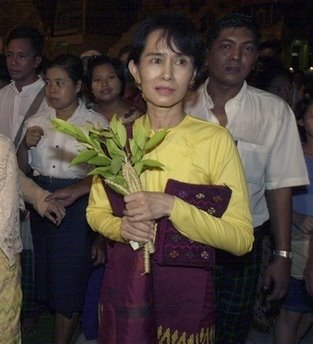


 Posts
Posts


