News & Articles on Burma Sunday, 06 November, 2011 ------------------------------------------ Myanmar clears path for Suu Kyi's return to politics Burma's opposition to consider registering as political party Burma: Government paves the way for Suu Kyi into its parliament -- Why? Myanmar clears path for Suu Kyi's return to politics Myanmar opposition to consider registering as political party Trouble with the neighbours Myanmar eases limits on political parties Iron Fist in a Velvet Glove: Burma's ethnic cleansing continues ------------------------------------------ THE CHINA POST: Sunday, November 6, 2011 0:14 am TWN, YANGON, AFP Myanmar clears path for Suu Kyi's return to politics YANGON -- Myanmar's president has approved changes to a law on political parties, paving the way for democracy leader Aung San Suu Kyi's opposition party to re-register, state media said Saturday. The revisions to the political party registration law appear to be the latest effort by the military-dominated regime to reach out to opponents, amid tentative signs of change in the repressive state. A key amendment endorsed by President Thein Sein on Friday removed the condition that all parties must agree to "preserve" the country's 2008 constitution, the state-run Myanmar Ahlin newspaper said. The wording has now been changed to "respect and obey", it said, a small difference in nuance but one that would allow Suu Kyi's National League for Democracy (NLD) party to criticize or suggest changes to the constitution. The revised law also removed a contentious clause that said prisoners could not be party members. NLD spokesman Nyan Win said the party welcomed the changes but he refused to be drawn on whether it meant it would re-register and contest a by-election expected around the end of the year. "We like the amended law as it amended the facts that should be amended," he told AFP. "We will discuss and negotiate what to do and how to continue on Monday when the office opens." The NLD boycotted Myanmar's historic elections last year, largely because of rules that would have forced it to expel imprisoned members --- including leader Suu Kyi who was still under house arrest at the time. As a result it was delisted as a political party by the regime. Myanmar's new nominally civilian government said in September it was ready to work with Suu Kyi and her party if they officially re-entered the political arena. In response, the Nobel Peace Prize winner, freed from detention last November after seven years of house arrest, said she would discuss the issue of re-registering with senior party members based on political developments. The amendments to the party registration law came hot on the heels of high-profile visits to Myanmar this week by senior officials from the United Nations and the United States, who said they were encouraged by nascent reforms in the country. A recent prisoner amnesty by the new government, however, failed to free most key dissidents, disappointing those who had hoped the country would release all its roughly 2,000 political detainees.http://www.chinapost.com.tw/asia/other/2011/11/06/322073/Myanmar-clears.htm ------------------------------------------ Burma's opposition to consider registering as political party November 6, 2011 4:05 am Rangoon - Burma's main opposition group will meet this week to decide whether to re-register as a party after the government amended political legislation, sources said Sunday. President Thein Sein on Friday endorsed an amendment that would allow the National League for Democracy (NLD), led by Nobel laureate Aung San Suu Kyi, to register as a legal party before an upcoming by-election. "All amendments in revised political parties' registration law met our requirements," NLD spokesman Nyan Win said. "We will hold a meeting on Tuesday to decide whether NLD would re-register or not, but there is a high possibility for re-registration." The amendment was one of several priorities of the international community to gauge the government's sincerity in democratic reform. Thein Sein has in recent months initiated talks with Suu Kyi and pushed through a series of legislative changes that have raised optimism that the country, long ruled by the military, is inching towards a more democratic system. Progress under the new government was welcomed by German Minister of State Werner Hoyer who visited Myanmar last week. "We have a feeling that everything should be done to encourage those who are taking rather bold decisions in order to bring Myanmar back to the international community," Hoyer told dpa in Bangkok. "When we're talking about economic cooperation, I think we can do more than we did before and we are ready to do so," Hoyer said, noting that the director-general of the German Ministry for Economic Cooperation and Development would probably visit soon. Hoyer cautioned that the improvements might prove "reversible," and said Western democracies were awaiting more reforms, such as the release of all political prisoners and an assurance that the upcoming by-election was "free and fair." //DPA http://www.nationmultimedia.com/breakingnews/Burmas-opposition-to-consider-registering-as-polit-30169323.html -------------------------------------------- Burma: Government paves the way for Suu Kyi into its parliament -- Why? By Zin Linn Nov 06, 2011 1:52AM UTC Burma's President Thein Sein has signed an amendment law on political parties in a noticeable effort to persuade National League for Democracy party led by democracy icon Aung San Suu Kyi to reregister as a party recognizing the new political structure. President Thein Sein signed the amendments to the Political Party Registration Law on Friday as senior US diplomats and a special UN envoy were ending their visits pushing his government to drive forward with democratic reforms. Burma's state-run TV and newspaper publicized on Friday that President Thein Sein has signed a law that amends three key areas of the Political Party Registration Law. Both houses of the Burmese Parliament had earlier endorsed the amendments. In the previous law the wording said that all political parties must "protect" the State's Constitution. In the amendment law the word "safeguard" was changed to "respect and abide" the Constitution. According to the new law, previous two clauses were also changed. One clause said that serving prisoners are restricted from being a member of a political party and another clause said that a political party needs to contest in three parliamentary seats at least in an election. Many analysts believe that the aim of amending the law is to pave a way for the National League for Democracy reregistering as a legal party. If so, the NLD may take part in the upcoming by-elections that would be the first electoral contest of its public reputation within a two-decade time. Thein Sein government seems to take advantage of bringing Suu Kyi's party back into the current parliamentary structure which would make the government healthier authenticity at home and overseas. At the same time, Burma is expected to release at least 600 political prisoners in the coming days, government and opposition sources said, as part of an amnesty program by President Thein Sein's nominally civilian government. A top government official, who asked to remain anonymous told Radio Free Asia (Burmese Service) in an interview Thursday that the release would likely come next week. "I expect the release date will be Nov. 10, which is the important Buddhist Full Moon holiday," he said. "Student leaders Min Ko Naing and Ko Ko Gyi, and Shan Nationalities League for Democracy (SNLD) leader Kun Htun Oo are on the list. The list of those to be released has been submitted to the National Defense and Security Council by the president," the source said. Another official, also speaking anonymously, said he believed the release would "benefit national reconciliation." The opposition National League for Democracy (NLD) claims that several hundred political prisoners are yet to be freed. Suu Kyi and Labor Minister Aung Kyi have met several times to talk about the political prisoner situation. Tin Oo, vice chairman of the NLD, told RFA that the two sides had been making considerable steps forward in resolving their differences, indicating that releases were expected the coming week. The government visible moves -- amending the party registration law, planning to free more political prisoners and some soft stances on media freedom -- are believed to be a step ahead toward change. But, there are many unconvinced dissident groups inside and outside of the country. According to those groups, Burmese government eagerly wants lifting of Western sanctions, financial assistance from monetary institutions and supporting of ASEAN Chairmanship in 2014. So, to fulfill its needs in a short period, there is no other way except to persuade Suu Kyi joining on its boat. Sources close to the NLD also predicted that Suu Kyi and some of her party members are expected to take part in the upcoming by-election with full strength. The NLD spokesman Nyan Win said the party was likely to get re-registered under an amended party registration law that removed clauses the NLD had pointed out as inappropriate and undemocratic. In an interview with Radio Free Asia (Burmese Service), Nyan Win said that he considers she may stand in a by-election if the law was amended. "I personally want her to do so," he added. Even though, if she would decide to stand in the by-election after the law was amended, she may need to have the consent of the NLD Central Executive Committee. The next by-elections seem to be held belatedly this year. According to some analysts, the government's reforms, including a rare meeting between Aung San Suu Kyi and President Thein Sein and the recent release of over 200 political prisoners, are intended for shedding Burma's friendless situation and giving it some consistency with the international community. However, there are many democracy-supporters who dare not believe the Thein Sein government's current steps forward as real change. Because, the civil war in Kachin State has been going on under full-scaled offensives and government's soldiers are still abusing basic human rights widely. Besides, there are more than 20,000 war-refugees and IDPs along Sino-Burma border without having any humanitarian assistance due to brutal attacks by government's soldiers. http://asiancorrespondent.com/68967/burma-government-paves-the-way-for-suu-kyi-into-its-parliament-%E2%80%93-why/ --------------------------------------------- Myanmar clears path for Suu Kyi's return to politics (AFP) -- 23 hours ago YANGON --- Myanmar's president has approved changes to a law on political parties, paving the way for democracy leader Aung San Suu Kyi's opposition party to re-register, state media said on Saturday. The revisions to the political party registration law appear to be the latest effort by the military-dominated regime to reach out to opponents, amid tentative signs of change in the repressive state. A key amendment endorsed by President Thein Sein on Friday removed the condition that all parties must agree to "preserve" the country's 2008 constitution, the state-run Myanmar Ahlin newspaper said. The wording has now been changed to "respect and obey", it said, a small difference in nuance but one that would allow Suu Kyi's National League for Democracy (NLD) party to criticise or suggest changes to the constitution. The revised law also removed a contentious clause that said prisoners could not be party members. NLD spokesman Nyan Win said the party welcomed the changes but he refused to be drawn on whether it meant it would re-register and contest a by-election expected around the end of the year. "We like the amended law as it amended the facts that should be amended," he told AFP. "We will discuss and negotiate what to do and how to continue on Monday when the office opens." The NLD boycotted Myanmar's historic elections last year, largely because of rules that would have forced it to expel imprisoned members -- including leader Suu Kyi who was still under house arrest at the time. As a result it was delisted as a political party by the regime. Myanmar's new nominally civilian government said in September it was ready to work with Suu Kyi and her party if they officially re-entered the political arena. In response, the Nobel Peace Prize winner, freed from detention last November after seven years of house arrest, said she would discuss the issue of re-registering with senior party members based on political developments. The amendments to the party registration law came hot on the heels of high-profile visits to Myanmar this week by senior officials from the United Nations and the United States, who said they were encouraged by nascent reforms in the country. A recent prisoner amnesty by the new government, however, failed to free most key dissidents, disappointing those who had hoped the country would release all its roughly 2,000 political detainees. http://www.google.com/hostednews/afp/article/ALeqM5iNg-Fy-jGEnu4x_nwhr1x2xuV5mw?docId=CNG.dba16b6f31b0699f781ef352ab4c228e.471 ------------------------------------------- Asia-Pacific News Myanmar opposition to consider registering as political party Nov 6, 2011, 6:26 GMT Yangon - Myanmar's main opposition group will meet this week to decide whether to re-register as a party after the government amended political legislation, sources said Sunday. President Thein Sein on Friday endorsed an amendment that would allow the National League for Democracy (NLD), led by Nobel laureate Aung San Suu Kyi, to register as a legal party before an upcoming by-election. 'All amendments in revised political parties' registration law met our requirements,' NLD spokesman Nyan Win said. 'We will hold a meeting on Tuesday to decide whether NLD would re-register or not, but there is a high possibility for re-registration.' The amendment was one of several priorities of the international community to gauge the government's sincerity in democratic reform. Thein Sein has in recent months initiated talks with Suu Kyi and pushed through a series of legislative changes that have raised optimism that the country, long ruled by the military, is inching towards a more democratic system. Progress under the new government was welcomed by German Minister of State Werner Hoyer who visited Myanmar last week. 'We have a feeling that everything should be done to encourage those who are taking rather bold decisions in order to bring Myanmar back to the international community,' Hoyer told dpa in Bangkok. 'When we're talking about economic cooperation, I think we can do more than we did before and we are ready to do so,' Hoyer said, noting that the director-general of the German Ministry for Economic Cooperation and Development would probably visit soon. Hoyer cautioned that the improvements might prove 'reversible,' and said Western democracies were awaiting more reforms, such as the release of all political prisoners and an assurance that the upcoming by-election was 'free and fair.' The NLD boycotted the November 7 polls rather than submit to the previous party registration act that would have forced it to drop Suu Kyi as a member. That law excluded people serving prison terms from belonging to political parties. Suu Kyi was released from seven years of house arrest term on November 13, six days after the general election. The amended registration law was also a priority for visiting UN special envoy Vijay Nambiar, who met with Thein Sein last week. 'At this juncture, it is of crucial importance, for Myanmar's regional and global standing, to maintain the positive momentum that these initiatives have generated,' Nambiar said after a five-day visit. In October, Myanmar released 200 political prisoners, but an estimated 1,900 remain in jails throughout the country. http://www.monstersandcritics.com/news/asiapacific/news/article_1673454.php/Myanmar-opposition-to-consider-registering-as-political-party -------------------------------------------- Bangkok Post Trouble with the neighbours Burma's decision to halt the Myitsone dam and the murder of 13 Chinese sailors on the Mekong point to how Beijing's relations with its regional allies have taken a rocky turn for the worse Published: 6/11/2011 at 12:00 AM Newspaper section: News China's "good neighbour" policy is under unprecedented pressure; indeed, it is at its nadir since the end of the Cold War. One after another, frictions with neighbouring countries have recently arisen. From the territorial disputes with Vietnam and the Philippines in the South China Sea to tensions with Burma and Thailand, relationships that were sound, if not always friendly, have now soured. Burma's decision to shelve the Chinese-backed Myitsone dam project shocked China. Likewise, the killing of 13 Chinese boat crewmen on the Mekong River in October serves as a stark reminder that China's southern land border, which has been untroubled for nearly 20 years, is today a more hostile territory. (Editor's Note: At the end of October, nine Thai soldiers surrendered to police for questioning in connection with the murders.) China's people and government are especially dismayed by the Mekong killings, which seemed to demonstrate, once again, the government's inability to protect its citizens from being murdered abroad, despite the country's newfound global status. As a result, two compelling questions have arisen: Why do China's neighbours choose to neglect its interests? And why, despite China's rise, do its authorities seem increasingly unable to secure Chinese lives and commercial interests abroad? Chinese anxiety about these questions forms the atmosphere shaping Chinese policy. With Moammar Gadhafi's fall from power in Libya, Chinese companies lost investments worth roughly US$20 billion (616 billion baht), which Libya's new government has implied are unlikely to be recovered. Many Chinese were disquieted by their government's decision to evacuate China's citizens from Libya, and would have preferred a bolder effort to protect the countries' commercial assets there. Similarly, the Chinese government's later, and quite sudden, about-face in recognising the rebel Transitional National Council as Libya's government aroused considerable sneering at home. After all, China spent valuable political capital to oppose Nato's airstrikes at the beginning of the intervention, only to end up backing the forces that Nato helped bring to power. This was China's utilitarian, commercially driven diplomacy at its most transparently hollow. For most Chinese, Libya is a far-away and out-of-reach country, owing to China's limited capacity to project power. So the emphasis on restoring Chinese commercial interests is accepted reluctantly if not completely understood. But Burma and the other Mekong River countries are supposed to be the country's "good neighbours", and are completely within reach of Chinese power, so public anger over threats to the country's interests in these places is intense. Those interests include a new oil pipeline linking Burma to Kunming, the provincial capital of Yunnan province. China is also working on "connectivity" projects _ namely, a rail and highway network _ aimed at boosting economic and social ties between China and the Asean countries. The Myitsone and Mekong incidents have now cast a shadow over these projects, fuelling fear of a chain reaction that could wreck China's 20 year effort to achieve deeper regional integration. Obviously, Burma's new government does not want to aggravate sentiment in its already-unstable border areas, where rebel groups were using the dam project to rally new supporters. The new government's effort to share power with political forces in Burma's volatile regions, and thus weaken local warlords, clearly contributed to the decision to halt construction. The dam's Chinese investors, for their part, relied too heavily on the depth of the two countries' bilateral ties, and so heavily discounted the project's political risks. Their behaviour also reflects the implied guarantee of official government mercantilism, as well as the complacency of China's state-owned enterprises, which account for most Chinese overseas investment. Operating on the assumption that the government will back them _ or bail them out if they fail _ they can afford to be cavalier. The Mekong incident tells another grim story. The river, which links five countries, has been long famous as a setting for trans-national crimes such as drug trafficking, gambling and smuggling. China's booming economy has brought growing interaction between China and the Mekong's underground economies. The killing of the 13 Chinese boat crewmen was linked to this trend. China can best avoid similar tragedies not by flexing its muscles, but by building greater multilateral cooperation to combat transnational crime along the Mekong. The Myitsone and Mekong episodes highlight China's suddenly edgy relations with its southern neighbors. Its good-neighbour policy, it turns out, has steered China's regional diplomacy into uncharted waters. Indeed, China's neighbours will not be reliably good to Chinese interests unless and until China begins to provide essential public goods _ not just commerce, but also full-fledged regional governance based on the rule of law, respect for human rights, and regional economic growth. Otherwise, ruptures such as those at sone and along the Mekong will recur, deepening China's sense of isolation and panic. Zhu Feng is deputy director of the Centre for International and Strategic Studies, Peking University. Project Syndicate, 2011, www.project-syndicate.org. http://www.bangkokpost.com/news/local/264939/trouble-with-the-neighbours ------------------------------------------- CBSNEWS: November 5, 2011 9:50 AM Myanmar eases limits on political parties YANGON, Myanmar - Myanmar's president has signed a revised law on political parties in an apparent attempt to encourage Nobel laureate Aung San Suu Kyi's National League for Democracy to accept the political system and reregister as a party. President Thein Sein signed the amendments to the Political Party Registration Law on Friday as senior U.S. diplomats were ending a visit to encourage his government to push forward with democratic reforms. A U.N. envoy has also been visiting. If the National League for Democracy reregisters as a legal party, it could join upcoming but still unscheduled by-elections that would be the first electoral test of its popularity in more than two decades. Bringing Suu Kyi's party back into the fold would also give the government greater legitimacy at home and abroad. The group was delisted as a political party last year after it refused to register for November 2010 elections, saying they were being held under undemocratic conditions. The amendments of the party law signed by Thein Sein alter three areas of the law to accommodate Suu Kyi and the National League for Democracy. The law, originally enacted in March last year by the previous military junta, prohibited anyone who has been convicted of a crime from being a member of a political party. Suu Kyi had been convicted on a trumped-up charge, and would have had to leave the party she helped found. The clause has now been dropped, clearing the way for former political prisoners to engage in politics. Another article was amended to say that registered parties shall "respect and abide" by the constitution rather than "safeguard" it. The change was evidently made to accommodate criticisms of the charter by Suu Kyi's group without making them illegal. The third amendment says that any party that registers after the general election must run candidates in at least three constituencies in by-elections to remain legally registered. The original law said a party had to stand at least three candidates in the general election, which would have been an impediment to Suu Kyi's party, since it boycotted the 2010 polls. "Now that the law has been passed, we will hold a meeting to decide whether or not we will register," the spokesman of Suu Kyi's group, Nyan Win, told The Associated Press. Nyan Win said the amendments were in line with the group's wishes. The junta that ruled Myanmar until handing over power to the current elected military-backed government in March this year enacted a constitution and other laws with provisions aimed at limiting Suu Kyi's political activities, fearing her influence. Her party overwhelming won a 1990 general election, but the army refused to had over power, instead repressing Suu Kyi and other democracy activists. The U.S. and other Western countries imposed political and economic sanctions against the junta for its failure to hand over power and its poor human rights record. The elections last November gave an army-backed party a huge majority in Parliament, and the constitution contains provisions that ensure the continued domination of the armed forces. However, Thein Sein, who was the junta's prime minister, has instituted a series of small reforms to encourage political reconciliation, including an easing of censorship and the opening of a dialogue with Suu Kyi. At the same time, the Obama administration has sought to engage the government, shifting away from the previous U.S. policy of shunning it. U.S. special envoy to Myanmar Derek Mitchell told reporters in Yangon on Friday that Thein Sein's government has taken positive steps and that Washington views the release of political prisoners and bringing the National League for Democracy into the political system as necessary reforms. "We are thinking very actively about how we can support reform by our actions as we see the government taking those concrete steps," he said. He said the U.S. "would love to respond in kind" and was consulting closely with the government. The U.S. could gradually ease its sanctions against Myanmar and allow aid from multilateral lending institutions such as the World Bank, over which it has exercised a veto. Vijay Nambiar, a special adviser to U.N. Secretary-General Ban Ki-moon, also concluded a visit Friday and added his voice to those encouraging further reforms. "An important purpose of my visit was to directly relay to the Myanmar leadership and other stakeholders the secretary-general's encouragement of the important steps taken in recent months to advance the reform agenda led by President Thein Sein, as well as the significant efforts made by all concerned to advance national dialogue and reconciliation," he said in a statement. "At this juncture, it is of crucial importance, for Myanmar's regional and global standing, to maintain the positive momentum that these initiatives have generated." http://www.cbsnews.com/8301-202_162-57319174/myanmar-eases-limits-on-political-parties/ ----------------------------------------- Iron Fist in a Velvet Glove: Burma's ethnic cleansing continues Posted on | november 4, 2011 | Much has been made of late of the 'concessions' by the Burmese regime to dialogue and possible political liberalization that began with the release from house arrest of opposition figure, and Nobel Peace Prize winner, Aung San Suu Kyi. Indeed while such moves should be applauded and welcomed one cannot help but wonder if they are little more than a cynical public relations exercise by the country's military leadership to curry international support for an easing of sanctions against the regime. The strongest evidence that the new 'civilian' (sic) government of President Thein Sein is little more than an iron fist in a velvet glove comes from the continuing offensives by the Burmese military against ethnic minorities such as the Kachin and Karen. Indeed Derek Mitchell the new US special envoy for Burma confirmed on October 17th that there were credible reports of human rights abuses by the military against women and children including murder and rape. More recently allegations have been made that the Burmese Army, the Tatmadaw, has used mortar rounds that have contained poisonous gas in attacks on fighters of the Kachin Independence Army in three war zones: Ga Ra Yang village, Shwe Nyaung Pyin village and Waingmaw Township. On October 30th the Kachin News Group stated that soldiers from the KIA reported that black smoke billowing from areas where the mortar shells landed had left victims dizzy, struggling to breathe and vomiting for several hours. While there is no independent verification of the alleged use of chemical weapons if true such attacks would be in violation of the 1925 Geneva Protocol that prohibited the use of chemical and biological weapons. These attacks are only the latest in an intensification of hostilities against ethnic groups that have occurred in recent months despite calls by President Thein Sein for national reconciliation. Criticism has also come from Burma's neighbors. On October 29th Indonesia's foreign Minister Marty Natalegawa urged Burma's leaders to make concrete steps towards reconciliation while earlier this year in July Aung San Suu Kyi issued an open letter to the President in which she called for an urgent ceasefire and offered to act as a mediator. Besides the KIA the Burmese Army continues to be engaged in offensives against other armed ethnic groups including the Karen National Union and the Shan State Army. While the Burman (Bamar) constitute about two-thirds of the country's population Burma nevertheless is one of the most ethnically diverse countries in the world with 135 distinct official ethnic groups recognized by the government itself. Many of the country's most important ethnic minorities (the Kachin, Karen, Shan etc) are located on the country's mountainous borders and have been in conflict with the central authorities for over four decades. While full autonomy for the Frontier Areas, including a Kachin State, was agreed in the historic Panglong Agreement signed in February 1947 by Aung San Suu Kyi's father, Aung San, the agreement was effectively scuttled following his assassination and the creation of irregular militia under the command of Ne Win who would later overthrow the democratic government of Burma in 1962. Following the establishment of his own personalized Burmese Road to Socialism Ne Win launched a brutal policy against ethnic and political rebels known as the 'Four Cuts'. The policy was designed to cut the four main links of food, funds, intelligence, and recruits between insurgents, their families and local villagers and largely consisted of a policy of forced relocation and ethnic cleansing. Opponents of the regime internally and externally fear that the military is using the latest concessions to political opponents to deflect attention from the renewed offensives. Whether this is the case or not, what the incidents reveal is that gross abuses of human rights continue in Burma on an almost daily basis and that an investigation of the latest claims of the use of chemical weapons is urgently needed. AUTHOR: Dr. Jason Abbott URL: http://profjabbott.blogspot.com E-MAIL: jason.abbott [at] louisville.edu http://www.nl-aid.org/continent/south-east-asia/iron-fist-in-a-velvet-glove-burma%E2%80%99s-ethnic-cleansing-continues/
Monday, November 7, 2011


Sunday, November 6, 2011
News & Articles on Burma-Saturday, 05 November, 2011-uzl
News & Articles on Burma Saturday, 05 November, 2011 ------------------------------------------- Burma Eases Limits on Party Membership US, UN hopeful on visits to Myanmar Sustaining initiatives set Myanmar on a new course: UN More armed group in Myanmar signs peace agreement Is Burma breaking out of China's embrace? Burma clears the way for Suu Kyi's return to politics Yangon's Many Faces of Change US Envoys See 'Encouraging Steps, Signs' in Burma Burma: New Political Prisoner Release Likely Law amending three sections of Political Party Registration Law approved -------------------------------------------- Burma Eases Limits on Party Membership By THE ASSOCIATED PRESS Saturday, November 5, 2011 RANGOON --- Burma's president has signed a revised law on political parties in an apparent attempt to encourage Nobel laureate Aung San Suu Kyi's National League for Democracy to accept the political system and reregister as a party. President Thein Sein signed the amendments to the Political Party Registration Law on Friday as senior US diplomats were ending a visit to encourage his government to push forward with democratic reforms. A UN envoy has also been visiting. If the National League for Democracy reregisters as a legal party, it could join upcoming but still unscheduled by-elections that would be the first electoral test of its popularity in more than two decades. Bringing Suu Kyi's party back into the fold would also give the government greater legitimacy at home and abroad. The group was delisted as a political party last year after it refused to register for November 2010 elections, saying they were being held under undemocratic conditions. The amendments of the party law signed by Thein Sein alter three areas of the law to accommodate Suu Kyi and the National League for Democracy. The law, originally enacted in March last year by the previous military junta, prohibited anyone who has been convicted of a crime from being a member of a political party. Suu Kyi had been convicted on a trumped-up charge, and would have had to leave the party she helped found. The clause has now been dropped, clearing the way for former political prisoners to engage in politics. Another article was amended to say that registered parties shall "respect and abide" by the constitution rather than "safeguard" it. The change was evidently made to accommodate criticisms of the charter by Suu Kyi's group without making them illegal. The third amendment says that any party that registers after the general election must run candidates in at least three constituencies in by-elections to remain legally registered. The original law said a party had to stand at least three candidates in the general election, which would have been an impediment to Suu Kyi's party, since it boycotted the 2010 polls. "Now that the law has been passed, we will hold a meeting to decide whether or not we will register," the spokesman of Suu Kyi's group, Nyan Win, told The Associated Press. Nyan Win said the amendments were in line with the group's wishes. The junta that ruled Burma, also known as Myanmar, until handing over power to the current elected military-backed government in March this year enacted a constitution and other laws with provisions aimed at limiting Suu Kyi's political activities, fearing her influence. Her party overwhelming won a 1990 general election, but the army refused to had over power, instead repressing Suu Kyi and other democracy activists. The US and other Western countries imposed political and economic sanctions against the junta for its failure to hand over power and its poor human rights record. The elections last November gave an army-backed party a huge majority in Parliament, and the constitution contains provisions that ensure the continued domination of the armed forces. However, Thein Sein, who was the junta's prime minister, has instituted a series of small reforms to encourage political reconciliation, including an easing of censorship and the opening of a dialogue with Suu Kyi. At the same time, the Obama administration has sought to engage the government, shifting away from the previous US policy of shunning it. US special envoy to Burma Derek Mitchell told reporters in Rangoon on Friday that Thein Sein's government has taken positive steps and that Washington views the release of political prisoners and bringing the National League for Democracy into the political system as necessary reforms. "We are thinking very actively about how we can support reform by our actions as we see the government taking those concrete steps," he said. He said the US "would love to respond in kind" and was consulting closely with the government. The US could gradually ease its sanctions against Myanmar and allow aid from multilateral lending institutions such as the World Bank, over which it has exercised a veto. Vijay Nambiar, a special adviser to UN Secretary-General Ban Ki-moon, also concluded a visit Friday and added his voice to those encouraging further reforms. "An important purpose of my visit was to directly relay to the Myanmar leadership and other stakeholders the secretary-general's encouragement of the important steps taken in recent months to advance the reform agenda led by President Thein Sein, as well as the significant efforts made by all concerned to advance national dialogue and reconciliation," he said in a statement. "At this juncture, it is of crucial importance, for Myanmar's regional and global standing, to maintain the positive momentum that these initiatives have generated." http://www.irrawaddy.org/article.php?art_id=22394 ------------------------------------------ channelnewsasia.com US, UN hopeful on visits to Myanmar Posted: 05 November 2011 1004 hrs YANGON: Senior US and UN officials said they were encouraged by nascent reforms in Myanmar, with Washington saying it will look at new incentives to spur change including the expansion of microfinance. In a first, Myanmar allowed in the US assistant secretary of state handling human rights, Mike Posner, who said he voiced concern about the treatment of ethnic minorities and political prisoners but also saw signs of progress. "There are some encouraging steps and signs. We need to go forward in a way that recognizes what's been done and what's being done that is positive, and build on that," Posner said at the US embassy on Friday. Vijay Nambiar, special advisor to Secretary General Ban Ki-moon, also said the UN was encouraged by the "significant efforts" under nominally civilian President Thein Sein to bring reconciliation in the divided country. "If sustained, these and other efforts offer a historic opportunity to set the country on a course than can fulfill the promises made to the people of Myanmar," Nambiar said in a statement after meeting with top government members and pro-democracy leader Aung San Suu Kyi. Posner accompanied US special envoy to Myanmar Derek Mitchell, who paid his third visit since September to the country previously known as Burma, where earlier this year the military nominally handed power to civilians. Mitchell said that President Barack Obama's administration, which launched an engagement drive with Myanmar in 2009, was ready to respond to concrete progress, although an end to sanctions would need to come from the US Congress. "There's a natural inclination in Washington toward pressure. We need to start thinking about how we respond to reform, as we see it happen. And we can support reform, get behind it and encourage further reform," Mitchell said. Mitchell said he spoke with Aung San Suu Kyi about expanding microfinance -- small loans offered to farmers and other low-income people to help them build livelihoods. The US Agency for International Development already has a program but wants to expand it to ethnic minority areas of the country, Mitchell said. The envoy said that the United States had also used travel as an incentive, noting that the administration invited Myanmar's foreign minister, Wunna Maung Lwin, to Washington in September. Myanmar recently defied China by freezing work on an unpopular dam in a border area. The government also announced a prisoner amnesty, although critics say the step is symbolic as few high-profile inmates were freed. "We welcome the release last month of more than 200 political prisoners, but continue to strongly urge that the remaining political prisoners be released immediately and unconditionally," Posner said. Posner raised specific cases of prisoners and understood that Myanmar is considering their release, although there were no clear promises, Mitchell said. "There was no concrete sense of a release or release date of any sort in the conversation. There is clearly a discussion going on internally about it, though," Mitchell said. Amnesty International said that Myanmar is believed to be depriving some 15 political prisoners of drinking water, with eight held in cells designed for dogs without beds, mats or windows. The human rights group also expressed fears about the serious illness of U Gambira, a prominent Buddhist monk held in solitary confinement in northern Myanmar's Kale prison for his role in anti-government protests in 2007. - AFP/cc http://www.channelnewsasia.com/stories/afp_asiapacific/view/1163604/1/.html ------------------------------------------- New Kerala.com Sustaining initiatives set Myanmar on a new course: UN New York, Nov 5 : The United Nations envoy for Myanmar on Friday called on the authorities to keep up the momentum of recent initiatives to strengthen national unity and advance dialogue and reconciliation, stressing the historic opportunity they have to set the country on a new path. This was the third visit since last years election for Special Adviser Vijay Nambiar and the second since the establishment of a new Government seven months ago. It also comes amid the ongoing dialogue between the Government and pro-democracy leader Daw Aung San Suu Kyi, and the release last month of a significant number of detainees. At this juncture, it is of crucial importance, for Myanmars regional and global standing, to maintain the positive momentum that these initiatives have generated, Nambiar, who is also UN Secretary-General Ban Ki-moons Chief of Staff, said in a statement issued in Yangon at the end of his five-day visit. He said the UN strongly encourages the continuation of such efforts as well as the reform agenda led by President Thein Sein as the best way to strengthen domestic and international confidence in Myanmars commitment to a reform process that is incremental, systematic and sustainable. In particular, we encourage all concerned to build on the steps taken thus far through an inclusive and broad-based political process to strengthen national unity, said the envoy. The release of the remaining political prisoners as part of the recent amnesty process and the enactment of the proposed amendments to the political party registration law are steps that can and should be taken as a matter of priority. Continuous dialogue is also needed to bring about peace and development in border areas. If sustained, these and other efforts offer a historic opportunity to set the country on a course that can fulfil the promises made to the people of Myanmar, he stressed. During his visit, Nambiar met with a number of Government officials in Naypyitaw, including Vice-President U Tin Aung Myint Oo, as well as with the Union Peacemaking Group and with the Union Election Commission. In Mandalay and in Pathein, he was received by the Chief Ministers of Mandalay region and Irrawaddy region, respectively, and in Yangon, he met with Suu Kyi at her residence. He also met with representatives of several political parties and with civil society groups, as well as with the National Human Rights Commission. Nambiar also participated earlier this week in the first Green Economy Green Growth conference, which he said showed that it is now possible for a wide range of actors to come together to openly discuss common concerns. It is an indicator of the direction in which Myanmar must continue to move if its democratic transition process is to succeed and if the country is to contribute to the global agenda by effectively addressing such concerns at home, he stated. He told the gathering of business leaders, academics, government officials, civil society groups and private citizens that in Myanmar, as elsewhere, green growth is an integral part of efforts to protect the environment while creating decent jobs, reducing poverty and inequality, and achieving globally agreed development targets. As Myanmar opens up to a changing world, the green growth agenda can help drive the advancement of sustainable development: it is good business good politics and good for society, he stated. The Special Adviser also addressed a ceremony on Thursday to commemorate the 50th anniversary of the swearing-in of U Thant, a great son of Myanmar who served as the third Secretary-General of the UN. It is for the Government and people of Myanmar to maximize opportunities and to lead the changes they want to see for their country, said Nambiar. We in the United Nations wish and want Myanmar to succeed. But it has to be a success that is inclusive and includes all elements in the country to the extent that we can help facilitate the efforts which are essentially nationally owned. --IBNS http://www.newkerala.com/news/2011/worldnews-100981.html ----------------------------------------------- More armed group in Myanmar signs peace agreement Updated: 2011-11-05 13:39(Xinhua) YANGON - One more Kayin ethnic armed group, the Kaloh Htoo Baw armed group, has signed an initial peace agreement with the peace-making group of the Kayin state government to pave way for talks with the central government, according to official media Saturday. The Kaloh Htoo Baw armed group was former Democratic Kayin Buddhist Army (DKBA). The five-point peace agreement was endorsed in Hpa-an of the state Thursday by U Saw Mu Shay, deputy leader of the Kaloh Htoo Baw armed group, and Colonel Aung Lwin, Minister of Security and Border Affairs of Kayin State Government and leader of the Kayin State Peace-Making Group, after discussion were held between them, said the New Light of Myanmar. The five-point peace agreement covers ceasefire in Kayin state as of November 6, temporary settlement of Kaloh Htoo Baw armed group at the environs of Sonseemyaing, opening of temporary liaison office of the armed group at Myawaddy for further talks during the ceasefire, bilateral coordination be made in advance for traveling carrying arms beyond the areas except the areas under bilateral agreement during the ceasefire, and holding further talks on peace and stability in the region, development, settlement and livelihood of armed group members and ensuring eternal peace between central-level peace making group and senior level peace making persons of Kaloh Htoo Baw armed group, led by Major-General Saw Lar Pwe at a place and time acceptable to both sides. Myanmar's central government had initiated first peace agreements with two armed groups based in Wa Special Region-2 and Mongla Special Region-4 respectively in early October. The government, in its peace efforts, issued an announcement on August 18, calling on anti-government ethnic armed groups to come for peace talks to end internal armed insurrection and build internal peace in the country. http://www.chinadaily.com.cn/world/2011-11/05/content_14043380.htm ---------------------------------------------- Is Burma breaking out of China's embrace? By Eric Baculinao, NBC News Beijing Bureau Chief BEIJING-Burma has caught its giant neighbor China off-guard recently by very publicly distancing itself from its political and economic patron in several ways. First came the move to halt the construction of the Chinese-supported $3.6 billion Myitsone hydro-electric project, a gigantic dam that would have inundated an area the size of Singapore. Burmese President Thein Seins decision to stop the project seemed intended to mollify domestic opposition, but it was a direct hit at Chinese interests and came not too long after he forged a strategic partnership with Beijing in the wake of his controversial election early this year. While Burmas decision was praised by U.S. Senator John McCain, who called the pariah states move bold and responsible, the head of the Chinese company behind the damn deal said he was totally astonished by Burmas decision. Lu Qizhou, President of China Power Investment Corporation, also hinted at legal action after investing huge amount of money in the giant hydroelectric project. Meanwhile, a Chinese government spokesman urged protection for the legitimate rights and interests of Chinese enterprises. Sein recently followed through with another surprise a mass amnesty for thousands of prisoners that reportedly included a few hundred political detainees. One analyst dubbed this move and other initiatives The Burma Spring. The reasons behind these uncharacteristically independent stances is unclear -- Burma's government has presided over one of the worlds most oppressive and isolated regimes -- but the brutal death of Moammar Gadhafi last month is surely a cautionary tale to dictatorships around the world, Burmas included. Not too surprised While some involved in the Chinese dam project were angry and shocked at Burmas decision, a Chinese scholar who closely follows Burmese affairs declared that he was not too surprised by Burmas recent distancing. The academic who works for a think-tank in the province of Yunnan that borders Burma a province that would have been a beneficiary of increased electricity from the project spoke to NBC News on condition of anonymity due to sensitive diplomatic issues involved. The dam project has been under a lot of pressure for some time, there was significant opposition from NGOs, and it was even a target of a bombing attack last year, so Burmas decision was not too sudden, the Burma specialist said. He attributed Burmas decision to its desire to improve its domestic and international image, ease Americas sanctions and strengthen its bid for the chairmanship of the ASEAN in 2014, referring to the regional grouping of Southeast Asian Nations. Its too early to tell whether the more strategic Trans-Burma oil and gas pipelines project will be the next target, but Burma is still very much in flux, the Chinese expert said. Not a setback for China? However, Burmas decision does not mean a setback or retrogression of relations with China, there is no reason to be extra-sensitive about this, the academic added. Jim Della-Giacoma of the International Crisis Group agrees. The Southeast Asia Project Director, Della-Giacoma helped author a report in September that proved prescient for broadly anticipating Burmas recent reform initiatives. While the dam decision was a dramatic gesture and it should be a wake-up call for China, it would be going too far at this stage to describe it as a failure of Chinese policy, he told NBC News. The economic ties between the two countries are still significant and we would expect them to continue to be so, Della-Giacoma said. A more significant indicator of a change its foreign policy would be the interactions between the U.S. and Myanmar or Myanmar and the EU, he added, using Burmas official name. Western support for reform? There are signs that recent moves by Burmas leadership are leading towards greater openness and independence from China, Della-Giacoma said. The methodical way these reforms have been set up in recent years by putting in place the constitution, the elected legislatures and new government makes it more difficult to reverse course, he said. They have changed the way the country is being governed and produced a more collective leadership that is less susceptible to the capricious whim of one individual. But Della-Giacoma cautioned Western powers against moving the goal posts by imposing new conditions on Burmas government , adding that no political change is walk in straight line. In other words, severe economic sanctions imposed by the West may need to be lifted in order to hasten more reform. With reform underway, lifting restrictions and sanctions can add momentum and encourage more, but holding them in place will see the Wests influence wane, he said. http://behindthewall.msnbc.msn.com/_news/2011/11/04/8636377-is-burma-breaking-out-of-chinas-embrace ------------------------------------------ Burma clears the way for Suu Kyi's return to politics RANGOON, BURMA - Nov 05 2011 12:29 Burma's president has approved changes to a law on political parties, paving the way for democracy leader Aung San Suu Kyi's opposition party to re-register, state media said on Saturday. The revisions to the political party registration law appear to be the latest effort by the military-dominated regime to reach out to opponents, amid tentative signs of change in the repressive state. A key amendment endorsed by President Thein Sein on Friday removed the condition that all parties must agree to "preserve" the country's 2008 constitution, the state-run Myanmar Ahlin newspaper said. The wording has now been changed to "respect and obey", it said, a small difference in nuance but one that would allow Suu Kyi's National League for Democracy (NLD) party to criticise or suggest changes to the Constitution. The revised law also removed a contentious clause that said prisoners could not be party members. NLD spokesperson Nyan Win said the party welcomed the changes but he refused to be drawn on whether it meant it would re-register and contest a by-election expected around the end of the year. "We like the amended law as it amended the facts that should be amended," he said.. "We will discuss and negotiate what to do and how to continue on Monday when the office opens." Ready to work The NLD boycotted Burma's historic elections last year, largely because of rules that would have forced it to expel imprisoned members -- including leader Suu Kyi who was still under house arrest at the time. As a result it was delisted as a political party by the regime. Burma's new nominally civilian government said in September it was ready to work with Suu Kyi and her party if they officially re-entered the political arena. In response, the Nobel Peace Prize winner, freed from detention last November after seven years of house arrest, said she would discuss the issue of re-registering with senior party members based on political developments. The amendments to the party registration law came hot on the heels of high-profile visits to Burma this week by senior officials from the United Nations and the United States, who said they were encouraged by nascent reforms in the country. A recent prisoner amnesty by the new government, however, failed to free most key dissidents, disappointing those who had hoped the country would release all its roughly 2 000 political detainees. -- AFP --------------------------------------------- NOVEMBER 5, 2011. Yangon's Many Faces of Change Once Banned, Now-Ubiquitous Image of Suu Kyi Brings Whiff of 'Real' Reform to Myanmar.Article Video Interactive Graphics Comments By WSJ Staff Reporters :The Wall Street Journal In a sign of tentative new freedoms in Myanmar, street merchants in Yangon now sell images of Aung San Suu Kyi along with that of her father, independence leader Gen. Aung San. .YANGON, MyanmarThere is no more obvious sign that the door is cracking open in this repressive Southeast Asian nation than the sight of Aung San Suu Kyi's face everywhere. Hawkers weave through idling traffic offering cheap color posters, pamphlets and magazines featuring Myanmar's most famous dissident, which was until a few months ago essentially banned. Street sellers along the commercial capital's main drag pin up dozens of versions of her image, Photoshopped to appear alongside that of her father, independence leader Aung San. In an interview with the Wall Street Journal, Aung San Suu Kyi, Myanmar's leading opposition figure, talks about how recent government reforms are the most significant in two decades, but it's not yet time for the U.S. to lift economic sanctions. .At an art gallery in a crumbling colonial structure, artists have painted her image into their latest works. "We paint her because we can," said one of the artists. This country, also known as Burma, is still far from being an open and free society in the sense commonly understood in the West. Reforms in recent months have allowed more public debate and expanded rights for workers, but the government still holds hundreds of political prisoners and continues to restrict discussion of some sensitive topics. 'In the reform process, let's say we have lovers.' Read a transcript of the WSJ interview with Nay Zin Latt, one of three political advisers to Myanmar President Thein Sein. .Skeptics of the governmentand there are still many, especially Myanmar citizens in exilesay authorities aren't serious about long-term reform, and are merely trying to fool Western leaders to end long-running economic sanctions. But for some dissidents living in Yangona dilapidated city of 1980s-era cars and crumbling tea housesthere is a sense that this time reform may be for real, and not another of many false starts over five decades of authoritarian rule. A visit to Ms. Suu Kyi's headquarters found a bustling scene of volunteers and workers selling party memorabilia and chatting about the changes. Loudspeakers played Burmese versions of Survivor's "Eye of the Tiger" and Bachman Turner Overdrive's "You Ain't Seen Nothing Yet." At the entrance facing the street was a red and black sign of Ms. Suu Kyi in the style of the iconic Che Guevara photo. .A government ally, presidential adviser Nay Zin Latt, said in an interview that it is only in recent months that he has been allowed to engage with the foreign press. He called such openness a "yardstick" of the government's commitment to reform. He compared the reform process to a couple falling in love and growing closer and closer. "We are getting ready for the wedding," he said. After a 2010 election deemed fraudulent by the West, Myanmar's new military-backed government has unblocked the BBC, YouTube and other websites and has begun to allow small protests. Authorities have also welcomed the return of exiled dissidents. Civil-society organizations say relations with the government are the best they have been in years, if not decades, and small businesses, too, are excited. It now takes two days instead of a month to get a license to import or export goods. An export tax has been suspended for six months and many expect that to be extended. To further encourage foreign investment, the government has floated a proposal to extend the limit on foreigners leasing property to 60 years from 30. The government has even moved in at least one sector to dismantle a monopoly on palm-oil imports that many saw as symbol of the worst of the country's cronyism. Within weeks, the price of edible oil dropped 30%, easing food costs for poor families. "We have received a lot of promises that didn't come true" in the past, said Ye Min Aung, secretary-general of the Myanmar Rice Industry Association, which has pushed to loosen rules on exporting the country's mainstay rice crop. This time, "Myanmar is changingthis is for real." There are still some ominous reminders of the past. Across the street from Ms. Suu Kyi's headquarters, a well-dressed man sat inside a thatched hut observing the scene, taking notes on the people who came and went, though it wasn't possible to confirm what his purpose was. Nightly television newscasts continue to broadcast clumsy government propaganda, including long paeans to the country's new parliament, with sweeping shots of somber lawmakers in white robes and yellow hats, while a speaker manages the elaborate affair from a golden chair. The video plays on a repeating loop. Nay Zin Latt, an adviser to Myanmar's president, discusses recent political and economic reforms in his country, the government's relationship with China, and why he believes it is time for the U.S. to ease economic sanctions. .The information vacuum remains, despite the looser media reins, so that ordinary citizens still aren't really sure who is in charge. Thein Sein, a former military commander, assumed the post of president earlier this year, but it is unclear what has happened to the country's former paramount leader, Sen. Gen. Than Shwe. He is supposed to have retired, but some say he still pulls the strings from behind the scenes. Others think he is in China or Dubai, too afraid he might be prosecuted as the country opens up. One Yangon resident said he had it on good authority that Mr. Than Shwe is suffering from brain cancer. Another said he spends his time meditating at a monastery, where he kneels before Buddhist monks. Government officials have said Mr. Thein Sein is fully in charge and intent on continuing with reform. Either way, the changes are coming so rapidly that some residents now say their biggest fear is that the opening will go too farand trigger a backlash from hard-liners in the government who fear losing control. "It's going so fastmaybe too fast," said Win Myo Thu, the managing director of a local economic-development organization known as Ecodev who has also worked on environmental campaigns. He compared what he is seeing in Myanmar now to installing an updated version of Windows on an old computer that doesn't have enough capacity to run it. As for Ms. Suu Kyi, who has met several times with top officials to negotiate reforms, she describes Mr. Thein Sein, as "very straightforward. He struck me as an honest, open kind of person." Sitting ramrod straight in her traditional Burmese outfit, a long skirt and high-cut blouse in matching shades of green, during a recent interview, she reflected on the new mood of her countrymen, saying they "aren't as frightened as they used to be." http://online.wsj.com/article/SB10001424052970204505304577003600676458934.html?mod=googlenews_wsj --------------------------------------------- November 04, 2011 US Envoys See 'Encouraging Steps, Signs' in Burma David Gollust | State Department .Senior U.S. State Department officials who visited Burma this week say they had constructive meetings with leaders of the new civilian government and the Burmese military. They say the United States is prepared to reciprocate for Burmese reform steps by easing restrictions on the reclusive East Asian country. The three-day visit by State Department human rights chief Michael Posner and special envoy for Burma, Derek Mitchell, was the latest step in an accelerating U.S.-Burmese dialogue, and both said they are encouraged by reform steps by the new nominally-civilian government. The United States was skeptical that the new government, which took power in late March after decades of military rule, would bring meaningful change. However Mitchell and Posner, in comments to reporters Friday at the U.S. embassy in Rangoon, also disclosed here, said reform moves by the new authorities appear to reflect the beginning of a transition that the United States welcomes. Among other things, the Burmese government has released about 200 political prisoners, and advanced an election law that would legalize opposition parties including Nobel Laureate Aung San Suu Kyis formerly-banned National League for Democracy. Posner and Mitchell met with a range of senior Burmese government officials including the countrys military chief of staff in the new capital Nay Pyi Taw, and went on to Rangoon to meet Aung San Suu Kyi and other political and human rights activists. Briefing reporters here, State Department Spokeswoman Victoria Nuland said Posner pressed authorities to free all the countrys estimated 1,800 remaining political prisoners, and that the assistant secretary of state for Democracy, Human Rights and Labor raised specific cases. All political prisoners should be released. There was some lack of transparency at least, in our view, in terms of who has already been released and who remains in custody," said Nuland. "So this was Assistant Secretary Posners first trip to Burma, and it was his chance to actually sit down with them and get a better sense of who has been released, to talk to them about first of all the general principle that they should all be released, but also talk about additional particular cases of concern. Posner and Mitchell said the United States is loosening travel restrictions, allowing Burmese Foreign Minister Wunna Maung Lwin to visit Washington earlier this month. They said the Obama administration also is considering expanding small agricultural and micro-finance aid programs, but that a further easing of relations will depend on what Mitchell termed concrete changes by the Burmese. He said if there is evidence of genuine reform, the United States will be partners in that effort, though noting that the lifting of key sanctions, including a law barring U.S. support for international loans to Burma, would require action by the U.S. Congress. http://www.voanews.com/english/news/asia/east-pacific/US-Envoys-See-Encouraging-Steps-Signs-in-Burma-133280458.html --------------------------------------- Burma: New Political Prisoner Release Likely Written by: RFA, November 5, 2011 Burma is expected to release at least 600 political prisoners in the coming days, government and opposition sources said, less than a month after freeing several hundred as part of an amnesty program by President Thein Seins nominally civilian government. A top government official, who asked to remain anonymous because he was not authorized to discuss the planned release, told RFA in an interview Thursday that the release would likely come next week. I expect the release date will be Nov. 10, which is the important Buddhist Full Moon holiday, he said. [Democracy movement] student leaders Min Ko Naing and Ko Ko Gyi, and Shan Nationalities League for Democracy (SNLD) leader Kun Htun Oo are on the list. The list of those to be released has been submitted to the National Defense and Security Council by the president, the source said. Another official, also speaking anonymously, said he believed the release would benefit national reconciliation. Thein Seins government, which took power in March after winning historic national elections in November last year, says that only 600 political prisoners remain in jail after he granted amnesty to several hundred in early October. The opposition National League for Democracy (NLD), led by 66-year-old Nobel laureate Aung San Suu Kyi, claims that 700 political prisoners are yet to be freed. Suu Kyi and Burmese Labor Minister Aung Kyi have met several times to discuss the political prisoner situation. Tin Oo, vice chairman of the NLD, told RFA that the two sides had been making significant progress in resolving their differences, indicating that releases were expected the coming week. The path towards discussion and resolution is opening. It is also due to involvement by the international community, especially the U.S., that we are working together to end the isolation of military, Tin Oo said Thursday. Sanctions loom While the Burmas new reform-minded government and the countrys most prominent opposition group are working together closer than ever, Naypyidaw and the international community still remain fairly far apart. Since coming to power, Thein Seins government has enacted a series of reforms, including calling for peace with ethnic minority groups and easing media controls. But some Western countries remain skeptical of the extent of Burmas reforms. The United States has said it supports Burmas reforms but wants to see more before considering lifting sanctions on the country. A second release of political prisoners would go a long way towards getting Washington and Naypyidaw to see eye-to-eye. But human rights groupsincluding Amnesty International and Thailand-based Assistance Association for Political Prisoners (Burma)insist there are still close to 2,000 political prisoners in jail. U.S. special envoy to Burma Derek Mitchell is visiting the country for the third time since September and told reporters in Rangoon on Friday that Washington has viewed Thein Seins reforms favorably. However, he said, the U.S. believes reforms must include the release of political prisoners and the inclusion of the NLD into the political system. We are thinking very actively about how we can support reform by our actions as we see the government taking those concrete steps, he said. Mitchell said the Washington would love to respond in kind and was in close contact with Naypyidaw. Obstacles remain The envoys visit comes amidst reports that fifteen political prisoners on a hunger strike in Burmas Insein Prison have been denied drinking water for a week while some have been placed in six meter square dog cells as punishment. The treatment could result in prison authorities being responsible for the rapid deaths of the hunger strikers due to dehydration, Amnesty International said in a statement issued Friday. The 15 prisoners started their hunger strike on Oct. 26 to protest the lack of reductions in their sentences, after reductions were granted to common criminals in last months amnesty. On November 1, two of the hunger strikers were reportedly hospitalized. Meanwhile, President Thein Sein signed a revised law on political parties on Friday in an apparent bid to encourage the NLD to accept the political system and reregister as a party. If Aung San Suu Kyis NLD reregisters as a legal party, it could join upcoming but still unscheduled by-elections which would be the first electoral test of its popularity in more than two decades. Reported by RFAs Burmese service. Translated by Khin May Zaw. Written in English by Joshua Lipes. http://www.eurasiareview.com/05112011-burma-new-political-prisoner-release-%e2%80%98likely%e2%80%99/?utm_source=feedburner&utm_medium=email&utm_campaign=Feed%3A+eurasiareview%2FVsnE+%28Eurasia+Review%29 ---------------------------------------- Law amending three sections of Political Party Registration Law approved Friday, 04 November 2011 22:16 Myo Thant Chiang Mai (Mizzima) - Burma's state-run TV announced on Friday that President Thein Sein has signed a law that amends three key areas of the Political Party Registration Law. Burmese President Thein Sein in traditional dress. He signed a law amending the Political Party Registration Law, which is seen as paving the way for the NLD to register as a political party. Photo: Mizzima Burmese President Thein Sein in traditional dress. He signed a law amending the Political Party Registration Law, which is seen as paving the way for the NLD to register as a political party. Photo: Mizzima Both houses of the Burmese Parliament had previously approved the amendments. There was a change in the wording that all political parties must "protect" the country's Constitution. It was amended to "respect" the Constitution. The new law cancelled two clauses: a clause that restricted serving prisoners from being a member of a political party and a clause that said a political party needs to contest in at least three parliamentary seats in an election. Last week, Mizzima reported that political observers said the amendments were designed to pave the way for the main opposition party, the National League for Democracy (NLD), to re-register as a political party. The NLD decided not to re-register to run in the 2010 election, saying there were elements in the 2008 Constitution that were not democratic. Recently. Aung San Suu Kyi, the general-secretary of the National League for Democracy, said in an interview with The Wall Street Journal that her party would consider re-registration after studying the amended registration law. ?"This depends very much on the regulations with regard to the registration of political parties. Once that [bill] has passed, then we will be able to decide whether or not we will reregister," she told the newspaper. Both Aung San Suu Kyi and NLD party Vice Chairman Tin Oo were under house when the former military regime announced the election and party registration law. There have been intense debates within the National League for Democracy, which would have had to oust many of its members who were imprisoned, if it wanted to re-register as a party. The decision not to re-register led to some top party leaders breaking away from the NLD to form a new political party, the National Democratic Force, which won 16 parliamentary seats in the 2010 November election. The NLD is expected to meet within days to consider re-registering as a political party. http://www.mizzima.com/news/inside-burma/6152-law-amending-three-sections-of-political-party-registration-law-approved.html
Friday, November 4, 2011
News & Articles on Burma-Thursday, 03 November, 2011-uzl
News & Articles on Burma Thursday, 03 November, 2011 ------------------------------------------------ Suu Kyi sponsors short film festival KNU Statement Appealing UN and Democratic Countries New ethnic report calls for end to military solution Play More Active Role In Asean, Tun M Urges Myanmar Invest In Myanmar Now, Tun Mahathir Urges Malaysians BRIEF-Thai PTTEP keen to bid for Myanmar petroleum fields Burma's Opium Addiction Disempowering farmers puts a curse on Burma US officials scrutinising Burma de'tente Japan told to gauge human cost of Burma dam Thaw Between Myanmar and its Critics Continues ------------------------------------------------------ Myanmar Times Suu Kyi sponsors short film festival By Kyaw Hsu Mon October 31 - November 6, 2011 DAW Aung San Suu Kyi, Zaganar and director Min Htin Ko Ko Gyi have linked up to host a short film festival in January, the comedian told The Myanmar Times last week. The Art of Freedom Film Festival will be held from January 1 to 4, with documentary and short film makers to submit entries no later than December 20. The festival aims to "broaden the essence and concept of freedom" among Myanmar people and encourage freedom of expression, organisers said last week. Zaganar, also known as Ko Thura, and Min Htin Ko Ko Gyi will judge the contest, while Daw Aung San Suu Kyi will provide financial support. "The idea [to hold the festival] was Daw Aung San Suu Kyi's; we are just supporting her to. She came up with the objectives herself," Zaganar said. "Daw Aung San Suu Kyi will provide the funding for the festival and she plans to give the awards to the winners. Min Htin Ko Ko Gyi and I will be responsible for the organisation. "We will announce the winners and give the prizes on January 4, Independence Day. There are no limits on age or background, anyone who is interested can enter." The festival's objectives include to use film and cinematic art as a medium to see the essence of freedom as explained by an independent filmmaker. Films will be selected "based on an individual filmmaker's enlightenment on the essence of freedom", and selected films will be screened over the four days. An opening ceremony will be held on December 31. The location is yet to be decided but likely to be at either Maha Thantithukha Monastery or Maha Withudaryone Monastery, both in Tarmwe township. "I prefer the Maha Thantithukha, which is where the Wathann Film Festival was held last month," Zaganar said. Films must have English subtitles, and run for no longer than one hour. There are likely to be two prize categories, for Best Short and Best Documentary, and prizes will be awarded but have not yet been announced. Zaganar said actor Kyaw Thu, head of the Free Funeral Service Society (Yangon), was likely to submit an entry into the competition. "Making short films is also a hobby of mine ... I made a lot of short films in the past but I won't show any of these in the festival because they are not related with the theme of 'freedom'," Zaganar said. "When I released from the prison, I met with Daw Aung San Suu Kyi and she said she wanted to hold a documentary competition ... so we decided to cooperate and arrange this festival." He said they hope to hold the festival annually. The selection committee will accept only DVDs of complete films. Directors should submit two copies of their film, along with a completed submission and agreement form, a synopsis of the film, a director's statement and biographies of the directors and producers. http://www.mmtimes.com/2011/news/599/news59901.html ------------------------------------------------- KNU Statement Appealing UN and Democratic Countries to Act for Stopping Offensives against Kachin and Other Ethnic Nationalities Thursday, 03 November 2011 17:30 KNU 1. The Karen National Union (KNU) is very much concerned about the Kachin and Shan peoples' life and security as President Thein Sein government has been sending more troops and conducting military offensives against the Kachin Independence Organization (KIO) and the Shan State Progress Party (SSPP). Human rights violations, rape of women and atrocities come with the offensive and the peoples in the conflict zones have to face untold miseries and denial of humanitarian assistance. 2. On May 30, 2011, U Thein Sein was inaugurated as president of the country. It was his most important obligation to settle the political problems relating to the ethnic nationalities and take steps for establishing peace. However, the installation of a new government has not stopped military offensives in the ethnic nationalities' areas. As the Burmese troops remain in the Karen State and other KNU areas as before, military attacks, human rights violations, forced labor, use of women and children as human shields, looting, arbitrary arrest and torture of the innocent civilians are being committed by the Burmese troops, as before. 3. Due to violent military offensives in the Kachin and Shan States in the north, more than 20,000 civilians have to flee and hide for their life. The offensives aim to destroy not only the KIO and the SSPP but also the civilian populations. The vicious military offensives with gross human rights violations, rape of women and destruction of livelihood of the people can only be termed as war crimes and crimes against humanity. 4. The ethnic nationalities are ready for dialogue if President U Thein Sein sincerely wants to resolve the political problems. In July this year, the United Nationalities Federal Council (UNFC) wrote a letter on behalf of the ethnic nationalities, to President U Thein Sein, urging him to hold dialogue for peace. However, as there has been not only any response but major offensives have been launched with increasing ferocity in the northern part of Burma, we, the KNU, earnestly appeal to the United Nations and democratic countries of the World: a. To vigorously give more pressure to President U Thein Sein government in order to stop immediately the sending of more troops to the north and the offensive against the Kachin and Shan peoples; b. To undertake for resolving political problems together with the ethnic nationalities for establishment of peace in the country, after stopping also the Burmese offensives against the peoples in the Karen and Karenni States; c. To urge the Burmese government to allow humanitarian organizations to give assistance to the Kachin and Shan peoples in distress; d. To find means and ways for protecting the security and rights of the Kachin and Shan peoples, and giving humanitarian assistance to them. Peace, stability and guarantees will not be able to be established, so long as the political problems of Burma are not resolved by political means. Date - 2/11/2011 Karen National Union Contact Point: - 66-870 - 616 325 Supreme Headquarters http://shanland.org/index.php?option=com_content&view=article&id=4169:knu-statement-appealing-un-and-democratic-countries-to-act-for-stopping-offensives-against-kachin-and-other-ethnic-nationalities&catid=102:mailbox&Itemid=279 ------------------------------------------------- New ethnic report calls for end to military solution Thursday, 03 November 2011 15:07 S.H.A.N. The 98 page Discrimination, Conflict and Corruption: The Ethnic States of Burma, which was launched by Ethnic Nationalities Council (ENC) yesterday in Chiangmai, has once again urged an end to continuation of "a military solution to what is primarily a political problem" with the non-Burman ethnic groups. "(All along), ethnic groups have called for a genuine federal union based upon the principles of equality for all of the country's citizens," it reads. "(But) The governments of Burma, especially from 1962 until 2010, have pursued only a military solution to what is primarily a political problem, and have consequently given ethnic groups no other option but to engage in armed struggle." The latest instance was the previous military government's response to the ceasefire groups call for greater say in the internal affairs of their respective states. Its coerced creation of Border Guard Forces (BGFs) in which ethnic armed forces were required to accept Burma Army authority, it says, had led to the resumption of war in Karen, Shan and Kachin states. "(These) clearly show that the ethnic issue needs to be addressed not by military force but by political compromise." Lt-Gen Yawdserk, Chairman of the Shan State Army (SSA)'s political arm Restoration Council of Shan State (RCSS) who was not present at the report launch, told SHAN earlier: "The Burmese military always like to claim it has been formed to uphold the Three Causes (i.e. Non-disintegration of the Union, Non-disintegration of National Solidarity and Perpetuation of National Sovereignty). They must however realize that it was them and not us non-Burmans who had endangered the Three Causes in the first place." Dr Lian H. Sakhong, Vice President of the ENC, who answered most of the questions from the media, also urged Naypyitaw to terminate its twin process of Democratization in the urban areas and Militarization in the country side to eliminate the ethnic peoples. "Both are mutually opposed to each other," he said. Dr Suikhar, the ENC's Secretary General, meanwhile, called upon the new government to sign the Convention on the Elimination of All Forms of Racial Discrimination. "Among the Asean nations, only Malaysia and Burma are not signatories to it," he pointed out. The ENC was formed in 2001 and "entrusted with the task of fostering unity and cooperation between all ethnic nationalities" to prepare for a Tripartite Dialogue and a transition to democracy. It declared earlier that the ENC itself would not be negotiating for peace, but would provide technical assistance to groups negotiating with Naypyitaw. Since 18 August 2011, when it announced its invitation for peace talks to Burma's armed groups, the new government has entered talks with 7 of them. Talks with the Kachin Independence Organization (KIO) however broke down and conflict has escalated between the two sides. Two others with the United Wa State Army (UWSA) and National Democratic Alliance Army (UDAA) were successful. The rest with the Karen National Union (KNU), Democratic Buddhist Army (DKBA), Shan State Progress Party (SSPP) and New Mon State Party (NMSP) are still "off and on" going. http://shanland.org/index.php?option=com_content&view=article&id=4164:new-ethnic-report-calls-for-end-to-military-solution&catid=85:politics&Itemid=266 ------------------------------------------ Play More Active Role In Asean, Tun M Urges Myanmar From Amer Hamzah Md Sap YANGON (MYANMAR), Nov 2 (Bernama) -- Myanmar should play a more active role in Asean to enable it to tackle problems arising from globalisation, said Malaysia's former Prime Minister Tun Dr Mahathir Mohamad. He said Asean member countries would achieve more by talking about its interests with one voice. "Together, we can grow in the region," he said when delivering a business talk about Malaysia's experience in globalisation and liberalisation here Wednesday. The talk was organised by the Federal Land Development Authority (Felda) and Malaysian Palm Oil Council (MPOC) in collaboration with the Union of the Republic of Myanmar Federation of Chambers of Commerce and Industry (UMFCCI). He said globalisation was mooted with the idea, among others, of facilitating easy access of capital and technology into another country, but the question was whether it would benefit the receiving countries. "(For example) it is good if the capital inflow creates income for the (receiving) country but it is not if it only flows into the stock market because the share prices would go up but the value has nothing to do with the company's performance," he said. While globalisation means bigger markets for our country's products, it also has a negative impact, he said, adding this does not mean globalisation, put forward by Western countries, should be rejected, but it should be re-examined. Earlier, he witnessed the signing of four memorandums of understanding (MoU)at the same event. The first MoU was signed by Myanmar Corobiz Travel and Tours Co Ltd chairman Aung Soe Har with Felda Travel and Tours chief executive officer (CEO) S. Andrew Francis to enable both parties to collaborate in Myanmar's travel and tour business. The second MoU was signed by Delima Oil Products Sdn Bhd CEO Zakaria Arshad with Golden Land East Asia Development Ltd managing director Nyein Aung to enable both sides to collaborate in the distribution of packed cooking oil under the "Saji" brand in Myanmar. Zakaria also signed an MoU on his company's behalf with Grand Wynn Enterprise chairman Hla Wynn to collaborate in the distribution of fast-moving consumer goods in Myanmar. The last MoU was signed by Felda Vegetables Oil Products Sdn Bhd CEO Wan Mohamad Zain Wan Ismail with Htoo group of companies managing director Kyaw Thi Ha for collaboration in rubbber and palm oil processing and for travel and tours in Myanmar. Dr Mahathir also toured the exhibition mounted by Felda, MPOC and UMFCCI. He was accompanied by his wife, Tun Dr Siti Hasmah Mohd Ali, Felda chairman Tan Sri Mohd Isa Samad, MPOC CEO Tan Sri Datuk Dr Yusof Basiron and UMFCCI president U Win Aung. -- BERNAMA http://www.bernama.com/bernama/v5/newsgeneral.php?id=624254 ---------------------------------------- November 03, 2011 20:37 PM Invest In Myanmar Now, Tun Mahathir Urges Malaysians YANGON (MYANMAR), Nov 3 (Bernama) -- Former Prime Minister Tun Dr Mahathir Mohamad has urged Malaysians to invest in Myanmar now, saying if they do not do so now they will probably be left behind investors from other countries. "I see Myanmar is now more relaxed," he told Bernama here, adding the country is prepared to bring changes towards a more open society. Dr Mahathir flew to Myanmar's new administrative centre at Nay Pyi Taw this morning to meet Myanmar President Thein Sein at the latter's office. The meeting lasted over an hour, after which Dr Mahathir met Myanmar's Industry Minister Soe Thein and later flew back here. The former Prime Minister, who was responsible for bringing Myanmar into Asean, said Thein Sein spoke on various matters, including the country's Kyat currency and collaboration on developing palm oil and rubber plantations in the the country's south. The Myanmar president, who also spoke on the possibility of Malaysians investing in Myanmar, also showed interest in forging closer relations with Malaysia and in how Malaysia was developed, he said. The meeting was generally positive, he said, adding as he was not on an official visit, he would relay to the Malaysian government on what was discussed with Thein Sein. Dr Mahathir, who arrived here yesterday, said he also had a dialogue with Myanmarese industrialists after delivering a talk on globalisation and liberalisation. Besides asking relevant questions, many of them wanted to know about several matters implemented in Malaysia, he said. He also met pro-democracy activist Aung San Suu Kyi, whom he had never met before and who is no longer on house arrest, at his hotel before flying home. -- BERNAMA http://www.bernama.com/bernama/v5/newsgeneral.php?id=624583 --------------------------------------------- BRIEF-Thai PTTEP keen to bid for Myanmar petroleum fields BANGKOK | Thu Nov 3, 2011 12:17am EDT Nov 3 (Reuters) - Thailand's PTT Exploration and Production Pcl : * The company is keen to bid for 2-3 onshore petroleum fields in Myanmar, Anon Sirisaengtaksin, president and chief executive officer, told reporters * Anon did not give further details about the deals. The government has opened bids for concessions on 18 onshore oil and gas blocks. (Reporting by Pisit Changplayngam) http://www.reuters.com/article/2011/11/03/pttexploration-idUSL4E7M30KG20111103?rpc=401&feedType=RSS&feedName=rbssEnergyNews&rpc=401 ----------------------------------------- Burma's Opium Addiction By Mong Palatino, The Diplomat Opium cultivation is on the increase in the Palaung communities in the northern Shan State of Burma. This fact was revealed in a study published last month by the Palaung Women's Organization. Indeed, it would seem the local authorities are not only aware of the problem, but are aggressively promoting and protecting the opium trade there. The group reported that opium growing in the 15 villages in Namkham Township has increased by 79 percent in the past two years. In 2008, there were only 617 hectares of opium fields in the area. This year the figure is expected to rise to 1,109 hectares. About 12 villages that hadn't previously grown opium have started to grow it since 2009. Drug addiction has also worsened in Palaung communities. In one village, the group discovered that 91 percent of males aged 15 and over were addicted to drugs. The drug menace has also caused the crime rate to go up, including a spike in cases involving domestic violence. The group is blaming the local and national government for the revival of the opium industry in the area, even accusing a local MP of being the key protector of the opium trade in the region. The group cited testimony from a villager that former militia leader Kyaw Myint had promised Namkham voters that they could plant opium without regulation for 5 years if they voted for him. Kyaw Myint ran under the military-backed Union Solidarity and Development Party, which dominated last year's elections. Palaung farmers were tea growers, but the decline of the tea industry, which is heavily controlled by the junta-dominated government, has forced them to switch to opium growing in order to survive. Meanwhile, opium cultivation is tolerated because politicians, soldiers, police, and militia forces can collect high taxes and bribes. The local women's group believes that the national government allowed Kyaw Myint's illegal drug activities to flourish in exchange for its support for the government's military campaign against ethnic rebels. It said the issue "highlights the nexus between drug production and power relations in Burma's conflict-ridden Shan State." It added that the government "needs to rely on its army infrastructure, including local paramilitary forces, to suppress the ethnic resistance movements," even if the pro-government forces are sustained by the opium trade. This latest alternative drug report by a local NGO, which covered only one province of Burma, should inspire the United Nations Office on Drugs and Crime (UNODC) to conduct a more independent study of the drug situation in the country, since it only relies on the data submitted by the junta-backed government. The fact is that the UNODC reliance on government statistics has blinded the agency and weakened its capacity to address the worsening drug problem in the country. At a minimum, the Burmese government should investigate the illicit drug cultivation in the Shan State. It should be ready to punish public officials and military officers who are found guilty of protecting the opium trade, and it should also assist opium farmers by promoting alternative crop development. Instead of turning a blind eye to the evils of drug use, it should launch an awareness campaign targeting the young about the need to combat the dangerous impact of illegal drugs in society. All rights reserved - The Diplomat http://www.huffingtonpost.com/2011/11/02/burmas-opium-addiction_n_1072465.html ----------------------------------------------------------- Disempowering farmers puts a curse on Burma By NANCY HUDSON-RODD Published: 3 November 2011 The 60 landless farmers who protested in Rangoon last week before being quickly dispersed by police provided an early acid test for the new civilian government's commitment to reforms. Pho Phyu, a lawyer supporting farmers' rights, who was among the seven subsequently arrested, said: "We have approached parliament for help but nothing happened, so we decided to take it to the streets". Even in totalitarian states, the time comes when past errors are admitted and high placed officials are called to account. In Burma there is a sedation of political understanding. There is no climate of enquiry which, while perhaps not giving immediate results, can at least reject lies and reinforce knowledge of unresolved public wrongs. Intellectuals take an avoidance strategy when talking up the impotent monotonous discourse of reconciliation, pleased that they are being finally asked to participate in the affairs of the state. In an August workshop on rural development and poverty alleviation, President Thein Sein told attendees, among them "entrepreneurs, economic experts, high-ranking officials from ministries and representatives from various strata of life", that Burma will be developed soon if people are united and work hard together, making good use of favourable conditions. Then on World Food Day in October, the state-run New Light of Myanmar celebrated the nation's extensive sown paddy land, which it said not only supplies local food needs but produces surplus "contributing to fulfil food demand of the world". Maize, beans, pulses, edible oils and kitchen crops fully supply local consumption needs and meat and fish sectors play a key role in food production of the state. But in Burma, one in three children under the age of five are severely underweight, 11 percent suffer wasting, and 41 percent are stunted, reflecting severe nutritional deprivation. The official terms and slogans separate thought from reality: the official ideology encourages a collective deception, and the hypocrisy works because people are able and willing to live within the lie. Any economic system can be imposed by law and by habit once the political machinery is entrenched. The 2008 constitution declares the state owner of all lands, all natural resources above and below the ground, above and beneath the water and in the atmosphere above the Union. Farmers have no legal right to own land. They are permitted to grow certain crops, but if they fail to plant, land is taken. The military and their civilian collaborators are entrenching a socio-economic mutuality in the "new government" that takes more land from farmers. "Blessed with favourable weather and fertile soils, paddy and other crops are successfully thriving", the New Light of Myanmar boasted on 23 October. Farmers must "strive for surplus production of crops" by applying modern technologies and planting quality rice strains, to ensure "agricultural businesses penetrate into the global market". Farmers with no individual rights are used by the state for the rulers' benefit, a system of exploitation that has gradually expanded over the past decade. In 1999, the then-ruling State Peace and Development Council (SPDC) granted large tracts of over 5,000 acres of "vacant, virgin, and fallow lands" for 30-year leases heavily subsidised in terms of credit, agricultural inputs, roads and communication links to organisations and private companies, among them the crony-run Asia World, Olympic, and Yuzana. By 2001, over one million acres were distributed among 100 enterprises. Individual farmers had no access to such benefits. Since 2005 the state has encouraged investors from China, Thailand, Bangladesh, and Kuwait to invest in contract farms. In 2008, more than 100,000 acres of farmland in the Irrawaddy delta and Rangoon division were given to local companies, Asia World, Htoo Trading, Max Myanmar, and Aye Ya Shwe Wa. The agriculture minister claimed that no land was seized for this contract farming because the state is the owner of all farmland. Now the government is revising its foreign investment law to allow land ownership by foreign investors, with legislation likely to be enacted by early next year. In 2008, I and a colleague conducted research of 467 farm households of fourteen townships in six divisions and states in Burma whose farmland had been arbitrarily confiscated. Only six farmers (1.2 percent) were compensated far below the value of their farmland. Implications of uncompensated confiscation included dramatic income losses, inability to feed the family, and loss of village residency rights. Survival tactics forced people to work in urban factories, as casual farm labourers on their own land, and herders of buffaloes between villages. Land was confiscated for infrastructure development, private shrimp farm enterprises, personal use by the former junta's so-called civil organisation, the Union Solidarity and Development Organisation (USDA), police, and infantry battalion members. The UN special rapporteur previously expressed concern over the role of the USDA, established in 1993, as a political party in last year's elections. "Over the years, the [special rapporteur] has received allegations of USDA's involvement in acts of political and criminal violence, the latest being the violent crackdown on demonstrators [in 2007] following the fuel crisis, as documented in his report to the 6th session of the HRC. The USDA may be used to legitimize a transition from a military regime to a civilian Government that could be not genuine". The USDA was officially abolished in 2010. General Than Shwe, principal USDA patron, approved the transfer of all its property to a new political proxy, the Union Solidarity and Development Party (USDP). On 29 April, Thein Sein, 26 ministers and senior officials formed the USDP, which was recognised immediately by the election commission. The regime consolidated its power by force; the business cronies entered parliament. Khin Shwe, a member of the USDP and owner of the Zaykabar Company, seized 830 acres of farmers' land for his cement factory in September 2011. The 2008 constitution structurally entrenches the military in the government by giving its members perpetual and disproportionate influence in the legislature and the ability to veto any constitutional amendments. The army-endorsed president has powers of appointment, and can remove superior judges. New high courts at the state and regional levels were established while the Supreme Court powers have expanded. The courts work effectively as agents of the "new government" to protect continued authoritarian rule. The seizing of power and its excesses is taken as the natural condition in Burma, and reconciliation is seen by some as the way forward, rather than defiance of excessive power. If we start to account for all arbitrary power, all forms of dictatorship, as innately and potentially obscene, our language must communicate the illegitimacy in a forceful, uncompromising language of rejection, seeking to make it ridiculous and contemptible, and deflating its pretensions. Such language does not seek to dismantle the structure of power, which can only be a collective action, but these actions and language contribute to psychological resistance of public attitudes to forms of oppression. The political will is paralysed by the aura of sanctity which, the longer it lasts, hypnotically exercises power over all. The cold reality is that power has to be endured. Even when it is culpable and seen to be so, it is effective because it cannot be avoided by constitutional agreements. All that is left to citizens is an attitude towards it, outwardly expressed or internalised. The only publicly accessible arenas of activities are media criticism and street demonstrations. Forms of overt public activity occur after much prior preparation towards destroying the mystique and impregnability of the powerful. The farmers' protest in Rangoon is an example of the struggle to break this mystique. The farmers refuse to live the lie. The government should follow advice of Olivier de Schatter, UN Special Rapporteur on the Right to Food, who said last week that farmers must not become disempowered labourers on their own land. Failure to support farmers to live decently from farming is a key cause of hunger. Perhaps the hunger of children and farmers is not a concern for the "new government" in Burma. Nancy Hudson-Rodd PhD, human geographer, former director of the Centre for Development Studies, honorary research fellow, Edith Cowan University, has conducted research in Burma for the past decade on the confiscation of farmers' land by the military regime. She can be reached at n.hudson_rodd@ecu.edu.au http://www.dvb.no/analysis/disempowering-farmers-is-a-curse-on-burma/18515 ------------------------------------------------ US officials scrutinising Burma de'tente By FRANCIS WADE Published: 3 November 2011 US Assistant Secretary of State Michael Posner joined Derek Mitchell for talks with Burmese ministers (Reuters) Two senior-level US officials currently in Burma have held talks with the country's foreign minister amid the strongest push yet by Washington to reengage with a government it considers more intent on reform than its prior incarnation. The US delegation is the latest in a flurry of diplomatic maneuvering by key players in the international community, and coincides with a visit by Ban Ki-moon's chief of staff, Vijay Nambiar, who has stepped in as acting UN envoy to Burma. A US embassy spokesperson in Rangoon told DVB that the two US officials, Ambassador Derek Mitchell and Assistant Secretary of State for Human Rights, Michael Posner, held talks with Wunna Maung Lwin yesterday. The three had "detailed discussions on political prisoners, and on political reconciliation with both the democratic opposition and armed ethnic groups," according to the spokesperson. It is the third time since September that Mitchell has visited Burma, having only just rounded off a two-day trip on Wednesday last week. Observers consider the intensity of Washington's efforts to engage the government as a sign that the Obama administration is attempting to break with past US policy of isolationism, although officials have remained coy about the future of US sanctions on Burma. Posner reportedly told the head of the Democratic Party Myanmar, Thu Wei, that "the US will look to revoke sanctions step-by-step" if key demands are met. These include a greater space for opposition political parties to operate in, as well as the full release of political prisoners and "peace making", likely referring to ongoing conflicts between Naypyidaw and ethnic armies. According to Thu Wei, Posner was in Burma to "see how solid the changes are", and said that Washington considers the process of reform to be "rapidly taking place". While the issue of human rights and political freedom dominates the rhetoric of Washington's approach to Burma, it has also made little secret of its desire to contain China's growing clout in the region by drawing strategically valuable Southeast Asian states such as Burma and Vietnam into its own orbit. Mitchell's consecutive visits may be an attempt to exploit an apparent fissure in relations between Burma and its most prized ally, China, following President Thein Sein's decision in early October to scrap the China-backed Myitsone dam. There is thought to be unease in the top echelons of the Burmese government over its increasing subservience to China, although Wunna Maung Lwin was quickly dispatched to Beijing following the Myitsone announcement to help mend relations. In a lengthy article by Hillary Clinton in Foreign Policy magazine last month, the Secretary of State spoke of the need for the US gain a foothold in the Asia-Pacific after decades spent watching its influence there decline. Under the title of 'America's Pacific Century', she wrote: "In a time of scarce resources, there's no question that we need to invest them wisely where they will yield the biggest returns, which is why the Asia-Pacific represents such a real 21st-century opportunity for us." Washington will closely monitor any signs of tension between Burma and China, as it has done over the past year with Vietnam, which is currently at loggerheads with Beijing over maritime boundaries in the South China Sea. A panel of experts are due in Washington DC on Friday to conduct a forum on China-Burma relations and US interests in the region. In a telling sign of US interests in the region, the conference is part-sponsored by Chevron, which operates a controversial pipeline in Burma and is the US' key economic interest in the country, and includes Professor Li Chenyang, one of a team of Chinese academics who made the first public proposal for the trans-Burma Shwe gas pipeline, financed by Beijing. China's unease over the stability of its eastern seaboard and the Malacca Straits chokepoint, through which much of its oil cargoes travel, largely prompted it to build the pipeline through Burma. Additional reporting by Shwe Aung. http://www.dvb.no/news/us-officials-scrutinising-burma-detente/18532 --------------------------------------------- Japan told to gauge human cost of Burma dam By THUREIN SOE Published: 3 November 2011 Japan should investigate abuses surrounding the construction of a dam inBurma's eastern Karenni state before considering whether to resume its financial backing of the project, environmental groups warn. During a visit to Tokyo in October, Burmese Foreign Minister Wunna Maung Lwin was told by his Japanese counterpart Koichiro Gemba that the resumption in aid to Burma after years of reticence from Tokyo may include rehabilitation support for the ageing 168 MW Lawpita Hydropower Plant No.2. The Thailand-based Burma Rivers Network says however that the by-products of the dam's construction, which have dogged the more than 40 other hydropower projects inBurma, must be addressed before Japan signs on the dotted line. "Over 12,000 people were forced from their homes by the Lawpita project. Thousands of Burma army soldiers came in to secure the project, resulting in abuses against the local population including forced labour, sexual violence, and extrajudicial killings," said in a statement. "Water use was prioritized for the power plants, causing water shortages and destructive floods that destroyed crops. Today there are an estimated 18,000 landmines surrounding the power plants and pylons. Despite these costs, still today 80 percent of the local population has no access to electricity, as most is sent to central Burma." Tokyo has an historical stake in the project, which began in the 1950s with funding from Japanese reparations after World War Two. But with the cancellation in September of the China-backed Myitsone dam in northern Burma, anti-dam sentiment among Burmese is growing. Sai Sai, head of the Burma Rivers Network, told DVB that antipathy towards energy projects in Burma is compounded by the requisite militarisation of areas around dam sites. "Conflict is still ongoing in some areas in the [Lawpita region] and thousands of landmines were laid as security measures. This is a violation of the rights of the local population as these mines restrict them from moving freely and cause difficulties for their livelihood." Japan claims its decision to resume Official Development Assistance (ODA) to Burma stems from the new government's apparently reformist intentions, although protestors in Tokyo picketed the foreign ministry in protest at Wunna Maung Lwin's visit. Human Rights Watch also had words for the Japanese government. Its Tokyo director, Kanae Doi, said last month: "Japan should not be seduced into thinking that Burma's recent announcements and gestures are sufficient when abuses continue in ethnic areas and many hundreds of political prisoners remain behind bars." Following a visit to Burma by Vice Foreign Minister Makiko Kikuta in June, Japanese press suggested the resumption of aid would focus on medical assistance in the field of malaria prevention and tuberculosis, agricultural assistance, and the potential training of Burmese in Japan. Japan is also pushing its relations with Burma in a bid stem China's growing regional clout, particularly in light of China's decision to block exports of rare earth metals to Japan, which are vital for its technologies sector. Both Japan and South Korea have bid to explore for rare earths in Burma. http://www.dvb.no/news/japan-told-to-gauge-human-cost-of-burma-dam/18523 ------------------------------------------------ November 2, 2011, 7:30 PM SGT. Thaw Between Myanmar and its Critics Continues By A Wall Street Journal Reporter The expanding dialogue between Myanmars government and its many critics picked up momentum this week, raising expectations of a possible breakthrough in relations between the two camps in the coming weeks. The new U.S. special envoy to Myanmar, Derek Mitchell, arrived in Myanmar on Wednesday for his third visit in the past two months, a day after U.S. Assistant Secretary for Democracy, Human Rights and Labor Michael Posner arrived to meet senior Myanmar officials. A spokesman for the U.S. embassy in Yangon said the trip builds upon U.S. dialogue and engagement with the country addressing shared goals of genuine reform, reconciliation, and peace and stability. A day earlier, on Monday, the United Nations Special Adviser to the Secretary-General for Myanmar, Vijay Nambiar, arrived for a five-day visit at the invitation of the Myanmar government. Mr. Nambiar was expected to hold meetings in the capital of Naypyitaw and Yangon with Myanmar leaders, civil society organizations and other political figures. Mr. Nambiars trip, in turn, was preceded by a meeting on Sunday between dissident leader Aung San Suu Kyi and Myanmar Labor Minister Aung Ky, the fourth such meeting between Mr. Suu Kyi and the Cabinet minister since July. Indonesian Foreign Minister Marty Natalegawa also visited in recent days, according to Reuters and other media reports, which quoted him as saying there were irreversible changes underway in the country, suggesting he would support a bid by Myanmars government to take over the rotating chair of the Association of Southeast Asian Nations, a 10-member regional grouping, in 2014. His trip was planned to assess recent reforms in the country to help determine whether Myanmar should take over the lead role in Asean in 2014 as it tries to rehabilitate its image on the international stage. Attempts to reach Mr. Natalegawa, whose country currently chairs the group, were unsuccessful. The flurry of meetings has raised expectations among many residents that international leaders are looking for a way to reward the Myanmar government for backing a number of reforms in recent months after years of repressive military rule. Civilian leaders with close ties to Myanmars military took power in Naypyitaw this year after an election late last year that was described as a fraud by Western governments. Since then, the government has loosened restrictions on the media, permitted some small public demonstrations and released some but not all of the political prisoners Myanmar has long kept behind bars. Those and other moves have put Western leaders in a bind as they try to decide how best to respond to the latest reforms. Some Western countries, especially some in Europe, believe its time to reward Myanmars government by easing economic sanctions or backing other moves, such as encouraging more financial support from multilateral institutions such as the World Bank. But others, including some senior U.S. officials, believe they need to take a hard line against the Myanmar government until it releases all political prisoners, among other steps. Speculation is rising, though, that at least some kind of deal or confidence-building measure may be in the offing soon, including possible moves worked out in conjunction with Ms. Suu Kyi and her political organization, the National League for Democracy. One possible step would be for NLD leaders to formally register the party with the Myanmar government after it was officially disbanded by authorities last year for boycotting the countrys first national elections in 20 years. It is widely assumed that Myanmar authorities support party registration because it would be seen as vote of confidence by the countrys largest dissident group in the countrys evolving political system. Myanmars Parliament recently amended a 2010 political party registration law after complaints that it discriminated against the governments political opponents. In an interview with The Wall Street Journal last week, Ms. Suu Kyi hinted she might be willing to register the party, noting they seem to be changing the bits that we said were not really acceptable in 2010. But the amendments havent yet been signed into law by Thein Sein, the countrys president. A senior NLD official in Myanmar told the Wall Street Journal on Wednesday that party leaders were meeting on Friday to determine whether to call for a central committee meeting to discuss registration; if they do so, a date would then be set for the meeting. Not all dissidents are thrilled about the growing signs of d?tente, which they fear could lead to a lessening of pressure on the Myanamr government, which is accused of numerous human rights violations despite the latest reforms. Were concerned that the Western governments could reward unnecessarily the regime before the right time, said Soe Aung, a Thailand-based dissident. Well be asking (foreign leaders) to be careful with their judgment, he said. - Celine Fernandez contributed to this report. http://blogs.wsj.com/searealtime/2011/11/02/thaw-between-myanmar-and-its-critics-continues/


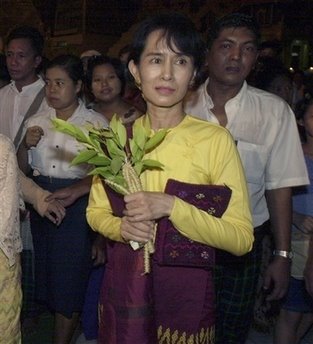


 Posts


