News& Articles on Burma Tuesday, 25 October, 2011 ---------------------------------------- US Burma Envoy Meets Aung San Suu Kyi What part does China play in Burma's civil war? Burma Army-KIA involved in heavy fighting at Du Ra Kawng Burma, North Korea, and Dystopian Reality Myanmar human-rights activist to get Mich. award Insight: Is it time to embrace Myanmar? Suu Kyi Sees a Shift in Myanmar Burma Army soldiers gang-raped and killed 9 Chinese women Forced displacement soars in Burma US Envoy Concludes Second Visit to Burma Shan MP Accused of Being Opium Kingpin Chance for Burma to End Ethnic Conflict: TBBC Burma: At freedom's gate Letter from Burma: Holiday (4) --------------------------------------------------- US Burma Envoy Meets Aung San Suu Kyi Posted Tuesday, October 25th, 2011 at 9:20 am The new U.S. special envoy to Burma has met in Rangoon with pro-democracy opposition leader Aung San Suu Kyi, as Washington presses the new, nominally-civilian Burmese government to continue releasing political prisoners. Tuesday's meeting comes on the second day of a two-day visit by Derek Mitchell, who met Monday with government officials in Burma's administrative capital, Naypyitaw. Sources in Aung San Suu Kyi's National League for Democracy party told VOA that Mitchell and the Nobel laureate met for nearly two hours Tuesday. Details of the meeting were not disclosed. Mitchell's visit is the second this month. It follows the new government's highly-touted prisoner amnesty earlier this month that failed to include most of the 2,000-plus political prisoners jailed by the country's former military junta. Mitchell, speaking last week, praised the release of some 200 political prisoners. But he said the new government, which took office earlier this year, must deepen its commitment to political reforms if it wants Western governments to lift economic sanctions imposed on the Southeast Asian nation during the past decade. http://blogs.voanews.com/breaking-news/2011/10/25/us-burma-envoy-meets-aung-san-suu-kyi/ ------------------------------------------------------ What part does China play in Burma's civil war? By Zin Linn Oct 24, 2011 9:10PM UTC The Chinese army secretly transported dozens of Burmese troops inside its border on October 21 morning to fight against the Kachin Independence Army, which is resisting an offensive by Burmese regiments, Kachin News Group reported. Eyewitnesses said approximately 30 Chinese military trucks clandestinely transported Burma Army soldiers from the Chinese border trade city of Ruili (Shweli) to Jang Hkawng, another border town close to Loije on the Burmese side. Only two or three trucks in the military convoy were carrying Chinese troops and the rest carried Burmese soldiers, added local witnesses. The aim of the maneuver seems to recapture two strategic positions which recently fell to the KIA at Jan Mai and Maw Shwi, near Loije, border-based military observers said. The Kachin Independence Army (KIA) seized two important frontline posts from Burma Army in Kachin State on October 11, following more than 20 hours of fighting At the same time over 2,000 Chinese troops have arrived on the Sino-Burma border, where KIA strongholds have been positioned since early this month. Eyewitnesses said Chinese soldiers take military exercises every afternoon from 4pm to 6pm in Jang Hkawng. The Kachin Independence Army is opposing the huge 6,000 megawatt Myitsone Hydropower Project with armed resistance. The armed clashes have displaced tens of thousands of Kachin refugees, and ended a 17-year armistice agreement between the Burmese army and the Kachin Independence Organization (KIO) and its military wing KIA. Kachin State, which is situated in northern Burma (Myanmar), has been facing appalling environmental damage. Kachin State holds large areas of intact natural woodland, and is one of the most important biodiversity spots in the region. It has been under threat since the 1994 ceasefire when the KIO was allowed to keep its arms and gained some some protective power while yielding control of natural resources to the then military regime. For that reason, many Kachin people believe the ceasefire agreement has been the cause of abject poverty and major environmental damage in their land. As the Burmese junta has a bad reputation with its human rights records, it offers the natural resources of the country to China in order to gainshelter from the international criticism. As for KIO's part, exploitation of the Kachin State's natural resources by the Burmese and Chinese governments are unacceptable. All natural resources management decisions are approved by Burmese authorities without local consultation. Now, the Burmese authorities seem inviting China's pressure in its ethnic affairs, amid the agreement to build seven hydropower dams on the Irrawaddy River and its tributaries with the China Power Investment Corporation (CPI). In October 2009, the Thailand-based Kachin Development Networking Group (KDNG) published a report -- "Resisting the Flood" -- highlighting the implementation of the Myitsone dam project on the Irrawaddy River. The report demanded a halt to the project, saying it creates unwelcome impacts like social, environmental, livelihood, cultural and security problems for tens of thousands of people in the area. The report states that more than 15,000 people in 60 villages around the dam sites are being forcibly relocated without proper resettlement plans. These individuals have lost their means of livelihood such as farming, fishing and collection of non-timber forest products. However, China is selfishly pressuring the Burmese government to push ahead with the dam projects. Many people believe that the Burmese government has been escalating its military pressure on the KIO in order to protect China's vested interest in Kachin State. As a result, citizens think that China is pulling the strings in Burma's politics in order to exploit not only natural resources but also to take advantage of regional politics. http://asiancorrespondent.com/67969/which-part-does-china-play-in-burma%e2%80%99s-civil-war/ ----------------------------------------------- Burma Army-KIA involved in heavy fighting at Du Ra Kawng Created on Tuesday, 25 October 2011 08:59 Published on Tuesday, 25 October 2011 08:59 Written by KNG Hits: 309 Hundreds of Burmese government and Kachin Independence Army (KIA) troops engaged in heavy fighting on Tuesday, beginning at 12 p.m. local time, at Du Ra Kawng, in Manmaw (Bhamo) District, in Kachin State, according to people at the frontline. Du Ra Kawng is situated between Lawdan and Hka Wan Bang, near N'Mawk (Momauk). Once again, the heavy fighting started when the government troops tried to march on the Burmese border town of Loije, near the China border, according to villagers from Hka Wan Bang. The Burmese troops are from the Miektila-based Light Infantry Division No. 99, Myothit (Da Sai)-based Light Infantry Battalion 347, Manje (Mansi)-based Light Infantry Battalion No. 601 and Manmaw-based Infantry Battalion No. 47, while the KIA soldiers under 3rd Brigade and the People's Army, local military observers said. A KIA officer from 3rd Brigade Command, in Maijayang, told the Kachin News Group, "It's the 8th attempt by the Burmese troops to cross into Loije. All previous attempts failed." Currently, all civilians in Hka Wan Bang, which has over 200 households, are internally displaced persons (IDPs) and have taken shelter in the town of N'Mawk since the fighting started there, said villagers. The government seemed to be moving toward major democratic reforms in some areas in the country. However, it also began a new offensive against the Kachins on June 9, who are continuing to demand a genuine federal union and political dialogue. http://www.kachinnews.com/news/2116-burma-army-kia-involved-in-heavy-fighting-at-du-ra-kawng.html --------------------------------------------- Burma, North Korea, and Dystopian Reality By DAVID I. STEINBERG Tuesday, October 25, 2011 North Korea and Burma have been referred to in the media as the two most severe authoritarian regimes in Asia. They have been included in the US proclaimed "outposts of tyranny" by Secretary of State-designate Rice, and are sometimes considered "failed" or "pariah" states. Conditions in both have been deplorable, although for those who know both societies, North Korea really captures the flag. North Korea has been hard-core authoritarian while Burma has a less harsh, but still authoritarian, ilk. That distinction does not prevent them from being grouped together, and as their bilateral relations have improved in the past few years since North Korea was "de-recognized" in 1983 following an incident when its agents attempted to assassinate the South Korean president on Burmese soil, that linkage has hardened with the supply of various types of arms from Pyongyang to Naypyidaw. Both societies shared another, less obvious, characteristic: they had a dystopian reality and a utopian propaganda image. Conditions for the average citizen in each state were exceedingly bad, while at the same time the state information mechanisms and diplomatic announcements proclaimed all was well within. The dual symmetry of reality and falsehood has now been broken. Although North Korea continues to proclaim that paradise exists under the leadership of Kim Jong Il and the Worker's Party, in Burma the new president (in contrast to the SLORC and SPDC juntas since 1988) has publicly proclaimed the warts on Burma's shining image. In his inaugural address the end of March 2011, President Thein Sein recognized many of the state's inadequacies, promised to address them, and then a few days later inaugurated an anti-poverty meeting that he personally attended. Self-exiled dissidents have been invited back, some political prisoners released (previous governments did not admit that they existed as political detainees), more liberal labor laws are being formulated, and corruption decried. The differences with the North Koreans are striking. Since the end of the Korean War, North Korea has been proclaimed a paradise, nonpareil with any other state in the world. In spite of horrendous famines in the 1990s, and food shortages today, the state's propaganda mechanisms still spew forth myths that few, if any, internally or externally believe. Burma earlier was not too dissimilar. But since the coup of 1962, the Burmese people have been wrapped in a state-sponsored cocoon that was so obviously porous that it made a mockery of official pronouncements. The people there had a better sense of reality. They knew early on what the situation was, as they had relatively easy access to external radio, television, and later e-mail and electronic communications in contrast with those in North Korea. They could leave the country and foreigners could enter as well. Older people remembered the civilian era. Since 2011, there has been a massive change. Problems of a profound nature have been admitted by the new military-turned-civilian administration, censorship has been eased, and more and more a sense of relaxation of the political strictures has occurred. People discuss politics and authority far more publicly than for almost half a century. A fledgling political pluralism exists---too young and insecure to be called "democracy" although officially it has been dubbed "discipline-flourishing democracy." These changes are real, although they may be ephemeral should more conservative and high-ranking military officials feel they have gone too far, and that their paramount position is threatened along with that of the military as an institution. In spite of US official announcements that Burma is a threat to regional security and US interests (although non-traditional security concerns, such as trafficking, the environment, migration, etc., are prevalent), that is patently not the case. North Korea, with its modest but dangerous nuclear capacity, holds the US ally South Korea, and more specifically Seoul, as militarily hostage should the US or the South act against the North. Yet US sanctions against Burma are more comprehensive than those against North Korea, perhaps because the previous Burmese military junta had a certain negative cachet in Washington and London. The deserved admiration of Nobel laureate Aung San Suu Kyi, and anathema to the previous junta has guided US policies. A US official said that the contrast between the two countries was striking: Burma has Aung San Suu Kyi while North Korea has a bunch of Kims. Now, the situation has morphed. She and the president of the country are talking, and saying positive things. Few thought that so much, even tentative, progress could have been made in such a short time. And as all this occurs, the fact that Burma has begun to admit its dystopian reality, and has set about changing it, is perhaps the most encouraging sign so far. Let us hope that it proves enduring. David I. Steinberg is Distinguished Professor of Asian Studies, School of Foreign Service, Georgetown University. His latest volume is "Burma/Myanmar: What Everyone Needs to Know" (Oxford). http://www.irrawaddy.org/article.php?art_id=22320 --------------------------------------- Myanmar human-rights activist to get Mich. award Posted: Oct 25, 2011 3:08 PM Updated: Oct 25, 2011 3:08 PM ANN ARBOR, Mich. (AP) - The University of Michigan is honoring a human-rights activist in Myanmar with the Wallenberg Medal, an award named for the Swedish diplomat who saved thousands of Jews during World War II. The recipient is Aung San Suu Kyi, leader of a democracy movement in Myanmar, a Southeast Asian country formerly known as Burma. Myanmar is the subject of wide-ranging trade, economic and political sanctions from the U.S. and other nations. Suu Kyi will not be in Ann Arbor on Tuesday night to get the Wallenberg Medal but will give a videotaped speech from Myanmar and answer questions. She is a Nobel Peace laureate and was under house arrest until last year. Raoul Wallenberg was a 1935 University of Michigan graduate. The Wallenberg medal has been given annually since 1990. Copyright 2011 The Associated Press. All rights reserved. This material may not be published, broadcast, rewritten or redistributed. http://www.wlns.com/story/15866156/myanmar-human-rights-activist-to-get-mich-award -------------------------------------- JAKARTA POST Insight: Is it time to embrace Myanmar? Rizal Sukma, Jakarta | Tue, 10/25/2011 9:52 AM By the end of this month, Indonesian Foreign Minister Marty Natalegawa will travel to Myanmar to assess the situation and developments in the country since last year's general elections. The visit is crucial for three reasons. First, the visit will take place in a new domestic context in Myanmar. After the elections, the newly installed government in Myanmar has taken some important measures that, if they continue, will change the country for the better. It has begun releasing prisoners, opening dialogue with Aung San Suu Kyi, inviting a UN Special Rapporteur to visit the country, halting construction on a controversial dam project and unblocking foreign publications and websites. Second, Minister Natalegawa's visit is also related to Myanmar's request to chair ASEAN in 2014. After agreeing to skip the chairmanship in 2006 on ASEAN's request, the new government in Nyapidaw seems to think that now is the time for the country to reclaim its rights in the regional grouping. Minister Natalegawa's visit could determine whether it was time for ASEAN to grant that request. Third, the visit will take place in the context of the rising expectations about the nature and future of democratic developments in the country. There is still ongoing debate whether the new developments really represent progress in Myanmar's implementation of its own roadmap to democracy, or just a series of calculated steps designed to achieve certain short-term objectives, such as the chairmanship of ASEAN. In other words, there are worries that after the request to chair ASEAN is granted, Myanmar will soon backtrack and reverse all the promising measures that it has begun. For Indonesia, both as the chair of ASEAN and a regional champion of democracy, the Myanmar question presents a difficult policy choice. On the one hand, current developments provide an opportunity for Indonesia and ASEAN to embrace Myanmar and encourage further reforms in the country. This, among other things, can be achieved by granting Myanmar the ASEAN chairmanship it seeks for 2014. On the other hand, however, if Myanmar started to reverse the reform process after its request was granted, it would become a major diplomatic embarrassment for Indonesia and ASEAN. In this context, ASEAN also must consider how the international community might react. The key issue here is the uncertainty regarding the nature and the future of democratic reform in Myanmar; a creative formula is needed by ASEAN. Developments in Myanmar need greater recognition from ASEAN and the international community. ASEAN, therefore, needs to give the benefit of the doubt to its problematic member. While granting the ASEAN chairmanship might open up greater opportunity for ASEAN's engagement in facilitating further reforms, denying it will definitely increase the pressure on the current Myanmar government to roll back the reforms. Therefore, ASEAN needs to decide at the upcoming ASEAN Summit in November in Bali that in principle it will allow Myanmar to take up the ASEAN chairmanship by 2014. That decision, however, should not be a blank-check. It should be tied to a number of conditions. First, Myanmar must continue to demonstrate that it is committed to further reforms and opening up the country. At the same time, ASEAN should make it clear that if it is not satisfied with the progress, and its decision to allow Myanmar to chair ASEAN will be reviewed at the July Summit in Phnom Penh next year. Second, as chair of ASEAN, Myanmar should guarantee other ASEAN countries that it will continue the practices of previous chairs, especially Indonesia, to allow greater participation of civil society organizations in the ASEAN process. More specifically, Myanmar must facilitate and organize the Civil Society Conference (CSC) in Yangon in 2012. Third, Indonesia should make it clear that it is more than happy to work with and assist Myanmar not only in preparing its chairmanship but also in assisting the country in a more comprehensive manner. For example, Indonesia --- both the government and civil society groups --- can work with Myanmar to help strengthen the institutional capacity of Myanmar to organize a series of high-level meetings associated with its chairmanship of ASEAN, exchanging experience in economic development and political reforms. Indonesia and Myanmar can also work closely to support community development, second-track dialogues and parliamentary and inter-university exchanges. Further reforms in Myanmar will benefit not only the country but also ASEAN and the region. The opportunity is now there for ASEAN to seize. ASEAN can provide valuable support in the process. Therefore, it is time for ASEAN to embrace Myanmar again in a comprehensive manner. Myanmar, however, should also make it clear that this time it has no intention of embarrassing ASEAN. The writer is the executive director of the Centre for Strategic and International Studies (CSIS) in Jakarta. http://www.thejakartapost.com/news/2011/10/25/insight-is-it-time-embrace-myanmar.html ---------------------------------------- OCTOBER 25, 2011 Suu Kyi Sees a Shift in Myanmar More Changes Are Needed, Dissident Says, Before She Can Support Easing Western Sanctions By WSJ Staff Reporters YANGON, Myanmar---Dissident Aung San Suu Kyi said a series of reforms under way in Myanmar represents the biggest opening in the repressive Southeast Asian country since the 1980s, but also said she wants to see more changes before she can support easing Western economic sanctions against the military-backed government. The ex-political prisoner and Nobel laureate offered her strongest endorsement yet of steps by Myanmar's government in recent months to ease media restrictions, reform its state-dominated economy and pursue talks with the opposition. Ms. Suu Kyi's comments, in an interview with The Wall Street Journal at her party's ramshackle headquarters in Yangon, come as policy makers around the globe look to her for guidance on how to interpret the latest changes in the resource-rich, strategically important Southeast Asian nation, also known as Burma. Although she had previously signaled some support for the government's moves, many of her recent public remarks have been brief, leaving followers uncertain as to how far she would be willing to back the current government or endorse easing sanctions. Ms. Suu Kyi compared her latest talks with the government---which included an August meeting with President Thein Sein---to "where South Africa was in 1990" as it negotiated an end to apartheid, and had warm words for Mr. Thein Sein, whom she called "an honest, open kind of person" with a "sincere" desire to overhaul the country. "I know we are not there yet, but we can see the way clear ahead more than we have ever been able to," said Ms. Suu Kyi, who said her recent talks with government officials "felt real to me," unlike previous talks in earlier decades. She suggested the government is close to meeting her conditions to officially register her political organization, a significant move that would signal her trust in the unfolding system and give Myanmar's leaders a level of legitimacy they crave. She didn't rule out the possibility of running for office in a national vote expected in 2015. However, Ms. Suu Kyi said it was still too early to give up on sanctions for at least two reasons. Authorities continue to hold an undetermined number of political prisoners, she said, and have yet to fully restore relations with Myanmar's ethnic minority groups, some of which remain locked in violent armed conflicts with the government. "Obviously now is not the time" to lift sanctions, she said, though she said she expects the government to release more political prisoners soon. It released about 200 people this month, in a move criticized by human-rights organizations as too limited. Ms. Suu Kyi is walking an uncertain road toward reconciliation with leaders in Myanmar, whose strategic significance has increased in recent years as China, India and other nations compete for access to its minerals and trade. Some dissidents and Western investors want Ms. Suu Kyi to end her longstanding support for sanctions, which block most U.S. companies from doing business here. The rules have been imposed in stages since the late 1990s---largely at her behest---to punish a regime accused of widespread human-rights violations. U.S. officials have offered cautious support for the recent changes in Myanmar, which include plans to allow peaceful protests and the organization of labor unions, as well as steps to unblock websites such as the BBC and YouTube. But like Ms. Suu Kyi, U.S. officials have stopped short of advocating lifting sanctions until more progress is seen. Signs of a thaw continued Monday, as U.S. special envoy to Myanmar Derek Mitchell arrived to meet with government leaders for the second time in two months, the Associated Press reported. Ms. Suu Kyi also is facing pushback from dissidents who doubt the sincerity of the government's reform push, and fear easing sanctions now could rob the opposition of leverage.Some dissidents have criticized Ms. Suu Kyi for conducting meetings with the government in private---a move she justified as necessary to ensure the process stayed on track. Myanmar officials have said repeatedly in recent months that they are serious about reform. A government official declined Monday to comment on Ms. Suu Kyi's latest remarks, because he hadn't seen a full transcript. It is clear Ms. Suu Kyi will play a crucial role in determining when, and whether, sanctions are removed. After her release in November 2010 from her latest stint under house arrest, which lasted more than seven years, many experts expected Ms. Suu Kyi to take a tough line against the new government, which came to power after a late 2010 election that many Western leaders said was riddled with fraud and is dominated by allies of the military regime that controlled Myanmar since 1962. Instead, she has sounded increasingly conciliatory notes on the government, which is eager to win her backing to get sanctions removed. "By playing her cards very well, she's put herself in a position she hasn't been in in a long time, of being the arbiter," said Sean Turnell, a Myanmar expert at Macquarie University in Sydney. He said he doubts the U.S. would lift sanctions without a clear sign from Ms. Suu Kyi.Given the uncertainties about whether Myanmar's government is serious about changing, "they're looking to her to say yes it is, or it isn't." Ms. Suu Kyi said she was especially heartened by the easing of media restrictions, which she said is producing the most "open" environment since 1988, when student protests almost topped the military government. "People feel more relaxed about participating in politics. They aren't frightened as they used to be," she said, speaking forcefully to be heard over barking dogs and trucks rumbling outside her office, in an old building near a strip of furniture shops and weedy lots. Now, she said, activists can take part in the political process "without endangering themselves too much." Ms. Suu Kyi signaled she may be close to registering her political party, the National League for Democracy, after it was officially disbanded last year for boycotting the country's first election in 20 years. Myanmar officials are eager to see the NLD register: Such a step would bring Ms. Suu Kyi more formally into the political process and, officials hope, provide a tacit endorsement of the current political system, people familiar with the government's thinking say. The party refused to register last year, objecting to rules that, among other things, prevented political prisoners from being members. "They seem to be changing the bits that we said were not really acceptable in 2010," she said of a draft party-registration law under consideration. Many of Ms. Suu Kyi's backers oppose registration, which could be tantamount to relinquishing their claim to power. Her party won 1990 elections, Myanmar's last before the 2010 vote, a result ignored by the military regime. Ms. Suu Kyi said, however, that party leaders long ago gave up on any claim to power from the 1990 vote. "We are in fact not asking for a transfer of power as a lot of people seem to think," she said. "That would not be practical" because many NLD candidates who won office in 1990 are now dead or in exile, she added. Ms. Suu Kyi appeared lukewarm on the idea of endorsing Myanmar's bid to serve as chair of the Association of Southeast Asian Nations in 2014, a move that has split diplomats across Southeast Asia. Myanmar officials want to take over the rotating leadership seat at Asean, an increasingly influential regional grouping, to symbolize the country's re-entry into the international community. But some Southeast Asian leaders fear it could hurt the organization's reputation and jeopardize ties with the West. "Assuming the chairmanship of Asean isn't going to do anything about improving the lives of people," she said. Ms. Suu Kyi blasted the country's legal system, saying "everybody knows" the judiciary is not independent, and that there's too much "crony capitalism." She lamented that despite the relaxation of restrictions on the media, there remains a lack of transparency within the government. For example, she said it isn't clear whether Senior Gen. Than Shwe, who was the country's paramount leader from the early 1990s until this year, is active in running the country behind the scenes despite his apparent retirement. "Because there is no freedom of information people have to depend on rumors." But she said she thinks Mr. Thein Sein, who was a military commander before being appointed president earlier this year, wields considerable power, which could augur well for further change. "People question how much support he has within not just the government but within the army, and that is important---I don't deny that," she said. "But I definitely get the feeling he is in charge, even if he is not in total charge."http://online.wsj.com/article/SB10001424052970203911804576651051732968950.html ------------------------------------------------ Burma Army soldiers gang-raped and killed 9 Chinese women Created on Monday, 24 October 2011 11:58 Published on Monday, 24 October 2011 11:58 Written by KNG Nine Chinese women were gang-raped and killed by Burma Army soldiers during its offensive against the Kachin Independence Army in Northern Shan State, witnesses said. These serious human rights abuses occurred at Shau Haw Village, near Mongpaw, in Northern Shan State, after a government army column arrived in the village, said villagers. The crimes were committed by troops from the Kutkai-based Military Strategy No. 1, under Lashio-based Northeastern Regional Command, said villagers. On Oct. 22, six other Chinese women, from Ni Shang Hu village, near Mongpaw, were detained as porters by Burmese troops of the Lashio-based Light Infantry Battalion No. 522, villagers said. At the same time, animals belonging to villagers were also slaughtered by those Burmese troops, added villagers. http://kachinnews.com/news/2115-burma-army-soldiers-gang-raped-and-killed-9-chinese-women.html -------------------------------------------- Forced displacement soars in Burma By FRANCIS WADE Published: 25 October 2011 More people have been forcibly displaced over the past year from their homes in southeastern Burma than during any year since 2002, data collected by the Thailand Burma Border Consortium (TBBC) shows. The main driving force behind the alarming statistics is greater militarisation of the region bordering Thailand, as Burmese forces and allied militias look to rout ethnic armies and extend their control over trading routes and civilian populations. This has forced around 112,000 to flee their homes, TBBC says, a higher number than any documented since it began collecting annual data there nearly a decade ago. Duncan McArthur, a coordinator of emergency relief for TBBC, said that the figures over the past year however may not be unprecedented. "In the mid 1990s there was a massive forced relocation programme in Shan state, and after the collapse of buffer zone in 1996 and 1997 there was a huge flight of people," he told DVB. "So it may not be on the same level as then but since we've been documenting on an annual basis since 2002, this year is by far the worst we've seen." Attempts by Naypyidaw to coerce multiple ethnic armies into becoming government-aligned Border Guard Forces have largely failed, but the fallout from their refusal has resulted in an escalation in fighting from Kachin state in Burma's north down to Mon state in the southeast. McArthur said that one of the three main areas of "large displacement" over the past year had been in central Karen state, close to the town of Myawaddy. Fighting erupted there in November last year after a renegade faction of the once pro-government Democratic Karen Buddhist Army (DKBA) attacked government positions, and has since continued in varying intensity. Central Shan state has also seen around 31,000 people displaced in the past year, following the refusal of the Shan State Army (North), which had maintained a 15-year ceasefire with the government, to bow to demands to become a BGF. The populations of the nine refugee camps over the border in Thailand have also steadily grown: in August last year the total number of refugees being helped by TBBC was 145,713; now it is 148,908. That increase however doesn't accurately signify the full extent of displacement in eastern Burma. Thousands of people are forced to hide in the jungle or return to areas of past removal, rather than crossing into Thailand. Estimates of the total number of internally displaced persons (IDPs) in eastern Burma are close to half a million. The government has significant economic interests in the country's border regions, much of which is rich in natural energy potential. In the past decade or so, rising demand from neighbouring countries has fuelled a greater hunger on the part of the government to exploit these resources, causing greater militarisation and aggressive attempts to clear the areas of civilian and armed resistance. Despite various attempts at brokering dialogue between armed groups and Naypyidaw, with President Thein Sein regularly speaking of the need for countrywide peace, Burmese army offensives continue. "As prospects for the voluntary return of refugees and internally displaced persons are directly linked to national reconciliation, the urgency of finding a solution to conflict in Burma has never been greater", TBBC Executive Director Jack Dunford said in a statement. http://www.dvb.no/news/forced-displacement-soars-in-burma/18388 -------------------------------------------- US Envoy Concludes Second Visit to Burma By BA KAUNG Tuesday, October 25, 2011 Derek Mitchell, the US special envoy to Burma, concluded his second trip to the country in less than two months on Tuesday, amid signs that Naypyidaw is seeking to shed its pariah status and rebuild ties with the West. US embassy officials said that Mitchell held meetings with senior government officials, including Foreign Minister Wunna Maung Lwin and Speaker of the Lower House of Parliament Thura Shwe Mann---formerly the third-highest-ranking member of the junta that ruled until earlier this year---as well as with pro-democracy leader Aung San Suu Kyi during his two-day visit. Although no further details were available, the embassy released a statement that said Mitchell "uses every opportunity to raise with Burmese authorities our longstanding core concerns, including the need for the release of all political prisoners, dialogue with the opposition and ethnic minorities, adherence to Burma's international obligations on nonproliferation, and end to violence against ethnic minorities." Since his last visit to Burma in early September, the Burmese government has made a number of moves apparently aimed at placating its international critics. On Sept 30, it announced the suspension of a controversial Chinese-backed mega hydropower dam project in the north of the country, and earlier this month, it released around 200 of an estimated 2,000 political prisoners. The suspension of the dam project has clearly angered Beijing and is seen by analysts as a move by the the Burmese government to counter Chinese influence in the country by improving relations with the US and the Western bloc. In return for these tentative signs of reform, the US government has lifted its travel restrictions on some Burmese government officials, including Wunna Maung Lwin, who attended the opening of the 66th session of the UN General Assembly in New York in later September and later traveled to Washington to hold a rare meeting with Mitchell and senior US State Department officials. The US government has also invited a Burmese delegation to attend a meeting of the Friends of the Lower Mekong---a US-initiated grouping that aims to strengthen ties with Cambodia, Laos, Thailand and Vietnam---as an observer. However, the US has also made it clear that it won't lift sanctions on Burma until all of the country's political prisoners, including leading dissidents such as Min Ko Naing and Ko Ko Gyi, are freed and serious steps are taken to end violence and human rights abuses in ethnic minority areas. At a press briefing last Monday, Mitchell said the US administration is also expecting the country's military-dominated Parliament to make changes in the party registration law that will allow Suu Kyi's disbanded National League for Democracy party to participate in the country's political process. "Those are obviously very, very important moves that would lead to American gestures, steps in return," he said. The Obama administration completed its Burma policy review in September 2009 and began to pursue a dual-track approach that integrates both sanctions and engagement to achieve democratic changes in Burma. President Barack Obama appointed Mitchell to the US special representative for Burma position in mid-April 2011. Mitchell plans to visit Burma frequently to build on the US's ongoing principled engagement with Burma, including dialogue with the Burmese government and local stakeholders, the embassy statement said. In a related development, Indonesian Foreign Minister Marty Natalegawa will be traveling to Burma this week to assess developments in the country. His findings will be crucial in deciding whether the Association of Southeast Asian Nation (Asean) will grant Burma the chairmanship of the regional grouping in 2014. The US government, a key dialogue partner of Asean, has said that giving the chairmanship to Burma must be based on the country's efforts at improving its human rights record. The chairmanship bid is seen as a part of a concerted campaign by the Burmese government to improve its image after taking office through a deeply flawed election in March of this year. http://www.irrawaddy.org/article.php?art_id=22323 ----------------------------------------- Shan MP Accused of Being Opium Kingpin By KO HTWE Tuesday, October 25, 2011 Opium production and drug addiction have dramatically increased in the Namkham area of northern Shan State since the election of a local warlord in last year's general election, according to a new report by the Thailand-based Palaung Women's Organization (PWO). The report, titled "Still Poisoned,"reveals that in the 2010-11 season, 1,109 hectares (4.28 square miles) of land in 15 villages were now being used for opium cultivation, as opposed to 617 hectares two years ago in the same 15 villages---an increase of 78 percent. In addition, Monday's report also claimed that 12 villages in the Namkham area that had not previously grown opium have started since 2009. Drug addiction in local Palaung communities has spiraled out of control, the report says, and in one Palaung village 91 percent of males aged 15 and over were addicted to drugs. Namkham is situated on the Sino-Burmese border close to the Muse-Riuli crossing. The PWO report says that the opium harvest has increased as a direct result of the policies of Namkham No.2 constituency MP "Pansay" Kyaw Myint (aka Win Maung and Li Yongqiang), a representative of the junta-backed Union Solidarity and Development Party (USDP) who was elected in the Nov. 7 election. Kyaw Myint is widely reported to be a major drug warlord in the region, and is the head of the local pro-regime People's Militia Force [ta-ka-sa-pha in Burmese]. He campaigned on a platform of allowing opium to be grown freely in Namkham if elected. "All of the villages that cultivate opium are in areas controlled by Kyaw Myint's militia," said Lway Nway Hnoung, the principal researcher of the report. "He himself cultivates opium in the Pansay area, so we can firmly say that the increase in opium cultivation is due to his involvement." According to the PWO, in 2006 Kyaw Myint's militia had almost 400 armed troops, and he is reported to have recruited many more by the time of Burma's first elections for 20 years in November 2010. "Kyaw Myint promised that he would protect those people who voted for him by ensuring that their opium fields would not be destroyed," the report says. Khuensai Jaiyen, the editor of the Thailand-based Shan Herald Agency for News (SHAN) and a researcher for the Shan Drug Watch newsletter, said that Kyaw Myint has exercised freely the power and influence he gained by becoming an MP. The Palaung ethnic group, which traditionally depends on tea cultivation for its collective livelihood, has been pushed into opium cultivation due to drastic plummets in the price of tea, while the price of rice and other goods has consistently increased under the Naypyidaw regime. "A new government has been sworn in to power, but they have not effectively dealt with the reasons why these farmers have to grow opium," said Lway Nway Hnoung. "We want the international community to know that the problem of opium cultivation in Palaung area is worsening." The report alleges that "Government troops, police and militia continue to openly tax opium farmers, and to collect bribes from drug addicts in exchange for their release from custody." SHAN reporter Hseng Khio Fah, who recently made a trip to Shan State, told The Irrawaddy that several years ago the mountain ranges surrounding Namkham were covered in trees. "But now the trees have been cut down and been substituted with opium fields," she said. "A serious situation is quickly developing in that so many local men and teenage boys are turning to drugs," she said. I worry for the future of these villages." Mai Bhone Kyaw, the general secretary of the Palaung State Liberation Front, said, "It is hard to crack down [on opium] if the power is in the hands of local militias which work alongside the government. "It is also difficult for the local militias to survive without income from the opium trade," he said. "So if the leader of the local militia becomes an MP, then it is very easy to begin laundering money. " The PWO concluded that the most effective way to address the opium problem in the long term is for the government to implement a nationwide ceasefire and begin a tripartite dialogue which addresses the political aspirations of Burma's ethnic nationalities. In 2010, the United Nations Office on Drugs and Crime (UNODC) reported that the total area under opium poppy cultivation across Shan State was estimated at 38,100 hectares, an increase of 20 percent from the year before. It said Shan State accounts for 92 percent of opium production in Burma. Residents in Panglong, southern Shan State, recently told The Irrawaddy that there are more opium fields around their town now than in previous years. Several said that they had chosen to work in the opium fields because it pays better wages. "The growers pay 8,000 kyat (US $10) per day," said a local worker. "But the owners are like 'godfathers' who pay bribes to the authorities and do whatever they wish." Locals in Namkham said that some plantation owners manage two harvests per year. Members of PWO said that they conducted their own research into drug usage in northern Shan State, and say that all indications are that the real rate of addiction is much higher than the UNODC's Myanmar Opium Survey 2010 reported when it said that the rate of opium use for northern Shan State is 1.2 percent of the population. PWO called on the UNODC to improve the accuracy of its data by working directly with people in the communities where opium is cultivated, rather than with the Burmese military regime. The UNODC World Drug Report 2011 said Burma's share of world opium production had increased from five percent in 2007 to 12 percent last year, and that while Afghan opium production declined over the 2007-10 period, production in Burma increased. However, it is not only opiates that are causing a drug problem in Shan State. A youth in Mong Pan in southern Shan State told The Irrawaddy: "Most youngsters under 18 quickly become addicted to drugs, especially amphetamines, which are easier to buy. One pill currently costs 2,500 kyat ($3.12). All their peers do it too. As for the authorities, they don't care what is happening in the streets," he said. http://www.irrawaddy.org/article.php?art_id=22322 ----------------------------------------- Chance for Burma to End Ethnic Conflict: TBBC By SAW YAN NAING Tuesday, October 25, 2011 The current window of democratic reform in Burma is the best opportunity in decades to resolve ethnic conflicts, claims an alliance of humanitarian agencies working with displaced persons from Burma. The Thailand Burma Border Consortium (TBBC) has called on Burma to urgently grasp the chance of resolving the ethnic conflicts that has prolonged human rights abuses for decades. An annual survey of conditions in southeast Burma conducted by the humanitarian agency found that more people had been forcibly displaced from their homes during the past year than any time since data was first collected in 2002. According to a TBBC statement released on Tuesday, the prospect of a genuine and inclusive process of national reconciliation that brings an end to decades of war and displacement needs to be promoted and realized. Jack Dunford, the executive director of the TBBC, said, "A determined and sustained effort to resolve ethnic conflict in Burma is essential to avoid another generation of violence and abuse." While government figures estimate that a quarter of the nation lives in poverty, the TBBC survey found that almost two-thirds of households in rural areas of the southeast are unable to meet their basic needs. Each family of displaced people spends less than US $1 per day for meals. More than 450,000 people currently remain internally displaced in the southeastern region, according to the TBBC. Some fled into Thailand as part of an ongoing flow of new refugee arrivals and others returned to former villages or resettled elsewhere in Burma. "As prospects for the voluntary return of refugees and internally displaced persons are directly linked to national reconciliation, the urgency of finding a solution to conflict in Burma has never been greater," said Dunford. He also said that democratic reforms by the new government are vital and welcomed, but the government army's orders for ethnic ceasefire groups to form Border Guard Forces has escalated conflict and displacement in minority areas. Impoverishment was found to be particularly severe in the conflict-affected areas of northern Karen State and eastern Pegu Division. Comparative analysis with World Food Program surveys suggests that standards of living in Burma's southeast are similar to conditions in northern Arakan State and far worse than those reported from the central dry zone. Saw Steve, a leader of the Committee for Internally Displaced Karen People, a humanitarian aid group helping displaced people in Karen State, said, "If there are no armed conflicts, forced labor, torture and extortion, these civilians will not be faced with this poverty. If people work peacefully and freely, they are not in poverty." "This poverty will be gone only when peace prevails in Burma. So the resolution of armed conflicts and an emergence of ceasefires and peace in ethnic areas is very important," said Saw Steve. He welcomed some recent positive steps made by the government, but called for a time-bound peacemaking plan to also be set up by Naypyidaw. The TBBC and its partner agencies have documented the destruction, forced relocation or abandonment of more than 3,700 civilian settlements in southeast Burma since 1996. This includes 105 villages and hiding sites during the past year, when at least 112,000 people were forced to leave their homes. http://www.irrawaddy.org/article.php?art_id=22317 -------------------------------------------------- http://www.ft.com/cms/s/0/5576df62-fb37-11e0-8df6-00144feab49a.html#ixzz1bYxCRVq2 October 24, 2011 10:22 pm Burma: At freedom's gate By Amy Kazmin Rangoon finally begins to open up They have decided to change. It's not what we called for, but there are changes. Even if they are pretending to change, we should push them so the change becomes irreversible. If we keep saying that 'you haven't changed the way we want' and put obstacles in the way, then the changes will never come." The words are those of Harn Yawnghwe, son of the last hereditary ruler of an ethnic Shan principality in Burma. He went into exile as a teenager in 1963 after the country's newly rampant military killed his brother and sent his father to die in prison. More. Mr Yawnghwe is these days the director of the Euro-Burma Office in Brussels, established by dissidents to promote democracy in the downtrodden south-east Asian country. This month, he has been making his first return visit to his homeland. Few people, in Burma or the outside world, had high expectations when in March the army handed power to a quasi-civilian government after nearly five decades of repressive rule. The handover followed a tightly controlled -- some say rigged -- election under a new constitution that preserved much military clout, including the right to appoint one-quarter of the members of a new parliament. The man designated as president seemed hardly more promising. Thein Sein, a recently retired general, had made little impact in four years as prime minister in the junta led by Senior General Than Shwe. But his inauguration speech set a fresh tone. He outlined an agenda of inclusive economic development and promised to renew crumbling health and education systems, fight corruption, pass laws to protect human rights and co-operate with those holding "different ideas and concepts" on issues of national interest. Burma-charts Since then, the long-suffering population of Burma (renamed Myanmar by the generals) has witnessed almost unimaginable change. Censorship has been eased to allow debates, criticism and interviews with dissidents in domestic news publications. On the internet, previously inaccessible foreign news and opposition websites have been unblocked. Political exiles such as Mr Yawnghwe have been invited to return. Experts have been appointed to advise on reviving the economy. Parliament has held robust televised debates, has adopted a law permitting independent trade unions and is considering legislation that would make it easier to protest. In August, Mr Thein Sein met Aung San Suu Kyi, the Nobel Prize-winning democracy leader who was reviled by the junta. She later told diplomats she believed the president was sincere in his desire for reform. In September, Thein Sein risked alienating the country's long-time patrons in Beijing by suspending a $3.6bn Chinese dam project that would have flooded an area the size of Singapore. This month, the government released nearly 200 political prisoners, beginning what is expected to be a phased release of up to 2,000 dissidents. The pace of change has persuaded many that the president is serious in his ambitions to bring development and greater freedom to a country that has suffered from economic stagnation, political repression and international isolation. The sense of excitement has brought renewed attention to a nation rich in oil and gas, gems and timber, and situated at the strategic crossroads of Asia, wedged between China and India. A country that because of sanctions the west had appeared to have lost to China is suddenly back in geostrategic play. "There is a fundamental rethinking of the political direction of the country," says Richard Horsey, who spent five years in Burma with the International Labour Organisation. "We should see this as a transition. It's not a flick of the switch from authoritarianism to a fully open society. But the intention is to undertake a far-reaching liberalisation of governance in the country." Western capitals, which have long treated Burma as a pariah and subjected it to a range of sanctions, are now scrambling for an appropriate response to developments that are still fraught with uncertainty. Mr Thein Sein is almost certainly no liberal democrat and his initiatives take place within a constitutional framework that will leave Burma far short of the democratic changes for which many western governments, and Burmese exiles, have long pressed.. . . Yet in a region where authoritarian governments such as China and Vietnam have improved their people's lives by enabling rising prosperity, many argue that the west should support any credible effort at more rational, open policies after decades of erratic military fiat. With its trove of natural gas and a largely untapped domestic market of some 54m, Burma is also of keen interest to western multinationals, which had mostly been deterred from doing business there by sanctions, red tape and reputational risk. ECONOMIC REFORMS: A pariah state takes tentative steps to attract foreign investors U Myint once joked that Burma's military generals ran a "command economy". They issued orders, military-style, and expected the economy to obey. The former UN economist, having retired to Rangoon, has now been appointed President Thein Sein's most senior economic adviser. He is charged with shepherding through reforms to unleash the country's growth potential and entice investment from foreign companies. "It's going to be a long haul, with lots of work to be done," says Professor Sean Turnell of Australian National university, who fears there could be opposition from within the administration, or even from the military. "There are going to be a lot of people who will be unhappy once reforms take place, as their interests will be exposed. So the potential for reaction is there." Burma holds many attractions for foreign businesses: significant natural gas reserves, roughly equal to Brazil's; tourist appeal; fertile rice-growing land; and a youthful population, estimated at about 54m, that could be tapped to help offset rising labour costs in China. Chinese, Indian and other Asian companies have established a foothold, especially in natural resource extraction. But aside from Total of France, with its natural gas pipeline from Burma to Thailand, and a few European travel groups, western business has largely steered clear. Sanctions, and the reputational risks of operating in a pariah country, have proved deterrents. But the domestic business climate has been far from congenial. Multiple exchange rates for the local currency -- with a black market rate about 200 times weaker than the official level -- have complicated trade and banking. Red tape meant every individual import and export shipment, plus the price at which the transaction took place, required high-level approval. The state of the roads, power supply and ports reflects years of neglect and under-investment. Becoming too successful also poses risks for business -- the friends and relatives of powerful generals have been known to grab profitable enterprises. "You could never trust that your investment was not simply going to be expropriated," says Prof Turnell. The new government is already moving to improve the climate. The 10 per cent export tax has been cut to zero for most goods, and 2 per cent for others. Approvals for exports are now virtually automatic. Banks are allowed, for the first time, to sell foreign exchange at market rates. The government also wants to move to more market-based exchange rates. Until now, the multiple rate system has allowed the military to tap state gas revenues with little accountability -- a practice Prof Turnell says could be ended with the transparency brought by a single exchange rate. "I half wonder," he asks, "whether the new president knows the implications." Burma's recent history of false dawns and dashed hopes gives ample reason for caution. In 2002, Ms Suu Kyi was released from house arrest, raising expectations that the regime was poised to negotiate a transition from military rule. Just a year later, she was attacked by regime thugs and taken into custody. Back under house arrest, she then agreed a deal with Gen Khin Nyunt, the military intelligence chief of the time, for her NLD to attend the regime's constitutional convention. But at the last minute, Gen Than Shwe vetoed the deal. Gen Khin Nyunt was later purged and put under house arrest himself. Ms Suu Kyi was released only last November. Espen Barth Eide, Norway's deputy foreign minister, who met ministers and Ms Suu Kyi on a recent trip to Burma, argues that the country could be at the start of a transition similar to those of recent decades in formerly autocratic Taiwan and South Korea. They gradually came to allow more "moderate pluralism" without dramatic ruptures. "This is as good as it gets -- a military regime deciding not to be a military regime any more," he says. "It may be the start of a rough ride. But it's not fake. There's something real going on." Striking the right balance between maintaining pressure and supporting change is a high-stakes game at a time of rising tensions between Washington and Beijing over influence in Asia -- and not everyone shares the new optimism. Pro-democracy campaign groups, and some members of Ms Suu Kyi's National League for Democracy, dismiss the changes as easily reversible tactical manoeuvres to help win an end to sanctions. Human rights groups and freed dissidents themselves were disappointed by the limited scale of the recent prisoner release, which left many prominent campaigners behind bars. "Thein Sein is on a journey and his destination is not democracy," says Mark Farmaner, director of the Burma Campaign UK, another lobbying group. "His destination is lifting sanctions and gaining international legitimacy. He is looking around the world and seeing all these other dictatorships that don't have sanctions and have normal diplomatic relations, and he wants the same. He is prepared to make more compromises to achieve that goal than his predecessors." Gen Than Shwe is now in retirement. That, say some observers, has given Mr Thein Sein the opportunity to push through important changes, backed by a handful of like-minded former military men. "From the outside, we've always seen the regime as if it were some monolithic, coherent whole," says historian Thant Myint-U, author of two books on Burma. The reality was more fluid. "Thein Sein realises what many people have realised, which is the way that things were going in Burma was not sustainable, and that people in the country deserved a better government," he adds. "There are ways in which one can improve the government without having a bloody revolution." People in contact with government officials say many in the ruling elite have long been dismayed by how far Burma has lagged behind its neighbours. The country has some of Asia's highest poverty and malnutrition rates despite possessing some of its most fertile land. Much of the military top brass is also said to be discomfited by the tightening embrace of China. Diplomats say Mr Thein Sein is looking to improve relations with the west to counter dependence on Beijing. "There is a sense that they need to have a more balanced set of external economic and political relations," says Mr Horsey. "In their mind, they are susceptible to losing sovereignty. They think back to weak Burmese kings who, because of their failure to keep up with political and technical trends of the times, were dominated by foreigners." One European diplomat who has been visiting the country for years says the government has "come to the conclusion they can't survive without the west". Still, Mr Thein Sein's reform path is fraught with risk. He faces opposition from military hardliners. Many officials are sitting on the fence, reluctant to commit. For now, the president seems to have the upper hand. But analysts fret that any outbreak of social unrest could provide an excuse for hardliners to retake power, through a constitutional provision that allows the army to declare a state of emergency. "The worst case is that there is some big disaster, which he mishandles. Then the army has a reason to come back in," says Mr Yawnghwe from the Euro-Burma Office. So far, the US and the European Union have responded cautiously to the unfolding events, welcoming the changes but saying the government must release more political prisoners before they will consider a relaxation of sanctions. Renewed fighting between the army and ethnic militias in Burma's restive minority areas remains another concern. "There are still real questions about how far they are going to go and where this is going to lead," Derek Mitchell, the US special envoy for Burma, told journalists in Washington last week. "If in fact we do see reform, change, along those lines of democracy, human rights, national reconciliation and development, they will have a partner in the United States." In calibrating their response to events in Burma, western capitals are likely to take their cue from Ms Suu Kyi, who has struck a cautiously positive tone. Nyan Win, an NLD activist and former political prisoner, says the party is "thinking about how we can co-operate with the government and what we can do for democracy and human rights. We are optimistic that the present government wants to change towards democracy." Or as Mr Yawnghwe puts it: "If you ask people outside Burma, they'll say it's a sham. But if you look at people inside, they are saying, 'let's go with it, because this is what we have got'." Additional reporting by David Pilling http://www.ft.com/intl/cms/s/0/5576df62-fb37-11e0-8df6-00144feab49a.html#axzz1bYwnIm9o --------------------------------------------- Letter from Burma Letter from Burma: Holiday (4) - By - Aung San Suu Kyi It is an unhappy coincidence that while I am in the process of writing about the days I spent in Pagan, an entirely unheard of tragedy for Burma should have taken place in the vicinity of the old capital. The murder of a Japanese woman tourist by the driver of her "motorbike taxi" shocked the people of a community widely known for hospitality to strangers. The crime sent shock waves across the country and a man from the town of Nyaung-U, where the crime had been committed, spoke for all of us when he said: "Such a terrible thing has never happened here before; we cannot understand it. We are not like that, we feel so ashamed." The murderer has been apprehended and justice must take its due course, but the young woman will never be restored to life. We send our deep condolences to all those who knew and cherished her. Everything is impermanent, nothing lasts forever. This is what Buddhism teaches us and what Pagan teaches us. Yet it is surely not wrong to try to conserve what should be conserved. Not far from Pagan is Popa, an extinct volcano, the most prominent centre of spirit worship in the country. Its annual festival attracts not just believers but tens of thousands of visitors eager to observe the rituals that have been passed down through the ages since the time when the kings of Pagan were lords of life and death over their subjects. According to legend, back in the days of King Anawratha, there lived on Mount Popa a flower-eating ogress. A royal retainer with unusual powers would come every morning from Pagan at superhuman speed to gather flowers for the king. As might be expected, he met the ogress, who had the power to make herself look beautiful, and fell in love with her. The fruit of the union between the superman and the ogress were twin boys who would one day become the guardian spirits of Popa. Tourists make the trip out to Popa even when it is not festival time as there are interesting shrines all the way up to the top of the volcano. We too went out towards Popa but not to climb it. We went to visit the National Park in the foothills. It is of modest size and obviously works on a modest budget but the enthusiasm and dedication of the staff was contagious and our visit was both interesting and educational. The raised altitude makes the climate particularly pleasant and the volcanic soil is ideal for the preservation and cultivation of rare trees and plants. Exotic orchids and butterflies abound and the Park specializes in medicinal vegetables and herbs. It is an ideal setting for both conservation and research. The air was cool and there was a spacious wooden deck from which we could enjoy a magnificent view of the volcano and of green vistas that would send botanists into ecstasies. Four days in Pagan is long enough to make you realize that however many times you may come back there would be new discoveries to be made, new magic that would hold you captive to the fascination of the city of pagodas. Its traditional arts and crafts, basketwork, pottery, lacquer ware, are attractive as well as useful. Pagan is in fact the home of Burmese lacquer. The old methods and designs have been retained but there is also an awareness of the need to strike out in new directions. There is an eagerness to learn from other countries and the owner of one of the largest lacquer stores had spent some time in Japan to see if she could find ways of improving the quality of Burmese lacquer. Pagan has much to offer in the way of history, architecture, art and the beauties of nature. Its greatest asset however is its people. Gentle and courteous as befits the inhabitants of a proud old city, their charm is as memorable as their surroundings are unique. One afternoon we went to have our lunch at 'Tharaba 3.' This is just several long tables and benches laid out under a few shade trees but it is one of the most popular eating spots in town. Tharaba 1 had been arranged in a similar way and had had to move away from its original place. The demands of loyal clients had led to Tharaba 2 reappearing under other trees. When Thraba 2 also had to move, the clientele remained staunch and Tharaba 3 materialized. One meal at those tables under the trees makes you understand why those who have enjoyed the food and hospitality of Tharaba keep coming back for more. Three hundred kyats (less than U.S. 50 cents) gets you a big helping of rice and as much as you want of some five or six side dishes such as pickles, thick spicy tomato sauce, sesame mush, fermented fish and vegetable fritters. For an average eater, that constitutes an adequate meal. Dishes of meat and fish are also placed on the tables; you pay only for the pieces that you put on to your plate. I could write a whole book about my few days in Pagan but it is time to stop and what could be better than to end on a culinary note? So I will simply say: you must come and taste the simple delights of Tharaba 3 and a holiday in Burma for yourself. (By Aung San Suu Kyi)
Wednesday, October 26, 2011


Tuesday, October 25, 2011
News & Articles on Burma-Monday, 24 October, 2011-uzl
News & Articles on Burma Monday, 24 October, 2011 ----------------------------------- Decision day looms for NLD Dalai Lama invites Suu Kyi to attend meeting in the Czech Republic U.S. Envoy To Myanmar, Derek Mitchell, Visits Yangon India, Myanmar open up borders Burmese Migrants Fend for Themselves as Flooding Continues Activists slam ‘skewed priorities’ in Japan Burma flooding deaths top 200 MYANMAR-THAILAND: Refugee camps cope with brain drain -------------------------------------- Decision day looms for NLD By Kyaw Hsu Mon , October 24 - 30, 2011 Minister for Labour U Aung Kyi (right) and Daw Aung San Suu Kyi speak to the media in Yangon following their second meeting this year, in early August. Pic: Kaung HtetWILL the National League for Democracy re-register as political party? That’s the question on many people’s lips following several months of dialogue between Daw Aung San Suu Kyi and the government. Speaking to reporters last month, Labour Minister U Aung Kyi said the government would welcome and work with a legal NLD. For her part, Daw Aung San Suu Kyi has said she needs to consult the party’s senior members before making a decision. While this dialogue – and, in particular, the August 19 meeting between President U Thein Sein and Daw Aung San Suu Kyi – has captured most attention, the government has quietly made several concessions to the NLD that observers believe could tip the balance towards registration. Despite the Ministry of Home Affairs warning the NLD in June not to engage in political activities, the government has tolerated a number of party events and permitted the domestic media to report on them. Win Tin, journalist and NLD member ‘Many people are talking about the party registration but we haven’t decided anything yet.’ U Thu Wai Democratic Party (Myanmar) chairman ‘We don’t know whether the NLD will register – it should be the decision of the party’s members. However, we would welcome the NLD registering; we want them to do it.’ U Khin Maung Swe National Democratic Force co-founder ‘The NLD should register. If Daw Aung San Suu Kyi contests the by-election we will be very happy – we will welcome and support her. Myanmar politics needs Daw Aung San Suu Kyi.’ The Union Election Commission has submitted a bill designed to address NLD concerns with party registration laws, including an amendment that would allow a prisoner to be a member of a political party. Anecdotal evidence suggests that many of the 200-plus “prisoners of conscience” released in the October 12 amnesty were NLD members. Speaking to The Myanmar Times before the amnesty, U Ko Ko Hlaing, a presidential adviser for political affairs, said the release of a substantial number of NLD members from prison could prove decisive. “Relations between both sides are getting closer and closer. I think that if NLD members were released from prison, the situation might change significantly,” he said. U Ko Ko Hlaing said he expected U Aung Kyi and Daw Aung San Suu Kyi to “solve some outstanding issues” at their next meeting but did not elaborate. He said during their most recent discussion, on September 30, U Aung Kyi urged the NLD general secretary to register the party. “At that time, Daw Aung San Suu Kyi said she was thinking [about it] and would discuss [registering] with the party’s central executive committee members. From the government’s side, they are open to them working in accord with the law. However, I’m not sure how deeply they discussed the issue at that time,” he said. Observers have mixed views on how the NLD should move forward, but the consensus appeared to be that the benefits of registering outweigh any potential downside. Journalist Maung Wuntha, who won the seat of Waw as an NLD representative in 1990, said he believed the NLD should register and compete in by-elections to be held in 48 constituencies later this year. He said the party would need to explain clearly to supporters its reasons for registering if leaders did go down that route. “We need experienced politicians in this transition period. The NLD still has these kind of people and, in my view, there will be no drop [in support for the NLD] if the party registers,” he said. If the NLD contested the by-election it “might become a formidable opposition party”, he said. “In the hluttaw the Union Solidarity and Development Party is powerful but most [opposition] parties are not really strong … that is why the NLD should register,” Maung Wuntha said. U Thein Nyunt, the Pyithu Hluttaw representative for Thingangyun and a former NLD member, said he gave up on the party when it encouraged people not to vote in the May 2008 referendum. “We served the party for more than 20 years but when I said I planned to vote in the referendum I was attacked by the party, and told not to vote. Because of that I don’t want to talk about what the party should do in the future,” he said. “It is up to each person to decide what is best for them … like everyone else, I am also just waiting and seeing what will happen.” Comedian Zaganar agreed that the decision should only be made by the NLD members but he suggested one alternative to registering would be to create a “proxy” party. “At least they should form a proxy party led by Daw Aung San Suu Kyi that could attract young people. I told that idea to Daw Aung San Suu Kyi as soon as I was released from prison. It is aimed at all young people in the country.” The issue has captured the attention of not only politicians and observers but also many people without a political affiliation. http://www.mmtimes.com/2011/news/598/news59815.html --------------------------------------- Dalai Lama invites Suu Kyi to attend meeting in the Czech Republic Monday, 24 October 2011 19:00 Ko Pauk New Delhi (Mizzima) – Burmese Nobel Peace laureate Aung San Suu Kyi has been invited by the Dalai Lama, the Tibetan religious leader, to attend a conference in the Czech Republic. The National League for Democracy said the meeting in early December would include Nobel Peace laureates and other world leaders. Since 1988 when Suu Kyi returned Burma, she has never gone out of the country. She has received about 100 international awards, but has not attended any of the presentation ceremonies. There is public concern that if she leaves to visit a foreign country, she would not be granted re-entry into Burma. Normally, Suu Kyi sends a video message to international meetings and conferences or participates in live discussions. http://www.mizzima.com/news/breaking-and-news-brief/6099-dalai-lama-invites-suu-kyi-to-attend-meeting-in-the-czech-republic.html ---------------------------------------- U.S. Envoy To Myanmar, Derek Mitchell, Visits Yangon Myanmar; 10/24/11 06:05 AM ET AP YANGON, Myanmar — The United States' special envoy to Myanmar has arrived for his second visit in two months amid hope that Myanmar's government is serious about political reform. A Myanmar official, speaking on condition of anonymity because he is not authorized to release information, says Derek Mitchell arrived in Yangon on Monday and will travel to the capital, Naypyitaw, to meet with government leaders. Mitchell said last week after Myanmar released about 200 political prisoners that Washington sees encouraging signs of openness in the country, which was under military rule for decades until this past March. The U.S. Embassy, which declined to confirm Mitchell's arrival, says Mitchell will visit frequently to engage with the government while continuing to express concerns about repression. (This version corrects that Myanmar official, not U.S. Embassy, confirmed Mitchell's visit.) http://www.huffingtonpost.com/2011/10/24/myanmar-derek-mitchell-visit_n_1027798.html --------------------------------------- 24 Oct, 2011, 03.53PM IST, IANS India, Myanmar open up borders AIZAWL: In a reciprocal gesture, Myanmar has decided to allow Indians living in border areas of four northeastern states to travel upto 16 km inside its territory without a passport or visa, a Mizoram government official said Monday. "The reciprocal arrangements for the visit of both Indians and Mynmarese were discussed in detail at a deputy commissioner-level meeting held at Falam in Myanmar's Chin state last week," a Mizoram home department official here told IANS. India had already made a similar announcement earlier this year, allowing unrestricted entry of Myanmarese up to 16 km territory inside Mizoram, Manipur, Nagaland and Arunachal Pradesh. "Besides residents of Mizoram, inhabitants of Manipur, Nagaland and Arunachal Pradesh would be allowed to visit the other side of the Myanmar border," the official said. Citizens of both countries can stay on the other side of the border for a maximum period of one week. Mizoram's Champhai district Deputy Commissioner Vijaya Kumar Bidhuri led the Indian delegation at the meeting held Saturday. Official of both countries have also agreed to work together in curbing trafficking of rare orchids, animal organs and skins, drugs and sandalwood. The tribal-dominated population on both sides of the border share common lifestyles and traditions. Arunachal Pradesh, Nagaland, Manipur and Mizoram share a 1,640 km-long border with Myanmar, manned by the Assam Rifles on the Indian side. The dense forests make the border porous and vulnerable. http://economictimes.indiatimes.com/news/politics/nation/india-myanmar-open-up-borders/articleshow/10474931.cms ------------------------------------- Burmese Migrants Fend for Themselves as Flooding Continues By KO HTWE Friday, October 21, 2011 As floods continue to wreak havoc throughout much of central Thailand, Burmese migrants living in the country have been left largely to fend for themselves, according to volunteers working in some of the worst-hit areas. “In Pathum Thani, many migrant workers live in remote areas, so it's difficult for people to bring them food, and if they try to reach relief centers on their own, it can take up to five hours,” said Thet Thet Oo, a member of a volunteer group formed to help stranded Burmese workers. Many of Thailand's estimated two to four million Burmese migrant workers live in the country's industrial heartland, where flooding has been most most severe. Among the most affected areas are Ayutthaya, Thailand's ancient capital, and the provinces of Prathum Thani and Nonthaburi, just north of Bangkok. According to labor rights groups, lack of relief assistance is not the only problem Burmese migrants are facing. In some cases, workers also have problems with employers and police due to their immigration status (only around 1.3 million Burmese migrants in Thailand are legally registered). “We have heard of cases where employers cannot provide work but are not allowing migrants to have their documents, employers telling workers to resign or go home, and also cases when police are arresting migrants who travel across provincial boundaries to escape flooding,” said Andy Hall, a foreign expert at Bangkok's Mahidol University and a consultant to the Human Rights and Development Foundation (HRDF), a migrant rights group. Hall advised migrants who cannot access emergency assistance or are denied it or discriminated against to urgently report their case to NGOs, labor unions or officials they can trust so these people can demand action from the government. But as thousands of Burmese attempt to make their way back to their home country to escape the disaster in Thailand, the most important advice, according to Thet Thet Oo, is to resist the temptation to make the difficult journey to the border. “Some migrants who are struggling to cope with the floods want to go back to Burma, but some have been arrested trying to make the trip,” she said. “That's why I would like to urge them not to go anywhere without documents and just stay at a relief center for a while.” Meanwhile, in Mahachai, an area on the southwestern outskirts of Bangkok with a high concentration of Burmese migrants working in the fish-processing industry, many workers are taking their own precautions as the Thai capital braces for a deluge of floodwaters from the north. “People here are worried, so some are stocking up on instant noodles and moving their belongings to the apartments of friends living in tall buildings,” said Aie Lawi Mon, a worker living in Mahachai. As Burmese migrants do whatever it takes to ride out the floods, however, they shouldn't forget that there is another potential source of assistance available to them: the Burmese embassy in Bangkok. According to Hall, the embassy has offered to help both those who need a place to stay in Thailand, and those who want to go back home to Burma. Although the embassy doesn't have much of a system in place for dealing with these situations, Burmese shouldn't hesitate to contact the embassy for help, he said. “The Myanmar [Burmese] embassy has been showing increased interest in migrant issues lately, and we hope this flooding will be another opportunity for the Myanmar government to show it is genuine about protecting migrant workers in Thailand,” said Hall. http://www.irrawaddy.org/article.php?art_id=22308 --------------------------------------- Activists slam ‘skewed priorities’ in Japan By AYE NAI, Published: 24 October 2011 Activists gathered outside the Japanese foreign ministry in Tokyo at the weekend to protest the visit of a top Burmese government official, echoing warnings from Human Rights Watch that Japan should prioritise dialogue on political prisoners in Burma over that of business. Wunna Maung Lwin rounded off a three-day visit to Japan on Saturday last week, becoming the first foreign minister to visit the country since 1995. Japan has mooted the idea of resuming Official Development Assistance (ODA) to Burma in the wake of the new government’s apparently reformist agenda and the release of democracy icon Aung San Suu Kyi last year. Myat Thu, a Burmese national and organiser of the protest in Tokyo, told DVB that Japan should only resume ODA “after studying [the situation] thoroughly”. “We are also calling [on Japan] to urge the Burmese government through Foreign Minister Wunna Maung Lwin to release all political prisoners and immediately stop the fighting in ethnic regions,” he added. Protesters reportedly tried to hand a letter to foreign ministry staff who refused to accept it. Kanae Doi, Japan director at Human Rights Watch, urged Tokyo to resist taking the signs of change in Burma at face-value, and called for greater scrutiny from Japanese policymakers. “Japan should not be seduced into thinking thatBurma’s recent announcements and gestures are sufficient when abuses continue in ethnic areas and many hundreds of political prisoners remain behind bars.” Ties between the two countries soured after Aung San Suu Kyi’s detention in 2003, before nose-diving following the shooting of Japanese photojournalist Kenji Nagai by a Burmese solider in September 2007, but appear to be warming. But any resumption of cordial relations at a time when human right violations are still ongoing in Burma would contradict Japan’s stated policy on Burma, which is to encourage “solid democratization and national reconciliation,” the group said. Following a visit to Burma by Vice Foreign Minister Makiko Kikuta in June, Japanese press suggested the resumption of aid would focus on medical assistance in the field of malaria prevention and tuberculosis, agricultural assistance, and the potential training of Burmese in Japan. Japan is also pushing its relations with Burma in a bid stem China’s growing regional clout, particularly in light of China’s decision to block exports of rare earth metals to Japan, which are vital for its booming technologies sector. Both Japan and South Korea have bid to explore for rare earths in Burma. http://www.dvb.no/news/activists-slam-%e2%80%98skewed-priorities%e2%80%99-in-japan/18351 --------------------------------- Burma flooding deaths top 200 By THAN WIN HTUT Published: 24 October 2011 Officials in the flood-hit town of Pakokku in Burma say 215 people have been confirmed dead, but locals there warn the eventual figure could reach 300 once missing persons are accounted for. A DVB reporter in Pakokku said an additional 1,700 people from that town alone are sheltering in local monasteries. In Seikphyu township in Magwe division, nearly 3,700 houses were inundated with floodwaters, almost 1,200 of which were swept away. Schools and monasteries have also been closed. “The clearing of the town [Pakokku] is not finished, even after two or three days,” said our reporter. “The situation is still bad and some people are still salvaging corpses.” He said that on Saturday, eight corpses were recovered from the flood waters. Three rescue centres have been set up in monasteries in the town. The Rangoon-based Myanmar Times quoted township officials in Pakokku as saying that 215 people are confirmed dead. It added however that residents, “many of whom were still searching for the bodies of their missing relatives, told The Myanmar Times the death toll was likely to be almost 300”. Another DVB reporter in Pakokku said that rescue organisations put the figure for Pakokku, Myaing and Pauk closer to 500. “I can see collapsed places. What we saw up until yesterday were three children and one mother discovered while [rescue teams were] digging the sand. I also saw rescue workers taking out rotten corpses that died inside houses.” He added that officials were seen confiscating memory cards from cameras “but they returned cameras. They also asked you to delete photos”. A donation centre has opened at Thiwatha Rama monastery in Pakokku, but those who want to donate are required to notify officials one day prior, with information about the content and amount of material they will be handing over. Reports on 20 October claimed a flash flood wiped away thousands of homes in a 100-miles radius in Magwe division. The exact cause of the flooding has not been confirmed, although speculation centres on a storm that came in from the Bay of Bengal coast before unleashing destruction on Magwe division. Neighbouring Thailand is currently experiencing its worst floods in more than 50 years. More 350 have been confirmed dead and 110,000 displaced, while Bangkok braces itself for a potential costly month ahead. http://www.dvb.no/news/burma-flooding-deaths-top-200/18344 ----------------------------------------- MYANMAR-THAILAND: Refugee camps cope with brain drain Photo: David Longstreath/IRIN MAE SOT, 24 October 2011 (IRIN) - Since third-country resettlement for Burmese refugees living in Thailand started in 2005, all 50 teachers at the Tham Hin refugee camp’s school have had to be replaced. There are numerous other examples of refugees in the 10 camps along the Thai-Burmese border being trained up to serve in schools or medical facilities, only to leave for third countries without warning. Mae Tao Clinic, which serves refugees and internally displaced persons, has lost 200 staff members to resettlement, while the International Rescue Committee (IRC) lost 400 - 80 percent of its camp-based staff, many of them health workers; some with 10 years of work experience. Today, among the nearly 150,000 residents still living in the camps, the sentiment is bittersweet: On the one hand, 72,000 Burmese refugees who had suffered decades of stateless limbo finally have a home; on the other, resettlement has caused an enormous vacuum in the ethnic Karen refugee community, which has long taken pride in managing, teaching and providing care for its own. “Other refugee camps are administered by host governments, UNHCR [the UN Refugee Agency] or other NGOs. We have the opportunity to govern our own people,” said George (who goes by one name only), secretary of the Karen Refugee Committee (KRC), which oversees seven camps along the 1,800km border. “When resettlement started, because of the brain drain, we have had difficulties with the health sector, education sector and camp management sector. Most of the young people who have capacity or skills left their camps for resettlement. The rest are unskilled and old people. “We are now facing problems because in the KRC committee, we have a lot of elderly people, like me. I’m now 60. If I were born in your country, I would retire or resign. We need to balance the young and the old on our committee.” Adaptation strategies According to the International Organization for Migration, an estimated 9,000 refugees will be resettled this year, and another 10,000 in 2012. Most end up in the USA, Australia and Canada. Camp-based and international organizations, meanwhile, are learning to cope with the loss. “For the first two-three years, we were playing catch up, because people would be gone, and we were losing institutional knowledge,” said Sally Thompson, deputy executive director of the Thailand Burma Border Consortium (TBBC), an umbrella group of NGOs working along the border. “That has now slowed down. Gradually others have been trained to take their places, and so programmes have been able to adapt.” The KRC’s education arm - including 1,500 teachers for 36,000 kindergarten to grade 12 students - launched a one-month teacher training crash course and changed its policy to allow those who complete middle school to teach grades one to six. The Karen Student Network Group - young community organizers - flattened its hierarchy, allowing lower-ranking members to make decisions so that when its 30-year-old president, Poe Shan, left for Canada in September, others could more easily step into his shoes. IRC, whose mandate is to assist refugees, expected their health workers to be among the first to leave, and prepared well in advance by ramping up its 18-month medical training programme. However, many staff these days require more on-the-job mentoring and coaching. “One of the biggest challenges is having a brand new workforce made up primarily of well-meaning, well-intentioned, but very young and new health services staff,” said Christine Petrie, IRC’s deputy director of programmes. “It’s more labour intensive for us. They’re young and experienced, having gone through training, but they need lots of support.” Trainees commit to staying… temporarily Eh Thwa, the training manager and volunteer coordinator for Mae Tao Clinic, spent two years training a man who resettled in the UK, and a year with a woman who moved to the USA. Another man whom she trained for a few months failed to show up for work one day. “He resettled, but I don’t know to what country. He didn’t tell me. I only heard after he left already. A boy in his dormitory told me,” she said. “This is very frustrating.” Those who enrol in Mae Tao Clinic’s training programmes now have to work at the clinic for a minimum of two years. A guarantor who co-signs the enrolment forms has to pay a 5,000 baht (US$165) fee if the trainee leaves, though Eh Thwa acknowledges that losing staff to resettlement is ultimately good. “People who live here do not have ID cards. They are not recognized by Thailand or Burma. We cannot say, ‘work here at Mae Tao Clinic, do not leave’. Maybe one day their children will finish university and can come back and serve the community.” at/ds/cb http://www.irinnews.org/report.aspx?reportid=94047
Monday, October 24, 2011
News & Articles on Burma-Sunday, 23 October, 2011-uzl
News & Articles on Burma Sunday, 23 October, 2011 -------------------------------------- Australia must step up efforts for substantive reforms in Burma Myanmar launches anti-dengue fever campaign in Yangon Flooding Devastates Thailand, Burma Heavy rains destroy some roads, bridges and buildings More than 100 killed in flash floods in central Myanmar Dozens dead, hundreds missing after heavy rains and landslides Exile voices in demand among domestic journals Democracy and Peace Party calls for abolition of ruling-USDP ----------------------------------------------- Australia must step up efforts for substantive reforms in Burma Saturday, 22 October 2011 12:27 Dr. Myint Cho (Commentary) -- Following the recent release of some 200 out of over 2,000 political prisoners under the recent amnesty program in Burma, Australian Foreign Minister Kevin Rudd wrote an article in The Australian on 14 October stating that while "Burma's political processes evolve," Burma needs to take further steps. http://www.theaustralian.com.au/national-affairs/opinion/first-signs-that-burma-will-improve-human-rights/story-e6frgd0x-1226166188328 Australian Foreign Minister Kevin Rudd Photo: Australian government Though welcoming the recent changes in Burma, Rudd again urged greater political freedom and security for opposition figures and parties, as well as peaceful negotiated settlements to ethnic conflicts. However, Rudd also needs to call for the release of the remaining political prisoners. The release of political prisoners and greater freedoms for Burma's democracy icon Aung San Suu Kyi and political parties were at the top of Rudd's agenda during his meeting with President Thein Sein in Burma in July this year. After Rudd's visit, President Thein Sein took a series of initiatives, including talking with Suu Kyi and releasing some 200 political prisoners; moves which have won applause in some quarters. Rudd, in response, said, "These signs of reform, a long time coming, are indeed welcome." Yet, while these changes are enticing to some, it is vital to appreciate that over 1,500 political prisoners remain in Burma's notorious jails. Human rights abuses also continue unabated, particularly in ethnic minority areas where some serious abuses amount to crimes against humanity and/or war crimes. At the same time, the prospect of inclusive, meaningful dialogue remains uncertain. Despite the serious negative developments in Burma's human rights landscape, Burma's neighbours, businesspeople and political parties which contested the sham elections in 2010 have hailed the recent changes as significant progress and continue to lobby Western democracies, including Australia, to lift their sanctions on Burma. We also cautiously welcome the changes, but take the view that sanctions should be lifted only when the regime meets the demands of Western democracies, such as the release of all political prisoners, cessation of human rights abuses and the onset of an inclusive dialogue for national reconciliation. Suu Kyi has also shared this view. We respect Rudd's recent remarks, but again we call on him not only to maintain Australia's targeted sanctions on Burma but also to effectively work with the leaders of the U.S., E.U., India, China and ASEAN to press for genuine substantive reforms in Burma. Otherwise, all will again be hoodwinked by these cosmetic gestures. We have seen it before. While Thein Sein was prime minister of the previous military junta he enacted some superficial gestures, took advantage of divided international opinion and finally secured support from some nations regardless of the fact that there were no substantive reforms. By using his experience and skills, President Thein Sein is now racing against time to relax international pressure, have sanctions lifted, assume the ASEAN chair in 2014, and achieve domestic and international recognition as an elected civilian government while still refusing the existence of political prisoners and human rights abuses in the country. We understand that President Thein Sein deserves the "benefit of doubt" over his initiatives and that he also needs time to prepare for an inclusive and meaningful dialogue for national reconciliation and for peace talks with ethnic armed groups to end Burma's protracted civil war. However, he doesn't need more time to consider the cessation of human rights abuses and the release of all remaining political prisoners. He must do so without delay if he is really committed to national reconciliation and democratization. Otherwise, his apparent commitment to democracy will continue to ring hollow. As Rudd has noted, the people of Burma are desperate for genuine democratic change and deserve nothing less. On their behalf, he must step up his efforts to hold the Burmese government accountable. Dr. Myint Cho is director of the Sydney-based Burma Office and has been working for the promotion of democracy and human rights in Burma since 1984. http://mizzima.com/edop/commentary/6095-australia-must-step-up-efforts-for-substantive-reforms-in-burma.html --------------------------------------------------- Myanmar launches anti-dengue fever campaign in Yangon English.news.cn 2011-10-23 20:40:55 YAGNON, Oct. 23 (Xinhua) -- Myanmar has launched anti-dengue high fever campaign in seven townships in Yangon simultaneously as a prevention measure against the disease, according to the Health Department Sunday. The campaign was carried out in the weekend in collaboration with health department staff and members of social organizations. Dengue preventive and control measures were occasionally launched in schools and wards in Myanmar with the aid of World Health Organization, U.N. Children Fund, three Disease Fund, Global Fund and Japan International Cooperation Agency. According to statistics, a total of 181 people died of dengue fever in Myanmar's Yangon region in the past five years alone, out of 19,000 such cases occurring in the region during the half decade. According to earlier report, the number of people infected with dengue fever in the whole country in 2009 amounted to 3,129 with 37 deaths registered. However, according to the Yangon City Development Committee, the city saw less dengue fever occurrence in 2010 with death rate reducing to one percent in the year from over six percent in 1970. Meanwhile, the Myanmar health authorities are stepping up preventive measures against dengue fever in this sensitive rainy season by extending injection to people. The authorities are also introducing medicine with better effect, combating larva, giving education talks on the prevention and control especially in markets. Dengue fever mostly infected under-15 children, especially those between three and nine years old, but now such disease had also been found among some adult people, the authorities said, warning that dengue fever occurs regardless of age and season. Myanmar, along with Indonesia and Thailand, suffers dengue outbreak most in Southeast Asia region that makes up 52 percent of the dengue-prone areas in the world. Editor: Yamei Wang http://news.xinhuanet.com/english2010/health/2011-10/23/c_131208068.htm ---------------------------------------- October 23, 2011; VOA News Flooding Devastates Thailand, Burma Thai people wade through a flooded area at Don Muang district in Bangkok, Thailand, October 23, 2011. Photo: AP Thai people wade through a flooded area at Don Muang district in Bangkok, Thailand, October 23, 2011. Thailand battled to protect Bangkok Sunday from being swamped by flood water, while officials in neighboring Burma say floods there have killed at least 100 people. Authorities in Thailand's capital shored up weak areas in the city's defenses and attempted to protect infrastructure. The flooding is the worst to hit Thailand in decades, killing at least 356 people, displacing more than 110,000 and doing huge damage to the economy. In neighboring Burma, an official said flooding killed at least 100 people last week. The state-run New Light of Myanmar newspaper mentioned the flooding Sunday, but kept the toll to three dead and 80 missing. Heavy rains since July have inundated large parts of Southeast Asia, forcing millions from their homes. Another 336 people have died in Cambodia, Laos and Vietnam. A growing number of countries are pledging aid to the flood-ravaged region. Some information for this report was provided by AFP and Reuters. http://www.voanews.com/english/news/Flooding-Devastates-Thailand-Burma-132400988.html ----------------------------------------- New Light of Myanmar: Sunday, October 23, 2011. Heavy rains destroy some roads, bridges and buildings in some townships of Sagaing, Magway Regions Flood victims evacuated to safety, provided with necessary assistance NAY PYI TAW, 22 Oct - Such was the force of torrential rains that roads and bridges and some buildings were damaged in some townships of Sagaing and Magway Regions on 19 and 20 October. Heavy rains pummeled in Hsalingyi Township of Sagaing Region, knocking down Taungyamar creek bridge (Wakkhok bridge) and Thamaryoe bridge, destroying toe wall at the southern section of Yamar bridge, forcing people from 315 houses in Donetaw village, 180 of Gontaw village and 140 of Ywatha village to be evacuated to monasteries on hillocks and damaging two houses in Wadawgyi village and leaving 25 people homeless. It toppled six rooms of the wall of Pale Township People's Hospital and a wooden bridge near Padaukkon village and brought the temporary delay in running of vehicles on Monywa- Shwebo motorway near Sayit village in Ayadaw Township as it flooded the road and destroyed a box culvert. Road transportation was stopped as torrential rains filled Alethein creek (sandy creek) between Thazi and Koebin village in Monywa Township with water and water level had reached two feet above the two bridges in Kaunghsint village in Yinmabin Township. The high rains had flooded urban ward (b) and extended ward (b), forcing some 10 households to be evacuated to safety. flee their homes. Moreover, 40 sections of the wall of Hmankin monastery in Myaynigon village in Pale Township and 25 sections of the wall of Dakkhinaya monastery in Hneypyawtaw village collapsed under strong inflow of rainwater into the monasteries. As high rains had collapsed Hsinka bridge across the creek on Monywa- Yagyi-Kalewa road in Kani Township, no road transportation was put into service. Some roads in KhinU, Kalay, Shwebo, Myinmu and Kanbalu Townships were submerged. Water entered homes and walls of some monasteries collapsed under floodwaters. So devastating was the flood in Shwechaung creek in Pakokku of Magway Region that 120 houses and one monastery on the bank of the creek were destroyed. Floodwater wiped out the Kyarpike creek bridge and wooden floors of Hsinsar bridge in Pauk. Water entered homes in Salin, Gangaw, Seikpyu and Myaing Townships. Some sections of railroad and motor road were submerged. There was no running of vehicles as two bridges on Gangaw-Kalay road were under six-foot high water. Hinkhwatkon suspension bridge, Thantay creek bridge and some bridges in Htilin Township and Kam creek bridge on Kyaukhtu-Saw road, Katin creek bridge and one house in Tapyin village of Saw Township and 11 houses in Knone village of Myaing Township had collapsed. Floodwaters eroded earthen banks of some rail tracks at Watsu quarter of Ward-1 in Myaing Township. Floodwater entered homes in Watsu ward, forcing 50 households to be evacuated to safe places. Distribution of drinking water, chlorinating lakes and wells to avoid outbreak of cholera and providing cash and kind to flood victims are being carried out by township health care groups at flooded wards and villages. Officials of township departments and Public Works are engaged in repair works for collapsed bridges and damaged roads. Running of vehicles returned to normal as floods subsided on road sections. http://www.myanmar.com/newspaper/nlm/index.html --------------------------------------- More than 100 killed in flash floods in central Myanmar Published on Oct 23, 2011 YANGON (AFP) - More than 100 people were killed in flash floods in central Myanmar caused by heavy storms this week, an official said on Sunday. 'So far, 35 dead bodies were found out of 106 missing people. The other 71 people are also believed to have been killed in the floods' on Thursday and Friday, a government official told AFP on condition of anonymity. 'We haven't found their bodies yet and are still searching.' He added that more than 2,000 houses were swept away by the mass of water that hit four towns in the Magway region, and some 6,000 homes were still flooded. http://www.straitstimes.com/BreakingNews/SEAsia/Story/STIStory_726405.html ------------------------------------ Dozens dead, hundreds missing after heavy rains and landslides hit Burma 22 October 2011 151 views No Comment BY: BNO News YANGON (BNO NEWS) -- At least 58 people have been killed and hundreds more are missing after flash floods hit central Burma this week, officials told a Burmese news organization in exile on Saturday. The flooding happened on Thursday in the town of Pakkokku in the Magwe Division after torrential rains hit the region. A local official told Mizzima News that at least 58 people were killed while 320 others are still missing as a result of landslides and flood waters. Four relief centers in local monasteries have opened to assist flood victims. According to residents, at least 500 houses from an illegal slum quarter located along the Shwechaung stream were swept away by the flood waters. "There was a landslide along the bank of the stream, about 400 or 500 yards (365 to 457 meters) in length in some places. About 15 to 20 feet (4.5 to 6 meters) of soil eroded and the houses were swept away by the water. In total about 500 houses [were affected]," said one resident. South East Asia has been hit by unusually heavy monsoon rains in the past months, killing hundreds of people in flood-related incidents and affecting thousands of villages. Burma is also known as Myanmar. (Copyright 2011 by BNO News B.V. All rights reserved. Info: sales@bnonews.com.) http://channel6newsonline.com/2011/10/dozens-dead-hundreds-missing-after-heavy-rains-and-landslides-hit-burma/ ---------------------------------------- Exile voices in demand among domestic journals Saturday, 22 October 2011 12:04 Tun Tun New Delhi (Mizzima) -- In another cautious indication of the opening up of Burma's domestic media environment, interviews with exile Burmese media figures and activists are proliferating in domestic journals. The publication of interviews with the Democratic Voice of Burma's Chief Editor Aye Chan Naing, Irrawaddy Editor Aung Zaw and Mizzima's Managing Editor Sein Win were all this month permitted by Burma's censor board. "We think the government's policy is totally changed. It started around five or six months ago. A lot has changed," an editor whose journal was allowed to publish interview with the head of an exile media told Mizzima. Popular subjects for the interviewees included sanctions, whether exile media groups are looking to return to Burma, the Myitsone dam controversy and the relationship between Aung San Suu Kyi and Naypyidaw. Referring to the newfound freedom in publishing interviews with exile media figures, one Rangoon editor commented, "I think it is allowed at present since they said all exiles are allowed to return home. Because of this change, I think they allow the interviews with exile people." He added that interviews with exiles are not only for promoting the journals, but also to test the attitude of censors regarding sensitive subjects such as the call for exiles to return to Burma. On 17 August President Thein Sein announced that exiles who want to return and participate in the country's development can do so by communicating their intention with respective state and regional governments. However, at the time of this announcement the censor board still did not approve publication of interviews with exile figures. "Allowing interviews with persons from the exile media is strange. In the coming period, they [the Burmese government] have a lot to talk about with the international community. So, I think that is why they do things [like permitting the publication of interviews with exiles]," said the journal editor. Naypyidaw is seeking the ASEAN chair in 2014 as well as the abolition of sanctions and resumption of international assistance. However, international criticism of the exact nature and extent of changes being implemented by the Burmese government continues to hamper these aims. "The government is trying to sell their image. It is the first impression people will have, so they are giving their best. They want to make it appear that they abolished all things of the past and are now doing their best," added the Rangoon editor. Some members of the exile-based Burma Media Association (BMA) believe that the redundancy in questions circulated to exile media figures is part of a strategy by the government to measure the attitude of the exile media to changes inside the country. "While it appears that the government has conceded something to some extent, at the same time they want to measure the attitude of journalists in these media organizations. I think they want to evaluate them," Zin Linn, vice president of BMA, told Mizzima. Journals permitted to publish the interviews are commonly held to be controlled by individuals close to the government and include Popular, Yangon Times, Eleven and publications of the United Media Group. http://mizzima.com/gallery/media-alert/6094-exile-voices-in-demand-among-domestic-journals.html ---------------------------------------------- Democracy and Peace Party calls for abolition of ruling-USDP Saturday, 22 October 2011 18:46 Nyi Thit Rangoon (Mizzima) - The Democracy and Peace Party (DPP) has called on the Election Commission to close down the ruling Union Solidarity and Development Party (USDP) over alleged election violations. Myo Nyunt, general secretary of the Democracy and Peace Party told reporters at a press conference in Rangoon on October 17 that his party had submitted a complaint to the Election Commission claiming the USDP violated party registration clauses in the 2010 Election Law by misusing state-owned money. "There is evidence and reasons why the ruling USDP party should not have been allowed to be registered in the first place and also should be abolished, even after it participated in the November election," he said, adding the complaint was submitted on October 14. "They (USDP) violated the clause 12 under Chapter 3 of the Election Law which prevents organizations not directly or indirectly obtaining and utlilizing state owned money, land, housing, buildings and vehicles. The USDP was transformed from the Union Solidarity and Development Association (USDA) into a political party and state's money involving millions was used in the transformation from the USDA into the party," Myo Nyunt said. "We have not seen any public clearance and explanation on this (by the USDP). In the past, there was a public statement and clearing of this issue when the former Burma Socialist Programme Party (BSPP) was transformed into the National Unity Party (NUP)," he noted. The NUP succeeded General Ne Win's Burma Socialist Programme Party to take part in the 1990 election. So far there has been no reply from the Election Commission to the complaint. The DPP claimed the 2010 November elections were not entirely free and fair. It, however, says that it will actively cooperate with the President Thein Sein government on common issues and would engage in consultations if it does not agree with the government. The party says that it welcomes the recent developments such as the meeting between Aung San Suu Kyi and President Thein Sein, holding forums and workshops to develop economic policy changes, and the release of some political prisoners. The DPP, led by Aung Than, did not win any seats for its 19 candidates in the 2010 election. The USDP, led by former generals, won a landslide victory in the election. http://mizzima.com/news/election-2010-/6096-democracy-and-peace-party-calls-for-abolition-of-ruling-usdp.html
Thursday, October 20, 2011
News & Articles on Burma-Wednesday, 19 October, 2011-uzl
News & Articles on Burma Wednesday, 19 October, 2011 --------------------------------------------- RI told to delay ASEAN decision on Myanmar chair bid Delay Asean Decision: AIPMC Indonesian MPs Give Burma Reform Lessons IMF Delegation in Naypyidaw Violence mars Burma's credibility in the West Who is the grand-master of civil war in Burma? Time For All Burma's Political Prisoners To Be Released Burma may free more political prisoners soon Burma's Junta: Can a Tiger Change Its Stripes? Burma: Army Committing Abuses in Kachin State China arrests Myanmar gun-runners to Tibetan regions -------------------------------------------- RI told to delay ASEAN decision on Myanmar chair bid Ridwan Max Sijabat, The Jakarta Post, Jakarta | Wed, 10/19/2011 8:35 AM The ASEAN Inter-parliamentary Myanmar Caucus (AIPMC) called on current ASEAN chair Indonesia to delay agreeing on Myanmar becoming ASEAN chair in 2014 until the country showed real progress in democratization. Observers and stakeholders are speculating that during the ASEAN summit in Bali next month, ASEAN leaders will agree to grant Myanmar the grouping's chair. The AIPMC said in a press conference in Jakarta on Tuesday that it supported a call from the Burma Partnership, which represents Myanmarese civil society, that Indonesia should play a more active role in encouraging further reform in Myanmar. "The AIPMC and the Indonesian House of Representatives' foreign affairs commission will ask Foreign Minister Marty Natalegawa to lobby other ASEAN countries to suspend the decision during the upcoming ASEAN meeting to give time to the ruling government in Myanmar to make more progress at home," AIPMC executive director Agung Putri Astrid said. During the press conference, Burma Partnership coordinator Khin Ohmar said the pro-democracy movement was still running in place, as Myanmar, under President Thein Sein's democratically elected government, had yet to achieve significant progress in democracy. She said civil society had not seen continued progress in Myanmar, and the recent release of 220 political prisoners was perceived as "lipstick" to attract attention from ASEAN and the rest of the world. "The government has to work hard to promote better democracy at home because the real power is held not by the elected president but is in the hands of the eight-member National Security Council, which is controlled by the former military junta leader, Tan Shwe, and several other Army generals. "The government also has to release more than 18,000 political prisoners and stop the atrocities against minorities such as Kareen and Katchin," she said. Eva Kusuma Sundari, a caucus member and legislator of the Indonesian Democratic Party of Struggle, said suspending the decision would give Myanmar two years to show its political commitment to developing a true democracy and for ASEAN to assess the country's progress. According to her, ASEAN should not abruptly make the decision despite the fact that Myanmar was gradually distancing from its patron country, China. "Myanmar should be given time to show ASEAN and the international world its sincerity in running a democratic government." She added that the foreign minister should meet all the stakeholders in Myanmar, including ethnic leaders, in his next visit to assess the Myanmarese government's democratic progress. Lily Chadidjah Wahid, another caucus member, said the AIPMC would bring the Burma Partnership's report and recommendations to the hearing between House's Commission I on information, defense and foreign affairs and the foreign minister on Tuesday afternoon. http://www.thejakartapost.com/news/2011/10/19/ri-told-delay-asean-decision-myanmar-chair-bid.html ----------------------------------------------- Delay Asean Decision: AIPMC By SAW YAN NAING Wednesday, October 19, 2011 A regional rights group, the Asean Inter-parliamentary Myanmar Caucus (AIPMC), on Tuesday called on Indonesia, the current chair of the Association of Southeast Asian Nations (Asean), to delay making a decision on whether to support Burma's bid to chair the regional bloc in 2014 until Naypyidaw makes genuine progress toward democratic reform. Many observers speculate that Asean representatives will vote in favor of honoring the Burmese government during the bloc's upcoming summit in Bali in November. Speaking to The Irrawaddy on Wednesday, the AIPMC's Executive Director Agung Putri said that Asean leaders should delay making a decision until Naypyidaw makes tangible changes in Burma, including initiating peace talks, not only with opposition groups, but also with ethnic minority groups that have been fighting against the government for their fundamental rights. Putri said that when Indonesian Foreign Minister Marty Natalegawa visits Burma at the end of this month, he should meet and talk with ethnic leaders. She noted that the new Burmese government has recently made progress, and said that AIPMC welcomed the changes. "However, there have not been enough reforms to grant Burma the chair in 2014," she added. Burma first expressed interest in chairing Asean just a month after the new government took office in March. It then launched an official bid for the bloc's chairmanship in Jakarta at the 18th Asean Summit in May. "We don't reject Burma's chairmanship in 2014," said Putri. "But it is still too early to make this decision at next month's summit. "Releasing political prisoners alone doesn't meet the standards of democratization," she said. "The key issue in achieving democratization in Burma is negotiating with ethnic parties and the opposition. This must be addressed first. It is the No. 1 priority. We very much expect Natalegawa to use his authority and take this opportunity to help facilitate democratization in Burma. It would be a great achievement for Asean." Ahead of the Indonesian foreign minister's visit to Burma, the AIPMC held a meeting in Jakarta on Tuesday, at which they urged Indonesia to play a more active role in encouraging Burma toward further reform. Burma---under the previous military regime---missed its turn in 2006 to act as chair of Asean in the face strong international pressure led by Western countries, especially the US, which leveled criticism as the junta's record of human rights abuses and lack of progress toward restoring democracy. On Monday, US special envoy to Burma, Derek Mitchell stated that the Burmese government has not made comparable progress in its relations with ethnic minorities in the north and east of Burma as it has with the democratic opposition---in particular noting that Naypyidaw had held high-level talks with opposition leader Aung San Suu Kyi. Mitchell also noted what he referred to as credible reports of continued human rights abuses, including violence against minority women and children. Also on Tuesday, Human Rights Watch released a statement accusing the Burmese army of commiting serious human rights abuses against ethnic Kachin civilians since renewed fighting broke out in the northern state in June. The international rights group estimated that some 30,000 civilians in Kachin State have been displaced by the conflict. Djumara Supriyadi, the secretary of the Indonesian embassy in Rangoon, told The Irrawaddy on Wednesday that Natalegawa's trip to Burma comes at the end of October and that he is currently corresponding between Naypyidaw and Jakarta to confirm the exact schedule. He said he is trying to arrange meetings for his foreign minister with government officials as well as with non-government players, such as civil society organizations. "Our foreign minister's overview will be valuable input for the Asean leaders when they sit down to make a decision on Burma's bid for the chair," said Supriyadi. Natalegawa is also expected to meet with his Burmese counterpart, Wunna Maung Lwin, as well as President Thein Sein and pro-democracy leader Aung San Suu Kyi during his trip, according to Supriyadi. http://www.irrawaddy.org/article.php?art_id=22288 ------------------------------------------- Indonesian MPs Give Burma Reform Lessons By BA KAUNG Wednesday, October 19, 2011 Burma can learn from both the successes and failures of Indonesia during its transition from military rule to democracy, members of Indonesia's parliament told Burmese presidential advisers for legal and political affairs during a meeting in Jakarta, Indonesia on Sept 27. According to notes from the meeting obtained by The Irrawaddy, the Indonesian MPs told the Burmese delegation that one of the first steps in Indonesia's own transition to democracy---which began in 1998 after the fall of former dictator Suharto---was making significant constitutional amendments to protect human rights and provide a framework for economic and political reforms. The Indonesian legislators acknowledged that their country made a mistake by failing to bring to justice those responsible for gross violations of human rights during the Suharto regime and then letting them hold positions in the new government. As a consequence, the Indonesian MPs said, such persons remain obstacles to resolving conflicts, particularly with respect to the management of the country's natural resources. One of the issues the Burmese delegation raised in the meeting with the Indonesian MPs was how to strengthen Burma's Parliament and public administration. The Indonesian MPs responded that the first step should be to give Burma's Parliament power under the country's Constitution. They said that even though the Indonesian parliament was previously just a rubber stamp for the government, the amended Indonesian constitution gives the parliament the authority to oversee the budget and make law. The Indonesian MPs also said that increasing the capacity of civil society should take place simultaneously with increasing the power of the parliament. During the early stages of reform, they said, Indonesia's leadership was aware that it was important to listen to civil society and acknowledged that if the government sector is weak, the civil society should be allowed to play its role. In addition, civil society has been allowed to play a role in the legislative process, such as in drafting the law for the protection of labor rights. Dr Nay Zin Latt, a political adviser to Burmese President Thein Sein who was part of the Burmese delegation, told The Irrawaddy on Tuesday that the Indonesian MPs warned that Burma's reform process could be protracted if the country has a weak parliament and civil society sector. "We understand that the reform process cannot go very smoothly with a weak civil society. We have more plans underway for the process," he said. Nay Zin Latt also suggested that just as post-Suharto Indonesia saw the gradual end of military representation in its parliament, the same thing can be expected to take place in Burma's national parliament, where 25 percent of the MPs are designated by the military. But regarding the question of bringing to justice those who committed human rights violations in the past, Nay Zin Latt pointed out that change in Indonesia stemmed from a grassroots public movement, whereas in Burma change is being driven from the top down by government leaders, including President Thein Sein, who are former military officials. Therefore, attempting to bring members of the previous military junta to justice may actually prolong the reform process, he said. However, the Burmese delegation did inquire about ways of coping with corruption, and in response the Indonesian MPs acknowledged that this has been an issue that the achievement of greater degrees of democracy and openness have not solved in their country. The Indonesian MPs warned there cannot be a gap between moral and political commitment if the problem of corruption is to be adequately addresses---there must be a strategy that focuses on prevention, not just repression, and a budget that allows the strategy to be carried out. In addition, the ruling party must address the issue with impartiality if they expect law enforcement officials to do so as well. The Burmese delegation also sought advice on how to deal with requests for autonomy by ethnic groups in different states and regions, and expressed a fear that autonomy would allow those states with the most natural resources to develop ahead of the others. After the meeting, the Burmese delegation reportedly visited Indonesia's Ache Province, which was previously engaged in a decades-long civil war with the Indonesian government but was granted autonomy a few years after the country began its political transition to democracy. The 2005 agreement between the Indonesian government and the separatist Free Aceh Movement (GAM) resulted in Aceh receiving a special regional status, and former GAM guerrillas came to power after winning the first post-conflict elections. This was not the first time that the Burmese government had sent a delegation to study the Indonesian system and seek advice from Indonesian officials. Former junta chief Snr-Gen Than Shwe sent delegates to Jakarta to study the Indonesian model of dwi-funsi (two functions) which gives the military a dual role in defense and politics. Under the Indonesian constitution, there is an elected president and legislature, but the army has a constitutional role in ensuring the security and integrity of the nation and until 2004 had representation in the legislature. Than Shwe's delegation studied the structure and function of the Indonesian constitution for an example of how a military-run government can transition to a civilian government with the army retaining a direct role in running the country. In addition, when forming the Union Solidarity and Development Association (USDA), a mass pseudo-social organization, the Than Shwe's junta used as a model the Golkar---Indonesia's purportedly apolitical body that was formed in 1964 with the backing of senior army officers and is now the largest political party in the country. Similarly, in 2010, the USDA was transformed into the Union Solidarity and Development Party, which dominated the 2010 election and now holds a majority of the seats in Burma's Parliament. http://www.irrawaddy.org/article.php?art_id=22287&page=2 ----------------------------------------- IMF Delegation in Naypyidaw By WAI MOE Wednesday, October 19, 2011 A delegation from the International Monetary Fund (IMF) arrived in Burma's capital, Naypyidaw, on Wednesday to meet with government officials for consultations on reforming the country's dual exchange rate system. According to official sources, the IMF delegation is scheduled to stay in Naypyidaw for two days and then spend more than a week in Burma's commercial capital, Rangoon, meeting with business leaders and other stakeholders. It was unclear, however, if the delegation would meet with pro-democracy leader Aung San Suu Kyi and other senior members of the political opposition. "Until today, we have not received any information about Daw Aung San Suu Kyi meeting with the IMF delegation," said Nyan Win, a spokesman for Suu Kyi's National League for Democracy. Sources who have had contact with the IMF delegation said the main subject of discussion will be Article VIII of the fund's agreement with members states, which deals with international transactions and exchange rates. According to the IMF website, under Sections 2, 3 and 4 of Article VIII, members "undertake not to impose restrictions on the making of payments and transfers for current international transactions, and not to engage in, or permit any of their fiscal agencies to engage in, any discriminatory currency arrangement or multiple currency practice, except with IMF approval." Burma, which has an official exchange rate that bears little relation to the market-set rate used in most domestic and international transactions, is one of several IMF member nations that have not acceded to Article VIII. The country is also barred from receiving financial assistance from the IMF or any other multilateral organization due to sanctions aimed at forcing it to improve its human rights record. In addition to talks on unifying Burma's currency exchange rate, the IMF delegation is also expected to discuss other reforms proposed by the country's new military-backed civilian government, which assumed power seven months ago. Another issue that will likely come up is the country's budget deficit, which the government attributes to a revenue gap, despite its multi-billion dollar earnings from the energy and other natural resource sectors and extremely low social spending. An editorial in today's edition of the state-run New Light of Myanmar, meanwhile, announced that the government planned to step up its efforts to alleviate poverty. "The country has targeted to reduce poverty rate down to 16 percent in 2015 in order to meet Millennium Development Goals, narrowing the gap between urban and rural areas," the newspaper said. Quoting Burma's Ministry of National Planning and Economic Development and a survey by the United Nations Development Program, the newspaper said that while the poverty rate has been reduced from 32 to 26 percent in recent years, the gap between cities and rural areas is still wide. To close this gap, and to achieve other economic development goals laid out by President Thein Sein, the government said it is seeking the assistance of international organizations such as the IMF. "We consider that the availability of technical and financial cooperation from the Bretton Woods institutions will support our economic development programs and we believe that they can provide a parallel role in our future prosperity," said ex-Maj-Gen Hla Tun, Burma's minister for finance and revenue and the governor of the country's national bank, at the IMF's annual meeting in Washington, DC, in September. Despite these high expectations, however, observers said that process of restoring relations between Burma and the IMF and other international organizations would be a long, step-by-step process. "Actually, it will not be easy to get support from international monetary institutions without concrete liberalization," said a Burmese economic researcher based in Bangkok who has met with members of the IMF delegation, adding that Washington would not back a resumption of aid to Burma without significant political reforms. He added some Burmese officials and businessmen seem to expect that the exchange rate issue will be resolved after the IMF trip. "But this is just a consultation, and the IMF's attitude is that if the Burmese government wants to reform, the IMF will give its advice. If not, the IMF is fine with that, too," he said. Since his new military-backed administration was sworn in in March, Thein Sein has formed advisory boards to address political, economic and legal issues. The head of the economic advisory board, U Myint, is a well-known economist and close association of Suu Kyi. During a state workshop on economic reform held in Naypyidaw on Aug 19-21, U Myint read a paper on the need for exchange rate reforms that came as Burma's national currency, the kyat, was appreciating rapidly, with severely negative consequences for exports and other sectors of the Burmese economy. "Experience shows that a crisis often creates a good opportunity to initiate a reform process. Advantage should therefore be taken of the present kyat exchange rate appreciation problem to start the process of reforming Myanmar's exchange rate regime," said U Myint. He suggested two points of reform---unifying the multiple exchange rates and removing and liberalizing the restrictions that now exist in the current account transactions of the country's balance of payments. http://www.irrawaddy.org/article.php?art_id=22289 ---------------------------------------- Violence mars Burma's credibility in the West Lindsay Murdoch October 20, 2011 BANGKOK: Burma's armed forces have committed serious abuses against ethnic rebels in renewed fighting, setting back efforts by the country's leaders to convince Western nations they are serious about ending 50 years of brutal military rule. Human Rights Watch says government forces have been responsible for killings and attacks on civilians, using forced labour and pillaging villages in northern Kachin State since June. More than 30,000 civilians have been displaced by fighting, the group says. Burmese leaders last week released up to 300 political prisoners and have moved to introduce political reforms as it lobbies the US and Europe to lift international sanctions. The former generals in charge of the government also want regional countries to give Burma the nod to chair the 10-member Association of South-East Asian Nations in 2014. But Derek Mitchell, the US special envoy on Burma, said that the country was showing ''encouraging signs'' but the government must commit to deeper reforms and halt violence against ethnic minorities if it wants sanctions eased. Mr Mitchell, who visited Burma last month, said the government had held talks with the pro-democracy leader Aung San Suu Kyi but had not made comparable progress in its relations with ethnic minorities in the north and east of the country. He noted credible reports of continued human rights abuses, including against women and children. ''We made it very clear that we could not have a transformed relationship as long as these abuses and credible reports of abuses occur,'' Mr Mitchell said. Analysts are divided over whether Burma has embarked on a path of genuine reform that should be rewarded by allowing the World Bank and Asian Development Bank to return to the country. There are concerns that hardliners inside the country are waiting for an opportunity to sabotage the reforms and any role for Ms Suu Kyi. Fighting between the army and the Kachin Independence Army, Burma's second-largest ethnic group, erupted in June after a 17-year ceasefire when Burmese soldiers attacked a rebel post near a Chinese-led hydropower project. Tensions had been growing in Kachin State over another Chinese-led dam project on the Irrawaddy River, which the Burmese government suspended on September 30, citing pubic concern about it. Human Rights Watch has documented killings against civilians, including that of a 52-year-old woman and her four-year-old grandson who were shot when soldiers entered a village looking for rebels. A 36-year-old mother of six told Human Rights Watch how she and children as young as 14 were forced to porter for Burmese soldiers. Read more: http://www.smh.com.au/world/violence-mars-burmas-credibility-in-the-west-20111019-1m7xd.html#ixzz1bBkSS5Xg ------------------------------------------- Who is the grand-master of civil war in Burma? By Zin Linn Burma's current political scenario is more blurred than its external phenomena. Despite the obscurity of its politics, Burma is known that there are rivalries within the current cabinet. While soft-liners stand with President Thein Sein, the hardliners are challenging Thein Sein's new approach, primarily his risk at mutual understanding with Aung San Suu Kyi and the pro-democracy factions. These hardliners favor continued supporting strong military dominance throughout the country and the purging of any opposition. Burma's armed forces have been fantastically faithful and unified shielding the military dictatorship since 1962. For more than fifty years, there was no threat of split in the ruling chain of military command. But if measures are expected to be getting out of control, there cannot be forget about coup d'A~(c)tat in order to replace direct military ruling. Thein Sein and his cabinet members have taken a number of steps that seem intended to meet the constant calls of the international community. For example, the president has met with Burma's Nobel laureate and democracy icon Aung San Suu Kyi. Besides, he agreed to stop the controversial Myitsone dam project financed by China, as a sign of respect towards people's desire. Even though, he cannot make a decision to stop the ongoing civil war with Kachin, Karen and Shan ethnic armed groups. If the president could not manage to end civil war, his dream of good governance and poverty alleviation may be a castle in the wind. Who is the decision-maker of the war against the Kachin Independence Army (KIA)? Although, President Thein Sein has been speaking about the national unity for many times, the wars with ethnic groups continue. If these wars are not launched by the government, then the person responsible for this war may be the present military boss General Min Aung Hlaing. Then, another question arises. Does the military boss comply with the defense minister of the new government? The President Thein Sein government used to say that it has been trying to build a peaceful and developed country; on the other hand the momentum of civil war is increasing. So, the words of the government are not in harmony with the acts of the armed forces. Keeping political dissidents in prison and attacking ethnic armed groups is the policy of the previous junta's boss, Sen. Gen Than Shwe. Hence, it is to be considered that the new military boss is going along with Than Shwe's policy rather than President Thein Sein's guidelines. Then, there is another question: Is Than Shwe still powerful in Burma's politics? The war in Kachin State seems to be the outcome of the policy divergence between the Burmese government and the Burma Army. It means the military is standing together with the hardliners of the existing cabinet led by the vice president Tin Aung Myin Oo. Moreover, the hardliners are also a pro-China faction. Hardliners have decided to protect the Chinese development projects in Kachin State in addition to their power structure and business profits. Because of the China factor, some observers think, the soft-liners led by President Thein Sein cannot stop simply the war against KIA and they cannot afford to free all political prisoners in favor of change. People believe that China is pulling the strings in Burma's politics in order to establish its regional strategic power. Meanwhile, over 2,000 Chinese soldiers have deployed along the Sino-Burma border in its south-western Yunnan province, as civil war escalates in northern Burma between government troops and Kachin resistance forces, Kachin News Group said. Bum Htoi, a border-based military analyst and former officer of the Chinese-backed Communist Party of Burma (CPB), said more Chinese People's Liberation Army troops have been deployed on the lengthy border with Burma in Kachin State and Shan State since early October. According to eyewitnesses, Chinese troops are mainly deploying at Jang Hkawng, La Ying, Manghai (former CPB headquarters) and Xiao Zhai. The Kachin Independence Army (KIA) also confirmed Chinese combat troops are currently deploying near KIA strongholds close to the China border, KNG said. Over 300 Chinese troops are currently stationed at the newly constructed military post in the Chinese town of Manghai, opposite Mongkoe in Burma, according to residents of Mongkoe. Over a hundred Chinese PLA troops have been deployed at Manghai since Burmese troops began a new offensive against the KIA on June 9, Bum Htoi added. He said, "It is unusual that over 2,000 Chinese troops are deployed near the Burma border. It is aimed at blocking Kachin refugees from crossing into Chinese soil." According to IDP aid groups, at present Chinese border authorities have been not only preventing Kachin refugees from entering China but also barring the cross-border food and medicine supplies from China to KIA-controlled areas where over 20,000 Kachin internally displaced persons take shelter, KNG reported. Increasingly, Kachin people in battle-zones are escaping to temporary camps in the KIA controlled areas and Burmese government-controlled areas in Kachin State and Shan State, aid groups in Laiza said. Fearing abuses from the Burmese army, tens of thousands of Kachin fled their villages, Human Rights Watch said in its October 18 press release. Before arriving at displaced persons camps in KIA controlled areas, several thousand villagers hid from the Burmese army in the jungle, in some cases for a month after the fighting began. Human Rights Watch documented the killings of three Kachin civilians by Burmese soldiers in June and is investigating credible allegations of other killings. Several people told Human Rights Watch that Burmese army soldiers fired on them as they were fleeing their village. The Burmese army has unlawfully used Kachin civilians for forced labor, which has long been a serious problem in Burma's ethnic areas, Human Rights Watch said. While President Thein Sein has been pledging to create a peaceful and organized nation, his military branch has been violating fundamental human rights. All these war crimes violated by Burmese soldiers will re-emerge to haunt the President. If so, the president must try to convince the military commander-in-chief that this war will lead the nation into an abysmal misery. Hence, the President must call a nationwide ceasefire in order to stop ongoing war crimes. It is a dishonor not only for the President and his government but also for the whole nation that the Burma Army has allowed a variety of criminals in its national armed forces. http://www.opednews.com/articles/2/Who-is-the-grand-master-of-by-Zin-Linn-111019-363.html ----------------------------------------- VOA News.com: 10-18-2011 Time For All Burma's Political Prisoners To Be Released The United States hopes this recent release is only the beginning of a time-bound process that results in the unconditional release of all political prisoners. Aid groups and human rights organizations estimate that about 2,200 men and women are being held in Burma's jails on political charges. Under a mass amnesty, the government of Burma has begun freeing thousands of prisoners from its jails, the latest in a series of actions and reforms that could improve the tightly-controlled nation's ties with the international community. Officials promised the release, which coincides with a Buddhist holiday, will eventually include 6,359 men and women who are elderly, ailing or disabled, and those "who have served an appropriate sentence and have shown progress in behavior and discipline." Burma's leaders typically grant a prison amnesty once or twice a year. In May, President Thein Sein announced the release of 20,000 prisoners, commuted death sentences and reduced all jail terms by one year. Only about 45 of those released were considered political prisoners, however, and the number of political activists and other prisoners of conscience included in the current release is unclear. The Government of Burma has not published a comprehensive name list of those released. Aid groups and human rights organizations estimate that about 2,200 men and women are being held in Burma's jails on political charges, often in poor conditions and subjected to cruel treatment. The United States welcomes the Burmese Government's release of any political prisoners and will carefully follow the total number and identities of political prisoners has released in this amnesty. While noting some positive developments in Burma - including substantive dialogue between pro-democracy leader Aung San Suu Kyi and government officials -- the United States hopes this recent release is only the beginning of a time-bound process that results in the unconditional release of all political prisoners, which the United States, the international community, Burmese citizens, and Burma's recently established Human Rights Commission have long called for. http://www.voanews.com/policy/editorials/Time-For-All-Burmas-Political-Prisoners-To-Be-Released--132071463.html -------------------------------------------- Burma may free more political prisoners soon YANGON, BURMA - Oct 19 2011 14:14 Burma may soon release hundreds more political detainees, a senior government official said on Wednesday, a week after about 200 dissidents were freed in an amnesty welcomed by the West as a step towards reform. Ko Ko Hlaing, a senior political adviser to President Thein Sein, said no official decision had been taken but that another amnesty soon would be the logical move. "I have got a feeling that the government may grant an amnesty on remaining prisoners of conscience soon," he told Reuters. "Why should the rest remain in prison while some others have been released? I don't see any point in it," he said, adding the decision was not his to make. Comments on the record by senior government officials or people close to national leaders are rare -- the country has been tightly controlled by a small group of generals for five decades until elections last year ushered in a new civilian government. Burma freed about 200 political prisoners, including several prominent dissidents, on October 12, leaving an estimated 1 800 behind bars, according to the Assistance Association for Political Prisoners (AAPP), some of whom are serving sentences longer than a century But Ko Ko Hlaing on Wednesday questioned that number and said the AAPP had gathered its data from outside the country and it was therefore inaccurate. He put the figure at about 600. Under military rule, Burma denied having any political prisoners and said everyone serving in its jails or labour camps was a criminal. The amnesty came as one of the world's most reclusive states begins to open up amid promises of economic and social reforms and a bid to gain international recognition for its new, but much criticised, civilianised system of government. http://mg.co.za/article/2011-10-19-burma-may-free-more-political-prisoners-soon/ ------------------------------------------- Burma's Junta: Can a Tiger Change Its Stripes? By Kyi May Kaung, October 18, 2011 Since at least the fake elections of November 2010, the Burmese junta has floated the fiction that it is now a "civilian government" with a real parliamentary process in place at the Potemkin capital of Naypyidaw, or "The Seat of the King." Senior General Than Shwe, who "retired" in 2010, and his wife are said to have a Burmese royalty fetish, with only two chairs in their reception room. Visitors, it is said, must sit or grovel on the floor and use the "royal language" of the old pre-1886 Burmese court when addressing them. This may be apocryphal, but "Naypyidaw" does mean what it means, and the parade ground there features the three great conqueror kings of Burmese history. General Thein Sein, now changed into civilian clothes, is Burma's nominal "Prime Minister." He is supposed to be the "reformer" behind the so-called moderate group now said to be on the ascendant. Since anti-sanctions, pro-junta apologists have always been seeing "young Turks" in the Burmese army, I think it is little more than a good cop, bad cop routine. But two weeks ago the controversial Myitsone Dam in North Burma was halted in response to "the people's wishes." The junta also announced it would free 6,359 prisoners. The hope was that Burma's over 2,000 political prisoners would be included in this "amnesty," but the Association for the Assistance of Political Prisoners, Burma (AAPPB) has said that only 207 political prisoners have been released so far. Prominent leaders such as Min Ko Naing of 1988 fame; Ashin U Gambira, the monk who led the Saffron Revolution in 2007; and U Khun Htun Oo are not among the released. Famous Burmese comic Zarganar, or "Tweezers," is. In an interview with the Oslo-based Democratic Voice of Burma, Zarganar---with the charming insouciance of the true comic genius who can't help speaking the truth, even at possible detriment to himself---said. "Yes, thank you, my health has been good, but since before I got on the plane [and heard about] the possible reforms, I got a headache and my neck began to hurt." (I did all the translations presented here). He added, "I can't say that I am seeing any significant reforms, just because I have been released." He explained that he "was allowed to read newspapers and 12-13 journals, so I could keep up." Zarganar had been sentenced to 35 years, of which he had served only 3. "Up to yesterday [while still in prison]," he said, "I sort of believed there might really be reforms, but today, doubt has entered my mind. If it is true reform, then why aren't all the [political] prisoners released? The number released is miniscule. Even former Lt. General Khin Nyunt [imprisoned in 2004 due to an internal junta purge and corruption charges] should be released. These weren't arrested during the Thein Sein government. If it's true reconciliation, please let everyone go...I'll put up my life as security." Zarganar said in other interviews that he needed to consult with Aung San Suu Kyi and that he would be traveling to see other political prisoners and lend his support. About his arrest and jail time he quipped, "Since I was arrested for giving alms to Buddhist monks, I might have to excommunicate myself from Buddhism." Long live Zarganar, and all the artists and jesters. Foreign Policy In Focus contributor Kyi May Kaung is a poet, an artist, and an analyst of Southeast Asian politics. http://www.fpif.org/blog/burmas_junta_can_a_tiger_change_its_stripes?utm_source=feedburner&utm_medium=feed&utm_campaign=Feed%3A+FPIF+%28Foreign+Policy+In+Focus+%28All+News%29%29 ---------------------------------------------- Burma: Army Committing Abuses in Kachin State 18 Oct 2011 05:20 Source: Content partner // Human Rights Watch Burma's armed forces have committed serious abuses against ethnic Kachin civilians in renewed fighting in Kachin State. (New York) - Burma's armed forces have committed serious abuses against ethnic Kachin civilians in renewed fighting in Kachin State, Human Rights Watch said today. Since hostilities began over five months ago against the Kachin Independence Army (KIA), Burmese armed forces have been responsible for killings and attacks on civilians, using forced labor, and pillaging villages, which has resulted in the displacement of an estimated 30,000 Kachin civilians. On September 30, 2011, Burma's President Thein Sein suspended a controversial US$3.6 billion hydropower dam project on the Irrawaddy River in Kachin State, which appears to have been one of several factors in the renewed hostilities between the Burmese government and the Kachin Independence Organization (KIO). The Chinese-financed project was suspended after growing dissent in Burma over its current and potential environmental and social impacts. "Renewed fighting in Kachin State has meant renewed abuses by the Burmese army against Kachin villagers," said Elaine Pearson, deputy Asia director at Human Rights Watch. "Tens of thousands of people have fled through the mountains and jungle at the height of the rainy season, driven away by fear of army attacks." Fighting between the Burmese army and the KIA, Burma's second largest ethnic armed group, began on June 9, ending 17 years of ceasefire. The Burmese army first attacked a strategic KIA post at the location of another Chinese-led hydropower dam on the Taping River in Momauk township, Human Rights Watch said. The army subsequently launched a major offensive and moved in hundreds of troops to areas formerly controlled by the KIA. There have since been failed ceasefire talks and an unconfirmed number of skirmishes, ambushes, and battles involving heavy mortar shelling. The KIA subsequently destroyed several road and railway bridges to frustrate the Burmese army's advance and supply lines. The KIA reportedly began conscripting able-bodied men and women aged 18 to 55 for a two-month military training, in anticipation of protracted fighting. Human Rights Watch conducted a fact-finding mission to the conflict areas in Kachin State in July and August, visiting abandoned villages and eight remote camps of internally displaced persons. Witnesses described serious abuses committed by Burmese soldiers, including killings and attacks on civilians, pillaging of villages, and the unlawful use of forced labor. Fearing abuses from the Burmese army, tens of thousands of Kachin fled their villages, Human Rights Watch said. Before arriving at displaced persons camps in KIA controlled areas, several thousand villagers hid from the Burmese army in the jungle, in some cases for a month after the fighting began. Those who were able to visit their homes to get provisions told Human Rights Watch that Burmese army soldiers had occupied their villages and confiscated their property and belongings. Some described being held by Burmese soldiers, who interrogated them harshly for information about the KIA, including by threatening to kill them. Interrogations were particularly menacing for villagers who spoke Kachin dialects and very little Burmese. Human Rights Watch documented the killings of three Kachin civilians by Burmese soldiers in June and is investigating credible allegations of other killings. Villagers told Human Rights Watch that on June 15, Burmese army forces entered Hang Htak village in Man Je township searching for suspected associates of the KIA. A Burmese soldier shot and killed a 52-year-old woman and her 4-year-old grandson in their home at close range as they tried to flee. On June 17, credible local sources told Human Rights Watch that a group of soldiers allegedly shot and killed Nhkum Zau Bawk, a farmer and day laborer, in Kawng Gat Ban Ma village as he stood unarmed with a group of friends at a cemetery. Local authorities reportedly provided financial compensation to the man's family, but no legal action was taken against the perpetrator. According to the September 2011 report to the United Nations General Assembly by the UN Special Rapporteur on human rights in Burma, Thomas Ojea Quintana, "Allegations of abuses against civilian populations throughout Kachin State include reports of 18 women and girls having been gang-raped by army soldiers, and of four of those victims being subsequently killed." While Human Rights Watch did not speak to any victims or witnesses of rape, community members confirmed such abuses had occurred. Several people told Human Rights Watch that Burmese army soldiers fired on them as they were fleeing their village. For instance, in early June, Burmese soldiers twice fired on a 62-year-old Kachin woman and her three young grandchildren in Sang Gang village. She told Human Rights Watch, "In the morning when we were cooking rice, we heard gunfire and we left our food and went to the field, looking into the village the whole day before we fled. When we ran the soldiers shot at us. We were really afraid. We just ran and hid." She said that after two days in the jungle without basic provisions, they decided to return home to get food, at which point they were fired upon a second time. "We had already left the house and were on our way out of the village ... and the soldiers opened fire on us [again]," she said. "No one was hit. When the soldier opened fire it made me shake and I didn't know what to do. We just ran." Under the laws of war applicable in conflict areas in Burma, all sides are prohibited from mistreating persons in their custody, targeting civilians, or pillaging homes and other civilian property. The Burmese army has unlawfully used Kachin civilians for forced labor, which has long been a serious problem in Burma's ethnic areas, Human Rights Watch said. Five civilians told Human Rights Watch that in recent months they had been forced to work for the military without compensation; several others knew of family or friends who had had to do so. A 36-year-old mother of six children who fled Lusupa village, a government-controlled area, told Human Rights Watch how she and other Kachin villagers, including children as young as 14, had been commonly forced to porter for the Burmese army. She said that her husband, who remained in their village to tend their crops and check on their home and belongings, was forced to carry out labor for the army twice, in late June and mid-July. The laws of war prohibit the use of uncompensated or abusive forced labor, including work in combat areas. Many Kachin recounted previous abuses at the hands of the Burmese army. A 58-year-old Kachin farmer, who said all his possessions had been taken by the Burmese army, told Human Rights Watch: "We lost our homes and properties to the Burmese soldiers several times. That is why I don't have hope in this situation." Recent abuses in Kachin State highlight the importance of establishing a United Nations commission of inquiry into alleged violations of international humanitarian law and human rights law in Burma, Human Rights Watch said. The UN special rapporteur for the situation of human rights in Myanmar, Tomas Ojea Quintana, first called for a commission of inquiry in March 2010, and to date 16 countries have publically confirmed their support for the initiative, including the United States, the United Kingdom, France, and others, as well as Burmese democracy leader Aung San Suu Kyi. "Pronouncements of political reform in Burma do not seem to have reached the army in Kachin State," Pearson said. "Ongoing abuses starkly demonstrate that until real steps are taken towards accountability, including an international commission of inquiry, minorities such as the Kachin will be a grave risk." http://www.trust.org/trustlaw/news/burma-army-committing-abuses-in-kachin-state --------------------------------------------- China arrests Myanmar gun-runners to Tibetan regions October 19, 2011 BEIJING, Oct 19 --- Chinese police have arrested 17 people for running guns into ethnically Tibetan parts of the country from northern Myanmar, and have seized a small number of guns and bullets, state media said today. China has long expressed concern that instability in Myanmar could spill over into its border provinces and regions. While the two countries have close economic and political ties, relations have been strained of late after Myanmar suspended the building of a controversial, Chinese-backed US$3.6 billion (RM17.6 billion) dam. China's official Xinhua news agency said the guns were smuggled in across the remote and lawless northern part of China's border with the former Burma, long a base for anti-government rebels and drug warlords. The suspects were arrested in the southwestern province of Yunnan, which borders Myanmar, Tibetan capital Lhasa and an ethnically Tibetan part of Sichuan province, the report added, citing the police. "Police said the suspects confessed that they began trafficking guns from Myanmar in 2009. All of the firearms were sold to Tibet and Tibetan regions in Yunnan and Sichuan provinces," it said. Police confiscated eight pistols and a rifle, along with 267 bullets, Xinhua said. The police have not announced the nationalities of those arrested, it added. The report also did not say who the end users of the guns may have been. "Yunnan police said that, in recent years, people vying for big money have started trafficking firearms, taking advantage of loose gun control laws amid arm conflicts in northern Myanmar," Xinhua added. While gun crime is rare in China thanks to tight controls, police uncovered a similar scheme along the Myanmar border in 2009, when police arrested 11 people and seized guns and explosives, it said. Many Tibetans chafe at Chinese rule and there have been numerous incidents of violent unrest over the years. But Tibetans wielding guns have almost never featured in any of these demonstrations. --- Reuters http://www.themalaysianinsider.com/world/article/china-arrests-myanmar-gun-runners-to-tibetan-regions/


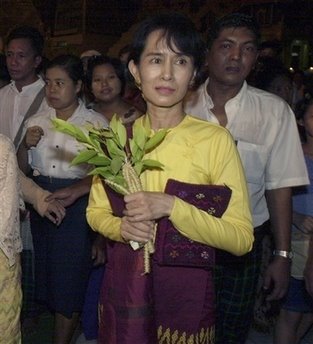


 Posts


