News & Articles on Burma Wednesday, 19 October, 2011 --------------------------------------------- RI told to delay ASEAN decision on Myanmar chair bid Delay Asean Decision: AIPMC Indonesian MPs Give Burma Reform Lessons IMF Delegation in Naypyidaw Violence mars Burma's credibility in the West Who is the grand-master of civil war in Burma? Time For All Burma's Political Prisoners To Be Released Burma may free more political prisoners soon Burma's Junta: Can a Tiger Change Its Stripes? Burma: Army Committing Abuses in Kachin State China arrests Myanmar gun-runners to Tibetan regions -------------------------------------------- RI told to delay ASEAN decision on Myanmar chair bid Ridwan Max Sijabat, The Jakarta Post, Jakarta | Wed, 10/19/2011 8:35 AM The ASEAN Inter-parliamentary Myanmar Caucus (AIPMC) called on current ASEAN chair Indonesia to delay agreeing on Myanmar becoming ASEAN chair in 2014 until the country showed real progress in democratization. Observers and stakeholders are speculating that during the ASEAN summit in Bali next month, ASEAN leaders will agree to grant Myanmar the grouping's chair. The AIPMC said in a press conference in Jakarta on Tuesday that it supported a call from the Burma Partnership, which represents Myanmarese civil society, that Indonesia should play a more active role in encouraging further reform in Myanmar. "The AIPMC and the Indonesian House of Representatives' foreign affairs commission will ask Foreign Minister Marty Natalegawa to lobby other ASEAN countries to suspend the decision during the upcoming ASEAN meeting to give time to the ruling government in Myanmar to make more progress at home," AIPMC executive director Agung Putri Astrid said. During the press conference, Burma Partnership coordinator Khin Ohmar said the pro-democracy movement was still running in place, as Myanmar, under President Thein Sein's democratically elected government, had yet to achieve significant progress in democracy. She said civil society had not seen continued progress in Myanmar, and the recent release of 220 political prisoners was perceived as "lipstick" to attract attention from ASEAN and the rest of the world. "The government has to work hard to promote better democracy at home because the real power is held not by the elected president but is in the hands of the eight-member National Security Council, which is controlled by the former military junta leader, Tan Shwe, and several other Army generals. "The government also has to release more than 18,000 political prisoners and stop the atrocities against minorities such as Kareen and Katchin," she said. Eva Kusuma Sundari, a caucus member and legislator of the Indonesian Democratic Party of Struggle, said suspending the decision would give Myanmar two years to show its political commitment to developing a true democracy and for ASEAN to assess the country's progress. According to her, ASEAN should not abruptly make the decision despite the fact that Myanmar was gradually distancing from its patron country, China. "Myanmar should be given time to show ASEAN and the international world its sincerity in running a democratic government." She added that the foreign minister should meet all the stakeholders in Myanmar, including ethnic leaders, in his next visit to assess the Myanmarese government's democratic progress. Lily Chadidjah Wahid, another caucus member, said the AIPMC would bring the Burma Partnership's report and recommendations to the hearing between House's Commission I on information, defense and foreign affairs and the foreign minister on Tuesday afternoon. http://www.thejakartapost.com/news/2011/10/19/ri-told-delay-asean-decision-myanmar-chair-bid.html ----------------------------------------------- Delay Asean Decision: AIPMC By SAW YAN NAING Wednesday, October 19, 2011 A regional rights group, the Asean Inter-parliamentary Myanmar Caucus (AIPMC), on Tuesday called on Indonesia, the current chair of the Association of Southeast Asian Nations (Asean), to delay making a decision on whether to support Burma's bid to chair the regional bloc in 2014 until Naypyidaw makes genuine progress toward democratic reform. Many observers speculate that Asean representatives will vote in favor of honoring the Burmese government during the bloc's upcoming summit in Bali in November. Speaking to The Irrawaddy on Wednesday, the AIPMC's Executive Director Agung Putri said that Asean leaders should delay making a decision until Naypyidaw makes tangible changes in Burma, including initiating peace talks, not only with opposition groups, but also with ethnic minority groups that have been fighting against the government for their fundamental rights. Putri said that when Indonesian Foreign Minister Marty Natalegawa visits Burma at the end of this month, he should meet and talk with ethnic leaders. She noted that the new Burmese government has recently made progress, and said that AIPMC welcomed the changes. "However, there have not been enough reforms to grant Burma the chair in 2014," she added. Burma first expressed interest in chairing Asean just a month after the new government took office in March. It then launched an official bid for the bloc's chairmanship in Jakarta at the 18th Asean Summit in May. "We don't reject Burma's chairmanship in 2014," said Putri. "But it is still too early to make this decision at next month's summit. "Releasing political prisoners alone doesn't meet the standards of democratization," she said. "The key issue in achieving democratization in Burma is negotiating with ethnic parties and the opposition. This must be addressed first. It is the No. 1 priority. We very much expect Natalegawa to use his authority and take this opportunity to help facilitate democratization in Burma. It would be a great achievement for Asean." Ahead of the Indonesian foreign minister's visit to Burma, the AIPMC held a meeting in Jakarta on Tuesday, at which they urged Indonesia to play a more active role in encouraging Burma toward further reform. Burma---under the previous military regime---missed its turn in 2006 to act as chair of Asean in the face strong international pressure led by Western countries, especially the US, which leveled criticism as the junta's record of human rights abuses and lack of progress toward restoring democracy. On Monday, US special envoy to Burma, Derek Mitchell stated that the Burmese government has not made comparable progress in its relations with ethnic minorities in the north and east of Burma as it has with the democratic opposition---in particular noting that Naypyidaw had held high-level talks with opposition leader Aung San Suu Kyi. Mitchell also noted what he referred to as credible reports of continued human rights abuses, including violence against minority women and children. Also on Tuesday, Human Rights Watch released a statement accusing the Burmese army of commiting serious human rights abuses against ethnic Kachin civilians since renewed fighting broke out in the northern state in June. The international rights group estimated that some 30,000 civilians in Kachin State have been displaced by the conflict. Djumara Supriyadi, the secretary of the Indonesian embassy in Rangoon, told The Irrawaddy on Wednesday that Natalegawa's trip to Burma comes at the end of October and that he is currently corresponding between Naypyidaw and Jakarta to confirm the exact schedule. He said he is trying to arrange meetings for his foreign minister with government officials as well as with non-government players, such as civil society organizations. "Our foreign minister's overview will be valuable input for the Asean leaders when they sit down to make a decision on Burma's bid for the chair," said Supriyadi. Natalegawa is also expected to meet with his Burmese counterpart, Wunna Maung Lwin, as well as President Thein Sein and pro-democracy leader Aung San Suu Kyi during his trip, according to Supriyadi. http://www.irrawaddy.org/article.php?art_id=22288 ------------------------------------------- Indonesian MPs Give Burma Reform Lessons By BA KAUNG Wednesday, October 19, 2011 Burma can learn from both the successes and failures of Indonesia during its transition from military rule to democracy, members of Indonesia's parliament told Burmese presidential advisers for legal and political affairs during a meeting in Jakarta, Indonesia on Sept 27. According to notes from the meeting obtained by The Irrawaddy, the Indonesian MPs told the Burmese delegation that one of the first steps in Indonesia's own transition to democracy---which began in 1998 after the fall of former dictator Suharto---was making significant constitutional amendments to protect human rights and provide a framework for economic and political reforms. The Indonesian legislators acknowledged that their country made a mistake by failing to bring to justice those responsible for gross violations of human rights during the Suharto regime and then letting them hold positions in the new government. As a consequence, the Indonesian MPs said, such persons remain obstacles to resolving conflicts, particularly with respect to the management of the country's natural resources. One of the issues the Burmese delegation raised in the meeting with the Indonesian MPs was how to strengthen Burma's Parliament and public administration. The Indonesian MPs responded that the first step should be to give Burma's Parliament power under the country's Constitution. They said that even though the Indonesian parliament was previously just a rubber stamp for the government, the amended Indonesian constitution gives the parliament the authority to oversee the budget and make law. The Indonesian MPs also said that increasing the capacity of civil society should take place simultaneously with increasing the power of the parliament. During the early stages of reform, they said, Indonesia's leadership was aware that it was important to listen to civil society and acknowledged that if the government sector is weak, the civil society should be allowed to play its role. In addition, civil society has been allowed to play a role in the legislative process, such as in drafting the law for the protection of labor rights. Dr Nay Zin Latt, a political adviser to Burmese President Thein Sein who was part of the Burmese delegation, told The Irrawaddy on Tuesday that the Indonesian MPs warned that Burma's reform process could be protracted if the country has a weak parliament and civil society sector. "We understand that the reform process cannot go very smoothly with a weak civil society. We have more plans underway for the process," he said. Nay Zin Latt also suggested that just as post-Suharto Indonesia saw the gradual end of military representation in its parliament, the same thing can be expected to take place in Burma's national parliament, where 25 percent of the MPs are designated by the military. But regarding the question of bringing to justice those who committed human rights violations in the past, Nay Zin Latt pointed out that change in Indonesia stemmed from a grassroots public movement, whereas in Burma change is being driven from the top down by government leaders, including President Thein Sein, who are former military officials. Therefore, attempting to bring members of the previous military junta to justice may actually prolong the reform process, he said. However, the Burmese delegation did inquire about ways of coping with corruption, and in response the Indonesian MPs acknowledged that this has been an issue that the achievement of greater degrees of democracy and openness have not solved in their country. The Indonesian MPs warned there cannot be a gap between moral and political commitment if the problem of corruption is to be adequately addresses---there must be a strategy that focuses on prevention, not just repression, and a budget that allows the strategy to be carried out. In addition, the ruling party must address the issue with impartiality if they expect law enforcement officials to do so as well. The Burmese delegation also sought advice on how to deal with requests for autonomy by ethnic groups in different states and regions, and expressed a fear that autonomy would allow those states with the most natural resources to develop ahead of the others. After the meeting, the Burmese delegation reportedly visited Indonesia's Ache Province, which was previously engaged in a decades-long civil war with the Indonesian government but was granted autonomy a few years after the country began its political transition to democracy. The 2005 agreement between the Indonesian government and the separatist Free Aceh Movement (GAM) resulted in Aceh receiving a special regional status, and former GAM guerrillas came to power after winning the first post-conflict elections. This was not the first time that the Burmese government had sent a delegation to study the Indonesian system and seek advice from Indonesian officials. Former junta chief Snr-Gen Than Shwe sent delegates to Jakarta to study the Indonesian model of dwi-funsi (two functions) which gives the military a dual role in defense and politics. Under the Indonesian constitution, there is an elected president and legislature, but the army has a constitutional role in ensuring the security and integrity of the nation and until 2004 had representation in the legislature. Than Shwe's delegation studied the structure and function of the Indonesian constitution for an example of how a military-run government can transition to a civilian government with the army retaining a direct role in running the country. In addition, when forming the Union Solidarity and Development Association (USDA), a mass pseudo-social organization, the Than Shwe's junta used as a model the Golkar---Indonesia's purportedly apolitical body that was formed in 1964 with the backing of senior army officers and is now the largest political party in the country. Similarly, in 2010, the USDA was transformed into the Union Solidarity and Development Party, which dominated the 2010 election and now holds a majority of the seats in Burma's Parliament. http://www.irrawaddy.org/article.php?art_id=22287&page=2 ----------------------------------------- IMF Delegation in Naypyidaw By WAI MOE Wednesday, October 19, 2011 A delegation from the International Monetary Fund (IMF) arrived in Burma's capital, Naypyidaw, on Wednesday to meet with government officials for consultations on reforming the country's dual exchange rate system. According to official sources, the IMF delegation is scheduled to stay in Naypyidaw for two days and then spend more than a week in Burma's commercial capital, Rangoon, meeting with business leaders and other stakeholders. It was unclear, however, if the delegation would meet with pro-democracy leader Aung San Suu Kyi and other senior members of the political opposition. "Until today, we have not received any information about Daw Aung San Suu Kyi meeting with the IMF delegation," said Nyan Win, a spokesman for Suu Kyi's National League for Democracy. Sources who have had contact with the IMF delegation said the main subject of discussion will be Article VIII of the fund's agreement with members states, which deals with international transactions and exchange rates. According to the IMF website, under Sections 2, 3 and 4 of Article VIII, members "undertake not to impose restrictions on the making of payments and transfers for current international transactions, and not to engage in, or permit any of their fiscal agencies to engage in, any discriminatory currency arrangement or multiple currency practice, except with IMF approval." Burma, which has an official exchange rate that bears little relation to the market-set rate used in most domestic and international transactions, is one of several IMF member nations that have not acceded to Article VIII. The country is also barred from receiving financial assistance from the IMF or any other multilateral organization due to sanctions aimed at forcing it to improve its human rights record. In addition to talks on unifying Burma's currency exchange rate, the IMF delegation is also expected to discuss other reforms proposed by the country's new military-backed civilian government, which assumed power seven months ago. Another issue that will likely come up is the country's budget deficit, which the government attributes to a revenue gap, despite its multi-billion dollar earnings from the energy and other natural resource sectors and extremely low social spending. An editorial in today's edition of the state-run New Light of Myanmar, meanwhile, announced that the government planned to step up its efforts to alleviate poverty. "The country has targeted to reduce poverty rate down to 16 percent in 2015 in order to meet Millennium Development Goals, narrowing the gap between urban and rural areas," the newspaper said. Quoting Burma's Ministry of National Planning and Economic Development and a survey by the United Nations Development Program, the newspaper said that while the poverty rate has been reduced from 32 to 26 percent in recent years, the gap between cities and rural areas is still wide. To close this gap, and to achieve other economic development goals laid out by President Thein Sein, the government said it is seeking the assistance of international organizations such as the IMF. "We consider that the availability of technical and financial cooperation from the Bretton Woods institutions will support our economic development programs and we believe that they can provide a parallel role in our future prosperity," said ex-Maj-Gen Hla Tun, Burma's minister for finance and revenue and the governor of the country's national bank, at the IMF's annual meeting in Washington, DC, in September. Despite these high expectations, however, observers said that process of restoring relations between Burma and the IMF and other international organizations would be a long, step-by-step process. "Actually, it will not be easy to get support from international monetary institutions without concrete liberalization," said a Burmese economic researcher based in Bangkok who has met with members of the IMF delegation, adding that Washington would not back a resumption of aid to Burma without significant political reforms. He added some Burmese officials and businessmen seem to expect that the exchange rate issue will be resolved after the IMF trip. "But this is just a consultation, and the IMF's attitude is that if the Burmese government wants to reform, the IMF will give its advice. If not, the IMF is fine with that, too," he said. Since his new military-backed administration was sworn in in March, Thein Sein has formed advisory boards to address political, economic and legal issues. The head of the economic advisory board, U Myint, is a well-known economist and close association of Suu Kyi. During a state workshop on economic reform held in Naypyidaw on Aug 19-21, U Myint read a paper on the need for exchange rate reforms that came as Burma's national currency, the kyat, was appreciating rapidly, with severely negative consequences for exports and other sectors of the Burmese economy. "Experience shows that a crisis often creates a good opportunity to initiate a reform process. Advantage should therefore be taken of the present kyat exchange rate appreciation problem to start the process of reforming Myanmar's exchange rate regime," said U Myint. He suggested two points of reform---unifying the multiple exchange rates and removing and liberalizing the restrictions that now exist in the current account transactions of the country's balance of payments. http://www.irrawaddy.org/article.php?art_id=22289 ---------------------------------------- Violence mars Burma's credibility in the West Lindsay Murdoch October 20, 2011 BANGKOK: Burma's armed forces have committed serious abuses against ethnic rebels in renewed fighting, setting back efforts by the country's leaders to convince Western nations they are serious about ending 50 years of brutal military rule. Human Rights Watch says government forces have been responsible for killings and attacks on civilians, using forced labour and pillaging villages in northern Kachin State since June. More than 30,000 civilians have been displaced by fighting, the group says. Burmese leaders last week released up to 300 political prisoners and have moved to introduce political reforms as it lobbies the US and Europe to lift international sanctions. The former generals in charge of the government also want regional countries to give Burma the nod to chair the 10-member Association of South-East Asian Nations in 2014. But Derek Mitchell, the US special envoy on Burma, said that the country was showing ''encouraging signs'' but the government must commit to deeper reforms and halt violence against ethnic minorities if it wants sanctions eased. Mr Mitchell, who visited Burma last month, said the government had held talks with the pro-democracy leader Aung San Suu Kyi but had not made comparable progress in its relations with ethnic minorities in the north and east of the country. He noted credible reports of continued human rights abuses, including against women and children. ''We made it very clear that we could not have a transformed relationship as long as these abuses and credible reports of abuses occur,'' Mr Mitchell said. Analysts are divided over whether Burma has embarked on a path of genuine reform that should be rewarded by allowing the World Bank and Asian Development Bank to return to the country. There are concerns that hardliners inside the country are waiting for an opportunity to sabotage the reforms and any role for Ms Suu Kyi. Fighting between the army and the Kachin Independence Army, Burma's second-largest ethnic group, erupted in June after a 17-year ceasefire when Burmese soldiers attacked a rebel post near a Chinese-led hydropower project. Tensions had been growing in Kachin State over another Chinese-led dam project on the Irrawaddy River, which the Burmese government suspended on September 30, citing pubic concern about it. Human Rights Watch has documented killings against civilians, including that of a 52-year-old woman and her four-year-old grandson who were shot when soldiers entered a village looking for rebels. A 36-year-old mother of six told Human Rights Watch how she and children as young as 14 were forced to porter for Burmese soldiers. Read more: http://www.smh.com.au/world/violence-mars-burmas-credibility-in-the-west-20111019-1m7xd.html#ixzz1bBkSS5Xg ------------------------------------------- Who is the grand-master of civil war in Burma? By Zin Linn Burma's current political scenario is more blurred than its external phenomena. Despite the obscurity of its politics, Burma is known that there are rivalries within the current cabinet. While soft-liners stand with President Thein Sein, the hardliners are challenging Thein Sein's new approach, primarily his risk at mutual understanding with Aung San Suu Kyi and the pro-democracy factions. These hardliners favor continued supporting strong military dominance throughout the country and the purging of any opposition. Burma's armed forces have been fantastically faithful and unified shielding the military dictatorship since 1962. For more than fifty years, there was no threat of split in the ruling chain of military command. But if measures are expected to be getting out of control, there cannot be forget about coup d'A~(c)tat in order to replace direct military ruling. Thein Sein and his cabinet members have taken a number of steps that seem intended to meet the constant calls of the international community. For example, the president has met with Burma's Nobel laureate and democracy icon Aung San Suu Kyi. Besides, he agreed to stop the controversial Myitsone dam project financed by China, as a sign of respect towards people's desire. Even though, he cannot make a decision to stop the ongoing civil war with Kachin, Karen and Shan ethnic armed groups. If the president could not manage to end civil war, his dream of good governance and poverty alleviation may be a castle in the wind. Who is the decision-maker of the war against the Kachin Independence Army (KIA)? Although, President Thein Sein has been speaking about the national unity for many times, the wars with ethnic groups continue. If these wars are not launched by the government, then the person responsible for this war may be the present military boss General Min Aung Hlaing. Then, another question arises. Does the military boss comply with the defense minister of the new government? The President Thein Sein government used to say that it has been trying to build a peaceful and developed country; on the other hand the momentum of civil war is increasing. So, the words of the government are not in harmony with the acts of the armed forces. Keeping political dissidents in prison and attacking ethnic armed groups is the policy of the previous junta's boss, Sen. Gen Than Shwe. Hence, it is to be considered that the new military boss is going along with Than Shwe's policy rather than President Thein Sein's guidelines. Then, there is another question: Is Than Shwe still powerful in Burma's politics? The war in Kachin State seems to be the outcome of the policy divergence between the Burmese government and the Burma Army. It means the military is standing together with the hardliners of the existing cabinet led by the vice president Tin Aung Myin Oo. Moreover, the hardliners are also a pro-China faction. Hardliners have decided to protect the Chinese development projects in Kachin State in addition to their power structure and business profits. Because of the China factor, some observers think, the soft-liners led by President Thein Sein cannot stop simply the war against KIA and they cannot afford to free all political prisoners in favor of change. People believe that China is pulling the strings in Burma's politics in order to establish its regional strategic power. Meanwhile, over 2,000 Chinese soldiers have deployed along the Sino-Burma border in its south-western Yunnan province, as civil war escalates in northern Burma between government troops and Kachin resistance forces, Kachin News Group said. Bum Htoi, a border-based military analyst and former officer of the Chinese-backed Communist Party of Burma (CPB), said more Chinese People's Liberation Army troops have been deployed on the lengthy border with Burma in Kachin State and Shan State since early October. According to eyewitnesses, Chinese troops are mainly deploying at Jang Hkawng, La Ying, Manghai (former CPB headquarters) and Xiao Zhai. The Kachin Independence Army (KIA) also confirmed Chinese combat troops are currently deploying near KIA strongholds close to the China border, KNG said. Over 300 Chinese troops are currently stationed at the newly constructed military post in the Chinese town of Manghai, opposite Mongkoe in Burma, according to residents of Mongkoe. Over a hundred Chinese PLA troops have been deployed at Manghai since Burmese troops began a new offensive against the KIA on June 9, Bum Htoi added. He said, "It is unusual that over 2,000 Chinese troops are deployed near the Burma border. It is aimed at blocking Kachin refugees from crossing into Chinese soil." According to IDP aid groups, at present Chinese border authorities have been not only preventing Kachin refugees from entering China but also barring the cross-border food and medicine supplies from China to KIA-controlled areas where over 20,000 Kachin internally displaced persons take shelter, KNG reported. Increasingly, Kachin people in battle-zones are escaping to temporary camps in the KIA controlled areas and Burmese government-controlled areas in Kachin State and Shan State, aid groups in Laiza said. Fearing abuses from the Burmese army, tens of thousands of Kachin fled their villages, Human Rights Watch said in its October 18 press release. Before arriving at displaced persons camps in KIA controlled areas, several thousand villagers hid from the Burmese army in the jungle, in some cases for a month after the fighting began. Human Rights Watch documented the killings of three Kachin civilians by Burmese soldiers in June and is investigating credible allegations of other killings. Several people told Human Rights Watch that Burmese army soldiers fired on them as they were fleeing their village. The Burmese army has unlawfully used Kachin civilians for forced labor, which has long been a serious problem in Burma's ethnic areas, Human Rights Watch said. While President Thein Sein has been pledging to create a peaceful and organized nation, his military branch has been violating fundamental human rights. All these war crimes violated by Burmese soldiers will re-emerge to haunt the President. If so, the president must try to convince the military commander-in-chief that this war will lead the nation into an abysmal misery. Hence, the President must call a nationwide ceasefire in order to stop ongoing war crimes. It is a dishonor not only for the President and his government but also for the whole nation that the Burma Army has allowed a variety of criminals in its national armed forces. http://www.opednews.com/articles/2/Who-is-the-grand-master-of-by-Zin-Linn-111019-363.html ----------------------------------------- VOA News.com: 10-18-2011 Time For All Burma's Political Prisoners To Be Released The United States hopes this recent release is only the beginning of a time-bound process that results in the unconditional release of all political prisoners. Aid groups and human rights organizations estimate that about 2,200 men and women are being held in Burma's jails on political charges. Under a mass amnesty, the government of Burma has begun freeing thousands of prisoners from its jails, the latest in a series of actions and reforms that could improve the tightly-controlled nation's ties with the international community. Officials promised the release, which coincides with a Buddhist holiday, will eventually include 6,359 men and women who are elderly, ailing or disabled, and those "who have served an appropriate sentence and have shown progress in behavior and discipline." Burma's leaders typically grant a prison amnesty once or twice a year. In May, President Thein Sein announced the release of 20,000 prisoners, commuted death sentences and reduced all jail terms by one year. Only about 45 of those released were considered political prisoners, however, and the number of political activists and other prisoners of conscience included in the current release is unclear. The Government of Burma has not published a comprehensive name list of those released. Aid groups and human rights organizations estimate that about 2,200 men and women are being held in Burma's jails on political charges, often in poor conditions and subjected to cruel treatment. The United States welcomes the Burmese Government's release of any political prisoners and will carefully follow the total number and identities of political prisoners has released in this amnesty. While noting some positive developments in Burma - including substantive dialogue between pro-democracy leader Aung San Suu Kyi and government officials -- the United States hopes this recent release is only the beginning of a time-bound process that results in the unconditional release of all political prisoners, which the United States, the international community, Burmese citizens, and Burma's recently established Human Rights Commission have long called for. http://www.voanews.com/policy/editorials/Time-For-All-Burmas-Political-Prisoners-To-Be-Released--132071463.html -------------------------------------------- Burma may free more political prisoners soon YANGON, BURMA - Oct 19 2011 14:14 Burma may soon release hundreds more political detainees, a senior government official said on Wednesday, a week after about 200 dissidents were freed in an amnesty welcomed by the West as a step towards reform. Ko Ko Hlaing, a senior political adviser to President Thein Sein, said no official decision had been taken but that another amnesty soon would be the logical move. "I have got a feeling that the government may grant an amnesty on remaining prisoners of conscience soon," he told Reuters. "Why should the rest remain in prison while some others have been released? I don't see any point in it," he said, adding the decision was not his to make. Comments on the record by senior government officials or people close to national leaders are rare -- the country has been tightly controlled by a small group of generals for five decades until elections last year ushered in a new civilian government. Burma freed about 200 political prisoners, including several prominent dissidents, on October 12, leaving an estimated 1 800 behind bars, according to the Assistance Association for Political Prisoners (AAPP), some of whom are serving sentences longer than a century But Ko Ko Hlaing on Wednesday questioned that number and said the AAPP had gathered its data from outside the country and it was therefore inaccurate. He put the figure at about 600. Under military rule, Burma denied having any political prisoners and said everyone serving in its jails or labour camps was a criminal. The amnesty came as one of the world's most reclusive states begins to open up amid promises of economic and social reforms and a bid to gain international recognition for its new, but much criticised, civilianised system of government. http://mg.co.za/article/2011-10-19-burma-may-free-more-political-prisoners-soon/ ------------------------------------------- Burma's Junta: Can a Tiger Change Its Stripes? By Kyi May Kaung, October 18, 2011 Since at least the fake elections of November 2010, the Burmese junta has floated the fiction that it is now a "civilian government" with a real parliamentary process in place at the Potemkin capital of Naypyidaw, or "The Seat of the King." Senior General Than Shwe, who "retired" in 2010, and his wife are said to have a Burmese royalty fetish, with only two chairs in their reception room. Visitors, it is said, must sit or grovel on the floor and use the "royal language" of the old pre-1886 Burmese court when addressing them. This may be apocryphal, but "Naypyidaw" does mean what it means, and the parade ground there features the three great conqueror kings of Burmese history. General Thein Sein, now changed into civilian clothes, is Burma's nominal "Prime Minister." He is supposed to be the "reformer" behind the so-called moderate group now said to be on the ascendant. Since anti-sanctions, pro-junta apologists have always been seeing "young Turks" in the Burmese army, I think it is little more than a good cop, bad cop routine. But two weeks ago the controversial Myitsone Dam in North Burma was halted in response to "the people's wishes." The junta also announced it would free 6,359 prisoners. The hope was that Burma's over 2,000 political prisoners would be included in this "amnesty," but the Association for the Assistance of Political Prisoners, Burma (AAPPB) has said that only 207 political prisoners have been released so far. Prominent leaders such as Min Ko Naing of 1988 fame; Ashin U Gambira, the monk who led the Saffron Revolution in 2007; and U Khun Htun Oo are not among the released. Famous Burmese comic Zarganar, or "Tweezers," is. In an interview with the Oslo-based Democratic Voice of Burma, Zarganar---with the charming insouciance of the true comic genius who can't help speaking the truth, even at possible detriment to himself---said. "Yes, thank you, my health has been good, but since before I got on the plane [and heard about] the possible reforms, I got a headache and my neck began to hurt." (I did all the translations presented here). He added, "I can't say that I am seeing any significant reforms, just because I have been released." He explained that he "was allowed to read newspapers and 12-13 journals, so I could keep up." Zarganar had been sentenced to 35 years, of which he had served only 3. "Up to yesterday [while still in prison]," he said, "I sort of believed there might really be reforms, but today, doubt has entered my mind. If it is true reform, then why aren't all the [political] prisoners released? The number released is miniscule. Even former Lt. General Khin Nyunt [imprisoned in 2004 due to an internal junta purge and corruption charges] should be released. These weren't arrested during the Thein Sein government. If it's true reconciliation, please let everyone go...I'll put up my life as security." Zarganar said in other interviews that he needed to consult with Aung San Suu Kyi and that he would be traveling to see other political prisoners and lend his support. About his arrest and jail time he quipped, "Since I was arrested for giving alms to Buddhist monks, I might have to excommunicate myself from Buddhism." Long live Zarganar, and all the artists and jesters. Foreign Policy In Focus contributor Kyi May Kaung is a poet, an artist, and an analyst of Southeast Asian politics. http://www.fpif.org/blog/burmas_junta_can_a_tiger_change_its_stripes?utm_source=feedburner&utm_medium=feed&utm_campaign=Feed%3A+FPIF+%28Foreign+Policy+In+Focus+%28All+News%29%29 ---------------------------------------------- Burma: Army Committing Abuses in Kachin State 18 Oct 2011 05:20 Source: Content partner // Human Rights Watch Burma's armed forces have committed serious abuses against ethnic Kachin civilians in renewed fighting in Kachin State. (New York) - Burma's armed forces have committed serious abuses against ethnic Kachin civilians in renewed fighting in Kachin State, Human Rights Watch said today. Since hostilities began over five months ago against the Kachin Independence Army (KIA), Burmese armed forces have been responsible for killings and attacks on civilians, using forced labor, and pillaging villages, which has resulted in the displacement of an estimated 30,000 Kachin civilians. On September 30, 2011, Burma's President Thein Sein suspended a controversial US$3.6 billion hydropower dam project on the Irrawaddy River in Kachin State, which appears to have been one of several factors in the renewed hostilities between the Burmese government and the Kachin Independence Organization (KIO). The Chinese-financed project was suspended after growing dissent in Burma over its current and potential environmental and social impacts. "Renewed fighting in Kachin State has meant renewed abuses by the Burmese army against Kachin villagers," said Elaine Pearson, deputy Asia director at Human Rights Watch. "Tens of thousands of people have fled through the mountains and jungle at the height of the rainy season, driven away by fear of army attacks." Fighting between the Burmese army and the KIA, Burma's second largest ethnic armed group, began on June 9, ending 17 years of ceasefire. The Burmese army first attacked a strategic KIA post at the location of another Chinese-led hydropower dam on the Taping River in Momauk township, Human Rights Watch said. The army subsequently launched a major offensive and moved in hundreds of troops to areas formerly controlled by the KIA. There have since been failed ceasefire talks and an unconfirmed number of skirmishes, ambushes, and battles involving heavy mortar shelling. The KIA subsequently destroyed several road and railway bridges to frustrate the Burmese army's advance and supply lines. The KIA reportedly began conscripting able-bodied men and women aged 18 to 55 for a two-month military training, in anticipation of protracted fighting. Human Rights Watch conducted a fact-finding mission to the conflict areas in Kachin State in July and August, visiting abandoned villages and eight remote camps of internally displaced persons. Witnesses described serious abuses committed by Burmese soldiers, including killings and attacks on civilians, pillaging of villages, and the unlawful use of forced labor. Fearing abuses from the Burmese army, tens of thousands of Kachin fled their villages, Human Rights Watch said. Before arriving at displaced persons camps in KIA controlled areas, several thousand villagers hid from the Burmese army in the jungle, in some cases for a month after the fighting began. Those who were able to visit their homes to get provisions told Human Rights Watch that Burmese army soldiers had occupied their villages and confiscated their property and belongings. Some described being held by Burmese soldiers, who interrogated them harshly for information about the KIA, including by threatening to kill them. Interrogations were particularly menacing for villagers who spoke Kachin dialects and very little Burmese. Human Rights Watch documented the killings of three Kachin civilians by Burmese soldiers in June and is investigating credible allegations of other killings. Villagers told Human Rights Watch that on June 15, Burmese army forces entered Hang Htak village in Man Je township searching for suspected associates of the KIA. A Burmese soldier shot and killed a 52-year-old woman and her 4-year-old grandson in their home at close range as they tried to flee. On June 17, credible local sources told Human Rights Watch that a group of soldiers allegedly shot and killed Nhkum Zau Bawk, a farmer and day laborer, in Kawng Gat Ban Ma village as he stood unarmed with a group of friends at a cemetery. Local authorities reportedly provided financial compensation to the man's family, but no legal action was taken against the perpetrator. According to the September 2011 report to the United Nations General Assembly by the UN Special Rapporteur on human rights in Burma, Thomas Ojea Quintana, "Allegations of abuses against civilian populations throughout Kachin State include reports of 18 women and girls having been gang-raped by army soldiers, and of four of those victims being subsequently killed." While Human Rights Watch did not speak to any victims or witnesses of rape, community members confirmed such abuses had occurred. Several people told Human Rights Watch that Burmese army soldiers fired on them as they were fleeing their village. For instance, in early June, Burmese soldiers twice fired on a 62-year-old Kachin woman and her three young grandchildren in Sang Gang village. She told Human Rights Watch, "In the morning when we were cooking rice, we heard gunfire and we left our food and went to the field, looking into the village the whole day before we fled. When we ran the soldiers shot at us. We were really afraid. We just ran and hid." She said that after two days in the jungle without basic provisions, they decided to return home to get food, at which point they were fired upon a second time. "We had already left the house and were on our way out of the village ... and the soldiers opened fire on us [again]," she said. "No one was hit. When the soldier opened fire it made me shake and I didn't know what to do. We just ran." Under the laws of war applicable in conflict areas in Burma, all sides are prohibited from mistreating persons in their custody, targeting civilians, or pillaging homes and other civilian property. The Burmese army has unlawfully used Kachin civilians for forced labor, which has long been a serious problem in Burma's ethnic areas, Human Rights Watch said. Five civilians told Human Rights Watch that in recent months they had been forced to work for the military without compensation; several others knew of family or friends who had had to do so. A 36-year-old mother of six children who fled Lusupa village, a government-controlled area, told Human Rights Watch how she and other Kachin villagers, including children as young as 14, had been commonly forced to porter for the Burmese army. She said that her husband, who remained in their village to tend their crops and check on their home and belongings, was forced to carry out labor for the army twice, in late June and mid-July. The laws of war prohibit the use of uncompensated or abusive forced labor, including work in combat areas. Many Kachin recounted previous abuses at the hands of the Burmese army. A 58-year-old Kachin farmer, who said all his possessions had been taken by the Burmese army, told Human Rights Watch: "We lost our homes and properties to the Burmese soldiers several times. That is why I don't have hope in this situation." Recent abuses in Kachin State highlight the importance of establishing a United Nations commission of inquiry into alleged violations of international humanitarian law and human rights law in Burma, Human Rights Watch said. The UN special rapporteur for the situation of human rights in Myanmar, Tomas Ojea Quintana, first called for a commission of inquiry in March 2010, and to date 16 countries have publically confirmed their support for the initiative, including the United States, the United Kingdom, France, and others, as well as Burmese democracy leader Aung San Suu Kyi. "Pronouncements of political reform in Burma do not seem to have reached the army in Kachin State," Pearson said. "Ongoing abuses starkly demonstrate that until real steps are taken towards accountability, including an international commission of inquiry, minorities such as the Kachin will be a grave risk." http://www.trust.org/trustlaw/news/burma-army-committing-abuses-in-kachin-state --------------------------------------------- China arrests Myanmar gun-runners to Tibetan regions October 19, 2011 BEIJING, Oct 19 --- Chinese police have arrested 17 people for running guns into ethnically Tibetan parts of the country from northern Myanmar, and have seized a small number of guns and bullets, state media said today. China has long expressed concern that instability in Myanmar could spill over into its border provinces and regions. While the two countries have close economic and political ties, relations have been strained of late after Myanmar suspended the building of a controversial, Chinese-backed US$3.6 billion (RM17.6 billion) dam. China's official Xinhua news agency said the guns were smuggled in across the remote and lawless northern part of China's border with the former Burma, long a base for anti-government rebels and drug warlords. The suspects were arrested in the southwestern province of Yunnan, which borders Myanmar, Tibetan capital Lhasa and an ethnically Tibetan part of Sichuan province, the report added, citing the police. "Police said the suspects confessed that they began trafficking guns from Myanmar in 2009. All of the firearms were sold to Tibet and Tibetan regions in Yunnan and Sichuan provinces," it said. Police confiscated eight pistols and a rifle, along with 267 bullets, Xinhua said. The police have not announced the nationalities of those arrested, it added. The report also did not say who the end users of the guns may have been. "Yunnan police said that, in recent years, people vying for big money have started trafficking firearms, taking advantage of loose gun control laws amid arm conflicts in northern Myanmar," Xinhua added. While gun crime is rare in China thanks to tight controls, police uncovered a similar scheme along the Myanmar border in 2009, when police arrested 11 people and seized guns and explosives, it said. Many Tibetans chafe at Chinese rule and there have been numerous incidents of violent unrest over the years. But Tibetans wielding guns have almost never featured in any of these demonstrations. --- Reuters http://www.themalaysianinsider.com/world/article/china-arrests-myanmar-gun-runners-to-tibetan-regions/
Thursday, October 20, 2011


Wednesday, October 19, 2011
News & Articles on Burma-Tuesday, 18 0ctober, 2011-UZL
News & Articles on Burma Tuesday, 18 0ctober, 2011 --------------------------------------- Myanmar's Suu Kyi vows fight to free dissidents India Raises Its Game in Burma. Birthday Calls for Famous Dissident's Release When a Multi-ethnic Nation Ignores Ethnic Rights Norwegian Nai"vete' in Burma? Only 600 Political Prisoners in Burma: President's Adviser US Urges End to Abuses of Burmas Minorities How India shut down the media over Burmese visit Myanmar Must Release More Prisoners, Says US Thein Sein as Myanmar's Gorbachev ---------------------------------------------- Myanmar's Suu Kyi vows fight to free dissidents Published on 18 October 2011 - 1:02pm Myanmar's democracy champion Aung San Suu Kyi on Tuesday pledged to work for the release of the country's remaining political prisoners following an amnesty that left many key dissidents behind bars. The regime pardoned 227 imprisoned critics, according to Suu Kyi's party, but kept most of its roughly 2,000 political inmates locked up, including key figures involved in a failed 1988 student-led uprising. "Many (student leaders) have still not been freed from their imprisonment. We will continue our struggle for their release," Suu Kyi told supporters at birthday celebrations for Min Ko Naing, an 88 Generation leader serving a 65-year jail term. "Why do I want the release of political prisoners? I want our country to become really free," Suu Kyi said at a ceremony at a monastery in Yangon. Min Ko Naing, whose prison term stems from his role in the 2007 monk-led protests known as the "Saffron Revolution", saw in his 49th birthday in Kyaing Tong prison in Shan State, northeast Myanmar. Suu Kyi's National League for Democracy (NLD) said it was "frustrated" by the relatively small number of political detainees included in an amnesty for more than 6,000 prisoners last week. Famous satirist Zarganar, who goes by one name, was among those released and has since spoken out against the regime's decision to leave many other critics locked up. He now plans to organise a group of actors and comedians to visit jailed dissidents held in prisons around the country. "I will try to visit to my friends who are still in the prisons," he told AFP at the Yangon ceremony. Zarganar, who was held at Myitkyina prison in Kachin State in northern Myanmar, had been serving a 35-year sentence following his arrest in 2008 after organising deliveries of aid to victims of Cyclone Nargis, which left 138,000 dead or missing. He said he would leave parcels for political detainees if he was not allowed to see them. "They will be happy if they know that I have travelled to visit them in person, even though we cannot see each other," he said. The fate of political prisoners in Myanmar is a key concern of western governments that have imposed sanctions on the isolated nation. Some observers have said the amnesty could be one of several by a regime that appears eager to end its international isolation but is wary of potential unrest. ? ANP/AFP http://www.rnw.nl/english/bulletin/myanmars-suu-kyi-vows-fight-free-dissidents ------------------------------------------------------- October 18, 2011, 3:40 PM IST. India Raises Its Game in Burma. B. Mathur/Reuters Myanmar President Thein Sein visited India last week with a large delegation of ministers. The visit, coming only days after Myanmar announced it was suspending a controversial $3.6-billion dam being constructed by a Chinese company, has Indian commentators talking about a window of opportunity for New Delhi in Myanmar. Srinath Raghavan, a senior fellow at the New Delhibased Center for Policy Research, a think tank, wrote in The Hindu Business Line newspaper Monday that Myanmars generals are worried that Chinas focus on resources is not creating employment. Myanmar does not wish to be locked in an exclusive embrace with China, Mr. Raghavan wrote. India has been slower than China to develop infrastructure in Myanmar and to benefit from its natural resources but appears to want to redress the balance. Last week, India announced it was lending $500 million to Myanmar to help develop projects, including irrigation works. In a briefing, Indias Ministry of External Affairs said it finally was serious about plans to develop Myanmars Sittwe port in western Rakhine state. India agreed to finance and carry out the $110-million project in 2008 but has so far failed to deliver on its promise. An Indian company, Essar Group, recently began work on the port and dredging the Kaladan River, and plans to complete the job by 2013, the ministry said last week. The idea is for India to ship goods from its eastern port of Kolkata to Sittwe, where they can then travel up-river, either back into Indias cut-off northeastern states or on into Myanmar. India also is pushing ahead with plans to develop a road network from Manipur state through Myanmar and down into Thailand, a policy which in the past has been delayed because of Indian fears that separatists from its northeast who hide out in isolated parts of Myanmar might use these roads to facilitate attacks. These measures, although yet to be completed, come as India is re-invigorating its Look East policy, developed in the 1990s to focus on relations with its Asian neighbors after the demise of the Soviet Union, but never really developed. Recently, India has been beefing up defense ties with countries like Japan and Vietnam to counter Chinas rising assertiveness in the region, especially the resource-rich South China Sea, which is the focus of territorial disputes between Beijing and a number of countries. Myanmars state visit came on the heels of a trip to India last week by Vietnams President Truong Tan Sang. During that visit, both sides firmly stated they would go ahead with joint gas-development projects in the South China Sea, despite Chinas warnings this would amount to an infringement of its sovereignty. Still, India has a long way to go until it can challenge China, with whom it fought a brief border war in 1962, in Myanmar or elsewhere in East Asia. China, which won that war, knows that its military and economic heft gives it huge negotiating power. China became Indias largest trading partner last year, with two-way trade touching $60 billion, much higher than the $1.28 billion that India does with Myanmar. While China exports communications equipment to India, fueling its economic growth, Myanmar is a source of pulses. Indian officials were keen last week to stress that theres room enough for India and China in Myanmar and that development there was not a zero sum game. That attitude also partly reflects that India knows itll likely have to rely on Chinese infrastructure to get resources out of Myanmar. China is building a pipeline from the Rakhine coast to southern China to transport oil and gas extracted offshore in Burmese waters. Its also building a new deep-water port at Kyauk Phyu, not far from Indias development at Sittwe. Indian companies that are prospecting for gas in Burmese waters, which include Essar and state-owned ONGC Videsh, will likely have to use this pipeline to sell gas to China because plans to build a similar India-Myanmar pipeline have so far stalled. Nevertheless, the game to take on China in Myanmar is on. You can follow Mr. Wright on Twitter @TomWrightAsia. Follow India Real Time on Twitter @indiarealtime.http://blogs.wsj.com/indiarealtime/2011/10/18/india-raises-its-game-in-burma/ -------------------------------------------------- Birthday Calls for Famous Dissident's Release By SAI ZOM HSENG Tuesday, October 18, 2011 Dear Mr. President, release him as a birthday gift, famous Burmese comedian Zarganar told an event to mark the 49th birthday of jailed democracy activist Min Ko Naingmeaning Conqueror of Kings. As one of the jailed 88 Generation Students leaders, Min Ko Naing (real name Paw Oo Tun) is currently serving a 65-year sentence in Keng Tung Prisona remote jail in Shan Statewhile family members and supporters celebrated his birth on Tuesday at a monastery in Mayangon Township, Rangoon. Burmese pro-democracy leader Aung San Suu Kyi also attended the event and made a speech in support of Min Ko Naing. The Nobel Peace Laureate said those that strive towards achieving others' freedom should think about themselves first, feel free and work for others. It is very important to practice living a life with freedom from fear. If they can practice it, they can experience freedom even they stay behind bars. If not, they will never taste real freedom even if they are not in prison, said Suu Kyi. It shouldnt happen that people who are not in prison still remain behind bars. Min Ko Naing, a former zoology student from Rangoon Arts and Science University, started getting involved in politics through the traditional Than Gyat competition. Held during the annual water festival, these performances have sketched and satirized the government since 1985 with Min Ko Naing's goat mouth and spirit eye act remaining famous. During the 1988 uprising, Min Ko Naing resurrected the All Burma Federation of Students Union (ABFSU) and became group chairman. The orignal ABFSU was forced underground in the wake of the 1962 coup by General Ne Win when student protests were violently crushed, but returned to prominence thanks to Min Ko Naing. Min Ko Naing was arrested with other students later in 1988 and was sentenced to 20 years in prison for violating part 5(j) of the 1950 Emergency Provisions Act by starting disturbances to the detriment of law and order, peace and tranquility. His prison term was reduced to 10 years through the general amnesty in January 1993, and he was released on Nov. 19, 2004. His second arrested was in September 2006 along with other 88 Generation Students leaders including Ko Ko Gyi, Htay Kywe, Pyone Cho and Min Zeya, but they were released in January 2007. That same year, Min Ko Naing and 13 other 88 Generation Students leaders were arrested for organizing a peaceful demonstration. Min Ko Naing was sentenced to 65 years imprisonment in November 2008. From 1989 to 2011, Min Ko Naing has spent just two years outside prison. Kyi Kyi Nyunt, one of Min Ko Naing's sisters, told The Irrawaddy that her family appreciate all those people who love and pray for him. She also said that they pray for the release of all political prisoners including Min Ko Naing. Min Ko Naing currently suffers from osteoporosis and other illnesses as a result of his brutal interrogation, with his condition deteriorating still further during harsh weather. Felicitation letters from ABFSU and the 88 Generation Students were also read at the birthday event, and the Assistance Association for Political Prisoners released a statement that said Min Ko Naing will spend his birthday behind bars maintaining his strong convictions. Around 200 political prisoners were released as part of an amnesty for 6,359 prisoners announced by President Thein Sein on Oct. 11, but many 88 Generation Students' leaders, activists and ethnic leaders remain in jail. http://www.irrawaddy.org/article.php?art_id=22281 --------------------------------------------- When a Multi-ethnic Nation Ignores Ethnic Rights By SAW YAN NAING Tuesday, October 18, 2011 Human Rights Watch (HRW) said on Tuesday that Burmese government forces have committed serious abuses against ethnic Kachin civilians since renewed fighting broke out in the northern state in June. The international rights group estimated that some 30,000 civilians in Kachin State have been displaced by the conflict. The Burmese government armed forces have been responsible for killings and attacks on civilians, using forced labor, and pillaging villages, said the HRW statement. "Renewed fighting in Kachin State has meant renewed abuses by the Burmese army against Kachin villagers," said Elaine Pearson, the deputy Asia director at Human Rights Watch. "Tens of thousands of people have fled through the mountains and jungle at the height of the rainy season, driven away by fear of army attacks." The HRW statement backs up a claim made by the US special envoy to Burma, Derek Mitchell, who on Monday stated that the Burmese government has not made comparable progress in its relations with ethnic minorities in the north and east of Burma as it has with the democratic opposition---in particular noting that Naypyidaw had held high-level talks with opposition leader Aung San Suu Kyi. Mitchell also noted what he referred to as credible reports of continued human rights abuses, including violence against minority women and children. "We made it very clear that we [the US] could not have a transformed relationship as long as these abuses and credible reports of abuses occur," said Mitchell. The criticisms come at a time when Naypyidaw has enjoyed much high acclaim following a series of moves viewed by Burmese and the international community at large as being progressive reforms, most notably the easing of censorship on the Burmese media, the suspension of the controversial Myitsone Dam project, and the release of 200 political prisoners. The statements by Mitchell and by the HRW highlight growing concern that although reforms have been enacted in Rangoon and Naypyidaw, many observers see the government as being unable or unwilling to tackle issues in the ethnic areas. Between 35 and 40 percent of Burma's 55-million population is non-Burman, and although many of the country's ethnic minorities have integrated into Burmese society over the years, many millions continue to live in the mountainous jungle that forms a natural horseshoe around the Burmese plains. Ethnic minority groups include the Karen, the Shan, the Karenni, the Kachin, the Mon, the Chin and the Arakan, almost all of which have fought against the central government for independence or autonomy for decades. Over the past 20 years, many ethnic armies have signed ceasefire agreements with the Burmese government, but conflicts have continued, exacerbated by overland deals with Burma's neighbors, especially China and Thailand, and a flurry of investment in natural resources within ethnic minority areas. Over the years, the Burmese army has repeatedly been accused of human rights abuses in ethnic areas, with several reports indicating that the abuses may be systemic, and indicative of war crimes or crimes against humanity. In a letter to the editor of The New York Times on Oct. 6, Myra Dahgaypaw, an ethnic Karen woman wrote: "Burmese soldiers killed my parents, my brother and sister, and my uncle after they forced him to watch them rape his wife. "If soldiers are able to use forced labor, sexual violence, forced relocation and other abuses as mechanisms of domination, why should [US] President Obama reward President Thein Sein?" Her comment was written in response to an article titled, "In Myanmar, Seize the Moment," written by a well-known Burmese historian, Thant Myint-U. In his article, the author urged the US president to publicly support the "reforms" that are taking place in Burma. He also wrote that Thein Sein has spoken forcefully of combating poverty, fighting corruption, ending the country's multiple armed conflicts, and working for political reconciliation. But despite the government's recent approval of a "peacemaking committee" in parliament to deal with the issues surrounding the ongoing ethnic conflicts, observers say no tangible progress has been made---in fact, hostilities have escalated in some areas. Brig-Gen Johnny, the commander of the rebel Karen National Liberation Army (KNLA) Brigade 7, told The Irrawaddy that fighting---whether simple exchanges of gunfire or intense hostilities resulting in many casualties---break out almost every day in Karen State even though the government has declared its intention to seek a peace deal with armed ethnic groups. "The release of more than 200 political prisoners, the suspension of the Myitsone dam, the establishment of a peacemaking committee---these steps are all good news," said Johnny. "But these developments will not help our people and our soldiers in their daily fight for survival while government troops move into frontier areas." With the exception of two ethnic rebel armies---the 20,000-strong United Wa State Army and its ally, the National Democratic Alliance Army, which are currently observing a ceasefire---no tangible results have come from negotiations with the other ethnic groups. The New Mon State Party met government representatives recently in Ye Township, but the meeting concluded without an agreement. Last Thursday, government troops began an assault on Kachin Independence Army (KIA) positions in Kachin and Shan states. The KIA leaders said they believe that the attacks are aimed at seizing KIA strongholds and military bases. KIA spokesman La Nan said that at least 82 armed clashes have broken out since June, when fighting took place near hydropower plants in Bhamo Township in Kachin State. Seventeen of the clashes have broken out this month alone, he said. Aye Thar Aung, a prominent Arakanese politician based in Rangoon, said that although he welcomed the steps taken by the new government, he was still concerned with the ethnic conflict issues. "We are very concerned when we hear the government authorities saying they are making peace with the Wa, but then increase their military efforts against the Kachin," he said. "To build a developed country, peace is needed. The civil war needs to come to an end. "There can be no peace in a multi-ethnic nation that ignores the fundamental rights of its ethnic minorities," he added. http://www.irrawaddy.org/article.php?art_id=22282 ------------------------------------------ Norwegian Nai"vete' in Burma? By CAMILLA BUZZI Monday, October 17, 2011 Slightly more than 200 political prisoners, including Burma's most famous comedian, Zarganar, were released during last week's amnesty. While the releases are to be welcomed for those who are now free and their families, Zarganar captured the general mood when he stated that he could not rejoice over his freedom as long as so many of his friends remain detained. Given the strong and numerous signals from key people in authority in Burma in recent weeks, there was reason to expect that more prominent dissidents would be released as well as more prisoners of conscience in total. At present, the amnesty seems little different from previous amnesties granted by Burma's various authoritarian regimes---which have yet to amount to the beginning of change to believe in. Instead, we are urged to be patient---yet again. In a recent email to the Wall Street Journal, a representative of Burma's Ministry of Information suggests that more releases can be forthcoming, but that it depends on those prisoners who have just been released, the democratic opposition and the rest of the world. This is to turn things on their head. Does he imply that the responsibility for more releases now falls on former prisoners, the democracy movement and the international community? Shortly before the releases took place, Norwegian Deputy Foreign Minister Espen Barth Eide paid a visit to Burma---accompanied by Norwegian national broadcaster NRK. His visit played a key role in strengthening expectations as Burma's parliamentary speaker Thura Shwe Mann seems to have promised during a meeting between the two that releases were forthcoming "within days." The news quickly spread worldwide---with NRK as the main source. In an interview with NRK, the Deputy Foreign Minister also noted that Burma is at the beginning of an extensive process of change towards full blown democracy. His diagnosis, however, still lacks a strong basis. It is far too early to conclude. There have been many changes in Burma over the past year. Since the election in November 2010, Burma has a new Parliament, a new civilian government and other institutions associated with a democratic political system. But these institutions can also be found in non-democratic systems, as for instance in neighboring Laos, Vietnam and Cambodia. The government has also become more tolerant towards the activities of media and civil society, but Burma remains some distance away from a process of liberalization, and detentions and sentencing have also continued. Whether Burma will eventually become a full blown democracy depends on those who have positions of power in the country and how they make use of their power and influence. Experience shows that the attitudes of state leaders towards democracy and respect for human rights is of critical importance in a country undergoing reforms in order to ensure that these reforms move the country in a democratic direction. A number of observers have noted that what is taking place in Burma seems to be linked to internal differences within the regime between moderate forces and so-called hardliners from the old regime. Burma's new president, Thein Sein, is seen as belonging to the moderate faction. However, that does not make him a democrat. His primary role is to improve Burma's relations with the rest of the world. The main proponents of democratic values in Burma remain the opposition led by Aung San Suu Kyi. This is one of the reasons why the dialogue between her and President Thein Sein is of critical importance. Until and unless the attitudes of leading figures in powerful positions change in Burma, a more sober assessment of the potential for Burma to become a full blown democracy remains in order. Barth Eide made his assessment of the situation in Burma before last week's releases had taken place. His statements have on a number of occasions revealed Norway's limited understanding of the situation in the country. At times, it seems more important for the Ministry of Foreign Affairs to be able to announce that developments in Burma are moving in the right direction than to make a serious assessment of the situation on the ground. This is the second time the Deputy Foreign Minister displayed a certain nai"vete' in his dealings with Burma. During his previous visit to the country last March, Barth Eide also concluded that developments in Burma are moving in the right direction. At that time, his statement stood in contrast to the views of the UN Special Rapporteur on the situation of human rights in Burma, Tomas Ojeas Quintana, who at the same time was visiting Burma's border areas to meet with victims of the armed conflicts in the country. The special Rapporteur noted that his findings represented a serious obstacle to Burma's democratic development. That was six months ago, and little has changed in border areas since then. This time, Barth Eide's statement that there is a general mood in Burma expectant of exciting things to happen stands in contrast to the wait-and-see attitude that predominates among my Burmese friends and acquaintances. They have been disappointed too many times already and find it difficult to be hopeful---yet again. Barth Eide---and Norway---could benefit from a dialogue with broader sections of the Burmese population. Barth Eide argues that Norway should be ahead and reward the regime for positive changes. His recommendation is connected in particular to the possible removal of sanctions. The logic is odd. A reward is normally given after a positive act---as an encouragement to continue doing the right thing. To reward in advance is to miss the function of rewards. Most observers who have followed the situation in Burma over time recognize that sanctions in themselves cannot create a democratic Burma. There is broad agreement that the main function of the sanctions is to serve as a political instrument for the opposition. This is not the time for Norway to soften its support for the forces of reform in the country. It remains essential to listen to the viewpoints of Aung San Suu Kyi. As she also told NRK: When the day comes for lifting the sanctions, she will let the whole world know. Burma has improved its international reputation recently by engaging in a dialogue with Aung San Suu Kyi, inter alia to discuss the armed conflicts in the country, by putting an end to the building of a dam on the Irrawaddy River following widespread public protests and by suggesting that media censorship needs to stop. But there is still a long way to go from words to action. If the regime is serious about peace talks and dialogue, the release of ethnic leaders, notably Khun Htun Oo, would have been a powerful signal. If the regime is serious about listening to public opinion, the 88 generation students led by Min Ko Naing should be free. And if the regime is serious about ending censorship, detained journalists should be walking out of the prison gates. The opposition and the international community have recognized for many years that the release of all political prisoners is the most important confidence building step that could be undertaken by Burma's rulers. On two occasions over the past year, President Thein Sein has promised amnesties with little substance. More empty promises could undermine the impression that he is a person the opposition can work with---and the value of further releases. Barth Eide finds that things are changing so fast in Burma that it is almost too fast. What has changed in Burma is the discourse. The regime has finally realized how to make itself understood by the rest of the world. But the willingness and the ability to live up to its promises is still lacking. Spring has yet to come to Burma. The window of opportunity that Barth Eide believes he has found in Burma only exists if those in power can match their words with action. Only then will it be possible to say that developments in Burma are moving in the right direction. The author is a PhD candidate at the Institute for Human Rights and Peace Studies, Mahidol University. The opinions expressed here are her own. http://www.irrawaddy.org/opinion_story.php?art_id=22269 ------------------------------------------ Only 600 Political Prisoners in Burma: President's Adviser By THE IRRAWADDY Tuesday, October 18, 2011 Burma only had around 600 prisoners of conscience and released almost half during last week's amnesty order, President Thein Sein's political adviser Ko Ko Hlaing told Swedish Radio. Ko Ko Hlaing said accusations that there are 2,000 political prisoners in Burma were an exaggeration, and the 300 political detainees that have so far been released by the president's amnesty order cannot be considered a small number. He added that he thought more will be freed in the near future. However, in an interview with the Burmese language version of The Irrawaddy published on Monday, Ko Ko Hlaing claimed that he did not have exact figures for the number of political prisoners and advised reporters to contact the Ministry of Home Affairs. Toe Kyaw Hlaing, an activist working on a petition campaign for the release of prisoners, said there is a huge disparity between the lists of political prisoners held by the Burmese government and human rights organizations. He told The Irrawaddy that nearly 1,200 political prisoners still remain behind bars after last week's amnesty, according to the list compiled by the Burmese Democracy Network. The numbers of political detainees are different because the government uses the list of those who it has imprisoned on specific political charges, said Toe Kyaw Hlaing. He said that in many cases the previous military regime did not charge activists with specific political offenses such as article 5(J) of the 1950 State Emergency Act and article 505(B) of the State Offences Act. Instead they were charged with the Electronic Act, immigration procedures, bomb plots, connections with unlawful associations, the Press Act, and so on. Therefore the official lists of current political prisoners in Burma may not be accurate, he said. Toe Kyaw Hlaing also said that there might be a different definition between the government and political activists with regards the term prisoners of conscience. According to the definition used by human rights group Amnesty International, prisoners of conscience can refer to those who have been imprisoned and/or persecuted for the non-violent expression of their conscientiously-held beliefs. The Burmese government granted amnesty to 6,359 prisoners on Oct. 12a full moon day at the end of the Buddhist lent when it is auspicious to perform acts of merit but if did not make clear how many political prisoners were included in that number. The Voice, a domestic journal based in Rangoon, reported on Monday that around 280 prisoners of conscience were among those who had been released last week. Bo Kyi, the joint-secretary of the exiled Assistance Association for Political Prisoners (Burma), told The Irrawaddy that his organization was still compiling lists of political prisoners remaining in different prisons and those recently granted amnesty. This information will be issued publicly in the coming days, he said. http://www.irrawaddy.org/article.php?art_id=22283 ------------------------------------------------ US Urges End to Abuses of Burmas Minorities By MATTHEW PENNINGTON/ AP Writer Tuesday, October 18, 2011 WASHINGTON The United States sees encouraging new signs of openness in isolated Burma but says that after decades of military rule, the Asian country has a way to go before it loses its pariah status and tough sanctions are lifted. Special envoy to Burma Derek Mitchell said Monday there seems to be a trend toward greater openness but questions remain about its commitment to democratic reform. Burma, also known as Myanmar, held elections last year which although flawed, were its first since democracy leader Aung San Suu Kyi swept a 1990 vote and was barred from taking power. In late September, the government stopped work on a controversial China-backed dam, saying the $3.6 billion project was "against the will of the people." And last week, authorities freed as many as 250 of the country's more than 2,000 political detainees. Burmas pro-democracy leader Aung San Suu Kyi, left, sees off Derek Mitchell, right, US special representative to Burma, after their meeting at her home on Sept. 12, 2011, in Rangoon. (Photo: AP) Mitchell welcomed the government's recent moves as encouraging and said his September visit yielded productive meetings with Burmese officials, traditionally viewed as xenophobic. He said they were willing to discuss anything he raised. "Right now I think there are a lot of restrictions that make them into a pariah state. And Burma is a proud country with a tremendous history, and they deserve to come out of the shadows and take their prideful place in the region," Mitchell told a news conference in Washington. Burma, a former breadbasket of Southeast Asia, has suffered not just repressive government but poor economic management during nearly 50 years of military rule. It is subject to wide-ranging trade, economic and political sanctions from the U.S. and other Western nations, enforced in response to brutal crackdowns on pro-democracy protesters that left hundreds, maybe thousands dead in 1988 and again in 2007, and its refusal to hand power to Suu Kyi's party after the 1990 elections. But sanctions and isolation have failed to force change, and only served to complicate U.S. engagement with the economically vibrant Southeast Asian region, as Washington looks to deepen its existing alliances and forge new ones to counter China's rise. The Obama administration has sought to engage Burma, and after two years, there are signs of change, although whether that is in response to U.S. Overtures is difficult to tell. Burma is also vying to assume the rotating chair of the Association of South Asian Nations in 2014 and may be trying to impress ASEAN leaders before they meet at a November summit when the decision could be made. When it comes to rewarding Burma for reforms, Washington is likely to have tougher criteria than ASEAN, and it is likely to proceed in an incremental manner. Mitchell would not give specifics about what those steps might be. David Steinberg, a Myanmar expert at Washington's Georgetown University, said a first move could be to allow the World Bank and Asian Development Bank to help Burma. The U.S. has already made some positive gestures, such as easing travel restrictions that enabled Burma's foreign minister to visit the State Department in Washington last month. For more tangible concessions, a key test will be action on political prisoners. Mitchell urged releases of all such detainees, including 1988-era student protest leaders Min Ko Naing and Ko Ko Gyi, and a monk at the forefront of the 2007 protests, Gambiri. Mitchell also said the government has not made comparable progress in its relations with ethnic minorities in the north and east of Burma as it has with the democratic opposition, with whose leader Suu Kyi it has held high-level talks. He noted credible reports of continued human rights abuses, including against minority women and children. "We made it very clear that we could not have a transformed relationship as long as these abuses and credible reports of abuses occur," he said. Burma is an ethnically diverse nation, and most of the minorities have taken up arms at some point against the government dominated by the military and the ethnic Burman majority. Legions of villagers have been displaced by brutal military campaigns, and this year has seen violence flare in the Kachin and Shan states against ethnic armies that had reached cease-fires with the Burmese regime. Steinberg said the U.S. would also be looking to see a further decrease in media censorship and the legalization of Suu Kyi's political party which was outlawed for boycotting the 2010 elections as unfair. http://www.irrawaddy.org/article.php?art_id=22278 ------------------------------------------- How India shut down the media over Burmese visit By Andrew Buncombe The Foreign Desk Tuesday, 18 October 2011 at 8:53 am Burma's new president, a former general called Thein Sein, flew out of Delhi this past weekend, concluding a four-day visit which saw the relationship between the two countries further cemented with a series of new deals and written agreements. Among the highlights referred to in the joint statement issued by the countries, was an undertaking to speed up construction of natural gas pipelines, increased cooperation over energy exploration and an offer from India for a $500m line of credit. The timing of the red-carpet visit came at a hugely significant time. The day Thein Sein arrived in India at Bodh Gaya, it emerged that more than 6,000 prisoners had been released from Burma's jails, among them 200 political prisoners. The step was the latest in a series of measures by the president, including the relaxing of media controls and the suspension of work on a controversial dam project, that have led many to believe he represents a genuinely new chapter in Burma's political history and a crucial step on the journey towards democracy. Despite the importance of the visit, there was little coverage in the Indian media. Those reports that did appear were largely superficial and seemed to echo the views of the Indian foreign ministry. (One in The Hindu newspaper appeared particularly inspired by a briefing given to the media by the ministry's spokesman) But can hardly blame the Indian media alone; as one Delhi-based journalist said to me, the trip was difficult to cover as there were no press conferences, no public statements and very few opportunities to obtain the all-important soundbite. [This purported quote in the Hindustan Times may be Thein Sein's only public utterance.] For all the talk about the measures recently undertaken by Thein Sein, it was clear the Burmese visitors had no wish to be scrutinised by the media, apart from having their photographs taken and being filmed praying at temples [see picture above] and arriving at the president's official residence for a state banquet. Perhaps that was not so surprising. Burma's new leader, after all, was only appointed after an election that would not have been considered fair anywhere else in the world and whilst the main opposition candidate was under house arrest and prevented from taking part. Whatever slight steps of moderation Thein Sein may have taken, he clearly does not represent the will of the people, his country remains a dictatorship and it's hardly a shock that he may not yet feel ready to open himself up to the media. What was surprising, was the readiness of the Indian authorities to go along with this. There was a time when India was a staunch supporters of the Burmese opposition and its iconic leader Aung San Suu Kyi, who was once a student in Delhi. But those days are long gone. As far back as 2004, Indian officials were telling foreign diplomats that they considered Ms Suu Kyi's time had "come and gone". These days, securing energy deals and countering the influence of China, appear to take precedence over the promotion of democracy. [It's pretty much the same relationship the UK and US have with countries such as Saudi Arabia.] So if, the Burmese did not want to be scrutinised by the media and asked about human rights issues (as well as the visit itself), India was happy to accommodate. I suppose it also saved Indian officials having to explain why they were doing deals with a country that still keeps hundreds of prisoners of conscience behind bars. In the joint statement issued by the two countries, India "congratulated the President of Myanmar on the transition towards democratic Government". That was it. No talk of human rights, no talk of the prisoners, no talk of the repression of ethnic miniorities. As Ben Rogers of East Asia director for Christian Solidarity World, told The National newspaper: "This totally uncritical attitude to Myanmar is really a lose-lose situation for India." I attended four events on Thein Sein's agenda, three of them in Bodh Gaya, the site of Buddha's enlightenment and a pilgramage site for Buddhists from across the world. At one of these I got as far as saying, "Sir, could you spare a moment for a question from the media", before I was confronted by a senior member of India's Intelligence Bureau who prevented any further interaction. At two subsequent events, the Bihar Special Force police told me their job was to step me from speaking to the president. When I asked how it was the job of the security personnel to harass the media, I was told by one officer that I was a potential security risk because he could not be sure "I wouldn't try and slap" the president. The fourth event was on Saturday morning at a field centre operated by the Indian Council of Agricultural Research in Delhi, Thein Sein's final engagement before leaving India and part of his official schedule. The institute's officials were welcoming and friendly, the Delhi police were not. In this instance, The Independent was physically pushed from the event by the police, with no explanation. It may have been that my crime in the eyes of Indian and Burmese officials was to have been standing next to a reporter from the Press Trust of India, who tried to asked Thein Sein a question about cooperation between India and Burma on agriculture. [He did not bother to reply. It may be his translator did not translate the question for him.] Given the often life-threatening peril and difficulties journalists in this part of the world regularly face while doing their jobs, Saturday morning's incident can count only as the merest of inconveniences. But it was insightful as to how, even in India, where freedom of the media is a much-celebrated right, there are limits to how far this goes, especially when it may dare "embarrass" a VIP guest from a military dictatorship. As one of the guests at the institute, who witnessed what happened to me, said: "The president of Myanmar has brought a piece of Myanmar with him to India." http://blogs.independent.co.uk/2011/10/18/how-india-shut-down-the-media-over-burmese-visit/ ------------------------------------------------ Myanmar Must Release More Prisoners, Says US Posted by Janis Esch on October 17, 2011 1:52 PM Myanmar must release more political prisoners and end abuses against ethnic minorities if it wants to transform its relations with Washington, a U.S. official said Monday. Special envoy to Myanmar Derek Mitchell noted a trend toward greater openness in the Asian country but said questions remain about Myanmar, also known as Burma, and its commitment to democratic reforms. "Right now I think there are a lot of restrictions that make them into a pariah state. And Burma is a proud country with a tremendous history, and they deserve to come out of the shadows and take their prideful place in the region," Mitchell told a news conference. Myanmar held flawed elections last year, its first voting since democracy leader Aung San Suu Kyi swept a 1990 vote and was barred from taking power. The government recently stopped work on a controversial China-backed dam project and last week freed as many as 250 of its more than 2,000 political detainees. Last month, Mitchell made his first visit to Myanmar since his appointment, aiming to advance the Obama administration's engagement with the military-dominated government after years of isolating it because of its poor record on human rights. Mitchell welcomed the government's recent moves as encouraging and said his September visit yielded productive meetings with Myanmar officials, traditionally viewed as xenophobic. He said they were willing to discuss anything he raised. He would not give specifics about how Washington could reward the government for progress toward positive change. Myanmar currently is subject to tough trade and economic sanctions. He said the United States had made some gestures already: easing travel restrictions that enabled Myanmar's foreign minister to visit the State Department in Washington last month after attending the U.N. General Assembly in New York. The U.S. also is inviting Myanmar to participate in other international dialogues. Mitchell called on Myanmar to release all remaining political prisoners and said that while the government had held discussions with the democratic opposition, it had not made comparable progress in its relations with ethnic minorities in the north and east. He said credible reports of human rights abuses, including against women and children, continue to emerge. "We made it very clear that we could not have a transformed relationship as long as these abuses and credible reports of abuses occur," he said. Myanmar is an ethnically diverse nation, and most of the minorities have taken up arms at some point against the government dominated by the military and the ethnic Burman majority. Legions of villagers have been displaced by brutal military campaigns, and this year has seen violence flare in the Kachin and Shan states against ethnic armies that had reached cease-fires with the Myanmar regime. http://www.thirdage.com/news/myanmar-must-release-more-prisoners-says-us_10-17-2011 --------------------------------------------- ASIA TIMES Thein Sein as Myanmar's Gorbachev By Andrew Selth Strategic analysts who studied the Soviet Union during the 1980s can still recall the excitement and intellectual challenge of trying to interpret developments as Mikhail Gorbachev first introduced his policy of perestroika (restructuring), and followed it two years later with glasnost (openness). As is now well known, there were some diehard Cold Warriors in official and academic circles who steadfastly refused to believe that a creature of the Communist Party, who had enjoyed the patronage of figures like KGB chief Yuri Andropov and risen to the rank of general secretary, would ever challenge the system that nurtured him. Then there were those experts who, on the basis of a careful analysis of the objective realities, were prepared to give Gorbachev the benefit of the doubt and accept that he was trying to introduce a range of genuine reforms, albeit for his own purposes. Few observers, however, went so far as to predict the downfall of the entire Soviet power structure. It is useful to keep that period in mind when looking at developments in Myanmar, also known as Burma, since the inauguration of a hybrid civilian-military government this January. President Thein Sein, a former army general widely believed to have been hand-picked by strongman Senior General Than Shwe, has made several public statements and promised a number of changes that appear to herald a more open-minded and conciliatory approach to government. There is no question that the armed forces intend to remain firmly in control of Myanmar, but there now appears to be the possibility of greater personal freedoms, rational economic policies and a more relaxed attitude towards the development of civil society. Thein Sein and his ministers have also taken a number of steps that seem designed in large part to meet the oft-repeated concerns of the international community. For example, the president has met with prominent opposition leader Aung San Suu Kyi, who has expressed herself "happy and satisfied" with his intention to introduce "real positive change". Over 200 political prisoners have been released, a move which addresses - to a certain extent at least - another major sticking point with the Western governments that maintain sanctions against the regime. Myanmar's ambassador in Vienna has also assured the International Atomic Energy Agency that his country has neither the capacity nor the intention to develop nuclear weapons, long a subject of speculation and concern. These developments have prompted widely varying reactions. A number of respected academics and commentators have taken a strategic view and, with the usual caveats, sought to highlight what they believe to be the start of a gradual process of political reconciliation and incremental reform. The International Crisis Group has gone even further and announced that "major reform is under way" in Myanmar. A hard core of activists and their supporters, however, have dismissed recent developments as part of a massive confidence trick by an entrenched military regime. Focusing on more immediate issues, some have even called for harsher economic and financial sanctions against Naypyidaw. Given the dearth of reliable information about internal developments in Myanmar, and the highly politicized nature of the Myanmar-watching community, this divergence of views is not surprising. In another echo of the Cold War, when the academic community was deeply divided by ideological leanings and different approaches to professional contacts with the communist bloc, scholars and commentators have tended to split into two main camps. As The Economist opined recently, one sees the glass half full while the other sees the glass half empty. Some exchanges between the two sides have become quite heated, exposing an ugly side to the Myanmar debate. In the case of the Soviet Union, the optimists were ultimately proven correct, but even they failed to predict the full impact of Gorbachev's revolutionary policies, and the power of the forces unleashed by his relaxation of the old rules. It is possible that the activist community is right, and the shift in Naypyidaw's approach is simply a clever ploy to prompt the lifting of economic sanctions and to win Myanmar the Association of Southeast Asian Nations (ASEAN) chair in 2014. Yet, if that is the plan, then Thein Sein seems to have forgotten Alexis de Tocqueville's famous dictum that the most dangerous time for a dictatorship is when it begins to loosen its grip - for whatever reason. As Gorbachev found, once such a process is set in train, it is very difficult to control. There is another scenario that needs to be kept in mind. Notwithstanding the opaqueness of Myanmar's politics, it is known that there are hardliners within the current leadership who oppose Thein Sein's new approach, particularly his attempts at reconciliation with Aung San Suu Kyi and the pro-democracy movement. These elements favor continued strong military control of the country and the elimination of any dissent. Myanmar's armed forces have been remarkably loyal and cohesive over the past 50 years, giving the country the world's most durable dictatorship. A split in the ruling hierarchy is still unlikely, but if events are seen to be getting out of control an attempt to reinstate direct military rule cannot be ruled out. Faced with all this uncertainty, the key policy question faced by governments and international organizations is whether to take Thein Sein's promises at face value and seek to encourage genuine reforms, or to dismiss recent developments as a sham and impose more punitive measures. To date, most have tended to favor the former approach, cautiously welcoming the changes that have occurred and have been promised, while pointing out the need for concrete actions to suit the president's words. If this is indeed a tipping point in Myanmar's modern history, and positive change is a real possibility, that seems the very least they can do. Andrew Selth is a Research Fellow at the Griffith Asia Institute in Brisbane, Australia. http://www.atimes.com/atimes/Southeast_Asia/MJ19Ae01.html
Tuesday, October 18, 2011
News & Articles on Burma-Monday, 17 October, 2011-UZL
News & Articles on Burma Monday, 17 October, 2011 --------------------------------------- Burmese Army Mounts Multi-front Offensive Against KIA Ethnic Parties Back Suu Kyi to Contest Election NLD still undecided on registration Three DVB journalists freed from jail India and Burma focus on energy and security Burma, Once Isolated, Seeks Global Investment Activists welcome release of prisoners of conscience In Burma: a fake out -- or real reform? Myanmar to allow unions Malaysia, Myanmar Eye Swapping Immigration Detainees Arakanese join Karen rebel ambush ------------------------------------------- Burmese Army Mounts Multi-front Offensive Against KIA By BA KAUNG Monday, October 17, 2011 Deadly armed clashes between Burmese government troops and the Kachin Independence Army (KIA) continued in Kachin and Shan states on Monday, according to KIA officials who said they believe the latest military offensives by the government side are aimed at taking control of their major strongholds. Since Thursday, fighting has been reported at a number of locations considered to be key defensive positions en route to Pajau and Laiza, the KIA's two most important bases of operations. One focal point has been Lung Zep Kong, a hill near Waimaw Township in Kachin State that lies along the way to Pajau, while sporadic fighting has also been reported in the village of Nam Sen Yang in Kachin State and in Tamonye, near Kutkai Township in Shan State. Government troops have mounted three major assaults on this hill since Friday, the latest one this morning, when it sent a strong force of around 600 men in an effort to occupy it, said KIA Col Zau Raw, speaking to The Irrawaddy on Monday. We believe that these military operations show they intend to occupy Pajau. he added. According to KIA spokesman La Nan, fighting continued today at all three locations, with heavy casualties reported at Lung Zep Kong, most of them on the Burmese side, as the KIA mowed down soldiers ordered to take the hill. The government soldiers simply charged up the hill, leaving our soldiers with no option but to shoot them down, said La Nan, adding that there were at least 30 bodies scattered around the area following fighting over the weekend. The KIA spokesman said that at least 82 armed clashes have taken place since June, when fighting broke out near Chinese-built hydropower plants in Bhamo Township, Kachin State, ending a 17-year-old ceasefire agreement between the two sides. Of these, 17 have occurred so far this month, he said. Even before this incident, however, tension had been growing over the government's insistence that the 10,000-strong KIA join a Border Guard Force (BGF) under Burmese military commanda demand the KIA did not reject outright until the fighting started in June. During two subsequent rounds of peace talks, the government offered the KIA a chance to renew the 1994 ceasefire agreement, but rejected the group's demands for a political dialogue between all ethnic armed groups and Naypyidaw. The government has since then apparently shelved the controversial BGF plan, recently renewing temporary ceasefire agreements with the 20,000-strong United Wa State Army, the largest ethnic armed group in Burma, and another its much smaller ally, the Mongla group, based near the Chinese border. Asked if the KIA would accept a ceasefire if government dropped the BGF demand, as it did with the UWSA, La Nan said the group would not accept another temporary ceasefire without achieving its political rights. With much of the recent fighting taking place near the Sino-Burmese border, there have been reports that hundreds of Chinese army troops have been stationed along the border to prevent an influx of refugees and to maintain control over Chinese territory. http://www.irrawaddy.org/article.php?art_id=22275 -------------------------------------------------- Ethnic Parties Back Suu Kyi to Contest Election By KO HTWE Monday, October 17, 2011 The Nationalities Brotherhood which represents five ethnic parties has urged pro-democracy leader Aung San Suu Kyi to form a legitimate political party to contest the 2015 general election. The joint statement was issued on Saturday by the Rakhine Nationalities Development Party, the All Mon Regions Democracy Party (AMRDP), the Phalon Sawaw Democratic Party, the Shan Nationalities Development Party (SNDP) and the Chin National Party. Speaking to The Irrawaddy on Monday, Nai Ngwe Thein of the AMRDP said the group wanted to get behind Suu Kyi because she was best placed to exploit the common ground between different interest groups to challenge the government. [Daw Aung San Suu Kyi] is currently involved in politics outside Parliament, but is not politically recognized. So I want her to register and to contest the election. To do this legally is better, said Nai Ngwe Thein. If Suu Kyi's National League for Democracy (NLD) register and return to political work it can be more effective in trying to achieve peace and national reconciliation, he added. The Upper House will discuss a bill to amend the Political Parties Registration Law which currently stipulates that those convicted by a court and serving a jail term are not eligible to form a political party. In March 2010, the NLD decided against registering for the general election and Suu Kyi has rejected her party's participation in future polls without amendments to the 2008 Constitution. However, she said the final decision will be left to her party. NLD spokesman Nyan Win said he thought the statement by the five ethnic parties urging Suu Kyi to contest coming elections strengthens the democratic opposition. But he declined to comment further on the issue as his party has not yet decided whether they will officially register. Sao Hseng Merng of the SNDP told The Irrawaddy that Suu Kyi contesting the election would help Burma internationally and within Association of Southeast Asian Nations, but it is very important that she should not be taken advantage of by the government. All the ethnic peoples both inside and outside Burma support her so the conflict would stop inside the country. I think she will never misuse the faith of the ethnic people, he added. The Nationalities Brotherhood statement also welcomed the release of 6,359 prisoners including prisoners of conscience and urged the government to immediate release Hkun Htun Oo, Min Ko Naing, other ethnic and student leaders, plus all political prisoners without conditions. The five ethnic parties also called for the government to form a peace committee with representatives from the five ethnic parties as well as experts and reputable persons to form a workshop focusing on peace and resolving ongoing armed conflicts in ethnic areas in eastern and northern Burma. http://www.irrawaddy.org/article.php?art_id=22273 -------------------------------------------- NLD still undecided on registration By Sann Oo October 17 - 23, 2011 The National League for Democracy is yet to decide whether it will re-register as a political party, Daw Aung San Suu Kyi said last week. I heard that amendments to the [Political] Party Registration Law have been discussed in the hluttaw. So we will have a discussion about NLD registration after that [amendment is approved], Daw Aung San Suu Kyi told reporters in Yangon on October 8 after meeting Norwegian Deputy Foreign Minister Mr Espen Barth Eide. How can we decide whether to register if we dont know yet about the law? We will act according to the situation. Our party always works according to the situation, she said. The Union Election Commission (UEC) on October 5 proposed three amendments to the Political Parties Registration Law, including one that would allow those serving prison terms to be party members. Parties would also be required to respect and observe the 2008 constitution under another amendment rather than preserve and safeguard the document as the original law stipulates. The commission said the latter change was being made so that the law would correspond with a clause in the constitution that states: This constitution and the existing laws shall be respected and observed. The second revision, to remove the clause that convicts, being those serving a prison term, are not allowed to be party members, was proposed because at present the state respects the rights of citizens, a UEC member told parliament. The third would require political parties to field candidates in at least three constituencies for by-elections as well as general elections, as long as there were at least three constituencies being contested in the by-elections. The commission member said this clarification was required to make it fair for both newly formed parties and those that existed before last years general election. Some observers said the changes are intended to persuade the NLD to formally register, possibly before by-elections later this year. But Daw Aung San Suu Kyi did not comment when asked about that by reporters. She said only the partys central executive committee could decide whether it would re-register. The NLD was founded on September 27, 1988, with Daw Aung San Suu Kyi as its general secretary. On May 6, 2010 the party was declared illegal after failing to register for the November election. http://www.mmtimes.com/2011/news/597/news59708.html ------------------------------------------- Three DVB journalists freed from jail By JOSEPH ALLCHIN Published: 17 October 2011 Three video journalists working for the Democratic Voice of Burma were among the 6,539 prisoners released in an amnesty last week. The Oslo-based exiled media outlet now has 14 staff behind bars but for security reasons is unable to divulge the identity of its released journalists, some of whom may return to a working environment where laws criminalising freedom of speech are still in force. Geraldine May, who coordinates a DVB-run campaign to free its journalists, said: "We are deeply concerned about those still behind bars, and all journalists who are criminalised by the government's laws and whom, as a result, are threatened with unacceptable harassment and detention for doing an essential job within a democracy." The general prisoner amnesty coincided with Thidangyut Buddhist full moon and was described as a meritorious deed by the government of Thein Sein, rather than a policy change. The government and its newly-appointed National Human Rights Commission (NHRC) refuses to acknowledge the jailed activists, journalists, MPs and so on as political. The NHRC describes them as "what are referred to as prisoners of conscience". In a statement put out by the group prior to the amnesty, it only called for prisoners "who do not pose a threat to the stability of state and public tranquillity" to be released, rather than recognising the right of individuals to challenge the state in a democracy. This has caused critics to label the amnesty as similar to those carried out by the military regime, marking no break in policy and asking questions of the self-avowed commitments of the new government. Critics such as the Paris-based media watchdog, Reporters Without Borders, were swift to condemn the release as superficial, stating that all journalists behind bars should be freed if widely-heralded reforms were to be taken seriously. Amnesty International called for laws used to silence journalists, such as the Electronics Act, to be repealed. The New York-based Human Rights Watch said in a statement that, "The laws that put them behind bars are still on the books and can be used again at any time. If the government wants to show it is really different from its predecessors, it should convene parliament and repeal laws criminalising peaceful political speech." Indeed the prominent comedian, Zarganar, who was included in the amnesty, told DVB that he "began to have doubts about the so-called reform because I don't understand why everyone in prison wasn't released." President Thein Sein had appeared to acknowledge the necessity of a free media and rights for all, including journalists, by unblocking previously banned news websites, including the BBC, Reuters and DVB. http://www.dvb.no/news/three-dvb-journalists-freed-from-jail/18224 ----------------------------------------- India and Burma focus on energy and security By (FINN) Frontier India News Network | October 16th, 2011 | Category: Editorial Burma (also called Myanmar) is the other South East Asian country after Vietnam that engaged India last week. Burma's President Thein Sein called on Indian prime Minister in New Delhi on Friday, 14 Oct. Among other topics, Security and Energy topped the table. The two countries underscored the need to strengthen institutional mechanisms for sharing of intelligence to combat the menace of insurgency, arms smuggling and drug trafficking. They agreed on further strengthening of border management mechanisms and reiterated not to allow their respective territory to be used for training, sanctuary and other operations by terrorist and insurgent organizations and their operatives. Expansion of of air connectivity, feasibility of establishing railway links, ferry and bus services between the two countries were discussed. Early implementation of the Rhi-Tiddim Road Development Project with grant assistance from India will be expedited. The officials agreed to examine commencement of ferry services on the Kolkata-Yangon and Chennai-Yangon routes. There was a review on the progress in establishing trilateral connectivity from Moreh in India to Mae Sot in Thailand via Myanmar. The meeting noted that substantial progress had been achieved in the preparation of a DPR for roads and causeways in Myanmar. On communication, the countries have decided for an early upgradation of the microwave link between Moreh and Mandalay or other necessary link under the Indian line of Credit. A new Optical Fibre link between Monywa to Rhi-Zawkhatar with Indian assistance will be established. India assisted Industrial Training Centre in Pakokku, has been completed and another Industrial Training Centre at Myingyan with technical support from HMTI is in progress. As a part of renewal of Science and Technology Agreement in 2010, the Programme of Cooperation in Science and Technology for the period of 2012-15 was signed. Prime Minister Manmohan Singh has announced support for training of Myanmar researchers under India-Myanmar Programme of Cooperation in Science and Technology. The countries agreed for the need to strengthen and broaden the multifaceted relationship based civilizational ties and close religious, and cultural affinities. The meet emphasized the need to intensify economic, social and developmental engagement in order to bring about overall socio-economic betterment and inclusive growth. The External Affairs Minister's of the two countries will hold further consultation in New Delhi in early 2012 and the next round of Foreign Office consultations would be held in India at mutually convenient dates in 2012. http://frontierindia.net/india-and-burma-focus-on-energy-and-security ---------------------------------------- Burma, Once Isolated, Seeks Global Investment Aung Hla Tun & Jason Szep | October 16, 2011 Rangoon. Reforms in Burma, the former British colony, that gathered speed this year are likely to continue and possibly accelerate, even if this week's release of prisoners was disappointingly small. Recent overtures by the government have included calls for peace with ethnic minority groups, some tolerance of criticism, an easing of media controls and more communication with Nobel Peace Prize laureate Aung San Suu Kyi, who was released last year from 15 years of house arrest. Southeast Asian diplomats expect the 10-member Association of South East Asian Nations to approve at their summit next month in Bali Burma's bid to take its rotating presidency in 2014, two years ahead of schedule, giving the new government some long-sought international recognition. Reasons behind the wave of reforms are varied. A local currency crisis is forcing the government to seek urgent help from multilateral institutions. Populist anger is rising over neighbor and historic rival China's expanding economic influence. And Western sanctions are no longer merely a nuisance. They have begun to bite. The government, say those familiar with its thinking, has begun to covet US and European investments as a counterweight to billions of dollars of Chinese money flowing into its energy industry -- from natural gas to hydro-power and pipeline projects that cater almost exclusively to energy-thirsty China. Sanctions, they add, also keep some of the Burmese elite's children out of American schools -- a frustration that has grown more acute among a new generation. And, crucially, since the army nominally handed over of power to a civilian parliament in the first elections in two decades, President Thein Sein has defied sceptics by reaching out to pro-democracy leader Suu Kyi, daughter of assassinated independence hero General Aung San. Thein Sein, a retired general and first civilian head of state in half a century, surprised Suu Kyi's supporters by appointing one of her friends, U Myint, as chief economic adviser, a step that more than any other could yield reforms in months ahead, say economists who track the country. U Myint is a dramatic break from decades of staid autocrats and policy blunders by military juntas since a 1962 coup. The 73-year-old former senior UN economist has been openly critical of the former junta but is well regarded on both sides of the political divide, a bridge between pro-democracy forces and conservative former generals who dominate parliament. Recently he called for a crackdown on graft, a bold step in a country ranked second on Transparency International's 2010 list of most corrupt nations, worse than Afghanistan. His views on Burma's currency, the kyat, offer a glimpse into a nation desperate for help. They alone form perhaps the strongest argument for why more reforms are likely. While the currency is pegged at six kyat to a dollar, it changes hands unofficially at about 850, up about 15 percent this year on sales of natural gas, jade and gems, a surge of foreign investment from China and swelling private capital from neighboring countries and the Middle East. U Myint sees trouble ahead if the largely Chinese-investment fueled black-market rate keeps rising. In a paper presented to the government in June, he warned that it could destabilize Burma and urged the government to reach out to the International Monetary Fund for help. "If the exchange rate continues to appreciate unchecked, a stage will be reached when earnings from exports in local currency are no longer able to cover costs of production, huge losses are incurred, and enterprises have to close down," he wrote, according to a translation of his paper. Workers could lose jobs, farmers and fishermen will struggle to sell produce, he said, adding that "the economic, social and political consequences of this chain of events can be serious." But more reforms -- economic and social -- are likely to be the price of their full support. "The key event will be the re-engagement of the World Bank and the multilateral organizations," said Douglas Clayton, a former hedge fund manager who is now chief executive and managing partner of Leopard Capital, a private-equity fund focused on emerging Asian markets and backed by overseas investors. "At some point it will be very hard for the West to justify continuing economic sanctions against a country that is undergoing reform." He sees opportunities "in almost every sector" if sanctions come down -- from manufacturing to infrastructure and agriculture in a country that just over 50 years ago was one of Asia's rising stars, the world's top rice exporter and a major energy producer with a well-educated workforce. Government sources say U Myint is set to roll out more financial reforms, including allowing some private and semi-government banks to handle foreign currencies, reviewing foreign investment laws and clearing the way for three state-owned banks to open overseas branches. The pricier currency also points to deeper changes Mynamar's wealthy converted dollars into kyat last year during a wave of privatization as the junta strengthened control over major assets before ceding power to the civilian government. About 300 state assets -- from real estate, gas stations and toll roads to ports, shipping companies and an airline -- were privatized in opaque sales. That put valuable assets under the control of former generals through holding companies, or in the hands of their allies, turning the ex-military elite into financial power-brokers who stand to benefit from increased trade if sanctions are brought down -- another reason why reforms are under way. "These moves are about the regime's survival," said Bertil Lintner Thailand-based author and expert on Burma. The country, as big as France and Britain combined, sits strategically between booming India and China with ports on the Indian Ocean and Andaman Sea, all of which have made it a vital energy security asset for Beijing's landlocked western provinces. Backed by Chinese money, Burma is building a new, multi-billion-dollar port through which oil can reach a 790-km pipeline now under construction -- with Chinese investments and Chinese workers - that will be cut across Burma and link refineries in western China. Another parallel pipeline will pump Burma's offshore natural gas to China. Total foreign direct investment promises to soar to $20 billion from just $300 million a year before, official data showed. India and Southeast Asia have sought to ramp up engagement, largely to counterbalance China's influence and to gain a toehold in a country whose proven gas reserves have tripled in the past decade to around 800 billion cubic meters, equivalent to more than a quarter of Australia's, BP Statistical Review figures show. Even if the reforms continue, Burma faces a daunting public relations exercise to end its image as a backwater run by autocratic former generals and drug lords, blighted by conflicts and years of brutal suppression of pro-democracy uprisings. http://www.thejakartaglobe.com/business/burma-once-isolated-seeks-global-investment/472016 ------------------------------------------- Activists welcome release of prisoners of conscience By Sann Oo October 17 - 23, 2011 DAW Aung San Suu Kyi last week welcomed an amnesty that saw 6359 prisoners go free but said more prisoners of conscience should be freed. As far as I heard, about 100 [political] detainees have been released from various prisons. I hope more will be released soon, she told reporters at a respect-paying ceremony held on October 12, the full moon of Thadingyut. I want to say thanks even for the release of one prisoner of conscience. The freedom of one person is invaluable and the freedom of many people is more invaluable. The more that are freed, the better it is for the country. But I want and hope that all detainees will be released soon, Daw Aung San Suu Kyi said. Thadingyut marks the end of Buddhist Lent and is traditionally a day when people pay homage to their elders. About 1000 people attended the ceremony, which took place at Royal Rose Hall on Shwegonedaing Road in Bahan township, to pay respect to Daw Aung San Suu Kyi, unregistered National League for Democracy (NLD) vice chairman U Tin Oo and senior party member U Win Tin. It was the first time the ceremony had been conducted. U Win Tin, a veteran journalist, said he welcomed the amnesty and urged the audience to help the released detainees. Some detainees have been released and there are more to be released. I am happy about that. I also want to say I welcome their release. And I also want to thank the government and respective persons for the release, U Win Tin said. But just the welcoming is not enough. We have to hold their hands, we have to support them. We have to help them to rebuild their lives. Before their time in prison, they had family, business and political lives. But since they have been put into the prison, in many cases their lives have been destroyed, he said. The audience included many younger political activists and U Win Tin urged them to do more for the development of democracy. http://www.mmtimes.com/2011/news/597/news59706.html ------------------------------------------ In Burma: a fake out -- or real reform? Longtime Burma (Myanmar) watchers say recent reforms may amount to a genuine democratic opening for the authoritarian regime, but critics dismiss the moves as a propaganda offensive. Bangkok, Thailand After nearly a half century of brutal military rule, Burma's government, which formally made the transition to a civilian government in March, has made a series of reforms that could signal more than superficial reform. Burma (Myanmar) is no stranger to public relations efforts. It periodically releases large numbers of prisoners out of "goodwill." In May, military rulers released some 14,000 prisoners. In 2009, the country released around the same number, but in both instances, only a tiny percentage were considered "political." Still, the amnesty of thousands of prisoners, the induction of a parliament, the scrapping of a major dam project, and a number of other more minor actions -- such as allowing a picture of Aung San Suu Kyi, Burma's main opposition leader, to appear in government-censored publications -- seem to indicate a noticeable shift. Is Burma, a country that has been in virtual isolation for the past 50 years and is often compared with North Korea, taking steps to embrace democracy? Burma's location, nestled between China, India, and Thailand, puts it in a key position to be a major regional player. When the military seized control in 1962, the country was considered more developed than Thailand. Now sheer poverty pushes millions to leave the country in search of work. The military held on to power by crushing any sign of dissent through detention and torture. But in late September, Burma's new government turned heads when it announced that a massive $3.6 billion Chinese dam project would be "suspended" after years of planning because of public pressure. And on Oct. 12, the government freed iconic comedian Zarganar and announced that more than 6,350 other prisoners would also walk free in amnesty. Think you know Asia? Take our geography quiz. Zarganar was arrested twice for poking fun at the military and inciting violence, and served three years of an initial 59-year sentence. He told the Burma Today journal that the amnesty "was like putting lots of makeup on an old lady's face." Out of an estimated 2,000 political prisoners in jail, Human Rights Watch estimates that the current amnesty applied to only 200. Indeed, according to the state-run newspaper, only prisoners "who do not pose a threat to the stability of state and public tranquility" would be released on humanitarian grounds. It was a step, but a small one, says Human Rights Watch's Burma researcher David Mathieson, and it was "disappointing, given the limited number of political prisoners released." Critics such as Bo Kyi of the Assistance Association for Political Prisoners Burma point out that criminal records of released political prisoners are not erased, and that there was no indication of wrongdoing from the government or a change in the laws that put them there. Key players such as Min Ko Naing, a leader of the 1988 student protests, will remain in jail. "Leaders like these guys ... have a lot of cachet and the government knows they can't control them. They challenge its legitimacy," Mr. Mathieson says. Still, he adds, "the recent wider reforms have been uncharacteristic of previous regimes." For example, until a new law was passed on Oct. 11, workers were banned from forming or joining unions under an autocratic 1962 law passed soon after military rule began. Now, workers will potentially see "massive" benefits, according to the head of the International Labor Organization in the country, Steve Marshall. This law would guarantee not only the right to join unions but also to strike, making it illegal for employers to breach that right. The government has also begun unblocking news websites such as those of Reuters and the BBC. Press has been heavily censored in the country; dozens of journalists have been sent to jail. Another possible reason for Burma's concessions is the dire state of the economy. Economist Zaw Oo recently noted that "many officials became quite dependent on the artificial exchange rate," but have since realized the magnitude of Burma's economic problems. Some fear the recent reforms are all part of a propaganda offensive. "Based on my current experiences, I dare not think changes are real and big this time either ... the release of prisoners was just a sprinkle -- way too little," said Zarganar to the local news after his release. Still, expressing that sentiment would most probably not have passed the censors a year ago. http://www.csmonitor.com/World/Asia-Pacific/2011/1016/In-Burma-a-fake-out-or-real-reform/%28page%29/2 ----------------------------------------- Special Reports Myanmar to allow unions Published: Oct. 17, 2011 at 6:05 AM YANGON, Myanmar, Oct. 17 (UPI) -- Myanmar will allow unions to be formed and workers to strike when a new law kicks in this month. Deputy Labor Minister Myint Thein told the Democratic Voice of Burma, which operates out of Norway, that President Thein Sein signed the bill into law last week. The labor organization bill cancels a nearly 60-year-old anti-labor union decree, the 1962 Trade Unions Act, which effectively banned trade unions. Myint said the law, which takes effect at the end of the month, will allow more transparency in the labor market and also boost the country's ability to attract foreign investment. "It will help us get more benefits for the economy because our labor organization law means workers can organize according to their will," Myint told DVB. "Our government transparency will attract foreign countries and foreign direct investment can flow freely." Private sector workers will have to give at least three days notice and public sector employees must allow 14 days notice. Striking workers won't be allowed to block transport routes or security infrastructure. Workers in officially designated essential services won't be allowed to strike. An employer who dismisses workers because of union affiliation or because they have gone on strike faces a fine of up to $120 and a year in jail, Myint said. To be an official union, the organization must have at least 30 members who can leave whenever they wish. Unions will have to register with a government-appointed agency. Steve Marshall, the International Labor Organization's representative in Myanmar called the law "a massive move for the country" in terms of social and economic development. "You don't join unions to simply be in a club. You join unions for collective bargaining and proper economic management of the labor market," Marshall told DVB. The ILO has had a representative in Myanmar, formally known as Burma, since 2002 when it signed an agreement with the ruling military government, many of whose members are now civilians in the military-backed government that took office in March after being elected in November. The main job of the ILO's representative in Myanmar is to help victims of forced labor seek redress. The ILO condemned the junta in 1998 for its "systematic and widespread" use of forced labor. The military leaders were treating civilians as an unlimited pool of unpaid laborers and servants, it said. In June, Aung San Suu Kyi, the pro democracy advocate who has spent many of the past 20 years under some form of arrest and incarceration, urged the ILO to increase its activities in Myanmar. In a video message to the ILO's 100th International Labor Conference in Geneva, Suu Kyi made "a special appeal for my own country, Burma," to improve working conditions. She said Myanmar was once considered the nation most likely to succeed in Southeast Asia. "But now it has fallen behind almost all the other nations in this region," she said. "The work of the ILO in our country has highlighted the indivisibility of social, political and economic concerns. In its attempt to eliminate forced labor and the recruitment of child soldiers, the ILO has inevitably been drawn into work related to rule of law, prisoners of conscience and freedom of association." Nyan Win, a spokesman for Suu Kyi's National League for Democracy party, told the BBC the move to allow unions was in the right direction. Labor rights had "improved from nothing to something," he said. The establishment of the union law is another apparent move toward a more democratic society for a country ruled by juntas for most of the past 50 years. But critics of the new government regard it as a civilian veneer on an ostensibly military administration -- one-quarter of the seats in Parliament are reserved for military appointments. Most of the government leaders are former senior military figures from the previous junta who retired to run as civilians. A test of the government's tolerance of unions will be how the union-in-exile Federation of Trade Unions of Burma is treated if the organization decides to come in from its shadowy existence. It has been holding annual "conferences" at "a certain place in the Thai-Burma border area," the FTUB Web site says. It was formed in 1991 after the junta clamped down on unions. In 1998 Myo Aung Thant, a senior FTUB member, was sentenced to life in prison for labor organization activities inside Myanmar. As late as 2003, two FTUB members reportedly were sentenced to death. The ILO-affiliated International Committee for Trade Union Rights said they were sentenced for attending an FTUB meeting on the Thai border where they were relaying information on forced labor to the ILO. Read more: http://www.upi.com/Top_News/Special/2011/10/17/Myanmar-to-allow-unions/UPI-74471318845900/#ixzz1ajXTPO13 ---------------------------------------------- October 17, 2011 17:10 PM Malaysia, Myanmar Eye Swapping Immigration Detainees KUALA LUMPUR, Oct 17 (Bernama) -- Malaysia and Myanmar are mulling over the possibility of implementing an exchange programme for immigration detainees, said Home Minister Datuk Seri Hishammuddin Tun Hussein. He said there were currently around 1,000 Myanmar nationals at detention centres in this country. However, the number of Malaysian immigration detainees in Myanmar was not made available. "It'll help reduce the numbers in our detention camps and show a good relationship between Malaysia and Myanmar in relation to immigration and movement of workers in the region," he told reporters after receiving Myanmar's Deputy Foreign Minister U Maung Myint (HE) here, today. About 257,000 Myanmar nationals had registered under the "6P" programme, of which 144,098 were illegals immigrants. The programme is a massive legalisation and amnesty exercise for illegal immigrants conducted by Malaysian authorities. "Since not all of them (Myanmar illegal immigants) will be employed, cooperation between both countries is important to ensure that the repatriation process runs smoothly," Hishammuddin said. Hishammuddin said Malaysia and Myanmar would establish a joint working committee to address immigration as well as crime-related issues involving the two countries. It is expected to hold its first meeting next week. Elaborating, the minister said Kuala Lumpur would cooperate closely with Myanmar to tackle cross-border crimes involving drugs, weapons and human trafficking. "The issue of fraudulent travel documents is also in our focus, with 46 cases involving Myanmar nationals detected last year as well as 13 cases up till August this year," Hishammuddin said. -- BERNAMA http://www.bernama.com/bernama/v5/newsgeneral.php?id=620444 ------------------------------------------ Arakanese join Karen rebel ambush By NAW NOREEN Published: 17 October 2011 Troops from the Arakan Liberation Army (ALA) based out of the western Burmese state are said to have been involved in an ambush on two Burmese army columns last week passing through territory claimed by Karen rebels. One Burmese soldier died in the attack, according to the Democratic Karen Buddhist Army (DKBA), which was joined by the All Burma Students' Democratic Front (ABSDF) and Arakanese rebels. Ties between Karen and Arakanese ethnic armies stretch back several decades to 1968, when the ALA's founding was aided by the Karen National Union, which over the subsequent decades trained its troops. But the involvement of Arakanese rebels in the recent fighting in Karen state has been kept quiet. The ambush took place on 15 October, according to Saw Three Two, a captain in the DKBA. "We launched the attack jointly with the students' army [ABSDF] and the Arakanese group. We didn't suffer any casualty. We stay inside our own territory and we have to shoot [Burmese troops] when they enter ours." The fighting comes despite a pledge by the government to begin peace talks with a number of ethnic armies in the country's border regions. Saw Three Two said that rather than President Thein Sein, the problem may lie with the army chief. "General Min Aung Hlaing is continuing with the offenses and we don't know who to trust so we might as well not trust them at all," he said. "We decided not to accept their proposal -- they said they would withdraw their forces on 15 October but instead they sent in more troops." Several armed groups, including the Karen National Liberation Army (KNLA) and the Shan State Army (SSA), put their names to the creation of a United Nationalities Federal Council (UNFC), effectively an attempt to build a cohesive ethnic front against the Burmese military. Although the ALA is not part of the alliance, its forces are deployed along the Thai-Burma border and the length of the Arakan state border with Bangladesh and India. http://www.dvb.no/news/arakanese-join-karen-rebel-ambush/18217 __._,_.___ Reply to sender | Reply to group | Reply via web post | Start a New Topic Messages in this topic (441)


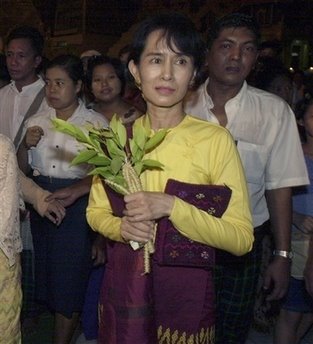


 Posts


