News & Articles on Burma
Thursday, 22 September, 2011
----------------------------------------
Aung San Suu Kyi foresees change in Myanmar
Anti dam protests erupt in Myanmar
Controversy Over Dam Fuels Rare Public Outcry in Myanmar
West 'should respond to Burma change', says think-tank
Myanmar's forgotten bourse eyes long-awaited expansion
Burma ‘not ready for unions’: minister
Suu Kyi urges world to keep eye on Burma
UN told Burma has no nuclear weapons
--------------------------------------
Aung San Suu Kyi foresees change in Myanmar
News DeskSeptember 21, 2011 19:02
Aung San Suu Kyi, foresees "signs of real change very soon" in Myanmar but has urged the world not to take its eye off her country.
Suu Kyi, speaking via fuzzy satellite linkup to a gathering of former and current world leaders in New York led by former U.S. President Bill Clinton, sections of which were broadcast on the BBC, said:
"I've had talks with some of the representatives of the government and we hope that we are going to see signs of real change very soon.
"There has been a lot of talk about change, but people always want to see something concrete. And they're right, too. Talk is never enough. But at least it's a beginning. And I think we're beginning to see the beginning of change."
Aung San Suu Kyi, 66, is head of the National League for Democracy, which won a landslide victory in 1990 elections but was unable to wrest power from the military junta.
A Burmese opposition icon, Suu Kyi has herself has been either imprisoned or under house arrest for a combined 15 years since she returned to Myanmar, formerly known as Burma, from England in 1988, according to Bloomberg. She was released last November and has since held talks with the country's nominally civilian government, she said.
According to AFP, Suu Kyi downplayed comparisons with so-called Arab Spring revolts in North Africa and the Middle East that brought down decades-old dictatorships and were facilitated by social networking sites.
"I don't think the [social] media has quite the position here that it had in the Arab countries," she said, referring to Myanmar's tightly controlled Internet use. "In Burma, we do not have such a developed communications system."
However, she said, all people around the world "can understand 'life, liberty and the pursuit of happiness.'"
India and Pakistan are the powerhouses of South Asia as well as historic enemies. How do their military forces stack up today?
Last week's winner compares the military might of two continually feuding countries. Check the membership site in late-September for a link to completed piece.
"The idea of freedom and security, beautifully balanced, is a concept that is acceptable to human beings across the world. This is what we know: people want to be free and they want to feel secure as well," she said, Bloomberg reports.
Fellow Nobel Peace Prize recipient Archbishop Desmond Tutu of South Africa, also speaking at the Clinton Global Initiative forum in New York, told Suu Kyi that seeing and hearing her left him "like a smitten young man."
"I love you!" Tutu, who turns 80 next month, told Suu Kyi.
Suu Kyi told him the feeling was mutual.
"I must return the compliment and say: 'I love you,'" she replied, News24 reports.
Tutu added, "quite seriously," that he was looking forward to visiting Myanmar upon her inauguration as "head of government there."
Suu Kyi also said that she hadn’t expected her struggle to take so long:
"All journeys are made step by step. To be quite honest, I didn't think when I first started out in the movement for democracy... I'd have to devote my whole life to it." http://www.globalpost.com/dispatch/news/regions/asia-pacific/110921/aung-san-suu-kyi-new-hope-myanmar-burma-democracy
---------------------------------
ONE-WORLD NET
Anti dam protests erupt in Myanmar
22 September 2011
Myanmar’s activists have launched a series of nation wide campaigns to oppose construction of a hydroelectric dam at Ayeyarwady River in Kachin. Dam construction has forcefully displaced over 15,000 people across sixty villages without resettlement plans from the State.
Yangon: Resistance is growing to a hydroelectric dam being built at the beginning of the Ayeyarwady River in Myanmar's northern Kachin State, with several campaigns to halt construction under way.
Opponents to the Myitsone Dam have been collecting signatures, circulating posters, organizing meetings, and speaking out to foreign media. Some residents affected by the dam project have remained in their villages as a form of silent resistance.
myanmar.jpg
More than 15,000 people could be displaced/ Photo credit: Contributor/IRIN
"The government should listen to the voice of the people, if they really practise a democratic system," Bauk Char, a Kachin activist, who has been calling for a halt to the dam's construction, told IRIN.
Environmentalists say the dam, with a flooding area larger than Singapore, will have a devastating impact on the environment and livelihoods. More than 15,000 people in 60 villages are being forced to relocate without proper resettlement plans, according to the Kachin Development Networking Group (KDNG).
"This kind of undemocratic resource exploitation by the Burma [Myanmar] military government can never be sustainable and never lead to peace and reconciliation in Burma," Ah Nan, a KDNG spokeswoman, said. "War has already started in Kachin State and will only get worse if this exploitation continues."
Fighting broke out in June between government forces and the Kachin Independence Army (KIA), the military wing of the Kachin Independence Organization (KIO), ending a 17-year ceasefire and displacing more than 25,000 people.
The dam - a joint effort by Myanmar's military government and the China Power Investment Corporation - is expected to produce 6,000MW of electricity that the government will sell to China, bringing in more than US$500 million annually. Construction began in 2009, just 1.6km below the confluence of Mali and N'Mai rivers - the natural heritage and cultural heartland of the Kachin people, locally known as Myitsone.
"We'll never back down"
Resistance to the project has escalated in response to a recent announcement by Zaw Min, Minister of Electric Power, who said at a press conference in Naypyidaw, the capital, that the government would proceed with the project despite objections. Government officials maintain the dam will not affect water levels on the Ayeyarwady River, nor have any adverse environmental effects, saying it will utilize only 7 percent of the water flow.
"We'll keep working on the Myitsone Project. We'll never back down," Zaw Min said. "We won't halt this project in spite of objections from environmental groups."
Zaw Min is also being criticized for saying the government is providing as much as 1,500MW for domestic use - way beyond current demand. That is why the government, he said, can sell surplus electricity to other countries in the future.
"This is not true," said Myat Thu, an organizer for one of the campaigns to save the Ayeyarwady, Myanmar's longest river, which provides millions of people with a livelihood. "A large part of the country has seen severe power shortages."
According to government figures, only 2,000 out of about 60,000 villages across the nation have access to electricity. Some parts of Yangon, the country's largest city and commercial capital, experience frequent blackouts.
Aung San Suu Kyi, a Nobel laureate, has joined the growing appeals to save the Ayeyarwady and called for a reassessment of the Myitsone Dam, which would be 152m high when it is completed in 2017.
"We'll keep raising the public awareness [on the dam issue] by holding talks, by delivering stickers, etc.," said Win Cho, a politician and activist calling for a halt to the dam project. "We will keep inviting more people to join with us."
Source : IRIN http://southasia.oneworld.net/todaysheadlines/anti-dam-protests-erupt-in-myanmar
----------------------------------
Controversy Over Dam Fuels Rare Public Outcry in Myanmar
The International Herald Tribune
The Myitsone dam under construction on the Irrawaddy River in northern Myanmar.
By THE INTERNATIONAL HERALD TRIBUNE
Published: September 21, 2011
MYITSONE, MYANMAR — The massive dam under construction in this remote corner of Myanmar is generating a litany of concerns that are not uncommon to such projects: about the risks of tampering with nature, about damage to wildlife, about the displacement of villagers.
But for many people in Myanmar, also known as Burma, the fears surrounding the Myitsone dam go much deeper. It will be the first dam across the Irrawaddy River, the iconic, even mythic waterway that has given life to centuries of Burmese civilization.
Passions are high. A government minister broke down in tears at a news conference last month when asked about the dam. High-ranking officials are said to be sharply divided over the wisdom of the project.
And in an authoritarian country that has begun to experiment with looser controls on the news media, the controversy has raised the prospect of something exceedingly unusual: that public outrage might actually force the government to reconsider its plans.
The Myitsone dam will flood an area four times the size of Manhattan. Government officials who support the project say it will be an invaluable source of electricity and cash, a milestone in Myanmar’s development. Critics say it will cause irreparable damage to the Irrawaddy, the lifeline of millions of Burmese downstream.
“The people are demanding to stop the project,” said U Ludu Sein Win, a dissident writer who is one of the most outspoken critics of the dam. “If the righteous demands of the people are ignored and they continue the dam project,” he wrote in Weekly Eleven, a popular Yangon-based newspaper, “the people will defend the Irrawaddy with whatever means possible.”
Such strident criticism of a government project in the domestic media, which would have been unheard of just months ago, reflects both the passions surrounding the project and the easing of some restrictions on expression by Myanmar’s new, at least nominally civilian government, which took office in March after decades of overt military dictatorship.
The Myitsone dam, which is being built and financed by a Chinese company, has also become a lightning rod for criticism about China’s power and influence in Myanmar.
Here at the dam site, Chinese workers in orange hard hats have been tunneling, blasting and shoring up riverbanks. The site is a few kilometers downstream from what is considered the “birthplace” of the Irrawaddy — the confluence of two smaller rivers — a place that has mystical value for the Kachin ethnic group that populates the hills of northern Myanmar. (The Kachin have a substantial army that has battled with troops from the central government in recent months, underscoring the instability in the area surrounding the dam site.)
Criticism of the project has been allowed to spread through Facebook, blogs and even local newspapers, suggesting that the government itself may be divided on the issue. Last month the country’s most famous dissident, the Nobel Peace Prize laureate Daw Aung San Suu Kyi, who has otherwise been cautious in her criticisms of the government since her release from house arrest last November, penned an open letter calling for the project to be reassessed.
Critics’ reasons for opposing the Myitsone project vary. Some say they are angry because the decision to begin such a huge project was made without public consultation. Others channel their frustration toward China, which plans to import 90 percent of the electricity the project generates, under financial conditions that have not been fully explained to the public.
“China has colonized Burma without shooting a gun and has sucked the life of the people of Burma with the help of the Burmese regime and its cronies,” wrote U Aung Din , a former democracy advocate who is now in exile in the United States. “Now, they are killing the Irrawaddy River as well.”
In April, four small blasts were reported at the camp in Myitsone where Chinese workers have their sleeping quarters. No one was seriously hurt.
But perhaps the greatest concern among critics of the dam is that it will further degrade a river that has played such a crucial role in Burmese history.
The Irrawaddy draws on glacial waters from the eastern extremities of the Himalayas. As it travels south, the river carries nutrients into Myanmar’s arid central region and ultimately fans out in the Irrawaddy Delta, an area of rice paddies so fertile that it once fed large parts of the British empire in Asia. Like the Mekong or the Mississippi, the river carries enormous symbolism.
“It is the most significant geographical feature of our country,” wrote Ms. Aung San Suu Kyi in her letter, which also aired concerns about the dam being near an earthquake fault zone. The Irrawaddy, she wrote, is “the grand natural highway, a prolific source of food, the home of varied water flora and fauna, the supporter of traditional modes of life, the muse that has inspired countless works of prose and poetry.”
Indeed, leading poets have chimed in on the controversy, including U Maung Sein Win, who wrote a short poem called “Dead River,” which includes this passage:
Whole forests are cleared and
mountains laid bare
Sand bars emerge at the narrows
Not so far in the future, Myanmar’s people may disappear
Did we drink our own blood?
This is the frightening thought
That one day the river might be dead.
Unaccustomed to such a barrage of criticism, the government is on the defensive. The information minister, U Kyaw Hsan, wept when questioned about the project at a news conference in August. “We love the Irrawaddy,” said Mr. Kyaw Hsan, who is a retired brigadier general.
“We will protect the Irrawaddy just like other citizens would.”
The government official responsible for the dam, U Zaw Min, was adamant at a meeting this month that it would be completed. “We will never rescind it,” he said at one of the occasional news conferences that appear to be gestures by the government toward openness.
But his staunch defense of the project led to further anger.
On Saturday, at a government-sponsored seminar, Mr. Zaw Min seemed ready to offer concessions to minimize the impact of the dam and “ensure the project poses no danger.” Those words were highlighted in bold in an account of the seminar that appeared in the state-owned newspaper The New Light of Myanmar. The dam would be built to resist a thousand-year flood and an earthquake of magnitude 8, the article said.
That was the official account of the meeting. In the Burmese-exile news media, reports said a “heated argument” over the dam had broken out between officials. Myanmar’s president, U Thein Sein, considered by many to be a moderate force in the government, was said to be against the project, according to The Irrawaddy , an online news service based in Thailand. Hard-liners were said to be pushing ahead. The accounts could not be confirmed.
Critics of the dam say it is significant that skepticism of the project extends even to the scientists who were hired by the Chinese project managers to assess it.
China Power Investment , a state-run Chinese company, signed a deal in 2007 with the Burmese government to build seven dams in northern Myanmar, including the one at Myitsone. Although not required to do so under Myanmar’s laws, China Power Investment hired scientists from China and Myanmar to assess how the dam would affect the environment. In 2009, the scientists submitted a report of nearly 900 pages that seemed to question the dam’s very premise.
“If Myanmar and Chinese sides were really concerned about environmental issues and aimed at sustainable development of the country there is no need for such a big dam,” said the report, which was written in choppy English.
Rather than build the massive Myitsone dam, the scientists’ report suggests constructing two smaller dams farther upstream. It warns ominously that the Myitsone site is “less than 100 kilometers from Myanmar’s earthquake-prone Sagaing fault line,” a distance of a bit more than 60 miles.
The report also predicts “substantial losses” in fish populations downstream, and says that more time is needed to understand how wildlife in the area would be affected. Scientists who fanned out into the nearby jungles found sun bears, leopards, elephants, many types of monkeys and red pandas, an endangered auburn-colored animal that resembles a cross between a raccoon and a bear.
The report also recommends that more research be done on the potential effects on other inhabitants of the region: people. The dam is still several years from completion, but thousands of villagers have already been resettled from their rice paddies and fishing villages into prefabricated homes. They were given, among other compensation, 21-inch television sets.
“We can’t make a living in our new place,” Aung San Myint, a father of three who now mines the riverbanks for flecks of gold, told a reporter. “There’s nothing for us there.” http://www.nytimes.com/2011/09/22/world/asia/controversy-over-dam-fuels-rare-public-outcry-in-myanmar.html?_r=1&ref=global-home
-----------------------------------
BBC News
22 September 2011 Last updated at 12:00 GMT
West 'should respond to Burma change', says think-tank
By Rachel Harvey BBC South East Asia Correspondent
An influential think-tank has urged Western nations to acknowledge and support what it calls the major changes taking place in Burma.
The International Crisis Group (ICG) says there is now a unique opportunity to engage with the country's relatively new civilian-led government.
But some pro-democracy campaigners remain wary of easing the pressure on the Burmese leadership.
They say they want to see concrete signs of genuine reform.
'Not assured'
The ICG says there is growing evidence that the new administration in Burma is serious about reform and Western powers should adapt their policies to reflect the new reality.
The group is calling for a proactive and engaged approach to grasp what it calls this unique opportunity.
The group has long taken the view that sanctions have failed. But there is a new urgency in the tone of its argument now.
The Burmese government has made a number of conciliatory gestures in recent weeks - easing restrictions on the media, allowing a visit by the United Nations human rights envoy and holding meetings with pro-democracy leader Aung San Suu Kyi.
But opinion is divided as to how the outside world should respond.
Some pro-democracy campaigners are urging caution, saying the steps taken by the Burmese government thus far are merely superficial.
Until or unless all political prisoners are released and a process of genuine national reconciliation is under way, they say, Western pressure and sanctions should be maintained.
Perhaps the most influential voice in this debate is that of Aung San Suu Kyi.
In her view there are signs that change is now possible in Burma, but she says "it is not yet assured". Few would disagree with that. http://www.bbc.co.uk/news/world-asia-pacific-15018276
----------------------------------------
Myanmar's forgotten bourse eyes long-awaited expansion
22/09/2011 - 3:36 - By Aung Hla Tun
YANGON (Reuters) - In a quiet room in an ageing office block of Myanmar's commercial capital Yangon, a worker scribbles on a whiteboard beneath a row of out-of-sync clocks, updating prices in what could be the world's smallest stock market.
Welcome to the Myanmar Securities Exchange, among the best-kept secrets of a repressive country hamstrung by Western sanctions and blighted by 49 years of military rule.
There's no trading floor, no flashing screens and no televisions showing financial news channels. Just eight employees who handle over-the-counter transactions and manually update share prices, using a whiteboard, a marker pen and a stencil. Every so often, a customer drops by.
Set up 15 years ago as a joint venture with Japanese broker Daiwa Securities Co, Myanmar's stock market has attracted just two companies -- an echo of broader problems in the resource-rich country that half a century ago was among Asia's wealthiest and today is among its poorest.
But as Myanmar's new civilian government presses ahead with reforms that could lead to greater political and economic freedom, and as China pumps in billions of dollars to develop its vast energy reserves, plans are a afoot to expand the exchange.
Daiwa is working with the Tokyo Stock Exchange to establish rules and computer systems for a bigger stock market, a Daiwa spokesman said. The plan expands on Daiwa's 50-50 joint venture established in 1996 to set up the current exchange with Myanmar's Finance and Revenue Ministry.
"With the new administration, there has been growing interest in developing a financial system, so we, Daiwa and the Tokyo Stock Exchange are now in cooperation to contribute to the development of Stock Exchange system," Daiwa said in an e-mailed response to questions from Reuters.
Mainland Southeast Asia's biggest country has been one of the world's most difficult for foreign investors, restricted by sanctions, starved of capital and marred by mismanagement.
But its eight-month-old parliament is stirring hopes of reforms that could slowly open the country of 50 million people that just over 50 years ago was one of Asia's most promising, the world's biggest rice exporter and a major energy producer.
A senior official from the Ministry of National Planning and Economic Development said the government wanted to expand the number of listed companies as part of efforts by the 10-nation Association of South East Asian Nations (ASEAN) of which Myanmar is a member, to form an interlinked stock market by 2015.
"The emergence of a stock exchange is very important for us in bringing the country in line with the rest of ASEAN," said the official, who asked not to be identified.
"Some important laws have already been drafted. After enacting these laws, the Securities and Exchange Committee will be formed. Then there will be rapid progress," he predicted.
That ambition is one of many signs of change since the army nominally handed power to civilians after the first elections in two decades last year, a process ridiculed at the time as a sham to cement authoritarian rule under a democratic facade.
Recent overtures by the government hint at possibly deeper changes at work -- from calls for peace with ethnic minority guerrilla groups to some tolerance of criticism and more communication with Nobel peace prize laureate Aung San Suu Kyi, who was freed last year from 15 years of house arrest.
The push to expand the bourse also underlines how competition is heating up among regional exchanges in Asia's so-called frontier markets following recent South Korean forays to help build stock exchanges in Cambodia and Laos.
TRICKLE OF CUSTOMERS
Myanmar's first stock exchange was closed in the 1960s after a military takeover. Its successor, the Myanmar Securities Exchange Centre (MSEC), is a modest operation. A trickle of customers each week buy and sell shares in two listed companies on a bourse few Burmese or foreign investors know exists.
No new companies have signed up beyond the first two: Forest Products Joint Venture Corp (FPJVC) and Myanmar Citizens Bank. Both are jointly owned by the government and private investors.
For those who got in early, returns have been generous. FPJVC sold shares between 1993 and 1996 -- mainly to well-connected bureaucrats -- and has delivered dividends of about 25 percent a year, more than double local bank interest rates.
"If possible, we'd like to buy some more shares of FPJVC," said Zaw Win, 76, a retired officer from the Ministry of Forests whose 15 shares bought in 1993 have more than doubled in value.
Daiwa signed a deal on April 5, 1996, to start the exchange but within a month the pact was cast into uncertainty, as the military junta began rounding up hundreds of pro-democracy supporters in a crackdown on Suu Kyi.
That sparked outcry in the West. Thousands of pro-democracy supporters rallied in Yangon. U.S. soft drink giant PepsiCo Inc sold its stake in a Burma venture. U.S. apparel firms cancelled contracts with Burmese suppliers. The White House urged Burma to halt its "pressure tactics."
A year later, in response to widening human rights abuses, the United States imposed sanctions. The junta tightened its grip on power. Economic reforms withered.
The exchange's executive director, Soe Thein, a former official in the Finance and Revenue Ministry, assembled a small team of staff to draft laws and regulations, raise public awareness and set up a securities exchange commission to achieve his dream of a capital market within five or six years.
"But it failed to come up to our expectations," he said.
Much like neighbouring Thailand and India, which both have thriving capital markets, Myanmar has enormous potential for tourism and development, boasting rich natural resources -- from gas to teakwood and gemstones.
Its new government has promised sweeping reforms -- from tax reductions for exporters to micro loans for farmers, interest rate cuts on bank loans and higher returns on savings. In recent weeks it has sought input from the International Monetary Fund about unifying its official and unofficial exchange rates.
The recent gestures followed expansion of fledgling banking and telecommunications sectors and the privatisation of hundreds of state assets from late 2009, including mining firms, an airline, gas stations, cinemas, shipping companies and factories, albeit mostly to cronies of the former army regime.
But its banking system is crippled by sanctions, which most expect to stay in place until the government releases an estimated 2,100 political prisoners.
Soe Thein, however, remains optimistic.
"It takes time to set up public companies," he said.
And his little bourse may even soon face competition. South Korean bourse operator Korea Exchange said in January it had sent a delegation to Myanmar to hold preliminary talks with the government about the possibility of opening a separate exchange.
The firm is already involved in running the new Laos Securities Exchange and is setting up a long-delayed stock market in Cambodia. Both are joint ventures with the respective governments.
(Additional reporting by Timothy Kelly in Tokyo; Writing by Martin Petty; Editing by Jason Szep and Robert Birsel) http://www.eleconomista.es/empresas-finanzas/noticias/3393146/09/11/Myanmars-forgotten-bourse-eyes-longawaited-expansion.html
------------------------------------------------
Burma ‘not ready for unions’: minister
By AHUNT PHONE MYAT
Published: 22 September 2011
The current political situation in Burma makes the formation of labour, farmers’ and student unions untenable, and future efforts at organizing will be tightly monitored by the government, Information Minister Kyaw Hsan told MPs yesterday.
Unions have in the past existed in Burma, but were gradually stamped out following the start of military rule in 1962. Although not illegal, a clause in the 2008 constitution states that their formation is conditioned on not being “contrary to the laws enacted for [Burma’s] security, prevalence of law and order, community peace and tranquillity, or public order and morality”. The subsequent definitions for these criteria are vague.
Kyaw Hsan said the government was concerned that unionizing would see a recurrence of the problems that occurred during Burma’s brief spell of democracy following the end of British rule in 1948, when many were formed as proxies for parties vying for political clout.
He cited the use of farmers’ unions by Burma Communist Party leaders in the 1950s to impose their control over the agriculture sector and to confiscate farmland, an issue strikingly familiar to government practice today.
As such, he suggested, Burma would have to wait until the political landscape became more stable before they could be reintroduced.
The government is also notoriously intolerant of perceived dissent, something that it fears the formation of unions could encourage. More than 30 labour activists, including eight female members of the Federation of Trade Unions Burma (FTUB), are imprisoned in Burma out of a total of nearly 2000 political prisoners.
When the time is right for their reintroduction, Kyaw Hsan said, they would need to operate under the government, and according to as yet unwritten government guidelines. An MP who wished to remain anonymous said there would likely be widespread antipathy towards this from workers.
“Limitations like this should not exist in the democratic era, and instead the government should allow the existence of independent associations,” he said, adding however that certain regulations must exist, although unions should be able to operate independently.
Other MPs have said that it begs the question of how committed the government is to following its own promises of democratic reform. http://www.dvb.no/news/burma-%E2%80%98not-ready-for-unions%E2%80%99-minister/17778
-----------------------------------------
BANGKOK POST
Suu Kyi urges world to keep eye on Burma
Published: 22/09/2011 at 12:32 AM
Online news: Asia
Burma's pro-democracy hero Aung San Suu Kyi urged the world Wednesday not to take its eye off her country as it enters what she said were the first small steps to freedom.
This picture taken on September 13, shows Myanmar democracy icon Aung San Suu Kyi speaking to AFP during an interview at her National League for Democracy (NLD) headquarters in Yangon. Suu Kyi urged the world Wednesday not to take its eye off her country as it enters what she said were the first small steps to freedom.
In a rare appearance via videolink from Burma -- also known as Burma -- to an international conference in New York, Suu Kyi said the political thaw needs close scrutiny by the outside world.
"What we really need is awareness of what is going on in our country," she told the audience of political and business leaders at the Clinton Global Initiative.
"If the world wants to help Burma, the world needs to know what's going on in Burma. You really have to follow what is going on there."
Suu Kyi, who was released by Burma's military rulers last November after years of house arrest, said the status quo was changing.
But "change is not always for the better and even if it is for the better, it's not always sustained," she warned. "We would like the world to keep an eye on what's happening."
Suu Kyi also had a message for India and China, the growing regional powers that she said should focus on their relations with Burma's people as much as its controversial government.
"We've always been good neighbors," she said, without elaborating, "but times have changed and circumstances have changed, and to continue to be good neighbors, certain policies have to change."
Smiling but looking tired, the 66-year-old Nobel peace laureate was given a standing ovation by the New York forum.
In fluent English and a quiet voice, she said that change in her country had a long way to go.
"All journeys are made step by step," she said. "To be quite honest, I didn't think when I first started out in the movement for democracy... I'd have to devote my whole life to it."
She said her participation in the videolink, as well as recent meetings with foreign journalists and talks with the government, showed an improvement.
"This is the kind of thing I could never have done," she said, "so we are making progress. But we need more."
But she downplayed comparisons with so-called Arab Spring revolts in North Africa and the Middle East, where youth-led protesters organized through social networking sites have brought down, or continue to challenge, decades-old dictatorships.
"I don't think the (social) media has quite the position here that it had in the Arab countries," she said, referring to Burma's tightly controlled Internet use. "In Burma, we do not have such a developed communications system."
Hardest of all, she said, would be overcoming years of enmity.
"The reconciliation bit is sometimes the most difficult of all because both sides have to be prepared to compromise and give and take."
After meeting with President Thein Sein last month, Suu Kyi said she was cautiously hopeful -- but looking for results.
"We hope that we are going to see signs of real change very soon. There had been a lot of talk about change but people want to see concrete signs," she said. "I think we are beginning to see the beginning."
Suu Kyi's party won a 1990 election but was never allowed to take office. It boycotted an election held last year, the first in two decades, and was delisted as a political party by the regime as a result.
Recently, however, the regime has adopted a more conciliatory stance toward its opponents and relaxed its grip on access to independent information, such as previously blocked news sites, including the Burmese-language service of the BBC. http://www.bangkokpost.com/news/asia/257689/suu-kyi-urges-world-to-keep-eye-on-burma
-----------------------------------------
ABC Radio Australia News
UN told Burma has no nuclear weapons
US Secretary of State Hillary Clinton said she was concerned about Burma gaining nuclear weapons.
A senior diplomat from Burma has told the United Nations atomic agency the south east nation doesn't have enough economic strength to develop nuclear weapons.
Last year, a United Nations report suggested North Korea might have supplied Burma as well as Iran and Syria with banned atomic technology.
The US Secretary of State Hillary Clinton said in 2009 she was concerned about the possible transfer of such technology to Burma from North Korea.
Burma's ambassador to the International Atomic Energy Agency Tin Win attended the agency's annual state meeting on Wednesday.
He says Burma would like to restate it's in no position to consider the production and use of nuclear weapons.
He says it also doesn't have enough economic strength to do so. http://www.radioaustralianews.net.au/stories/201109/3323755.htm?desktop
__._,_.___
Friday, September 23, 2011
News & Articles on Burma-Thursday, 22 September, 2011-uzl


Friday, September 9, 2011
News & Articles on Burma -Thursday, 08 September, 2011-UZL
News & Articles on Burma
Thursday, 08 September, 2011
-----------------------------
Nearly 30 Burmese soldiers killed in six days in Kachin State
Mongla satisfied with Kengtung meet
Govt Talks with Wa, Mongla Group Conclude
DKBA to Accelerate Military Tactics
Toys for the boys in Myanmar
Big Sucking Sound in Burma (Myanmar) is China's Resource Grab
Myanmar weighs change in exchange rate
UN should not wait and see Burma’s reform without time-bound
Nobel Laureates Urge Clinton to Support Burma CoI
Media Are Like Red Ants, Says Kyaw Hsan
------------------------------------
Kachin News Group
Nearly 30 Burmese soldiers killed in six days in Kachin State
Nearly 30 Burmese government soldiers were killed during six days of fighting with the Kachin Independence Army (KIA) in Kachin State, according to KIA officers.
The death toll was counted from Sept. 1 to 6, a KIA officer in 3rd Brigade, Manmaw (Bhamo) District, told the Kachin News Group.
The skirmishes between government troops and the KIA happened mainly n the region east of the Irrawaddy River, in N’Mawk Township, Dawhpumyang sub-township, Waingmaw Township.
There were no KIA casualties, KIA officers said.
The ceasefire negotiation between the two delegates has been stopped since the new Burmese government led by Ex-general Thein Sein publicly denounced the KIA and its political wing Kachin Independence Organization (KIO) as “insurgent or terrorist” at its first press conference in Naypyitaw on August 12. http://kachinnews.com/news/2046-nearly-30-burmese-soldiers-killed-in-six-days-in-kachin-state.html
---------------------------------------
Mongla satisfied with Kengtung meet
Thursday, 08 September 2011 19:06 Hseng Khio Fah
National Democratic Alliance Army (NDAA) aka Mongla group says the meeting held between its delegates and the government’s representatives yesterday is promising, according to sources from the group.
The two sides met in the capital of Shan State East, Kengtung, from 9:00 a.m. to 10:30 a.m. following Naypyitaw’s 28 August invitation letter to Mongla for peace talks, said a source close to Mongla.
Mongla sent over 10 members led by Vice Chairman Hsan Per and its general secretary Sao Hsengla while the Burmese side was led by Union Solidarity Development Party (USDP) general secretary U Aung Thaung and U Thein Zaw, Chairman of the Lower House National Races and Internal Peacekeeping Committee
A new 5 point proposal was presented by the government representatives. They are:
No hostilities between the two sides
To reopen liaison offices on both side
To maintain Mongla’s autonomous status
To inform each other in advance if one side is entering the other side’s territory carrying arms
To form a joint liaison committee as soon as possible
“No response has been given to them [the government] yet as we still have to discuss among us,” a source said. “Nevertheless, U Thein zaw suggested forming a joint liaison committee as soon as possible to fulfill each other’s need.”
Mongla’s counter proposal to the government was for the Burma Army to pull out from its controlled area. “Like us, U Thein Zaw said he also has to inform Naypyitaw about our request,” said an officer from the group. “However, their proposal looks acceptable this time. So we think the prospects are good.”
Mongla is reportedly holding a central committee meeting today to consider the 5 point proposal.
Mongla’s ally the United Wa State Army (UWSA) that met the same delegation from the government on the previous day at the same location, reportedly received a similar proposal.
These are the first formal meetings between Naypyitaw and the Wa-Mongla alliance since April 2010. http://shanland.org/index.php?option=com_content&view=article&id=4021:mongla-satisfied-with-kengtung-meet&catid=85:politics&Itemid=266
---------------------------------------
Govt Talks with Wa, Mongla Group Conclude
By WAI MOE Thursday, September 8, 2011
Two prominent members of Burma's ruling Union Solidarity and Development Party (USDP) completed talks this week with officials of the United Wa State Army (UWSA) and an allied group aimed at preventing a breakdown of decades-old ceasefire agreements.
Acting as liaisons for President Thein Sein, the two USDP leaders—ex-Col Aung Thaung and ex Brig-Gen Thein Zaw—urged the UWSA and its ally, the National Democratic Alliance Army (NDAA), to avoid raising any subjects that could lead to disagreement with the government.
Representatives of the UWSA and the NDAA (also known as the Mongla group) met with the government liaisons in Kengtung, Shan State, on Tuesday and Wednesday, respectively, for the first talks between the government and the two pro-China ceasefire groups since another ceasefire with the Kachin Independence Army (KIA) broke down in June.
According to sources close to the two groups, Aung Thaung and Thein Zaw made four proposals: reopening liaison offices for both sides; maintaining ceasefire agreements signed in 1989; reporting in advance if ethnic troops cross into government-controlled areas; and avoiding topics likely to lead to disagreement, while focusing on issues where agreement is possible.
They also offered to resend government health workers and teachers to areas under the control of the UWSA and NDAA, after these workers were called back by Naypyidaw in July 2010 amid rising tensions.
Former key minister Aung Thaung is currently the chairman of the Lower House’s banking and financial development sub-committee, while Thein Zaw is the chairman of the Lower House’s ethnic affairs and peace task force sub-committee.
“During the meeting, U Aung Thaung spoke before U Thein Zaw,” said a UWSA source, speaking on condition of anonymity. “Neither the UWSA nor the NDAA responded immediately to their proposals. Both groups have to discuss them with their leadership.”
The source added that even the issue of allowing government staffers to return to ethnic-controlled areas has to be considered carefully, as it was the government's unilateral decision to withdraw them after the ethnic groups refused to accede to Naypyidaw's Border Guard Force (BGF) scheme, which would have put the two armed groups under Burmese military command.
The UWSA delegation was led by Bao You Liang, brother of Wa leader Bao Youxiang, and also included other senior members of the group, such as Zhou Guang, of the UWSA's foreign relations department, and Le Zuliang, of the group's information center.
The NDAA delegation was led by Htain Linn, son of the group's leader, Sai Linn.
According to ethnic sources, before their meetings with Aung Thaung and Thein Zaw in Kengtung, Wa and Mongla officials met with Chinese officials in Panghsang and Mongla to discuss the ongoing tension between the ethnic armed groups and the Burmese regime over the BGF.
Chinese leaders have repeatedly raised their concerns over instability in Burma’s ethnic areas along the Sino-Burmese border during meetings with their Burmese counterparts, most recently during Thein Sein’s trip to Beijing in late May.
At the time, Chinese President Hu Jintao reportedly told Thein Sein to resolve Burma’s ethnic affairs peacefully, particularly with the Wa and the Mongla.
Meanwhile, the situation in Kachin State, where government troops have been clashing with the KIA since June, remains tense.
Earlier this month, Ohn Myint, the minister of cooperation, traveled to Myitkyina for talks with the Kachin Independence Organization (KIO), the political wing of the KIA. However, sources in the Kachin State capital said Ohn Myint, who formerly served as the commander of the Northern Regional Command, failed to meet the KIO leaders.
The source added that there was also some disagreement between Ohn Myint and Maj-Gen Zeyar Aung, the current regional commander, over how to deal with the KIO.
As efforts to broker a new ceasefire agreement continue, state-run newspapers are carrying daily reports attacking the KIA. On Tuesday, the state media reported that one person was killed and another injured in Waingmaw Township, allegedly by a landmine planted by the KIA. http://www.irrawaddy.org/article.php?art_id=22040
---------------------------------------
DKBA to Accelerate Military Tactics
By SAW YAN NAING Thursday, September 8, 2011
The Democratic Karen Buddhist Army (DKBA), an ethnic Karen armed militia, has reorganized its military strategy to speed up future activities, said DKBA sources.
“We held a planning meeting to organize our troops for more effective military tactics. We established two military groups, named Klo Htoo Wah and Klo Htoo Lah—one in the south and one in the north of our area,” said Maj San Aung of the DKBA.
Col Kyaw Thet is assigned to lead the Klo Htoo Wah tactical group and Col Kyaw Bi Koh is assigned to lead Klo Htoo Lah, said San Aung. The DKBA also named Klo Htoo Baw as their headquarters in southern Karen State.
Brig-Gen Saw Lah Pwe will be the commander of the entire DKBA, according to San Aung. On Nov. 8, one day after Burma's election, Saw Lah Pwe led DKBA Brigade 5 in resisting attacks by government troops after Brigade 5 briefly took control of some government buildings in Myawaddy.
The DKBA intends to cooperate on military matters with the Karen National Union (KNU) and it's military wing, the Karen National Liberation Army (KNLA), another ethnic armed group that the DKBA broke away from in 1995. At the time, the DKBA signed a ceasefire agreement with the government, but the KNU/KNLA did not.
Htee Moo, a Karen social worker who is close to the DKBA, said that the DKBA top commanders reorganized their military tactics because more troops from the government's Karen Border Guard Force have deserted to join the DKBA.
“The DKBA will increase fighting alongside its mother organization, the KNU, against the Burmese government troops,” said Htee Moo.
The DKBA is estimated to have more than 1,000 fighters and the KNLA is estimated to have about 4,000 troops.
Currently, fighting occurs almost every day in Karen State, said Htee Moo. Karen observers said that fighting in Karen State between government troops and Karen rebel groups will intensify in the future.
The DKBA earlier changed its military tactics to target urban areas where government offices and buildings are located, rather than fighting in the jungle. http://www.irrawaddy.org/article.php?art_id=22039
-----------------------------------
FORBES: 9/08/2011 @ 3:00AM
Big Sucking Sound in Burma (Myanmar) is China's Resource Grab
Simon Montlake, Forbes Staff
Foreigners have long coveted Burma’s ample energy resources. Under British colonial rule, the Glasgow-based Burmah Oil Company (BOC) drilled in central Burma, built an oil refinery in Rangoon and reinvested its profits in Persia via the Anglo-Persian Oil Company, the forerunner to British Petroleum. The BOC was forced to divest its assets in Burma (Myanmar) after a coup in 1962 by General Ne Win.
Today it is Chinese companies that are building pipelines across Burma to funnel natural gas from Burmese waters, and imported crude oil arriving in tankers, to southwest China. The oil pipeline, due for completion by 2013, could eventually supply as much as 10% of China’s oil imports, according to the Economist Intelligence Unit. South Korea’s Daewoo International is developing the offshore gas field, with China National Petroleum Company as the sole buyer. China also plans to build a $20 billion railway along the same route, Burma’s government said on Aug 29.
While the pipelines have drawn complaints from land-right activists, a far bigger row is brewing at a Chinese-owned hydropower dam in northern Burma. Under a 2007 agreement, China Power Investment Corp. wants to build seven large dams in Kachin State that can supply power to neighboring Yunnan Province. The main contractor is China Gezhouba Group Corp. The largest dam is under construction at Myitsone, where two rivers meet and spawn the Irrawaddy River, Burma’s main waterway that empties into the Indian Ocean. When completed, say anti-dam campaigners, it would create a reservoir the size of New York City capable of generating up to 6,000MW of power. Transmission lines will supply electricity to energy-hungry Yunnan Province.
Taken as a whole, the seven dams represent a $20 billion bet on stability in Kachin State, which is wedged between China and India. Since June, the area has seen an upsurge in fighting between Burmese troops and the armed wing of the Kachin Independence Organization (KIO). The fighting has forced a halt to some Chinese-funded infrastructure projects, including smaller dams, though engineering work has since resumed at Myitsone, according to exiled Burmese media reports.
The Chinese dams are deeply unpopular with ethnic Kachin, who cite environmental, cultural and safety concerns. In April 2010, a series of bombs were detonated at the project site of Myitsone. In March, the KIO wrote to Beijing to register its objections and warn of the consequences of increased militarization on its turf. “The KIO would not be responsible for the Civil War if the War broke out because of this Hydro Power Plant Project and the Dam construction,” the letter said.
Aung San Suu Kyi recently added her voice to the debate, calling on all parties to review the project and to prioritize the conservation of the Irrawaddy. She highlighted the risk of building a reservoir near an earthquake fault line and said that over 12,000 people had already been displaced. Her intervention has galvanized opponents to the project, who also seized on a leaked copy of a 2009 assessment by Chinese and Burmese experts commissioned by CPI Corp. The report, which wasn’t made public at the time, warned of “serious social and environmental problems” along the Irrawaddy, which irrigates Burma’s main rice-growing areas. Its authors advised that it would be better to build the dam further upstream than at the confluence site.
The controversy has stung Burma’s new, semi-civilian government. On Aug 12, in a rare press conference, Information Minister Kyaw Hsan, a retired general and notorious hardliner, teared up when asked about the future of the project. In a rambling reply, he complained that the previous junta had tried its best under difficult conditions and was pressured by U.S. sanctions. The room went silent, said a Burmese reporter. “They were real tears, his nose was red,” he says.
A legal challenge could be next. Pawk Ja, a Kachin activist who unsuccessfully ran for parliament last November, says she wants to sue CPI Corp on behalf of villagers displaced by the dam. A former goldmine owner, she became an activist after Yuzana Company seized 200,000 acres of land in her township for a tapioca plantation. Last year, a local court accepted her class-action lawsuit against the company for failing to pay adequate compensation, but the case was later thrown out. She says CIP will be next. “This is our national heritage,” she says. http://www.forbes.com/sites/simonmontlake/2011/09/08/big-sucking-sound-in-burma-is-chinas-resource-grab/
--------------------------------------
Myanmar weighs change in exchange rate
Plan prompted by rise in kyat's value against the US dollar, which is threatening exports and hitting farmers.
The government of Myanmar is planning to change the country's official exchange rate for the first time in almost four decades.
The country's currency, the kyat, is soaring in value against the US dollar, threatening exports.
Economists believe that huge inflows of foreign cash for infrastructure projects, high oil and gas prices, and a mass sell-off of government assets are combining to drive the kyat up.
Farmers, who constitute almost 70 per cent of the country’s economy, are being hit very hard.
Al Jazeera's special correspondent reports from Yangon. Because of Myanmar's restrictions on media, we are not naming her. http://english.aljazeera.net/news/asia-pacific/2011/09/20119885754421184.html?
------------------------------------------
Nobel Laureates Urge Clinton to Support Burma CoI
By LALIT K JHA Thursday, September 8, 2011
WASHINGTON — Five prominent women Nobel laureates urged US Secretary of State Hillary Rodham Clinton on Wednesday to support the establishment of a United Nations Commission of Inquiry (CoI) into possible war crimes and crimes against humanity in Burma.
In an open letter, the five Nobel laureates—Mairead Maguire, Rigoberta Menchú Tum, Jody Williams, Shirin Ebadi and Wangari Maathai—called on Clinton to “publicly and unequivocally support” the establishment of a CoI during the upcoming UN General Assembly (UNGA) meeting in September.
The letter also urged the US to work with “all relevant governments” to include language in a UNGA resolution calling on UN Secretary-General Ban Ki-moon to establish a CoI into “possible war crimes, crimes against humanity and serious human rights abuses and report back to the General Assembly at its next session.”
There was no immediate reaction from the State Department, but it is understood that the Obama administration is working closely with its international partners in this regard in New York. So far, as many as 16 countries have signed on in support of the CoI, first recommended by UN rights envoy to Burma Tomás Ojea Quintana last year.
“Your favorable vote—and leadership in gaining support—is needed to reach majority,” the Nobel laureates said, adding that they hoped Clinton would take a stand that could put Burma's rulers on the long road to accountability and demonstrate that crimes against humanity and war crimes are not tolerated.
“A resolution calling for a Commission of Inquiry would lend tremendous support to the people of Burma who have been toiling for so long for an end to the injustice in their country, and be a most powerful deterrent against such acts being repeated by others, elsewhere, time and again,” they said.
In their letter, they also noted that despite elections last year and promises by Naypyidaw to institute democratic reforms, the newly installed government continues to perpetrate mass human rights abuses.
“Women have been particularly affected, with the state breaking a ceasefire and launching military offensives in northern Shan and Kachin [states],” they wrote.
“The military regime commits serious crimes against the ethnic populations with complete impunity. Dozens of women have been raped since January 2011, and refugees noted that government soldiers declared they were ordered to do so, adding to previous evidence of sexual violence as a weapon of war within Burma,” they said.
http://irrawaddy.org/article.php?art_id=22038
------------------------------------------
UN should not wait and see Burma’s reform without time-bound
By Zin Linn Sep 08, 2011 1:51AM UTC
UN Secretary General Ban Ki-moon said the emergence of new so-called civilian government through controversial November elections and the release of democracy icon Aung San Suu Kyi in Burma gave the country a chance to “embark on the path of progress”, according to AFP News.
In the report, dated August 5 but released Wednesday by the United Nations office in Yangon, Ban said promises from new President Thein Sein, a former general, to carry out political and economic reforms were constructive. But he urged “timely implementation”, stressing that the country continued to suffer from “serious, deep-seated and long-standing” human rights, political and economic problems.
“Whether the new government has the capacity, willingness and support to deliver on its reform agenda remains to be seen,” he said.
Ban said the continued detention of political prisoners, who are estimated to number over 2,000 in the country, “remains of deepest concern” to the United Nations.
An essential primary step in a national reconciliation procedure is to free unconditionally all 2,000 political prisoners. Government’s denial of their existence means it has no real aim towards democracy.
Release of political prisoners is an important part of trust-building between the military-backed government, democratic forces, and ethnic societies.
With the aim of improvement towards true and proper national reconciliation and democratic transition, people throughout Burma must trust in the course of action. As long as prisoners of conscience continue in prison or continue detention for articulation of their political beliefs, the people will have no confidence in any political practice performed by the Thein Sein government.
“The detention of all remaining political prisoners will continue to overshadow and undermine any confidence in the government’s efforts,” UN Secretary General said.
According to Ban, Burma’s Nobel laureate Aung San Suu Kyi, who has recently met with President Thein Sein and done her first political tour outside of Yangon, should be allowed to carry on her activities without hindrance.
“Any restrictions on her movements or threats to her security would cause serious concern and send the wrong signal,” Ban warned.
The junta-made 2008 Constitution is a barrier to national reconciliation and democratic transition since it fortifies military ruling, denies ethnic nationalities’ basic rights, and ignores human rights. It also prohibits existing political prisoners from involvement in elections by reason of their arbitrary imprisonment.
In state-run media, the Thein Sein government repeatedly condemns the offer of National Reconciliation forum raised by Nobel laureate Aung San Suu Kyi and some prominent ethnic leaders as an unnecessary approach.
The worst is that Burmese government stubbornly used to say there are no political prisoners in their prisons. The nation risks a return of nationwide armed conflict due to denial of a true federal union in the 2008 Constitution drawn by the previous military junta. The military seems to be at the helm as usual in the new nominal civil government. Although the governmental composition has been transformed, all the top jobs are in the hands of the former military generals. In such a situation, most observers believe that civil war with the ethnic armed groups will not be stopped easily.
Burma government representatives to various UN meetings continue to turn down any human rights abuses, in direct challenge to the information reported by the international human rights watch groups.
Even the newly formed government commission has been under skepticism and many dare not advocate that it has ability to address human rights abuses in line with the laws. With ongoing bad human rights records, the country will not have a chance to “embark on the path of progress”.
A United Nations commission of inquiry should be set up to address Burma’s human rights violence. The UN Secretary General should not give more time to the Burmese government which repeatedly promises to start reforms in line with the UN’s successive annual decisions for two decades. It will be unwise for Mr. Ban to wait and see Thein Sein government’s reform agenda without timeframe. http://asiancorrespondent.com/64443/un-should-not-wait-and-see-burma%E2%80%99s-reform-without-time-bound/
----------------------------------------
ASIA TIMES: Sep 8, 2011
Toys for the boys in Myanmar
By Bertil Lintner
CHIANG MAI - The isolated light-brown spots can be seen even on Google Earth. They are indicative of big, new buildings that have been carved out of densely forested jungle areas across the Myanmar heartland, with some dots seen in the hills east of the central city of Mandalay.
Most of them are for security reasons located in sparsely populated areas, but in the modern digital world not even Myanmar can keep the location of its new military installations secret.
Myanmar has embarked on a massive expansion of its military and military capabilities since the country was shaken by a nationwide pro-democracy uprising that almost toppled the regime in 1988. But this expansion appears to have been haphazard, with an emphasis on creating a loyal officer corps that the regime can depend on for its survival rather than building a professional fighting force.
Recent defectors from the Myanmar military say that the number of infantry battalions and other military units have been increased dramatically since 1988, but most of these are understaffed and the foot soldiers are often forcibly recruited, poorly paid and badly motivated.
Several sources with access to information from inside the Myanmar military say that the stated strength of the country's armed forces, often given by Western analysts as between 300,000-400,000 men, is grossly exaggerated. Some sources put the actual figure at less than half that number and because the central authorities have had ceasefire agreements with almost all of the country's ethnic rebel armies for two decades or more, the troops, and even most of the officers, lack combat experience.
Prior to the 1988 uprising and the ceasefire agreements with the rebels, the Myanmar military was known as a poorly equipped but ruthlessly efficient light-infantry force. Soldiers fought in yearly operations against insurgents in extremely difficult terrain, making it a tough, battle-hardened army with few equivalents in modern Asia.
"Now, the soldiers are doing nothing. They have new uniforms and better guns, the officers have more money to spend than anyone could dream of in the old days. They have new cars, new golf clubs, mistresses, everything - except professionalism," says a disgruntled former Myanmar army officer who requested anonymity. Meanwhile, the morale among the rank-and-file is reported to be low while desertion rates are high.
Consequently, recent military campaigns against ethnic Kachin and Shan rebels in the country's north and northeast have been disasters. Even after months of fighting, the government's troops have failed to occupy a single major camp run by the Shan State Army (SSA) in the heart of Shan State, while in the north the Kachin Independence Army (KIA) recently gave the military a bloody nose when it tried to dislodge the rebels from their strongholds near the Chinese border.
To make up for the lack of combat experience - and to keep the officers happy with new equipment - the Myanmar government first embarked on a massive procurement campaign in 1989. Throughout the 1990s, an estimated US$1.4 billion of military and military-related equipment was bought from China, including anti-aircraft guns, surface-to-air missiles, aircraft, naval vessels, armored personnel carriers, trucks and other military vehicles, artillery pieces and rocket launchers. Additional weaponry and military hardware were procured from other military partners such as Russia, Singapore, Ukraine, North Korea, and, at one stage, Pakistan, Portugal, Poland and the former Yugoslavia.
Homegrown defense
Recent years, however, have seen a rapid expansion of the number of homegrown defense industries, witnessed in the new clearings in the jungles throughout the country. Before the 1988 uprising, the country had no more than half a dozen such factories.
Today, there are more than 20 military factories apart from the research facilities where new weaponry, including missiles, are being developed. The Myanmar military is also known to be carrying out nuclear research, although even former Myanmar army major Sai Thein Win, the whistleblower who fled the country last year, says that the project is unlikely to produce a usable atomic weapon.
"When the German-made machinery arrived from Singapore, I asked my commander who was going to operate it. 'You are,' he said. He had never before worked in a defense factory, and I - and I was trained in Russia - could see that this equipment was not suitable for the purpose for which it had been obtained. The nuclear program is nothing but a pipedream," Sai Thein Win told Asia Times Online in a recent interview.
Known by the acronym ka pa sa after the initials of the Myanmar name for "the Directorate of Defense Industries", the early factories were located exclusively around the old capital Yangon, on the western bank of the Irrawaddy River near the town of Pyay, or Prome, and near Magwe further to the north. According to analyst Andrew Selth, an Australian expert on the Myanmar military: "Before 1988 these factories could produce automatic rifles and light machine-guns, light mortars, grenades, anti-personnel mines and ammunition."
Myanmar's attempts to develop its own defense industries began in the early 1950s when a small factory was set up to produce bullets and copies of an Italian 9mm TZ45 submachine gun, known as the "Ne Win Sten" after the army commander at that time and later the country's first military ruler.
Selth states in a monograph about Myanmar's arms industries, published in 1997 by the Australian National University: "The Burmese [Myanmar] arms industry was given a major boost in 1957, when the state-owned West German company Fritz Werner GmbH agreed to build a factory in Rangoon [Yangon] with Heckler and Koch to produce Gewehr 3 [G3] automatic rifles. Finance was provided on favorable terms by the West German government."
All such West German assistance was supposed to be halted after the 1988 uprising was drenched in blood, resulting in international condemnation of Myanmar's military regime. But an internal audit report for the West German company, dated March 31, 1990, reveals that "raw materials imported from abroad are recorded in the stock ledger, but delivered directly to Myanma Heavy Industries for custody and use by them in production of goods on the JVC's [Joint Venture Company] behalf." The report, compiled by Fritz Werner's accountants from the U Hla Tun Group, goes on to mention Ministry of Heavy Industries production sites at Yangon, Sinde and Nyaungchitauk at Padaung near Pyay, and Malun near Minhla - or exactly the locations of Myanmar's then most important defense industries.
Fritz Werner is still active in Myanmar, but, according to Sai Thein Win and other sources, it is doubtful whether it is still actively involved in producing military equipment, although in 1984 it became the first foreign company to enter into a joint-venture agreement with Myanmar's Heavy Industries Corporation, which produces weapons for the country's armed forces.
The old Gewehr series - G2, G3 and G4 - has been replaced by other, indigenously produced infantry weapons which are lighter and more suitable for Myanmar's tropical climate. Called MA 1, 2, 3, 4 and 5 - after "Myanmar Army" - they are based on Chinese designs and resemble modern versions of the Soviet-era Kalashnikov and the old Makarov pistol. The new MA series is produced at ka pa sa 1 near Yangon's Inya Lake, while the more advanced ka pa sa 2 in Malun produces mortars and artillery pieces and also has a shooting range built by Singapore to test the effectiveness of the weapons.
Brothers in arms
Missile research and development is carried out at the newly built ka pa sa 10 at Konegyi village in Minhla, where experts from North Korea and possibly also China and Russia are reportedly active. Myanmar is said to be interested in producing a North Korean-designed, Scud-type Hwasong 6 missile. But it is still an open question how close Myanmar is to producing a functioning missile. North Korean ships, however, continue to arrive frequently in Myanmar's ports, carrying what is described as "general goods" that are often destined for Myanmar's defense industries.
The production capability of the old mortar and shell factory ka pa sa 3 at Sinde, Padaung, has been surpassed by the new ka pa sa 12, set up in 1996. It now produces 60mm, 81mm, 105mm and 120mm mortar shells in a complex that sprawls over more than 16,000 acres (6,500 hectares) south of Sakhangyi village in Thayetmyo township, Magway Region.
According to Myanmar military insiders, machinery for ka pa sa 12 was imported from the Czech Republic and installed with help of experts from that country. Ka pa sa 12 uses modern electronic control equipment and is now considered one of the most advanced in Myanmar.
The most reliable factory for the production of small arms is ka pa sa 11 in Taikkyi township, Bago Region. It manufactures parts for the new MA-series of light infantry weapons, and machinery for the facility was reportedly obtained from South Korea's Daewoo company.
A more mysterious industrial complex is at Sidoktaya near Magway Region's border with Rakhine State. Designated as ka pa sa 20, 100,000 acres have been cleared for the facility and Google Earth imagery shows a helicopter landing pad and unusually long buildings.
It is staffed by 400 soldiers, military engineers and officers, many of them Russian-trained in nuclear physics, leading to speculation that it could be one of several locations in Myanmar where nuclear-related research is being carried out. Close to ka pa sa 20 is a new hydroelectric power station to provide a steady source of electricity to the top-secret facility.
Ka pa sa 8 in Sinbaungweh township, Magway Region, produces parts for tanks, ka pa sa 9 in Padaung, Bago Region, makes bullets for the MA-series of weapons, and ka pa sa 7 in Pyay makes sea mines and produces and repairs armored vehicles. Ka pa sa 6, also near Padaung, produces various kinds of ammunition and was reportedly built by Chinese experts. Ka pa sa 13 near Letpan village in Magway Region makes mines and parts for artillery.
Defectors such as Sai Thein Win, the only one willing to be interviewed by name by Asia Times Online, question the efficacy of these new arms factories. According to him, the fact that they are scattered all over the country and are, as he puts it, situated "in the middle of nowhere" (they can be seen with a even cursory look at Google Earth), makes it extremely difficult to coordinate production.
"Raw materials and parts have to be sent across the country, from one facility to another, and one factory doesn't know what another is doing. The outcome is that many of these new weapons are basically useless," claims Sai Thein Win.
Myanmar's newly recruited infantry may lack combat experience, and the quality of the weapons produced in its defense industries may be of poor quality due to bad coordination between the various ka pa sas. But it is clear that the Myanmar regime is in no hurry to change its priorities, as defense spending still accounts for as much as 50% of the central government's budget.
Regime survival has always been the main prerogative of Myanmar's generals and thus a loyal and well-supplied officer corps is still of utmost importance, regardless of their weakness on the battlefield.
Bertil Lintner is a former correspondent with the Far Eastern Economic Review and author of several books on Burma/Myanmar. He is currently a writer with Asia-Pacific Media Services. http://www.atimes.com/atimes/Southeast_Asia/MI08Ae01.html?
------------------------------
Media Are Like Red Ants, Says Kyaw Hsan
By KO HTWE Thursday, September 8, 2011
In response to a parliamentary proposal regarding freedom of the media, Minister of Information Kyaw Hsan said on Wednesday it would bring “more disadvantages than advantages,” before he went on to astonish MPs with a half-hour recital from the Buddhist tales of the Jataka.
Speaking at the second session of the Lower House in Naypyidaw in response to a proposal by MP Thein Nyunt of Thingangyun Constituency in Rangoon that laws be enacted to protect the right of freely expressing and publishing opinions in the media, Kyaw Hsan said, “If press freedom is to be granted with a set of rules protecting the rights of freedom, there would be more disadvantages than advantages.”
According to state-run newspaper The New Light of Myanmar, he continued: “But if opinions are allowed to be expressed within a necessary framework, it would bring advantages to the nation.”
In a speech that observers said rambled on uninterrupted for nearly half an hour, Kyaw Hsan eulogized and patronized MPs, and recounted long passages from the ancient Hindic text of “550 Jataka Tales” and, in particular, the fable of the elephant king Saddan.
In the tale, the king offered flowers to his queen, but the flowers attracted red ants, which bit the queen, Kyaw Hsan told parliamentarians.
“What this means is that although the king wished to give flowers—representing media freedom—to his queen, the red ants, which are like the media, came down from the tree and bit her, causing much instability in the kingdom,” a Lower House MP explained to The Irrawaddy.
Eventually, the speaker of the Lower House Shwe Mann intervened, stating that Kyaw Hsan had exceeded his time limit, and that there were more matters to discuss.
Kyaw Hsan caused a stir in Burma last month when he broke down in tears at a press conference when talking about the danger to the Irrawaddy River caused by the Myitsone dam project.
Supposedly close to hardline Vice-president Tin Aung Myint Oo, Kyaw Hsan has allegedly used his position as minister of information to previously censor Shwe Mann's speeches in state publications. He also stands accused of altering the remarks made in parliament by MPs when issuing parliamentary press releases for publication in the state media.
The fact that parliamentary rules require MPs' proposals to be submitted to the house speaker at least 15 days in advance of the session is a hindrance to the parliamentarians' ability to raise sensitive issues, said an observer.
While state media reports on the machinations of parliament, such as questions raised and answered, proposals discussed and bills submitted and approved, it does not report on sensitive or controversial issues such as the fact that Burma will run a deficit of about 2.2 trillion kyat (US $3.2 billion) in the 2011-2012 fiscal year, he said.
In addition, the state censorship board does not allow these types of issues to be reported in private journals, he added.
Burma's second parliamentary session convened in Naypyidaw on Aug. 22. Under Burma's 2008 Constitution, 110 seats in the Lower House of the Union Parliament, 56 in the Upper House and 222 in the State and Regional Parliaments are reserved for military appointees selected by the country's armed forces chief. http://www.irrawaddy.org/article.php?art_id=22041
__._,_.___
Thursday, September 8, 2011
News & Articles on Burma-Wednesday, 07 September, 2011-UZL
News & Articles on Burma
Wednesday, 07 September, 2011
-----------------------------
Two USDP Leaders Meet Wa Delegation
Govt. Blames KIO Demands for Lack of Peace
Is Burma’s HR Commission just another empty promise?
Journal Punished after Publishing Suu Kyi Interview
Cement Firms Seizing Land in Mon State
US Special Envoy to Make First Trip to Burma
China Pushes Ahead on Controversial Burma Pipelines
UN Burma Report Sees Opportunities, Calls For Action
-----------------------------------
Two USDP Leaders Meet Wa Delegation
By WAI MOE Wednesday, September 7, 2011
Two leaders of the ruling Union Solidarity and Development Party (USDP) held talks with the United Wa State Army (UWSA) on Tuesday in Keng Tung, eastern Shan State, while First Vice President ex-Gen Tin Aung Myint Oo was visiting the area.
The talks are the first between Naypyidaw and Panghsang, headquarters of Burma's largest ethnic armed group, since Thein Sein’s USDP government came into power on March 30.
According to sources close to the UWSA, ex-Col Aung Thaung and ex-Brig-Gen Thein Zaw, secretaries of the USDP, went to the town by the Burmese-Thai border as President Thein Sein’s “special liaisons.” The town is also headquarters of the Triangle Regional Military Command.
The UWSA delegation was led by Bao You Liang, brother of Wa leader Bao Youxiang, and traveled to Keng Tung with senior members including Zhou Guang and Le Zuliang.
Bao You Liang is in charge of Wa financial and economic affairs while Zhou Guang handles foreign relationships and Le Zuliang is information officer.
Both the government and UWSA have kept quiet on the topics discussed at the Keng Tung meeting. However, a source who spoke on condition of anonymity said talks were related to Naypyidaw’s recent letter to the UWSA and its close ally the National Democratic Alliance Army (NDAA), also known as the Mongla group.
Khuensai Jaiyen, the editor of Chiang Mai-based Shan Herald Agency for News, said the letters regard possible peace talks and aim to resolve any problems between Naypyidaw and the ethnic groups.
Referring to a local source, the Shan Herald Agency for News reported that the Wa leadership saw the letter as “a big disappointment.”
The UWSA, NDAA and most other ceasefire groups have had a tense relationship with the regime in Naypyidaw following their refusal to adopt the government's Border Guard Force (BGF) proposal. Ethnic groups believe the plan involves disarming before a viable political solution has been found.
Meanwhile, Tin Aung Myint Oo is visiting Shan State this week for a meeting with a Pa-O ethnic group in Hopong which has agreed to join the BGF plan, according to a state-run newspaper The New Light of Myanmar.
“Local people are now enjoying the fruits of peace and stability [and the] prevalence of law and order. As such, they can peacefully undertake tasks for improvement of individual livelihoods,” Tin Aung Myint Oo was quoted as telling onlookers in Hopong, Shan State.
Repeating President Thein Sein’s words, Tin Aung Myint Oo added: “The president invites persons and organizations with different views at every opportune time to cooperate in serving the common interest that can benefit the state.”
While Naypyidaw attempts fresh talks with the UWSA, which retains close ties to Beijing, the regime is simultaneously launching military assaults and using psychological warfare against another key ethnic armed group of the Kachin Independence Army (KIA).
On Tuesday, state media reported that fighting between pro and anti-peace Kachin factions at a meeting in the KIA’s headquarters of Laiza left one person dead and a group leader injured.
However, KIA officials and local sources denied the report and said it was simply a government propaganda attempt.
Officials of the Northern Regional Military Command even contacted KIA leaders to invite them to attend government hospitals for treatment, claim Kachin sources.
“[Government military officials] knew the incident did not occur, but they still asked us as if there had been a big conflict. It was just the government’s psychological warfare,” said an official at the KIA War Office, adding that skirmishes between the KIA and government troops have increased in recent weeks.
“Historically, the former regime of the Burmese Socialist Programme Party did this kind of psychological propaganda warfare against the then biggest armed group of the Communist Party of Burma by running misreporting in state-run newspapers,” said Aung Kyaw Zaw, a Sino-Burmese border-based military observer who is close to ethnic groups.
The Burma Army has been facing resistance from KIA troops while it attempts to force another round-up for the BGF, with many government casualties reported since June. http://www.irrawaddy.org/article.php?art_id=22035
----------------------------------
Govt. Blames KIO Demands for Lack of Peace
By KO HTWE Wednesday, September 7, 2011
Minster of Information Kyaw San has blamed the Kachin Independence Organization (KIO) for the lack of success in reaching a ceasefire agreement between the ethnic armed group and Burmese government.
He told a meeting of the Burmese Parliament's Lower House on Tuesday that KIO leaders have been making unreasonable demands despite “proper concessions” offered by Naypyidaw.
Referring to recent peace talks with the KIO, he said that “the state agreed to the wishes of the KIO as much as possible, but peace was impossible due to one-sided proposals of the armed group,” according to state-run newspaper The New Light of Myanmar.
His response came after Nan Wah Nu, MP for Kunhing Constituency in Shan State, asked the Lower House how the government intends to carry out plans for national reconciliation and internal peace.
“Similarly, looking back at some peace talks held in the past, armed groups take advantage of government ceasefires by extending their territory by force, extortion and speeding up anti-peace campaigns. That was why peace talks have failed to realize their goal,” said Kyaw San. “Some armed groups pretend to have peace talks in order to relieve their military and political problems in the short term.”
Kyaw San also said that Hluttaw representatives, including Nan Wah Nu, should not only urge the government to find peace but also advise armed groups to take the right stance and hold honest negotiations.
“Due to a lack of genuine will, we could not reach an agreement. The peace-making process relies to some extent on the true aspiration for peace and correct stance,” said Kyaw San.
But it appears that this was not everything the Burmese minister for information had to say on the issue.
“Some of Kyaw San words which insulted ethnic groups did not appear in the newspapers. That made me annoyed,” said a Lower House MP on condition of anonymity.
KIO Joint-Secretary La Nan told The Irrawaddy that he does not know what demands the government have acceded to and wants them to divulge the facts in detail.
“We have not taken any devious steps. After the fighting in June, we have consistently demanded a lasting peace to enable nationwide talks,” said La Nan.
He also denied the claim that the KIO's military wing, the Kachin Independence Army, conducted any campaign to extend their territory.
“As a minister, Kyaw San is making baseless remarks that can only damage the dignity of his position,” said La Nan.
The government is trying to arrange a new ceasefire agreement based on the undemocratic 2008 constitution. Under the plan, the only legitimate armed group would be the Burmese Army, or “Tatmataw,” and all other armed groups would exist under a Border Guard Force.
The KIO is trying to arrange a ceasefire agreement under the 1947 Panglong agreement and to arrange political dialogue through the United Nationalities Federal Council. The umbrella group represents 12 ethnic armies but the government accuses them of being one-sided and uncooperative.
Kyaw San also accused the KIO of destroying the 1994 ceasefire agreement with the Burmese government during a recent tearful press conference. http://www.irrawaddy.org/article.php?art_id=22034
-------------------------------------
Is Burma’s HR Commission just another empty promise?
By Zin Linn Sep 07, 2011 3:55PM UTC
The Burmese government media announced Tuesday it has established a National Human Rights Commission to look into human rights violations
The New Light of Burma reported on September 5 that the 15-member commission is made up of diplomats, academics and former government officials, all of them are retired.
The committee was formed following the United Nations Human Rights Envoy to Burma Tomas Ojea Quintana’s visit last month. However, the government said it had already set up the commission before Quintana arrived. Quintana was allowed for the first time to visit prisoners at the notorious Insein Prison and meet with Burma’s Nobel laureate Aung San Suu Kyi.
In an interview with VOA’s Burmese service, Quintana said he welcomes the decision to establish the commission, but he also said that the commission must have independence and neutrality.
After a four-day tour of the country, Quintana said in a statement dated August 25 that he welcomed a number of initiatives by the nominally civilian government to improve a human rights record that Western leaders have strongly criticized and the United States has called abysmal.
He also mentioned ongoing charges of torture and other human rights abuses during his official interviews, as well as the use of prisoners as porters for the armed-forces, and the transfer of prisoners to far-flung prisons where their families cannot visit due to difficult communication.
Human rights groups have repeatedly condemned the situation in Burma, which still holds more than 2,000 political prisoners. They say they will wait and see if the commission is effective.
The State-media said the Myanmar National Human Rights Commission was formed with the following persons with a view to promoting and safeguarding fundamental rights of citizens described in the constitution of the Republic of the Union of Myanmar. The commission members are as follow:
(1) U Win Mra, Ambassador (Retd),Chairman; (2) U Kyaw Tint Swe, Ambassador (Retd), Vice-Chairman; (3) U Tun Aung Chein, Professor (Retd), Department of History, Member; (4) U Hla Myint, Ambassador (Retd), Member; (5) U Than Swe, Director-General (Retd), Forest Department, Member; (6) Dr Nyan Zaw,State Medical Officer (Retd), Member; (7) Dr Daw Than New, Professor (Retd), Department of Law, Member; (8) Daw Saw Khin Kyi, Professor (Retd), Department of International Relations, Member; (9) U Tin Nyo, Director-General (Retd), Basic Education Department, Member; (10) U Kwa Htiyo, State Law Officer (Retd), Member; (11) U Khin Maung Lay, Director (Retd), Labour Department, Member; (12) U Lapai Zawgun, Minister Counsellor (Retd), Member; (13) U Nyunt Swe, Deputy Director-General (Retd), Ministry of Foreign Affairs, Member; (14) Daw San San, Director (Retd), Labour Department,Member; (15) U Sit Myaing, Director-General (Retd), Social Welfare Department, Secretary.
Burma government representatives continue to deny any human rights violations, in direct contradiction to the facts on the ground. So, there remains serious doubt whether the newly formed government commission will deal with the facts and take action against human rights abuses in line with the laws. http://asiancorrespondent.com/64400/will-burma%E2%80%99s-national-human-rights-commission-stand-on-its-own-feet-independently/
-----------------------------------
Journal Punished after Publishing Suu Kyi Interview
By BA KAUNG Wednesday, September 7, 2011
Burma's press censorship board has punished a Rangoon-based journal for violating the country's draconian media laws—apparently for publishing an interview with Aung San Suu Kyi and putting a large photograph of the pro-democracy leader on its front page.
Earlier this week, the weekly journal Messenger became the first local publication to receive permission to run an interview with Suu Kyi. The journal's latest issue quickly sold out because of the interview, according to local journalists.
However, on Wednesday, the Press Scrutiny and Registration Division (PSRD), Burma's state censorship board, informed the journal's editors that they would not be permitted to publish a regular supplement in the next issue of the journal because they had violated censorship rules.
The PSRD did not specify which rules had been broken, but local journalists said it appeared to be related to the large photograph of Suu Kyi on the front cover.
The supplement, which usually contains more up-to-date information than the journal itself, is important for generating sales.
The move comes amid a recent relaxation of control over media coverage of Suu Kyi, seen as part of the new, nominally civilian government's effort to reach out to the democratic opposition in a bid to win greater international recognition.
This week, the PSRD permitted another weekly, The People's Era, to publish an article written by Suu Kyi about her trip to the ancient Burmese capital of Pagan in July.
Journalists have also been allowed to attend recent parliamentary sessions in Napyidaw, albeit on the condition that they avoid reporting in a manner damaging to the “dignity of the Parliament and the State.”
Despite such signs that the government is opening up to greater public scrutiny, however, it continues to detain a number of reporters accused of working for exiled media outlets. http://www.irrawaddy.org/article.php?art_id=22031&page=2
------------------------------------
Cement Firms Seizing Land in Mon State
By LAWI WENG Wednesday, September 7, 2011
Villagers in Mon State have reported to The Irrawaddy that their rice paddies and rubber plantations were seized by a powerful cement company, which compensated them with a small fraction of the land value.
The land confiscations took place in January and February in and around the villages of Kaw-Pa-Naw and Kaw-Don in Kyaikmayaw Township in eastern Mon State. About 600 acres of paddy and 140 acres of rubber plantation were appropriated by John Cement Company, the villagers said.
Burma’s state-run media reported on Sept. 4, that John Cement Company and another private firm, BAC Phili Trading Company, had been granted concessions by the government to open two cement-making plants, each with a 1,000-ton daily capacity, in the Kyaikmayaw region.
According to Nai Aue Mon, a coordinator at the Human Rights Foundation of Monland (HURFOM), John Cement is a subsidiary of Zaykabar, the country's leading property developer, which is owned by powerful Burmese tycoon and military crony Khin Shwe.
The villagers said that representatives of John Cement offered payments of only 15,000 kyat (US $20) per acre for fallow land, and 150,000 kyat ($200) per acre for rice paddies.
Speaking toThe Irrawaddy by telephone from Kaw-Don village, one of the victims of the scheme, Nai Sein, said, “We can grow two harvests on our land—one season for rice and one for beans. I can sell the arable land for 700,000 kyat ($965) per acre, but they will only give me 150,000 kyat.”
A woman in Kaw-Don who did not want to be named said that about 10 percent of people in the village refused to accept financial compensation for their land.
She said the company representatives responded to those villagers by saying, “If you do not want the money—it's up to you.”
The villagers complained that there existed no mechanism for complaining about the land seizures, but several said that even those who accepted the compensation still wanted to contest the land appropriation.
According to HURFOM, which is based in Thailand, the two cement companies earlier this year measured out and demarcated hundreds of acres of land in Kaw-Don, Kaw-Pa-Naw and Ni Don villages for cement production.
It said the firms had conducted surveys and taken soil samples from the area.
At the end of 2010, the Zaykabar Company confiscated 800 acres of land in Ni Don, which is also in Kyaikmayaw Township, to build a cement plant. The company invariably paid low rates of compensation to the victims of land appropriation in Ni Don, according to HURFOM.
With regard to rubber plantations, the companies have set rates at: owners of plantations which have been in production for up to three years receive 800,000 kyat ($1,100) per acre; those that have produced rubber for up to seven years get two million kyat ($2,750) per acre.
“We can sell one acre of rubber plantation with seven years' growth for as much as 10 million kyat ($13,800),” said Nai Shwe, a villager in Kaw-Pa-Naw.
About 460 rubber plantation owners in Kaw-Pa-Naw and Kaw-Don signed a petition which was sent earlier this year to the government in Naypyidaw and to the Southeast Military Regional Command in Moulmein.
According to the villagers, there are 2,700 acres of rubber plantation in Kaw-Pa-Naw and Kaw-Don villages. However, 140 acres have been seized since they sent the petition.
An ethnic Mon Buddhist monk in Kaw-Pa-Naw said, “The companies will take more and more land to meet their plans. But they will not take all the land at once, because the authorities are worried about an uprising.”
Meanwhile, rumors are rife that BAC Phili Trading Company plans to open another cement-making plant in nearby Kwan Ngarm village.
“They come and measure the land every day,” said villager Nai Win. “We heard that they are going to take about 1,000 acres of land.
“I will probably find out within the next two days if my rubber plantation will be confiscated,” he said.
“We have nothing left for our livelihoods,” he said. “We don't know what to do or where to go.
“Our lives will likely end with us working here as slaves for these companies,” he said. http://www.irrawaddy.org/article.php?art_id=22032
---------------------------------
US Special Envoy to Make First Trip to Burma
By LALIT K JHA Wednesday, September 7, 2011
The US special representative and policy coordinator for Burma, Derek Mitchell, will begin his first trip to Burma on September 9. During the visit he will meet top government and opposition leaders, including Aung San Suu Kyi, the US State Department announced Tuesday.
“His trip is intended to build upon US dialogue and engagement toward shared goals of genuine reform, reconciliation and development for the Burmese people,” the State Department said on the eve of his departure.
Mitchell is scheduled to leave Washington on Wednesday (US time) to begin his nearly week-long trip.
“During his trip, he looks forward to meeting with a full spectrum of Burmese society, including government officials, members of political parties, local civil society organizations and others,” the State Department said.
Mitchell will attend meetings in Burma’s capital of Naypyidaw on Sept. 9-10 and then in Rangoon from Sept. 10-14. He plans to consult with officials in Bangkok on Sept. 14-15 and Jakarta on Sept. 16-17.
His visit comes a few weeks after the nominally-civilian government in Naypyidaw showed signs that it wants to reach out to critics and improve relations with the international community. Last month, Suu Kyi had a meeting with President Thein Sein in Naypyidaw, which Suu Kyi later described as encouraging.
The US welcomed these developments, but said that it will judge the situation in Burma by the steps the government takes “to open democratic space,” and not by mere talks.
Meanwhile, officials at the UN headquarters in New York said there is no immediate plan to appoint a UN Special Representative on Burma. The post has been vacant since January 20010, and in the interim the position is being occupied by Vijay Nambiar.
UN Secretary General, Ban Ki-moon is scheduled to hold a meeting of his Group of Friends in Burma later this month during the annual session of the General Assembly. http://www.irrawaddy.org/article.php?art_id=22030
-----------------------------------
China Pushes Ahead on Controversial Burma Pipelines
by Rachel Cernansky, Boulder, Colorado on 09. 6.11
Business & Politics
A report released today criticizes China's plans for two pipelines that will pump natural gas from Burma's offshore reserves, and oil from the Middle East and Africa, both across the country and into China. The pipelines will not only fuel conflict, the report says, but will wipe out hope for one of the world's poorest countries to benefit from the resources, as well as jeopardize the fishing and farming livelihoods of the people who live near the gas terminal.
The report, Sold Out, is put out by the Shwe Gas Movement, which was started by Burmese individuals and organizations affected by the pipeline and extraction plan.
Sold Out details the construction of a deep sea port, gas terminal, and oil transfer point in Burma's western Arakan State, as well as the nearly 800 kilometers of pipes that will be installed. The China National Petroleum Corporation, along with Korean and Burmese companies, are pushing ahead on construction despite outbreaks of armed conflict near the pipeline route, according to the Shwe Gas Movement, which continues:
The Burma Army has launched offensives to clear ethnic resistance forces out of resource-rich areas in northern Kachin and Shan states since March 2011. The battles have left an estimated 50,000 newly displaced.
Thirty-three army battalions are currently deployed along the pipeline corridor, naval patrols guard offshore construction, and a missile complex is being built next to the deep sea port.
Selling Out the Country's Future
The report says that the trillions of cubic feet of natural gas that will be extracted, if used domestically, could "transform Burma's failing economy, addressing chronic energy shortages and unaffordable petrol prices that led to uprisings in 2007."
Instead, the estimated $29 billion worth of gas will be piped across the country to China, "swallowed up by a fiscal black hole that omits gas revenues from the national budget," and fueling additional conflict along the way as fighting picks up between armed resistance groups and government troops near the pipeline corridor in northern Burma.
It adds that local people are only able to secure low-wage, temporary, and unsafe jobs on the project and that 60 workers so far have been fired for demanding better wages at the Onshore Gas Terminal site.
"Companies are ignoring widespread abuses and worsening civil war," said Wong Aung of the Shwe Gas Movement. "The regime is selling out our economic future to China." http://www.treehugger.com/files/2011/09/china-pushes-ahead-controversial-burma-pipelines.php
----------------------------------------
UN Burma Report Sees Opportunities, Calls For Action
Posted Wednesday, September 7th, 2011 at 12:30 am
The U.N. secretary general says this year's change of government in Burma has created opportunities for a more inclusive national discourse in the country, but adds that it is too early to say whether real change is occurring.
In a report to the United Nations General Assembly this week, Ban Ki-moon says last November's elections, while flawed, and disappointing to many participants, have allowed a resumption of legal political activity after almost five decades of military rule.
Mr. Ban welcomes promises of reform from Burma's President Thein Sein, but says the real test will be whether they are implemented in a timely manner. He also notes the release from prison of pro-democracy campaigner Aung San Suu Kyi and her ability now to engage in public activities. He warns that any restrictions on her movements would “cause serious concern.”
Mr. Ban says in his human rights report on Burma that the detention of political prisoners is “of deepest concern” to the United Nations and the international community. He says their continued imprisonment will undermine all efforts by the new government to win the confidence of other countries.
In conclusion, the secretary general says it is still to be seen whether the Burmese government has the capacity and will to deliver on its reform agenda. He says he is ready to explore with Burma and its international partners how the U.N. can help to bring about effective reform. http://blogs.voanews.com/breaking-news/2011/09/07/un-burma-report-sees-opportunities-calls-for-action/
__._,_.___
Wednesday, September 7, 2011
News & Articles on Burma -Tuesday, 06 September, 2011-UZL
News & Articles on Burma
Tuesday, 06 September, 2011
-----------------------------
Free political prisoners in Myanamar: Indian MPs
Burma is selling out its future to China
RPT-China pipelines threaten Myanmar economic security-NGO
Nai Mya Thi, member of Mon ‘Twenty Comrades,’ dies
EU diplomats to be briefed on Burma ahead of human rights meeting
Human Rights Commission Met with Skepticism
Burma's State Media Reports Shoot-out Between Kachin Leaders
Exiled Journalist Detained after Returning to Rangoon
Deep-sea Port, Pipelines Have 'Devastating Impact': Shwe Gas
Myanmar National Human Rights Commission formed
-------------------------------------
Free political prisoners in Myanamar: Indian MPs
Calcutta News.Net
Tuesday 6th September, 2011 (IANS)
More than 100 Indian MPs have urged the Myanmar president to free more than 2,000 political prisoners.
The appeal has been made by Ram Jethmalani, convener of the Indian Parliamentarians' Forum for Democracy in Burma (IPFDB), and members of the group.
They are backing a call from Myanmar democratic leader and Nobel Peace laureate Aung San Suu Kyi for the release of political prisoners.
There are still more than 2,000 political prisoners in prisons in Myanmar, and many are in deplorable conditions, the group said.
Most of them have been sentenced to 65 years and more, it said.
'We, Indian parliamentarians, hope to see a genuine democratic system in Burma and ... call upon the government to release all political prisoners in the country.
'Their release will be a positive step in the spirit of conciliation and dialogue that Burma now needs.' http://www.calcuttanews.net/story/839194/ht/Free-political-prisoners-in-Myanamar-Indian-MPs
----------------------------------
Burma is selling out its future to China
By Zin Linn Sep 06, 2011 10:08PM UTC
The Shwe Gas Movement and The Palaung Women’s Organization held a press conference today at the Foreign Correspondents Club of Thailand in Bangkok. During the press conference, a new report entitled “SOLD OUT” was also released by the Shwe Gas Movement.
The report details the expending construction of a deep seaport, gas terminal and oil transfer point in Burma’s Arakan State as well as placing of nearly 800-kilometer pipe-line. Allowing freely of China pipeline project has become the cause of human rights abuses across the country. Dual pipelines across the country will become major structure pumping Burma’s natural-gas reserves as well as oil from middle-east and Africa to feed energy greedy China.
The 6,600 government soldiers to guard a corridor for the pipelines deployed from western coastline of Burma to north-eastern Sino-Burma border. The deployment risks growing abuses and ethnic instability, according to the report – Sold Out – by the Shwe Gas Movement.
Wong Aung of the Shwe Gas Movement explained the situation on the ground during the press panel that thousands of acres of farm lands have been confiscated in Arakan and Shan states as well as Magwe and Mandalay divisions to clear areas for the pipeline and associated infrastructure.
Fields have also been made unreachable; on Ramree Island the amount of land classified as “restricted access” by local authorities has recently increased in the areas around Sichoun, Sittaw and Ngagamaw villages. Construction equipment and trucks have ridden roughshod over fields, destroying crops and damaging soils. Some farmers have been prevented from harvesting crops in fields adjacent to construction areas. Companies have also dumped waste materials on paddy lands, the report says.
“Companies are ignoring widespread abuses and worsening civil war,” said Wong Aung.
Lway Aye Nang of the Palaung Women’s Organization highlighted the evil impacts of the civil war along the Chinese pipeline areas where Burmese soldiers committed rapes, murders, lootings and forced-laboring.
“The investors should pull out now before the project blows up in their faces,” Wong Aung added.
According to the Shwe Gas Movement group, the natural gas should be used domestically to transform deteriorating economy of the country. Due to fuel shortage and transportation prices increasing, a protest grew into the saffron revolution in 2007, the report said.
Burma’s Special Economic Zone Law was enacted in 2011 with the aim of encouraging more foreign direct investment and offers special concessions and tax incentives to companies investing in these zones. The law specifies that investors have a duty to increase the number of skilled “locals” to 25% ten years into the project, the report points out.
However “local” is defined as “national,” as a result there is no guarantee for local people to enjoy job opportunities. Land speculation and confiscation pushes out locals.
As corrupt officials and businessmen rival for major real-estate near special economic zones and land prices skyrocket, local people are forced off their lands by a “market-based forced relocation.” At the same time outright confiscation of lands in the zone by military authorities is ongoing in the Kyauk Phyu Special Economic Zone.
The report urged corporations such as China National Petroleum Corp and South Korea’s Daewoo International to withdraw from the projects, which will ship natural gas from Burma and oil from the Middle East and Africa to China.
As a final point, the Shwe gas movement accused the Burmese government of selling out the country’s economic future to China. The use of country’s natural gas domestically could change Burma into an economically healthy nation, it gave a positive message. http://asiancorrespondent.com/64349/burma-is-selling-out-its-future-to-china/
------------------------------------
RPT-China pipelines threaten Myanmar economic security-NGO
Tue Sep 6, 2011 3:28am EDT
(Reuters) - Controversial oil and gas pipelines spanning Myanmar will deprive its people of billions of dollars worth of their own resources and risk sparking armed conflict that threatens energy security for neighboring China, activists said on Tuesday.
Chinese-led construction of a combined 3,900 km (2,420 miles) of pipelines has displaced thousands of people and damaged livelihoods of farmers and fishermen, prioritising China's growing energy needs before those of the Burmese people, the Thailand-based Shwe Gas Movement said.
The project involves the state-owned China National Petroleum Corporation , India's ONGC Videsh and South Korea's Daewoo International .
Its construction, which began in June, has led to human rights violations from beatings, forced labour and rape to unlawful imprisonment and forced eviction, the non-governmental organisation said in a report entitled "Sold Out".
The Shwe project, it said, would earn Myanmar's government just $1 billion a year for the next 30 years and was doing nothing to address the acute domestic power shortages.
"The 'Shwe' offshore fields will produce trillions of cubic feet of natural gas that could be used to spur economic and social development in one of the world's least developed nations," it said.
"Instead it will be piped across the country to China, fuelling abuses and conflict in its path."
RISKY INVESTMENT
The pipelines, due for completion in 2013, are a major factor behind Myanmar's close ties with economic heavyweight China.
China enjoys easy access to its neighbour's abundant and cheap resources, with barely any competition from Western firms, most of which have stayed on the sidelines due to sanctions on Myanmar.
The relationship covers opaque deals worth billions of dollars in energy, mining, transport, telecommunications and construction that critics say will have only limited benefits for Myanmar's 50 million people. Many in Myanmar live below the poverty line and have watched their country wilt under five decades authoritarian military rule.
An estimated 12 million cubic metres of Burmese natural gas will be transported annually through a 2,800-km pipeline running deep into southwest China to generate electricity. A further 22 million tonnes of oil originating from the Middle East and Africa will flow into China through another 1,100-km pipeline.
The group warned firms to think twice about investing in Myanmar's energy sector because of festering political conflicts with the country's armed ethnic groups. It cited attacks by separatists in May that temporarily halted operations on a hydropower plant, leaving 30 Chinese engineers trapped.
More than 6,000 Burmese troops had been deployed to provide security, and the decision to build the pipelines close to the rebellious border states of Kachin and Shan presented a high risk of protracted conflict and severing of energy supplies.
"Armed conflict can break out at any time, posing enormous risks to foreign investments," the group said.
"Projects may be delayed and or temporarily or permanently halted due to conflict and the safety of project personnel suddenly brought into question." (Reporting Martin Petty; Editing by Yoko Nishikawa) http://www.reuters.com/article/2011/09/06/myanmar-china-pipelines-idUSL3E7K51NN20110906?rpc=401&feedType=RSS&feedName=rbssEnergyNews&rpc=401
--------------------------------------
Nai Mya Thi, member of Mon ‘Twenty Comrades,’ dies
Tuesday, 06 September 2011 12:03 Kun Chan
Chiang Mai (Mizzima) – One of the last surviving members of the "Twenty Comrades," the first Mon revolutionary armed group, died of natural causes in Thailand on Sunday.
Nai Mya Thi, 85, who was one of the last survivors of the “Twenty comrades,” served as a patron of Mon social organizations in the Sangkhlaburi District in Kanchanaburi Province.
In 1958, when the Mon People's Front revolutionary armed group surrendered to the Burmese Anti-Fascist People's Freedom League’s government, Mon leaders of the group formed the New Mon State Party (NMSP). Nai Mya Thi did not join the group, but the leaders of New Mon State Party recognized him as a Mon revolutionary leader.
“He is a leader who sowed the seeds of revolution. Our New Mon State Party mourns his death,” said Lieutenant Colonel Nyan Tun, a NMSP foreign affairs official.
Nai Mya was born in 1926 in Mawkanin village in Ye Township in Mon State. He left school at grade 7. In 1947, when he was 21, he worked as a secretary and canvasser for the Mon Independence Group organized by Nai Ba Lwin [New Mon State Party chairman Nai Shwe Kyin].
On August 19, 1948, he was involved in a raid on the Zathapyin Police Station to seize weapons. The date is celebrated as Mon Revolutionary Day.
Under the Anti-Fascist People's Freedom League government, he worked in the Mon Language programme at Myanmar Radio.
He was a member of the Mon National Defence Organization.
He was imprisoned in Mawlamyaing Prison for two years, and he was detained in Rangoon in 1957.
His wife, Mi Ban Aung, three children and seven grandchildren survive him. His body will be cremated at a monastery in Sangkhlaburi on Wednesday afternoon, according to his family. http://www.mizzima.com/news/regional/5887-nai-mya-thi-member-of-mon-twenty-comrades-dies.html
--------------------------------------
EU diplomats to be briefed on Burma ahead of human rights meeting
Tuesday, 06 September 2011 18:17 Mizzima News
Chiang Mai (Mizzima) – The International Bar Association’s Human Rights Institute (IBAHRI) and NGO groups plan to discuss the call for a Commission of Inquiry (COI) into war crimes in Burma with European Union (EU) diplomats ahead of a European Council meeting on human rights in Brussels on Monday.
UN special envoy Tomas Ojea Quintana will speak to EU representatives about war crimes and crimes against humanity in Burma. In this file photo, he reads a press statement while on a visit to Burma. Photo: Mizzima
UN special envoy Tomas Ojea Quintana will speak to EU representatives about war crimes and crimes against humanity in Burma. In this file photo, he reads a press statement while on a visit to Burma. Photo: Mizzima
The institute has arranged the meeting for diplomats on Tuesday with the aim to discuss the urgent need for the establishment of a United Nations COI into war crimes and crimes against humanity in Burma, according to a press release.
To this end, the United Nations Special Rapporteur on the situation of human rights in Burma, Tomás Ojea Quintana, together with a representatives from Burma Campaign UK; the Burma Lawyers’ Council and the International Federation of Human Rights and Human Rights Watch will brief EU diplomats.
The meeting is scheduled ahead of a EU representatives gathering at the Meeting of the Human Rights Working Group of the European Council to discuss, among other human rights issues, the UN General Assembly resolution on Burma for 2011, which must include a provision for a COI if its establishment is to be realized in the near future, according to the press release.
The experts will summarize the current human rights situation in Burma, taking into account recent political developments there, and explain why a COI is the best way forward for deterring the commission of further crimes––reported as murder, systematic rape, sexual violence, torture, the recruitment of children as soldiers, warrantless detention, widespread forced relocations and forced labour ––and ensuring justice for victims. The technicalities of such a COI, including the terms of reference, will also be discussed, according to the institute.
In comments provided before the meeting, Dr. Mark Ellis, executive director of the International Bar Association, said: “The Burmese people have suffered grave human rights violations for more than 20 years. The perpetrators act with immunity in an environment absent of action by the international community. The United Nations General Assembly should act promptly and decisively to establish a UN COI into human rights abuses in Burma.
“A transparent, impartial and independent UN commission of inquiry is an established tool for investigating allegations of international crimes committed by all parties to a conflict,” he said. “Establishing a commission for Burma would be a crucial and long overdue step in bringing accountability to Burma.” http://www.mizzima.com/news/breaking-and-news-brief/5890-eu-diplomats-to-be-briefed-on-burma-ahead-of-human-rights-meeting.html
----------------------------------------
Human Rights Commission Met with Skepticism
By KO HTWE Tuesday, September 6, 2011
Burmese human rights groups have greeted news of the creation of a “Myanmar National Human Rights Commission” (MNHRC) with doubts about how independent the new body will be and questions about key members, who include past defenders of the country's human rights record.
The MNHRC was officially formed on Monday to promote and safeguard the fundamental rights of citizens in accordance with the 2008 Constitution, Burma's state-run media reported on Tuesday. The 15-member body includes retired senior officials, diplomats, academics, doctors and lawyers.
The chairman and vice chairman of the commission are retired ambassadors Win Mra and Kyaw Tint Swe, while its secretary is Sit Myaing, the retired director general of the Social Welfare Department.
“I am skeptical about whether the commission will speak based on the truth and take action against human rights violations in accordance with the law,” said Aung Myo Min, the director of the Thailand-based Human Rights Education Institute of Burma.
Aung Myo Min said it was doubtful that a human rights body led by former officials who have defended the country against criticism of its human rights record in the past would act independently of the government.
Win Mra once told a UN gathering that there was no religious discrimination in Burma, and also insisted that there was no such racial group as the Rohingya—a Muslim minority living in Arakan State—in the country.
As the Burmese representative of the Association of Southeast Asian Nations Human Rights Commission, Kyaw Tint Swe was often unwilling to discuss rights restrictions in Burma, added Aung Myo Min.
At a Universal Periodic Review (UPR) of Burma's human rights situation by the United Nations Human Rights Council, Burmese representatives continued to deny reports of forced labor, sexual violence against women and other abuses perpetrated by the country's military.
At the UPR meeting in January, the Burmese delegation said that accusations of widespread rights violations, especially in ethnic areas, were “baseless and merely aimed at discrediting the Burmese armed forces.”
Despite these denials, however, there are many well-documented cases of human rights abuses in Burma, including land confiscation, forcible recruitment of child soldiers, forced labor and rape and murder of ethnic civilians in conflict zones.
Maung Maung Lay, of the Rangoon-based Human Rights Defenders and Promoters group, said he welcomed the creation any organization seeking to promote human rights, but would have to wait and see whether the new commission acted in an independent manner.
In the 1990s, Burma's ruling junta formed a human rights committee led by Home Affairs Minister Col Tin Hlaing, and later by Maj-Gen Maung Oo. http://irrawaddy.org/article.php?art_id=22025
--------------------------------------
Burma's State Media Reports Shoot-out Between Kachin Leaders
By BA KAUNG Tuesday, September 6, 2011
Burmese state media alleged that a deadly shoot-out took place during a recent meeting of top Kachin rebel leaders due to differing views on ceasefire negotiations with the government, but the report was rejected as propaganda by the rebel leaders.
According to reports in the state-run newspapers on Tuesday, the deadly shoot-out occurred at a meeting of Kachin Independence Army (KIA) leaders held on Thursday in Laiza, Kachin State, where the 10,000-strong ethnic armed group has its military headquarters.
The reports said that the incident left one KIA leader dead and one wounded. It was alleged to have occurred due to different views among KIA leaders over renewing the group's ceasefire agreement with the Burmese government. The reports also said that KIA military chief Gun Shawng and his deputy, Gun Maw, were present at the meeting.
The reports came amidst growing obstacles in the efforts by the KIA and the Burmese government to renew the ceasefire agreement, which collapsed following armed clashes between the two sides in June near the Chinese border.
Col. Zau Raw, a top KIA official who along with Gun Maw participated in previous discussions with the Burmese government, rejected the report of violence at the meeting as a sheer propaganda effort aimed at misleading the people about the KIA leadership.
“The report is really outrageous. Nothing of that sort happened,” he said, adding that he and Gun Maw were on a trip together on the day when the alleged incident took place, and that the daily meeting of top KIA leaders, including Gun Maw, was held in Laiza today.
“The government wants to create confusion among our troops about their leaders. This is totally baseless,” he said.
During the past few days, several posters were put up by unknown people in Kachin State alleging that Gun Maw had been killed during internecine fighting among the KIA leadership. It is suspected that the posters were made and distributed upon the instruction of local government officials.
In discussions with Naypyidaw, the KIA's political wing, the Kachin Independence Organization (KIO), has demanded that the government open an inclusive political dialogue with all ethnic armed groups based on the pre-independence 1947 Panglong Agreement, which guaranteed ethnic minorities basic autonomy in a federal state—a promise that never materialized.
But Naypyidaw has insisted that the KIA join its border guard force under the central command of the Burmese army, and that the KIO participate in the national political process under the terms of the 2008 Constitution, which was drafted by the previous military regime.
While a renewed ceasefire remains uncertain, sporadic armed clashes between the government and the KIA continue to take place in the strategic region along the China-Burma border. http://irrawaddy.org/article.php?art_id=22024
-------------------------------------
Exiled Journalist Detained after Returning to Rangoon
By WAI MOE Tuesday, September 6, 2011
Sein Kyaw Hlaing, a veteran Burmese journalist working in exile for the BBC Burmese Service (BBC Burmese) and Radio Free Asia (RFA), was reportedly detained and interrogated in Rangoon after accepting President Thein Sein's offer to exiles to return home.
Sein Kyaw Hlaing, who became well-known by Burmese audiences while working as a broadcaster for the BBC Burmese in the1990s, was reportedly detained by Burmese secret service officers shortly after he arrived at the Rangoon International Airport in late August, one of his friends told The Irrawaddy on Tuesday.
“I heard he [Sein Kyaw Hlaing] negotiated his return home with Burmese officials in Mae Sot after Thein Sein made his comments about exiles,” she said. “He was reportedly detained shortly after he landed at the Rangoon airport. He is now believed to be at the Aung Tha Pyay interrogation center of the Special Branch.”
It has not been disclosed whether Sein Kyaw Hlaing would be charged or just detained for interrogation.
On August 17, Thein Sein told Burmese businessmen and civic group officials: “We will conduct a review to make sure that Myanmar [Burmese] citizens living abroad can return home if they have not committed any crime.” However, the president did not clarify what the regime's definition of a “crime” was.
An official of the Union of Myanmar Federation of Chambers of Commerce and Industry, who spoke on condition of anonymity, said that although President Thein Sein invited exiles to return home, old laws still remain and the ability of exiles to go home without fear still yet unkown.
While he worked with BBC, Sein Kyaw Hlaing was notable for his business reporting. With the Washington-based RFA, he covered the affairs of the ruling generals and ministers. One minister he reported on was Aung Thaung, a leader of the ruling Union Solidarity and Development Party and former minister of Industry-1.
After working with the RFA, Sein Kyaw Hlaing became the editor of the New Era Journal based in Thailand. Currently, he is an outside contributor for RFA. http://irrawaddy.org/article.php?art_id=22022
----------------------------------
Deep-sea Port, Pipelines Have 'Devastating Impact': Shwe Gas
By SAW YAN NAING Tuesday, September 6, 2011
BANGKOK—The construction of China's deep-sea port off the Arakan coast, and the laying of gas and oil pipelines across Burma is having a devastating impact on thousands of people and the environment, according to a report released on Tuesday.
The report by the Shwe Gas Movement, titled “Sold Out,” said the ongoing projects, which involve Chinese, Korean and Burmese cooperation, have directly affected 80,000 people displaced along the 800-km (500 mi) pipeline route.
The dual pipelines will pump Burma’s natural gas reserves as well as oil transported from the Middle East and Africa across the country to feed China’s energy needs.
“The regime is selling our economic future to China,” said Wong Aung of the Shwe Gas Movement at a press conference in Bangkok on Tuesday.
While China takes energy from Burma, some 79 percent of Burmese people live without electricity, said Wong Aung, quoting regional energy research.
The report stated that widespread land confiscation—to make way for the pipeline corridor—is leaving farmers jobless while fishing grounds are now off limits, contributing to rising migration.
Local people are able to secure only low-wage, temporary and unsafe jobs on the project. They are banned from demanding fair wages. To date, 60 workers at the onshore Gas Terminal site alone have been fired for demanding fair wages, said the report.
Wong Aung said that 33 Burmese army battalions are currently deployed along the pipeline corridor in Arakan and Shan states. Naval patrols guard offshore construction, and a missile complex is also being built next to the deep-sea port.
The Burmese government has ordered its troops to launch offensives to clear ethnic armed groups out of resource-rich areas in northern Kachin and Shan States since March 2011, leaving thousands of people displaced, according to the report.
Wong Aung said that lands have been confiscated along the pipeline route and 80,000 people in 21 townships have been directly affected.
From a human rights perspective, Lway Aye Nang of the Palaung Women’s Organization said that local villagers have already experienced forced labor, forced relocation and land confiscations in the Palaung area of Shan State.
“Some plantations were seized even though the owners didn’t know,” said Lway Aye Nang, adding that the new government takes no responsibility for the affected people.
The report also tackled environmental issues. The clearing of forest areas and animal corridors for the pipeline route and the potential for explosions and leaks could impact areas across the country, it said.
Shwe Gas Movement said oil spills and refuse disposal off the coast endanger the entire catchment area of the Bay of Bengal, while fuel discharge as well as oil leaks and spills from the tankers offloading at the deep-sea port would have devastating impacts on the coastal ecosystem, particularly mangrove forests.
The development of large-scale petrochemical facilities on Remree and Maday islands increases the likelihood of deadly spills or the outright dumping of toxic materials into the sea and local waterways.
The construction project incorporating the deep-sea port, the gas terminal and oil transfers involves the China National Petroleum Corporation and companies from South Korea and Burma. Despite the outbreak of armed conflicts, the companies, however, have speeded up the construction.
The report said the natural gas, if used domestically, would transform Burma’s failing economy, addressing chronic energy shortages and unaffordable petrol prices that led to uprisings in 2007. The gas will instead be exported and revenues from the sale of gas—estimated at US $29 billion—will be swallowed up by a fiscal black hole that omits gas revenues from the national budget.
“The investors should pull out now before the project blows up in their faces,” said Wong Aung. http://www.irrawaddy.org/article.php?art_id=22023
------------------------------
New Light of Myanmar
Myanmar National Human Rights Commission formed
NAY PYI TAW, 5 Sept-The Union Government of the Republic of the Union of Myanmar issued Notification No. 34/2011 dated 5-9-2011 as follows:-
Republic of the Union of Myanmar
Union Government
Notification No. (34/2011)
8th Waxing of Tawthalin1373 ME
(5 September, 2011)
Formation of Myanmar National Human Rights Commission
Myanmar National Human Rights Commission was formed with the following persons with a view to promoting and safeguarding fundamental rights of citizens described in the constitution of the Republic of the Union of Myanmar.
(a) U Win Mra
Ambassador (Retd)
Chairman
(b) U Kyaw Tint Swe
Ambassador (Retd)
Vice-Chairman
(c) U Tun Aung Chein
Professor (Retd), Department of History
Member
(d) U Hla Myint
Ambassador (Retd)
Member
(e) U Than Swe
Director-General (Retd), Forest Department
Member
(f) Dr Nyan Zaw
State Medical Officer (Retd)
Member
(g) Dr Daw Than Nwe
Professor (Retd), Department of Law
Member
(h) Daw Saw Khin Kyi
Professor (Retd), Department of International Relations
Member
(i) U Tin Nyo
Director-General (Retd), Basic Education Department
Member
(j) U Kwa Htiyo
State Law Officer (Retd)
Member
(k) U Khin Maung Lay
Director (Retd), Labour Department
Member
(l) U Lapai Zawgun
Minister Counsellor (Retd)
Member
(m) U Nyunt Swe
Deputy Director-General (Retd), Ministry of Foreign Affairs
Member
(n) Daw San San
Director (Retd), Labour Department
Member
(0) U Sit Myaing
Director-General (Retd), Social Welfare Department
Secretary
By order,
Tin Myo Kyi
Secretary
Union Government
Copyright © 2006 myanmar.com. All rights reserved.


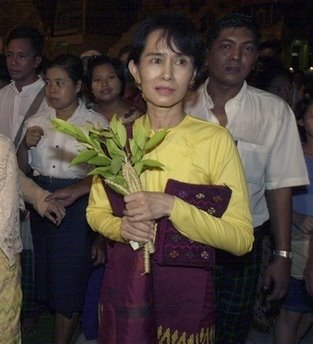


 Posts
Posts


