News & Articles on Burma
Tuesday, 06 September, 2011
-----------------------------
Free political prisoners in Myanamar: Indian MPs
Burma is selling out its future to China
RPT-China pipelines threaten Myanmar economic security-NGO
Nai Mya Thi, member of Mon ‘Twenty Comrades,’ dies
EU diplomats to be briefed on Burma ahead of human rights meeting
Human Rights Commission Met with Skepticism
Burma's State Media Reports Shoot-out Between Kachin Leaders
Exiled Journalist Detained after Returning to Rangoon
Deep-sea Port, Pipelines Have 'Devastating Impact': Shwe Gas
Myanmar National Human Rights Commission formed
-------------------------------------
Free political prisoners in Myanamar: Indian MPs
Calcutta News.Net
Tuesday 6th September, 2011 (IANS)
More than 100 Indian MPs have urged the Myanmar president to free more than 2,000 political prisoners.
The appeal has been made by Ram Jethmalani, convener of the Indian Parliamentarians' Forum for Democracy in Burma (IPFDB), and members of the group.
They are backing a call from Myanmar democratic leader and Nobel Peace laureate Aung San Suu Kyi for the release of political prisoners.
There are still more than 2,000 political prisoners in prisons in Myanmar, and many are in deplorable conditions, the group said.
Most of them have been sentenced to 65 years and more, it said.
'We, Indian parliamentarians, hope to see a genuine democratic system in Burma and ... call upon the government to release all political prisoners in the country.
'Their release will be a positive step in the spirit of conciliation and dialogue that Burma now needs.' http://www.calcuttanews.net/story/839194/ht/Free-political-prisoners-in-Myanamar-Indian-MPs
----------------------------------
Burma is selling out its future to China
By Zin Linn Sep 06, 2011 10:08PM UTC
The Shwe Gas Movement and The Palaung Women’s Organization held a press conference today at the Foreign Correspondents Club of Thailand in Bangkok. During the press conference, a new report entitled “SOLD OUT” was also released by the Shwe Gas Movement.
The report details the expending construction of a deep seaport, gas terminal and oil transfer point in Burma’s Arakan State as well as placing of nearly 800-kilometer pipe-line. Allowing freely of China pipeline project has become the cause of human rights abuses across the country. Dual pipelines across the country will become major structure pumping Burma’s natural-gas reserves as well as oil from middle-east and Africa to feed energy greedy China.
The 6,600 government soldiers to guard a corridor for the pipelines deployed from western coastline of Burma to north-eastern Sino-Burma border. The deployment risks growing abuses and ethnic instability, according to the report – Sold Out – by the Shwe Gas Movement.
Wong Aung of the Shwe Gas Movement explained the situation on the ground during the press panel that thousands of acres of farm lands have been confiscated in Arakan and Shan states as well as Magwe and Mandalay divisions to clear areas for the pipeline and associated infrastructure.
Fields have also been made unreachable; on Ramree Island the amount of land classified as “restricted access” by local authorities has recently increased in the areas around Sichoun, Sittaw and Ngagamaw villages. Construction equipment and trucks have ridden roughshod over fields, destroying crops and damaging soils. Some farmers have been prevented from harvesting crops in fields adjacent to construction areas. Companies have also dumped waste materials on paddy lands, the report says.
“Companies are ignoring widespread abuses and worsening civil war,” said Wong Aung.
Lway Aye Nang of the Palaung Women’s Organization highlighted the evil impacts of the civil war along the Chinese pipeline areas where Burmese soldiers committed rapes, murders, lootings and forced-laboring.
“The investors should pull out now before the project blows up in their faces,” Wong Aung added.
According to the Shwe Gas Movement group, the natural gas should be used domestically to transform deteriorating economy of the country. Due to fuel shortage and transportation prices increasing, a protest grew into the saffron revolution in 2007, the report said.
Burma’s Special Economic Zone Law was enacted in 2011 with the aim of encouraging more foreign direct investment and offers special concessions and tax incentives to companies investing in these zones. The law specifies that investors have a duty to increase the number of skilled “locals” to 25% ten years into the project, the report points out.
However “local” is defined as “national,” as a result there is no guarantee for local people to enjoy job opportunities. Land speculation and confiscation pushes out locals.
As corrupt officials and businessmen rival for major real-estate near special economic zones and land prices skyrocket, local people are forced off their lands by a “market-based forced relocation.” At the same time outright confiscation of lands in the zone by military authorities is ongoing in the Kyauk Phyu Special Economic Zone.
The report urged corporations such as China National Petroleum Corp and South Korea’s Daewoo International to withdraw from the projects, which will ship natural gas from Burma and oil from the Middle East and Africa to China.
As a final point, the Shwe gas movement accused the Burmese government of selling out the country’s economic future to China. The use of country’s natural gas domestically could change Burma into an economically healthy nation, it gave a positive message. http://asiancorrespondent.com/64349/burma-is-selling-out-its-future-to-china/
------------------------------------
RPT-China pipelines threaten Myanmar economic security-NGO
Tue Sep 6, 2011 3:28am EDT
(Reuters) - Controversial oil and gas pipelines spanning Myanmar will deprive its people of billions of dollars worth of their own resources and risk sparking armed conflict that threatens energy security for neighboring China, activists said on Tuesday.
Chinese-led construction of a combined 3,900 km (2,420 miles) of pipelines has displaced thousands of people and damaged livelihoods of farmers and fishermen, prioritising China's growing energy needs before those of the Burmese people, the Thailand-based Shwe Gas Movement said.
The project involves the state-owned China National Petroleum Corporation , India's ONGC Videsh and South Korea's Daewoo International .
Its construction, which began in June, has led to human rights violations from beatings, forced labour and rape to unlawful imprisonment and forced eviction, the non-governmental organisation said in a report entitled "Sold Out".
The Shwe project, it said, would earn Myanmar's government just $1 billion a year for the next 30 years and was doing nothing to address the acute domestic power shortages.
"The 'Shwe' offshore fields will produce trillions of cubic feet of natural gas that could be used to spur economic and social development in one of the world's least developed nations," it said.
"Instead it will be piped across the country to China, fuelling abuses and conflict in its path."
RISKY INVESTMENT
The pipelines, due for completion in 2013, are a major factor behind Myanmar's close ties with economic heavyweight China.
China enjoys easy access to its neighbour's abundant and cheap resources, with barely any competition from Western firms, most of which have stayed on the sidelines due to sanctions on Myanmar.
The relationship covers opaque deals worth billions of dollars in energy, mining, transport, telecommunications and construction that critics say will have only limited benefits for Myanmar's 50 million people. Many in Myanmar live below the poverty line and have watched their country wilt under five decades authoritarian military rule.
An estimated 12 million cubic metres of Burmese natural gas will be transported annually through a 2,800-km pipeline running deep into southwest China to generate electricity. A further 22 million tonnes of oil originating from the Middle East and Africa will flow into China through another 1,100-km pipeline.
The group warned firms to think twice about investing in Myanmar's energy sector because of festering political conflicts with the country's armed ethnic groups. It cited attacks by separatists in May that temporarily halted operations on a hydropower plant, leaving 30 Chinese engineers trapped.
More than 6,000 Burmese troops had been deployed to provide security, and the decision to build the pipelines close to the rebellious border states of Kachin and Shan presented a high risk of protracted conflict and severing of energy supplies.
"Armed conflict can break out at any time, posing enormous risks to foreign investments," the group said.
"Projects may be delayed and or temporarily or permanently halted due to conflict and the safety of project personnel suddenly brought into question." (Reporting Martin Petty; Editing by Yoko Nishikawa) http://www.reuters.com/article/2011/09/06/myanmar-china-pipelines-idUSL3E7K51NN20110906?rpc=401&feedType=RSS&feedName=rbssEnergyNews&rpc=401
--------------------------------------
Nai Mya Thi, member of Mon ‘Twenty Comrades,’ dies
Tuesday, 06 September 2011 12:03 Kun Chan
Chiang Mai (Mizzima) – One of the last surviving members of the "Twenty Comrades," the first Mon revolutionary armed group, died of natural causes in Thailand on Sunday.
Nai Mya Thi, 85, who was one of the last survivors of the “Twenty comrades,” served as a patron of Mon social organizations in the Sangkhlaburi District in Kanchanaburi Province.
In 1958, when the Mon People's Front revolutionary armed group surrendered to the Burmese Anti-Fascist People's Freedom League’s government, Mon leaders of the group formed the New Mon State Party (NMSP). Nai Mya Thi did not join the group, but the leaders of New Mon State Party recognized him as a Mon revolutionary leader.
“He is a leader who sowed the seeds of revolution. Our New Mon State Party mourns his death,” said Lieutenant Colonel Nyan Tun, a NMSP foreign affairs official.
Nai Mya was born in 1926 in Mawkanin village in Ye Township in Mon State. He left school at grade 7. In 1947, when he was 21, he worked as a secretary and canvasser for the Mon Independence Group organized by Nai Ba Lwin [New Mon State Party chairman Nai Shwe Kyin].
On August 19, 1948, he was involved in a raid on the Zathapyin Police Station to seize weapons. The date is celebrated as Mon Revolutionary Day.
Under the Anti-Fascist People's Freedom League government, he worked in the Mon Language programme at Myanmar Radio.
He was a member of the Mon National Defence Organization.
He was imprisoned in Mawlamyaing Prison for two years, and he was detained in Rangoon in 1957.
His wife, Mi Ban Aung, three children and seven grandchildren survive him. His body will be cremated at a monastery in Sangkhlaburi on Wednesday afternoon, according to his family. http://www.mizzima.com/news/regional/5887-nai-mya-thi-member-of-mon-twenty-comrades-dies.html
--------------------------------------
EU diplomats to be briefed on Burma ahead of human rights meeting
Tuesday, 06 September 2011 18:17 Mizzima News
Chiang Mai (Mizzima) – The International Bar Association’s Human Rights Institute (IBAHRI) and NGO groups plan to discuss the call for a Commission of Inquiry (COI) into war crimes in Burma with European Union (EU) diplomats ahead of a European Council meeting on human rights in Brussels on Monday.
UN special envoy Tomas Ojea Quintana will speak to EU representatives about war crimes and crimes against humanity in Burma. In this file photo, he reads a press statement while on a visit to Burma. Photo: Mizzima
UN special envoy Tomas Ojea Quintana will speak to EU representatives about war crimes and crimes against humanity in Burma. In this file photo, he reads a press statement while on a visit to Burma. Photo: Mizzima
The institute has arranged the meeting for diplomats on Tuesday with the aim to discuss the urgent need for the establishment of a United Nations COI into war crimes and crimes against humanity in Burma, according to a press release.
To this end, the United Nations Special Rapporteur on the situation of human rights in Burma, Tomás Ojea Quintana, together with a representatives from Burma Campaign UK; the Burma Lawyers’ Council and the International Federation of Human Rights and Human Rights Watch will brief EU diplomats.
The meeting is scheduled ahead of a EU representatives gathering at the Meeting of the Human Rights Working Group of the European Council to discuss, among other human rights issues, the UN General Assembly resolution on Burma for 2011, which must include a provision for a COI if its establishment is to be realized in the near future, according to the press release.
The experts will summarize the current human rights situation in Burma, taking into account recent political developments there, and explain why a COI is the best way forward for deterring the commission of further crimes––reported as murder, systematic rape, sexual violence, torture, the recruitment of children as soldiers, warrantless detention, widespread forced relocations and forced labour ––and ensuring justice for victims. The technicalities of such a COI, including the terms of reference, will also be discussed, according to the institute.
In comments provided before the meeting, Dr. Mark Ellis, executive director of the International Bar Association, said: “The Burmese people have suffered grave human rights violations for more than 20 years. The perpetrators act with immunity in an environment absent of action by the international community. The United Nations General Assembly should act promptly and decisively to establish a UN COI into human rights abuses in Burma.
“A transparent, impartial and independent UN commission of inquiry is an established tool for investigating allegations of international crimes committed by all parties to a conflict,” he said. “Establishing a commission for Burma would be a crucial and long overdue step in bringing accountability to Burma.” http://www.mizzima.com/news/breaking-and-news-brief/5890-eu-diplomats-to-be-briefed-on-burma-ahead-of-human-rights-meeting.html
----------------------------------------
Human Rights Commission Met with Skepticism
By KO HTWE Tuesday, September 6, 2011
Burmese human rights groups have greeted news of the creation of a “Myanmar National Human Rights Commission” (MNHRC) with doubts about how independent the new body will be and questions about key members, who include past defenders of the country's human rights record.
The MNHRC was officially formed on Monday to promote and safeguard the fundamental rights of citizens in accordance with the 2008 Constitution, Burma's state-run media reported on Tuesday. The 15-member body includes retired senior officials, diplomats, academics, doctors and lawyers.
The chairman and vice chairman of the commission are retired ambassadors Win Mra and Kyaw Tint Swe, while its secretary is Sit Myaing, the retired director general of the Social Welfare Department.
“I am skeptical about whether the commission will speak based on the truth and take action against human rights violations in accordance with the law,” said Aung Myo Min, the director of the Thailand-based Human Rights Education Institute of Burma.
Aung Myo Min said it was doubtful that a human rights body led by former officials who have defended the country against criticism of its human rights record in the past would act independently of the government.
Win Mra once told a UN gathering that there was no religious discrimination in Burma, and also insisted that there was no such racial group as the Rohingya—a Muslim minority living in Arakan State—in the country.
As the Burmese representative of the Association of Southeast Asian Nations Human Rights Commission, Kyaw Tint Swe was often unwilling to discuss rights restrictions in Burma, added Aung Myo Min.
At a Universal Periodic Review (UPR) of Burma's human rights situation by the United Nations Human Rights Council, Burmese representatives continued to deny reports of forced labor, sexual violence against women and other abuses perpetrated by the country's military.
At the UPR meeting in January, the Burmese delegation said that accusations of widespread rights violations, especially in ethnic areas, were “baseless and merely aimed at discrediting the Burmese armed forces.”
Despite these denials, however, there are many well-documented cases of human rights abuses in Burma, including land confiscation, forcible recruitment of child soldiers, forced labor and rape and murder of ethnic civilians in conflict zones.
Maung Maung Lay, of the Rangoon-based Human Rights Defenders and Promoters group, said he welcomed the creation any organization seeking to promote human rights, but would have to wait and see whether the new commission acted in an independent manner.
In the 1990s, Burma's ruling junta formed a human rights committee led by Home Affairs Minister Col Tin Hlaing, and later by Maj-Gen Maung Oo. http://irrawaddy.org/article.php?art_id=22025
--------------------------------------
Burma's State Media Reports Shoot-out Between Kachin Leaders
By BA KAUNG Tuesday, September 6, 2011
Burmese state media alleged that a deadly shoot-out took place during a recent meeting of top Kachin rebel leaders due to differing views on ceasefire negotiations with the government, but the report was rejected as propaganda by the rebel leaders.
According to reports in the state-run newspapers on Tuesday, the deadly shoot-out occurred at a meeting of Kachin Independence Army (KIA) leaders held on Thursday in Laiza, Kachin State, where the 10,000-strong ethnic armed group has its military headquarters.
The reports said that the incident left one KIA leader dead and one wounded. It was alleged to have occurred due to different views among KIA leaders over renewing the group's ceasefire agreement with the Burmese government. The reports also said that KIA military chief Gun Shawng and his deputy, Gun Maw, were present at the meeting.
The reports came amidst growing obstacles in the efforts by the KIA and the Burmese government to renew the ceasefire agreement, which collapsed following armed clashes between the two sides in June near the Chinese border.
Col. Zau Raw, a top KIA official who along with Gun Maw participated in previous discussions with the Burmese government, rejected the report of violence at the meeting as a sheer propaganda effort aimed at misleading the people about the KIA leadership.
“The report is really outrageous. Nothing of that sort happened,” he said, adding that he and Gun Maw were on a trip together on the day when the alleged incident took place, and that the daily meeting of top KIA leaders, including Gun Maw, was held in Laiza today.
“The government wants to create confusion among our troops about their leaders. This is totally baseless,” he said.
During the past few days, several posters were put up by unknown people in Kachin State alleging that Gun Maw had been killed during internecine fighting among the KIA leadership. It is suspected that the posters were made and distributed upon the instruction of local government officials.
In discussions with Naypyidaw, the KIA's political wing, the Kachin Independence Organization (KIO), has demanded that the government open an inclusive political dialogue with all ethnic armed groups based on the pre-independence 1947 Panglong Agreement, which guaranteed ethnic minorities basic autonomy in a federal state—a promise that never materialized.
But Naypyidaw has insisted that the KIA join its border guard force under the central command of the Burmese army, and that the KIO participate in the national political process under the terms of the 2008 Constitution, which was drafted by the previous military regime.
While a renewed ceasefire remains uncertain, sporadic armed clashes between the government and the KIA continue to take place in the strategic region along the China-Burma border. http://irrawaddy.org/article.php?art_id=22024
-------------------------------------
Exiled Journalist Detained after Returning to Rangoon
By WAI MOE Tuesday, September 6, 2011
Sein Kyaw Hlaing, a veteran Burmese journalist working in exile for the BBC Burmese Service (BBC Burmese) and Radio Free Asia (RFA), was reportedly detained and interrogated in Rangoon after accepting President Thein Sein's offer to exiles to return home.
Sein Kyaw Hlaing, who became well-known by Burmese audiences while working as a broadcaster for the BBC Burmese in the1990s, was reportedly detained by Burmese secret service officers shortly after he arrived at the Rangoon International Airport in late August, one of his friends told The Irrawaddy on Tuesday.
“I heard he [Sein Kyaw Hlaing] negotiated his return home with Burmese officials in Mae Sot after Thein Sein made his comments about exiles,” she said. “He was reportedly detained shortly after he landed at the Rangoon airport. He is now believed to be at the Aung Tha Pyay interrogation center of the Special Branch.”
It has not been disclosed whether Sein Kyaw Hlaing would be charged or just detained for interrogation.
On August 17, Thein Sein told Burmese businessmen and civic group officials: “We will conduct a review to make sure that Myanmar [Burmese] citizens living abroad can return home if they have not committed any crime.” However, the president did not clarify what the regime's definition of a “crime” was.
An official of the Union of Myanmar Federation of Chambers of Commerce and Industry, who spoke on condition of anonymity, said that although President Thein Sein invited exiles to return home, old laws still remain and the ability of exiles to go home without fear still yet unkown.
While he worked with BBC, Sein Kyaw Hlaing was notable for his business reporting. With the Washington-based RFA, he covered the affairs of the ruling generals and ministers. One minister he reported on was Aung Thaung, a leader of the ruling Union Solidarity and Development Party and former minister of Industry-1.
After working with the RFA, Sein Kyaw Hlaing became the editor of the New Era Journal based in Thailand. Currently, he is an outside contributor for RFA. http://irrawaddy.org/article.php?art_id=22022
----------------------------------
Deep-sea Port, Pipelines Have 'Devastating Impact': Shwe Gas
By SAW YAN NAING Tuesday, September 6, 2011
BANGKOK—The construction of China's deep-sea port off the Arakan coast, and the laying of gas and oil pipelines across Burma is having a devastating impact on thousands of people and the environment, according to a report released on Tuesday.
The report by the Shwe Gas Movement, titled “Sold Out,” said the ongoing projects, which involve Chinese, Korean and Burmese cooperation, have directly affected 80,000 people displaced along the 800-km (500 mi) pipeline route.
The dual pipelines will pump Burma’s natural gas reserves as well as oil transported from the Middle East and Africa across the country to feed China’s energy needs.
“The regime is selling our economic future to China,” said Wong Aung of the Shwe Gas Movement at a press conference in Bangkok on Tuesday.
While China takes energy from Burma, some 79 percent of Burmese people live without electricity, said Wong Aung, quoting regional energy research.
The report stated that widespread land confiscation—to make way for the pipeline corridor—is leaving farmers jobless while fishing grounds are now off limits, contributing to rising migration.
Local people are able to secure only low-wage, temporary and unsafe jobs on the project. They are banned from demanding fair wages. To date, 60 workers at the onshore Gas Terminal site alone have been fired for demanding fair wages, said the report.
Wong Aung said that 33 Burmese army battalions are currently deployed along the pipeline corridor in Arakan and Shan states. Naval patrols guard offshore construction, and a missile complex is also being built next to the deep-sea port.
The Burmese government has ordered its troops to launch offensives to clear ethnic armed groups out of resource-rich areas in northern Kachin and Shan States since March 2011, leaving thousands of people displaced, according to the report.
Wong Aung said that lands have been confiscated along the pipeline route and 80,000 people in 21 townships have been directly affected.
From a human rights perspective, Lway Aye Nang of the Palaung Women’s Organization said that local villagers have already experienced forced labor, forced relocation and land confiscations in the Palaung area of Shan State.
“Some plantations were seized even though the owners didn’t know,” said Lway Aye Nang, adding that the new government takes no responsibility for the affected people.
The report also tackled environmental issues. The clearing of forest areas and animal corridors for the pipeline route and the potential for explosions and leaks could impact areas across the country, it said.
Shwe Gas Movement said oil spills and refuse disposal off the coast endanger the entire catchment area of the Bay of Bengal, while fuel discharge as well as oil leaks and spills from the tankers offloading at the deep-sea port would have devastating impacts on the coastal ecosystem, particularly mangrove forests.
The development of large-scale petrochemical facilities on Remree and Maday islands increases the likelihood of deadly spills or the outright dumping of toxic materials into the sea and local waterways.
The construction project incorporating the deep-sea port, the gas terminal and oil transfers involves the China National Petroleum Corporation and companies from South Korea and Burma. Despite the outbreak of armed conflicts, the companies, however, have speeded up the construction.
The report said the natural gas, if used domestically, would transform Burma’s failing economy, addressing chronic energy shortages and unaffordable petrol prices that led to uprisings in 2007. The gas will instead be exported and revenues from the sale of gas—estimated at US $29 billion—will be swallowed up by a fiscal black hole that omits gas revenues from the national budget.
“The investors should pull out now before the project blows up in their faces,” said Wong Aung. http://www.irrawaddy.org/article.php?art_id=22023
------------------------------
New Light of Myanmar
Myanmar National Human Rights Commission formed
NAY PYI TAW, 5 Sept-The Union Government of the Republic of the Union of Myanmar issued Notification No. 34/2011 dated 5-9-2011 as follows:-
Republic of the Union of Myanmar
Union Government
Notification No. (34/2011)
8th Waxing of Tawthalin1373 ME
(5 September, 2011)
Formation of Myanmar National Human Rights Commission
Myanmar National Human Rights Commission was formed with the following persons with a view to promoting and safeguarding fundamental rights of citizens described in the constitution of the Republic of the Union of Myanmar.
(a) U Win Mra
Ambassador (Retd)
Chairman
(b) U Kyaw Tint Swe
Ambassador (Retd)
Vice-Chairman
(c) U Tun Aung Chein
Professor (Retd), Department of History
Member
(d) U Hla Myint
Ambassador (Retd)
Member
(e) U Than Swe
Director-General (Retd), Forest Department
Member
(f) Dr Nyan Zaw
State Medical Officer (Retd)
Member
(g) Dr Daw Than Nwe
Professor (Retd), Department of Law
Member
(h) Daw Saw Khin Kyi
Professor (Retd), Department of International Relations
Member
(i) U Tin Nyo
Director-General (Retd), Basic Education Department
Member
(j) U Kwa Htiyo
State Law Officer (Retd)
Member
(k) U Khin Maung Lay
Director (Retd), Labour Department
Member
(l) U Lapai Zawgun
Minister Counsellor (Retd)
Member
(m) U Nyunt Swe
Deputy Director-General (Retd), Ministry of Foreign Affairs
Member
(n) Daw San San
Director (Retd), Labour Department
Member
(0) U Sit Myaing
Director-General (Retd), Social Welfare Department
Secretary
By order,
Tin Myo Kyi
Secretary
Union Government
Copyright © 2006 myanmar.com. All rights reserved.
Wednesday, September 7, 2011
News & Articles on Burma -Tuesday, 06 September, 2011-UZL


Monday, September 5, 2011
News & Articles on Burma -Sunday, 04 September, 2011-UZL
News & Articles on Burma
Sunday, 04 September, 2011
-----------------------------
Suu Kyi's First Article for 23 Years Published in Burma
Govt Army Accused of Planting Landmines around Kachin Church
Burmese Supreme Court to be asked to order halt to Myitsone Dam project
WikiLeaks Cables Show China's Support for UWSA
Myanmar, NKorea traded rice for arms: US cable
Go on, Thein Sein, surprise us
-----------------------------------
Suu Kyi's First Article for 23 Years Published in Burma
By WAI MOE Monday, September 5, 2011
Pro-democracy icon Aung San Suu Kyi has published her first article in the Burmese media for 23 years on the front page of Pyithu Khit News Journal, while Messenger News also ran an exclusive interview with the Nobel Laureate as its cover story.
Pyithu Khit (People’s Era) was permitted by the Burmese censorship board—the Press Scrutiny and Registration Division under the Ministry of Information—to publish Suu Kyi’s article entitled Holiday-1 in this week's edition, according to journalists and distributors in Rangoon.
An official at Pyithu Khit Journal told The Irrawaddy on Monday that they also carried a piece by one of her close aides—veteran journalist Win Tin’s old article on Suu Kyi’s father Aung San.
“We applied at the censorship board for the right to publish the article and they allowed it. There was not much difficulty during the process,” he added.
The other publication receiving the green light from the censorship board, headed by former military officers, is Messenger News Journal. It is run by Zaw Min Aye, son of ex-Lt-Gen Tin Aye who is currently chairman of the Union Election Commission and former chief of Military Ordinance.
The censoring process for Suu Kyi’s interview took around 10 months before permission was granted.
“The interview with Daw Aung San Suu Kyi took place in December 2010 [shortly after her release from house arrest]. Since then we have been applying for permission to publish the interview at the censorship board,” said an official with Messenger Journal who spoke on condition of anonymity.
“The censorship board cut all references to politics, which amounted to around 75 percent of the interview, but allowed issues related to youth,” he added.
In this week's issue, Pyithu Khit used Suu Kyi’s photo alongside her son Htain Lin and his dog. It was taken during her trip to Pagan in July.
The granting of permission for Suu Kyi’s article and interview to appear with front page photos comes soon after her first trip to Naypyidaw and talks with President Thein Sein on August 19-20. She was invited to the administrative capital for a state-sponsored economic workshop as a “special guest,” and also had two meetings with government minister Aung Kyi in July and August.
This move comes amid calls from the international community for the Burmese regime to ensure Suu Kyi's safety and human rights. US Senator John McCain urged the new Burmese administration to guarantee Suu Kyi’s rights and freedom of movement during a statement in Rangoon at the end of his trip to Burma in June.
For the last 23 years, even Suu Kyi’s name or any symbols indirectly referring to her—such as “the lady,” “the mother” or “the rose”—were banned in publications within the military-ruled Southeast Asian nation.
The censorship board’s recent actions contrast with last November when nine Burmese private journals were suspended from publishing for one or two weeks for covering her release. The censorship board said the journals were “crossing the line.”
Suu Kyi’s article and interview in the Burmese media this week received mixed reactions from journalists in Burma. Some welcomed the move while others view the issue with skepticism, with the Naypyidaw regime remaining notorious for enforcing draconian laws oppressing freedom of expression.
In Burma, anyone can still be charged and imprisoned under the Printers and Publishers Law, the Electronic Transaction Law and the Official Secrets Act among others, if authorities suspect any publication is challenging the state.
“I think allowing Daw Aung San Suu Kyi’s article and interview is firstly the outcome of meetings between her and government officials, and secondly relates to the question of space in the Burmese media,” said an experienced freelance reporter in Rangoon.
“It would be too early and out of context if we examine only this case instead of the whole media environment of the country,” he added.
A female senior staffer with a leading news journal in Rangoon said, “It is very good to see Daw Aung San Suu Kyi’s photos, article and interview in Pyithu Khit and Messenger. But some publishers will misuse her photos and writings for their own benefit since journals with her photos are easily sold out.”
According to distributors in Rangoon, this week's edition of both Pyithu Khit and Messenger with Suu Kyi’s article and interview are quite popular among readers and have been selling well.
“Many people came to buy the Messenger News Journal with Daw Aung San Suu Kyi’s photo this morning. Unlike last week, it was sold out within a few hours due to her interview,” said the owner of a journal stand in Rangoon’s Tamwe Township.
A correspondent of The Irrawaddy in Rangoon contributed to this article.
http://www.irrawaddy.org/article.php?art_id=22017
----------------------------------
Govt Army Accused of Planting Landmines around Kachin Church
By SAW YAN NAING Monday, September 5, 2011
Clad in traditional dress, ethnic Kachin people dance during their Manaw festival to celebrate their new year in Myitkyina, the capital of the Kachin State, on Jan 8, 2011. (Photo: AP)
Kachin Christians have accused Burma's armed forces of abusing their religious rights after government troops seized control of a church in Kachin State and turned it into a military outpost, complete with fortifications, trenches and landmines, according to local sources.
The church, in the village of Katsu in Waimaw Township, was commandeered by the Burmese army last month amid an ongoing armed conflict with the Kachin Independence Army (KIA), a former ceasefire group that resumed hostilities with government troops on June 9.
On Aug 26, members of the Katsu Kachin Baptist Church sent a letter of complaint to the chief minister of Kachin State saying that government troops from Infantry Battalion (IB) 58 and IB 318 had banned them from entering the church since Aug 13.
“They [the government army] took over the church in Katsu village and started fortifying it. They have banned local villagers from going to the church or traveling around the area,” said Mai Li Awng, a spokesperson for a local Kachin relief group called Wun Tawng Ningtwey (“Light for Kachin People”).
“I don't think they should be allowed to do this because the church is a religious site, and has nothing to do with politics. It's not appropriate to take over a church and turn it into a military base. It's a human rights abuse,” she added.
Naw La, a Kachin activist, said that there has been an increase in cases of extortion, torture and looting in Katsu since fighting between the KIA and government troops began in June. Clashes occur near Katsu almost every day, he said.
The government troops have also taken over houses abandoned by local villagers. Katsu has around 100 houses and a population of about 1,000, although most have fled the area since fighting began.
The commanders of IB 58 and IB 318 had earlier rejected an appeal made by the church members on Aug 16 that called for the removal of landmines planted in the church compound, as well as in a schoolyard and along several main roads.
In their letter, the church members wrote: “We the members of the Katsu Baptist Church are facing difficulties in worshiping the God we believe in.”
In the letter, addressed to Kachin State Chief Minister La John Ngan Hsai, the church called for the removal of the mines.
“We therefore respectfully would like to urge the Kachin State Chief Minister to remove the mines, give us the normal situation around the church as before and the right to travel safely to farms and paddy fields by taking necessary actions,” read the letter.
An estimated 20,000 Kachin civilians have so far been displaced by the conflict, many of them seeking refuge on the Sino-Burmese border and in the city of Laiza, where the KIA is based, according to Kachin relief groups. http://www.irrawaddy.org/article.php?art_id=22015
---------------------------------------
Monday, 05 September 2011 12:18 Tun Tun
Burmese Supreme Court to be asked to order halt to Myitsone Dam project
New Delhi (Mizzima) - A group of politicians will ask the Burmese Supreme Court to issue an injunction to stop work on the Myitsone Dam project on the Irrawaddy River and to reveal more information about the dam project.
Candidates who ran in the 2010 election including Bauk Ja and Min Aung of the National Democratic Force; Aung Myo Oo of Peace and Diversity Party; former Democracy Party (Myanmar) candidate Soe Kyi; and independent candidate Win Cho said they plan to file the lawsuit as soon as the current session of Parliament ends, if more information is not made available.
“How much benefit would the Myitsone Dam bring to our citizens? How will the dam adversely affect the people?” said Win Cho.
“It’s certain that many citizens will be adversely affected by the dams. But, we don’t know exactly how much benefit they would bring. We know as much as the exile media can make available. We want to know more about it.”
The electoral candidates said that they decided to file a lawsuit because the authorities had not disclosed enough information, and they feared the dam would lead to the extinction of the Irrawaddy River.
The 2008 Constitution gives citizens the right to sue the Union government in the Supreme Court. In cases of a citizen’s suit, the Supreme Court can issue a writ of habeas corpus, writ of mandamus, writ of prohibition, writ of quo warranto or writ of certiorari.
The suit will ask the court to issue a writ of prohibition and a writ of quo warranto. A writ of prohibition is an order to halt work or actions. A writ of quo warranto is an order to show the authority on which work or actions are based.
“If MPs cannot get real information about the Myitsone Dam construction and the possibility of the extinction of Irrawaddy River before the parliament ends, we will file suit,” Win Cho said.
After the Myitsone dam project is completed, 6,000 megawatts of electricity will be generated and the bulk of the electricity will be sold to China, according to reports. Five dams are planned for the Malikha River.
China Power Investment Corporation (CPI) is leading the construction and financing of the dam projects and Burma’s state power utility Myanma Electric Power Enterprise, the Steven Law and the Asia World companies are also involved in the projects.
The area of the Myitsone dam project is 18,000 square miles. The height of the dam is 152 meters (500 feet) and the height of the upper reservoir is 299 meters (980 feet). The affected area of the dam is wider than the area of Singapore. Because of the dam’s impact, 15,000 people in villages are likely to be adversely affected.
In September, 1,600 people including prominent writers and artists signed a petition to urge President Thein Sein to stop the Myitsone Dam project. The petition was signed by “People who want the Irrawaddy to survive forever” and titled “An appeal urging a stop to the Myitsone dam project in order to prevent the Irrawaddy River from extinction and to avoid adverse effects on the Burmese citizens.”
“If the Irrawaddy River is extinct because of the Myitsone Dam, future generations will suffer,” Nu Nu, an 88-generation student who is an organizer of the petition, told Mizzima.
The petition urged the government to authorize international experts conduct research on the Myitsone Dam project to stop the construction during the research and to inform the public about it findings. A second petition with additional signatures will be sent in the coming weeks.
On August 11, opposition leader Aung San Suu Kyi released an open letter, “Irrawaddy Appeal,” saying that the lack of sound planning, the failure to enforce necessary conservation laws and poor ecological awareness have created diverse problems for the country.
Kyaw Thu, the chairman of Free Funeral Service Society, who signed the petition, said: “The Irrawaddy River is the lifeblood of our country. If you are a good Burmese citizen, you have the responsibility to preserve the river.
“Constructing the dam…is very dangerous. We need to ensure that we do the things that will protect it and restore it to its original condition.” http://mizzima.com/news/inside-burma/5878-burmese-supreme-court-to-be-asked-to-order-halt-to-myitsone-dam-project.html
-----------------------------------
WikiLeaks Cables Show China's Support for UWSA
By KO HTWE Monday, September 5, 2011
Burma's strongest ethnic armed group of the United Wa State Army (UWSA) is confident of the “upper hand” in any battle with government troops after being equipped with more than 30 US-manufactured surface-to-air missiles, according to a recent dispatch by WikiLeaks.
Rangoon-based United States Embassy Charge d'Affaires Larry Dinger sent the cable in January 2010 after talking with UWSA's Deputy Liaison Officer Soe Than.
In the cable, Soe Than also predicted that Burmese troops would face serious logistical challenges and numerous potential casualties if they were to attack the group.
The UWSA also received financial and moral support from China, said Soe Than.
He said the Chinese thought the State Peace and Development Council (SPDC) was angling for new allies—specifically the US, North Korea and Russia—so China was beefing up its financial and military support for the UWSA in response.
Chinese government representatives attend all UWSA ceremonies and five representatives from the Chinese Embassy in Rangoon attended a Wa anniversary celebration in December 2009, he added.
A separate 2009 cable concerning the UWSA also claimed that the group was well-armed with US-manufactured grenade launchers, as well as shoulder-mounted surface-to-air missiles and launchers provided by Russia.
The cable claims that there were 30,000 active-duty Wa troops with an additional 10,000 youth and auxiliary forces, many of whom are enrolled in training or engaged in agriculture.
“The only threat the UWSA is not prepared to face is major airstrikes by the Burma Army,” Soe Than was quoted in the cable.
The Wa group found it easy to purchase arms from Thailand, China (including Hong Kong), and Singapore, according to leaked documents. But the UWSA denied manufacturing armaments or purchasing shoulder-mounted surface-to-air missiles and launchers from Russia in 2005 or 2006.
Hong Pang Company, based in Tachilek, is the parent company for many Wa investments, said Soe Than.
He also claimed the UWSA has over US $2billion invested in “transportation (including Yangon Airway), hotels (including Yangon City Hotel), restaurants, gems, mining, teak, road/building construction, property development, manufacturing (including of the ubiquitous plastic rice bags), wood processing (including a facility at the Mingaladon Industrial Estate near Rangoon's airport), massage parlors, and music recording studios (including "NASA" Studio—NFI).”
For the Wa, retention of the UWSA is non-negotiable and leaders are prepared to abandon all legitimate economic interests throughout the country—estimated by the Wa as over US $2 billion—if necessary to preserve their right to arms.
Since last year, the Burmese regime has been pressuring 17 ceasefire armies to accept the Border Guard Force (BGF) plan, but only a few have joined. The others, including the UWSA and the Karen Independence Army, have refused.
Comparing Military Security Affairs Chief Lieutenant General Ye Myint with former Prime Minister and Military Intelligence Chief Khin Nyunt, UWSA Commander Bao Youxiang said he respected Khin Nyunt.
In 2009, Bao Youxiang met with Ye Myint for 30 minutes but no solution regarding the BGF was reached. The UWSA did not accept the Burmese government's BGF proposal but opted to “not answer” rather than reply no.
Soe Than said, “You can never trust the SPDC. They always negotiate while holding a sword behind their back.”
Burma's ethnic Wa population is estimated at nearly one million and strives to maintain its army and autonomy over its own ethnic region, but has expressed no desire leave the federal system and secede from Burma. http://irrawaddy.org/article.php?art_id=22013
-------------------------------
Myanmar, NKorea traded rice for arms: US cable
Bangkok, Sep 5 (AFP)
Myanmar's regime has allegedly exported rice and other agricultural commodities to North Korea in exchange for arms, according to a US diplomatic cable released by anti-secrecy website WikiLeaks.
The July 2009 memo from the US embassy in Yangon said that Myanmar had exported about 20,000 tons of rice to North Korea through military-owned Myanmar Economic Holdings Ltd.
According to a well-placed business source, Myanmar "has been exporting rice and other agricultural commodities to North Korea for over five years in exchange for arms," added the cable, which referred to "conventional weapons".
US diplomatic memos released last year by WikiLeaks said Washington has also suspected for years that Myanmar ran a secret nuclear programme supported by Pyongyang.
A UN report published in November said North Korea was supplying banned nuclear and ballistic equipment to Myanmar, along with Iran and Syria.
Myanmar has dismissed reports of its nuclear intentions and brushed aside Western concerns about possible cooperation with North Korea.
A civilian administration has been nominally in charge of Myanmar since March, following a controversial election last year, but its ranks are dominated by former generals. http://www.deccanherald.com/content/188608/myanmar-nkorea-traded-rice-arms.html
--------------------------------------
Go on, Thein Sein, surprise us
Monday, 05 September 2011 12:30 Benedict Rogers
(Commentary) - Two weeks ago, as Libyan rebels advanced towards Tripoli and the demise of Colonel Muammar Gaddafi became ever more certain, a surprising chain of events were taking place in another of the world’s worst dictatorships, Burma. Thein Sein, Burma’s new president and a former general, spent an hour in one-to-one talks with the country’s opposition leader Aung San Suu Kyi, the first time the two had met.
Since her release from house arrest nine months ago, Suu Kyi has consistently called for dialogue with the regime. Indeed, ever since her struggle for Burma’s freedom began 23 years ago, dialogue has been her mantra. Despite spending more than 15 years under house arrest, she has never changed her core demand: let’s talk. Apart from a few stalled attempts a decade ago, the generals have usually met her call with stony silence.
So why now? There are plenty of reasons to be sceptical and cynical about the regime’s intentions. Is it a charade, designed to present a veneer of reasonableness to a watching world, particularly to the Association of South East Asian Nations (Asean), whose chairmanship Burma is hoping to assume in 2014? Is it a trick, an astute divide-and-rule tactic used repeatedly by the regime? Or could it be that after the sham elections last November a power struggle ensued within the regime, emboldening the emergence of reform-minded generals?
It is worth recalling that the elections were so blatantly rigged that the regime remained almost entirely in military hands if not in military clothes. Few believed that the previous dictator, Than Shwe, had genuinely retired, assuming instead that he would pull the strings from behind the scenes. Either that analysis is wrong and Thein Sein is his own man, or Than Shwe is performing his ultimate piece of psychological warfare, as puppet master of tricks and traps.
In addition to talking to Suu Kyi, Thein Sein made two other announcements last month. First, he invited Burmese living in exile to return. By itself, that’s easy to ignore as a piece of typical propaganda. No Burmese I know feels ready to take him up on his offer. The second is more interesting. For the first time, the regime has called for peace talks with all armed ethnic groups along Burma’s borders. Unlike in the past, the offer applies to all the groups, simultaneously, rather than piecemeal deals designed to pick them off one by one and sow division. It is unclear what the mechanism for talks will be, and what will be on offer—and piecemeal deals may still be the plan, even if talks are occurring simultaneously. No nationwide cease-fire has been offered, as yet. It is, nevertheless, interesting.
So what should we make of all this? There are two dangers we must avoid. The first is to embrace these steps as some great breakthrough, and immediately ease all international pressure on the regime. That would be disastrous, though it would be what the regime is hoping for. The second, however, would be to dismiss these developments out of hand. Having called for dialogue for years, we cannot now write it off when it is offered. Instead, the international community must undertake the following steps.
First and foremost, listen to Suu Kyi and the ethnic nationalities. How are they responding? What is their analysis? What are their desires?
Second, spell out to the regime very clearly what must happen if international pressure is to ease. Benchmarks of progress are needed now more than ever. If Thein Sein’s talks with Suu Kyi are to amount to more than a cup of tea, there must be some outcomes. Another round of talks, for a start. The release of all political prisoners. A nationwide ceasefire. An end to the widespread, systematic use of rape as a weapon of war, forced labour, torture, persecution of religious and ethnic minorities, destruction of villages, killings.
When we see evidence of a real change of heart, and a corresponding change of policy, then we can talk seriously about lifting sanctions. Until then, the European Union, the United States, Canada and Australia must not only maintain sanctions, but must pursue the proposal of the UN Special Rapporteur for Human Rights in Burma, Tomas Ojea Quintana, for a Commission of Inquiry to investigate crimes against humanity.
Burma’s neighbours have a crucial role to play, now more than ever. Now is the time for China, India, Japan and Asean member states to tell Thein Sein: “Okay, good step—now where’s the substance?” For years, they have provided the regime with diplomatic, political, economic and in some cases military cover, often damaging their reputations. Now is the time to tell the regime: “Give us results.”
Thein Sein has undoubtedly watched the fall of Ben Ali in Tunisia, Hosni Mubarak in Egypt and now Gaddafi with growing horror. Mubarak’s trial and the arrest of Gaddafi’s sons for prosecution in the International Criminal Court must fill him with dread. For those reasons alone, he should take the chance now to chart a different course for Burma. In Aung San Suu Kyi, he could not have a more reasonable opponent.
Thein Sein can also look at history and consider the dictators that are remembered, and why. People today still talk about Russia’s Mikhail Gorbachev and South Africa’s FW de Klerk, forgetting the bad things they did and remembering them as dictators who helped transition their countries to freedom. Leonid Brezhnev and PW Botha are consigned to the dustbin of history. Most people right now do not even know who Thein Sein is. Now is his chance—he could go the way of other Burmese dictators, into oblivion, he could go the way of Mubarak and Gaddafi, or he could take his place in history as the Gorbachev or de Klerk of Burma? Does he have the skills, the strength and the courage to do it? Now is his chance to surprise us.
Benedict Rogers is the East Asia team leader at Christian Solidarity Worldwide, an international human rights organization, and author of “Than Shwe: Unmasking Burma’s Tyrant.” http://mizzima.com/edop/commentary/5879-go-on-thein-sein-surprise-us.html
News & Articles on Burma -Sunday, 04 September, 2011-UZL
News & Articles on Burma
Sunday, 04 September, 2011
-----------------------------
Myanmar pledges fair payments for railroad land
Burma: Government drives wedge between Karen Party and Karen armed groups
Amnesty urges Europe to back Burma crimes inquiry
Burma's barmy army cry freedom
Burma's women forced to be Chinese brides
-----------------------------
Myanmar pledges fair payments for railroad land
Sep 4, 2011, 6:31 GMT
Yangon - Myanmar's government has pledged to adequately compensate landowners along a 800-kilometre route for a rail link from China to the Bay of Bengal, reports said Sunday.
Minister for Railways Aung Min said the government was determined to ensure that citizens 'are not cheated' by the 20-billion-dollar project. The railroad would link a deep seaport in Rakhine State on the Bay of Bengal with Muse on the Chinese border, the Myanmar Times reported.
'We are negotiating in detail with the Chinese side on all issues, including compensation for the land needed to construct the line,' Aung Min said last week. 'We are doing everything to protect our people so they are not cheated.'
Human rights groups have raised concerns about the rail link, noting that mega-projects in Myanmar have led to land expropriation, forced labour and other abuses in the past.
'If the land is privately owned, we will evaluate the value with the local authorities and the Chinese company will pay that price to the owners,' Aung Min said.
He said the government was negotiating s contract with state-owned China Railways Engineering Corporation. Construction could begin in December.
Aung Min is a member of the cabinet that started work on April 1, following the November 7 general election.
Construction of the Kyaukpyu-Muse railroad is expected to take five years to complete under a build, operate and transfer contract.
'It will cost about 20 billion dollars,' Aung Min said. 'We might give China Railways Engineering Corporation the right to operate the line for 50 years.'
The single-track line would operate with electric trains capable of travelling at about 200 kilometres per hour, with a capacity for 4,000 tons of cargo plus passengers.
The railroad will follow the same route as oil and natural gas pipelines from the Bay of Bengal to the Myanmar-China border, which is being built by another state-owned Chinese company.
Both projects are designed to cut transportation costs for China.
'With this railroad China can get access to the sea and transport their goods without having to pass through the Malacca Strait,' Aung Min said.
The government is also considering a plan to build a railroad linking Dawei on the Bay of Martaban to Kanchanaburi in Thailand.
In November 2010, Ital-Thai Development Corp of Thailand signed an agreement to develop a deep seaport and special economic zone near Dawei.
http://www.monstersandcritics.com/news/business/news/article_1660788.php/Myanmar-pledges-fair-payments-for-railroad-land
----------------------------------
Burma: Government drives wedge between Karen Party and Karen armed groups
By Zin Linn Sep 04, 2011 12:20AM UTC
Karen State Democracy and Development Party (KSDDP) based in Hpa-an in Karen State announced its attitude towards DKBA on Saturday, according to the state-media.
The government invited armed groups to hold peace talks for building national unity for national development by issuing Announcement No. 1/2011 dated 18-8-2011, state-run media declared Saturday. A news agency broadcast that with regard to the announcement, the Democratic Kayin Buddhist Army met leaders of Shan State Army and held discussions on cooperation and providing military assistance to each other; and DKBA showed its stance to hold discussion representing the combined forces, but not as a separate group.
The New Light of Myanmar reported that as of 18-8-2011, DKBA has been formed as Border Guard Force with 12 battalions in accord with the constitution.
Moreover, the paper says, Kayin State Democracy and Development Party (KSDDP) has officially been formed with officers and servicemen of above-50 years old to be able to participate in nation-building tasks. Units of Border Guard Force are discharging State duties.
Thus, there is no more DKBA any longer, KSDDP’s statement says. Consequently, the KSDDP affirmed that it does not recognize the organization under the name of DKBA undermining peace and stability of the State.
Although the statement was made under the name of KSDDP, people understood the work as government propaganda to deceive the people.
On 20 August, motor vehicle convoy carrying the Karen State Minister, Major General Zaw Min and Director of the People’s Militias and Border Forces Directorate Major General Maung Maung Ohn were ambushed on their way back from a Border Guard Force (BGF) one year anniversary celebration in Myawaddy Township, DVB News said.
Three Burmese soldiers were killed in the ambush by the Democratic Karen Buddhist Army (DKBA). However both senior government officials were capable of fleeing with their lives. DKBA ambushed the Karen State Minister’s convoy with some explosive mines and small-arms attack.
Captain Saw Two Three of the DKBA Brigade-5 intelligence unit told DVB that one of the trucks in the convoy was hit by a mine in the attack that took place at Wesha Maepleh village in Myawaddy township.
Last year, a division of the DKBA fighters determined not in favor of signing the government’s border guard force (BGF) program, which was an attempt to weaken ethnic armed groups and put them under the Burmese military command.
The current conflict started when Brigade 5 led by Saw Lha Pwe, who opposed the junta’s plan to change his troops into the Burma Army’s border guard force, raided for a short period government’s key positions in Myawaddy Township on controversial Election Day, 7 November 2010.
Brig-Gen Saw Lah Pwe, the commander of DKBA Brigade 5 said that the government is still reinforcing its troops in Karen State and does not seem to be seeking ceasefire talks. The previous ceasefire between the military regime and DKBA Brigade 5 broke down after the group refused to join the junta’s border guard force (BGF) under Burmese army control.
Hence, today statement by the KSDDP seems to be released under the guideline of the current President Thein Sein government. It also indicates that the government does not recognize the organization under the name of DKBA and will not seek peace talks with the ethnic armed group.
Some analysts believe the regime exercises a divide-and-rule strategy in an attempt to defeat the vigorous ethic armed groups that have rejected the BGF.
So, regarding ethnic Karen armed groups such as DKBA Brigade 5 and the Karen National Union (KNU), the observers consider the regime will only use military means in its attempt to totally defeat the ethnic armed troops. KNU sources said that the junta is sending troops, ammunition and food supplies to the KNU’s stronghold area in Papun District in northern Karen State.
Then, the move is totally inconsistent with President Thein Sein’s policy speech delivered at 1/2011-Meeting held at the President Office in Naypyitaw on 23 April. At that time he emphasized that without national unity, the country with more than 100 races cannot have peace and stability. So, his government will prioritize the national unity, he said.
But, according to recent moves in Kachin, Shan and Karen states, his government seems to tackle the ethnic issues by means of aggressive strategy. http://asiancorrespondent.com/64077/burma-government-drives-wedge-between-karen-party-and-karen-armed-groups/
---------------------------------
THE BANGKOK POST
Amnesty urges Europe to back Burma crimes inquiry
Published: 4/09/2011 at 03:32 AM
Online news: Asia
Europe's "wait and see" approach to army-dominated Burma is "irresponsible", Amnesty International has said, urging the EU to back an inquiry into crimes against humanity in the country.
Military members of Myanmar's upper house of parliament attend a house session in Naypyidaw in August 2011. The Myanmar government "has continued to violate human rights on a massive scale", four years after the brutal suppression of a monk-led protest, known as the Saffron Revolution, said Amnesty's Myanmar researcher Benjamin Zawacki.
The Burma government "has continued to violate human rights on a massive scale", four years after the brutal suppression of a monk-led protest, known as the Saffron Revolution, said Amnesty's Burma researcher Benjamin Zawacki.
He said reports from ethnic minority areas suggest 50,000 people may be internally displaced by conflict, while abuses have continued under a new regime, which came to power after controversial November elections.
In an article on Friday for the online exile news magazine Irrawaddy, Amnesty urged the European Union and its member states to lend their support to the establishment of a UN commission of inquiry into crimes against humanity.
"'Wait and see' -- what the government will do before the elections, how the elections will be conducted, whether the new government will make any changes -- has been the prevailing and irresponsible approach," he said of the international community, including the EU.
"We have waited for years, even decades, and seen quite enough: these violations call for accountability."
Hostilities between the military and armed ethnic rebels in Kachin State in the north and Karen and Shan states near the Thai border in the east, have been "accelerated or renewed" since the election, Zawacki said.
There have been recent accounts of the army using prisoners as porters, human shields and minesweepers and of rape and other forms of sexual violence, he said. The number of displaced people was thought to be 30,000 in Shan State and 20,000 in Kachin State as of the end of July.
The UN special rapporteur on human rights in Burma, Tomas Ojea Quintana, is to present a report to the UN in October and Zawacki said an EU-led resolution on Burma is likely to follow.
Amnesty welcomed the public support of 12 EU nations for a commission of inquiry, but "regrets" that the EU as a bloc and influential members Germany, Italy, Spain and Sweden have not openly backed the move.
On a recent rare visit to the country Quintana, who angered Burma's ruling generals last year by suggesting that rights violations could warrant a UN inquiry, said serious concerns remained, particularly the plight of more than 2,000 political prisoners.
Burma's government has appeared keen to improve its image recently, holding the first talks between democracy icon Aung San Suu Kyi and President Thein Sein, a former general.
The regime has also called for peace in minority areas, but its overtures have so far been met with distrust by rebel groups.
A report on Friday's parliamentary session in the state-run New Light of Burma said rebels wanting an end to the conflicts should get in touch with the government, which plans to set up a "team for peace talks".
Minister for Information Kyaw Hsan said the regime would "conduct peace negotiations with armed groups in accordance with the 2008 constitution to make peace with them, maintaining balance of the both sides", the paper reported on Saturday. http://www.bangkokpost.com/news/asia/254871/amnesty-urges-europe-to-back-burma-crimes-inquiry
------------------------------
Burma's barmy army cry freedom
Published Date: 04 September 2011
By Lewis Pierce in Rangoon
THE hardships and oppression of living in an authoritarian country like Burma, or Myanmar as its military rulers style it, all but vanish at the gates of its football stadiums.
Or so say the fans, who swarm in for a carnival of drunken revelry that would never be tolerated off the terraces.
"I don't come here to support any particular team," said schoolboy Kyaw Lin, 15, standing in a particularly rowdy section at a recent match. "I come for the freedom to shout anything I want."
Sport provides an escape in much of the world. But in Burma, with secret police and jail terms of up to 100 years for dissent, a football match offers even more cause for raucous merriment in a sea of grinding poverty and fear. It offers 90 minutes of liberation, even though lorryloads of riot police ring stadiums during games, mostly near the exits.
A World Cup qualifier in July between "Myanmar" and Oman was called off before half-time by a Japanese referee after fans threw stones, bottles and shoes onto the pitch, and an Oman coach was reportedly hit on the head.
The episode, however, has done little to diminish the excitement in the stands. "I'm going to break your legs!" shouted a fan as a striker moved down field in a recent match. This was one of the more polite contributions. The stand reeked of cheap booze, and the occasional pool of vomit, from barechested fans sporting a variety of crude tattoos.
Burma is one of Asia's most impoverished countries and also one of its most expensive. Opening a cellphone account costs £400. A new car can run in excess of £124,000 because of taxes and permits. But two things are cheap here: rice (about 10p a small bucket) and a ticket to football matches (40p a go). Deliberately or not, the government is taking a page out of Imperial Roman, with football standing in for bread and circuses.
The Myanmar National League was formed with government encouragement in 2008, a time of anger at the military's handling of a deadly cyclone and fresh memories of large-scale protests led by Buddhist monks the year before. The government prodded business bosses to help bankroll the league and its 12 teams.
Now in its third season, the league has proved successful, a local complement to a longstanding obsession with the English Premiership. In Burma, sports newspapers outsell all the rest. "When someone faces a lot of hardship and burdens in his daily life, he wants to forget them," said U Ko Htut, a well-known football writer. "There are not many people who obtain success in our country. We want to imagine we are football stars. We want to put ourselves in their shoes."
Ko Htut was imprisoned for 13 years and tortured for being a student activist during a major uprising in 1988. Writing about sports is the closest thing to freedom of expression in Burma. The censors rarely bother him, he said, unlike political journalists whose work is excised and redacted.
Burma has suffered under various shades of military rule since a 1962 coup d'etat, a political legacy that has engendered a distrust for authority among its 55 million people.
So it comes as little surprise that referees - the symbol of authority during matches - are the target of generous doses of invective.
Entering a soccer stadium, the Burmese, generally polite, leave civility at the gate. U Min Aung, 29, owns a business and has a three-year-old daughter. Once in the stands, though, he strips off his shirt and paces drunkenly through the crowd, berating the opposition team.
Occasionally he throws bottles, or anything else he can get hold of, on the pitch. During a recent match he tried, unsuccessfully, to rip out the concrete seating. Min Aung said that in July he had joined the near riot during the international against Oman. He showed no signs of remorse. "The referee was unfair," he said. "Everyone was throwing bottles. I did, too."
A statement by Fifa, the World Cup governing body, said the referee stopped the match after "local supporters repeatedly hurled objects onto the field. The matter will be referred to the Fifa disciplinary committee."
The rowdiness also involves fights between rival fans. But tension is often defused because many fans are too drunk to land a punch.
Nor is bad behaviour necessarily restricted to the fans. In 2004, three players on the national team were red-carded in a game against Singapore: one for persistent fouling; another for kicking mud at the ref; and another for hitting a Singapore player with a water bottle then gesturing his contempt as he strolled to the dugout.
The incident even embarrassed some fans, already frustrated with the team's poor showing. Burma's glory years came in the 1950s and 1960s, when the team won pan-Asian tournaments and regularly defeated its neighbours.
Now Fifa ranks "Myanmar" 165th out of 203 national teams, that's 110 places behind Scotland. http://news.scotsman.com/news/Burma39s-barmy-army-cry-freedom.6830471.jp?articlepage=2
-----------------------------------
The Telegraph
Burma's women forced to be Chinese brides
Burma, an eccentric military dictatorship ruled by golf-playing, Buddhist-worshipping generals, is now the main source of forced brides in China. David Eimer hears their story.
By David Eimer, Ruili
7:00AM BST 04 Sep 2011
Aba was just 12-years-old when she left her hometown of Muse in Burma to visit Yunnan Province in China's far southwest. When she crossed the border, she was expecting to spend only a few hours away from home.
But it would be three long years before Aba saw her family again. Like thousands of other young girls and women from Burma, she had been duped into coming to China so she could be sold into a forced marriage to one of the growing number of Chinese men who – because there are not enough girl babies born in China – cannot find wives any other way.
During her time in China, Aba endured routine beatings, while never being able to communicate with her family or even go outside on her own. Above all, she lived with the knowledge that she was destined to be married to the son of the family that had bought her – as if she was one of the pigs or chickens that ran around their farm.
"I was sold for 20,000 Yuan (£1,880)," said Aba. "I was too young to get married when they bought me. It was later that they told me I had to get married to their son. I was lucky in a way. If I had been two or three years older when I was taken, I'd be married to him now."
Most people wouldn't consider it fortunate to be kidnapped as a child and sold into virtual slavery. But Aba is one of the lucky ones. Not only did she escape a forced marriage, but she was rescued and was able to return home.
For most of the women from Burma who are sold as unwilling brides in China, there are no happy endings. Instead, they face at best lives of misery and drudgery. At worst, they are driven to suicide.
No one knows how many thousands of women are trafficked into China each year to be the wives of the men known as guang gun, or bare branches, the bachelors in rural areas who cannot find brides by conventional means. What is certain is that it is a number increasing all the time. Thirty years of China's one-child policy has combined with the traditional Chinese preference for male children to create a devastating gender imbalance.
It is estimated that 120 boys are now born in China for every 100 girls. According to the Chinese Academy of Social Sciences, that means by 2020 some 24 million men will be unable to find wives.
"The one-child policy has had a considerable impact. Where you have a demographic imbalance, you have a situation where women are in demand. Sometimes, that demand is met through legitimate marriage brokers. Other times it is met by non-legitimate means," said David Feingold, the International Coordinator for HIV/Aids and Trafficking in Unesco's Bangkok office, and the writer and director of the 2003 documentary Trading Women.
Burma, an eccentric military dictatorship ruled by golf-playing, Buddhist-worshipping generals, is now the main source of forced brides in China.
Not only is it one of the most repressive countries in the world, but desperate poverty and frequent food shortages make it very easy for the traffickers to trick women into leaving for China and jobs that will never materialise. Instead, the women are sold as wives.
"The majority of women being trafficked from Burma into China end up as forced brides or in marriages where there's exploitation," said Mr Feingold.
Prices for the women range from 6,000 to 40,000 Yuan (£560-£3750), depending on their age and appearance. According to the Kachin Women's Association of Thailand (Kwat), a Thai-based NGO that helps trafficked Burmese women, around 25 per cent of the women sold in China are under 18. "The men always want healthy, young women who can produce babies. The women are really just regarded as baby-making machines," said Julia Marip, the head of Kwat's anti-trafficking programme in Yunnan Province.
Once Aba arrived in Ruili, a scruffy border town in Yunnan that is the main transit point for trafficked women from Burma, she was sold to a family who owned a cotton farm in the northeast of China. Now almost 16 and pretty with a shy smile, Aba is one of three children of a casual labourer and an unemployed mother.
At first glance, she looks like a normal teenager in her jeans and white T-shirt. It is only when she speaks in a quiet voice that it becomes clear what a horrific experience she endured, and how she remains deeply traumatised by it. "I still don't like going out on my own, especially in the evening," she said.
Thankfully, Aba escaped being paraded in public in front of potential buyers, which is the fate of many trafficked women. It is a brutal and dehumanising experience.
"Sometimes they'll be sold in markets that are held in parks. The traffickers will put the women in nice dresses and make-up. It's very cruel, because the women are happy to be wearing nice clothes, which they've never had before, and then they are sold like vegetables," said Miss Marip.
Nevertheless, it is hard to imagine the terror Aba must have felt, thousands of miles away from home with strangers who treated her as a possession they could abuse.
"I couldn't speak Chinese at first, so I couldn't understand what chores I had to do, so I would make mistakes. Then the mother would beat and slap me," said Aba. "I was afraid a lot of the time and very lonely because I had no friends to talk to. I cried a lot. In the beginning, they told me gently to stop crying. Later on, they would shout at me when I cried."
Escaping was not an option; she had no money and no idea where she was in China, while the family made sure she couldn't slip away. "They watched me all the time. I wasn't allowed to go out on my own."
One day, she discovered why she was being guarded so closely. She was told that she was to be married to the 20 year-old son of the family. "I had no idea that was why they had taken me until then. I refused but they told me I had to marry him," said Aba.
Virtually all women sold as forced brides find themselves trapped in what is essentially a marital prison. "Most trafficked women don't escape. We can't help them," said Miss Marip.
Faced with the hopelessness of their situations, some choose to end their lives by swallowing the fatal chemical pesticides used on farms, the most common way to commit suicide in the Chinese countryside.
But Aba did avoid a forced marriage. During a routine identity card check in her area, the police discovered that she was a foreigner and she was taken away, just weeks before she was due to be wed. "I explained what had happened to me and the police went to see the family. They told them, 'You can't buy people, they're not animals'. They asked me if I wanted to prosecute them but I said, 'no'. I just wanted to forget it and go home," said Aba.
Three years after she had disappeared from her parents' lives, Aba walked alone across the Chinese/Burmese border and returned to her home. "My parents were very shocked to see me. They started crying and so did I. I was so happy to see them," said Aba. Her mother and father had tried to find their daughter. "They went to the Muse police and told them I had been kidnapped and taken to China. But the police asked for 6,000 Yuan (£560) to investigate and my parents couldn't afford to pay," said Aba.
According to Kwat, that is the standard response of the Burmese authorities to cases of trafficked women. On the other side of the border, the Chinese police devote more energy to combating the domestic trafficking of children than they do to investigating the gangs who bring in women from overseas.
Until last year, the tiny minority of trafficked women who do escape were treated as illegal immigrants and imprisoned until they could be repatriated.
For Unesco's David Feingold, there is only so much the authorities can do anyway. "The idea that police enforcement can stop trafficking is ludicrous. The US hasn't been able to do it and they have almost unlimited resources. You have to address the underlying economic and social issues that prompt migration across borders," he said.
Aba knows as well as anyone what they are. Four months ago, the high unemployment in Burma saw her return to Ruili illegally in search of a job.
Now, she earns 650 Yuan (£60) a month working as a waitress in a restaurant.
Her time as a trafficked teenager has left her speaking fluent Mandarin, which enables her to blend in with the locals. Learning Chinese, though, is scant compensation for the three years of her life that was stolen from her.
"I still hate the family for what they did to me," said Aba. "I think I always will." http://www.telegraph.co.uk/news/worldnews/asia/burmamyanmar/8739403/Burmas-women-forced-to-be-Chinese-brides.html
Sunday, September 4, 2011
News & Articles on Burma-Saturday, 03 September, 2011-UZL
News & Articles on Burma
Saturday, 03 September, 2011
-----------------------------
Burma government puts up posters to disparage KIA leader
Kachin IDPs reach over 40,000 due to civil war in Northern Burma
Buddhist Karen army no more, Myanmar media says
Amnesty urges Europe to back Myanmar crimes inquiry
Regime adopts alternative approach to Wa, Mongla
----------------------------------------
Burma government puts up posters to disparage KIA leader
Created on Saturday, 03 September 2011 07:01/ Published on Saturday, 03
The military-controlled Burma government put up posters aimed to disparage a Kachin Independence Army (KIA) leader this morning in Manmaw (Bhamo) town, in Kachin State, local eyewitnesses said.
The hand-written poster said, “Brig-Gen Gun Maw has been assassinated”, said residents of Manmaw.
However, KIA officials said that is a false statement. Brig-Gen Gun Maw, the Vice Chief of Staff of the KIA, is alive at the Laiza Headquarters, in eastern Kachin State.
A KIA official in Laiza told the Kachin News Group, “The government’s posters aimed to disparage the KIA, which was not surprising.”
Hand-written posters with 9 facts denouncing the KIA were put up around Manmaw, the second largest town in Kachin State, on August 20. Those posters alleged the KIA was responsible for destroying the peace in Kachin State.
All posters were put up in the name of “a resident of Manmaw district”.
The previous 17-year ceasefire ended in Kachin State when the Burma Army started an offensive against the KIA at Sang Gang, in N’Mawk Township, in eastern Manmaw district, on June 9. http://kachinnews.com/news/2042-burma-government-puts-up-posters-to-disparage-kia-leader.html
------------------------------------
Kachin IDPs reach over 40,000 due to civil war in Northern Burma
The number of Kachin Internally Displaced Persons (IDPs) has reached over 40,000 due to renewed civil war in Kachin State, northern Burma since June, between the Burmese government and the Kachin Independence Army (KIA), which demands self-determination, according to IDP assistance organizations.
Most IDPs are being sheltered in temporary camps in the territories of the KIA near the China border and the rest have fled to major towns in government-controlled areas in Kachin State.
14,470 IDPs have arrived in Bhamo, the second largest town in Kachin State, as of August 10 according to the figures reported by Cathnews India in an interview with Bishop Raymond Sumlut, of Bhamo Township.
In Bhamo, most IDPs are received by Kachin churches, said local church sources.
According to figures provided by IDPs assistance groups up to August 22, 5,276 IDPs have been sheltered in churches in the two main towns in the government-controlled areas of Waingmaw and Myitkyina.
Moreover, there are hundreds of IDPs in Mogaung township, Mohnyin township, Hopin township and Sumprabum township but an exact number is not available, according to KIA officials in the Laiza headquarters.
The Relief Action Network for IDPs and Refugees (RANIR), based in Laiza, said 21,201 IDPs are in shelters in its territories, near the China border.
Currently, Kachin IDPs are helped by churches and local non-governmental organizations like the Metta Development Foundation and the Shalom Foundation. No United Nations’ refugee agency or INGO is supporting Kachin IDPs. http://www.kachinnews.com/news/2040-kachin-idps-reach-over-40000-due-to-civil-war-in-northern-burma.html
---------------------------------------
Buddhist Karen army no more, Myanmar media says
Sep 3, 2011, 4:02 GMT
Yangon - An offshoot of the six-decades old Karen insurgency has been dissolved and turned into a border guard force under government control, Myanmar's state-run media claimed Saturday.
The Democratic Karen Buddhist Army (DKBA) was dissolved on August 18 and transformed into a border guard force with 12 battalions under the command of the military, The New Light of Myanmar reported, citing the Karen State Democracy and Development Party.
'There is no DKBA any more,' said the party, which was set up to contest the November 7 general election.
Under the 2008 constitution, all ethnic minority groups were required to dissolve their armies and become border guard forces prior to last year's polls to join the political process.
At least six rebel groups, including elements of the DKBA, refused to do so.
One DKBA battalion led by Commander Saw Lerbwe attacked Myawaddy town, across the border from the Thai town of Mae Sot, on the day of the election and seized it for two days before retreating.
According to sources on the border, Saw Lerbwe's battalion continues to fight the Myanmar military.
'The majority of the DKBA have become border guard forces but Saw Lerbwe's battalion is still active,' Karen National Union (KNU) spokesman David Thakabaw said by phone.
'And many of the border force troops are defecting to his battalion,' he said.
The KNU has been fighting for the autonomy of the Karen State in eastern Myanmar since 1948. The DKBA broke away from the predominantly Christian Karen National Army in the late 1980s.
http://www.monstersandcritics.com/news/asiapacific/news/article_1660696.php/Buddhist-Karen-army-no-more-Myanmar-media-says
---------------------------------------
Amnesty urges Europe to back Myanmar crimes inquiry
Published on Sep 3, 2011
BANGKOK (AFP) - Europe's 'wait and see' approach to army-dominated Myanmar is 'irresponsible', Amnesty International has said, urging the European Union (EU) to back an inquiry into crimes against humanity in the country.
The Myanmar government 'has continued to violate human rights on a massive scale', four years after the brutal suppression of a monk-led protest, known as the Saffron Revolution, said Amnesty's Myanmar researcher Benjamin Zawacki.
He said reports from ethnic minority areas suggest 50,000 people may be internally displaced by conflict, while abuses have continued under a new regime, which came to power after controversial November elections.
In an article on Friday for the online exile news magazine Irrawaddy, Amnesty urged the EU and its member states to lend their support to the establishment of a UN commission of inquiry into crimes against humanity. http://www.straitstimes.com/BreakingNews/SEAsia/Story/STIStory_709073.html
---------------------------
Regime adopts alternative approach to Wa, Mongla
Thursday, 01 September 2011 11:29 S.H.A.N.
Naypyitaw recently sent two letters to specified areas under the United Wa State Army (UWSA) and the National Democratic Alliance Army (NDAA) inviting them for peace talks, according to sources on the Sino-Burma border.
The letters were reportedly forwarded to Mongla and Panghsang on 29 August and 30 August respectively. “The letter that reached Hsaleu told officials there to contact Mongyang authorities for peace talks and for any problems they would like to address,” said a high official in Mongla, the NDAA’s main base opposite China’s Daluo. “I believe the letter to (the Wa’s) Mongpawk is essentially saying the same thing.”
The local source in Panghsang, confirming the arrival of the letter, however was unable to describe the content. “My friend (in the Wa leadership) just told me the letter was a big disappointment,” he recounted. “And that it would only serve to widen the gap between the two sides.”
Both sources say it is highly unlikely Panghsang and Mongla would be giving up Mongpawk and Hsaleu, not only because the two areas have been under their control for so long, but also because giving them up would mean geographical separation between the two allies which would only make it easier for Naypyitaw to destroy them one after the other.
Radio Free Asia reported earlier that Khun Tun Lu, Naypyitaw-appointed Chairman of the newly formed Wa Self Administered Division’s Leading Body, based in Hopang, had contacted the UWSA by phone on 20 August. (Hopang, Pangwai, Mongmai aka Mongmau, Napharn, Panghsang and Markmang aka Metman have been collectively designated as Wa Self Administered Division by the regime’s 2008 constitution. Only Hopang and Markmang are under the Burma Army control.)
“He told Wa authorities that he had been appointed as head of the Wa region,” the source close to the leadership told SHAN. “But he would like to visit them just as a friend and as a brother.”
According to RFA, Panghsang had not bothered to reply because there was no official letter to back up Khun Tun Lu’s request.
As to the latest letters that have reached their hands, there would be no replies either, according to the Mongla official. “The regime is trying to divide us,” he said. “But we know our people in Hsaleu will do nothing until we ask them to.”
Since the November elections, the semi-civilain government in Naypyitaw has opened three new fronts in Kachin, Shan and Karen states against the Kachin Independence Army (KIA), State State Army (SSA) “North” and Democratic Karen Buddhist Army (DKBA), all groups that had concluded ceasefire pacts with the Burma Army. Earlier, it was fighting mostly against the Karen National Union, Karenni National Progressive Party and the Shan State Army (SSA) “South”. http://shanland.org/index.php?option=com_content&view=article&id=3998:regime-adopts-alternative-approach-to-wa-mongla&catid=85:politics&Itemid=266
__._,_.___
Saturday, September 3, 2011
News & Articles on Burma -Friday, 02 September, 2011-UZL
News & Articles on Burma
Friday, 02 September, 2011
-----------------------------
China speeding up the dam in Burma
What Is the EU Waiting For In Burma?
US band to visit Burma
The U.N. Should Document Burma's Abuses
Ethnic Leaders Say Suu Kyi Should Be on 'Peace Committee'
Pyongyang Dining Comes to Rangoon
'Save The Irrawaddy' Campaign Gains Momentum
Bullies Across Borders?
-----------------------------
Amid armed conflict in Kachin state, China speeding up the dam in Burma
By Zin Linn Sep 02, 2011 8:17PM UTC
Today state-owned New Light of Myanmar newspaper accused KIO/KIA of forcibly recruiting villagers in Dawphonyan Sub-Township into their armed forces.
It said that KIO/KIA forced local people to join them, and otherwise they are not allowed to live in the villages. The ethnic armed group proclaims that one man from each household in lower Tarsai Village, upper Tarsai Village, Teinmakyaing Village and Mongma Village in Dawphonyan Sub-Township must join KIO/KIA.
Such act of KIO/KIA shows that they prove a total disregard for the wishes of the local people wishing for peace and undermined the stability of Kachin State, and security and socio-economy of the rural people, the government media said.
However, Salang Kaba Lar Nan, Joint General Secretary-2 of the KIO, dismissed the government newspaper’s accusation as baseless since those villages are under the government’s administration. Moreover, members of the KIO/KIA join up the group at their will, he said.
Meanwhile, China is speeding up the construction of the Irrawaddy dam although the armed conflict still going on in Kachin State, quoting an urgent August-31-dated statement released by the Kachin Development Networking Group (KDNG), the Kachin News Group said.
The Myitsone dam is being constructed by workers of the state-owned China Power Investment Corporation (CPI) and the Burma-Asia World Company, plus 700 additional construction workers from the Chinese state-owned Sino-hydro Corporation, Ms. Ah Nan, spokesperson for the KDNG said.
In October 2009, the Thailand-based Kachin Development Networking Group (KDNG) published a report – “Resisting the flood” – highlighting the implementation of the Myitsone dam project on the Irrawaddy River. The report demanded to stop the project sponsored by the China Power Investment Corporation (CPI), the main investor and contractor.
The dam project creates unwelcome impacts like social, environmental, livelihood, cultural and security problems for tens of thousands of people around the dam location and downstream of the dam. The report states that more than 15,000 people in 60 villages around the dam sites are being forcibly relocated without proper resettlement plans being drawn up by the Burmese military regime. They lost their means of livelihood such as farming, fishing and collection of non-timber forest products.
Besides, over 150,000 people in Kachin’s capital Myitkyina, 27 miles downstream of the dam, will have to live under the constant threat of floods from the dam if there is an earthquake. The dam is less than 100 kilometers from a major fault line in an earthquake-prone area, warned the KDNG report.
More Chinese construction machinery and materials are being transported to the Myitsone Dam site by 12-wheel trucks on the Myitkyina-Kambaiti Road, referring local eyewitnesses of border town Kambaiti, KNG reported.
After a new military conflict started between the Burmese Army and the KIA in June, in Kachin State, the KIA post along the Myitkyina-Kambaiti route banned trucks loaded with construction materials and equipment, according to truck drivers on that road. The KIA also damaged the key bridges on the road using mines. Part of the Stilwell Road (also called Ledo) was reconstructed in 2006, at a cost of 97 million Yuan (US$15.2) by Chinese companies from Yunnan province.
The Kachin Independence Organization (KIO), the political wing of the KIA, sent an open letter to Chinese President, Hu Jintao, in March, urging a halt to the Irrawaddy Myitson Dam construction because it will lead civil war in the country.
According to the KDNG statement, the Chinese communist government has refused the KIO request.
With the help of the KDNG, Kachin ethnic people around the world have protested by sending an appeal letter with many signatures via the Chinese Embassies in five cities such as Bangkok, London, New Delhi, Singapore and Wellington addressed to Premier Wen Jiabao. They made a fervent appeal in March 2010 to stop the Myitsone Hydropower project in Kachin State.
The 500 foot dam has been under construction at the confluence (Myitsone) of the Mali Hka River and N’Mai Hka River, 27 miles north of the Kachin capital, Myitkyina, beginning in December, 2009, and it will cost 3.6 billion dollars.
Most of the 6000 MW of electricity produced will be sold to China.
In a statement issued on 11 August, Burma’s Nobel laureate Aung San Suu Kyi said the dam endangers the flow of the Irrawaddy River, which she described as “the most significant geographical feature of the country.”
“We believe that, taking into account the interests of both countries, both governments would hope to avoid consequences which might jeopardize lives and homes,” Suu Kyi emphasized. “To safeguard the Irrawaddy is to save from harm our economy and our environment, as well as to protect our cultural heritage,” she added. http://asiancorrespondent.com/64052/amid-armed-conflict-in-kachin-state-china-speeding-up-the-dam-in-burma/
-------------------------------------
CONTRIBUTOR
What Is the EU Waiting For In Burma?
By BENJAMIN ZAWACKI Friday, September 2, 2011
It is time the EU work to establish a UN-led Commission of Inquiry into crimes against humanity and other crimes under international law in Burma.
Four years ago this month, the people of Burma rose up in what became known as the “Saffron Revolution,” named after the Buddhist monks who eventually led the demonstrations. While the world initially condemned the security forces’ violent crackdown that followed, several months later the Burmese authorities managed to deflect international criticism by announcing it would hold national elections and form a civilian government.
The international community, including the European Union (EU), has been distracted ever since, despite an abundance of information that Burma’s government has continued to violate human rights on a massive scale. “Wait and see”—what the government will do before the elections, how the elections will be conducted, whether the new government will make any changes—has been the prevailing and irresponsible approach.
Meanwhile, the human rights situation in Burma has gone from bad to worse, with no justice for the victims. By the time the election announcement was made, the number of political prisoners in Burma had nearly doubled from its pre-Saffron Revolution number to over 2,100—where it remains today. Several months afterwards, the government denied, obstructed and/or confiscated international aid in the wake of Cyclone Nargis, turning the humanitarian disaster into a human rights crisis. And a year later, authorities arrested, tried, and unlawfully extended the house arrest of opposition leader Daw Aung San Suu Kyi.
Among the situations calling out loudest for justice and accountability is Burma’s ethnic minority regions. Ten months before the November 2010 elections, Amnesty International released a report on the repression of ethnic minority political activists in Burma, which showed that optimism in relation to the polls was being contradicted in the ethnic minority areas.
It followed a mid-2008 publication, Crimes against humanity in eastern Burma, whose relevance has only increased since then. The report focused on the Burmese army’s human rights violations against ethnic minority Karen civilians on a widespread and systematic basis, which amounted to crimes against humanity. Violations included extrajudicial executions, torture, arbitrary detention, forced labor, confiscation of land and food and forced displacement of the civilian population on a large scale, starting in late 2005.
While this was the first time Amnesty had characterized such violations as crimes against humanity, the report’s findings were consistent with our research on the country for two decades. The testimonies, collected in several countries since 1987, documented the very same crimes against civilians. They were told to us not only by the Karen, but by many other ethnic minorities as well, including the Rohingya, the Karenni, the Shan and the Mon.
Likewise, accounts since mid-2008, especially since the day of Burma’s national elections last November, when hostilities were accelerated or renewed between the Burmese army and armed groups fighting on behalf of several ethnic minorities, recall our report’s findings: serious human rights violations—some of which may amount to crimes against humanity and/or war crimes—against ethnic minority Karen, Kachin, and Shan civilians.
These include recent accounts of the army using prison convicts as porters in the fighting in Kayin (Karen) State, forcing them to act as human shields and mine-sweepers and of rape and other sexual violence, primarily in Shan State. Reliable reports indicate that the number of displaced persons there has reached 30,000, while in or near Kachin State 20,000 internally displaced persons were reported at the end of July.
We have waited for years, even decades, and seen quite enough: these violations call for accountability. However, Article 445 of Burma’s 2008 Constitution—which codifies immunity from prosecution for officials for past violations—indicates that without international action, this is most unlikely.
In October 2011, the UN special rapporteur will be presenting a report to the UN General Assembly, which will likely adopt a resolution on Burma. The EU will again lead in the drafting of this resolution.
In each of his reports or statements to the UN Human Rights Council and the General Assembly, the special rapporteur has called for greater accountability for grave international crimes in Burma or expressly recommended that the UN establish a Commission of Inquiry into such crimes.
While the question remains as to whether such a Commission would have access to Burma, a similar 1997 Commission by the International Labour Organization compensated for its denial of access partly through expert testimony, which Amnesty among others provided. Two years later, Burma passed a law prohibiting forced labor. Accountability must begin somewhere.
Moreover, accountability need not exclude increased humanitarian assistance and efforts to engage the new government.
Amnesty International welcomes the fact that 12 of the 16 nations that have publicly stated their support for a Commission of Inquiry in Burma are EU members, but regrets that neither the EU as a bloc nor several of its influential members—including Germany, Italy, Spain and Sweden—have not done so.
After more than three years of “wait and see,” it is time the EU and its member states translate their concern about Burma’s human rights situation into public support for the establishment of a UN-led Commission of Inquiry into crimes against humanity and other crimes under international law in Burma.
Benjamin Zawacki is Amnesty International’s Burma researcher and a member of the US Council on Foreign Relations. http://www.irrawaddy.org/opinion_story.php?art_id=22006&page=2
-------------------------------
THE NATION
Music to calm the savage diplomatic beast? US band to visit Burma
Published on September 2, 2011
Rangoon - A US band is to make a rare appearance in Burma this month in the latest sign of a possible diplomatic thaw between the military-dominated country and the West, officials said Friday.
Earth String is to be in Burma September 21-25, a US embassy official said without providing details.
The band's visit, sponsored by the embassy, was seen as the latest sign of slight improvements in Burma's relations with Western democracies after its November general election, the first in 20 years.
"I think all relations usually start with the cultural sector," one Asian diplomat in Rangoon said. "This is a positive sign for American-Myanmar [Burmese] relations."
"I hope it is a positive sign for American-Myanmar relations because we haven't seen these kinds of musical bands here for sometime," said Nay Zin Latt, a political adviser to the new government.//DPA
.
------------------------------------
THE WALL STREET JOURNAL
The U.N. Should Document Burma's Abuses
It's time to set up a commission of inquiry. Asean cannot stand by.
Today European foreign ministers are meeting in Brussels to discuss, among other issues, a resolution on Burma to be tabled at the United Nations General Assembly. Later this month, members of parliament from Southeast Asia will gather for the Asean Inter-Parliamentary Association meeting in Phnom Penh, Cambodia. Both are opportunities to build momentum for a United Nations-led commission of inquiry into possible crimes against humanity and war crimes in Burma.
To date, 16 countries, including the United States, Canada, the United Kingdom, Australia and the Czech Republic, have called for a commission. Yet Burma's Asean neighbors have remained silent. Perhaps some consider such a move gratuitous and meddlesome. But if Asean is to assert itself as a leading organization on the global stage, its members need to send a clear message that crimes against humanity affect the entire region and will not be tolerated.
An inquiry would not be a political tool for assigning criminal liability; rather, it would be a mechanism to document atrocities committed in Burma over the years and help prevent future atrocities by encouraging policy reforms in Burma's judicial system. It would also provide victims of Burma's protracted civil war an opportunity to seek justice for their grievances, and so contribute to building a lasting peace.
Human rights monitors have documented abuses in Burma for more than two decades, and the U.N. General Assembly has passed 20 resolutions describing possible crimes. In March 2010, Tomás Ojea Quintana, the U.N.'s Special Rapporteur on the Situation of Human Rights in Myanmar, recommended establishing a commission of inquiry. Leaving Burma after a five-day mission last week, Mr. Quintana reiterated his position.
An international investigation is urgently needed because the Burmese government has failed to respond to appeals from its people. In 2007, deep-seated discontent spurred tens of thousands of Buddhist monks to take to the streets to demand change. Instead of engaging the monks in constructive discussions, the military junta opened fire on the religious leaders. Today more than 2,000 prisoners of conscience remain in prison.
The Burmese government is trying to head off pressure for a commission of inquiry by raising hopes it will now pursue reforms. In 2008 it held a referendum on a new constitution to restore civilian rule. However, this constitution is severely flawed, since it protects those who committed abuses in the past.
The Association of Southeast Asian Nations has nevertheless hailed the new government as a step forward, calling on the European Union and the United States to lift sanctions. However, Asean states did not consider the ramifications the elections would have on Burma's armed conflict. In the aftermath of the elections a number of ceasefire agreements between the government and non-state armed groups broke down.
In June 2011 renewed hostilities between government forces and the Kachin Independence Army led to widespread abuses against civilians in Kachin State provoking over 20,000 people to flee their homes. Thousands of refugees spilled across the borders to Thailand and China. Asean was slow to respond and has yet to develop a mechanism to protect refugees and ensure civilians protection from human rights abuses.
In contested areas of Shan State, where government troops continue to battle ethnic Shan armed groups, there have been credible reports of systematic rape. In a statement released on July 22, Eva Kusuma Sundari, a member of the Indonesian Parliament and President of the Asean Inter-Parliamentary Myanmar Caucus declared "We [AIPMC] call on the Myanmar Army to immediately end rights abuses, particularly the systematic use of rape as a weapon to suppress ethnic women and to urgently engage in peace talks with ethnic armed groups."
Burmese President Thein Sein recently made overtures to the political opposition, meeting with Aung San Suu Kyi and offering peace talks with some of the armed groups. Genuine multiparty dialogue is welcome, but progress toward political reconciliation is not a substitute for seeking truth and justice. An independent U.N.-led investigation that examines reports of human rights violations committed by both the government and non-state actors would complement talks.
President Thein Sein also recently announced that Burma is ready and committed to take a stronger leadership role in the region. On Aug. 21, he declared in Parliament that his government intends to assume the Asean chairmanship in 2014. The government should demonstrate its readiness to chair the regional body in action as well as words. Cooperating with a potential international investigation would be a step in the right direction.
All those who care about the rights and dignity of the citizens of Burma should support the call for a commission of inquiry. Without accountability, allegations of grave human rights violations will continue to poison the development of Burma and Asean.
Mr. Tanada is a member of the Philippines Congress and the vice president of the Asean Inter-Parliamentary Myanmar Caucus. http://online.wsj.com/article/SB10001424053111904583204576544222636274718.html
-----------------------------------------
Ethnic Leaders Say Suu Kyi Should Be on 'Peace Committee'
By SAW YAN NAING Friday, September 2, 2011
Leaders of a number of Burma's ethnic armed groups welcomed the approval of a “Peace Committee” by the country's Upper House of Parliament on Wednesday, but said they want opposition leader Aung San Suu Kyi to be a member of the committee.
The mission of the Peace Committee will be to mediate between the Burmese goevernment and the ethnic armed groups, some of which are engaged in armed conflict with the Burmese military.
Arakanese MP Aye Maung, who is the chairman of the Rakhine National Development Party, proposed that Suu Kyi become a member of the Peace Committe, but it is unclear whether his proposal will be adopted.
Naw Zipporah Sein, the general-secretary of the Karen National Union (KNU), an ethnic armed group that has been fighting the government for more than six decades in an effort to achieve autonomy for the Karen people, said, “If the government honestly forms a Peace Committee to hold talks with us, it would be a good sign. But we have to wait and see the condition and rule of the committee. We also prefer to hold talks in a neutral country, not inside Burma.”
Suu Kyi’s participation would be helpful, as she is sincerely working for democracy for the country, Zipporah Sein added.
In an open letter sent by Suu Kyi to President Thein Sein and the ethnic groups last month, Suu Kyi said that she is ready to become involved and use her influence to help end the conflicts and build peace in the nation.
Maj Sai Lao Hseng, the spokesperson for the Shan State Army-South, also welcomed the formation of a Peace Committee to mediate with ethnic groups. He said the committee should include Suu Kyi because the ethnic conflicts are a national issue and Suu Kyi is widely respected by the people of Burma.
A veteran politician, Chan Tun, also welcomed a Peace Committee, which he said should include a number of prominent and widely respected politicians.
Aye Thar Aung, another prominent Arakanese politician who is based in Rangoon, said that the government must declare a nationwide ceasefire first, and then talk to the ethnic armed groups.
“The talks should be held directly by the authorized government officials, not the chief ministers of states because they don’t have the authority for making decisions.”
“We can only say there is a possibility of peace if the government committee reaches a bilateral agreement with the ethnic delegation,” he added.
On August 18, state-run newspaper The New Light of Myanmar reported that the government had offered an “olive branch” to the ethnic armed groups, encouraging them to contact their respective state or division governments as a first step toward meeting with a union government delegation.
After the offer, the United Nationalities Federal Council (UNFC), an alliance of ethnic armed groups, rejected the idea of one-on-one talks and called for talks between the government and the alliance of ethnic armed groups. In late August, the UNFC also formed a peace talks group in preparation for future negotiations with the Burmese government.
La Nan, the secretary of the Kachin Independence Organization (KIO), the political wing of the Kachin Independence Army (KIA), doesn’t expect much from the government’s Peace Committee. He said that there will be no possibility of peace with ethnic armed groups if the committee holds talks based on the 2008 constitution.
There are a dozen ethnic armed groups that have been fighting for autonomy since Burma gained independence from Britain in 1948. Tensions have boiled over into bloody clashes in recent months, most notably between the Burmese army and the KIA, the KNU and the Democratic Karen Buddhist Army.
The Peace Committee has been officially named the “Committee for Eternal Stability and Peace in the Union of Burma,” according to Aye Maung. http://www.irrawaddy.org/article.php?art_id=22008
--------------------------------
Pyongyang Dining Comes to Rangoon
By WAI MOE Friday, September 2, 2011
North Korean technicians have been coming to Burma since 1993 to help the county's military junta improve its weapons systems. During that time, the North Koreans, invariably men, rented houses from military cronies in the most prestigious areas of Rangoon.
The Burmese regime had previously suspended its relationship with Pyongyang following the assassination in Rangoon of South Korean delegates by North Korean agents in 1983.
However, relations began warming when both countries found themselves increasingly isolated in the region. In April 2007, the two pariah states re-establish diplomatic ties, and the North Koreans reopened their embassy in Rangoon.
Now Pyongyang has taken another footstep into Burma— the opening in July of the first North Korean restaurant in the former capital.
Named “Pyongyang Koryo Restaurant,” the diner is located on Sayar San Road in Bahan Township, and has already established a regular clientele of customers, including North Korean diplomats and South Korean businessmen.
The Pyongyang Koryo serves Korean dishes for lunch and dinner, and hosts traditional Korean entertainment in the evenings. Options include soups, hot pots and curries with prices generally from 10,000 to 35,000 kyat (US $13 to $47) per dish.
“In my opinion, this could be a place where Koreans hold informal business talks on North Korean related matters,” a diplomatic source in Rangoon said. “You know how paranoid the North Koreans are—maybe they are too cautious to invite guests to the embassy.”
When The Irrawaddy called the restaurant, the receptionist answered “Koryo,” but was unable to converse in Burmese or English.
Hein Latt, a well-known Burmese author who wrote the biography, “Kim Jong Il: North Korea’s Dear Leader,” said that in recent days he had met North Korean ambassador Kim Sok Chol at a party in Rangoon, and the ambassador invited him to dine at the North Korean restaurant.
“The new North Korean restaurant has been opened with the backing of the North Korean embassy,” he said. “Without the embassy’s support, this kind of restaurant would not exist.
“I expect they [North Korean diplomats] use it as a venue to gather intelligence,” he said.
Ex-Maj Aung Lynn Htut, a former counter intelligence officer, said that in the day to day work of an intelligence officer, “a friendly restaurant is a good cover.”
“Previously, [former premier] Gen Khin Nyunt refused the North Koreans permission to open a restaurant because of international concerns,” he said, adding that nowadays there are more North Koreans in Burma since allegations surfaced over North Korea and Burma’s ties to nuclear missiles and underground military technology.
According to Southeast Asia-based journalist Bertil Lintner, the first North Korean restaurant in the region opened in 2002 in the popular Cambodian tourist destination of Siem Reap.
It was so successful that Pyongyang decided to open a second restaurant in Phnom Penh in 2003, he said, adding that the North Korean government then financed in 2006 the opening of a large restaurant in Bangkok’s Pattanakarn suburb near the North Korean embassy.
“It [the Pyongyang Koryo] sounds like all the other North Korean restaurants in the region,” Lintner said. “I guess it's to make money for the North Korean embassy in Rangoon.” http://www.irrawaddy.org/article.php?art_id=22007
-------------------------------
'Save The Irrawaddy' Campaign Gains Momentum
By THE IRRAWADDY Friday, September 2, 2011
A petition signed by nearly 1,600 influential Burmese persons, including politicians, journalists, writers, artists and film directors, has been sent to President Thein Sein on Thursday with a campaign message titled “From Those who Wish the Irrawaddy to Flow Forever.”
The signatories included: Win Tin, a prominent member of the opposition National League for Democracy; veteran journalists Sein Win and Maung Wun Tha; Kyaw Thu, the founder of the Free Funeral Services Society; writer Than Myint Aung; social activist Aung Thin; the acclaimed writer Zaw Zaw Aung; and film director Cho Tu Zal.
The campaign was organized by Myat Thu, a prominent member of the 88 Generation Students group.
Speaking to The Irrawaddy on Thursday, Myat Thu said, “Along with the petition we sent a letter that outlined our anxieties.”
The Irrawaddy River is considered the main artery of Burma and million sof people depend on it for their livelihoods. It has its source in Kachin State in northern Burma at the confluence of the N’mai and Mali rivers, and flows 2,170 km (1,348 mi) through many of the country's main cities, including Myitkyina, Bhamo, Mandalay, Sagaing, Bagan, Magwe and Pyay, before emptying in the fertile Irrawaddy delta.
But today the river is faced with an unprecedented threat in the form of ongoing dam projects in Kachin State.
Burma's previous ruling military regime and China’s state-owned Chinese Power Investment Corporation (CPI) agreed to built a megadam at Myitsone, the confluence that acts as the source of the Irrawaddy. If completed, the hydropower dam project will be the 15th largest hydroelectric power station in the world, and will cost an estimated US $3.6 billion.
The length of the dam is to be about 499 ft (152 m), and its height about 499 ft, equivalent to a 50-story building. The surface area of the reservoir is to be 295.8 sq mi (766 sq km), larger than the city state of Singapore.
Environmentalists, activists and politicians have given voice to growing concerns about the fate of this mighty river, but the government is reluctant to take action to stop construction.
Meanwhile, political parties and independent candidates have called on the Supreme Court to take action to save the Irrawaddy River.
“We send an open letter today,” said Win Cho, an independent candidate. “We are calling for an official response into the issue of the Irrawaddy River and the Myitsone dam project.”
Win Cho said other signatories included: Bauk Ja from the National Democratic Force; Soe Kyi from Thanlyin Township; Aung Myo Oo from Kyeemyindaing Township; and Min Aung from Botahtaung Township, all in Kachin State. http://www.irrawaddy.org/article.php?art_id=22010
---------------------------------------
CONTRIBUTOR
Bullies Across Borders?
By DAVID I. STEINBERG Thursday, September 1, 2011
The new, still fragile reform activities of the recently installed government in Burma have excited an outburst of vituperation from across international frontiers. As internal positive change is something external analysts have long sought, why is this so?
Military regimes inherently bully—orders are given and are expected to be obeyed. Orthodoxy is required and diverse views are eschewed. Line up and obey. So bullies inside Burma are a distressful but expected outcome of the nature of that military- dominated government. The deeply flawed elections were, in a sense, the outcome of such bullying.
But outside Burma? Developments within the country by the new government, with its probes toward positive change, have prompted an outburst of advocacy of heightened sanctions and renewed pressures for a UN Commission of Inquiry into human rights abuses at the very time when there is at least the possibility of reforms within the new “disciplined-flourishing democracy”. Even the possibility of positive change, still very much in process, has prompted a bullying type of orthodoxy from outside Burma by members of organizations devoted to liberty, democracy and human rights. This is quite disturbing.
Throughout the long rule of the military since 1988, voices in opposition abroad have often countered nuanced consideration of the problems of Burma with cries, reminiscent of President George W Bush, that if you are not with us you are against us. The new tone, with its more frenetic stridency, seems borne out of the fear that the internal changes at least advocated by the head of state may indeed have some positive results, thus perhaps prolonging the life of the new administration and making it more acceptable to the Western world, and threatening the sanctions regimen that had been serially imposed on Burma and its rulers. In effect, this new approach to internal change may postpone or prevent the “Arab Spring” from reaching Burma.
These attacks have become personalized against some individuals who have studied that country and who have advocated the well-being of the diverse Burmese peoples. Democracy requires diversity of views and intelligent debate over alternatives, none of which may have simple answers. Policies based on dichotomies rarely are successful. The goals of those new bullies on the policy block are indeed admirable—human rights and improved freedoms and lives—and ones that can be widely shared and with which most of us would identify. Yet their tactics undercut the very goals they seek to reach.
It is a sad, bordering tragic, condition that those of us physically, but not emotionally, removed from the Burma scene do not seem to be able to negotiate with amicable, respectful, and dignified personal relations the necessary and desirable policy differences among us that are reflective of the democracy we would like to see in that country. Dissent is essential, but so is amity.
For years, some observers of the Burmese scene have said that some of the incessantly articulated goals of the military government—national unity, sovereignty, better health, education, agriculture, etc.—are ones that could conceptually prompt widespread approval, but the means by which those goals have been approached, the tactics used to attempt to enforce them on the people, subvert the very aims toward which they purportedly work. In other words, one cannot get there from here on that route.
But what about this new stridency? Can one get to democracy, however defined in some non-adjectivally modified form, in this manner? It would seem highly unlikely. One does not question the motivation of those organizations advocating liberalization and change in Burma, nor the intent of their members, but one must question some ill-advised temperamental actions because—as across the frontier—you cannot get there from here.
David I. Steinberg is Distinguished Professor of Asian Studies, School of Foreign Service, Georgetown University. His latest volume is“Burma/Myanmar: What Everyone Needs to Know” (Oxford). http://www.irrawaddy.org/opinion_story.php?art_id=21999
__._,_.___
Reply to sender | Reply to group | Reply via web post | Start a New Topic
Messages in this topic (402)


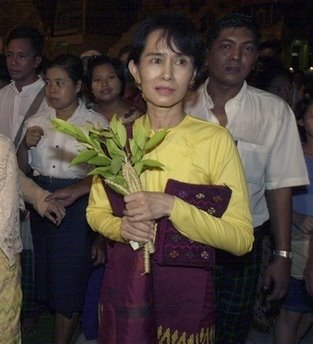


 Posts
Posts


