News & Articles on Burma
Thursday, 11 August, 2011
---------------------------------------------
Suu Kyi to meet Myanmar minister again: Spokesman
Myanmar's Suu Kyi urges reassessment of dam
Myanmar Forms Government Spokespersons, Information Team
The Long Wait for a Ceasefire
Remembering a Karen Leader
Clinton Urged to Push for End of Use of Rape as a Weapon in Burma
Mon Leader Says Govt Wants Peace Talks
Shan State Fighting Displaces 30,000 People This Year
The Military Ties That Bind
---------------------------------------------------
Published: Thursday August 11, 2011 MYT 9:33:00 PM
Myanmar's Suu Kyi urges reassessment of dam
YANGON, Myanmar (AP) - Myanmar pro-democracy leader Aung San Suu Kyi joined forces with environmentalists and minority groups with an appeal Thursday for the reassessment of a large dam project on the country's main river.
Suu Kyi urged the Myanmar and Chinese governments to re-examine the project on the Irrawaddy River in the interest of national and international harmony.
She called the waterway "the most significant geographical feature of our country."
Environmental groups, members of the Kachin ethnic minority and other people living along the river say the Myanmar-China Myitsone Hydroelectric Project in northern Kachin state will displace villagers and upset the ecology of the important food source.
The $3.6 billion dam being built by China in the Kachin heartland is expected to flood an area the size of Singapore. The Myanmar government has not said how much of the energy will be sold to China.
In her appeal, Suu Kyi said some 12,000 people from 63 villages have been relocated and it is not clear whether they will be fairly compensated. A commentary Wednesday in the government-run New Light of Myanmar newspaper, however, said only 2,146 people from five villages had been relocated.
"Since the commencement of the Myitsone project, the perception, long held by the Kachin people, that successive Burmese governments have neglected their interests has deepened," Suu Kyi wrote. Burma is another name for Myanmar.
"We therefore appeal to environmental experts, to conservationists and to lovers of nature, peace and harmony everywhere to join us in a campaign to create a worldwide awareness of the dangers threatening one of the most important rivers of Asia," the appeal said.
For decades, several ethnic groups have waged guerrilla wars for greater autonomy, including more control over resources in their regions. In March, fighting broke out between the 8,000-strong Kachin militia and the government.
That fighting was related to dams and other large projects being built by China, the Environmental Working Group, a coalition of 10 exile groups, said in a report last month.
Two months before the fighting erupted, the Kachin Independence Organization issued a strong protest against the Myitsone dam. http://thestar.com.my/news/story.asp?file=/2011/8/11/apworld/20110811214523&sec=apworld
-------------------------------------------------
Suu Kyi to meet Myanmar minister again: Spokesman
Published on Aug 11, 2011
Myanmar's democracy icon Aung San Suu Kyi (left) is to hold a second round of talks with the country's nominally-civilian government, her spokesman said on Thursday, amid tentative signs of a thaw in relations. -- PHOTO: AFP
YANGON (AFP) - MYANMAR'S democracy icon Aung San Suu Kyi is to hold a second round of talks with the country's nominally-civilian government, her spokesman said on Thursday, amid tentative signs of a thaw in relations.
Friday's meeting with labour minister Aung Kyi will come two days before Ms Suu Kyi is due to make her first overtly political trip outside Yangon since she was freed from house arrest in November.
'We do not know more details yet,' Nyan Win, a spokesman for the Nobel Peace Prize winner and her National League for Democracy (NLD) party, told AFP.
Ms Suu Kyi's talks with the same minister last month raised hopes for an ongoing dialogue between the two sides. http://www.straitstimes.com/BreakingNews/SEAsia/Story/STIStory_700988.html
----------------------------------------------------
August 11, 2011 11:09 AM
Myanmar Forms Government Spokespersons, Information Team
YANGON, Aug 11 (Bernama) -- Myanmar has formed an 11-member Government Spokespersons and Information Team, led by Union Minister of Information U Kyaw Hsan, all official media reported quoting a notification issued by the President's Office Thursday.
With Managing Director of the News and Periodicals Enterprise U Zaw Min Oo as secretary, the team was set up to undertake news and information release, holding of press conference occasionally regarding the country's political, economic, security, military and natural disaster affairs,Xinhua news agency reported.
The team also includes some deputy ministers of home affairs, foreign affairs, information and labour as well as Police Chief Kyaw Kyaw Tun, the notification said.
The formation of the team was done along with a minor reshuffle of two union ministers, reassigning Union Minister of Industry-1 U Kyaw Swa Khaing as Union Minister at the President's Office and appointing Union Minister of Industry-2 U Soe Thein concurrently as Union Minister of Industry-1.
-- BERNAMA http://www.bernama.com/bernama/v5/newsworld.php?id=607441
---------------------------------------------------------
The Long Wait for a Ceasefire
By WAI MOE Thursday, August 11, 2011
Despite three meetings over the last two months between Burmese army representatives and the Kachin Independence Organization (KIO), no agreement has been hatched that would end hostilities and bring about a ceasefire.
The government’s negotiation team is led by Col. Than Aung, a Burman national who is Minister for Security and Border Affairs in the Kachin State assembly. On the other side of the table Brig-Gen Sumlut Gun Maw, the vice-chief of staff in the KIO's military wing, the Kachin Independence Army (KIA).
Both sides agreed on the town of Lajayang—some two hours drive from state capital Myitkyina—as a venue for negotiations, strategically situated as it is at the invisible border where government territory meets the KIO-controlled zone.
The first meeting was held on June 30. Constructive talks were held, and both delegations retired from the two-hour meeting with an agenda to consider, and they pledged to sit around the negotiation table again in the near future.
Then, on July 28, just a few days before the second round of talks, the KIO presented the government negotiators with their draft of a ceasefire.
However, by the time the follow-up meetings concluded on Aug. 1 and Aug. 2, it was clear that the chasm of mistrust and doubt was too wide to bridge.
An apparent hurdle was the questionable choice of Than Aung as a government negotiator.
A KIO video of the Aug. 2 meeting was released to The Irrawaddy. Sitting morosely at the table, Than Aung is seen to read a prepared statement from a notebook. He drones monotonously, and when discussions begin, appears at a loss for words. He repeats the line that he will pass on suggestions to his superiors.
The Kachins despaired, believing that their counterpart had no authority to make meaningful decisions.
At one point, he referred to ex Brig-Gen Thein Zaw, a MP from Myitkyina and a secretary of the ruling Union Solidarity and Development Party (USDP) as ahba, meaning “father,” a common title that juniors use for senior officers in the Burmese military.
Than Aung then called for Thein Zaw and another senior USDP member, Aung Thaung, to act as third party witnesses for the “Gentlemen's Agreement” that was proposed. KIO officials thought this was a joke, as both men were staunchly pro-government.
Than Aung left the Kachin delegation with the impression that Naypyidaw were insincere in their negotiations, and were offended that the government would send someone so unqualified to deal with them.
“We also argued repeatedly on the definition of the government’s words “Forever Peace.” said Gun Maw. “In 2009, Lt-Gen Ye Myint [ former Chief of Military Affairs Security] also used that expression when he came to announce the government proposal for a BGF [Border Guard Force].”
The KIO and other ethnic armed groups believed the BGF proposal was no more than a thinly veiled plan to disarm them.
At the Aug. 2 meeting, Than Aung also told his Kachin counterparts that the parliament might form a committee headed by Thein Zaw to deal with the issue of ethnic conflicts during the upcoming sessions on August 22.
“We will wait for tomorrow with the best of hopes,” Than Aung told the Kachin delegation, leaving them with the impression that a ceasefire could be signed the following day.
But, for the KIO leaders, it's a case of “Tomorrow Never Comes” as the government negotiating team has still failed to respond to the KIO's draft.
Another question is the new alliance of ethnic armed groups, the United Nationalities Federal Council (UNFC), founded in February, which includes the KIO, the Karen National Union, the Shan State Army, the Karenni National Progressive Party and the New Mon State Party.
The KIO negotiation team asked the government team what the common stance would be toward a national ceasefire as they [the KIO] were but one of several members of the UNFC, said Gun Maw, adding that after breaking 16 years of ceasefire, the alliance would require a common stance regarding peace talks.
“Despite numerous differences between the ethnic-minority groups, and a failure to act together in the past, the formation of the UNFC in February 2011 marks a new attempt by these organizations to show a united front, supporting each other in an effort to gain greater autonomy and bring an end to human-rights abuses by the military,” the Economist Intelligence Unit said in its August report on Burma.
“As part of this strategy, the UNFC has called on the government to negotiate ceasefires with all armed groups, rather than on a case-by-case basis,” the Economist Intelligence Unit reported. http://www.irrawaddy.org/article.php?art_id=21885
-------------------------------------------------
Remembering a Karen Leader
By SAW YAN NAING Thursday, August 11, 2011
“Our president who we love so much, our precious leader—sadly, he has left us.
At Hto Kaw Koe, in a bamboo hut in paddy field, he withstood the enemy's attacks until the very end.
Oh, our beloved president.
He speaks to us in spirit, even though he's dead. He did his duty for his people, and now he rests forever.”
This is a song that describes the death of Saw Ba U Gyi, the father of the Karen resistance, who was killed along with eight of his comrades in a remote village Karen village on Aug 12, 1950—a event commemorated every year as Karen Martyrs' Day.
As the song recounts, the death of Saw Ba U Gyi and his fellow Karen freedom fighters occurred in a bamboo hut in the middle of a paddy field in the village of Hto Kaw Koe in Kawkareik Township, Karen State.
It happened just before dawn: the gunfire of automatic rifle blasted away at the hut, instantly killing the nine men inside.
It was a carefully planned assassination by the Burmese army against the founder of the Karen National Union, Burma's longest-running ethnic resistance group, formed in 1947. To this day it is remembered by Karen people around the world as one of the key events in their long struggle for autonomy.
But Karen Martyrs' Day doesn't just mark a single incident. According to Gen Mutu Say Poe, the military chief of the Karen National Liberation Army (KNLA), the KNU's armed wing, it also honors all of the Karen leaders, soldiers and civilians who have lost their lives because of their resistance to Burmese rule.
“This is a day that we have to commemorate because it was the day our leaders sacrificed their lives for our liberation,” said Mutu Say Poe.
The KNU first took up arms against Burma's government in 1949, when the KNLA was founded because of the government's refusal to recognize the equality of ethnic minorities in the newly independent country.
Saw Tamla Baw, the current chairman of the KNU, noted that even after more than six decades of armed resistance, the original goals of the group's founders remain beyond reach.
“Though we have struggled for liberation from the oppressive rule of the military dictatorships, we still haven't reached our goal, up to this day,” said Saw Tamla Baw in a statement. “Like martyr Saw Ba U Gyi, many leaders, comrades and common people have sacrificed their lives. We must continue to walk on our path of revolutionary resistance, which is paved with the blood and sweat of the martyrs.”
Born in 1905 in a village in Irrawaddy Division, Saw Ba U Gyi studied and practiced law in England for several years before returning to Burma and becoming involved in the Karen Central Organization in 1942. He also became a cabinet minister in the Burmese government, led by the Anti-Fascist People’s Freedom League, in 1946.
He was later involved in the Battle of Insein—a major outbreak of hostilities between Karen rebels and the Burmese government that lasted more than 100 days.
Tamla Baw said that despite the many difficulties the KNU has faced, including oppression and internal divisions created by the Burmese government, it still stands firmly because it upholds the “Four Principles of Saw Ba U Gyi,” the pillars of the KNU revolutionary movement.
The four principles are: surrender is out of the question; the recognition of the Karen State must be completed; we shall retain our arms; we shall decide our own political destiny.
These four principles guide not only the KNU, but also the breakaway Democratic Karen Buddhist Army (DKBA), which split from the KNU in 1995.
The DKBA's decision to go its own way and sign a ceasefire with the Burmese regime was a major blow to the KNU. However, in November 2010, DKBA Brigade 5 rejoined the KNU under the leadership of Brig-Gen Saw Lah Pwe, ending a 16-year-old ceasefire agreement with the government.
“We will uphold the four principles of our Karen resistance leader Saw Ba U Gyi until we win,” said Saw Lah Pwe, whose troops will also celebrate Karen Martyrs’ Day in their bases in the countryside.
The KNU chairman said that as the new government elected in the 2010 election governs according to the Constitution written under the direction of the military dictatorship, there is not a single benefit for the ethnic nationalities.
Even after more than 60 years without reaching its stated goals, the KNU remains convinced that it will eventually achieve victory.
Brig-Gen Saw Johnny, the commander of the KNLA Brigade 7, said the KNU armed resistance will never collapse if it doesn’t give up.
Quoting the words of Saw Ba U Gyi, he said: “If we don’t go to Rangoon and let our heads get chopped off by the Burmese army, we will never lose.”
“Due to [Saw Ba U Gyi’s] great sacrifices, we have to commemorate him and all Karen revolutionaries who have died during the past 61 years of the Karen resistance,” said Johnny.
Although Saw Ba U Gyi enjoys a larger than life stature among Karen today, in his lifetime he was known as a humble man dedicated to advancing the interests of his people.
“Even when he was a lawyer in England and a cabinet minister in the Burmese government, he was not proud of his position and wealth. He sacrificed all of it and fought for his people until he died,” said Johnny.
“He didn’t think of his own interest, but only about the interests of his Karen people. He died for our Karen people to liberate them from slavery,” added Johnny.
Although it has taken part in peace talks with the Burmese junta on several occasions, the KNU has never signed a ceasefire agreement.
“We want equality, peace and freedom. We don’t want hostilities and racist riots. We don’t go to Burma cities and kill Burmans. Our armed struggle is a right one. We will win one day,” said Johnny.
If the government keeps its troops in Karen State in eastern Burma and conducts armed attacks against the Karen people, the KNLA will keep practicing its guerrilla warfare against the government troops, said Mutu Say Poe.
“If the oppression continues, our armed resistance will not end. If there is no oppression, there is no need for armed resistance. Our aim is to get our own independent state and equality,” said Mutu Say Poe. http://www.irrawaddy.org/article.php?art_id=21882
------------------------------------------------
Clinton Urged to Push for End of Use of Rape as a Weapon in Burma
By LALIT K JHA Thursday, August 11, 2011
WASHINGTON — A bipartisan group of more than a dozen powerful women senators has urged US Secretary of State Hillary Clinton to call on the new Burmese regime to end the practice of using rape as a weapon of war.
In a letter to Clinton released to the press on Wednesday, the senators also urged her to pursue the establishment of an international Commission of Inquiry (CoI) into war crimes and crimes against humanity in Burma.
Led by Senators Diane Feinstein and Key Bailey Hutchison, these powerful women lawmakers expressed their concern about recent reports of the use of rape as a weapon of war in the renewed armed conflict between the Burmese military and ethnic armed groups.
“Given the Burmese regime’s unabated use of rape as a weapon of war, we urge you to call on the regime to end this practice and pursue our shared goal of establishing an international Commission of Inquiry into war crimes and crimes against humanity,” the senators wrote.
“We must not allow this regime to continue to commit such dire crimes while the people of Burma continue to suffer. As members of the Senate Women’s Caucus on Burma, we express our solidarity with our friend and sister, Daw Aung San Suu Kyi, and express our deep commitment to the struggle for freedom and justice in Burma,” the letter said.
Other signatories to the letter include Patty Murray, Barbara Boxer, Kay Hagan, Mary Landrieu, Jeanne Shaheen, Kelly Ayotte, Amy Klobuchar, Lisa Murkowski, Barbara Mikulski, Olympia J. Snowe, Susan Collins and Patty Murray. There was no immediate reaction from the State Department.
The senators said that according to the Kachin Women’s Association Thailand, 18 Kachin women and girls were gang-raped by Burmese soldiers during the first eight days of renewed fighting between the Burmese army and the Kachin Independence Army after the end of a 17-year ceasefire. Four of these victims were also killed.
Similar reports have also emerged from northern Shan State, where the Burmese army has attacked the Shan State Army-North, ending a 22-year ceasefire. The Shan Women’s Action Network continues to document the ongoing sexual violence against civilians, including a recent horrific account of four women being raped in one village in a single day, the senators noted.
The senators also referred to the recent speeches of Suu Kyi, in which she says that rape is used in her country as a weapon against those who only want to live in peace and assert their basic human rights, especially in the areas of the ethnic nationalities.
Last month in her testimony before the House Subcommittee on Asia and the Pacific, Suu Kyi called upon the US government to do everything it can to aid in the establishment of a CoI, the senators said.
Meanwhile, Senator Jim Webb, chairman of Senate Foreign Relations Committee's Subcommittee on East Asian and Pacific Affairs, announced he will visit Thailand, Singapore, Indonesia and Vietnam from Aug 12 to 25.
Besides regional and bilateral issues and the increasing influence of China in the region, Burma would be a major topic of discussion when Webb holds meetings with the heads of state of each country on his itinerary, as well as top officials responsible for foreign affairs, commerce and defense and US diplomats, leading academics and businesspeople.
In Thailand, Webb will become one of the first American officials to meet with the leadership of the newly elected government of Yingluck Shinawatra. He is also slated to meet former Prime Minister Abhisit Vejjajiva for discussions about the outcome of last month’s national elections and the status of US-Thai relations.
In Singapore, Webb will discuss US-Singapore relations, maritime sovereignty issues and regional efforts to combat human trafficking. Last month, he introduced legislation to address major inconsistencies in the annual US State Department Trafficking-in-Persons Report which threaten to undermine the anti-trafficking efforts of countries such as Singapore. He will also meet with Minister Mentor Lee Kuan Yew.
In Indonesia and Vietnam, Webb will discuss the advancement of economic relations between the US and these two nations, as well as territorial disputes in the South China Sea and other regional security issues.
He was the original sponsor of a resolution, unanimously approved by the Senate in June, deploring the use of force by China in the South China Sea and calling for a peaceful, multilateral resolution to maritime territorial disputes in Southeast Asia. http://www.irrawaddy.org/article.php?art_id=21878
-------------------------------------------------
Mon Leader Says Govt Wants Peace Talks
By LAWI WENG Thursday, August 11, 2011
The chairman of the New Mon State Party (NMSP), Nai Htaw Mon, has claimed that Mon State Chief Minister Ohn Myint has requested peace talks with his party, according to Mon sources.
“Nai Htaw Mon told us that Ohn Myint sent ethnic Mon Buddhist monks as peace brokers to negotiate the offer,” said a source who attended a meeting at the weekend near the Thai-Burmese border where the MNSP chairman reportedly made the remark.
However, sources say, Nai Htaw Mon believes the offer of peace talks is an attempt by Ohn Myint to divide his party as the latter has tried to lure the MNSP—an ethnic armed group that rejected the government's border guard force proposal in 2009—into negotiations several times before.
This time, they say, Ohn Myint used his supporters, two monks from Kamarwet village in Mudon Township, which is also the native village of the NMSP chairman.
Chairman of the Thailand-based Mon Unity League Nai Sunthorn, a participant at the meeting, said, “I advised Nai Htaw Mon not to accept the offer of peace talks from Ohn Myint. Let the UNFC [United Nationalities Federal Council] lead the peace talks.”
The UNFC is an umbrella group representing 12 of the largest ethnic parties in Burma.
“If only the NMSP are invited, they should not go alone to any peace talks,” he said.
According to Nai Ngwe Thein, the chairman of the All Mon Regions Democracy Party, (AMRDP), Ohn Myint has also told some members of his party that he wished to engage in peace talks with the NMSP leaders.
“Why they are staying in the jungle? Tell them to come back and stay in the city. I will provide them properties if they come,”Ohn Myint is alleged to have told the AMRDP members.
The NMSP leaders said last week that they will not attend peace talks alone, and that they would only consider attending as a member of the UNFC.
Several ethnic leaders have said they would like Burma’s pro-democracy icon Aung San Suu Kyi to act as lead peace broker in any negotiations between the Burmese government and the ethnic armed groups.
The NMSP leadership has stated its intention to make contact with Suu Kyi, saying they wish to discuss with her ways to solve the political crisis in Burma.
However, they say that the previous ruling military junta did not allow them to contact Suu Kyi or her party, the National League for Democracy, during the years they maintained a ceasefire agreement with the government.
“This could be a great opportunity for the ethnic leaders to get in contact with Suu Kyi and build a pact,” said Nai Wona, a member of the Mon Literature and Culture Committee in Moulmein.
Meanwhile, Burma's Vice-President Tin Aung Myint Oo claimed while he visited Mon State last weekend that his government always welcomes peace talks with ethnic minorities. http://www.irrawaddy.org/article.php?art_id=21879
----------------------------------------------------
Shan State Fighting Displaces 30,000 People This Year
By TODD PITMAN / AP WRITER Thursday, August 11, 2011
BANGKOK — More than 30,000 people have been displaced by fighting in eastern Burma this year despite the army handing power over to a nominally civilian government, activist groups said Wednesday.
Civilians traumatized by atrocities by troops including rape and mutilation now face "a dire humanitarian crisis" as many have fled into forests near their villages in Shan state, according to the Shan Human Rights Foundation and the Shan Women's Action Network.
The groups called for international donors to help with aid, saying many were enduring chronic shortages of food, water, shelter and medicine, and noting 24 people had died of diarrhea and malaria in the past month.
"With the regime keeping tight control on all aid in Burma, cross-border aid is the only way to reach war-affected populations," said Shan Women's Action Network coordinator Nang Hseng Moon. "We urge international donors to respond to this humanitarian crisis before further lives are lost."
The skirmishes—which broke a 22-year cease-fire—began in March just weeks before the new civilian-led administration took over after years of rule by a military junta.
The change was supposed to herald a new democratic era in the repressive nation, but critics say little has changed and the new government has become a proxy for continued army rule.
More than 100,000 refugees remain outside the country, and hundreds of thousands more are displaced within Burma from past violence.
Fighting intensified in July, when 4,000 government troops backed by fighter jets moved to seize the northern Shan rebel group's headquarters in Wan Hai, the groups' statement said.
"Advancing through surrounding villages, troops have been scaling up atrocities against civilians, including killing, rape and mutilation," the statement said. "One dead villager was found with his leg and hand cut off."
Similar fighting further north in Kachin state has displaced 20,000 people since June. In Shan state, the groups say 31,700 people have been displaced since March. http://www.irrawaddy.org/article.php?art_id=21876
-------------------------------------------------
CONTRIBUTOR
The Military Ties That Bind
By MAHN AUNG LWIN Thursday, August 11, 2011
Geisenheim is a small town in the State of Hessen of the Federal Republic of Germany that hosts a plush old spa of sumptuous beauty, where since Roman times people have bathed amidst lush forests beneath the Taunus Mountains. To the surprise of all visitors, in the middle of a vineyard near the town is a grand, Burmese style house.
The Myitta Paungku Beikman (Love Connection Monument), was built by former Burmese dictator Gen Ne Win and donated to the Fritz Werner GmbH Company (FWG) on Jan. 1, 1971 as a sign of appreciation for the company's assistance in preserving him and his much-hated military regime in power.
FWG is a Berlin-based company which since 1896 has specialized in machinery for the production of small arms and ammunition. The company, which played a vital role in Germany's WW I efforts, has cultivated a unique relationship with the Burmese ruling elite over the years. There is a great deal of mutual trust between FWG and the Burmese regime, whose military-minded leaders look for characteristics such as reliability and discretion in a business partner.
After WW II, FWG was wholly-owned by the West German government, falling under the jurisdiction of the government’s Ministry of Economy. The company was bought with money from the Marshall Fund which was meant to rebuild industries that were destroyed during WW II, a war which FWG helped fuel with its machinery for the production of weapons and ammunition.
In 1948, Burma gained independence from Great Britain, and FWG struck up its partnership with the new Burmese government in 1953. The German company's first project was the production of the BA52 submachine gun—aka the Ne Win sten.
Beginning at the time of this original contract, Ne Win cultivated friendly relations with FWG, both diplomatically and personally. Fritz Werner technical advisors posted in Rangoon had continuous access to the dictator, a rare privilege not extended to the representatives of other foreign firms. The fact that FWG was owed by the West German government itself created a close personal relationship between the two governments, causing some to say that Burma was the friendliest nation toward West Germany in Asia.
FWG’s secretive Burmese operations, which have often been shrouded under a veil of mystery, got into full swing in 1960 when the West German Ministry of Defence gave the company permission to produce G3 rifles in Burma and it later established its first weapons factory on the outskirts of Rangoon with the assistance of the West Germany arms company Heckler & Koch.
The factory was supervised by German engineers from the German Technical Corporation Agency (GTZ). Until the production of that plant started, the Burmese regime used FWG as the middleman to purchase G3 rifles through Düsseldorf based arms producer Rheinmetall, which shared production with Heckler & Koch.
In 1961, West Germany’s Foreign Office in Bonn granted permission to export 10.000 G3 rifles as well as four million rounds of ammunition manufactured by Metallwerk Elisenhütte Nassau (MEN), an FWG subsidiary, to Burma. The West German government had “no reservations” about authorizing further transfers, even when Ne Win toppled the democratic government of U Nu in 1962—Rheinmetall received permission from Bonn to sell 12.000 G3 rifles and 800 MG42 machine guns, and MEN received permission to export 18 million rounds of ammunition. Then in 1969, the West German Foreign Office permitted FWG to export machinery for the production of explosives, as well as a complete rolling mill for sheet brass.
With the assistance from West Germany, the self-sufficiency of the Burmese armed forces increased continuously, and the Burmese military often used German-produced weapons to oppress the Burmese people and various ethnic minority groups, especially after Ne Win and the military seized power in 1962.
For example, on July 7, 1962, just three days after the military’s Burma Socialist Programme Party (BSPP) was formed, the students of Rangoon University organized a peaceful demonstration inside the Campus. The Burmese military— equipped with G3 automatic rifles—fired into the crowd of thousands of students, killing over 100 and injuring many more. The next morning, the military blew up the Rangoon University Student Union building, which was a treasured historical monument of the Burmese struggle to gain independence from Great Britain. The building was blasted to pieces by heavy explosives, and every trace of it removed.
During the 1988 democratic uprising, over 3,000 people were once again killed by Burmese troops using German-produced weapons. Despite this, the West German government welcomed Ne Win as a guest of FWG in March 1988.
In addition, after the military coup by Burmese Gen Saw Maung in Sept. 1988, the West German Federal Ministry of Economics gave permission for FWG to export machinery for the production of ammunition.
Not only did FWG set up three plants in Rangoon and Prome to produce the vast majority of armaments required by the Burmese military, they also served as a conduit for all importation of raw materials, machine parts and chemicals used in explosives production.
The cozy relationship between the West Germans and the Burmese military was something of a closely kept secret until 1988, when the democracy uprising and surrounding political crisis blew the lid off the Burmese situation and drew the attention of the whole world. Due to international pressure brought upon the West German government by the horror of the Sept. 1988 coup, it suddenly became one of the outspoken critics of the Burmese regime, as if it didn’t know before how many Burmese had died at the hands of Burmese troops firing West German weapons.
The German government did, however, suspend development co-operation activities with Burma, including negotiations regarding Burmese debt cancellation, and ceased authorization of arms shipments to Burma. But regardless of assertions made by the Germans that FWG was no longer participating in the production of weapons and explosives inside Burma, and that technical co-operation had been reduced to a minimum, the manufacture of explosives and weapons continues to date, and German employees of GTZ remain in the country, disguising their true field of expertise.
Despite Germany’s hasty withdrawal of economic support from Burma after the 1988 crackdown, it didn’t take long before FWG found an opportunity for renewed investment. In 1990, FWG formed a joint venture with the Burmese military, a partnership that was made possible thanks to an old US $500 million loan that the West German government had made to Burma in the 1960’s.
FWG stands by itself in Burma, and the joint venture grew out of a very personal relationship between the company and the Burmese generals. This personal relationship has helped preserve the Burmese military regime in power, despite the various insurgencies and unrest in the country.
Following the uprising in 1988, the European Community and the US began imposing economic sanctions on Burma, identifying the high incidence of human rights abuses by the military regime as the primary reason for imposing sanctions. However, the annual reports of the German Federal Office for Export and Trade proves that licences for the export of dual-use-goods were authorized-nearly every year, despite an EU arms embargo established in 1991.
In 1999, Germany even allowed the Burmese regime to renovate the notorious “Myitta Paungku Beitman” in Geisenheim.
On May4, 2011, during a Burma Conference in Berlin, Dr. Markus Löning, Germany’s Federal Government commissioner for human rights policy and humanitarian aid, pushed for more engagement with the Burmese military regime and for the modification of sanctions on Burma.
For many Burmese activists, Germany is just paying a lip service to the human rights situation in Burma. A cable revealed in a 2009 Wikileaks report indicated that Germany exported sophisticated equipment to Burma, which was followed by a visit of German diplomats to the factories where the machinery was installed. In 2009-10, Germany was the biggest trade partner of Burma in the European Union.
The suffering of the Burmese people at the hands of their military rulers is undeniable. The irresponsible investments by foreign firms and others are not benefitting the people of Burma, but only contributing to the torture, persecution and killing of the many ethnic nationals, monks, students and activists who are struggling for democracy inside Burma.
For the Burmese people, FWG’s cooperation and partnership with the Burmese regime has been extremely discouraging. It is time for Germany to start listening to the cry of the Burmese people for democracy, and start building a real, people to people, Myitta friendship that will live forever.
The author is a former student activist and chairman of Camp Thaybawboe run by the ABSDF. At present, he is a member of the KNU Foreign Affairs Relations efforts. http://www.irrawaddy.org/opinion_story.php?art_id=21877
__._,_.___
Friday, August 12, 2011
News & Articles on Burma-Thursday, 11 August, 2011


Wednesday, August 10, 2011
News & Articles on Burma-Tuesday, 09 August, 2011
News & Articles on Burma
Tuesday, 09 August, 2011
----------------------------------------
Burma's Largest Dam Project Will Have No Negative Impact: State Media
Mon State CM Takes His Ministers to Task
Ethnic Doubt Over Govt. Peace Offer
Another Military General Gets the Sack
Burma Army fast closing the gap with Mongla
Burma: CSW Renews Call For Inquiry Into Crimes Against Humanity
Kyat on a hot tin roof
Systematic torture in Burma as EU seeks closer ties
Thailand holds 55 Myanmar migrants
Parliament Members In Myanmar Voice Support For Gov't Peace Efforts
IMF to help Myanmar unify multiple exchange rates
Burma Army requests return of seized supplies
--------------------------------------------
Burma's Largest Dam Project Will Have No Negative Impact: State Media
By BA KAUNG Tuesday, August 9, 2011
The construction of the Myitsone dam by a Chinese company in Kachin State in northern Burma will have no negative impact on the flow of the Burma's largest river, the Irrawaddy, nor on the lives and livelihoods of the local population, Burma's state-run claimed on Tuesday.
The comment came amid mounting criticism by environmental rights groups that the dam project located at the source of the Irrawaddy River will cause serious social and environmental problems for local people living both upstream and also far downstream, even as far away as the coastal areas of Burma.
Started in 2009, the 6,000 megawatt Irrawaddy Myitsone dam will only utilize 7.6 percent of the flow waters of the Irrawaddy; hence the dam project will have “no adverse effects whatever on the agriculture, businesses and social work,”a commentary in Myanma Alin newspaper claimed, adding that the project will create job opportunities for locals.
Environmental groups say the project will not only disrupt transportation of nutrients to the Irrawaddy delta, the provider of nearly 60 percent of Burma’s rice, but will also submerge historical churches, temples and cultural heritage sites that are central to Kachin identity and history.
But the state media countered that the river's water flow would not be significantly affected, and that the water storage by the dam will only cause the water level to increase “1.5 feet higher than normal downstream the river in the dry season.”
Under contract to China Power Investment Corporation (CPI) in partnership with Burma's Electricity Ministry of Electric Power-1 and private firm AsiaWorld, the dam will create a reservoir the size of New York and is expected to be completed by 2019. It has already displaced thousands of people in Kachin State.
The dam site is located within the Mizoram-Manipur-Kachin rainforest region, which is recognized as one of the world’s top biodiversity hotspots and a global conservation priority. If completed, the project is expected to inundate approximately 766 square kilometers of this pristine rainforest.
According to Burma Rivers Network, CPI has ignored its own environmental assessment, conducted in 2009 by Burmese and Chinese scientists who warned that the majority of local people oppose construction of the dams and have called for the consultation and consent of affected peoples. The findings of the environmental assessment were never made public.
The armed ethnic minority group Kachin Independence Army (KIA) has expressed its objection to the project to both the Burmese and Chinese governments. The KIA is currently engaged in armed clashes with Burmese government forces, which started in June near another Chinese-built hydropower plant in Kachin State.
The power plant—which generates electricity for China's Yunnan Province—has ceased to operate since the armed clashes. In an interview with The Irrawaddy, the KIA's deputy military chief Gun Maw said that the KIA is completely against the Myitsone dam project although it is open to negotiations with Chinese and Burmese governments over other dam projects in Kachin State.
Asked if the KIA will attack the ongoing dam project in the future, Gun Maw said, “We will not attack it. But just as China's hydropower plants near the fighting have been forced to a halt, so also will the same happen to the Myitsone dam project.” http://www.irrawaddy.org/article.php?art_id=21864
------------------------------------------------
Mon State CM Takes His Ministers to Task
By LAWI WENG Tuesday, August 9, 2011
At every weekly Sunday meeting of the new Mon State ministers, Chief Minister Ohn Myint scolds his team for not implementing their assigned state development projects, according to sources close the state ministers.
“Ohn Myint is very disappointed in his ministers for not carrying out their projects,” said one source. “He still acts like a military general at the meeting. He blames them for not being active.”
Ohn Myint promised the Mon people that after he was elected chief minister, he would bring development to the people.
However, observers say that many Mon State residents now question this promise because they have not seen any development in their area even though the new government has been in place for five months. The observers said that the new government is not active because Ohn Myint did not appoint the right people to important positions.
For example, he only appointed two Mon ministers, Min Nwe Soe and Nai Lawi Oung, among his 9 ministers. Min Nwe Soe is a doctor, but he was appointed minister of social affairs and culture. And Nai Lawi Oung is a veterinarian, but he is serving as minister of energy and electronic power.
Meanwhile, members of the All Mon Regions Democracy Party (AMDP) alleged that Ohn Myint attempted to influence the AMDP, pressuring the two Mon ministries to stop the chairman of AMDP, Nai Ngwe Thein, from talking to the Burmese exile media, which has criticized the new government.
Ohn Myint also put pressure on the two ministers to force the AMDP to resign from the five member ethnic alliance because the chief minister did not like the ethnic parties talking about the release of political prisoners.
“If you guys cannot persuade him [Nai Ngwe Thein] to stop talking to the media, take him and throw him in the river,” Ohn Myin reportedly told the two Mon ministers.
According to members of the AMDP, party secretary Min Nwe Soe and party chairman Nai Ngwe Thein fought each other at a meeting held in early July during a disagreement about the pressure from Ohn Myint.
Min Nwe Soe told Nai Ngwe Then to stop talking to the exile media and resign from the ethnic alliance, and when Nai Ngwe Thein refused, the two leaders fought.
“It was a shame to see elder persons fight each other,” said a participant at the meeting.
The Mon State ministers meet every Sunday at Mawyawatty Garden in Moulmein, the capital of Mon State. http://www.irrawaddy.org/article.php?art_id=21860
------------------------------------------------
Ethnic Doubt Over Govt. Peace Offer
By SAW YAN NAING Tuesday, August 9, 2011
Leaders of ethnic armed groups remain doubtful after Burma Vice-President Tin Aung Myint Oo claimed Naypyidaw would welcome peace talks with minorities fighting the government.
During his visit to see flood victims in Mon State capital Moulmein, southern Burma, Tin Aung Myint Oo—one of two vice-presidents of Burma—said the government would always try to make peace with ethnic armed groups who were willing to cooperate, according to state-run newspaper The New Light of Myanmar on Monday.
But ethnic armed leaders claim that fighting in the countryside between government troops and minority groups happens almost every day, especially in Karen, Kachin and Shan states despite Naypyidaw’s statement.
Zipporah Sein, general secretary of the Karen National Union (KNU), said, “If the government really offers talks to solve the political deadlock, it is the right thing. And it is what we always wanted.”
“But if the talks do not aim to solve political problems, it is not going to happen,” she added.
However, ethnic armed groups will currently talk with the government under the leadership of an ethnic armed alliance, the United Nationalities Federation Council, rather than group-by-group as in the past.
The remaining ethnic armed groups that have not reached a peace agreement with the government are the KNU, Shan State Army (SSA), Karenni National Progressive Party and New Mon State Party.
The two ethnic groups of the Kachin Independence Organization (KIO) and Democratic Karen Buddhist Army recently broke their ceasefire agreement with the government and are currently involved in violent clashes.
Tensions between the government and KIO’s military wing, the Kachin Independence Army, remain ever since serious battles broke down its ceasefire agreement on June 9.
La Nan, joint-secretary of the KIO, said that he thinks Tin Aung Myint Oo’s comment is just a propaganda statement which has arisen due to international pressure on Burma.
“[The Burmese government] wants to show that they are trying to hold peace talks with ethnic armed groups. They want to show that they are in the process [of getting a ceasefire],“ said La Nan.
Burma is currently being urged by opposition groups and the international community to make tangible progress countering human rights abuses and ethnic violence.
Some 23 Burmese parliament representatives have voiced support for the government's peace efforts, calling on people who want a ceasefire to work with goodwill in the interest of the nation and stay away from actions that may break up the nation.
In June, the US raised concerns over Burma's bid to chair the Association of Southeast Asian Nations (Asean) bloc, citing the renewed violence in Kachin State and other regions of the country. The US State Department called on Naypyidaw to bring an end to hostilities.
Maj Sai Lao Hseng, a spokesperson for the SSA, said that he welcomed the statement made by Tin Aung Myint Oo, but still maintained deep doubts.
“The government should contact ethnic armed groups officially if it really wants to open peace talks,” added Sai Lao Hseng.
The KNU also said that members of Asean, especially Thailand, should persuade Burma to talk with minority groups to solve political problems and maintain a nationwide peace.
Since 1989, under an initiative by former junta spy chief Gen Khin Nyunt, the regime held separate talks with many ethnic armed groups and signed individual ceasefire agreements with 17 of them. http://www.irrawaddy.org/article.php?art_id=21863
---------------------------------------------
Another Military General Gets the Sack
By THE IRRAWADDY Tuesday, August 9, 2011
Military sources in Burma have told The Irrawaddy that the inspector and auditor-general of the country's armed forces, Maj-Gen Kyaw Phyo, has been forced to retire following an investigation into allegations of corruption aimed at several high-ranking military officers.
If confirmed, Kyaw Phyo becomes the fourth general to be sacked since February, following the removal of Lt-Gen “Thura” Myint Aung who was adjutant-general, Brig-Gen Tun Than, the former commander of Rangoon Regional Military Command, and Maj-Gen Tin Ngwe, the former chief of the Bureau of Special Operations-5.
Kyaw Phyo, formerly the commander of the Triangle Regional Military Command, is believed to have been accused of smuggling cars via Burma's porous border with Thailand.
Kyaw Phyo was promoted to the position of “Inspector and Auditor-General of the Armed Forces” in late August 2010 during a massive military reshuffle. He was previously commander-in-chief of the Triangle Regional Military Command based in Kengtung in eastern Shan State, an area known for trade routes and smuggling syndicates.
In late July, media reports suggested five generals were being investigated for corruption: Kyaw Phyo; Maj-Gen Myint Soe, the chief of BSO-1; Maj-Gen Khin Zaw Oo, the adjutant general and chair of the military-run Union of Myanmar Economic Holdings Ltd; Brig-Gen Thein Tun Oo, the commander of the Triangle RMC; and Brig-Gen Khin Maung Htay, the commander of the Coastal RMC.
Meanwhile, rumors abound in Naypyidaw that further forced retirements are on the cards. Some military families have voiced the opinion that the investigation focuses on certain military officers because they had been outspoken in calling for better conditions for soldiers. http://www.irrawaddy.org/article.php?art_id=21861
--------------------------------------------
Burma Army fast closing the gap with Mongla
Tuesday, 09 August 2011 11:40 S.H.A.N.
5 days after withdrawing from the No Man’s Land between it and Mongla-based National Democratic Alliance Army (NDAA)’s frontline outposts, the Burma Army is returning with a likelihood of remaining there for a long haul, according to local and Mongla sources.
The sudden return of Infantry Battalion 279, based in Mongyang, the township seat to Monglwe, lying southwest of it on 6 August, was somewhat a surprise. “Troops from Hsaleu-based Brigade 369 (of NDAA) had already decided to return to their main base when the Burmese soldiers turned up,” an informed local told SHAN.
The 50-strong advance force told the local people in 5 villages: Hwe Mu, Hwe Pon, Mark Lawd Kao, Mark Lawd Mai and Ma Nai, all in Monglwe tract, Mongyang township, they were there to assist the villagers in obtaining their long awaited citizenship papers. “Uncharacteristically, they were also throwing money around, from K 50,000-K 100,000 ($62.5-125) each village,” he said. “It caused sort of a pleasant astonishment to the people. In the past, the appearance of a Burmese force in the village meant it was going to ask for something, not giving it.”
The same reaction by the populace was reported recently in Kehsi township, where the Burma Army is launching an operation against the Shan State Army. When villagers received bags of rice from the Burma Army that had been looting them for as long as they could remember, “we couldn’t believe what was happening,” according to a local source.
It was also apparent that a pure silver lode has been discovered between Hwe Mu and Hwe Pon, contrary to the report that came out after a week’s exploration late last month. “The Burmese troops went back after floating around the news of their failure to find anything,” said an NDAA officer. “It was in fact designed to keep us off our vigil.”
The next obvious step is for the Burma Army to employ the local villagers as People’s Militia Force, otherwise becoming their eyes and ears against the NDAA and its closest ally, the United Wa State Army (UWSA), he predicted.
It is not known which company the Burma Army is going to contract for silver extraction. “Without share and share alike, it is going to become another bone of contention, adding fuel to the fire,” the informed local said.
The Burma Army’s relationship with armed groups that had concluded ceasefire pacts with it since 1989 had taken a downswing since 2009 when Naypyitaw demanded they become part of its armed forces. It is already fighting against 3 former ceasefire groups: Democratic Karen Buddhist Army (DKBA), Shan State Army (SSA) North and Kachin Independence Army (KIA).
Further information
15:00 A source close to the NDAA leadership quoted one of the senior officers saying: We wanted peace, that’s why we had made peace. We withdrew from Wankho, Pong Hiet and Kiang Kok (on the Mekong) in May, because we wanted peace. But for the Burmese military, they keep asking for more land from us. So we would like to ask: Is land more important than peace?” According to him, the NDAA had lost not just 5 villages, but 7 including Mwe Nawng and Wankay, all south of the Lwe, a tributary of the Mekong. (SHAN) http://shanland.org/index.php?option=com_content&view=article&id=3926:burma-army-fast-closing-the-gap-with-mongla&catid=86:war&Itemid=284
----------------------------------------
Burma: CSW Renews Call For Inquiry Into Crimes Against Humanity On 23rd Anniversary Of 1988 Massacre
Tue, 2011-08-09 00:41 — editor/ News
London, 09 August, (Asiantribune.com):
Christian Solidarity Worldwide (CSW) today renews its call for the establishment of a UN Commission of Inquiry into war crimes and crimes against humanity in Burma, as the people of Burma mark the twenty-third anniversary of the brutal crackdown on pro-democracy protestors on 8 August, 1988 in which at least 3,000 people were killed.
CSW has written to European Union (EU) Foreign Ministers, urging them to work to secure the establishment of a Commission of Inquiry in this year’s UN General Assembly resolution on Burma, as recommended by UN Special Rapporteur on Human Rights in Burma, Tomas Ojea Quintana. In particular, CSW joins other campaign groups in calling on Germany not to oppose this initiative. A protest will be taking place at the German Embassy in London today.
In 1988 a major movement for democracy developed in which Aung San Suu Kyi emerged as the leader, although thousands were killed in several massacres unleashed by Ne Win’s military regime. Since 1988, the situation in Burma has deteriorated further.
In 1990, elections were overwhelmingly won by Aung San Suu Kyi's party, the National League for Democracy (NLD), but the junta refused to recognise the results, and most of those elected were imprisoned or exiled.
Twenty years later, in November, 2010, the regime held a new round of heavily rigged sham elections, and in the past nine months the human rights and humanitarian crisis has continued.
On 9 June the regime ended a 17-year cease-fire agreement with the Kachin Independence Army (KIA), resulting in the displacement of over 20,000 civilians, and the rape of at least 32 women and girls. Of the cases of rape, at least 13 victims were then killed.
At least 16 countries have expressed support for a Commission of Inquiry, including 12 EU member states as well as the United States, Canada and Australia. Democracy leader Aung San Suu Kyi has repeatedly expressed her support, particularly when she addressed the US Congress by video link in June, and it has been recommended by the UN Special Rapporteur for Human Rights in Burma.
In its letter to EU Foreign Ministers, CSW writes, “Since 1992, the UN General Assembly has been calling on the regime in Burma to respect the Geneva Conventions. Since 1997, the UN General Assembly has made 18 calls for inquiries. In its 20 resolutions, the General Assembly has detailed at least 15 possible categories of war crimes and crimes against humanity perpetrated by the regime in Burma. Recent resolutions have described the regime’s human rights abuses as “major and repeated violations of international humanitarian law … As the UN Special Rapporteur has concluded, ‘failing to act on accountability in Myanmar will embolden the perpetrators of international crimes and further postpone long-overdue justice.’ A Commission of Inquiry is not only necessary if the UN General Assembly’s authority and credibility are to be upheld, it may also serve to prevent future human rights violations in Burma, and may well contribute towards establishing a meaningful dialogue between the regime, the democracy movement, the ethnic nationalities and the international community. It is a vital step towards national reconciliation.”
CSW’s East Asia Team Leader Benedict Rogers said, “For over half a century Burma has been ruled by brutal military regimes, and for the past twenty-three years the suffering of the people of Burma has intensified further. The UN General Assembly has called for an end to the culture of impunity in Burma on numerous occasions. If the regime is allowed to continue violating international law with no consequence, what message does that send to dictators around the world? The European Union has a responsibility to abide by its own principles and ensure that an inquiry is carried out. As an influential member of the EU, Germany has a special responsibility to ensure that war crimes and crimes against humanity carried out by a brutal military dictatorship are not allowed to go unchecked. Today’s focus on Germany in particular, and our call for EU member states to support a Commission of Inquiry, is particularly appropriate as we remember the massacre of 3,000 civilians twenty-three years ago. It is surely now time to investigate the regime’s crimes.”
- Asian Tribune - http://www.asiantribune.com/news/2011/08/08/burma-csw-renews-call-inquiry-crimes-against-humanity-23rd-anniversary-1988-massacre
------------------------------------------------
The Economist
Myanmar's currency
Kyat on a hot tin roof
Aug 9th 2011, 11:38 by S.M. | BANGKOK
IN MOST global indices, Myanmar languishes near the bottom. Not so its currency: the kyat (pronounced “chat”) is Asia’s best-performing currency, up 20% over the past year. A flood of hot money chasing property, gems and state assets, coupled with buoyant oil and gas prices, has seen the once-lowly kyat rocket. On the streets of Yangon a dollar now fetches 790 kyat, down from 1,000 or so a year ago.
A weak dollar is partly to blame. But that is scant consolation to traders priced out of overseas markets. They have been reduced to dumping products on the local market. As a result, agricultural prices have nosedived, forcing farmers to take on more debt, while Myanmar’s tiny industrial sector slashes jobs as fast as it can. Tour agencies are struggling to stay afloat. Even some military cronies are complaining about their bottom line. “Everybody is getting hammered,” says an aid worker.
For Myanmar’s semi-civilian government, which formally succeeded a military junta in April, the mighty kyat has become a major test. So far, it appears to be failing. A recent cut in export tariffs from 10% to 7% is merely palliative. Business lobbies have called for more aggressive action by Myanmar’s central bank to manage the kyat. But the bank is hamstrung by a dual-currency system in which the kyat’s official exchange rate is fixed at six to the dollar. Other exchange rates apply for government and state-enterprise financing. Private companies, and everyone else, rely on the black market. Reformers argue that doing away with this convoluted system would make it easier to manage the currency.
Economic advisers to the new general-turned-president, Thein Sein, have made the case for currency reform. But the president appears increasingly consumed by a turf war in Nyapyidaw, the capital, with the vice-president, Tin Aung Myint Oo, who is widely seen as a spoiler for political and economic reforms. In recent months, Thein Sein has raised state pensions and brainstormed ways to tackle poverty. Pushing for bold action on the currency, however, is likely to run afoul of “conservative interests”, says Thant Myint-U, a historian. Some generals may even be smitten by the idea of a strong currency.
The price of inaction on the exchange rate could be high, if economic hardship leads to unrest. But a dash to fix a sclerotic monetary system carries its own risks, made worse by an opaque economy with iffy banks. Central banks frequently turn to the IMF and other multilateral lenders for help with such technical tasks and for standby liquidity support. But Western sanctions on Myanmar rule out that option. So the speculators may reckon that the kyat’s bull run has further to go. And then, warns a foreign businessman, “it could all collapse.” http://www.economist.com/blogs/banyan/2011/08/myanmars-currency
--------------------------------------------------------------
Systematic torture in Burma as EU seeks closer ties
08.08.11 @ 09:22
By Andrew Rettman
BRUSSELS - Burmese dissidents say authorities are routinely torturing political prisoners at a time when EU diplomats and companies are exploring ways to build closer relations with the regime.
Buddhist statues in Burma. Many 8888 activists are serving lengthy prison sentences (Zero-X)
Bo Kyi, who now lives in neighbouring Thailand and who runs an NGO called Assistance Association for Political Prisoners in Burma, told EUobserver that people fleeing the country continue to tell stories of atrocities in the country's detention centres.
Methods employed by Burmese security to extract information include: sexual abuse of men, such as inserting rubber batons into their anus; rape of women; electric shocks; burning with cigarettes; withholding medication; sleep deprivation; and prolonged solitary confinement in tiny cells.
"This is happening now," Kyi said. "Such things are getting worse - this is the kind of 'progress' we have with the new regime. I do not see any positive changes in the future."
Kyi spoke out on the 23rd anniversary of the so-called 8888 revolution in 8 August 1988. Authorities killed "at least" 3,000 people in the failed uprising, he noted. Some of its leaders are still serving 30-to-60-year-long sentences. Authorities killed "more than" 100 people in the failed so-called Saffron Revolution in 2007. He said there are currently 1,194 prisoners of conscience in Burma.
Kyi himself took part in the 1988 events and spent seven years and three months in a Burmese prison.
The Burmese junta in recent months transferred power to a group of retired military officers and gave limited new freedoms to opposition leader Aung San Suu Kyi (no relation to Bo Kyi).
The EU reacted in April by lifting a visa ban and asset freeze on Burmese foreign minister Wunna Maung Lwin and by ending its embargo on high-level visits. But it renewed for a year its sanctions on more than 500 Burmese officials and family members, as well as over 1,000 government-linked firms.
A delegation led by EU foreign policy chief Catherine Ashton's special advisor Robert Cooper met with regime officials and Suu Kyi in Burma in June.
"The message of our visit was that we are also open to change ourselves in the relationship in response to developments here. We are also ready to change ... We see that something is happening in this country," Cooper said at the time.
Bo Kyi believes the authorities are making cosmetic changes in order to gain international support for their bid to chair the Association of Southeast Asian Nations (Asean) in 2014.
He said that until they release political prisoners the EU should harden its line by stopping Singaporean banks from acting as middlemen for Burmese interests in Europe and by supporting the creation of a UN commission of enquiry into crimes against humanity. He also alleged the EU is not honouring its existing sanctions.
"After coming in, the new administration, they want to help their pride. They want to be respected by the international community," he said. "The sanctions don't work because they are not being implemented. Severeal EU countries do not implement them. Especially with Germany, it is very clear Germany dislikes the sanctions," he added.
Igor Blazevic, a director in the Czech NGO People in Need who is currently in Thailand, corroborated Kyi's statement.
"When I was talking with one east European businessmen who is based in Burma, he was telling me how sanctions do not stop anything because sanctioned timber gets papers and stamps from Malaysia and then can easy go to Europe," he told this website.
Independent reports say German arms firm Fritz Werner sent a delegation to Burma in July. German engineering and insurance companies Deckel Maho Gildemeister, FOSCE-Lorentzenstr and Hannover Re are also active in the country.
Austria's ambassador to Thailand and Burma in March led a delegation of some 20 Austrian firms to meet top officials. The group included Bank Austria, Die Oesterreichische Kontrollbank, forestry company Roxel and gemstone buyer Swarowski. French energy firm Total is helping the regime to exploit the Yadana gas field.
Norway's Statoil is not active in Burma. But a Statoil executive shed light on industry thinking when asked if there is any country in the world where it would not invest for ethical reasons if there was a major oil find. "Maybe Burma. But then, that just means the Chinese would get the oil," the contact, who did want to be named, said. http://euobserver.com/9/32690
-----------------------------------------
August 09, 2011 11:29 AM
Parliament Members In Myanmar Voice Support For Gov't Peace Efforts
YANGON, Aug 9 (Bernama) -- Some 23 parliament representatives in Myanmar have voiced support for the government's peace efforts, calling on the people who want peace to work with goodwill in the interest of the nation and stay away from acts that may break up the nation.
In their open letter for peace proposal published in all official media Tuesday, the 23 representatives of the House of Representatives and ethnic minorities expressed acknowledgment of the endeavors of President U Thein Sein's government, Xinhua news agency reported.
The letter also expressed shock over a recent gunfire incident in Kachin state in which the Kachin Independence Army (KIA) killed seven people, condemning the act as a menace to the peace process.
However, the letter said the government on its part continues to work in the interest of the people and peace with great benevolence.
-- BERNAMA http://www.bernama.com/bernama/v5/newsworld.php?id=606905
--------------------------------------------
IMF to help Myanmar unify multiple exchange rates
WASHINGTON | Mon Aug 8, 2011 1:09pm EDT
Aug 8 (Reuters) - IMF officials will travel to Myanmar in the second half of October to help unify its foreign exchange system and lift restrictions on international transactions, an IMF spokeswoman said on Monday.
"We have received a request from the authorities to help them prepare to modernize their exchange rate system and lift restrictions on the making of payments and transfers for current international transactions," IMF spokeswoman Gita Bhatt said.
The country's new civilian government has promised economic development and pro-business reforms. Dollars are pouring into Myanmar's largely opaque economy as foreign investors try to tap its vast resources, with gas by far its most lucrative export commodity.
The country has a multiple exchange rate system, which consists of an official exchange rate and several informal parallel rates. Different rates are used for different types of transactions.
A paper by IMF economists in 2008 said the system created distortions, was opaque and costly. It argued that unifying the different rates would help Myanmar benefit from a more efficient allocation of resources. (Reporting by Lesley Wroughton; Editing by Andrew Hay) http://www.reuters.com/article/2011/08/08/imf-myanmar-idUSN1E7770QZ20110808?rpc=401
-----------------------------------
Thailand holds 55 Myanmar migrants
Posted: 09 August 2011 1907 hrs
BANGKOK: Thai authorities on Tuesday said over 50 Myanmar nationals were arrested on suspicion of illegal entry after they were picked up on a boat in waters off the country's south coast.
Two children and nine women were among 55 people intercepted in the Andaman Sea near Ranong province, around 600 kilometers (375 miles) south of Bangkok, a Ranong immigration police official said.
All 53 adults would be charged with illegal entry, he said.
The driver of the boat escaped and is being sought on trafficking charges.
"They were in a large longtail boat from Myanmar and are already in the custody of immigration police in Ranong," a navy official said. There are an estimated two million migrant workers in Thailand from Myanmar, Cambodia and Laos.
- AFP/ck http://www.channelnewsasia.com/stories/afp_asiapacific/view/1146014/1/.html
-------------------------------------------
Burma Army requests return of seized supplies
Monday, 08 August 2011 17:13 S.H.A.N.
Due to continual attacks by the Shan State Army (SSA), Burma Army units on the frontline are facing morale and disciplinary problems rising out of the shortage of rations, according to local and SSA sources.
Among those seized by the SSA included rice, onions, eggplants, fish paste, partially rotted fish, dry fish and condensed milk.
The Burmese units dispatched a village headman to ask for the supplies back, saying they had nothing to eat. “We asked the village headman to tell them we were sorry, but we were also facing the same trouble because of their offensive,” an SSA officer wrote to SHAN. “We had nothing to return even if we wanted to, because they were already eaten by our fighters.”
According to the latest information, 6 infantry battalions have been deployed at 2 junctions around Wanhai, the SSA HQ in Kehsi township:
Light Infantry Battalion 513 and another infantry battalion, together 179 strong at the Pakhee junction, southeast of Wanhai
Light Infantry Battalion (108 strong), Infantry Battalion 287 (83 strong) and two unidentified battalions (105 and 122 strong respectively), totaling 418 strong, at Nampook junction, northwest of Wanhai .
Pakhee can be reached from Monghsu in the east and Mongnawng from the south, while Nampook from Mongyai in the north and Kehsi from the south.
The Burma Army has been deploying several units to provide security for the roads. But so far, they have been producing mixed results, as the SSA, both North and South, have been carrying out typical guerrilla tactics: ambushes, raids, snipings and interdictions. http://shanland.org/index.php?option=com_content&view=article&id=3923:burma-army-requests-return-of-seized-supplies&catid=86:war&Itemid=284
Tuesday, August 9, 2011
News & Articles on Burma-Monday, 08 August, 2011
News & Articles on Burma
Monday, 08 August, 2011
----------------------------------------
Suu Kyi Calls for Unity on Anniversary of 88 Uprising
Myanmar's Suu Kyi to make 'political' trip
Aung San Suu Kyi’s first political tour: A test for Burmese government?
Myanmar opposition leader defies military on uprising anniversary
More Progress Needed to Lift US Sanctions: Lawmaker
Myanmar marks 1988 uprising anniversary
US puts a new man in Myanmar
Refugees in Northern Thailand Need Aid to Rebuild Homes
Burmese Baited into Thai Fishing Slavery
------------------------------------------------
Suu Kyi Calls for Unity on Anniversary of 88 Uprising
By BA KAUNG Monday, August 8, 2011
Hundreds of Burmese people led by pro-democracy icon Aung San Suu Kyi gathered at a monastery in Rangoon on Monday to commemorate the anniversary of the failed popular 88 uprising which demanded democratic change.
During the ceremony, Suu Kyi called for unity within opposition groups in the country dominated by the new nominally civilian government under the military-backed Union Solidarity and Development Party.
Popularly known as the 88 uprising as it took place on Aug. 8, 1988, the nationwide student-led protests challenged the ruling Socialist government to bring about economic and political reforms.
From August to September 1988, the country saw three leadership changes but the army staged a coup in the final week of September and responded to peaceful demonstrations by slaughtering at least 3,000 people.
Slide Show (View)
During Monday's anniversary ceremony at a Buddhist monastery in Kyeemyindaing Township in Rangoon, Suu Kyi, who made her first political appearance during the 88 uprising, said that unity and concerted efforts within opposition groups would be crucial in reaching the common goal of democratic reforms in the country.
One of the participants, Cho Cho Kyaw Nyein, a leader of the opposition Democratic Party (Myanmar), agreed: “Without democracy in our country, we will work on together under the leadership of Aung San Suu Kyi.”
Despite meeting with a Burmese government minister last week, Suu Kyi said she is still against the 2008 military-drafted Constitution. However, she also confirmed that she is planning to make her first political tour since her release from house arrest last year to the town of Pegu a few kilometers outside Rangoon on Aug. 14, and received a positive response when she informed the authorities.
Hundreds of democracy activists, including officials from political parties which took part in last year's general elections, joined Suu Kyi for one minute's silence in honor of protesters killed in the 88 uprising. Plainclothes security officers and anti-riot police trucks were seen near the monastery, but participants said that no disturbance was made to the occasion.
“I would like you all to think about what has happened and not forget,” Suu Kyi wrote in a guestbook, according to a report by international news agency AFP.
While it has been more than two decades since this major uprising took place, prominent student leaders of the movement together with over 2,000 political prisoners remain incarcerated throughout Burma.
And the political deadlock remains between the democratic opposition and Burmese military which last year handed power to a nominally civilian government led by former junta generals through a flawed election.
A middle-aged English teacher from Upper Burma, who was a student dentist during the 88 uprising, said that the lack of strong leadership during the protests damaged the success of the movement.
“The 88 gave us opportunities to uproot the dictatorship and establish democracy, but we could not grab those opportunities in time because of some weaknesses in leadership,” he said. “Now the military dictators are leading the [political] game and still in a position to control the opposition.”
May Zin, a resident of Rangoon born in the year 1988, said that although she did not witness the uprising first hand, it is still a significant event for her generation which has not been consigned to the history books for Burma.
“I would have participated in it if I was there at that time,” she said.
Marking the anniversary of the uprising, Burmese exiled groups called for the new government in Naypyidaw to release all political prisoners in a joint statement today. They also demanded an end to military attacks against ethnic minority and opposition groups as well as political dialogue with all stakeholders.
Opposition groups also called for a review of the 2008 military-drafted Constitution, which caused Suu Kyi's National League for Democracy party to boycott last November's parliamentary elections in protest. http://www.irrawaddy.org/article.php?art_id=21854
------------------------------------------
Myanmar's Suu Kyi to make 'political' trip
Posted: 08 August 2011 0238 hrs
YANGON: Myanmar's democracy icon Aung San Suu Kyi is to make her first overtly political trip outside her home city since she was freed from house arrest, her spokesman said on Sunday, defying authorities' warnings.
Suu Kyi will visit the Bago region, about 80 kilometres north of Yangon, on August 14 to attend a library opening and meet members of a youth forum, Nyan Win of her National League for Democracy (NLD) party told AFP.
He described the visit as "political" but only a day-trip out of Yangon.
"She will leave at 6:00am and return in the evening," he said. "After this trip she will try to make another trip," outside Yangon, he added.
In June Myanmar's regime told Suu Kyi, who was released from seven years of house arrest in November, to halt all political activities and warned that a political tour could spark chaos and riots.
In a subsequent tentative test of her freedom, Suu Kyi visited an ancient temple city in central Myanmar with her son for a few days in July, but the trip was describe as private, with politics not officially on the agenda.
She drew large crowds and was trailed by plain clothes police, but they allowed her to travel unhindered as she avoided making public speeches.
The democracy champion was freed shortly after elections that were won overwhelmingly by the military's political proxies, amid claims of cheating and the exclusion of Suu Kyi from the process.
The 66-year-old has spent much of the last two decades in detention, and some observers believe the government would be quick to restrict her freedom again if she is perceived to threaten their rule.
Security is also a major concern because her convoy was attacked in 2003 during a political trip, in an ambush apparently organised by a regime frightened by her popularity.
Late last month she held her first talks with a member of the new government, labour minister Aung Kyi, in contacts that have raised hopes for an ongoing dialogue between the two sides.
Her party, which won a landslide election victory two decades ago that was never recognised by the junta, was disbanded by the military regime last year because it boycotted the latest vote, saying the rules were unfair.
- AFP/de http://www.channelnewsasia.com/stories/afp_asiapacific/view/1145660/1/.html
------------------------------------------
Aung San Suu Kyi’s first political tour: A test for Burmese government?
By Zin Linn Aug 08, 2011 2:09AM UTC
0 Comments and 4 Reactions
Burma’s democracy icon and Nobel laureate, Aung San Suu Ky,i plans to make her first visible political tour outside Rangoon. This trip will be the first political excursion since she was unchained from house arrest, National League for Democracy (NLD)’s spokesperson Nyan Win told the media on Sunday.
Suu Kyi is going to visit the Pegu division which is 50 miles (80 kilometres) away from north of Rangoon on 14 August. She has a plan to attend the opening ceremony of a library at resident of U Myat Hla (MP 1990).She will also attend a youth forum, Nyan Win told AFP.
He explained the Lady’s Pegu-trip has a political intention and it will be just a one-day round-trip, outbound of Rangoon.
“She will leave at 6:00 a.m. in the morning and will come back in the evening,” Nyan Win said.
“After this political outing she will try to make another trip outside Rangoon”, he added.
In June, Burma’s regime told Aung San Suu Kyi, who was released from house arrest in November, not to join all political activities as there were concerns that her political expedition could ignite turmoil and demonstrations.
To test her freedom, Suu Kyi visited Pagan, an ancient temple city of Burma, together with her younger son for a few days in July. However, the Pagan-trip was expressed as private ahead of the journey, stayingy away from politics on the schedule. Anyhow, she had faced large crowds along with plain clothed police. Nevertheless, the security personnel allowed her to travel without interference since she kept from making public speeches.
The democracy defender was released soon after the last November elections that were overpoweringly won by the military-backed parties amid claims of vote-rigging and the exclusion of Aung San Suu Kyi from the procedure.
Recently, Suu Kyi’s National League for Democracy has been calling for meaningful dialogue with the President Thein Sein Government, as it is the party’s longtime policy towards national reconciliation.
“As the NLD mainly works for national reconciliation, we expect to start a dialogue with the new government,” said NLD spokesman Nyan Win.
Suu Kyi made an appeal on 28 July for political talk and an urgent ceasefire between major ethnic rebel groups – Kachin Independence Organization, Karen National Union, New Mon State Party, Shan State Army – and government troops.
In her open letter dispatched to the country’s military-backed new President Thein Sein, Suu Kyi offered to act as a mediator between the government and the ethnic rebels, and said the constant fighting has been damaging the national reconciliation which is so important for the nation that composed mainly of ethnic population.
The open letter pointed out that the prevailing ethnic aggression can be sprawling into the neighboring counties. It said that currently there are armed conflicts between Burma Army and the ethnic armed groups especially in Kachin, Shan, Karen and Mon states.
The 66-year-old democracy icon has spent most of the last twenty years in custody, and several Burma observers suppose the government would limit her freedom again if she became a threat to the new namesake civilian government.
The NLD, led by Suu Kyi, has long been a key opponent of the existing authorities who have run the country since a 1962 coup. Her latest comments are likely to infuriate the new nominally civilian government, despite signs of softening of ties.
In last December, Burmese junta’s two mouthpiece newspapers criticized dissident politicians who believe genuine national reconciliation and support Aung San Suu Kyi. Burma’s military rulers dismissed the actions of democracy icon Aung San Suu Kyi, who tries to revive the spirit of Panglong Agreement providing self-reliance to ethnic nationalities, as a “cheap political stunt”.
Aung San Suu Kyi has met with Burma’s Labor and Social Welfare Minister Aung Kyi of the new government on 25 July, the first such meeting since her release from house arrest.
The meeting raises hopes for a standard dialogue between her and the military-dominated government. But, there is skepticism whether the talks will go ahead to authentic political reforms. http://asiancorrespondent.com/61890/aung-san-suu-kyis-first-political-tour-a-test-for-burmese-government/
------------------------------------------------
Myanmar opposition leader defies military on uprising anniversary
Aug 8, 2011, 7:26 GMT
Yangon - Myanmar's opposition leader Aung San Suu Kyi rejected the military-promulgated constitution Monday, after attending a ceremony marking the country's 1988 uprising.
'We still do not accept the 2008 constitution,' said Suu Kyi, who gave robes and food to over 100 Buddhist monks at Sadu monastery in Yangon, to commemorate the anniversary of the democracy uprising that began on August 8, 1988, which is remembered in Myanmar as 'the 8888 uprising.'
The 2008 charter cemented the military's control over any elected government by reserving a quarter of all seats in parliament to military-appointees, sufficient to veto any legislation.
Yangon's 1988 mass protests led to the resignation of former military strongman Ne Win and put an end to his disastrous 'Burmese Way to Socialism.'
But the uprising did not lead to the end of military rule. The army cracked down on the pro-democracy movement on September 9, 1988, in a bloodbath that left an estimated 3,000 dead.
All Western and multilateral aid to Myanmar, also called Burma, was severed after the crackdown, forcing the military to hold an election in 1990 that was won by Suu Kyi's National League for Democracy (NLD) in a landslide victory.
'We cannot forget the result of the 1990 election,' Suu Kyi said. 'The people's aspirations can never be eliminated,' she told reporters after attending the 8888 anniversary ceremony.
Suu Kyi, the daughter of Myanmar independence leader Aung San, has spent 15 of the past 21 years under house arrest.
She was released from a seven-year house detention term on November 13, days after the November 7 election that brought to power a pro-military government.
Neither Suu Kyi nor her NLD party contested the election, which most Western democracies labelled a sham.
Suu Kyi has threatened to start making political tours of the countryside, an initiative that has spooked the new government.
'Daw (Madam) Aung San Suu Kyi will go to Bago division, 80 kilometres north-east of Yangon on August 14 for a one-day political trip,' opposition spokesman Nyan Win said.
She will attend the opening of two libraries in Bago and meet with 'political network' groups from 30 townships, he said.
Myanmar's state-run media has warned that there might be a repeat of the incident of May 2003, in which Suu Kyi and her followers were attacked in central Myanmar by pro-military thugs while on a politcal tour of the countryside, leaving 19 dead and Suu Kyi slightly injured.
Suu Kyi is seen as the chief threat to the military establishment that has ruled Myanmar since 1962.
http://www.monstersandcritics.com/news/asiapacific/news/article_1655586.php/Myanmar-opposition-leader-defies-military-on-uprising-anniversary
----------------------------------------------
More Progress Needed to Lift US Sanctions: Lawmaker
By LALIT K JHA Monday, August 8, 2011
WASHINGTON — Even after the formation of a new government following last year's general election, further reform in Burma is needed before the US can lift sanctions on the country, a key US lawmaker has said.
“Sadly, Mr. Speaker, the regime in Burma has not made the necessary progress to justify lifting the restriction,” Californian Congresswoman Laura Richardson said in her speech on the floor of the US House of Representatives on Friday.
Speaking in favor of House Resolution No 66, which if passed would extend US sanctions on Burma for another year, Richardson argued that in light of continuing human rights abuses in the country, lifting economic sanctions at this time would send the wrong signal to the Burmese regime, the international community, and, most importantly, to dissidents working to bring real democratic change to their country.
Introduced by Congressman Joseph Crowley, the resolution is co-sponsored by as many as 11 lawmakers. Similar legislation is also being considered in the Senate. “I support this resolution because it is consistent with our humanitarian and democratic values against forced labor,” said Richardson.
“As Americans, we must not only sustain these values in our country, but we must act globally and deter other countries from tolerating or employing practices that have no place in a civilized society, such as forcing innocent men, women, and children to work under harsh and slave-like labor conditions,” she argued.
“For this reason, it is critical that we renew the import restrictions contained in the Burmese Freedom and Democracy Act of 2003,” she said.
Reviewing the reasons for the sanctions, Richardson noted that in 1990, the National League for Democracy (NLD), led by Nobel Peace Prize laureate Aung San Suu Kyi, won the overwhelming number of parliamentary seats (82 percent) in a multiparty election held by the Burmese junta.
However, she said, the military regime refused to honor the election results, and imprisoned both democracy activists and elected members of parliament, including Suu Kyi.
No further elections took place for the next 20 years, until the regime held a vote last year on Nov 7 as part of its “road map to democracy,” said Richardson.
The NLD “refused to participate over concerns that the electoral process was fraudulent, concerns that were confirmed by the United Nations and most Western countries, which noted widespread fraud, voter intimidation and cheating throughout the country,” she said.
Since then, the congresswoman argued, the Burmese regime has continued its campaign of suppression and persecution against political opponents, dissidents and other minority populations.
“This shameful conduct has resulted in the internal displacement of more than 600,000 people and forced more than 130,000 persons to live in refugee camps along the Thai-Burma border. Additionally, during this time the [Burmese] regime has been protecting drug traffickers and forcing residents into slave labor,” she said.
The Office of the United Nations High Commissioner for Refugees recently listed Burma as the fifth largest source country of refugees in 2010, with 415,700 refugees. http://www.irrawaddy.org/article.php?art_id=21851
--------------------------------------------
SA Time: Monday, August 08, 2011 6:06:30 PM
Myanmar marks 1988 uprising anniversary
REUTERS
Myanmar pro-democracy leader Aung San Suu Kyi signs in a guestbook while attending a religious ceremony to mark the 23th anniversary of the "8888" event at a monastery in Yangon.
Yangon, Myanmar - Nobel laureate Aung San Suu Kyi has joined other activists marking the anniversary of the anti-military uprising that inspired their still uncompleted crusade to bring democracy to Myanmar.
Suu Kyi, her colleagues and 350 followers gathered Monday at a monastery in western Yangon to recall how about 1 million people rose up on August 8, 1988 to protest an entrenched military-backed regime that had wiped out the savings of many by a sudden demonetisation of the currency.
An estimated 3 000 people were killed before the demonstrations were crushed the next month.
Suu Kyi, the daughter of Myanmar independence hero Gen Aung San, rose to prominence during the uprising. Myanmar this year installed an elected civilian government but remains under military domination. - Sapa-AP http://www.iol.co.za/news/world/myanmar-marks-1988-uprising-anniversary-1.1113927
---------------------------------------
ASIA TIMES ONLINE: Aug 9, 2011
US puts a new man in Myanmar
By Brian McCartan
CHIANG MAI - The appointment last week of the United States' first special envoy to Myanmar, Derek Mitchell, promises to refocus US policy towards the isolated country after previous engagement overtures failed to gain diplomatic traction. The US has maintained punitive economic sanctions against the military regime for over two decades.
President Barack Obama chose Mitchell to fill the position in April, around 18 months after the State Department announced its new Myanmar policy and almost three years after the position was mandated by the 2008 JADE Act. The new position, which is charged with developing a cohesive international approach to US policy and liaising directly with the Myanmar government, carries ambassadorial rank.
A well-respected Asia hand, Mitchell was formerly the Defense
Department's deputy assistant secretary of defense for Asian and Pacific security and prior to that a policy wonk with different Washington-based think-tanks. He first visited Myanmar in 1995 while with the National Democratic Institute for International Affairs, where he met with both senior government officials and opposition leader Aung San Suu Kyi.
United States policy on Myanmar took a turn in September 2009 after a policy review was concluded by the State Department. The review concluded that a heavy reliance on sanctions and isolation had been counter-productive. Instead of changing the military junta's attitude, the assessment concluded, Washington's public support for Suu Kyi and focus on the regime's human-rights record only fueled the ruling generals' paranoia of a US invasion and further isolated the country.
Under the new policy, Washington opted for a more flexible policy approach that integrated both sanctions and engagement. The new approach was in line with Obama's stated dual-track approach of "principled engagement" to deal with what Washington considers unsavory nations.
In Myanmar's case, benchmarks for the removal of sanctions and normalization of diplomatic and commercial ties have centered on the release of over 2,000 political prisoners, reconciliation with the democratic opposition and ethnic minorities, increased respect for human-rights norms and adherence to United Nations nonproliferation agreements.
The policy has motivated several high-level visits by US statesmen and diplomats but so far has made little if any progress. US deputy assistant secretary of state Joseph Yun met in May with Suu Kyi and senior government officials including foreign minister Wanna Maung Lwin.
This was followed by a visit from prominent senator John McCain at the beginning of June. McCain was able to meet in Naypyidaw with first vice president Tin Aung Myint Oo and speaker of the upper house of parliament Shwe Mann. Both officials are former generals and key junta leaders. In Yangon, McCain met with opposition leaders Suu Kyi and U Tin Oo.
Secretary of State Hillary Clinton reiterated the policy during the Association of Southeast Asian Nations (ASEAN) Regional Forum (ARF) meet held last month in Bali, Indonesia. There, she called for the release of some 2,200 political prisoners, dialogue with the opposition and ethnic minority leaders, and compliance with UN Security Council resolutions, a reference to a suspected nuclear program Myanmar is developing with North Korean assistance.
Clinton also put ASEAN on notice that Washington was not in favor of granting Myanmar the chairmanship of the regional grouping in 2014 unless significant reforms were carried out. Mitchell echoed these concerns during his senate confirmation hearings last week.
Many analysts perceive the US's public concerns about human rights and democracy as cover for a harder security agenda. While human rights and democracy garner popular support domestically and in the international arena, Washington's concerns lie more with a desire to blunt China's influence and impair Naypyidaw's potentially regionally destabilizing relations with North Korea.
Beijing has made huge investments in Myanmar's natural resources to power its burgeoning economy. Additionally, Myanmar's geographic position provides China with a trade route for its landlocked Yunnan province as well as a strategic route for oil and gas imports that avoids the easily blocked Malacca Straits. To this end, China is helping to construct a deep-sea port on Myanmar's western coast and building dual gas and oil pipelines to connect the port with its southwestern city of Kunming.
In recent years, the US has bid to improve relations with various Southeast Asian nations to counterbalance China's rising influence in a region some felt Washington overlooked in its singular pursuit of its global "war on terror". Recent efforts have seen the US improve bilateral ties with Cambodia and Laos, both countries widely viewed as falling into China's regional sphere of influence.
Another major US strategic concern is Myanmar's growing ties with North Korea, especially in regards to missile and nuclear technology. Mitchell said in his hearing that it is "absolutely critical" for Myanmar to abide by UN nonproliferation sanctions banning trade in military hardware with Pyongyang. Last year, American naval units shadowed a North Korean freighter suspected to be carrying weapons en route to Myanmar. The ship was eventually forced to turn around.
New policy momentum
Myanmar watchers believe that Mitchell's confirmation will provide full-time US commitment to Myanmar issues and a momentum behind policy that has been lacking since September 2009. Until now, Myanmar policy has been spearheaded by assistant secretary of state for East Asian and Pacific affairs, Kurt Campbell, who has made strong efforts towards Myanmar but must also deal with the entire region.
Mitchell's position will be decidedly difficult. Initially, he will likely be charged with assessing recent developments in Myanmar, including last year's general elections, this year's formation of a nominally civilian government, the release of Suu Kyi from house arrest, continued detention of political prisoners, human-rights abuses and ongoing military offensives against minority groups.
Mitchell will have to contend with the already substantial support Myanmar receives from China and India at a time the US's economic clout is in doubt. Both China and India covet Myanmar's resources and value its geostrategic position and are engaged in a competition for influence to gain advantage in a struggle more about their own mutual insecurities than Myanmar as a security risk.
In a 2007 article in Foreign Affairs co-written by Asia expert Michael Green, Mitchell expressed the necessity of developing an approach to Myanmar in conjunction with ASEAN, Japan and non-Asian actors such as the European Union in order to produce a multilateral approach that cannot be ignored by China and India. The article argued such an approach would put China and India in a position of choosing to join and perhaps lead rather than be seen as obstructionist in an issue of importance to their regional neighbors.
In line with this thinking, Mitchell said during his senate confirmation hearing that he would seek to coordinate with international partners including ASEAN, China, India and Europe to develop a more coherent approach to Myanmar. He noted that previous efforts were undermined by a lack of effective coordination among key members of the international community.
As Mitchell pursues Washington's engagement policy he will simultaneously have to work on encouraging democratic reform and respect for human rights inside Myanmar's new nominally civilian government. He stated during his confirmation hearing that he will attempt to carry this out through seeking "direct and candid dialogue" with Myanmar's government and responding "flexibly" to evolving conditions.
One stated element of US policy is that Myanmar's rulers must provide proof of progress in reforming its political system and respect for human rights in order for increased engagement. This leaves the ball largely in Naypyidaw's court. So far, the US has voiced almost consistent disappointment in Naypyidaw since the policy shift, including in the November 2010 elections which the US referred to as "fatally flawed".
Myanmar's new government has sent mixed signals since the elections and the formation of the new government at the end of March. President Thein Sein's inaugural address contained promises of reform but it is doubtful much can be carried out while divisions exist between powerful ex-military hardliners such as Shwe Mann and Tin Aung Myint Oo who are dissatisfied with the division of power and more moderate elements in the government.
That said, a July 25 meeting between Suu Kyi and labor and social welfare minister Aung Kyi was described as "productive" and "constructive" and raised hopes for more substantive dialogue between the government and the opposition movement. However, at the same meeting, Suu Kyi was requested to register her party, the National League for Democracy (NLD), a move she and party stalwarts have resisted because they reject the 2008 constitution and its election rules.
Meanwhile, the army has stepped up military campaigns against ethnic minority groups situated in border areas with Thailand and China. Security experts believe the recent breakdown in ceasefire agreements with various ethnic groups has moved the country dangerously close to widespread civil war. Human-rights groups have accused the army of new abuses during its military operations.
During his confirmation hearing before the Senate Foreign Relations Committee in June, Mitchell signaled a willingness to improve ties with Naypyidaw but was also critical of Myanmar's claims of transition to civilian rule, saying "a political system that exhibits anything close to recognizable standards of representative democracy remains to be seen."
With Mitchell in charge, the US may wish to enter a new phase in its engagement overtures towards Myanmar. But its new seasoned envoy will need deep stores of patience and flexibility in dealing with a regime that marches to the beat of its own drummer and demonstrated a concerted effort to resist international pressure for change.
Brian McCartan is a freelance journalist. He may be reached at brianpm@comcast.net. http://www.atimes.com/atimes/Southeast_Asia/MH09Ae01.html
---------------------------------------
Refugees in Northern Thailand Need Aid to Rebuild Homes
By SAW YAN NAING Monday, August 8, 2011
Flooding in northern Thailand has made several hundred Burmese refugees homeless and students unable to attend school as fears of further landslides at makeshift camps increase, claim Karen refugees.
More than 1,000 refugees in Mae Ra Mu Luang refugee camp have lost their homes and are currently seeking shelter in monasteries, churches and several school buildings, according to the Karen Refugee Committee (KRC).
Kyaw Pway, a staffer at the KRC office at Mae Sariang in northern Thailand, said, “The emergency need is for plastic sheets. They need plastic sheets to make their temporary shelters.”
He said that six pick-up trucks traveled to the refugee camp to deliver 100 plastic sheets and some clothes to the affected refugees. The supplies were provided by the Thailand Burma Border Consortium (TBBC) aid agency.
Some of the 2,970 rice sacks that have been destroyed by flooding at refugee camps in northern Thailand. (Photo: KRC)
The flood and landslide damaged 445 houses in Mae Ra Ma Luang and Mae La Oo refugee camps in Mae Hong Son Province, destroyed three food stores with 2,970 bags of rice, damaged wooden bridges, blocked roads and flooded schools and libraries.
All lessons in the refugee camps have been stopped and no one is not sure when the schools will reopen, said Kyaw Pway.
Per Vogel, a program coordinator for worldwide relief agency Malteser International in Thailand, told The Irrawaddy on Monday that his local health workers in the refugee camps help flooding victims by providing medicine and medical care. There has been no outbreak of major disease among flooding victims in the camps so far, said Vogel.
Malteser International is a non-governmental organization which also operates relief and health programs at refugee camps in Thailand.
Mae La Oon and Mae Ra Ma Luang house more than 3,3000 refugees who were forced from their homes in Karen State, eastern Burma, due to Burmese Army attacks. Many have stayed at the camps for over two decades, according to KRC figures. http://www.irrawaddy.org/article.php?art_id=21852
------------------------------------------
Burmese Baited into Thai Fishing Slavery
By SIMON ROUGHNEEN Monday, August 8, 2011
SAMUT SAKHON, Thailand — “The broker took 36,000 baht (US $1,200) from us,” says Ma Than Nwe, a Tavoyan Burmese migrant worker in Thailand. “It was money that should have been paid to my husband,” she laments.
Her spouse *Kyaw spent six months at sea on a Thai-run fishing vessel and the salary, which might seem a pittance to some, is a small fortune for people who earned the equivalent of $1-2 per day in Burma. Or it would be, if it was paid at all. The promised 6,000 baht ($200) per month was paid to a broker, a Burmese woman who cannot be named at this time for legal reasons. She kept the all money as payment for what Ma Than Nwe—with understandable anger—sarcastically describes as the broker's “services” in helping her husband “find work” on the boat.
The broker and alleged trafficker and extortionist has since fled back to Burma. “We were afraid to do anything, as the police and the brokers work together to get money from us,” Ma Than Nwe says. “But we think she has angered some other people as well,” she adds, speculating on the broker's apparent flight from Thailand.
The broker told the couple that Kyaw would only have to work two months on the fishing vessel to clear the broker's fee. Anything else after that, if he chose to stay on board for longer, would be his. However, he was kept on the boat against his will for six months and emerged without being paid a single baht.
“The boat did not come to shore during all that time,” says Ma Than Nwe. “When he got back, he told me how small boats would come to meet them at sea and take the catch to land, so they did not get to come ashore themselves.”
Such tales of deceit, naivete and brutality are legion in Thailand's fishing industry and in the coastal province of Samut Sakhon—perhaps better known by its old name Mahachai—a forty-minute drive west of the Thai capital, Bangkok. Thailand's fishing sector and this particular location have both long been a draw for immigrants from neighboring countries seeking work away from their own sluggish economies.
The United Nations special rapporteur on trafficking in persons, Joy Ngozi Ezeilo, begins an official visit to Thailand today to examine the impact of anti-trafficking measures in the country. She will stay until Aug 19 and visit Bangkok, Chiang Mai, Mae Sot, Samut Sakhon and Songkhla, where she will likely hear stories such as that of Ma Than Nwe and her husband.
“During my mission, I wish to reach out to a wide range of stakeholders and trafficked persons themselves, so that their voices are heard and can be considered in the national laws, policies and measures related to trafficking in persons,” she said.
Ezeilo will have to convince Thai authorities to do more to enforce anti-trafficking laws, as—according to a recent US State Department assessment of global human trafficking—Thailand has “made mixed progress in its anti-trafficking law enforcement efforts.”
According to the US report, the Thai government “reported 18 convictions in trafficking-related cases in 2010—an increase from eight known convictions during the previous year; as of May 2011, only five of the 18 convictions reported by the government could be confirmed to be for trafficking offenses.”
However, as the report later outlines, the fishing industry and its locales remain at the margins of even this relatively small conviction rate. According to the report, “investigations of alleged human trafficking on Thai fishing boats, as well as inspections of these boats, were practically nonexistent, according to surveyed fisherman, NGOs, and government officials.”
Ma Than Nwe herself was trafficked, forced to work at shrimp factory in Samut Sakhon for a 200 baht ($6.70) day rate. Like her husband, she never saw any of this money, as it was given directly by the employer to a second broker she met in Hatyai, in southern Thailand. She agreed to travel to the fishing hub near Bangkok after being promised 500-600 baht ($16.80-20) per day making and selling Burmese food by the broker she met in Hatyai, where she had first headed for after crossing the Thailand-Burma frontier at Ranong in March 2010.
The irony is that she worked in the fishery sector in Burma, where times were tough, prompting her to make the initial risky crossing to Thailand without official papers. “We sold shrimp at Tavoy,” she recalls, “but we could not make a living doing so. The cost of running the business was more than the sales price.”
Life in Samut Sakhon was much tougher than she was led to believe. “We were put in a place with no water or electricity,” she says of her accommodation. “We had to work off the 3,000 baht ($100) fee the broker in Hatyai demanded for setting us up here.”
Her family's debts were accumulating at this stage. The Hatyai broker was the second one she had to pay off, after the first one who brought the group from the Ranong border crossing to Hatyai. Her husband then took the job on the fishing boat to try bring in what they thought would be more money.
Ma Than Nwe's ordeal was not just emotional. Discussing how she lived while Kyaw was away at sea, she reveals another mark, this one physical. “I had an operation,” she says, pointing to her abdomen but refusing to say what the procedure entailed.
“I had no money to pay for the hospital costs,” she says. “So this became extra fees to the broker.”
Perhaps it was fear of incurring more debt, but while her husband was away, she took what might have been a fatal post-operative step. “I took a knife and cut out the stitches myself,” she says, grimacing as she re-enacted her self-administered procedure using hand gestures.
Now working—and finally getting paid—as a cleaner at a factory, Ma Than Nwe takes painkillers every day. Seven months later, she is not sure if she has caused long-term damage to herself. “I don't speak Thai, I can just nod my head when they talk to me. And I don't have money, so I cannot go to the doctor.”
Related article: “Still on the run – trafficked Burmese recount murder at sea”
http://www.irrawaddy.org/article.php?art_id=21850
Sunday, August 7, 2011
News & Articles on Burma-Saturday, 06 August, 2011
News & Articles on Burma
Saturday, 06 August, 2011
----------------------------------------
Myanmar refugees in Japan find adjusting to new life difficult
Siege of Shan base relaxed but not lifled
Indonesia's FM to Vet Burma for Asean Chair
Burma’s newspaper blames Kachin rebels
Burmese lieutenant and soldier killed by KIA
Myanmar media blames rebels for deaths at dam
Some USDP officials paid ‘stipends’ for work
-----------------------------------------------------
Auggust 6, 2011: Yomiuri Shimbun
Myanmar refugees in Japan find adjusting to new life difficult
Mayumi Oshige / Yomiuri Shimbun Staff Writer
CHIBA--Language barriers and unfamiliar work in a much different environment are making life in Japan very stressful for ethnic Karen refugees from Myanmar who were transferred from a refugee camp in Thailand to Japan last autumn.
These refugees have been accepted on a third-country resettlement program sponsored by the central government on a test basis. Among them, a husband and wife undergoing work training at a farm in Yachimata, Chiba Prefecture, said they doubt coming to Japan was the right decision.
Providing the refugees with support from public and private sectors is expected to promote the program.
The couple was among five families of 27 Karen who lived in a refugee camp in Mera, northwestern Thailand, and the first batch of refugees who came to Japan on the program.
They took a six-month language training program and then moved to Yachimata, or Suzuka, Mie Prefecture, in March, which are their designated settlement places.
Two men and their wives who work at a farm in Yachimata had been absent from work for a month from July 2 and just returned to work Monday. One of the men, 37, had been a rice and corn farmer in Myanmar while the other man, 46, was a carpenter.
After living in the refugee camp for about a decade, they are now assigned to do farmwork from early morning to evening using a mechanical cultivator.
They complained that they could not bear the work conditions with only one day off each week. They agreed to return to work after the conditions were improved by increasing the number of days off from one to two each week and also reducing work hours.
The 37-year-old man's four children, who go to primary or middle schools, said they could not keep up with their classes. Although they are given extra tutoring after school, the children struggle.
His 29-year-old wife sometimes shouts at a mountain behind their house to get rid of the enormous mental stress caused by raising children while doing farmwork.
The farm's 68-year-old operator, who accepted the two families, criticized the central government for leaving these refugees who speak such poor Japanese at the farm.
The operator also stated that the six-month training program is too short to acquire agricultural know-how in machinery operation and developing marketing channels.
Providing support to these refugees is necessary to help them live independently. However, as the Foreign Ministry has not made information about the refugees public, citing safety, the private sector has yet to offer assistance to them.
Under the third-country settlement program, third countries accept refugees who would be persecuted in their home countries and cannot settle in countries they have fled to.
The government decided in December 2008 to introduce the program, believing that the process is smoother than that of accepting refugees based on the international convention on the status of refugees, under which Japan has accepted 577 refugees through last year.
As part of the test program, the government will accept about 30 refugees from the Mera camp each year until 2012.
(Aug. 6, 2011) http://www.yomiuri.co.jp/dy/national/T110805006342.htm
---------------------------------------
Siege of Shan base relaxed but not lifled
Friday, 05 August 2011 13:51 S.H.A.N.
Though the bulk of the besieging Burma Army troops have been withdrawn since 29 July, trucks carrying rice and other supplies have continued to arrive at outposts facing Wanhai, the Shan State Army (SSA) North’s key base in Kehsi township in central Shan State, according to both local and SSA sources.
“At least 200 bags have already gone through during the past two days,” said an informed source to SHAN.
Out of 14 infantry battalions surrounding Wanhai, only three remain, according to the SSA. The supplies were unloaded at Loi Kawngmu Markkieng, between Wan Merd and Kieng Lern, 8 miles and 7 miles respectively west of Wanhai. Both villages are under the control of the Burma Army.
Commenting on this, Lt-Gen Yawdserk, leader of the Shan State Army (SSA) South, said, “There could be two reasons: One, the Burma Army is changing its tactical plan. Two, it is waiting for the Shan State Government to send its delegation to negotiate with Sao Pang Fa (leader of the SSA North), like they are doing in Kachin State.”
According to the SSA North’s latest report, the two sides for the first time, joined forces together and fought against the Burma Army in Mongnawng sub-township of Kehsi township, 28-30 July.
In the Kachin State, Col Than Aung, Kachin State Government’s Minister for Security and Border Affairs, a military appointee, has been negotiating with the SSA North’s ally, Kachin Independence Army (KIA).
In Shan State, Col Than Aung’s counterpart is Col Aung Thu.
Meeting with ex-general U Tin Aye, Chairman of the Union Election Commission, 5 ethnic parties including Shan had broached the subject of forming a peacemaking commission to parley with the ethnic armed groups. Tin Aye reportedly told them it was a matter best handled by the military, which had inevitably irked the parties. “Peace is a matter which concerns all the people in the Union, not just the military,” one of the Shan politicians told SHAN.
The 5 parties expect to broach the subject again in the forthcoming parliamentary sessions due to start on 2 August. http://shanland.org/index.php?option=com_content&view=article&id=3919:siege-of-shan-base-relaxed-but-not-lifled&catid=86:war&Itemid=284
------------------------------------------------
Indonesia's FM to Vet Burma for Asean Chair
By SAW YAN NAING Friday, August 5, 2011
Indonesia's Foreign Minister Marty Natalegawa is set to visit Burma in the near future with observers saying that Naypyidaw's bid to chair the Association of Southeast Asian Nations (Asean) in 2014 may rest on his conclusions.
According to a report on Aug. 3 by Voice of America quoting Indonesian Foreign Ministry spokesperson Michael Tene, the foreign minister has already received an official invitation from Burma and is preparing a mission to evaluate whether the Burmese government has made enough democratic progress to win backing for its Asean chairmanship.
However, speaking to The Irrawaddy on Thursday, Kavi Chongkittavorn, a senior editor and columnist at the Bangkok-based daily The Nation, said, “He [Natalegawa] will go only if Burma has made satisfactory progress. Otherwise, he will not go. That much is clear.”
He said he doubts the visit will happen, because Natalegawa has not confirmed a schedule for the trip. However, he added, if the Indonesian foreign minister does go to Burma, then Naypyidaw can take it for granted that it will chair Asean in 2014.
Kavi said the conditions that Burma has to meet include the release of political prisoners, a ceasefire with ethnic groups, and a dialogue toward national reconciliation.
Burma first voiced the idea of chairing Asean just a month after the new government took office in March. It then launched an official bid for the bloc's chairmanship in Bali at an Asean foreign ministerial meeting in July.
However, several Burma watchers have said that no satisfactory steps have been taken toward resolving the issues, especially with regard to dialogue with pro-democracy leader Aung San Suu Kyi and the ethnic minority groups.
International and opposition groups have roundly urged Burma to make tangible progress. Otherwise, they say, Naypyidaw does not merit the honor of chairing Asean.
In June, the US raised concerns over Burma's bid to chair the bloc, citing the renewed violence in Kachin State and other regions of the country. The US State Department called on Naypyidaw to call a halt to hostilities, and said the conflicts underscore the need for an inclusive dialogue between the Burmese government, opposition parties and ethnic minority groups to begin a process of genuine national reconciliation.
Speaking to The Irrawaddy from Indonesia on Thursday, Rafendi Djamin, the Indonesian representative to the Asean Intergovernmental Commission on Human Rights, said, “My concern is that there is no significant change in Burma in terms of human rights violations in the conflict areas, and that the issue of political prisoners also remains a serious problem.”
In 2006, Burma missed its turn to chair Asean due to international pressure on it to enact democratic reforms.
In recent months, several armed conflicts have flared across Burma, forcing thousands of people from their homes.
Naypyidaw has recently made several “olive branch” gestures to Kachin rebels, a move many Burma watchers say could be related to its bid to assume the 2014 Asean chairmanship.
Observers say the Burmese authorities also want to be seen to be engaging Suu Kyi, and may invite her to attend an upcoming parliamentary workshop on Rural Development and Poverty Alleviation in the capital.
Nay Zin Latt, a member of the Burmese president’s political advisory board, told The Irrawaddy that he heard Suu Kyi may be invited to “cooperate individually as an observer attendee” at the workshop.
Regional activist Debbie Stothard, the coordinator of the Alternative Asean Network, said that Naypyidaw's sudden involvement with Suu Kyi might just be a show for the international community.
She said the Indonesian foreign minister needs to look at the armed conflicts, attacks against ethnic minority people, the rape of ethnic women, and the issue of political prisoners in Burma.
Rangoon-based veteran Arakan politician Aye Tha Aung agreed, saying that internal progress on the issues of human rights abuses, democratic reform and national reconciliation should be met before a decision is taken on Burma's Asean chairmanship.
Win Htein, a close friend of Suu Kyi, told The Irrawaddy that the opposition leader wants internal affairs—essentially economic, social and political issues—to be prioritized by the new government at this current juncture. http://www.irrawaddy.org/article.php?art_id=21845
-------------------------------------------
Burma’s newspaper blames Kachin rebels means little hope for ceasefire?
By Zin Linn Aug 06, 2011
Kachin Independence Army (KIO) opened fire at a vehicle on its return from Tarpein (1) Hydropower Plant (a China-backed hydroelectric project) to Momauk between mile posts No. 19 and 21, leaving seven dead and one injured, state-owned New Light of Myanmar newspaper reported Friday.
On 2 August evening, three mechanics, one Chinese interpreter, two police members and two drivers, totaling 8 left Tarpein by car after repairing airconditioners at the communication room of Tarpein (1) Hydropower Plant, it said.
According to the newspaper, during the incident, Police officer Aung Kyi Tun, drivers U Nan Shaung, U Than Htay Aung, air-conditioner technicians U Nay Myo Thein, U Zaw Htwe, interpreter Maung Khant Min Htet, totaling 6 in the vehicle were killed on the spot due to gun fires.
The attack took place during two days of talks negotiating a new ceasefire between delegates from the Kachin Independence Organization and the Burmese government at the KIO’s Laja Yang Liaison Office.
The remaining a i r – c o n d i t i o n e r technician Maung Thaw Lin Tun was injured at belly seriously and constable Myo Thant Naing Hsan at left arm and right leg not serious.
The two injured reported their incident to the frontline military camp. The military column cleared the place of incident and found five dead persons in the car and one beside the car. Maung Thaw Lin Tun, one of two injured persons who reported to the military column died the next morning due to his wounds.
The state newspapers accused KIA of making a false claim through BBC saying the car hit its landmine; that dead and injuries were due to the mine blast in its prohibited area before ceasefire has reached.
In reality, KIA intentionally opened fire at the vehicle small arms on its return from Tarpein, leaving seven persons dead and one injured out of eight, not by the blast of mine planted by KIA, the state-media blamed.Bullet wounds were found on the dead bodies, the injured person. Bullet holes were also found on the vehicle, New Light of Myanmar said Friday.
KIA could not be reached for comment. But, as reported by the Kachin News Group on 2 August, KIA attacked a military truck in the same area saying unknown number of casualties. KIA launched ambush-attack on a Burmese military truck at around 5 pm (local time) in N’mawk Township, Manmaw District, Northern Kachin State.
Meanwhile, Lower House MPs will submit proposals to accomplish peace in Kachin State during the second regular session of Union Parliament which starts on August 22, Chiang Mai based Mizzima News said.
Lower House MP Dwe Bu of the Unity and Democracy Party of Kachin State (UDPKS) said that she would talk about the armed conflict in Kachin State in Parliament. UDPKS is a Kachin Party that is reportedly backed by the ruling Union Solidarity and Development Party (USDP).
Last week, Members of Parliament of the UDPKS visited Kachin churches to hear their views on the raging war in Kachin State from war refugees taking shelter there. Dwe Bu said most of the refugees wanted peace and she would voice their views in Parliament.
“Without peace, it is difficult for any development to occur,” she told Mizzima..
As said by Dwe Bu, the fresh ceasefire talks between the government and the Kachin Independence Organization (KIO) are mainly focused on a temporary peace. She sought after to propose setting up of a permanent peace. There are 18 Lower House MPs and 12 Upper House MPs representing Kachin State.
Recently, the KIO has proposed an end to the merciless fighting if the government will inaugurate talks for a countrywide ceasefire. But Burmese government authorities did not reveal any obvious positive sign, according to La Nang, a spokesman for the KIO.
The officials of the Kachin State government have no authority to talk about the conflict. People consider that nothing will happen even though the MPs from Kachin state proposed for conciliatory in their State Parliament.
Recently, Burma’s Nobel laureate, Aung San Suu Kyi, released an open letter addressed to President Thein Sein and ethnic armed groups. Suu Kyi made an appeal for political talk and an urgent ceasefire between major ethnic rebel groups – Kachin Independence Organization, Karen National Union, New Mon State Party, Shan State Army – and government troops. http://asiancorrespondent.com/61829/burma%E2%80%99s-newspaper-blames-kachin-rebels-means-little-hope-for-ceasefire/
------------------------------------------------
Burmese lieutenant and soldier killed by KIA
Kachin News Group: 5 August, 2011
A Burmese army lieutenant and a soldier were killed and three more soldiers, including a lieutenant, were wounded in fighting with Kachin Independence Army (KIA) troops on August 4, around 11 a.m., in western Kachin State, witnesses said.
The name of the dead lieutenant was Myo Min Aung and the wounded lieutenant was Zaw Htun Oo, according to a reliable source close to government troops. The wounded were transported to hospital in Mogaung after the fighting, sources added.
Brief fighting between government troops from several battalions and KIA troops of Battalion 6, under Brigade 2, took place between the villages of Labang Kahtawng and Sawng Hkra, situated between Kamaing and Mogaung, according to KIA officials from Brigade 2. KIA Corporal, Layang Brang Nu, was killed by Burmese troops.
Around 45 Burmese soldiers from Infantry Battalion (IB) No. 58, based at Waingmaw, Sarhmaw-based IB No. 105, IB No. 281 from Mong Yang and Mohnyin-based IB No. 15 were involved in the fighting with KIA Battalion 6 troops, KIA officials added.
Thursday’s fighting occurred on the road when government troops were coming back to Mogaung from Kahtang Yang, in Kamaing, witnesses said.
The fighting took place one day after the KIA and Burmese government delegates held meetings to negotiate a ceasefire agreement at the KIO’s Lajayang Liaison Office, in eastern Kachin State, on August 2 and 3. http://www.kachinnews.com/news/2009-burmese-lieutenant-and-soldier-killed-by-kia.html
---------------------------------------------------
Myanmar media blames rebels for deaths at dam
Terra Daily: Yangon (AFP) Aug 5, 2011
By Staff Writers
Myanmar state media on Friday accused ethnic fighters of killing seven people who visited a Chinese-run dam at the centre of an ongoing conflict between the army and rebels.
Six of those killed were workers at the hydropower plant in northern Myanmar, which is owned jointly by the government and China's Datang (Yunan) United Hydropower Developing Company, the New Light of Myanmar newspaper said.
The government mouthpiece said two mechanics, one Chinese-speaking interpreter, two drivers and a policeman died at the scene, while another technician died later of his injuries. Another policeman was wounded. -----------------------------------------------------
It did not appear that any of the victims were Chinese.
Fighting between government troops and Kachin Independence Army rebels was sparked three months ago near the dam project in Kachin State near the Chinese border. The KIA and Myanmar military have since been trying to reach a ceasefire.
Friday's state media report appeared to be a rebuttal of KIA statements blaming a landmine for the deaths.
"The KIA intentionally opened fire at the vehicle," it said. "Bullet wounds were found on the dead bodies, the injured persons. Bullet holes were also found on the vehicle," the paper in an article accompanied by pictures of the bodies.
In June state media said fighting had caused 215 Chinese workers from the project to be sent back to China and accused rebels of launching "heavy weapons fire at the project".
Relations between the army and ceasefire groups have soured over the past year as ethnic minority fighters were pressured to give up their weapons or come under state control in the run-up to a controversial November election.
Democracy campaigner Aung San Suu Kyi, who recently held her first talks with a minister in the new government, last month called on the army and ethnic insurgents to end a decades-long civil conflict.
The Burma Environmental Working Group, a network of activist organisations, last week called for an end to foreign investment in projects exploiting Myanmar's natural resources, accusing such activities of sparking conflict in ethnic minority areas. http://www.terradaily.com/reports/Myanmar_media_blames_rebels_for_deaths_at_dam_999.html
--------------------------------------
Some USDP officials paid ‘stipends’ for work
Friday, 05 August 2011 21:05 Mizzima News
(Mizzima) – Union Solidarity and Development Party (USDP) General-Secretary Htay Oo confirmed reports that some party members receive cash stipends or allowances for their work.
USDP General-Secretary Htay Oo receives Chinese Politburo member Li Yuanchao of the Communist Party of China Central Committee, in this file photo. Photo: Mizzima
USDP General-Secretary Htay Oo receives Chinese Politburo member Li Yuanchao of the Communist Party of China Central Committee, in this file photo. Photo: Mizzima
Htay Oo’s comments on Friday were made in reply to reporters’ questions after reports appeared saying salaries were paid to party leaders in township, region and state branches.
“We cannot give them a salary, we just collect party membership fees from our party members at 1,000 kyat (US$ 1.28). But some of our full-time members who are working for the party are given allowances or a stipend,” he said.
Htay Oo didn’t disclose the amount of the stipends, but a party MP said that the figure varied from 50,000 to 300,000 kyat (US$ 64-385) per month depending on rank in the party. He said the payments started in July.
Htay Oo made his remarks following a meeting at the Union of Myanmar Federation of Chamber of Commerce in Rangoon.
The following are unofficial allowances for USDP party officials in regions, states and township branches:
Allowance for Region/State branch chiefs – 300,000 kyat per month (US$ 385)
Allowance for secretary of Region/States – 120,000 kyat pm (US$ 154)
Allowance for joint secretary of Regions/States – 100,000 kyat pm (US$ 128)
Allowance for EC of Regions/States – 80,000 kyat (US$ 103)
Allowance for district branch secretary – 80,000 kyat (US$ 103)
Allowance for EC of district branches – 70,000 kyat (US$ 90)
Allowance for township branch secretary – 70,000 kyat (US$ 90)
Allowance for township branch EC – 60,000 kyat (US$ 77)
Allowance for sub-township branch EC – 50,000 kyat (US$ 64)
Meanwhile, Htay Oo denied a report that the government-backed USDP party had received a permit to import 5,000 vehicles from Thailand to reward party officials. The report appeared on The Irrawaddy web site.
“We don’t import luxury cars,” he said. “Please ask other parties if they received this permit. We will get this permit only if other parties get it too. Now we are in a multi-party system not a one-party rule system. So we don’t get such privileges. This news of getting a permit for importing vehicles is not true.” Under the Constitution, Burmese political parties can operate as businesses to raise operating funds.
Htay Oo also denied reports that Russia was awarded a contract to building a 50-km long underground rail network in Naypyitaw, which was reported on Voice of Russia.
The Russian news agency said that Russian experts were doing survey and design work and cited an unidentified chief architect.
Earlier, the Democratic Voice of Burma (DVB) also reported on a planned underground rail network in Naypyitaw based on a military master plan. DVB said the underground rail network would be close to a underground military bunker near the War Office.
When contacted by Mizzima, the Rail Ministry in Naypyitaw also denied the report saying it had no plan to build a rail network in Naypyitaw.
Htay Oo has also denied reports that the USDP would take over the water transport service in Rakhine State. Water transport is a major mode of transportation in coastal Rakhine State. USDP party Rangoon Region branch Chief Aung Thein Lin said in July that the USDP party had loaned 1 billion kyat (US$ 1.28 million) in Rangoon Region alone. http://www.mizzima.com/news/inside-burma/5733-some-usdp-officials-paid-stipends-for-work.html


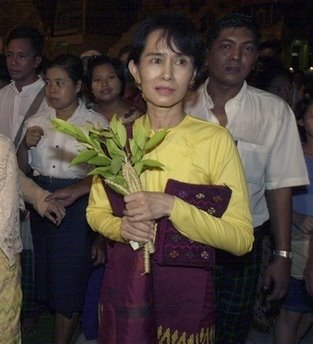


 Posts
Posts


