News & Articles on Burma
Saturday, 23 July, 2011
----------------------------------------
'Reforms Needed Soon'
China limits border crossings after Burmese mortar fire on the KIO capital
AIPMC urges ASEAN to review Burma issue cautiously
Suu Kyi to meet Myanmar minister: official
Canada opens relations with Burma, sanctions continue
Canada Begins Engagement With Myanmar: Foreign Affairs Minister John Baird
Suu Kyi to meet Myanmar minister
Academics: Thailand doesn’t need Burma’s coal
Despite gold price rise globally, Burmese traders can not increase price
----------------------------------------------------
'Reforms Needed Soon'
2011-07-21
In her latest weekly conversation with listeners, Aung San Suu Kyi assesses the first 100 days of the new government.
Q: How do you assess the work of U Thein Sein’s government during its first 100 days in office in Burma? Do you see that it is moving toward change in the country?
A: I have not been able to gauge yet whether the government of U Thein Sein has had any intention of moving toward change, based on their first 100 days in office. A hundred days is not a very long period, but if they really want change there are things that can be done to show that they want change. I think that it would be in the best interest of the country if they do the things that need to be done as soon as possible. I would like to urge them to do those things accordingly.
Q: The deputy foreign minister of Japan visited Burma recently and met with the government of U Thein Sein, as well as with yourself. What are your thoughts with regard to the attitude of Japan toward Burma? What do you think the role of Japan should be in the struggle for democracy in Burma?
A: Since Japan’s position in Asia as well as in the world is important, many assume that Japan will have a sense of responsibility when forming its political policies. The National League for Democracy believes that with regard to Burma, Japan should—with a sense of responsibility and a long-term view—support the emergence of a political system that will benefit the people of Burma. When we met with the group from the Japanese foreign ministry, we conducted our discussions based on that belief.
Q: Some groups in France who are working for Burma’s democracy, as well as others who are interested in Burma, have been asking about the NLD’s May 20 statement regarding tourism in Burma. Does that statement rescind the NLD’s previous boycott on tourism? Or does it allow tourism with certain restrictions? And if so, what would these restrictions be? Also, many travel agencies operating abroad are now doing business directly with companies in Burma that are connected to the generals. What effect will this NLD statement have on the sanctions imposed by the U.S. and Europe on the generals and the companies connected with them?
A: The answers to all your questions are included in the NLD report on tourism. The website where you can obtain the report is www.nldburma.org.
Q: How can the monks living in Burma help to support your travels around the country to make speeches and gather support from the people? I would also like to know what you expect and wish for from the people during your travels.
A: We believe that getting in touch with the people is an important part of the National League for Democracy’s political activities. That is why we plan to travel around the country and get in touch with the masses. In our meetings with the people during the last 20 years or so, I have never encountered any riots or disturbances. The only groups that have disturbed the peace and stability of the country are those groups that have systematically planned to disrupt our tours by harshly attacking us in an uncivilized manner. That is why we would like to respectfully submit to the venerable monks that they teach and guide the people so that they may enthusiastically support our efforts.
Q: Some time ago, at a seminar held in Naypyidaw, the economist Professor U Myint submitted a paper on poverty eradication. Could you explain to us your thoughts on that paper?
A: Just as the Internet carries comments on and analyses of Dr. U Myint’s paper, it also carries Dr. U Myint’s responses. There are usually different views on papers dealing with academic thoughts and ideas. Dr. U Myint’s paper is 20 pages long, so it would take a long time for different views concerning it to be discussed. If I were to explain my own view in a simple manner, I would say that we have to examine to what extent such theories can actually be put into practice. It will not be enough to write just one paper to cover all the problems in our country and analyze them, let alone propose the necessary changes. That is why I think there have to be more wide-ranging discussions.
Q: The government of U Thein Sein is soliciting advice from experts for the benefit of the rural population. My opinion is that if advice is taken from real farmers who are actually doing the farmwork, then the farmers will truly benefit. What do you think of my idea?
A: Not long ago, an education program for farmers was held at the headquarters of the National League for Democracy. At that three-day training course, the experts who conducted the course gained a lot of knowledge from the farmers who attended. That is why I can say that what you have said is true, based on our experience.
Program broadcast in Burmese on July 15, 2011.
Copyright © 1998-2011 Radio Free Asia. All rights reserved. http://www.rfa.org/english/women/conversation-aungSanSuuKyi/conversation-07212011163619.html
-----------------------------------------------
Saturday, 23 July 2011 07:00
China limits border crossings after Burmese mortar fire on the KIO capital
Kachin News Group [KNG]
China limited the hours for crossing at its key border gate at Laiza, the capital of the Kachin Independence Organization (KIO), beginning July 22, after the Burmese Army fired mortar rounds at KIO positions in the area, residents said.
Residents of the KIO capital have been prohibited from crossing into the Chinese-controlled area of Laiza by Chinese border authorities between 6 p.m. and 6 a.m., according to Laiza residents.
The Burmese Army’s Dawhpumyang-based Infantry Battalion No. 142 fired about 20 rounds from 120 mm mortars at the Alaw Bum-based Kachin Independence Army (KIA)’s Battalion No. 24, near Laiza, on July 22 between 8 p.m. and 9 p.m.
Laiza residents believe China is trying to block the movement of Burmese refugees into its territories by limiting the hours of crossing at the border gate.
Both Burmese and Chinese citizens in Laiza have been fleeing to Chinese territory after the mortar fire by Burmese troops, said witnesses.
Over 16,000 refugees have fled to KIO areas near the China border in eastern Kachin State because of the escalation of the two-month old civil war.
Currently, China has not accepted Kachin refugees and refugee camps on its soil.
http://www.kachinnews.com/news/1993-china-limits-border-crossings-after-burmese-mortar-fire-on-the-kio-capital.html
-----------------------------------------------
AIPMC urges ASEAN to review Burma issue cautiously
By Zin Linn Jul 23, 2011 9:17PM UTC
The ASEAN Inter-Parliamentary Myanmar Caucus (AIPMC) released a press statement yesterday on Current Military Offensive and Rights Abuse by the Myanmar or Burma Army in Ethnic Areas -Monitor recent rape cases, reject Myanmar’s bid to chair ASEAN and cut financial lifelines for despots, AIPMC urges ASEAN.
The AIPMC highlighted about atrocities against civilians during Burma Army offensives against ethnic armed groups in Shan State and Kachin State. It also denounced Burmese soldiers’ sexual violence against women and girls, including gang-rape by order of high level officials.
The statement continues revealing warfare in North and Eastern Burma which has been worsening since last year’s election. Almost two-decade long ceasefire with the Shan State Army-North (SSA-N) and the Kachin Independence Army (KIA) have already been broken by the Burma Army.
According to Shan community based organizations, the statement says, 65 battles have taken place in Shan State over the last three weeks and now thousands people are displaced inside northern Shan State.
In Kachin State, more than 16,000 refugees fled to China from escalating fighting across ten townships since early June, according to the Kachin Women’s Association Thailand (KWAT). In both areas, Burmese soldiers committed systematic sexual violence against women and girls, quoting local sources AIPMC said.
AIPMC also underlined the main cause of the combating in those ethnic areas. The ongoing battles are closely linked to the Burmese government’s economic interests in the resource rich ethnic areas, including hydropower dams on the Salween and Irrawaddy Rivers and trans-national oil and gas pipelines across northern Shan State, the statement criticizes.
It needs to clear out resistance forces and seize control of these areas to proceed with these projects. AIPMC pointed out that Burma has had no mechanism prepared to watch the impact of such projects for local people. Instead, they have taken control over ethnic areas and get rid of ethnic armed groups, rather than seeking a solution to essential political problems in the country.
Severe human rights violations have already occurred concerning these projects, including forced labor, land confiscations, torture, murder and rapes, causing an influx of refugees to neighboring countries, AIPMC said.
“Only the military rulers of Myanmar and their business cronies will benefit from these projects, which are built on the lives, blood and tear of ordinary civilians”, said Kraisak Choonhavan, AIPMC Senior Advisor in Thailand.
The current civil war comes on top of an already critical political situation in Burma. There has been no meaningful political progress since the elections. Besides, 2,000 political prisoners continue to languish in notorious prisons of Burma.
“We call on the Myanmar Army to immediately end rights abuses, particularly the systematic use of rape as a weapon to suppress ethnic women and to urgently engage in peace talks with ethnic armed groups”, said Eva Kusuma Sundari, Member of Indonesian Parliament and President of the AIPMC.
“The challenge is on ASEAN to live up to its responsibilities to protect the people of Myanmar. A meeting between the ASEAN Foreign Ministerial Meeting and the UN is needed to stop this human rights crisis and its negative impacts on neighboring countries and regional stability. The international community should press upon ASEAN the urgency of such a meeting”, she emphasizes.
AIPMC calls on the ASEAN Intergovernmental Commission on Human Rights (AICHR) to monitor these rape cases closely, and ASEAN and its member states must turn down Burma’s application to be the bloc’s chair in 2014, until and unless the government takes genuine steps towards ending human rights violations in the country.
Hence, AIPMC warns that ASEAN members states need paying attention to the repeated calls by the UN Special Rapporteur on human rights in Burma (Myanmar), Tomas Ojea Quintana, for the creation of a UN-mandated Commission of Inquiry (CoI) in Burma.
It also reminds that prodemocracy icon Aung San Suu Kyi has already supported CoI and altogether sixteen countries have already endorsed the establishment of such a CoI.
Finally, AIPMC calls Thailand and other investors to reassess their investments in Burma and discontinue financial lifelines that keep brutal and self-serving despots in power.
http://asiancorrespondent.com/60739/aipmc-urges-asean-to-review-burma-issue-cautiously/
--------------------------------------
STRAITS TIMES: Jul 23, 2011
Suu Kyi to meet Myanmar minister: official
YANGON - MYANMAR'S democracy leader Aung San Suu Kyi will meet a minister on Monday in her first dialogue with the country's new civilian leadership, a government official told AFP on Saturday.
Ms Suu Kyi has frequently called for dialogue with the government since her release from house arrest just days after last year's November elections, which were marred by claims of cheating and the exclusion of her party.
'Aung San Suu Kyi and Aung Kyi will meet at Sein Lei Kan Tha state guest house on Monday afternoon. It will be the first meeting between them after the new government was formed,' a Myanmar government official told AFP, without elaborating.
Mr Aung Kyi, who is currently Myanmar's labour minister, was in charge of relations between the military junta and Ms Suu Kyi under Myanmar's previous regime.
The pair - who are not related - have met on several occasions, including in late 2009 when the Nobel Peace Prize winner was still under house arrest.
Ms Suu Kyi's National League for Democracy (NLD) were unable to confirm the meeting on Saturday. 'We have not been told anything yet,' spokesman Nyan Win told AFP. – AFP http://www.straitstimes.com/BreakingNews/SEAsia/Story/STIStory_694004.html
----------------------------------------
Canada opens relations with Burma, sanctions continue
The Canadian Press
Date: Saturday Jul. 23, 2011 11:09 AM ET
TORONTO — Canada has begun a strategic engagement with Myanmar that includes an exchange of ambassadors, but Ottawa has no plans to lift the economic sanctions imposed against the country anytime soon, Foreign Affairs Minister John Baird said Saturday.
Baird, speaking from Bali, Indonesia, where he attended a regional security forum this week, said the "limited engagement" was focused exclusively on human rights.
He said he raised the issue during a meeting with Myanmar's foreign minister in Bali and that he had urged the government to release thousands of political prisoners from jail.
Canada imposed economic sanctions against Myanmar, also known as Burma, in 2007 because of its complete disregard for human rights.
Myanmar held elections late last year, officially handing power to a civilian administration after a half-century of military rule.
Pro-democracy leader Aung San Suu Kyi was released from house arrest. But many see the changes as cosmetic and believe the army will continue to hold sway.
"I underlined the significance concern that the government of Canada and Canadians have with Aung San Suu Kyi's ability to be mobile in the country and highlighted the ongoing concerns about her safety and her security," Baird said.
The minister also held talks with his Australian and New Zealand counterparts.
The three foreign ministers reaffirmed the long-standing relations between their countries and committed to enhanced co-operation across the full range of international challenges.
"I raised the human rights situations in Burma and North Korea with my counterparts," Baird said.
"We also looked at human smuggling and illegal migration and reaffirmed that we remain committed to combatting these and other abuses of our respective immigration systems."
http://www.ctv.ca/CTVNews/Politics/20110723/canada-opens-burma-diplomatic-relations-110723/
---------------------------------------
Canada Begins Engagement With Myanmar: Foreign Affairs Minister John Baird
First Posted: 7/23/11 10:48 AM ET Updated: 7/23/11 10:54 AM ET
THE CANADIAN PRESS -- TORONTO - Foreign Affairs Minister John Baird says Canada has begun a strategic engagement with Myanmar that includes an exchange of ambassadors.
He says the "limited engagement" is focused exclusively on human rights and that Ottawa is urging the government to release thousands of political prisoners from jail.
But the minister ruled out an early end to the economic sanctions imposed against Myanmar, also known as Burma, in 2007.
Baird was speaking from Bali, Indonesia, where he attended a regional security forum this week.
The minister says he raised the issue of human rights during a meeting with his counterpart from Myanmar.
Myanmar held elections late last year, officially handing power to a civilian administration after a half-century of military rule.
http://www.huffingtonpost.ca/2011/07/23/canada-begins-engagement-_n_907664.html
-----------------------------------------
Suu Kyi to meet Myanmar minister
AFP – 39 mins ago
Myanmar's democracy leader Aung San Suu Kyi, seen here on July 19, will meet a minister on Monday in her first dialogue with the country's new civilian leadership, a government official told AFP
Myanmar's democracy leader Aung San Suu Kyi, seen here on July 19, will meet a minister …
Myanmar's democracy leader Aung San Suu Kyi will meet a minister on Monday in her first dialogue with the country's new civilian leadership, a government official told AFP on Saturday.
Suu Kyi has frequently called for dialogue with the government since her release from house arrest just days after last year's November elections, which were marred by claims of cheating and the exclusion of her party.
"Aung San Suu Kyi and Aung Kyi will meet at Sein Lei Kan Tha state guest house on Monday afternoon. It will be the first meeting between them after the new government was formed," a Myanmar government official told AFP, without elaborating.
Aung Kyi, who is currently Myanmar's labour minister, was in charge of relations between the military junta and Suu Kyi under Myanmar's previous regime.
The pair -- who are not related -- have met on several occasions, including in late 2009 when the Nobel Peace Prize winner was still under house arrest.
Suu Kyi's National League for Democracy (NLD) were unable to confirm the meeting on Saturday.
"We have not been told anything yet," spokesman Nyan Win told AFP.
Journalists have been invited to cover some parts of the meeting, but will not be present during the talks themselves.
Suu Kyi has this month tested the boundaries of her freedom, with her first visit outside Yangon and, after her return, leading hundreds of supporters in memorials for her father, Myanmar's independence hero General Aung San.
News of the talks comes on the same day that US Secretary of State Hillary Clinton urged Myanmar's rulers to make "concrete, measurable progress" towards meeting the international community's demands for reform.
In an address to foreign ministers at an Asian security forum in Indonesia, Clinton suggested first steps should include "meaningful and inclusive dialogue" with the opposition and the release of more than 2,000 political prisoners.
The US House of Representatives on Wednesday approved a renewal of sanctions on Myanmar, first passed in 2003 in response to alleged rights violations and failure to adopt democratic reforms.
Suu Kyi's party, which won a landslide election victory two decades ago that was never recognised by the junta, was disbanded by the military rulers last year because it boycotted the latest vote, saying the rules were unfair.
http://news.yahoo.com/suu-kyi-meet-myanmar-minister-144435225.html
-------------------------------------
Academics: Thailand doesn’t need Burma’s coal
Friday, 22 July 2011 12:02 S.H.A.N.
Academic activists at yesterday’s public forum in Chiangrai to discuss social and environmental impacts coming from the Mongkok lignite coal mines and a lignite-fired powerplant there across the border said Thailand could do without resorting to coal for its much needed electric power.
Supakij Nantaworakarn from Bangkok-based Healthy Public Policy Foundation argued, “With ample and practical options to use power from the sun, wind and biogas, Thailand doesn’t need Mongkok.”
If the projects were allowed to go on, he said, the people on this side of the border can expect 1,500 tons of dust, 102 kg of mercury, 29 million tons of greenhouse gas and megatons of sulpha dioxide and nitrogen dioxide each year destroying their environment especially the Kok river, which originates in Burma’s Shan State but flows through Thailand’s Mae Ai and Chiangrai’s Mueng districts before draining itself in the Mekong.
“We won’t drink mineral water (from the Kok)” is the slogan of the public campaign led by elected local administrative organizations.
Saraburi Coal, a subsidiary of Thailand’s construction giant Italian-Thai, received a 30 year concession in 2008 from Burma to mine for lignite in Mongkok subtownship of Monghsat township, opposite Chiangrai’s Mae Fa Luang district. It later received approval to develop coal-fired power plant in Mongkok for export of 369 MW of electricity to Thailand.
“Let us not celebrate the 750th anniversary of the founding of Chiangrai (in 2012) by drinking mineral water (from the Kok),” said Montree Chantawong, known environmentalist, after explaining how mercury would seep through the earth to wells used by the communities.
He was supported by Dr Kan Thongkaem na Ayuddhaya from Chiangrai’s Prachanukhroa Hospital.
The public meeting held at Chiangrai’s Wat Jed Yod temple was presided by Ms Tuenjai Deetes, another known environmentalist and politician.
More than a thousand people at the project site have been removed by military authorities after giving them 20,000 kyat ($25) per acre for their land. Villagers say it would take 3 years to develop a new paddy field. “Elections have brought us nothing,” complained a farmer who, like many others, has decided to seek his future in Thailand.
The Thai campaign against the project began in July 2009 when a group of Thai villagers on the border wrote a complaint letter to the Thai National Human Rights Commission and Thai Lawyers’ Council. A year later it was joined up by community leaders across Chiangrai who protested against the project. http://www.shanland.org/index.php?option=com_content&view=article&id=3871:academics-thailand-doesnt-need-burmas-coal&catid=90:environment&Itemid=287
-------------------------------------------------
Despite gold price rise globally, Burmese traders can not increase price
Friday, 22 July 2011 21:59 Te Te
New Delhi (Mizzima) – An order by the Burmese government is preventing gold traders from speculating despite record high prices on the global market, gold merchants in Rangoon said.
Previously, the gold price in Burma depended on the price fluctuations in the global market.
Gold traders in Burma are not able to speculate based on global prices because of an order by the government, according to traders. Photo: Mizzima
Gold traders in Burma are not able to speculate based on global prices because of an order by the government, according to traders. Photo: Mizzima
However, in early July the gold price on the global market was US$1,480 per ounce (1 ounce= 1.76 ticals); on July 19, the price reached a record high of US$1,602. Since then, the Burmese government has forbidden gold merchants from speculating on gold prices.
The current gold price in Burma, 662,500 kyat (about US$ 828) per tical (about 16 grams), is 10,000 kyat lower than the price on the global market. If the Burmese government had not forbidden gold merchants from speculating, the gold price could reach 680,000 kyat per tical, according to estimates by gold merchants in Rangoon. Now, despite the stable price, gold trading is sluggish, according to sources.
“Earlier when the price in the global market was increased, the price in the local market was increased too. Now the merchants can not increase,” said a gold shop owner from Shwebontha Road in Pabedon Township. “To control the price, the authorities do not allow 'laypakkar' [‘Laypakkar’ is a method for speculation in which gold brokers and merchants estimate the possible fluctuation of local gold prices based on the possible fluctuations in the gold price in the global market and then buy gold by making a promise that they will make payment later]. Because Myanmar [Burma] currency is strengthening, people do not want to buy gold.”
On July 21, 7 Day News reported that Rangoon Region gold businessmen’s association secretary Win Myint said that the authorities told gold merchants not to make “laypakkar” and speculate in the local gold market. Mizzima tried to contact the association, but could get no response.
A member of the gold businessmen’s association said on the condition of anonymity:
“If there is ‘lakpakkar,’ there will be considerable fluctuations. If the price in the global market is likely to be increased, the price is usually increased in our trading, too. The speculators often trade about several viss (1 viss = nearly 1.6 kg) of gold and they often pay the following morning,” the member said.
He continued, “The price increase is not just because of 'lakpakkar' (speculation); it is also because of fluctuations in the dollar price and gold price in the global market. If the gold price on the global market is increased, nothing can control the local price not to be increased. Otherwise, people will sell gold (to other countries) via border areas.”
The gold price on the global market was US$1,588 on Friday. In Burma, the high quality gold price is 664,500 kyat per tical; the lower quality gold price is 663,000 kyat per tical.
Now, the exchange rate for one US dollar has fallen to below 800 kyat per dollar, which is another reason that the gold price in the Burmese market did not increase. Because of the relatively low gold price in Burma, it is likely that some people sell gold to neighbouring countries, especially China, through border areas, traders said.
On Friday, the currency exchange rate was 785 kyat per 1 US dollar. http://www.mizzima.com/business/5655-despite-gold-price-rise-globally-burmese-traders-can-not-increase-price.html
__._,_.___
Sunday, July 24, 2011
News & Articles on Burma-Saturday, 23 July, 2011


Saturday, July 23, 2011
News & Articles on Burma-Friday, 22 July, 2011-UZL
News & Articles on Burma
Friday, 22 July, 2011
----------------------------------------
Burma Ruled by a Brutal Government: Congressmen
Chiang Mai Office of Ethnic Armed Groups Shut Down
Burmese Military Reinforces Troops near KIO Bases
Don’t Tread on the KIA
Steven Law’s Rising Empire
Does Burma launch colonial war in Kachin state?
Bridges blown, army shells Kachin base
Thai rescue team locates downed helicopter in Myanmar; all dead
Hillary Clinton: ASEAN must push Myanmar on reforms
Clinton warns Burma of sanctions
Chinese FM meets with counterparts, ASEAN secretary-general on cooperation
Myanmar, Japan to promote tourism in face of arrival drop
Myanmar Currency Crunch Cripples Exporters, Risks Crisis
Egat urged to scrap Burma project
-----------------------------------------
Burma Ruled by a Brutal Government: Congressmen
By LALIT K JHA Friday, July 22, 2011
WASHINGTON—Despite the formation of a new civilian government after last year’s elections, recent developments in Burma only indicate that the country continues to be ruled by one of the world’s most brutal regimes, several influential US lawmakers have said in arguing for increased sanctions on this Southeast Asian nation.
“The sanctions are critically important to keeping the pressure on the Burmese junta. The government continues to have one of the worst human rights records in the world and routinely violates the rights of Burmese citizens, including the systematic use of rape as a weapon of war, extrajudicial killings, arbitrary arrests and detention, torture and child labor,” New York Congressman Pete King said on the floor of the House.
“Moreover, the Burmese regime has more child soldiers than any other country and has destroyed more than 3,700 ethnic villages, displaced approximately 2,000,000 people, more than 600,000 of which are internally displaced, and has taken nearly 2,000 political prisoners,” he argued during a discussion on Burma in the US House of Representatives on Wednesday.
King also urged the Obama administration to call for a UN Commission of Inquiry on Burma to investigate war crimes and crimes against humanity. “This Commission is necessary to prevent further killings and to encourage a meaningful political dialogue,” he said.
New Jersey Congressman Rush Holt said in the years following the coup in the early 1960s, the authoritarian regime impoverished the nation and brutalized its people, a pattern that persists today.
“For more than 20 years, the United States government has sought to use its influence to try to create conditions for a restoration of democracy and the rule of law in Burma. One tool has been the use of sanctions,” he said.
“Last November, Burmese elections were clearly illegitimate and not a free expression of the will of the Burmese people. But the continuing international pressure on and scrutiny of the junta may be having some tangible effects,” Holt said.
“As the International Crisis Group noted earlier this year, two senior junta leaders have resigned since the elections, and there is some evidence that pressure has eased on some of the minority ethnic groups in the country,” he said.
There is no question that Burma is ruled by one of the world’s most brutal governments, said Congressman Joe Crowley. “Over the past year, we have seen ongoing abuses committed by the Burmese military, including rapes, torture and killings,” he said.
Just last week, Human Rights Watch released a report documenting how villagers are subjected to summary executions, torture and being used as human shields during conflict. “The women in Burma live in constant fear of rapes by soldiers of their own military. For the leaders of the Burmese military, rape is a tactic of war—one used to torment and to intimidate entire populations, not just their immediate victims,” Crowley said.
“In fact, just two weeks ago, on July 5, the Burmese soldiers carried out four more rapes against ethnic civilians. The innocent victims were of all different ages. One of those victims was as young as 12 years of age. That’s right. A 12-year-old girl was raped by a member of the Burmese military. As a result of thousands of brutal rapes and other abuses, Burmese villagers continue to flee their homes into the jungle where they live as refugees or internally displaced people,” Crowley said.
Observing that the plight facing the people of Burma remains terrible, Congressman Joe Pitts from Pennsylvania said the ruling party in Burma continues to use the rule of law and government apparatus to deprive minority groups of their human rights and their lives, and it does so with impunity.
“The regime’s human rights violations continue to be horrific. The regime in Burma is responsible for committing virtually every human rights violation imaginable. The atrocities perpetrated by the regime range from the use of rape as a weapon of terror, the recruitment of child soldiers, ethnic cleansing, forced labor, political detention, and the list goes on,” he said.
Pitts said he has received firsthand reports in which detail the dictatorship’s use of ethnic minorities as human landmine sweepers. “Over 1 million refugees and 500,000 internally displaced peoples have been forced to flee their homes, and 750,000 of the country’s inhabitants remain stateless.
Indicative of the times, the regime has now turned to censorship of the Internet, as well as that of individual e-mail accounts and social networking sites, to block the dissemination of evidence related to the atrocities,” he said.
“The Burmese government must realize that such attempts to hide its record of abuse, as well as its dishonest elections and mock constitutional reforms, cannot cover up the junta’s war against its own people. Such a record only demonstrates the regime’s illegitimacy,” Pitts said.
Congressman Jim McDermott said that in light of the unchanged political reality in Burma, the renewal of America’s ban on Burmese imports could not be more urgent. “We must send a message to Burma’s new rulers, who turned out to be the same old rulers, that empty promises of democratic reform are unacceptable,” he said.
“Now, there are some who question whether we should maintain our import ban following Burma’s election and the formal dissolution of the military junta. Even our European allies have begun to rethink their strategy as EU travel and financial restrictions have been lifted on certain officials in the new government,” McDermott said.
“The problem with that approach, Mr. Speaker, is that meaningful reform has yet to take place in Burma. By opening our borders to Burmese imports, we would only strengthen and enrich the same old regime that maintains a stranglehold on civic and family life in Burma. According to the UN, the new government has failed to make any significant progress on land confiscation, forced labor, the internal displacement of people, extrajudicial killings, and sexual violence against women. The Obama administration affirms this view,” the Congressman said.
“Burma’s regime is one of the world’s most repressive and continues to oppress democratic movements and humanitarianism,” alleged Congressman Charles Boustany. “The recent election does not represent any kind of shift in domestic Burmese politics. In fact, the political situation in Burma and for the Burmese people has not changed at all,” he said, adding that the human rights situation is no better.
http://www.irrawaddy.org/article.php?art_id=21740
----------------------------------------------
Chiang Mai Office of Ethnic Armed Groups Shut Down
By LAWI WENG Friday, July 22, 2011
The Chiang Mai, Thailand office of the United Nationalities Federal Council (UNFC), a 12 member association of Burma’s ethnic armed groups, has been shut down after Thai authorities ordered it closed in early July.
“A dozen Thai officials came to our office while we were having lunch. They included police, immigration and military intelligence,” said an ethnic Mon leader who is a UNFC official. “They ordered us to shut down the office, and we have been closed since then.”
“We believed that pressure came from the Burmese government,” he said. “We were almost arrested when the authorities were at the office. Fortunately, we called some military intelligence officers who we knew, and then they did not make trouble for us.”
In the almost twenty days the office has been closed, the ethnic leaders have been forced to stay at an alternate base, according to another source.
Previously, the ethnic armed leaders from the Kachin Independent Organization (KIO) and the New Mon State Party (NMSP) worked mostly at the office, while leaders from the other ethnic groups were based along the border. Together, they were attempting to develop a plan for a future federal army.
The UNFC is an umbrella group of Burmese ethnic armed groups, which include major ethnic armed groups such as the Karen National Union, the KIO, the Karenni National Progressive Party, the NMSP, the Shan State Army and the Chin National Front.
The UNFC was formed early this year and the office was set up afterward.
The ethnic armed leaders said that it is difficult for them to travel in Thailand while the new government is being set up.
Early in May, Thailand's National Security Council banned a Burmese pro-democracy event in Chiang Mai following a complaint from Naypyidaw, according to Burmese pro-democracy activists.
Other Burmese events in Chiang Mai, including a celebration of Aung San Suu Kyi's birthday on June 19, have also been banned by the Thai authorities.
Burmese exile groups have enjoyed relative freedom in Chiang Mai in recent years, but there was reported harassment and repression under the administration of former Prime Minister Thaksin Shinawatra in the early 2000s. http://www.irrawaddy.org/article.php?art_id=21744
------------------------------------------
Burmese Military Reinforces Troops near KIO Bases
By SAW YAN NAING Friday, July 22, 2011
The Kachin Independence Organization (KIO) said that more Burmese army trucks and military river vessels were headed toward its bases following rumors that the government troops would attack the KIO’s headquarters in Laiza.
La Nan, the joint-secretary of the KIO, told The Irrawaddy on Friday, “We can say it is a risky condition. We heard many army trucks were headed to Momauk Township. Military vessels on the Irrawaddy River are also headed to Bhamo Town.”
Last night, Burmese government troops from Infantry Battalion 142 fired 20 mortars, including 81 mm mortars, at the Kachin Independence Army’s (KIA) Battalion 24 under Brigade 5. The KIA is the military wing of the KIO.
To cut off government troop supplies, the KIA troops destroyed a 60-foot-long bridge in Waingmaw Township two days ago.
La Nan said that he heard that Burmese air force preparations and exercises are taking place in Myitkyina, the capital of Kachin State, adding that tanks are also patrolling the capital.
The Thailand-based Kachin News Group (KNG) reported that the government is preparing to begin a full-scale offensive against KIA bases located in Kachin State and northern Shan State.
Fuel, arms and ammunition have been stockpiled at the Northern Regional Military Command, located in Myitkyina, after being transported from Mandalay by boat and train, according to the KNG report.
Meanwhile, the Burmese government, along with its Karen Border Guard Force, launched attacks, which included 81 mm mortar shelling, against the Democratic Karen Buddhist Army (DKBA), a renegade Karen armed group, in Myawaddy Township in southern Karen State on Thursday.
Local villagers are worried about further fighting between the government troops and the DKBA, which has the backing of the Karen National Union (KNU), in southern Karen state.
“The fighting is likely to escalate,” said Brig-Gen Johnny, the commander of Brigade 7 of the Karen National Liberation Army, the KNU’s military wing. http://www.irrawaddy.org/article.php?art_id=21746
---------------------------------------
Don’t Tread on the KIA
By BA KAUNG Friday, July 22, 2011
KIA representatives during a peace talk. (Photo: The Irrawaddy)
LAIZA, Kachin State – “When we were young, we stepped on jade stones when we walked, found gold nuggets when we panned the rivers and saw tall teak trees when we passed by the forests,” said the Rev Lazum Tuja, a middle-aged ethnic Kachin and Christian priest, in a March sermon.
“But now, all of this is gone from Kachin State, mostly to China,” he told his congregation. “Since we are being looted of all our possessions, this is the dark age of the Kachin people.”
Lazum Tuja’s emotional sermon reflected the frustrations of his flock in the resource-rich Kachin State of northern Burma. Over the past two decades, the Kachin people have seen the depletion of their natural resources due to the growth of massive development projects conducted by Chinese companies with the support of the Burmese government. They have also experienced the consequent displacement of large numbers of local people and negative environmental impact on their communities.
Most of this has occurred since 1994, when the Burmese army signed a ceasefire agreement with the Kachin Independence Army (KIA), the second strongest ethnic armed group in Burma with an estimated 4,000 troops. The KIA has been engaged in an armed struggle for Kachin autonomy since 1961.
During the ceasefire, the Kachin Independence Organization (KIO), the political wing of the KIA, put its emphasis on infrastructure development in Kachin State and temporarily set aside its aspirations for autonomy at the request of the former military regime, which argued that political issues could be resolved once the new “civilian” government was in place.
On the surface, the ceasefire brought relative peace to a region previously scourged first by fighting between the Allied forces and the Japanese Imperial Army during World War II, and later between the Burmese army and the Kachin rebels, who are renowned in Burma for their fighting skills.
But it was peace without a meaningful political solution, and so the Kachin people were in a powerless position when the Burmese government began forcing them to relocate en masse without any proper compensation—leaving behind their livelihoods, culture and ancestral homes—to make way for Chinese state-owned companies such as China Power Investment to build massive hydropower dams across Kachin State. To make matters worse, much of the electricity generated from these dams will not be for the consumption of the Kachin people, but for export to neighboring China, and the revenues from the projects will to go into Naypyidaw’s coffers.
As a result, there has been widespread local resentment against the Chinese-led dam projects in Kachin State, the most prominent being the Myitsone Dam—one of the largest hydropower dam projects in the world which is currently under construction at the confluence of the Irrawaddy River. To add fuel to the fire, there has was has been escalating tension between the Burmese army and the KIA since 2009, when Naypyidaw issued its order for the KIA to join the government’s Border Guard Force (BGF).
The BGF plan was intended to place ethnic militias like the KIA and the United Wa State Army (UWSA), the country’s strongest ethnic armed group, under the central command of the Burmese army. The Burmese government set a number of deadlines for the KIA and UWSA to accept the BGF, but each repeatedly rejected the plan.
In Kachin State, the expiration of the BGF deadlines loomed large not only on the military front, but also on the political front. Kachin political parties were banned from joining the election on grounds that their leaders were linked with the KIA, whereas the ethnic political representatives from Shan, Mon and Arakan States were allowed to participate and won seats in the new Parliament.
When the election brought forth a “civilian” government led by former military generals, it was clear to the Kachin leaders that the new government would not make the political compromises that the former junta chiefs had led them to expect. In addition, the mostly Christian Kachin population were saddled with a Buddhist Kachin chief minister in their state, a man who represents the government-backed United Solidarity Development Party that controls Parliament.
Soon after the election, the Burmese government ratcheted-up the pressure on the KIA, forcing it to shut down its liaison offices in urban areas in Kachin State and then ordering the withdrawal of KIA troops from the area near the hydropower plant that Chinese interests are constructing on the Tapaing River, a tributary of the Irrawaddy, in Bhamo District bordering China’s Yunnan Province. KIA officials were indignant about being ordered to leave areas where they have been active for decades, and took it as a sign that the Burmese army was poised to launch an all-out offensive against its troops.
On June 9, after the KIA refused to move away from the areas near the hydropower plant—which is also only a short distance from China’s strategic oil pipeline running from the Bay of Bengal to Yunnan Province—the two sides exchanged gunfire near the plant, effectively ending the 17-year-old ceasefire and forcing Chinese workers to return home. Further armed clashes ensued in the following days, with bomb explosions reported in major towns in Kachin State.
Analysts believe, however, that this latest conflict—which occurred only a couple weeks after Burma and China announced the establishment of a “comprehensive strategic cooperative partnership” during Burmese President Thein Sein’s visit to Beijing in March—could not have come as a shock to China, as happened in 2009 when the Burmese government launched a surprise offensive against a small Kokang ethnic militia that drove at least 30,000 war refugees into China.
In 2009, there were not many Chinese investments in the Kokang area and China publicly reprimanded Naypyidaw for creating instability at its border. But this time, China seemed almost looking for a fight, or at least was not adverse to one, and a week after the conflict began it merely called for “restraint on both sides.”
Dr. Zarni, a Burmese visiting fellow at the London School of Economics, described the conflict as “a war of business which transcends ethnicity.”
“This has very much to do with territorial expansion and development projects by China and the Burmese army, which only represents the Burmese ruling elite, not the Burmese public,” he said.
This piece is a summary of Ba Kaung’s article that appears in The Irrawaddy’s latest e-magazine. To read the full version visit: http://issuu.com/irrawaddy/docs/irr_vol.19no2_june2011_issuu/10?viewMode=magazine&mode=embed
http://www.irrawaddy.org/article.php?art_id=21743
------------------------------------------
Steven Law’s Rising Empire
By WAI MOE Friday, July 22, 2011
Chinese businessmen are currently the richest in Burma—a fact that obviously doesn't sit well with the Burmese business community.
In a recent interview with an Italian journalist, Tay Za, one of Burma’s US-sanctioned tycoons, complained that “Too many Chinese have taken our citizenship and are now boasting they are the richest. But they’re not pure Burmese.”
One of Tay Za’s leading rivals is Tun Myint Naing, also known as Steven Law, 53, who has also been a target of US sanctions since early 2008.
Rangoon businessmen say that Law, a Kokang Chinese, has even surpassed Tay Za as Burma's wealthiest man thanks to his involvement in a number of mega projects run by the Chinese state-owned corporations, including a Sino-Burmese oil and gas pipeline project, a deep-sea port in Kyaukpyu, and the Myitsone and Tasang hydro-power dams.
Most notably, Law’s Asia World Company has been working closely with Chinese companies that own an 80 percent share of of Burma’s hydro-power projects. The Myitsone project alone is estimated to be worth US $3.6 billion. Total Chinese total investment in Burma since March 2010 is $8.17 billion, much of it connected in some way to Asia World.
Law did especially well when Vice President Tin Aung Myint Oo was the chairman of Burma’s Trade Policy Council, a body that has been disbanded since a new government was formed in March. The two men have been close since the mid-1990s, when then Brig-Gen Tin Aung Myint Oo was commander of the Military Operations Command 1 in Kyaukme, Shan State.
According to intelligence officials, the relationship between the two men began during the construction of the Mandalay-Kyaukme-Lashio-Muse road. At the time, military officials described Law’s family as “good givers”.
Law's father, drug kingpin and militia leader Lo Hsing Han,76, played a key role in cementing ties between Law and the Burmese generals.
“Among his children, Lo Hsing Han said that Steven Law was the best at doing business. That's why he chose him to deal with the ruling generals and to run the family's business interests in the cities. However, the other sons are also involved in secret businesses,” said a former Burmese intelligence officer who knows about the family's files, speaking on condition of anonymity.
“Lo Hsing Han is still well respected in the Kokang-Chinese business community. His other sons are reportedly based in Thailand, Singapore and Taiwan doing business. In accordance with Chinese tradition, Lo Hsing Han is seen as the godfather of the family business,” he added.
Law's involvement with the Burmese generals has not been limited to doing business, however. He also acted as a broker during ceasefire talks between the Burmese junta and Chinese-backed Kokang commanders of the Communist Party of Burma in 1989, when ethnic commanders revolted against the party.
Two decades later, Law continues to act as an important intermediary for Burma's generals. Because of his close ties to Chinese officials in Beijing, he accompanied President Thein Sein and his delegation to China in late May.
A Burmese official on the trip said that during the China visit, Law was often beside Thein Sein, chatting with the Burmese president. He added that Law sometimes acted as an interpreter between Thein Sein and Chinese officials, even when there were official interpreters present.
According to the Kachin Independence Army (KIA), a former ceasefire group that resumed fighting with the Burmese army in June, Law has paid a handsome price to earn the generals' trust.
“Based on our information from businessmen, Snr-Gen Than Shwe and Tin Aung Myint Oo receive 25 and 20 percent, respectively, of Asia World’s broker fees from Chinese companies in the hydro-power project deals in Kachin State,” said La Nan, joint-secretary of the KIA's political wing, the Kachin Independence Organization .
Law also enjoys other privileges, including occasional appearances in Burma's state-run media, often in the presence of Tin Aung Myint Oo.
Most recently, he was seen in a photo that ran alongside a report on the visit of Laotian Prime Minister Thongsing Thammavong to Rangoon's Ahlone Port on July 13. The port, built by Asia World, was showcased during the visit, giving Law a chance to build commercial ties not only with Naypyidaw and Beijing, but also with Vientiane.
http://www.irrawaddy.org/article.php?art_id=21748
-------------------------------------------------
Does Burma launch colonial war in Kachin state?
opednews.com/ July 21, 2011 at 12:03:08
By Zin Linn
The fighting between Burma's armed forces and the Kachin Independence Army (KIA) increased soon after the Kachin people abandoned new ceasefire talks with the government at Laiza on July 12 and 13.
All at once, the war has gradually broadened in three main areas in Kachin State, the Sinbo area in Mohnyin Township, Manmaw (Bhamo) District and Waingmaw Township, referring local people Kachin News Group said.
On July 16, when government troops tried to penetrate into Laiza, the KIA's restricted area, the fighting broke out. It was the largest battle of the week, said the Kachin News Group's reporter in Laiza.
KIA captured seven Burmese soldiers, including a captain after two days of fighting at Hka Ya, near the Kachin headquarters at Laiza, in Burma's Northern Kachin State. The captive soldiers are from Infantry Battalion No. 21, based in Myitkyina. They were captured with 19 weapons, including two machine guns, a 60 mm mortar and the main military communication device, according to KIA officials in Laiza.
Fighting has happened in another location in Kachin State close to the Shan State border since July 16, a local resident said. A Burmese Army deputy battalion commander and three soldiers were killed during the conflict with the KIA in Manje Township, in Manmaw District, in Kachin State, KIA officials said.
The Burmese soldiers were from the Light Infantry Battalion No. 348 based in Mong Mit. They were killed during fighting with the KIA Battalion 12, led by Major Zau Gam, which is based in Manje (Mansi) Township, southern Manmaw (Bhamo) District, according to KIA officials in Laiza headquarters. The KIA also captured three guns carried by dead soldiers, KIA officials said.
A KIA soldier was killed yesterday by Burmese troops led by the dead-deputy commander, after the KIA fighter was captured with his gun, according to KIA Battalion 12.
Besides, the Burmese government has been driving a wedge into ethnic factions. The government deploys quite a lot of Kachin soldiers from pro-government militias and its Border Guard Force (BGF), in the civil war against the KIA in Kachin State and Northern Shan State, sources from Kachin militias and the BGF said.
Sixty militiamen from the Rebellion Resistance Force (RRF), based in Hkawng-lang-hpu, in Puta-O District, led by Tanggu Dang, a.k.a. Ah Dang, have been deployed to KIA strongholds near the China border, in eastern Kachin State, since June, sources close to the militia group said.
According to sources close to the Burmese Army, the Burmese government is going to start a full-blown maneuver against the minority Kachin army in the country's north after losing recent battles.
In Myitkyina, the capital of Kachin State, tanks and war planes are preparing for the offensive against the KIA, which has bases around Kachin State and Northern Shan State, said Myitkyina residents. Fuel, arms and ammunition have been stockpiled at the Northern Regional Military Command, according to local military observers.
Burmese troops are currently in action in eight townships - Mohnyin, Myitkyina, Waimaw (Waingmaw), N'mawk (Momauk), Manje (Mansi), Sumprabum, Hpakant and Danai - said KIA officials in Laiza headquarters.
The KIA's 4th Brigade and its five battalions are based in Muse, Kutkai and Lashio In Northern Shan State. Burmese troop has been reinforcing significantly in KIA 4th Brigade's area since early July, as said by local witnesses.
According to Burmese military sources, on July 18, high level military summit was held in Naypyidaw, Burma's capital, followed by a regional military meeting at Northern Regional Command, in Myitkyina, the next day.
The key agenda of discussion in the two meetings concentrated on the offensive against the KIA and all remaining minority armed groups which rejected transforming into the government- controlled Border Guard Force (BGF), added the sources. It was alleged that the war plan was ordered by two top military leaders, Senior General Than Shwe and Vice-Senior Maung Aye.
In hope of setting up political dialogue, the KIO signed a ceasefire agreement with the then junta on February 24, 1994 and supported the military-favored 2008 constitution. However, no political dialogue happened in the 17-year ceasefire time and the KIO was squeezed transforming into the government-controlled Border Guard Force (BGF) before the November 7 election.
The latest series of armed clashes in Kachin state have prompted observers to believe that purposeful war in the border regions may not be avoidable.
The Thein Sein government seems to be unenthusiastic to end political and civil contradictions in ethnic regions. So, it is clear that Thein Sein government is not heading toward democracy. Instead it is attempting to colonize the ethnic states ferociously.
http://www.opednews.com/articles/Does-Burma-launch-colonial-by-Zin-Linn-110721-53.html
---------------------------------------------
Bridges blown, army shells Kachin base
By DVB
Published: 22 July 2011
Refugees are seen fleeing their homes near the China border shortly after fighting broke out in Kachin state in early June (Reuters)
Fighting near the Laiza headquarters of the Kachin Independence Army (KIA) has intensified overnight following warnings yesterday that Burmese troops were closing in on the group’s stronghold on the China border.
Yesterday evening a volley of artillery was fired at a hill around a mile from Laiza where a KIA battalion is based. Reports earlier on Thursday said that a column of Burmese soldiers had reached a village some four miles from the headquarters, but that distance now appears to have lessened.
Sources in Laiza told DVB that around 20 shells were fired in a 10-minute burst beginning just after 8pm yesterday, and continued into the night. Locals are said to be preparing makeshift bomb shelters, reportedly following a warning from Chinese officials to Kachin families living along the border that air strikes by the Burmese army may be on the cards.
A Laiza resident said that people “have already begun to flee or are preparing to flee [the town] in case the shells land there”.
Another bridge along the highway connecting the Kachin state capital of Myitkyina to Bhamo, where the KIA has a strong presence, was blown yesterday, the latest in a series of attacks on key infrastructure across Kachin state since fighting began in early June.
“The bridge outside Gadaryang [village] was blown up with mines at midnight, completely stopping transportation between Bhamo, Myitkyina and Laiza,” an eye-witness said.
It is unclear who was behind the attack, but both sides have carried out similar acts aimed at thwarting supply routes and hemming troops in.
Intense clashes have erupted across areas of Kachin state over the past two months, forcing thousands of refugees to Laiza and into China. Refusals from a multitude of armed ethnic groups to become government-controlled Border Guard Forces have led to parts of Burma’s northern and eastern border regions being engulfed in violence.
The Kachin Women’s Association of Thailand (KWAT) issued a statement on 19 July saying that a humanitarian crisis was looming for the 16,000 refugees sheltering in makeshift camps along the China-Burma border, who are “urgently in need of aid”.
http://www.dvb.no/news/bridges-blown-army-shells-kachin-base/16671
-------------------------------------
Thai rescue team locates downed helicopter in Myanmar; all dead
Jul 22, 2011, 6:54 GMT
Bangkok - A rescue team on Friday found the wreckage of a Black Hawk helicopter that crashed this week in mountainous terrain on the Thai-Myanmar border where it had been sent to recover bodies from another chopper crash.
All nine people on board the helicopter died in the crash, Thai television reports said.
Lieutenant General Udomdej Sithabhut, commander of the 1st Army Region, said there was no evidence that the Black Hawk had been shot down.
The military helicopter crashed on Tuesday during a rainstorm in the mountainous Kaeng Krachan National Park area, 165 kilometres south-west of Bangkok near the Thai-Myanmar border. It was on a mission to retrieve the bodies of the victims of a Huey helicopter crash at the weekend.
'The Black Hawk crash site was inside Myanmar, about 200 metres away from Huey crash site,' Udomdej said.
A joint team of Thai and Myanmar soldiers was sent to the double crash site to check for survivors and retrieve the bodies.
There were nine people on board the Black Hawk, the highest ranking of whom was Major General Thawan Reungsri. The only civilian passenger was a journalist for Channel 5 TV.
The mission that crashed on June 16, killing all five on board, had been sent to the Kaeng Krachan park to pick up officials dispatched to the park on July 11 to arrest suspected illegal loggers, but had been stranded in bad weather.
http://www.monstersandcritics.com/news/asiapacific/news/article_1652510.php/Thai-rescue-team-locates-downed-helicopter-in-Myanmar-all-dead
---------------------------------
Hillary Clinton: ASEAN must push Myanmar on reforms
07/22/2011 | 02:13 PM
BALI, Indonesia - U.S. Secretary of State Hillary Clinton on Friday called on Myanmar to free political prisoners, address non-proliferation concerns and start a dialogue with pro-democracy leader Aung San Suu Kyi, saying its refusal to do so threatened the cohesion of Southeast Asia.
Clinton, speaking at a regional security forum of the Association of South East Asian Nations (ASEAN) in Bali, said Myanmar was a major challenge facing the regional grouping and would have to be addressed.
"The choice is clear. They can take these steps and gain back the confidence of their people and the trust of the international community. Or they can continue down the path they've been on," Clinton said.
U.S. President Barack Obama in 2009 launched a new policy of engagement with Myanmar, hoping to coax the reclusive military leadership to relax its nearly 50-year grip on power over the country formally known as Burma.
The junta made way for a civilian government in March following elections late last year that were widely dismissed as a sham, and most analysts say the military continues to call the shots in the jungle capital of Naypyidaw.
The restructuring of power has thrust the issue of Western sanctions back into the spotlight as the former British colony seeks to attract investment and boost economic ties with countries willing to do business there.
Clinton said the impasse in Myanmar represented a challenge the "cohesion and future" of the 10-member ASEAN bloc, long dismissed by many in the West as a talking shop which fails to put vows into action.
"We need ASEAN's help to persuade Naypyidaw to take reciprocal steps to seriously engage with the international community and address its concerns," Clinton said.
"We look to the government to unconditionally release the more than 2,000 political prisoners who continue to languish in prison; to conduct meaningful and inclusive dialogue with the political opposition and ethnic minorities, including Aung San Suu Kyi," Clinton said.
Suu Kyi spent seven years in detention until her release last November.
Clinton said Myanmar must also address "growing concerns" over non-proliferation following reports which have linked Myanmar to banned trade with nuclear renegade North Korea.
ASEAN, also criticised for inaction in reining in Myanmar, has said it would have no objection to Myanmar assuming chairmanship of the organization in 2014 as long as it continued to make progress towards democracy -- a move that Clinton suggested could be a mistake.
"The United States respects ASEAN's decision-making process for selecting its chair. And we trust that ASEAN members will gauge whether a potential chair can advance the organization's credibility and leadership role."
U.S. officials have said Clinton is not scheduled to have any meetings with Myanmar Foreign Minister Nyan Win while in Bali, but that he had met the State Department's top diplomat for Asia, Assistant Secretary Kurt Campbell. — Reuters http://www.gmanews.tv/story/227078/world/hillary-clinton-asean-must-push-myanmar-on-reforms
---------------------------------------------
2011 irishtimes.com
Clinton warns Burma of sanctions
US Secretary of State Hillary Clinton the East Asia Summit Plenary Session, held alongside the Association of Southeast Asian Nations (ASEAN) meetings in Nusa Dua, Bali, today.
US secretary of state Hillary Clinton has called on Burma (Myanmar) to improve relations with the US and the international community or face the possibility of 'punitive' action.
The US wants Burma to release more than 2,000 political prisoners and begin meaningful dialogue with minorities and the political opposition including Aung San Suu Kyi, Mrs Clinton said today at a meeting of the 10-member Association of Southeast Asian Nations.
"The choice is clear," Mrs Clinton said.
"They can take these steps and gain back the confidence of their people and the trust of the international community. Or they can continue down the path they've been on."
The US reserves the right to take punitive steps if Burma doesn't make progress, a US administration official told reporters today in Bali, Indonesia, where the Asean meeting is taking place.
Mrs Clinton said that her country had taken Asean's advice and engaged directly with Burma's government, a step that "helped lower one of the more significant stumbling blocks in the US-Asean relationship."
The US will also demand that Burma, immediately stop any trade with North Korea that violates a United Nations Security Council resolution extending an arms embargo against the country, according to the US official.
Mrs Clinton is at the Asean meeting as part of a 12-day around- the-world trip to consult with allies on issues ranging from the unrest in Libya and Syria to trade with India and strategic issues in Asia. http://www.irishtimes.com/newspaper/breaking/2011/0722/breaking23.html
-------------------------------------------
Chinese FM meets with counterparts, ASEAN secretary-general on cooperation
10:40, July 22, 2011
Chinese Foreign Minister Yang Jiechi met with his counterparts of Indonesia, Laos, Myanmar and South Korea as well as ASEAN secretary-general in Bali Thursday to promote bilateral relations.
Yang met with his Indonesian counterpart Marty Natalegawa on the sidelines of the ASEAN Foreign Ministers' Meeting. Both sides shared the same view that the two countries should implement the consensus reached by both leaders on further promoting bilateral relations and boost pragmatic cooperation in all sectors.
The two sides believe that the China-ASEAN agreement on the guidelines of implementing the Declaration on the Conduct of Parties in the South China Sea (DOC) sends a positive signal and the next step is to speed up pragmatic cooperation. Yang also praised the positive role that Marty plays as Indonesia is the rotating chair of ASEAN.
During a meeting with Lao Foreign Minister Thongloun Sisoulith, Yang said the two countries should enhance high-level exchanges, deepen cooperation in economy and trade, and boost China-Laos bilateral relations to a new level.
Thongloun agreed with Yang and thanked China for its long-term help and support.
During Yang's meeting with Myanmar Foreign Minister Wunna Maung Lwin, the two sides agreed to work on a plan on strengthening China-Myanmar comprehensive strategic partnership, expand the size of economic and trade cooperation, enhance people-to-people interaction and step up support and cooperation with each other in international and regional affairs.
While meeting with ASEAN Secretary-General Surin Pitsuwan, Yang praised the agreement on the guidelines of implementing the DOC, saying this is conducive to increasing mutual trust and calling for initiating pragmatic cooperation as soon as possible.
Surin said the agreement, which is of historical significance, proves to the world that the two sides are able to manage and control disparities.
Yang and South Korean Foreign Minister Kim Sung-Hwan satisfied with the development of the bilateral relations in all fields, saying both countries will commit to strengthening strategic cooperative partnership.
As to the situation in the Korean Peninsula, the two sides stressed the importance of dialogue and consultation, hoping every party should make joint effort to safeguard peace and stability of the peninsula.
Yang said the six-party talks and the dialogue between South Korea and the Democratic People's Republic of Korea can complement with each other.
South Korea appreciated China's effort in safeguarding the stability of the peninsula, Kim said.
Source: Xinhua http://english.people.com.cn/90001/90776/90883/7448405.html
--------------------------------
Myanmar, Japan to promote tourism in face of arrival drop
10:29, July 22, 2011
Myanmar and Japan will jointly promote tourism this year in the wake of a drop in tourist arrivals in Myanmar from Japan, a local media reported Thursday.
Due to the mega earthquake and tsunami that struck Japan in March, tourist arrivals from Japan have decreased despite its upward trend since late 2006.
Visitors from Japan stood third in Myanmar's tourist arrivals and their travel destinations mainly cover Yangon, Bago and Bagan, said the Popular News.
Nearly 17 million Japanese travel worldwide annually, of which about 4 million travel to ASEAN countries.
According to statistics, the number of tourist arrivals in Myanmar reached over 140,000 in the first four months of 2011, up from over 109,000 in 2010 correspondingly.
Meanwhile, the tourism authorities are making efforts to promote its international tourism market in cooperation with international and domestic airlines, hotels, tour operators and travel agencies.
Myanmar's tourism season, which falls in the open season, runs from October to April.
Source:Xinhua http://english.people.com.cn/90001/90777/90851/7448380.html
--------------------------
Myanmar Currency Crunch Cripples Exporters, Risks Crisis
Published: Friday, 22 Jul 2011 | 2:31 AM ET
By: CNBC.com
Promises of economic development and pro-business reforms from Myanmar's new civilian government ring hollow for entrepreneur Tin Maung, a fisheries exporter whose once-thriving firm is now on the brink of bankruptcy.
Myanmar's kyat currency has appreciated 20 percent in the past year, more than any other Asian currency that Reuters monitors daily, squeezing traders and exporters like Tin Muang, who are struggling to break even as inflation pushes up costs and the new government does nothing to tame the currency's rise.
The strong kyat and high food and fuel prices are a major test for the four-month-old government, not just economically, but politically, and analysts warn its failure to tackle bread and-butter issues may anger the public and lead to its downfall.
The biggest and bloodiest uprisings against military rule, in 1988 and 2007 were sparked by discontent over soaring inflation and fuel prices respectively, and former government officials say more of the same could be on the way.
"It's a political time bomb for the government," said a retired senior government official. "It was livelihood issues, not a thirst for democracy that pushed people onto the street before and things couldn't be worse now."
Dollars are pouring into Myanmar's fragile and largely opaque economy, with foreign investors keen to tap its vast resources and visiting traders buying up gemstones. But most of that money ends up lining the pockets of cronies of the military dictators who controlled the country for decades.
The government's inaction over the kyat's strength and rising food costs is alarming exporters, farmers and employees earning dollar-pegged salaries. Businesses are closing, salaries are cut and jobs are being lost as production costs rise.
Exporters who hoped for better times are hurting badly, with the kyat currently trading at around 785 to the dollar on the black market — which covers nearly all transactions — compared with more than 1,000 a year ago.
"We're in a real dilemma. We're fighting a losing battle because of the soaring costs," said Tin Muang, 42, who reckons more than 20 farms and processing plants in the fisheries sector alone have closed in recent months.
"We've had to sell all we were breeding in the local market at low prices. It will have a very negative impact on our traditional export market."
The government has made no public acknowledgement of its currency crisis and its cut in export tax from 10 to 7 percent, effective this month, is a measure seen as too little, too late.
"I don't think the government is much interested in the worsening situation with the kyat," said a retired commerce ministry official, who requested anonymity.
"They seem complacent and focused on the huge proceeds from gems emporiums and foreign investment."
Private economists point to the dollar's weakness as the main driver of the kyat's appreciation but say many other factors have come into play, including increased inflows from timber and energy exports, mainly to China and Thailand, which is boosting demand for kyat.
Gems such as jade, rubies and sapphires worth $5.7 billion were sold at three emporiums in the past eight months alone.
Dollar inflows also increased with the repatriation of funds held offshore by wealthy Burmese to buy up state assets and property in a mass pre-election sell-off last year.
Sean Turnell, an expert on Myanmar's economy at Australia's Macquarie University, said another major contributor to the kyat's strength was sales of illicit opium and methamphetamine, of which Myanmar is one of the world's biggest producers.
Intervention Unlikely
Drug money was converted into kyat to pay opium growers and workers in illegal drug factories, he said. The rest was laundered through banks and businesses or put into Myanmar's booming real estate market, with transactions paid in kyat.
The lack of reliable data or transparency in Myanmar's economy and banking system allows Burmese tycoons — many of whom are targeted by Western sanctions due to their alliances with former junta leaders — to continue to boost their wealth.
Economists see no signs that policy makers with a history of fiscal mismanagement will take any action to intervene in the currency.
"In other countries, the central banks normally intervene, but we can't expect this sort of thing to happen here," said Maw Than, a retired rector of Yangon's Institute of Economics.
"Unless effective measures are taken immediately, it will have widespread negative impacts on the economy."
Myanmar's government wants to boost exports but that is being inhibited by the kyat's appreciation.
Rice shipments, for example, dropped by almost two-thirds in 2010 despite increased production of the grain, mostly because the strength of the currency made it uncompetitive.
One exporter said 25 percent broken rice fetched $390 per tonne, but after tax and transaction fees his income was just $2 dollars per tonne higher than the local price, so exporters in various sectors were selling off stocks on local wholesale markets to try to keep their businesses afloat.
"It's already had a grave impact on us, from the primary producers and exporters to consumers," said Hla Maung Shwe, a prominent businessmen and vice-chairman of the Myanmar Federation of Chambers of Commerce.
"The more we sell, the more we lose."
Foreign direct investment in Indonesia surged 21 percent in the second quarter of 2011 from a year earlier, as strong commodity prices attracted investors into the mining sector in the world's top exporter of thermal coal and tin.
Direct and portfolio investment has quickened into Southeast Asia's largest economy in recent months, though analysts warn the country needs to overhaul and expand its infrastructure in coming years to keep attracting firms and to overcome the sprawling archipelago's Achilles' heel — inflation.
For now things look rosy: FDI totals $9.6 billion so far this year, on track for its highest ever in 2011, while foreign investment in government bonds and the stock market are both at records.
"I'm very bullish," said Gita Wirjawan, the country's investment chief and a former investment banker. "Traditionally, investment quickens in the third quarter."
Worries over eurozone and U.S. debt and slower growth in China mean Indonesia is now seen as a relative safe haven, though that could change once the West recovers or if runaway inflation returns to erode a rupiah at seven-year highs .
FDI from April to June was 43.1 trillion rupiah ($5 billion), spread across the country. In a quarter when gold [XAU= 1584.80 -3.10 (-0.2%) ] and tin prices hit records , mining led the way with $1.5 billion, followed by chemicals, machinery, electronics and transport.
"FDI will continue coming because of strong economic fundamentals and the appreciating rupiah...the main concern with long-term investment is poor infrastructure conditions and inflation," said Eric Sugandi, economist at Standard Chartered in Jakarta.
While inflation is within the central bank's 4-6 percent target now, economists say inflationary pressures will pick up again and lead to interest rate rises by mid-2012 that could slow growth.
Poor infrastructure, from roads to ports, means higher distribution costs that create both a structural inflation problem and cut into companies' profit margins. Previous bouts of high inflation have led to investor outflows.
The government is relying on private investors for two-thirds of its $15 billion infrastructure needs, though Japan, China and India have all made big commitments this year.
Yet progress on the ground in its traffic-logged cities and overwhelmed ports remains to be seen, while corruption is rife.
"This is still Indonesia. Everyone wants something for nothing," said the Australian manager of a road building firm.
Roads Not Supplied
Infrastructure is seen as an investment opportunity if the government can speed up land acquisition in the next year, with many investors forced to build their own roads, rail and ports.
Wirjawan did not mention specific firms, though in recent months officials and executives have said Coal India, Procter & Gamble [PG 64.49 0.29 (+0.45%) ] and Hyundai Motor are planning investments, while dozens of others from Google [GOOG 606.99 11.64 (+1.96%) ] to Peabody Energy [BTU 61.22 0.24 (+0.39%) ] are eyeing the country.
Neighbouring Singapore, a home for many Indonesian tycoons, was the top foreign investor in Q2, followed by former colonial ruler the Netherlands and then the United States, underlining growing interest from Western investors who in recent years lagged Asian firms because of worries over corruption.
South Korea and India are expected to be leading investors in the future, the investment agency said, with LG Electronics eyeing expansion to tap consumer demand from an emerging middle class in the world's fourth largest population.
India's state-run National Aluminium Co Ltd (NALCO) is in talks to invest in an aluminium smelter, the investment agency said on Thursday, joining other Indian firms looking to buy coal mines and develop power or cement plants.
The investment board is targeting 156 trillion rupiah of FDI this year. Last year foreign investment into Indonesia reached a record 148 trillion rupiah.
External Risks
Analysts say the country ticks along at 6 percent annual economic growth despite the government and shabby bureaucracy .
Fitch Ratings said in March it could lift Indonesia's sovereign rating to investment grade within 12 months, though weak infrastructure was the key risk to any upgrade.
"A lack of infrastructure remains one of the biggest constraints to boosting Indonesia's growth potential. Significant improvements to the regulatory framework are needed to support infrastructure spending and public-private projects," said Milan Zavadjil, the IMF's representative in Indonesia, adding it had to overcome inflation from cutting fuel subsidies.
Still, compared to much of the world, Indonesia's financial situation looks strong, with a budget deficit seen at 2.1 percent of GDP this year, and record foreign currency reserves of about $120 billion to stabilise the rupiah currency in the event of any sudden fund outflows.
Economists say this could happen once a global economic recovery leads Western countries to start normalising rates.
"We see fears from investors from the end of the low interest rate era in countries such as the United States, Europe, and Japan. Once the Fed increases its benchmark... a large sudden reversal might occur in the Asia region," said Juniman, an economist at Bank International Indonesia in Jakarta.
"Another risk is the threat from a sovereign debt default in Europe and that it could spread to the U.S. That will cause global economic instability and the world will fall into recession, eventually. FDI would stop, to wait and see."
© 2011 CNBC.com http://www.cnbc.com//id/43851119
----------------------------------------------
Egat urged to scrap Burma project
By The Nation
Published on July 22, 2011
A network of environmentalists and villagers based in Chiang Rai are campaigning against a power plant project in Burma, and demanding that joint developer Electricity Generating Authority of Thailand (Egat) withdraw from it.
At a meeting yesterday, representatives of hilltribe people in Burma said the Bt270billion project, involving a lignitefired power plant, had forced 3,000 people out of 20 villages and put them at risk of abuses by rival minority groups.
The groups demanded that Egat withdraw from the plan to jointly develop the MaiKok project in Burma and later purchase power produced by it for 15 years. They said Egat was also planning to jointly develop another power plant in Burma, from which it would buy electricity for 25 years.
Activist Montree Janthawong said the plants would probably emit toxic fumes and discharge harmful chemicals. Despite a request for information from a Thai coalmining company taking part in the projects, he never received answers.
http://www.nationmultimedia.com/2011/07/22/national/Egat-urged-to-scrap-Burma-project-30160856.html
Friday, July 22, 2011
News & Articles on Burma-Thursday, 21 July, 2011-UZL
News & Articles on Burma
Thursday, 21 July, 2011
----------------------------------------
Authorities Distribute Wanted Posters for Burma Bomb Suspects
Former Spy Chief Hits Hard Times
Is Burma attempting to colonize Kachin state?
‘We will not fight a defensive war for a long time’
US renews sanctions, urges pressure
Burmese troops close in on Laiza
One new political party granted for set-up in Myanmar
A martyr’s son remembers Burma’s independence heroes
Myanmar set to privatize Yangon commuter train
Burmese Army to start full-scale offensive against Kachin minority
GMS travel show to be held in Myanmar ancient city
-------------------------------------------------
Authorities Distribute Wanted Posters for Burma Bomb Suspects
By THE IRRAWADDY Thursday, July 21, 2011
The Burmese government has put up wanted posters in public places in Burma’s major cities that identify seven people suspected of involvement in June bomb attacks in Mandalay, Pyin Oo Lwin and Naypyidaw
The posters, which include the names and photographs of the suspects, were placed in train stations, hotels and other public places in the downtown areas of cities such as Rangoon, Mandalay, the national capital Naypyidaw, and the Kachin State capital Myitkyina.
The seven suspects included three ethnic Shan: Shin Mwe Hla, Sai Sam and Sai Aik.
An official from the Special Branch Police in Rangoon told The Irrawaddy on Thursday that the four other suspects—Amy Kyaw, Kyaw Thiha, Thet Htun and Aung Ko Ko (aka Ko Ko Naing)—are members of the All Burma Students’ Democratic Front (ABSDF), a Burmese armed opposition group.
However, Salai Yaw Aung, a committee member of the ABSDF, said, “None of our members have names like those mentioned by the Burmese authorities. The government probably wants to increase security forces in the cities, and they are using this announcement to do so.”
He also said that the ABSDF was not involved in any bomb blasts that hurt members of the public.
The Burmese authorities asked civilians to report any information they had about the posted suspects to local police stations or call Naypyidaw by using phone numbers such as 067 21790 and 067 24061.
In June, explosions hit Naypyidaw, the country's second-largest city of Mandalay and the town of Pyin Oo Lwin, in the first major series of bombings since Burma’s new government took power in March.
In mid-June, Burmese and Chinese police conducted searches of ethnic Shan hotels on the Sino-Burma border, said local residents. http://www.irrawaddy.org/article.php?art_id=21737
----------------------------------------------
Former Spy Chief Hits Hard Times
By WAI MOE Thursday, July 21, 2011
Gen Khin Nyunt was once one of most powerful men in military-ruled Burma, acting as the ruling junta's spy chief and secretary-1 and the country's prime minister.
These days, however, the he finds himself under house arrest, reduced to requesting the release of family members and selling orchids to make ends meet, following his ouster and a purge of his intelligence officers and their colleagues seven years ago.
According to current and former Burmese official sources, the former spy chief asked senior junta leaders, Snr-Gen Than Shwe and Vice Snr-Gen Maung Aye, in early 2011 to ease restrictions on his family members, including his wife Khin Win Shwe, and allow them to engage in normal economic activities even though he himself is under house arrest.
He also asked the junta in Naypyidaw to reconsider its treatment of his two sons, Ye Naing Win and Lt-Col Zaw Naing Oo, and son-in-law Tin Htut, who have been in prison since October 2004, when the Burmese army cracked down on military intelligence officers under Khin Nyunt's command.
Khin Nyunt’s request to the top generals via the Ministry of Home Affairs came before President Thein Sein’s new administration was formed at the end of March.
The deposed general reportedly addressed his request to his “former colleagues or comrades.”
Sources said he also told the junta leaders that now that he has turned 70, his heath is worsening day by day. He said he spends his time engaged in religious activities and wants to use his last days enjoying a “peace family life.”
But the sources said his family seems to be in dire financial straits, struggling even to send his grandchildren to school and forced to earn extra income by selling orchids grown at their residential compound on Nawaday Street in Rangoon's Bogyoke Aung San Market.
The former No 3 in Burma’s power hierarchy from 1988 to 2004 was quoted by sources as telling the junta leaders that the family was making only a small amount of money from selling orchids, and could not even cover its expenses, which are partly supported by the Ministry of Home Affairs.
Khin Nyunt's brother-in-law Than Nyein, a former political prisoner and the chairman of the National Democratic Force, told The Irrawaddy on Thursday that he didn't know anything about the former spy chief and his family because their political paths diverged long ago.
“But my sister [Khin Win Shwe] plants orchids as a hobby,” Than Nyein said, adding that his sister hasn't been allowed to visit their 96-year-old mother since October 2004. According to sources, Khin Nyunt asked his former junta colleagues to grant his wife permission to make a family visit to see her mother.
Following the crackdown on Khin Nyunt and the Directorate of Defense Services Intelligence (DDSI) in October 2004, all property belonging to intelligence officers was seized and some relatives of senior intelligence officers were arrested and imprisoned.
In Khin Nyunt's case, his entire family was detained, including his wife, sons, daughter and son-in-law.
Bagan Cyber Tech, a company run by Khin Nyunt’s son, Ye Naing Win, was seized, while Sunny Swe, son of intelligence officer Brig-Gen Thein Swe and a close associate of Ye Naing Win, was forced to transfer his stake in The Myanmar Times, a weekly newspaper, to the Ministry of Information.
In April 2005, Khin Nyunt and dozens of his aides, including former Foreign Minister Win Aung and former Secretary-3 Lt-Gen Win Myint, were sentenced to up to 160 years in prison on corruption charges. Win Aung died in Insein Prison in April 2009 while he was serving a long jail term.
In November 2010, a video showing Khin Nyunt being taken from his home to a guesthouse in Insein Prison soon after his ouster was leaked and appeared on the Internet. In the video, Khin Nyunt told then police chief Brig-Gen Khin Yi and other officials from the Ministry of Home Affairs that since he started his detention, he had to cut his hair by himself.
When a number of imprisoned intelligence officers were released in June of this year, nearly seven years after the crackdown on Khin Nyunt and the DDSI, some Burmese observers speculated that Khin Nyunt might also be released soon.
“Seven years is not a big thing to consider. He [Khin Nyunt] has no problem with U Than Shwe and U Thein Sein,” said Phone Win, the director of a Burmese NGO, Minglar Myanmar, who ran as an independent candidate in last year's election. “Therefore he could be released soon.”
Phone Win added the recent release of former intelligence officers seemed to based more on humanitarian considerations than anything else.“The current rulers do not need them,” he said, ruling out the possibility that the new government might want to recruit their services.
However, a Naypyidaw source said he thought that it was unlikely that Khin Nyunt and his family would be released in the near future.
The junta leaders discussed the possible release of Khin Nyunt before the new administration came into office in late March, but the move, proposed by Vice Snr-Gen Maung Aye, was rejected by Snr-Gen Than Shwe, he said.
http://www.irrawaddy.org/article.php?art_id=21736
------------------------------------------
Is Burma attempting to colonize Kachin state?
By Zin Linn Jul 21, 2011 10:53PM UTC
The fighting between Burma’s armed forces and the Kachin Independence Army (KIA) increased soon after the Kachin people abandoned new ceasefire talks with the government at Laiza on July 12 and 13.
All at once, the war has gradually broadened in three main areas in Kachin State, the Sinbo area in Mohnyin Township, Manmaw (Bhamo) District and Waingmaw Township, referring local people Kachin News Group said.
On July 16, when government troops tried to penetrate into Laiza, the KIA’s restricted area, the fighting broke out. It was the largest battle of the week, said the Kachin News Group’s reporter in Laiza.
KIA captured seven Burmese soldiers, including a captain after two days of fighting at Hka Ya, near the Kachin headquarters at Laiza, in Burma’s Northern Kachin State. The captive soldiers are from Infantry Battalion No. 21, based in Myitkyina. They were captured with 19 weapons, including two machine guns, a 60 mm mortar and the main military communication device, according to KIA officials in Laiza.
Fighting has happened in another location in Kachin State close to the Shan State border since July 16, a local resident said. A Burmese Army deputy battalion commander and three soldiers were killed during the conflict with the KIA in Manje Township, in Manmaw District, in Kachin State, KIA officials said.
The Burmese soldiers were from the Light Infantry Battalion No. 348 based in Mong Mit. They were killed during fighting with the KIA Battalion 12, led by Major Zau Gam, which is based in Manje (Mansi) Township, southern Manmaw (Bhamo) District, according to KIA officials in Laiza headquarters. The KIA also captured three guns carried by dead soldiers, KIA officials said.
A KIA soldier was killed yesterday by Burmese troops led by the dead-deputy commander, after the KIA fighter was captured with his gun, according to KIA Battalion 12.
Besides, the Burmese government has been driving a wedge into ethnic factions. The government deploys quite a lot of Kachin soldiers from pro-government militias and its Border Guard Force (BGF), in the civil war against the KIA in Kachin State and Northern Shan State, sources from Kachin militias and the BGF said.
Sixty militiamen from the Rebellion Resistance Force (RRF), based in Hkawng-lang-hpu, in Puta-O District, led by Tanggu Dang, a.k.a. Ah Dang, have been deployed to KIA strongholds near the China border, in eastern Kachin State, since June, sources close to the militia group said.
According to sources close to the Burmese Army, the Burmese government is going to start a full-blown maneuver against the minority Kachin army in the country’s north after losing recent battles.
Burmese troops are currently in action in eight townships – Mohnyin, Myitkyina, Waimaw (Waingmaw), N’mawk (Momauk), Manje (Mansi), Sumprabum, Hpakant and Danai – said KIA officials in Laiza headquarters.
The KIA’s 4th Brigade and its five battalions are based in Muse, Kutkai and Lashio In Northern Shan State. Burmese troop has been reinforcing significantly in KIA 4th Brigade’s area since early July, as said by local witnesses.
In Myitkyina, the capital of Kachin State, tanks and war planes are preparing for the offensive against the KIA, which has bases around Kachin State and Northern Shan State, said Myitkyina residents. Fuel, arms and ammunition have been stockpiled at the Northern Regional Military Command, according to local military observers.
According to Burmese military sources, on July 18, high level military summit was held in Naypyidaw, Burma’s capital, followed by a regional military meeting at Northern Regional Command, in Myitkyina, the next day.
The key agenda of discussion in the two meetings concentrated on the offensive against the KIA and all remaining minority armed groups which rejected transforming into the government-controlled Border Guard Force (BGF), added the sources. It was alleged that the war plan was ordered by two top military leaders, Senior General Than Shwe and Vice-Senior Maung Aye.
In hope of setting up political dialogue, the KIO signed a ceasefire agreement with the then junta on February 24, 1994 and supported the military-favored 2008 constitution. However, no political dialogue happened in the 17-year ceasefire time and the KIO was squeezed transforming into the government-controlled Border Guard Force (BGF) before the November 7 election.
The latest series of armed clashes in Kachin state have prompted observers to believe that purposeful war in the border regions may not be avoidable.
The Thein Sein government seems to be unenthusiastic to end political and civil contradictions in ethnic regions. So, it is clear that Thein Sein government is not heading toward democracy. Instead it is attempting to colonize the ethnic states ferociously. http://asiancorrespondent.com/60620/is-burma-attempting-to-colonize-kachin-state/
----------------------------------------------
‘We will not fight a defensive war for a long time’
Wednesday, 20 July 2011 15:33 Mizzima News
(Interview) – Since July 11, fierce fighting has begun in Shan State between Shan State Army-North (SSA-N) and government troops. The battle lines has moved closer to the headquarters of the Shan State Progressive Party (SSPP), the political wing of the SSA-N, and thousands of villagers have fled for safety. Mizzima reporter Kyaw Kha interviewed SSPP Central Committee member Major Sai Hla on the current situation.
Question: What’s the status of the war now?
A: The battle is getting fiercer. Our Wan Hai HQ security forces had four clashes on Tuesday with government troops that were approaching our HQ at locations in Kyethi and Mongyai townships. The first clash was fought near Wan Mu village in Kyethi Township, only five miles northwest of our HQ. The second clash was fought in Pan Se village, eight miles northwest of Kyethi. The third clash was fought on the Mongyai-Wan Hai-Mong Hsu Highway eight miles east of Mongyai. The final clash was fought around Nam Phu Pha Lan village, south of Mongyai.
We are fighting with government troops under the command of Military Operations Command (MOC) No. 2 in Kyethi Township; and in Mongyai Township we are fighting with troops under the command of the Northeast Regional Command. Our Wan Hai forces are in a defensive position around our HQ.
Q: You say fighting is fierce. Both sides are using heavy weapons in this battle, right?
A: Their ground forces also use small arms in the battle and they are using heavy weapons such as 120 mm and 81 mm mortars. We are in defensive battle now. We also used heavy weapons such as 60 mm mortars and 57 mm recoilless rifles in the four clashes on Tuesday.
Q: You say the government troops are approaching your Wan Hai HQ. Do they want to overrun the HQ?
A: Their regional commander Aung Than Htut has given an order to overrun the Wan Hai HQ within one week starting July 16. Now it has been three days and they have not yet taken our position. We will defend our position as much as we can, but we will not fight a defensive war for a long time, say for months. We never fight like that. It’s not beneficial for us.
Q: How about the casualties on both sides in the battle?
A: Some artillery shells fell into villages so both sides may have casualties, but we do not know the exact casualty figures at the moment.
We have already told all the local villagers to flee from the danger zone starting July 16-17. Most of the villages are in Kyethi Township. We told more than 20 villages close to our Wan Hai HQ to flee from the area. They are now hiding in the forests. And also we instructed about 500 households in Wan Hai to move to safer places. About 1,000 villagers have already fled from the war zone. That’s all. Some big villages have about 100 villagers. Some have just 7 to 80 villagers.
Q: Where are the refugees located? Do they have access to relief organizations? Are they getting any help?
A: They fled to areas that they think will be safe from the ongoing battles. They are hiding in the forests, valleys and on their farms but not many people are at the same place. They are in groups of just 5 to 10 people in each hiding place. They have no access to any relief organizations and no one comes to help them. They have to manage for themselves for their daily meals. At this time, no one can get to these war refugees. They have to leave their homes, cattle and farms behind and flee to their hiding places. If their farms lie fallow this cultivation season, they will face starvation next year.
Q: In Kachin State, the Kachin Independence Organization (KIO) helps the war refugees by providing shelter and relief supplies at refugee camps. Why doesn’t the SSA-N provide such assistance to your people in times of war?
A: The KIO has base camps on the border so it can create refugee camps, but we are in a guerilla war and our bases are encircled by enemy troops. We have only limited room to maneuver. Government troops have issued orders to their troops to arrest all Shan males found in this war zone.
Some of them come to us for refuge. We cannot help many refugees. They become a burden for us. So we tell them to flee to a safe haven on their own. The refugees have to struggle by themselves. http://www.mizzima.com/edop/interview/5634-we-will-not-fight-a-defensive-war-for-a-long-time.html
------------------------------------------
US renews sanctions, urges pressure
By AFP
Published: 21 July 2011
The US House of Representatives on Wednesday approved renewal of sanctions on Burma first passed in 2003 in response to alleged rights violations and failure to adopt democratic reforms.
Lawmakers adopted the measure by voice vote.
The annual legislation, which has passed easily in Congress in the past, bans the import of goods from Burma, including lucrative gems, and restricts visas issued to government officials.
Democratic Representative Joe Crowley, a key author of the measure, said such legislation sent Burma’s people the message that Washington is “an ally in their struggle for human rights”.
It also sends “a clear signal to others around the world that the US will not turn a blind eye to crimes against humanity,” Crowley said in a statement.
President Barack Obama earlier in May extended a separate set of sanctions that bar US investment in Burma.
The US Senate was expected to approve a companion measure as soon as it won approval from the chamber’s finance committee, sending the legislation to Obama to sign into law.
“We should be doing all we can to expand these sanctions into an even greater multilateral effort to support the Burmese people,” said Crowley, who accused Burma’s rulers of “carrying out crimes against humanity.”
“The sooner these abuses are investigated, the sooner they will end,” he said.
http://www.dvb.no/news/us-renews-sanctions-urges-pressure/16657
------------------------------------
Burmese troops close in on Laiza
By DVB
Published: 21 July 2011
A column of Burmese soldiers have reportedly reached a village close to the headquarters of the Kachin Independence Army (KIA) in a sign that the group’s grip on its territory in northern Burma may be weakening.
Locals in Nalon have fled four miles to the town of Laiza, the home of the KIA, after hundreds of soldiers yesterday flooded the village. A resident of Nalon said that troops had tried to sow disquiet among the population of the village, which is made up of ethnic Shan and Kachin.
“A Burmese army column from Talawgyi, estimated to be about 50 to 100-strong, has arrived in Nalon and they are inciting division among the ethnics,” he said. “They were telling the Shan not to trust the Kachin as they were providing information [to the KIA] via mobile phones and warned them to inform the army when they see someone using a phone.”
Concerns have also mounted that additional troops were being deployed to an outpost at Lajaryang, and that an attack on Laiza is drawing close.
Another Burmese column travelling from the Kachin state capital of Myitkyina has reached Dabatyang village, around 30 miles from Laiza. The KIA has troops stationed in a village around two miles from Dabatyang, and locals there fear fighting may be imminent.
Intense clashes have erupted across areas of Kachin state over the past two months, forcing thousands of refugees to Laiza and into China. Refusals from a multitude of armed ethnic groups to become government-controlled Border Guard Forces have engulfed parts of Burma’s northern and eastern border regions in violence.
Colonel Zau Raw, commander of the KIA’s Shan state-based Battalion 4, told The Irrawaddy Magazine yesterday that the Burmese army would launch an assault on Laiza before the end of the week.
The KIA last week captured five Burmese army personnel, including two officers, following an exchange of fire between the two sides on the highway connecting Myitkyina to Bhamo, where the Kachin army has a strong presence.
The Kachin Women’s Association of Thailand (KWAT) issued a statement on 19 July saying that 16,000 refugees sheltering in makeshift camps along the China-Burma border are “urgently in need of aid”.
“A humanitarian crisis is looming in Kachin State,” said KWAT spokesperson Shirley Seng. “We need concerted international pressure, particularly from China, to force the regime to implement a nationwide ceasefire before it is too late.”
The same group has documented the rape of 32 women and girls by Burmese troops since fighting began on 9 June.
http://www.dvb.no/news/burmese-troops-close-in-on-laiza/16666
-----------------------------------
One new political party granted for set-up in Myanmar
13:51, July 21, 2011
One new political party, the People 's Democracy Party (PDP), has been granted by the Myanmar Union Election Commission for establishment, official media reported Thursday.
The establishment of the 16-member political party, inclusive of Dr. Than Htaik Oo, in Myanmar's post election has brought the total number of political parties in the country to 38.
In the Nov. 7, 2010 multi-party general election held across Myanmar's seven regions and seven ethnic states, 37 political parties including 82 independents took part and 1,154 candidates out of over 3,000 representing political parties in the contest were elected as parliamentary representatives at three levels.
Besides the 1,154 elected parliamentary representatives, 388 or 25 percent were directly nominated by the military, bringing the total of the parliamentary representatives to 1,542.
The 659 union parliament representatives (house of representatives and house of nationalities) were made up of 493 elected ones and 166 or 25 percent directly nominated military ones.
Of the 493 elected parliamentary house of representatives and house of nationalities, 388 came mainly from the majority winning Union Solidarity and Development Party (USDP), led by then Prime Minister U Thein Sein, 17 from the National Unity Party (NUP), 21 from The Shan Nationalities Democratic Party (SNDP), 16 from the Rakhine Nationalities Development Party (RNDP) and 12 from the National Democratic Force (NDF).
In the presidential election held at the first session of the union parliament on Feb. 4 as a follow-up of the general election, U Thein Sein won the presidency and U Tin Aung Myint Oo and Dr. Sai Mauk Kham as vice presidents. All of the three represent the USDP.
The new government, led by President U Thein Sein, assumed office on March 30, 2011.
Source:Xinhua http://english.people.com.cn/90001/90777/90851/7447397.html
---------------------------------------
A martyr’s son remembers Burma’s independence heroes
Wednesday, 20 July 2011 12:03 Ko Pauk
(Interview) – People should study the history of the Burmese independence struggle, says the son of Ba Win, one of the assassinated fallen martyrs. Prime Minister of the exile National Coalition Government of Union of Burma (NCGUB), Dr. Sein Win is the fifth of Ba Win’s siblings and a nephew of assassinated hero General Aung San. He was elected in the 1990 general election as a representative of the National Democracy Party. He became the prime minister of the NCGUB in December 1990 and now lives in Washington D.C. Mizzima reporter Ko Pauk interviewed Sein Win on the occasion of the 64th anniversary of Martyrs’ Day.
Dr. Sin Win, son of Ba Win, one of the assassinated Burmese martyrs Photo: Mizzima
Dr. Sin Win, son of Ba Win, one of the assassinated Burmese martyrs. Photo: Mizzima
Question: Does your family plan to lay a wreath at the Marytrs’ Mausoleum in Rangoon?
Answer: I’m not sure. My mother has died and my elder brothers are old now. I think some of them will visit the mausoleum and lay a wreath there but it will not be like in the past, when our entire family visited there. I offered alms at a monastery this morning for the fallen martyrs.
Q: When was your last visit to the mausoleum?
A: I visited almost every year, but in 1989 they made some restrictions by ordering us to visit the mausoleum under their arrangement not by our own family plan. So I didn’t visit that year. At that time, the political parties wanted to visit by marching in procession. They didn’t allow this plan and ordered us to follow their plan. It made for a confrontation between them and us.
Q: What are your thoughts about Burma on this Memorial Day?
A: I was only three at that time. I cannot remember all these things. They are like a dream. My feelings are not that different from the people. I knew about the martyrs through books like other ordinary people. When I grew up, I saw the helter-skelter situation and the chaos in my country, the people suffering and the troubles.
Q: You’re proud of your father’s role in the birth of the country?
A: I am proud of all of them. There were many more people who struggled and sacrificed for the independence of the country at that time. Soldiers and army officers were among those patriotic people. They shared all the happiness and woes of the people in this struggle. I am proud of them for this. I am very proud of the independence struggle of our country.
Q: How much did Burma lose with the deaths of these martyrs?
A: They lost their lives while they were working for the good of the country. They were planning to rebuild our country after regaining independence. They were discussing what would be our country’s goals and its future, what to do for the welfare of the people. They were assassinated at this precious time and at this very important moment. You can compare the state of our country now with other neighbouring countries such as Thailand and Malaysia. We must study and sum up the political, economic and social situations of these countries. It’s not enough to pay homage to the fallen martyrs only on this day. We must study and sum up how we can follow the goals, programmes and democratic aspirations they adopted for the country.
Q: What is your definition of a martyr?
A: The first point I’d like to talk about is General Aung San. Since his adulthood, he devoted all his life to the independence struggle and sacrificed his life for the cause of this struggle. He lived modestly and simply. His motto was independence is first, independence is second, and independence is third. He achieved many things, for instance, the Panglong Agreement. So this is a martyr. After reaching the Panglong Agreement with the ethnic people, our independence struggle was very close to a final victory. I feel proud when I see the nine martyrs are never forgotten by the people who pay homage to them to this day.
Q: Have you noticed any change in attitude of the successive regimes on Martyrs’ Day?
A: Yes, I noticed it. As a family member of a martyr, we offered alms to the monks every year on this day. We laid wreaths at the mausoleum. We met our friends there too. We know that the situation has changed. In 1962, General Ne Win visited the mausoleum in person and laid a wreath. In that year, many students were shot to death by the military on July 7. They made a grand exhibition about General Aung San that year in honour of him to win back the people’s support and to console the people. Who came and laid wreatsh this year, in 2011? Who in the government came this year? They downgraded the protocol of this occasion year by year. It’s nonsense.
By doing so, they tarnish our country’s image and dignity. Our people pay respect to whoever deserves it. They tried to destroy all these traditions. Some of the new generation do not know about these things. Who worked for independence? Who played what role? They don’t know about these things. The current regime had nothing to do with the independence struggle. They didn’t play any role in the struggle. They know about the martyrs well. Now they are trying to destroy all this history. The path they are taking is wrong. They are oppressing and destroying the people’s lives and property rather than protecting and defending them. They are persecuting the people. The war is raging in ethnic areas. They are persecuting the common people who have nothing to do with this civil war. The path they are taking is the opposite of the path laid down by General Aung San.
I’d like to urge the new generation and everyone else to study the history of the Burmese independence struggle and the history of our country. They need to understand the story of our country. http://www.mizzima.com/edop/interview/5633-a-martyrs-son-remembers-burmas-independence-heroes.html
--------------------------------------------
Myanmar set to privatize Yangon commuter train
ASSOCIATED PRESS
Published:July 21, 2011, 7:34 AM
Updated: July 21, 2011, 7:40 AM
YANGON, Myanmar (AP) - The main commuter rail service providing cheap transport in Myanmar's biggest city is to be privatized.
The state-run New Light of Myanmar newspaper ran an advertisement Thursday inviting parties interested in operating the service to contact the Ministry of Railway Transportation.
The junta that took over Myanmar in 1988 has moved to liberalize its once-socialist economy, with privatization accelerating in recent years. State-owned enterprises, buildings, fuel stations and wharves were auctioned off last year.
The railway ministry operates the train service on a loop connecting downtown Yangon with satellite towns and suburban areas. Tickets cost 20 kyat (about 3 cents) per trip, with 21 trains running 200 loops daily to serve about 100,000 commuters.
http://www.buffalonews.com/business/24-hour-business-news/article495975.ece
-------------------------------------------
Burmese Army to start full-scale offensive against Kachin minority
Created on Wednesday, 20 July 2011 07:00
KIA troops prepare for offensive of Burmese troops in Waingmaw township, eastern Kachin State. Photo: Kachin News Group
The military-backed Burmese government is going to start a full-scale offensive against the minority Kachin army in the country’s north after losing recent battles, sources close to the Burmese Army said.
In Myitkyina, the capital of Kachin State, tanks and war planes are preparing for the offensive against the Kachin Independence Army (KIA), which has bases around Kachin State and Northern Shan State, said Myitkyina residents.
Fuel, arms and ammunition have been stockpiled at the Northern Regional Military Command, located in the town, after being transported from Mandalay to Myitkyina by ship and train, according to local military observers.
Burmese ground troops are currently operating in eight townships in Kachin State: Mohnyin, Myitkyina, Waimaw (Waingmaw), N’mawk (Momauk), Manje (Mansi), Sumprabum, Hpakant and Danai, said KIA officials at their Laiza headquarters, in eastern Kachin State.
In Northern Shan State, the KIA’s Brigade 4 and its five battalions are based in Muse, Kutkai and Lashio, where troop movements and reinforcements have been significantly increased since early July, witnesses said.
A high level military meeting was held in Naypyidaw, Burma’s capital, on July 18, followed by a regional military meeting at Northern Regional Command, in Myitkyina, the next day, said Burmese military sources.
The discussion in the two meetings centered on the offensive against the KIA and all remaining minority armed groups which rejected transforming into the Burmese Army-controlled Border Guard Force (BGF), added the sources.
The offensive was ordered by the country’s two top military leaders, Senior General Than Shwe and Vice-Senior Maung Aye.
The military claimed at the meetings the government will eliminate the KIA first as an example to the Association of Southeast Asian Nations (ASEAN), which was the same tone taken by political leader, Thein Sein, before the November 2010 Election, said Burmese military sources.
The 17-year old ceasefire ended on June 9 and the military clashes between government and Kachin troops have gradually escalated into full-scale civil war, said local military observers.
The KIA, the second strongest ethnic armed group in military-dominated Burma, is calling for a countrywide ceasefire and genuine political dialogue based on the 1947 Panglong Treaty, which created a multi-ethnic Union of Burma. http://www.kachinnews.com/news/1986-burmese-army-to-start-full-scale-offensive-against-kachin-minority.html
---------------------------------------
GMS travel show to be held in Myanmar ancient city
English.news.cn 2011-07-21 12:42:53
YANGON, July 21 (Xinhua) -- Tourism working group of the Greater Mekong Subregion (GMS)-Economic Cooperation will hold GMS travel show in Myanmar's ancient city of Bagan later this year for development of tourism as part of its economic cooperation in the subregion, according to tourism circle Thursday.
Six Mekong countries -- China, Cambodia, Laos, Myanmar, Thailand and Vietnam will participate in the show, the sources said.
The 4,500-km Mekong river originates from China's Qinghai and runs through Myanmar, Laos, Thailand, Cambodia and Vietnam down to South China Sea near Ho Chi Minh city.
Myanmar, a member of the six-country GMS, has worked for closer economic ties together with other members of the grouping.
Tourism-related figures show that the number of tourist arrivals in Myanmar reached 106,795 in the first three months of 2011, up 24 percent from 85,519 in 2010 correspondingly.
Visitors from Thailand stood top in Myanmar's tourist arrival, followed by those from China, France, South Korea and America.
Editor: Xiong Tong http://news.xinhuanet.com/english2010/travel/2011-07/21/c_13999607.htm
__._,_.___


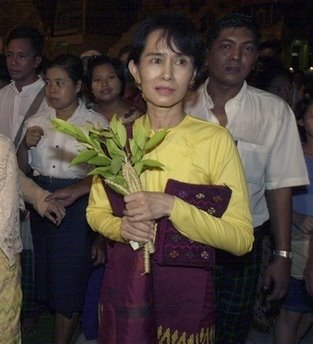


 Posts
Posts


