BURMA RELATED NEWS - JULY 14, 2011
InterAksyon - ASEAN sensitive to world opinion on Myanmar
IRIN - MYANMAR: Military porters "worked to death"
Reuters - Drop in sales at latest Myanmar gems fair
Asian Correspondent - Shan Women condemn Burma Army of using rape as war weapon
AsiaNews.it - Washington: another Burmese diplomat asks for political asylum
VOA News - Burmese Diplomat Defects, Cites Fears for Safety
Independent - Burma accused of using prisoners to clear landmines
UPI - HRW: Myanmar torturing prisoners
Inner City Press - At UN, Ban Slams Gaddafi Like Gbagbo, Defers on Opponents' Abuses, Myanmar
Xinhua - Lao PM Myanmar visit further enhances bilateral friendship, co-op
Grand Island Independent - Workshop gives insight into Karen culture
The Financial Times - Burma’s seaside retreat set for industrial boom
The Irrawaddy - Stemming the Chinese Tide
The Irrawaddy - Child Soldier Complaints on the Rise in Burma: ILO
The Irrawaddy - Burmese Army Accused in Four Rape Cases in Shan State
Mizzima News - Corruption in Burma, Part X: Fees for house registration
Mizzima News - El Nino phenomenon could hit Burma in August, November
Mizzima News - NLD leader Win Tin allowed to republish his books after 33 years
DVB News - Child torturer sentenced
DVB News - Burma army use aircrafts to bomb Shan positions
*****************************************************
InterAksyon - ASEAN sensitive to world opinion on Myanmar
14-Jul-11, 8:04 PM | Ria Rose Uro, Interaksyon.com
JAKARTA - Top diplomats of the Association of Southeast Asian Nations (ASEAN) are expected to consider international opinion when they decide on whether to allow Myanmar to chair the regional bloc by 2014.
“We live, interact, synergize and benefit from our relationship with the (rest of the) world. Certainly we will be open to hear their sentiments,” Dr. Surin Pitsuwan, ASEAN secretary-general, told reporters here on Wednesday.
He emphasized that “ASEAN is where it is (today) because of the goodwill of dialogue partners.”
The secretary-general is attending the ministerial meetings which will run from July 15 to 23. Consideration of the matter is with the foreign ministers meeting (FMM).
Earlier, Indonesian parliamentarian Kusuma Sundari, president of the ASEAN Inter-parliamentary Caucus on Myanmar (AIPMC), warned about the potential backlash from Western governments should Myanmar take over ASEAN’s chairmanship.
Sundari said that based on their interactions with government officials in Australia, the United States (US) and the European Union (EU), the would-be impact “will not be good for ASEAN as a whole.”
“You cannot help it. These governments still look at Aung San Suu Kyi as the icon of democracy in Myanmar,” she stressed.
But she acknowledged the Western government officials did not spell out what measures they would be taking to register their dissatisfaction to such an ASEAN action.
Daughter of Burmese independence hero Aung San, Suu Kyi leads the main opposition party National League for Democracy (NLD) which won the parliamentary elections in 1990 but was not allowed to assume power by the military junta.
Placed under house arrest for several years, she was released November 13, 2010, one week after the first parliamentary elections in 20 years.
Advancing the schedule
Myanmar was supposed to assume the rotating chairmanship of ASEAN this year but was pushed forward to 2016 during a summit in 2006.
Last January, it asked to advance its chairmanship schedule to 2014.
During the 18th ASEAN Summit last May here, the region’s foreign ministers asked Indonesia to assess the readiness of Myanmar to lead the 10-country bloc.
Pitsuwan said recent signals from Naypyidaw, Myanmar’s new capital, indicated the country is ready to receive such an Indonesian diplomatic mission.
Such mission, he added, is “a reflection of ASEAN’s supporting Myanmar on a road to opening up.”
The region’s leaders in 2007 have emphasized that they “will strive to prevent the Myanmar issue from obstructing ASEAN's integration efforts…”
Key considerations
The parameters for evaluating Myanmar’s 2014 chairmanship bid varied among the member-states’ diplomats. But many of them share the common concerns with civil society and democratization activists.
Principal among the issues is national reconciliation which should start with a tripartite dialogue between the NLD, ethnic nationalities and the military junta which the United Nations have long called for but continue to be derailed.
Other issues include release of political detainees and addressing internal displacement.
In the 2005, 2007 and 2009 summits, ASEAN leaders have been calling for the release of political prisoners. International human rights groups estimated some 2,000 of them as of now.
They have also urged for the lifting of restrictions on Suu Kyi.
Pitsuwan said some other member-countries would like to ascertain the state of Myanmar’s interaction with the international community like the UN which has appointed a human rights rapporteur for the country for over a decade now.
Sundari also includes media repression as a key issue to look into.
Crucial credentials
Chairing the bloc in 2014 will accord crucial credentials for Myanmar, which has completed a military junta-crafted Seven-Step Roadmap to Democracy with the convening of its parliament and coming into force of a new constitution early this year.
This was a product of a November 2010 parliamentary polls that activists, along with the governments of Indonesia and the Philippines, criticized as a sham because of widespread repression on the media and the political opposition.
By 2014, Myanmar’s parliamentarians would have been more than half-way their elective and appointive terms. A fourth of the 664-member bicameral parliament are constitutionally-mandated to be military appointees.
Even as ASEAN maintains an open mind about world opinion, Pitsuwan said its leaders will ultimately decide on the Myanmar chairmanship question.
He said he is “confident the foreign ministers will decide in the interest of ASEAN.”
*****************************************************
MYANMAR: Military porters "worked to death"
BANGKOK, 13 July 2011 (IRIN) - Convicts forced to serve as porters for the military are subject to torture, execution, and warfare, says a new report by Human Rights Watch (HRW) and the Karen Human Rights Group (KHRG).
"The military uses the porters as human shields to draw fire from the opposition, to trip land mines, and to walk ahead to be shot first in an ambush," David Scott Mathieson, co-author of the report and HRW's senior Asia researcher, told IRIN.
Since January, up to 1,200 civilian convicts have been drawn from 12 prisons and labour camps throughout Myanmar to serve as porters for the army in conflict-ridden southern and northern Karen and eastern Pegu states, the report, Dead Men Walking, released on 13 July, stated.
"The horrendous conditions of portering are systematic, widespread, and constitute a war crime," said Elaine Pearson, deputy Asia director of HRW. "The Burmese government is unwilling to end abuses such as portering, and there is an urgent need for international investigations."
Civilians flee
While the military's use of civilian "human pack mules" has been going on for the past two decades as part of counter-insurgency tactics against ethnic militias, rounding up prisoners has only been widespread since 1999, and is mainly done before major military offensives in a "chillingly systematic practice by the army", according to HRW.
Prisoners are used because civilians run from villages when the military arrives. "Civilians flee the area to avoid being taken as porters," Pearson said.
When 20,000 refugees flooded into Thailand after the offensive launched in Karen state earlier this year, many cited fear of being forced into portering as a reason, according to the report.
"Porters are given little food and no medical care," said Poe Shan, director of the KHRG.
One porter's leg was blown off in a land mine and he was left to die, said an interviewee cited in the report. "The soldiers left him... when we came down the mountain he was dead," said one escaped convict.
Abuses increase after elections
While human rights groups hoped for fewer abuses against civilians after the November elections brutalities continue to be meted out by the military junta, activists say.
"It is scandalous that the human rights situations have gotten worse after the elections," said Debbie Stothard, coordinator for the political advocacy NGO Alternative ASEAN Network on Burma.
"Now in 2011, after the elections, there are the same abuses as in the 1990s," said KHRG's Poe.
And until there is a change in the country's human rights situation, refugees will continue to flow into the surrounding countries, warned Stothard.
"War crimes in ethnic areas have always been a push factor for asylum seekers and refugees into Thailand. Portering is just one example of the whole range of war crimes being perpetuated by the military," she added.
Human rights groups, along with the UN Special Rapporteur, continue to call for a UN commission of inquiry into human rights violations, such as portering.
"There is an urgent need for an international investigation," said HRW's Pearson. "The brutal mistreatment of convict porters is just one among many systematic abuses," she said.
Burmese government officials were unavailable to comment on the report.
*****************************************************
Drop in sales at latest Myanmar gems fair
YANGON, July 14 | Thu Jul 14, 2011 4:50am EDT
(Reuters) - Proceeds from the sale of jade, gems and pearls at the latest emporium in Myanmar this month were far lower than expected at 1.1 billion euro ($1.57 billion), an official from the Federation of Chambers of Commerce and Industry said on Thursday.
Myanmar produces more than 90 percent of the world's rubies and fine-quality jade. It holds sales three times a year. Proceeds from the previous one in March hit a record high of more than 2 billion euros.
More than 22,000 lots of jade, 282 lots of gems and 355 lots of pearls were put on sale by state-owned enterprises and about 750 private companies in the sale held in the capital, Naypyitaw, from July 1 to 13.
"We expected to earn record high proceeds from this emporium since it was far better and larger than the previous ones in terms of quality and quantity," the official said, adding that bids were lacking for higher-quality jade lots.
Over 9,000 traders, including about 5,000 from foreign countries including China, Taiwan and Thailand, took part.
Gemstones are a lucrative source of income for Myanmar's military-backed government despite Western sanctions imposed on the resource-rich country.
Despite the embargoes, many of the gems reach Western countries through other Asian countries, Hong Kong and Taiwan in particular.
According to official data from the Central Statistical Organisation, Myanmar produced over 46.81 million kilos of jade, 1.43 million carats of ruby and 1.42 million carats of sapphire among other precious stones in fiscal 2010/11 (April/March).
*****************************************************
Asian Correspondent - Shan Women condemn Burma Army of using rape as war weapon
By Zin Linn Jul 14, 2011 8:32PM UTC
A press release has been delivered today by the Shan Women’s Action Network (SWAN) and the Shan Human Rights Foundation (SHRF) condemning Burma Army of using rape as war weapon. The Burma Army is clearly authorizing rape as a terror policy in its offensive against the Shan State Army-North (SSA-N), according to information documented by SWAN and SHRF.
According to local sources, the operation launched by the Burmese government forces against the Shan State Army (SSA) and Shan State Progress Party (SSPP) is at a stalemate since April when they had their first fierce engagement. However small conflicts between the opposite forces take place everyday particularly in Mongshu, Mongyai, Hsipaw and Kehsi townships, Shan Herald Agency News (SHAN) said.
On July 5, 2011, a Burma Army patrol from Light Infantry Battalion 513 entered the village of “Wan Loi” in Kehsi township, and within hours had looted property throughout the village and raped four women and girls in separate incidents: Nang Mon, age 12, Nang Jarm, age 50, Nang Lord, age 30 and Nang Poeng, age 35 (not their real names), said SWAN and SHRF.
Twelve year-old schoolgirl Nang Mon was raped in her home in front of her mother, who was beaten when she tried to shield her daughter. Nearby villagers heard the girl’s screams but did not dare get involved. Fifty-year old widow Nang Jarm was also raped in her own house, according to the document.
Burmese soldiers even did not spare Nang Lord, who was 9 months pregnant. She was pulled roughly to the ground and raped. Another poor girl, Nang Poeng was caught outside the village, beaten, stripped naked and raped in a farm hut. She was found by other villagers running naked in the jungle, the press release said.
“Wan Loi” lies 15 miles from the SSA-N headquarters of Wan Hai, which has been under fierce assault by over 3,000 Burma Army troops since March 13, when the regime broke the 22-year ceasefire. The troops have been committing widespread atrocities against local villagers, including sexual violence, causing thousands to flee their homes.
“Foreign governments dealing with Burma should not be silent about these atrocities. ‘Business as usual’ means ongoing rape in our communities,” said Hseng Moon.
There has been no sign of dialogue between the Burma Army and the SSA but the government forces tried to persuade the Kachin Independence Army (KIA) for a negotiation. No further offer of ceasefire to the SSA has been made by the Burma Army since they met on April 11, 2011 in Mongkhurh, in the township of Hsipaw, Shan State North.
Northern Shan State is of crucial strategic importance for Burma’s military rulers, who are seeking to secure the area for major Chinese investments, including hydropower dams and trans-national gas and oil pipelines.
Meanwhile, Burmese army’s fighter aircrafts carried out bombing attack on Shan State Armys positions in Kehsi Mansan Township, southern Shan State, referring a spokesperson of the SSA, DVB said. Major Sai Lao Hseng said the attacks were carried out by two fighter aircrafts, presumably MIG jet fighters, at about 1.30 p.m. local time on 13 July.
The latest attacks occurred near the SSAs Wan Hai headquarters situated in mountainous region of southern Shan State, a strategic location for Shan troops who refused to be transformed into so-called border guard force, a plan imposed on them by the Burmese army.
“Burma Army troops are being given free rein to rape children, the pregnant and the elderly,” said SWAN coordinator Hseng Moon. “We strongly condemn these war crimes.”
This latest incident comes only weeks after the Kachin Women’s Association Thailand denounced the rape of 18 women and girls during renewed fighting last month in Kachin State. The breaking of ceasefire agreements with Kachin and Shan resistance groups has caused fighting to spread through 12 townships in northern Shan State.
*****************************************************
07/14/2011 16:54
MYANMAR – UNITED STATES
AsiaNews.it - Washington: another Burmese diplomat asks for political asylum
The first secretary in the Myanmar Embassy in Washington defects. He had been ordered home. A colleague in the same embassy defected ten days ago. Experts believe the loss of hope for freedom and democracy at home are pushing many Myanmar officials to seek refuge abroad.
Washington (AsiaNews/Agencies) – Soe Aung, first secretary of the Myanmar Embassy in Washington, expressed to the US State Department "his desire to apply for political asylum in the United States”. Myanmar has often been accused of serious human rights violations, including murder, torture, kidnapping, forced labour and using child soldiers. Recent elections have not changed the situation. Many Myanmar officials posted abroad are now losing hope for change and so have decided not to go home.
Soe Aung is a career diplomat who served in Geneva, Bangkok and Singapore. He was posted to Washington in 2008. On Tuesday, he was told to return home with his family within 24 hours for a possible investigation, Aung Din, the executive director for the U.S. Campaign for Burma, told Radio Free Asia.
For Aung Din, Soe Aung’s defection is connected with that of Kyaw Win, the Embassy's deputy chief of mission, who told US Secretary of State Hillary Clinton in a letter that his efforts to push for reform were rejected by his government and that he feared prosecution if he returned home.
This set off alarm bells in Myanmar’s Foreign Ministry, which began a departmental enquiry that could have led to Soe Aung’s punishment for not preventing Kyaw Win’s defection.
“It is possible that more defections of the regime's diplomats will be coming soon,” Aung Din said. “Many civilian diplomats of the regime are beginning to lose their hope of seeing freedom, justice, and democracy in their country and are not willing to serve under a military regime disguised as a civilian government” or “ defend the regime in the international community."
*****************************************************
July 13, 2011
VOA News - Burmese Diplomat Defects, Cites Fears for Safety
Kate Pound Dawson | Washington
For the second time in less than two weeks, a senior Burmese diplomat has defected. He says he feared for his safety after being recalled to Burma.
Soe Aung, the Burmese embassy’s first secretary in Washington, sent a letter to the U.S. State Department on Wednesday declaring that he wanted to defect. He later told VOA’s Burmese Service that he fears for his safety and that of his family.
He had been ordered to return to Burma for an investigation into last week’s defection of another diplomat. Soe Aung said he was told on Tuesday that he must return to Burma within 24 hours, accompanied by a military official. His and his wife’s diplomatic passports had been confiscated. Soe Aung told VOA that two other diplomats already have been called back to Burma and placed under investigation.
Kyaw Win, the embassy’s deputy chief of mission, defected last week. He says he defected because his efforts to push for reform had been rejected and that he feared he would be prosecuted in Burma. Kyaw Win told VOA on Wednesday he had hoped that following last year’s election, Burma's military would ease its grip on power and improve its human rights record.
He says the human rights situation in Burma is getting worse, especially in remote areas. Kyaw Win says that in 1998, the military leaders promised change, but it never happened. He adds that in 2004, new leaders talked about changes, but it never happened.
Kyaw Win says he thinks Soe Aung and other civilian diplomats are being blamed for his defection, but that they were his subordinates. He says military and ex-military staff at the embassy are not being investigated.
Aung Din is executive director of the United States Campaign for Burma, a rights group based in Washington. He says diplomats could face stiff punishment, if Burmese military authorities decide they failed in their duties in the Kyaw Win case.
“He will be severely tortured, and he will be sent to the military tribunal for imprisonment," said Aung Din. "So I believe that he or she will have a great danger when he or she returns back to Burma.”
Burma's government has long been considered one of the most repressive in the world. The United States and many other governments have imposed tough economic sanctions on the country because of its lack of political reform.
The military described last year's election, the first in 20 years, as a key element of a plan to return the country to civilian rule after four decades of army leadership. But critics of the government say the vote solidified military control because an army-backed party won 80 percent of the elected parliament seats.
Aung Din of United States Campaign for Burma says there could be more defections in the coming months, in part, because the new foreign minister is replacing many career civilian diplomats with people he trusts. But he also says some diplomats might feel the way Kyaw Win does.
*****************************************************
Independent - Burma accused of using prisoners to clear landmines
Rights groups allege that convicts have been used as human triggers for mines in the war against ethnic tribes
By Andrew Buncombe and Joseph Allchin in Mae Sot, Thailand
Thursday, 14 July 2011
Dramatic testimony from escaped prisoners has revealed how the Burmese army is forcibly using convicts to serve as porters on the frontlines in military operations against ethnic tribes. Prisoners have been tortured, used as human triggers for landmines and – in some cases – summarily executed, according to human-rights groups.
Plucked from Burma's crowded jails scattered across the country, the prisoners are driven to operations in the east where troops are battling ethnic Karen rebels, who have opposed the state since its independence in 1948.
"We were carrying food up to the camp and one porter stepped on a mine and lost his leg," one prisoner, who subsequently escaped, told rights activists. "The soldiers left him; he was screaming but no one helped. When we came down the mountain he was dead. I looked up and saw bits of his clothing in the trees and parts of his leg in a tree." Another prisoner forced to carry supplies told about being shot after he and a group of 15 other prisoners ran away from the battlefield.
The prisoner, who used a fictitious name, said: "The soldiers told us at night that there was a lot of fighting on the mountain and that if we were alive tomorrow night we would be lucky. We heard the [soldiers] yell, 'Don't run, don't run'. I turned around to look and was hit with the first shot... the bullet hit my right shoulder and broke my arm. It knocked me down on to the ground."
The testimony is included in a report compiled by Human Rights Watch (HRW) and the Karen Human Rights Group. The report, Dead Men Walking, is based on interviews with almost 60 prisoners who have escaped from forced labour since 2010. "Convict porters are the Burmese army's disposable human pack mules. Press-ganging prisoners into deadly front-line service raises the Burmese army's cruelty to new levels," Elaine Pearson, of HRW, said.
In the general hospital of Mae Sot on the Thai-Burma border, the wards are busy because of the war taking place in the mountains. The scarred and bandaged spill into the corridors. Virtually all of them are here because of one weapon: landmines.
The war also causes the vulnerable to flee in hungry throngs away from a conflict that often encompasses civilian populations.
*****************************************************
Special Reports
HRW: Myanmar torturing prisoners
Published: July 13, 2011 at 12:25 PM
BANGKOK, July 13 (UPI) -- Convicts who serve as porters for the military in Myanmar are nothing more than "disposable pack-mules," Human Rights Watch said in a 70-page report.
Human Rights Watch, in a joint report with the Karen Human Rights Group accuses, the military in Myanmar of torturing, executing and using convicted prisoners as human shields. The report called on the military to stopping forcing prisoners to serve as porters who are systematically worked to death.
In an interview with the United Nations' humanitarian news agency IRIN, David Mathieson, the report's co-author at Human Rights Watch, said the military forces the porters to walk ahead of them to draw fire from opposition forces and to trip land mines.
Both groups said human rights abuses against prisoners aren't isolated events. Authorities in the country have admitted to some abuses but denied using prisoners as human shields.
Elaine Pearson, deputy director of Asian affairs at Human Rights Watch, said the authorities in Myanmar are bringing cruelty to a new level.
"Convict porters are the ... army's disposable human pack-mules, lugging supplies through heavily mined battlefields," she said in a statement.
The organizations in their report call for a commission led by the United Nations to investigate violations of international humanitarian and human rights law in Myanmar.
*****************************************************
Inner City Press - At UN, Ban Slams Gaddafi Like Gbagbo, Defers on Opponents' Abuses, Myanmar
By Matthew Russell Lee
UNITED NATIONS, July 14 -- The UN always says that it is watching, but only sometimes it denounces. So it is in Libya.
Abuses by Gaddafi forces, still prevalent, have been condemned from Secretary General Ban Ki-moon on down. But amid reports of looting and beatings by anti-Gaddafi rebels, the UN in New York stands silent, trying to pass the buck to more distant parts of the UN system.
On July 13 Inner City Press asked Ban Ki-moon's spokesman Martin Nesirky:
Inner City Press: the Libyan rebels are, according to the [reports], responsible for looting and beating people in towns they have taken over in their drive towards Tripoli. These are towns viewed as supporting [Muammar al-] Qadhafi. There have been many UN statements on abuses by the Qadhafi forces. What’s the UN system’s response to these pretty well-documented reports of abuses going the other way?
Spokesperson Nesirky: Well, I would have to check with the relevant folks, for example in the Office of the High Commissioner for Human Rights, and with our colleagues in the Office for the Coordination of Humanitarian Affairs who have people on the ground in Benghazi. I think it is self-evident that we would condemn abuses, human rights abuses from whichever quarter. But I would want to add there that it is obviously important that the relevant people who would monitor these things — I am thinking of our colleagues who deal with human rights in particular — to be able to comment in detail on that.
This was followed up on:
Question: On this situation that you were just talking about in Libya, that I think Matthew asked you, about the rebels are now being accused of perpetrating attacks against the civilians…attacking civilians inside Libya and that is creating another problem.
Spokesperson Nesirky: Well, I have my work cut out being the Spokesperson for the Secretary-General, but I am certainly not the spokesperson for Matthew Lee. So you might want to check with him what he was asking me. But the point that I was trying to make was that human rights abuses by anybody should be condemned and need to be investigated. And it is for the relevant people within the United Nations, particularly those who deal with human rights, to look into this.
This answer implies that Ban Ki-moon does not “deal with human rights,” and doesn't answer why Ban himself would condemn actions by Gaddafi forces, but defer to other “people in the UN.. who deal with human rights” to address documented abuses by anti-Gaddafi forces.
A similar dynamic played out in Cote d'Ivoire, where Ban himself criticized the use by Gbagbo forces of heavy weapons, while deferring to other in the UN system on murders by pro Ouattara and Soro forces in Douekoue and elsewhere.
Even worse is this UN's performance on Myanmar, where Ban's chief of staff Vijay Nambiar, ostensibly in charge of the UN's Good Offices role in Myanmar, has had nothing to say as the Burmese government has launched attacks against the Kachin people, and is now documented to be using Karen captives as slave labor and human shields.
On July 13 Inner City Press asked Ban's spokesman Nesirky:
Inner City Press: on Myanmar, there has been a report issued documenting the use by the military there of convicts pressed into service, some people call it slave labor or... human shields. It’s a report issued by the Karen Human Rights Group. Is it something that the UN system, particularly the good offices mandate, is aware of, and is it the type of thing that it would be raising to the Government to not be using convicts as human shields for its military?
Spokesperson Nesirky: Well, I would be confident that our colleagues who deal with this topic would be aware of any reports that come out and would want to study them carefully. I don’t have any further details on what they may or may not do, having studied those reports.
Inner City Press: Thanks a lot. I am always trying to figure out what the scope of that good offices office is. I understand, like in almost any country in the world, the Office of Human Rights, the Commissioner, that there is some UN monitoring process. But this seems to be a country that there is a particular GA-mandated unit headed by the Secretary-General’s Chief of Staff. So, when you say “our colleagues”, is that the Office you’re referring to, or is it a more general --
Spokesperson: As you yourself pointed out, there are different parts of the UN system that would be dealing with different aspects of what transpires in Myanmar, or indeed in any other country. And as you well know, there is a country team in place in Myanmar. And outside of Myanmar, there is indeed the good offices mandate and there are those, including in the Office of the High Commissioner, who would be looking at Myanmar through that particular prism of human rights. And they of course coordinate with each other. They don’t work in isolation. If I have anything further on that, of course, I would let you know.
But a full 19 hours later, nothing had been said. Earlier in the week Ed Luck, Ban's adviser on the Responsibility to Protect, said that if inconsistencies or double standards are seen in the Secretariat's actions and statements, it should be brought up.
*****************************************************
Lao PM Myanmar visit further enhances bilateral friendship, co-op
English.news.cn 2011-07-14 10:47:03
by Feng Yingqiu
YANGON, July 14 (Xinhua) -- Lao Prime Minister Thongsing Thammavong's three-day visit to Myanmar, which wrapped up on Wednesday, further enhanced the traditional friendship and mutually beneficial cooperation between Myanmar and Laos.
A joint statement of Myanmar and Laos issued at the end of Thongsing's visit said both sides exchanged views on the possibility of constructing a friendship bridge across the Mekong River in order to facilitate and enhance road connectivity between the two countries.
Both sides agreed to further the bilateral cooperation between the Myanmar Home Ministry and Lao Ministry of Public Security on matters relating to suppression of transnational crimes, drug trafficking, arms smuggling and terrorist activities.
Both sides reaffirmed their policy to respect and safeguard each other's sovereignty and security by not allowing any armed insurgent groups from either side to keep their base in the territory of respective countries.
Both sides expressed their satisfaction over the success of the first meeting of the regional border committee held in Houaysay, Bokeo province of Laos in 2010 and agreed to convene a second meeting of the committee in Myanmar alternately.
To promote security in the Mekong River, both sides agreed to renew their commitment to enhancing cooperation on safeguarding the navigation in the Mekong River, assuring to prevent undesirable incidents from taking place in the future along the Mekong River through timely and effective exchange of information between the security forces of the two countries.
Both sides agreed to carry out a joint boundary inspection and maintenance of boundary reference markers along the Myanmar-Laos boundary .
The Myanmar side expressed deep appreciation to Laos for the latter's consistent support in time of need at the United Nations and other regional and international fora, while the Lao side expressed its continued support to Myanmar in hosting the 4th GMS Summit in 2011, the 27th SEA games in 2013 and the 24th and 25th ASEAN Summits in 2014.
The Myanmar side also expressed its full endorsement to Laos in hosting the 9th Asia-Europe Meeting (ASEM) in November 2012 with Myanmar President U Thein Sein expressing his intention to attend the meeting.
Both side also welcomed the frequent exchange of visits between the two armed forces and encouraged to continue such exchange to further consolidate understanding and warmer friendship among the armed forces personnel of the two countries.
At the invitation of U Thein Sein, Thongsing arrived the new capital on Monday on an official visit to Myanmar. Thongsing's trip represented the first one by a Lao leader after a new government was installed in Myanmar.
During the trip, Thongsing and U Thein Sein held talks on bilateral relations, security cooperation along Mekong Basin, border region peace and stability, seeking ways to promote bilateral trade and exchanged views on bilateral cooperation in culture, tourism industry, religious affairs and education, mutual cooperation in international and regional issues and ways to promote the existing friendly relations.
Thongsing also met with Vice President U Tin Aung Myint Oo, speaker of the Union Parliament U Khin Aung Myint and speaker of the House of Representatives U Shwe Mann.
Myanmar official media hailed the Laotian leader's Myanmar visit, saying that Myanmar-Lao friendly relations are improving.
"Good neighborly relations, fine traditions and friendship between the two countries are improving. Visits of leaders of the two nations will further strengthen bilateral friendly relations and are a force behind boosting bilateral cooperation in various sector," said the editorial of the New Light of Myanmar.
Myanmar and Laos, sharing border of over 230 kilometers, established diplomatic relations in 1955.
*****************************************************
Grand Island Independent - Workshop gives insight into Karen culture
By Kay Kemmet
kay.kemmet@theindependent.com
Published: Wednesday, July 13, 2011 10:06 PM CDT
Karen people do not ask, "How are you?" Helena Asherin, a Karen refugee from Burma, said this is because they aren't doing well very often.
But hopefully that is changing.
More than 60 percent of Nebraska's refugee population are from Burma, according to Karen Parde, refugee program coordinator for the Nebraska Health Department, and many are members of the tribal group Karen.
While Grand Island hasn't had many refugees from Burma, almost 30 have moved here in the past month. The majority are Karen. To promote education about the new ethnic group in Grand Island, the Multicultural Coalition hosted a workshop about the Karen Wednesday.
"The Karen people are just wonderful people," said Parde. She presented the workshop, but also brought three Karen refugees with her from Omaha. There were two sessions at 1:30 and 5:30 p.m. at the Workforce Development Building in Grand Island. About 30 local people attended the 1:30 session.
Asherin works with the Omaha Public Schools and translates for the Karen refugees there. Omaha has the largest Karen population, and Lincoln comes in second in Nebraska.
"I think most of the people in the U.S. don't know much about the Karen," said Asherin, who moved to the U.S. four years ago from a refugee camp in Thailand.
She said that Karen people came to the U.S. for the same reason all immigrants come here: They wanted a better life. But with a refugee community, the motives are different. Most would like to still live in their home nation, according to Parde, but were forced to leave for many different reasons.
For the Karen, 50 years of constant fighting between the Burmese government and Karen nationals led to unsafe conditions. Asherin showed a video of interviews with Karen refugees.
In the video, some discussed the nomadic lifestyle the Karen people live in the jungle. They are constantly running from gunfire and searching for food. If they tried to grow crops -- the Karen mostly eat rice -- the Burmese would open fire on them.
Because of these conditions, almost 40,000 have immigrated to the United States, according to Asherin. But before immigrating here, they lived in Thailand in refugee camps.
"We hope this is going to be the last country (we live in)," Asherin said.
She lived in one of those camps, and talked about how their homes, which were more like shacks, were so close together that they could hear their neighbors' conversations. She said that one time a neighbor began singing a song in his home, but couldn't remember the next part, so her brother started singing. But he couldn't remember the ending, so another neighbor finished the song from another home.
In addition to difficult backgrounds, the Karen also have a unique culture.
Because the Karen were mostly farmers in Burma, many get their first job when they move to the United States. They also have never paid a bill. Asherin said many try to pay bills right away, because they are worried about being late.
They also do not shake hands, and men and women do not hold hands in public.
They have strict rules about marriage. Unmarried women and men are expected to abstain, and aren't allowed to openly date. Once a couple marries, they are expected to stay together.
Asherin is married to an American man, and she said that her mother used to cry every night. Her mother was worried that because the divorce rates in the U.S. are so high, the marriage wouldn't last. But Asherin said her marriage is working out, and she has a young son.
"They want to learn American culture while maintaining there own," Parde said.
It's also acceptable for teachers and parents to use violence to discipline children in their country, according to Asherin.
The Karen people are shy and quiet, she said. They also do not ask questions because teachers and doctors are well respected and expected to fully inform.
Asherin said that most Burmese refugees are Christian, but some are Buddhist and a small portion are Muslim.
They speak Karen and many speak Burmese. In the group that came to Grand Island, many understand English, but only a few speak fluently, said Carlos Barcenas, Multicultural Coalition director.
With a large population of Burmese refugees in Omaha and Lincoln, Parde said more could come to Grand Island.
With language and cultural barriers, Asherin said the new refugees will need help.
Barcenas is working to help the Grand Island Karen refugees find rental homes because they still are living in hotels after working at JBS Swift for four weeks.
In addition to help and community support, Asherin said, they want to be treated normally.
"They want to learn American culture, and they want you to understand them," Parde said.
*****************************************************
July 13, 2011 10:43 pm
The Financial Times - Burma’s seaside retreat set for industrial boom
By a Financial Times Correspondent
With its rough scrub fringed by gently lapping waves, Burma’s Maungmagan beach looks an unlikely candidate to become one of south-east Asia’s single biggest investment destinations.
A few kilometres north of the quiet town of Dawei on Burma’s southern coast, Maungmagan is the planned site of a 250 sq km port and industrial centre, which Italthai, the Thai developer, hopes will become a new trade hub between India and south-east Asia.
Ramshackle fishing boats bob in the channels that planners say will soon be ploughed by container vessels and families bathe in hot springs where factories will stand.
These dreams come with an initial price tag of $5.8bn – the cost of the port itself, basic utilities and an eight-lane highway to connect the Dawei Special Economic Zone to Thailand’s transport network 230km to the east.
South-east Asia has struggled to capitalise on its proximity to China and India, its efforts handicapped by poor infrastructure. Singapore, 1,600km south of Dawei, remains the region’s main import-export point for goods coming to and from India and further west, and international road and rail links are still in their infancy.
The project’s backers hope that Dawei, also known as Tavoy by some locals, will go some way to addressing these problems. It lies on the north-south axis between China and Indonesia and the east-west axis between mainland south-east Asia and India.
Somchet Thinapong, who is leading the project for Italthai, estimates the port will cut seven days off the time it takes goods from factories in Thailand and Vietnam to reach India, but he sees the project capitalising on one of Asia’s last pools of untapped cheap labour.
“It is not just about time saved,” says Mr Somchet “I think you have to see this port as more than just transport: it is a production base in itself.”
Italthai, Thailand’s largest construction firm, says the full ten-year project will initially target steel, petrochemicals, pulp and paper manufacturers before moving on to lighter industry.
The company estimates that some 10,000 residents will have to be relocated, but locals say they know little about the plans.
Although most are nervous about talking to visitors, one local rubber tapper tells the Financial Times that although he has been told he will have to leave his land, there has been no mention of timing or compensation.
The port concession has been given to Italthai by Burma’s military rulers on a 75-year build, operate, transfer contract. Small, cryptic survey signs bearing the company’s logo have gone up round the site, and some scrub has been cleared, but Mr Somchet says substantive construction will not begin until the end of the year.
Much of the start-up funding will come from Asian banks, he adds, but Italthai has already started looking for equity partners.
The company has a controlling shareholding in the Dawei Development Corporation with Burmese investors likely to take at least 25 per cent and Asian sovereign funds some of the rest. Mr Somchet said that Italthai was in negotiations with a number of funds but declined to identify them.
Foreign investment in Burma remains a sensitive issue in western nations that imposed sanctions after the crackdown on pro-democracy demonstrators in 1988.
The US is maintaining broad restrictions on doing business with Burma, and the European Union bars investments in mining, gems and timber.
Burma’s elections last year and the release of Aung San Suu Kyi, Burma’s opposition leader have raised expectations the restrictions could be relaxed.
But Mr Somchet says Italthai has made no effort to attract western businesses to set up in the Dawei project and has plenty of interest from elsewhere.
“We have options, we have solid interest from many companies from China, some from Japan, some from Singapore,” he says.
*****************************************************
COMMENTARY
The Irrawaddy - Stemming the Chinese Tide
By YENI Wednesday, July 13, 2011
Although China has thus far been able to keep the Burmese leaders in their hip pocket while heavily investing in Burma to further both its economic and strategic interests, the Chinese may be on a collision course with Burma’s general population.
The growing animosity of the Burmese people towards Chinese who have come to do business in Burma was highlighted by a clash in Mandalay’s jade market on June 27th.
A group of Chinese buyers allegedly agreed to buy a jade stone from a Burmese gems trader for a price of 4 million kyat (US $5,000), but when they returned to collect the item, the Burmese vendor had already sold it to another customer.
Infuriated, the Chinese buyer allegedly swore at the Burmese dealer and physically assaulted him. A crowd of local Burmese responded by attacking the Chinese traders, who phoned the police.
Although police officers were quickly deployed and brought the situation under control, local Burmese residents who heard about the incident ratcheted up the tension by gathering at the jewelry store and singing the Burmese national anthem. As a result, the police were required to escort the Chinese traders out of the market via a squad car.
No charges were pressed against the Chinese for physical abuse, but the next day they were deported to Yunnan and reportedly banned from reentering Burma (although there were subsequent reports that they were seen at the recent annual gem expo in Naypyidaw).
Although in this instant the lit powder keg was diffused, the rapid and intense anger displayed by the local Burmese community towards the Chinese traders is indicative of the Burmese population’s simmering resentment of the growing Chinese influence over both the social and economic life inside their country.
The Chinese “invasion” of Burma is highly visible in Mandalay, Burma’s second largest city, as well as in Upper Burma, where growing numbers of Chinese migrants have poured in over the last 20 years, secured citizenship cards from corrupt Burmese officials and established successful businesses.
Today, the Chinese are believed to make up 30–40 percent of the 1 million people residing in Mandalay, the capital of Burma’s last kingdom and a hub of traditional Burmese culture and Buddhism.
While the Chinese are largely responsible for the economic revitalization of Mandalay’s downtown area—which has been rebuilt with apartment blocks, hotels and shopping malls—and for returning the city to its role as the trading hub connecting Lower Burma, Upper Burma, China and India, their dominance of the city center has pushed Mandalay’s Burmese residents out to the suburbs.
Ludu Daw Amar, who was Burma’s best-known female journalist and social critic before her death in April 2008, once told The Irrawaddy that Mandalay felt like "an undeclared colony of Yunnan," and the recognition of this by the local Burmese community has fueled the fire of anti-Chinese sentiment in the city.
But the Chinese, whose business interests in Burma are supported by their national government, are not going away. As a growing powerhouse in the regional and global economy and geopolitical landscape, China has a clear strategy of using Burma to advance its interests in those areas.
China is now Burma's second-largest trading partner and biggest foreign investor. The latest official Chinese statistics reveal that the country’s investment in Burma reached $12.32 billion, primarily in oil, gas and hydroelectric ventures.
Experts have noted that Burma is an important part of China’s effort to revive its “Southwestern Silk Road,” running from Yunnan Province down to Burma, and then westward to Bangladesh, India and the Indian Ocean.
One of the biggest Chinese projects is construction of pipelines that will annually bring 12 million tons of crude oil from Africa and the Middle East through one pipeline, and 12 billion cubic meters of Burmese gas through another, into China’s Yunnan Province from Burma’s western Arakanese coast. Chinese companies are also involved in an estimated 60 hydropower projects in Burma.
To first grease the wheels for these investments, and then protect them once they were underway, China has supported the Burmese generals with military and economic assistance since the 1988 military coup, while at the same time most Western governments have placed sanctions on the Burmese military and its leaders.
The Chinese support of the oppressive regime is no surprise—China has displayed its habit of coddling repressive regimes in countries such as Sudan, Iran, and Zimbabwe. In all of these countries as well as in Burma, China has stepped in with diplomatic protection, usually in exchange for access to local market for its goods or a stake in oil fields or other natural resources.
But while the Chinese businessmen and Burmese military leaders will make out like bandits from the activities of the unaccountable Chinese state-run resource companies, the local Burmese people are expected to see almost no profit, while at the same time suffering severe damage to their environment and being forced in many cases to relocate.
The easily understood resentment of the Burmese population has recently begun to result in violent attacks in northern Burma.
Burma Rivers Network, an advocacy group that represents communities affected by hydro-power dam projects being constructed by Chinese companies, said that much of the recent fighting in Kachin State has occurred near Chinese-backed dams that are opposed by local residents. In mid-June, the group said the dams are "fueling further conflict" and "not benefiting the people of Burma.”
But Burma as a whole depends heavily on China for everything from military hardware to consumer goods, and therefore even attacks by ethnic armed groups have not persuaded the Burmese government to either slow or halt the Chinese economic invasion of their region.
During his first visit to Beijing after the formation of Burma’s “new” government, President Thein Sein signed a slew of financial pacts, including an agreement for a $763 million line of credit from the China Development Bank, as the two countries upgraded their ties to a "comprehensive strategic cooperation partnership."
Meanwhile, Chinese goods now account for about 80 percent of Burma's imports, ranging from electronic devices to cement, paint, flour, textiles, iron products and raw materials for soap, reported the Rangoon-based newspaper Biweekly Eleven.
Although greater Burmese dependence should logically result in greater Chinese influence, the Burmese regime has always in the past managed to fend off outside pressure, including that of China. Part of the Burmese leaders’ willingness and ability to remain semi-independent politically, although increasingly dependent economically, is cultural.
Dr Poon Kim Shee, a scholar in international relations, pointed out in a paper called “The Political Economy of China-Myanmar [Burma] Relations: Strategic and Economic Dimension,” that the Burmese military never completely trusted any external major power because Burmese leaders have deep seated feelings of “sinophobia as well as xenophobia.”
Burmese leaders “were socialized in a political culture of distrust,” he said, quoting the late China scholar Lucian Pye, who was a political scientist and sinologist who also worked in Burma and concluded that psychology was more important than economics in explaining development.
But at the top level, Burmese and Chinese government leaders still call each other “Paukphaw,” a Burmese word for fraternal, which reflects the close and cordial relationship between the two countries. The clash in Mandalay, however, reveals a more antagonistic relationship at the grass-roots level, and if the leaders of the two nations are not careful, there could be a repeat of the anti-Chinese riots of 1967.
This must be prevented, but the question is how to do so.
One way is for both the Burmese and Chinese governments to recognize that it is in their own best interests for them and the Chinese businesses to act responsibly towards the Burmese population and environment.
For a start, the globally emerging sense of corporate social responsibility—a practice that requires companies to address social and environmental considerations alongside the drive for profits, a concept that remains unfamiliar to most Chinese businesses—should be required of Chinese enterprises in Burma.
On the Burmese side, new labor laws should be created to counter the increasing labor discontent and abuses and secure the rights of workers. This would develop trust by creating a perception of flexibility that would be beneficial to both the Burmese hosts and the Chinese investors.
Like it or not, China’s influence both on the Burmese and global economy, energy supplies, environment and security are growing. The best way for Burma to positively assimilate this outside influence is to achieve greater efficiency in its economy, and the best way to do that is to undertake political and economic reform and accept democracy.
Improvements in respect for human rights are also necessary, as they are tied to aid and investment.
Also vital is the protection and training of Burma’s local work force, as the country’s most valuable resource is its human capital, i.e. the resources, talent and expertise of its workforce.
There is no quick fix, however, and what is most frightening for the people of Burma is that their leaders still lack the political will and policy to work with all stakeholders to rebuild the military-ruled failed state.
But the Chinese are coming, and if the Burmese leaders won’t retool themselves to fit the needs of their outside investors, big brother to the north may do it for them.
*****************************************************
The Irrawaddy - Child Soldier Complaints on the Rise in Burma: ILO
Thursday, July 14, 2011
The International Labor Organization (ILO) in Rangoon said on Wednesday it has received an increased number of complaints in 2011 of the Burmese military recruiting underage children.
Steve Marshall, the ILO liaison officer in Rangoon, told The Irrawaddy that the increase in complaints is due to an awareness campaign the ILO initiated earlier this year, but that the figures should not be interpreted to mean that there has been an increase in the recruitment of child soldiers by the Burmese army.
He said there is no evidence of active child soldier recruitment in the current conflict zones in Shan State and Kachin State.
According to data by a Rangoon-based voluntary network, the ILO office in Rangoon has received 424 reports or complaints concerning underage recruitment from January until July. It also said that 326 of the cases are “in process,” meaning they have been reported to the military, while 98 are still under ILO investigation.
“I received more complaints from family members [of recruited children] within these last few days,” said Thet Wai, a member of the voluntary network that works closely with ILO. “I am currently assisting in 10 cases of child recruitment.”
The Burmese regime formed a committee in 2004 to investigate child soldier issues. The government has since denied the recruitment of child soldiers in the army. However, ILO said that the number of reports of child recruitment has increased year after year.
Another network member in Rangoon, Ko Soe, said that the recent increase in recruiting children as soldiers is due to the outbreak of hostilities between ethnic armed groups and government forces.
“Child soldiers frequently run away from their army bases,” he said. “When they get caught, they are imprisoned.”
The voluntary network said that 12 cases have been reported to ILO of children being imprisoned for desertion; however only four have been released, according to the network.
Members of the Union Solidarity and Development Party and opportunists close to the military serve as brokers across the country in recruiting children for the army, according to network volunteer Maung Maung. As a commission, they receive 50,000 to 70,000 kyat [US $63 to $88] per child, he said.
According to network volunteers, one of the greatest difficulties for a recruited child's family is that they cannot contact their child because the army invariably transfers the child to another location.
In 2002, Human Rights Watch estimated that there were about 70,000 child soldiers in Burma, including those in ethnic armies as well as government forces.
Recently, the UN Security Council agreed a resolution against the recruitment of child soldiers and pressed nations to stop the abuse of children, including rape and attacks on schools.
UN Secretary General Ban Ki-moon said the resolution—an initiative by current Security Council president Germany—is the eighth since 1998 to condemn nations and militaries which use children to wage war and subject them to brutal violence like rape and maimings.
*****************************************************
The Irrawaddy - Burmese Army Accused in Four Rape Cases in Shan State
By SAW YAN NAING Thursday, July 14, 2011
Four recent rape cases that occurred on the same day this month in a conflict zone in Shan State demonstrate that Burma's military continues to use sexual violence against women as a weapon in its offensives in ethnic areas, according to human rights groups.
According to a statement released by the Shan Women’s Action Network (SWAN) and the Shan Human Rights Foundation (SHRF) today, three women and one girl were raped when a patrol from the Burmese army's Light Infantry Battalion 513 entered the village of Wan Loi on July 5.
Using pseudonyms, the groups identified the victims as Nang Mom, age 12; Nang Jarm, age 50; Nang Lord, age 30; and Nang Poen, age 35. All four were assaulted as the Burmese troops were plundering the village, located about 25 km from the Shan State Army–North (SSA-N) headquarters of Wan Hai.
Charm Tong, a leading member of SWAN, said that her organization received information about the rape cases from members of the group currently living in the conflict zone. She said that SWAN members met and interviewed the rape victims.
According to the statement, Nang Mon was raped in her home in front of her mother, who was struck when she tried to protect her daughter. Nearby villagers heard the girl’s screams but did not dare intervene. Nang Jarm was also raped in her house.
Nang Lord, who was nine months pregnant, was pulled roughly to the ground and raped, while Nang Poeng was caught outside the village, beaten, stripped naked and raped in a farm hut. She was found by other villagers running naked in the jungle, said the statement.
“Villagers, particularly women and girls, are suffering during the four-month-old Burma Army offensive in northern Shan State. The world should not be silent about these crimes,” said Charm Tong.
Wan Hai, the SSA-N headquarters, has been under fierce assault by Burmese government troops since March 13.
Similar incidents have also been reported in other ethnic areas where fighting has resumed between the Burmese army and former ceasefire groups.
In June, the Kachin Women’s Association Thailand reported 18 cases of rape since government troops started clashing with the Kachin Independence Army last month in northern Burma's Kachin State.
The Shan right groups said that government troops have been committing widespread atrocities against local villagers, including sexual violence, causing thousands to flee their homes.
Hseng Moon, the coordinator of SWAN, said, “Burma Army troops are being given free rein to rape children, the pregnant and the elderly. We strongly condemn these war crimes.”
Meanwhile, fighting in Shan State has intensified, according to the Thailand-based Shan Herald Agency for News (SHAN).
SHAN editor Saeng Juen said that there was a major clash between the SSA-N and Burmese troops in Kehsi Township, in northern Shan State, on July 12. The fighting continued the entire day, and a Burmese fighter jet appeared the following day.
Since then, he said, both sides have made military reinforcements in the conflict zone.
*****************************************************
Corruption in Burma, Part X: Fees for house registration
Wednesday, 13 July 2011 11:35 Sandi May
Rangoon (Mizzima) – Burma’s new government has voiced concern about the need to tackle the endemic corruption in the country. In many areas of everyday life, citizens face a call for bribes or extra payments, the cost of which can be hard to pay for a person on a low income.
One process that ought to be free is house registration. Burmese citizens must keep the authorities informed of their whereabouts and need to be registered. In theory, this process is free. During the new government’s first parliamentary session, Minister of Immigration and Manpower Ministry Maung Oo briefed MPs saying application for household registration were being processed without delay if the papers were in order and it would not cost money.
According to Maung Oo’s briefing, the head of household should come in person and he or she must bring an application letter, Immigration Form 10 issued by the township of his or her last address, residential proof of the old address, the original and copy of ownership certificate of the house of the last address, original and copy of the occupational certificate issued by the city development committee in case of a new flat and apartment, and the rent agreement signed by a landlord for the tenants.
But in practice, Mizzima found the real situation is not as straightforward as the minister described and money often has to change hands if the required documentation is to be obtained.
Anecdotal evidence offered by a number of people Mizzima talked to offers an insight into the difficulties. On occasions, it would appear, it helps having friends in positions of authority.
Tun Kyaw (Thanlyin)
“I have lived in Thanlyin now for about six years, moved from Thaketa. First I lived with my parents when I got married. Now my parents have died and we sold our house and divided the proceeds of the sale among our siblings. Now I live in a rented dwelling. My name is on Immigration Form 10 and the household registration issued by the Thaketa Township Immigration Department. This is a Thaketa address. I have not yet got a new household registration with this new address in Thanlyin Township. As far as I remember, yes, we didn’t need to pay any money to get this household registration as they were issued on our doorstep in the past. When I had my children, their names were inserted in our household registration free of charge too. We gathered at a house in our locality and made the insertion of additional family members in our household registration. We could obtain the death certificate and death registrations easily in the past as with birth registrations.
“Now this situation has changed. Making a household registration will cost you at least 50,000 kyat (US$ 62). How can those who live hand to mouth afford such a large amount? Despite it being said that this essential document is issued free of charge, the situation has not yet changed. If they really want to issue this document easily and free of charge, they should visit door to door as they did in the past. We are still living with a temporary household registration certificate.”
Cho Lwin Khaing Oo (Tamwe)
“My first baby daughter was just born, and I made an insertion of an additional family member in my household registration. I found the news reported by the weekly journals saying the household registrations were being issued easily and free of charge. But I haven’t yet got this document in this way. I sent my husband to the immigration office to register. He got the document on the same day, but my husband said that he had to give 15,000 kyat (US$ 18.75) as a tip. The lady staff member asked him for tip money saying, ‘I issue this document on the same day so please give me some tea (tip) money.’ When my husband asked how much for the tea money, she replied 15,000 kyat was enough for her. Then my husband gave this money without making any complaint or bargaining. He also comforted me by saying this practice was rampant and normal everywhere and not to make any complaint. We had to give this tea money despite the news in the journals that we do not need to pay any money.”
Than Htoo (Hlaing Township)
“I visited the Immigration Office last week to list my daughter-in-law as a new family member in our household registration. We didn’t need to pay any money there because the officials at the township immigration office are my close friends.”
*****************************************************
El Nino phenomenon could hit Burma in August, November
Thursday, 14 July 2011 20:10 Tun Tun
New Delhi (Mizzima) – There is more than a 50 per cent probability that an El Nino weather phenomenon will occur again in Burma this August, said Burmese meteorologist Tun Lwin. In 2010, some lakes dried up because of the EL Nino effect in Burma.
According to observations recorded by 25 El Nino watch groups around the world, there is a 50 per cent probability in August and a 70 per cent probability in November.
Dr. Tun Lwin said that only a strong El Nino could affect Burma.
“The epicenter of El Nino is far from Burma. The epicenter is located near Peru and Ecuador in South America,” Tun Lwin told Mizzima. An El Nino leads to drought and very high temperatures.
The El Nino condition is based upon the Oceanic Nino Index. When water temperature is 5 degree Celsius higher than normal temperatures in the sea, an El Nino can occur. If it is nine degree higher than normal, a strong El Nino will occur.
“El Nino can spoil a monsoon. It causes drought, so the whole country could suffer bad consequences. I don’t want to say that El Nino can affect only Central Burma. It can affect the whole country. There is little rain in Central Burma even in normal conditions so you could say that Central Burma could be severely affected,” Tun Lwin said.
The lifetime of an El Nino phenomenon is one year. Tun Lwin said that relevant governmental departments should issue warnings about a possible El Nino.
“Departments such as agricultural and health departments should issue warnings. To avoid heath problems and a problem of scarcity of water, we need to prepare well,” Tun Lwin said.
In 2010, lakes, ponds and wells dried up in Mon, Arakan, and Shan states, Rangoon, Pegu, Irrawaddy, Sagaing, Mandalay and Magwe regions because of El Nino. Temperatures reached 47 degree Celsius in Myinmu in Sagaing Region, 46.5 degree in Myinchan in Mandalay Region, 45 degree in Monywa (Sagaing Region) and Magwe (Magwe Region), and 44.8 degree in Nyaungoo in Mandalay Region.
A state-run newspaper reported on May 14, 2010, that 11 people in Taungdwingyi, Magwe Region, were hospitalized due to high temperatures and seven died; 14 people in Nyaungoo in Mandalay Region were hospitalized due to high temperatures.
Myinmu, Myinchan, Monywa, Magwe, Mandalay, Meiktila, Rangoon (Kabaraye), Kawthaung, Mogok, Theinzayat, Minbu, Naypyidaw, Pyinoolwin, Yamethin, Khayam faced a total of 21 high temperature records in 2010, Rangoon-based Weekly Eleven journal reported.
*****************************************************
NLD leader Win Tin allowed to republish his books after 33 years
Thursday, 14 July 2011 20:56 Mizzima News
(Interview) – Writer and National League for Democracy (NLD) party leader Win Tin, who has been banned from writing and publishing books for 33 years, will see his books in print again soon. Win Tin was imprisoned for more than 19 years from 1989 to 2008. Mizzima reporter Myo Thant interviewed him on his books, the lifting of the publishing ban, his views on censorship and other issues.
Question: How did the lifting of the ban come about?
Answer: I have been prevented from publishing these books for many years. They didn’t even allow me to use my pseudonym or my real name in the media. But now they have changed their mind.
Q: How far back do these books go?
A: I wrote these books 30 to 40 years ago.
Q: How many books are they allowing you to republish and what type of books are they?
A: A total of about 10 books. I didn’t write too many books. The books are poetry, travelogue, journalism, translations, etc. Some of the new publishers are Bagan, Nay Yi Yi, etc. They all came to me and I gave them my permission. The publishers heard this news and informed me. For instance, Bagan publishing house knew that my translation of ‘Queed’ could be republished. Some weekly journals came and asked my permission to reprint my books in serials.
Q: Do you have any plan to write new books?
A: I don’t; it’s difficult for me to write new books now. But I wrote new prefaces and prologues to my old books in the forthcoming new editions and imprints. I don’t know yet how much they (the censor board) will allow.
Q: How did the publishers and weekly journals come to know your old books could be republished?
A: I think they have connections with the censorship board. For instance, Bagan publishing house asked my permission to republish my book and then within an hour, a weekly journal asked my permission to reprint my old work in their journal in serials.
Q: Why were you banned from writing and publishing your books or even writing under your pseudonym?
A: I attacked the Burmese Socialist Party. Then the subsequent military regime also banned my books and writings too. But I could write articles until 1987. Both the BSPP and junta banned my books.
Q: How did you feel when the censorship board lifted the ban?
A: I didn’t feel much. Indeed I’m not a famous writer. It’s not too significant, but I must say it is a good thing to get permission to republish after about 50 years otherwise old copies of these books and manuscripts would be lost or disappear forever.
Q: As a journalist and author, how do you feel about government censorship?
A: The censor board and censorship policy must be abolished. In any country, censorship is not good. I can’t accept it in any form. I urge my fellow journalists and writers not to accept it. We must resist it; we must oppose it. We must demand censorship be abolished in Burma.
I am over 80 now. I focused on journalism in my career, and devoted my life to journalism. I’m not a writer; I’m a journalist. I didn’t write many books. I wrote books occasionally. Sometimes I wrote travelogues. I wrote some books on painting. Many publishers came to me and asked my permission to reprint all these books, and I have nothing more to give them to reprint. I must say I am happy about it, and it may be beneficial to new generations because these books would be lost and disappear entirely if they weren’t reprinted now.
*****************************************************
DVB News - Child torturer sentenced
By NAW NOREEN
Published: 14 July 2011
A man facing charges of severely torturing a child in Irrawaddy Division’s Henzada town has been sentenced to seven years in prison yesterday after a local court found him guilty of causing serious injury and unlawful detention of the child.
Sett Hmu Htay Win (also known as) Snow, was found guilty by Henzada township court of seriously injuring and detaining Soe Htet Aung (also known as) Htake Kwat, a nine-year-old orphaned child who worked as a waiter at You & Me teashop owned by a relative of Htay Win.
Htake Kwat was beaten up and severely tortured by Htay Win in late June when he was caught making an attempt to run away from his work place.
Images of the boy obtained by DVB show evidence of extensive burning; local sources say hot irons were applied to his stomach, back and thighs, and burning plastic poured on his forearm. He also claimed Htay Win had forced him to eat animal faeces and drink his urine.
Maung Maung Kyi Win, a government lawyer representing Htake Kwat in the trial, said Htay Win was initially sentenced to eight years’ imprisonment in total; seven years for causing serious injury and one year under the unlawful detention charge.
However, township level courts in Burma could only pass a sentence at the maximum of 7 years, so the judge decided Htay Win to serve his terms concurrently.
“The court passed the maximum sentence within its jurisdiction– we can say it was a fair decision,” said Maung Maung Kyi Win.
“The defendant has the right to file an appeal at higher level court if he thinks the punishment was too harsh.”
*****************************************************
DVB News - Burma army use aircrafts to bomb Shan positions
By NANG MYA NADI
Published: 14 July 2011
Fighter aircrafts belonging to the Burmese army carried out bombing raids on Shan State Army’s positions in Kehsi Mansan township, southern Shan State, according to a spokesperson of the SSA.
Major Sai Lao Hseng said the attacks were carried out by two fighter aircrafts, presumably MIG jet fighters, at about 1.30 p.m. local time on 13 July.
“We captured their frontline post and they retreated to Wan Sai hills, and we trapped their soldiers,” said Lao Hseng.
“And two planes bombed SSA troops with ten bombs.”
The latest attacks occurred near the SSA’s Wan Hai headquarters situated in mountainous region of southern Shan State, a strategic location for Shan troops who refused to be transformed into so-called border guard force, a plan imposed on them by the Burmese army.
“They are trying to demolish Wan Hai step by step as we have troops along the route but we will defend it as much as we could,” said a Shan officer.
“If possible, we do not want to solve it by military means as our people are facing difficulties and scarcity of food due to the military operations (of the Burmese army).
There have been clashes since early this year between Burmese troops and Wan Hai based SSA soldiers.
*****************************************************
Friday, July 15, 2011
BURMA RELATED NEWS - JULY 14, 2011(utk)


Thursday, July 14, 2011
News & Articles on Burma-Wednesday, 13 July, 2011(uzl)
News & Articles on Burma
Wednesday, 13 July, 2011
----------------------------------------
Bomb Blast in Shan State Injures Four
Prisoner Denied Visit for Sending Letter
Junta army’s road link outpost overrun by Shan rebels
Burma: War Crimes Against Convict Porters
MYANMAR: Military porters "worked to death"
Burmese Health Officials Issue E. Coli Warning
Wunna Maung Lwin: Military Commander to Foreign Minster
-----------------------------------------
Bomb Blast in Shan State Injures Four
By SAI ZOM HSENG Wednesday, July 13, 2011
Four people were injured, including three seriously, in a bomb blast in the northern Shan State town of Kyaukme at 9 pm on Tuesday, according to local sources.
A resident of Kyaukme told The Irrawaddy on Tuesday night that the bomb exploded at a military checkpoint in the town. Burmese army soldiers, police, and narcotics officers are stationed at the checkpoint, suggesting that the target of the blast was the Burmese authorities.
Police in Kyaukme declined requests for further information when contacted by The Irrawaddy on Wednesday. They did, however, confirm that the blast occurred and said that no one was killed in the incident.
The headquarters of the Burmese army's No.1 Military Operation Command is in Kyaukme.
This is the seventh bomb blast to hit an urban area in Burma since a new quasi-civilian government led by ex-general Thein Sein was formed at the end of March.
Several bombs have exploded since May in a number of major Burmese towns and cities, including the capital Naypyidaw, the country's second-largest city Mandalay, the Kachin State capital of Myitkyina, the military-academy town of Pyin Oo Lwin, and Myawaddy, a town on Thai-Burmese border in Karen State.
There were also reports of a blast in Mohnyin Township, Kachin State, on Monday. Around 20 local people were reportedly injured by the explosion. The Kachin Independence Army, which resumed fighting with Burmese troops last month after a 16-year ceasefire, denied responsibility for the incident.
Burma's state-run media has blamed ethnic armed groups for several of the recent blasts. http://irrawaddy.org/article.php?art_id=21683
----------------------------------------
Prisoner Denied Visit for Sending Letter
By KO HTWE Wednesday, July 13, 2011
Hnin May Aung (aka Nobel Aye), a prominent female political prisoner in Burma, has been denied visits by her family for calling on the Burmese government to withdraw a public statement claiming that the country has no political prisoners.
Relatives told The Irrawaddy that when they arrived at Monywa Prison in Sagaing Region on July 7, they were told that they could not see Nobel Aye because she had broken prison rules.
Hnin May Aung (aka Nobel Aye) (Photo: AAPP)
“Her father had no chance to give her the parcel we had prepared for her. When he asked a prison official why he couldn't see her, he was told that a superior official had instructed them to bar family visits, because if someone breaks the prison rules, they should be punished. But the official didn't say which rule my daughter broke,” said Nobel Aye's mother, Aye Myint Than.
Aye Myint Than said that while her husband was waiting to meet with the prison official, he could hear his daughter calling out for her mother, who usually came for prison visits, but was unable to do so on this occasion.
“I'm so worried about her because she is suffering from jaundice. I haven't been able to sleep well since I heard about her calling for me like that,” she added.
This episode occurred just one day after Nobel Aye submitted a letter to prison officials calling on Vice President Thiha Thura Tin Aung Myint Oo, Foreign Affairs Minister Wunna Maung Lwin and presidential adviser Ko Ko Hlaing to retract their recent reiteration of the government's position that the country has no political prisoners.
Nobel Aye is currently serving her second prison term. She was first imprisoned in 1998, when she received a 42-year sentence for engaging in non-violent political activities together with her mother. She was released under an amnesty in July 2005, following the ouster of Gen Khin Nyunt and the disbandment of his military intelligence apparatus.
She was arrested again on Aug 23, 2007 for taking part in a protest led by the 88 Generation Students group following a dramatic hike in fuel prices that later sparked monk-led demonstrations.
Nobel Aye is not the only political prisoner who has spoken out against the government's claims that there are no political detainees in Burma. Nay Phone Latt, a blogger who is serving a 12-year prison sentence in Pa-an Prison in Karen State, also opposed the government officials' statements.
“They [political prisoners] can't accept this because they have to serve their full prison terms even after other prisoners were granted a remission,” said Aye Aye Than, mother of Nay Phone Latt, who last visited her son in early July.
Meanwhile, five political prisoners in Meiktila Prison in Mandalay Region have also sent a letter to Burma's new president, ex-Gen Thein Sein, calling for their immediate release and a public examination of their cases.
According to the Thailand-based Assistance Association for Political Prisoners, there are 1,994 political prisoners currently serving sentences Burma's prisons, of whom 145 are women. http://irrawaddy.org/article.php?art_id=21685
----------------------------------------------
Junta army’s road link outpost overrun by Shan rebels
Wednesday, 13 July 2011 14:00 Khio Fah
Nampook, the Burma Army’s outpost, where the roads from Mongyai in the north, Kehsi in the southwest and Wanhai (the Shan State Army “North” HQ) in the southeast meet, was seized and destroyed by the SSA troops by ruse early yesterday, according to rebel sources.
Located roughly halfway between Kehsi and Mongyai (36 miles), the outmanned and outgunned camp was raided at 05:00 in force by the SSA’s Battalion 187, Brigade 27. The bulk of the Burmese troops, made up of infantry battions (IB) 286 and 287 were reported to be heavily engaged in the fighting at Loi Kong, 2 miles west, at the time.
“We had boobytrapped on 10 July some of the soldiers at Nampook on their way to the nearby stream to bathe, killing and wounding 5,” said an SSA officer. “They then attacked us at Loi Kong on the following day at 16:00 and later at 23:00”.
The SSA, taking advantage of the situation, dispatched Battalion 187 to storm Nampook, he explained. No casualty figures are available at the time of its reporting.
“The deception is not so subtle,” said a long time Burma watcher. “But the fact that it still works shows there are some green field officers leading the Burmese units.”
The ruse, during the earlier days of the Shan resistance, was known as “returning a courtesy visit.”
The SSA North, officially Shan State Progress Party / Shan State Army (SSPP/SSA), until 13 March this year, has been one of the groups that had concluded ceasefire pacts with the Burma Army since 1989, leaving it to fight only against the Karen National Union (KNU) and the SSA “South”. But since November, it has opened new fronts against 3 of the main ceasefire groups: Democratic Karen Buddhist Army (DKBA), SSA North and the Kachin Independence Army (KIA). http://www.shanland.org/index.php?option=com_content&view=article&id=3851:junta-armys-road-link-outpost-overrun-by-shan-rebels&catid=86:war&Itemid=284
----------------------------------------
Burma: War Crimes Against Convict Porters
Rampant Abuse of Prison Labor Shows Need for UN Inquiry
July 12, 2011
Convict porters are the Burmese army's disposable human pack-mules, lugging supplies through heavily mined battlefields. Press-ganging prisoners into deadly front-line service raises the Burmese army's cruelty to new levels.
Elaine Pearson, deputy Asia director at Human Rights Watch
(Bangkok) - The Burmese army's abusive treatment of convicts who are forced to serve as porters under dangerous front-line conditions constitutes war crimes, Human Rights Watch and the Karen Human Rights Group said in a joint report released today.
The 70-page report, "Dead Men Walking: Convict Porters on the Front Lines in Eastern Burma," details abuses against convict porters including summary executions, torture, and the use of the convicts as "human shields." The military should stop forcibly recruiting prisoners as porters and mistreating them, and those responsible for ordering or participating in such treatment should be prosecuted, Human Rights Watch and the Karen Human Rights Group said.
"Convict porters are the Burmese army's disposable human pack-mules, lugging supplies through heavily mined battlefields," said Elaine Pearson, deputy Asia director at Human Rights Watch. "Press-ganging prisoners into deadly front-line service raises the Burmese army's cruelty to new levels."
The Burmese government's longtime failure to investigate abuses by its forces should prompt concerned governments to support a United Nations-led commission of inquiry into violations of international humanitarian and human rights law in Burma, the organizations said.
The report is based on 58 interviews with escaped convict porters used in military operations in Karen State and Pegu Region from 2010 to 2011. Convict porters described witnessing or enduring summary executions, torture and beatings, being used as "human shields" to trip landmines or shield soldiers from fire, and being denied medical attention and adequate food and shelter.
"We were carrying food up to the camp and one porter stepped on a mine and lost his leg," one escaped porter said. "The soldiers left him, he was screaming but no one helped. When we came down the mountain he was dead. I looked up and saw bits of his clothing in the trees, and parts of his leg in a tree."
The porters interviewed were men ranging in age from 20 to 57, including both petty and serious offenders. Prison authorities selected prisoners for portering duties in groups of 30 to 150 men per facility seemingly at random from prison facilities throughout Burma, including labor camps and maximum security and local prisons. The prisoners were transported to staging areas with between 500 and 700 prisoners, who were then assigned to individual Burmese army units. Once transferred to the front lines, they remained there indefinitely, working under inhumane and dangerous conditions without payment. None of the prisoners interviewed had volunteered for the service.
"The barbaric practice of using convict porters has been a feature of armed conflict in Burma for at least 20 years, exposing them to the hazards of armed conflict with complete disregard for their safety," said Poe Shan, director of the Karen Human Rights Group. "The army forces other civilians to work as porters as well, but since civilians often flee conflict areas, the use of prisoners continues."
Human Rights Watch and the Karen Human Rights Group said that the use of convict porters is not an isolated, local, or rogue practice employed by some units or commanders, but has been credibly documented since as early as 1992. Burmese authorities have previously admitted the practice occurs, but claimed that prisoners are not exposed to hostilities.
The International Labour Organization (ILO) has raised the issue of convict porters with the Burmese government since 1998, yet the problem persists, particularly during major offensive military operations. Despite commendable work by the ILO in reducing forced labor in central Burma, forced labor by the Burmese army in ethnic conflict areas against civilians and convict porters has not been reduced, Human Rights Watch and the Karen Human Rights Group said.
"Recent accounts from former convict porters show that the Burmese army's abusive tactics have not changed since last year's sham elections," Poe Shan said. "The brutal treatment of porters is just one facet of army atrocities against civilians in ethnic conflict areas."
The Burmese government has used brutal counterinsurgency practices against ethnic minority populations since independence in 1948. These include deliberate attacks on civilian villages and towns, large-scale forced relocation, torture, extrajudicial executions, rape and other sexual violence against women and girls, and the use of child soldiers. Ethnic armed groups have also been involved in abuses such as indiscriminate use of landmines, using civilians as forced labor, and recruitment of child soldiers. These abuses have led to growing calls for the establishment of a UN commission of inquiry into longstanding allegations of violations of international humanitarian and human rights law in Burma.
Human Rights Watch and the Karen Human Rights Group found that serious abuses that amount to war crimes are being committed with the involvement or knowledge of high-level civilian and military officials. Officers and soldiers commit atrocities with impunity. Credible, impartial, and independent investigations are needed into serious abuses committed by all parties to Burma's internal armed conflicts, the groups said.
Human Rights Watch and the Karen Human Rights Group urged the 16 countries that have already voiced support for a UN-led commission of inquiry to include the establishment of such a commission in the upcoming UN General Assembly resolution on Burma.
"ASEAN and European Union governments should stop hoping for things to magically improve in Burma and instead strongly push for a UN commission of inquiry," Pearson said. "Every day that the international community does nothing is another day that the Burmese army will press more porters into deadly service."
Accounts from Escaped Convict Porters:
All names used are pseudonyms
"On December 20, 2010 they [prison authorities] called out people's names one by one [at Pya Prison, in Pegu Region]. They ordered us to line up and said that we were going to porter. I didn't know what ‘porter' is. I had never heard. [The police] carried 25 people in a truck. They covered the truck with tarps. We couldn't see anything outside. Sometime we couldn't breathe very well. We had to wear prisoner uniforms and they shackled our legs in pairs."
- Escaped convict porter "Kyaw Min," January 2011
"I ran away with two other prisoners at about 10 at night. On the way, we were caught by soldiers from another unit, at about 1 a.m. These four soldiers beat us with big sticks, all over our bodies. The soldiers tied my hands behind my back, and tied up my ankles and stretched my legs out straight. One of the soldiers took a thick bamboo pole and rolled it hard up and down my shins for an hour. There were five or seven soldiers at the time, they were very drunk. The soldiers wanted to know why we left, and we told them we were scared. They got angry and said, ‘Don't you love your country?' One sergeant came and yelled at me, ‘If you try to escape again, I will kill you!'"
- Escaped convict porter "Tun Mok," February 2011
"The young boy told them [Burmese soldiers], ‘If I run you will shoot me.' They said, ‘No, we won't kill you. You can run.' They ordered the guy to run. Just as he walked down to the gorge, they shot him in the back. And they told us, ‘You guys see what happens? If you can't climb up, we will kill you.' We were afraid."
- Escaped convict porter "Matthew," January 2011
"The soldiers told us at night that there was a lot of fighting on the mountain, and that if we were alive tomorrow night we would be lucky. We are all dead, I thought. Alive or dead, it's the same thing here. So 15 of us planned to escape. We walked through the river to the Thai side. We heard the sit-tha [Burmese soldiers] yell, ‘Don't run! Don't run!' I turned around to look and was hit with the first shot. They shot at us four times I think. The bullet hit my right shoulder and broke my arm. It knocked me down onto the ground. I first felt dizzy, everyone else just ran."
- Escaped convict porter Tun Tun Aung, February 2011
http://www.hrw.org/en/news/2011/07/12/burma-war-crimes-against-convict-porters
----------------------------------------
MYANMAR: Military porters "worked to death"
Photo: Courtesy of Free Burma Rangers
A porter with soldiers in Karen State
BANGKOK, 13 July 2011 (IRIN) - Convicts forced to serve as porters for the military are subject to torture, execution, and warfare, says a new report by Human Rights Watch (HRW) and the Karen Human Rights Group (KHRG).
"The military uses the porters as human shields to draw fire from the opposition, to trip land mines, and to walk ahead to be shot first in an ambush," David Scott Mathieson, co-author of the report and HRW's senior Asia researcher, told IRIN.
Since January, up to 1,200 civilian convicts have been drawn from 12 prisons and labour camps throughout Myanmar to serve as porters for the army in conflict-ridden southern and northern Karen and eastern Pegu states, the report, Dead Men Walking, released on 13 July, stated.
"The horrendous conditions of portering are systematic, widespread, and constitute a war crime," said Elaine Pearson, deputy Asia director of HRW. "The Burmese government is unwilling to end abuses such as portering, and there is an urgent need for international investigations."
Civilians flee
While the military's use of civilian "human pack mules" has been going on for the past two decades as part of counter-insurgency tactics against ethnic militias, rounding up prisoners has only been widespread since 1999, and is mainly done before major military offensives in a "chillingly systematic practice by the army", according to HRW.
Prisoners are used because civilians run from villages when the military arrives. "Civilians flee the area to avoid being taken as porters," Pearson said.
When 20,000 refugees flooded into Thailand after the offensive launched in Karen state earlier this year, many cited fear of being forced into portering as a reason, according to the report.
"Porters are given little food and no medical care," said Poe Shan, director of the KHRG.
One porter's leg was blown off in a land mine and he was left to die, said an interviewee cited in the report. "The soldiers left him... when we came down the mountain he was dead," said one escaped convict.
Abuses increase after elections
While human rights groups hoped for fewer abuses against civilians after the November elections brutalities continue to be meted out by the military junta, activists say.
"It is scandalous that the human rights situations have gotten worse after the elections," said Debbie Stothard, coordinator for the political advocacy NGO Alternative ASEAN Network on Burma.
"Now in 2011, after the elections, there are the same abuses as in the 1990s," said KHRG's Poe.
And until there is a change in the country's human rights situation, refugees will continue to flow into the surrounding countries, warned Stothard.
"War crimes in ethnic areas have always been a push factor for asylum seekers and refugees into Thailand. Portering is just one example of the whole range of war crimes being perpetuated by the military," she added.
Human rights groups, along with the UN Special Rapporteur, continue to call for a UN commission of inquiry into human rights violations, such as portering.
"There is an urgent need for an international investigation," said HRW's Pearson. "The brutal mistreatment of convict porters is just one among many systematic abuses," she said.
Burmese government officials were unavailable to comment on the report.
dm/ds/mw
Theme (s): Human Rights,
[This report does not necessarily reflect the views of the United Nations]
EMAIL ALERTS http://www.irinnews.org/report.aspx?ReportID=93220
------------------------------------------
Burmese Health Officials Issue E. Coli Warning
By THE IRRAWADDY Wednesday, July 13, 2011
A month after an outbreak of deadly illness caused by a rare strain of E. coli killed 50 people in Germany and France, Burmese Food and Drug Administration (FDA) officials have announced that they have discovered evidence of the bacteria in Burma.
FDA officials said that they found E. coli during restaurant inspections in various parts of the country, but provided no details about where and when the discoveries were made.
They also hastened to add that the samples they found were not the same variety of enterohemorrhagic E. coli (EHEC) that created a major health emergency in Europe in June.
“It is not a kind of EHEC that can threaten people's lives, but people need to clean food and vegetables very carefully in order to prevent the bacteria. It is also necessary to educate workers from livestock farms and butchers about good hygienic practices,” Dr Kyaw Lin, the director of the FDA, told reporters recently in Rangoon.
A physician from Rangoon said that the health authorities should educate the public about E. coli, which can cause diarrhea, food poisoning and other diseases. The bacteria can be contracted by consuming raw vegetables, meat and milk.
On June 10, health officials in neighboring Thailand announced that they found E. coli in the country. The bacteria reportedly originated from avocados imported from the European Union.
Burmese authorities rarely announce detailed information about the spread of infectious diseases in the country, although state-run media did cover the outbreak of H5N1 avian influenza in 2007.
Caption: Burma’s FDA officials said that they found E. coli during restaurant inspections in various parts of the country. http://www.irrawaddy.org/article.php?art_id=21688
--------------------------------------
Wunna Maung Lwin: Military Commander to Foreign Minster
By WAI MOE Wednesday, July 13, 2011
One of busiest cabinet members in Naypyidaw is Foreign Minister Wunna Maung Lwin, having greeted countless diplomats and important foreign guests since President ex-Gen Thein Sein’s new administration took office on March 30.
In his first days as foreign minister, Wunna Maung Lwin met Indian External Affairs Minister SM Krishna, former US presidential candidate and senior Republican Senator John McCain, US Deputy Assistant Secretary of State for East Asia and Pacific Affairs Joseph Yun, high ranking guests from China and other senior officials from Southeast Asia, both in Napyidaw and abroad.
And Wunna Maung Lwin is not afraid to throw his weight around, reportedly chastising US diplomat Joseph Yun during his Burma trip in May.
Rangoon weekly The Myanmar Times reported on May 18 that there were complaints over the senior American diplomat using the term “Burma” rather than “Myanmar.”
“You might think this is a small matter, but the use of ‘Myanmar’ is an issue of national integrity. Using the correct name of the country shows equality and mutual respect,” Wunna Maung Lwin was quoted as rebuking Joseph Yun.
However, Wunna Maung Lwin is not a career diplomat who became foreign minister, but a former military operational commander turned Burma’s top emissary.
In his previous military role, he was involved in Burmese Army offensives in Karen State before joining the civilian department in the late 1990s.
He was born in 1952 and attended the famous Dagon -1 high school in Rangoon, also known as English Methodist, before joining the military academy.
His army background began in 1971 at the Defense Service Academy (DSA) Intake 16th, and he remained in Pyin Oo Lwin until 1974. There he won the best cadet award, best training award and best academic.
Wunna Maung Lwin was also an English tutor at the DSA under the rank of captain in the early 1980s. He then served as General Staff Officer grade-3 at the War Office’s research department.
As a military officer based at No. 24 Infantry Battalion in Thaton, Mon State, under the South-East Regional Military Command, in 1989 Wunna Maung Lwin became involved in a major offensive in Maethawar, Karen State.
And this military experience in Karen State was not his last. From 1994 to 1996 he was appointed colonel of the tactical operation command in Kyar Inn Seik Gyi, Karen State.
At the time, the Burmese Army—also known as the Tatmadaw-Kyi—was battling the ethnic armed group of the Karen National Union (KNU) in eastern Burma. During this conflict government troops launched a series of offensives against the rebels to take the KNU’s headquarters of Manerplaw, near the Thailand border.
After serving in Karen State, in 1996 he was set to be promoted to a regional military commander and ordered to attend the National Defense College. However, he missed out on the promotion after reportedly failing a medical examination there. Later he was transferred to the Ministry of Border Areas and National Races and Development Affairs as a director-general.
After joining the Ministry of Foreign Affairs (MoFA), he attended the 1st Intake Diplomacy Course and became Burmese ambassador to Israel from 1999 until 2001. He was then posted to Paris as ambassador from 2001 until 2004, and assigned to Washington DC in 2005 but was rejected by the US authorities.
Instead he was reassigned as the Burmese permanent representative to the United Nations in Geneva, as well as an extraordinary ambassador to Switzerland.
In Geneva, he was favored by ruling generals in Naypyidaw for defending Burma against criticism of the junta's human rights records at UN meetings. Sources at the MoFA said this primed him for a ministerial position. Even human rights activists admit that he was able to argue the junta's position well in the Swiss city.
Drawing comparisons with predecessors which include Nyan Win, Win Aung and Ohn Gyaw, a diplomat source who met Wunna Maung Lwin said, “his personality was not as good as even his recent predecessor [ex-Maj-Gen Nyan Win who is now the chief minister of Pegu Region].”
However, a former military officer, who was a classmate of Wunna Maung Lwin at the MoFA’s diplomatic course, described him as “a good man.”
After 100 days serving as Burma’s top diplomat, Wunna Maung Lwin remains unimpressed by the diplomatic community of the country. This is in contrast with Minister for Education Dr. Mya Aye, Minister for Health Dr. Pe Thet Khin, former Agriculture and Irrigation Minister Htay Oo and former Deputy Foreign Minister Kyaw Thu.
A Rangoon-based diplomatic said, on condition of anonymity, that different ministries' treatment of foreigners depends on the respective ministry's interests regarding policy priorities.
Government departments approaching diplomats and aid agencies in the Southeast Asian nation can not be sure of their treatment, as foreign embassies were received very differently according to their standing.
http://www.irrawaddy.org/article.php?art_id=21687
Wednesday, July 13, 2011
News & Articles on Burma-Tuesday, 12 July, 2011(uzl)
News & Articles on Burma
Tuesday, 12 July, 2011
----------------------------------------
Govt Compromise Needed to Avert All-out Civil War: KIA
Govt. Pressure Threatens NLD Existence
Ethnic Armies Must Defend Each Other: OMCC
Myanmar, Laos pledge to further friendly relations, close co-op
3 killed in helicopter crash off Myanmar waters
Burma will test Yingluck’s foreign policy agenda
Rakhine MPs disqualified by ruling
Will Burma hit Wa Army as next target?
USDP Looks to Bolster Executive Membership
---------------------------------------
Govt Compromise Needed to Avert All-out Civil War: KIA
By BA KAUNG Tuesday, July 12, 2011
The phrase “independence for Kachin State” is popular these days among residents of Laiza, the headquarters of the rebel Kachin Independence Army (KIA), whose ongoing clashes with government troops continued until Monday, when artillery fire from the Burmese army side reportedly fell on Chinese territory.
Although KIA leaders do not use this phrase and only call for more political rights from the central government, they are now hinting at the inevitability of a major all-out war with the Burmese army, which could eventually force them to separate from Burma, if the Burmese government does not make any move to respond to the KIA's calls for autonomy, which it has been fighting for since 1963.
“We want a true federal state, but if the government uses force to deal with us, we will be unavoidably pushed behind the lines of 1948,” said Brig-Gen Gun Maw, the KIA deputy military chief who is playing the principal role in current discussions with the Burmese government aimed at ending the armed clashes between the two sides.
By referring to 1948—the year Burma regained its independence from Britain—he was suggesting that the country could once again be divided into two parts: central Burma, or Burma proper, and the mountainous regions predominantly populated by ethnic minorities such as the Kachin and the Shan, which were administered separately under the British.
According to a KIA draft of a ceasefire agreement with the Burmese government seen by The Irrawaddy last week, the KIA will only agree to a six-month temporary ceasefire if Naypyidaw commits to a political dialogue during this period. And the KIA wants the United Nationalities Federal Council, which represents the armed ethnic groups in Burma, to play a leading role in this dialogue.
Many KIA leaders also want to see changes in the current military-drafted Constitution coming out of this possible dialogue. Asked what will happen if the government does not make any political concessions, Gun Maw said, “Wars will continue to take place throughout this region. It only depends on the government to decide. We only ask for the proper solutions.”
To sound out public opinion among the Kachin people, the KIA leaders held a public discussion in Laiza on Tuesday with more than 120 representatives from different parts of Kachin State. The representatives unanimously said that a true federal union should be the goal of a political dialogue with the Burmese government, according to KIA spokesman La Nan.
While such formal talks continue to produce calls for federalism, however, on the ground, there is considerable resistance to the idea of pushing for a federal union. “What union? There was no union before Burma's independence. We lived by ourselves with our own resources,” said Maj Tang Sang, a KIA officer in Laiza.
The armed clashes between the two sides, which started on June 9 near a Chinese-built hydropower power plant in northern Burma, ended a 17-year ceasefire between the Burmese army and the 10,000-strong KIA, which controls territory along the Sino-Burmese border.
Since the fighting started, relations between the KIA and Chinese officials have been relatively static. KIA officials were privately furious that Burmese troops were permitted to enter China's border areas late last month to pick up several military trucks sold to the Burmese army, giving rise to rumors that the Burmese army was planning to attack the KIA from Chinese territory.
Asked if the KIA would be compelled to restrain its future military operations due to concerns about how such actions would affect Chinese interests in Kachin State, Hkwun Nawng, the official representing the KIA in its relations with China, said, “We respect China's recent call for peaceful solutions between us and the Burmese government, but there is nothing that we won't touch simply because it is Chinese.”
Meanwhile, armed clashes continue between the two sides. Since last Friday, the Burmese army has been firing artillery at the KIA's stronghold and former headquarters at Pajau, near Laiza. According to a KIA spokesman, some of the artillery fell on Chinese territory.
The renewed civil war in Kachin State has already displaced an estimated 20,000 people in Kachin State. More than 15,000 war refugees are still living in relief camps in Laiza and have not received any help from the international community since the fighting broke out early last month. http://www.irrawaddy.org/article.php?art_id=21679
----------------------------------------
Govt. Pressure Threatens NLD Existence
By KO HTWE Tuesday, July 12, 2011
Continued government pressure on Aung San Suu Kyi's National League for Democracy (NLD) to stop its political activities has raised doubts over the how long the party can survive, claim senior members.
The Ministry of Home Affairs sent a letter to Suu Kyi and NLD Chairman Aung Shwe on June 28 which urged them to stop engaging in unlawful activities in opposition to the new Parliament and government.
And security has been tight at the NLD headquarters in Rangoon's Shwe Gone Daing Township since the order was received, with plain clothes police officers photographing those entering and leaving the building at night.
Around 10 NLD youth members are currently guarding the office at night under the instructions of party vice-president Tin Oo. The NLD sent its own letter to the Burmese authorities asking for negotiation but no reply has so far been received.
“The situation for NLD long-standing is critical. We believe we have done nothing wrong in accordance with the law. They [the government] also believe that they are right and sent this letter to put us under some pressure. We believe that we can negotiate these differences through political dialogue so we urge them to enter discussions with us,” said NLD spokesperson Nyan Win.
This latest round of government pressure on the NLD comes after party leader Suu Kyi called for the establishment of a UN Commission of Inquiry (CoI) on crimes against humanity and war crimes in Burma during video testimony to the US House Committee on Foreign Affairs.
The government also put pressure on the NLD to officially register itself, but the party leadership has declined to do so as they refuse to accept the 2008 constitution which sets down the new registration regulations, said Nyan Win.
According to state-run newspapers, the NLD was dissolved on Sept. 14, 2010, for not taking part in last year's election. The NLD pointed to legislation that prohibited its leader, Aung San Suu Kyi, from participating in the general election.
Rangoon-based veteran politician Chan Tun said sending the letter and attempts to pressurize the NLD to register are threat tactics against the party which has been organized in accordance with law.
“Members of the NLD will take risks to defend the party without fear of jail despite the government trying to dissolve the party,” said Chan Tun.
Another Rangoon-based politician, Phyo Min Thein, believes that NLD should try a legal route to cement its legitimacy through the courts. http://www.irrawaddy.org/article.php?art_id=21678
-------------------------------------------
Ethnic Armies Must Defend Each Other: OMCC
By LAWI WENG Tuesday, July 12, 2011
The Overseas Mon Coordinating Committee (OMCC) has called on the 12 members of the United Nationalities Federal Council (UNFC) to honor its agreement to defend each other against aggressive acts of the Burmese Army.
The statement released by the OMCC on Sunday said, “We urge UNFC members to abide by its policy of standing firmly together and helping each other when any member of the alliance is under attack.
“Unity among members of the alliance is the only weapon that can deter aggressive acts of the Burmese Army,” the statement continued.
The OMCC condemned government troops for launching military offensives in Kachin and Shan states and related human rights abuses. The group is an umbrella organization which has been formed by Mon people who live outside Burma.
The organization provides funds for the New Mon State Party (NMSP) to spark a revolution in its ethnic areas. The NMSP became a member of the UNFC after its ceasefire agreement with the former Burmese junta broke down last year.
However, on Monday the OMCC questioned how the NMSP was using donated money towards political change. The NMSP leadership responded that they wanted government troops to attack them first.
The OMCC also criticized the NMSP for not abiding by the UNFC policy of helping fellow members under attack from government forces, with ethnic groups within Kachin and Shan states currently engaged in large-scale conflicts with Burmese government troops.
“It is meaningless to create this organization when no one helps each other even though they have already formed an alliance,” said Nai Sunthorn, chairman of the Thailand-based Mon Unity League.
“They [the NMSP] do not hesitate when they are hunting animals or killing each other, but they are very hesitant when they have to fight government troops,” he added.
While some OMCC members acknowledge that no one wants civil war in Mon areas, many believe that fighting is necessary in order to pressurize the regime into engaging in political dialogue.
OMCC member Siri Mon Chan, from Australia, said, “Now is the best time strategically, militarily and politically for the NMSP and other ethnic groups to launch well coordinated attacks from different fronts in different ethnic areas simultaneously instead of first waiting for attacks by Burmese troops and then to retaliate.
“In warfare, time, places and [strategic environments] are critical. It is very disadvantageous to wait and allow enemies to choose favorable situations for their attacks.”
Some members of the OMCC urged NMSP Secretary Nai Hang Thar to launch an offensive against government troops. But Nai Hang Thar responded that he did not have the necessary authority to order such an assault, and that the party leadership needs to be convinced that this is the right move.
Critics claim that if UNFC members do not come to the aid of Kachin and Shan ethnic groups who are currently under attack by the Burmese Army, then the organization's reputation will be severely damaged as a consequence.
And OMCC members say that the UNFC will be regarded merely as a “paper-tiger” propaganda machine by both the Burmese government and international community.
The UNFC was formed early this year from a dozen ethnic armed groups. Leaders of the 12 met European Union members on July 7 and asked for more pressure to be put on the new civilian administration to stop military offensives in ethnic areas. http://irrawaddy.org/article.php?art_id=21674
--------------------------------------------
Myanmar, Laos pledge to further friendly relations, close co-op
10:54, July 12, 2011
by Feng Yingqiu
Leaders of Myanmar and Laos have pledged to further the existing friendly relations and close cooperation between the two countries, saying that the move will not only bring about tangible results but also further strengthen the international and regional peace, stability and development.
Myanmar President U Thein Sein and visiting Lao Prime Minister Thongsing Thammavong made the pledge in their discussions held in Nay Pyi Taw Monday.
The two leaders exchanged views on bilateral relations, security cooperation along the Mekong basin, border region peace and stability, seeking ways to promote bilateral trade, bilateral cooperation in culture, tourism, religious affairs and education, and mutual cooperation in international and regional issues.
Besides, they also exchanged views on the efforts of Laos for the success of poverty alleviation and rural development in accordance with the 2015 UN Millennium Development Goals and transforming the nation into an industrialized one in 2020 and Myanmar's efforts for implementation of the eight tasks for rural development and poverty alleviation.
The Myanmar president praised Laos for its successful election and formation of a new government and the holding of the Southeast Asian Games, while the Lao prime minister expressed Laos' strong support for Myanmar's efforts to host the 4th Greater Mekong Subregion Summit at the end of 2011, 27th SEA Games in 2013 and 25th ASEAN Summits in 2014. http://english.people.com.cn/90001/90777/90851/7437002.html
----------------------------------------
3 killed in helicopter crash off Myanmar waters
09:06, July 12, 2011
Three people were killed in a helicopter crash off Myanmar waters Monday morning at about 10:30 a.m., official sources said.
With 11 people on board including nine passengers and two pilots, the French-made helicopter of Sikorsky SK-76 type working for the Heli-Union Oil Company between Yetagun and Kanbauk offshore oil fields crashed shortly into the Andaman Sea when taking off from the Yetagun oil field.
A Myanmar pilot died in the incident, the sources said, adding that eight were rescued.
The helicopter black box has not been found after the incident, the sources said.
The crash is said to have been due to technical failure.
Source:Xinhua http://english.people.com.cn/90001/90777/90851/7436647.html
-----------------------------------
Burma will test Yingluck’s foreign policy agenda
By DANIELLE BERNSTEIN
Published: 12 July 2011
A landslide victory in the Thai elections last month has put international attention firmly on Yingluck Shinawatra, the sister of exiled former prime minister Thaksin Shinawatra, and her Puea Thai party. Regional observers will be busy speculating about the shift in Thailand’s political landscape over the coming months, and included in this will be testing questions about what the change in leadership will mean for refugees from Burma, or Burma policy in general.
At her first formal press conference with the foreign media on Friday last week, Yingluck gave few details about her plans for refugees, telling reporters it was still too early as no official decisions had yet been made.
Asked however if she hoped the new government in Burma would make a better business partner for Thailand, and if there was any intention to increase engagement with Naypyidaw, the prime minister-elect was more decisive. “I think if we talk in a diplomatic way, I believe we can have the best results for both countries. All the countries in the region form a neighbourhood, so I think we have to find a way to do business together.”
Yingluck also thanked Aung San Suu Kyi for congratulating her on her victory at the polls, and insisted that she and Puea Thai intended to “support human rights.” While little elaboration was given about the exact meaning of this, Surapong Kongchantuk, the chairperson of a human-rights sub-committee for stateless people of the Lawyer’s Council of Thailand, isn’t so convinced.
“Although it’s a new government, the same faces always appear, except for the PM herself. So it’s quite predictable how this new government will act,” he said. “And since Yingluck is Thaksin’s sister, we can look to Thaksin’s track record as an indication of what to expect.”
Should the Puea Thai party’s slogan, ‘Thaksin thinks, the party acts’, not have been explicit enough, Yingluck in fact campaigned on the premise that a vote for her is a vote for her brother.
Surapong has been reporting to the government on the legal frameworks for repatriating refugees for almost 20 years, and has experience dealing directly with Thai policymakers across several administrations.
As the dust settles after the polls, and the impending reshuffle of people in positions of power ensues, he believes it could spell further months or years of neglect for some 150,000 refugees along Thailand’s border with Burma.
Earlier this year, the EU reduced funding to the nine official camps, and rice rations have been reduced as a result – a decision Surapong claimed amounts to harassed coercion in a report submitted to the Thai government last month. The report offers detailed proposals on how to deal with the refugees in accordance with international law, and determined that closing them under the current circumstances was not an option.
The report was submitted to the former prime minister, the National Security Council, and ministries of defense and interior, who all have yet to respond. “The government normally responds by thanking us for our concern, and claims they’ll discuss the matters with concerned authorities but we have not seen that they have addressed our concerns with action.”
Sally Thompson of the Thailand Burma Border Consortium resisted the urge to speculate about any direct effect on refugees. “It’s simply too early to tell what will happen with the camps.”
Nevertheless, Surapong expects policy shifts that might cause setbacks in his work with the government on refugee rights. “The Shinawatra family is a business family, and when the government was very business-oriented in the past, it was to the detriment of its human rights record and rights of refugees. That’s a concern.”
Thaskin and his family allegedly have direct business ties to the Burmese government. Surapong cited energy projects and other large infrastructure projects as particular concerns, and pointed out that this marks a significant change from the current outgoing foreign minister, Kasit Piromya, whose relationship with the government was “strained.”
“It appears that the Chinese and Burmese governments are cooperating on the military attack against the Kachin [Independence Army in northern Burma] for mutual benefit,” Surapong says. “The situation is not all too dissimilar from the situation along the Thai-Burma border, seeing as there are plans to build a deep-sea port in Tavoy. Should the situation on our borders escalate as they have in Kachin state and result in violence, it will have a very negative impact on the repatriation process.”
Another concern is that refugees from Burma simply are not a priority. The Ministry of Defense, which has been responsible for dealing with the refugees that crossed from Karen state, has its hands full with an insurgency in the south, and skirmishes on the Cambodia border over the Preah Vihear temple. The elections on 3 July also put authorities on high alert, given Thailand’s long history of political instability and protest.
Thaksin’s human rights record is far from clean: his war on drugs, which killed an estimated 2,500 alleged drug dealers without appropriate trials or investigations, is still in recent memory. Yingluck nevertheless made a campaign promise to “eliminate” drugs in 12 months. She was not able to elaborate on concrete plans at the press conference.
“I could be wrong,” Surapong concludes. I didn’t think [former prime minister] Abhisit [Vejjajiva] was going to use force against protestors or illegally repatriate Hmong Lao, but he did. So maybe Yingluck will surprise us.”
http://www.dvb.no/analysis/burma-will-test-yinglucks-foreign-policy-agenda/16498
--------------------------------------
Rakhine MPs disqualified by ruling
By AHUNT PHONE MYAT
Published: 11 July 2011
Three elected representatives of Rakhine (Arakan) Nationalities Development Party have been disqualified by a tribunal of Union Election Commission after rival Union Solidarity and Development Party’s representatives filed complaints against them.
Kyaw Htun Aung of National Parliament, Aung Kyaw Zan of People’s Parliament and Maung Kyaw Thein of State Parliament, all from Pauktaw township, Arakan State in western Burma, were accused by USDP representatives of malpractice in the elections.
The UEC on July 6 ruled to disqualify the RNDP representatives, and ordered them to pay compensation of 1.5 million Kyat [1500 US$] each to the USDP representatives; for attacking previous military government and the USDP in their election campaigns last year, RNDP’s representative for nearby Myebon township Pe Than said.
“The Commission emphasised on allegations by the USDP that our representatives had slandered their party and defamed the government during election campaigns”.
“[The USDP] alleged that our representatives in their election campaigns defamed the government by saying that it killed students and monks in the 1988 uprisings and that the USDP is controlled by the generals behind the scene, as well as making claims that the RNDP was looking to establish an Arakanese Republic.”
The RNDP representatives are also required to pay guarantee of additional 1 million Kyat if they want to appeal the ruling. But Pe Than is not optimistic about the chance of winning.
“There is little chance of them winning the appeal since they will have to make it at the same tribunal.”
“However, we will defend our representatives under legal procedures with our lawyers and also will raise this matter to government organisations concerned.”
He also criticised the UEC’s decision as denying the will of the people who voted for the RNDP and urged the electoral body to take this into consideration.
“The people wholeheartedly supported us and we believe in their strength and see the truth [in their support.]”
The RNDP fielded 44 candidates in 2010 elections and won 35 parliamentary seats. Nine of their winners were contested by USDP representatives and six of them won the cases. http://www.dvb.no/uncategorized/rakhine-mps-disqualified-by-ruling/16502
-------------------------------------------------------
Will Burma hit Wa Army as next target?
By Zin Linn Jul 12, 2011 8:28PM UTC
The United Wa State Army (UWSA) believes it is the next target for the Burma Army following the attacks on the Shan State Army (SSA) “North” and Kachin Independence Army (KIA) in March and June respectively, referring an informed source returning from the Sino-Burma border, Shan Herald Agency for News (S.H.A.N.) said today.
In March 2010, Chinese defense officials made an effort to repair the worsening relationship between the UWSA and the ruling military junta which demanded repeatedly the Wa to accept its Border Guard Force plan. Despite the fact that details are lacking, sources say China is making another attempt to convince the Burmese junta of the futility of war against the UWSA.
Two of the anti-Border Guard Force groups – United Wa State Army (UWSA) and National Democratic Alliance Army (NDAA) – were reportedly advised by China not to join in with any groups opposing the military junta. If not they would be under attacks similar to the Kachin Independence Army (KIA) and Shan State Army (SSA) North, quoting a Sino-Burma border source, Shan Herald Agency for News reported in April.
Apart from the Burma Army, UWSA is the strongest armed force which has been cultivating friendly relations with all anti-government revolutionary movements, other than joining their alliances, particularly the United Nationalities Federal Council (UNFC) formed in February.
“We have nothing against the federal principle,” one of the top members of the Central Committee of the United Wa State Party (UWSP), the UWSA’s political arm, was quoted as saying.
“In fact, we wish to be a constituent state under the federal system. We are only biding our time before we can make an official announcement.”
“One other reason we are unable to join the UNFC,” the Central Committee member added, “is because China sees it as a pro-west grouping. That doesn’t mean we are not doing what we must. However one must remember that some things can be said but not done, while other things can be done but not said.”
The UWSA and its closest ally, Mongla-based National Democratic Alliance Army (NDAA) are entrenched along the Chinese border. Beside the two, Burmese government has yet to launch an offensive also against Thai-Burma border based New Mon State Party (NMSP), one of the leading members of the UNFC.
The UNFC’s aim is to set up a Federal Union Army which is yet to materialize. In a statement issued last 17 February, the UNFC said part of its basic principles and aims are to work for a better recognition of the ethnic armed groups, for ethnic equality, rights and self-determination, and for a genuine democratic federal Union of Burma.
Chinese officials suggested that unless (UWSA) and (NDAA) get involved with the UNFC, the military junta will leave the two alone, a source said. Even if correct, it might be also a trick by the junta. The junta doesn’t have the strength to make an offensive towards several ethnic groups at the same time, observers believe.
At present, the military junta has spread out more troops along the Salween River to break off a possible relationship between the UWSA and SSA ‘North’. The SSA is active in the west of the Salween while the UWSA is in the east.
Meanwhile, the Overseas Mon Coordinating Committee (OMCC) has called on the 12 members of the United Nationalities Federal Council (UNFC) to honor its agreement to defend each other against aggressive acts of the Burmese Army, according to the Irrawaddy News.
The OMCC’s 10-July statement urges UNFC members to stick to its policy of standing firmly together and helping each other when any member is under attack. The OMCC condemned government troops for its hostilities in Kachin and Shan states and violations of human rights. The group is an umbrella organization which has been formed by Mon people who live outside Burma. http://asiancorrespondent.com/59837/will-burma-hit-wa-army-as-next-target/
----------------------------------------
USDP Looks to Bolster Executive Membership
By THE IRRAWADDY Tuesday, July 12, 2011
The Union Solidarity and Development Party (USDP), Burma's military-backed ruling party, is bolstering its membership by awarding salaries to township-, district- and state- and regional-level executive committee (EC) members.
The salaries of the EC members will depend on their level, according to USDP Rangoon Division EC members.
The USDP has also reshuffled its 17-member Central Executive Committee (CEC), adding a number of prominent members of the government to its ranks, including Thura Shwe Mann, the speaker of the Lower House of the Burmese legislature, who is now the USDP's vice chairman.
Other new members on the party's CEC are Aung Thaung, the former minister for industry (1); Thein Zaw, the former minister of communications, posts and telegraphs; and Soe Thar, the former minister of planning and development. Meanwhile, U Thaung, the former minister for science and technology, has been named party secretary, taking over that position from Htay Oo, who has become general-secretary.
“Executive members at the township level will receive between 60,000 and 80,000 kyat (US $75-$100) per month. District-level members will receive between 10,000 and 20,000 kyat ($12.50-$25),” said a Rangoon Division EC member.
The awarding of salaries to EC members is aimed at attracting more people to become members, said observers. After the 2010 election, the USDP promoted its ward-level EC members to township level, giving them more authority than township-level administrators.
Members of the USDP are also recruiting university students and other educated young people by offering them positions of authority and various privileges.
“This is partly in preparation for the by-election coming later this year. Before the election, they are trying to entice educated young people with the chance to travel to Japan,” said one youth from Tharkayta Township in Rangoon.
The USDP will send nearly 20 young people to Japan for an excursion along with youth members from other parties sitting in Parliament, including the National Democratic Force, the All Mon Regions Democratic Party, the National Unity Party, the Shan Nationalities Democratic Party and the Rakhine Nationalities Development Party.
The USDP won 259 out of 325 seats in the House of Representatives, 129 out of 168 seats in the House of Nationalities, and 495 of 661 seats in regional and state legislatures. http://www.irrawaddy.org/article.php?art_id=21675


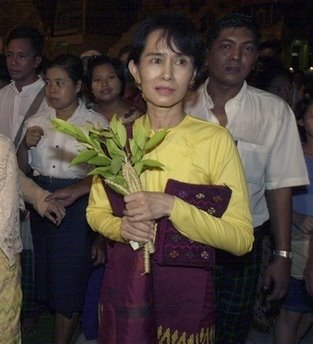


 Posts
Posts


