News & Articles on Burma
Thursday, 7 July, 2011
--------------------------------
Burma's Octopus Strangles Reform
Rangoon Commander Dismissed
Army Negotiator Pushes for Ceasefire, as State Media Blames KIA for Blasts
Karen BGF Talks Break Down; Tensions Remain High
Myanmar To Send Labour Abroad Legally
Suu Kyi in rare visit outside Yangon
The Reith Lectures: Securing Freedom (Radio 4)
Twelve media orgs call on release of Video Journalists
Call for release of jailed Myanmar reporters
ICRC resumes its tough task in unprincipled Burma
Burma says Kachin rebels bombed railway line
White Tiger Party Confronts Dissension
------------------------------------------------
Burma's Octopus Strangles Reform
By LARRY JAGAN Thursday, July 7, 2011
BANGKOK Burma’s new quasi-civilian government is under threat from withinand a military coup may be brewing as inertia has replaced the old junta. The newly elected President Thein Sein is embroiled in a power struggle that is paralysing any progress toward political or economic change.
It has emerged that Vice-president Tin Aung Myint Oo is deliberately trying to undermine the new president and assert his influence over the new army chief, Gen Min Aung Hlaing. “He’s trying to control everything,” a Burmese businessman told The Irrawaddy on condition of anonymity. As a result, the president’s planned economic reforms and the release of thousands of political prisoners have been put on hold.
The vice-president represents the old guardand their hard-line attitudesand he wants to make sure everything stays unchanged. His mentor, the former top junta leader, Snr-Gen Than Shwe has withdrawn from the day-to-day activities of government, leaving a power vacuum which Tin Aung Myint Oo is trying to fill at the expense of the more reform-minded president.
The vice-president (commonly known in Burma as “Shid-lone,” meaning “eight words,” because his full name is Thi Ha Thu Ra Tin Aung Myint Oo) is trying to establish himself as the new dictatoror the most powerful man in the country. Everywhere he turns he tries to establish his authority, according to sources in Naypyidaw who say he uses every opportunity to usurp the president’s authority.
He has been left with few avenues of formal influence now that the trade council he headed has been dissolved, but that has not dampened his efforts to monopolize the economy. “He’s a spoiler,” said a senior government official. And if he comes out on top, the country will be returned to the Dark Ages, he added.
After every Cabinet meeting, which usually takes once a week, the ministers are summoned into his roomwithout Thein Seinfor tea and an ear-bashing. Sources in Naypyidaw say he tries to exert influence on government decisions behind the scenes, especially on economic mattersespecially import and export licences and company registration, which he previously controlled as head of the trade council.
The commerce minister has to report to him twice a day, according to sources in the capital. Ministers were shocked recently when their budgets were arbitrarily cut by 20 to 40 percentexcept Defence, of courseby Tin Aung Myint Oo. Some ministers are reportedly so upset that they are using their own personal funds to pay for new schools and health centres, a Burmese businessman recently told The Irrawaddy.
There is a major battle for control going on between the president and his vice presidentone which will determine whether the government’s plans and vision set out in Thein Sein’s speech to the parliament more than three months ago will be implemented. After the president ordered the export tax to be reduced to 5 percent, the vice president intervenedwith the support of the finance ministerand had it reduced to only 7 percent.
Perhaps the most critical tussle is over the role the army is to play under the new regime. Under the new army chief, it seems clear that the army is no longer involved in politics. They are very much back in the barracks. Interestingly, the military MPs in both the national houses of parliament were virtually silent during the discussions in parliament during its first session earlier this year.
Min Aung Hlaing told the military MPswho occupy 25 percent of parliamentary seatsbefore the parliament started its session that their duty was to rebuild the tarnished reputation of the army through their political work. “It’s your duty to become seasoned politicians,” he reportedly said, “as you represent the future Burma.” He virtually blamed the old guard for the current mess, said one of the military MPs.
But Burma's new “Octopus,” Tin Aung Myint Oo, is unhappy with this current state of affairs. He wants the army to exert pressure on the executive and legislature in his favour. Several weeks ago, the vice-president summoned the army chief to see him and lectured him on the power structure, telling the general that he was the boss, as militarily he outranked Thein Sein. A silent Min Aung Hlaing was then reportedly assaulted with an ashtray.
But for the present, it seems the army chief remains his own man, intent on reforming the military machine, making it more professional. He is after all, according to several military sources, part of the army’s 88 generation. He definitely supports Thein Seinat least for the moment, according to senior military sources.
This new generation of army commanders are close to Vice Snr-Gen Maung Aye, according to a Western intelligence source.
They dislike but respect Than Shwe, said the source, but they completely despise the vice-president.
But the Octopus is marshalling his forces. Information and Culture Minister Kyaw Hsan has emerged as one of his main allies. He recently tried to get him co-opted to the National Security Council, which is emerging as one of the most important institutions in the post-junta framework. This was unconstitutional and resisted, according to military sources in the capital.
For the moment these layers of political intrigue are dogging Burma’s movement forwardalbeit to a unique form of guided democracy. With the Octopus tentacles tightly controlling business in Burma, he is slowly transforming the new hierarchies.
Even trusted old business friends of Than Shwe, such as Tay Za, are finding themselves shut out as control of the economy is being handed over to the new business leaderscriminals such as Stephen Law (aka Tun Myint Naing) of AsiaWorld and Ko Ko Gyi (who now owns Shwe Myin).
They are the new breed of Chinese mafia businessmenand they are currently making vast profits with the Octopus’s blessing and support. After all, Tin Aung Myint Oo is himself reportedly very close to Beijing, and has profited enormously as a result. This is going to have very significant consequences for the future Burma.
But the real danger to Burma’s political futurewhile the power struggle between the two politicians is unresolvedis the possibility of a military coup, led by the army chief, at Than Shwe’s bidding.
Vice-president Shid-lone and his cronies remain the villain of the peace, and seem intent on continuing to paralyse any political and economic reforms that would benefit the country and the people.
http://www.irrawaddy.org/article.php?art_id=21647
-------------------------------------------
Rangoon Commander Dismissed
By WAI MOE Thursday, July 7, 2011
Brig-Gen Tun Than, right, attends a ceremony held by the Myanmar Gold Traders Association. (Photo: The Irrawaddy)
The former commander of the Rangoon Regional Military Command, Brig-Gen Tun Than, has reportedly been sacked for corruption, just one week after being reassigned as commander of the Southern Regional Military Command, military sources said.
Tun Than, who was expected to be promoted to the rank of major general next month, was forced to retire on Tuesday, the sources said. Maj-Gen Hla Min, the chief of the Bureau of Special Operations-3, has reportedly been acting as the commander of the Southern Regional Command since Tun Than's dismissal.
Tun Than was commander of Light Infantry Division 77 based in Pegu before he was promoted to commander of the Rangoon Regional Military Command last August as part of a major military reshuffle.
There has been no official confirmation of Tun Than's dismissal.
Recently, a general staff officer serving under Tun Than was reportedly killed in car accident in Rangoon. Two others were injured.
Tun Than was one of at least half a dozen regional military commanders who were reshuffled last week. http://www.irrawaddy.org/article.php?art_id=21646
------------------------------------------
Army Negotiator Pushes for Ceasefire, as State Media Blames KIA for Blasts
By WAI MOE Thursday, July 7, 2011
As Burma's military continues its calls on the Kachin Independence Army (KIA) to agree to a ceasefire after nearly a month of hostilities, the country's state-run media has accused the group of carrying out a series of bombings targeting roads and bridges in Kachin State.
According to intelligence sources, Col Than Aung, the Burmese army's chief negotiator in the conflict, sent a letter to his Kachin counterpart, KIA vice chief of staff Brig-Gen Gun Maw, earlier this week urging the group to stop its warfare in the state.
“We will continue to discuss this matter until we achieve peace,” Than Aung was quoted by sources as saying in the letter.
The letter also said that both sides should refrain from carrying out attacks, including bombings, and that the KIA should release government soldiers it is holding prisoner and avoid taking up position in government buildings.
In reply, the KIA said that it appreciated the government negotiator’s concerns and agreed to repair a bridge that had been damaged by a recent explosion.
Meanwhile, Burma's state-run newspapers on Thursday accused the KIA of carrying out three bombings between June 30 and July 5 that targeted roads, railways and bridges in Kachin State.
“KIA is committing mine explosions on motor roads, railroads and bridges for killing and wounding the people in Kachin State,” The New Light of Myanmar said.
The KIA has denied that Kachin troops are targeting civilians, but has vowed to defend their “land and Kachin people” from any attack by the government army.
A 16-year-old ceasefire between the government and the KIA broke down on June 9 after Burmese troops attacked the KIA near the Chinese-run hydropower station of Ta Paing, forcing about 200 Chinese technicians and workers at the site to return to China.
http://www.irrawaddy.org/article.php?art_id=21645
--------------------------------------------
Karen BGF Talks Break Down; Tensions Remain High
By SAW YAN NAING Thursday, July 7, 2011
Attempted negotiations aimed at resolving a conflict between a pro-government Border Guard Force (BGF) in Karen State and a faction that broke away from the BGF several months after it was formed last year have failed, according to Karen sources.
The talks were initiated in early July by government loyalist Chit Thu, a leading figure in the Democratic Karen Buddhist Army (DKBA), which was officially disbanded late last year to form the BGF. They were held at the headquarters of the breakaway BGF faction in Myaing Gyi Nyu, in southern Karen State's Hlaing Bwe Township.
The talks were aimed at easing tensions between government forces and former BGF troops led by Lt-Col Po Bi. Around 1,000 soldiers under Po Bi's command broke away from the BGF in May after deciding to remain as members of the DKBA. Po Bi now leads four battalions.
Several days ago, Chit Thu traveled to Myaing Gyi Nyu accompanied by at least 20 pickup trucks carrying BGF troops to meet with Po Bi and attempt to persuade him to rejoin the pro-government force, according to Brig-Gen Johnny, the commander of Karen National Liberation Army (KNLA) Brigade 7.
The talks failed, however, because Po Bi rejected Chit Thu’s offers, said Johnny.
The move came after military officials in Naypyidaw ordered Chit Thu to conduct a meeting with the renegade Karen BGF faction led by Po Bi, said DKBA sources.
Htee Moo, a DKBA source, reported that local villagers in Myaing Gyi Nyu fear the breakdown of the talks could result in major fighting between the two Karen armed groups led by Chit Thu and Po Bi. Some villagers have already moved to villages or towns nearby Myaing Gyi Nyu, he added.
However, Po Bi and his troops have since left Myaing Gyi Nyu and taken up positions near the town, according to Johnny.
“He [Po Bi] doesn’t want to open the front line in Myaing Gyi Nyu as temples and religious halls could be destroyed if major fighting breaks out,” said Johnny.
The KNLA has also vowed to assist the Po Bi-led renegade Karen group if the government and its ally, the Chit Thu-led Karen BGF battalions, launch a major attack against them. Chit Thu still has influence over four remaining Karen BGF Battalions.
“The Burmese government wants Karens to fight against Karens, so they asked Chit Thu to negotiate with Po Bi,” said Johnny.
The DKBA split from its mother organization, the Karen National Union—the political wing of the KNLA—in 1995 and signed a ceasefire agreement with the government. The DKBA was formed into BGF battalions under Burmese army command in 2010. However, a DKBA brigade under the command of Brig-Gen Saw Lah Pwe rejected the move and has since allied itself with the KNLA.
http://www.irrawaddy.org/article.php?art_id=21643
---------------------------------------
July 07, 2011 18:58 PM
Myanmar To Send Labour Abroad Legally Through Government-to-government Channel
YANGON, July 7 (Bernama) -- Myanmar labour authorities are planning to send workers to foreign countries through government- to-government channel, Xinhua news agency quoted the local Biweekly Eleven News' report Thursday.
As part of the move, Minister for Labour and for Social Welfare, Relief and Resettlement U Aung Kyi had discussions with his Qatar counterpart over the labour affairs recently.
Myanmar workers turned to seek jobs mostly in Dubai, Qatar and South Korea when the country stopped dispatching workers to work in Malaysia for six months starting July 1.
At present, Myanmar workers have much interest in working in South Korea especially in the manufacturing sector at a time when South Korean government sends for over 51,000 Myanmar workers this year.
According to official statistics, the number of Myanmar workers, legally employed to work in 15 foreign countries, reached 330,311 as of 2010 since 1990 and such overseas workers had fetched for the country over US$17 million.
Myanmar citizens seeking overseas jobs are mostly destined to such countries as Singapore, Malaysia, South Korea, Libya, Thailand, Cambodia, Japan, Switzerland, Brunei Darussalam, United Arab Emirates, America, France, Germany, Qatar and Kuwait.
As part of its bid to ease domestic employment problem, Myanmar's Ministry of Labour has sought job opportunities for Myanmar workers since 1990.
-- BERNAMA http://www.bernama.com/bernama/v5/newsworld.php?id=599754
----------------------------------------
Asia-Pacific
Suu Kyi in rare visit outside Yangon
Crowds throng as democracy leader visits temple city of Bagan.
ALJAZEERA: Last Modified: 07 Jul 2011 09:46
Myanmar pro-democracy leader Aung San Suu Kyi greeted by supporters in Bagan [EPA]
The Myanmar pro-democracy leader Aung San Suu Kyi is travelling for the first time outside Yangon since her release from house arrest last November.
Her trip to the ancient temple city of Bagan, with one of her sons, Kim Aris was supposed to be a private affair, but crowds of supporters flocked to the temple.
Suu Kyi in theory is free to travel where she wishes in Myanmar as she was released without any conditions. But only last week, the new military-backed government warned her and her party to cease all political activities.
Supporters of Suu Kyi say this visit is just a holiday as she also plans to visit the birthplace of her father, the independence leader Aung San.
Safety fears
The government has warned of chaos if she tries to rally public support during her visit.
Officials of Suu Kyi's party, the National League for Democracy, have told supporters to stay away, as they fear her trip could be jeapordised by clashes between pro-democracy supporters and groups linked to the military-backed government.
In 2003 she was travelling in the north of the country when thugs linked to the then ruling generals attacked her convoy.
The attack took place in Kyee Village, on the outskirts of Depayin Township. After the attack, Suu Kyi was arrested and placed under house arrest, where she remained until her release in 2010.
She will take a flight back to Yangon on Friday.
Suu Kyi has been in and out of detention since 1991, when she led her party to victory in parliamentary elections. The military, however, refused to accept the result. http://english.aljazeera.net/news/asia-pacific/2011/07/20117782826881468.html
--------------------------------------------
The Reith Lectures: Securing Freedom (Radio 4)
Antonia Quirke
Published 04 July 2011
How Aung San Suu Kyi draws lessons from the Gulag.
Aung San Suu Kyi's two Reith Lectures (28 June, and forthcoming on 9 July) are an important coup for the new controller of Radio 4, Gwyneth Williams, who managed to push the request through to all the right people in Burma specifically because of her World Service connections (Williams joined the WS in 1976 as a trainee). Further proof, if it were needed, of the high worth of those with a hands-on background at that miraculous station.
Three weeks after the invitation went in, word came back that, yes, ASSK would do it if she could have access to certain reference books - she has few books even though now officially not under house arrest; she asked in particular for Max Weber's Politics As a Vocation and Nadezhda Mandelstam's Hope Against Hope. The wife of the poet Osip Mandelstam, who died in 1938 in a transit camp in Siberia, Nadezhda has been an inspiration to ASSK, along with the Odessa-born poet Irina Ratushinskaya, who spent four years in a camp before being released on the eve of the 1986 summit between Ronald Reagan and Mikhail Gorbachev.
At a screening of the first lecture at Broadcasting House, it was mesmerising to sit and watch ASSK speaking at length (the footage had been recently smuggled out of Burma). Traditional peach silk top. Blue flowers in her hair. A slash of orange lipstick. She is resolutely not a spin-doctored, slick operator. Two things stood out: her use of the old-fashioned word gallantry, and her repeated use of the word passion.
Though ASSK is clearly unbowed, at one point during the live Q&A down the line from Rangoon she admitted that the lights had been switched off by the authorities and she was sitting at the telephone in the dark. How fitting that she had, just minutes earlier, quoted from Ratushinskaya's prison poem that ends: "It isn't true, I am afraid, my darling!/But make it look as though you haven't noticed."
There is to ASSK an air of unrelenting affection. It reminded me of something the actress Debra Winger - who quit Hollywood before it dried her up completely - said about passion: it is the thing that keeps you soft.
http://www.newstatesman.com/radio/2011/07/suu-kyi-san-quirke-assk-aung
----------------------------------------
Twelve media organizations call on the release of Video Journalists
By Zin Linn Jul 07, 2011 8:32PM UTC
Twelve media organizations fighting for freedom of expression and freedom of the press all around the world cosigned, today, a joint statement calling on the Burmese government to put a stop to its harassment and prosecution of journalists and calling on the release of the Democratic Voice of Burma’s Video Journalists.
An alliance of 12 media organizations on Thursday called on Government of Myanmar (Burma) to end its harsh restrictions upon journalists and to release 17 video journalists serving long prison term in military-controlled country.
The joint statement says: “Despite pledges by Burma’s new government that it has begun the transition to civilian rule, 17 video journalists (VJs) for the Oslo-based exiled media organization, the Democratic Voice of Burma (DVB), remain imprisoned. They are among nearly 2,100 political prisoners in Burma, a testament to the lingering hold of dictatorial rule on the country.”
Twelve media organizations call on the Burmese government to put a stop to its harassment and prosecution of journalists, who are forced to operate under strict control and surveillance. The media alliance points out evidence in the statement that despite government’s promises to freedom of the press and freedom of expression, situations continue to deteriorate in Burma on the contrary. Regulations over the Internet users are more and more rigid and journalists are forced to self-censor with greater intensity. they said in a joint statement.
Twelve media alliance urged the United Nations, the ASEAN regional bloc and the European Union to press on Myanmar to release all journalists in prison.
The DVB was tipped as one of the top nominees for the Nobel Peace Prize last year due to its documentaries secretly made by the courageous video-journalists most of them in prison.
According to Norway-based Democratic Voice of Burma, which has broadcast different news video from Burma for years, its video reporters have been apprehended since 2007, when the military junta launched a bloody crackdown on pro-democracy protesters in Saffron Revolution.
For example, DVB reporter Hla Hla Win, for example, was jailed in 2009 and is serving a 27-year sentence after interviewing Buddhist monks near the anniversary of the 2007 uprising. Two more DVB video-journalists have been jailed. Sithu Zeya, 21, received and eight-year sentence in December last year after police caught him taking photos of grenade attack at a stage during water-throwing festival in April 2010. Later, his father Maung Maung Zeya was also arrested and sentenced 13 years imprisonment.
The joint-statement said a number of the jailed DVB journalists were under various torture techniques during the interrogation phase to extract information about DVB’s operation and its network of undercover reporters.
The signatories of the joint statement are Democratic Voice of Burma (DVB), Reporters Without Borders (RWB), Committee to Protect Journalists (CPJ), Irrawaddy, Mizzima, Southeast Asian Press Alliance (SEAPA), Article 19, International Federation of Journalists (IFJ), Burma Media Association (BMA), Index of Censorship, Canadian Journalists for Free Expression (CJFE) and International Press Institute (IPI).
The Burmese government has been practicing unnecessary restrictions on media and journalists and also extra restrictions on Internet users since the information minister is unmoved from the days of the former junta.
Although the optimistic politicians and media personnel hoped for better free-press environment after the election, the scenario remains unchanged. http://asiancorrespondent.com/59506/twelve-media-organizations-call-on-the-release-of-video-journalists/
------------------------------------------
STRAITS TIMES: Jul 7, 2011
Call for release of jailed Myanmar reporters
BANGKOK - A COALITION of media groups on Thursday called on Myanmar to end the harassment of journalists and to release 17 video reporters serving long prison sentences in the military-dominated country.
A dozen organisations, including the Democratic Voice of Burma and Reporters Without Borders, urged the United Nations, the Asean regional bloc and the European Union to press Myanmar to release all jailed journalists.
'There is evidence that despite pledges to the contrary, freedom of the press and freedom of expression continue to deteriorate in Burma, with regulations over access to the Internet tightened and journalists now forced to self-censor with greater intensity,' they said in a joint statement.
The DVB, which last year was tipped as one of the top contenders for the Nobel Peace Prize, says that since December, two of its video journalists have been jailed for up to 13 years.
They have joined the other 15 DVB reporters in detention including Hla Hla Win, who was sentenced to 27 years in jail in Myanmar, for interviewing a monk during the 2007 'Saffron Revolution' failed uprising.
The statement said some of the jailed DVB journalists may have been tortured during interrogation. -- AFP http://www.straitstimes.com/BreakingNews/SEAsia/Story/STIStory_688168.html
---------------------------------------------
ICRC resumes its tough task in unprincipled Burma
By Zin Linn Jul 07, 2011 4:53PM UTC
The state-run New Light of Myanmar newspaper says today that the Government of Myanmar (Burma) has been carrying the maintenance of prisons in cooperation with ICRC. Water and habitat Engineer Swiss Mr Eric Weissen from ICRC and two officers were allowed to visit Mawlamyine prison on 1 July. There, they inspected site chosen for sinking tube well, tube well, storage of water and construction of toilets and septic tanks.
They were conducted round by Director Soe Soe Zaw from Myanmar Correctional Department (Mon/Kayin), prison officer in-charge and engineers. According to the preliminary survey of ICRC in Myaungmya, Hpa-an and Mawlamyine prisons, solar powered water pumping system is installed by Myanmar Correctional Department under the Ministry of Home Affairs in cooperation with ICRC.
As reported by Assistance Association for Political Prisoners – Burma [AAPP-B], at least 159 political prisoners are in poor health due to the denial of proper medical care, harsh prison conditions, torture and transfers to remote prisons where there are no doctors. Political prisoners’ right to healthcare is principally denied by the successive regimes. The prison healthcare system in Burma is totally poor, especially in far-flung jails. There are 44 prisons across Burma, and at least 50 labour camps. Some of them do not have a prison hospital as well as health assistance personnel.
AAPP-B says in its June 2011 report: “The blatant insincerity and unwillingness of the current regime to address grave human rights violations was underscored in the concluding session of the Universal Periodic Review (UPR). Throughout the dialogue, the regime made false claims as to progress made in the field of human rights while continuing to deny serious broad patterns of abuse. Burma accepts to improve relations with Special Rapporteur Quintana, but has denied him entry into the country since March 2010.”
AAPP-B also criticized the behaviors of the Burmese government in the report that if there are no widespread occurrences of human rights violations committed with impunity, as Burma claimed during the first round of the UPR in January 2011, then it should open its doors to not only the Special Rapporteur Quintana, but also to other INGOs such as the ICRC.
Burma also agreed to stop torture, but refuses to investigate allegations into torture, providing further evidence that they are only interested in providing the bare minimum so as to gain political legitimacy.
Zaw Win, Director General of the Prisons Department, brazenly lied to the international community saying there are no political prisoners in Burma. Besides, there have been no deaths in prison arising from conditions of detention, he said.
AAPP-B has documented 146 deaths as a result of ill-treatment and conditions in prison. Given the wall of secrecy surrounding prisons, the number of cases is most likely much higher. There are a total of 1,994 political prisoners in June, said AAPP Burma.
Many prisoners of conscience have been serving incredibly long prison terms in awfully ruthless conditions. Torture and ill treatment is a well known part of their incarceration and retribution.
The regime’s handling of political prisoners blatantly breaks the 1957 UN standard minimum rules for the treatment of prisoners. The International Committee of the Red Cross (ICRC) carried out its last prison visit in Burma in November 2005. In January 2006 the ICRC suspended prison visits in the country, as it was not allowed to fulfill its independent, impartial mandate.
The ICRC offices were ordered to be closed in 2006. Then, ICRC released a press statement on this issue dated 29 June 2007. The statement denounced the military regime for committing human rights violations against detainees and civilians. ”The repeated abuses committed against men, women and children living along the Thai-Myanmar border violate many provisions of international humanitarian law,” said Mr. Jakob Kellenberger, ICRC president.
In addition, ICRC also demanded the Burmese government to end urgently of its abuses: “We urged the government of Myanmar to put a stop to all violations of international humanitarian law and to ensure that they do not recur”. http://asiancorrespondent.com/59478/icrc-resumes-its-tough-task-in-unprincipled-burma/
------------------------------------------
Burma says Kachin rebels bombed railway line
By AP News Jul 07, 2011 2:18PM UTC
YANGON, Burma (AP) — Burma’s government says ethnic Kachin rebels have bombed a major railway line in the north of the country for the third time in less than a month.
The state-run New Light of Myanmar newspaper says the rebels attacked the train line that runs from the city of Mandalay to the Kachin state capital Myitkyina on Tuesday night.
The paper said in a report Thursday that no casualties were reported and the train track was repaired.
Fighting between the Kachin and government troops erupted last month. It displaced 10,000 people and forced Chinese technicians working at hydropower projects in the region to flee the country.
The fighting was the first recorded since a peace deal in 1994 broke down last year.
http://asiancorrespondent.com/59464/burma-says-kachin-rebels-bombed-railway-line/
----------------------------------------------
White Tiger Party Confronts Dissension
By SAI ZOM HSENG Thursday, July 7, 2011
A Central Executive Committee member of the Shan Nationalities Democratic Party (SNDP), (aka) White Tiger Party, is refuting reports that party leaders are more focused on their own business interests than the party’s political activities, causing many party members to want a change in leadership.
Saw Than Myint told The Irrawaddy on Wednesday that the SNDP is operating normally and its leaders are tending to their political activities regularly; the exception being that the party chairman and vice-chairman can’t participate in party activities because they have been appointed to the state and union government, respectively.
“Our chairman was appointed to the Shan State government and the vice-chairman was appointed to the union government. That’s why they can’t be involved in the party’s activities frequently. We don’t have any plan to replace or change the persons in the position of chairman or vice-chairman yet,” said Saw Than Myint.
The chairman of the SNDP, Sai Aik Pao, is an in-law of Htay Myint, a Burmese crony who has a good relationship with members of the former military regime. Sai Aik Pao owns a salt business, and the party vice-chairman, Sai Saung Si, owns a tea plantation in northern Shan State.
In addition, the White Tiger Party has made an application with government authorities to establish a company having the name “Top White Tiger Co. Ltd,” which will focus on agriculture, mines and trading, especially with China. But Saw Than Myint said that they don’t yet have permission to start a company.
A party source in Rangoon said Sai Aik Pao controls everything that belongs to the party, and almost all of the members want to change this situation. The leadership of the party can’t provide direction and there’s no initiative by party branches, leaving many party members wanting to resign, the source said.
A SNDP party member from its Taunggyi branch said that the leaders of the party, especially the chairman and vice-chairman, are usually busy with their own businesses and their government jobs. He said they should pass the mantle of the party to people who can strongly lead, but added that party members want only a change of leadership, not separation from the party.
Many who voted for the White Tiger Party in Burma’s 2010 election have also voiced their disappointment on social networks such as Facebook and Twitter. For example, one person with the username Nang Hseng Noom said on Facebook that, “the businesses of the party leaders are a slap in the face of the party, so disappointed with the activities of the leaders.”
The White Tiger Party fielded 157 candidates and won 57 seats in the 2010 election. It is recognized as one of the largest ethnic political parties in the country. Currently, it has over 120,000 party members.
According to China's Xinhua news agency, the Union Solidarity and Development Party, which is known as the junta-backed party, won 883 of the 1,154 seats contested in the election. The pro-regime National Unity Party came in second with 63 seats, followed by the White Tiger and the Rakhine (Arakan) Nationalities Development Party, with 57 and 35 seats, respectively. http://www.irrawaddy.org/article.php?art_id=21642
Friday, July 8, 2011
News & Articles on Burma-Thursday, 7 July, 2011-UZL


Thursday, July 7, 2011
News & Articles on Burma-Wednesday, 6 July, 2011-UZL
News & Articles on Burma
Wednesday, 6 July, 2011
--------------------------------
Suu Kyi congratulates Yingluck
Thai Election Raises Hope for Resumed Border Trade
Suu Kyi gets emotional reception on Myanmar holiday
High-ranking Myanmar diplomat seeks asylum in U.S.
Myanmar envoy seeks asylum, pressure on rulers
Than Shwe disciple to head Burma’s intelligence
KIA limits military resistance to Burmese government
SSA South wants SSA North to evacuate from its main base
Economic reforms is needed after kyat value increases
------------------------------------------
Suu Kyi congratulates Yingluck and a government democratically elected by the people
By Bangkok Pundit Jul 06, 2011 3:30PM UTC
Comments Off
The Bangkok Post:
Burma’s democracy icon yesterday welcomed Thailand’s election outcome, which has paved the way for Yingluck Shinawatra to become the country’s first female prime minister.
“I like that she’s a woman but the most important thing is the relationship between the two nations and our people,” Mrs Suu Kyi told reporters on the second day of her visit to the ancient temple city of Pagan in central Burma.
“We also have to welcome the government democratically elected by the people,” she said, also expressing hope that ties with neighbouring Thailand would remain strong under 44-year-old Yingluck’s administration.
Reuters:
She praised the general election in neighboring Thailand on Sunday as “free and fair” and welcomed its winners, the opposition Puea Thai Party led by businesswoman Yingluck Shinawatra, sister of ousted Prime Minister Thaksin Shinawatra.
“I expect the ties between Myanmar and Thailand to get better,” she said.
Pic:AP
BP: This takes BP back to some comments by Suu Kyi last year as the excerpt below reads:
A new government coming to power under a constitution drawn up by the military will never be stable,” he cited her as saying. “We do not need to see very far. We just see Thailand,” she said. “Thaksin was an elected person. The military seized the power from an elected person. The constitution was drawn up by the military,” she said.
“After that, what happened with the first (government)? It was not stable,” she said of the short-lived administration that followed the coup. “This was a result of the constitution being written by the military.”
BP: Back then, Panitan said she did not have enough information about Thailand whereas a Thai senator went further and suggested that Suu Kyi should be investigated to see if she had been paid….. Some comments:
1. This does not mean that Suu Kyi is a fan of Thaksin – see 2 for more. BP thinks she more likely dislikes the Thai military and establishment. She is hardly going to be for military coups, committees appointed by the military to write constitutions, and governments formed in a military barrack.
2. Yes, Thaksin was not a fan of the Burmese people, but did things really improve post-Thaksin? In 2007, when the Burmese military started killing protesters and monks, you first had silence by the Thai government and then the Burmese were defended by the Thai coup leader Gen. Sonthi. Even Kavi – who had hoped that Surayud’s government would bring about change – see here, here, here, and here – could only despair.
Then Abhisit’ government started under a cloud with the Rohingya being pushed back to see by the military and his failure to do anything. You also had concern that Thailand would deport Burmese refugees after last year’s election, particularly given the large scale deal to build a deep-water port and essentially export industries in Thailand that pollute too much, to Burma – see here and here. You also have to ask the question, given the support of Burma’s other neighbours for the regime and Thailand’s dependency on Burma for energy, does a Thai government really want to push change? BP doesn’t expect much of a change. Perhaps, Suu Kyi hopes for change, but realizes this too. Nevertheless, couldn’t resist a dig at the Thai military and establishment… http://asiancorrespondent.com/59365/suu-kyi-congratulates-yingluck-and-a-government-democratically-elected-by-the-people/
--------------------------------------------
Thai Election Raises Hope for Resumed Border Trade
By WAI MOE Wednesday, July 6, 2011
Workers load goods on a boat for shipment across the Thai-Burmese border. (Photo: The Irrawaddy)
Yingluck Shinawatra—the youngest sister of Thailand's ousted former Prime Minister Thaksin Shinawatra—is set to become the country's first female prime minister after her Pheu Thai Party won a majority of seats in a national election held on Sunday.
Although domestic issues are likely to be at the top of her agenda when she forms a new government, relations with Burma will also demand some attention. On this front, one of the more pressing problems facing bilateral ties is Naypyidaw's suspension of border trade at Mae Sot-Myawaddy, the main crossing point on the key route connecting the two countries.
It has been nearly a year since the Burmese authorities ordered the closure of the Friendship Bridge linking the Thai town of Mae Sot and Myawaddy, in Burma's fractious Karen State. On July 17, 2010, Burma shut the bridge in protest over Thailand's decision to build an embankment on its side of the Moei River. Later, however, it said it would keep the bridge closed until stability is restored in border areas.
After a year without any progress in talks between the two sides, Thai and Burmese businessmen in Mae Sot say they are now hoping that the change of administration in Bangkok will improve the chances of a return to normal trade in the near future.
“We understand that the border closure is due to a dispute that the two sides have been unable to resolve, but now that elections in Thailand are over, we hope the new government will be able to find a solution,” said Nai Su Chai, a businessman in Mae Sot.
One reason the Thai government hasn't pushed too hard to reopen the bridge is that it doesn't want to derail plans to build a new bridge that will connect Mae Sot with a special economic zone on the Burmese side of the border, according to a Thai reporter based in Mae Sot.
Although Thailand and Burma remain major trading partners, with Burma exporting most of its natural gas to its eastern neighbor, the impact of the border trade shutdown has been significant. Shortly after the border was closed last July, Thai Deputy Commerce Minister Alongkorn Ponlaboot told reporters that in recent years border trade has been worth as much as 140 billion baht (US $4.3 billion) annually.
Despite its importance, however, border trade has often suffered as a result of political disputes. Since the late 1990s, the Burmese regime has repeatedly cut off trade as a means of expressing displeasure with Thailand over a variety of bilateral issues.
“The Burmese authorities have often used border trade to undermine the Thai government in the past. They even banned and destroyed goods such as cola, seasoning and cooking oil from Thailand. And Thailand in turn forced migrant workers back to Burma,” said U Hamat, a Burmese trader based in Mae Sot.
However, Thailand's business stakes in Burma continue to grow significantly. Alongside China and South Korea, Thailand is one of the main investors in Burma, particularly in hydropower projects, petroleum and infrastructure, according to the Economist Intelligence Unit (EIU) in its May 2011 report.
“Natural gas exports (primarily to Thailand) remained Myanmar’s [Burma's] largest single source of export revenue, accounting for 27.4 percent of total export revenue in April-December, the first nine months of the 2010/11 fiscal year,” the EIU said.
Mae Sot is not only a key town for border trade, but also home to many Burmese pro-democracy organizations and NGOs working on Burma issues. Among many working in this field, there is concern that Yingluck could follow her brother's example and become too cozy with Burma's generals, perhaps at the expense of Burmese opposition groups operating in Thailand.
So far, however, that doesn't seem to be the case.
“At the moment, there is no unusual pressure on us. Ms Yingluck’s most urgent work will be on internal issues rather than international or regional issues,” said Aung Moe Zaw, a secretarial member of the National Council of Union of Burma, an umbrella group of ethnic and pro-democracy groups.
“The Pheu Thai Party was in opposition for years, so I hope they can understand the position of Burma’s democracy movement,” he added.
Regarding Yingluck’s victory, Burmese pro-democracy leader Aung San Suu Kyi congratulated her on Tuesday and called on her to support Burma issues and help Burmese refugees who are currently staying in Thailand.
So far, the Burmese regime in Naypyidaw has not responded to the election outcome in Thailand. The state-run media has also been silent on the vote, which is widely seen as a repudiation of the Thai military coup that ousted Thaksin from power in September 2006.
Irrawaddy correspondent Mann Myo Myint contributed reporting from Mae Sot. http://www.irrawaddy.org/article.php?art_id=21638
----------------------------------------
Suu Kyi gets emotional reception on Myanmar holiday
AFPBy Soe Than Win | AFP – 2 hrs 35 mins ago
Myanmar's democracy icon Aung San Suu Kyi poses for a photograph during her visit to Mount Popa near Mandalay on July 6. Suu Kyi attracted dozens of emotional supporters during her visit to an ancient temple city in central Myanmar, proving her enduring popularity after years in detention
Myanmar's democracy icon Aung San Suu Kyi poses for a photograph during her visit …
Democracy champion Aung San Suu Kyi attracted dozens of emotional supporters Wednesday during her visit to an ancient temple city in central Myanmar, proving her enduring popularity after years in detention.
The Nobel Peace Prize winner is on holiday in Bagan, famed for its temple ruins, on her first venture outside her home city of Yangon since being freed by the junta from seven years of house arrest last November.
As the 66-year-old returned to her car after a lunch-time stop with her youngest son and travel companion Kim Aris, she was greeted by a spontaneous crowd of about 150 supporters, some of them openly weeping.
"Thank you very much," a smiling Suu Kyi told her admirers, as she signed autographs, including on some T-shirts, and posed for photographs.
"I will try to come back," she added, before retiring to her hotel. Earlier, she and Aris, 33, who was born in Britain, had been sightseeing in nearby Mount Popa and toured a local museum.
Suu Kyi has refrained from making political comments during her trip, which began Monday, in an apparent attempt not to antagonise government figures, who have warned they can't guarantee her safety on her travels.
Her earlier plan to launch a political tour prompted a demand from the regime for her National League for Democracy (NLD) party to stay out of politics, and a warning that "chaos and riots" could ensue if she went ahead.
That tour has been delayed until the weather conditions are right, Suu Kyi said last week. Plain-clothes police have been following her every move throughout her current trip, although it is described as a private visit.
Security is a major concern after Suu Kyi's convoy was attacked in 2003 during a political tour, in an ambush apparently organised by a regime frightened by her popularity.
Observers said that any activity that puts Suu Kyi in contact with the people of Myanmar could have repercussions.
Her NLD party won a landslide election victory in 1990 that was never recognised by the junta, and the party was disbanded by the military rulers last year because it boycotted a November election, saying rules were unfair.
The junta's political proxies claimed an overwhelming victory in the poll, which was marred by widespread complaints of cheating and intimidation.
http://news.yahoo.com/suu-kyi-gets-emotional-reception-myanmar-holiday-094759560.html
-----------------------------------------
High-ranking Myanmar diplomat seeks asylum in U.S.
From Elise Labott, CNN Senior State Department Producer
July 6, 2011 -- Updated 1048 GMT (1848 HKT)
Washington (CNN) -- The second-highest-ranking diplomat at the embassy of Myanmar in Washington has defected and wants to seek asylum in the United States.
In a letter to Secretary of State Hillary Clinton obtained by CNN, Deputy Chief of Mission Kyaw Win said he had "no choice" but to leave his post in protest over human rights abuses and fraudulent elections. He said he is formally seeking asylum for himself and his family because he is afraid for their lives.
State Department spokeswoman Victoria Nuland confirmed the State Department received a letter but declined to comment further about private diplomatic correspondence.
Win's move is a setback for the regime in Myanmar, which held its first elections in 20 years in November. The vote drew fire from critics who said it was aimed at creating a facade of democracy. The regime had refused to allow international monitors or journalists into Myanmar for the vote but has argued the elections constitute an end to military rule and merit an easing of international sanctions.
Win wrote in the letter he had held out hope for democratic reforms throughout his 31-year career, but lost confidence after last year's widely criticized elections, which largely left the military junta in control. As such, he said, he could not in good conscience continue working for the government.
"The truth is that senior military officials are consolidating their grip on power and seeking to stamp out the voices of those seeking democracy, human rights and individual liberties. Oppression is rising and war against our ethnic cousins is imminent," he wrote.
As a high-ranking diplomat, Win maintained ties with pro-democracy Burmese activists in Washington. In the letter he talked about the balance he had to strike between reaching out to the opposition and answering to his government.
He also urged the United States to set up an international council of inquiry to investigate human rights violations in Myanmar and calls for the U.S. to implement targeted sanctions against the government and its "cronies that serve to keep them in power."
He said he fears returning to the country because his efforts to improve bilateral relations with the United States have been continually rejected and "resulted in my being deemed dangerous by the government."
Win also warned about threats made to pro-democracy leader and Nobel Peace Price laureate Aung San Suu Kyi, who traveled outside Yangon this week for the first time since she was freed from house arrest last November. The government warned her against engaging in political activities and issued a thinly veiled threat in a state-run newspaper that her planned first tour outside the city since her release from house arrest seven months ago could spark riots and chaos, as they did when she traveled the countryside in 2003.
In his letter, Win mentions Suu Kyi's travel, warning the threats against her "must be taken seriously."
The Obama administration has shifted from a longtime policy of isolation of Myanmar in favor of engagement, with little success.
Last week Derek Mitchell, the nominee to be U.S. special envoy to Myanmar, said the United States is prepared to have a positive relationship with the country and would seek better international coordination in encouraging democratic reform there.
Mitchell was critical of the regime's claims to have made a transition to civilian rule after last year's elections, saying at his Senate confirmation hearing that "Burma remains a country at war with itself and distrustful of others."
"Burma is the poorest country in Southeast Asia and a source of great concern and potential instability in the region," he said. http://edition.cnn.com/2011/WORLD/asiapcf/07/05/myanmar.diplomat.defects/index.html
----------------------------------------
Jul 6, 2011
Myanmar envoy seeks asylum, pressure on rulers
MYANMAR - THE No. 2 diplomat in Myanmar's embassy in Washington is seeking asylum in the United States because the reports in which he outlined his government's failures have put him in danger, he said on Tuesday.
Career diplomat Kyaw Win sent Secretary of State Hillary Clinton a letter before dawn July 4 spelling out his disillusionment with the lack of reform in the South-east Asian nation also known as Burma, he told Reuters.
'Sometimes when you report the facts, they don't like it,' Mr Win said in a telephone interview, describing his efforts to persuade the junta that has ruled Myanmar for five decades that their repression and corruption hurt their country's image.
'They would write back: 'why are you doing these kind of things?'' Mr Win said of officials in the capital, Naypyidaw.
Myanmar's ruling military junta handed power to a nominally civilian government in March after elections last November that were widely dismissed as a sham. The elections were intended to create the impression of a democratic transition after 49 years of direct army rule.
Mr Win said he sought 'to tell them that what they are doing is not right and we need work out some way to put our country together.' 'Because of their lack of exposure and education, they have no capacity to understand what's happening in the world,' he said. -- REUTERS http://www.straitstimes.com/BreakingNews/SEAsia/Story/STIStory_687695.html
---------------------------------------
Than Shwe disciple to head Burma’s intelligence
By DVB
Published: 6 July 2011
Former junta chief Than Shwe. The appointment of a close aide to head Burma's intelligence likely to reignite speculation of his lingering grip on the military (Reuters)
A trusted disciple of former Burmese junta chief Than Shwe will now head the country’s intelligence body following a major reshuffle last week of the military’s upper echelons.
Army sources told DVB that Major General Soe Shein, once Than Shwe’s personal security officer, will now take the helm of Burma’s intelligence unit, known as Military Affairs Security (MAS), replacing its former chief, Major General Kyaw Swe.
New regional army commanders have also been appointed in the first major shake-up of the military since the elections in November 2010, which saw the ascent of the powerful new commander in chief, Min Aung Hlaing.
Sources said the reshuffle affected at least six regional military command (RMC) zones around the country, including Rangoon RMC, Southern RMC, Southwestern RMC, Western RMC, Eastern RMC and Triangle RMC, close the conjunction of the Burmese, Thai and Laotian borders.
General San Oo, commander of the Taunggyi-based Eastern RMC will replace his Rangoon counterpart Brig-Gen Htun Than, while Brig-Gen Soe Htut, commander of the Southern RMC, will move to the Taunggyi office.
The appointment of Soe Shein to such a senior position will likely reignite speculation of Than Shwe’s lingering grip on the Burmese military: defence ministry sources told The Irrawaddy Magazine in April that reports from the War Office marked ‘confidential’ were still being sent to the 77-year-old, despite officially retiring as head of the military following the elections.
His position alongside Min Aung Hlaing, another Than Shwe confidante, as one of the country’s most powerful military figures also suggest that Than Shwe is building a trusted network of comrades that will ensure his safety into the future – a pertinent concern for Burma’s leaders given the regime’s history of sometimes vicious power struggles.
The new military commanders are being introduced at a time when internal armed conflict is raging on an almost unprecedented scale, with at least four border states currently hosting fighting between Burmese troops and ethnic armies.
Reasons for the reshuffle remain unclear. It comes only 10 months after a major shake-up that saw more than 50 senior Burmese military officials nudged up the army hierarchy to fill spots made vacant by the mass ‘retirement’ of the country’s leading ringmasters before the polls.
As of last week, many of those men, including Kyaw Swe, have been replaced, but their destinations are not known.
http://www.dvb.no/news/than-shwe-disciple-to-head-burma%E2%80%99s-intelligence/16460
----------------------------------------
KIA limits military resistance to Burmese government
Tuesday, 05 July 2011 15:52 KNG
The Kachin Independence Army (KIA) has limited its military resistance to the central Burmese government since July 1, a day after delegates from the two sides met for peace talks in Kachin State, on June 30, KIA officials said.
The order was given on Friday to all KIA troops at the frontlines in Kachin State and Northern Shan State to temporarily stop attacking military targets on the main roads and governmental infrastructure in major towns, according to the KIA officers.
lanan_laiza
La Nan, Vice General Secretary-2 of KIO.
The order permits Kachin troops to take military action only when Burmese troops intrude on KIA territory, KIA officers added.
A KIA officer at the frontline from 3rd Brigade in Manmaw (Bhamo) District said, “The order means we cannot fight against Burmese troops if they won’t march to our posts.”
Delegates of the Kachin Independence Organization (KIO), the political-wing of KIA, and the military-backed Burmese government met twice to negotiate a new ceasefire on June 17 and 30th. However, no agreement has been reached, according to Kumhtat La Nan, Vice-general Secretary-2 at the KIO headquarters in Laiza.
La Nan told the Kachin News Group after the second talks at Lajayang, “We cannot announce a ceasefire to our KIA troops at the frontlines because the government’s ceasefire offer has not proved to be credible. We are asking for an official ceasefire statement from the government side. We cannot trust a verbal offer without an official document.”
Under the KIO’s defense policy, the KIA took military action in response to aggressive government troop movements, as well as against bridges and railway infrastructure, when the war was started by government forces at Sang Gang, in N’mawk (Momauk) Township, in Manmaw District, on June 9. http://www.kachinnews.com/news/2000-kia-limits-military-resistance-to-burmese-government.html
----------------------------------
SSA South wants SSA North to evacuate from its main base
Tuesday, 05 July 2011 12:34 S.H.A.N.
Shan State Army (SSA) South leaders say the SSA North should abandon its besieged HQ Wanhai as soon as possible before it is too late.
According to reports from both rebel and civilian sources, the Burma Army is tightening its cordon around Wanhai, where the 4 townships, Kehsi, Monghsu, Tangyan and Mongyai meet. “It has however opened up an outlet for its 300 defenders to escape to the south,” said a senior SSA South commander.
Sun Tzu, the ancient Chinese philosopher consults in his classic The Art of War: When you surround an army, leave an outlet free. This does not mean the enemy is to be allowed to escape. The object is to make him believe that there is a road to safety, and thus prevent his fighting with the courage of despair.
He also said: Confront your troops with annihilation, and they will survive; plunge them into a deadly situation and they will then live.
The SSA North has been fighting since it was attacked on 13 March. Its leader Maj Gen Pang Fa has already moved out of Wanhai, but his second-in-command Col Khaymin still remains there.
One disadvantage of the SSA North, according to the SSA South, is that it is fighting in the hinterland, away from the international borders where news, both verbal and visual, could reach the outside world promptly. “We have been fighting for more than 3 months, but few people know what’s happening here,” complained an SSA North officer. “On the other hand, the Kachins have only started to fight (on 8 June), but the whole world is talking about it.”
In this kind of situation, the enemy can do whatever it likes to both the local people and the rebels, according to the SSA South. “They may read the news, but they’ll be still none the wiser to take actions,” said one of its commanders.
The SSA South and the SSA North declared on 21 May to form a merger. “We are still working on it, said Lt-Gen Yawdserk, “In the meantime, we are doing what we can to help them.”
When Yen-an, the Communist Party of Burma (CPC)’s wartime capital, was attacked by the Kuomintang forces, Mao Zedong was quoted as saying: If we are concerned about the territory but not for the people, we will lose both. But, on the contrary, if we are concerned about the people and not for the territory, both will be won back. http://www.shanland.org/index.php?option=com_content&view=article&id=3829:ssa-south-wants-ssa-north-to-evacuate-from-its-main-base&catid=86:war&Itemid=284
----------------------------------
Economic reforms is needed after kyat value increases
July 6, 2011
By Between
Myanmar kyat
Myanmar and president Sein are promising to make economic reforms in response to the sharp increase in value of the Myanmar kyat.
Many economists, including U Khin Maung Nyo, said the government would be making both transitory and permanent changes in expectation of further appreciation of the kyat. The kyat recently hit its highest point in five years with 750 kyat equal to one USD.
The government has called upon the country’s economist for advice pertaining to the issue. Prior to this decision, the government took a very inflexible approach to the currency, preferring to artificially undervalue it. The new government promises to make lasting solutions.
The deflation of the kyat might sound like a good thing to the uninformed, but it hurts exporters. Exchange rates fluctuate independently of international trade and Burmese exporters have lost tremendous profits and the Power Purchasing Parity (PPP) looks to be declining for the export industry of Myanmar.
Even U Win Myint, the former Minister of Commerce who resigned over rigged elections last year, promised that a new monetary policy was going to be put in place soon. Exporters will soon be making even more money than they were before. http://www.burmaonlinecentre.com/news/news-article/economic-reforms-is-needed-after-kyat-value-increases
__._,_.___
Wednesday, July 6, 2011
News & Articles on Burma-Tuesday, 5 July, 2011
News & Articles on Burma
Tuesday, 5 July, 2011
--------------------------------
Suu Kyi Recounts NLD History in BBC Lecture
Myanmar's Suu Kyi keeps low profile on upcountry trip
Myanmar democracy leader Suu Kyi’s private trip draws crowds
Suu Kyi welcomes Thai poll outcome
Suu Kyi travels to Bagan
Suu Kyi confident in new Thai PM
Thein Nyunt calls up veteran politicians
Regional Commanders Reshuffled
Burma's Police Chief Meets Chinese Counterparts
----------------------------------
--------------------------------------
July 05, 2011
Suu Kyi Recounts NLD History in BBC Lecture
VOA News
Myanmar democracy icon Aung San Suu Kyi, left, greets a woman during her visit to a pagoda along with her youngest son Kim Aris, right, in Myanmar's ancient city of Bagan Tuesday, July 5, 2011
Photo: AP
Myanmar democracy icon Aung San Suu Kyi, left, greets a woman during her visit to a pagoda along with her youngest son Kim Aris, right, in Myanmar's ancient city of Bagan Tuesday, July 5, 2011
Burmese pro-democracy leader Aung San Suu Kyi explores the recent history of her National League for Democracy and the what drives people to dissent in a BBC lecture recorded for broadcast Tuesday.
The lecture is the second of two to be secretly recorded in Burma by the British broadcasters and smuggled to London for airing. The broadcast comes as Aung San Suu Kyi is visiting with her son Kim Aris in the Burmese pagoda city of Bagan.
It is her first trip outside Rangoon since she was freed from house arrest in November. While she is not conducting any political activities in Bagan, the trip is seen as a test of the limits to her newfound freedom.
In the BBC broadcast, Aung San Suu Kyi describes the unique nature of the NLD and its struggle to find an appropriate role for itself. The party overwhelmingly won elections in 1990 but was never permitted by the Burmese military to assume power.
In the lecture, the Nobel Peace laureate also discusses what drives a person to dissent even knowing the sacrifices involved. Aung San Suu Kyi has spent most of the time since the 1990 elections under house arrest.
In the first lecture aired a week ago, Aung San Suu Kyi compared development in Burma to the Arab Spring protests in the Middle East.
She called those uprisings an "inspiration" to her people and said the Burmese envy the people of Tunisia and Egypt for their "quick and peaceful" transitions. http://www.voanews.com/english/news/Suu-Kyi-Recounts-NLD-History-in-BBC-Lecture-124999239.html
-----------------------------------------
Myanmar's Suu Kyi keeps low profile on upcountry trip
Reuters // 5:25 a.m. EDT, July 5, 2011
BAGAN, Myanmar (Reuters) - Trailed by undercover police, Myanmar pro-Democracy leader Aung San Suu Kyi kept a low profile on Tuesday as she visited pagodas on the second day of a countryside visit that is testing the patience of the military-backed government.
The visit to Bagan, an ancient city 690 km (430 miles) north of Yangon known for centuries-old Buddhist temples, is the first time the 66-year-old Nobel laureate has left Yangon since her release from house arrest in November.
But she was not rallying big crowds after her National League for Democracy (NLD) urged her followers to stay away, fearing a repeat of a bloody attack on her motorcade in 2003 in which 70 of her supporters were killed. The NLD is banned but remains politically active.
[Sample Our Free Breaking News Alert And 3 P.M. News Newsletters]
That was the last time she left Yangon, where she subsequently spent seven years in detention until her release last November.
She is now allowed to travel where she wants. But the government warned last month of "chaos and riots" if she sought to rally supporters and accused her of trying to exploit the public.
The trip by Suu Kyi and her British-born son, Kim Aris, was described as a pilgrimage by the NLD. She held no political rallies or high-profile public events during the visit.
She visited four pagodas accompanied by plainclothes police and NLD security, appearing calm and relaxed and telling reporters she was enjoying the trip.
She praised the general election in neighboring Thailand on Sunday as "free and fair" and welcomed its winners, the opposition Puea Thai Party led by businesswoman Yingluck Shinawatra, sister of ousted Prime Minister Thaksin Shinawatra.
"I expect the ties between Myanmar and Thailand to get better," she said.
One resident said the authorities had instructed trustees of the pagodas before her arrival "not to give Aung San Suu Kyi any special VIP treatment."
Since her release from house arrest, the daughter of slain independence hero Aung San has been conciliatory in her comments about the country's rulers and has urged dialogue.
The charismatic figurehead of Myanmar's fight against five decades of dictatorship has not been troubled by the new civilian government, which is dominated by members of the previous military regime that long sought to undermine her.
However, she is still frequently criticized in commentaries carried by state-run newspapers, which act as mouthpieces for the country's hardline rulers.
In February, newspapers accused her of provocative acts that could lead to a "tragic end" for her and the NLD.[nSGE71C00L]
The government said last Wednesday it was not responsible for ensuring Suu Kyi's safety, comments that drew sharp rebukes from the United States, Australia and Britain, which said they went against the government's pledge of reconciliation.
(Reporting by Aung Hla Tun; Writing by Jason Szep; Editing by Alan Raybould and Yoko Nishikawa) http://www.courant.com/news/nation-world/sns-rt-us-myanmar-suukyitre7641ag-20110705,0,880612.story
-----------------------------------------
Myanmar democracy leader Suu Kyi’s private trip draws crowds; police do not intervene
By Associated Press, Published: July 4 | Updated: Tuesday, July 5, 5:37 PM
BAGAN, Myanmar — Myanmar’s democracy icon Aung San Suu Kyi was supposed to be on a private tour of the temple city of Bagan, but she drew crowds Tuesday in a test of the government’s tolerance after it warned her against political appearances.
Suu Kyi, in her first trip out of the main city of Yangon since she was released from house arrest in November, was visiting the ancient city with her youngest son.
“I am very happy. This is my first vacation with my son in twenty years,” Suu Kyi told reporters after praying at one of Bagan’s famous temples. “I never have enough sleep at home but now I want to sleep all the time. I have time to rest.”
However, she and son Kim were mobbed by a small crowd of local residents and shadowed by dozens of plainclothes police during the second day of her visit.
The police made no moves to break up the gatherings.
Suu Kyi has said she will soon travel around the country to meet her political supporters, drawing a warning in the state-controlled press that she could cause chaos.
Suu Kyi drew large crowds when she last made a trip to the countryside in 2003, and her popularity badly rattled the then-military government. Supporters of the junta ambushed her entourage as it toured northern Myanmar, killing several of her followers. She escaped but was detained. There were suspicions that the attack was organized by the army, which denied involvement.
Suu Kyi often faced problems in the past when she traveled outside Yangon — where she lives and her National League for Democracy is headquartered — with the government stopping her motorcades.
Although her reception in Bagan was relatively modest, with perhaps 100-200 supporters and the curious turning out to see her at various stops, the area is loosely populated and publicity over Suu Kyi’s plans has been low-key. http://www.washingtonpost.com/world/asia-pacific/myanmars-pro-democracy-leader-suu-ky-makes-private-trip-into-countryside-1st-since-release/2011/07/04/gHQA8xgRxH_story.html?wprss=rss_world
---------------------------------------------
Suu Kyi welcomes Thai poll outcome
Press Trust Of India
Bagan, July 05, 2011
First Published: 13:04 IST(5/7/2011)
Last Updated: 13:21 IST(5/7/2011)
Myanmar's democracy icon Aung San Suu Kyi today welcomed Thailand's election outcome, which paves the way for Yingluck Shinawatra to become the country's first female Prime Minister. "I like that she's a woman but the most important thing is the relationship between the two nations and
our people," Suu Kyi told reporters on the second day of her visit to the ancient temple city of Bagan in central Myanmar.
"We also have to welcome the government democratically elected by the people," she said, also expressing hopes that ties with neighbouring Thailand would remain strong under 44-year-old Yingluck's administration.
Yingluck's Puea Thai party, allied to her brother Thaksin Shinawatra who was ousted in a coup five years ago, stormed to a majority victory in Sunday's vote, taking a majority of the seats in Thailand's lower house.
While Suu Kyi's own opposition party won a landslide election in Myanmar in 1990, the military junta never allowed it to take power, and she has spent much of the last two decades in jail or under house arrest.
The 66-year-old Nobel peace laureate was sidelined in the first election to be held since then, in November last year, and her party was disbanded by the generals for boycotting the vote.
The junta's political proxies claimed an overwhelming victory in the poll, which was marred by widespread complaints of cheating and intimidation. http://www.hindustantimes.com/world-news/myanmar/Suu-Kyi-welcomes-Thai-poll-outcome/Article1-717500.aspx
---------------------------------------------------
Suu Kyi travels to Bagan
July 5 2011 at 09:10am
AP
Myanmar democracy icon Aung San Suu Kyi arrives at Nyaung Oo airport in Bagan, Myanmar.
Bagan - Myanmar democracy icon Aung San Suu Kyi visited an ancient city of temples and met with her youngest son during her first trip into the countryside since her release from house arrest in Yangon in November.
The 66-year-old Nobel Peace Prize laureate planned to spend four days on a private trip to Bagan - also known as Pagan - where her son Kim Aris also was visiting from Britain. She last went there in 1989 for a political appearance that drew thousands of residents.
Suu Kyi plans further trips to meet supporters outside Yangon, the country's largest city, although the state-controlled media warned her last week against political trips, saying they could cause chaos and riots.
Her last political trip to the countryside in 2003 drew huge crowds but also the wrath of the then-ruling military junta, whose supporters ambushed her entourage. She eventually was detained and placed under house arrest.
Suu Kyi arrived in Bagan by plane on Monday and was met at the airport by her son, her pet dog and a host of plainclothes security police and reporters.
Suu Kyi's security aides said she will relax and unwind in Bagan. “One of her pastimes in Bagan will be drawing. One of her close aides has bought canvas and painting paraphernalia,” said one, who asked not to be named because he was not authorized to speak to reporters.
Suu Kyi often faced problems in the past when she traveled outside Yangon, with the government stopping her motorcades.
A trip to Mandalay by train in 1996 was aborted when authorities said her carriage had mechanical problems. During her second attempt to travel there by train in 2001, the government stopped her at the station and placed under house arrest for 18 months. - Sapa-AP
http://www.iol.co.za/news/world/suu-kyi-travels-to-bagan-1.1093422
----------------------------------------------
Suu Kyi confident in new Thai PM
By AFP
Published: 5 July 2011
Burma’s democracy icon Aung San Suu Kyi on Tuesday welcomed Thailand’s election outcome, which paves the way for Yingluck Shinawatra to become the country’s first female prime minister.
“I like that she’s a woman but the most important thing is the relationship between the two nations and our people,” Suu Kyi told reporters on the second day of her visit to the ancient temple city of Bagan in central Burma.
“We also have to welcome the government democratically elected by the people,” she said, also expressing hopes that ties with neighbouring Thailand would remain strong under 44-year-old Yingluck’s administration.
Yingluck’s Puea Thai party, allied to her brother Thaksin Shinawatra who was ousted in a coup five years ago, stormed to a majority victory in Sunday’s vote, taking a majority of the seats in Thailand’s lower house.
While Suu Kyi’s own opposition party won a landslide election in Burma in 1990, the military junta never allowed it to take power, and she has spent much of the last two decades in jail or under house arrest.
The 66-year-old Nobel peace laureate was sidelined in the first election to be held since then, in November last year, and her party was disbanded by the generals for boycotting the vote.
The junta’s political proxies claimed an overwhelming victory in the poll, which was marred by widespread complaints of cheating and intimidation.
Suu Kyi is on her first trip outside Rangoon since being freed from years of house arrest a few days after the election and politics is not on the agenda.
But the high-profile vacation is seen as test of her ability to travel freely around the country, albeit under the watchful eyes of the regime.
http://www.dvb.no/news/suu-kyi-confident-in-new-thai-pm/16442
-----------------------------------------
Thein Nyunt calls up veteran politicians
By AHUNT PHONE MYAT
Published: 5 July 2011
More than 10 politicians who cut their teeth in the National League for Democracy have joined Thein Nyunt, an opposition parliamentarian who defected from the National Democratic Force this year, as he pushes ahead with a bid to set up a new party.
Also included in the party, which if approved by the Union Election Commission will operate under the title of New National Democratic Party, are five serving parliamentarians, one of whom is Thein Nyunt.
His decision to form a new party comes after the one-time senior NLD member was expelled from the NDF, which itself split off from the NLD so that it could compete in the November 2010 elections.
Thein Nyunt was accused by fellow NDF leaders, notably party co-founder Khin Maung Swe, of sharing sensitive policy details with the media and accusing the party of using foreign funding, a practice that is illegal under Burmese law. Thein Nyunt responded that the party had failed to carry out a financial audit it had promised to do.
A request to form the New National Democratic Party was made yesterday in Burma’s capital, Naypyidaw, and listed the names of 20 founding members. Thein Nyunt said that “12 of the 20 founders previously worked with the National League for Democracy for over 20 years – they have experiences in the 1990 elections and also participated in the 2010 elections”.
Also included is the popular Burmese hip hop artist, Yatha, who rose to fame in 2006 and since has appeared on an MTV Exit programme on human trafficking in neighbouring Thailand.
Relations between Thein Nyunt and his former colleagues in the NDF have not improved, and bitterness clearly remains.
“I chose the name National Democratic Force for my former party in the 2010 elections; it was formed by me and those from the NLD who … wanted to participate in the elections,” he said.
“But they expelled me 10 days after we won the elections but that’s their decision. Now I’m forming the New National Democratic Party to get back on the election track. We are forming this party with people who have been loyal for 20 years, not those who are cunning and who will stab politics in the back.”
The party is preparing for the interim elections, Thein Nyunt said, rumours of which have circulated since the appointment of more than 40 MPs to cabinet posts and advisory committees following the first session of parliament in February. Under Burmese parliamentary legislation, those seats must be replaced via a second round of votes.
No details about the interim elections have been released, and it is not yet known whether anything has been finalised. The head of the Union Election Commission, Thein Soe, said in a recent parliamentary session however that they may be held October or November this year.
http://www.dvb.no/news/thein-nyunt-calls-up-veteran-politicians/16446
--------------------------------------
Regional Commanders Reshuffled
By WAI MOE Monday, July 4, 2011
In the first major development within Burma's military since it officially handed over power to a quasi-civilian administration on March 30, the War Office in Naypyidaw has reshuffled the commanders of at least six Regional Military Commands (RMCs) and filled two other important posts.
According to information leaked by military sources on Monday, the War Office, under Commander in Chief of Defense Services Gen Min Aung Hlaing, issued the reshuffle order on Friday, implementing a decision made during a triannual meeting of military commanders held in late May.
The latest reshuffle did not involve any promotions, as most of the regional commanders will simply be changing places, according to a military source.
“Brig-Gen Tin Maung Win, the commander of the Southwest RMC, will take over the Western RMC from Brig-Gen Soe Thein. Brig-Gen Tun Than will move to the Southern RMC headquarters at Taungoo, while Brig-Gen Soe Htut of the Southern RMC has been shifted to Taunggyi, the headquarters of the Eastern RMC, and Brig-Gen San Oo from Taunggyi is now the Rangoon commander,” the source said.
Two other vacant positions were also filled, although no names were available for the new appointees.
One of the positions, chief of the Bureau of Special Operations-6, was formerly held by Lt-Gen Soe Win, who became the deputy commander in chief of the defense services earlier this year. The other, chief of armed forces training, was held by Lt-Gen Hla Htay Win until he was named joint-chief of staff (army, navy, air force) on March 30.
Although Burmese military sources mentioned only half a dozen regional commanders who had changed positions, an official from the Kachin Independence Army (KIA) said on condition of anonymity that the KIA's intelligence indicated that 12 of the Burmese army's 14 RMC commanders had been reshuffled.
The only two exceptions, he said, were Brig-Gen Ye Aung of the Central RMC and Brig-Gen Zayar Aung of the Northern RMC, which has been engaged in sporadic clashes with the KIA since mid-June.
Although all the reshuffled commanders were informed about their new appointments two weeks ago, they did not move to their new posts until this past weekend, sources said.
All of the commanders who were affected by the recent reshuffle were promoted from commanders of light infantry divisions and commandants of military schools during a massive military reshuffle in August 2010. http://www.irrawaddy.org/article.php?art_id=21623
------
__._,_.___
Tuesday, July 5, 2011
News & Articles on Burma-Monday, 4 July, 2011
News & Articles on Burma
Monday, 4 July, 2011
--------------------------------
War continues between KIA and Burmese army
Burmese military torture and kill Kachin people
Suu Kyi Makes First Trip to Countryside Since Release
Burma's Suu Kyi on first trip since release
Aung San Suu Kyi makes first trip since her release
Suu Kyi Leaves Rangoon, Arrives in Pagan
Suu Kyi Addresses Community of Democracies
Top Myanmar diplomat seek asylum in US
Burmese Diplomat Defects to US
Kyaw Win's letter to U.S. Secretary of State Hillary Clinton
-------------------------------------------
War continues between KIA and Burmese army
Monday, 04 July 2011 18:18 KNG
New clashes between the Kachin Independence Army (KIA) and Burmese government troops took place on July 2nd and 3rd in different parts of Kachin State, despite efforts by both sides to negotiate a ceasefire on June 17 and 30th during meetings between representatives from the KIA and Burmese government.
On July 2nd the Mohnyin Township, Sinbo-based, KIA Battalion 5 and Burmese troops clashed after Burmese soldiers tried to enter the KIA controlled area. At least 20 Burmese soldiers died, according to an unnamed source.
kia_battalion_8
A captive Burmese soldier in a KIA post before he was freed by KIA soldiers in Battalion 8, Northern Shan State.
In Northern Shan State, KIA Battalion 9, under command of KIA Brigade 4, attacked a truck which carried around 10 Burmese soldiers while entering the KIA controlled area. The truck was destroyed and all the soldiers riding in the truck died.
Heavy fighting between KIA Battalion 15 and the Burmese government’s Infantry Battalion (IB) No. 236 and Light Infantry Battalion (LIB) No. 348, and IB No. 144 took place in the evening of July 3rd at Sang Gang Valley, in N’mawk Township in Manmaw (Bhamo) district, when Burmese troops tried to deploy into the area near the KIA army camp.
Burmese troops fired heavy weapons during the fighting at Sang Gang. However, the number of casualties from both sides is still unknown.
http://www.kachinnews.com/news/1999-war-continues-between-kia-and-burmese-army.html
-------------------------------------------------
AsiaNews.it : 4 July, 2011
Burmese military torture and kill Kachin people
by Nirmala Carvalho
Thousands of refugees have massed along the Chinese border to escape violence, but Beijing will not accept them. No international agency is able to get aid to them, as they live on two bowls of rice a day. Military junta responsible for repeated violations of human rights.
Mumbai (AsiaNews) - The crisis in relations between the Burmese military junta and ethnic Kachin, simmering for years, has recently reached a new peak of intensity. AsiaNews has interviewed Zau Raw, of the Kachin Refugee Committee, on violations committed against civilians in the region. "Burmese soldiers in civilian clothes - says Zau Raw - rob and assault the Kachin, in Kachin State since 9 June 2011. The soldiers in the area concerned do what they want, and there are no effective or appropriate punishments by the higher authorities. "
What is the situation of violations to the civilian population?
I can say that there are many cases of abuse, torture, rape and use of civilian forced labor which remain unknown. Their number is greater than those released by the Burmese news agencies in exile. In recent weeks, 18 women and girls were gang raped by Burmese soldiers, four of them were killed after the rape. The soldiers killed three girls and raped a woman in front of her husband, who then was forced to follow them and work for them.
How many refugees and displaced are there?
There are now more than ten thousand war refugees, although according to some there are actually more than 20 thousand, who since June 9 fled towards the Chinese border, from the Kachin Independence Army-controlled areas (Kia), but are not allowed to cross the border. The refugees live with a little help from Kia, two bowls of rice a day, but no international organization can reach them. They fled in fear of violence and torture, especially in remote areas. Which is not to say that the Kachin people living in cities are safe: they can be arrested and accused of conniving with the Kia at any time. So most of Kachin have fled to areas controlled by Kia.
Is this violence war-related?
The Kachin people, has suffered decades of violence and abuses such as forced labor, land confiscation, torture, rapes and slavery. The Kia was formed in 1961 because of lack of rights in which the Kachin people lived. Forced labor is a normal thing in our lives, imposed by the Burmese military junta. I myself have suffered as a child, until he fled to India.
What is the situation of refugees?
China does not accept refugees, and India is difficult to enter, since the end of the Second World War the two governments, India and Burma, have not opened the border crossing in Danai 'Arunachanal Pradesh. So most of the refugees take refuge in the jungle. After the ceasefire of 1994, many began to flee to Malaysia, India and Thailand. But even after that agreement, the military has continued to oppress the people of Kachin. In Malaysia, there are more than 5 thousand refugees. In Thailand they are very numerous, but we have no precise information. In India the conditions of life are not simple, and it is difficult to find work. For this we ask to be allowed to reach other countries: Canada, USA, Australia and New Zealand. http://www.asianews.it/news-en/Burmese-military-torture-and-kill-Kachin-people-22001.html
----------------------------------------------
THE WALL STREET JOURNAL_ Monday, July 4, 2011 As of 5:15 PM
Suu Kyi Makes First Trip to Countryside Since Release
Associated Press
BAGAN, Myanmar—Myanmar democracy icon Aung San Suu Kyi visited an ancient city of temples and met with her youngest son Monday during her first trip into the countryside since her release from house arrest in November.
The 66-year-old Nobel peace laureate planned to spend four days on a private trip to Bagan, also known as Pagan, where her son Kim Aris was visiting from Britain. She last went there in 1989 for a political appearance that drew thousands of residents.
Ms. Suu Kyi also plans further trips to meet supporters outside of the Myanmar capital, though the state-controlled media last week warned her against political trips, saying they could cause chaos.
Her last political trip to the countryside in 2003 drew huge crowds but also earned the wrath of the military government, whose supporters ambushed her entourage. She eventually was detained and placed under house arrest.
On Monday, Ms. Suu Kyi flew out from Yangon, her first trip by plane since 2003. Most of the intervening time was spent under house arrest. She was met at the Bagan airport by her son, her pet dog and a host of plainclothes security police and reporters.
Ms. Suu Kyi's security aides said she will relax and unwind in Bagan.
In the past, the government has stopped her motorcades whenever she traveled outside Yangon. A trip to Mandalay by train in 1996 was aborted when authorities said her carriage had mechanical problems. During her second attempt to travel there by train in 2001, the government stopped her at the station and placed her under house arrest for 18 months. http://online.wsj.com/article/SB10001424052702304760604576425321406825578.html
---------------------------------------------
Burma's Suu Kyi on first trip since release
Published: 4/07/2011 at 01:32 PM
Online news: Asia
Democracy icon Aung San Suu Kyi visited an ancient temple city in central Burma with her son Monday, in a tentative first test of her ability to travel following her release by the junta.
Democracy icon Aung San Suu Kyi visited an ancient temple city in central Myanmar with her son Monday, in a tentative first test of her ability to travel following her release by the junta.
The Nobel Peace Prize winner, whose previously announced plan for a political tour prompted stern warnings from the regime, was greeted at Bagan airport by crowds of journalists and what appeared to be plain-clothes police.
It is Suu Kyi's first venture outside the main city of Rangoon since being freed from seven years of house arrest last November, but politics are not expected to be on the agenda.
Suu Kyi did not make any statements upon arrival and headed straight for her hotel with her youngest son Kim Aris, who told AFP he was "very happy" to be in Bagan, one of Burma's top tourist attractions.
"It's my first holiday in 13 years. She also needs a break. We're going to stay here for four days. I'm very happy," said the 33-year-old British national, who was reunited with his mother last year after a decade apart.
The Nobel Peace Prize winner's earlier plan to launch a political tour prompted a demand from the regime for her party to stay out of politics, and a warning that "chaos and riots" could ensue if she went ahead.
Australian Foreign Minister Kevin Rudd, who met with Suu Kyi last week, urged Burma authorities to ensure her safety on her travels.
"I believe all governments around the world would be looking very carefully at how the security is provided for by the government," Rudd told reporters on Saturday during a stopover in Singapore.
Security is a major concern as Suu Kyi's convoy was attacked in 2003 during a political trip, in an ambush apparently organised by a regime frightened by her popularity.
Suu Kyi's National League for Democracy (NLD) won a landslide election victory in 1990 that was never recognised by the junta.
The party was disbanded by the military rulers because it boycotted the country's first election in 20 years, held in November, saying the rules were unfair.
The junta's political proxies claimed an overwhelming victory in the poll, which was marred by widespread complaints of cheating and intimidation. http://www.bangkokpost.com/news/asia/245383/burma-suu-kyi-tests-freedom-with-rare-trip
-----------------------------------------------
4 July 2011 Last updated at 09:12 GMT
Aung San Suu Kyi makes first trip since her release
By Vaudine England BBC News, Bangkok
Burmese pro-democracy leader Aung San Suu Kyi is travelling outside of Rangoon for the first time since her release from house arrest last year.
Aung San Suu Kyi is making the trip to Bagan, an ancient temple city, with one of her sons, Kim Aris, who has described the visit as a holiday.
Released without conditions, Ms Suu Kyi is in theory free to travel.
The government has warned of chaos if she tries to rally public support, and there are fears for her safety.
Aung San Suu Kyi plans to visit the birthplace of her famous father, former general and independence leader Aung San.
Her son described the trip as a holiday, saying both he and his mother needed a break.
Rapturous crowds
Officials of her party have warned supporters to stay away. They fear a repeat of her last trip outside Rangoon in 2003 when her convoy was ambushed.
She was travelling in the north of the country when thugs linked to the then ruling generals attacked her convoy.
She just escaped, but was imprisoned for seven years until her release from house arrest last November.
"It's nerve-wracking. We are concerned for her safety," said Soe Aung, with the Bangkok-based Forum for Democracy in Burma.
Only last week, the new military-backed government warned her and her party to cease political activity.
A commentary in a state-run newspaper warned there might be chaos and riots if Aung San Suu Kyi travelled out of town.
It is not possible, her colleagues say, to pretend she is an ordinary woman going on holiday.
Of course people will follow her and want to talk to her, they say. She has already been greeted by rapturous crowds on arrival in Bagan.
Her organisation, the National League for Democracy, is keeping the government informed of her movements.
Separately, in Washington, the second highest-ranking diplomat in the Burmese embassy, Kyaw Win, has defected.
"Senior military officials are consolidating their grip on power and seeking to stamp out the voices of those seeking democracy," he told Radio Free Asia.
He added that the threats against Ms Suu Kyi "must be taken seriously".
http://www.bbc.co.uk/news/world-asia-pacific-14011850
--------------------------------------------
Suu Kyi Leaves Rangoon, Arrives in Pagan
By THE IRRAWADDY Monday, July 4, 2011
Aung San Suu Kyi receives flowers as she arrives at Bagan Hotel in Pagan. (Photo: AP)
Burmese opposition leader Aung San Suu Kyi arrived in Burma’s ancient city of Pagan on Monday morning—marking her first trip outside Rangoon since being released from house arrest in Nov. 2010.
Suu Kyi arrived in Pagan about 8 a.m. this morning by an Air Mandalay flight and is staying at the Hotel River View, sources said.
Suu Kyi, however, will not conduct political activities, such as meeting with the public and giving speeches, as this is a family trip and not a political tour, said one NLD member.
Her youngest son, Kim Aris (a.k.a. Htain Lin), arrived in Pagan one day earlier by car with about 12 youth members of the National League for Democracy (NLD), Suu Kyi’s party that was officially dissolved by the former Burmese military regime last year but remains active.
Four NLD members acting as security guards accompanied Suu Kyi to Pagan, where she will spend four days, said NLD sources.
“Staff on the flight and at the airport took care of her [Suu Kyi] well. Both NLD members and local authorities also provided security for her when she reached Pagan,” said one NLD member.
In May 2003, Suu Kyi narrowly escaped an attack launched by ex-junta-backed thugs when she traveled to Sagaing Division in central Burma. The attack took place in Kyee Village, on the outskirts of Depayin Township. After the attack, Suu Kyi was arrested and placed under house arrest, where she remained until her release in 2010. http://www.irrawaddy.org/article.php?art_id=21619
---------------------------------------------
Suu Kyi Addresses Community of Democracies
By KO HTWE Monday, July 4, 2011
Ahead of her first trip outside of Rangoon since her release from house arrest last year, Burmese pro-democracy leader Aung San Suu Kyi told the Community of Democracies (CoD) in a prerecorded address that she expected Burma to achieve democracy in the near future.
In a video message that was played on Thursday at the Ministerial Conference of the CoD, held in the Lithuanian capital of Vilnius, Suu Kyi thanked democratic countries for their support of Burma's efforts to join their ranks, and said she looked forward to Burma becoming a member of the CoD.
“I was released during the period when Lithuania was at the head of the Community of Democracies. This to me, seemed a very good omen,” Suu Kyi said. “This, to me, indicates that we in Burma will achieve in the not too distant future what we have been working for for so long.”
Suu Kyi, who is scheduled to visit the ancient city of Pagan in Mandalay Region on Monday, added: “We look forward to the time when our country can be an active, energetic, powerful member of the Community of Democracies.”
With Suu Kyi planning to travel outside of Burma's former capital for the first time since she narrowly escaped an ambush by pro-junta thugs in May 2003 that claimed the lives of dozens of her supporters, many in the international community have expressed concern for her safety.
“Aung San Suu Kyi should be able to travel freely and without risk to her personal security. The international community will be watching developments closely,” said UK Foreign Secretary William Hague in a statement.
The CoD was founded in 2000 and is a global intergovernmental coalition of democratic countries. It aims to promote democratic rules and strengthen democratic norms and institutions around the world. Lithuania is the current president.
Khin Ohmar, a well-known Burma activist who spoke at the CoD's Strategic Dialogue with Civil Society, which was attended by US Secretary of State Hillary Clinton and other senior foreign officials, said that she gave the latest information on Burma's deterioration since last year's election.
“I urged them to press for the establishment of a UN-led Commission of Inquiry as soon as possible to help stop these grave human rights violations and address issues of impunity and lack of justice in Burma,” said Khin Ohmar.
In a press release, the Non-governmental International Steering Committee of the Community of Democracies said: “Civil society around the world stands in solidarity with the thousands of activists working for democracy in Burma.” http://www.irrawaddy.org/article.php?art_id=21618
-----------------------------------------
Top Myanmar diplomat seek asylum in US
Washington, Jul 4 (PTI)
The Deputy Chief of Mission at the Myanmar Embassy in Washington, who had previously served in New Delhi, has defected and is now seeking political asylum in the United States saying he fears for his life back home, a media report said today.
Deputy Chief of Mission Kyaw Win, 59, told Radio Free Asia (RFA), which is funded by the US Congress, that he made the decision to leave the Myanmar government because he saw little hope for the country's future and also he fears that "his life and those of his family were in danger."
Kyaw Win said that after Myanmar held historic elections last November, he expected the government to begin a transition to democracy.
Instead, he told RFA, nothing has changed and the military continues to hold uncontested power.
"Senior military officials are consolidating their grip on power and seeking to stamp out the voices of those seeking democracy," the diplomat said, adding that war with the country's ethnic groups is imminent.
Recent fighting between government troops and the ethnic Kachin army near the border with China has escalated, forcing thousands of refugees to flee the conflict zone.
He also warned of threats made by Myanmar government against Nobel laureate and opposition leader Aung San Suu Kyi, which he said "must be taken seriously".
Kyaw Win is a career diplomat who has worked for the Burmese Foreign Ministry for 31 years, RFA said in a press statement released late last night.
During this time he served in Madrid, Geneva, New Delhi, Brasilia, and Washington, RFA said.
But now, he says, the army of Burma's late national hero and father of Suu Kyi, General Aung San, "has been corrupted" and has become "an oppressor of the people, not a defender of the people."
According to RFA, Kyaw Win says he now supports an international inquiry into those violations.
He also called for "highly targeted financial sanctions against the government and their cronies that serve to keep them in power."
Kyaw Win, who has held the position in Washington since 2008, according to RFA, said his work reaching out to the diplomatic, governmental, and NGO communities in the US capital may have made him a target of the regime he represents.
"My reports questioning the actions of the military and urging dialogue and reconciliation... resulted in my being deemed dangerous by the government," he said, adding that he fears persecution should he return to Myanmar.
His message for Myanmar military is "not to fear democracy, but embrace it as the only way forward."
RFA said Kyaw Win is not the first high-ranking Myanmar diplomat to defect from the country.
In March 2005, former Major Aung Lynn Htut resigned as deputy chief of mission at the Burmese embassy in Washington and requested political asylum in the US for himself, his wife, a son, two daughters and a sister.
At the time, he said that he feared for his life because of an ongoing purge of the associates of former Prime Minister Khin Nyunt, who was ousted in 2004 following a power struggle with more hard-line officials in the military junta. http://www.deccanherald.com/content/173515/top-myanmar-diplomat-seek-asylum.html
----------------------------------------
July 03, 2011
Burmese Diplomat Defects to US
Appeals to US State Department for political asylum
VOA News
A still image taken from video shows the inaugural session of the Burma parliament in Naypyitaw, February 1, 2011. The first session of an elected parliament in half a century opened with hundreds of lawmakers headed into the vast compound that was built in the capital four years ago.
A senior Burmese diplomat has announced his defection in the United States, saying he has lost hope that his country's leaders will effect democratic change in the foreseeable future.
Kyaw Win, the second-ranking official at the Burmese embassy in Washington, says in a July 4 letter to U.S. Secretary of State Hillary Clinton that his efforts to push for reform have been rejected and he fears prosecution if he returns to Burma.
In the letter, he urges the United States to maintain targeted economic sanctions against the Burmese leaders and their businessmen allies, and to press for an international council of inquiry to investigate Burmese human rights abuses.
The diplomat confirmed his resignation and request of asylum in the United States by telephone to a reporter for VOA's Burmese service.
Kyaw Win is a career diplomat with 31 years experience who has served in major Burmese embassies from India to Brazil. He is also seeking asylum for his wife and three adult children, all of whom are living in the United States.
In his letter, Kyaw Win says he had hoped that, over time, Burma's military would ease its grip on power and move Burma to greater political pluralism. But, he says, the military has retained its hold on uncontested power in spite of elections last year that brought in a nominally civilian leadership.
He says that in reality, senior military officials are seeking "to stamp out the voices of those seeking democracy, human rights and individual liberties." He says war against the nation's ethnic minorities is "imminent" and threats against pro-democracy leader Aung San Suu Kyi must be taken seriously.
Kyaw Win appears to be referring to recent warnings of potential "chaos" if Aung San Suu Kyi goes ahead with a planned national tour this month. When she attempted a tour of upper Burma in 2003, government thugs attacked her motorcade, killing numerous people.
The diplomat says that during his time in Washington, he has tried to build bridges between the Burmese government and the international community. But, he says, his recommendations have been continually rejected and he is now considered "dangerous" by his own government.
Kyaw Win says the United States has played a special role in standing up for freedom and democracy in his country. He urges Secretary Clinton to facilitate the creation of an international body to investigate human rights abuses perpetrated in Burma's conflict zones by the military and other armed groups.
He also says that highly targeted economic sanctions can play a "critical role" in keeping the Burmese leaders and the businessmen who live off of them from having access to the international financial system. http://www.voanews.com/english/news/asia/Burmese-Diplomat-Defects-to-US-124953514.html
------------------------------------
Kyaw Win's letter to U.S. Secretary of State Hillary Clinton
The Honorable Hillary Clinton
The Department of State
2201 C Street NW
Washington, DC 20520 Dated : July 4, 2011
Dear Secretary Clinton,
I am writing to inform you that, as of today, I have no choice but to leave the service of the
Government of Myanmar and I am formally requesting political asylum in the United States for me
and my family. After over 31 years of service in the Ministry of Foreign Affairs, I had lost confidence
and my conscience would no longer allow me to work for the government. It has always been my hope
that democratic reform could finally be realized in my country. The truth isthat, despite the election that
was held up as a democratic process, the military continues to hold uncontested power and democratic
change under this system will not happen in the foreseeable future.
As the Deputy Chief of Mission to the Myanmar embassy in Washington, I was responsible for
reaching out to the Washington, D.C.-based diplomatic community, members of Congress, the media and
the governmental and NGO circles. Unfortunately, my efforts of reaching out to groups and individuals
here, and my reports suggesting of actions to improve bilateral relation between Myanmar and the
U.S. have been continually rejected and resulted in my being deemed dangerous by the government.
Because of this, I am also convinced and live in fear that I will be prosecuted for my actions, efforts and
beliefs when I return to Naypyidaw after completing my tour of duty here.
When I first began my service in the Foreign Ministry I thought that, over time and perhaps with
the help of my efforts, the military would ease its grip and send Myanmar on a path to greater political
pluralism. However, the truth is that senior military officials are consolidating their grip on power and
seeking to stamp out the voices of those seeking democracy, human rights and individual liberties.
Oppression is rising and war against our ethnic cousins is imminent and at present, threats are being
made against Aung San Suu Kyi --they must be taken seriously.
I have not left the service of my people, but I have defected from working for a government which
is against its countrymen. I know that many in the military believe, like me, that the army of General
Aung San has been corrupted and is now an oppressor of the people, not a defender of the people. I
want to urge them not to fear democracy, but embrace it as the only way forward that can bring peace to
the land we love. They too can become the heroes for whom the army used to represent by preventing
violence and take steps to ease tensions and build respect with our ethnic minorities.
Madam Secretary, I respectfully want to urge you to use the political will of the United States to
create through an international body, a council of inquiry to investigate the human rights violations
that have taken place in the conflict zones of my country by the government’s armed forces or any
other armed groups. I also respectfully urge you to fully implement highly targeted financial sanctions
against the government and their cronies that serve to keep them in power.These sanctions can play a
critical role in denying the regime, and the businessmen who live off of them, access to the international
financial system.
The United States has played a special role in standing up for democracy and freedom in my
country. Please, it is more important than ever that my country not be allowed to disappear behind the
headlines of countries experiencing their own troubles. There are many civil servants and those in the
military who can benefit greatly from greater exposure to the international community and international
norms and values. Continued engagement with my government at all levels can help open a window,
change the mindset imprinted by the regime, and let them see an alternative path towards peace and
freedom.
Recently, Mongolian President Elbegdorj, a strong supporter of democracy in my country, spoke
in Washington where he stated that “no dictatorship, no military regime, no authoritarian government
can stand against the collective will of a people who want to be free.” I could not agree more and I
hope those words start the leaders in Naypyidaw thinking about how to build meaningful peace and
prosperity in Myanmar.
I look forward to devoting my time, energy and my future to the freedom of my homeland. I
thank you for your efforts on behalf of my countrymen and, as the American people celebrate their
Independence Day, we will one day soon celebrate ours. The democracy movement in my country
cannot be crushed. It is alive and well and at some point will prevail.
Sincerely,
Kyaw Win


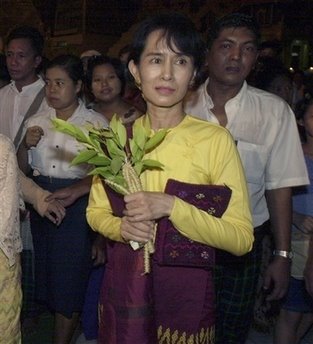


 Posts


