News & Articles on Burma
Monday 6 June, 2011
-------------------------------------------------------------
NLD Youth to Provide Security for Suu Kyi
McCain Cold to Warmer U.S.-Burma Ties
Fears over Myanmar’s $8bn development plans
Burma must allow political space for Aung San Suu Kyi
Small Statue a Big Victory for Arakanese
Two Killed, 4 Wounded in Three Pagodas Attack
Trial of ex-army captain nears end
Politician-led prisoner demo blocked
Burma-China alliance threatens ASEAN unity
Chinese plane maker to sell 2 jets to Myanmar
----------------------------------------------
NLD Youth to Provide Security for Suu Kyi
By LIN THANT Monday, June 6, 2011
Youth members of the National League for Democracy (NLD) and pro-democracy activists have called on the general public in Burma to pay particular attention to Aung San Suu Kyi's personal security during her forthcoming trips outside Rangoon.
“In the interests of security, Suu Kyi will let the government know about her trip and provide travel dates, places and times,” said Win Tin, a leading member of the NLD. “However, that does not mean that she is asking for permission to travel. She is not.”
Win Tin added that she will likely begin her provincial tour on June 22, just three days after her 66th birthday.
Although no itinerary has yet been announced, sources in the former capital said security for Suu Kyi's trips will be taken care of by members of the the NLD youth network, who intend to recruit local supporters to help provide security detail for Suu Kyi, Burma's pro-democracy icon and a former Nobel Peace prize winner.
The NLD Youth Network was formed earlier this year at Suu Kyi's request.
“We can only guard her with manpower, because we don't have any authority to act officially,” Phyo Min Thein, a leader of the Network, told The Irrawaddy.
Yar Zar, an NLD youth leader, said that although NLD youth members and the Network will take care of Suu Kyi's security voluntarily, they are yet to be systematically trained for security-related situations.
Even though NLD members are worried about Suu Kyi, government authorities must be held responsible for her safety, NLD sources said.
John McCain, the US senator who visited Burma last week, told reporters on Friday that the Burmese government should be responsible for security during Suu Kyi's trips. McCain echoed comments by Joseph Y. Yun, the US's Deputy Assistant Secretary of State for East Asian and Pacific Affairs, who visited Burma in May.
Fears for Suu Kyi's security are high after she was threatened and stopped by local authorities during her campaign trips in 1989 and 1996. In May 2003, when she was in Depayin in Sagaing Division, her entourage was attacked by up to 5,000 well-armed thugs allegedly backed by the military regime. At least 70 NLD supporters were killed in what has become known as the Depayin Massacre.
Thakin Chan Htun, a Burmese veteran politician, said he does not want to stop Suu Kyi from making trips, but she should be cautious about her security. “Any disturbance during Suu Kyi's tour must be regarded as an act aimed at destroying democracy,” he said. “In any case, she should travel during the daytime and not move from place to place after 4 pm.”
Whenever Burma's military authorities tried to repress political activists in the past, they were reported to have used not only armed security forces but also civilian thugs known as Swan Arr Shin.
After the new government led by President Thein Sein was sworn in, Swan Arr Shin was reportedly re-consolidated and formed as the People's Security Force (PSF). Aung Thaung, a secretary of the ruling Union Solidarity and Development Party, is said to lead the PSF.
PSF members will reportedly wear green military uniforms and hold shields and batons if they are deployed.
A foreign embassy staffer in Rangoon said that several members of the diplomatic corps had suggested it would be safer if Rangoon-based diplomats and journalists joined Suu Kyi on the tour to the provinces. http://www.irrawaddy.org/article.php?art_id=21438
---------------------------------------------------
McCain Cold to Warmer U.S.-Burma Ties
By Marwaan Macan-Markar
BANGKOK, Jun 6, 2011 (IPS) - If Burma’s quasi-civilian government was hoping for warmer ties with the U.S. government, Senator John McCain’s visit to this South-east Asian nation has placed such hopes on ice.
By the end of his three-day visit to the country, also known as Myanmar, the U.S. foreign policy heavyweight dropped hints he was giving Burma a failing grade over its supposed reforms toward democracy.
"Without concrete actions by this government that signal a deeper commitment towards democratic change, there should be no easing or lifting of sanctions," the leading member of the Republican Party, who lost to President Barack Obama in the 2008 presidential race, told an audience in the former Burmese capital Rangoon.
McCain’s warning on the last day of his visit to Burma from Jun.1-3, targeted the government of President Thein Sein, a retired general whose administration took power in March following a flawed general election last November that ended half a century’s rule by a military junta.
McCain’s trip to Burma followed a visit last month by senior U.S. diplomat Joseph Yun and comes ahead of the Senate hearings to confirm Derek Mitchell, poised to become the first U.S. special envoy to Burma.
In 2009, Assistant Secretary of State for East Asia Kurt Campbell visited Burma, the highest-ranking U.S. diplomat to do so in 14 years, helping set the tone of the Obama administration’s Burma policy. That policy offers the carrot of greater engagement while wielding the stick of economic sanctions.
Before that policy, U.S. administrations had been steadfast in punishing the resource-rich but impoverished nation through a raft of sanctions. Since the mid-1990s, they included bans on imports of Burmese products into the U.S., prohibiting new American investments in Burma, and stopping the transfer of funds between the two countries.
Midway through McCain’s visit on Jun. 2, his fellow lawmakers at the House of Representatives in Washington D.C. held a hearing and echoed his views on Burma. "This engagement policy appears to have borne little fruit," said Republican Congresswoman Ileana Ros-Lehtinen, chair of the House Committee on Foreign Affairs, according to a story datelined Washington in The Irrawaddy, a current affairs website run by Burmese journalists in exile.
"Since its adoption, we have seen an American citizen imprisoned and tortured, Burmese generals engaged in possible nuclear proliferation with North Korea, a flawed election last year, and the continued imprisonment of over 2,000 political prisoners with only one, Aung San Suu Kyi, released," she added, referring to the Nobel Peace laureate and pro-democracy leader who was freed from seven years of house arrest last November.
But the message McCain takes home to Washington is not all the Obama administration has to grapple with. Another challenge comes from Tomas Ojea Quintana, U.N. Special Rapporteur on Human Rights in Burma, who wants a commission of inquiry (CoI) to investigate gross human rights violations committed by Burmese troops along the country’s eastern and northern borders which are home to ethnic minorities.
"The government must undertake an independent and impartial inquiry of human rights violations," the Argentine lawyer said in Bangkok recently, following a visit to Thailand to meet Burma’s ethnic minorities who have fled their country’s decades-long conflict.
"Systematic militarisation contributes to human rights abuses," added Quintana, who made his first call for a CoI in March 2009, a move that is now supported by 16 countries. "These abuses include land confiscation, forced labour, internal displacement, extrajudicial killings and sexual violence."
Among the recent victims are women from Burma’s ethnic Shan minority, whose accounts of suffering were shared with the U.N. envoy by the Shan Women’s Action Network (SWAN), a non-governmental group monitoring human rights violations in eastern Burma.
"Three Shan women were gang raped by soldiers from a Burmese light infantry brigade on Mar. 21," revealed Charm Tong, a SWAN spokeswoman.
But while such disturbing accounts may strengthen the case for sanctions, critics of the measures imposed by the U.S. and European governments offer an equally disturbing parallel. The combination of economic sanctions and pressure to limit international humanitarian assistance to Burma has resulted in tens of thousands of children under five years dying from "preventable diseases," including 1, they say.
The U.N. says Burma has the second worst child mortality rate in Asia, following war-ravaged Afghanistan. For every 1,000 babies born, an estimated 66 die before reaching the age of five, or one in every 15 children.
But humanitarian workers in Burma complain that such deaths – one estimate puts it at over 70,000 a year – have not triggered a rise in aid from the West. They point out that the country gets between five to six U.S. dollars per capita of aid, just one-tenth the amount Western donors spend per citizen in neighbouring and equally repressive Laos.
Western sanctions "have been incredibly counter-productive," says Thant Myint-U, a respected Burmese historian. "The argument was that providing aid through the government would only strengthen repressive structures. But in thinking of the future, we need to rethink this equation." (END) http://ipsnews.net/news.asp?idnews=55932
-----------------------------------------------
Peninsula News Paper
Fears over Myanmar’s $8bn development plans
Monday, 06 June 2011 03:06
YANGON: Mechanical diggers on the pristine beaches near the sleepy fishing town of Dawei are a sign that change is coming to the remote corner of Myanmar -- but not necessarily for the better.
The area has been chosen for a vast port complex that is the latest example of how foreign investment from Asian allies like China and Thailand is transforming the military-dominated nation despite Western sanctions.
Some believe the 10-year, $8bn Dawei Development Project, led by a Thai industrial giant, could invigorate the country’s impoverished economy and revolutionise regional trade.
But hopes that the planned deep-sea port and giant industrial estate will inject much-needed investment have been tempered by fears about a potential influx of “dirty” industry and concerns that it will displace thousands.
“Myanmar still ignores environmental issues”, said Tanit Sorat of the Federation of Thai Industries, citing lack of regulation as a key advantage of Dawei.
“Dawei is the world’s solution for industry that affects the environment, heavy industry and the industry that is banned in other countries,” he said, adding the entire project could be worth $60 billion dollars or more.
A local aid worker and campaigner, who estimates 23,000 people will have to move, said the first phase of construction was already altering the quiet tropical town of his childhood.
“The shores are so beautiful, with their long white sands, but in a couple of years it will all be gone,” said the activist.
He said that because of a lack of regulation and entrenched cronyism in Myanmar the development is likely to be “very corrupt”, while soaring property prices are already putting pressure on local people.“The government does not consider the people, it just does what it does,” he said.
David Mathieson of Human Rights Watch said there were few details available on Dawei’s potential impact on communities, but previous experience of large scale developments was of misery for local people.
“Human rights abuses always accompany these projects, including displacement, land confiscation, forced labour and abuses related to increased military/security presence,” he said.
Rights abuses
Such abuses have already been linked to two of Myanmar’s major energy projects currently under construction -- pipelines to transport gas from the coast of western Rakhine state and oil from the Middle East and Africa across the country to China.
Dawei, on the Andaman coast facing the Indian Ocean, has long been a strategic prize -- it was one of Britain’s first colonial conquests in the country in the 19th Century. Somchet Thinaphong, who is managing the project for its developer, Italthai Group, said the port project could create up to 100,000 jobs.
“It will lift employment and education very much -- think about Thailand 30 years ago,” he said, adding that the Myanmar government sees the project as a link to the outside world.
Economic mismanagement and cronyism during half a century of army rule has left the country, also known as Burma, isolated and impoverished, despite abundant natural resources.
The handover to a nominally-civilian government, following last November’s controversial election, has raised tentative hopes among some for change.
But Sean Turnell, Myanmar economic expert at Macquarie University in Sydney, was sceptical over how much of the investment in the port project would trickle down to local people.
“The idea that there will be hundreds of thousands of jobs is absurd,” he said.
Indeed, the main beneficiary of Dawei looks likely to be Thailand.
Goods from Thai exporters are currently shipped from the Gulf of Thailand, around Singapore and through the Malacca Straits before heading west, but it is hoped a road and rail link to Dawei could end the costly detour.
Dawei would also provide a “short cut” for crude oil coming into Southeast Asia from the Middle East, according to an Italthai presentation, which also envisaged a train link to Kunming in southern China.
Plans for the 250 sq km site include a steel mill, fertiliser plant, a coal-fired power station and oil refinery -- potential boons for Myanmar’s energy-hungry neighbour.
It comes as resistance to large industrial estates grows in Thailand -- as seen in an ultimately unsuccessful but high profile case against the vast Map Ta Phut development on its eastern seaboard last year. AFP http://www.thepeninsulaqatar.com/s.-asia/philippines/154792-fears-over-myanmars-8bn-development-plans.html
-----------------------------------------------
Burma must allow political space for Aung San Suu Kyi
By Zin Linn Jun 06, 2011 12:15AM UTC
0 Comments and 7 Reactions
United States Senator John McCain warned Friday that Burma (Myanmar) could face a Middle East-style revolution if the new military-backed government fails to make serious democratic change and improve human rights.
McCain was in Burma to evaluate growth on transformation since a nominal civilian government took over from a military junta in March. Rights groups and critics say little has changed as the new government is merely a proxy for the military that has controlled power for decades.
However, McCain acknowledged that the new Thein Sein government has represented some change from the past, and one illustration of this change was their willingness to allow him to return to Burma after 15 years worth of attempts to do so on his part were rejected. But “without concrete actions by this government that signal a deeper commitment to democratic change, there should be no easing or lifting of sanctions,” Senator John McCain said.
Speaking to reporters at the end of a three-day visit, the Republican from Arizona said both countries want better relations, but that Burma’s government needs to take more steps toward democracy — including “the unconditional release of all prisoners of conscience.”
He also underscores the important of its human rights record in his press release. “But as I told the government leaders I met yesterday, any improvement in relations will need to be built not on warm words, but on concrete actions. I and other U.S. leaders, including in Congress, will evaluate this new government’s commitment to real democratic change, and thus the willingness of the United States to make reciprocal changes, based on several tangible actions, as called for by the United Nations Human Rights Council in its Resolution of March 18, 2011,” the Republican from Arizona said.
The release of 2,000 political prisoners has been a top demand of Western nations that criticize Burma’s human rights record and are maintaining long-standing political and economic sanctions against military-backed government until it carries out reforms. McCain called on Burma to let the International Committee of the Red Cross (ICRC) “unfettered” access to all prisoners in the country.
The organization has been unable to visit inmates here since the former military junta halted access in 2006. The ICRC, whose offices were ordered to be closed in 2006, released a press statement on this issue for the first time, 29 June 2007. The statement denounced the military regime for committing human rights violations against detainees and civilians. ”The repeated abuses committed against men, women and children living along the Thai-Myanmar border violate many provisions of international humanitarian law,” said Mr. Jakob Kellenberger, ICRC president. ICRC also demanded that the Burmese government take urgent action to end its abuses: “We urged the government of Myanmar to put a stop to all violations of international humanitarian law and to ensure that they do not recur”.
Actually, political prisoners have been unilaterally thrown into jail under unfair laws and trials in the absence of their lawyers. The government’s penal code allows giving excessive sentences against political activists. For instance, article 5 (j) of the penal code allows authorities to impose 7 to 20 year prison terms on anyone who joined in peaceful protest or showing different opinion against the regime. Another article 505 provides an indefinite prison term for criticizing the authorities’ policies or behaviors.
Besides, the regime time and again prosecuted political prisoners under the Emergency Provision Act, Law to Safeguard the State against the Dangers of Those Desiring to Cause Subversive Acts, Television and Video Act, Unlawful Association Act, Electronic Transactions Law, and Law Relating to the Forming of Organizations. The worst is that the regime usually extended prison sentences under the Law Safeguarding the State from the Dangers of Subversive Elements.
According to international legal standard, all 2,000 political prisoners have committed no crime at all. So, releasing of political prisoners should be the first and foremost of the political reform. Subsequently, the above mentioned undemocratic laws must be done away with as a necessity for change.
According to critics and watchdogs, the 7 November election, won by the military-backed political proxies, was flawed by widespread complaints of vote rigging and the exclusion of the party led by Aung San Suu Kyi, who was released from house arrest shortly after the polls.
Remarkably, McCain urged the Thein Sein government to guarantee the security of Suu Kyi, who planned to carry out a tour around the country that will be a key test of her freedom following her release. In 2003, her convoy on a similar tour was attacked in an ambush apparently organized by a regime frightened by her popularity and she was arrested.
If Thein Sein government has capability and readiness to go along the political reform path, it must ensure the existence of the National League for Democracy and the essential role of Aung San Suu Kyi. To allow political space for Suu Kyi and starting a dialogue with her will be the concrete steps that needn’t take a lot of time for the new government.
http://asiancorrespondent.com/56696/burma-must-allow-political-space-for-aung-san-suu-kyi/
-------------------------------------------
Small Statue a Big Victory for Arakanese
By KHIN OO THAR and BA KAUNG Monday, June 6, 2011
The Arakan ethnic minority in western Burma scored a big moral victory over the new government by successfully preventing national officials from taking an ancient gold Buddha image recently excavated in their region to Naypyidaw.
On May 30, local authorities discovered nearly 40 Buddha statues from an old temple in the ancient city of Mrauk U in Arakan State, one of which turned out to be made of gold and weighing 6.52 kg. A local archaeologist said that the statue dates back to the eighth century A.D.
When government officials prepared to bring the golden statue to Naypyidaw, hundreds of locals came to the monastery where the statue was kept and protested against its transfer. The protests only subsided after the authorities agreed that the statue will not be moved.
Although the incident seemed minor, it reminded the Arakanese people of their loss of sovereignty to the Burmese majority over two centuries ago, when the Burmese king moved their giant Maha Muni Buddha image to his capital in central Burma as a war trophy.
The Maha Muni image is now a major religious landmark in Mandalay.
Following the protests on Saturday, the regional minister for cultural affairs said that the golden statue will be worshiped in the town, and many locals welcomed the news as a rare victory over the national government.
“It is not important whether it is gold or not. This is a win for us.” said a retired school teacher in the town. “This is Arakanese heritage, which we will defend with our life.”
She said that the Burmese authorities often took away local historical artifacts, saying they intended to study the items, but they were never returned.
Arakan people often express resentment of Burman majority rule and Arakan activists have often protested that their people are not benefiting from the billion-dollar oil and natural gas projects along the Arakan coast.
Dr. Aye Maung, the leader of an Arakan opposition party and MP in the national Parliament, said that just as the British returned Burma's royal throne to its former colony after the country's independence, so also the return of the Maha Muni image to Arakan State will be a good token for Burma's national reconciliation process.
Although the return of the Burmese royal throne was seen by some to be a British attempt to appease former Burmese dictator Ne Win, Aye Maung said, “The British did it because they have democracy. But with our country ruled by people with different ideas, it will be a long time before we get back our Maha Muni.” http://irrawaddy.org/article.php?art_id=21432
--------------------------------------------
Two Killed, 4 Wounded in Three Pagodas Attack
By LAWI WENG Monday, June 6, 2011
One Burmese military intelligence officer and a nine-year-old girl were killed and four others were wounded when an unknown armed group attacked the Military Affairs Security (MAS) office at Three Pagodas Pass, close to the Thai-Burmese border, at around 3 pm on Sunday.
Eyewitnesses said that about seven people wearing masks threw hand grenades inside the office and the Buddhist assembly hall where Burmese government troops were resting.
Kyaw Kyaw Aung, an officer with the MAS, formerly known as the military intelligence service, was killed from the bomb blast. The girl, who has not been named, was shot by a spray of bullets from the attackers as she was walking in the street nearby.
Also wounded was Win Soe, an officer with the MAS, and Oung Chan, a member of the New Mon State Party (NMSP) who was visiting the office at the time of the attack. Two motorbike taxi drivers were also wounded in the attack.
“The attackers must have thought the NMSP member was a member of Military Intelligence because he was wearing a camouflage shirt. He was shot in the leg and shoulder while he was running out of the office,” said an eyewitness.
Witnesses said the group drove motorbikes into the town at 3:45 pm on the road from Taung Wine, an area predominantly inhabited by ethnic Karens.
One eyewitness said, “Seven people pulled up on their motorbikes about 10 feet in front of me. They took out their guns and began spraying the office.
“After that, they threw grenades in,” he said. “Then a car pulled up, they got in, and drove away.”
No witness or official said they could identify the gang, and no one has claimed responsibility for the attack. However, several residents in Three Pagodas Pass who asked to remain anonymous said they suspected that the attackers were members of DKBA Brigade 5, which is led by Brig-Gen Saw Lah Pwe.
According to one eyewitness, the attackers seemed very familiar with the geography of the town and spoke in Karen when they opened fire on the Military Intelligence office.
Sources said the Burmese authorities in Three Pagodas Pass have tightened security since last week after they received information that the Democratic Karen Buddhist Army (DKBA) had plans to attack the town.
However, at the time when the armed gang attacked, the security guards were in the process of rotating, and the office front was temporarily unguarded, said sources.
“I think the attackers had their own people in the town as they must have known the security was rotating,” said one eyewitness.
The town was attacked by the DKBA on Nov. 8, 2010, one day after Burma held a general election.
The area around Three Pagodas Pass has been a common ground for conflict between the government troops and Karen rebels in recent years.
The Burmese army has recently deployed three battalions to Three Pagodas Pass: Light Infantry Battalions No. 373 and 563, both under the control of the Western Command in Arakan State, and Infantry Battalion 283, which is under the control of the Regional Southeast Command in Moulmein.
There are three ethnic armed groups based near Three Pagodas Pass: the NMSP, the Karen National Union, and the DKBA.
Meanwhile, markets and gold shops in the town were closed on Monday, and hundreds of migrants did not go to work as much of the local population avoid the town center for fear of further attacks, sources said.
About 4,000 Burmese migrant workers live in Three Pagodas Pass, but go to work in textile factories or shoe factories on the Thai side of the border each day.
“The security in the town is still unstable,” said the father of a migrant worker. “Some people believe that members of the armed group are still lurking around the town, planning another attack.” http://irrawaddy.org/article.php?art_id=21434
---------------------------------------
Trial of ex-army captain nears end
By NAW NOREEN
Published: 6 June 2011
The separate compound outside of the main wall of Insein prison is where political trials normally take place (Google Earth)
Another witness has testified for the prosecution in the trial of a former army captain arrested after police allegedly found a document in his email inbox entitled ‘National Reconciliation’.
Nay Myo Zin’s family was barred from the closed court inside Rangoon’s Insein prison, where judges on Thursday last week heard a statement from deputy-police commander Swe Linn, who conducted the search at his house in early April that turned up the file.
Only three of the nine witnesses still have to testify, with the next hearing appointed for 9 June. He is being charged with the Electronics Act, although no detail has been given on the content of the document.
His mother, Khin Thi, said last month that the document, allegedly the only thing intelligence had discovered, was destined for a friend. Nay Myo Zin’s lawyer, Hla Myo Myint, said the defence team had questioned the legality of the prosecutors’ statements, as well as their demands that the 36-year-old had over his email password.
Shortly after leaving the army in 2005, Nay Myo Zin turned his attention to charity work, and volunteered for a Rangoon-based blood donor group run by a member of the opposition National League for Democracy (NLD).
His mother earlier told DVB that he had left the army on his own volition because “he didn’t enjoy it there… He is a morally strong kid who is very devoted to charity work but [has] no involvement in politics”.
If convicted under the Electronics Act, which is often used to imprison opposition activists and which can carry a 20-year jail term, Nay Myo Zin will become the first so-called political prisoner since the new Burmese government came to power in March.
His family told DVB several weeks after his arrest that they feared he had been tortured during interrogation, although he reportedly appeared healthy when they were allowed access to him following Thursday’s hearing.
http://www.dvb.no/news/trial-of-ex-army-captain-nears-end/15982
----------------------------------
Politician-led prisoner demo blocked
By SHWE AUNG
Published: 6 June 2011
Prisoners seen leaving Insein jail during the recent amnesty in which only 55 jailed activists and politicians were freed (Reuters)
Coordinated protests for the release of political prisoners in Burma were blocked by authorities last week after they claimed organisers had failed to seek approval from the government.
Three separate demonstrations were due to be held on 5 June in Rangoon led by Nay Myo Wei, general secretary of the Peace and Diversity Party. But the November 2010 election hopeful was summoned to a local police station three days before and told the event would not be allowed.
The Burmese government tightly monitors any political organising, but Nay Myo Wei claims that police acknowledged protests were a “fundamental right”, as enshrined in the Burmese constitution. Their reasoning, however, was that amendments needed to be done to the new government and parliaments before such rights were brought into practice.
Several members of other parties, including the Democratic Party Myanmar and the National Democratic Force, signed the original letter requesting permission to stage the protests. The parties would now raise the ban in parliament.
The issue of the nearly 2,100 political prisoners behind bars remains an albatross around the neck of the Burmese government, whose amnesty last month was criticised after it commuted the sentences of only 55 jailed activists and politicians.
It remains unclear whether the government will follow through on its pledge to soften its stance on protests – during the 2007 monk-led uprising, gatherings of more than five people in public places were banned, a rule that is yet to be formally rescinded.
http://www.dvb.no/news/politician-led-prisoner-demo-blocked/15991
--------------------------------------------
Burma-China alliance threatens ASEAN unity
Burma is asking China to back its bid for chairmanship of partnership in 2014
By Jonathan Manthorpe, Vancouver Sun June 6, 2011 1:07 AM
Vancouver Sun
Burma has marked its unconvincing transition from military regime to civilian government by delivering a couple of slaps round the face to its nine long-suffering partners in the Association of Southeast Asian Nations (ASEAN).
The actions by the Burmese regime raise serious questions over whether ASEAN will be able to achieve its objective of creating a fully integrated community by 2015 with a high degree of economic unification and common policies on key regional and global issues.
Burma's maverick activities come at a time when ASEAN is not only facing another internal friction with the Thailand-Cambodia border conflict, but is under pressure from China, which appears to be pursuing a divide-and-conquer strategy to disrupt association unity.
Burma's general-turned-President Thein Sein managed the one-two punch while leading a large delegation of ministers and officials from the new regime to Beijing last week.
First he announced that his government fully backs China in its long-running dispute with ASEAN members Vietnam, Philippines, Brunei and Malaysia over the ownership of clusters of islands and reefs in the South China Sea.
This craven piece of sycophancy was not only a gross act of disloyalty to Thein Sein's fellow ASEAN members, it flies in the face of a 2002 agreement between the association and China on how to manage their dispute.
Then Thein Sein added a further insult by asking China's President Hu Jintao to assist Burma to get the 2014 chairmanship of ASEAN.
The implication is that Thein Sein wants Beijing to use its regional economic and political muscle to press ASEAN to guarantee Burma the host status that has only been pencilled in at the moment.
Thein Sein's unequivocal siding with China will undoubtedly reinforce the qualms and misgivings several ASEAN leaders have about whether Burma has the political maturity and administrative capacity to play the roll of association figurehead in 2014.
ASEAN faced down much international criticism in 1997 when it admitted Burma, which its regime calls Myanmar, in a purposeful piece of intimidation aimed at the country's many minority groups, suggesting they have a junior and servile status to the majority Burmans.
The military regime was under multiple sanctions and embargoes for its appalling human rights record, and political suppression symbolized by the detention of opposition leader Aung San Suu Kyi.
But ASEAN leaders maintained the "constructive engagement" with the junta was the way forward.
It was not successful. Late last year elections were held in Burma on the basis of a new constitution that leaves all ultimate power in the hands of the military, which also has control of key ministries and an allocated block of seats in parliament.
Very many of the most senior positions, such as that of President Thein Sein, are held by military men who hung up their uniforms to join the "civilian" government.
Thein Sein took up office at the end of March.
Beijing has been lavishing attention on Burma in recent years to the extent that the country is often called an "economic colony" of China.
As well as investing heavily in Burma's abundant natural resources, China sees its southeast Asian neighbour as an important strategic partner in foiling what Beijing sees as efforts by the United States to contain China's growing regional influence.
China is in the process of building a pipeline from Burma's western coast in the Bay of Bengal to China's southwestern Yunnan province. This will allow China to import oil from the Middle East without tankers having to pass through the Malacca Strait choke point between Singapore and Indonesia.
Burma's expressions of loyalty to Beijing come as China is acting more aggressively toward other claimants to sovereignty over areas of the South China Sea than it has in years.
This coincides with evidence from ongoing exploration that there are much greater submarine oil and gas reserves than was previously suspected.
There was a serious incident early in March when the Philippine oil exploration ship, MV Veritas Voyager, was harassed by Chinese Navy patrol boats at Reed Bank off the coast of the Philippines.
Then, a week ago, Chinese patrol boats cut the sonar cable of an exploration ship, the Binh Minh 2, working for the state-owned Petro Vietnam company.
The encounter took place 120 nautical miles off the central Vietnamese coast and 600 kilometres south of China's Hainan island.
Beijing has sent curt warnings to both the Hanoi and Manila governments not to challenge China's maritime territorial claims, which are based on the view of imperial Chinese emperors hundreds of years ago that all surrounding countries were vassal states.
jmanthorpe@vancouversun.com
© Copyright (c) The Vancouver Sun
Read more: http://www.vancouversun.com/news/Burma+China+alliance+threatens+ASEAN+unity/4898900/story.html#ixzz1OUv1YBzt
------------------------------------------------
Chinese plane maker to sell 2 jets to Myanmar
(Xinhua) Updated: 2011-06-06 16:10
BEIJING - The Commercial Aircraft Corporation of China (COMAC), a state-owned aircraft manufacturer, has signed an agreement to sell two ARJ21-700 aircraft to the Myanmar Airways, a statement from the country's state-assets supervisor said.
The delivery time for the two models were also not disclosed, but the statement said the signing of the agreement has marked big progress made by COMAC in promoting the ARJ21 aircraft to the overseas markets.
The statement added the agreement has paved the way for the long-term cooperation between COMAC and Myanmar Airways in the future.
The ARJ21 is China's first homegrown commercial regional aircraft, which earlier made an international debut at the Zhuhai air show in November last year.
The 78- to 90-seat craft has a maximum flight range of 3,700 kilometers and maximum altitude of 11,900 meters. The statement said COMAC plans to deliver its first ARJ21-700 regional aircraft to its first client, the Chengdu Airlines. http://www.chinadaily.com.cn/bizchina/2011-06/06/content_12645410.htm
__._,_.___
Tuesday, June 7, 2011
News & Articles on Burma-Monday 6 June, 2011


Monday, June 6, 2011
China shops for Latin American oil, food, minerals
By IAN JAMES, Associated Press Ian James, Associated Press – 1 hr 1 min ago
CARACAS, Venezuela – Latin America is blessed with a wealth of natural resources such as oil, copper and soy, and seeks investment and loans to capitalize on them. China needs the commodities to keep its economy growing and has about $3 trillion in reserves to burn.
Those interests have come together in a burgeoning and unorthodox partnership, as China lends and invests tens of billions of dollars in countries around Latin America in return for a guaranteed flow of commodities, particularly oil.
Recent deals have made China a key financier to the governments of Venezuela and Argentina. At the same time, Chinese companies have secured a decade's worth of oil from Venezuela and Brazil, and steady supplies of wheat, soybeans and natural gas from Argentina.
China is breaking new ground by aggressively locking down commodities around Latin America through large loans, investments and other financial arrangements, said Orville Schell, director of the Center on U.S.-China Relations at the Asia Society in New York.
"I don't know of any other government which has done this sort of securing of rights for commodities and natural resources so systematically around the Third World as China, and they've used a whole host of new financial instruments to do this," Schell said.
"China's been very, very prolific in spreading its investments around Africa and Latin America, even though the terms aren't ideal."
Ernesto Fernandez Taboada, director of the Argentine-Chinese Chamber of Production, Industry and Commerce, said China is simply making sure it has the resources it needs to continue growing its economy, which, by some accounts, is projected to surpass the U.S.'s by 2020.
"For China, this is a strategic, long-term investment," Fernandez Taboada said. "They're thinking in the future, not just in the moment. These oil investments, for example, are for 15 to 20 years."
Some of the largest investments have gone to Brazil and Argentina, but China has extended even bigger loans to Venezuela, agreeing to provide more than $32 billion to President Hugo Chavez's government.
Venezuela will pay its debt in oil, and in increasing amounts of it during the next decade. The infusion of cash has swiftly made China Venezuela's biggest foreign lender, enabling Chavez to boost spending ahead of next year's presidential election.
"Viva China!" Chavez exclaimed during a televised meeting with business leaders from Beijing, thanking them for helping set up mobile phone factories and build railways and public housing in Venezuela. He gushed: "I'm in love with China."
The relationship is driven in part by Chavez's eagerness to form alliances that exclude the U.S. But it's also good business for Chinese companies: Venezuela says it has been exporting to China about 460,000 barrels a day, about 20 percent of its oil exports, according to official figures. It hopes to double that soon.
"Venezuela has what we need," said Chen Ping, political counselor at the Chinese Embassy in Caracas. "And we also have what they need, for example technology ... Therefore we can help each other mutually."
The loans are typically secured against revenues from oil sales to Chinese companies, purportedly at market prices, though there could be discounts in some cases, said Erica Downs, an expert at the Brookings Institution think tank in Washington. She wrote a March report on the China Development Bank's energy deals worldwide.
In many cases, financing is being channeled through the state-controlled China Development Bank, which has worked with Chinese companies to lock in commodity supplies.
Downs said such loans give Chinese state oil companies an edge by allowing them special access to local projects. In some cases, she said, such as in Venezuela and Argentina, the loans appear tied to hiring Chinese companies that carry out public works projects for the borrowing government.
China's financing has also been unique, she said, in that in recent years "virtually no other financial institutions were willing to lend such large amounts of capital for such long terms."
Countries such as Venezuela and Ecuador would otherwise have few options for obtaining such large lines of credit, in part due to their presidents' hostility toward traditional lenders such as the World Bank and the International Monetary Fund, Downs said.
The China Development Bank has become a convenient "lender of last resort," Downs said, and Venezuela's government, in fact, has become the bank's biggest foreign borrower.
In Ecuador, the Chinese oil company PetroChina agreed in 2009 to lend $1 billion to state company PetroEcuador in exchange for oil deliveries. The China Development Bank also agreed to lend $1 billion last year to Ecuador's government, to be repaid through oil shipments.
The Chinese stake appears set to grow exponentially.
Direct Chinese investments totaled more than $15 billion in Latin America and the Caribbean last year — 9 percent of the region's foreign direct investment, according to a May report by the U.N. Economic Commission for Latin America and the Caribbean.
The report said that while the U.S. is still Latin America's largest investment source, China has climbed to third place, behind the Netherlands.
In Argentina, Chinese companies have even replaced U.S. and British corporations in controlling lucrative natural gas and oil resources.
Last year, the state-owned Chinese oil company CNOOC entered into a 50-50 joint venture with Bridas Energy Holdings Ltd., a family owned Argentine company. The joint venture then bought out British company BP's shares in Argentina-based Pan American Energy, giving it 18 percent of Argentina's oil and natural gas production. This year, the venture also purchased U.S.-based Exxon Mobil Corp.'s interests in Argentina, Paraguay and Uruguay, including a refinery and more than 700 service stations.
"Clearly, the U.S. remains the significant actor in Latin America and will remain so for the foreseeable future," said Eric Farnsworth, vice president of the Council of the Americas, a U.S.-based business group. "But China's a huge part of the scene now. It was commodities exports to China over the last five years that allowed Latin America to weather the economic turmoil."
One Chinese company not only locked in a long-term supply of commodities, but also set a more stable price for years to come and circumvented market rates, which have soared in part because of Chinese demand.
China and Chile created a $2 billion sales, finance and investment joint venture in 2005 that guaranteed China 836,250 metric tons of copper over 15 years, at rates partially fixed on what was then the market price of $2.07 a pound. Chile's state-owned Codelco mining company had to put up its entire 49 percent interest in the venture as collateral, and give China Minmetals Corp. an option to purchase 100 percent of one of the world's most promising copper mines.
Chileans criticized the deal as a threat to their patrimony as they became aware of its details and copper prices soared. Both sides backed off the Chinese purchase option in 2008 to fend off the criticism, but with copper now trading above $4 a pound, Chile's top client is still getting thousands of tons of copper at far below market prices.
China also controls 50 percent of Argentina's largest oil field, Cerro Dragon, and all the oil and gas reserves in the far southern Argentine province of Santa Cruz over the next 40 years, deals that became anti-government campaign issues in provincial elections.
During recent visits to Brazil, Schell said he has heard wariness from businesspeople about a system in which "Brazil sends their natural resources and China sends their flip-flops and consumer goods."
Rubens Barbosa, Brazilian ambassador to the U.S. from 1999 to 2004 and now a business consultant, said Brazilian officials have complained that cheap Chinese exports have destroyed domestic industries such as shoe and textile manufacturers. Brazil this year imposed antidumping tariffs on imports of some Chinese fibers within months of China becoming Brazil's biggest trading partner.
"With trade, we have a problem because the aggressiveness of Chinese companies is very strong," Barbosa said. "But the government still has a lot of interest in these relations with China. China is now the principal partner of Brazil."
China's commercial ties with Brazil continue to grow. About 14 percent of the South American country's oil production went to China in 2009, and that portion is expected to expand because Brazilian oil company Petrobras signed a 10-year deal with Chinese-owned Unipec Asia to export 150,000 barrels of oil a day in the first year. The deal calls for exports of 200,000 barrels a day for the next nine years. At the same time, Petrobras secured a $10 billion, 10-year loan from the China Development Bank.
Petrobras says the deals were separate and that the oil is not being used to pay back the loan. Still, the agreements ensure Chinese access to Brazil's booming oil production, which promises to skyrocket after vast offshore reserves discovered in 2008 come online.
China has also been active across Argentina. The China Development Bank has offered a $2.6 billion, 10-year loan to revive a freight train system connecting Buenos Aires to much of Argentina's central heartland. In the country's Rio Negro province, the Metallurgical Corporation of China has invested $80 million to reactivate an iron ore mine, and China's Beidahuang Group company has promised $1.4 billion in irrigation infrastructure in exchange for a 20-year contract to grow corn, wheat, soy and dairy on otherwise dry land for Chinese consumers.
And in remote southern Tierra del Fuego, near the tip of South America, Chinese companies are investing $1 billion, not only to produce fertilizer, but to build an energy plant, for which Argentina has promised China natural gas for 25 years.
"Two weeks ago, the Chinese commerce minister visited us with 60 business executives, and they showed great interest in investing in other sectors," Fernandez Taboada said. "There is a fundamental expansion of China in Latin America. In all the countries, from Mexico on south."
According to Schell, China is just getting started.
"This is a real tipping point moment, of which the Chinese investments in commodities and extractive resources of Latin America is just the opening bell," he said. "Who's got the money? And it's not the United States any longer. It's China. This is the next great pool of (foreign investment) that the world is going to reckon with in myriad ways."
____
Associated Press writers Michael Warren in Buenos Aires, Argentina, Bradley Brooks in Sao Paulo, Jack Chang in Mexico City and Jorge Rueda in Caracas contributed to this report.
Sunday, June 5, 2011
BURMA RELATED NEWS - JUNE 04, 2011
BURMA RELATED NEWS - JUNE 04, 2011
UPI - McCain tells Myanmar to make changes
Gulf Today - McCain backs Myanmar curbs
Bangkok Post - Minor quakes hit Burma, Laos
Straits Times - Jury still out on Myanmar regime change
Xinhua - China's COMAC signs agreement to sell two ARJ21 planes to Myanmar Airways
Xinhua - Senior Chinese official attends China-Myanmar "Brightness Action" program
Amnesty International - Myanmar prisoners kept in ‘dog cells’ after protests
The Hill - Pelosi calls for immediate release of Ai Weiwei
BWDF - Burma Conflict Situation Report
The Daily Star, Bangladesh - Business Bangladesh looks to better trade with Myanmar
McCain tells Myanmar to make changes
Published: June 3, 2011 at 11:12 AM
YANGON, Myanmar, June 3 (UPI) -- U.S. Sen. John McCain, R-Ariz., says Myanmar's new military-backed government could face the kind of revolution sweeping through Arab nations.
McCain said unless Myanmar, formerly Burma, is willing to make pro-democracy changes peacefully, it could be wracked by the kind of unrest leaders in Egypt, Libya and elsewhere in the Middle East are experiencing, CNN reported Friday.
"The winds of change are now blowing, and they will not be confined to the Arab world," McCain told reporters in the former capital, Yangon, formerly Rangoon. "Governments that shun evolutionary reforms now will eventually face revolutionary change later. This choice may be deferred. It may be delayed. But it cannot be denied."
McCain spent two days in Myanmar, where he met with senior leaders in its new government. He said it is clear "the new government wants a better relationship with the United States," but he called for "concrete actions" before the U.S. can consider lifting sanctions.
McCain said such actions include the unconditional release of more than 2,000 political prisoners and guarantees of safety for pro-democracy leader Aung San Suu Kyi as she travels around the country in an upcoming political tour.
*****************************************************
Gulf Today - McCain backs Myanmar curbs
June 04, 2011
YANGON: US Sen. John McCain reiterated a call for Myanmar to release more than 2,000 political prisoners, saying on Friday that sanctions should remain on the repressive nation until its new government takes “concrete” steps toward democratic reform.
Speaking to reporters at the end of a three-day visit, the Republican from Arizona said both countries want better relations, but that Myanmar’s government needs to take more steps toward democracy — including “the unconditional release of all prisoners of conscience.” The release of political prisoners has been a top demand of Western nations that criticise Myanmar’s human rights record and are maintaining long-standing political and economic sanctions against its government until it undertakes reforms.
McCain called on Myanmar to allow the International Red Cross “unfettered” access to all prisoners in the country, something he said he hoped would start as soon as Saturday.
The organisation has been unable to visit inmates here since the former military junta halted access in 2005.
McCain was in Myanmar to assess progress on reform since a new civilian government took over from a military junta in March. Rights groups and critics say little has changed since then because the new government is simply a proxy for the military, which has ruled for decades.
McCain, however, acknowledged that the new government “represents some change from the past, and one illustration of this change was their willingness to allow me to return to this country after 15 years worth of attempts to do so on my part were rejected.” But “without concrete actions by this government that signal a deeper commitment to democratic change, there should be no easing or lifting of sanctions,” the 2008 presidential candidate said.
One key test of the government’s commitment to reform, McCain said, will be its ability to ensure the safety of opposition leader Aung San Suu Kyi as she tours the country later this month.
Suu Kyi’s last tour of northern Myanmar in 2003 rattled the military and ended with an ambush that killed several of her followers. Suu Kyi escaped, but was arrested and placed under house arrest — from which she was finally freed late last year.
“The new government’s ability and willingness to prevent a similar outcome this time will be an important test of their desire for change,” McCain said. “Concrete steps like these need not, and should not, take a lot of time.” On Thursday, Suu Kyi expressed concern about the health of dozens of political prisoners who are staging a hunger strike to demand better food and conditions.
Myanmar, under military rule since 1962, held its first elections in 20 years in November. Suu Kyi’s political party boycotted the polls, and critics say the vote was designed to deliver power to the military’s allies.
Though the US long tried to isolate Myanmar, the Obama administration has switched to a policy of engagement in hopes of coaxing democratic change.
McCain urged the government to ensure the safety of Suu Kyi, who said this week she hoped to soon conduct a political tour around the country that will be a key test of her freedom following her release.
“Aung San Suu Kyi’s last attempt to travel freely was marred by violence, and the new government’s ability and willingness to prevent a similar outcome this time will be an important test of their desire for change,” McCain said.
*****************************************************
Bangkok Post - Minor quakes hit Burma, Laos
Published: 4/06/2011 at 12:36 PM
Online news: Local News
Two earthquakes hit Burma and Laos on Friday night, the Meteorological Department reported on Saturday.
The first earthquake, measured 3.7 on the Richter scale, occurred at 8.12pm inside Burma, about 11km north of tambon Mae Na in Chiang Mai's Chiang Dao district.
The second quake with a magnitude of 3.1 took place in Laos, about 29km east of Chiang Khong district of Chiang Rai.
The jolts were felt by people in Thailand. No damage was reported.
*****************************************************
Jun 4, 2011
Straits Times - Jury still out on Myanmar regime change
YANGON - WHEN Myanmar's new government announced a prisoner amnesty last month, Mr Than Kyaw was among a few dozen of the country's more than 2,000 political detainees to be set free.
'I had a bitter experience in the prisons,' the 56-year-old said, showing a large scar on his hip - a reminder of the hundreds of beatings he endured behind bars for offences as slight as not catching flies when ordered to by the guards.
With only three days left to serve of his 25-year sentence for high treason when he was released, the former member of the anti-junta Communist Party in western Rakhine state could hardly be described as lucky.
The move to cut all sentences by one year freed tens of thousands of common criminals but, despite persistent calls from the international community, left the overwhelming majority of political prisoners languishing in jail. The March handover of power from the junta to a nominally civilian government and the release of democracy icon Aung San Suu Kyi after the first election in 20 years sparked cautious hopes of gradual reform in Myanmar, ruled by the military for nearly half a century.
But the so-called amnesty was 'a measure of how fragile the changes are', according to Mr David Mathieson, a Myanmar specialist at New York-based Human Rights Watch. He said the fact so few political prisoners were released meant the country's leaders still perceived them as a challenge.
'Even though they have said some positive things in the past few months, it's got to be demonstrated in action,' he said.
*****************************************************
China's COMAC signs agreement to sell two ARJ21 planes to Myanmar Airways
English.news.cn 2011-06-04 21:49:03
BEIJING, June 4 (Xinhua) -- The Commercial Aircraft Corporation of China (COMAC), a state-owned aircraft manufacturer, has signed an agreement to sell two ARJ21-700 aircraft to the Myanmar Airways, a statement from the country's state-assets supervisor said.
The value of the deal was not revealed in the statement posted Friday on the website of country's State-Owned Assets Supervision and Administration Commission.
The delivery time for the two models were also not disclosed, but the statement said the signing of the agreement has marked big progress made by COMAC in promoting the ARJ21 aircraft to the overseas markets.
The statement added the agreement has paved the way for the long-term cooperation between COMAC and Myanmar Airways in the future.
The ARJ21 is China's first homegrown commercial regional aircraft, which earlier made an international debut at the Zhuhai air show in November last year.
The 78- to 90-seat craft has a maximum flight range of 3,700 kilometers and maximum altitude of 11,900 meters. The statement said COMAC plans to deliver its first ARJ21-700 regional aircraft to its first client, the Chengdu Airlines.
*****************************************************
Senior Chinese official attends China-Myanmar "Brightness Action" program
English.news.cn 2011-06-03 22:47:25
YANGON, June 3 (Xinhua) -- Visiting senior Chinese official Li Yuanchao, a member of the Political Bureau of the Communist Party of China (CPC) Central Committee, attended a China-Myanmar " Brightness Action" program here Friday, which is aimed to offer free surgical treatment for cataract patients in Myanmar.
Li, also a member of the Secretariat of the CPC Central Committee and head of the Organization Department of the CPC Central Committee, visited the Myodaw medical center a learned about the post-operation result of the surgeries.
Li said the program brings hope for cataract patients and conveys Chinese people's sincerity and kindness to the Myanmar people.
He hoped that the medical staff of the two sides can work closely to contribute more to the friendship of the two peoples.
A total of 260 Myanmar cataract patients are receiving free medical treatment under the program jointly organized by the China Foundation for Peace and Development (CFPD) and the Union Solidarity and Development Party (USDP).
The Chinese medical team has been conducting a week-long surgical treatment on cataract patients in Yangon since May 31 under the "Brightness Action" program for the first time.
In the afternoon, Li also visited No.1 State High School in Yangon, where he met with teachers and students and donated some teaching materials and athletic equipment.
Li, heading a CPC delegation, arrived in Nay Pyi Taw Wednesday on a good-will visit to Myanmar at the invitation of the USDP.
*****************************************************
Amnesty International - Myanmar prisoners kept in ‘dog cells’ after protests
The monk and human rights activist U Gambira is reportedly on hunger strike
3 June 2011
The Myanmar authorities must stop forcing prisoners into cells designed for military dogs, Amnesty International said today, after it emerged that the practice is being used as punishment against hunger striking activists.
Seven prisoners, including two Buddhist monks who went on hunger strike at Insein prison in the main city of Yangon, were placed in solitary confinement between 24 and 26 May, in the cells, Amnesty International has learned.
“The shocking accounts of the cruel, inhuman and degrading treatment prisoners in Insein prison are being subjected to is yet another example of the utter disregard for the most basic human rights by authorities in Myanmar,” said Benjamin Zawacki, Amnesty International’s Myanmar researcher.
“Authorities in Myanmar must immediately stop any ill-treatment of prisoners. Any official suspected of being responsible for such offences must be suspended and prosecuted”, he added.
One political prisoner who was held in a dog cell in the past at Insein reported that the space was covered in white lice and smelt like a sewer. Others have reported that they were periodically denied food and water whilst in the cell.
At least three female political prisoners started the hunger strike on 17 May at Insein prison, in protest against a government decision to reduce all prison sentences by only one year.
They were joined on 22 May by 22 other political prisoners who started a protest about prison conditions.
On 24 May, hunger strikers Aung Kyaw Soe, Nyi Nyi Tun, Nyan Lin Tun, Soe Moe Tun, Zaw Tun Naing and two Buddhist monks, U Vithoddi (aka Wunna Htay) and U Yayvata (aka Ye Min Naung), were placed in dog cells.
They were returned to their usual cells on 26 May. Officials reportedly started talks with the protesters around 27 May, but when the talks broke down, those political prisoners who decided to continue the hunger strike were again placed in the dog cells.
The dog cells are about 10 feet in length and seven feet wide, windowless and soundproof. There is no proper sanitation, no bed and no mats on the floor.
In a separate development, a number of political prisoners at Kale prison in the north of the country have signed a petition calling for improvements to prison conditions. Among the signatories is the monk and human rights activist U Gambira, currently serving a 68-year sentence for his role in pro-reform demonstrations in August and September 2007.
The petition, sent to President Thein Sein and the UN Human Rights Council, stated that all the signatories would go on hunger strike if their demands were not met by 31 May.
On 16 May the Myanmar government announced that all current prison sentences were being reduced by one year. However, at least 2,200 political prisoners remain behind bars.
*****************************************************
The Hill - Pelosi calls for immediate release of Ai Weiwei
By Mike Lillis - 06/03/11 03:30 PM ET
The top House Democrat hammered the Chinese government on Friday for the continued detention of China's most prominent artist.
House Minority Leader Nancy Pelosi (D-Calif.) is urging the immediate release of artist Ai Weiwei, as well as other high-profile community leaders and human-rights advocates who've been deemed threats to the state.
Ai, who helped design the landmark "Bird's Nest Stadium" for Beijing's 2008 Summer Olympics, has been missing since the government picked him up at the Beijing airport in the first week of April.
Pelosi used the anniversary of the 1989 Tiananmen Square Massacre to slam Chinese leaders for what she says is a failure to heed that tragedy's message, even 22 years later.
"Today, as the heroes of Tiananmen are remembered, the Chinese government intensifies its crackdown on those calling for democratic reform," Pelosi said in a statement. "In recent months, an alarming number of Chinese religious leaders, artists, lawyers, bloggers and workers have disappeared, been harassed and intimidated, forcibly detained and imprisoned."
Aside from Ai, Pelosi urged the "immediate" and "unconditional" release of Liu Xiaobo, a Nobel Peace Laureate; Liu Xianbin, a former Tiananmen protester recently imprisoned for 10 years for criticizing the government; and Gao Zhisheng, a human-rights lawyer who has been detained for more than a year.
Pelosi is no stranger to confronting China head on when it comes to issues of human rights. The San Francisco Democrat thumbed China's eye in 2008 by meeting the Dalai Lama amid Beijing’s violent crackdown on pro-democracy protests in Tibet. She has also been critical of China's support for the oppressive regime in Myanmar.
Pelosi on Friday also pushed Chinese leaders to release more information about the uprising in Tiananmen Square, where Communist Party leaders used military force to clear tens of thousands of pro-democracy activists. An unknown number of protesters was killed during the episode, and many others detained in the weeks and months that followed.
"It is long past time for the Chinese government to provide a full, public accounting of the crackdown, stop persecution of the families, and finally allow the families to mourn publicly without interference," Pelosi said.
The anniversary of the Tiananmen Square Massacre is Saturday.
*****************************************************
Saturday, June 4, 2011
Burma Wants Freedom and Democracy (Weblog)
BURMA CONFLICT SITUATION REPORT (http://www.dictatorwatch.org/burmaconflictblog.html)
Please forward.
By: Roland Watson
NEW BLOG
June 3, 2011
1. Burma is in a state of war, and has been since January 1949. This is when Ne Win, who became the first modern dictator of the country, had his private army commit atrocities against the Karen people (Burma’s second largest ethnic group), and attack their political organizations in Insein Township, thus instigating the Karen revolution. The war in Burma, though, receives little international attention, because it is:
(1) a civil war, within the country's own borders;
(2) initiated by the military forces of the dictatorship against the nation's ethnic minority groups; and
(3) which groups for the most part reside in mountainous or otherwise remote areas inaccessible to combat journalists. Also noteworthy is that the organizations that are working inside Burma, such as the United Nations and its affiliated aid agencies, under order of the dictators avoid the conflict zones.
Coverage of the war to-date is piecemeal. Some significant battles are described by expatriate Burmese media, including Irrawaddy, Mizzima, Democratic Voice of Burma, SHAN, and the other members of Burma News International. The Karen National Union, whose military wing the Karen National Liberation Army has been involved in the highest number of clashes with the Burma Army, also puts out summary military engagement reports. (To give one measure of the scale of the conflict that is underway, for the period January 1 to March 31, 2011, the KNLA was involved in 526 clashes with the Burma Army and - from October 1, 2010 -
21 with its affiliated Border Guard Forces, resulting in 416 known Burma Army KIA casualties and 15 known KIA for the BGF.)
There has never been an effort to track all the conflict that occurs in Burma, from the Mon, Karen and Karenni areas in the east, to the Shan and Kachin states in the north, to the Arakan, Chin and Naga areas in the west. This blog, which is a work in progress, will be just such an attempt. We appeal to all the different resistance groups that are engaged in conflict with the Burma Army and its proxies, including such groups information and media units, to send us descriptions of the clashes that occur in your areas of operation, to burmaconflict@dictatorwatch.org
The description of a clash should include
* its date;
* resistance group and enemy units involved;
* location, i.e., state or division, district, and township;
* the type of clash, e.g., sniper attack, column ambush, outpost raid, equipment demolition, etc.; and
* the outcome.
We would also appreciate photo and video documentation, and maps.
2. The goal of the blog is to give a much better feel for what is happening with the war in Burma: the number, severity and character of the clashes that are taking place and where they are occurring and involving whom. This will also reveal that the vast majority of the conflict is ethnic related. It is driven by the racism and ethnic superiority aspirations of the military rulers of Burma.
The initiative should have many practical, positive outcomes, including:
- Prove that it is unsafe for refugees who have fled to Thailand, Bangladesh, Malaysia and elsewhere to return to Burma.
- Demonstrate that the sanctions that are now in place against the regime should not be ended. Instead, they should be expanded including with the enforcement of a global arms embargo. (Of note, such an embargo was efficiently put in place against the dictator of Libya, Muammer Gaddafi, after he similarly began to attack the Libyan people.)
- Substantiate that there is full justification to begin a United Nations sponsored Commission of Inquiry on the regime's war crimes, and to pursue international intervention to end them including by such things as demanding Burma Army troops withdraw from the ethnic areas; the creation of an international peace-keeping force; and providing direct assistance to the resistance groups (as has also happened in Libya).
- More generally, illustrate that the situation in Burma is not improving, and that there is no possibility of gradual change. The regime must be removed. The “government” of the country is nothing but a collection of puppets, who follow the strict orders of the military rulers, foremost Senior General Than Shwe, who now command from outside the public eye.
These generals must be expelled (just as Abidine Ben Ali and Hosni Mubarak have been expelled). This is the only way to end the war, the repression of Burma's ethnic nationalities, and also to shut down the regime's clandestine nuclear and ballistic missile cooperation with North Korea, China and Russia.
*****************************************************
Sunday, June 5, 2011
The Daily Star, Bangladesh - Business Bangladesh looks to better trade with Myanmar
Refayet Ullah Mirdha
Bangladesh will ask Myanmar to allow small goods vessels to enter the neighbouring country, in an effort to boost bilateral border trade, said a senior commerce ministry official.
The official said officials of both countries will also discuss how to complete border transactions through the Asian Clearing Union payment system.
At present, an importer is entitled to bank draft against import worth $10,000-$30,000 at a time under the existing border trade arrangement.
Bangladeshi importers now settle their payments for bulk shipments through bank drafts issued by foreign banks to a third country.
According to rules, the “non-conventional” vessels cannot enter Myanmar from Bangladesh, which prevents many businessmen from trading with Myanmar.
"We have already sent an official letter to Myanmar mentioning the issues to be discussed in a meeting," the official said on condition of anonymity.
Syed Mahmudul Huq, chairman of the Bangladesh Myanmar Business Promotion Council, said both countries have great border trade potentials. "But the transaction system is complex."
The official data shows that the bilateral trade balance is heavily tilted in favour of Myanmar over the years. Bangladesh exported goods worth $9.17million to Myanmar in 2008-09 while it imported goods worth $66.65 million.
Saturday, June 4, 2011
News & Articles on Burma-Friday 3 June, 2011
News & Articles on Burma
Friday 3 June, 2011
-------------------------------------------------------------
UK Ambassador to Rangoon Visits Thai Border
US Sen. McCain says Myanmar sanctions should remain
Myanmar too poor for nuclear arms: state media
Red Cross to Return to Burma?
McCain warns Burma risks Arab-style uprising
McCain: Myanmar Must Free Prisoners
Prisoners' Hunger Strike Worries Suu Kyi
Germany’s Merkel voices concern over Burma’s ASEAN presidency
Burma's Minorities Call Out for Native Tongue
Karen BGF Troops Begin Returning to the DKBA
Burma Govt Defends Prison Conditions
Myanmar lifts suspension of visa-on-arrival
----------------------------------------------
UK Ambassador to Rangoon Visits Thai Border
By SAW YAN NAING Friday, June 3, 2011
Ambassador Heyn (third left) tours Mae La refugee camp on Thursday. (PHOTO: Irrawaddy)
The British ambassador to Burma, Andrew Heyn, conducted a fact-finding trip to the Thai border to meet with Burmese refugees and leaders of the rebel Karen National Union (KNU) on Thursday afternoon.
He toured Mae La refugee camp, 60 km from Mae Sot where he held talks with the camp committee and witnessed the living conditions in the camp—where more than 40,000 Burmese refugees are sheltered. Many of the refugees, the majority of whom are ethnic Karen, fled their homeland due to Burmese army attacks.
During his trip to the border, Heyn held a separate meeting with KNU leaders where they talked about the ongoing armed conflict in eastern Burma.
Zipporah Sein, the general-secretary of the KNU, said, “It is a fact-finding mission about what is really going on at the border and in Karen State. I think he [Ambassador Heyn] doesn’t want to listen only to the government. He wants to listen to both sides.
“We told him [Heyn] that we think there is no political change in Burma as fighting breaks out almost every day in Karen State, and the government hasn’t withdrawn its troops from the region,” she said.
The KUN leader said that the KNU would always welcome dialogue with the government to solve the ongoing political crisis. Armed conflict should be solved by political means, she said, adding that “if there is no tangible pressure on the government, we don’t see any sign the government will hold dialogue with us.”
During his trip, Heyn also raised the issue of a need of continued humanitarian support on the border.
Tun Tun, the chairman of Mae La camp, said that he had explained to the UK ambassador about the impact of reduced funding to the camp, highlighting a shortfall in education, health care and food.
Heyn also met and questioned several Karen refugee families who had recently fled from the conflict surrounding their villages in Karen State.
A housewife who talked to Heyn said, “The ambassador asked me the reason I fled to Thailand. I told him that I came here because I can’t stay a moment longer in my village because of the war.”
Tun Tun said that he told the ambassador that an end to the civil war depends on the Burmese government, which is the sole party that can bring about concrete changes, national reconciliation and peace in the country.
The camp committee told the ambassador that the fundamental rights of refugees must be fully respected when trying to solve refugee affairs, most notably repatriation.
Several observers said that repeated trips by foreign officials to refugee camps may be related to the repatriation of the refugees. Visits by foreign dignitaries frequently follow reports that refugee camps will be closed and refugees repatriated by the Thai authorities.
Thai officials have recently conducted visits to several refugee camps where they invariably ask refugees if they want to return to Burma. Thailand has promised that only those refugees who volunteer to return home will be repatriated. There are nine refugee camps on the Thai-Burmese border housing more than 140,000 refugees. http://irrawaddy.org/article.php?art_id=21426
-------------------------------------------
US Sen. McCain says Myanmar sanctions should remain until ‘concrete’ steps to reform are taken
By Associated Press, Updated: Friday, June 3, 1:53 PM
YANGON, Myanmar — U.S. Sen. John McCain reiterated a call for Myanmar to release more than 2,000 political prisoners, saying Friday that sanctions should remain on the repressive nation until its new government takes “concrete” steps toward democratic reform.
Speaking to reporters at the end of a three-day visit, the Republican from Arizona said both countries want better relations, but that Myanmar’s government needs to take more steps toward democracy — including “the unconditional release of all prisoners of conscience.”
( Khin Maung Win / Associated Press ) - U.S. Sen. John McCain, left, bids farewell to Myanmar democracy icon Aung San Suu Kyi at her lake-side home after holding talks Thursday, June 2, 2011, Yangon, Myanmar. McCain began a brief trip to Myanmar on Wednesday to assess the situation in the country after a new civilian government promising reform took over from a military junta several months ago.
The release of political prisoners has been a top demand of Western nations that criticize Myanmar’s human rights record and are maintaining long-standing political and economic sanctions against its government until it undertakes reforms.
McCain called on Myanmar to allow the International Red Cross “unfettered” access to all prisoners in the country, something he said he hoped would start as soon as Saturday.
The organization has been unable to visit inmates here since the former military junta halted access in 2005.
McCain was in Myanmar to assess progress on reform since a new civilian government took over from a military junta in March. Rights groups and critics say little has changed since then because the new government is simply a proxy for the military, which has ruled for decades.
McCain, however, acknowledged that the new government “represents some change from the past, and one illustration of this change was their willingness to allow me to return to this country after 15 years worth of attempts to do so on my part were rejected.”
But “without concrete actions by this government that signal a deeper commitment to democratic change, there should be no easing or lifting of sanctions,” the 2008 presidential candidate said.
One key test of the government’s commitment to reform, McCain said, will be its ability to ensure the safety of opposition leader Aung San Suu Kyi as she tours the country later this month.
Suu Kyi’s last tour of northern Myanmar in 2003 rattled the military and ended with an ambush that killed several of her followers. Suu Kyi escaped, but was arrested and placed under house arrest — from which she was finally freed late last year.
“The new government’s ability and willingness to prevent a similar outcome this time will be an important test of their desire for change,” McCain said. “Concrete steps like these need not, and should not, take a lot of time.”
On Thursday, Suu Kyi expressed concern about the health of dozens of political prisoners who are staging a hunger strike to demand better food and conditions.
Myanmar, under military rule since 1962, held its first elections in 20 years in November. Suu Kyi’s political party boycotted the polls, and critics say the vote was designed to deliver power to the military’s allies.
Though the U.S. long tried to isolate Myanmar, the Obama administration has switched to a policy of engagement in hopes of coaxing democratic change.
Copyright 2011 The Associated Press. All rights reserved. This material may not be published, broadcast, rewritten or redistributed.
http://www.washingtonpost.com/world/us-sen-mccain-urges-myanmar-to-free-political-prisoners-take-concrete-steps-to-reform/2011/06/03/AGbbAmHH_story.html
---------------------------------------------------
Myanmar too poor for nuclear arms: state media
AFP
YANGON - MYANMAR is not wealthy enough to acquire nuclear weapons, a top government official told visiting US Senator John McCain, who called on Friday for an end to any military ties with North Korea.
'Myanmar is no position to take account of nuclear weapons and does not have enough economic strength to do so,' state media quoted Vice President Tin Aung Myint Oo as telling Mr McCain in talks in the capital Naypyidaw on Wednesday.
He said Myanmar was abiding by UN resolutions and has halted a peaceful nuclear research programme supported by Russia because the world 'may misunderstand,' according to the New Light of Myanmar English-language daily.
Mr McCain was in Myanmar to assess the new political landscape after the junta handed power to a nominally civilian government in March.
'The new government must abide by its international obligations to uphold United Nations Security Council resolutions regarding non-proliferation, and to cease any military cooperation with the government of North Korea, as required by international law,' he said on Friday at the end of the three-day visit.
US diplomatic memos released last year by the website WikiLeaks said Washington has suspected for years that Myanmar ran a secret nuclear programme supported by Pyongyang. -- AFP http://www.straitstimes.com/BreakingNews/SEAsia/Story/STIStory_675770.html
----------------------------------------------
Red Cross to Return to Burma?
By SAI ZOM HSENG and AP Friday, June 3, 2011
US Senator John McCain said he expects that in the coming weeks the Burmese government will allow the International Committee of the Red Cross (ICRC) to return to Burma and grant the organization access to prisoners.
Burma's state-owned newspaper, The New Light of Myanmar, reported on Friday that McCain had spoken about the Red Cross and the issue of it resuming visits to Burmese prisons when he met Burmese Vice President Thiha Thura Tin Aung Myint Oo on Thursday in Naypyidaw.
McCain said at his press briefing in the American Center in Rangoon on Friday morning that the ICRC's access to prisoners is the first step in re-establishing US-Burma relations.
On Friday, the US embassy in Rangoon issued a press release from Sen McCain summarizing his three-day trip to Burma, saying he had met government ministers, ethnic representatives and opposition leaders, including Aung San Suu Kyi whom he described as a “personal hero.”
“One critical step is the unconditional release of all prisoners of conscience. Respected international institutions and human rights organizations, including groups in the country, estimate that more than 2,000 men and women are imprisoned here for actions that should not be considered crimes in any country—the exercise of universal human rights and fundamental freedoms, of speech, of thought, of worship, of association, which all governments should uphold. I have asked the new government to grant the International Red Cross immediate and unfettered access to all prisoners in this country, which would help to improve their conditions,” said the statement.
The Republican from Arizona said both countries want better relations, but said that sanctions should remain on the repressive nation until its new government takes "concrete" steps toward democratic reform.
McCain acknowledged that the new Burmese government "represents some change from the past, and one illustration of this change was their willingness to allow me to return to this country after 15 years worth of attempts to do so on my part were rejected."
But "without concrete actions by this government that signal a deeper commitment to democratic change, there should be no easing or lifting of sanctions," the 2008 US presidential candidate said.
One key test of the government's commitment to reform, McCain said, will be its ability to ensure the safety of opposition leader Aung San Suu Kyi as she tours the country later this month.
Suu Kyi's last tour of northern Burma in 2003 rattled the military and ended with an ambush that killed several of her followers. Suu Kyi escaped, but was arrested and placed under house arrest—from which she was finally freed late last year.
"The new government's ability and willingness to prevent a similar outcome this time will be an important test of their desire for change," McCain said. "Concrete steps like these need not, and should not, take a lot of time."
On Thursday, Suu Kyi expressed concern about the health of dozens of political prisoners who are staging a hunger strike to demand better food and conditions.
The ICRC has been unable to visit inmates since the former military junta halted access in 2006 after the Burmese authorities demanded that Red Cross officials be accompanied by representatives from a government-backed social organization, the Union Solidarity and Development Association, the forerunner of the Union Solidarity and Development Party.
In 1999, the ruling military regime first allowed the ICRC access to political prisoners.
Tate Naing, the secretary of the Thailand-based Assistance Association for Political Prisoners-Burma (AAPP) said that political prisoners from Kalay Prison in Sagaing Division had recently demanded that ICRC’s access to prisoners be resumed. Tate Naing said that the ICRC provided 50 percent of the health care and treatment to prisoners across the country before it was suspended by the authorities.
Last week, the ICRC representative in Burma, Georges Paclisanu, held talks with Soe Maung, the minister of the president's office, to discuss a number of issues, including the ICRC's request to regain permission to visit prisons, according to the ICRC's Southeast Asian media spokesperson Philippe Marc Stoll. http://irrawaddy.org/article.php?art_id=21422
------------------------------------------
McCain warns Burma risks Arab-style uprising
Published: 3/06/2011 at 01:31 PM
Online news: Asia
US Senator John McCain warned that Burma could face a Middle East-style revolution if the new army-backed government fails to implement democratic reform and improve human rights.
US Senator John McCain, seen here with Myanmar democracy icon Aung San Suu Kyi following their meeting, at her house in Yangon on June 2. McCain pledged to support efforts to bring democracy to Myanmar in talks with Suu Kyi during a visit to assess country's new political landscape.
"The winds of change are now blowing, and they will not be confined to the Arab world," the senior Republican told reporters on Friday, at the end of a three-day visit to the military-dominated nation.
"Governments that shun evolutionary reforms now will eventually face revolutionary change later."
McCain was in Burma to assess the new political landscape after the junta handed power to a nominally civilian but army-backed government in March following the country's first election in 20 years.
The November vote, won by the military's political proxies, was marred by widespread complaints of cheating and the exclusion of pro-democracy leader Aung San Suu Kyi, who was released from house arrest shortly afterwards.
McCain urged the government to ensure the safety of Suu Kyi, who said this week she hoped to soon conduct a political tour around the country that will be a key test of her freedom following her release.
"Aung San Suu Kyi's last attempt to travel freely was marred by violence, and the new government's ability and willingness to prevent a similar outcome this time will be an important test of their desire for change," McCain said.
In 2003 Suu Kyi's convoy was attacked in an ambush apparently organised by a regime frightened by her popularity.
She was arrested along with many party activists and placed under house arrest for a third time. The dissident has spent most of the past two decades in detention.
On Thursday McCain, who has described Suu Kyi as "my inspiration", met the Nobel Peace Prize winner and pledged to support efforts to foster democracy.
His visit comes as President Barack Obama, who beat McCain in the 2008 White House race, pursues greater engagement with Burma.
McCain, who held talks with regime figures in the capital Naypyidaw on Wednesday, said it was "clear" that the new government wanted a better relationship with the United States.
But he said it was too soon to lift economic sanctions, calling for the release of the country's more than 2,000 political prisoners. http://www.bangkokpost.com/news/asia/240403/mccain-warns-burma-risks-arab-style-uprising
-------------------------------------------------
McCain: Myanmar Must Free Prisoners
Associated Press
YANGON, Myanmar—U.S. Sen. John McCain is calling on Myanmar to release more than 2,000 political prisoners, saying that sanctions should remain on the repressive nation until its new government takes concrete steps toward democratic reform.
[0603myanmar01] Khin Maung Win/Associated Press
John McCain, here with Aung San Suu Kyi at her lakeside home, said sanctions on Myanmar should stay in place until other political prisoners are released.
Speaking to reporters at the end of a three-day visit to assess progress on democratic reform, McCain said Friday that both nations want better relations, but Myanmar's government needs to do more — including allowing the International Red Cross "unfettered" access to all prisoners.
The organization has been unable to visit inmates here since the former military junta halted access in 2005.
Critics say little has changed since then because the new government, which took power in March, is simply a proxy for the military, which has ruled for decades.
http://online.wsj.com/article/SB10001424052702303745304576362634119322572.html
----------------------------------------------------
Prisoners' Hunger Strike Worries Suu Kyi
By THE ASSOCIATED PRESS Friday, June 3, 2011
RANGOON — Burma pro-democracy leader Aung San Suu Kyi expressed concern Thursday about the health of political prisoners who began a hunger strike two weeks ago.
Suu Kyi spoke after meeting US Senator John McCain, who is visiting Burma to assess prospects for reform under its new nominally civilian government.
The 22 prisoners on the strike are demanding a better diet and other improvements in their conditions, according to the Thailand-based Assistant Association for Political Prisoners (Burma), which monitors the situation of an estimated 2,000 political detainees in Burma.
Suu Kyi told reporters she was worried about the health of the striking prisoners. "If the government continues to treat political prisoners like this, it is a sad affair," she said.
The hunger strike began after a government clemency program last month reduced all convicts' sentences by one year, leading to the release of more than 14,000 prisoners. However, only about 50 of those freed were political prisoners, because many of them are incarcerated with sentences of several decades.
McCain, speaking in Bangkok before he went to Burma, said he called on the government to release political prisoners. Their freedom has been a top demand of Western nations who criticize Burma's human rights record and maintain political and economic sanctions against its government until it undertakes reforms.
The Republican from Arizona and 2008 presidential candidate held talks with government officials Wednesday in the capital, Naypyidaw, and state television aired footage of the meetings
The magazine "Pyi Myanmar" this week cited a prison official saying the prisoners had stopped their hunger strike on May 25 and were all in good health.
The prisoner support group in Thailand denied that report, however, and said seven prisoners had been placed in solitary confinement for undertaking the hunger strike. http://www.irrawaddy.org/article.php?art_id=21420
---------------------------------------
Germany’s Merkel voices concern over Burma’s ASEAN presidency
By Zin Linn Jun 02, 2011 8:04PM UTC
Chancellor Angela Merkel on Thursday urged the Association of Southeast Asian Nations (ASEAN) to openly discuss Burma’s political and human rights problems before the country takes its turn as chair of the regional bloc, according to AFP news.
“Looking at the discussion about Myanmar (Burma) and its interest in taking over the presidency of ASEAN, I am a little bit concerned,” she told a forum in Singapore, a founding member of ASEAN.
Merkel told an audience of government officials, foreign diplomats and academics that “the present leadership of Myanmar has not really proved that they are serious about embarking on the road of democracy.”
The 10-member ASEAN rotates its chairmanship annually, with Indonesia currently presiding.
Following ‘the 7 November 2010 election’, the junta released opposition leader Aung San Suu Kyi from house arrest on November 13. Then President Thein Sein’s so-called civilian government took the office in March. Built upon the SPDC’s unilaterally drafted 2008 Constitution and the undemocratic elections in 2010, Thein Sein’s new government will be continually plagued by promises of state impunity and military supremacy.
Although the new government did not stop systematic human rights violations, its authorities said that they were ready to host the ASEAN summit in 2014. However, Last month, other ASEAN leaders said they had no objections in principle to the request but urged Myanmar (Burma) to improve its human rights record leading up to 2014.
Burma was originally scheduled to chair an ASEAN summit in 2006, but it skipped its turn to chair because of widespread criticism of its human rights record and its negative response to calls to implement political reforms. The United States and European nations have repeatedly called for Rangoon’s government to release 2,000 political prisoners, including opposition ethnic leaders, as well as to carry out democratic transformation.
Human Rights Watch pointed out in its May 6 statement that Burma has failed to address concerns repeatedly raised by ASEAN leaders in past summits.
“Rewarding Burma with ASEAN’s chairmanship after it staged sham elections and still holds 2,000 political prisoners would be an embarrassment for the region,” said Elaine Pearson, deputy Asia director at Human Rights Watch.
“ASEAN leaders need to decide if they will let Burma demote ASEAN to the laughingstock of intergovernmental forums.”
However, the Thein Sein government has been reinforcing its troops in several areas where ethnic armed groups that did not follow the border guard force (BGF) plan are based. Armed reinforcements have been reported in Karen State and Shan State in eastern Burma since early this year.
Sporadic armed clashes has been going on recently between the junta’s troops and armed ethnic groups such as the Karen National Union (KNU), the Democratic Karen Buddhist Army (DKBA) Brigade 5, the Shan State Army–North (SSA-North) and Shan State Army-South (SSA-South).
Hence, Burma has been going on with war against the ethnic minorities who are defending their basic civil rights including self-determination. If ASEAN leaders consider offering the chair to Burma in 2014, they should pressure Thein Sein government to stop the unjust war on the ethnic people. They ought to push Burma to end the civil war.
In this ongoing civil war, Burmese soldiers have been committing lots of crimes – lootings, rapes, burnt down villages, destroying the crops, killing innocent ethnic villagers, forced-labor and forced conscription.
In April, an alliance of democratic political parties – Friends of Democratic Parties – pushed the new President Thein Sein to start putting into practice the words made in his inauguration speeches without hindrance. The political party leaders especially called for a general amnesty for political prisoners in the country and the convening of an all-inclusive union conference in quest of reconciliation.
Coincidently, an independent watchdog organization, Freedom House, has named 17 countries and three territories as the world’s most repressive societies in its 2011 report. Among those topping the list of the world’s worst human rights abusers are Burma, Equatorial Guinea, Eritrea, Libya, North Korea, and Sudan. The annual report was launched in Geneva.
The countries on the list including Burma have received the lowest rankings on political rights and civil liberties. The report notes that unfortunately, the same countries keep appearing on this hit parade of violators year after year.
Burma’s Nobel laureate Aung San Suu Kyi’s release from house-arrest was welcomed worldwide, but Western governments who impose sanctions on Burma want the new government to show more of its commitment to human rights.
http://asiancorrespondent.com/56507/germany%E2%80%99s-merkel-concerns-asean%E2%80%99s-chair-to-burma/
--------------------------------------
Burma's Minorities Call Out for Native Tongue
By KO HTWE Thursday, June 2, 2011
Representatives from five of Burma's main ethnic parties met from Monday to Wednesday in Rangoon during which time they confirmed a proposal that ethnic languages and literature be taught as optional languages in government schools in their respective regions.
The meeting involved representatives from the Shan Nationalities Democratic Party, the All Mon Region Democracy Party (AMDP), the Rakhine Nationalities Development Party, the Chin National Party and the Phalon-Sawaw Democratic Party.
The representatives also discussed the ongoing conflict in their respective areas.
Speaking to The Irrawaddy on Thursday, Naing Ngwe Thein, the chairman of the AMDP, said they will move to propose a resolution recommending ethnic languages at the next session of parliament.
Currently, Burma's Ministry of Education dictates that all subjects be taught in Burmese. The ethnic MPs aim to propose that ethnic languages are offered as additional and optional to students in each ethnic state.
In addition, the ethnic parties wish to propose that ethnic literature is made optional at state schools in each respective region.
Burma is home to more than 135 ethnic minorities, with at least 108 different ethno-linguistic groups. There are an estimated 3.3 million speakers of Shan Language; three million speakers of Karen; 850,000 Mon; 900,000 Kachin; and 400,000 Chin.
Under the democratically elected U Nu government of the 1950s, all schools in ethnic areas were permitted to teach ethnic literature in its native tongue to students. However, school curricula were centralized after Gen Ne Win's military coup in 1962, and regulations were passed that all subjects be taught in only one national language—Burmese.
Burmese education expert Thein Lwin said that curricula should be adopted in people's own language.
“By learning in their own language, ethnic minority children also have the opportunity to learn their culture and traditions,” he said.
“However, it will take some time to transform each curriculum into different languages,” said Kyaw Thein, the chairman of Arakan Literature and Culture Association.
In many of Burma's ethnic regions, the native language and literature is only taught in monasteries, churches, and Literature and Culture Associations.
At the first session of the People's Parliament in March, former Education Minister Chan Nyein said that to set respective curricula in the language of each national race is impossible as there are so many ethnic groups in Burma, according to a report in The New Light of Myanmar.
“The learning of the languages of national races outside of school will be supported,” said Chan Nyein.
However, an official from the Mon Literature and Culture Association, said that it is impossible for the government to set ethnic language on the school curricula because the 2008 constitution does not mention the inclusion of ethnic literature at school.
Government didn't put ethnic minorities literature in the curriculum of school for a long time make most youth in the ethnic region neglect to learn their own literature.
A member of the Kachin Literature and Culture Association based in Myitkyina said that it is increasingly rare to find lesson sin Kachin Literature because so many young people have no interest in literature.
“Finance and location are the two biggest problems in learning Kachin literature,” she said. “If young people want to learn literature, they would probably be best going to church.”
Hkawng Seng Pan, a graduate student from Myitkyina, said that if the government respects minority rights, it must allow not only Kachin language to be taught at schools, but other minority languages as well.
A member of the Shan Literature and Culture Association in Taunggyi, said the role of Shan literature is fading day by day because young people in the cities are not interested in learning Shan literature. http://www.irrawaddy.org/article.php?art_id=21414
------------------------------------------
Karen BGF Troops Begin Returning to the DKBA
By SAW YAN NAING Friday, June 3, 2011
Although the Burmese government appeared to have won a strategic victory last year when it convinced most of the Democratic Karen Buddhist Army (DKBA) to join its Border Guard Force (BGF), both the strategy and the victory seem to be unraveling as many Karen BGF troops are either deserting back to the DKBA or shifting their loyalties to the armed ethnic group while remaining in government uniform.
Tellingly, when a group of Karen BGF soldiers gathered on their military base and watched footage of the bloody clash initiated by Brig-Gen Saw Lah Pwe and his breakaway DKBA Brigade 5 against Burmese government troops in Myawaddy last November, they cheered the Brigade 5 fighters, said a DKBA source.
“I was surprise when I saw this. They are BGF but they cheered the DKBA. It seems to me that the BGF doesn’t really exist,” he said. “It is like Saw Lah Pwe is their hero.”
Lt-Col Po Bi is the head of Karen BGF Battalion 1012, which until recently occupied Myaing Gyi Nyu, the former DKBA headquarters in Hlaing Bwe Township, southern Karen State. On May 24, he kicked out his BGF government advisors and ordered the 500 soldiers under his command to remove the BGF badges from their uniforms and replace them with their old DKBA insignia.
After this act of open defiance, Po Bi announced there are no more BGF troops in Myaing Gyi Nyu, only DKBA. He then deployed his troops in Mae Tha Waw in southern Karen State and ordered them to stay on high alert while they waited to see the government's reaction.
At least two other BGF battalions joined the Po Bi-led faction and defied the BGF, with the rest of the Karen BGF battalions remaining neutral thus far. Sources said the majority of Karen troops that previously joined the BGF have now unofficially resumed their status as DKBA soldiers.
There are divisions between Karen BGF battalions and the top Karen leaders in the BGF who previously headed up the DKBA and are now BGF government advisors, including Gen Kyaw Than, Col Chit Thu and Pah Nwee.
Sources in Myaing Gyi Nyu said U Thuzana, a Buddhist monk who is influential with the Karen BGF troops, has been attempting for one month to get all Karen BGF battalions to reunite with the DKBA.
U Thuzana reportedly traveled recently to Pa-an, the capital of Karen State, to meet BGF advisor Gen Kyaw Than with the intention of urging him to return the BGF battalions to DKBA ranks. However, Kyaw Than has not agreed to the monk's request.
However, sources reported that the Karen BGF, DKBA Brigade 5 and KNLA troops are now connected and have agreed to provide back-up military assistance to each other if government troops attack.
The government appears to have lost control over the Karen BGF, the sources reported. In addition, some Karen BGF soldiers stationed at frontline bases have developed good relationships with KNLA soldiers, a potential threat to the Naypyidaw given that the BGF is estimated to have 2,000 armed men while DKBA Brigade 5 has about 1,000 and the KNLA has about 4,000.
“Po Bi's troops won’t open fire against government troops first. But if the government forces open fire against them, there will be a big war,” said Brig-Gen Johnny, the commander of Karen National Liberation Army (KNLA) Brigade 7.
“It is time for the Karen to be united, we have to help each other. I want to call on all Karen people inside and outside Burma to help each other,” he said.
In preparation for war, the Karen rebels ordered their fighters to stand by and collected ammunition and rations such as rice and dry foods, sources said.
Some DKBA family members, especially women and children, have moved to the Thai-Burma border due to fears of resumed fighting, said Htoo Klei, the secretary of the Karen Office of Relief and Development (KORD).
The fact that Myaing Gyi Ngu is now under full control of DKBA and KNLA troops might provoke the Burmese military, one observer said. But state-run television denied that Myaing Gyi Ngu is occupied by the Karen armed ethnic groups, and other observers said the government will try and break the unity of Karen armed groups by using divide-and-rule tactics.
Due primarily to their religious differences, the DKBA split from the Christian-dominated Karen National Union, the political wing of the KNLA, in 1994 and signed a ceasefire agreement with the government in 1995. Afterward, with the backing of government troops, the DKBA launched attacks against the KNLA until the fall of Marnerplaw, the KNU headquarters.
However, after the bloody clash in Myawaddy on Nov.
8, which forced some 20,000 civilians to seek temporary refuge in the Thai border town of Mae Sot, and the execution-style killing of six soldiers belonging to the KNU/KNLA Peace Council, the DKBA’s loyalty to the government declined dramatically.
Htee Moo, a DKBA source on the border, said that the government also doesn’t trust the Karen BGF any longer and reportedly wants to seize their weapons. In addition, Karen sources said that a group of DKBA troops led by Maj Kyaw Thet also collected a tax of 100,000 kyat from each bus passenger in Kawkareik Township on Wednesday.
The coalition of Karen rebels now have recovered many abandoned bases deep inside Karen State and are patrolling and launching ambushes against government troops, sources said.
Since the Myawaddy clash, it is believed that the government has not used BGF troops to attack the DKBA. Some believe that the Karen BGF troops wouldn't listen to the government if they were ordered to attack their fellow Karen in the DKBA.
The government ordered all ethnic armed groups to transform into members of the BGF. Kachin, Wa and Mon militias rejected the order, but the DKBA (other than Brigade 5) officially joined the BGF last year. But Karen observers said that is seems as though the BGF plan is not working as intended and has become a joke among the Karen BGF and DKBA.
One observer on the border said, “The Karen BGF don’t want to fight and they don’t want to be BGF,” said one observer on the border. “They have become a headache for Naypyidaw.”
http://irrawaddy.org/article.php?art_id=21424
---------------------------------------
Burma Govt Defends Prison Conditions
By WAI MOE and KO HTWE Friday, June 3, 2011
Burma’s media censorship board has reportedly ordered several Rangoon weekly journals to publish articles countering recent exile and foreign media coverage of a hunger strike by political prisoners in Insein, Kalay and Hkamti prisons.
In late May, two private weekly journals, the owners of which are known to be close to the Ministry of Information's Press Scrutiny and Registration Division (PSRD), published articles highlighting the Correction Department's response to allegations of human rights violations in prisons and last month's hunger strike by 22 political prisoners demanding better conditions.
The Flower News journal, owned by Ko Ko who currently chairs the regime-sponsored Myanmar Writers and Journalists Association, reported in its May 27 edition that the political prisoners in Insein who went on human strike have now “stopped the strike, have meal and healthy [sic].”
The report also said that the prisoners had issued a list of six demands: good meals every day; cells and beds free from bed bugs; the installation of mosquito nets and fans; fresh clothes every six months; pens and pencils and the opportunity to write letters; separate quarters from criminal prisoners; private rooms to meet friends and family during prison visits.
A prison official was quoted in the journal as saying that the Prison Department, which is an organ of the Ministry of Home Affairs, was arranging the best possible meals for prisoners, and regularly served vegetable soup, fish heads and dry fish.
The prison official reportedly said that mosquito nets cannot be issued to prisoners for security reasons, and that fans could not be installed in cells because of the cost of electricity. He was also quoted as saying that a lack of space in prisons prohibits the possibility of prisoners having separate cells or privacy. However, he said he would forward the proposal for pens and pencils to his superior officers, the report said.
However, Thailand-based Assistance Association for Political Prisoners-Burma (AAPP) said the Prison Department's explanations are incorrect and that its response “twists the truth.” AAPP said that the director-general of the Prison Department, Zaw Win, was quoted in 2009 as saying that there are 248,664 prisoners in Burma and that each meal was budgeted at 57.9 kyat [5.8 cents in 2009].
Ko Ko, the editor of both The Flower News and Yangon Times, told The Irrawaddy that the the Prison Department had not ordered his publications to report the Prison Department's response, but had “invited” journals to quote their policy.
After the new government took power in March, an official from the PSRD issued a statement to the country's media saying that publications that focus on sport, educational literature, magic, technology, art and children's literature will be able to publish freely without going through the censorship board.
On Friday, the censorship board reportedly issued permission for journals to publish news about this week's visit to Burma by powerful US senator, John McCain. Speaking to The Irrawaddy on Friday afternoon, a Rangoon-based editor who asked to remain anonymous said journals were told they could publish a report about the visit, but not photographs.
The PSRD routinely censors books, journals and newspapers. Any media criticism of the military junta is strictly forbidden. Despite their strict rules and regulations, and draconian censorship practices, the PSRD currently licenses the publication of 326 newspapers, magazines and journals in Burma. http://irrawaddy.org/article.php?art_id=21423
----------------------------------------
Myanmar lifts suspension of visa-on-arrival
08:51, June 03, 2011
Myanmar has lifted a suspension of visa-on-arrival arranged through travel agencies for visitors from regions where no Myanmar embassy is set up, the local Biweekly Eleven News reported Thursday.
Myanmar re-granted the visa-on-arrival of its kind, which was halted in last September ahead of Myanmar's general election in November the same year.
At present, as a special case, Myanmar issues such visa to travelers brought back from Cambodia's Siem Reap and China's Guangzhou after the Myanmar Airways International (MAI) launched its maiden flights to the two destinations in February and March this year.
Meanwhile, the report added that Myanmar is deliberating to grant such visa-on-arrival for 10 selected countries phase by phase, quoting the Hoteliers Association.
According to official statistics, the number of tourist arrivals in Myanmar reached 106,795 in the first three months of 2011, up 24 percent from 85,519 in 2010 correspondingly.
In the whole of 2010, a total of 791,505 travelers visited Myanmar, of whom 297,246 arrived through the Yangon International Airport. Most of the tourists came on package tour, business and social purposes.
Visitors from Thailand stood top in Myanmar's tourist arrival, followed by those from China, France, South Korea and America.
Meanwhile, travel companies from Myanmar and South Korea have recently signed a memorandum of understanding on tourism cooperation, setting a quota of 1,000 tourists from South Korea to visit Myanmar monthly.
Source: Xinhua http://english.people.com.cn/90001/90777/90851/7399542.html


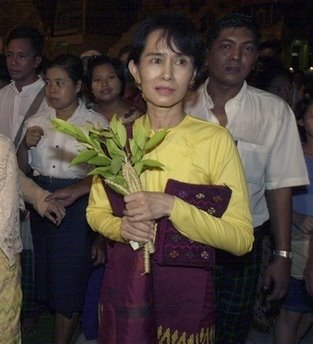


 Posts
Posts


