News & Articles on Burma
Wednesday 25 May, 2011
-------------------------------------------------------------
The DW Debate with Aung San Suu Kyi
http://www.dw-world.de/popups/popup_single_mediaplayer/0,,6532017_type_video_struct_4756_contentId_6520969,00.html
===================================
Political Prisoners go on hunger-strike in Burma’s prison
Aung San Suu Kyi records message for Amnesty International's 50th Birthday
Burma remains a millstone around Asean's neck
New Burma leader seeks friendly deals
China says Myanmar wants greater engagement with outside world
Visits from NKorean, Myanmar leaders highlights China’s close ties to shunned regimes
White Tiger party to cooperate with Thai company for mining in Shan State
All KIA troops in Northern Burma on alert
Headache for Thein Sein, 4 Chinese dam workers vanish into thin air
---------------------------------------------
Political Prisoners go on hunger-strike in Burma’s prison
By Zin Linn May 25, 2011 11:43PM UTC
A grouping of 22 political prisoners in Rangoon’s infamous Insein jail has been going on a hunger-strike for better living conditions since 17 May. According to Assistance Association for Political Prisoners (Burma), seven out of those 22 political prisoners have been placed in solitary confinement.
They have demand six points regarding basic prisoner rights and they have decided to undergo a hunger-strike until their demands are met. The prison authorities responded by sending them to the Military Dog-Cell, a disreputably well-known prison chamber for brutal torture and extreme punishment. They were transferred on 24 May in the afternoon.
Other political prisoners who have been on hunger strike were told to collect their possessions, an indication that they will be transferred to remote prisons as a punishment, Assistance Association for Political Prisoners (Burma) said.
The hunger-strike starts as over 14,600 prisoners have left prison last week under a clemency program for prisoners or a limited amnesty granted by the new president but “astonishingly insufficient”, said Benjamin Zawacki, Amnesty International’s Myanmar researcher.
As said by families of political prisoners, women prisoners have also joined in the hunger-striker. The main motive of the strike is to state detest toward the namesake amnesty, which left more than 2,000 political prisoners in detention.
New president Thein Sein, former junta prime minister, said the amnesty was to “turn prisoners into citizens who will in one way or another contribute toward the process of building a new nation.”
But observers said that sham amnesty is the government’s naive effort to gain international support for itself after taking office in March. Human Rights Watch said very few of the country’s 2,200 political prisoners were among those being released. Also, the one-year reduction in sentences for political prisoners serving 65 years was “a sick joke,” Human Rights Watch said when the amnesty was announced earlier this month.
As reported by AAPP-B, at least 159 political prisoners are in poor health due to the denial of proper medical care, harsh prison conditions, torture and transfers to remote prisons where there are no doctors. Political prisoners’ right to healthcare is principally denied by the successive regimes. Prison healthcare system in Burma is totally poor, especially in far-flung jails. There are 44 prisons across Burma, and at least 50 labour camps. Some of them do not have a prison hospital as well as health assistance personnel.
The regime’s treatment of political prisoners directly breaks the 1957 UN standard minimum rules for the treatment of prisoners. The International Committee of the Red Cross (ICRC) carried out its last prison visit in Burma in November 2005. In January 2006 the ICRC suspended prison visits in the country, as it was not allowed to fulfill its independent, impartial mandate.
The AAPP-Burma said in its April report that there were 2,061 political prisoners and 156 were female. On May 17, Burma began releasing about 14,600 prisoners across the country under the one-year commutation order signed by President Thein Sein. According to the latest figures, out of the 14,600 prisoners, 55 are political prisoners. 27 out of the 55 political prisoners are members of the National League for Democracy.
There are at least 329 ethnic people who still remain in prison. Five ethnic parties joined forces in Rangoon – the Brotherhood Forum – called for the release of all political prisoners for the sake of national reconciliation.
“The government should announce a general amnesty , said Hla Saw secretary of Rakhine Nationalities Development Party (RNDP), adding that he is a former political prisoner who was released from prison in 1980 under a general amnesty.
http://asiancorrespondent.com/55799/political-prisoners-go-on-hunger-strike-in-burma%E2%80%99s-prison/
---------------------------------------------
Aung San Suu Kyi records message for Amnesty International's 50th Birthday
Posted: 25 May 2011
The world’s best known political prisoner pays tribute to the world’s largest human rights organisation and looks forward to the day Amnesty no longer exists
Amnesty International, the world’s largest human rights organisation, is celebrating 50 years of work on Saturday 28 May 2011. In a message to Amnesty International, Aung San Suu Kyi, Burma’s iconic pro-democracy leader who was released last year after having spent 15 of the last 20 years under house arrest, paid tribute to the work that Amnesty had done over the last half a century and said how happy she will be when there is no longer any need for such an organisation.
Daw Aung San Suu Kyi, said:
“I wish, on this 50th anniversary of Amnesty International, that its work will continue to be so successful, that there will no longer be any need for such an organisation.
“So I hope that we shall be able to cooperate together to bring about this sad, this happy day when Amnesty International no longer needs to carry on its work. “
Aung San Suu Kyi went on to talk about her early awareness of the organisation, and how she became increasingly aware of its importance when she herself became the focus of Amnesty’s campaigning.
Aung San Suu Kyi, said:
“The work that Amnesty International has done for all those who are suffering as prisoners of conscience is great - all over the world.
“I was quite young when I first learned about Amnesty International and was struck by the fact that it had been founded simply because one thinking man had read about the arrest of two young students in Portugal. One man in the UK decided because of what had happened to two young men in Portugal, that there was a need for such an organisation as Amnesty International.
“From that day I have harboured great respect for the organisation and after I was placed under house arrest and many of my colleagues were imprisoned for their political beliefs, my appreciation for Amnesty International increased by the day.”
Amnesty was started in London, in 1961, when British barrister Peter Benenson read an article about two Portuguese students who had been arrested for raising a “toast to freedom”. In the 1960s, Portugal was one of the remaining European colonial powers in Africa, ruled by the authoritarian Estado Novo regime. Anti-regime conspiracies were vigorously repressed by the Portuguese state police and deemed anti-Portuguese. The simple toast was deemed insurgent and a challenge to the government and the two were sent to prison.
Benenson wrote an article entitled ‘The Forgotten Prisoners’, in which he highlighted the plight of similar prisoners who had been jailed around the world for peacefully expressing their views. In an impassioned plea, he coined the term ‘prisoner of conscience’ and called for like-minded people across the world to unite in an appeal for amnesty on their behalf. The response was immense, and within weeks Amnesty International, a coordinated movement of ordinary people standing up for justice, had been born.
Today Amnesty has more than three million supporters, members and activists working at the forefront of human rights issues in more than 150 countries and territories across the globe. Amnesty’s purpose is to protect people when their human rights are denied, calling for an end to the discrimination, persecution and harassment that individuals face.
Aung San Suu Kyi, said:
“Basic to the strength of Amnesty International is the fact that so many ordinary people from so many countries in the world have been persuaded to take part in its work.
“The letters written by ordinary housewives, by school children, by retired people, by active young businessmen - all over the world - for the rights of those who have been imprisoned, makes a great difference.
“One single postcard means a lot, and it’s this kind of idea; that great things start from small beginnings - that has made Amnesty International such an unusual and such a globally relevant organisation.”
Speaking from Rangoon, wearing her trade-mark huge, bright flower in her hair, the political leader known simply as “The Lady” by her Burmese supporters, looked straight into the camera and smiled as she said what a happy, sad day the end of Amnesty would mark for the world. She acknowledged how vital Amnesty had been in conveying the dire situation of human rights in Burma, and asked that Burma is not neglected after the elections last November.
Aung San Suu Kyi, concluded:
“We should be sorry not to be in touch anymore with all those people who have made this such a very, very valuable organisation, but we should also be very happy when we know that there is no need for Amnesty International any more.”
For more information about Amnesty’s work; past, present and future, and to obtain a copy of the message from Aung San Suu Kyi, contact the press office.
http://www.amnesty.org.uk/news_details.asp?NewsID=19476
--------------------------------------------
Burma remains a millstone around Asean's neck
Editorial Desk
The Nation (Thailand)
Publication Date : 25-05-2011
The new Burmese government of President Thein Sein could make such a big difference to the future of the country and its people if it was honest about bringing positive changes. A few things would suffice to demonstrate to the international community that, as the new leader in Naypyidaw, he is not a puppet of the military strongman General Than Shwe and cronies in the former junta. Such action would include addressing human rights and corruption issues. After all, Thein Sein has been described as a new pragmatist leader who can bring changes and transformation to a much-loathed administration.
Tomas Ojea Quintana, the UN special rapporteur on human rights, and Vijay Nambiar, a UN senior envoy to Burma, have similar assessments of the current situation in Burma. Quintana was not given an entry visa while Nambiar was allowed in earlier this month to review whatever progress the new government has achieved or promised to do. But they were both disappointed.
First of all, violations of human rights among the minorities continue unabated. Quintana observed correctly that there is systematic militarisation, which leads to abuses of human rights along the Thai-Burmese border. Land confiscation, forced labour, internal displacement and sexual violence are widespread. It is a well-known fact also that the Burmese military has used rape as a weapon to terrorise the minorities, especially in the Shan dominated areas.
Most importantly, the process of national reconciliation has yet to start in a tangible way. There have been some positive signs from the government regarding certain minority groups, such as the ceasefire prospect with rebels in the Kayin State and the release of political prisoners in the Shan State. But there must be concrete results. Apart from this, the overall picture remains negative.
Last week, US deputy assistant secretary of state Joseph Yun visited Burma, the most senior US official to visit since the new government was set up. He told reporters that Washington is willing to strengthen ties with Burma on the condition that there are improvements in human rights, the release of all political prisoners and better governance. For the time being, however, Washington continues its sanctions against Burma, and will likely continue to do so until the above conditions are met.
The opposition leader Aung San Suu Kyi has urged the US to continue with the sanctions until there is sufficient progress on human rights, saying that they hurt the ruling military leaders.
Without positive developments in Burma, Asean should not even consider allowing it to be chairman of the regional body in 2014. Indonesian foreign minister Marty Natalegawa has yet to visit Naypyidaw to assess the situation on the ground. Fortunately, the Asean leaders have deferred their decision on whether to grant Burma the chairmanship until November. Although the proposed move is three years away, the situation in Burma could affect relations between the regional grouping and its dialogue partners, especially the US. Asean-led forums such as the East Asia Summit could be set back badly if Washington refuses to participate due to the lack of progress in Burma. Asean can ill-afford this kind of diplomatic rebuttal.
Since its admission to Asean in 1997, Burma has got away with years of brutal atrocities and dubious undertakings. Judging from this history, it is doubtful if Naypyidaw will embark on the necessary steps to meet reasonable demands from the UN and the international community. Only a well-coordinated international effort can help change Burma for the better. http://www.asianewsnet.net/home/news.php?id=19082&sec=3
--------------------------------------------
The Standard [Hong Kong]
New Burma leader seeks friendly deals
Wednesday, May 25, 2011
Burma's new civilian president, Thein Sein, is due to arrive in Beijing tomorrow on a three-day mission of friendship.
As a loyalist of the reclusive former paramount leader Than Shwe, he is no stranger to the capital, having met top leaders in previous official capacities, including as prime minister.
"He'll probably sign several agreements and maybe visit some industrial sites, as Burma's focus now is developing its economy," said Lin Xixing, a Burma expert at Jinan University, Guangzhou.
"China is investing large sums in high-speed rail and road links, as well as pipelines, in Burma."
Bilateral trade rose more than half last year to US$4.4 billion (HK$34.32 billion), and Chinese investment in Burma reached US$12.3 billion last year, with a strong focus on natural resources and energy projects.
Diplomatically, Beijing provides Burma with cover at the United Nations, fending off calls for tougher action demanded by the West on the country's human rights record.
REUTERShttp://www.thestandard.com.hk/news_detail.asp?we_cat=3&art_id=111367&sid=32491068&con_type=1&d_str=20110525&fc=4
-----------------------------------------
STRAITS TIMES
Wednesday May 25, 2011
China says Myanmar wants greater engagement with outside world
BEIJING (Reuters) - Myanmar's new civilian government wants greater engagement economically and diplomatically with the outside world, China's ambassador to the isolated Southeast Asian nation said ahead of a visit to Beijing by the former Burma's president.
Myanmar is subject to wide-ranging sanctions by Europe and the United States, which both criticised as a sham elections last year under a "road map" to democracy and hand-over of power from a military junta.
But China's ambassador to Myanmar, Li Junhua, told the official Xinhua news agency in an interview carried on Wednesday that new president Thein Sein was much more than just a chip off the old block.
"We have seen a new phenomenon economically, (they) are inducing more foreign investment, expanding foreign trade and strengthening private enterprises," Li said, according to an English-language Xinhua report.
The new government had become "more self-confident and more active diplomatically", he added, citing Thein Sein's recent attendance at a summit of the Association of South East Asian Nations (ASEAN) in the Indonesian capital, Jakarta.
Li said Thein Sein's first speech upon taking office "produced a strong signal to the Myanmar people of all walks of life and the international community, saying that the new government would ... speed up the rate of opening to the outside world".
Li added that Thein Sein "clearly stated that Myanmar's new government will more actively participate in the activities of the international community, especially those of the Association of South East Asian Nations".
Thein Sein is a loyalist of the reclusive former paramount leader Than Shwe, and was number four in the previous military regime.
China is Myanmar's most important diplomatic ally, and the two have strong trade links. Chinese companies have invested billions of dollars in Myanmar, mostly in energy and raw material projects.
Li praised Myanmar's new government, with its "smooth" transfer of power from the military.
"Government at different levels are also operating orderly," he added.
Underscoring the importance Myanmar attaches to the president's Beijing visit this week, Thein Sein will be bringing 10 ministers with him, Li said.
China and Myanmar will sign various agreements during the trip and issue a joint statement that will "be a new breakthrough, a new push in the development of the two countries' relations and future cooperation", he added, without elaborating.
Myanmar's critics say the military is firmly in control behind a veneer of civilian rule and the government tolerates no opposition despite the release from house arrest last year of pro-democracy leader Aung San Suu Kyi.
(Reporting by Ben Blanchard; Editing by Robert Birsel)
Copyright © 2011 Reuters http://thestar.com.my/news/story.asp?file=/2011/5/25/worldupdates/2011-05-25T134105Z_01_NOOTR_RTRMDNC_0_-572650-1&sec=Worldupdates
-------------------------------------------
Visits from NKorean, Myanmar leaders highlights China’s close ties to shunned regimes
By Associated Press, Updated: Wednesday, May 25, 5:48 PM
BEIJING — Visits to Beijing this week by top officials from North Korea, Myanmar, and Iran are spotlighting China’s cozy ties with nations widely shunned for human rights abuses and threatening behavior.
North Korea’s supreme leader Kim Jong Il arrived in Beijing on Wednesday for a meeting with Chinese President Hu Jintao that would underscore the influence economic powerhouse China has with Kim’s ostracized regime, which struggles to feed its people.
Beijing is North Korea’s most vital diplomatic ally and economic supporter and is desperate to prevent a chaotic collapse of its hardline communist neighbor. Kim rarely makes foreign trips and his third visit to China in just over a year emphasizes his dependency on Beijing.
On Thursday, Beijing will host a visit from Myanmar President Thein Sein, a former general and prime minister in the military junta that handed power to a nominally civilian government at the end of March. Meanwhile, Iranian Foreign Minister Ali Akbar Salehi stopped in Beijing as part of commemorations of four decades of diplomatic ties.
To many observers, such ties tarnish Beijing’s self-image as a responsible rising power.
But to China, they represent a political kinship in rejecting Western-style democracy as well as the economic benefits of trade with partners whose markets are shunned by the West yet wide open for Chinese investment.
China’s communist leaders are themselves accused of violating rights and locking up its critics and have little patience for Western accusations against similar regimes.
“China views a number of countries in the world as in alliance in not having democracy or sharing Western human rights concepts,” said Michael Davis, a law professor and Chinese politics expert at Chinese University of Hong Kong. “It helps mobilize their legitimacy argument that the Western approach is not the only one.”
China’s Foreign Ministry has refused to confirm Kim’s presence in China, although Premier Wen Jiabao has said China invited him to study, and hopefully adopt, Beijing’s market-oriented reforms. His previous stops during the trip, which began Friday, were said to be economically related.
Previous reform attempts have been abandoned by North Korea and it’s far from clear how much 69-year-old Kim — or his anointed successor, son Kim Jong Un — would be willing to change.
South Korean media said Kim arrived in Beijing on Wednesday morning from the southern city of Nanjing aboard his personal train. A motorcade believed to be carrying Kim and his delegation arrived Wednesday evening at the Great Hall of the People, the seat of the legislature in the heart of Beijing where Hu usually receives official visitors.
In South Korea’s capital, Seoul, President Lee Myung-bak said he thought Kim’s China visits were a positive thing.
“Visiting there often, watching and learning, and China’s assistance — such things would bring about changes,” Lee said, according to the Yonhap News agency.
North Korea’s exchanges with China have grown even more important since South Korea’s conservative government halted unconditional food and fertilizer shipments in early 2008 and suspended almost all trade with the North. The U.N. and other groups also have enacted sanctions to punish the country for violating nuclear agreements.
Iran for its part is under four sets of U.N. Security Council sanctions for refusing to stop uranium enrichment — an activity that can make both nuclear fuel and fissile warhead material. Like North Korea, Iran’s nuclear and missile programs are seen as a threat to its neighbors, while Myanmar’s crackdown on political opponents and ethnic minorities has seen it widely shunned by the international community.
Beijing, with its avowedly noninterventionist foreign policy, takes a different approach, emphasizing the need for continued dialogue and economic engagement. China also has a huge interest in avoiding the kind of unrest that could be unleashed at its borders if one of the regimes in North Korea or Myanmar should fall.
But while these states may seem to have warm relations, they don’t necessarily share deep trust.
North Korea and Myanmar may resent their dependence on China and often seem to want to go their own way, as shown in their unwillingness so far to undertake the economic reforms China is pitching, said Ian Storey of the Singapore-based Institute of Southeast Asian Studies, a think tank that focuses on social, political, economic and security trends.
“China’s influence over these countries tends to be greatly exaggerated,” Storey said.
___
Associated Press writer Foster Klug in Seoul, South Korea contributed to this report. http://www.washingtonpost.com/world/north-korean-leader-kim-said-to-arrive-in-beijing-will-meet-chinas-hu-on-secretive-visit/2011/05/24/AFlcmpAH_story.html?wprss=rss_middle-east
---------------------------------------------
White Tiger party to cooperate with Thai company for mining in Shan State
Wednesday, 25 May 2011 17:53 Hseng Khio Fah
Shan Nationalities Democratic Party (SNDP), better known as the White Tiger party, the second winning party in Shan State at the 2010 elections, is planning to work together with some Thai companies in mining projects in Shan State as well as others business projects, according to party’s finance chief Sao Than Myint.
Apart from mining projects, the companies have also proposed, when the party members and some 10 representatives of the companies met on 23 May, at the party’s office in Rangoon, that they were willing to help develop local communities including their agricultural projects, said Sao Than Myint.
“They said they wanted to help in agricultural and farming including technical methods,” he said.
The party however has yet to reach any agreement with the companies as it still have to discuss and hold meeting with Executive Committee (EC) again whether the projects should be conducted or not.
In addition, they party and the companies will also have to make some survey first what kinds of ore the companies are interested to extract, where and which part of the state that the projects would be set up, Sao Than Myint added.
Currently, the companies have reportedly more interest to work in areas where there is a shared boundary with the Thailand like eastern and southern Shan State.
“Whatever it is we haven’t given them commitment because we are still having discussion with EC members. Then we will have another meeting with the companies,” Sao Than Myint said.
If both sides can reach an agreement, the party members then will submit a letter for permission to the state government and to the union government if necessary, for approval.
Regarding their projects, the groups say they will also make consideration for environment problems the projects may cause to local people.
The party however says it will not handle any project directly.
“The party will not be directly involved in business. We will lay down principles and hire someone to handle on behalf of the party. He/she then will operate the project in the name of the party’s company,” Sao Than Myint added.
The company name is called “Top White Tiger”, according to the party. Now, the party is producing detergent powder with “White Tiger” logo. The raw materials are imported from Malaysia.
http://www.shanland.org/index.php?option=com_content&view=article&id=3722:white-tiger-party-to-cooperate-with-thai-company-for-mining-in-shan-state&catid=85:politics&Itemid=266
-------------------------------------------
All KIA troops in Northern Burma on alert
Tuesday, 24 May 2011 18:53 KNG
All frontline KIA troops have been placed on alert in Kachin State and Northern Shan State, in the country’s north. The KIA is waiting to see how the central Burmese government will respond to the KIA warning to withdraw Burmese troops near KIA military bases by tomorrow.
The warning includes withdrawal of the three new Burmese military posts circling the KIA’s Pang Hkawn-based, Battalion 5, in Sinbo, Mohnyin Township.
The unusual warning from the Central Committee of the Kachin Independence Organization (KIO), the political wing of the KIA, was released on May 19 after the Burmese army fired mortar rounds at Battalion 25, based in Dum Bung Krung, near the Taping (Ta Hkaw Hka or Dapein) hydropower plants.
The warning was contained in a letter sent to the Burmese Army’s Northern Regional Commander, Brig-Gen Zeyar Aung. A copy was also sent to Lajawn Ngan Seng, Chief Minister of the government in Kachin State.
The KIA official in Laiza headquarters in eastern Kachin State said the civil war will be broken out if the central government responds the KIA’s warning with military ways. http://www.kachinnews.com/news/1920-all-kia-troops-in-northern-burma-on-alert.html
--------------------------------------------------
Headache for Thein Sein, 4 Chinese dam workers vanish into thin air
Tuesday, 24 May 2011 13:10 S.H.A.N.
4 Chinese workers from the Tasang hydropower project disappeared on 17 May probably causing a pain in the backside for President Thein Sein who is scheduled to visit Beijing the day after tomorrow, 26 May, according to sources from Mongton, opposite Chiangmai.
“If they aren’t found before he leaves, it’ll be a fly in the ointment throughout his trip,” a businessman on the Thai-Burma commented.
It might even cost a job and a future for Col Tun Tun Shwe, the commander in Pongpakhem, south of Mongton, who is responsible for the area security. He is now personally monitoring the developments at Ta Hsala, just a few miles south of the project dam site.
The 4 Chinese reportedly took a motorboat upstream, “with maps and local guides” last Tuesday, coinciding with the Buddhist holy day of the Vesak and failed to return in the evening. The next day, 27 truckloads of soldiers from Mongton went down to the dam site on the Salween and scoured the surrounding area for 4 days. On 21 May, they returned to their home bases empty-handed.
The area is under heavy security provided by 3 Infantry Battalions (#43, 49 and 225) and 1 Light Infantry Battalion (#519) plus a local militia led by Panta of Ta Hsala.
Apart from the Chinese workers believed to be from the Three Gorges Group Corporation there are also a number of officials from Electricity Generating Authority of Thailand (EGAT).
Lt-Gen Yawd Serk, whose anti-Naypyitaw Shan State Army (SSA) fighters are active outside the security perimeter dismissed speculations that his troops might be involved. “We have no reason to do it (any kidnapping),” he told SHAN this morning from his Loi Taileng base, further southwest on the Maehongson-Mongpan border. “The Burma Army commanders must be trying to shift reasonability to us.”
He promised to help find out the truth “if I’m requested by the Chinese company concerned.”
The SSA’s 701st Force is also active on the Sino-Burma border in Namkham township. Naypyitaw has reportedly lodged complaints with Chinese authorities in the past all to no avail.
The Tasang dam project since the survey began in 1997 by Thailand’s MDX Group, has been opposed by a score of human rights and environmental movements that are united under the umbrella group called Salween Watch. http://www.shanland.org/index.php?option=com_content&view=article&id=3711:headache-for-thein-sein-4-chinese-dam-workers-vanish-into-thin-air&catid=85:politics&Itemid=266
Thursday, May 26, 2011
News & Articles on Burma-Wednesday 25 May, 2011


Wednesday, May 25, 2011
News & Articles on Burma-Tuesday, 24 May, 2011
News & Articles on Burma
Tuesday, 24 May, 2011
-------------------------------------------------------------
NLD Condemn Tourism in Burma
China should think over Myitsone dam in Burma’s Kachin State
Crackdown Begins on Prison Hunger Strikers
Factional Shan armies bid for unity
FACTBOX - Five facts about China-Myanmar relations
PREVIEW - Myanmar's new leader to reaffirm vital China ties
Banned UN envoy slams Burma on human rights
Political prisoners on hunger strike in Burma says pressure group
Myanmar prisoners on hunger strike
Police Vans Used to Smuggle Burmese to Thailand
------------------------------------------
NLD Condemn Tourism in Burma
By KO HTWE Tuesday, May 24, 2011
Burma's main pro-democracy party, the National League for Democracy (NLD), on Friday issued a statement condemning tourism, saying it damages the environment.
The opposition slammed the policy of tourism in a five-page report, highlighting the impact on culture, society and environment.
The NLD statement said that the establishment of tourism projects frequently forced locals to relocate and often included programs of forced labor.
“If they [investors/ developers] take responsibility, respect ethics and preserve the ecology, we would readily embrace tourism,” said Soe Win, an environmental researcher.
In 1996, the NLD called for a boycott of “Visit Myanmar Year 1996,” claiming that projects were rife with both human rights violations and cronyism.
“The biggest challenge is to reduce the disadvantages from the tourism industry and create benefits that develop industry and improve the economy of the country,” the NLD wrote in Friday's statement.
Speaking to The Irrawaddy on Tuesday, a Rangoon-based tour operator said some tourists “steal the culture of the country.”
With regard to Shan State's famed sightseeing spot, Inle Lake, she said that so many hotels were being built that “the lake is in danger of disappearing.”
Burma's tourism sector never recovered after the violence of the Saffron Revolution in 2007, she said.
“However, the income from tourism generally flows directly into the pockets of the public and the industry creates more jobs,” she said.
Burma's state-run The New Light of Myanmar on Tuesday urged all those engaging in tourism industry to provide their best service to lure in a greater number of tourists in the interests of the nation.
Meanwhile, the Norwegian government lifted its tourism boycott on Burma and encouraged their citizens to visit the country, according to Oslo-based Dagdladet.
There are nearly 600 hotels, guest houses or resorts across Burma, and some 6,000 licensed tour guides, according to government data.
However, observers say infrastructure remains a problem—the country has highly restricted Internet access, credit cards are all but unknown, and transportation is slow and unreliable.
According to Bangkok-based Pacific Travel Association, in 2010, some 300,000 foreign tourists visited Burma—a 30 percent increase from 2009. One reason for the increase was the stabilized political situation, it said.
However, Burma's tourist figures pale when compared to neighboring Thailand, which regularly receives some 14 million visitors a year. Vietnam receives about four million, while about two million visit Cambodia and Laos.
On Monday, in Rangoon, Burma's Forestry Minister Win Tun met with 15 representatives of environmental NGOs to discuss eco-tourism. It was the first environmental meeting called by the new government since it was sworn in on March 30.
Speaking to The Irrawaddy on Tuesday, U Ohn, the general-secretary of the Forest Resource Environment Development and Conservation Association, said he welcomed open discussion on environmental issues. http://irrawaddy.org/article.php?art_id=21352
--------------------------------------------------
China should think over Myitsone dam in Burma’s Kachin State
By Zin Linn May 24, 2011
The Chairman of the Kachin Independence Organization (KIO), Lanyaw Zawng Hra sent an official letter to Hu Jintao, the president of the People’s Republic of China on May 16 urging China to stop the controversial Myitsone dam construction on Irrawaddy River in Kachin State, Northern Burma, Kachin News Group [KNG] reported Monday.
In the open letter the KIO warned Myitsone and six other hydroelectric power plant projects could lead to civil war between the KIA, the armed wing of the KIO, and the Burmese military because Burmese troops will be deployed to the KIO control areas to provide security for the dam construction.
Construction at Myitsone began December 21, 2009, led by China’s state owned China Power Investment Corporation (CPI) in cooperation with Burma’s, Asia World Company (AWC) and the Burmese government’s No. 1 Ministry of Electric Power. Remarkably, AWC owner is former drug lord Lo Hsing Han. As a result, the KIO warned CPI employees not to enter its area in the dam construction sites north of the Mali-N’mai Rivers. The reason was that KIO has stopped cooperating with the Burmese government when the government discontinued the 1994 truce on September 1, 2010.
According to Kachin News Group (KNG), numerous complaint letters regarding construction of the Myitsone dam have been sent to the Burmese and Chinese governments by local people, the Kachin National Consultative Assembly (KNCA) and the KIO. However, no action has been taken to tackle the worries expressed by the Kachin community.
KIO’s official letter to Hu Jintao says, “Except the Dam Project in Mali-N’mai Confluence (Myitsone dam), we have no objections against the other six Hydro Power Plant Projects. However, we have also informed the Asia World Co Ltd to make a decision only after assessing the consequences of the Dam Construction”.
The letter also underscores, “We have replied that the Burma (Myanmar) Military troops will not be allowed to invade the KIO area in this current situation.”
The letter said the KIO would not be responsible if war broke out because of the hydro power plant projects and the dam construction.
More Burmese troops are trying to enter the KIO controlled-areas to provide security for a dam construction project, quoting KIO officials KNG said. KIA officials in the areas said fighting nearly broke out between the two armies in early March. However, Burmese troops withdrew when the KIA warned them they would be under attack if they penetrated into the KIO-controlled areas.
The KIO said the junta has not officially asked for permission to install electrical-power poles, transformers and cable from Chipwi hydropower plant to the Myitsone hydropower plant, through the KIO areas. The smaller hydropower plant in N’Mai Hka River, in Chipwi, is under construction and some of the electricity produced is to be delivered to the larger Myitsone hydropower project along Chipwi-Washawng-Myitkyina, according to local dam watchdogs.
The Kachin Development and Networking Group (KDNG) has warned publicly that the Myitsone dam construction is going to displace regarding 15,000 neighboring Kachin natives and millions of people living downstream of the dam construction location because of inundation.
According to the environmentalist group, thousands of people have been forced to displace from their home villages near the dam construction site. The displaced villagers have to struggle finding new livelihoods, adequate health care services and education for their children at new village, the watchdog group said.
In the past, Kachin people had made an official plea to junta’s boss Senior-General Than Shwe to stop the project due to environmental damages plus undesirable catastrophe. But, he always turns a deaf ear to the call. The junta boss regularly obeys the rules of the Chinese authorities over the dam projects.
Relations between Burma Army and KIO, following the end of the ceasefire, have been tense since last September after KIO publicly discarded junta’s offer to transform into the Border Guard Force (BGF) under Burmese Army control.
The junta labeled the KIO as an ‘insurgent group’ for the first time since the ceasefire agreement on 1994. KIA officials supposed the civil war will spread across Kachin and Shan states if the government starts a war with the KIO.
If this war broke out, China’s lots of business benefits including the gas pipeline investment will be severely hurt.
http://asiancorrespondent.com/55683/china-should-think-over-myitsone-dam-in-burma%E2%80%99s-kachin-state/#disqus_thread
------------------------------------------
Crackdown Begins on Prison Hunger Strikers
By THE IRRAWADDY Tuesday, May 24, 2011
Prison authorities at Rangoon's Insein Prison have launched a crackdown on more than 20 political prisoners who have gone on a hunger strike to demand better conditions and to protest a recent amnesty that included only a handful of political detainees.
Some of the strikers were sent to punishment cells in the prison while the rest were transferred to other prisons outside Rangoon, according to a prison official who spoke to Irrawaddy sources. The prisoners were demanding reading materials, adequate food rations and better health care.
“There were no negotiations of any sort on the part of the authorities before the crackdown,” said a prison source. The incident, involving at least seven female political prisoners, took place less than a week after the new government announced an amnesty which resulted in the release of only 47 of more than 2,000 political prisoners in Burma.
Insein Prison authorities were not available for comment, despite repeated attempts to contact them by phone. The sister of one of the political prisoners who took part in the hunger strike said that she was trying to find out if her brother was still in Insein Prison or has already been transferred to another location.
“I am so worried about him now. I am now going to the prison,” she said.
Former political prisoners in Rangoon said that when prison authorities crack down on hunger strikers, they usually take them to different prison wards and put them in shackles before beating them or transferring them to other prisons.
In 1998, a group of political prisoners who had served more than the full length of their sentences held a hunger strike at Tharawaddy Prison to demand their release. One of the hunger strikers, Aung Kyaw Moe, died after being tortured along with six other prisoners who joined his protest.
The former political prisoners said they visited the local office of the International Committee of the Red Cross (ICRC) in Rangoon today and urged officials there to negotiate with the government to seek permission to visit the prisons.
In 1999, the ruling military regime started giving the ICRC access to political prisoners, but this ended in 2006 after the authorities demanded that ICRC officials be accompanied by government-backed social organizations during their visits.
In the same year that the ICRC's prison visits were suspended, Thet Win Aung, a 35-year-old political prisoner who had held a number of hunger strikes, died in Mandalay Prison. At the time, the state-run media blamed his death on health problems and his “failure to eat regularly.”
On Monday, the ICRC representative in Burma, Georges Paclisanu, held talks with Soe Maung, the minister of the president's office, to discuss a number of issues, including the ICRC's request to regain permission to visit prisons, according to the ICRC's Southeast Asian media spokesperson Philippe Marc Stoll.
“We are now trying very hard to visit the prisons again,” said Stoll, who declined to provide further details of the discussions. http://irrawaddy.org/article.php?art_id=21350
-------------------------------------------
Factional Shan armies bid for unity
By JOSEPH ALLCHIN
Published: 24 May 2011
Officials from the RCSS and SSPP join on the stage at Shan Revolution Day in Loi Taileng (Joseph Allchin)
Leaders of the two main Shan military factions at the weekend met on the Thai-Burma border and affirmed a new-found unity under one Shan State Army.
Officials from the formerly Shan State Army-North, now known as the Shan State Progressive Party (SSPP), travelled to Loi Taileng to attend the 53rd Shan Revolution Day. The annual ceremony was led by Yawd Serk, chairman of Restoration Council of Shan State (RCSS), whom alongside the SSPP’s Lt-Gen Sai Htoo, asserted that “there is only one Shan State Army”.
The SSPP came under attack in March as the Burmese army sought to assert control over the group, who had refused to sign the government’s Border Guard Force agreement. The attack prompted the SSPP to join the new United Nationalities Federal Council (UNFC).
The fighting centred around Namlao, near Hsipaw in the north of Shan state. Sai Htoo confirmed that battles were still underway, with possible counter attacks likely in the area. He also confirmed that villagers were still fleeing in fear of being used as porters by the Burmese army.
The RCSS however are yet to join the UNFC. Its spokesperson, Sai Lao Hseng, told DVB that a decision was being considered, but that Shan unity was their precondition for joining. The resistance day event on 21 March was a “golden opportunity” to seek such unity, he said.
The spokesperson also asserted that the combined strength of the two armies greatly increased their power, with manpower close to that of the United Wa State Army (UWSA), Burma’s largest armed ethnic group.
Yawd Serk confirmed to DVB that the RCSS was assisting the SSPP with supplies in the current conflict. Neither leader could confirm the presence of fresh reinforcements of Burmese troops, reportedly sent from Arakan state.
The Mong Tai Army (MTA), the previous incarnation of the Shan State Army, split in 1996 when former leader and drug baron Khun Sa surrendered to the Burmese. According to some, the surrender was to avoid being arrested on drugs charges. He was later given asylum by the Burmese.
The northern faction signed a ceasefire in 1996 instigated by then Prime Minister Khin Nyunt, whilst the southern faction under the command of Yawd Serk carried on the struggle.
The UNFC is made up of a number of ethnic armies who are seeking an alliance that will draw all parties into conflict should the Burmese attack any member. There is also potential to create a so-called Union Army to fight as one in the image of the desired federal system. This is the stated aim of the grouping.
The UNFC attempted to meet in the Thai town of Chiang Mai on 9 May, but Thai authorities blocked it. Instead the meeting was held in Loi Taileng.
The principal members of the UNFC are the Kachin Independence Army, the Karen National Union, the Chin National Front, the SSPP, the Karenni National Progressive Party and the New Mon State Party.
http://www.dvb.no/news/factional-shan-armies-bid-for-unity/15806
------------------------------------------
FACTBOX - Five facts about China-Myanmar relations
REUTERS - Myanmar's new civilian president, Thein Sein, arrives in China on Thursday for a three-day state visit.
Here are five facts about the complex relationship between China and Myanmar:
*In 1949, Burma, as Myanmar was then known, was one of the first countries to recognise the People's Republic of China. But relations soured in the 1960s following anti-Chinese riots in Rangoon (now called Yangon).
* Following a crackdown on pro-democracy protesters in 1988, the West imposed broad sanctions on Myanmar. China stepped into the void, providing aid and weapons and ramping up trade.
Beijing has continued to provide broad diplomatic support for Myanmar's, though the powerful military remains wary of their enormous northern neighbour.
* Bilateral trade rose more than half last year to $4.4 billion, and China's investment in Myanmar reached $12.3 billion in 2010, according to Chinese figures, with a strong focus on natural resources and energy projects.
* Myanmar gives China access to the Indian Ocean, not only for imports of oil and gas and exports from landlocked southwestern Chinese provinces, but also potentially for military bases or listening posts.
In October, China's state energy group CNPC started building a crude oil port in Myanmar, part of a pipeline project aimed at cutting out the long detour oil cargoes take through the congested and strategically vulnerable Malacca Strait.
* The relationship has had rocky patches of late. In August 2009, refugees flooded across into China following fighting on the Myanmar side of the border between rebels and government troops, angering Beijing. Myanmar has since promised to maintain stability on the border.
In 2007, China's Foreign Ministry published an unflattering account of Myanmar's new purpose-built capital Naypyitaw, expressing surprise that the poor country would consider such an expensive move without first telling its supposed Chinese friends.
(Writing by Ben Blanchard; Editing by Alex Richardson)
Copyright © 2011 Reuters http://thestar.com.my/news/story.asp?file=/2011/5/24/worldupdates/2011-05-24T163637Z_01_NOOTR_RTRMDNC_0_-572370-1&sec=Worldupdates
--------------------------------------
Tuesday May 24, 2011
PREVIEW - Myanmar's new leader to reaffirm vital China ties
By Ben Blanchard and Aung Hla Tun
BEIJING/YANGON (Reuters) - Myanmar's new civilian president, Thein Sein, visits China this week in a show of friendship to the former Burma's most important diplomatic ally, where he may sign deals to cement an already close economic relationship.
Thein Sein, a loyalist of the reclusive former paramount leader Than Shwe, is no stranger to China, having met top Chinese leaders in the past in his previous official capacities, including as prime minister.
"He's a known quantity to China having visited several times before," said Lin Xixing, a Myanmar expert at Guangzhou's Jinan University.
"He'll probably sign several agreements and maybe visit some industrial sites, as Myanmar's focus now is developing its economy," Lin added. "China is investing large sums in high-speed rail and road links, as well as pipelines, in Myanmar."
Bilateral trade rose more than half last year to $4.4 billion, and China's investment in Myanmar reached $12.3 billion in 2010, according to Chinese figures, with a strong focus on natural resources and energy projects.
Diplomatically, China provides Myanmar with cover at the United Nations, fending off calls for tougher action demanded by the West on Myanmar's human rights record.
Thein Sein's first major foreign visitor since taking up office in February under Myanmar's "road map" back to democracy and civilian rule was the Chinese Communist Party's fourth ranked leader, Jia Qinglin.
While Western nations slammed Myanmar's election last year as a sham, Beijing has shown no such concerns, promising instead to do even more to help the country, on which China will increasingly rely for its energy security.
"China supports the development path chosen by Myanmar in accordance with its own national condition, and will keep supplying what help it can for Myanmar's development," Xinhua news agency quoted Jia as telling Thein Sein last month.
INDIAN OCEAN ACCESS
Myanmar gives China access to the Indian Ocean, not only for imports of oil and gas and exports from landlocked southwestern Chinese provinces, but also potentially for military bases or listening posts.
In October, China's state energy group CNPC started building a crude oil port in Myanmar, part of a pipeline project aimed at cutting out the long detour oil cargoes take through the congested and strategically vulnerable Malacca Strait.
Myanmar's internal political issues could be on the agenda as well.
China has frequently expressed its concern at instability along their often mountainous and remote border, where rebel groups deeply involved in the narcotics trade have been fighting Myanmar's central government for decades.
In August 2009, refugees flooded across into China following fighting on the Myanmar side of the border between rebels and government troops, promoting an unusually public show of anger from Beijing towards its poor southern neighbour.
"I think the main purpose of Thein Sein's brief visit is to show a special gesture of goodwill to their mentor and to seek its advice on some sensitive domestic issues about ethnic armed groups along the Chinese border," said Thakhin Chan Tun, a former Myanmar ambassador to China.
As the number four in the previous ruling military junta, Thein Sein will be acutely aware of the situation with the rebels along the border.
One retired senior Myanmar Foreign Ministry official told Reuters on condition of anonymity that the short length of Thein Sein's visit likely underscored his worries about such problems.
"He is very eager to express the special importance his government attaches to their close ties with China but at the same time he seems very busy with some perennial problems including mounting tension with major ethnic armed groups along the Chinese border," he said.
"So he cannot afford to spend too much time away."
(Writing by Ben Blanchard; Editing by Alex Richardson) http://thestar.com.my/news/story.asp?file=/2011/5/24/worldupdates/2011-05-24T152309Z_01_NOOTR_RTRMDNC_0_-572369-1&sec=Worldupdates
------------------------------------------
Banned UN envoy slams Burma on human rights
By Zin Linn May 24, 2011 12:21AM UTC
Mr. Tomas Ojea Quintana, UN Special Rapporteur on Human Rights in Myanmar (Burma), held a press conference Monday at the Foreign Correspondents’ Club of Thailand (FCCT) following the conclusion of his one-week mission to Thailand.
A United Nations commission of inquiry should be set up to address Burma’s human rights violence, which has not ended under the new government, Mr. Quintana said Monday.
Quintana said the Burma military has continued to commit widespread human rights abuses in ethnic minority areas where armed conflicts are still taking place along the border with Thailand, which he visited last week.
“These abuses include land confiscation, forced labour, internal displacement, extrajudicial killings and sexual violence,” Quintana said.
Tomas Ojea Quintana from Argentina, Special Rapporteur on the Situation of Human Rights in Burma. Pic: AP.
Mr. Quintana has not been issued a visa to visit Burma since March 2010, when he suggested an inquiry.
The UN Human Rights Council adopted a resolution shortly after he presented a report this March that asked him: “to provide an assessment of any progress made by the government in relation to its stated intention to transition to a democracy to the General Assembly.”
In his statement, he said, “I am concerned that the Government is not finding a political solution to solve the ethnic conflicts. The authorities have now reached the final step of their 7-step road-map to democracy, but democracy requires much more. We also have to keep in mind that the electoral process excluded several significant ethnic and opposition groups, so their voices are not being heard in these fora.”
He also said the recently announced release of prisoners was insufficient as most of the prisoners of conscience remain in prison. National reconciliation requires the full participation of all key stakeholders including the prisoners of conscience, some of whom are ethnic leaders.
He also said that a commission of inquiry might be a way to address the problem. He discussed the issue with Daw Aung San Suu Kyi and she supports a commission of inquiry absolutely, he said.
“It should pursue the truth and facilitate reparations. It should also end and prevent ongoing human rights abuses,” Mr. Quintana said.
Burma President Thein Sein’s government is currently refusing to allow Mr. Quintana to visit the country. Thailand is home to nearly 150,000 Burmese refugees who have escaped from the country due to brutal repression by their own government. These abuses are common and remain essentially unaddressed by the authorities, Quintana said.
In state-run media, the junta regularly condemns the proposal of National Reconciliation forum raised by Nobel laureate Aung San Suu Kyi and some prominent ethnic leaders as an unnecessary approach. The worst is that Burmese government stubbornly used to say there are no political prisoners in their prisons.
The nation risks a return of armed conflict due to denial of a true federal system in the 2008 Constitution drawn by the previous military junta. The military seems to be at the helm as usual. Although the governmental composition has been transformed, the military-first policy is the same as always. And most observers believe that civil war with the ethnic armed groups will not be stopped undoubtedly.
If the President Thein Sein government did not want to make real political change, Mr. Quintana will not be welcome into Burma in the near future. Quintana’s idea of ‘commission of inquiry’ seems threatening toward the current president and his cabinet members who have responsibilities with the human rights abuses under previous junta.
http://asiancorrespondent.com/55579/burma-blocks-the-un-special-rapporteur%E2%80%99s-visit/
----------------------------------------
ABC News: 24 May, 2011, Tuesday
Political prisoners on hunger strike in Burma says pressure group
A pressure group says nearly 30 political prisoners in Burma are on a hunger strike to demand better treatment and to protest against a recent 'sham' amnesty.
The US Campaign for Burma says seven women in Rangoon's Insein jail began the strike a week ago.
It says it is in response to a clemency program that outraged critics for failing to include most political detainees.
On Monday, 22 male prisoners including three Buddhist monks reportedly joined the hunger strike.
Their list of demands include calls for better living conditions and improved family visiting rights.
Burma released thousands of prisoners last week in a so-called amnesty but most of them were common criminals.
This was despite repeated global calls for the release of political prisoners who are often held for lengthy jail terms. http://www.radioaustralianews.net.au/stories/201105/3225854.htm?desktop
-------------------------------------------
STRAITS TIMES: May 24, 2011
Myanmar prisoners on hunger strike
BANGKOK - NEARLY 30 political prisoners in Myanmar are on a hunger strike to demand better treatment and to protest against a recent 'sham amnesty', a pressure group said on Tuesday.
The US Campaign for Burma (USCB) said seven women in Yangon's Insein jail began the strike a week ago in response to a clemency programme that outraged critics for failing to include most political detainees.
On Monday, 22 male prisoners - including three Buddhist monks - joined the hunger strike, with a six-point list of demands such as better living conditions and improved family visiting rights.
'Prisons in Burma are a known living hell,' said Aung Din, executive director of the Washington-based USCB, who himself served over four years as a political prisoner in Myanmar - also known as Burma.
'There is no adequate or sufficient food supply, no clean water, no proper medical treatment and no liveable environment. Prison cells and halls are full of mosquitoes, bed bugs, flies, ants and other insects,' he said in a statement.
'Prison guards treat the prisoners like animals under their command.' -- AFP
------------------------------------------
Police Vans Used to Smuggle Burmese to Thailand
By Chutima Sidasathian
Monday, May 23, 2011
PHUKET: Phuket police are likely to check government vehicles more closely after the arrest of a policeman who was using a police van to carry Burmese out of Thailand - then bring back illegal workers.
The system being used by errant police was discovered yesterday at an Army checkpoint not far from Mae Sot, on the border with Burma. Like the border port of Ranong, north of Phuket, Mae Sot is a point where illegal workers are deported to Burma.
Two police vans, carrying illegal Burmese workers scheduled for deportation, passed the army checkpoint not far from Mae Sot about 9am.
About 5pm, the first returning police van failed to stop at the checkpoint when waved down. By the time soldiers mounted a pursuit, the van had disappeared.
The second van also did not stop but soldiers managed to pull it to the side of the road about two kilometres away.
There, checkpoint superintendent Second Lieutenant Praturng Pangsungnern later told his superiors, soldiers encountered policeman Kirat Leeksawat at the wheel with 10 illegal Burmese in the back of the van.
The six young men and four young women, aged 17 to 20, told the soldiers they had each paid 16,000 baht to a broker to be able to live and work in Thailand.
They had been told to crouch in the van so they could not be seen through the wire mesh.
Later, four kilometres from the checkpoint, soldiers rounded up 28 Burmese - 15 men and 13 women - who had been on the first van, but were ordered off by the police officer who was driving the vehicle.
The Burmese told Second Lieutenant Praturng that the first policeman placed a telephone call to a broker after leaving the ''legal'' illegal Burmese in Mae Sot.
Soldiers found 34,200 baht in cash in the second police van. The hunt is now on for the driver of the first van.
The police were from the province of Tak. Provincial Governor Samas Loyfar said more thorough checks would be made on all government vehicles travelling to the border with Burma from now on. http://phuketwan.com/tourism/police-vans-used-smuggle-burmese-thailand-14147/
Tuesday, May 24, 2011
News & Articles on Burma-Monday, 23 May, 2011
News & Articles on Burma
Monday, 23 May, 2011
-------------------------------------------------------------
Letter from Burma: Travelers
UN envoy: Burma does little to stop rights abuse
Myanmar seeks to improve US ties
Myanmar president plans first state visit to China
UN envoy says inquiry needed over rights abuses by Myanmar
UN envoy: Myanmar does little to stop rights abuse
Burma refugees living in Thai jungle fear
-----------------------------------------------
Letter from Burma: Travelers
Truman Capote's inimitable heroine Holly Golightly, that most worldly of waifs, kept her possessions in suitcases with luggage tags that, in place of an address, bore the single word, "Traveling". I was barely out of my teens when I first came across this original approach to abode and I thought it was wonderful and adventurous and interpreted it purely in terms of physical movement.
This perception was strengthened after I was married as Michael's dedication to Himalayan studies frequently took us to remote parts of the world and kept us on the move. Whenever we came back from our long journeys I was surprised to find that many of our friends were still at their old addresses. The peripatetic way of life seemed, to us, the normal one. Even after both our sons were born, travel remained an integral part of our existence. The last three years before I became caught up in the movement for democracy in Burma, our homes moved between England, Japan and India.
Lives that have been described as journeys are, in general, eventful. The mere passing of ordinary days are not usually seen as worthy of the term "travel." Events that have been smoothed featureless by repetition enter into glacier mode, the slow movement frozen into apparent standstill. It is only stillness itself that sharpens our senses to the ebb and flow of the universe around us.
It was during my years of house arrest that I began to know life as travel rather than travel as life. The sameness of my daily routine heightened my sensitivity to the fleetness of time and to the dissimilarity between every single one of the minutes and the hours that made up the mosaic of each fast paced day. Impermanence ceased to be mere philosophy, it became fact, the stuff of daily life, the appearing and disappearing of moments that turned into weeks and months and years.
Regular practice of meditation no doubt did much to sharpen such awareness. As I consciously crossed over from one state of consciousness to another I began to feel that my permanent address was indeed "Traveling." I learnt to assess my "baggage" from time to time that I might discard whatever should be discarded. Since I knew I would always be traveling, I wanted to travel light.
The sense that I was on a long errantry through time and through samsara, like a character out of a fantasy tale, made me feel I could reach out to fellow travelers despite high gates, barbed wire barricades and endless miles. Surely they who are aware that they are on a journey even if they do not know where it would lead and when it would end are linked to one another by an understanding that transcends language and culture as well as time and space? Those who travel uncharted territory develop mutual empathy based on common experience of the hazards of venturing into the unknown with only faith and daring as shield and armor.
My colleagues and I have traveled a rough road over the last two decades and when we see the people of Japan embarking on the uphill path of one of the most challenging rehabilitation and reconstruction programs the world has ever known, we not only sympathize deeply with them, we fervently wish them all success. We want them to overcome all trials and difficulties as we wish to overcome our own trials and difficulties.
The National League for Democracy has had to ride out many waves of repression. In the worst of times we started each day by enquiring who had been taken away in the night. Mondays were particularly bad as the security forces liked to go about their sinister business during the weekends when it was difficult for the members of our party to contact one another. The telephones at our office and my house had been cut off for years and from time to time the telephones of our most active colleagues were also made inoperative. Those were the days before the advent of the cell phone, may it be many times blessed, and we had to send our young people running around collecting information on those who had been whisked away when by all norms of justice and decency they should have been left to sleep peacefully in their own beds.
What enabled us to get through those days of unrelenting persecution with our sanity and even our sense of humor intact? It was our strong sense of solidarity. It straightened our backs and kept us going however heavy the oppression. We offer our solidarity to the peoples of the devastated regions of Japan, we are with you as you travel the road to recovery and renewal.
Trying to decide on the subject of this month's letter, I asked myself: at such a time is there a place for any writing that is not relevant to the chief preoccupation of Japan today? Or would an article that has nothing to do with the tsunami or its aftermath be a welcome change for weary people? Last month I decided to postpone Animal Talk 2, as I did not think that ruminations on animals would have been appropriate at such a time of crisis. "Next month," I thought. Now that "next month" has become this month, I still hesitate: is it yet appropriate? Then it occurred to me that it would be good if I could have some idea of what the Japanese people would like to read at a time like this. Could my readers let me know how best my letters might be of some help to them? (By Aung San Suu Kyi)
http://mdn.mainichi.jp/perspectives/news/20110523p2a00m0na001000c.html
-----------------------------------------------------
UN envoy: Burma does little to stop rights abuse
By AP News May 23, 2011 6:59PM UTC
BANGKOK (AP) — The United Nations’ human rights envoy to Burma said Monday that the country’s nascent civilian government has done little to address widespread abuses, including forced labor and extrajudicial killings, since replacing the ruling junta in March.
Elections last year for a new parliament and the installation of civilian leaders this spring were supposed to be the final steps of what Burma’s military leaders had hailed as their “roadmap to democracy.” But U.N. envoy Tomas Ojea Quintana told reporters in Bangkok that “democracy requires much more.”
Burma’s government is currently refusing to allow Quintana to visit the Southeast Asian nation. The envoy spoke after a weeklong trip to Thailand to talk with refugees from Burma. Thailand is home to more than 100,000 people who have fled the neighboring country.
Quintana said violence continues along Burma’s eastern border region, and ethnic minority groups there are victims of “land confiscation, forced labor, internal displacement, extrajudicial killings and sexual violence.”
These abuses “are widespread, they continue today, and they remain essentially unaddressed by the authorities,” Quintana said.
In Burma’s eastern Kayah state, for example, both men and women have fled out of fear of being conscripted into the military, he said. There is such a deficit of schools there that some parents send their children to refugee camps in Thailand for basic education, he added.
Ethnic groups living in the eastern and northern border areas have sought more autonomy since Burma’s independence in 1948, and the government maintains uneasy cease-fires with them. Human rights organizations have long accused the military of forcing civilians into forced labor, particularly as porters.
The military has ruled Burma with an iron hand since 1962, and critics charge the new government is merely the latest iteration of the repressive regime.
Last week, Washington’s deputy assistant secretary of state for East Asian and Pacific Affairs, Joseph Yun, also expressed concern about the new government’s human rights policies.
The Burma Times, meanwhile, quoted Foreign Minister Wunna Maung Lwin as urging Yun to refer to the country as Burma rather than Burma.
The former junta changed the country’s name from Burma to Burma in 1989, but many regime opponents and pro-democracy leader Aung San Suu Kyi still call the country by its former name.
The paper quoted the minister as telling Yun: “You might think this is a small matter, but the use of ‘Burma’ is a matter of national integrity. … Using the correct name of the country shows equality and mutual respect.”
The U.S. Embassy in Burma declined to comment on the report.
http://asiancorrespondent.com/55564/un-envoy-burma-does-little-to-stop-rights-abuse/
---------------------------------------------------
GULF TIMES
Latest Update: Monday23/5/2011May, 2011, 02:18 AM Doha Time
Myanmar seeks to improve US ties
Myanmar has told the US it will not accept preconditions to improve relations, saying sanctions imposed by Washington remain the biggest obstacle to better ties, a report said yesterday.
“We would like to urge the US to build mutual trust in the first place and only then will we be able to frankly discuss ways of promoting the relationship between the two countries,” Foreign Minister Wunna Maung Lwin was quoted as saying by the weekly Myanmar Times.
The minister was speaking on Wednesday to Joseph Yun, deputy US assistant secretary of state for East Asia and Pacific Affairs, in the highest-level meeting between the two nations since the advent of a nominally civilian government.
The newspaper quoted a transcript from the talks in the capital Naypyidaw that was released by the office of President Thein Sein, suggesting the new government is pursuing a more sophisticated communications policy.
Myanmar would “not accept any preconditions to promote bilateral relations,” Wunna Maung Lwin said, citing US sanctions as the main obstacle towards achieving closer ties.
The US therefore needs to show “goodwill” towards Myanmar, he said, also calling on Washington to use the country’s official name of Myanmar, which it rejects in favour of the former name of Burma. AFP
http://www.gulf-times.com/site/topics/article.asp?cu_no=2&item_no=436417&version=1&template_id=44&parent_id=24
----------------------------------------------
Myanmar president plans first state visit to China
May 23, 2011, 4:40 GMT
Yangon - Myanmar President Thein Sein is to travel to China this week, his first state visit since taking office on March 30, state media reported Monday.
Thein Sein will be in China Thursday to Saturday at the invitation of President Hu Jintao, the New Light of Myanmar reported.
A Chinese delegation was the first foreign group to meet with the former general after he took office.
The leader of the pro-military Union Solidarity and Development Party (USDP) that won the November 7 general election has replaced Senior General Than Shwe, junta chief from 1992 to 2011, as the new head of state.
Thein Sein's first trip abroad as president was earlier this month when he joined the summit of the Association of South-East Asian Nations in Jakarta.
China is military-run Myanmar's strongest ally, and recently became the South-East Asian nation's largest private investor.
State-run Chinese firms are investing heavily in infrastructure projects, such as a 1,000 kilometre-long pipeline from Rakhine state on Myanmar's coast to Yunnan province in southern China.
China has provided Myanmar with a 2.4-billion-dollar loan to construct the pipeline.
Myanmar was ruled by military juntas from 1988, and before that by a military-socialist regime, starting in 1962.
Although now under an elected government, Western democracies had condemned the November 7 polls for failing to include the National League for Democracy opposition party led by Nobel laureate Aung San Suu Kyi and for favouring the victory of the USDP.
The USDP is packed with ex-miliary men and ministers who served under the junta. Some 82 per cent of the new ministers are either former or active military men.
http://www.monstersandcritics.com/news/asiapacific/news/article_1640787.php/Myanmar-president-plans-first-state-visit-to-China
-------------------------------------------
UN envoy says inquiry needed over rights abuses by Myanmar
May 23, 2011, 10:57 GMT
Bangkok - A United Nations commission of inquiry should be set up to address Myanmar's human rights abuses which have not stopped under the new government, a senior UN official said Monday.
Tomas Ojea Quintana, the UN special rapporteur on human rights, said the Myanmar military has continued to commit widespread human rights abuses in areas with ethnic minority insurgencies along the border with Thailand, which he visited last week.
'These abuses include land confiscation, forced labour, internal displacement, extrajudicial killings and sexual violence,' Quintana said.
Quintana has not been issued a visa to visit Myanmar since March 2010, when he suggested an inquiry.
His latest assessment follows the November 7 election won by the pro-military Union Solidarity and Development Party. Quintana said he would continue to push the UN General Assembly to set up a commission at its next session in October.
'A commission of inquiry is an option, and I'm not dropping it,' Quintana told a press conference.
The UN has launched 50 commissions of inquiry in its history, including a special probe of Myanmar labour rights abuses conducted by the Intenational Labour Organization (ILO) several years ago.
Although the ILO report failed to stop forced labour in Myanmar, it did pressure the government to allowing the organisation to set up an office in the country, Quintana said.
He said the new parliament is too weak institutionally to address the complex issue of human rights abuses in areas controlled by ethnic minorities fighting the government for six decades.
'These democratic institutions are very new and I see some positive signs in them but it is too early for them to function effectively,' he said.
Myanmar was under military rule from 1962 to 2010, and the current government is run by either former or serving military men.
Quintana also criticized the government's 'amnesty' of thousands of prisoners last week, noting that it had only commuted sentences by a year and included only a handful of political prisoners among those released.
There are an estimated 2,100 political prisoners in Myanmar jails, of whom some 55 were released last week.
'I would like to see a concrete and time-bound plan announced by the government for the systematic release of all prisoners of conscience,' Quintana said.
http://www.monstersandcritics.com/news/asiapacific/news/article_1640844.php/UN-envoy-says-inquiry-needed-over-rights-abuses-by-Myanmar
----------------------------------------------------
UN envoy: Myanmar does little to stop rights abuse
(May 23rd, 2011 @ 3:29am)
By TODD PITMAN
Associated Press
BANGKOK (AP) - The United Nations' human rights envoy to Myanmar said Monday that the country's nascent civilian government has done little to address widespread abuses, including forced labor and extrajudicial killings, since replacing the ruling junta in March.
Elections last year for a new parliament and the installation of civilian leaders this spring were supposed to be the final steps of what Myanmar's military leaders had hailed as their "roadmap to democracy." But U.N. envoy Tomas Ojea Quintana told reporters in Bangkok that "democracy requires much more."
Myanmar's government is currently refusing to allow Quintana to visit the Southeast Asian nation. The envoy spoke after a weeklong trip to Thailand to talk with refugees from Myanmar. Thailand is home to more than 100,000 people who have fled the neighboring country.
Quintana said violence continues along Myanmar's eastern border region, and ethnic minority groups there are victims of "land confiscation, forced labor, internal displacement, extrajudicial killings and sexual violence."
These abuses "are widespread, they continue today, and they remain essentially unaddressed by the authorities," Quintana said.
In Myanmar's eastern Kayah state, for example, both men and women have fled out of fear of being conscripted into the military, he said. There is such a deficit of schools there that some parents send their children to refugee camps in Thailand for basic education, he added.
Ethnic groups living in the eastern and northern border areas have sought more autonomy since Myanmar's independence in 1948, and the government maintains uneasy cease-fires with them. Human rights organizations have long accused the military of forcing civilians into forced labor, particularly as porters.
The military has ruled Myanmar with an iron hand since 1962, and critics charge the new government is merely the latest iteration of the repressive regime.
Last week, Washington's deputy assistant secretary of state for East Asian and Pacific Affairs, Joseph Yun, also expressed concern about the new government's human rights policies.
The Myanmar Times, meanwhile, quoted Foreign Minister Wunna Maung Lwin as urging Yun to refer to the country as Myanmar rather than Burma.
The former junta changed the country's name from Burma to Myanmar in 1989, but many regime opponents and pro-democracy leader Aung San Suu Kyi still call the country by its former name.
The paper quoted the minister as telling Yun: "You might think this is a small matter, but the use of 'Myanmar' is a matter of national integrity. ... Using the correct name of the country shows equality and mutual respect."
The U.S. Embassy in Myanmar declined to comment on the report.
(Copyright 2011 The Associated Press. All rights reserved. This material may not be published, broadcast, rewritten or redistributed.) http://www.620ktar.com/category/world-news-articles/20110523/UN-envoy:-Myanmar-does-little-to-stop-rights-abuse/
-------------------------------------------
Burma refugees living in Thai jungle fear
Published: 23/05/2011 at 01:31 PM
Online news: Asia
At first sight the bamboo huts nestled at the foot of soaring limestone cliffs in the jungle could be mistaken for an eco-tourism haven -- except for the barbed wire and armed guards.
A refugee crosses a wooden bridge at the Mae La refugee camp close to the Thai-Myanmar border. Thailand's announcement in April that it wants to close nine border camps, holding more than 140,000 displaced people, has sent ripples of anxiety through the traumatised communities after a more than two-decade presence.
Beyond the perimeter fence and security checkpoints, designed to keep the residents in and unwanted visitors out, tens of thousands of refugees from war-torn eastern Burma are living in fear of being sent home.
Thailand's announcement in April that it wants to close nine border camps, holding more than 140,000 displaced people, has sent ripples of anxiety through the traumatised communities after a more than two-decade presence.
"We're scared to go back," said Suai Pu, 27, who fled Burma six years ago with his wife and son and lives in the biggest camp, Mae La, home to about 46,000 people packed into around four square kilometres (1.5 square miles).
"People are so worried. They are praying. They cannot sleep," he said. "We don't have a home. We don't have land. If we go back, what can we do?"
According to the Thailand Burma Border Consortium, a group of international non-governmental organisations operating along the border, as of March the camps held about 143,000 refugees from Burma, also known as Burma.
Most are Karen, whose eastern state is the scene of one of the world's longest-running civil wars, stretching back six decades. Others include minority Chin, Mon and long-suffering Rohingya, as well as majority Burmans.
About 93,000 residents have been registered with the UN as refugees, but while an ongoing resettlement programme has allowed tens of thousands to move to third countries, they are soon replaced by new arrivals who trickle across the Moei river every day on doughnut-shaped inflated rubber tubes.
Many others live illegally outside the camps.
Vast numbers of people have fled the Burma government's counter-insurgency campaign, which rights groups say deliberately targets civilians, driving them from their homes, destroying villages and forcing them to work for the army.
"Their safety would be seriously at risk if they went back," said David Mathieson, a Burma expert for New York-based Human Rights Watch.
"There's still lots of fighting and landmines and no infrastructure such as clinics and schools. Most of the refugees are in camps because of persecution and if they go back the possibility of retribution from either side is high."
Many of the children in the camps have grown up there and know no other life, leaving them unprepared for a return to the insurgency-plagued jungles of eastern Burma just a few kilometres away across the border.
Thailand's renewed talk of shutting the camps followed the March handover of power from the long-ruling Burma junta to a nominally civilian government, after an election marred by widespread complaints of cheating and boycotted by Aung San Suu Kyi's National League for Democracy.
Thailand's National Security Council chief Tawin Pleansri said it had become the country's "burden" to take care of the refugees.
The Thai government has stressed that it will only send them back when it is safe and no timetable has been set for their return, but inside the camps there are some signs of change in the air.
"The Thai officials called a meeting in the camp to start a preliminary screening process. Once that's finished, they will send them back -- although they're not talking about that yet," said Ehkler, a community leader in Mae La.
Sitting in a simple bamboo hut he built with his own hands on a pocket of dusty red ground in the camp, Kyaw Dee remembers constantly fleeing fighting as a child. His uncle was not so lucky.
"He was accused of being a rebel and taken to the Burmese army camp. Nobody dared to vouch for him so he was killed," he said.
Kyaw Dee's story is a familiar one in Mae La: forced to work as a porter for the government army, carrying ammunition and firewood, he left his home and parents behind six years ago to seek refuge across the border.
"Life was hard because we were trapped between the rebels and the government. We paid money to the rebels and had to work for the state army," recalled the 38-year-old father of three.
"I don't like living here but I manage. I want our children to have a better life. We want our country to be peaceful," he said. http://www.bangkokpost.com/news/asia/238460/burma-refugees-living-in-thai-jungle-fear
__._,_.___
Thursday, May 19, 2011
News & Articles on Burma-Wednesday, 18 May, 2011
News & Articles on Burma
Wednesday, 18 May, 2011
-------------------------------------------------------------
Bomb kills two near Burmese capital as US envoy visits
Train explodes on passenger train near Myanmar's capital, two killed
Bomb Blast on Train Near Naypyidaw
Only 47 political prisoners freed in Myanmar amnesty
Karen State Conflict Intensifies
Burma Censors Reports on UN Envoy Press Briefing
Suu Kyi risks arrest over Australian message
UK cautions ASEAN from allowing Myanmar to assume regional leadership
US Diplomat Begins Visit to Burma
US Sending Senior Diplomat to Meet New Burmese Government
PTTEP drops Myanmar exploration block
------------------------------------------
Bomb kills two near Burmese capital as US envoy visits
AFP / NEWSCORE
Last Updated: 9:29 AM, May 18, 2011
NAYPYIDAW, Burma -- A bomb blast on a train near the Burmese capital Naypyidaw left at least two people dead Wednesday during a visit by a US envoy for talks with the new government.
Officials said the bomb was on a timer and blamed it on rebels of the Karen ethnic group. Seven people were injured in the blast, in Tatkone township near the capital. The junta moved the capital from Rangoon in 2005.
The explosion came shortly after Joseph Yun, the deputy US assistant secretary for East Asia and Pacific affairs, arrived in Burma for talks. Yun is also expected to meet with democracy champion Aung San Suu Kyi during his four-day visit to the military-dominated country.
President Barack Obama's administration in 2009 launched a drive to engage with Burma''s junta, which in March this year made way for a nominally civilian government after the first election in 20 years.
Read more: http://www.nypost.com/p/news/international/bomb_kills_two_near_burmese_capital_ugiJqgcZ4A9ZOO0Y4LzKLO#ixzz1MiQyheEc
----------------------------------------
Train explodes on passenger train near Myanmar's capital, two killed
Yangon, Myanmar— The Associated Press
Published Wednesday, May. 18, 2011 9:40AM EDT
An official says a bomb has exploded on a passenger train near Myanmar's capital, killing two people and injuring seven.
The public security official says the explosion occurred Wednesday evening about 40 kilometres north of the capital Naypyitaw on the line to Mandalay. It appeared that none of the victims were foreigners. He spoke on condition of anonymity because he is not authorized to release information.
No one has taken responsibility for the blast and no suspects have been named.
Bombing are rare but not unknown in Myanmar, where pro-democracy activists and ethnic minority groups are at odds with the military-backed government. The government usually blames opposition militants for such blasts, but most remain shrouded in mystery.
http://www.theglobeandmail.com/news/world/asia-pacific/train-explodes-on-passenger-train-near-myanmars-capital-two-killed/article2026365/
--------------------------------------------
Bomb Blast on Train Near Naypyidaw
By The Irrawaddy Wednesday, May 18, 2011
At least two people died in a bomb blast on a train at Sinthay Railway Station near Burma’s capital of Naypyidaw on Wednesday, according to sources in Naypyidaw.
A police official in Naypyidaw told The Irrawaddy, “A woman and a man died instantly on the spot. Seven others were injured and hospitalized in Naypyidaw-Tatkon.”
An investigation is now being conducted by the police in Naypyidaw.
“Police officers visited the hospital where the injured people are hospitalized and questioned them about the incident,” the police said.
The train originated in Rangoon and was headed to Mandalay.
This is the first bomb blast in Burma since the new government led by President Thein Sein took office in March.
The blast happened on the same day a high ranking US official arrived in Naypyidaw to meet with government officials. http://www.irrawaddy.org/article.php?art_id=21317
----------------------------------------------------
May 18, 2011
Only 47 political prisoners freed in Myanmar amnesty
Just 47 political prisoners were among those freed in a mass amnesty in Myanmar this week, an opposition group said on Wednesday, urging the military-backed government to release the estimated 2,100 that remain behind bars. -- PHOTO: AFP
YANGON - JUST 47 political prisoners were among those freed in a mass amnesty in Myanmar this week, an opposition group said on Wednesday, urging the military-backed government to release the estimated 2,100 that remain behind bars.
The National League for Democracy (NLD), a banned political party and Myanmar's biggest pro-democracy group, said 23 of its members were among the 47 activists released on Tuesday, too few to be taken seriously as a gesture of reconciliation.
In all, 14,600 people were freed.
Myanmar's government insists there are no political prisoners in its jails. Rights groups say hundreds of jailed politicians, students and activists were convicted on trumped-up charges to justify their incarceration.
'There was no general amnesty granted for the prisoners of conscience, just a reduction in prison terms of criminal convicts,' said Nyan Win, spokesman for the NLD, the popular movement led by Nobel laureate Aung San Suu Kyi, herself a former political detainee.
The issue of political prisoners in Myanmar has been key to the imposition of economic sanctions on the country since a bloody crackdown on pro-democracy protests in 1988. Critics say the embargoes have failed and have only alienated Myanmar's leaders from the international community. -- REUTERS http://www.straitstimes.com/BreakingNews/SEAsia/Story/STIStory_669962.html
------------------------------------------
Karen State Conflict Intensifies
By SAW YAN NAING Wednesday, May 18, 2011
Armed clashes have been occurring across Karen State on a near-daily basis for the past four months with no end in sight.
Divided loyalties following the split in Buddhist Karen ranks over last year's border guard force (BGF) proposal, and a lack of confidence in Naypyidaw's new government have cemented the Karen rebels' resolve against the Burmese army, rebel sources say.
According to a report from the headquarters of the Karen National Union (KNU), between January and April, a total of 359 clashes have taken place, mostly in southern Karen State, between Burmese government troops and a combined force of the Karen National Liberation Army (KNLA) and renegade fighters from Brigade 5 of the Democratic Karen Buddhist Army (DKBA).
During that four-month period, the KNU report claims that just six Karen rebels have been killed, and seven injured, while the Burmese army have reportedly lost 611 soldiers, with 848 injured.
Government sources confirmed to The Irrawaddy that the Burmese army has lost soldiers on a near-daily basis.
While most battalions of the DKBA remain loyal to the ceasefire agreement the group signed with the Burmese government, a breakaway faction, Brigade 5, led by Brig-Gen Saw Lah Pwe, has turned sides and joined forces with the KNU's military wing, the KNLA.
Brig-Gen Saw Johnny, the commander of KNLA Brigade 7, said, “So far, we have not seen any positive signs from this new government,” said Johnny. “They [the government] needs to put an end to this armed conflict and bring about peace. They have to call an immediate halt to their assaults in ethnic areas.
“They have to sit down at the negotiating table with ethnic and opposition leaders and find a solution to the problems,” he added.
Since Burma staged a general election in November last year, armed conflict has intensified across Karen State in both urban and rural areas.
The day after the election, on Nov. 8, a serious clash broke out in Myawaddy Township between Burmese government troops and DKBA Brigade 5, forcing more than 20,000 local residents to seek refuge temporarily in Thailand.
Sources said that the Karen rebels have become markedly stronger since Brigade 5 led split from government ranks and rejoined its old ally, the KNLA.
Karen rebel sources have claimed that there is a great deal of internal conflict within the newly founded BGF units, which are formed by former members of the DKBA. Some of the Karen BGF members have reportedly deserted and defected to the KNLA and the DKBA.
“We are stronger than before,” said Col Paw Doh of the KNLA. “Our troops can now patrol areas that we had abandoned in the past.”
“If the government wants to meet and talk with us in the interest of peace, we will ensure a reduction in hostilities,” he said. “Otherwise, the conflict will go on. It all depends on the new government.”
According to a recent Karen Human Rights Group (KHRG) report, at least three civilians died and eight were injured during battles between April 22-30 in Kya In Township in southern Karen State. The firing of mortars by the Burmese army in civilian villages also forced at least 143 villagers from four villages to seek refuge across the Thai border.
On May 13, the KHRG reported that the firing of mortars and light skirmishes were ongoing in the areas of K' Lay Kee and Noh Taw Plah, and that some villagers continued to seek refuge at discreet locations in Thailand. http://www.irrawaddy.org/article.php?art_id=21316
---------------------------------------------------
Burma Censors Reports on UN Envoy Press Briefing
By THE IRRAWADDY Wednesday, May 18, 2011
The Burmese Press Scrutiny and Registration Division (PSRD) has rejected attempts by local journals to print the words spoken by UN Special Envoy to Burma Vijay Nambiar at a press briefing following his three-day visit to Burma, according to sources from the Rangoon media community.
During his press briefing at the Rangoon International Airport, Nambiar told reporters that when he met with top Burmese government leaders he demanded that the government release all political prisoners and start a tripartite dialog for national reconciliation, according to the media sources.
The sources said that the PSRD rejected attempts to print any of this information.
Speaking to The Irrawaddy, a local reporter said, “It seems that the Burmese government won't accept the use of the term 'political prisoner.' That’s why they rejected all of the information through the PSRD, but allowed descriptions such as: We welcome the new government; We welcome the speech of the president; etc.”
The PSRD also rejected the use of any part of Aung San Suu Kyi’s press briefing but allowed descriptions on the journals' inside pages of the meeting between Nambiar and Aung San Suu Kyi.
An executive editor of a local journal who spoke on condition of anonymity told The Irrawaddy that, “A reporter asked Aung San Suu Kyi during her press briefing what she thought of the Burmese government trying to become the chairman of Asean (The Association of Southeast Asian Nations). She replied that it is more important to have a change in the country than to become the chairman of Asean. The PSRD rejected this part.”
Many from the local media community said that the PSRD will not allow descriptions of Aung San Suu Kyi or her National League for Democracy's (NLD) political and social activities.
“Although the PSRD blocked descriptions of the NLD and Aung San Suu Kyi’s activities, they forced us to put in descriptions of the [government backed] Union Solidarity and Development Party’s activities,” said a Rangoon-based reporter.
Meanwhile, the PSRD suspended publication of the Rangoon-based weekly True News for two weeks after the PSRD accused the journal of misreporting a mobile phone offer by the Ministry of Communications, Posts and Telegraphs (MCPT). It is the first suspension of a local journal since the new civilian government took office.
Reporters Without Borders issued a statement on Tuesday which said that press freedom and online freedom of information are still being restricted in Burma despite the formation of the new civilian government.
“He [Burmese President Thein Sein] promised to respect the role of the media, but heavy jail sentences for journalists, suspension of newspapers and police raids on Internet cafes show that there has been no let-up in controls and intimidation,” the statement said.
Recently, the MCPT sent a new set of rules to the public Internet cafes which are more restrictive than before.
The rules require 12 commitments, including: to record the personal information (name, identity card number, contact address, phone number, etc) of the Internet users; to submit the records of the users (date, time, screen shot, URLs) to the Directorate of Communication once a month; to not allow the use of floppy drives, USB ports and other external drives by the users; to not allow VoIP calls (Gtalk, Skype, Pfingo, etc) by the users; and to permit inspections by the Internet service providers and the authorities.
Rule number 12 said that information that could harm the state's security and interest must not be leaked. Perpetrators who leak such information will be punished under the State Secrets Act.
Reporters Without Borders said that Burma is still on a list of “Enemies of the Internet.” Seventeen video journalists are still in jail and serving long prison sentences, and three of the most prominent—Zarganar, a famous comedian; Nay Phone Latt, a blogger; and Kaung Myat Hlaing, also known as Nat Soe in the Burmese bloggers community—are sserving long sentences for freely expressing their views online. http://www.irrawaddy.org/article.php?art_id=21313
-----------------------------------------
ABC News: 18 May, 2011
Suu Kyi risks arrest over Australian message
By Jeff Waters
Burmese democracy leader Aung San Suu Kyi could be arrested again for recording a video message aimed at Australian MPs.
In the three-minute video, Ms Suu Kyi says there have been no real moves toward democracy in the 100 days or so since the Burmese junta held a national election, which was widely described as fraudulent.
The recording appears to have been made on a home video camera.
"We have not seen any positive, definite move towards a truly democratic process. I am particularly grateful to the members of the Australian Parliament," she said.
Ms Suu Kyi says if there was genuine democracy in Burma, all political prisoners would be released.
Supporters say she is risking rearrest by distributing the video. http://www.abc.net.au/news/stories/2011/05/18/3220564.htm?section=justin
-------------------------------------
UK cautions ASEAN from allowing Myanmar to assume regional leadership
By Associated Press, Updated: Wednesday, May 18, 2:11 PM
MANILA, Philippines — The British government has cautioned Southeast Asian countries not to allow Myanmar to take the leadership of their regional bloc.
It says Myanmar will need to show “enormous political progress” to deserve the prestigious role that it now seeks.
Myanmar, among the members of the Association of Southeast Asian Nations, has sought the annual chairmanship of the 10-member bloc in 2014. Fellow members have not raised any objection but urged it to continue taking steps to realize a long-unfulfilled promise to fully democratize.
U.S. Ambassador to ASEAN David Carden says it’s up to ASEAN to decide on Myanmar’s leadership role.
He says Washington hopes Myanmar will take seriously the new ASEAN charter, which includes promotion of human rights. http://www.washingtonpost.com/world/uk-cautions-asean-from-allowing-myanmar-to-assume-regional-leadership/2011/05/18/AFW4iK6G_story.html
---------------------------------------------
US Diplomat Begins Visit to Burma
By HTET AUNG AND LALIT K JHA Wednesday, May 18, 2011
US Deputy Assistant Secretary of State Joseph Yun began a four-day trip to Burma on Wednesday for introductory meetings with members of the country's new government.
“Deputy Assistant Secretary Joseph Yun of the East Asia and Pacific Affairs Bureau is scheduled to travel to Burma from May 18-21,� said State Department spokesperson Mark Toner. “His visit reflects our continued willingness to engage with the government of Burma and to continue consultations with civil society as well as the Burmese people.�
Toner added that Yun will hold introductory meetings with senior government officials in Burma.
Yun’s trip to Burma comes soon after US President Barack Obama's Monday announcement that his administration would extend the national emergency with respect to Burma, and the resulting sanctions, for one more year.
“These actions and policies are hostile to US interests and pose a continuing unusual and extraordinary threat to the national security and foreign policy of the United States,� said Obama in his notification to the US Congress about his decision to extend the national emergency regarding Burma, which commenced on May 20, 1997.
“For this reason, I have determined that it is necessary to continue the national emergency with respect to Burma and maintain in force the sanctions against Burma to respond to this threat,� he added.
Also on Monday, Burma's new President Thein Sein announced “a clemency program,� releasing more than 14,000 prisoners. However, only about 40-50 of Burma's approximately 2,100 political prisoners were included in the release.
Asked about whether the US has seen changes in Burma since the election last November, Toner said in his press briefing on Tuesday: “There’s been some developments. Aung San Suu Kyi was obviously released, and we applauded that, but we remain steadfast in our call that all political prisoners should be released.
“We recognize that there’s some fairly serious challenges to address in this relationship, but we’re going to continue to pursue a dual-track policy that involves pressure but also principled engagement.�
Yun's visit to Burma also comes less than a week after the visit to Burma by Vijai Nambiar, the UN Secretary-General's acting Special Envoy to Burma. Nambiar also called on the new government to release all the political prisoners during his meetings with Burmese government officials.
Burma political observers said that Yun will probably address two key interlinked issues on his trip. The first issue is Burma's desire to chair the Association of Southeast Asian Nations (Asean) in 2014, to which the US has already announced its opposition due to the lack of the meaningful political change in Burma as reflected by the second key issue—the government's failure to release all political prisoners.
In a recent editorial, the Bangkok-based English newspaper The Nation wrote: "One day before the 18th Asean summit began in Jakarta, the US sent an urgent message to Indonesia—the Asean chair—Thailand, Singapore and the Philippines simultaneously, saying now was the time to push for real progress in Burma, otherwise it would be difficult to envisage any US president attending the East Asia Summit there in 2014."
Yun is scheduled to meet pro-democracy leader Aung San Suu Kyi on the evening of May 19. He will also consult with a variety of Burmese stakeholders, including representatives of political parties, nongovernmental organizations, ethnic minorities and the business community.
“As far as I know now, Yun will meet Daw Aung San Suu Kyi tomorrow evening,� said Nyan Win, spokesperson of the National League for Democracy (NLD).
Asked about the NLD's response to Obama's decision to extend the national emergency with respect to Burma, Nyan Win said, “The US sanctions are designed to improve democratic and human rights in Burma. Therefore, this extension is a reflection of the lack of change from the side of Burma.�
Although the UN, the US and the Asean—of which Burma is a member state—have all recently tried to persuade Burma's new government to release all political prisoners as a first step to show change in Burma, President Thein Sein's announcement ignored their efforts.
Some members of Burma's new parliament also expressed a desire to have more political prisoners released.
“Any amnesty is better than no amnesty, and firstly I welcome the president's announcement,� said Myat Nyana Soe, a member of the Amyotha Hluttaw, or Upper House of Parliament. “But considering the long prison terms, it would be good if the government could consider including those prisoners in this amnesty.�
“To reflect the desire of the people through the people's parliamentary representatives, they expected the government to release many more political prisoners. They even had a specific desire to release some specific persons, like the release of Daw Aung San Suu Kyi. If the government listens to the desire of the people and responds to them, it will be a good deed and all the people will be happy,� Myat Nyana Soe said.
Myat Nyana Soe added that releasing all political prisoners would not be bending to pressure from outside countries, but rather fulfilling the desire of the people.
Copyright © 2008 Irrawaddy Publishing Group | www.irrawaddy.org http://www.irrawaddy.org/article.php?art_id=21314
-----------------------------------------
US Sending Senior Diplomat to Meet New Burmese Government
David Gollust | The State Department May 17, 2011
The United States is sending a senior diplomat for “introductory” talks with leaders of Burma’s new, nominally-civilian, government. The new government was seated in late March to replace a military junta but U.S. officials say the military retains effective control.
Officials here say the dispatch of the diplomat to Burma does not reflect any easing of the critical U.S. view of the political changes there, but that the Obama administration remains committed to trying dialogue with Burma.
Deputy Assistant Secretary of State for East Asian and Pacific Affairs Joseph Yun is due to leave Washington Wednesday for a visit to Burma spanning three days.
The senior diplomat last visited Burma in December and so his visit his week will be the first since the new government was sworn in on March 30th.
The military junta that ruled Burma for decades ceded power at that time, following a national election in November that was widely criticized as a sham.
A quarter of the seats in the new parliament were set aside for military officers and more than half of the remaining seats were won by a pro-military party.
Announcing the Yun visit, State Department Acting Deputy Spokesman Mark Toner said the United States still considers the political process in Burma badly flawed and does not approach this week’s talks with any illusions. “It’s consistent with our two-track approach to Burma. There’s nothing [unduly optimistic] about this. We recognize that there’s some fairly serious challenges to address in this relationship. But we’re going to continue to pursue a dual-track policy that involves pressure, but also principled engagement," he said.
A senior official who spoke to reporters said that in addition to meeting government officials and civil society members, Yun will try to meet opposition leader Aung San Suu Kyi, who was freed last November after spending most of the previous 20 years in detention.
Aung San Suu Kyi’s National League for Democracy Party won Burmese elections in 1990 but was barred by the military from taking power. The November elections were largely boycotted by the opposition.
In a notice to Congress Monday, President Barack Obama renewed U.S. economic sanctions against Burma, including a near-total trade ban, that would have otherwise expired this month.
The routine extension notice said Burma is still engaged in actions hostile to U.S. interests including the large-scale repression of the democratic opposition.
The State Department also Monday dismissed a limited clemency program announced by Burmese President Thein Sein that would among other things cut sentences for all Burmese prisoners by a year.
It said Burma should immediately free all of the country’s estimated 2,200 political prisoners.
http://www.voanews.com/english/news/asia/US-Sending-Senior-Diplomat-to-Meet-New-Burmese-Government-122064264.html
----------------------------------------------------
PTTEP drops Myanmar exploration block
Published: May 18, 2011
Offshore staff
BANGKOK, Thailand – PTTEP International Ltd. has relinquished the entire exploration block M4 in the Gulf of Martaban offshore Myanmar. PTTEP has completed its exploration work commitment on the tract.
PTTEP retains three exploration projects, Myanmar M3, M7, and M11; one development project, Myanmar Zawtika, which is expected to begin production in 2013; and two joint ventures now in production, Yadana and Yetagun projects.
05/18/2011 http://www.offshore-mag.com/index/article-display/4296390213/articles/offshore/regional-reports/asia-pacific/2011/may/pttep-drops_myanmar.html


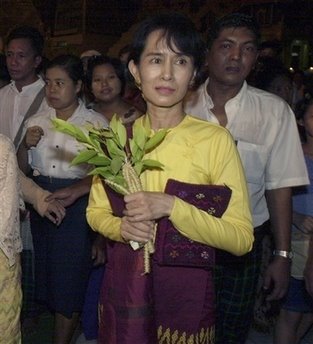


 Posts


