Published May 1, 2011
Speaker: Barack Obama
President Obama gave these remarks on May 1, 2011.
11:35 P.M. EDT
THE PRESIDENT: Good evening. Tonight, I can report to the American people and to the world that the United States has conducted an operation that killed Osama bin Laden, the leader of al Qaeda, and a terrorist who’s responsible for the murder of thousands of innocent men, women, and children.
It was nearly 10 years ago that a bright September day was darkened by the worst attack on the American people in our history. The images of 9/11 are seared into our national memory -- hijacked planes cutting through a cloudless September sky; the Twin Towers collapsing to the ground; black smoke billowing up from the Pentagon; the wreckage of Flight 93 in Shanksville, Pennsylvania, where the actions of heroic citizens saved even more heartbreak and destruction.
And yet we know that the worst images are those that were unseen to the world. The empty seat at the dinner table. Children who were forced to grow up without their mother or their father. Parents who would never know the feeling of their child’s embrace. Nearly 3,000 citizens taken from us, leaving a gaping hole in our hearts.
On September 11, 2001, in our time of grief, the American people came together. We offered our neighbors a hand, and we offered the wounded our blood. We reaffirmed our ties to each other, and our love of community and country. On that day, no matter where we came from, what God we prayed to, or what race or ethnicity we were, we were united as one American family.
We were also united in our resolve to protect our nation and to bring those who committed this vicious attack to justice. We quickly learned that the 9/11 attacks were carried out by al Qaeda -- an organization headed by Osama bin Laden, which had openly declared war on the United States and was committed to killing innocents in our country and around the globe. And so we went to war against al Qaeda to protect our citizens, our friends, and our allies.
Over the last 10 years, thanks to the tireless and heroic work of our military and our counterterrorism professionals, we’ve made great strides in that effort. We’ve disrupted terrorist attacks and strengthened our homeland defense. In Afghanistan, we removed the Taliban government, which had given bin Laden and al Qaeda safe haven and support. And around the globe, we worked with our friends and allies to capture or kill scores of al Qaeda terrorists, including several who were a part of the 9/11 plot.
Yet Osama bin Laden avoided capture and escaped across the Afghan border into Pakistan. Meanwhile, al Qaeda continued to operate from along that border and operate through its affiliates across the world.
And so shortly after taking office, I directed Leon Panetta, the director of the CIA, to make the killing or capture of bin Laden the top priority of our war against al Qaeda, even as we continued our broader efforts to disrupt, dismantle, and defeat his network.
Then, last August, after years of painstaking work by our intelligence community, I was briefed on a possible lead to bin Laden. It was far from certain, and it took many months to run this thread to ground. I met repeatedly with my national security team as we developed more information about the possibility that we had located bin Laden hiding within a compound deep inside of Pakistan. And finally, last week, I determined that we had enough intelligence to take action, and authorized an operation to get Osama bin Laden and bring him to justice.
Today, at my direction, the United States launched a targeted operation against that compound in Abbottabad, Pakistan. A small team of Americans carried out the operation with extraordinary courage and capability. No Americans were harmed. They took care to avoid civilian casualties. After a firefight, they killed Osama bin Laden and took custody of his body.
For over two decades, bin Laden has been al Qaeda’s leader and symbol, and has continued to plot attacks against our country and our friends and allies. The death of bin Laden marks the most significant achievement to date in our nation’s effort to defeat al Qaeda.
Yet his death does not mark the end of our effort. There’s no doubt that al Qaeda will continue to pursue attacks against us. We must –- and we will -- remain vigilant at home and abroad.
As we do, we must also reaffirm that the United States is not –- and never will be -– at war with Islam. I’ve made clear, just as President Bush did shortly after 9/11, that our war is not against Islam. Bin Laden was not a Muslim leader; he was a mass murderer of Muslims. Indeed, al Qaeda has slaughtered scores of Muslims in many countries, including our own. So his demise should be welcomed by all who believe in peace and human dignity.
Over the years, I’ve repeatedly made clear that we would take action within Pakistan if we knew where bin Laden was. That is what we’ve done. But it’s important to note that our counterterrorism cooperation with Pakistan helped lead us to bin Laden and the compound where he was hiding. Indeed, bin Laden had declared war against Pakistan as well, and ordered attacks against the Pakistani people.
Tonight, I called President Zardari, and my team has also spoken with their Pakistani counterparts. They agree that this is a good and historic day for both of our nations. And going forward, it is essential that Pakistan continue to join us in the fight against al Qaeda and its affiliates.
The American people did not choose this fight. It came to our shores, and started with the senseless slaughter of our citizens. After nearly 10 years of service, struggle, and sacrifice, we know well the costs of war. These efforts weigh on me every time I, as Commander-in-Chief, have to sign a letter to a family that has lost a loved one, or look into the eyes of a service member who’s been gravely wounded.
So Americans understand the costs of war. Yet as a country, we will never tolerate our security being threatened, nor stand idly by when our people have been killed. We will be relentless in defense of our citizens and our friends and allies. We will be true to the values that make us who we are. And on nights like this one, we can say to those families who have lost loved ones to al Qaeda’s terror: Justice has been done.
Tonight, we give thanks to the countless intelligence and counterterrorism professionals who’ve worked tirelessly to achieve this outcome. The American people do not see their work, nor know their names. But tonight, they feel the satisfaction of their work and the result of their pursuit of justice.
We give thanks for the men who carried out this operation, for they exemplify the professionalism, patriotism, and unparalleled courage of those who serve our country. And they are part of a generation that has borne the heaviest share of the burden since that September day.
Finally, let me say to the families who lost loved ones on 9/11 that we have never forgotten your loss, nor wavered in our commitment to see that we do whatever it takes to prevent another attack on our shores.
And tonight, let us think back to the sense of unity that prevailed on 9/11. I know that it has, at times, frayed. Yet today’s achievement is a testament to the greatness of our country and the determination of the American people.
The cause of securing our country is not complete. But tonight, we are once again reminded that America can do whatever we set our mind to. That is the story of our history, whether it’s the pursuit of prosperity for our people, or the struggle for equality for all our citizens; our commitment to stand up for our values abroad, and our sacrifices to make the world a safer place.
Let us remember that we can do these things not just because of wealth or power, but because of who we are: one nation, under God, indivisible, with liberty and justice for all.
Thank you. May God bless you. And may God bless the United States of America.
END 11:44 P.M. EDT
Tuesday, May 3, 2011
Obama's Remarks on Osama Bin Laden, May 2011


တာ၀န္သိသူ… တာ၀န္ရွိသူ . ႏွင္႕...နုိင္ငံေရးအေတြးအေခၚ BY BO BO KYAW NYEIN
ႏိုင္ငံေရးမွာ … နုိင္ငံေရးသတၱ၀ါတုိင္းဟာ …. မိမိရဲ႕ နုိင္ငံေရးအေတြးအေခၚ
အေပၚမူတည္ျပီး … စိတ္ကူးၾကတယ္ … လႈပ္ရွားၾကတယ္ …
ရွင္သန္ၾကတယ္လို႕ေျပာလို႕ရပါတယ္ ….
တခ်ိဳ႕ကလည္း … ေလးေလးနက္နက္..ေလ႕လာၾကျပီး … နက္နက္နဲနဲေတြးျပီးမွ ….
ေခါင္းထဲက တဆင္႕ … အသဲထဲမွာ ..စြဲက်န္ေနတဲ႕ … နုိင္ငံေရး..(ယံုၾကည္ခ်က္)
ကို ခံယူခဲ႕ၾကတဲ႕သူေတြ .. ရွိသလို … တခ်ိဳ႕က … အေသးစိပ္..ေလ႕လာမႈက …
ေပါက္ဖြားလာျခင္း..မဟုတ္ … ပုဂၢိဳရ္ခင္လို႕ ..တရားမင္
..သူေတြလည္းရွိတတ္ၾကပါတယ္ …. အမ်ားႏွင္႕..လုိက္၍
..မိုးခါးေရ..လိုက္ေသာက္ၾက ျခင္းဟုဆိုႏုိင္သည္ …. ေခတ္အဆက္ဆက္ ..
ျမန္မာ႕နုိင္ငံေရးတြင္ … ဒုတိယ ..လူမ်ိဳးက ..အမ်ားစု ..ျဖစ္ေပလိမ္႕မည္ ….
ပို၍ဆိုးသည္မွာ… နုိင္ငံေရးအေတြးအေခၚ … ႏွင္႕ ဆက္စပ္ေသာ ….
ေရာင္ျပန္ဟပ္ေသာ အက်င္႕ စရိုက္မ်ား … လုပ္ကြက္ မ်ားသည္ … မသိမသာ
..စိုးမိုးလာ၍ … နုိင္ငံေရးယဥ္ေက်းမႈ ..အသြင္ေဆာင္ ကာ … အလိုတူ
နုိင္ငံေရးအေတြးအေခၚ သမားမ်ားအၾကား … လႊမ္းမိုးလာသည္..ကိုပင္..မသိလိုက္
ၾကပါ ….
ဥပမာ … အနီေဟ႕..ဆိုလိုက္သည္ႏွင္႕ .. ရန္သူႏွင္႕
ငါတုိ႕အၾကား..စည္းျပတ္..ရမည္..ဟူေသာ .. ရန္-ငါ-စည္း…စိတ္ဓါတ္ … ရန္သူဆို
..အျပဳတ္တိုက္ … သူေသကိုယ္ေသ .. ခ် ..ဟူသည္႕ … ဇီးရိုးဆမ္း ..စိတ္ဓါတ္ …
ကိုယ္႕လူဆို..ျမွင္႕တင္ၾက … တျခားလူ..ဆို … နာမ္ႏွိမ္ထား..ဆိုတဲ႕ ဖက္လိုက္
စိတ္ဓါတ္ … ဒီကမွ ..တဆင္႕ … သူရဲေကာင္း ေဖၚထုတ္လိုေသာ ..သူရဲေကာင္း
ျဖစ္..လိုေသာ စိတ္ဓါတ္ ေတြက ၾကီးစိုးလာကာ … မိမိတို႕ရဲ႕ ေတြးေခၚမႈ
…ဆံုးျဖတ္မႈ..ေတြကို လႊမ္းမိုး..သြားရတဲ႕ ..အထိ ..ျဖစ္လာတဲ႕ ..ယဥ္ေက်းမႈ
..တရပ္ျဖစ္လာေတာ႕ ..ေနာက္ဆံုး..ရလဒ္.. ကိုလာ ..ထိခိုက္..တဲ႕အထိ
..ျဖစ္လာရပါတယ္ ….
ဒါေၾကာင္႕ … ေရေသာက္ျမစ္ ..ျဖစ္တဲ႕ …
နုိင္ငံေရးအေတြးအေခၚ..ကို..ေဇာင္းေပး.. ေရး..ေနရျခင္း. ...ျဖစ္ပါတယ္။
နုိင္ငံေရးမွာ …. အေခၚအေ၀ၚ..နီးစပ္ေပမဲ႕ …အဓိပၸါယ္ (လႊဲ) ေစတဲ႕
..အေတြးအေခၚအမ်ားအျပားရွိပါ တယ္… ဥပမာ … ရန္-ငါ-သိ ..တာနဲ႕ … ရန္-ငါ-စည္း
…ျပတ္တာမတူပါ ….
က်ေနာ္႕အျမင္အရ …. ရန္သူ..ဘယ္သူ..ငါ..ဘယ္သူ..ဆိုတာကိုသိတာ ကို … ရန္-ငါ-သိ
..တာ..လို႕ ..ေခၚပါတယ္ …. တခ်ိန္ထဲမွာ …. ဒီရန္သူကို ..ေအာင္နုိင္ျပီး ….
မိမိရည္မွန္းခ်က္..ကို..ေရာက္ဖို႕ မေမ႕ဖူး ….
ဥပမာ … ဗိုလ္ခ်ဳပ္ေအာင္ဆန္းနဲ႕
ျပည္သူ႕အေရးေတာ္ပံု..ပါတီ..ေခါင္းေဆာင္..ေတြဟာ … ရန္သူဟာ အဂၤလိပ္နယ္ခ်ဲ႕ …
ရည္မွန္းခ်က္ဟာ ..လြပ္လပ္ေရး … ဒါေၾကာင္႕ … လက္နက္ကိုင္..ေတာ္လွန္မွ..
ရမယ္ .. လို႕..ဆံုးျဖတ္ၾကျပီး .. ရဲေဘာ္ (၃)က်ိပ္ကို..စုစည္းခဲ႕ၾကတယ္ ….
ရန္-ငါ သိ..ခဲ႕ ၾကတယ္ … သခင္စိုးနဲ႕ သခင္သန္းထြန္း..တို႕က … စတာလင္ကို
.ကိုးကြယ္ၾကရင္း … ရန္-ငါ-စည္း .. မျပတ္ႏိုင္ ခဲ႕ၾက …
အင္းစိန္စာတမ္းက..သက္ေသ …
ဒီ..အခ်ိန္မွာ … ဗိုလ္ခ်ဳပ္တုိ႕ .. ဟာ … လြပ္လပ္ေရး..လိုခ်င္တာသာ
..သိ..ေသာ ..လူငယ္ ေခါင္းေဆာင္ ..အဆင္႕သာရွိၾကေသးသည္ …
ႏိုင္ငံ႕ေခါင္းေဆာင္ ..အဆင္႕..မေရာက္ၾကေသး …
ထို႕ေၾကာင္႕ ..(တာ၀န္..သိ..သူ) မ်ားသာျဖစ္ၾကေသးသည္ ..(တာ၀န္..ရွိ..သူ..)
မျဖစ္ၾကေသး ….
စစ္ၾကီးအျပီး … ဂ်ပန္ေတာ္လွန္ေရးကို ..ဦးေဆာင္ခဲ႕ေသာ ..ဖဆပလ
ေခါင္းေဆာင္မ်ား..အျဖစ္ … အဂၤလိပ္..ႏွင္႕..ရင္ဆိုင္ရျပန္ေတာ႕ …
ႏိုင္င့ံေခါင္းေဆာင္..မ်ားျဖစ္ေနျပီ … (တာ၀န္..ရွိ..သူမ်ားျဖစ္.. ေနေပျပီ)
….
ႏိုင္ငံ႕ အေျခအေန..ကလည္း..မတူၾကေတာ႕ ..စစ္ဒဏ္ခံခဲ႕..ရေသာ ..တိုင္းျပည္ဟာ …
ျပာပံု.. က်ခဲ႕ရျပီ … တာ၀န္ရွိသူေတြ..အေနႏွင္႕ …
တုိင္းျပည္ႏွင္႕လူမ်ိဳး..ကိုေနာက္ထပ္ .. စစ္ပြဲ..ႏွင္႕ …
ထပ္..မနင္းေျခ..ရက္ၾကေတာ႕ ….
ထို႕ေၾကာင္႕ … လြပ္လပ္ေရးကို … အဂၤလိပ္ထံမွ … ေစ႕စပ္မႈ..ႏွင္႕ …
ရယူ..ရန္ဆံုးျဖတ္ၾကသည္ ….
ရန္-ငါ-သိ … ျခင္းဟု..ဆိုႏိုင္သည္ ….
ေနာက္တနည္းၾကည္႕လွ်င္ ..ဖဆပလ..၏..အဓိက..ဦးတည္ခ်က္သည္ ..လြပ္လပ္ေရး…. မိမိ
အာဏါရ ေရး..တခုထဲ..မဟုတ္ ….
ကြန္ျမဴနစ္ေတြရဲ႕ … အဓိကဥိးတည္..ခ်က္က ..မိမိတုိ႕..အာဏါရေရး ….
ဒါေၾကာင္႕..ဖဆပလ..ကို..တိုက္ရန္ ..အေယာင္ေဆာင္ ..လြပ္လပ္ေရး..ဆိုျပီး ..
စြပ္စြဲ..လာၾကတယ္ … လင္နင္က … အာဏါမရခင္ …
ဆိုရွယ္ဒီမိုကရက္ေတြနဲ႕..ယာယီမဟာမိတ္လုပ္ရမယ္ .. ျပီးမွ
..ဖယ္ထုတ္..ဆိုတဲ႕သေဘာ..မွာၾကားခဲ႕တယ္ … ဒီေဟာၾကားခ်က္ကို … သခင္စိုးနဲ႕
သခင္သန္းထြန္း တုိ႕ရဲ႕ ပင္ကိုယ္ (လူခ်) တဲ႕ .. ဥါဥ္စိုးနဲ႕
ေပါင္းစည္း..လုိက္ေတာ႕ .. မရိုးသားတဲ႕ .. dishonest ျဖစ္တဲ႕
(စိုး-သန္း) စိတ္ဓါတ္ေပါက္ဖြားခဲ႕ရတယ္။
ဗိုလ္ခ်ဳပ္ေအာင္ဆန္းရဲ႕ honest စိတ္ဓါတ္ ႏွင္႕ ကြာျခားဖိျခင္း …..
ဗိုလ္ခ်ဳပ္တို႕ရဲ႕ အဓိက..ဦးတည္ခ်က္သည္ ..လြပ္လပ္ေရး …
တုိင္းျပည္ႏွင္႕လူမ်ိဳးေကာင္းစားေရး .. ျဖစ္တာေၾကာင္႕ …
နုိင္ငံသားမွန္သမွ် .. ကို ..ကိုယ္စားျပဳေသာ ႏိုင္ငံေရး… ဒါေၾကာင္႕
အားလံုးကို ..ဆြဲေခၚသလို ..တာ၀န္ေပး..ခိုင္းသည္ …
ကြန္ျမဴနစ္ေတြက …. ပစၥည္းမဲ႕..ဟုေခၚေသာ ..လူတန္းစား အသစ္ ..အာဏါ..ရရွိေရး
..သည္..ပထမ .. ထို႕ေၾကာင္႕ ..က်န္သူေတြ .. မပါေရး …. ျပိဳင္ဖက္ေတြကို
..အနုိင္ရေရးက … အားသာလာသည္။ ထို႕ေၾကာင္႕ ..စိတ္ထားမမွန္ .. dishonest
ျဖစ္လာၾကသည္။
ထို႕ေၾကာင္႕ … အားလံုး..ထက္ ..မိမိ …ဆိုတဲ႕ … ပစၥည္းမဲ႕ …
လူတန္းစားမ်က္စိနဲ႕ၾကည္႕ ..လူတန္း စားေပတံ..နဲ႕..တိုင္းၾကေတာ႕ …
လူတန္းစားရန္သူ..ႏိုင္ငံေရးျပိဳင္ဖက္ရန္သူ ..ေတြႏွင္႕ ..၀ိုင္း၀ိုင္းလည္
ကာ ..ေအာင္ပြဲ..မခံႏုိင္ခဲ႕ၾက …. ဗိုလ္ခ်ဳပ္ကို ..ကေလာ္ဆဲ၍ ဖဆပလထဲမွ
..အထုတ္ခံရျပီးကတည္း က … ျပည္သူ၏ေထာက္ခံမႈ..ကိုမရေတာ႕ …. ေရြးေကာက္ပြဲတြင္
…. ဗိုလ္ခ်ဳပ္ဦးေဆာင္ေသာ ..ဖဆပလ သာ မဲ …အႏိုင္ရခဲ႕ၾကသည္ …. ကြန္ျမဴနစ္ေတြ
..မဲမရၾက … ထို႕ေၾကာင္႕ ..တာ၀န္ (ရွိ)သူမ်ား.. မဟုတ္ၾက …. ထို႕ေၾကာင္႕ ….
စိတ္ထင္ရာ ..ေျပာနုိင္သည္ …
သို႕ေသာ္ … ဗိုလ္ခ်ဳပ္တို႕ချမာ … လက္လြပ္စပယ္..မေျပာ..နုိင္ရွာၾက ….
တိုင္းျပည္..လြပ္လပ္ေရး.. ရဖို႕ … က ဗိုလ္ခ်ဳပ္..ႏွင္႕ ..ဖဆပလ ၏
.ပုခံုးေပၚတြင္ ..က်ေရာက္လ်က္..ရွိသည္ ….
ထို႕နည္းတူစြာ ..ဒီဖက္ေခတ္..ကိုၾကည္႕လွ်င္ ….
၈၈၈၈ လူထု.. အေရးအခင္းၾကီး..ကို ေဖၚထုတ္..ဦးေဆာင္ခဲ႕ၾကသည္မွာ …. ဗကသ
အမႉးျပဳသည္႕ ..ေက်ာင္းသားလူငယ္မ်ား ….
သို႕ေသာ္ …. မဆလျပိဳက်ျပီး … ဖရိုဖရဲကာလမွာ … မည္သူမွ ..အာဏါကို ..(လု)
မယူ… ႏုိင္ခဲ႕ၾက…
စစ္အာဏါ..သိမ္းျပီးကာလ.. ..နုိင္ငံေရးအခင္းအက်င္းသစ္တြင္ …. NLD မွာ
အင္အားသစ္..ျဖစ္လာ ရသည္ …. ၁၉၉၀ ေရြးေကာက္ပြဲမွာ … NLD သည္ … တရား၀င္ ..
ျပည္သူမ်ား၏ ..အေရြးခံ ..ပါတီ .. ျဖစ္လာရသည္ … (ေဒၚစု) ႏွင္႕ … NLD
တို႕သည္ … (တာ၀န္ရွိသူ) မ်ားျဖစ္လာရသည္ ….
အကယ္၍ …. ေက်ာင္းသားကိုယ္စားျပဳ ပါတီ ကို တည္ေထာင္နုိင္၍ … ၁၉၉၀
ေရြးေကာက္ပြဲ ..ကို ၀င္ျပိဳင္.ခဲ႕ၾက၍ … NLD ႏွင္႕
..ေက်ာင္းသား…ကိုယ္စလွယ္အမ်ားစု ..သာေရြးခ်ယ္ခံရခဲ႕ေသာ္ … ဖဆပလ..ကဲ႕သို႕ …
ပါတီခ်င္း..ရင္ခ်င္းကပ္၍ … ႏိုင္ငံေရးကစားႏုိင္သည္… good cop…bad cop..
ကစားကြက္ကို … လွလွေလး..ကစားႏိုင္..လိမ္႕မည္ …. တရား၀င္
..မဟာမိတ္..ဖြဲ႕စရာပင္ ..မလို …
ေဒၚစု..ကိုဖမ္းဦးေတာ႕ … မင္းကိုႏုိင္..နဲ႕..ကိုကိုၾကီး..တုိ႕ က ..တဖက္က
.. တရား၀င္..ေတာင္းဆို ႏုိင္မည္ .. လွည္႕ ကစားနုိင္မည္ …. NLD
အန္ကယ္ၾကီးေတြ ..မလႈပ္လည္း… ေက်ာင္းသားပါတီ ကလႈပ္ရွားနုိင္မည္ …..
ေက်ာင္းသားေတြသာ …. ႏိုင္ငံေရး..အီေကြးရွင္း..ထဲ ..ပါခဲ႕လွ်င္ …
(တာ၀န္ရွိသူ) မ်ားျဖစ္ခဲ႕လွ်င္
..ႏိုင္ငံေရး..က်ားကြက္..ေျပာင္းသြားႏိုင္..စရာရွိသည္ ….
သို႕ေသာ္ ..ဤသို႕..မျဖစ္လာခဲ႕ …
နုိင္ငံေရးတြင္သာမက … သဘာ၀..တြင္လည္း …. Mass မရွိလွ်င္ လုိအပ္ေသာ Energy
ကိုမရနုိင္ … ထို႕ေၾကာင္႕ ..(အင္အား) မျပည္႕ႏိုင္ေတာ႕ …. ကြ်န္ပ္ တုိ႕၏
စၾက္ာ၀ဠာ..ၾကီးတြင္ ..လိုအပ္ေသာ Mass မစုစည္း နုိင္၍ Fission
မျဖစ္နုိင္သျဖင္႕ ေန - Sun ဘ၀မေရာက္ရပဲ … Brown Dwarf ဟုေခၚေသာ .. ေနနဲ႕
ျဂိဳဟ္ အၾကီးစား ..ၾကားဘ၀..ႏွင္႕ေက်နပ္ေနရေသာ … အရာမ်ားရွိပါသည္။
စာေရးသူ၏..ထင္ျမင္ခ်က္အရ …. ေက်ာင္းသား (ၾကယ္) ..မေပၚခဲ႕..ရသည္မွာ …
ရန္-ငါ-စည္း ..ျပႆနာ..ဟု …သံုးသပ္မိသည္ …. ေရြးေကာက္ပြဲ..၀င္လွ်င္ …
ရန္-ငါ-စည္း … မျပတ္ … စစ္တပ္ေအာက္ ..ကို၀င္ရာေရာက္မည္ ….
လက္၀ဲ..အယူအဆေအာက္က…မထြက္ႏုိင္ၾကသည္ ..ကိုေတာ႕ ..သတိမရွိၾက … ရန္-ငါ-စည္း
… တိမ္ ဖံုး..ေနေသာေၾကာင္႕ ..ဗ်ဴဟာနွင္႕ ..မၾကည္႕ျဖစ္..ခဲ႕ ၾကဟု
..သံုးသပ္မိသည္ ….
ျပႆနာက… ႏိုင္ငံေရးမွာ .. အခြင္႕အေရး..ဆိုတာ ..ႏွစ္ခါ..လာခဲသား …..
ေက်ာင္းသားတပ္မေတာ္… ေထာင္နုိင္ခဲ႕ သည္မွာ … လြန္စြာ..တန္ဖိုးရွိသည္ ….
သို႕ေသာ္ … က်ေနာ္ အျမင္ေျပာရလွ်င္ … နုိင္ငံေရးႏွင္႕ စစ္ေရး..
စည္း..မကြဲလွ …. ထုိ႕ေၾကာင္႕ … (လူ) ကြဲၾကေတာ႕ …
အဖြဲ႕အစည္း..တခုလံုး..လိုက္.. ကြဲ..ၾကရသည္ …. အမွန္က … ႏိုင္ငံေရး..ႏွင္႕
..စစ္ေရး ..လံုး၀ခြဲထား .. ရမည္ …. Factional politics အုပ္စုနုိင္ငံေရးဟာ
…. နုိင္ငံေရး..နယ္ပယ္မွာ..သာယွဥ္ျပိဳင္ရမည္ … စစ္ဖက္ထဲ ..အ၀င္မခံသင္႕ …
ေက်ာင္းသားပါတီ ..မရွိခဲ႕သည္႕..အတြက္ … ေက်ာင္းသားတပ္မေတာ္ ..
အတြင္းမွာလည္း …. ႏုိင္ငံေရး..ေတြ၀င္ေရာကုန္သည္ ….
တခ်ိဳ႕က .. လူ႕ေဘာင္သစ္ဟာဘာလဲ? ဟုေစာတက တက္ခ်င္သူေတြရွိမည္ …..
လူ႕ေဘာင္သစ္ဟာ … proxy ပါတီဟုသာျမင္သည္ …. ေက်ာင္းသားအားလံုးကို …
စုစည္းေပးဖို႕ ..ဟုမျမင္နုိင္ … က်ေနာ္အျမင္အရ ..ေျပာရလွ်င္
..မင္းကိုနုိင္..ကိုကိုၾကီး..မိုးသီးဇြန္ … မင္းေဇယ်ာ … ဂ်င္မီ
..အားလံုး..ပါ၀င္ …ဦးေဆာင္ေသာ..ေက်ာင္းသားထုု..ကိုဦးေဆာင္ႏုိင္ ေသာ
..ပါတီျဖစ္သင္႕သည္။
ဗကသ..မကသ..ရကသ..အကသ..ရွိသမွ်ေက်ာင္းသားထု..ပါႏိုင္ေသာ … ပါတီျဖစ္သင္႕သည္။
အတြင္းမွာ အင္န္အာလ္ဒီႏွင္႕ ..ေက်ာင္းသားပါတီ … အျပင္မွာ …
ေက်ာင္းသားတပ္မေတာ္ ႏွင္႕.. အေ၀းေရာက္ ..အစိုးရ … အားလံုး … အကြက္ညီညီ ..
ေျခလွမ္းညီညီ … ႏွင္႕..ေတာ္လွန္ေရး.. ယိမ္း ..က..ႏုိင္ခဲ႕..လွ်င္ …
အလြန္ၾကည္႕လို႕..ေကာင္းပါလိမ္႕မည္။
(မွတ္ခ်က္။ အေ၀းေရာက္ ..အစိုးရ ဆိုရာတြင္ .. အားလံုးကို ..ပါ၀င္ေစမည္႕
အစိုးရ … Mandate မာနတက္၍ ..မဆလ စိတ္ဓါတ္..အျပည္႕ႏွင္႕ …
ငါတို႕သာ..ဦးေဆာင္မည္ … ၀ိုင္းစားမည္ … ေတာ္လွန္ေရးကို … ၅
ေယာက္တပိုင္းႏွင္႕ ..လုပ္ခ်င္သည္႕ …. ပုဇြန္ေခါင္းအစိုးရ..မဟုတ္ ….
အေ၀းေရာက္ ဗမာႏုုိင္ငံသား တုိင္း ကိုဆြဲစိ၍ … ေနရာေပး..ခိုင္းစားနုိင္သည္႕
..အစိုးရ ..ကို ရည္ညႊန္း..လိုျခင္း.ျဖစ္သည္။)
စၾက္ာ၀ဠါၾကီးမွာေတာင္ …. ေန (၂) စင္းႏွင္႕ ..binary star system
ေတြက..အမ်ားသား … ေက်ာင္းသား ပါတီ … ေက်ာင္းသား..(ေန) ..ေပၚခဲ႕ရေသာ္ ….
NLD ႏွင္႕ … ေက်ာင္းသား … ႏွစ္ပါးသြား..က.. လို႕ရသည္… ယၡဳေတာ႕ …. ပါတီ
(သို႕) အဖြဲ႕အစည္း..မရွိေသာ … ေက်ာင္း သားမ်ား… န၀တ-နအဖ ..ေခတ္မွာ .. role
ေပ်ာက္ခဲ႕ၾကရသည္။ တာ၀န္ (ရွိ) သူမ်ား အျဖစ္..ရပ္ၾကရမည္႕…အစား … တာ၀န္ (သိ)
သူမ်ားအျဖစ္ သာ … က်န္ခဲ႕ၾကရသည္ ….
တာ၀န္ (ရွိ) သူ ႏွင္႕ တာ၀န္ (သိ) သူ တုိ႕ ..လြန္စြာ (ကြာ) ပါတယ္
တာ၀န္ (သိ) သူ တုိ႕က ေတြးခ်င္ရာ..ေတြး..ေရးခ်င္ရာေရး… ေျပာခ်င္တာေျပာ …
အရွက္မရွိက (ဆဲ)လို႕ပင္ရေသးသည္ …
တာ၀န္ (ရွိ) သူ အဖို႕ ..လုပ္ခ်င္တိုင္း..မလုပ္..နုိင္ပါ … တာ၀န္
..ဆိုတာကို ပုခုံး..အေပၚ ..ထမ္းထားရ..ရွာာတာကိုး …..
တာ၀န္ (သိ) သူ အဖို႕ … သူတပါးနုိင္ငံက ..အျဖစ္ေတြကို ၾကည္႕ျပီး..
စိတ္ၾကြကာ … လမ္းေပၚထြက္.. ပါေတာ႕လား? ဘာလုပ္ေနတာတုန္းဟု
..ေလွ်ာက္..ေအာ္..လို႕ရသည္ ….
တာ၀န္ (ရွိ) သူ အဖို႕ က.. ေအာ္..ရံုႏွင္႕..မရ … စစ္တပ္က
..ဘယ္လိုတုန္႕ျပန္မွာလည္း … ပစ္ရင္ဘာလုပ္မွာလည္း ..အစုလိုက္
..ဖမ္းရင္..ဘာလုပ္မွာလည္း? … အရွိန္ (က်)ရင္ဘာလုပ္ မွာလည္း? အရွိန္ (တက္)
ရင္ဘာလုပ္ မွာလည္း? Agitators လႈံ႕ေဆာ္သူေတြ … စည္းရံုးေရးမႉးေတြ..
လူထုကုိ..ထိမ္းမဲ႕..ေခါင္းေဆာင္ေတြ..ရွိရဲ႕လား … ရန္ကုန္ (က်)
သြားရင္ေတာင္ … ေနျပည္ေတာ္..မွာ .. အထိုင္မပ်က္ .. command and control
မပ်က္ … လႈိုင္ေခါင္းေတြ..အက် ..ေဆာက္ျပီးသား … စစ္တပ္ကို ဘယ္လုိ …
အႏိုင္ယူမွာလည္း ….ေဆြးေႏြးမွာလါး? မရ..ရင္..ျပည္တြင္းစစ္ ..
အၾကီးစားျဖစ္ရင္.. ဘယ္လို.. ကိုင္တြယ္မွာလည္း?
တရုတ္..မ၀င္ေအာင္..ဘယ္လိုတားမလဲ? အကယ္၍ ..regime change ျဖစ္သြား ရင္ေတာင္
.. စစ္တပ္ကိုဘယ္..ပံုစံ..ကိုင္မွာလည္း … အီရတ္လိုလား? အီရန္လိုလား?
အုပ္ခ်ဳပ္ေရး.. နားလည္သူေတြ..လံုလံုေလာက္ေလာက္..ရွိရဲ႕လား ….
ဆိုတဲ႕..လာမဲ႕ …. ျပႆနာေပါင္း…ေသာင္းေျခာက္ေထာင္ကို .ရင္ဆိုင္ႏုိင္ဖို႕ …
အေျခအေန..ရွိရမယ္
မရွိရင္ ..ယေန႕ ..လစ္ဗ်ားမွာျဖစ္သလို ….
ဟိုမေရာက္..ဒီမေရာက္..ျဖစ္ေနလိမ္႕မယ္ …
က်ေနာ္တို႕ ဗမာႏိုင္ငံသားေတြက … စစ္အာဏါရွင္…ပေပ်ာက္ေရး.. ..regime change
ကိုသာအာရံု.. စိုက္..ေနၾကသည္။ အေမရိကန္.. တရုတ္..ႏွင္႕ အာဆီရန္..တို႕က …
စစ္အစိုးရျပဳတ္က်..သြားလွ်င္ … ဘယ္သူက..ေနရာ၀င္ျဖည္႕မွာလဲ? … NLD မွာ
…အုပ္ခ်ဳပ္ေရး..ႏုိင္သူေတြရွိရဲ႕လား? ..စသည္ျဖင္႕ ..
ေဒသတည္ျငိမ္ေရး..ဖက္ကၾကည္႕ၾကတာ …. အီရတ္မွာ ..ဆဒန္ၾကီးျပဳတ္သြားျပီး…
တိုင္းျပည္ဗရိုဗရဲ ..ျဖစ္တာကို..သခၤန္းစာ..ရခဲ႕ၾကတယ္ ….
ဒါ..တာ၀န္ (ရွိ) ..သူေတြရဲ႕..ေနာက္တဆင္႕ ..ေပ ၄၀၀၀၀ အျမင္နဲ႕ၾကည္႕ၾကတာ …..
တာ၀န္ (သိ) သူေတြက ..စိတ္ကူးယဥ္ ..လို႕ရသည္ … တာ၀န္ (ရွိ) သူေတြ က
လက္ေတြ႕ဘ၀ က ေသြဖီလို႕..မရ…
ဒါကို..မသိပဲ… ရွိရွိသမွ်..အရာ..အားလံုးကို …
ရန္-ငါ-စည္း…မ်က္စိနဲ႕ၾကည္႕ၾကေတာ႕ ..အာလံုးကို ..ႏိုးႏိုးနုိး…ဆိုျပီး
..ဗူးခံ..ေျဗာင္ျငင္း..ၾကေတာ႕ ..မိမိတို႕လည္း ..အထီးက်န္..ေ၀းကြာ..isolate
ျဖစ္လာရတယ္ … မနက္ဖန္..အစိုးရ …ျဖစ္ရင္ ..အုပ္ခ်ဳပ္ေရး..နားလည္းသူ …
အစိုးရ..လုပ္ႏိုင္တဲ႕ ..သူ..ဘယ္ႏွစ္ေယာက္ရွိသလဲ? ေဒၚစု..တေယာက္ထဲ …
တိုင္းျပည္အုပ္ခ်ဳပ္လို႕..မရပါ ….
တခါ ..တာ၀န္ (သိ) သူေတြက .. တာ၀န္ (ရွိ) သူ..ေတြကို ..ကူဖို႕..ဘာေတြ …
ျပင္ဆင္ ထားၾကသလဲ? ျပည္တြင္းမွာ … မျငိမ္မသက္ျဖစ္ရင္ … Agitators ေတြ …
စည္းရံုးေရးမႉးေတြ.. လူထုကုိ..ထိမ္းမဲ႕.. ေခါင္းေဆာင္ေတြ … ျဖစ္နိင္ဖို႕
..မိမိကိုယ္မိမိ..ျပင္ဆင္ထားျပီးျပိလား? logistic
အတြက္..စဥ္းစားထားၾကပါသလား? logistic အတြက္ဘာေတြ..ျပင္ထားၾကပါသလဲ?
Saffron တုန္းကလို … ျဖစ္မွ … ေရဒီယို..တယ္လီေဖးရွင္းဖြင္႕ …
အင္တာနက္ေပၚတက္ျပီးဆဲ… လက္ခုပ္ ၀ိုင္းတီးၾကျပီး …
ေ၀ေလးေလး..လုပ္ၾကဦးမွာလား? ….
ဘာမွ..ၾကိဳတင္မျပင္ဆင္..ထားၾကေတာ႕ …
ဘာမွ..မလုပ္ႏုိင္..ဘာမွ..မကူ.နုိင္ၾကတာ..အဆန္းလား?
မိမိတို႕ဖက္ ..ကေတာ႕..ဘာမွမလုပ္ ..မလႈပ္ၾကပဲ …တဖက္သတ္ … အျပစ္တင္ရင္ေတာ႕
..မတရားဖူး..လို႕..ေျပာရမွာပဲ …..
အားလံုးကို ..မေမ႕ေစခ်င္တာက … ေဒၚစု..ေနာက္မွာ ..ေထာက္ခံမႈ. support
..အျပည္႕ရွိတယ္ ….
ေဒၚစုရဲ႕..သတၱိကို ဘယ္သူမွ ..မယွဥ္..နုိင္ပါ …. လက္နက္မပါပဲ ….
ရင္ေကာ႕ျပီး … အာခံရဲ..လို႕..လူတိုင္း..ေလးစား..ခ်စ္ခင္ရတာပါ ….
ေဒၚစု ..ဟာ ..လူတိုင္းရဲ႕ …ေမွ်ာ္လင္႕ခ်က္ပဲ …
ဒါေပမဲ႕ …ေဒၚစု..ဟာ..ေတာ္လွန္ေရးသမားမဟုတ္ …. ျငိမ္းခ်မ္းေရးသမား ….
မိခင္စိတ္..ျပင္းတယ္ …
သူ႕သားငယ္ ကို …ၾကည္႕တာကိုျမင္ျပီး ..စာေရးသူ..စိတ္ေျပာင္းသြားတယ္ ..
နားလည္သြားတယ္
သူတပါး..သားငယ္..သမိီးငယ္ေတြကို … စြန္႕လႊတ္..ခုိင္းမည္..မထင္ …..
ဗိုလ္က်င္ေမာင္..ကို ၈၀..ေက်ာ္မွ … ကြန္ျမဴနစ္..စံနစ္ဟာ.. ေခတ္နဲ႕
မေလွ်ာ္ေတာ႕ဖူး … ကြန္ျမဴနစ္ ၀ါဒ..ကိုစြန္႕..လႊတ္လိုက္ပါေတာ႕
..ဟုေျပာလွ်င္ … လက္ခံမည္ထင္ပါသလား?
အညမည ကိုေရးခဲ႕တဲ႕ ..ဦးခ်စ္လႈိင္ေတာင္ … ကြန္ျမဴနစ္..စံနစ္.. ကို
..ယံုဆဲတဲ႕ သူလည္း ၈၀ ေက်ာ္ .. ၉၀ ၀န္းက်င္ ပဲ… ဒီလူၾကီး ႏွစ္ေယာက္ ..
ကြန္ျမဴနစ္..၀ါဒ..ကိုမစြန္႕လႊတ္နုိင္ၾက ….
ထို႕နည္းတူ..ေဒၚစု..ကို … လမ္းေပၚထြက္ပါေတာ႕
..လက္နက္ကိုင္ေတာ္လွန္ပါေတာ႕လား ဟု .. အျပစ္တင္ေနလွ်င္..လည္း …
သဘာ၀က်မည္..မထင္…
လြပ္လပ္ခြင္႕ …ကို ..ယံုၾကည္ရင္ .. လြပ္လပ္စြာယံုၾကည္ခြင္႕ .. ကိုလည္း…
လက္ခံ..ရေပလိမ္႕မည္ ..
လက္ရွိ..ျပႆနာ..မွာ ..ေဒၚစု..ေနာက္က ..ေထာက္ခံမႈ..ကုိ ..CAPITALIZED
လုပ္နုိင္ဖို႕လုိသည္ ….
၀ိုင္း..ေ၀ဖန္မည္႕အစား … ၀ိုင္းစဥ္းစားေပးေစခ်င္သည္ ….
အစိုးရက …. Development လုပ္ရင္ ..အတိုက္ခံက …. လူမႈေရး..ႏွင္႕..လူထု..ကို
… အက်ိဳးျပဳ..လို႕ ရပါသည္… ပညာေရးနိမ္႕က်ေနတာျမင္ရင္ ..၀ိုင္း
…စာသင္ေပးမယ္ … ေဆးကုဖို႕.. မတတ္နိင္ရင္.. ေဆးကု..ေပးမယ္ ..
ဆင္းရဲသားေတြအတြက္..ေငြေခ်းမယ္ … ေရမရွိရင္ ..ေရတြင္းတူးေပးမယ္ …
အခုလည္း..ဒါေတြ ..စ … လုပ္ေနပါျပီ …
လူထု..ကို..ကူတာ… လူမႈေရး..တခုထည္္း..မဟုတ္ပါ … နုိင္ငံေရး..လည္းဟုတ္ပါသည္။
ေမွ်ာ္လင္႕ခ်က္..ကေန … လက္ေတြ႕..ကူညီတာျဖစ္ခဲ႕..ရင္ ..ျပည္သူေတြ
..ဟတ္ထိ..ကုန္မယ္ဗ်ိဳ႕ ….
ျပည္သူနဲ႕ ..မထိေတြ႕ပဲ … ေလေပၚက ..ေအာ္..ေနၾကရံုနဲ႕
..ေထာက္ခံမႈ..ကိုမတည္ေဆာက္..နုိင္ ..ဆိုတာကို..မေမ႕..ၾကပါနဲ႕…
ေဒၚစု..ေနာက္မွာ..ေထာက္ခံမႈ..ၾကီးတယ္..ဆိုတာကိုလည္း…မေမ႕ၾကပါနဲ႕ ….
နုိင္ငံေရး..ဆိုတာ..အားလုံ..ပါေလ..အားၾကီးေလပဲ ….
အားလံုး..အတြက္..ေနရာရွိပါတယ္ …. ေရ၀ိုင္းျဖည္႕ေပးၾကရေအာင္ပါ ….
ဒို႕..ကေတာ႕..လက္ႏွက္ကိုင္ ေတာ္လွန္ေရးက..နဲနဲမွ..မေလ်ာ႕ဖူးဆိုရင္လည္း ….
ေမာ္လျမိဳင္ေလာက္ …သိမ္းႏုိင္ရင္ … လူေတြ..ေနာက္က..လိုက္မွာပါ ….
News & Articles on Burma-Monday, 02 May, 2011
News & Articles on Burma
Monday, 02 May, 2011
-------------------------------------------------------------
Official says Burma to grant amnesty to prisoners
Burma ‘preparing prisoner amnesty’
Govt pushed on labour rights
Myanmar three years on since Cyclone Nargis
Indonesia hosts 1st EU-ASEAN Business Summit
Freedom of Press will remain unchanged under Burma’s sham civilian government
Nargis seen as ‘humanitarian watershed’
Cautious hope for change in Burma
-----------------------------------------------
Official says Burma to grant amnesty to prisoners
RANGOON, BURMA - May 02 2011 12:47
Burma's new military-backed government is preparing to grant an amnesty to some prisoners, an official said on Monday, but it was unclear whether they would include political dissidents.
The move is expected to coincide with President Thein Sein's visit to Indonesia from Thursday to attend a summit of south-east Asian leaders, his first overseas trip since he was sworn in as head of state on March 30.
"Some prisoners will be released around the time of the president's first state visit," said the official, who spoke on condition of anonymity and did not provide further details.
According to the London-based human rights group Amnesty International there are more than 2 200 political prisoners in Burma being held under vague laws frequently used to criminalise peaceful political activists.
Opposition leader Aung San Suu Kyi was released from house arrest in November shortly after an election that led to the handover of power from the military to a nominally civilian government.
Her release was welcomed worldwide, but Western governments who impose sanctions on Burma have urged the new government to do more to demonstrate its commitment to improving its much criticised human rights record.
Thein Sein, who was prime minister under the now-disbanded junta headed by former leader General Than Shwe, is one of a group of generals who shed their army uniforms to successfully stand in the November poll.
The election, Burma's first in 20 years, was criticised by the opposition and the West as anything but free and fair, and the military still wields considerable power in the impoverished south-east Asian nation. -- AFP http://mg.co.za/article/2011-05-02-official-says-burma-to-grant-amnesty-prisoners/
-----------------------------------------
Burma ‘preparing prisoner amnesty’
By AGENCE FRANCE-PRESSE and DVB
Published: 2 May 2011
Burma’s new military-backed government is preparing to grant an amnesty to some prisoners, an official said Monday, but it was unclear whether they would include political dissidents.
The move is expected to coincide with President Thein Sein’s visit to Indonesia from Thursday to attend a summit of Southeast Asian leaders, his first overseas trip since he was sworn in as head of state on 30 March.
“Some prisoners will be released around the time of the president’s first state visit,” said the official, who spoke on condition of anonymity and did not provide further details.
According to the Thailand-based Assistance Association for Political Prisoners-Burma (AAPPB) there are currently 2,073 political prisoners in Burma being held under vague laws frequently used to criminalise peaceful political activists.
Opposition leader Aung San Suu Kyi was released from house arrest in November shortly after an election that led to the handover of power from the military to a nominally civilian government.
Her release was welcomed worldwide, but Western governments who impose sanctions on Burma have urged the new government to do more to demonstrate its commitment to improving its much criticised human rights record.
http://www.dvb.no/news/burma-preparing-prisoner-amnesty/15479
----------------------------------------
Govt pushed on labour rights
By PETER AUNG
Published: 2 May 2011
Burmese opposition groups have called on the government kick start the formation of a trade union congress as workers’ rights took centre stage yesterday on Labour Day.
A statement released by the National League for Democracy (NLD) party on 1 May mooted the idea of a congress in a bid to protect manual labour and white-collar workers in factories and workshops around the country.
The opposition group’s spokesperson, Nyan Win, said that the 2008 constitution, which came into force following elections last November, included a clause opening the door for a congress.
“According to international laws and standards, a labour congress should be in existence… that protects the workers,” he said. “So we are just reminding [the government] to start the procedures to form such an organisation.”
The statement also criticised the UN’s International Labour Organisation (ILO), claiming that despite the fact it had conducted investigations into some labour abuses in Burma, it had not taken any effective action.
Trade unions have been legally allowed in Burma, although a clause in the 2008 constitution states that their formation is conditioned on not being “contrary to the laws enacted for [Burma’s] security, prevalence of law and order, community peace and tranquillity, or public order and morality”. The subsequent definitions for these criteria are vague.
More than 30 labour activists, including eight female members of the Federation of Trade Unions Burma (FTUB), are imprisoned in Burma out of a total of nearly 2,073 political prisoners. Perceived dissent in Burma is often punished by lengthy jail terms.
The opposition National Democratic Force (NDF) party also released a statement on May Day calling for full labour rights and adequate wages in line with inflation in Burma, which currently stands at around nine percent.
“Our party’s parliamentary representatives will work to propose bills for wages in relevance with today’s [living expenses], for overtime payment and to narrow down the inflation gap,” said NDF member Dr Mya Nyarna Soe. He added that the government would also need to stabilise commodity prices and the budget allocated to the health and education sectors.
http://www.dvb.no/news/govt-pushed-on-labour-rights/15470
---------------------------------------------
Myanmar three years on since Cyclone Nargis
By Sabrina Chua | Posted: 02 May 2011 1927 hrs
MYANMAR: It has been three years since Cyclone Nargis hit Myanmar, leaving more than 140,000 people dead in its wake. Survivors are rebuilding their lives, but aid groups said their recovery does not mean they should be forgotten.
"Psychologically you could say they are better than three years ago but they are still very sad. A lot of the students that i've met, they still wake up in the middle of the night, crying for their parents," said Plan Asia regional communications specialist Ms Warisara Sornpet.
Plan is one of the few international aid agencies working in Myanmar.
It is focused on child-centred community development, and has built 51 schools for the devastated communities.
Ms Warisara said: "The aim is not just to build back but to build back better.
"The new schools are stronger and disaster resilient than the old schools and will save a lot more lives. And also, Plan, along with our local partner has trained the children to protect themselves from natural disasters.
"Now if you go into a classroom and bang on the table and shout 'earthquake', the children will run to an open field or hide under the table. Before they wouldn't know what to do."
Ms Warisara added: "The people of Myanmar who've been affected by Nargis have shown incredible resilience, by rebuilding their homes, replanting farmland, going back to schools and carrying on with their routine.
"The difference here is that they're carrying on despite poverty and scarce resources."
Plan hopes the world won't forget the Nargis victims.
It is planning to upgrade its long-term presence in the country.
http://www.channelnewsasia.com/stories/southeastasia/view/1126310/1/.html
--------------------------------------
Indonesia hosts 1st EU-ASEAN Business Summit
Economics 5/2/2011 1:42:00 PM
BRUSSELS, May 2 (KUNA) -- EU Trade Commissioner Karel De Gucht leaves Monday for Jakarta to meet with ASEAN economic and trade ministers from the South-East Asian block of ten countries and open the first ever ASEAN-EU Business Summit on Thursday.
"The first ASEAN-EU Business Summit in Jakarta is an important signal that shows both regions mean business when it comes to building stronger economic ties," said De Gucht in statements before his departure.
The Summit will help intensify business-to-business relations but also promote dialogue between governments and the private sector. ASEAN (Association of Southeast Asian Nations), including Brunei Darussalam, Burma/Myanmar, Cambodia, Indonesia, Laos, Malaysia, Philippines, Singapore, Thailand and Vietnam, as a whole represents the EU's 7th largest trading partner with 175 billion euro of trade in goods and services.
The EU is ASEAN's second largest trading partner after China, accounting for around 10.9% of ASEAN trade. The EU is the largest investor in ASEAN countries. EU companies have invested around 10.4 billion euro annually on average.
Indonesia, the host country of the first EU-ASEAN Business Summit, is a major partner for the EU: EU-Indonesia trade stood at 20 billion euro in 2010. (end) nk.rk KUNA 021342 May 11NNNN http://www.kuna.net.kw/NewsAgenciesPublicSite/ArticleDetails.aspx?id=2163694&Language=en
---------------------------------------------
Freedom of Press will remain unchanged under Burma’s sham civilian government
By Zin Linn May 02, 2011 7:45PM UTC
0 Comments and 0 Reactions
Burma presently is at a crossroads. The incumbent nominal civilian government led by former general Thein Sein as president wants to maintain the country under limited democracy while the majority population desires a new stage of change. Especially, citizens are demanding freedom of expression and association while the Union Government is inflexibly vetoing basic rights of the citizens.
If the junta is honest concerning democratic reforms, the media must be free at the outset since access to information is fundamental to a healthy democracy. But in Burma, the political opposition as well as journalists and media personnel are under the strictest rules by the successive military regimes.
For instance, Japanese journalist Kenji Nagai was killed while covering the 2007 Saffron Revolution, and some citizen journalists are still in prison. Some received long prison sentences, including the film director, writer and comic Zarganar and blogger Nay Phone Latt, while print journalists have been jailed for at least seven years.
According to the Burma Media Association and Reporters Sans Frontieres, at least 12 journalists and dozens of media workers including poets and writers are still in custody since the aftermath of Cyclone Nargis and the constitutional referendum in May 2008.
Burma is one of the most high-handed and covered up countries in the world, due to both its restrictive press laws and its practice of punishing journalists. In recent elections, the junta did not allow press freedom for both Burmese and international news media. It was a significant impediment to the free and fair elections.
Reporters Without Borders released its annual press freedom report in October 2010, ranking Burma 174th out of 178 countries. On 18 October the regime, announced that foreign journalists would not be granted access to Burma to cover the news on elections.
Journalists should have offered boundless access to information, polling stations, all the participating parties and candidates and the Union Election Commission. However, Burma’s junta denied journalists to observe the situation of elections in a strictest manner. The censorship, threats, and detention of foreign or local journalists were common during last election in Burma.
The arrest of Japanese journalist, Toru Yamaji in Myawaddy in Karen State on the morning of the elections is a practice of such a cover-up policy. He was afterward deported on 9 November. Similarly, two Australian documentary makers, Hugh Piper and Helen Barrow, filming a documentary for the Australian Broadcasting Corporation (ABC), in Burma, were arrested and deported on 11 November. The journalists were making a film about independent media in Southeast Asian countries.
In addition, two Burmese journalists were randomly apprehended on Election Day. The two female journalists from the ‘True News’ journal were apparently arrested by the personnel of the Election Commission, in South Okklappa, Rangoon, even though they were released the next day. Four journalists informed that their news reportage films were smashed in front of the Union Election Commission authorities in Rangoon, on Election Day. Intimidation of journalists and the confiscation and destruction of their belongings were reported right through the country, including in Arakan State and Magwe Division where journalists had been threatened with arrest during the elections.
Harsh censorship rules also set toward political parties as well as the media. Political parties had to submit an application to the military regime’s Censorship Board within 90 days of their registration if they wanted to circulate their brochures or bulletins.
Extraordinary case was that photojournalist Sithu Zeya has been sentenced to eight years in jail last December. Zeya was sentenced by the military controlled court in Insein prison for his photos of the scene of an explosion at a traditional water festival pavilion in Rangoon in April 2010 according to his lawyers.
Burma also recommences the arrest of journalists from time to time. Journalists based in Rangoon say the detentions were part of a continued crackdown by the military authorities on those involved in covering news in the exile media, such as The Irrawaddy and Democratic Voice of Burma (DVB).
Sithu Zeya was sentenced three years for violating the Immigration Act and five years for violating the 1957 Unlawful Associations Act for links he made with unlawful organizations, according to his lawyer Aung Thein. Sithu Zeya apparently confessed the police about his former connection with an executive from the exile media organization Democratic Voice of Burma.
According to some analysts, there has been no progress concerning media freedom since the new president has come into office. There have been usual restrictions on media and journalists and also extra restrictions on Internet users as the information minister is the same man from former junta.
Although the optimistic politicians and media personnel hope for better free-press environment after the election, the scenario seems gloomy. Free speech or free press would not be allowed under the new disguised civilian government which sworn in January 2011.
Freedom of Press will remain unchanged under the military dominated parliaments and cabinet.
http://asiancorrespondent.com/53605/freedom-of-press-will-remain-unchanged-under-burma%E2%80%99s-sham-civilian-government/
------------------------------------------------
Nargis seen as ‘humanitarian watershed’
By AFP
Published: 2 May 2011
Nargis seen as ‘humanitarian watershed’ thumbnail
People displaced by Cyclone Nargis at a refugee camp in Kyondah village, Burma, 22 May 2008 (Reuters)
A tattered UN tarpaulin makes a shady awning for one of the huts dotting the emerald rice paddies of Burma’s Irrawaddy delta, a reminder of the devastation wrought by cyclone Nargis three years ago.
“We rebuilt everything ourselves – the government did nothing,” said Myo Tun, who came to the area with an international aid agency after the disaster struck and whose name has been changed to protect his identity.
Bodies were still floating in the area’s network of waterways weeks after the cyclone hit, he said, as the ruling junta failed to act to help the region.
Now there are signs that the new, nominally civilian government, which took power earlier this year after controversial November elections that excluded democracy icon Aung San Suu Kyi, is striving to show a changed attitude.
President Thein Sein, a retired general who was prime minister during Nargis, has pledged to work more closely with humanitarian groups and responses to recent disasters suggest the approach has changed.
“They are more ready to give timely public information on details of these events, and to give access to international agencies,” said Burma analyst Richard Horsey.
But privately, many remain cautious.
“I would not say that any organisation operates with 100 percent confidence in this country,” said one senior international aid agency figure, asking not to be named.
Nargis smashed through the southern delta region on 2 May 2008 leaving an estimated 138,000 people dead or missing.
Burma’s rulers refused foreign assistance for weeks while 2.4 million people struggled desperately for survival.
“Nargis was a real humanitarian watershed,” said Chris Herink of World Vision, which took part in relief work after an earthquake hit eastern Burma in March.
Thousands are still sleeping in temporary shelters after the quake but, unlike when Nargis struck, those affected were helped quickly and by the army itself.
The United Nations said the earthquake, as well as cyclone Giri, which affected an estimated 260,000 people in Burma’s western Rakhine state last October, represented “increased cooperation” between agencies and government.
“It’s an open question in terms of the new leadership and how they will regard humanitarian assistance and in particular international assistance,” said Herink, who added that the signs at the moment were “positive.”
Foreign aid has become crucial in filling the gaps left by a government that spent just 0.9 percent of its budget on health in 2007, according to the World Health Organisation – substantially lower than any other country that year.
http://www.dvb.no/news/nargis-seen-as-humanitarian-watershed/15466
----------------------------------------------------------
Cautious hope for change in Burma
By Tim Johnston in Bangkok
Published: May 1 2011 17:55 | Last updated: May 1 2011 17:55
Eight weeks after the nominally civilian government of President Thein Sein took power in Burma, there are indications that one of the world’s most repressive and poorest states might be finally heading towards reform.
Mr Thein Sein last week appointed U Myint, an economist who commands respect on both sides of the country’s deep political divide, to his presidential advisory board, a decision that followed public statements that spoke of economic and social reform and a new era of the rule of law.
The appointment of Mr Myint to such a high-profile position is particularly startling because he has personal ties to Aung San Suu Kyi, the Nobel laureate and opposition leader. That would previously have been sufficient to bar him from the corridors of power.
Burma analysts are cautiously optimistic but point out that all the changes so far have been symbolic rather than concrete, and say the country is no stranger to false dawns when it comes to reform.
In his inaugural speech, Mr Thein Sein laid out plans for an open market economy and citizens’ rights and asked his supporters to show goodwill towards those who did not agree with them; radical statements in the context of Burma’s history of military autocracy.
Diplomats said Ms Suu Kyi had indicated privately that she was encouraged by his words. But most analysts said that if there were going to be change, it would be a long, slow process.
The appointment of Mr Myint, 73, has been hailed as indicating that a significant shift in both government policy and professionalism could be under way.
“The fact that Thein Sein has appointed U Myint to the advisory board is a substantial effort rather than a superficial effort,” said one European diplomat.
“[U Myint] has been quite open about economic mismanagement being the root cause of many of the country’s problems and he has sensible ideas about fixing them,” said the diplomat. His appointment “indicates that Mr Thein Sein might be a genuine progressive, at least in the limited context of Burmese reform”.
But some observers voiced doubts on how far Mr Myint would be able to influence policy in an environment where much of the power remains concentra-ted in the hands of reactionary former generals. “The big question is whether anyone is going to listen to him,” said Sean Turnell, an academic at Australia’s Macquarie University.
Diplomats and other international observers have been encouraged by the limited steps Mr Thein Sein has taken but caution that his achievements so far are little more than expressions of good intentions.
Copyright The Financial Times Limited 2011. You may share using our article tools. Please don't cut articles from FT.com and redistribute by email or post to the web. http://www.ft.com/cms/s/0/4da1b8de-740a-11e0-b788-00144feabdc0.html#axzz1LB735WEC
__._,_.___
Monday, May 2, 2011
News & Articles on Burma-Sunday, 01 May, 2011
News & Articles on Burma
Sunday, 01 May, 2011
-------------------------------------------------------------
Civil Strife will prolong under Burma’s new president
The savage toll from Burma's dirty war
Suu Kyi, dedicated follower of the Grateful Dead
'New Myanmar govt continuation of junta'
Junta softens approach to Nargis victims
Some 38 armed group members surrender in Myanmar in three months
Myanmar president urges workers to work for developing nation
Myanmar strives for satellite communication development
USDP Fails to Keep Election Promises
----------------------------------------------------
Civil Strife will prolong under Burma’s new president
Sun, 2011-05-01 00:08 — editor
Myanmar
By- Zin Linn
01 May, (Asiantribune):
Burma’s new President Thein Sein gave an address at 1/2011-Meeting held at the President Office in Naypyitaw on 23 April. Thein Sein highlighted that without national unity, the country with more than 100 races cannot have peace and stability. So, the government has to prioritize the national unity, he said.
However, in contrast, fresh fighting between Burmese armed forces have been making lots of hostilities against various ethnic armed troops. Without any external threats, the Burmese army has been expanding its strength over 400,000 soldiers and is one of the strongest in the region. Its armed forces have been engaging in ongoing conflicts with several ethnic rebel groups seeking self-determination since 1948.
Recently, the United Wa State Army and its ally the National Democratic Alliance Army (NDAA) also called Mongla, were informed by the Burma Army yesterday, 28 April, to depart from their bases outside designated territories by tomorrow, 30 April, quoting informed sources from the Sino-Burma border, Shan Herald Agency for News (S.H.A.N.) said.
The messages were by phone calls by separate regional commands: The order to UWSA in Panghsang was from commanding officer of the Northeastern Region Command (Lashio), while the order to Mongla was from the commander of the Triangle Region Command (Kengtung). According to a source close to the Mongla leadership, the Burma Army would attack Wa and Mongla posts at anytime they wanted if the ethnic troops failed to withdraw their bases by the given time limit.
The United Wa State Army (UWSA) has reportedly ordered all of its frontline units on 24-hour alert along the Salween river, a shared border with its ally the Shan State Army (SSA) ‘North’. The UWSA have alerted all of its troops to be ready to defend Wa State, although they do not want war. They will not fire the first shot, said a senior Wa officer.
SSA ‘North’ has been combating Burmese armed forces currently since the junta issued the ultimatum to accept the Border Guard Force program. The SSA ‘North’ has been fighting with the Burmese Army since 13 March. It was given an ultimatum to surrender by the end of March and to pull out from all their bases deploying in areas outside its main base. The latest skirmishes between the two apparently took place twice in Kehsi Township.
The Burmese Army has had at least 30 killed and 100 wounded, while the SSA has had four killed and eight wounded, according to SSA sources.
According to the latest information, SSA-North’s core base Namlao in Tangyan township, the gateway to its ally the UWSA, was seized by the Burma Army on 15 March after heavy fighting between the two sides for almost half a day, according to sources from the SSA.
The Burma Army allegedly accused them of breaching their 1989 agreement that they would not make recruitment or expand their territories. Currently, the UWSA leaders are still holding an emergency meeting to discuss the ultimatum.
In the meantime, the NDAA has already pulled out from two of its tactical bases in Wan Kho and Pong Hiet in Shan State East’s Mong-yawng township by the side of the west bank of the Mekong. Wan Kho base was taken by the Burma Army on 27 April. And NDAA troops in Pong Hiet were reported to have pulled out yesterday, Shan Heral Agency for News said.
According to a source, the Burma armed forces came with the strength of 100 soldiers and enclosed the group in the morning without firing a shot. After the NDAA troops left the area in the evening, Burmese soldiers from the Light Infantry Battalion (LIB) 573 based in Mongphyak took over the post.
In March 2010, Chinese defense officials made an effort to repair the worsening relationship between the UWSA and the ruling military junta which demanded repeatedly the Wa accept its Border Guard Force plan. Despite the fact that details are lacking, sources say China is making another attempt to convince the Burmese junta of the futility of war against the UWSA.
Recently, two of the anti-Border Guard Force groups – United Wa State Army (UWSA) and National Democratic Alliance Army (NDAA) – were reportedly advised by China not to join in with any groups opposing the military junta. If not they would be under attacks similar to the Kachin Independence Army (KIA) and Shan State Army (SSA) North, according to a Sino-Burma border source.
The junta doesn’t have the strength to make an offensive towards several ethnic groups at the same time, observers believe. At present, the military junta has spread out more troops along the Salween River to bring to a halt a possible relationship between the UWSA and SSA ‘North’. The SSA is active in the west of the Salween while the UWSA is in the east.
The UWSA and NDAA said they will maintain the four principles: not surrender; not transform into BGF unless their autonomy demands are met; not shoot first; but they are ready to protect themselves.
However, the junta dogmatically insists the homeland must have only one army and that clause has been put in the unfair 2008 constitution which cannot be amended without permission of the armed forces.
In light of the current vote-rigging election scenario in Burma, the armed rebellion is still the only realistic means to accomplish the essential goals of self-sufficiency and self-determination. The NLD – which won the 1990 polls but was not allowed to take power by the military – is boycotting the 7-November election, describing them as undemocratic and counterfeit.
Western nations and human rights groups have also affirmed the election was unfair since the military regime banned the National League for Democracy and Shan National League for Democracy to take part in the latest polls.
As a result, most analysts predict that the current President Thein Sein’s regime will fail to get supports from various ethnic populations; instead it has to face political defiance as well as armed insurrections in the near future.
-Asian Tribune- http://www.asiantribune.com/news/2011/04/30/civil-strife-will-prolong-under-burma%E2%80%99s-new-president
---------------------------------------------------
Suu Kyi, dedicated follower of the Grateful Dead
Nobel laureate reveals surprising musical passion on eve of guest-directing UK arts festival
By Nina Lakhani
Sunday, 1 May 2011
Aung San Suu Kyi, lauded as the emblem of Burma's long hoped-for democratic reform, has revealed an unsuspected side. In the run-up to Brighton Festival she announced that she is a fan of reggae legend Bob Marley and the Grateful Dead, the Seventies rock band known for their blend of rock, folk, bluegrass, blues, reggae, country, improvisational jazz, psychedelia and long, improvised live performances.
The Nobel Peace Prize-winner was chosen to be artistic director of this year's festival, and during an interview in Rangoon with the festival's chief executive, Andrew Comben, talked about the power of the arts to communicate messages of freedom and human rights, as well as her more conventional passion for Beethoven, Mozart and Bach.
The sister of her late husband Michael Aris and her brother-in-law were also heavily involved in planning the festival before her release from house arrest last November. The programme also features artists that reflect her passion for songs of resistance, including dub musician Lee "Scratch" Perry, who inspired Bob Marley, and protest music by John Cale and Asian Dub Foundation.
Ms Suu Kyi is the subject of a critically acclaimed play which will be performed at the festival with a new ending. The Lady of Burma, praised for its insights into Ms Suu Kyi's non-political persona, is part of a much wider celebration of her life and struggle. While clearly delighted to be guest-directing a festival for the first time, she expressed disbelief about being the focus of a play, and seems bewildered that she is so widely revered. Despite her inexorable political responsibilities, she has promised to watch as many of the festival's performances as possible online.
The playwright Richard Shannon, who wrote the original in 2006 after studying dozens of Ms Suu Kyi's letters and home videos, last night said: "She may not want to be seen as an icon, but people need a focus: they need to engage with a person to engage with an issue. The play tries to get behind the mask and tell the human story of a very warm, passionate person who has a great sense of humour."
A keen piano player, Ms Suu Ki has been playing Mozart since her release "just to make me happy" after years with an "unplayable" piano during her house arrest. But she laments her own abilities: "I've often wished in these last few years under detention that I were a composer because then I would be able to express what I felt through music, which is somehow so much more universal than words."
Ms Suu Kyi accepted the Freedom of the City from Brighton and Hove Council with an almost childlike joy: "Can I just go anywhere I like in the city? That will be fun, going along Brighton knocking on doors to find out whether they really will open for me or not!"
On the last day of the festival, on 29 May, hundreds of people across Brighton will recite passages from the UN Declaration of Human Rights and 2,500 lotus flowers will be released, including one origami flower made by Ms Suu Kyi. http://www.independent.co.uk/news/people/news/suu-kyi-dedicated-follower-of-the-grateful-dead-2277350.html
-----------------------------------------------
'New Myanmar govt continuation of junta'
Updated on Saturday, April 30, 2011, 16:46
Washington: Asserting the new "Thein Sein's government is just a continuation of the military regime," eleven pro-democracy Myanmarese groups have asked the junta to conduct dialogue with all stakeholders to revise the 2008 constitution.
Based on the 2008 Constitution and the 2010 elections, these pro-democracy groups, in a report, have analysed the formation of new governing structures in Myanmar and claimed to have produced evidence that "Thein Sein's government is just a continuation of the military regime".
These groups include the All Burma Monks' Alliance (ABMA), the 88 Generation Students, All Burma Federation of Student Unions (ABFSU), and other dissident organizations. These all were involved in organising of the 2007 Saffron Revolution.
Many members of these groups are still in jails among over 2,100 political prisoners.
The report claims "the 2008 Constitution is a constitution of military junta's domination and that the government emerging from the 2010 election is also a militarist USDP government that would rule the country through the militarist constitution."
They regard "the government of ex-Gen Thein Sein as the USDP military regime which would carry on oppressing the people of all ethnic nationalities", and proclaim "they will continue their efforts in the interests of entire people to abolish the military dictatorship and the 2008 Constitution."
"When the post-2010 government led by President U Thein Sein the ex-General arose, it is found that junta's top brass have entrenched themselves in the State's crucial legislative, executive and judicial branches in the form of uniformed military officers, civilian-veiled army officers or as members of USDP sponsored by the military," the report said.
In the executive branch, twenty-six out of a total of thirty-five minister posts are assumed by military officers with USDP members filling up the rest, it stated.
As such, the group demanded the Thein Sein's government to unconditionally release all political prisoners; immediately stop the civil war and conduct internal peace; repeal decrees and notifications prohibiting fundamental democratic rights inn political, economic, social and cultural realms; conduct dialogue with all stakeholders to revise the 2008 Constitution and others.
Meanwhile, 13 eminent American NGOs have supported the decision of the Obama Administration to back the creation of an international Commission of Inquiry for Myanmar as recommended by the UN Special Rapporteur Tomas Quintana.
In a letter to the Secretary of State Hillary Clinton, the NGOs appealed to her to lead the effort to create such a commission at the June session of the UNHRC in Geneva.
"Effective diplomacy by the United States in Geneva over the past year on issues such as Iran and freedom of association and assembly shows that leadership makes a difference," the letter, dated April 25, stated.
"Now is the time to make a difference on Burma and actively lead other members of the United Nations to support the creation of a Commission of Inquiry," the NGOs said. UN Human Rights Council will convene its 17th Session in Geneva from May 30 to June 17, 2011.
"We strongly urge you to follow through on your decision last fall to back the creation of an International Commission of Inquiry for Myanmar and lead the effort to create such a commission at the June session of the UN Human Rights Council," it said.
"For too many years, the regime in Myanmar has carried out with impunity widespread and serious violations of international human rights and humanitarian law," they said.
Since 1991, the United Nations has expressed serious concern about Myanmar through numerous resolutions, reports and documents.
During this time, the Secretary-General has used his good offices to engage with Myanmarese regime authorities.
Two decades of efforts at engagement and dialogue by the international community have failed to end violations and alleviate the suffering of the Myanmarese people, the NGOs pointed.
Noting the global support for an investigation into ongoing human rights violations in Myanmar has been steadily growing since March 2010 - when Quintana recommended the creation of a Commission of Inquiry, the NGOs said 16 countries, including the US, have publicly endorsed the recommendation.
As Quintana reported to the Council, "it is essential for investigations of human rights violations to be conducted in an independent, impartial and credible manner, without delay" they added.
PTI http://www.zeenews.com/news703281.html
----------------------------------------------
Junta softens approach to Nargis victims
Sunday, 01 May 2011 03:03
IRRAWADDY DELTA, Myanmar: A tattered UN tarpaulin makes a shady awning for one of the huts dotting the emerald rice paddies of Myanmar’s Irrawaddy Delta, a reminder of the devastation wrought by Cyclone Nargis three years ago.
“We rebuilt everything ourselves — the government did nothing,” said Myo Tun, who came to the area with an international aid agency after the disaster struck and whose name has been changed to protect his identity.
Bodies were still floating in the area’s network of waterways weeks after the cyclone hit, he said, as the ruling junta failed to act to help the region.
Now there are signs that the new, nominally civilian government, which took power earlier this year after controversial November elections that excluded democracy icon Aung San Suu Kyi, is striving to show a
changed attitude.
President Thein Sein, a retired general who was prime minister during Nargis, has pledged to work more closely with humanitarian groups and responses to recent disasters suggest the approach has changed.
“They are more ready to give timely public information on details of these events, and to give access to international agencies,” said Myanmar analyst Richard Horsey.
But privately, many remain cautious.
“I would not say that any organisation operates with 100 percent confidence in this country,” said one senior international aid agency figure, asking not to be named.
Nargis smashed through the southern delta region on May 2, 2008 leaving an estimated 138,000 people dead or missing.
Myanmar’s rulers refused foreign assistance for weeks while 2.4 million people struggled desperately for survival.
“Nargis was a real humanitarian watershed,” said Chris Herink of World Vision, which took part in relief work after an earthquake hit eastern Myanmar in March.
Thousands are still sleeping in temporary shelters after the quake but, unlike when Nargis struck, those affected were helped quickly and by the army itself.
The United Nations said the earthquake, as well as Cyclone Giri, which affected an estimated 260,000 people in Myanmar’s western Rakhine state last October, represented “increased cooperation” between agencies and government.
“It’s an open question in terms of the new leadership and how they will regard humanitarian assistance and in particular international assistance,” said Herink, who added that the signs at the moment were “positive.”
Foreign aid has become crucial in filling the gaps left by a government that spent just 0.9 percent of its budget on health in 2007, according to the World Health Organisation — substantially lower than any other country
that year. AFP http://www.thepeninsulaqatar.com/s.-asia/philippines/150720-junta-softens-approach-to-nargis-victims.html
--------------------------------------------
Some 38 armed group members surrender in Myanmar in three months
Xinhua: 14:44, May 01, 2011
A total of 38 members from some anti- government ethnic armed groups in Myanmar laid down their arms in different military command areas in the first three months of this year, the state-run newspaper New Light of Myanmar reported Sunday.
These members from the Shan State Army (SSA), United Wa State Army (UWSA), Kayinni National Progressive Party (KNPP) and Kayin National Union (KNU), who returned to the government's legal fold, brought along 422 rounds of ammunition among others, the report said.
Of the armed groups, KNU, which fought with the government for more than six decades since Myanmar's independence in 1948, remains as the largest anti-government ethnic armed group still operating on the Myanmar-Thai border.
The government said a total of 17 main anti-government armed groups and 23 small groups have so far made peace with the government, returning to the legal fold under respective ceasefire agreements since 1989.
Meanwhile, the new government, which was sworn in on March 30, has spelled out a policy of dealing with remaining armed groups operating in the border regions, saying that it will keep the door open to them and these armed groups are invited to partake in the peace process in line with the new state constitution.
Source: Xinhua http://english.people.com.cn/90001/90777/90851/7366681.html
-----------------------------
Myanmar president urges workers to work for developing nation
Xinhua: 14:43, May 01, 2011
Myanmar President U Thein Sein Sunday urged workers and peasants in the country to work for building up a peaceful, modern and developed nation through national unity on a self-reliant basis.
"In the process, if workers and peasants work with might and main under the leadership of the government in productivity and services, the nation will enjoy greater development in the political, economic an social sectors," U Thein Sein said in his message on the occasion of the May Day which falls on Sunday.
Noting that the national development of the country is picking up momentum, Thein Sein said the government will keep trying to enable workers to enjoy fruits of development such as rights and better living condition including more choices for jobs, higher income, worksite safety and welfare.
He told the workers in the country that the government has been encouraging foreign investment to run modern factories and plants, which he pointed out is a good opportunity for the workers to enjoy high salary, rights and jobs.
He specially emphasized the need for the workers and the peasants to work hard in cooperation with the government for sustainable development of agricultural sector and speedy industrialization of the nation, and to guard against destructive acts of neo-colonislists.
Source: Xinhua http://english.people.com.cn/90001/90777/90851/7366679.html
----------------------------------
Myanmar strives for satellite communication development
Xinhua: 14:42, May 01, 2011
Myanmar has made a step forward in the development of satellite communication by setting up a central committee and a working committee for launching satellite.
The five-member central committee is headed by the union minister of communications, posts and telegraphs, while the seven- member working committee is led by the director of communications of the defense ministry.
The central committee for launching satellite is to lay down policies for the launch of state-operated satellites, approve satellite-launching memorandums of understanding and carry out tasks aimed at obtaining space-related technology.
As part of a move to seek cooperation with foreign counterparts on the aspects, Myanmar and Thailand signed a memorandum of understanding in Nay Pyi Taw early this week. A joint technical committee also met and touched on promotion of cooperation in the telecommunication sector through the use of satellite.
In fact, the Thaicom Public Company has made discussions with the Myanmar telecommunication authorities on the satellite services and technological cooperation over the last three days. Myanmar is another country to receive Thaicom services after Cambodia.
On March 31, 2010, Myanmar International TV (MITV), which is MRTV-3 channel, began airing documentaries and current affairs on Myanmar in English language round the clock through some satellites -- Thaicom-5 (Asia), Hot Bird-8 (Europe) , Galaxy-19 ( North America), Apstar-V (Asia Beam)), and Optus D2 (NANAZ Beam).
MITV beams reach North America, Europe, Australia, New Zealand, China, India and Indochina regions and arrangements have been made for its round-the-clock programs to cover the whole world.
The parent MRTV also airs the channel for domestic audience for two hours every morning.
Meanwhile, the MRTV is making preparation to launch a new channel, Channel 9, which comprise programs dealing with knowledge and entertainment sectors.
To enable its airing reach far-flung areas in the country, the MRTV is also making efforts to add more relay stations regionwise, projecting to build 10 such stations annually.
Since 2001, digital technology has been introduced for the airing to enable receiving of the TV program from any region in the country.
According to statistics, a total of 217 MRTV relay stations have been launched countrywide.
MRTV was first launched in June 1980 with four channels including Myanmar and English languages telecasting news, education and entertainment programs and for many years, its main broadcast centered in Yangon.
In late 2007, the main broadcasting station moved to Naypyidaw and the Yangon Station now mostly relays Nay Pyi Taw Station's programs.
Meanwhile, the military-run Myawaddy TV, which is next to MRTV, started telecasting in March 1995 and has morning and evening services at present.
In cooperation with China Central Television (CCTV), Cable Networks News (CNN) and the Japan Broadcasting Corporation (NHK), there are also satellite news available with the MRTV.
Source: Xinhua http://english.people.com.cn/90001/90777/90851/7366678.html
-------------------------------------------------
The savage toll from Burma's dirty war
The regime is the last in the world still planting mines and the rebels improvise their own devices. Liane Wimhurst meets the people caught in the middle
Sunday, 1 May 2011
Ootepew lies with his withered leg under a mound of coarse blankets, his face stoical as he awaits an amputation. It is more than a week since he trod on a landmine outside his home in Burma's Kayin state, and his wounds have begun to fester. In a messy and bitter war between insurgent groups and the Burmese army that has spanned decades, this clandestine killer has become the weapon of choice.
Burma is the only regime in the world still planting landmines. A tenth of the Burmese population live just a few ill-chosen footsteps away from a blast that could maim or kill, according to the International Committee to Ban Landmines (ICBL). Despite this, the Burmese authorities still churn out mines modelled on old Chinese and US designs at the state-run ammunition factory.
The actual number of mines produced each year is unknown outside of the Burmese military, but it is likely to be in the thousands. "The anti-landmine campaign has been extremely successful: each year land has been cleared and stockpiles destroyed. This is simply not the case in Burma," says Yeshua Moser-Puangsuwan, research co-ordinator of the ICBL, a network of organisations that won the Nobel Peace Prize in 1997.
The Burmese government has long operated behind a veil of secrecy, making access to the nation's landmine casualty numbers extremely difficult. The ICBL counted 2,587 in the 10 years to the end of 2009 – 183 killed, 2,207 injured and 197 unknown. The actual figure is certain to be far higher. Ten years ago, Burma was in the top 10 countries for mine casualties. Five years ago it was in the top five. For the past three years it has been in the top three. The most recent data shows an average of around 4,000 landmine casualties globally each year. In every country in the world the number of casualties is dropping, apart from Burma, where they have remained high year on year.
Only Colombia and Afghanistan have more mine deaths and injuries each year than Burma. These two worst-offending nations are signed up to the 1997 Mine Ban Treaty, have destroyed their stockpiles of weapons, and are involved in a programme to de-mine. Burma is alone in having a widespread and relentless problem and doing nothing to address it.
The government's justification is that the country has long borders and a problem with people trafficking and drug running. But, as Yeshua Moser-Puangsuwan explains: "Mine warfare in Burma is simply accepted military doctrine and it doesn't get reviewed."
Over the border in Thailand lies the hilltop town of Mae Sot, a halfway house for Burma's refugees. Burmese women with white circles painted on their cheeks and men draped in wrap-around lungis populate every corner. The Thailand Burma Border Consortium estimates that around 142,000 refugees live in camps around Mae Sot.
The sprawling humanitarian heartland of medical facilities and aid agencies faces the quagmire of shattered lives, displacement and disease caused each day by the war in Burma. The spectacle of those such as 70-year-old Ootepew, limbs crushed and writhing in agony, is familiar here. But the elderly patient is impassive, he just once betrays his emotions – when asked about his repatriation his sunken eyes flash a look of fear.
The Burmese military leadership and ethnic minority rebels have been locked in a brutal and volatile conflict for 50 years. In their struggles for autonomy, many insurgent groups have become caught up in long-running feuds with each other and splinter into new groups to take up arms.
When asked about the origin of the mine that mangled his leg Ootepew is unequivocal: it was the junta that planted it. Ethnic refugees, victims and campaigners in Mae Sot often solely level blame for landmine atrocities at the regime. The reality is more complex: the ICBL has counted 17 different militias scattering landmines in Burma since 1999. Burmese villagers are determined to ensure the junta is held responsible for every aspect of the humanitarian disaster, while the warlords who head the militias play Russian roulette with the lives of those in their own communities.
Government-made landmines are powerful enough to kill instantly. The rebel devices – rudimentary bombs consisting of a glass bottle stuffed with nuts and bolts – deliver bone-shattering, dirty wounds, much like Ootepew's injury.
Survivors face an amputation without anaesthetic in a wooden hut in the jungle, after which they will attach a bamboo shoot to their stump and attempt to walk. When the rebel landmine kills, it is a slow and painful death caused by gangrene or other infections. A lucky few, like Ootepew, are helped by friends to drag their shredded limb across the border to Thailand.
Agencies covertly collecting data on landmine "accidents" have recorded a spike in the number of victims spilling into Mae Sot since the start of the year. The recent influx started with an officer of the junta treading on an explosive device, sparking a wave of violence.
Dr Cynthia Maung is a witness to this upsurge. The Karen refugee arrived in Mae Sot more than 20 years ago, one of many pro-democracy activists who fled during the violent crackdown on the 1988 student uprising. She set up a clinic to help the tide of injured and displaced people turning up every day, and her workload has since sizeably increased.
From inside her makeshift accident and emergency unit, the walls of which are lined with posters of Aung San Suu Kyi, the soft-spoken, weary-looking doctor says: "The people who come here don't know who they are. Many have been on the run for so long that they don't know where they're from or when their birthday is."
Ootepew will come here once his leg has been severed, as Dr Maung has established a dedicated prosthetic limb clinic. A Burmese woman, Mya Aye, has become a permanent resident since having both her legs blown off by a mine. Her torso lies face down on a flimsy bed in a hut, her two disused prosthetic limbs rest by her bed.
The International Committee of the Red Cross estimates the total number of amputees in Burma to be 12,000, of whom the majority are likely to be landmine victims.
A recent undercover investigation by two European charities revealed widespread use of child soldiers, human shields and forced labour by both the junta and rebels. More than 800 mine victims were interviewed. The findings showed that children and villagers were forced to walk through infested areas to check for mines. Of the victims in the study, 13 per cent were children and around half were civilians.
The biggest thorn in the side of groups such as the ICBL is their inability to engage the government. There has been no official comment since 2009, when a foreign ministry representative spoke at a regional mine ban workshop in Bangkok. The government has shunned UN meetings.
Although rebel weapons contribute a significant part of the landmine blight in Burma, aid agencies argue that a strategy to combat the problem must start with the leadership. "If the authorities in the country can't join the Mine Ban Treaty today, they should at least order a moratorium on any new mine use and make serious offers to negotiate with the armed insurgency," says Yeshua Moser-Puangsuwan.
The junta refuses to stop planting mines so long as the rebels continue to do so. The rebels, meanwhile, scatter explosive devices to ward off attacks by the junta. This puts the warring sides in a permanent state of stand-off, with innocent victims like Ootepew in the line of fire. Should current conditions prevail in Burma, where tensions can flare up again at any time – the tragic human waste from the insidious weapon lurking in the jungle will continue unabated.
Last November's election, the first in Burma for 20 years, was dismissed by western powers as a sham.
Aung San Suu Kyi's National League for Democracy boycotted the vote and a pro-junta party stormed to victory with an almost 80 per cent majority.
The new president, Thein Sein, is one of several generals of the junta who shed their uniform to contest the election. Although the military has officially handed power to the new government, members meet for just 15 minutes a day.
In such conditions the nation's scattered arsenal of explosive devices is unlikely to top the agenda. Meanwhile the human detritus lies strewn across the jungle. http://www.independent.co.uk/news/world/asia/the-savage-toll-from-burmas-dirty-war-2277366.html
--------------------------------------
USDP Fails to Keep Election Promises
4/30/2011
By Takaloo
Maungdaw: The Union Solidarity and Development Party, the leading party in Burma's current government, has not kept its promises given to the public during the election campaign, say voters.
2010_Burma_USDP
The allegations against the party emerged from Muslims who voted for the party after the USDP held a public conference on 28 April in Alaethankyaw Village in southern Maungdaw.
"They told us to vote to the lion, with promises they would strive for free movement, national identity cards, and reparation of mosques for the Muslims, if they were to be elected. But they did not mention anything about their promises in the public conference yesterday," said one of the Muslim voters to the party.
According to the voters, U Aung Zaw Win, aka Zakir Ahmed, MP in the people's parliament for Maungdaw, spoke to attendees at the conference along with other leaders.
"U Aung Zaw Win has spoken to the conference, saying that they are allowed to hold the conference because they are members of the government party - and urged the people to live in compliance with the government's laws and order, and that his government has plans to carry out regional development gradually," said another voter for the party.
The military authorities in Arakan State have imposed some regional laws for Muslims in the area relating to travel, marriage, and building or repairing religious structures, since their coup in 1991.
The Muslim voters want the military-backed USDP that mostly controls the new government to lift restrictions on them as promised by the party during the election campaigns.
Over 2,000 people, including the USDP's local members, attended the public conference that was held by the MPs from 2 to 3 pm on 28 April, in Alaethankyaw Village. http://www.narinjara.com/details.asp?id=2942
Sunday, May 1, 2011
News & Articles on Burma-Saturday, 30 April, 2011
News & Articles on Burma
Saturday, 30 April, 2011
-------------------------------------------------------------
My hero: Aung San
The 1955 Bandung Conference and its present significance
Burmese mortar shell falls in KIA area
Myanmar seeks help in military training
Burma gives fresh ultimatum for UWSA and NDAA to withdraw troops
Political parties ask EU to grant Burma lower tariffs
Aung San Suu Kyi Speaks to Feminists
-----------------------------------------------
My hero: Aung San
'In spite of everything, the army has treated me as well as they have because I am my father's daughter'
Aung San Suu Kyi
The Guardian, Saturday 30 April 2011
Aung San, 1947. Photograph: Popperfoto/Getty Images
My father is the most inspirational figure in my life, because my interest in politics came from him. I've always had great admiration for him, and great compassion too, because he was very young when he died. Perhaps this is one reason why I'm very much involved in this movement, because I feel it is mainly for young people.
I don't really remember my father at all. I was two years and one month old when he died. But I have I suppose what might be called re-enforced memories – my mother would always tell me about how he would pick me up the moment he got home. And I seem to remember him picking me up, though I'm not sure whether that's a genuine memory or not.
I think the army has empathy with me because of my father. In spite of everything, I think they have treated me as well as they have because I am my father's daughter. I think it's ingrained respect for him. Just before I was placed under house arrest for the third time, in between house arrests, I made a trip to the states of Rakhine and Chin in the west of Burma. I'd been told that the Chins were ethnocentric and not fond of the Burmese, but I received the warmest response I ever received anywhere in those two states. In both places, people would bring their children when they came to see me – quite often when my car was going by, they would be standing by the roadside, and parents would take their children up in their arms and say, "Look! This is Grandfather Aung San's daughter", which I found very touching.
I think all the ethnic nationalities agree that my father was honest with them, and I think they feel the same about me because I've never made easy promises.
Aung San Suu Kyi is guest director of the Brighton Festival, which runs from 7-29 May.
http://www.guardian.co.uk/books/2011/apr/30/my-hero-aung-san-suu-kyi
-------------------------------------------------
Jakarta Post:
The 1955 Bandung Conference and its present significance
Yayan GH Mulyana, Jakarta | Fri, 04/29/2011 10:11 PM | Opinion
Fifty-six years ago, on April 18-24, 1955, a conference that involved five sponsoring countries (Burma, Ceylon, India, Indonesia and Pakistan) and 24 participating countries from Asia and Africa convened in Bandung. The Bandung Conference turned out to be a historic watershed in the international relations of those countries.
Amid pressure from the growing Cold War bipolarism, those countries were able to concertedly affirm that they would choose neither the East nor the West but pursue their own path and strategy under the guidance of the “Bandung Principles”.
By the later stages, the Bandung Conference had inspired not only the independence of new countries in Asia and Africa and the establishment of the Non-Aligned Movement but also the fight against racialism.
An African-American poet turned anti-racialism author, Richard Nathaniel Wright, said that the Bandung Conference had introduced something new, something beyond Left and Right. He added that there were extra-political, extra-social, and almost extra-human aspects to the Conference.
Wright was present in Bandung and directly observed the conference. He chronicled his observation in his book The Color Curtain: A Report on the Bandung Conference, which was published in 1956.
The Bandung Principles was one of the most important outcomes of the conference. Since their inception, the principles have been navigating countries in the Asian-African continents as well as those in other continents through the turbulence of the Cold War period.
Unlike inter-regional cooperation between Asia and Europe through ASEM or East Asia and Latin America through FEALAC, Asia-Africa inter-regionalism for many decades had been less structured.
This has no longer been the case since 2005 when Indonesia hosted the Asia-Africa Summit where more than 80 heads of state and government attended.
The Summit agreed on a New Asia-Africa Strategic Partnership (NAASP) that aimed to promote a deeper and more structured and systematic cooperation between Asia and Africa.
At the 2005 Summit, the Bandung Principles were enriched. New norms and values were embraced. Those new principles include among others democracy, promotion and protection of human rights and multilateralism.
The Bandung Conference has given Indonesia particular meanings. It revived the bebas aktif foreign policy, and now it has become a national heritage in the gallery of Indonesian as well as Bandung history.
For younger generations of the country, however, the conference and its meaning have unfortunately turned out to be less appealing than other more recent inter-state initiatives such as APEC, ASEM and G20.
The Bandung Conference is also an icon in the history of Indonesian diplomacy. It is a symbol of independence. Independence in policy, in action and in making choices.
In the present context of international relations, cooperation between Asian and African countries remains critical, and even becomes more important than ever before. Both Asia and Africa continue to experience changes.
Geo-economically speaking, Asia has become more and more strategic. With the rise of India and China, and emerging economies like Indonesia, Asia is in a position to contribute to global growth.
Democracy in Asia is also taking roots — becoming more substantive after a long process, whereas democratization in countries in North Africa and the Middle East has only just begun.
Under the NAASP, leaders of Asia-Africa have agreed to cooperate in the strengthening of democratic institutions and popular participation by sharing experiences. Thus, Asia-Africa democracy cooperation is not only timely but also warranted.
Addressing piracy in the Somalian waters is another critical issue that Asian-African countries may consider discussing in their collaborative agenda. Piracy in the area has been increasing, and many incidents have seen Indonesian crews taken hostages.
The NAASP has mandated countries in both regions to jointly promote safety of navigation and communication as well as search and rescue operations in the Indian Ocean, which also includes the Gulf of Aden and Somalian waters, where piracy frequently takes place.
It is also critical to reflect on the best ways to tap the practical and normative meanings of the Bandung Principles in the current context of global politics. It is a daunting task to develop a collective understanding, let alone a collective response, to such emerging norms as a right to humanitarian intervention and the responsibility to protect.
One of the Bandung Principles clearly underlines the abstention from intervention or interference in the internal affairs of another country. But in reality, there are conditions that humanitarian intervention will eventually be invoked if all other efforts have failed.
The Constitutive Act of the African Union, for example, includes the right to intervention as one of the principles to be adhered to in the functioning of the Union. Article 4 (h) and (j) stipulate respectively the right of the Union to intervene in a Member State pursuant to a decision of the Assembly in respect of grave circumstances, namely: War crimes, genocide and crimes against humanity; and the right of Member States to request intervention from the Union in order to restore peace and security.
There are many more issues that Asia and Africa can work together on. Poverty remains a pressing issue in both continents. Compounded by demographic challenges, poverty has become abject and more burdensome.
The situation in Africa is more difficult because the poorest billion people of the world’s total seven billion population live there. Moreover, it has become worse and worse whenever armed conflicts — often fueled by the illicit trade of small arms and light weapons — break out in countries on the continent.
What can Asia and Africa do to overcome all of those challenges?
Quoting president Sukarno’s opening speech at the Bandung Conference entitled “Let a New Asia and a New Africa be born,” the answer is that Asia and Africa can do much.
Now it depends on the commitment and determination of the countries in both continents. It is only natural that many quarters would expect the founding countries to take the lead in that regard.
I have full confidence that as always, Indonesia will be able to bear that responsibility when need arises.
The writer is assistant special staff to the President for international relations. The opinions expressed
are his own. http://www.thejakartapost.com/news/2011/04/29/the-1955-bandung-conference-and-its-present-significance.html
---------------------------------------------------
Burmese mortar shell falls in KIA area
Friday, 29 April 2011 18:46 KNG
A Burmese Army mortar shell landed Wednesday, April 27, in the controlled area of the Kachin Independence Army (KIA) in Hukawng Valley, in northern Kachin State, KIA sources said.
The shell fell in the territory of the KIA’s Battalion No. 14, based in Nambyu Village, near Kawng Ra village, on the Stilwell Road (or Ledo Road), near Danai (Tanai). No casualties have been reported, KIA officials said.
kachin_army_kachin_state
KIA soldiers are preparing for a possible offensive of Burmese troops in Kachin State, Northern Burma. Photo: Kachin News Group
KIA troops in the battalion were put on alert. However, the Burmese military apologized, saying the incident was a mishap during an exercise by the Burmese Army, sources from Battalion 14 said.
The Burmese Army’s Artillery Company No. 078 is based in Danai, in the valley.
No military response was made by the KIA, an official said.
The KIA’s 2nd Brigade is based in the Hukawng Valley. It has four battalions- including Battalion No. 14.
The military-controlled central government labeled the KIA “Insurgents” in October, last year. However, it has avoided offensives against the KIA since then.
The KIA, which has bases in Kachin State and Northern Shan State, said it will not start a war with the central government because it wants to solve the five-decade long political problems between them through peaceful negotiation.
However, if the government begins an offensive against the KIA, civil war will break out on the borders of Burma with India and China, KIA officials said. http://www.kachinnews.com/news/1895-burmese-mortar-shell-falls-in-kia-area.html
---------------------------------------------
Gulf Times: Latest Update: Saturday30/4/2011April, 2011, 01:51 AM Doha Time
Myanmar seeks help in military training
By Mizan Rahman, Dhaka
The newly-elected military government of Myanmar has expressed its keen interest to increase bilateral co-operation between the armed forces of Bangladesh and Myanmar through exchanging training and expertise.
This was stated yesterday by visiting Commander-in-Chief (Air) of Myanmar Air Force General Myat Hein while paying a courtesy call on President Zillur Rahman, who is also the supreme commander of the Bangladesh armed forces, at the president’s secretariat in Dhaka.
Noting that Chief of Army Staff of Bangladesh Gen Abdul Mubeen is expected to visit Myanmar next month, he said: “We’re interested to promote relations between the two armed forces.”
General Hein lauded the excellence of National Defence College (NDC) of Bangladesh and hoped that officials of Myanmar armed forces would get opportunities to get enrolled at the college in the coming days.
“We’ve a new government and its aim is to rapidly increase co-operation with Bangladesh,” the Myanmar Air Chief said.
President Zillur Rahman said Myanmar is the next door neighbour and Bangladesh government has taken initiatives to establish direct rail and road connectivity with Myanmar.
-----------------------------------
Burma gives fresh ultimatum for UWSA and NDAA to withdraw troops
By Zin Linn Apr 30, 2011 12:17AM UTC
The United Wa State Army and its ally the National Democratic Alliance Army (NDAA) also called Mongla, were informed by the Burma Army yesterday, 28 April, to depart from their bases outside designated territories by tomorrow, 30 April, quoting informed sources from the Sino-Burma border, Shan Herald Agency for News (S.H.A.N.) said.
The messages were by phone calls by separate regional commands: The order to UWSA in Panghsang was from commanding officer of the Northeastern Region Command (Lashio), while the order to Mongla was from the commander of the Triangle Region Command (Kengtung). According to a source close to the Mongla leadership, the Burma Army would attack Wa and Mongla posts at anytime they wanted if the ethnic troops failed to withdraw their bases by the given time limit.
The United Wa State Army (UWSA) has reportedly ordered all of its frontline units on 24-hour alert along the Salween river, a shared border with its ally the Shan State Army (SSA) ‘North’. The UWSA have alerted all of its troops to be ready to defend Wa State, although they do not want war. They will not fire the first shot, said a senior Wa officer.
In this April 17, 2010 photo, recruits of the Kachin Independence Army, one of the country's largest armed ethnic groups, march to their barracks after battle drills at a training camp near Laiza in Burma. Pic: AP.
SSA ‘North’ has been combating Burmese armed forces currently since the junta issued the ultimatum to accept the Border Guard Force program. Shan State Army (SSA) ‘North’ has been fighting with the Burmese Army since 13 March. It was given an ultimatum to surrender by the end of March and to pull out from all their bases deploying in areas outside its main base. The latest skirmishes between the two apparently took place twice in Kehsi Township.
The Burmese Army has had at least 30 killed and 100 wounded, while the SSA has had four killed and eight wounded, according to SSA sources.
According to the latest information, Shan State Army (SSA)-North’s core base Namlao in Tangyan township, the gateway to its ally the United Wa State Army (UWSA), was seized by the Burma Army on 15 March after heavy fighting between the two sides for almost half a day, according to sources from the SSA.
The Burma Army allegedly accused them of breaching their 1989 agreement that they would not make recruitment or expand their territories. Currently, the UWSA leaders are still holding an emergency meeting to discuss the ultimatum.
In the meantime, the NDAA has already pulled out from two of its tactical bases in Wan Kho and Pong Hiet in Shan State East’s Mong-yawng township by the side of the west bank of the Mekong. Wan Kho base was taken by the Burma Army on 27 April. And NDAA troops in Pong Hiet were reported to have pulled out yesterday, Shan Heral Agency for News said.
According to a Burma Army backed militia source, the Burma armed forces came with the strength of 100 soldiers and enclosed the group in the morning without firing a shot. After the NDAA troops left the area in the evening, Burmese soldiers from the Light Infantry Battalion (LIB) 573 based in Mongphyak took over the post.
In March 2010, Chinese defense officials made an effort to repair the worsening relationship between the UWSA and the ruling military junta which demanded repeatedly the Wa accept its Border Guard Force plan. Despite the fact that details are lacking, sources say China is making another attempt to convince the Burmese junta of the futility of war against the UWSA.
Recently, two of the anti-Border Guard Force groups – United Wa State Army (UWSA) and National Democratic Alliance Army (NDAA) – were reportedly advised by China not to join in with any groups opposing the military junta. If not they would be under attacks similar to the Kachin Independence Army (KIA) and Shan State Army (SSA) North, according to a Sino-Burma border source.
Chinese officials suggested that unless (UWSA) and (NDAA) get involved with the new ethnic alliance, the military junta will leave the two alone, a source said. The report has to be confirmed by Wa or Mongla authorities yet. Even if correct, it might be also a ploy by the junta. The junta doesn’t have the strength to make an offensive towards several ethnic groups at the same time, observers believe.
At present, the military junta has spread out more troops along the Salween River to break off a possible relationships between the UWSA and SSA ‘North’. The SSA is active in the west of the Salween while the UWSA is in the east.
http://asiancorrespondent.com/53472/burma-gives-fresh-ultimatum-for-uwsa-and-ndaa-to-withdraw-troops/
--------------------------------------------
Political parties ask EU to grant Burma lower tariffs
Friday, 29 April 2011 22:15 Tun Tun
New Delhi (Mizzima) – The ad hoc Group of Democratic Party Friends (GDPF), an alliance of 10 Burmese political parties and the All Mon Region Democratic Party, has asked the European Union to renew Burma’s Generalized System of Preferences (GSP) status.
Dr. Than Nyein, chairman of the National Democratic Force party, is one of 11 party leaders who are calling for the EU to renew Burma's status as a developing country that should receive lower tariffs. Photo: Mizzima
Dr. Than Nyein, chairman of the National Democratic Force party, is one of 11 party leaders who are calling for the EU to renew Burma's status as a developing country that should receive lower tariffs. Photo: Mizzima
A letter sent to the EU on Thursday said that if GSP status is renewed, small and medium-sized businesses throughout the country would have more economic opportunities.
Currently, the EU has granted GSP status to 176 developing countries, which includes lowering tariffs for those countries. The objective is to help developing countries expand the sale of their products to European countries and to promote the industrialization of developing countries, according to the EU’s Website.
‘If the EU grants GSP status to Burma again, ordinary people will gain great advantages’, said Dr. Than Nyein, the chairman of the National Democratic Force party. ‘Moreover, small and medium-sized businesses will get into the European market. If our goods are exempted from duty, we will have great opportunities’.
Democratic Party (Myanmar) chairman Thu Wai said that the EU is scheduled to review its GSP policies. ‘We sent the appeal letter because we heard that the EU will review its policy on underdeveloped countries around the world. If it is true, Burma is likely to be granted the GSP’.
The EU revoked Burma’s GSP status 15 years ago, he said, and as a result, Burma has missed many economic opportunities.
‘We urged the EU to grant the GSP to Burma again for the sake of the Burmese people’, Thu Wai said.
The letter also called on the EU to establish a direct relationship with the new Burmese government.
‘The local UN office recognizes our country’s requirements’, Than Nyein said. ‘Our country’s requirements are more support from the international community, a more effective relationship with other countries, and advanced technology’.
Since 1996, the EU has imposed economic sanctions against Burma, an arms embargo, banned top Burmese military officers from traveling to Europe, cancelled all trade preferences, suspended all assistance to Burma except humanitarian aid and frozen top military officers’ assets in EU countries.
On March 8, the GDPF sent an open letter to the EU urging it to lift sanctions against Burma. Later, the EU lifted the ban on some ministers and others in the new Burmese government from entering EU countries. However, the EU warned that if the new government failed to make basic political changes, the ban would be reinstated.
The EU has repeatedly urged the Burmese government to grant amnesty to all political prisoners and to hold an all-inclusive political dialogue with pro-democracy opposition groups and ethnic groups .
In the letter, the GDPF also called on the new Burmese government to put in place changes urged by Western nations in order to encourage the EU to lift sanctions on Burma.
‘If the government wants to call Burma a democratic country, the government needs to allow people freedom of expression and freedom in forming associations. We will cooperate with the government to undertake such important steps’, Thu Wai said.
He added, ‘They are a new government. Recently, we saw some small changes, but not any major changes. With regard to amnesty for all political prisoners, human rights and democracy, I hope that the new government will gradually try to meet the demands of the EU and the United States one by one’.
The Group of Democratic Party Friends is made up of the National Democratic Force, the Democratic Party (Myanmar), the Democracy and Peace Party, the Union Democratic Party, the Shan Nationalities Democratic Party, the Rakhine Nationalities Development Party, the Wunthanu NLD, the Chin National Party, the Phalon-Sawaw Democratic Party and the National Political Alliances League.
http://www.mizzima.com/news/inside-burma/5203-political-parties-ask-eu-to-grant-burma-lower-tariffs.html
--------------------------------------------
Aung San Suu Kyi Speaks to Feminists
April 29, 2011 by Stephanie Hallett
On Tuesday evening, Nobel Peace Prize-winner Aung San Suu Kyi spoke, via video, to guests at the Feminist Majority Foundation’s Global Women’s Rights Awards. Suu Kyi was given the Eleanor Roosevelt award for her tireless work for democracy and human rights in Burma, her home country. In her acceptance, the pro-democracy icon, who was released from 15 years of house arrest in November, seemed at first almost somber as she spoke. The audience was silent, transfixed, but suddenly Suu Kyi laughed, saying,
I believe women play the more important part in our world because not only are they entering the professional world, they still remain the pillars of their homes and families. So I hope the menfolk in this audience will forgive me for speaking in favor of women–for speaking out in favor of women–because I think only a woman can understand the troubles, the problems, the discrimination that other women have to face.
So, from this day onwards, until all the people in the world, particularly all the women in the world, are able to achieve their full potential, I hope we will be able to work together closely and in the true spirit of sisterhood.
The other awardees were Yolette Jeanty, passionate Haitian feminist and leader of one of the country’s most powerful women’s rights organizations, Kay Fanm; Sunita Viswanath, founder of Women for Afghan Women, which has opened domestic violence shelters for abused women in Afghanistan; and NPR Morning Edition host Renee Montagne, whose efforts to tell stories of Afghan women’s struggles and triumphs have helped to secure them a place in the international conversation. http://msmagazine.com/blog/blog/2011/04/29/aung-san-suu-kyi-speaks-to-women-from-burma/
__._,_.___


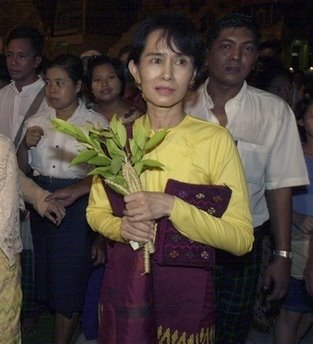


 Posts
Posts


