News & Articles on Burma
Thursday, 21 April, 2011
-------------------------------------------------------------
The Time Is Right to Appoint a U.S. Envoy to Burma
Canada eyes dialogue with new govt
US Pushes Asean to Reject Burma
Troops Alerted for Unrest: Leaked Documents
Family fears ex-army captain torture
Burma shuns Dhaka migrant conference
Suu Kyi Must Return to Her Strength
------------------------------------------------
Suzanne DiMaggio
Vice President of Global Policy Programs, the Asia Society
The Time Is Right to Appoint a U.S. Envoy to Burma
President Barack Obama recently nominated Derek Mitchell as the first U.S. Special Representative and Policy Coordinator for Burma. The appointment of an envoy to Burma, which was called for in U.S. legislation passed three years ago, is a positive step forward in the U.S.'s evolving policy of engagement toward Burma.
Mr. Mitchell is a smart choice for this new position. He currently is the principal deputy assistant secretary of defense for Asian affairs and previously was a foreign policy advisor to the Obama campaign, so he knows his way around the administration. He also knows Burma and the dynamics of the region well. The latter is especially important as it is clear that in order to improve conditions in Burma, the United States must find ways to a better coordinate its policies with other Asian countries. The post still needs to be confirmed by the U.S. Senate, but it is expected to pass without opposition.
The timing of Mr. Mitchell's appointment is a clear signal to Burmese leaders that the United States is serious about stepping up engagement. It comes on the heels of the official dissolution of Burma's ruling military junta into a quasi-civilian government. Although top military figures continue to hold on to leadership positions following the deeply flawed elections of November 2010 -- the recent swearing in of retired general Thein Sein as Burma's new president proves that -- it remains unclear to what extent new actors participating in the country's first parliament in over two decades and state legislatures will have room to maneuver.
At this moment of potential change, every effort should be made to ramp up dialogue with all facets of Burmese society and press for desperately needed reforms. Now with an envoy fully dedicated to Burma, the United States will be able to facilitate expanded engagement with a wide range of groups inside the country, including senior government officials, politicians and civil servants in the new ministries, opposition leaders, ethnic groups, as well as representatives from the private sector and nongovernmental organizations. Through expanded outreach, the U.S. should pursue measures designed to assist the process of developing more democratic institutions, both inside and outside government, and to encourage government capacity building.
Engaging Burma's neighbors will also be a key part of the job, especially in light of growing concerns related to Burma's reported nuclear ambitions and its troubling relationship with North Korea, greater instability along the Burmese borders as a result of military efforts to rein in insurgent groups, the continuing export of disease and refugees, and the trafficking of drugs and contraband across its porous borders.
Given that an international consensus has yet to emerge regarding approaches to Burma, the new envoy should focus on engaging China and India -- Burma's key military backers and trading partners -- as well as the Association of Southeast Asian Nations (ASEAN) to encourage reforms. Indonesia and other ASEAN countries, which once refused to criticize the internal affairs of its members, have developed both politically and economically to the point that they may have the will to press for change in Burma, a fellow ASEAN member. In particular, the envoy should focus on those ASEAN members that can bring the rest of the group along.
Another important part of the job will be to ensure that U.S. sanctions against Burma are better targeted toward corrupt political actors and their cronies, and not ordinary Burmese citizens. Related to this, the new envoy should lead an assessment of U.S. sanctions policy that takes into consideration the views of ASEAN, the E.U. and other key external and internal players.
At the same time, the envoy should continue to develop means of reaching the Burmese population directly through assistance programs. In the past few years, U.S. humanitarian assistance to Burma has expanded rapidly in response to dire humanitarian needs -- particularly in the aftermath of Cyclone Nargis in 2008. Supporting the growth of civil society and community development as well as small holder farmers and small- to medium-sized businesses should be a priority.
To be sure, the changes in Burma so far have been more rhetorical than substantive. It may be years before the real significance of the developments underway becomes apparent. With an envoy in place, the US will be able to act quickly and flexibly to both opportunities and obstacles and take a lead in pushing the new government to move in a positive direction. As a reinforcing step, Secretary-General Ban Ki-moon should follow Mr. Obama's lead and name a full time U.N. envoy to Burma. http://www.huffingtonpost.com/suzanne-dimaggio/the-time-is-right-to-appo_b_851537.html
----------------------------------------------------
Canada eyes dialogue with new govt
By AFP
Published: 21 April 2011
Governor General David Johnston [r] sits alongside Canadian Prime Minister Stephen Harper (Reuters)
Canada’s governor general on Wednesday accepted the credentials of Burma’s first ambassador to be posted to Ottawa in years, saying Canada looked forward to talks with him on human rights.
The appointment of U Kyaw Tin, a career diplomat once previously posted to Ottawa, is the first since Burma’s military regime disbanded.
His accreditation “will provide us with more opportunities to communicate our key interests and concerns,” Governor General David Johnston said in a speech.
“Canada looks forward to engaging with you on important issues of human rights, democratic development, and the rule of law during your tenure as ambassador,” he said. “These issues are of fundamental importance to Canada, both at home and abroad.”
Burma has not had representation in Canada since its last ambassador was recalled in 2004. Canadian diplomats operated from high commissions in Malaysia and Bangladesh and more recently from an embassy in Thailand, when dealing with Burma.
Burma’s ruling junta officially disbanded this month, giving the country a nominally civilian government for the first time in nearly a century. But many analysts dismissed the move as top junta figures remain firmly in leadership positions, albeit without their uniforms.
http://www.dvb.no/news/canada-eyes-dialogue-with-new-govt/15344
-----------------------------------------------
US Pushes Asean to Reject Burma
By LALIT K JHA Wednesday, April 20, 2011
WASHINGTON—The Obama administration has said it is unwilling to work with the Association of South East Asian Nations (Asean) with Burma as its chair, given its poor track record on human rights and democracy.
The US government's views in this regard are being conveyed to Asean members at a time when Burma has intensified its bid to take on the chairmanship of the regional bloc in 2014.
“I mean, obviously, we would have concerns about Burma in any kind of leadership role because of their poor human rights record and domestically, I don’t have any more comment beyond that,” the State Department spokesman, Mark Toner, told reporters at his daily news conference.
Toner was responding to reports that the new civilian government in Burma has submitted a letter to the Asean Secretariat stating its readiness to take up the group's chair in 2014. At the 11th summit meeting in Vientiane in November 2004, under pressure from colleagues and the international community, Burma missed the chance to take the chair.
Burma wants Asean leaders to make a decision at the upcoming Jakarta summit on May 7-8, so it will have sufficient time to prepare for the year-long chair in three years time.
However, US officials said the Obama administration's position is clear—that unless Burma improves on its human rights records and addresses the issue of real democracy in the country, it will be tough for the international community to work with Asean if Burma plays a leadership role.
The State Department said it hoped that the nomination of a new special US representative to Burma by the US president last week would give fresh impetus to its policy on Burma.
“Hopefully, it will add new impetus to our outreach to Burma. But also, again, this is an individual who can also underscore our deep, deep concerns about the authoritative rule there,” Toner said when asked about the special US representative to Burma.
Meeting the long pending demand of his lawmakers, Obama, last week nominated diplomat Derek Mitchell as his special US representative on Burma. A well-known South East Asia hand, Mitchell will hold an ambassadorial rank in this capacity.
Currently the principal deputy assistant secretary of defense for Asian and Pacific security affairs at the Department of Defense, Mitchell still has to undergo the rigorous confirmation process of the US senate before he can take on the new position.
“Whenever you name a senior official like this to do something, to lead our efforts in Burma, it elevates the initiative,” Toner said. “But we remain committed to our two-track approach to Burma and the engagement door does remain open.”
Meanwhile Surin Pitsuwan, the Asean secretary-general, told Japanese newspaper Asahi Shimbun on Monday that US approval may hold the key to the bloc's decision on Burma's chairmanship.
He said the leaders of other Asean members will decide the matter, adding that the opinions of East Asia summit members will likely be respected.
Japan, China, South Korea, Australia, New Zealand and India are among the 16 members of the East Asia Summit alongside the 10 Asean member states.
http://www.irrawaddy.org/article.php?art_id=21138
----------------------------------------------------
Troops Alerted for Unrest: Leaked Documents
By WAI MOE Wednesday, April 20, 2011
The office of the Commander in Chief (Army)—also known as the Ka Ka Kyi—alerted security forces to guard against potential unrest in the wake of African and Middle Eastern pro-democracy demonstrations.
Military documents leaked to The Irrawaddy also reveal that the regime believes the main opposition National League for Democracy (NLD) party was attempting to influence its troops.
The Ka Ka Kyi sent three separate orders to military commands across the country on April 5 which referred to top level Tatmadaw (armed forces) meetings in Naypyidaw on March 21, 28 and April 1.
During the March 21 meeting, the Chief of Staff (Army, Navy, Air Force) said that broadcasts of the “political unrest in Africa and the Middle East”—including TV stations and internet social media such as Facebook—as well as “powerful countries” were involved in forcing military intervention there.
Therefore the armed forces must be aware of the situation and ready to respond immediately with military action if something similar was to occur in Burma, he added.
According to the leaked documents, the Chief of Staff also said that security forces must deter the NLD and other opposition groups from contacting and organizing military personnel.
He also warned to prevent officials and other ranking soldiers from attempting to supplement their military salaries by contacting exiled persons and groups for additional benefits.
During the meeting at the Ka Ka Kyi on March 28, the Chief of Staff (Army, Navy, Air Force) also warned that “the activities of some political parties and the disbanded NLD have been increased,” and so troops must seek out information in advance and be ready for a crackdown if something happens.
The Ka Ka Kyi orders included a warning against officers and other ranks from going out at night, saying that soldiers were getting into accidents and even dying while outside their bases after hours.
The military documents did not mention the names of the Commander in Chief of Armed Forces and the Chief of Staff (Army, Navy, Air Force) but just their titles. But Min Aung Hlaing was publicly confirmed as the Commander in Chief—promoted from Chief of Staff— on March 30 during the cabinet swearing ceremony at the Parliament along with his deputy Lt-Gen Soe Win.
Despite remaining the most powerful man in Burma, Snr-Gen Than Shwe’s precise role is kept secret in Naypyidaw. But military sources confirm that Than Shwe remains the principle decision maker on key military and government issues, and that general staff officers such as Maj-Gen Nay Win, Brig-Gen Soe Shine and Col Myint Kyi still assist his command.
For the first time since the new regime led by President Thein Sein was sworn in on March 30, Vice Snr-Gen Maung Aye—No.2 top ranking official of the military junta—represented the State Peace and Development Council (SPDC), at Thingyan festival in Mandalay.
Although Maung Aye’s appearance at the opening ceremony of the Mandalay mayor’s water pandal on April 13 was not reported in the state run newspapers, he attended the event as a VIP.
Witnesses in Mandalay said that all present military officers—including Mandalay Chief Minister ex-Lt-Gen Ye Myint and Mayor Phone Zaw Han—treated him like a current official even though his position of deputy Commander in Chief of Armed Forces was transferred to Lt-Gen Soe Win on March 30.
“He seemed to still have power because all the generals and ministers treated him with great respect,” said an editor with a local journal who spoke on condition of anonymity. Witnesses also said current officials were kept waiting until Maung Aye arrived for the opening ceremony.
While the Burmese state media reported on Thingyan festival generally, it highlighted events in Kyaukse—Than Shwe’s home town within Mandalay Division. http://www.irrawaddy.org/article.php?art_id=21142
------------------------------------------
Family fears ex-army captain torture
By AYE NAI
Published: 21 April 2011
A former army captain turned charity worker who was arrested earlier this month by Burmese intelligence may have been tortured during interrogation, his family has told DVB.
The location of Nay Myo Zin and the reasons for his arrest on 2 April have been kept hidden from family members, who recently sent a letter of complaint to Burmese President Thein Sein.
Nine days after his arrest, police blocked an attempted visit by his parents and brother to the Aungthabyay interrogation centre in Rangoon where he was rumoured to have been taken. Little information about him has since surfaced.
“The police supervisor, U Shwe Linn, said my son was mentally weak, although he has a big body,” said Nay Myo Zin’s mother, Khin Thi. “I can’t imagine how badly they are torturing him.”
The 36-year-old had been volunteering at a Rangoon blood donation group started in 2009 by Nyi Nyi, a member of the National League for Democracy.
Groups such as these that operate outside state-run initiatives are often viewed with suspicion by the government, which has been known in the past to jail civilian relief and charity workers.
The family say they are suffering under the strain of his detention. Nay Myo Zin’s wife was undergoing “mental” difficulties, his brother, Khin Maung Htwe, said.
“Their child has also suffered a lot. As a young child, the family have had to sooteh him a lot. Now I’m taking responsibility for two families as my brother is in this situation.”
Arrested three days after Burma’s new president was sworn in, Nay Myo Zin becomes the first so-called ‘political’ detainee of Burma’s nominally civilian government.
Nay Myo Zin resigned from his army post in 2005 and has since been an active charity worker and relief worker. Khin Maung Htwe said his arrest was unlawful and called on the government to release him.
His mother earlier told DVB that he had left the army on his own volition because “he didn’t enjoy it there… He is a morally strong kid who is very devoted to charity work but [has] no involvement in politics”.
Under Burmese law, the family of a detained person has the right to know their whereabouts after 24 hours, although this is often ignored.
http://www.dvb.no/news/family-fears-ex-army-captain-torture/15351
-----------------------------------
Burma shuns Dhaka migrant conference
By JOSEPH ALLCHIN
Published: 21 April 2011
A migrant labourer from Burma works on a piece of furniture at a shop in the Thai border town of Mae Sot (Reuters)
Burmese government officials remained absent this week from a major regional conference for migrant-sending nations in Dhaka, despite an estimated 10 percent of Burma’s population travelling abroad to work.
The conference, named “Migration with Dignity” and part of the Colombo Process, is an attempt by 11 migrant-sending countries such as Bangladesh, Thailand, Nepal, India and Cambodia to improve coordination and protection of migrant workers.
This year focused on domestic workers, “one of the most vulnerable categories of migrant workers who work in isolation and are not covered by domestic law”, according to Dr Chowdury Abrar, professor of international relations at Dhaka University.
Burma sends millions of workers to both Thailand and Malaysia, which as major receiver nation attended in an observer capacity, as did the United Arab Emirates.
Also included in this year’s meeting, the first in five years, were a number of civil society representatives, primarily from the Migrant Forum in Asia, a network of NGOs represented by Abrar.
“We are exalting our own governments to get their acts together” Abrar told DVB, because, he believes, sender governments are often afraid to bring up rights issues with receiver nations over fears about bargaining from a “perceived weak position”.
The lack of formal arrangements with Burmese labour was seen as one reason why Burma was absent. But “at the end of the day you are talking about protecting the rights of migrants with a state that does not protect or honour and provide minimum protection or rights to its own citizens”, Abrar said.
Burma’s new constitution does have a provision for the right of association. Its implementation however is not considered a realistic possibility for the millions of Burmese who migrate for work, says Phil Robertson from Human Rights Watch. He notes that whenever Burmese migrant workers are asked if they sought help from their embassy, they laughed. Roberston instead describes the regime as “predatory”.
Jackie Pollock of the Thailand-based Migrant Assistance Program (MAP) said that “it has been deliberate policy [from the Burmese government] because they haven’t acknowledged the vast majority who left the country. As far as the Burmese are concerned, they didn’t exist”.
She said the government was afraid “because if they really start talking to migrants and providing services then they have to talk about people’s rights and protecting them, and if they do that overseas then they have to do that at home”.
Abrar sees “a definite need for collaboration and to harmonise policies, and to be more rights-oriented and not just see their migrants as economic agents”.
Pollock notes however that co-ordination in migrant rights is important for the future of Burma as roughly 10 percent of the country travel abroad for work. These people receive little additional skills and return home “exhausted”, and thus unable to help in the development of the nation.
There are thought to be several million migrants in Thailand alone, with working conditions routinely exposed as being almost prison-like. Tight restrictions are often placed on the movement and political association of migrant workers.
http://www.dvb.no/news/burma-shuns-dhaka-migrant-conference/15355
--------------------------------------------------
EDITORIAL
Suu Kyi Must Return to Her Strength
Wednesday, April 20, 2011
When Aung San Suu Kyi emerged from her home last week to greet well-wishers during Burma's New Year water festival, revelers chanted “Happy New Year Aunty Suu� and “Long live Daw Aung San Suu Kyi.� Hundreds stopped their cars and got out to shake her hand.
Despite all the attention and accolades she receives from international heavyweights, and the undeniable importance of garnering worldwide support for her cause, it is the people of Burma that form Suu Kyi's base.
Her primary strength lies not in the people she must cater to for international pressure on Snr-Gen Than Shwe (who despite having officially “retired� continues to pull the strings of the new government) and the rest of the junta leaders, but rather in the people she represents and whose hopes and aspirations she inspires.
Suu Kyi's top priority right now should be to reunite and reinvigorate the disparate groups that make up Burma's opposition movement and inspire the country's oppressed masses to once again actively participate in the cause of freedom and democracy.
The reason for this is simple: If Burma's pro-democracy and human rights movement continues to splinter and bicker, and if the people become further disillusioned with the lack of tangible progress, then all the international support in the world will be without meaning.
We all must recognize that the task she faces is daunting and probably the most difficult challenge she has faced yet—which speaks volumes given her years under house arrest and two decades battling the regime.
In 1988, when she first stood at the base of Shwedagon Pagoda and spoke to the people of Burma, she was throwing inspirational gasoline on an already raging bonfire of anger and protest. People believed and had hope that things could change. They were ready and willing to rise up, and she provided leadership and moral guidance.
Today, however, the situation is much different. Suu Kyi must bring together the branches of an opposition movement that have been broken and scattered by the political storms, and reignite the fading embers of passion in her core supporters who have become cynical about the possibility of real change in the foreseeable future.
In order to do so, there are several initial steps she can take inside Burma.
First, she must continue her calls for reconciliation at every level and do everything in her power to work towards that goal. She has already taken the bold move—in the face of heavy criticism—of meeting opposition and ethnic leaders who were once NLD party members and/or supporters but decided to defect to contest in the 2010 election.
We think this is a step in the right direction, because she is the one person who has the clout to deflect the inevitable pot shots that will be thrown from both sides at anyone who works towards unity in the opposition movement.
In addition, Suu Kyi must heed the critics who warn that “the enemy is within� her own camp, not only with the junta. The NLD is no longer the same party that faced down the military in 1988 and won the election in 1990 by a landslide. It has become an aging and sluggish organization that many observers feel is out of touch with its younger generation of supporters.
In short, while respecting the contribution and experience of the NLD's top hierarchy, Suu Kyi must take the lead in reforming her own party. Until this happens, the party will not legitimately be able to help reform the country.
To make progress in this direction, Suu Kyi must surround herself with a mostly new team of good, wise and dedicated advisors. She must inject new blood into her own party—bringing into the fold and promoting to prominence those who can advise her on issues such as foreign relations, health, education, ethnic conflicts, human rights, trade and investment and military affairs.
Only then will she be able to form a new opposition strategy that reflects the current political, economic and social environment in a way that inspires her supporters to become active in the cause.
In addition, Suu Kyi must delegate responsibility to the new members of her team in order to develop the next generation of opposition leaders that are capable of doing political battle with the generals.
Much has been said of her unwillingness to ask the aging NLD leaders to step aside, which in large part stems from Burmese culture rather than lack of will. But for these same cultural reasons, the NLD elders must themselves recognize that the party and the opposition movement need them to put personal feelings aside, move into an advisory role and let a new generation of leaders emerge from their shadow.
In addition, Suu Kyi and her team must increase their efforts to reconcile with approachable members of the newly installed military-dominated government. While it may not be possible to change the hardened hearts and narrow minds of the top generals, there are government servants and military personnel who admire her and listen to her voice for change.
If Suu Kyi can convince those inside the new government that have some power but lie outside the upper echelon that they have much to gain in a free and democratic Burma and much to lose if the country continues on its oppressive road to ruin, then she will have taken maybe the most important step towards true national reconciliation and real change—for the first time there will be people both inside and outside government pulling on the same oar.
Last but definitely not least, despite the security concerns it is perhaps time for Suu Kyi to begin to test the waters of her supposed “freedom.�
Upon her release, Suu Kyi said she wanted to listen to the people. She has done so—meeting with many of her supporters, young pro-democracy leaders, politicians, local NGO representatives and members of civil society groups—but most of these discussions have been behind closed doors and all have been in Rangoon.
With the new government having just been sworn in and the regime wanting to maintain the facade of increased respectability it has developed with some in the international community, Suu Kyi might now be able to spend more time on the streets with her supporters and venture outside the former capital to campaign for reconciliation.
Becoming more visible inside Burma, as opposed to in the international media, could actually do more than anything to bolster Suu Kyi's international standing.
Many of the diplomats and others in the world community whom she has met since her release don’t really know Suu Kyi and Burma. They weren't around in the late 1980s when she rallied the masses at the Shwedagon Pagoda, in the early 1990s when she gave weekend speeches at the gate of her lakeside home that drew thousands of people, or later when she risked her life in places like Depayin to meet supporters throughout the country.
As a result, the opinions of Suu Kyi voiced by the myriad international visitors she has received have been mixed—she and the senior NLD are well aware that some of the behind-the-scenes comments by diplomats who spoke and posed for pictures with her have been lukewarm.
But to truly understand and appreciate both Suu Kyi and those she represents, these new international friends, as well as the skeptics, need to see her out there playing to her strength—the people of Burma.
Copyright © 2008 Irrawaddy Publishing Group | www.irrawaddy.org
http://www.irrawaddy.org/opinion_story.php?art_id=21139
Friday, April 22, 2011
News & Articles on Burma-Thursday, 21 April, 2011


Thursday, April 21, 2011
News & Articles on Burma-Wednesday, 20 April, 2011
News & Articles on Burma
Wednesday, 20 April, 2011
-------------------------------------------------------------
Philippines urges Myanmar to free all political prisoners
Myanmar hopes to chair ASEAN in 2014
Burma Army soldiers fleeing from battlefields in Shan state
US Pushes Asean to Reject Burma
Activists target president with campaign
Politicians warned against ‘unlawful’ contacts
Migrants freed from Bangkok ‘factory prison’
Plight of Burmese Child Sex Slaves Revealed
Burma needs to stop ethnic wars and to release political prisoners
-------------------------------------------------
Philippines urges Myanmar to free all political prisoners
INQUIRER.net First Posted 14:36:00 04/20/2011
MANILA, Philippinines—The Philippines has urged Myanmar to release the military-ruled nation’s political prisoners, the Department of Foreign Affairs said.
Philippine Foreign Affairs Secretary Albert F. del Rosario noted Myanmar’s roadmap to democracy, which he said is crucial in “establishing a clear path to being able to join other countries of Asean in embracing democracy.”
In a meeting April 10 at the sidelines of the Association of Southeast Asian Nations Informal Special Foreign Ministers’ Meeting on the East Asia Summit in Bangkok, Del Rosario conveyed to Myanmar’s Foreign Minister Lwin Manila’s appeal to free the more than 2,000 political prisoners.
The United States has said that the most important step Myanmar can take to improve its international relations is to free its jailed political dissidents.
Lwin said Yanggoon has been making headway in implementing political reforms, citing that national elections were held, a new constitution was adopted, and the Parliament was convened.
The Asean is urging Western nations to lift sanctions against Myanmar, an Asean member. They have been imposed for its alleged rights abuses and suppression of democracy.
The European Union has eased sanctions on Myanmar's government, with the lifting of a visa ban on some civilian members of the regime.
The Obama administration has shifted the long-standing US policy of isolating Myanmar's generals, attempting to engage them while retaining sanctions imposed because of the military's poor record on human rights and democracy.
Washington is also concerned about Myanmar's alleged nuclear ambitions and trade in weapons with North Korea. http://globalnation.inquirer.net/news/breakingnews/view/20110420-332258/Philippines-urges-Myanmar-to-free-all-political-prisoners
--------------------------------------------
Myanmar hopes to chair ASEAN in 2014
BY NAOJI SHIBATA DEPUTY DIRECTOR OF THE EDITORIAL BOARD
2011/04/20
photoSurin Pitsuwan during an interview in Nara on April 18 (Naoji Shibata)
NARA--Myanmar (Burma) has told the Association of Southeast Asian Nations that it wants to chair the grouping in 2014 after declining the post in 2006 amid Western criticism.
In an interview with The Asahi Shimbun on April 18, Surin Pitsuwan, the ASEAN secretary-general, indicated that U.S. approval may hold the key.
He said the leaders of other ASEAN members will decide on the chairmanship, adding that the opinions of East Asia Summit members will likely be respected.
Surin said he wanted ASEAN's dialogue partners to "feel comfortable enough to come to our meeting."
Japan, China and South Korea are among the 16 members of the East Asia Summit. The United States and Russia will join this year.
Myanmar was scheduled to chair ASEAN in 2006. But other members persuaded it not to accept the post because the United States and European countries were critical of slow progress toward democracy in Myanmar.
The government of Myanmar said it has shifted from a military regime to civilian rule after a general election in November.
It apparently hopes to demonstrate its legitimacy internationally by chairing ASEAN before its full-scale economic integration, which is slated for 2015.
Surin said he hopes the new Myanmar government, which still comprises many former military officials, will make substantial progress toward democracy.
"We hope there is a substantive change (in the way) they deal with their problems and their relations with the rest of the world," he said.
He also asked Western countries to lift economic sanctions against Myanmar at an early date, saying that its people are suffering more than its government.
Touching on other regional issues, Surin said the ASEAN Regional Forum is expected to discuss Thailand's border dispute with Cambodia at its meeting in July.
Thailand has refused to accept observers from Indonesia, this year's ASEAN chair, for the disputed border.
Surin said cautiousness is strong within the Thai military, rather than the government, toward an Indonesian mission.
"It's not the government (but) the military establishment and various other players in the system" that are not ready to accept observers, Surin said.
He added that he is watching Thailand's response after a general election to be held in the near future.
Surin offered his condolences to victims of the Great East Japan Earthquake on behalf of ASEAN. He said ASEAN wants to do whatever it can.
He and his friends already donated $10,000 (830,000 yen) through the Nippon Foundation to support the quake-hit areas. http://www.asahi.com/english/TKY201104190195.html
--------------------------------------------------
Burma Army soldiers fleeing from battlefields in Shan state
Wednesday, 20 April 2011 16:11 Hseng Khio Fah
During these days, a large number of soldiers from Burma Army troops fighting with the Shan State Progress Party/ Shan State Army (SSPP/SSA) in Shan State South, have reportedly been deserting from the battlefields, local sources reported.
So far, the known deserters were ten, all from Light Infantry Battalions (LIB) 513 and 542 that have been fighting with the Shan army on 16-17 April, in Tawng Hio village, 20 miles south of Tangyan township, a source said.
“They [the soldiers] deserted during the fighting. They changed into civilian clothes and passed through the village. Five soldiers came out on 17 April and another five on 19 April,” said an eye witness.
At least 10 Burma Army soldiers were reportedly killed including a battalion commander and 15 injured in the clash that took place on 16-17 April. They also lost five RPG launchers and 6 backpacks to the Shan army, according to a civil servant from Tangyan.
None of the members from Shan army were reported injured or killed. The two-day siege was led by Major Sai Hseng with over a hundred men from Brigade No. 36, according to the SSA.
“Burma army soldiers took refuge villagers’ trenches, bunkers and monastery making the Shan army unable to fire,” said a source.
The battles between the Shan army and the Burma Army have begun since 13 March up to date and had injured and killed dozens of civilians including soldiers. Meanwhile, the Burma Army demanded the Shan army to withdraw all of its troops that had moved to the north of Mandalay-Lashio highway. However, the Shan army has yet to give any response and is still active in the areas together with the anti-Naypyitaw Shan State Army (SSA) “South” of Yawd Serk.
Last week, six Burma Army soldiers from Infantry battalion (IB) 152 based in Kholam sub-township of Namzarng township, surrendered to the SSA ‘South’ along with their weapons due to discrimination, abuses and forced labor, according to the SSA ‘South’. http://www.shanland.org/index.php?option=com_content&view=article&id=3621:burma-army-soldiers-fleeing-from-battlefields-in-shan-state&catid=86:war&Itemid=284
------------------------------------------------------
US Pushes Asean to Reject Burma
By LALIT K JHA Wednesday, April 20, 2011
WASHINGTON—The Obama administration has said it is unwilling to work with the Association of South East Asian Nations (Asean) with Burma as its chair, given its poor track record on human rights and democracy.
The US government's views in this regard are being conveyed to Asean members at a time when Burma has intensified its bid to take on the chairmanship of the regional bloc in 2014.
“I mean, obviously, we would have concerns about Burma in any kind of leadership role because of their poor human rights record and domestically, I don’t have any more comment beyond that,” the State Department spokesman, Mark Toner, told reporters at his daily news conference.
Toner was responding to reports that the new civilian government in Burma has submitted a letter to the Asean Secretariat stating its readiness to take up the group's chair in 2014. At the 11th summit meeting in Vientiane in November 2004, under pressure from colleagues and the international community, Burma missed the chance to take the chair.
Burma wants Asean leaders to make a decision at the upcoming Jakarta summit on May 7-8, so it will have sufficient time to prepare for the year-long chair in three years time.
However, US officials said the Obama administration's position is clear—that unless Burma improves on its human rights records and addresses the issue of real democracy in the country, it will be tough for the international community to work with Asean if Burma plays a leadership role.
The State Department said it hoped that the nomination of a new special US representative to Burma by the US president last week would give fresh impetus to its policy on Burma.
“Hopefully, it will add new impetus to our outreach to Burma. But also, again, this is an individual who can also underscore our deep, deep concerns about the authoritative rule there,” Toner said when asked about the special US representative to Burma.
Meeting the long pending demand of his lawmakers, Obama, last week nominated diplomat Derek Mitchell as his special US representative on Burma. A well-known South East Asia hand, Mitchell will hold an ambassadorial rank in this capacity.
Currently the principal deputy assistant secretary of defense for Asian and Pacific security affairs at the Department of Defense, Mitchell still has to undergo the rigorous confirmation process of the US senate before he can take on the new position.
“Whenever you name a senior official like this to do something, to lead our efforts in Burma, it elevates the initiative,” Toner said. “But we remain committed to our two-track approach to Burma and the engagement door does remain open.”
Meanwhile Surin Pitsuwan, the Asean secretary-general, told Japanese newspaper Asahi Shimbun on Monday that US approval may hold the key to the bloc's decision on Burma's chairmanship.
He said the leaders of other Asean members will decide the matter, adding that the opinions of East Asia summit members will likely be respected.
Japan, China, South Korea, Australia, New Zealand and India are among the 16 members of the East Asia Summit alongside the 10 Asean member states.
http://www.irrawaddy.org/article.php?art_id=21138
----------------------------------------------
Than Shwe Still in Control but Progress Possible: Former US Envoy
By LALIT K JHA Tuesday, April 19, 2011
WASHINGTON—Priscilla Clapp, a former US charge d'affaires to Burma, said last week that the country's new government is still a work in progress and that the complex post-election environment may evolve over the coming five years.
Speaking at a conference on Burma and North Korea in Washington, Clapp said the key determinant during this period will be the fate of Snr-Gen Than Shwe.
“He still controls major decisions and can be expected to do so as long as he survives. Both the SPDC [State Peace and Development Council, the name of the former ruling junta which was recently dissolved] and the new government are reflections of his predilections and preferences, and there is no question that he exists in his own strange universe, harboring deep and irrational apprehensions about the outside world that tend to deny Burma the benefits of interaction with a dynamic global community. Things could change rather quickly once he is no longer in place.”
Clapp said that despite their deliberate exclusion from the 2010 elections, the National League for Democracy (NLD) and Aung San Suu Kyi will remain a potent political force in Burma that could serve to strengthen the position of opposition parties in the new parliaments if the NLD leadership is able to associate with a broad coalition of opposition forces and the government does not take further repressive measures against them.
Noting that economic reform will be key to the success of political transition in Burma, Clapp said that if the country continues its current descent into predatory crony capitalism, under which wealth is held only by a small upper layer of privileged society, resentment will fester and problems will arise.
“If the new leadership recognizes the need for serious reform, as has been advocated for many years by the international financial institutions, the conditions for real economic development could be put in place rather quickly,” she said.
The new government must also, she stressed, immediately address the SPDC’s unfinished business with the cease-fire groups. She said that rather than dictating conditions, the government must negotiate reasonable agreements that allow these groups to become part of the new government and not left out in the cold as they were by the arbitrary election laws.
“So long as this situation is neglected, a threat of renewed insurgency along Burma’s borders will hang over the heads of the country’s new leaders,” she said.
Clapp said that despite the dissolution of the SPDC with the swearing in of the new government, many of its elements are still in place. Than Shwe is still the ultimate authority, and former senior members of the SPDC and its ministries still occupy positions of power in the new government, albeit without their military uniforms.
“Many of the privileges accruing to the military under the SPDC have been preserved in one form or another in the new government,” she said.
For example, she noted that just before the new government was sworn in, the SPDC established a 'special fund' under the sole authority of the commander-in-chief to be used for purposes determined by the military.
“This fund is probably the Special Projects Fund controlled by the Senior General [Than Shwe] under the SPDC, which was the off-line account for the hard currency earnings from gas and other resource exports,” she said.
“Its creation suggests that the military will continue to control the lion’s share of national resources under the new government and there will be little chance of improving the public welfare,” she said.
The involvement of the former SPDC hierarchy could act as a spoiler as the new government attempts to implement provisions of the 2008 Constitution, Clapp said, noting that it is a discouraging sign that the new government does not feel bound to observe the provisions of its own Constitution as the law of the land.
“Although we can hardly consider the Constitution to be a prescription for democracy, it was at least a step in the right direction,” she said.
“For example, the SPDC flagrantly disregarded both its spirit and content by promulgating election laws designed to favor the government party and to impose harsh restrictions on all opposition parties, especially the NLD. As if this were not enough, election officials engaged in blatant ballot box stuffing when it became apparent that some of the government’s chosen candidates would lose to opposition parties in a fair vote,” she said.
Rumors persist that a supreme state council with the same membership as the outgoing SPDC may be created to serve as the ultimate authority for major government decisions.
“If such a body is established, either formally or informally, it will be clearly extra-constitutional and outside the law,” she said.
“Despite the remnants of the SPDC that persist in the new government, we would make a mistake to conclude that it is merely a carbon copy of the SPDC. The new government is a far more complex creature and some of its features will introduce elements of competition, popular representation and even transparency that have not existed for decades,” Clapp said.
One must begin to distinguish between the uniformed military and those who have been forced out of uniform and into political life.
“As they become increasingly involved in the process of parliamentary governance, the ex-generals will probably seek to translate their new elected and appointed positions into greater power for civilian institutions in order to replicate the authority they had while in uniform. Uniformed military will no longer control civilian institutions as they did under the SPDC and it can be said that they have taken one or two steps back to the barracks,” she observed.
“Although we have only had a brief glimpse so far of how the new national parliament will operate, there are early signs that it will be at least somewhat more responsive to public concerns than was the case under military rule,” Clapp said.
“In response to questions from opposition parties, for example, the new parliament provided more substantive answers than was ever the case with the SPDC. The optimists among us can hope that this trend continues as the parliamentary committees begin to do their work,” she said.
Copyright © 2008 Irrawaddy Publishing Group | www.irrawaddy.org
http://www.irrawaddy.org/article.php?art_id=21131
----------------------------------------------------
Activists target president with campaign
By AYE NAI
Published: 19 April 2011
Burmese President Thein Sein will be the target of a signature campaign led by activists in Burma who are demanding the government release political prisoners and begin political dialogue with the opposition.
According to campaign organiser Phyo Min Thein, one-time chairman of the Union Democratic Party (UDP), the petition will also call for the safe return of refugees and political exiles and an end to intractable conflicts with armed ethnic groups.
“The first step [the new government] needs to take is to release the detained democracy activists to allow them to take part in rebuilding our nation and developing a democratic system,” he said.
“We hope the government led by President Thein Sein will make a positive response to our call.”
Activists in Burma face significant risks, with hundreds behind bars for speaking out against what they claim is injustice by the government. Burma holds nearly 2,200 political prisoners.
Their release would prove to Burmese and the international community that “[the government] is governing the country under real democratic standards”, said monk Dhamma Thiri, a leader of All Burma Monks’ Association.
The prospect of a prisoner amnesty had been mooted as one of the first signs of appeasement by the new government, which was sworn in last month, but nothing has yet taken place.
The campaign organisers are also looking to establish a youth network to further unify activists’ demands.
Phyo Min Thein said the first step would be to collect signatures in Rangoon from National League for Democracy members, ethnic political groups, veteran politicians and former students during the 1988 uprising.
http://www.dvb.no/news/activists-target-president-with-campaign/15317
----------------------------------------
Politicians warned against ‘unlawful’ contacts
By SHWE AUNG
Published: 20 April 2011
One of the ubiquitous signs seen in Burma warning people not to 'divide the country' (Wikimedia Commons)
Politicians in Burma are forbidden from communicating with groups deemed by the government to be ‘unlawful’, according to the country’s Union Election Commission.
Parties risk being dissolved if they refuse to abide by the new rules that effectively sever contact between MPs and exiled media and human rights groups, a directive issued on 5 April warns.
It could also cut lines of communication with the National League for Democracy (NLD), Burma’s most potent opposition force whose party status was cancelled last year after it refused to compete in the November polls. Party spokesperson Nyan Win said how that the NLD has never been declared “unlawful” by the government.
There is still however a great deal of ambiguity over who qualifies as an ‘Unlawful Association’, a charge that is used frequently by Burmese courts to jail activists, journalists and lawyers.
“There are a lot of points they didn’t make clear as to which groups are unlawful,” said Nay Myo Wei, chairman of the Peace and Diversity Party. “It will be difficult [to be clear] if the government or the UEC doesn’t specify which groups we should not be communicating with.”
The party is preparing a letter for the UEC in which it will also ascertain whether the NLD falls under this banner.
Burmese law dictates that any “combination or body of persons” deemed by the president to be “[interfering] with the administration of the law or with the maintenance of law and order”, or indeed who is “a danger to the public peace”, will serve a minimum two-year jail term.
The subsequent criteria defining these charges is vague.
But according to the leader of the National Democratic Force, Khin Maung Swe, parties had already been told not to communicate with unlawful groups – still, however, no list of those that fit the criteria has been released.
Several inside reporters for DVB have been sentenced under the Unlawful Associations Act, suggesting that links to certain exiled groups is a crime under Burmese law. State media in Burma regularly accuses groups like DVB and Radio Free Asia of “generating public outrage”.
The directive casts further doubt on assertions by the government, which was sworn in last month, that Burma is transitioning to a new era of civilian rule that it brands “disciplined democracy”.
Some observers claim however that a greater degree of transparency exists in the new parliament, although no let up in the oppressive political climate in Burma is evident.
http://www.dvb.no/news/politicians-warned-against-%E2%80%98unlawful%E2%80%99-contacts/15340
---------------------------------------
Migrants freed from Bangkok ‘factory prison’
By MAHN SAIMON
Published: 20 April 2011
Police raids on a factory in the Din Daeng area of Bangkok yesterday ended in the release of more than 60 Burmese migrants who claim they were kept in prison-like conditions and forced to work.
The majority of those used as factory “slaves”, and Thai media has described the incident, were female, one of the released told DVB. They had been kept in four-storey building and were prohibited from leaving or making phone calls.
Thai authorities carried out the raids after two of the migrants escaped this month and told police of the situation.
“We had to live like prison inmates and I’m now having difficulty moving my lower body parts,” said one female, who came to Bangkok from the Thai border town of Mae Sot in search of better wages.
“I have been here for eight months but most of the rest have been only for about two or three months. We made an attempt to escape [in January] but they got the police to catch us and fined us THB5000 [$US165] each,” she said.
A Thai anti-human trafficking official said that employers at the garment factory had threatened further arrest if the migrants attempted to flee, adding that they were forced to work and paid little.
The Bangkok Post quoted a police official who said they had worked on average 16 hours a day for only THB200 ($US7) a month, while one migrant told DVB they received only THB10 ($US0.30) for each garment they made.
“I have about THB40,000 ($US1,330) debt and [the employers] still haven’t covered our travel expense [to Bangkok],” she said.
Trafficking of Burmese migrants to Thailand is rife: many are approached by trafficking rings in Burma with promises of higher wages in Thailand, but poor anti-trafficking enforcement and state corruption mean that the majority are forced into exploitative labour.
The Thailand-based Nation newspaper said that two of the suspects – identified as Darong Wu, 50, and his wife Namee Li, 26 – have been detained by police on suspicion of trafficking and labour violations.
http://www.dvb.no/news/migrants-freed-from-bangkok-%E2%80%98factory-prison%E2%80%99/15337
--------------------------------------------
Plight of Burmese Child Sex Slaves Revealed
By BA KAUNG Tuesday, April 19, 2011
RANONG, Thailand—“The latest price of 'opening a Burmese packing' here is 13,000 baht,” explained Thidar, a Burmese prostitute in Thailand's Ranong province bordering southern Burma.
Inside the brothel of No. 3 Ranongpattani Road, a group of Burmese prostitutes reveal that “opening a Burmese packing” means a Burmese virgin girl being forced to work for the first time in the brothels of this small fishing port town.
They explain that every month around 40 girls from all over Burma—some as young as 13 or 14—are sold by human traffickers to Thai brothels in Ranong. Some are even sent to the popular tourist resort of Phuket, with around 200 Burmese girls currently working as prostitutes in their brothel alone.
“She came here for 'packing opening' three months ago,” Thidar said, pointing at a Burmese teenager sitting in the corner of the dingy room where they received Thai and Burmese customers.
Thidar herself is a former vegetable seller from Rangoon's Insein Township. She was approached 10 years ago in her local market by a Burmese woman who told her that she could make good money at a restaurant in Kawthaung, the Burmese border town on the opposite side to Ranong.
“The woman said I would have a good selling job and I wanted to earn some money,” she said. So at the tender age of 15, she left her mother and stepfather and was taken from Rangoon to Kawthaung with two female companions of a similar age.
Upon arrival in Kawthaung she was kept in a restaurant sealed with curtains for two days, but ran away after being forced into sex with a Burmese man.
“I ran away in the rain onto the streets of Kawthaung market,” she said. “When I saw a police station, I asked for help. But the lady followed me and brought me back from the police saying I would be sent home to Rangoon.”
But when she was back to the brothel again, she was tied with ropes and flogged. A few days later, she was taken with some other young girls to Ranong in a small boat and sold to a Thai brothel owner in the neighborhood of Paukkhaung.
“After I arrived, I was asked to take a pill and then I fell asleep. When I woke up, I found myself naked and smeared with blood.”
The brothel owner told her that she had to pay back the amount of money which he had bought her for. Even since then, she has been working as a prostitute and now has two children fathered by a Mon fisherman who died at sea during a storm.
These prostitutes' income depends on the number of customers they receive. For a single instance of sexual intercourse the brothel owner charges a customer 350 baht, of which the worker only receives half.
“I don't know what else to do for a living except this job. I could not undo what had happened, so I kept this job,” she said.
According to Thidar and her fellow workers, poverty and lack of care by their own parents were main reasons why they were tricked by human traffickers and forced into prostitution. Ei Ei, in her 20s, the daughter of a sea gypsy family in Kawthaung, said she hates her mother who never sent her to school and did not look after her properly. She added that she held various jobs to support the family ever since childhood.
“I used to work on a dynamite-fishing boat and also on a squid boat at sea,” she said.
She was later approached by a prostitution broker and first arrived in a Ranong brothel five years ago. As a prostitute, she has already married four times and is now addicted to various kinds of illicit drugs which she buys with her meager wages or receives from customers in exchange for oral sex.
She said that the use of drugs, particularly a drug compound called “Asean” popular among the Burmese community there, helps her forget the harsh treatment received from her customers.
“The Burmese fishermen are the worst in abusing us. They force me to perform oral sex against my will and they also refuse to use condoms,” she said.
Like most of her colleagues, she has no identification card and thus has to pay the police a license fee of 200 baht every day.
In this town of 130,000 thousand Burmese migrant workers, the local police refuse to tackle the human trafficking issue and are even collaborating with the criminals, claims Kyaw Than, a local Burmese restaurant owner who migrated from Burma 32 years ago.
“These very young Burmese girls keep streaming in. The policemen themselves are involved in these issues,” he said.
Burmese workers in Ranong face high risks of disease including malaria and HIV/AIDS, plus limited access to medical facilities and a poor educational environment for their children. These migrants—particularly Burmese sex workers—also face police and military harassment, according to a 2009 survey by the Institute of Developing Economies.
“Some of the Thai brothel owners immediately deport Burmese sex workers as soon as they are found to be HIV positive,” said Khine Pan Zon, an aid worker for the World Vision NGO who is giving health counseling to Burmese sex workers in Ranong.
She added that those HIV-positive sex workers who continue to work often no longer care about their own lives and start abusing drugs, cutting off contact with their family members back in Burma.
There are an estimated 1,000 Burmese sex workers in the town, with nearly 40 of them said to have come from Burma's Irrawaddy Delta after it was devastated by Cyclone Nargis in 2008.
“I am now sending money to my family in Burma and will go back there once I saved some money,” said a 32-year-old Burmese sex worker from Irrawaddy Division who works in a karaoke shop.
“I just came here to get a proper job, but ended up in an unexpected life. So there is no way out for now.”
http://www.irrawaddy.org/article.php?art_id=21134&page=2
-------------------------------------------
Burma needs to stop ethnic wars and to release political prisoners
By Zin Linn Apr 20, 2011 7:58PM UTC
At least 10 Burma Army soldiers were reportedly died in action including a battalion commanding officer and 15 injured in the combat that occurred on 16-17 April. The Shan army also seized five RPG launchers and 6 backpacks from Burmese troops, quoting a civil servant from Tangyan Shan Herald Agency for News (S.H.A.N.) reported.
None of the members from Shan army were injured or killed, the source said. The two-day siege was led by Major Sai Hseng with over a hundred men from Brigade No. 36, according to the SSA.
The SSA’s First Brigade-turned Shan State Progress Party/Shan State Army (SSPP/SSA) is reportedly expanding its controlled area to Namtu, Namhsan, Mongmit and Kyaukme townships while combating against the Burma army, as said by the local residents. The clashes between the two sides are reported almost everyday since 13 March. The SSA was given an ultimatum to lay down arms by Burma Army on 1st April. But up till now the SSA is still reportedly take no notice of it.
Throughout these days, several soldiers from Burma Army troops warring with the Shan State Progress Party/ Shan State Army (SSPP/SSA) in Shan State South have reportedly been deserting from the battlefields, local sources reported via Shan Herald Agency for News.
Up to now, the identified deserters were as many as ten; all of them were from Light Infantry Battalions (LIB) 513 and 542. The two battalions have been fighting against the Shan soldiers on 16-17 April, in Tawng Hio village in Tangyan Township, a local source said.
“The soldiers deserted during the fighting. They changed into civilian clothes and passed through the village. Five soldiers came out on 17 April and another five on 19 April,” said an eye witness.
According to a source Burma army soldiers took shelter under villagers’ trenches, bunkers and monastery to avoid shooting from the Shan armed forces. The battles between the Shan army and the Burma Army have begun since 13 March up to date and had injured and killed dozens of civilians including soldiers.
Meanwhile, the Burma Army demanded the Shan army to withdraw all of its troops that had moved to the north of Mandalay-Lashio highway. However, the Shan army has yet to give any response and is still active in the areas together with the Shan State Army (SSA) “South” led by Yawd Serk.
Last week, six Burma Army soldiers from Infantry battalion (IB) 152 based in Kholam sub-township of Namzarng township, surrendered to the SSA ‘South’ along with their weapons due to discrimination, abuses of power and forced labor, according to the SSA ‘South’.
At the same time, ten villagers in Kyaukme, Shan State North, have been detained and tortured over suspicion of collaboration with the Shan State Army (SSA) ‘North’, quoting local sources Shan Herald Agency for News said. They were detained by troops from Light Infantry Battalions 501 and 502, based in Kyaukme together with troops from Mogok, Namlan and Mongmit.
On the other hand, the family members of the detained victims are expecting helps from elected Shan representatives. The SNDP leader Sai Ai Pao is a State Assembly representative for Hsenwi and state minister for Industry and Mines. Besides, Sai Naw Kham is also a State Assembly representative for Hsipaw as well as state minister for Construction.
However, this war upon ethnic populace launched by Burma Army produces not only deserters from Burmese military but also victims from Shan villages. In addition, it forces to flee political exiles, illegal migrants and refugees into neighboring countries.
Currently, political activists in Burma have been taking historic risks with a signature-campaign to release political prisoners who are behind bars for speaking out against what they say is injustice by the government.
Some political analysts believe releasing over 2,000 political prisoners and stopping the aggressive wars on ethnic people are the most important topics to address by the new ‘Thein Sein government’. Releasing political prisoners and calling peace to armed ethnic groups would prove to the international community that new government is going along political change through the real democratic values.
http://asiancorrespondent.com/52826/burma-needs-to-stop-ethnic-wars-and-to-release-political-prisoners/
__._,_.___
Tuesday, April 19, 2011
News & Articles on Burma-Monday, 18 April, 2011
News & Articles on Burma
Monday, 18 April, 2011
-------------------------------------------------------------
Striking the right note on Burma
Can Burma create a genuine clean government?
Burma seeking to be the chairman of Asean in 2014
Will Thailand Send 140,000 Refugees Back to Burma?
Private schools on pilot run in Myanmar to formally open in June
EU suspends visa ban on Burmese FM
US appoints special envoy to Myanmar
Burma's Human Rights in 2010
Burma doesn’t deserve ASEAN Chair
------------------------------------------------------
Striking the right note on Burma
Published: April 17 2011 18:50 | Last updated: April 17 2011 18:50
The generals who have run Burma since 1962 are said to be nervous about becoming too dependent on Beijing. Chinese companies are involved in some 20 energy projects including the construction of a 500-mile pipeline to pump oil and gas to landlocked Yunnan province. In border towns and cities such as Mandalay, Chinese money and influence are everywhere. For years, both the US and the European Union – which have imposed varying degrees of sanctions – have been losing sway over Rangoon.
It is still too early for the west to relax sanctions. That would look too much like a response to sham elections held last November. The poll nominally established a civilian parliament and a series of regional parliaments. But most of those returned in the heavily manipulated poll were close to the long-dominant junta. One quarter of seats were reserved for the military. The party of Aung San Suu Kyi, who won the 1991 Nobel peace prize, did not even run.
EDITOR’S CHOICE
EU relaxes curbs on Burmese ministers - Apr-12Burmese junta wary of China’s embrace - Apr-06In depth: Burma - Nov-08Parliament takes control in Burma - Mar-30Burma official opposition tries to straddle divide - Mar-30Suu Kyi warned over sanctions support - Feb-14Yet there is a case for eventually re-examining the west’s sanctions policy. To put it bluntly, these have not worked. If anything, isolating the country has played into the generals’ hands. Their grip on power, superficially at least, seems stronger than ever. Thanks to business dealings with China, India and Thailand, they are economically more secure. Ms Suu Kyi’s National League for Democracy, now banned, has re-examined the sanctions issue, although its conclusion was that these were not hurting ordinary Burmese. Yet even the NLD, some of whose members secretly worry the sanctions policy may have driven them into a political cul-de-sac, has given some ground. Ms Suu Kyi, for example, is more relaxed about tourists visiting Burma so long as they avoid state-run tours.
Last week, the EU lifted travel and financial restrictions on four Burmese ministers and 18 vice-ministers who had minimal links to the military. The change was in line with efforts by the US to engage more. The Obama administration is seeking Senate approval to appoint a special US envoy. Contemplating more dialogue is not the same as lifting sanctions. Flawed as these may have been, the west should not think about relaxing them until the generals give some ground – for example, by releasing some of the more than 2,200 political prisoners. The changes announced by the EU strike a balance between opening a dialogue and keeping the generals isolated. They probably strike the right note.
Copyright The Financial Times Limited 2011. You may share using our article tools. Please don't cut articles from FT.com and redistribute by email or post to the web.
http://www.ft.com/cms/s/0/dc7305b6-6917-11e0-9040-00144feab49a.html?ftcamp=rss#axzz1JrqDOQ77
-------------------------------------------------------
Can Burma create a genuine clean government?
Mon, 2011-04-18 01:02 — editor
ArticleBy - Zin Linn
April 17th is the New Year day in Burma or Myanmar. After four-day water-splashing festival – April 13 to 16 – here come to mark the traditional New Year on April 17, which is Burmese New Year day as always in line with the Burmese calendar.
At this moment, with a New Year spirit, Burmese people are waiting for a bright era earnestly how their new government will transform the country as well as its subjects. Burma’s new President Thein Sein made use of his inaugural address last month to illustrate his government’s reform agenda, promising ‘to open doors’ and ‘catch up’ with the outside world. So, people look forward to have the benefit of the fruits of economic development under President Thein Sein’s government.
During the days of State Peace and Development Council (SPDC) regime, the International Labor Organization (ILO) called on the military regime to get rid of the practice of forced labor in Burma, which has taken root for several years. However, the regime has no political will to prevent the use of forced labor. The setback is still at large and Thein Sein has the responsibility to end it.
Expressing the internal affairs policy line up, Thein Sein pledged to get better socio-economic conditions for the people, industrialize the economy, combat corruption, reinforce the law-courts and improve public health, education and media policy. However, without eliminating forced labor, it will be impossible for the government to establish economic developments in this poverty stricken country.
Actually, forced labor is a burden on the general population, pulling farmers away from attending to their farm works and children from school. It falls most heavily on landless laborers and the poorer strata of the population, which rely on labor hire for survival. The impossibility of making a living because of the forced labor is a frequent reason for fleeing the country.
So, if Thein Sein truly pledged to get better socio-economic conditions for the people, he should go along with the ILO’s plan and he also must listen to the complaints of the citizens who are still under the forced labor bondage.
Thein Sein also promised to put emphasis on, including amendments to existing laws that are against the constitution, occasionally increasing salaries and pensions, reviewing existing agriculture and employment laws and promulgating and amending laws on environmental protection.
His words are silky enough to pour into one’s ears. But, here comes a question about the Myitsone dam in Kachin state. Irrawaddy Myitsone dam is being constructed by the state-owned China Power Investment Corporation (CPI) jointly with Burma’s Asia World Company and the junta’s No.1 Ministry of Electric Power. The project was set in motion on 21 December 2009, despite heated protests by the Kachin people and environmentalists who fear severe ecological damage.
The Myitsone dam is one of seven dams on the headwaters of the Irrawaddy River in Kachin State. It will produce 6,000 MW of electricity. Most of the electricity produced by the dam projects will be sold to China. The Kachin people repeatedly appealed to the Burmese military leader, Snr-Gen Than Shwe, to stop the Myitsone dam project. But their request was ignored.
Now, this issue is in the hands of Thein Sein and the Kachin people have to watch his response on this dam issue carefully.
In the most important part of Thein Sein’s speech he said he would like to get along with various political parties, especially with politicians who have different outlooks and views.
He said, “I promise that our government will cooperate with the political parties in the parliaments, good-hearted political forces outside the parliaments and all social organizations. I would like to advise the political parties to work together … although they may have different outlooks and views”.
He also added, “I urge the parliament representatives of various political parties to follow the wishes of the majority and respect the wishes of the minority in accordance with democratic practices.”
On the contrary, he himself as prime minister of the previous junta aggressively banned the basic rights of citizen including freedom of speech, freedom of press and freedom of association.
People hope him of making a true clean government as he mentioned in his speeches. To be a clean government, he must enforce judiciary system first together with freedom of expression plus free press. Without freedom of expression and free press, the president cannot hear the voice of the grassroots or workers and farmers who are the majority of the nation.
According to an investigative report last month by the Assistance Association for Political Prisoners (Burma), there are at least 2,073 political prisoners in Burma’s prisons, reflecting the systematic denial of fundamental freedoms of expression, opinion and association. Burma has sentenced severe prison terms to thousands of political activists, monks, student leaders and journalists for their alleged involvement in politics.
To prove his words – cooperate with the political parties with different outlooks and views – Thein Sein has to think about releasing over two thousands political prisoners first of all in this New Year. Unless he releases political prisoners, people will not accept as true his entire speech.
Additionally, Aung San Suu Kyi has constantly called for a national reconciliation and publicly announced her will to cooperate with the military regime on improving the situation in Burma. She has repeatedly called for the release of all political prisoners as a sign of understanding.
According to political analysts, putting thousands of political prisoners in jail, Thein Sein’s imagination of ‘clean government’ plan will go nowhere. A ‘clean government’ has to allow fundamental human rights guaranteeing proper judiciary system.
- Asian Tribune - http://www.asiantribune.com/news/2011/04/17/can-burma-create-genuine-clean-government
------------------------------------------------------
Burma seeking to be the chairman of Asean in 2014
Kavi Chongkittavorn
The Nation (Thailand)
Publication Date : 18-04-2011
Can Burma have its cake and eat it too? The answer rests with Asean. Right after the new civilian government was installed at the end of March in Naypyidaw, one of the first important tasks President Thein Sein did was to submit a letter to the Asean Secretariat stating Burma's readiness to take up the grouping's chair in 2014.
At the 11th summit meeting in Vientiane in November 2004, under pressure from colleagues and the international community, Burma skipped a chance to take the chair, citing domestic conditions, especially the absence of national reconciliation and dialogue with all stakeholders. What Burma did not know at the time was resumption of the chairmanship was not automatic!
Last week, when the newly appointed foreign minister Wunna Maung Lwin briefed the Asean foreign minister in Bangkok on the latest political situation inside his country, he also asked for the grouping's support to allow Burma to take the role of chairman. Burma wants Asean leaders to make a decision at the upcoming summit on May 7-8 in Jakarta so it will have sufficient time to prepare for the year-long chair in three years. However, several Asean countries still have reservations. Before Asean makes any decision on this matter, they have asked Naypyidaw to allow a delegate from Asean to visit the country to assess the latest situation and its readiness to take up the chair. Lwin could not decide and said he would take the matter back to the capital.
Since its admission in 1997, Burma has resisted repeated calls from Asean for national reconciliation, political reforms as well as hordes of other issues. As part of a family, Asean has quietly swallowed its pride and lived with its bruised reputation to render support for the brutal regime in Naypyidaw. At this juncture, Asean still holds the last bargaining chip, albeit very small, to salvage international standing of the group. At the Bangkok meeting, Singapore and Malaysia made it clear they wanted a credible Burma to chair Asean.
The new civilian government must show gratitude in concrete ways that the Asean support over all these years has been worth it. Furthermore, it must prove that it can initiate policy decisions independently from the strongman, General Than Shwe, through its new political process. A quick positive response to the grouping's overture for a fact-finding mission should be forthcoming after the traditional New Year festival. Otherwise, it would bode further ill feeling with Asean as well as weaken the grouping's call to end sanctions against Burma. Eventually, whatever decision the grouping takes will directly impact on a series of high-profile meetings and projects Asean has with its dialogue partners.
Obviously, given the current situation, nobody with the right mind would expect leaders from the US, the EU, Canada, Australia and New Zealand to go to Burma for a series of meetings - unless there were substantive changes in
people's livelihoods and overall reforms, especially those related to democracy and human rights. As such, Burma has a small window with a limited timeframe to showcase its new government - that its parliament is neither subservient to the military's machinations nor a sham.
Equally important, Naypyidaw needs to engage with the newly appointed US envoy on Burma, Derek Mitchell, who still awaits approval from the US Senate. Talks would serve as a barometer of Washington's renewed engagement on Burma. With Mitchell, issues related to nuclear proliferation - and Burma's with China and North Korea - would also be priorities. For the time being, it has to contend with the latest EU decision to renew sanctions for another year with an easing of travel and financial transactions for key Burmese civilian ministers. The EU, which is still divided over sanction issues, is willing to engage in further dialogue.
Essentially, the West is giving a trial run to Than Shwe's "end game" if the new government plays it well. After all, Thein Sein has the right mix - perceived as the least corrupt leader with some administrative experience. His inaugural speech was well received with elements of reform and calls for good governance. However, with a pacemaker and advanced age, whatever he chooses will have a bearing on his country and his legacy.
A timely response to overtures from Asean and the West would greatly boost the civilian government's credentials. If Thein Sein can seize the opportunity and deliver on key concerns such as the release of a large group of political prisoners - estimated at 2,100 - and come clean on nuclear proliferation, normalisation with the West and increased humanitarian assistance for health and education could come very fast this time. Both sides can no longer afford to misread each other's intentions and enthusiasm.
Of late, within the Asean inner circle, serious discussions continue unabated as to the grouping's future direction after the high-profile Indonesian chair this year. Will the US president come to the region for the East Asia Summit and the Asean-US leaders' Meeting in the future, not to mention other summits? Even Indonesia, as the world's third largest democracy and a proud chair, has difficulties with the White House negotiating the upcoming EAS summit timetables. The host wants it at the end of October, the White House has so far insisted on early November after the Asia Pacific Economic Cooperation meeting in Honolulu. Just imagine what the US
attitude would be if other Asean countries took up the chair.
Cambodia and Brunei would come in as future Asean chairs in 2012 and 2013 respectively. Let's be realistic - nobody expects Obama to go to Phnom Penh next year or for that matter, if he is re-elected, to Brunei. Should Asean give the green-light to Burma's chair in 2014, the answer regarding the US is rather obvious. Furthermore, Laos has to acquiesce to Burma's request because it anticipates holding the seat in the same year following alphabetical rotation. Given past experience and growing confidence of this land-locked nation, Laos may not be in the mood to delay taking up the top post.
If Asean wants to stay relevant and sustain its centrality in the overall scheme of the region and beyond, it has to convince Burma, after failing to do so repeatedly, that the well-being of the Asean community very much rests in the hands of Burmese leaders, including shadow junta leaders. Again, in case there is still doubt in the minds of Asean leaders in the next few weeks, then it would be better off to defer the chair further until the next round in 2021. That would be a historic moment - 24 years of waiting before holding a summit!
http://www.asianewsnet.net/home/news.php?id=18486&sec=3
--------------------------------------------------
Will Thailand Send 140,000 Refugees Back to Burma?
ROBERT HORN / BANGKOK Robert Horn / Bangkok –
Sun Apr 17, 12:00 pm ET
More than 140,000 refugees will be forced back to war-torn Burma unless Thailand's Prime Minister Abhisit Vejjajiva shows a rare bit of backbone in dealing with his country's increasingly powerful security forces. Last week, the nation's head of security announced its intention to close nine refugee camps along the Thai-Burma border after elections were held in Burma last fall. The announcement drew sharp criticism from human rights groups and representatives of Burma's ethnic minorities who said the refugees would face persecution, torture, rape and worse if sent back to Burma under current conditions. "Burma is still a dangerous place - too dangerous for the refugees to return," says Sunai Phasuk of Human Rights Watch
Thailand has served as a safe haven for refugees from neighboring countries for four decades, sheltering hundreds of thousands over the years, from Cambodia, Laos, Vietnam and, most recently, Burma. Ethnic Karen, Shan, Mon and others have been spilling into Thailand since the 1980s when Burma's military regime began launching a brutal series of armed campaigns to bring ethnic regions fighting for autonomy under its control. The Burmese military has a documented record of burning villages, torture, rape, summary executions, forcing villagers to serve as porters for soldiers and to work in other forms of slave labor. (Read more about Burma's minorities.)
Echoing security leaders, Thai Government Spokesman Panitan Watanayagorn said recent elections in Burma "shows that things are beginning to improve." But with leading opposition figures such as Aung San Suu Kyi barred from running, and many ethnic groups disenfranchised by the military, Western governments and human rights groups have labeled the elections a sham.
Furthermore, fighting has intensified in recent months as Burma's army attempts to crush ethnic militias who have refused to lay down their arms. "There is fighting in Shan State and Chin State, not just in Karen State. It is very unstable and people are still fleeing," says Naw Zipporah Sein of the Karen National Union. Ethnic Karen make up the majority of the refugees who face returning. "Even when there is no battle going on, villagers are still rounded up for forced labor, raped, tortured, killed and have their property stolen by the Burmese army. They are still using villagers as human mine sweepers."
Government spokesman Panitan said Prime Minister Abhisit instructed security officials to prepare an evaluation of the situation before he would decide whether or not to shutter the camps. He says that there is no timetable for sending the refugees back to Burma, and for that to happen, two conditions must be met - "that the situation for them is safe, and that Burma will accept them." (See pictures of the refugees living in cities around the world.)
Sending the some 140,000 Burmese refugees back to Burma against their will will not do Thailand's humanitarian image any favors. Thailand's record of compassion has already been marred by actions that can only be described as heartless: in 1988 students who fled the slaughter of democracy protesters by Burma's military government were handed over to the junta by Thailand's then Defense Minister Gen. Chavalit Yongchaiyudh. In 1997, then Prime Minister Chavalit had Karen refugees, including women and children, pushed back into the path of a Burmese Army offensive.
In late 2009, despite international protests, Abhisit repatriated over 4,000 ethnic Hmong to Laos, where the ethnic minority's persecution has been well documented. Earlier that same year, the Thai military was accused of pushing Rohingya boat people who had fled from Burma back out to sea. Abhisit ordered the practice stopped, but allegations again surfaced recently that such incidents have continued.
Many expected that Abhisit, who is Oxford educated and has a more international outlook than his predecessors, would place humanitarian principles first in matters relating to refugees when he became prime minister in late 2008. Instead, his record of callousness rivals Chavalit's. "Abhisit's record on refugees has been a catalogue of violations of international refugee law," says Benjamin Zawacki of Amnesty International. Though Thailand has not signed the UN treaty that obliges its domestic laws to comply with the principle of non-refoulement, or not forcibly returning refugees back to harm's way in their home country, it is unusual for nations in good international standing to do so. "As a matter of customary international law, Thailand cannot forcibly return refugees to countries where they will face persecution. Abhisit's government has done that time and time again."
But it's the Thai military - not the prime minister - that appears to be calling the shots in the nation's security matters these days. Military leaders allegedly pressured members of parliament to elect Abhisit prime minister in December 2008, and he relied on the military to suppress street protests by opposition Red Shirts in 2009 and 2010. The military vetoed a Ministry of Foreign Affairs decision to allow international observers along the Thai-Cambodian border, where fighting erupted earlier this year. It has been accused of using cluster bombs that have been outlawed by international law, and has said it opposes signing the 2008 Convention on Cluster Munitions banning their use. More than 100 countries have signed the Convention. Thailand has yet to sign. (See pictures of the 2010 Red Shirt protests.)
Should he send the refugees back, Abhisit would be satisfying no one but the military; there has been no public outcry in Thailand demanding refugees be returned to Burma. Should he overrule the military, he may "find himself pitted against the same security forces he has previously been unable or unwilling to bring in line,'' Amnesty's Zawacki says. Unless Abhisit can prevail over the hardliners, his government will suffer another black eye it doesn't need. But those who will suffer most will be the refugees from Burma.
http://news.yahoo.com/s/time/20110417/wl_time/08599206539700
-------------------------------------------------
Private schools on pilot run in Myanmar to formally open in June
April 18, 2011
Some private schools in Myanmar's Yangon, which were on pilot run for the academic year 2010-11, will formally open in June this year for the forthcoming 2011-12 academic year along with state-run schools, local media reported Monday.
The curriculum to be taught in these private schools was set to be the same as that prescribed for the state schools and the costume for students are fixed uniformly also as that of state schools, said the Weekly Eleven News.
According to the education circle, some private schools also provide teaching of English, English grammar and computer subjects during the summer holidays in addition to the regular syllabus.
Private schools are allowed to open for high school classes from 5th standard to 9th standard in Myanmar.
Myanmar's Ministry of Education last year granted 10 private- run high schools to run for the last academic year 2010-11.
The 10 pilot-run private high schools in Yangon region were listed as Maha Myagyuntha, Zinyaw, EC Education Center, Educational Palace, Success, N-3, Maths-Than Sein, Thein Naing ( Academic), Arr Mann, Shwe Pin Shwe Thi.
Myanmar has been implementing a 30-year national education promotion plan since 2001-02 academic year, guaranteeing that every school-age child can receive good access to education and every citizen complete basic education under a plan being implemented with the cooperation of regional authorities, social organizations and parents of the students.
Official statistics show that the number of basic education schools in the country has increased to 40,679 where a total number of over 8 million students are pursuing their education under the guidance of over 266,000 teachers.
Source: Xinhua http://english.people.com.cn/90001/90782/7353519.html
------------------------------------
EU suspends visa ban on Burmese FM
EU ministers also voted to suspend asset freeze on a number of cabinet ministers (Reuters)By AHUNT PHONE MYAT
Published: 18 April 2011
The European Union has said it will suspend for one year a freeze on assets and travel restrictions for high-ranking Burmese government ministers, including foreign minister Wunna Maung Lwin.
The announcement forms part of a review of EU policy to crisis-torn states, including Middle Eastern and African nations now caught in the midst of popular uprisings.
Its decision to relax tight restrictions on four ministers and 18 vice-ministers is, according to a statement released by the Council of the European Union, a sign that the EU is willing “to encourage and respond to improvements in governance and progress, in the hope that a greater civilian character of the Government will help in developing much needed new policies”.
The statement refers to elections in November last year that supposedly ushered in a new era of civilian rule in Burma, although critics have been quick to point out that the new government is overwhelmingly dominated by former junta officials.
It also said that the decision to lift a one-year suspension of the visa ban on Wunna Maung Lwin stemmed from his role “as an essential interlocutor”, perhaps signifying the EU’s aim for greater engagement with the new government. EU ambassador to Burma, David Lipman, told the BBC last week that the EU “recognised that there have been changes in the government”.
Prior to his appointment as the new foreign minister, Wunna Maung Lwin had been Burma’s ambassador to the European Commission. He left his post in the Burmese military a decade ago.
Khin Maung Swe, leader of the opposition National Democratic Force (NDF) party, said that the shift in policy might be tied to perceptions within the EU that blanket sanctions on Burma are not effective.
“We learnt immediately after the ending [a party discussion with EU officials] that they will reconsider some, if not all, of the issues they mentioned [regarding sanctions]. I believe this decision came from the idea that partial cooperation [with the government] is necessary for Burma.”
Since the government was sworn in last month with former prime minister Thein Sein as Burma’s new president, state media has regularly carried commentary and speeches from top officials asserting the transition to civilian governance.
Nyan Win, spokesperson for the disbanded National League for Democracy (NLD), said however that there has been little sign of tangible change on the ground.
“The government should carry out, and not just talk about, procedures to show they are really looking to change. If they do so, the EU may decide to ease more restrictions and if they don’t, then there will be consequences.”
The EU statement said its decision came after holding discussions with “a broad range of stakeholders, including civil society, opposition groups, ASEAN members and regional and international partners”.
http://www.dvb.no/news/eu-suspends-visa-ban-on-burmese-fm/15301
--------------------------------------------------
Saturday, April 16, 2011
US appoints special envoy to Myanmar
President Barack Obama has appointed Derek Mitchell as a special envoy to Burma.
Currently at the Department of Defense, Mitchell is said by Washington media to be due to reinvigorate US policy on Burma's military-backed government.
He is expected to be the country's main interlocutor with Burma's rulers.
Earlier this week, the European Union relaxed some sanctions against members of Burma's government, signalling a more flexible approach by the West.
Mitchell has held several posts in the defence and state departments and at think tanks pertaining to South East Asia.
If the appointment is confirmed by the Senate, his formal title will be Special Representative and Policy Coordinator for Burma, with the rank of Ambassador, Department of State.
http://www.thedailystar.net/newDesign/news-details.php?nid=181807
-------------------------------------
04-15-2011
Burma's Human Rights in 2010
Burma, a country of some 56 million people, is ruled by a highly authoritarian military regime that tolerates no opposition.
Aung San Suu Kyi was released from house arrest and has thus far remained free, although the government continues to deny her democratic opposition party, the National League for Democracy, legal status.
"Societies flourish when they address human rights problems instead of suppressing them," said Secretary of State Hillary Clinton in her introduction to the 2010 Human Rights Report. "We hope that this report will give comfort to the activists, will shine a spotlight on the abuses, and convince those in government that there are other and better ways."
This year marks the 35th year of the Human Rights Report, which is mandated by the U.S. Congress. As in past years, the 2010 report raises grave concerns about human rights abuses in Burma.
Burma, a country of some 56 million people, is ruled by a highly authoritarian military regime that tolerates no opposition.
According to the 2010 report, the regime continued to curtail the right of citizens to change their government. The regime detained civic activists indefinitely and without charges, harassed and curtailed their activities, and imprisoned political activists on trumped-up criminal charges.
While in government custody, prisoners were held under life-threatening conditions, were held incommunicado, and denied sufficient medical care.
Government security forces were responsible for extrajudicial killings, custodial deaths, disappearances, rape, and torture. The army continued its attacks on ethnic minorities, causing deaths, forced relocation, and other serious abuses. The government routinely infringed on citizens' privacy and restricted freedom of speech, press, assembly, association, religion, and movement.
The government of Burma did not allow domestic human rights nongovernmental organizations to function independently, and imposed grave restrictions on international NGOs.
Violence and societal discrimination against women and ethnic minorities continued, as did recruitment of child soldiers and trafficking in persons. Workers' rights remained restricted; forced labor persisted. The government took no significant actions to prosecute or punish officials responsible for human rights abuses.
Yet 2010 saw some positive movement in Burma. Aung San Suu Kyi was released from house arrest and has thus far remained free, although the government continues to deny her democratic opposition party, the National League for Democracy, legal status.
It remains to be seen whether the appointed nominally "civilian" government, will ease its iron grip on Burma’s government and civil society. Ultimately the international community will judge Burma's government not on what it claims to call itself, but on what actions it takes to address core human rights concerns.
"Where human rights matter, children grow up with the precious belief that they matter, too; that they should be able to live in dignity and shape their own destinies," said Secretary Clinton. "People everywhere deserve no less."
http://www.voanews.com/policy/editorials/Burmas-Human-Rights-in-2010-119945064.html
----------------------------------------------
Without respecting ASEAN Charter, Burma doesn’t deserve ASEAN Chair
By Zin Linn Apr 19, 2011 12:04AM UTC
The Burma question seems unresolved within the short-term as Asian leaders have no compassion towards the people of Burma who have been suffering hellish plights underneath an atrocious military dictatorship. Currently, they are collaborating with Thein Sein’s sham civilian government so as to exploit the resource rich country.
China may be more horrible than the ASEAN in protecting the rogue junta of Burma by using its veto in the UN Security Council. If China together with ASEAN countries were high-minded and unbiased nations, the question of Burma could simply be sorted out.
Particularly, the ASEAN doesn’t follow its well-founded principles and gives shelter only to the dictators in place of the oppressed people. It is the time for ASEAN to amend its manners and prove compassion on the people of Burma.
Kavi Chongkittavorn gives update of Burma and ASEAN in today ‘The Nation (Thailand)’. He said, “Last week, when the newly appointed foreign minister of Burma Wunna Maung Lwin briefed the Asean foreign minister in Bangkok on the latest political situation inside his country, he also asked for the grouping’s support to allow Burma to take the role of chairman.”
Khun Kavi says in his article, “Since its admission in 1997, Burma has resisted repeated calls from Asean for national reconciliation, political reforms as well as hordes of other issues. As part of a family, Asean has quietly swallowed its pride and lived with its bruised reputation to render support for the brutal regime in Naypyidaw. At this juncture, Asean still holds the last bargaining chip, albeit very small, to salvage international standing of the group. At the Bangkok meeting, Singapore and Malaysia made it clear they wanted a credible Burma to chair Asean.”
He also pointed out in his ‘Regional Perspective’ commentary - Burma seeking to be the chairman of Asean in 2014 – that Burma desires ASEAN leaders to come to a decision at the approaching summit on May 7-8 in Jakarta so as to have enough time organizing the year-long chair in three years. However, several ASEAN countries still have doubts. Before ASEAN makes any decision on this matter, they have asked Burmese Government to allow a delegate from ASEAN to visit the country to assess the latest situation and its readiness to take up the chair. Foreign Minister of Burma could not decide and said he would take the matter back to the head of state.
Khun Kavi’s comment exactly resembles the concern of Burmese people. The new Thein Sein led namesake civilian government may not possess independent decision-making power which is still in the hand of Senior General Than Shwe. The new Burmese civilian government ought to prove that it has complete self-sufficiency exclusive of military dictatorship.
But, as the Burmese FM Maung Lwin look as if a puppet, he cannot make a positive response to accept a delegate from Asean to visit the country to evaluate the latest situation and its readiness to take up the chair. Maung Lwin’s stance clearly illustrates the true picture of up-to-the-minute the military dominated country. ASEAN must be very careful to allow Burma as its chair in near future. If ASEAN has watchful eyes, it can easily see that as soon as the new civilian government was installed at the end of March in Burmese new capital, one of the first significant tasks President Thein Sein did was to propose a letter to the Asean Secretariat stating Burma’s willingness to adopt the grouping’s chair in 2014.
Here also, I do agree with Kavi Chongkittavorn’s recommendation that an immediate positive response to the grouping’s offer for a fact-finding mission should be useful after the traditional New Year festival. Without counting the facts on the ground, ASEAN should not support Burma’s propositions including the lifting of sanctions. Otherwise, it would deteriorate the grouping’s image due to irrational decision. Finally, what decision the grouping makes will directly impact on Asean since it has a series of prestigious meetings and projects with its dialogue partners.
On the other hand, the EU has softened down its stance with sanctions recently to show its willingness to fit into place in further exchange of ideas. The ASEAN should notice EU’s new move to disclose the important of dialogue. At the same time, ASEAN has to take note of the US’s new drive to engage Burma by assigning US envoy on Burma, Derek Mitchell, who still waits for backing from the US Senate.
Taking examples of the EU and the US, ASEAN itself should encourage its member Burma to prepare a national reconciliation talk among the Burma’s stake-holders. At this juncture, the most important thing ASEAN has to do is driving the new Thein Sein government to release all political prisoners as a sign of goodwill message not only to its own people but also to the International Community.
In brief, while dealing with Burma issue, ASEAN must stand for the ASEAN Charter that specifies the fidelity “to the principles of democracy, the rule of law and good governance, respect for and protection of human rights and fundamental freedoms”.
http://asiancorrespondent.com/52696/without-respecting-asean-charter-burma-doesn%E2%80%99t-deserve-asean-chair/


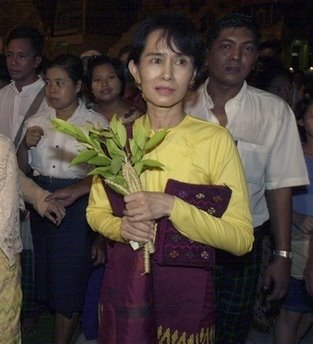


 Posts
Posts


