News & Articles on Burma
Thursday, 31 March, 2011
-------------------------------------------------------------
Clinton Urged to Make Sanctions More Effective
MYANMAR: Earthquake homeless need urgent shelter
President to chair defence council
Strongman Than Shwe steps down
Merkel calls on Myanmar to free political prisoners
US senators urge tougher Myanmar sanctions
World Leaders Wary of New Burmese Government
President U Thein Sein speaks to members of Union Government
President U Thein Sein gives address to heads of Union level organizations
------------------------------------------------
Clinton Urged to Make Sanctions More Effective
By LALIT K JHA Friday, April 1, 2011
WASHINGTON — Coming out in support of the position paper on sanctions by the National League of Democracy (NLD), four top US senators have urged US Secretary of State Hillary Clinton to make sanctions against the Burmese military junta more effective, and to immediately nominate a Special Policy Coordinator on Burma.
“We are writing to express our support for the official position paper on sanctions on Burma released by Daw Aung San Suu Kyi and the National League for Democracy (NLD),” wrote senators Dianne Feinstein, Mitch McConnell, Barbara Boxer and Mark Kirk in a letter to Clinton.
In their later dated March 29, which was released to the press on March 31, the senators said they agreed with the NLD’s position that sanctions should be maintained until the regime undertakes serious reforms. The NLD had concluded that the economic sanctions affect the military junta and its associates, and are not to blame for the country’s economic problems.
“With the regime’s recent moves and persistent human rights abuses, conditions do not currently exit to meet the necessary criteria to consider an easing of sanctions. Instead we urge the department at senior levels to take this opportunity to accept the NLD’s invitation to work with them to ensure that sanctions are more effective and better utilized,” the senators wrote.
A copy of the letter has also been sent to US Treasury Secretary Timothy Geithner. “One way to enhance this co-ordination would be the nomination of a Special Representative and Policy Coordinator for Burma as mandated by Section 7 of the Tom Lantos Block Burmese Junta’s Anti-Democratic Efforts Act (JADE Act),” they wrote.
The senators urged the administration to act swiftly to nominate an individual with the depth of expertise and the breadth of skills necessary to succeed in this important decision.
Noting that the NLD asserts that financial sanctions can be effective and targeted to only members of the military junta and their associates, the senators urged Clinton to exercise the authority for additional banking sanctions against Burma’s leaders explicitly provided by the US Congress under the JADE Act.
“We believe that exercising such authority represents one of the most powerful instruments at our disposal for pressuring Burma’s rulers to change course,” the senators wrote. http://irrawaddy.org/article.php?art_id=21057
-------------------------------------------------
MYANMAR: Earthquake homeless need urgent shelter
Photo: Lynn Maung/IRIN
A quake survivor sits with pictures of her lost ones who perished
MA AN HKAN, 1 April 2011 (IRIN) - The main concern for thousands of survivors of last week's devastating earthquake in Myanmar is lack of shelter.
"We've lost everything. How are we supposed to rebuild?" asked Nan Yone, 75, squatting on the floor of her makeshift tent near the remains of her home in the village of Ma An Hkan in Tarlay Sub-Township, the worst affected area, about an hour's drive from the Burmese border town of Tachileik.
According to the Myanmar Red Cross Society (MRCS), 3,152 people were left homeless by the 6.8 magnitude quake that struck Myanmar's eastern Shan state on 24 March, affecting at least 18,000 people and killing 74.
More than 700 homes were damaged or destroyed, local authorities in Tarlay reported.
A rapid assessment by the UN Children's Fund (UNICEF) and MRCS, with Noble Compassionate Volunteer (NCV) and World Vision Myanmar, found 90 villages moderately or severely affected.
On 30 March, the UN Office for the Coordination of Humanitarian Affairs (OCHA) reported that in 50 of those affected, more than half of all buildings were damaged or destroyed, while in the remaining 40, the figure was more than 30 percent.
"Many houses were destroyed because they were poorly constructed," Denis de Poerck, acting country director of Save the Children/Myanmar told IRIN from Yangon.
And with aftershocks continuing, many quake-traumatized residents - despite early rains beginning - are not taking any chances, erecting makeshift tents outside.
"They construct a temporary tent on the ground just in front of their old house and stay there," said De Poerck.
Traditionally the rainy season begins in mid-May and ends in mid-September, reaching its peak in July and August.
"Many people will catch cold, especially children under-five," an NCV health worker said. "These people urgently need proper shelter before the rainy season officially starts," she stressed.
Despite significant relief efforts to date, more is needed, with many residents picking away at the remnants of their devastated homes in the hopes of salvaging material that might be usable.
According to OCHA, they still need additional material support, particularly non-food items, such as tarpaulins, blankets and household utensils.
Swe Swe Lin, a pregnant mother-of-two, rebuilt her bamboo house with the help of villagers, but does not dare sleep inside it.
"No, not with the aftershocks. It's just safer to stay in the tent now," the 29-year-old said. "I'm not sure whether I would survive the next time and I'm worried about my unborn baby."
lm/ds/mw
Theme (s): Natural Disasters,
[This report does not necessarily reflect the views of the United Nations] http://www.irinnews.org/report.aspx?ReportID=92336
----------------------------------------
President to chair defence council
By JOSEPH ALLCHIN
Published: 1 April 2011
Burma’s new president, Thein Sein, will head an 11-member National Defence and Security Council, it was announced Thursday, while the former junta strongman and commander-in-chief, Than Shwe, is conspicuously absent.
Than Shwe’s replacement, Min Aung Hlaing, is also on the Council, as is speaker of the lower house, Shwe Mann. But what of the ageing dictator who recently appointed Thein Sein to the country’s top post?
“Officially Than Shwe is not on [the Council], and that is what leaves us guessing,” said Burma analyst Larry Jagan, adding that he believed it would be a “coordinating body” and not a “decision-making authority”.
He said however that the presence of Thein Sein and Shwe Mann meant it would have “tremendous influence – it will be hard for any of the key players not to heed their advice.”
Also present is Burma’s new foreign minister, Wunna Maung Lwin, and the two vice presidents, Tin Aung Myint Oo and Sai Mauk Kham, the latter one of the few high-ranking ethnic appointees.
What may be of significance, says Jagan, is the ascendance of a new generation in regional military positions, such as the commanders of the Bureaus of Special Operations (BSO), of which there are six responsible for different geographic areas of the country.
“They retired all the old ones. You now have younger people basically in all positions – some of the old regional commanders have been made chief ministers and this will be an interesting relationship between the old chief ministers and the new regional commanders.”
He continued that the regional commanders “are not going to be inclined to take orders from civilians”, regardless of their former military positions. “The patronage link is broken as soon as they leave the military.”
The dynamics of future relations between the new generation, whom Jagan terms “Young Turks” and the older generation who have been assimilated into the fold of Naypyidaw politics, may not emerge immediately.
Specific details of the Council, such as the number of times it is required to sit each year, remain unclear.
Meanwhile, a new chief has been chosen to head Burma’s police force. Like his predecessor, Khin Yi, Brig-Gen Kyaw Kyaw Tun is a former military man who took over as deputy commander of Rangoon in 2006, meaning that he likely played an instrumental role in the deadly suppression of the monk-led protests in September 2007.
http://www.dvb.no/news/president-to-chair-defence-council/15113
--------------------------------------------
BANGKOK POST
Strongman Than Shwe steps down
Published: 31/03/2011 at 12:00 AM
Newspaper section: News
Burma's top military man Than Shwe has finally stepped down as senior general and virtual dictator. From now on he is to be known as U Than Shwe - denoting his civilian status. Yesterday the ruling State Peace and Development Council which has run Burma since the army seized power in a bloody coup more than 22 years ago, formally handed over control of the country to new President Thein Sein (a former general himself) and the recently elected government. The president and the new ministers have been sworn in and take charge of running the country on Friday - the start of the new financial year.
Senior General Than Shwe as quit the military and will from now on be known as U Than Shwe.
Hints that Gen Than Shwe had stood down came on Sunday during Armed Forces Day, when there was no formal military parade - for the first time in 66 years - no speech by the commander-in-chief and an annual reception at which there was no named host. This signalled the change that had been expected for some time, after the sham elections last November in which the military rulers intervened to make sure their party - the Union Solidarity and Development Party - won a landslide victory.
And as usual the people of Burma were left guessing. Reading the signs in Burma is like Kremlinology (in the old Soviet times), meaning events have to be interpreted.
It was widely known for some time that the Armed Forces Day celebrations would be low key. There would be no military parade, according to Asian defence attaches in Rangoon who knew they would not be attending the usual celebrations in Naypyidaw. This was extremely significant - as it was the first time in 66 years that it had not happened.
In the absence of a speech by the commander-in-chief - either Than Shwe or his successor - the state-run newspapers all republished Gen Than Shwe's speech from last year, as a reminder that although the senior general may have taken off his uniform, he is still a force to be reckoned with. While there was no official host for the annual armed forces day reception, six senior generals from the SPDC were all seated at the top table with Gen Than Shwe.
From now on the general is to be known as U Than Shwe, according to senior businessmen and government officials in Rangoon and Naypyidaw who met him on the weekend. The much-anticipated moment came on Saturday - the day before the Armed Forces Day - when he told an important gathering of businessmen, politicians and retired soldiers that he had handed over power to the president-elect at the time, Thein Sein.
His right-hand man Thien Sien is now the president of Burma.
The old man told the current ministers - who were only replaced when the cabinet was sworn in yesterday - that he was no longer a military man. However, he also told them that he would be happy to meet any of them, whenever they wished, but in a private capacity.
So the transfer of power to President Thein Sein and the new cabinet is now official. Most of the new ministers, as expected, are former military men. Of course, these ministers have their work cut out for them. All the ministry coffers are dry, with the possible exception of the Defence Ministry. The outgoing ministers were encouraged to spend everything last year, especially on election campaigning.
So, one of the new government's first actions is likely to be to introduce a system of taxation. But the swearing-in of the new government and Parliament at least ends the state of limbo that has crippled the country for the past two months. The uncertainty is over. A new civilian government of sorts has been installed. But have the old guard really retired, or simply retreated to the backroom to control things from there?
While it now seems clear that Than Shwe is relinquishing day-to-day control of government and taking a back seat, he will not be completely handing over power - he will certainly still try to manage things from behind the scenes. That much was also clear when he invited the ministers to come and see him.
"Than Shwe has no plan to switch state power to the president or Parliament," said Aung Lynn Htut, a former Burmese military intelligence officer and diplomat who defected a few years ago after he was posted to Washington. "He will continue to control things from behind the curtain," he said.
In recent weeks there has been widespread speculation that U Than Shwe intended to set up a State Supreme Council - which according to some military sources in Naypyidaw is intended to be the top body in government - with allegedly the role of advising the new civilian government. The eight-member council reportedly includes U Than Shwe, Gen Maung Aye - until last week vice senior general and officially number two in the regime - speaker of the lower house [Pyithu Hluttaw] Thura Shwe Mann, President Thein Sein, the speaker of the upper house former Gen Thiha Thura Tin Aung Myint Oo, former Lt Gen Tin Aye and two other senior military generals.
There is no doubt that this would be an influential body at the top of the government structure, although it would in fact be unconstitutional. So far there is no evidence to suggest that U Than Shwe has opted for this formula. Many analysts believe he is going to rely on personal loyalties and connections.
"Than Shwe is not able to set up the State Supreme Council officially," said Aung Lynn Htut. "But he will control the president and commander-in-chief. He may transfer the commander-in-chief position but he cannot take off his senior general rank and army uniform for at least a year," he added.
It is critical to understand that U Than Shwe has a fail-safe plan, according to the independent Burmese analyst, Win Min, currently based in the United States. "The military auxiliary law, promulgated a few days before the elections last year and recently passed by Parliament is his back-up strategy if things go wrong," he said. Under the law, senior officers keep their rank as reservists and can return to the army within the next five years in their current position. "This is clearly meant to allow Than Shwe to return to lead the army and country if he feels he needs too," Win Min said.
But U Than Shwe has also engineered a political system that will cascade down from his position at the top of the political pyramid. A triumvirate controls the ruling USDP party and the three patrons - Than Shwe, Maung Aye and Thura Shwe Mann - will exercise control of the party. Interestingly, the new USDP office has been built near Than Shwe's house in Naypyidaw.
In the meantime the top generals including Than Shwe and Maung Aye for all intents and purposes have retired. Both have moved to their luxurious mansions inside Naypyidaw. Curiously Maung Aye has had solar panels built into his roof to provide an extra energy source, according to someone close to his builders.
The pressure of the transfer of power has taken its toll on the top two, especially Maung Aye who is reportedly drinking heavily again.
The next step, according to government sources, will be a mass release of prisoners (mainly minor criminals) and is likely to include some political prisoners. It is unclear whether the activist and comedian Zarganar and the Shan leader Khun Htun Oo will be among them. Both are reportedly in bad health and should be released on compassionate grounds. Foreigners, including Nigerian footballers jailed on currency charges, are expected to be among those released. It is still not clear whether there will be any of former prime minister Khin Nyunt's military intelligence officers among those freed. But it is possible that someone like Sonny Swe - the former owner of Myanmar Times - will be freed.
Several foreigners being held are almost certain to be allowed to walk free in the next few days.
Larry Jagan is a Bangkok-based Burma specialist. He was formerly the BBC's Burma correspondent and Asia news editor at the World Service. http://www.bangkokpost.com/opinion/opinion/229576/strongman-than-shwe-steps-down
------------------------------------------
Friday, April 1, 2011
International
Merkel calls on Myanmar to free political prisoners
Afp, Berlin
German Chancellor Angela Merkel yesterday urged the new civilian government in Myanmar to release political prisoners as she spoke by phone with pro-democracy activist Aung San Suu Kyi, Berlin said.
Suu Kyi told Merkel she wanted to engage in dialogue with the new government, while Merkel spoke of her support for the 65-year-old leading opposition figure, who was released last year from house arrest, and for "the democratisation process" in Myanmar.
UN Secretary General Ban Ki-moon on Wednesday said the new govt must answer "the longstanding aspirations of the Myanmar people.
http://www.thedailystar.net/newDesign/news-details.php?nid=180008
---------------------------------------
STRAITS TIMES_ 01, April 2011, Fri
US senators urge tougher Myanmar sanctions
WASHINGTON - THE United States should reject calls to ease sanctions on Myanmar junta members and instead name a special envoy to give the measures more bite, four US senators said in a letter released on Thursday.
'With the regime's recent moves and persistent human rights abuses, conditions do not currently exist to meet the necessary criteria to consider an easing of sanctions,' they wrote to US Secretary of State Hillary Clinton.
Senate Intelligence Committee Chair Dianne Feinstein, Republican Senate Minority Leader Mitch McConnell, Senate Environment and Public Works Committee Chair Barbara Boxer and Republican Senator Mark Kirk signed the letter.
The lawmakers pointed to recent comments by Myanmar's opposition leader and democracy icon Aung San Suu Kyi on the issue and said 'we agree that sanctions should be maintained until the regime undertakes serious reforms'. The group urged Mrs Clinton to name a 'Special Representative and Policy Coordinator for Burma' to work with Ms Suu Kyi's National League for Democracy (NLD) 'to ensure that sanctions are more effective and better utilised'.
'We therefore urge the administration to act swiftly to nominate an individual with the depth of expertise and the breadth of skills necessary to succeed in this important position,' they wrote.
The lawmakers also urged Mrs Clinton 'to exercise the authority for additional banking sanctions against Burma's leaders explicitly provided by Congress' in a law meant to pry Myanmar open to democratic and free-market reforms. -- AFP http://www.straitstimes.com/BreakingNews/SEAsia/Story/STIStory_651814.html
-----------------------------------------------
World Leaders Wary of New Burmese Government
By HTET AUNG Thursday, March 31, 2011
The United Nations has urged that the new government in Burma should be “more than a change in name, and a genuine move away from military rule,” according to a statement from the UN secretary-general's office on Wednesday.
“The Myanmar [Burmese] authorities now have an opportunity and, indeed, an obligation to their people, to demonstrate that this change is one of substance and that it is the start of a genuine move away from almost 50 years of direct military rule,” said the statement issued by the spokesperson for UN Secretary-General Ban Ki-moon.
Burma's military junta, known as the State Peace and Development Council, officially ceased to exist as of Wednesday after the transfer of power to a civilian government in Naypyidaw led by President Thein Sein, the first president elected in accordance with the 2008 constitution. He had previously been prime minister since 2007.
Despite the transfer of power, the UN reaffirmed its stand on “an inclusive dialogue” between the new government and the democratic opposition.
“The Secretary-General believes the authorities must engage in an inclusive dialogue with all relevant parties on broad reforms necessary for the development of a credible system of government that can effectively address the political and socioeconomic challenges facing Myanmar,” said the spokesperson.
The United States expressed its deep concerns on the continuous “oppressive environment” in Burma.
“The fact that they [the Burmese generals] have taken off their uniforms and donned civilian clothes is immaterial,” said Mark Toner, the acting deputy spokesperson of the US State Department. “We remain deeply concerned about Burma’s oppressive political environment.”
Toner, however, said that the US's two-track approach—engaging with Naypyidaw while maintaining sanctions—will remain in place.
On Wednesday, Burma's state-run New Light of Myanmar published a list of the 23 nations and organizations, including the UN chief, that sent messages of felicitations and congratulations to the president and two vice-presidents of the new government.
Chinese President Hu Jintao was the first on the list. All the leaders of Burma's fellow member states at the Association of Southeast Asian Nations, with the exception of the Philippines, sent messages of congratulations to the leaders of the new Burmese government which has effectively taken office after ministers were sworn in on March 30.
http://irrawaddy.org/article.php?art_id=21050
----------------------------------------
Members of Union and Region/State governments will not enjoy salaries in full in consideration of objective and financial conditions of the nation and in public interests
President U Thein Sein speaks to members of Union Government, heads of Union level organizations
NAY PYI TAW, 31 March-President U Thein Sein delivered a speech at a ceremony to take heed of presidential address and make affirmation today.
The following is the translation of speech delivered by President U Thein Sein.
I extend my warmest greetings to members of the Union Government and heads of Union level organizations here and wish you good health and happiness, being able to serve the better interests of the nation and the people.
The Pyidaungsu Hluttaw session, which commenced on 31 January 2011, concluded yesterday. The Pyidaungsu Hluttaw has chosen the organizations and persons who will take charge of Union level executive, judicial and legislative sectors. Likewise, respective State and Region Hluttaws have elected the persons to take charge of those sectors in their own regions.
So, we will have to build a modern, developed democratic nation, the final step of the seven-step Road Map, with the strength of State leaders elected by the Hluttaw and the government and authorities formed by the Hluttaw.
Now I would like to clarify the stances we should have and the policies we must follow in implementing the final step of the Road Map. We are all responsible for executive, judicial and legislative affairs so as to shape a modern, developed democratic nation as well as for accomplishing the final step of the Road Map.
This is why I want to say that the points and work programmes to be explained today are very important for the future of the nation.
Heads of Union level organizations, ministers and deputy ministers from the Union Government The most important task of the new administration is to work together to create good governance and clean government. To do so, the work programmes of the Union Government and State and Region governments must be transparent, accountable and consistent with the constitution and the existing laws. It is necessary to respect the people’s wishes and to ensure allinclusiveness.
The tasks of government must be expeditious and effective.
The second task of the government is to do democratic practices. Today, our country has a consti-tution that is a foundation to shape a modern, developed democratic nation. The legislative, executive and judicial pillars that emerged from the constitution have come to life. The people have enjoyed the right to elect Hluttaw representatives as they wish as well as the right to be elected. All these are sound foundations for emergence of a discipline-flourishing democracy.
In order to practise democracy effectively and correctly through those foundations, it is needed to promote democratic practices in the government, in the departmental organizations and among the people. In this regard, the people on their part must do such democratic practices as freedom and rights in accord with the law, culture, traditions and customs of Myanmar.
For administrative bodies in carrying out administrative tasks or dealing with the laws and procedures, they must be careful not to obstruct the fundamental rights of a citizen.
They must lead the citizens to enjoy their fundamental rights in a correct way without harming the interests of the Union and the human society.
Moreover, in carrying out such tasks it is necessary to consider the stances and responses of the people. If the people and administrative bodies alike can distinguish between freedom and sense of duty and between freedom and discipline, Myanmar will surely be a society with flourishing democratic practices.
Heads of Union level organizations, ministers and deputy ministers from the Union Government, Another important task is to ensure the rule of law, which is essential for building up a modern and developed democratic nation.
It is the duty of not only judicial bodies but also legislative bodies to ensure the rule of law.
It is required of judicial bodies to carry out judicial tasks in accord with the provisions of the constitution such as openly handling of judicial affairs and the right to pass judgment in the presence of the public except legislative constraints and the rights to defence and appellate jurisdiction in criminal cases.
According to the constitution, the Supreme Court of the Union has been entrusted with power to issue writs, and the first ever constitutional tribunal of the Union in the history of Myanmar has been formed. These organizations are not only to maintain and safeguard the judicial pillar, one of the nation’s main pillars, but also to define constitutional provisions and scrutinize the functions of legislative and administrative bodies whether or not they are in conformity with the constitution.
For administrative bodies, they need to perform their administrative duties without prejudice and they themselves must be ideals of respecting the laws and rules. With the correct judicial pillar alongside legislative bodies acting in accord with the law, our nation will be able to practise a discipline-flourishing democratic system with the rule of law.
Another important task like the rule of law is to ensure speediness and effectiveness in governmental transactions. The government has yet to materialize the objectives of the five-year project.
The SPDC has laid sound foundations for national development. So, we have to make good use of the foundations for development in the economic, education, health, transport, communication and construction sectors.
In this regard, we must keep off ignoring the procedures and rules and regulations and disregarding extravagance and unnecessary waste.
We are under a duty to satisfy the wishes and requirements of the people because the government has to be responsible to the public through Pyidaungsu Hluttaw.
We also have to respect the role of the media, the fourth estate.
We are required to inform the people about what they should know and appreciate positive suggestions of the media.
Another task to make the government’s functions more effective is cooperation among ministries. According to the constitution, the nation sees not only the Union government but also Region and State governments.
Therefore, cooperation between the governments is of great importance.
Nation-build-ing tasks are so demanding that an individual or ministry alone cannot realize them, and nor can the Union, a region or a state alone. So, cooperation between members of the government is a must to expedite administrative mechanism.
Heads of Union level organizations, members of Union government, ministers and deputy ministers, Now, neighbouring countries and the international community are watching with great interest the government formed in accordance with the constitution, how it will discharge its duties, and relations and cooperation between the Union government and Region/State
governments.
Similarly, the people are watching the formation, the way the government carries out its duties, in the hope of their better future. Myanmar’s democratic practice is in its infancy, so it has to take a long time to be mature.
Governing bodies at all levels play a crucial role in the nation’s administrative mechanism.
If the administrative mechanism guarantees the people’s life security and civil servants treat the people fairly, and the people lead a peaceful life under the protection of the law, the constitution that shapes the administrative mechanism will be reliable. And the people put reliance and trust in the legislative and executive bodies.
Therefore, the first fiveyear term is the most important in building a modern, developed democratic nation. If we take giant steps, the nation will have a prosperous future.
To achieve this goal, the government must be a clean one with good governance.
In addition, the government must have good management and administrative skills and show benevolent attitude towards the people. And it must safeguard and serve the public interests.
To be a clean government, we must abstain from corruption and bribery, which tarnishes the image of the nation and the people.
Therefore, we have to not only refrain from it but also ensure that the organizations stay away from it.
What is very important is that we must not abuse the mandate in the interest of our friends and relatives.
Only then, can our government be recognized as a clean government.
As you know, our country has not been a rich one yet. The nation has developed a lot in the time of the Tatmadaw government, but there are still many people, whose life is a battle against poverty, whose life is a hand-tomouth existence, and many unemployed people.
Therefore, the governing organs at all levels should not seize all the rights and privileges.
According to Ordinances 2, 3, 4 and 5 issued on 10 January 2011 under Article 443 of the constitution of the Republic of the Union of Myanmar by the SPDC, officials at the Union and Region/State levels, Self-Administered Zone or Division chairmen and executives, and the chairman and members of Nay Pyi Taw Council will not enjoy salaries in full, and we will continue to enjoy the same rates, as that we were paid while we were serving at the SPDC central level bodies in consideration of the objective and financial conditions of the nation and the public interests.
In conclusion, in response to the proposals by some hluttaw representatives, the rates of service personnel’s salaries and pensions will be increased in proportion to revolving funds of the government, inflation rate, consumer price indexes and GDP when it is opportune. http://www.myanmar.com/newspaper/nlm/index.html
--------------------------------------------
New Light of Myanmar
President U Thein Sein gives address to heads of Union level organizations, members of Union Government
UCSB Chairman, Union Deputy Ministers, MPF Chief, Deputy Attorney-General, Deputy Auditor-General, UCSB members, Nay Pyi Taw Council members make affirmation before the President
NAY PYI TAW, 31 March-A ceremony to take heed of presidential address and make affirmation took place at the President Office here this morning.
Present on the occasion were President U Thein Sein, Vice-Presidents Thiha Thura U Tin Aung Myint Oo and Dr Sai Mauk Kham, the Commander-in- Chief, the Deputy Commander-in-Chief, the Union Chief Justice, the Chairperson of Constitutional Tribunal of the Union, the Chairman of Union Election Commission, Union Ministers, the Attorney-General, the Auditor-General, judges of Supreme Court of the Union, members of Constitutional Tribunal of the Union, UEC members, as well as those who have been agreed to be appointed to the posts of Chairman of Union Civil Services Board, Union deputy ministers, Chief of Myanmar Police Force, Deputy Attorney-General, Deputy Auditor-General, and members of Union Civil Services Board and Nay Pyi Taw Council.
Director-General U Min Zaw of the President Office acted as master of ceremonies with the assistance of Director-General U Tin Myo Kyi of Union Government Office.
First, those who have been selected to be appointed to the posts of Chairman of Union Civil Services Board, Union Deputy Ministers, Chief of Myanmar Police Force, Deputy Attorney-General, Deputy Auditor-General, and members of Union Civil Services Board and Nay Pyi Taw Council took position before the President to make affirmation.
Minister of President Office U Thein Nyunt led the recitation of the oath, which was followed by the appointees, saying, “I...do solemnly and sincerely promise and declare that I shall be loyal to the Republic of the Union of Myanmar and the citizens and hold always in esteem nondisintegration of the Union, non-disintegration of national solidarity and perpetuation of sovereignty.
I shall uphold and abide by the Constitution and the laws. I shall carry out the responsibilities uprightly to the best of my ability.”
President U Thein Sein delivered an address.
(His address was reported separately.) He agreed the master of ceremony’s request to record his speech and the master of ceremony announced the President’s speech was recorded.
The master of ceremony then announced that the oath-taking ceremony successfully completed and the ceremony came to an end.
After the ceremony, the President posed for documentary photos together with those present.
Speaker of Pyithu Hluttaw Thura U Shwe Mann and Speaker of Amyotha Hluttaw U Khin Aung Myint also joined the photo shoot.
Next, the attendees had the luncheon hosted by President U Thein Sein, enjoying songs of artists from Ministry of Culture.
After the luncheon, President U Thein Sein cordially greeted the attendees. http://www.myanmar.com/newspaper/nlm/index.html
Saturday, April 2, 2011
News & Articles on Burma-Thursday, 31 March, 2011


Friday, April 1, 2011
News & Articles on Burma-Thursday, 31 March, 2011
News & Articles on Burma
Thursday, 31 March, 2011
-------------------------------------------------------------
Burma's New Govt Fails to Inspire
U.N. Says Junta Must Show Its Move Genuine
Wider dialogue in Burma
Scant hope for change in Myanmar 'civilian' rule
China Urges Respect for New Burma Government
UN cautious, but sees a light
Over 3,000 Homeless after Shan State Earthquake
Finance chief to target Burma trade
Burma Petrol Prices Soar as Imports Double
US Dismisses Governmental Change in Burma as 'Immaterial'
Myanmar military rule ends, but army retains grip
President U Thein Sein delivers inaugural address
----------------------------------------------
Burma's New Govt Fails to Inspire
By KO HTWE Sunday, May 1, 2011
Burma's new “Union Government” may have been sworn in on Wednesday, but several leading members of opposition parties and ethnic armed groups are dubious that the civilian administration will provide the peace and democracy that the people of Burma seek.
In President Thein Sein's inaugural address to parliament on Wednesday, he urged all MPs “to cherish and protect at risk to life the constitution and the democratic nation to be built in line with the constitution.”
He also called on the entire nation to help build the Tatmadaw [Burma's army] into “a strong, efficient, modern and patriotic army.”
However, speaking to The Irrawaddy on Thursday, Win Tin, a leading member of the opposition National League for Democracy (NLD), said that the constitution was not in line with the wishes of the people.
“I cannot accept the Tatmadaw continuing to play a leading role in Burmese politics,” he said. “We [Thein Sein and I] are totally different in that I have no desire to protect the 2008 constitution.”
Thein Sein said his government will guarantee the rights of Burmese workers both inside and outside the country. He also said it will safeguard the rights of peasants by amending and revoking existing laws, and by adopting new resolutions as necessary to protect the fundamental human rights of Burma's citizens.
“What he said about the rights of farmers and workers is just rhetoric,” said Win Tin. “I'm sure it will raise eyebrows over at the ILO [International Labour Organization].”
The new government may be guaranteeing farmers' rights, but that won't stop the junta's companies from seizing land and jailing dissenters, he said.
However, NLD spokesman Nyan Win said that his party accepted the practical aspects of forming a new government, and said he hopes to be involved in talks with the government on the issue of national reconciliation.
“We accept the reality of the situation,” he said. “We will not criticize the new government simply because it came into effect based on the 2008 constitution which we disagree with.”
He said the NLD's desire to sit down at the negotiating table with the new government does not contradict the party's policy that called for a constitutional review.
Khin Maung Swe, one of the leading members of the National Democratic Front, also spoke to The Irrawaddy. He said that the the new president's speech carried both good and bad points. “However, one thing we can say for sure is that the junta has transfered power to a civilian government.”
Many parliamentary candidates have expressed frustration that they have not been kept appraised of many of the nation's most important affairs.
“The appointment of a new president is an important landmark in the country's history,” said an MP on condition of anonymity. “But the regime didn’t inform us about it. We only find out what's going on when we attend parliamentary sessions.”
Meanwhile, Shan State Army-South spokesman Sai Lao Hseng told The Irrawaddy on Thursday that the parliament has rejected a proposal to hold peace talks with the armed ethnic groups.
“The civil war will continue,” said Lao Hseng. “It is difficult for the new government to amend the 2008 constitution. And it does not represent the interests of the ethnic minorities.”
Speaking to The Irrawaddy on Thursday, Karen National Union Secretary-General Zipporah Sein said she believed nothing will change under the new government.
“We have never supported the 2008 constitution, the 2010 election or the 2011 government,” she said.
Many observers have said that the average person in Burma does not notice any difference in the political make-up of the country despite the fact that power has officially been transfered to a new civilian administration, and that all state/division level, district level, township level and ward/ village level offices of the previous ruling State Peace and Development Council have been closed and their administration dissolved under the orders of Burmese dictator Snr-Gen Than Shwe.
“I heard that Thein Sein has been appointed president, but I don't care!” said a taxi driver in Rangoon. “I'm still queuing for gasoline. Who cares about politics when you don't have enough money for food?”
A Rangoon businessman was also pessimistic. “We have been cheated again,” he said. “All those appointed to the new cabinet are close to the regime.”
http://www.irrawaddy.org/article.php?art_id=21053
--------------------------------------------------
U.N. Says Junta Must Show Its Move Genuine
Published on March 31, 2011
by NewsDesk - iWireNews ™
Myanmar authorities must show their latest transfer of power is a genuine move away from military rule, U.N. Secretary-General Ban Ki- moon said.
"Responding to the long-standing aspirations of the Myanmar people for national reconciliation, democratization and respect for human rights remains essential to laying the foundations for durable peace and development in the country," the head of the world body said in a statement.
Ban's call followed Wednesday's appointment of what is claimed to be a civilian government in the isolated South Asian nation, which since 1962 has been under repressive military rule. The new government will be led by President Thein Sein, 65, a retired general and former prime minister under the Senior Gen. Than Shwe-led junta.
"The Myanmar authorities now have an opportunity and, indeed, an obligation to their people, to demonstrate that this change is one of substance and that it is the start of a genuine move away from almost 50 years of direct military rule," Ban said.
Myanmar's new Parliament convened in February after elections in November which were widely criticized as designed to keep the military in power.
The New York Times reported despite the latest change, the military will maintain its hold on power with Gen. Than Shwe pulling the strings from behind the scene. http://www.officialwire.com/main.php?action=posted_news&rid=9737
----------------------------------------
Wider dialogue in Burma
Editorial Desk
The Straits Times
Publication Date : 31-03-2011
The military in Burma may or may not be ready for meaningful and inclusive dialogue with the opposition as it handed over power Wednesday (March 30) to the government elected last November. If it were so inclined, it could simply respond to the offer that pro-democracy leader Aung San Suu Kyi made last weekend for talks to clear up 'misunderstandings'. Even after the new, nominally civilian government takes office, the military - or Tatmadaw - will continue to wield dominant, if not ultimate, power. It is a reality that Suu Kyi has chosen not to ignore. At the same time that the Tatmadaw marked Armed Forces Day on Sunday (March 27), her National League for Democracy (NLD) also celebrated the resistance that her father, General Aung San, led against the Japanese 66 years ago.
Beyond that bit of shared history, the two sides remain far apart. The unconditional release of more than 2,100 political prisoners remains an NLD priority demand unlikely to be met soon. Now disbanded for boycotting what it considered an unfair election, the NLD has no seat in any of the new parliamentary houses. Yet, any attempt at conciliation will fail if the military continues to marginalise Suu Kyi and her movement. Now free from house arrest, she is keeping an open mind on whether the new government will bring change.
If the Tatmadaw adopts a similar attitude and is willing to resolve the undisclosed misunderstandings, better relations and prospects could well result. No matter how limited, the demilitarisation of rule has begun to diversify opinion. The National Democratic Force, which broke away from the NLD to contest the election, held talks last week with the United States' charge d'affaires Larry Dinger on lifting Western sanctions. If more voices are heard on this and other critical issues, in or outside parliament, a clearer articulation of Myanmar needs and interests would emerge.
The world would then find it easier to help the country along the road to conciliation even as it finds it harder to ignore the more excessive abuses. Western powers should not remain hung up on the perplexing sanctions question, but engage with even more groups, including those in the new political structure, ethnic minorities as well as the opposition. The US and the United Nations should appoint full-time envoys to coordinate and focus on conciliatory initiatives.
Although it has yet to meet with complete success, Asean's positive engagement policy has endured recent years in good shape. It is time for other countries to adopt similar approaches towards helping the Myanmar people build a peaceful and prosperous country.
http://www.asianewsnet.net/home/news.php?id=18222&sec=3
-----------------------------------------------
Mar 31, 2011
Scant hope for change in Myanmar 'civilian' rule
YANGON - MYANMAR'S attempt to rebrand itself with a nominally civilian government was met with scepticism at home and abroad on Thursday, with critics fearing army power has merely moved into the shadows.
Newspapers were sold out on the streets of Yangon a day after former general Thein Sein was made president and the feared junta was disbanded following nearly half a century of military rule.
But while the new order provoked interest, there was little optimism.
Company manager Konaing said the new parliament, which is dominated by the army hierarchy and lacks the participation of democracy icon Aung San Suu Kyi, was a 'hot issue' with ordinary people.
'But they do not think there will be changes in the country as the generals only changed their uniforms. We have not many expectations, not much hope,' he told AFP.
Wednesday's handover came after Myanmar's first elections in 20 years last November, which were slammed by critics as a sham to provide a civilian facade to army rule, and marred by the absence of Suu Kyi, and by claims of cheating. -- AFP
http://www.straitstimes.com/BreakingNews/SEAsia/Story/STIStory_651493.html
------------------------------------------
China Urges Respect for New Burma Government
Peter Simpson | Beijing March 31, 2011
China has praised Burma’s new government for promoting democracy. Beijing denounced other countries for criticizing its close neighbor’s new administration, which was sworn in this week.
Offering China’s congratulations to the new Burma government, which took office Wednesday, Chinese Foreign Ministry spokeswoman Jiang Yu was quick to warn other countries not to meddle in its neighbor's internal affairs.
Jiang says Beijing disapproves of those countries which claim the new civilian-led parliament in Burma is merely the old, military-led government in a new guise.
She praised the new administration for what she calls promoting democracy.
The United States has been among the nations which have dismissed the transfer of authority in Burma as a sham. U.S. officials said Wednesday they will continue to push for what they describe as proper reform.
The U.S. and other critics claim that retired and serving military generals from the old government, together with technocrats, are maintaining their tight grip on power. The new president, Thein Sein, is a former general who gave up the uniform just last year to run in widely criticized elections.
China has close political, military and economic ties with Burma and has long been a staunch defender of its close ally.
It has been a strong supporter of the outgoing military government, which ruled Burma since 1988 in what they described as a "disciplined democracy." Burma has been under one form or another of military rule since 1962.
Spokeswoman Jiang Yu says the international community should respect Burma’s democratically elected government. And, she says it should help Burma to move along the path of economic growth and development. http://www.voanews.com/english/news/asia/southeast/China-Urges-Respect-for-New-Burma-Government-118979159.html
----------------------------------------
UN cautious, but sees a light
By FRANCIS WADE
Published: 31 March 2011
UN chief Ban Ki-moon has tiptoed carefully around yesterday’s official transfer of power in Burma, but said that opportunities exist for the new government to push the pariah in the right direction.
A statement released yesterday by the Secretary General, shortly after the announcement in state media, said that he had “taken note” of the transition, and asserted the new government’s “opportunity and, indeed… obligation to their people, to demonstrate that this change is one of substance”.
“Responding to the longstanding aspirations of the Myanmar [Burmese] people for national reconciliation, democratisation and respect for human rights remains essential to laying the foundations for durable peace and development in the country.”
It marks a somewhat more tentative reaction to recent changes in Burma, after the 66-year-old was last month criticised for hailing as an “important step” the appointment of incumbent prime minister, Thein Sein, as the country’s new president.
Thein Sein yesterday officially took his post as the top politician, a predictable move for observers who claim his loyalty to Burma’s dictator, Than Shwe, makes him the obvious choice to act the middle man between the ailing strongman and the new government.
While Than Shwe’s position as commander-in-chief of the army has been taken over by General Min Aung Hlaing, the reclusive junta leader now takes a more backseat position in the State Supreme Council, a shadowy ‘advisory’ body to the government comprised of the eight most powerful generals, including Thein Sein.
Yet despite Ban’s pledge to “continue to work with all relevant actors toward building a stable and fully democratic” Burma, he faces an uphill battle in forcing any break with the past: the key parliamentary positions are all taken up by powerful former generals, while some 80 percent of seats are occupied by pro-junta Union Solidarity and Development Party (USDP) members who will lead the new government.
The new political landscape also leaves little room for manoeuvring by Burma’s opposition, particularly the National League for Democracy which was outlawed as a party prior to the elections. Their calls yesterday for dialogue with the new government have so far gone unanswered.
The UN has long had difficulty influencing the Burmese junta, with Ban himself admitting in the past that the military had been “unresponsive” to his approaches.
Ban Ki-moon has also been no stranger to criticism: during his posting as South Korean foreign minister he described the controversial Shwe gas pipeline as a “win win” project for the Burmese military and the South Korean government, consequently drawing the ire of Burmese and international rights campaigners who claim it has led to egregious human rights violations.
A leaked memo last year from the UN’s former anti-corruption chief Inga-Britt Ahlenius also described his secretariat is in a “process of decay” and questioned the UN’s “capacity to protect civilians in conflict and distress” in countries such as Burma.
http://www.dvb.no/news/un-cautious-but-sees-a-light/15068
-------------------------------------------------
Over 3,000 Homeless after Shan State Earthquake
By SAW YAN NAING Thursday, March 31, 2011
More than 3,000 people have been made homeless in Shan State following the 7.0-magnitude earthquake that rocked the region on March 24, according to the latest joint report by aid agencies working in 90 affected villages.
Slide Show (View)
Released on Wednesday by the UN's Office for the Coordination of Humanitarian Affairs (OCHA) in collaboration with several partners, the report said the most common illnesses reported are diarrhea and colds.
Among the 96 cases of diarrhea reported by World Vision on Tuesday, 48 have been confirmed by local health authorities but none are severe, according to the report.
The Myanmar Red Cross Society reported on Wednesday that 3,152 people in the region were made homeless by the earthquake.
Chris Herink, a World Vision spokesperson in Shan State, told The Irrawaddy that what is most urgently needed is safe drinking water. He said relief workers are continuing to distribute water purification tablets in the affected areas.
Initial findings of a rapid collaborated assessment indicate that at least 18,000 people residing in 90 villages have been affected by the earthquake. Most of those villages are located in Tarlay and Mong Lin townships. At least 150 people have been killed, according to local sources.
Local residents said that some of the affected areas are often inaccessible due to rains, and that there is an increased risk of landslides as the rainy season is due to start in a few weeks.
With regard to safe water, a main concern is the damaged gravity flow system in Tarlay, which supports the population in and around the town. However, further assessment on the extent of damages is still required, the report said, adding that the Tarlay authorities have estimated that 702 houses have been damaged.
According to the agencies' report, homeless villagers from Tarlay sub-township and Mong Lin (East) and Mong Lin (West) Village Tracts are in dire need of additional material support, particularly in terms of non-food items, such as tarpaulins, blankets and household utensils.
The agencies said that foodstuffs such as salt, cooking oil, noodles, dried fish, and cans of fish are being delivered. Tents, blankets, cooking utensils, plastic mats, mosquito nets, candles, water tanks, bottled water and water purification tablets are also being distributed by the humanitarian aid groups.
Many private donors have also been involved in distributing rice, instant noodles, cans of fish and beef, as well as fresh vegetables to those affected.
Some local residents said they found individual donations more effective than the government-channeled distribution of aid. They also claimed that government-monitored aid distributions have been delayed, and that supplies have been stolen.
Ca Mu, a Lahu resident in Yanshin village near Tachilek Township, said that local authorities such as the headmen of the villages and various paramilitaries control the aid, but don’t deliver it. “If they were really committed to the people, they would give us a helping hand,” he said.
“In my opinion, it doesn't matter whether the soldiers reach the affected villages or not, because even if they go there they do nothing significant for the people who need help,” he said. “In fact, it would be better if they didn't go at all—they make things worse.”
World Vision said it had identified a need to establish two warehouses in Tachilek and Tarlay to facilitate the ongoing relief and rehabilitation response. The World Food Program is also assessing the storage capacity in the areas, said the aid agencies’ statement.
On March 30, India announced an assistance package of US $1 million for the relief and rehabilitation of Burma's earthquake victims. Other assistance includes $500,000 from China, $100,000 from Thailand, and $50,000 from the Philippines.
http://www.irrawaddy.org/highlight.php?art_id=21051
-------------------------------------------------
Finance chief to target Burma trade
By SHWE AUNG
Published: 31 March 2011
Burma’s new commerce minister has said that boosting trade will be made a priority of the new government as it looks to stem the tide of economic stagnation that has made it one of the world’s poorest countries.
Speaking to DVB yesterday shortly after power was officially handed over from the junta, Win Myint said that the revamped ministry will “do our best to increase commerce values, [and push] for faster and smoother commerce flows”.
Overseas investment in Burma is on an uphill trend thanks largely to China’s energy-hungry population, although it maintains significant trade relations with Thailand and Singapore. But rampant corruption and favouritism means that Burma remains Southeast Asia’s least developed country, despite boasting a spectacular bounty of natural resources.
Whether the transfer of power to what the junta claims is a civilian government will improve prospects there remains to be seen. Asked whether business should be hopeful of more freedom to trade in the new era, Win Myint’s answer was typical of the stonewalling epitomised by the previous junta:
“Thank you. I am a businessman and trader myself. I will get back to you when convenient.”
Prior to elections last year, swathes of industry nationalised by the former Ne Win regime were sold to private business, nearly all of which were headed by powerful cronies of the junta.
Like Win Myint, many of the former top-ranking generals who are now MPs in the junta-backed Union Solidarity and Development Party (USDP) oversaw the sale of properties such as banks and ports to well-connected tycoons, making the prospect of any change in the economic landscape slim.
One businessman in Rangoon said however that he hoped Win Myint’s experience and “connection with real business people” would engender the transition that traders are hungrily eyeing.
Prior to his recent appointment, Win Myint was president of the Union of Myanmar Federation of Chambers of Commerce and Industry (UMFCCI), Burma’s largest business federation which represents nearly 11,000 Burmese and 770 foreign companies in the military-ruled country
Proposals in parliament yesterday to reduce tax by 10 percent were reportedly snubbed, despite widespread protestations about the new government budget which allocates 24 percent of annual spending to the maligned military.
Rangoon-based Burmese economist Maw Than said that more factory jobs may open for Burma’s working class population if greater foreign investment arrives, and that it should use this opportunity to bring an end to international sanctions.
It was Win Myint who last year stressed the importance of increased trade between China and Burma, particularly in the agricultural sector which accounts for some 60 percent of the Burmese labour force’s income. Back then, border trade dominated Burma’s economic ties with China, but that is rapidly changing with the increased focus on the energy sector.
China’s total investments in its southern neighbour last year are thought to have topped $US10 billion, boosting total contracted foreign investment in Burma since 1988 by more than 50 percent.
http://www.dvb.no/news/finance-chief-to-target-burma-trade/15073
----------------------------------------------------
Burma Petrol Prices Soar as Imports Double
By THE IRRAWADDY Thursday, March 31, 2011
MAE SOT—Exports of gasoline from Thailand to Burma through the Mae Sot-Myawaddy crossing have reportedly doubled in recent days, as the petrol price soars in Burma.
Thailand has been delivering more than 200,000 liters of petrol from Mae Sot to Myawaddy per day this month, according to Burmese traders.
Speaking to The Irrawaddy, a Burmese trader said, “before it was 200,000 liters export volume of petrol per two days, but it has been increased to double this since early March. This brings more money than before to fuel traders and organizations with import-licenses in Burma.”
22-wheel trucks with a 40,000-liter capacity are being used to transport fuel from Bangkok to Mae Sot. (Photo: The Irrawaddy)
The Border Guard Force led by Col Chit Thu—who is a former commander of DKBA (999) battalion—currently holds petroleum import-licenses at the border, along with local Burmese army battalions and business owners. They all act under guise of “raising funds” for the government.
A trader said that 22-wheel trucks with a 40,000-liter capacity are being used to transport fuel from Bangkok to Mae Sot. The contents of these trucks is then carried over the Moei River through temporary pipes to fuel tanks in Burma, situated on embankments in a village just north of the Friendship Bridge.
According to witnesses, there are around half-a-dozen 22-wheel trucks arriving in Mae Sot from the Thai capital every day. Exported gasoline from Thailand is high quality fuel which retails at 42.95 baht/liter in markets around Tak province, including Mae Sot.
In January 2010, the Fuel Oil Importers and Distributors Association was formed with Burmese top tycoon Tay Za as chairman. Aung Thet Mann, the son of the former Gen Thura Shwe Mann, is currently vice chairman. Burma's energy ministry later transferred the distribution of gasoline to privately-own companies.
The recent fresh wave of fuel price hikes in the world market has affected Burma. Even the junta's energy authority has recognized that the black market has become larger, making a wide price gap.
Speaking to the Upper House of Parliament on March 17, former Energy Minister Lun Thi said the government is selling petrol at a lower price than the “world market.”
The official cost for a gallon of gasoline at Burma's so-called “privatized” gasoline stations is 2,500 kyat (US $2.83) per gallon for normal petrol and 3,600 kyat ($4.08) per gallon for high octane fuel.
Although the government has officially announced that members of the public can buy gasoline at any station, motorists have to queue for lengthy periods, sometimes hours, to buy just two gallons of the fuel per day.
Many cannot wait, and decide to purchase at the small black market petrol pumps that are generally set up alongside the main roads in and out of cities.
Black market rates are now: 5,200 kyat ($ 6) per gallon in Mandalay and Sagaing; 5,600 kyat ($ 6.6) in Monywa; and 6,000 kyat ($ 7.14) in Sittwe of Arakan State, local sources told The Irrawaddy.
http://www.irrawaddy.org/article.php?art_id=21049
------------------------------------------------
US Dismisses Governmental Change in Burma as 'Immaterial'
David Gollust | State Department March 30, 2011
The United States Wednesday dismissed the nominal transfer of authority in Burma from military to civilian figures as "immaterial" and said military leaders remain in control. The State Department said the Obama administration will continue pushing for genuine reform.
The State Department is calling the nominal transfer of power to civilians in Burma at best a lateral move, and says the United States will continue pressing a two-track strategy of engagement with Burmese authorities and sanctions to try to promote real reforms.
The comments came after a ceremony in the Burmese parliament in which the long-ruling military junta was declared officially dissolved, and a new civilian government -- chosen in a widely-criticized election last November -- sworn into office.
The former prime minister in the military-led government, Thein Sein, an ex-general who gave up his military post only last year, became president of a self-described civilian government that includes other former military officials.
Asked at a news briefing if the development was an advance for Burma, State Department Acting Deputy Spokesman Mark Toner said it was a step sideways, or even backwards, for the politically-isolated Southeast Asian state.
"There was a fundamentally flawed election process that’s now ensured that key military regime figures have continued to dominate the government and all decision-making. The fact that they’ve take off their uniforms and donned civilian clothes is immaterial. We remain deeply concerned about Burma’s repressive political environment," Toner said.
Spokesman Toner said the United States urges Burmese authorities to release all political prisoners, recognize the legitimacy of Aung San Suu Kyi’s National League for Democracy Party, the NLD, and to enter into a genuine, inclusive, dialogue with all democratic and ethnic-based opposition groups "as a first step toward reconciliation."
Aung San Suu Kyi’s party won Burmese elections in 1990 but the military ignored the results and kept the Nobel Peace laureate in detention for most of the last two decades.
She was freed from house arrest a few days after the November election, while the NLD was ordered disbanded for boycotting the election.
An NLD spokesman said the party is open to dialogue with the new government but remains concerned about continuing military control.
In his inaugural speech, new President Thein Sein accused Western countries of bullying Burma and said they should recognize positive changes and drop sanctions.
The Obama administration has sent senior envoys to Burma seeking dialogue, but also has kept long-standing sanctions, including a near-total trade ban, in effect.
The State Department spokesman said the administration remains committed to the two-track strategy of outreach and sanctions, but has always been "clear-eyed" about its expectations from the attempt at engagement. http://www.voanews.com/english/news/asia/US-Dismisses-Governmental-Change-in-Burma-as-Immaterial-118959249.html
-----------------------------------------
Myanmar military rule ends, but army retains grip
March 31, 2011
Myanmar's military made way for a nominally civilian government after almost half a century in power Wednesday, as the junta was disbanded and a new president talked of a "changing era".
But the army hierarchy retains a firm grip on power in the resource-rich Southeast Asian country, and many analysts believe strongman Senior General Than Shwe will attempt to retain some sort of control behind the scenes.
The handover came after widely-panned elections last November -- the country's first in 20 years -- which were marred by the absence of democracy icon Aung San Suu Kyi and claims of cheating and intimidation.
Quoting an order signed by Than Shwe, Myanmar state television reported the junta's State Peace and Development Council (SPDC) "has been officially dissolved".
Than Shwe, who has ruled with an iron fist since 1992, is apparently no longer in the hitherto most powerful position of head of the army.
But Myanmar analyst Aung Naing Oo said: "Everyone will be required to report to him for quite some time." He added that the handover was similar to the slow withdrawal of Than Shwe's predecessor, late dictator Ne Win.
"We have not had any kind of democracy in the past 50 years so it is more like an experiment," the Thailand-based analyst said. "There are more questions than answers."
The SPDC, previously known as the State Law and Order Restoration Council, or SLORC, seized power in 1988, but Myanmar has been under military authority since 1962 and the generals continue to dominate the impoverished nation.
Former prime minister Thein Sein, a key Than Shwe ally, was sworn in as president at the parliament in Naypyidaw on Wednesday. Profile: Myanmar's president
He is among a slew of generals who shed their army uniforms to contest the elections last year and are now civilian members of parliament, which also had a quarter of its seats allocated to the military.
"We will reform the whole government system as part of the changing era while struggling to stand firm as a strong government," he told parliament in a rare public address.
In an apparent reference to Suu Kyi and her party, he said those that do not accept the new system "need to see us as their government".
An official said Wednesday's presidential inauguration was attended by General Min Aung Hlaing in a new guise as armed forces commander-in-chief, implying Than Shwe no longer holds the top military job.
But the official added that "it's not clear yet" whether Min Aung Hlaing has formally taken over the army.
The 54-year-old Min Aung Hlaing, is part of a younger generation of Myanmar generals.
He was head of the Defence Services Academy and a commander in the so-called Golden Triangle, a region near the country's borders with Laos and Thailand notorious for drug trafficking.
Across Myanmar moves to change signs on government buildings to reflect the new political system followed a quiet withdrawal by the junta in recent days.
Than Shwe's image and decrees have disappeared from the front page of government mouthpiece the New Light of Myanmar and Armed Forces day on Sunday was also a subdued affair.
"Symbolically, this is the army stepping into the background, even if the military elite are still running the show," said a Myanmar analyst in Yangon who asked not to be named.
"It's now the elite not the armed forces in charge."
The formation of a parliament, convened for the first time at the end of January, takes the country towards the final stage of the junta's so-called "roadmap" to a "disciplined democracy".
Thein Sein's junta-backed Union Solidarity and Development Party (USDP) bagged 388 of the national legislature's 493 elected seats the election.
Suu Kyi has no voice in the new parliament. Her National League for Democracy party was disbanded for opting to boycott the vote because the rules seemed designed to bar her from participating.
The election, and Suu Kyi's release from house arrest a few days later, have reignited a debate about economic sanctions enforced by the United States and European Union because of Myanmar's human rights abuses.
Copyright http://www.terra.net.lb/wp/Articles/DesktopArticle.aspx?ArticleID=568282&ChannelId=4
----------------------------------------------
New Light of Myanmar : Thursday, March 31, 2011.
President U Thein Sein delivers inaugural address to Pyidaungsu Hluttaw
We have to strive our utmost to stand as a strong government while conducting changes and amendments in order to catch up with the changing world
NAY PYI TAW, 30 March-President U Thein Sein addressed the first regular session of Pyidaungsu Hluttaw today.
The following is the translation of his speech.
Mr Speaker and representatives,
May I extend my warmest greetings to Mr Speaker and representatives and wish you in physical and spiritual wellbeing.
After being elected the President, I am under a responsibility to present the policies of the new Union government as I shall be responsible to Pyidaungsu Hluttaw and the Union government.
First and foremost, I would like to say that all the representatives including me are elected hluttaw members. So we are all duty-bound to honour and safeguard the constitution of the Republic of the Union of Myanmar approved by the vast majority of the people.
So, I would like to call on you to cherish and protect at risk to life the constitution and the democratic nation to be built in line with the constitution.
As you know, national brethren remained united in the struggles to liberate the nation from the rule of the colonialists and regained independence.
But, in the postindependence period, national races involved in armed conflicts among them for about five decades due to dogmatism, sectarian strife and racism instead of rebuilding the nation. In consequence, the people were going through the hell of untold miseries.
The Tatmadaw with a strong sense of duty and loyalty saved the country several times whenever the country was close to collapse and loss of independence and sovereignty. Also in 1988, the Tatmadaw government saved the country from deteriorating conditions in various sectors and reconstructed the country.
Now, it has laid sound foundations to build a peaceful, modern and developed nation.
Now, the people have elected us and given mandate to continue building a stable, peaceful and developed nation, making good use of the foundations.
In order to accomplish the demanding duties, our new government will lay down new policies and programmes according to the objective conditions of the nation.
According to the historic events, Our Three Main National Causes: Non-disintegration of the Union, Non-disintegration of national solidarity, and Perpetuation of sovereignty is the national duty not only present generations but also our posterity have to safeguard. So, our government will uphold this national duty.
Our country needs three types of might to accomplish these national causes. They are: (1) political might (2) economic might (3) military might Political might means national unity.
National solidarity is very crucial for our country, home to over 100 national races. If national unity is disintegrated, the nation will split into pieces. Therefore, we will give top priority to national unity.
Lip services and talks are not enough to achieve national unity. So, it is required to build roads, railroads and bridges to overcome the natural barriers between regions of national races; and to improve the education and health standards; to lay economic foundations to improve the socio-economic status of national races. We have to improve the living conditions for national brethren, using the roads, bridges, educational institutions, hospitals and health centres. The greater number of roads, railroads and bridges the nation sees, the smoother transport there will be between one region and another, and friendlier relations there will be among national races. In addition to material development, we will try to ensure the flourishing of Union Spirit, the fundamental requirement of national solidarity.
Regarding national reconsolidation, there are so many individuals and unlawful organizations inside and outside the nation that do not accept the State’s sevenstep Road Map and the constitution. They are all citizens of our country.
Therefore, they have to accept our government as their government constituted with national races of their own.
According to Chapter (XII), the people have been vested the rights to amend the constitution in line with procedures.
Therefore, every citizen has to avoid any activities and speeches that harm the image of the country and interests of the people.
D e s p i t e different ideas and concepts, the people of us have to work closely in matters of same views in the national interests.
If an individual or organization stands for election in accordance with the democratic practice to come to power in a justice way, that will be acceptable to everyone. Therefore, I would say our government will keep peace door open to welcome such individuals and organizations.
Regarding the economic might, we have to try for economic growth.
If our country is not economically strong, it will face underestimation and unfair treatment from other countries. National economy is associated with political affairs. If the nation enjoys economic growth, the people will become affluent, and they will not be under influence of internal and external elements.
Ours is an agro based country. Successive governments paid serious attention to agriculture, so the country has enjoyed surpluses of crops. Now, the nation has got sound foundations for agricultural farming such as dams and river water pumping stations for food security of the population of new years.
However, agricultural development alone is not enough for the country to become a developed one.
So, we must turn to national industrialization to transform country into a developed, rich one with a lot of employment opportunities and high per capita income.
Our country is rich in natural resources. However, we need capitals, energy and human resources. Our country has all sound foundations. So, if we try our best, without doubt, we will achieve our goal. Therefore, our government will try our best for national industrialization while scaling up agricultural development.
Regarding military might, we have to relay the duty to strengthen the nation from one generation to another for perpetuation of independence and sovereignty. If the nation does not have strong armed forces, our country will face hegemony of others. Our country stood tall with own monarchs and sovereignty for thousands of years. But, in late Konbaung Period, our country fell under the subjugation of the colonialists without any strong resistance. That was due to lack of a strong Tatmadaw. If we do not take national defence seriously, we will fall under the rule of neo-colonialists again. I am sure you understand well that neo-colonialists are anxious to interfere in the internal affairs of our country because our country occupies strategic position geographically and economically.
Therefore, our country needs a world-class Tatmadaw. The entire people have to build collectively present Tatmadaw into a strong, efficient, modern and patriotic Tatmadaw. Every citizen is responsible for defending the country. So, the people have to do their bit in national defence duties.
The constitution of the Republic of the Union of Myanmar, which was approved by the great majority of the people in 2008, has come into force. Our government will discharge duties in accordance with the provisions of the constitution.
Mr Speaker and representatives, Necessary infrastructural buildings in the economic sector were built and necessary laws, rules and procedures were promulgated in recent years for evolution of the market economy. The country has made many constitutional reforms including privatization. Therefore, we will have to work harder than ever and make amendments to financial and tax policies as necessary for evolution of the market economy and improvement of the socio-economic status of the people.
We will practise the market economy as the economic policy for achievements in the economic programmes. The theme of the economic programmes is evolution of the market economy. In the process, we will make sure that all the economic forces such as the State, regional organizations, cooperatives and private enterprises can work in harmony in the framework of the market economy. In addition, we will give all-round encouragement to small and medium enterprises that play an important role in the economy of Myanmar, a developing country.
Regarding the market economy, we will open doors, make reforms and invite investments as necessary for development of the nation and the people. We will make sure that fruitful results of the prudent plans will go down to the grassroots level. In this regard, we will promulgate all necessary policies and laws so that the fruits will go down to the grassroots level and the entire people enjoy better socio-economic status.
There are different opinions and procedures regarding the market economy in the international community.
In some countries, the market is not under the control of the governments concerned. In some countries, the governments concerned take control over the market to an extent. We will exercise the market economy in which the government takes control over the market to a certain degree. It is because any capitalists, traders and privileged persons cannot monopolize the market, not because we intend to restrict the market economy. In this case, we will put national interests in the fore, and will control and restrict the market in minimum.
In the process, we have to ensure proper market economy designed to reduce the economic gap between the rich and the poor, and development gap between urban and rural areas.
We will attract foreign investments and establish special economic zones to create jobs and technical know-how, and we will provide assistance to national entrepreneurs for development of their industries and boost productivity.
If we want the nation to enjoy development and economic growth, we will have to focus on industrial development. That is why the Tatmadaw government tried its best for national industrialization. Now, the nation has taken a giant step to transform itself into an industrialized one. And there are signs of sustainable development of the nation. Therefore, we plan to transform the nation into a modern, industrialized one with the use of the benefits from the agricultural sector and internal and external investments.
We are also determined to improve the living conditions of peasants and workers. We will occasionally update the laws to safeguard the rights of peasants.
We will step up tasks for agricultural development, ensuring reasonable prices of agricultural produce, and improving the quality of agricultural produce. In particular, we will create employment opportunities, stabilize commodity prices and encourage welfare and social security for the convenience of workers and labourers. And we will ensure that minimum pay scale meets current living costs. We guarantee that national workers inside and outside the nation enjoy all rights.
Peasants and workers are the major class of the nation.
So, our government guarantees that they can enjoy the benefits derived from their labour in proportion to their contribution, and social security.
Mr Speaker and representatives,
We need more and more human resources of intellectuals and intelligentsia in building a modern, developed democratic nation. In this regard, a fundamental requirement is development of human resources including new generations who will take over State duties. Therefore, we will promote the nation’s education standard to meet the international level and encourage human resource development.
Regarding the education sector, the 24 regions for special development have been established with universities and colleges so that local youths can pursue higher education in their regions or states.
Rural areas have seen a massive number of basic education schools. In order to promote the nation’s education standard to the international level, we will practise free compulsory primary education system, improve the standards of present universities, colleges, and high, middle and primary schools, provide more teaching aids, sharpen the abilities and improve the socio-economic status of educational staff, and increase the enrolment rates in middle and high schools. In that regard, we will work in cooperation with international organizations including the UN, INGOs, and NGOs.
We will promulgate necessary laws for private education schools. Moreover, we will provide stipends for higher education abroad and stipends for outstanding students at home.
Regarding the health sector, we will improve quality of the hospitals opened over past two decades and skills of medical staff. In addition, we will improve the quality of rural health centres and medical staff. In the process, we will work together with international organizations including the UN, INGOs, and NGOs.
We have a plan to promulgate necessary laws to standardize the health care services of private health centres. We also have a plan to set up a health care system covering the participation of the State, the people and altruistic organizations to beef up community health care. We will work more closely with international organizations in pursuit of the national projects on control and prevention of the three diseases: AIDS, tuberculosis and malaria.
Mr Speaker and representatives,
To safeguard the fundamental rights of citizens in line with the provisions of the constitution in the new democratic nation is high on our government’s list of priorities. We guarantee that all citizens will enjoy equal rights in terms of law, and we will reinforce the judicial pillar. We will fight corruption in cooperation with the people as it harms the image of not only the offenders but also the nation and the people. So, we will amend and revoke the existing laws and adopt new laws as necessary to implement the provisions on fundamental rights of citizens or human rights. Here, we will make reviews as soon as possible, and we will submit reports in order that Pyidaungsu Hluttaw can carry out legislative tasks based on the findings.
Another task we will have to implement is environmental conservation. In that regard, we will pay serious attention to conservation of forests and woodlands and take measures in various sectors to reduce air and water pollution, control dumping of industrial waste and conserve wildlife. We will lay down a new policy in which we will work for economic development in parallel with environmental conservation. We will mobilize participation of the people and social organizations in the tasks for environmental conservation and create renewable energy at low cost. We will review and amend laws and enact new laws on environmental conservation.
Therefore, I pledge that we will give top priorities to the policies on internal affairs to achieve sustainable development with maintenance of foundations, to build consolidated unity of the Myanmar society, and to guarantee fundamental rights of citizens.
In order to implement the policies on internal affairs that I have said, Pyidaungsu Hluttaw will submit the following programmes to relevant hluttaws.
(1) To amend points of the existing laws that are against the constitution,
(2) To submit bills to safeguard fundamental rights of citizens in line with the constitution
(3) To increase the salaries of service personnel and pensions occasionally
(4) To study and compile the laws on rights of farmers and review existing laws for amendments as necessary
(5) To review the laws to create jobs and safeguard rights of workers for amendments as necessary
(6) To rewrite Public Health Care and Social Security Law to submit a bill
(7) To introduce bills to promote the education and health standards
(8) To amend some journalism laws in line with the provisions of the constitution
(9) To promulgate laws on environmental conservation and amend laws on industry and mining for environmental conservation
(10) To promulgate laws to amend the programmes for rescue and rehabilitation regarding natural disasters due to climate changes, and long-term preparedness against natural disasters.
Mr Speaker and representatives,
Now, I will present the foreign affairs policy.
From post-independence period to date, successive governments practised different political and economic policies and concepts. But, regarding the foreign affairs policy, they all exercised non-aligned, independent and active foreign affairs policy and dealt with other countries in line with the Five Principles of Peaceful Coexistence. In addition, they never came under the influence of any powers. They remained neutral in international relations. They never permitted any foreign troops to deploy within the borders of the Union. They never launched aggression against and interfere in the internal affairs of any other country. And they never posed threats to international and regional peace and security.
These points are the pride of for the Myanmar’s foreign affairs policy.
Our government will also adhere to this honourable foreign policy and continue the relations with all the countries. Moreover, our country will stand firm as a respected member of the global community while actively participating in the international organizations, including the UN, ASEAN, BIMSTEC and other regional organizations. This is why I invite and urge some nations wishing to see democracy flourish and the people’s socioeconomy grow in Myanmar to cooperate with our new government that emerged in line with the constitution by accepting and recognizing Myanmar’s objective conditions and ending their various forms of pressure, assistance and encouragement to the anti-government groups and economic manipulations.
Mr Speaker and representatives,
From now on, Myanmar has initiated democratic transition. There are many tasks ahead after the multi-party democracy general elections, the first step of the process. Not only do we have to continue to work constitutionally and democratically in the nation’s legislative, executive and judicial affairs. But we have to build mutual cooperation and understanding between
the Union Government and Region/State Government and between Pyidaungsu Hluttaw and Region/ State Hluttaw. Moreover, it is still necessary to show our genuine goodwill towards those who have not accepted the constitution because of being skeptical about the seven-step Road Map in order that they can discard their suspicions and play a part in the nationbuilding tasks. Likewise, we need to convince some nations with negative attitude towards our democratization process that Myanmar has been committed to see the interests of the nation and the people to serve those interests only in the constitutional framework and not to try to disrupt democratization process outside the constitutional framework and harm peace, stability and the rule of law. The Union Government will welcome all actions done within the constitutional framework but prevent and take necessary action against all actions done outside the constitutional framework.
Democracy will promote only hand in hand with good governance. This is why our government responsible for Myanmar’s democracy transition will try hard to shape good administrative machinery.
Mr Speaker and representatives,
Today, the onus is upon all of us to achieve democracy that must be practised in harmony with a sense of duty and freedom. The people have trustily given this duty to the Hluttaw representatives. Again, the representatives have entrusted me and the Union Government with this responsibility to take charge of the executive sector. So, we need to cooperate with all to accomplish the tremendous duty.
I would like to advise the political parties to work together in the national interests as common ground although they may have different outlooks and views. Similarly, I urge the Hluttaw representatives of various political parties to follow the wishes of the majority and respect the wishes of the minority in accordance with democratic practices. Particularly, I would like to exhort all to work together in the national interests ignoring any negative attitude such as the government and the opposition, which was conventional in Myanmar politics.
For development and peace and stability of a nation, it is necessary for government’s administrative mechanism to cover all parts of that nation. It is needed to make administrative mechanism reign in the nation as well as respected in the international community.
Therefore, we have to strive our utmost to stand as a strong government while conducting changes and amendments in order to catch up with the changing world.
Mr Speaker and representatives,
The State Peace and Development Council has built political, economic and social foundations necessary for future democracy since 1988 to date. So, we sincerely thank all the people, all the Tatmadaw members and all service personnel for achieving peace, stability and the rule of law and building development infrastructures instrumental to a democratic nation. I urge the Pyidaungsu Hluttaw to put such endeavours on record.
In conclusion, respecting the people's decision to elect our government, we will try our best for Myanmar to be able to stand as a democratic nation in the long run with justice, freedom and equality while steadfastly shouldering the State duties. At the same time I would like to urge and invite all the people to work together with the government in the interests of the nation.
http://www.myanmar.com/newspaper/nlm/index.html
Thursday, March 31, 2011
News & Articles on Burma-Wednesday, 30 March, 2011
News & Articles on Burma
Wednesday, 30 March, 2011
-------------------------------------------------------------
Q+A - Will Myanmar's new government bring any change?
Burma military rule ends, but retains grip
Secretive Myanmar replaces military junta with "civilian" government
Parliament takes control in Burma
Myanmar president known for 'total loyalty' to junta
Burma strongman back under new title
Burma military regime ‘dissolved’, Thein Sein regime takes the office
Burma's new government sworn in
President sworn in, junta dissolved
Junta army takes a beating, war goes on
General Min Aung Hlaing named as new c-in-c of defense services
Burma junta 'dissolved': state TV
Myanmar military announces end of junta after over two decades
---------------------------------------------------
Q+A - Will Myanmar's new government bring any change?
By Martin Petty
BANGKOK | Wed Mar 30, 2011 3:17pm IST
(Reuters) - Myanmar inaugurated its first civilian government in nearly half a century on Wednesday, but with members of the old military regime still in prominent positions, the prospect of any big change remains slim.
The army junta made way for a new president to lead a government of 30 ministers, most of whom are retired or serving generals who were part of the old power clique that has ruled the former British colony with an iron fist.
Below are some questions and answers about what lies ahead for Myanmar, a resource-rich country nestled strategically between India, China and Thailand but held back by decades of trade sanctions and economic mismanagement.
WILL MUCH CHANGE IN MYANMAR?
With most of the same faces still holding the reins of power, reforms are unlikely in the near term, and especially while the junta's authoritarian, 78-year-old paramount leader, Senior General Than Shwe, is still alive.
The release from seven years of house arrest of Nobel laureate Aung San Suu Kyi in November raised hopes of positive change ahead, but the regime has given no indication it will mend its ways or shift its stance on anything.
Dozens of laws have been passed in virtual secrecy and a huge, largely opaque, privatisation process went ahead in advance of the formation of parliament, laying the foundations for a new system that looks very much like the old one -- dominated by the generals and their business cronies.
Since the Nov. 7 election, the junta has continued to sideline and jail its opponents.
It has made no effort to reach out to the international community, hold a dialogue with Suu Kyi, seek reconciliation with armed ethnic groups, free an estimated 2,100 political prisoners or bring pro-democracy forces into the political fold.
WHAT WILL HAPPEN TO THAN SHWE?
Myanmar's paramount leader has relinquished his political and military positions and is likely to retire, but he will continue to wield sizable influence and few will dare to challenge him. Than Shwe is believed to have monopolised all power since he took over in 1992 and it is unlikely his successors will dream of operating independently.
Than Shwe has placed loyalists in all the key positions in the executive, judiciary, legislature and armed forces. The power Than Shwe once held will now be shared between the president, the cabinet, parliament and the military, an effective slicing-up of responsibilities probably designed to prevent the emergence of another strongman, analysts say.
Than Shwe purged his predecessors and is known to be deeply unpopular, not just among the public but within the army itself. Analysts say he may have devised the new system to allow himself a gradual exit from the political scene.
IS THERE A CHANCE SANCTIONS WILL BE LIFTED?
Although it is widely accepted that Western sanctions have failed to hurt the regime, seving only to push the country closer to China and its Asian allies, there is no sign the embargoes will be lifted any time soon and the international community is largely sceptical about the new administration.
Western countries have indicated they will need to see concrete changes before lifting the embargoes. Suu Kyi's party, the National League for Democracy (NLD), recently recommended they remain in place although it has urged dialogue on the issue.
This stance has angered the generals, but experts say the NLD is probably using sanctions as a bargaining chip, as it tries to push ahead with its pro-democracy agenda at a time when it has no official role, having been banned by the authorities for refusing to take part in the general election.
The dissolution of the junta will be seen as a positive step by the international community, which may try to test the waters by seeking engagement with the new leadership. It remains to be seen if the former generals now in charge of the country will respond.
WILL ANYTHING POSITIVE COME OUT OF THIS?
Most experts say the new government will be much like the old one, especially while Than Shwe is alive, although some see this as a window of opportunity for change, albeit small.
One bright spot is the formation of 14 regional assemblies that are seen as a chance for Myanmar's many ethnic groups to have a say in local politics in a way that would not threaten the military's grip on central power.
Although the military retains a powerful role, its move away from direct control could provide room for outsiders and raise the chances of much-needed reforms.
Several of the new ministers are civilians with non-military backgrounds. An academic heads the education ministry and the rector of a medical institute is in charge of the health portfolio, suggesting there is scope for the involvement of technocrats in government.
Many experts say the onus for a shift in approach is as much on the international community as on the new government. They warn that if the West maintains its hardline stance towards Myanmar, it could squander a chance to bring about change for its impoverished people. That's why the lifting of sanctions, or at least a review, them, is seen as vital.
(Editing by Alan Raybould) http://in.reuters.com/article/2011/03/30/idINIndia-55987420110330?rpc=401&feedType=RSS&feedName=worldNews&rpc=401
-----------------------------------------------
BANGKOK POST
Burma military rule ends, but retains grip
Published: 30/03/2011 at 02:31 PM
Online news:
Burma's military handed power to a nominally civilian government after almost 50 years in power Wednesday, as the ruling junta was disbanded and a new president appointed.
Myanmar honour guards on parade in the capital Naypyidaw in February 2011. Myanmar's junta has been "officially dissolved", according to state media, after the country swore in a new president on Wednesday.
Burma state television reported the junta's State Peace and Development Council (SPDC) "has been officially dissolved", quoting an order signed by Senior General Than Shwe.
Than Shwe, who has ruled with an iron fist since 1992, was referred to only as "chairman of the SPDC" in the report and has apparently been replaced as army chief.
But despite the changes the military retains a firm grip on power in Burma, and many analysts believe Than Shwe will attempt to retain some sort of control behind the scenes.
The SPDC, previously known as the State Law and Order Restoration Council, or SLORC, seized power in 1988, but Burma has been under military authority since 1962.
The historic announcement of the nominal end of its rule came after an official said a new army chief attended the inauguration of Thein Sein -- a close ally of Than Shwe -- as president, apparently indicating the junta head had been replaced.
General Min Aung Hlaing was present at the swearing-in as Commander in Chief of the country's army, a post held by Than Shwe until now, according to the official.
"It's not clear yet whether he has officially taken up this position," the official said.
Prime Minister Thein Sein, who shed his army uniform to contest controversial elections last year, was formally sworn in as president, the official added.
He was named in February for the top job in the new parliament, where the military hierarchy retains a stranglehold on power.
"Altogether 58 new cabinet members including the president, two vice-presidents, officials and ministers were sworn in this morning at the Union Parliament" in Naypyidaw, the official added.
The apparent new army chief, 54-year-old Min Aung Hlaing, is part of a younger generation of Burma generals.
He was headmaster at the Defence Services Academy and a commander of the so-called golden triangle region, near the country's borders with Laos and Thailand.
Burma also replaced signs referring to its junta on Wednesday, officials said.
Ceremonies were held across the country as the names of government offices were changed to reflect the new political system, which came into effect after an election last November that critics say was a sham to entrench military power.
Across Burma, "Peace and Development Council" offices, echoing the name of outgoing State Peace and Development Council, were renamed "General Administrative Departments", officials said.
The signs are now a slightly lighter shade of green, similar to the colour used by Thein Sein's junta-backed Union Solidarity and Development Party (USDP), which claimed an overwhelming majority in the poll.
The formation of a national assembly in Naypyidaw, convened for the first time at the end of January, takes the country towards the final stage of the junta's so-called "roadmap" to a "disciplined democracy".
A quarter of the parliamentary seats were kept aside for the military even before the country's first poll in 20 years, which was marred by the absence of democracy icon Aung San Suu Kyi and claims of cheating and intimidation.
USDP lawmakers bagged 388 of the national legislature's 493 elected seats.
Suu Kyi has no voice in the new parliament. Her National League for Democracy (NLD) party was disbanded for opting to boycott the vote because the rules seemed designed to bar her from participating.
The election, and Suu Kyi's release from house arrest a few days later, have reignited a debate about economic sanctions enforced by the United States and European Union because of Burma's human rights abuses. http://www.bangkokpost.com/breakingnews/229488/burma-military-rule-ends-but-army-retains-grip
--------------------------------------------------
Secretive Myanmar replaces military junta with "civilian" government
Secretive country's new government is dominated by appointees from the military regime.
News DeskMarch 30, 2011 07:27
A file picture taken on March 27, 2010 shows Thein Sein, left, sitting along with some of the country's senior leaders ahead of the Armed Forces Day parade in the capital Naypyidaw. (Christophe Archamboult/AFP/Getty Images)
The military junta that has controlled Myanmar for decades was disbanded on Wednesday after widely-criticized elections installed a civilian government featuring many of the same faces.
State media reported that Thein Sein, an ex-general and the junta's former prime minister, was sworn in as president in a ceremony held behind closed doors in the secretive country's remote capital, Naypyitaw.
Myanmar, also known as Burma, held its first elections in 20 years last November after committing to democratic reforms in the face of international pressure.
The vote, which was boycotted by Nobel-winning democracy campaigner Aung San Suu Kyi, was marred by claims of cheating and voter intimidation.
Two new vice-presidents — Tin Aung Mying Oo and Sai Mauk Hkam — also took their oaths in Wednesday's ceremony, AFP said.
Min Aung Hlaing, was named as the new commander of Myanmar's armed forces, replacing Than Shwe, the strongman who has held sway over Myanmar for much of the military's half-decade rule over the country.
There was no mention of the 78-year-old at Wednesday's ceremony, but there were claims he would be remain a powerful figure behind the scenes.
Under the country's constitution, the new parliament must feature 100 military nominees. The Associated Press said the 30-member Cabinet is also dominated by former military officers, with only four fully civilian appointees.
Suu Kyi, who won elections in 1990 but was prevented from taking power and eventually placed under long-term house arrest, said she hoped her opposition National League for Democracy would have a better dialogue with the new leadership.
"We always want good relations with the government. I hope that the relationship improves," she said, according to AP. "We will work for good relations."
-- Barry Neild http://www.globalpost.com/dispatch/news/regions/asia-pacific/110330/myanmar-burma-junta-election
------------------------------------------------
Parliament takes control in Burma
Published: March 30 2011 10:28 | Last updated: March 30 2011 10:28
Burma’s generals have handed over power to the new government elected in last November’s controversial ballot.
Thein Sein, a retired general who is also the outgoing prime minister, was formally sworn in as president at the new parliament on Wednesday morning.
Optimists hope that the handover to a nominally civilian administration could mark a new beginning for a country that has been under military rule for the past 49 years, but pessimists point out that the new administration is mostly made up of former generals and that Senior General Than Shwe, who has ruled the country since 1992 and is still controlling the transition, has installed allies in all the key posts of the new government.
“This is the moment that the hopeful people are looking to,” said Khin Omar, of the Network for Democracy and Development, an exile pressure group, but she has low expectations. “They are going to change some people but it is not going to make a change on the ground.”
Gen Than Shwe seems to have chosen Thein Sein for his personal loyalty and lack of any ambition to challenge his mentor. The new president, 65, became prime minister in 2007 and has a reputation for relative personal probity but he has a heart condition and at least one of his vice-presidents is known as a military hardliner.
The Union Solidarity and Development Party headed by Mr Thein Sein, won last November’s elections – which were widely believed to have been rigged – claiming 76 per cent of the seats in the two national houses of parliament.
The National League for Democracy, the party led by Nobel Laureate Aung San Suu Kyi, opted not to participate on the grounds that the constitution rammed through by the generals in a discredited referendum in 2008 precluded a democratic outcome. The National Democratic Force, an NLD splinter group that did run and now forms the largest national opposition party in parliament, was allowed to win just 12 seats in the two federal houses.
The handover of power is a key part of the generals’ seven-step programme for “discipline-flourishing democracy”. The constitution reserves 25 per cent of the seats in the two national and 14 regional assemblies for serving military officers and gives the army chief wide latitude to suspend democratic institutions and reimpose military rule if he sees fit.
Even the optimists believe there is little hope of immediate change, but they say that friction between the different centres of power – the executive, the army, the new parliament and the USDP – could create some democratic space in the longer term.
Copyright The Financial Times Limited 2011. You may share using our article tools. Please don't cut articles from FT.com and redistribute by email or post to the web. http://www.ft.com/cms/s/0/2bea1644-5a8f-11e0-8900-00144feab49a.html#axzz1I4oku5g8
--------------------------------------------------
STRAITS TIMES: Mar 30, 2011
Myanmar president known for 'total loyalty' to junta
Thein Sein was sworn in as Myanmar's new president. -- PHOTO: AFP
BANGKOK - WITH a military career spanning almost 50 years and a reputation for absolute loyalty to Myanmar's junta strongman, Thein Sein was seen as an obvious choice to become the nation's new president.
Slender, balding and bespectacled, Mr Thein Sein, who was sworn in on Wednesday as part of a purported transition to a civilian rule, cuts a less domineering figure than the military's stouter senior general, Than Shwe.
The former general, who shed his uniform to contest the country's controversial November elections, is however someone strongman Than Shwe 'can trust, someone who will listen to him", Myanmar expert Aung Naing Oo said recently.
'It is not an accident that he came to power because he is considered 'Mr Clean',' said the expert, adding the 65-year-old was not linked to business groups or factions forming among lawmakers in Myanmar's new parliament.
Mr Thein Sein was described as working 'from the same script' as the junta number one in a 2009 US diplomatic cable released by WikiLeaks recently.
He is also 'regarded as a 'mystery man'' who has 'risen quietly under the patronage of Than Shwe, to whom he has shown 'total loyalty',' according to Benedict Rogers in his biography of Myanmar's supreme leader. -- AFP http://www.straitstimes.com/BreakingNews/SEAsia/Story/STIStory_651096.html
-------------------------------------------------
Burma strongman back under new title
ABC NEWS: 30 March, 2011:Last Updated: 5 hours 30 minutes ago
Burma's state television says the country's military regime has officially been dissolved.
But the country's long-time military strongman, Than Shwe, will continue to rule the country under a different official title.
Prime Minister Thein Sein has been sworn in as president.
He left the army for civilian life to take part in last year's controversial election.
A new commander in chief of the army has replaced Than Shwe.
Last year's election, the first in in 20 years, was marred by the absence of democracy leader Aung San Suu Kyi's party, and claims of cheating and voter intimidation. http://www.radioaustralianews.net.au/stories/201103/3178093.htm?desktop
-----------------------------------------------------
Burma military regime ‘dissolved’, Thein Sein regime takes the office
By Zin Linn Mar 30, 2011 4:18PM UTC
Government officials in Burma announced this morning that former retired general and Prime Minister Thein Sein, the head of the Union Solidarity and Development Party, has been publicly sworn in as the country’s new president, according to the Myanmar Radio an Television (MRTV).
State media also released a broadcast just after midday today saying that the State Peace and Development Council (SPDC), which has ruled Burma in a variety of masks since 1988, has been dissolved at state and regional levels to pave way for new election winning party, the USDP, as the full transformation has been organized.
Quoting the television news of the state media, an order signed by Than Shwe has been come out and said “since the next cabinet was sworn in, the SPDC has been officially dissolved”.
The declaration came after an official said a new commander-in-chief of Burma army attended the inauguration of Thein Sein as president; it seems that the junta top job had been substituted. General Min Aung Hlaing was present at the swearing-in as Commander in Chief of the armed forces, the post seized by Than Shwe for more than two decades, according to an official.
Wunna Maung Lwin, Burma or Myanmar’s ambassador to the UN in Geneva, has been appointed as Foreign Minister according to the official MRTV.
Myanmar (Burma) has been under the military rule since 1962 and again in 1988 when the army crushed a pro-democracy movement, killing over 3,000 citizens.
The junta, led by Than Shwe since 1992, held a general election on 7 November 2010 that voted in a new government, led by the pro-military Union Solidarity and Development Party. But, the polls were accused as vote-rigging at numerous ballot-stations throughout the nation.
At least six parties have lodged complaints with the election commission, charging the USDP of fraud, an accusation that is doubtful to gain balance in a country where 2,200 political activists are behind bars without fair trials.
On 10 November 2010, Asian Forum for Human Rights and Development (FORUM-ASIA) denounces the current ASEAN Chair Vietnam’s statement that welcomes the election in Burma as “a significant step forward in the implementation of the 7-point Roadmap for Democracy”.
FORUM-ASIA said that the credibility of Burma’s election has long been lost even before it was held.
Then, FORUM-ASIA calls on the Chair of ASEAN to stand for the ASEAN Charter that specifies the adherence “to the principles of democracy, the rule of law and good governance, respect for and protection of human rights and fundamental freedoms”. It also underlines that the statement of the Chair of ASEAN does not reflect the aspiration of the peoples in ASEAN.
Finally, FORUM-ASIA strongly urges the ASEAN to reject the sham election until a free and fair election is held in Burma.
The Human Rights violations are expected to continue since the outgoing Burmese military regime has guaranteed itself blanket immunity from prosecution and placed itself above the law through the 2008 constitution.
Since 1962, the military has violently seized power and has committed countless crimes: looting country’s natural resources by using brutal dictatorship, launching warfare against dissenting ethnic nationalities, keeping down civil and political liberties, downgrading the nation’s educational facilities, neglecting public health-care and causing widespread hunger.
People consider that the incoming President Thein Sein’s regime as another disguise of the departing junta. So, policies may not change and abuses of political power may be augmented.
http://asiancorrespondent.com/51492/burma-military-regime-dissolved-thein-sein-regime-takes-the-office/
----------------------------------------------
Burma's new government sworn in
The Associated Press
Posted: Mar 30, 2011 3:34 AM ET
Last Updated: Mar 30, 2011 4:18 AM ET
Burma's junta has officially been dissolved after a swearing-in ceremony to appoint the country's so-called civilian government.
The transition to an elected government in Burma, also known as Myanmar, is widely viewed as a cosmetic makeover to continue the military's grip on power.
The country's first elections in 20 years were held in November but widely criticized as a sham.
State media reported the new government headed by President Thein Sein was sworn in Wednesday in the remote capital of Naypyitaw.
Media declared that the junta's longtime ruling party, the State Peace and Development Council was "officially dissolved."
The SPDC led by Senior Gen. Than Shwe had ruled Burma since 1988. http://www.cbc.ca/news/world/story/2011/03/30/burma-government.html
----------------------------------------------
President sworn in, junta dissolved
By DVB
Published: 30 March 2011
Government officials in Burma said this morning that former prime minister Thein Sein, the leader of the election-winning Union Solidarity and Development Party, has been officially sworn in as the country’s new president.
State media also issued a broadcast just after midday today saying that the State Peace and Development Council (SPDC), which has ruled Burma in various guises since 1988, has been dissolved at state and regional levels to make way for the new ruling party, the USDP, as the full transformation is readied.
It comes four months after Burma’s first elections in 20 years. Even prior to the vote, Thein Sein had been hotly tipped to take the top post, with the veteran military general known for his absolute loyalty to the junta chief, Senior General Than Shwe.
Thein Sein, who will turn 66 on 20 April, shed his army uniform to contest the country’s controversial November elections last year, and led the USDP to a landslide victory. The USDP now takes up 80 percent of seats in parliament and receives the tacit backing of the 300-plus pre-appointed military officials.
His swearing in, coupled with the dissolution of the SPDC, completes an official transfer of power from the ruling junta to what it claims is a civilian government. Critics say however that the overwhelming presence of former military officials in the new party casts doubt over those assertions.
A leaked US cable from 2009 describes Thein Sein as working “from the same script” as Than Shwe, while the latter’s biographer, Benedict Rogers, says the former prime minister is “regarded as a ‘mystery man’” who has “risen quietly under the patronage of junta chief”.
The ‘mystery man’ however appears on EU sanctions lists, along with other key members of the junta and its cronies, and has a military career spanning some 50 years.
The announcement also marks the end of the first session of parliament, which began on 31 January but isn’t due to sit again until later in the year. http://www.dvb.no/news/president-sworn-in-spdc-dissolved/15033
-----------------------------------
Junta army takes a beating, war goes on
Wednesday, 30 March 2011 14:12 S.H.A.N.
Flushed with victory over the Kokang ceasefire group, led by Peng Jiasheng, after a 3 day fighting 19 months ago, the Burma Army had descended on another former ceasefire group the Shan State Army (SSA) North (until a year ago the First Brigade of the SSA North) on 13 March with 19 battalions equipped with heavy weapons.
For the first few days, the offensive appeared to be going well as planned. SSA troops, unable to challenge the Tatmadaw’s greater firepower, were forced to move out from heavily-populated villages. The attacking forces then reportedly issued a two point ultimatum: regrouping of SSA units at its main base in Kehsi township, Wanhai, by 22 March: and surrender by 1 April.
The tide then began to change. The SSA, to lesson the deadly effects of the Burma Army’s firing power, retreated to the deep jungles. The Army, unable to put to use its motor-vehicles, started to bring in more than 150 mules and horses to carry its heavy weapons and officers.
[Maj Gen Pang Fa (Photo: SSA)]
Maj Gen Pang Fa (Photo: SSA)
Then the columns were attacked by SSA patrols, whose proximity and swift assaults had rendered their heavy weapons almost useless.
According to the latest report on 28 March, the SSA managed to get away after killing and wounding more than 50 junta soldiers.
Had the SSA expected a softening in Naypyitaw’s stance, it was definitely wrong.
On 23 March, the Lashio-based Northeastern Region Command’s Staff Officer Grade 1 (G-1) Col Tun Tun Nyi was handed a letter from the SSA’s principal ally the United Wa State Army (UWSA) demanding “political means to resolve political issues.” To which G1 was reported to have replied, “The Wa have only two options: To fight or to surrender.”
Two days later, a proposal was submitted by a Mon MP at the Parliament for peaceful resolution of issues with ethnic armed groups. It was put to the vote and was defeated by 520 votes against 106 votes in favor, according to Democratic Voice of Burma (DVB).
“The rejection means there will be no chance to discuss the issue of peace with ethnic armed groups,” commented an MP who had voted in favor of the motion.
The vote without doubt, also applied to the Karen front that has been fighting without let-up since 8 November.
The meaning is clear: if some of us are entertaining ideas that with “democracy” in Burma since November, peace, illusive since the British days, will return to Burma, we would do better to forget them. http://www.shanland.org/index.php?option=com_content&view=article&id=3557:junta-army-takes-a-beating-war-goes-on-&catid=86:war&Itemid=284
------------------------------------------
General Min Aung Hlaing named as new commander-in-chief of Myanmar defense services
14:16, March 30, 2011
Email | Print | Subscribe | Comments | Forum
General Min Aung Hlaing was named as new Commander-in-Chief of Myanmar Defense Services Wednesday along with the new government set-up, official sources said.
Source: Xinhua http://english.people.com.cn/90001/90777/90851/7335433.html
-------------------------------------------
Burma junta 'dissolved': state TV
March 30, 2011 - 4:19PM
AFP
Burma's junta has been "officially dissolved", according to state media, after the country swore in a new president on Wednesday.
Referring to the junta's State Peace and Development Council (SPDC), television news, quoting an order signed by Than Shwe, said "since the next cabinet was sworn in, the SPDC has been officially dissolved".
The announcement came after an official said a new head of Burma's army attended the inauguration of Thein Sein as president, apparently indicating that the junta strongman had been replaced.
Advertisement: Story continues below
General Min Aung Hlaing was present at the swearing-in as Commander in Chief of the country's army, a post held by Than Shwe until now, according to an official.
© 2011 AFP http://news.brisbanetimes.com.au/breaking-news-world/burma-junta-dissolved-state-tv-20110330-1cfxl.html
--------------------------------------
Myanmar military announces end of junta after over two decades
Yangon, March 30 : Myanmar's military supremo announced that the junta that ruled the country for the past two decades would be disbanded Wednesday in favour of a newly elected government.
"The State Peace and Development Council will be disbanded after the swearing-in ceremony for the new government and parliaments," Senior General Than Shwe said in an announcement on state-controlled television.
Myanmar has been under the junta's rule since 1988 when the army crushed a pro-democracy movement, killing up to 3,000 people.
The junta, led by Than Shwe since 1992, held a general election Nov 7 that voted in a new government, led by the pro-military Union Solidarity and Development Party.
Party leader Thein Sein was reportedly sworn in as Myanmar's new president Wednesday morning, sources said.
He replaced Than Shwe as head of state.
Similar ceremonies were held to swear in other cabinet members and all elected parliamentarians, sources said. http://www.newkerala.com/news/world/fullnews-179028.html
A lesson from Japan: Be prepared for earthquakes
ShareretweetEmailPrint Play Video Earthquakes Video:Tokyo hit by toilet-paper, milk, bread shortages AFP Play Video Earthquakes Video:A Mother's Nightmare in Japan FOX News Play Video Earthquakes Video:Japan Self-Defense Forces look for tsunami dead AFP By RANDOLPH E. SCHMID, AP Science Writer Randolph E. Schmid, Ap Science Writer – 7 mins ago
WASHINGTON – Americans may have been lulled into a false sense of security because it's been so long since the country felt a truly devastating earthquake, but major temblors can and will occur here, the National Research Council warned Wednesday.
The March 11 quake and tsunami that struck Japan illustrate the sort of devastation that can occur even in a well-prepared nation, the council said in a new study.
The council, an arm of the National Academy of Sciences, urged a 20-year program for increasing U.S. ability to withstand and recover from a major quake.
"The United States will certainly be subject to damaging earthquakes in the future, and some of those earthquakes will occur in highly populated and vulnerable areas," the report warned.
Moderate earthquakes are not unusual in parts of the United States, but the last "great" earthquake to strike the United States shook Alaska in 1964. Many people also are aware of the devastating quake and fire that affected San Francisco in 1906.
"Just as Hurricane Katrina tragically demonstrated" for hurricanes, the report noted, "coping with moderate earthquakes is not a reliable indicator of preparedness for a major earthquake in a populated area."
Other major quakes have occurred in the United States include California in 1857; the Memphis, Tenn.-St Louis area in 1811-12; South Carolina in 1886; and Massachusetts in 1755.
Recommendations in the new report include:
• Install the remaining 75 percent of the Advanced National Seismic System to provide magnitude and location alerts within a few minutes after an earthquake.
• Complete coverage of national and urban seismic hazard maps to identify at-risk areas.
• Develop and implement earthquake forecasting to provide communities with information on how seismic hazards change with time.
• Work to combine Earth science, engineering and social science information so communities can visualize earthquake and tsunami impacts and find ways to reduce potential effects.
• Plan emergency response and recovery activities to improve preparedness.
• Establish a network to measure, monitor and model the disaster vulnerability and resilience of communities.
• Develop new techniques for evaluating and retrofitting existing buildings to better withstand earthquakes.
The report was commissioned by the National Institute of Standards and Technology, the lead agency in the National Earthquake Hazards Reduction Program.


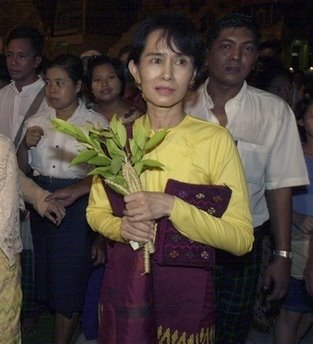


 Posts
Posts


