News & Articles on Burma
Wednesday, 23 February, 2011
-------------------------------------------------------------
Junta Weighing Options to Reign in BGF Defectors
Burma’s Ethnic Wars seem unstoppable
Ethnic Armed Groups to Negotiate Jointly
Junta army beefing up after fight
More Wa wings clipped
Myanmar's Suu Kyi, US official discuss sanctions
Myanmar absorbs 3.56 bln USD of foreign investment in 3 months
Jailed DVB reporter taken from prison
India-Myanmar trade to boom with Stilwell Road's opening
Nai Htar Wa Ra, Mon leader, dies at 55
Rescuers locate Myanmar businessman stranded on Ice Mountain
----------------------------------------------
Junta Weighing Options to Reign in BGF Defectors
By THE IRRAWADDY Wednesday, February 23, 2011
With the number of border guard force (BGF) troops in Karen State who have defected with their ammunition increasing by the day, Burmese military authorities are attempting to retain the remaining BGF troops with increased salaries and benefits.
According to sources from the Democratic Karen Buddhist Army (DKBA) and the Karen National Union (KNU), more than 200 BGF troops have defected thus far. There are 10 BGF battalions in Karen State, consisting in aggregate of about 2,000 troops.
A BGF officer who spoke on condition of anonymity said that many troops who defected joined the KNU or the DKBA, which are still fighting against the military government.
“The new government will increase the BGF troops' salary and other benefits such as houses with electricity, free education for their families, etc,” a BGF officer said.
One BGF soldier who defected said, “An ordinary BGF soldier get 35,000 kyat (US $39) per month. Maung Win, one of the BGF commanders, said we will get 150,000 kyat ($168) when the new government is in place. We don't believe him and that is why we defected.”
Some BGF sources said that the military regime had a budget of about 1 billion kyat ($111,000) for each BGF battalion. Saw Chit Thu, a former operation commander of DKBA Special Battalion 999, and Maw Tho from BGF Battalion No. 1022, are the people who will manage the finances and benefits to be handed out, according to sources.
An engineer from a construction group which received a contract from the BGF to construct a building said, “We got the contract to build the barracks through Saw Chit Thu and Maw Tho.”
Many BGF troops said that the Karen State BGF troops will not receive the promised benefits, but they will go to people who receive contracts for those kinds of projects.
Meanwhile, sources said the DKBA will attack the town of Chukli, a new town for which the opening ceremony will soon be held, and have informed government servants that they should flee the township. Chukli, 30 miles from Myawaddy, is located between Myawaddy and Kyar Inn Seik Gyi in Karen State.
Maj. Saw San Aung, a spokesperson for the DKBA, said that the ethnic armed group asked people to leave the town because it wanted to avoid civilian causalities. The Burmese military has brought in about 40 military trucks to reinforce and secure the township for the opening ceremony.
http://www.irrawaddy.org/article.php?art_id=20812
-------------------------------------------------
Burma’s Ethnic Wars seem unstoppable
By Zin Linn Feb 23, 2011
Burma’s military junta terminated the license of an airline linked to Burma’s largest ceasefire group United Wa State Army (UWSA) in November 2010. It was the Yangon Airways which forced to suspend its operations from 3 December, as a result of the aviation officials refused to reinstate its Aircraft Operating Certificate (AOC).
The company-owner was Aik Hauk, the son-in-law of Bao Youxiang (Pau Yu Chang), who leads the strongest ceasefire rebel-group, the UWSA. Even though agreeing to a ceasefire deal with the junta in the 1990s, UWSA’s refusal to turn into the junta’s Border Guard Force plan has seriously damaged relations.
Then, the junta made a harsh move to beat the Wa. Following its rejection to renew operating license of the Wa’s Yangon Airways in December, Nay-pyi-taw has ordered closure of its Hong-pang bus line that runs between Tachilek, opposite Thailand’s Mae Sai, and Kengtung, 160 km north of the border, according to a report by Shan Herald Agency for News (SHAN).
However, Hongpang had already reassigned ownership to Hsarm Tao, its additional firm more than a year ago. It was managed by Khun Hsai Hsook, believed to be a member of the UWSA.
Many believe that Aik Hauk also runs a number of hotels and the estate agents, Yangon Holdings. He has been accused in the past of overseeing money laundering operations by the UWSA, which was branded by the US in 2005 as the largest drug-trafficking organization in Southeast Asia.
The closure-order of Hong-pang bus line was delivered to the UWSA’s liaison officer Ah Chang in Kengtung on Sunday, 20 February, by General Staff Officer Grade 1 Col Khin Maung Htwe, Shan Herald said quoting a source close to the Wa. There are 2 other bus lines running between the two cities – Shwe Myodaw and Shwe Yegan.
The signs of closures of Yangon Airways Hong-pang bus line owned by UWSA seem gloomier than ever in the Shan state. The military regime has been tightening its grip toward the ceasefire groups those refused to accept the BGF proposal.
Furthermore, 21 truckloads of soldiers and military supplies were sent out to the armed clashes site between the Burma Army and the Shan State Army (SSA) South which took place last night, according to local and rebel sources, SHAN News said.
The one-and-half hour-long fight was between an SSA patrol and the Burma Army unit providing security for tractors expanding and repairing a road between Gawng Teevee in the west and Monghta in the east, some 44 km north of Chiang Mai’s Wiang Haeng district border. No casualties were reported.
The encounter last night took place after bombardment by an unknown armed group on the Burma Army outpost in Monghta on 18 February. The area has been actively influenced by both the Wa and the SSA, Shan Herald said.
Naypyitaw has designated Monghta, as well as Kali, Kholam and Mongzang villages on the west bank of the Salween River to become new sub-townships. The latter three sub-townships will be directly controlled by the newest Middle East Region Command.
According to the Shan rebel source, the armed clash on 22 February with Monghta-based Burma Army’s Light Infantry Battalion 328 lasted for nearly 90 minutes. The Shan patrol saw three dead and one injured, but they believed there were more casualties on the Burma Army part.
Tensions are still heightened between the Burma Army and ceasefire groups – the UWSA, Kachin Independence Army (KIA), SSA ‘North’ and the NDAA. Discomforts have been soaring up since the junta raises ultimatum to accept BGFs program. Both sides have been reinforcing their troops on heightened alert after none of them accepted the junta’s plan.
Although the newly formed parliament under President Thein Sein, an ex-general, has been going on with its sessions selecting ministers, chief judge and chief attorney etc., there is no discussion on the autonomy issue put forward by the ethnic ceasefire-groups since June 2004 National Convention.
It is true that Sai Mauk Kham, a 61-year-old Shan physician, becomes Burma’s new vice-president. But, he will not be allowed practicing effective power within the new government. He cannot able to fulfill the main necessities of the nation, such as national reconciliation and the ethnic equal opportunity.
Several political observers believe that the military-backed new USDP government will not change its high-handed policy which constantly negates the self-determination of the ethnic people. Thus, civil war may not stop all along the ethnic areas unless a true democratic government cannot come to the office.
http://asiancorrespondent.com/48979/burma%E2%80%99s-ethnic-wars-seem-unstoppable/
--------------------------------------------
Ethnic Armed Groups to Negotiate Jointly
By SAW YAN NAING Wednesday, February 23, 2011
More than a dozen of Burma's ethnic armed groups decided at a recent meeting in northern Thailand to adopt the new strategy of negotiating in concert with the military regime rather than individually.
They also set up the United Nationalities Federal Council (Union of Burma), vowed to strive for a genuine federal union in Burma and agreed to support one another should Burmese government forces launch a military campaign against any member of the alliance.
In 1989, under an initiative by former junta spy chief Gen Khin Nyunt, the regime held sepearate talks with many ethnic armed groups and signed individual ceasefire agreements with 17 groups.
Those signing ceasefire agreements included strong ethnic armed groups such as the United Wa State Army (UWSA), the Kachin Independence Organization (KIO), the Democratic Karen Buddhist Army (DKBA) and the New Mon State Party (NMSP).
Brig-Gen Saw Lah Pwe, the commander of breakaway Brigade 5 of the DKBA which broke its 15 year ceasefire by battling junta troops beginning on Nov. 8, 2010, said the junta has become dishonest about the ceasefire agreements and is not serious about maintaining them.
He said the junta generals are now more interested in forcing ethnic ceasefire groups to become members of the regime's border guard force (BGF), which is under the command of government forces. And three months after his brigade began fighting the regime on the Thailand-Burma border, he did not see the junta making any move towards new ceasefire talks. To the contrary, he saw them sending military reinforcements to the area around his bases.
The other ceasefire groups, including the UWSA, KIO and NMSP, are also under junta pressure to transform their armed fighters into BGF troops. But all have thus far rejected the BGF.
As a result, the regime has begun calling the KIO, NMSP and DKBA “insurgent groups” rather than “ceasefire groups,” which observers said signals the end of the ceasefire.
In fact, since the junta called it an “insurgent group” last year, the NMSP has assumed that their ceasefire deal had already broken down.
Some observers said the junta is unlikely to offer new ceasefire talks with the ethnic armed groups because they are busy forming the new government and participating in the new parliament.
“It seems this regime does not want to have political talks. They want to use their weapons to eliminate us. We are also ready to destroy them with our guns,” said Nai Hang Thar, the secretary of the NMSP.
Some observers, however, think ceasefire talks with ethnic armed groups is likely during the administration of the new military-dominated government. They also have seen more cooperation among ethnic ceasefire and non-ceasefire groups after the junta's announcement of the BGF plan.
Zipporah Sein, the general-secretary of the Karen National Union, said the junta may offer ceasefire talks with the ethnic armed groups, but perhaps separately rather than in concert.
The KNU has held ceasefire talks with the regime a couple of times in the past, but has never signed a ceasefire agreement with the junta.
“We always keep the door open for talks. We want to solve political problems by dialogue in which all ethnic alliance groups need to get involved,” said Zipporah Sein. “We agreed to meet together at the same time if the regime offers ceasefire talks.”
However, one observer said that while the armed ethnic groups agreed to the new strategic initiative of negotiating as a group with the junta, it is very important that members of the alliance effectively play their role.
http://www.irrawaddy.org/article.php?art_id=20811
-----------------------------------------------------
Junta army beefing up after fight
Wednesday, 23 February 2011 13:30 S.H.A.N.
21 truckloads of men, supplies and ammo were dispatched to the site of the one and half hour long fight between the Burma Army and the Shan State Army (SSA) South which took place last night, according to local and rebel sources.
The fight that lasted 21:00-22:30 was between an SSA patrol and the Burma Army unit providing security for tractors expanding and repairing a road between Gawng Teevee in the west and Monghta in the east, some 44 km north of Chiangmai’s Wiang Haeng district border. No casualties were reported.
The shootout last night followed shelling by an unidentified armed group on the Burma Army outpost in Monghta on Friday.
Both the Wa and the SSA are active in the area.
Naypyitaw has designated Monghta, as well as Kali, Kholam and Mongzang west of the Salween, as new sub-townships. The latter three sub-townships will be directly administered by the newest command named the Middle East Region Command.
Update 16:00
A rebel source said the shootout with Monghta-based Light Infantry Battalion 328 took place at 21:40 and lasted until 23:00. The Shan patrol saw 3 dead and 1 wounded, but believed there were more casualties on the Burmese side.
http://www.shanland.org/index.php?option=com_content&view=article&id=3483:junta-army-beefing-up-after-fight&catid=86:war&Itemid=284
---------------------------------------------
More Wa wings clipped
Wednesday, 23 February 2011 13:25 S.H.A.N.
Following its refusal to renew operating license of the Wa’s Yangon Airways in December, Naypyitaw has ordered closure of its Hongpang bus line that runs between Tachilek, opposite Thailand’s Mae Sai, and Kengtung, 160 km north of the border, according to a report received by SHAN.
Hongpang had already transferred ownership to Hsarm Tao, its subsidiary firm more than a year ago. It was managed by Khun Hsai Hsook, believed to be a member of the United Wa State Army (UWSA).
The order was delivered to the UWSA’s liaison officer Ah Chang in Kengtung on Sunday, 20 February, by General Staff Officer Grade 1 Col Khin Maung Htwe, said a source close to the Wa.
Moreover, Ah Chang was told all vehicles owned by the Wa must obtain official permission before embarking on a trip. “The noose has tightened,” the source quoted a Hsarm Tao employee as saying.
The Hongpang signboard near the Hsarm Tao bus station at the foothills of Loi Pangkoi, Mong Zame village tract, 13 miles south of Kengtung, where it also has a livestock farm, has also been pulled down.
There are 2 other bus lines running between the two cities: Shwe Myodaw and Shwe Yegan. The bus fare is K 4,000 (roughly $ 4) per passenger. http://www.shanland.org/index.php?option=com_content&view=article&id=3482:more-wa-wings-clipped&catid=86:war&Itemid=284
----------------------------------------------------
Myanmar's Suu Kyi, US official discuss sanctions
(February 23rd, 2011 @ 2:45am)
YANGON, Myanmar (AP) - The top U.S. diplomat in Myanmar says he has begun talks with pro-democracy leader Aung San Suu Kyi about what kind of aid Washington can offer the military-dominated nation.
Charge d'Affaires Larry M. Dinger says the U.S. also is talking to the newly installed government on the issue, which hinges around long-standing sanctions Washington has applied because of human rights abuses by the country's junta and failure to institute democracy. Parliamentary rule was nominally restored last month after last year's elections, which were widely criticized as a sham.
The Obama administration has been exploring ways of engaging the new government, while Suu Kyi's National League for Democracy party has cautioned against lifting sanctions too quickly.
(Copyright 2011 The Associated Press. All rights reserved. This material may not be published, broadcast, rewritten or redistributed.) http://www.620ktar.com/category/world-news-articles/20100819/Myanmar-pro~democracy-leaders-praise-US-decision/
------------------------------------------------
Myanmar absorbs 3.56 bln USD of foreign investment in 3 months
17:03, February 23, 2011
Myanmar absorbed 3.56 billion U.S. dollars of foreign investment in the three months from November 2010 to January 2011, bringing the total to 35.406 billion dollars as of January this year since the country opened to such investment in late 1988, the Popular News reported Wednesday.
The 3.5 billion USD include 3.18 billion USD from China, 186 million USD from Singapore, 183 million USD from South Korea and 3 million USD from China's Hong Kong, the Ministry of National Planning and Economic Development was quoted as saying.
Of the total foreign investment injected in over two decades, China's investment has now topped with 9.603 billion USD, overtaking Thailand which once stood 9.568 billion USD in the foreign investment line-up previously.
The Chinese investment was raised by its increased involvement in building of deep seaport, hydropower plants, exploration of natural gas and exploitation of mineral resources and transport.
The foreign investment coming from 433 enterprises of 31 countries and region were respectively injected into 12 economic sectors which are oil and gas, electric power, manufacturing, real estate, hotels and tourism, mining, transport and communications, livestock breeding and fisheries, industry, construction, agriculture and services sector.
Source:Xinhua http://english.people.com.cn/90001/90778/90858/90863/7297672.html
---------------------------------------------
Jailed DVB reporter taken from prison
By KHIN HNIN HTET
Published: 23 February 2011
A senior reporter for the Democratic Voice of Burma who was imprisoned this month has been taken from his cell in Insein prison, possibly in lieu of a transfer to a remote jail, his brother says.
No warning about the transfer was given to the family of Maung Maung Zeya, who was sentenced in early February to 13 years in prison after being caught photographing the aftermath of the Rangoon bombings in April 2010.
His older brother, Dewa, claims he only learnt that Maung Maung Zeya had left Insein during a visit to the Rangoon prison on Tuesday.
“Now we don’t know where he is and it makes it difficult for the family,” he told DVB. “I’ve heard stories about prisoners being selectively sent to remote prisons and now we are actually experiencing it ourselves.”
A source close to Insein prison said that the 58-year-old may now be en route to Mandalay prison, from where he will be sent to one of Burma’s many far-flung jails.
More than 25 media workers are among the nearly 2,200 political prisoners in Burma, which has some of the world’s strictest media laws. Transfers to remote jails are an additional means of punishment for many, given the often unfeasible distances needed to travel for family members, who are often an inmate’s only source of medicine and outside contact.
Dewa says he had gone to the prison to attend a court hearing for Sithu Zeya, the son of Maung Maung Zeya, who was arrested alongside his father and later sentenced to eight years.
The 21-year-old, also a DVB reporter, is facing additional charges and remains in Insein prison, where his family claims he has been tortured.
Nine people died in the 15 April 2010 grenade attacks in Rangoon, making it the most deadly incident of its kind in the former capital in years. The alleged culprit, Phyo Wei Aung, is facing murder charges.
Five more youths also arrested in connection with the attacks were yesterday handed lengthy prison sentences. Bo Bo Thein, Thaung Htike Oo, Myo Min Thu. Yan Naung Soe and Thaw Zin, were each given a total of eight years, while Bo Bo Thein had an additional three years added for drugs charges.
His father, Han Thein, said that “there were no witnesses at all [to support the accusations], apart from the police report resulting from interrogation”.
http://www.dvb.no/news/jailed-dvb-reporter-taken-from-prison/14388
-------------------------------------------------
23 Feb, 2011, 11.25AM IST,PTI
India-Myanmar trade to boom with Stilwell Road's opening
ITANAGAR: With the road being cleared for trade between India and Myanmar via the Pangsau Pass on the Arunachal Pradesh border, the historic Stilwell Road is likely to come alive with commercial activities.
"Research and Analysis Wing (RAW) of Ministry of Home Affairs has recently agreed in-principle to allow border trade between India and Myanmar for economic development of the North-East," Trade and Commerce Commissioner Makbul Pertin told PTI.
Arunachal Pradesh had submitted proposals to the Centre for beginning border trade with China, Bhutan and Myanmar at various locations.
The proposed border points in Arunachal Pradesh for trade with China include Bumla (Tawang district), Kibitho (Anjaw), Taksing (Upper Subansiri), Mechuka (West Siang) and Geling (East Siang), while Dongsengmang and Blating in Tawang district have been proposed as the points for border trade with Bhutan.
"Border trade with Myanmar through Pangsau Pass will transform the economy of North-East by reducing time, cost and distance involved in trade with China and South-East Asia," Pertin said.
Myanmar has established an administrative and immigration post, as well as a market complex on their border with India.
"There is no Myanmarese custom post at Pangsau. However, a customs station is located at Tenai, at a distance of 160 km from Pangsau Pass," he said.
"The Centre, as well as the state government, in order to facilitate border trade with Myanmar, has already constructed a border trade centre at Nampong," he said.
The Arunachal Pradesh government has been taking up construction of a 'border haat' marketplace, immigration office and bank facilities with foreign exchange services, besides posting security forces to assist all departments for operation of border trade.
Trade between India and Myanmar existed before Independence on a small scale.
The governments of Myanmar and India on September 26, 1950, signed an agreement according to which the indigenous hill tribes of both countries living within 40 km of the border were exempted from the requirement of a passport for trade purposes. http://economictimes.indiatimes.com/news/economy/foreign-trade/india-myanmar-trade-to-boom-with-stilwell-roads-opening/articleshow/7553948.cms
---------------------------------------
Nai Htar Wa Ra, Mon leader, dies at 55
Tuesday, 22 February 2011 21:02 Kun Chan
Chiang Mai (Mizzima) – Nai Htar Wa Ra, 55, a leader of the New Mon State Party (NMSP) who suffered from diabetes and hypertension, died suddenly on Tuesday morning.
A central executive committee member, party officials said he died at party headquarters in southern Mon State.
‘His heart was also weak. In the early morning, he could not breathe well, and he died about 2
a.m.’, said Nai Tala Nyi, a NMSP central executive committee member.
On Sunday, Nai Htar Wa Ra presided at a ceremony to mark the 64th Mon National Day held in Panangpain Village near the party headquarters, where he read an official message sent by the NSMP chairman.
He was born in 1956 in Kamarwat village in Mudon Township in Mon State. He joined the NMSP in 1976 and resigned from the party temporarily in late 1978. He rejoined in 1981, and he served as second commanding officer and later served as commanding oficer until 1999 in the New Mon Liberation Army (NMLA), the armed wing of the NMSP.
In 2000, he moved to the political wing and served as the district chairman. In late 2006, at the party’s 7th conference, he was elected as a central executive committee member. From 2009 to the day he died, he was in charge of the central administration department of the NMSP.
He was well known as a military strategy expert in the NMLA.
‘He was also courageous’, Nai Banyar, a former private in the NMLA, told Mizzima. ‘On some
occasions, the enemy felt a shock when they heard his name. He had an open mind, and he treated his subordinates very well’.
He is survived by his wife Mi Khin Myo Yi; a son, Min Kun Thaik (a central committee member of the Health Department of the NMSP); and a daughter, Mi Ah Chan. http://www.mizzima.com/news/breaking-and-news-brief/4915-nai-htar-wa-ra-mon-leader-dies-at-55.html
--------------------------------------
Rescuers locate Myanmar businessman stranded on Ice Mountain
Feb 23, 2011, 5:03 GMT
Rescuers locate Myanmar businessman stranded on Ice Mountain =
Yangon (dpa) - One of Myanmar's richest businessmen was spotted Wednesday on an ice-covered mountain where his helicopter was forced to make an emergency landing two days ago.
A helicopter carrying Tay Za - ranked among Myanmar's three richest men - was forced to land Monday on Fukanrazi Mountain, also called Ice Mountain - one of Myanmar's highest peaks in the Kachin State, due to poor weather.
Six other people were on board the craft.
'A military helicopter has located them and has dropped them food,' a Myanmar government official said. 'We expect to get them out soon,' said the official, who asked to remain anonymous. Tay Za was inspecting the Kachin's mountains to explore tourism opportunities when his helicopter made an emergency landing and was unable to take off again.
Tay Za is the owner of Htoo Trading Company, Bagan Air, several luxury hotels and the Elite Telecommmunications Company, among others.
He is known to have close ties to the country's junta chief Senior General Than Shwe, who has ruled Myanmar since 1992.
Tay Za is on a list of Myanmar's 'crony businessmen' who are denied visas to Europe and the United States and whose foreign assets have been frozen as part of economic sanctions against the regime.
http://www.monstersandcritics.com/news/asiapacific/news/article_1621318.php/Rescuers-locate-Myanmar-businessman-stranded-on-Ice-Mountain
Thursday, February 24, 2011
News & Articles on Burma-Wednesday, 23 February, 2011


Wednesday, February 23, 2011
News & Articles on Burma-Tuesday, 22 February, 2011
News & Articles on Burma
Tuesday, 22 February, 2011
-------------------------------------------------------------
Could Burma's Next Uprising Begin on the Internet?
Burma’s '15-Minute' Parliament
Wa, Shan disclaim responsibility for shelling junta border base
Sanctions aren't working in Burma
Farmers Fear More Land Seizures
Bomb suspect lawyer ‘denied case report’
Burma’s report to UN ‘is fictional’
Army seizes 30,000 acres of farmland
New Alliance fast becoming the only game in town
-----------------------------------------------
Could Burma's Next Uprising Begin on the Internet?
By BA KAUNG Tuesday, February 22, 2011
“Since last year, we have trained over 120 laborers from the countryside on how to use the Internet,” said Ko Win, a middle-aged political activist in Rangoon. “I taught them how to use Gmail and Gtalk, though I myself have yet to learn how to use Facebook and Twitter.”
Ko Win said that he hopes some of these students will become politically active and revolt against Burma's military rulers.
“We hope we can use the Internet to initiate an uprising this summer like those that took place in Tunisia and Egypt,” he said. “Because we cannot rely on the leadership of the mainstream opposition to topple the regime.”
Ko Win, who for security reasons does not want his full name identified, said he and his friends used their own money to give students free Internet lessons in Rangoon Internet cafes.
Many other Burmese activists are also excited by the nationwide uprisings in North Africa that have already ousted two entrenched dictators. But some have said that to use the Internet to organize and rally a political protest in Burma, they must overcome challenges such as the country's slow Internet speed, the junta's restrictions on Internet access and the small number of Internet users in the country of nearly 60 million people.
One-third of Burma's population is thought to be between the ages of 15 and 24—and analysts have said that the youthful demographics in Egypt and the Arab world have played a major role in recent events. But Burma has only 400,000 Internet users, most of whom are in Rangoon and Mandalay, the country's two major cities. In fact, there are only 10,000 users in other parts of the country, according to official data.
“Compared to China and countries in the Middle East, there is a small number of Internet users inside our country,” said Dr. Lun Swe, a well-known Burmese blogger based in Thailand's border town of Mae Sot, a hotbed of Burmese dissident groups.
“It remains a major challenge for activists inside Burma to get proper Internet access. Those who have direct and unrestricted access to the Internet are regime-affiliated,” he said.
Lun Swe's personal anti-government blog is one of a handful of active Burmese political blogs, all of which are based outside Burma. The blog, which compiles all the day's news stories published by Burmese exiled media and even posts videos of the world's major political events, is popular among Burmese people.
He said that an average of 8,000 people visit his blog daily—but most of them are from Singapore and the United States rather than from inside Burma, where the press is heavily restricted.
A member of the Vigorous Burmese Student Warriors, a militant dissident group based in Thailand, also expressed his dismay at the lack of success in recruiting members and raising the political tempo inside Burma through the Internet.
“On important political anniversary days, I used to send political messages to 7,000 email users who I confirmed to be inside Burma by looking at their IP addresses,” he said. “But I got only four positive responses—some e-mail users even replied and requested me not to send this kind of political e-mail again.”
Many people inside Burma do not have their own personal computers and few of those who do have access to the Internet. Hence, they heavily depend on Internet cafes to get online.
“They would instantly order the closure of Internet cafes if protests broke out this time around,” Ko Win said. “So we must be well-organized.”
The regime is suspected to have already ordered Internet cafe owners to install spying software, such as “key-logger,” and screen reading software on their computers to record anti-government online activities. In addition, under government pressure some Internet cafes reportedly installed CCTV cameras in their shops since last year.
“Please do not visit the banned websites,” reads a notice posted on the wall of an Internet cafe near a major shopping mall in Yankin Township in Rangoon. The regime has banned access to several Internet websites critical of it, include those run by The Irrawaddy and BBC Burmese radio station.
Twitter, the micro-blogging website which opposition leader Aung San Suu Kyi desires to use, is also banned. And even if Twitter was not prohibited, Burma's slow Internet connection speed would preclude its use at this time.
But Facebook, which is the second most popular site after Gmail in Burma, is accessible.
The Burmese are no strangers to revolution. They still vividly remember the regime's brutal crackdown on the mass anti-government protests that went on for weeks in 2007, and Burmese dissidents were even among the earliest trainees of Gene Sharp, the American intellectual whose non-violent, anti-dictatorship methods partly influenced the revolutions in Tunisia and Egypt, according to the New York Times.
Sharp's “From Dictatorship to Democracy,” a 93-page guide book which describes “198 methods of non-violent action,” was originally published by Burmese exiled groups in Bangkok in 1993.
Dr. Naing Aung was one of the first Burmese who received direct training from Sharp in Marnepalaw, the former stronghold of Karen ethnic rebels located in the jungle of Karen State on the Thai-Burmese border. Naing Aung was the former chairman of the All Burma Students' Democratic Front, an armed group of students who fled to the border in the aftermath of the major anti-government uprising in 1988.
“What I most remember is Gene Sharp's method of creating disorder in a government's mechanism and planning during the revolutions,” he said. “Burma will have another revolution as long as repression continues to exist, whether initiated by technology or otherwise.”
However, a Burmese dissident in Rangoon said the people inside Burma are so traumatized by the 2007 regime crackdown that it will take time for the people to launch a similar one.
“The question is how we quickly overcome the sense of fear we are left with. The 2007 event was very recent,” he said. “When was the last major government crackdown on opposition in Egypt and Tunisia or Libya?”
Given the regime's continued tight control of the country despite its self-declared transition to democracy, analysts say that Burma's next revolution would likely be met with the type of deadly response handed out by Libya's Gaddafi rather than the more tempered response from Egyptian President Hosni Mubarak.
Copyright © 2008 Irrawaddy Publishing Group | www.irrawaddy.org
http://www.irrawaddy.org/article.php?art_id=20804
----------------------------------------------
Burma’s '15-Minute' Parliament
By WAI MOE Tuesday, February 22, 2011
Before Burma’s elections last year and the opening of the Hluttaw (Parliament) at the end of January, some Burmese politicians, journalists and scholars on the military-ruled nation expected the transition to a quasi-civilian government to create some much-needed political and economic space.
However, just three weeks after Parliament convened for the first time in more than two decades, it has become obvious to all that Burma's post-election politics is struggling not only for space but also for time.
Lawmakers and military personnel sit in Parliament in Naypyidaw on Jan. 31. (Photo: MRTV)
Since Jan. 31, the Pyithu Hluttaw, or Lower House, has met just three times, for a total of 8 hours and 20 minutes, while the Amyotha Hluttaw, or Upper House, has held three meetings totaling just 6 hours and 35 minutes. The Pyidaungsu Hluttaw (the Union Parliament, a combination of both Houses) has held 11 meetings so far, adding up to just 9 hours and 5 minutes.
None of the Union Parliament meetings held since Feb. 11 has been more than 20 minutes long, with the meetings on Feb. 15 and Feb. 17 lasting a mere 10 minutes each—surprising observers and a few members of Parliament from non-military-backed parties.
Khin Maung Swe, a leader of the National Democratic Force (NDF), which won four Upper House seats and 12 Lower House seats, said the reason for the short meetings could be that the ruling junta and parliamentary officials want to delay the creation of a new government until late March.
“Although the Parliament has been meeting for the past three weeks, the president-in-waiting and his cabinet have still not been sworn in yet,” he said, attributing the slow pace of progress to the brevity of meetings.
“Each meeting is just a few minutes long, allowing only enough time to make one or two appointments,” he said. “We really should have done more by now.”
This protracted approach to dealing with affairs of state comes at a cost. The government spends 3.7 million kyat (US $41,000) each day on meals for parliamentary members, said Khin Maung Swe.
Over the past three weeks, there has been precious little for the Burmese press to report about the proceedings in Parliament. It is perhaps just as well, then, that the only media allowed to cover Parliament is the state-run Myanmar News Agency.
There was, however, one brief episode that might have attracted some outside attention. On Feb. 10, Myat Nyana Soe, an NDF member of the Upper House, proposed reducing the number of ministries from 34 to 25.
This suggestion was soon quashed, however, when Minister of Information Kyaw Hsan stood up to scold Myat Nyana Soe, reminding him that China has 22 ministries and 20 ministerial-level boards and India has 35 ministries and 21 ministerial-level boards.
In Rangoon, the former capital, journalists are still trying to figure out what to make of the trickle of information coming out of Naypyidaw.
“In the past three weeks, the only significant thing the Hluttaw has done is elect the president and vice-presidents. The government is still not formed yet,” said a political reporter for a Rangoon-based news journal, speaking to The Irrawaddy on condition of anonymity.
“For the past ten days, most Hluttaw meetings have lasted just 15 minutes. So now people have started calling it the 15-minute Hluttaw,” he added.
While outside observers may find the situation in Naypyidaw odd, however, it seems to be perfectly in keeping with the regime's desire to keep Burma's democracy strictly “disciplined.”
In his first speech as the Upper House speaker on Jan. 31, ex-Maj-Gen Khin Aung Myint urged MPs not to debate, but to “discuss any matters in unison.”
“It is not important not to have a sense of contradiction,” said the junta hardliner, who also serves as the minister of culture and speaker of the Union Parliament.
“The truth may disappear because of the eloquence of a person in a debate-like situation,” he warned his fellow parliamentarians.
http://www.irrawaddy.org/article.php?art_id=20803
--------------------------------------
Wa, Shan disclaim responsibility for shelling junta border base
Tuesday, 22 February 2011 17:28 S.H.A.N.
E-mail Print PDF
Plan for the inauguration of the new sub-township in Mongton township, opposite Chiangmai’s Wiang Haeng district, today has been postponed following shelling by an unknown armed group on Friday night (18 February), according to sources from the border.
The shelling between 21:00-22:00 local time had killed and injured an unspecified number of Burma Army soldiers.
The United Wa State Army’s 171st Military Region, whose transport line between 772nd Brigade in Mongjawd in the east and 778th Brigade in Khailong in the west, has been threatened by the Burma Army base in the middle, has denied any responsibility outright.
The other belligerent the Shan State Army (SSA) ‘South’, whose main base Loi Taileng lies further west was also vehement in its denial. “It’s not our communication links that have been severed,” responded Lt-Gen Yawdserk, the SSA South leader, to SHAN’s query. “We are in no urgency to attack it.”
The Monghta sub-township which came into being last month used to be part of the stronghold of the Mong Tai Army (MTA), the SSA South’s predecessor, until 1996 when its leader Khun Sa surrendered.
Junta authorities have invited people far and near to resettle in Monghta, 44 km north of Wiang Haeng border, offering privileges such as “permission to grow anything without official interference for 6 years”, according to one of informed source.
Monghta will also serve as a railroad link between Mongpan, west of the Salween, and Mongton, east of the Salween, according to an unconfirmed report. http://www.shanland.org/index.php?option=com_content&view=article&id=3481:wa-shan-disclaim-responsibility-for-shelling-junta-border-base&catid=86:war&Itemid=284
---------------------------------------------
Sanctions aren't working in Burma
By Andrew Cohen, Citizen Special February 22, 2011 8:02 AM
Today, Carleton University will confer an honorary doctorate on Aung San Suu Kyi, the lioness of Burma. It is another accolade for Suu Kyi, the courageous Nobel laureate who, as always, will be unable to accept it in person.
Since she was released from house arrest last November, Suu Kyi has been careful not to provoke the regime. She has said little in public and declined to travel even within Burma beyond Rangoon, where, until last autumn, she had been a prisoner in her crumbling lakeside villa for 16 of the last 21 years.
Yet earlier this month, her prodemocracy party reaffirmed its support for the sanctions imposed on Burma by western nations, including Canada. It insisted that the sanctions are hurting the government, not the people.
"Recently, there have been calls for the removal of sanctions," said the National League for Democracy. "Targeted sanctions serve as a warning that acts contrary to basic norms of justice and human rights cannot be committed with impunity even by authoritarian governments."
Although the declaration did suggest "modifying" sanctions, it was unlikely to endear Suu Kyi to the junta that released her. And it put to rest, at least for now, speculation that Suu Kyi was preparing to ask the West to reconsider its longstanding policy.
And that's too bad, really, because evidence suggests that sanctions are not working. If they are hurting the regime, whose greed, ineptitude and brutality are beyond question, it is not clear where and how.
A recent report by Mark MacKinnon in The Globe and Mail describes a country in which the military and commercial elite has found ways to circumvent the trade and travel restrictions that have been imposed in varying degrees by Canada, the United States, Australia and the European Union since 1988.
Just last year, Canada tightened the sanctions it had already strengthened after the uprising in 2007, when the junta crushed the dissident movement, led largely by the monks. Canada's sanctions have been called the harshest in the world.
MacKinnon, who spent a revealing two weeks undercover in Burma, sees an elite that has become rich turning the sanctions to its advantage. His view of the moneyed class working in lockstep with the military reflects an emerging consensus that, after 23 years, sanctions are no longer effective, if they ever were.
Worse, in limiting the volume of western aid to one of the poorest countries in Asia, sanctions have hurt the most vulnerable people in Burma. Certainly that's the view of critics of sanctions among the aid community.
This general criticism of sanctions isn't new; the same was said of the sanctions imposed on South Africa in the 1980s. Despite the opposition of Margaret Thatcher, who was on the wrong side of history, they were decisive in bringing down apartheid.
The trouble is that Burma isn't South Africa. It has neighbours like Thailand, India and China who ignore the sanctions. They are happy to buy the hardwoods, natural gas, minerals and precious gems that the junta is happy to sell, enriching itself and perpetuating its illegitimate rule.
None of this suggests that Burma's leaders are anything but the ruthless thugs they are. This is the crowd that sent soldiers into the hospitals in 1988 to kill pro-democracy protesters, pioneering the techniques the Chinese would use to crush their dissidents the next year in Tiananmen Square.
This isn't to say that last fall's elections in Burma were not a sham, as they were in 1990 (when Suu Kyi's party won and was denied power) and that the elite is not among the most corrupt in the world. They were and it is.
But what do you do with a policy that is failing? How do you retreat from an orthodoxy?
You explore other ways. After almost a quarter century of sanctions and the isolation they bring, Burma has slipped beyond western influence. It now takes its cues mostly from China, which disdains liberal democracy. India, which is a bona fide democracy, now worries more about protecting its own strategic and economic interests in the region than liberalization in Burma.
Some observers see a generational shift coming in Burma, particularly among the military, and argue that we should engage younger Burmese. They also suggest that a Burma that has ostensibly moved to civilian rule may be no more impervious to democracy than countries like Indonesia that were once thought irredeemably authoritarian.
While sanctions did work in South Africa, they failed to contain Saddam Hussein in Iraq. More pointedly, sanctions have not dislodged Fidel Castro and his successors in Cuba after some 50 years.
It is time to look at new ways to address the enduring atrocity called Burma. Awful as it may be to see the generals crow, it may also be that trade, tourism and political engagement -and the seeds of change they carry -are now the only way to unseat them.
Andrew Cohen is a professor of journalism and international affairs at Carleton University.
e-mail: andrewzcohen@yahoo.ca
Read more: http://www.ottawacitizen.com/news/Sanctions+aren+working+Burma/4324317/story.html#ixzz1EgzoH5lF
--------------------------------------------
Farmers Fear More Land Seizures
By KO HTWE Tuesday, February 22, 2011
Farmers in Kyaikmayaw Township in Mon State say they are worried about further land confiscations in the area after nearly 600 acres of land were confiscated by the Zay Gabar Company to make way for construction of the largest cement factory in Burma.
Rumors are rife that Zay Gabar—which is owned by junta crony Khin Shwe, an elected Union Solidarity and Development Party candidate representing Twantay Township in Rangoon Division—will soon seize 200 more acres of land in the vicinity.
Speaking to The Irrawaddy on Monday, Khin Shwe said that lands which bordered the roads in and out of the projected cement factory will need to be listed for seizure.
Meanwhile, locals whose land was confiscated have complained that compensation for land seizures has been completely inadequate.
“We haven’t received enough compensation,” said a farmer who lost land to the seizures. “It is too little. There is nothing we can buy with it.”
Representatives of the Zay Gabar company have reportedly paid out 300,000 kyat [US $300] per acre seized, although some 30 farmers have already refused the compensation.
The farmers said they had sent letters of complaint to Burmese junta chief Snr-Gen Than Shwe, but to no avail.
The 1963 Safeguarding Peasants' Rights Law, Section (3), states that: “A Civil Court shall not make a decree or order for: a warrant of attachment for or confiscation of agricultural land; neither for employed livestock and implements, harrows and implements, other animate and inanimate implements, nor the produce of agricultural land; prohibition of work upon or entry into agricultural land; prohibition of movement or sale in whole or part or use of employed livestock and implements, harrows and implements, other animate and inanimate implements, or the produce of agricultural land.”
Many land confiscations have taken place across Burma under the authority of the military junta and in collusion with private companies. Some 600 farmers in Kachin State were evicted from their farms between 2006 and 2008 without full compensation and displaced to areas far from their ancestral lands while the state granted 1,338 acres of the seized property to the Yuzana Company.
Approximately 8,500 acres of land belonging to 800 farmers in Rangoon Division have been confiscated by the Burmese authorities in the past two years and distributed to private companies.
There have been no less than 381 land seizure cases in Rangoon Division alone where private companies have confiscated lands belonging to farmers with the help of local authorities.
Meanwhile, at least seven lawyers and farmers' representatives have held a meeting to discuss the issues and the rights of farmers and workers, according to Pho Phyu, a lawyer who has previously represented Rangoon farmers in land seizure cases.
“The Burmese government has recognized the right to organize and to form a workers' or peasants' union,” he said. “To do that, we have to be ready to put it into action.”
http://www.irrawaddy.org/article.php?art_id=20802
---------------------------------------
Bomb suspect lawyer ‘denied case report’
By KHIN HNIN HTET
Published: 22 February 2011
Eleven Karen youths appeared in court yesterday for their first hearing after being charged in October last year under the Explosives Act.
The hearing was held at the closed court inside Rangoon’s Insein prison, where media is banned. They are accused of plotting a bomb attack, but their lawyer Kyaw Ho, who claims not to have been given a copy of the case report, says it is unclear which specific incident the court is referring to.
Amongst the eleven are a brother and sister, Saw Naing Win and Aye Aye New, who are also alleged to have breached Burma’s strict Immigration Act and Unlawful Associations Act.
Delays over the handing of case reports to defence teams are commonly reported in Burma, where critics regularly question the independence of the courts.
That concern was heightened last week after the appointing of Tun Tun Oo to the position of chief justice, the most senior-ranking judicial post in Burma. He was personally nominated by President Thein Sein, a close ally of junta chief Than Shwe, and is on the EU visa ban and asset freeze list.
Kyaw Ho said meanwhile that Insein prison had released a statement qualifying its reasons for placing Phyo Wei Aung, who has been charged with murder for his alleged role in a series of grenade attacks in Rangoon in April last year, in solitary confinement.
“The prison’s jailer showed me the notice which said Phyo Wei Aung had violated the prison’s regulations, interfered with the prison’s management, incited other inmates and wrongly accused prison officials,” he told DVB.
As a result, he was placed in solitary on 4 February for the duration of one month and is denied prison visits, he continued, adding however that his client had denied all accusations against him.
“He said he only had a problem with one prison official, the director who ignored his request to meet with him to report about senior inmates bullying the regulars [common criminals]… He mentioned this to his wife and they overheard him and punished him for that.”
Phyo Wei Aung is facing a raft of charges for the 15 April 2010 grenade attacks on revellers in Rangoon on that killed nine and left hundreds injured. As well being accused of murder, he is being charged under the Unlawful Association Act, the Immigration Act, the Explosives Act and the Electronics Act.
http://www.dvb.no/news/bomb-suspect-lawyer-%E2%80%98denied-case-report%E2%80%99/14357
-------------------------------------------
Burma’s report to UN ‘is fictional’
By FRANCIS WADE
Published: 22 February 2011
Legal experts have accused the Burmese junta of submitting a “fictional” report to the UN that details a superficially rosy picture of its human rights record.
Known as the Universal Periodic Review (UPR), the report was compiled by the Myanmar Human Rights Committee, led by home affairs minister Maung Oo, and sent to the UN Human Rights Council (UNHRC) earlier this year.
But a scathing analysis of the report by the Hong Kong-based Asia Legal Resource Centre (ALRC) claims it contains “deliberate misrepresentations”, and that the junta’s record of abuses has not improved.
“Despite the meticulous and professional documentation submitted from numerous credible sources to the UPR process, the Government of Myanmar persisted with its usual approach, treating the process not as an opportunity for dialogue but as an opportunity for the making of fiction,” it said.
Among the many falsities are its evaluation of the 2010 elections, as well as the treatment of people in northern Arakan state and sexual violence by Burmese troops.
While Burma is not technically a member of the UNHRC, it has been given ‘Special Procedure’ status by the Council to address human rights violations in the country.
As part of this it was assigned a UN special rapporteur, Tomas Ojea Quintana, to investigate rights abuses in the country. He filed a high-profile report to the Security Council last year calling for a UN investigation into possible war crimes and crimes against humanity in the Burma.
But during an attempted visit to the country in august last year, Quintana was denied a visa. His assistant, Hannnah Wu, the UN’s human rights officer in Bangkok, told DVB at the time that “the [Burmese] government was busy at the time he requested. It’s not good to speculate – they had their reasons”.
What impact the recent UPR will have on policymakers within the UN is unclear, but the director of ALRC, Basil Fernando, thinks there is a way to go before Western governments and politicians really understand the gravity of Burma’s human rights situation.
“The part they don’t understand very much is that Myanmar [Burma] doesn’t have a judicial system; this doesn’t exist in the mind of Myanmar,” he told DVB.
The fabrication of so-called facts in the UPR was, he said, an attempt by the junta “to show they have changed” and garner some respect from the UN after years of isolation.
“But it’s just a showpiece and there is no freedom for anybody – no one is allowed to speak or organise themselves around an issue, and in terms of [access to] food, water, and so on, Burma’s situation are among the worst in Asia.”
http://www.dvb.no/news/burma%E2%80%99s-report-to-un-is-%E2%80%98fictional%E2%80%99/14378
-----------------------------------------
Army seizes 30,000 acres of farmland
By NANG KHAM KAEW
Published: 22 February 2011
Farmers in central Burma have filed a complaint to the UN’s International Labour Organisation (ILO) after troops there confiscated more than 30,000 acres of arable land.
The reasoning behind the seizure in May last year was that the land was needed to expand on an ordinance production factory, said Than Soe, one of the affected farmers. Now, however, those behind the confiscation are preparing the land to grow wet-season crops.
“Farmers from all 13 villages filed reports to the ILO,” he said, adding that the chief of the factory, Major Nyo Myint, was “preparing the land by force”.
Some 500 acres of land in the same area of Magwe division’s Aunglan district were seized in 1999 to make way for the early stages of the factory project. Back then, farmers were forced to help with the construction, Than Soe said, adding that the latest confiscation has left them with no land to till.
Than Soe was among a group farmers who in 2009 were sentenced to a minimum of four years in jail for filing complaints to the ILO, which is the only international body in Burma with a mandate to tackle issues of land confiscation and forced labour.
A lawyer representing the farmers, Pho Phyu, was also handed a four-year sentence after being charged under the Unlawful Associations Act, while one of the farmers was given five years in a remote hard labour camp.
They were given early release in 2010 however, following pressure from the ILO and international media, despite being warned by the government not to make contact with overseas press.
Government authorities in Aunglan are now said to be issuing threats against a group of around 50 residents who complained to the ILO that they were forced to work on a teak plantation owned by the son of Shwe Mann, one of the Burmese regime’s top officials and now a parliamentary speaker.
Kyaw Linn is one of those who was forced to work on the land. He told DVB that “not a penny” was paid to the men, who were threatened with eviction from their village by staff from the Zay Kabar company, headed by Toe Naing Mann, if they refused.
“[Toe Naing Mann] is accompanied by [Burmese army] soldiers and policemen when he comes here,” Kyaw Linn said.
After filing complaints in mid-January this year, the residents were summoned to a meeting with former army sergeant Tin Maung Swe, who is coordinating Zay Kabar’s teak project, where one man claims they were threatened with a gun.
Burmese authorities have a history of heavy-handedness towards complaintants of land confiscation and forced labour. In December last year a Rangoon man was threatened with jail after allegedly “trespassing” on land that had been seized from him by the army.
http://www.dvb.no/news/army-seizes-30000-acres-of-farmland/14351
---------------------------------------------------
Tuesday, February 22, 2011
News & Articles on Burma-Monday, 21 February, 2011
News & Articles on Burma
Monday, 21 February, 2011
-------------------------------------------------------------
NLD's Prisoner Assistance Gains Momentum
Letter from Rangoon
AIPMC declares its new leadership configuration
Mon Army Vows to Keep Arms
Jailed Australian editor loses Myanmar Times roles
Loxley eager to invest in Dawei project
EU officials to visit Thailand to review Myanmar refugees
New Alliance fast becoming the only game in town
Myanmar Sets Terms Of Land Lease For SEZ Development
Thailand Closely Watches Cross-Border Diseases
-----------------------------------------------------
NLD's Prisoner Assistance Gains Momentum
By HTET AUNG Monday, February 21, 2011
Burma's main opposition party, the National League for Democracy (NLD), is stepping up its efforts to assist political prisoners, calling on Burmese living abroad to sponsor detainees serving long sentences for their political beliefs in the country's notorious prisons.
This new initiative was started on Jan. 4, Burma's Independence Day, when the party's leaders set up a lottery scheme to assign sponsors to individual political prisoners and provide financial and other forms of assistance to prisoners and their families.
The NLD program has so far provided humanitarian assistance to more than 600 political prisoners. Party leaders Aung San Suu Kyi, Tin Oo and Win Tin are among those taking part in the program.
“The NLD has long had a political prisoner assistance program, and some Burmese living abroad who were aware of it made donations,” said Win Tin, an NLD executive member who spent 19 years in Rangoon's notorious Insein Prison. “Under the new program, we are actively seeking new sponsors.”
“We sent a list of the prisoners to the Burmese community living in the United States and Singapore to find sponsors, because we knew that some Burmese there are willing to join this program.”
This is the first time that the NLD has looked outside of the country to seek the support of the Burmese diaspora. The goal is not just to increase the level of financial assistance, but also to establish solidarity between overseas supporters of the democratic movement and prisoners who are suffering enormous hardships because of their commitment to the cause.
Asked how many of the prisoners this sponsorship program is now reaching, Saw Naing Naing, the person in charge of the NLD's political prisoner assistance program, said: “We have individual sponsors for nearly 600 political prisoners, but more assistance is needed for other prisoners.
“For those willing to sponsor a political prisoner, we will provide the contact details of the prisoner's family so they can be contacted directly,” he said. “If there are some difficulties contacting the family, we can help to make sure that this assistance reaches the prisoners and their families.”
There are millions of Burmese living outside the country, including more than two million in Thailand alone.
Asked about the NLD's sponsorship program for political prisoners, Bo Kyi, the secretary of the Thailand-based Assistance Association for Political Prisoners (AAPP), said: “This is a very good program that is really needed to provide material and moral support to both the prisoners and their families. We hope that as many people as possible will join it.”
However, he expressed concern that prisoners' families might be reluctant to accept donations coming from outside of the country because of the threat of harassment by the authorities. He also suggested that there should be a system in place to provide long-term assistance to prisoners who are suffering badly behind bars.
According to Win Tin, the NLD provides around 5,000 kyat (US $5.60) per month to each political prisoner, but much more is needed, especially for prisoners serving their sentences in remote prisons located far from their families.
“That includes medicine and some travel expenses for the families,” he said, adding that the NLD is currently spending around 4,000,000 kyat (US $4,470) per month to support political prisoners and provide some education assistance to their children.
Win Tin said that donations to the NLD's political assistance program have increased since Suu Kyi's release from house arrest last November. http://www.irrawaddy.org/article.php?art_id=20798
----------------------------------------------
Letter from Rangoon
February 2011
I can't pose as any kind of expert on Burma. This is my first visit, and it will probably be my last until things change here. I'm not going to be able to get out of Rangoon. Worse, I'm living under cover, and my main concern is hiding from the secret police. And yet I've already fallen in love with the place.
Let me explain: I'm here to report on the release of the democracy campaigner Aung San Suu Kyi, from seven years' house arrest, and this is a country which doesn't admit foreign journalists. There are, nevertheless, a couple of dozen of us here, on tourist visas, being filmed and photographed and followed everywhere by the security police. So far we've avoided arrest.
Over the decades I've interviewed dozens of dissidents around the world. In a few cases, I've wondered if the government which banged them up didn't have something of a point: they were rabble-rousers, extremists, dangerous characters. Others were gentle idealists who couldn't be trusted to look after the local sanitation board. But some were, quite simply, inspirational.
Back in 1978, when I visited Moscow for the first time, I was taken to see the most famous of the dissidents in the old Soviet Union: Andrei Sakharov, the nuclear scientist who had turned his attention to politics and spoke up with remarkable courage in defence of personal freedom. Sakharov was resting in his bedroom when we came in, because he had a heart problem. In front of him lay, face down, one of those old green-jacketed Penguin crime classics, which he was reading to improve his English. 'As you say in England,' he grinned, gesturing first at the book and then at the walls and ceiling of the room, which were no doubt embedded with any number of KGB listening devices, 'everything you say here will be taken down and used in evidence against you.'
Sakharov was a joy to be with — funny, charming and deeply intuitive. At that stage, he was one of the most famous people in the world, and what with the excitement of giving his KGB guards the slip (always do these things at lunch-time, is my advice), my confusion at the technicalities of working the camera myself, and my awe at being in the presence of such a heroic figure, I found it hard to stutter out a question. He could see this, and gripped my arm in the most paternal of ways. 'You are only interviewing an old man, you know,' he said.
I've boasted quite enough in these pages about my various meetings with Nelson Mandela, but he was just as gentle and charming as Andrei Sakharov. There seems to be something in the experience of being held prisoner for long periods of time which brings out the generosity, the forgiveness and the naturalness in some people. Perhaps it's just that they've begun to understand what's really important.
In the former Czechoslovakia, at the height of the repression of the 1980s, I slipped in for a few days to report on the Charter 77 group, headed by the playwright Vaclav Havel. He was always in and out of jail, but it did nothing to dampen his sense of humour and his sheer enjoyment of living.
In a park on the outskirts of Prague, Charter 77 had a meeting with some British sympathisers. I, and other foreign journalists, turned up for it. The secret police were everywhere: there must have been 50 of them, big brutal characters, sitting on the benches and hiding in the bushes. It would all have been very ludicrous, if they hadn't beaten a German photographer to a pulp. Some had climbed the trees to get a better view, and hung in the branches. Havel said to me an hour later, with his usual comic precision, 'The secret police always try to put the laws of Darwin into reverse.'
So here I am now, sitting in Aung San Suu Kyi's headquarters, waiting for her to make her way through the crowds of her supporters, in full view of the cops opposite, to do an interview with me. It is hot. The outside temperature is 101°F, and inside the temperature is so much higher that it actually feels cold when you go out.
How she stays cool, I cannot imagine: my hair is plastered down with sweat, my jacket (quixotic of me to wear one, I agree) is already soaked, and she is gentle and calm and entirely at ease. Our interview goes smoothly and easily: it's like talking to a friend, not a political leader, even when I ask her some fairly probing questions.
She has been a prisoner, on and off, for 21 years, in virtual solitary confinement for part of that time, and yet she is entirely gracious about her captors. I did get the feeling, though, that like Sakharov and Havel, she found them rather amusing.
It occurred to me that she had been shut up during the key period of recent technological advance, so I asked her about using a mobile phone for the first time. She'd seen them in magazines, she said, but it had never occurred to her that they were so small. 'It seemed very inadequate to me — no mouthpiece to talk into, and you moved it around, first of all trying to put it to your ear and then to your mouth. But in fact it worked perfectly well.'
I don't get starstruck with presidents and prime ministers, but I confess that I do with calm, gentle, intelligent people who have been through the wringer and emerged with their dignity, their humanity and their sense of humour enhanced.
Sweaty though I was, I asked her when the interview was over if I could have a kiss. It was a great moment, and in fact I got two. Now that was something I didn't ask Vaclav Havel for. Nor Nelson Mandela, either.
John Simpson is the BBC's world affairs editor and can be seen around the globe on BBC World News, available in 200 countries and territories worldwide, and on selected British Airways flights. http://www.bahighlife.com/News-And-Blogs/John-Simpson/Letter-from-Rangoon.html
------------------------------------------
AIPMC declares its new leadership configuration
By Zin Linn Feb 21, 2011 6:54PM UTC
The ASEAN Inter-Parliamentary Myanmar Caucus (AIPMC) has proclaimed that Ms. Eva Kusuma Sundari, Member of the Indonesian Parliament, has taken over as President of the AIPMC following the end of the term of Mr. Kraisak Choonhavan, Member of the Thai Parliament. Mr. Kraisak will continue to serve as Vice-President of the AIPMC and as chair of the Thai national AIPMC caucus.
The AIPMC has also stated that Agung Putri Astrid has taken over as Executive Director of the AIPMC following the resignation of Roshan Jason. She was formerly Executive Director of the Indonesian Institute for Policy Research and Advocacy, Elsam.
The AIPMC expressed its gratitude to its outgoing President Kraisak Choonhavan for his leadership of the secretariat during 2008-2010.Since its initial meeting in Kuala Lumpur, on 26-28 November 2004, AIPMC has been calling on the military government in Burma to create changes and democratic reforms in the country.
The grouping of ASEAN Legislators from Malaysia, Indonesia, Singapore, Thailand, Philippines and Cambodia have constantly called for the unconditional release of Nobel Peace Prize Laureate Aung San Suu Kyi, as well as for the freedom of almost 2,200 other political prisoners in Burma. One of AIPMC’s initial campaigns was to urge ASEAN to deny Burma its turn at chairing the regional bloc in 2006.
Having succeeded in its campaign, members of the Caucus have now further called on ASEAN and the UN via the UN Security Council to take concrete and binding actions on the military regime of Myanmar as it continues to show a lack of regard to human rights and fails to adopt concrete democratic reforms in the country.
According to the current AIPMC leadership configuration Eva Kusuma Sundari (Indonesia) has become President (since November 2010) of the ASEAN Inter-Parliamentary Caucus on Myanmar (AIPMC) Steering Committee (2010-2012). The grouping’s five vice-presidents are Charles Chong (Chairperson, Singapore Caucus), Son Chhay (Chairperson, Cambodia Caucus), Lorenzo Tanada (Chairperson, Philippines Caucus), Lim Kit Siang (Chairperson, Malaysia Caucus) and Kraisak Choonhavan (Chairperson, Thailand Caucus).
Teresa Kok (Malaysia) takes responsibility as the Secretary of the AIPMC. Senior Advisers of the grouping are Loretta Ann Rosales (Philippines), Wan Azizah Wan Ismail (Malaysia), Nursyahbani Katjasungkana (Indonesia) and Djoko Susilo (Indonesia).
The AIPMC has been seeking to reach the fundamental objective towards restoring freedom and instituting democracy in Myanmar or Burma. It has not only asked the unconditional release of Aung San Suu Kyi but also urged to reinstate all her civil and democratic rights. At the same time, it also urges the junta to allow the participation of all sections of Myanmar’s diverse society, including minority groups, in the democratic process.
In addition, it constantly claims the unconditional release of all political detainees including all Members of Parliament elected during the 1990 General Elections. The most important demand of the grouping is to hold a meaningful, representative and legitimate National Convention to lay the basis for democratization and national reconciliation which should involve tripartite participation of the military junta, the National League for Democracy and the ethnic nationalities,
In a statement dated 16 March 2010, AIPMC calls on ASEAN and its member states to immediately take decisive actions with regard to Myanmar (Burma), in line with the approach of other concerned countries, such as strict and targeted economic sanctions against Myanmar, thus cutting off the financial lifelines of the brutal and self-serving despots who have so far driven its citizens into terminal poverty.
http://asiancorrespondent.com/48832/aipmc-declares-its-new-leadership-configuration/
----------------------------------------------------
Mon Army Vows to Keep Arms
By LAWI WENG Monday, February 21, 2011
The New Mon State Party (NMSP), an ethnic cease-fire group in southern Burma, will not give up its arms and is prepared to resume fighting for the freedom of their people, according to Mon leaders.
Addressing a crowd of about 1,000 people gathered to mark the 64th anniversary of Mon National Day in Banan Bon, a village near the NMSP's headquarters, Nai Rot Sa, the group's vice chairman, said: “We agreed to a cease-fire with the regime in order to solve our political conflict peacefully, but we did not get the right to solve it.
“They (the regime) want us to surrender our arms to them. We will never do it. We will join our people and fight for freedom with these weapons,” he said.
The NMSP signed a cease-fire agreement with the regime in 1995, but the deal broke down last year after the group refused to become part of a Border Guard Force (BGF) under Burmese army command last June.
The NMSP has been preparing to go to war with the regime since then because of a number of violations of the cease-fire agreement by the Burmese army. As part of its preparations, it has invited former fighters to rejoin its ranks. So far, about 100 have returned, according a source close to the party.
“We need to get tough this time. If we don't, we won't win,” said Soe Win, a former member of the NMSP who rejoined last year. “If I catch someone this time, they won't get away alive.”
An officer of the NMSP said that group would wage guerrilla warfare to achieve its goals. Among other things, it said it would specially train snipers to shoot regime troops.
“We have about 1,000 troops. We can select 200 troops for special troops to wage this guerrilla war,” he said.
The speeches made by Mon leaders at events marking this year's Mon National Day were marked different from those made over the past 15 years, with many reflecting increasingly tense relations between the Mon and the regime.
In the past, NMSP leaders were careful to avoid inflammatory language; this year the tone has become decidedly more combative.
“If the regime wants to eliminate us with their guns, we are also ready to destroy them with our guns,” said Nai Hang Thar, the secretary of the NMSP.
“We are ready to deal with them together with the other members of our ethnic alliance,” he said.
The NMSP leaders said that the new alliance, called the Committee for the Emergence of a Federal Union, which brings together 12 ethnic armed groups, will pressure Burma's newly formed and ostensibly civilian government to address the country's ethnic political issues.
If there are cease-fire talks with the new government in the future, the Mon will not go alone but as part of a group with their ethnic allies, according to Nai Rot Sa.
The Mon leaders said they did not recognize the new government because it was not elected by the people in a free and fair election. They also said that the new government would not be able to solve the country's ethnic political conflicts.
The leaders said that they would continue to support Burma’s pro-democracy leader Aung San Suu Kyi, who called for a second Panglong conference, which will lead to unity among the ethnic people and peace in the country.
Also speaking at the Mon National Day ceremony in Banan Bon on Saturday were two respected Mon Buddhist abbots, U Palita and Apol Dot.
“Everyone has to die, but we need to die for our people,” said U Palita. “Be a slave of the Mon, but not a slave of the Burmese. If you are a slave of the Burmese, you will go to hell.”
About 100 members of the Mon National Liberation Army, including women, staged a military parade and sang the Mon national song while saluting the Mon flag.
Mon National Day commemorates the day when the first Mon kingdom, Hongsawatoi, was established in 1116 of the Buddhist Era, or 573 CE.
http://www.irrawaddy.org/article.php?art_id=20791
----------------------------------------------
Associated Press Featured Article
February 21, 2011
Jailed Australian editor loses Myanmar Times roles
By Associated Press ,
YANGON, Myanmar (AP) — The Australian editor and founder of the Myanmar Times has been stripped of his editorial and executive roles following his arrest earlier this month on immigration charges, the newspaper reported Monday.
Associates have suggested Ross Dunkley's detention on Feb. 10 for allegedly overstaying his visa actually stems from a business dispute with his local partners in the publishing venture. The arrest could raise concerns among foreign investors about the risks of getting involved in joint ventures in Myanmar.
The Myanmar Times reported Monday that its parent company, Myanmar Consolidated Media, had named Tin Tun Oo, Dunkley's local partner and publisher, editor–in–chief of the newspaper's Myanmar–language edition and chief executive of Myanmar Consolidated Media.
One of the paper's foreign investors, Australian Bill Clough, will become chief editor of the English–language edition and acting managing director of Myanmar Consolidated Media, the newspaper said.
Dunkley, who has been held in Yangon's notorious Insein Prison since his arrest, is expected to appear in court for the first time Thursday and could face a fine and up to two years in prison if found guilty.
Dunkley is known for founding English–language newspapers, often with a business emphasis, in authoritarian countries. He started a similar venture in communist Vietnam in the 1990s and bought Cambodia's well–established but financially weak Phnom Penh Post two years ago. He founded the Myanmar Times in 2000 during a period of relative liberalization under the ruling junta.
After Dunkley's arrest, his partner at the Phnom Penh Post, David Armstrong, issued a statement saying the detention came during "tense and protracted discussions" Dunkley had been holding with his Myanmar business partners.
Tin Tun Oo, who holds a 51 percent stake in the company, ran as a candidate of a military–backed party in November elections but lost.
Myanmar's long–ruling junta is preparing to hand over the reins of government to a new, nominally civilian government packed with its allies. With the military expected to continue to exercise power from behind the scenes, no loosening of restrictions on the press is expected. All daily newspapers and electronic media are directly controlled by the government.
The Myanmar Times, a weekly publication, uses many professional journalism conventions — naming sources, portraying opposing sides of issues — though it generally holds back when it comes to criticizing the government, which tightly restricts what is published. http://topnews360.tmcnet.com/topics/associated-press/articles/2011/02/21/146899-jailed-australian-editor-loses-myanmar-times-roles.htm
----------------------------------------------
Loxley eager to invest in Dawei project
* Published: 21/02/2011 at 12:00 AM
* Newspaper section: Business
SET-listed Loxley Plc, one of Thailand's oldest and biggest trading conglomerates, is making its return to Burma after an absence of several years by studying the opportunities to invest in the massive Dawei development project.
Jingjai Hanchanlash, an adviser to the company, said a team would visit Burma next month to look at project feasibility in Dawei and other parts of the country. Initially, Loxley is interested in power transmission lines and oil and gas terminal projects.
Loxley has a close partnership with SET-listed Italian-Thai Development (ITD), which was awarded a 10-year contract to develop infrastructure and industrial projects in Dawei.
The two companies jointly established a beer and beverage business in Laos and have been in close talks about developments in Dawei, said Dr Jingjai.
Loxley phased out its telecom business in Burma several years ago after its Canadian partner decided to leave the military-ruled country.
"We are making new efforts to resume investment in Burma, which is projected to have brighter economic prospects after the general election last year. The military may open up the country, which would facilitate investments from abroad," said Dr Jingjai, who is also co-chairman of the Greater Mekong Subregion Business Forum at the Joint Public-Private Standing Committee.
The Thai government and businesses have been keen to take part in the Dawei development as well, especially the deep-sea port which would facilitate shipments of goods to southern and central Asia and the Middle East. Apart from infrastructure, Loxley is interested in border trade between the two countries.
Loxley operates power transmission lines in Laos and trades chemical products, animal feed, and information technology equipment in Vietnam.
Business from neighbouring countries contributes 25-30% of its total revenue. http://www.bangkokpost.com/business/telecom/222658/loxley-eager-to-invest-in-dawei-project
------------------------------------------
EU officials to visit Thailand to review Myanmar refugees
Feb 21, 2011, 10:38 GMT
Bangkok - The European Union's human rights commissioner plans to visit Thailand next month for an update on EU-financed refugee camps along the Thai-Myanmar border, officials said Monday.
Kristalina Georgieva is scheduled to be in Thailand March 10 and 11 to visit border camps where an estimated 150,000 ethnic Karen have been living for decades to avoid fighting in neighbouring Myanmar, said David Lipman, EU ambassador to Thailand, Myanmar and Laos.
For the past two decades, the EU has been main source of humanitarian aid to a dozen border camps for tens of thousands of refugees from the Karen ethnic minority group of eastern Myanmar.
The Karen have been fighting for autonomy from central government authority since 1949, making it one of the world's oldest insurgencies.
Karen refugees who were residing in the border camps before 1995, have been made eligible for resettlement in the US and Australia.
Despite the regular departure of Karen refugees to third countries over the past decade, the camps' population has remained constant at around 150,000.
There have been reports of Karens paying authorities to enter the camps to become eligible for resettlement.
'We are conducting a new census for the camps, since nobody knows who is there,' Lipman said.
EU special envoy for Myanmar Piero Fassino was also to visit Bangkok on March 8 to meet with Thai Foreign Minister Kasit Piromya for a briefing.
The EU is in the process of assessing its policy of enforcing economic and business sanctions on Myanmar's military leaders and some 2,000 'crony businessmen' known to be close to the regime.
The sanctions will come up for review by the EU at the end of April.
Myanmar held a general election on November 7 and will have a new government in place in March.
The ruling junta also freed democracy icon Aung San Suu Kyi from house arrest on November 13.
Western democracies had long demanded that military-ruled Myanmar hold elections and free Suu Kyi.
http://www.monstersandcritics.com/news/asiapacific/news/article_1620793.php/EU-officials-to-visit-Thailand-to-review-Myanmar-refugees
------------------------------------------------
New Alliance fast becoming the only game in town
Monday, 21 February 2011 12:44 S.H.A.N.
The United Nationalities Federal Council. (UNFC), the newest coalition formed in a 5-day conference last week on the Thai-Burma border, could well become the only non-Burman ethnic alliance worth talking about, according to some co-founding members.
The Committee for the Emergence of Federal Union (CEFU), the core group that organized the conference, 12-16 February, declared its dissolution following the founding of UNFC. It was formed by three former ceasefire groups: Kachin Independence Organization (KIO), New Mon State Party (NMSP) and Shan State Army (SSA) ‘North’ plus three non-ceasefire groups: Karen National Union (KNU), Karenni National Progressive Party (KNPP) and Chin National Front (CNF) in November.
By contrast, other existing coalitions, notably the National Democratic Front (NDF), formed since 1976, and the Ethnic Nationalities Council (ENC), formed since 2001, are bound to be “history soon”, according to sources who request anonymity.
For the NDF, the reason is all of its member organizations, except for Arakan Liberation Front (ALP), have decided to join the UNFC.
As for the ENC, which has been credited for its outstanding State Constitution Drafting Movement that was launched in 2001, has long since bogged down in its efforts to become a state-based alliance. “With the death of Padoe Ba Thin Sein (Karen leader) who was its staunch supporter in 2008, the coalition soon lost its momentum,” said another source.
Both the NDF and the ENC are expected to discuss their future in the coming months. One of the participants at the UNFC Conference however remarked, “It is not necessary to dissolve these alliances. As the UNFC grows in stature, they will shrink to oblivion all by themselves.”
The Central Executive Committee (CEC) members of the UNFC are:
Gen Mutu Saypo Chairman KNU
Lt Gen Gauri Zau Seng Vice Chairman #1 KIO
Khun Abel Tweed Vice Chairman #2 KNPP
Nai Hongsa aka Nai Hantha General Secretary NMSP
Col Hkun Okker Joint Secretary #1 PNLO (PaO National Liberation Organization)
Shwe Myo Thant Joint Secretary #2 KNPP
Mahn Nyein Maung Member KNU
Dr Laja Member KIO
Dr Suikhar Member CNF
Bawmwang Laraw Member KNO (Kachin National Organization)
The new alliance has drummed up interest among Burma watchers due to its avowed intention to set up what it calls a “Union Army”.
http://www.shanland.org/index.php?option=com_content&view=article&id=3476:new-alliance-fast-becoming-the-only-game-in-town&catid=85:politics&Itemid=266
------------------------------------
February 21, 2011 13:01 PM
Myanmar Sets Terms Of Land Lease For SEZ Development
YANGON, Feb 21 (Bernama) -- Myanmar has set terms of land lease in special economic zone development by foreign investors for a period of at least 30 years, according to the country's special economic zone law promulgated and made public recently.
The law grants extension of the land lease for another 30 years and further 15 years for large-scale investment enterprise, another 15 years and further 15 years for medium-scale investment enterprise and two times of consecutive terms of five years for small-scale investment enterprise, China's Xinhua news agency reported.
The developers are prescribed to bear the expenses of transferring and compensation of houses, buildings, farms and gardens, fields, plantation on land if these are required to be moved away, the law said.
The developers shall not modify or alter without permission the topography or the contour of the land which is leased and shall report if natural mineral resources or antiques, not relating to the permitted enterprise and which are not included in the original agreement, are found above or under the land entitled to lease, it also said.
If effective operation of the leased land is not found carried out two years after approval, the land lease permission will be revoked and the land shall be returned, it added.
The law, which comprises 12 chapters as a legal base for foreign prospective investor, also covers special privileges of investor, bank and finance management and insurance business as well as quarantine inspection and confinement and matters related to labour.
-- BERNAMA http://www.bernama.com/bernama/v5/newsworld.php?id=565140
-------------------------------------
February 21, 2011 16:40 PM
Thailand Closely Watches Cross-Border Diseases
BANGKOK, Feb 21 (Bernama) -- The Thai Ministry of Public Health has closely watched on and launched strict measures against communicable diseases in areas bordering Cambodia, Laos and Myanmar -- after several migrant workers from the three neighbouring countries were confirmed to have fallen victims of three deadly cross-border diseases, including acute diarrhea, malaria and measles, Thai News Agency (TNA) reported.
Thai Deputy Public Health Minister Phansiri Kullanartsiri said on Monday that all Thai public health offices in areas bordering the three neighbouring countries have been ordered to remain vigilant against the cross-border communicable diseases, particularly acute diarrhea carried by the migrant workers, namely those working in local fishing businesses; while local employers are also legally required to provide medical check-ups for their migrant workers at hospitals under the supervision of the Thai Public Health Ministry in their respective areas.
The Thai deputy public health minister acknowledged, quoting official figures disseminated by the Thai Ministry of Labour's Office of Foreign Workers Administration, that the number of migrant workers in Thailand had reached over one million as of March 2010, most of them crossed the border onto the Thai soil illegally without medical check-ups required by the Thai Ministry of Public Health; while the Bureau of Epidemiology reported that more than 10,000 of the migrant workers in Thailand were infected with acute diarrhea, malaria and measles over the past year.
Meanwhile, Department of Disease Control Director-General Doctor Manit Theeratantikanont said that there were some 7,000 confirmed cases of acute diarrhea in areas along the Thai-Myanmar border in 2009, or 300-800 case a day on average, and some 2,361 cases in areas along the Thai-Lao-Cambodian border from January 2009-May 2010.
Doctor Manit also revealed that there were 100-500 confirmed cases of malaria in areas along the Thai-Myanmar border from January 2009-April 2010; whereas malaria patients in Thailand's 73 provinces totaled 24,906 last year.
-- BERNAMA http://www.bernama.com/bernama/v5/newsworld.php?id=565222
Sunday, February 20, 2011
News & Articles on Burma-Friday, 18 February, 2011
News & Articles on Burma
Friday, 18 February, 2011
------------------------------------------------------
Celebration of 'Chin National Day' Banned in Chin State
Japan wants to join with Thailand in Dawei project
The Lady Survives
Ethnic armies agree ‘ring of resistance’
Shan-Danu chosen as Chief Minister of Shan State
Mae Sot's Human Trafficking Crisis Worsens
Burmese troops offer to protect opium fields
--------------------------------------------
Celebration of 'Chin National Day' Banned in Chin State
18 February 2011: The military-turned-civilian authorities have banned using a banner that reads 'Chin National Day' for its official celebration on 20 February in Chin State, Burma, Chinland Guardian's sources revealed.
Instead, the Chin communities organising their National Day event this year are forced to put up a poster of 'Chin State Day' for celebrating the historic day in most cities and towns including Hakha, the capital of Chin State.
A Hakha local who participates in preparing the celebration said: "We have no choice but to follow the orders as we are told if we would like to have the celebration. As far as I could remember, it's happened like this at least for the past three consecutive years."
When asked the differences between the two days, veteran Chin Politician Pu Lian Uk told Chinland Guardian that Chin State Day is to derive from January 3rd or 4th on which the Chin territory was designated and proclaimed as Chin State in 1974 due to the constant demand of the Chin people to have a self-governing territory as a constituent State of the Union of Burma (UB).
The US-based elected MP of the 1990 General Election in Burma also remarked: "It is an insult to the Chin people and contempt of Panglong Agreement and the principles of democracy."
In other places including Tahan and Kalay Myo of Sagaing Division in Burma, Chin communities were claimed to have used 'Chin Cultural Festival' in attempts to avoid flagging 'Chin State Day' during their celebrations.
February 20, 2011 marks the 63rd anniversary of Chin National Day, which Chin communities outside Burma are to celebrate freely with a variety of Chin traditional rituals and performances in their respective residing cities and towns.
Chin political activist Salai Kipp Kho Lian said: "We abolished the ancient autocratic system of Chinland on the 20th February 1948 at a mass conference in Falam right after the Union of Burma gained Independence. In that sense, 20th February is marked as the day the political power in Chinland was handed over from autocratic rulers to the Chin people - the day the Chin people first enjoyed true freedom and democracy."
The first Chin National Day was held on 20 February 1951 in Mindat Town of Chin State where U Nu, the then Prime Minister of Burma and other ethnic ministers attended the official ceremony.
The question still remains unclear how the newly appointed civilian government of Chin State will address this issue which has been going on against the will of the Chin people under the previous military rules in Burma. http://www.chinlandguardian.com/news-2009/1200-celebration-of-chin-national-day-banned-in-chin-state.html
-------------------------------------------
Japan wants to join with Thailand in Dawei project
By Nalin Viboonchart
The Nation
Published on February 18, 2011
Japan sees a role for itself in Burma's Dawei Port industrial-estate project, particularly in financing, by joining with Thailand.
Ads by Google
Myers-Briggs in ThailandMyers-Briggs Type Indicator Assessments and Team Workshopswww.vivocoaching.com
Marry in ThailandExpress Legal Marriage Registration Get Your Thai Marriage Certificate!www.siam-legal.com/Thai-Marriage
Amari Atrium Hotel DealSuperior Room from 1600THB/ Night Exclusive offers only by Amari.comwww.Amari.com/Atrium_Hotel_Bangkok
"We're thinking about how Japan can contribute to the Dawei project. We will try to establish the bond market and stimulate the flow of money into this area," said Hiromasa Yonekura, chairman of Nippon Keidanren (Japan Business Federation).
Japan is interested in developing the port, roads, infrastructure and even the upstream steel project as part of its policy to promote the Greater Mekong Subregion. It will seek cooperation from Thai companies, as the countries have had a long history together, Yonekura said.
The Dawei (Tavoy) project is a massive one in the region. Besides taking part in the development, Japan would like to finance the project. The Japan Bank for International Cooperation may get involved, he said.
Yonekura, who is also chairman of Sumitomo Chemical, said Japan had not yet negotiated with the Burmese government about participating in the project.
Keidanren visited Thailand for a few days and met with Prime Minister Abhisit Vejjajiva, Finance Minister Korn Chatikavanij and Commerce Minister Porntiva Nakasai.
On Wednesday, it held talks with the Joint Standing Committee on Commerce, Industry and Banking on the topic "Deepening Economic Partnership: Towards Regional Connectivity".
Visit Limprana, vice chairman of the Federation of Thai Industries, said Thailand wanted to collaborate with Japan in investing in infrastructure projects in neighbouring countries. For instance, if both countries could take part in road construction, it would help companies save on logistics costs when shipping to countries in the region.
"Many countries now look at Asia as an opportunity to invest. We encourage Japan to participate actively in Mekong/Asean connectivity," he said.
http://www.nationmultimedia.com/2011/02/18/business/Japan-wants-to-join-with-Thailand-in-Dawei-project-30148958.html
-------------------------------------------
The Lady Survives
By George H. Wittman on 2.18.11 @ 6:07AM
Aung San Suu Kyi's father was General Aung San, certainly still considered Burma's hero of independence. The route he took to gain that honor was not quite so glorious. The Japanese invaded Burma, a British colony, in World War II and Aung San soon became a leading collaborator. The Japanese did not provide the political independence they had originally promised, so Aung San re-defected to the British forces when they fought back from India. The war ended and the Burmese leader soon shifted back to being a rebel. The British departed and General Aung San gained a substantial part of the credit. Of course from his daughter's standpoint her dad was simply a committed patriot.
Aung San Suu Kyi left Burma when she was 14 years old and didn't return except for short periods for nearly thirty years. When she did visit, she was treated with deference. It was all quite natural. Suu Kyi was the daughter of the great general and all knew her and her heritage. The strikingly pretty child grew into a beautiful woman, a princess in manner. World traveled, educated at Oxford, married to a British scholar of Asian affairs, Suu Kyi edged into her forties an accomplished member of the extended post-colonial family of Britain's upper social echelon.
In 1988, at age 43, Suu Kyi returned to her homeland to be with her seriously ill mother, only to become embroiled in the democracy revolution of that year. She was placed under house arrest for her revolutionary involvement the following year. Her new life had begun as a political symbol and democracy movement leader marked by an eventual award of the Nobel peace prize.
Now after her most recent stint of seven years of house arrest, Suu Kyi is allowed to move about relatively freely, if still under loose surveillance. As yet she has not attempted to venture beyond the former capital city of Yangbon (Rangoon). Her term of house arrest ended conveniently after the November 2010 election, which satisfied the generals in command that their hold on the country was solid. Suu Kyi found that the national democratic movement from which she had been cut off for the last seven years had considerably changed.
As ageless as the Lady, as she is known to many, may appear, time has fragmented the democracy movement. She now finds that any central structure that previously had existed has divided both geographically and politically into small groups spread around Burma. The Lady's freedom has encouraged some of the remaining veterans of the past to hope for her once again to draw together the disparate elements of their movement, the National League for Democracy (NLD). So far she has remained unwilling or unable to return to her dynamism of the past. This suits the generals quite well.
One of the key factors in the change of the political environment has been the powerful impact of the transfer of the center of power from the former capital, Yangbon, to an entirely new capital at Naypayidaw, about 200 miles north of the old seat of governance. This is not merely a symbolic break with the past, but a physical rebalancing of the nation's political center. The Burmese leadership and their families now live there as do the now well-entrenched economic and political power brokers. The generals have constructed a new and not easily accessed physical political center. This protected enclave directs the affairs of the nation with the assistance of regional military, political, and tribal outposts.
Of equal importance in the growth and protection of current Burmese leadership is the improving economic environment that has come about through Chinese, Thai and Indian competition for development of industrial zones and other commercial projects such as the deep-water port at Dawei (aka Tavoy) on the Bay of Bengal. Pipeline construction from the Andaman Sea to Kunming for oil transshipment to China is another important political economic factor. Improving economic life of Burma tends to work against social revolution.
Pressure on Suu Kyi and the NLD is currently being applied by government sources to have them stay out of the argument of lifting international economic sanctions against Burma. The reality is that though the sanctions have little chance of being ended in the near future, these controls have done little to impede current investment from abroad. Suu Kyi so far has been hesitant to make a major issue of the sanctions, perhaps because she actually sees lifting them more positively than do her European and American supporters.
While in apparently excellent shape for a 65-year-old woman who has undergone so many years of incarceration and restriction, Aung San Suu Kyi no longer projects the dynamic energy that once was a mark of her political strength. Though she might term it a strategic outlook, Suu Kyi appears to be taking a longer view of democratic revolution since her release from house arrest three months ago. In any case, there appears to be little interest on her part in allowing herself to be maneuvered into a political game that would once again result in her imprisonment in any form.
The Lady has not lost her spirit or her patriotic verve, but the environment has changed in Burma over the last decade and she is well aware of that fact. Suu Kyi is restricted not only legally but by the tactical circumstance in which she finds herself. She remains a symbol of indomitable spirit for Burma and the rest of the world. The Lady has survived, and that in itself is a victory. http://spectator.org/archives/2011/02/18/the-lady-survives
---------------------------------------
Ethnic armies agree ‘ring of resistance’
By HTET AUNG KYAW
Published: 18 February 2011
Twelve ethnic armed groups in Burma have agreed to an alliance they claim will see them collaborate in their struggle against the Burmese junta.
Around 50 representatives from a dozen groups, including several ceasefire armies, were present at the four-day talks along the Thai-Burma border this week.
Under the banner of the Union Nationalities Federal Council (Union of Burma), groups such as the Kachin Independence Organisation (KIO), New Mon State Party (NMSP) and the Shan State Army-North (SSA-N) will come together for the first time in their history.
“Whether armed or ceasefire, we are all uniting as one ethnic group,” said the Council’s newly appointed joint secretary–1, Khun Okkar. “We will try to find ways to solve the political problems via political means, whilst carrying out resistance together.
He said that the alliance had laid down a number of specific objectives, including official recognition of armed ethnic groups and their territory, and their role as protectors of Burma’s myriad ethnic peoples.
Burma’s border regions are home to some 135 different ethnic nationalities whom collectively are outnumbered by the Burman majority, which dominates the country’s government. More than 20 armed ethnic groups operate in these regions, some of whom have fought decades-long wars against the Burmese army.
One of the more prominent groups is the Karen National Union, which has also agreed to become part of the new Council. It’s commander-in-chief, Mutu Say Poe, was appointed chairman at the meeting, and will head a cabinet of six people, including members of the Pa-O National Organisation, the Karenni National Progressive Party (KNPP) and the National Democratic Front (NDF).
Other groups included in the Council are the Chin National Front (CNF), Kachin National Organization (KNO), Lahu Democratic Union (LDU), National Unity Party of Arakan (UNPA), Palaung State Liberation Front (PSLF), PaO National Liberation Organisation (PNLO) and the Wa National Organisation (WNO).
http://www.dvb.no/news/ethnic-armies-agree-%E2%80%98ring-of-resistance%E2%80%99/14330
------------------------------------------------
Shan-Danu chosen as Chief Minister of Shan State
Friday, 18 February 2011 16:56 S.H.A.N.
Naypyitaw may have made the right decision when they chose a man approachable for all and sundry as Shan State’s chief minister on 15 February, according to sources coming from the state capital Taunggyi.
[(Photo: myanmar.com)]
(Photo: myanmar.com)
Sao Aung Myat, 47, Shan-Danu, is a scion of the former princely Pwela House. He had served as commander of several battalions: IB 14, IB 228 and IB 242 before he retired last year to enter politics under Naypyitaw’s proxy party ticket.
“He appears to be very friendly and approachable,” said an elected representative of the Shan State Assembly. “He is not arrogant and speaks fairly good Shan.”
A representative of the White Tiger, the popular name for Shan Nationalities Democratic Party (SNDP), the second largest winning party in Shan State, said, “We don’t think he’ll be difficult to work with.”
Still, it won’t be plain sailing for the people of Shan State, remarks a source from Taunggyi.
The junta backed Union Solidarity and Development Party (USDP) “won” 54 out of 143 seats for the state assembly. Adding the 25% quota for the military, it has the largest seats: 90. The SNDP (31 seats) and others make up the rest. They are:
PaO National Organization (PNO) 6 seats
Ta-ang National Party (TNP) 4 seats
Inn National Development Party (INDP) 3 seats
Wa Democratic Party (WDP) 3 seats
Kayan National Party (KNP) 2 seats
National Unity Party (NUP) 1 seat
Lahu National Development Party (LNDP) 1 seat
Independent 2 seats
http://www.shanland.org/index.php?option=com_content&view=article&id=3472:shan-danu-chosen-as-chief-minister-of-shan-state&catid=85:politics&Itemid=266
-----------------------------------------------
Mae Sot's Human Trafficking Crisis Worsens
By ALEX ELLGEE Friday, February 18, 2011
MAE SOT—Aung Khine was 11 years old when his father passed away. His father had worked as a carpenter to provide for his mother and two little sisters. Now without their father’s support, the family was facing serious problems.
At the same time, a friend of the family returned from Mae Sot where he had been working in a factory. The friend had saved up enough money to repair his home’s broken roof and provide good food.
“My mother didn’t want me to go, but we had no choice,” Aung Khine told The Irrawaddy.
“We live in a really poor area in Mon State and at the time we were struggling to eat more than once a day,” he said.
In the local town, he says it wasn’t hard to find a broker—or carrier as the Burmese call them—who would take him to Thailand. Aung Khine says a middle-aged Mon man at the local market promised a safe trip to Thailand and a guaranteed job at the end.
In return for his services Aung Khine had to pay the man 95,000 [US $95], a fee they could not afford. It was fine though, the broker said, he could pay him back slowly when he started working.
“At the time I was so excited. I always heard Thailand was a great country and expected I would find a great life and a job to help my poor family,” said Aung Khine.
He was placed on a bus with a group of Burmese children and they made their way with the broker to the Thai-Burmese border. They waited till night and then sneaked across the river on small boats.
Aung Khine said he remembers two Thai men entering the dark room where the children were huddled and handing over money to the Burmese broker. “The last thing the carrier said to me was to make sure I do what the men tell me.”
Almost immediately Aung Khine was taken to a factory outside of Mae Sot where he was kept in prison-like conditions.
“We were never allowed out in six months. We could only go into the small garden behind the living quarters,” Aung Khine said. “The owner beat us and never paid us for our work. He said he paid for our travel costs so we had to work to pay him back.”
When the Thai owner had finished his order, the children were sold on to another factory where they lived in similar conditions. Two months in, the kids couldn’t take it any more, and they made a plan to escape in the night. They succeeded.
Aung Khine’s case is very similar to that of the thousands of other Burmese children and adults who head to Mae Sot with dreams of better lives, only to be trafficked into exploitative and slave-like conditions.
According to Moe Swe, the Mae Sot-based director of Yaung Ci Oo Workers Association, the lack of protection for Burmese migrant workers has resulted in an ever-growing group of vulnerable people.
“There is a lack of protection for migrant workers and the system for them to register is still weak,” he told The Irrawaddy. “As a result, many migrants come to Mae Sot illegally, which makes it easy for traffickers and employers to exploit them.”
As an increasing number of Burmese flee economic woes and instability in eastern Burma, a growing number of traffickers are arriving in Mae Sot to prey on the vulnerable.
“We are definitely seeing an increase in the amount of trafficking and traffickers in and around Mae Sot,” says Khun Mink, the coordinator of the Mae Sot branch of the Thai NGO, Foundation for Women (FFW).
The NGO has been running for more than 30 years and has dealt with hundreds if not thousands of human trafficking cases. Seeing a growing problem in Mae Sot, the NGO recently decided to set up an office on the border to deal with the problem.
“Before, we were based in Bangkok and worked hard to reduce trafficking in the region, but we felt we had to come up here urgently – Mae Sot is the first step for most trafficking in the region,” she said.
Since FFW opened its Centre for Trafficked Women and Children in Mae Sot the group has seen a steady flow of victims come in and out of their shelter—victims who had not only been trafficked around Mae Sot, but ended up further afield.
According to Sophia Naing who runs the FFW shelter, a lack of education in the communities is the biggest problem.
“In order to prevent trafficking from increasing any further, there needs to be a dramatic rise in anti-trafficking education provided to the communities by NGOs and governments,” she told The Irrawaddy while attending to several infants.
“So many poor families are happy to send their children off to work in Thailand because they don’t know the risks and dangers of trafficking—if we can increase awareness then families will be more careful about brokers who prey on the poor inside Burma,” she said. “This can also be done by giving victims the courage to go back to their community and share their experience.”
The family of Ma Thiri, a young girl who recently arrived at the FFW shelter, apparently did not know the risks of sending their daughter to Thailand. When a broker came to their home offering to take Ma Thiri for free, they jumped at the opportunity.
“My mother is just an alcohol brewer,” Ma Thiri said. “We are very poor. So I was excited to go to Thailand. I wanted to be like the rich and beautiful Thai girls on TV.”
At first she worked as a housemaid, but her employer’s husband did not like her, so she was told to find another job. At her next job, her employer did not pay her for three months then told her that she had to leave and work in a massage parlor.
“I didn’t know what a massage parlor was—I asked her what it was, but she just shouted at me saying, 'Work is work!'” said Ma Thiri.
She says at first she was reluctant to go, but eventually gave in because the employer said she wouldn’t get any money if she didn’t go and work. When she arrived at the massage parlor, aged 17, Ma Thiri and another young girl were ordered to go and visit a Chinese man every day and provide sexual services.
After the 10th visit, Ma Thiri’s friend couldn’t take it anymore and committed suicide. When the police arrived, Ma Thiri was taken back to Mae Sot and eventually rescued by FFW.
“If I had known how dangerous Mae Sot is, I never would have come here,” she said.
In order to break the cycle and prevent victims being re-trafficked, the FFW provides counseling—a “loving environment”—in the safe house, as well as vocational skills. The staff said their aim is to stop the women from being vulnerable to traffickers.
“If we train them so they can stand on their own two feet and earn an income then this will reduce the amount of trafficking,” said Khun Mink. “They will not need to travel and be exploited, and will be able to go back to their communities and inform others about the dangers of being trafficked.”
But a lack of education and training is not the only obstacle to solving the growing trafficking crisis in Mae Sot.
According to Khun Mink there needs to be a major shift in the way the police think about trafficking. For many of the immigration and police officials, trafficking is big business as they often receive bribes to clear cars at checkpoints or are actually involved in organizing the trafficking themselves.
“This is partly due to low salaries,” said Khun Mink. “So we need to see an increase in salaries for police, and technology being provided so they can track the cases.
“We need to see reform … not just a reform in the police service, but a revolution. And a complete change of mentality how they look at this issue,” she said.
Khun Mink said she has noticed a young generation of policemen who are more interested and helpful in the struggle against anti-human trafficking. She said there has also been a shift in the legal paradigm, with Thai courts punishing Burmese traffickers more heavily than before.
However, according to a former people smuggler, a Burmese man born in Myawaddy, the Thai police are so involved in the trafficking in Mae Sot that it will take years to stop the practice. He recently gave up his trafficking work after a car he sent to Bangkok with Burmese in the back had an accident killing several of the passengers.
“We used to pay the police 20,000 baht [$600] per month to leave us alone,” he said. “Some traffickers pay per trip, some split the profits with the police. We always did it like this. It is true the police are involved at every step.
“We cannot just blame the Thais though,” he added. “Burmese people are also involved in the trafficking gangs. Also, the Burmese government is to blame for messing up the economy. That is why they are all coming here.”
Just last week, the Thai minister in charge of anti-human trafficking visited Mae Sot for an anti-trafficking concert. A massive platform was erected and famous singers flown in from Bangkok and Rangoon.
But the NGO stalls were pushed to the side with little attention being paid to their work. The main focus was on the performances. With so many people in Mae Sot suffering as a result of trafficking, the money probably could have been better spent.
“It doesn’t help if we just do concerts, we need real action,” said one young anti-trafficking activist standing at the edge of the concert. “Both Thailand and Burma need to wake up and realize that this will be a regional crisis if we don’t act now.”
Copyright © 2008 Irrawaddy Publishing Group | www.irrawaddy.org
http://irrawaddy.org/article.php?art_id=20785
---------------------------------------
Burmese troops offer to protect opium fields
Thursday, 17 February 2011 21:31 KNG
Over a hundred Burmese troops stationed around opium fields in Burma’s northern Kachin State are offering protection to growers against attempts by the Kachin Independence Organization to eradicate crops, according to local sources.
Local sources said the Burmese troops told the villagers the fields will be destroyed by the KIO if they do not protect them.
opium_eradication_kachin
A KIA soldier is destroying opium plants in Sadung area in Waingmaw Township, Burma's Northern Kachin State. Photo: Kachin News Group
The Burmese troops arrived recently in Sadung Region, in Waingmaw Township, which is controlled by the Burmese Army’s Border Guard Force. It is the largest opium cultivating area in Kachin State, locals said.
Currently, there are over 60 Burmese troops from Light Infantry Battalion No. 321, based in Shwenyaungbin, in Waingmaw Township and over 30 troops from Infantry Battalion No. 298, based in Dawngpan, in Danai Township, in the area, as well as police and government personnel, said sources close to the Burmese troops.
Opium growers said the fields would not be destroyed by the KIO if they pay cash to the Burmese troops. So, some opium growers are busy raising money to pay the Burmese troops, the sources added.
This is mainly happening in the opium cultivating areas near villages like Nga Pyaw, Kungmai and Masa, which are under control of the BGF which was the former New Democratic Army-Kachin (NDA-K), said sources from three villages.
Sadung Region is controlled by both the Burmese junta and the KIO. It is the largest opium producing area in Kachin State annually.
The KIO Drug Eradication Mission has prevented farmers from cultivating opium on over 6,000 acres this year, according to the KIO’s Central Drug Eradication Committee.
The KIO launched its War against Drugs in October last year. The fist mission was initiated in the KIO controlled areas in Kachin State, including Sadung Region and Northern Shan State.
Naw Bu, Spokesperson for the KIO’s Drug Eradication Committee based in its Laiza headquarters, in eastern Kachin state, told the Kachin News Group, the Burmese military offered to co-operate with the KIO in the drug eradication mission.
The junta’s offer was accepted in principal by the KIO, but the KIO decided to work alone, Naw Bu added.
Kachin State has the highest incidence of drug addiction in Burma.
The KIO and Kachin leaders have accused the Burmese regime of escalating the drug problem to harm Kachin youths.
http://www.kachinnews.com/news/1859-burmese-troops-offer-to-protect-opium-fields.html


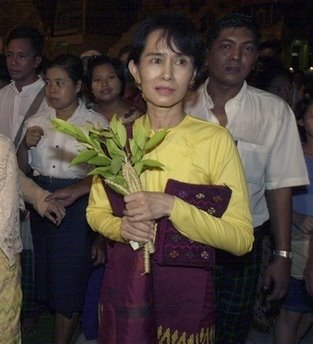


 Posts
Posts


