News & Articles on Burma
Monday, 24 January, 2011
-------------------------------------------------------------
Daw Aung San Suu Kyi Feeling Better, Says NLD Official
Than Shwe Threatens Coup d'Etat
Free all political prisoners first, to lift sanctions in Burma
Watchdog spotlights Myanmar rights abuse
Porters treated as cannon fodder
Dipping Dollar Hits Burmese Refugees
Farce follows tragedy in Myanmar
Thai police to deport 91 Rohingya to Myanmar
Burma's migrant workers: caught between a tyrant and a tiger
Myanmar's tourism industry at a crossroads (Feature)
Burma sanctions stay - for now
Experts differ on sanctions debate
Pressure mounts on West to end Myanmar sanctions
Political prisoners ‘given amphetamine’
Burmese Army Casualties Reported After Artillery Gun Misfires
--------------------------------------------------
Daw Aung San Suu Kyi Feeling Better, Says NLD Official
By THE IRRAWADDY Monday, January 24, 2011
Burmese pro-democracy leader Aung San Suu Kyi is recovering well from a slight illness after taking a short break from her regular activities over the weekend, according to a senior member of her party, the National League for Democracy (NLD).
“She has had a cough since last Friday, but she is feeling better today,” said Ohn Kyaing, an NLD official, speaking to The Irrawaddy on Monday.
Since her release from house arrest on Nov. 13 of last year, the 65-year-old Suu Kyi has kept a busy schedule, meeting with members of her party and other political opposition groups, as well as foreign diplomats.
On Friday, she had a one-hour meeting in Rangoon with Thai Foreign Minister Kasit Piromya, who pledged Thai government support for her efforts to promote democracy and national reconciliation in Burma.
According to sources cited in a report by Thailand's official MCOT news agency on Sunday, Suu Kyi said she was prepared to discuss Burma's political situation with the country's military rulers, but would have to wait until a new government is formed before talks could proceed.
Meanwhile, Suu Kyi's lawyers proceeded with a legal appeal against last year's dissolution of the NLD following its decision not to run in parliamentary elections held on Nov. 7.
According to Ohn Kyaing, the lawyers presented their arguments to the Supreme Court in Naypyidaw on Monday, but no decision was made by the court about whether it would hear Suu Kyi's latest appeal against the disbanding of the party.
Although the party is no longer legally recognized, its head office in Rangoon remains open and has been a center of party of activity since Suu Kyi's release after seven years of house arrest.
http://www.irrawaddy.org/highlight.php?art_id=20596
----------------------------------------------
Than Shwe Threatens Coup d'Etat
By WAI MOE Monday, January 24, 2011
Snr-Gen Than Shwe reportedly reminded military commanders that they must be prepared to launch a coup d'etat if the incoming Union Solidarity and Development Party (USDP) fails to meet the country's needs.
Military sources told The Irrawaddy that the junta strongman made the remark while chairing the last of his four-monthly meetings with military commanders and government ministers ahead of the opening of Burma's parliament.
The sources said that the series of meetings began last week and are continuing. Like previous meetings, Than Shwe and the leading generals from the State Peace and Development Council (SPDC) were scheduled to sit with members of the military council and key military commanders of the Tatmadaw (Burmese armed forces) before a separate meeting with government ministers.
Sources speculate that since these four-monthly meetings are used by Than Shwe to define the power structure within Burma's military hierarchy, he is expected to take this opportunity to outline the division of power between the two “backbones” of future military rule—the Tatmadaw and the incoming USDP, a proxy political party backed by the junta.
During the meeting with military commanders, Than Shwe reportedly talked about imminent issues such as the new government and parliament, security, state development projects, the responsibilities of the new commanders, tensions with ethnic armed groups, as well as the status of the dissident movement in the wake of the release of pro-democracy leader Aung San Suu Kyi.
A notable comment by Than Shwe at the meeting was to define the Tatmadaw’s role in the coming years within the new parliament, military sources said.
Than Shwe reportedly told his commanders that the Tatmadaw must only work for “the sake of the nation and people,” and not for a particular political party. He reportedly added that the Tatmadaw must be ready to launch a coup d'etat if the USDP “fails to fulfill the nation and the people's needs.”
“He [Than Shwe] is playing at divide and rule between the lion and the army,” said a source who spoke on condition of anonymity, referring to the USDP as the lion due to its logo.
Although not represented in such high numbers in parliament as the military and the USDP, the other factor that Than Shwe is counting on is his network of business cronies who have secured and will continue to dominate the country's economic resources.
Observers said that through the three arms of his power— the military, the USDP and business cronies—Than Shwe believes he can reign indefinitely.
The sources said that ahead of the opening session of parliament on Jan. 31, the talk of the town in the military-ruled nation is who will be chosen as president.
“Some businessmen are betting each other on who will be the president,” said a Rangoon-based businessman. “The money is on either Than Shwe or his close aide, Shwe Mann.”
http://www.irrawaddy.org/article.php?art_id=20595
------------------------------------------------
Free all political prisoners first, to lift sanctions in Burma
By Zin Linn Jan 24, 2011 9:30PM UTC
Political prisoners in Burma are being given amphetamine during cross-examination in order to dig out more confession, according to a Thailand-based Assistance Association for Political Prisoners Burma (AAPP). The watch-group had received several complaints of prisoners that the military police use drugs during questioning in torture centers in Rangoon.
One of those believed to have been given amphetamine is Sithu Zeya, the DVB reporter recently sentenced to eight years in prison after being caught photographing the aftermath of the Rangoon bombings in April last year, as broadcast by the Democratic Voice of Burma.
There are a total of 2189 political prisoners in Burma, a decrease in comparison to last month’s figure of 2203. In December, 16 political prisoners were released, Assistance Association for Political Prisoners (Burma) says in its latest January report.
December brought the continued mistreatment of numerous political prisoners across Burma, with at least 142 in poor health due to the harsh prison conditions, transfers to remote prisons where there are no doctors, and the denial of proper medical care.
For instance, a member of Labor Union, Naing Lin, was transferred from Insein prison to Kale prison in Sagaing Division, 680 Miles from his home. He suffers from Leukemia and requires a monthly blood transfusion; yet there are no doctors in Kale prison. Without monthly blood transfusions he could die.
The human rights watch groups urge the United Nation to launch a probe into whether war crimes and crimes against humanity are going on in Burma, mainly in the ethnic regions along the border where decades-long civil-conflicts have been taking place.
But the issue of Burma’s political prisoners languishing in jails and labour camps across the country has become a focus for rights campaigners, particularly prior to November last year when opposition leader Aung San Suu Kyi was still under house arrest.
Torture is widespread purposely in common with political prisoners. Most political prisoners spend several years in solitary confinement or are sent to remote jails where a chance for family members’ visiting is difficult.
Present sorrowful affairs in Burma confirm that the military junta is firmly going along its anti-democracy route. The junta continues to detain and incarcerate approximately 2,200 political prisoners, including Ethnic Shan political leader Hkun Htun Oo, 12 members of parliament from 1990 election and prominent comedian Zarganar are still in prison despite their medical conditions.
Many leaders of the ’88 Generation Students, who led a pro-democracy movement in 1988, remain imprisoned with sentences up to 65 years.
Su Su Nway, a member of the National League for Democracy, has been in custody in the notorious Insein Jail since November 2007, following a peaceful demonstration. She received the 2006 Humphrey Freedom Award from the Canada-based group Rights and Democracy for her human rights activities. She was arrested in 2005 and 2007.
Many political prisoners are reportedly seriously ailing and receiving no regular healthcare. The International Committee of the Red Cross has been denied free access to conduct confidential prison visits since December 2005. Arrests and intimidation of political activists and journalists in Burma have been going on for two decades.
Peoples from all walks of life in Burma have suffered for five decades under various repressions by the military regime. The consequences of this reign of violence are producing spillover effects in neighboring countries as well.
Most of Burma’s 2,200 political prisoners were intentionally transferred to remote prisons with deplorable healthcare. Most prisoners of conscience have to face terrible torture and a lack of nutritious food and medicine. The outcome is that more than 100 political prisoners, including members of Parliament, writers and journalists, have passed away in the regime’s jails.
All political prisoners were detained for their activities related to democracy and human rights. Unless the generals release these prisoners of conscience, there can be no real hope for democracy and national reconciliation in Burma.
In such a situation with human rights record, the Association of Southeast Asian Nations, in which Burma/Myanmar is a member, and a group of the country’s key ethnic political parties have also urged an end to the economic sanctions, ahead of the introduction of the new parliament on January 31.
Nonetheless, professionals say a swing in guiding principle on sanction is implausible. Unless the military regime has made progress on human rights as well as cooperation with Nobel laureate and Democracy Icon Aung San Suu Kyi.
So, to lift sanctions, the junta must first free all political prisoners to show sincerity and then should go straight toward the dialogue table.
http://asiancorrespondent.com/46894/free-all-political-prisoners-first-to-lift-sanctions-in-burma/
------------------------------------------------
Watchdog spotlights Myanmar rights abuse
Posted: 24 January 2011 2101 hrs
BANGKOK: About half a million people are internally displaced by conflict in eastern Myanmar, where both the state army and rebels continue to recruit child soldiers, a top rights group said Monday.
Human Rights Watch (HRW), in its annual report, said the state army was responsible for direct attacks and abuses against civilians in conflict areas, some of which have been wracked by civil war since independence in 1948.
Among the abuses listed were widespread forced labour, extrajudicial killings, forced expulsion of the population, the widespread use of anti-personnel landmines and sexual violence against women and girls.
The group also listed torture, beatings and the targeting of food production as well as confiscation of land and property in the ethnic areas where fighting continues.
The report comes as Myanmar, military ruled since 1962, prepares to open a new parliament this month following an election in November, which was slammed by the West as a sham aimed at shoring up military power.
"The Burmese military continues to direct attacks on civilians in ethnic areas, particularly in Karen, Karenni, and Shan states of eastern Burma, and parts of western Burma in China and Arakan states," the report said.
It said about 500,000 were internally displaced owing to conflict in the east, while more than 140,000 refugees are in camps in Thailand.
While 28,000 minority Rohingya are in official refugee camps in Bangladesh, another 200,000 live in border areas, the report added. Millions more migrant workers from Myanmar live in neighbouring Asian countries.
"All parties" in the country's conflicts continue to actively recruit and use child solders, even though the government has been co-operating with the International Labour Organisation to demobilize these youngsters.
"Non-state armed ethnic groups have also been implicated in serious abuses such as recruitment of child soldiers, execution of Burmese prisoners of war, and indiscriminate use of anti-personnel landmines around civilian areas," said the report.
Most insurgent groups -- who seek more autonomy and rights -- have agreed to truces with the junta, but HRW said tensions had increased owing to the regime's plans to transform ceasefire groups into "border guard forces".
Ahead of the election -- the country's first in 20 years -- the government pressured these armed movements to give up their weapons or come under state control -- a move most resisted, sparking fears of renewed conflict.
-AFP/jl http://www.channelnewsasia.com/stories/afp_asiapacific/view/1106631/1/.html
----------------------------------------------------
Porters treated as cannon fodder
By MAUNG TOO
Published: 24 January 2011
Civilian porters are being made to sweep for mines and several have been executed by the Burmese army as they attempted to flee during fighting in the Karen border region.
Army officials are alleged to have recruited porters from prisons in southern Burma and taken them to the frontline in Karen state, where fighting against the Democratic Karen Buddhist Army (DKBA) continues.
“They ordered us porters to take the middle of the road while soldiers walk along the side of the road,” said Pho Aye, who managed to escape after being sent to Karen state from Pathein prison in Irrawaddy division. “A porter named Pho Thar Aung died when he stepped on a landmine and two soldiers were slightly injured from shrapnel.”
He added that porters were being forced to carry equipment and food weighing up to 65 kilograms and risked being shot if they were unable to take the load.
“We get exhausted after carrying [equipment] for days and night and get beaten by soldiers with their rifles when we’re tired. They said we will die if we can’t follow them anymore. I saw them shoot someone in front of us for trying to escape,” said Pho Aye.
A group of porters who managed to escape to Thailand told DVB two weeks ago that around 800 inmates from across southern and eastern Burma had been sent to Karen state.
Reports that firefighters in Karenni state had been given weapons and told to look after security in villages while troops went to the frontline have also emerged.
The already volatile situation in eastern Karen state has worsened in recent weeks as fighting between the DKBA and the Burmese army intensifies. Numbers of stray artillery shells have landed across the border close to the Thai town of Mae Sot, while one Thai civilian has been taken hostage by the DKBA.
Fighting first began on 8 November last year after DKBA troops, led by renegade commander Na Kham Mwe, took key government positions in Myawaddy, across the border from Mae Sot. Clashes have since continued to occur on a regular basis.
http://www.dvb.no/news/porters-treated-as-cannon-fodder/13853
-----------------------------------------------------
Dipping Dollar Hits Burmese Refugees
By Marwaan Macan-Markar
BANGKOK, Jan 24, 2011 (IPS) - Tracking gun battles along the Thai-Burma border and preparing for another wave of refugees are not the only things that concern British humanitarian Sally Thompson.
She also spends her days immersed in the fluid world of global currencies, worried about the steadily weakening U.S. dollar.
"We monitor the currency all the time. We have to constantly adjust our budgets," says 52-year-old Thompson in her office in Bangkok’s busy financial district. "It comes down to our buying power with the baht."
Thompson and her colleagues at the Thai-Burma Border Consortium (TBBC) are trying to come to grips with the downward slide of the dollar against the Thai baht, which has appreciated in recent days by 10 percent, emerging as the strongest currency in Southeast Asia.
A strong baht means huge losses for aid groups like TBBC whose funds are dollar-denominated. Its annual budget for 2011 is 40 million dollars, and a drop from 30 to 29 baht to a dollar, which is where the exchange rate stood when the year began, could mean a shortfall of 14 million baht, equivalent to nearly one million kilos of rice.
And TBBC, which has been caring for Burmese refugees for the past 25 years, is unlikely to get more baht for its dollars this year, given the direction foreign and local speculators are driving the bond market here.
It is a similar reality that haunts much smaller organizations doing humanitarian and political work along the border Thailand shares with Burma, or Myanmar.
The border is home to over 500,000 internally displaced Burmese who have fled military oppression as well as the conflict between government troops and separatist rebels that has been raging since the early 1980s. The majority of these refugees are in eastern Burma, near the Thai border.
Since last year, foreign currency speculators have eyed Thailand’s bond market as fertile ground for quick profits, helping to push the short-term bond market to 320 billion baht (10.4 billion U.S. dollars), up from the 270 billion baht (8.8 billion baht) at the same time last year.
"In the first week (of 2011), we have seen net foreign buying of 50 billion baht, about 80 percent of which was for short-term investment in debt- instruments of less than one year in maturity," Ariya Tiranaprakij, vice- president of the Thai Bond Market Association, was recently quoted as saying in a local daily.
But such capital flows coming into this region are taking a bite from the vulnerable, among them humanitarian workers at TBBC.
Nagesh Kumar, chief economist of the Bangkok-based United Nations Economic and Social Commission for Asia and the Pacific (ESCAP), observes that the situation will cause a lot of problems. "The weakening of the U.S. dollar and exchange volatility will continue," Kumar said.
The impact a weakening dollar has on humanitarian programs is also felt in other parts of Asia, where the U.N. food relief agency World Food Programme (WFP) supplies emergency needs.
"WFP buys most of its food in U.S. dollars, so any depreciation in its value is likely to have an impact on our ability to provide food assistance to the world’s hungry poor," Marcus Prior, WFP spokesman for its Asia office, told IPS.
For the likes of TBBC, which currently cares for some 145,000 refugees in camps along the 2,000-km Thai-Burma border, the prolonged downward spiral of the dollar comes at a trying time: it is expecting to feed more mouths.
A new round of fighting between Burmese troops and ethnic Karen rebels had erupted along the border in early November, forcing tens of thousands of Karen civilians to flee to Thailand for safety.
"This instability along the border will continue. We expect more new arrivals to come because of this uncertain political situation," says Thompson, the deputy director of TBBC.
It is a view echoed by other Burmese activists operating in Mae Sot, a Thai town close to the Burma border. They, like TBBC, are also grappling with a weakening dollar.
"We have been forced to downsize all our democracy and empowerment training programmes for people from Burma," says Naing Aung, the secretary general of the Forum for Democracy in Burma (FDB), a coalition of Burmese political exiles.
In 2009, the FDB budgeted its 2010 costs at one dollar to nearly 35 baht. By the end of last year the exchange rate saw a dollar valued at only 29 baht. "Nearly 20 percent of our budget was affected," he said in an interview from the Burmese border.
"This trend began with the financial crisis and has worsened since," says Debbie Stothard of ALTSEAN, a South-east Asian human rights lobby. "Pro- democracy and humanitarian work has been affected."
For now, the ripples of the global financial crisis that began in the U.S. in late 2008 and still impacting remote corners of western Thailand has not prompted a change of heart among the western donor countries.
"We are giving the same amount as we gave before to the Thai-Burma border," a diplomat from a donor country told IPS. "There is no talk in policy circles to change that because of the financial crisis." (END) http://www.ipsnews.net/news.asp?idnews=54208
-------------------------------------------------
Farce follows tragedy in Myanmar
By Bertil Lintner
BANGKOK - If Karl Marx was right that history repeats itself first as tragedy and then as farce, Myanmar may have just entered the farcical phase of its long-running military rule. The first general election held in over 20 years last November and announcement that a new elected National Assembly will be convened on January 31 have not excited many ordinary Myanmar citizens, but have led to wild speculation among foreign pundits about what it all means for the country's political future.
Many seem to have forgotten that a similar "transition" to "civilian rule" occurred in 1974, following a rigged referendum on a new constitution in 1973. The then ruling junta, the Revolutionary Council, gave way to the military-controlled Burma Socialist Program Party, which formed a government made up of retired army officers. The transition in retrospect was a tragedy as it solidified the one-party system that Myanmar, then known as Burma, already had in place and precipitated economic decline in what was previously one of Southeast Asia's most prosperous countries.
The 1974 constitution guaranteed the military's grip on power and made its original 1962 military putsch legal. That military-dominated political arrangement lasted until a nationwide uprising for democracy erupted in 1988, which the military crushed through lethal force and in the aftermath reintroduced direct military rule through the State Law and Order Restoration Council (SLORC) junta. The SLORC later changed the country's name from Burma to Myanmar and rebranded itself as the State Peace and Development Council in 1997.
Now under a new constitution that was adopted after a similarly well-orchestrated referendum in 2008, more than one political party is officially allowed in Myanmar. But the dominance of the military's new Union Solidarity and Development Party (USDP) proxy, which swept over 80% of the seats in last November's rigged polls, is complete. The new charter also reserves 25% of the National Assembly's seats for the military.
The military is nonetheless taking no chances. On the campaign trail and after the election, candidates and MPs elect have had their freedom of speech severely restricted. Any speech deemed by authorities as a threat to "national security, the unity of the country and the constitution" threaten to land the speaker in prison for up to two years.
In late December, the state-run daily New Light of Myanmar newspaper spelled out the military's intentions more clearly: the opposition should stop calling for "national reconciliation" and instead support the government to achieve "national reconsolidation". "Indirect and direct approaches designed to control the ruling government will never come to fruition," the paper stated.
Despite these restrictions, some foreign analysts are holding out hope for democratic change. Derek Tonkin, a former British ambassador to Thailand, suggested farcically in his newsletter that "the elections, flawed as they are, could provide a catalyst." For exactly what, however, the former envoy did not make clear.
Priscilla Clapp, a senior American analyst and former Yangon-based US diplomat, seems convinced that an army reshuffle a few months before the election, in which more than 70 senior and many more junior officers retired to have the constitutional right to "contest" the polls will pave the way for a new, presumably more reform-minded, generation of army officers. And with new "civilians" in government, she suggests, change is in the air.
Whether military officers were in or out of uniform made no difference in 1974 - and is even less likely to do so today considering the military's ironclad grip on power. Nor will a few muted opposition voices in the National Assembly be of any democratic significance. In the old, pre-1988 National Assembly, the official media routinely reported that delegates always "discussed in support of proposals" submitted by the real military rulers of the country.
If any of the handful of non-USDP assemblymen dare to challenge military orders, the authorities have constitutional means to deal with such dissent, including through legal military takeovers. In case of a "national emergency", clause 413 of the new charter gives the president the right to hand executive as well as judicial power to the commander-in-chief of the defense services, who "may exercise the said powers and duties himself or empower on any suitable military authority" to do the job for him.
The new National Assembly will consist of an Upper House with 168 elected seats and 56 reserved for the military, and a Lower House with 330 elected and 110 military seats. With solid majorities of 129 seats in the Upper House and 259 in the Lower House that the USDP achieved through the rigged November elections, plus the 25% of seats reserved for the military, the new system will ensure in a new legal way the continuation of the old military-ruled order.
Negligent neighbors
Myanmar's partners in the Association of Southeast Asian Nations (ASEAN) have hailed the election as progress and called on Western nations, including the US, to drop their economic and financial sanctions. At an ASEAN meeting on the Indonesian island of Lombok on January 17, the host country's foreign minister Marty Natalegawa described the elections as "conducive and transparent" and said that the 10-member bloc would like to see "the immediate or early removal or easing of sanctions that have been applied against Myanmar by some countries."
Many ASEAN countries have vested economic interests in Myanmar and through economic engagement policies have over the years undermined the West's sanctions regime.
Meanwhile, there is little indication that Myanmar's military leadership is in much of a democratic mood. At a passing out parade at the Defense Services Technological Academy on December 17, military chief General Than Shwe told the graduates that "you can confront anything and win if you avoid the opponents' strong points, exploit their shortcomings and strike at their weaknesses."
The military rank and file has clearly taken that advice to heart. The opposition's strong point is pro-democracy leader Aung San Suu Kyi, who was detained and barred from participating in the election and released a week after the polls. The weakness of the opposition was its lack of unity: Suu Kyi's party, the National League for Democracy, split in half over whether or not it should take part in the election.
Those who favored participation probably now regret it; the new National Democratic Front, set up by former NLD members, won a paltry 16 seats in both houses. Predictably, NDF candidates competed on an unequal playing field. According to several eyewitness reports in several constituencies in Yangon and elsewhere, where a candidate other than the one from the USDP appeared to be winning, boxes of "advance votes" were brought in to prevent such a result. In other places where the USDP seemed to be faring poorly, the vote counting was conducted in secret.
Opinion is also divided in countries traditionally critical of Myanmar's rights-abusing regime. In the US, Virginia Senator Jim Webb, once one of Myanmar's staunchest critics, has flip-flopped to become a staunch advocate of lifting sanctions and engaging the regime. In the European Union, several countries are already doing business with Myanmar despite the sanctions. In its December 14 edition, The Myanmar Times quoted Myint Soe from the Union of Myanmar Federation of Chambers of Commerce and Industry as saying: "Among the European nations, Germany is one of our largest trading partners, even considering the sanctions." And sanctions do not cover pre-existing investments in the lucrative oil and gas industry, where France's Total is a major investor.
Voices are now being heard in other EU countries, especially among their Bangkok-based envoys, advocating for engagement with the regime based on perceptions that decades of sanctions have failed to achieve democratic change. This argument, or course, fails to take into account that other countries' engagement policies have similarly failed to achieve positive political change.
ASEAN has long engaged Myanmar through trade and investment initiatives. However, in a confidential US diplomatic cable made public by WikiLeaks in December, Singapore's senior statesman Lee Kuan Yew described Myanmar's generals as "stupid" and "difficult to deal with". Dealing with the regime, Lee said, was like "talking to dead people" - a damning assessment of ASEAN's "constructive engagement" policy from one of the region's most business-minded leaders.
Viewed in this light, Myanmar's initial tragedy of 1974 has turned into the farce of 2010. In effect, the old repressive one-party system has been reintroduced in everything but name. As the new rules guarantee, a few opposition voices will make little difference under the new military dominated dispensation. Even authoritarian-run China and North Korea are formally multi-party states under the leadership of their de facto ruling communists - China has eight parties other than the dominant Communist Party while North Korea allows for three. Such comparisons are more apt than hopeful speculation that Myanmar's elections and new parliament represent genuine democratic change.
Bertil Lintner is a former correspondent with the Far Eastern Economic Review and the author of several books on Myanmar. He is currently a writer with Asia Pacific Media Services. http://www.atimes.com/atimes/Southeast_Asia/MA25Ae02.html
------------------------------------------------
Thai police to deport 91 Rohingya to Myanmar
AFP
Thai police to deport 91 Rohingya to Myanmar AFP/File – File photo shows a Rohingya refugee child standing in the doorway of a shelter in Bangladesh. Police …
– 32 mins ago
BANGKOK (AFP) – Police in Thailand have arrested 91 Rohingya boat people after they landed on the country's southern coast and are planning to deport them to Myanmar, they said Monday.
The Muslim, Bengali-speaking Rohingya of Myanmar are described by the United Nations as one of the world's most persecuted minorities.
The group, all men of different ages, were detained after coming to shore on Saturday evening with boat engine problems, according to Visit Tangpong, police chief in Trang province's Kantang district.
He said he thought the group were on their way from Myanmar to Malaysia.
"We are providing basic humanitarian assistance with food and water, but they were illegal immigrants. We have to follow our laws," he said.
Police Colonel Putthipong Musikul, of the immigration office in Songkhla province where the group are being held, said they would be sent back, probably within one or two days.
Mainly Buddhist Myanmar effectively denies citizenship and property rights to the Rohingya, leading to their abuse and exploitation and prompting many to flee the country, often to refugee camps in Bangladesh.
In the past the Thai navy has been accused of sending desperate asylum-seekers back to sea and casting them adrift, drawing fire from human rights activists. http://news.yahoo.com/s/afp/20110124/wl_asia_afp/thailandmyanmarrohingyaimmigrationrights
---------------------------------------------------
guardian.co.uk
Burma's migrant workers: caught between a tyrant and a tiger
Malaysia's economic boom has been driven by the exploitation of cheap migrant labour, from Burma and Thailand. Underpaid and with no rights, this is their story
MDG : Foreign workers in Malaysia Malaysia's economic boom has been fuelled by cheap foreign labour. Photograph: Saeed Khan/AFP/Getty Images
They were not illegal, nor criminals, not protesting nor agitating. For 900 Malaysian ringgits (around $290) a month they had travelled, through a broker, to the southern Malaysian town of Johor. There to bend the metal, mould the bars and solder the nuts that will bolt together the terrific rise in Asia's economies.
However the 35 Burmese workers found that, after two months, instead of the promised amount, they were to receive 640 a month, with no overtime pay, as promised.
So the workers organised, led by five individuals. They initially complained to their employers.
The employers immediately called the police, all 35 were detained on 12 January. No charges were brought, and 30 were released that day.
"Whenever workers do actually complain to their employers or against [them], employers tend to discriminate against them or even terminate [their contracts]," says pioneering Malaysian human rights lawyer, Charles Hector.
Before any legal rationale could be brought, or advocates or government bodies mobilised, the five leaders were whisked away to the airport for deportation, because, as Hector notes, "the employer wins by default if they are deported", they cannot compete in a labour dispute, and migrant workers are not allowed to be members of a union or stay in Malaysia without employment.
Out of the five leaders who complained, three have been forced back to Burma despite signing a three-year contract, two, however are missing.
Malaysia's growing "tiger economy", is driven by a workforce of around 20% migrant labour, with an estimated 500,000 from Burma, many of them illegal, taking their place at the bottom of Malaysia's semi-apartheid ethnic mix.
With GDP per capita hard to record in Burma, the IMF estimated in January 2009 that it was around $250. This compares with the IMF's 2010 estimate for Malaysia of $7,775.
Despite a constitution and laws pertaining to universal rights in Malaysia, law enforcement and other political precedence places migrant workers at immediate disadvantage. All companies in Malaysia that hire foreign labour are required to pay a levy. This is very often deducted from workers' pay, even though the practice was made illegal in April 2009.
Tun Tun, head of Burma Campaign Malaysia, notes that the overwhelming ethos is for employers to take responsibility for their workers as opposed to the workers having rights as individuals. He points out that when you arrive in Malaysia as a tourist, you need no visa and can rapidly leave the airport. However, migrant workers have to wait for their employer to pick them up and take them, in custodial fashion, to wherever they please.
Not all Burmese are just economic migrants. Many of those who eke out a living between the concrete apartment buildings and highways of Kuala Lumpur have fled political oppression in their homeland.
Kyaw Hsan was jailed in Burma at the age of 15. His "crime" was distributing pamphlets about democracy, with news and information that circumvented Burma's draconian military censors. He would leave pamphlets on the roof of a bus, so as it drove through the streets of Rangoon they would flutter down, as innocently as freshly falling rain. He was picked up outside a meeting of Aung San Suu Kyi's National League for Democracy on 16 September 2000.
His confinement was marked with weeks of torture, including night-long beatings by teams of guards. This was followed, in 2003, by periods of up to 32 days chained to a wet floor with dozens of other prisoners for protesting the rearrest of Aung San Suu Kyi.
He contracted tuberculosis, which quarantined him for a further year after his release from Rangoon's colonial-era Insein jail.
Beyond the scars marking his body, and despite his affable nature, the psychological toll is unmistakable. At the time of writing, a combination of dislocation, alcohol and the breakdown of a relationship had led to angry outbursts, which saw him lose his job as a waiter.
In exile
The isolation is palpable in divided Kuala Lumpur. On a busy rush hour Kyaw Hsan intervenes to protect a young Burmese who has been set upon by up to a dozen Malays. They beat him and take his phone, but he mistrusts the police so much that a foreign escort to the station to report it is deemed necessary.
Ko Harun, meanwhile, has weathered exile for longer. He fled his native Burma because of thediscrimination faced by the Rohingya minority. The Rohingya, he estimates along with many observers, are the most oppressed minority in Burma; despite having been in the country for about 1,000 years, they are denied citizenship rights.
Since he left Burma he has been arrested four times in Thailand and five times in Malaysia. In Thailand he says he was caged up with gang members who would violently steal his rations.
He has been "sold" to traffickers by Thai officials, after being handed over by Malaysian authorities. He was lucky enough to be able to borrow the fee to remove himself from bondage.
Conditions in Malaysian jails are horrendous, causing what the Malaysian press call riots but are actually hunger strikes or peaceful protests, complaining about the overcrowding, the constant outbreaks of leptospirosis, a disease caused spread through urine-contaminated water, or simply the length of detention.
The two missing worker leaders have not been heard from. Like an estimated 190,000 other Burmese in Malaysia, they are at the mercy of a divided, hungry nation.
• Joseph Allchin is a journalist with the exiled Burmese news network the Democratic Voice of Burma.
http://www.guardian.co.uk/global-development/poverty-matters/2011/jan/24/burma-migrant-workers-malaysia-exploitation
-----------------------------------------------------
Myanmar's tourism industry at a crossroads (Feature)
By Ko Ko and Peter Janssen Jan 24, 2011, 4:23 GMT
Yangon - By Myanmar standards, 2010 was a golden year for tourism. Those working in the sector said they hoped recent political developments might make it easier to attract still more foreigners although there was not much faith in the military regime's appetite for change.
An estimated 300,000 foreign tourists visited the country last year, government sources said, a 30-per-cent increase over 2009 and better than the previous record from 2006, the official Visit Myanmar Year.
But even the recent increase does not do justice to the potential of the country, whose abundant natural and cultural charms should make it one of the top tourist destinations in South-East Asia.
'The amount of 300,000 tourists is not too big compared with neighbouring countries like Thailand, Malaysia, even Laos,' said Tin Tun Aung, general secretary of the Myanmar Travel Association.
Last year, an estimated 15 million tourists visited Thailand, 17 million went to Malaysia and 1 million travelled to Laos.
Myanmar's tourism sector has had its fair share of hard knocks in recent years.
It has been hit by the same phenomena as the rest of the world: the outbreak of severe acute respiratory syndrome, or SARS, in 2003; the tsunami of 2004; high oil prices in 2008; and the global financial meltdown in 2009.
But Myanmar, also called Burma, has also had its own special hiccups.
There was the brutal military crackdown on protests led by Buddhist monks in September 2007, and then in May 2008, Cyclone Nargis killed an estimated 138,000 people and left much of the Irrawaddy Delta in shambles.
A political stigma is also attached to visiting Myanmar, which has been under military dictatorships since 1962.
Aung San Suu Kyi, Myanmar's democracy icon, previously opposed foreign tourists visiting her country as she threw support behind economic sanctions imposed on her country by Western democracies.
She has since mellowed her stance on sanctions, saying they should be limited to those that have a minimal negative impact on Myanmar's people.
Suu Kyi was freed from seven years of house detention November 13, six days after Myanmar held its first general election in two decades, but it remained unclear how the recent political developments would impact tourism.
'I don't think that tourist movements have much to do with politics, really,' said Luzi Matzig, director of the Bangkok-based Asian Trails company, which specializes in tours to Laos, Cambodia, Myanmar and Thailand.
'If a tourist wants to go to Mandalay or Pagan, it's good to hear that 'The Lady' [Suu Kyi] has been freed, but will that influence his decision to visit Myanmar? I don't think so,' Matzig said.
Myanmar tour operators attributed last year's good performance more to a relaxation in visa regulations than political developments.
'One of the reasons why the tourism industry had a good year in 2010 was because of the introducing of arrival visas,' said Nay Zin Latt, vice chairman of the Myanmar Hoteliers Association.
The visa on arrival was introduced early last year but suspended in September, apparently in preparation for the military's well-staged general election on November 7.
Reintroducing the measure would make the country a more appealing travel destination.
Another welcome change would be to stop requiring tourists to buy foreign exchange certificates, which force visitors and tour operators to buy the local currency, the kyat, at an inflated exchange rate.
'We did not get profits as expected last year,' Lin Oo, a Myanmar tour operator, said, citing a weak dollar and the gap between the official and actual exchange rate between the kyat and dollar.
The tourism industry is awaiting the establishment of a new government, perhaps by late February, to see if it could look forward to any positive changes.
'Overall, there should be much relaxation of regulations for the development of this sector,' Lin Oo said. 'We also need good infrastructure, better road transport, telecommunications, internet facilities and easy access to the country.'
Most were skeptical that Myanmar's incoming government, packed as it is with ex-military men, would share the tourism sector's priorities.
'The members of the warrior feudal class that rules the country have never been tourists in their entire lives,' said Maung Zarni, a Britain-based Burmese political activist and academic.
The country's leaders 'have absolutely no clue as to what tourism is all about,' said Zarni, who once worked for the state-run agency Tourist Burma.
'The country does need regulated mass tourism if it is going to bring substantial revenues, create jobs and have a liberalizing impact,' he said.
'All this needs serious vision, planning and an attitude change on the part of the state's leaders, but that's not on the horizon,' Zarni said.
http://www.monstersandcritics.com/news/business/features/article_1613952.php/Myanmar-s-tourism-industry-at-a-crossroads-Feature
--------------------------------------------------
Burma sanctions stay - for now
* Published: 23/01/2011 at 01:58 PM
* Online news:
Calls are growing for an end to Western sanctions against Burma, but experts say a shift in policy is unlikely without progress on human rights and the support of democracy icon Aung San Suu Kyi.
Suu Kyi's release in November following Burma's first election in 20 years has reignited debate over the effectiveness of the punitive measures, enforced by the United States and the European Union in response to the junta's human rights abuses.
"There's a lot of internal debate going on among policymakers and a previously established and longstanding consensus is increasingly seeming brittle," a Bangkok-based Western diplomat said.
Critics of the policy say sanctions, which have largely kept Western companies out of a resource-rich corner of Asia, are hindering development in what is one of the world's poorest nations.
But the iron-fisted regime must still provide "something that is considered substantial, a step in the right direction", before the West -- highly critical of the election -- will remove them, said Burma analyst Aung Naing Oo.
Two of the main pro-democracy parties which took part in the November election have called for the lifting of all sanctions on the grounds that they do not benefit the wider population.
The Association of Southeast Asian Nations, which includes Burma, and a group of the country's main ethnic political parties have also urged an end to the measures, ahead of the new parliament's opening on January 31.
"It will be difficult to ignore all these calls for a change of policy," said the diplomat, who did not want to be named.
Even Suu Kyi appears to have softened her stance and her party is reviewing its position on sanctions after years of firmly supporting them.
Suu Kyi told AFP in an interview last month that she wanted dialogue with the junta on sanctions.
"I don't look at sanctions as a bargaining chip but as a way of trying to improve the situation," she said.
Experts say the backing of Suu Kyi, easily Burma's most influential figure in the West, would probably be crucial for an end to the measures.
"I am not sure if the EU and United States will be able to lift the sanctions without the input from Aung San Suu Kyi," said Maung Zarni, a Burma research fellow at the London School of Economics.
"Her views are considered reflective of public opinion."
Suu Kyi was freed from house arrest on November 13 after spending 15 of the past 21 years in detention.
Sanctions advocates say that five decades of economic mismanagement under military rule are to blame for the hardships in Burma -- also known as Burma -- rather than the measures themselves, which are designed to weaken the regime and its cronies.
The United States bans trade with companies tied to the junta in Burma and also freezes such firms' assets and blocks international loans to the state.
The European Union also has sanctions freezing assets and businesses of junta figures as well as blacklisting their travel, but it has continued some trade and investment such as oil.
A spokeswoman for EU foreign policy chief Catherine Ashton said the European Union was "following the situation in Burma very closely...(but) wants to see what the government will do," notably in terms of human rights.
Despite the restrictions on Western businesses, Asian companies, especially from China, India, Thailand and South Korea, have overlooked the political situation and human rights abuses to invest in Burma's ample natural treasures.
Zarni said the real push for lifting sanctions was coming from Western investors who "feel sanctions have deprived them", and whose arguments are "couched in the language of (the) public well-being of Burmese people".
"Many investors, especially in natural resource exploitation such as oil, gas, mining, and timber, know that they will make fortunes once they are able to rush in and compete," he said.
Critics of the measures say the willingness of other Asian countries to invest without conditions is precisely why sanctions are not working.
Burma economics expert Sean Turnell said the West was likely to face pressure to reduce broad economic sanctions -- the import and investment bans -- while maintaining targeted financial restrictions.
He said the United States, which launched a dialogue with Burma's rulers in 2009, would want progress on human rights, particularly the release of Burma's 2,200 political prisoners.
The West would also want to see more concrete reform on both political and economic fronts, suggested Turnell, of Macquarie University in Australia.
"Many people did seriously expect a raft of more liberal economic policies right after the election but that hasn't happened yet," he said. http://www.bangkokpost.com/news/asia/217743/pressure-grows-for-end-to-burma-sanctions
-----------------------------------------------
Experts differ on sanctions debate
By AGENCE FRANCE-PRESSE
Published: 24 January 2011
Calls are growing for an end to Western sanctions against Burma, but experts say a shift in policy is unlikely without progress on human rights and the support of democracy icon Aung San Suu Kyi.
Suu Kyi’s release in November following Burma’s first election in 20 years has reignited debate over the effectiveness of the punitive measures, enforced by the United States and the European Union in response to the junta’s human rights abuses.
“There’s a lot of internal debate going on among policymakers and a previously established and longstanding consensus is increasingly seeming brittle,” a Bangkok-based Western diplomat said.
Critics of the policy say sanctions, which have largely kept Western companies out of a resource-rich corner of Asia, are hindering development in what is one of the world’s poorest nations.
But the iron-fisted regime must still provide “something that is considered substantial, a step in the right direction”, before the West – highly critical of the election – will remove them, said Burmese analyst Aung Naing Oo.
Two of the main pro-democracy parties which took part in the November election have called for the lifting of all sanctions on the grounds that they do not benefit the wider population. The Association of Southeast Asian Nations, which includes Burma, and a group of the country’s main ethnic political parties have also urged an end to the measures, ahead of the new parliament’s opening on 31 January.
“It will be difficult to ignore all these calls for a change of policy,” said the diplomat, who did not want to be named.
Even Suu Kyi appears to have softened her stance and her party is reviewing its position on sanctions after years of firmly supporting them.
Suu Kyi said in an interview last month that she wanted dialogue with the junta on sanctions. “I don’t look at sanctions as a bargaining chip but as a way of trying to improve the situation,” she said.
Experts say the backing of Suu Kyi, easily Burma’s most influential figure in the West, would probably be crucial for an end to the measures.
“I am not sure if the EU and United States will be able to lift the sanctions without the input from Aung San Suu Kyi,” said Maung Zarni, a Burma research fellow at the London School of Economics. “Her views are considered reflective of public opinion.”
Suu Kyi was freed from house arrest on 13 November after spending 15 of the past 21 years in detention.
Sanctions advocates say that five decades of economic mismanagement under military rule are to blame for the hardships in Burma rather than the measures themselves, which are designed to weaken the regime and its cronies.
The United States bans trade with companies tied to the junta in Burma and also freezes such firms’ assets and blocks international loans to the state. The European Union also has sanctions freezing assets and businesses of junta figures as well as blacklisting their travel, but it has continued some trade and investment such as oil.
A spokeswoman for EU foreign policy chief Catherine Ashton said the European Union was “following the situation in Myanmar [Burma] very closely…(but) wants to see what the government will do,” notably in terms of human rights.
Despite the restrictions on Western businesses, Asian companies, especially from China, India, Thailand and South Korea, have overlooked the political situation and human rights abuses to invest in Burma’s ample natural treasures. Zarni said the real push for lifting sanctions was coming from Western investors who “feel sanctions have deprived them”, and whose arguments are “couched in the language of [the] public well-being of Burmese people”.
“Many investors, especially in natural resource exploitation such as oil, gas, mining, and timber, know that they will make fortunes once they are able to rush in and compete,” he said.
Critics of the measures say the willingness of other Asian countries to invest without conditions is precisely why sanctions are not working
http://www.dvb.no/news/experts-differ-on-sanctions-debate/13843
-------------------------------------------------
Pressure mounts on West to end Myanmar sanctions
Monday, 24 January 2011 02:35
BANGKOK: Calls are growing for an end to Western sanctions against Myanmar, but experts say a shift in policy is unlikely without progress on human rights and the support of democracy icon Aung San Suu Kyi.
Suu Kyi’s release in November following Myanmar’s first election in 20 years has re-ignited debate over the effectiveness of the punitive measures, enforced by the United States and the European Union in response to the junta’s human rights abuses.
“There’s a lot of internal debate going on among policymakers and a previously established and longstanding consensus is increasingly seeming brittle,” a Bangkok-based Western diplomat said. Critics of the policy say sanctions, which have largely kept Western companies out of a resource-rich corner of Asia, are hindering development in what is one of the world’s poorest nations.
But the iron-fisted regime must still provide “something that is considered substantial, a step in the right direction”, before the West — highly critical of the election — will remove them, said Myanmar analyst Aung Naing Oo.
Two of the main pro-democracy parties which took part in the November election have called for the lifting of all sanctions on the grounds that they do not benefit the wider population.
The Association of Southeast Asian Nations, which includes Myanmar, and a group of the country’s main ethnic political parties have also urged an end to the measures, ahead of the new parliament’s opening on January 31.
“It will be difficult to ignore all these calls for a change of policy,” said the diplomat, who did not want to be named.
Even Suu Kyi appears to have softened her stance and her party is reviewing its position on sanctions after years of firmly supporting them.
Suu Kyi said in an interview last month that she wanted dialogue with the junta on sanctions.
“I don’t look at sanctions as a bargaining chip but as a way of trying to improve the situation,” she said.
Experts say the backing of Suu Kyi, easily Myanmar’s most influential figure in the West, would probably be crucial for an end to the measures.
“I am not sure if the EU and United States will be able to lift the sanctions without the input from Aung San Suu Kyi,” said Maung Zarni, a Myanmar research fellow at the London School of Economics.
“Her views are considered reflective of public opinion.”
Suu Kyi was freed from house arrest on November 13 after spending 15 of the past 21 years in detention.
Sanctions advocates say that five decades of economic mismanagement under military rule are to blame for the hardships in Myanmar — also known as Burma — rather than the measures themselves, which are designed to weaken the regime and its cronies.
The United States bans trade with companies tied to the junta in Myanmar and also freezes such firms’ assets and blocks international loans to the state.
The European Union also has sanctions freezing assets and businesses of junta figures as well as blacklisting their travel, but it has continued some trade and investment such as oil.
A spokeswoman for EU foreign policy chief Catherine Ashton said the European Union was “following the situation in Myanmar very closely...(but) wants to see what the government will do,” notably in terms of human rights.
Despite the restrictions on Western businesses, Asian companies, especially from China, India, Thailand and South Korea, have overlooked the political situation and human rights abuses to invest in Myanmar’s ample natural treasures.
Zarni said the real push for lifting sanctions was coming from Western investors who “feel sanctions have deprived them”, and whose arguments are “couched in the language of (the) public well-being of Burmese people”. AFP http://www.thepeninsulaqatar.com/s.-asia/philippines/140143-pressure-mounts-on-west-to-end-myanmar-sanctions.html
----------------------------------------------
Political prisoners ‘given amphetamine’
By MAUNG TOO
Published: 24 January 2011
Political prisoners in Burma are being given amphetamine during interrogation in an effort to extract more information, according to a Thailand-based campaigning group.
The Assistance Association for Political Prisoners Burma (AAPP) had received several complaints of prisoners being drugged by military intelligence in interrogation centres in Rangoon.
Aung Khaing Min from AAPP said that it was likely they were given the stimulant mixed in with their food to avoid detection, but had complained later to visiting family members that believed they had been drugged.
“They [prisoners] are being given it during interrogation to disorientate them so that intelligence can get more details,” Aung Khaing Min said.
The group’s head, Tate Naing, told DVB that if the accusations turned out to be true, Burmese intelligence would be guilty of “committing a serious crime…and they can get serious punishments if they continue to do this”.
The government’s Prison Administration Department was unavailable for comment.
One of those believed to have been given amphetamine is Sithu Zeya, the DVB reporter recently sentenced to eight years in prison after being caught photographing the aftermath of the Rangoon bombings in April last year.
According to AAPP, there are currently 2,189 political prisoners in jails across the country, down from 2203 in December last year after 16 were released.
“We have a plan to bring the matter of human rights violations in Burma to international rights groups, including the United Nations,” said Tate Naing. “If the situation gets seriously bad, then there must be an investigation in any way possible.”
The UN has been under pressure to launch a probe into whether war crimes and crimes against humanity are occurring in Burma, particular in the ethnic border regions which have hosted decades-long conflicts.
But the issue of Burma’s political prisoners languishing in jails and labour camps across the country has become a focus for rights campaigners, particularly prior to November last year when opposition leader Aung San Suu Kyi was still under house arrest.
Torture is common among political prisoners, many of whom spend periods in solitary confinement or are sent to remote jails where access for visiting family members is difficult.
http://www.dvb.no/news/political-prisoners-%E2%80%98given-amphetamine%E2%80%99/13864
-----------------------------------------------------
Burmese Army Casualties Reported After Artillery Gun Misfires
By SAI ZOM HSENG Monday, January 24, 2011
Burmese troops attempting to fire heavy artillery at a breakaway group of the Democratic Karen Buddhist Army (DKBA) this morning miscalculated their shot and killed at least one of their own soldiers and injured several others, according to DKBA sources.
“Around 9 am, we saw with our binoculars that four or five shells exploded in their camp. We saw five or six soldiers fall, and later heard by radio that a lieutenant was injured, one private was killed, and several others were also injured,” said Maj Saw San Aung, an operational commander for DKBA Brigade 5.
The incident occurred in one of the Burmese army camps in the Kyauk Khet area of Karen State's Myawaddy Township, near the Moei (Thaungyin) River separating Burma and Thailand.
Burmese troops in the area have been using heavy artillery against DKBA Brigade 5 since fighting started more than two months ago, said Saw San Aung. Military observers said that the 120-mm cannons used by Burmese artillery battalions were made by the ruling regime's own munitions factories and require very careful calibration.
A Burmese army officer currently studying in Russia said that similar accidents have happened in the past, sometimes during military training.
“In 2002, a training officer was killed and some cadets from the Defense Services Academy were injured when some artillery shells were fired inaccurately,” he said.
Saw San Aung said that the use of heavy artillery in the conflict was overkill.
“I don’t know why the Burmese army needs to use 120-mm cannons to attack us. These are weapons for fighting against foreign invaders, not minority groups,” he said, adding that he also opposed the Burmese troops' use of prisoners as army porters and human minesweepers.
According to recent reports, hundreds of inmates from prisons around Burma have been sent to the front lines to act as army porters. Several who escaped and fled to Thailand over the past two weeks said that they were also forced to walk across minefields ahead of advancing Burmese troops.
Saw San Aung confirmed reports from a source close to the Burmese army's Southeastern Regional Command that the DKBA is using mortars to fire back at Burmese troops.
“We're using mortars, but we can't fire as many times as the Burmese side because we can't carry a lot of shells. We're not using porters, so there's a limit to how much we can carry,” he said.
According to another DKBA source, there was also face-to-face fighting in the Kyauk Khet area yesterday. The source said that there were no DKBA casualties in the fighting, but couldn't confirm if there were any dead or injured among the Burmese.
Fighting between DKBA Brigade 5 and the Burmese army began on Nov. 7 of last year. DKBA Brigade 5 is a breakaway faction of a group that was long allied to the Burmese junta.
On Jan. 11, Thai authorities formally complained to their Burmese counterparts about artillery shells that exploded on the Thai side of the border two days earlier.
http://www.irrawaddy.org/article.php?art_id=20593
Tuesday, January 25, 2011
News & Articles on Burma-Monday, 24 January, 2011


Monday, January 24, 2011
News & Articles on Burma-Friday, 21 January, 2011
News & Articles on Burma
Friday, 21 January, 2011
-------------------------------------------------------------
Suu Kyi Meets Thai FM
Myanmar's Suu Kyi gets web access
All the Senior General’s Men in Burmese Parliaments
Aung Suu Kyi finally plugs into the cyber world
Burma names military figures to sit in new parliament
Internal Power Struggle at Myanmar Times?
Shan party candidate wins lawsuit
Army reps named for parliament
Myanmar fills military quota in parliament with 388 appointees
Myanmar Publishes 383 Name Lists Of Parliament Representative Nominated By Military
Myanmar heads for first parliamentary sessions in two decades
S Korea eyes Burma stock market
Energy minister ‘unhappy’ with privatisation
Gold and Dollar Values Up in Burma
-------------------------------------------------------
Suu Kyi Meets Thai FM
Burma's pro-democracy leader Aung San Suu Kyi had an one-hour talk with Thai Foreign Minister Kasit Piromya at the Thai embassy in Rangoon on Friday morning, said officials of her party, the National League for Democracy. “The discussion was quite frank, but we still have no details from it,” said a party official. The personal meeting was the first between Suu Kyi and another country's foreign minister since her release from house arrest in November.
Published Friday, Jan. 21, 2011 - The Irrawaddy.
----------------------------------------------
Myanmar's Suu Kyi gets web access
Posted: 21 January 2011 1627 hrs
YANGON: Myanmar democracy icon Aung San Suu Kyi has finally had Internet access installed at home after her years of isolation were brought to an end two months ago, an aide said Friday.
Her security chief Win Htein told AFP that the opposition leader was "glad" to be able to go online at her lakeside mansion in Yangon and would use the technology to contact her network of supporters.
"But she cannot use the Internet now as she is not feeling well and is coughing," he said.
It is believed that the Nobel laureate has never before surfed the web.
Suu Kyi, who was locked up for seven straight years with no telephone or Internet until November, has expressed an interest in using the micro-blogging site Twitter or the social network Facebook to reach young people.
She applied to a private company for Internet access soon after she was released, but the request was transferred to Yatanarpon Teleport, a firm run by the country's military authorities.
Citizens of Myanmar, which has been ruled by the military since 1962, must obtain the authorities' permission to be able to go online at home and there is a thriving black market for facilities under assumed identities.
Suu Kyi applied officially under her own name for web access because she wants to use email, Win Htein said.
Media watchdog Reporters Without Borders describes Myanmar's legislation on Internet use, the Electronic Act, as among the world's most repressive, with online dissidents facing lengthy prison terms.
Just one in every 455 of Myanmar's inhabitants were Internet users in 2009, based on statistics from the International Telecommunication Union, a UN agency in Geneva.
Some web users believed authorities intentionally slowed services ahead of the country's first elections in two decades in November, while many fear online surveillance by the state.
Myanmar is poised to open a new parliament this month following the polls, which were decried in the West as a sham aimed at shoring up military power and boycotted by Suu Kyi's party.
Her National League for Democracy won a 1990 election in a landslide but the result was never recognised by the regime and Suu Kyi has spent most of the past 20 years in detention.
-AFP/jl http://www.channelnewsasia.com/stories/afp_asiapacific/view/1106108/1/.html
------------------------------------------------
All the Senior General’s Men in Burmese Parliaments
By Zin Linn
Jan 21, 2011 7:38PM UTC
Burma’s military junta has appointed 388 members of parliaments to fill the military share of the three chambers of parliament which will first assemble on January 31, junta’s media said today.
The junta has appointed 110 military officers for the people’s parliament (lower house), 56 for the national parliament (upper house), and 222 for regional-and-state parliaments, The New Light of Myanmar newspaper reported Friday.
All appointed MPs are military officers in commission, including one brigadier general, 19 colonels; the other 368 officers are majors and captains in ranks.
Under country’s new constitution, the military can appoint 25 per cent of all lawmakers in three chambers of parliament. It is enough for the military to veto any legislation and to control the picking of a new president and cabinet.
Meanwhile, the controversial Conscription Law, dated November 4, 2010, which is to be ratified in Burma, has been criticized by the National League for Democracy (NLD) on 19 January. As said by the draft law, it will come into force on the day that the military regime endorses the law by an article in an official decree.
According to NLD, a draft law is related to the whole population in the country and it should be approved through lower and upper parliaments. Releasing the draft law ahead of the approaching parliament assemblies looks like a dishonest tactic. And it also shows the military is above the parliament which is really a fake. The military authorities will be misused the rights of grassroots people under this law in the name of ‘the State’, NLD pointed out in its statement.
Although the 1959 Public Military Service Act said the state had the authority to order any person who is qualified to serve in the armed forces, the current junta’s draft law prescribes that all male and female adults between selected ages should be subjects to serve in the military, the NLD statement pointed out.
“If the law comes into life, the authorities will misuse the law as the corruption is prevalent. The law will open the door of evildoings for the authorities and it will put heavy burdens on the people who are under poverty line due to junta’s bad-governance”’, said NLD’s statement dated 19 January.
Burma or Myanmar, under military absolute rule since 1962, held its first general election in two decades on November 7 last year. Parliament is to hold its first session on January 31 to commence the procedure of choosing a new president. The parliament meetings would likely to take at least 14 days and people may only allow perceiving who will be the first president around mid-February, as said by an observer.
Besides the 25-per-cent ratio of appointed military parliamentarians, the pro-junta Union Solidarity and Development Party (USDP) took 77 per cent of the seats in three chambers of parliament by vote-rigging. Whoever won the presidential throne, there may not be any amazement during the first parliamentary session which will be held under junta’s tightly control.
The 2008 constitution says that the president and two vice-presidents needn’t to be elected members of parliament except acquaintance with military affairs. Many observers deem that Senior General Than Shwe, 77, boss of the junta since 1992 and commander-in-chief of the armed forces, is an expected candidate, while ex-Generals Maung Aye and Shwe Mann are likely to be the deputies under Than Shwe.
If Than Shwe decided to take the presidential office, he has to resign from his military position. The president will have the power to shape the new government. Most of the new cabinet members seem to be chosen primarily from the USDP MPs who also were once high-ranking military officers with the junta.
The over 1,000 representatives-elect and 388 appointed military representatives are preparing for the first parliament session on 31 January. All representatives have been cautiously instructed about dos and don’ts in the parliamentary compound including which costume they have to wear, and which kinds of thing they are not allowed not to bring.
The Members of Parliament will not be allowed to carry mobile phones, recorders and laptop computers into the Parliament, as said by Dr. Myat Nyar Na Soe, a representative-elect from the National Democratic Force (NDF) party.
An invitation letter delivered to the representatives-elect calls on Members of Parliament to inform to the fortified office of the parliament in capital Naypyidaw by 27 January.
http://asiancorrespondent.com/46647/all-the-senior-general%E2%80%99s-men-in-burmese-parliaments/
---------------------------------------------------
BBC ASIA PACIFIC
21 January 2011 Last updated at 11:56 GMT
Burma names military figures to sit in new parliament
Burmese state media has published lists of military officials who will take up seats in parliament when it opens on 31 January for the first time in 22 years.
Under the junta-drafted constitution, the military is allocated 25% of seats in both houses of parliament and the state assemblies.
Most of the 388 officers appointed hold relatively junior ranks.
Military-backed parties won by far the largest number of seats in the November polls, Burma's first in 20 years.
Opposition groups and Western nations have criticised laws under which the polls were held and condemned the elections a sham.
The official first sitting of parliament in Naypyidaw will mark the implementation of the new constitution and see the transfer of power from the military government to a parliament and president.
Representatives of military-linked parties - many of them former officers who stood down to stand in the polls - are expected the dominate the chambers.
The setting of a quota for the military in parliament has been interpreted by some observers as intended to prevent any surprises. More than 75% approval is required for any constitutional change.
The state-run New Light of Myanmar newspaper reported that 110 military officers had been chosen for the lower house, 56 for the upper house, and 222 for regional and state parliaments.
The most senior appointees were a brigadier general and 19 colonels alongside a majority of majors and captains.
Under the new constitution, parliament will elect a president. It is not yet clear whether senior leader Than Shwe is eyeing this role.
The party that won Burma's last elections in 1990 - the Aung San Suu Kyi-led National League for Democracy - is not represented in parliament.
But there will also be a small number of lawmakers representing Burma's ethnic parties and its pro-democracy opposition.
http://www.bbc.co.uk/news/world-asia-pacific-12247940
----------------------------------------------
Aung Suu Kyi finally plugs into the cyber world
Agence France-Presse
Yangon, January 21, 2011
First Published: 14:45 IST(21/1/2011)
Last Updated: 14:48 IST(21/1/2011)
Myanmar democracy icon, Aung San Suu Kyi has finally secured Internet access at home after her years of isolation were brought to an end two months ago, an aide said on Friday. Her security chief Win Htein told AFP that the opposition leader was "glad" to be able to go online at her lakeside
mansion in Yangon and would use the technology to contact her network of supporters.
"But she cannot use the Internet now as she is not feeling well and is coughing," he said. It is believed that the Nobel laureate has never before surfed the web.
Suu Kyi, who was locked up for seven straight years with no telephone or Internet until November, 2010, has expressed an interest in using the micro blogging site Twitter or the social network Facebook to reach young people.
She applied to a private company for Internet access soon after she was released, but the request was transferred to Yatanarpon Teleport, a firm run by the country's military authorities.
Citizens of Myanmar, which has been ruled by the military since 1962, must obtain the authorities' permission to be able to go online at home and there is a thriving black market for facilities under assumed identities.
Suu Kyi applied officially under her own name for web access because she wants to use email, Win Htein said.
Media watchdog Reporters Without Borders describes Myanmar's legislation on Internet use, the Electronic Act, as among the world's most repressive, with online dissidents facing lengthy prison terms. Just one in every 455 of Myanmar's inhabitants were Internet users in 2009, based on statistics from the International Telecommunication Union, a UN agency in Geneva.
Some web users believed authorities intentionally slowed services ahead of the country's first elections in two decades in November last year, while many fear online surveillance by the state. Myanmar is poised to open a new parliament this month following the polls, which were decried in the West as a sham aimed at shoring up military power and boycotted by Suu Kyi's party.
Her National League for Democracy won a 1990 election in a landslide but the result was never recognised by the regime and Suu Kyi has spent most of the past 20 years in detention. http://www.hindustantimes.com/News-Feed/myanmar/Aung-Suu-Kyi-finally-plugs-into-the-cyber-world/Article1-652958.aspx
-----------------------------------------------
Internal Power Struggle at Myanmar Times?
By LA PYAE Friday, January 21, 2011
RANGOON — Rumors are rife in Rangoon media circles about a possible takeover of Myanmar Consolidate Media (MCM) group, the company that owns four major publications in Burma: leading weekly The Myanmar Times in both Burmese and English; lifestyle journal Now!; and a weekly tabloid called Crime.
A source close to MCM said the company is entrenched in an internal power struggle between between two major shareholders, co-founder Ross Dunkley who is Australian, and Tin Htun Oo who is the owner of Swezon media group and publisher of The Myanmar Times.
The Myanmar Times co-founder Ross Dunkley.
According to the source, Tin Htun Oo, who won a seat in Pazundaung Township in the November general election representing the junta-backed Union Solidarity and Development Party, has been duelling with Dunkley to take over the position of CEO and editor-in-chief of MCM. Dunkley reportedly rejected the move in the past, resulting in an unfriendly relationship between the two shareholders.
On Jan. 17, a report in the state-owned Mirror newspaper indicated that Tin Htun Oo has taken over as editor-in-chief of MCM.
“Myanmar Consolidate Media Group Editor-in-Chief Dr. Tin Htun Oo donated over 2.6 million Kyats worth of journals to the library,” the newspaper said.
The article reportedly sent shock waves around the newsroom at The Myanmar Times. According to sources at the newspaper, MCM sent a official letter to Mirror complaining that Tin Htun Oo is not in an editorial position.
Permission for the publication of The Myanmar Times was originally granted in 2000 to Sonny Swe, the son of former military intelligence officer Brig-Gen Thein Swe. Forty-nine percent of shares were owned by Dunkley while Sonny Swe held onto 51 percent. Following Sonny Swe’s imprisonment in 2005, his shares were handed to Tin Htun Oo, who is close to the military regime's information minister, Kyaw Hsan.
Sources said that Tin Htun Oo's efforts to take over The Myanmar Times may well be successful as the military junta can interfere in the issue at any time.
In 2008, The Myanmar Times was ordered to sack four of its Burmese editors after carrying a report that had not been authorized by the government’s censorship board.
Dunkley is also a key stockholder in The Phnom Penh Post, a Cambodian English-language newspaper.
http://irrawaddy.org/article.php?art_id=20582
----------------------------------------------
Shan party candidate wins lawsuit
By NANG KHAM KAEW
Published: 21 January 2011
Burma’s junta-appointed Election Commission has dismissed a complaint filed against a candidate of the Shan Nationalities Democratic Party (SNDP) by a member of the victorious Union Solidarity and Development Party (USDP).
The decision will come as a surprise to critics of Burma’s judicial system who claim that the country’s opposition forces rarely triumph in such disputes. The USDP had alleged that Sai Moon, who will be representing the SNDP in the Shan state regional legislature, used armed groups to force voters to vote in favour of him.
The Election Commission, the supreme body for all election-related matters, said that there was insufficient evidence to support the allegations and so dismissed the case. Sai Moon has received an invitation to report to Naypyidaw by 27 January along with the 1000-plus other elected candidates, days prior to the opening of the parliament on 31 January.
The SNDP came third in the 7 November polls with around 60 votes, while the USDP won 882. Ostensibly backed by the 388 seats appointed to the military, the USDP will dominate decision-making in the new parliament.
Nang Wah Nu, an SNDP candidate for the People’s Parliament in Kunhing township, Shan state, said there were two more lawsuits filed by the USDP against SNDP candidates.
The election victors have filed several other lawsuits against elected MPs from other parties, including the Rakhine Nationalities Development Party, the Democratic Party (Myanmar) and the National Democratic Force (NDF).
The NDF’s Myat Nyarna Soe, who is fighting a complaint filed by USDP candidate Myat Thu, said that the tribunal for the case had so far been fair. Myat Thu, who lost the Rangoon division seat, claims that his NDF rival committed slander against the government during the pre-election campaigning phase.
“I witnessed the [Election Commission] being fair in the case,” he said. “There was no strong evidence to support the USDP’s allegations. The commission has formed a tribunal to listen to these cases and I saw that the judges were not letting them pass without any strong evidence to support their allegations.”
Additional reporting by Htet Aung Kyaw http://www.dvb.no/news/shan-party-candidate-wins-lawsuit/13824
----------------------------------------
Army reps named for parliament
By MIN LWIN
Published: 21 January 2011
State media in Burma has named the 388 military officials who will take up seats in the country’s new parliament, due to hold its first session next week.
The pre-appointed personnel will sit in all three parliaments – 110 in the People’s Parliament, 56 in the Nationalities Parliament and 222 in the regional legislatures. They rank from brigadier-general down to captain.
The ruling junta announced prior to elections on 7 November last year that each parliament would contain an unelected military quota who will hold significant sway over the decision-making process – under the 2008 constitution, they can appoint 25 percent of all legislators, enabling them the power of veto.
DVB has learnt that the officials, all of whom are men, yesterday finished a two-week parliamentary training course in the capital, Naypyidaw. A source close to the army said that the 388 include Burmese graduates from military schools in Russia, as well as army doctors, but that no personnel from combat and infantry troops were appointed.
The first session of parliament is due to be held on 31 January. The 1000-plus MPs elected in last year’s polls have been carefully instructed in what to wear and what items are forbidden from being brought into the parliament.
The elections were won in a landslide by the pro-junta Union Solidarity and Development Party (USDP). Observers claim the lines between USDP ministers and the military will be distinguishable only by the uniforms – many junta officials resigned prior to the elections in oprder to compete for the USDP.
Despite the USDP’s overwhelming victory, politicians from 22 parties, as well as several independent candidates, will travel to Naypyidaw next week in lieu of the first session.
http://www.dvb.no/news/army-reps-named-for-parliament/13816
-------------------------------------------------
Myanmar fills military quota in parliament with 388 appointees
Jan 21, 2011, 4:06 GMT
Yangon - Myanmar's junta has appointed 388 legislators to fill the 'military quota' of the three chambers of parliament which will first convene on January 31, state media reports said Friday.
The junta has appointed 110 military officers for the lower house, 56 for upper house, and 222 for regional and state parliaments, The New Light of Myanmar newspaper reported.
The appointees were all military men, including one brigadier general, 19 colonels, and the remainder being either majors or captains.
Under Myanmar's new constitution, the military can appoint 25 per cent of all legislators, enough for them to veto any legislation and to sway the selection of a new president and cabinet.
Myanmar, under military dictatorships since 1962, held its first general election in two decades on November 7. Parliament is to hold its first session on January 31 to begin the process of selecting a new president.
'I heard that parliament meetings will take at least 14 days and we will only know who will be the president around mid-February,' said a government official who requested anonymity.
Few surprises are expected from the first parliamentary session. Besides the 25-per-cent quota of military appointees, the pro-junta Union Solidarity and Development Party (USDP) won 77 per cent of the seats.
Parliament's first task will be to set up an electoral college with representatives from the three chambers of parliament to nominate a new president.
The president does not need to be an elected member of parliament but must be familiar with military affairs, the constitution says.
According to political observers, Than Shwe, 77, junta chief since 1992 and commander-in-chief of the armed forces, is a likely candidate, as are Generals Maung Aye and Shwe Mann, the second and third-highest ranking officers in the ruling junta.
All three would have to resign their military posts to take political office.
The president will be responsible for choosing the next cabinet, primarily selected from the ranks of the USDP.
Myanmar's elections were strongly criticized by the international community for being unfair and for excluding Nobel laureate Aung San Suu Kyi and her National League for Democracy opposition party.
Suu Kyi, 65, was freed from a seven-year house detention term six days after the polls.
The National League for Democracy won the 1990 general election by a landslide, but it was blocked from assuming power by the military. The party was officially disbanded in May for failing to register to contest the polls.
http://www.monstersandcritics.com/news/asiapacific/news/article_1613413.php/Myanmar-fills-military-quota-in-parliament-with-388-appointees
-------------------------------------------
January 21, 2011 11:06 AM
Myanmar Publishes 383 Name Lists Of Parliament Representative Nominated By Military
YANGON, Jan 21 (Bernama) -- The Union Election Commission of Myanmar Friday published 383 name lists of parliament representatives nominated by the military to the three-level parliaments as a follow-up of its announcement on Thursday night for taking part in the first parliamentary sessions set to take place simultaneously at the end of this month.
Directly nominated by the commander-in-chief of the defence services without going through election, 110 military personnel represent in the parliamentary house of representatives (lower house), while 56 represent in the parliamentary house of nationalities (upper house) and 217 in the region or state parliament shared among 14 regions and states, China's Xinhua news agency reported.
The 110 military personnel nominated as parliament representatives to the house of representatives include three with the rank of colonel, 59 with the rank of major, 39 with the rank of major officiating, three with the rank of captain and six with the rank of Lt-Cdr.
The three colonels are Htay Naing, Myint Ko Ko and Tint Hsan.
-- BERNAMA http://www.bernama.com/bernama/v5/newsworld.php?id=558201
---------------------------------------------------------
Myanmar heads for first parliamentary sessions in two decades
16:28, January 21, 2011
With the Union Election Commission' s announcement and publication of 383 name lists of parliament representatives nominated by the military to the three-level parliaments on Thursday and Friday, the first three-level parliamentary sessions of Myanmar in two decades is to take place simultaneously on Jan. 31.
Directly nominated by the commander-in-chief of the defense services without going through election, the military personnel are to represent in each level of the three-level parliaments, accounting for 25 percent of the total.
1,537 parliament representatives including 1,154 elected through the Nov. 7, 2010 general election and 383 through direct nomination by the military will attend the first parliamentary sessions at three levels -- house of representatives (lower house), house of nationalities (upper house) and region or state parliament shared among 14 regions and states.
Of the 1,154 parliament representatives elected from political parties and independent individuals, 325 represent in the house of representatives, while 168 in the house of nationalities and 661 in the region or state parliament.
Of the 383 non-elected military-nominated parliament representatives, 110 represent in the house of representatives, while 56 in the parliamentary house of nationalities and 217 in the region or state parliament.
Adding up the representatives from the two sides, the total number of the house of representatives is 435, that of the house of nationalities 224 and that of the region or state parliament 878.
Myanmar is due to start its first three-chamber parliamentary sessions simultaneously on Jan. 31 morning with the sessions of the house of representatives (lower house) and house of nationalities (upper house) to take place at the newly-built parliament buildings in the new capital of Nay Pyi Taw.
Sessions of region or state parliament will be held separately in respective regions or states on the same day.
The summon for the sessions of the three-level parliaments by the ruling State Peace and Development Council (SPDC) came nearly three months after the end of the multi-party general election on Nov.7, 2010.
The union parliament, made up of the house of representatives and the house of nationalities, will elect the country's president and vice presidents according to the new state constitution.
Meanwhile, the SPDC on Jan, 10 made public 17 laws and bylaws under the new state constitution for reference in discussions in the first parliamentary sessions.
These laws and bylaws include those related to state seal, election of president and vice-presidents, union government, region or state government, self-administered division or zone leading body, Nay Pyi Taw Council, state constitution tribunal, union appointment judicature, state flag, national anthem, union parliament, house of representatives, house of nationalities, region or state parliament, union judiciary, union attorney- general and union auditor-general.
In Nov. 7, 2010 general election, the Union Solidarity and Development Party (USDP), led by Prime Minister U Thein Sein, won the majority of 882 parliamentary seats or 76.43 percent out of the final total of 1,154 at three levels.
The USDP is followed by the National Unity Party (NUP) with 64 seats, in which 12 with the house of representatives, 5 with the house of nationalities and 47 with the region or state parliament.
The Shan Nationalities Democratic Party (SNDP) took 57 seats, in which the party shares 18 with the house of representatives, 3 with the house of nationalities and 36 with the region or state parliament.
The Rakhine Nationalities Development Party held 35 seats with 9 in the house of representatives, 7 in the house of nationalities and 19 in region or state parliament, while the National Democratic Force (NDF) and the All Mon Region Democracy Party ( AMRDP) each with 16 at three levels of parliament.
Some minor number of seats were won by other parties which fielded a lesser number of candidates for the election.
In the general election, a total of 29 million people across the nation were set as eligible to cast ballots.
Nationally, a total of over 3,000 parliamentary candidates from 37 political parties including 82 independents took part in the competition across the country's seven regions and seven ethnic states.
After completing the election, the 5th step of the government's seven-step roadmap to democracy introduced in 2003, the country is heading towards the 6th step, which is calling the parliaments and form a new government.
Source: Xinhua http://english.people.com.cn/90001/90777/90851/7268859.html
-------------------------------------------------------
S Korea eyes Burma stock market
By JOSEPH ALLCHIN
Published: 21 January 2011
South Korean stock market operator Korea Exchange has confirmed that it is looking into the possibility of setting up a stock market in Burma.
Lee In-pyo, a project director at Korea Exchange, was quoted by Reuters as saying that they had “had a discussion [with Burma] before”, adding yesterday that “anything is possible, anything can happen” in regards to the possibility of setting up the bourse.
Korea Exchange has already created stock exchanges in Laos and Cambodia, regarded as the other two new frontiers in Southeast Asian economic development.
Burma economics expert Sean Turnell from Australia’s Macquarie University says that “Burma will need one – stock exchanges are the main source of long-term financing for companies”.
An anonymous official at the Seoul-based company told Reuters however that while the company had visited the pariah twice, “nothing has been decided”.
The move is a further sign of the Burmese military’s commitment to liberalising the economy and attracting foreign investment, a process that has been viewed critically for its management and lack of transparency.
A foreign businessman in Rangoon confirmed that business was hindered by the lack of security that investors possessed in front of the law, pointing out that licenses for business property were only given for one year and subsequently had to be renewed annually, with no guarantees.
Indeed Turnell told DVB that “Burma tried to establish one [a stock exchange] before about 10 years ago, but that went nowhere”.
“The big problem with stock exchanges, unlike banks and so on, is that they require very strict legal rights, like property rights and so on, because of course the key is the legal entitlement to ownership. So if you have a case like Burma where the legal ownership claims are often highly subjective to the actions of the state, then it can be quite difficult.”
Increased South Korean investment will also further highlight the military’s adept handling of rival nations. In this case they have seemingly played both bitter enemies from the Korean peninsula off against one another, as recent leaked cables corroborate fears of a military relationship between North Korea and Burma, whilst trade relations with the South continue to appear buoyant.
http://www.dvb.no/news/s-korea-eyes-burma-stock-market/13820
----------------------------------------------
Energy minister ‘unhappy’ with privatisation
By JOSEPH ALLCHIN
Published: 21 January 2011
Burma’s energy minister Brig. General Lun Thi is unhappy with the recent privatisation of petrol retailing in the country, business sources in Rangoon have told DVB.
His alleged dissatisfaction echoes critical analysts who state that the scheme is economically unsound and leading to problems with distribution. This has resulted in long queues and a thriving black market that the privatisation drive was designed to solve.
Lun Thi is now reportedly willingly waiting for the privatisation experiment with fuel retailing to fail, a Rangoon-based businessman close to the ruling junta has said. Failure would mean his Ministry of Energy (MOE) will have to intervene and reinstate its management of fuel retailing.
The main problem is seen as the strict controls on the price at which retailers can sell petrol. This only allows for a small profit margin and thus limits the incentive to distribute fuel widely throughout new stations in more remote areas of Burma.
As a result black marketeering has been occurring whereby third parties would hoard cheap fuel in order to sell it for profit in areas where there was no licensed retailer. The discrepancy in price, reportedly almost double in some areas, was meanwhile responsible for long queues at official retailers who resultantly placed a quota on the number of litres for sale per person, per visit.
The low prices are for domestically-refined petrol, which is of a lower quality than imported fuel.
Why Lun Thi is seemingly willing the project to fail is not fully known but some analysts, including Burma economics expert Sean Turnell, believe it is political; that the minister will be smarting from the loss of control over this vital area of the economy.
“This is why Burma is not a normal developing Southeast Asian nation” Turnell told DVB. “It’s why I think the whole notion of privatisation in Burma is highly questionable.”
The situation was being compared to a similar occurrence in the 1990s when the MOE transferred control over petrol pumps to the Union of Myanmar Economic Holdings (UMEH), a military “company” run by the quartermaster general, only for their management of operations to fail. They were subsequently transferred back to the MOE.
Petrol retailing has now been transferred to a number of crony-run conglomerates, such as Htoo Trading and Max Myanmar. Some have alleged that the conglomerates themselves were involved in the black market in order to turn a profit from the operations.
With the privatisation drive in full swing, it was recently reported that as much as 90 percent of state-owned enterprises would be sold off.
The move to fix fuel prices however was also seen as an effort to prevent social unrest linked to fuel price rises, as was witnessed in September 2007 with the so-called Saffron Revolution and prior to the 1988 uprising. Turnell notes that “petrol prices are always very politically sensitive”.
http://www.dvb.no/news/energy-minister-unhappy-with-privatisation/13833
----------------------------------------
Gold and Dollar Values Up in Burma
By THE IRRAWADDY Friday, January 21, 2011
RANGOON — The price of gold and the value of the US dollar both took a sudden leap in recent days in Burma following the military junta's announcement to hold the opening sessions of the new parliaments at the end of this month, according to business sources in Rangoon.
With fears high of political and economic instability ahead, Rangoon businessmen and traders reportedly invested in gold and dollars, the sources said, resulting in the hike in values.
“Gold and dollar buyers have increased since Jan. 18,” said a Rangoon-based day trader. “The number of buyers has increased on a daily basis.”
Among the investors are family members of the military generals, elected cabinet ministers, senior government officials and high-ranking police officers, the sources said.
Due to this increase in demand, the price of gold has increased by more than 10,000 kyat (US $11.65) per kyat-thar (0.035 ounce), and the black market exchange rate for dollars has gone up by 30 kyat ($0.03) for every dollar.
“The demand for gold has increased unexpectedly,” said a gold shop owner. “We are even getting requests from buyers living in remote areas.”
Speaking to The Irrawaddy on Friday, a foreign currency speculator said, “Several buyers demanded large quantities of dollars—some over $100,000 and $200,000. The value immediately followed, jumping from 830 kyat on Jan. 17 to 858 kyat per dollar on Jan. 20.”
Burma's second currency, the Foreign Exchange Certificate (FEC), which was introduced by the military regime at an equal value to the dollar to stem the demand for foreign currencies, dropped to 800 kyat in recent days as demand for it was generally low.
The Burmese junta's official dollar-kyat exchange rate is slightly more than 6 kyat per dollar.
Although Burma's gold and dollar markets are active, other businesses are said to be relatively stagnant this week.
“Burma's citizens are keenly interested in what will happen after the formation of a new government,” said an investor who is a member of the Union of Myanmar Federation of Chambers of Commence and Industry. “With the exception of the gold and dollar markets, there is little spending in other markets because investors are waiting to see what unfolds politically.
“They all want to know what kind of new economic policy will be introduced by the new government,” he said.
http://irrawaddy.org/article.php?art_id=20580
__._,_.___
News & Articles on Burma-Thursday, 20 January, 2011
News & Articles on Burma
Thursday, 20 January, 2011
-------------------------------------------------------------
NLD Denounces Conscription Law
Activist in Hiding to Escape Arrest
Junta issues arrest warrant for Bawk Ja of NDF
BCIM forum to focus on regional connectivity
Unknown armed band runs amok in Shan East
Weak dollar hits Burma aid work
Insight: ASEAN’s new approach to Myanmar is nothing new
US pledges to work for Burma democracy with Suu Kyi
Clinton Calls Aung San Suu Kyi
Hillary Clinton calls Suu Kyi, pledges support
It's a wrap for Michelle Yeoh and 'The Lady'
Environmentalists welcome NLD’s concern over Myitsone dam project
Myanmar looks at stock market to attract capital
Shan Coal Mine Affecting Local Health, Report Says
---------------------------------------------------
NLD Denounces Conscription Law
By BA KAUNG Thursday, January 20, 2011
The military regime should not have enacted a military conscription law without public consensus, according to Burma's main opposition party, the National League for Democracy (NLD).
“This law is directly related to the public,” said an NLD statement issued on Wednesday. “Therefore, it should be roundly debated by the the country's parliamentarians and should only be enacted if there is public consensus.”
The military conscription law will force every man between the age of 18 and 45 and every woman between 18 and 35 to serve in the military for two years or face prison sentences.
The law, dated Nov. 4, 2010, and signed by Burmese junta chief Snr-Gen Than Shwe, is yet to be made public, and will come into force when proclaimed by the ruling military council, according to an official gazette which was recently circulated.
“The Parliament for the new government is going to emerge soon and it can exercise its legislative powers,” said NLD spokesman Nyan Win. “But since the law will only come into effect when proclaimed by the military regime, this shows the Parliament will not enjoy full legislative powers.”
Those who fail to report for military service could get three years in prison and those who intentionally avoid conscription through illnesses or inflicting injury on themselves could be imprisoned for up to five years, fined or both, according to the law.
Students, government servants, persons serving prison sentences or those who have to take care of elderly parents can postpone their military service, but can be called up at a later date.
Members of religious orders, married women or divorcées with children, and disabled persons will be exempted from the draft.
In an apparent attempt to offer a loophole to the military elite and their cronies, the law also exempts anyone whom the military has designated as free from military service.
In a separate statement issued on the same day, the NLD also criticized the new parliamentary laws and bylaws were made available to the public only this month although they had been issued by the junta in October.
The NLD, which is led by Aung San Suu Kyi, boycotted the general election last year and has since been disbanded. It will have no presence in the upcoming Parliament which is scheduled to be convened on Jan. 31 in the remote capital Naypyidaw.
On Monday, Burma's Supreme Court will consider whether to hear Suu Kyi's latest appeal against the dissolution of her political party. Nyan Win earlier said that he and other lawyers representing Suu Kyi would have to present their arguments for a special appeal to Naypyidaw.
http://www.irrawaddy.org/article.php?art_id=20573
---------------------------------------------------
Activist in Hiding to Escape Arrest
By SAI ZOM HSENG Thursday, January 20, 2011
Bauk Ja, a 44-year-old activist who has played a leading role in efforts to sue a company close to Burma's ruling junta for its confiscation of land in Kachin State's Hukawng Valley, is in hiding following reports that the authorities in the area are seeking her arrest.
According to Naw Din, the editor of the Kachin News Group (KNG), a Kachin news agency based in exile, the warrant for Bauk Ja's arrest was issued by the commander of the Burmese army's Northern Regional Command, Brig-Gen Zeyar Aung, and is directly related to the land confiscation case.
“Brig-Gen Zeyar Aung ordered her arrest on Monday, and the next day, the police force in Kachin State formed three groups to search for her in Myitkyina, Hpakant and Tanai Townships,” said Naw Din, speaking to The Irrawaddy on Thursday.
“Her relatives said that the order for her arrest was issued because she is standing up for the rights of local people who lost their land,” he added.
Speaking to the BBC's Burmese-language service on Wednesday, Bauk Ja said she didn't know why the authorities were looking for her. She said that she had just learned of the arrest order after she was told that local police have been searching for her for the past few days.
She added that she will try to find out what the authorities want and may turn herself in.
Bauk Ja, who was the National Democratic Force's candidate for the Hpakant constituency in last year's Nov. 7 election, is a leading activist in Kachin State.
In addition to spearheading the legal battle in the land confiscation case, in which she is one of the plaintiffs, she has also campaigned against a project to build a massive hydro-electric dam in Myitsone, at the confluence of two rivers that form the Irrawaddy River.
Since last July, Bauk Ja and 213 other landowners have been fighting in court in the Kachin State capital of Myitkyina for a total of 9.8 billion kyat (US $12 million) in compensation from Yuzana Company, whose chairman, Htay Myint, is a close associate of several leading generals.
The case relates to Yuzana's confiscation of around 1,300 acres of land in the Hpakant area of the Hukawng Valley since 2007. Around 600 landowners were affected by the company's seizure of the land, which it said was for the establishment of large single-crop plantations as part of a national plan.
Some owners said that although the company gave them other land to farm, it was useless for growing crops. Others said they did not receive any compensation at all.
Speaking to The Irrawaddy on Thursday, Aung Thein, a lawyer associated with the National League for Democracy, criticized Zeyar Aung and the Northern Regional Command for ordering Bauk Ja's arrest, saying that only the courts can issue arrest warrants.
Bauk Ja's bid for a seat in Burma's Parliament was defeated by the former Northern Regional Commander, Ohn Myint, who ran as a candidate for the junta-backed Union Solidarity and Development Party.
http://irrawaddy.org/article.php?art_id=20574
----------------------------------------------
Junta issues arrest warrant for Bawk Ja of NDF
Wednesday, 19 January 2011 21:47 KNG
An arrest warrant has been issued by the Burmese military junta for Daw Bawk Ja, representative of the National Democratic Force (NDF) party for the country’s northern Kachin State, said sources close to her.
Her arrest warrant was issued on January 17 in Myitkyina, capital of Kachin State by Brig-Gen Zeyar Aung, the junta’s Northern Regional Commander (Ma-Pa-Kha), the sources added.
A day after issuing her arrest warrant, police in Myitkyina formed three search squads to nab Daw Bawk Ja--- G-1 for Hpakant jade mining township, G-2 for Danai (Tanai) township and G-3 for Myitkyina township, said sources close to the police to the Thailand-based Kachin News Group.
It is not clear why commander Brig-Gen Zeyar Aung issued the arrest warrant for Daw Bawk, local sources close to her said.
An ethnic Kachin woman, Daw Bawk Ja contested the 2010 November 7 election as people’s representative of the Hpakant jade mining township nominated by the NDF, which was formed after the National League for Democracy Party (NLD) led by pro-democracy icon Aung San Suu Kyi, split before the polls.
Bawk Ja recently told KNG she won the election in Hpakant defeating her rival the former Northern Regional Commander U Ohn Myint of the junta-backed Union Solidarity and Development Party (USDP) but the Union Election Commission officially declared U Ohn Myint the winner.
Regarding the fraud over the results relating to U Ohn Myint, Daw Bawk Ja sent an official letter of complaint to the Union Election Commission (UEC) in Naypyitaw capital of Burma on January 7, laying her claim as the victor. She demanded a fresh announcement that she was the winner from the Hpakant constituency from the EC.
Daw Bawk Ja has stood firmly behind Kachin farmers, who sued the Yuzana Company over illegal land seizure in Hukawng Valley in the court in October last year.
Till Wednesday evening, Daw Bawk Ja had not been arrested, a source close to her told KNG. http://www.kachinnews.com/news/1840-junta-issues-arrest-warrant-for-bawk-ja-of-ndf.html
-------------------------------------------------
The Hindu-20 - 01- 2011
BCIM forum to focus on regional connectivity
Sushanta Talukdar -January 20, 2011
Kunming (China): The Forum of Bangladesh, China, India and Myanmar (BCIM) on Wednesday agreed on the need to improve the cooperation mechanism, which would feature a multi-track initiative with track I coordination, to promote regional prosperity and harmony.
The two-day, ninth meeting of the Forum, which concluded in the Kunming city of the Yunan province, agreed to rename the “Forum of Bangladesh China, India and Myanmar on Regional Economic Cooperation” as “Bangladesh China India and Myanmar Regional Cooperation Forum.”
Launched in 1999, the Kunming initiative, which later evolved into the BCIM Forum, has so far been a track II initiative.
In a joint statement signed by the heads of delegations, the Forum agreed to focus on improved regional connectivity and establishing the Kunming-Mandalay-Dhaka-Kolkata economic corridor. However, the Myanmar delegate emphasised the need to submit the matter to the new government in Yangon.
Business council
Business communities of the four countries agreed in principle to set up a BCIM council for holding regular meetings and exchange of information among enterprises. The BCIM Forum will fully support the proposed business council.
The four parties have to get each government to adopt measures to facilitate the cross-border flow of people and goods, eliminate overland trade barriers in accordance with each country's domestic laws and regulations and provide market access to each other, increase trade and mutual investments as well as other forms of trade, including trade in services consistent with the regional free trade agreement, the statement said.
Jin Cheng, Director, Foreign Affairs Office, the People's Government of Yunan Province, who is also the Deputy Director-General of the International Regional Cooperation Office of the province, told journalists that the BCIM agreed to conduct a joint road survey for a car rally from Kunming to Kolkata proposed to be held in 2012.
Track I system
On Tuesday, Governor Qin Guangrong, in his welcome speech, suggested that a multi-level and multi-form cooperation be evolved with track I as the guiding factor. “Under the present framework, track I high-level official meeting system and joint government workforce system should be set up, while track II academic forum system and entrepreneurs forum system are running,” he said.
“Since the first forum in Kunming in 1999, the four parties of BCIM economic cooperation have been actively participating in the cooperation, which enables its fruitful achievements despite ups and downs.”
Mr. Qin pointed out that presently trade with India, Myanmar and Bangladesh constituted one-fifth of the provincial export and import volume, while Yunnan's investment and project contractions in these three countries were also growing rapidly.
In his opening remarks, Eric Gonsalves, who led the Indian delegation, said that within the BCIM region all the four participants demonstrated their desire to undertake development programmes more effectively. “We should now seek to maximise the joint utilisation of resources and expertise from within the region to optimise the final outcome,” he said.
“For instance, the development of the Chittagong port with Chinese assistance can be dovetailed with the surface transport agreements recently reached between Bangladesh and India to give that port a much larger hinterland while allowing an outlet for goods from northeast India, Nepal and Bhutan. Similarly joint development of the port of Sittwe and the Kaladan River, development of the port of Khulna and the revival of the inland water transport system along the Brahmaputra are projects which could contribute greatly to economies and welfare of the region.”
The delegation included Consul-General of India to Guangzhou Indra Mani Pandey.
http://hindu.com/2011/01/20/stories/2011012054741500.htm
----------------------------------------------
Unknown armed band runs amok in Shan East
Wednesday, 19 January 2011 16:46 Hseng Khio Fah
An unknown armed group is said to have turned up in Shan State East’s Mongyawng township, and has been on the rampage in the areas these days, resulting on some local people fleeing from home villages, according to local sources who have arrived on the Thai-Burma border.
All the members of the group were said to have been attired in grey camouflage uniforms, and their faces were wrapped in grey masks. The group has kidnapped local people and asked for thousands of Kyat in ransom, said a villager who recently arrived in Tachilek, opposite Thailand’s Maesai.
“First they [the group] would ask about 50,000 Kyat (US$62 ) for each person. Eventually the price of the ransom has risen up to a million ($1234),” he said.
About 10 people had been taken by the group within two weeks. Most people that got caught were those who went working in the jungle farms and village headmen, according to him.
There are about 30 families who fled to Tachilek since the incidents took place.
While it is as yet not possible to identify who and what the group is, a group that also wears camouflage uniforms, green ones, is anti-Naypyitaw Shan State Army (SSA) ‘South’. A battalion commander who asked not to be named of the SSA’s Military Region No. 1 that is active in the Shan State East denied having anything to do with the kidnappings.
“Our uniforms are green camouflage made in Thailand. We don’t wear grey uniforms,” the commander said.
In the mean time, 6 Burma Army soldiers wearing grey camouflage uniforms were reportedly asking for taxes from trucks, at Wantap village, 5 miles northeast of Mongyawng on 26 December, said a car driver whose truck runs between Mongyawng and Tachilek.
In September, Naypyitaw had ordered all its border units to make uniforms of United Wa State Army (UWSA), National Democratic Alliance Army (NDAA) and Shan State Army for Burma Army use. Each unit was reportedly assigned to make 100 suits (Wa, SSA and NDAA).
It [Naypyitaw] also ordered its units in townships of Shan State East: Monghsat, Mongton, Mongyawng, Mongpiang and Tachilek and Mongpan in the south, to mount a “hunter and prey” campaign against rebels.
Soldiers are divided into two groups: one group is assigned to stay in the jungle as “sniper team” and the other as “search and destroy force”.
http://www.shanland.org/index.php?option=com_content&view=article&id=3417:unknown-armed-band-runs-amok-in-shan-east&catid=86:war&Itemid=284
------------------------------------------------
Weak dollar hits Burma aid work
By SHWE AUNG
Published: 20 January 2011
Falling US dollar prices have meant that domestic NGOs in Burma are unable to carry out infrastructural activities vital to peoples’ wellbeing, the head of a Rangoon-based aid group has warned.
Earlier this month the exchange rate hit a low of 780 kyat to the dollar, and businessmen in Burma are expecting that to decrease further over the coming months. The US is struggling to recover its housing and labour markets, and economic growth remains sluggish, although currency restructuring is underway to help boost exports.
Many NGOs in Burma rely on funding that comes in US dollars, which for decades has been used as the de facto second currency – as it has been globally – given its stability compared to the kyat. As the dollar weakens against the kyat, operational costs are effectively forced up. Prior to the global financial crash, the exchange rate hovered around 1000 kyat to the dollar.
“Usually it would cost us around 1.6 million kyat, which had normally been about $US1600, to dig a well, but now this will work out at around $US2000,” said Dr Hpone Win, head of Mingalar Myanmar, an independent, non-profit sustatinable development organisation in Burma.
“So we have to reduce the amount of wells and lakes we are digging. For example, we may only be able to dig wells in about eight or nine villages from an initial plan of 10 villages.”
He added that NGOs were also struggling to pay transportation fees in Burma, which have stayed at the same price while their funding has decreased.
Numbers of business owners in Burma are fearful that the exchange rate will drop to 700 kyat to the dollar as the quantity of US currency in the country increases following massive sales in the recent Naypyidaw gem fair.
There are around 20 Burmese-run NGOs operating inside the country, as well as a number of international aid groups who are permitted to work, albeit with limited mobility, by the ruling junta.
Such fluctuations in currency have prompted many to speculate or suggest that the world economy moves away from sole use of the dollar as a universal currency. Commodities such as oil are priced in US dollars, but as Chinese President Hu Jintao visits Washington, the sense of a seismic shift in currency usage is palpable, with World Bank chief Robert Zoellick even suggesting a modified gold standard to maintain stability through turbulent currency times.
Additional reporting by Joseph Allchin http://www.dvb.no/news/weak-dollar-hits-burma-aid-work/13792
---------------------------------------------------
Insight: ASEAN’s new approach to Myanmar is nothing new
Rizal Sukma, Jakarta | Thu, 01/20/2011 9:22 AM | Insight
ASEAN’s foreign ministers just completed their two-day retreat in Lombok on Jan. 17, wherein Indonesian Foreign Minister Marty Natalegawa outlined the nation’s agenda and priorities for ASEAN as it assumes the association’s rotating chair.
He touched almost every issue of paramount importance to ASEAN, including the need to accelerate its community-building process, the imperative of finding a peaceful solution to the South China Sea dispute, the importance of East Asia Summit (EAS), and the question of ASEAN’s place in the world in the post-2015 period.
The most contentious and sensitive issue of all, Myanmar, was also touched upon and discussed.
Indonesia is of the opinion that it is time for the world — especially the West — to renew engagement with Myanmar by lifting sanctions against the nation. This position, unsurprisingly, was welcomed and embraced by other ASEAN countries.
Does ASEAN’s position signify a new approach to the Myanmar problem? It is fair to say that there is nothing new in this position. ASEAN has long argued that economic sanctions against Myanmar would never force the country to change. ASEAN believes that change, especially democratic change, cannot be imposed from outside. It has to take place within the country itself. In that context, external sanctions will not do much to bring change to Myanmar.
The recent call made by ASEAN for the West — especially the EU, Canada and the US — to consider lifting sanctions can also be seen as an ASEAN’s attempt to formulate a new approach toward the Myanmar problem. Three reasons can be put forward in this regard.
First, the call was made within a new context in Myanmar’s domestic politics. As Marty argued during the retreat, the international community should take note of two events in Myanmar: the general elections and the release of opposition leader Aung San Suu Kyi.
Despite the fact that the general elections have been described as neither fair nor free, it seems that ASEAN intends to explore whatever opportunities — no matter how slim — that may arise in the post-election period. With the release of Suu Kyi, ASEAN also hopes that she will be able, and allowed, to participate in the process of finding a solution to the political impasse that has beset Myanmar for decades.
Second, ASEAN has long admitted that both ASEAN’s strategy of engagement and its policy of sanctions have failed. The position adopted during the retreat reflects an agreement to combine both approaches.
In this context, it is importance to note that Marty also emphasized that “lifting the bans and reconciliation should go hand in hand”. This should be seen as a warning to the junta in Nyapidaw that ASEAN’s willingness to help Myanmar is not a blank check. In other words, ASEAN will not blindly support Myanmar if the junta tries to block or delay an inclusive reconciliation process.
Third, the call also came about after a review by the US of its Myanmar policy under President Barack Obama. In September 2009, the US government announced that it would start engaging Myanmar’s government while retaining sanctions: a policy of “pragmatic engagement”. In effect, however, this new policy also constitutes an attempt to combine both engagement and sanctions, bringing the US’ position closer to that of ASEAN.
Indeed, if one wants to try a new approach towards Myanmar, it is time to go beyond the engagement-sanction debate. Regardless whether ASEAN’s dialogue partners will follow ASEAN’s call to lift the bans, ASEAN itself needs to formulate a more coherent and detailed Myanmar strategy, including how to engage without giving incentives to the junta to strengthen its grip on power by excluding and suppressing other forces in the country.
This is obviously a difficult proposition. However, ASEAN can begin its new approach by devising a three-pronged strategy. First, ASEAN should start devising a framework to make it possible for all major stakeholders to start reconciliation talks and discussions on democratization.
Second, ASEAN should have a common platform on how to encourage the junta to start a meaningful and inclusive economic development program. At the same time, ASEAN also needs to start helping the people of Myanmar directly through grassroots-based programs such as community development, humanitarian assistance and capacity building.
Third, ASEAN should also devise a platform on how to engage the wider Burmese community, to include both the new political elite (such as the “Parliament”) and civil society organizations.
Indonesia, as the chair of ASEAN, is in a position to devise such a new ASEAN Myanmar strategy.
Otherwise, the international community will see the Lombok agreement on Myanmar as another move by ASEAN to engage in rhetoric without substance. This is a challenge for Indonesia’s chairmanship and leadership in ASEAN. Hopefully Indonesia is more than ready to answer that challenge.
The writer is the executive director of the Centre for Strategic and International Studies (CSIS), Jakarta.
http://www.thejakartapost.com/news/2011/01/20/insight-asean%E2%80%99s-new-approach-myanmar-nothing-new.html
---------------------------------------------------
US pledges to work for Burma democracy with Suu Kyi
* Published: 20/01/2011 at 03:30 AM
* Online news: Asia
US Secretary of State Hillary Clinton pledged to work for democracy in Burma with opposition leader Aung San Suu Kyi when she telephoned her on Wednesday, Clinton's spokesman said.
US Secretary of State Hillary Clinton pledged to work for democracy in Myanmar with opposition leader Aung San Suu Kyi, pictured on January 4, when she telephoned her on Wednesday, Clinton's spokesman said.
"Secretary Clinton called Aung San Suu Kyi today and pledged to work with her to strengthen civil society and promote democracy in Burma," State Department spokesman Philip Crowley said, referring to Burma's former name.
Crowley broke the news on the microblogging site Twitter.
The military junta in November freed Suu Kyi, the Nobel laureate and leader of the democratic opposition who had spent most of the past two decades under house arrest, after her party won elections but was not allowed to take power.
But her release came only after the junta held new elections, which were widely denounced by Western nations and by opposition groups as a sham.
Human rights groups say that Burma is still holding more than 2,100 political prisoners who are less prominent than Suu Kyi.
President Barack Obama's administration in 2009 launched a dialogue with the regime aimed at ending Burma's isolation. US officials have voiced disappointment at the results but said engagement is the best way forward. http://www.bangkokpost.com/news/asia/217287/us-pledges-to-work-for-burma-democracy-with-suu-kyi
---------------------------------------------------
Clinton Calls Aung San Suu Kyi
By LALIT K JHA Thursday, January 20, 2011
WASHINGTON — US Secretary of State Hillary Clinton spoke to Aung San Suu Kyi over the phone on Wednesday, in the first contact between the two leaders since the Burmese pro-democracy icon was released from years of house arrest last November.
“Secretary Clinton called Aung San Suu Kyi today and pledged to work with her to strengthen civil society and promote democracy in Burma,” said PJ Crowley, the State Department spokesman, in a message on Twitter on Wednesday.
During the call, which lasted 10 minutes, the two leaders briefly talked about what Suu Kyi has been doing since her release.
Crowley told The Irrawaddy that Clinton’s call followed up on a meeting late last year with the State Department's Deputy Assistant Secretary Joseph Yun.
“There will be further meetings in the coming weeks with the embassy staff in Rangoon and others to get into a more specific discussion,” he said.
Clinton wrote a letter to Suu Kyi soon after her release on Nov. 13 of last year. This was followed by Yun's four-day visit to Burma in December, during which he met with Suu Kyi.
“During a lengthy meeting with Aung San Suu Kyi and members of the National League for Democracy, Deputy Assistant Secretary Yun underscored our overarching goal of a peaceful, prosperous, and democratic Burma and discussed ideas on promoting reconciliation and dialogue,” an official US statement had then said.
Yun was the most senior US official to travel to Burma since Assistant Secretary of State for East Asian and Pacific Affairs Kurt Campbell visited in May 2010.
Campbell, the Obama administration's point man on Burma, has so far had two meetings with Suu Kyi, both of them while she was still under house arrest.
http://www.irrawaddy.org/article.php?art_id=20569
--------------------------------------------
Jan 20, 2011
Hillary Clinton calls Suu Kyi, pledges support
WASHINGTON - SECRETARY of State Hillary Rodham Clinton is pledging to work with Nobel laureate Aung San Suu Kyi to promote democracy in Myanmar.
Department spokesman PJ Crowley said in a post on Twitter that Mrs Clinton called Ms Suu Kyi on Wednesday.
Ms Suu Kyi was released from house arrest after the country held its first elections in two decades in November. She had been detained for seven years.
Her National League for Democracy party said the elections were a sham and did not take part. It was disbanded by the government as a result. -- AP http://www.straitstimes.com/BreakingNews/SEAsia/Story/STIStory_626177.html
-------------------------------------------
It's a wrap for Michelle Yeoh and 'The Lady'
Noorsila Abd Majid
The Star
Publication Date : 20-01-2011
Michelle Yeoh as Aung Sun Suu Kyi in a scene in 'The Lady'. Photo By Vincent Perez @ EuroCorp-Left Bank Pictures-France 2 Cinema
After three months of hard work, playing Burmese freedom fighter Aung San Suu Kyi in 'The Lad'y, Malaysia's very own Michelle Yeoh could finally take a breather as filming of the biopic was wrapped up on January 18.
In an exclusive e-mail to The Daily Chilli (The Star's sister-publication), Michèle Abitbol-Lasry, the publicist for EuropaCorp-Left Bank Pictures-France 2 Cinema, the maker of The Lady confirms that the eagerly awaited film is already in its post-production.
"We have yet to set a release date for the movie in Malaysia and are still looking for a distributor," says Abitbol-Lasry.
But definitely,The Lady will be released worldwide later this year.
"Michelle and Luc Besson (the director) are very busy at the moment. The shooting is finished and they're doing the post-production," she adds. "We would like to have all press be done when the film opens in each country."
In an earlier interview with The Guardian, former Bond girl Michelle described her experience playing Suu Kyi as awe-inspiring.
"When I got the script," the Malaysian superstar actress has been quoted saying, "I thought: either my agent wants to kill me or he's telling me I need a challenge."
On her first private meeting with Suu Kyi at the Rangoon International Airport, Michelle said " "The first thing we did is hug and I thought you are really skinny, man. One of the first things she said was 'Why doesn't the BBC world service have more music?'
"You feel a real sense of calm when you're with her. She's a very striking figure. She is so proud of her culture and the best way to show it is with dignity and elegance. She has a glow and an aura about her."
Directed by acclaimed French actor/director Luc Besson, The Lady also stars British actor David Thewlis (of Harry Potter fame) as Suu Kyi's university academic husband, Michael Aris.
The script was written over a period of three years by Rebecca Frayn, who spoke to the key figures in Suu Kyi's entourage to enable her to have a personal account of the national heroine of Myanmar who was put under house arrest most of her life.
Filming of the movie, which began on October 18, was done in various parts of Thailand, Burma, UK and France.
http://www.asianewsnet.net/home/news.php?id=16880&sec=10
----------------------------------------------
Environmentalists welcome NLD’s concern over Myitsone dam project
Wednesday, 19 January 2011 19:34 KNG
The Thailand-based Burma Rivers Network (BRN) has welcomed and appreciated the concern shown by the National League for Democracy (NLD) over the likely impact on people and the environment because of the construction of the Irrawaddy Myitsone dam in Kachin State.
The NLD party led by Burma’s pro-democracy icon Aung San Suu Kyi was quoted by the BRN as saying that the construction of the 152 metre high Myitsone Dam, without taking into account environmental factors will affect thousands of local people and will have a negative impact on the country.
112009-irrawaddy-confluence
Ah Nan spokesperson of the BRN told Kachin News Group that Win Tin, a member of NLD Central Executive Committee told BRN that the foreign investor involved in the Myitsone dam construction should take into consideration the impact on the environment and the effect it will have on the local people.
“All political parties and the civil society should condemn the construction of the Myitsone dam project because it will impact the whole country,” said Ah Nan.
She said this was the first time a political party in Burma has officially spoken about the Myitsone dam construction. It should be done more often because it is not only the issue of the Kachin people but the whole country.
The Myitsone dam located over 20 miles from Myitkyina the capital of Kachin State will displace about 15,000 people living around the construction site and will be a threat to millions of people living downstream of the river by triggering floods. There will also be a shortage of water.
The dam construction started last year spearheaded by the China Power Investment Corporation (CPI).
The electricity generated will be sold to China, BRN said in a statement released on January 17. The water will be released depending on the power demand in China and it will “cause unpredictable water shortages and surges,” it added.
Limitation of water will affect farmers and fishermen, who depend on the river for their livelihood, said the BRN statement.
Myitsone dam is one of seven dam projects on the Mali Hka and N’mai Hka rivers. It will produce an estimated 17,160 MW of electricity, which will be exported to China, said the BRN.
“The Irrawaddy River, also Mali Hka in Kachin, is a critical artery for Burma and cutting it off at its source will affect the entire country,” said BRN official Sai Sai in the statement.
“We strongly encourage all political parties and civil society inside Burma to stand up and protect the river. Burma’s water resources should not be controlled by foreign engineers, but should be managed for the benefit of people in Burma,” said Sai Sai.
Ah Nan said, at least six villages have been relocated to a new site, where there is no hope of livelihood for the villagers. Recently the authorities (Ya-Ya-Ka) of Tang Hpre village told villagers next to the Myitsone dam to relocate and forced them to sign on the compensation agreement without paying any compensation.
The chances of ekeing out a livelihood by villagers, who are being forced to relocate by the regime, are bleak in the new place which has no agricultural land.
http://www.kachinnews.com/news/1839-environmentalists-welcome-nlds-concern-over-myitsone-dam-project.html
-----------------------------------------------
Myanmar looks at stock market to attract capital
Thu Jan 20, 2011 5:34am EST
* Korea Exchange in talks with Myanmar govt
* No decision made on bourse, officials say
BANGKOK Jan 20 (Reuters) - Myanmar is in talks with South Korea's bourse operator about opening a stock market, the latest in a series of steps by its military rulers aimed at drawing much-needed foreign capital to the country.
Korea Exchange is already involved in running the newly opened Laos Securities Exchange [ID:nSGE70A08R] and is setting up a long-delayed stock market in Cambodia, which is due to open in July [ID:nSGE70D05D]. Both are joint ventures with the respective governments.
"We had a discussion (with Myanmar) before," Lee In-pyo, project director for the Cambodian exchange, told Reuters on Thursday. "Anything is possible, anything can happen," he said, when asked if the company was keen to work in Myanmar.
A spokesman for Korea Exchange in Seoul said representatives had visited Myanmar twice. "But nothing has been decided," the official said.
Myanmar is rich in natural resources but its development has been held back by five decades of economic mismanagement under military dictators and by Western sanctions.
But reforms are under way. The authorities have privatised hundreds of state assets in the past year and are seeking to expand the banking, telecommunications, shipping and agricultural sectors.
The country is on a drive to attract investment from its neighbours, promoting tourism, timber, gemstones and its vast oil and gas reserves, which are already being tapped by China and Thailand, its biggest investors.
Analysts warn that doing business in Myanmar is fraught with problems because of graft, cronyism and an unclear regulatory framework.
The privatisation process to date has been highly opaque, with most assets transferred to businessmen with close ties to the junta.
Myanmar held its first elections in two decades in November, and many countries in Asia now consider it a democracy. Western countries are not convinced much will change and expect the junta to pull the strings from behind the scenes.
Parliament, which will be dominated by serving or retired soldiers, will convene for the first time on Jan. 31 and a president tasked with appointing a civilian government will be chosen in the weeks after. (Reporting by Jungyoun Park in Seoul and Prak Chan Thul in Phnom Penh; Writing by Martin Petty; Editing by Alan Raybould)
http://www.reuters.com/article/idUSSGE70J06O20110120?rpc=401&feedType=RSS&feedName=rbssFinancialServicesAndRealEstateNews&rpc=40
-------------------------------------------------
Shan Coal Mine Affecting Local Health, Report Says
By KO HTWE Thursday, January 20, 2011
The agriculture and health of nearly 12,000 people living within a five-mile radius of Burma’s largest coal mine and coal-fired power plant are threatened with air and water pollution, according to a report titled “Poison Clouds” that was complied by the Pa-Oh Youth Organization (PYO) and the Kyoju Action Network (KAN).
According to the report, the power plant, which is located near Tigyit in Pinglaung Township in southern Shan State, releases 100 to150 tons of toxic ash containing mercury, lead and arsenic into the atmosphere every day.
A farmer tends his crops in Tigyit while the coal-fired power plant looks in the background (PHOTO: PYO)
In recent years, ash has been known to cover roads and some 50 percent of the local population suffers from skin infections, the report says.
“Our skies and waters are turning black,” said Khun Chankhe of the PYO. “What future is there for our children who are growing up in a toxic wasteland?”
The residue from the coal mine is piling up so high that the dumps have become like hills and are blocking the flow of water, as well as creating pollution and stagnant lakes. Toxic fly ash that is dumped on coal mine waste piles or spread on local roads is also running off into local water sources, some of which eventually flows into Inle Lake, the report states.
The Burmese military regime’s Vice-Snr-Gen Maung Aye chose the site for the power plant in 2001, and instructed local military officials to confiscate more than 100 acres of local farm lands, said the 54-page report.
However, some 500 acres of land were seized. Three hundred and twenty-one families from Lai Khar and Taung Pola villages each received a maximum of 170,000 kyats (US $170) compensation for forced relocation.
However, the Myanmar Mines Law of 1994, Chapter 5, Section 4, states that “the holder of a permit for mineral production within an area under the Ministry's administrative control or which does not lie within the Mineral Reserve Area or Gemstone Tract, shall carry out such production only after coordinating and receiving agreement from the individual or organization having the right of cultivation, right of possession, right of use and occupancy, beneficial enjoyment, right of succession or transfer of the said land.”
The plant uses 640,000 tons of coal per year to produce 600 Gigawatts of power with a capacity of 120 Megawatts.
The China National Heavy Machinery Corporation, along with Eden Group of Myanmar and Shan Yoma Nagar, implemented the project in 2002 under the supervision of the Energy Ministry with an investment of $42.93 million.
Chit Khaine, the founder of Eden Group, is on the EU sanctions list under the category, “Persons Who Benefit from Government Economic Policies and Other Persons Associated with the Regime.”
“The project is for the sake of China, not for the local communities. The local people don’t receive sufficient electricity from the plant,” said Khun Chankhe.
Electricity produced from the power plant is sent to the nearby Nagar cement plant. A proposal is being considered to supply electricity to another mining project, the Pangpet iron factory near Hopone and the Taunggyi highway, which is run by Russian and Italian companies, the report said.
The Tigyit coal mine also produces nearly 2,000 tons of lignite and sub-bituminous coal every day. Lignite, a soft brown coal, produces the most carbon dioxide emissions per unit of energy than any other type of coal.
The plants and the mine are located within the watershed that is 13 miles from Burma’s famous Inle Lake in Shan State. River waters polluted by the mine and waste from the power plant are flowing into the lake via the Balu Creek, the report says.
Khun Chanke said that this is one of the main reasons why Inle Lake is drying up.
Residue piles from the mine are now towering above the homes of 3,000 people, blocking streams and contaminating fields. The coal is extracted through an underground tunnel system which runs beneath tea farms—another major concern for villagers who live in constant fear of landslides and land collapses, said the report.
“We issue the report today with concern for Inle Lake,” said Khun Chanke on Thursday. “We also wish to call on the elected candidates from Inle and Pinglaung region to discuss this issue in Parliament.”
The Inn National Development Party has previously said that the party will focus on the environmental issues of Inle Lake.
There are over 16 large-scale coal deposits in Burma. The Italian-Thai Development Plc, a large Thai construction firm, signed a multi-billion dollar deal with Burma in November for the development of a deep sea port in Dawei (Tavoy). The project includes plans for Southeast Asia’s largest coal-fired power plant that will build in Dawei where 18 villages have been ordered to move to make way for the project, said the PYO/ KAN report.
PYO was set up in 1998 and says it is “striving for peace and justice in Burma through empowering youth.” It published a report, “Robbing the Future,” in June 2009 after two years of research at the site of Burma’s largest iron mine and the Pangpet No. 5 Steel Mill in Shan State.
KAN was set up in 2010 and says its aim is “strengthening communities’ capacity to protect their natural resources.”
Copyright © 2008 Irrawaddy Publishing Group | www.irrawaddy.org
http://irrawaddy.org/article.php?art_id=20575
__._,_.___


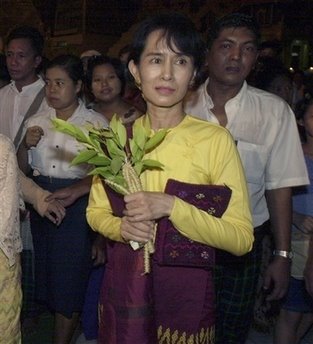


 Posts


