http://english.dvb.no/news.php?id=1986
Dec 8, 2008 (DVB)Chinese authorities have begun to erect walls along the border with Burma near the Kachin Independence Organisation-controlled area in Laiza, north-east Burma, according to local residents.
The construction project started in the last week of November as Chinese workers and machines began digging along a border stream.
"In some places, they have already started laying bricks and digging the ground,・a local resident said.
的n some places, it is as high as a person."
The decision to clearly demarcate and strengthen the border had been discussed at coordination meetings, and sources close to the KIO said the Chinese authorities met the Northern Command military security force and KIO executive committee member Dr La Ja on 2 December. Fences and iron posts have also been erected in the Shweli-Kyegaung area, locals said.
Some residents said that the fences had been put up on the orders of the Yunan state narcotics elimination commission, but a resident of Laiza said there appeared to be other motives.
"I think it is about more than the elimination of narcotics,・the resident said.
擢encing like this would not stop that."
Military analyst Aung Kyaw Zaw, who is based on the border, said the construction of the walls could be a precautionary measure in anticipation of activities by armed groups in the area in the run-up to the 2010 election.
"It is a way of putting pressure on the KIO,・Aung Kyaw Zaw said.
典his is clear because they are erecting the walls where the Pan Wa and Kan Paik ethnic armed groups are based."
Aung Kyaw Zaw also speculated that the reinforced borders could be linked to the construction of gas pipelines to China, which is due to start in 2009.
Reporting by DVB
Tuesday, December 9, 2008
China strengthens border with Burma-DVB


THE GLOBAL FORCE BEHIND MUMBAI’S AGONY IS IN OUR MIDST
http://www.sanfranciscosentinel.com/?p=17858
7 December 2008
Stephen Schwartz and Irfan Al-Alawi say that LET — the Army of the Righteous — is a worldwide Islamist organisation which is well-established in Britain. The Mumbai atrocities are further proof that the march of Islamic extremism is the central fact of our time.
BY STEPHEN SCHWARTZ
The usual suspects are declaring that the ‘cause’ of the Mumbai bombings was Kashmir or some other local grievance. But what happened in Mumbai was no more a local event than the 7 July 2005 attacks in London or the assault in Madrid on 11 March 2004. Pakistani propaganda about its claims in Kashmir is almost entirely phony rhetoric intended to justify the predatory instincts of the Pakistani army and intelligence bureaucrats. Pakistan insists that Kashmiri Muslims are oppressed by India, but in fact Indian Muslims live better than Pakistani Muslims and have demonstrated a better capacity for true Islamic thinking.
The attacks on Mumbai are part of a global problem, which is why a passive Western policy toward the crisis is not acceptable. It may appear comforting to bien-pensant representatives of the ‘progressive’ elite. But in reality it represents an attitude of suicidal and irresponsible disengagement from confrontation with a continuing threat. In Mumbai, as in London, Madrid and New York, but also in the Islamic cities of Iraq, Istanbul and Jakarta, and in places like Peshawar and Quetta in Pakistan, a wide network of Muslim fundamentalists continue their global offensive.
The common enemies of all civilised humanity in the ongoing conflict include Saudi Wahhabism and Pakistani jihadism, the latter inspired by a fundamentalist variant of Islam called Deobandism. What Western appeasers must remember is that Pakistan, like Saudi Arabia before it, is two-faced, professing to oppose terrorism while powerful factions in its leadership espouse it.
There is a wide gap between the ordinary local people in Pakistan and India — whatever their faith — and Islamist radicals in the Pakistani armed forces and clandestine services. This division cannot be spanned by a few ameliorative gestures by Pakistani, American or British leaders. We owe it to these ordinary people to treat Islamism seriously wherever it occurs.
This war is mainly aimed at gaining the loyalties of the world’s Sunni Muslims. Saudi Wahhabis now favour a crisis in Pakistan. King Abdullah of Saudi Arabia has begun a slow and at times almost imperceptible process of anti-Wahhabi actions, and so the main body of Islamist radicals (claiming the mantle of Sunnism) have shifted their attention to Pakistan and its pool of Deobandi foot soldiers. On the subcontinent, the extremists can corrupt, recruit and kill more people, with more impunity, than is now imaginable in the Middle East. Remember that the Wahhabis have failed in Iraq, and the Deobandis, who produced the Taleban, are widely discredited in Afghanistan. Pakistan is now the most obvious choice as a new battleground. Action against India may be the pretext, but the reality is a radical, global strategy.
Saudi Arabia and Pakistan resemble the old Soviet Union and East Germany in their special relationship, but they are different from these states in one key respect: no communist regime ever had a diaspora of two million in Britain, as Pakistan does today. The point that should be impressed on the mind of every Briton is that the Pakistani jihadi militia and the al-Qa’eda collaborators known as Lashkar-e-Taiba (LET — Army of the Righteous) which attacked Mumbai have a significant following in Britain, Europe and the US.
Thanks to Pakistani government blandishments, LET is recruiting in British mosques as you read these words. This is not alarmist language; it is a pragmatic and direct statement of fact. LET was involved in the Heathrow plot of 2006. LET trained 27-year-old Rashid Rauf of Birmingham, planner of the multiple destruction of passenger aircraft, whom the US allegedly killed in November but who some say remains alive and who was, if nothing else, an inspirer of the Mumbai attacks.
LET is active in the US, where it ran an aggressive network headed by an American white man who converted to Islam, Randall Ismail Royer. Royer’s cell was known by the alarmingly anodyne nickname of ‘the Virginia paintball jihad’, because its ten or so wannabe mujahideen engaged in that form of imitation war as practice for the real fighting they would face as LET troops in Kashmir. Royer, a former functionary of the leading legal Islamist group in America, the presumptuously titled Council on American-Islamic Relations (CAIR), had been in Bosnia-Herzegovina and adopted the charming habit of ringing and harassing Bosnian and American Muslims who challenged Wahhabism. Then he was found driving around the American capital with a loaded AK-47 and 219 rounds of ammunition in his car.
Royer joined LET recruits from the US in Kashmir for what is best described as jihad tourism, taking up arms against the Indians. Royer also cleverly produced Islamist internet polemics intended to convey moderation and acceptance of Western values. He and his group were charged with 41 counts of conspiracy to levy war against India, an ally of the United States, as well as arms and related infractions. Royer and a LET comrade pleaded guilty to weapons violations in 2004 and received 20 years in an American prison. Royer’s religious wisdom was succinctly summarised when he commented on his arrest, ‘I really resent the idea that a Muslim with a gun — he’s a threat. A Jew with a gun — he’s not a threat.’
Perhaps a Muslim with a gun is not necessarily a threat; but an Islamist with a gun certainly is. We must not forget that, in taking the Islamist threat in Mumbai seriously, in admitting it to be a global problem we are protecting not just the West but ordinary Muslims too. We must not forget that many Muslims are also committed to civilised values and opposed to this perversion of their faith. The necessity of the struggle against Islamic extremism is the central fact of our time. To try to write recognition of the nature of Islamist violence out of comprehension of Mumbai and crimes like those committed there brings to mind Orwell’s dictum that there are some notions that only the media and intellectuals are stupid enough to believe.
There are few places in the world today without Muslims, and of course wherever there are Muslim communities there is this possibility of radicalisation. But no situation is currently worse than that of Saudi-satellite Pakistan and its British diaspora. So what should be done about it? The British authorities should resolutely quarantine, deport, otherwise expel, and in general combat LET and other Deobandi elements in the British Muslim population. This seems like a sensible and life-saving measure, but nothing remotely like such a policy exists.
Instead the Foreign Office mumbles about the difficulties of determining whether British subjects died as criminal assailants in Mumbai, the US tiptoes around the question of LET’s historically undeniable financing and training by the Pakistani military, and Pakistani representatives whine that they should not be judged until some kind of official inquiry into Mumbai has taken place. But what state other than Pakistan — however failing — would evince an incentive to tolerate LET? Would Sri Lanka have encouraged a gang of murderers to invade a major Indian city? Nepal, which happens to be Maoist? Burma? Hardly. Pakistan’s army is the moral author of the bloodshed in Mumbai; it recruits its cannon fodder in British cities like Birmingham and Bolton as much — or more than — in the slums of Lahore or Karachi, and it represents the main back-up for al-Qa’eda.
Ignoring the ideological and geographical dimension of the world struggle against Islamist violence denies the existential reality of the Mumbai events. The screams of the innocent in Mumbai are the immediately audible evidence of the meaning of the contest. To pretend that such deaths were caused by old complaints in Kashmir is to ignore the real threat and thus to endanger humanity.
So what must be done? Pakistan and India both have nuclear weapons, and the Pakistani ruling clique is excitable about threatening their use. Nonetheless London and Washington appear paralysed. In this situation, the reaction of London may be more relevant than that of Washington. President-elect Obama babbled about bombing the Pakistan-Afghanistan-Iran frontier at about the time his opponent, John McCain, was pilloried for celebrating a proposed bombing of Iran. But in the transition period the new inhabitant of the White House apparently prefers to bemoan the diminishing potential for a Begin-Sadat-style photo op of the kind produced in 1978 by President Jimmy Carter. The thinking goes that getting Pakistan and India to hug one another, even while Pakistan continues to tolerate (if not deliberately assist) LET, will free the Pakistani military brass to make good on their repeated but empty promises to act against the Taleban.
It would be the worst of all mistakes to think that Pakistani complicity with the Taleban, and Islamabad’s support for the Kashmiri killers and their Mumbai militants, can be separated into two issues and handled in isolation from one another. Many individuals, British subjects included, went to Afghanistan and joined al-Qa’eda but ended up in Kashmir in the ranks of LET. The fighting in Afghanistan in some major part exists as a platform for continuing assault on Kashmir. Ending terror in Afghanistan is indivisible from the same task in Kashmir and, indeed, elsewhere around the world.
Obama seems to be living in a cloud-cuckoo land. If Pakistan is to avoid failing as a state, it must desist from harassing its neighbour, accept responsibility for fostering terror groups, and reform its army and intelligence services from top to bottom, rooting out every sympathiser of violent fundamentalism.
But this is unlikely to happen. Pakistan increasingly resembles a bus with no brakes, hurtling towards a cliff, and driven by a man, Asif Ali Zardari, who appears to have been struck blind. The lesson of Mumbai may be that for Pakistan rescue will come too late.
Stephen Schwartz Is Executive Director And Irfan Al-Alawi Is International Director Of The Centre For Islamic Pluralism at islamicpluralism.eu.
See Related: PAKISTAN ARRESTS ALLEGED MASTERMIND OF MUMBAI MASSACRE
See Related: INDIA MOVING IN THE RIGHT DIRECTION - U.S. INVASION OF PAKISTAN CAN’T BE RULED OUT
See Related: SHAME ON THOSE WHO APOLOGIZE FOR JIHADISTS
See Related: WORLD POLITICS
See Related: ISRAEL-MIDEAST
日本の国会議員含むアジア・太平洋地域の議員240名以上、ビルマの民主化求め国連事務総長宛てに書簡
━━━━━━━━━━━━━━━━━━━━━━━━━━━━━━
ビルマ市民フォーラム メールマガジン 2008/12/8
People's Forum on Burma
━━━━━━━━━━━━━━━━━━━━━━━━━━━━━━
日本の国会議員30名を含む、240名以上の議員がビルマの民主化を
求めて国連事務総長宛に書簡を送りました。
以下、ご報告いたします。
ビルマ市民フォーラム
事務局 宮澤
http://www1.jca.apc.org/pfb/
━━━━━━━━━━━━━━━━━━━━━━━━━━━━━━
アジア・太平洋地域の国会議員240名以上がビルマの民主化求め
国連事務総長宛て書簡を送る
― 日本からも国会議員30名が賛同
━━━━━━━━━━━━━━━━━━━━━━━━━━━━━━
12月5日、アジア・太平洋地域の国会議員241名が、播其文国連
事務総長あて書簡を提出しました。この書簡は、年内にすべての
政治囚を解放するよう軍政に働きかけることを、事務総長に要請
するもので、アセアンの国会議員によるミャンマー議連(AIPMC)が
各国の議員へ呼びかけ、日本、韓国、カンボジア、タイ、マレーシア、
フィリピン、インドネシア、シンガポールから計241名が賛同しました。
日本の国会議員30名も賛同。国を超え、これほど多くの国会議員の
賛同はおそらく史上初でしょう。
ビルマ政府は先月11月に200名以上の民主化活動家や僧侶に対し、
長期の禁固刑を下しました。賛同署名を呼びかけたAIPMC議長で
タイの国会議員のクライサック・チュンハワン氏は、「人びとの苦
しみをこれ以上放っておくべきではない。世界は自然災害による
壊滅的な被害時のみ支援するのではなく、こうした苦しみを一刻も
早く止めるべく、行動するべきだ」と述べています。
2008年12月8日
日本の国会議員への呼びかけ
ビルマ情報ネットワーク
ビルマ市民フォーラム
━━━━━━━━━━━━━━━━━━━━━━━━━━━━━━
▼『国連事務総長への書簡』・原文と賛同議員241名のリスト(英語)
http://www.aseanmp.org/news/wp-content/uploads/2008/12/letter-to-un-asian-mps-namelist.pdf
-----------------------------------------------------
【参考】 『国連事務総長への書簡』 日本語訳
私たちアジア諸国の国会議員は、それぞれの国の市民を国政そして
世界の場で代表するために選ばれました。今日、ビルマ(ミャンマー)で
2,100人以上の政治囚が獄中にあるという深く懸念すべき事態について、
この書簡を送ります。
ご存知のとおり、国連安全保障理事会、国連総会、そして国連人権
理事会はビルマ軍事政権に対し、直ちにすべての政治囚を釈放するよう
求めています。
軍政は国際社会の要請を露骨に無視し、政治囚の釈放を行わず、実質的
対話も始めませんでした。それどころか、この1年間で政治囚の数はほぼ
倍に増え、2,100人を超えています。
それだけでなく、ビルマ軍政は政治囚の存在を政治策略に利用して
きました。国連代表者の訪問中や訪問後に数人の政治囚を釈放するのです。
真の国民和解をするにはすべての政治囚を釈放するべきですが、それは
しません。国連の代表者がビルマを去ると必ず、新たに逮捕される者が出ます。
事務総長が今年12月にビルマを訪問する可能性があると理解しています。
是非、予定通り訪問していただきたいと思います。そして訪問の機会を
利用して、2008年末までにすべての政治囚が釈放されるように事務総長が
働きかけを行うことを求めます。
すべての政治囚が釈放されることは(ビルマの政治改革の中で)大きな
前進となり、国民和解プロセスの開始に向けた明確で具体的な第一歩と
なるでしょう。
しかしながら、軍政が(事務総長の訪問を機に)ほんの数人の政治囚を
釈放するようなことがあれば、それは見せかけで、軍政がこの数十年間、
権力を保持するために使ってきた戦術と何も変わりません。
ビルマ国民はもう何十年間も苦しんできました。私たちには、ビルマ
国民が平和で持続可能な政治的解決に至るためにできる限りのことをする
道徳的義務があります。このためには何の努力も惜しむべきではありません。
すべての政治囚の釈放という具体的な結果を出すために、事務総長が
直接、そして特使を通じて努力してくださることを信じています。私たちも
全面的に協力する用意があります。
▼ 日本の賛同議員
(敬称略)
中川正春
糸数慶子
辻元清美
池田元久
今野東
中村哲治
ツルネンマルテイ
江田五月
菅野哲雄
照屋寛徳
阿部知子
岡崎トミ子
山田正彦
金田誠一
藤田幸久
鈴木恒夫
土肥隆一
細川律夫
西博義
羽田孜
浜四津敏子
末松義規
郡 和子
加賀谷 健
武正 公一
松野 信夫
福島みずほ
小宮山洋子
川田龍平
鳩山由紀夫
-----------------------------------------------------
▼アセアンの国会議員によるミャンマー議連 ウェブサイト
ASEAN Inter-Parliamentary Myanmar Caucus (AIPMC)
http://www.aseanmp.org/news/index.php
━━━━━━━━━━━━━━━━━━━━━━━━━━━━━━
【関連】
12月3日、112人の元国家元首(50か国以上)が国連事務総長に
宛てた公開書簡を出し、今年末までにすべての政治囚を解放するよう、
ビルマ軍政に働きかけることを求めた。(日本からは小泉元首相が署名。
その他、ブレア元英首相、カーター元米大統領、ゴルバチョフ元ソ連大統領、
金大中元韓国大統領、アキノ元フィリピン大統領など)。
メディア報道
▼asahi.com(2008年12月5日)
国連総長に「年内にミャンマーへ」 世界の指導者ら書簡
http://www.asahi.com/international/update/1205/TKY200812050280.html
▼時事通信(2008年12月4日)
「国連総長はミャンマー再訪を=小泉氏ら元首脳112人が書簡」
http://www.jiji.com/jc/c?g=int_30&k=2008120400076
▼日経ネット(2008年12月3日)
「ミャンマー政治犯解放を」 世界の元リーダーが署名
http://www.nikkei.co.jp/news/kaigai/20081203AT2M0302K03122008.html
U.N. must be tough on Burma's dictators
http://www.upiasia.com/Politics/2008/12/08/un_must_be_tough_on_burmas_dictators/1785/
By Zin Linn
Column: Burma QuestionPublished: December 08, 2008
Font size:
Bangkok, Thailand — This month marks the 60th anniversary of the adoption of the Universal Declaration of Human Rights. Communities, organizations and governments around the world will celebrate U.N. Human Rights Day on Dec. 10.
Article 9 of the declaration states: “Everyone has the right to liberty; any detention must be lawful and should be used only as a last resort.” This article may seem strange to the people of Burma, however. In the military-ruled country, even possessing a booklet containing the Universal Declaration of Human Rights could send one to jail for several years. To people’s disappointment, Burma is still lacking in human rights education and practices.
No one is under any illusion about the willingness of Burma’s military regime to ruthlessly take action against challengers who are tired of the military dictatorship. Nonetheless, the sentences handed down on 14 protesters on Nov. 11 were shockingly harsh.
The protesters were found guilty of four charges of using electronic media without permission and given 15 years’ imprisonment for each charge, plus five years for forming an unlawful organization, 65 years in total. The sentences were handed down during a closed-door hearing at the infamous Insein prison. On the same day, authorities gave a harsh verdict to several dissidents for their participation in the protests in August and September of last year.
Thet Zin and Sein Win Maung, respectively editor and manager of the privately-owned Myanmar Nation Journal, were sentenced by a summary court in Rangoon on Nov. 28 for being in possession of dissenting documents, including a U.N. Special Rapporteur’s Human Rights report on Burma.
These sentences are typical of Burma's military regime, which has been ignoring calls from the international community to improve its human rights record. These retributions also contradict the junta’s claim that its new Constitution and electoral procedure for 2010 prove the effort it is making toward political change.
The release of all political prisoners is a vital step toward national reconciliation, but the regime’s current stance is still backward-looking. It continues to defy the presidential statement by the U.N. Security Council on Oct. 11, 2007, calling for the release of all political prisoners in Burma. The U.N. Security Council needs to take concrete action to secure their release, without further delay. These recent sentences are some of the harshest punishments handed out by the regime since 1988.
At least 215 Burmese political activists were sentenced in November alone, according to a report released on Dec. 1 by the Assistance Association for Political Prisoners (Burma). The first trial of activists arrested in connection with last year’s uprising in August and September began on Oct. 8, 2007. Since then, at least 384 protesters have been sentenced, over half of them in November, confirming recent reports that the regime plans to speed up trials of political dissenters.
The ugliest abuse of power is the junta’s dissolution of justice. The sentences recently handed down have ranged from four months on charges of “contempt of court” for National League for Democracy lawyers U Khin Maung Shein and U Aung Thein to life imprisonment plus eight years for Human Rights Defenders and Promoters network founding member U Myint Aye, on explosives charges.
Former political prisoner and well-known comedian Zarganar, arrested for his efforts to coordinate volunteer relief efforts after Cyclone Nargis hit in May this year, received sentences totaling 59 years. All Burma Monks’ Alliance leader U Gambira, who played a leading role in last year’s Saffron Revolution, was given sentences totaling 68 years. Twenty-three members of the 88 Generation Students Group, who led the protests against fuel price hikes in August last year, were handed sentences of at least 65 years each.
Meanwhile, on Dec. 3, a letter signed by 112 former presidents and prime ministers – including former U.S. presidents George H.W. Bush and Jimmy Carter, former British prime ministers Tony Blair, Margaret Thatcher and John Major, former Soviet leader Mikhail Gorbachev, former Japanese Prime Minister Junichiro Koizumi and former Polish President Lech Walesa – urged U.N. Secretary-General Ban Ki-moon to return to Myanmar and pressure the military junta to free all political prisoners. The letter, an effort led by former Prime Minister Kjell Magne Bondevik of Norway, said Ban should make good on the Security Council's call in Oct. 2007 for Burma to release the prisoners, including Nobel Peace Prize winner Aung San Suu Kyi.
Two days later, on Dec. 5, another public letter signed by 241 parliamentarians from eight Asian countries – South Korea, Thailand, Cambodia, Japan, Malaysia, the Philippines, Singapore and Indonesia – was sent to Ban, urging him to obtain the release of all political prisoners from Burma by Dec. 31. This letter expressed the parliamentary members’ concerns about the lack of progress in Myanmar’s human rights situation.
“It is important that Secretary General Ban Ki-moon travel to the country himself and engage in serious dialogue with the military regime and impress on them the calls by leaders and lawmakers from Asia and around the world for the release of all political prisoners,” said Kraisak Choonhavan, president of the ASEAN Inter-Parliamentary Myanmar Caucus, who hosted the petition.
“The suffering of the people must not be allowed to continue and the world can no longer sit idly by and only assist them when there is a devastating natural disaster,” he added, in a separate cover letter to the U.N. secretary general.
Despite the fact that Burma has intensified the tempo of imprisoning political opponents, human rights defenders, bloggers and journalists, Ban met with his “Group of Friends on Myanmar” on Dec. 5. Afterwards, he told the media that he will only go to Burma if there are positive steps by the Than Shwe regime, including the release of political prisoners.
In direct non-cooperation with the United Nations, the military regime has not only refused to release political prisoners and take part in meaningful dialogue, but has doubled the number of political prisoners in excess of 2,100. Burma’s military dictators have continued to ignore Article 9 of the UDHR, which says that no one shall be subjected to arbitrary arrest, detention or exile.
On this 60th anniversary of the UDHR, the world body should make concerted efforts, through prestigious organizations and governments, to carry out the true meaning of the significant charter. Burma’s human rights problem should be the first task for the United Nations to deal with, in order to make an extraordinary example. The United Nations must not surrender to the military dictators of Burma. The United Nations must be tough enough to confront military dictatorship.
--
(Zin Linn is a freelance Burmese journalist living in exile. He currently serves as information director of the National Coalition Government of the Union of Burma in Bangkok, Thailand. He is also vice-president of the Burma Media Association, which is affiliated with the Paris-based Reporters Sans Frontiers. He can be contacted at uzinlinn@gmail.com. ©Copyright Zin Linn.)
Ban: 'Growing Frustration’ At Progress In Myanmar
http://www.scoop.co.nz/stories/WO0812/S00186.htm
Ban: 'Growing Frustration’ At Progress In Myanmar
Monday, 8 December 2008, 1:03 pm
Press Release: United Nations
Ban Voices ‘Growing Frustration’ At Lack Of Progress In Myanmar
Secretary-General Ban Ki-moon voiced his growing frustration today that the United Nations’ long-standing efforts to promote national reconciliation and democratization in Myanmar have yet to achieve the desired results and he urged the Government to release all political prisoners immediately and initiate “genuine dialogue” with the opposition.
Speaking to journalists after convening a meeting in New York of the Group of Friends on Myanmar, a gathering of countries supporting greater dialogue in the Asian country, Mr. Ban said there had been little progress since the last meeting, held in late September.
“I sense not only a higher expectation, but also a growing frustration that our efforts have yet to yield the results we all hope for,” Mr. Ban said. “I share this sense of expectation and frustration.”
Mr. Ban said that while he welcomed the Myanmar Government’s declaration that cooperation with the UN is a cornerstone of its foreign policy, he expected “a concrete action by them to implement their commitment.”
The Secretary-General has been pursuing reconciliation and democratization in Myanmar through his good offices role, as mandated by the General Assembly, and his Special Adviser Ibrahim Gambari has visited the country several times and held talks with top Government officials.
“My good offices should not be seen as an end in itself, or as a justification for inaction,” Mr. Ban said today. “In order to be able to pursue this role in an effective manner, it is necessary that all concerned parties across the spectrum step up efforts to help my good offices move forward.
“I have taken note of the Group’s concern that recent actions by the Government of Myanmar that risk undermining the prospects of inclusive national reconciliation, democratic transition, and respect for human rights, and more generally at the lack of sufficient response by the Government of Myanmar to the concerns of the United Nῡtions and the international co῭munity.
Mr. Ban urged the Government to release all political prisoners – including opposition leader and Nobel Peace Prize laureate Daw Aung San Suu Kyi, who has been under house arrest for much of the past two decades – as soon as possible. He also called for the “initiation of a genuine dialogue with the opposition.”
In response to questions, the Secretary-General stressed that he remains committed to continuing his good offices role and is willing to visit Myanmar again to discuss humanitarian issues and political issues.
“I am ready to visit any time, whenever I can have reasonable expectations of my visit, to be productive and meaningful.”
Mr. Ban pressed all countries – particularly those in the Group of Friends, which comprises 14 countries and one regional bloc – to “use whatever available leverage and tools to impress upon the Government of Myanmar to implement their commitment.”
The Group, founded in December, represents a range of views on Myanmar and was established to hold informal discussions and develop shared approaches to supporting UN efforts. The members are Australia, China, the European Union, France, India, Indonesia, Japan, the Republic of Korea, Norway, Russia, Singapore, Thailand, the United Kingdom, the United States and Viet Nam.
ENDS
Ban on cluster bombs - who didn’t agree?
http://mydailyclarity.com/2008/12/ban-on-cluster-bombs-who-didnt-agree/
Ban on cluster bombs - who didn’t agree?
By Clarity Staff Reporter on December 7th, 2008
The world applauded when 111 nations came together and signed a treaty to prohibit the use of cluster bombs. However, it is the countries that didn’t sign that is the real story. These countries include a who’s who of the major cluster bomb producers, users and stockpilers of these awful weapons of war, that kill and maim long after a conflict is over, as many do not detonate on impact. Clusters bombs, due to the way they are packed inside a larger delivery vehicle such as a shell, are often adorned with ribbons. Undetonated cluster munitions gaily adorned as they are, unfortunately, prove highly attractive to children, who often mistaking them for toys, are subsequently killed and maimed. So who notably did not sign the treaty - United States, Russia, Israel, Pakistan, India? That covers most of the major protagonists in current wars, sadly. Not only did these countries not sign the treaty, they were not in attendance at the conference to even discuss the initiative. All had different reasons for non-action, including it being dubbed an “inappropriate forum”, that the forums was attended by their enemies, or other such distractions. While the treaty is indeed to be applauded, without the signatures of the major players, one wonders how effective such a treaty can be.
The Reuters Alert briefing document on cluster munitions gives an excellent backgrounder on the issue.
“WHAT ARE THEY?
– A cluster bomb, or cluster munition, is a weapon containing multiple explosive submunitions. They are dropped from aircraft or fired from the ground and are designed to break open in mid-air, releasing the submunitions which can cover an area the size of several football fields.
– Anyone in that area is very likely to be killed or seriously injured. Many bomblets fail to detonate immediately, and, like land mines, can maim and kill years later.
WHEN AND WHERE HAVE THEY BEEN USED?
– The Soviet Union first used cluster bombs in 1943 against Nazi troops.
– Between 1964 and 1973, the U.S. military dropped an estimated 260 million cluster munitions in Laos. So far, fewer than 400,000 have been cleared, a meagre 0.47 percent and at least 11,000 people have been killed
– At least 15 countries have used cluster bombs, including Eritrea, Ethiopia, France, Israel, Morocco, the Netherlands, Britain, Russia and the United States. A small number of non-state armed groups have used them.
– Cluster bombs were used extensively in the Gulf War, Chechnya, the former Yugoslavia, Afghanistan and Iraq.
– The U.N. estimated that Israel used up to 4 million submunitions in Lebanon during a 2006 war against Hezbollah guerrillas, who also fired more than 100 cluster munition rockets into northern Israel.
– Russia used several types of cluster munitions, both air- and ground-launched, in a number of locations in Georgia’s Gori district in 2008. Also Georgia used cluster munitions in the August 2008 conflict with Russia.
DEADLY LEGACY:
– One third of all recorded cluster munitions casualties are children. Sixty percent of cluster bomb casualties are people injured while undertaking everyday activities.
STOCKPILES:
– Billions of submunitions are stockpiled by some 76 countries. A total of 34 states are known to have produced more than 210 different types.
– In March 2007 Belgium became the first country to make it a crime to invest in companies that make cluster bombs.”
Given the deadly legacy of cluster munitions one would think that a global treaty, similar to the one on landmines signed in 1997, would be desired by all. The landmine initiative was deemed to be successful, only defiant Burma has deployed landmines since that treaty was enacted. However, cluster munitions are still widely spread. Even today, a large arsenal was found secreted in the Afghan mountains, over 290 tonnes of hidden armaments which included a stockpile of the deadly cluster bombs. The US has recently stopped exporting cluster bombs due to international pressure, one of its biggest customers being Israel. However, occurring so late in the game this has limited effect, as Israel has now developed and continues to manufacture its own domestic version. Pressure needs to be kept on the nations that did not sign the treaty. The use of cluster bombs needs to be made illegal. Even today, so many years after the Vietnam war people die or are maimed every month by such munitions, that due to they way they are scattered indiscriminately and cannot be mapped or disarmed without massive trained personnel deployment. Cluster bombs are an indiscriminate killer that remain active long after a war has ended, and it is often children who carry the brunt of death or disability. It is a great shame that such an opportunity was missed, and the major producers should be called to answer for their non-action by the UN and by the populations of their respective countries. That is the story, 111 countries say yes, but the Top 5 producers and users of cluster bombs remain silent and uncommitted to the curtailment of their use.
ShareThis
Sphere: Related Content
Categories: India, Israel, Pakistan, Russia, US Foreign Policy
Tags: America, cluster bombs, Israel, Pakistan, Russia
One Response to “Ban on cluster bombs - who didn’t agree?”
Trouble in the Other Middle East
http://www.nytimes.com/2008/12/08/opinion/08kaplan.html?ref=opinion
December 8, 2008
Op-Ed Contributor
Trouble in the Other Middle East
By ROBERT D. KAPLAN
Washington
THE divisions we split the world into during the cold war have at long last crumbled thanks to the Mumbai terrorist attacks. No longer will we view South Asia as a region distinct from the Middle East. Now there is only one long continuum stretching from the Mediterranean to the jungles of Burma, with every crisis from the Israeli-Palestinian dispute in the west to the Hindu-Muslim dispute in the east interlocked with the one next door.
Yet this elongated Greater Near East does not signify something new but something old.
For significant parts of medieval and early modern history, Delhi was under the same sovereignty as Kabul, yet under a different one from Bangalore. From the 16th to the 18th centuries, the Mughal dynasty, created by Muslims from Central Asia, governed a sprawling empire encompassing northern and central India, almost all of Pakistan and much of Afghanistan — even as Hindu Maratha warriors in India’s south held out against Mughal armies. India’s whole history — what has created its rich syncretic civilization of Turko-Persian gems like the Taj Mahal and the elaborate Hindu temples of Orissa — is a story of waves of Muslim invaders in turn killing, interacting with and ultimately being influenced by indigenous Hindus. There is even a name for the kind of enchanting architecture that punctuates India and blends Islamic and Hindu styles: Indo-Saracenic, a reference to the Saracens, the term by which Arabs were known to Europeans of the Middle Ages.
Hindu-Muslim relations have historically been tense. Remember that the 1947 partition of the subcontinent uprooted at least 15 million people and led to the violent deaths of around half a million. Given this record, the relatively peaceful relations between the majority Hindus and India’s 150 million Muslims has been testimony to India’s successful experiment in democracy. Democracy has so far kept the lid on an ethnic and religious divide that, while its roots run centuries back, has in recent years essentially become a reinvented modern hostility.
The culprit has been globalization. The secular Indian nationalism of Jawaharlal Nehru’s Congress Party, built around a rejection of Western colonialism, is more and more a thing of the past. As the dynamic Indian economy merges with that of the wider world, Hindus and Muslims have begun separate searches for roots to anchor them inside a bland global civilization. Mass communications have produced a uniform and severe Hinduism from a host of local variants, even as the country’s economically disenfranchised Muslims are increasingly part of an Islamic world community.
The Muslim reaction to this Hindu nationalism has been less anger and violence than simple psychological withdrawal: into beards, skull caps and burkas in some cases; self-segregating into Muslim ghettos in others. The terrorist attacks in Mumbai had a number of aims, one of which was to set a fuse to this tense intercommunal standoff. The jihadists not only want to destroy Pakistan, they want to destroy India as well. India in their eyes is everything they hate: Hindu, vibrantly free and democratic, implicitly and increasingly pro-American, and militarily cozy with Israel. For Washington, this is no simple matter of defending Pakistan against chaos by moving troops from Iraq to Afghanistan. It is a whole region we are dealing with. Thus for the jihadists, the concept of a 9/11-scale attack on India was brilliant.
Just as the chaos in Iraq through early 2007 threatened the post-Ottoman state system from Lebanon to Iran, creeping anarchy in Pakistan undermines not only Afghanistan but also the whole Indian subcontinent. The existence of terrorist outfits like Lashkar-e-Taiba that have links with the Pakistani security apparatus but are outside the control of Pakistan’s own civilian authorities is the very definition of chaos.
A collapsing Pakistan, and with it the loss of any real border separating India from Afghanistan, is India’s worst nightmare. It brings us back toward the borders of the Mughal world, but not in a peaceful way. Indeed, the route that intelligence agencies feel was taken by the fishing boat hijacked by the terrorists — from Porbandar in India’s Gujarat State, then north to Karachi in Pakistan, and then south to Mumbai — follows centuries-old Indian Ocean trade routes.
The jihadist attack on India’s financial center not only damages Indian-Pakistani relations, but makes Pakistan’s new civilian government — which has genuinely tried to improve ties with India — look utterly pathetic. Thus, the attack weakens both countries. Any understanding over Kashmir, the disputed Muslim-majority territory claimed by Pakistan, is now further than ever from materializing, with mass violence there a distinct possibility.
This, in turn, reduces the chance of an Indian-Pakistani rapprochement on Afghanistan, whose government Pakistan seeks to undermine and India sends millions of dollars in aid to help prop up. The Pakistani security services want a radical Islamized Afghanistan as a strategic rear base against India, while India wants a moderate, secular Afghanistan as a weapon against Pakistan.
Pakistan is not only chaotic but dangerously lonely. Islam has not proved effective in bringing together its regionally based ethnic groups, and thus a resort to a fierce ideology as a unifying device among fundamentalist Muslims has been the country’s signal tragedy. Meanwhile, Pakistan’s military suspects that Washington will desert their nation the moment the leadership of Al Qaeda is, by any chance, killed or captured.
Making matters worse, every time the United States launches an air attack into Pakistan from Afghanistan, it further destabilizes the Pakistani state. That is why the Mumbai attacks bring true joy to the most dangerous elements of the Pakistani security establishment: the tragedy has caused the world to focus on India’s weaknesses — its lax security, its vulnerability to age-old maritime infiltration and, most of all, the constant threat of caste and tribal violence — that have been obscured by its economic success. See, many Pakistanis are saying, your beloved India is not so stable either.
This is nonsense, of course. India, with all its troubles, is far more stable than Pakistan. In the meantime, every day that goes by without riots in India is a defeat for the Mumbai terrorists. Indeed, India’s own Muslims have demonstrated against the attacks.
But India, not just Pakistan, desperately needs help. Just as solving or at least neutralizing the Israeli-Palestinian dispute is a requirement for reducing radicalism and Iranian influence throughout the Levant, the same is true of the Indian-Pakistani dispute at the other end of the Greater Middle East. Our notion of the “peace process” is antiquated and needs expanding. We need a second special negotiator for the Middle East, a skilled diplomat shuttling regularly among New Delhi, Islamabad and Kabul. (There has been some speculation, in fact, that Barack Obama is considering Richard Holbrooke, the former United Nations ambassador, for just such a job.)
The Middle East is back to where it was centuries ago, not because of ancient hatreds but because of globalization. Instead of bold lines on a map we have a child’s messy finger painting, as the circumvention of borders and the ease of communications allow the brisk movement of ideas and people and terrorists from one place to another. Our best strategy is, as difficult and trite as it sounds, to be at all places at once, Not with troops, necessarily, but with every bit of energy and constant attention that our entire national security apparatus — and those of our allies — can bring to bear.
Robert D. Kaplan is a national correspondent for The Atlantic and a senior fellow at the Center for a New American Security.
Home
World U.S. N.Y. / Region Business Technology Science Health Sports Opinion Arts Style Travel Jobs Real Estate Automobiles Back to Top
Copyright 2008 The New York Times Company
Privacy Policy Search Corrections RSS First Look Help Contact Us Work for Us Site Map
LETTER FROM OVER 200 ASEAN PARLIAMENT MEMBERS TO UN
December 5th 2008
Dear UN Secretary General Ban Ki-moon,
As parliamentarians from across Asia, we are elected to represent our peoples in our
governments and to the world. We are writing to you on a matter of grave concern: the
ongoing imprisonment of over 2,100 political prisoners in Burma/Myanmar.
As you know, the United Nations Security Council, General Assembly, and Human
Rights Council have all called on Burma’s military regime to immediately release all
political prisoners in Burma.
In direct defiance of the international community the military regime has not only failed
to release political prisoners and enter into genuine dialogue, but instead in the past year
almost doubled the number of prisoners to more than 2,100.
Further, Burma’s military regime has used prisoners of conscience as political pawns,
releasing a handful during and after visits by UN envoys while avoiding a complete
release that would allow pave the way for true national reconciliation. After UN envoys
leave from Burma, more arrests always continue.
We understand that you may travel to Burma in December, 2008 and encourage you to
take this trip. We urge you to seize this opportunity to obtain the release of all political
prisoners by the end of 2008.
The release of all political prisoners in Burma would be a significant step forward, and an
obvious and concrete first step to begin a process of national reconciliation in Burma.
However, the release of only a limited number of prisoners would represent a
continuation of the same games the military regime has used to extend its power for
decades.
The suffering of the people have Burma has been going on for decades. We have a moral
duty to do whatever we can to help the people of Burma reach a peaceful and sustainable
political settlement. No effort should be spared in the endeavor.
We trust in you and your good offices to work to achieve this concrete benchmark, and
offer our full support to you in doing so.
Sincerely,
Members of Parliament from:
Thailand
1. Kraisak Choonhavan
2. Buranaj Smutharaks
3. Somkiat Pongpaiboon
4. Pojanart Kaewpaluk
5. Pusadee Tamthai
6. Rosana Tositrakul
7. Varin Thiemcharas
8. Rachada Dhnadirek
9. Rachadaporn Kaewsanit
10. Boonyod Sooktinthai
11. Attaporn Ponlaboot
12. Thanitpol Jayanandana
13. Samart Piriyapanyaporn
14. Kovit Tarana
15. Alongkorn Ponlaboot
16. Korn Chatikavanij
17. Chanin Roongsang
18. Sirichok Sopha
19. Ananong Kanjanachusak
20. Supacharee Tummapetch
21. Wirat Wiriyapong
22. Surachat Masadit
23. Sombat Yasin
Cambodia
24. Son Chhay
25. Sam Rainsy
26. Cheam Channy
27. Kimsour Phirith
28. Mao Munyvann
29. Ke Sovannroth
30. Eng Chhai Eang
31. Tioulong Saumura
32. Nuth Rumduol
33. Khy Vandeth
34. Thak Lany
35. Long Ry
36. Men Sothavarin
37. Mu Sochua
38. Chiv Cata
39. Chea Poch
40. Yim Sovann
41. Kong Bora
42. Ho Vann
43. Kuoy Bunroeun
44. Ly Srey Vyna
45. Tok Vanchan
46. Yont Tharo
47. Kem Sokha
48. Chan Cheng
49. Yem Ponhearith
50. Khim Laky
51. Ou Chanrith
52. Pot Pov
Japan
53. Masaharu Nakagawa
54. Keiko Itokazu
55. Kiyomi Tsujimoto
56. Motohisa Ikeda
57. Azuma Konno
58. Tetsuji Nakamura
59. Tsurunen Marutei
60. Satsuki Eda
61. Tetsuo Kanno
62. Kantoku Teruya
63. Tomoko Abe
64. Tomiko Okazaki
65. Masahiko Yamada
66. Seiichi Kaneda
67. Yukihisa Fujita
68. Tsuneo Suzuki
69. Ryuichi Doi
70. Ritsuo Hosokawa
71. Hiroyoshi Nishi
72. Tsutomu Hata
73. Toshiko Hamayotsu
74. Yoshinori Suematsu
75. Kazuko Kori
76. Ken Kagaya
77. Koichi Takemasa
78. Nobuo Matsuno
79. Mizuho Fukushima
80. Yoko Komiyama
81. Yukio Hatoyama
82. Ryuhei Kawada
Korea
83. Song Young Gil
84. Ahn Min Seok
85. Cho Young Teck
86. Oh Jae Sae
87. Choi In Kee
88. Cho Jeong Sik
89. Shin Hak Yong
90. Ahn Gyu Baek
91. Kim Sang Hee
92. Lee Jong Kul
93. Park Jie Won
94. Park Joo Sun
95. Kang Bong Kyun
96. Kim Boo Kyum
97. Kim Dong Cheol
98. Choi Young Hee
99. Choi Gyu Sung
100. Choo Mi Ae
101. Hong Jae Hyong
102. Yang Seung Jo
103. Kim Hyo Seuk
104. Kang Sung Jong
105. Park Young Sun
106. Kim Sung Gon
107. Jeon Hae Sook
108. Seo Jong Pyo
109. Cho Kyoung Tae
110. Kim Hee Chull
111. Lee Seok Hyun
112. Woo Yoon Keun
113. Noh Young Min
114. Choi Jae Sung
115. Chung Sye-kyun
116. Baek Won Woo
117. Lew Seon Ho
118. Kang Chang Il
119. Kim Woo Nam
120. Jang Se Hwan
121. Kim Jong Yull
122. Park Eun Soo
123. Kim Choon Jin
124. Ooh Che Chang
125. Kim Yoo Jung
126. Song Min Soon
127. Lee Kang Rae
128. Lee Sung Nam
129. Cho Bae Sook
130. Shin Nakyun
131. Jung Jang Seon
132. Joo Seung Yong
133. Choi Chul Kook
134. Byun Jae Il
135. Kim Yung Rok
136. Moon Hak Jin
137. Kim Young Jin
138. Moon Hee Sang
139. Lee Yongsup
140. Kim Jin Pyo
141. Kim Jae Kyun
142. Park Sunsook
143. Kim Jeong Kweon
144. Kim Dong Sung
145. Kim Tae Won
146. Won Hee Ryong
147. Koh Seung Duk
148. Yim Tae Hee
149. Choi Moon Soon
150. Nam Kyung Pil
151. Lee Jung Hyun
152. Shin Young Soo
153. Hur Won Je
154. Lee Jung Hee
155. Kwon Young Ghil
156. Hong Hee Deok
157. Kwak Jung Sook
158. Kang Ki Kab
159. Moon Kook Hyun
160. Lee Yong Hee
161. Lee Kwang Jae
162. Chough Soon Hyung
163. Lee Yoon Seok
164. Kim Se-ung
165. Kim Jae Yun
166. Lee Nak Yon
Malaysia
167. Anwar Ibrahim
168. Teresa Kok
169. Lim Kit Siang
170. Tian Chua
171. Fong Po Kuan
172. Tony Pua
173. Nurul Izzah Anwar
174. Teo Nie Ching
175. Charles Santiago
176. Chow Kon Yeow
177. Er Teck Hwa
178. Lim Lip Eng
179. M. Kula Segaran
180. Johari Abdul
181. Sim Tong Him
182. Sivarasa Rasiah
183. Fong Kui Lun
184. Tan Tee Beng
185. Liew Chin Tong
186. Gobalakrishnan N.
187. Jeyakumar Devaraj
188. M. Manogaran
189. Chong Eng
190. Salahuddin Ayub
191. Abdul Aziz Abdul Kadir
192. Amran Abdul Ghani
193. Hee Loy Sian
194. Gwo Burne Loh
195. Abdullah Sani Abdul Hamid
196. Tan Kok Wai
197. Mohamed Azmin Ali
198. Zuraida Kamaruddin
199. Zahrain Mohamed Hashim
200. Mohsin Fadzli Samsuri
201. Ahmad bin Kasim
202. Saifuddin Nasution Ismail
203. Zainal Abidin Ahmad
204. Azan bin Ismail
205. Rashid bin Din
206. Yusmadi Yusoff
207. William Leong
208. Md. Puad Zarkashi
209. Chong Chieng Jen
Philippines
210. Lorenzo R. Tañada III
211. Eduardo Nonato N. Joson
212. Antonio V. Cuenco
213. Abraham Kahlil B. Mitra
214. Alfonso V. Umali Jr.
215. Proceso J. Alcala
216. Matias V. Defensor Jr
217. Mujiv S. Hataman
218. Liza L. Maza
219. Mar-Len Abigail S. Binay
220. Luzviminda C. Ilagan
221. Cinchona Cruz-Gonzales
222. Del R. de Guzman
223. Ana Theresia Hontiveros
224. Albert Garcia
Singapore
225. Charles Chong
226. Muhammad Faishal Ibrahim
227. Michael Palmer
228. Inderjit Singh
Indonesia
229. Djoko Susilo
230. Nursyahbani Katjasungkana
231. Eva Sundari
232. Marzuki Darusman
233. Yuddy Chrisnandi
234. Anna Muawanah
235. Jeffrey Massie
236. Happy Bone
237. Jacobus Mayong Padang
238. Slamet Effendy Yusuf
239. M. Djunaedi
240. Zulkifli Halim
241. Agung Laksono
Asian Lawmakers Push UN Chief on Burma
http://www.irrawaddy.org/article.php?art_id=14765
Asian Lawmakers Push UN Chief on Burma
--------------------------------------------------------------------------------
By WAI MOE Monday, December 8, 2008
--------------------------------------------------------------------------------
More than 240 Asian lawmakers have called for the UN Secretary-General Ban Ki-moon to press Burma’s junta for the release of all political prisoners in the country.
The Asean Inter-Parliamentary Myanmar Caucus (AIPMC), which organized this campaign, said in a press release on Monday that a total of 241 parliamentarians from Cambodia, Indonesia, Japan, South Korea, Malaysia, the Philippines, Singapore and Thailand have sent a public letter to Ban urging him to ensure the release of all Burma’s political prisoners by December 31.
It is believed to be the first time in history that a large group of Asian lawmakers have sent a public letter to the UN.
Roshan Jason, the executive director of the AIPMC, told The Irrawaddy on Monday that the group of Asian representatives has chosen Burma’s political prisoner issue because it is an essential step in the process of national reconciliation in the country.
“The most important human rights issue is the release of political prisoners [in Burma] now,” he said.
In the letter to the UN secretary-general, the Asian lawmakers said that the Burmese junta has used prisoners of conscience as political pawns, releasing a handful during and after visits by UN envoys while avoiding a complete release that would allow pave the way for true national reconciliation.
“The suffering of the people must not be allowed to continue and the world can no longer sit idly by and only assist them when there is a devastating natural disaster,” said Kraisak Choonhavan, president of the AIPMC and a member of parliament for Thailand’s Democrat Party.
The Asian parliamentarians’ call followed a similar petition on December 3 by 112 former world leaders—including Corazon Aquino, Tony Blair, George H W Bush, Jimmy Carter, Mikhail Gorbachev, John Howard, Chandrika Kumaratunga, John Major, Margaret Thatcher and Lech Walesa—to the head of the UN, calling for the release of all political prisoners in Burma.
However, Ban told reporters on Friday that he will not visit Burma in the near future unless political progress is evident in the country.
“At this time, I do not think that the atmosphere is ripe for me to undertake my own visit there,” he said. "But I am committed, and I am ready to visit any time when I can have reasonable expectations my visit will be productive and meaningful.”
Commenting on Ban Ki-moon’s response, Roshan Jason said that he should reconsider his decision of canceling the trip.
“He should realize that he would perhaps create a greater impact and [bring discussions over the political prisoners to the forefront of negotiations] with leaders of the regime,” the executive director of AIPMC said. “It is better to see them (the Burmese generals) in person—there will be more opportunity to talk about this particular issue and he can show his commitment to making sure prisoners are released.”
Meanwhile, analysts are skeptical of the impact of the international campaigns to free political prisoners in Burma.
“The international community highlighting the Burma crisis, such as issuing statements and petitions, is good,” said Aung Naing Oo, a Burmese commentator based in Thailand. “But the junta will think of this kind of action as just shooting them with flowers.”
Since early November, courts in Burmese prisons have sentenced more than 200 people—from pro-democracy activists to bloggers—with jail terms of up to 65 years imprisonment.
Aung Naing Oo said the junta often uses long-term imprisonment as a tool of “pre-emptive repression” to deter dissident movements.
Copyright © 2008 Irrawaddy Publishing Group | www.irrawaddy.org
Monday, December 8, 2008
Clinton global initiatives -ASIA
http://www.clintonglobalinitiative.org/NETCOMMUNITY/Page.aspx?pid=2437
Building on the global outreach of current CGI members, supported by the Annual Meetings in New York, CGI has created a new membership opportunity to engage business, government, civil society, and philanthropic leaders across Asia. This week, the 2008 CGI Asia Meeting in Hong Kong provides an opportunity for Asia’s most influential leaders to come together and take action to solve the region’s most pressing issues. As an integral part of membership, each CGI Asia participant must make a Commitment to Action—a new, specific, and measurable initiative that addresses a social, economic, or environmental problem of the member’s choosing. CGI Asia will catalyze innovative solutions and cross-sector partnerships among regionally based members in Asia and CGI’s global community to address critical challenges with global implications. Many commitments already in action are featured in the Commitments section of the website.
Beyond transforming the global economic landscape, growth in Asian countries is expanding the capacity of Asian leaders to address contemporary challenges at the local, regional, and international levels. Corporations, governments, and non-governmental organizations in Asia continue to increase their engagement on climate change, education, health, and other pressing issues. In December 2008, President Clinton will travel to Hong Kong to join several hundred Asian leaders from a wide variety of backgrounds to further strengthen social and global responsibility in Asia, and move toward the benefits achieved through collaboration.
This meeting will be similar in format to the Annual Meeting in New York. In Hong Kong, President Clinton will engage a distinguished group of leaders for two days of panel discussions and interactive working sessions, each of which will examine specific challenges and opportunities for action. The meeting will focus on three primary areas of discussion: education, energy & climate change, and public health.
The complete 2008 Asia Meeting schedule is available here. To read more about CGI Asia, download the complete CGI Asia Info Kit and the CGI Asia Program Update.
To apply to become a volunteer at CGI Asia, click here.
Opposition, coalition parties in Thailand to form govt
http://www.chinadaily.com.cn/world/2008-12/07/content_7278895.htm
Xinhua/Agencies)
Updated: 2008-12-07 14:36 Comments(0) PrintMailBANGKOK -- Thailand's former opposition Democrat Party and four former coalition parties announced on Saturday that they would form a coalition government which holds at least 250 MPs and will support Democrat leader Abhisit Vejjajiva as the new prime minister.
At a press conference in Bangkok in the evening, Democrat Party secretary-general Suthep Thaugsuban announced the formation of a new coalition. Also present were representatives from the former Chart Thai and Matchima Tipataya, both just recently disbanded, Ruamjai Thai Chart Pattana, Puea Pandin and the "Friends of Newin" faction, a defector group from the former ruling People Power Party (PPP).
Members of five political parties and one faction, including Democrat Party's secretary-general Suthep Thaugsuban (C), join hands after forming a new coalition which hopes to create Thailand's next government, after a news conference in Bangkok December 6, 2008. Thailand's opposition Democrat Party said on Saturday that several parties in he ruling coalition would switch sides and for a government with it, but it was far from clear that horse-trading had finished. Standing from L to R are Ruamjai Thai Chartpattana Party executive Wannarat Charnukool, Matchima Thipataiya Party secretary-general Porntiwa Nakasai, Puea Pandin executive Rarnongrak Nuanchawee, Democrat Party secretary-general Suthep Thaugsuban, Senior executive of now defunct Chart Thai Party Sanan Kachornprasart, representatives from Newin faction of the People Power Party Boonjong Wongtrirat and Sophon. [Agencies]
Sanan Kachornprasart, caretaker deputy prime minister who represented the Chart Thai, said the coalition of the defunct PPP could not run the country so the Chart Thai decided to switch side for the sake of the country.
Sanan said the Chart Thai made a decision to switch side from the PPP partners to form a coalition with the Democrat in response to "calls from all walks of life" in order to tackle the divisiveness among Thais and economic woes.
All other representatives of the joining parties explained that they have switched side as "the best way" out of the country's current crisis.
Boonjong Wongtrairat, a representative of the "Friends of Newin " faction, a group of MPs loyal to Newin Chidchob, banned executive of the former ruling Thai Rak Thai party, read from a prepared statement that MPs of his group would vote for Democrat leader Abhisit Vejjajiva as the next prime minister before deciding to join a new party later.
Suthep said that all the parties were forming the coalition " not for personal or vested interests," but to cooperate to solve the country's problems."
The PPP, before the looming disbandment verdict, had registered a new Puea Thai Party, which many former PPP have joined.
Also on Saturday, a group of leading members of the Puea Thai Party held a press conference to announce that it could still contest against the Democrat to form a coalition government.
Deputy House Speaker Apiwan Wiriyachai, seen as a leading contestant to become the PM candidate from the former PPP side, told the press conference that his group was informed by members of the Friends of Newin faction and by Chart Thai leader Banharn Silapa-Archa that they would still support the Puea Thai to form a new coalition.
Members of five political parties and one faction hold a meeting in Bangkok, before announcing they formed a new coalition in hopes to create Thailand's next government on December 6, 2008. Thailand's opposition Democrat Party said on Saturday that several parties in he ruling coalition would switch sides and for a government with it, but it was far from clear that horse-trading had finished. [Agencies]
The PPP, Chart Thai and Matchima Tipataya parties, all in the former six-party coalition government led by the PPP since its first formation in February, were altogether disbanded on electoral fraud charges by the Constitution Court on last Tuesday. All executives of the three disbanded parties were banned from electoral process for five years as punishment. Somchai Wongsawat, as PPP's acting leader, was disqualified as prime minister immediately.
A new PM must be elected in a special parliamentary session expected on Monday to form a new government.
The 480-seat House of Representatives has 441 active MPs after some executives MP of three disbanded parties were disqualified. The non-executives MPs have 60 days after the party disbandment to switch to another party in order to stay in post.
Among the 441, 213 are from the now defunct PPP. The Democrat Party, formerly the only opposition party in the House, has 166 seats. The laws require that a party or coalition of parties must enjoy a simple majority of the House seats to form a government.
The conflicting information from each side has added unclearness as to which side will get to form the new coalition government and produce a new PM.
The pro-government Democratic Alliance Against Dictatorship ( DAAD), or so-called "red-shirt group", called off its plans to rally in front of the parliament on Sunday and Monday, awaiting to see who will be the next prime minister.
Previous page 1 2 3 4 Next Page
Singapore : Nuclear power not ruled out
http://www.post1.net/lowem/entry/singapore_nuclear_power_not_ruled_out
Airborne over Nuclear Power Plant Isar II, Bavaria, Germany
straitstimes.com :
Singapore's Prime Minister Lee Hsien Loong does not rule out the possibility of Singapore having a nuclear power plant in the long term. There would be difficulties, he acknowledged, because of the scale of such a project. At the same time, there would be safety issues. But technology may evolve so that such challenges can be resolved. "I would not rule it out for the long term," he said. "I would not say never, because if global warming is a serious problem, if energy prices in the long term continue to rise, fuel prices continue to rise, and if you are worried about a carbon tax on top of that, then you have to seriously consider nuclear."
Mr Lee's comments yesterday [5 Dec 2008] - in response to a question on whether Singapore has plans for nuclear power - are more positive than his stance a year ago, when he ruled it out as an option. During the United Nations Climate Change Conference in Bali in December last year [2007], he said nuclear energy was out because of the lack of a minimum 30km safety distance, an issue in small countries like Singapore, which stretches about 40km from east to west. But Mr Lee said yesterday that technology may evolve, mitigating this consideration. "Safety rules may evolve, there might be other possibilities such as putting it (a nuclear plant) underground," he said.
He noted that nuclear power is an issue that "many countries don't want to think about". "But we cannot put it off our mental map," he said. Last month, a high-powered panel set up by the Trade and Industry Ministry to examine Singapore's energy policies said nuclear research, and even a nuclear power plant, could not be dismissed from Singapore's range of long-term solutions. Minister Mentor Lee Kuan Yew had also revealed that the Government had thought about possible locations for such a plant: Pedra Branca island east of Singapore, or on a floating platform out at sea.
- I have a couple of friends who will only say "boom" whenever I mention that given the realities of peak oil and gas, and ongoing climate change, Singapore needs to go nuclear. They seriously misunderstand. Here's why :
1. "You need a huge exclusion zone." Not really. The exclusion zone around a typical nuclear power plant is actually quite small : Usually nuclear plants have very compact sites of 500 to 1000 acres including the exclusion area around the plant. That works out to only 2-4 square km or 0.7-1.5 square miles.
2. "It is safest to stay more than 30 km away from a nuclear power plant". It doesn't have to be that far. Nuclear plants are engineered with a model of a "fencepost man" in mind. This is also publicly available elsewhere, and like this commenter said : [the] legal limit for exposure to a person living near a nuclear power plant is ... 15 millirem and has been for decades. In fact, that is the exposure limit for a so-called "fencepost man" who lives right at the fence of the power plant, gets his water from a well drilled at the fence line, and grows his food on a plot of land adjacent to the plant. Compared to this, according to the Washington State Department of Health, the average cosmic background radiation is 360 millirems per year, a figure which concurs with other sources I have come across.
3. "Chernobyl shows that nuclear power is not safe". Chernobyl was an old Soviet-era design without a containment structure, which every modern Western design has. The crazy part of the story was, the Russian engineers were conducting a dangerous experiment by removing the control rods to see what would happen. Sure enough, it blew up. You couldn't make up stuff like this. It was bad comedy. No nuclear engineer would run things like the Soviets did.
4. "You can't possibly be safe anywhere near an operating nuclear power plant". Not true. The US Navy has operated nuclear power plants (supplied by my former employer, Lockheed Martin) on their submarines and aircraft carriers for decades with an impeccable safety record. Given the cramped confines within ships and especially submarines, American sailors routinely walk literally within feet of these operating nuclear power plants with no ill effects.
So, never say never. Given current technology and Singapore's geography, there are exactly two choices for base-load electricity generation that could possibly complement the existing natural-gas power plants : coal and nuclear. We do not have the geography for hydro or geothermal. Renewables such as wind and solar, while clean and interesting, are intermittent sources at best. And with Singapore's Kyoto Protocol commitment, it had better not be coal. The conclusion is self-evident. I am glad that Singapore's leaders are starting to see things this way as well.
North Korea: We don't want Japan at nuclear talks

A satellite view of the North Korean nuclear facility at Yongbyon, on which talks have centered.
SEOUL, South Korea (AP) -- North Korea will reject Japan's continued participation in the six-party disarmament talks aimed at ending Pyongyang's nuclear programs, an official warned Saturday ahead of the latest round of negotiations in Beijing.
"We will neither treat Japan as a party to the talks nor deal with it even if it impudently appears in the conference room, lost to shame," a North Korean Foreign Ministry spokesperson said in comments carried by the country's official Korean Central News Agency.
The move was apparently in response to Japan's refusal to provide aid to North Korea under a disarmament-for-aid pact.
The comments came two days before negotiators of the six nations prepare to meet Monday in Beijing to advance the stalled talks.
Japan has refused to join four other countries -- South Korea, the United States, China, Russia -- in providing aid to North Korea as a reward for disarmament until Pyongyang addresses the kidnapping of more than a dozen Japanese in the 1970s and 1980s.
North Korea in 2002 acknowledged kidnapping 13 Japanese citizens, and allowed five victims to return home, saying the remaining eight had died.
Japan, however, has demanded proof of the deaths and a probe into additional suspected kidnapping cases.
Japan and North Korea struck a breakthrough deal in June under which North Korea pledged to finally resolve the abductions of Japanese citizens, an emotional issue that slowed progress in nuclear talks. But no major progress has been made since then.
Japan "has neither justification nor qualification to participate in the talks. On the contrary, it only lays a hurdle in the way of achieving the common goal," the North Korean official said.
Other countries beside the six parties have expressed willingness to give economic aid to North Korea in place of Japan, the official said without elaborating.
Sarkozy defies China with Dalai Lama talks
http://news.yahoo.com/s/nm/20081206/wl_nm/us_poland_dalai_2
France's President Nicolas Sarkozy (L) is welcomed by Tibet's exiled spiritual leader the Dalai Lama in Gdansk, December 6, 2008.
(Eric Feferberg/Pool/Reuters)
By Yann Le Guernigou and Gareth Jones Yann Le Guernigou And Gareth Jones – Sat Dec 6, 1:52 pm ET
GDANSK, Poland (Reuters) – French President Nicolas Sarkozy defied China on Saturday by meeting the Dalai Lama and said Europe shared the exiled Tibetan spiritual leader's concerns over the situation in his homeland.
China called the meeting an "opportunistic, rash and short-sighted approach to handling the Tibet issue," despite Sarkozy saying he regarded Tibet as part of China and that there was no need to "dramatize" his encounter.
"The meeting went very well ... The Chinese authorities knew perfectly well this meeting would take place before the end of the year," Sarkozy told reporters after his talks, which lasted about 30 minutes.
China called off a summit with the European Union last Monday in protest against Sarkozy's plan to meet the Dalai Lama, branded by Beijing as a "splittist" for advocating self-determination for his mountain homeland.
On Saturday, China condemned the meeting. "This development is indeed an unwise move which not only hurts the feelings of the Chinese people, but also undermines Sino-French ties," its official Xinhua news agency said in a commentary.
"The French side ... took an opportunistic, rash and short-sighted approach to handling the Tibet issue."
Sarkozy said the Dalai Lama, who welcomed him by draping a 'kata' or traditional Tibetan white scarf on his shoulder, had said at the meeting that he does not seek independence for Tibet. "I told him how much importance I attach to the pursuit of dialogue between the Dalai Lama and the Chinese authorities."
Asked about the situation in Tibet, Sarkozy said: "The Dalai Lama shared with me his worries, worries which are shared in Europe. We have had a wide discussion of this question." The Dalai Lama and other supporters of Tibetan self-rule say China is strangling the mountain region's cultural and religious traditions and subordinating Tibetans to an influx of Han Chinese migrants and investment, charges Beijing rejects.
STAYING CALM
The two met in the Polish port of Gdansk where they joined 25th anniversary celebrations of Polish pro-democracy leader Lech Walesa's winning the Nobel Peace Prize.
Playing down any possible negative impact on Sino-French ties, Sarkozy said: "There is no need to dramatize things."
Beijing's unusually vocal criticism of Sarkozy's plan to meet the Dalai Lama is linked to the fact that Paris holds the European Union's rotating presidency, diplomats say.
In Paris, an official said there had been no sign yet of any Chinese boycott of French products. The EU is China's biggest trade partner and supermarket chain Carrefour employs tens of thousands of people in China and is the biggest purchaser of Chinese goods in France.
French companies were subjected to Chinese boycotts and demonstrations earlier this year after the Paris leg of the Olympic torch relay was disrupted by anti-China protesters.
Earlier on Saturday, the Dalai Lama called for dialogue and compassion to solve the world's problems.
"Warfare failed to solve our problems in the last century, so this century should be a century of dialogue," he told delegates, including Walesa, European Commission President Jose Manuel Barroso and Polish Prime Minister Donald Tusk.
The Dalai Lama, who met Tusk privately on Saturday, praised Polish courage in resisting past oppression.
The 73-year-old monk is a popular figure in Poland, where some see in his struggle with China's communist authorities echoes of their own battles under Walesa against Soviet-backed communist rule that ended in 1989.
The Dalai Lama fled into exile in 1959 after a failed insurrection against Chinese rule in Tibet, occupied by People's Liberation Army troops from 1950.
(Additional reporting by Francois Murphy in Paris)
(Writing by Gareth Jones, editing by Elizabeth Piper)
Bloggers More Likely To End Up In Jail Than Print Journalists
http://www.alleyinsider.com/2008/12/bloggers-more-likely-to-end-up-in-jail-than-print-journalists
Eric Krangel | December 4, 2008 4:13 PM
If you live in or travel to a country without press freedom, make no mistake: Big Brother reads blogs. Of 125 journalists in jail worldwide, 45% of them write for online media, says the Committee to Protect Journalists. That's more than any other type of media, with print in second place with 42% of the total.
China earns the dubious distinction of being the world's worst jailer of journalists, a position it's held for ten consecutive years. Other danger areas for journalists: Cuba, Burma, Eritrea, and Uzbekistan.
http://cpj.org/imprisoned/cpjs-2008-census-online-journalists-now-jailed-mor.php
CPJ's 2008 prison census: Online and in jail
Also: See capsule reports on journalists in jail as of December 1, 2008
New York, December 4, 2008--Reflecting the rising influence of online reporting and commentary, more Internet journalists are jailed worldwide today than journalists working in any other medium. In its annual census of imprisoned journalists, released today, the Committee to Protect Journalists found that 45 percent of all media workers jailed worldwide are bloggers, Web-based reporters, or online editors. Online journalists represent the largest professional category for the first time in CPJ's prison census.
Abdel Karim Suleiman, an Egyptian blogger, is one of 56 online journalists jailed worldwide. (Reuters)CPJ's survey found 125 journalists in all behind bars on December 1, a decrease of two from the 2007 tally. (Read detailed accounts of each imprisoned journalist.) China continued to be world's worst jailer of journalists, a dishonor it has held for 10 consecutive years. Cuba, Burma, Eritrea, and Uzbekistan round out the top five jailers from among the 29 nations that imprison journalists. Each of the top five nations has persistently placed among the world's worst in detaining journalists.
At least 56 online journalists are jailed worldwide, according to CPJ's census, a tally that surpasses the number of print journalists for the first time. The number of imprisoned online journalists has steadily increased since CPJ recorded the first jailed Internet writer in its 1997 census. Print reporters, editors, and photographers make up the next largest professional category, with 53 cases in 2008. Television and radio journalists and documentary filmmakers constitute the rest.
"Online journalism has changed the media landscape and the way we communicate with each other," said CPJ Executive Director Joel Simon. "But the power and influence of this new generation of online journalists has captured the attention of repressive governments around the world, and they have accelerated their counterattack."
In October, CPJ joined with Internet companies, investors, and human rights groups to combat government repression of online expression. After two years of negotiations, this diverse group announced the creation of the Global Network Initiative, which establishes guidelines enabling Internet and telecommunications companies to protect free expression and privacy online. Yahoo, Google, and Microsoft have joined the initiative.
Illustrating the evolving media landscape, the increase in online-related jailings has been accompanied by a rise in imprisonments of freelance journalists. Forty-five of the journalists on CPJ's census are freelancers; most of them work online. These freelancers are not employees of media companies and often do not have the legal resources or political connections that might help them gain their freedom. The number of imprisoned freelancers has risen more than 40 percent in the last two years, according to CPJ research.
"The image of the solitary blogger working at home in pajamas may be appealing, but when the knock comes on the door they are alone and vulnerable," said CPJ's Simon. "All of us must stand up for their rights--from Internet companies to journalists and press freedom groups. The future of journalism is online and we are now in a battle with the enemies of press freedom who are using imprisonment to define the limits of public discourse."
Antistate allegations such as subversion, divulging state secrets, and acting against national interests are the most common charge used to imprison journalists worldwide, CPJ found. About 59 percent of journalists in the census are jailed under these charges, many of them by the Chinese and Cuban governments.
About 13 percent of jailed journalists face no formal charge at all. The tactic is used by countries as diverse as Eritrea, Israel, Iran, the United States, and Uzbekistan, where journalists are being held in open-ended detentions without due process. At least 16 journalists worldwide are being held in secret locations. Among them is Gambian journalist "Chief" Ebrima Manneh, whose whereabouts, legal status, and health have been kept secret since his arrest in July 2006. From the U.S. Senate to the West African human rights court, international observers have called on authorities to free Manneh, who was jailed for trying to publish a critical report about Gambian President Yahya Jammeh.
Nowhere is the ascendance of Internet journalism more evident than in China, where 24 of 28 jailed journalists worked online. China's prison list includes Hu Jia, a prominent human rights activist and blogger, who is serving a prison term of three and a half years for online commentaries and media interviews in which he criticized the Communist Party. He was convicted of "incitement to subvert state power," a charge commonly used by authorities in China to jail critical writers. At least 22 journalists are jailed in China on this and other vague antistate charges.
Cuba, the world's second worst jailer, released two imprisoned journalists during the year after negotiations with Spain. Madrid, which resumed cooperative programs with Cuba in February, has sought the release of imprisoned writers and dissidents in talks with Havana. But Cuba continued to hold 21 writers and editors in prison as of December 1, all but one of them swept up in Fidel Castro's massive 2003 crackdown on the independent press. In November, CPJ honored Héctor Maseda Gutiérrez, who at 65 is the oldest of those jailed in Cuba, with an International Press Freedom Award.
Burma, the third worst jailer, is holding 14 journalists. Five were arrested while trying to spread news and images from areas devastated by Cyclone Nargis. The blogger and comedian Maung Thura, who uses the professional name Zarganar, was sentenced to a total of 59 years in prison during closed proceedings in November. Authorities accused Maung Thura of illegally disseminating video footage of relief efforts in hard-hit areas, communicating with exiled dissidents, and causing public alarm in comments to foreign media.
Eritrea, with 13 journalists in prison, is the fourth worst jailer. Eritrean authorities have refused to disclose the whereabouts, legal status, or health of any of the journalists they have imprisoned. Unconfirmed online reports have said that three of the jailed journalists may have died in custody, but the government has refused to even say whether the detainees are alive or dead.
Uzbekistan, with six journalists detained, is the fifth worst jailer. Those in custody include Dzhamshid Karimov, nephew of the country's president. A reporter for independent news Web sites, Karimov has been forcibly held in a psychiatric hospital since 2006.
Here are other trends and details that emerged in CPJ's analysis:
In about 11 percent of cases, governments have used a variety of charges unrelated to journalism to retaliate against critical writers, editors, and photojournalists. Such charges range from regulatory violations to drug possession. In the cases included in this census, CPJ has determined that the charges were most likely lodged in reprisal for the journalist's work.
Violations of censorship rules, the next most common charge, are applied in about 10 percent of cases. Criminal defamation charges are filed in about 7 percent of cases, while charges of ethnic or religious insult are lodged in another 4 percent. Two journalists are jailed for filing what authorities consider to be "false" news. (More than one type of charge may apply in individual cases.
Print and Internet journalists make up the bulk of the census. Television journalists compose the next largest professional category, accounting for 6 percent of cases. Radio journalists account for 4 percent, and documentary filmmakers 3 percent.
The 2008 tally reflects the second consecutive decline in the total number of jailed journalists. That said, the 2008 figure is roughly consistent with census results in each year since 2000. CPJ research shows that imprisonments rose significantly in 2001, after governments imposed sweeping national security laws in the wake of the 9/11 terrorist attacks on the United States. Imprisonments stood at 81 in 2000 but have since averaged 128 in CPJ's annual surveys.
The United States, which is holding photographer Ibrahim Jassam without charge in Iraq, has made CPJ's list of countries jailing journalists for the fifth consecutive year. During this period, U.S. military authorities have jailed dozens of journalists in Iraq--some for days, others for months at a time--without charge or due process. No charges have ever been substantiated in these cases.
CPJ does not apply a rigid definition of online journalism, but it carefully evaluates the work of bloggers and online writers to determine whether the content is journalistic in nature. In general, CPJ looks to see whether the content is reportorial or fact-based commentary. In a repressive society where the traditional media is restricted, CPJ takes an inclusive approach to work that is produced online.
The organization believes that journalists should not be imprisoned for doing their jobs. CPJ has sent letters expressing its serious concerns to each country that has imprisoned a journalist.
UN chief turns heat on Burma
http://www.google.com/hostednews/ukpress/article/ALeqM5g1Pfc8-NTDqwtRpqAVXkwbkG8zGg
Secretary-General Ban Ki-moon said there is "growing frustration" around the world with Burma's ruling generals.
He spoke to reporters after emerging from a closed-door meeting during which he spent more than an hour trying to get 14 nations to exert more influence on Burma.
The so-called Group of Friends on Burma, which Mr Ban created a year ago, includes both Western nations pushing for human rights reforms and Southeast Asian trading partners, chiefly China, with different priorities.
All share "not only a higher expectation but also a growing frustration that our efforts have yet to yield the results we all hope for. I share this sense of expectation and frustration," Mr Ban said.
Mr Ban also received a letter signed by 112 former presidents and prime ministers urging him to return to Burma and to press its military junta to free all political prisoners.
Burma's military, which has ruled since 1962, tolerates no dissent and crushed pro-democracy protests led by Buddhist monks in September 2007. It holds more than 2,100 political prisoners, up sharply from nearly 1,200 before the demonstrations, human rights groups say.
Mr Ban travelled to Burma last May after Cyclone Nargis devastated coastal areas.
He was able to meet with the junta's top leader, Senior General Than Shwe, and persuade him to ease access for foreign aid workers and relief supplies.
Post Online Video and Risk Going to Jail
http://newteevee.com/2008/12/06/post-online-video-and-risk-going-to-jail/
Written by Janko Roettgers
Posted Saturday, December 6, 2008 at 12:00 AM PT
Post Online Video and Risk Going to Jail
The Committee to Protect Journalists (CPJ) this week published its annual prison census, which puts the spotlight on imprisoned journalists from around the world. 2008 marks the first year in which the report is dominated by online journalists, with 45 percent of those jailed bloggers, online reporters or editors. And the report makes clear that repressive regimes are increasingly targeting online video makers.
The findings serve to show how quickly online all forms of online media are gaining importance. When it comes to online video, many repressive regimes are afraid of the worldwide audience garnered by sites like YouTube, using the same laws meant to control state-run TV stations to crack down on video bloggers and video journalists.
CPJ found that there are some 125 journalists imprisoned for their work worldwide, 56 of which are classified as online journalists by the organization. It’s a little harder to tally the exact number of online video makers because many journalists and bloggers obviously try to use all the media at their disposal, but it appears that at least five people were imprisoned for reasons related to their online video work. A spokesperson of CPJ told us that seven of the jailed journalists are traditional TV reporters.
One of those punished for producing online video was Maung Thura, a Burmese comedian who videotaped the relief efforts after Cyclone Nargis hit the impoverished country earlier this year. He circulated his footage through DVDs and on the Internet, according to CPJ, and was imprisoned on June 4th. Thura, along with another freelance journalist and two local activists were charged with violation of the 1996 Television and Video Act, a local law that apparently makes it necessary to get the government’s approval for every single video recording before it gets published.
Laws like these were obviously written with traditional TV journalism — not YouTube, video blogs and cell-phone cameras — in mind. When thousands of monks and protesters took to the streets in the late summer of 2007 to demand regime change in Burma, the world was able to watch because so many people were uploading pictures and videos to Flickr, YouTube, Facebook and opposition-run web sites. The country’s military regime was apparently perplexed by the situation; it wasn’t until days later that they moved to prevent additional images or video from being broadcast — by completely shutting down the country’s Internet access.
Related Posts
GigaOM: What to Do After the Election? NewTeeVee Live!
GigaOM: Obama Puts Keating Economics Short Online
NewTeeVee: Web Video: Not Just for Kids, Going Mainstream
Powered by Sphere
Thailand Slides Toward Civil War
http://www.newsweek.com/id/172612
The public siege of its airports may be over, but the country's political crisis is just heating up.
By George Wehrfritz and Jaimie Seaton | NEWSWEEK
Published Dec 6, 2008
From the magazine issue dated Dec 15, 2008
Last week, after Thailand's high court disbanded the country's ruling party and antigovernment demonstrators finally ended their weeklong occupation of Bangkok's two airports and their three-month siege of Government House, weary stranded travelers could have been forgiven for thinking that the political crisis was over. The estimated 350,000 foreigners who'd been trapped by the blockage have begun their journeys home. Yet for Thailand's citizens, its politicians, its business community and its foreign investors, nothing concrete has been resolved. Thailand remains a nation divided. Its beloved 81-year-old king, Bhumibol Adulyadej, is in decline and had to unexpectedly cancel his annual birthday speech last Thursday due to illness. King Bhumibol had never previously missed his birthday address, and his absence dashed hopes that he would use the occasion to help resolve the crisis. Instead, political extremism is now mounting, and a frightening new phrase has slipped into the political lexicon: civil war.
Most analysts acknowledge that a civil conflict in the strict military sense—with rival armies fighting over territory and national control—is unlikely. Yet a uniquely Thai version, featuring extreme political violence and dividing the nation into rich vs. poor, urban vs. rural, north vs. south and pro- vs. antiglobalization, has already begun to play out. Its salient aspects include a winner-take-all political culture, a rising authoritarian bent among the country's traditional elite and the erosion of democratic institutions. "Who will fight? All of the above," warns Sunai Phasuk, Thailand representative for Human Rights Watch. "It will be both a horizontal and vertical conflict, like a football game that goes very nasty and eventually the crowd jumps in."
That football match reached fever pitch last week when, for the second time in three months, Thailand's constitutional court toppled a democratically elected government. A nine-judge panel removed Prime Minister Somchai Wongsawat from office, dissolved three political parties central to his coalition and banned a handful of top officials for allegedly permitting fraud during the December 2007 election. The ruling came just three months after the same court ousted then Prime Minister Samak Sundaravej for briefly hosting a televised cooking show while in office (which violated a no-moonlighting rule he was unaware of). The latest decision was an attempt to strike out at "dishonest political parties [that] undermine Thailand's democratic system," said Court President Chat Chalavorn. Critics called the decision a "judicial coup."
The new verdict was widely anticipated, partly because Thailand's judiciary is increasingly seen as a tool of an old ruling troika comprised of the military, the monarchy and the Bangkok-based national bureaucracy. Since democracy was restored last year, the judiciary has flagged the government for even the tiniest infractions while refusing to rein in an antigovernment pressure group calling itself the People's Alliance for Democracy as it sought to impose mob rule. In August, the PAD's yellow-clad supporters occupied the prime minister's office, and late last month they shut down both of Bangkok's civilian airports. Yet the judiciary did nothing. It is also legally proscribed from bringing criminal charges against any participant in the 2006 coup that ousted populist firebrand Thaksin Shinawatra from power. Michael Montesano, a visiting research fellow at the Institute of Southeast Asian Studies in Singapore, says Thai politics have polarized to such an extreme that even the king—who intervened to stop political violence in 1992—might be unable to broker a lasting truce this time. "That's not how Thailand works anymore," he argues. "Each side sees so little reason to compromise that any deal wouldn't last very long."
The roots of today's strife stretch back to 2000, when tycoon turned politico Thaksin engineered a sweeping election triumph by pledging to elevate the country's rural majority out of poverty. Once in office, he funded village-level development projects, offered nearly free health care and made Thailand's economy the envy of the region by delivering high growth and reducing the income gap. His economic model played well in the largely rural country and made Thailand an emerging-market star, yet Thaksin's populism, charisma and superior political skills also made him powerful enemies among Thailand's traditional power brokers: the military, Bangkok's political clans, the business elite and the monarchy. Those groups supported Thaksin's 2006 ouster "because the logical conclusion of his programs would be a transformation of Thailand's sociopolitical hierarchy [that] would threaten many, many people close to the top," says Prof. Thitinan Pongsudhirak, director of the Institute for Security and International Studies at Chulalongkorn University in Bangkok.
More than two years later, the old elite is still struggling to exorcise Thaksin's ghost. The man himself now lives in exile in Dubai to avoid jail following his conviction this year on corruption charges. But he speaks frequently to supporters by video link and claims fealty from the coalition elected in a landslide in late 2007 led by remnants of his Thai Rak Thai Party. Now officially banned twice, it has again begun to reconstitute itself, this time as Puea Thai, and likely will maintain its sway over Parliament's powerful lower house. This resilience has broken a historical pattern whereby democratic movements crushed by Thailand's military stayed down. "The rural grassroots have been awakened," says Thitinan, "and they are not going back to sleep."
Unable to reassert authority over the hinterland, the old guard seems bent on retaking command through a platform it calls "new politics," which would roll back one-person, one-vote democracy. The PAD, which counts among its supporters retired military officers, opposition political parties and Bangkok's business community, and also enjoys cozy ties with elements of the monarchy, advocates the transformation of Parliament to one dominated by appointed lawmakers because, as PAD leader Sondhi Limthongkul told NEWSWEEK a few months ago, the rural masses "lack intelligence and wisdom" to vote responsibly. The group's guards carry guns, knives and explosives and have fought pitched battles with riot police. During the airport siege Sondhi incited his supporters to "shed your blood if that is necessary," telling them: "If you have to die, so be it."
Pavin Chachavalpongpun, a foreign-policy specialist at Singapore's Institute of Southeast Asian Studies, says the PAD vision for Thailand is "scarily analogous" to the political system Burma's generals are constructing to perpetuate their own monopoly on power. Rural Thais resent it so viscerally that they're rallying around Thaksin's allies as a point of pride. Upcountry constituencies have steadfastly stuck to their guns by replacing banned lawmakers with loyal pro-Thaksin surrogates. As Banharn Silpa-Archa, leader of the newly dissolved Chart Thai Party, put it last week: "If a husband is banned, his wife or offspring will replace him."
If that pattern holds, Thailand's Parliament will reconvene next week and, under a coalition led by Puea Thai, select the next prime minister from within its ranks. If that happens and "Thaksin's puppet government returns," PAD leader Sondhi has threatened to go back onto the streets and reoccupy airports. The court could still block this by appointing a "national unity" government in defiance of the Constitution, which makes no provision for such a move. This would turn back the clock to when the military imposed martial law back in 2006. But this time around, the pro-Thaksin camp has readied a pressure group of its own, the United Front for Democracy Against Dictatorship, which has vowed to take up arms to defend the ruling coalition. Popularly known as the "red shirts," the UDD's rank and file is every bit as thuggish as the PAD's yellow-clad toughs.
The nightmare scenario has color-coded hooligans fighting in the streets even as the monarchy enters its own transition. As Thitinan writes in the Journal of Democracy's current issue: "The setting sun of the King's long reign is the background against which the battle of attrition for Thailand's soul is taking place." That contest, he argues, pits "opposing webs of partisans and vested interests both for and against what Thaksin has done to Thailand." His fear: "What happens after the current king leaves the scene could be the most wrenching crisis yet." Observers are following events closely. "This is not civil war in the way we talk about civil war," says a foreign diplomat in Bangkok. "They're talking about mass unrest, but whether it will happen or not is yet to be determined." The only certainty, it seems, is uncertainty.
© 2008


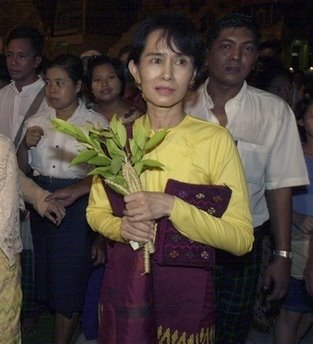


 Posts
Posts


