In Response to Burma Digest
This is the gist of lectures given to the various universities and locations in North America and Europe. These lectures are published in response to the request of Dr Tay Za of Burma Digest, whose publication is considered is one of the most balanced reporting for the ethno democratic publications. Only relevant and intelligent questions are inserted. The lectures and all answers are Prof. BT Win's (Kanbawza Win) personal omissions and commissions and did not represent any university, organizations or movements.
In order to understand Burma one will have to know its history and the history of Burma is quite complicated. Several ethnic groups have lived in the region, the oldest of which are probably the Mon or the Pyu. In the 9th century the Bamar (Burman) people migrated from the Tibeto Burman tribe residing in Kansu in China and migrated along the valley of the Irrawaddy River.
Pyu
Humans lived in the region that is now Burma as early as 11,000 years ago, but the first identifiable civilization is that of the Pyu. The Pyu arrived in Burma in the 1st century BC and established city kingdoms (Binnaka, Mongamo, Sri Ksetra, Peikthanomyo, and Halingyi). During this period, Burma was part of an overland trade route from China to India. Chinese sources state that the Pyu controlled 18 kingdoms and describe them as a humane and peaceful people. Since then Theravada Buddhism has penetrated into the customs and culture of the people. In the 9th century it was sacked by the power kingdom of Nanzhao ending the Pyu's period of dominance.
Mon
The 6th century Mon kingdom of Dvaravati in the lower Chao Phra valley in present day Thailand extended its frontiers to the Tenasserim Yoma (mountains). With subjugation by the Khmer Empire from Angkor in the 11th century the Mon shifted further west deeper into present day Burma. The Mons adopted Indian culture together with Theravada Buddhism and have founded kingdoms in Lower Burma including Thaton in the 6th or 7th century and Pegu in 825 with the kingdom of Raman'n'adesa (or Ramanna) referenced by Arab geographers in 844–8. Their last kingdom was Hanthawaddy which is pronounced as Oaktha Pegu. (Now the Myanmarnization word is call as Bago)
Bamar (Mranma/Myanma)
To the north another group of people, the Bamar (Mranma/Myanma) , also began to settle in the area. By 849, they had founded a powerful kingdom centered on the city of Pagan filling the void left by the Pyu. The kingdom or Pagan grew in relative isolation until the reign of Anawrahta also known as Anuruddha (1044-77) who successfully unified all of Burma by defeating the Mon city of Thaton and founded the first Burmese empire. In the mid-12th century, most of continental Southeast Asia was under the control of either the Pagan Kingdom or the Khmer Empire.
The Pagan kingdom went into decline as more land and resources fell into the hands of the powerful Sangha (monks) and the Mongols threatened from the north. The last true ruler of Pagan, Narathihapate (1254-87) felt confident in his ability to resist the Mongols and advanced into Yunnan in 1277 to make war upon them. He was thoroughly crushed at the Battle of Ngasaunggyan, and Pagan resistance virtually collapsed. The king was assassinated by his own son in 1287, precipitating a Mongol invasion in the Battle of Pagan; the Mongols successfully captured most of the empire, including its capital, and ended the dynasty in 1289 when they installed a puppet ruler in Burma.
Shan Dominion (1364–1555)
After the collapse of Pagan authority, Burma was divided. A Burman/Myanmar Ava Dynasty (1364–1527) was eventually established at the city of Ava by 1364. The kingdom was overrun by the Shan in 1527.
The Kingdom of Ava was involved in continuous warfare with Tai (Shan) Saophas to the north on the frontier with Yunnan. There were repeated Tai raids on the capital of Ava and Ava sent military northwards to attack Tai fiefdoms such as Mong Mao. The Ming dynasty that ruled China from the late fourteenth century often tried unsuccessfully to put an end to this warfare through traditional Chinese diplomacy. Ava occasionally became involved in the warfare between the Ming and Tai in Yunnan such as in the Luchuan-Pingmian Campaigns (1436-49).
To the south in Lower Burma, a Mon dynasty established itself first at Martaban and then at Pegu. During the reign of king Rajadhirat (1383–1421) Ava and Pegu were involved in continuous warfare. The peaceful reign of Queen Baña Thau (Burmese: Shin Saw Bu;1453-72) came to an end when she chose the Buddhist monk Dhammazedi (1472-92) to succeed her. Under Dhammazedi Pegu became a centre of commerce and Theravada Buddhism.
Taungoo Dynasty(1486-1752)
After the conquest of Ava by the Shan in 1527 many Burmans/Myanmar migrated to Toungoo which became a new center for Burmese rule. King Tabinshwehti (1531-50) unified most of Burma. By this time, the geopolitical situation in Southeast Asia had changed dramatically. The Shan gained power in a new kingdom in the North, Ayutthaya (Siam), while the Portuguese had arrived in the south and conquered Malacca. With the coming of European traders, Burma was once again an important trading centre. Tabinshwehti's brother-in-law, Bayinnaung (1551-81) succeeded to the throne and launched a campaign of conquest invading several states, including Manipur (1560) and Ayutthaya (1569). Bayinnaung's grandson, Anaukpetlun, once again reunited Burma in 1613 and decisively defeated Portuguese attempts to take over Burma.
The Konbaung Dynasty (1752-1885),
Also called as Alaungpaya Dynasty was founded by U Aungzayya was a village chief who successfully rebels against the Mon and founded the last Burmese dynasty. Burma owes its existence as a nation state to this monarch. In 1760, he briefly conquered Tenasserim and on to Ayutthaya, but was unsuccessful His second son Hsinbyushin (1763-76) returned to Ayutthaya had conquered it before the end of the next year. Even China began to fear expansion of Burmese power in the East and sent armies to Burma, but Hsinbyushin successfully repulsed four Chinese invasions between 1766 and 1769 stretching its limits within Chinese borders. Another of Alaungpaya's sons, Bodawpaya (1781–1819), lost control of Ayutthaya, but added Arakan (1784) and Tenasserim (1793) to the kingdom. In January 1824, during the reign of King Bagyidaw (1819-37), a Burmese general Maha Bandula succeeded in conquering Assam, bringing Burma face to face with British interests in India. The last Burmese king was Thibaw abducted by the British.
British Burma
The expansion of Burmese empire had consequences along its frontiers. As those frontiers moved ever closer to British India, there were problems both with refugees and military operations spilling over ill-defined borders. In response to the continued expansion, the British and the Siamese joined forces against it in 1824. The First Anglo-Burmese War (1824-26) ended in a British victory, and by the Treaty of Yandabo, Burma lost territory previously conquered in Assam, Manipur and Arakan. The Second Anglo-Burmese War in 1852, which ended in the British annexation of Pegu province, renamed Lower Burma. Thibaw Min (ruled 1878–85) was a tyrant intending to side with the French to regain the lost territories. Taking advantage of France's recent defeat of China, and confident that China would not intervene to defend its tributary, the British declared war once again in 1885, conquering the remainder of the country in the Third Anglo-Burmese War resulting in total annexation of Burma.
History of the Ethnics
As said earlier the ethnics in Burma or rather the non Myanmar tribes has been living peacefully side by side with Burman/Myanma tribes but they soon discovered that the British administration is far more better than the Burmese kings and the leaders of the ethnic tribes began to give allegiance to the British administration. The British also discovered that the ethnic tribes were simple, obedient and make better soldiers and began to recruit them into their fighting forces.
Britain made Burma a province of India in 1886 with the capital at Rangoon. Traditional Burmese society was drastically altered by the demise of the monarchy and the separation of religion and state. After the opening of the Suez Canal, the demand for Burmese rice grew and vast tracts of land were opened up for cultivation. The civil service was largely staffed by Indians, and Burmese were excluded almost entirely from military service. Though the country prospered, the Burmese people failed to reap the rewards. (See George Orwell's novel Burmese Days for a fictional account of the British in Burma.)
In the meantime a new generation of Burmese leaders arose in the early twentieth century from amongst the educated classes and belief that the Burmese situation could be improved through reform. Progressive constitutional reform in the early 1920s led to a legislature with limited powers, a university and more autonomy for Burma within the administration of India. There were many strikes initiated by the University students.
World War II and Japan
Some Burmese nationalists saw the outbreak of World War II as an opportunity to extort concessions from the British in exchange for support in the war effort. Other Burmese, such as the Thakin movement, opposed Burma's participation in the war under any circumstances. Aung San co-founded the Communist Party of Burma (CPB) with other Thakins in August 1939, thought that it was an opportune moment to work for independence. Marxist literature as well as tracts from the Sinn Féin movement in Ireland had been widely circulated and read among political activists. Aung San also co-founded the People's Revolutionary Party (PRP), renamed the Socialist Party after the World War II. He was also instrumental in founding the Bama htwet yat gaing (Freedom Bloc) by forging an alliance of the Dobama, ABSU, politically active monks and Ba Maw's Sinyètha (Poor Man's) Party.. After the Dobama (Not Domyanmar) organization called for a national uprising, an arrest warrant was issued for many of the organization's leaders including Aung San, who escaped to China. Aung San's intention was to make contact with the Chinese Communists but he was detected by the Japanese authorities who offered him support by forming a secret intelligence unit called the Minami Kikan headed by Colonel Suzuki with the objective of closing the Burma Road and supporting a national uprising. Aung San briefly returned to Burma to enlist twenty-nine young men who went to Japan with him in order to receive military training on Hainan Island, China, and they came to be known as the "Thirty Comrades". When the Japanese occupied Bangkok in December 1941, Aung San announced the formation of the Burma Independence Army (BIA) in anticipation of the Japanese invasion of Burma in 1942.
During the war in 1942, the BIA had grown in an uncontrolled manner, and in many districts officials and even criminals appointed themselves as the BIA. They now take the law into their hands and began to ill treat the ethnics and the minority which sow the discord between the Karen and the Myanmar. It become to such a point that it has to be reorganized as the Burma Defense Army (BDA) under the Japanese but still headed by Aung San. While the BIA had been an irregular force, the BDA was recruited by selection and trained as a conventional army by Japanese instructors. Dr Ba Maw was afterwards declared head of state, and his cabinet included both Aung San as War Minister and the Communist leader Thakin Than Tun as Minister of Land and Agriculture as well as the Socialist leaders Thakins Nu and Mya. When the Japanese declared Burma, in theory, independent in 1943, the Burma Defence Army (BDA) was renamed the Burma National Army (BNA).
Independent Burma
The surrender of the Japanese brought a British military administration to Burma christened as CASB ( Civil Affairs Service Burma) used out of the military budget. A rift has appeared in AFPFL that is the vanguard of the independence movement. It was between the Communists and Aung San together with the Socialists over strategy, which led to Than Tun being forced to resign as general secretary in July 1946. Aung San began negotiating with the British and successfully concluded the Aung San-Atlee Agreement on January 27, 1947. Most of the ethnics want to have independence of their own. The ethnic's army which had served faithfully under the British especially the Karen, Chins and the Kachins, the Shans and the Karennin are happier to stay under the British and was quite suspicious of the Myanmar/Burmese army who had bullied their tribes when ever there was a chance. But General Aung San was able to convince some of the Shan Saophas, Kachin Duwars and the Chin leaders and finally succeeded in concluding an agreement with ethnic minorities for a unified Burma at the Panglong Conference on February 12, celebrated since as 'Union Day'. The Karen refused to attend, the Arakanese and the Mons were considered as part of the Burma/Myanmar tribe having being subdued since the Burmese kings and was not consulted, the Karenni was an independent states and not invited.
Then a momentous event stunned the nation on July 19, 1947. U Saw, a conservative pre-war Prime Minister of Burma, engineered the assassination of Aung San and several members of his cabinet including the ethnic leaders attending the cabinet.
The first years of Burmese independence were marked by successive insurgencies by the Red Flag Communists led by Thakin Soe, the White Flag Communists led by Thakin Than Tun, the Yèbaw Hpyu (White-band PVO) led by Bo La Yaung, Arakanese Muslims or the Mujahid, now called Rohingyas and the Karen National Union (KNU).[2] Remote areas of Northern Burma were for many years controlled by an army of Kuomintang. Burma generally strove to be impartial in world affairs and was one of the first countries in the world to recognize Israel and the People's Republic of China. By 1958, the country was largely beginning to recover economically, but was beginning to fall apart politically due to a split in the AFPFL into two factions, one led by Thakins Nu and Tin, the other by Ba Swe and Kyaw Nyein. The situation however became very unstable in parliament, with U Nu surviving a no-confidence vote only with the support of the opposition National United Front (NUF), believed to have 'crypto-communists' amongst them. Army hardliners now saw the 'threat' of the CPB coming to an agreement with U Nu through the NUF, and in the end U Nu was forced to 'invite Army Chief of Staff General Ne Win to take over the country which some took it as the 1st military coup. Ne Win's caretaker government successfully established the situation and paved the way for new general elections in 1960 that returned U Nu's Union Party with a large majority. The situation did not remain stable for long, when the Shan Federal Movement, started by Yawnghwe Saopha Sao Shwe Thaik (the first President of independent Burma 1948-52) and aspiring to a 'loose' federation, was seen as a separatist movement. Staged a coup d'etat on March 2, 1962,
2nd Military Coup
Soon after seizing power, a peaceful student protest on Rangoon University campus was suppressed by the military, killing over 100 students on July 7, 1962. Peace talks were convened between the RC and various armed insurgent groups in 1963, but without any breakthrough, Ne Win quickly took steps to transform Burma into his vision of a 'socialist state' and to isolate the country from contact with the rest of the world. A one-party system was established with his newly formed Burma Socialist Programme Party (BSPP) in complete control. Commerce and industry were nationalized across the board, but the economy did not grow at first as the government put too much emphasis on industrial development at the expense of agriculture. A new constitution was promulgated in January 1974 that resulted in the creation of a People's Assembly
Beginning in May 1974, a wave of strikes hit Rangoon and elsewhere in the country against a backdrop of corruption, inflation and food shortages, especially rice. In Rangoon workers were arrested at the Insein railway yard, and troops opened fire on workers at the Thamaing textile mill and Simmalaik dockyard. In December 1974, the biggest anti-government demonstrations to date broke out over the funeral of former UN Secretary-General U Thant.
On March 23 1976, over 100 students were arrested for holding a peaceful ceremony (Hmaing Yabyei) to mark the centenary of the birth of Thakin Kodaw Hmaing who was the greatest Burmese poet and writer and nationalist leader of the 20th. Century history of Burma. He in 1978, a military operation was conducted against the Rohingya Muslims in Arakan, 250,000 refugees to flee to neighbouring Bangladesh.
3rd Military Coup
The economy began to grow as the government relaxed restrictions on foreign aid, but by the late 1980s falling commodity prices and rising debt led to an economic crisis. In September 1987 demonetization and Burma applied for Least Developed Country Ne Win retired as president in 1981, but remained in power as Chairman of the BSPP until his sudden unexpected announcement to step down on July 23, 1988, the nation erupted in demonstration what we called the 8888 pro democracy movement.
Another military coup was initiated by the General Saw Maung and the military government announced a change of name for the country in English from Burma to Myanmar in 1989. Particularly after Aung San Suu Kyi was awarded the Nobel Peace Prize in 1991, and also faced economic sanctions. In April 1992 the military replaced Saw Maung with General Than Shwe.
U Nu was released from prison and relaxed some of the restrictions on Aung San Suu Kyi's house arrest, finally releasing her in 1995, although she was forbidden to leave Rangoon. Than Shwe also finally allowed a National Convention to meet in January 1993, but insisted that the assembly preserve a major role for the military in any future government, and suspended the convention from time to time. The NLD, fed up with the interference, walked out in late 1995, and the assembly was finally dismissed in March 1996 without producing a constitution.
During the 1990s, the military regime had also had to deal with several insurgencies by tribal minorities along its borders. General Khin Nyunt was able to negotiate cease-fire agreements that ended the fighting with the Kokang, hill tribes such as the WA, and the Kachin, but the Karen would not negotiate. The military finally captured the main Karen base at Manerplaw in spring 1995, but there has still been no final peace settlement. Khun Sa, a major opium warlord who nominally controlled parts of Shan State, made a deal with the government in December 1995.
After the failure of the National Convention to create a new constitution, tensions between the government and the NLD mounted, resulting in two major crackdowns on the NLD in 1996 and 1997. The SLORC was abolished in November 1997 and replaced by the State Peace and Development Council (SPDC), but it was merely a cosmetic change. Continuing reports of human rights violations in Burma led the United States to intensify sanctions in 1997, and the European Union followed suit in 2000. The military placed Aung San Suu Kyi under house arrest again in September 2000 until May 2002, when her travel restrictions outside of Rangoon were also lifted. Reconciliation talks were held with the government, but these came to a stalemate and Suu Kyi was once again taken into custody in May 2003 after an ambush on her motorcade reportedly by a pro-military mob. She remains under house arrest today. The government also carried out another large-scale crackdown on the NLD, arresting many of its leaders and closing down most of its offices. The situation in Burma remains tense to this day. In August 2003, Kyin Nyunt announced a seven-step "roadmap to democracy", which the government claims it is in the process of implementing. At that time there was no timetable associated with the government's plan, or any conditionality or independent mechanism for verifying that it is moving forward. For these reasons, most Western governments and Burma's neighbours have been sceptical and critical of the roadmap.
On February 17, 2005, the government reconvened the National Convention, for the first time since 1993, in an attempt to rewrite the Constitution. However, major pro-democracy organisations and parties, including the National League for Democracy, were barred from participating; the military allowing only selected smaller parties. It was adjourned once again in January 2006.
In November 2005, the military junta started moving the government away from Yangon to an unnamed location near Kyatpyay just outside Pyinmana, to a newly designated capital city. This public action follows a long term unofficial policy of moving critical military and government infrastructure away from Yangon to avoid a repetition of the events of 1988. On Armed Forces Day (March 27, 2006), the capital was officially
named Naypyidaw Myodaw (meaning Royal City of the Seat of Kings).
Analyzing the Background
Burma is a textbook case of arrested development, Burma falls more in the pattern of post-colonial Africa than it does Asia. From nearly a century of British colonial rule it inherited the structures and institutions of free market parliamentary democracy, but like many countries in Africa, was not able to translate these into an enduring foundation for sustainable democratic governance. The quasi self-rule that obtained in the latter colonial years produced a functioning parliamentary system after independence, but did not succeed in developing a sense of national identity and common interest for Burma's multi-ethnic society as a whole. Furthermore, preferences within the ethnic Burman ruling elite for socialist, centrally controlled economic structures derailed the
development of a vibrant market economy. The underlying political ferment and
discontent within the non-Burman ethnic groups and the deep political divisions among
those elected to government created fertile ground for the country's strongest institution
– the military – to grasp the reins of power in the name of bringing order to the country's
chaos.
Saffron Revolution
Despite its increased global interaction since 2000, Myanmar remained hampered by international sanctions—including intensified U.S. and EU sanctions in 2003 after the SPDC again detained Daw Aung San Suu Kyi. It was clear that Myanmar's prospects for further economic growth and acceptance by the international community were contingent on democratic progress and an improved human rights record. When in September 2007 the monastic community staged a large-scale demonstration calling for democratic reforms, the harsh response from the military drew widespread international criticism. In the wake of this unrest, the National Assembly finally approved a draft of a new constitution to be ratified or rejected by public referendum in May 2008. Assuming the adoption of the fake constitution, the Burmese Junta promised elections in 2010.
The referendum, although held as scheduled, was disrupted by natural disaster. On May 3, 2008, a powerful cyclone (Nargis) struck the Irrawaddy delta region of south-central Myanmar, obliterating villages and killing tens of thousands of people. The hesitation of the government to accept foreign aid or to grant entrance to foreign relief workers elicited harsh criticism from the international community, as disease threatened to increase the death toll significantly.
This is the history of Burma or rather that of Myanmar. The Shan, Karen, Mon, Arakan, Kachin, Chin, Karenni and all have their own intricate histories which are intermingle with the Myanmar history. In other words Burma is a place where all the migrants meet. The Tibeto Burma tribe, The Tai Chinese and the Mon Khmer migrants meet.
The Two Problems
Currently, Burma has two major problems, one is for the prevalence of genuine democracy and the other is the ethnic problem. They are two sides of coin as one cannot stay without the other. One of the most stumbling blocks in the Maha Bama attitude which most of the Myanmar tribe harbour i.e. to rough ride shot over the ethnic nationalities. This was fanned by the Burmese army who really implemented the Maha Bama scheme by making one country called Myanmar, one religion Theravara Buddhist and one race the Myanmar. This is the crux of the problem for in order to have one race, they have to implement the ethnic cleansing and many tribes have been vanished from this earth. One religion also means the persecution of the other faiths particularly the Christians where most of the ethnics like the Chin, Kachin, Karenni and some Karens worship. The Burmese army also persecute the Muslim and the majority of them are the Mujahids/Rohingyas. Obvioulsy the Burmese army headed by the Junta does not want the Union of Burma but rather a monolithic states like France. Spain and England. That is why the word Federal is anathema to the Burmese Junta and anybody who uttered the word is considered as a traitor.
The other is the struggle of democracy more or less; spear headed by the Myanmar tribes led in inside Burma by Daw Aung San Suu Kyi and the NLD and in the Diaspora by a conglomerate of UB groups. These Diaspora Myanmar groups shared the Maha Bama attitude with the Junta and construe that once democracy is achieved all problems will be solved something like that of the pre coup days when they cajoled the ethnics. So until and unless these two problems are solved by any means, Burma will be a basket of problems in Southeast Asia.
This is the gist of the history of Myanmar and the non Myanmar and now the floor is open. Ask any questions regarding Burma and if I don't know how to answer I just say I don't know.
Q. What are the psychology and the function of the Burmese Military Regime?
General Than Shwe considers himself to be the modern embodiment of Burma's ancient warrior kings and, to a certain extent, he models his deeply authoritarian rule on royal tradition. Like the ancient royalty, the power of the Junta relies not on popular support, but on popular fear and servitude, using the Buddhist Sangha (organization of monks) to legitimize itself with the people. Burmese armed forces, traces its roots to the anti-colonialist nationalistic Burmese army, formed originally by General Aung San, and it still harbours all the fervour it once had against foreign control, meddling, and influence inside the country. The military leaders are discomfited by the structures of government inherited from the colonial masters and have indoctrinated their ranks in the belief that Burmese are not culturally suited to Western style democracy and need to be ruled with a firm hand in order to avoid national disintegration. The decision to move the seat of government from Rangoon to Naypyidaw is an apt illustration of these historical characteristics in the military leadership: First, it represents a return to the practice of the ancient kings who would build lavish new capitals to consolidate their respective reigns; Second, it can be seen as an effort to expunge the final vestiges of the colonial period by abandoning the capital established by the British, which is still dominated by the old colonial buildings; and Third, the regime perceived it as a strategic move to the center of the country from where the military would be well placed to control potential insurgencies.
The current Junta is more or less the natural outgrowth of Ne Win's Socialist dictatorship, maintaining and even tightening military control over the country and clinging to the centralized command economy. Undoubtedly viewing the events of
1988 as the result of deficiencies in Ne Win's administration, they made a series of
adjustments over the years to avoid a repeat of these events. There were, for example,
adjustments in economic management to allow a small sector of free market activity and
attract foreign investment, to bring more commodities and natural resources under the
direct control of the military (at least in part to improve the military's revenue stream),
and to regulate more carefully the supply of essential commodities in urban areas to
avoid disruptions that might trigger riots. There were also adjustments to the educational system to reduce the potential for student movements and protests by scattering the universities and abolishing dormitories. Ne Win's personal rule was replaced by a committee structure dominated eventually by three senior figures, Generals Than Shwe, Maung Aye, and Khin Nyunt. With the removal of General Khin Nyunt from the triumvirate in 2004, however, the Junta seems to have reverted to the pattern of personal whimsy that characterized Ne Win's regime, with General Than Shwe now providing the dominant personality.
The twelve members of the Junta team today are all military officers holding the most senior responsibilities in the army hierarchy. Cabinet ministers are also, with only two exceptions, military officers with little or no background in governance. The Junta
does not meet on its own as a body, but joins the once monthly cabinet meetings and
the thrice yearly meetings of all senior cabinet and military officials at which broad policy and strategic issues, including military activity, are decided. The Vice Senior General Maung Aye chairs the Trade Policy Committee, which meets once a week and rules on all decisions, both general and detailed, affecting external and internal economic
regulations. Senior General Than Shwe chairs the Special Project Implementation
Committee and the Special Border Projects Committee, which approve all decisions on
major economic undertakings, such as resource concessions (mining, forestry, etc.),
infrastructure construction (bridges, dams, irrigation, etc.) energy projects, and
Agricultural policy. Than Shwe's committees are more consequential than Maung Aye's
committee, although together they make all major economic decisions and are
responsible for the irrational and seemingly haphazard quality of the government's
approach to economic policy. The generals, especially Than Shwe, do not ask for
Advice and those beneath them do not dare to give it. Facts are routinely constructed to
meet perceptions of what the generals want to do or believe about the economy.
Unpleasant facts are scrupulously avoided. Those at the top framing the issues and
making the decisions has little to no expertise in economic management and lack long term vision. Their main concern is simply to make it through another day without any serious challenge to their absolute rule. In the end, however, the inner workings of the Burmese military hierarchy are largely inscrutable, even to those inside the regime. The internal dynamics of the armed forces are deliberately hidden and the essential
decisions are made at the top with little involvement of people at lower levels.
Ultimately, the absolute power of the Junta may be more a matter of appearance
than of reality.
Q. What is your perspective on the Burmese Generals?
Burma is ruled by a strongly nationalistic, xenophobic, military junta, whose understanding of what is best for its people is widely different. The Burmese army view is that the policies of the West are directed towards neo-colonial domination of Burma. This justifies their continued hold on power. From the army perspective is that in a battle there are only two aspects, the victors and the defeat and they are the victors, somewhat similar to Michiaville theory of ``the end justifies the means.`` They will do anything that might threaten "national security", no matter how unpopular it is with the international community.
Q. What about the policy of Narcotics Drugs?
The smaller states like Burma and North Korea—use their weaknesses and problems of drugs and trafficking of women and so forth, as a tool of national power. They use this tool to divide larger neighbors, to create leverage upon their neighbors to deal with these problems. It is, in my view, a deliberate aspect of strategy for Burma and North Korea.
Q. We often hear of 8888 generation. What is your opinion?
I myself belong to that category because I came out openly in 88. Most of the able leaders like Min Ko Naing and the likes inside Burma are under lock and key for the moment and cannot do much even though the spirit of 88 still lives on. As for the Burmese Diaspora most of them have become internet warriors intend on using the media highlight as an outlet, what in Burmese called megaphone diplomacy. It is good that some of them have become weekend politicians as in weekend they would gather at some place and change hot air. Of course most, if not all of them are 4 Bs (for Burma), but in Burmese we jokingly label as Bae Htaing, Baing Kya, Bu Pyaw, Ba Hma Ma Loke Bu meaning sit aside, no money, argumentative and will do nothing. Most of these associations needed actions, humanitarian or otherwise.
A couple of the de facto leaders have betrayed and even some of them went back to Burma or visited Burma with the blessing of the Junta, e.g. Crooked Master Zs (whose name start with Z). Most of the generations of 8888's mentality is far from the workings of democracy as the disintegration of the ABSDF indicates and partly is not their fault, but rather that of the Burmese regimes because they are brought up under the Burmese Way to Socialism of the Ne Win regime and the majority of them still needs to educate themselves about democracy and change their mentality..
Q. Why did the capital move from Rangoon?
In typically Burmese fashion, there has been no satisfactory explanation for the
sudden move to Naypyidaw. Although government spokesmen have suggested that it
was a strategic necessity to place the seat of government in the center of the country,
where it could relate more closely to the various ethnic minorities and ensure stability,
few have accepted this as the real reason. Many believe it was inspired more by the
irrational fears and ambitions of Senior General Than Shwe, who is believed by some
Burmese observers to be increasingly detached from reality as he ages. As said earlier Than Shwe has made no secret that he equates himself with the ancient Burmese warrior kings and feels a responsibility to restore the glories of Burma's royal traditions that were abolished by British colonialists. Among other things, it was customary for Burmese kings to consolidate their regimes by building elaborate new capitals to leave their own unique imprint on history. Similarly, there is no doubt among Burmese that the move to
Naypyidaw, especially its surprise timing, was conditioned heavily by the leadership's
interpretation of advice from the ever-present astrologers and soothsayers. The emerging outlines of the new capital suggest strongly that the move was inspired fundamentally by a perceived need within the military leadership to remove the final vestiges of colonialism represented by the capital of Rangoon, to return to a bygone era
when kings ruled the realm from grand strongholds in the center of the country, to fortify
the government against unwanted foreign influence, and to consolidate a firm ethnic
Burman cultural and political dominance in preparation perhaps for the return of some
form of parliamentary government.
Whatever its motivation, the capricious move has been a very expensive decision
for the government, because in addition to building infrastructure, it has had to offer
incentives to military and government officials to buy their acquiescence. In April, 2006,
for example, the salaries of all military and civil service employees were increased by a
multiplier of between five and twelve, depending on rank and position. In addition to
grand residences in Naypyidaw, senior officials have been given new houses in Rangoon
for their families to offset the inability or unwillingness of families to accompany
government employees to the new city. Many commodities and resources have been
diverted from Rangoon to Naypyidaw, creating significant market disruptions and a new
wave of inflation in Rangoon, which is home to more than ten percent of the country's
population. As might be expected, the sudden salary increase for government
employees propelled the inflationary wave to new heights. As with previous government
salary increases, the government simply printed more money to finance it.
Q. Prof Win, you yourself is an exile Burmese, and earlier you have said that there are 3 to 5 million Burmese in exiles. Can you tell us about the exile resources.
After so many years of harsh conditions in Burma, the Burmese Diaspora has become rather extensive. Some left during the Ne Win years; many more left after 1988 because of political persecution if not economic strigency.. The former group of Burmese expatriates tends to be engaged in professional pursuits in Western countries. The latter group includes a large number of political activists, who have remained focused on overthrowing the military regime and bringing about transition to democracy in Burma. With the assistance and encouragement of US and European foundations and governments, some of these activists have also formed specialized groups that study various aspects of Burma's institutional structures, articulating and planning the necessary reforms. For example, some look at economic reforms, some at legal reforms, and others at free press and political debate.
When the opportunity for serious transition presents itself, these groups will be
extremely helpful, not only as sources of ideas and advice for Burmese, but also as
bridges between foreign donors and local Burmese institutions and society. Among
them, they have amassed considerable experience with democracy in practice and a
large body of information on the institutions of democracy worldwide.36 It will be
important for the international community to assist in engaging them systematically and
productively in transition activities.
Among the Burmese expatriates who came out earlier and settled into professions abroad, there will also be many who wish to assist in the country's transition to democracy. Some are already engaged to a limited extent in some business endeavours in Burma and are able to come and go regularly. This may be another resource for foreign assistance to transition when the time comes.
Q. What do you think of Sanctions?
Some people construe that the U.S. objectives as simply being the isolation of the regime and sanctions. The sanctions are a means to an end, not an end in them. E.g. North Korea does not respond to pressure, but North Korea does not respond without
Pressure." I think the same can be said in the case of Burma, that sanctions are a
necessary but not sufficient element of a policy. The sanctions policy has not led
to the result the Western governments seek. This is not because they are the wrong tool, but by themselves they are an insufficient tool. They are insufficient because there has been too much cacophony and disagreement among the parties around the periphery of Burma.
Q. What is your opinion on Isolation and Sanctions?
The proponents of isolation (both governments and advocacy NGOs) would also argue that the aims of isolation have changed: the objective is no longer to try to bring the government to collapse, but to maintain a high level of pressure, so that the consequences of failing to reform are high. This is a laudable aim, but it cannot work long term, as the Junta can find other ways of securing the benefits that might otherwise accrue from the West, or decides it can do without them. Both these things are already happening in Burma, with the Burmese army relying increasingly on China, and at the same time turning inwards on it to promote a new form of the isolationist BSPP era where self reliance is the key to sustainable growth.
There is however signs that a second rethink of Burma policy has begun. With the developments in international diplomacy and intervention in East Timor, following so soon after that in Kosovo, it was hoped that concepts such as "preventive diplomacy" and "conflict resolution" would finally be combined with political will to intervene before a crisis gets out of hand. The first review of Burma policy took place in 1993/4 when America, the EU and Australia each developed their own versions of benchmarks (critical dialogue or roadmaps) in progress in human rights and democratic reform. But there was no success. EU, Australia and Canada are perhaps not so much a policy as a set of possible initiatives aimed at strengthening civil society. If any of these new ideas are to have some success, they must, as long-time Burma watcher David Steinberg put it, be "a way to deal with Burma that involves neither confrontation nor appeasement, but rather engagement with a big stick. An iron hand with a velvet glove approach should be adopted. Engagement along this line might is one of the possible way to wrench Burma out of its political and economic morass, short of intervention.
Q. What is your opinion on the regional approaches to Burma?
The regional powers on the Burma issue have various idiosyncrasies and different
Soft spots that the Burmese Military Government is very effective at hitting at. ASEAN, in with its Constructive Engagement Policy is simply paralysis and quite frustrated except that it manage to exploit the natural and human resources of Burma. The Junta has managed to swindle all of the ASEAN countries. The blocking phrase being that noninterference in internal affairs principle that was so central to ASEAN that no one is
willing to criticize and interfere in Burma's internal affairs. So much so that Burma has become as a threat to ASEAN security and integration. While ASEAN as a whole doesn't agree with Security Council attention, I think that there is a growing frustration.
India, which also champions democratic principles under, has a very realpolitik look at Burma, sees the energy needs, sees a road to Southeast Asia, and is very conscious of competition with China for influence. China is seeking influence but also has problems with Burma. The governor of Yunnan is not too pleased about trafficking and drugs and infectious diseases creating problems for his province. So China also has something of a mixed view. Obviously China does not want to have a vibrant democracy at has back yard when she himself is a communist dictatorship.
Japan also approaches Burma with certain idiosyncrasies. On the one hand, Japan is extremely sensitive to Chinese influence, particularly since the mid- 1990s, and is seeking not to allow China's influence to grow at the expense of Japan in Burma. On the other hand, Japan is increasingly promoting norms of democracy and good governance. There seems to have is a conflict in Japan's approaching the Burmese problem. I construe that there is shifting ground in Japan's approach with certain difficulties.
Regarding this I like to repeat the story which I have read. Once in a hilly and forest clad country there were a lot of tigers and every body feared them. One day somebody brought a donkey to that region and it was kicking and braying, the tigers have never seen a creature that kicks and brayed and so they were quite upset and stay quite a distance. They tried to talk to the Donkey not to bray or kick but it would not listen and kick more and brayed some more. After some time one of the tigers said, why after all we are tigers so let us kill the Donkey and eat him and so they did. So also will be the case of Burma.
Now China, Japan, India and ASEAN are all tigers by their right. Once they agree among themselves and have their idiosyncrasies level out (each country has its own particular idiosyncrasies in their approaches to Burma that divided them and Burma exploited the situation), there will be peace in Burma or the country will be disintegrated with the ethnic groups joining the nearest country of their choice.
I'm not proposing that the U.S., Japan, India and China eat up Burma. The point is that when the weakest state uses its weakness as a national tool to divide the rest of the neighboring countries, the leaders of these neighboring countries should be thinking about what common approach they can take to make progress A United Front? If the neighboring countries should speak in unison with the right mix of sticks and carrots
a package deal and demand the Burmese men in uniforms the unconditional release of the Burmese Nobel Laureate and ethnic leaders in a transparent, clear process with benchmarks for national reconciliation and a restoration of constitutional democracy. I think the Burmese tragedy which is a thorn in the world forum should be ended.
Q Is Burma a real threat to the region?
This is also another difficult question as it depends on the perspective of the individual or country. If one were to ask China, India, Bangladesh, Thailand and ASEAN countries of whether they feel threatened by Burma you would get a sound "No" for an answer. In fact Burma is like a beautiful damsel woo by all the suitors like China, India, Japan Thailand and ASEAN countries and compete for Burma's favors, the Generals know about it.
The real threat is the export of Narcotics, Aids and other diseases, flow of refugees and illegal immigrants as outline in the paper submitted to the UN by Desmond Tu Tu and Harvel.
Burma was and is not a question of peace and security that should have been debated in the Security Council. After both the United States and Europe have isolated themselves from Burma and deprived themselves of the chances to influence developments there, the debate in the Security Council was an act of frustration because these powers had no other way of "getting" at Burma. China is the only power that can put pressure on Burma and obviously she won't share this trump card to the West particularly to the Americans and being a dictatorial regime itself does not like a democratic regime behind its back door. The Geo strategic options are very high on the Chinese's agenda
Q What is your opinion on the neighbouring countries of Burma?
India have become the greatest facilitators for the Junta, providing financial resources and military assistance in return for access to Burma's natural resources. They are now engaged in avid competition for Burma's large off-shore natural gas reserves in the Bay of Bengal, promising billions of dollars of revenue to the government in years to come. While it is quite natural that the world's two most populous and rapidly developing countries, who straddle a small neighbour relatively rich in natural resources, should see their relations with Burma in strategic terms, it is not wise for them to disregard the country's future welfare and stability. The kind of economic investment, loans, and assistance they are providing Burma today do not contribute much to the country's economic development. Chinese and Indian investments are most likely to be diverted to the generals and their families or to be used to finance hard-currency imports at the expense of domestic economic development.
In fact both India and China should be giving the Burmese Generals a strong message about the importance of restructuring the economy to expand the business sector and they should be managing their own economic relations with Burma to reinforce this message.
For example Japan – through patience and persistence was able to make considerable progress with the Burmese government in outlining a program for phased macro-economic reform. India, the world's largest democracy, never send a message of the need for political transition. It is perhaps an encouraging sign that China's
Ambassador to the UN, even though he vetoed the proposed UNSC resolution urging
democratic transition in Burma, regretted that he had to do so, because "it was clear
Myanmar was not moving quickly enough to promote stability. He urged the military
regime to move toward 'inclusive democracy' and 'speed up the process of dialogue and
reform.
Since accepting Burma into its midst, ASEAN has suffered a heavy political cost in its relations with these two large partners US and EU, ASEAN governments
have been dismayed by the sheer intransigence of the Generals. In recent years, the rise
of parliamentary consultative groups within ASEAN has translated into strong pressure
on ASEAN governments by elected officials to speak out against the Junta's harsh
repression of Burma's democratic forces and its refusal to move forward seriously with
its own plan for political transition.
Although some ASEAN voices have raised the question of expelling Burma from
the organization, this is probably not a practical course, because it would eliminate an
important channel of communication and coordination with the seriously xenophobic
Burmese leadership. It is also vitally important for ASEAN to remain a source of political pressure on Burma. The Junta and its successors will continue to value membership in ASEAN as a collective means of dealing with China and other large countries, and therefore will have to pay some heed to ASEAN's concerns about how Burma's actions affect the welfare of the collective organization.
Q. What is your analysis of the international community towards Burma?
I might as well says that I am a child of 1988 even though I belong to the generation of 7-7-62 when for the first time in my life I saw the soldiers shooting point blank on the peaceful students. Since 1988 the international community had undergone incredible changes. In 1989, with the fall of the Berlin wall and the break-up of the Soviet Union, a new international era – the New World Order – was heralded. The days when internal abuses of human rights by governments against their own people would be ignored if the country concerned were fighting off communism, or capitalism, were over. It seemed to many at the time that Burma might benefit from the acclaimed international resolve to put concern for human rights and democratic government at the forefront of foreign policy, and create a world where dictators could find no home. Even in ASEAN In the case of East Timor both Thailand and Malaysia sent troops to join the UN peace-keeping mission there. But that is only a dream.
Soon this New World Order was torn apart, the failure of interventions in Somalia, Rwanda, Angola, Sudan, Afghanistan, Yugoslavia and Chechnya. the "non-interference" , which for so long held off effective intervention to prevent human rights violations, is no longer sacred. However, it soon gave rise to a new East/West divide and an ideological battle over human rights versus "Asian values". Burma profited by this divide, seeking to ally itself with Asian powers which could, it hoped, defend the country from Western "neo-imperialist tendencies.
Constructive Engagement has come to be a pseudonym for an "unethical" foreign policy, and sanctions its "ethical" opposite. However, this polarization has allowed sanctioning governments to get away with policies which are morally satisfying, but can be a fig leaf to cover a lack of real political will to bring about the desired changes. It also allows "engaging" countries to avoid any concerted and detailed monitoring to ensure that they do indeed get something constructive out of their engagement with pariah states. While Western governments grappled to find a Burma policy, there was a burgeoning of grassroots advocacy on Burma – from the work of the exiled Burmese community at the United Nations and other international forums, to the proliferation of local campaign groups calling for boycotts of companies working in Burma.
But the debate on how to bring about change has become deeply polarized up to this day however this polarization is perhaps beginning to break down, as it surely must if there is to be internal reconciliation. If there is one thing that the international community can do for Burma now it is to show that concern for the human rights of the people of Burma, that is their health, education, development, right to life and other civil and political rights, is more important than rhetoric, or pride. Progress and reform in all aspects has long been an imperative – not a dream as the cyclone Nargis has demonstrated. At least it drives home to the Burmese men in uniforms that the international community really cares for the people of Burma and not the gun tooting generals.
Q What do you think of the United Nations role in Burma?
With the veto of a UNSC resolution on Burma by China and Russia and the Junta's reduced responsiveness to the UN I think the UN has become just a forum for debate as it has been in the past, and a vehicle for the international community to exert rhetorical pressure on the generals.
Initially as a long-standing member and the fatherland of former UN Secretary General U Thant, Burma places the United Nations at the center of its diplomacy. During the years that General Khin Nyunt managed Burma's diplomatic relations, UN activity in Burma expanded substantially. UN agencies were allowed to set up missions in the country and establish programs for various forms of welfare and humanitarian assistance.
From time to time, the Secretary General's representative was received to facilitate communication between the Junta and political opposition groups. The UN Human Rights Rapporteur was allowed, off and on, to visit the country and report extensively on humanitarian conditions. Annual meetings of the UN General Assembly have traditionally served as a forum to chronicle and inveigh against the regime's record of repression and failure to move forward with political transition. Calculating that the Junta's was particularly sensitive about its image in the UN, Burmese exile groups and their supporters have placed great hope in the UN as a means of forcing change, particularly when the Security Council agreed in 2006 to put Burma on its agenda. But after Khin Nyunt's purge, the UN's role as an engine for change in Burma appears substantially less promising.
As a practical matter, the UN cannot become a central force in bringing about
change in Burma, unless the Burmese government seeks and accepts its assistance.
But when genuine transition begins in Burma, the UN may become a more important source of advice and support, not only through its assistance agencies, but also through the ability of the Secretary General to facilitate mediation of internal disputes. Because of
historical Burmese respect for UN neutrality, the UN might ultimately be the most
acceptable external interlocutor for all sides in an internal dispute, if mediation is sought.
Q. What is your perspective on the UN now that Gambari has failed in his attempt?
As a long-standing member and the fatherland of former UN Secretary General U
Thant, Burma places the United Nations at the center of its diplomacy. During the years
that General Khin Nyunt managed Burma's diplomatic relations, UN activity in Burma
expanded substantially. UN agencies were allowed to set up missions in the country
and establish programs for various forms of welfare and humanitarian assistance. From time to time, the Secretary General's representative was received to facilitate communication between the Junta and political opposition groups. The UN Human Rights Rapporteur was allowed, off and on, to visit the country and report extensively on humanitarian conditions.
Annual meetings of the UN General Assembly have traditionally served as a forum to chronicle and inveigh against the Junta's record of repression and failure to move forward with political transition. Calculating that the generals were very sensitive about its image in the UN, Burmese exile groups and their supporters have placed great hope in the UN as a means of forcing change, particularly when the Security Council agreed in 2006 to put Burma on its agenda. With the veto of a UNSC resolution on Burma by China and Russia and the Junta's reduced responsiveness to the UN since Khin Nyunt's purge, the UN's role as an engine for change in Burma appears substantially less promising.
As a practical matter, the UN cannot become a central force in bringing about
change in Burma It can only be a forum for debate and a vehicle for the international community to exert rhetorical pressure on the generals. But if and when genuine transition begins in Burma, the UN may become a more important source of
advice and support, not only through its assistance agencies, but also through the ability
of the Secretary General to facilitate mediation of internal disputes. Because of
historical Burmese respect for UN neutrality, the UN might ultimately be the most
acceptable external interlocutor for all sides in an internal dispute, if mediation is sought.
Q What do you think of the U.S. Goals in Burma?
I strongly view that the US wants stability in Southeast Asia, not instability. The U.S. wants to see ASEAN integration and cooperation strengthened. The Bush administration has actually put money behind this principle and helped with the ASEAN secretariat, held meetings with the ASEAN leaders that participate in APEC, agreed upon the enhanced ASEAN partnership last year to strengthen U.S. cooperation with ASEAN as a whole, and helped ASEAN work together because, for strategic and trade response, a strong and consolidated ASEAN is in the U S interest.
At the same time, however, the U.S. has very clear interests in preventing threats to security, broadly defined, in this region. Burma represents some significant threats to peace and stability in Southeast Asia. The Burmese Junta's Four Cuts strategy has led to a range of problems that are destabilizing. The very dangerous combination of trafficking in persons, drug trafficking, HIV/AIDS and other easily transmitted diseases, all
combined present enormous challenges for Thailand, India and China. Additionally, Burma's involvement in the arms trade is problematic. Burma's relationship with North Korea, which receives relatively little press, is extremely problematic. All of these
taken together represent a serious security threat that warrants the attention of the U S.
Of course the U.S. seeks and wants to see national reconciliation and a restoration of democracy in Burma. These objectives area almost the same as all of the neighbors of Burma
Q. What is your perspective on the US Policy?
Under the current circumstances, U.S. policy is focused appropriately on pressuring the Junta to return Burma to civilian democratic government. The fact that Burma is considered to be of little to no strategic interest to the United States, especially
when compared to the many more urgent concerns the U.S. faces abroad, has allowed
the development of multiple layers of U.S. sanctions inhibiting relations with Burma as a
means of pressure.
As governors of the major international banks, the U.S. and its partners have managed to prohibit the World Bank, IMF, and Asian Development Bank from undertaking any significant programs in Burma. Since various U.S. attempts to seek broader international sanctions through the UN, the EU, and ASEAN have not succeeded over the years, it now appears that most U.S. sanctions against Burma are destined to remain largely bilateral. With the possibility of some degree of generational evolution in Burma's military leadership growing increasingly likely, this might be an opportune moment for U.S. policymakers to undertake a fundamental review of the assumptions underlying the policy that has been in place for nearly two decades and re-evaluate it in the context of today's international environment and evolving U.S. interests. Among other things, such a review should encompass a number of fundamental issues. First is the question of U.S. strategic interests in the Southeast Asia region, particularly in light of the rapid economic development in China and India that will inevitably affect power balances in the region, as well as the way those two countries deal with regional partners.
My thinking is that does the United States perhaps have a greater strategic interest in Burma than has commonly been assumed the notion that total isolation is the most appropriate? If so, has this produced positive results in Burma? Finally, policymakers should take a hard look at how the US have been interacting with regional and international partners in seeking to maximize pressure. While such a review might conclude that current U.S. policy toward Burma remains well founded and most appropriate to the current situation, it would at least have the beneficial effect of drawing attention to the gradual subterranean changes that are always underway in any situation, no matter how glacial it appears on the surface. It would also focus attention on what modifications and adjustments in U.S. policy would be effective and appropriate in response to changes in Burma, and it might shed light on new international strategies for bringing pressure to bear more effectively on the Junta.
It is inconceivable that the United States would not want to play a central and
constructive role in supporting transition in Burma, once it begins. Yet some of the
constraints built into current U.S. policy will make it difficult for the U.S. to contribute
quickly and constructively to potentially positive developments in Burma, let alone to
facilitate gradual changes in Burma that would encourage transition and build the
foundations for stable democracy. For example, strict prohibitions on private business
activity and on economic assistance, both bilaterally and through IFIs, may serve to
assure that the U.S. is not contributing to the financial gain of the dictatorial Junta. However, they also have the effect of prohibiting some kinds of economic activity that could encourage economic reform and the development of Burma's free market sector, if carefully targeted. The United States should therefore consider positioning itself better to play a leading role in facilitating the development of democratic institutions during a process of staged transition, which is the course that Burma is most likely to take before returning to full democracy.
Finally, the U.S. sanctions regime and its confrontational style with Burma's
military leadership, no matter how well justified, have relegated the United States to a
backseat position in the effort to persuade the Burmese men in uniforms to proceed with transition. It is simply a fact of life that Burma's Asian neighbours will remain its key interlocutors and points of contact until the appropriate time comes for the United States to ease its sanctions and adjust its demeanor. Therefore, the U.S. should consider whether it might be more productive to work in partnership with Burma's neighbours to ease the generals into reform and transition, rather than simply exhorting their governments to copy U.S policy. This would only require a change in style and not in the fundamentals of U.S. policy toward Burma, and might help to uncover new possibilities for encouraging the process of change inside Burma.
For example, during this period when transition is still prospective, the United
States might consider spearheading a wide-ranging effort to develop coordinated
international plans to offer Burma assistance with economic and political development at
specified points in the future. The OECD principles for assistance to fragile states
(appended to this study) represent a comprehensive starting point and roadmap for such
an effort. Burma and its specific conditions would provide the ideal case study for
testing the viability of these principles. This kind of effort might even make it possible to
involve Burmese experts in articulating some of the tasks and proposed assistance
programs. But whatever policy adjustments the new US administration might decide to make in the future, however, U.S. policy must remain firmly fixed on the objective of achieving federal democratic government in Burma and therefore on unfailing support for the country's democratic and ethnic forces.
When the time comes for real transition, Burma will need a steady point of reference to articulate and demarcate the route to democracy. Although it will certainly be a healthy sign if many new democratic voices emerge, it will be a long time before any of them can attain the national stature and democratic vision of the NLD and Daw Aung San Suu Kyi.
Q. Since, you have worked at the EU, what is the European (EU) interest in Burma?
Having a Euro Burma Office in Brussels supported by the EU does not mean that Europe is very much interested in Burma. It is just a minimal. Of course they are interested in political stability, development, and democracy. But we have to remember that EU is a soft power in Asia and seldom throw their weight around. Rather their influence is on technology transfer, trade, investment, political consultation. For reasons of geography and strategic weight, the Europeans are not as important in Southeast Asia as the United States, the ASEAN members, China and India. By their actions it seems that E U has come to the conclusion that the sanctions have not achieved their political objective and are hurting the population rather than the military government. But it would be painful for them to admit that the sanctions were a mistake, so they leave them intact, and instead seriously increased its humanitarian help both inside and outside the country.
All in all I think that the West's policy is a perfect example of an exclusively moral policy. I am not defending the murderous Junta, whom I loath very much but if the West have live with China, Vietnam, Laos, North Korea, Libya and many Afro Latin American states which are not democracies, why focused on the moral outrage against Burma. How good it is to have the moral high ground, when you don't do anything for the fall of the regime? I recollect Dr Zani's approach when he said that if you are for the sanctions are you for democracy in Burma but if you are skeptical of their use and convinced about their damage to the people of Burma then you must be chummy with the generals. Instead we should construe Burma from the Geo strategic consideration with some compromise in the Western policies.
Burma's social and economic conditions are mainly homegrown, but by the Western sanctions, they have greatly contributed to the sad state of the country. The West want the Burmese Junta to release Daw Suu and the political prisoners. But they did not know that once she was fully release it means the end of the Burmese Junta.
Q. Why do you think that the democratic and the human rights movement has failed in Burma for so long?
From my perspective is that the biggest flaw is the failure of democratic and human rights movements to understand and articulate the linkages between justice and politics, and how strategies can be developed to address the two simultaneously. Various forms of pressure on a political front may eventually force a military regime to give in to demands for democratic reforms, but these may also fail to account for the consequences to mechanisms of justice in a country that has been under military rule, for more than half a century.
Many years of neglect and deliberate abuse of justice institutions results in them withering and becoming all but dead. It is like a living-dead organ, existing for the purpose of supporting military rule. It is a system of injustice that has become organically linked to the equally unjust political system of the country, and one that if pressured can but work harder to support the diseased body with which it has become fully integrated.
Globally, the demands placed on military regimes are articulated in very simple terms. They often come down to the holding of an election so that a government of popular choice can be installed. There is nothing objectionable in that. However, a political system that has destroyed a country's justice mechanism cannot be changed by a mere election.
First, often elections are not honored, when the National League for Democracy overwhelmingly won the vote but was not allowed to take office. The same thing happened in Cambodia when the FUNCINPEC party won the May 1993 UN-sponsored ballot but was forced to share power with the Cambodian People's Party of Hun Sen, which later consolidated control and has effectively brought about a one-party system of the sort that preceded international intervention. There too the ruling group has used the courts to ensure firm control of parts of government not directly under the executive.
Second, the political and judicial system may be so perverted by military control that it may bring into power unlikely and unsuitable candidates and it may anyhow be impossible for whoever takes power to do anything about the institutional arrangements. This is the problem faced in Thailand, where the courts have become complicit with the armed forces and other powerful groups in the country in defeating the political party process itself. That the country is increasingly treated as ungovernable by anyone apart from an authoritarian- type leader is not a consequence of the behavior of its people or anything innate in the workings of its institutions but a consequence of a deliberate agenda towards that end by these groups who are hostile to people having a genuine say in what goes on in their lives.
Then it can be asked of why has the global human rights movement not challenged itself over these failings? Why have the real problems of military control, political power and justice remained so far removed from much of its debate? The intellectuals from the developed world, who are still the strongest players in this discourse, do not have living experience of the real problems. For them the rule of law and the institutions of justice are as part of the real world as the air they breathe or the water they drink. Their systems are sufficiently advanced that those who come into them and debate their mechanics cannot conceive, other than at a shallow intellectual level, of political and legal systems that lack all of the qualities which they take for granted. When an intellectual from a developed country comes across problems of the sort found in a country like Burma he or she may hold the view that if enough political pressure can be generated from outside in tandem with that from a local movement then surely something must budge. All the effort goes in to "regime change" when experience shows that even a short term and oversimplified goal like this often remains beyond reach, and in places where it has succeeded, such as the Philippines and Indonesia, although conditions may in certain respects improve, the forced collapse of institutions under the old regimes have lasting and intense consequences for the new ones.
Q. So you were saying that Burma first need to over hall the justice system?
Yes that is my perspective. If more people in democratic and human rights movements locally and globally adopt this sort of dual approach of politics and judicial we may have certain success. Simply by putting pressure on its military regime to hold an election and admit some superficial political reforms as they are going to do the election in 2010 with a fake constitution will not work. For instance, despite all the United Nations experts, diplomats and officials coming and going and talking about Burma, how much effort has been paid to documenting and monitoring the work of its judicial system? In terms of international standards and putting forward proposals on specific items that need to be addressed, items on which the Junta will feel some obligation to respond and on which local lawyers, human rights defenders and activists also can work in their respective ways?
The answer to this question is shorter than the question itself. No such work has been done, even with the presence of country offices like the UN Office on Drugs and Crime. Monitoring and reporting on the policing system similarly has so far amounted to nothing, other than that incidental to other research. The human rights movement has remained stuck at the point of documenting individual violations and incidents without steps to bring that work into bigger and more meaningful studies on systemic issues. Serious work in these areas could be more effective than the types of two-dimensional back and forth about political party issues that goes on at the moment. It is in this respect that we now need to develop our thinking and planning and hone our expertise if better strategies for the protection and the promotion of human rights of people in Burma are to figure in the global democratic and human rights agendas.
Q. Now that Burma problem case is already half a century and most of the country has agreed on principle that it is a threat to international community as you said, what about humanitarian intervention?
Burma poses a threat to regional stability is not a matter of interpretation. These idea often cross my mind of whether this could be a humanitarian intervention. I think in the academic circles, the theory of humanitarian intervention has not yet been put on a solid basis. But in practical terms, since the 1990s there have been many cases of humanitarian intervention, mostly accompanied by the use of an armed attack like in Bosnia, Kosovo, Srebrenica, Rwanda and so forth. My idea is whether there could be a kind of humanitarian intervention in a softer form without the use of violence. And I cannot answer that. But one thing I know the Security Council should give some advice to alleviate the difficulty of people at the grassroots—such as on infectious diseases, poverty, education, health and so forth. At the same time, the international community
should intensify our humanitarian assistance using all means and in all forms. This is from my good will toward the people of Burma.
Q What is the role of the external factors especially foreign powers?
There is no easy answer to the question of whether and to what degree external actors should intervene to trigger or force transition in extreme cases of autocratic or failed governance. Often in the zeal to hasten the demise of bad regimes inadequate consideration is given ahead of time to how the international community can best prepare a backward country for effective democratic governance. Burma – a prime case of arrested development brought about by decades of stubborn, isolationist military rule – provides ample illustration of this dilemma. The great hope for instant transition to democracy that was raised by the 1990 parliamentary elections in Burma was dashed almost immediately by the failure of the military regime to seat the elected parliament. Motivated by despair, many governments adopted policies making regime change a sine qua non for engagement with Burma, hoping this would force the military to follow through on its original promise to return to elected government.
Twenty years later, however, the military remains firmly entrenched in power and the country's political, economic, and human resources have seriously deteriorated. Even if an elected government could be seated tomorrow, it would find itself bereft of the institutions necessary to deliver stable democratic rule.
Starting from the assumption that some degree of transition is inevitable in the not-too distant future, it must explores the depth of Burma's deprivations under military rule, focusing on questions of how to make the country's political, social, and economic institutions adequate to the task of managing democratic governance. It will have to identify the international mechanisms available to assist in this task, as well as innate strengths that can still be found in Burma, and it discusses what the limitations on assistance might be under various scenarios for political transition.
Q Should outside actors intervene or force transition in extreme cases like Burma?
In countries where diverse societies have been held together by autocratic rule, which purposely exacerbates internal animosities and impedes the development of complex civil society, transition has often been plagued by internal conflict and tension, making democratic outcomes all the more difficult. In fact, Burma not only does the lack of political and civil institutions and a reliable economic structure, let alone civil tolerance among diverse ethnic and religious groups, impede and prolong transition to pluralistic governance, it often sets the scene for anarchy and reversion to autocratic rule.
There is no easy answer. If the horrors of ethnic cleansing in the former Yugoslavia or Rwanda taught the international community what may happen when the world lets nature take its course, then the American intervention in Iraq to topple the Saddam government can be seen as a lesson in the dangers of acting decisively to force regime change. In both cases, the international community has, to some extent, inherited the responsibility for dealing with the chaotic consequences, struggling with the extreme difficulty of fostering democratic institutions and effective free market economies in societies that have not yet learned how to negotiate among themselves. I think Burma falls into this category.
Q. Can there be a forced transition by external actors from Military to Civilian rule?
There is no easy answer to the question of whether and to what degree external actors should intervene to trigger or force transition in extreme cases of autocratic or failed governance. Often in the zeal to hasten the demise of bad regimes inadequate consideration is given ahead of time to how the international community can best prepare a backward country for effective democratic governance. Burma – a prime case of arrested development brought about by decades of stubborn, isolationist military rule – provides ample illustration of this dilemma. The great hope for instant transition to democracy that was raised by the 1990 parliamentary elections in Burma was dashed almost immediately by the failure of the military regime to seat the elected parliament. Motivated by despair, many governments adopted policies making regime change a sine qua non for engagement with Burma, hoping this would force the military to follow through on its original promise to return to elected government.
Two decades later, however, the military remains firmly entrenched in power and the country's political, economic, and human resources have seriously deteriorated. Even if an elected government could be seated tomorrow, it would find itself bereft of the institutions necessary to deliver stable democratic rule. Starting from the assumption that some degree of transition is inevitable in the not-too distant future first we will have to explores the depth of Burma's deprivations under military rule, focusing on questions of how to make the country's political, social, and economic institutions adequate to the task of managing democratic governance. What are the weak points and what are the strength and how to leapfrog some of the development has to be considered and will to study the most productive policy approaches will require greater coordination and collaboration with Burma's Asian neighbors.
Q. Do you see any peaceful transactions from Dictatorship to Democracy?
To be very frank I don't see any. The chances for peaceful transition to stable, sustainable democracy in Burma are very slim in the near future, largely because the conditions required for sustainability are absent and there is no opening at present to
foster these conditions.
(1) The intractability of the economic situation and the regime's refusal to entertain reforms that would begin to deal with the severe macroeconomic distortions act as a serious inhibition to political development in the broadest sense of the term.
(2) The existing government institutions are incapable of functioning effectively to maintain central administration of the country without authoritarian control.
(3) And finally, the impoverished educational system with its severe
limits on political and social science, as well as onerous restrictions on civil society and public organizations, make it very difficult for the population to develop the civic institutions necessary to support democratic government.
Since 1945, most Asian countries -- notable exceptions being Burma, North Korea, and perhaps Laos -- have experienced significant, sometimes dramatic, economic and political advancement under a great variety of seemingly adverse conditions, such as foreign occupation, communism, insurgency, and partition. In all these countries the governments, even under communist and/or autocratic rule, have placed a premium on economic development, education, and building civilian communities to advance their societies. Why does the military regime in Burma not ascribe to the same values as its Asian friends and neighbors? We may never be able to answer this question fully, but the fierce desire of successive Burmese governments to prevent and expunge perceived foreign influence on Burmese society and culture has undoubtedly played a large part, along with the obsession of military regimes with maintaining comprehensive control over the population and severe restrictions on civilian activity in the name of security and internal stability. As the world around them moves forward in step with the global community, it will inevitably become impossible for future Burmese leadership to continue insulating their society from the rapid pace of economic and political modernization in Asia and starving their population for information. Technological development is already overtaking them.
Thus it is important for the international community, particularly Burma's Asian neighbours, to understand the depth of Burma's economic, social, and political dislocations and the measures that will be necessary to correct them. If a relatively consistent and coordinated message about the need for basic reform in political, economic and educational structures could be delivered to the country's leadership over time, it would be much more difficult for the leadership to dismiss or ignore it, and some degree of enlightenment might eventually emerge. Just as sanctions regimes can work against our ability to help, it is also irresponsible of Burma's friends and neighbours to conduct their relations with Burma totally in pursuit of their own interests and without regard for the Burma's political future.
Q. Do you think that Burma will regain democracy?
That is a good question. Sure, eventually the people of burma will regain democracy for they have tasted democracy from 1948 to 1962 and treasure it even though the mass of the rural population doesn't know it e.g. many of the rural people in Burma do not conceptualize this forced labor as a violation of human rights, but more as a hassle and in a way a "civic duty." The idea of rights doesn't occur to them because they don't know what they are. Freedom is not different for those who have not been taught about freedom or rights. For those who can't put into words what freedom means, it doesn't mean that its not there—it just needs to be given a voice. I construe that Cyclone Nargis that affected Burma in May 2008 changed a lot for the country. The world became more aware of the level of hatred and cruelty present in the Burmese government as they effectively blocked off international aid to the millions of people affected by this storm, allowing (and wanting) so many of the citizens of their country to die.
But more than showing the world the true nature of the military junta, it also re-energized and showed the world that there is a vibrant civil society in Burma itself. The people of Burma desperately wanted to help each other, and the humanitarian assistance they were giving to each other was not political, but given out of a decency, love, and compassion for each other that is so present in Burma, even if this decency does not include the military government. One of the 5 benchmarks of democracy put forth by Linson Stephen in 1996 is a civil society, which is growing inside of Burma, so there is hope that a democratic society will emerge in Burma. It is what the people there want, as 90% of the population is against the current military government. I think that Nargis served an important role of giving the people inside of Burma a chance to engage and counter the actions of the military government, even if the actions were not political in nature. Therefore, the idea of freedom became proactive, an important shift for a country in which the idea of freedom has for so long been reactive. This will finally lead to democracy.
Q. What is your suggestion to solve this Burmese problem?
For the last half a century or since Burma came into being it has been proven that the Burmese people cannot solved their own problem. This was proven by the fighting between the people of Burma either ethnic or otherwise (communist). The common denominator among the ethnic and the pro democracy movement is that they vehemently hated the Burmese army, which is the strongest. If one were to knock out the Junta and its marauding army, then there would be Balkinization and the infighting among the Burmese themselves as the common joke says that if you put two Burmese together they will form three political parties. Reason and clear thinking cannot be put into the brains of not only the Junta but also among the leading ethnic leaders.
Hence the solution must be imposed by external power if were to stop the on going tragedy. A community of nations, basically the United States, the ASEAN countries, India, and China, to negotiate a package deal with the Burmese Junta and the ethnic groups including Daw Aung San Suu Kyi (NLD and the democracy groups are behind her). If ASEAN can take the initiative it will be great but you might as well know of what Harn Younghwe said that that ASEAN needs more of Burma than Burma needs ASEAN. If ASEAN authoritarian leader is able to lead and talk to Generals follow up by sanctions and critical dialogue it will work.
Q. You have been going to Thailand for more than a decade. Can you give us some of your thoughts on the Thai Policy?
This is one of the most difficult questions to answer. Yes I have seen the various administration from Chaticha Choonhaven to the present administration. Except in the Chuan Leekpai administration Thailand has pursued a policy of dealing with the deveil who ever was in power in Burma . I could say something about the Thanksin Administration. He was known to adopt a spongy approach toward Burma, which his critics perceived as an attempt to move away from an emphasis on democratic and human rights values to a more business-oriented stance. The economic results have been evident.
Right now, Thailand is one of Burma's most important investment partners. So,
it is not surprising that Thaksin's company, Shin Corporation, has invested extensively in Burma. Shin Corp, the third largest satellite operator in Asia, concluded a deal in 2003 with Pagan Cybertech, an internet service provider owned by Ye Naing Win, who is the son of former Prime Minister Khin Nyunt. In January 2006, Shin Corp was sold to Temasek Holdings, an investment arm of the Singaporean government. Shin Corp
got away without paying 450 million U.S. dollars in taxes on the 1.85 billion dollar sale. The whole episode sparked public anger and partly led to Thaksin's downfall.
Back in 2003, Thaksin invited Burma to participate in the Economic Cooperation
Strategy (ECS) cooperative framework, later renamed ACMECS (Ayeyawady-
Chao Phraya-Mekong Economic Cooperation Strategy), in which Thailand offered the Burmese government generous financial assistance worth 45 million U.S. dollars.
In the meantime, Human Rights Watch reported that the Thaksin regime continued to clean up Burmese refugees living along Thailand's borders.
The Bangkok process, hosted by the Thaksin government in 2003 ostensibly to
advance democracy in Burma, failed to take off and came to an end when the military Junta refused to go. To the Thai leaders, a friendly policy toward Burma was important, especially since they wanted to reconnect lost contacts that they once had with Khin Nyunt. But different sectors of the Thai establishment have different approaches. The Thai military, especially in northern Thailand, is more concerned with the real issues behind the illusion of Thai- Burmese relations, namely, the flow of drugs and refugees across the border. Therefore, the military had a less favorable view of the Burmese regime than the government in Bangkok, which was obviously more interested in business ties. Thaksin and his advisors took at least some inspiration from former Prime Minister General Chatichai Choonhavan in turning Indochina from a battlefield into a marketplace. However, I don't see any evidence of concerns in Thai policy toward Cambodia, Vietnam, and Laos about democracy, human rights, justice and so on. So, given the public perception toward Burma, in part because of the distortion of history between the two countries, I doubt that what goes on in Burma is of much concern to most Thai people. Moreover, business opportunities in Burma are huge, and whether they are responsible, moral, or legitimate are separate questions. Every Thai businessman—from the smallest trader all the way to Thaksin—knows that Burma is full of precious stones, gold, timber, labor, and whatnot. So against this background, I am not surprised that the Thai public at large failed to question or oppose Thaksin's Burma policy. Meanwhile, Thaksin carefully depicted himself as a true nationalist, who strove for the greatness of the nation, stood up against the West, and also reached out for poor neighbors like Burma. In the meantime, he accused those who disagreed with his Burma policy of conspiring to keep Burma backward and underdeveloped, which he saw as not in the interests of Thailand.
Thaksin became the first ASEAN leader to visit the new capital, Naypyidaw. Burma's biggest export and new sales to Thailand alone are worth over one billion U.S. dollars annually. which makes up about 25% of Thailand's supply. There are also firm plans for joint hydroelectric dam projects on the Salween River. The Hugyi hydropower project is a joint venture among Burma, Thailand and China. The project is very controversial because the construction location is also home to the Karens and Kachins. No doubt from the Burmese generals' perspective, a dam project resulting in road construction would help them better control the area. The beginning of the Hutgyi hydropower project has already forced over 20,000 local residents to be relocated from their homes because of the socio-environmental impacts. The speculation here is that Thailand in may want to invest in the new gas fields in Burma in order to resell them later to other countries. I have not study much of the new Thai government as you might as well know the changes in the Thai government.
Q. Can you elaborate the role of the NGOs in Burma?
A handful of international NGOs particularly from the West are inside Burma. They work both on their own and in coordination with the UN agency programs. Like the UN agencies, these NGOs nurture and develop local talent. The bulk of their staff is Burmese and, like the UN agencies, they work with local Burmese NGOs. It is very difficult for foreign NGOs to negotiate and conclude an MOU with the Burmese government to work in the country; the process can take three or more years. Thus there is not likely to be a large increase in INGO activity in Burma so long as the Junta is in its place.
Transition, on the other hand, will bring a plethora of new NGOs to Burma and
they will compete with each other and with UN agencies for funding from donor
governments to implement programs. In fact, these NGOs can play a unique role in
reaching the more remote areas of the country and should be encouraged in this
direction so that international assistance is not concentrated solely in the Burman areas,
but also reaches the ethnic minorities.
There is no denying that UN and INGO activity in Burma over the past decade has helped the development of small local NGOs, who often serve as implementers for their programs. The rise of these NGOs has, in turn, encouraged a second layer of local NGOs and community help organizations of various types that are not necessarily connected with or financially dependent on international aid. Even before transition is underway, the international community should consider ways to support and encourage the expansion of this trend. This could be an important element in instilling a greater sense of cooperation, tolerance, and community in the Burmese civilian population. It can also help develop benevolent community activists as an alternative to the predatory USDA or Swan Arr Shin. It must be noted that many international assistance programs in South Africa during the final years of apartheid, including that of the US, emphasized the development of local civic and nongovernmental groups in the black townships in order to foster future leaders for a democratic South Africa. Many of those who came to the fore, either as politicians or senior civil servants, in the transitional South African government after 1994 got their start in local NGOs and civic groups nurtured by foreign donors. I think Burma can be on the same lines.
Q. Will non violence strategy successful in Burma?
No. the Army come to power with the gun and will have to go with the gun. While the Buddhist monk-led demonstrations briefly raised global awareness of the Burmese people's plight, it also highlighted the failure of the opposition's long-held non-violence strategy.While outwardly a spontaneous gesture in reaction to economic woes, the demonstrations were the culmination of years of planning by opposition forces inside and abroad.
While the regime refused to honor the poll's results, the election provided political legitimacy to the NLD and a handful of opposition activists. still cling to demands that the election's results be honored, but with each passing year those claims to legitimacy become less germane. Close to 40% of the elected members of parliament have been dismissed or resigned and a full 20% have died.
The vast majority of the opposition follows Suu Kyi's guidance that political change can and should be achieved through non-violence. That doctrine was further promulgated by the Albert Einstein Institute of Geneva and New York. The opposition's adherence to non-violence has given the regime a monopoly on fear that allowed it to solidify its position, condemning generations of Burmese to life (and in some cases, death) under the military regime. Additionally, limiting the prospect of violent consequences removed one aspect which may have motivated the regime to negotiate change.
The elevated principle of non-violence made it easier for group leaders to accept the bribery. The success of the regime's effort to pursue ceasefire deals continues to haunt the opposition with fragmentation and conflicting interests. Ethnic armies whose cooperation could have tilted the "Saffron" revolution to effect real change, sat and watched, perhaps out of concern that armed rebellion would jeopardize their lucrative mining or other concessions. As a result, the regime was able to focus its military might on the unarmed protesters and monks.
Incentives and self-interest affect not only limited ceasefires and peace groups, but also some ethnic armies that continue to put forces in the field against the Burmese Army. e.g. the Mon insurgents in the area are receiving payoffs from both the regime and the Thai authorities.
Q. Now that you have come to London and meet us what advice would you give us?
Through out my travels in North America, Europe, Asia and Australia I discovered that London and the United Kingdom has the most Burmese intelligentsia and most of them are well informed. In working for Unity for Victory (U2V), I would advice Unity in Diversity for Victory (UDV). Our epic struggle must be joined by both the pro democratic Myanmar nationalities and the non Myanmar ethnic nationalities. We will have to build the trust between the two groups. The ultimate solution is the Federal Democratic Union of Burma.
London UK
(Ed Note. Prof. Win has given special lectures at the Simon Fraser University of Vancouver on 1st Nov, at the University of Winnipeg Women's club on the 6th Nov. in Manitoba. At 9 rue Courat, Paris 75020 on 13th Nov and at the Burmese Buddhist Monastery in London, UK on the 22nd Nov.
------------ --------- --------- --------- --------- --------- --------- --------- ------
The Kanbawza is an online freelance or a free contributing media and distributing news, commentary and information from individuals, professional and non-professional journalists. The issue does not focus on one particular group people or region, anyone is free to join and work with TK as a voluntary or a free writer. TK believes in unity in diversity which all human being can work together for their common interests. Please send your article to thekanbawza@ gmail.com.
__._,_.___
Monday, December 1, 2008
Lectures of Prof. Win-BURMA BRIEF HISTORY


Oslo calling … with all the news from the land ruled by junta
http://www.sundayherald.com/international/shinternational/display.var.2471788.0.0.php
BURMA: Veterans of 1988 uprising still fighting for democracy from Norway-based station
From Irene Peroni in Oslo
THIDA THIN Myat Thu was just an 18-year-old marine biology student when she got involved with the 1988 uprising in Burma.
She managed to keep her activism a secret at home, until one day, while attending a protesters' meeting, something about the hooded man who had just taken the floor startled her.
His voice sounded very familiar: she looked down at his trousers and shoes, and knew right away it was her brother.
advertisement
Independently from each other, Thida and her two elder brothers had joined the movement. Their father, a senior officer at Rangoon's notorious Insein prison, was secretly collaborating with the protesters, too. Within a couple of months, things came to a head.
The military staged a coup and Thida decided to say farewell to her parents and flee over the border to Thailand, helped by a Swedish reporter from the Far Eastern Economic Review.
Within a few years, she moved to Norway and became one of the four founders of the Democratic Voice of Burma radio (DVB). Last year, she helped spread the news of another massive popular movement in her home country: the "Saffron Revolution", named after the colour of the robes of the Buddhist monks who led the protests.
"In 1992, when we arrived in Oslo and started broadcasting, there were only four of us and we had to learn everything from scratch," said Thida.
"We would practice reading the news at home before going to the studio so we wouldn't have to pay the rent for an extra hour."
DVB has grown to become the most authoritative source of Burmese news - a country that systematically denies access to foreign journalists.
In 2005, it started a satellite TV service, broadcasting a daily one-hour programme on a 24-hour loop.
The radio and TV station now has 16 members of staff working at its headquarters in central Oslo, as well as offices in India, China and Thailand.
A staff of 50 to 70 "undercover and underground journalists" send in news reports from all over Burma.
To protect their identities, each editor at the radio is in charge of their own team and does not deal with reporters working for the other desks.
Even on the ground, reporters do not know each other. "This is an essential safety measure: if one of our staff's homes is raided, they won't find any information about the others," explains Thida, who is currently the radio's entertainment editor.
Contributors know that if caught, they will face tough prison sentences. But, as she puts it, "in Burma, whatever we do we always have to take risks".
Listening to or watching DVB in Burma, as with any foreign news channel, is illegal. But while satellite dishes are very expensive and hard to hide, cheap, Chinese-made radios are hugely popular.
As to the internet, most people in the countryside do not even know it exists. It is estimated that only about one in 1000 Burmese has access to the web, mostly through internet cafes in Rangoon and Mandalay.
In Rangoon, young students are more computer-savvy, and have quickly learned how to get around the Electronic Act and the draconian regulations imposed after the 2007 movement.
The new measures force internet cafe owners to record personal details of each customer and take screen shots at regular intervals to monitor surfing history.
Over the past few weeks, Burmese authorities have been handing down tough prison sentences to young bloggers, poets and even a hip-hop musician - often teenagers who know hardly anything about the 1988 movement, but share the same ideals of freedom and democracy.
What are the differences between the 1988 and 2007 generations?
"In 1988, Burma was just starting to open up a bit," says DVB news editor Moe Aye.
"In those days, there were not even land lines, so it was very hard for us to coordinate. On top of that, there was hardly any international coverage - just a few Japanese journalists based in Rangoon," he remembers.
"We weren't happy with the government but we did not know where to look for inspiration. The only thing we could rely on were, literally, a couple of books by Che Guevara and Ho Chi Minh."
Today, he argues, young people can read foreign newspapers on the internet and study abroad, sponsored by international organizations like the EU or the Association of Southeast Asian Nations.
Moe says that even though Burmese jails "are like hell", prison is a much better option than fleeing to the jungle, as many of his friends did in 1988.
"In Burma, corruption is widespread. Everybody needs money - prison guards, too," he says.
"I spent seven years in jail, and together with the other inmates we managed to do many things: we could write a story, listen to the radio "Somehow we could leave the prison - not physically, but through what we were doing. The most important thing was, to stay alive. To stay healthy in prison, because that way, you could continue your struggle."
Sunday, November 30, 2008
THE WIND OF CHANGES-(THAILAND)
http://www.bangkokpost.com/301108_News/30Nov2008_news18.php
Six months ago I decided to visit the PAD protests in Bangkok. I took my 15-year-old daughter along because she showed a strong political and social interest in what was going on at the time. I thought it would be an interesting lesson for her on democracy and freedom of speech.
Scenes at the rally were friendly, safe and educated. The mob was outside _ represented in red T-shirts, clubs in their hands and drunk. The protesters in yellow (PAD) were all polite and sober.
Now my daughter asks me what happened to make the formerly peaceful PAD protests turn so disgusting and ugly. We both shake our heads in disbelief when we think of six months ago.
Now Thailand is wrecked, brought down by those who claim to love their nation and their King. My daughter has learned the lesson she had six months ago, and today we both ask the same question: When will Thailand become a peaceful country again, with 65 million smiles for every tourist and their King?
Armin Hermann
FOOD FOR THOUGHT
The PAD is damaging not only the government, economy and image of Thailand but also Thai families abroad and Thailand as a whole.
Exports of Thai vegetables and spices have been stopped to countries around the world. Thai restaurants around the world are very important to the Thai economy. Farmers, distributors and export companies benefit from the success of fine Thai food worldwide. Employees and owners at Thai restaurants around the world are often the first Thai people foreigners met, and we are the first channel to promote Thailand as a fantastic tourist destination, with great food and great tourist sights, superb Thai hotels and resorts. Now we have to tell our customers that we cannot serve Thai food with the original ingredients. Will they stay or choose another restaurant?
Protest is the right of everybody, but it should be done with common sense. Why not demonstrate around government sites? The PAD is looking for a conflict which will hurt Thai people in Thailand and all around the world for a very long time.
The tourists stranded in Bangkok will probably reconsider helping Thai people if there is another major disaster like the tsunami. In my country millions and millions of euros were collected to rebuild Thailand after the tsunami and help the survivors.
I feel really sorry for all the hard-working, nice and smiling people of Thailand, such as farmers, taxi drivers, hotel employees, waiters, shop owners, restaurant owners and many more people who make Thailand the place I love to visit. What a pity.
Sonny Buter
www.ThaiFood.nl
-----
THE BAD NEIGHBOUR
The mess that Thailand has brought upon itself is fundamentally a domestic problem. But the reckless and unacceptable seizure of the Suvarnabhumi airport is taking a number of neighbouring countries hostage.
Laos, Vietnam, Cambodia, Burma and the Chinese province of Yunnan all depend on Bangkok as the transport hub of the region. They all see their tourism arrivals dwindle due to a matter in which they have no part.
It is essential that Southeast Asia not depend on a single hub for all traffic, but rather spread the risk. Vietnam is an obvious potential rival; some more long-haul flights and simpler visa regulations would make it an attractive alternative to Bangkok. China should be able to connect Yunnan province to the rest of the world via its hubs. Cambodia, Vietnam and Laos can also easily be reached from KL and Singapore. Voila, the Thai monopoly is broken.
As long as the PAD is a factor in Thai politics we cannot consider Thailand a stable and reliable economic partner. The damage done is beyond repair.
Eskil Sorensen
Luang Prabang
-----
THE LAND OF HATRED
Today, an export customer cancelled orders worth in excess of 10 million baht over the next couple of months. Unfortunately this means that staff are not going to receive salaries unless we can find another customer to take over their air shipments. Does the PAD not realise they are hurting their Thai friends by not allowing the country to operate?
Vietnam is welcoming us with open arms; maybe it is time to change because the land of smiles has turned into the land of hatred and there doesn't seem any way of going back to the true values of Thailand!
Matt Christie
-----
LET'S RUMBLE!
Watching the Bangkok Post try to offer criticism of the increasingly criminal activities of the PAD without offending its readers, most of whom presumably support the PAD, is like watching a man trying to pluck up the courage to saw off his own leg.
Your editorial (Bangkok Post, Nov 26, ''PAD wrong to shut airport'') rightly criticises the PAD.
Unfortunately, however, the editorial stops short of calling on the government and the nation's security forces to take decisive action and restore order at the capital's two civilian airports.
The truth is that the government is unwilling to order the police to take action because it knows that this will lead to violence and that the media will then start to scream, untruthfully, that the government has lost the credibility to rule.
The result then will be that the army will then feel able to get away with another coup.
It is high time the media behaved responsibly and urge the government and the police to reclaim national property and to give it the backing to use as much force as necessary _ including the possibility of using firearms against those PAD people who could be seen on the BBC the other morning firing handguns.
The police should be made aware that the media expects access to any action they take and will be on the alert for any unwarranted violence. But they should also be aware that their primary duty is to restore order.
Dom Dunn
ဂ်ပန္ႏိုင္ငံ တိုက်ိဳျမိဳ့ တြင္ ေထရ၀ါဒဘုန္းေတာ္ႀကီးေက်ာင္းျဖစ္ေျမာက္ျပီ။


CREDIT-U THAN WIN
ေထရ၀ါဒ ဘုန္းေတာ္ႀကီးေက်ာင္းကို Tobu tojo Line -Naka Idabashi ဘူတာတြင္
ယန္းေသာင္းသံုးေထာင္ငါးရာနွင့္
၀ယ္ယူရာတြင္ လက္ရွိမတည္ေငြ ယန္းေသာင္းတေထာင္ငါးရာသာရွိျပီး
လိုေငြ ယန္းေသာင္းႏွစ္ေထာင္ကို ၂ လအတြင္းေငြေခ်ရန္လိုအပ္ပါေသာေႀကာင့္
ဘုရားတကာေက်ာင္းတကာျဖစ္ရန္အတြက္အျမန္ဆံုး ကုသိုလ္ ပါ
ဝင္ႀကပါရန္ေမတၱာရပ္ခံအပ္ပါသည္။ ဘုန္းေတာ္ႀကီးေက်ာင္းျဖစ္ေျမာက္ေရးေကာ္မီတီ။
ဖံုး-၀၃ ၃၉၁၆ ၁၉၅၆ .
Fingerprint screening stops 846-JAPAN
http://search.japantimes.co.jp/mail/nn20081129a1.html
Justice minister praises contentious biometric scanning regime for catching undesirables
By MINORU MATSUTANI
Staff writer
The new biometric system that fingerprints and photographs all incoming foreigners at airports and seaports prevented 846 undesirables from entering the country over the past year, the Immigration Bureau said Friday.
All were forced to leave Japan immediately, immigration official Aiko Oumi said.
The number accounts for 8.5 percent of about 10,000 foreigners whom immigration officers at airports and seaports expel every year after learning, through questioning and other measures, they had criminal records or were involved in illegal acts.
Despite complaints from foreigners who say mandatory fingerprinting, which resumed in November last year, makes them feel like they are being treated as criminals and violates their human rights, Justice Minister Eisuke Mori praised the system for helping to block illegal entries.
"As we can see, the new monitoring system can stop those with fake passports from entering," Mori said at a news conference. "I think it is very efficient."
The new system was launched on Nov. 20, 2007, after the Immigration Control and Refugee Recognition Law was revised to require all non-Japanese aged 16 and older, including those with permanent resident status, to provide biometric data upon entering the country to help keep terrorists out of Japan.
Incoming foreigners must place their index fingers on a scanner at the immigration booth, where the biometric data are checked against the Justice Ministry's list of international terrorists and foreigners with criminal records.
Of the 846, 748 were ordered to leave Japan and 98, most of whom used fake passports, were expelled from Japan and banned from entering the country for the next five years.
Of the 748, 290 were South Koreans, 137 were Filipinos and 83 were Chinese. The other 98 included 18 Filipinos, 16 Iranians, 10 Sri Lankans and 54 others.
The number of foreigners who entered Japan for the one-year period ending Nov. 19 rose 3.6 percent to 9.37 million from the previous year.
The Immigration Bureau, which is run by the Justice Ministry, also said the system reduced waiting times at airport immigration booths.
European envoy urges Myanmar opposition to contest polls - Summary
http://www.earthtimes.org/articles/show/243936,european-envoy-urges-myanmar-opposition-to-contest-polls--summary.html
Yangon- A visiting European diplomat urged the opposition National League for Democracy (NLD) to participate in the upcoming 2010 elections, political sources said Saturday. Attilio Massimo Iannucci, Asia-Pacific chief of Italy's foreign ministry, met Friday with senior NLD party members including veteran journalist Win Tin at the ambassador's residence in Yangon.
During the two-hour discussion, Iannucci urged the NLD to participate in 2010 election because there would be a chance to win again for them, Win Tin said.
"He said at present the military occupied 100 per cent of the government and after 2010, there would be only 25 per cent. It is much better than current situation," Win Tin told Deutsche Presse-Agentur dpa.
The Italian diplomat also said the international community could if NLD joins election.
"We told him that 25 percent would be just a word and in practice the military would be dominating. We said the constitution must be amended before the election," Win Tin said.
But he did not say whether the NLD would join election or not.
"There are two different approaches on the election within the NLD. Some want to participate and some do not," Win Tin said.
Myanmar's ruling junta is expected to field at least two pro-military parties to contest the 2010 elections, forming them out of the Union Solidarity and Development Association (USDA).
The USDA was formed on September 15, 1993, as a popular support base for the military.
The association now claims to have 24 million members out of Myanmar's 56 million population, and has been cultivated to become the military's political arm for contesting elections.
"We will form two political parties for the 2010 elections," said a USDA member after attending their annual meeting in Naypyitaw, the military's new capital, on Friday.
The movement is an essential competent in the military's plans to introduce "democracy" to Myanmar.
Initial steps included drafting a new constitution having it approved by a national referendum in May.
Both processes were dubbed shams by many international observers because the charter-drafting process was controlled by the military, and the referendum supervised by the army resulted in an absurdly high approval rate exceeding 90 per cent.
The referendum drew intense criticism from Western democracies as it was pushed through in mid-May in the aftermath of Cyclone Nargis that devastated the Irrawaddy delta region, leaving almost 140,000 people dead or missing.
The constitution has cemented the military's dominant role in future governments by guaranteeing it a high percentage of appointed senators who can block all controversial legislation.
Myanmar has been under military rule since 1962, when army strongman General Ne Win overthrew the country's first post-independence prime minister U Nu with a coup.
Although the military bowed to international pressure to hold an election in 1990, it refused to acknowledge the outcome.
The NLD, the party of Aung San Suu Kyi, won the 1990 polls by a landslide, but the military junta blocked it from taking office by claiming that a new constitution would be needed before civilian rule could work.
The junta took 18 years to come up with a new charter, and Suu Kyi - a Nobel peace laureate - has spent 13 of those years under house arrest.
Copyright, respective author or news agency
Mumbai Terrorist Siege Over, India Says

Arko Datta/Reuters
Flames and smoke poured from the Taj hotel in Mumbai, India, on Saturday. More Photos >
Permalink
By SOMINI SENGUPTA and KEITH BRADSHER
http://www.nytimes.com/2008/11/30/world/asia/30mumbai.html?ref=world
A Day of Reckoning as India Toll Tops 170
Arko Datta/Reuters
By SOMINI SENGUPTA and KEITH BRADSHER
Published: November 29, 2008
MUMBAI, India — Death hung over Mumbai on Saturday.
Back Story With Keith BradsherBodies were extracted from the ruins of the Taj Mahal Palace & Tower hotel in the hours after the standoff with militants there ended on Saturday in a gunfight and fire. At the main city hospital morgue, relatives came, clutching one another in grief, to identify their dead. By midafternoon, the morgue was running out of body bags, and by evening the death toll had risen to at least 172. Funerals, among them ceremonies for two policemen and a lawyer, went on throughout the day.
As the reckoning began after the three-day siege here, troubling questions arose about the apparent failure of the Indian authorities to anticipate the attack or respond to it more swiftly.
And tensions were high, as well, between India and Pakistan, where officials insisted that their government had nothing to do with assisting the attackers and promised that they would act swiftly if any connection was found within their country.
Perhaps the most troubling question to emerge Saturday for the Indian authorities was how, if official estimates are accurate, just 10 gunmen could have caused so much carnage and repelled Indian police officers, paramilitary forces and soldiers for more than three days in three different buildings.
As the investigation continued, it was unclear whether the attackers had collaborators already in the city, or whether others in their group had escaped. All told, the gunmen struck 10 sites in bustling south Mumbai.
Amid the cleanup effort in this stricken city, the brutality of the gunmen became plain to see, as accounts from investigators and survivors portrayed a wide trail of destruction and indiscriminate killing wherever the terrorists went.
At a gas station near the Taj hotel, attackers opened fire on two waiting cars on Wednesday, critically injuring two occupants. When a married couple in their 70s went to their third-floor window to see what was happening, the terrorists blazed away with assault rifles, killing both and leaving shards of glass that still hung in the window on Saturday.
Down the road, when the gunmen seized Nariman House, the headquarters here of a Jewish religious organization, neighbors mistook the initial shots on Wednesday night for firecrackers to celebrate India’s cricket victory over England.
But when drunken revelers in a nearby alley began throwing bottles and stones, two attackers stepped onto a balcony of Nariman House and opened fire on passers-by, killing a 22-year-old call center worker who was the sole support of his widowed mother; five others were injured. A teenage boy who stepped out onto his balcony and came within firing range was swiftly shot and killed, a witness said.
“We still don’t know why they did this,” said Rony Dass, a cable television installer who lives across the street from the gas station. He lost a lifelong friend, a tailor who was locking up his store for the night on Wednesday, only to be killed by a gunman.
At the Oberoi hotel, the second luxury hotel to be assaulted, the gunmen called guests on hotel phones; some of those who picked up were then attacked, their doors smashed open and the guests shot. At the Taj, terrorists broke in room by room and shot occupants at point blank range. Some were shot in the back.
“I think their intention was to kill as many people as possible and do as much physical damage as possible,” said P.R.S. Oberoi, the chairman of the Oberoi Group, which manages the adjacent Oberoi and Trident Hotels, both of which were attacked.
Evidence unfolded that the gunmen killed their victims early on in the siege and left the bodies, apparently fooling Indian security forces into thinking that they were still holding hostages. At the Sir J.J. Hospital morgue, an official in charge of the post-mortems, not authorized to speak to the press, said that of the 87 bodies he had examined, all but a handful had been killed Wednesday night and early Thursday. By Saturday night, 239 people had been reported injured.
Contrary to earlier reports, it appeared that Westerners were not the gunmen’s main targets: they killed whoever they could. By Saturday evening, 18 of the dead were confirmed as foreigners; an additional 22 foreigners were injured, said Vilasrao Deshmukh, the chief minister of Maharashtra State, where Mumbai is located.
Page 2 of 2)
The State Department has said at least five Americans died in the attacks. Consular officials from Britain, the Netherlands and Israel went to morgues on Saturday to see if their missing citizens had turned up there.
Back Story With Keith BradsherThere were reports on the first night of the attacks that gunmen had rounded up holders of American and British passports at the Oberoi and herded them upstairs. But Rattan Keswani, the president of Trident Hotels, said he had found no basis for such reports.
“Nothing seems to suggest that,” he said, noting that a range of nationalities was represented among the 22 hotel guests who died, in addition to the 10 staff members, all Indian.
The city’s police chief, Hasan Gafoor, said nine gunmen were killed, the last of whom fell out of the terrace of the Taj hotel on Saturday morning as the siege ended. His body was charred beyond recognition when it was taken to the hospital. A 10th suspected terrorist was arrested; the police say he is a 21-year-old Pakistani, Ajmal Amir Kasab.
A senior Mumbai police inspector, Nagappa R. Mali, said the suspect and one of his collaborators, who was slain by the police, had killed three top police officials, including the head of the antiterrorist squad, Hemant Karkare.
Mr. Karkare was cremated Saturday morning in a crowded and emotional farewell.
The bodies of four other suspected terrorists were at the morgue at the Sir J.J. Hospital in Mumbai. Officials there put their ages between 20 and 25. All four were men.
Around dawn on Saturday, gunfire began to rattle inside the Taj Mahal hotel, one of about a dozen sites that the militants attacked beginning Wednesday night. They never issued any manifestoes or made any demands, and it seemed clear from their stubborn resistance at the Taj that they intended to fight to the last.
It was not long before flames were roaring through a ground-floor ballroom and the first floor of the Taj, a majestic 105-year-old hotel in the heart of southern Mumbai.
But by midmorning, after commandos had finished working their way through the 565-room hotel, the head of the elite National Security Guards, J. K. Dutt, said the siege at the Taj was over. Three terrorists, he said, had been killed inside.
By afternoon, busloads of elite commandos, fresh from the siege of the hotel, sat outside the nearby Gateway of India and shook hands with elated spectators.
“There were so many people and we wanted to avoid any civilian casualties,” one of the commandos told a private television station, CNN-IBN. He said they were firing from various parts of the hotel. By the end of the siege, he said, the gunmen had holed up in one room and barricaded the door with explosives.
The siege may have been over, but new tensions within the region were on the rise, particularly after India’s foreign minister on Friday blamed “elements” within Pakistan for the attack.
In an attempt to defuse the situation on Saturday, the Pakistani president, Asif Ali Zardari, told an Indian television channel in a live telephone interview that he supported a thorough investigation “no matter where it may lead.”
“My heard bleeds for India,” Mr. Zardari said. “As president of Pakistan, if any evidence points to anyone in my country,” Pakistan will take action, he said.
Mr. Zardari said he did not rule out the possibility of the top official of the Pakistani intelligence agency working with Indian officials on the case. But it was too early in the investigation for the top official to meet with his Indian counterpart to share information, Mr. Zardari said.
Soon after Mr. Zardari’s interview on Indian television, the Pakistani foreign minister, Shah Mehmood Qureshi, said the Pakistani government was not involved in the attack.
“Our hands are clean,” Mr. Qureshi told a news conference in Islamabad, Pakistan, after a lengthy cabinet meeting called to discuss the rising tensions between the two rival countries. “We have nothing to be ashamed of.”
Mr. Qureshi also stressed that the Indian government had not blamed the Pakistani government for the attacks.
“They are suspecting, perhaps suspecting, groups or organizations that could have a presence here,” he said. “We have said if they have evidence they should share it with us.”
[Comment] MEPs can shore up human rights at the UN-(EU)
http://euobserver.com/9/27197
RICHARD GOWAN AND FRANZISKA BRANTNER
28.11.2008 @ 18:03 CET
EUOBSERVER / COMMENT - Next week, the European Parliament's Foreign Affairs Committee votes on a report on the EU's role in the UN Human Rights Council (HRC). This comes at an embarrassing moment. The UN has been mocked for spending €18 million on a colourful ceiling for the HRC chamber in Geneva. But the European Union faces bigger problems than weird decorations.
Darfur - Sudan uses the "EU" as a pejorative tag at the HRC (Photo: wikipedia)
Print
Comment article
The HRC is a testing-ground for the EU's commitment to effective multi-lateralism. It was launched in 2006 with European support despite American objections that its membership rules did not exclude human rights abusers. EU members had tried to promote such rules, but their efforts were misconceived or mishandled. The US currently boycotts the HRC.
Some European diplomats wish they could stay away too. The EU and its allies on human rights are typically stuck in a minority on the 47-member Council, and lose close to two-thirds of votes in each session. China and Russia, along with hard liners like Egypt and Pakistan, enjoy considerable support and have worked hard to halt or limit UN monitoring of human rights in cases like Belarus.
It is too soon to despair. The EU still scores victories on human rights in the UN system. This week it won important votes on Iran, Burma and North Korea in the General Assembly in New York. But it remains on the defensive in the HRC.
The EU clashes with Islamic states over religious values and individual rights. African and Latin American governments that share European concerns over crises such as Darfur feel that the EU ignores their concerns on issues like poverty and migration.
Europe versus the world
"It's not the West versus the rest," says one European official of the HRC, "it's Europe versus the world." When Sudan wanted to discredit the UN's rapporteur on Darfur, a respected Afghan doctor and politician, it called her "an agent of the European Union."
But the EU is not an innocent victim at the HRC. Its members do not always seem to take the body seriously, ensuring that it doesn't probe into human rights inside Europe.
Perhaps because they are so often on the defensive, they have failed to develop a positive agenda of their own in the HRC, most obviously around the Durban Process on racism. As elsewhere in the UN system and far beyond, their diplomats spend too much in intra-EU talks and too little listening to others.
So the European Parliament is right to look into how the EU performs in Geneva. Their intervention is particularly timely for two reasons. Firstly, the financial crisis will almost certainly make the EU's job harder at the HRC: "Western values" suddenly look like very easy targets. If the EU and its allies don't start talking about how the economic crisis affects people's basic rights, Cuba and Venezuela will do so - once again leaving the Europeans on the defensive.
Secondly, the election of Barack Obama offers a challenge. European diplomats expect his administration to at least partially re-engage with the HRC. But it will not do so without preconditions. American diplomats will want some evidence that their friends have a plan to make the HRC work better. Otherwise they won't bother getting involved.
If the European Parliament can agree on a half-decent plan, therefore, it might just help persuade the US to re-connect with the UN. Fortunately, the report currently being discussed in the Parliament's Foreign Affairs Committee is a good one, with a sound analysis of the HRC's problems - and awareness of the EU's own failings.
Additionally, a number of MEPs have put forward amendments that would strengthen the report further.
Four proposals
As authors of a recent analysis of the EU's influence on human right across the UN system, we believe that four of these proposals deserve special attention.
Firstly, it is important that the European Parliament calls on the EU High Representative Javier Solana and his personal representative on human rights, Riina Kionka, to become more closely involved in the HRC.
The bulk of day-to-day diplomacy at the HRC must still be done by national diplomats. But this inevitably distracts from broader thinking about how to define the human rights agenda.
Mr Solana and Mrs Kionka - and potentially additional envoys selected for this purpose - should work on developing pioneering new HRC initiatives, visiting African, Asian and Latin American capitals to listen and consult on possible resolutions.
Solana and his staff have shown that they can articulate new ideas for the EU's members, most obviously in the creation of the 2003 Security Strategy. They can now play a similar role over the HRC.
A second important amendment involves the role played by the European Commission.
Again, the commission's office in Geneva cannot usurp the role of member-states at the HRC. But it can play a facilitating role by coordinating with its offices elsewhere on important resolutions, especially as it has better networks in the developing world than many member-states.
Unfortunately, the commission is short on staff in Geneva, and does not even have a full-time human rights staffer there. The European Parliament should push for this to be remedied, with a number of human rights specialists (possibly seconded lawyers) monitoring the HRC.
Thirdly, the European Parliament should call for greater European support to civil society worldwide to scrutinise UN affairs. The commission and member-states should find money to support NGOs in developing countries promote human rights at the UN.
That should be part of a far wider effort to ensure that Europe is part of a global debate about human rights at the HRC, rather than just talking (unhappily) to itself.
To monitor progress, we believe that the European Parliament should also request that the competent EU institutions prepare an annual report breaking down voting patterns at the HRC, and evaluating European policy there.
By definition, MEPs understand the need for public debate about international institutions. If they stimulate the discussions of the HRC, they may save it from paralysis.
Richard Gowan and Franziska Brantner are the authors of the European Council on Foreign Relations report on "A Global Force for Human Rights? An Audit of European Power at the UN" (September 2008)


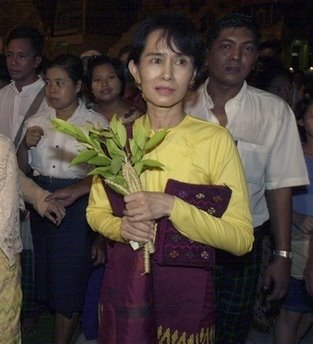


 Posts
Posts


