Just received this from Avaaz:
Dear friends,
Burma is far from the headlines - but we’ve found a real pressure point, the insurers who prop up the junta’s economic interests. Read the email and take action now!
(Meanwhile a new US president is about to be elected — watch out for our post-election campaign…)
A year after their crackdown, Burma’s military dictators remain entrenched, propped up by dealings with Western companies. But the Burmese democracy movement has found a powerful pressure point — many of the Generals’ West-linked business ventures depend on one insurer: Lloyd’s of London.[1]
Lloyd’s is the world’s oldest, most respected insurer, and cares a great deal about its global reputation — by pointing out Lloyd’s blameworthiness as key insurance deals come up for renewal, we can shift their cost-benefit calculations on support to the Burmese regime.
If enough of us email and call key decision-makers at Lloyd’s this week, we could shame them into pulling out of this dirty trade, undermining the hardliners and creating pressure for human rights and the release of political prisoners like democratically elected leader Aung San Suu Kyi. Follow the link below to lend a hand to the Burmese people:
http://www.avaaz.org/en/shame_lloyds_on_burma
The Burmese people’s struggle is long and tough. But as in South Africa, international pressure on the regime’s exploitative ventures could tip the balance. Because it’s hard or impossible for them to continue without insurance, this is an effective and wide-reaching approach for citizens everywhere to have a real impact. Burma’s democracy movement decided on this strategy because the benefit of these ventures flows overwhelmingly to the generals, while the Burmese people have grown ever poorer.
Lloyd’s of London is the umbrella and overseer for hundreds of specialist insurance syndicates, and it can stop their dirty trade if it so chooses. Already many big global insurers have stopped insuring junta-linked businesses – after Lloyd’s, the generals will start to run out of options. We’ll ramp up the pressure by alerting the media to our campaign, specialist insurance publications included. Even the British government has begun to ask Lloyd’s to cease its business with the Burmese military junta.[2]
We can win this campaign, so let’s flood Lloyd’s with emails and phone calls all this week — on the campaign page we provide key numbers, email addresses and suggestions for what to say — just follow the link below now to take action:
http://www.avaaz.org/en/shame_lloyds_on_burma
If we win, the regime will be thrown onto the back foot, Burma’s people will be immensely heartened, and the UN Secretary-General will have a greater chance of securing the release of Aung San Suu Kyi and other prisoners this December.[3] Together, our individual small acts are becoming irresistible. We can’t forget Burma.
With hope and determination,
Paul, Alice, Iain, Graziela, Ricken, Pascal, Paula, Brett, Veronique, Milena — the entire Avaaz team
For updates on Avaaz campaigns: https://secure.avaaz.org/en/report_back_2/
You can also view reports on our campaigns in support of the Burmese democracy movement and the $2 million of aid Avaaz members provided in the wake of Cyclone Nargis.
Sources:
1. The Observer: “The baron who holds Burma’s purse strings”, 2 November 2008
http://www.guardian.co.uk/business/2008/nov/02/oil-total-burma-lloyds-levene1
Reinsurance Magazine: Big insurers including Marsh, Swiss Re, AON pull out: http://www.reinsurancemagazine.com/public/showPage.html?page=787739
Arab Insurance Group and XL also pull out:
http://www.mizzima.com/news/world/962-campaigners-hail-arigs-decision-to-pull-out-of-burma.html
2. “Foreign Office warns Lloyd’s over Burma”:
http://www.guardian.co.uk/business/2008/sep/28/insurance.foreignpolicy
3. As Ban Ki-Moon prepares to visit, Asia-Europe summit in Beijing calls for release of political prisoners:
http://blogs.independent.co.uk/independent/2008/10/release-aung-sa.html
———————————
ABOUT AVAAZ
Avaaz.org is an independent, not-for-profit global campaigning organization that works to ensure that the views and values of the world’s people inform global decision-making. (Avaaz means “voice” in many languages.) Avaaz receives no money from governments or corporations, and is staffed by a global team based in Ottawa, London, Rio de Janeiro, New York, Paris, Sydney and Geneva.
Click here to learn more about our largest campaigns.
Don’t forget to check out our Facebook and Myspace and Bebo pages!
--------------------------------------------------------------------------------
Possibly related posts: (automatically generated)
Stand With The Burmese People
SOLIDARITY: Burma (4); Free Burma Campaign 4th Oct
words are only words when blood is on our hands
Written by bigcircumstance
November 3, 2008 at 8:02 pm
Posted in Current Affairs
Tagged with Aung San Suu Kyi, avaaz, Burma, Lloyd's, Myanmar
Tuesday, November 4, 2008
Burma


North Korea, Russia, Iran, Myanmar Nukes and US Elections
http://baganland.blogspot.com/2008/11/n-korea-russia-iran-myanmar-nukes-and.html
Source: TurtHugger]
So, how many current US news stories have informed you about the connection between N Korea and Myanmar/Burma exchange of nuclear technology? As far back as 2002: US Warns Myanmar On Nuclear Reactor Aspirations
Myanmar activists staged a protest Tuesday outside the Russian Embassy in Malaysia, calling on Moscow to scrap plans to help build a nuclear research centre in the military-ruled country.
But, today the US economic meltdown, assisted by unrestrained spending on an obsession, credit disaster, and campaign personality wars distract us from the task of altering that path leading to the wall we just crashed in to. The rest of the globe is positioning itself for advantage on the world stage. Respect is measured by how dangerous you ‘appear’ to be. Making deals to acquire nuclear capability is a crucial step toward credibility. Appearances are everything. Dictators of poor countries want to be respected by the ‘big boys’ and counted among the worthy in the nuclear street gang. Street gang mentality is ‘I have a gun, too’ … Can you picture Myanmar with nuclear capability, beyond energy? More attention should be directed to the pathway these capabilities are taking and more teeth are needed for the IAEA.
Nuclear bond for North Korea and Myanmar
YANGON - A recent flurry of high-level contacts between North Korea and Myanmar raises new nuclear proliferation concerns between the two pariah states, one of which already possesses nuclear-weapon capabilities and the other possibly aspiring.
At least three delegations led by flag-level officers from Myanmar’s army have traveled to Pyongyang in the past three months, hot on the heels of the two sides’ re-establishment last year of formal diplomatic relations. According to a source familiar with the travel itineraries of Myanmar officials, Brigadier General Aung Thein Lin visited North Korea in mid-September.
Before that, other Myanmar military delegations visited North Korea, including a group headed in August by Lieutenant General Tin Aye, chief of the Office of Chief Defense Industries, and another led in July by Lieutenant General Myint Hlaing, the chief of Air Defence.
The rapid-fire visits have gone beyond goodwill gestures and the normal diplomatic niceties of re-establishing ties. Rather, the personalities involved in the visits indicate that Myanmar is not only seeking weapons procurements, but also probable cooperation in establishing air defense weaponry, missiles, rockets or artillery production facilities.
The secretive visits are believed to entail a Myanmar quest for tunneling technology and possible assistance in developing its nascent nuclear program. Tin Aye and Myint Hlaing, by virtue of their positions as lieutenant generals, are logical choices to head official delegations in search of weapons technology for Myanmar’s military, while Brigadier General Aung Thein Lin, current mayor of Yangon and chairman of the city’s development committee, was formerly deputy minister of Industry-2, responsible for all industrial development in the country.
Constrained reaction
The United States’ reaction to Myanmar’s nuclear developments has been somewhat constrained, despite the George W Bush administration referring to the military-run country as an “outpost of tyranny”.
… common interests have brought the two secretive nations back together. The famine in North Korea in the late 1990s and Myanmar’s military expansion ambitions, including a drive for self-sufficiency in production, have fostered recent trade flows. While Myanmar has the agricultural surplus to ease North Korean hunger, Pyongyang possesses the weapons and technological know-how needed to boost Yangon’s military might. There is also speculation Myanmar might provide uranium, mined in remote and difficult-to-monitor areas, to North Korea.
As testament to Pyongyang’s willingness to supply weapons to the military regime, more North Korean ship visits have been noted at Thilawa port in Yangon, one of the country’s primary receipt points for military cargo.
… Myanmar has publicly stated it seeks nuclear technology only for peaceful purposes, such as developing radio-isotopes for agricultural use and medical research. Yet two well-placed sources told this reporter that North Korean and Iranian technicians were already advising Myanmar on a possible secret nuclear effort, running in parallel to the aboveboard Russia-supported program. Asia Times Online could not independently confirm the claim.
The regime is also known to be interested in North Korea’s tunneling technology (see Myanmar and North Korea share a tunnel vision, Asia Times Online, July 19, 2006) in line with the ruling junta’s siege mentality and apparent fears of a possible US-led pre-emptive military attack.
As the true nature of the budding bilateral relationship comes into closer view, the risk is rising that Pyongyang and Yangon are conspiring to create a security quandary in Southeast Asia akin to the one now vexing the US and its allies on the Korean Peninsula.
UN CONCERN
There has been widespread speculation, and some skepticism, among U.N. diplomats about whether a nation such as Iran which is subject to U.N. sanctions over its nuclear program should — or could — win a seat on the same council that approved the sanctions.
The council voted unanimously as recently as Saturday to approve a resolution pressing Iran to suspend its enrichment of uranium and comply with efforts to monitor its nuclear development program. The resolution contained no new sanctions, but reaffirmed existing ones.
On Myanmar, Secretary-General Ban Ki-moon, who traveled to the southeast Asian nation in May, has expressed deep frustration at the failure of its military junta to agree to efforts aimed at reforming itself.
Ban has been trying to encourage Myanmar to take real steps to include opponents led by Aung San Suu Kyi, the Nobel Peace Prize winner who has been under house arrest since her party overwhelmingly won a general election in 1990 but was not allowed to take power by the military.
Ibrahim Gambari, a special envoy for Ban, visited Myanmar in August but failed to see Suu Kyi, who declined to meet with him. Gambari has met with Suu Kyi seven times before.
“All the members of the council support the mediation efforts,” Zhang said after the council finished meeting privately to set its monthly agenda.
He expressed hope that Myanmar “will continue its close communication” with Gambari to agree on a date for a visit.
Zhang was also asked about North Korea, which began disabling its nuclear facilities in Yongbyon under an aid-for-disarmament pact negotiated by six nations, but abruptly stopped in mid-August and has started to restore its disabled reactor.
North Korea cited Washington’s refusal to remove it from a terrorism blacklist. The U.S. maintains that the pact requires North Korea to submit to a thorough verification of its nuclear accounting — a demand rejected by the North.
Burma’s Nuke Take Away
Wrapped with
Mr Khan, Kim Jong II and Kremlin
Myanmar Gets a Russian Nuclear Reactor
Deal Vexes China’s Efforts To Expand Its Influence By Courting Yangon
On state sovereignty, disarmament matters, world leaders urge solidarity over selectivity, as Assembly continues general debate
India ruling party hails historic nuclear deal
US Envoy Briefs China on North Korea Nuclear Talks
This is not a new development. Somehow this nuclear relationship has not been worthy of US Mainstream Media. Myanmar has been newsworthy only because of it’s cyclone disaster, it’s President under house arrest, it’s Buddhist Monks slaughtered, its horrible junta.
Some blogs may have mentioned this concern, but right now, the focus is on the entertainment of US elections and personality bashing.
Enter another headache for the next US President. If we just print more money and start a bonfire, we can forget the reason we are no longer Americans. We are silent lambs who prefer to ignore where we are headed. We can watch the pretty fire, roast marshmallows and ignore the noisemakers trying to put the fire out.
Small dictatorships pose bigger threats to world security than Russia, China, India and Pakistan. Israel and Iran are the most likely to pull the trigger first, using nukes as an excuse.
France urges Israel not to attack Iran
But NO, America is suffering from the consequences of a mis-directed administration.
Print this post
Posted by Baganland at 5:40 AM
Labels: Analysis
2 comments:
Anonymous said...
Myanmar (Burma) has large deposits of Uranium and undoubtedly supplied uranium ores to North Korea.
Recently a North Korean ship supplied Uranium from Myanmar to Syria via a Singaporean shipping agent.
This led to two airstrikes on Syria in late 2007. First by the Isreali Air force and the second allegedly by the US Air Force.
Myanmar may well be supplying Uranium to Iran, or enriching uranium for Iran in Myanmar to fool IAEA inspectors.
November 4, 2008 5:38 PM
Axil said...
Well, Burma's certainly deserved access to the "Axis of Evil" for some time now, sad that it took this and a Ramb film to put them on centre stage.
November 4, 2008 5:41 PM
Post a Comment
Vote for Than Shwe
http://www.atimes.com/atimes/Southeast_Asia/JK04Ae02.html
By Muhammad Cohen
HONG KONG - Despite the record voter turnout forecast for Tuesday in the United States presidential elections, it's easy to understand why Americans may be tired of the campaign. After all, it began way back when US stocks and property seemed like good investments. The campaign blew in with the political fresh air of a woman and an African-American each making appealing bids for the presidency but concludes with too much focus on a fringe female who'd do for women what Clarence Thomas has done for blacks.
Perhaps you've grown fatigued with the candidates, even though Democrat Barack Obama and Republican John McCain flashed real allure to overcome standing-room-only fields to capture their
party nominations. Obama beat Hillary Clinton, whose anointment seemed inevitable. Now he's acquired some of Clinton's air of inevitability, losing freshness that made him so appealing initially.
McCain has always been the straight-talker, the guy who would rather be right than liked, and the torture victim who stood up against torture. But he's been stretching the truth with tortured readings of his opponents' positions since January, now calling Obama un-American for supporting progressive taxation. He also keeps insisting Sarah Palin is ready to be president. Perhaps it's unavoidable that candidates who spend nearly two years on the campaign trail sound and act like candidates.
Two wars and more
If you don't like the candidates, consider the issues. The US is fighting two wars on the other side of the world that cost taxpayers nearly US$500 million a day, plus priceless respect and admiration. The world's only superpower faces a nuclear armed rogue dictator in North Korea; nuclear armed neighbors India and Pakistan that have fought four wars in 60 years and both now believe they have backing in Washington; gas-rich Russia is looking to regain influence over former Soviet satellites; Iran is anxious to produce weapons-grade nuclear fuel, and China is holding so many billions in US Treasury securities that its financial power is a political weapon.
At home, America is mired in its worst financial crisis in 80 years and exporting its toxins worldwide. Healthcare costs threaten to bankrupt business, government and families. Fully 35 years after the first Arab oil embargo, this year's oil price spike finally renewed concern over America's energy and greenhouse gas profligacy. On these issues and more, from taxation to education, McCain and Obama offer radically different solutions.
Maybe you've soured on the campaigning. The race began with a frontrunner trying to extend one political dynasty and ends with an underdog desperately distancing himself from another. Since its winning streak in February that clinched the nomination, the Obama side has played defense. It broke a promise to accept public financing and has used its groundbreaking Internet reach not to stir the public imagination for Obama, but to raise funds in huge amounts, supporting a relentless television assault that includes negative advertising, outspending not just McCain but some of America's top brands. If the election doesn't pan out, the Illinois senator is positioned to launch a clothing line or travel website - "Your Obama holiday includes ... "
Kitchen sinking
The McCain campaign picked up the Clinton strategy of throwing the kitchen sink at Obama, with Joe the Plumber added to connect the faucet. It's also picked up that campaign's lack of discipline and unity, and added even more name calling and half-truths about its opponents and, lately, the other half of the ticket. While Clinton eventually found a successful voice as a fighter for working people, McCain goes to polling day still searching.
Although racism and ageism have raised their heads - as Russian Prime Minister Vladimir Putin does over Alaska, according to Governor Palin - things could have gotten much uglier. To the credit of all, the enduring phrases of this campaign will be: "the 3am phone call", "Yes, we can, "You betcha" and "Spread the wealth", rather than "God damn America" and f-bombs on the Senate floor. Still, you may be reluctant to vote for a candidate who picked Palin as his vice president or who has shown himself more ready to duck a tough scrap than fight the good fight.
So if you're having trouble bringing yourself to vote for McCain or Obama, then vote for Than Shwe. In case you don't recognize the name, Than Shwe is the head of Myanmar's military junta, once known as the State Law and Order Restoration Council, or SLORC. I'm not suggesting that you write in Than's name on your presidential ballot. Instead, if you're thinking of skipping the voting booth on Tuesday, please consider Than.
Thought W was bad?
Than leads the State Peace and Development Council cabal that keeps Nobel Peace Prize winner Aung San Suu Kyi under house arrest and refuses to recognize her party's landslide victory in Myanmar's 1990 elections. Since then, the junta has imprisoned thousands, moved the national capital to a remote site to insulate itself from the pesky populace, conscripted an estimated 800,000 civilians into forced labor projects, brutally suppressed anti-government demonstrations, including beating Buddhist monks last year, and prevented international and internal aid from reaching victims of Typhoon Nargis last May, a calamity that left more than 130,000 people dead and up to a million homeless.
When you don't vote, you're agreeing with Than Shwe and dictators all over the world who proclaim democracy is a farce. Shamefully, while ordinary Burmese, Chinese, Cubans, Saudis, Syrians, North Koreans, Yemenis and Zimbabweans take big risks to express their dissent and can only dream of electing their leaders, millions of Americans can't be bothered to exercise their franchise. Turnout in the 2004 US presidential election was 60.7%, the highest figure since 1968. According to the Committee for the Study of the American Electorate, that robust turnout meant 78 million eligible voters stayed away from the polls on Election Day 2004.
Each one of those 78 million no-shows bolsters arguments that democracy doesn't work, that Than Shwe or his political bedfellow North Korea's Dear Leader Kim Jong-il is right and Thomas Jefferson is wrong. After all, even in America, the dictators and their cronies laugh, 78 million people don't vote. No-shows have outnumbered the votes for any candidate ever, meaning the real winner of every presidential election in America history has been "I don't care" in a rout.
So if you're having trouble convincing yourself to cast a ballot that says Obama or McCain is right, then vote to prove Than Shwe wrong, and relegate "I don't care" to a richly deserved last place finish in the 2008 tally. Oppressed people everywhere will thank you.
Former broadcast news producer Muhammad Cohen told America's story to the world as a US diplomat and is author of Hong Kong On Air (www.hongkongonair.com), a novel set during the 1997 handover about television news, love, betrayal, high finance and cheap lingerie.
(Copyright 2008 Asia Times Online (Holdings) Ltd. All rights reserved. Please contact us about sales, syndication and republishing.)
Flag this message【映像】いとうせいこうさん+沢知恵さん「ミャンマー軍事政権に抗議するポエトリー・リーディング QUIET」Tuesday, 4 November, 2008 12:41
【転送・転載歓迎】
━━━━━━━━━━━━━━━━━━━━━━━━━━━━━━
ビルマ市民フォーラム メールマガジン 2008/11/4
People's Forum on Burma
━━━━━━━━━━━━━━━━━━━━━━━━━━━━━━
10月17日に行った『ビルマ(ミャンマー)サイクロン被災者救援チャリティ・コンサート』で
いとうせいこうさん、ダブマスターXさん、そして沢知恵さんがみせてくださった
「ミャンマー軍事政権に抗議するポエトリー・リーディング QUIET」がYouTubeにて
ご覧いただけます。
沢知恵さんのピアノをバックに、いとうせいこうさんの言葉がさらに力強く胸に響きます。
サイクロン被災者へ、ビルマの人々へ、軍事政権へ、そして私たちへのメッセージ。
ぜひご覧ください!お知り合いなどにもぜひ紹介していただければ幸いです。
【YouTube】10分
「ミャンマー軍事政権に抗議するポエトリー・リーディング QUIET」
FREE BURMA WE ARE BUDDHIST,TOO Poetry Reading QUEIT
http://jp.youtube.com/watch?v=XQeStlWaeuI
大型サイクロン「ナルギス」がビルマ南西部を襲ってから、丁度、半年が
経過しました。被災地ではまだまだ支援が必要な状況です。
引き続き、皆様のご支援をどうぞ宜しくお願いいたします。
PFB事務局 宮澤
━━━━━━━━━━━━━━━━━━━━━━━━━━━━━━
★いとうせいこうさんのブログ
http://ameblo.jp/seikoito
★沢知恵さんのウェブサイト
http://www.comoesta.co.jp/index.html
▼いとうせいこうさん、ビルマ民主化支援Tシャツ(カタログハウス)
http://www.cataloghouse.co.jp/cat_order/tsuhan/burma/index.html
▼いとうせいこうさん:「ミャンマー軍事政権に抗議するポエトリー・リーディング」
アースデイ東京@代々木公園(2008年4月19日)
http://jp.youtube.com/watch?v=9-Hj-GwkH2I&feature=related
-------------------------------------------------------
■サイクロン被災から丁度半年が経過しました。
PFBが支援金を送るEAT-Burma(ビルマ緊急救援チーム)からの報告に
よると、未だ日々の食料や生活物資が必要な被災者も多く、引き続き
支援が必要な状況です。
http://pfbkatsudo.blogspot.com/2008/10/blog-post_5252.html
先日の沢知恵さんといとうせいこうさんのチャリティ・コンサートでの
収益金とカンパも、EAT-Burma(ビルマ緊急救援チーム)へ届けます。
引き続き、皆様のご協力をどうぞ宜しくお願いいたします。
●支援金振込先 郵便振替(ゆうちょ銀行)●
加入者名:PFB-ビルマ・サイクロン被災者支援基金
口座番号: 00160-0-336613
------------------------------------------------------
■ビルマのことをもっと知ろう!
ビルマ情報ネットワーク
www.burmainfo.org
きょうのビルマのニュース
http://d.hatena.ne.jp/burmainfo
アムネスティ・インターナショナル
http://www.amnesty.or.jp/
ヒューマン・ライツ・ウォッチ
http://www.hrw.org/doc/?t=news_japanese
ヒューマンライツ・ナウ
http://www.ngo-hrn.org/
━━━━━━━━━━━━━━━━━━━━━━━━━━━━━━
以上
━━━━━━━━━━━━━━━━━━━━━━━━━━━━
◇ ビルマ市民フォーラム事務局 ◇
━━━━━━━━━━━━━━━━━━━━━━━━━━━━
〒160-0004 東京都新宿区四谷一丁目18番地6 四谷1丁目ウエストビル4階
いずみ橋法律事務所内
電話03-5312-4817(直)/ FAX:03―5312-4543
E-mail: pfb@izumibashi-law.net
ホームページ: http://www1.jca.apc.org/pfb/
━━━━━━━━━━━━━━━━━━━━━━━━━━━━
ျမန္မာျပည္ စာနယ္ဇင္းေလာကႏွင့္ ပတ္သက္၍ သတင္းစာဆရာႀကီး ဦးဝင္းတင္ႏွင့္ ေတြ႕ဆံုျခင္း-FROM "Tom Brown"
လက္ရွိ ျမန္မာျပည္စာနယ္ဇင္းေလာက ဖိႏွိပ္ခံရမႈႏွင့္ ယခင္စာနယ္ဇင္းေလာက
အေျခအေနကြာျခားခ်က္မ်ား၊ မီဒီယာ၏ အခန္းက႑ အေရးပါပံုတို႔ကို
ဧရာဝတီမဂၢဇင္းက သတင္းစာဆရာႀကီး ဦးဝင္းတင္အား ေမးျမန္း၍ ေဖာ္ျပလိုက္ပါသည္။
ဦးဝင္းတင္ (ဓာတ္ပုံ - ျမတ္မိုးေမာင္)
ေမး။ ။ အက္ရွင္တိုင္းမ္စ္ဆိုတဲ့ ျပည္တြင္းထုတ္ ဂ်ာနယ္တေစာင္မွာ
ဆရာ့ အေၾကာင္း တပုိဒ္ပါလို႔ အပိတ္ခံရတယ္ ၾကားတယ္။ အဲဒီေပၚမွာ ဘာေျပာခ်င္
လဲဆရာ။
ေျဖ။ ။ သူတို႔ (အာဏာပိုင္ေတြ) က ရွင္းရွင္းေျပာရရင္ေတာ့ ႀကံဖန္ၿပီး
ခ်ဳပ္ခ်ယ္ဖို႔ကို နည္းမ်ိဳးစံုနဲ႔။ တလ ပိတ္မယ္၊ ၂ လပိတ္မယ္ ဆိုတာမ်ိဳး၊
ဒီဟာ လုပ္ျခင္းအားျဖင့္ တျခားလူေတြကိုပါခ်ဳပ္ခ်ယ္ၿပီးျဖစ္သြားတယ္
ဆိုတာမ်ိဳး လုပ္ၾကတာပဲဗ်။ ဒါက စာေစာင္တေစာင္ခ်င္းစီကို ပိတ္တာ။
ေနာက္တခုကေတာ့ စာနယ္ဇင္း လြတ္လပ္ခြင့္ကို တားျမစ္ထားတယ္ ဆိုတာကို ျပတာ။
ဒီဟာနဲ႔ ပတ္သက္တာကေတာ့ ႀကံဳေနရမွာပဲ။ ႀကံဳလည္းႀကံဳခဲ့ရတာပါပဲ။
ေမး။ ။ မ ဆ လ ေခတ္မွာ ဆရာသတင္းစာ အယ္ဒီတာလုပ္တုန္းကနဲ႔ ခုနဲ႔
စိစစ္ေရး ကိစၥေတြ၊ သတင္းစာ ေလာကေတြနဲ႔ ဘယ္လိုကြာဟလဲ ေျပာပါဦး။
ေျဖ။ ။ မကြာပါဘူး။ တူတူပါပဲ။ မထူးပါဘူး။ ဒီခ်ိန္မွာစာေစာင္ ၂
ေစာင္ကို ပိတ္တယ္။ မဆလ ေခတ္တုန္းက စာေစာင္ ေတြ အားလံုးပိတ္ပစ္ခဲ့တာပဲ။
ေနာက္တခါ စီးပြားေရးအရ ညစ္တာတို႔ တခုခ်င္း စာနယ္ဇင္း လြတ္လပ္ခြင့္ကို
ပိတ္တဲ့ ေနရာမွာေတာ့ သီးျခား လုပ္ေဆာင္မႈေတြ မတူေပမယ့္ မ်က္စိပိတ္
နားပိတ္ေအာင္ လုပ္ထားတာကေတာ့ ဦးတည္ခ်က္က ဘာမွ မကြာဘူး။
က်ေနာ္ေျပာခ်င္တာကေတာ့ စာနယ္ဇင္းေတြအေနနဲ႔ ႐ုန္းကန္ရမယ္။ အခ်င္းခ်င္း
ညႇိလုပ္တာပဲ ျဖစ္ျဖစ္ တေစာင္ခ်င္းစီပဲ ျဖစ္ျဖစ္ ငံု႔ခံေနတာမ်ိဳး
မဟုတ္ဘဲနဲ႔ တတ္ႏိုင္သေလာက္ အေၾကာင္းအရာ တခုခ်င္းစီေပၚမွာ ႐ုန္းကန္မႈ
ရွိရမယ္။ အဲလိုပဲ က်ေနာ္က ယူဆတယ္။
က်ေနာ္ကေတာ့ သတင္းစာေတြ မလုပ္ႏို္င္ေတာ့ဘူး။ သတင္းစာက မ်ားမ်ားလုပ္ရတယ္၊
ျမန္ျမန္ လုပ္ရတယ္၊ က်ယ္က်ယ္ လုပ္ရတယ္။ က်ုယ္က်ယ္ လုပ္ရတယ္ ဆိုတာက
ေတာေရာ၊ ၿမိဳ႕ေရာ၊ ကမၻာေရာ၊ ျမန္မာေရာ။ စီးပြားေရး၊ ႏိုင္ငံေရး၊ လူမႈ
ေရးေတြ လုပ္ရတယ္။ မ်ားမ်ားလုပ္ရမယ္ဆိုတာက အေၾကာင္းအရာ မ်ားႏိုင္သမွ်
မ်ားေအာင္ ထည့္ရတယ္၊ စံုႏိုင္သေလာက္ စံုေအာင္ လူမႈဘဝကို
လႊမ္းၿခံဳႏိုင္ေအာင္ အဲလိုေပါ့။ ၿပီးေတာ့ ျမန္ျမန္လုပ္ရတယ္။ အရင္ေခတ္ကဆို
တယ္လီဖုန္းေလာက္ပဲ ရွိတဲ့ၾကားက ျဖစ္ေအာင္ လုပ္ရတယ္။ ဒီဟာေတြေလာက္ကို
က်ေတာ္ မလုပ္ႏိုင္ေတာ့ဘူး။ ခု ဂ်ာနယ္ေတြ ႀကိဳးစားၾကတယ္ ေကာင္းပါတယ္။
မွားၾကတာေတြ ရွိမွာပဲ။ မွားပါေစ။ အေရးမႀကီးပါဘူး။ မွားတယ္ မွန္တယ္ဆိုတာ
တေခတ္နဲ႔ တေခတ္ စံခ်င္းမွမတူတာ။ မွားတာကို ဂ႐ုစိုက္စရာမလိုပါဘူး။
တခုပဲ ေဝဖန္ခ်င္တာက ခင္ဗ်ားတို႔မွာ ရုန္းကန္တာနည္းနည္း နည္းတယ္ထင္တယ္ဗ်။
က်ေနာ္တို႔ တုန္းကလည္း ဖိႏွိပ္မႈက အတူတူပဲ။ မထူးဘူး။ ဒီေခတ္မွာ
ဖိႏွိပ္ခံရတာလည္း တူတူပဲ မထူးဘူးဗ်။ တခ်ိဳ႕ကထင္ၾကတယ္ ဒီေခတ္မွာမွ
ပိုဖိႏွိပ္ခံရတယ္ လုိ႔ … ။ အဲဒါမဟုတ္ဘူး။ တူတူပါပဲ။ သူတို႔မႀကိဳက္တာ
တခုခု လုပ္မိရင္၊ ပါလာရင္ ဘယ္ေခတ္ပဲျဖစ္ျဖစ္ ပိတ္ပစ္တာပဲေလ။
ဖိႏွိပ္ခ်ဳပ္ခ်ယ္မႈက ဒီလိုပဲ ရွိေနမွာပဲ။ အဲဒီၾကားကေန
႐ုန္းကန္ၾကရလိမ့္မယ္။
အဲဒီမွာ က်ေနာ္က ဘာဥပမာ ျပခ်င္လဲဆိုေတာ့ လြန္ခဲ့တဲ့ ႏွစ္ေပါင္း ၃၀ ေက်ာ္က
ကာတြန္းဆရာေတြကို မိန္႔ခြန္းတခုေျပာ ရတယ္။ အဲဒါေလး ေျပာခ်င္တယ္။
အဲဒီတုန္းက သူတို႔ကို ခင္ဗ်ားတို႔ ကာတြန္းေတြ သိပ္ေကာင္းတယ္ဗ်ာ။ ေရးတာေတြ
လည္း ေျပာင္ေျမာက္တယ္ ဒါေပမယ့္ ခင္ဗ်ားတို႔မွာ ငံု႔ခံေနၾကတာေလးေတြ
ရွိတယ္။ ဒီလိုေရးလို႔မရရင္ ဟိုလိုေလးလွည့္ ေရးရမယ္။ ဥပမာေျပာရရင္
အဲဒီတုန္းက တိရစၦာန္႐ံုမွာ ကေလးတေယာက္ က်ားကိုက္တယ္ဗ်ာ။ အဲဒီသတင္းကို
ထည့္လို႔ မရဘူး။ ဘယ္လိုမွကို ထည့္ခြင့္ မေပးဘူး။ ဒါေပမယ့္ အဲဒီမွာ
က်ေနာ္တို႔ အနည္းဆံုးငံု႔မခံဘူးဆိုတာ ျပခ်င္တယ္။ ျဖစ္ခ်င္ ေတာ့
အဲဒီေန႔မွာ ႏိုင္ငံျခား သတင္းတပုဒ္က တိုက္တိုက္ဆိုင္ဝင္လာတယ္။
ျခေသၤ့ကိုက္တဲ့သတင္းဗ်။ အဲဒါကို မ်က္ႏွာဖံုးမွာ အႀကီးႀကီး ထည့္လိုက္တယ္။
ျခေသၤ့နဲ႔ က်ားနဲ႔ကေတာ့ မတူဘူးေပါ့ဗ်ာ။ ဒါေပမယ့္ အာဏာပိုင္ေတြကေတာ့ ဟာ
ဒီေကာင္ ေတြ ေရးျပန္ပလား ဆိုတာမ်ိဳးျဖစ္သြားတယ္။ ဒီျခေသၤ့ကိုက္တာကို
အေၾကာင္းျပဳၿပီး က်ားကိုက္တဲ့ သတင္းကလည္း လူေတြၾကားထဲမွာ ျပန္႔ေနတယ္။
ဆိုလိုတာက ဂ်ာနယ္လစ္ေတြက အဲဒီပံုစံနဲ႔ေတာ့ လႈပ္ရွား ႏိုင္တယ္။
႐ုန္းကန္ပါ။ သူတို႔က ဒီလိုမေရးရဘူးဆိုရင္ ရႏိုင္တဲ့နည္းနဲ႔ ေရးပါ။
သူတို႔ကဒီလိုလုပ္ပါဆိုရင္ မလုပ္ႏိုင္ဘူး တနည္းနည္းနဲ႔ လွည့္လုပ္ပါ။
ဟုိေခတ္နဲ႔ ဒီေခတ္ ဖိႏွိပ္ပံု ဖိႏွိပ္နည္း မတူတာပဲရွိတယ္ ဖိႏွိပ္တာကေတာ့
ဖိႏွိပ္တာပါပဲ။ ဂ်ာနယ္ တေစာင္ခ်င္းကို အေရးယူ ပံုခ်င္းေတာ့
တူခ်င္မွတူမယ္။ ဟိုတုန္းကေတာ့ သိမ္းက်ံဳးၿပီး အေရးယူတယ္။ ဒါပဲကြာတယ္။ ခု
ဂ်ာနယ္ ေတြ အမ်ားႀကီး ရွိတယ္။ ဘာေတြ ေရးႏိုင္လဲ။ ဘာမွ မေရးႏိုင္ဘူး။
က်ေနာ္တို႔နာမည္ေတြကို လံုးဝေဖ်ာက္ထား ရာကေန အခုနာမည္ေလး ေတြ ပါလာတယ္။
မ်ားမ်ား မသံုးႏိုင္ဘူး။ တခ်ိဳ႕ဂ်ာနယ္ေတြဆို က်ေနာ့္ကို အင္တာဗ်ဴး
လုပ္တယ္။ အဲဒါေတြ က်ေနာ္ဖတ္ ရတယ္။ စာေပစိစစ္ေရးကို တင္တဲ့ မူေတြေပါ့။
ဒါပဲဗ်။ ဘာမွမထူးဘူး။
ထူးတာက ႐ုန္းကန္မႈ နည္းတယ္။ က်ေနာ္တို႔ လုပ္ခဲ့တာပဲ။ က်ေနာ္ဟံသာဝတီ
သတင္းစာ လုပ္ခဲ့တယ္။ က်ေနာ့္ကို ဖိႏွိပ္ တာက ဒီေခတ္ ဂ်ာနယ္ေတြကို
ဖိႏိွပ္တာထက္ ပိုတယ္လည္း မေျပာလိုဘူး လိုတယ္လည္း မေျပာဘူး တူတူပါပဲ။
က်ေနာ့္ အသက္အရြယ္နဲ႔ က်ေနာ့္ရာထူးနဲ႔ ပင္စင္နီးတာနဲ႔ ဒါေတြငဲ့ၿပီး
က်ေနာ္ ေအးေအး ေနရင္ ရတာပဲ။ ဒါေပမယ့္ က်ေနာ္မေန ႏိုင္ဘူး တတ္ႏိုင္သေလာက္
႐ုန္းတယ္။ အဲဒီမွာ သူတို႔မေက်နပ္ဘူး က်ေနာ့္လည္း ျဖဳတ္ပစ္၊
က်ေနာ့္သတင္းစာလည္း ပိတ္ပစ္တာပဲ။
နမူနာေလးတခု ေျပာျပမယ္။ တခါက ဝန္ႀကီးကေနၿပီး အမိန္႔နဲ႔ လာတယ္။
ေပၚလစီလားဘာလားေတာ့မသိဘူးဗ် သတင္း စာမွာ ဘုန္းႀကီးတရားပြဲေတြထည့္ရမယ္တဲ့၊
ရန္ကုန္မွာလည္း ထည့္တယ္။ က်ေနာ္ကမထည့္ဘူးလို႔ မႏၱေလးက ဘုန္းႀကီး ၿမိဳ႕၊
ဟိုဘုန္းႀကီး တရားေဟာတာထည့္ေပး၊ ဒီဘုန္းႀကီးေဟာတာ ထည့္ေပးတာနဲ႔
ခင္ဗ်ားတို႔သတင္းစာ ဘာမွပါရေတာ့မွာ မဟုတ္ဘူး
ထည့္ရမွာလားလို႔ေျပာလိုက္ေတာ့မွ ေနာက္ ဝန္ႀကီးကလည္း မထည့္ပါနဲ႔ေတာ့လို႔
ေျပာတယ္။ အဲလိုေပါ့ဗ်ာ။ အဲလိုလုပ္ရတာပဲ။
ေနာက္ ဦးေနဝင္းက တ႐ုတ္ဝန္ႀကီးခ်ဳပ္ ခ်ဴအင္လိုင္း ေသေတာ့ သူ႔မိန္႔ခြန္းကို
ေခါင္းႀကီးနဲ႔ မ်က္ႏွာဖံုးမွာ ထည့္ရမယ္လို႔ ေျပာတယ္။ က်ေနာ္ထည့္မယ္ဆို
မီတာေပါ့။ က်ေနာ္မထည့္ဘူး။ မႏၱေလးနဲ႔ ရန္ကုန္ အျပန္ျပန္ အလွန္လွန္
ဖုန္းဆက္တယ္။ ထည့္ရမယ္ေပါ့။ က်ေနာ္ကလည္း မထည့္ဘူး တင္းခံေနတယ္။ အဲဒီမွာ
ညေန ၄ နာရီ ၅ နာရီျဖစ္လာတယ္။ က်ေနာ္က မ်က္ႏွာဖံုးကို ျပန္ဖ်က္ရေတာ့မွာ
မလုပ္ႏုိင္ဘူး။ လုပ္ရင္ ကုန္မယ့္ စာစီခေတြ စာရြက္ဖုိးေတြ ဘယ္လိုလုပ္မလဲ
ဆိုေတာ့ သူတို႔က အကုန္ခံမယ္ ထည့္တဲ့။ အဲဒါနဲ႔ က်ေနာ္က ဒါဆို နက္ျဖန္
သတင္းစာ မထုတ္ႏိုင္ဘူးေျပာလိုက္တယ္။ အဲဒီေတာ့မွ ဒါဆိုလည္း မ်က္ႏွာဖံုးမွာ
မလုပ္ပါနဲ႔ေတာ့ အတြင္းက စာမ်က္ႏွာ ၃ တို႔ဘာတုိ႔မွာပဲ ထည့္ပါေတာ့
ျဖစ္သြားတယ္။ ႐ုန္းကန္ရတာေတာ့ နည္းနည္း ရွိတာေပါ့ဗ်ာ။
ေမး။ ။ ဖိႏွိပ္ခံရတာ တူတူပဲဆိုရင္ အရည္အေသြးနဲ႔ပတ္သက္လို႔ေကာ
ဆရာ့အေနနဲ႔ ဘယ္လိုျမင္ပါသလဲ။ အရင္ေခတ္နဲ႔ အခုေခတ္ ဘယ္လို ကြာျခားလဲ
သိခ်င္ပါတယ္။ တိုးတက္လာတာရွိလားေပါ့။
ေျဖ။ ။ ဒါကလည္း ေတာ္ေတာ္ေျပာရခက္တာပဲဗ်။ အရည္အေသြးဆိုတာက
ဘယ္ေပၚမွာတည္တာလဲ။ အေၾကာင္းအရာ ေပၚမွာ မူတည္တာလား။ ေခတ္ကာလကိုလိုက္ၿပီး
ေျပာင္းလဲေနတဲ့၊ ေရးဖို႔ လိုအပ္တဲ့ အခ်ိန္မွာ အသိဥာဏ္ရွိတဲ့၊ ေရးႏိုင္တဲ့
သူေတြက ေရးတာျဖစ္တဲ့အတြက္ သာတာေတြလည္း ရွိတာပဲဗ်။ ဒီေခတ္မွာလည္း
တခ်ိဳ႕လူေတြ ေတာ္ေတာ္ လုပ္ၾကတာ ရွိပါတယ္။ ဒီေခတ္မွာ ေက်ာ္ဝင္းတို႔ဘာတို႔
ေတာ္ေတာ္ လုပ္ႏိုင္တာပဲဗ်။ ေလ်ာ့သြားတယ္၊ ပိုၿပီး ေကာင္းလာတယ္ ဆိုတာ
မ်ိဳးေတာ့ မရွိေသးဘူးထင္တယ္ဗ်။ ဒါကေတာ့ ခုခ်က္ခ်င္းေျပာလို႔ ရတဲ့
အေၾကာင္းအရာလည္း မဟုတ္ဘူးဗ်။ ေခတ္ တေခတ္ေက်ာ္သြားတဲ့ အခ်ိန္က်မွ
သမိုင္းဝင္ စံတင္ၿပီး က်န္ခဲ့မွသာ ေျပာလို႔ရမယ္ထင္တယ္။
အဲဒါကိုပဲ ေကာင္းတယ္ ဆိုးတယ္ ဆံုးျဖတ္ၾကမွာပဲ။ က်ေနာ္ကေတာ့ အဲဒါနဲ႔
ပတ္သက္လို႔ မေျပာခ်င္ဘူးဗ်။ မလိုဘူးေလ။ သူတို႔လုပ္ေနတာ ေကာင္းတာပဲ။
ဒါေပမယ့္ ဘယ္ေလာက္ေကာင္းတယ္ ဘယ္ေျပာလို႔ရမလဲ။ ဒီေန႔ဆံုးျဖတ္တာလည္း
မွန္ခ်င္မွ မွန္မယ္။ ဒီေန႔ ေကာင္းေနေပမယ့္လည္း ေနာက္တေန႔က်ေတာ့ လူေတြက
ေမ့သြားရင္ ဘာမွမထူးဘူးဗ်။ ဒါေပမယ့္ တခုေတာ့ ေသခ်ာေျပာလုိ႔ရတယ္။ ဒါကေတာ့
ေခတ္အလုိက္ ေခတ္အလိုက္ လုပ္ေနၾကရမွာပဲ။ ဒီေန႔လုပ္ေနတာေတြက သာမာန္စံအေနနဲ႔
ေျပာမယ္ဆိုရင္ ေခတ္တေခတ္မွာ လုပ္ေနတဲ့ စံအရ မညံ့ဘူးဗ်။ ေဆာင္းပါးေတြ
ေကာင္းတယ္ဗ်ာ။ ဗိြဳက္စ္တို႔ဘာတို႔မွာ ေရးေနတဲ့ ပံုစံေတြဆိုရင္
ပညာတတ္လူတန္းစားရဲ႕ အသံမ်ိဳးနဲ႔ အထက္စီးက ေျပာတဲ့ ေလသံမ်ိဳး ေပါက္ခ်င္
ေပါက္ေနမယ္။
ဘယ္ေလာက္ပဲ ဘာေတြ ျဖစ္ေနေန လုပ္ေနတာကေတာ့ ေကာင္းေနတာပဲဗ်။ လူေတြကို
အသိဥာဏ္ဖြင့္ေပးတဲ့ ပံုစံမ်ိဳး ေတြလည္း ေတြ႕ေနရပါတယ္။ တခုပဲဗ်။
ပိတ္ခံရလိုက္၊ ေတာ္ၾကာေၾကာက္္သြားလိုက္ ဆိုတာမ်ိဳးမဟုတ္ဘဲ အဲဒီထဲက
ေဖာက္ထြက္ၿပီး ေရးႏိုင္ဖို႔ေတာ့လိုမယ္။ ကြာလတီကိုလည္း အဲဒီေပၚမွာ
ဆံုးျဖတ္ရမယ္ထင္တယ္။
ေမး။ ။ ျပည္ပက ျမန္မာ မီဒီယာေတြရဲ႕ အခန္းက႑ကိုေကာ ဆရာ ဘယ္လို သံုးသပ္မိပါသလဲ။
ေျဖ။ ။ အဲဒါနဲ႔ ပတ္သက္လို႔ေတာ့ က်ေနာ္သိပ္မသိဘူးဗ်။
ခင္ဗ်ားတို႔ဧရာဝတီေတာင္ (ေထာင္) ေဆး႐ံုမွာ တုန္းက တခါလား ဖတ္ဖူးတယ္။
ဝက္ဘ္ဆိုက္တို႔ဘာတို႔ေတြ က်ေနာ္သိပ္နားမလည္ေတာ့ သိပ္မေျပာခ်င္ဘူး။
သို႔ေသာ္ ဘာပဲ ေျပာေျပာ ခင္ဗ်ားတို႔နဲ႔ အတြင္းနဲ႔ ကြာတဲ့ အခ်က္က
ထင္ရွားတဲ့ ထင္ျမင္ခ်က္ ေတြကို ေဖာ္ထုတ္ ႏိုင္တဲ့ အေနအထား ကေတာ့
ခင္ဗ်ားတို႔နဲ႔ သူတို႔ကြာေနတယ္ဗ်။ ခင္ဗ်ားတို႔ကလြတ္ေနတဲ့ သူေတြ ဆိုေတာ့
အတြင္းကလူေတြလို ခ်က္ခ်င္း လာပိတ္လို႔မရဘူး။ ေနာက္တခု အျပင္မွာ
ရွိတဲ့သူေတြက ကမၻာ့အျမင္က်ေတာ့ ဆို႔စ္ရယူမႈက်ေတာ့ ျပည္တြင္းထက္
အမ်ားႀကီးသာတယ္။ ဒီ ၂ ခ်က္သာေနတဲ့အတြက္ ဒီမိုကေရစီ အသြင္ ကူးေျပာင္းတဲ့
ေနရာမွာ အမ်ားႀကီး အေထာက္ကူျပဳ မယ္လို႔ ယံုတယ္။ အထဲမွာက ႐ုန္းပါ
ဆိုေပမယ့္ ႐ုန္းကန္တဲ့ ေနရာမွာ အခက္အခဲေတြ အမ်ားႀကီး ရွိေနႏိုင္ေသးတယ္။
ဒီေတာ့ ခင္ဗ်ားတို႔ အခန္းက႑က အေရးႀကီးတယ္လို႔ က်ေနာ္ျမင္တယ္။
ေမး။ ။ ဒီမိုကေရစီ လုႈပ္ရွားမႈမွာေကာ မီဒီယာရဲ႕ အခန္းက႑ကို ဆရာ
ဘယ္လို သံုးသပ္ပါသလဲ။
ေျဖ။ ။ မီဒီယာရဲ႕အခန္းက႑ကေတာ့ အေရးႀကီးတာေပါ့ဗ်ာ။ ခုမွမဟုတ္ပါဘူး။
မီဒီယာဆိုတာ တိုင္းေရး ျပည္ေရးရာ ကိစၥေတြမွာ အသံတဝက္ဝင္ေျပာတာ၊
တိုင္းျပည္ကို အုပ္ခ်ဳပ္တဲ့ ေနရာမွာ တဝက္ဝင္အုပ္ခ်ဳပ္တာ။
တိုင္းျပည္လုပ္ငန္းေတြကို ရွယ္ယာတဝက္ယူထားတဲ့ သေဘာပဲဗ်။ မီဒီယာကို
ဘယ္ေတာ့မွ ျငင္းပယ္လို႔၊ မ်က္ကြယ္ျပဳလို႔ မရဘူး။ ဒါကိုေတာ့ ႀကိဳက္
ေသာ္ရွိ၊ မႀကိဳက္ေသာ္ရွိ လက္ခံရမွာပဲဗ်။ သူတို႔ လုပ္ႏိုင္တယ္၊
မလုပ္ႏိုင္ဘူးဆိုတာကတပိုင္းပဲ။ ရွင္းရွင္းေျပာရရင္ ဒီမိုကေရစီအေရးကေတာ့
ပိုျမင့္မားတာေပါ့ဗ်ာ။ ဒီမိုကေရစီ လႈပ္ရွားမႈမွာ မီဒီယာရဲ႕ အခန္းက႑က
ပိုၿပီး အေရးပါတာ ေပါ့ဗ်ာ။ အထူးသျဖင့္ ျမန္မာႏိုင္ငံလိုမ်ိဳး ပိတ္ထားတဲ့
ႏိုင္ငံမ်ိဳးမွာ ပိုၿပီးအေရးႀကီးတာေပါ့။ ခုအန္အယ္လ္ဒီ ရပ္တည္ေနႏိုင္ တာ
ျပည္ပမွာရွိတဲ့ မီဒီယာအား ေတြေၾကာင့္ေပါ့ဗ်ာ။ ခု က်ေနာ့္ကိစၥဆို
အမ်ားႀကီး အသံထြက္သြားတယ္ဗ်ာ။ လြန္ခဲ့တဲ့ အႏွစ္ ၂၀ ေလာက္ကဆို ဘယ္ေလာက္
ႀကီးက်ယ္တဲ့သူ ထြက္လာလာ မ်ားမ်ားစားစား မပါႏိုင္ဘူးဗ်။ ခုက်ေတာ့
အမ်ားႀကီး က်ယ္ျပန္႔သြား တယ္ဗ်။ က်ေနာ္ ဘယ္ေလာက္ပင္ပန္းပင္ပန္း
ေျပာႏိုင္သေလာက္ေျပာမယ္ ရွင္းႏို္င္သေလာက္ ရွင္းမယ္။ ဒါေတြ ေျပာႏိုင္ဖို႔
ေဖာ္ျပဖို႔က မီဒီယာက အဓိကက်တယ္ဗ်။
"ႏိုင္ငံေရးဆိုသည္မွာ ကၽြႏု္ပ္တို ့ေန ့စဥ္ႏွင့္အမွ် လူ ့ေလာကတြင္ ေတြ
့ႀကံဳေနၾကရေသာ ကိစၥပင္ျဖစ္ေပသည္။ တနည္းအားျဖင့္ဆိုေသာ္
ႏိုင္ငံေရးဆိုသည္မွာ လူ ့ကိစၥဟု ဆိုရေပမည္။ ကၽြႏ္ုပ္တို ့စားမႈ၊ ေသာက္မႈ၊
ေနမႈ၊ ထိုင္မႈ၊ သြားမႈ၊ လာမႈ အစုစုသည္ ႏိုင္ငံေရးပင္ျဖစ္၏။ ကၽြႏု္ပ္တို
့သည္ ႏိုင္ငံေရးကို မဆင္ျခင္ မေတြးေတာမိေစကာမူ ႏိုင္ငံေရးသည္ ကၽြႏ္ုပ္တို
့ႏွင့္အၿမဲတေစ ဆက္သြယ္ေန၏" (ဗိုလ္ခ်ဳပ္ေအာင္ဆန္း)
"မတရားမႈတခုမွာ သင္ဟာ ၾကားေနတယ္ဆုိရင္...
သင္ဟာ ဖိႏွိပ္သူဘက္က လုိက္ဖုိ႔ ေရြးခ်ယ္လုိက္တာနဲ႔ အတူတူဘဲ"
"If you are neutral in a situation of injustice,
you have chosen to side with the oppressor."
Thinking the unthinkable
http://mondediplo.com/2008/11/01unthinkable
By Serge Halimi
So, everything was possible after all. Governments could take radical action in the financial sector. The constraints of the European stability pact could be forgotten. Central banks could kowtow to governments and stimulate the economy. Tax havens could be blacklisted. Everything was possible because the banks had to be rescued.
For 30 years, any suggestion that the liberal order might be amended to improve the living conditions of ordinary people, for example, met with the same stock responses: the Berlin wall has gone, didn’t you notice?; that’s all ancient history; globalisation is the order of the day now; the coffers are empty; the markets won’t stand it.
And for 30 years, “reform” went ahead – in reverse. This was the conservative revolution, handing over increasingly substantial and lucrative swathes of national assets to the money men, privatising public services and transforming them into cash machines to “create added value” for shareholders. This was liberalisation, with cuts in wages and social security, forcing tens of millions of people to borrow in order to maintain their purchasing power, and “invest” with brokers and insurance agents in order to cover the cost of education, healthcare and pensions.
Falling wages and social security cutbacks naturally led to financial excesses. Creating risks encouraged people to take steps to protect themselves. Speculation boomed, fuelled by the ideology of market forces, and housing became a prime target for investment. Attitudes changed, people became more selfish, more calculating, less public-spirited. The 2008 crash is not just a technical hitch that can be put right by “learning lessons” or “putting a stop to abuses”. The whole system has broken down.
The would-be repair men are already at work, hoping to restore it, plaster over the cracks, give it a fresh coat of paint, all ready to commit yet another offence against society. The wiseacres who now pretend to be disgusted with the reckless results of liberalism are the very ones who provided all the incentives – budgetary, regulatory, fiscal and ideological – for the ensuing spending spree. They should feel disqualified, but they know an army of politicians and journalists are eager to do a whitewash job.
So we have Gordon Brown, whose first act as Chancellor of the Exchequer was to “liberate” the Bank of England, José Manuel Barroso, president of a European Commission obsessed with “competition”, and Nicolas Sarkozy, who invented the “fiscal shield”, introduced Sunday working and privatised the post office: all, it seems, busy “rebuilding capitalism”.
Their effrontery marks a strange hiatus. What has happened to the left? As for the official left, it just wants to turn the page as quickly as possible on a “crisis” for which it is jointly responsible. This is the left that went along with liberalisation, Democratic president Bill Clinton deregulating the financial sector, François Mitterrand ending index-linked wages, Lionel Jospin and Dominique Strauss-Kahn privatising public services, Gerhard Schröder axing unemployment benefit.
So be it. But what about the other left? Will it be content, at a time like this, to dust off its most unambitious projects, the serviceable but terribly timid plans for the Tobin tax, an increase in
the minimum wage, a “new Bretton Woods Agreement”, wind farms? In the Keynesian era, the liberal right thought the unthinkable and took advantage of a major crisis to impose it. Friedrich Hayek, intellectual godfather of the movement that spawned Ronald Reagan and Margaret Thatcher, stated the case in 1949: “The main lesson which the true liberal must learn from the success of
the socialists is that it was their courage to be
Utopian which… is daily making possible what only
recently seemed utterly remote.”
So will someone now call free trade into question, free trade which is the very heart of the system (1)? “Utopian”? But everything is possible when it comes to banks…
NGOs and the victim industry
http://mondediplo.com/2008/11/14ngos
Is a victim the subject of aid or the object? Most people see themselves as individuals dealing with a crisis. It’s the outside world that sees them as victims
By Bernard Hours
The misadventures of the French charity Zoe’s Ark in Chad early last year (1) finally opened to question the motives and morality of aid agencies. For the first time an organisation was criticised in the media, rather than lauded for its good intentions. The humanitarian industry’s success made it inev itable its power would be abused. After the 2004 Southeast Asian tsunami, people had begun to question whether non-governmental organisations had the competence to administer the huge amounts of money they received.
The ideology behind humanitarian aid depends on three principles. There must be universal human rights – a worthy premise, but problematic. You create victims whom you can save. Then you assert the right to have access to these victims.
Universal human rights, to health, education and security, make humanitarian aid legitimate. But who embodies these rights? Not the political citizen of the 1789 Declaration of the Rights of Man, but a physical body who must be saved from famine, epidemics and natural disasters. This body is the target of emergency aid (Médecins sans Frontières (MSF) has become its international symbol). The right to life is a product of the late 20th century, the “humanitarian age” which began with the presence of the Red Cross/Red Crescent, but developed in the depoliticised and moralising 1980s.
To what extent is the victim the subject of aid or the object? A victim’s dignity is abstract, and depends on the situation (living in a refugee camp, for example). A human being has a status, but being a victim is merely a state. Victims are anonymous and interchangeable, passive players in the emotive campaign leaflets of NGOs. The relationship between rescuers and rescued is, by its nature, unequal.
Most people do not see themselves as victims but as individuals confronting a crisis. Filipinos flattened by typhoons or Bangladeshis wading through floodwaters are dealing with a crisis which they see as part of their human destiny; they are dignified people living in a dangerous part of the world. It’s others who see them as victims. Ambulances come only when you call them: aid agencies just turn up and declare an emergency. They save lives, but on their own terms.
It is interesting to look at how the number of victims in any disaster is calculated, or roughly estimated, to see how much intervention is justified. Countries in Latin America tend to overestimate in order to make it onto the global humanitarian agenda, as was the case when Cyclone Mitch struck Central America in 1998. Burma, and China after this year’s earthquake, do the opposite.
Humanitarian aid workers claim they have a duty to intervene, and demand unrestricted access to victims. But this “right to interfere” has turned out to be more of a political problem for governments than a victory for humanity. It emerged at the end of the 1980s, at a time when western ideals of democracy could have appeared universal. That is no longer the case. It is not so easy to export western ideals now that economic growth has switched hemispheres. In China and Russia, with their authoritarian regimes, and many other countries, humanitarian intervention is perceived as political interference. Aid workers are being held responsible for local unrest, particularly where states are weak, and subject to international supervision. In Haiti, people throw stones in protest at well-paid foreigners driving 4x4s, or kidnap them for ransom.
Aid workers targeted
This year two members of Action Against Hunger (Action internationale contre la faim, ACF) were abducted in Afghanistan, and three volunteers with the International Rescue Committee (IRC) were killed, with their driver. Several ACF workers were killed in Sri Lanka in 2006, and MSF volunteers have been kidnapped in Dagestan and in the Democratic Republic of Congo in the past three years. These attacks tend to take place in conflict zones when NGOs work beside military forces or international peacekeepers. Being an aid worker no longer guarantees safety in the Palestinian territories, Eritrea, Sudan, Yemen, Sri Lanka or Darfur. It’s worse in Iraq or Afghanistan.
The problem is that this sort of intervention lacks political legitimacy. It presupposes that an imaginary global civil society gives a mandate to groups to intervene, and that these groups have no nationality, ideology or agenda of their own. It denies the fact that humans are territorial, political beings, living within sovereign states.
The financial crisis of global capitalism is making sovereign states stronger. This is likely to further weaken NGOs’ “right to interfere”, especially since strong states provide humanitarian aid, and weak states receive it.
The contradictions continue. The Zoe’s Ark farce underlines the central role of the pretext of saving life, which in this case was a lie. And it shows up the absurdity of political leaders who tried to make political capital out of it. Although most people involved are genuine, the humanitarian industry abuses the spectacle of other people’s misfortune. Young people stand outside
metro stations aggressively marketing NGOs and charities as if they were brands of toothpaste. But the public is suffering from donor fatigue, from having their heartstrings tugged so often by so many causes.
The state steps in
For a long time aid work was controlled by NGOs like MSF, Médecins du Monde, and ACF. But in the 1990s governments became directly involved, ending naivety within the voluntary sector. Claude Malhuret, mayor of Vichy for Sarkozy’s centre-right UMP party, and Bernard Kouchner, now the foreign minister, became France’s first ministers with responsibility for humanitarian action (in 1986 and 1988 respectively). They made the role of NGOs official and institutionalised. As medical doctors, and in the name of human rights, both had been involved in the fight against Soviet totalitarianism in Afghanistan.
But the end of the cold war meant no one could pretend human rights was an apolitical concept: with the collapse of the Soviet Union, it became apparent that the United States had secretly financed many pro-democracy, anti-totalitarian groups (2). Kouchner and Malhuret, when they became government ministers, had to tone down their rhetoric. Since then, the humanitarian industry has had less campaigning zeal to get involved with problems in undemocratic countries. Even so, the recent disasters in Burma and China and the events in Tibet (3) show the persistence of trying to export western democracy.
Governments view humanitarian aid as a strategic battleground where their military forces can operate alongside doctors, to the great displeasure of the doctors. Multilateral organisations, such as the European Union, finance largescale programmes; the UN funds peacekeeping operations. All these players flood the poorest countries, overlap and fail to coordinate with each other, creating chaos rather than order.
Governments and multilateral organisations cannot allow voluntary organisations to have a monopoly on solidarity and generosity. So humanitarian work has become a world of populist politicians; tired, concerned professionals; international funders caught in a bureaucratic, financial rationale; and suspicious or blasé donors who prefer local causes. The circus follows the show – the misfortune of others – a media product in ever greater demand.
Laundering profits
The aid industry is central to the current globalisation of ideology. Global capitalism must launder the profits from its exploitation. The harsh demands of this unregulated world – child labour, increased production, unpaid overtime – must be disguised. The huge number of people who suffer from these forms of social violence are rarely identified as victims. Governments, businesses and donors are paying a moral tax, trying to claim they are part of a moral humanity, through their pledges of morality, pseudo-transparency and charity.
The world of humanitarian aid is post political. NGOs are in the morality business, producing token measures to appease the conscience. The 20th century was concerned with the social questions. The 21st will have to deal with the victims of natural disasters, and the social rejects of the market economy. Professionals and voluntary workers try to plug the leaks in this sinking ship. What they do is useful and generous, but it’s not the solution. Aid work, by focusing on the struggle against poverty, has, in part, eclipsed development. It is like using first aid to treat a disease.
The ideology of aid uses distress to mask injustice, and offers a meagre existence, little more than survival, where only the dying receive help. Is this moral or humane? Contrary to the aspirations of the Enlightenment, it legitimises the idea of a world divided between the successful and the weak. This way of dealing with disaster contributes to a global apartheid, where people are subject to a global moral order.
In the North, constant images of disaster are used as a political tool to encourage us to forget about the social struggles of the past. We live in a world of emotion which seems to eclipse any real sense of injustice: the defeated may rebel, but it is the victims who make you cry; they are worse off than you. Compassion produces little more than indignation, and it obstructs rebellion.
BURMA-Two more defence lawyers prosecuted -MIZZIMA
http://www.mizzima.com/news/inside-burma/1237-two-more-defence-lawyers-prosecuted.html
by Phanida
Monday, 03 November 2008 23:01
Chiang Mai – The Hlaing Township court came down heavily and prosecuted advocates Aung Thein and Khin Maung Shein on October 30. They were representing NLD party members facing trial.
The Hlaing Township court judge Daw Aye Myaing prosecuted them for contempt of court after the two lawyers withdrew criminal power granted by their political prisoner clients to represent them in court.
"We learnt that the two lawyers were prosecuted under section 3 of the 'Contempt of Court Act' by the Supreme Court in Rangoon', NLD spokesman U Nyan Win said.
"The prison authorities didn't let them enter the prison where their cases are being heard. They were prosecuted by the Supreme Court and Hlaing Township Court on contempt of court charges. Summons was served to them" an advocate said on condition of anonymity.
The court fixed the hearing for November 6.
The judge of Sanchaung Township Court threatened U Khin Maung Shein on 30 October, while he was representing his clients at the court, by saying that he could be prosecuted and imprisoned with disruption of judicial proceedings and warned him to take care. After which he was prosecuted.
Similarly young lawyer Ko Nyi Nyi Htwe was summoned to face trial on October 17 and the hearing was fixed for October 30 by the North District Court. But he was arrested on October 29 before the trial date. The North District Court Judge U Thaung Nyunt sentenced Ko Nyi Nyi Htwe to six months in prison under section 228 of the Penal Code and declared Ko Saw Kyaw Kyaw Min as an absconder, after which he issued an arrest warrant against him.
Exiled based 'Myanmar Youth Lawyers Law Firm' and 'International Federation of Human Rights (FIDH) and 'World Organization against Torture' OMCT released a statement yesterday calling for immediate release of Ko Nyi Nyi Htwe and demanded guarantee of his physical and psychological well being by the junta.
The statement also demanded an end to all acts of harassment - including at the judicial level - against Mr. Nyi Nyi Htwe and Mr. Saw Kyaw Kyaw Min as well as against all human rights defenders in Burma, in accordance with the Universal Declaration of Human Rights (UDHR) and other related international instruments in guaranteeing the human rights and fundamental rights which are in force in Burma.
The Observatory, a FIDH and OMCT venture, is dedicated to the protection of Human Rights Defenders and advocacy group for UDHR, Civil Rights and Political Rights conventions, Economic Social and Cultural Rights conventions.
Furthermore this group is acting at an advisor level in the UN, UNESCO and EU and also acting as observer in Africa Human Right and Citizen Right Commission.
The lawyer Pho Phyu said that sentencing lawyer Nyi Nyi Htwe and his clients -- political prisoners Yan Naing Tun, Aung Min Naing a.k.a. Meethway (charcoal) and Myo Kyaw Zin without hearing the complaint submitted by them is violation of section 482 of Criminal Procedure Code (CrPC).
"Lawyers in Burma do not enjoy freedom during judicial proceedings. Their rights to submitting the complaint arguing in court on behalf of their clients are being deprived. Section 8 of '1880 Lawyers' Act' is being violated. And also the judicial proceedings are not in accordance with the internationally accepted norm of 1990 Legal Counsels", he said.
Myanmar's farmers pay for China's oil thirst
http://atimes.com/atimes/Southeast_Asia/JK04Ae01.html
By Marwaan Macan-Markar
BANGKOK - The largest island off Myanmar's west coast is emerging as another frontier for China's expanding plans to extract the rich oil and gas reserves of military-ruled Myanmar.
Initial explorations by a consortium, led by China National Offshore Oil Company (CNOOC), has left a deep scar on Ramree Island, which is twice the size of Singapore and home to about 400,000 people. ''They have destroyed rice fields and plantations when conducting the seismic surveys and mining the island in search of oil,'' says Jockai Khaing, director of Arakan Oil Watch (AOW), an environmental group of Myanmar people living in exile.
''The local communities have been directly and indirectly affected,'' he said. ''Hundreds of people have been forced to relocate as a result of the drilling conducted near their communities. The locals hate the Chinese; their world has become crazy after the Chinese arrived.''
CNOOC has been pushing ahead with its work since early 2005 with no attempt to consult the local residents and showing little regard to such notions as corporate social responsibility, said Jockai. The Chinese company, which is listed on the New York and the Hong Kong stock exchanges, has ''not conducted the required environmental impact assessments and social impact assessments that are recognized internationally as a must before exploration work begins.''
To dispose the waste from its drilling sites, ''CNOOC workers dug shallow canals designed to carry the [toxic] drilling mud, or wastewater containing oil, away from the drilling sites and into Chaing Wa Creek, which curves past several local farms before flowing into the Bay of Bengal,'' states a report by AOW, released in mid-October. ''This arbitrary disposal can make soil in surrounding areas unsuitable for plant growth by reducing the availability of nutrients or by increasing toxic contents in the soil.''
Concerns about the cost of letting China tighten its grip on the natural resources in Myanmar has also been expressed by other groups, including EarthRights International (EI), a US-based group championing human rights. There are 69 Chinese companies involved in 90 ''completed, current and planned projects'' in the oil, gas and hydropower sectors in Myanmar, EI said in groundbreaking report released in late September.
That number marks an over 200% increase in the number of Chinese energy developers thought to have had existed in the country a year before. ''Given what we know about development projects in Myanmar and the current situation, we're concerned about this marked increase in the number of the projects,'' the rights lobby stated in the report [1].
''China is using Myanmar's military dictatorship to its advantage as it goes in search of oil and gas. There are no rules and regulations for Chinese companies to follow in Myanmar,'' Ka Hsaw Wa, executive director of EI, said in an IPS interview. ''This will hurt the future of Myanmar.''
Such criticisms come at a time when China has begun to show signs that the environmental cost of its projects abroad cannot be ignored. ''The country lacked comprehensive environmental protection policies in its overseas projects, although investment had been expanding,'' states a report released in mid-September by the Chinese Academy for Environmental Planning (CAEP), according to the China Daily newspaper.
''China's overseas investment and aid mainly focuses on exploring oil and other resources, processing and manufacturing, and construction in African and Southeast Asian countries,'' the English-language, Chinese government-owned daily said. ''Without proper management, such projects are likely to cause environmental problems, the [CAEP] report said.''
Myanmar will prove to be an ideal testing ground, given that China has emerged as the biggest investor in the military-ruled country's power sector. The money flowing in from such foreign direct investments and the sale of gas has helped to prop up a junta notorious for suppressing its people through many forms of abuse.
In 2006, the government of Myanmar earned an estimated US$2.16 billion from sales of natural gas to Thailand, which accounts for close to half of Myanmar's export earnings and is the single largest source of foreign earnings. In 2008, Myanmar is expected to earn $3.5 billion from export of gas, according to one estimate.
But few of these benefits trickle down to the country's people. Consequently, Myanmar ranks as one of the world's least-developed countries. Nor has having abundance of natural resources improved the power supply in the country either. Regular blackouts are frequent in Yangon, the former capital, and elsewhere.
The government has profited in other ways, too, from China's energy interest in Myanmar. ''Beijing has come to the junta's rescue and protects it from criticism at international forums like the UN Security Council,'' says Win Min, a Myanmar national security expert teaching at a university in northern Thailand. ''A strong relationship of mutual benefit has developed since 1988.''
In exchange for letting Chinese companies exploit its natural resources, the Myanmar leadership has received military hardware from Beijing. They range from fighter jets and armored carriers to small weapons, Win Min told IPS. ''The junta will open the country to China because the military regime needs Beijing more than the other way around.''
Note
1. China in Burma: The Increasing Involvement of Chinese Multinational Corporations in Myanmar's Hydropower, Oil and Natural Gas, and Mining Sectors.
(Inter Press Service)
THAILAND: Anti-Coup Movement Strikes Back

Supporters at an anti-coup rally cheer as Thaksin 'speaks' from exile.
Credit:Marwaan Macan-Markar/IPS
http://www.ipsnews.net/news.asp?idnews=44567
By Marwaan Macan-Markar
BANGKOK, Nov 4 (IPS) - For the past five months Ataporn Kampa has endured insults hurled at him by an anti-government protest movement, that is supported by affluent, urban-based Thais who openly profess right-wing, conservative views and want the military to take over the country.
To this protest movement, the likes of Ataporn, who come from the impoverished agricultural belt of north-east Thailand, are a bane to the country’s politics. They have been sneered at as uneducated, stupid and lacking in intelligence required of voters in a democracy.
Such brazen contempt for the country’s rural poor by this right-wing movement, which calls itself the People’s Alliance for Democracy (PAD), has also prompted calls for the rolling back of the voters’ power in the country. The PAD wants the military to turf out the ruling six-party coalition that was elected at last December’s poll.
Yet Ataporn has a stark message for Bangkok’s elites who have rallied around the banner of the PAD. ‘’Democracy is not about the rich telling the poor what to do. It is about us being equal as voters,’’ says the 44-year-old resident from the province of Loei, where he works as a barber. ‘’We are also people who have hearts and minds. Those insults hurt.’’
In fact, the father of two feels that Thailand’s young democracy will be in peril if the PAD gets its way. ‘’They want to take us backward; to become another Burma,’’ adds the man who only has a fourth grade education. ‘’We need to go forward.’’
But Ataporn is not alone. Similar sentiments were echoed by others from the provinces who, like Ataporn, showed up for a political rally on Saturday evening to counter the pro-coup sentiments of the PAD and the entrenched old money elite in this kingdom. Bualoy Siriwiang, from the north-eastern province of Khon Kaen, was among them. ‘’I am here because I am against those who only want non-elected people to run the country.’’
This crowd also drove home a message with their impressive numbers. An estimated 80,000 of them, all dressed in red, packed Bangkok’s largest sports stadium to offer an effective counter-weight to the PAD, which has virtually crippled the elected government by its on-going street protests. Some 20,000 of the country’s ‘’red army’’ came from the provinces, while the rest came from Bangkok and its vicinity, according to police estimates.
At the best of times the PAD, whose supporters wear yellow for their rallies, have not been able to garner more than 20,000 at its main protest site, the prime minister’s office, which it has forcefully occupied since late August. Its street protests have attracted less.
Little wonder why those who attended the Nov. 1 rally, organised by the United Front of Democracy against Dictatorship (UDD) and its media partner, a popular television programme called ‘Truth Today’, feel they have the numbers to challenge the free run that the PAD has enjoyed since May to shape the political agenda of the country.
The weekend’s rally has also added another milestone in a country that has seen 18 coups since it became a constitutional monarchy in 1932. It was the first time that Thailand witnessed such a large public rally to oppose possible designs by the military to drive out an elected government.
The ‘appearance’ of former prime minister Thaksin Shinawatra, who was ousted in the last putsch, in September 2006, could not have been more symbolic of the political direction the anti-coup movement wants this South-east Asian nation to take. He was given a rousing ovation as he spoke live for 15 minutes in a telephone conversation that was amplified at the stadium and then ‘delivered’ a 20-minute talk recorded on video.
‘’We shall oppose coups d’etat together,’’ said Thaksin, currently living in exile in London to avoid a string of corruption-related court cases filed after he was driven out by the junta. ‘’They have abused the legal process to get rid of me. I was overwhelmingly elected prime minister twice yet I was overthrown in a military coup.’’
‘’I cannot return home because I was sentenced to two years' imprisonment," he added, referring to a judgement handed down in October that found him guilty of abusing power in a land deal during his first term. ‘’The injustice is the reason why people had gathered to fight, so justice may return to society.’’
Other speakers also touched on a similar theme during an event that was been billed as a ‘’No More Coups’’ rally. The country has come under military rule for over half of the 76 years since a revolt against absolute monarchy. The recent weeks have seen Thailand awash with rumours of another bout of military rule due to the on-going tension between the PAD and the coalition government, led by the People’s Power Party, which has close links to Thaksin.
‘’The army cannot ignore the message going out from this rally,’’ says Jaran Ditapichai, a former member of the country’ national human rights commission, who was at the event, sporting a red T-shirt. ‘’Any confusion people may have had about another coup has been clarified by this successful rally. The silent majority has spoken by coming here to oppose another junta.’’
Pranormsri Boomsirithum, a Bangkok businesswoman in her mid-50s, agrees. ‘’We are developed enough to solve our political problems without resorting to coups,’’ she said, following Thaksin’s speech. ‘’I came here to show my support for that view. There are many here who feel like me. Look at the crowds.’’
(END/2008)
Bangladesh deploys another warship in Myanmar gas row
http://news.yahoo.com/s/afp/20081104/wl_asia_afp/bangladeshmyanmarsecurityenergygas_081104071303
File photo shows a Bangladeshi warship taking part in a multinational naval exercise. Bangladesh said Tuesday it has deployed another warship to the Bay of Bengal and would send a top diplomat to Myanmar amid escalating tensions over gas exploration in disputed waters.
(AFP/File/Asif Hassan)
Tue Nov 4, 2:13 am ET AFP/File – File photo shows a Bangladeshi warship taking part in a multinational naval exercise. Bangladesh said … DHAKA (AFP) – Bangladesh said Tuesday it has deployed another warship to the Bay of Bengal and would send a top diplomat to Myanmar amid escalating tensions over gas exploration in disputed waters.
Foreign Minister Iftekhar Ahmed Chowdhury told AFP a three-member team led by Bangladesh's foreign secretary would fly to Myanmar later in the day to try to resolve the row.
"They will discuss the latest situation with Myanmar officials and try to defuse the situation," he said.
The move comes a day after Bangladesh said it would take "all possible measures" to protect its territory, accusing Myanmar of encroaching on its sea-waters to explore gas.
Chowdhury also said he had warned Myanmar's ambassador to Dhaka that "all steps would be taken to protect the sovereignty and territory of Bangladesh."
A top navy official said a frigate had been sent to the disputed waters, joining the three warships already deployed 50 kilometres (31 miles) south of Saint Martin Island, close to the border between the two countries.
"We deployed a British-made frigate, the BNS Kopothakka, to step up patrols, as Myanmar's navy had not yet shifted its vessels engaged in exploration activities" he said.
"Other vessels in our fleet were kept on stand-by," he said.
Myanmar has discovered huge reserves of natural gas in the Bay of Bengal and has expressed its intention to carry out further exploration in a stretch of the sea also claimed by Bangladesh.
The two countries have held a series of meetings in the past year aimed at resolving the disputes over the maritime boundary, including a meeting last month in Dhaka of senior ministers from both countries.
Early this year Bangladesh divided its sea territory into 28 blocks and auctioned off the area to international oil companies as part of its efforts to end chronic gas shortages in the once gas-rich country.
Myanmar immediately protested the move.
Toyota, Nissan's U.S., Japan Sales Drop on `Collapse' in Demand
http://www.bloomberg.com/apps/news?pid=20601087&sid=ahpahFXiajQc
By Naoko Fujimura and Alan Ohnsman
Nov. 4 (Bloomberg) -- Toyota Motor Corp. and Nissan Motor Co. reported sales in the U.S. and Japan, their two biggest markets, plunged last month, as the credit crunch and drops in the countries' stock markets hammered consumer confidence.
``No one can escape the collapse in demand,'' said Hirofumi Yokoi, a Tokyo-based analyst at auto-consulting company CSM Worldwide. ``The economy is in a severe situation.''
Honda Motor Co., the country's second-largest carmaker, cut its 2008 U.S. sales forecast today, predicting the first annual decline in demand in the country in 15 years. Honda, Nissan, Mazda Motor Corp. and Mitsubishi Motors Corp. have all cut their earnings forecasts in response to plunging car sales.
Toyota's U.S. sales dropped 23 percent last month and Nissan's fell 25 percent, the carmakers said yesterday. In Japan, Toyota sales plunged 14 percent and Nissan's slumped 20 percent.
Toyota gained 4.6 percent to 3,900 yen as of 2:22 p.m. in Tokyo trading. Nissan declined as much as 9.9 percent. Honda Motor Co. was unchanged at 2,400 yen.
The Nikkei 225 Stock Average plummeted 24 percent in October, the biggest monthly decline on record. The Standard & Poor's 500 Index finished October with its worst monthly drop since 1987.
Industrywide Drop
Industrywide sales in the U.S. plunged 32 percent to the lowest monthly total since January 1991, according to Autodata. General Motors Corp., with a 45 percent decline, said that adjusted for population growth, last month was the industry's worst ``in the post-World War II era.''
Sales dropped for a 12th straight month, extending the longest U.S. slide in 17 years. That prompted Toyota to extend a no-interest loan offer it began early last month. Nissan will also offer no-interest loans on five of models, including the Sentra and Versa small cars and the Rouge crossover.
`If you've got Toyota out there with an aggressive 0 percent finance program, a company with its product line, strong brand reputation and healthy finances coming in with a 23 percent decline, you know it's a bad market,'' said Tom Libby, a Troy, Michigan-based analyst at research firm J.D. Power & Associates.
In Japan, sales of cars, trucks and buses, excluding minicars, fell 13 percent to 233,922 vehicles in October, the Tokyo-based Japan Automobile Dealers Association said in a statement today. It was the biggest drop for the month in 10 years and the third straight monthly decline.
Interest Rates
In an attempt to spur growth, the Bank of Japan last week cut interest rates to 0.3 percent from 0.5 percent, and the government said it would pump 5 trillion yen into the economy in its second stimulus package since August.
In response to falling demand, Honda is making additional production cuts in the U.S. Honda will shift North American manufacturing of most V-6 Accord sedans to Lincoln, Alabama, from Marysville, Ohio, in mid-2009 and pare scheduled output of Odyssey minivans and Pilot sport-utility vehicles in Lincoln by an additional 22,000 units, the company said on Oct. 13. Honda will also make more 4-cylinder Accords at Marysville.
Nissan will cut global production by at least 200,000 vehicles this fiscal year. Toyota has cut output of Tundra pickups and Sequoia SUVs in the U.S.
To contact the reporter on this story: Naoko Fujimura in Tokyo at nfujimura@bloomberg.net
Last Updated: November 4, 2008 01:46 EST
What you can do for Burma!
http://www.vanderbilt.edu/travelfellowship/stephanie/?p=58
Posted by stephanie on Nov 4th, 2008 2008
Nov 4
I was a Communication Studies major at Vanderbilt, and one of the key things I learned from my classes was that when presenting a problem to people, you also have to present solutions. I think that it is beyond clear that there is a problem in Burma, one that is costing millions of people their lives. And while the situation in Burma can seem so overwhelming, and that attempts to help are futile, if everyone were to contribute in some small way to the situation, these amazing organizations doing such important work would have more resources in which to operate. I hope that everyone who reads my blog learned something new about the situation in Burma, whether you have known about this for a long time or are new to it like I am. I think that educating ourselves is an important part in contributing to the situation in Burma. We need to talk about it and not forget those who are suffering and dying each day. Read books and articles about the situation in Burma. The Perfect Hostage: The Life of Aung San Suu Kyi by Justin Wintle is a place to start. Living Silence: Burma Under Military Rule by Christina Fink is another good place to start.
All of these organizations also need more financial support. Here are the websites for some of the organizations that I met with and have been told about during my trip.
http://www.burmainstitute.org/aboutUs.html
http://www.partnersworld.org/
www.bget.org
www.maetaoclinic.org
http://www.freeburmarangers.org/
www.aappb.org
www.ncub.org
www.ftub.org
www.khrg.org
www.nldla.org
www.freeburma.org
www.uscampaignforburma.org
You can also boycott companies that choose to do business in Burma, which only further supports the military government financially. Here is a list of organizations with known to do business with Burma.
http://www.global-unions.org/spip.php?page=burma
There is also a great need for volunteers at the Thai-Burma border, and there are opportunities for doctors, teachers, engineers, students, anyone who wants to help! There are a lot of opportunities you can find online if you’re interested! There are also volunteer opportunities and internships for organizations working to change the situation in Burma that are located internationally.
Humanitarian work for Burma in Mae Sot
http://www.vanderbilt.edu/travelfellowship/stephanie/?p=57
Posted by stephanie on Nov 4th, 2008 2008
Nov 4
My final day in Mae Sot I was able to visit a variety of organizations based on humanitarian aid to those in Burma and those living in refugee camps in Thailand. One of the organizations that I thought was so incredible was called Border Green Energy Team (www.bget.org). BGET uses sustainable technology to bring about change in the ethnic minority areas inside and outside of Burma. Some of the projects that BGET works on are bringing electricity to clinics in Burma. One of the problems with providing health care to those living as displaced populations in Burma is being able to transport medicines and vaccines that need to be refrigerated. BGET creates solar energy systems that allow for refrigeration in areas without electricity. They go in and install these systems, and then give the people who will be living and working there the knowledge of how to maintain and operate the systems so that they can continue using them (the systems are also easily dismantled if the army comes). Another project of BGET is to provide solar cookers to the displaced populations in Burma. I had never thought about it before, but if these groups use fire to cook their foods, it creates smoke, which jeopardizes their hiding positions. But using solar cookers, which are light and easy to transport, there is no smoke. How cool! BGET also has projects utilizing hydropower and biogas systems in these areas for projects such as providing electricity to schools in the areas. I was blown away by the work and ingenuity of this group, and encourage you to visit their website for more information about it!
Another place we visited was the Mae Tao clinic (www.maetaoclinic.org), which is internationally known and renowned clinic, and was even visited by Laura Bush in August. This clinic, started by Dr. Cynthia Maung, provides free health care for refugees, migrants, and other people who cross the border from Burma to Thailand. The clinic, which has been in operation since 1989, is now a large complex providing all sorts of medical treatments to the Burmese populations. I had a chance to meet Dr. Cynthia while I was there, and was struck by her humbleness despite the incredible accomplishments she has had in her life. She has even been dubbed the “Mother Teresa of Burma.” Her eyes, though, were twinged with a sadness of a woman who has witness more suffering than any one person should, but this is because she invites it to her so that she may heal it. The story of Dr. Cynthia and the Mae Tao clinic is fascinating, and I encourage you to read more about it at (www.maetaoclinic.org/aboutus.html). Meeting people like Dr. Cynthia gives me complete confidence that the situation in Burma will eventually improve and that the military junta will be replaced, and the compassion of the people of Burma will replace the brutality of the military junta. For as Aung San Suu Kyi has said, “There will be change because all the military have are guns.”
The final organization we visited was the Assistance Association for Political Prisoners Burma (www.aappb.org). This group works to monitor the situation of political prisoners in Burma (there are currently 2,120 according to their website), provide food and medicine to prisoners, publicize their reports to international bodies, and much more to improve the condition of the prisoners in their country whose only crime was expressing their belief in a different way for Burma to be governed. We had the opportunity to ask questions to three former political prisoners who now work for this organization in order to help their colleagues. The imprisonment time for those we talked to ranged from 5 to 14 years. Some of them spent a third of their lives in prison for simply voicing an opinion different from the military junta. In a video that the organization showed us, Aung San Suu Kyi, a political prisoner herself, said that if there are political prisoners in a country, then there can be no democracy. So the release of the political prisoners in Burma is vitally important if Burma is to ever become a democratic country. In a quote from the movie by Aung San Suu Kyi, she said that “If you cannot say what you wish, then you are not free as an individual or society.” Even for those in Burma who are not in jail, they are in many ways prisoners in their own countries, stripped away of their freedoms and rights.
Political work for Burma in Mae Sot, Part 1
http://www.vanderbilt.edu/travelfellowship/stephanie/?p=54
Posted by stephanie on Nov 4th, 2008 2008
Nov 4
While I was in Bangkok discussing my project with the guys of the Federation of Trade Unions-Burma, they suggested that I take a trip to Mae Sot, a town about 5 km from the Thailand and Burma border, and basically Burma in Thailand as the majority of the population of the town is from Burma. So, during my trip to Chiang Mai I also made a side trip to this interesting and diverse town to further learn about the situation in Burma from those who have lived it. I don’t think I can accurately describe how incredible my few days in this town were, and I am so glad that I went! I am going to divide my writings for this trip into 2 parts, with the first part focusing on the political side of the work going on for Burma and the second part highlighting the humanitarian side.
Melissa Bates (Vanderbilt ’05) has been so amazing getting me in touch with the guys she works with in Thailand, and she definitely came through for me in connecting me with Win Hlaing, one of her co-workers in Mae Sot. Win Hlaing was the youngest Member of Parliament elected in Burma’s 1990 election (the NLD—Burma’s party for democracy–overwhelming won this election, but the military government refused to recognize this results). He was 22-years-old when he was elected. Being 22 myself, I cannot even imagine being elected to represent my people. However, because of his political beliefs, which, as for so many, are to replace the military government with the democratically elected government from the 1990 elections, Win Hlaing spent many years as a political prisoner and just released only recently. He worked for the movement inside of Burma for a while, but the situation became too dangerous for him so he came to Mae Sot to continue his work. While I was in Mae Sot, he arranged meetings for me for 4 different organizations working to change the political situation in Burma: the NCUB (National Council of the Union of Burma), the NLD-LA (National League for Democracy- Liberated Area), the MPU (Members of Parliament Union), and the BLC (Burma Lawyers’ Council).
The NCUB (www.ncub.org) is working for the abolition of the military dictatorship, internal peace, democracy, and the establishment of a genuine federal union in Burma. Its main aims are national reconciliation, the emergence of a dialogue between ethnic forces and democratic forces, and the emergency of the peoples’ Parliament based on the 1990 general election results. I had the opportunity to talk to the joint-general secretary of NCUB, Myint Thein, who discussed a lot of the background on the situation in Burma with me, which I’ve discussed some in past blogs so won’t go into much detail into that. When I was asking Myint Thein about his views on freedom in Burma and what is needed, in addition to highlighting the basic human rights freedoms of expression, thought, religion, personal rights, he said that for Burma, as a multi-ethnic state, cultural rights are extremely important. The population of Burma is estimated at being between 48-50 million, and this population is divided between at least 15 major ethnic groups. The Burmese government is working for the systematic eradication of many of these ethnic groups, most clearly that of the Karen ethnic minority. There has been much speculation as to if this situation qualifies as genocide. Personally, I think it most definitely does, but I don’t think that the international community wants to label the situation as such because then it would have to do something to stop what is happening in Burma. Being able to live in peace, and to be able to be safe and free to belong to particular ethnicity and culture, is a fundamental freedom that is taken away from millions of people in Burma.
My next meeting was with the NLD-LA (www.nldla.org). The National League for Democracy is a political party founded in 1988 and headed by Aung San Suu Kyi. The NLD-LA is different from the NLD in Burma, but it advocates the same position of the NLD in calling for tripartite dialogue between the SPDC (the military junta), the NLD, and representatives from the ethnic minority groups in Burma. The leader of the NLD-LA who I talked to gave me an interesting background on how the unrest for democracy and change in Burma came about. He told me that in 1979, the people of Burma had access to international news for less than an hour a day, but in that time they had the opportunity to see the freedoms of other countries in the world and compared those situations to their own. This caused people to start to think that like the people in the other countries of the world, they are human beings as well, so why can’t they enjoy the same freedoms as well? Another important event for the fueling of unrest in Burma was Gorbachev’s policies of perestroika and glasnost in Russia. The people of Burma saw a world super power reexamining its policies and enacting political change, so additionally, they began to think that they could do the same in their country. The man I talked with, as have so many of the people I have talked to about Burma, was involved in the 1988 uprising in Burma and worked closely with Aung San Suu Kyi, and spent 14 years in prison for his activities. Myint Soe, the man I was talking to, had one of the most powerful insights into freedom for me. He told me that whenever he sees poverty, pain, fear, etc., he does not feel free. As long as other human beings are not free, none of us can be. I think this is an important perspective to keep in mind, especially when thinking about places that are so geographically removed from us. Violations of human rights that occur in other parts of the world should not be seen as only problems for the regions in which they occur; a violation of the rights of some should be seen as a violation of all humanity.
Because this post is getting a little lengthy, I am going to talk about the other 2 political organizations I visited in a separate post. I think the issues that were raised during my time in Mae Sot and what I learned and saw are too important to worry about brevity, so I apologize for the long reading, but I hope that you find it as interesting and inspiring as I did!
Political work for Burma in Mae Sot, Part 2
http://www.vanderbilt.edu/travelfellowship/stephanie/?p=55
Posted by stephanie on Nov 4th, 2008 2008
Nov 4
I also had the opportunity to meet with the Members of Parliament Union (MPU) in Mae Sot. The MPU is composed of members of the 1990 government elected in Burma that are now living in exile. Members are from the NLD, ethnic-based political parties, and independent MPs. It was an incredible experience to sit in a room full of elected government officials who are being denied their rightful place in government, but who are working tirelessly to rectify this situation so that they can take over from the destructive military junta and restore the country that they all love and hope to return to. Many people in the room personally lived with Aung San Suu Kyi in the 90s when she was released from house arrest before being put under house arrest again. I was so fortunate to have been able to meet with them, and they are more than happy to share their stories and opinions so that more of the world may know what is happening in Burma.
The MPU works on monitoring the political situation in Burma and lobbying the international community to put pressure on the military junta. They lobby organizations such as the UN, EU, and ASEAN. However, the MPU and other organizations lobbying for Burma face challenges when trying to turn to the UN because Russia and China both have veto powers in the Security Council, and for China in particular, it gives enormous financial and moral support to the military junta in Burma because of Burma’s vast natural resources. It is sad that an organization founded on the principles of human rights, supposed to represent the best ideals of humanity, is an ineffective organization in stopping any of these abuses around the world. I cannot imagine the endless frustration of going to these organizations to try to get them to do something, with a majority of the countries of the world behind you, only to have your measures vetoed because of one or two nations. However, the people of the MPU and the other organizations continue to do it because they believe in the peaceful resolution of the situation in Burma, and that change will one day come. To the members of the MPU, they believe that the greatest freedom is political freedom, because from this freedom stems other freedoms. Without political freedom, they feel there can be no economic freedom, and without economic freedom there can be no sustainable, peaceful development.
Finally, I also visited the Burma Lawyers’ Council (BLC—www. blc-burma.org). The mission statement of the BLC is “By vigorously opposing all unjust and oppressive laws, and by helping restore the principle of the Rule of Law, the Burma Lawyers’ Council aims to contribute to the transformation of Burma where all the citizens enjoy the equal protection of law under the democratic federal constitution which will guarantee fundamentals of human rights.” The objectives of the BLC are to “promote and assist in the educating, implementing, restoring, and improving basic human rights, democratic rights, and the rule of law in Burma; assist in the drafting and implementing a constitution for Burma, and in associated matters of legal education; and participate and cooperate in the emergence of a Civil Society in Burma.” The BLC mainly works with Burmese migrant populations in Thailand, a doubly oppressed group that has had to flee their homeland in order to save their lives, but once they come to Thailand are often exploited by employers and have their rights stripped away once more. The migrant workers know that they are having many of their rights violated in Thailand, but they need the money to send back to their families. The BLC works to use the law and reform the law to bring change to Burma. I talked to the public relations representative for the organization who was a professor of botany at a university in Burma before fleeing Burma four years ago because it was no longer safe for him. He was telling me that before he arrived in Thailand, he had no knowledge of rights per se. However, he did know the difference between right and wrong, a distinction that if more people were able to make, we wouldn’t have these abuses and violations of each other, not only in Burma, but everywhere in the world.
Push Burma on democracy
http://www.bangkokpost.com/041108_News/04Nov2008_news18.php
Prime Minister Somchai Wongsawat began the obligatory nine-nation Asean tour yesterday. The first country he visited was Laos, and he will be heading shortly for Vietnam. He must travel to Cambodia - protocol alone demands that - but he met Prime Minister Hun Sen on the sidelines of the Asean-Europe Meeting (Asem) in Beijing late last month.
That puts the primary focus on the eastern side of Thailand, where trade is the major topic, as well as the vital border talks with Cambodia. This is slightly encouraging. For a few moments there in Beijing, it looked like Mr Somchai was going to squander more goodwill on another unpopular campaign on behalf of the odious Burmese dictatorship.
In Beijing, Mr Somchai already went far beyond any necessary fawning over the brutal rulers of Asean's unhappiest member-state. One cannot choose one's neighbours, but the prime minister indicated far too strongly that the Burmese government is Thailand's friend. On the contrary, it is at best an embarrassment and at times a downright unfriendly neighbour. For the benefit of Asem, whose European members have applied the world's strongest sanctions on Burma, Mr Somchai dragged out that tired old canard: If the world pours respect, praise and aid on the dictatorship, the generals will respond with democratic reform and freedom for the heavily oppressed opposition.
The history of Asean, of course, proves the opposite. The regional group finally held its nose and admitted Burma as the 10th, last member in 1997, and appealed to the generals to cut out its worst anti-democratic excesses and consider moving towards a free and democratic regime. Since then, Burma has imprisoned hundreds of political prisoners, kept the Nobel Peace Prize winner Aung San Suu Kyi under house arrest and, in September 2007, murdered monks and other demonstrators who were protesting against steep price increases.
Mr Somchai had a point when he told the Europeans that the terrible human and economic toll of Cyclone Nargis in May had also brought some positive effects. The United Nations, Thai officials and international aid agencies battered down the cruel and bureaucratic walls of the dictatorship. The generals were shamed or forced into changing their minds, and aid was finally allowed into the devastated delta and Rangoon regions.
The prime minister saw this as a progressive step. Unfortunately, it is not. Cyclone relief is not political progress. The Burmese authorities have allowed aid, but no political advance. The Tripartite Core Group of Burma, the UN and Asean have been able to deliver help to some of the storm victims. On the other hand, the Burmese government last week arrested another group of members of Mrs Suu Kyi's political party for no reason other than peaceful political protest of the sort that goes unremarked even in undemocratic countries such as Vietnam or Asem host China.
It is difficult to know why Thai foreign policy is so supportive of the Burmese dictatorship. Mr Somchai's predecessor Samak Sundaravej was full of praise for the "good Buddhists" who rule Burma. The prosecutor has charged Mr Somchai's brother-in-law Thaksin Shinawatra with helping Burma too much, in the form of hugely generous, possibly illegal loans.
Just in recent times, Burma has flooded Thailand with drugs, refused to cooperate in discussions about its estimated one million illegal immigrants, and used Thai territory to attack its separatist groups. For the sake of peace, Thailand needs correct relations with Burma. But it shouldn't pander to the junta.
Lloyd's chief urged to cut Burma links with Total
http://www.guardian.co.uk/business/2008/nov/02/oil-total-burma-lloyds-levene
Nick Mathiason, business correspondent The Observer, Sunday November 2 2008 Article historyLloyd's of London chairman Lord Levene is facing calls to resign as a director of French oil giant Total because of the firm's pivotal role as a business partner of the oppressive military junta that controls Burma.
Levene, a City grandee who has long faced criticism for failing to advise Lloyd's syndicates not to reinsure the Burmese rulers' shipping and aviation interests, was recently reappointed as a Total director for another three-year term. Total supplies the Burmese government with an estimated $1bn in revenue through its oil and gas ventures.
John Bercow, the Conservative MP who is chairman of the all-party parliamentary group for democracy in Burma, said: 'By its massive investment in Burma, Total props up one of the most barbaric dictatorships in the world and this is to its eternal discredit. It is a great sadness that Lord Levene, a businessman of distinction, has sullied himself by becoming a director of this company.'
Labour MEP Glenys Kinnock said: 'If he searches his conscience, Lord Levene must conclude he should discontinue his position with the company, or use his position to secure Total's withdrawal from a country currently ruled by evil.'
Levene said he was not considering resigning from Total. He stated that his directorship at Total did not 'sully' his reputation nor affect his views on issuing guidance to Lloyd's managing agents and brokers dealing with Burma. And he rejected the argument that revenues from oil and gas, as well as Lloyd's reinsurance of key infrastructure owned by the Burmese junta, help it retain power.
Panasonic to make Sanyo a subsidiary
http://search.japantimes.co.jp/mail/nn20081103a1.html
Monday, Nov. 3, 2008
OSAKA (Kyodo) Top officials of Panasonic Corp. and Sanyo Electric Co. have broadly agreed that Panasonic will make Sanyo a subsidiary next spring, sources said Sunday.
Panasonic, expected to launch a tender offer for Sanyo shares, may announce its plan to acquire the struggling electric appliance and electronics maker later this week, the sources said.
Panasonic is reportedly considering buying Sanyo by acquiring some of the preferred Sanyo shares now held by three major creditor institutions.
The creditors — Goldman Sachs Group Inc. of the U.S. and Sumitomo Mitsui Banking Corp. and Daiwa Securities SMBC Co. — currently hold 430 million preferred shares issued by Sanyo in 2006.
If converted into common shares, the stock would represent about 70 percent of Sanyo's outstanding issues in terms of voting rights.
Panasonic may also seek all outstanding Sanyo shares to make it a wholly owned subsidiary, industry observers said.
The top officials of the two companies also agreed that Sanyo's management independence would be respected, the sources said. The corporate and brand names would be maintained.
Sanyo's roughly 100,000 workers would not lose their jobs, the sources said.
Through the deal, Panasonic would secure a dominant global market share in the lithium-ion battery business and would obtain photovoltaic cell technology by acquiring Sanyo.
Combined group sales of Panasonic and Sanyo Electric totaled about ¥11.22 trillion in 2007, surpassing the ¥10.9 trillion logged by industry leader Hitachi Ltd.
Panasonic changed its corporate name from Matsushita Electric Industrial Co. in October.
The group has been looking for ways to promote merger and acquisition activities in a bid to attain consolidated sales of ¥10 trillion in the 2009 business year.
Sanyo founder Toshio Iue was a relative of Matsushita founder Konosuke Matsushita and worked for Matsushita before establishing Sanyo in 1947.
The recent global financial crisis has pushed down stock prices of Japanese companies, including Sanyo.
Panasonic apparently considers this as an opportunity to acquire Sanyo at a bargain price.
Comparison of BSPP's and SPDC's Political Manipulation
http://please-help-burma.blogspot.com/2008/11/comparison-of-bspps-and-spdcs-political.html
Wed 29 Oct 2008 (Mon News) - The Burmese Army took power not during the bloodshed of 1988, but through a coup in 1962. The military has ruled the country under many different names. The commanders of Burma’s Army have noticed how delicious power tastes, and do not want the make way for democratic governance. They continuously manipulate the situation in Burma to maintain power. They will again during the election of 2010.
Under the name “Revolutionary Council,” General Ne Win ruled the country from 1962 to 1974. He ruled without any constitution, like the State Law and Order Restoration Council (SLORC) – and subsequent State Peace and Development Council (SPDC) – ruled from 1988 to 2008, and maybe will past 2010.
Ne Win imprisoned hundreds of democratic and ethnic leaders, including former Prime Minister U Nu and Mon leaders Nai Aung Tun. Similarly, SLORC's Gen. Saw Maung and Lt. Gen. Khin Nyunt arrested many activists – student leaders, NLD members and 1990 MPs – and imprisoned them for many years. SPDC's Sr. Gen. Than Shwe has been more aggressive and notorious. He ordered the imprisonment of almost all of ‘88 Generation Student leaders and killed unarmed monks and civilians during the 2007 September's Saffron Revolution.
Ruling the country without a legitimate constitution is lawlessness. And it is illegitimate in the eyes of international and diplomatic communities. Ne Win and his military men drafted a socialist constitution in 1974 and called for a sham “People’s Referendum.” Unsurprisingly, 99% of the people were said to support the one-party rule Socialist Constitution. Burmese Army's commanders took off their uniform, and took over politics through one-party elections and seats in the parliament and cabinet.
History is repeating itself. The SPDC's Sr. Gen. Than Shwe held a sham “National Convention” to draft a sham constitution. The product guarantees the military controls 25% of seats in parliament. After the 2010 Elections, the military will rule without taking off a uniform.
If compared with these situation, the current regime more openly expresses that they love the taste of power and will continue military rule of the country as long as possible. As prominent Journalist U Win Tin said, “all of us will die in this roadmap.” This roadmap cleared the way for military rule and it is the genuine political will of this regime. Therefore, there will be no liberal or participatory democracy in Burma.
Posted by Jeg at 2:45 PM
Labels: article, crime, NLD, opinion
"ေၾကမြသြားေသာ အိပ္မက္မ်ား"
[Ye Yint Thet Zwe]
ေရျပင္က်ယ္ႀကီးရဲ ့
ရက္စက္မႈေအာက္မွာ
ေသကံမေရာက္ သက္မေပ်ာက္ခဲ့ရေပမယ့္
ရွင္လ်က္နဲ ့
ဘ၀ေပ်ာက္ခဲ့ရၿပီ ညီမေလးေရ ၊
"အတူေနရရင္
သိပ္ေပ်ာ္မွာပဲ"
"ဒီတမိုးကုန္ရင္
အဘတို ့ဆီ လာေတာင္းလွည့္"လို ့
ခ်ိဳပ်ားသကာ စကားဆိုရာ
ရြာထိပ္ေခ်ာင္းနေဘးက
ပင္ေညာင္အိုႀကီးလဲ
ဘယ္၀ယ္ဘယ္ဆီ ေရာက္သြားၿပီလဲ ၊
သံသာေလကမ္းတိုင္
တူၿပိဳင္ကာလွမ္းႏိုင္ဘိုအေရး
သစၥာေတးသြားသီက်ဴးခဲ့ရာ
ရြာဦးေက်ာင္း ရြာဦးေစတီနဲ ့
ခ်စ္ရေသာ ညီမေလးကို
နာဂစ္ေရ
ဘယ္ကိုမ်ား ေခၚေဆာင္သြားလဲကြဲ ့၊
ဘယ္အရာမွ
မေသျခာေတာ့ဘူးဆိုတာ
ေသျခာသြားၿပီးတဲ့ေနာက္
ေၾကကြဲမႈလေရာင္ေအာက္မွာ
တရားနဲ ့ေျဖပါေသာလည္း
ငါတို ့ရဲ ့ ေရွ ့ေရးကိို
နာဂစ္က သယ္ေဆာင္ဖ်က္ဆီးပစ္ခဲ့ၿပီပဲ ၊
ညီမေလးေရ
ငါကိုယ္တိုင္ က
ကံဆိုးလြန္းလို ့ အသက္ရွင္က်န္ရစ္ခဲ့တာပါကြယ္ ။
(နာဂစ္ မုန္တိုင္း ၆ လ ျပည့္သို ့)
--
Posted By Ye Yint Thet Zwe to Ye Yint Thet Zwe at 11/03/2008 03:42:00 PM


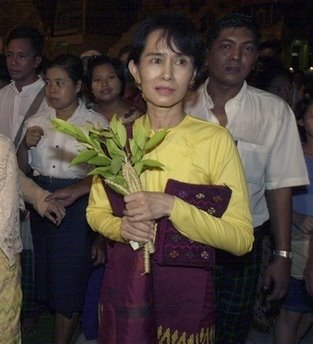


 Posts
Posts


