http://khethtan.wordpress.com/2006/09/24/the-politics-of-development-myanmar-military-regime%E2%80%99s-development-policy-and-practice-toward-ethnic-minorities/
Khet Htan’s Idea World
ခက္ထန္၏ ေဆာင္းပါး၊ အက္ေဆးႏွင့္ စာတမ္းမ်ား
The Politics of Development: Myanmar Military Regime’s Development Policy and Practice toward Ethnic Minorities
with one comment
Khet Htan
2006
Indigenous and tribal peoples shall enjoy the full measure of human rights and
fundamental freedoms without hindrance or discrimination.
Article 3.1, International Labour Convention (No. 169)
“Reality has been colonized by the development discourse”
Arturo Escobar
Introduction
Today Myanmar military junta is a one of rhetoric rulers in the world especially in the name of development process in ethnic regions, since Myanmar was integrated with 135 ethnic groups[1]. Military regime forbidden international mass media, strictly control to domestic media and use it as their mouthpiece is a good tool of tricky to world family, they are as the real developer for ethnic and border regions by doing build the bridges, build the roads and many quantitative for-show and so-called development works. Military regime’s attempt to disguise to world is seem successful. Because often I face the similar question by westerners that ‘why don’t you like your military government, because they have done a lot of developing works for people?’. Answer for this question is as well as the main cause for ethnic conflicts between military regime and various ethnic groups. If I follow the usage of Curtis W. Lambrecht, we can say Myanmar development process by Military regime as ‘Oxymoronic Development’ not only ethnic regions as well as throughout the country.
Ethnicity was likely less important in the pre-colonial period than it is today; for as state nationalism has developed so ethnic nationalism has arisen. The population then was sparse in an extensive land, and an increased population of any ethnicity was desirable for economic and political reasons as enhancing military capacity, the labor force, and the tax base. Such expansionist policies over diverse ethnic groups also demonstrated the political efficacy of the ruler. Ethnic nationalism is a more modern phenomenon.
Background
Myanmar is a country of proud cultural and historic traditions, and it is rich in natural resources. But nearly half a century of conflict has left Myanmar with a legacy of deep-rooted problems and weakened its ability to cope with a growing host of new ones: economic and social collapse; hundreds of thousands of refugees and displaced people; environmental degradation; narcotics; and AIDS. These problems touch on the lives of all Myanmar citizens. But it is members of ethnic minority groups who have suffered the most, and who have had even less say over their lives and the destiny of their peoples than the majority ‘Burmese’. Many minorities claim that a policy of ‘Burmanization’ is manifest. Amidst the upheavals, gross human rights abuses have been committed, including the conscription, over the years, of millions into compulsory labor duties, the ill-treatment or extrajudicial executions of ethnic minority villagers in war-zones, and the forcible relocation of entire communities[2].
Today ethnic minority groups are estimated to make up at least one third of Myanmar’s population of 45 million and to inhabit half the land area. There has been no attempt to take an accurate ethnic survey since the last British census in 1931, which itself contained many errors. Over 100 different dialects and languages have been identified in Myanmar, and many unique ethnic cultures have survived late into the 20th century. The ethnic minority crisis is one of the most central issues facing Myanmar and its neighbors today. All the regions along Myanmar’s 4,016-mile-long land border are inhabited by ethnic minorities, often with historic ties in neighboring states, and armed ethnic opposition groups still police many of Myanmar’s frontier crossings and trade routes. The British built a two-tier system of administration. ‘Ministerial Burma’, dominated by the Burmese majority, and the ‘Frontier Areas’, where most ethnic minorities lived. This strict division set the different ethnic groups on very separate roads towards political and economic development. As a result, the new Union of Burma which eventually gained independence in 1948 was very different from any nation or state in history.
The Colonial Legacy and National Ethnic Groups
All colonial powers in Southeast Asia established strict administrative boundaries where none previously existed, and extended the authority of the center out laterally to the arbitrarily designated borders that ignored ethnicity, language, cultural patterns and unities, sometimes watersheds or other geographic features, and often complex systems of multiple tributary relationships that were deemed under European dominance to have no place in the modern world.
When the British granted independence to Myanmar in 1948, they left behind a country troubled by colonial rule with a weak regime, a restless society, and strategic vulnerability to both China and India. Myanmar was a profoundly insecure state - insecure about its own internal system and about its place in the region and the world. The colonial legacy produced two tendencies in Myanmar society and government: a strong sense of nationalism and a weak understanding of internationalism and its importance for development. Perceived threats to national unity were forces behind both the 1962 and 1988 military coups, but the international implications of that iron-fisted rule and the disregard for the 1990 election results were far greater than the Myanmar government probably predicted. Myanmar must gain a greater understanding of nationalism’s effects on internationalism if it expects to survive and grow in the region.
Silverstein (1980) discusses how Burmese politician leaders during the independence and post-independence periods defined the concept of national unity differently. Myanmar comprises with eight major national ethnic groups: Kachin, Kayah, Kayin, Chin, Mon, Bamar, Rakhine and Shan. Bamar, the largest national ethnic group, constitutes 70%, Karen 9%, Shan 8%, Rakhine 5%, Mon 2.5%, Chin 2.5% and Kachin 2%. Dr. Ba Maw[3], the wartime head of state under the Japanese occupation, insisted on the essential sameness and unity of all people living in what currently constitutes Burma. He claimed that the British colonialists had introduced artificial separations that divided Burmese and ethnic minorities. This view suited those Burmese nationalists who sought to sweep differences under the carpet in order to achieve their goal of a strong, unitary state. General Aung San, the father of state, on the other hand, recognized the different cultures and histories of the various peoples living in the territory now called Myanmar and instead emphasized the need to devise some form of political unity that took that diversity into account. This was huge problem for national reconciliation and it is need to retrospect colonial period.
Civilizing Attempts and its Impacts
In former Burma, systematic civilization attempts to peripheral people or ethnic people start in colonial period by British government and Christian missions. I want to emphasize religious case. At that time and also up to now, Buddhism does not teach to propagate its faith by force. It is against the fundamental belief and doctrine of Buddhism to act in such a manner. Theravada Buddhism strictly prohibits monks from participating in any kind of political or commercial activities. It is also tolerant towards non-Buddhist faiths. This tolerant attitude has led to the idea of religious non-interference. Thus, Myanmar is probably one of few countries where the major religions live together harmoniously. This non-interference concept was behind the response of Burmese Buddhists to Christian Missions: “Our religion is good for us, yours for you”. So the first thing is Christian Missions cannot convince to Buddhist majority, and the second thing is, but, they can freely Christianization to peripheral people, undeveloped ethnic people without interference by Buddhist majority in remote and hill areas.
In Myanmar case, religion (Christian) is a tool for colonial rule of British regime. Because by using religion, British made rule and divide system, and it prevent to unity between hill people and plain people. Not only divide religion but also possible national spirit among local people. Western missions create writing system form some certain ethnic group and create education opportunities in local and abroad. Some ethnic groups give up their writing system in Burmese alphabet and adapt by English alphabet system. Western missions success their works in Myanmar, especially in hill regions. Unfortunately, I think, that Christianization also became a seed of today’s national reconciliation problem. This view maybe controversial.
At that time, in the Taungoo area thousands of Burmese, Karen and Pa-O were organized by Abbot Mayan Chaung to rebel against the British. Similarly another abbot, U Thuria of Hanthawaddy organized the Karens and Burmese in the area to rebel against the colonial regime. But, according to Karen record, for the most part the Karens, especially those taught by the missionaries, remained loyal to the crown, colonial regime. The problem for build common national identity was start at that time. Those ethnic groups loyal to colonial regime after converse to Christian, but when British attempted occupied those regions, all ethnic groups against them with their poor weapons. Later Burmese attacked to British were assumed by those ethnic groups as attack to them. The Christian missionary priest wrote in his letter to other priest that ‘there was a very strong Christian against Buddhist leaning that saw the rebellion not so much has the Burmese people against the Colonialists, but rather Buddhist Burmese against Christian Karen’. And he remarked ‘the strangest of all is the presence of the pongyees (Buddhist monks) on the battlefield. This is unheard of in history’. He also expresses his convinced to local people as that ‘my Karens usually interpret this as God’s sign that Buddhism is to be destroyed forever’.
Immediately after independence in 1948, serious divisions emerged between Burmese and non-Burmese political leaders, who favored a less unified state. Between 1948 and 1962, armed conflicts broke out between some of these minority groups and the central government. Although some groups signed peace accords with the central government in the late 1980s and early 1990s, others are still engaged in armed conflict. From that period to today, national reconciliation is the fist and importance priority for Myanmar, and as in the words of Don McCaskill, the challenge of establishing itself as a distinctive nation-state. On the base of this conflict and later maladministration of military regime make Myanmar as unrest and poorest country. In post-colonial period, authorities try to censors the passages of the Old Testament and the Koran that may appear to approve the use of violence against nonbelievers. And then, all politico-socio situations are complicated and become the endless problems. Today, almost all Myanmar scholar and politician are agree renaming as ‘Myanmar’ to represent all national majority and minority groups, the name of ‘Burma’ suppose as represent to Burmese majority. While all are against current ruling regime, they agree to call Myanmar, although most western countries do not accept as Myanmar, without having sense on ‘name’ and at behind these deep national reconciliation problems.
Colonial Legacy and Development
In an evaluation of economic progress in Southeast Asia in the immediate aftermath on the Second World War, the major economies in the region had grown at widely diverging rates. Philippines recovered rapidly from the devastation of war and occupation. Thailand and then British Malaya (including Singapore) also recovered quite rapidly and achieved positive per capita growth rates in the 1950s. But in Myanmar progress has taken the form primarily of restoring prewar levels of per capita production; it is unlikely that gains prewar levels have been achieved. By the early 1950s, per capita GDP in Myanmar, in international dollars corrected for terms of trade fluctuations, was less than 30 per cent of that in the Philippines, about 30 per cent of the Thai figure, and less than half that in India. Myanmar’s output contraction in the 1930s was entirely due to the very poor performance of the agricultural sector. The newly independent government gave high priority to reform of both the land tenure system and agricultural credit, ‘the twin evils’ of prewar Myanmar agriculture. A prosperous and productive agricultural sector was viewed as the foundation on which a more diversified economy could be constructed (William Kirk 1990). The government was also determined to use taxation and other revenues to increase spending on infrastructural development and health, education and welfare. In contrast to the prewar economy where Myanmar had made large subventions to the budget of British India and received little back in return, there was a determination to use national resources to improve the welfare of the entire population.
But, later ethnic and communist insurgencies necessitated a sharp increase in military expenditures, which accounted for around 30 per cent of total budget spending for much of the decade. Although expenditure on infrastructure development and on health and education did increase, relative to GDP, the bold ambitions of the immediate post-independence era to build a welfare state in Myanmar were only very partially realized. There were those who argued that Myanmar’s failure to achieve prewar levels of per capita GDP during the 1950s was not just due to the unfavorable colonial legacy, wartime devastation, and high government expenditures on defense. Myanmar economist Dr.Hla Myint (1967) pointed out that while all the countries of South East Asia shared a common reaction after independence to what might be termed ‘the colonial economic pattern’. Since a large share of these exports was produced by the foreign-owned mines and plantations, the governments of post-colonial countries took care to guarantee the security of foreign property and freedom to remit profits, and generally created a favorable economic environment which encouraged the foreign enterprises not only to continue their existing production but also to undertake new investments, to strike out into new lines of exports and to introduce new methods of production and organization.
In contrast, Dr. Hla Myint continued, the political leadership of Myanmar at that time “were obsessed by the fear” that once foreign enterprises were allowed to reestablish themselves or expand their operations, they would resume their old stranglehold over the economy, and re-impose the colonial economic pattern whereby most profits were remitted abroad, and the local populations gained little benefit from the exploitation of the economy’s abundant natural resources (Anna Booth (2006). Dr. Hla Myint argued that both countries did little to attract new investment and indeed nationalized a number of foreign-owned firms. They also adopted hostile policies to their Chinese and Indian minorities, so that many left either for their ancestral homelands or to settle in third countries. Nor did they encourage entrepreneurship among the indigenous majority; in both countries smallholder producers of export crops were taxed through export taxes and marketing boards, and there was little investment in infrastructure or new cultivation technologies which would directly benefit smallholder producers.
The official view was that a unity of culture existed among the peoples of the Union and that existing differences are only expressions of the same culture at different stages of development. Since post-independence period, from the time of General Nay Win to the present, Burmese language became not only the official common language of all ethnic groups of the Union but also the only medium of instruction for all education in Myanmar. A crucial problem for the minority ethnic Christians is that they do not want to use of Burmese as common language and it is assume that the government attempts to eliminate the long existing languages of minority ethnic Christians. To allow using their own languages, the problems are reinvention history and its can creating to barrier for national reconciliation, could spread hatred and hostility among different people groups. Under the maladministration of military regime, all worries of plain people, misinterpretation of hill (especially Christian) people, and chaos are lead to advantage for ruling military generals and national reconciliation for Myanmar is still dream in a deadlock.
Relocation as Development Process
In many respects, the present political and ethnic crisis in Myanmar is underpinned by the collapse of the economy and the economic and social restructuring now taking place. According to rough estimates, Manar has been losing as much as 800,000 hectares of forest cover annually since 1988. At current rates of felling, all its teak wood reserves, once the largest and best maintained in Asia, will have gone within ten years. In many parts of the Karen, Kayah, Mon, and Shan States, large areas have been stripped of all forest growth. Similar large-scale deforestation has taken place along the Chinese border in the Kachin State, of equal concern, in the 1991 monsoon season heavy flooding occurred for the first time in several remote valleys in both the Karen and Kachin States, where some of the heaviest logging was taking place: over 140 people died. Local villagers had no doubt that uncontrolled forest destruction was to blame.
A typical threat of extrajudicial action by the military was made under an order dated 7 December 1992 issued by the ‘Committee for the Relocation of Villages’ in Paan, the Karen State capital. The inhabitants of over 40 Karen villages west of the Salween River were commanded to move with their belongings to designated armycontrolled settlements within three weeks. Those refusing to comply were warned: Any rice and cattle left behind will be confiscated if found by the military columns. If any villagers hide in the forest, they will be shot and arrested. When a foreign journalist inquired about the large numbers of deaths of Karenni villagers during the construction of the Aungban-Loikaw railway, Lieutenant-Colonel Than Han of the BADF replied: Every day people are dying. It’s a normal thing. While admitting that ethnic minority villagers did not wish to leave their homes, he complained: They do not understand that the military is carrying out the rail project in their interests (Smith).
Myanmar’s continuing political and economic crisis is also forcing ever greater numbers of inhabitants to leave their homes. In mid-1994 over 300,000 refugees, mostly ethnic minorities, were officially recorded at camps in neighboring Thailand, Bangladesh, India and China. Of these, some 75,000 were in Thailand (largely Karen, Mon and Karenni) and over 200,000 (predominantly Muslims) in Bangladesh. There were also an estimated 10,000 Kachin refugees in China and a similar number of Naga, Chin and other refugees in India. Unofficial numbers, however, were estimated at over three times that figure, meaning that over one million exiles and migrants were subsisting precariously around Myanmar’s troubled borders. These figures tell only half the story. By most estimates, there are also over one million internally displaced persons inside Myanmar itself, including relocated villagers from the war-zones, those forcibly resettled in recent SLORC development projects, and refugees still trying to survive in the hills. However, unlike the refugees abroad, these internal victims of Myanmar’s political crisis have virtually no access to international aid or support.
Dams and Hydroelectricity: Who benefits?
For many minorities, perhaps the most controversial plans are eight proposed hydroelectric projects with the Electricity Generating Authority of Thailand, Located along the Moei, Salween (Than Lwin) and Mae Kok rivers, the dams would have a combined generating capacity of 6,399.75 megawatts, requiring an investment of over US$ five thousand million, much of which is being solicited from international agencies such as the Asian Development Bank. To date, the indigenous peoples in the area have not been consulted: most of the electricity and water would go to Thailand, the profits to military regime. The environmental consequences for the region and the Karen peoples, in particular, would be enormous. The two largest dams would be on the Salween River in the heartland of Karen country in territory controlled by the KNU since Myanmar’s independence in 1948. Thousands of villagers stand to be displaced, and no studies have yet been started on such environmental dangers as loss of fisheries, silting, or the destruction of the eco-system.
Dam Politics: Sustainable Development or Destroying in Long Term?
Regional economics integration has been shaped by growing economic and political influence, and consequently demand for natural resources is increase. Dam projects are popular and geared towards selling electricity and water across national boundaries. Civil society responses to current development approaches and trends in the Mekong reflect the complexities brought on by increased regionalization, with multi-scale networks being formed within as well as between the Mekong countries.[7] Regionalization from below has created dissent to specific projects, intergovernmental process and the non-participatory and non-transparent deals, policies and programs.[8]
Unfortunately, I think in the South Asia, regionalization is imbalance, almost all about China. The more China hungry energy, the more it needs to protect the notorious country like Myanmar.[9] China’s plans for damming the upper Salween serve the Myanmar military junta’s dual goals of securing territories in conflict regions and generating revenue to further entrench the military regime. Dams are not sure for development after onward, but sure for political and commercial interest in current Myanmar. So I want to name as ‘dam politics’. Apart form various impacts by dam building, in Shan State of Myanmar, 400,000 people are suffer from force relocated to build only one dam. Other human right violation and destroying environment were endless before and after dams.
China and Thailand are the two main foreign investors in military rule Myanmar.[10] Rivers and her peoples are marginalized, not only in Myanmar, including other poor Southeast Asian countries. Sadly tragedy is that, in Myanmar, dam projects are greatly affected to ethnic people, because rivers are in their settle regions. More tragedy is that there are lacks of civil society to represent ethnic peoples’ voice and military repression is beyond control. Results are not only ecological degradation but also loss of local livelihoods for thousands of people. In Yunnan, China, news report that by the year 2020 at least 500,000 people will be resettled to make way for hydropower development in Yunnan province.[11] I feel that those government and it crony abuse the word ‘development’ for their interests. China making political, social and ecological problem with other countries as well as it own. Over the past 50 years, more than 16 million people have been displaced by dams of various types, and as many as 10 million of those people are still living in poverty.[12]
Dam projects are, for military junta, the subject of getting favor form such country like China, Thailand including India to making cover their political power seizing from the critics of global family. And dam also the weapon of ethnic cleansing. Myanmar has 135 ethnic group and almost all of ethnic regions are full of conflicts and place of fighting. After independent, majority Burmese and all ethnic groups had agreement to follow federalism[13]. But military coup for that they cannot accept federalism. Until now, military talk in a loud voice national reconciliation, but any practices don’t follow it. The main reason for to control political power is nothing, but for rich natural resources and exploitable position of those ethnic regions. According to federal agreement, ethnic groups can have their own region to manage themselves including natural resources.[14]
Now under several dam projects, along the Salween River, all ethnic groups are targets. Not only for relocate, but also force labor and portering, harassment, extortion and random killing are common. Thai-Myanmar border become a refugee place for ethnic people without having recognized citizenship, while Thai business group invest of large amount in their native regions. According to a report, 92,500 ethnic people were internally displaced in 2005.[15] Almost all of people are forcibly relocated and all people, including children, pregnant women and elderly have to walk through the hills to distant relocation site. That site is lacking proper food and medical care. That is true. But some information like that women are constantly raped by armed soldiers and those who are captured escaping are kill[16], are too exaggerate.
In the region, China as a main driven of regional economics integration, I don’t believe it can sustain any situation. Although China influences other countries’ economics decision, leave other countries alone, China itself cannot control to slow and steady it running rate. It looks like time boom. Dam projects seem a good business for country income, but I found that its profit is not for majority, only for the handful of bourgeois and autocrats. It obvious that environmentally, ecological system was destroys and socially, thousand of people are abuse and still snick in poverty. Where is development? Governments used to claim that ‘those people should to sacrifice for development’, but I don’t found any effective development process in my sense. But I am sure to say that current generation ‘sacrifice’ for their so-called development, ‘a modern utopia’[17], not only that, future generation will be paying the prices for those impacts of dam politics. And I considering that no one can prevent effectively them and they do with their logical short term visions are not so strange, not to be surprise. Because any religious predict the batter world in future, but the day of destroy the world, with their own references.
Politics, Environment and Development
Although I was a journalist whom thought as ‘know something of everything’, I didn’t have awareness much about of Myanmar policy and practice of environment through development. At the first year of my studies in Chuang Mai University, I get a lot of brain storming concerning with environmental, political, gender issues and various aspects of social issues. I start to rethink all situations of Myanmar thoroughly as far as I have known. And I found myself that I can see clearly what happen inside of Myanmar before and now, by the invaluable teachings of my Ajarns[18]. Here I want to review environmental politics and the politics of development of Myanmar. How these three sectors related and affect each other?
Resently, I have read an interview with Dr. Mahathir Mohamad[19], who expresses his view on Myanmar as that they (current ruling Generals) may love their country, but they make many wrong behaviors in politics. This is a good point of what happen in inside of Myanmar, here in terms of to harmony between environmental politics and development. Since the ruling Generals took power by military coup in 1988, the regime has increased use of Myanmar’s natural resources. Urgently needing hard currency to expend its military and engage in political and armed destruction of various insurgent groups, the regime began exploiting the country’s natural resources irresponsibly at a shocking rate. If we study the case of Myanmar, we can see how politics play the critical role in environmental conservation and to achieve development in Third World country. The lack of good governance is the main cause of destroying nature. Scholars and observers point out that sustainable development in Southeast Asia should be understood with the political-ecology approach (Bryant and Parnwell 1996)
The political situation in Myanmar is at a critical stage. At this political stage, Myanmar has no constitution, no national legislative body, and no independent judiciary system. In other words, at present Myanmar lacks the fundamental structures of a stable society, such as political accountability, good governance, and effective and equitable law enforcement, that are vital to the sustainable management of environmental and human resources (Tun Myint 2003). Since lack of these fundamental structure, there are many challenges appear in environmental governance. And it is difficult to express the concerning of people in environment and development process.
In the West, a major focus of environmental issues has been on the diagnosis of continuing decline in the productivity of the world’s renewable natural resources. It is generally seen as the result of human activity. People now are destroying the resource base of people in the future. Developing countries constitute the larger part of the world’s population and are therefore also responsible for the major proportion of all human activity. But some claim that in those countries, concern about ecological decline is much less evident. In its place is found an increasingly eager demand for improvement of living conditions today through more even distribution of existing resources.
To follow this discourse, military regime blame as that Myanmar’s environmental problems were a result of ‘underdevelopment’, by the poor who use it and also as the colonial legacy. As the nation try to catch up with the rest of the world in terms of development, this trend is causing serious concern for many environmental issues in Myanmar. This national quest and campaign for ‘development’ has met the dilemma of ‘sustainable development’, where natural resources are the only available source of development capital (Tun Myint). If human activity causes ecological decline, it also lowers the limits of what can realistically be aimed for through development to improve the conditions of human activity. This conflict between behavior and ambition underlies much political activity (Spooner 1984).
As a policy response to address environmental issues, military regime established the National Commission on Environmental Affairs (NCEA) in 1990 to ‘educate the public about environmental awareness’. NCEA is also charged with the duty to formulate a ‘comprehensive national environmental strategy’ in pursuit of a ‘modern and developed nation’ (NCEA Report, 1992). In 1994, NCEA adopted the National Environmental Policy. According to NCEA, the National Environmental Policy has two major tasks: (1) institutional development, and (2) carrying out the National Environmental Action Plan (FAO Report, 1997). But what is the reality beyond policy!
But military regime’s policy of environment is on paper. The policy on paper in Myanmar is usually not practiced by the military rulers themselves. What is happening in reality is different from the policy on paper. In the absence of a constitution, a national parliament, and a legislative body, there is at present no appropriate and working mechanism in Myanmar to address environmental problems. According to the National Environmental Policy, NCEA is presently focusing on promoting public awareness for environmental protection and securing the active participation and cooperation of the public in environmental conservation efforts. Although Myanmar has a number of environmental laws and regulations, it lacks the institutions to carry out ‘protection and conservation of environment’ so as to achieve ‘sustainable development’ by implementing these laws.
Since Myanmar gained independence, NCEA and its policy framework is the first and only initiative that designed to address environmental issues in Myanmar. The military regime also announced that it fully supports the concepts of ‘sustainable Development’ for Myanmar ‘to become a modern and developed nation’. The conceptual framework of ‘sustainable development’ is ‘to ensure that it meets the need of the present without compromising the ability of future generations to meet their own needs’ (Our Common Future 1986).
Myanmar junta often proudly claimed that Myanmar is ‘rich in natural resources’, but it is being threatened by over exploitation of natural resources while political crisis. So some observer argue that Myanmar no longer possesses like mentioned status of being rich in natural resources. One of the most visible threats to Myanmar’s environment today is the rapid depletion of many forests. Independent observers’ estimates that remaining forest cover in Myanmar at closer to 30 percent of its total land area. The Rainforest Action Network[20] has calculated Myanmar’s annual deforestation rate at 800,000 to 1 million acres a year. The rate of deforestation in Myanmar is one of the five highest in the world.
To illustrate the gap between law and practice in environmental politics, we should see the border timber trade, especially with China. After 1980s, China promoted economics relation with neighboring countries. Myanmar has made several requests to china for the exploitation of its forest resources jointly with China, a record said. Timber has simply become the number one business on the China-Myanmar border[21]. During the dry season, 150 to 200 timber trucks cross the border per day (Su Yongge 2000). Here another question is rise that where these money go after selling these natural resources. Intelligence sources estimated that Myanmar spent between US$1.5 billion and US$2 billion to purchase arms from China alone in 1990s. It is the evidence of that they spent large amount of money in military sector rather than social and economics development sector. And other place where money keep is the own interest of junta. The emergence of close links between political and economic elites resulted in widespread environmental degradation since the politicians use the resource lease to gain personal or political interest (Bryant and Parnwell). Myanmar people are still coping with lack of health care, poor education access and very lowest status in physically and mentally.
Myanmar, a country that has suffered a great deal from political instability, war, and repression, stands to lose much of its remaining natural resources at an alarming rate. The military regime’s protection and conservation of natural resources and environment as a national endeavor, has been far away to reach the achievement. The implementation of the National Environmental Policy has yet to find appropriate institutional mechanism. Although decision-making are crucial elements for good governance, the big junta who hallucinate himself as ‘a great king’ is strongly hold decision maker role without knowing even any sense of politics, apart from the vision of environment and development.
Ecology and development are unavoidably interrelated. Particular development, insofar as it is directed towards increased food and other crop production, begs the ecological question of the long-term productivity of resources. Ecological processes do frustrate development. If we can’t create the harmony between politics and environmental management, we can’t dream development. At the same time that harmony should be ‘in time’, before deplete all natural resources. If not, not only the given single country, but all countries would pay the prices for ecological impacts[22]. Ecology has no borders. So it should be possible to persuade people - all people: politicians, as well as planners, and local to accede to their imperatives and develop within the limits they set down.
Culture, Education, Language and Religion
For many citizens, the open discrimination against ethnic minority groups in matters of culture, education, language and religion is the most disturbing evidence of a long-term policy of ‘Burmanization’ carried out by all governments since independence. The Karen National Union has attacked the ‘annihilation, absorption and assimilation’ of the Karen people, and asserted that: “The Karen are much more than a national minority. We are a nation.” Cultural discrimination against ethnic minority groups, who make up over a third of the population, runs counter to the constitutional right of every citizen in Myanmar to freedom of speech, association, language, education and religion. Despite the imposition of one-party rule in 1962, equal ethnic, religious and cultural rights were still guaranteed under the BSPP’s 1974 constitution. But all these fundamental human rights have long since been whittled away. Long before the 1988 democracy uprising, newspapers, schools and universities had been repeatedly shut down at the first sign of protest.
A subtle mixture of discrimination and laws controls all literature and expressions of ethnic minority cultures. Ethnic minority writers and teachers who oppose government restrictions or encourage expressions of cultural identity and the use of their own languages have faced considerable harassment. For example, two Mon intellectuals, Nai Nawn Dho, a Buddhist monk, and Nai Manawchrod, a Rangoon University lecturer, were reportedly arrested in January 1991 for attempting to promote the use of the Mon language. And, in perhaps the most disturbing incident, in August 1990 82 year-old U Oo Tha Htun, the distinguished Rakhine historian and parliamentary candidate, died allegedly as a result of ill-treatment in jail.
Over the past 30 years, the multi-cultural system of education envisaged by Aung San and ethnic minority leaders in the 1947 constitution has been replaced by a highly Burmanized and doctrinaire curriculum in which any expression of minority cultures is denied. In a country of such obvious ethnic diversity, this discrimination appears quite deliberate. For example, although the 1974 constitution allowed for minority languages to be taught in schools, in government-controlled areas today there is no official teaching or research in any minority language in either secondary or tertiary education. Cultural and religious studies have been equally repressed. Such discrimination is not only a major impediment to the survival and expression of minority languages and cultures, but it also discriminates against ethnic minority citizens who first have to learn Burmese as the only language for education and government.
For those ethnic minority students who aspire to higher education, the regional college system is inherently discriminatory. This system was introduced in the mid- 1970s to keep Myanmar’s restive student body at home, away from the main conurbations, and it has since remained extremely difficult for prospective ethnic minority students from outlying areas to travel to the central cities for university education, due to lack of funds, contacts and the allotment of places. With the exception of Moulmein, which was upgraded in 1986, there are no universities in ethnic minority areas, only state colleges, hich local students are encouraged to attend. The government’s flagship for ethnic minority education has been theAcademy for the Development of National Groups in the Sagaing Division. But the Academy is in the heartland of Burmese culture and its initial purpose, when set up in 1964, was to propagate the ‘Burmese Way to Socialism’ in minority areas. To much fanfare, it was upgraded into a university in 1991, but this did not impress minority leaders: they say the university’s only purpose is to provide Burmese language teachers to spread the philosophy of the SLORC’s new ‘Myanmar’ Buddhist culture in borderland areas.
In response to requests for international aid, ethnic group leaders have argued that only aid which goes directly to indigenous peoples will ever enable the local inhabitants to develop their region, alleviate poverty and eradicate the scourge of narcotics. The official policy of the Burmese government is to suppress opium growing. This is a ‘window dressing’ policy only to impress the West. In the past the United States has even given the Burmese aid to carry out that policy. While, in fact, the Burmese officials encourage opium growing and enable its marketing for their own benefit.
Individual rights and collective rights
Human rights mainly concern the relationship between the state and individuals. However, human rights do not explicitly address the collective rights of ethnic people who would like to maintain their particularities such as culture, custom, language, literature, ancestral domains etc. It has become doubtful that particularity of the ethnic people can be maintained while human rights are being promoted.
Ethnic people have practiced different cultural systems in Myanmar for hundreds of years. All ethnic peoples have their own languages and the majority of them have their own literature. Unfortunately, under the rule of the military junta, learning and teaching of ethnic literatures has not been allowed in government schools. Only Burmese (Myanmar), the major language of the majority Burmese people, is permitted. From 1992 to 1997, under the military’s program claiming to preserve cultural inheritance in support of “national unity”, the junta re-established “Kambawza Thardi”, the ancient palace of Burmese King Bayinnaung. The military spent 170 million Kyat (Burmese Currency) in doing so56. Under the same program, the military junta allotted 1.3 million Kyat for the extension of Shan State library57. At the same time no project was allowed for the Shan people to preserve the ancient palaces of Shan hereditary Chiefs such as Chaofas or Sawbwas. Instead, Keintong Haw, palace of Keintong Chaofas in eastern Shan State, was destroyed and replaced with a hotel.
The Karen people love their national flag very much as a symbol of the dignity of their nationality. Unfortunately, in a surrender ceremony for a group of Karen rebel soldiers, the SPDC vice-chairman, Lieutenant General Maung Aye, lay down the Karen national flag and stepped on it. These brutal actions of the SPDC leaders strike at the hearts of the non-Burmese ethnic people. These are only some of the dealings of the military junta with ethnic nationalities.
Conclusion
In Myanmar, there is no conflict between either Burmese and non-Burmese people or between non-Burmese ethnic nationalities themselves. Throughout the history of Myanmar, the source of ethnic ‘trouble’ has been the extension of military power and a centralization process by the rulers. As a result, the rights of non-Burmese ethnic nationalities were mainly neglected and peace, justice, equity and fairness were lost. Under the SPDC, which practices stronger centralization than during any other period of history in Myanmar, not only the non-Burmese and but also Burmese ethnic nationalities are suffering terrible atrocities. The SPDC deprives non-Burmese ethnic people of the right of local autonomy, which had even been permitted by earlier Burmese kings during the three Burmese empires.
Forceful conquest and annexation can be achieved by military prowess. Superficially, it may appear that the military is capable of establishing stability in Myanmar, but in essence, it has only been creating brutal oppression, fear, injustice, and loss of freedom for all people inside Myanmar. In such a terrible situation, we cannot say that national unity has been achieved. However, at the same time, national unity can really be achieved once the Burmese and non-Burmese ethnic nationalities get a chance to sit together; exchange information about past sufferings, establish common understanding for the future and produce a new constitution which will guarantee liberty, freedom and development of individuals as well as ethnic groups.
People usually love their culture and want to practice it freely. If their practices are not against public health and basic rights of other people, the practices should be allowed in respect of the fundamental collective rights of ethnic people, rather than just individual rights. Without paying due respect to the different cultures of the ethnic people in a certain country, without sharing political power and the country’s resources fairly, and without establishing a pluralistic society, genuine peace and stability will never be a reality in Myanmar. While the current practice of attempting to establish a unitary state under strong centralization continues, countless problems will continue. Additionally, trust among various ethnic nationalities has been waning, and national solidarity will never be achieved.
Bibliography
Aung Htoo
2000 “Ethnic Issue in Burma,” Legal Issues on Burma Journal, No 5, Burma Burma Lawers’ Council.
Booth, Anne
2006 The Transition in Open Dualistic Economies in Southeast Asia:
Another Look at the Evidence. Paper submitted at XIV International Economic History Congress, SOAS, University of London.
Bryant, Raymond and Michael Parnwell
1996 “Politics, sustainable development and environmental change in
Southeast Asia,” in their Environmental Change in Southeast Asia. London and New York: Routledge.
Duncan, Christopher R. (ed.)
2004 Civilization the Margins: Southeast Asian Government Policies for the Development of Minorities. Ithaca and London: Cornell University Press.
Hla Myint
1967 “The Inward and Outward – Looking Countries of Southeast Asia,”
Malayan Economic Reviews, XII, Aprial, 1 – 13.
Kirk, William
1990 “Southeast Asia in the Colonial Period: Cores and Peripheries in
Development Process,” in Denis J. Dwyer (ed.) Southeast Asia Development: Geographical Perspectives. Harlow: Longman.
Silverstein, Josef
1980 Burmese Politics: The Dilemmas of National Unity. New Jersey:
Rutgers University Press.
Smith, Martin
1994 “Ethnic Groups in Burma:Development, Democracy and Human Rights,” in collaboration with Annie Allsebrook, ASI’s Human Rights Series. No 8 , London: Anti-Slavery International.
Spooner, Brian
1984 Ecology in Development: A Rationale for Three-Dimensional Polic.
Tokyo: The United Nations University Press.
Steinberg, David I.
2000 “The Problems of Myanmar and Myanmar’s Problems,” Paper presented at Asia Regional Consultation on Social Cohesion and Conflict Prevention, Asian Development Bank-World Bank, Manila.
Tun Myint
2003 “Democracy in Global Environmental Governance: Issues, Interests,
and Actors in the Mekong and the Rhine”, Indiana Journal of Global
Legal Studies. Volume 10, Issue 1, Winter 2003, pp. 287-314,
Indiana University Press.
Yongge, Su
2000 “Ecology without Borders”. In Grant Evans, Christopher Hutton and
Kuah Khun Eng (eds.) Where China Meets Southeast Asia: Social
and Cultural Changein the Border Regio. Singapore: Institute of
Southeast Asian Studies.
--------------------------------------------------------------------------------
[1] Martin Smith point out that the State Law and Order Restoration Council, which has ruled Myanmar
since 1988, itself refers to the ‘135 national races’ of Myanmar, but has produced no reliable data or list of names.
[2] Report of Anti-Slavery International
[3] Dr.Ba Maw (1893-1978)
[4] Buddhist monk.
[5] Buddhist monk
[6] In colonial period, Buddhist monks are played critical role to against British. Today military regime know the power and influence of monk, so they strictly control to Sanga (monk) society by arrested, change to manhood by force and send to prison.
[7] Editorial, Watershed, Vol.11 No.2,
[8] Ibid
[9] China veto (with Russia) UN Security Council on Myanmar in January 2007.
[10] Recently, China, Thailand and Myanmar make tri-partite agreement for damming
[11] Kumming Evening Daily
[12] According to Senior Researcher Chen Guokie, Chegdu Institute of mountain Hazards and Environment
[13] The Panglong Aggrement, 1947
[14] Ibid
[15] Thai-Burma Border Consortium(TBBC)
[16] Dams as Ethnic Cleansing, Watershed, Vol.11, No.2, p 53
[17] Editorial, Watershed, Vol.11, No.1
[18] Teachers
[19] http://burmadigest.wordpress.com/2006/11/16/interview-with-former-prime-minister-of-malaysia-2/
[20] http://www.ran.org/
[21] Myanmar is only country that China no need to pay foreign currency for timber import, easy to bring Chinese labor to Myanmar. (130 Yuan for per cubic meter)
[22] Here I want to point out ASEAN’s ‘constructive engagement’ policy toward Myanmar and ‘energy politics’ of China and India to deal with Myanmar.
Thursday, December 25, 2008
The Politics of Development: Myanmar Military Regime’s Development Policy and Practice toward Ethnic Minorities


Wednesday, December 24, 2008
Russia hosts gas group, faces OPEC ire over oil
http://uk.reuters.com/article/oilRpt/idUKLN53110020081223?pageNumber=3&virtualBrandChannel=0&sp=true
UPDATE 2-
Tue Dec 23, 2008 4:45pm GMT
By Katya Golubkova and Amie Ferris-Rotman
MOSCOW, Dec 23 (Reuters) - Russia, the world's top gas exporter, hosted a meeting formalising cooperation between major gas producers on Tuesday but faced criticism from OPEC for refusing to join in cutting oil output to support energy prices.
With Prime Minister Vladimir Putin presiding, energy ministers from 12 gas exporting countries, many of them OPEC members, agreed to transform an existing gas forum that they said could benefit consumers and would not control output or prices.
The event, partly meant to increase Russia's clout in global energy diplomacy, did not go smoothly for Moscow.
Concern about falling prices and flagging demand quickly surfaced as country representatives said Russia should have sacrificed some of its own output to back up President Dmitry Medvedev's promise to support OPEC oil production cuts.
The Kremlin's critics said an important way to help gas prices is to bolster the oil price, which they reflect.
"We needed to redress the situation to the market of oil so as to redress the situation in the gas market," Libya's top oil official, Shokri Ghanem, told the ministers.
"We are still waiting for a declaration from the Russian Federation that they are cutting their (oil) production not only to support the (oil) market, but also to support the gas market," Ghanem said.
Russia, the world's No.2 oil exporter, has said it is considering all options, including joining the Organization of the Petroleum Exporting Countries, to defend its national interests.
However it did not make any firm pledges when OPEC ministers, meeting at Oran in Algeria last week, agreed their deepest production cuts of 2.2 million barrels per day.
OPEC's President Chekib Khelil told Reuters on the sidelines of the meeting that Russia had enjoyed the benefit of OPEC's cuts without sharing the pain.
"If there was no OPEC reductions in September and October, I think we would have seen prices today at maybe $20 (per barrel). So it was because of OPEC that revenues for Russia were at $40 now, not at $20," Khelil said. [ID:nLN490268]
PRICE LATER
The gas group was created out of an existing informal club called the Gas Exporting Countries Forum (GECF), which includes 16 states such as Algeria, Iran, Qatar, Venezuela, Indonesia, Nigeria and others.
Western consumers are watching the meeting closely, worried that the group will try to set gas prices and manipulate supply.
European consumers, in particular, are edgy about their main supplier gaining more clout at a time when Moscow is threatening to yet again cut supplies to Ukraine as it did in 2006, exposing the continent to gas shortages in the middle of winter.
The forum members deny they are going to control prices and said the gas market is structurally unsuited to such influence.
Nigerian Petroleum minister Odein Ajumogobia told Reuters: "The state of gas development is very different from oil. With oil you have one international oil price, with gas you have domestic, international export price, etc."
They say the main goal of the new group will be to monitor the gas market and conduct joint research.
"The difference between OPEC and the forum is very simple - OPEC looks at today, what happens on the market and makes the decision," Khelil told Reuters.
"The forum...it's more forward looking. It cannot control the volumes and price for the next 10 years because it's locked into long-term contracts and also the price of gas is locked into oil."
Russia's Energy Minister Sergei Shmatko told a closing news conference the ministers had agreed on a charter that made GECF a more formal organisation and chose Doha as the headquarters.
Russia had earlier proposed its second largest city of St Petersburg as the headquarters and Shmatko did not say why delegates endorsed the last-minute proposal of Qatar.
"It is unnecessary to make direct links between the new organisation and OPEC. We have a broader vision," Shmatko said adding that no decision had been taken on Tuesday and no discussions took place about gas production quotas.
Russia's Gazprom (GAZP.MM), the world's largest gas producer, which supplies Europe with a quarter of its gas, earlier this year signed a deal with Iran and Qatar, setting what it called a "big gas troika" to coordinate market policies. (Additional reporting by Vladimir Soldatkin and Melissa Akin, writing by Tanya Mosolova and Melissa Akin, Editing by Anthony Barker)
America's stop-and-go energy plan
http://www.latimes.com/news/printedition/asection/la-na-energy23-2008dec23,0,7809287.story
Today's cheaper gas is no reason to lose focus on reducing oil imports, activists and executives say.
By Jim Tankersley
December 23, 2008
Reporting from Washington -- Breaking America's foreign-oil addiction was all the rage on Capitol Hill when gas cost $4 a gallon. Now that it's under $2 and falling, history suggests that the enthusiasm for alternative fuels and more efficient cars will subside. It did that in the mid-1970s and again in the 1980s and 1990s.
But this time could be different.
A sense of urgency may still remain, according to congressional leaders and environmental groups, because of a confluence of factors including broad anxiety over global warming, enthusiasm for green elements in economic stimulus packages and President-elect Barack Obama's repeated vows to act.
And in any case, few consumers are convinced that low gas prices will last.
"In the past, when the prices of oil and gas have dropped, it has caused us to lose our focus. I don't think that'll happen this time," said Sen. Jeff Bingaman (D-N.M.), chairman of the Senate Energy and Natural Resources Committee.
Perhaps nothing illustrates the change in attitude better than a recent survey of 52 oil and gas executives.
Only about a dozen executives expected oil and gas to be America's cheapest energy source in 25 years, and three-quarters considered it a good idea for the U.S. to phase out fossil fuels for transportation.
That's a "sea shift" for the industry, said longtime oil and gas analyst Joseph A. Stanislaw, a senior advisor for the auditing and consulting firm Deloitte, which released the survey.
"People are saying, 'Prices go up and prices go down but something's broken here, and we've got to fix it.' "
When Obama announced his energy policy team, he noted how presidents for decades had promised and failed to curb the nation's oil addiction. "This time has to be different," he said. "This time we cannot fail. Nor can we be lulled into complacency just because, for now, the price of gas has fallen below $4 a gallon."
Americans have worried about their dependence on foreign oil since the early 1970s, when Arab oil producers stunned the developed world by halting shipments. The result was soaring energy prices, long lines at gas stations and a shock to the economy that took years to recover from.
President Nixon offered an energy plan for freeing the nation from dependence on imports within a decade. But when the embargo was lifted after a year, prices fell and Nixon's Project Independence faded with a whimper.
The cycle repeated for the next 30 years: When oil prices increased, lawmakers pushed measures to boost wind, solar and other alternative power sources; when prices fell, so did support for those alternatives.
America imports nearly two-thirds of its oil, a 50% increase from the Nixon years, though every president since has pledged to wean the nation from foreign energy.
The problem is partly economic, partly political and partly a matter of consumer preferences.
Personal automobiles offer convenience and freedom that mass transit often cannot. And many consumers seem to like bigger, more powerful cars.
Moreover, for a host of reasons, alternative energy sources cost more and are not financially competitive with oil except when petroleum prices are high. Politicians are reluctant to raise taxes on gasoline, home heating oil and other oil-based products to narrow the price gap.
Now the cycle has started again. Oil prices hit record highs in the summer, fueled by explosive demand in developing nations such as China and India. During the presidential campaign, Obama and his Republican opponent, John McCain, made ambitious pledges to reduce oil use, and statistics suggested Americans were driving less -- and demanding more efficient cars -- to cope with wallet-busting gas prices.
Then the global economy slipped rapidly into recession and energy demand ebbed. Again, prices sank.
Instead of backing off his alternative-energy push, the president-elect doubled down. Since election day, Obama has promised to make green projects a cornerstone of the economic stimulus plan that will anchor his early agenda.
And he has repeatedly pledged swift action to fight climate change, an issue heavily wrapped in the politics of oil.
"At the end of the day, gas prices go up and they go down," said Sen. Barbara Boxer (D-Calif.), head of the Environment and Public Works Committee. "In the long run, we need to find an alternative clean-energy source to protect our nation from hikes in gas prices and from the ravages of global warming."
Obama's concern over global warming is increasingly shared by voters. That's a big difference from the 1970s, said Colorado Gov. Bill Ritter Jr., a Democrat who has urged Obama to focus heavily on energy alternatives: "We weren't paying attention to climate policy the way we are now."
Climate change has become "part and parcel" of federal energy policy, said Andy Karsner, a former assistant Energy secretary in the Bush administration who is now at the nonprofit Council on Competitiveness. "You will see climate, as an issue, embedded in the ongoing energy debate."
And once the economy speeds up, oil demand will almost certainly surge again. As the International Energy Agency said in a November report: "The era of cheap oil is over."
jtankersley@tribune.com
Thoughts from Mumbai: A Return to Gandhi’s Dream for India
http://thewip.net/contributors/2008/12/thoughts_from_mumbai_a_return.html
Rupa Chinai
- India -
In the aftermath of Mumbai’s most recent encounter with terrorism, there is the feeling of isolation felt by those pleading for sense and reason. These voices are being drowned out amidst the jingoism and war cries of an “eye for an eye” currently heard on the streets of the city.
In this chilling environment of unreason, I wonder what would be the reaction to people like me, who feel pity for the path chosen by young men like Ajmal Kasab, the only surviving terrorist from the attacks? This sentiment does not seek to justify the heinous crimes he committed or protect him from the punishment he deserves through the due process of law. But how can one find the words to urge people to understand the context from which youth such as Ajmal develop and how civilized society must respond to the challenges they pose?
• Many in India call for peace in response to the November 26th terrorist attacks on Mumbai. •The newspapers here have gleaned information from Ajmal’s interrogations in police custody and reveal that he hails from Faridkot village, in the Punjab province of Pakistan. The BBC and Pakistan TV channels have shown Ajmal’s family home, the school where he studied until class four, his father and other villagers who confirmed Ajmal’s links with them. We learned that Ajmal’s training with the Lashkar-e-Taiba (a militant group that seeks the liberation of Indian occupied Kashmir) led to his becoming a crack commando with skills in urban guerrilla warfare. We even know the names of some of the people who trained him.
The Pakistan government responded by bluntly denying Ajmal’s Pakistani nationality, cordoning off Faridkot village and whisking away his family. It has denied Indian government allegations of ISI involvement in terrorist training. This response, apart from inviting Indian ire, has drawn flak from within Pakistan, in particular from Nawaz Sharif, former Pakistan Prime Minister and leader of the opposition.
These reports however, give key insights into how militancy has found a base within Pakistan. They reveal that the militant groups are the only ones imparting skills and professional training to these poor, rural youth, creating illusions of having provided their lives with meaning in an existence otherwise steeped in poverty and misery.
Ajmal has reportedly spoken to the Mumbai police about some of these illusions – he believed that he was on a mission that would earn him a place in jannat (heaven) and in the annals of those who have died for the cause of Islam. He also reportedly said that his sponsors promised to pay Rupees one and a half lakhs (US$3,165) to his family upon completion of his successful suicide mission.
But now from the grave reality of his prison cell, Ajmal has apparently begun to lose some of his swagger and arrogance. We catch glimpses of a young man so typical of those we see in the sub-continent, fascinated by Amitabh Bachhan films and who fancies himself as a hero. It is perhaps this human spark that has kept Ajmal alive when the more hardened of his ilk would swallow a cyanide pill rather than face capture.
As the media tells us about the human face of this terrorist, my thoughts turn to the society that nurtured him. What is one to think of Pakistan’s failure to provide its youth with positive directions, access to skills and a knowledge base that would help them to live meaningful lives? Why did their communities allow mercenaries, masked as men of religion and god, to access their children and brainwash them into the jihad cult?
Meanwhile, are we in India any better off? Do we really believe that hanging terrorists without a trial (because our criminal justice system is imperfect) or arming ourselves with more draconian laws and modern weaponry will make India a safer place? Do we not display our own barbarism every time we question the patriotism of India’s Muslims and attack our minorities? How can we ordinary citizens respond to this situation? Shouldn’t we stop and consider our own unique role? In my mind, this introspection has proven wholly inadequate, and yet represents our only source of real hope. Does the land of Gandhi have nothing more to offer the world as a solution to this situation?
And has our electronic media learned anything from the mistakes made during its coverage of the last terrorist attack? Just a few days ago the Indian government released guidelines for media coverage of terrorist attacks, and yet a Hindi television news channel flouted these norms to grab its latest scoop by broadcasting leaked footage of Ajmal's interrogation by American FBI agents.
With Ajmal’s case now awaiting trial, direct display of his testimony when he has no defense lawyer to guide or protect him, is surely sub judice (under judgment) and prejudicial to the trial. Apart from the impact it could have on public opinion, it could very well pose a grave threat to his safety.
Describing Mumbai’s response in the weeks after the terrorist strike, filmmaker Anand Patwardhan writes, “Terror is a self-fulfilling prophecy. It thrives on reaction, polarization, militarization and thirst for revenge.”
The first victims of this ever-hardening stance are our own neglected and marginalized minorities in rural, tribal and peripheral India. Denied access to justice and blotted out by the media, these alienated sections have turned to violence when they had no other recourse. Without any attempt to listen to their grievances or respect their right to have a dissenting viewpoint and initiate dialogue – an approach that would have won hearts and minds - India has sought to equate them with anti-nationals and terrorists.
Like Kashmir on the western flank, the north-east border states have been engulfed in insurgency and a fratricidal guerilla war since India’s independence. Many of these conflicts are the freedom struggles of small nationalities who believe they have a historical right to determine their own destiny and who have bravely held on to their convictions despite being stamped upon by the might of India. Others have erupted in turmoil and violence because of their neglect by New Delhi, by the loss of their economic, political and cultural identity.
Ordinary people and civil society groups in the north-east, particularly in Nagaland, have often spoken of the need to go beyond New Delhi and reach out to ordinary people in the rest of India. They believe that when there is widespread pressure created by a sensitized Indian public opinion, only then can political solutions begin to emerge. According to my friends who have worked in the region, this plea also comes from the people of Kashmir.
A network of women journalists and writers across India has already mobilized in response to the initiative of young Manipuri women journalists. Early next year, they will attend a meeting in Imphal, Manipur, a state adjoining Burma, where the writ of India simply holds no sway. Its people have lived with urban guerilla warfare for more than a decade and insecurity, extortion, kidnapping and violent death is a daily part of their lives. For most of the visiting journalists, it will be their first visit to this sensitive border area long ignored by mainstream Indian media. It will be an expensive journey and most will spend money from their own pockets because of their deep sense of conviction and desire to learn from the local people.
I hope it will be the first of many such efforts, where we systematically endeavor to include these sections of society, knowing that they in turn have much to teach us about what is important in life. Irrespective of what political solutions evolve for the north-east or Kashmir, we will always remain neighbors and that is a good enough starting point for dialogue. It is through such initiatives that we come back to Gandhi’s dream of an India whose strength lies in its service to its weaker and marginalized populations.
In the present cacophony emanating from Mumbai, thankfully there are some quiet and thoughtful voices calling for ordinary Indians to consider our own minority and marginalized communities. Can we, the privileged Indians - who have skills, education, and a voice - play some role in creating the platforms for dialogue to address common concerns? India is a house divided by caste, class, race, religion and politics, which has made us all vulnerable to attack. Can we create social support systems to deal with their genuine and long suppressed grievances? Will we help our youth find an alternative to violence?
Photograph by flickr user zedvox used under Creative Commons licenses.
About the Author
Rupa Chinai is an independent journalist based in Mumbai, India. She has been writing on health and development issues for the past 25 years and her work has appeared in some of India's leading English language daily newspapers and websites as well as foreign publications. Her basic education was obtained in Mumbai and opportunities for further studies and exposure came through prestigious awards such as a journalism fellowship from the Harvard School of Public Health in the US, amongst others. She is co-author of a book on rural women's health issues and is currently engaged in writing a book on northeast India, based on 20 years of travel and work in that region.
Tags:India Kashmir Mumbai Opinion Pakistan Peace Terrorism War
Burma - Another UN Failure
http://www.huffingtonpost.com/virginia-moncrieff/no-light-in-burma_b_148604.html
Virginia Moncrieff
Posted December 4, 2008 | 10:18 PM (EST)
Secretary General Ban Ki-Moon has said he will not travel to Burma because he has no "reasonable expectations of a meaningful outcome."
Mr. Ban was urged by over 100 former world leaders to visit Burma to petition the military regime to release all political prisoners. The UN Security Council called for the release of all political prisoners in 2007. No need to elaborate here on what happened after that resolution.
Is this an indication - as many fear - that the UN have all but given up on the situation in Burma? To write off any possibility of having even modest progress sounds resigned, exhausted and pessimistic.
The UN added in their statement that Special Envoy Ibrahim Gambari would not return to Burma any time soon. (His last trip was August, when Aung San Suu Kyi in a confusing and wrong-headed move refused twice to meet with him).
I have friends who are in jail in Burma for the slimmest of reasons, or for what I see as no reason at all. One has a jail sentence of 142 years.
What is a "meaningful outcome?" How do you qualify and quantify that to people who are starving and desperate? Please explain.
Top Ten Humanitarian Crises of 2008
December 22, 2008
MSF: Top Ten Humanitarian Crises of 2008
Email | Digg | Del.icio.us
Medicines sans Frontieres (a.k.a Doctors Without Borders) released its annual list if the years' top ten humanitarian crises.
* Somalia's Humanitarian Catastrophe Worsens
* Beyond the International Spotlight, Critical Health Needs in Myanmar Remain Unmet
* Health Crisis Sweeps Zimbabwe as Violence and Economic Collapse Spread
* Civilians Trapped as War Rages in Eastern Congo
* Millions of Malnourished Children Left Untreated Despite Advances in Lifesaving Nutritional Therapies
* Critical Need of Assistance in Ethiopia's Somali Region
* Civilians Killed and Forced to Flee as Fighting Intensifies in Northwestern Pakistan
* No End in Sight to Violence and Suffering in Sudan
* Iraqi Civilians in Urgent Need of Assistance
* HIV/TB Co-infections Posses Health Battle on Two Fronts
Japan PM rejects snap election but meets defiance
http://asia.news.yahoo.com/081224/afp/081224061504asiapacificnews.html
Wednesday December 24, 2:15 PM
TOKYO (AFP) - Japan's beleaguered Prime Minister Taro Aso on Wednesday rejected calls for a snap election, pledging to focus on the economic crisis, but was immediately defied by a senior member of his own party.
Aso, who took office just three months ago, needs to hold an election by September next year, and the opposition Democratic Party of Japan has been pressing the premier to dissolve the lower house as soon as possible.
"I'm well aware of talk about elections or a political realignment," Aso told a news conference as he presented his government's record budget.
"Now that we are in the midst of a once-in-a-century crisis, we are not in a position to talk about such things. I think it's impossible," he said.
Aso called on the opposition, which controls the less powerful upper house of parliament, to approve quickly his record 88.55 trillion yen (980 billion dollar) budget for fiscal 2009.
"What the public ask of the parliament, I believe, is whether it can protect the lives of people from this economic crisis. The will and the resolve of the parliament are being challenged," Aso said.
But shortly after his remarks, a ranking member of his Liberal Democratic Party (LDP) sided with the opposition in urging the premier to call elections.
In a visible show of defiance, Yoshimi Watanabe, the former minister for administrative reforms, stood from his seat in the lower house to vote for an opposition-sponsored resolution telling Aso to call for elections.
The measure was rejected by the ruling bloc which controls the powerful house.
Watanabe, son of a former deputy prime minister, has repeatedly appeared in the media to promote snap elections.
Aso's government's approval rating has plunged below 20 percent in recent polls, with voters giving more support to the opposition than the LDP.
The LDP has been in power for all but 10 months since 1955. But its popularity has rapidly dwindled due to scandals, gaffes and concerns over the handling of the economy, the world's second largest.
Aso is the fourth prime minister from the LDP to lead Japan since 2006.
The LDP's woes have led leading members of the party to openly hint they could defect, either siding with the opposition or reshaping Japan's political landscape.
Thai PM defends foreign minister's airport comments
http://asia.news.yahoo.com/081224/afp/081224064131asiapacificnews.html
Wednesday December 24, 2:41 PM
Thai PM defends foreign minister's airport comments
BANGKOK (AFP) - Thai Prime Minister Abhisit Vejjajiva Wednesday strongly defended his foreign minister over reported comments that the occupation of Bangkok's airports by protesters was "a lot of fun."
Foreign Minister Kasit Piromya meanwhile apologised, but said remarks quoted by Britain's Daily Telegraph about the week-long siege by demonstrators trying to bring down the previous government had been taken out of context.
Kasit played a key role in the People's Alliance for Democracy, which ended the airport blockade after a court disbanded the ruling party loyal to ousted premier Thaksin Shinawatra, paving the way for Abhisit's rise.
"His comments were made before the royal command appointed him as minister. He later explained to me what he had said and that what appeared in media was inaccurate," Abhisit told reporters.
"He merely wanted to convey the message that there was no violence during occupation but the way the media reported it amounted to him endorsing the shutting down of the airports," he said.
The siege of Suvarnabhumi International Airport and Don Mueang domestic airport left around 350,000 travellers stranded and caused major economic damage, with exports dropping last month for the first time in six years.
Abhisit's appointment of Kasit has proved the most controversial in his new cabinet, especially after Kasit was quoted by the Telegraph as saying last week that during the protests the "food was excellent, the music was excellent."
Kasit, a regular speaker at the protests, reportedly suggested that the protests should be seen as "pushing the process of democratisation forward."
At a separate briefing from the prime minister on Wednesday, Kasit formally apologised to the Thai people and sought to limit the damage from his comments.
"I cannot deny what I have said, but it may have been misquoted or taken out of context to make a misunderstanding. I can reaffirm that whatever I have done or said was to uphold better democracy," he said.
"I apologise to all Thai people if my comments have caused misunderstanding but I can assure them that I have no ill-intentions and I did not mean to hurt our country," he told reporters.
Persons of Year 2008 in hopeless lawless land of Burma
From: "burmadigest"
Persons of the Year 2008
In the Hopeless Lawless Land of Burma
(http://burmadigest. info/2008/ 12/23/hopeless- in-the-lawless- land/)
… BURMA DIGEST magazine, with the support of our readers' online votes, has chosen 'Burma's human rights defence lawyers' as Burma's Persons of the Year 2008 … …
There has been little to nil progress in Burma's pro-democracy politics in the last twelve months. There have not been any significant political activities or movements in Burma's politics recently.
Last year, in 2007, we saw a very massive peaceful people power uprising led by Buddhist monks against oppressive military regime, followed by a bloody brutal crack down on the protestors by the military, and international outcry denouncing Burmese military's cruel and inhumane tactics, and the regime caving in to international pressure to start negotiations with pro-democracy people's leader Daw Aung San Suu Kyi.
In contrast, in 2008, a scary unnerving uncomfortable silence has been an overwhelming feature. A number of very important anniversaries, such as the 20th Anniversary of 8888 people power uprising, the 20th Anniversary of the bloody military coup, the 20th Birthday of foundation of the National League for Democracy and the first year anniversary of the Saffron Revolution has all passed by rather too quietly.
Only two crucially important happenings, and a few other relatively significant events, occurred in Burma in 2008.
The first major crucial happening was the cyclone Nargis in May 2008 which, coupled with poor crisis response and management in its aftermath, killed more than 100,000 people, becoming one of the deadliest storms in the history of the entire South East Asia region.
Cyclone Nargis was deadly not only in physical sense but also in the political sense as well. Nargis caught everybody off guard, not only the victims in Irrawaddy Delta region, but also the military government, the opposition politicians inside and outside the country, and of course the international community. Nargis highlighted Burmese military government as not only brutally oppressive but also futilely inadequate in times of national emergencies and negligently indifferent to people's sufferings. But the opposition politicians also did not score very well in the Cyclone crisis; they did not know either how to best respond to a national natural disaster, some even showed a callous political instinct calling for an American-led invasion into Burma for a regime change grasping the chaotic cyclone aftermath as an opportunity. And the international community, usually focusing solely on democratization in Burma, found a harsh difficulty at the time of unexpected natural disaster to establish reliable channels for delivering humanitarian aid into Burma.
Eventually, despite military government stealing as much as possible from aid supplies, significant amounts of international humanitarian aids successfully went into the disaster region. But, it also paved the way for the military regime to establish rapport and a spirit of engagement with the United Nations. Since Nargis, the international community's hands become tied and bounded by the need to effectively provide humanitarian aid to poverty-stricken malnourished people in Burma. With the regime having total control on all aspects of life and all facets of government function in Burma, the international community now suddenly came to the realization that they could not accomplish their essential humanitarian missions in Burma without maintaining a working relationship with the abhorrent military regime.
Another crucial key political development in 2008 was the passing of a pro-military constitution in a much criticized overtly rigged referendum. It caused a sea-change and a seismic shift in Burma's politics. Not that it was a free and fair referendum, nor was the constitution a really democratic one. But having passed a very favourable constitution in a referendum, albeit by hooks and by crooks, was itself an achievement for the otherwise totally illegitimate military regime having occasional nightmares about having to stand trial in the International Criminal Court for crimes against humanity. The new constitution contains many clauses which allow the military to maintain their dominance in Burma's politic, and it also grants blanket immunity to the leaders of the military regime.
Now with a new very pro-military constitution in their hands, the Generals are just ignoring the results on the really free and fair 1990 elections in which the opposition party National League for Democracy won landslide.
Now the main pro-democracy party, the National League for Democracy NLD, founded by people's leader Daw Aung San Suu Kyi, is in dilemma. If NLD take part in the coming 2010 elections, it will amount to agreeing with the regime that the results of 1990 election are now invalid and expired. And there is little chance that the 2010 elections will be free or fair. Having learnt their lessons the hard way in 1990, the regime will not allow the opposition parties to win the elections again. And in May 2008 constitutional referendum, the regime has clearly shown that they care very little about freeness, fairness, transparency or credibility.
But, on the other hand, if the NLD refuse to take part in 2010 elections, the regime will force NLD to disband. And also, the regime is preparing to field pro-military parties in the coming elections; if pro-democracy parties boycott the election, it will make things easier for pro-regime parties to gain 100% control of all seats in the parliament.
While the NLD inside Burma is caught in a dilemma, an interesting development happened in the exile community. An umbrella organization based in Thai-Burma border area and consisting of some armed groups and some un-armed groups, known as the National Council of Union of Burma (NCUB), attempted this year to challenge Burmese military regime's credentials at the UN General Assembly. NCUB made a request to the United Nations, in essence, that as Burmese military regime is illegitimate Burma's seat in the UN General Assembly should be handed over to the opposition politicians who were duly elected in 1990 elections. But the problem is, there is already an exile/rival democratic government formed with some leading elected people's representatives of 1990 elections, known as the National Coalition Government of Union of Burma (NCGUB), based in Washington DC. So, if the UN were to hand over Burma's seat in the General assembly to Burmese pro-democracy politicians, it's the Washington based exile government, the NCGUB, who is entitled to take up the seat. But somehow the NCUB and the NCGUB could not reach an agreement and the 'credibility challenge' failed in its inception. The UN just turned down NCUB's 'credibility challenge' request on technical grounds without even considering its merits. Since then there is a big split among exile leaders; politicians from one group seriously criticizing those from the other, with the grass-root junior activists caught in the middle in the crossfire.
With the pro-democracy parties inside Burma trapped in the 2010 election dilemma, and with the growing disunity among exile leaders, the political spirits in exile community is ebbing now, sadly.
Another sad, but rather unavoidable, development in 2008 was the discord between new generation activists, inside as well as outside Burma, and the elderly care-taker leadership of the NLD party. Some younger generation exile NLD activists even made statements in the media that they no longer have, or owe, any allegiance to the elderly caretaker leaders of the party inside the country. Younger generations want more active actions and more intense activities, becoming discontent with the slow reactive 'wait & see' approach of their elderly leaders.
But we saw a glimmer of good news in 2008 with the release of U Win Tin, the right-hand man of Daw Aung San Suu Kyi before his imprisonment and her detention. He is renowned to have an inextinguishable spirit of democracy despite his very long and very harsh imprisonment. And he is now apparently taking over NLD's leadership, in the absence of Daw Aung San Suu Kyi and with the increasing incapacitation of other elderly caretaker leaders. And he seems to be trying at his best to restore solidarity between newer and older generations inside NLD party. It's all very good news for the otherwise bleak and gloomy year.
So, apart from U Win Tin's release from jail, the dominant feature of the depressing year 2008 is the terrible silence of the lambs inside the country and the ebb of political spirits in the exile.
While the good people are in despair, the detestable military regime is gaining momentum on its sham roadmap towards so called disciplined democracy. Recently, as an attempt to clear the field for 2010 elections, the regime and its kangaroo courts have given longer-than- life jail sentences to hundreds of leading pro-democracy activists in Burma. Some activists recently got upto 70-80 years of prison sentences. Here one must not forget that average life expectancy in Burma, with a worse than chaotic health care system under a mendacious megalomaniac military regime, is just about 60 years.
And the regime has severely limited her lawyer's access to Daw Aung San Suu Kyi. Despite the regime extending her house-arrest again and again beyond legal limits, Daw Aung San Suu Kyi could not even see her lawyer as required to consult with him about the on-going appeal against her unlawful detention.
Moreover, many a lawyer who dared to defend pro-democracy activists in regime's kangaroo courts has got prison sentences themselves for their crimes of being courageous enough to argue against the kangaroo courts' trumped up charges on the pro-democracy activists.
In Burma, currently, the executive branch of the government is swamped with inept and insincere military officers. The legislative Parliament is non-existent, with the Senior General Than Shwe making and unmaking all the laws in any way he likes. And there are only kangaroo courts for judicial matters.
With the vicious military regime TOTALLY oppressing on its people and ABSOLUTELY persecuting the political opposition, and with only crooked kangaroo courts available for any hope of judicial redress, people of Burma are becoming a hopeless people in a lawless land.
But, even if Burma's internationally inspirational peaceful pro-democracy revolution has now failed under a ruthless military regime's brutal persecution, long-suffering people of Burma must one day be able to enjoy their due civil rights and human rights, by one way or the other, by revolution or by evolution.
Whichever way Burma goes henceforth, the "Rule of Law" is an indispensable first step towards establishing a credible and long-lasting democratic system.
So, the United Nations, even though no longer very dare nowadays to harshly criticize the regime, has recently reminded the Generals that if they want international community to take their so called 'disciplined democracy roadmap' with much regard, they must at least, as a basic essential measure, establish a fair just and independent judiciary in Burma.
So, to highlight the need to establish credible free and autonomous judicial and legal systems in Burma, and to show our appreciation of their courageous efforts to legally defend pro-democracy activists facing severe persecution in regime's kangaroo courts, BURMA DIGEST magazine, with the support of our readers' online votes, has chosen 'Burma's human rights defence lawyers' as Burma's Persons of the Year 2008.
- reported by executive editor on behalf of BURMA DIGEST team
Money connection between Singapore and the Myanmar's military junta Options
http://groups.google.com/group/soc.culture.burma/browse_thread/thread/cdd35c400394ca44/3510f40d3a4f0310?lnk=raot&pli=1
Singapore banks are used for illicit money laundering
Quote:
The US told Singapore and its banks last year to sever financial links with
Myanmar's military junta.
Singapore's central bank said confidentiality laws were no shield for
criminal activities and that banks could disclose customer information to
assist such investigations.
http://www.plushasia.com/article/1220
Singapore is being depicted as a haven for the super-rich by a recent
feature of news agency Reuters.
"The sun-drenched Asian city-state, with the highest density of millionaires
in the world, is seeing wealth management prosper as the US and Europe
grapple with the worst slump in a generation," said the report picked by
Forbes, China Daily and a local weblog.
The feature compared Singapore's strict bank secrecy rules to those of
Switzerland which are under assault, following the charging of UBS's wealth
management chief for helping Americans hide money.
Assets under the management of Singapore financial institutions soared by a
third last year to more than US$800 billion (about S$1.17 trillion).
The amount is small compared to Switzerland. Singapore had US$500 billion in
offshore assets under management last year, according to the Boston
Consulting Group, compared to four times as much in Switzerland.
Banks such as Credit Suisse and Macquarie Group are hiring wealth management
staff in Singapore, despite a local recession. Bank of China is one of the
latest to plan a wealth management arm here.
Singapore has a hard line on bank secrecy. It has not agreed to the
Organization for Economic Cooperation and Development's (OECD) standards of
transparency and exchange of information.
Singapore, which is trying to grow financial services to wean dependence on
manufacturing, is on the International Monetary Fund's list of tax havens
and targeted by a proposed new US anti-tax-abuse law.
Another country that had similarly shunned the OECD, Liechtenstein, recently
agreed to a landmark deal with the US, paving the way for the exchange of
bank account details with Washington in cases of tax evasion. The agreement
may pressure Switzerland into similar concessions.
Such scrutiny in the West could lead to more European money flowing here.
But European cash comes with the risk that Singapore too could be targeted
in the crackdown on tax havens.
The US told Singapore and its banks last year to sever financial links with
Myanmar's military junta.
Singapore's central bank said confidentiality laws were no shield for
criminal activities and that banks could disclose customer information to
assist such investigations.
Myanmar to grant surplus rice export through border trade
http://news.xinhuanet.com/english/2008-12/22/content_10542218.htm
YANGON, Dec. 22 (Xinhua) -- Myanmar will grant export of surplus rice through border trade, the local Weekly Eleven News quoted sources with the Ministry of Commerce in Nay Pyi Taw as reporting Monday.
The country's rice export is mainly done through normal trade only but it will also be permitted to do so through border trade if there is surplus rice produced regionally, the sources said, adding that the grant covers surplus rice produced only from Yangon, Sagaing, Bago and Ayeyawaddy divisions.
Meanwhile, Myanmar Prime Minister General Thein Sein has urged agricultural entrepreneurs to make greater efforts for exporting more rice, saying that the country has enough cultivable land to boost paddy production.
Out of 17.6 million hectare of cultivable land, only 11.6 million hectares of paddy or 65.9 percent could be grown, Thein Sein told a recent coordination meeting on development of agricultural sector and boosting of export items held in Nay Pyi Taw.
Last year saw a production of 30 million tons of paddy out of 7.6 million hectares grown, but only about 20,000 tons of rice were exported, Thein Sein said, adding that up to October this year, over 170,000 tons of rice had been exported amid Nargis, which was up from the previous year.
"Although Myanmar's rice production has increased, it can be found that she has not been capable of producing more rice than the nations that are smaller and have fewer farmland than Myanmar," he pointed out, citing the fact that Thailand exports 7 million tons of quality rice and Vietnam 4.5 million tons.
"Myanmar is to strive for ensuring local self-sufficiency in rice and export about 3 million tons of rice annually," he outlined.
Editor: Deng Shasha
Myanmar marine product export drops
http://www.hindu.com/thehindu/holnus/015200812221021.htm
YANGON (Xinhua): Myanmar's marine product exports amounted to 353 million U.S. dollars in the nearly three quarters of the fiscal year 2008-09 ending March, a drop of 30 million dollars from 2007-08's 387 million dollars correspondingly, the local Weekly Eleven News reported Monday.
Citing the figures of the Fishery Department up to Dec. 15, the report attributed the fall to the impact of the global financial crisis.
The department revealed that purchase order from abroad was down by 50 percent compared with normalcy, while domestic purchase power fell by 40 percent.
Along with the reduction of foreign market demand, price of fish also dropped in the domestic market, the report added. Of Myanmar's marine exports, fish, prawn and crab are leading.
In 2007-08, Myanmar exported 352,652 tons of marine products, gaining 561 million U.S. dollars, according to official statistics.
In Myanmar's marine export country line-up, China stood atop, followed by Thailand, Japan and Singapore.
The country's fishery sector remained as the fourth largest contributor to the gross domestic product and also the fourth largest source of foreign exchange earning during the past five years.
Meanwhile, Myanmar is cooperating with a regional organization of the Southeast Asia Fisheries Development Center (SEAFDEC) in conducting survey of marine resources in the country's waters, focusing species with commercial potential, local media said.
With a long coastline of over 2,800 km and a total area of 500, 000 hectares of swamps along the coast, the country has an estimated sustainable yield of marine products at over one million tons a year.
--------------------------------------------------------------------------------
Agri. & Commodities
MYANMAR: Cyclone survivors benefit from cash-for-work programmes
http://www.irinnews.org/Report.aspx?ReportId=82049
INKYUT, 22 December 2008 (IRIN) - Thousands of cyclone survivors across southern Myanmar are benefiting from cash-for-work programmes being implemented by the Myanmar Red Cross Society (MRCS).
In collaboration with the International Federation of Red Cross and Red Crescent Societies (IFRC), the projects aim to provide financial support to those left vulnerable by Cyclone Nargis by creating jobs in rebuilding infrastructure.
"Now we are working for ourselves," said Ngwe Thein, 70, one of 150 people working to repair a 1.6km stretch of road between the villages of Mayan, Inkyut and Kyitepat in Kunchangone Township in Yangon Division, one of the hardest-hit areas.
"This is a real opportunity for us," Ngwe Thein said, as two more tractors laden with soil were unloaded. "This road was in a bad condition before the cyclone. Now it will be better and transportation will improve."
Thousands benefit
As part of the programme, launched in November, 34 village groups were put to work in 11 storm-ravaged townships, including Kawhmu, Twante, Kungyangon, Dedaye, Pyapon, Bogale, Kyaiklatt, Mawlamyinegyun, Labutta, Hynegyikyun and Maubin.
MRCS and IFRC hope to complete 44 reconstruction projects, most of them lasting between four and six weeks, by end-December.
Photo: Lynn Maung/IRIN
Ngwe Thein, 70, says he is happy to be doing something for his community
Almost eight months after the cyclone, such activities are seen as vital in assisting local communities get back on their feet, say specialists.
"For three months after the cyclone, MRCS focused on relief operations in the disaster area," U Hla Myint, deputy head of MRCS's disaster management division, said. "Then we shifted to the ongoing recovery phase, and the cash-for-work programme is part of that phase."
Participants are paid 2,000 kyat (about US$1.70) a day.
Under the programme, female-headed families and cash-labourers unable to find work are being prioritised, said one MRCS official at the Kunchangone branch office.
Community involvement in the decision-making process is key to the programme.
"We ask the people what they want to do for their villages, whether they want to dig wells or repair the roads," explained one IFRC official in Dadeye Township, at the extreme southeast corner of the delta.
Slow recovery
However, recovery will take several years given the types of loss suffered and the extent of needs, according to the first of three strategic reviews published on 19 December.
Many people lost their assets and savings, reducing their capacity for recovery and leading to increased indebtedness.
Offering a snapshot of the needs of more than 2,000 households in over 100 communities in the affected area, the report noted that most people in the delta were now involved in casual labour, followed by agriculture, fishing and seasonal work.
The report also noted that changes in patterns of economic activity and livelihood had occurred because of Nargis. Since the storm, there has been a shift away from fishing and agriculture and an increase in casual labour.
"Without the capacity to produce their own food or income, communities will remain aid-dependent," the review stated.
Livelihoods within communities were interlinked and interdependent, the report said, reflecting complex social and economic structures. Casual and agricultural labourers were dependent on the recovery of the landowners for the restoration of their livelihoods, it said.
lm/ds/mw
Theme(s): (IRIN) Aid Policy, (IRIN) Economy, (IRIN) Natural Disasters
[ENDS]
[This report does not necessarily reflect the views of the United Nations]
North Korean defector asks Myanmar to release her children
http://www.earthtimes.org/articles/show/247501,north-korean-defector-asks-myanmar-to-release-her-children.html
Posted : Tue, 23 Dec 2008 03:18:07 GMT
Author : DPA
Asia World News | Home
Seoul - A North Korean woman pleaded with Myanmar to release her two children, who are among a group of 19 North Korean defectors to be tried by Myanmar for illegal entry, news reports said Tuesday. The North Korean group, which includes four children, was arrested on December 2 in Tachilek, a town on the Myanmar-Thai border about 550 kilometres north-east of Yangon after they were forced to shift their boat route from Thailand to Myanmar, the Chosun Ilbo newspaper reported.
After their departure from China's southern province of Yunnan, the group set out towards Thailand, travelling south along the Myanmar-Thai border, but their boat was forced off course.
"Two of them are my children, aged six and 15," said the woman, who had defected to South Korea earlier, in an interview with Radio Free Asia, an NGO broadcaster.
After she heard her children were arrested by Myanmar's authorities, she went to the border to meet her children. "But my requests to see my children were denied (by Myanmar authorities)."
She explained her children had fled North Korea with her mother and two sisters and arrived at China's northern border. "Then, my mother was arrested and deported back to North Korea, and two of my sisters were sold out to local brokers and have since been unheard of," she said.
South Korean NGOs and family members in South Korea are staging a humanitarian campaign to help the defectors, whose trial is expected to take place this week.
The North Koreans face either deportation back to China or Thailand or between six months and two years in prison.
Each year, hundreds of North Koreans attempt to flee the Stalinist state, usually entering a third country like Thailand as a passage towards their final destination, South Korea or the United States.
Myanmar mothers have poor access to healthcare
http://news.yahoo.com/s/nm/20081223/hl_nm/us_myanmar_health_maternal_1
Digg Facebook Newsvine del.icio.us Reddit StumbleUpon Technorati Yahoo! Bookmarks Print Mon Dec 22, 9:30 pm ETHONG KONG (Reuters) – Access to maternal healthcare in eastern Myanmar is inadequate and most expectant mothers suffer from poor nutrition, anemia and malaria, raising the risk of pregnancy complications, researchers said.
In an article in the medical journal PLoS Medicine, they said forced relocation doubled the risk of women developing anemia and greatly decreased their chances of receiving any antenatal care.
Researchers from Johns Hopkins University in the United States and the Burma Medical Association surveyed 3,000 women along the border in eastern Myanmar and found that nearly 90 percent of them delivered their last baby at home.
"Coverage of basic maternal health interventions is woefully inadequate in these selected populations and substantially lower than even the national estimates for Burma, among the lowest in the region," they wrote.
"Considerable political, financial and human resources will be needed to improve maternal health in this region."
A skilled attendant, or midwife, was present at only five percent of births, and only a third of women had any antenatal or postnatal care, they said. Only a third of the women surveyed reported access to effective contraceptives.
Few women received iron supplements or used insecticide-treated bednets. Consequently more than half the women were anemic and 7.2 percent were infected with malaria. Many women showed signs of poor nutrition, they found.
They said human rights violations impacted greatly on women's health. In the Karen region, more than 10 percent of households were forced to move, while in the Shan region many women reported forced labor, forced relocation, threats to food security, and direct attacks.
The odds of receiving no antenatal care services were almost six times higher among those forcibly displaced, it said.
(Reporting by Tan Ee Lyn; Editing by Sugita Katyal)


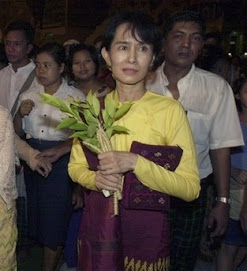


 Posts
Posts


