http://www.irrawaddy.org/article.php?art_id=14765
Asian Lawmakers Push UN Chief on Burma
--------------------------------------------------------------------------------
By WAI MOE Monday, December 8, 2008
--------------------------------------------------------------------------------
More than 240 Asian lawmakers have called for the UN Secretary-General Ban Ki-moon to press Burma’s junta for the release of all political prisoners in the country.
The Asean Inter-Parliamentary Myanmar Caucus (AIPMC), which organized this campaign, said in a press release on Monday that a total of 241 parliamentarians from Cambodia, Indonesia, Japan, South Korea, Malaysia, the Philippines, Singapore and Thailand have sent a public letter to Ban urging him to ensure the release of all Burma’s political prisoners by December 31.
It is believed to be the first time in history that a large group of Asian lawmakers have sent a public letter to the UN.
Roshan Jason, the executive director of the AIPMC, told The Irrawaddy on Monday that the group of Asian representatives has chosen Burma’s political prisoner issue because it is an essential step in the process of national reconciliation in the country.
“The most important human rights issue is the release of political prisoners [in Burma] now,” he said.
In the letter to the UN secretary-general, the Asian lawmakers said that the Burmese junta has used prisoners of conscience as political pawns, releasing a handful during and after visits by UN envoys while avoiding a complete release that would allow pave the way for true national reconciliation.
“The suffering of the people must not be allowed to continue and the world can no longer sit idly by and only assist them when there is a devastating natural disaster,” said Kraisak Choonhavan, president of the AIPMC and a member of parliament for Thailand’s Democrat Party.
The Asian parliamentarians’ call followed a similar petition on December 3 by 112 former world leaders—including Corazon Aquino, Tony Blair, George H W Bush, Jimmy Carter, Mikhail Gorbachev, John Howard, Chandrika Kumaratunga, John Major, Margaret Thatcher and Lech Walesa—to the head of the UN, calling for the release of all political prisoners in Burma.
However, Ban told reporters on Friday that he will not visit Burma in the near future unless political progress is evident in the country.
“At this time, I do not think that the atmosphere is ripe for me to undertake my own visit there,” he said. "But I am committed, and I am ready to visit any time when I can have reasonable expectations my visit will be productive and meaningful.”
Commenting on Ban Ki-moon’s response, Roshan Jason said that he should reconsider his decision of canceling the trip.
“He should realize that he would perhaps create a greater impact and [bring discussions over the political prisoners to the forefront of negotiations] with leaders of the regime,” the executive director of AIPMC said. “It is better to see them (the Burmese generals) in person—there will be more opportunity to talk about this particular issue and he can show his commitment to making sure prisoners are released.”
Meanwhile, analysts are skeptical of the impact of the international campaigns to free political prisoners in Burma.
“The international community highlighting the Burma crisis, such as issuing statements and petitions, is good,” said Aung Naing Oo, a Burmese commentator based in Thailand. “But the junta will think of this kind of action as just shooting them with flowers.”
Since early November, courts in Burmese prisons have sentenced more than 200 people—from pro-democracy activists to bloggers—with jail terms of up to 65 years imprisonment.
Aung Naing Oo said the junta often uses long-term imprisonment as a tool of “pre-emptive repression” to deter dissident movements.
Copyright © 2008 Irrawaddy Publishing Group | www.irrawaddy.org
Tuesday, December 9, 2008
Asian Lawmakers Push UN Chief on Burma


Monday, December 8, 2008
Clinton global initiatives -ASIA
http://www.clintonglobalinitiative.org/NETCOMMUNITY/Page.aspx?pid=2437
Building on the global outreach of current CGI members, supported by the Annual Meetings in New York, CGI has created a new membership opportunity to engage business, government, civil society, and philanthropic leaders across Asia. This week, the 2008 CGI Asia Meeting in Hong Kong provides an opportunity for Asia’s most influential leaders to come together and take action to solve the region’s most pressing issues. As an integral part of membership, each CGI Asia participant must make a Commitment to Action—a new, specific, and measurable initiative that addresses a social, economic, or environmental problem of the member’s choosing. CGI Asia will catalyze innovative solutions and cross-sector partnerships among regionally based members in Asia and CGI’s global community to address critical challenges with global implications. Many commitments already in action are featured in the Commitments section of the website.
Beyond transforming the global economic landscape, growth in Asian countries is expanding the capacity of Asian leaders to address contemporary challenges at the local, regional, and international levels. Corporations, governments, and non-governmental organizations in Asia continue to increase their engagement on climate change, education, health, and other pressing issues. In December 2008, President Clinton will travel to Hong Kong to join several hundred Asian leaders from a wide variety of backgrounds to further strengthen social and global responsibility in Asia, and move toward the benefits achieved through collaboration.
This meeting will be similar in format to the Annual Meeting in New York. In Hong Kong, President Clinton will engage a distinguished group of leaders for two days of panel discussions and interactive working sessions, each of which will examine specific challenges and opportunities for action. The meeting will focus on three primary areas of discussion: education, energy & climate change, and public health.
The complete 2008 Asia Meeting schedule is available here. To read more about CGI Asia, download the complete CGI Asia Info Kit and the CGI Asia Program Update.
To apply to become a volunteer at CGI Asia, click here.
Opposition, coalition parties in Thailand to form govt
http://www.chinadaily.com.cn/world/2008-12/07/content_7278895.htm
Xinhua/Agencies)
Updated: 2008-12-07 14:36 Comments(0) PrintMailBANGKOK -- Thailand's former opposition Democrat Party and four former coalition parties announced on Saturday that they would form a coalition government which holds at least 250 MPs and will support Democrat leader Abhisit Vejjajiva as the new prime minister.
At a press conference in Bangkok in the evening, Democrat Party secretary-general Suthep Thaugsuban announced the formation of a new coalition. Also present were representatives from the former Chart Thai and Matchima Tipataya, both just recently disbanded, Ruamjai Thai Chart Pattana, Puea Pandin and the "Friends of Newin" faction, a defector group from the former ruling People Power Party (PPP).
Members of five political parties and one faction, including Democrat Party's secretary-general Suthep Thaugsuban (C), join hands after forming a new coalition which hopes to create Thailand's next government, after a news conference in Bangkok December 6, 2008. Thailand's opposition Democrat Party said on Saturday that several parties in he ruling coalition would switch sides and for a government with it, but it was far from clear that horse-trading had finished. Standing from L to R are Ruamjai Thai Chartpattana Party executive Wannarat Charnukool, Matchima Thipataiya Party secretary-general Porntiwa Nakasai, Puea Pandin executive Rarnongrak Nuanchawee, Democrat Party secretary-general Suthep Thaugsuban, Senior executive of now defunct Chart Thai Party Sanan Kachornprasart, representatives from Newin faction of the People Power Party Boonjong Wongtrirat and Sophon. [Agencies]
Sanan Kachornprasart, caretaker deputy prime minister who represented the Chart Thai, said the coalition of the defunct PPP could not run the country so the Chart Thai decided to switch side for the sake of the country.
Sanan said the Chart Thai made a decision to switch side from the PPP partners to form a coalition with the Democrat in response to "calls from all walks of life" in order to tackle the divisiveness among Thais and economic woes.
All other representatives of the joining parties explained that they have switched side as "the best way" out of the country's current crisis.
Boonjong Wongtrairat, a representative of the "Friends of Newin " faction, a group of MPs loyal to Newin Chidchob, banned executive of the former ruling Thai Rak Thai party, read from a prepared statement that MPs of his group would vote for Democrat leader Abhisit Vejjajiva as the next prime minister before deciding to join a new party later.
Suthep said that all the parties were forming the coalition " not for personal or vested interests," but to cooperate to solve the country's problems."
The PPP, before the looming disbandment verdict, had registered a new Puea Thai Party, which many former PPP have joined.
Also on Saturday, a group of leading members of the Puea Thai Party held a press conference to announce that it could still contest against the Democrat to form a coalition government.
Deputy House Speaker Apiwan Wiriyachai, seen as a leading contestant to become the PM candidate from the former PPP side, told the press conference that his group was informed by members of the Friends of Newin faction and by Chart Thai leader Banharn Silapa-Archa that they would still support the Puea Thai to form a new coalition.
Members of five political parties and one faction hold a meeting in Bangkok, before announcing they formed a new coalition in hopes to create Thailand's next government on December 6, 2008. Thailand's opposition Democrat Party said on Saturday that several parties in he ruling coalition would switch sides and for a government with it, but it was far from clear that horse-trading had finished. [Agencies]
The PPP, Chart Thai and Matchima Tipataya parties, all in the former six-party coalition government led by the PPP since its first formation in February, were altogether disbanded on electoral fraud charges by the Constitution Court on last Tuesday. All executives of the three disbanded parties were banned from electoral process for five years as punishment. Somchai Wongsawat, as PPP's acting leader, was disqualified as prime minister immediately.
A new PM must be elected in a special parliamentary session expected on Monday to form a new government.
The 480-seat House of Representatives has 441 active MPs after some executives MP of three disbanded parties were disqualified. The non-executives MPs have 60 days after the party disbandment to switch to another party in order to stay in post.
Among the 441, 213 are from the now defunct PPP. The Democrat Party, formerly the only opposition party in the House, has 166 seats. The laws require that a party or coalition of parties must enjoy a simple majority of the House seats to form a government.
The conflicting information from each side has added unclearness as to which side will get to form the new coalition government and produce a new PM.
The pro-government Democratic Alliance Against Dictatorship ( DAAD), or so-called "red-shirt group", called off its plans to rally in front of the parliament on Sunday and Monday, awaiting to see who will be the next prime minister.
Previous page 1 2 3 4 Next Page
Singapore : Nuclear power not ruled out
http://www.post1.net/lowem/entry/singapore_nuclear_power_not_ruled_out
Airborne over Nuclear Power Plant Isar II, Bavaria, Germany
straitstimes.com :
Singapore's Prime Minister Lee Hsien Loong does not rule out the possibility of Singapore having a nuclear power plant in the long term. There would be difficulties, he acknowledged, because of the scale of such a project. At the same time, there would be safety issues. But technology may evolve so that such challenges can be resolved. "I would not rule it out for the long term," he said. "I would not say never, because if global warming is a serious problem, if energy prices in the long term continue to rise, fuel prices continue to rise, and if you are worried about a carbon tax on top of that, then you have to seriously consider nuclear."
Mr Lee's comments yesterday [5 Dec 2008] - in response to a question on whether Singapore has plans for nuclear power - are more positive than his stance a year ago, when he ruled it out as an option. During the United Nations Climate Change Conference in Bali in December last year [2007], he said nuclear energy was out because of the lack of a minimum 30km safety distance, an issue in small countries like Singapore, which stretches about 40km from east to west. But Mr Lee said yesterday that technology may evolve, mitigating this consideration. "Safety rules may evolve, there might be other possibilities such as putting it (a nuclear plant) underground," he said.
He noted that nuclear power is an issue that "many countries don't want to think about". "But we cannot put it off our mental map," he said. Last month, a high-powered panel set up by the Trade and Industry Ministry to examine Singapore's energy policies said nuclear research, and even a nuclear power plant, could not be dismissed from Singapore's range of long-term solutions. Minister Mentor Lee Kuan Yew had also revealed that the Government had thought about possible locations for such a plant: Pedra Branca island east of Singapore, or on a floating platform out at sea.
- I have a couple of friends who will only say "boom" whenever I mention that given the realities of peak oil and gas, and ongoing climate change, Singapore needs to go nuclear. They seriously misunderstand. Here's why :
1. "You need a huge exclusion zone." Not really. The exclusion zone around a typical nuclear power plant is actually quite small : Usually nuclear plants have very compact sites of 500 to 1000 acres including the exclusion area around the plant. That works out to only 2-4 square km or 0.7-1.5 square miles.
2. "It is safest to stay more than 30 km away from a nuclear power plant". It doesn't have to be that far. Nuclear plants are engineered with a model of a "fencepost man" in mind. This is also publicly available elsewhere, and like this commenter said : [the] legal limit for exposure to a person living near a nuclear power plant is ... 15 millirem and has been for decades. In fact, that is the exposure limit for a so-called "fencepost man" who lives right at the fence of the power plant, gets his water from a well drilled at the fence line, and grows his food on a plot of land adjacent to the plant. Compared to this, according to the Washington State Department of Health, the average cosmic background radiation is 360 millirems per year, a figure which concurs with other sources I have come across.
3. "Chernobyl shows that nuclear power is not safe". Chernobyl was an old Soviet-era design without a containment structure, which every modern Western design has. The crazy part of the story was, the Russian engineers were conducting a dangerous experiment by removing the control rods to see what would happen. Sure enough, it blew up. You couldn't make up stuff like this. It was bad comedy. No nuclear engineer would run things like the Soviets did.
4. "You can't possibly be safe anywhere near an operating nuclear power plant". Not true. The US Navy has operated nuclear power plants (supplied by my former employer, Lockheed Martin) on their submarines and aircraft carriers for decades with an impeccable safety record. Given the cramped confines within ships and especially submarines, American sailors routinely walk literally within feet of these operating nuclear power plants with no ill effects.
So, never say never. Given current technology and Singapore's geography, there are exactly two choices for base-load electricity generation that could possibly complement the existing natural-gas power plants : coal and nuclear. We do not have the geography for hydro or geothermal. Renewables such as wind and solar, while clean and interesting, are intermittent sources at best. And with Singapore's Kyoto Protocol commitment, it had better not be coal. The conclusion is self-evident. I am glad that Singapore's leaders are starting to see things this way as well.
North Korea: We don't want Japan at nuclear talks

A satellite view of the North Korean nuclear facility at Yongbyon, on which talks have centered.
SEOUL, South Korea (AP) -- North Korea will reject Japan's continued participation in the six-party disarmament talks aimed at ending Pyongyang's nuclear programs, an official warned Saturday ahead of the latest round of negotiations in Beijing.
"We will neither treat Japan as a party to the talks nor deal with it even if it impudently appears in the conference room, lost to shame," a North Korean Foreign Ministry spokesperson said in comments carried by the country's official Korean Central News Agency.
The move was apparently in response to Japan's refusal to provide aid to North Korea under a disarmament-for-aid pact.
The comments came two days before negotiators of the six nations prepare to meet Monday in Beijing to advance the stalled talks.
Japan has refused to join four other countries -- South Korea, the United States, China, Russia -- in providing aid to North Korea as a reward for disarmament until Pyongyang addresses the kidnapping of more than a dozen Japanese in the 1970s and 1980s.
North Korea in 2002 acknowledged kidnapping 13 Japanese citizens, and allowed five victims to return home, saying the remaining eight had died.
Japan, however, has demanded proof of the deaths and a probe into additional suspected kidnapping cases.
Japan and North Korea struck a breakthrough deal in June under which North Korea pledged to finally resolve the abductions of Japanese citizens, an emotional issue that slowed progress in nuclear talks. But no major progress has been made since then.
Japan "has neither justification nor qualification to participate in the talks. On the contrary, it only lays a hurdle in the way of achieving the common goal," the North Korean official said.
Other countries beside the six parties have expressed willingness to give economic aid to North Korea in place of Japan, the official said without elaborating.
Sarkozy defies China with Dalai Lama talks
http://news.yahoo.com/s/nm/20081206/wl_nm/us_poland_dalai_2
France's President Nicolas Sarkozy (L) is welcomed by Tibet's exiled spiritual leader the Dalai Lama in Gdansk, December 6, 2008.
(Eric Feferberg/Pool/Reuters)
By Yann Le Guernigou and Gareth Jones Yann Le Guernigou And Gareth Jones – Sat Dec 6, 1:52 pm ET
GDANSK, Poland (Reuters) – French President Nicolas Sarkozy defied China on Saturday by meeting the Dalai Lama and said Europe shared the exiled Tibetan spiritual leader's concerns over the situation in his homeland.
China called the meeting an "opportunistic, rash and short-sighted approach to handling the Tibet issue," despite Sarkozy saying he regarded Tibet as part of China and that there was no need to "dramatize" his encounter.
"The meeting went very well ... The Chinese authorities knew perfectly well this meeting would take place before the end of the year," Sarkozy told reporters after his talks, which lasted about 30 minutes.
China called off a summit with the European Union last Monday in protest against Sarkozy's plan to meet the Dalai Lama, branded by Beijing as a "splittist" for advocating self-determination for his mountain homeland.
On Saturday, China condemned the meeting. "This development is indeed an unwise move which not only hurts the feelings of the Chinese people, but also undermines Sino-French ties," its official Xinhua news agency said in a commentary.
"The French side ... took an opportunistic, rash and short-sighted approach to handling the Tibet issue."
Sarkozy said the Dalai Lama, who welcomed him by draping a 'kata' or traditional Tibetan white scarf on his shoulder, had said at the meeting that he does not seek independence for Tibet. "I told him how much importance I attach to the pursuit of dialogue between the Dalai Lama and the Chinese authorities."
Asked about the situation in Tibet, Sarkozy said: "The Dalai Lama shared with me his worries, worries which are shared in Europe. We have had a wide discussion of this question." The Dalai Lama and other supporters of Tibetan self-rule say China is strangling the mountain region's cultural and religious traditions and subordinating Tibetans to an influx of Han Chinese migrants and investment, charges Beijing rejects.
STAYING CALM
The two met in the Polish port of Gdansk where they joined 25th anniversary celebrations of Polish pro-democracy leader Lech Walesa's winning the Nobel Peace Prize.
Playing down any possible negative impact on Sino-French ties, Sarkozy said: "There is no need to dramatize things."
Beijing's unusually vocal criticism of Sarkozy's plan to meet the Dalai Lama is linked to the fact that Paris holds the European Union's rotating presidency, diplomats say.
In Paris, an official said there had been no sign yet of any Chinese boycott of French products. The EU is China's biggest trade partner and supermarket chain Carrefour employs tens of thousands of people in China and is the biggest purchaser of Chinese goods in France.
French companies were subjected to Chinese boycotts and demonstrations earlier this year after the Paris leg of the Olympic torch relay was disrupted by anti-China protesters.
Earlier on Saturday, the Dalai Lama called for dialogue and compassion to solve the world's problems.
"Warfare failed to solve our problems in the last century, so this century should be a century of dialogue," he told delegates, including Walesa, European Commission President Jose Manuel Barroso and Polish Prime Minister Donald Tusk.
The Dalai Lama, who met Tusk privately on Saturday, praised Polish courage in resisting past oppression.
The 73-year-old monk is a popular figure in Poland, where some see in his struggle with China's communist authorities echoes of their own battles under Walesa against Soviet-backed communist rule that ended in 1989.
The Dalai Lama fled into exile in 1959 after a failed insurrection against Chinese rule in Tibet, occupied by People's Liberation Army troops from 1950.
(Additional reporting by Francois Murphy in Paris)
(Writing by Gareth Jones, editing by Elizabeth Piper)
Bloggers More Likely To End Up In Jail Than Print Journalists
http://www.alleyinsider.com/2008/12/bloggers-more-likely-to-end-up-in-jail-than-print-journalists
Eric Krangel | December 4, 2008 4:13 PM
If you live in or travel to a country without press freedom, make no mistake: Big Brother reads blogs. Of 125 journalists in jail worldwide, 45% of them write for online media, says the Committee to Protect Journalists. That's more than any other type of media, with print in second place with 42% of the total.
China earns the dubious distinction of being the world's worst jailer of journalists, a position it's held for ten consecutive years. Other danger areas for journalists: Cuba, Burma, Eritrea, and Uzbekistan.
http://cpj.org/imprisoned/cpjs-2008-census-online-journalists-now-jailed-mor.php
CPJ's 2008 prison census: Online and in jail
Also: See capsule reports on journalists in jail as of December 1, 2008
New York, December 4, 2008--Reflecting the rising influence of online reporting and commentary, more Internet journalists are jailed worldwide today than journalists working in any other medium. In its annual census of imprisoned journalists, released today, the Committee to Protect Journalists found that 45 percent of all media workers jailed worldwide are bloggers, Web-based reporters, or online editors. Online journalists represent the largest professional category for the first time in CPJ's prison census.
Abdel Karim Suleiman, an Egyptian blogger, is one of 56 online journalists jailed worldwide. (Reuters)CPJ's survey found 125 journalists in all behind bars on December 1, a decrease of two from the 2007 tally. (Read detailed accounts of each imprisoned journalist.) China continued to be world's worst jailer of journalists, a dishonor it has held for 10 consecutive years. Cuba, Burma, Eritrea, and Uzbekistan round out the top five jailers from among the 29 nations that imprison journalists. Each of the top five nations has persistently placed among the world's worst in detaining journalists.
At least 56 online journalists are jailed worldwide, according to CPJ's census, a tally that surpasses the number of print journalists for the first time. The number of imprisoned online journalists has steadily increased since CPJ recorded the first jailed Internet writer in its 1997 census. Print reporters, editors, and photographers make up the next largest professional category, with 53 cases in 2008. Television and radio journalists and documentary filmmakers constitute the rest.
"Online journalism has changed the media landscape and the way we communicate with each other," said CPJ Executive Director Joel Simon. "But the power and influence of this new generation of online journalists has captured the attention of repressive governments around the world, and they have accelerated their counterattack."
In October, CPJ joined with Internet companies, investors, and human rights groups to combat government repression of online expression. After two years of negotiations, this diverse group announced the creation of the Global Network Initiative, which establishes guidelines enabling Internet and telecommunications companies to protect free expression and privacy online. Yahoo, Google, and Microsoft have joined the initiative.
Illustrating the evolving media landscape, the increase in online-related jailings has been accompanied by a rise in imprisonments of freelance journalists. Forty-five of the journalists on CPJ's census are freelancers; most of them work online. These freelancers are not employees of media companies and often do not have the legal resources or political connections that might help them gain their freedom. The number of imprisoned freelancers has risen more than 40 percent in the last two years, according to CPJ research.
"The image of the solitary blogger working at home in pajamas may be appealing, but when the knock comes on the door they are alone and vulnerable," said CPJ's Simon. "All of us must stand up for their rights--from Internet companies to journalists and press freedom groups. The future of journalism is online and we are now in a battle with the enemies of press freedom who are using imprisonment to define the limits of public discourse."
Antistate allegations such as subversion, divulging state secrets, and acting against national interests are the most common charge used to imprison journalists worldwide, CPJ found. About 59 percent of journalists in the census are jailed under these charges, many of them by the Chinese and Cuban governments.
About 13 percent of jailed journalists face no formal charge at all. The tactic is used by countries as diverse as Eritrea, Israel, Iran, the United States, and Uzbekistan, where journalists are being held in open-ended detentions without due process. At least 16 journalists worldwide are being held in secret locations. Among them is Gambian journalist "Chief" Ebrima Manneh, whose whereabouts, legal status, and health have been kept secret since his arrest in July 2006. From the U.S. Senate to the West African human rights court, international observers have called on authorities to free Manneh, who was jailed for trying to publish a critical report about Gambian President Yahya Jammeh.
Nowhere is the ascendance of Internet journalism more evident than in China, where 24 of 28 jailed journalists worked online. China's prison list includes Hu Jia, a prominent human rights activist and blogger, who is serving a prison term of three and a half years for online commentaries and media interviews in which he criticized the Communist Party. He was convicted of "incitement to subvert state power," a charge commonly used by authorities in China to jail critical writers. At least 22 journalists are jailed in China on this and other vague antistate charges.
Cuba, the world's second worst jailer, released two imprisoned journalists during the year after negotiations with Spain. Madrid, which resumed cooperative programs with Cuba in February, has sought the release of imprisoned writers and dissidents in talks with Havana. But Cuba continued to hold 21 writers and editors in prison as of December 1, all but one of them swept up in Fidel Castro's massive 2003 crackdown on the independent press. In November, CPJ honored Héctor Maseda Gutiérrez, who at 65 is the oldest of those jailed in Cuba, with an International Press Freedom Award.
Burma, the third worst jailer, is holding 14 journalists. Five were arrested while trying to spread news and images from areas devastated by Cyclone Nargis. The blogger and comedian Maung Thura, who uses the professional name Zarganar, was sentenced to a total of 59 years in prison during closed proceedings in November. Authorities accused Maung Thura of illegally disseminating video footage of relief efforts in hard-hit areas, communicating with exiled dissidents, and causing public alarm in comments to foreign media.
Eritrea, with 13 journalists in prison, is the fourth worst jailer. Eritrean authorities have refused to disclose the whereabouts, legal status, or health of any of the journalists they have imprisoned. Unconfirmed online reports have said that three of the jailed journalists may have died in custody, but the government has refused to even say whether the detainees are alive or dead.
Uzbekistan, with six journalists detained, is the fifth worst jailer. Those in custody include Dzhamshid Karimov, nephew of the country's president. A reporter for independent news Web sites, Karimov has been forcibly held in a psychiatric hospital since 2006.
Here are other trends and details that emerged in CPJ's analysis:
In about 11 percent of cases, governments have used a variety of charges unrelated to journalism to retaliate against critical writers, editors, and photojournalists. Such charges range from regulatory violations to drug possession. In the cases included in this census, CPJ has determined that the charges were most likely lodged in reprisal for the journalist's work.
Violations of censorship rules, the next most common charge, are applied in about 10 percent of cases. Criminal defamation charges are filed in about 7 percent of cases, while charges of ethnic or religious insult are lodged in another 4 percent. Two journalists are jailed for filing what authorities consider to be "false" news. (More than one type of charge may apply in individual cases.
Print and Internet journalists make up the bulk of the census. Television journalists compose the next largest professional category, accounting for 6 percent of cases. Radio journalists account for 4 percent, and documentary filmmakers 3 percent.
The 2008 tally reflects the second consecutive decline in the total number of jailed journalists. That said, the 2008 figure is roughly consistent with census results in each year since 2000. CPJ research shows that imprisonments rose significantly in 2001, after governments imposed sweeping national security laws in the wake of the 9/11 terrorist attacks on the United States. Imprisonments stood at 81 in 2000 but have since averaged 128 in CPJ's annual surveys.
The United States, which is holding photographer Ibrahim Jassam without charge in Iraq, has made CPJ's list of countries jailing journalists for the fifth consecutive year. During this period, U.S. military authorities have jailed dozens of journalists in Iraq--some for days, others for months at a time--without charge or due process. No charges have ever been substantiated in these cases.
CPJ does not apply a rigid definition of online journalism, but it carefully evaluates the work of bloggers and online writers to determine whether the content is journalistic in nature. In general, CPJ looks to see whether the content is reportorial or fact-based commentary. In a repressive society where the traditional media is restricted, CPJ takes an inclusive approach to work that is produced online.
The organization believes that journalists should not be imprisoned for doing their jobs. CPJ has sent letters expressing its serious concerns to each country that has imprisoned a journalist.
UN chief turns heat on Burma
http://www.google.com/hostednews/ukpress/article/ALeqM5g1Pfc8-NTDqwtRpqAVXkwbkG8zGg
Secretary-General Ban Ki-moon said there is "growing frustration" around the world with Burma's ruling generals.
He spoke to reporters after emerging from a closed-door meeting during which he spent more than an hour trying to get 14 nations to exert more influence on Burma.
The so-called Group of Friends on Burma, which Mr Ban created a year ago, includes both Western nations pushing for human rights reforms and Southeast Asian trading partners, chiefly China, with different priorities.
All share "not only a higher expectation but also a growing frustration that our efforts have yet to yield the results we all hope for. I share this sense of expectation and frustration," Mr Ban said.
Mr Ban also received a letter signed by 112 former presidents and prime ministers urging him to return to Burma and to press its military junta to free all political prisoners.
Burma's military, which has ruled since 1962, tolerates no dissent and crushed pro-democracy protests led by Buddhist monks in September 2007. It holds more than 2,100 political prisoners, up sharply from nearly 1,200 before the demonstrations, human rights groups say.
Mr Ban travelled to Burma last May after Cyclone Nargis devastated coastal areas.
He was able to meet with the junta's top leader, Senior General Than Shwe, and persuade him to ease access for foreign aid workers and relief supplies.
Post Online Video and Risk Going to Jail
http://newteevee.com/2008/12/06/post-online-video-and-risk-going-to-jail/
Written by Janko Roettgers
Posted Saturday, December 6, 2008 at 12:00 AM PT
Post Online Video and Risk Going to Jail
The Committee to Protect Journalists (CPJ) this week published its annual prison census, which puts the spotlight on imprisoned journalists from around the world. 2008 marks the first year in which the report is dominated by online journalists, with 45 percent of those jailed bloggers, online reporters or editors. And the report makes clear that repressive regimes are increasingly targeting online video makers.
The findings serve to show how quickly online all forms of online media are gaining importance. When it comes to online video, many repressive regimes are afraid of the worldwide audience garnered by sites like YouTube, using the same laws meant to control state-run TV stations to crack down on video bloggers and video journalists.
CPJ found that there are some 125 journalists imprisoned for their work worldwide, 56 of which are classified as online journalists by the organization. It’s a little harder to tally the exact number of online video makers because many journalists and bloggers obviously try to use all the media at their disposal, but it appears that at least five people were imprisoned for reasons related to their online video work. A spokesperson of CPJ told us that seven of the jailed journalists are traditional TV reporters.
One of those punished for producing online video was Maung Thura, a Burmese comedian who videotaped the relief efforts after Cyclone Nargis hit the impoverished country earlier this year. He circulated his footage through DVDs and on the Internet, according to CPJ, and was imprisoned on June 4th. Thura, along with another freelance journalist and two local activists were charged with violation of the 1996 Television and Video Act, a local law that apparently makes it necessary to get the government’s approval for every single video recording before it gets published.
Laws like these were obviously written with traditional TV journalism — not YouTube, video blogs and cell-phone cameras — in mind. When thousands of monks and protesters took to the streets in the late summer of 2007 to demand regime change in Burma, the world was able to watch because so many people were uploading pictures and videos to Flickr, YouTube, Facebook and opposition-run web sites. The country’s military regime was apparently perplexed by the situation; it wasn’t until days later that they moved to prevent additional images or video from being broadcast — by completely shutting down the country’s Internet access.
Related Posts
GigaOM: What to Do After the Election? NewTeeVee Live!
GigaOM: Obama Puts Keating Economics Short Online
NewTeeVee: Web Video: Not Just for Kids, Going Mainstream
Powered by Sphere
Thailand Slides Toward Civil War
http://www.newsweek.com/id/172612
The public siege of its airports may be over, but the country's political crisis is just heating up.
By George Wehrfritz and Jaimie Seaton | NEWSWEEK
Published Dec 6, 2008
From the magazine issue dated Dec 15, 2008
Last week, after Thailand's high court disbanded the country's ruling party and antigovernment demonstrators finally ended their weeklong occupation of Bangkok's two airports and their three-month siege of Government House, weary stranded travelers could have been forgiven for thinking that the political crisis was over. The estimated 350,000 foreigners who'd been trapped by the blockage have begun their journeys home. Yet for Thailand's citizens, its politicians, its business community and its foreign investors, nothing concrete has been resolved. Thailand remains a nation divided. Its beloved 81-year-old king, Bhumibol Adulyadej, is in decline and had to unexpectedly cancel his annual birthday speech last Thursday due to illness. King Bhumibol had never previously missed his birthday address, and his absence dashed hopes that he would use the occasion to help resolve the crisis. Instead, political extremism is now mounting, and a frightening new phrase has slipped into the political lexicon: civil war.
Most analysts acknowledge that a civil conflict in the strict military sense—with rival armies fighting over territory and national control—is unlikely. Yet a uniquely Thai version, featuring extreme political violence and dividing the nation into rich vs. poor, urban vs. rural, north vs. south and pro- vs. antiglobalization, has already begun to play out. Its salient aspects include a winner-take-all political culture, a rising authoritarian bent among the country's traditional elite and the erosion of democratic institutions. "Who will fight? All of the above," warns Sunai Phasuk, Thailand representative for Human Rights Watch. "It will be both a horizontal and vertical conflict, like a football game that goes very nasty and eventually the crowd jumps in."
That football match reached fever pitch last week when, for the second time in three months, Thailand's constitutional court toppled a democratically elected government. A nine-judge panel removed Prime Minister Somchai Wongsawat from office, dissolved three political parties central to his coalition and banned a handful of top officials for allegedly permitting fraud during the December 2007 election. The ruling came just three months after the same court ousted then Prime Minister Samak Sundaravej for briefly hosting a televised cooking show while in office (which violated a no-moonlighting rule he was unaware of). The latest decision was an attempt to strike out at "dishonest political parties [that] undermine Thailand's democratic system," said Court President Chat Chalavorn. Critics called the decision a "judicial coup."
The new verdict was widely anticipated, partly because Thailand's judiciary is increasingly seen as a tool of an old ruling troika comprised of the military, the monarchy and the Bangkok-based national bureaucracy. Since democracy was restored last year, the judiciary has flagged the government for even the tiniest infractions while refusing to rein in an antigovernment pressure group calling itself the People's Alliance for Democracy as it sought to impose mob rule. In August, the PAD's yellow-clad supporters occupied the prime minister's office, and late last month they shut down both of Bangkok's civilian airports. Yet the judiciary did nothing. It is also legally proscribed from bringing criminal charges against any participant in the 2006 coup that ousted populist firebrand Thaksin Shinawatra from power. Michael Montesano, a visiting research fellow at the Institute of Southeast Asian Studies in Singapore, says Thai politics have polarized to such an extreme that even the king—who intervened to stop political violence in 1992—might be unable to broker a lasting truce this time. "That's not how Thailand works anymore," he argues. "Each side sees so little reason to compromise that any deal wouldn't last very long."
The roots of today's strife stretch back to 2000, when tycoon turned politico Thaksin engineered a sweeping election triumph by pledging to elevate the country's rural majority out of poverty. Once in office, he funded village-level development projects, offered nearly free health care and made Thailand's economy the envy of the region by delivering high growth and reducing the income gap. His economic model played well in the largely rural country and made Thailand an emerging-market star, yet Thaksin's populism, charisma and superior political skills also made him powerful enemies among Thailand's traditional power brokers: the military, Bangkok's political clans, the business elite and the monarchy. Those groups supported Thaksin's 2006 ouster "because the logical conclusion of his programs would be a transformation of Thailand's sociopolitical hierarchy [that] would threaten many, many people close to the top," says Prof. Thitinan Pongsudhirak, director of the Institute for Security and International Studies at Chulalongkorn University in Bangkok.
More than two years later, the old elite is still struggling to exorcise Thaksin's ghost. The man himself now lives in exile in Dubai to avoid jail following his conviction this year on corruption charges. But he speaks frequently to supporters by video link and claims fealty from the coalition elected in a landslide in late 2007 led by remnants of his Thai Rak Thai Party. Now officially banned twice, it has again begun to reconstitute itself, this time as Puea Thai, and likely will maintain its sway over Parliament's powerful lower house. This resilience has broken a historical pattern whereby democratic movements crushed by Thailand's military stayed down. "The rural grassroots have been awakened," says Thitinan, "and they are not going back to sleep."
Unable to reassert authority over the hinterland, the old guard seems bent on retaking command through a platform it calls "new politics," which would roll back one-person, one-vote democracy. The PAD, which counts among its supporters retired military officers, opposition political parties and Bangkok's business community, and also enjoys cozy ties with elements of the monarchy, advocates the transformation of Parliament to one dominated by appointed lawmakers because, as PAD leader Sondhi Limthongkul told NEWSWEEK a few months ago, the rural masses "lack intelligence and wisdom" to vote responsibly. The group's guards carry guns, knives and explosives and have fought pitched battles with riot police. During the airport siege Sondhi incited his supporters to "shed your blood if that is necessary," telling them: "If you have to die, so be it."
Pavin Chachavalpongpun, a foreign-policy specialist at Singapore's Institute of Southeast Asian Studies, says the PAD vision for Thailand is "scarily analogous" to the political system Burma's generals are constructing to perpetuate their own monopoly on power. Rural Thais resent it so viscerally that they're rallying around Thaksin's allies as a point of pride. Upcountry constituencies have steadfastly stuck to their guns by replacing banned lawmakers with loyal pro-Thaksin surrogates. As Banharn Silpa-Archa, leader of the newly dissolved Chart Thai Party, put it last week: "If a husband is banned, his wife or offspring will replace him."
If that pattern holds, Thailand's Parliament will reconvene next week and, under a coalition led by Puea Thai, select the next prime minister from within its ranks. If that happens and "Thaksin's puppet government returns," PAD leader Sondhi has threatened to go back onto the streets and reoccupy airports. The court could still block this by appointing a "national unity" government in defiance of the Constitution, which makes no provision for such a move. This would turn back the clock to when the military imposed martial law back in 2006. But this time around, the pro-Thaksin camp has readied a pressure group of its own, the United Front for Democracy Against Dictatorship, which has vowed to take up arms to defend the ruling coalition. Popularly known as the "red shirts," the UDD's rank and file is every bit as thuggish as the PAD's yellow-clad toughs.
The nightmare scenario has color-coded hooligans fighting in the streets even as the monarchy enters its own transition. As Thitinan writes in the Journal of Democracy's current issue: "The setting sun of the King's long reign is the background against which the battle of attrition for Thailand's soul is taking place." That contest, he argues, pits "opposing webs of partisans and vested interests both for and against what Thaksin has done to Thailand." His fear: "What happens after the current king leaves the scene could be the most wrenching crisis yet." Observers are following events closely. "This is not civil war in the way we talk about civil war," says a foreign diplomat in Bangkok. "They're talking about mass unrest, but whether it will happen or not is yet to be determined." The only certainty, it seems, is uncertainty.
© 2008
Sunday, December 7, 2008
POLITICS-THAILAND: Court Gains No Glory by Banning Ruling Party
http://www.ipsnews.net/news.asp?idnews=45018
By Marwaan Macan-Markar
BANGKOK, Dec 7 (IPS) - The recent judgment by Thailand’s Constitutional Court confirmed the power it has to sack a politician or party found guilty of election malpractice, even if it smacked of the kangaroo courts of neighbouring, military-ruled Burma.
On Tuesday, the nine judges on the bench found the ruling People Power Party (PPP) and two smaller parties in its coalition guilty of political crimes committed by a handful of party officials at the December 2007 general elections.
The court ruled that the three parties had to be dissolved and scores of party executives banned from politics for five years, triggering a collapse of the government. Such a stiff penalty -- to deprive people of their civic rights through a form of collective punishment -- is enshrined in the 2007 constitution, which was drafted by a committee selected by the military junta that was in power following a September 2006 coup.
While such judicial power is being cheered in some quarters as a welcome development to save Thailand’s flawed democracy, others are asking aloud if proper legal procedure is being followed in arriving at such radical verdicts.
Typical among the critics is Prasit Pivavatnapanich, who has been troubled at the speed at which the judges delivered their unanimous verdict after two of the accused parties finished giving their final statements.
‘’The court started reading out their verdict for this case within 30 minutes to an hour of the final statements,’’ says Prasit, an associate professor at the law faculty at Thammasat University, in Bangkok. ‘’I have never seen this happening anywhere in the world.’’
‘’Many Thai people are wondering why the court rushed to deliver the judgement,’’ he revealed in an interview. ‘’The court should have taken more time and adjudicated with caution, since dissolving a political party and denying its leaders the right to vote is a serious matter.’’
In fact a statement released by Prasit and four other dons from his law faculty after the ruling drew attention to other embarrassing details. ‘’After the complainants finished the closing declaration, the constitutional court read the decisions immediately with mistakes and had to correct (them) during the reading,’’ the statement noted.
Such flaws have consequently helped give rise to a view that sees this powerful court in poorer light. ‘’Some Thai people, including me, are wondering if the court had written the judgement already, before the final statements were given,’’ says Prasit. ‘’People will begin to have doubts about this judicial process.’’
Doubts arose after the judges suddenly announced on Nov. 28 that the court had no more time to listen to the witnesses and evidence of the accused parties and set Dec. 2 as the final day of the case. This abrupt decision came after the accused parties had been guaranteed time to present testimony in their defence.
The banned PPP drew attention to this about-turn in its first formal response after Tuesday’s ruling. ‘’The rush to dissolve the political parties before finishing examining witnesses makes society lose confidence in and have doubts about the courts,’’ it said, before adding a damning indictment: ‘’It can be called a judicial coup.’’
This was the second time, in fact, that the Constitutional Court had come down hard against the PPP this year, after it won the poll to succeed a military regime.
In September, the court ruled against Samak Sundaravej, then prime minister and head of the PPP-led coalition government, for the crime of receiving payment to appear on a popular cooking show as celebrity chef. Samak’s successor as prime minister, Somchai Wongsawat, was banned this week by the court, along with 36 other executives of the PPP.
The fate of more parliamentarians from the PPP and its two smaller allies may soon be determined by the court. A petition being submitted by a group of appointed senators from the upper house calling for their dismissal for the way they were elected at the December 2007 poll -- as candidates representing the parties and voted as party-list parliamentarians -- than representing constituencies and being chosen by voters from a particular constituency.
The transformation of this court as a pivotal battleground to determine the future of Thai democracy grew out of a watershed moment in April 2006. That month, the country’s revered monarch, King Bhumibol Adulyadej, admonished the judges to do their job properly and clean up the political ‘’mess’’ in the country.
The king’s speech to the judges came after months of public protests, drawing tens of thousands to Bangkok’s streets, targeting the powerful government of Thaksin Shinawatra, which had been elected with huge mandates since 2001 but was forced out of power in the 2006 coup. The Thaksin administration was accused of corruption, nepotism and abuse of power.
In early May that year, the then bench of the Constitutional Court delivered an unprecedented verdict, nullifying the results of a controversial election held on Apr. 2. The ruling was welcome by scholars, human rights groups and activists. It was a break from a past where the judiciary shied away from political disputes and was rarely adjudicated major electoral issues.
However the coup that deposed Thaksin’s increasingly one-party state exposed the judiciary’s principles. There were no protests when the junta formed after the country’s 18th coup tore up the existing constitution, where staging a coup was illegal and deemed an act of treason.
The judiciary was as silent when the junta appointed a Constitutional Tribunal to prosecute Thaksin’s party for political crimes based on an order given by the military leaders after grabbing power.
That special tribunal ruled against the Thai Rak Thai (Thais Love Thai –TRT) party in May 2007, calling for it to be disbanded and 111 of its executives, including Thaksin, to be banned from politics for five years.
This week’s ruling by the Constitutional Court against the PPP, which is a successor to the TRT, drawing from the same, largely poorer vote base, was clearly shaped by that precedent.
And like it happened with the TRT verdict, human rights groups are not amused at the law that the court used to go after a few errant politicians.
‘’The constitution that was referred to by the Constitutional Court as the legal basis for the party’s dissolution and the barring of 109 party executives for five years involvement in politics, is undemocratic,’’ says Pokpong Lawansiri, a Thai activist at the Asian Forum for Human Rights, a regional rights lobby.
‘’The ouster of a constitutionally elected government may be only the beginning of trouble,'' the activist said.
(END/2008)
Fw: [burmainfo] 今週のビルマのニュース(0838号)
━━━━━━━━━━━━━━━━━━━━━━━━━━━━━━
ビルマ市民フォーラム メールマガジン 2008/12/6
People's Forum on Burma
━━━━━━━━━━━━━━━━━━━━━━━━━━━━━━
ビルマ情報ネットワーク(BurmaInfo)からのメールを転送させていただき
ます。
(重複の際は何卒ご容赦ください。)
PFB事務局
http://www1.jca.apc.org/pfb/
━━━━━━━━━━━━━━━━━━━━━━━━━━━━━━
ビルマ情報ネットワークの「今週のビルマのニュース」をお送りします。
「今週のビルマのニュース」バックナンバー
http://www.burmainfo.org/weekly.html
きょうのビルマのニュース(平日毎日更新)もご利用ください。
http://d.hatena.ne.jp/burmainfo
ビルマ情報ネットワーク (www.burmainfo.org)
秋元由紀
========================================
今週のビルマのニュース Eメール版
2008年12月5日号【0838号】
========================================
【今週の主なニュース】
112人の元国家元首が国連事務総長に書簡、ほか
・3日付で、112人の元国家元首(50か国以上)から
国連事務総長に宛てた公開書簡が出された。2008年
末までにすべての政治囚を解放するよう、ビルマ軍政に
働きかけることを求める内容。
日本からは小泉元首相が署名した。
ほかには、ブレア元英首相、カーター元米大統領、
ゴルバチョフ元ソ連大統領、金大中元韓国大統領、
アキノ元フィリピン大統領など。
・国連事務総長は3日、ビルマを再び訪問したいが、
政治改革が進む見込みがない限り訪問はできないとし、
12月に同国を訪問する予定を取りやめたことを発表した。
・活動家や僧侶への禁固刑判決言い渡しは今週も続いた。
政治囚支援協会(AAPP)によれば、11月だけで215人の
市民や僧侶が禁固刑判決を宣告された。
【その他】
日・ASEAN包括的経済連携協定が発効、ほか
・1日、「包括的な経済上の連携に関する日本国及び
東南アジア諸国連合構成国の間の協定(日・ASEAN
包括的経済連携協定)」が、日本とビルマのほか、
シンガポール、ラオス、ベトナムとの間で発効した。
・今週初めに来日していたマーシェル米国務次官補代理は
NHKとのインタビューで、ビルマ軍政が多数の活動家ら
を非公開の裁判にかけ、禁固刑判決を宣告している
ことを厳しく批判した。また「日本はミャンマーの人権
状況に対する懸念をより強く表明するとともに、軍事
政権に対する外交的な圧力をかけ続けてほしい」と述べ、
日本が働きかけをいっそう強めることに期待を示した
(2日付NHKニュース)。
【ビルマへの政府開発援助(ODA)約束状況など】
〔草の根・人間の安全保障無償資金協力〕
12月3日
チン州、病院の医療器材整備(約480万円)
マンダレー管区、電線の設置(約710万円)
【イベントなど】
・ビルマ市民フォーラム例会
「初めての方のための『ビルマ入門講座』
-ビデオ上映と講演-根本敬」
(文京シビックセンター、12月6日18時半~)
・世界人権宣言60周年記念・世界人権デー マーチング
呼びかけ団体 在日ビルマ人共同行動実行委員会ほか
(宮下公園集合、12月10日14時半~)
・上智大学アジア文化研究所「旅するアジア08」
第4回講演会「エネルギーの本当の値段~
ビルマ(ミャンマー)の天然ガス開発と人権」
講師:秋元由紀
(四谷・上智大学、12月12日18時~)
・ビルマの会 講演会
「ビルマの民主化を求めて~草の根難民支援活動から」
講師:中尾恵子(日本ビルマ救援センター代表)
参加費1000円(全額ビルマ難民支援に寄付)
(京都・法然院、14日15時~)
・テーラワーダ仏教講演会―ミャンマーサイクロン被
災者救援活動の現場から その祈りと行動
講師:ティータグー長老(ニャーニッサラ師)
*ミャンマーの民芸品や料理の出店、写真展、舞踊、
油絵もあり
(名古屋市熱田区の本遠寺、12月15日、昼の部13時~・夜の部18時~)
・2008年度ワン・ワールド・フェスティバル~
感じる・ふれあう・助け合う 世界につながる国際協力のお祭り
日本ビルマ救援センターによる活動紹介・ビルマ難民支援バザーあり。
映画「ビルマ、パゴダの影で」21日10時より上映・講演会
(大阪国際交流センター、20日・21日、10時~)
★ジェーン・バーキン最新アルバム『冬の子供たち』が
発売中。アウンサンスーチー氏に捧げる楽曲「アウンサンスーチー」を収録。
☆インターネット放送局「アワープラネットTV」がビルマ
でのダム開発問題を取り上げた。
ビルマ情報ネットワークの秋元由紀が解説(映像、16分)。
http://www.ourplanet-tv.org/video/contact/2008/20081008_10.html
★特定非営利活動法人メコン・ウォッチの
季刊誌「フォーラムMekong」、最新号はビルマ特集。
-ビルマ~サイクロン後の人々、軍政-
http://www.mekongwatch.org/resource/forum/FM_vol9_2_01.html
【もっと詳しい情報は】
きょうのビルマのニュース(平日毎日更新)
http://d.hatena.ne.jp/burmainfo/
ビルマ情報ネットワーク
http://www.burmainfo.org/
【お問い合わせ】
ビルマ情報ネットワーク 秋元由紀
====================================
今週のビルマのニュース Eメール版
2008年12月5日号【0838号】
作成: ビルマ情報ネットワーク
協力: ビルマ市民フォーラム
====================================
━━━━━━━━━━━━━━━━━━━━━━━━━━━━━━━━━━━━━━
配布元: BurmaInfo(ビルマ情報ネットワーク)
http://www.burmainfo.org
連絡先: listmaster@burmainfo.org
バックナンバー: http://groups.yahoo.co.jp/group/burmainfo/
※BurmaInfoでは、ビルマ(ミャンマー)に関する最新ニュースやイベント情報、
参考資料を週に数本配信しています。
━━━━━━━━━━━━━━━━━━━━━━━━━━━━━━━━━━━━━━
講演会・第14 回アジア・アフリカ研究会(12/7)山本宗補「ビルマ問題の本質を問う」ほか
━━━━━━━━━━━━━━━━━━━━━━━━━━━━━━
ビルマ市民フォーラム メールマガジン 2008/12/6
People's Forum on Burma
━━━━━━━━━━━━━━━━━━━━━━━━━━━━━━
PFB運営委員・山本宗補も参加いたします、講演会のお知らせをお送り
いたします。山本は「ビルマ問題の本質を問う」と題して、ビルマに
ついてお話いたします。
ぜひご来場ください。
PFB事務局
http://www1.jca.apc.org/pfb/
━━━━━━━━━━━━━━━━━━━━━━━━━━━━━━
公開講演のご案内
現代アジア・アフリカセンター
第14 回アジア・アフリカ研究会
■ 日時:2008年12 月7 日(日) 13:00 ~ 18:00
■ 会場:独立行政法人国際協力機構 広尾センター(JICA地球ひろば)
セミナールーム302
東京都渋谷区広尾4-2-24 電話番号:03-3400-7717(代表)
東京メトロ日比谷線 広尾駅下車(A3出口)徒歩1 分
地図:http://www.jica.go.jp/hiroba/about/map.html
■ 参加費:500円
※ 事前の申し込みは必要ありませんが、JICA地球ひろばに
入館される際に、1階で受付をしていただいてから、 3階の会場に
お越し下さい。
※ なお、終了後、簡単な懇親会を予定していますので、お時間の
ある方はご参加ください。
〔プログラム〕
13:00 ~ 13:05 開会の挨拶:古沢紘造(現代アジア・アフリカセンター)
13:05 ~ 14:05 講演:吉田正紀(日本大学)
テーマ:インドネシアからの花嫁ー「インドネシア人家族の会」と
インドネシア人女性の定住への日常的実践
14:05 ~ 14:35 討論 司会:近藤富士夫(現代アジア・アフリカセンター)
14:35 ~ 14:50 休憩
14:50 ~ 15:50 講演:山本宗補(フォトジャーナリスト)
テーマ:ビルマ問題の本質を問う
15:50 ~ 16:20 討論 司会:小幡 壮(現代アジア・アフリカセンター)
16:20 ~ 閉会の挨拶
▼吉田正紀さんプロフィール
立教大学経済学部・文学研究科大学院地理学専攻終了。
イリノイ大学アーバナ・シャンペーン人類学部大学院
博士課程修了(Ph.D). 現在、日本大学国際関係学部教授・
国際関係研究所所長 著書に『民俗医療の人類学』(古今書院)、
訳書に『異文化結婚』、『ジャパンーズ・ディアスポラ」(新泉社)
などがある。
▼山本宗補さんプロフィール
アジアをおもなフィールドとするフォトジャーナリスト。
1988 年からはビルマの少数民族問題、民主化闘争の取材を行う。
ビルマの民主化運動を支援する日本のNGO「ビルマ市民フォーラム」の
運営委員を務める。主著『また、あしたー日本列島老いの風景』アートン、
2006年)、『世界の戦場からーフィリピン最底辺を生きる』(岩波書店、2003年)
『ビルマの子供たち』(第三書館、2003年)、『ビルマの大いなる幻影』
(社会評論社、1996年)、共著『フォトジャーナリスト13 人の眼』
(集英社新書、2005 年)、『見えないアジアを歩く』(三一書房、2008年)ほか。
【連絡・問い合わせ先】
女子栄養大学文化人類学研究室( 深堀)
Tel&Fax:049-284-5841 メール:takamura@eiyo.ac.jp
━━━━━━━━━━━━━━━━━━━━━━━━━━━━━━
NLD's Instruction to Division,State& Township level Organizations for Political Prisoners(4.12.2008)
.jpg)
The Year in Review: Lessons from 2008
http://www.realtruth.org/articles/081203-004-international.html
Elsewhere, Thailand, Myanmar (Burma) and Pakistan have recently had governments in which the military held the reigns.
Another year passes and a new one takes its place, bringing us deeper into the 21st century. So what have we learned?
BY BRUCE A. RITTER
2008 was the year of nations assuming greater roles on the international stage of influence and prestige, as America continues its downhill slide.
Take Russia, for instance. On August 8, it sent troops into Georgia, a former Soviet satellite nation, capturing territory and crippling the Georgian military. Meantime, the European Union and the United States could do nothing other than issue strong statements.
Yet Russia’s quick and decisive clash with Georgia was in itself a strong statement. To Europe: We control the oil flowing into the continent; do not oppose our national interests. To other former Soviet satellite nations: We will not tolerate unrest on our borders. To the rest of the world: We will take matters into our own hands, when necessary.
Until the recent global financial crisis, the Russian markets boomed. The nation now has more billionaires than any country other than the U.S. Russia’s state-owned oil monopoly, Gazprom, controls the flow of oil into Europe. Its national leaders, Prime Minister Vladimir Putin and President Dmitry Medvedev, are highly popular among the Russian citizens, despite fears of the democratic Russian Federal returning to totalitarianism. Largely in response to Washington’s determination to station U.S. missiles in NATO nations bordering Russia, Moscow is building strong ties with national leaders in America’s backyard, regional players such as Cuba and Venezuela who openly oppose U.S. interests. In a move analysts and government leaders view as a thumb-to-the-nose gesture to Washington, Moscow deployed its fleet to South America to conduct naval exercises, where it received a more-than-warm reception from outspoken Venezuelan President Hugo Chavez.
Russian troops on the march: A Russian soldier shows a V-sign as his tank leaves a checkpoint on the Gori-Tbilisi road near the village of Khurvaleti, on their way toward Tskhinvali, the South Ossetian capital (Aug. 22, 2008).
Source: Dimitar Dilkoff/AFP/Getty Images
All this begs the question: What will the Russian bear do when—not if—America is no longer the world’s lone superpower?
Elsewhere, another emerging world power is China, which has produced fiscal success in a strange, polar opposite mixture of communism and capitalism. Having labored to change its image and improve relations with neighboring countries, China plays a tremendous role in Asia (including strengthening its ties with Taiwan), Africa and beyond. It is far easier for the typical U.S. shopper to see “Made in China” labels than “Made in the USA.”
Beijing cemented a grand, long-lasting impression before an international audience when the Chinese capital hosted the 2008 Summer Olympics.
The developing nation of just a generation or two ago, where daily traffic was comprised of an endless sea of commuters riding bicycles instead of cars, is gone, replaced with a fast-rising economic counterweight to the United States. China’s success has proven that a nation need not follow America’s lead in embracing democracy—of “one man, one vote”—to achieve national prosperity.
And let’s not forget India. Though it still grapples with illiteracy, a stringent caste tradition, extreme poverty and other problems, India has taken moves to ensure a brighter future: pursuing peaceful ties with Pakistan—benefiting from U.S. businesses outsourcing American jobs—sending spacecraft to the moon and planting the Indian flag on the lunar surface.
We must ask: What leading international roles will China, Russia and India play once global markets no longer “catch a cold” whenever the U.S. economy “sneezes”?…
Governments in Turmoil
It was also the year of failing governments void of lasting solutions: economies on the brink of collapse; empty store shelves; clashes with rebel troops; the poor going without; the wealthy accumulating far more than they need.
Months have passed since Kenya’s presidential elections, yet opposing sides contested the results, and bloodshed ensued among the masses. While both candidates have finally agreed to work together and share power, each side is concerned with how much power the other will gain.
Zimbabwe suffers from runaway inflation and the scarcity of vital goods, foodstuffs and other necessary supplies. Decades ago, Zimbabwe was held as a beacon of hope; with the removal of colonial masters and a new government in place, prosperity and justice for all was in reach. Yet it has been a hope unfulfilled.
Elsewhere, Thailand, Myanmar (Burma) and Pakistan have recently had governments in which the military held the reigns.
Since the Tower of Babel, governments from dictatorships to democracies become crippled with the four basic components of human nature: pride, vanity, greed and lust. Unless man’s nature changes, the problems that plague nations will always exist…
Growing Tide of Lawlessness
Teen murders in London: Girls look at floral tributes for a murdered school boy.
Source: Peter Macdiarmid/Getty Images
A girl carries flowers in tribute of a school girl who was murdered.
Source: Peter Macdiarmid/Getty Images
2008 was the year of disregard for law, morality and the value of life, of the strong preying upon the weak, of wanton violence and thievery both within and among nations.
In a land once known for civility, duty and protocol, of drinking afternoon tea and exhibiting bulldog resolve, Britain’s teenagers murder one another. A 15-year-old boy is stabbed the moment he opens the front door of his home. A 14-year-old girl is pummeled to death by a gang of hooligans who think nothing of ending a life. The world would expect this from the United States, home of drive-by shootings, domestic killings and school massacres—but youth murdering youth in Britain?
Now let’s step back and see an international crime becoming prevalent: piracy. Pirates exist worldwide, striking with speed and ruthlessness, particularly in the waters of Somalia. Small boats have seized tankers, freighters, cruise ships and other large vessels, holding hostages, ships and precious cargo for ransom. It’s a lucrative “business.”
But what do the escalating murder rate of British youth and piracy have in common? The unleashed desire to get, to control, to seize power at all costs.
The Bible points to the heart of all crimes, small and great: “From whence come wars and fightings among you? Come they not hence, even of your lusts that war in your members? You lust, and have not: you kill, and desire to have, and cannot obtain: you fight and war, yet you have not, because you ask not. You ask, and receive not, because you ask amiss, that you may consume it upon your lusts” (James 4:1-3).
Jesus Christ foretold of a day when “iniquity [lawlessness] shall abound [because] the love of many shall wax cold” (Matt. 24:12). That time is now…
Consequences for Fiscal Recklessness
In search of solutions: World leaders meet during the “Summit on Financial Markets and the World Economy” at the National Building Museum in Washington, D.C. (Nov. 15, 2008).
Source: Tolga Adanali/Abaca Press/MCT
Of course, 2008 was also the year of global financial crisis, leaving many wondering about the future. Housing foreclosures—the collapse of financial institutions—government bailouts—falling world markets—sluggish economies—what’s next? Many wonder, “Are we at the threshold of another Great Depression?”
While experts and analysts strive for answers to repair the physical effects, all ignore the root cause: pride, vanity, lust and greed. Lust led people to buy homes they could not afford, and greed motivated banks to provide them mortgages. Government leaders, swayed by vanity to believe they knew what was best for society, pressured banks into providing mortgages for those who had neither the credit nor the funds to provide a sizeable down payment toward buying property. And, when the financial bubble finally burst, pride kept these same leaders from accepting personal responsibility.
Perhaps our article “The Global Credit Crunch! – How You Can Protect Yourself” stated it best: “There is a cause for every effect. The scales tipped when the first set of interest rate increases (resets) kicked in. Around the same time, house prices fell slightly, resulting from the glut in the market. Suddenly, millions of homeowners were faced with much higher mortgage payments they could not pay. Loan delinquencies soared. Repossessions of homes skyrocketed. Investors backed away from risky bonds. Stuck with loans they could not sell, banks began to fail.
“The financial carnage has been sobering. Great names from the past—Bear Stearns, Countrywide Financial and now Lehman Brothers—no longer exist.
“The International Monetary Fund (IMF) estimated that losses by U.S. banks could reach as high as $1 trillion; some industry experts believe this number could even reach as high as $2 trillion. Since the beginning of 2008, over ten U.S. banks have gone bankrupt, and it is believed that number could exceed 100 financial institutions within the next 12 months (Daily Telegraph). Famous investor Wilbur Ross has placed the figure at 1,000 (Reuters)!
“A grim scenario is rapidly unfolding, a financial catastrophe of epic proportions. Millions of people in Europe, the United States and the rest of the world will likely lose their homes, jobs and savings. This could include you!”
No one knows what will be the outcome of the global credit crunch, but one thing is certain: Until man’s nature changes, we can expect worst things to come…
New Leadership, High Expectations
A decisive victory: President-elect Barack Obama and Vice President-elect Joe Biden, along with their wives, Michelle and Jill, wave to supporters after Mr. Obama gave his acceptance speech at his Election Night Rally in Grant Park, Chicago, Ill. (Nov. 4, 2008).
Source: Olivier Douliery/Abaca Press/MCT
Throughout his long, grueling, yet ultimately successful, campaign, Barack Obama repeatedly delivered a message of unity, hope and determination, and addressed accusations of being a “hope-monger” full of “blind optimism,” of speaking “eloquent but empty” words.
He told voters, “Change only happens because of you. So this campaign is about you. About your dreams, your hopes, your courage, your readiness for change.”
Mr. Obama freely expressed his desire to change America’s tarnished global image, beginning with pulling U.S. troops from Iraq as soon as possible, and “sitting down with” enemies of the United States.
After 20 years of Bush-Clinton-Bush presidencies, a majority of American citizens voted for something new, different—“change.”
Now that he has decisively won the election, the inspirational messages of “hope” and “change” have brought not just the eyes of the nation, but also Europe and the rest of the world to fall upon President-elect Obama.
Will they expect the new president to heal the problems of America and the world—addressing not just the effects, but also the root causes, which are ultimately spiritual in nature? Will they expect him to turn back the growing tide of lawlessness and bring order, unity and peace to governments in turmoil?
Such towering expectations are unfair of any human being, but they are longed for nonetheless.
Behind Myanmar's Bluster, Gas Deals for Daewoo, China and India, UN's Ban No Comments
http://www.innercitypress.com/ban1daewoo120508.html
Byline: Matthew Russell Lee of Inner City Press at the UN: News Analysis
UNITED NATIONS, December 5 -- As Myanmar has stepped up the pace of its imprisonment of political opponents, bloggers and journalists, the UN's Ban Ki-moon met Friday with his "Group of Friends on Myanmar." Afterwards he told the Press that he will only go to Myanmar if there are some positive moves by the Than Shwe government, including release of political prisoners. Inner City Press asked him about the responsibility of private corporations doing business in Myanmar, giving the specific example of South Korea's Daewoo and its deal with Myanmar Oil and Gas. I cannot comment on specifics, Ban said, adding that "whoever has influence" should try to convince Myanmar to improve its record.
Along with India and corporations like Daewoo and Total, a major influence is China, whose foreign minister visited with Than Shwe just this week. The problem is that all of these parties want natural resources from Myanmar. Inner City Press' analysis is that these resources make Myanmar feel impervious to outside pressure; its business partners however prefer having the fig leaf that Ban Ki-moon's involvement and visits provide. This is the small leverage that the UN is trying to use: no photo opportunity with Ban until a few political prisoners are released. "They can just be locked back up later," one cynic said.
After Ban's spokesperson had tried to say that the query -- about the Congo -- before Inner City Press' was the "last question," Inner City Press had asked if Myanmar's oil and gas deals with China and India were helpful, or made Myanmar more intransigent. Ban to his credit waved off his spokesperson and took the question, although ultimately he did not answer it. Standing behind Ban was his Indian chief of staff, Vijay Nambiar. Sources tell Inner City Press that the United Kingdom is putting pressure on this position, previously held under Kofi Annan by the UK's Mark Malloch Brown. While incongruous, as Inner City Press asked the UN's British humanitarian coordinator John Holmes earlier on December 5, the UK's minister for international development Gareth Thomas this week criticized the current UN as unworthy of leading the fight against poverty, click here for that.
Footnote: Ban's "no comment" on whether and how responsible businesses would do deal with Myanmar right now seems incongruous given his attendance, earlier on December 5, at a forum of educators for responsible management. Two of these educators told Inner City Press that, as regards Myanmar, the UN should have disclosed when it was losing up to 25% of value to Than Shwe through government-required currency exchange, as only revealed after an internal UN memo was leaked to Inner City Press.
* * *
These reports are usually also available through Google News and on Lexis-Nexis.
Click here for a Reuters AlertNet piece by this correspondent about Uganda's Lord's Resistance Army. Click here for an earlier Reuters AlertNet piece about the Somali National Reconciliation Congress, and the UN's $200,000 contribution from an undefined trust fund. Video Analysis here
Feedback: Editorial [at] innercitypress.com
UN Office: S-453A, UN, NY 10017 USA Tel: 212-963-1439
Reporter's mobile (and weekends): 718-716-3540
Search innercitypress.com Search WWW (censored?)
Other, earlier Inner City Press are listed here, and some are available in the ProQuest service, and now on Lexis-Nexis.
Copyright 2006-08 Inner City Press, Inc. To request reprint or other permission, e-contact Editorial [at] innercitypress.com -
Technology and protest in Myanmar
http://www.radionetherlands.nl/thestatewerein/otherstates/tswi-081206-internet-myanmar
By Dheera Sujan
05-12-2008
An ordinary telephone SIM card costs just two US dollars in Bangkok. In Myanmar, less than an hour away by plane, it costs 1800 US dollars. This in a country where a surgeon is lucky to take home 100 US dollars a month.
Yet there are more mobile phones in the towns and cities of this closed country than its army led government would like. And mobile phones were key instruments in the organisation and news dissemination of last September's pro democracy protests led by monks - illustrating exactly why the leading Junta fear the access to the outside world that technology offers.
The September protests were caught by the countless mobile phones of ordinary people or shot at great risk by the hidden video cameras of undercover reporters and sent out of the country within minutes through the internet. Smuggled video tapes found their way to mainstream media around the world.
Mobile video footage of a Japanese journalist shot at close range
Scenes of violence shown on Al-Jazeera
Unprecedented coverage
For a few days Burmese monks led civilian protesters on the streets of Yangon, and the international community watched, electrified by the unprecedented images of a country that had remained behind its own bamboo curtain for years. At first, the Myanmar government was paralysed with indecision. Then it did what most feared it would - it called in the troops.
And still the cameras rolled, still the images were loaded onto YouTube. A Japanese cameraman, shot at point blank range by a soldier, troops shooting into crowds of civilians, police beating monks with iron bars, and dragging off peaceful demonstrators holding banners.
Having their story told
The world was watching Myanmar for the first time in decades and the Burmese people, forcibly isolated for so long, were exultantly aware that they were not forgotten. "It's almost an existential desire for the Burmese to have their story told," says one journalist who has written and reported from the country for more than 20 years. She was there during the protests last year, and she was there when the retribution came.
Just a few weeks ago, the government of Myanmar apprehended leaders of the protests, monks, journalists, and bloggers and sentenced them to up to 65 years in prison. The bloggers were accused of violating the Electronics Act which regulates electronic communications.
The sentences are breathtakingly harsh, and they send a clear message from the government - that it will brook no opposition from within during the run-up to the elections planned for 2010. But there is also a hidden message in the single-minded way people who sent images of human rights violations out of the country have been hunted down: that the government too can use technology to its own benefit. People have been traced through their email and mobile phones and internet servers have been examined for "improper use".
Cat and mouse
The government has even mined the very same images of the violent put-down of the demonstrators to locate the shops, doorways and homes where people may have taken the footage and then made group arrests to find the photographers.
But as the journalist says, "it's a cat and mouse game. The government blocks the technology in one way and people find alternatives to go around it. There are proxy servers springing up all the time...it won't stop. The people will always find a way of making their voice heard. It's always been that way in Burma."
Tags: Burma
UN Role “Not Enough”: Ban -IRRAWADDY
http://www.irrawaddy.org/highlight.php?art_id=14760
By LALIT K JHA Saturday, December 6, 2008
UNITED NATIONS — UN Secretary-General Ban Ki-moon said on Friday his direct involvement was "not enough" to resolve the current political stalemate in Burma and all its neighbors must play a more assertive role.
"My good offices should not be seen as an end in itself, or as a justification for inaction,” he told reporters at the UN headquarters in New York. “In order to be able to pursue this role in an effective manner, it is necessary for all concerned parties across the spectrum to step up efforts to help my good offices move forward."
UN Secretary General Ban Ki-moon, seen here, has expressed growing frustration at the failure by Myanmar's military regime to restore democracy and said the time was not right for him to pay a return visit to the country. (Photo: AFP)
After attending a meeting of the Secretary General's Group of Friends on Burma, Ban told reporters: "While I will continue my good offices role as mandated by the General Assembly, all the countries of the membership, particularly the Group of Friends countries, should use their influence, they should use whatever available leverage and tools to impress upon the Government of Myanmar [Burma] to implement their commitment."
Ban created the Group of Friends on Burma last year to aid and advise him on the various issues related to Burma, in particular how to proceed on a path of democratization and national reconciliation.
Members are Australia, China, the European Union, France, India, Indonesia, Japan, Korea, Norway, Russia, Singapore, Thailand, Britain, the US and Vietnam.
The meeting was convened in the aftermath of a letter written to Ban by more than 100 former presidents and prime ministers urging him to work for the release of all political prisoners in Burma by the end of the year.
Ban said since the last meeting: "I sense not only a higher expectation but also a growing frustration that our efforts have yet to yield the results we all hope for. I share this sense of expectation and frustration."
Referring to a statement from the Burmese government that cooperation with the UN is a cornerstone of their foreign policy, he said: "We welcome it, and we look forward to continue, and we expect a concrete action by them to implement their commitment."
Giving a sense of the discussions during the meeting, Ban said: "I have taken note of the group's concern that recent actions by the Government of Myanmar risk undermining the prospects of inclusive national reconciliation, democratic transition, and respect for human rights, and more generally at the lack of sufficient response to the concerns of the United Nations and the international community."
The secretary-general urged the Burmese junta to "respond positively without further delay" to specific UN suggestions, as endorsed by the Group of Friends, in particular the release of all political prisoners, including Daw Aung San Suu Kyi, and the initiation of a genuine dialogue with the opposition.
Ban reiterated that he would visit Burma only if there is a real expectation of tangible progress.
"I am ready to visit Myanmar again, to continue our consultations on various issues—humanitarian issues, and also political issues,” he said. “At this time, I do not think that the atmosphere is ripe for me to undertake my own visit there.
"But I am committed, and I am ready to visit any time when I can have reasonable expectations my visit will be productive and meaningful,” he said.
Chevron’s hypocritical ad campaign
http://takizen.wordpress.com/2008/12/06/chevrons-hypocritical-ad-campaign/
Posted by takizen under Burma and oil, Human Rights | Tags: Burma, chevron, Myanmar |
By JOHN P. GAMBOA
The Daily Aztec
San Diego State University newspaper
Issue date: 10/8/07 Section: State of Mind
A new TV commercial includes shots of oceans, blue skies, loving
families, cuddly animals, rising suns, people of all nationalities and
amputees running sprints.
What could it be for?
Greenpeace? No.
Life insurance? No.
It’s an advertisement for the multi-national mega corporation Chevron.
Its new two-and-a-half-minute TV spot, part of its “Power of Human
Energy” campaign and shot and directed by the cinematographer of “Lost
in Translation” and “Being John Malkovich,” boasts that Chevron is not
a “corporate titan” but “human beings doing our share.”
The ad first aired during a break for “60 Minutes” on CBS and gave the
distinct impression that Chevron cares for every living person on Earth
and that it’s committed to helping everyone’s needs.
This couldn’t be further from the truth.
Chevron is one of the few remaining corporations with ties to the
deadly regime behind Burma (also referred to as Myanmar), thereby
indirectly aiding the killing of Buddhist monks, reporters and
civilians.
In 1997, the Clinton Administration barred all new investments in the
junta-run nation. However, companies already investing inside the
country were exempted because of a grandfather clause. Chevron is one
of the companies that was exempted by the clause and continues business
in the country and pays taxes to the government.
By doing so, they are supporting the human rights violations of the
Texas-sized nation in the last few weeks and its military buildup of
the last few years. Natural gas, an important part of Chevron’s
operations in Burma, brought $2.16 billion to the military regime of
Burma through taxes and operation fees, according to the Human Rights
Watch.
It is imperative that this San Ramon-based corporation get out of Burma
if it wants to continue to call itself an American corporation. The
government is threatening the freedom of millions of people, which is
something that no citizen or user of gas should stand for.
Without the oil pipelines that run from Burma to Thailand, the military
government would not be able to have money to kill civilians.
Chevron should be the first to stop business in Burma because of the
murders of pro-Democracy protesters. Chevron should stand up for the
political ideology that allowed it to become a multi-national
corporation based in the United States.
In order to stop having an American corporation’s oil flow through
pipelines, the U.S. government needs to force Chevron out of Burma,
given its human rights violations. If the United States is willing to
go to war for freedom of itself and others, the least it could do is
prevent a U.S. corporation from financially supporting a freedom-hating
regime.
If it doesn’t want to leave, major restrictions should be imposed on
its ability to sell petroleum inside the United States until its
policies are changed.
Chevron leaving Burma, however, will not stop the violence in the
region. Thai and Chinese petroleum companies will only go in and take
over the void left by the American company, not changing the
socio-political dynamics of the region. It’s more important, though,
that an American company take responsibility to leave an embattled
region if it wants to call itself a corporation, an entity that is made
up of “human beings doing our share” for the rest of humanity.
Even if Chevron chooses to be anti-American and stay in Burma, the
least it could do is stop airing its misleading ad campaign,
championing itself as the “Power of Human Energy.”
Sadly, unless the government steps up - which is unlikely - Chevron
will not change its policies. Chevron will continue to do business how
it wants because one of its former board of directors is now the
Secretary of State of the United States: the corporate-friendly
Condoleezza Rice.
As record-high profits continue to drive the company, there is no
reason to change.
In its ad, Chevron says that humans have an ever increasing demand for
energy, and they plan to be there to help fulfill the need. If
anything, people need to decrease their need for energy, not have the
world’s 14th largest energy corporation tell them that we need to use
more.
Chevron may claim that it cares about the world and its needs, but it
only cares about its own needs: making money. As long as it continues
to spend $63 million in advertising - like it did in 2006, according to
Brandweek - it will be able to convince people that Chevron does care,
which is a very scary thought.
Because it’s unlikely that the U.S. government will step in, Americans
must help in the only way they can: Stop pumping gas at Chevron gas
stations.
-John P. Gamboa is a pre-journalism junior.
Published on Monday, October 8, 2007 by The Daily Camera (Boulder,
Colorado)
Be certain during uncertain times
http://www.thenational.ae/article/20081206/TRAVEL/322417465/-1/NEWS
Last Updated: December 04. 2008 6:43PM UAE / December 4. 2008 2:43PM GMT
I am due to depart on holiday to Thailand next week. I booked my flights and accommodation in June but because of the recent disturbances in Bangkok I no longer feel like going there. The airline I am due to fly with has refused to offer me a refund. What can I do?
The political situation in Thailand is very uncertain at present. Last week large numbers of demonstrators caused the complete closure of both Suvarnabhumi International Airport and Don Muang Domestic Airport in Bangkok. As well as the chaos caused by the cancellation of flights into and out of the capital, which is also a gateway to other countries in the region including Cambodia, Vietnam, China, Burma and Malaysia, the crisis caused considerable overload at the country’s regional airports. I can fully understand your disinclination to travel.
Although the 1929 Warsaw Convention, which governs air travel, excludes airlines from any liability caused by civil insurrection, at the time of the crisis, some airlines, including Emirates, Thai Airways and British Airways, offered passengers who were due to fly the opportunity to receive a full refund or to rebook their flights for a later date, subject to availability. Etihad extended this policy to passengers booked to fly until tomorrow (Dec 7).
However, demonstrations at the airports ended on Tuesday and at the time of going to press the airport was due to re-open on Thursday. Foreign governments are not advising against travel to the country and although there is still a large backlog of flights to sort out, the situation should have eased by the time you are due to depart. The airline that you are travelling with is under no obligation to offer you a refund or allow you to postpone the date of travel but depending on the type of ticket you have purchased, it may allow you to make route or departure changes for a small fee, so you should study the terms and conditions outlined by the airline or travel agent, and contact them directly.
The good news for independent travellers is that most hotels allow you to cancel without a penalty if you give at least 48 hours’ notice. Despite the situation in Bangkok, beach destinations including Phuket and Koh Samui are unaffected and foreign governments’ travel advice units have stopped short of advising that the country is unsafe.
I have been planning a weekend break in Mumbai and would like to help support India after the recent terrorist attacks. However, I have heard that the British and other foreign governments are advising that the threat from terrorism is still high. Should I travel or not?
Because the recent deadly attacks in Mumbai seemingly targeted at westerners, the British Foreign & Commonwealth Office temporarily warned against all but essential travel to Mumbai. This has now been lifted but it still advises that there is a high threat from terrorism throughout the country. However, there are few countries in the world these days where there is no threat from terrorism at all, and flights and other services are now operating normally in Mumbai. It is important bear in mind that wherever you are, in most cases the risk of being caught up in a terrorist attack is extremely small. That said, you should be aware that most travel insurance policies will not cover losses or medical expenses resulting from acts of terrorism or civil unrest. Whether you choose to travel or not boils down to personal choice, but there is a lot to be said for showing solidarity with the people of Mumbai and refusing to have your holiday experience spoiled by extremists.
travel@thenational.ae
ဦးသန္႔ ရာျပည့္တံဆိပ္ေခါင္း ကုလသမဂၢမွ ထုတ္ေဝမည္

္ မိုးမခအေထာက္ေတာ္ ၀၀၅ ဒီဇင္ဘာ ၅၊ ၂၀၀၈
http://moemaka. com/index. php?option= com_content&task=view&id=2918&Itemid=1
လာမည့္ ၂ဝဝ၉ ခုႏွစ္ ဇန္နဝါရီလ ၂၂ ရက္ေန႔တြင္ အသက္ ၁ဝဝ ျပည့္မည့္ ျမန္မာႏိုင္ငံသား ကမၻာ့ကုလသမဂၢ အတြင္းေရးမွဴးခ်ဳပ္ေဟာင္း ဦးသန္႔၏ ရာျပည့္အထိမ္းအမွတ္အျဖစ္ တံဆိပ္ေခါင္း ၃ မ်ဳိး ကုလသမဂၢက ထုတ္ေဝမည္ဟု သတင္း ထုတ္ျပန္ထားသည္။ ဦးသန္႔၏ ရုပ္ပံုျဖင့္ ထုတ္ေဝမည့္ အေမရိကန္ ဝ.၉၄ ေဒၚလာ (၉၄ ျပား)တန္၊ ဆြစ္ဇာလန္ေငြေၾကး ၁.၃ဝ ဆြစ္ဖရန္႔စ္တန္၊ ဥေရာပသမဂၢ ေငြေၾကး ၁.၁၅ ယူရို တန္ တံဆိပ္ေခါင္းမ်ားကို ၂ဝဝ၉ ခုႏွစ္ ေဖေဖာ္ဝါရီလ ၆ ရက္ေန႔တြင္ ထုတ္ေဝမည္ဟု ကုလသမဂၢ စာတိုက္ဌာန၏ အဆိုပါ ထုတ္ျပန္ခ်က္တြင္ ေဖာ္ျပထားသည္။
ကမၻာ့ကုလသမဂၢအေနျဖင့္ ကုလသမဂၢ၏ တတိယေျမာက္ အတြင္းေရးမွဴးခ်ဳပ္ျဖစ္သည့္ ဦးသန္႔၏ ရုပ္ပံုျဖင့္ ထုတ္ေဝသည့္ တံဆိပ္ေခါင္း ယခင္က ထုတ္ေဝခဲ့ဖူးျခင္း မရွိဘဲ အတြင္းေရးမွဴးခ်ဳပ္မ်ား၏ ရာျပည့္အထိမ္းအမွတ္အျဖစ္ ထုတ္ေဝျခင္းမွာလည္း ပထမဆံုး ျဖစ္သည္ ဟု နယူးေယာက္ၿမိဳ႔ရွိ တံဆိပ္ေခါင္း စုေဆာင္းသူ ျမန္မာတစ္ဦးက ေျပာျပခဲ့သည္။ ဦးသန္႔ မတိုင္မီ ရာျပည့္ပုဂၢဳိလ္မ်ားျဖစ္သည့္ ကုလသမဂၢ အတြင္းေရးမွဴးခ်ဳပ္ေဟာင္းမ်ားမွာ ပထမဆံုး အတြင္းေရးမွဴးခ်ဳပ္ ေနာ္ေဝႏိုင္ငံသား ထရိဗီလီး (၁၈၉၆-၁၉၆၈) ႏွင့္ ဒုတိယ အတြင္းေရးမွဴးခ်ဳပ္ ဆီြဒင္ႏိုင္ငံသား ဒက္ဟမ္းမားရႈိးလ္ (၁၉ဝ၅-၁၉၆၁) တို႔ျဖစ္သည္။
ဦးသန္႔ကို ဧရာဝတီတိုင္း ပန္းတေနာ္ၿမိဳ႔တြင္ အဖ ဦးဖိုးႏွစ္၊ အမိ ေဒၚနန္းေသာင္ တို႔က ၁၉ဝ၉ ခုႏွစ္၌ ဖြားျမင္ခဲ့သည္။ ပန္းတေနာ္ အမ်ဳိးသားအထက္တန္းေက်ာင္း၊ ရန္ကုန္တကၠသိုလ္တို႔တြင္ ပညာသင္ယူခဲ့ၿပီး အထက္တန္းျပ ေက်ာင္းဆရာ၊ ထိုမွ ေက်ာင္းအုပ္ႀကီးအျဖစ္ တာဝန္ထမ္းေဆာင္ခဲ့သည္။ ေက်ာင္းသံုးစာအုပ္ ပံုႏွိပ္ထုတ္ေဝေရးေကာ္မတီ၊ အမ်ဳိးသားပညာေရးေကာင္စီ၊ ဗမာ့သုေတသနအဖြဲ႔တို႔တြင္ ပါဝင္ေဆာင္ရြက္ခဲ့ၿပီး စာသင္ေက်ာင္းမ်ားဦးစီးအဖြဲ႔ အမႈေဆာင္၊ ဂ်ပန္ေခတ္ ပညာေရးျပန္လည္ထူေထာင္ေရးအဖြဲ႔ အတြင္းေရးမွဴး၊ ဖဆပလအဖြဲ႔၏ လူထုေရးရာတာဝန္ခံ စသျဖင့္ တာဝန္မ်ားထမ္းေဆာင္ခဲ့ၿပီး ၁၉၆၁ ခုႏွစ္ ႏိုဝင္ဘာလ ၃ ရက္ေန႔မွစ၍ ကုလသမဂၢ အတြင္းေရးမွဴးခ်ဳပ္ ျဖစ္လာခဲ့သည္။
ဦးသန္႔၏ ဇနီးမွာ ေဒၚသိန္းတင္ျဖစ္ၿပီး သားသမီး ၃ ဦး ထြန္းကားခဲ့သည္။ ဦးသန္႔သည္ ၁၉၇၄ ခုႏွစ္ ႏိုဝင္ဘာလ ၂၅ ရက္ အသက္ ၆၅ ႏွစ္ တြင္ ကင္ဆာေရာဂါျဖင့္ အေမရိကန္ျပည္ေထာင္စု နယူးေယာက္ၿမိဳ႔၌ ကြယ္လြန္ခဲ့သည္။ ၎၏ ရုပ္ကလာပ္ကို ျမန္မာျပည္သို႔ ျပန္လည္သယ္ယူခဲ့ေသာ္လည္း ထိုစဥ္က မဆလ အစိုးရ၏ ဂရုတစိုက္ မရွိမႈေၾကာင့္ ရန္ကုန္တကၠသိုလ္ေက်ာင္းသားမ်ား အံုၾကြကာ ‘ဦးသန္႔ စ်ာပနအေရးအခင္း’ ေပၚေပါက္ခဲ့သည္။
ဦးသန္႔၏ ရာျပည့္ အထူးအစဥ္ကို မိုးမခ က တင္ဆက္သြားမည္ျဖစ္ပါ၍ ဦးသန္႔ႏွင့္ပတ္သက္ၿပီး တင္ျပလိုေသာ အေၾကာင္းအရာမ်ား ရွိပါက မိုးမခ သို႔ ဆက္သြယ္ေပးပို႔ပါရန္ ဖိတ္ေခၚအပ္ပါသည္။


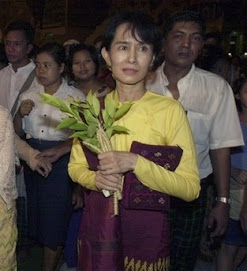


 Posts
Posts


