http://www.iht.com/articles/ap/2009/01/02/america/NA-US-United-Nations.php
The Associated PressPublished: January 2, 2009
WASHINGTON: With a thanks and a goodbye, President George W. Bush is hosting U.N. Secretary-General Ban Ki-moon one final time.
Bush and first lady Laura Bush plan to hold a White House lunch on Tuesday for Ban and his wife, Yoo Soon-taek.
In a statement, White House spokesman Gordon Johndroe said the meeting will be a chance for the president to thank Ban "for his leadership of the United Nations and his cooperation on key issues over the past two years."
Johndroe said the two leaders will discuss the future of the United Nations, the Middle East, Somalia, Darfur and Myanmar, also known as Burma. Bush will push for a "United Nations that can act effectively to promote freedom, democratic governance, human rights, and a world free from terror," Johndroe said.
Bush leaves office on Jan. 20.
Sunday, January 4, 2009
Bush to host UN leader for a final time


Burma: life behind bars
http://www.radionetherlands.nl/thestatewerein/otherstates/tswi-090103-Burma-Bo-Kyi
by Phil Thornton
31-12-2008
Living and working in Burma is tough. Writing stories and poetry, telling jokes or criticising the military regime risks a Draconian jail sentence. In early November a prison court sentenced 14 activists to 65-year jail sentences.
One Burmese man has made it his life's work to ensure these prisoners will not be forgotten.
Bo Kyi at the AAPP office
In a small wooden house inside a tree-lined compound in the Thai border town of Mae Sot a group of men and women tap computer keyboards, talk on cell phones and show guests around a tiny airless room filled with photos. It is a reconstructed Burmese prison cell. The men and women work for the Association Assisting Political Prisoners (AAPP) and all are former prisoners. Their sentences ranged from fourteen years for writing leaflets to five years for attending a student protest.
Award
A founding member and now secretary of AAPP, Bo Kyi was jailed three times for a total of seven years and three months. Since his release from jail in 1998, Bo Kyi has campaigned to free all Burmese political prisoners and for this work he was recently recognized by the New York based Human Rights Watch and accredited with their Human Rights Defender award.
Bo Kyi says while it is nice to receive awards, it is critically important to continue to keep international pressure on the regime to release all Burma's political prisoners:
"Burma is a silent killing field. By putting political opponents in jail they [the military regime] are systematically killing our activists, our writers, our poets and our artists. In jail there is no hospital care and no doctors. Prisoners are being put in jails in remote areas far from their families. Many are sick and can't get help."
He was jailed for the first time in 1990 for leading a demonstration for the release of political prisoners.
"I was sentenced to three years hard labour. I was interrogated and tortured for 36 hours. I was given no food or water and was kept handcuff and blindfolded."
Blood spots
Bo Kyi was denied access to his family and says they did not know what had happened to him.
"I was put in a small cell, I could see blood spots and many names, including those of my friends. I was not allowed to shower for nine days."
Bo Kyi: "Jail taught me to live in the present"
In spite of the torture and beatings he was determined to stay positive.
"I wanted to study. I had an English dictionary smuggled in. I ate the pages as I learnt them. I ate a lot of dictionary when I was in jail",
he laughs, adding on a more serious note,
"I also learnt I had no future. It [jail] taught me to live in the present, other wise I would have gone crazy thinking about the future."
Cynical stunt
The Burmese regime's State Peace and Development Council (SPDC) rules Burma with an iron fist. The Association Assisting Political Prisoners estimates Burma currently has 2,123 political prisoners in its jail.
In spite of international condemnation the regime continues to jail its opponents, in September this year 140 people were arrested for political reasons.
In what was seen as a cynical stunt to disrupt international events planned to commemorate last year's monk and civilian protests in Rangoon, the regime released 9002 prisoners, only seven of these were political, the rest were classified by AAPP as ‘petty criminals'.
In spite of his experiences in jail, Bo Kyi is not after revenge.
"Those who tortured me are also victims of the system. Sooner or later Burma will change, the people want change, but in the meantime people will have to speak out. International NGOs working inside Burma have been silenced, but they have to speak out. We can't let our brothers and sisters rot in jail because they had the courage to protest for change."
Leading saffron monk's memoir -MIZZIMA
http://www.mizzima.com/edop/commentary/1497-leading-saffron-monks-memoir.html
Commentary
by U Pyinya Zawta
Friday, 02 January 2009 19:30
Burmese monks are known to have played an important role in their nation's politics throughout its history. While they did not partake in mundane political processes, they traditionally held positions of moral authority, and dispensed wisdom and guidance to past kings, rulers and governments in Burma. On some occasions, emissaries from the monasteries were despatched on peace missions to avoid war with foreign powers.
Buddhist monks gave council to past monarchs, ranging from the first King Anawrahta of unified Burma in Bagan, to the last King Mindon and his son King Thibaw, guiding them on how to properly conduct themselves as responsible rulers. Burmese monks fulfilled their obligations toward their religion and the people in the past as royal advisers, and most importantly, as the guardians of sacred rights and responsibilities of all citizens.
Burmese monks continued to play an important role in national affairs even after Burma fell under British colonialism, in 1886. During the Colonial era, a monk leader U Ottama brought political enlightenment back to Burma and eventually helped lead the nation to independence from Britain. His lectures inspired generations of followers including Ko Aung San who later became the father of Burma's Independence. Another brave and defiant monk, U Wisara, died in prison after a 166-day hunger strike in 1929, but still helped reawaken political consciousness in Burma, and with his final words, to "never forget," urged the people to persevere until independence was obtained from Britain.
After the 1948 independence, numerous political and social organizations proliferated in Burma. During this period Burmese monks formed the All Burma Young Monks' Union (ABYMU) to continue championing the causes of their people.
But after the 1962 military coup, General Ne Win abolished all civil and political organizations in Burma, and the ABYMU was banned in 1964. Even though barred by the military, young Buddhist monks remained at the forefront of political movements from the 1974 U Thant crisis, to the 1975-1976 one hundred years' anniversary of labor unrests in Burma.
During the nationwide uprising in 1988 when one government faction after another failed to control the county, monks used their authority to prevent anarchy and chaos and provided sanctuary to the public. After the military took back power through another coup on September 18th, 1988, the All Burma Young Monks' Union was again established, as an Upper Burma branch in Mandalay and as a Lower Burma branch in Rangoon, and monks joined the people's protest against the return of the military dictatorship.
In 1990, the National League for Democracy (NLD) members, student activists, and ordinary citizens made alms donation to the monks marching peacefully on Zay-Cho and 26-B roads in Mandalay, marking the two year anniversary of the '88 uprising. When the army forcibly tried to stop the procession, unrest broke out and many monks were brutally beaten. Since the authorities prevented the monks from alms collection by egregiously violating Buddha's Dharma, two monk leaders, U Raza Dama Bewitha and U Kovida Bewitha of the Upper Burma Young Monks' Union called for a religious boycott dubbed 'Overturning of the Alms Bowl,' against the SLORC government, for the first time.
Led by monks from major monastic academic institutions, the Young Monks Union in Rangoon joined the boycott movement, as prescribed under Buddha's Dharma laws, and they affirmed their pledge with obeisance toward the Shwe Dagon Pagoda, on 3 October 1990, the Tha-din-kyut full moon day of Burmese year 1352, at the Ngar Htait Kyi Pagoda pavilion.
With prompting from U Ahnt Maung, a high ranking member of the government's religious affairs department, the military junta in panic arrested and sentenced to long prison terms senior monks from renowned monastic academies, members of the Rangoon Young Monks' Union, and monks from other Sangha academies. Tragically Ashin U Arsara from the Thayettaw monastery died in Thayet prison and Ashin U Zaw Tika from the Shwebon Pyint monastery died in Insein prison, both from torture and inhumane conditions. The fates of many other monks taken away by the government during the 1990 boycott protest remain unknown.
Finally, after almost two decades since many monks were arrested and imprisoned, the monks' resistance against military oppression in Burma seemed to have all but evaporated. But the Saffron Uprising in 2007 proved that the monks' resolve to defend the future of Burmese Buddhism and their people was growing only stronger, not weaker.
Before the leading monks' organization the 'All Burma Monks Alliance' was founded during the Saffron Revolution, many smaller monks' coalitions had already been established. As the first step, the All Burma Young Monks Union organized a central working committee with five leading monks from Rangoon and one from Mandalay, selected from many monks' organizations. At the same time various smaller local monks' organizations were being created, in Pegu, Pye, Magwe, Moulmein, and Arkan areas. The famous leading monk, Ashin U Gambira, who was arrested last year, and six other monks led the formation of the Rangoon Young Monks' Union to represent monks from the Rangoon area.
Monks from upper Burma in Mandalay formed the Federation of All Burma Monks' Union and helped organize monks' reading groups, libraries, and literary discussion groups, among other activities. Young Monks' Unions, like Students' Unions, were being formed all over Burma with the sole intention of ending the military dictatorship in Burma. During the mean time, Young Monks' Union members helped other monks' organizations to coordinate, consult and exchange ideas by helping them communicate with each other. When the regime became suspicious at times, new monks and civilians were used as dispatchers. And on occasion, meetings were cancelled in order to evade the junta's relentless assaults.
Since 2005, there was a growing realization that a mass movement to overthrow the Burmese dictatorship was becoming inevitable, and many activist groups began expanding their underground movements in anticipation.
When the military junta suddenly increased the price of fuel on August 15, 2007, impoverished people in Burma faced an unprecedented level of hardship. When small demonstrations broke out against the severe economic conditions, government thugs' organizations named, Swan Ahh-shin, Union Solidarity and Development Association (USDA), and riot police were sent in to violently suppress the peaceful protests, and swiftly ended the public outcry.
In order to come to the rescue of frightened and battered citizens suffering under severe economic hardships, the monks took it upon themselves to unite all of the monks' unions and to create a larger monks' alliance at a meeting scheduled for September 9, 2007 at a monastery in Mandalay. By September 4 many monks had left their monasteries and were on the way to the meeting.
But on September 5 when the Pakokku monks came out to chant the peaceful prayers of the 'Metta Sutta,' - the sutra of loving kindness to radiate the spirit of love to all beings - in sympathy with the suffering public, the local government militia brutally attacked the monks and tied them to electric poles, beat them with rifle butts, and arrested them. News of these actions spread quickly, and the next day unrest broke out and cars were burnt in Pakokku.
Burmese monks from all over the country felt compelled to respond to such shocking violence against revered Buddhist monks who were marching peacefully. When the monks gathered on September 9 as previously agreed, the meeting was forced to move to a new location for fear of detection by the authorities. Finally, monks at the meeting unanimously decided to boycott the military if the government failed to comply with the following demands by a given deadline.
The monks demanded that the State Peace and Development Council (SPDC)
1. Apologize to the Pakokku monks, by midnight of September 17
2. Reduce the prices of fuel oil and basic commodities
3. Unconditionally release Aung San Suu Kyi and all other political prisoners
4. Hold dialogue with the democratic political opposition representatives in order to begin a national reconciliation process
The ensuing united monks' organization was named the 'All Burma Monks' Alliance' (ABMA) and the monks decided to proceed with boycotting the military on September 18, 2007 after the regime failed to meet the demands before the deadline.
Members of All Burma Monks' Alliance
1. All Burma Young Monks' Union
2. Federation of All Burma Monks' Union
3. Rangoon Young Monks' Union
4. Sangha Duta Council of Burma
The executive founding members of ABMA
1. U Pakada (Pannasara )
2. U Medhavi
3. U Kheminda
4. U Aww Ba Tha
5. U Tay Za
6. U Gambira
The announcement of the above formation of the ABMA was handwritten, photographed, and published via email media sent from a handheld camera, since computer communications were disrupted or unavailable.
During the Saffron uprising, generous provisions of food and essential services were donated to the monks by a caring public. There were exemplary unforgettable individuals like one outstanding patron who took diligent care of the monks.
On September 18, 2007 the ABMA effectively began the boycott against the SPDC regime, and the event became known as "the Saffron Revolution." The United Nations and the rest of the world were forced to acknowledge the Burmese people's struggle for freedom from brutal military dictatorship.
Much of the credit for the Saffron Revolution was since given to famous organizations or people, but the real contribution to the Saffron Revolution was made by the monks and people who genuinely shared the grievances of ordinary citizens, and who took unified and daring actions inside Burma.
Many Burmese people were aware of the 2007 Saffron Revolution and people from all over the world had also taken notice and became more interested in Burma, since 'The Golden Uprising' - as it was known in Burmese - eventually brought the UN Secretary General's special envoy, Mr. Ibrahim Gambari, to Burma.
But the Saffron Revolution did not simply emerge without effort. The Saffron Revolution was born of the leadership of the All Burma Monks' Alliance - ABMA - the joint organization of four original monks' unions and the extraordinary courage of the member monks, and their ability to unite for the sake their people. The uprising took place precisely because of the determined leadership of the All Burma Monks' Alliance (ABMA).
The All Burma Monks' Alliance (ABMA) was founded on 9 September 2007. Numerically it lines up as 9-9-9, when 2 and 7 from the year 2007 are added and also when all numbers 9+9+2+7=27 are added, including the sum of 27; 2+7=9.
After the thugs hired by the junta government attacked a group of monks marching peacefully in Pakokku, on 5 September 2007, the ABMA made four demands to the Burmese military government, with 17 September 2007 as a deadline to respond. The ABMA announced via local media that if the military failed to accede to its demands, the monks would carry out a boycott against the government officials beginning on 18 September 2007. Numerically digits of the date 09 18 2007 also add up to numeral 9.
September 18, 2007 was the 19th anniversary of the military coup and therefore an important date for Burma's generals. It also became a symbolically significant day for the Burmese monks, as the severe moral rebuke by the monks against the army junta, called 'overturning of the alms bowls,' was to begin on that same day. As early as 5:00 AM on 18 September, reporters began calling the ABMA leaders about the monks' boycott against the military. The reporters continued calling every hour on that day, asking whether the monks' boycott -- of refusing alms from military families, effectively denying them important religious merit -- would still be taking place. Early on, while events were still unfolding, it was very difficult to predict the day ahead. But, at that moment it became evident that the honor and esteem of Burmese monks and their religion was terribly at stake. As the gravity of the risk we had taken became clearer, we anxiously continued reassuring the public that conditions were good and that monks were proceeding with a boycott against the Burmese military. Still, we were not able to give a real encouraging answer, yet. Till noon of that day we were not quite sure of the outcome of the decision we had made while we responded to the inquiries about the monks' boycott.
The dramatic event of the 18 September 2007 Saffron Revolution was similar to the '8-8-88' uprising in Burma. Even as news media were reporting the rising momentum for countrywide mass protests in 1988, no one dared predict the inevitability of 8-8-88 uprising with confidence. Even at 7:00 and 8:00 a.m. there was still no certainty that the uprising was to take place. Only at 9: a.m. on 8 August 1988, when marchers from labour and student movements joined and advanced together along the promenade could we let out a sigh of relief.
In spite of heavy army roadblocks, the Burmese monks had also successfully staged a protest against the SLORC military government for the first time on 3 October 1990, the full moon day of the lunar month Thadingyut, (the end of Buddhist Lent), Burmese year 1352, at Rangoon's Ngar Htait Kyi Pagoda.
The most anxious moment on 18 September 2007 was at noon after our daily meal, as we watched the day's events with anticipation and saw nothing unusual. But after that moment many monks began gathering at Thingan-Kyun, Kyaikasan, and Shwedagon pagodas.
The authorities moved to close down the monks' quarters at Kyaikasan Pagoda, and monks from the Thingan-Kyun monastery began arriving at the Kyauk-sar-daw historic pagoda of the Magin monastery. The government and its violent militia organizations, the USDA (Union Solidarity and Development Association) and Swan Ah Shin (SAS-force of violence) were sent into pandemonium. Meanwhile, the monks began to arrive and seated themselves with great dignity and grace on the ground of the Kyauksardaw Pagoda. And then there was only utter silence.
Until suddenly, when sounds came from the distance, we only listened, listened for the sounds. It was 1:30 PM on 18 September 2007, and the resounding murmurs of the monks' Metta Sutta prayers could now be heard from afar. The monks were praying and chanting to emphasize their rebukes against the military for violating Buddha's teaching.
Soon after, the phones began to ring constantly, and the news of monks chanting the Metta Sutta and marching to the Shwedagon Pagoda in Rangoon and to other pagodas and monasteries in Taunggote, Pakokku, and Kyaukpadaung began to reach us.
Then phone calls from news media started to come in. And it was recorded that the All Burma Monks' Alliance had survived this great day. Followed by more dramatic days….
May freedom come to the people of Burma soon…
The writer is the founding member and Foreign Executive Director of the All Burma Monks' Alliance
New Year’s Resolutions for the NLD -IRRAWADDY
http://www.irrawaddy.org/print_article.php?art_id=14868
By MIN ZIN Friday, January 2, 2009
--------------------------------------------------------------------------------
The Burmese military junta is at its happiest when history repeats itself. Under the leadership of Snr-Gen Than Shwe, the regime replays its old maneuvers—content that its strategy has for so long been unbreakable.
A recognizable play in the regime's game plan has long been the tactic of combining brute force and naked aggression through harsh crackdowns with political offensives aimed at weakening the opposition and defusing international pressure.
But if the regime’s policymakers are so predictable, surely the question is what the opposition will do to counter their plans and achieve the two most important results for political transition— constitutional reform and the release of political prisoners.
Take, for starters, the case of the 2,100 political prisoners languishing in Burma’s jails—234 of whom were arrested during or after the nationwide protests in September 2007 and have received sentences of up to 68 years imprisonment each since November 2008.
The goal of the harsh sentencing is clear—to eliminate potential opposition in the run-up to the 2010 election, which is the fifth step in the regime's master-plan known as the “Seven-Step Roadmap to Democracy.”
The intended effect of the brutality is a "shock and awe" campaign—terrorizing the public and creating an environment of fear ahead of the election. The junta hopes the Burmese population will become depoliticized and will meekly allow the military to steal the election.
International outcry has pronounced loud again. Sources in United Nations said that Secretary-General Ban Ki-moon is even considering the option for "temporary suspension of his good offices mission on Burma". Some sources close to Burmese Foreign Ministry confirmed that China and Russia are pressing the generals in Naypyidaw to cooperate with Secretary-General's good office and show a "positive gesture" to calm down mounting international criticism before the scheduled 2010 election in Burma.
As history has its proof, it is now time for Than Shwe to pull out a card and play magic with his international supporters. One possible prospect will be the release of Aung San Suu Kyi, the opposition leader and the only imprisoned Noble Peace Prize winner, in near future – as earliest as by May or as latest as November 2009 – which in itself presents what the junta considers to be several favorable conditions.
First, the junta knows that releasing Suu Kyi could be well enough to relieve the concerns of China, Russia, Asean and other apologists for the junta that have found it hard recently to defend the Burmese regime in the international arena.
If the military rulers were sublimely tactful, they could even invite either UN Special Envoy Ibrahim Gambari or Secretary-General, and allow the Good Offices to take credit for Suu Kyi’s release.
In this manner, the junta could use the release of Suu Kyi to fend off international criticism against the systematic crackdowns, forcibly ratified constitution and scheduled election for 2010.
In fact, the military generals believe they can afford to release the opposition leader without compromising with her. Indeed, in accepting her freedom Suu Kyi could find herself in a Catch-22 situation where she cannot criticize the government without finding herself back in a cage.
No political transition is likely to take place within the framework of the current constitution. Even amendments made to the constitution in the hope of gradual reform will not be possible within a military-dominated parliament and the junta’s foreseeable power arrangement in a post-2010 Burma.
The question, therefore, is what the opposition can do to counter military's strategy and achieve two most important results needed for political transition—constitutional reform and the release of political prisoners.
Over the past 20 years, the opposition parties in Burma have shown an unyielding faith in the power of principles. Now it is time for them to learn the principles of power.
Paradoxically, the first principle of power that the opposition should pursue is a moral strategy. The National League for Democracy (NLD) and other opposition parties should declare that they will not take part in the 2010 elections unless the junta agrees to engage in political dialogue with the opposition to negotiate a constitutional review and to release the political prisoners.
This is not only a righteous strategy that will create a feel-good factor among opposition members, but it can be used as a playing card to achieve three concrete political gains.
First of all, it could motivate the opposition's own bases—NLD organizers throughout the country and its supporters, as well as legitimate ethnic political parties—most of whom have taken back seats in recent political debates due to the NLD's defensive, reactive and passive policy.
NLD Chairman Aung Shwe, who has always avoided public communication, should make himself available to Burmese-language shortwave radio stations abroad to address the public to articulate why the NLD has decided not to take part in the 2010 election and what the NLD demands are.
The party leadership should not take for granted that their cause is self-evident. They must publicize their agenda and promote it with clarity as a moral offensive.
Second, an election boycott could narrow the regime's bases—in particular, the full participation of ethnic minority groups that reached ceasefire deals with the military over the past 20 years.
All ethnic groups know the military's constitution is far below their acceptable thresholds.
Although groups such as the Kachin Independence Organization (KIO) and the United Wa State Army (UWSA) may be planning to take part in the 2010 election through their proxy ethnic parties, they will be afforded the chance NOT to throw their weight behind the regime's terms and conditions, especially it involves the disarmament of their troops.
The opposition’s rejection of the 2010 election will, therefore, lend ceasefire groups political justification and strategic space (as the regime will be busy dealing with the NLD) to resist the regime's disarmament plan.
This will complicate the junta's political ploy or, in a worst case scenario, lead to a resumption of localized arm conflicts between certain ethnic ceasefire groups and the Burmese army. Such a situation would alarm China since the most volatile areas are around the Sino-Burmese border where formidable Wa and Kachin ethnic groups are based.
The third political gain the opposition could muster from a moral boycott strategy is that it will force the international community—particularly those who want to expedite the junta’s "road map"—to side with opposition's reasonable demands.
However, before all that comes into play, the opposition parties must show flexibility and articulate that it is not rejecting outright the regime's road map.
If the junta accepts a constitutional review and the release of political prisoners, the opposition can consider lending legitimacy to the road map. The opposition should also make it clear that it welcomes international humanitarian assistance to Burma, which is severely impoverished and falling into deeper humanitarian crises.
All in all, this is high time for the opposition to occupy the moral high ground and translate it into power and advantage. Of course, the route will not be an easy one as the regime will impose its nastiest crackdown on the opposition.
Some skeptics might also argue that it is nothing new for the Burmese opposition to take up a righteous policy and yet still lose the game.
However, what the opposition has so far adopted is a reflexive and ungainly position. What the opposition needs now to use the moral high ground wisely and publicly, and transform it into strategy, well-timed and coordinated toward achieving well-defined political gains.
This is the first principle of power the opposition should pursue and should constitute its New Year resolution for 2009.
Min Zin, a Burmese journalist in exile, is a teaching fellow at the University of California, Berkeley, School of Journalism.
Copyright © 2008 Irrawaddy Publishing Group | www.irrawaddy.org
Saturday, January 3, 2009
Myanmar opposition leader Aung San Suu Kyi in good health
http://www.earthtimes.org/articles/show/248507,myanmar-opposition-leader-aung-san-suu-kyi-in-good-health.html
Yangon - Myanmar opposition leader Aung San Suu Kyi was allowed a New Year's Day visit Thursday by her personal doctor who declared her in good health, officials said. Doctor Tin Myo Win visited Suu Kyi at her lakeside home - where the Nobel laureate has been kept under detention in near complete isolation since mid-2003 - briefly on Thursday afternoon, a government official confirmed.
"This visit is just a regular visit for January. Her health is good," said the official, who was briefed by Tin Myo Win.
The doctor is one of few people allowed to visit Suu Kyi, the daughter of Myanmar independence hero Aung San, who has spent about 13 of the past 18 years under house arrest with the latest incarceration beginning in May, 2003.
Suu Kyi is allowed a visit by her doctor once a month, but has been denied visits by members of the National League for Democracy (NLD) party, which she leads but cannot communicate with.
It has been widely speculated that Myanmar's ruling junta will keep Suu Kyi under house arrest until after the general election scheduled for 2010.
The NLD won the 1990 general election by a landslide, with many voting for the party to protest Suu Kyi's arrest and detention in 1989 for publicly criticizing former military strongman Ne Win.
Although the NLD won at the polls, the military denied the party power, claiming a new constitution needed to be drafted before civilian rule could take place in Myanmar.
Myanmar, also called Burma, has been under military rule since 1962.
Copyright, respective author or news agency
Unprincipled discrimination and dignity -MIZZIMA
http://www.mizzima.com/edop/commentary/1494-unprincipled-discrimination-and-dignity.html
by Min Ko Moe
Thursday, 01 January 2009 23:25
"Respect for human dignity implies commitment to creating conditions under which individuals can develop a sense of self-worth and security. True dignity comes with an assurance of one's ability to rise to the challenges of the human situation."
* Aung San Suu Kyi
"Human beings are born free, equal in dignity and rights. They are endowed with reason and conscience and should act towards one another in a spirit of brotherhood."
* Article 1, Universal Declaration of Human Rights
The unequal opportunities and rights embodied in the 2008 Myanmar Constitution disregards the universal recognition that humans being born free, with equality in dignity and rights. The new Constitution is structured in a hierarchical chain-of-command with military personnel as the first class, male citizens as the second and female citizens as the third. The principles of equality in opportunity and justice in the political, social and economic spheres are ignored, leaving those citizens who posses less opportunities and rights as constantly under assault whenever conflicting claims prevail. This Constitution does not uphold the spirit of brotherhood and sisterhood and claims the dignity and rights of civilian citizens are inferior to those of military personnel – who in reality are forgetting their roles as public servants.
In introspection, the drafting of the Constitution in the National Convention was not in accordance with democratic methods, even though the creation of a democratic state is the purported aim of the military clique. A democratic method demands a decision by discussion, argument and persuasion. However, state Law No. 5/96 forbids civilian citizens to exercise their consciousness in the making of the supreme law of the land. According this law, any person whose action is construed as criticizing the National Convention format, designed by the military government, shall be imprisoned for a term of a minimum of five years and a maximum of 20, and may also be liable to a fine. Democracy does not believe in the suppression of thought, the suppression human consciousness. Based on this law, it is doubtful that the National Convention was convened by genuine representatives of freedom loving people. Would genuine representatives of the people codify a Constitution which disregards their inherent dignity and rights? Moreover, it is improbable that democratic citizens agreed to authorize that 25 percent of seats in the state assembly be reserved for military representatives. Simply put, the 2008 Constitution was made by those who are not genuine representatives of the people.
Gender justice plays a vital role in modern nation-state building. Gender justice means women must be permitted to exercise full participation in the decision making process and fully participate alongside men in all walks of life in the pursuit of equitable and practical solutions to issues of family and society. Men and women should have equal choices and rights in a democratic society. Equal choices protect the human dignity of women, and human civilization has evolved with the progress of the human consciousness. Yet, Burma today is an ancient world in which human relations are defined by status.
Respect for the dignity of women is a prerequisite if we want to build a society of justice in which all human beings have equal democratic choices pertaining to development. Equality in dignity and rights between men and women is recognized in the Universal Declaration on Human Rights. However, Article 352 of the 2008 Myanmar Constitution reads:
"The Union shall, upon specified qualifications being fulfilled, in appointing or assigning duties to civil service personnel, not discriminate for or against any citizen of the Republic of the Union of Myanmar, based on race, birth, religion, and sex. However, nothing in this Section shall prevent appointment of men to the positions that are suitable for men only."
This is a contradictory provision. By specifying 'positions that are suitable for men only', the text clearly implies that women are prohibited from holding certain positions in civil service. This prohibition insults women who are also members in a family of human beings. In the field of politics, political justice is also violated by Article 352. Political justice means the absence of any arbitrary distinction between man and woman in the political sphere. Yet, according to this provision, women in Burma are not allowed to fully participate in the political system, the sense of self-worth of women being disrespected. The Constitution's embodiment of unequal opportunities based on gender in the matter of public employment is not consistent with the democratic ideal. If the purpose of the military clique was to forbid women from holding the highest political office of the state, they should open their eyes and recognize the great women leaders of the world. It is, therefore, unreasonable discrimination to treat women as inferior. This discrimination makes a mockery of the progress of human civilization and the democratic ideal.
Accountability is another backbone of the democratic state. Without accountability, implementation of constitutional provisions and public policies could easily deviate from public interests and universal justice. In a genuine democratic society and state, the functioning of good governance and the rule of law are directly controlled by the notion of accountability. This concept implies that those in authority can be called upon to answer questions about their rule. And ultimately, accountability infers that the people can dispose of those governing if the law and historically given rights and obligations are not respected.
However, the notion of accountability imbedded in the 2008 Constitution does not apply to military representatives, but rather only to elected representatives. An example of unprincipled discrimination is on display in Article 38 (b) of the Constitution, which states: "Electorate concerned shall have the right to recall elected people's representatives in accord with the provisions of this Constitution." Such a provision spells out that only elected 'people's representatives' from the 75 percent of Hluttaw (Parliament) seats up for general election can be recalled by the electorate. The provision does not apply to the 25 percent of 'reserved military representatives' who are not elected by the people; a group which may not represent the desires of the electorate as they are nominated by the Commander-in-Chief of the Defence Services and therefore accountable to the Commander-in-Chief, not to the people.
Without the power of democratic accountability for the people, who are the primary unit of the State, the claim of the military in creating a democratic political system is nothing short of a lie. In other words, Burma would become a constitutional dictatorship by transforming itself from a de-facto government to a de-jure government. But any form of dictatorship is defective because there is no assurance that the interests of the dictators will always coincide with the interests of the community. To date, the conflicts in interests between military personnel and civilians have too often been solved by employing coercive force without care for the dignity and personal integrity of the citizens. The nature of the State remains unchanged under the new Constitution, in that military personnel are sovereign and bestowed with the right of sovereignty immunity.
In order to explicitly grant equality in dignity and rights, the current Constitution must be amended. However, the constitution is very rigid regarding the prospect for amendment. Provisions 436 (a) and (b) in Chapter 12 of 'Amendment of the Constitution', state the necessary requirement of support from 'more than seventy-five percent of all the representatives of the Pyidaungsu Hluttaw' if the constitution is to be amended. According this provision, even the collective political decision of the 75 percent of elected representatives is not sufficient to guarantee amendment – as at least some, or one, military representatives must be persuaded to support the motion. It would appear that the role of elected representatives of the people under the Constitution is therefore nothing but to submit to the whims of the military clique.
Unprincipled discrimination as enshrined in the 2008 Myanmar Constitution reverses the trend of progress in human civilization and forbids space for the assurance of one's ability to rise to the challenges of the human situation. A hierarchical social order is the outcome of the Constitutional arrangement, in which justice is only for the strong. Unequal opportunity under unprincipled discrimination is the order of the day. Unprincipled discrimination is also a matter of the allocation of political values. In this sense, unequal opportunity in enjoyment of rights implies unequal opportunity in wielding political power. Political power without accountability is dangerous to the dignity of the governed. The dignity of those allotted less political power is always in danger of violation because their role in the decision making process of the State is constitutionally confined. Without political power, it is difficult to realize the fruits of political power. And without the fruits of political power, one's dignity is frequently under assault. Is the right to dignity a fundamental right? Being human, no one loves to be discriminated against.
Dignity is inherent in all human beings, irrespective of sex, race, religion, status, nationality or place of birth. However, a commitment to equally safeguarding the dignity of all citizens under the 2008 Constitution is not inclusive because the preamble embodies only the eternal principles of justice, liberty and equality. Excluding the principle of fraternity is absurd because fraternity assures the dignity of individuals and the unity of the Nation as well as the spirit of brotherhood and sisterhood. Without fraternity, the functioning of justice, liberty and equality will not be in harmony. A fraternity cannot, however, be installed unless the dignity of all of the State's members is maintained. Whenever dignity and the rights of individuals are not equal with others, some kind of discrimination occurs. However, a change in political system through the 2008 Myanmar Constitution, to ensure gender justice, equality in democratic rights and choice, non-discrimination and human dignity, can only be achieved with the blessing of the existing military clique.
Fwd: မသိလုိ႔မွားတာလား? ??????????? ??
From: "than.maymay"
hi
ယမန္ႏွစ္က ဘာသာေရးပြဲတခုတြင္ တုိက္တုိက္ဆုိင္ဆုိင္ ေနျပည္ေတာ္မွ အရာရိွၾကီးတခ်ိဳ႕ႏွင့္ ဆံုျဖစ္သည္္။ သည္လုိျဖင့္ စကားစပ္မိၾကရာက ဘုန္းႀကီးေတြကုိ ကန္ေတာ့တဲ့အခါ ခါးမွာခ်ိတ္ထားေသာ ေသနတ္ကုိ ျဖဳတ္ထားသင့္ေၾကာင္းကိစၥ ေရာက္သြားသည္။
မိတ္ေဆြတေယာက္က ရဟန္းေတာ္မ်ားမွာ ၀ိနည္းေတာ္ရိွေၾကာင္း၊ "အဂါရ၀ ငါးပါး" ကုိ ေရွာင္ရွားၾကရေၾကာင္း၊ အျမင့္မွာ ရိွေနသူ၊ ေက်ာေပးထားသူ၊ မေလးမစား အမူအယာျပသူ၊ လက္နက္ကုိင္ေဆာင္ထားသူ၊ အရုိအေသ မျပဳသူတုိ႔ကုိ တရား မေဟာရ၊ အကန္ေတာ့ မခံၾကရေၾကာင္း၊ အကန္ေတာ့ခံမိပါက ရဟန္းေတာ္တြင္ အာပတ္ သင့္ ေရာက္ပါေၾကာင္း ရွင္းျပသည္။
ဥပမာ ဗိုလ္ခင္ၫြန္႔ အာဏာရိွစဥ္က တရက္တြင္ ပဲခူးၿမိဳ႕မွ စာသင္တုိက္ႀကီး တတုိက္သုိ႔သြားကာ ဆရာေတာ္ကုိ ဖူးေတြ႕ ေၾကာင္း၊ ထုိအခါ ဆရာေတာ္က "ငါ့ကုိရိွမခုိးခင္ မင့္ခါးက ေသနတ္ကုိ အရင္ျဖဳတ္ပါဦး" ဟု အမိန္႔ရိွ ေၾကာင္း၊ ထုိစကားကုိ ဗိုလ္ခင္ၫြန္႔က သူ႔ကုိ ဆရာေတာ္က ရႈတ္ခ်စကားဆုိသည္အထင္ႏွင့္ ခ်က္ျခင္းလွည့္ျပန္ သြားခဲ့ဖူးေၾကာင္း ေျပာျပသည္။
မသိနားမလည္လုိ႔ပါဆုိၿပီး အမွားတခုကုိ က်ဴးလြန္မိလွ်င္ အကုသုိလ္ကံကေတာ့ ခြင့္လႊတ္မည္ မဟုတ္သည္မွာ ေသခ်ာပါ သည္။ အမိအဘကို မသတ္ရဆုိသည့္ ပညတ္ခ်က္ကုိ မသိနားမလည္လုိ႔ဆုိၿပီး က်ဴးလြန္မိလွ်င္ ထုိသူ မွာ ကံႀကီးထုိက္ မည္ပင္ ျဖစ္သည္။
ယေန႔ကာလတြင္ ရဟန္းသံဃာေတာ္မ်ားက နအဖ၊ စစ္တပ္၊ ရဲ၊ ႀကံ႕ဖြံ႕၊ စြမ္းအားရွင္စသည့္ အေပါင္းပါမ်ားအား သံဃာကုိ ေစာ္ကားေမာ္ကား ျပဳမႈမ်ားေၾကာင့္ "ပတၲနိကၠဳဇၨနကံ" ေဆာင္ထား ၾကသည္။
အမွန္စင္စစ္ ထုိ "ပတၲနိကၠဳဇၨနကံ" ဆုိသည္မွာ ျမတ္စြာဘုရားရွင္၏ ခြင့္ျပဳခ်က္အရ သာသနာေတာ္ထမ္း ရွင္ရဟန္းတုိ႔အား ေစာ္ကားျပဳမူလာျခင္းကုိ ေနာင္မျပဳရဲေအာင္ ကံေဆာင္တားျမစ္ ဆံုးမျခင္းပင္ ျဖစ္သည္။ အၾကင္သူသည္ …
• ရဟန္းတို႔အား လာဘ္မရစိမ့္ေသာငွာ အားထုတ္၏။
• ရဟန္တုိ႔အား အက်ိဳးမဲ့စိမ့္ေသာငွာ အားထုတ္၏။
• ရဟန္းတုိ႔အား ေနရာမရစိမ့္ေသာငွာ အားထုတ္၏။
• ရဟန္းတုိ႔ကုိ ဆဲေရး၏၊ ၿခိမ္းေျခာက္၏။
• ရဟန္းအခ်င္းခ်င္း ကြဲျပားေစ၏။
• ျမတ္စြာဘုရား ေက်းဇူးမဲ့ကုိ ေျပာ၏။
• တရားေတာ္၏ ေက်းဇူးမဲ့ကုိ ေျပာ၏။
• သံဃာ၏ ေက်းဇူးမဲ့ကုိ ေျပာ၏။
ရဟန္းတုိ႔ ထုိအဂၤါ ရွစ္ပါးႏွင့္ညိစြန္းေသာ ဥပါသကာအား သပိတ္ေမွာက္ရမည္ဟု စူဠ၀ါပါဠိေတာ္ ျမန္မာျပန္ စာ-၂၆၅ ခုဒၵက ၀တၳဳကမၼ အခန္းက႑တြင္ သပိတ္ေမွာက္အဂၤါရွစ္ပါးကုိ ျပဆုိထားသည္။
"ပတၲနိကၠဳဇၨနကံ"ကုိ သာသနာေတာ္အတြင္း ရိွရိွသမွ်ေသာ သံဃာေတာ္မ်ား၏ ဆႏၵရယူျပီးမွ သိမ္အတြင္းတြင္ ကမၼ၀ါစာျဖင့္ ျပဌာန္းရသည္ျဖစ္၍ ရဟန္းေတာ္တပါးတေလ၏ ျပဌာန္းခ်က္မဟုတ္။ သံဃာေတာ္အားလံုး၏ အမိန္႔ အာဏာျဖစ္သည္။
ထုိ႔ေၾကာင့္ ကံျပဳစဥ္က မိမိဆႏၵပါသည္ျဖစ္ေစ မပါသည္ျဖစ္ေစ၊ သာသနာေတာ္ထမ္း ရဟန္းေတာ္တုိင္းက ေလးစားလုိက္ နာၾကရသည္။ ထုိကံေဆာင္ျခင္းမွ ေသြဖည္၍ ကံျပဳခံရသူမ်ားႏွင့္ ဘာသာေရးကိစၥမ်ား လက္ခံ ေဆာင္ရြက္ေပးပါက ထုိပုဂိၢဳလ္မွာ ျမတ္စြာဘုရားရွင္၏ ပညတ္ခ်က္ကုိ က်ဴးေက်ာ္ရာေရာက္သျဖင့္ အာပတ္ သင့္ေရာက္ပါသည္။
"ပတၲနိကၠဳဇၨနကံ"၏ ရည္ရြယ္ခ်က္မွာ ဘာသာေရးကုိ မသိနားမလည္၍ တၾကိမ္တခါ ျပစ္မွားက်ဴးလြန္မိျခင္းကုိ အခ်ိန္မီ သိရိွကာ ၀န္ခ်ေတာင္းပန္ႏိုင္ေစရန္ ျဖစ္ပါသည္။
ကာယကံရွင္မ်ားက မိမိတုိ႔ျပဳမွားမိသည္မ်ားကုိ သံဃာသုိ႔ ၀န္ခ်ေတာင္းပန္မွသာလွ်င္ ကံေဆာင္ထားျခင္းမွ ရုပ္သိမ္းေပးခြင့္ ရိွပါသည္။ ျပန္လည္ရုပ္သိမ္းမည္ဆုိကလည္း၊ ကံေဆာင္စဥ္က နည္းအတုိင္း၊ သံဃာအားလံုး၏ ဆႏၵရယူျပီး သိမ္အတြင္း ၀ယ္ ကမၼ၀ါစာျဖင့္ ျပန္လည္၍ ကံလႊတ္ ရုပ္သိမ္းေပးေတာ္မူၾကရသည္။
ျမန္မာႏိုင္ငံတြင္ သံဃာေတာ္မ်ားက နအဖအစိုးရႏွင့္အေပါင္းပါ စစ္တပ္၊ ရဲ၊ ၾကံ႕ဖြံ႕၊ စြမ္းအားရွင္တုိ႔ အားလံုး အေပၚ "ပတၲနိကၠဳဇၨနကံ" ေဆာင္ခဲ့သည္မွာ ႏွစ္ၾကိမ္တုိင္ခဲ့ပါျပီ။ တၾကိမ္မွ် မေတာင္းပန္ခဲ့ဘူးပါ။ ထုိသုိ႔ မေတာင္းပန္ျခင္းသည္ နအဖ စစ္အစုိးရႏွင့္ အေပါင္ပါမ်ားအဖုိ႔ သံသရာခရီးတြင္ နစ္သည္ထက္ နစ္လာၾကရဖုိ႔ သာ ရိွေပသည္။ သံဃာေတာ္မ်ားအား အလွဴအတန္းစသည္ ေပးလွဴခြင့္၊ ဥပုသ္သီတင္း ေဆာက္တည္ခြင့္၊ ေသလွ်င္ သရဏဂံုတင္ခြင့္ ဆံုးရႈံးၾကရေပေတာ့မည္။ လူ႔ဘ၀ကုိရပါလွ်က္ အေပါင္းအသင္း မွားသျဖင့္ လူျဖစ္ရႈံးၾကရေလျပီ။
လတ္တေလာအားျဖင့္ သံဃာမ်ားက ထုိကံေဆာင္ထားၾကသည့္အတြက္ မိမိတုိ႔တြင္ "သံဃံ သရဏံ ဂစၦာမိ" ဟူေသာ သရဏဂံု တပါး က်ိဳးေပါက္သြားၾကျပီ။ သရဏဂံု မတည္သူမ်ား ျဖစ္ၾကရျပီ။ ထုိသူမ်ားအဖုိ႔ မည္မွ် ေငြေၾကးတတ္ႏိုင္၍ လွဴလုိၾကသည္ျဖစ္ေစ၊ လွဴေလသမွ် တန္းေလသမွ် ဘာကုသုိလ္မွ်မရႏိုင္ေတာ့ျပီ။ စစ္တပ္၊ ရဲ ၊ ၾကံ႕ဖြံ႕၊ စြမ္းအားရွင္တုိ႔ အားလံုး သတိထားၾကစရာပါ။ ကုသုိလ္လုပ္၍မရေတာ့လွ်င္ အသက္ရွင္ေနသည့္ ကာလတေလွ်ာက္ အကုသုိလ္သာ စုမိၾကဖုိ႕ျဖစ္လာသည္။
ယခုလတ္တေလာမွာေတာ့ နအဖက ၄င္းတုိ႔လုပ္ေနၾကလုပ္ထံုးအတုိင္း သံဃာေတာ္မ်ားကပဲ သူတုိ႔ အလွဴကုိ လက္ခံေနၾက သေယာင္ေယာင္ ဆရာေတာ္ေတြကုိ ၀ါဆုိသကၤန္းေတြကပ္၊ ေက်ာင္းတုိက္ၾကီးမ်ားသုိ႔ ဆြမ္းဆန္ ေတာ္ အိတ္ေတြ၊ ၀တၳဳ ပေဒသာပင္ေတြ ေ၀ေနေအာင္လွဴျပ ေနၾကသည္။ စင္စစ္ ထုိအလွဴမ်ားအေပၚ သံဃာ ေတာ္ မ်ားက သာယာမႈျဖစ္ေတာ္ မမူၾက။ ထုိအလွဴမ်ားေၾကာင့္ လွဴရသူတုိ႔မွာ ကုသုိလ္မရသည့္ျပင္ ရဟန္းေတာ္ တုိ႔အား အာပတ္သင့္ ေရာက္ေအာင္ တြန္းပုိ႔ေနရာသာေရာက္ေနသည္။ ကုသုိလ္ျပဳကာမွ ငရဲသာရေနသည္။
အဆုိးဆံုးကေတာ့ သံဃာ့၀ိနည္းကုိ နားမလည္ဘဲ သံဃာေတာ္မ်ားကုိ လူပုဂိၢဳလ္မ်ားကဲ့သုိ႔ ဆက္ဆံေနၾကျခင္း ျဖစ္သည္။ အေရးအခင္းမွာ ပါသည္ဆုိလွ်င္ပင္ သူတုိ႔မွာ ဆံုးမၾကဖုိ႔ အခြင့္အလမ္းရထားသူမ်ားလုိ သံဃာေတာ္ ေတြကုိ ရိုက္လုိရုိက္၊ သတ္လုိသတ္ သကၤန္းဆြဲခြၽတ္ လုိခြၽတ္္ျပဳေနၾကသည္။
သံဃာေတာ္ျဖစ္ျပီဆုိသည္ႏွင့္ ကာယကံရွင္၏ ဆႏၵမပါဘဲ၊ မည္သူတစံု တဦးကမွ် သကၤန္းကို ဆြဲခြၽတ္၍မရပါ။ ထုိပုဂိၢဳလ္ ကုိယ္တုိင္က ၀ိနည္းသိကၡာပုဒ္ေတာ္ႏွင့္မညီဘဲ ပါရာဇိက ကဲ့သုိ႕ေသာ လူ၀တ္လဲေပးရမည့္ သိကၡာပုဒ္ ေတာ္ကုိ က်ဴးလြန္ ေဖာက္ဖ်က္မိသည့္တုိင္ ထုိအျပစ္ကုိ ရဟန္းေတာ္ကုိယ္တုိင္က ၀န္ခံမွသာ လူ၀တ္လဲေပးႏိုင္ သည္။
အကယ္၍ ဇြတ္အတင္းဆြဲခြၽတ္သျဖင့္ ကုိယ္ေပၚတြင္ သကၤန္းမရိွေတာ့လင့္ကစား၊ ကာယကံရွင္က မိမိသည္ ရဟန္းတပါး ျဖစ္ေၾကာင္း မွတ္ယူထားေလသမွ် သံဃာအျဖစ္မွာပဲ ရိွေနေပသည္။ ထုိပုဂိၢဳလ္ကုိ ရုိက္ႏွက္ ညွဥ္းပန္း ျခင္းျပဳျပဳသမွ်သည္ သံဃာအေပၚက်ဴးလြန္မိျခင္းသာျဖစ္ပါသည္။
စဥ္းစားၾကည့္ပါ။ သံဃာေတာ္ဆိုသည္မွာ ျမတ္စြာဘုရားရွင္ႏွင့္ တတန္းတည္းထား ကုိးကြယ္ ဆည္းကပ္ၾကရမည့္ ရတနာ သံုးပါး ၀င္ ျဖစ္ေတာ္မူၾကသည္။ ရတနာသံုးပါးကုိ ျပစ္မွား က်ဴးလြန္ရဲေနၾကသည္။
"သံဃာမရိွလဲျဖစ္ပါတယ္"ဆုိသည့္စကားမွာ သရဏဂံု ပ်က္ေစပါသည္။
ထုိအကုသုိလ္မ်ားေၾကာင့္ ျပစ္မွားၾကသူတုိ႔မွာ သံဃာဂုိဏ္းသင့္ၾကရျပီ။ သံဃာဂုိဏ္းသင့္သည္ ဆုိသည္မွာ ယခု ဘ၀တြင္ ဘာကုသုိလ္လုပ္လုပ္ ကုသိုလ္မရ။ တရားထုိင္လွ်င္လည္း မဂ္ဖုိလ္မရ ႏိုင္ေတာ့သည့္"မဂ္တားဖုိလ္တား ကိစၥၾကီး" ျဖစ္ပါ သည္။ "မဂ္၏ အႏၲရာယ္္"ျဖစ္ၾကရျပီ။ မည္သူမွ် ကယ္တင္၍မရႏိုင္ဘဲ အပါယ္ေလးဘံု သုိ႔ သာသြားရ မည့္ တလမ္းသြားမ်ား ျဖစ္ၾကရျပီ။
ကုလားဖုမင္းသည္ ခႏၲီ၀ါဒီရွင္ ရေသ့ကုိ ညွဥ္းပန္းခဲ့သျဖင့္ ေျမမ်ိဳခံရဘူးေၾကာင္း နိပါတ္မွာလာပါ သည္။ ရေသ့ သည္ ရဟန္းေလာက္မျမင့္ျမတ္ေသးပါ။
မႏုႆတၲဘာေ၀ါ ဒုလႅေဘာ။ လူ႕ဘ၀သည္ရခဲလွပါ၏။ ထိုရခဲလွေသာလူ႕ဘ၀တြင္၊ မိမိေနာင္ ေရးအတြက္ တတ္ ႏိုင္သမွ် ကုသုိလ္စုဖုိ႕သာ ျဖစ္သင့္ပါသည္။ မိမိေသလွ်င္ မိမိေနာက္သုိ႔ မိမိျပဳခဲ့သည့္ ကုသုိလ္ အကုသိုလ္ကံမ်ားသာ ပါသြားၾကပါ မည္။ မိမိအတြက္မဟုတ္ပါဘဲ သံဃာကုိသတ္ျဖတ္ေနရသည့္အျဖစ္မ်ိဳး ဘယ္သူ႔ေၾကာင့္ ေရာက္ ေနရပါသနည္း။ ထုိပုဂိၢဳလ္ မ်ိဳးအတြက္ မိမိမွာ တသံသရာလံုး အနစ္မြန္းခံရေပေတာ့မည္။ ထုိက္တန္ပါရဲ႕လား။
ထုိက်ဴးလြန္ေနသူမ်ားကုိ ေမးလုိပါသည္။ သင္တုိ႔လူ႔ျပည္တြင္ ႏွစ္ေပါင္းမည္မွ် ဆက္လက္ အသက္ရွည္ေနၾကဦး မည္ဟု ထင္ပါသနည္း။ အာဏာတည္ၿမဲဖုိ႔ဆုိေတာ့ေကာ။ ဘယ္ႏွႏွစ္ခံပါ မည္နည္း။ အဲသည့္ ႏွစ္ကေလး အတြင္းမွာ ဘယ္ေလာက္ ခ်မ္းသာသြားမလဲ။ အဲသည့္ ဥစၥာပစၥည္းကေကာ ျမဲပါ့မလား။
ဦးေန၀င္းတုန္းက ၁၉၈၅ မွာ မဟာ၀ိဇယေစတီေတာ္ကုိ အသံုးခ်၍ မလုပ္ေကာင္း လုပ္ေကာင္း ယၾတာေခ်ခဲ့ သည္။ သာသနာသန္႕ရွင္းေရးဆုိျပီး တကယ့္သံဃာေတာ္မ်ားကုိ မိန္းမေတြႏွင့္ရႈပ္သေယာင္စြပ္စြဲျပီး သကၤန္း ဆြဲခြၽတ္ လုပ္ခဲ့သည္။ ဘယ္ႏွႏွစ္ခံခဲ့ပါသနည္း။ ဦးေန၀င္းေသေတာ့ ဘယ္ပံုစံႏွင့္ေသခဲ့ရပါသနည္း။
ဦးေန၀င္းတသက္ စုေဆာင္းခဲ့ရသမွ် ဥစၥာဓနမ်ားကုိေကာ စံစားသြားရပါရဲ႕လား။ ဦးေန၀င္းကုိယ္တုိင္ အေျခခံ ဥပေဒ ၾကီးေတြအခုိင္အမာျဖင့္ တည္ေဆာက္ခဲ့ေသာ တုိင္းျပည္ၾကီး မရႈမလွ ပ်က္စီးခဲ့ရသည္ကုိ သံေ၀ဂ ယူသင့္ ပါသည္။ အဲသည္တုန္းက သံဃာကုိ ကိုယ္ထိလက္ေရာက္ ျပစ္မွားခဲ့ၾကသူမ်ား ဘာျဖစ္သြားၾကပါသနည္း။
ဗိုလ္ခင္ညြန္႕က ပထမအၾကိမ္ သံဃာကံေဆာင္ပြဲၾကီးကုိ ေခ်မွဳန္းျပီး အထင္ကရ သံဃာေတာ္ ၾကီးမ်ားကုိ အတင္းလူ၀တ္လဲ ေထာင္ခ်လုပ္ခဲ့သည္။ ဘယ္ႏွႏွစ္မ်ား အာဏာမွာ တည္ျမဲခ့ဲပါ သနည္း။ သူလုပ္ခဲ့သမွ် အကုသုိလ္ကံေတြပဲ သူ႔ေနာက္ပါသြား မည္သာျဖစ္ပါသည္။ တပ္မေတာ္ ထဲတြင္ အခုိင္မာဆံုးဆုိရမည့္ ဗိုလ္ခင္ညြန္႕တေယာက္ ဘယ္ပံုစံျဖင့္ ျပဳတ္သြားခဲ့ရပါ သနည္း။ သူ႔တသက္ ရွာေဖြစုေဆာင္းရယူခဲ့ေသာ ဥစၥာ မ်ားေကာ တည္ျမဲခဲ့ပါရဲ႕လား။ သံဃာကုိ ႏွိပ္စက္ ညွဥ္းပန္းခဲ့ၾကသည့္ သူ႕ေနာက္လုိက္မ်ားေကာ ဘာျဖစ္ သြားၾကပါသနည္း။
အခုေကာ ဗိုလ္သန္းေရႊ အာဏာမက္ျပီး သံဃာေတာ္မ်ားကုိ သတ္ျဖတ္ေခ်မႈန္းႏွိမ္နင္းေရး ေတြလုပ္ေနျပန္ျပီ။ သူလဲအခု အသက္ ၇၄ ႏွစ္။ ေနာက္ထပ္ဘယ္ႏွႏွစ္အသက္ရွင္ေနဦး မွာမုိ႕လဲ။ ကုိယ္ျပဳလုိက္ရသည့္ အကုသုိလ္ ႏွင့္ ျပန္ ရမည့္ အာဏာတည္ၿမဲေရး လံုး၀မမွ်တ။ အာဏာမွာ ျမဲေနယင္ေတာင္ တေန႔မွ် စားေကာင္းျခင္းမစားရ။ အိပ္ေကာင္းျခင္းမအိပ္ရ။ အျမဲတန္း ပူပင္ေသာကျဖင့္သာေနေနရပါမည္။ ရွာေဖြရရိွထားသမွ် ဥစၥာပစၥည္းေတြက ေကာ ျမဲပါ့မလား။ ပစၥည္းသခၤါရ လူသခၤါရ။ ကုိယ္ကုိယ္တုိင္က ေရွ႕လူမ်ားကုိ ရက္ရက္စက္စက္ က်ဴးလြန္ထားမိ ခဲ့ျပီ။ ထုိအကုသုိလ္ကံမ်ားကေကာ ၀ဋ္မလည္ဘဲေနၾကမည္လား။
သည္အာဏာရခဲ့သည့္ ကာလတုိတုိကေလးအတြက္ အ၀ီစိငရဲမွာ အဆံုးအစမရိွ က်က္ၾကရမွာ ျမင္ေယာင္ေသး သည္။ ဘုရားအေလာင္းေတာ္ ေတမိမင္းသားကေလးသည္ ထုိအျပစ္မ်ားကုိ ျမင္သျဖင့္ "မင္း" မလုပ္ရေအာင္ စကားမေျပာသည့္ အဓိဌာန္ေဆာက္တည္ခဲ့ျခင္း ျဖစ္သည္။
အမွန္ဆုိ မိမိအာဏာရေနစဥ္မွာ တုိင္းျပည္ေကာင္းစားေအာင္ လုပ္ေဆာင္ေပးၾကမည္ဆုိပါလွ်င္ သူတုိ႔တည္ျမဲေရး အတြက္ ျပည္သူကပင္ ၾကိဳးပမ္းေပး ၾကပါလိမ့္မည္။
ဗို္လ္ေန၀င္း၊ ဗိုလ္ခင္ညြန္႔ တုိ႔ က်ဆံုးသြားပံုကုိၾကည့္လွ်င္ သူတုိ႔သာမက ဆက္စပ္ပတ္သက္သူမွန္သမွ် အားလံုး ဘ၀ပ်က္ ခဲ့ၾကရသည္။
ယခု ဗိုလ္သန္းေရႊက်လွ်င္ေကာ၊ အတူတြဲလုပ္ကုိင္ခဲ့ၾကသည့္ စစ္တပ္၊ ရဲ ၊ ၾကံ႕ဖြံ႕၊ စြမ္းအားရွင္ တုိ႔အားလံုး ဘုမသိ ဘမသိ ျဖင့္ သံဃာ့ကံမ်ားပါ ထိၾက မွာမလြဲပါ။ ထုိကံမ်ားမွလြတ္ေအာင္ ဗိုလ္သန္းေရႊ မတတ္ႏိုင္ပါ။ သူလည္းကံထုိက္မည္သာ ျဖစ္ပါသည္။ ျပဳလုပ္သူေကာ ေစခုိင္းသူပါ အကုသုိလ္ထပ္တူရၾကပါလိမ့္မည္။
Burma: The ongoing tragedy next door
http://www.nationmultimedia.com/2009/01/02/opinion/opinion_30092264.php
By The Nation
Published on January 2, 2009
Thailand's new govt must not pander to the Burmese junta as its predecessors have done
It is interesting to watch how the situation in Burma develops, as well as the behaviour and thinking of the key stakeholders, especially the Rangoon military junta and the international community including the United Nations. For the past two decades, the former has been able to outmanoeuvre the latter in all circumstances.
The UN and its special envoy to Burma have become the main tool the junta uses to buy time to further consolidate its power and tighten control over the population. Now, the UN is desperately trying to think of new ways to deal with Burma. But the conclusion so far is simple: all efforts since 1988 to revive the democratic process have failed to produce any tangible results.
The Burmese regime is stronger than ever, due in part to its increased foreign exchange through the export of energy resources plus the influx of humanitarian aid both in cash and in kind. All the junta has to do, it seems, is wait and be patient. The international community, especially the UN, wants to see democratic progress in Burma - but it is more than possible that the UN, through receiving gullible advice, has become more flexible with Burma. The trick, that the generals understand well, is that they do not need to change their hardline position. The junta can continue to arrest and suppress its own people. The outside world has to accommodate the cruel regime if it wants to see any progress.
Time and again, the UN and its envoys, both previous and current, have been used by the regime. These envoys and officials all want to achieve some degree of success in Burma so that they can appease their bosses or claim some credit for themselves. So, they are willing to bend to ensure that the Burmese generals continue to talk to them. The regime now holds the UN and international community hostage along with its own people.
The UN must be very clear of its role in helping to end the Burmese quagmire. The record of the UN under the leadership of Ban Ki-moon has not been palatable. He has to show more decisive leadership in handling the Burmese situation. The special envoy, Ismail Gambari, should have learned from his previous dealings with the Burmese leaders and how cunning they are. Now, he begs to be allowed into Burma as if he is at the junta's mercy.
The regime has benefited greatly from the post-Cyclone Nargis humanitarian assistance and rescue effort. Since the disaster earlier this year, international aid has poured into the country. It has even been suggested that some of the aid has reached the people who most desperately need it, although there can be no doubt that a good proportion of it has been siphoned off by the junta. Incoming assistance helped to link devastated communities during the cyclone and forged a new network of civil society groups. This trend should be encouraged as it could soon proliferate throughout Burma, beyond the Irrawaddy Delta, which was worst affected by the cyclone. For this to happen, more foreign assistance is needed.
To further rehabilitate the battered economy and guarantee future reconstruction projects, more commitment and financial contributions are urgently needed. Some countries are reluctant to give more because they do not trust the Burmese authorities. To mitigate this reluctance to engage with the regime, there is a strong advocacy emerging that the UN and the rest of the world should yield to Burma if they want to see the opposition leader Aung San Suu Kyi and 2,000 political prisoners released.
The problem is, while they make a strong collaborative effort towards this, they all know full well that the Burmese leaders cannot be trusted whatsoever. In the past, they have lied through their teeth on many issues.
It is fortunate that Thailand has a new government that will be firmer with its Burmese policy. If history is any judge, a Democrat-led government will not kowtow or court the Burmese military like the Thaksin government and its nominees did. The previous Thai administrations since 2001 were desperate to do business with the generals and were willing to defend and speak on the junta's behalf.
As the frontline Asean state that shares the longest border with Burma, Thailand could bring some sense of realism to the current debate about what is the best way to deal with Burma.
For the past eight years, Thailand has not played an appropriate role at all on Burma because of Thaksin's vested personal interests in the country and his influence on Thai-Burmese diplomatic relations.
Of course, Burma is a member of Asean, and Thailand needs to both engage with its neighbour and cooperate with Asean on tackling the issue. The first step for this new government will be to carefully consider its policy on Burma with Asean's shared interest at heart.
Friday, January 2, 2009
Asylum in the US for Burmese facing deportation -SINGAPORE
http://singaporedissident.blogspot.com/2008/12/asylum-in-us-for-burmese-facing.html
Tuesday, December 30, 2008
Readers of this blog who are unfamiliar with the goings on in Lee Kuan Yew's Singapore, may think reading the comments that there are many who think Singapore is a democracy based on the rule of law. The reader is warned that they may be Singapore government employees whose job is to discredit those who criticize Lee Kuan Yew's authoritarian rule. Please use your discretion as to how much weight you will give these comments.
Ladies and Gentlemen,
Here is a urgent short post, for the attention of Burmese in Singapore facing on going and imminent deportation to Burma because they took part in Burmese pro democracy protests in Singapore. Burmese are presently being deported from Singapore with their work passes not being renewed They face life in prison and torture when returned. The Lee Kuan Yew government, a close ally of the junta is collaborating with them in this shameful exercise. Please see the article More Burmese facing expulsion from Singapore of December 30th in the Singapore Democratic Party website.
If you can somehow enter the United States, you will be given asylum. Asylum is granted to those who are being persecuted by a government for among other things, their political beliefs. Persecution can be in the form of, among other things, infliction of punishment by one form or another. It can also be a case where the victim is facing imminent harm, life imprisonment, as in this case.
It does not matter how you get to the US. Even if you enter through fraudulent documents, or other means of illegal entry, you are still eligible for a grant of asylum. The illegal entry is excused. All that you have to accomplish is to board an aircraft bound for the US. Once you arrive at a US port of entry, articulate your fear of persecution, to an Immigration Officer, if you were to be returned. This will entitle you to a hearing before an Asylum officer.
For instance, if you manage to get hold of a Singapore passport, which does not require a visa to enter the US, this may help you board an aircraft. Of course there is the danger of your being apprehended at Singapore airport. The better alternative is to board a flight with a Singapore passport, from an airport outside Singapore. All this of course involves great risk, but this is a choice you would have to make, in these unthinkable circumstances.
Then there are of course, those who may be able to arrange a passage to Mexico, perhaps with a visa from some other country, say Manila, Philippines, or to a Central American country such as Nicaragua. From there, your agent might be able to arrange a passage to the border to help you cross. I am sure there are Burmese in the diaspora who know these things better than I do, to help you to save your lives. My knowledge of these things comes from my having represented asylum clients from many countries.
One possible way is for you to get work on board a cruise ship that stops at a port in the US, say Miami, eg Carnival Cruises on the Caribbean run. This will enable you to get a C1/D crew visa. This will allow you to land in the US, and once this is accomplished, you can apply for asylum. Please note that with this visa category, your only means of remaining in the US is through asylum. You cannot for instance marry an American to get a Green Card or do it by other means. I understand there are agents of these shipping companies in Burma and elsewhere who hire Burmese ship's crew.
Personally I do not know any alien smuggling operations and even if I knew, it would be unethical for me to be directly involved in it. From an ethical standpoint I am however able to tell you what I know.
The United States, unlike Singapore, honors its obligations under the treaties and conventions of the United Nations to protect refugees. They take this obligation seriously.
If you do land in American soil and need my help, don't hesitate to contact me. I will help you. Take care of yourselves and good luck.
Gopalan Nair
39737 Paseo Padre Parkway, Suite A1
Fremont, CA 94538, USA
Tel: 510 657 6107
Fax: 510 657 6914
Email: nair.gopalan@yahoo.com
Blog: http://singaporedissident.blogspot.com/
Your letters are welcome. We reserve the right to publish your letters. Please Email your letters to nair.gopalan@yahoo.com And if you like what I write, please tell your friends. You will be helping democracy by distributing this widely. This blog not only gives information, it dispels government propaganda put out by this dictatorial regime.
Posted by Gopalan Nair at 10:50 AM
Doctors Without Borders Releases 11th Annual "Top Ten" List
http://www.medicalnewstoday.com/articles/134173.php
31 Dec 2008
Massive forced civilian displacements, violence, and unmet medical needs in the Democratic Republic of Congo, Somalia, Iraq, Sudan, and Pakistan, along with neglected medical emergencies in Myanmar and Zimbabwe, are some of the worst humanitarian and medical emergencies in the world, the international medical humanitarian organization Doctors Without Borders/Médecins Sans Frontières (MSF) reports in its annual list of the "Top Ten" humanitarian crises.
The report underscores major difficulties in bringing assistance to people affected by conflict. The lack of global attention to the growing prevalence of HIV-tuberculosis co-infection and the critical need for increased global efforts to prevent and treat childhood malnutrition - the underlying cause of death for up to five million children per year - are also included in the list.
-- Click here to read the report
http://www.doctorswithoutborders.org/publications/topten/
http://www.doctorswithoutborders.org
--------------------------------------------------------------------------------
Article URL: http://www.medicalnewstoday.com/articles/134173.php
[Ye Yint Thet Zwe] "တႏွစ္ေဟာင္းလို ့"
တခ်ိဳ ့
ေဟာင္းေပမယ့္
ေကာင္းေနဆဲ
တခ်ိဳ ့
ေကာင္းေပမယ့္
ေဟာင္းေနဆဲ
တခ်ိဳ ့
ေဟာင္းလည္း မေဟာင္းဘူး
ေကာင္းလည္း မေကာင္းဘူး
ဘယ္လိုပဲျဖစ္ျဖစ္
ေဟာင္းခ်င္တဲ့သူေတြ ေဟာင္းပါေစ
ေကာင္းခ်င္တဲ့သူေတြ ေကာင္းပါေစ
ေျပာင္းခ်င္တဲ့သူေတြ ေျပာင္းပါေစ
တို ့တေတြမွာေတာ့
ဘယ္ေတာ့မွ မေဟာင္းတဲ့
ကိုးဆယ္ရဲ ့ ရလဒ္ေကာင္းေတြရွိတယ္
အနာဂတ္ေကာင္းဘို ့
စီအာပီပီ ရဲ ့ ေကာင္းေၾကာင္းေတြရွိတယ္
အစဥ္တစိုက္ မေျပာင္းလဲတဲ့
စစ္မွန္ေသာ အေႏွာင္အဖြဲ ့ကင္းေသာ
ေတြ ့ဆံုေဆြးေႏြးေရး အေၾကာင္းေတြရွိတယ္
မေကာင္းတာမွန္သမွ်
ႏွစ္ေဟာင္းမွာ ခ်န္ရစ္ၾက
ဆရာႀကီးသခင္ကိုယ္ေတာ္မိွဴင္းရဲ ့စာတပိုဒ္နဲ ့
ႏွစ္သစ္ကို တက်ိဳက္ၿပီးတက်ိဳက္ ေမာ့လိုက္ၾကေဟ့
"ေကာင္းက်ိဳးအေထြေထြရယ္နဲ ့ ခၽြန္ေစျမေစေသာ
ေဒါင္းအိုးေ၀ရယ္နဲ ့ တြန္ေစ ကေစေသာ ။
--
Posted By Ye Yint Thet Zwe to Ye Yint Thet Zwe at 12/31/2008 12:01:00 AM
Win Tin Denies NLD Divided Over 2010 Election -IRRAWADDY
http://www.irrawaddy.org/highlight.php?art_id=14863
--------------------------------------------------------------------------------
By MIN LWIN Wednesday, December 31, 2008
--------------------------------------------------------------------------------
Win Tin, a leading member of Burma’s main opposition party, the National League for Democracy (NLD), denied claims that he had said the party was divided over whether it would take part in an election slated for 2010.
Speaking to The Irrawaddy on Tuesday, Win Tin said that he was misquoted in a report by Deutsche Presse Agentur (DPA), which stated that he had told a visiting European diplomat that “some [in the party] want to participate [in the election] and some do not.”
“The NLD hasn’t considered joining the military-backed election in 2010,” he said.
“I told the Italian diplomat that there are two approaches in the NLD. Some, like me, reject the constitution outright, while some want to amend the constitution after parliament is convened,” he said, adding that he was referring to a parliament consisting of representatives elected in 1990.
Win Tin, who was released earlier this year from Rangoon’s notorious Insein Prison after serving 19 years, said that “throughout my prison life and since my release, I have rejected the junta-backed constitution.”
According to the DPA report, published on November 29, Attilo Massimo Ianucci, the Asia-Pacific chief of Italy’s foreign ministry, had urged the NLD to participate in the 2010 election.
“He said at present, the military occupied 100 percent of the government and after 2010, there would be only 25 percent. It is much better than the current situation,” Win Tin was quoted as saying.
In a statement issued on December 10 to the Foreign Correspondents Club of Myanmar, based in the former capital Rangoon, Win Tin reiterated that he has always rejected the junta’s efforts to write a new constitution through the military-backed National Convention, first convened in 1993. He said that he clearly stated his position on the matter in front of visiting US Congressman Bill Richardson and military intelligence agents while he was still in prison.
He added that he has always maintained three fundamental demands, summarized as “Suu Hlut Twe.”
“Suu” stands for the unconditional release of pro-democracy leader Aung San Suu Kyi and all other political prisoners; “Hlut” stands for the convening of the Hluttaw (the people’s parliament) with representatives elected in the 1990 elections; and “Twe” stands for dialogue between the military government and opposition groups.
Copyright © 2008 Irrawaddy Publishing Group | www.irrawaddy.org
အားလံုးအတြက္ အာဟာရ ႏွစ္သစ္စကားThursday, 1 January, 2009 01:16
ခ်စ္ေသာမိတ္ေဆြ ညီအကိုေမာင္ႏွမမ်ားအတြက္ အာဟာရစာေစာင္၀ိုင္းေတာ္သားမ်ား၏
ႏွစ္သစ္စကားျဖစ္ပါတယ္။
အခ်ိန္ႏွင့္ တေျပးညီ ေရွ႕သို႔ခ်ီ
ကာလယႏၲရားက နရီစည္းခ်က္ မွန္ကန္စြာ တသမတ္ထဲ ခုတ္ေမာင္းေနေပမယ့္၊
က်ေနာ္တို႔ သက္ဝင္လႈပ္ရွားတဲ့ အေျခအေနနဲ႔ အေျဖရလဒ္ကေတာ့ တသမတ္ထဲ
ျဖစ္မလာတတ္ပါဘူး။ အဆီအေငၚမတည့္ အံေခ်ာ္လဲြမွားမႈေတြကို
မလိုလားေပမယ့္လည္း မလဲႊသာ မေရွာင္သာ ႀကံဳရပါေသးတယ္။ အတက္အက်၊
အနိမ့္အျမင့္၊ က်ဆံုးေအာင္ျမင္၊ ေသဆံုးရွင္သန္တို႔ ေဝဆာလ်က္
အေရာင္အေသြးမ်ဳိးစံုနဲ႔ ျပ႒ာန္းစီရင္ေနတတ္တာ ဓမၼတာပါပဲ။ အႏုသုခုမ ဘဝအလကၤာ
ပန္းခ်ီကား တခ်ပ္ႏွယ္။
အခ်ိန္ကို က်ေနာ္တို႔ေတြ ဆဲြဆန္႔ျခင္း၊ ခ်ဳံ႕ပစ္ျခင္း၊
တားဆီးရပ္တန္႔ျခင္းငွာ မစြမ္းသာပါဘူး။ သူက ဘယ္ေတာ့အခါကမွ က်ေနာ္တို႔ကို
ေစာင့္ဆုိင္းျခင္း မရွိ၊ သြားၿမဲအတုိင္း သြားလ်က္ပင္။ ဒါေပမဲ့ အခ်ိန္ကို
သဘာဝက ေရြးခ်ယ္ခြင့္ေတာ့ မေပးပါ။ က်ေနာ္တို႔ လူသားေတြကိုသာ
ထူးျခားေကာင္းမြန္၊ သစ္လြင္တိုးတက္တဲ့ ေမွ်ာ္လင့္ခ်က္ေတြ ထားရွိခြင့္နဲ႔
လုိက္ပါလုပ္ေဆာင္ခြင့္ ေပးပါတယ္။ သဘာဝတရားႀကီးဆီကေန က်ေနာ္တို႔က
ေရြးခ်ယ္ခြင့္ဆိုတဲ့ ေမတၱာလက္ေဆာင္ကို အခ်ိန္ထက္ ထူးကဲစြာ ရရွိေနတာ
ျဖစ္ပါတယ္။
အခုလို ႏွစ္သစ္ကူးကာလမ်ဳိးမွာ လူသားေတြဟာ တဦးခ်င္းအလုိက္၊
တမ်ဳိးသားလံုးအလိုက္ ဆုိင္ရာဆုိင္ရာ ဦးတည္ခ်က္၊ ရည္ရြယ္ခ်က္ေတြ
ထားရွိတတ္သလို၊ လက္ေတြ႔ အေကာင္အထည္ေဖာ္လိုတဲ့ စိတ္ဆႏၵေတြနဲ႔အတူ
အားသစ္အင္သစ္ ခြန္အားသစ္ေတြလည္း ျဖစ္ထြန္းေပၚေပါက္ေလ့ ရွိပါတယ္။ ဒီလို
ဆႏၵမ်ဳိးေတြဟာ ကရား ေရလႊတ္သလို၊ ရင္ထဲမွာ တားမရ၊ ဆီးမရ တသြင္သြင္
ဝင္ေရာက္စီးဆင္းၾကပါတယ္။
ဒါကေတာ့ ၿပီးခဲ့တဲ့ တႏွစ္လံုး ႀကံဳေတြ႔ခဲ့တဲ့ အေကာင္းအဆိုး ရလဒ္ေတြကို
ျပန္ေျပာင္း ေအာက္ေမ့ရာမွာ ညစ္ႏြမ္းေဆြးေျမ႕ အကုသိုလ္နဲ႔
ေလ်ာ္ကန္သင့္ျမတ္ ကုသိုလ္တရားတို႔ရဲ႕ သက္ေရာက္တဲ့ အက်ဳိးအာနိသင္ေတြကို
ဆင္ျခင္ရင္း၊ ကၽြဲကူးေရပါဆိုသလို အသစ္အသစ္ေသာ လုပ္ရပ္ေကာင္းေတြ
ျဖစ္ေပၚဖို႔ အခုိင္အမာ ဆံုးျဖတ္ၾကတဲ့ သေဘာပါပဲ။ ႏွစ္ကူးအခါသမယက 'သတိ'
ဆိုတဲ့ ခ်ပ္ဝတ္တန္ဆာကို က်ေနာ္တို႔အေပၚ ထပ္မံ ဝတ္ဆင္ေပးျခင္းပင္။
ႏွစ္သစ္ ၂ဝဝ၉ ခုႏွစ္အတြင္း တမ်ဳိးသားလံုး လိုလားေတာင့္တေနတဲ့ ဒီမိုကေရစီ
ႏိုင္ငံေတာ္သစ္ ေပၚထြန္းေရးမွာ ျပည္တြင္းျပည္ပ ဒီမုိကေရစီေရး
လႈပ္ရွားတက္ႂကြသူေတြနဲ႔ က်ေနာ္တို႔ အာဟာရစာေစာင္ ဝိုင္းေတာ္သားေတြ
ေလွ်ာက္လွမ္းလိုတဲ့ ဦးတည္ခ်က္အျဖစ္ ယံုၾကည္ပါတယ္။ ဒါက အသစ္ေသာ အေရးကိစၥ
မဟုတ္ပါ၊ ႏွစ္ေပါင္းမ်ားစြာအတြင္း တေလွ်ာက္လံုး မက္ခဲ့ၾကတဲ့
အိပ္မက္ေဟာင္းတခုပဲ ျဖစ္ပါတယ္။
ဒါေပမဲ့လည္း ပိုမိုသစ္လြင္ ေကာင္းမြန္တဲ့ စိတ္ဓာတ္၊ ဆႏၵနဲ႔ လက္ေတြ႔က်တဲ့
လုပ္ရပ္ေတြ ျဖစ္ေပၚလာေစဖို႔ အင္တုိက္အားတုိက္
လက္တဲြေဆာင္ရြက္သြားလိုပါတယ္။
ထပ္ခါတလဲလဲ မွားယြင္းေနတဲ့ အမူအက်င့္ေဟာင္းေတြ ေျမျမႇဳပ္သၿဂႋဳဟ္ေရး၊
အႀကိမ္ႀကိမ္ ေတာင္းဆိုေနရဆဲ မျဖစ္မေန ညီညြတ္ေရး၊ သခၤန္းစာေကာင္းေတြယူၿပီး
အဆံုးသပ္ ေအာင္ပဲြခံေရးအတြက္ ဆက္လက္ေတာင္းဆိုဆဲ လူထုနဲ႔အတူ
အံုႂကြတိုက္ပဲြဝင္ေရးကို အေလးအနက္ထားကာ ဘက္ေပါင္းစံုကေန အေကာင္အထည္
ေဖာ္သြားလိုပါတယ္။
အခ်ိန္ကာလထက္ ပုိမိုရရွိတဲ့ ေရြးခ်ယ္ခြင့္ကို မွန္ကန္စြာ
ရယူအသံုးျပဳတဲ့အေနနဲ႔ စစ္အာဏာရွင္စနစ္ ဖ်က္သိမ္းေရးနဲ႔ ဒီမိုကေရစီ
ႏုိင္ငံေတာ္သစ္ ေပၚထြန္းေရးအတြက္ အခ်ိန္နဲ႔ တေျပးညီ တိုက္ပဲြဝင္
ခ်ီတက္ၾကပါစို႔။
အာဟာရ ဝိုင္းေတာ္သားမ်ား
Myanmar Sends 19 North Korean Refugees To Thailand
http://www.javno.com/en/world/clanak.php?id=219732
Nineteen North Korean refugees, detained at a Myanmar border town early this month, have been released and sent to neighbouring Thailand, a government official said on Wednesday.
The group, which included 15 women and a young boy and had faced up to three years in prison for illegal entry, were sent to the border town of Tachileck, where they crossed into Thailand, said the official who declined to be named.
Hundreds of North Koreans flee the hermit state every year, usually crossing into China and then on to a third country on their way to eventual asylum in South Korea, rights groups say.
Many end up in Thailand, packing detention facilities. South Korea grants asylum to the North Koreans at a slower rate than they have been arriving, creating a bottleneck that has strained ties between Seoul and Bangkok.
A South Korean diplomat in Yangon confirmed the group were in Thailand and "will be allowed to go to South Korea".
The military-ruled former Burma severed its ties with North Korea in 1983 after a major bomb attack in Yangon, allegedly plotted by Pyongyang, against former South Korean President Chun Doo Hwan while he was on a state visit.
Seventeen South Korean officials in Chun's delegation, including cabinet ministers, were killed in the bomb attack at the Martyrs Mausoleum in Yangon.
Since restoring diplomatic ties in 2007, Myanmar and North Korea have hosted top-level visits by officials from the world's two most isolated countries.
Human Rights Update: Burma, the Congo & Tibet -- Just Another Day?
http://words-of-power.blogspot.com/2008/12/human-rights-update-burma-congo-tibet.html
By Richard Power
No, I am not going to write about Gaza. I refer you to Steve Clemons' Washington Note. Steve offers a sophisticated perspective on the conflict (as well as a range of vital geopolitical issues); his views, and those of his featured colleagues, are both pragmatic and compassionate. (Click here, and here, and here, for some examples.)
Of course, I want the Obama-Biden administration to prove Robert Fisk wrong on Israel/Palestine (click here), just as I want it to prove George Monbiot wrong on Climate Change (click here); although, I confess I am skeptical on both fronts.
But, no, I am not going to write about Gaza.
I am going to stay focused on those situations I have committed myself to; they are, for me, free of any ambiguity whatsoever: Burma, Congo, Tibet and Darfur.
The Burmese Thugocracy remains entrenched and unchallenged, in any meaningful way. The great nations have not made life uncomfortable for them. Nor have those corporate interests that influence the policies of the great nations. Nor has the UN.
In a recent editorial, the independent (and exiled) Burmese newspaper, Irrawaddy, mocked the ineffectual performance of UN Special Envoy Gambari:
The Nigerian diplomat must be insane to think that the corrupt generals who terrorized the whole nation can be bribed into compromise. ... The Burmese generals must be laughing at Gambari and his proposal. The country’s political prisoners, however, have nothing to laugh about. They will be asking whether a more effective and better informed UN special envoy cannot be appointed. Persuasion and bribes won’t move the captors of more than 2,000 innocent people. Irrawaddy, 12-29-08
Of course, Gambari has had no impact on business as usual:
The China National Petroleum Corporation (CNPC) has concluded a 30-year deal to buy natural gas from Burma, the Chinese Corp announced ... The signing guarantees that energy-hungry China can fill a portion of its energy demand for nature gas from Burma’s offshore Blocks A-1 and A-3 in the Bay of Bengal for at least 30 years. In the two offshore fields, South Korea’s Daewoo International Corp owns a 51 percent share; Myamar Oil & Gas Enterprise, 15 percent; India’s Oil & Natural Gas Corp, 17 percent; Gail, 8.5 percent; and Korea Gas, 8.5 percent. ... Irrawaddy, 12-26-08
But before you beat your chest about China, check your stock portfolio (or what is left of it) against the Burma Campaign/UK's "Dirty List" of corporations doing business with the Thugocracy.
Meanwhile, UN Goodwill Ambassador Mia Farrow continues posting from the outskirts of Hell:
The impact of the violence is evident everywhere and it cannot be overstated. No institutional structure is in place. All ordinary ways of life have been disrupted. ... Children live in terror of being raped or abducted -- the girls are used for sex, boys are forced to fight. Civilians are attacked, raped, tortured and murdered.
Although the United Nations has dispatched the largest peacekeeping operation in the world, it has been unable to protect the people of North Kivu. Last month, with peacekeepers less than a mile away, at least 150 people were massacred. Mia Farrow, CNN, 12-23-08
And in Tibet, documentation on the torture of dissidents has been released:
The UN Committee Against Torture has delivered a damning assessment of China’s record on torture. ... In one section titled “Widespread torture and ill-treatment and insufficient safeguards during detention” the Committee states it remains “deeply concerned” about widespread reports of the “use of torture and ill-treatment of suspects in police custody, especially to extract confessions….to be used in criminal proceedings”. In its own submission to the Committee (2) Free Tibet submitted evidence of government. Tibetan News and Culture, 12-5-08
When will human rights, along with sustainability, be recognized for what it truly is -- the secret ingredient without which no real security is achievable?
See also The Bush Legacy on Darfur: Joy to the World? Glories of His Righteousness? Wonders of His Love? He Rules the World?
For a Words of Power Archive of Human Rights Updates, click here.
For a Words of Power Archive of Crisis in Darfur Updates, click here.
Richard Power's Left-Handed Security: Overcoming Fear, Greed & Ignorance in This Era of Global Crisis is available now! Click here for more information.
Darfur, Steve Clemons, Mia Farrow, Burma, Congo, Tibet, Richard Power, Words of Power
Labels: Burma, Congo, Human Rights, Tibet
posted by Richard Power @ 7:53 PM
Cooping up Africa's coup leaders
http://www.sundaytimes.lk/081228/Columns/inside.html
By Thalif Deen at the united nations
NEW YORK - When a disgruntled military force staged a coup in Sudan in the late 1960s, the army officers leading the revolt were so disciplined that the battle tanks rumbling through the streets to the presidential palace in Khartoum stopped at every traffic light scrupulously obeying signals. Or so the story goes.
Last week's coup in Guinea -- the umpteenth military putsch in the sprawling crisis-prone African continent -- was equally restrained. Judging by the initial reports coming out of the capital Conakry, there were no shots fired and no blood on the streets in a performance perhaps worthy of most Western democratic elections.
Guinean soldiers escort the remains of dictator Lansana Conte during his funeral ceremony on Friday. AFP
As in most coups, the first casualties were the state-run radio and TV stations because they were the swiftest means of communication to the outside world and the rest of the country.
The junior officers who pulled off the coup in Guinea justified the military takeover on the ground that President Lansana Conte — who died last week, and who himself seized power after the death of Sekou Toure 24 years ago — ruled with an iron fist presiding over a corrupt and badly administered regime.
Since the battle cry of the new government in Guinea is "We want Change", Captain Moussa Dadis Camara, installed as President after the coup, has already been dubbed "Obama Junior", named after the President-elect Barack Obama (who has called for radical political changes in the US).
But ultimately all military rulers — as are most civilian leaders — wind up leading authoritarian, corrupt and inefficient governments. As Alexander Pope once remarked: "For forms of government, let fools contest. Whatever is best administered is the best." The underlying message is that all governments are bad.
In Asia, the military has run — and ruined — governments in several countries, including Burma (Myanmar), Bangladesh, Pakistan, Thailand and the Philippines. General Zia-ur Rahman in Bangladesh reportedly survived some 21 coups against him, with coup plotters coming along a virtual assembly line.
But historically most of the military coups — some bloody, others bloodless — have taken place in the African continent. The countries that have experienced coups include Burkina Faso, Liberia, Sudan, Libya, Algeria, Nigeria, Togo, Uganda, Mauritania, the Democratic Republic of Congo and Guinea.
One of the bloodiest was in Liberia where a junior officer, Master Sergeant Samuel K. Doe, took power, and whose army brutally killed President William Tolbert Jr and publicly executed 13 of his cabinet ministers on a beach in the capital of Monrovia back in 1980.
But when Doe redeemed himself as a Cold War ally of the US, his military government was not only recognized by the West but was also the beneficiary of increased military and development aid from the then Reagan administration. The ultimate redemption came when Doe, who broke diplomatic relations with Libya on the bidding of the US, was a guest of the White House notwithstanding his dubious past.
The coup in Guinea will predictably be condemned by France, (its former colonial ruler), the African Union and the United Nations — all of which believe in Western-style democracy. But the military government's ultimate survival will depend largely on one political factor: its relationship with the Western world and its willingness to play ball with its former colonial master, France.
Zimbabwe's Robert Mugabe, who infuriated the West by his decision to take over lands belonging to British white settlers, is considered a political pariah, despite the fact that he has the overwhelming support of the African Union, including neighbouring South Africa.
The Western world has continued to tighten the screws on Zimbabwe and has publicly called for the resignation of Mugabe blaming him for the country's continued financial and humanitarian crisis. Although he did not come to power through the military, he is fighting a losing battle against vested interests in the West.
Like Zimbabwe, most of the African countries have democratically elected governments, with military rule the exception. But corruption and maladministration are common to both military and civilian regimes — irrespective of whether the countries are in Africa, Asia or Latin America.
Former UN Secretary-General Kofi Annan, himself an African, once lambasted African leaders who subvert democracy and who line their pockets with public funds. He said "billions of dollars of public funds continue to be stashed away by some African leaders — even while roads are crumbling, health systems have failed, school children have neither books nor desks nor teachers, and phones do not work." Annan also criticised African leaders who overthrow democratic regimes to grab power by military means.
Salim Ahmed Salim, the Secretary-General of the Organization of African Unity, the predecessor of the AU, said at that time that Annan was lucky, "because anybody else would have been lynched for saying so."
But ultimately the OAU summit in Algiers unanimously decided to bar all military leaders from future meetings. That decision still stands. Since then, when African governments have changed unconstitutionally, there has been strong international pressure to ensure the speediest possible return to legitimacy. Still, Annan's proposal calling on the General Assembly to bar military leaders from the UN did not gather any political momentum since there have been no takers.
Burmese Migrants Earning, Learning in Thailand
http://www.irrawaddy.org/article.php?art_id=14862
--------------------------------------------------------------------------------
By SAW YAN NAING Wednesday, December 31, 2008
--------------------------------------------------------------------------------
A 56-year-old ethnic Shan migrant worker, Sam Htun, is typical of many Burmese who live in Thailand, grateful for the opportunity to work for a decent income.
“I feel my life in Thailand is more secure than in Burma,” he says. “In Thailand, it is easier to make a living.”
Burmese migrant workers in Chiang Mai prepare a rudimentary dinner for a ceremony. (Photo: Saw Yan Naing/The Irrawaddy)
He lives in Chiang Mai, in northern Thailand, where thousands of Burmese migrant workers have gainful employment, enabling many workers to send money home to family and loved ones.
Sam Htun earns about 4,500 baht (about US $130) a month. In Burma, he earned 10,000 to 20,000 kyat (about $8 to16) per month. He never had enough money to get by, he said.
He now sends about 17,000 kyat (about $13) every month to his family in Taunggyi in Shan State in eastern Burma. He said he left Burma because he felt oppressed by Burmese authorities and because of the poor economy.
He is one of the hundreds of Shan migrant workers who stay at Kakanok 2, a Burmese migrant worker camp in San Kamphaeng in Chiang Mai Province.
The Kakanok 2 camp houses about 200 Burmese migrant workers, mostly ethnic Shan, who have legal work permits.
Most work in construction and have lived in Chaing Mai from three to eight years. A close knit community, they attend training workshops and hold ethnic celebrations on holidays and other occasions.
A Burmese migrant workers’ shantytown in Chiang Mai.
(Photo: Saw Yan Naing/The Irrawaddy)
Much of the training is provided by a nongovernmental organization, the Human Rights and Development Foundation, which specializes on migrant labor rights.
The migrant workers have created their own worker rights group, the Migrant Workers Federation. On International Migrant Workers Day, December 18, they held a simple ceremony attended by about 200 migrants, guests and a few journalists.
When the ceremony started about 7 p.m, workers, children and elders gathered in a hall, looking happy and excited.
During the evening, there were question and answer games that served to educate workers about labor rights. For a correct answer, prizes were awarded.
“The ceremony is good because it educates migrant workers about their rights,” said migrant worker Sam Htun.
The chairman of the Migrant Workers Federation, Sai Kad, who organized the ceremony, said, “I’m glad when I see a lot of migrant workers come together and enjoy the evening. It makes me want to fight more for the rights of migrant workers.”
He said too many migrant workers still experience poor working conditions, and they didn’t know how to complain and demand compensation from employers if they are injured or denied wages.
“Before, they didn’t even know they were abused,” he said. “But they know now.”
A 26-year-old migrant worker, Sai Hla Woon, said, “I’m glad I came to this program. I learned something. We can rely on ourselves and help each other.”
“If I am mistreated now, I will go to the labor protection and welfare office,” he said.
Copyright © 2008 Irrawaddy Publishing Group | www.irrawaddy.org
The little ray of hope that flew out of the Pandora's box of 2008
http://www.marionstar.com/article/20081231/OPINION02/812310303
December 31, 2008
Every year around this time the Associated Press conducts a poll of editors and news directors from across the nation who vote on the biggest, most important stories of the year. The AP releases the Top Ten rankings in late December.
Not surprisingly, the top story from this year was the presidential election. Not only was the outcome historic, the entire process - from a long, grueling primary to a hard-fought general election - dominated the news cycle for nearly the entire year.
Close on the heels of that top story was, as the AP referred to it, the "economic meltdown." In some ways, that story surpassed even the presidential election in the final months of the year.
The number three story was the fluctuating price of crude oil, which went from a high of $150-a-barrel in July before plunging below $35 a barrel by year's end. The price at the pump followed this roller coaster ride, going from over $4 a gallon in mid-summer to under $1.60 by late December.
The "surge" of troops in Iraq came in at number four on the Top Ten. Ironically, the success of the surge seems to have diminished its newsworthiness.
The fifth and sixth top stories involved China. For the first time ever, China hosted the Olympics, and the summer games in Beijing were deemed a success. The other China story was much grimmer: the huge earthquake in Sichuan province in May that killed more than 70,000 and left 5 million people without homes.
Sarah Palin's story - from being virtually unknown outside of Alaska, to becoming a household name after John McCain picked her as his running mate - was voted the seventh top news item of 2008.
The terrorist attack in the city of Mumbai, in which 164 people were killed, came in at number eight on the list. Given the heightened tension that the attack caused between India and Pakistan - never terribly friendly to begin with - it's likely this story isn't over yet.
The number nine story was Hillary Clinton's run for office. She didn't win, but she came closer than any woman ever did to capturing a major party's presidential nomination.
And rounding out the Top Ten was the armed conflict between Russia and Georgia. Because the five-day war occurred during the Beijing Olympics, it probably didn't get the coverage it would have otherwise received.
Rather incredibly, the story of Cyclone Nargis, the tropical storm that hit Burma, did not crack the Top Ten. More than 84,000 people were killed in that disaster. The death tolls from the Burmese cyclone and the Chinese earthquake are just mind-boggling. For those stories not to be the top two of the year probably says something about how insular we are in our view of the world.
But there was one story - from the world of medical science - that didn't even gain honorable mention. It appeared, largely unnoticed, one day in November, and then nothing more was really said about it.
The story involved a woman named Claudia Castillo, a 30-year-old mother of two from Barcelona, Spain. Castillo's windpipe was badly damaged by long-term tuberculosis. Her left lung had collapsed and she faced the possibility of having the lung removed, a dangerous option that would have severely restricted her quality of life.
But then her doctors decided upon a different, pioneering approach to Claudia's problem: they grew a new windpipe using stem cells. The entire procedure, which included doctors working in three different countries - Spain, Italy and England - was almost too fantastic to believe.
First, the doctors got a windpipe from an organ donor. That windpipe was used as a kind of scaffold upon which the stem cells would be placed and where they would be manipulated to grow a new windpipe.
Of course, stem cell research has been a hot-button political topic for years because much of it has involved the use of embryonic stem cell tissue, which is typically derived from aborted fetuses. But in this procedure, doctors used adult stem cells to grow the new windpipe.
And here's the best part: the stem cells weren't just from any adult; they were from Claudia's own body. The doctors in England took a sample of Claudia's bone marrow from her hip, and after millions of cells had been produced, injected various chemicals to induce the cells to turn into highly specialized cells that would create the new windpipe grown on the scaffolding provided by the donated one.
All of which is very good news, and not just because it avoids the ethical and moral implications that accompany embryonic stem cells. The truly great benefit here is that the new windpipe in Claudia's throat contains her own DNA because it was constructed using her own stem cells. Thus, rejection by the body isn't an issue as it is in typical organ transplants.
By the time her story was published, in mid-November, Claudia was already home and, in her own words, "enjoying life and ... very happy that my illness has been cured."
While the early results are encouraging, the doctors and scientists involved cautioned that this is only a halting first step. But it's a promising step, and some of the doctors voiced real optimism, saying that this technique might even be adapted to other organs. And another said that while it's still years away, one day we may be able to produce organs in the laboratory using a patient's own stem cells, without the need of donor organs to use as templates.
So, as it stands, really significant advancement in growing new organs from stem cells that could cure many of our diseases is still well in the future, if it happens at all. But if does happen, this story - which was barely noticed amidst the political turmoil, economic upheaval and deadly natural disasters of 2008 - may end up being like the little ray of hope that flew out of the Pandora's box of 2008.
Happy New Year everyone.
--------------------------------------------------------------------------------
MYANMAR: Multi-purpose cyclone shelters needed - UN specialist
http://www.irinnews.org/Report.aspx?ReportId=82154
humanitarian news and analysis
UN Office for the Coordination of Humanitarian Affairs
Photo: Lynn Maung/IRIN
The first purpose-built school-cum-cyclone shelter was completed in November
YANGON, 31 December 2008 (IRIN) - A UN specialist has called for the building of cyclone shelters in southern Myanmar ahead of the next monsoon, expected in about five months’ time.
“Multi-purpose cyclone shelters should be built before the monsoon season comes to disaster-prone areas in order to reduce the risk of future disasters,” Dillip Kumar Bhanja, disaster risk reduction specialist for the UN Development Programme (UNDP) in Myanmar, told IRIN in Yangon, the former Burmese capital.
“Tens of thousands of people died because they didn’t have access to cyclone shelters,” he said.
Almost eight months after a devastating cyclone slammed into southern Myanmar, survivors still do not have the cyclone shelters they need.
Cyclone Nargis left close to 140,000 people dead or missing and affected another 2.4 million more when it hit Myanmar’s Ayeyarwady and Yangon divisions on 2-3 May.
Of the 11 severe tropical cyclones to have struck Myanmar over the past 60 years, two made landfall in Myanmar’s Ayeyarwady Delta. The area was also affected by the 2004 Indian Ocean tsunami, which claimed more than 60 lives and left over 2,000 homeless along the coast.
Shelters planned
Photo: Lynn Maung/IRIN
Eight months on, cyclone survivors such as this one say they feel unsafe in their makeshift huts when the wind blows
In response the UN, in collaboration with its partners on the ground, plans to build a number of multi-purpose cyclone shelters along the coast in 2009.
“We’re in the process of assessing the existing designs and identifying villages in the delta for construction of the multi-purpose community buildings,” Dillip confirmed, adding, however, that the number had yet to be determined.
According to the Post-Nargis Joint Assessment (PONJA) report - viewed by many as a blueprint for humanitarian response in the area - the need for disaster shelters in the area against cyclones, tsunamis and other catastrophic events was great.
Where appropriate, the shelters should be multi-purpose buildings (e.g. education facilities) with reinforced walls and iron shutters, connected to livestock shelters, with adequate water, sanitation facilities and survival supplies for use after such disasters.
These shelters should also be connected with communication networks for the delivery of relief supplies during a disaster, and/or speedy evacuation, the report said.
A handful of shelters built so far
To date, fewer than six cyclone shelters in the townships of Yangon and Ayeyarwady have been built.
The first purpose-built school, a one-storey school-cum-cyclone shelter, was built by the Myanmar Engineering Society in Kunchangone Township with funding from the Institution of Engineers (Singapore), the Myanmar Club RIT [Rangoon Institute of Technology], Myanmar Engineers (Australia), the Asian Institute of Technology (Thailand), and some Myanmar private companies.
Completed in early November, the 223 square metre school is custom-designed to resist tropical storms and earthquakes, as well as accommodate over 350 people in a disaster, according to Than Myint, president of the Myanmar Engineering Society.
Government and humanitarian agencies are also planning to establish multi-purpose cyclone shelters in the worst-hit areas of Yangon and Ayeyarwady divisions, with plans to build over a dozen multi-purpose shelters in Bogale, Labutta, Pinzalu, Dedaye and Kunchangone townships in early 2009.
Such facilities will have the capacity to accommodate 500-1,500 people, according to the Ministry of Social Welfare, Relief and Resettlement.
The buildings would be purpose-built schools or offices that would be converted into shelters during times of disaster.
UNICEF to build storm-resistant schools
Meanwhile, a UN Children’s Fund (UNICEF) official said they would build seven quake and storm-resistant schools in cyclone-hit regions.
Other NGOs that have pledged to build multi-purpose cyclone shelters include the Japan International Cooperation Agency (JICA), Myanmar’s Forest Resource Environment Development and Conservation Association (FREDA), Muslim Aid, and World Concern.
Starting in November 2009, JICA hopes to build over 20 such shelters with a budget of US$3.6 million. “Mainly, we’ll build school-cum-cyclone shelters in the most vulnerable places along the coastal area of Labutta township,” the head of the project told IRIN.
FREDA plans to build three cyclone shelters in Bogale, while Muslim Aid and World Concern are planning to build about four cyclone shelters in Pyapon and Labutta respectively.
Additionally, a group of Myanmar doctors will reportedly build several cyclone-shelters in Labutta area, the worst hit area.
Time running out
But experts fear that completion of many of these shelters will not be possible before the start of the next cyclone season in late April, early May.
“We have different kinds of challenges, such as funding and logistics,” said one NGO official.
Most villages in the badly affected Ayeyarwady Delta are only reachable by a myriad of inland waterways, using small boats.
During the dry season, as streams become shallower, boats laden with construction material would find it difficult to enter.
lm/ds/cb
Themes: (IRIN) Aid Policy, (IRIN) Natural Disasters
[ENDS]
Report can be found online at:
http://www.irinnews.org/Report.aspx?ReportId=82154
[This report does not necessarily reflect the views of the United Nations]
Services: Africa | Asia | Middle East | PlusNews | Radio | Film & TV | Photo | E-mail subscription
Copyright © IRIN 2008
The material contained on www.IRINnews.org comes to you via IRIN, a UN humanitarian news and information service, but may not necessarily reflect the views of the United Nations or its agencies.
All IRIN material may be reposted or reprinted free-of-charge; refer to the IRIN copyright page for conditions of use. IRIN is a project of the UN Office for the Coordination of Humanitarian Affairs.
Junta Determined to 'Guide' 2010 Polls-BURMA
http://www.ipsnews.net/news.asp?idnews=45270
BURMA:
Marwaan Macan-Markar
BANGKOK, Dec 31 (IPS) - Burma’s military regime ended 2008 with greater resolve to steamroll over opposition voices in order to pave the way for a junta-friendly government when the country holds general elections in 2010.
On Dec. 30, nine supporters of pro-democracy leader Aung San Suu Kyi were arrested when they staged a protest in Rangoon, the former capital, calling for her release. Some of the protesters were wearing the colours of the National League for Democracy (NLD), the party that she heads.
The risk these activists took in placing their lives on the side of political freedom has been heightened in the wake of harsh judgements delivered against leading voices of the country’s struggling democracy movement in November. Some of them were given long jail terms and Min Ko Naing, a widely respected former university student leader, was put away for 65 years.
The November verdicts, which saw 215 political activists sentenced, were largely linked to the peaceful, pro-democracy street protests, led by thousands of Buddhist monks, held in September 2007.
Buddhist monks who were in the vanguard of the protests, which was crushed by the junta, were not spared. U Gambria, a leader of the All Burma Monks’ Alliance, was sentenced to 68 years in jail.
The verdicts delivered by a military-controlled court inside Rangoon’s notorious Insein prison were as harsh on Burmese who led a humanitarian effort to aid the victims of the powerful Cyclone Nargis, which tore through the country’s Irrawaddy Delta in early May, killing tens of thousands and affecting millions.
Zarganar, a well-known comedian who was arrested for leading a team of entertainers to help the cyclone victims, was slapped with a 59-year sentence.
‘’This is all part of an aggressive campaign to jail good, pro-democracy activists who could run in the 2010 elections,’’ says Debbie Stothard of ALTSEAN, a regional human rights group monitoring abuse in Burma. ‘’Anybody who could be a viable opposition figure has been locked up. There are no signs of the regime easing up.’’
Even token pressure from marginal voices in the country is being stifled, she revealed in an IPS interview. ‘’The New Year will see more arrests. They are creating another Zimbabwe.’’
Such ability to crush an already beleaguered people has become possible given the ease with which the junta succeeded in bullying and bluffing the United Nations through the year.
Other members of the international community, including giants China and Russia, also played their part to help the Burmese military dictatorship impose its roadmap for a ‘’discipline flourishing democracy.’’
The junta’s success at reducing the world body to a minor irritant became more evident after U.N. Secretary-General Ban Ki-Moon cancelled plans to visit Burma, or Myanmar, in December. That the junta was in no mood for Ban -- or for a push by his office for concrete issues to be discussed during such a visit -- was hardly a surprise.
Ban’s predicament highlighted a defining feature of how the Burmese regime was responding to international pressure. In May, Ban became the first U.N. chief to visit Burma following the devastating Cyclone Nargis. But all the assurances he got from the military regime for more openness to enable humanitarian assistance to the victims amounted to little.
The U.N. received another embarrassing snub from the junta in August, when Ibrahim Gambari, the world body’s special envoy to Burma, was treated like an unwelcome guest and relegated to meeting minor officials during a visit aimed to prod the regime towards democratic reform. Earlier in 2008, Gambari had received a tongue-lashing from Burma’s information minister, removing all doubt about the contempt with which the junta views the Nigerian diplomat.
Yet at the same time, sections of the international community still place faith in the U.N. to deliver. In early December, for instance, a group of more than 100 former heads of governments and states wrote a letter to Ban, asking him to travel to Burma to secure the release of Suu Kyi and the over 2,100 political prisoners by Dec. 31.
‘’It is important that Secretary-General Ban Ki-moon travel to the country himself and engage in serious dialogue with the military regime and impress on them the calls by leaders and lawmakers from Asia and around the world for the release of all political prisoners,’’ Kraisak Choonhavan, a Thai parliamentarian, said at the time.
Among the leaders who signed this unprecedented petition were former U.S. presidents George H. W. Bush and Jimmy Carter, former Australian prime minister John Howard, former Japanese prime minister Junichiro Koizumi and former Philippines president Corazon Aquino.
The petition to Ban drew attention to developments in the U.N. Security Council in October 2007, when a presidential statement had urged the prompt release of all political prisoners in Burma.
Yet what has prevailed since that rare pressure on the junta from the U.N.’s most powerful body illustrates the aggressive and defiant position Burma’s military regime is pursuing. In mid-2007, the number of political prisoners stood at 1,200; now it has nearly doubled to over 2,100.
The military regime ‘’will stop at nothing to prevent people from joining demonstrations or be influenced by the voices of the democracy activists,’’ says Bo Kyi, a former political prisoner who heads the Assistance Association for Political Prisoners in Burma, a human rights group based on the Thai-Burma border. ‘’They want to create a greater climate of fear among the general public.’’
It is all part of the junta’s plan to be certain of victory at the 2010 polls ‘’even before the elections,’’ Bo Kyi explained in an interview. ‘’They want to avoid a repeat of the 1990 elections.’’
At that poll, held after the regime brutally crushed a pro-democracy uprising in 1988, where close to 3,000 activists were shot to death, the NLD trounced the junta-backed National Unity Party with a thumping majority. But the regime refused to recognise the results and began targeting the elected parliamentarians.
Burmese political activists like Bo Kyi believe that only the international community in 2009 can stall the junta’s plans to hijack the 2010 polls. ‘’The international community needs to exert real pressure that they will not accept the results of the 2010 elections without the release of all political prisoners and a free environment for the polls.’’
(END/2008)
Contact Us | About Us | Subscription | News in RSS | Email News | Mobile | Text Only
Copyright © 2009 IPS-Inter Press Service. All rights reserved.


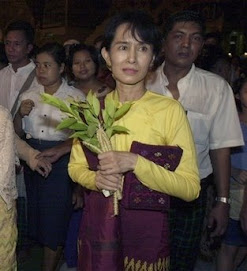


 Posts


