http://www.irrawaddy.org/article.php?art_id=14929
--------------------------------------------------------------------------------
By SAW YAN NAING Thursday, January 15, 2009
--------------------------------------------------------------------------------
A Burmese schoolteacher in Ranong in southern Thailand was arrested by Burmese police in Kawthaung after he and his family were repatriated by Thai officials on January 11, according to sources at the Thai-Burmese border.
Ko Gyi, who had been living in Ranong since 1995, was reportedly sent back to Burma with his wife, daughter and son-in-law, and is currently being detained in a police station in the Burmese border town of Kawthaung.
Sources said Ko Gyi had become a target for Burma’s military authorities because of his supposed links with Burmese opposition groups, as well as allegedly providing information to exiled Burmese news organizations.
Ko Gyi has previously been interviewed by BBC Burmese Service and The Irrawaddy.
Thai authorities also raided his home and school in Ranong and seized some computers and his car.
Ko Gyi founded a primary school in Ranong with the help of Jesuit Refugee Service, an international Catholic organization that provides assistance to refugees, forcibly displaced persons and Burmese migrant workers.
Ko Gyi and his wife worked at the school, which has provided free education to the children of Burmese migrant workers since 2003.
Copyright © 2008 Irrawaddy Publishing Group | www.irrawaddy.org
Friday, January 16, 2009
Burmese Schoolteacher and Family Repatriated


Human Rights in Burma Deteriorating: Report
http://www.irrawaddy.org/article.php?art_id=14930
--------------------------------------------------------------------------------
By LALIT K JHA Thursday, January 15, 2009
--------------------------------------------------------------------------------
WASHINGTON — The human rights situation has worsened in Burma in the months since a large-scale international relief operation began in the wake of Cyclone Nargis, according to a report released on Wednesday by Washington-based Human Rights Watch (HRW).
In its annual report, HRW highlighted both the Burmese regime’s poor handling of the relief and rescue mission in the cyclone-stricken Irrawaddy delta and its continuing crackdown on political dissidents.
The report alleged that the ruling military junta in Burma has systematically denied its citizens basic freedoms, including freedom of expression, association and assembly.
Referring to the series of long-term prison sentences imposed on pro-democracy activists late last year, the report said that the number of political prisoners in the country now stands at more than 2,150.
“In October and November, more than 70 political activists, monks, nuns, labor activists, and journalists were tried in secret proceedings in prison or closed sessions in court,” the report said.
Many of the harshest sentences were handed down to people who participated in the 2007 demonstrations; 14 of them were sentenced to 65 years each. Members of the 88 Generation Students group faced 22 charges, including contact with exiled political groups and unlawfully publishing documents, and faced sentences of 150 years.
Four lawyers representing activists were also jailed for contempt of court after they attempted to withdraw from legal representation to protest the unfair proceedings.
The Burmese military continues to violate the rights of civilians in ethnic conflict areas, the report said. Extrajudicial killings, forced labor, land confiscation without due process and other rights violations continued in these areas in 2008, according to HRW’s annual World Report 2009, which documents human rights abuses and violations across the globe.
The international community in general and the US and European countries in particular continued to oppose the junta in Burma, but its big neighbors, including India, China and Thailand, remained the military’s key supporters.
China, Russia, India and Thailand continue to provide diplomatic support for the Burmese junta and are major trade and investment partners, the report said.
Foreign investment in Burma’s oil and natural gas sector increased in 2008, particularly in connection with a major offshore gas project led by a Korean consortium and a planned overland pipeline to the Burma-China border.
HRW alleged the junta continued widespread and systematic forced recruitment of child soldiers. The non-state armed groups also recruited and deployed children in conflict-prone areas.
Copyright © 2008 Irrawaddy Publishing Group | www.irrawaddy.org
Burma Situation Affects Region: Thai PM
http://www.irrawaddy.org/article.php?art_id=14932
--------------------------------------------------------------------------------
By WAI MOE Thursday, January 15, 2009
--------------------------------------------------------------------------------
Thailand’s Prime Minister Abhisit Vejjajiva said on Wednesday that because the situation in Burma could affect other countries in the region, it is time for change.
Abhisit spoke to journalists at a dinner at the Foreign Correspondent Club of Thailand in Bangkok.
Thailand shares more than 1,800 km with military-ruled Burma. Nongovernment organizations that work with Burmese migrant workers estimate there are 4 million Burmese, legal and illegal, currently living in Thailand.
Abhisit said that the regional bloc, the Association of Southeast Asian Nations (Asean), should be more proactive on Burma issues, although the situation is difficult.
The Thai government will use a “flexible engagement” policy in relation to Burma under the Democrat administration, he said. The “flexible engagement” policy was outlined by Surin Pitsuwan, the former Thai foreign minister and current secretary-general of Asean in 1999. He proposed the regional bloc use a “constructive engagement” policy.
“Flexible engagement” was about open and frank discussion on issues such as human rights, leading to cooperative solutions—a pooling of sovereignty rather than its dilution, so as to make Southeast Asia a secure and prosperous region, according to analysts.
Abhisit said the sanction policy of Western nations on Burma was counterproductive.
Commenting on Abhisit’s Burma policy, Kavi Chongkittavorn, an assistant group editor of Thailand’s The Nation, told The Irrawaddy on Thursday that whether using “constructive engagement” or “flexible engagement,” Asean has to continue pressure on Burma.
He said the current Democrat administration can do a lot on Burma policy, and Abhisit’s approach will be different from the previous government of Thai Primer Thaksin Shinawatra.
“This government will be more transparent in its Burma policy,” he said.
Analysts say the Thaksin administration Burma policy was based on business interests and the government provided a 4 billion baht loan to Burma’s telecommunication sector—some of which was used to buy satellite services from a company owned by Thaksin.
Meanwhile, in a separate event, Abhisit told members of the diplomatic corps at Government House on Wednesday that Thailand will continue to play a constructive role in the sub-regional, regional and international community.
“We also continue to honor our international obligations and commitments at all levels and across all sectors,” he said. “Strengthening relations with neighboring countries remains at the heart of our foreign policy.”
Thai Foreign Minister Kasit Piromya held a meeting with Burmese Deputy Foreign Minister Kyaw Thu in Bangkok on Monday to discuss bilateral relations.
After the meeting, Abhisit told reporters the goals of Western countries and the countries of this region are on common ground on Burma issues.
“But our methods may differ because of two main reasons: cultural differences and the distance of the countries,” he said, indicating that neighboring countries have a more delicate situation when there are policy differences.
Copyright © 2008 Irrawaddy Publishing Group | www.irrawaddy.org
Chuo professor dies in campus stabbing-(JAPAN)
http://search.japantimes.co.jp/mail/nn20090115a1.html
Thursday, Jan. 15, 2009
University shuts gates, cancels day's classes
Kyodo News
A Chuo University electronics professor died of stab wounds Wednesday after he was attacked by a man in a building on the Korakuen campus in Bunkyo Ward, Tokyo, police and other sources said.
The culprit, dressed in black clothing and a black knit cap, fled the scene, according to the student who found the professor. The man appeared to be in his 30s, the police said.
Hajime Takakubo, 45, of the Faculty of Science and Engineering, was found bleeding from multiple wounds in a bathroom on the fourth floor of the university's No. 1 building. He was stabbed at least 10 times in the chest, back and hands.
A security guard called authorities at around 10:30 a.m., but Takakubo died an hour later, the police said.
The attacker was seen fleeing the building. No weapon has been found so far, the police said.
Takakubo, whose office is on the same floor as the attack, was scheduled to give a lecture at 10:40 a.m. He was an expert on electronic circuits for TVs and mobile phones.
"He was a gentle person and not the kind who has arguments with others," an acquaintance said.
A sophomore in one of Takakubo's classes said the slaying was a complete shock.
"He was always smiling and I have never heard that he was involved in trouble," the student said.
The university closed all three of its gates after the stabbing, and students appeared worried. A school official later announced to a crowd of more than 200 students that afternoon classes were canceled and the campus would temporarily close.
The Metropolitan Police Department set up an investigation headquarters at Tomisaka Police Station.
Takakubo was a member of the Institute of Electronics, Information and Communication Engineers, and the Institute of Electrical Engineers of Japan. He leaves behind a wife, who is also a university professor, and a son and two daughters. His late father, Toshikazu, was a legal scholar, according to a source close to the family.
In July 1991, Hitoshi Igarashi, an associate professor at Tsukuba University in Ibaraki Prefecture who translated "The Satanic Verses," the controversial book by Salman Rushdie, was murdered on campus.
In November 2000, an economics professor at Meiji University was attacked by four men on a street. He suffered a broken bone but survived.
Myanmar activist gets 104 years in jail
http://www.google.com/hostednews/ap/article/ALeqM5i8lQ5IvvKZaO86E_vFfi83VRYauwD95MUI9G5
YANGON, Myanmar (AP) — Military-ruled Myanmar has freed six people who recently called for the release of detained democracy leader Aung San Suu Kyi, but sentenced another activist to 104 years in prison, relatives and an activist group said Wednesday.
Six members of Suu Kyi's National League for Democracy party who marched for her release on Dec. 30 in the country's biggest city, Yangon, were freed without charge Wednesday, said the detainees' relatives. They spoke on condition of anonymity for fear of harassment by the authorities.
Three others activists remained in detention, according to the relatives.
Nobel peace laureate Suu Kyi, the face of Myanmar's beleaguered opposition, has been detained without trial for about 13 of the past 19 years, despite a worldwide campaign calling on the country's military rulers to release her.
Meanwhile, a member of a student protest group who was arrested last September was sentenced on Jan. 3 to 104 years in jail on a variety of charges, including six violations of immigration law, said the Assistance Association for Political Prisoners, a Thailand-based group of Myanmar activists.
It said Bo Min Yu Ko of the All Burma Federation of Students Unions was not allowed a defense lawyer at his trial. It did not give details of his offenses.
"The courts are not independent and simply follow orders from the regime," said the group's statement. "Criminals sentenced on drug charges are often given relatively light sentences, but political activists are given very long terms of imprisonment."
It said that at least 280 political activists have been sentenced in a flurry of hurried and often closed court cases since October last year.
Myanmar has been under military rule since 1962. The current junta came to power in 1988 after crushing a nationwide pro-democracy uprising. It held elections in 1990 but refused to honor the results after Suu Kyi's party won a landslide victory.
Hosted by Copyright © 2009 The Associated Press. All rights reserved.
The role of the UN and Asean in Burma
British ambassador to Burma, Mark Canning, talks to The Irrawaddy about the role of the UN and Asean in Burma, the Cyclone Nargis relief effort and his expectations for the election in 2010
Mark My Words
--------------------------------------------------------------------------------
Wednesday, January 14, 2009
--------------------------------------------------------------------------------
British ambassador to Burma, Mark Canning, talks to The Irrawaddy about the role of the UN and Asean in Burma, the Cyclone Nargis relief effort and his expectations for the election in 2010
Mark Canning
Question: How do you assess events in Burma in 2008?
Answer: It was a bad year on almost all fronts. It was especially cruel that on top of all their other problems, the people of this country had to cope with the devastation caused by Cyclone Nargis—but at least there we’ve seen some good progress. After a difficult start, relief reached those who needed it, a creative mechanism was established for overseeing the operation and a number of tricky problems were overcome.
Elsewhere, there was no movement, in fact quite the opposite. The UN secretary-general himself said very recently that the degree of cooperation between Myanmar and the UN had been unsatisfactory. There was no move towards any sort of dialogue between the government and the opposition. There was continued repression.
The number of political prisoners doubled, and more than 200 activists, who’ve done nothing but espouse peaceful protests, were given massive prison sentences. Aung San Suu Kyi remains locked away and prevented from playing the conciliatory role she could fulfil if allowed. The various concessions made at the turn of the year, like the series of meetings between her and the labour minister came to nothing. The population has been told to expect the introduction of “disciplined democracy” in 2010—they’ve seen plenty of the former but not much of the latter.
Q: Many critics, including Burmese both inside and outside the country, believe that Gambari’s mission has been a failure. What can he do to win greater credibility for his mission and to achieve political reconciliation in Burma?
A: The UN is playing a key role and we support it 100 percent. Dr Gambari has been working the problem extremely hard, but, as he and the secretary-general have made clear, the level of cooperation from the government has simply not been good enough.
There’s always been a tendency to criticise the envoy—you saw the same with Razali Ismail, you see it now with Dr Gambari, but that’s a mistake. It’s quite clear where responsibility lies for the lack of forward movement. The priority for 2009 therefore is to rebuild more solid international backing for what the UN is trying to do. The secretary-general’s personal engagement is a great asset and should help achieve that, and we hope very much to see him back here once conditions allow. We have now a clear assessment of where things have got to on which to build. It’s crystal clear there’s not been the kind of progress over the past 12 months which a number of countries claim to have seen. In fact, the situation has gone backwards and will continue to do so until there is clear and unambiguous backing for the UN. Issues like the release of political prisoners, rather than being internal matters, are central to what the UN is trying to achieve—political reconciliation.
Q: The UK played a major role in the cyclone relief operation—where do you see things going now?
A: The operation is going far better than we feared at the outset. The Tripartite Core Group mechanism has proved a great success, and there has been excellent collaboration between the government, Asean and the UN. Most of the affected population is getting some form of support, a wave of secondary deaths has been avoided, and the operation has been instrumental in saving hundreds of thousands of lives. As you say, the UK has been the largest contributor, and we’re proud of that. Most of all though it’s been a fantastic co-operative effort which has involved a range of donors, agencies, and local and international NGOs, all of which has rested on the hard and innovative work of the three TCG partners.
Our ministers are now in the process of assessing what more we might do. Looking ahead, we—and I think most donors—hope to see the TCG mandate extended beyond July so that it can build on what’s been achieved. We hope also that in partnership with government, some of the underlying policy issues in the area of agriculture and livelihoods, that affect the ability of those in the delta and elsewhere to make a sustainable living, can be considered. There’s good work going on there too, but there’s probably more that could be done. The key point is that there’s no point bandaging the patient if you then send him back into the environment that helped cause the problem in the first place.
Q: Do you think that the “humanitarian space” in the delta can be expanded to other areas of the country? What makes you believe that this will be possible, and what obstacles do you foresee?
A: That’s certainly the hope of all of us who are involved in the operation. The Nargis operation has helped build confidence and trust between the government and the donor community. We’ve seen good co-operative working, and both local and international NGOs play a fantastic role. All this has been excellent, but, as you say, the rest of the country is out there and it’s important in coming months that collectively we start to raise our eyes from the delta to address some of the serious situations elsewhere. Whether we’ll succeed, and the environment will almost certainly be difficult and unpredictable in the period up to 2010, remains to be seen, but it’s essential we try to build on the gains and keep up the momentum.
Q: The UK has tended to take a hard political line on Burma. Why in this case were you willing to donate so generously? And how would you respond to sceptics who say that aid organisations cannot operate effectively in Burma because of government restrictions? You recently asked the Burmese military government to increase its assistance to the Burmese people. Do you think that they have increased their aid to people who are in need?
A: We’ve always believed that, while the search for a political solution goes on, the people of this country should not be made to suffer further. We’ve steadily extended our humanitarian work in-country, particularly in health, but in other areas too, like livelihoods and primary education. Our role in the relief operation was consistent with this, and we hope that the success it’s enjoyed will encourage other donors to work in this country, which remains one of the most under-aided in the world.
To the sceptics you mention, I’d say that while this is not always the easiest of environments, good work can and is being done. The Three Diseases Fund is a good example. It’s delivering real health benefits to vulnerable populations, has benefited from excellent cooperation from the Ministry of Health and has at all times operated within the guidelines donors set at the outset. We very much hope to see more donors come in and are more than happy to share our experience with them. We hope to see the government’s contribution increase—that not only makes more funds available for the delivery of health, education, etc, but it also sends a signal of commitment that helps draw in new donors and encourages those already here to provide more assistance.
Q: Turning back to politics, what about Burma’s neighbours? Apart from the members of Asean, what do you think other countries, such as India, China and Russia, can do to bring about positive change in Burma?
A: There’s a key role for the countries of the region. Everyone understands the intractable nature of this problem. There are no easy solutions, and it must be tempting at times, when the issue is on your doorstep, to give up on it. Regional integration is hard enough at the best of times, yet alone when one of the members is moving in the opposite direction in political and economic terms. For the members of Asean, the situation poses an obvious reputational challenge—at the very time they are launching the human rights charter, we have a member flouting the standards it is designed to promote and as the situation declines—and it will—the practical effects on the neighbours, are likely to become more pronounced.
The fundamental question for the region therefore is whether the course on which the government is embarked is going to deliver the sort of stability and prosperity they have achieved in their own countries? There’s very little evidence in my view that it is. Nobody is under any illusions about the scale of the challenge, and a number of countries in the region have been working to address it, but the key in coming months is to build a more unified backing for what the UN is trying to achieve. It’s essential that the government should constantly be reminded, by those that have influence, of the need for change and meaningful cooperation with the UN.
Q: There has been a great deal of speculation that Aung San Suu Kyi could be released this year. If so, what do you think she will be able to achieve?
A: Whether she’ll be freed we obviously don’t know, but she should be. She has made clear repeatedly her willingness to work with the government and other political and ethnic nationality forces to address the challenges this country faces. She has made clear her wish to work for gradual, stable, evolutionary change, and change which takes account of the interests of the many different parties involved, including the military.
The fact that she’s under house arrest suggests she’s regarded as a threat. But she’s actually an opportunity in the sense that she could be instrumental in helping to forge the sort of broad-based dialogue with government that is the only way that progress is going to be made. If she’s not allowed to play that role, then it’s difficult to see how this will be done.
Q: The regime has accused the British and other Western embassies of meeting with NLD members. How do you respond to this charge?
A: We keep in touch with as wide a range of opinion as we are able. That includes government, as well as a range of other actors, and that’s very much the role of an embassy.
Q: How do you see Burma’s political landscape in 2010 and beyond? What is the UK government’s stance on the 2010 election?
A: The coming year will obviously be dominated by preparations for the elections in 2010, and we’ll presumably soon get some more detail of what the SPDC will allow in terms of participation. This can all represent a healing process, and a step on the way to resolving longstanding political difficulties—or it can be the opposite—as has been the case till now.
There’s clearly time to make the process more inclusive. We hope to see that happen. The European Union has always made clear that it is willing to respond to movement in a positive direction. Clearly, you can not have a credible electoral process without certain things happening—the release of political prisoners, engagement between government, opposition and the ethnic nationalities—and those are the criteria against which it should be judged.
Copyright © 2008 Irrawaddy Publishing Group | www.irrawaddy.org
A Tribute to Burma and Beyond
http://www.washingtonpost.com/wp-dyn/content/article/2009/01/13/AR2009011300759_pf.html
By Tom Sietsema
Wednesday, January 14, 2009; F03
Tired of screaming at your dining companions and bumping against the people sitting next to you at restaurants?
Oceans of space encircle the tables at Burma Road (617 S. Frederick Ave., Gaithersburg; 301-963-1429), where mint-green walls and tinkling music also put diners at ease. "I feel good in here," says the 80-year-old in my party, echoing the sentiments of all of us on a recent visit to this young restaurant. No sooner is everyone seated than a pot of tea appears.
Behind the tranquillity is Win Myint, who introduces himself to customers as simply "Charlie." Burma Road is a tribute to the place of his birth and the path by which his mother and grandmother fled the invading Japanese in World War II. Of the trio of friends who helped open the 110-seat restaurant in October, Myint, 54, is the only one with experience in the field, having run Hunan Cafe in King George, Va., for a decade.
The menu weaves Burmese with Chinese dishes. Thus pickled tea leaf salad and pork with pickled mango share space with General Tso's chicken and kung pao shrimp. Given the relative scarcity of the former cuisine around here, friends and I fill up on that salad, crunchy with peanuts and fueled with garlic, and that spicy meat and fruit combination, which is a tad oily but also hearty. Not to be missed: roti, the flaky Indian pancake, served with a "dip" of chicken curry.
Executing the long menu are four cooks, two Burmese and two Chinese, whose work can be delivered free to anyone ordering within a three-mile radius of Burma Road.
Something tells us Myint makes a mean cup of coffee. Before Burma Road, he worked as an assistant manager at a Starbucks in Washington.
Entrees, $6.50-$14.95.
Post a Comment
View all comments that have been posted about this article.
Report item as: (required) X Obscenity/vulgarity Hate speech Personal attack Advertising/Spam Copyright/Plagiarism Other Comment: (optional)
Comments that include profanity or personal attacks or other inappropriate comments or material will be removed from the site. Additionally, entries that are unsigned or contain "signatures" by someone other than the actual author will be removed. Finally, we will take steps to block users who violate any of our posting standards, terms of use or privacy policies or any other policies governing this site. Please review the full rules governing commentaries and discussions. You are fully responsible for the content that you post.
© 2009 The Washington Post Company
Ads by Google
Rent a car Gaithersburg
Compare rental cars in Gaithersburg Compare car rent Maryland
CompareCarRent.com
Flowers Washington Dc
Flowers Delivered by Local Florists Same Day Flower Delivery Available.
FlowerDelivery.com/Local_Delivery
Send Flowers
Same Day Delivery by Local Florist Save $10 Online using Coupon JF2007
JustFlowers.com/Send_Flowers
Burmese Expatriates Bid Farewell to the First Lady
http://asiasentinel.com/index.php?option=com_content&task=view&id=1666&Itemid=159
Written by Nehginpao Kipgen
Wednesday, 14 January 2009
It is less than 10 days before America's 44th president takes office on January 20. It has come the day for the Bush's family to bid adieu to the White House and begin a new journey of life. The significant role played by the First Lady, Laura Bush, is also coming to an end, yet her legacy will remain a living history in an administration that has precious few high spots.
Laura Bush took several historic and unprecedented initiatives to highlight the plight of some of the most oppressed people of the world. Among others, her advocacy for human rights abuses in the Union of Burma has brought the attention of the international community.
Some might have criticized or lambasted her for too much involvement in some of the crises of the world. Regardless of what the critics say, Laura Bush deserves appreciation and recognition for her goodwill and dedication for the cause of millions of hapless people.
At the opening session of the 61st UN General Assembly, on September 19, 2006, Mrs Bush convened a roundtable discussion to draw the international community's attention on human rights abuses in Burma. Participants included senior UN and US government officials, academics, and non-governmental organizations working to address humanitarian and human rights concerns in Burma.
In a historic meeting, Mrs. Bush welcomed a group of Burmese dissidents at the White House on June 12, 2007.
In the aftermath of the Cyclone Nargis, it was Laura Bush who made a moving statement from the White House James S. Brady Press Briefing Room on May 5, 2008. When asked: "Mrs. Bush, why such an historic interest? This is a first, for a First Lady to come to this podium and talk about a cyclone. Why such a historic interest?"
Her response was: "Well, you know I've been interested in Burma for a long time. It started really with an interest in Aung San Suu Kyi and reading her works and just the story of a Nobel Prize winner who's been under house arrest for so long, whose party was overwhelmingly elected in an election and then was never able to take office. And so it started with an interest in her, and then just the more I've seen, the more critical I see the need is for the people in Burma to be – for the world to pay attention to the people of Burma, and for the world to put pressure on the military regime."
It was an eye opener for many in the international community when the First Lady and her daughter Barbara made their way through the muddy ground in a rainy day, on August 7, 2008, to meet with thousands of Burmese refugees at Mae La refugee camp and Mae Tao Clinic at the Thai-Burma border.
When her husband was calling for "an end to the tyranny in Burma" at a speech in Bangkok, Laura Bush emphasized human rights abuses and said, "The best solution would be if General Than Shwe's regime would start real dialogue" with ethnic minorities and pro-democracy groups.
In one year anniversary statement of the 2007 demonstration, Mrs Bush said, "The United States reiterates our long-standing call for the Burmese regime to engage in a genuine dialogue with all democratic and ethnic minority leaders, with the goal of making a credible transition to civilian, democratic government. We call on the regime to release Aung San Suu Kyi and all other political prisoners."
These are some of the instances where Mrs. Bush personally got involved in the Burmese democratic movement. In the process, she had indeed fired up the international community. But sadly, it does not bring an end to the military rule.
As you are packing up to vacate the White House, Laura, please tell Michelle Obama, the incoming First Lady, to continue what you have started. This very important mission needs to continue till we see a genuine democratic society in Burma where the rights of every ethnic group are equally respected.
Nehginpao Kipgen is the General Secretary of US-based Kuki International Forum (www.kukiforum.com) and a researcher on the rise of political conflicts in modern Burma (1947-2004).
China provides more military trucks to Burma
http://www.mizzima.com/news/inside-burma/1542-china-provides-more-military-trucks-to-burma.html?tmpl=component&print=1&layout=default&page=
by Myo Gyi
Wednesday, 14 January 2009 16:04
Ruili, China (Mizzima) - Five military trucks, believed to be capable of carrying up to 100 tons in weight, were driven to the Burmese side of the border from China through the Sino-Burmese border gate, eyewitnesses said.
The trucks, which were driven through the Jiegao-Mahnwingyi border gate, were seen being guided by several Burmese military officers.
"The trucks had a label reading 'Sino Truk'. They were driven from the Mahnwingyi gate to the Burmese side at about 9:30 a.m. (Burmese Time). There were some Burmese military officers in the trucks," an eyewitness told Mizzima.
The eyewitness said the trucks were empty but there were people in civilian dresses, who are believed to be Burmese army men.
A source, who claimed to have spoken to some of the Burmese officials, said the trucks will be transported to a military base in central Burma's Meikhtila town.
He also said, the trucks were nearly double the size of military trucks – FAW and Dong Feng – which the Chinese in earlier years had given to Burma and are believed to be capable of carrying up to 100 tons in weight.
He said these trucks are different from the earlier Dong Feng trucks, which the Chinese had given in hundreds to Burma, as they are nearly double the size and length of the earlier trucks.
"They are ten-wheelers and according to one of the soldiers, these trucks will be used for carrying canons," the eyewitness said.
Sources said, China has been supplying military trucks to Burma at nearly half the market rate and allowing them to pay in installments. However, it is still not known how much Burma pays China for the trucks.
China has long been the major supplier of military hardware including arms, ammunitions and military trucks to Burma. In the past, sources in the border said China had supplied hundreds of military trucks to Burma through the Jiegong-Muse border gate.
< Prev Next >
Abhisit Needs to Set a New Course on Burma -TIME PM-IRRAWADDY
http://www.irrawaddy.org/print_article.php?art_id=14925
COMMENTARY
--------------------------------------------------------------------------------
By AUNG ZAW Wednesday, January 14, 2009
--------------------------------------------------------------------------------
Here’s some good news: Thailand’s new prime minister, Abhisit Vejjajiva, says he shares the West’s desire for change in Burma.
Of course, that doesn’t mean that the Kingdom is about to impose sanctions on its recalcitrant neighbor. Because of its culture and geographic proximity to Burma, Thailand could not embrace such an approach, he explained.
The young prime minister was disappointingly short on details about what his country could do to bring about change in Burma, but at least he made a clear break from the policies of former PM Samak Sundaravej, who visited Burma a year ago and returned full of fulsome praise for his hosts.
Samak, who was widely regarded as a proxy for ousted PM Thaksin Shinawatra, infamously came to the defense of Burma’s brutal generals, describing them as pious Buddhists who pray and meditate every morning.
More importantly, Samak was intent on restoring Thaksin’s policy of highly personalized, business-based relations with Burma. Under Thaksin, Thailand’s Burma policy was driven by purely commercial considerations. The lack of transparency that characterized some of his deals with the Burmese junta was widely criticized.
Most Burmese now hope that Abhisit will be able to restore transparency and accountability to Thailand’s dealings with its troubled neighbor. But even if he succeeds in staying in office long enough to undo some of the more damaging aspects of Thaksin’s legacy, he will have his work cut out for him setting relations with Burma on a straighter course.
Almost from the moment the Burmese regime seized power in a bloody coup in 1988, Thailand has been deeply conflicted over how to respond to its neighbor’s problems.
In the immediate aftermath of the army’s crackdown on protests, Burma’s nascent pro-democracy movement enjoyed strong popular support in Thailand, which soon became an important base for thousands of anti-junta dissidents; even now, hundreds of exiles remain in the country, to the perennial irritation of Burma’s rulers.
At the same time, however, many in Thailand’s ruling class saw the bloodshed as an act of desperation by a military clique despised by the majority of Burmese and with few friends abroad. The government of late PM Chatchai Choonhavan wasted no time in exploiting this rare opportunity to win access to Burma’s resources in exchange for Thailand’s economic and diplomatic support of the regime.
For most of the past 20 years, Bangkok has pursued a policy of “constructive engagement” with Burma. Only during the two terms of former PM Chuan Leekpai has Thailand’s Burma policy been guided by principles other than economic self-interest.
In 1993, the Chuan government allowed Nobel Peace Prize laureates, including Tibet’s spiritual leader, the Dalai Lama, to visit Thailand to lobby for the release of detained democracy leader Aung San Suu Kyi and to highlight the need for democracy in Burma. The regime in Rangoon was furious and the relationship was strained.
During his second term, from 1997 to 2001, Chuan took an even tougher stance toward the generals in Burma. He declined to pay an official visit to Burma and he put Thailand’s defense in the hands of then-Army Chief Gen Surayud Chulanont and then-Third Army Commander Lt-Gen Watanachai Chaimuenwong—two hawks who looked askance at their neighbors to the west. Gen Surayud was also known to be sympathetic to Burma’s ethnic minorities.
As a result, troops from both sides massed along the border, leading to serious skirmishes and repeated border closures. Relations were then at their lowest ebb.
All this changed when Thaksin became the prime minister in 2001. He quickly restored a business-based approach to relations with Rangoon. But after Thaksin was deposed by a military coup in October 2006, relations with Burma were put on the back burner.
Surayud returned to a position of influence, this time as Thailand’s interim leader, and Bangkok kept its distance from Burma.
Surayud condemned the regime’s bloody crackdown on Buddhist monks and activists in September 2007 and called for a concerted international process to deal with Burma, modeled on the six-party talks which successfully persuaded North Korea to abandon its nuclear weapons program.
So what can we expect from new Thai government?
Thai Foreign Minister Kasit Piromya has indicated that the new Democrat-led coalition government in Bangkok would depart from Thaksin’s business-oriented Burma policies, saying that Thailand would now run “an ethical foreign policy.”
“We shall have no [personal] business deals with the [Burmese] junta; we shall observe human rights and environmental concerns; we shall treat Burmese as we do Thais,” he said at an academic conference on December 19.
Burmese who listened to Kasit via shortwave radio stations hailed the remark. But we all know that Thailand cannot afford to allow ties with Burma to sour too much.
In reality, Thailand is Burma’s leading investor and trading partner. Thai state-owned energy firms are the largest buyers of natural gas from Burma and Thailand has won a concession to energy from the 7,110-megawatt Tasang dam on the Salween River in Burma’s Shan State. The Thai-financed project has seen no progress to date.
Under Samak, the two sides also discussed a plan to build a deep-sea port in Tavoy in Burma’s southeast, for which the regime leaders reportedly asked assistance from Thailand.
Thailand and Burma can do more business in the future, but Abhisit’s government must also take the lead in pushing for political change in Burma.
There are several ways it can do this.
As a chairman of the Association of Southeast Asian Nations (Asean), Bangkok can help to formulate a comprehensive policy to bring about positive change in Burma. If Thailand, in coordination with Asean, begins to make a move, China and India, the regime’s two major allies, will listen.
Abhisit has already indicated that his Burma policy is likely to involve a more proactive stance on human rights issues in the military-ruled country. In an interview with the Qatar-based Al Jazeera news network, Abhisit said that he would try to convince fellow members of the Asean of the importance of human rights to the international community.
Unless Asean’s efforts to enshrine human rights are credible in the eyes of the international community, “the grouping will not be able to achieve its objectives,” he said.
Abhisit, an Oxford-educated economist, can also help Asean and the West to find some common ground in their approach to Burma.
Thailand could, for instance, take a more active role in humanitarian relief efforts in Burma’s cyclone-stricken Irrawaddy delta, which have brought together a wide range of international participants focused on addressing some of Burma’s immediate needs.
Perhaps with this in mind, the Thai foreign minister has offered to help Burma coordinate fundraising for the reconstruction of temples damaged by Cyclone Nargis.
But Abhisit must also take care to ensure that Thailand’s efforts to rebuild Burma do not end with its temples. He should remind his Asean counterparts that Burma’s political system also needs to be fixed, and that the sooner that can be achieved, the better it will be for the whole region.
Copyright © 2008 Irrawaddy Publishing Group | www.irrawaddy.org
City group to help Myanmar refugees
http://calsun.canoe.ca/News/Alberta/2009/01/14/pf-8016281.html
January 14, 2009
By TARINA WHITE
Volunteers leave today for a Calgary-based humanitarian mission to aid Myanmar refugees who have fled their homeland's strict military dictatorship.
The group of 14 with Calgary-based Medical Mercy Canada Society (MMC) is taking medicine, equipment, clothes and baby supplies for Myanmar refugees in India, Thailand and Burma.
Each year since 1992, MMC founders Dr. Myron Semkuley and his wife Elaine have led volunteers to assist the malnourished refugees.
"They're all extremely poor and they just come into Thailand or India with nothing except for what they can carry in their hands," said Myron, 69, a Calgary family physician.
"There's zero or very little support for 98% of the people.
"They need a lot of help and really don't get a lot of help."
Volunteers on the six-week trip, ranging in age from 20 to 65, include doctors, journalists, beekeepers and engineers.
Each participant has paid $5,000 to join the humanitarian mission.
The society operates a blood clinic and also offers medical training, said Myron.
At Confirmation Hearing, Clinton Talks of Engagement With Iran
http://www.washingtonpost.com/wp-dyn/content/article/2009/01/13/AR2009011301145.html?wpisrc=newsletter
By Glenn Kessler
Washington Post Staff Writer
Wednesday, January 14, 2009; Page A01
Secretary of State-designate Hillary Rodham Clinton said yesterday that the incoming Obama administration will seek to engage directly with Iran in an effort to persuade it to abandon its nuclear program and become "a constructive regional actor," underscoring a dramatic shift in U.S. foreign policy from the Bush administration.
This Story
At Confirmation Hearing, Clinton Talks of Engagement With Iran
In Foreign Policy, a New Trio at the Top
Afghan Conflict Will Be Reviewed
Clinton Talks Strategy in Confirmation Hearing
Live Blogging From the Clinton Confirmation Hearing
TALK: A Disaster in the Making?
View All Items in This Story
View Only Top Items in This Story
In prepared testimony and remarks during her confirmation hearing -- which were supplemented by 79 pages of formal answers to questions posed by the Senate Foreign Relations Committee -- Clinton was careful not to tip her hand on specific plans or policies that the new administration might pursue. But she struck a consistent theme of active engagement and unyielding diplomacy, a sharp contrast to President Bush's policy of refusing to deal with countries that did not first meet conditions set by the United States.
"I don't get up every morning thinking only about the threats and dangers we face," Clinton said. "With every challenge comes an opportunity to find promise and possibility in the face of adversity and complexity."
Clinton also pledged greater involvement in the quest for Middle East peace but was not drawn into specific questions about how the incoming administration might handle Israel's invasion of the Gaza Strip.
She drew the line, however, at the idea of the United States engaging in immediate talks with Hamas, the militant group battling Israel. Clinton said it is appropriate to set conditions in dealing with what she called "non-state actors," which in the case of Hamas would be renouncing violence, recognizing Israel and respecting previous agreements between Israelis and Palestinians.
By Glenn Kessler
Washington Post Staff Writer
Wednesday, January 14, 2009; Page A01
Secretary of State-designate Hillary Rodham Clinton said yesterday that the incoming Obama administration will seek to engage directly with Iran in an effort to persuade it to abandon its nuclear program and become "a constructive regional actor," underscoring a dramatic shift in U.S. foreign policy from the Bush administration.
This Story
At Confirmation Hearing, Clinton Talks of Engagement With Iran
In Foreign Policy, a New Trio at the Top
Afghan Conflict Will Be Reviewed
Clinton Talks Strategy in Confirmation Hearing
Live Blogging From the Clinton Confirmation Hearing
TALK: A Disaster in the Making?
View All Items in This Story
View Only Top Items in This Story
In prepared testimony and remarks during her confirmation hearing -- which were supplemented by 79 pages of formal answers to questions posed by the Senate Foreign Relations Committee -- Clinton was careful not to tip her hand on specific plans or policies that the new administration might pursue. But she struck a consistent theme of active engagement and unyielding diplomacy, a sharp contrast to President Bush's policy of refusing to deal with countries that did not first meet conditions set by the United States.
"I don't get up every morning thinking only about the threats and dangers we face," Clinton said. "With every challenge comes an opportunity to find promise and possibility in the face of adversity and complexity."
Clinton also pledged greater involvement in the quest for Middle East peace but was not drawn into specific questions about how the incoming administration might handle Israel's invasion of the Gaza Strip.
She drew the line, however, at the idea of the United States engaging in immediate talks with Hamas, the militant group battling Israel. Clinton said it is appropriate to set conditions in dealing with what she called "non-state actors," which in the case of Hamas would be renouncing violence, recognizing Israel and respecting previous agreements between Israelis and Palestinians.
The 61-year-old former first lady and current senator from New York was warmly embraced by senators on both sides of the aisle who praised her intellect and her policymaking skills. She fielded nearly six hours of mostly polite queries, the only exceptions being a handful of questions about potential conflicts posed by former president Bill Clinton's charitable foundation.
The committee plans to vote on her nomination tomorrow morning, and she is expected to be confirmed easily.
Clinton's daughter, Chelsea, sat behind her during the hearing, but the former president watched the hearings on television with his wife's 89-year-old mother, Dorothy Rodham, a spokesman said.
During his second term, Bush began a shift in policy, opening up dialogue with North Korea and bending on his initial demands for conditions on talks with Iran, but the idea that Bush had little interest in diplomatic engagement persisted in most foreign capitals.
On Iran, the Bush administration has pursued a carefully calibrated effort that held out the prospect of economic and political incentives if Iran agreed to suspend its efforts to enrich uranium, a key component of nuclear weapons. Bush permitted ambassador-level diplomats to meet with Iranian counterparts but insisted that more substantive discussions not occur unless Iran first changed its behavior.
Clinton said flatly yesterday that Bush's effort has "not worked" and that President-elect Barack Obama's team is "very open to looking to a positive, effective way of engaging with Iran." She acknowledged that the effort represents a gamble and insisted that a nuclear-armed Iran is unacceptable to Obama, but she added: "We won't know what we're capable of achieving until we're actually there working on it."
In her written responses to the committee's questions, Clinton said that it is even possible that Obama could meet directly with Iranian leaders, a prospect she had ridiculed when she was Obama's rival in the bruising Democratic primaries.
Page 2 of 2 < Back
At Confirmation Hearing, Clinton Talks of Engagement With Iran
Video
Clinton Talks Strategy in Confirmation Hearing
Secretary of State-designate Hillary Clinton is calling for a strategy for achieving peace in the Middle East that goes beyond the Israeli-Palestinian conflict to a wider list of pressing issues.
» LAUNCH VIDEO PLAYER
» Top 35 Politics Articles
» Most Popular on washingtonpost.com
TOOLBOX
Resize Print E-mail Yahoo! BuzzSave/Share + DiggNewsvinedel.icio.usStumble It!RedditFacebookmyspaceNewsTrust
COMMENT
washingtonpost.com readers have posted 351 comments about this item.
View All Comments »
POST A COMMENT
You must be logged in to leave a comment. Log in | Register
Why Do I Have to Log In Again?
Log In Again? CLOSEWe've made some updates to washingtonpost.com's Groups, MyPost and comment pages. We need you to verify your MyPost ID by logging in before you can post to the new pages. We apologize for the inconvenience.
Discussion PolicyYour browser's settings may be preventing you from commenting on and viewing comments about this item. See instructions for fixing the problem.
Discussion Policy CLOSEComments that include profanity or personal attacks or other inappropriate comments or material will be removed from the site. Additionally, entries that are unsigned or contain "signatures" by someone other than the actual author will be removed. Finally, we will take steps to block users who violate any of our posting standards, terms of use or privacy policies or any other policies governing this site. Please review the full rules governing commentaries and discussions. You are fully responsible for the content that you post.
Who's Blogging» Links to this article
"We will not sit down for the sake of talking," Clinton wrote. "But we are willing to lead tough and principled diplomacy with the appropriate Iranian leader at the time and place of our choosing -- if and only if -- it can advance the interest of the United States."
This Story
At Confirmation Hearing, Clinton Talks of Engagement With Iran
In Foreign Policy, a New Trio at the Top
Afghan Conflict Will Be Reviewed
Clinton Talks Strategy in Confirmation Hearing
Live Blogging From the Clinton Confirmation Hearing
TALK: A Disaster in the Making?
View All Items in This Story
View Only Top Items in This Story
Condoleezza Rice, the outgoing secretary of state, defended the administration's approach to Iran in an interview with The Washington Post on Monday, arguing that it had put Iran on the defensive in the region.
"This isn't an issue of talk to Iranians, don't talk to Iranians," Rice said. "It is a question of what price the Iranians are trying to extract for engagement. Are they trying to extract a grand bargain in which Iran is acknowledged as a regional power without having given up the very policies that are destabilizing the region?"
Clinton reiterated that Obama is "committed to responsibly ending the war in Iraq and employing a broad strategy in Afghanistan that reduces threats to our safety and enhances the prospect of stability and peace." Her statement was nuanced and cautious, and it was perhaps most notable for what it did not say, including no mention of the need to win either war, a constant refrain of the current administration.
Clinton appeared most passionate when she spoke on a subject normally absent from the list of priorities for the nation's top diplomat -- the plight of the 2 billion people who earn less than $2 a day, especially women and girls, who she said "comprise the majority of the world's unhealthy, unschooled, unfed and unpaid."
Obama is equally concerned about the world's poor, Clinton said, noting that his mother, Ann Dunham, was a pioneer in microfinance in Indonesia, and observing that "the care and concern she showed for women and for poor people around the world mattered greatly to her son, our president-elect. And I believe that it has certainly informed his views and his vision."
Clinton gave little ground on questions about potential conflicts between Bill Clinton's charitable activities worldwide and the job of secretary of state. An agreement was reached under which the former president released the names of donors to his foundation, which has raised about $500 million, some of it from foreign governments. He also promised to provide annual updates of the donor list.
Sen. Richard G. Lugar (Ind.), the senior Republican on the committee, gently suggested in his opening statement that the agreement be amended to provide even more information, including the immediate disclosure of all donations of $50,000 or more. "The bottom line is that even well-intentioned foreign donations carry risk for United States foreign policy," he said.
The Associated Press reported yesterday that Sen. Clinton intervened at least six times in government issues directly affecting companies and others that later contributed to her husband's foundation. A Clinton spokesman and the companies involved dismissed the incidents as coincidental.
"I am hopeful that as we go through the history of this, that people will not say, 'Well, Senator Lugar . . . and others were prescient; they saw the problems,' " Lugar warned Clinton.
Thursday, January 15, 2009
Burma ranks among worst nations for civilian freedom: Rights Group -MIZZIMA
http://www.mizzima.com/news/world/1537-burma-ranks-among-worst-nations-for-civilian-freedom-rights-group.html
New Delhi (Mizzima) - A United States-based Freedom House in its annual global release on freedom in the world, has ranked Burma among the 'worst of the worst' countries, where civilians enjoy negligible political and civil liberties.
The Freedom in the World 2009, which examines the state of freedom in 193 countries and 16 strategic territories, ranked Burma along with North Korea, Turkmenistan, Uzbekistan, Libya, Sudan, Equatorial Guinea and Somalia among the worst countries that impose restrictions on the lives of civilians.
The report said freedom "retreated in much of the world in 2008, the third year of global decline," and countries in the Sub-Saharan Africa, the former Soviet Union, and a few countries in Asia including China, North Korea and Burma saw the most reversals.
The Freedom House survey categorized countries, according to the political rights and civil liberties which their civilians enjoy, into three categories – Free, Partly Free and Not Free. Burma along with 41 other countries was ranked as 'Not Free'.
In 2008, Burma's military rulers have widely attracted criticism and condemnation from international communities for its high-handedness on opposition activists by arresting and sentencing them to long prison terms.
Following the September 2007 monk-led mass protests, Burma's military junta escalated its crackdown on dissidents by arresting several activists, including prominent student activist Min Ko Naing and group.
Since August 2008, the military junta has conducted secret trials in prisons and handed down harsh sentences of imprisonment upto 68 years. Among those handed harsh prison terms, a dissident Buddhist monk, Ashin Gambira, who had played a vital role in leading the September 2007 protests, was given 68 years of prison term.
Burma's military rulers have said that the country is building a roadmap to democracy and are gearing up to hold general elections in 2010. However, critics doubt whether the elections will be free and fair.
The junta in May, amidst a severe crisis faced by the country's southwestern coastal region after it was hit by Cyclone Nargis, held a referendum to approve a draft constitution, which critics and opposition parties said was a tool to cement military rule.
Regional and international communities including the United Nations have urged Burma's military rulers to implement a broad based dialogue with all political stake holders and to speed up the process of democratization.
Burma has been under military rule since 1962.
SEAPA Alert: Thai academic calls for abolition of lese majeste law
SEAPA Alert: Thai academic calls for abolition of lese majeste law
14 January 2009
A Thai political scientist charged with insulting the monarchy
called for a campaign on January 13 to abolish the country's lese
majeste law, media reports said.
According to the Associated Press online, Ji Ungpakorn, a professor
at Bangkok's Chulalongkorn University and a prominent activist,
said he has been charged with insulting the monarchy over a book he
wrote about the 2006 military coup in Thailand.
But Ji, who is the son of the late Central Bank Governor Puey
Ungpakorn, a respected civil servant in Thailand, called for "an
international and national political campaign to defend democratic
rights in Thailand and for the abolition of the Lese Majeste law."
According to Ji, the lese majeste law mandates a jail term of three
to 15 years for defaming the king, the queen or the heir to the
throne. "[It] restricts freedom of speech and expression and does
not allow for public accountability and transparency of the
institution of the monarchy."
AP quoted him as saying, "[It] is a tool by the military, and other
authoritarian elites, in order to protect their own interests." He
claimed he was being targeted for political reasons because he
criticized the military and its coup.
There has been a recent spate of complaints and prosecutions for
lese majeste and increased censorship of Web sites allegedly
critical of the institution. The new Information and Communication
Technology (ICT) Minister Ranongruk Suwanchawee said on January 6
that "The blocking of websites that disseminate content and
pictures which insult the monarchy is one of the government's
crucial policies".
The government reported that it has blocked 2,300 websites which
allegedly have messages that monarchy. Some 400 more await court
orders for their shutdown.
------------------------------------------------------------
Southeast Asian Press Alliance.
538/1 Samsen Rd., Dusit, Bangkok 10300.
Tel: 66-2-2435579, 66-2-2435373, Fax: 66-2-2448749
To unsubscribe or change subscriber options visit:
http://www.aweber.com/z/r/?LIwcjIyMtCzMDBysTJzstEa0LEysLCysLA==
Kachin party - but not KIO - to contest 2010 election
http://democracyforburma.wordpress.com/2009/01/13/kachin-party-but-not-kio-to-contest-2010-election/
January 13, 2009 · No Comments
by Mizzima News
Tuesday, 13 January 2009 22:51
(Interview with Dr. Tu Jar)
Chiang Mai (Mizzima) – The Kachin Independence Organization (KIO) will not be transformed into a political party to contest the planned 2010 general election, however civilians from the party will contest the election. Meanwhile, the KIO will cautiously follow news being circulated on the mounting pressure on ceasefire groups to surrender, according to Dr. Tu Jar, Vice-Chairman of the KIO, which reached a ceasefire agreement with Burma’s military junta in 1994.
Mizzima’s Phanida interviewed the Vice-Chairman and asked him of his views on politics, economics and environmental and health issues.
Q: Will the KIO contest the 2010 general election as a political party?
A: The KIO will never form a political party and contest the election. Only civilians will form a party and they will contest this election. The KIO has nothing to do with forming political parties and contesting elections; as this is a matter solely for civilians.
Q: We heard that the Kachin Consultative Council will form a political party. Is it true?
A: No, the Kachin Consultative Council will not form a political party, only civilians will form a political party. There will be occasional consultation and cooperation between leaders of the Consultative Council and leaders of other Kachin organizations, but the Kachin Consultative Council has nothing to do with politics and it will not form a political party. The people will form a party freely. This is our plan.
Q: If they so desire, how can KIO members join this party?
A: If they wish to join the party, they must quit any other organizations. The newly established party will be an independent party. It must be like that, and it will be like that.
Q: Let me ask again. Are you sure the KIO will not contest the 2010 election?
A: Our KIO organization will not contest the election and will not form a political party. We will follow the current path and will enter into a dialogue with the new government, which will emerge at the end of the 7-step roadmap. So, the KIO will not form a political party and will not contest this election. We will not make any trouble until the end of the roadmap, maintaining our current position and status. continue http://www.mizzima.com/edop/interview/1540-kachin-party-but-not-kio-to-contest-2010-election.html
Categories: Burma
Tagged: Human Rights, Junta, Burma, Kachin
Pro-junta party kicks off campaign for 2010 polls in northwestern Burma-MIZZIMA
http://www.mizzima.com/news/inside-burma/1539-pro-junta-party-kicks-off-campaign-for-2010-polls-in-northwestern-burma.html
by Salai Pi Pi
Tuesday, 13 January 2009 21:46
In the run-up to the junta's general election in 2010, a pro-regime party has launched its poll campaign in Burma's north western Chin state.
Ling Ha, organizational in-charge of the National Unity Party (NUP) of Hakha town, capital of Chin state, on Tuesday said they have begun recruiting new members as part of its campaign for the elections.
"We plan to contest the elections from all the nine townships of Chin state and have started recruiting members," Ling Ha told Mizzima over telephone, adding that he, personally, is gearing up to contest from a constituency in Kanpalat Township, southern Chin state.
Ling Ha said he and his party believe that the junta's roadmap, which has reached the fourth stage since it was chalked out in 2003, is the only way out from the political deadlock and humanitarian crisis.
The NUP is a political party formed in 1990 by members of former military dictator Newin's Burma Socialist Programme Party (BSPP). NUP, while not representing the current batch of military generals, is largely endorsed by the junta.
Ling Ha said junta authorities had not imposed any restrictions on them while campaigning.
"We are into all campaigning within the legal framework," he said, adding the 1990 election law allows parties to assemble less than 50 people during campaign but prohibits parties from using loudspeakers and disallows campaign in public places.
In Burma's last election in 1990, the NUP got one seat in Chin state out of a total of 13 seats. Other parties that had contested the election include the National League for Democracy, Chin National League for Democracy (CNLD), Zomi National Congress (ZNC), Mara People's Party (MPP) and Mro or Khami National Solidarity Organisation (MKNSO).
While the junta in 1992 abolished all other political parties in the state, the NUP and MKNSO continue to function as legal parties. The NLD, though it was not abolished, is banned from opening their offices.
According to Ling Ha, political parties that have been abolished by the ruling junta are unlikely to be allowed to contest in the ensuing elections.
He said, the likely candidates so far in Chin state includes the MKNSO, a party that failed to garner a parliamentary seat in Chin state in the last election, and an independent candidate Dr. Hmu Thang, who individually attended the junta's national convention.
The MKNSO, a party that also contested from the Arakan state's Kyaukdaw constituency in the 1990 election and won a parliamentary seat, also sent a representative to the junta's national convention.
Meanwhile, a leader in exile of the Mara People's Party told Mizzima that Mara people in Chin state are likely to form yet another party to contest the election.
The veteran politician, who requested not to be named said, "I heard that the Mara people are very interested in the 2010 election. They held a meeting and had sent a delegate to study the nature of the election."
However, he said, things would only be clearer once the junta announces the election law.
Edited Mungpi
Chin: Humanitarian Crisis “Likely to Escalate”
http://www.unpo.org/content/view/9079/101/
Monday, 12 January 2009
NGO warns that drought and disease lie ahead for those living in Chin, Western Burma.
Below is an article published by Mizzima.com:
With crop yields declining due to severe weather conditions and the devastation caused by rat infestation, a humanitarian crisis is imminent for western Burma's Chin state in 2009, a leading humanitarian worker in Chin state said.
Joseph Win Hlaing Oo, director of the Rangoon-based Country Agency for Rural Development in Myanmar (CAD), on Thursday [9 January 2009] said the humanitarian crisis in Chin state caused by both drought and rat infestation in 2008 is far from being over.
"This year [2009], the situation seems to be getting worse," Joseph told Mizzima, adding that people have already begun running short of food.
"People will need more help," iterated Joseph, whose organization with help from the World Food Programme (WFP) has begun distributing aid supplies to a few villages in Chin state.
On Thursday [9 January 2009], CAD began distributing about 700 rice bags to villagers affected by drought and rat infestation in Hakha township, home to the capital of Chin state.
Since the end of 2006, food security in the region has been gradually threatened by the infestation of rats, which are multiplying in great numbers after consuming a special bamboo flower that blossoms only once every 50 years in Chin state.
"Today [ 9 January 2009], we started distributing rice bags to the people in four villages, including Pinam in Hakha township," Joseph said.
But he said aid is not simply given, with villagers instead receiving aid in exchange for community work, such as assistance in the construction of roads to connect villages, under a program called "Food-for-Work".
"We provide rice to villagers according to the work. We give [a total of] 100 bags of rice to 18 people on completion of a mile of road," said Joseph, adding that the 'Work-for-Food' model was utilized to help villagers get the best out of aid supplies.
Joseph said CAD intends to reach at least 30,000 people in three townships - Hakha, Thangtlang and Matupi – with aid supplies. However his initial plan of distributing aid last November [2008] was derailed due to difficulties in purchasing good quality rice and high transportation cost.
Additionally, he said aid supplies are still insufficient, as many more villages in other parts of Chin state, including those that are close to the Indo-Burmese border, are yet to be covered. According to him, the food crisis is far more severe along the Indo-Burmese border.
"The problems in the areas close to the India-Burma border are more serious than other areas," said Joseph, with the crux of the problem being a lack of proper roads and means of transportation to reach those areas.
According to an assessment done by the WFP and other relief agencies such as CAD, KARET, World Vision and Karuna Myanmar Social Service (KMSS), at least 60,000 people from 139 villages in Chin state are severely affected by food scarcity caused by rat infestation.
In 2008, the WFP coordinated a relief aid program to help victims in Chin state with 1,451 tons of rice through international and local relief agencies, Joseph said. He added that an additional 800 million kyat (approximately US$ 600,000) will be made available for the first six months of 2009.
Meanwhile Van Lian Thang, spokesperson for the exile-based Chin Humanitarian and Relief Committee (CHRC), recently said people from at least 16 villages in northern Chin state are facing food insufficiency as the harvest of crops such maize and paddy has fallen sharply.
"Because the rate of crops harvested this year is very low, people from some villages in Tedim and Falam townships are facing a shortage of food," said Van Lian Thang.
Seven Words that can Change the World
http://www.naturalnews.com/report_Seven_Words_0.html
Seven Words that can Change the World
The 7 Principles of Mindful Wealth
A girl half my age selling organic soap hit me with a sobering truth so insightful, it made me abandon five years of false beliefs and unlock a powerful new philosophy of financial abundance. I'm sharing that breakthrough financial philosophy with you here, but it's only something you'll find valuable if you're ready to let go of false limitations about money and welcome real, lasting change in attracting the money you deserve into your life.
The girl sells soap. Natural soap. It's the best soap I've ever found, and she was selling it at prices so cheap, it might have well been the brand-name chemical soap you buy at the grocery store.
I asked her, "Why are you selling this soap so cheaply? It's worth three times the price..." And in her response, I learned that she didn't really value her soap... or herself. She was selling her soap too cheaply because she didn't feel like she deserved to charge the prices her soap was really worth!
She was limiting her financial abundance by choice. Like many of us, she had unconsciously decided that her contribution to the world (her soap) wasn't worth much, and she had resigned to a life of financial challenges, living from one paycheck to the next, never achieving the real financial independence or wealth she truly deserved.
And yet her soap was among the best natural soaps in the world. Why shouldn't she be at least as wealthy as the executives at Proctor & Gamble who sell junk soap? (This is a good question to ask yourself, too: Don't you deserve more wealth than the corrupt Big Pharma executives who sell drugs that harm children? Of course you do!)
Imagine my shock when she turned the tables on me and asked, "So what about YOU, Health Ranger? I read your website. You've helped a hundreds of companies and millions of readers, but you don't allow yourself to make a dime, either. Why's that?"
Next: Getting past self-imposed limits on wealth...
Self-Imposed Limits
It was a good question. For nearly five years, I've been operating NaturalNews in a way that practically guaranteed ongoing financial challenges. Because I never took money from the companies I wrote about - and I never earned commissions on the products I recommended - NaturalNews remained in a state of self-imposed financial stress.
You might be experiencing something similar. If you're not reaching the level of wealth you know you deserve, you might be caught in a pattern of unconscious wealth limitations.
In this special report, I intend to free from you from that pattern for good! By the time you're done reading this, you will have banished those limitations and unlocked a new era of wealth attraction in your own life. And it's all 100% aligned with natural health and natural living.
Profound changes often happen quickly
Is it really that easy to make such a pivotal change in your life in just a few minutes? Absolutely! The soap girl made it happen in me...
"How many products have you reviewed and recommended?" she asked.
"Hundreds," I answered.
"And how much money did those companies make selling products you recommended?" she added.
"Millions," I replied. "Maybe tens of millions of dollars."
"And did these products benefit your readers by improving their health?"
"Absolutely!" I answered. "I only recommend the very best health products I can find. They're extraordinary finds."
She leaned forward then, and seemed to take on the persona of a parent, even though I was old enough to be her father. "Then why are YOU the only one who doesn't benefit?" she asked pointedly.
Next: Why your life mission is truly important to the world...
Money and Boundaries
I explained to her that I could not earn anything from the products I recommended because that would compromise my integrity. People needed independent, objective recommendations, I insisted. My content had to be given away in order to be trusted.
She didn't entirely agree on that. "You've been doing this for, what, almost five years now? It sounds to me like you've EARNED your credibility," she said with a smirk. "The only reason NaturalNews isn't earning more money is because you've voluntarily decided not to. I mean, how long could I keep selling natural soap if I just gave it all away?"
She was right. If she didn't have a way to fund her operations, she couldn't continue making and selling her all-natural soap. The same was true with NaturalNews, and it's probably true with you, too: If you could make more money doing the things you love to do, and having a positive influence on the world, you'd spend more time doing those things, wouldn't you? (And maybe you'd spend less time working a J.O.B., right?)
But many people (myself included, previously) feel that we don't have the right to earn money if we're doing something for the greater good. It's almost like we agree to get paid in karma instead of dollars...
Karma doesn't pay the rent
But guess what? Karma doesn't pay the rent. Good karma isn't the recognized currency in modern society: Dollars are!
So the real secret here rests on this question: How do we keep our good karma and still attract the abundant cash we need to pay the rent? And how do we do so ethically, honestly and in a way that serves the greater good while allowing us to experience abundance, too?
I've found the answer to that, and I'm spelling it out right here in this report. (I'll also tell you what happened to the Soap Girl and how she broke through her financial limitations.)
Keep reading to get the details. But first, let me introduce principle #1 of Mindful Wealth attraction:
Principle #1: Most people limit their wealth by choice. (Either consciously or unconsciously.)
I know what you're thinking: "But I didn't decide to be broke! It just happened to me!"
I know, I thought that too. But keep reading, because what I'm about to reveal next will explain how our unconscious beliefs make many decisions for us, leading us into situations that our conscious minds don't want.
Next: How unconscious decisions can override your conscious desires (and how to solve that)...
Unconscious Limitations
As you'll come to see when you keep reading, it is the total sum of our conscious decisions and unconscious decisions that have led us where we are right now.
Think about it. Whatever financial situation we are in right now, we made a series of choices that brought us to that place. Some of the choices are conscious; others are not. But they all add up to the exact financial situation we find ourselves in right now.
If we're financially stressed, it's because we made decisions along the way that led us to financial stress. If we're wealthy or affluent, it's because we got to that point through a series of decisions (unless someone just inherits a bunch of money, of course, but even then, their decisions will determine whether they waste it or put it to a good purpose).
The real question, then, is: How do we make better decisions - both consciously and unconsciously - that will lead us to the mindful financial wealth we truly deserve?
The answer to that question, I soon discovered, was waiting for me in a bamboo forest in Ecuador.
The Root of Good and the Journey to Ecuador
With Principle #1 firmly in mind, I headed to South America and soon found myself in Vilcabamba, Ecuador, the Valley of Longevity. There, I decided to live on a ranch for a month, sleeping in a small house beside a lush bamboo forest (which has now been made somewhat well-known by my "Life in Ecuador" photo tour at NaturalNews.com).
Spending time in nature always seems to bring greater clarity on difficult issues. It also helps you discard belief system baggage that doesn't serve you well.
Have you also found this to be true? Every time you spend a few hours or days in nature, away from the distractions of city life, don't you find yourself feeling more grounded and lucid?
Is money bad?
I entered the bamboo forest with the belief that money was evil. But was it really? Certainly, a lot of evil things had been done in the name of money; both in getting it and spending it. But I recalled the Biblical quote about money, and it didn't really say money was the root of all evil: It said the LOVE of money was the root of all evil.
That made sense to me, because money itself was merely a tool, just like a hammer. A hammer could be used to build a house or demolish one. And money was similar: It could be used to build a better world, or to enslave a world.
Money could promote things that are good for the People (like superfoods), or things that destroy their health (like pharmaceuticals). The choice is up to the person who HAS the money.
Money Isn't Evil
All my life, I had been operating on the belief that money was bad and the more money a person had, the more evil they were likely to be. Most corporations and individuals, of course, reinforce that belief. They use money for selfish purposes, and they gain money using unethical tactics that cause great harm to consumers and nature.
As I sat there in the midst of sacred bamboo plants, I wondered: could a wealthy person have integrity, too? Could they attract financial abundance AND be a positive, creative force in the world?
I decided to accept that as a possibility (and you may want to do the same, at least while you read this) and explore it further. But to do that, I first had to discard the excess baggage I had brought into the bamboo forest, and let go of the limiting belief that money in and of itself was somehow evil.
So I tossed that baggage out of my life and came to recognize Principle #2:
Principle #2: Money is not evil. The way money is EARNED and SPENT is good or evil, depending on the ethics applied to it.
Accumulating Mindful Wealth
If this is true, then there must an authentic, high-integrity way of accumulating wealth, right? I wonder what that looks like...
Next: Transforming money into a vehicle for positive change...
Money Transformations
To answer this question, I began by considering the way most money is earned in the world. Perhaps 95% of all money is earned in unethical, destructive ways. Consumer product corporations sell toxic personal care products and disposable junk to people who don't need such things; drug companies sell medicines that destroy people's health; weapons manufacturers promote war so they can sell more weapons; oil companies sell fossil fuels that pollute the air and endanger the climate; food manufacturers sell processed, nutrient-depleted foods that promote obesity and disease; and media companies sell anything that makes them money: Sodas, perfumes, pizza, useless gadgets and silly weight loss pills.
Clearly, earning money by selling harmful things to people is not a way to accumulate "mindful wealth." You've probably discovered this, too: You are ready to be wealthier, but you don't want to harm others (or the planet) in the process of attracting that wealth, right?
I'm the same way. I've always wondered about ethical ways to accumulate wealth... Could a person accumulate considerable wealth while helping make the world a better place at the same time?
Flashback to Macchu Picchu
That question transported me back in time to 2003, before I became the editor of NaturalNews. I was standing on a mountain top in Peru, having just hiked 65km over four days, and I was looking down on the ancient city of Macchu Picchu. Llamas and alpacas were milling about, basking in the high-altitude sun of the cool Andes mountains. Ancient sacrificial platforms littered the grounds. A giant stone sundial... a temple of stone... a wall of 20-ton boulders dragged through jungles fifty miles away. It was a truly an awe-inspiring sight.
You can't get to Macchu Picchu without hiking it. Sure, you can take a bus to the top, but when you arrive, you're not in Macchu Picchu, because Macchu Picchu is more of a metaphor for that sacred destination waiting to be discovered as you journey through the pathways of your life. And if you complete the journey with the right intention - as I did over a period of several days - the journey becomes a teacher that leads you to gems of undiscovered, inner wisdom. Macchu Picchu, you see, was a city discovered in the deep jungles of Peru. It symbolizes the hidden knowledge in yourself that's also waiting to be uncovered and explored...
There, I came to understand the mission of my life. Perhaps you have a mission statement in your life, too. For me it appeared in a flash: My purpose was to protect life. (What's YOUR mission, by the way? Keep that in mind as you continue reading...)
It's incredibly simple. Just three words: To protect life. That's the mission statement that came to me, and it has guided my work on NaturalNews ever since. Everything I've written in the last five years, you'll notice, is really designed to accomplish one thing: To protect life.
What kind of life? Human life, animal life, plant life and planetary life. Sustainable life. It doesn't mean to protect every insect, fish or single-celled microorganism on Earth; it simply means to work in the service of sustainable, diverse life on our planet.
What's your mission? Is it to protect the planet, to educate future generations, to end suffering or to help humankind evolve to a higher state of living in harmony with the universe? If your mission is something along those lines, then we have much the same mission.
It also means you're perfectly aligned with Principle #3:
Principle #3: Money shall be accumulated (earned) in service of protecting sustainable life. (It shall also be earned ethically, honestly and without deception.)
It's a very simple principle. It means attracting all the money in the world is a positive thing when it's done in the service of protecting sustainable life. (That means life that can continue in harmony with the natural environment.)
Simple, huh? Once you understand that principle, you now have permission to earn unlimited wealth, guilt-free!
Next: How your wealth creates a better world...
Universal Wealth
If money is earned in a way that supports, protects or enhances sustainable, diverse life on our planet, then it's "mindful wealth" or "good wealth." If, on the other hand, money is earned in a way that threatens or destroys life on Earth, then it becomes "evil wealth."
Thus, anyone who earns money in an ethical, mindful way that supports and protects life is creating wealth the right way!
And the more money they make, the greater the positive impact on the planet.
Can you think of some examples of ways to earn money that protect life? There are many: Offering natural healing services (like massage therapy), manufacturing and selling quality nutritional supplements, selling organic, mindfully-produced food, authoring books, documentaries or other materials that inform and inspire, working for a non-profit group that protects rainforests, educating children as a schoolteacher, or manufacturing and selling solar panels. The possibilities are endless.
Part of my new mission is to help bring new wealth-attracting opportunities to NaturalNews readers. That's why, at the end of this special report, you'll be able to sign up for my "Mindful Wealth" email list. It's a small list of people who want to be kept informed of opportunities I find for attracting wealth while doing good in the world.
In the months ahead, I'll be sharing my findings with the list, covering topics like wealth attraction strategies, wealth preservations (keeping the money you already have), surviving tough economic times, and so on.
Keep on reading to the end of this special report (a few more pages) to see the sign-up form for that list. There's no charge to sign up.
The Redistribution of Wealth
My trip to Macchu Picchu, of course, only provided part of the answers to mindful wealth. It was only years later -- sitting in the bamboo forest in the Valley of Longevity -- that I fully realized accumulating wealth is only half the picture.
What you DO with the wealth you've accumulated, it turns out, is just as important as how you earned it.
Next: How to unlock even more abundance by redistributing your wealth...
Wealth Redistribution
Wealth is a representation of resources and effort. You can trade money for effort by hiring someone to work for you. You can also trade money for resources by purchasing those resources. Thus, money is a type of stored creative potential that can be expended to create something useful (or to destroy, depending on its use).
If you earn a million dollars mindfully, ethically and in the service of life, but then you sit on it and keep it all for yourself, is that really being mindful? I don't think so: Mindful wealth must be redistributed in order to complete the cycle. In other words, wealth that comes from others must be recirculated back to others, and it must be redistributed in a mindful way.
So what is mindful redistribution of wealth? Does it mean running around town, handing out $5 bills? Not exactly. That's mindLESS redistribution of wealth (it's what government is really good at...). MindFUL redistribution is more along the lines of spending money in service of protecting life!
Principle #4: Money shall be redistributed (spent) in service of protecting sustainable life.
So how do you spend money in service of protecting sustainable life? It's an important question, and the more wealth you have, the more important it is to find the right answers here.
Essentially, you must be mindful that you vote with your dollars. Everything you buy is something you encourage. If you buy meat harvested from a cow, for example, you encourage the harvesting of more cows. If you buy gasoline, you are voting for more drilling of oil. If you buy non-organic junk food, you're asking the food corporations to manufacture more non-organic junk food! What you buy (and consume) determines what your money supports.
On the other hand, if you buy organic, non-processed foods, then you are using your money to vote in favor of organic farming. If you stop buying cow meat, then you reduce demand for cow meat, and you deny revenues to the cow factory farms that produce the meat.
If you hire natural-oriented health practitioners to support your health (chiropractors, massage therapists, acupuncturists, homeopaths, etc.) then you are voting for their professions. Every dollar you spend is a vote for the thing you spend it on!
Mindful redistribution of wealth means spending money in the service of life. So every dollar you spend goes to support something (or someone) that's having a positive, creative impact on the planet. In this way, the more money you mindfully spend, the greater the positive impact on the planet!
Did you read that last sentence carefully? The more money you mindfully spend, the greater your positive impact on the planet!
I'll bet you never thought about spending money as bringing you good karma. But it does when you spend it mindfully.
When you combine this powerful principle with "mindful accumulation" of wealth, you create a full circle of abundance and positivity that protects and enhances sustainable life on our planet; for people, plants, oceans, animals and much more.
And - get this - the more you earn, the greater the positive impact on the world! Thus, when you follow these simple principles of mindful wealth, the planet becomes richer as YOU become richer!
Next: How it works - Interdependent wealth secrets revealed...
Interdependent Wealth
Of course, it's very important to remember both sides of this equation: The EARNING side and the SPENDING side. Too many people limit their mindfulness to just one half of this equation.
Let's take a look at what happens with the four possible combinations of mindful vs. mindless earning and spending:
MindLESS Spending MindFUL Spending
MindFUL Earning You take positive dollars and transform them into negative consumption. You are in complete harmony with wealth. A powerful, positive force on the planet.
Mindless Earning You are a destructive, selfish force on the planet that contributes to harming life on our planet. You try to compensate for the negative way you make money by giving a small amount of it away to "good causes."
As you can see from this chart, true harmony with "mindful wealth" is only acheived if you both EARN and SPEND your money in a mindful way that protects and supports sustainable life. Covering just one side of this equation doesn't cut it.
A lot of wealthy people got that way by ripping off people, harming consumers, price-gouging the public, etc. This is what Big Pharma does to earn its money. Then it turns around and tried to donate a tiny portion of its dirty profits to good causes, hoping it will earn the goodwill of customers in the process. This is an example of Mindless Earning combined with Mindful Spending. It just doesn't fly. You can't compensate for harming millions of people by offering limited help to a few thousand.
There's also the opposite: Mindful Earning combined with Mindless Spending. Bill Gates comes immediately to mind. One of the wealthiest persons in the world thanks to his software inventions (which have enabled more productivity and creativity in the world), he has donated a huge portion of his wealth to fund vaccines that primarily benefit the drug companies, not children.
Rather than vaccinating children around the world with toxic chemicals, what if we gave them nutritional supplements instead? We could use nutition, not chemicals, to boost global health and raise a healthier generation. But Bill Gates has chosen to use his enormous wealth to enrich drug companies rather than nourishing children. As a result, his mindLESS spending is destructive to the future of life on Earth.
(People can argue the vaccination issue endlessly, but let me say it this way: You cannot vaccinate your way to a healthy population. Real health must be based on food, nutrition, sunlight and exercise, and it has to exclude as many toxic chemicals as possible, including the chemicals used in vaccines!)
If YOU had the wealth of Bill Gates, how would you distribute it differently? In that answer, you'll find your true nature. If you immediately think of funding positive initiatives designed to protect health and life on Earth, then you are a mindful spender, and the world would actually be improved by YOU having more money to spend / redistribute.
You're the kind of person I want to attract to my free "Mindful Wealth" email list. Sign up at the end of this report, if you're interested, or just click here to go directly to it: http://www.naturalnews.com/MindfulWealt...
Before you do, however, ask yourself this question: If you had all the money of Bill Gates, how much would you spend, exactly?
Next: Why you can't get rich by hoarding wealth...
No Hoarding Wealth
Once you've earned mindful wealth (and I'll reveal four strategies for doing that later in this report), what will you really do with it? We've already talked about mindful spending (redistribution) of your wealth, and how that's important for creating a better world with sustainable life. But what if you earn lots of money and just sit on it, without spending it?
Economists call that "saving money," and they consider it a good thing. What became apparent to me in the bamboo forest experience, however, is that sitting on all your wealth is irresponsible. Wealth must not be hoarded; it must be allowed to flow to a good use, where it helps create a better world.
Let me clarify all this: Yes, it's sensible to have some personal savings. I'm not against that. Maybe you want to have $10,000 in the bank, or $50,000 or even a million dollars. It's fine to have a financial safety set for you and your family. But at the same time you're accumulating wealth for that safety net, it's important to redistribute a portion of your earnings to constructive people or organizations who are aligned with your desire to protect life on Earth.
Holding on to all your money while letting go of virtually none of it is considered hoarding. And wealth that's hoarded is NOT going to a good use, is it?
Don't let the banks decide how to spend your money
Some financial experts reading this might say that savings are already put to another use because banks use your deposits to fund loans to other people, and those loans help start businesses, build new buildings, etc.
Yes, I understand that, but are those loan recipients engaged in the service of protecting life on Earth?
I doubt it. That money might be used to invest in a tobacco company, or to build a local pharmacy that doles out dangerous prescription drugs to people. If you don't spend the money yourself, then you have no control over how it's leveraged to provide funding to other people or organizations. That's why I say don't let banks determine how to spend your money!
And remember: Banks don't care if loans go to support evil businesses or not. As long as the evil business makes money and repays the loan, the bank is happy. Leaving your wealth in the hands of ethically-illiterate bankers is a dangerous game that will only cause your money to be used for evil purposes. Financially-motivated bankers, after all, aren't interested in protecting life on Earth; they're interested in protecting their bottom line profits.
Thus, the only reliable way to ensure that a portion of your wealth is put to an ethical, positive use is to spend it or give it away yourself! YOU must be the decision maker on where the money goes.
Next: How much money should you redistribute? See the answers...
Redistributing Your Wealth
Getting back to the question, how much of your wealth should you redistribute, exactly? The members of many religious groups pledge 10% of their earnings back to their church.
That's a good guideline, I believe, especially when it's done consistently. Some people may choose to earmark 15% to causes they choose, and still other people may decide to donate as much as 25% of what they earn. You can decide what level is right for you.
But remember this: It isn't just donations I'm talking about here: The way you spend money (or redistribute wealth) on everyday goods is just as powerful as donating money for specific causes.
For example, what you buy to eat every day needs to be mindful, too. The clothes you buy need to be mindful, as does the house you live in (a "green" house that minimizes energy waste is especially good!)
Notably, spending money to buy organic food for your children definitely counts as redistributing wealth in a mindful way. Buying junk food for your children, however, is mindLESS (and destructive).
Of course, you can decide for yourself how much of your wealth to redistribute, but in my opinion, if you're not regularly earmarking at least 10% of your earnings for things that help support life on Earth, then you're probably hoarding your wealth.
Principle #5: Wealth shall not be hoarded. Earmark at least 10% for regular redistribution to positive-minded recipients and causes.
Next: Do you earn good karma for being poor? Absolutely not...
Poverty is Not Pious
My bamboo forest experience gifted me with several realizations about wealth, abundance and the role of the individual in creating a healthier, more positive world. But I soon grew restless from sitting in the bamboo and decided to plant more fruit trees.
I had been working diligently for several weeks to plant exotic fruit trees in Vilcabamba, Ecuador, and so far, I had completed the planting of over one hundred trees! They included cacao (chocolate), coconuts, zapotes, papayas, cashews, noni, cherimoya, and many others.
I was building the most abundant, diverse exotic fruit tree farm in Southern Ecuador, and in doing so, I realized I was redistributing wealth, using money I had earned in the past to create abundant wealth in the future (buying and planting fruit-producing trees is an excellent investment in life on Earth, wouldn't you say? In a couple of years, I'll be inviting NaturalNews readers to come visit and eat those fruits in their fresh, raw, living state!).
That's when I realized if I had been completely broke, I never would have been able to afford the seeds to plant these trees; nor the tools to work the soil. Being broke, I realized, was not noble or pious in any way.
Silly beliefs about having little money
That realization came as a bit of a shock to me, because I had always associated wealth with excess, and when you believe that way, you come to the absurd conclusion that he who owns nothing is the most pious of all. (This belief is also sometimes promoted in some spiritual circles.)
Have you been suckered into that belief, too? Certainly, the worship of material goods is destructive, but living in poverty doesn't earn you any bonus points, either.
Poverty is not pious. There's nothing sacred, honorable or even particularly spiritual about being broke. In fact, as I'll explain here in more detail, creating and redistributing mindful wealth is a far higher spiritual calling than being broke and lacking the financial resources necessary to accomplish important things (like planting a hundred tropical fruit trees).
Don't make the mistake I made. Don't believe that being broke somehow achieves a higher spiritual status than being wealthy. When wealth is attracted and redistributed mindfully, it's very much in alignment with high vibration, highly-spiritual living.
In fact, earning and spending money mindfully is, at its very heart, a compassionate, loving act. It is a genuine expression of mindful, high-vibration living.
Of course, hoarding money -- or earning it unethically -- isn't spiritual at all. Achieving a higher level of spiritual awakening in the presence of vast amounts of wealth requires genuine dedication to being a conduit for the accumulation and redistribution of wealth.
Not everyone is cut out for the job. Immature individuals spend their wealth on meaningless toys for personal entertainment and distraction (Jay Leno comes to mind). But truly pious individuals spend their money in ways that support and protect sustainable life on our planet.
Remember: Do not make the mistake of thinking that poverty is pious. You cannot accumulate good karma simply by living in poverty. If you could, then all the poor people living in trailer parks would be spiritual leaders, would they not? And yet that's not the case. Poverty isn't pious, folks. It's just poverty.
Principle #6: Poverty is not pious. You do not accumulate good karma by living in poverty.
Next: How to attract wealth by connecting with people...
Why You Deserve Wealth
All this leads me to the final principle of mindful financial abundance. This one will really surprise you, so read this section carefully.
There is a vast amount of wealth in the world, correct? And most of that wealth is either being hoarded or used for destructive purposes that endanger life on Earth. This is happening beacuse the people in control of that wealth do not have the maturity, mindset and spiritual awakening that YOU have.
How, then, can you attract more wealth while improving the world?
The answer is surprisingly simple: Shift control of wealth from THEM to YOU!
In other words, if money represents resources and power, then the more money that goes into the hands of responsible, life-protecting people like you, the less money is controlled by irresponsible, life-endangering people like the CEOs of drug companies.
Thus, not only is it better for the world for you to accumulate and redistribute as much wealth as possible, I believe that you have a moral obligation to attract (and oversee the redistribution of) enormous wealth.
In other words, you deserve to be rich. The more wealth you attract and direct, the better the positive impact on the world.
I'd rather see NaturalNews taking home multi-million-dollar salaries than Big Pharma
CEOs, wouldn't you? All that money would go to a far more meaningful purpose.
De-monetizing the selfish
Why should greedy, selfish people have all the money in our economy? Those selfish, short-term thinkers have little respect for life on our planet.
They've made a mess of things. They've poisened the land, water and air, they've turned forests into landfill, they've intoxicated the population with harmful chemicals and hoarded wealth for themselves. If we hope to have a better future for our planet (and all the living beings on it), we have to shift wealth to those who are more mindful.
And that includes you. And me, and all kinds of people who read NaturalNews.com. We are the kind of people who are good stewards of great wealth. We are the ones who have the integrity, the vision and the compassion necessary to redirect vast amounts of wealth into new directions that can literally create a better world.
I believe it is our moral obligation to attract, receive and redistribute enormous amounts of money, using authentic, high-integrity wealth creation opportunities that support our vision for a better world.
Does that surprise you? The realization sure shocked me. I had always been taught that money was evil and people who had a lot of money were, by definition, bad people. But I now realize that was a silly misconception; a delusion based on false information.
Sure, money in the hands of destructive people is very dangerous, but money in the hands of responsible, high-integrity people is a blessing -- for everyone!
Next: Creating new wealth by transcending old beliefs...
Positive Financial Influence
These realizations and experiences have dramatically upgraded my beliefs about money and wealth. I've not only come to realize that high-vibration people limiting their earnings is a great disservice to the world, but also that we have a moral obligation to find ways to bring more financial abundance to ourselves and the world around us.
I believe MORE wealth should go into the hands of those best suited to overseeing its accumulation and distribution, and there is no better group in the world than NaturalNews readers.
NN readers are the most well-informed and innovative guardians of wealth in the world. I strongly believe that if Bill Gates' billions were evenly distributed among NaturalNews readers, the resulting cascade of mindful wealth redistribution would create a massive groundswell of positive action in our world.
Bill Gates, of course, isn't going to do that, so it's up to us to create our own wealth.
Principle #7: Natural living advocates have a moral obligation to mindfully attract and redistribute vast amounts of wealth, in alignment with their core beliefs (and with full honesty, without deception).
With that mission firmly in mind, I am now for the first time actively researching mindful wealth accumulation opportunities (and wealth protection strategies) for NaturalNews readers.
If you'd like to be kept informed of what I find, sign up to the "Mindful Wealth" email list using the form at the end of this special report.
I believe that the high-vibration people of our time are now tasked with the project of serving as financial collectors and directors; mindfully accumulating -- and then carefully redirecting -- enormous financial resources.
Next: The final step in attracting the wealth you truly deserve...
Abundance Unleashed
Isn't it refreshing to realize that your own financial wealth is important to the world? As you follow the 7 Principles of Mindful Wealth outlined in this report, you will discover yourself becoming a magnet for money, and a guardian of the valuable resouces that money represents.
It's important to understand that simply being able to embrace these 7 principles is, all by itself, the key step to allowing unlimited wealth into your own life. It is crucial that you discard any old, limiting beliefs about wealth and, in their place, realize that your positive nature and creative intentions are the real qualifications that now put you in a position to begin receiving the financial abundance you truly deserve.
Or, stated another way, now that you've come to recognize you deserve unlimited wealth and that you are a responsible steward of that wealth. Simply embracing this understanding will shift your intention towards attracting more wealth.
That's what happened to the organic soap girl. A while later, I heard from her that she was now selling her soaps and personal care products at prices more appropriate to the level of quality and love she put into her products. She was later able to quit her day job and now sells a complete line of homemade soaps in salons throughout New Zealand.
Let's get practical about money
That's a powerful example of the kind of positive change that's possible when you discard old, limiting beliefs about money and embrace your new responsibility (and destiny) to attract and redistribute real wealth.
But I don't want you to think this is simply about changing your mind and waiting for wealth to magically appear (although that often happens, almost as if by magic). I intend to give you concrete, practical wealth attraction strategies in my "Mindful Wealth" email newsletter. With your beliefs recalibrated towards accepting and attracting wealth, you are now truly ready to take advantage of new wealth-generating opportunities that appear in your life. As long as they are aligned with the 7 Principles of Mindful Wealth (as described above), I say, "Go for it!"
You might find, for example, that within one week after reading this, a new opportunity appears from an unexpected source. I encourage you to carefully consider it. Don't jump into something that's not aligned with the 7 Principles, but if you see something come along that's truly aligned, pursue it with all due diligence.
Click forward to the end of this report to subscribe to my Mindful Wealth email list, where I'll keep you posted about new wealth attraction opportunities you may want to consider.
Next: How to evaluate wealth attraction opportunities... (and find what will work for you with the least amount of effort and time...)
Evaluating Opportunites
So how do you know if a wealth attraction opportunity is right for you? I've found there are a few key criteria you should look for in every potential opportunity. A good opportunity will allow you to:
• Be your own boss. Working for others usually won't bring you the kind of real financial abundance you probably have in mind. Climbing a corporate ladder is a slow, tedious and downright frustrating process. Want to really be wealthy and free? Find a way to work for yourself.
• Leverage your time. Trading hours for dollars only goes so far. To position yourself as an accumulator of vast amounts of wealth, you will need to leverage your time (see below).
• Unlimited earnings potential. Earnings cannot be limited to a simple salary or a dollars-per-hour equation. They need to be theoretically unlimited so that a little bit of your time or effort is multiplied into greater results.
• Doesn't cost a fortune to start. This is crucial for many people. Most folks don't have $50,000 or $100,000 sitting around just waiting to be invested in a business venture. They need to be able to attract wealth without spending a fortune up front. So an ideal wealth attraction opportunity would allow people to build wealth with minimal financial investments.
• Earning money while you sleep. Ideally, any wealth attraction vehicle you pursue should have the potential to earn you money while you sleep. You simply set things in motion, and then maintain the operation using less effort. Even while you're sleeping (or on vacation or whatever), you should still be earning something. Think about revenue streams that keep flowing, much like a hillside spring that flows year-round.
• Fully aligned with the 7 Principles: Whatever you do, it must be aligned with the protection of life on Earth, both on wealth accumulation and redistribution. Only a completely aligned opportunity can bring you unlimited wealth while improving the world at the same time.
• Taps into assets you already have: Attracting wealth shouldn't require you to get a new degree or spend four years learning a new skillset. You already have tremendous assets in what you know (and WHO you know) right now. A mindful wealth accumulation strategy will allow you to tap into your existing assets, allowing you to attract more wealth being who you are right now!
So what opportunity meets these criteria? Four types of opportunities come to mind as possible candidates:
Next: Four types of opportunities that align with the 7 Principles of Mindful Wealth...
Four Opportunities
Here are the four types of opportunities that align with the 7 Principles of Mindful Wealth as well as the criteria I describe on the previous page.
Opportunity #1 Invent a health-related product (or supplement). This is a somewhat risky - but potentially very rewarding - business venture. If you create a new health product that catches on and gets mainstream distribution, you could end up having your health food product in stores across the world, earning nickels and dimes as customers buy your goods. Getting mentioned on NaturalNews can even help jumpstart your business, but you have to have a really great product to earn that placement.
Launching a health-related product company isn't easy. It can require a fairly large financial investment, and it's a 70-hour-a-week kind of job (at least for the first two years). If you love what you're doing, that's great, but for most people, the hours are too intense, and the outcome too uncertain. Only approach this idea if you have a truly revolutionary product idea that's an instant hit with everybody you describe it to.
A related idea is to join a successful, health-related franchise. There are still some opportunities, for example, to start juicing stores in some cities, where you make superfood smoothies for customers. (Have fun managing the teenage help, though...)
Opportunity #2 Create a book, DVD or other publishable content. This is easier said than done, of course, but if you do it right, this approach leverages your time and can earn you money while you sleep. Of course, most books don't sell very well. Being a successful author (or DVD creator) requires dedication and great marketing.
If you pursue this route, my advice is to avoid working with the major book companies and, instead, self-publish books that you sell electronically. It's a LOT more profitable, and you avoid all the up-front costs associated with printing 3,000 copies of your book. Offer NaturalNews an affiliate fee, and we might even promote your book for you! Speaking of affiliate marketing...
Opportunity #3 Be an affiliate marketer with an internet site. This has the advantage of minimizing your investment (there's virtually none) and leveraging your time. You can earn anywhere from 4% - 25% on affiliate links to products related to your blog or website.
The key here, of course, is attracting readers. Without real people reading your content, you won't earn anything from affiliate marketing. So becoming proficient at writing is essential for those pursuing this opportunity. You'll also need to put in 3-6 months just building an audience before you can expect any real success. By comparison, I wrote over 500 articles for NaturalNews before it really started to take off. It took about 18 months.
Opportunity #4 Find success with a health-related network marketing company. This is more for "talkers" than "writers." People who are good with other people tend to do very well in network marketing companies, and the business structure leverages your time and requires very little in the way of startup costs.
On the down side, many of the networking marketing companies I've seen are selling "junk" products made with fillers and junk juices. All those expensive, bottled liquids containing acai, mangosteen and other exotic fruits are a good example. I've looked at them all, and I've even written critical reviews of several. None of them have yet impressed me.
On the up side, I've openly recommended the Amazon Herb Company for years, and it's based on a network marketing model. I've never been a distributor of the Amazon Herb Company, but I know that hundreds of NaturalNews readers have become distributors over the years, and many have done very well financially.
I don't have any specific recommendation to make on the network marketing side, but I'm actively looking for opportunities aligned with the 7 Princples of Mindful Wealth. To be of real interest to NaturalNews, they have to be NEW opportunities from companies that haven't yet been launched. (If I announce something for NaturalNews readers, I want it to be a truly ground floor opportunity, where NN readers can get in right at the top, before the burst of growth that generates extraordinary wealth.)
If you are aware of any such upcoming opportunity that you'd like us to evaluate, you may contact us at www.NaturalNews.com/Feedback.html
For me to recommend any such company, it would have to operate in full alignment with the 7 Principles of Mindful Wealth described here, AND it would have to be made with completely natural ingredients and zero fillers. I won't recommend junk products, no matter how much money might be made.
In all, these are the best four opportunities available today for attracting mindful wealth. Again, they are:
• Start your own health-related product or service company.
• Create a book, DVD or other publishable content (and the market it).
• Be an affiliate marketer of other people's products or services.
• Join a mindful, quality-focused network marketing company.
None of these are effortless. Everything worth having requires some effort on your part, but I aim to help you minimize the effort required while maximizing the results you get.
Next: Sign up form for my free Mindful Wealth email newsletter...
Insider Knowledge
In my "Mindful Wealth" email newsletter (sign up for free, below), I'll be bringing you news and tips about all four of these mindful wealth attraction opportunities. By tuning in to this email list, you'll position yourself at the forefront of upcoming opportunities that can literally make you extremely wealthy.
I can't guarantee what I'll find for you, exactly, nor can I promise any particular level of earnings you might experience. All business ventures involve some level of risk, so don't quit your day job until you get something else going that can cover your living expsenses.
At the same time, don't be afraid to take a leap of faith in your life and leap up to a new level of wealth and abundance. It might be scary at first to consider such major changes in your life, but if you're truly ready to attract the kind of wealthy you really deserve, the rewards will be well worth the short-term changes that might ripple through your life.
And think about it this way: If you're not wealthy right now, then getting wealthy is going to require a major change, right? So you should EXPECT major changes to occur. That's the only way to break the current pattern you're experiencing and burst out of the old habits and into a new pattern of unlimited wealth attraction.
A note about money: Earning more money doesn't solve life's problems, by the way. I thought I should warn you about that. In some ways, it makes your problems more complex. But as a friend told me recently when I warned him about the possibility of becoming wealthy, "I'd rather be rich and confused than poor and confused."
Fair enough. But here's something else I want to ask you before you join my Mindful Wealth email list (below): Because I'm writing and sharing all this with you for free, I'm asking that you consider donating 2% of any new wealth you accumulate to our non-profit Consumer Wellness Center. It's a 501(c)3 non-profit, so your donations are tax-deductible.
It's your choice, of course, whether you really choose to honor that 2% donation, but if my Mindful Wealth email newsletter brings you something that genuinely makes you financially wealthy, it would be completely aligned with the 7 Principles for you to direct a small amount of that (2%) back to our non-profit where it gets redistributed to positive educational and nutritional programs.
I'm the executive director of the CWC, and I earn no salary from it. It's simply about redistributing wealth into constructive, health-oriented programs that directly help create a better world.
Click the following link to sign up for my Mindful Wealth email list:
http://www.NaturalNews.com/MindfulWealt...
From there, you'll start receiving emails from me (one per week, typically) on Mindful Wealth topics.
See you there!
Next: A review of the 7 Principles of Mindful Wealth...
The 7 Principles
For review, here are the 7 Principles of Mindful Wealth, as written by Mike Adams, the Health Ranger:
Principle #1: Most people limit their wealth by choice. (Either consciously or unconsciously.)
Principle #2: Money is not evil. The way money is EARNED and SPENT is good or evil, depending on the ethics applied to it.
Principle #3: Money shall be accumulated (earned) in service of protecting sustainable life. (It shall also be earned ethically, honestly and without deception.)
Principle #4: Money shall be redistributed (spent) in service of protecting sustainable life.
Principle #5: Wealth shall not be hoarded.
Principle #6: Poverty is not pious. You do not gain bonus karma points for living in poverty.
Principle #7: Natural living advocates have a moral obligation to mindfully attract and redistribute vast amounts of wealth, in alignment with their core beliefs, and with full honesty in their methods.
Apply these principles to your own finances, and you will allow enormous wealth to flow to you and through you.
Learn more about Mindful Wealth by signing up for my Mindful Wealth email list:
http://www.NaturalNews.com/MindfulWealt...


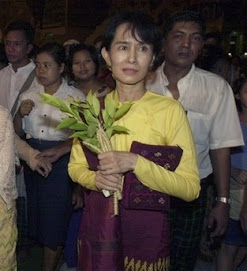


 Posts
Posts


