To/
Mr. Fredrik Reinfeldt
Prime Minister
Royal Government of Sweden
Subject: :Request to lead Swedish government and European Union in order to
seek justice and criminal accountability for victims of heinous crimes in
Burma/ Myanmar
Dear Your Excellency,
I would like to request your kind attention in regard to heinous crimes being committed by the ruling military regime in Burma, SPDC, against its own people, particularly for those offenses, which constitute international crimes such as crime against humanity, genocide and war crimes, since the emergence of the International Criminal Court, July 1, 2002, inter alias, as follows:
1. The regime used about 5,000 members of its lackey organization, namely Union Solidarity and Development Association (USDA) and crashed down Daw Aung San Suu Kyi, democracy icon in Burma, and members of the National League for Democracy (NLD) while making organizing trip at Depayin in upper Burma on May 30, 2003. Since that time, Daw Aung San Suu Kyi has been victim of crime and she has been under detention for almost six years. In recent month, UN Working Group on Arbitrary Detention made a ruling that detention of Daw Aung Sun Suu Kyi is against the national laws as well as international laws.
2. The International Committee of the Red Cross issued a global alert on Burma, on June
29, 2007, verifying the regime's criminal violations of the Geneva Conventions, stating that such violations were personally observed by ICRC delegates, that all confidential bilateral negotiations had broken down, and that the crimes by the government were likely to be ongoing. The president of the International Committee of the Red Cross (ICRC), Jakob Kellenberger, stated as follows:
"…I urge the government of Myanmar to put a stop to all violations of international humanitarian law and to ensure that they do not recur. ... I would also like to remind all States party to the Geneva Conventions of their obligation, under Article 1, to respect and to ensurerespect for the Conventions."
3. In September 2007, the military regime brutally suppressed peaceful demonstration of
several thousands of monks, and killed and tortured them. Without paying any regard to the effective Criminal Procedural Code in Burma, the military security forces of the SPDC raided the monasteries, searched the campuses, ruined the properties of Buddhist religion, and seriously tortured the monks.
4. In June 2008, the Amnesty International reported that for 2½ years a human rights
emergency has been occurring in the form of a military offensive by the SPDC army waged against ethnic Karen civilians in Kayin (Karen) State and Bago (Pagu) Division. Accordingly, an estimate of 147,800 people have been and remain internally displaced in Kayin State and Bago Division and many of these people have been subject to widespread and systematic human rights violations including unlawful killings, torture and other ill-treatment, enforced disappearances and arbitrary arrests, the imposition of forced labour including portering, the destruction of homes and villages, and the destruction or confiscation of crops and food stocks and other forms of collective punishment. The research undertaken by AI raises grave concerns that the violations of international human right and humanitarian law against the Karen have been part of a widespread and systematic pattern of crimes which may constitute a crime against humanity.
5. In the wake of the SPDC's criminal negligence after Cyclone Nargis occurred in delta
area of Burma, on May 22, 2008, European Parliament made a resolution on the tragic
situation in Burma, as follows:
Takes the view that, if the Burmese authorities continue to prevent aid from reaching those in danger, they should be held accountable for crimes against humanity and calls on EU Member States to press for a UN Security Council resolution referring the case to the ICC for investigation and prosecution.
6. On 27 February 2009, John Hopkins Bloomberg School of Public Health in the United
States and Emergency Assistance Team (Burma) jointly released a report entitled "After
the Storm; Voices from the Delta" and mention that the SPDC obstructed relief to victims
of the cyclone, arrested aid workers and severely restrained accurate information in the
wake of the worst natural disaster to befall modern Burma. The report charges these
abuses may constitute crimes against humanity through the creation of condition whereby
the basic survival needs of victims cannot be adequately met, "intentionally causing great
suffering, or serious injury to body or to mental or physical health" violating Article
7(1)(k) of the Rome Statue of the International Criminal Court.
7. Rape reports published by ethnic women in Burma including the Shan, Mon, Karen,
Palaung, and Chin (Shan Women’s Action Network, Shan Human Rights Foundation,
Human Rights Foundation of Mon land, Karen Women’s Organization, Palaung’s
Women Organization, Women League of Chin Land and Women’s League of Burma as
well as by Refugees International, document sexual and other forms of violence against
women systematically perpetrated by the junta and even identify perpetrators, give
relevant dates and the battalion numbers of the rapists. Despite that the military regime committed heinous crimes one period after another consistently, the judiciary inside Burma has been keeping silent and no legal action has been taken on the perpetrators for those heinous crimes. The military regime and its lackey perpetrators have been enjoying impunity endlessly and people in Burma lack any protection.
The Responsibility to Protect Doctrine or R2P is a catalyst in transforming the meaning of UN membership and participation in the international community by affirming that with state sovereignty comes the “obligation of a State to protect the welfare of its own people.” It makes clear that in exceptional cases where a State cannot or will not protect civilians the international community has a right to act, and a responsibility to do so. The legal import of UNSCR 1325 to Security Council Actions is that when the council is confronted with evidence of systematic crimes including rape in the context of conflict there should exist a presumption of a threat to international peace and security. In this case such presumption should require a UN Charter Chapter VII referral to the ICC.
In conclusion, I would like to request your Excellency to lead Swedish government and, if possible, European Union to press for a UN Security Council resolution referring the situation of Burma/Myanmar to the ICC for investigation and prosecution in order to seek justice and criminal accountability for victims of heinous crimes there. Only then, repeated crimes will be prevented; the rule of law will be restored; a genuine stability will be established; and a peaceful democratization process will also be facilitated in Burma.
Respectfully,
Download here ( Letter to Prime Minister | English | Burmese language )
Petition to Swedish Prime Minister
Sign the Petition Here:
Name
First Last Email
City
Country
SBHRA intends to send the petition before July 1, when Sweden assumes the leadership of the European Union. So, we would be glad to have your signature by June 15, 2009.
Monday, May 11, 2009
ICC campaign (English version)(please click to sign)


ေရႊဂံုတိုင္ေၾကျငာစာတမ္းအား ဂ်ပန္ရွိျမန္မာတို႔ေထာက္ခံ
တိုက်ိဳ၊ ေမ(၁ဝ)
၂ဝ၁ဝ ေရႊးေကာက္ပြဲႏွင့္ပါတ္သတ္၍ အန္အယ္လ္ဒီအဖြဲ႕ခ်ဳပ္(ဗဟုိ)မွ ႏိုင္ငံေရးအက်ဥ္းသားမ်ားလြတ္ေပးရန္၊ ၂ဝဝ၈ ခုႏွစ္အေျခခံဥပေဒကိုျပင္ဆင္ရန္ႏွင့္ ေရႊးေကာက္ပြဲတြင္အလႊာအသီးသီးပါဝင္ျပီး ႏိုင္ငံတကာကေစာင့္ၾကည့္ခြင့္ေပးရန္ စသည့္ခြၽင္းခ်က္(၃)ခုပါရွိသည့္ ေရႊဂံုတုိင္ေၾကျငာခ်က္စာတမ္းကို ဂ်ပန္ႏိုင္ငံရွိ ျမန္မာ့ဒီမိုကေရစီအင္အင္းစုမ်ားမွ ေထာက္ခံႀကိဳဆိုေၾကာင္း ျပသသည့္အခမ္းအနားတရပ္ကို ယေန႔နံနက္မနက္ပိုင္းတြင္ တိုက်ိဳျမိဳ႔၊ အီကဲဘူးကူးရိုးရွိ ခန္းကိုးပလာဇာခန္းမ ၇ ထပ္၌ က်င္းပျပဳလုပ္ခဲ့ၾကသည္။
''ေရႊဂံုတိုင္ေၾကျငာစာတမ္းက လက္ရွိျမန္မာႏိုင္ငံရဲ႔ႏိုင္ငံေရးအက်ပ္အတည္းေတြ၊ ထြက္ေပါက္အေနနဲ႔ေရာ ေနာက္ အနာဂါတ္ျမန္မာႏိုင္ငံကို ေကာင္းမြန္တဲ့လမ္းေၾကာင္းေပၚေရာက္ရွိေရးအတြက္ အျပဳသေဘာေဆာင္တဲ့ေၾကျငာစာတမ္းတခု ျဖစ္သလို ဒီပါတီရဲ႔အေျခခံမႈဝါဒေတြ၊ သေဘာထားေတြကို ထင္ဟပ္တယ္၊ ေနာက္ျပည္သူ႔ဆႏၵကိုေဖာ္ေဆာင္ေပးတဲ့အတြက္ ေထာက္ခံတာပါ''ဟု အန္အယ္လ္ဒီ(ဂ်ပန္)၏ ဒု-ဥကၠ႒ဦးလွဟန္မွ ေထာက္ခံရျခင္းအေၾကာင္းကိုေျပာျပသည္။
(၁၉၉ဝ)ခုႏွစ္ေရြးေကာက္ပြဲအျပီးတြင္ ''ဂႏၶီေၾကျငာစာတမ္း''ကိုထုတ္ျပန္ခဲ့ဖူးျပီး ေတာင္းဆိုခ်က္အျပင္ ထူးျခားစြာျဖင့္ ႏိုင္ငံေရးလမ္းညြန္ခ်က္မ်ားပါ ပါဝင္သည့္ ယခုထုတ္ျပန္သည့္''ေရႊဂံုတိုင္ေၾကျငာစာတမ္း''ျဖင့္ ေၾကျငာစာတမ္း(၂)ခုကို အန္အယ္လ္ဒီအဖြဲ႔ခ်ဳပ္အေနႏွင့္ သမိုင္းဝင္ထင္ထင္ရွားရွားထုတ္ျပန္ခဲ့ျခင္းျဖစ္သည္။
''ေရႊးေကာက္ပြဲဘဲျဖစ္ျဖစ္၊ ဘာပဲျဖစ္ျဖစ္ က်ေနာ္တို႔လိုခ်င္တဲ့ Multi-Democratic System ကိုသြားတဲ့အခါ Democratic Principleကင္းမဲ့တဲ့ Conditionေအာက္မွာဘယ္လိုမွလြတ္လပ္တဲ့အလုပ္မျဖစ္ႏိုင္ဘူး၊ အလားတူပါဘဲ Constitutionအမွားအယြင္းရဲ႔ေနာက္မွာ ေရႊးေကာက္ပြဲနဲ႔Democratic Principleကို မေဖာက္ေဆာင္ႏိုင္ပါဘူး''ဟု ဂ်ပန္ႏိုင္ငံသို႔ ေရာက္ရွိေနသည့္ ေက်ာင္းသားတပ္မေတာ္ဥကၠ႒ရဲေဘာ္သံခဲမွတက္ေရာက္ေျပာၾကားသည္။ ဂ်ပန္ရွိျမန္မာႏိုင္ငံသားအလုပ္သမားသမဂၢ၏ဥကၠ႒ျဖစ္သူဦးတင္ဝင္းမွလည္း ''ဒီသမိုင္းဝင္ေၾကျငာစာတမ္းတခုဟာ က်ေနာ္တို႔ တကယ္ဘဲ ေထာက္ခံဖို႔သင့္သလားဆိုတာ ျပန္စဥ္းစားရေအာင္၊ ဒီေနရာမွာက်ေနာ္ထင္ပါတယ္၊ ဒီေၾကျငာခ်က္ဟာ ျပည္သူလူထုႏွင့္တကြ အမ်ဳိးသားဒီမိုကေရစီအဖြဲ႔ခ်ဳပ္ရဲ႔ခံယူခ်က္၊ သေဘာထားျဖစ္ခ်င္တဲ့ဆႏၵကိုေရာက္ေအာင္ ပို႔ေပးႏိုင္သလားဆိုတာစဥ္းစားရမယ္၊ အဲ့လိုသြားတဲ့ေနရာမွာ လက္ေတြ႔မပါတဲ့ ဆႏၵသက္သက္လားဆိုတာဆိုတာ စဥ္းစားရမယ္''၄င္း၏အျမင္ကိုရွင္းလင္ေျပာျပသည္။
အဆိုပါေထာက္ခံႀကိဳဆိုသည့္အခမ္းအနားကို ဂ်ပန္ႏိုင္ငံအေျခစိုက္ NLD(LA-JB) မွ ဦးစီးျပဳလုပ္ခဲ့ျခင္းျဖစ္ၿပီး အဖဲြ႔အစည္းအသီးသီးမွ ဒီမိုကေရစီအင္အားစု အစံုအလင္တက္ေရာက္ေထာက္ခံခဲ့ၾကသည္။ ဂ်ပန္အစိုးရအပါအဝင္ႏိုင္ငံတကာရိွ အစိုးရမ်ားမွ နအဖစစ္အစိုးရအား လိုက္ေလ်ာပူးေပါင္းပါဝင္လာေစေရး ဖိအားေပးႏိုင္ရန္အတြက္ အလုပ္သေဘာပါသည့္ ေၾကျငာစာတမ္းအခုကို ဂ်ပန္ရွိတိုင္းရင္းသားအဖြဲ႔အစည္းမ်ားမွေခါင္းေဆာင္မ်ားႏွင့္အတူ ယခုေၾကျငာစာတမ္းေထာက္ခံပြဲအျပီး၌ ပူတြဲထုတ္ျပန္ခဲ့ၾကေၾကာင္းလည္း သိရွိရသည္။
Reported by: Thant Myo Htway(Moe Thauk Kye)
Ethnic Groups in Myanmar Hope for Peace, but Gird for Fight
http://www.nytimes.com/2009/05/11/world/asia/11iht-myanmar.html?_r=1&em=&pagewanted=all
By THOMAS FULLER
Published: May 10, 2009
LAIZA, Myanmar — The Kachin tribesmen who inhabit the hills along Myanmar’s border with China have a reputation as stealthy jungle warriors, famous for repelling Japanese attacks in the Second World War with booby traps and instilling terror by slicing off ears to tally their kills.
Thomas Fuller/International Herald Tribune
The town of Laiza, near the border with China, is the home of the Kachin Independence Army. The region wants to keep a degree of autonomy.
Now, as they have many times in their war-scarred history, the Kachin are hoping for peace but are prepared for battle with Myanmar’s central government.
“Whether or not there will be war again, we have to be ready,” Maj. Zauja Nhkri, the head of an officer’s training school that is part of the Kachin Independence Army, which has around 4,000 men under arms.
“If our army is strong, we can maintain the peace.”
As Myanmar’s military government prepares to adopt a new and disputed Constitution next year, a fragile patchwork of cease-fire agreements between the central government and more than a dozen armed ethnic groups is fraying.
The new Constitution would nominally return the country to civilian rule after four and a half decades of military government and, in theory, could formally end the now dormant civil war that has plagued the country since it gained independence from Britain in 1948. But as a precondition for what they portray as a fresh start, Myanmar’s ruling generals are ordering the Kachin and other groups to disarm and disband their substantial armies.
So far, the answer is no.
“There is no good road map for the future of Burma,” said Gen. Gam Shawng Gunhtang, the chief of staff of the Kachin Independence Army, which has fought the government on and off since its founding in 1961. Myanmar used to be known as Burma.
The ethnic groups control large pockets of territory in the northern and eastern borderland areas, and, if they disarm, they risk losing control over their lucrative trade in timber, jade, gems and, in some cases, heroin and methamphetamines. They are loath to give up their hard-won autonomy to the Myanmar military, which is dominated by the Burman ethnic group they have long resented.
“We ethnic peoples are trying to form a federal union,” Gen. Gam Shawng Gunhtang said. “They don’t want to hear about it.”
The demands to disarm are “not acceptable,” he said.
The volatile and remote northern reaches of Myanmar are rarely reported on in the Western news media because of the difficulty accessing the armed groups. The visit by this reporter to Laiza was the first by a foreign newspaper correspondent in several years.
By the tumultuous standards of Myanmar’s six decades of independence, the country has been relatively peaceful over the past decade and a half, thanks to the cease-fire agreements.
Myanmar captured the world’s attention when the government quashed the uprising of Buddhist monks in September 2007 and when it refused to allow some international assistance after a deadly cyclone last May.
But those events only served to underline the firm grip that the generals have over the low-lying parts of the country, where the majority Burman population is concentrated.
It is a very different picture in the upland regions, where the government’s control has always been tenuous. A resumption of civil war in the north and east is by no means a foregone conclusion — the generals could back down from their demands to disarm, or the ethnic groups might relent and decide to fully adopt the new Constitution.
But if the conflicts re-ignite, which some analysts say is likely, it could resonate well beyond Myanmar’s borders, resulting in outflows of refugees into neighboring countries like Thailand and China and a resurgence of the heroin business, which in the past has thrived under the cover of war.
“I think you will hear a lot of gunfire next year,” said Aung Kyaw Zaw, a former soldier in the now defunct Burmese Communist Party who is in contact with leaders of the ethnic groups. “The Burmese government is unwilling to give autonomy.”
The largest borderland groups, drawn from ethnic groups like the Wa, Shan and Kokang, are united in their bitterness over their historical domination by the Burman.
During the Cold War, China, Thailand and the United States supplied arms and other assistance to some borderland groups. Now commercial interests, including many shady businesses, have replaced ideological ones.
The Kachin hills are home to the world’s most lucrative jade mines. The area inhabited by the Shan has the largest and best-quality rubies found anywhere. All the territory controlled by the ethnic groups has prized varieties of tropical hardwood.
And drug syndicates, many of them with ties to the ethnic groups, profit handsomely from the trafficking of both illegal and counterfeit drugs.
Adding to the complexity of the situation, Myanmar, by the nature of its location between India and China, is now the focus of a geopolitical contest for influence by the region’s big powers increasingly hungry for natural resources.
Chinese companies are building a series of hydroelectric dams on northern tributaries of the Irrawaddy River (despite Kachin objections) and have helped finance and build roads inside Myanmar, facilitating both the sale of Chinese electronics and clothing in Myanmar and the export of timber and other commodities into China.
China recently beat India in securing a 30-year concession on natural gas from Myanmar, and construction will reportedly start soon on twin pipelines crossing Myanmar from the Bay of Bengal and connecting to the southern Chinese city of Kunming.
In March, China and Myanmar signed a “cooperation agreement” on the oil and gas pipelines, but key details are vague.
The strategic objective for China is access to the Bay of Bengal, thus avoiding having to ship oil through the Strait of Malacca, a costly detour and a security threat if that choke point is ever blocked. But the project is seen by many as a risky venture.
“Burma is not a stable place when you get out into these remote areas that the pipeline is going to have to traverse,” said Priscilla A. Clapp, a former American diplomat who spent three years as the chief of the U.S. mission in Myanmar. “It’s going to have to go over mountains and through remote areas of the country that are barely controlled by the military. It could very easily be blown up, and then you’re out of luck.”
Gam Shawng Gunhtang, the Kachin general, is worried that the pipeline will marginalize the borderland ethnic groups and give the upper hand to Myanmar’s junta, also known as the State Peace and Development Council, or S.P.D.C.
“The S.P.D.C. is trying to convince the Chinese government that the borderland armed groups are not political groups — just insurgents or terrorists,” the general said. “The pipeline will be a tool and an opportunity for the S.P.D.C. to eliminate the armed groups.”
The Constitution, which Myanmar’s generals say was adopted by more than 90 percent of voters in a referendum last year and will take effect after elections next year, prescribes “genuine multi-party democracy” and recognizes what it calls “self-administered” areas. But ethnic leaders say this falls short of the autonomy they want.
They also point out that the document preserves a dominant role for the military, including the right of the commander in chief of the armed forces to appoint a quarter of the Parliament and to remove the president.
And because the Constitution mandates that only the national armed forces provide defense and security, the junta is demanding that all other groups disarm.
The most heavily armed group along the Chinese border is the United Wa State Army, which has about 20,000 soldiers and new armaments including field artillery and anti-tank missiles, according to Bertil Lintner, an expert on Myanmar’s ethnic groups and co-author of the book “Merchants of Madness,” which deals with the drug trade among ethnic groups.
Very few of the armed groups will accede to the government’s demands to disarm, Mr. Lintner believes.
“Some of the smaller groups might hand in their weapons, but they don’t matter anyway,” he said.
In Laiza, it is easy to see why the Kachin want to maintain their autonomy.
Residents escape many of the deprivations so common in other parts of Myanmar, one of the world’s poorest countries: Electricity from a nearby hydroelectric dam is reliable, cellphone service provided by Chinese communications towers across the border is cheap (obtaining a cellphone number inside Myanmar typically costs $2,000), and the local administration even stamps out its own vehicle license plates, skirting Myanmar’s highly restrictive car ownership policies.
In addition to its own army, the Kachin have a police force, schools, a teacher’s training college and their own customs agents, who monitor the border crossing with China.
Laiza is no Shangri-La — the town struggles with drug addiction and other social ills common to many border areas — but it feels more free than the military-controlled areas in Myanmar, where dissidents are repeatedly rounded up and sentenced to long jail terms.
“The S.P.D.C. has one last chance to win the hearts of the people,” said Thar Kyaw, a jade dealer now based in the southern Chinese city of Ruili. “But we are not very hopeful.”
Detained Myanmar opposition leader Suu Kyi on IV drip
05/10/2009 | 10:12 PM
YANGON, Myanmar – Myanmar's detained opposition leader, Aung San Suu Kyi, has difficulty eating and has been taking fluids intravenously, her party said Sunday, calling for the military government to allow a doctor to see the Nobel laureate.
Suu Kyi's primary physician was detained for questioning by the authorities Thursday after an American was arrested after allegedly sneaking into her closely guarded home and staying there for more than two days. Another doctor was permitted Friday to see the 63-year-old Suu Kyi, who is rarely allowed to leave the compound where she is under house arrest.
But the doctor's request for a follow-up visit on Saturday was rejected, said a spokesman for Suu Kyi's National League for Democracy.
"We are worried about Daw Suu's health. Authorities should allow free access of her doctor to give Daw Suu the required medical treatment," said the spokesman, Nyan Win. "Daw" is an honorific used for older women.
Nyan Win said that according to the doctor, Suu Kyi had lost her appetite and had not eaten properly for three or four days. He did not specify her illness.
Suu Kyi, whose nonviolent advocacy for democracy won her the Nobel Peace Prize, is one of the world's most prominent political prisoners, and her release has long been sought by the United Nations and many Western nations.
Her party won Myanmar's last elections in 1990, but the result was not recognized by the military, which has ruled the country since 1962.
Suu Kyi's primary doctor, Tin Myo Win, was detained for questioning by the authorities Thursday evening after an American man was arrested after allegedly swimming across a lake to reach Suu Kyi's compound and sneaking inside.
Tin Myo Win had gone to Suu Kyi's home earlier that day to give her a routine monthly check up but was barred from entering by the police, who increased security there after the intrusion.
State-run media said the American confessed that he swam 1¼ miles (2 kilometers) across Inya Lake to Suu Kyi's compound and "secretly entered the house," where he stayed from Sunday night to Tuesday night. He was arrested when authorities spotted him swimming back.
The US Embassy – which said the man's name is John William Yettaw – has been asking the government for access to the arrested man, but communications have been complicated because Friday through Sunday were public holidays.
Suu Kyi – who has spent more than 13 of the last 19 years, including the past six, in detention without trial – is allowed virtually no visitors aside from her doctor. Her home is tightly guarded by police checkpoints and barbed-wire barricades. On infrequent occasions she is allowed to leave under tight guard to meet with fellow party leaders and visiting UN representatives. - AP
Update: Dr Tin Myo Win was reportedly charged with 5/J and Daw Aung San Suu Kyi would be linked
BDD
Informed source said Dr Tin Myo Win is believed to be taken to the judge for two weeks detention by the regime. The SPDC intended to frame him up that connection with the American swimmer who entered Daw Aung San Suu Kyi's resident last week. Dr Tin is believed to be charged with 5/J emergency provision act for more investigation, said sources.
According to the informed source, Dr Tin informed authorities about American man who had approached him last year, but that could not confirmed that this time American Swimmer had approached him or not.
"The intension is clear; the SPDC needed more jail term for Daw Aung Suu Kyi. She could be charged by the regime for American swimmer, whether she was not a person who did invite or not. The SPDC goal is not to free her before 2010 election." said informed source.
Japan opposition leader quits ahead of election
http://uk.reuters.com/article/marketsNewsUS/idUKT4193720090511
UPDATE 5-
Mon May 11, 2009 11:02am BST
(For more stories on Japanese politics click [ID:nPOLJP])
* Main opposition party leader resigns to help party
* Scandal had eaten into opposition Democratic Party's lead
* Move to improve election chances, but not all damage undone
By Chisa Fujioka
TOKYO, May 11 (Reuters) - Japanese opposition leader Ichiro Ozawa resigned on Monday in a move that is likely to improve his party's prospects in a looming election, after a fundraising scandal dampened its hopes for victory.
A political stalemate and voter frustrations with Prime Minister Taro Aso had raised the chances Ozawa would lead his Democratic Party to victory in an election that must be held by October, ending more than 50 years of nearly unbroken rule by Aso's Liberal Democratic Party (LDP).
But the Democratic Party's lead in polls has narrowed after the scandal, clouding the outlook for the solid opposition victory that would break a deadlock that is stalling policy decisions as Japan struggles with a deep recession. [ID:nT75082]
"I have decided to sacrifice myself and resign as party leader to strengthen the unity of the party towards a clear victory in the next election and achieve a change in government," Ozawa told a news conference.
The Democrats have vowed to reduce bureaucrats' meddling in policy-making, stress the rights of consumers and workers over corporate interests, and adopt a diplomatic policy less subservient to security ally the United States.
Those positions were unlikely to be altered by Ozawa's departure, although a rejuvenated opposition might encourage the LDP to come up with extra stimulus plans to attract voters.
A 15 trillion yen ($153 billion) spending package is already on its way through parliament. [ID:nT56332]
Ozawa's resignation had little impact on financial markets, with the yen
Aso, who has threatened to call an early election if the Democrats obstruct debate in parliament on the massive extra budget to fight the recession, told reporters Ozawa's resignation would have no direct impact on the election timing.
Recent speculation has focused on an August vote.
"Now that (Ozawa) is gone, Prime Minister Aso might become more aggressive in economic stimulus to woo voters, rather than dissolving parliament now," said Hidenori Suezawa, chief strategist at Daiwa Securities SMBC.
SUCCESSOR QUESTION
While replacing Ozawa is likely to improve the Democrats' chances at the polls, not all the damage will be so easily undone, analysts said. [ID:nT53405]
"Things had gotten very tough. People were complaining about Ozawa," said independent political commentator Minoru Morita. "This improves the outlook for the Democrats quite a lot."
Ozawa's exit could open the way for a younger leader, with possible candidates including former party leaders Katsuya Okada, an advocate of tougher climate policies seen as the frontrunner, and Seiji Maehara, a conservative security policy expert.
Two other ex-leaders who are Ozawa's deputies, Yukio Hatoyama and Naoto Kan, are also possible successors. [ID:nT56552]
Ozawa, a skilled campaign strategist, has been shaking up Japanese politics for almost two decades since bolting the LDP and helping to briefly replace it with a pro-reform coalition.
How far his resignation improves the Democrats' chances depends at least in part on who replaces him, and how smoothly.
"It is a necessary step toward fixing the image problem. Now the question is whom do they chose, how do they chose him and how does he perform," said Gerry Curtis, a Columbia University professor and expert in Japanese politics.
A Democratic Party source said the next leader would likely be chosen by a vote among party lawmakers, possibly within a week or 10 days.
A survey by the daily Yomiuri newspaper before Ozawa's announcement and published on Monday showed the Democrats still had a razor-thin lead over the LDP, but that more than two-thirds of respondents questioned his earlier decision to stay on.
"If Ozawa had stayed, I was going to submit a blank paper when I cast my vote," said Yukihiro Nakagawa, 44, an executive at a precision machinery company. "I would like to make up my mind after seeing what kind of policies the Democrats will promise after this, but I am leaning towards voting for the Democrats."
(For a graphic showing the trend in Japanese polls, click:
here)
The poll by the Yomiuri newspaper conducted before Ozawa's announcement showed 30 percent of respondents would vote for the Democrats in the next election against 27 percent for the LDP.
Some experts have said Ozawa's resignation would revive calls in the LDP to replace the unpopular Aso, but others said there is no obvious successor and Aso would do his best to hang on. (Additional reporting by Isabel Reynolds, Yoko Nishikawa, Yoko Kubota, Writing by Linda Sieg, Editing by Dean Yates)
© Thomson Reuters 2009. All rights reserved. Users may download and print extracts of content from this website for their own personal and non-commercial use only. Republication or redistribution of Thomson Reuters content, including by framing or similar means, is expressly prohibited without the prior written consent of Thomson Reuters. Thomson Reuters and its logo are registered trademarks or trademarks of the Thomson Reuters group of companies around the world.
Thomson Reuters journalists are subject to an Editorial Handbook which requires fair presentation and disclosure of relevant interests.
Yet another Gandhi rises in Indian politics
http://asia.news.yahoo.com/ap/20090511/tap-as-india-heir-apparent-510daa6.html
By MUNEEZA NAQVI,Associated Press Writer -
SULTANPUR, India – For hundreds of thousands of people in this largely rural swathe of north India, Rahul Gandhi is their prince.
Huge crowds wait for hours under a scorching sun to watch his motorcade and maybe catch a glimpse as he makes his way to file his nomination papers for the national election.
As his SUV slows to a crawl, mobs of supporters shower it with rose petals and try to peer through the tinted windows.
When he opens the door and steps onto the running board to wave, a roar rises across this dusty town, in an area where his family has long had its political base: "What should the leader of this country be like?" shouts one group. "Like Rahul Gandhi!" another group shouts back.
The boyish-looking 38-year-old, running for re-election to parliament, is the latest political incarnation of a dynasty that stretches back well over 60 years: his father, Rajiv Gandhi, was prime minister. So was his grandmother, Indira Gandhi. His mother, Sonia Gandhi, leads the Congress party, which heads the ruling coalition. His great-grandfather, Jawaharlal Nehru, was India's first prime minister and the faithful lieutenant of independence leader Mahatma Gandhi (no relation).
It all adds up to a family that has run India for 37 of its 62 years of independence.
Now, as a monthlong national election unfolds, Rahul Gandhi has become a force in Indian politics and the buzz around him as the eventual candidate for the country's top post has turned into a roar.
With just five years of political experience, he is not an obvious political star: He's an awkward public speaker who has said little of substance about many key policy issues. He won a seat in Parliament by a landslide in 2004, only to flunk another test three years later, when the election campaign he headed in India's largest state, Uttar Pradesh, failed to win any gains for his party.
But he has the right last name _ and in a country in thrall to celebrity and the ideals of family, he has become the party's star campaigner, drawing huge crowds to a dizzying number of electioneering stops. On giant Congress party billboards, it's Rahul _ so well known that he's commonly referred to by just his first name _ who shares space with his mother and the prime minister.
It makes for good campaigning, but it highlights the dynastic quality of Indian politics, Congress' opponents complain.
"This is a party where the top slot is reserved for a single family," said Nalin Kohli, a spokesman for the main opposition, the Hindu nationalist Bharatiya Janata Party.
It's a charge that Gandhi can't ignore _ and even he says it's time for family dynasties to fade into political history. To that end, he's encouraging young people who are not from powerful families to work for the Congress party.
"Just because I'm the outcome of a system doesn't mean I cannot change the system," he told a rare news conference.
But in the 2009 election, the big question is whether this Gandhi's celebrity will translate into more votes.
He faces a global economic slowdown, which has shifted the focus from Congress' main achievement, India's rapid growth in the last few years. And the government has been criticized for its bungled handling of the Mumbai terror attack in November in which 166 people died.
The election results will be announced May 16, and polls indicate no party will get enough votes to rule except in a shaky coalition, possibly including dozens of parties.
Gandhi himself has remained vague about his future plans _ never rejecting the idea outright of being prime minister but accusing the media of prematurely projecting him into the job.
To supporters who want him to play a more prominent role, he urges patience, saying leadership must be developed gradually.
A graduate of Rollins College in Florida and Cambridge University in England, he often looks uncomfortable when surrounded by crowds of poor villagers, but tells a crowd on a recent campaign stop: "I entered politics to help the poor. Irrespective of caste, religion and region, I will always work to empower the poor who are the real strength of the nation."
His critics sniff at such talk. "The unfortunate fact is that we know remarkably little about him. He has said very little of consequence," said political commentator Mahesh Rangarajan.
"It's also important to remember that he's the first person in this family in politics who has grown up in a security cocoon," Rangarajan added.
That cocoon is the result of the tragedies that have beset the Gandhis.
Rahul was only 14 when his grandmother, Indira Gandhi, was shot to death in 1984 by her own bodyguards. His father, Rajiv Gandhi, was blown up by a Tamil suicide bomber in 1991.
The family stayed away from politics until 1998, when Rajiv Gandhi's Italian-born widow, Sonia, reluctantly accepted the leadership of the Congress party. She was elected to parliament a year later.
Now her son and fellow lawmaker has to figure out where he goes next.
"The party would like him to be quick about it. The party would like him to, you know, wave the magic wand and get them votes, which has become the character of the Congress. People have got so used to the Nehru-Gandhi family getting them votes," said political commentator Neerja Chowdhury.
"Rahul Gandhi is taking his time in discovering India, trying to work out his own role."
Sunday, May 10, 2009
Hospitals in Tokyo refusing flu patients
http://search.japantimes.co.jp/mail/nn20090506a3.html
Kyodo News
An increasing number of patients running a fever have been rejected by Tokyo hospitals that fear they may have swine flu, even though the risk of their being infected is minimal, the metropolitan government said Tuesday.
The number of cases in which hospitals refused medical examinations for such patients totaled 92 from Saturday morning to Tuesday noon, a survey by the metropolitan government found.
"We want hospitals to respond calmly even if they fear that patients infected with the new flu may appear or that other patients will get infected," a Tokyo official said.
In many cases, patients with fever were told to visit "fever clinics" set up solely to treat people suspected of being infected with the new strain of the H1N1 influenza A virus.
Some patients were rejected by hospitals after reporting that they worked at Narita International Airport or have a foreign friend.
In some cases, patients were rejected by general hospitals after being instructed to go there by fever clinics.
The health ministry plans to conduct a nationwide survey on such rejections, officials said.
No cases of swine flu have been confirmed in Japan, although there have been several cases in which patients tested positive for what later turned out to be different strains of influenza.
The Tokyo government's division in charge of infectious diseases said refusal by hospitals to conduct examinations could be a violation of the medical practitioners' law.
"We will consider some sort of measures against malicious refusals to conduct medical examinations by hospitals," a division official said.
International organizations help Myanmar improve weather forecasting
http://news.xinhuanet.com/english/2009-05/10/content_11345433.htm
By Feng Yingqiu
YANGON, May 10 (Xinhua) -- Several international organizations from the United Nations and Asian countries have been helping Myanmar in weather forecasting a year after severe cyclone Nargis hit the country.
These organizations include the World Meteorological Organization (WMO), Thailand-based Asian Disaster Preparedness Center (ADPC), Japan International Cooperation Agency (JICA), United Nations Economic and Social Commission for Asia and the Pacific (UNESCAP), China Meteorological Administration (CMA), China Earthquake Administration (CEA), Thai Meteorological Department (TMD) and Indian Meteorological Department (IMD), according to the Department of Meteorology and Hydrology Department (MHD).
Deadly tropical cyclone Nargis, which occurred over the Bay of Bengal, hit five divisions and states -- Ayeyawaddy, Yangon, Bago,Mon and Kayin on last May 2 and 3, of which Ayeyawaddy and Yangon inflicted the heaviest casualties and massive infrastructural damage.
The storm has killed 84,537 people, leaving 53,836 missing and 19,359 injured according to official death toll.
Following the cyclone onslaught, the WMO sent a team to Myanmarto study MHD's undertakings carried out soon after cyclone and provided needful weather-related materials and technical assistance.
Two months after storm, Thailand started to seek ways of establishing in Myanmar an early warning network system against cyclone and a delegation, led by Minister of Information, Communication and Technology Mun Patanotai, visited the country for the purpose, meeting with its Myanmar counterpart and the ASEAN-Myanmar-United Nations Tripartite Core Group.
In addition to weather forecasting, Myanmar is also cooperating with more Thai organizations in carrying out rehabilitation work in cyclone-hit areas. These organizations are International Development Cooperation Agency, National Institute of Emergency Medicine Service System and Weather Forecast Bureau.
Meanwhile, initiated by the Thailand-based Asian Disaster Preparedness Center (ADPC), a regional assessment center for natural disaster is being set up in Yangon to reinforce the country's seismological facilities.
The UNESCAP also planned to set up two seismograph stations and two sea-level measurement stations on Thamihla Kyun (Diamond Island) in Ayeyawaddy division in the coming years.
Moreover, building of 10 seismological observatories during the present fiscal year of 2009-2010 in cooperation with CEA and the Asia Disaster Organization (ADO) is also being planned. Of them, three will be respectively set up in Nay Pyi Taw, Kengtung and Dawei by the government, four in Yangon, Mandalay, Myitkyina and Lashio with the assistance of the CEA and three in Sittwe, Kalaw and Taunggyi with the aid of the ADO.
In February this year, the Japanese company of Mitsubishi Cooperation donated some dozens of high-frequency transmitters and receivers to Myanmar for installation at weather forecasting stations in Rakhine, Kayin Mon, Ayeyawaddy, Yangon and Taninthayi states and divisions.
With the facilities, daily weather forecasts could be reported to Nay Pyi Taw and Yangon for taking precaution against natural disaster.
Other Japanese organization -- the Japan International Cooperation Agency has also been helping Myanmar establish an early earthquake warning system by setting up seismographic network and record center in the country.
Furthermore, Myanmar and India are also seeking cooperation in monitoring tsunami, saying that details of the warning projects for the natural disaster will be touched on later.
Editor: Chris
The Freedom Agenda as Foreign Policy: Lessons for the New Administration
http://www.foreignpolicyjournal.com/2009/05/09/the-freedom-agenda-as-foreign-policy-lessons-for-the-new-administration/
May 9, 2009
by Eric Patterson and Jonathan Amaral
“America’s larger purpose in the world is to promote the spread of freedom-that it is the yearning of all who live in the shadow of tyranny and despair.”
-Barack Obama (2007)
“It is the policy of the United States to seek and support the growth of democratic movements and institutions in every nation and culture, with the ultimate goal of ending tyranny in our world.”
-George W. Bush (2005)
Introduction
Heated debate surrounds George W. Bush’s Freedom Agenda; however cheerleading democracy is nothing new in presidential rhetoric. As one scholar observes, “advancing freedom is an expression of the United States’ most sacred ideals” and has an “established parentage” of American executives, including Franklin D. Roosevelt, Harry S. Truman, John F. Kennedy, Jimmy Carter, Ronald Reagan, and Bill Clinton.[1]
In contrast to gallons of ink spilled on theories of democracy promotion and critiques of the Bush Doctrine, this essay considers the Freedom Agenda as foreign policy and assesses the results of the implementation of this constellation of discrete policies. We argue that the Freedom Agenda is more than words-it was an integral part of the Bush Administration’s foreign policy which has been funded and institutionalized by Congress, but which has only seen mixed results to this point. Because the Obama campaign pledged support for democracy promotion, we conclude with five lessons that the new Administration should consider when taking the next steps in promoting democracy and advancing human freedom.
9/11, the Bush Doctrine, and the Freedom Agenda
George W. Bush entered office pledging to follow a “humble” foreign policy and concentrate on domestic reform, but was goaded by 9/11 to formulate a new approach to address the dangers of state-sponsored terrorism. Traditional approaches to foreign policy (realism, liberal internationalism, etc.) were powerless to address the exigencies of the current strategic dilemma. The principles to this approach began taking form in a number of speeches such as a commencement address at West Point in the summer of 2006 and were shortly thereafter articulated in a uniform approach in the National Security Strategy of 2002, which mentions freedom and liberty five dozen times.[2]
That approach was the Bush Doctrine. Mark Amstutz points out four distinct elements of the Bush Doctrine for U.S. foreign policy, the fourth of which is the foundation for the Freedom Agenda:
1. A preponderant American is good for the world.
2. Multilateral cooperation is best, but the U.S. will act alone when necessary.
3. Every tool, including prevention and preemption, should be used to stop terrorists and rogue states from acquiring or using weapons of mass destruction.
4. The U.S. must champion human rights, freedom, and democracy.[3]
Many, such as Robert Jervis and John Lewis Gaddis, recognized that the Bush Doctrine outlined in the 2002 National Security Strategy of the United States (NSS) was a “grand strategy” for the United States. Gaddis argued that one way the NSS was innovative was its argument that hopelessness, not poverty, is the root cause of terrorism. The NSS asserts that lack of social and political liberty causes this hopelessness; therefore it is a vital national security imperative for the U.S. to spread freedom.[4]
Where did these ideas, particularly the focus on liberty and democracy, come from? Certainly, they are a part of historical U.S. discourse, and undoubtedly between 2002 and 2004 they were germinating within and being debated in the White House, U.S. government agencies, and Bush’s reelection campaign. They were also influenced by the book The Case for Democracy by Natan Sharansky, which Douglas Feith called “required reading” within the Administration. A former Soviet political dissident and Israeli politician, Sharansky champions the transformative capacity of democracy. His thesis, based in large part on his experience as a political prisoner who witnessed the collapse of the Soviet Union from the inside, is that the desire for freedom is universal, democracies do not make war upon one another, and democratic regimes should act in unison, demanding concessions from dictatorships to allow more freedom in order to foster internal change from within.[5]
In Bush’s case, he received a copy of the book just after the 2004 election. The president was taken with this vision. Sharansky’s argument paralleled and extended many of Bush’s ideas elaborated in the NSS and numerous speeches, they seemed to take the President’s notions to their logical conclusion. It was then that the President decided to meet with Sharansky just weeks later.[6] The result of this exchange was to formalize the thinking about democracy promotion and human liberty as the Freedom Agenda.[7] Six weeks later the president fully outlined the Agenda in his Second Inaugural address:
America’s vital interests and our deepest beliefs are now one. From the day of our Founding, we have proclaimed that every man and woman on this earth has rights, and dignity, and matchless value, because they bear the image of the Maker of Heaven and earth. Across the generations we have proclaimed the imperative of self-government, because no one is fit to be a master, and no one deserves to be a slave. Advancing these ideals is the mission that created our Nation. It is the honorable achievement of our fathers. Now it is the urgent requirement of our nation’s security, and the calling of our time.[8]
In his speeches, President Bush outlined a philosophy of freedom. That worldview is based on a number of key assumptions, rooted in the Western liberal tradition and U.S. history, from the Declaration of Independence to Harry Truman to Ronald Reagan, including:
• contra realpolitik, politics have moral content.
• the desire for freedom is universal
• those who are free have a moral obligation to help others who aspire to it
• free societies are characterized by human and civil rights and civil liberties.
• history is on the side of freedom due to inherent human desire for liberty.
• advancing human freedom is a vital interest of U.S. foreign policy.
In short, for President Bush the Freedom Agenda was not a tertiary policy priority it was at the center of his foreign policy after 9/11. The questions before us are how, how well, and with what consequences has the Freedom Agenda been implemented as foreign policy?
Implementing the Freedom Agenda
In a series of public speeches and fact sheets the Bush Administration trumpeted its activities under the Freedom Agenda. What did Administration do to advance the cause of freedom? In its early fact sheets,[9] the Administration focused specifically on democracy promotion and human rights initiatives, such as the following:
• Increased funds for democracy building. Doubled the federal budget for democracy programs, such as support for good governance, human rights and election monitoring, and funding for civil society, political parties, and independent media. For example the FY2009 budget requested $1.72 billion for such activities, as compared to $650 million in FY 2001.
• Publicly recognized champions of democracy. The President personally met with over 100 activists and dissidents from dozens of “unfree” countries and directed U.S. ambassadors to seek and meet such activists in their postings. This included not only dissidents from autocratic regimes like Burma and Belarus, but also individuals from China, Pakistan, Russia, and even Spain. Also, initiated legal funds and awards to recognize individuals, from the new Human Rights Defenders Fund to the Secretary of State’s Freedom Defenders Award and Diplomacy for Freedom Award.
• Engaged in multilateral democracy promotion. Proposed and supported the UN Democracy Fund, launched an annual Roundtable on Democracy at the UN General Assembly, and supported the G-8’s Partnership for Progress and a Common Future for countries in the “Broader Middle East and North Africa” (BMENA).
• Pressed “valued partners” like Egypt and Saudi Arabia to transition to free political systems. President Bush and his secretaries of state have met privately with foreign leaders and urged them to open their political systems to real competition as well as respect civil liberties and human rights.
More recently, the Administration broadened its reporting on the Freedom Agenda to include a broader array of initiatives that are integrated with democracy promotion, such as rational foreign aid, free trade, and humanitarian assistance.[10] Specific examples include the following:
• Smartened foreign aid strategies to focus on good governance, such as through the Millennium Challenge Accounts. The Millennium Challenge Corporation has provided $6.5 billion to 18 countries who meet stringent accountability criteria and commit via a compact to accountability.[11]
• Promoted free trade. The Administration strongly advocated the Doha Round, implemented 11 new bilateral free trade agreements, and has pressed for others (e.g. Colombia).
• Supported vital humanitarian aid. The President’s signature program was the AIDS program (Presidents Emergency Plan for AIDS Relief-PEPFAR), but the Administration also had initiatives on malaria, river blindness, and hookworm as well as has spent $1.8 million on food aid in 2007-2008.
Finally, many things are not mentioned in the fact sheets, such as support for democratic transitions and/or consolidation around the globe, including the liberation of Afghanistan and Iraq, support for a two-state solution in the Middle East, and the Middle East Partnership Initiative (MEPI). Writing about MEPI, Wittes and Yerkes demonstrate that Administration had profoundly increased its attention and financial resources to promoting democracy in the broader Middle East, by consistent cultivation of this forum as well as supporting the G-8’s Broader Middle East and North Africa effort (BMENA).[12]
Moreover, in order to institutionalize the Freedom Agenda, President Bush signed a new classified national security presidential directive (NSPD-58) in July 2008.
Congress and the Freedom Agenda
One aspect of institutionalization of the Freedom Agenda that has largely gone unreported is the role of Capitol Hill. Congress funds the Federal government, provides oversight and direction to the State Department and related agencies, and has been responsible in the recent past for major human rights and civil liberties legislation such as the Trafficking in Victims Protection Act of 2000 and the International Religious Freedom Act of 1998. What has been missed in the growing literature on the Bush Administration and the Freedom Agenda is how Congress has evolved on the issue, and come to support it.
We can best see this in how the 107th Congress gave little attention to democracy promotion in its fiscal year (FY) 2003 budget, and how that markedly changed over the subsequent five years. The State Department Authorizations Act for FY 2003 (passed just a year after 9/11 as part of Public Law 107-228) “expressed the sense of the Congress that the budget for the [State Department's] Bureau of Democracy, Human Rights, and Labor should be substantially increased,” but did not provide extra funding to that end. Congress also established and funded a modest “Human Rights and Democracy Fund” administered by the Bureau to “support defenders of human rights” and “promote and encourage the growth of democracy…in other countries.” That was all-two short paragraphs tucked into a massive authorization bill.
By 2005 a far more robust set of legislative options were promulgated by the Congress. Senators John McCain (R) and Joe Lieberman (D) introduced the “Advance Democracy Act of 2005,” which was simultaneously presented in the House of Representatives by Tom Lantos (D) and Frank Wolfe (R). Although the legislation did not proceed far in the 109th Congress, the original version of the Advance Democracy Act of 2005 would have instituted the following:
• Spent approximately two pages defining and defending human liberty and representative government.
• Declared that freedom and democracy in foreign countries is “a fundamental component of U.S. foreign policy.”
• Elevated issues of democracy promotion by adding it to the title of an existing Under Secretary of State: the Under Secretary for Democracy and Global Affairs.
• Created a new office of Democratic Movements and Transitions as well as Regional Democracy Hubs in U.S. missions in six regions.
• Established a Democracy Promotion and Human Rights Advisory Board to advise the Secretary of State.
• Called for a website reporting on democracy and human rights.
• Required each embassy in non-democratic countries to develop a plan to promote democracy and support individuals and organizations committed to democratic ideas.
• Provided monies for various funds on democracy promotion and human rights.
• Expressed the “sense of the Congress” that the U.S. government should strengthen its ties to other democratic countries and multilateral institutions (e.g. the Community of Democracies).
• Authorized an additional $250 million for democracy promotion over the next two years.
It is easy to gloss over the significance of this proposed piece of legislation. The Advance Democracy Act was profound in declaring freedom and democracy as “fundamental components” of U.S. foreign policy, and for providing real tools for promoting democracy such as a sizable new financial investment, additional staff, and clear directives to U.S. missions. All of this was in a text presented to Capitol Hill less than two months after the President’s Second Inaugural Address, clearly putting a large part of the Congress squarely in the President’s camp on this issue. This was a clear victory for the Administration and added valuable resources to implementation of the Freedom Agenda.
Indeed, between September 2002 and the introduction of the Advance Democracy Act on March 3, 2005 an evolution in thinking had not only occurred in the White House, but also on Capitol Hill. The President’s argument at West Point and in the National Security Strategy of 2002-that the expansion of liberty was fundamental to American ideals and interests-became a viewpoint shared across the political aisle. The hopes of securing the peace in Afghanistan and Iraq and the inspiration of an “Arab Spring” and the “Color Revolutions” combined with President Bush’s Second Inaugural speech to provide a vision of a free twenty-first century world empowered (in part) by the U.S.
In 2005 the Advance Democracy Act failed to pass the 109th Congress. However, the 110th Congress folded it into Public Law 110-53 as Title XXI, the “Advance Democratic Values, Address Non-Democratic Countries, and Enhance Democracy Act of 2007″ or the “ADVANCE Democracy Act of 2007″ which was signed by the president in August 2007.[13] The 2007 law closely mirrored the original version from 2005, and although it did not set up a new Office of Democratic Movements and Transitions, it does implement most of the other points adumbrated above, as well as the following:
• Directs the Secretary of State to staff new “Democracy Liaison Officers” assigned to regional and multilateral organizations, combatant commands, and regional public diplomacy centers.
• Directs the Assistant Secretary for Democracy, Human Rights, and Labor as well as Chiefs of Mission abroad to seek out, consult, support, and provide assistance to democratic actors in civil society as part of country-specific strategies for democracy promotion, including “issuing public condemnations of violations of … human rights, including violations of religious freedom, and visiting local landmarks and other local sites associated with nonviolent protest in support of democracy.”
• Mandates that the Secretary of State provide training (e.g. Democracy Fellows) and recognition (awards, incentives) for Foreign Service officers engaged in democracy promotion.
• Funds U.S. government and international democracy programs, such as $28 million for the UN Democracy Fund (2008-2009) and $3 million for Hungary’s International Center for Democratic Transition (2008-2010).
What is striking is that this fiscal authorization bill is unusual in its rich language of liberty and representative government. At times the document reads like the president’s Freedom Agenda speeches, referencing the Declaration of Independence and the UN Declaration of Human Rights. For instance, early in the Advance Democracy Act a lengthy justification of democracy and democracy promotion is advocated:
“It is the policy of the United States to promote freedom and democracy in foreign countries as a fundamental component of the United States foreign policy … to affirm fundamental freedoms and international recognized human rights … to condemn offenses against those freedoms and rights as a fundamental component of United States foreign policy … to protect and promote such fundamental freedoms and rights, including the freedoms of association, of expression, of the press, and of religion, and the right to own private property; to commit to the long-term challenge of promoting universal democracy … to support … free, fair, and open elections, … to strengthen cooperation with other democratic countries…”
The language herein often sounds as if it were directly lifted from President Bush’s speeches, such as the following from Section 2102 of the Act: “The development of democracy constitutes a long-term challenge that goes through unique phases and paces in individual countries,” or “to use the instruments of United States influence to support, promote, and strengthen democratic principles, practices, and values.” Likewise, the action items derive, or parallel, activities that President Bush called for two to four years ago.
In sum, the Freedom Agenda is simply not just presidential oratory, it is an integral part of the Bush Doctrine and the Administration’s “grand strategy” for U.S. foreign policy. Moreover, the intellectual commitments of the Agenda found strong allies on Capitol Hill that implemented far-reaching changes in how the Department of State approaches issues of democracy, civil liberties, and human rights. These changes were enshrined in law, buttressed with increased funding, and nurtured with Congressional oversight and annual reports. [1265]
Evaluating Success: the Freedom Agenda as Foreign Policy
We have argued that although President Bush’s Freedom Agenda fits clearly within trends in U.S. foreign policy that champion democracy, the Administration’s active commitment to this Agenda surpassed its predecessors by a significant margin. Furthermore, we have reported on the activities of the White House, the Executive branch, and the Congress to advance representative government and individual liberty worldwide.
So, how has the Freedom Agenda fared as a foreign policy? In other words, has the Freedom Agenda been successful? This begs the question, what is the measure of success for foreign policy? Former Secretary of State Madeline Albright says, “The purpose of foreign policy is to influence the policies and actions of other nations in a way that serves your interests and values. The tools available include everything from kind words to cruise missiles.”[14] With this in mind, has the Bush Administration accomplished what it wanted? Has it laid a foundation for future success of the Freedom Agenda? To answer these questions, we will briefly look at the elements we can analyze to report on success or failure: the inputs, outputs, and outcomes of the Freedom Agenda.
One way to think about the success of any project is to begin with its goals, consider the inputs and outputs of the system, and then evaluate the outcome against the original objectives. If we were designing a product, our goal would be to build and sell the product, our inputs would include human capital and materiel, the output would be the product, and a successful outcome would be the sale of said product.
First, the “inputs.” U.S. presidents and other high officials have routinely called for greater democracy abroad, but provided little real stimulus toward that end. Therefore, if President Bush was serious about the Freedom Agenda, then we should find more than words-we should find evidence of concrete activities, “inputs,” that were sown and cultivated over time into a harvest (outcome) of democracy and liberty. Are there such inputs?
The Administration would certainly have said so. Indeed, earlier in this paper we presented material from the White House’s “fact sheets” that detail numerous activities directly designed to promote freedom around the globe: presidential meetings with dissidents, speeches by the president and his proxies, the expansion of free trade agreements, work on Middle Eastern democracy such as MEPI and BMENA, increased funding for democracy programs, the liberation of Iraq and Afghanistan, and support for democratic movements and transitions, especially in Eastern Europe, the Caucuses, and the greater Middle East. Thus, the Administration meets the “input” test: certainly President Bush and his team took some specific, concrete actions to advance the Freedom Agenda.
However, inputs are not the ultimate measures of success. A job, such as building a house or a car, is not successful based on its inputs (e.g. hours labored, money spent, number of people on the project), but rather in terms of the outputs and ultimate outcome. Inputs are at best building blocks. In other words, inputs must coalesce into meaningful outputs, or products, of the system. Are there “outputs” of the Freedom Agenda?
The most important outputs of the Agenda are those structural changes and institutionalized practices adopted to implement the Freedom Agenda. On the domestic front, perhaps the most important “outputs” are when the president’s directives have been codified into law by the Congress. For instance, President Bush ordered the Secretary of State to direct her chiefs of mission to meet with supporters of democracy and speak against repression in their host countries. The President also called for increased funding for democracy promotion. In many cases, these ideas developed concurrently with the Congress, ultimately resulting in the Advance Democracy Act of 2007, which does these things and more (outputs). In addition, in July 2008 the president signed a new National Security Presidential Directive (NSPD 58) to institutionalize the Freedom Agenda within the federal government. One can also point to five years of investment in Iraq and seven years invested in Afghanistan, as well as various free trade agreements, and the on-again, off-again Middle East peace process based on the Roadmap’s “two state solution” as “outputs” of the Administration. Some of the outputs turned out to be “lemons,” but in the end, the Freedom Agenda in law was a major success “output” for the Administration.
Nevertheless, outputs again only tell a partial story with regards to measuring success. Real success is not measured just in outputs, but in outcomes. To return to an automobile analogy, a corporation can engineer and build a car, but if no one purchases it, the successful operational “output” can nonetheless be a failure with strategic consequences.
Foreign policy outcomes are intricate and therefore notoriously tricky to parse, both due to the difficulty of examining direct causal evidence as well as the complexity of independent variables affecting the desired outcome. Additionally, the lengthy time horizon makes such analysis problematic (e.g. George Kennan’s containment and the end of the Soviet Union). It is simply impossible to completely control for all the variables involved, just as it is impossible for the U.S. to control world populations and foreign governments.
Can the Agenda point to successful outcomes of democracy and human flourishing? Are we closer to that vision in 2008 than we were in 2000? Are the seeds sown in the last few years likely to make the world a more free and democratic place in the next five years? The next ten years?
The world is a more democratic place than it was a decade ago, largely due to the Color Revolutions and the continuing consolidation of democracy in parts of Africa, Asia, and Latin America. However, these were not caused by the Bush Doctrine. Ongoing democratic transitions and consolidations, from Liberia to Ukraine, did receive some modest “inputs” along the way, but it is unclear that the Freedom Agenda played any role. It is simply too soon to tell in the case of Afghanistan and Iraq-both of which were established as democracies following military intervention justified in terms of U.S. national security interests, not democracy promotion. Similarly, the Middle East Roadmap appears to be dead and, as one scholar points out, we are experiencing a concurrent rise in authoritarian alternatives like China and Venezuela.[15]
It is more likely that the “hard evidence’ of the Freedom Agenda’s efficacy will be in the areas of free trade (establishing new free trade areas), smart development aid (e.g. the Millennium Challenge Corporation) and human flourishing (e.g. PEPFAR, the malaria initiative) rather than in terms of regime change. Perhaps most importantly, these initiatives-when combined with other ventures such as MEPI-weave the Agenda into a larger tapestry of interconnected policies and values that are now well established.
Finally, the Freedom Agenda and its progeny, most notably the Advance Democracy Act, are now a standard by which the content of U.S. foreign policy goals are evaluated by people around the world. The Agenda has forced the U.S. government to decide in favor of universal democracy promotion as a key objective of U.S. foreign policy and willfully connect it to issues of human rights, private property, and religious freedom.
Hence, the U.S. will find itself under increasing pressure to address the anachronisms and perceived hypocrisies that are discordant in its foreign policy, such as support for authoritarian regimes in the interests of “stability.” Most importantly, as the Freedom Agenda was largely embraced by candidate Obama, it seems obvious that American will continue contributing toward the desired outcomes of global freedom and democracy.
Conclusion: Lessons for the New Administration
It is critical for the new Administration to learn from the successes and failures of the Bush era. Both of the recent presidential contenders supported the Freedom Agenda. Senator McCain was one of the primary sponsors of the Advance Democracy Act and Senator Obama got on the bandwagon as a co-sponsor. Regarding the victor, political scientist Amy Zegart writes, “Obama has managed to out-freedom Bush.” She concludes that Bush’s “grand strategy will undoubtedly set the course of American foreign policy for the next administration, and possibly the next generation.”[16]
“Out-freedom Bush?” Consider one of Obama’s most important foreign policy speeches, made in 2007 at the Chicago Council on Global Affairs:
“We have heard much over the last six years about how America’s larger purpose in the world is to promote the spread of freedom-that it is the yearning of all who live in the shadow of tyranny and despair.
“I agree. But this yearning is not satisfied by simply deposing a dictator and setting up a ballot box. The true desire of all mankind is not only to live free lives, but lives marked by dignity and opportunity; by security and simple justice…. It also requires a society that is supported by the pillars of a sustainable democracy: a strong legislature, an independent judiciary, the rule of law, a vibrant civil society, a free press, and an honest police force. It requires building the capacity of the world’s weakest states and providing them what they need to reduce poverty, build healthy and educated communities, develop markets, and generate wealth…. As President, I will double our annual investments in meeting these challenges to $50 billion…. Part of this new funding will also establish a two billion dollar Global Education Fund that calls on the world to join together in eliminating the global education deficit, similar to what the 9/11 commission proposed. Because we cannot hope to shape a world where opportunity outweighs danger unless we ensure that every child, everywhere, is taught to build and not to destroy…. Finally, while America can help others build more secure societies, we must never forget that only the citizens of these nations can sustain them.[17]
Similar language by the president-elect and his advisors abounds. So, what are the lessons regarding a Freedom Agenda for the Obama Administration? First, remember that the Freedom Agenda was not, and is not, without its skeptics in government. The most important of those skeptics are those within the Administration or within the bureaucracy who do not support the Agenda, or in the latter case, do not support the president. It is telling, for instance, how rarely senior Bush Administration officials spoke about the Agenda, freedom, and democracy in their speeches. This hush is obvious when one combs through the speeches of former Secretary of State Colin Powell and his successor’s first year in office, as well as the language of other senior leaders such as Vice President Cheney, Secretaries of Defense Rumsfeld and Gates, the Deputy Secretaries at the Departments of State and Defense, and the like.[18] Many of these individuals are self-proclaimed “realists” and they may have thought that President Bush’s early speeches on liberty and democracy were just rhetoric to smile at. If this is the case, the president ultimately surprised them with his dogged determination to press the Freedom Agenda.
Ergo, a lesson for the next president is that the senior leadership must be on board and must speak consistently about human liberty and democratic values, because the world community can easily spot the lacunae. So too can the bureaucrats who populate federal agencies.
A related, second barrier to implementation of the Agenda is institutional and bureaucratic resistance. Those who represent the U.S. abroad, be they in military uniform, a government aid worker, or a diplomat, are busy people with a full range of prescribed activities. They feel they do not have time for more work. And the Freedom Agenda is not just more work, it is uncomfortable and tiresome work because it demands that U.S. officials at foreign embassies report on barriers to democracy, including religious persecution, as well as meet with representatives from civil society who are challenging barriers to democracy. Such actions are not just more tasks, they have every likelihood of disrupting the relationship between the ambassador’s team and their local interlocutors.
As one goes through the documents and statements of U.S. government agencies such as the State Department, it is remarkable how little the Freedom Agenda has been accepted as central to the life of the Foreign Service. A single glaring example may suffice: in early 2008 the United States recognized the independence and statehood of Kosovo, a tiny new “country” that had won its freedom from Serbia thanks to a NATO bombing campaign nearly a decade ago. Amazingly, when one goes through the rationale for supporting Kosovar independence in the speeches of Secretary of State Rice, Under Secretary Burns, and Assistant Secretary Fried, there is absolutely no linkage whatsoever to the Freedom Agenda or even normative support for national self-determination and democratization. The Agenda has just not sunk in.
Consequently, the president-elect must have a disciplined message across his Administration on advancing freedom and enforce the implementation of such efforts. However, if the President of the United States finds it difficult to control his Cabinet and the massive bureaucracy of the federal government, it is even truer that the U.S. simply cannot control outcomes around the world. The U.S. can speechify, fund, pamphletize, praise, caution, and even invade other countries in order to advance democracy, but its success largely lies in the hands of local leaders in foreign countries. Thus, the next president needs to concern himself with what type of activities are most likely to actually promote human liberty and democratic institutions around the world. It may very well be that some of our current efforts do not result in our preferred outcomes and that we will have to change course, such as diverting funds from supporting election in foreign countries to supporting foreign elementary education in order to cultivate a literate citizenry.
Another problem of the Freedom Agenda faced by the Bush Administration was its weak connections to other strands of U.S. foreign policy. This disconnectedness can be seen in at least two areas. The first is the disjointed nature of the essential freedom argument: the Freedom Agenda spends much of its rhetorical energy on notions of political liberty and democratic structures, but says little about other features such as religious liberty or private property. In other words, the Freedom Agenda as a normative vision privileges certain elements of liberty (e.g. voting) over others (e.g. religious freedom). Government actors engaged in these issues are scattered across multiple bureaus and agencies with little interaction. A good example of this is the complete disconnect between the Freedom Agenda and the 1998 International Religious Freedom Act (with its own State Department Office and an independent Commission on International Religious Freedom). A new president should re-tool the Freedom Agenda by explicitly defining how its constituent policies (e.g. human rights, private property, free trade, and religious freedom) relate to and reinforce one another.
Even more problematic, however, is the disjuncture between the Agenda and other major U.S. foreign policy goals. As Jennifer Windsor has argued, it is simply unclear how the Agenda relates to energy policy, education, engagement with the UN, and a host of other priorities.[19] The U.S. government needs to be explicit about the limits of the Agenda, about how we try to mediate between this and other vital interests (such as access to petroleum or fighting terrorists), and the fact that the Agenda will not always trump other strategic objectives. The new president must engage in this kind of frank discussion enhance the credibility of U.S. democracy promotion efforts.
By far, the majority of criticism of the Bush Administration is about the means of advancing the Freedom Agenda, not its ends. Wittes and Yerkes are among many who argue that linking democracy promotion to the war in Iraq has harmed the Freedom Agenda worldwide.[20] Larry Diamond, a foremost scholar of democracy and a thought leader for Paul Bremer’s Coalitional Provisional Authority, recently critiqued the Bush Administration as “pretentious, unilateral, and impulsive,” but recently wrote in a “progressive” magazine, “As we disengage from Iraq, we must find ways … to renew the freedom agenda if we are going to serve our long-term security interests in the region.”[21] Thomas Carothers, a senior fellow at the Carnegie Endowment for International Peace, does not dispute that democracy promotion must continue into future administrations, but he scathingly demands a “decontamination” of U.S. foreign policy from George W. Bush’s policies (e.g. Guantanamo and the detention of enemy combatants) and a “repositioning” and “recalibration” of democracy promotion.[22] The argument that these scholars are making is that democracy can never be promoted by force. We tend to disagree-democracy was imposed at the end of World War II on Germany and Japan, but it is worth remembering that the Bush Administration said little about promoting democracy in the lead up to the Iraq invasion-the war was a national security imperative. The application of the Freedom Agenda to Iraq was murky before March 2003.
Nonetheless, the next Administration will undoubtedly confront at least one opportunity for intervention, most likely in response to an armed crisis in the developing world. A lesson to be drawn from the past decade is that a stated goal of any military intervention, whether national security or humanitarian in focus, should be human liberty and democratic structures.
In conclusion, the ideas within the Freedom Agenda are nothing new-it is an expression of American values that hearkens back to the founding of the republic. Nevertheless, the Bush Doctrine is new for it defines the Freedom Agenda of individual liberty and democratic institutions as a key U.S. foreign policy goal. What is also new is the institutionalization of democracy promotion and related activities by executive order and Congressional legislation as well as the embrace of this signature piece of President Bush’s grand strategy by both of his would-be successors. The Freedom Agenda is foreign policy, but only time will tell us if our children’s world will be freer and more prosperous due to the vision and actions of this Administration.
____________________
[1] Jennifer Windsor, “Advancing the Freedom Agenda: Time for a Recalibration?” in The Washington Quarterly 29:3 (Summer 2006), p. 32.
[2] Mark Amstutz reports that in the 2002 National Security Strategy “the term freedom is used at least forty-six times, while the notions of democracy and liberty appear, respectively, thirteen and eleven times.” Mark Amstutz, “Reinhold Niebuhr’s Christian Realism and the Bush Doctrine” in Christianity and Power Politics Today, Eric Patterson, ed. (New York: Palgrave-Macmillan, 2008), p. 124.
[3] I have paraphrased Amstutz’s longer material. Here it is in its entirety: 1. Belief that unipolarity is conducive to peace and that a preponderance of American power can contribute to a peaceful and prosperous world order 2. The need for multilateralism to advance peace, freedom, and security, but a willingness to act unilaterally when necessary 3. Belief that the United Sates must be willing to use preemptive and preventive force to confront terrorist groups and rogue states with weapons of mass destruction (WMD) 4. The need for the United States to champion human rights and help foster political democracy.
[4] John Lewis Gaddis, “A Grand Strategy” in Foreign Policy (November/December 2002). Robert Jervis recognized the Bush Doctrine as a grand strategy, but strangely left out the democracy promotion component entirely. See his “Why the Bush Doctrine Cannot Be Sustained” in Political Science Quarterly 120, no. 3 (2005).
[5] First page of Preface to the paperback edition by Ron Dermer.
[6] Others have reported the importance of Sharansky’s book and the author himself on the Bush Administration. Former Under Secretary of Defense and Rumsfeld confidante Douglas Feith, in his book War and Decision (New York: HarperCollins, 2008), says he did little outside reading while in office due to the pace of the job, but he did read Sharansky as it was virtually “required reading” in the Administration (p. 452). Interestingly, Glenn Kessler, in The Confidante (London: St. Martin’s, 2007), a book about Condoleezza Rice, concurs about the influence of Sharansky on top Administration officials (pp.89-91). Jacob Weisberg’s The Bush Tragedy (New York: Random House, 2008) lambasts President Bush, the Administration, and Sharansky. He calls the Freedom Agenda “the exfoliated version” of “Sharanskyism”
(p.214-215).
[7] Fourth page of the Preface to the paperback edition by Ron Dermer.
[8] Second inaugural.
[9] For instance, see the June 5, 2007 “Fact Sheet: Advancing Freedom and Democracy Around the World” at http://www.whitehouse.gov/news/releases/2007/06/20070605-6.html.
[10] See the July 24, 2008 “Fact Sheet: Advancing the Freedom Agenda” at http://www.whitehouse.gov/news/releases/2008/07/20080724-8.html.
[11] See http://www.mcc.gov/press/releases/documents/release-092308-billions.php.
[12] For a thoughtful description and discussion of MEPI, see Tamara Cofman Wittes and Sarah E. Yerkes “The Middle East Freedom Agenda: An Update” in Current History (January 2007).
[13] PL 110-53 is the “Implementing Recommendations of the 9/11 Commission Act of 2007″ and it is a large, consolidated bill covering many agencies that includes much of that year’s Foreign Relations Authorization Act. The bills mentioned in this essay can be found at the Library of Congress website, www.thomas.loc.gov.
[14] Madeline Albright, The Mighty and the Almighty (New York: Harper Collins, 2007): see her chapter “Dueling with Dictators” for a discussion of this oft-quoted remark.
[15] Windsor, 2006.
[16] Amy Zegart, “The Legend of a Democracy Promoter” in The National Interest Online (September 16, 2008). Available at http://www.nationalinterest.org/Article.aspx?id=19688.
[17] The transcript of this address is available at http://www.thechicagocouncil.org/dynamic_page.php?id=64.
[18] We have done a careful search of the speeches of these individuals and found that until about 2007, Administration officials rarely mentioned the Freedom Agenda. Since then, it is primarily Secretary of State Rice and National Security Advisor Hadley who utilize the president’s language on the issue. Bizarrely, Secretary Rice talks about a “democracy agenda” about as much as the President’s “freedom agenda,” suggesting a political scientist’s focus on institutions rather than the President’s emphasis on values.
[19] Windsor, 2006.
[20] Wittes and Yerkes, 2007.
[21] Larry Diamond, “Pursue a New Freedom Agenda” in Democracy: A Journal of Ideas, Issue #6, Fall 2007. Available at www.democracy journal.org/ID6557.
[22] See Carothers, 2007 and Thomas Carothers, “The Backlash Against Democracy Promotion” in Foreign Affairs (March/April 2006). To be fair, Carothers recognized that the Bush Administration had a particularly hard path in front of it in advancing the Freedom Agenda: it did so in the aftermath of 9/11, it took the Agenda to the area least favorable to democracy in the world (the Middle East), it was hampered by a reluctance within the entrenched American bureaucracy and senior officials in the Administration itself to move forward on the Agenda, and the U.S. has competing imperatives such as rooting out terrorists and access to oil.
Saturday, May 9, 2009
No more denial: Children affected by armed conflict in Myanmar (Burma)
http://www.reliefweb.int/rw/rwb.nsf/db900SID/EDIS-7RSPGF?OpenDocument
Source: Watchlist on Children and Armed Conflict
Date: 06 May 2009
May 6, 2009, New York - The UN Security Council should move swiftly to protect the tens of thousands of children in Myanmar who are raped, abducted and recruited as soldiers by the Myanmar armed forces and non-state armed groups, according to Watchlist on Children and Armed Conflict's new report released today.
No More Denial: Children Affected by Armed Conflict in Myanmar (Burma), is released this week to mark the first anniversary of devastating Cyclone Nargis that hit Myanmar in May 2008 and to draw urgent attention to the plight of children in Myanmar who have been subject to heinous violations of their rights every day since the Cyclone and for decades prior. The release of the 60-page study also coincides with the UN Secretary-General's preparation of his new report on children and armed conflict in Myanmar soon to be delivered to the Security Council.
"Too much time has been wasted denying the extent of the crisis that children in Myanmar's conflict zones are facing. The UN must act now to protect these children and to bring the perpetrators to justice," said Julia Freedson, Director of the Watchlist on Children and Armed Conflict, a global network of non-governmental organizations based in New York. "Now is the time for the Secretary-General to fully document the real situation in Myanmar and for the Security Council to take strong action in response to such atrocities," she said.
No More Denial is the most comprehensive and up-to-date report available on the situation facing children in Myanmar's armed conflict areas. It documents killing and maiming of children, child soldiering, rape, abduction, forced displacement, attacks on schools, denial of humanitarian access and other violations. It also charges the UN Security Council with remaining largely silent despite evidence from UN and local sources of these violations.
"When I hear the voices of these children, I ask how can anyone deny this reality – these violations are happening right before our own eyes," said Esther Lay, Programme Director at the Karen Human Rights Group (KHRG), an independent local human rights group focusing on Burma. "On behalf of our children and communities, we implore the UN to work with local civil society to help us protect the children and reclaim our people's future."
Children as young as nine constantly face the threat of forced recruitment by security forces, non-state armed groups and civilians, even in public places such as bus or train stations and markets. Armed forces have also occupied schools, recruited teachers and students for forced labor and planted landmines close to schools or on the paths to school. Approximately one in five children in the eastern conflict areas dies before reaching the age of five, often due to denial of humanitarian assistance and medical treatment by the Myanmar authorities. This rate is comparable to some the world's deadliest conflict zones, including Democratic Republic of Congo and Afghanistan.
The Watchlist's report includes dozens of concrete policy recommendations. Highlights include:
- The UN Security Council should impose targeted measures (sanctions) on the Myanmar government and relevant non-state armed groups if no real progress is achieved in ending the recruitment and use of children within a specified time frame. These may include travel bans, asset freezes or arms embargos.
- The Secretary-General should provide information to the Security Council on all six grave violations called for under SC Resolution 1612, including sexual violence, attacks against schools, denial of humanitarian assistance and others. This should be done by working in close collaboration with local civil society organizations that have access to conflict-affected areas.
- The UN should leverage the support that came in during the cyclone to increase humanitarian access and aid in conflict areas.Contact: Yvonne Kemper (New York)
Contact:
Yvonne Kemper (New York)
+212-551-2981 or +1 201 920 3119 (mobile)
email: yvonnek@watchlist.org
With the exception of public UN sources, reproduction or redistribution of the above text, in whole, part or in any form, requires the prior consent of the original source. The opinions expressed in the documents carried by this s
Influenza A (H1N1) Q & A(新型インフルエンザQ&A・英語版)
http://www.fukushihoken.metro.tokyo.jp/iryo/kansen/sinpojiumu/SwineInfluenzafaq/index.html
Q What are the human symptoms of Influenza A(H1N1)?
A Symptoms such as fever, lethargy, loss of appetite, and
coughing are seen. There are also patients who complain
of symptoms including a runny nose, sore throat, nausea,
vomiting, and diarrhea.
Q How does Influenza A(H1N1) spread?
A The virus is transmitted from person to person, through
contact with saliva droplets (coughing or sneezing) or with
contaminated surfaces and materials, including hands, toys,
plates, glasses, computer keyboards, telephones, door handles,
bathroom faucets and other daily living utensils.
Q What protective steps should I take?
A There have been no confirmed cases of people infected
with Influenza A(H1N1) in Japan (as of April 30).
If you plan to go to the United States or Mexico,
you are advised to:
1) Wear a mask to prevent infections through coughs or sneezes
2) Wash your hands often
3) Consult a local doctor if flu-like symptoms appear such as fever
and cough
In addition, those who had flu-like symptoms during their stay abroad
or have such symptoms upon their return, are requested to report
this to the quarantine office.
Q I don’t have any symptoms, but is there a place where I can be tested
for this?
A You do not need to be tested if you do not have any symptoms.
Please note that there are no tests that can confirm infection
before the symptoms appear even for those with the high
possibility of being infected due to their travel abroad.
Please consult the public health center if any symptoms
appear within 10 days of your return. If you have had
close contact with an infected person, please also call
the public health center.
http://www.metro.tokyo.jp/INET/OSHIRASE/2009/04/20j4u501.htm
Q Is there a vaccine for Influenza A (H1N1)?
A There is currently no effective vaccine to protect
humans from Influenza A(H1N1). It is also believed
that seasonal influenza vaccines are not effective
against this virus. However scientific work is now
underway on the development of a vaccine with the
aim to have it available within the year.
Foreign aid continues flowing to Myanmar
http://enews.mcot.net/view.php?id=9842
Foreign aid continues flowing to Myanmar
Hanoi (VNA) – More foreign aid continue coming to Myanmar in order to help cyclone victims for the recovery of their livehood, according to news agencies.
The Japan International Cooperation Agency (JICA) has donated fishery equipment for cyclone survivors to use in fishery recovery work in storm-hit areas in the country, agencies said, citing the weekly 7-Day News in Myanmar on May 7.
The equipment worth 120,463 USD, which included water pumps and engines, refrigerators, fishing nets, oxygen bottles and other fishery-related materials, were handed over to the Myanmar Fishery Department recently by JICA.
The Japanese government will also provide 3 million USD more of aid through the International Organization for Migration (IOM) to rebuild the remaining damaged houses in the cyclone-hit regions.
Meanwhile, the United Nations Food and Agriculture Organization (FAO) will extend its aid supplies to Myanmar cyclone victims later this month.
The aid supplies for the survivors in four cyclone-hit townships include tractors, cattle, paddy seed and vegetables seedlings, Xinhua news agency reported, citing Myanmar’ Biweekly Eleven.
Earlier this year, FAO donated two batch of poultry and cattle to cyclone victims.
Deadly tropical cyclone Nargis, which occurred over the Bay of Bengal, hit five divisions and states -Ayeyawaddy, Yangon , Bago, Mon and Kayin on last May 2 and 3. The storm killed 84,537 people, injured 19,359 and left 53,836 people missing. (VNA)
Today In Asia : Last Update : 13:07:15 8 May 2009 (GMT+7:00)
Fw: [burmainfo] FW: ビルマ:サイクロンから1年 弾圧は続く(ヒューマン・ライツ・ウォッチ、2009年5月1日)
━━━━━━━━━━━━━━━━━━━━━━━━━━━━━━
ビルマ市民フォーラム メールマガジン 2009/5/8
People's Forum on Burma
━━━━━━━━━━━━━━━━━━━━━━━━━━━━━━
ビルマ情報ネットワーク(BurmaInfo)からのメールを転送させていただき
ます。
(重複の際は何卒ご容赦ください。)
PFB事務局
http://www1.jca.apc.org/pfb/
━━━━━━━━━━━━━━━━━━━━━━━━━━━━━━
以下、ご紹介させていただきます。
ビルマ情報ネットワーク (http://www.burmainfo.org)
箱田徹
----
報道発表(報告書発表) 日本語訳
ヒューマン・ライツ・ウォッチ www.hrw.org
ビルマ:サイクロンから1年 弾圧は続く
投獄された活動家と草の根の援助要員を釈放せよ
英語オリジナル:http://www.hrw.org/en/news/2009/04/30/burma-one-year-after-cyclone-repression-continues
(ニューヨーク、2009年5月1日) - サイクロン「ナルギス」がビルマに未曾有の
被害を引き起こして今月2日で1年が経つ。「ビルマ軍事政権は被災者に独自に人
道援助を提供した、あるいは政府の対応を批判としたとして投獄されている人々
をすべて釈放すべきだ」ヒューマン・ライツ・ウォッチは今日、このように述べ
た。サイクロン「ナルギス」は2008年5月2日にビルマのイラワジデルタ地域を襲っ
た。約14万人が亡くなったとされ、240万人が甚大な被害を受けた。
サイクロンの襲来直後、ビルマ政府は援助活動をなかなか本格実施せず、国際人
道機関に対しては被災地へのアクセスの許可を渋った。また今日までに、サイク
ロン被災者の救援活動を行おうとした国内の援助要員のうち、ビルマの超人気喜
劇俳優ザガナ氏など少なくとも21人に不当判決を下し、投獄している。
「サイクロン被災者の基本的自由は、サイクロン以前とほとんど変わらず制限さ
れたままだ。ドナー側、および中国などビルマ軍政の友好国は、軍政幹部に対し
て、ザガナ氏ら被災者支援を行った活動家を釈放するよう強く働きかけるべきだ」
ヒューマン・ライツ・ウォッチのアジア局長代理エレーン・ピアソンはこのよ
うに述べた。
ザガナ氏は草の根ボランティア数百人を組織し、援助物資の募集とサイクロン被
災地での配付を行っており、外国メディアの取材に対してビルマ軍事政権=国家
平和発展評議会(SPDC)を批判した。当局は2008年6月に氏を「公序紊乱」などの
容疑で逮捕。氏は不当な裁判によって59年の刑を下され、その後に刑期は35年に
減刑された。現在カチン州ミッチーナの刑務所に収監されているが、これには明
らかに家族と引き離す意図がある。ザガナ氏の家族は、氏の健康がすぐれないに
も関わらず、十分な治療を与えられていないと訴えている。
ヒューマン・ライツ・ウォッチはまた、援助機関が忍耐強く援助活動を行う一方
で、ビルマ政府は、サイクロン復興のための支出を透明性が確保された形で大幅
に増やす必要があると述べた。
昨年のサイクロン「ナルギス」襲来後、ビルマ政府は、人道援助機関が援助物資
を輸送し、被災地で配付するのに必要なアクセスを得るための初期段階での努力
を妨害。軍政は緊急事態に対処する経験を積んだ外国の人道援助要員へのビザ発
給を拒否した。またアメリカ合衆国、イギリスとフランスの派遣した軍艦の援助
物資を最後まで陸揚げすることを許可せず、貴重な時間を浪費し、避けられたは
ずの被害を発生させた。
潘基文国連事務局長がデルタ地帯を訪問した5月末には状況は改善した。国連と
東南アジア諸国連合(ASEAN)はビルマ政府との協定を仲介。この三者は「三者
コア・グループ」(TCG)を設置し、援助とその後の復興事業を調整する上で中
心的な役割を果たした。同グループの設置以来、依然若干の規制は実施されてい
るが、支援要員と人道援助要員へのアクセスは徐々に改善されている。
投獄中の活動家の釈放を
サイクロンの直後から、ビルマ国内の民間団体や仏教僧、キリスト教系の慈善団
体、以前から活動していた国際組織の現地スタッフらが、きわめて困難な状況下
で、当局による移動や被災地へのアクセスの制限を何とかすりぬけつつ、被災地
で救援活動を行った。こうした人々の活動がなければ、救援は遅れ、死者の数は
もっと増えていたと思われる。
こうした努力に対し、政府は続く数ヵ月の間に、ザガナ氏ら、救援活動に関わっ
た少なくとも21人を逮捕した。
ザガナ氏以外にも、次の援助関係者が投獄されている
・エイカインウー氏(24)は『エコ・ヴィジョン・ジャーナル』誌記者で2年の刑、
チョーチョーテイン氏は『ウィークリー・ジャーナル』誌の元記者で7年の刑を
宣告されている。この2人のジャーナリストは2008年7月、サイクロン被災者をラ
ングーン(ヤンゴン)に案内し、被災者が赤十字国際委員会と国連開発計画に面
会した際に通訳を務めたあと逮捕された。
・ミンテイントゥン氏は2008年7月に逮捕され、非公開裁判を経て2009年3月に17
年の刑を宣告された。氏はマレーシアに住むビルマ人移民労働者だったが、サイ
クロン後にマレーシアで募った寄付を元手にして、援助物資を配付するためビル
マに帰国していた。
・医師のネイウィン氏は2008年6月14日に、サイクロン被災者の埋葬費カンパを
行ったとして、娘のピョーピョーアウン氏と共に逮捕・投獄された。この親子は
「死者埋葬グループ」を結成したところだった。ネイウィン氏は1989年~2005年
まで政治活動を理由に投獄されていた。二人は2009年2月に非合法結社法違反容
疑で起訴された。同法は「法と秩序、平和と安定、または安全で確実な通信・交
通を何らかの形で阻害するかもしれない行為を試み、扇動し、奨励し、あるいは
教唆するか……または……政府機構の秩序に影響を与えるか、それを破壊するか
もしれない行為を試み、扇動し、奨励し、あるいは教唆する組織」を全面的に禁
止している。ピョーピョーアウン氏はさらに「公序紊乱」を引き起こす文書を発
表したことでも有罪判決を受けた。
・現在も収監されており、既に判決が出ているか、まだ公判審理中の援助関係者
は次の通り(敬称略)である。チョーチョータン、テットゾー、アウンチョーサ
ン(いずれもジャーナリスト)、ミャットゥ(元政治囚)、ティンティンチョー、
インインウィン(両人とも「88世代学生」グループ)、リンテッナイン、ポンペ
イッチウェ、セインヤザートゥン、ウェイリンアウン(いずれも学生活動家)、
チョーチョティン、ニーミョフライン、テインジーウー(いずれも国民民主連盟
=NLD党員)、ゾーナイン(俳優)、ニャントゥン(現地の援助活動家)
「サイクロン「ナルギス」の被災者に対するビルマ政府の無関心さに光を当てた
として投獄された援助関係者や活動家の悲惨な境遇からは、ビルマ軍政の偽善ぶ
りがはっきり見てとれる。ビルマ政府は自分たちの手柄になるときは海外からの
支援金や援助を喜んで受け入れるが、過酷な状況にある被災者を自らの手で救お
うとする決意にあふれた人々は容赦なく弾圧している」 ピアソンはこのように
述べた。
ビルマ政府は自ら援助を行うべき
「三者コア・グループ」(TCG)は今年2月に「ナルギス後復興準備計画」
(PONREPP)を発表。この計画は、同グループによれば「生産的な生活、健康な
生活、安心の出来る生活を促進するための人間中心のアプローチ」である。この
計画は6億9千万ドル(690億円)の資金を必要としているが、現在までに集まっ
たのは3億ドル(300億円)である。計画によると、ビルマ政府は、10億ドル
(1000億円)を超すと推計される復興資金を確保するため、こうした国際社会の
支援額と同額を拠出することとされている。しかし、政府がこれまでに実際にど
れだけの額の拠出を約束したのか、あるいは実際に拠出したのかはまったく明ら
かにされていない。
ヒューマン・ライツ・ウォッチは、ビルマ政府は、復興事業に対して十分な額を
拠出することで、自らのコミットメントを示すべきであると述べた。ビルマ政府
は約35億ドル(3500億円)の外貨準備を有し、天然ガス輸出により毎月約1億
5000万ドル(150億円)の収入があると見られる。政府が実際にどれだけの額を
復興事業に用いたのかは定かではないが、ともかくビルマ政府は、国内のほかの
場所についてはインフラ事業を行っている。その一例は、ビルマの都市からはる
か遠くにつくられた、贅を尽くした仏教寺院、官庁街、複数車線の自動車専用道
路に修繕されたばかりの空港を備えた新首都ネーピドーである。
ビルマ軍事政権が、ビルマ国内の多くの貧困層のための食糧や保健、教育に資金
を使わず、軍事費や新首都ネピードーの建設などの貧困層の裨益しない大規模プ
ロジェクトに資金をつぎ込んでいることを、ビルマの活動家は長年批判をしてき
た。たとえば、ビルマ国内でHIV/AIDSが広範に流行しており、国際組織や地元の
コミュニティーグループがHIVと生きる人びとの予防サービスを行うために多大
な努力をしているにも拘わらず、最も最近の統計によると、ビルマ軍事政権は、
国内のHIV/AIDSプロジェクトに年に20万ドル(2000万円)以下しか使っていない。
「ビルマ軍政幹部は、政府資産を自国民の福祉に投入する代わりに、自分たちの
ポケットに押し込んでしまうことで悪名高い。ドナーたちは、サイクロン復興事
業を資金面で可能にするため、軍政は自らの資産の一部を用いるべきだと強く主
張すべきだ」 ピアソンはこのように述べた。
ドナー側は、援助が最も弱い立場の人々に確実に届くようしなければならない
ヒューマン・ライツ・ウォッチは、2008年7月に、詳細な書簡を発表した。そし
てドナー側に対し、人道援助機関が公平性、アカウンタビリティ、コミュニティ
参加という国際基準に従って援助を実施することができるよう、ビルマ軍事政権
に対し、人道援助機関が必要とするアクセスを許可するようはたらきかけること
を求めた。ヒューマン・ライツ・ウォッチは国際社会に対し、援助が、支援をもっ
とも必要とする人々に確実に届くようにした上で、復旧事業の成功に必要な資金
をプレッジするよう求めた。イラワジデルタの状況は確かに大きく改善している
が、これらの諸原則は現在も有効であり、支援活動の基準となるべきものである。
ヒューマン・ライツ・ウォッチは、連邦団結発展協会(USDA)のような政府を後
ろ盾とする組織や、軍政幹部と緊密な関係にある民間企業、とくに米・豪・EUの
制裁リストに載っている会社については、国際社会が資金提供して行われる復興
事業には絶対に関与させないよう求めた。
USDAはビルマ国内の政治弾圧と人権侵害に深く関与する官製大衆団体である。ビ
ルマ政府はこれまでも、繰り返し、同国内で活動する人道援助機関にUSDAとの協
力を強要しようとしてきた。ヒューマン・ライツ・ウォッチは、同協会が人権侵
害に関与していることに長年懸念を表明してきた。2007年9月のラングーンでの
大規模な抗議行動の際には、USDAの民兵部門と、関係する民兵組織である「スワ
ン・アシン」が各所で投入され、非暴力のデモ参加者の身柄の拘束や殴打、脅迫
を行っていた。国連機関は、USDAがこうした弾圧に加わっていることを踏まえて、
この団体と共同で開発事業を行うことを避けてきた。
ヒューマン・ライツ・ウォッチは、確かに大量の時間とお金がイラワジデルタに
使われているが、ビルマのほかの地域の人道状況はきわめて深刻なままである、
と述べた。『国連人間開発報告書』最新版では、ビルマは177の国・地域のうち
132位だった。深刻な貧困が引き続き重大な問題となっており援助の増額と開発
の振興が必要とされる地域は、アラカン州北西部、チン州、東部ビルマの紛争地
帯である。食糧農業機関(FAO)と世界食糧計画(WFP)が行った最近の調査によると、
これらの地域には厳しい貧困と栄養失調の問題が存在している。しかし、援助関
係者とその活動内容に関して政府が規制を加えているため、抑圧的な軍政が作り
出した衛生状態と生活条件の悪化という事態を解決するためにビルマが緊急に必
要としている援助活動の拡大が阻害されいてる。
2006年2月にビルマ政府が定めた移動と事業展開に関する規制によって、プロジェ
クトの承認にはかなり時間がかかるようになり、政府の役人が外国の援助要員の
行き先すべてについてくるようになった。赤十字国際委員会は、2006年の早い時
期から、刑務所を政府から独立して訪問して民族紛争地域をモニタリングすると
いう重要な事業の実施の許可を得られていない。
「現状を憂慮するドナー国政府やビルマの活動家は、サイクロンの被害が甚大だっ
た地域でのアクセスや政府の協力体制が改善されたことがビルマのそのほかの地
域についても状況の改善をもたらすことを、希望している。だが残念ながら、そ
のほかの地域では、こうした改善の兆候はない」 ピアソンはこのように述べた。
----
サイクロン・ナルギスから1年後のイラワジデルタで最近撮影された写真のスラ
イドショーは次のURLからご覧いただけます
http://www.hrw.org/en/features/burma-one-year-after-cyclone-nargis
ブラッド・アダムズ(アジア局長)によるビルマの人権状況についての解説付き
スライドショーは以下のURLからご覧いただけます
http://www.hrw.org/en/features/burma-cyclone-donors-should-ensure-transparency-and-accountability-0
クリスチャン・ホルストの写真とゲティ・イメージズのルポをお求めの方は、次
までご連絡ください
christina.cahill@gettyimages.com
+1-646-613-4187
ヒューマン・ライツ・ウォッチが2008年7月に支援国・機関に向けた発行した書
簡は次のURLを参照
http://www.hrw.org/en/news/2008/07/22/letter-donors-reconstruction-after-cyclone-nargis
ヒューマン・ライツ・ウォッチの2009年版年次報告のビルマの章は以下のURLか
らご覧ください
http://www.hrw.org/en/node/79297


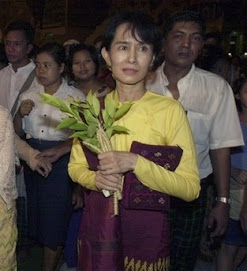


 Posts
Posts


