Wednesday, December 28, 2011


News & Articles on Burma-Tuesday, 27 December 2011-uzl
News & Articles on Burma Tuesday, 27 December 2011 --------------------------------------- Suu Kyi Urges Japan to Promote Democracy in Burma Japan seeking improved Myanmar relations Emerging Freedoms in Myanmar Burma ready to sign petroleum concession : Surapong Thai banks ready to fund expected boom in Burma Japan urges Burma to continue with reforms Japan prods Burma to continue with reforms: report Burma's Peace Envoy prepares meeting with ethnic rebels' alliance Burma Cuts Interest Rates Banks ready to fund expected boom in Burma Ending ethnic strife needs a new roadmap USDP Accused of Unlawful Election Campaigning Italian-Thai Seeks Japanese Loans for Myanmar Deepsea Port ------------------------------------------ Suu Kyi Urges Japan to Promote Democracy in Burma By WAI MOE Tuesday, December 27, 2011 Pro-democracy leader Aung San Suu Kyi has urged Japan to strengthen Burmas democratic institutions as Tokyo launches a fresh engagement initiative with Naypyidaw that promises more investment for economic and social development. If democratic institutions are strengthened in the country, economic development will be stronger too, Suu Kyi told reporters at a press briefing after she met Japanese Foreign Minister Kocihiro Gemba at her lakeside house in Rangoon on Monday evening. Therefore, I hope Japan will consider strengthening democratic institutions in the country while it aids humanitarian works as well as social and economic development, she added. Japanese Foreign Minister Koichiro Gemba, left, at a press briefing in Rangoon with pro-democracy leader Aung San Suu Kyi. (Photo: AP) The Nobel Laureate also emphasized the importance of national reconciliation, resolving civil wars and maintaining peace for the development of democracy in the country. And she added that humanitarian aid and development should reach all ethnic minority areas equally. Gemba held a meeting with President ex-Gen Thein Sein in Naypyidaw and Suu Kyi in Rangoon, indicating that the East Asian superpower is looking for investment opportunities in Burma. He said that Japan wants to help Burma fight poverty and that the two nations agreed to discuss a treaty to protect Japanese investments in the country. Apart from investment and help combating poverty, Japan will also provide aid for Burmas health, education and agriculture sectors, claimed Gemba. Gemba also met his Burmese counterpart Wunna Maung Lwin in Naypyidaw on Monday before flying to Rangoon. This visit will be a big turning point for Japan-Burma relations, Gemba was quoted by Kyodo News Agency as telling Wunna Maung Lwin. On the meetings between Thein Sein and Gemba, state-run newspaper The New Light of Myanmar reported: They cordially discussed matters related to bilateral multi-faceted cooperation, including strengthening of bilateral friendly ties, bilateral economic cooperation, seeking of ways and means to render assistance by Japan, encouragement and assistance for Myanmars democratization, national reconciliation and bilateral culture exchanges. Gemda is the first Japanese foreign minister to visit Burma since 2002. His visit came after a Japanese delegation, led by Kimihiro Ishikane, deputy director-general of the Japan Foreign Ministrys Southeast & Southwest Affairs on Official Development Assistance (ODA), last month. Both sides talked about the new Naypyidaw government's development policies and Japans assistance programs through ODA for sustainable economic development in Burma, according to the Japanese Ministry of Foreign Affairs. Although Japan is keen to invest in Burma and cooperate with the Burmese government to achieve development, Burmas tentative moves towards democratization and protecting human rights have also been significant in Tokyo's policy of providing assistance. Japan believes that it is important for Myanmar, having just recently shifted to civilian rule, to become a democratic nation based on a market economy and social stability, said a statement from Japans Ministry of Foreign Affairs on Nov. 28. Therefore, Japan intends to implement economic cooperation while watching for improvements in democratization and human rights situations. Burma is one of the areas in which Japan has used ODA diplomacy effectively. From 1960 to 1988, Japan was the main contributor of development aid to the Southeast Asian nationa value totaling US $2.1 billion including compensation for the Japanese occupation during World War II. However, Japan stopped ODA to Burma in 1988 in reaction to the military junta's coup and brutal crackdown on the democracy uprising. But Japan still assisted Burma in less direct methodssuch as loans for Rangoon International Airport and the Baluchaung Hydropower project in Karenni State. From 1991 to 2003, Japanese aid to Burma totaled over 900 billion yen and was closely aligned to democratic reforms. Tokyo decided to approve the airport loan following Suu Kyi's release from her first house arrest in 1995, and the hydropower project aid was offered after her subsequent release from house arrest in 2002. Japan once again suspended ODA to Burma in July 2003 after Suu Kyi and her convoy were brutally ambushed by pro-junta thugs in Dapayin, Sagaing Division, in northern Burma. But using ODA diplomacy to engage with the Burmese regime was perhaps also a counterbalancing act against Chinas influence in the country. Japans ODA to Burma was 876 million yen in 2004, 1.2 billion yen in 2005, 640 million yen in 2006 ad 468 million yen in 2007. Following the killing by security forces of Japanese journalist Kenji Nagai in Rangoon while he was covering the monk-led mass democracy protests in September 2007, Tokyo also temporarily suspended aid to Burma. http://www.irrawaddy.org/article.php?art_id=22735&page=1 --------------------------------------- Japan seeking improved Myanmar relations December 27, 2011, 3:31pm YANGON, Myanmar (AP, AFP) Myanmar and its one-time biggest benefactor, Japan, agreed to talks on a bilateral investment treaty and took other steps toward better relations as the Japanese foreign minister visited Monday. Kocihiro Gemba said afterward Japan wants to help Myanmar fight poverty that grips the country and was pleased they agreed to talks on a treaty to protect Japanese investments. The first Japanese foreign minister to visit Myanmar in nine years, Gemba met President Thein Sein and other government officials in Naypyitaw then later talked to pro-democracy advocate Aung San Suu Kyi in Yangon. A separate AFP report said Gemba on Monday urged Myanmar to push forward its reform process. "This visit will be a big turning point for Japan-Myanmar relations," Gemba told his counterpart, Wunna Maung Lwin, as they sat down for talks. Suu Kyi stressed the importance of Japan's aid reaching ethnic minority areas where it is most needed. Suu Kyi said she also asked Japan to consider strengthening Myanmar's democratic institutions. Japan was Myanmar's largest aid donor until it cut most funds in 2003 after pro-junta thugs attacked Suu Kyi's motorcade on a political organizing trip in northwestern Myanmar. The military government then placed her under house arrest, which ended in November last year. "Japan will continue to do what it can do for Myanmar's national reconciliation to take hold," Kyodo quoted Gemba as saying after a meeting with pro-democracy figure Aung San Suu Kyi at her home in Yangon and extended an offer that she visit Japan in the near future, Kyodo said. Japan has continued small amounts of humanitarian grass-roots aid for the health and education sectors and has also maintained some trade ties with Myanmar since then. The aid was allotted without violating Western sanctions against Myanmar, and Japan did not impose sanctions on its own. But Gemba's visit is considered a reopening of better ties between the countries with a long history. In his meeting with government officials, Japan also offered increased economic help for the education and agriculture sectors. His visit follows several nations that have sent officials to Myanmar after its new, nominally civilian government made political reforms this year. US Secretary of State Hillary Rodham Clinton and Thai Prime Minister Yingluck Shinawatra visited earlier this month. Yingluck, after meeting with President Thein Sein, became the first prime minister from the Southeast Asia region to meet Suu Kyi. Last week, Suu Kyi formally registered her party for any upcoming elections, returning the Nobel laureate to the political arena and winning plaudits from her political rivals in Myanmar's military-dominated parliament. Suu Kyi decided last month to formally rejoin politics after recent government reforms. With National League for Democracy leader Tin Oo and other party members she registered the party at the Union Election Commission in the capital, Naypyitaw. The party boycotted last year's general elections because of restrictive rules that among other things prevented Suu Kyi from being a candidate. The government has since lifted many of those restrictions. http://www.mb.com.ph/articles/346203/japan-seeking-improved-myanmar-relations ------------------------------------------- THE NEW YORK TIMES December 27, 2011, 5:00 am Emerging Freedoms in Myanmar By JAMES ESTRIN Paula Bronstein has been traveling to Myanmar to take photographs for almost 20 years, so she's accustomed to the feeling that she was being followed everywhere. Mind you, it's not paranoia when you're actually being followed . But this trip was very different. "There was always a feeling of paranoia working here but not on this trip," Ms. Bronstein said from Yangon this month." I have been able to do whatever i wanted to do. Previously I was always trying to work under the radar." The military regime that ruled Myanmar for more than 40 years, imprisoned political opponents and monitored journalists seems to be relinquishing some of its power as the country undergoes rapid change. The opposition leader Daw Aung San Suu Kyi has been released from house arrest and Secretary of State Hillary Rodham Clinton visited Myanmar this month to encourage democratic change. Elections are scheduled. Ms. Bronstein arrived in Myanmar to cover Mrs. Clinton but stayed after most of the press corps had departed. She photographed schools, a monastery and even the remote, bizarre, capital of Naypyidaw, a place she had been banned from visiting before. Openly carrying two cameras, she wandered the wide streets that were spotless, well-lighted and almost free of traffic. While there was a big police presence in the capital, Ms. Bronstein was not bothered by the authorities. Several times she photographed the enormous Parliamentary Complex that has more than 30 buildings, the largest of which has better than 100 rooms. Ms. Bronstein is a Bangkok-based senior staff photographer for Getty Images whose photos from Mongolia were featured in Lens last year. She had previously photographed Ms. Aung San Suu Kyi in her home while the opposition leader was under house arrest. On this trip, she covered her public visit to a Buddhist monastery. Even more striking, after almost two decades of confinement and forced isolation, there were now posters of the pro-democracy activist displayed publicly. The changes are happening so rapidly, it is impossible to know how long they might last or how far they will go. For decades, Myanmar has been a poor, isolated county with a badly managed economy. "I think these changes bring more happiness to the people even though they don't yet have more money," Ms. Bronstein said. "The people have suffered under a repressive regime, but now there's a sense of optimism." http://lens.blogs.nytimes.com/2011/12/27/emerging-freedoms-in-myanmar/ --------------------------------------------- Thai-Burma Relations Burma ready to sign petroleum concession : Surapong Supalak Ganjanakhundee December 27, 2011 1:33 pm New Delhi - Good relations with Burma and recognition of mutual benefits have yielded fast results as Naypyidaw has agreed to sign the petroleum concession with PTTEP shortly after New Year, Foreign Minister Surapong Tovichakchaikul said on Tuesday. He denied that former prime minister Thaksin Shinawatra had been in any way involved. Surapong and energy minister Pichai Naripthaphan discussed the matter with Burma's energy minister Than Htay in Naypyidaw when they accompanied Prime Minister Yingluck Shinawatra to the 4th summit of Greater Mekong Sub-region last week. The Burmese energy authority informed Thailand by phone over the weekend that it was ready and that the PTT Exploration and Production Co should go to sign the concession contract on natural gas in block M3 by January 5-6, Surapong said. Surapong said he did not know the details of the concession contract that the Thai company would sign. Energy minister Pichai would witness the signing ceremony. Block M3, is located in the Gulf of Martaban south of Rangoon, contains good quality natural gas, the by-product of which could be used in the petrochemical industry, he said. Opposition Democrat Party alleged that former Prime Minister Thaksin, who was in Burma shortly before Yingluck's visit, helped in paving the way for the signing of concession contract. Thaksin has a personal interest in the gas deal, the party said. Surapong said Thaksin has nothing to do with the negotiations and that it was his government who had been able to convince the Burmese counterpart to reach agreement. Thailand could help Burma to develop its petrochemical industry by using by-products of the natural gas from block M3, he said. The government would invite representatives from Burma to study the petrochemical industry in Thailand, he said. In fact, the PTTEP has been dealing with Burma on the gas concession for a long time but no progress had been made during the previous government's term due to cold relations between the two countries, Surapong said. "Former Prime Minister Thaksin has no stake in the deal. If the Democrats can prove he has any interests in the concession, I would ask him to hand over the stakes to them," Surapong said. "Otherwise, they should stop such allegations, which hurt the national interest." http://www.nationmultimedia.com/national/Burma-ready-to-sign-petroleum-concession-Surapong-30172728.html ------------------------------------- Thai banks ready to fund expected boom in Burma Sucheera Pinijparakarm The Nation Publication Date : 27-12-2011 Thai banks are optimistic on the growing investment opportunities in Burma and are ready to support Thai firms planning to expand their businesses there. Apisak Tantivorawong, president of Krung Thai Bank (KTB), said recently that Burma was one of the markets in Asean showing high potential for rapid growth, and that all areas of business, including banking, were eyeing greater involvement in the country. Many Thai firms have invested in Burma, including construction giant Italian-Thai Development (ITD), which has been granted a 75-year concession on 160,000 rai (25,600 hectares) in Dawei by the Burmese government. Apisak said the Dawei project was regarded as the largest in Burma in terms of investment value. Many parties plan to join with ITD on projects in the port town, including KTB, which is in talks with investors to provide financing. "We believe all parties want to cash in on the Dawei project. But its large size means all parties can join together to win on this project," he said. Foreign investors are also interested in Burma. This will also benefit Thailand, because of its proximity to the country. When the Asean Economic Community is implemented in 2015, Thai companies will have an advantage if they want to set up plants in Burma to send products back to Thailand because of the Kingdom's position as a logistics centre. Kannikar Chalitaporn, president of Siam Commercial Bank (SCB), said Burma offered many opportunities for investors, but cautioned that investors should expect to look for long-term opportunities. SCB is waiting for approval from the Bank of Thailand to set up a representative office in Burma. Burma's central bank will not allow foreign banks to set up branches yet. Kannikar said that when the central bank in Burma gives licences to foreign banks to open branches, SCB would be ready to jump in. SCB prefers to expand its financial services to Laos and Burma rather than Malaysia and Indonesia. "SCB can handle many overseas deals from Thailand. Therefore, the bank believes it can service all financial services even it has no branches overseas," she said. Banthoon Lamsam, chief executive officer and president of Kasikornbank, said Burma was a potential market for investors. However, it was not an appropriate arena for all businesses, the banker said, pointing out that the initial wave of investors in Burma were involved in infrastructure. http://www.asianewsnet.net/home/news.php?id=25499&sec=2 ------------------------------------------- Radio Australia News Japan urges Burma to continue with reforms 27/12/2011 Opening doors. US Secretary of State Hillary Clinton and Burma democracy leader , Aung San Suu Kyi hold talks in Rangoon this year. [AFP] Last Updated: 18 hours 8 minutes ago Japan's Foreign Minister Koichiro Gemba is urging Burma to push forward with its reform process. Mr Gemba made the call in Burma during talks to launch a bilateral investment accord. During meetings with President Thein Sein and his counterpart Wunna Maung Lwin, Mr Gemba also expressed Japan's readiness to assist Burma to transform itself into a democratic country and to reduce poverty, especially in rural areas. Mr Gemba also pressed Burmese officials to break off military ties and suspected nuclear links with Pyongyang. http://www.radioaustralianews.net.au/stories/201112/3398271.htm ------------------------------------- Japan prods Burma to continue with reforms: report Published: 27/12/2011 at 11:32 AM Online news: Asia Japanese Foreign Minister Koichiro Gemba on Monday urged Burma to push forward its reform process, as the two nations agreed to launch talks on a bilateral investment accord, a report said. Myanmar democracy icon Aung San Suu Kyi (L) speaks next to Japanese Foreign Minister Koichiro Gemba after their meeting at her house in Yangon. Gemba on Monday urged Myanmar to push forward its reform process, as the two nations agreed to launch talks on a bilateral investment accord, a report said. Gemba, the first Japanese foreign minister to visit Burma since 2002, met President Thein Sein and his counterpart Wunna Maung Lwin in Burma's remote capital of Naypyidaw, Japan's Kyodo News reported. During the meeting, Gemba expressed Japan's readiness to assist Burma in transforming itself into a democratic country and reducing poverty, especially in rural areas, Kyodo said. "This visit will be a big turning point for Japan-Burma relations," Gemba told Wunna Maung Lwin, according to Kyodo, as they sat down for talks in the capital. Gemba urged more progress on reforms, which have so far seen the new nominally civilian government release some political prisoners and ease restrictions on the media and business, Kyodo said. The Burma foreign minister vowed to free some of those being held, it said. Gemba also asked that Japan and Burma begin negotiations on an investment treaty, which would create an easier environment for Japanese companies to do business in the country, Kyodo said. Unlike major Western nations, Japan has maintained trade ties and dialogue with Burma, warning a hardline approach could push Burma closer to neighbouring China, its main political supporter and commercial partner. A week after the abrupt announcement of North Korean leader Kim Jong Il's death, Gemba pressed Burma officials to break off military and suspected nuclear links with Pyongyang, Kyodo said. Gemba later met iconic pro-democracy figure Aung San Suu Kyi at her home in Rangoon and extended an offer that she visit Japan in the near future, Kyodo said. "Japan will continue to do what it can do for Burma's national reconciliation to take hold," Kyodo quoted Gemba as saying after their meeting. Japan has continued to provide humanitarian and emergency aid to the country, but halted regular economic assistance in 2003 following the arrest and subsequent detention of Suu Kyi. Burma's government has rolled out a series of reformist measures since it took office as the former generals who dominate it have sought to reach out to political opponents and the West. Suu Kyi was freed in November 2010 from seven years of house arrest, and has re-registered her previously banned opposition National League for Democracy (NLD) as a political party, clearing the way for her to take part in elections. Hillary Clinton visited Burma earlier this month in the first trip there by a US Secretary of State in more than 50 years. http://www.bangkokpost.com/news/asia/272634/japan-prods-burma-to-continue-with-reforms-report ----------------------------------------- Burma's Peace Envoy prepares meeting with ethnic rebels' alliance By Zin Linn Dec 27, 2011 12:41AM UTC On 23 December, President Thein Sein's cabinet member and peacemaking team leader Aung Min revealed he was ready to meet the United Nationalities Federal Council (UNFC), the alliance of 11 armed groups. He announced this during a meeting with Hkun Okker, PaO National Liberation Organization (PNLO) president, in Bangkok, Shan Herald Agency for News (S.H.A.N.) reported today. "This is a major departure from its initial 'group-wise' approach," said the 65-year-old PaO leader, whose PNLO is a member of the UNFC. "The policy has apparently proved a waste of time and resources with most of the groups that he had met." Burma's 11 ethnic groups made a historical accord in a conference at an undisclosed venue along the Thai-Burma border in mid-February. They reached an agreement unanimously forming an umbrella alliance called the United Nationalities Federal Council (UNFC). The President's special peace envoy, Aung Min, has triumphed only one truce with the Restoration Council of Shan State / Shan State Army (RCSS/SSA) led by Lt-Gen Yawdserk, whose delegation signed a ceasefire accord with the Shan State Government on 2 December. Aung Min, who is also Minister of Railway Transport, met the Karen National Union (KNU) in Maesot on 21 December and the New Mon State Party (NMSP) in Sangklaburi the following day. Nyo Ohn Myint, an executive of the National League for Democracy-Liberated Area (NLD-LA), acted as moderator during the meetings with KNU and NMSP. At that time Aung Min was still apparently sticking to the group-wise approach stance. "He said the government would hold talks with dialogue only at the third stage of the three-stage peace process," said a Karen source. The three stages are Ceasefire, Development and what is known as "Panglong-like Conference". The UNFC, formed in February, is made up of Kachin Independence Organization (KIO), Karenni National Progressive Party (KNPP), Chin National Front (CNF), Lahu Democratic Union (LDU), Palaung State Liberation Front (PSLF), Wa National Organization (WNO), National Unity Party of Arakan (NUPA), and Shan State Progress Party / Shan State Army (SSPP/SSA), KNU, NMSP and PNLO. The ethnic alliance has yet to meet and make a decision on its imminent remarkable meeting with the government's special envoy Aung Min. The UNFC has selected six Central Executive Committee members and 10 Central Committee members. Gen Mutu Saypo of the Karen National Union (KNU) becomes Chairman and Lt Gen Gauri Zau Seng of the Kachin Independence Organization (KIO) Vice Chairman-1, Maj Gen Abel Tweed of the Karenni National Progressive Party (KNPP) Vice Chairman-2, and Nai Hongsa of the New Mon State Party (NMSP) General Secretary) respectively. In a statement issued on 17 February, the UNFC said part of its basic principles and aims were to work for a better recognition of the ethnic armed groups, for ethnic equality, rights and self-determination, and for a genuine democratic federal union of Burma. At the same time, the government's envoy Aung Min also had a 30-minute meeting with former leader of All Burma Students' Democratic Front (ABSDF) Dr. Naing Aung on 21 December. During the meeting, Dr. Naing Aung proposed a four-point agenda for ceasefire talks, in keeping with a statement issued by him, according to sources in Mae Sot. The four points are to implement an all-inclusive rebuilding programme, to bring to end human rights violations, not to hurt civilians in fighting, and to release all political prisoners including rebels who are regarded as special prisoners. Political analysts are watching the peace activities of Aung Min in great expectation of good results. http://asiancorrespondent.com/72768/burma%E2%80%99s-peace-envoy-prepares-meeting-with-ethnic-rebels%E2%80%99-alliance/ -------------------------------------------- Burma Cuts Interest Rates By NAW KA PAW Monday, December 26, 2011 RANGOON---Burma's Minister for Finance and Revenue Hla Tun announced on Dec. 23 that the Central Bank of Myanmar will cut interest rates from 12 to 10 percent starting on Jan. 1, a move several bankers in Rangoon say will allow many businesses to be more cost effective. It is hoped a cut in interest rates will accelerate the national economy, encourage investment, and create higher performance through competition among banks. The growth of the national economy has been relatively slow lately, with obersvers saying that any monthly increases at Burmese banks were due to a growth in savings. It was this factor, they say, that prompted the Ministry of Finance and Revenue to reduce interest rates once more. Under the new interest rates, deposits are to be met with returns of not less than 8 percent, while borrowers are not to be charged more than 13 percent. Financial observers predict a mixed bag of positive and negative impacts. A retired senior officer from the budget department under the Ministry of Finance and Revenue said, "The positive is that a borrower who is involved in business can get a loan at a low rate of interest. It is good for him, but not for investors." Deputy Chairman of Kanbawza Bank Than Lwin said, "It has more positive impacts than negative. When the bank rate decreases, prices decrease. A decrease in prices can quicken the economy. Low interest rates, on the other hand, are not good for either the investor or the borrower." A global economic crisis, usually causes interest rates to lower, he added. Burma currently has the highest interest rates in the region. In Singapore, banks pay out less than one percent on deposits. A spokesperson from Asia Green Development Bank said, "Decreasing interest rates is good for business. It reduces prices. Burmese businesses cannot compete with those in Thailand, Singapore and Malaysia because of the high costs. A reduction in interest rates would welcome in new busines investors and increase the country's GDP. From that, the government will take in increased taxes and revenue." A retired professor from Yangon Institute of Economics pointed out that a reduction in interest rates would lead to businesspeople borrowing money from the banks, and would subsequently mean higher foreign exchange rates. Another economist warned that if interests rate are decreased, investors will withdraw their money from the banks, and few will make deposits. "The other thing, is inflation," he said. "The interest rate should always outweigh the rate of inflation." Interest rates were stable at 10 percent from April 1, 2000 until April 1, 2006, when they were upped to 12 percent. As part of a series of political and economic reforms initiated by Burma's new quasi-civilian goverment led by ex-army general President Thein Sein, Naypyidaw announced on Friday that it will exempt its citizens working abroad from paying income tax starting Jan. 1 next year. http://www.irrawaddy.org/article.php?art_id=22724 -------------------------------------- Banks ready to fund expected boom in Burma SUCHEERA PINIJPARAKARM THE NATION December 27, 2011 1:00 am Thai banks are optimistic on the growing investment opportunities in Burma and are ready to support Thai firms planning to expand their businesses there. Apisak Tantivorawong, president of Krung Thai Bank (KTB), said recently that Burma was one of the markets in Asean showing high potential for rapid growth, and that all areas of business, including banking, were eyeing greater involvement in the country. Many Thai firms have invested in Burma, including construction giant Italian-Thai Development (ITD), which has been granted a 75-year concession on 160,000 rai (25,600 hectares) in Dawei by the Burmese government. Apisak said the Dawei project was regarded as the largest in Burma in terms of investment value. Many parties plan to join with ITD on projects in the port town, including KTB, which is in talks with investors to provide financing. "We believe all parties want to cash in on the Dawei project. But its large size means all parties can join together to win on this project," he said. Foreign investors are also interested in Burma. This will also benefit Thailand, because of its proximity to the country. When the Asean Economic Community is implemented in 2015, Thai companies will have an advantage if they want to set up plants in Burma to send products back to Thailand because of the Kingdom's position as a logistics centre. Kannikar Chalitaporn, president of Siam Commercial Bank (SCB), said Burma offered many opportunities for investors, but cautioned that investors should expect to look for long-term opportunities. SCB is waiting for approval from the Bank of Thailand to set up a representative office in Burma. Burma's central bank will not allow foreign banks to set up branches yet. Kannikar said that when the central bank in Burma gives licences to foreign banks to open branches, SCB would be ready to jump in. SCB prefers to expand its financial services to Laos and Burma rather than Malaysia and Indonesia. "SCB can handle many overseas deals from Thailand. Therefore, the bank believes it can service all financial services even it has no branches overseas," she said. Banthoon Lamsam, chief executive officer and president of Kasikornbank, said Burma was a potential market for investors. However, it was not an appropriate arena for all businesses, the banker said, pointing out that the initial wave of investors in Burma were involved in infrastructure. http://www.nationmultimedia.com/business/Banks-ready-to-fund-expected-boom-in-Burma-30172691.html ------------------------------------------- Ending ethnic strife needs a new roadmap Published: 27/12/2011 at 12:00 AM Newspaper section: News Earlier this year, Burma rightfully claimed to have completed the Seven-point Roadmap for democracy by successfully installing a new civilian government. Since then, the world has seen an unusual wind of change in Burma, one that the country had not experienced in half a century. However, there was at least one point of the roadmap that was never completely finished and was somewhat pushed aside in order to pave the way for quick changes. This missing link was the establishment of peace with dozens of armed ethnic groups that have fought for autonomy from the central government for several decades. It is high time to revisit this important point of the roadmap, as these incomplete tasks could not only undermine the positive changes in the country but could also derail the whole future of the transition. In that regard, the new campaign of peace overtures embarked upon by the government of Thein Sein is a very welcoming initiative. On one side, his government has demonstrated new resolve to achieve peace in a few years. On the side of the ethnic armed groups, they have seen a glimmer of hope to end hostilities. As such, for the first time in 60 odd years, elusive peace in Burma seems to be possible to achieve. The Burmese government has consolidated its efforts by forming a negotiating team comprised of union-level ministers and prominent parliamentarians. Importantly, as many of them are new to the government, they bring different perspectives and personal resolve to the table as they work to end the conflict. Crucial to this process, the governments of the ethnic states have been authorised to engage in peace talks with rebels in each respective state. Over the past few months, the Burmese government itself has held several rounds of negotiations with all armed ethnic groups. These initiatives have already achieved significant results, further reinforcing the credible commitment of the government to build promising peace. Led by a new team of government negotiators, the talks produced several ceasefire agreements, including the ones recently with the Shan State Army-South and the Democratic Karen Buddhist Army in December 2011. An important understanding was also reached with the United Wa State Army as well as the Karen National Union, two major ethnic forces with ample military capabilities. However, there are also worrying trends in Kachin State. Negotiations with the Kachin Independence Organisation have broken down and serious fighting has continued. With rising tensions in Kachin State, peace in Burma may unfortunately remain elusive in the foreseeable future. Negotiations seem to be going around in circles, despite efforts from both sides to give peace a chance. Ethnic conflicts in general are extremely complex. Burma is no exception with multiple players in multifarious groupings pulling and pushing in all directions. Additionally, Burma's neighbours have also been involved in the conflict in one form or another, from the explicit support of the rebels, to benefiting from the illegal sales of minerals, and the smuggling of weapons, the proceeds of which go directly to finance the conflict on all sides. But legacies of protracted military rule are at play here also. Due to years of abuses and repeated broken promises, ethnic groups do not trust the government. They still see the current government as a civilianised extension of the military's rule. And within the government also, there are many ex-army officers who have fought against the ethnic insurgency at one time or another. Some of them still see ethnic conflict from a security point of view and armed groups as separatists wreaking havoc on the nation's progress and potential. For both sides, trust remains the crux of the problem. But all protagonists must get past the positional bargaining in order to achieve peace once and for all. To achieve all these, the new Burmese government cannot afford to treat this simply as tying up loose ends from the previous roadmap. In fact, a new comprehensive roadmap should be adopted to end ethnic conflict. Such a grand overture would certainly be well received by various stakeholders. This kind of initiative would engender immediate collaboration and support from the people. Such a roadmap should include first and foremost a ceasefire to stop the killing. All ceasefires are temporary security arrangements and ideally they should lead to political dialogue and a permanent peace in Burma. The roadmap must include a timeframe for further negotiations, a focus on step-by-step plans for DDR (Disarmament, Demobilisation and Reintegration) peace initiatives, and identification of issues over which to negotiate. Other essential components of the roadmap will need to include political dialogue, political and social reintegration, regional development and economic recovery. It is not possible to undo the destructive effects of a long-standing civil war overnight. Instead, the roadmap should focus on gradually resolving the thorny issues over a period of 5 to 10 years, while trust is built on collaboration between the government and ethnic groups to move the process forward. During this period, perhaps until the time ethnic groups feel confident about the peace process, they may be allowed to retain their weapons. Sometimes, political agreements between elites from both sides of the conflict forget the most important groups that face the war on a daily basis: civilians in conflict zones and the rank and file of rebel armies. It is therefore most crucial that the roadmap pay attention to their long-term welfare and rehabilitation. Equally crucial is the inclusion of emerging democratic institutions and civil society in Burma which should play supporting roles in the implementation of the roadmap. The democratic opening in Burma has afforded a window of opportunity for all to end the armed conflict. They must seize the moment and look at peace from a broader perspective. Aung Naing Oo is the Deputy Director of Vahu Development Institute and former Foreign Affairs Secretary of the All Burma Students Democratic Front. http://www.bangkokpost.com/opinion/opinion/272556/ending-ethnic-strife-needs-a-new-roadmap ------------------------------------------ USDP Accused of Unlawful Election Campaigning By THE IRRAWADDY Monday, December 26, 2011 Burma's military-backed Union Solidarity and Development Party (USDP) which dominates the national Parliament has been accused of unlawful campaigning for the looming parliamentary by-elections in a major Rangoon township. Residents of Mayangone Township told The Irrawaddy that last week USDP campaigners urged them to submit land registration applications to the party. In Burma, the state remains in control of all land with citizens having few rights. People must obtain official documents proving temporary property ownership, but in reality many cannot negotiate the country's unwieldy bureaucracy and fail to receive these. "To get these official land certificates many people in several quarters of the township have been asked to go and submit applications and relevant documents to the USDP office," said a local store owner in the town. "The USDP party organizers said they will give this service to us free of charge." Under the country's election laws, political parties can be disbanded if they are found to be using state properties and funds. The activity last week was carried out under the direct instruction of USDP Secretary General Htay Oo, claimed a party organizer in Mayangone Township. A local politician told The Irrawaddy that this activity by the USDP is unlawful and aimed at garnering votes for the upcoming by-election. The opposition National League for Democracy (NLD), led by pro-democracy icon Aung San Suu Kyi, will compete for 48 vacant parliamentary seats during the ballot. "This is a misappropriation of state power. I will be happy if the public gets official land and housing certificates, but if this is just false promises made for the sake of getting votes I will complain that the USDP is rigging the elections," said the politician. The USDP is led by former Burmese generals and was transformed into a political party from a military-sponsored civic organization, the Union Solidarity and Development Association, in June 2010. The party won a large majority in the Union Parliament through last year's election which was widely criticized for heavy vote rigging. But in a recent press conference, the country's Election Commission chief vowed that the looming by-elections will be free and fair. http://www.irrawaddy.org/article.php?art_id=22725 -------------------------------------------- Bloomberg Italian-Thai Seeks Japanese Loans for Myanmar Deepsea Port December 26, 2011, 9:29 PM EST By Suttinee Yuvejwattana and Daniel Ten Kate (Adds chairman's comments in third paragraph.) Dec. 26 (Bloomberg) -- Italian-Thai Development Pcl expects to sign loan agreements next year valued at $12.5 billion to develop a deepsea port, industrial complex and power plants in Myanmar, Chairman Premchai Karnasuta said. Japan Bank for International Cooperation will likely provide most of the funding for the port, road and railway links in Dawei, less than 300 kilometers (186 miles) west of Bangkok, Premchai told reporters. Officials at the Tokyo-based JBIC office were not immediately available to comment, said a spokeswoman who declined to give her name. "We expect to get partners and funding for the project next year," Premchai said in Bangkok today. "It will help reduce logistics costs and relieve congestion in the Malacca Straits." Thailand's government has backed the project in Dawei to provide an alternative route for exporters, including Japanese companies that use the country as a manufacturing base, to ship goods to Europe and the Middle East. Italian-Thai, the nation's biggest construction company which won a contract from Myanmar to develop the port last year, has emphasized the port's potential to connect land routes throughout the region. Italian-Thai expects to win construction contracts valued at 400 billion baht next year, not including the Myanmar projects, up from 170 billion baht this year, Premchai said. The company's shares gained 0.5 percent to 3.72 baht today. The stock has declined 20 percent this year, compared with a 0.02 percent drop in the benchmark SET Index. Land Sales Italian-Thai plans to complete a 132-kilometer road from Dawei to the Thai border within three years, Premchai said. The company expects to gain income from selling 50,000 rai (80 square kilometers) of land, an area equivalent to about a 10th of Singapore, and serving as the main contractor on infrastructure projects, he added. Of the loans Italian-Thai plans to secure next year, $3.5 billion will be for the port and roads, $2 billion for a railway and $7 billion for two power plants, he said. Japan would seek to help finance the project provided it can reach a deal on Myanmar's "huge" outstanding debt, Kimihiro Ishikane, a deputy director of Asian affairs at Japan's foreign ministry, told reporters in Bali on Nov. 16. South Korea's SK Engineering & Construction Co. has shown interest in oil and gas projects in Dawei, Somchet Thinaphong, managing director of Dawei Development Co., an Italian-Thai unit, told reporters at the same event. Steel Mill Italian-Thai is still seeking partners and financing for an integrated steel mill, an oil, gas and petrochemical complex, and fertilizer plants, Premchai said. It signed an initial agreement last month with Ratchaburi Electricity Generating Holding Pcl to develop coal-fired power plants in Myanmar with a combined capacity of 4,000 megawatts. Italian-Thai was founded in 1958 through a partnership of business executives from Italy and Thailand. It oversaw the construction of Bangkok's main international airport and elevated train line and operates in about a dozen countries around Asia. --With assistance from Jae Hur in Tokyo. Editor: Tony Jordan To contact the reporters on this story: Suttinee Yuvejwattana in Bangkok at suttinee1@bloomberg.net; Daniel Ten Kate in Bangkok at dtenkate@bloomberg.net To contact the editor responsible for this story: Tony Jordan at tjordan3@bloomberg.net http://www.businessweek.com/news/2011-12-26/italian-thai-seeks-japanese-loans-for-myanmar-deepsea-port.html __._,_.__
Saturday, December 24, 2011
News & Articles on Burma-Friday, 23 December 2011-uzl
News & Articles on Burma Friday, 23 December 2011 --------------------------------------- Election Commission Promises Suu Kyi Free and Fair Election Myanmar opposition leader Suu Kyis party registers to re-enter mainstream politics Opportunity knocks for SCB with new Burma moves BURMA: Bar councils exhorted to support Burmese lawyers Burmas Nobel laureate meets UEC chairman for party registration Burma to Release More Political Prisoners Suu Kyi's party to run in Burma elections Burma's Aung San Suu Kyi Registers Party, Visits Parliament Aung San Suu Kyi returns to Burma politic Suu Kyi to visit Burma parliament, meet speaker Suu Kyi's party registers to run in Myanmar polls After meeting with Zarganar, AIPMC call again release of all political prisoners in Burma ---------------------------------------- Election Commission Promises Suu Kyi Free and Fair Election By WAI MOE Friday, December 23, 2011 The chairman of Burma's Union Election Commission (EC), Tin Aye, has promised pro-democracy leader Aung San Suu Kyi that he will ensure the forthcoming by-elections are free and fair, and that the government was committed to cooperating with the opposition for the welfare of the country. According to Nyan Win, the main spokesman for Suu Kyi's National League for democracy (NLD), the former lieutenant-general made the pledges when the pair spoke on Friday at his office in Naypyidaw following the NLD's registration at the election office. U Tin Aye told Daw Aung San Suu Kyi that he will do his best to ensure the legitimacy of the upcoming elections, and he proposed that both the government and the opposition work together for the betterment of the country, Nyan Win told The Irrawaddy on Friday afternoon. He also proposed that both sides cooperate to improve the economy, he said. Daw Aung San Suu Kyi thanked U Tin Aye for his pledge to cooperate and to ensure free and fair elections, Nyan Win said, adding that they also discussed a few technical details with regard to the by-elections during their two-hour meeting. Tin Aye did not disclose when the by-elections would be held, the NLD spokesman said. However, the EC chairman estimated that the bureaucratic process for giving the green light to the NLD application could take three or four weeks. During the meeting, U Tin Aye appeared reassuring and friendly, and he offered his opinions frankly and openly, Nyan Win said when asked about his impression of the man who used to be No.6 in the military junta hierarchy. According to reports from Naypyidaw, Suu Kyi also met Upper House Speaker Khin Aung Myint and then Lower House Speaker Shwe Mann, formerly No. 3 in the military hierarchy, at their offices in the capital on Friday afternoon. Correspondents from local journals said Suu Kyi discussed matters of democracy and parliamentary issues with both house speakers. As a democratic system is based on justice, liberty and equality, we are serious on the issue of all-inclusiveness, Khin Aung Myint was quoted by Weekly Eleven News as saying. Neither Suu Kyi nor any other NLD representative is scheduled to meet President Thein Sein on this visit as he has a prior engagement outside the capital. Tin Aye is not only the EC chairman, but is also the former chairman of the militarys Myanmar Economic Holdings Ltd, and a close aide to former junta supremo Than Shwe. Military sources describe him as Than Shwes revenue keeper. He previously attended the same Intake 9 of the Defense Services Academy along with Thein Sein. NLD party leaders Tin Oo and Suu Kyi formally registered the party on Friday morning at Naypyidaw's Union Election Commission office. On Suu Kyi's second visit to the capital since her release from house arrest in November, she was accompanied by NLD colleagues, including former general Tin Oo, spokesman Nyan Win and Win Myint. Suu Kyi's first trip to Naypyidaw was in August when she was invited to attend a government economic workshop. She met and held her first talks with Thein Sein at the presidential palace where they reportedly discussed the political situation in Burma and national reconciliation. After meetings with Thein Sein and other ministers in Naypyidaw on August 19-20, Suu Kyi said she was satisfied with the outcome. Following those positive first steps between the government and the country's main opposition leader, Parliament amended the Political Party Registration Law, effectively allowing the NLD to register again as a legal party and opening the way for it to contest by-elections next year. On Monday, the NLD leadership elected Suu Kyi as the deputy leader of the NLD, and her close aide, Tin Oo, as the leader for formal registration purposes. The NLD said it intends to contest 48 constituencies in the coming by-elections, and that Suu Kyi herself will be a candidate. Even if the NLD secures all 48 seats in the polls, it will be still be in a minority until the next general election in 2015. Meanwhile, the military-backed ruling Union Solidarity and Development Party (USDP) will continue to dominate the majority of both houses. One-quarter of seats in both houses are appointed by the commander-in-chief of the armed forces. The USDP, led by Thein Sein, won a majority in the elections on Nov. 7, 2010. But critics and observers collectively described polling as rigged and unfair. http://www.irrawaddy.org/article.php?art_id=22714&page=2 --------------------------------------- Myanmar opposition leader Suu Kyis party registers to re-enter mainstream politics By Associated Press, Updated: Friday, December 23, 3:46 PM NAYPYITAW, Myanmar Opposition leader Aung San Suu Kyi formally registered her party Friday for any upcoming elections, returning the Nobel laureate to the political arena and winning plaudits from her political rivals in Myanmars military-dominated parliament. Suu Kyi decided last month to formally rejoin politics after recent reforms by the nominally civilian administration that took power this year. Suu Kyi, National League for Democracy leader Tin Oo and other party members registered the party at the Union Election Commission in the capital, Naypyitaw. The party boycotted last years general elections because of restrictive rules that among other things prevented Suu Kyi from being a candidate. The government has since lifted many of those restrictions. The government had taken the NLD off the list of legally recognized political parties because of the boycott. NLD spokesman Nyan Win said that the party would contest all vacant seats in an upcoming by-election and that Suu Kyi would soon announce in which constituency she will run. No date has been set for that election, but Election Commission Chairman Tin Aye said last week that the government would announce it three months before the by-election, giving candidates time to campaign. After registering, Suu Kyi met separately with Khin Aung Myint and Thura Shwe Mann, the speakers of the upper and lower houses of parliament, who both said they welcomed her action. Both had served under the previous military-led government, which kept Suu Kyi under house arrest for much of the past two decades. All parties should join hands and work together at a time when Myanmar is promoting the spirit of democracy, Khin Aung Myint told reporters. Allowing Suu Kyis party back into the political fold will likely give the government greater legitimacy at home and abroad. It has already won cautious praise from international observers and critics, including the United States, for introducing reforms. During her visit to Myanmar early this month, U.S. Secretary of State Hillary Rodham Clinton said she wants to ensure that future elections are free, fair and credible in the eyes of the people. The polls in November 2010 were Myanmars first since the NLD overwhelmingly won a general election in 1990. The military junta at that time refused to honor the results. The regime kept Suu Kyi under house arrest during different periods for a total of 15 years. She was released just after last years elections and is now free to move about and meet people. The government continues to hold hundreds of other political prisoners, and Suu Kyi has said the NLD will continue to work for their release. Copyright 2011 The Associated Press. All rights reserved. This material may not be published, broadcast, rewritten or redistributed. http://www.washingtonpost.com/world/asia-pacific/myanmar-opposition-leader-suu-kyis-party-registers-to-re-enter-mainstream-politics/2011/12/22/gIQAV3vkCP_story.html --------------------------------------- BANKING Opportunity knocks for SCB with new Burma moves Firm expects to serve clients in country Published: 23/12/2011 at 12:00 AM Newspaper section: Business Siam Commercial Bank (SCB) is planning aggressive moves aimed at tapping opportunities in the newly opening Burmese market, the new destination of the Thai industrial sector. President Kannikar Chalitaporn said SCB will request permission from the Bank of Thailand to open a representative office in the neighbouring country soon. This will be the bank's biggest maneuver in more than a decade after it closed several of its foreign networks in the wake of the 1997 financial crisis. Previously, Mrs Kannikar said SCB had no interest in expanding its international banking activities after learning "hard lessons" from 1997. She said the country's banking industry almost collapsed due partly to aggressive expansion abroad. But she explained that SCB has closely researched the logistics of operating in Burma, which remains under de-facto military administration. "While we have to acknowledge that sanctions remain, we've studied the issue thoroughly to determine the right channels for safe transactions," said Mrs Kannikar, adding that the focus would be on supporting Thai customers on the ground. She said providing financial support to Thai customers will always be SCB's main objective rather than competing for local business in each country it enters. "Sharing markets with local banks is fraught with difficulties. That sort of business model takes more capital and human resource as well as more time," said Mrs Kannikar. She said after the bank started to facilitate its corporate clients operating in Burma, they asked about whether SCB could provide them with services in country. "Clients kept asking whether we're active in that market, so we organised a trade trip taking some corporate clients along with us to look for opportunities there. That gave us a chance to learn more about our clients' needs, so now we know which businesses we can focus on," said Mrs Kannikar. She said opportunities abound in Burma, more so even than in Vietnam or Cambodia, as the country is still in the early stages of economic development. Besides loans, SCB has much to offer its clients such as investment banking and financial consulting for mergers and acquisitions. "We have to stop thinking about growing only in terms of loans, as we can do a lot more than that. Otherwise, we'll end up locked into only a limited field," said Mrs Kannikar. But initially, SCB will only lend money for trading activities in Burma, as it is not yet ready to provide massive capital for investment. http://www.bangkokpost.com/business/economics/272097/opportunity-knocks-for-scb-with-new-burma-moves ---------------------------------------- BURMA: Bar councils exhorted to support Burmese lawyers A Press Release by the Asian Legal Resource Centre (Hong Kong, December 23, 2011) The Asian Legal Resource Centre on Friday issued an appeal to bar councils worldwide to support lawyers in Burma who have had their licences revoked for political reasons. In a special appeal to the International Bar Association, International Council of Jurists and bar councils around the world, the director of the Hong Kong-based regional research and advocacy group asked that the professional bodies write to urge the Supreme Court in Burma to review the circumstances under which 32 lawyers lost their licences. The lawyers had had their licences to practice removed "for their simple expression of political views, or for no more than the defence of persons accused of political offences", Wong Kai Shing said in the appeal. "We are particularly interested to get the support for these lawyers from their counterparts in professional groups around the world, because we are confident that these will have a strong effect both as a source of encouragement for the lawyers and also as an impetus for the professional bodies concerned in Myanmar to review their cases," Wong added. The appeal to bar councils follows an open letter that the ALRC issued on Thursday to the chief justice in Burma, in support of 16 of the lawyers who in November submitted a written request that their cases be re-examined. "According to the 16 lawyers, they had their licences revoked unfairly and unlawfully, inasmuch as the revocations were not done in accordance with correct procedure and were motivated not in response to breaches of professional codes of conduct but because of dissatisfaction of the authorities with their political activities, or efforts to defend the rights of persons accused in political cases," Wong said in the letter. "We believe that there will be other lawyers aside from these 32 in the same situation of having had their licences revoked for political reasons, many having spent periods in jail," he noted. Text of the open letter is available online here: http://www.alrc.net/doc/mainfile.php/alrc_st2011/696 The appeal and details of the 32 lawyers is available for download in PDF format here: http://www.alrc.net/PDF/ALRC-CPL-001-2011.pdf Wong said that the ALRC would distribute the appeal widely. "We will be sending the appeal and details of the lawyers through partners to bar councils throughout Asia, including in neighbouring countries like Bangladesh, India and Thailand, as well as further afield, like Pakistan, Sri Lanka, Malaysia, Korea and the Philippines," he said. "However, the appeal is for bar councils worldwide, and so we would be very pleased to hear from professional bodies in other regions of the world, including in Africa, Europe and the Americas," Wong added. Individuals or bar councils sending letters to the chief justice in Burma are invited to send copies to the ALRC, either to post online or to send on to the lawyers themselves. To do this, or for further details on the lawyers concerned, write to alrc@alrc.net or burma@humanrights.asia. http://www.humanrights.asia/news/alrc-news/ALRC-PRL-004-2011 -------------------------------------- Burmas Nobel laureate meets UEC chairman for party registration By Zin Linn Dec 23, 2011 2:49PM UTC Burmas Nobel laureate and leader of the National League for Democracy (NLD) Aung San Suu Kyi left Rangoon for Naypyitaw to visit Union Election Commission in order to carry out registration process of her political party. Suu Kyi together with U Tin Oo, U Nyan Win, U Han Thar Myint and Dr. Nge Nge have arrived at the Thin-ga-ha hotel in Naypyidaw this morning, as said by The Messager Journal. At 10:10 am Friday, Suu Kyi and her associates met with UEC Chairman U Tin Aye and seven commission members, namely U Myint Naing, U Aung Myint, U Thar Oo, Dr. Daw Myint Kyi, U Win Kyi, U Nyunt Tin and U Win Ko. Suu Kyis National League for Democracy (NLD) was given the green light from government last month to rejoin mainstream politics, paving the way for the Nobel laureate to run for a seat in the new parliament. The NLD was stripped of its status as a legal political party by the junta in 2010 after it chose to boycott the election, saying the rules were unfair. NLDs application to return to the political arena came days before the US Secretary of State Hillary Rodham Clintons Burma visit on 30 November. Twenty-one senior members including Suu Kyi, Tin Oo and Win Tin made the submission in the capital Naypyitaw on 25 November. The Union Election Commission allowed the formation of the NLD as the application to register was in accordance with the law, the state-run New Light of Myanmar newspaper reported on 13 December. After signing papers as part of the NLD re-registration as a political party, Suu Kyi has met with parliament speakers, said a parliamentary official in the capital Naypyidaw. According to the latest news, U Khin Aung Myint, the Upper House Speaker, met Suu Kyi 1:15 pm today at the parliament. Lower House Speaker Shwe Mann, third-ranking general in the previous junta, also met the Nobel laureate from 1:35 to 2:35 pm according to parliamentary source. The details of the discussion topics were not released. Both speakers welcomed the leader of key opposition party with open arms, the parliamentary source said. The Nobel laureate was released a few days after the controversial 2010 November election, having spent much of the past two decades in custody, and she is now planning to play a part in the upcoming by-elections expected early April next year even though no voting date has been set. Since coming to power in March, the new military-backed government dominated by former generals has made a series of reformist moves in an apparent attempt to reach out to political opponents and the West. Suu Kyi expressed cautious hope earlier this month that democracy would come to Burma, as she welcomed Hillary Clinton to the home in Rangoon city that was her prison for years during a landmark visit by the US Secretary of State. On 17 November, the NLD welcomed the approval of Burmas bid to chair Southeast Asias regional bloc in 2014, saying it would boost political change in the inaccessible nation. The NLDs 18 November decision indicates that it has confidence in governments recent political reforms by the military-backed government which has been under watch for suspicion due to exile political dissident groups. Many democracy-supporters in the country and members of the National League for Democracy back up the idea of re-entering the NLD to play in the national politics.In its 18-November statement, the party said the NLD has unanimously decided to re-register as a political party and will run in the elections. The NLD won an election in 1990 by a landslide, while Suu Kyi remained under house arrest, but the ruling generals never allowed the party to take power. Meanwhile, Aung Min, the governments Railways Minister, hinted remaining political prisoners could be freed as early as next month, according to a participant in recent peace talks with the Karen National Union (KNU). The minister informed two specific dates when the releases would take place, the first on Jan 4, Burmas Independence Day, and the second on February 12, the Union Day. According to the National League for Democracy partys list of political prisoners, the estimated number is 591. According to today press release of Assistance Association for Political Prisoners (Burma) AAPP, there are at least 1,572 individuals in Burma who have been arrested and sentenced on political grounds and are believed to currently be in prison. http://asiancorrespondent.com/72651/burma%e2%80%99s-nobel-laureate-meets-uec-chairman-for-party-registration/ ----------------------------------------- Burma to Release More Political Prisoners By Jack Phillips Epoch Times Staff Created: December 22, 2011 Last Updated: December 22, 2011 A Burmese official on Thursday said the country will release more of its political prisoners possibly as early as next month, the Irrawaddy publication reported Thursday. Railway minister and government negotiator Aung Min, who participated in recent government talks where the issue of releasing prisoners was discussed, told the publication of the development. All remaining political prisoners, he said, would be released in two separate groups. The first group will be set free on Jan. 4, which is the country's independence day and the other group will be released on Jan. 12. Western powers including the United States have for years imposed sanctions on Burma (also known as Myanmar) for its poor human rights record. A key element of the conditions for having the sanctions lifted has been the release of all political prisoners. Earlier this year, the country transferred power from its military junta to an elected civilian government under President Thein Sein, a former general. A first wave of about 120 political prisoners was released in October. Since the election in November 2010, the traditionally repressive regime has been showing signs of opening up. When U.S. Secretary of State Hillary Clinton made her historic visit to Burma at the end of last month---the first of its kind in 50 years---she urged the country's leadership to release all remaining prisoners, which activists estimate to be upward of 2,000. After the October release, Human Rights Watch called on the regime, if it is genuine about improving its human rights record, to not only release prisoners, but change laws. "The laws that put them behind bars are still on the books and can be used again at any time. If the government wants to show it is really different from its predecessors, it should convene Parliament and repeal laws criminalizing peaceful political speech," said Elaine Pearson, deputy Asia director at HRW in a published statement. http://www.theepochtimes.com/n2/world/burma-to-release-more-political-prisoners-163073.html ---------------------------------------- Suu Kyi's party to run in Burma elections BreakingNews.ie 23/12/2011 - 08:25:05 Burmese opposition leader Aung San Suu Kyi formally registered her party today for any upcoming elections, returning the once-captive Nobel laureate to the political arena. Ms Suu Kyi decided last month to formally rejoin politics in the military-dominated country after recent reforms by the nominally civilian administration that took power this year. Ms Suu Kyi, National League for Democracy leader Tin Oo and other party members registered the party at the Union Election Commission in the capital Naypyitaw. The party boycotted last year's general elections because of restrictive rules that among other things prevented Ms Suu Kyi from being a candidate. The government has since lifted many of those restrictions. The government had disqualified the NLD for boycotting the election. NLD spokesman Nyan Win said the party would contest all vacant seats in an upcoming by-election and Ms Suu Kyi would soon announce in which constituency she will run. No date has been set for that election, but last week Election Commission chairman Tin Aye said the government would announce it three months before the by-election, giving candidates time to campaign. Allowing Ms Suu Kyi's party back into the political fold will likely give the government greater legitimacy at home and abroad. It has already won cautious praise from international observers and critics including the United States, for introducing reforms. During her visit to Burma early this month US secretary of state Hillary Clinton said she wanted to ensure that future elections were "free, fair and credible in the eyes of the people". The polls in November 2010 were Burma's first since the NLD overwhelmingly won a general election in 1990. The military junta at that time refused to honour the results. The regime kept Ms Suu Kyi under house arrest during different periods for a total of 15 years. She was released just after last year's elections and is now free to move about and meet people. The government continues to hold hundreds of other political prisoners and Ms Suu Kyi has said the NLD will continue to work for their release. Read more: http://www.breakingnews.ie/world/suu-kyis-party-to-run-in-burma-elections-533348.html#ixzz1hN2CViLF --------------------------------------- December 23, 2011 Burma's Aung San Suu Kyi Registers Party, Visits Parliament VOA News Burma's pro-democracy leader Aung San Suu Kyi (L) poses with Lower House Parliamentary Speaker Shwe Man during her visit to the parliament in the capital Naypyitaw, December 23, 2011. Photo: Reuters Burma's pro-democracy leader Aung San Suu Kyi (L) poses with Lower House Parliamentary Speaker Shwe Man during her visit to the parliament in the capital Naypyitaw, December 23, 2011. Burma's democracy leader Aung San Suu Kyi formally registered her National League for Democracy as a political party Friday, clearing the way for her to run for a seat in parliament. Party officials say they will contest a series of coming by-elections once the registration is formally approved, expected within a week. Aung San Suu Kyi has not yet announced the constituency in which she expects to run. The Nobel peace laureate also visited the parliament for the first time since her release from house arrest late last year. She met with Shwe Mann, a senior figure in the military-backed government and the long-ruling junta that preceded it. The NLD was stripped of its status as a party last year because it refused to participate in controversial national elections, in which the popular democracy advocate was not permitted to run. The election produced a new government which, while still dominated by past and present military officers, has implemented a series of reforms including loosened press restrictions and the beginning of dialogue with its critics. Parliament officials were quoted Friday as saying they welcome Aung San Suu Kyi's return to the political arena. Aung San Suu Kyi and her NLD were overwhelming winners in Burma's 1990 election, but were never permitted to take office. The party leader spent most of the years since then under house arrest. Some information for this report was provided by AP, AFP and Reuters. http://www.voanews.com/english/news/asia/southeast/Burmas-Aung-San-Suu-Kyi-Registers-Party-Visits-Parliament-136137273.html ------------------------------------------- December 23, 2011 2:18 AM Aung San Suu Kyi returns to Burma politics Burmese democracy leader Aung San Suu Kyi, center, arrives at Royal Naypyitaw Hotel in Naypyitaw, Burma, Dec. 23, 2011. (AP) (AP) NAYPYITAW, Burma - Opposition leader Aung San Suu Kyi formally registered her party Friday for any upcoming elections, returning the Nobel laureate to the political arena. Suu Kyi decided last month to formally rejoin politics in the military-dominated country after recent reforms by the nominally civilian administration that took power this year. Suu Kyi, National League for Democracy leader Tin Oo and other party members registered the party at the Union Election Commission in the capital, Naypyitaw. The party boycotted last year's general elections because of restrictive rules that among other things prevented Suu Kyi from being a candidate. The government has since lifted many of those restrictions. The government had disqualified the NLD for boycotting the election. Video: Clinton, Suu Kyi push democracy in Burma Video: Clinton, Suu Kyi hold 2nd meeting Clinton meets Suu Kyi, lays down reform markers NLD spokesman Nyan Win said the party will contest all vacant seats in an upcoming by-election and Suu Kyi will soon announce in which constituency she will run. No date has been set for that election, but last week Election Commission Chairman Tin Aye said the government will announce it three months before the by-election, giving candidates time to campaign. Allowing Suu Kyi's party back into the political fold will likely give the government greater legitimacy at home and abroad. It has already won cautious praise from international observers and critics including the United States, for introducing reforms. During her visit to Burma early this month U.S. Secretary of State Hillary Rodham Clinton said she wants to ensure that future elections are "free, fair and credible in the eyes of the people." The polls in November 2010 were Myanmar's first since the NLD overwhelmingly won a general election in 1990. The military junta at that time refused to honor the results. The regime kept Suu Kyi under house arrest during different periods for a total of 15 years. She was released just after last year's elections and is now free to move about and meet people. The government continues to hold hundreds of other political prisoners and Suu Kyi has said the NLD will continue to work for their release. http://www.cbsnews.com/8301-202_162-57347542/aung-san-suu-kyi-returns-to-burma-politics/ ----------------------------------------------- Suu Kyi to visit Burma parliament, meet speaker Published: 23/12/2011 at 11:32 AM Online news: Asia Democracy champion Aung San Suu Kyi was due to visit Burma's parliament for the first time on Friday to meet with the powerful lower house speaker, her party said. Myanmar's democracy icon Aung San Suu Kyi (C) arrives at a hotel in Naypyidaw on December 23, 2011. Aung San Suu Kyi is in Myanmar's capital as part of the process to re-register her political party, after it was stripped of its legal status for boycotting last year's elections. In the capital Naypyidaw to sign papers as part of her opposition group's re-registration as a political party, Suu Kyi was set to meet Shwe Mann, third-ranking in the previous ruling junta, said a parliamentary official. "Both speakers of the lower house and the upper house will meet Suu Kyi this afternoon. They will meet at the parliament," the official told AFP, declining to be named. Suu Kyi's National League for Democracy (NLD) was given the green light from authorities this month to rejoin mainstream politics, paving the way for the Nobel laureate to run for a seat in the new parliament. The NLD was stripped of its status as a legal political party by the junta last year after it chose to boycott a rare and controversial election, saying the rules were unfair. Suu Kyi was released a few days after the November poll, having spent much of the past two decades in detention, and she is now planning to take part in by-elections expected early next year although no polling date has been set. Since coming to power in March, the new military-backed government dominated by former generals has made a series of reformist moves in an apparent attempt to reach out to political opponents and the West. Suu Kyi expressed cautious hope earlier this month that democracy would come to Burma, as she welcomed Hillary Clinton to the home in Rangoon city that was her prison for years during a landmark visit by the US Secretary of State. The NLD won an election in 1990 by a landslide, while Suu Kyi remained under house arrest, but the ruling generals never allowed the party to take power. http://www.bangkokpost.com/news/asia/272198/suu-kyi-to-visit-burma-parliament-meet-speaker --------------------------------------- Suu Kyi's party registers to run in Myanmar polls Associated PressAP -- 6 hours ago NAYPYITAW, Myanmar (AP) --- Opposition leader Aung San Suu Kyi formally registered her party Friday for any upcoming elections, returning the Nobel laureate to the political arena and winning plaudits from her political rivals in Myanmar's military-dominated parliament. Suu Kyi decided last month to formally rejoin politics after recent reforms by the nominally civilian administration that took power this year. Suu Kyi, National League for Democracy leader Tin Oo and other party members registered the party at the Union Election Commission in the capital, Naypyitaw. The party boycotted last year's general elections because of restrictive rules that among other things prevented Suu Kyi from being a candidate. The government has since lifted many of those restrictions. The government had taken the NLD off the list of legally recognized political parties because of the boycott. NLD spokesman Nyan Win said that the party would contest all vacant seats in an upcoming by-election and that Suu Kyi would soon announce in which constituency she will run. No date has been set for that election, but Election Commission Chairman Tin Aye said last week that the government would announce it three months before the by-election, giving candidates time to campaign. After registering, Suu Kyi met separately with Khin Aung Myint and Thura Shwe Mann, the speakers of the upper and lower houses of parliament, who both said they welcomed her action. Both had served under the previous military-led government, which kept Suu Kyi under house arrest for much of the past two decades. "All parties should join hands and work together" at a time when Myanmar is promoting the spirit of democracy, Khin Aung Myint told reporters. Allowing Suu Kyi's party back into the political fold will likely give the government greater legitimacy at home and abroad. It has already won cautious praise from international observers and critics, including the United States, for introducing reforms. During her visit to Myanmar early this month, U.S. Secretary of State Hillary Rodham Clinton said she wants to ensure that future elections are "free, fair and credible in the eyes of the people." The polls in November 2010 were Myanmar's first since the NLD overwhelmingly won a general election in 1990. The military junta at that time refused to honor the results. The regime kept Suu Kyi under house arrest during different periods for a total of 15 years. She was released just after last year's elections and is now free to move about and meet people. The government continues to hold hundreds of other political prisoners, and Suu Kyi has said the NLD will continue to work for their release. http://www.telegraph.co.uk/news/worldnews/asia/burmamyanmar/8974623/Burma-Aung-San-Suu-Kyi-formally-registers-her-party.html ----------------------------------------------- After meeting with Zarganar, AIPMC call again release of all political prisoners in Burma By Zin Linn Dec 23, 2011 10:27PM UTC 0 Comments and 0 Reactions The ASEAN Inter-Parliamentary Myanmar Caucus (AIPMC) made a press release today reiterating its call for the immediate release of all political prisoners in Myanmar (Burma)as a precondition for genuine democratic change in the Southeast Asian country. The call came as AIPMC Vice-President, Cambodian MP and Chair of the AIPMC Cambodia Caucus, Son Chhay, met with comedian Maung Thura, known as Zarganar on 21 December in Phnom Penh. Zarganar, on his first trip outside of Burma since being granted a passport, met with Son Chhay and other MPs from the Sam Rainsy Party in Phnom Penh on Wednesday evening. Son Chhay said that Zarganar shared his experience of Burma's prisons, where he and other political prisoners have suffered countless abuses. "It is crucial to free all political prisoners immediately, if President Thein Sein's move toward democracy is to be seen as genuine and fully inclusive," he said. Son Chhay highlights that despite oppression under a military regime, Zarganar's strength and determination is well-built and it is a good example for people to learn. His ability to remain positive and committed to standing up against injustice despite the very real threat to his life and security is very admirable, he added. "I only hope all of us in other ASEAN countries can learn from his example and help establish human rights standards and genuine democracy as pillars in Myanmar and our own countries," he also emphasizes. Zarganar expressed his gratitude to AIPMC for its years of hard work to help end human rights violations in Burma and facilitate convincingly for a return to democracy. He also expressed his full support for AIPMC's plan to visit Myanmar (Burma) in February 2012, saying it could help to ensure genuine reform and reduce human rights violations in an ASEAN-member country. Burma will likely become chairman of ASEAN in 2014. As part of AIPMC's long-standing goals to secure democracy and an end to human rights violations, and in light of recent developments within Burma, AIPMC intends to make an official visit to Myanmar in early 2012. The press release says that a delegation of AIPMC member MPs and staff from the Executive Secretariat plan to travel to Yangon and Naypyidaw to meet with various actors, including members of the political opposition, including Daw Aung San Suu Kyi and other members of the National League of Democracy, as well as members of civil society, ethnic representatives and representatives of the government, parliamentarians, and members of the National Human Rights Commission. "Reforms are taking place in Myanmar and we hope to be able to support these changes," said AIPMC President and member of Indonesian Parliament Eva Kusuma Sundari. "We want to see the Myanmar government take concrete steps towards ensuring all political prisoners are released; we want to see real efforts made by the government and military to cease all state violence and human rights violations against its own civilians, especially ethnic minorities and other vulnerable peoples; and we would like to see inclusive dialog between the government, ethnic leaders and the political opposition held soon as a step towards national reconciliation and peace," she said. Popular for his political jokes and satire on military rule, regardless of dictatorship, 50-year-old Zarganar was thrown into jail four times by Burma's previous military junta.He has been spent a total of eight years behind bars. He was released from his latest prison term in October under a government amnesty together with other 200 political prisoners. Since his release, Zarganar has been working to assess the changes taking place in his country, meeting regularly with Aung San Suu Kyi and working for the release of the hundreds of political prisoners still languishing in jails. "Education is very important if you want people to fully understand what democracy and human rights actually are and mean," Zarganar said while meeting with members of AIPMC. He said Burmese youths need to travel abroad to learn real democracy and human rights. Zarganar also said that he would travel to the United States for three-month study tour at the William J. Clinton Foundation around end of January 2012. http://asiancorrespondent.com/72679/aipmc-call-again-release-of-all-political-prisoners-in-burma/ __._,_.___ Reply to sender | Reply to group | Reply via web post | Start a New Topic Messages in this topic (497)
Friday, December 23, 2011
News & Articles on Burma-Thursday, 22 December 2011-uzl
News & Articles on Burma Thursday, 22 December 2011 ------------------------------------------ Burmese Govt Holds Peace Talks with Mon Armed Group More Political Prisoners to be Released Soon, Minister Tells KNU Should 'Irrational Exuberance' Over Burma be Tempered? Suu Kyi Readies for Second Trip to Naypyidaw Government sending more battalions to Kachin State SSA hopes to clear up problems at the next round of talks Burma: Shan State Army sticks to Historic Pang-long Agreement Election Network Cautiously Optimistic about Burma's Political Progress Burma grants Thailand two oil concessions More aid needed for Kachin refugees: HRW Karen leaders, Burma govt meet in Thailand Burma to see 50% hike in power fees Burma's Reality Check ---------------------------------------- Burmese Govt Holds Peace Talks with Mon Armed Group By LAWI WENG Thursday, December 22, 2011 Burmese Minister for Railways Aung Min headed up a Burmese government delegation for peace talks in Thailand on Thursday with a delegation from the New Mon State Party (NMSP) led by its secretary, Nai Hang Thar. I trusted them and they also trusted me. I am very satisfied with this meeting, Aung Min told The Irrawaddy following the meeting, which took place in Sangkhalburi, Kanchanaburi Province. Aung Min said that this was the first round of talks between the two sides and another would be held in Mon State in January, during which he felt a ceasefire agreement could be signed. But two Mon Buddhist monks who participated in the meeting expressed doubts that a ceasefire agreement would be reached. Lets wait and see what happens next, because they need to have one more round of talks first, said Nai Ketumalar, one of the monks. The two monks said that Aung Min told Nai Hang Thar in the meeting that the government would engage in political talks with the NMSP soon after signing a ceasefire agreement as the first step. However, Nai Hang Thar responded that he is skeptical that political talks would ever take place, because the NMSP was under a ceasefire from 1995 to 2010 and there were no political talks during that time. Aung Min replied that the situation today was unlike in the past, because in the past all military leaders had to listen to orders from one person, Snr-Gen Than Shwe, but today that is not the case. Aung Min said that current president Thein Sein was a person who wanted to have peace and political change in Burma, and signing a ceasefire agreement was a first step for building trust. When Nai Hang Thar discussed the suffering of the ethnic people in Burma, Aung Min said that he understand the feelings of the ethnic people because he is an ethnic Shan. Aung Min said that he could deliver to the ethnic Mon people the right to teach the Mon language in Mon State if the NMSP wanted him to help, according to the monks. He also said that he could assist NMSP leaders in developing business opportunities, but the NMSP leaders told Aung Min that they only wanted to have peace. In addition, the monks said that Nai Hang Thar told Aung Min that the government should agree to hold peace talks with the United Nationalities Federal Council (UNFC). When asked about when the Burmese government will hold political talks with the UNFC, Aung Min said that the government would hold political talks with the UNFC as the third step of the peace process. The NMSP leaders also told Aung Min that the government troops should stop fighting with the Kachin Independent Army (KIA), saying it was not good for one group have peace talks while another group was still fighting. Aung Min responded that the KIA fought the government first and so the government had to fight back. But he said that the government would hold peace talks with every group. Lets pray to achieve peace as soon as possible, Aung Min told the monks before leaving the meeting. He then made donations to the two monks and asked, Please let me know, what do you need from Naypyidaw? http://www.irrawaddy.org/article.php?art_id=22703 ---------------------------------------- More Political Prisoners to be Released Soon, Minister Tells KNU By THE IRRAWADDY Thursday, December 22, 2011 A senior government minister said that Burma's remaining political prisoners could be freed as early as next month, according to a participant in recent peace talks who said the official referred to two specific dates when the releases would take place. Aung Min, the government's Railways Minister, broke the news during talks on Wednesday with leaders of the Karen National Union (KNU), an ethnic armed group, in the Thai-Burmese border town of Mae Sot. According to a KNU source who attended the meeting, Aung Min said that all remaining political prisoners will be released next month in two groupsthe first on Jan 4, Burma's Independence Day, and the second on Jan 12. The discussions also included the case of Mahn Nyein Maung, a KNU leader who was recently sentenced by a Burmese court to 17 years in prison on charges of unlawful association and breaking immigration laws. Mahn Nyein Maung was arrested by Chinese immigration officials in Kunming, the capital of Yunnan Province, after attempting to return to Thailand, where he is based, in July. He was subsequently handed over to the Burmese authorities. He [Aung Min] asked us if Mahn Nyein Maung's release would benefit the KNU. We replied that his release and that of other KNU members in prison in Burma would help the peace process between us and the government, said the KNU source. Aung Min has in recent months become the government's chief negotiator in talks with Burma's ethnic armed groups. On Thursday, he met with representatives of the New Mon State Party in the Thai town of Sangklaburi. The release of political prisoners remains a key demand of the US and other Western countries that have imposed economic sanctions on Burma for its poor human rights record. It is unclear, however, exactly how many political prisoners remain behind bars in Burma. The Thailand-based Assistance Association for Political Prisoners puts the figure at more than 1,500, while the government has said that there are only around 200about the same number it released in October. According to the National League for Democracy, Burma's main opposition party, the number is 591. http://www.irrawaddy.org/article.php?art_id=22702 ---------------------------------------- Should 'Irrational Exuberance' Over Burma be Tempered? By SIMON ROUGHNEEN Thursday, December 22, 2011 Three weeks after US Secretary of State Hillary Clinton's visit to Burma, the US said it "will be prepared to take further steps" provided the Burmese government "keeps moving in the right direction," according to a US State Department spokesperson. During her visit to Burma, the first by a US Secretary of State since Burma became a military dictatorship in 1962, Clinton announced a number of planned US initiatives in Burma. These include increased assistance for civil society programs to support microcredit and health programs; a resumption of counternarcotics cooperation; operations to recover missing US military personnel from World War II; and support for an expanded UNDP mandate in the areas of health, education, and micro-finance, as well as assessment missions by international financial institutions such as the World Bank and International Monetary Fund. "We are currently taking steps to move forward on all of the actions that Secretary Clinton noted during her visit," added the spokesperson, in an e-mailed response to questions about US policy after Clinton's visit to Burma. Clinton's trip and the pledges made came after the Burmese government--- a formally civilian administration dominated by figures from the previous military system---relaxed media controls, released over 200 political prisoners, suspended a US $3.6 billion Chinese dam in the north of the country, and announced new laws allowing trade unions and another permitting political protests---the latter signed into law by Burma's President Thein Sein during Clinton's visit to Burma. Former political prisoner Maung Thura, better-known by his stage-name Zarganar, was granted permission to travel to Thailand and Cambodia in recent days. "Now I'm here, this is improvement," he was quoted telling journalists in Bangkok on Dec. 19, referring to the recent changes inside Burma. However, some Burmese exiles and long-time Burma watchers remain cynical about the recent reform moves, suggesting that the US should adopt a cautious approach for now, until the Burmese Government undertakes more reforms such as the release of all remaining political prisoners and the cessation of military operations in ethnic minority regions. Jennifer Quigley, advocacy director at the US Campaign for Burma, believes that despite Clinton's various policy pledges made during her three day visit to Burma, the Burmese Government "in return offered nothing before, during or after her trip." She added that, "If the regime is serious in its desire to have a better relationship with the United States, it must go beyond empty promises and actually deliver. They cannot continue to say they are going to release all political prisoners, they must actually release all political prisoners." In the days leading up to Clinton's visit, which ran from Nov. 30 -- Dec. 2, Burma was awarded the 2014 Chairmanship of the Association of Southeast Asian Nations (ASEAN), two years ahead of schedule. An unspecified number of the country's remaining political prisoners---estimated at anything between 500 and 1700---were rumored to be set for release that week. The release did not take place, although some prisoners were moved to prisons closer to their families. According to Asia analyst Walter Lohman of the Washington D.C.-based Heritage Foundation, the seeming about-face on political prisoner release was not a coincidence, and was "apparently abandoned after Burma was awarded the 2014 chairmanship." More political prisoners are now thought to be up for release early in 2012, a move that could prompt overtures from governments such as the UK, whose Foreign Secretary William Hague will visit Burma in January 2012. Burma's capital Naypyidaw and biggest city Rangoon are hosting foreign visitors---be they heads of government or business delegations---in increasing number and seemingly in anticipation of a reduction of western sanctions on the Burmese government and its main domestic business partners. Amid this increased activity, the US should do more to build a coordinated response to reforms in Burma, say some analysts. Kelley Currie, a Senior Fellow with the Project 2049 Institute, says that rewarding the Burmese government prematurely risks undermining the reform process."There are those in the EU and among Asian allies who are ready to rush in with big aid and investment packages, and who are less concerned about ensuring that this reform process is irreversible," she said, adding that the US should try "to keep the irrational exuberance that some other countries have been experiencing a bit in check." When asked, the US State Department spokesperson declined to comment specifically on what further steps the US is prepared to take should the Burmese government undertake additional reforms, such as the release of more political prisoners. One possible next step, according to Currie, would be for the Burmese government to permit international observers to work inside Burma during the country's upcoming by-election, which will be contested by long-time opposition leader Aung San Suu Kyi, who has given her blessing to the recent reforms in Burma. No date has been set for the by-election, but "free and fair" elections are one of the conditions set down by the US for the eventual lifting of sanctions on Burma. http://www.irrawaddy.org/article.php?art_id=22700&page=2 --------------------------------------- Suu Kyi Readies for Second Trip to Naypyidaw By WAI MOE Thursday, December 22, 2011 Burma's pro-democracy leader Aung San Suu Kyi will travel for the second time to the remote Burmese capital of Naypyidaw on Friday morning to register her party, the National League for Democracy (NLD), at the Union Election Commission where she is likely to meet several top government officials. "Daw Aung San Suu Kyi and her party will fly to Naypyidaw tomorrow morning," said Khun Thar Myint, one of Suu Kyi's aides, speaking to The Irrawaddy on Thursday. However, he declined to provide an itinerary of Suu Kyi's schedule. "She will be accompanied by [NLD leaders] U Tin Oo, U Nyan Win and U Win Myint, and other aides." Although there has been no official announcement, several journalists and political sources in Rangoon said they had heard that Suu Kyi is to meet Lower House Speaker ex-Gen Shwe Mann and Election Commission Chairman Lt-Gen Tin Aung while in the capital. But it is uncertain whether she will meet President Thein Sein as he has already scheduled a trip, Khun Thar Myint said. Suu Kyi's first trip to Naypyidaw was in August when she was invited to attend a government economic workshop. She met and held her first talks with Thein Sein at the presidential palace. They reportedly discussed the political situation in Burma and national conciliation. After meetings with Thein Sein and other ministers in Naypyidaw on August 19-20, Suu Kyi said she was "satisfied." Following those positive first steps between the government and the country's main opposition leader, the Parliament amended the Political Party Registration Law, effectively allowing the NLD to register again as a legal party and opening the way for it to contest by-elections next year. On Monday, the NLD leadership elected Suu Kyi as the deputy leader of the NLD, and her close aide, Tin Oo, as the leader when they register the party formally. Meanwhile, the NLD says it plans to publish a journal which it will call The Wave in the near future---assuming the party's registration is approved by the Election Commission. "Since we have decided to register, we will utilize any privileges that a party has," said Ohn Kyaing, an NLD spokesman and veteran journalist who will likely head the party journal. "Publishing information about the party is essential for our supporters and the public." http://www.irrawaddy.org/article.php?art_id=22701 -------------------------------------------- Government sending more battalions to Kachin State Thursday, 22 December 2011 17:01 Kham Although the Kachin Independence Organization (KIO) and the government are preparing for a new round of peace talks, the Burma Army is still sending more battalions to the battlefields in Kachin State. On 18 December, the government sent a letter to KIO to resume peace talks. The day before on 17 December, the battalions under the 44th Light Infantry Division arrived at Myitkyina and the high command is reportedly preparing to send the 66th Light Infantry Division also, according to U Aung Kyaw Zaw, military observer on the border. "The 88th suffered 356 dead and injured during 3 month period. It will be replaced with the 66th. Defense Chief Min Aung Hlaing went to Pyay where the 66th is based. He told the 66th not to fail like the 88th," he said. The Burma Army is still preparing for war, even as the government is preparing for negotiations with KIO for peace, he added. U Aung Thaung is leading the team to hold talks with the KIO. He had requested to meet the KIO after President U Thein Sein ordered a ceasefire on 10 December. But more troops are still arriving, according to him. There are about 120 infantry battalions in Kachin and Shan State (North) launching an offensive against the KIA, the military wing of the KIO. http://shanland.org/index.php?option=com_content&view=article&id=4298:government-sending-more-battalions-to-kachin-state&catid=86:war&Itemid=284 ------------------------------------- SSA hopes to clear up problems at the next round of talks Thursday, 22 December 2011 11:36 S.H.A.N. Shan State Army (SSA) 'South' spokesman Sai Lao Hseng says the next round of talks with Naypyitaw's union level delegates will deal with local development as well as misunderstandings surrounding the ceasefire agreement concluded between the two sides on 2 December. "According to the understanding reached in Taunggyi (Shan State capital), we would be responsible for security in the countryside and the Burma Army in major towns and the main motorways," he said. However, what is happening at the ground level appears to be deviating from the agreement: For instance, the Burma Army's Triangle Region Command based in Kengtung informed yesterday that all SSA units active in Shan State East should withdraw to the Thai-Burmese border bases. Burma Army units in Shan State South have also not suspended their patrols in the countryside. "Villagers were told by the patrol leaders, 'The government is doing its job by holding talks. We are also doing our job'," he said. The inevitable result was the shootout in Mongpan township on Tuesday, 20 December, when the two armies patrols ran into each other near the village of Namtawng. Three Burma Army soldiers were said to have been wounded. The Burma Army charged that the SSA had shot first, while the latter denied, saying it was the other way round. The latest developments have given rise to inevitable questions among the SSA officers and men, according to him. "Some of us are saying whether President Thein Sein and the Burma Army are playing good cop and bad cop against us," he told SHAN, "while others are wondering whether the President has any say in military matters." Burmese papers have reported President Thein Sein ordered a unilateral ceasefire to the Army fighting in Kachin State on 10 December. So far, this has failed to stop the conflict there. To date, Naypyitaw has signed ceasefire agreements with 4 groups: United Wa State Army (UWSA), National Democratic Alliance Army (NDAA), Kloh Htoo Hpaw and the SSA 'South'. According to information minister Kyaw Hsan, 5 others have also agreed in principle to conclude ceasefire agreements, apparently meaning Karen National Union (KNU), Karenni National Progressive Party (KNPP), Chin National Front (CNF), New Mon State Party (NMSP) and SSA 'North'. Naypyitaw has also invited the Kachin Independence Army (KIA) for another round of talks on Sunday, 18 December, according to Kachin spokesman La Nan. http://shanland.org/index.php?option=com_content&view=article&id=4296:ssa-hopes-to-clear-up-problems-at-the-next-round-of-talks&catid=85:politics&Itemid=266 ------------------------------------- Burma: Shan State Army sticks to Historic Pang-long Agreement Thu, 2011-12-22 01:04 --- editor Article By - Zin Linn Burma's political deadlock between the ethnic rebels and the successive governments has been still continues. Burma's military leaders, who have been holding governmental power thus far, strongly defy the decentralization of authoritative power. Although the contents of the cease-fire agreements seem to grant some degree of self-rule, it appears to be very difficult to arrive at a blueprint for self-determination that would make happy most ethnic rebel groups. Recently, Shan State Army (SSA) 'South' spokesman Sai Lao Hseng said its representatives had made the point clear to its Naypyitaw counterparts Saturday, 17 December, that the non-secession clause included in previous agreements with 3 other armed movements would only hinder the peace process Naypyitaw had initiated, Shan Herald Agency for News (S.H.A.N.) reported Tuesday. "On the other hand, we have no problem with the regime's 'Three Causes'," he said. "We had co-founded the Union and we are willing to give it a chance, if the regime is sincere about building a genuine union." The said Three Causes are Non-disintegration of the Union, Non-disintegration of National Solidarity and Perpetuation of National Sovereignty. It is the regime's political devotion similar to a religious faith. "How we will decide upon continued union will depend on the wish of the people which will in turn depend on the regime's sincerity," Sai Lao Hseng explained. "For that, we would need time to meet and listen to the people." According to the Shan Herald Agency for News, some more SSA sources also said that after the signing of the ceasefire on 2 December the next step is to discuss development. Political topics such as the secession issue should be reserved for the third and last step of the process. The government negotiators had promised to hold an inclusive conference for political issues resembling Panglong in 1947. At Pang-long meeting Burman, Chin Hills, Kachin Hills and Federated Shan States agreed to form the Union, on the basis of full autonomy in internal administration including Democracy and Human Rights. The result of the 1947 agreement proved unconstructive when it reached ten years in 1958, after gaining independence from the British in 1948. Many ethnic armed rebellions, including that of the Shan, broke out to stand up for autonomy. The 1947 constitution had granted the right of secession to Karenni and Shan States. Despite the fact that the Supreme Executive Council of the United Hill Peoples was making an effort to amend the union constitution in 1961-62 to reconstruct a true federal union with the Premier U Nu's Government of Burma, Burma Army led by Gen. Ne Win made a military coup on 2 March in 1962 and smashed the Panglong agreement. In that way, all ethnic states including Shan had been occupied by the treacherous Burma Army. And so, the country has been run by successive Burmese military dictators using various disguises up to the current date. To reconcile this political crisis and prevent ethnic conflicts in the future, it should be solved by way of meaningful political dialogue vis-a`-vis equal status mutually. True reconciliation cannot be done by way of military might which currently used by the Naypyitaw government. Earlier, the SSA South had adopted the principle: 'To struggle for the rights promised at Panglong'. It later became 'Total Independence'. Its later statements show that 'unless the rights of Panglong are guaranteed, the group would never give up on Total Independence principle'. According to Modern Journal, the information minister Kyaw Hsan confirmed during a media meeting in Rangoon on 9 December that out of remaining ten armed groups, two have already signed state-level ceasefire agreements. Two others are holding talks at the union level and five others have agreed in principle for a ceasefire agreement. Only the Kachin Independence Army (KIA) remained to reach an agreement. The next meeting between the Restoration of Shan State (RCSS) and Naypyitaw's union level peace building team will take place on a yet-to-be chosen date in next January, quoting spokesman Sai Lao Hseng, Shan Herald Agency for News said. The political disarray of Burma originated with its beginning since the Panglong agreement came into view in 1947. As a major ethnic group, the Shan constantly called for putting in a point of 'secession' for the Shan State to nine-point Pang-long agreement. As a result, if sign of treachery occurred, 'the right of secession' after ten years of the contract was granted to the Shan State in the 1947 constitution. The United Wa State Army (UWSA), National Democratic Alliance Army (NDAA) and the ex-DKBA Kloh Htoo Baw have already signed non-secession agreements with Naypyitaw. However, SSA-South reminds the government, not to put the non-secession clause in the to-do list, which would make hindrance the peace consultation. - Asian Tribune -http://www.asiantribune.com/news/2011/12/21/burma-shan-state-army-sticks-historic-pang-long-agreement ---------------------------------------- Election Network Cautiously Optimistic about Burma's Political Progress 21st December, 2011 The Asian Network for Free Elections (ANFREL-Foundation) welcomes recent political developments in Burma, progress which includes less censorship of the media; more engagement with the NLD, Aung San Suu Kyi, and some ethnic groups; the release of some, though not all, political prisoners; and finally, the re-registration of the NLD as a political party to contest for the 48 parliamentary seats up for grabs in a by-election expected next year. The last year has seen substantive progress in the country and the regime's positive steps should be recognized and encouraged. The Association of Southeast Asian Nations (ASEAN) did just that last month when it rewarded Burma with the ASEAN chairmanship in 2014. While acknowledging constructive reforms made in the country, the democratic baseline in Burma was quite low and there remains much work to be done because the country still lacks major democratic institutions. ANFREL of course welcomed the news that the Union Election Commission (UEC) of Burma has officially endorsed the National League for Democracy (NLD) to re-register as a political party and that Aung San Suu Kyi will be allowed to compete in the coming elections as its leader. This news is far from a guarantee however that the elections' neutral and open operation will follow. Having won the 1990 election before they were removed from power in a military coup, the NLD's ability to finally compete in an election is a necessary but not sufficient step towards a level electoral playing field. The change cannot erase the injustices that occurred after the 1990 election, but it does increase the chances of next year's by-elections being more legitimate than the badly manipulated 2010 poll excluded the NLD entirely. This step alone, however, will not be enough to guarantee such legitimacy. For this change to truly have an impact and for the government of Burma to follow through on the high-minded promises they have made, the newly registered party must be permitted to campaign freely and compete on a level playing field managed by an independent UEC. The UEC must ensure, for example, that the government/military-backed Union Solidarity and Development Party is kept from abusing state resources in the lead up to the poll. The UEC must also operate in a more transparent manner both before and after the election, including in receiving, investigating, and adjudicating electoral disputes. The UEC, if operating independently and professionally, has the opportunity to lay the foundation for much improved elections. ANFREL hopes that they seize the great chance that lies before them. Regarding the media, remaining censorship, particularly that which still applies to the news media, must be lifted well before the campaign period begins. The media has traditionally been used as a tool to deliver pro-government propaganda, a fundamental violation of the freedom of the press at all times and one that is particularly troubling during an election. Independent media will build up public trust in the election process and in the sincerity of the USDP to bring positive change to the country. On that same note, election observers, both domestic and international, should be allowed to observe all aspects of the polls. Their presence will build confidence in Burma's poll and in the legitimacy of election management in the country. Finally, as Burma prepares to assume chairmanship in 2014, ASEAN has a unique opportunity to promote lasting reform. As an important regional forum with significant soft power influence in the country, ASEAN can help Burma by encouraging it to continue down the path of reform it has embarked on. Stepping forward to provide support and leadership at this critical moment in Burma's history will strengthen the image of ASEAN and help achieve its goal of a prosperous and peaceful regional community. Asian Network for Free Elections (ANFREL) Foundation Registered Under Civil and Commercial Code Act of Thailand, Registration No. 1690 (KOR TOR) 105 Suthisarn winichai Rd., Samsen nok, Huaykwang, Bangkok 10310 Thailand Tel: 66-2-2773627 Fax: 66-2-2762183 Email: anfrel@anfrel.org Web: www.anfrel.org ------------------------------------------ Burma grants Thailand two oil concessions Andaman Sea blocks also being considered Published: 22/12/2011 at 12:00 AM Newspaper section: News Burma has agreed to grant Thailand two oil field concessions, Energy Minister Pichai Naripthaphan says. "The two fields are onshore and close to the capital Naypyidaw," the minister said yesterday. The promise was made during the visit by Prime Minister Yingluck Shinawatra and other delegates to Burma on Monday and Tuesday, Mr Pichai said. Mr Pichai accompanied Ms Yingluck to Burma and as she attended a regional summit in Naypyidaw. He also met his counterpart Than Htay on Tuesday to discuss energy cooperation between the two countries. The concessions would be granted to PTT Exploration and Production Plc (PTTEP), a subsidiary of Thailand's largest energy conglomerate PTT Plc and they would be the first two onshore oil and gas field concessions given to PTTEP in Burma. The projects' details have not been disclosed. The minister said Burma also said it would give support to PTTEP's proposal to seek petroleum in the Andaman Sea in two offshore petroleum blocks MD7 and MD8, but more details must be considered and discussed. Burma wanted to see Thai investment in a gas separation plant in Burma after the PTTEPs exploration found wet gas, which is suitable for petrochemical production, in the M3 gas field in the Gulf of Martaban, which will be ready for use in 2016. PTTEP's existing M9 gas field concession, the so-called Zawtika project, also in the Gulf of Martaban, is expected to operate in 2013. PTTEP is also a partner in the Yetagun and Yadana gas developments in Burma. Mr Pichai said Than Htay is scheduled to visit Thailand from Feb 7-9 for further talks. Meanwhile, Ms Yingluck yesterday rejected criticism that her Burma visit was driven by personal gain following her brother and former prime minister Thaksin Shinawatra's recent Burma trip. Thaksin earlier told the Bangkok Post in an exclusive phone interview from Dubai that he travelled to Burma last Thursday and met Burmese President Thein Sein and former president Than Shwe to smooth the way for his youngest sister's visit this week. Ms Yingluck dismissed the criticism that her brother's moves would jeopardise the government's stability because her government had always abided by the law. "He [Thaksin] moves on his own decisions _ the final decision belongs to me and my government," she said. "There are no conflicts of interest [between Thaksin and Burma]," Ms Yingluck said after Democrat list MP Kraisak Choonhavan asked whether the two leaders discussed business issues. Ms Yingluck also offered Burma's pro-democracy leader Aung San Suu Kyi her support in a coming by-election during a historic meeting with the Nobel peace laureate in Burma, government spokeswoman Thitima Chaisang said yesterday. The two women talked for half an hour at the Thai embassy in Rangoon on Tuesday. "Aung San Suu Kyi told the prime minister that she hopes to win in the by-election and Ms Yingluck offered her support and her hope that Aung San Suu Kyi will win," Ms Thitima said. Ms Yingluck expressed support for her neighbour's "path of national reconciliation", adding that its progress was good for the Association of Southeast Asian Nations (Asean). "We have seen the good intentions of Burma's government to open up and to embark on democratic development," Ms Yingluck said yesterday, adding future developments would be monitored. http://www.bangkokpost.com/news/local/271922/burma-grants-thailand-two-oil-concessions ---------------------------------------- More aid needed for Kachin refugees: HRW By DVB, Published: 21 December 2011 A mother holds her child at the Je Yang camp for internally displaced persons near the Kachin border with China (Ryan Libre / DAA) The Burmese government's decision to allow UN teams into rebel-controlled territory in Kachin state is promising, but unless pressure from international aid groups is ratcheted up, tens of thousands of refugees will continue to struggle for basic support, Human Rights Watch has warned. The admittance of the UN to the town of Laiza, where some of the 50,000 people estimated by HRW to have been displaced since fighting began in June have fled to, came after months of negotiations. The government had initially blocked international aid to refugees in Kachin Independence Army (KIA) areas, but recent weeks have seen tentative signs of an opening. Elaine Pearson, deputy Asia director at the New York-based group, said in a statement today that the early steps need to be developed into "long-term commitment from the government and foreign donors alike. "The government and Kachin forces should ensure that the tens of thousands of displaced people in remote camps get the food and shelter they need." A number of local aid groups working close to conflict zones in Kachin state, which borders China, say supplies for refugees are running low. HRW contacts in the region said that children and pregnant women were in danger of malnutrition. "The sources also expressed concerns about the physical security of the camps and the camp communities, particularly those located nearer conflict areas," it said. "In recent weeks, local relief efforts reported dwindling supplies and limited capacity, compounded by an absence of direct international aid and support." Earlier this month the government-formed National Human Rights Commission warned in a letter published in the state-run New Light of Myanmar that thousands of children had been deeply affected by the fighting. "The children appear to be suffering from psychological trauma and the adults seem to experience a sense of insecurity and diminished confidence," the letter said. "From individual interviews, it was evident that almost all wanted to return to their own villages." The likelihood of that happening anytime soon appears slim -- despite an order from President Thein Sein that Burmese troops end offensives against the Kachin, fighting is reportedly ongoing. The KIA announced yesterday however that it had been approached by the government over the resumption of ceasefire talks. Past stabs at peace-building have not met with success, but a new committee formed by the government is tasked with dealing specifically with the Kachin conflict, now in its sixth month. http://www.dvb.no/news/more-aid-needed-for-kachin-refugees-hrw/19307 -------------------------------------- Karen leaders, Burma govt meet in Thailand By NAW NOREEN Published: 22 December 2011 Soldiers from the KNLA on patrol close to Burma's border with Thailand (Francis Wade) Fresh negotiations between government officials and members of the Karen National Union took place along the Thai border yesterday as Naypyidaw appears to be making another stab a peace with warring ethnic armies. The spokesperson of the KNU, David Htaw, told DVB that yesterday's meeting in Mae Sot was "unofficial", but provisional discussions had paved the way for another round of talks in January. It is the third time the two sides have met since a new government came to power in March. The conflict between the Burmese government and the armed wing of the KNU, the Karen National Liberation Army (KNLA), began in 1949 and is the world's longest-running. The negotiations yesterday follow reports from Kachin state in the north that government officials have requested another round of talks with the Kachin Independence Army (KIA), following several unsuccessful attempts to broker a truce since fighting began there in June. A letter sent to the army outlined the formation of a new government committee specifically tasked with seeking an end to fighting in Kachin state that has displaced up to 50,000 civilians. But despite various signs that the government wishes to see the conflict end, including an order from President Thein Sein that troops stop offensives against the KIA, fighting continues. The location of the talks yesterday with the KNU points to the ongoing role of Thailand in the 60-year conflict, which has long used border-based groups like the KNLA and the Shan State Army as a buffer between Thailand and its traditional enemy, the Burmese army. But the recent visit to Burma by Thai Prime Minister Yingluck Shinawatra, and increased Thai investments in energy and infrastructure projects, such as the Tavoy port, that demand a stable frontier region, suggest that policy towards anti-Naypyidaw groups may soon change. This issue is believed to be behind last year's closure of a key trading point linking Mae Sot to the Burmese town of Myawaddy. The governor of Thailand's Tak province, Samart Loifah, said that the Burmese government's decision to close the Friendship Bridge stemmed from perceptions in Naypyidaw that Thailand was allowing groups like the KNU to shelter in its territory. http://www.dvb.no/news/karen-leaders-burma-govt-meet-in-thailand/19326 --------------------------------------- Burma to see 50% hike in power fees By MIN LWIN Published: 22 December 2011 An announcement that electricity prices in Burma will rise 50 percent in 2012 has sparked alarm among small business-owners and families who claim the government is seeking to profit on the exploitation of the country's poorest. The move will see cost per unit for businesses jump from 50 kyat ($US0.05) to 75 kyat, and 25 kyat to 35 kyat for domestic use. What those figures belie however is concern among the many small-scale businesses in Burma that operate out of homes, and which therefore will be charged at the commercial rate. "It will hurt grassroots people," said the owner of a teashop in Rangoon. He complained that owners of small businesses, such as tea shops and restaurants, "merely use electricity for light" but that they would "have to pay the commercial fee if they turn on lights". The decision to hike electricity prices may have been taken with some trepidation: a sudden rise in the price of fuel four years ago was the key catalyst behind the September 2007 uprising that eventually prompted thousands of Burmese to take to the streets. It will also redirect attention towards the gross disparity between available power in Burma and the ability of Burmese to access it. Despite having a wealth of gas and hydropower potential, the majority of that output is sold to neighbouring countries such as China and Thailand, leaving 80 percent of the country without regular electricity. According to Rangoon-based Myanmar Times, the decision stems from a bid by the government to cut its deficit. Deputy Minister for Electric Power 2 Aung Than Oo told the newspaper earlier this month that "unit prices ... won't be enough for us to make a profit. It may just cover the ministry's costs". But locals believe otherwise. The Rangoon teashop owner said that each household had to pay a monthly fee for maintenance of electricity metre boxes that was hurting the finances of poorer families. "It's 1000 kyat a month, 1000 kyat from every family inBurma-- they are making that profit freely," he lamented. While electricity prices on average remain comparatively low in Burma, the majority of the country that struggles for regular power is forced to turn to other sources. The Myanmar Times noted that areas off the national grid paid around 500 kyat per unit for electricity from diesel-powered generators. China is behind the majority of Burma's 40-odd hydropower projects and receives the lion's share of produce. Similarly, the India-backed 1,200 MW Tamanthi dam in northwestern Burma will allow only 20 percent of output to remain in Burma, much of which is destined for the vast Monywa copper mine in Sagaing division. http://www.dvb.no/news/burma-to-see-50-hike-in-power-fees/19331 ------------------------------- Burma's Reality Check by David Scott Mathieson Published: December 21, 2011 A near-pandemic optimism over the Burmese government's unprecedented promises of political, economic, and social reform has seized the international community. U.S. Secretary of State Hillary Clinton's recent visit started a diplomatic stampede to Burma, with the foreign ministers of the United Kingdom, Japan, and China soon arriving to smell the air of reform. But exactly what has happened in Burma to generate such excitement? What can realistically be achieved in a country long acknowledged to be one of the world's most brutal, repressive states? Thein Sein, a former general who took off his uniform to front the military-backed civilian government, became president of Burma last March. He came to power after a sham constitutional referendum in 2008, and crudely rigged general elections in November 2010. Under the new constitution, a bicameral national parliament and 14 regional and state assemblies have been formed. Parliament has sat twice this year, pushing through a number of bills that purportedly guarantee freedom of assembly and the right to form unions, among other things, all of which had previously been imposed by military decree. Government ministers, many of them former generals, have debated issues in these forums. They also now give interviews to domestic and foreign media, face news conferences, and raise issues that have not been discussed in public for a long time, such as corruption, economic development, and ethnic rights. From the perspective of the West, the crucial litmus test for Burma has been the freedom granted to the democratic leader, Aung San Suu Kyi, whose release one week after the 2010 elections caused euphoria among many Burmese. After an internal debate, she has registered her party, the National League for Democracy (NLD), and intends to stand in bi-elections in early 2012. Having previously been in almost complete isolation in house arrest, Suu Kyi now meets with the new president, senior government officials, a flurry of western plenipotentiaries, aid officials, and an inexhaustible array of foreign media. Domestic Burmese media have found their long-repressed voice in reporting on issues of real import -- though there are still many forbidden subjects -- as well as splashing pictures of Suu Kyi across their front pages. Many people in major urban areas feel free to discuss politics and hitherto controversial issues, such as the contentious Chinese-funded Myitsone dam project in northern Kachin state, which the president suspended in September. The government has even announced peace talks to resolve its civil war with various ethnic insurgencies, ongoing since 1948, which has devastated the hinterlands and fuelled a culture of horrific human-rights abuses. These developments raise many questions. Is this a genuine process of transition toward greater democratization, transparency, accountability, and a rejection of the isolationism of the past? Or is Burma entering a phase of faux reform, designed to preserve the military's corporate interests through a fac,ade of openness and ephemeral promises to tackle the core issues that have long divided the country? We may soon know, as the government and political opposition hit a hard wall of reality. We may see a reaction from suspected hard-liners in the military and government, such as the reportedly recalcitrant vice-president, Tin Aung Myint Oo, or the disquietingly mute military commanders who still constitutionally control key ministries and one-quarter of all parliamentary seats. No one knows what such individuals are thinking, but they already appear to have held up the expected release of most of the country's political prisoners. Watching Suu Kyi and her party contest bi-elections next year may excite the imagination of some in Burma and abroad. But the opposition's rising aspirations will soon run headlong into the formidable military-backed ruling party, the Union Solidarity and Development Party (USDP), which, nurtured since 1993 to eventually take power, commands over 70 per cent of parliamentary seats. The USDP is not going to simply melt away, yet few think Suu Kyi's party would lose in a free and fair election. How much genuine reform has there been? New laws on peaceful assembly and trade unions are promising in principle, but, for many years, the Burmese authorities have used the legal system as an instrument of repression, rather than an institution for justice. The test will be when Burmese attempt to exercise their rights under these laws. It is hard to see how -- or for how long -- an authoritarian state can allow freedom of expression, assembly, and association. Creating respect for human rights and the rule of law in a deeply corrupt and repressive system is likely to take a long time. The biggest challenge may be ending the Burmese military's rampant abuses against ethnic insurgents. Since June, the renewed conflict in Kachin state has displaced more than 30,000 people. The army has employed a brutally commonplace menu of abuses against civilians in conflict areas, including sexual violence, forced labour, torture, and summary executions, all the hallmark of Burmese army counter-insurgency operations. Long-running armed conflict in eastern Burma, where nearly half a million people are internally displaced, has led at least 16 countries (including Canada) to call, in the past year, for a United Nations commission of inquiry into possible war crimes and crimes against humanity by all parties to the conflict. This initiative has been put on the back burner as countries watch developments in Burma. Yet these crimes are ongoing, and are a main driver of ethnic resistance. A sustainable solution to this complex war will be possible only when the Burmese government becomes serious about reining in its rampaging army, which has long enjoyed impunity for serious crimes. For much of the Burmese population, the main challenge is to subsist. Five decades of military rule have led to a socio-economic collapse. Development indicators in health and welfare are among the lowest in Asia, despite the fact that the country has a wealth of natural and human resources. For many Burmese, change will be measured by the government's efforts and success in addressing the dire economic mess. Yet the government persists in granting nearly one-quarter of the national budget to defence, while devoting a paltry amount to social needs. If the government is serious about reform, it must devote real attention and resources to health, education, and housing. The daunting challenges of transforming the positive signals of change into realistic reform should sober any international observer. Western countries that have long combined targeted sanctions and humanitarian assistance to Burma should engage in a measured response to the changes under way. Canada, the U.S., the European Union, and Australia should not consider repealing sanctions until all political prisoners are released, basic freedoms are restored in practice, and the government ends its horrific abuses against ethnic-minority groups. In the meantime, international observers should look for opportunities to assist the Burmese people directly, such as through increasing humanitarian assistance, supporting micro-financing schemes to assist farming communities, and offering technical assistance through the World Bank and International Monetary Fund to reform the economy and reduce corruption. Now is the time to press the government to engage in systemic reform based on respect for the rule of law and human rights. Dave Mathieson is the Senior Researcher, Asia Division, Human Rights Watch. http://www.hrw.org/news/2011/12/21/burmas-reality-check
Subscribe to:
Posts (Atom)


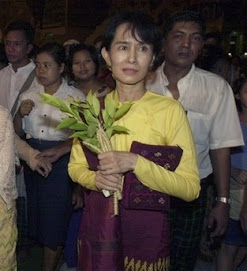


 Posts
Posts


