News & Articles on Burma Thursday, 22 December 2011 ------------------------------------------ Burmese Govt Holds Peace Talks with Mon Armed Group More Political Prisoners to be Released Soon, Minister Tells KNU Should 'Irrational Exuberance' Over Burma be Tempered? Suu Kyi Readies for Second Trip to Naypyidaw Government sending more battalions to Kachin State SSA hopes to clear up problems at the next round of talks Burma: Shan State Army sticks to Historic Pang-long Agreement Election Network Cautiously Optimistic about Burma's Political Progress Burma grants Thailand two oil concessions More aid needed for Kachin refugees: HRW Karen leaders, Burma govt meet in Thailand Burma to see 50% hike in power fees Burma's Reality Check ---------------------------------------- Burmese Govt Holds Peace Talks with Mon Armed Group By LAWI WENG Thursday, December 22, 2011 Burmese Minister for Railways Aung Min headed up a Burmese government delegation for peace talks in Thailand on Thursday with a delegation from the New Mon State Party (NMSP) led by its secretary, Nai Hang Thar. I trusted them and they also trusted me. I am very satisfied with this meeting, Aung Min told The Irrawaddy following the meeting, which took place in Sangkhalburi, Kanchanaburi Province. Aung Min said that this was the first round of talks between the two sides and another would be held in Mon State in January, during which he felt a ceasefire agreement could be signed. But two Mon Buddhist monks who participated in the meeting expressed doubts that a ceasefire agreement would be reached. Lets wait and see what happens next, because they need to have one more round of talks first, said Nai Ketumalar, one of the monks. The two monks said that Aung Min told Nai Hang Thar in the meeting that the government would engage in political talks with the NMSP soon after signing a ceasefire agreement as the first step. However, Nai Hang Thar responded that he is skeptical that political talks would ever take place, because the NMSP was under a ceasefire from 1995 to 2010 and there were no political talks during that time. Aung Min replied that the situation today was unlike in the past, because in the past all military leaders had to listen to orders from one person, Snr-Gen Than Shwe, but today that is not the case. Aung Min said that current president Thein Sein was a person who wanted to have peace and political change in Burma, and signing a ceasefire agreement was a first step for building trust. When Nai Hang Thar discussed the suffering of the ethnic people in Burma, Aung Min said that he understand the feelings of the ethnic people because he is an ethnic Shan. Aung Min said that he could deliver to the ethnic Mon people the right to teach the Mon language in Mon State if the NMSP wanted him to help, according to the monks. He also said that he could assist NMSP leaders in developing business opportunities, but the NMSP leaders told Aung Min that they only wanted to have peace. In addition, the monks said that Nai Hang Thar told Aung Min that the government should agree to hold peace talks with the United Nationalities Federal Council (UNFC). When asked about when the Burmese government will hold political talks with the UNFC, Aung Min said that the government would hold political talks with the UNFC as the third step of the peace process. The NMSP leaders also told Aung Min that the government troops should stop fighting with the Kachin Independent Army (KIA), saying it was not good for one group have peace talks while another group was still fighting. Aung Min responded that the KIA fought the government first and so the government had to fight back. But he said that the government would hold peace talks with every group. Lets pray to achieve peace as soon as possible, Aung Min told the monks before leaving the meeting. He then made donations to the two monks and asked, Please let me know, what do you need from Naypyidaw? http://www.irrawaddy.org/article.php?art_id=22703 ---------------------------------------- More Political Prisoners to be Released Soon, Minister Tells KNU By THE IRRAWADDY Thursday, December 22, 2011 A senior government minister said that Burma's remaining political prisoners could be freed as early as next month, according to a participant in recent peace talks who said the official referred to two specific dates when the releases would take place. Aung Min, the government's Railways Minister, broke the news during talks on Wednesday with leaders of the Karen National Union (KNU), an ethnic armed group, in the Thai-Burmese border town of Mae Sot. According to a KNU source who attended the meeting, Aung Min said that all remaining political prisoners will be released next month in two groupsthe first on Jan 4, Burma's Independence Day, and the second on Jan 12. The discussions also included the case of Mahn Nyein Maung, a KNU leader who was recently sentenced by a Burmese court to 17 years in prison on charges of unlawful association and breaking immigration laws. Mahn Nyein Maung was arrested by Chinese immigration officials in Kunming, the capital of Yunnan Province, after attempting to return to Thailand, where he is based, in July. He was subsequently handed over to the Burmese authorities. He [Aung Min] asked us if Mahn Nyein Maung's release would benefit the KNU. We replied that his release and that of other KNU members in prison in Burma would help the peace process between us and the government, said the KNU source. Aung Min has in recent months become the government's chief negotiator in talks with Burma's ethnic armed groups. On Thursday, he met with representatives of the New Mon State Party in the Thai town of Sangklaburi. The release of political prisoners remains a key demand of the US and other Western countries that have imposed economic sanctions on Burma for its poor human rights record. It is unclear, however, exactly how many political prisoners remain behind bars in Burma. The Thailand-based Assistance Association for Political Prisoners puts the figure at more than 1,500, while the government has said that there are only around 200about the same number it released in October. According to the National League for Democracy, Burma's main opposition party, the number is 591. http://www.irrawaddy.org/article.php?art_id=22702 ---------------------------------------- Should 'Irrational Exuberance' Over Burma be Tempered? By SIMON ROUGHNEEN Thursday, December 22, 2011 Three weeks after US Secretary of State Hillary Clinton's visit to Burma, the US said it "will be prepared to take further steps" provided the Burmese government "keeps moving in the right direction," according to a US State Department spokesperson. During her visit to Burma, the first by a US Secretary of State since Burma became a military dictatorship in 1962, Clinton announced a number of planned US initiatives in Burma. These include increased assistance for civil society programs to support microcredit and health programs; a resumption of counternarcotics cooperation; operations to recover missing US military personnel from World War II; and support for an expanded UNDP mandate in the areas of health, education, and micro-finance, as well as assessment missions by international financial institutions such as the World Bank and International Monetary Fund. "We are currently taking steps to move forward on all of the actions that Secretary Clinton noted during her visit," added the spokesperson, in an e-mailed response to questions about US policy after Clinton's visit to Burma. Clinton's trip and the pledges made came after the Burmese government--- a formally civilian administration dominated by figures from the previous military system---relaxed media controls, released over 200 political prisoners, suspended a US $3.6 billion Chinese dam in the north of the country, and announced new laws allowing trade unions and another permitting political protests---the latter signed into law by Burma's President Thein Sein during Clinton's visit to Burma. Former political prisoner Maung Thura, better-known by his stage-name Zarganar, was granted permission to travel to Thailand and Cambodia in recent days. "Now I'm here, this is improvement," he was quoted telling journalists in Bangkok on Dec. 19, referring to the recent changes inside Burma. However, some Burmese exiles and long-time Burma watchers remain cynical about the recent reform moves, suggesting that the US should adopt a cautious approach for now, until the Burmese Government undertakes more reforms such as the release of all remaining political prisoners and the cessation of military operations in ethnic minority regions. Jennifer Quigley, advocacy director at the US Campaign for Burma, believes that despite Clinton's various policy pledges made during her three day visit to Burma, the Burmese Government "in return offered nothing before, during or after her trip." She added that, "If the regime is serious in its desire to have a better relationship with the United States, it must go beyond empty promises and actually deliver. They cannot continue to say they are going to release all political prisoners, they must actually release all political prisoners." In the days leading up to Clinton's visit, which ran from Nov. 30 -- Dec. 2, Burma was awarded the 2014 Chairmanship of the Association of Southeast Asian Nations (ASEAN), two years ahead of schedule. An unspecified number of the country's remaining political prisoners---estimated at anything between 500 and 1700---were rumored to be set for release that week. The release did not take place, although some prisoners were moved to prisons closer to their families. According to Asia analyst Walter Lohman of the Washington D.C.-based Heritage Foundation, the seeming about-face on political prisoner release was not a coincidence, and was "apparently abandoned after Burma was awarded the 2014 chairmanship." More political prisoners are now thought to be up for release early in 2012, a move that could prompt overtures from governments such as the UK, whose Foreign Secretary William Hague will visit Burma in January 2012. Burma's capital Naypyidaw and biggest city Rangoon are hosting foreign visitors---be they heads of government or business delegations---in increasing number and seemingly in anticipation of a reduction of western sanctions on the Burmese government and its main domestic business partners. Amid this increased activity, the US should do more to build a coordinated response to reforms in Burma, say some analysts. Kelley Currie, a Senior Fellow with the Project 2049 Institute, says that rewarding the Burmese government prematurely risks undermining the reform process."There are those in the EU and among Asian allies who are ready to rush in with big aid and investment packages, and who are less concerned about ensuring that this reform process is irreversible," she said, adding that the US should try "to keep the irrational exuberance that some other countries have been experiencing a bit in check." When asked, the US State Department spokesperson declined to comment specifically on what further steps the US is prepared to take should the Burmese government undertake additional reforms, such as the release of more political prisoners. One possible next step, according to Currie, would be for the Burmese government to permit international observers to work inside Burma during the country's upcoming by-election, which will be contested by long-time opposition leader Aung San Suu Kyi, who has given her blessing to the recent reforms in Burma. No date has been set for the by-election, but "free and fair" elections are one of the conditions set down by the US for the eventual lifting of sanctions on Burma. http://www.irrawaddy.org/article.php?art_id=22700&page=2 --------------------------------------- Suu Kyi Readies for Second Trip to Naypyidaw By WAI MOE Thursday, December 22, 2011 Burma's pro-democracy leader Aung San Suu Kyi will travel for the second time to the remote Burmese capital of Naypyidaw on Friday morning to register her party, the National League for Democracy (NLD), at the Union Election Commission where she is likely to meet several top government officials. "Daw Aung San Suu Kyi and her party will fly to Naypyidaw tomorrow morning," said Khun Thar Myint, one of Suu Kyi's aides, speaking to The Irrawaddy on Thursday. However, he declined to provide an itinerary of Suu Kyi's schedule. "She will be accompanied by [NLD leaders] U Tin Oo, U Nyan Win and U Win Myint, and other aides." Although there has been no official announcement, several journalists and political sources in Rangoon said they had heard that Suu Kyi is to meet Lower House Speaker ex-Gen Shwe Mann and Election Commission Chairman Lt-Gen Tin Aung while in the capital. But it is uncertain whether she will meet President Thein Sein as he has already scheduled a trip, Khun Thar Myint said. Suu Kyi's first trip to Naypyidaw was in August when she was invited to attend a government economic workshop. She met and held her first talks with Thein Sein at the presidential palace. They reportedly discussed the political situation in Burma and national conciliation. After meetings with Thein Sein and other ministers in Naypyidaw on August 19-20, Suu Kyi said she was "satisfied." Following those positive first steps between the government and the country's main opposition leader, the Parliament amended the Political Party Registration Law, effectively allowing the NLD to register again as a legal party and opening the way for it to contest by-elections next year. On Monday, the NLD leadership elected Suu Kyi as the deputy leader of the NLD, and her close aide, Tin Oo, as the leader when they register the party formally. Meanwhile, the NLD says it plans to publish a journal which it will call The Wave in the near future---assuming the party's registration is approved by the Election Commission. "Since we have decided to register, we will utilize any privileges that a party has," said Ohn Kyaing, an NLD spokesman and veteran journalist who will likely head the party journal. "Publishing information about the party is essential for our supporters and the public." http://www.irrawaddy.org/article.php?art_id=22701 -------------------------------------------- Government sending more battalions to Kachin State Thursday, 22 December 2011 17:01 Kham Although the Kachin Independence Organization (KIO) and the government are preparing for a new round of peace talks, the Burma Army is still sending more battalions to the battlefields in Kachin State. On 18 December, the government sent a letter to KIO to resume peace talks. The day before on 17 December, the battalions under the 44th Light Infantry Division arrived at Myitkyina and the high command is reportedly preparing to send the 66th Light Infantry Division also, according to U Aung Kyaw Zaw, military observer on the border. "The 88th suffered 356 dead and injured during 3 month period. It will be replaced with the 66th. Defense Chief Min Aung Hlaing went to Pyay where the 66th is based. He told the 66th not to fail like the 88th," he said. The Burma Army is still preparing for war, even as the government is preparing for negotiations with KIO for peace, he added. U Aung Thaung is leading the team to hold talks with the KIO. He had requested to meet the KIO after President U Thein Sein ordered a ceasefire on 10 December. But more troops are still arriving, according to him. There are about 120 infantry battalions in Kachin and Shan State (North) launching an offensive against the KIA, the military wing of the KIO. http://shanland.org/index.php?option=com_content&view=article&id=4298:government-sending-more-battalions-to-kachin-state&catid=86:war&Itemid=284 ------------------------------------- SSA hopes to clear up problems at the next round of talks Thursday, 22 December 2011 11:36 S.H.A.N. Shan State Army (SSA) 'South' spokesman Sai Lao Hseng says the next round of talks with Naypyitaw's union level delegates will deal with local development as well as misunderstandings surrounding the ceasefire agreement concluded between the two sides on 2 December. "According to the understanding reached in Taunggyi (Shan State capital), we would be responsible for security in the countryside and the Burma Army in major towns and the main motorways," he said. However, what is happening at the ground level appears to be deviating from the agreement: For instance, the Burma Army's Triangle Region Command based in Kengtung informed yesterday that all SSA units active in Shan State East should withdraw to the Thai-Burmese border bases. Burma Army units in Shan State South have also not suspended their patrols in the countryside. "Villagers were told by the patrol leaders, 'The government is doing its job by holding talks. We are also doing our job'," he said. The inevitable result was the shootout in Mongpan township on Tuesday, 20 December, when the two armies patrols ran into each other near the village of Namtawng. Three Burma Army soldiers were said to have been wounded. The Burma Army charged that the SSA had shot first, while the latter denied, saying it was the other way round. The latest developments have given rise to inevitable questions among the SSA officers and men, according to him. "Some of us are saying whether President Thein Sein and the Burma Army are playing good cop and bad cop against us," he told SHAN, "while others are wondering whether the President has any say in military matters." Burmese papers have reported President Thein Sein ordered a unilateral ceasefire to the Army fighting in Kachin State on 10 December. So far, this has failed to stop the conflict there. To date, Naypyitaw has signed ceasefire agreements with 4 groups: United Wa State Army (UWSA), National Democratic Alliance Army (NDAA), Kloh Htoo Hpaw and the SSA 'South'. According to information minister Kyaw Hsan, 5 others have also agreed in principle to conclude ceasefire agreements, apparently meaning Karen National Union (KNU), Karenni National Progressive Party (KNPP), Chin National Front (CNF), New Mon State Party (NMSP) and SSA 'North'. Naypyitaw has also invited the Kachin Independence Army (KIA) for another round of talks on Sunday, 18 December, according to Kachin spokesman La Nan. http://shanland.org/index.php?option=com_content&view=article&id=4296:ssa-hopes-to-clear-up-problems-at-the-next-round-of-talks&catid=85:politics&Itemid=266 ------------------------------------- Burma: Shan State Army sticks to Historic Pang-long Agreement Thu, 2011-12-22 01:04 --- editor Article By - Zin Linn Burma's political deadlock between the ethnic rebels and the successive governments has been still continues. Burma's military leaders, who have been holding governmental power thus far, strongly defy the decentralization of authoritative power. Although the contents of the cease-fire agreements seem to grant some degree of self-rule, it appears to be very difficult to arrive at a blueprint for self-determination that would make happy most ethnic rebel groups. Recently, Shan State Army (SSA) 'South' spokesman Sai Lao Hseng said its representatives had made the point clear to its Naypyitaw counterparts Saturday, 17 December, that the non-secession clause included in previous agreements with 3 other armed movements would only hinder the peace process Naypyitaw had initiated, Shan Herald Agency for News (S.H.A.N.) reported Tuesday. "On the other hand, we have no problem with the regime's 'Three Causes'," he said. "We had co-founded the Union and we are willing to give it a chance, if the regime is sincere about building a genuine union." The said Three Causes are Non-disintegration of the Union, Non-disintegration of National Solidarity and Perpetuation of National Sovereignty. It is the regime's political devotion similar to a religious faith. "How we will decide upon continued union will depend on the wish of the people which will in turn depend on the regime's sincerity," Sai Lao Hseng explained. "For that, we would need time to meet and listen to the people." According to the Shan Herald Agency for News, some more SSA sources also said that after the signing of the ceasefire on 2 December the next step is to discuss development. Political topics such as the secession issue should be reserved for the third and last step of the process. The government negotiators had promised to hold an inclusive conference for political issues resembling Panglong in 1947. At Pang-long meeting Burman, Chin Hills, Kachin Hills and Federated Shan States agreed to form the Union, on the basis of full autonomy in internal administration including Democracy and Human Rights. The result of the 1947 agreement proved unconstructive when it reached ten years in 1958, after gaining independence from the British in 1948. Many ethnic armed rebellions, including that of the Shan, broke out to stand up for autonomy. The 1947 constitution had granted the right of secession to Karenni and Shan States. Despite the fact that the Supreme Executive Council of the United Hill Peoples was making an effort to amend the union constitution in 1961-62 to reconstruct a true federal union with the Premier U Nu's Government of Burma, Burma Army led by Gen. Ne Win made a military coup on 2 March in 1962 and smashed the Panglong agreement. In that way, all ethnic states including Shan had been occupied by the treacherous Burma Army. And so, the country has been run by successive Burmese military dictators using various disguises up to the current date. To reconcile this political crisis and prevent ethnic conflicts in the future, it should be solved by way of meaningful political dialogue vis-a`-vis equal status mutually. True reconciliation cannot be done by way of military might which currently used by the Naypyitaw government. Earlier, the SSA South had adopted the principle: 'To struggle for the rights promised at Panglong'. It later became 'Total Independence'. Its later statements show that 'unless the rights of Panglong are guaranteed, the group would never give up on Total Independence principle'. According to Modern Journal, the information minister Kyaw Hsan confirmed during a media meeting in Rangoon on 9 December that out of remaining ten armed groups, two have already signed state-level ceasefire agreements. Two others are holding talks at the union level and five others have agreed in principle for a ceasefire agreement. Only the Kachin Independence Army (KIA) remained to reach an agreement. The next meeting between the Restoration of Shan State (RCSS) and Naypyitaw's union level peace building team will take place on a yet-to-be chosen date in next January, quoting spokesman Sai Lao Hseng, Shan Herald Agency for News said. The political disarray of Burma originated with its beginning since the Panglong agreement came into view in 1947. As a major ethnic group, the Shan constantly called for putting in a point of 'secession' for the Shan State to nine-point Pang-long agreement. As a result, if sign of treachery occurred, 'the right of secession' after ten years of the contract was granted to the Shan State in the 1947 constitution. The United Wa State Army (UWSA), National Democratic Alliance Army (NDAA) and the ex-DKBA Kloh Htoo Baw have already signed non-secession agreements with Naypyitaw. However, SSA-South reminds the government, not to put the non-secession clause in the to-do list, which would make hindrance the peace consultation. - Asian Tribune -http://www.asiantribune.com/news/2011/12/21/burma-shan-state-army-sticks-historic-pang-long-agreement ---------------------------------------- Election Network Cautiously Optimistic about Burma's Political Progress 21st December, 2011 The Asian Network for Free Elections (ANFREL-Foundation) welcomes recent political developments in Burma, progress which includes less censorship of the media; more engagement with the NLD, Aung San Suu Kyi, and some ethnic groups; the release of some, though not all, political prisoners; and finally, the re-registration of the NLD as a political party to contest for the 48 parliamentary seats up for grabs in a by-election expected next year. The last year has seen substantive progress in the country and the regime's positive steps should be recognized and encouraged. The Association of Southeast Asian Nations (ASEAN) did just that last month when it rewarded Burma with the ASEAN chairmanship in 2014. While acknowledging constructive reforms made in the country, the democratic baseline in Burma was quite low and there remains much work to be done because the country still lacks major democratic institutions. ANFREL of course welcomed the news that the Union Election Commission (UEC) of Burma has officially endorsed the National League for Democracy (NLD) to re-register as a political party and that Aung San Suu Kyi will be allowed to compete in the coming elections as its leader. This news is far from a guarantee however that the elections' neutral and open operation will follow. Having won the 1990 election before they were removed from power in a military coup, the NLD's ability to finally compete in an election is a necessary but not sufficient step towards a level electoral playing field. The change cannot erase the injustices that occurred after the 1990 election, but it does increase the chances of next year's by-elections being more legitimate than the badly manipulated 2010 poll excluded the NLD entirely. This step alone, however, will not be enough to guarantee such legitimacy. For this change to truly have an impact and for the government of Burma to follow through on the high-minded promises they have made, the newly registered party must be permitted to campaign freely and compete on a level playing field managed by an independent UEC. The UEC must ensure, for example, that the government/military-backed Union Solidarity and Development Party is kept from abusing state resources in the lead up to the poll. The UEC must also operate in a more transparent manner both before and after the election, including in receiving, investigating, and adjudicating electoral disputes. The UEC, if operating independently and professionally, has the opportunity to lay the foundation for much improved elections. ANFREL hopes that they seize the great chance that lies before them. Regarding the media, remaining censorship, particularly that which still applies to the news media, must be lifted well before the campaign period begins. The media has traditionally been used as a tool to deliver pro-government propaganda, a fundamental violation of the freedom of the press at all times and one that is particularly troubling during an election. Independent media will build up public trust in the election process and in the sincerity of the USDP to bring positive change to the country. On that same note, election observers, both domestic and international, should be allowed to observe all aspects of the polls. Their presence will build confidence in Burma's poll and in the legitimacy of election management in the country. Finally, as Burma prepares to assume chairmanship in 2014, ASEAN has a unique opportunity to promote lasting reform. As an important regional forum with significant soft power influence in the country, ASEAN can help Burma by encouraging it to continue down the path of reform it has embarked on. Stepping forward to provide support and leadership at this critical moment in Burma's history will strengthen the image of ASEAN and help achieve its goal of a prosperous and peaceful regional community. Asian Network for Free Elections (ANFREL) Foundation Registered Under Civil and Commercial Code Act of Thailand, Registration No. 1690 (KOR TOR) 105 Suthisarn winichai Rd., Samsen nok, Huaykwang, Bangkok 10310 Thailand Tel: 66-2-2773627 Fax: 66-2-2762183 Email: anfrel@anfrel.org Web: www.anfrel.org ------------------------------------------ Burma grants Thailand two oil concessions Andaman Sea blocks also being considered Published: 22/12/2011 at 12:00 AM Newspaper section: News Burma has agreed to grant Thailand two oil field concessions, Energy Minister Pichai Naripthaphan says. "The two fields are onshore and close to the capital Naypyidaw," the minister said yesterday. The promise was made during the visit by Prime Minister Yingluck Shinawatra and other delegates to Burma on Monday and Tuesday, Mr Pichai said. Mr Pichai accompanied Ms Yingluck to Burma and as she attended a regional summit in Naypyidaw. He also met his counterpart Than Htay on Tuesday to discuss energy cooperation between the two countries. The concessions would be granted to PTT Exploration and Production Plc (PTTEP), a subsidiary of Thailand's largest energy conglomerate PTT Plc and they would be the first two onshore oil and gas field concessions given to PTTEP in Burma. The projects' details have not been disclosed. The minister said Burma also said it would give support to PTTEP's proposal to seek petroleum in the Andaman Sea in two offshore petroleum blocks MD7 and MD8, but more details must be considered and discussed. Burma wanted to see Thai investment in a gas separation plant in Burma after the PTTEPs exploration found wet gas, which is suitable for petrochemical production, in the M3 gas field in the Gulf of Martaban, which will be ready for use in 2016. PTTEP's existing M9 gas field concession, the so-called Zawtika project, also in the Gulf of Martaban, is expected to operate in 2013. PTTEP is also a partner in the Yetagun and Yadana gas developments in Burma. Mr Pichai said Than Htay is scheduled to visit Thailand from Feb 7-9 for further talks. Meanwhile, Ms Yingluck yesterday rejected criticism that her Burma visit was driven by personal gain following her brother and former prime minister Thaksin Shinawatra's recent Burma trip. Thaksin earlier told the Bangkok Post in an exclusive phone interview from Dubai that he travelled to Burma last Thursday and met Burmese President Thein Sein and former president Than Shwe to smooth the way for his youngest sister's visit this week. Ms Yingluck dismissed the criticism that her brother's moves would jeopardise the government's stability because her government had always abided by the law. "He [Thaksin] moves on his own decisions _ the final decision belongs to me and my government," she said. "There are no conflicts of interest [between Thaksin and Burma]," Ms Yingluck said after Democrat list MP Kraisak Choonhavan asked whether the two leaders discussed business issues. Ms Yingluck also offered Burma's pro-democracy leader Aung San Suu Kyi her support in a coming by-election during a historic meeting with the Nobel peace laureate in Burma, government spokeswoman Thitima Chaisang said yesterday. The two women talked for half an hour at the Thai embassy in Rangoon on Tuesday. "Aung San Suu Kyi told the prime minister that she hopes to win in the by-election and Ms Yingluck offered her support and her hope that Aung San Suu Kyi will win," Ms Thitima said. Ms Yingluck expressed support for her neighbour's "path of national reconciliation", adding that its progress was good for the Association of Southeast Asian Nations (Asean). "We have seen the good intentions of Burma's government to open up and to embark on democratic development," Ms Yingluck said yesterday, adding future developments would be monitored. http://www.bangkokpost.com/news/local/271922/burma-grants-thailand-two-oil-concessions ---------------------------------------- More aid needed for Kachin refugees: HRW By DVB, Published: 21 December 2011 A mother holds her child at the Je Yang camp for internally displaced persons near the Kachin border with China (Ryan Libre / DAA) The Burmese government's decision to allow UN teams into rebel-controlled territory in Kachin state is promising, but unless pressure from international aid groups is ratcheted up, tens of thousands of refugees will continue to struggle for basic support, Human Rights Watch has warned. The admittance of the UN to the town of Laiza, where some of the 50,000 people estimated by HRW to have been displaced since fighting began in June have fled to, came after months of negotiations. The government had initially blocked international aid to refugees in Kachin Independence Army (KIA) areas, but recent weeks have seen tentative signs of an opening. Elaine Pearson, deputy Asia director at the New York-based group, said in a statement today that the early steps need to be developed into "long-term commitment from the government and foreign donors alike. "The government and Kachin forces should ensure that the tens of thousands of displaced people in remote camps get the food and shelter they need." A number of local aid groups working close to conflict zones in Kachin state, which borders China, say supplies for refugees are running low. HRW contacts in the region said that children and pregnant women were in danger of malnutrition. "The sources also expressed concerns about the physical security of the camps and the camp communities, particularly those located nearer conflict areas," it said. "In recent weeks, local relief efforts reported dwindling supplies and limited capacity, compounded by an absence of direct international aid and support." Earlier this month the government-formed National Human Rights Commission warned in a letter published in the state-run New Light of Myanmar that thousands of children had been deeply affected by the fighting. "The children appear to be suffering from psychological trauma and the adults seem to experience a sense of insecurity and diminished confidence," the letter said. "From individual interviews, it was evident that almost all wanted to return to their own villages." The likelihood of that happening anytime soon appears slim -- despite an order from President Thein Sein that Burmese troops end offensives against the Kachin, fighting is reportedly ongoing. The KIA announced yesterday however that it had been approached by the government over the resumption of ceasefire talks. Past stabs at peace-building have not met with success, but a new committee formed by the government is tasked with dealing specifically with the Kachin conflict, now in its sixth month. http://www.dvb.no/news/more-aid-needed-for-kachin-refugees-hrw/19307 -------------------------------------- Karen leaders, Burma govt meet in Thailand By NAW NOREEN Published: 22 December 2011 Soldiers from the KNLA on patrol close to Burma's border with Thailand (Francis Wade) Fresh negotiations between government officials and members of the Karen National Union took place along the Thai border yesterday as Naypyidaw appears to be making another stab a peace with warring ethnic armies. The spokesperson of the KNU, David Htaw, told DVB that yesterday's meeting in Mae Sot was "unofficial", but provisional discussions had paved the way for another round of talks in January. It is the third time the two sides have met since a new government came to power in March. The conflict between the Burmese government and the armed wing of the KNU, the Karen National Liberation Army (KNLA), began in 1949 and is the world's longest-running. The negotiations yesterday follow reports from Kachin state in the north that government officials have requested another round of talks with the Kachin Independence Army (KIA), following several unsuccessful attempts to broker a truce since fighting began there in June. A letter sent to the army outlined the formation of a new government committee specifically tasked with seeking an end to fighting in Kachin state that has displaced up to 50,000 civilians. But despite various signs that the government wishes to see the conflict end, including an order from President Thein Sein that troops stop offensives against the KIA, fighting continues. The location of the talks yesterday with the KNU points to the ongoing role of Thailand in the 60-year conflict, which has long used border-based groups like the KNLA and the Shan State Army as a buffer between Thailand and its traditional enemy, the Burmese army. But the recent visit to Burma by Thai Prime Minister Yingluck Shinawatra, and increased Thai investments in energy and infrastructure projects, such as the Tavoy port, that demand a stable frontier region, suggest that policy towards anti-Naypyidaw groups may soon change. This issue is believed to be behind last year's closure of a key trading point linking Mae Sot to the Burmese town of Myawaddy. The governor of Thailand's Tak province, Samart Loifah, said that the Burmese government's decision to close the Friendship Bridge stemmed from perceptions in Naypyidaw that Thailand was allowing groups like the KNU to shelter in its territory. http://www.dvb.no/news/karen-leaders-burma-govt-meet-in-thailand/19326 --------------------------------------- Burma to see 50% hike in power fees By MIN LWIN Published: 22 December 2011 An announcement that electricity prices in Burma will rise 50 percent in 2012 has sparked alarm among small business-owners and families who claim the government is seeking to profit on the exploitation of the country's poorest. The move will see cost per unit for businesses jump from 50 kyat ($US0.05) to 75 kyat, and 25 kyat to 35 kyat for domestic use. What those figures belie however is concern among the many small-scale businesses in Burma that operate out of homes, and which therefore will be charged at the commercial rate. "It will hurt grassroots people," said the owner of a teashop in Rangoon. He complained that owners of small businesses, such as tea shops and restaurants, "merely use electricity for light" but that they would "have to pay the commercial fee if they turn on lights". The decision to hike electricity prices may have been taken with some trepidation: a sudden rise in the price of fuel four years ago was the key catalyst behind the September 2007 uprising that eventually prompted thousands of Burmese to take to the streets. It will also redirect attention towards the gross disparity between available power in Burma and the ability of Burmese to access it. Despite having a wealth of gas and hydropower potential, the majority of that output is sold to neighbouring countries such as China and Thailand, leaving 80 percent of the country without regular electricity. According to Rangoon-based Myanmar Times, the decision stems from a bid by the government to cut its deficit. Deputy Minister for Electric Power 2 Aung Than Oo told the newspaper earlier this month that "unit prices ... won't be enough for us to make a profit. It may just cover the ministry's costs". But locals believe otherwise. The Rangoon teashop owner said that each household had to pay a monthly fee for maintenance of electricity metre boxes that was hurting the finances of poorer families. "It's 1000 kyat a month, 1000 kyat from every family inBurma-- they are making that profit freely," he lamented. While electricity prices on average remain comparatively low in Burma, the majority of the country that struggles for regular power is forced to turn to other sources. The Myanmar Times noted that areas off the national grid paid around 500 kyat per unit for electricity from diesel-powered generators. China is behind the majority of Burma's 40-odd hydropower projects and receives the lion's share of produce. Similarly, the India-backed 1,200 MW Tamanthi dam in northwestern Burma will allow only 20 percent of output to remain in Burma, much of which is destined for the vast Monywa copper mine in Sagaing division. http://www.dvb.no/news/burma-to-see-50-hike-in-power-fees/19331 ------------------------------- Burma's Reality Check by David Scott Mathieson Published: December 21, 2011 A near-pandemic optimism over the Burmese government's unprecedented promises of political, economic, and social reform has seized the international community. U.S. Secretary of State Hillary Clinton's recent visit started a diplomatic stampede to Burma, with the foreign ministers of the United Kingdom, Japan, and China soon arriving to smell the air of reform. But exactly what has happened in Burma to generate such excitement? What can realistically be achieved in a country long acknowledged to be one of the world's most brutal, repressive states? Thein Sein, a former general who took off his uniform to front the military-backed civilian government, became president of Burma last March. He came to power after a sham constitutional referendum in 2008, and crudely rigged general elections in November 2010. Under the new constitution, a bicameral national parliament and 14 regional and state assemblies have been formed. Parliament has sat twice this year, pushing through a number of bills that purportedly guarantee freedom of assembly and the right to form unions, among other things, all of which had previously been imposed by military decree. Government ministers, many of them former generals, have debated issues in these forums. They also now give interviews to domestic and foreign media, face news conferences, and raise issues that have not been discussed in public for a long time, such as corruption, economic development, and ethnic rights. From the perspective of the West, the crucial litmus test for Burma has been the freedom granted to the democratic leader, Aung San Suu Kyi, whose release one week after the 2010 elections caused euphoria among many Burmese. After an internal debate, she has registered her party, the National League for Democracy (NLD), and intends to stand in bi-elections in early 2012. Having previously been in almost complete isolation in house arrest, Suu Kyi now meets with the new president, senior government officials, a flurry of western plenipotentiaries, aid officials, and an inexhaustible array of foreign media. Domestic Burmese media have found their long-repressed voice in reporting on issues of real import -- though there are still many forbidden subjects -- as well as splashing pictures of Suu Kyi across their front pages. Many people in major urban areas feel free to discuss politics and hitherto controversial issues, such as the contentious Chinese-funded Myitsone dam project in northern Kachin state, which the president suspended in September. The government has even announced peace talks to resolve its civil war with various ethnic insurgencies, ongoing since 1948, which has devastated the hinterlands and fuelled a culture of horrific human-rights abuses. These developments raise many questions. Is this a genuine process of transition toward greater democratization, transparency, accountability, and a rejection of the isolationism of the past? Or is Burma entering a phase of faux reform, designed to preserve the military's corporate interests through a fac,ade of openness and ephemeral promises to tackle the core issues that have long divided the country? We may soon know, as the government and political opposition hit a hard wall of reality. We may see a reaction from suspected hard-liners in the military and government, such as the reportedly recalcitrant vice-president, Tin Aung Myint Oo, or the disquietingly mute military commanders who still constitutionally control key ministries and one-quarter of all parliamentary seats. No one knows what such individuals are thinking, but they already appear to have held up the expected release of most of the country's political prisoners. Watching Suu Kyi and her party contest bi-elections next year may excite the imagination of some in Burma and abroad. But the opposition's rising aspirations will soon run headlong into the formidable military-backed ruling party, the Union Solidarity and Development Party (USDP), which, nurtured since 1993 to eventually take power, commands over 70 per cent of parliamentary seats. The USDP is not going to simply melt away, yet few think Suu Kyi's party would lose in a free and fair election. How much genuine reform has there been? New laws on peaceful assembly and trade unions are promising in principle, but, for many years, the Burmese authorities have used the legal system as an instrument of repression, rather than an institution for justice. The test will be when Burmese attempt to exercise their rights under these laws. It is hard to see how -- or for how long -- an authoritarian state can allow freedom of expression, assembly, and association. Creating respect for human rights and the rule of law in a deeply corrupt and repressive system is likely to take a long time. The biggest challenge may be ending the Burmese military's rampant abuses against ethnic insurgents. Since June, the renewed conflict in Kachin state has displaced more than 30,000 people. The army has employed a brutally commonplace menu of abuses against civilians in conflict areas, including sexual violence, forced labour, torture, and summary executions, all the hallmark of Burmese army counter-insurgency operations. Long-running armed conflict in eastern Burma, where nearly half a million people are internally displaced, has led at least 16 countries (including Canada) to call, in the past year, for a United Nations commission of inquiry into possible war crimes and crimes against humanity by all parties to the conflict. This initiative has been put on the back burner as countries watch developments in Burma. Yet these crimes are ongoing, and are a main driver of ethnic resistance. A sustainable solution to this complex war will be possible only when the Burmese government becomes serious about reining in its rampaging army, which has long enjoyed impunity for serious crimes. For much of the Burmese population, the main challenge is to subsist. Five decades of military rule have led to a socio-economic collapse. Development indicators in health and welfare are among the lowest in Asia, despite the fact that the country has a wealth of natural and human resources. For many Burmese, change will be measured by the government's efforts and success in addressing the dire economic mess. Yet the government persists in granting nearly one-quarter of the national budget to defence, while devoting a paltry amount to social needs. If the government is serious about reform, it must devote real attention and resources to health, education, and housing. The daunting challenges of transforming the positive signals of change into realistic reform should sober any international observer. Western countries that have long combined targeted sanctions and humanitarian assistance to Burma should engage in a measured response to the changes under way. Canada, the U.S., the European Union, and Australia should not consider repealing sanctions until all political prisoners are released, basic freedoms are restored in practice, and the government ends its horrific abuses against ethnic-minority groups. In the meantime, international observers should look for opportunities to assist the Burmese people directly, such as through increasing humanitarian assistance, supporting micro-financing schemes to assist farming communities, and offering technical assistance through the World Bank and International Monetary Fund to reform the economy and reduce corruption. Now is the time to press the government to engage in systemic reform based on respect for the rule of law and human rights. Dave Mathieson is the Senior Researcher, Asia Division, Human Rights Watch. http://www.hrw.org/news/2011/12/21/burmas-reality-check
Friday, December 23, 2011


Wednesday, December 21, 2011
News & Articles on Burma-Tuesday, 20 December 2011-uzl
News & Articles on Burma Tuesday, 20 December 2011 ------------------------------------------ Burma's Suu Kyi meets Thailand PM Thai PM meets Burma's Suu Kyi Thailand seen buying more natural gas from Myanmar Thaksin's Role in Yingluck Trip Raises Concerns Suu Kyi Expresses Sadness at Havel's Death Yeoh on Burma ban after The Lady Burmas most famous comedian Zarganar shocked in Bangkok Zarganar Wants Sanctions to End, Won't Run for Parliament Japanese FM to Visit Burma Thaksin behind PM's Burma trip Famed Burma satirist 'shocked' by freedom Famed Myanmar comedian shuns parliamentary politics ------------------------------------------- Burma's Suu Kyi meets Thailand PM Tuesday December 20 2011 Burma's opposition leader Aung San Suu Kyi has met Thailand's prime minister in her first ever audience with a head of government from the region, her political party said. The meeting was also Suu Kyi's first with a prime minister since her release from house arrest about a year ago, National League for Democracy spokesman Nyan Win said. Thai prime minister Yingluck Shinawatra attended a two-day summit of regional leaders in Burma's capital, Naypyidaw, and than travelled to Yangon to meet Suu Kyi at the Thai ambassador's residence. Details of the half-hour talks were not immediately available. Yingluck afterwards visited Yangon's Shwedagon pagoda, the country's most revered Buddhist shrine, before her scheduled departure for home. The meeting is the latest in a series for Suu Kyi that have raised hopes of democratic change in Burma after decades of military rule. Suu Kyi also met this month with US secretary of state Hillary Clinton and with China's ambassador to Burma. She is to meet with Japanese foreign minister Koichiro Gemba later this month and Britain's Foreign Secretary William Hague in January, Nyan Win said. Yingluck is the first prime minister from the Association of Southeast Asian Nations to meet Suu Kyi. Burma joined the regional bloc in 1997 and will chair ASEAN for the first time in 2014 despite concerns from human rights groups that its democratic reforms have not gone far enough. The ASEAN chairmanship is supposed to rotate annually among its 10 members, but Burma was forced to skip its turn in 2006 because of intense criticism of its rights record. http://www.argus.ie/breaking-news/world-news/burmas-suu-kyi-meets-thailand-pm-2968923.html ----------------------------------------- Thai PM meets Burma's Suu Kyi December 20, 2011 - 8:49PM AP Burmese opposition leader Aung San Suu Kyi has met Thailand's prime minister in her first ever audience with a head of government from the region. The meeting on Tuesday was also Suu Kyi's first with a prime minister since her release from house arrest about a year ago, National League for Democracy spokesman Nyan Win said. Thai Prime Minister Yingluck Shinawatra attended a two-day summit of regional leaders in Burma's capital, Naypyidaw, and than travelled to Rangoon to meet Suu Kyi at the Thai ambassador's residence. Advertisement: Story continues below Yingluck afterward visited Rangoon's Shwedagon pagoda, the country's most revered Buddhist shrine, before her scheduled departure for home. The meeting is the latest in a series for Suu Kyi that have raised hopes of democratic change in Burma after decades of military rule. Suu Kyi also met this month with US Secretary of State Hillary Clinton and with China's ambassador to Burma. She is to meet with Japanese Foreign Minister Koichiro Gemba later this month and Britain's Foreign Secretary William Hague in January, Nyan Win said. Yingluck is the first prime minister from the Association of Southeast Asian Nations to meet Suu Kyi. Burma joined the regional bloc in 1997 and will chair ASEAN for the first time in 2014 despite concerns from human rights groups that its democratic reforms have not gone far enough. The ASEAN chairmanship is supposed to rotate annually among its 10 members, but Burma was forced to skip its turn in 2006 because of intense criticism of its rights record. ASEAN is made up of Brunei, Burma, Cambodia, Indonesia, Laos, Malaysia, the Philippines, Singapore, Thailand and Vietnam. (c) 2011 AP http://www.watoday.com.au/breaking-news-world/thai-pm-meets-burmas-suu-kyi-20111220-1p497.html --------------------------------------------------- Thailand seen buying more natural gas from Myanmar Dec 20 (Reuters) - Thailand is expected to buy at least 2 billion cubic feet per day (cf/d) of natural gas from resource-rich Myanmar over the next 20 years to meet rising energy demand, an energy ministry official said on Tuesday. Songpob Polchan, Director-General of the Department of Mineral Fuels, said Thailand was now using about 1.1 billion cf/d of natural gas, accounting for 25 percent of the country's 4 billion cf/d energy demand, mostly for power generation. "Electricity demand in Thailand is rising amid limited gas volumes available now in the Gulf of Thailand and we expect the trend will lessen in the future," Songpob told reporters. Thailand has been talking with neighbouring countries including Myanmar and Cambodia to seek more cooperation in petroleum exploration and production. It is seeking more concessions for petroleum exploration for its top energy firm PTT Pcl and Thai Energy Minister Pichai Naripthanphan, who accompanied Thai Prime Minister Yingluck Shinawatra during a Dec. 18-20 visit to former British colony, is meeting with Burmese Energy Minister to discuss potential oil deals. State-controlled PTT group has expressed interest in investing in three petroleum blocks, one onshore and two offshore MD7 and MD8, in Myanmar. PTT's subsidiary, PTT Exploration and Production Pcl , has said it wants to join bids for 2-3 blocks of the total 18 to be opened by Myanmar government. Songpob said cost for a deep sea petroleum exploration was usually very high with an estimate of up to 2-3 billion baht ($64-96 million) per well while well exploration in the Gulf of Thailand could cost up to $3-5 million each. PTTEP, a flagship in the upstream petroleum exploration business of PTT, has about 40 oil and gas exploration and development projects now. It has four projects in Myanmar and is a minority partner in the Yetagun and Yadana gas developments. Myanmar natural gas accounts for about 30 percent of Thailand's consumption, mostly in power generation. Hopes of economic reforms and foreign investment opportunities are running high three weeks after U.S. Secretary of State Hillary Clinton's landmark visit. ($1 = 31.30 Baht) (Reporting by Ploy Ten Kate; editing by James Jukwey) http://www.reuters.com/article/2011/12/20/thailand-natgas-myanmar-idUSL3E7NK51J20111220?rpc=401&feedType=RSS&feedName=rbssEnergyNews&rpc=401 ------------------------------------------------ Thaksin's Role in Yingluck Trip Raises Concerns By SAW YAN NAING Tuesday, December 20, 2011 Former Thai premier Thaksin Shinawatra has confirmed that he visited Burma last week to pave the way for a trip to the country by his sister, the current Thai PM Yingluck Shinawatra, raising concerns that relations between the two neighbors could once again become entangled in Thaksin's business interests. Yingluck arrived in Naypyidaw on Monday to attend the Greater Mekong Subregion Summit, and on Tuesday evening met with Burmese pro-democracy leader Aung San Suu Kyi in Rangoon, in the first such meeting between Burma's most famous dissident and a visiting Thai premier. In a telephone interview with The Bangkok Post, Thaksin said that he traveled to Burma last Thursday to meet President Thein Sein and former junta leader Than Shwe. He said that his sister's visit to Burma, which would include discussions on energy deals, would benefit Thailand. However, Yingluck's decision to visit Burma accompanied by Energy Minister Pichai Naripthaphan and executives of the Thai state-owned oil and gas company, PTT Public Co Ltd, has come under criticism from some who say that plans to increase investment in Burma's energy sector would serve the interests of Thaksin's cronies. According to Kavi Chongkittavorn, a columnist for the Bangkok-based newspaper The Nation, negotiating an energy deal was Yingluck's top priority on this trip. Boosting her politcal legitimacy by meeting with Suu Kyi was her second priority, he said, speaking to The Irrawaddy on Tuesday. But some observers said that involving her brother---who also traveled to Burma in October, just ahead of her first visit to the country, according to diplomatic sources---may have undone any good that might have come from her meeting with Suu Kyi. Kraisak Choonhavan, a former MP from Thailand's opposition Democrat Party who also closely follows Thai-Burma relations, said that Thaksin has always claimed that he is not involved in his sister's administration. By admitting that he has played a role in his sister's dealings with Burma, however, he has shown that this is not the case. "We gave her [Yingluck) the benefit of the doubt because she is our leader, but this insensitive act has damaged her government," said Choonhavan, referring to Thaksin's trip to Burma on behalf of his sister. Besides its interest exploring and developing offshore and onshore gas fields in Burma, Thailand is also heavily invested in a Special Economic Zone in Tavoy, in southern Burma's Tenasserim Division. The US $60 billion project includes a deep-sea port and a giant industrial zone, and will be directly linked to Thailand by a new highway, a railway, transmission lines and oil and gas pipelines. Although it is not clear what involvement, if any, Thaksin has in this project and other proposed investments, the former premier, who was ousted by a military coup in 2006, was in the past accused of using his political office to enrich his business interests through deals with Burma. In 2004, Shinawatra Satellite Co, a telecoms company owned by the Shinawatra family, leased a satellite service to Bagan Cybertech, a Burmese company owned by the son of former Burmese Prime Minister Gen Khin Nyunt. Thaksin was later found guilty by a Thai court of pressuring the Foreign Ministry to approve a 4 billion baht ($128 million) loan to Burma to pay for the deal. With or without Thaksin's involvement, however, Thailand's investment in Burma looks set to grow. Speaking to the Bangkok Post, Thitinan Pongsudhirak, the director of the Institute of Security and International Studies at Chulalongkorn University, described Burma as "Thailand's energy lifeline." However, internal conflict in Burma could continue to hamper foreign investors' efforts to exploit the country's resources. The Tavoy deep-sea port project is strongly opposed by the Karen National Union (KNU), which is active in the area between the port and the Thai border, on the grounds that it is fueling human rights abuses against the local population. According to Saw Kwe Htoo Win, the chairman of the KNU's Mergui-Tavoy District, the Burmese government has stepped up its security in the area, sending additional troops and supplies to bolster forces already stationed there. "Normally, they use human porters, but this year, they've used hundreds of horses and donkeys to carry supplies," he said. http://www.irrawaddy.org/article.php?art_id=22685 ----------------------------------------- Suu Kyi Expresses Sadness at Havel's Death By WAI MOE Monday, December 19, 2011 Burma's pro-democracy leader Aung San Suu Kyi has expressed her sadness at the death of former Czech President Va'clav Havel who died on Sunday at his home in Prague. "Suu Kyi expressed her sadness for him [Havel] when she arrived at the party headquarters for the CEC meeting on Monday morning," said Ohn Kyaing, a spokesman for her party, the National League for Democracy (NLD) referring to the Central Executive Committee meeting. "The party will announce an official message of condolences soon." Havel's empathy with the people of Burma and with Suu Kyi had long evident. Shortly after he became the president of the former communist country of Czechoslovakia, he nominated the Burmese pro-democracy leader, then under house arrest, for the 1991 Nobel Peace Prize. Speaking to The Irrawaddy in an interview in 2001, Havel said, "The fact is that my friend, Ms Aung San Suu Kyi, deserved this prize. I hold her, and her non-violent struggle for democracy, in high regard." The chain-smoking Czechoslovak, and later Czech republic, president and former dissident playwright, had no doubts as to who was to blame for Burma's woes. "What is unacceptable is when a military which partially creates social and ethnic problems by its actions argues that it is the only entity capable of solving them." Havel stood until his last days as an advocate for Burma's pro-democracy movement alongside other figures such as Desmond Tutu of South Africa. In 2005, Havel and Tutu jointly wrote a report titled "Threat to the Peace," recommending the UN Security Council to intervene in Burmese issues. Havel never missed a chance to show solidarity with the Burmese people when they faced significant challenges during the 2007 Saffron Revolution and the 2008 devastation of Cyclone Nargis. "In Burma, the power of educated monks---people who are unarmed and peaceloving by their very nature---has risen up against the military regime," Havel wrote in September 2007. "Of course, if they fail to feel the benefit of universal and coordinated international political, economic and media support, all development in Burma may quickly be put back nearly 20 years," he added. In May 2008, he joined with other world figures, such as Tutu, former German President Richard von Weizsa"cker, Foreign Minister of the Czech Republic Karel Schwarzenberg, and former President of South Africa Frederik Willem de Klerk, in publicly attacking Naypyidaw over its lack of response to the cyclone crisis. "The enormous suffering of the Burmese people caused by the recent cyclone, which has caused tens of thousands of deaths, deserves the sympathy of the entire world," said the joint statement, which was titled "Referendum Farce in Burma." "But more than sympathy is needed, because the Burmese military junta's incompetence and brutal oppression are further aggravating the tragic consequences of this natural disaster," it said. Even in his last days, Havel did not neglect to cite Burma at international fora. On Dec. 11, Havel called for the international community to encourage the signs of cautious change in Burma. "It is crucial that the international community adopts effective policies that encourage a meaningful and result-oriented dialogue between the Nobel laureate Aung San Suu Kyi and the Burmese authorities," he said. A mutual admirer, Suu Kyi often cited Havel's well-known writings, including quotes from "The Power of the Powerless," when interviewed or when she spoke to the public in front of her lakeside house in Rangoon in the mid-1990s. http://www.irrawaddy.org/article.php?art_id=22680 ---------------------------------------- Yeoh on Burma ban after The Lady Press AssociationPress Association -- 55 minutes ago Michelle Yeoh has revealed that she has been banned from Burma - along with her new film, The Lady. In the film, which is out on December 30, the 48-year-old stars as Aung San Suu Kyi, the Burmese pro-democracy activist who spent more than a decade under house arrest for speaking out against the government. "I've been banned from Burma, for the moment," Michelle said. "The film has been banned. Even the hawkers have been told that pirated DVDs are banned from the street!" The Crouching Tiger, Hidden Dragon star was deported from the country after she visited Suu Kyi while researching the film - a project that she is passionately devoted to. "I think it is very important that we as Asians tell our own stories and not just wait for other people to tell our stories for us," Michelle declared. The former beauty pageant queen was only known to Asian audiences until her hit turn as Bond girl Wai Lin in Tomorrow Never Dies, which she still remembers fondly. "It was a fantastic experience," Michelle gushed. "You know when you do a Bond movie you should have a good time, because you're going to be part of a legacy that's going to stay with you for the rest of your life." Sweeping biopics and action flicks aside, the Crouching Tiger, Hidden Dragon star confesses that she is keen to explore her funny side. "I've been talking about wanting to do a romantic comedy," Michelle laughed. "I don't know why I haven't done that." http://uk.movies.yahoo.com/yeoh-burma-ban-lady-112623666.html ------------------------------------------ Burmas most famous comedian Zarganar shocked after seeing liberty in Bangkok By Zin Linn Dec 20, 2011 7:26PM UTC 0 Comments and 0 Reactions It seemed a very amazing and remarkable event with Burmas most famous comedian Zarganar also known as Maung Thura at Foreign Correspondents Club of Thailand (FCCT) at 8 pm Monday. Popular for his political jokes and satire on military-ruling regardless of dictatorship, 50-year-old Zarganar was thrown into jail four times by Burmas previous military junta. Former dental student Maung Thura is a poet and script-writer as well as actor and film producer. He was released from his latest prison term on 12 October from Myit-kyi-na prison. The comedian was set free under the Thein Sein Governments amnesty, which included more than 200 political prisoners. Zarganar is celebrated for his jokes on juntas policies and for helping victims of Cyclone Nargis. The quasi-civilian government has recently granted him a passport. It is his first ever trip outside of the country; the FCCT arranged a reception event with Zarganar as its special guest. He started his speech using the word shock since he saw differences between Thailand and Burma in physical appearance. When I saw the airplane I got a shock! When I saw the airport I got a shock! When I saw good road and big bridge I got a shock! And seeing big buildings I got a shock! he told a crammed audience who were present at there to pay attention to him in Bangkok. He continued that the most shocking vision for him was the different faces of young citizens between two countries neighboring Thailand and Burma. The faces of youths in Bangkok express pleasant with freedom and self-confidence while youths in Burma look unpleasant with insecurity and fright on their faces. It made completely shocked him, the famous comedian Zarganar said. Burma seems towards change after the new government took office. Some observers said that situation unexpectedly appeared to be shifted in an optimistic bearing. Thein Sein met with Aung San Suu Kyi at his presidential office in Naypyidaw. Over 200 political prisoners released to exploit international optimism. Some media restrictions relaxed to show governments soft stance. Moreover, the National League for Democracy led by Suu Kyi was allowed to register as a political party to contest in the imminent by-election. Besides, the government has been going into cease-fire talks with some ethnic armed groups. Responding an answer from an audience whether he has an idea of entering politics, the comedian said that he had no plan to take part in the parliament by contesting an upcoming by-election. I dont want to go to Naypyitaw, and I dont want to participate in the by-election. Zarganar said. Aunty is aunty, Zarganar is Zarganar, the comedian made different between himself and the Ladys choice to go in politics. Burmas Nobel laureate was freed from house arrest on November 13, 2010, days after the first general election in twenty years. The National League for Democracy (NLD) was deprived of its category as a lawful political party by the previous junta last year after it decided to stay away from the election in 2010, complaining the set of laws was unjust. Last month, Lower House Speaker Thura Shwe Mann said that he welcomed the NLDs return to parliament politics. Shwe Mann also said he welcomes her on behalf of the Peoples Parliament if she was planning to compete for it. Burmas Union Election Commission allowed formation of National League for Democracy as a political party last week. The NLDs application for registration as political party has been submitted by 21 members including U Tin Oo and Daw Aung San Suu Kyi. It is in harmony with law and rules as the commission is scrutinizing applications for registration and allowing formation of political parties. Since elections in November 2010 were widely criticized as vote-rigging, the new governments initial reforms have been watchfully welcomed. This is watch-and-see time, so we just open the window to watch the government, what they do, what they are going to do, the famous comedian said. As Burma seeks to recover from its secluded position, Zarganar said lifting sanctions imposed by the West would show the way to more development aid from foreign countries for our people, not for our military. However, Suu Kyi has been supporting the Western sanctions as part of her struggle against highhanded military rule in Burma. In other words, she is using the sanctions as a tool to help the emergence of the reconciliation dialogue. Zarganar sees current situation as an appreciation to some extent. Now I am here. That is an improvement, Zarganar said after getting a passport and visiting Bangkok as his first overseas excursion in his lifetime. But suspicion for the regime still keep in his mind, since Thein Sein government formed mainly with former military generals and there are more than a thousand political prisoners in its notorious prisons where human rights abuses are still happening. http://asiancorrespondent.com/72452/burma%e2%80%99s-most-famous-comedian-zarganar-shocked-after-seeing-liberty-in-bangkok/ -------------------------------------------- Zarganar Wants Sanctions to End, Won't Run for Parliament By BA KAUNG Tuesday, December 20, 2011 BANGKOK---Burmese comedian activist Zarganar called for the lifting of Western economic sanctions against Burma, but balked at formally joining the political arena and running for the military-dominated Parliament. The lifting of sanctions would bring much-needed aid to the country's impoverished people, particularly the garment factory workers, said Zarganar in a press briefing on Monday night at the Foreign Correspondents Club in Bangkok, Thailand (FCCT). "I discussed this with nearly 16 ambassadors and also with the World Bank officials here in Bangkok," said Zarganar, a former political prisoner making his first trip outside Burma after being released from prison in October as part of a government amnesty. Zarganar is on a trip to Thailand and Cambodia to study filmmaking in preparation for his role in organizing the "The Art of Freedom Film Festival" in Rangoon next month. The very fact that the authorities issued a passport and allowed him to visit foreign countries attests to the start of change under Burma's new quasi-civilian government, which is led by former army generals who are making tentative political and economic reforms, said Zarganar. However, the 50-year old entertainer dissident said that he wished to help his country progress by working outside the formal political process. "I don't wish to go to Naypyidaw. I don't wish to go to the Parliament. I don't wish to become an MP. I wish to work for my country's youth, many of whom still don't understand about democracy and human rights," he said. "We must focus on the majority of our poor people, 70 percent of whom are peasants. Not on the rich people." When asked by The Irrawaddy if his comment showed a disagreement with pro-democracy leader Aung San Suu Kyi, who has decided to compete for a parliamentary seat in the coming by-elections, Zarganar said, "Aunty is Aunty, Zarganar is Zarganar. I stood firmly by my principles under the BSPP [the ruling party under former dictator Gen Ne Win in the 1980s]. Now I am doing the same...But the disagreement is everywhere." Regarding his foreign country travel experience after years of incarceration, he said he was shocked to see many young people in Bangkok who, in contrast to the youth in Burma, seemed to have no sense of insecurity. "In our country, our young people lost their freedom and their self-confidence. Their faces are full of anxiety. There was quite a difference from what I saw in Bangkok and what I saw in Rangoon, although we are neighboring countries. So we have to change our attitudes and promote our young people." Dressed in a traditional Burmese sarong, Zarganar also did not fail to perform his role of political satirist to a crowd of nearly 100 people at the FCCT. The audience broke into loud laughter when he recounted the following tale: "King Kong was chasing a passenger plane, sending all of the passengers crying for help. The Prime Minister of China warned him to stop or face his army, but King Kong didn't listen. Vladimir Putin of Russia made the same warning, but to no avail. Then US President Barack Obama threatened him with his Seventh Fleet, but King Kong just laughed and didn't care. But when the Burmese leader warned that he would be sent to the USDP [Burma's military-backed ruling party] if he kept following the plane, King Kong fled the scene." http://www.irrawaddy.org/article.php?art_id=22684 --------------------------------------- Japanese FM to Visit Burma By LALIT K JHA Tuesday, December 20, 2011 WASHINGTON---Japanese Foreign Minister Koichiro Gemba will travel to Burma next week, as he and his American counterpart, Hillary Clinton, agree to deepen their coordination to ensure the continuation of positive trends in this Southeast Asian nation. "I am encouraged by the progress in democratization and national reconciliation in Myanmar," Gemba told reporters at a joint news conference with Clinton. "Secretary Clinton visited Myanmar earlier this month, and I will visit there next week," said Gemba who is on his first trip to the US in the capacity of foreign secretary. The two leaders discussed a wide range of issues, including the death of North Korean leader, Kim Jong-il. "Against this backdrop, we agree to deepen coordination between Japan and the United States so that this positive trend will be further solidified in Myanmar," Gemba said. Responding to the statement, Clinton said, "I welcome the news that the foreign minister will soon visit Burma. "We now have a real opportunity through sustained diplomacy to test the new government and to overcome the obstacles in the way to Burma achieving its rightful place in the community of nations," she said. Later in the day, diplomats of India, Japan and the United States met at the Foggy Bottom headquarters of the State Department for their first ever trilateral dialogue, during which developments in Burma was one of the major issues of discussion. "Later today, Japanese and US officials will meet with counterparts from India for our first ever trilateral meeting, and the United States supports a meeting between Japan, China, and ourselves, as Foreign Minister Gemba recently proposed," Clinton said. Asked about India's role, Gemba said the US and Japan have affirmed to deepen their strategic relationship with India. "As a specific example of collaboration, the Japan-US-India trilateral dialogue will be held at the working level here in Washington DC today," he said. "Due to the most recent developments, we are seeing an increasing level of interest in and attention to how the process of dealing with the abduction issue develops in Japan. I expressed my gratitude to the consistent support extended by the United States for raising the abduction issue every time during the US-North Korea dialogue," said the Japanese Foreign Minister in reference to the alleged kidnapping on Japanese soil of a number of Japanese citizens by North Korean agents between 1977 and 1983. "Moreover, taking into account this new situation, I ask for continuous understanding and support from the United States for resolving the issue. Also, when we look at the Asia-Pacific region, trust and cooperation among Japan, the United States, and China is critical for ensuring stability in the region. With this in mind, I proposed to Secretary Clinton to launch a trilateral dialogue among these three countries, and in response, Secretary Clinton shares my view," he said. http://www.irrawaddy.org/article.php?art_id=22683 ---------------------------------------------- Thaksin behind PM's Burma trip Paved way for historic Suu Kyi meeting today Published: 20/12/2011 at 12:00 AM Newspaper section: News Ousted premier Thaksin Shinawatra confirmed yesterday he travelled to Burma last week to help smooth the way for his sister, Prime Minister Yingluck Shinawatra, to visit and said the move would benefit Thailand. The meeting today between Ms Yingluck and Burma's pro-democracy icon Aung San Suu Kyi is symbolic of democracy and the cordial relations Thailand and Burma have enjoyed, he said. Thaksin told the Bangkok Post in an exclusive interview by phone from Dubai he travelled to Burma last Thursday and visited Burmese President Thein Sein and former president Than Shwe. Thaksin admitted he helped smooth the way for Ms Yingluck to visit and meet Mrs Suu Kyi. Burma's poppy profits Thaksin said the meeting of the two political leaders has significant implications and shows two things. First, allowing Ms Yingluck to meet Mrs Suu Kyi means Burma attaches a great deal of importance to Thailand. It is the first time a Thai leader has met the democracy icon. Burma has never allowed the leaders of other countries to hold such a meeting before, Thaksin said. Second, the world community will also know Thailand has advocated and promoted democracy vigorously and that Burma considers Thailand as its most important neighbour. "Relations between Thailand and Burma have never faded since my time. I never used a stick to deal with Burma like the superpowers did. I always used a carrot to deal with it," Thaksin said. He also said when he was prime minister, he once offered Burma an opportunity to use Bangkok as a venue to draw up its constitution and gave Burma a chance to explain itself to western countries with the goal of them lifting sanctions on the country. Ms Yingluck yesterday left Bangkok for Burma's capital Naypyidaw to attend the 4th General Mekong Sub-Region (GMS) Summit to discuss development of land transport in the region before visiting Rangoon, where she will meet Mrs Suu Kyi. The GMS comprises Thailand, Cambodia, Burma, Laos,Vietnam and China. At the meeting, three memorandums of understanding (MoUs) will be signed. They comprise the Joint Cooperation in Further Accelerating the Construction of the Information Superhighway and its Applications in GMS, the Joint Action to Reduce HIV Vulnerability Related to Population Movement, and the Establishment of the GMS Freight Transporters Association. Previously, a government source said the government would use the occasion of Ms Yingluck's two-day Burma visit to hold separate meetings with Burmese officials and investors to discuss transport and energy development projects. Thailand plans to buy natural gas and invest in construction of a transport system linking the Dawei industrial complex in southern Burma with the west of Thailand. But critics fear the Yingluck government's plan to open transport and energy talks with Burma might benefit Thaksin's cronies. When Thaksin was prime minister between 2001 and 2004, the government took a special interest in investing in land transport, energy and telecommunications development in Burma. The former premier ordered the Foreign Ministry to help Burma secure a 4 billion baht loan from the Export-Import Bank of Thailand to buy equipment from his telecoms empire. Thaksin said yesterday that after the GMS meeting Thailand would gain benefits from Burma, including more gas field development deals. Energy Minister Pichai Naripthaphan, who is accompanying Ms Yingluck to Burma, said PTT Plc executives have also joined the trip to hold talks on oil and gas exploration. The Burmese government is offering licences for exploration and production firms to drill onshore and offshore. PTT Exploration and Production Plc is seeking licences for an onshore petroleum block as well as the MD7 and MD8 offshore gas blocks in the Gulf of Martaban, Mr Pichai said. If Burma awards the concessions to the company, this would help boost Thailand's energy security, he said. Government spokesman Thitima Chaisaeng said Ms Yingluck would take the opportunity to get to know Mrs Suu Kyi. It was a good chance for the two female leaders to exchange views on Mrs Suu Kyi's role in the pursuit of democracy. The prime minister will also ask Mrs Suu Kyi to visit Thailand if and when she is allowed to leave Burma in the future, Ms Thitima said. Meanwhile, Thitinan Pongsudhirak, director of the Institute of Security and International Studies (ISIS) at Chulalongkorn University and an expert on international relations, said Ms Yingluck's visit was well-timed given the flurry of recent positive developments in Burma. Her visit comes at a time when reform and dialogue are gaining momentum in Burma. "If Burma continues with a transition from military rule to democratic reform, Thailand will not want to miss the train. The democracy train in Burma bodes well for Ms Yingluck's democracy credentials," Mr Thitinan said. Most importantly, he said, Burma is now Thailand's energy lifeline and a longstanding source of labour for the Thai economy. Thai investments in Dawei also underscored Burma's crucial role in boosting Thailand's future economic growth, he said. http://www.bangkokpost.com/news/politics/271560/thaksin-behind-pm-burma-trip --------------------------------------------- THE BANGKOK POST Famed Burma satirist 'shocked' by freedom Published: 20/12/2011 at 02:32 PM Online news: Asia He kept his quick wit throughout jail terms, torture and solitary confinement, but it seems nothing quite prepared Burma's most famous comedian for his first trip out of the military-dominated state. Prominent Myanmar comedian and vocal government critic, Zarganar (C), is seen here being welcomed by supporters upon his arrival at Yangon airport following his release from detention, on October 12. Myanmar freed one of its most famous political prisoners under an amnesty by the new leadership. "When I saw the airplane I got a shock, when I saw the airport I got a shock, when I saw the big building and big bridge and good road I got a shock," he told a packed audience that turned out to hear him in Bangkok. But it is the faces of young people in neighbouring Thailand -- expressing "freedom" and "self-confidence" -- that have really stunned the 50-year-old Zarganar. "Our young people in my country, daily they worry... Their faces are full of anxieties," he told the Foreign Correspondents' Club of Thailand late Monday. "We are neighbouring countries, but quite different." During his first short stint abroad, however, the bald and bespectacled dissident is not dwelling on anxiety. Renowned for his humour in the face of repression and held in jail four times by Burma's ruling generals, the poet, performer and filmmaker was released from his latest prison term in October and has since finally been granted a passport. "Now I'm here, this is improvement," said Zarganar, who on Tuesday was headed to Cambodia before he returns home. His release, part of a wider prisoner amnesty, was one of several promising moves made by the new nominally civilian government this year that surprised skeptical Burma observers after almost 50 years of outright army rule. Although elections last November were widely criticised by the West, the new administration's nascent reforms have been cautiously welcomed and spurred a landmark visit by US Secretary of State Hillary Clinton in recent weeks. "This is watch-and-see time, so we just open the window to watch the government, what they do, what they will do," Zarganar said. As the country tries to shake off its isolated status, he said lifting sanctions imposed by the West would lead to more aid from foreign countries "for our people, not for our military". For Zarganar and his fellow citizens of Burma, formerly called Burma, progress has been a long time coming. Born Maung Thura, a year before the army grabbed power in 1962, he worked with several performance groups while studying at dental school and later adopted the name Zarganar, meaning "tweezers". He joined the 1988 student-led uprising against the then military dictator Ne Win and was arrested that year, tortured and sent to Rangoon's Insein Prison, where he was held for several months before being released in 1989. Since then, he has been arrested three more times for his dissident activities "so I'm very familiar with the prisons, I'm very used to the iron bars," he said. He talked about "a very rude and terrible time" during his earlier years of detention, which included five years in solitary confinement without windows, fresh air or even toilet paper -- using leaves instead. Conditions were less horrific during his latest jail term, stemming from his rush to help victims of the devastating Cyclone Nargis that tore through the Irrawaddy Delta in May 2008, leaving 138,000 people dead or missing. As the regime drew global condemnation for refusing aid groups access for weeks, the comedian was among the first bands of local people to get provisions to some of the 2.4 million desperately struggling for survival. He was sentenced to 59 years' imprisonment after organising aid-related activities, later reduced to 35 years, and in late 2008 was moved to Myitkyina prison in the remote far north of the country. It was here Zarganar said he came across a jailed colonel who, back in 1988, had tortured him with kickings, beatings and electric shocks. "He cried but I smiled. I gave him my hand to shake. Every day I talked a lot to him, I can forgive him." Zarganar said he was saddened that his enemy-turned-prison mate remains locked up, alongside hundreds of political prisoners. "We have to support them morally and financially. It's very important," he said. For all his activism, Zarganar has no intention of running for political office in upcoming by-elections -- unlike democracy icon and fellow former prisoner Aung San Suu Kyi, whom he affectionately refers to as "Auntie". His plans on returning to Burma include an Art of Freedom film festival and a short film, "Hello Democracy", about his "shock" on meeting the outside world. For him, the key is getting young people into education and politics. "I love my country and I love my people. To save my people -- that's my own principle, just like that," he said. http://www.bangkokpost.com/news/asia/271677/famed-burma-satirist-hocked-by-freedom -------------------------------------------- Famed Myanmar comedian shuns parliamentary politics Dec 20, 2011, 4:58 GMT Bangkok - Famed Myanmar comedian Maung Thura, better known as Zarganar, has no plans to take his wit to parliament by contesting an upcoming by-election after being freed from prison two months ago. 'I don't want to go to Naypyitaw,' Zarganar said, referring to the new capital founded by the military in 2005. 'I don't want to enter the by-election.' Myanmar is expected to stage a by-election in March or April, 2012, which opposition leader Aung San Suu Kyi is expected to contest. 'Aunty is aunty, Zarganar is Zarganar,' the comedian said of her decision to re-enter politics. Suu Kyi was freed from house arrest on November 13, 2010, days after the first general election in two decades. Zarganar was speaking in Thailand Monday. He was released from jail on October 12 in an amnesty that included more than 200 other political prisoners. Human rights groups say 600 to 1,000 prisoners of conscience remain in Myanmar jails. The comedian, famous for his irreverent jibes about the military establishment that has ruled the country since 1962, has been jailed four times since 1988, when an army crackdown on pro-democracy demonstrators killed 3,000 people. The pro-military government that came to power in March has shown some signs of reforms, such as opening a dialogue with Suu Kyi, freeing some political prisoners and easing travel restrictions 'Now I am here. That is an improvement,' Zarganar said of his visit to Bangkok, his first trip overseas in his lifetime. But scepticism runs deep about the regime, which is packed with former military men. 'This is watch-and-see time,' Zarganar said. Zarganar was seeking advice from Thai filmmakers on how to organize Myanmar's first film festival. He was to travel to Phnom Penh Tuesday on a similar mission. The comedian is also working on his own film titled, Hello Democracy. http://www.monstersandcritics.com/news/asiapacific/news/article_1681797.php/Famed-Myanmar-comedian-shuns-parliamentary-politics
Monday, December 12, 2011
News & Articles on Burma-Sunday, 11 December 2011-uzl
News & Articles on Burma Sunday, 11 December 2011 ------------------------------------------- Generals open door as opportunity knocks Burma: Cyclones affect more and more Women Old warrior says give peace a chance Democracy's prolonged war with Corruption YEARENDER: Myanmar starts to march to a different beat Realpolitik and the Myanmar Spring Shanmugam to visit Myanmar Burma eases censorship for some: local media Thai police arrest five in huge methamphetamine bust China starts joint patrols Mekong River with Laos, Myanmar ---------------------------------------------- Bangkok Post: Spectrum Generals open door as opportunity knocks Hillary Clinton's recent visit might have put the regime a step closer to rejoining the international community, but real reforms need to happen before that can take place Published: 11/12/2011 at 12:00 AM Newspaper section: Spectrum Way back in 1998, a visiting Burmese journalist was asked by his Thai colleagues about the state of the economy in his country. He beckoned them to look at a large group of migrant workers on their way to a seafood packing factory in the coastal town of Mahachai, about an hour's drive from Bangkok. "They would not be here if they could find jobs in their hometowns or in Rangoon," he said. The fate of these migrant workers and ethnic groups still at war with the Burmese government did not gain front-page prominence during US Secretary of State Hillary Clinton's historic visit to Burma last week, but it cannot be separated from the thorny issues of democratisation and human rights in the country. As a next-door neighbour, Thailand is in a position to help Burma continue its political reforms. Knowledge sharing in technology, business, agriculture and transport will benefit both countries. But this cooperation will only function well under a stable and open political system. The Obama administration may have to balance its strategic goals against the risk of rewarding a regime that has yet to win international acceptance. But the momentum for change is already there. "President Thein Sein is right in describing Mrs Clinton's visit as a milestone that would open a new chapter in relations. There were no proper relations between the two countries before. Now their relations have started to become friendly and they expect to harvest more advantages from this," said U Aye Saung, vice-chairman of the Democratic Alliance of Burma. "For Thein Sein, Mrs Clinton's visit is like having a free makeover. The regime has long dreamed of being honoured by the US, hoping that the whole world will believe that they are no longer thugs like before," he said. But Thein Sein can only go as far as the powerful National Defence and Security Council allow him. "He is carrying out orders given by the council," said U Aye Saung. "Now that his performance is bearing fruit, he should be able to stay in his chair unless there are any major problems, such as a mass uprising. "He was hand-picked by his senior commanders, and he will never be secure from the threat of [former junta leader] Than Shwe and the Security Council, which is not under the country's constitution or his power." Still, some in the opposition also worry that Washington is cosying up to Rangoon prematurely. "The Burmese government must first prove its sincerity by letting the people, including all ethnic groups, enjoy the full benefits of economic development, not just relying on the Myanmar Trade Union, which now controls all aspects of the national economy, including the exploitation of natural resources," said Timothy Laklem, head of foreign and public relations of the Karen National Union/Karen National Liberation Army Peace Council. He says the government must recognise the rights and territorial sovereignty of all ethnic groups, stop all acts of violence and declare ethnic states demilitarised zones, while allowing the UN and NGOs to freely visit and help needy people in the ethnic states. It is also imperative that the government include ethnic leaders in its national policy-making procedure and allow direct foreign investment in the ethnic states. "This will be a win-win situation for all sides," said Mr Laklem. "The government will earn more tax revenue, while the ethnic people can protect their cultural heritage and natural resources." THE US MATRIX Visiting Australia and Indonesia in November, President Barack Obama pledged to enhance US political and military engagement in the Asia-Pacific region as the post-Sept 11 "war on terror" winds down. He announced plans to deploy 2,500 US marines in northern Australia, and sought to unite the US and regional allies through a free-trade agreement. A reformed Burma will also help bolster Asean as a bulwark against China's growing influence in the region, according to a Thai security official, who spoke on condition of anonymity. Burma and the US have a long history of bilateral cooperation. "Both countries conducted joint narcotic suppression operations for many years, with officers from the US Drug Enforcement Agency working alongside their Burmese counterparts," he said. When Cyclone Nargis hit the mouth of the Irrawaddy River Delta region on May 2, 2008, Thailand conveyed the US offer of aid to the Burmese government. On May 11, the first US aid plane left U Tapao Airport in Sattahip, Thailand for Rangoon. On May 13, the Burmese government authorised five more US flights to land in the country with needed aid for the survivors of the cyclone. A new US relationship with Burma could also create opportunities for American companies eager to tap into Burma's abundant mineral resources, he said. Washington is also keen to negotiate a US-Asean free trade agreement, after a similar deal was signed between China and Asean. Speaking at the Asean Business and Investment Summit in Bali on Nov 18, former US ambassador to Thailand and Indonesia Ralph Boyce called on the Obama administration to articulate the goal of negotiating a US-Asean free trade agreement (FTA). "American trade negotiators rightly point out that negotiating a US-Asean FTA now would be nearly impossible given US sanctions on Burma and the vastly different levels of development among Asean countries," Mr Boyce said at the business forum in Bali. "But setting the FTA as a goal makes economic and geo-strategic sense. It underlines long-term US commitment to work with Asean to get the right conditions when a negotiation would be viable." His view is shared by the Thai security official, who stressed that events of the last year _ including a new constitution, an elected parliament, a more reform-minded president and greater demands by political groups _ would make it difficult for the Thein Sein government to roll back the changes. For her part, Mrs Clinton said in the Burmese capital of Naypyidaw on Dec 1 that it would "be difficult to begin a new chapter" until Burma began forging peace with ethnic groups and started allowing humanitarian organisations, human rights monitors and journalists into conflict areas. CHINA AND THAILAND To some Asian analysts, Burma has already acquired a foothold for returning fully to the international community through its designation as Asean chair in 2014. Its economy having stagnated under military rule, Burma is the poorest member of Asean. "If it can make the best possible use of the opportunity to serve as chair, Burma should be able to persuade the United States and European countries to lift their economic sanctions, thereby encouraging the inflow of foreign capital," said the Thai security official. America's inroads into Burma have drawn some criticism from the Chinese media. But U Aye Saung of the Democratic Alliance of Burma believes that Beijing will do nothing at the moment. "China already has its own economic investments and supporters in Burma. The US is also not willing to make any great sacrifices to promote democracy and human rights for the benefit of the people in Burma," said the alliance's vice-chairman. "I believe that the US and China may have an understanding among themselves to do business together in Burma. "I don't think China is worried about its economic interests in Burma," he said. "But it may be worried about the growing activism to promote democracy and human rights." Nonetheless, Thailand's role is important in the process of democratisation in Burma. "At the moment, Thailand should find friends both in the government and the opposition and seek to carry out economic investments without supporting the regime in the oppression of its own people," said U Aye Saung. "This is because human rights are the issue of today." Sharing the same view, Kuensai Jaiyen, senior editor of the Shan Herald Agency for News, said real reform and democratisation in Burma will encourage migrant workers in Thailand to return home and help develop the country. "The Shan people working in Thailand and elsewhere are longing to come home," said Mr Kuensai. "I think the Burmese government is well aware of it." http://www.bangkokpost.com/news/investigation/270256/generals-open-door-as-opportunity-knocks ------------------------------------------ Burma: Cyclones affect more and more Women Nava Thakuria - 12/10/2011 Even as the military rulers of Burma (Myanmar) completed a general election in November 2010 and a new so-called democratic regime is installed in the poverty stricken country, millions of Burmese are still living in terrible conditions in the cyclones Nargis and Giri affected areas, with many without pure drinking water and food or proper shelter. The lives of hundred thousand poor Burmese women have not changed though there are some plastic changes like the release of pro-democracy icon Aung San Suu Kyi from house arrest and many other from jails, regular sittings of parliamentarians in their new capital Nay Pyi Taw and so on. Burma receives international media headlines with the flawed constitution and electoral laws that finally prevented the pro-democracy icon Suu Kyi to take part in the November 2010 polls. Her party National League for Democracy, which recorded massive victory in the last general election in 1990- but denied power by the junta- even faced forced dissolution as it did not register with the election commission as a mark of protest. The recent visit of Burmese President Thein Sein to India on October 12 -15, 2011 was an attempt to improve its tie with the largest democracy of the globe and also enhance the Southeast Asian country's image as a welfare nation. But the ground reality remains almost the same. Since the day when the devastating tropical cyclone Nargis struck Burma (Myanmar) on May 2, 2008, the women survivors remain worst sufferers. Despite the fact that three full years passed since fateful night, the relief from international agencies, originally blocked by the then military regime, remains sporadic, paltry and tragically late, those all compiled to the continued agony for the poor Burmese people primarily women and children. The cyclone, originating in the Bay of Bengal, ripped a trail of destruction across the Irrawaddy and Rangoon divisions and also ravaged parts of the Bago, Mon and Kayin regions. A water wall of four meters high is said to have rolled some 25 miles inland across the Irrawaddy River Valley, flattening everything in its path. Although the military government reported the final death toll as 84,537, with 53,836 missing, independent estimates are that 140,000 were killed and tens of thousands more have never been found. The cyclone devastated the already spavined social infrastructure, and wiped out paddy fields, which at the time were being readied for the country's primary rice crop. Even one of latest reports of Human Rights Watch, New York reveals that the Burmese government continues to deny basic freedoms and place undue restrictions on aid agencies despite significant gains in rehabilitating areas devastated by the cyclone Nargis. Mentionable is that the then Burmese group of generals named State Peace and Development Council initially did not allow international aids to its own people initially and thus they received condemnation and brickbats from the international community for their callous and cruel attitude. "For nearly five decades, Burma's military rulers had systematically undermined the interests of their own citizens. It wasn't until days into the tragedy, goaded by international criticism, that the SPDC chief senior general Than Shwe found the time to visit the destroyed areas," said in the report. The then military chief Than Shwe and his company later softened following a personal visit of the UN Secretary General Ban Ki-moon in the middle of May 2008. Slowly communications between the local government and the international agencies began to improve. Visas and travel permits were made a little easier and faster for the foreign aid workers. The officials of Human Rights Watch however claim that the local aid workers still feel the brunt of continued repression by the military authorities. The report quoted many woman survivors of Cyclone Nargis to narrate the tale of awfulness. One May Khin, a middle aged woman from Laputta township described her pain, "Nargis was the worst experience of my life. The last thing I remember is the lightning coming together with a strong wind and later a giant wave covered my daughter and me while we were running to the monastery. Then we were separated. I was washed away by the wave and became unconscious. When I came to, there were no clothes on my body and I could not walk as I had no strength. Beside me there was a dead body." The International Organization for Migration claimed that nearly 400,000 people in Burma were still living without a proper home after a devastating cyclone. It also disclosed that the government while failed to provide adequate food, water and shelter to the survivors, shamefully continues violating the rights of the victims as well as the local relief workers. Quoting the officials and aid workers, The Myanmar Times, a semi-government weekly newspaper published from Rangoon, reported that even after 'three years after Cyclone Nargis thousands remain in need of shelter assistance'. "This is an area where there are still huge needs," said Arne Jan Flolo, first secretary of the Norwegian embassy in Bangkok. Even the UN Human Settlements Program estimated that some 375,000 people still need housing, 36 months after the worst natural disaster that stroke Burma. If Nargis was of higher intensity, the Cyclone Giri struck the Arakan coast with comparatively lower magnitude. The category 4 cyclone hit the western coast of Burma on October 22, 2011 affecting the whole province. Over 100 people were killed and nearly one million Burmese were affected by the cyclone. According to the UN, over 70,000 people were left homeless by the disaster. Quoting the Arakan League for Democracy, the Narinjara news, a pro-democracy portal, reported that villages like Kyuntharyar, Pyintharhtwatwa, Taungpaw, Angu, Ywathikay, Taungnyo, Kangyemaw, Dagon, Kanthar were severely affected where the people are still running out of safe drinking water. "There is a shortage of drinking water. In the contaminated wells and ponds, saltwater sinks and the freshwater stays atop. So people collect and use the water sitting at the top portion of the well. But it is not that safe to drink. Some people still use water contaminated with saltwater. Some use the water from the well that is full with garbage," the ALD source claimed. Responding to this writer's queries, a Rangoon based UN official argues that Nargis was a tragedy that every one has learnt bitter lessons from. So the large scale deaths could have avoided in the time of Giri with more awareness and early warning efforts. Putting his individual view, Aye Win, an official of United Nations Information Centre at Rangoon said, "The earthquake in Tachilek, tragic though it was, brought a greater closeness of cooperation between the humanitarian community and the authorities. The importance of disaster risk reduction was recently underscored by the visit of the Special Representative of the Secretary General on DRR, Margareta Wahlstrom, to Myanmar in early October. There is now greater awareness, and more importantly, greater political willingness to approach DRR holistically because of its long term impact." Talking to this writer from New Delhi, Thin Thin Win, an exile Burmese lady claimed that the regime had done very little for the rehabilitation for the cyclone victims and they turned out to be inhuman for the women and children. Form the ground reality, it is understood that it would take few more years to completely rehabilitate the affected people in the cyclone affected areas of Burma, she asserted. The hapless situation has compelled the poor Burmese, mostly young girl and women to fall in trap of traffickers, the fact admitted by the UN official. The US Campaign for Burma stated in a report that the underdeveloped country emerges as a source place for women, and children who subjected to sex trafficking in other countries. Burmese children are forced to labor as hawkers and beggars in Thailand. Many Burmese men, women, and children who migrate for work in Thailand, Malaysia, China, Bangladesh, India, and South Korea are subjected to conditions of forced labor or sex trafficking in these countries. The Rangoon UN official agrees that trafficking in Burma is an important issue to deal with. It will continue to be as long as the grass is continued to be perceived as greener on the other side. The driving force therefore is poverty. The issue of poverty is now publicly and openly acknowledged, a first step on a journey of perhaps a thousand miles, to quote Confucius, Aye Win concluded. The US Campaign for Burma also added in the report, "Military and civilian officials subject men, women, and children to forced labor, and men and boys as young as 11 years old are forcibly recruited to serve in the Burma army as well as the armed wings of ethnic minority groups through intimidation, coercion, threats, and violence. Some observers estimate that thousands of children are forced to serve in Burma's national army as desertions of men in the army continue." Nava Thakuria is the editor of News Network Television, a local news channel of Assam in Northeast India. He also contributes articles to The Statesman (Kolkata), Eastern Panorama (Shillong) and The Independent (Dhaka). Nava Thakuria is an engineering graduate (Bachelor of Engineering from Assam Engineering College under Gauhati University) in Mechanical Branch. http://www.globalpolitician.com/27220-burma-weather-women ---------------------------------------------------- Old warrior says give peace a chance Published: 11/12/2011 at 12:00 AM Newspaper section: Spectrum The Burmese government has stated that it would have no objection if the Shan State Army wants to set up a political party. This was among the peace overtures Rangoon made to the armed ethnic group at a recent meeting between the two sides. WEAPONS DOWN: Col Yodsuek, chairman of the Shan State Army, agreed to a ceasefire with the Burmese government that went into effect on Wednesday. SSA leader Col Yodsuek told Spectrum it was ''a good start''. The Shan leader was strongly criticised by his supporters here and abroad when he took part in a peace negotiation on Nov 19 with a Burmese delegation led by Railways Minister U Aung Min. ''They all said that I had betrayed them, that I am already rich and so do not care about them any more. I understand their feelings. We have been fighting for nearly 60 years, and they are afraid that I would be deceived [by the Burmese government],'' said Col Yodsuek. At the Nov 19 peace talks, held in Chiang Rai, Minister U Aung Min welcomed the SSA's request to take part in national politics. Rangoon will also have no objection if the SSA wants to set up a political party, he told Col Yodsuek. ''After the meeting, both sides signed an agreement to hold further talks on this matter,'' said Col Yodsuek. ''It will take time, but our people are happy with this development.'' A ceasefire agreement was later signed, effective from last Wednesday. The armed clashes that took place between Burmese and SSA soldiers during the peace talks were due to the SSA soldiers' ''miscommunication'' with their leaders, said Col Yodsuek. ''The ceasefire is in place now.'' The Shan leader declined to comment on the prospects of peace in Kachin State and areas controlled by the Karen National Union. ''As I understand, the Burmese government prefers to negotiate with each ethnic group, rather than with all ethnic groups on one side,'' he said. The Chiang Rai peace talks will benefit Thailand as well. If there is no fighting along the border, people on both sides can resume trade and business activities. Drug trafficking would also decrease and Thai authorities would be able to deal more effectively with gangs that smuggle migrant workers into Thailand, he said. According to Col Yodsuek, the SSA and the Burmese government have been holding talks for a long time. He welcomes Thailand's role in these negotiations, as peace will benefit everyone, especially people living along the common border. ''The world needs peace,'' he said. ''But each country must have peace first.'' http://www.bangkokpost.com/news/investigation/270257/old-warrior-says-give-peace-a-chance --------------------------------------------- Sunday December 11, 2011 Democracy's prolonged war with Corruption The Nation By Tulsathit Taptim BANGKOK: The line between good and evil can move back and forth all the time. That's a fact everybody knows but hates to accept. The real taboo, however, has to do with the answer to the question, "Why?" Most people will never agree that "Good" can be very pretentious while "Evil" is straightforward. Even more people will never come to terms with the suggestion that Good is a mere version of Evil getting bored of itself and trying to be different for a change. In his prolonged war with "Corruption", "Democracy" has been resisting the former's push for a pact. The Angel has not lost himself, but he has been losing ground. The "line" is constantly edging into his territory. Even good people do bad things, Democracy is being told by his enemy. Why not accept this so that everyone can move forward and leave the ruins of an abstract showdown behind? The world is grey, Corruption says. If you don't sign a treaty with me, somebody else will, and if that ever happens, don't complain. Dictators love me to bits, and them with me will make everything go unchecked, unquestioned and unresisted. You don't want that to happen, do you? If you embrace me, we will prosper together. You help rebrand me and I'll give you plenty. Some oil, maybe. The argument makes Democracy wonder. That's what Asean has been saying about Burma, isn't it? Isolate the junta and some of their nasty neighbours will be smiling. Constructive engagement should be the way to go and blah blah blah. "But why now?" a soul-searching Democracy wants to ask himself. He probably isn't sure whose initiative it was. Is it a triumph of good virtues over an evil empire in Burma, or is someone being lured into a trap here? Nobody's trapping anybody, Corruption assures Democracy. You scratch my back and I'll scratch yours. It's as simple as that. Recognising Burma is the right thing. Look at the countries where you are rigid and uncompromising. They are war wrecks, aren't they? So, drop your meek defence in Thailand, Corruption tells Democracy. Let's get the amnesty thing over with and everyone will live happily ever after. It's ridiculous to have a People's Alliance for Democracy and a United Front for Democracy Against Dictatorship going after each other, both claiming they do it for the good of mankind. Make me an integral, official part of yours, and there will be no more coups or pouring of blood in front of a prime minister's house. Better still, Corruption adds, an amnesty will be viewed by much of the world as "your" triumph over me. Best part is, I don't care if you are to get all the credit. How cool a deal is that? It will be hailed as something forged by 15 million votes. If the "majority" wants something, it has to be good, right? That's your original commandment, to begin with. "Don't you see how inseparable we are already?" Corruption continues. Take a look at that move to annul all the legal consequences of the 2006 coup. Did it come from you or from me? Even the newspapers are giving different answers. Who can blame them? I don't think anybody on this planet can say it one way or the other without being bombarded by critics. You are fooling yourself that you exist "as you are", Corruption says. Truth is, you exist as I am. Without me, you are just an "ideal", which in my book means you are too good to be true. I'm the ultimate reality. For you to really be, we have to reconcile. You pretend less, I pretend more, and that's a win-win. Our pact will give you some peace of mind. As for me, I'll get some more freedom. I'm a sincere man, you know. I hate wearing a mask all the time, wherever I go. I don't want to be your goddamned passport, Democracy replies, again with a high degree of self-doubt. He is wondering if he does have any choice now that things have come this far. It began simply enough, with him wanting to put Corruption in limbo. That turned into the need to "constructively engage" his enemy, who is now invading all his territories with extreme aggression. It doesn't matter when the "line" was moved. What matters is that the line is now behind him, all of a sudden, and the world, heaven and hell will have to keep holding their breath. http://thestar.com.my/news/story.asp?file=/2011/12/11/asia/10063101&sec=asia --------------------------------------------- YEARENDER: Myanmar starts to march to a different beat By Peter Janssen Dec 11, 2011, 2:06 GMT Yangon - The not-so-democratic regimes of Cambodia, Laos and Vietnam must be worried. Myanmar has started to shed its regional status as everyone's favourite whipping boy for human rights abuses and undemocratic rule this year, as the government elected in 2010 started to make some changes. There is still far to go for the former pariah state, but human rights and pro-democracy groups may need to refocus their campaigns on less obvious targets next year, which is bad news for the region's more modest offenders. Against all expectations, the pro-military government that won last year's general election has pushed through both political and economic reforms, maybe minor ones by international standards but massive by Myanmar's. The Arab Spring no doubt offered some inspiration, as did the sharp appreciation of the kyat currency, but some of the motivation appears to have come from within. President Thein Sein, an ex-general with an unusually clean track record for a military man, started the reforms rolling in mid-August when he invited opposition leader Aung San Suu Kyi up to the capital Naypyitaw for private talks. Such a meeting was unthinkable under former junta chief Senior General Than Shwe. Than Shwe, now retired, allegedly anointed Thein Sein for the post of president, but observers are not ruling out the possibility that the latter is nonetheless his own man. 'If Thein Sein was not in a position to move freely, he would not have met with Aung San Suu Kyi, because Than Shwe hated her,' said Kwin Maung Swe, a leader of the National Democratic Force, a breakaway faction from Suu Kyi's main opposition party. No one can be certain what words passed between Thein Sein and Suu Kyi on that historic day, but the meeting signalled the regime's acknowledgement that they needed Myanmar's Nobel laureate on board. 'During that first meeting with Aung San Suu Kyi, Thein Sein told her, 'We understand that you are the heart of the people,'' said Nyan Win, a spokesman for Suu Kyi's National League for Democracy (NLD) party. Such words from the president would be well-chosen, as he is desperate to get the West's economic sanctions on Myanmar lifted. Since August, Thien Sein and Suu Kyi appear to have followed a well-planned script. Suu Kyi demanded that political prisoners be released before she plays ball. The regime released more than 200 prisoners on October 12, leaving an estimated 600 to 1,600 behind bars. The NLD demanded that the party registration act, which prevented it from contesting last year's polls, be amended. Parliament pushed the amendment through on November 5. Last month, the NLD applied to reregister as a legitimate political party to contest a by-election for 48 vacant seats, scheduled some time next year. Approval is pending. Suu Kyi, 66, will contest the polls, and will probably win, earning herself a seat in Parliament where she will no doubt become the country's legitimate opposition leader. The West has watched all these developments with cautious optimism, rewarding the new government with a flurry of high-profile trips, topped on December 1-3 with the visit of US Secretary of State Hillary Rodham Clinton. Clinton promised to match further reforms from the regime with rewards such as increased support to the government from multinational agencies, including the United Nations. The main prize will be lifting economic sanctions, but Clinton insisted that will require more releases of political prisoners and sincere efforts to end Myanmar's civil wars with its ethnic minority insurgencies that have been going on for six decades. The country is home to a wide variety of ethnic groups in addition to the majority Burmans. Many groups resent the exploitation of their regions' rich natural resources by the central state. In the light of improving inter-ethnic relations in the country, the European Union is to decide in April whether to renew its own sanctions on Myanmar. If Suu Kyi is ensconced in parliament by then, the argument for sanctions to support her struggle will have lost some weight. Some progress is already evident in the complex ethnic minority question. On November 19 the government initiated ceasefire talks with four of the rebel groups. On December 3, the last day of Clinton's visit, a tentative truce was signed with the Shan State Army, one of the strongest and longest-running insurgencies. 'I think since the November 19 initiative the trust has been building,' said Kuensai Jaiyen, editor of the Shan Herald News Agency, a rebel publication. Significantly, the ceasefire talks were led not by the Myanmar Army but by Rail Transportation Minister Aung Min, a close associate of Thein Sein's. 'He seems to be getting along quite well with the non-Burman leaders,' Kuensai said. http://www.monstersandcritics.com/news/asiapacific/news/article_1680085.php/YEARENDER-Myanmar-starts-to-march-to-a-different-beat ----------------------------------------------- Realpolitik and the Myanmar Spring By Bertil Lintner Secretary of State Hillary Clinton is in Myanmar, on a trip that is being hailed as a stunning breakthrough in bilateral relations and a sign that the Southeast Asian pariah state may finally be ready to rejoin the international community after two decades of isolation. It is a victory, analysts say, for the long-suffering forces of good and democracy over a brutal and self-serving military junta. But the truth is far more complicated. According to the conventional wisdom in the Western media, Myanmar's Nov. 2010 elections may have been rigged and flawed, but nevertheless led to unprecedented policy changes and new initiatives. The new president, Thein Sein, has even been dubbed "Myanmar's Gorbachev" for his seemingly daring moves toward openness and respect for (at least some) democratic values. He has held talks with pro-democracy icon Aung San Suu Kyi, political prisoners have been released, and censorship of the media has been relaxed. Consequently, Clinton has saidthat the time is right to visit the country to "promote further reform." But the secretary's visit has as much to do with Myanmar's relations with China and North Korea as with its tentative progress on democracy and human rights. If Western observersare to be believed, recent developments in Myanmar reflect a power struggle between "reform-minded moderates" and "hardliners" within the government and the military that still controls it. The political reality is far more convoluted. In August and September of 1988, Myanmar saw the most massive and widespread pro-democracy demonstrations in recent Asian history. Strikes and protests were held in virtually every city, town, and major village throughout the country against a stifling military dictatorship that has held Myanmar in an irongrip since the army seized power in 1962 and abolished the country's democratic constitution. Suu Kyi, the daughter of Myanmar's independence hero Aung San, happened to be in the country at that time (she then lived in England) and people turned to her for leadership. She then emerged as the main leader of the country's pro-democracy movement. But the government didn't fall. It retreated into the background, and on Sept. 18, 1988, the military moved in, not to seize power --- which it already had --- but to shore up a regime overwhelmed by popular protest. The result was a brutal massacre. Thousands of marchers were mowed down by machine-gun fire, protesters were shot in custody, and the prisons were filled with people of all ages and from all walks of life. Not surprisingly, Western countries, led by the United States, condemned the carnage. Later, sanctions were imposed on the regime, but they were always half-hearted and had little if any effect in terms of foreign trade. Still, sanctions turned Myanmar into an international outcast and prevented it from having full access to U.N. funding and international monetary institutions. China, which long had coveted Myanmar's forests, rich mineral and natural gas deposits, and its hydroelectric power potential, took full advantage of the situation. In fact, it had already made its intentions clear in the Sept. 1985 edition Beijing Review, an officially sanctioned news magazine and a mouthpiece of the government. An article titled "Opening to the Southwest: An Expert Opinion," written by Pan Qi, a former vice minister of communications, outlined the possibilities of finding an outlet for trade for China's landlocked southern provinces of Yunnan and Sichuan through Myanmar to the Indian Ocean. It also mentioned the Burmese railheads of Myitkyina and Lashio in the north and northeast, and the Irrawaddy River as possible conduits for Chinese exports. It was the first time the Chinese outlined their designs for Myanmar, and why the country was so important to them economically. Until then, China had supported the Communist Party of Myanmar and other insurgent groups, but after the death of Mao Zedong in 1976 and Deng Xiaoping's ascendance to poswer, Beijing's foreign policy shifted from supporting revolutionary movements in the region to promoting trade. This was the first time this new policy towards Myanmar was announced, albeit rather discreetly, by the Chinese authorities. The first border trade agreement between Myanmar and China was signed in early August 1988, days before the uprising began in earnest. After the movement had been crushed and sanctions were put in place, China moved in and rapidly became Myanmar's most important foreign trade partner. It helped Myanmar upgrade its antiquated infrastructure --- and supplied massive amounts of military hardware. In the decade after the massacres, China exported more than $1.4 billion worth of military equipment to Myanmar. It also helped Myanmar upgrade its naval facilities in the Indian Ocean. In return, the junta gave Beijing access to signals intelligence from key oil shipment sealanes collected by the Burmese Navy, using equipment supplied by China. The strategic balance of power in the region was being upset in China's favor. But the real resource play came later, and in spades. A plan to build oil and gas pipelines was approved by China's National Development and Reform Commission in April 2007. In Nov. 2008, China and Myanmar agreed to build a $1.5 billion oil pipeline and $1.04 billion natural gas pipeline. In March 2009, China and Myanmar signed an agreement to build a natural gas pipeline, and in June 2009 an agreementto build a crude oil pipeline. The inauguration ceremony marking the start of constructionwas held on Oct. 31, 2009, on Maday Island on Myanmar's western coast. The gas pipeline from the Bay of Bengal to Kunming, in China's Yunnan province, will be supplemented with an oil pipeline designed to allow Chinese ships carrying fuel imports from the Middle East to skirt the congested Malacca Strait. And in September of last year, China agreed to provide Myanmar with $4.2 billion worth of interest-free loans over a 30-year period to help fund hydropower projects, road and railway construction, and information technology development. Western sanctions did not cause Myanmar's economic --- and strategic ---push into "the hands of the Chinese," as many foreign observers have argued. But Western policies certainly made it easier for China to implement its designs for Myanmar. This has, in return, caused the West to rethink its Myanmar policy --- at the same time as the country's growing dependence on China has caused considerable consternation within Myanmar's military leadership. U.S. strategic concerns were outlined as early as June 1997 in a Los Angeles Times article by Marvin Ott, an American security expert and former CIA analyst. "Washington can and should remain outspokenly critical of abuses in [Myanmar]. But there are security and other national interests to be served...it is time to think seriously about alternatives," Ott concluded. But the turn took some doing. When it was revealed in the early 2000s that Myanmar and North Korea had established a strategic partnership, Washington was alarmed. North Korea was providing Myanmar with tunneling expertise, heavy weapons, radar and air defense systems, and --- it is alleged by Western and Asian intelligence agencies --- even missile and nuclear-related technology. It was high time to shift tracks and start to "engage" the Burmese leadership, which anyway seemed bent on clinging on to power at any cost, no matter the consequences. The 2010 election in Myanmar, no matter how fraudulent it was, was just the opportunity that Washington needed. Myanmar suddenly had a new face and a country run by a constitution, not a junta. It was the perfect time for Myanmar's generals to launch a charm offensive in the West, and for the United States and other Western countries to begin the process of de'tente --- and of pulling Myanmar from its uncomfortable Chinese embrace and close relationship with North Korea. Hardly by coincidence, Clinton visited South Korea before continuing on to Myanmar. For more than a year, it has been known in security circles that the United States wants South Korea to lure Myanmar away from its military cooperation with North Korea. The much richer South would be able to provide more useful assistance to Myanmar than the North, the argument goes. At the same time, many staunchly nationalistic Burmese military officers have become dissatisfied with their country's heavy dependence on China as well as uncontrolled immigration by Chinese nationals into the north of the country. The first blow against China came in Oct. 2004, when the then-prime minister and former intelligence chief Lt.-Gen. Khin Nyunt was ousted. The Chinese at first refused to believe that their man in Myanmar, Khin Nyunt, had been pushed out. How could the generals dare to move against a figure so key to the relationship? Nevertheless, both sides managed to smooth over the incident, and bilateral relations appeared to be returning to normal. Then, in 2009, Burmese troops moved into the Kokang area in the northeast, pushing more than 30,000 refugees --- both Chinese nationals and local, ethnic Chinese --- across the border back into China. Still, China did not get the message --- until Sept. 30 of this year, when Thein Sein announced that a China-sponsored, $3.6 billion hydroelectric power project in the far north of the country had been suspended. The dam was going to flood an area in Myanmar bigger than Singapore, and yet 90 percent of the electricity was going to be exported to China. Now, China has threatenedto take legal actions against the Burmese government for breach of contract. This was the final straw. Today, it is clear that Sino-Burmese relations will never be the same. To strengthen its position vis-a`-vis China, Myanmar has turned increasingly to its partners in the Association of Southeast Asian Nations (ASEAN), which it is due to chair in 2014. Even more significantly, when Gen. Min Aung Hlaing, who was appointed commander-in-chief of Myanmar's military in March, went on his first foreign trip in mid-November, he did not go to China --- but instead to China's traditional enemy, Vietnam. Myanmar and Vietnam share the same fear of their common, powerful northern neighbor, so it is reasonable to assume that Min Aung Hlaing had a lot to discuss with his Vietnamese hosts. But the strategic change in Myanmar didn't happen overnight. In the same year as Khin Nyunt was ousted, an important document was compiled by Lt. Col. Aung Kyaw Hla, a researcher at Myanmar's Defense Services Academy. His 346-page top secret thesis, titled "A Study of Myanmar-U.S. Relations," outlined the policies which are now being implemented to improve relations with Washington and lessen dependence on Beijing. The establishment of a more acceptable regime than the old junta provided has made it easier for the Burmese military to launch its new policies, and to have those taken seriously by the international community. As a result, relations with the United States are indeed improving, exactly along the lines suggested by Aung Kyaw Hla in 2004. While paying lip service to human rights and democracy, there seems to be little doubt that Sino-Burmese relations --- and North Korea --- will be high on Clinton's agenda when she visits Myanmar this week. On a visit to Canberra in November, President Barack Obama stated that, "with my visit to the region, I am making it clear that the United States is stepping up its commitment to the entire Asia-Pacific region." The United States is a Pacific power, Obama said, and "we are here to stay." But he was quick to add: "The notion that we fear China is mistaken. The notion that we are looking to exclude China is mistaken." That statement was about as convincing as Thein Sein's assurance that he had suspended the dam project in the north because he was concerned about "the wishes of the people." The two old adversaries, Myanmar and the United States, may have ended up on the same side of the fence in the struggle for power and influence in Southeast Asia. Frictions, and perhaps even hostility, can certainly be expected in future relations between China and Myanmar. And Myanmar will no longer be seen by the United States and elsewhere in the West as a pariah state that has to be condemned and isolated. Whatever happens, don't expect relations to be without some unease. Decades of confrontation and mutual suspicion still exist. And a powerful strain in Washington to stand firm on human rights and democracy will complicate matters for Myanmar's rulers --- who are still uncomfortable and unwilling to relinquish total control. And last of all, there's China. Myanmar may be pleased that the reliance on a dominant northern neighbor might be lessened shortly, but with so many decades of ties and real, on-the-ground projects underway, the relationship with Beijing isn't nearly dead yet. (courtesy: Foreign Policy Magazine) http://ifp.co.in/imphal-free-press-full-story.php?newsid=3401&catid=1 ------------------------------------------------- Shanmugam to visit Myanmar Posted: 11 December 2011 1943 hrs SINGAPORE: Minister for Foreign Affairs and Law K Shanmugam will make an introductory visit to Myanmar from Monday to Wednesday at the invitation of Myanmar Foreign Minister U Wunna Maung Lwin. During the visit from 12-14 December, Mr Shanmugam will meet President U Thein Sein and Upper House Speaker U Khin Aung Myint. He will also meet Foreign Minister U Wunna Maung Lwin, Attorney-General Dr Tun Shin, as well as Union Solidarity and Development Party Secretary-General U Htay Oo. During the visit, Mr Shanmugam will hand over a tube well in the Kawhmu Township to Yangon Region Chief Minister U Myint Swe. The tube well is one of 385 tube wells built with funds from the Singapore government's US$5 million post-Cyclone Nargis humanitarian assistance pledge, in partnership with Mingalar Myanmar, a local non-government organisation. Kawhmu Township was one of the townships most affected by Cyclone Nargis in the Yangon region. Mr Shanmuagm will also meet the Singaporean community in Myanmar over a dinner reception, as well as members of the Presidential Advisory Board in Yangon. - CNA/ir http://www.channelnewsasia.com/stories/singaporelocalnews/view/1170704/1/.html ------------------------------------------- Burma eases censorship for some: local media Published: 11/12/2011 at 02:32 PM Online news: Asia Burma has loosened restrictions on dozens of business and crime publications, local media reported, but kept news titles in the grip of strict censorship rules. A local newspapers' vendor is pictured here at her stall in central Yangon. Myanmar has loosened restrictions on dozens of business and crime publications, local media reported, but kept news titles in the grip of strict censorship rules. A total of 54 journals, magazines and books will no longer have to submit their content to censors before publication, according to a report in the Burma Times, after changes introduced on December 9. News media will continue to be subject to pre-publication censorship that is criticised by press freedom groups as among the most restrictive in the world, although officials told the newspaper that this would ease in time. Burma's army-dominated government, which came to power after a controversial November 2010 election, has launched a series of reformist moves in an apparent move to end its international isolation, and welcomed a landmark visit from US Secretary of State Hillary Clinton earlier this month. Measures have included dialogue with democracy icon Aung San Suu Kyi, whose picture is now permitted to be printed in the media. Publishers were told in June that sports journals, entertainment magazines, fairytales and the winning lottery numbers would not need to have prior approval from the information ministry. According to the Burma Times, Tint Swe of the country's Press Scrutiny and Registration Department said that news, education and religious titles would also shift to "self-censorship" before a new media law is enacted -- without giving a timeframe or details of the legislation. An executive editor from 7-Day News told the Burma Times that he was disappointed that the changes had not gone further, but welcomed the relaxation on business publications. "As our country is implementing economic reforms, it's crucial that we have the freedom to write and criticise freely," he said. A report in the state-run New Light of Burma on Sunday said that Minister for Information and Culture Kyaw Hsan had suggested film and video censorship would also be relaxed, without indicating when this would happen. In September, Burma's Internet users were able to see banned media websites for the first time, including the BBC and exiled media organisations such as the Democratic Voice of Burma (DVB). But the move, which was not officially announced, came in the same week that a court added an extra decade to the sentence of a journalist jailed over his work for DVB. He now faces 18 years in prison. http://www.bangkokpost.com/news/asia/270294/burma-eases-censorship-for-some-local-media ------------------------------------------------ Thai police arrest five in huge methamphetamine bust Dec 11, 2011, 9:47 GMT Bangkok - Thai police have arrested five men and seized 500 million baht (16.6 million dollars) worth of methamphetamine drugs smuggled from the country's northern border with Myanmar, media reported Sunday. National Police Chief Priewpan Danapong said the huge drug haul included 40 kilograms of ?ice,? or crystal methamphetamine, and 1.7 million methamphetamine pills. Priewpan was quoted by the Bangkok Post website as saying the drugs were discovered at 11pm (1600 GMT) Saturday after police received a tip-off and stopped and searched a passenger bus in Ayutthaya province, 80 kilometres north of Bangkok. The drugs, with an estimated street value of 500 million baht, were found after a search of five suitcases belonging to three bus passengers, he said. The three suspects told police they had been hired for 300,000 baht to deliver the drugs from Mae Sai district of Chiang Rai province, on the Myanmar border, to two accomplices in Ayutthaya's Bang Pahan district. The two alleged accomplices were arrested shortly afterwards. Thai and Western enforcement officials say the highly addictive crystal methamphetamine, produced at clandestine laboratories near the Thai-Myanmar border, has become the new drug of choice for many gangs previously specializing in opium and heroin. http://www.monstersandcritics.com/news/asiapacific/news/article_1680113.php/Thai-police-arrest-five-in-huge-methamphetamine-bust --------------------------------------- China starts joint patrols along Mekong River with Laos, Myanmar and Thailand (Xinhua) 09:45, December 11, 2011 Representatives of police officers take part in the launching ceremony of the joint patrol of police force from China, Laos, Myanmar and Thailand along the Mekong River in Guanlei Port in Dai Autonomous Prefecture of Xishuangbanna, southwest China's Yunnan Province, Dec. 10, 2011.(Xinhua/Wang Xiaoxue) Chinese police Saturday started joint patrols with their counterparts from Laos, Myanmar and Thailand to maintain security along the Mekong River, a major transport passage in the region. The joint patrol marked the restoration of international shipping services on the Mekong River that had been suspended since deadly attacks on Chinese cargo ships on Oct. 5. http://english.peopledaily.com.cn/90883/7672222.html


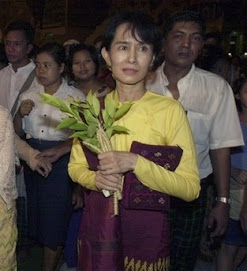


 Posts
Posts


