News & Articles on Burma Thursday, 24 November 2011 ------------------------------------------------ Over 30 Burmese soldiers killed in clashes with KIA Jailing of DVB reporters ‘arbitrary’: UN Is China threatened by a more open Burma? Clinton to visit Burma, meet Suu Kyi Burma: Can you trust the army? Myanmar parliament passes law allowing protests Japan in talks to resume Myanmar aid Myanmar parliament passes law allowing protests Burma Finds Company as Layer of Landmines Child Beggars on the Mean Streets of Mae Sot Than Shwe Retires … From Front Pages Clinton Visit Set for Nov 30 Deported Burmese Await ‘January Solution’ to Return to Thailand ------------------------------------------------ Over 30 Burmese soldiers killed in clashes with KIA Category: News , Published Date 24 Nov. 2011, Written by KNG Despite its numerical superiority, over 30 Burmese Army soldiers were killed in this morning’s clashes with the Kachin Independence Army (KIA) in three places on the Muse-Nam Hkam-Manmaw (Bhamo) route in the country’s northern Kachin State, said locals. At least 10 government soldiers were killed in a landmine explosion targeted at five military trucks by the KIA’s Battalion 1 soldiers. The Burmese Army convoy had started moving to Manwin from Nam Hkam, said residents of Nam Hkam. At about 1 a.m. the KIA’s Battalion 1 troops ambushed a Burmese military column near the Burmese Army’s Kai Htik post enroute after the column left the post, killing over 20 government soldiers, said KIA officers of Battalion 1. Skirmishes continue in areas between Shweli River Bridge and Nam Hkam, and downtown Nam Hkam and Manwin, said people in the two towns. Casualties figure on the Burmese Army side in the fighting downtown but the exact figure could not be ascertained. In the three places mentioned, clashes took place between hundreds of government troops from the Meiktila-based Light Infantry Division (LID) No. 99 and Bago-based LID No. 77 and dozens of KIA soldiers from Battalion 1 and 27. President Thein Sein’s government has sent in two army divisions from lower Burma to southern Kachin State to clear the Muse-Nam Hkam-Manmaw (Bhamo) route, which connects Kachin State and Shan State since early November. Till now, most sections of the route remains under control of the KIA, said local people. http://www.kachinnews.com/news/2164-over-30-burmese-soldiers-killed-in-clashes-with-kia.html Burmese Army despatches reinforcements to Kachin State The Burmese Army is sending in troop reinforcements from the Meiktila-based Light Infantry Division No. 99 to Kachin State, where it launched a massive military offensive against the Kachin Independence Army (KIA) as of June 9, said eyewitnesses. On Wednesday, about 50 military trucks carrying troops, rations, weapons and ammunition arrived in Manwin in Manmaw (Bhamo) district in southeastern Kachin State from Mandalay-Muse-Nam Hkam Road, locals in Manwin told the Kachin News Group. Till late this night, the reinforcements were stationed in Manwin. The division commander is based in Nam Hkam next to Manwin in Northern Shan State, said locals. Government troops ferried in two ships from unidentified battalions also arrived in Manmaw from Mandalay today, according to eyewitnesses. nov23-manwinSoon thereafter, over 300 troops disembarked from the ships and moved to the N’Mawk (Momauk) Town in northeastern Manmaw in seven large trucks and three small ones at about 3 p.m. local time, said locals. A part of the Manmaw-Kai Htik-Nam Hkam Road which connects Kachin State and Shan State is controlled by the KIA since the government launched the offensive on the KIA. Four days before the LID No. 99 was sent to Kachin State, Aung Min, Minister of Railways of the Burmese government, who is negotiating peace, met Lt-Gen N’ban La Awng, the Vice-President of the Kachin Independence Organization (KIO), the political wing of the KIA in Chiang Mai, Thailand on November 19 and offered the olive branch in terms of a new ceasefire to the KIO. The majority Burman-led government has already deployed troops from over 120 battalions in its military offensive against the KIA in Kachin State, La Nan, General Secretary of KIO told KNG recently. http://www.kachinnews.com/news/2163-burmese-army-despatches-reinforcements-to-kachin-state.html ----------------------------------------------- Jailing of DVB reporters ‘arbitrary’: UN By FRANCIS WADE Published: 24 November 2011 The UN says the sentencing of DVB reporters Sithu Zeya [right] and his father, U Zeya, is arbitrary (DVB) The Burmese government has been warned by a UN body comprised of legal experts in the human rights field that its sentencing of two journalists working for the Democratic Voice of Burma is arbitrary, and now faces high-level calls for their release. Twenty-one year old Sithu Zeya and his father, U Zeya, were handed lengthy sentences last year after Burmese intelligence discovered they had been working for DVB. Sithu Zeya was arrested after being caught filming the aftermath of the Rangoon grenade attacks in April 2010; under torture, he revealed that his father was also a DVB video journalist. A five-page opinion adopted by the UN Working Group on Arbitrary Detention found that their sentencing was in violation of articles 19 and 20 of the Universal Declaration of Human Rights, which cover freedom of expression and assembly. Wong Kai Shing, the director Hong Kong-based Asian Human Rights Commission, which has made a number of calls for their release, said in a statement yesterday that the Burmese government “is under obligation to take this call from a UN human rights expert body very seriously”, particularly in light of its proclamations that Burma is transitioning to a democracy. In August Sithu Zeya had his sentence extended by a decade after he was found guilty of breaching the Electronics Act, which has been used by the government on numerous occasions to target journalists feeding footage to foreign and exiled media organisations. He is now due to serve 18 years behind bars. U Zeya was given a 13-year term on the same raft of charges his son was sentenced under, and is currently being held in Hsipaw prison in Shan state. The two are among around 1,700 political prisoners in Burma, including politicians, monks, doctors and lawyers. Some are serving sentences of more than 100 years for their activism, although Naypyidaw refuses to acknowledge that it has jailed anyone on ‘political’ charges. Yet according to the Working Group, the government, having initially arrested the two on suspicion of involvement in the Rangoon attacks, later admitted to the body that they had been sentenced for their links with DVB. Despite the two being charged under the Unlawful Association Act, as well as the Electronics and Immigration Act, DVB is not classified under Burmese law as an illegal organisation. The government however has not clarified the nature of this charge. Wong Kai Shing said the UN decision also raised an issue regarding political prisoners that has remained absent from the majority of appeals for their release, that of “the question of appropriate legally enforceable compensation for what has oftentimes been years of illegal imprisonment”. The mother of Sithu Zeya reported shortly after his arrest last year that he had been beaten and denied food for two days whilst being interrogated. In January 17 inmates in the same Insein prison ward that Sithu Zeya was being held in began protesting the 21-year-old’s ill treatment by authorities, which included being held in solitary confinement and acts of public humiliation. Fellow DVB reporter Win Maw, who is serving a 17-year sentence in Kyaukphyu prison in westernmost Burma, was recently awarded the prestigious Freedom to Create Imprisoned Artists Prize 2011. As well as his work in journalism, Win Maw is a recognised singer/songwriter whose compositions were used in the Oscar-nominated Burma VJ. At present 14 journalists who worked for DVB are behind bars in Burma, down from a total of 17 following a prisoner amnesty in October. Burma has a long history of criminalising independent journalism, and has consistently ranked at the tail end of press freedom indexes, although a government advisor said earlier this week that draconian censorship laws would soon be done away with. http://www.dvb.no/news/jailing-of-dvb-reporters-%E2%80%98arbitrary%E2%80%99-un/18889 ----------------------------------------------- Is China threatened by a more open Burma? Clinton’s visit to Rangoon may shift regional politics and dislodge China as Burma’s lone ally. Kathleen E. McLaughlinNovember 24, 2011 07:35 BEIJING, China — US Secretary of State Hillary Clinton’s visit to Burma next week not only marks a milestone in American foreign policy, but also has the potential to shift regional politics and dislodge China as Burma’s lone ally. And while many in Beijing are concerned about the potential swing in power dynamics, there is growing acknowledgment that a more open Burma would benefit China as well. What China doesn’t want or need is another North Korea, a closed-off hermit state dependent almost entirely on this country and its commerce. Policy-watchers here are hoping for stable change in Burma (known by its military government as Myanmar), and a gradual transformation. “It’s in China’s interest for Myanmar to end its isolation,” said Zhao Daojiong, an international economist at Peking University. “An isolated Myanmar is an unstable Myanmar. It’s in China’s interest that Myanmar internationalize and stabilize.” Clinton has said her recently announced visit, the first for an American secretary of state in 50 years, does not mean the end of US sanctions on Burma. Instead, administration officials have described her planned trip as the latest step in diplomatic moves to encourage Burma’s transformation to a more open country with greater human rights. While China has repeatedly downplayed the symbolism and potential impact of reinvigorated American influence in Burma, there is debate over how to maintain China’s relationship with its resource-rich neighbor to the southwest. Chinese analysts and officials dismiss speculation that a more aggressive China is pushing Burma to open up and explore its options. For three decades, China has been Burma’s main ally and trade partner. In recent months, as Burma has begun to liberalize politically following democratic elections, it has also made strong, symbolic moves away from China. Notably, in late October, the Burmese government cancelled a massive and deeply controversial Chinese dam project. The $3.6 billion Myitsone Dam would have been one of the largest hydropower projects in the world, and it would have flooded thousands of square miles of forest in Burma’s Kachin state. The Chinese-backed project, only one of many major investments there, drew violent opposition and spurred deadly fighting. Opposition to the dam coalesced into action by the military government after democracy leader Aung San Suu Kyi expressed her disapproval of the project in August. More from GlobalPost: Clinton won't lift Burma sanctions. Yet. China downplayed the cancelled dam project, saying its overall intentions were misunderstood. The nationalistic Global Times newspaper, in an editorial about the dam’s end, said there was “an underestimation of China's role in facilitating Myanmar's change and misreading of the situation.” “A long period of sanctions from the West has resulted in poverty and a closing up of the country,” the newspaper wrote. “However, competition and tension are often played up by Western media. Halting the construction of the Myitsone Dam, for instance, was interpreted as the clearest signal of Myanmar's willingness to embrace the West.” Zhu Feng, international relations scholar at Peking University, echoed that sentiment and said he believes international media often plays up power struggles between the United States and China that don’t really exist. “I don’t think Myanmar is of great significance strategically to China,” said Zhu. “It’s not bad in the eyes of China for Clinton to visit, for Myanmar to be more open, and it could be in the interests of China.” More from GlobalPost: Burma reformist government dares to push back against China As always, “stability” is the catchword for China. Zhu said there are fears that Burma will open too fast and violently, with something like a color revolution that fueled the Arab Spring. That kind of instability on China’s borders would inevitably create consternation here. But China has already dealt with instability within Burma caused by civil wars in recent years. At least twice since 2009, thousands of Burmese refugees have flooded across the border into China’s Yunnan province, seeking shelter from factional fighting. The trick now is how to balance China’s desire for investment, trade and resources from Burma with the need for more openness and as Beijing sees it, stability. Zhao said he’s watching to see how Clinton addresses the growing potential nuclear ambitions of Burma’s regime. “I feel that there is a window of opportunity here and it’s also customary for the United States to claim leadership on these issues,” said Zhao. “It’s certainly not in China’s interest to see a nuclearized Myanmar.” http://www.globalpost.com/dispatch/news/regions/asia-pacific/china/111123/burma-myanmar-hillary-clinton-diplomacy ------------------------------------------------- Clinton to visit Burma, meet Suu Kyi Published: 24/11/2011 at 10:38 AM Online news: Bangkok Post The US Secretary of State Hillary Clinton will make a three-day visit to Myanmar (Burma) from Nov 30 to Dec 2, the State Department’s acting spokesman Mark C. Toner said on Wednesday. Mrs Clinton's visit, the first by a US secretary of state since February 1955, will follow her brief stop in Busan, South Korea. During the visit, Mrs Clinton is expected to meet with President Thein Sein and National League for Democracy de facto leader Aung San Suu Kyi to discuss further reforms in the country. Mrs Clinton will underscore Washington's commitment to a policy of principled engagement and direct dialogue as part of the its dual-track approach, the statement said. ''She will register support for reforms that we have witnessed in recent months and discuss further reforms in key areas, as well as steps the US can take to reinforce progress,'' said Mr Toner. Mrs Clinton would also consult with a broad and diverse group of civil society and ethnic minority leaders to gain their perspectives on developments in the country. Mrs Clinton's trip had been initially arranged for Dec 1-2. Prior to her travel to Naypidaw, the new administrative capital, Mrs Clinton will attend the Fourth High-Level Forum on Aid Effectiveness in the South Korean port city of Busan. The last visit by a US Secretary of State to Myanmar was during the time of president Dwight D. Eisenhower when the containment policy-initiator, John Foster Dulles, met with then Premier U Nu and senior Burmese officials in Rangoon. http://www.bangkokpost.com/news/asia/267697/clinton-to-meet-suu-kyi ----------------------------------------------- Burma: Can you trust the army? By Gwynne Dyer, Special to QMI Agency Last Updated: November 24, 2011 9:45am Burma is the second poorest country in Asia (after North Korea), although fifty years ago it was the second richest. It is the second most repressive dictatorship in Asia, outdone again only by North Korea. It is third from the bottom on Transparency International's list of the world's most corrupt countries. And the credit for all these distinctions goes to the Burmese army, which has ruled the country with an iron hand for the past half-century. So what should pro-democracy leaders in Burma do when the army shows signs of wanting to make a deal and withdraw from direct control over the country. Do you hold out for more, or do you co-operate with the generals in the hope that they can be persuaded to go further later on? That's the dilemma that faced Aung San Suu Kyi, the Nobel Prize-winning leader of the National League for Democracy, when the military staged the first elections Burma had seen for twenty years last November. Back then, she decided to boycott the elections, but last week she actually took the leap of faith and registered the NLD as a legal political party. She had good reason to be wary last year, because 23 generals resigned and founded the Union Solidarity and Development Party just before the elections. They wouldn't have done that unless the new party was going to "win," and in the end it got a highly implausible 80% of the votes. But then Aung San Suu Kyi was released from house arrest a few days after the election, and the regime began to offer further concessions. Thein Sein, the former general who became the president of Burma last March, put out feelers to see if the NLD leader could be coaxed into participating in the new political arrangements. He wanted her help in giving his government more legitimacy, and she realised that she could probably win some major concessions in return. She saw Thein Sein in private in August, and it's likely that they made the deal there and then. Six weeks later a Human Rights Commission was created, and the media suddenly became much freer. In mid-October 200 political prisoners were freed (although 500 more remain in jail for the time being). These changes were probably part of the price that the regime had agreed to pay for Aung San Suu Kyi's agreement to participate in a political system still dominated by the army. Later in October it paid another instalment, passing a law that legalised trade unions. And then it was time for Suu Kyi to fulfill her side of the bargain. She did it last week, declaring that she would register the National League for Democracy as a political party under the new constitution. There is even talk of her running for parliament herself in the December by-elections. There is nothing illegitimate about making deals in politics. The question is whether this deal is wise -- or is Aung San Suu Kyi just being taken for a ride? Aung San Suu Kyi has probably been told a great deal more in private about the army's ultimate intentions, but even if they have promised to give up power eventually, she cannot know if they will keep their promises. Probably the generals themselves don't know yet. But she has decided to take the risk, and her supporters just have to trust her judgment. Gwynne Dyer is a London-based independent journalist whose articles are published in 45 countries. http://www.lfpress.com/comment/2011/11/24/19013931.html ---------------------------------------------------- Myanmar parliament passes law allowing protests By Aung Hla Tun YANGON | Thu Nov 24, 2011 6:58pm IST (Reuters) - Myanmar's parliament has passed a bill allowing citizens to stage peaceful protests, a lawmaker said on Thursday, the latest in a string of reforms pulling the pariah state out of isolation. The "Peaceful Assembly and Procession Bill" requires advance permission for would-be demonstrators but represents a major step in a country where just four years ago the army opened fire on peaceful mass protests led by Buddhist monks. "This bill allows peaceful assembly and procession by holding flags with prior permission from the authorities five days in advance," said Aye Maung, an upper house delegate and chairman of Rakhine Nationalities' Development Party. "Monks are also citizens so I think they can also join," he told Reuters. The bill was passed on Tuesday and requires the ratification by President Thein Sein to become law, he said. In recent months, Myanmar's new army-dominated parliament and government have surprised critics by introducing the most sweeping reforms in the former British colony since a 1962 military coup. They have included freeing more than 200 political prisoners and letting the media cover heretofore taboo topics like politics and crime. In October, Thein Sein enacted a new Labour Law under which Myanmar's workers are entitled to stage protests and set up labour unions, both of which were banned under the junta that ruled the country with an iron fist until ceding power to parliament following elections last year. Japan said on Wednesday it would hold working-level talks with Myanmar next week to discuss aid projects, another step in growing international involvement as the country moves tentatively towards democracy. Last week, Myanmar won a powerful endorsement when U.S. President Barack Obama announced Secretary of State Hillary Clinton would visit Myanmar, citing "flickers of progress". (Editing by Jason Szep and Nick Macfie) http://in.reuters.com/article/2011/11/24/idINIndia-60712520111124 ------------------------------------------------ Japan in talks to resume Myanmar aid Posted: 24 November 2011 1430 hrs TOKYO: Japan and Myanmar will hold a meeting in Naypyidaw next week to discuss resuming Tokyo's official development aid, a foreign ministry official said Thursday. The move is the latest in a series of international overtures that appear to be designed to welcome the isolated nation in from the diplomatic cold. Tokyo has continued to provide humanitarian and emergency aid to the country, but halted regular economic assistance in 2003 following the arrest and subsequent detention of democracy leader Aung San Suu Kyi. Suu Kyi was freed in November last year after seven years of house arrest, and her party has said it would return to Myanmar's official political arena after years of marginalisation under military rule. "There has been some development in the political situation in Myanmar since Suu Kyi's release last year," said a Japanese foreign ministry official. At the meeting to be held on Monday, the first since 2003, officials from the two countries will discuss resuming Japan's aid to Myanmar to the level before the suspension, the official said. "One thing they are expected to discuss is the reasonability of resuming the construction work on a hydropower plant," the official said on the customary condition of anonymity. "Japan has told Myanmar that we are ready to restart the work, but on-the-ground research would be necessary because of the time that has elapsed since the work was stopped." Unlike major Western nations, Japan has maintained trade ties and dialogue with Myanmar, warning that a hard line approach could push it closer to neighbouring China, its main political supporter and commercial partner. The international community has begun in recent months to re-engage with the country. Last week Myanmar won approval from the Association of Southeast Asian Nations to chair the 10-nation bloc in 2014 -- despite some concerns that such a diplomatic prize was premature. US President Barack Obama said Friday that Hillary Clinton would next month become the first US secretary of state to visit Myanmar for 50 years. He said the trip was designed to stoke "flickers" of democratic reform in a country that for decades has been blighted by military rule and international isolation. UN chief Ban Ki-moon said Saturday he would also visit Myanmar as soon as possible to encourage reforms. - AFP/ck http://www.channelnewsasia.com/stories/afp_asiapacific/view/1167369/1/.html ----------------------------------------------- Myanmar parliament passes law allowing protests Thu Nov 24, 2011 1:20pm GMT By Aung Hla Tun YANGON (Reuters) - Myanmar's parliament has passed a bill allowing citizens to stage peaceful protests, a lawmaker said on Thursday, the latest in a string of reforms pulling the pariah state out of isolation. The "Peaceful Assembly and Procession Bill" requires advance permission for would-be demonstrators but represents a major step in a country where just four years ago the army opened fire on peaceful mass protests led by Buddhist monks. "This bill allows peaceful assembly and procession by holding flags with prior permission from the authorities five days in advance," said Aye Maung, an upper house delegate and chairman of Rakhine Nationalities' Development Party. "Monks are also citizens so I think they can also join," he told Reuters. The bill was passed on Tuesday and requires the ratification by President Thein Sein to become law, he said. In recent months, Myanmar's new army-dominated parliament and government have surprised critics by introducing the most sweeping reforms in the former British colony since a 1962 military coup. They have included freeing more than 200 political prisoners and letting the media cover heretofore taboo topics like politics and crime. In October, Thein Sein enacted a new Labour Law under which Myanmar's workers are entitled to stage protests and set up labour unions, both of which were banned under the junta that ruled the country with an iron fist until ceding power to parliament following elections last year. Japan said on Wednesday it would hold working-level talks with Myanmar next week to discuss aid projects, another step in growing international involvement as the country moves tentatively towards democracy. Last week, Myanmar won a powerful endorsement when U.S. President Barack Obama announced Secretary of State Hillary Clinton would visit Myanmar, citing "flickers of progress." (Editing by Jason Szep and Nick Macfie) http://af.reuters.com/article/worldNews/idAFTRE7AN0VA20111124 ---------------------------------------------- Burma Finds Company as Layer of Landmines By SAW YAN NAING Thursday, November 24, 2011 After being named the only country laying new landmines last year, Burma has been joined in 2011 by three other countries—Israel, Libya and Syria—as part of the exclusive club of nations still actively employing the deadly explosives, according to a new report by anti-landmine campaigners. The report, by the Geneva-based International Campaign to Ban Landmines (ICBL), cites civil unrest in the Arab world as a key reason for this year's spike in landmine use, which has reached a seven-year high. “Thousands, if not tens of thousands, were laid by the Gaddafi regime,” said Mary Wareham, the editor of the annual report, The Landmine Monitor 2011, speaking at its launch in Bangkok on Wednesday. Landmines, which have long been used in conflicts in many parts of the world, have become the target of a campaign to end their use because they continue to take a deadly toll for years after fighting has ended, and often claim casualties among civilians and other innocent victims. “Not only humans, but also animals like elephants, are affected by landmines,” said Suthikiet Sopanik, the secretary of the Thailand Campaign to Ban Landmines, speaking to The Irrawaddy on Thursday. “There are a lot of ethnic minority conflicts in Myanmar [Burma]. They use many landmines to protect and defend their territories. Many civilians, including children, are injured by landmines,” said Sopanik. The ICBL report said that in Burma, both the government and non-state armed groups continue to use anti-personnel landmines, despite the country's move to civilian rule earlier this year. Ethnic armed groups mostly use homemade devices, while Burma mass-produces landmines for use in conflict zones. Yeshua Moser-Puangsuwan, a Landmine Monitor researcher who visited ethnic areas in Burma, said in a statement, “On the ground, there is not much change in how antipersonnel mines are used by the government or militias.” Noting that talks were held between several armed groups and Burmese government state authorities this week, Yeshua said the ICBL will lobby for a ban on landmines to be included in any ceasefire agreement. According to the report, only 12 manufacturers of anti-personnel mines were recorded—the same as in 2010—with just three countries believed to be actively producing: India, Burma and Pakistan. The ICBL report said that there were 4,191 new landmine casualties in 2010, although the actual number could be as high as 6,000, with many cases unreported. The ICBL's data is provided by a variety of sources, including researchers, governments, armed forces and charities. http://www.irrawaddy.org/article.php?art_id=22530 ----------------------------------------------- Child Beggars on the Mean Streets of Mae Sot By SAI ZOM HSENG Thursday, November 24, 2011 Small, determined bodies make their way through the hustle and bustle of the night market in the Thai border town of Mae Sot, looking for likely targets. When they find one—a kind-looking stranger, a foreigner who might not mind sparing a few coins—they lift their tiny hands, and, if that is not enough, tug on a sleeve or touch a bare arm. More often than not, they are ignored. These are the child beggars of Mae Sot—children who have become such a common sight in the thriving town on the Thai-Burmese border that they are almost invisible to residents who would rather not see them at all. Even in the glare of the night market's fluorescent lights, it's easy not to see these children, unless one becomes the unwilling object of their attention. Then the easiest thing to do is just to give them the coins they silently plead for and hope they go on their way. “Usually, they try to find one-baht coins. If they don't have any, they'll give us a five- or 10-baht coin,” said Nyo Nyo, a 10-year-old Burmese girl who has been in Thailand since she was an infant, describing those who grudgingly part with a little money just to be left in peace. White people are usually the most generous, she said, although they don't always give something. But when they do, it's usually more than she can get from any of the locals. Like Nyo Nyo, all of the children begging in the streets of Mae Sot are from Burma. They are controlled by Burmese gangs who force them to keep begging until they bring back 200 baht (US $6.40) a day—about the same as a day's wages for an unskilled laborer in Thailand. The local authorities used to crack down on beggars, saying they hurt the town's image. But these days, they seem more inclined to look the other way—because, say some residents, of bribes paid to officials to allow the lucrative “business” to continue. Wearing a dirty white blouse and with her hair in a ponytail, Nyo Nyo explains the deal that her own parents made with the gang that now serves as her family. “My parents told me to stay with these people, who would give them some money and also take care of me. They give me food and a place to stay, and they tell me what to do. They tell us to stay out until we get 200 baht, but sometimes it's okay if we come back with just 150 baht,” she said. She said that the people now taking care of her are friends of her parents, who work in the Mae Sot market. She added that her father sometimes worked as a coolie, carrying goods back and forth across the border. Nyo Nyo said that she has been punished several times—beaten and deprived of sleep—for failing to earn her keep. It was hard, she said, because she felt shy about asking people for money. “I wish I didn't come to stay with them,” she says of her new “guardians”. Nyo Nyo now lives in a house in Mae Sot with more than a dozen other children, all of whom spend their days and nights in crowded public places—in the night market, near the Friendship Bridge, in the park—hoping to meet kind strangers, but mostly being treated with disdain. Not everyone regards them as a nuisance, however. Some in the local Burmese community view them with a mix of shame and pity. “It's a disgrace that Burmese people are exploiting them that way,” said Naw Eh Wah, a Mae Sot resident. “I’m so worried about their future.” For most of these children, dreams of the future are a thing of the past. Pho Thar, a 12-year-old boy from Mon State, said that he used to study in Burma before his parents migrated to Thailand. “Whenever I see Thai children going to school in their uniforms, it reminds me of life in my village,” he said. Children are not just used as beggars. In fact, they are often targeted by human traffickers because they are easy to transport across borders and easy to exploit. “The traffickers put the children to work in many fields, such as general labor, sex work and begging,” said Mingkwan Weerachart, the head of the Chiang Mai Shelter for Children and Families. “The traffickers have no trouble controlling them, because they are easily intimidated.” She added that the number of Burmese children being transferred to her shelter has increased steadily in recent years. Last year, the shelter received 26 Burmese children, up from 14 the year before, and 11 the year before that. Almost all of them, she said, were trafficked. According to the website of World Vision, an international relief agency that operates in Thailand, Burmese people are trafficked to a number of Asian countries, including China, Bangladesh, Malaysia, Korea and Macao, but the primary destination is Thailand. http://www.irrawaddy.org/article.php?art_id=22528 -------------------------------------------------- Than Shwe Retires … From Front Pages By THE IRRAWADDY Thursday, November 24, 2011 Burma's former dictator and military junta supremo Snr-Gen Than Shwe has been referred to as “retired” by the state media for the first time since the official abolishment of the State Peace and Development Council, and the ascension of the new government on March 30. Both Myanma Alin and The Mirror reported on Thursday that “Snr-Gen Than Shwe (retired) and Daw Kyaing Kyaing's family donated US $1,300, 11 rubies, a pearl and a golden ring with 61 diamonds, which is valued at kyat 488,000, toward the Scared Buddha Tooth Relic from China, which is now being exhibited in Rangoon.” The fact that Than Shwe's name was preceded with the honorific mention, “retired,” raised many eyebrows in Rangoon. Burma watchers also noted that Myanma Alin ran the story on page eight, that Than Shwe was simply listed alongside several other donors and that his name did not appear in the headline. For years Burmese state-run media has reflected the hierarchy of the military junta in its front pages with lead stories invariably carrying all but the most mundane actions of the ruling generals. While head of the junta, Than Shwe and his family enjoyed privileged status on the front pages of almost every state-run journal and newspaper on a near-daily basis. On Friday, Than Shwe reportedly made a rare trip outside of his home to visit a Buddhist pagoda in Naypyidaw. According to several official sources and relatives, Than Shwe now mostly lives quietly in the remote capital of Naypyidaw, although sometimes he travels to Rangoon to visit his children. However, as Larry Jagan—a freelance journalist and former BBC news and current affairs editor for Asia and the Pacific—pointed out in an interview broadcast by Australia’s ABC Radio National, a regulation passed by Than Shwe’s junta just before the November 2010 election states that any senior military officer may return to his original military post within 5 years of retiring. “[President] Thein Sein is constantly being told by the hardliners in the ministry, ‘Don’t do things too far, too fast, otherwise the old man [Than Shwe] will come back and take power,’” said Jagan. http://www.irrawaddy.org/article.php?art_id=22532 -------------------------------------------- Clinton Visit Set for Nov 30 By LALIT K JHA / WASHINGTON Thursday, November 24, 2011 Leading a high-power delegation, US Secretary of State Hillary Clinton is scheduled to make her historic visit to Burma on Nov. 30, during which time she will reiterate the Obama administration’s policy of principled engagement and direct dialogue, US officials say. “Secretary Clinton will travel to Naypyidaw and Rangoon, Burma, from November 30 to December 2. This historic trip will mark the first visit to Burma by a US Secretary of State in over a half a century,” the State Department spokesperson, Mark Toner, said. “Clinton will underscore the US commitment to a policy of principled engagement and direct dialogue as part of our dual-track approach. She will register support for reforms that we have witnessed in recent months and discuss further reforms in key areas, as well as steps the US can take to reinforce progress,” he said. During her trip, Clinton will consult with a broad and diverse group of civil society and ethnic minority leaders to gain their perspectives on developments in the country, he added. Counselor Cheryl Mills, Assistant Secretary Kurt Campbell, Assistant Secretary Michael Posner, Special Representative and Policy Coordinator for Burma Derek Mitchell, and Policy Planning Director Jake Sullivan will accompany her. Last week, Obama announced in Bali, Indonesia—on the sidelines of the East Asia Summit—his decision to send Clinton to Burma. Obama’s announcement followed a telephone conversation with Aung San Suu Kyi—the first between a US president and the Nobel Peace Prize laureate. Toner said Obama’s decision to send Clinton to Burma is based on what he termed as “flickers of progress that we’ve seen” over the past month or so in Burma, and that he feels that it’s an appropriate time to send the Secretary of State there. “She will be the first Secretary of State to visit that country in over half a century, so that alone is very significant. But our goal remains a Burma that is both responsive to the will and needs of its people,” he said. “But again, this is an opportunity that we believe has presented itself to go there, obviously talk with the opposition, talk with Aung San Suu Kyi, and also discuss with the government ways that we can move this process forward,” he added. However, he said a lot more has to be done in Burma. “We’ve seen a dialogue between the government and Aung San Suu Kyi that’s begun. We also have seen the release of some political prisoners, and we’ve seen the relaxation of some of the media restrictions. And also, there’s legislation that’s been approved that we believe could open the political environment even more,” he said. “What we want to see is the release of all political prisoners, and we want to see amended electoral laws. We want to see an opening of the political system … that allows for free and fair elections, that’s what we’re looking for. We’re looking for an opening up of the political space,” Toner said. None of these are particularly new items on US’s agenda with Burma, he asserted. “So they’re well aware of what we’re looking to see … We want to see a Burma that’s responsive to the needs of its people,” he said. http://www.irrawaddy.org/article.php?art_id=22529 --------------------------------------------- Deported Burmese Await ‘January Solution’ to Return to Thailand By SIMON ROUGHNEEN Thursday, November 24, 2011 BANGKOK—Tens of thousands of Burmese migrants who fled Thailand's floods are in danger of trafficking and extortion unless both Thailand and Burma's governments come up with a plan to facilitate a safe return, say activists. This comes after tens of thousands of Burmese migrant workers were deported from Thailand after homes and workplaces were flooded in the recent disaster, which left over 600 people dead in Thailand. From September to November 2011, almost 100,000 Burmese migrant workers returned to their homeland via Mae Sot, a town on the Thailand-Burma border that serves as the main land connection between the two countries. Of these, according to data from the Mae Sot immigration office, 39,841 of the returnees held temporary passports—meaning that they could legally cross back to Burma and can subsequently return to Thailand to resume work at their flooded employment locations. However, the majority of those fleeing Thailand for Burma during the floods—given as 58,369 at time of writing—did not have passports. Some of this cohort likely held work permits, which only allow the holder to remain in the province of his/her employment. By attempting to cross back to Burma via Mae Sot, the workers invalidated their permit and therefore could be expelled from Thailand. Migrant rights groups say that they lobbied the Thailand government to implement a temporary amnesty for undocumented migrant flood victims, or those lacking passports, who sought to return home. However, tens of thousands of Burmese flood victims were deported amid numerous allegations of extortion and trafficking along the Mae Sot border area. Various recent news reports feature Burmese migrants saying they were forced to pay additional fees to cross back to Burma, often to Burmese militias controlling checkpoints on the Burmese side. Burmese migrants make up an estimated 5-10 percent of Thailand's labor force and number between 2 and 3 million. Of these, around 1.5 million have registered to work in Thailand. However, for those migrants who were deported or invalidated their permits, trying to return to Thailand to resume employment will be challenging. According to Claudio Natali of the International Organization Migration (IOM), “There is a gap in the system now, effectively, until there is some process in place for those who went back to Burma but do not have passports to come back.” The alternative, says Andy Hall, a migrant rights analyst at Bangkok's Mahidol University, is “for people to try to smuggle themselves back into Thailand.” That in turn renders people trying to re-enter Thailand as vulnerable to extortion and trafficking, a long-running threat to migrant workers in Thailand. According to a leaked 2009 US diplomatic cable from the Bangkok embassy, the Thailand government “recognizes the seriousness of the (trafficking) problem.” Thailand is currently on the US State Department’s human trafficking watch list, still a notch better than Burma, which the same list deems to be among the countries “whose governments do not fully comply with the minimum standards and are not making significant efforts to do so.” Hall recently visited the Burmese capital Naypyidaw, where he discussed the situation facing Burmese living in Thailand with Burmese officials. He said that, “The Myanmar authorities insisted to me during my visit that the protection of migrant workers is now a key policy for their government, both as a development strategy but also as a poverty reduction strategy.” With Burma's economy floundering, millions of Burmese live abroad, with remittances sent home a vital source of income for families living in Burma. The Burmese government is said to envisage a longer-term Philippines-style policy where emigration is supported as a means of compensating for a stagnant or underperforming domestic economy. A tenth of Filipinos live overseas, and money that “OFWs” (overseas Filipino workers) remit makes up approximately the same percentage of the country's economy. For now, the Thailand and Burmese authorities are discussing a joint plan—to come into effect on January 1 20102—to enable those Burmese who were deported to return to their jobs in Thailand, without having to run the notorious broker and trafficking gauntlet along the two countries' common border. Jackie Pollock, the Director of the MAP Foundation, an organization that assists Burmese workers in Thailand, said that there needs to be some temporary system implemented on the border to enable migrants who lack passports to cross back to Thailand, and to facilitate employers and business owners who want to “re-hire” Burmese migrants who fled the flooding. “This was done after the 2004 tsunami, so something similar should be possible this time around,” she said. But whether or not Burmese migrants will be made aware of any joint plan to facilitate their safe return to Thailand remains unclear, with officials seen as slow to disseminate information. According to Claudia Natali, “The majority of migrants do not hear about such policy developments, and if they do, it is long after implementation”. http://www.irrawaddy.org/article.php?art_id=22531
Friday, November 25, 2011


Saturday, November 19, 2011
News & Articles on Burma-Saturday, 19 November 2011-uzl
News & Articles on Burma Saturday, 19 November 2011 ------------------------------------------- Obstacles lie ahead in Burma's bid for reform KIA pushes back Burmese Army troops from Laiza headquarters UN's Ban says he will visit Myanmar, urges reforms EU Hails Myanmar Moves, Reviewing Policy Key US senators hail Clinton Burma trip Gillard warns Burma has a lot more to do Clinton to visit Burma for fact-finding U.S. sees Burma reforms as strategic opening to support democracy Suu Kyi party to register for election Myanmar dissident returns to politics US sanctions on Myanmar to continue Analysis: US overtures may lure Myanmar from China Myanmar regime loosens its grip on elections Suu Kyi's party decides to enter legal politics for democratization in Burma --------------------------------------------- 19 November 2011 Last updated at 12:45 GMT Obstacles lie ahead in Burma's bid for reform By David Loyn BBC News, Naypyidaw, Burma Burmese pro-democracy leader Aung San Suu Kyi has announced she is ready to re-enter politics, but many obstacles still lie ahead for a country still coming to terms with reform. Driving through the Burmese countryside, I passed a Land Rover that must have been half a century old, four monks clinging to its green frame, as they rattled through the countryside, saffron robes blowing in the breeze. Women with their faces daubed in sandalwood paste under conical straw hats glanced up as we passed. Behind them, a man stood under an awning rhythmically treading a water pump to irrigate the paddy fields as they worked. Our destination could not have been more different from this timeless scene. The neat lawns in the strange fantasy-land of the new capital Naypyidaw, carved out of the jungle, where everything is on a gargantuan scale. When it was built, civil servants were told to move north overnight from Rangoon - disrupting families and lives. Suicide rates in this weird place are said to be very high. There are tens of thousands of hotel rooms, empty most of the year, except during a gem fair, when Chinese buyers descend on Naypyidaw to deal in Burma's mineral wealth. The presidential palace with its vast air-conditioned spaces, and chandeliers sparkling with thousands of lights, seem more than incongruous in a country where state spending on health per person is less than $1 (?0.70) per year. The new town exists in a fantasy economy. As it is a capital city, foreign diplomats will be expected to move here, and areas have been marked out for them already. But one Western embassy worked out that the way the sites are being financed, it would cost $70m over 30 years if they took up the offer. But in a military state, normal economics have been turned on their head for a long time. There are several exchange rates for the Burmese currency, as black market money flows in and out of the country. In the wings The real power here lies in the hands of men who are called "cronies" in normal conversation. Like Russian oligarchs, the cronies in Burma are the men behind the scenes, close to China and outside democratic control as they profit from monopolies in timber, gems and gas. Continue reading the main story Start Quote In a sequence of carefully choreographed moves, the government is easing its relationship towards this iconic figure End Quote They are watching in the wings, as a government with reform on its mind moves steadily away from the corruption and repression of a world that, in the past, suited them well. Change means that recently released prisoners can write in dissident newspapers that are no longer censored and are distributed openly. Until only a few months ago there were daily attacks on the BBC in Burma's main newspaper. Aung San Suu Kyi said that one of the biggest signals of change was that she, for the first time, had been able to talk openly to the BBC in Rangoon, after I was given an unprecedented visa. The political impact of all this is seismic. Bumping along in the back of a van on our way to see a school opened in the last year by Aung San Suu Kyi's supporters, Myo Yan Naung Thein, the leader of the last major student protest back in 1996, told me in clear and stark terms that protest is over. He and his comrades - who made new alliances in jail - have formed a loose network of pro-democracy groups, backing Aung San Suu Kyi, and working within the system for the first time. He said: "If you can't beat them, join them." In a graphic image, the former student leader said that if Burmese people were willing to line up, 10 by 10 by 10 in front of soldiers shooting, then revolution would be possible, as they would wear out the will of the army after thousands had died. "But," he concluded, "we don't have enough blood to shed". In calling off protests, the pro-democracy activists are putting all their trust in secret conversations that the new President Thein Sein has had with Aung San Suu Kyi. In a sequence of carefully choreographed moves, the government is easing its relationship towards this iconic figure - not unlike the way white South Africa changed course and opened Nelson Mandela's prison doors. Posters of Aung San Suu Kyi are openly for sale on the streets, and she will run for parliament, probably next year. But Aung San Suu Kyi has not brought all of her party with her in her decision to compromise with the regime. There was another protest by Buddhist monks in Mandalay this week. Small demos like these are a distraction. More widespread protests though could destabilise the confidence built between Aung San Suu Kyi and the reformist president and his allies. And it would strengthen the hand of hard-liners opposed to reform in the strange fantasy capital. Formidable obstacles to reform remain and high hopes rest on the slender figure of Aung San Suu Kyi. http://www.bbc.co.uk/news/world-asia-15798106 -------------------------------------------- KIA pushes back Burmese Army troops from Laiza headquarters Kachin News Group The Kachin Independence Army (KIA) troops pushed back Burmese Army soldiers from its Laiza headquarters on Thursday, seizing many arms and field artillery, said frontline sources. Almost all government military columns in the N'tap Bum mountain range, about 8 miles southwest of Laiza headquarters in eastern Kachin State were pushed back to the mountainsides, said KIA officers from the headquarters. According to KIA officers on the frontline, Burmese soldiers are fleeing from the strategic mountain range discarding their arms and artillery. A KIA officer on the frontline told Kachin News Group, "We can push most Burmese troops out of the mountain range today. We seized weapons from the Burmese Army but small numbers of soldiers remain in the mountain range". A resident of Laiza said on Thursday afternoon, that people in the KIA headquarters relaxed from 24-hours monitoring when they heard that the Burmese troops in the strategic mountain range close to the headquarters had been pushed away from the mountain. ntapbumKIA officers on the frontlines said they seized the largest number of weapons from government troops in the mountain range in the five-month war. A resident of Laiza said he saw some mortar rounds and small arms in Laiza today morning, which were brought back to Laiza from the mountain by KIA troops. About 1,000 Burmese troops arrived on the N'Tap Bum since mid-October in order to capture Laiza headquarters. The Burmese Army has been using an unidentified chemical weapon (or poison gas) in their offensive against the Kachin troops. Dozens of Kachin soldiers became unconsciousness, were given to bouts of vomiting and weakness after they breathed in the poisonous gas when mortar rounds loaded with it were fired. KIA officers in Laiza said government troops tried to control the military strategic mountain range thrice but failed every time. If government troops control the mountain range, it may pave the way to capture Laiza, according to KIA officers. http://kachinnews.com/news/2156-kia-pushes-back-burmese-army-troops-from-laiza-headquarters.html ------------------------------------------- UN's Ban says he will visit Myanmar, urges reforms AFP United Nations leader Ban Ki-moon said on Saturday he planned to visit Myanmar "as soon as possible", after talks with President Thein Sein where he urged progress on nascent reforms. "I am also planning to visit Myanmar as soon as possible -- he invited me so I accepted his invitation," Ban told a press conference after the meeting with Thein Sein. "I strongly urged him it is not necessary to wait 'til 2014 but even before that they should take all the political reforms," he said, referring to the date when Myanmar will host the Southeast Asian bloc's annual summit. "I told him that there will be huge expectations... and he should meet the expectations of the the international community." UN envoy to Myanmar, Vijay Nambiar, said that Ban's visit had not been finalised but would take place "in the next few months". Myanmar's new nominally civilian government has called for the lifting of punishing sanctions imposed by the United States and other nations during its decades of military rule. "I think there is a movement now to consider looking at these issues again," Nambiar said of the sanctions, adding that the decision was "for the countries concerned" to make. "I think it is important that the people, the livelihoods of the people... are developed. All actions should be taken in order to reach that goal," he said. http://news.yahoo.com/uns-ban-says-visit-myanmar-urges-reforms-075622994.html -------------------------------------------- EU Hails Myanmar Moves, Reviewing Policy 19 Nov 2011 The European Union on Friday welcomed Myanmar allowing the party of democracy leader, Aung San Suu Kyi to take part in upcoming by-elections, and was looking at whether such reforms could justify the bloc further easing its sanctions, reports Reuters. The EU said positive moves by Mynamar's civilian government since elections last year had exceeded expectations, but it urged the reclusive Asian country to release more dissidents. "The EU has always stated that it will respond to positive events in the country. The restrictive measures have already been partly modified this year," EU foreign policy chief, Catherine Ashton said in a statement. "A more substantial review of EU policy is already under way." The opposition National League for Democracy (NLD), led by Suu Kyi, said on Friday it would contest the forthcoming by-elections, after the government amended its law on registration of political parties. The party boycotted last year's national election, and Friday's move was seen as further sign of political rapprochement. "The continuing positive developments in Myanmar are a source of great hope and encouragement," Ashton said. "I look forward to them continuing, including a further substantial release of political prisoners." Ashton said "the European Union will want to accompany Myanmar on the path it is taking, both with political and economic engagement." However, she stressed that "fair and transparent elections leading to a wider representation of the people" would be a key factor in making national reconciliation a reality. The EU comments came after U.S. President Barack Obama said on Friday he saw "flickers of progress" and would be sending Secretary of State Hillary Clinton for a historic visit that could help Myanmar emerge from a half century of isolation. Clinton's December 1 visit would be the first by a U.S. secretary of state since a 1962 military coup ushered in decades of military rule that ended in March, when a nominally civilian parliament was established. Some Western governments believe the military remains in charge. Ashton said she looked forward to talking directly to interlocutors in Myanmar and a spokesman said the EU was working on plans to send a top EU official to Myanmar, but no dates had been set. Ashton sent her top foreign policy adviser to Myanmar earlier this year, and the EU, in a move to encourage reform, slightly eased sanctions in April by ending travel bans and asset freezes on 24 civilian government officials. "A year ago, most were sceptical about transition," an EU official said. "Six months ago, most began to realize reforms were kicking in. Today, there is a different climate in the country." The new government has called for peace with minority groups, displayed some tolerance of criticism, suspended an unpopular Chinese-funded dam project, freed about 230 political prisoners and improved relations with Suu Kyi, a Nobel Peace laureate who was released from house arrest in 2010. However, large numbers of political prisoners remain and EU officials have said they would wait to see how many were actually freed when judging the government's sincerity. "We are cautiously optimistic. Without a doubt, positive steps have been taken, but there is also much that remains," Swedish Foreign Minister Carl Bildt said. "It is good to have a diplomatic engagement policy of trying to influence (matters)." http://www.thisdaylive.com/articles/eu-hails-myanmar-moves-reviewing-policy/103168/ ----------------------------------------------- Key US senators hail Clinton Burma trip AFP November 19, 2011, 8:53 am AP Enlarge photo Key US senators have hailed Secretary of State Hillary Clinton's planned visit to Burma next month, expressing hopes it would spur greater democratic reforms in the formerly military-ruled country. "Burma is moving in the right direction, but actions still speak louder than words," said Senate Foreign Relations Committee Chairman John Kerry, a Democrat sometimes mentioned as a possible successor to Clinton as the top US diplomat. Kerry praised Burma's new political reforms but said its government must "unconditionally release all prisoners of conscience" and halt "atrocities" in battling ethnic minority rebels along its border with Thailand. "To help keep the Burmese government on the right track, President Obama and Secretary Clinton are implementing a forward-leaning approach that combines principled engagement and energetic pressure," he said. News of Clinton's trip - the first by a US secretary of state in 50 years - came as opposition leader Aung San Suu Kyi's party said it would return to Burma's official political arena after years of marginalisation under military rule. Clinton's trip would be the most significant US policy move on the country in many years, after decades of using sanctions to isolate the country over human rights abuses by generals who refused to shift to democracy. However, since elections a year ago, the new nominally civilian government has surprised observers by holding direct talks with Suu Kyi, freeing 200 dissidents and freezing work on an unpopular mega-dam. Suu Kyi's National League for Democracy announced Friday it would re-register as a political party and take part in upcoming by-elections, after years of being sidelined and repressed. The party, which won 1990 polls in a landslide but was never allowed to take power, refused to participate in the country's first vote in 20 years because of rules that would have forced it to expel imprisoned members. Senator John McCain, the top Republican on the Senate Armed Services Committee, hailed Suu Kyi's return, saying "Burma has reached an important milestone today on its path to a more democratic system." "This is an important step toward greater political reconciliation in Burma, and I think Secretary Clinton's decision to visit the country sends the right signal of America's support for the ongoing process of change," he said. Like Kerry, McCain called on Burma to release "prisoners of conscience", cease attacks against ethnic minorities and move forward with "dialogue and reconciliation". "A lot remains to be done in order for the Burmese people to enjoy the greater freedom and democracy that they both desire and deserve," he said. Democratic Senator Jim Webb, who chairs the Senate Foreign Relations East Asian and Pacific affairs subcommittee, said Clinton's trip will help determine how serious Burma is about democratic reforms. "I am hopeful that Secretary Clinton's visit will provide an opportunity to closely examine any substantive improvements in our relations during this transitional period," said Webb, who has long called for greater US engagement with Burma. Webb also called for Washington "to take advantage of all of the tools at our disposal to facilitate Burmese economic development, political reconciliation, and ultimately greater progress toward democratic governance." In 2009, Webb became the first US lawmaker to visit Burma in more than a decade and the only US official to meet with its former junta leader, Than Shwe. "Burma is now in the midst of a key transitional period that has yielded greater opportunities for interaction with government leaders and civil society, and restructuring of government and military institutions," said Webb. http://au.news.yahoo.com/thewest/a/-/world/11824451/key-us-senators-hail-clinton-burma-trip/ --------------------------------------------- Gillard warns Burma has a lot more to do Karlis Salna, AAP South-East Asia Correspondent, AAP November 19, 2011, 10:19 pm Prime Minister Julia Gillard has not ruled out a boycott of the 2014 East Asia Summit if Burma fails to make good on its stated commitment to democratic and human rights reform. Since holding elections a year ago following almost four decades of military rule, Burma has been ushered back into the broader international political arena. It was last week given the green light to chair the Association of South-East Asian Nations (ASEAN), and consequently the East Asia Summit, in 2014 after making further commitments to economic and political reform. But Ms Gillard, who spoke with Burma's President Thein Sein on the sidelines of the ASEAN summit in Bali on Saturday night, has warned that Australia's support for the new government and any review of current sanctions would carry strict conditions. While Australia does not have any direct economic sanctions against Burma, it does have financial and travel sanctions against individual members of the new regime who were part of the former military junta. "I made the point to him that Australia welcomes the progress that has been made in Burma," Ms Gillard told reporters in Bali on Saturday. "We're welcoming the developments; the developments are happening rapidly. We will obviously calibrate issues about sanctions against change as it occurs." "But I do want to be very, very clear. There is a lot more to do in Burma." The new government in Burma has won approval for recently holding direct talks with opposition leader Aung San Suu Kyi as well as freeing 200 political prisoners. As many as 2000 dissidents, however, remain imprisoned in Burma, while there are also concerns about ongoing conflicts with and treatment of ethnic minorities. "There is a lot more to do, a lot more to do in Burma in releasing political prisoners, in ensuring that there is proper democratic structures and that there is proper responses for human rights and I made that point directly to the president," Ms Gillard said. Ms Gillard also refused to rule out a boycott of the East Asia Summit if Burma failed to make good on its commitment to political and human rights reform. "Any decision about attending the summit in 2014 would be taken in 2014," she said. "The bigger point that I am making is that of course East Asia Summit nations would want to see continued progress between now and 2014." Ms Gillard's comments come after Kevin Rudd became the first Australian foreign minister to visit Burma in almost a decade. The US Secretary of State, Hillary Clinton, will now also visit Burma to examine whether its military-backed leadership is committed to political and economic reform. Mrs Clinton, whose visit early next month will be the first by a US secretary of state in 50 years, said the trip is aimed at testing new government's "true intentions". "We're hoping, most certainly for the people of Burma, that this is real. But if it is, the United States will support and encourage it," she said in an interview with CNN. "We'd like to see more political prisoners released. We would like to see a real political process and real elections. We'd like to see an end to the conflicts, particularly the terrible conflicts with ethnic minorities," she said. "But we think there's an opportunity and we want to test it." http://nz.news.yahoo.com/a/-/world/11832318/gillard-warns-burma-has-a-lot-more-to-do/ ------------------------------------------- Clinton to visit Burma for fact-finding 19 November 2011 | 10:44:53 AM | Source: AFP US Secretary of State Hillary Clinton said Friday her trip to Burma is to find out whether the military-backed leadership there is committed to both political and economic reform. "One of the reasons that I'm going is to test what the true intentions are and whether there is a commitment to both economic and political reform," Clinton said in an interview with CNN television. Her historic visit to Burma, announced by President Barack Obama, follows several visits made by US special envoy Derek Mitchell as well as conversations Clinton and Obama have had with Burma's democracy icon Aung San Suu Kyi. "And there certainly does seem to be an opening," Clinton said during the interview with the US network on the Indonesian island of Bali, the venue for a regional summit she and Obama are to attend. "Now how real it is, how far it goes, we're going to have to make sure we have a better understanding than we do right now. But at least there has been some forward movement," Clinton said. "And in this part of the world, we have examples of countries that did finally get on a democratic path after authoritarian regimes, military dictatorships, all of the problems that have been around for a long time," she said. "So we're hoping, most certainly for the people of Burma, that this is real. But if it is, the United States will support and encourage it," the chief US diplomat said, referring to Myanmar by its former name. In another interview with Fox News, Clinton said there were specific steps she expected from Myanmar. "We'd like to see more political prisoners released. We would like to see a real political process and real elections. We'd like to see an end to the conflicts, particularly the terrible conflicts with ethnic minorities," she said. "But we think there's an opportunity and we want to test it." Obama said Friday he would send Clinton to Burma on December 1-2, the first visit there by a US secretary of state for 50 years, to encourage democratic reform. The announcement came as Suu Kyi's party said it would return to Myanmar's official political arena after years of marginalisation under military rule. http://www.sbs.com.au/news/article/1606307/Clinton-to-visit-Burma-for-fact-finding ---------------------------------------------- U.S. sees Burma reforms as strategic opening to support democracy By David Nakamura and William Wan, Saturday, November 19, 10:09 AM BALI, Indonesia --- Burma seemed poised for a historic shift Friday as dissident leader Aung San Suu Kyi ended her long boycott of the country's authoritarian political system and President Obama announced plans to send the U.S. secretary of state there for the first time in half a century. The back-to-back announcements were the clearest sign yet of how seriously the Obama administration and Suu Kyi --- the standard-bearer of Burma's long- persecuted democracy movement --- are taking the political changes instituted by the country's leaders. "After years of darkness, we've seen flickers of progress," Obama said from Indonesia, where he was attending a summit with Asian leaders, who anointed Burma the next chair of their regional grouping. The nominally civilian government of President Thein Sein --- who, like many members of the leadership, is a former military officer --- has released some political prisoners, allowed greater freedom for the media and outlined an agenda of political and economic opening. The shifts this year come as the leaders of Burma, also known as Myanmar, seem to be reevaluating their regional allegiances. As they make overtures to the United States, they are showing increasing concern about the power and assertiveness of longtime ally China. China issued a veiled warning after Obama's announcement that Secretary of State Hillary Rodham Clinton would visit Burma on Dec. 1 and 2. "We are willing to see the U.S. and other Western countries improve contacts with Myanmar and make better relations," said Liu Weimin, a Chinese Foreign Ministry spokesman in Beijing. "At the same time, we hope that both the domestic and foreign policies of Myanmar are conducive for the peace and stability of Myanmar." In making his decision, Obama consulted with Suu Kyi during a 20-minute phone call while en route to Indonesia --- the first conversation between them. According to senior administration officials, the two compared thoughts on the new leadership's commitment to reform in a country that has seen five decades of repressive military rule, isolation from the West and ethnic violence. A gamble by Suu Kyi For Suu Kyi, a 1991 Nobel Peace Prize laureate, the decision to work with the government is a gamble fraught with national and personal consequences. Burma seemed similarly poised for reform two decades ago when her party decisively won a 1990 general election. Instead, the ruling military junta barred Suu Kyi's National League for Democracy from power and kept her under house arrest for most of the next two decades. In an interview Thursday with the Telegraph, a British newspaper, Suu Kyi voiced optimism about the measures undertaken by the new government. "There has been change, not sufficient yet but we'll get there," she said. "I hope it will come along steadily and at a fast enough pace to make it credible. With the right kind of institutions, starting with the rule of law, Burma could progress very quickly." In her conversation with Obama, Suu Kyi endorsed his intention to send Clinton to Burma as a way to encourage the government to build on its actions. http://www.washingtonpost.com/world/national-security/us-sees-burma-reforms-as-strategic-opening-to-support-democracy/2011/11/18/gIQA22gwZN_story.html?wprss=rss_world --------------------------------------------- Suu Kyi party to register for election Updated: 18:55, Saturday November 19, 2011 Democracy icon Aung San Suu Kyi's opposition announced its return to Burma's political arena on Friday, as the country's reforms received a dramatic seal of approval from the United States. After speaking directly to Nobel laureate Suu Kyi for the first time, in a call from Air Force One, US President Barack Obama said Hillary Clinton would next month become the first US secretary of state to visit Burma for 50 years. ' Attending an Asian summit in Indonesia, Obama said Clinton's December 1-2 trip was designed to stoke 'flickers' of democratic reform in a country that for decades has been blighted by military rule and international isolation. In rare elections a year ago, Burma's military rulers gave way to a nominally civilian administration which released Suu Kyi from years of house arrest and has since made a surprising series of conciliatory gestures. Suu Kyi's National League for Democracy (NLD) said it would re-register as a political party and contest coming by-elections after boycotting last year's poll -- paving the way for the 66-year-old democracy heroine to run for office. She told her party on Friday that they should rejoin the mainstream political process and contest all 48 seats available in upcoming by-elections. 'Why? The NLD has not worked as a political party for a long time so we need to practise as a political party again,' she said to party delegates in Rangoon, before their official decision to re-register was announced. The NLD won a landslide victory in polls in 1990 but the then-ruling junta never allowed the party to take power. Suu Kyi, although a figurehead for the campaign, was under house arrest throughout. Burma's next election was not held until November last year, and the NLD boycotted it -- mainly because of rules that would have forced it to expel imprisoned members. Suu Kyi was again under house arrest. EU chief diplomat Catherine Ashton welcomed the 'courageous' return of the NLD to the political arena as another sign of 'great hope' in the military-dominated nation. 'This is a courageous and welcome decision. Fair and transparent elections leading to a wider representation of the people in the Burmese parliament will be a key step towards making national reconciliation a reality,' she said. After spending 15 of the past 22 years in detention, Suu Kyi hinted to her party on Friday that she would stand for office herself in the by-elections. No polling dates have yet been set. 'If I think I should take part in the election, I will. Some people are worried that taking part could harm my dignity. Frankly, if you do politics, you should not be thinking about your dignity,' she said. 'I stand for the re-registration of the NLD party. I would like to work effectively towards amending the constitution. So we have to do what we need to do.' Party spokesman Nyan Win said the group would re-register as soon as they could, possibly next week. Asked whether Suu Kyi would stand, he said: 'I believe she will.' Burma's 2010 election, widely discredited by outside observers, brought the army's political proxies to power after decades of outright military rule, but the new government has surprised critics with its recent reformist moves. It has held direct talks with Suu Kyi, freed about 200 dissidents from jail, frozen work on an unpopular mega-dam and passed a law giving workers the right to strike. As a reward for its conciliatory moves, Burma has won South-East Asia's backing to chair the region's ASEAN bloc in 2014, despite concerns the move was premature. Analysts say the return of the NLD would add to the legitimacy of the army-backed government, which is seeking to end its global isolation by loosening political shackles -- but would also increase the relevance of the popular but long-excluded Suu Kyi. Renaud Egreteau, Burma expert at Hong Kong University, said Suu Kyi had been led 'back to the game' by Prime Minister Thein Sein. 'It is he and his entourage who have brought Aung San Suu Kyi back to the front of the stage because they need her,' he told AFP. http://www.skynews.com.au/world/article.aspx?id=686941&vId=2858927&cId=World --------------------------------------------- Myanmar dissident returns to politics BALI, INDONESIA November 18, 2011 Aung San Suu Kyi, Myanmar's most prominent democracy campaigner, announced Friday that she would rejoin the political system of the military-backed government that persecuted her for more than two decades. Her announcement came shortly after U.S. President Barack Obama disclosed that he was sending Secretary of State Hillary Rodham Clinton on a visit there next month, the first by a U.S. secretary of state in more than 50 years. The re-entry of Aung San Suu Kyi and her party into formal politics was seen as a milestone in reconciliation efforts between the military leadership and the country's democracy movement, whose members were jailed and repressed during years of authoritarian rule. The party's decision was unanimous, according to a statement. (c) Copyright (c) The Edmonton Journal http://www.edmontonjournal.com/Myanmar+dissident+returns+politics/5737223/story.html --------------------------------------------- US sanctions on Myanmar to continue Last Updated: Saturday, November 19, 2011, 12:41 US sanctions on Myanmar to continue Washington: US Secretary of State Hillary Clinton has ruled out lifting sanctions on Myanmar, arguing that more concrete steps need to be taken by the new government in the Asian country. "We're not ending sanctions. We are not making any abrupt changes," Hillary told the Fox news in an interview. President Barack Obama said in Indonesia that he is sending Hillary to Myanmar to hold talks with the government and the pro-democracy leaders including Aung San Suu Kyi. Scheduled to travel to Myanmar on December 01, Hillary would be the first US Secretary of State to travel to Myanmar in 50 years. Justifying the decision, she said a wind of change is blowing in Myanmar, but more still needs to be done. "Part of why I'm going is to make my own evaluation as to how serious and sincere they are. We are encouraged by some of the steps that they've taken, but they have to do more. And we've consistently said that," Hillary told the MSNBC. "They have to release all political prisoners. I mean, that just is a condition. They need to begin to look at how they resolve these ethnic conflicts that have driven tens of thousands of Burmese of different ethnicities into refugee status. They have to have a real electoral system with an open door to political parties and free expression. I mean, this is about whether they are on a path to democracy," Hillary said. "There is still a lot to be done and it has to be tested, but I'm going to go and meet with, obviously, Aung San Suu Kyi, but the highest levels of the government, civil society, other members of the opposition, and just convey that the United States is prepared to support a peaceful institutionalisation of democracy," she told Fox news. "We'd like to see more political prisoners released. We would like to see a real political process and real elections. We'd like to see an end to the conflicts, particularly the terrible conflicts with ethnic minorities. But we think there's an opportunity and we want to test it," she said. In another interview to the CNN, Hillary said she is going to Myanmar to test the waters there. "One of the reasons that I'm going is to test what the true intentions are and whether there is a commitment to both economic and political reform," she said. "We have followed the situation very closely. We had the first-ever special envoy to Burma, created by the Congress, appointed by the Administration, over the last several months, has been there several times. I've talked to Aung San Suu Kyi; the President has. We've had many interactions with her through top officials, along with others. And there certainly does seem to be an opening," Hillary said. "Now how real it is, how far it goes, we're going to have to make sure we have a better understanding than we do right now. But at least there has been some forward movement... So we're hoping, most certainly for the people of Burma, that this is real. But if it is, the United States will support and encourage it," she added. PTI http://zeenews.india.com/news/world/us-sanctions-on-myanmar-to-continue_742641.html ------------------------------------------- November 19, 2011 3:21 AM Analysis: US overtures may lure Myanmar from China (AP) WASHINGTON --- The first visit to Myanmar in a half-century by the top U.S. diplomat opens a door for that nation's military-dominated government to reduce its international isolation and dependence on a staunch but mistrusted ally: China. Secretary of State Hillary Rodham Clinton will travel to Myanmar, also known as Burma, on Dec. 1-2, to meet with government and opposition leaders. It is the culmination of a two-year effort to engage with a repressive regime the U.S. had long shunned. Washington hopes to encourage further democratic reform rose after Myanmar staged elections last year that ushered in a government of civilians, albeit dominated by a military structure that had directly ruled the country since 1962. The new government also freed and began high-level talks with Nobel laureate and opposition leader Aung San Suu Kyi. The Obama administration's diplomatic overtures have a strategic intent, too, of seeking to expand U.S. ties in economically vibrant Southeast Asia as a counter to the growing influence of China. China has been an all-weather friend to its southern neighbor, Myanmar, and its ruling generals. After a bloody 1988 crackdown on democracy protesters that heralded Myanmar's descent into pariah status, China provided diplomatic support, investment and weaponry, while Western nations imposed tough economic, trade and political sanctions. Despite that backing, Myanmar's fiercely nationalistic leaders have an ingrained suspicion of China and are wary of becoming in thrall to another power. They have sought to balance China's influence by building ties with a neighbor to the west, India. "Burma has always been uncomfortable with both of those relationships and wants to balance them with others," said Priscilla Clapp, who served as the top U.S. diplomat in the country between 1999 and 2002. "That's the choice they are making now." She said that many of the older generation of army officers that now hold senior positions in the government first gained their military experience fighting insurgents who once controlled large tracts of the vast country's north, backed by China under then-ruler Mao Zedong. China has long since ended that support. And its economic footprint has grown in the past two decades, particularly in the north of the country, through investments and exploitation of natural resources, such as oil, gas, minerals and timber. The Chinese influence has bred resentment among the wider population, said Aung Din, a former political prisoner in Myanmar and now executive director of the U.S. Campaign for Burma. Probably the single most significant decision made by the new government of President Thein Sein has been to suspend work on a massive, China-backed hydropower dam in northern Kachin State that would have yielded major revenues from electricity exports. Thein Sein said the project, which would have flooded an extensive area and disrupted the flow of the nation's main Irrawaddy River, was against the will of the people. His decision also sent a powerful signal at a time the U.S. was making energetic efforts to engage Thein Sein's government: Myanmar was not beholden to China. Myanmar will have to do more to get what it really wants from Washington: the lifting of sanctions. That would require the approval of Congress, where some influential lawmakers have strong personal interest in restoring democracy to Myanmar. The country will first need to fully reconcile with Suu Kyi, release its political prisoners and make peace with ethnic insurgents. In the meantime, the Obama administration can reward progress with significant gestures. Clinton's visit, the first by a U.S. secretary of state since John Foster Dulles in 1955, is a diplomatic boost to Thein Sein and rewards the tentative reforms he has initiated so far that could yet face resistance from hard-liners in the military establishment. Clinton's visit also should strengthen the hand of Suu Kyi, who gave her green light for the trip and whose approval will be key to further U.S. steps to deepen ties with the government. Even if Myanmar's government unclenches its fist to meet the extended hand that the Obama administration says it is offering, do not expect lightning political change. Washington has welcomed the decision of Suu Kyi's party to contest coming by-elections after unfair regulations were amended. But even if it should fare well, her party will have limited leverage. The military-proxy party controls nearly 80 percent of the seats. ____ EDITOR'S NOTE --- Matthew Pennington covers U.S.-Asian affairs for The Associated Press. WASHINGTON (AP) --- The first visit to Myanmar in a half-century by the top U.S. diplomat opens a door for that nation's military-dominated government to reduce its international isolation and dependence on a staunch but mistrusted ally: China. Secretary of State Hillary Rodham Clinton will travel to Myanmar, also known as Burma, on Dec. 1-2, to meet with government and opposition leaders. It is the culmination of a two-year effort to engage with a repressive regime the U.S. had long shunned. Washington hopes to encourage further democratic reform rose after Myanmar staged elections last year that ushered in a government of civilians, albeit dominated by a military structure that had directly ruled the country since 1962. The new government also freed and began high-level talks with Nobel laureate and opposition leader Aung San Suu Kyi. The Obama administration's diplomatic overtures have a strategic intent, too, of seeking to expand U.S. ties in economically vibrant Southeast Asia as a counter to the growing influence of China. China has been an all-weather friend to its southern neighbor, Myanmar, and its ruling generals. After a bloody 1988 crackdown on democracy protesters that heralded Myanmar's descent into pariah status, China provided diplomatic support, investment and weaponry, while Western nations imposed tough economic, trade and political sanctions. Despite that backing, Myanmar's fiercely nationalistic leaders have an ingrained suspicion of China and are wary of becoming in thrall to another power. They have sought to balance China's influence by building ties with a neighbor to the west, India. "Burma has always been uncomfortable with both of those relationships and wants to balance them with others," said Priscilla Clapp, who served as the top U.S. diplomat in the country between 1999 and 2002. "That's the choice they are making now." She said that many of the older generation of army officers that now hold senior positions in the government first gained their military experience fighting insurgents who once controlled large tracts of the vast country's north, backed by China under then-ruler Mao Zedong. China has long since ended that support. And its economic footprint has grown in the past two decades, particularly in the north of the country, through investments and exploitation of natural resources, such as oil, gas, minerals and timber. The Chinese influence has bred resentment among the wider population, said Aung Din, a former political prisoner in Myanmar and now executive director of the U.S. Campaign for Burma. Probably the single most significant decision made by the new government of President Thein Sein has been to suspend work on a massive, China-backed hydropower dam in northern Kachin State that would have yielded major revenues from electricity exports. Thein Sein said the project, which would have flooded an extensive area and disrupted the flow of the nation's main Irrawaddy River, was against the will of the people. His decision also sent a powerful signal at a time the U.S. was making energetic efforts to engage Thein Sein's government: Myanmar was not beholden to China. Myanmar will have to do more to get what it really wants from Washington: the lifting of sanctions. That would require the approval of Congress, where some influential lawmakers have strong personal interest in restoring democracy to Myanmar. The country will first need to fully reconcile with Suu Kyi, release its political prisoners and make peace with ethnic insurgents. In the meantime, the Obama administration can reward progress with significant gestures. Clinton's visit, the first by a U.S. secretary of state since John Foster Dulles in 1955, is a diplomatic boost to Thein Sein and rewards the tentative reforms he has initiated so far that could yet face resistance from hard-liners in the military establishment. Clinton's visit also should strengthen the hand of Suu Kyi, who gave her green light for the trip and whose approval will be key to further U.S. steps to deepen ties with the government. Even if Myanmar's government unclenches its fist to meet the extended hand that the Obama administration says it is offering, do not expect lightning political change. Washington has welcomed the decision of Suu Kyi's party to contest coming by-elections after unfair regulations were amended. But even if it should fare well, her party will have limited leverage. The military-proxy party controls nearly 80 percent of the seats. ____ EDITOR'S NOTE --- Matthew Pennington covers U.S.-Asian affairs for The Associated Press. http://www.cbsnews.com/8301-215_162-57328112/analysis-us-overtures-may-lure-myanmar-from-china/ ---------------------------------------- Myanmar regime loosens its grip on elections Party of imprisoned opposition leader Suu Kyi to contest upcoming vote By Damien McElroy And Alex Spillius, Daily Telegraph, With Files From Reuters November 19, 2011 3:08 AM Hillary Clinton next month will become the most senior Western official to visit Myanmar in decades as Washington intensifies its effort to encourage what it called "flickers of progress" from the military regime. U.S. President Barack Obama telephoned Aung San Suu Kyi, the opposition leader and fellow Nobel Peace Prize winner, from Air Force One to get her blessing for a visit by the U.S. Secretary of State, the first in more than 50 years. In a conversation that was unthinkable just six months ago, U.S. officials said that "the president was very struck by both her substantive observations and her warmth. They reviewed the progress that has been made in Burma [which the regime calls Myanmar], including her release, her dialogue with the government, the release of some political prisoners, and legislation that could open the political system further." En route to a summit in Indonesia, where he will encounter Thein Sein, Myanmar's military-backed president, Obama said: "For decades Americans have been deeply concerned about the denial of basic human rights for the Burmese people." He said that the current environment in Myanmar was a rare opening that could help millions of people "and that possibility is too important to ignore." "After years of darkness, we've seen flickers of progress in these last several weeks," he added. Suu Kyi's National League for Democracy (NLD) announced Friday it would re-register as a political party and contest coming byelections after boycotting an election last year. "The NLD has not worked as a political party for a long time so we need to practice as a political party again," Suu Kyi said. The NLD won a landslide victory in 1990, but the ruling junta never allowed the party to take power. Suu Kyi was placed under house arrest, a sentence that would last for 20 years. Myanmar's next election was not held until November last year, and the NLD boycotted it, mainly because of rules that would have forced it to expel imprisoned members. Myanmar recently amended the political party law removing the clause barring anyone convicted of a crime from joining a party or taking part in an election, paving the way for those who had served a prison term, including Suu Kyi, to contest the polls. The decision to amend the party laws was widely seen as a move to bring the NLD into Myanmar's new legislative apparatus, which has operated more freely than expected and allowed the kind of public debate that was forbidden under the military. Now aged 66, Suu Kyi hinted that she would contest one of the 48 by-election seats available. No polling dates have been announced. "If I think I should take part in the election, I will," she told senior party members in Rangoon. "Some people are worried that taking part could harm my dignity. Frankly, if you do politics, you should not be thinking about your dignity." Ko Ko Hlaing, a senior adviser to Sein, said the NLD's decision was a "significant step". "[Suu Kyi's] party will be a formidable opposition force in the parliament. That is a very good formula for the democratic system," he said. ? Copyright (c) The Vancouver Sun Read more: http://www.vancouversun.com/news/Myanmar+regime+loosens+grip+elections/5737953/story.html#ixzz1e9nFHgi5 ---------------------------------------- Suu Kyi's party decides to enter legal politics for democratization in Burma By Zin Linn Nov 19, 2011 12:16AM UTC The National League for Democracy party (NLD), led by Burma's Nobel laureate Aung San Suu Kyi has decided to re-register officially so as to take part in upcoming elections. Out of 116 central committee members of the party, 106 representatives join in Friday meeting to make a historic decision. The NLD declined to register as a party ahead of 2010 polls because of a restriction that prevented Aung San Suu Kyi and several politicians under detention from running in the polls. Mainstream of the representatives supported in favor of re-registering as a legal party, after the government amended some clauses of the party registration law. The government also showed some soft stances including release of some political prisoners and reducing some media limitations in recent months, some sources said. The NLD's Friday decision indicates that it has confidence in government's recent political reforms by the military-backed government which took office after the controversial elections in November 2010. On Thursday, the National League for Democracy party welcomed the approval of Burma's bid to chair Southeast Asia's regional bloc in 2014, saying it would boost political change in the inaccessible nation. Many democracy-supporters in the country and members of the National League for Democracy back up the idea of re-entering the NLD to play in the national politics. In its Friday statement, the party said the "NLD has unanimously decided to re-register as a political party... and will run in the elections". Most Burma watchers believe the participation of some NLD legislators including Suu Kyi in the existing parliament would definitely improve the military-dominated government's image and legitimacy. According some analysts, Suu Kyi's decision seems to be originated in a negotiation with President Thein Sein in August, in Nay Pyi Taw. To amend party registration law and to free political prisoners seem to be part of the said compromise consequently. Meanwhile, US President Barack Obama declared in Bali today that he will send Secretary of State Hillary Clinton to Burma next month---for the first visit to the country by a US secretary of state since military rule was first imposed nearly 50 years ago. In his official statement, Obama said, "Last night, I spoke to Aung San Suu Kyi, directly, and confirmed that she supports American engagement to move this process forward. So today, I've asked Secretary Hillary Clinton to go to Burma. She will be the first American Secretary of State to travel to the country in over half a century, and she will explore whether the United States can empower a positive transition in Burma and begin a new chapter between our countries." "That possibility will depend upon the Burmese government taking more concrete action. If Burma fails to move down the path of reform, it will continue to face sanctions and isolation. But if it seizes this moment, then reconciliation can prevail, and millions of people may get the chance to live with a greater measure of freedom, prosperity, and dignity. And that possibility is too important to ignore." So, some observers believe that NLD's today decision seems to be interconnected with international encouragement by the US and other Western democracies. The international community including the UN has been pushing Burma (Myanmar) to free the remaining political prisoners as well as to give a political space for the NLD. Furthermore, the United States, the European Union and the United Nations are also asked the regime to stop warring against ethnic rebel groups and open a meaningful political dialogue with the ethnic groups who launched armed struggles for their self-determination for more than fifty years. If those ethnic rebellions were not resolved within a few months, the task to create reconciliation between government and the ethnic groups would likely be taken care by the NLD following the expected bi-elections in the near future. Hence, after a tough decision of reregistering, the NLD headed by Suu Kyi has to face many more struggles including the constitutional issues on the road to democratization of the nation. http://asiancorrespondent.com/69935/suu-kyi%E2%80%99s-party-decides-to-enter-legal-politics-for-democratization-in-burma/ __._,_.___
Wednesday, November 16, 2011
News and Articles on Burma-Wednesday, 16 November, 2011-uzl
News and Articles on Burma Wednesday, 16 November, 2011 ------------------------------------------------- US Calls for More Change in Burma Asean ministers 'to approve' Burma as 2014 chair Burma set to defy critics with nod as Asean host Leading article: It's not yet spring in Burma ASEAN foriegn ministers back Burma as chair What About Asean Problem Child Burma? Rare Burma monk protest in second day MNDF to strengthen itself by adding former rebel leaders IMF to work with Burma in revising currency exchange policy Amnesty Still Uncertain as Prisoners Transferred Than Shwe's Grandson Visits France: Sources Monks Continue Political Protest in Mandalay Shan party hopes to regain seat lost last year Press release by the Shan Herald Agency for News ---------------------------------------------- US Calls for More Change in Burma By LALIT K JHA/ Washington Wednesday, November 16, 2011 Hours before US President Barack Obama landed in Australia, a top White House official said there have been positive changes in Burma recently and that the US wants those changes to continue. "We have seen some positive movement [in Burma], but of course we'd like to see a continued change in the behavior of the government with respect to human rights," Deputy National Security Advisor Ben Rhodes told reporters travelling with Obama on his way to Canberra. Meanwhile, the US State Department welcomed recent news reports from Burma according to which the opposition leader, Aung San Suu Kyi, will be contesting upcoming by-elections in the country. "We've seen some positive developments, or signs, from the government in Burma. We've had some good discussions with the government," State Department spokesman Mark Toner told reporters at his daily news conference. "We have said that we want to see concrete and positive steps, including the release of all political prisoners. We would also like to see an opening-up of their political system there," Toner said. The US spokesman said that until these concrete steps are taken, the US administration will not change its policy of economic sanctions against the Burmese government. "We believe that our discussions thus far have been positive. They've been constructive, but we're looking for more concrete action," Toner said. Meanwhile, speaking in Bali, Asean Secretary-General Surin Pitsuwan said that "things are moving in the right direction, with some fundamental changes taking place," in reference to Burma's attempt to meet conditions to chair the bloc in 2014, a decision that the Asean leaders are expected to make at the Bali summit this week.http://www.irrawaddy.org/article.php?art_id=22466 ------------------------------------------- Asean ministers 'to approve' Burma as 2014 chair Published: 16/11/2011 at 02:32 AM Online news: Asia Southeast Asian ministers said Tuesday they would approve Burma's bid to chair their 10-member bloc in 2014, in a major boost for its new government after a series of reform gestures. A policeman mans his post while tourists stroll at the Nusa Dua convention and resort enclave, where the flags of the Association of Southeast Asian Nations (ASEAN) are displayed, in Bali. Southeast Asian ministers said Tuesday they would approve Myanmar's bid to chair their 10-member bloc in 2014, in a major boost for its new government after a series of reform gestures. Their move goes against warnings that giving Burma's nominally civilian administration the diplomatic prize so quickly will remove the incentive for more fundamental reforms in a nation still accused of major rights abuses. "Everybody agrees to Burma, 2014," Malaysian Foreign Minister Anifah Aman told reporters at Association of Southeast Asian Nations (Asean) talks on the Indonesian resort island of Bali. "They have taken positive steps toward democratisation. We should encourage them more by letting them host the meeting," he said. The bloc's leaders will make a formal decision this week based on the ministers' recommendation. In 2006, Burma was forced to renounce the Asean rotating presidency in the face of intense criticism over its human rights record and failure to shift to democracy. But since elections a year ago that ostensibly ended decades of military rule, the new regime has unveiled surprising measures including prisoner releases that have begun to rehabilitate the nation's pariah status. A decision to allow Burma to chair Asean would involve it hosting the 10-nation group's summit, as well as the wider East Asia Summit that includes Burma's arch-critic the US, which maintains sanctions against the regime. But Burma's Foreign Minister Wunna Maung Lwin indicated that the decision was settled. "All the ministers support Burma's chairmanship in 2014 and I welcome the decision," he told reporters. Tan See Seng from the S. Rajaratnam School of International Studies in Singapore said the decision would be a dream come true for Burma's leaders who have long sought legitimacy and chafed against Western sanctions. "Burma has really been putting in the right moves -- putting on a good show -- partly in regards to freeing up the political system, albeit in a very limited way," he told AFP. "I think that for Asean leaders, giving Burma the chair would be a way of patting them on the back and encouraging them to continue what they have been recently doing domestically." The United States however appeared to cast doubt on its own participation in any summit in Burma. "Our understanding of Asean practice is that it is not normal to name a host three years in advance, and we think it would be premature to select Burma given its record on a range of issues," a senior Obama administration official said, on condition of anonymity. Southeast Asian lawmakers also voiced concern that granting Burma the prize prematurely could end the reform process, and that it should introduce more concrete measures before being rewarded. "This is to ensure that Burma will not just fool Asean into getting the chairmanship, and that they will continue with the democratic process," said Eva Sundari Kusuma from Asean's Inter-parliamentary Burma Caucus. "Our call is very clear. Let us postpone. But if Asean agrees to let Burma be the chair of Asean, then they must put some conditionalities such as a specific action plan including the release of prisoners." Burma's new administration, which is staging its diplomatic coming-out party in Bali, has surprised critics by holding direct talks with opposition leader Aung San Suu Kyi and freezing work on an unpopular mega-dam. It freed some 200 dissidents from last month but caused disappointment by leaving many figures behind bars, and another mass release expected for Monday has been delayed for reasons that remain unclear. There also concerns over whether President Thein Sein will follow through on the moves already made, given the risk of a backlash by hardliners who may not share his apparent enthusiasm for change. Indonesian Foreign Minister Marty Natalegawa said Asean's leaders would make a formal decision on the chairmanship issue when they meet later this week. "We discussed it thoroughly. All those who have spoken spoke in a very positive note," he said after ministerial talks Tuesday. "I would be surprised if there is any dissenting view. "The overwhelming sense is that there are positive conditions for Burma's chairmanship but we hope that this chairmanship would bring more momentum for change in Burma." http://www.bangkokpost.com/news/asia/266498/asean-ministers-to-approve-burma-as-2014-chair ------------------------------------------------ Burma set to defy critics with nod as Asean host Published: 16/11/2011 at 02:32 PM Online news: Asia The United States and activists criticised a plan to hand the chairmanship of Southeast Asia's regional bloc to Burma, which ministers are set to endorse Wednesday, calling it premature. Myanmar Foreign Minister U Wanna Maung Lwin (L) shakes hands with Indonesian Minister for Political and Security Djoko Suryanto (R) before the Association of Southeast Asian Nations (ASEAN) Political Security Community Council meeting in Nusa Dua, on Indonesia's resort island of Bali on November 16, 2011. Foreign ministers from the Association of Southeast Asian Nations (Asean) have said that Burma's military-backed government deserves the diplomatic prize as a reward for a series of reform gestures since elections a year ago. But critics say that allowing Burma to host the bloc's summit and the wider East Asia Summit in 2014 could remove the incentive for more fundamental change in a nation still accused of major rights abuses. The United States, which under the arrangement would be expected to send its president to attend the 2014 summit, has already cast doubt over its participation. "Our understanding of Asean practice is that it is not normal to name a host three years in advance, and we think it would be premature to select Burma (Burma) given its record on a range of issues," a senior administration official said Tuesday, on condition of anonymity. Burma, long an international pariah under military rule, was forced to renounce Asean's rotating presidency for 2006 in the face of intense criticism over its human rights record. But after Asean talks on the Indonesian resort island of Bali Tuesday, Malaysian Foreign Minister Anifah Aman said the 10-member bloc had agreed to hand Burma the post in 2014. "They have taken positive steps toward democratisation. We should encourage them more by letting them host the meeting," he said. The ministers' recommendation is expected to be announced Wednesday, with the region's leaders making a formal decision later this week. Burma's nominally civilian administration -- led by a former member of the junta that ruled for decades -- has made some conciliatory moves since the election that was boycotted by democracy icon Aung San Suu Kyi. Just eight months after being sworn in, it has held direct talks with Suu Kyi, frozen work on an unpopular mega-dam and passed a law giving workers the right to strike. It freed some 200 dissidents from prison last month but caused disappointment by leaving many figures behind bars, and another mass release expected to be announced on Monday has been delayed. Campaign groups said that Burma had not done enough to win the right to helm Asean and receive the accompanying air of international legitimacy. "In principle we see Burma is not ready to chair Asean," said Agung Putri Astrid, executive director of the Asean Inter-Parliamentary Burma Caucus. "Necessary conditions" remained unfulfilled, she said, including the release of all political prisoners and legal guarantees of freedom of expression. "There are some people in the government who eagerly want to have more changes but it is a very tough job for the government to convince the old guard that this movement will go to a better situation for Burma." Elaine Pearson, deputy director of Human Rights Watch's Asia division, said that further benchmarks that should be attached to Burma's chairmanship included ending abuses in ethnic minority areas. Political prisoners should not be treated as "bargaining chips to appease the international community", she said. "I don't think the international community should be fooled by these small steps and should ensure larger steps are put in place." Suu Kyi said this week that events over the past year had been "encouraging" and a series of high-level Western envoys have gone to the capital Naypyidaw to assess the mood for themselves. "It is clear that there are grounds for cautious optimism, but the picture is mixed," said the latest envoy to visit, Britain's International Development Secretary Andrew Mitchell, according to a BBC report. http://www.bangkokpost.com/news/asia/266565/burma-set-to-defy-critics-with-nod-as-asean-host ---------------------------------------------- Leading article: It's not yet spring in Burma Wednesday 16 November 2011 Is Burma turning the corner? Andrew Mitchell, the International Development Secretary, does not rule out the possibility: there were "grounds for cautious optimism", he said yesterday, ahead of his trip to the country, the first by a British minister for decades. And the Association of South-East Asian Nations certainly thinks so: yesterday it let it be known that the Burmese regime's reforms of the past few months are to be rewarded with the organisation's rotating chair for 2014, a major diplomatic prize. In the past four months, President Thein Sein, a retired general, has pushed through a number of measures designed to convince the outside world that his government is serious about bringing reform to Asia's most scandalously ill-ruled nation. He has held talks with Aung San Suu Kyi, eased censorship rules to allow her face and her words to appear on the newsstands for the first time in 20 years, set free more than 200 of the approximately 2,000 political prisoners and legalised trade unions. He pleased the masses and surprised the outside world by freezing work on a Chinese-sponsored dam on the Irrawaddy, declaring it "against the will of the people". All these developments are welcome, but the President has been careful not to tread on the toes of his reactionary adversaries within the regime. The army continues to commit bloody aggression against the Karen, Shan and Kachin minorities on the borders, and it is reported that more people are being forcibly displaced in south-east Burma than at any time in the past 10 years. None of the privileges of the kleptocratic retired generals or their cronies have been infringed upon. Nothing has happened, in the way of increased government support for health and education, to persuade the ordinary people that last year's phoney election did them any good. The changes, in other words, have been both stunning and cosmetic, which is a measure of the intensity of the repression that Burma's military rulers have clamped on the country for nearly 50 years. Suu Kyi said in a press conference on Monday that she believes the President is "genuine" in his desire for change -- but the fact that she has yet to recommend the lifting of sanctions indicates that there is still much to do. http://www.independent.co.uk/opinion/leading-articles/leading-article-its-not-yet-spring-in-burma-6262660.html ---------------------------------------------- ASEAN foriegn ministers back Burma as chair Foreign ministers of the Association of South East Asian Nations have agreed to recommend that their leaders approve Burma's bid to chair the organisation in 2014. Later this week ASEAN leaders will make a formal decision on Burma's controversial bid to host the 2014 ASEAN summit. After a meeting with his ASEAN counterparts Indonesian Foreign Minister Marty Natalegawa said there was consensus on Burma's chairmanship for 2014. Burma's new administration has won praise for holding direct talks with opposition leader Aung San Suu Kyi and last month freeing about 200 political prisoners. Human rights groups say far more concrete reforms are still needed. ASEAN Secretary General Surin Pitsuwan said the regional bloc has helped push Burma towards change. "What we have said to Myanmar is that we hope there is not going to be a reversal of this positive development trend, and this trend certainly will be conducive to Myanmar's own engagement with the region and with the global community." he said Regional stand-off Dr Surin says he's confident the association can work with China to resolve the long-standing territorial dispute over the South China Sea. On Tuesday ASEAN foreign ministers met in Bali and discussed plans for a legally binding code of conduct for maritime activities in the South China Sea. The disputed region is claimed in whole or part by China, Taiwan, Brunei, the Philippines, Malaysia and Vietnam. Tensions over the seas have escalated this year, with the Philippines and Vietnam accusing China of increasingly aggressive conduct. But ASEAN chief Surin Pitsuwan has told Radio Australia China and ASEAN can work together to manage their differences. "That is important because we need the confidence for the region, because that particular region is so critical to international commerce, so it is important that we could sit down and talk, and begin to talk about the code of conduct, which will be more binding." he said. American engagement US President Barack Obama will take part in the East Asia Summit on the Indonesian island of Bali on Saturday. Analysts say the President is seeking to reassure Southeast Asian allies of the U-S commitment to the region. Dr Surin said the Obama administration recognises the need to engage with Asia. "I think they are very sincere in saying that this is the most critical region for their own interests, for their own economy, in the future. If it is going to recover from its own economic problems, they will have to engage with East Asia." he said. http://www.radioaustralianews.net.au/stories/201111/3368342.htm ---------------------------------------------- Jakarta Globe What About Asean Problem Child Burma? November 16, 2011 Obama Must Raise Concerns About Indonesia's Rising Religious Intolerance: US Commission 12:39pm Nov 16, 2011 Indonesian Foreign Minister Marty Natalegawa said on Tuesday that a number of Asean member countries had expressed their support for Burma's bid to chair the regional grouping in 2014. Natalegawa did not specify which countries backed Burma's bid. He said foreign ministers from the 10-member Association of Southeast Asian Nations would decide today whether to endorse Burma's bid. "I have to say the sentiment had been positive," he said. "[All the Asean countries] recognized the positive steps occurring in Myanmar [Burma] over the last few months." Burma joined the group in 1997 and instantly became a source of controversy, both inside and outside the bloc. Some critics said that sanctions imposed on Burma by the West for its appalling human rights record hampered development in the rest of Asean. Countries in the grouping have been pushing for more democracy in Burma in exchange for lobbying Western countries to life sanctions. But allowing Burma to assume the chairmanship of Asean could provoke Western boycotts of some Asean meetings, which would be an embarrassment for the region of 600 million people at a time when it wants to be seen as a counterpoint to China's growing influence in Asia. The United States and the European Union have applauded the freeing of political prisoners in Burma, but say they want to see more reforms before they consider lifting economic sanctions imposed in response to rights abuses by the country's military leaders. Derek Mitchell, a special US envoy for Burma, has said violence has continued against ethnic minorities in the rural north and east, and that there are "credible reports" of continuing human rights abuses against women and children. Burma's government is preparing to release prisoners under an amnesty, for the second time in just over a month, "very soon" and more political detainees should be among them, a senior official said on Sunday. Details of the amnesty would become clear by today, the official said. Diplomats say other factors play into Burma's desire to open up, like a need for technical assistance from the World Bank and other multilateral institutions that cut off ties years ago in response to rights abuses, including deadly crackdowns on pro-democracy uprisings in 1988 and 2007. There has been growing frustration in Southeast Asia over Burma's isolation as the region approaches a European Union-styled Asean community in 2015. Natalegawa recently met with Burma's leaders in Rangoon and with pro-democracy leader Aung San Suu Kyi, the first meeting by an Asean chair with the Nobel Peace laureate. Separately, Indonesia's coordinating minister for defense and political affairs, Djoko Suyanto, said Asean leaders would discuss other pressing issues today, like the ongoing border dispute between Cambodia and Thailand. He said Asean countries had agreed on different mechanisms and formats for resolving conflicts in the region, and would use them as a guideline. Suyanto said eight issues were being discussed by senior officials and foreign ministers that touched on regional politics and security. Several defense and military cooperation agreements had already been reached at the summit, he added. Arriving in Bali from the Asia-Pacific Economic Cooperation summit in Hawaii on Tuesday, President Susilo Bambang Yudhoyono immediately inspected security preparations for the Asean Summit, which will kick off on Thursday The summit will also welcome other heads of state including US President Barack Obama, Chinese Prime Minister Wen Jiabao and Japanese Prime Minister Yoshihiko Noda. It is expected to produce several declarations including one that involves the strengthening of the Asean-East Asian economic relationship, as well as comprehensive partnerships between Asean and the United Nations. The Bali summit is also scheduled to discuss the Master Plan on Asean Connectivity, an ambitious project to link the region through a network of standardized roads, trains and ferries to boost trade with neighboring economic powerhouses India and China. The delegates are also likely to discuss the recent territorial maneuvering in the South China Sea, where China and several Asean members have disputed claims. China lays claim to most of the sea, claims disputed by Asean members Brunei, Malaysia, the Philippines and Vietnam. Diplomats in Vietnam and the Philippines have privately expressed concern that Beijing is using its economic influence over some Asean members to prevent the bloc from steering negotiations over conflicting claims and have sought US help to steer opinion in their favor. Antara, Reuters & JG http://www.thejakartaglobe.com/politics/what-about-asean-problem-child-burma/478730 ------------------------------------------------ BANGKOK POST Rare Burma monk protest in second day Published: 16/11/2011 at 03:32 PM Online news: Asia A rare protest by Buddhist monks in Burma entered a second day Wednesday, as Southeast Asian nations announced a plan to let the military-dominated country chair their regional bloc. Monks accept supplies from outside after they locked themselves inside a religious building to protest for the release of all political prisoners, in central Myanmar city of Mandalay on November 15, 2011. The five monks are demonstrating at a monastery in Mandalay, the country's second-largest city, to demand peace and the immediate release of political prisoners, and they have vowed to continue their action until Friday. Rallies by monks are extremely unusual in Burma, and this is thought to be the first since mass protests led by clergy in 2007 -- known as the "Saffron Revolution" -- were brutally quashed, with the deaths of at least 31 people and the arrest of hundreds of clerics. Ministers at a meeting of the Association of Southeast Asian Nations (Asean) on the Indonesian island of Bali were Wednesday set to endorse a plan to pass the rotating chairmanship to Burma in 2014. Around 500 people, mostly monks, gathered at Masoeyein monastery to hear the protesters give a speech, an AFP reporter on the scene said. "I support their demands," said local resident Khin Maung Tun, 27, as he delivered food offerings at the compound, which is home to some 600 monks. "So I came here to listen to their speech and show my support." The five demonstrators attracted around 500 onlookers when they began their protest on Tuesday, after an expected amnesty for political detainees failed to materialise. They unfurled banners in English and Burmese reading: "Free all political prisoners" and "Stop civil war now" -- a reference to the decades-long conflict between the army and ethnic minorities. Their third demand is freedom of speech for monks, Ashin Sopaka, the leader of the five protesters, told AFP at the monastery. "I think things are going well," he said, but he admitted he feared a crackdown by the authorities. "We are hoping for the best but preparing for the worst." The monks originally started their protest at a different religious building in Mandalay, but following talks with senior clerics in the area agreed to move their protest to the Masoeyein monastery. The release of all of the country's political prisoners, whose exact numbers remain unclear, is one of the major demands of Western nations which have imposed sanctions on Burma. Authorities had been expected to release some political detainees on Monday before President Thein Sein attends the Asean meeting later this week. But officials said the move was put off at short notice for reasons that remain unclear. http://www.bangkokpost.com/news/asia/266572/rare-burma-monk-protest-enters-second-day ---------------------------------------------- MNDF to strengthen itself by adding former rebel leaders Wednesday, 16 November 2011 11:54 Kun Chan Chiang Mai (Mizzima) -- The Mon National Democratic Front (MNDF), a political party that was dissolved by the former junta, says that it will strengthen itself by adding eight former leaders of the armed rebel New Mon State Party (NMSP) to its ranks. In October, former NMSP central committee members held meetings in Mon State and decided to join up with the MNDF to take part in political activities, according to sources close to them. The MNDF has not identified the eight Mon leaders, but sources said that they may include former NMSP joint secretary Nai Chan Twe, Nai Lawi Mon, Nai Htaw Ein, Nai Nyan Tun, Nai Kaw Hta and former central executive committee member Nai Tin Aung, who retired from the NMSP in 2000. On November 20, the MNDF will hold a meeting in Mawlamyaing, the capital of Mon State. Min Soe Lin said that more than 50 people including former NMSP leaders, scholars and nationalists have been invited. In the meeting, new members will be accepted and they will discuss whether the MNDF will register as a political party or not, he said. "Mainly, we will discuss ways to strengthen our party. Now, our leaders in Rangoon are talking with ethnic political parties and the NLD [National League for Democracy]. We will review their decision and decide if our party will register or not," Min Soe Lin said. The NLD, led by Aung San Suu Kyi, will hold a central committee meeting on Friday to decide whether the NLD will register as a political party or not before the coming by-elections. Under the Constitution, a political party needs to contest in at least three constituencies to remain a legal political party. Presently, the MNDF and some political parties including the NLD are cooperating with the Committee Representing People's Parliament and the United Nationalities Alliance. The MNDF was formed on October 11, 1988. Nineteen MNDF candidates contested in the 1990 general elections and five won seats. The former junta refused to recognize the 1990 elections result. In 1991, a number of MNDF leaders were arrested and the former junta dissolved the party on March 19, 1992. http://www.mizzima.com/news/inside-burma/6190-mndf-to-strengthen-itself-by-adding-former-rebel-leaders.html ---------------------------------------------- IMF to work with Burma in revising currency exchange policy Thursday, 03 November 2011 12:36 Aye Lea Chiang Mai (Mizzima) -- A team from the International Monetary Fund (IMF) is prepared to cooperate with Burmese authorities as they revamp the country's currency exchange policy. The announcement came at the end of a two-week assessment visit by a team led by Ake Lonnberg, a senior financial sector expert in the IMF Monetary and Capital Markets Department. The team consulted with government officials, banks and representatives from public and private companies in Naypyitaw and Rangoon from October 19 to November 1. The goal of the redesign is to stabilize and unify the currency exchange rate system with international monetary standards and practices. The state-run newspaper New Light of Myanmar reported on Tuesday that the team discussed an initial diagnostic assessment of the legal framework and actual market practices governing the exchange rate system of Burma and, especially, the existing exchange restrictions and multiple currency practices. A statement issued by the team said: "IMF members accepting the obligations of Article 8 undertake to refrain from imposing exchange restrictions on the making of payments and transfers for current international transactions or from engaging in discriminatory currency arrangements or multiple currency practices without IMF approval. "The team will continue its work from the IMF headquarters in cooperation with Burmese authorities as they formulate their policies towards accepting the obligations of Article 8. The team expects to visit Burma again for a follow-up mission in early 2012," the statement said. The Washington-based IMF comprises 187 countries. IMF may provide monetary help and advice to its members and helps in stabilizing their monetary and financial policies, creating more job opportunities and promoting economic development and poverty alleviation. On Sunday, Burma's opposition leader Aung San Suu Kyi and Union Minister Aung Kyi met for the fourth time and discussed the importance of free trade and commerce and a free monetary circulation system for the economic development of the nation. The IMF has postponed offering monetary support to Burma, which became an IMF member in 1952. In September, Mizzima reported that Burmese economist Khin Maung Nyo said the government needed to establish clear laws and regulations regarding currency exchange or many people would continue to use the black market for exchanging foreign currencies. "Nobody wants to buy and sell foreign currencies in the black market. But the black market will be dissolved only if suitable currency exchange laws are imposed," Khin Maung Nyo said. On August 30, Upper House MP Thein Win submitted a proposal in Parliament that urged the government to amend, draw and prescribe administration laws in the Ministry of Finance and Revenue. Minister for Finance and Revenue Hla Tun said that laws have been amended and modified and a relevant bill has been submitted to Parliament. Hla Tun told Parliament that the ministry had coordinated with the Attorney General's Office to amend The Pension Act, The Foreign Exchange Regulation Act, the Central Bank of Myanmar Act and the Myanmar Financial Institution Act. A weak foreign currency exchange is cited as a major reason foreign companies are slow to enter the Burmese economy. A Wall Street Journal article in August attributed the government's inability to change its currency rate system as partly due to a lack of foreign reserves and a lack of support from the International Monetary Fund, which in turn is a result of pressure from the U.S. The Network Myanmar group has estimated that official reserves are currently estimated at around US$ 5.5 billion. External debt is about US$ 8.6 billion, including arrears of US$ 3.9 billion. The official exchange rate has been pegged at 8.5 kyat since 1977, currently equivalent about 5.5 per US$, while the parallel market rate, which is now generally used for external transactions, stands at around 760 kyat per US$. http://www.mizzima.com/business/6144-imf-to-work-with-burma-in-revising-currency-exchange-policy.html ---------------------------------------------- Amnesty Still Uncertain as Prisoners Transferred By WAI MOE Wednesday, November 16, 2011 Burma's prominent dissident Min Ko Naing and other political prisoners are being transferred to different jails as prospects for a further amnesty remain in doubt, claim sources in Rangoon. And it seems unlikely that those transferred will be included in any forthcoming release with the move considered a reaction to humanitarian calls to relocate remaining incarcerated dissidents to be closer to their relatives on the outside. Alongside Min Ko Naing, leader of the 88 Generation Students group, other well known political prisoners reportedly being transferred include Hkun Htun Oo of the Shan Nationalities League for Democracy, leading monk Ashin Gambira, prominent female activist Nilar Thein of the 88 group, Pandeik Tun also of the 88 group, Nyi Pu who won a seat in the 1990 elections and labor activist Thuyein Aung. "As far as I know from family members and prison officials, Min Ko Naing will be transferred from Kengtung to Rangoon by air," said Thein Than Tun, a member of the 88 Generation Students group who is monitoring the situation from Rangoon. "U Hkun Htun Oo will be transferred from Putao Prison in Kachin State [in northern Burma] to Thaungoo Prison in Pegu Region through Myitkyina and Mandalay," he added. "Ashin Gambira and U Nyi Pu will be transferred from Kalay Prison." Saw Thet Tun, a former political prisoner who was released last month from Tharyawaddy Prison in Pegu Region, told The Irrawaddy on Wednesday that he heard Nilar Thein had arrived in Tharyawaddy Prison that afternoon. Meanwhile, a diplomatic source in Rangoon who is in touch with government officials said he heard almost all inmates of the 88 Generation Students group who are serving 65-year sentences would be transferred from remote prisons. "All those serving 65 years except Ko Mya Aye in Thaunggyi Prison will be moved to different prisons. We will have to see if it is to Insein Prison [in Rangoon]," he said. In the months following August 2007, 37 members of the 88 Generation Students group were arrested and imprisoned for terms up to 65 years. Currently 28 members of the group including Min Ko Naing, Ko Ko Gyi and Htay Kywe remain in prison while some members were released in the May and October amnesties. The transfer of political prisoners comes shortly after the Myanmar National Human Rights Commission wrote an open letter to President Thein Sein regarding "Prisoners of Conscience" which appeared in state-run-newspapers on Sunday. The 15-member body includes retired senior officials, diplomats, academics, doctors and lawyers and is supposed to be independent of government influence. In the letter, the commission said it "again humbly requests the president as a reflection of his magnanimity to include those prisoners when a subsequent amnesty is granted." "If for reasons of maintaining peace and stability, certain prisoners cannot as yet be included in the amnesty, the commission would like to respectfully submit that consideration be made for transferring them to prisons with easy access for their family members," the statement continued. Following the letter, family members and friends of political prisoners hoped for further releases on Monday, as the previous Oct.12 amnesty was announced by Thein Sein the day after receiving an open letter from the commission. "According to our list, around 160 political prisoners including 40 monks and 35 military intelligence officers who were arrested in 2004 are to be released in the coming amnesty," said Thein Than Tun. "So it seems all political prisoners will not be released." "However, currently the possible future releases are not set in stone as the National Defense and Security Council [the highest authority in Burma] has not yet passed the amnesty," he added. Despite hopes for an amnesty, other dissident activities remain under suppression. Nay Myo Zin, a former military captain, was sentenced on Aug. 26 to 10 years imprisonment under the Electronic Act for contacting former military officers in exile through the internet. On Nov. 2, Nay Myo Zin's appeal was rejected by the Rangoon Region Court. His lawyer, Hla Myo Myint, told The Irrawaddy that his client was barred from getting medical care for back pain in prison which he suffered as a result of being tortured during interrogation. Five Buddhist monks launched a protest at Maha Mya Muni Monastery in Mandalay on Tuesday calling for the immediate and unconditional release of political activists who are being detained in prisons across the country. http://www.irrawaddy.org/article.php?art_id=22467 ---------------------------------------------- Than Shwe's Grandson Visits France: Sources By THE IRRAWADDY Wednesday, November 16, 2011 The grandson of Burma's former military dictator, Snr-Gen Than Shwe, reportedly traveled to Europe late last month after being granted a visa by the French Embassy in Rangoon, according to sources in the former Burmese capital. Nay Shwe Thway Aung, 21, left for Europe on Oct 26 despite a visa ban that prohibits senior Burmese military leaders and their families from traveling in the European Union, the sources said. He was allegedly issued a Schengen visa, which allows unrestricted travel within 25 European countries, including 22 in the EU. A French embassy official in Rangoon declined to comment on the report, on the grounds that visa applications are considered confidential. However, the official added that no visas have been issued to anyone on the sanctions blacklist. Since formally transferring power to a nominally civilian government in March, Than Shwe and his family have kept a low profile. However, Nay Shwe Thway Aung, also known as Poe La Pyae, has often been the subject of rumors in the past. According to a leaked US diplomatic cable, in January 2009, he urged his grandfather to make a US $1 billion bid to buy the Manchester United football club. The plan was dropped, however, because at the time Than Shwe's regime was still facing severe criticism from the United Nations over its "unacceptably slow" response to Cyclone Nargis the previous year. In December 2010, Burmese exiled media reported that Nay Shwe Thway Aung had ordered his assistants to physically assault Win Htwe Hlaing, a business rival and the son of former Maj-Gen Win Hlaing. A similar incident was reported the previous year, when he allegedly ordered his associates to destroy a coffee shop in Rangoon owned by former army captain Tay Zar Saw Oo, the son of the regime's Secretary 1 Gen Thiha Thura Tin Aung Myint Oo, who is currently serving as vice president. http://www.irrawaddy.org/article.php?art_id=22468 ---------------------------------------------- Monks Continue Political Protest in Mandalay By THE IRRAWADDY Wednesday, November 16, 2011 Five young Buddhist monks continued their peaceful anti-government protest in Mandalay for the second day on Wednesday, while the Burmese authorities tried to disrupt the event by forcing elderly Buddhist clergy to prohibit the monks from staging the protest in their monasteries. The protests began on Tuesday morning when the group of monks locked themselves into a religious building near the Maha Myat Muni Pagoda, the most famous Buddhist pilgrimage site in Mandalay, Burma's second largest city in which the country's largest congregation of Buddhist monks resides. For the ensuing several hours, the protesting monks used a loudspeaker to give anti-government speeches, during which they called for the release of political prisoners, an end to armed clashes in ethnic minority areas and greater freedom of expression in Burma. In addition, the monks hung large posters on the walls of the building that contained political slogans written in both Burmese and English. Apparently at the behest of the government authorities, elderly Buddhist monks requested that the young protesters leave the grounds. Towards Tuesday evening, the protesting monks agreed to the request and moved to another monastery, in front of which they continued their protest. U Marga, one of the five protesting monks, told The Irrawaddy that from 1-2 pm on Wednesday they once again used a loudspeaker to make political statements. He said that the he and his fellow protesting monks will continue until their demands are met. Nearly 500 people gathered at the scene of the protest on Wednesday. Many of them signed a petition listing the monks' political demands, which will be sent to Burma's President Thein Sein. According to U Marga, elderly monks from the monastery where they protested on Wednesday told them that their actions were not in line with the code of discipline for monks, and requested that they once again move to another location. The authorities in Mandalay have yet to make any direct intervention in the protests, but rather have chosen to handle the issue with the help of elderly Buddhist monks, according to local sources. This may be an effort to avoid a repeat of the 2007 mass protests which were sparked by the government's harsh response to an anti-government march by Buddhist monk in the town of Pakkou in Central Burma. The protests also come at a time when Burma's new quasi-civilian government is making tentative political and economic reforms while continuing to wage wars with ethnic minority groups, particularly in Kachin State, and detain many political prisoners. http://www.irrawaddy.org/article.php?art_id=22469 --------------------------------------- Shan party hopes to regain seat lost last year Wednesday, 16 November 2011 17:34 Hseng Khio Fah The Shan Nationalities Democratic Party (SNDP), the third largest winning in the 2010 November elections, is planning to re-contest in the coming by-elections at the vacant seat for the Upper House in Northern Shan State's Lashio district, which it had lost to its rival junta army-backed Union Solidarity and Development Party (USDP) due to advance votes, according to party vice Chairman Sai Hsawng Hsi. The party hopes it will regain it back as it has made itself well prepared due to lessons learned from last year. The person whom the party will nominate is well educated and is also considered as one of the most favored by Shan people as well, said Sai Hsawng Hsi, while refusing to identifying the person. It was Sai Kham Leng, a respected former educator, who contested last year. But he lost the seat to his rival USDP candidate Dr. Sai Mawk Kham, at present Vice President #2. According to party members, it was, in fact, their candidate who won the seat on the election day with thousands of votes more. However, on the next day, the USDP's candidate was announced the winner, after all the advance votes were counted. Sai Kham Leng was said to have received 28,861including 271 advance votes and Dr. Sai Mawk Kham 43,641 including10, 140 advance votes. "So we are planning it well as we have learned our lessons. At that time we did not have many people to help and not much time because it was countrywide. But this time we all are going to help at the contest. And the person who will take part in the contest is also the one who the people can accept," Sai Hsawng Hsi said. The party however has yet to make an official decision as the date to hold the by-elections is not announced yet. There are 48 seats available in parliament, 40 seats in Lower House, 6 in Upper House and 2 in division/state houses, according to Eleven Media Group's report. The other vacant seat in Shan State, is at Kalaw Township for the Shan State Assembly. The party however will contest only for the Upper House seat in Lashio, Shan State North, said Sai Hsawng Hsi. During the November 2010 polls, the SNDP contested for 114 seats in the whole Shan State, North, East and South, 35 seats in Kachin State and 6 seats in Sagaing Division and 1 in Mandalay Division. It won the second largest seats in Shan State, 31 to the regime proxy party's 54 and was given 2 portfolios: Industry-mining and Construction.http://shanland.org/index.php?option=com_content&view=article&id=4208:shan-party-hopes-to-regain-seat-lost-last-year&catid=85:politics&Itemid=266 -------------------------------------------- Press release by the Shan Herald Agency for News Wednesday, 16 November 2011 00:00 S.H.A.N. Press release by the Shan Herald Agency for News November 16, 2011 New report: Drugs proliferating across Shan State under Burma's new government The latest Shan Drug Watch report, released today, reveals that opium cultivation and drug production have surged across Shan State in areas of government control since Burma's 2010 election. Survey results show opium was grown during the 2010-2011 season in 45 out of 50 Shan townships controlled by government troops, while remaining ceasefire areas along the China-Shan border were opium free. The report exposes how the regime's policies of military expansion and nurturing of "People's Militia" forces in Shan State are fuelling the drug trade, as these forces are given the green light to deal in drugs in exchange for suppressing resistance groups. "There has been a massive increase in poppy cultivation, as well as heroin and methamphetamine production, in the regime's militia-controlled areas," said Khuensai Jaiyen, principal author of the Shan Drug Watch report. The report profiles seven druglords, all militia leaders, now serving as MPs for Burma's ruling party, the Union Solidarity and Development Party in Shan State. They had promised voters they could grow poppies freely if they were elected. "If Burma's generals are serious about making Burma drug-free by 2014, they must stop their war-mongering and negotiate a political settlement to the civil war," said Khuensai Jaiyen, referring to Burma's drug-free target date, set a year before that of ASEAN. Favourable weather and intensive cultivation made last season's opium harvest the best in years, according to farmers. In some areas, two to three crops of opium were grown during the year, and in central Shan State farmers have even started harvesting sap from the stems as well as the pods. Despite the increased availability of opium and heroin, methamphetamine or "yaba" has become the most popular drug among youth in Shan State, where the cost of a pill is as low as 1,500 kyat (US$1.7) compared to 100 baht (US$3.3) per pill across the border in Thailand. Shan Drug Watch is a project under the Shan Herald Agency for News. Contact person: Khuensai Jaiyen +66 81 531 2837 http://shanland.org/index.php?option=com_content&view=article&id=4206:press-release-by-the-shan-herald-agency-for-news&catid=89:drugs&Itemid=286 __._,_.___


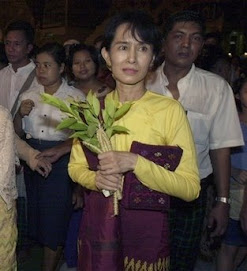


 Posts


