News and Articles on Burma Wednesday, 16 November, 2011 ------------------------------------------------- US Calls for More Change in Burma Asean ministers 'to approve' Burma as 2014 chair Burma set to defy critics with nod as Asean host Leading article: It's not yet spring in Burma ASEAN foriegn ministers back Burma as chair What About Asean Problem Child Burma? Rare Burma monk protest in second day MNDF to strengthen itself by adding former rebel leaders IMF to work with Burma in revising currency exchange policy Amnesty Still Uncertain as Prisoners Transferred Than Shwe's Grandson Visits France: Sources Monks Continue Political Protest in Mandalay Shan party hopes to regain seat lost last year Press release by the Shan Herald Agency for News ---------------------------------------------- US Calls for More Change in Burma By LALIT K JHA/ Washington Wednesday, November 16, 2011 Hours before US President Barack Obama landed in Australia, a top White House official said there have been positive changes in Burma recently and that the US wants those changes to continue. "We have seen some positive movement [in Burma], but of course we'd like to see a continued change in the behavior of the government with respect to human rights," Deputy National Security Advisor Ben Rhodes told reporters travelling with Obama on his way to Canberra. Meanwhile, the US State Department welcomed recent news reports from Burma according to which the opposition leader, Aung San Suu Kyi, will be contesting upcoming by-elections in the country. "We've seen some positive developments, or signs, from the government in Burma. We've had some good discussions with the government," State Department spokesman Mark Toner told reporters at his daily news conference. "We have said that we want to see concrete and positive steps, including the release of all political prisoners. We would also like to see an opening-up of their political system there," Toner said. The US spokesman said that until these concrete steps are taken, the US administration will not change its policy of economic sanctions against the Burmese government. "We believe that our discussions thus far have been positive. They've been constructive, but we're looking for more concrete action," Toner said. Meanwhile, speaking in Bali, Asean Secretary-General Surin Pitsuwan said that "things are moving in the right direction, with some fundamental changes taking place," in reference to Burma's attempt to meet conditions to chair the bloc in 2014, a decision that the Asean leaders are expected to make at the Bali summit this week.http://www.irrawaddy.org/article.php?art_id=22466 ------------------------------------------- Asean ministers 'to approve' Burma as 2014 chair Published: 16/11/2011 at 02:32 AM Online news: Asia Southeast Asian ministers said Tuesday they would approve Burma's bid to chair their 10-member bloc in 2014, in a major boost for its new government after a series of reform gestures. A policeman mans his post while tourists stroll at the Nusa Dua convention and resort enclave, where the flags of the Association of Southeast Asian Nations (ASEAN) are displayed, in Bali. Southeast Asian ministers said Tuesday they would approve Myanmar's bid to chair their 10-member bloc in 2014, in a major boost for its new government after a series of reform gestures. Their move goes against warnings that giving Burma's nominally civilian administration the diplomatic prize so quickly will remove the incentive for more fundamental reforms in a nation still accused of major rights abuses. "Everybody agrees to Burma, 2014," Malaysian Foreign Minister Anifah Aman told reporters at Association of Southeast Asian Nations (Asean) talks on the Indonesian resort island of Bali. "They have taken positive steps toward democratisation. We should encourage them more by letting them host the meeting," he said. The bloc's leaders will make a formal decision this week based on the ministers' recommendation. In 2006, Burma was forced to renounce the Asean rotating presidency in the face of intense criticism over its human rights record and failure to shift to democracy. But since elections a year ago that ostensibly ended decades of military rule, the new regime has unveiled surprising measures including prisoner releases that have begun to rehabilitate the nation's pariah status. A decision to allow Burma to chair Asean would involve it hosting the 10-nation group's summit, as well as the wider East Asia Summit that includes Burma's arch-critic the US, which maintains sanctions against the regime. But Burma's Foreign Minister Wunna Maung Lwin indicated that the decision was settled. "All the ministers support Burma's chairmanship in 2014 and I welcome the decision," he told reporters. Tan See Seng from the S. Rajaratnam School of International Studies in Singapore said the decision would be a dream come true for Burma's leaders who have long sought legitimacy and chafed against Western sanctions. "Burma has really been putting in the right moves -- putting on a good show -- partly in regards to freeing up the political system, albeit in a very limited way," he told AFP. "I think that for Asean leaders, giving Burma the chair would be a way of patting them on the back and encouraging them to continue what they have been recently doing domestically." The United States however appeared to cast doubt on its own participation in any summit in Burma. "Our understanding of Asean practice is that it is not normal to name a host three years in advance, and we think it would be premature to select Burma given its record on a range of issues," a senior Obama administration official said, on condition of anonymity. Southeast Asian lawmakers also voiced concern that granting Burma the prize prematurely could end the reform process, and that it should introduce more concrete measures before being rewarded. "This is to ensure that Burma will not just fool Asean into getting the chairmanship, and that they will continue with the democratic process," said Eva Sundari Kusuma from Asean's Inter-parliamentary Burma Caucus. "Our call is very clear. Let us postpone. But if Asean agrees to let Burma be the chair of Asean, then they must put some conditionalities such as a specific action plan including the release of prisoners." Burma's new administration, which is staging its diplomatic coming-out party in Bali, has surprised critics by holding direct talks with opposition leader Aung San Suu Kyi and freezing work on an unpopular mega-dam. It freed some 200 dissidents from last month but caused disappointment by leaving many figures behind bars, and another mass release expected for Monday has been delayed for reasons that remain unclear. There also concerns over whether President Thein Sein will follow through on the moves already made, given the risk of a backlash by hardliners who may not share his apparent enthusiasm for change. Indonesian Foreign Minister Marty Natalegawa said Asean's leaders would make a formal decision on the chairmanship issue when they meet later this week. "We discussed it thoroughly. All those who have spoken spoke in a very positive note," he said after ministerial talks Tuesday. "I would be surprised if there is any dissenting view. "The overwhelming sense is that there are positive conditions for Burma's chairmanship but we hope that this chairmanship would bring more momentum for change in Burma." http://www.bangkokpost.com/news/asia/266498/asean-ministers-to-approve-burma-as-2014-chair ------------------------------------------------ Burma set to defy critics with nod as Asean host Published: 16/11/2011 at 02:32 PM Online news: Asia The United States and activists criticised a plan to hand the chairmanship of Southeast Asia's regional bloc to Burma, which ministers are set to endorse Wednesday, calling it premature. Myanmar Foreign Minister U Wanna Maung Lwin (L) shakes hands with Indonesian Minister for Political and Security Djoko Suryanto (R) before the Association of Southeast Asian Nations (ASEAN) Political Security Community Council meeting in Nusa Dua, on Indonesia's resort island of Bali on November 16, 2011. Foreign ministers from the Association of Southeast Asian Nations (Asean) have said that Burma's military-backed government deserves the diplomatic prize as a reward for a series of reform gestures since elections a year ago. But critics say that allowing Burma to host the bloc's summit and the wider East Asia Summit in 2014 could remove the incentive for more fundamental change in a nation still accused of major rights abuses. The United States, which under the arrangement would be expected to send its president to attend the 2014 summit, has already cast doubt over its participation. "Our understanding of Asean practice is that it is not normal to name a host three years in advance, and we think it would be premature to select Burma (Burma) given its record on a range of issues," a senior administration official said Tuesday, on condition of anonymity. Burma, long an international pariah under military rule, was forced to renounce Asean's rotating presidency for 2006 in the face of intense criticism over its human rights record. But after Asean talks on the Indonesian resort island of Bali Tuesday, Malaysian Foreign Minister Anifah Aman said the 10-member bloc had agreed to hand Burma the post in 2014. "They have taken positive steps toward democratisation. We should encourage them more by letting them host the meeting," he said. The ministers' recommendation is expected to be announced Wednesday, with the region's leaders making a formal decision later this week. Burma's nominally civilian administration -- led by a former member of the junta that ruled for decades -- has made some conciliatory moves since the election that was boycotted by democracy icon Aung San Suu Kyi. Just eight months after being sworn in, it has held direct talks with Suu Kyi, frozen work on an unpopular mega-dam and passed a law giving workers the right to strike. It freed some 200 dissidents from prison last month but caused disappointment by leaving many figures behind bars, and another mass release expected to be announced on Monday has been delayed. Campaign groups said that Burma had not done enough to win the right to helm Asean and receive the accompanying air of international legitimacy. "In principle we see Burma is not ready to chair Asean," said Agung Putri Astrid, executive director of the Asean Inter-Parliamentary Burma Caucus. "Necessary conditions" remained unfulfilled, she said, including the release of all political prisoners and legal guarantees of freedom of expression. "There are some people in the government who eagerly want to have more changes but it is a very tough job for the government to convince the old guard that this movement will go to a better situation for Burma." Elaine Pearson, deputy director of Human Rights Watch's Asia division, said that further benchmarks that should be attached to Burma's chairmanship included ending abuses in ethnic minority areas. Political prisoners should not be treated as "bargaining chips to appease the international community", she said. "I don't think the international community should be fooled by these small steps and should ensure larger steps are put in place." Suu Kyi said this week that events over the past year had been "encouraging" and a series of high-level Western envoys have gone to the capital Naypyidaw to assess the mood for themselves. "It is clear that there are grounds for cautious optimism, but the picture is mixed," said the latest envoy to visit, Britain's International Development Secretary Andrew Mitchell, according to a BBC report. http://www.bangkokpost.com/news/asia/266565/burma-set-to-defy-critics-with-nod-as-asean-host ---------------------------------------------- Leading article: It's not yet spring in Burma Wednesday 16 November 2011 Is Burma turning the corner? Andrew Mitchell, the International Development Secretary, does not rule out the possibility: there were "grounds for cautious optimism", he said yesterday, ahead of his trip to the country, the first by a British minister for decades. And the Association of South-East Asian Nations certainly thinks so: yesterday it let it be known that the Burmese regime's reforms of the past few months are to be rewarded with the organisation's rotating chair for 2014, a major diplomatic prize. In the past four months, President Thein Sein, a retired general, has pushed through a number of measures designed to convince the outside world that his government is serious about bringing reform to Asia's most scandalously ill-ruled nation. He has held talks with Aung San Suu Kyi, eased censorship rules to allow her face and her words to appear on the newsstands for the first time in 20 years, set free more than 200 of the approximately 2,000 political prisoners and legalised trade unions. He pleased the masses and surprised the outside world by freezing work on a Chinese-sponsored dam on the Irrawaddy, declaring it "against the will of the people". All these developments are welcome, but the President has been careful not to tread on the toes of his reactionary adversaries within the regime. The army continues to commit bloody aggression against the Karen, Shan and Kachin minorities on the borders, and it is reported that more people are being forcibly displaced in south-east Burma than at any time in the past 10 years. None of the privileges of the kleptocratic retired generals or their cronies have been infringed upon. Nothing has happened, in the way of increased government support for health and education, to persuade the ordinary people that last year's phoney election did them any good. The changes, in other words, have been both stunning and cosmetic, which is a measure of the intensity of the repression that Burma's military rulers have clamped on the country for nearly 50 years. Suu Kyi said in a press conference on Monday that she believes the President is "genuine" in his desire for change -- but the fact that she has yet to recommend the lifting of sanctions indicates that there is still much to do. http://www.independent.co.uk/opinion/leading-articles/leading-article-its-not-yet-spring-in-burma-6262660.html ---------------------------------------------- ASEAN foriegn ministers back Burma as chair Foreign ministers of the Association of South East Asian Nations have agreed to recommend that their leaders approve Burma's bid to chair the organisation in 2014. Later this week ASEAN leaders will make a formal decision on Burma's controversial bid to host the 2014 ASEAN summit. After a meeting with his ASEAN counterparts Indonesian Foreign Minister Marty Natalegawa said there was consensus on Burma's chairmanship for 2014. Burma's new administration has won praise for holding direct talks with opposition leader Aung San Suu Kyi and last month freeing about 200 political prisoners. Human rights groups say far more concrete reforms are still needed. ASEAN Secretary General Surin Pitsuwan said the regional bloc has helped push Burma towards change. "What we have said to Myanmar is that we hope there is not going to be a reversal of this positive development trend, and this trend certainly will be conducive to Myanmar's own engagement with the region and with the global community." he said Regional stand-off Dr Surin says he's confident the association can work with China to resolve the long-standing territorial dispute over the South China Sea. On Tuesday ASEAN foreign ministers met in Bali and discussed plans for a legally binding code of conduct for maritime activities in the South China Sea. The disputed region is claimed in whole or part by China, Taiwan, Brunei, the Philippines, Malaysia and Vietnam. Tensions over the seas have escalated this year, with the Philippines and Vietnam accusing China of increasingly aggressive conduct. But ASEAN chief Surin Pitsuwan has told Radio Australia China and ASEAN can work together to manage their differences. "That is important because we need the confidence for the region, because that particular region is so critical to international commerce, so it is important that we could sit down and talk, and begin to talk about the code of conduct, which will be more binding." he said. American engagement US President Barack Obama will take part in the East Asia Summit on the Indonesian island of Bali on Saturday. Analysts say the President is seeking to reassure Southeast Asian allies of the U-S commitment to the region. Dr Surin said the Obama administration recognises the need to engage with Asia. "I think they are very sincere in saying that this is the most critical region for their own interests, for their own economy, in the future. If it is going to recover from its own economic problems, they will have to engage with East Asia." he said. http://www.radioaustralianews.net.au/stories/201111/3368342.htm ---------------------------------------------- Jakarta Globe What About Asean Problem Child Burma? November 16, 2011 Obama Must Raise Concerns About Indonesia's Rising Religious Intolerance: US Commission 12:39pm Nov 16, 2011 Indonesian Foreign Minister Marty Natalegawa said on Tuesday that a number of Asean member countries had expressed their support for Burma's bid to chair the regional grouping in 2014. Natalegawa did not specify which countries backed Burma's bid. He said foreign ministers from the 10-member Association of Southeast Asian Nations would decide today whether to endorse Burma's bid. "I have to say the sentiment had been positive," he said. "[All the Asean countries] recognized the positive steps occurring in Myanmar [Burma] over the last few months." Burma joined the group in 1997 and instantly became a source of controversy, both inside and outside the bloc. Some critics said that sanctions imposed on Burma by the West for its appalling human rights record hampered development in the rest of Asean. Countries in the grouping have been pushing for more democracy in Burma in exchange for lobbying Western countries to life sanctions. But allowing Burma to assume the chairmanship of Asean could provoke Western boycotts of some Asean meetings, which would be an embarrassment for the region of 600 million people at a time when it wants to be seen as a counterpoint to China's growing influence in Asia. The United States and the European Union have applauded the freeing of political prisoners in Burma, but say they want to see more reforms before they consider lifting economic sanctions imposed in response to rights abuses by the country's military leaders. Derek Mitchell, a special US envoy for Burma, has said violence has continued against ethnic minorities in the rural north and east, and that there are "credible reports" of continuing human rights abuses against women and children. Burma's government is preparing to release prisoners under an amnesty, for the second time in just over a month, "very soon" and more political detainees should be among them, a senior official said on Sunday. Details of the amnesty would become clear by today, the official said. Diplomats say other factors play into Burma's desire to open up, like a need for technical assistance from the World Bank and other multilateral institutions that cut off ties years ago in response to rights abuses, including deadly crackdowns on pro-democracy uprisings in 1988 and 2007. There has been growing frustration in Southeast Asia over Burma's isolation as the region approaches a European Union-styled Asean community in 2015. Natalegawa recently met with Burma's leaders in Rangoon and with pro-democracy leader Aung San Suu Kyi, the first meeting by an Asean chair with the Nobel Peace laureate. Separately, Indonesia's coordinating minister for defense and political affairs, Djoko Suyanto, said Asean leaders would discuss other pressing issues today, like the ongoing border dispute between Cambodia and Thailand. He said Asean countries had agreed on different mechanisms and formats for resolving conflicts in the region, and would use them as a guideline. Suyanto said eight issues were being discussed by senior officials and foreign ministers that touched on regional politics and security. Several defense and military cooperation agreements had already been reached at the summit, he added. Arriving in Bali from the Asia-Pacific Economic Cooperation summit in Hawaii on Tuesday, President Susilo Bambang Yudhoyono immediately inspected security preparations for the Asean Summit, which will kick off on Thursday The summit will also welcome other heads of state including US President Barack Obama, Chinese Prime Minister Wen Jiabao and Japanese Prime Minister Yoshihiko Noda. It is expected to produce several declarations including one that involves the strengthening of the Asean-East Asian economic relationship, as well as comprehensive partnerships between Asean and the United Nations. The Bali summit is also scheduled to discuss the Master Plan on Asean Connectivity, an ambitious project to link the region through a network of standardized roads, trains and ferries to boost trade with neighboring economic powerhouses India and China. The delegates are also likely to discuss the recent territorial maneuvering in the South China Sea, where China and several Asean members have disputed claims. China lays claim to most of the sea, claims disputed by Asean members Brunei, Malaysia, the Philippines and Vietnam. Diplomats in Vietnam and the Philippines have privately expressed concern that Beijing is using its economic influence over some Asean members to prevent the bloc from steering negotiations over conflicting claims and have sought US help to steer opinion in their favor. Antara, Reuters & JG http://www.thejakartaglobe.com/politics/what-about-asean-problem-child-burma/478730 ------------------------------------------------ BANGKOK POST Rare Burma monk protest in second day Published: 16/11/2011 at 03:32 PM Online news: Asia A rare protest by Buddhist monks in Burma entered a second day Wednesday, as Southeast Asian nations announced a plan to let the military-dominated country chair their regional bloc. Monks accept supplies from outside after they locked themselves inside a religious building to protest for the release of all political prisoners, in central Myanmar city of Mandalay on November 15, 2011. The five monks are demonstrating at a monastery in Mandalay, the country's second-largest city, to demand peace and the immediate release of political prisoners, and they have vowed to continue their action until Friday. Rallies by monks are extremely unusual in Burma, and this is thought to be the first since mass protests led by clergy in 2007 -- known as the "Saffron Revolution" -- were brutally quashed, with the deaths of at least 31 people and the arrest of hundreds of clerics. Ministers at a meeting of the Association of Southeast Asian Nations (Asean) on the Indonesian island of Bali were Wednesday set to endorse a plan to pass the rotating chairmanship to Burma in 2014. Around 500 people, mostly monks, gathered at Masoeyein monastery to hear the protesters give a speech, an AFP reporter on the scene said. "I support their demands," said local resident Khin Maung Tun, 27, as he delivered food offerings at the compound, which is home to some 600 monks. "So I came here to listen to their speech and show my support." The five demonstrators attracted around 500 onlookers when they began their protest on Tuesday, after an expected amnesty for political detainees failed to materialise. They unfurled banners in English and Burmese reading: "Free all political prisoners" and "Stop civil war now" -- a reference to the decades-long conflict between the army and ethnic minorities. Their third demand is freedom of speech for monks, Ashin Sopaka, the leader of the five protesters, told AFP at the monastery. "I think things are going well," he said, but he admitted he feared a crackdown by the authorities. "We are hoping for the best but preparing for the worst." The monks originally started their protest at a different religious building in Mandalay, but following talks with senior clerics in the area agreed to move their protest to the Masoeyein monastery. The release of all of the country's political prisoners, whose exact numbers remain unclear, is one of the major demands of Western nations which have imposed sanctions on Burma. Authorities had been expected to release some political detainees on Monday before President Thein Sein attends the Asean meeting later this week. But officials said the move was put off at short notice for reasons that remain unclear. http://www.bangkokpost.com/news/asia/266572/rare-burma-monk-protest-enters-second-day ---------------------------------------------- MNDF to strengthen itself by adding former rebel leaders Wednesday, 16 November 2011 11:54 Kun Chan Chiang Mai (Mizzima) -- The Mon National Democratic Front (MNDF), a political party that was dissolved by the former junta, says that it will strengthen itself by adding eight former leaders of the armed rebel New Mon State Party (NMSP) to its ranks. In October, former NMSP central committee members held meetings in Mon State and decided to join up with the MNDF to take part in political activities, according to sources close to them. The MNDF has not identified the eight Mon leaders, but sources said that they may include former NMSP joint secretary Nai Chan Twe, Nai Lawi Mon, Nai Htaw Ein, Nai Nyan Tun, Nai Kaw Hta and former central executive committee member Nai Tin Aung, who retired from the NMSP in 2000. On November 20, the MNDF will hold a meeting in Mawlamyaing, the capital of Mon State. Min Soe Lin said that more than 50 people including former NMSP leaders, scholars and nationalists have been invited. In the meeting, new members will be accepted and they will discuss whether the MNDF will register as a political party or not, he said. "Mainly, we will discuss ways to strengthen our party. Now, our leaders in Rangoon are talking with ethnic political parties and the NLD [National League for Democracy]. We will review their decision and decide if our party will register or not," Min Soe Lin said. The NLD, led by Aung San Suu Kyi, will hold a central committee meeting on Friday to decide whether the NLD will register as a political party or not before the coming by-elections. Under the Constitution, a political party needs to contest in at least three constituencies to remain a legal political party. Presently, the MNDF and some political parties including the NLD are cooperating with the Committee Representing People's Parliament and the United Nationalities Alliance. The MNDF was formed on October 11, 1988. Nineteen MNDF candidates contested in the 1990 general elections and five won seats. The former junta refused to recognize the 1990 elections result. In 1991, a number of MNDF leaders were arrested and the former junta dissolved the party on March 19, 1992. http://www.mizzima.com/news/inside-burma/6190-mndf-to-strengthen-itself-by-adding-former-rebel-leaders.html ---------------------------------------------- IMF to work with Burma in revising currency exchange policy Thursday, 03 November 2011 12:36 Aye Lea Chiang Mai (Mizzima) -- A team from the International Monetary Fund (IMF) is prepared to cooperate with Burmese authorities as they revamp the country's currency exchange policy. The announcement came at the end of a two-week assessment visit by a team led by Ake Lonnberg, a senior financial sector expert in the IMF Monetary and Capital Markets Department. The team consulted with government officials, banks and representatives from public and private companies in Naypyitaw and Rangoon from October 19 to November 1. The goal of the redesign is to stabilize and unify the currency exchange rate system with international monetary standards and practices. The state-run newspaper New Light of Myanmar reported on Tuesday that the team discussed an initial diagnostic assessment of the legal framework and actual market practices governing the exchange rate system of Burma and, especially, the existing exchange restrictions and multiple currency practices. A statement issued by the team said: "IMF members accepting the obligations of Article 8 undertake to refrain from imposing exchange restrictions on the making of payments and transfers for current international transactions or from engaging in discriminatory currency arrangements or multiple currency practices without IMF approval. "The team will continue its work from the IMF headquarters in cooperation with Burmese authorities as they formulate their policies towards accepting the obligations of Article 8. The team expects to visit Burma again for a follow-up mission in early 2012," the statement said. The Washington-based IMF comprises 187 countries. IMF may provide monetary help and advice to its members and helps in stabilizing their monetary and financial policies, creating more job opportunities and promoting economic development and poverty alleviation. On Sunday, Burma's opposition leader Aung San Suu Kyi and Union Minister Aung Kyi met for the fourth time and discussed the importance of free trade and commerce and a free monetary circulation system for the economic development of the nation. The IMF has postponed offering monetary support to Burma, which became an IMF member in 1952. In September, Mizzima reported that Burmese economist Khin Maung Nyo said the government needed to establish clear laws and regulations regarding currency exchange or many people would continue to use the black market for exchanging foreign currencies. "Nobody wants to buy and sell foreign currencies in the black market. But the black market will be dissolved only if suitable currency exchange laws are imposed," Khin Maung Nyo said. On August 30, Upper House MP Thein Win submitted a proposal in Parliament that urged the government to amend, draw and prescribe administration laws in the Ministry of Finance and Revenue. Minister for Finance and Revenue Hla Tun said that laws have been amended and modified and a relevant bill has been submitted to Parliament. Hla Tun told Parliament that the ministry had coordinated with the Attorney General's Office to amend The Pension Act, The Foreign Exchange Regulation Act, the Central Bank of Myanmar Act and the Myanmar Financial Institution Act. A weak foreign currency exchange is cited as a major reason foreign companies are slow to enter the Burmese economy. A Wall Street Journal article in August attributed the government's inability to change its currency rate system as partly due to a lack of foreign reserves and a lack of support from the International Monetary Fund, which in turn is a result of pressure from the U.S. The Network Myanmar group has estimated that official reserves are currently estimated at around US$ 5.5 billion. External debt is about US$ 8.6 billion, including arrears of US$ 3.9 billion. The official exchange rate has been pegged at 8.5 kyat since 1977, currently equivalent about 5.5 per US$, while the parallel market rate, which is now generally used for external transactions, stands at around 760 kyat per US$. http://www.mizzima.com/business/6144-imf-to-work-with-burma-in-revising-currency-exchange-policy.html ---------------------------------------------- Amnesty Still Uncertain as Prisoners Transferred By WAI MOE Wednesday, November 16, 2011 Burma's prominent dissident Min Ko Naing and other political prisoners are being transferred to different jails as prospects for a further amnesty remain in doubt, claim sources in Rangoon. And it seems unlikely that those transferred will be included in any forthcoming release with the move considered a reaction to humanitarian calls to relocate remaining incarcerated dissidents to be closer to their relatives on the outside. Alongside Min Ko Naing, leader of the 88 Generation Students group, other well known political prisoners reportedly being transferred include Hkun Htun Oo of the Shan Nationalities League for Democracy, leading monk Ashin Gambira, prominent female activist Nilar Thein of the 88 group, Pandeik Tun also of the 88 group, Nyi Pu who won a seat in the 1990 elections and labor activist Thuyein Aung. "As far as I know from family members and prison officials, Min Ko Naing will be transferred from Kengtung to Rangoon by air," said Thein Than Tun, a member of the 88 Generation Students group who is monitoring the situation from Rangoon. "U Hkun Htun Oo will be transferred from Putao Prison in Kachin State [in northern Burma] to Thaungoo Prison in Pegu Region through Myitkyina and Mandalay," he added. "Ashin Gambira and U Nyi Pu will be transferred from Kalay Prison." Saw Thet Tun, a former political prisoner who was released last month from Tharyawaddy Prison in Pegu Region, told The Irrawaddy on Wednesday that he heard Nilar Thein had arrived in Tharyawaddy Prison that afternoon. Meanwhile, a diplomatic source in Rangoon who is in touch with government officials said he heard almost all inmates of the 88 Generation Students group who are serving 65-year sentences would be transferred from remote prisons. "All those serving 65 years except Ko Mya Aye in Thaunggyi Prison will be moved to different prisons. We will have to see if it is to Insein Prison [in Rangoon]," he said. In the months following August 2007, 37 members of the 88 Generation Students group were arrested and imprisoned for terms up to 65 years. Currently 28 members of the group including Min Ko Naing, Ko Ko Gyi and Htay Kywe remain in prison while some members were released in the May and October amnesties. The transfer of political prisoners comes shortly after the Myanmar National Human Rights Commission wrote an open letter to President Thein Sein regarding "Prisoners of Conscience" which appeared in state-run-newspapers on Sunday. The 15-member body includes retired senior officials, diplomats, academics, doctors and lawyers and is supposed to be independent of government influence. In the letter, the commission said it "again humbly requests the president as a reflection of his magnanimity to include those prisoners when a subsequent amnesty is granted." "If for reasons of maintaining peace and stability, certain prisoners cannot as yet be included in the amnesty, the commission would like to respectfully submit that consideration be made for transferring them to prisons with easy access for their family members," the statement continued. Following the letter, family members and friends of political prisoners hoped for further releases on Monday, as the previous Oct.12 amnesty was announced by Thein Sein the day after receiving an open letter from the commission. "According to our list, around 160 political prisoners including 40 monks and 35 military intelligence officers who were arrested in 2004 are to be released in the coming amnesty," said Thein Than Tun. "So it seems all political prisoners will not be released." "However, currently the possible future releases are not set in stone as the National Defense and Security Council [the highest authority in Burma] has not yet passed the amnesty," he added. Despite hopes for an amnesty, other dissident activities remain under suppression. Nay Myo Zin, a former military captain, was sentenced on Aug. 26 to 10 years imprisonment under the Electronic Act for contacting former military officers in exile through the internet. On Nov. 2, Nay Myo Zin's appeal was rejected by the Rangoon Region Court. His lawyer, Hla Myo Myint, told The Irrawaddy that his client was barred from getting medical care for back pain in prison which he suffered as a result of being tortured during interrogation. Five Buddhist monks launched a protest at Maha Mya Muni Monastery in Mandalay on Tuesday calling for the immediate and unconditional release of political activists who are being detained in prisons across the country. http://www.irrawaddy.org/article.php?art_id=22467 ---------------------------------------------- Than Shwe's Grandson Visits France: Sources By THE IRRAWADDY Wednesday, November 16, 2011 The grandson of Burma's former military dictator, Snr-Gen Than Shwe, reportedly traveled to Europe late last month after being granted a visa by the French Embassy in Rangoon, according to sources in the former Burmese capital. Nay Shwe Thway Aung, 21, left for Europe on Oct 26 despite a visa ban that prohibits senior Burmese military leaders and their families from traveling in the European Union, the sources said. He was allegedly issued a Schengen visa, which allows unrestricted travel within 25 European countries, including 22 in the EU. A French embassy official in Rangoon declined to comment on the report, on the grounds that visa applications are considered confidential. However, the official added that no visas have been issued to anyone on the sanctions blacklist. Since formally transferring power to a nominally civilian government in March, Than Shwe and his family have kept a low profile. However, Nay Shwe Thway Aung, also known as Poe La Pyae, has often been the subject of rumors in the past. According to a leaked US diplomatic cable, in January 2009, he urged his grandfather to make a US $1 billion bid to buy the Manchester United football club. The plan was dropped, however, because at the time Than Shwe's regime was still facing severe criticism from the United Nations over its "unacceptably slow" response to Cyclone Nargis the previous year. In December 2010, Burmese exiled media reported that Nay Shwe Thway Aung had ordered his assistants to physically assault Win Htwe Hlaing, a business rival and the son of former Maj-Gen Win Hlaing. A similar incident was reported the previous year, when he allegedly ordered his associates to destroy a coffee shop in Rangoon owned by former army captain Tay Zar Saw Oo, the son of the regime's Secretary 1 Gen Thiha Thura Tin Aung Myint Oo, who is currently serving as vice president. http://www.irrawaddy.org/article.php?art_id=22468 ---------------------------------------------- Monks Continue Political Protest in Mandalay By THE IRRAWADDY Wednesday, November 16, 2011 Five young Buddhist monks continued their peaceful anti-government protest in Mandalay for the second day on Wednesday, while the Burmese authorities tried to disrupt the event by forcing elderly Buddhist clergy to prohibit the monks from staging the protest in their monasteries. The protests began on Tuesday morning when the group of monks locked themselves into a religious building near the Maha Myat Muni Pagoda, the most famous Buddhist pilgrimage site in Mandalay, Burma's second largest city in which the country's largest congregation of Buddhist monks resides. For the ensuing several hours, the protesting monks used a loudspeaker to give anti-government speeches, during which they called for the release of political prisoners, an end to armed clashes in ethnic minority areas and greater freedom of expression in Burma. In addition, the monks hung large posters on the walls of the building that contained political slogans written in both Burmese and English. Apparently at the behest of the government authorities, elderly Buddhist monks requested that the young protesters leave the grounds. Towards Tuesday evening, the protesting monks agreed to the request and moved to another monastery, in front of which they continued their protest. U Marga, one of the five protesting monks, told The Irrawaddy that from 1-2 pm on Wednesday they once again used a loudspeaker to make political statements. He said that the he and his fellow protesting monks will continue until their demands are met. Nearly 500 people gathered at the scene of the protest on Wednesday. Many of them signed a petition listing the monks' political demands, which will be sent to Burma's President Thein Sein. According to U Marga, elderly monks from the monastery where they protested on Wednesday told them that their actions were not in line with the code of discipline for monks, and requested that they once again move to another location. The authorities in Mandalay have yet to make any direct intervention in the protests, but rather have chosen to handle the issue with the help of elderly Buddhist monks, according to local sources. This may be an effort to avoid a repeat of the 2007 mass protests which were sparked by the government's harsh response to an anti-government march by Buddhist monk in the town of Pakkou in Central Burma. The protests also come at a time when Burma's new quasi-civilian government is making tentative political and economic reforms while continuing to wage wars with ethnic minority groups, particularly in Kachin State, and detain many political prisoners. http://www.irrawaddy.org/article.php?art_id=22469 --------------------------------------- Shan party hopes to regain seat lost last year Wednesday, 16 November 2011 17:34 Hseng Khio Fah The Shan Nationalities Democratic Party (SNDP), the third largest winning in the 2010 November elections, is planning to re-contest in the coming by-elections at the vacant seat for the Upper House in Northern Shan State's Lashio district, which it had lost to its rival junta army-backed Union Solidarity and Development Party (USDP) due to advance votes, according to party vice Chairman Sai Hsawng Hsi. The party hopes it will regain it back as it has made itself well prepared due to lessons learned from last year. The person whom the party will nominate is well educated and is also considered as one of the most favored by Shan people as well, said Sai Hsawng Hsi, while refusing to identifying the person. It was Sai Kham Leng, a respected former educator, who contested last year. But he lost the seat to his rival USDP candidate Dr. Sai Mawk Kham, at present Vice President #2. According to party members, it was, in fact, their candidate who won the seat on the election day with thousands of votes more. However, on the next day, the USDP's candidate was announced the winner, after all the advance votes were counted. Sai Kham Leng was said to have received 28,861including 271 advance votes and Dr. Sai Mawk Kham 43,641 including10, 140 advance votes. "So we are planning it well as we have learned our lessons. At that time we did not have many people to help and not much time because it was countrywide. But this time we all are going to help at the contest. And the person who will take part in the contest is also the one who the people can accept," Sai Hsawng Hsi said. The party however has yet to make an official decision as the date to hold the by-elections is not announced yet. There are 48 seats available in parliament, 40 seats in Lower House, 6 in Upper House and 2 in division/state houses, according to Eleven Media Group's report. The other vacant seat in Shan State, is at Kalaw Township for the Shan State Assembly. The party however will contest only for the Upper House seat in Lashio, Shan State North, said Sai Hsawng Hsi. During the November 2010 polls, the SNDP contested for 114 seats in the whole Shan State, North, East and South, 35 seats in Kachin State and 6 seats in Sagaing Division and 1 in Mandalay Division. It won the second largest seats in Shan State, 31 to the regime proxy party's 54 and was given 2 portfolios: Industry-mining and Construction.http://shanland.org/index.php?option=com_content&view=article&id=4208:shan-party-hopes-to-regain-seat-lost-last-year&catid=85:politics&Itemid=266 -------------------------------------------- Press release by the Shan Herald Agency for News Wednesday, 16 November 2011 00:00 S.H.A.N. Press release by the Shan Herald Agency for News November 16, 2011 New report: Drugs proliferating across Shan State under Burma's new government The latest Shan Drug Watch report, released today, reveals that opium cultivation and drug production have surged across Shan State in areas of government control since Burma's 2010 election. Survey results show opium was grown during the 2010-2011 season in 45 out of 50 Shan townships controlled by government troops, while remaining ceasefire areas along the China-Shan border were opium free. The report exposes how the regime's policies of military expansion and nurturing of "People's Militia" forces in Shan State are fuelling the drug trade, as these forces are given the green light to deal in drugs in exchange for suppressing resistance groups. "There has been a massive increase in poppy cultivation, as well as heroin and methamphetamine production, in the regime's militia-controlled areas," said Khuensai Jaiyen, principal author of the Shan Drug Watch report. The report profiles seven druglords, all militia leaders, now serving as MPs for Burma's ruling party, the Union Solidarity and Development Party in Shan State. They had promised voters they could grow poppies freely if they were elected. "If Burma's generals are serious about making Burma drug-free by 2014, they must stop their war-mongering and negotiate a political settlement to the civil war," said Khuensai Jaiyen, referring to Burma's drug-free target date, set a year before that of ASEAN. Favourable weather and intensive cultivation made last season's opium harvest the best in years, according to farmers. In some areas, two to three crops of opium were grown during the year, and in central Shan State farmers have even started harvesting sap from the stems as well as the pods. Despite the increased availability of opium and heroin, methamphetamine or "yaba" has become the most popular drug among youth in Shan State, where the cost of a pill is as low as 1,500 kyat (US$1.7) compared to 100 baht (US$3.3) per pill across the border in Thailand. Shan Drug Watch is a project under the Shan Herald Agency for News. Contact person: Khuensai Jaiyen +66 81 531 2837 http://shanland.org/index.php?option=com_content&view=article&id=4206:press-release-by-the-shan-herald-agency-for-news&catid=89:drugs&Itemid=286 __._,_.___
Wednesday, November 16, 2011


Tuesday, November 15, 2011
News and Articles on Burma-Monday, 14 November, 2011-UZL
News and Articles on Burma Monday, 14 November, 2011 ------------------------------------------ Suu Kyi: Burma taking positive steps Sino border town under curfew Aung San Suu Kyi renews call to free political prisoners Ten dead in Burma bombing Burma delays prisoner amnesty Despite Disagreement, NLD Stalwart Stands Behind Suu Kyi Mon Leaders Meet With NMSP Suu Kyi Says End of Sanctions Depends on Govt Asean Urged to Put Burma Abuses on Agenda ASEAN urges not to reward Burma for superficial reforms ------------------------------------------ Suu Kyi: Burma taking positive steps By AP News Nov 14, 2011 6:50PM UTC YANGON, Burma (AP) --- Democracy leader Aung San Suu Kyi said Monday that Burma's government has taken positive steps toward reform in the year since she was released from house arrest but more needs to be done, including freeing hundreds more political prisoners. The Nobel peace laureate, speaking to more than 100 journalists on the anniversary of her release, cited her meetings with minister Aung Kyi and President Thein Sein as progress. "Looking back at the past year, I think I can say that it has been eventful, energizing and to a certain extent encouraging," said Suu Kyi, who was detained most of the past two decades by Burma's former military government. The international community's hopes were not high after the country carefully orchestrated the Nov. 7, 2010, election. As expected, the polls brought to power a proxy party for the military, which ran the country since a 1962 coup. But that perception has changed in recent months, as the new government eased censorship, legalized labor unions, suspended an unpopular, China-backed dam project and began talks with Suu Kyi's pro-democracy movement. There are still key issues to be addressed, however. Suu Kyi on Monday mentioned the plight of both political prisoners and ethnic minorities as well as the need for rule of law and an independent judiciary in the country. "An issue of great importance to all of us who are working for democracy in Burma is that of political prisoners. Some had been released over the last year, but there are still many who remain in prison," Suu Kyi said, using the name for the country that the pro-democracy movement prefers. She said she had no news about wide speculation that the government would announce the release of more political prisoners Monday. "We do not have any specific information on who has been released if anybody has been released at all," she said. A government-appointed human rights body on Sunday urged the president to release political prisoners or transfer them to prisons close to their families, signaling such action may be imminent. Burma's three state-owned newspapers published the open letter from National Human Rights Commission chairman Win Mra calling for an amnesty "as a reflection of magnanimity," or to transfer political prisoners in remote prisons to facilities with easy access for their family members. The letter's publication is significant because the tightly controlled newspapers closely reflect government positions. An amnesty of 6,359 prisoners in October happened the same day state-run newspapers published a similar appeal. A prisoner release in the next few days is also anticipated because a meeting of the Association of Southeast Asian Nations begins Thursday in Bali, Indonesia. Burma is seeking to chair ASEAN in 2014, and the release of political prisoners would be seen as a positive development favoring its bid, which is likely to be decided at this week's summit. No release had been announced by mid-afternoon Monday. Burma is estimated to hold as many as 2,000 political prisoners. http://asiancorrespondent.com/69522/suu-kyi-burma-taking-positive-steps/ ------------------------------------------ Sino border town under curfew Monday, 14 November 2011 16:42 Hseng Khio Fah Namkham, one of Shan State's northernmost townships bordering China, has been under virtual curfew after a bomb explosion occurred near the police station last week, killing one police officer and injuring four, according to sources from the border. It was announced through loudspeakers by headmen of the villages and quarters that no one was allowed to be outside after 21:00 until 6:00 (local time). Otherwise authorities will not take responsibility for anyone caught outside after the curfew. It was reportedly enforced by high ranking officials from Naypyitaw. But there has been no information how long the curfew will last, said a local source. Meanwhile, the township is one of the places where the Burma Army and Kachin Independence Army (KIA) fighting taking place. As a result, any civilian seen outside after the curfew is reportedly being recruited by the Burmese Army to give porter service, she said. "The outcome is no one even the animals are seen hanging out on the street even though the time is not yet 9 p.m. The town is so quiet now. It is therefore a problem for traders and vendors who want customers," she said. Last Thursday on 10 November, a bomb explosion took place in front of the town's police station, killing one police officer Zau Htu Khawng Zang and seriously wounding two police corporals and two civilians. One female student caught taking photographs of the carnage was detained and later released after village authorities spoke for him, according to another source. Since security in the town has tightened and everyone crossing and passing the police station is strictly checked and asked to show ID cards by Burma Army authorities, according to local sources. Apart from townships in Shan State, many areas in Kachin State even the capital of the state Myitkyina faced similar situation. Latest report says a bom blast had taken place in Myitkyina downtown last night at around 20:00 killing at least four people and wounding dozens.http://shanland.org/index.php?option=com_content&view=article&id=4201:sino-border-town-under-curfew&catid=86:war&Itemid=284 ---------------------------------------- Aung San Suu Kyi renews call to free political prisoners Reuters YANGON, November 14 - Burma democracy leader Aung San Suu Kyi marked the anniversary of her release from years of house arrest by renewing calls for all political prisoners to be freed and for an end to hostilities between government troops and ethnic rebels. The Nobel Peace Prize laureate also told a rare news conference on Monday that her National League for Democracy (NLD) movement had yet to decide whether to re-register as a political party to contest forthcoming parliamentary by-elections. "It is very important to release all political prisoners. It's not only those of the NLD, but all who want democracy are desirous of this," Suu Kyi said. The US and Europe have long made the release of political prisoners part of their criteria for lifting sanctions. Suu Kyi said on Monday they should remain in place until some reforms had been introduced that benefited the Burmese people. Ms Suu Kyi, Burma's most high-profile former political prisoner, was released from a seven-year stint of house arrest last year and had spent a total of 15 years in detention for her opposition to military rule. A senior interior ministry official said on Sunday there would be details of another general amnesty within the next few days, which would include the release of political detainees. About 230 were freed on October 12, a move welcomed by the west as a step towards long-awaited reforms by the civilian government that took office late in March, ending five decades of unbroken military rule in the former British colony. The NLD said on Monday 591 political prisoners were still in detention, about 200 more than the figure presented by the government. The former junta denied for decades holding any politicians or activists in its jails. Analysts and diplomats believe the government might release more prisoners this week to coincide with the start of an Association of Southeast Asian Nations (Asean) summit on the Indonesian island of Bali. They say an amnesty at this time could boost President Thein Sein's image among his international peers and strengthen his case for Burma taking the rotating Asean presidency in 2014, two years ahead of schedule, a bid widely seen as an attempt to legitimise the new political system. Ms Suu Kyi, however, said reforms for the Burmese public should take precedence over Burma's international image and should also come before any lifting of western sanctions. "It is more important that the people feel the situation is better [domestically] than Burma's becoming the Asean chair," she added. Ms Suu Kyi said there were serious concerns about conflicts between the army and ethnic separatists, particularly in Kachin state bordering China, and she was willing to play a part in any peace process, having urged Thein Sein and the rebel groups to agree on a ceasefire. "What everybody is worried about at present is the lack of peace in the country, especially the fighting going on in Kachin state, which is a cause of concern and sorrow for us," she said. "I am always ready to do my bit to bring about peace in the country." In an open letter sent to Thein Sein in July, Ms Suu Kyi offered to mediate between the government and the rebels, and said national reconciliation was impossible as long as the fighting continued. Separately on Monday, local sources said at least 10 people were killed and 27 wounded in a bomb blast in Kachin's capital, Myitkyinar, late on Sunday. Ms Suu Kyi refused to take questions on whether the NLD, which was forcibly disbanded for boycotting last year's election but continued to operate, would contest by-elections under amended laws that no longer prevent those with criminal records from taking part. The party's leadership would discuss the issue on November 18. A spokesman for the party recently said Ms Suu Kyi might contest one of the vacant parliamentary seats herself. http://www.ft.com/cms/s/0/76ffe29c-0eb9-11e1-b83c-00144feabdc0.html#axzz1dgftN23j ---------------------------------------- Ten dead in Burma bombing A Burmese government official says a bomb blast in the capital of northern Kachin state has killed 10 people. Another 23 people, including some 15 children, were injured in the explosion Sunday evening in the town of Myitkyina, the official, who did not wish to be named, told AFP. The blast occurred in a two-storey house and caused a fire that spread to two neighbouring homes, he said. The explosion appeared to have been unintentional, occurring when a man in the building was "showing others how to plant a bomb", the source said. He added that there were several orphans living in the dwellings, some as young as three. Two other bombs exploded in the same town on Saturday but caused no casualties, according to the state-run New Light of Myanmar newspaper. Burma has been hit by several bomb blasts in recent years, most of them minor, which the authorities have blamed on armed exile groups or ethnic minority rebels. In August, state media accused ethnic fighters in Kachin state of killing seven people who visited a Chinese-run dam at the centre of an ongoing conflict between the army and rebels. -AFP http://www.radioaustralianews.net.au/stories/201111/3365212.htm ------------------------------------- Burma delays prisoner amnesty By AFP Published: 14 November 2011 A release of political prisoners in military-dominated Burma which was expected on Monday has been delayed after a meeting of top officials, sources said. "So far we haven't had any order or instruction from superiors," an official who asked not to be named told AFP, adding that the decision to delay the process was made "at the last minute" by the crucial National Defence and Security Council. Burmese President Thein Sein is due to attend an Association of Southeast Asian Nations (ASEAN) summit on the Indonesian island of Bali later this week, and the official said an amnesty had been expected before his departure. "I think they delayed the process as they only wanted to release the political prisoners slowly with the pardon of the president," the official said. Burma carried out a mass prisoner amnesty last month but this did not include most key dissidents, disappointing observers and the opposition. The release of all of the country's political detainees --- who include democracy campaigners, journalists and lawyers --- is one of the major demands of Western nations which have imposed sanctions on Burma. The reasons for the delay were not clear, but the authorities are now expected to decide on a case-by-case basis which prisoners to release.http://www.dvb.no/news/burma-delays-prisoner-amnesty/18723 -------------------------------------------- Despite Disagreement, NLD Stalwart Stands Behind Suu Kyi By BA KAUNG Monday, November 14, 2011 Win Tin, one of the most influential members of Burma's main opposition party, the National League for Democracy (NLD), has vowed to throw his support behind party leader Aung San Suu Kyi when the NLD makes a decision later this week about whether to run in upcoming by-elections. "I am for the re-registration of our party, but I would say it's too early for us to participate in the formal political framework under a military constitution," said 82-year-old Win Tin, who was one of the co-founders of the NLD along with Suu Kyi. His comments came a day after NLD spokesman Nyan Win broke the news on Sunday that the party, which was officially disbanded in September 2010 because of its boycott of last year's election, might re-register under a recently amended electoral law. He also said it was likely that Suu Kyi, who was previously barred from running for office, would contest one of around 50 Parliamentary seats up for grabs in a by-election expected to be held later this month. Since his release from prison in 2009 after more than 19 years behind bars as a political prisoner, Win Tin has played a key role in the NLD's affairs, including its decision to boycott the Nov 7, 2010, Parliamentary election, which were held a week before Suu Kyi herself was released from house arrest. "The reasons why we boycotted the election last year is because we don't accept the current constitution drafted by the military. There is no change in this constitution yet," Win Tin told The Irrawaddy by phone on Monday. In contrast to Win Tin's views, however, Suu Kyi appears to be be more optimistic about Burma's political direction under the new government of ex-army general President Thein Sein, who she described as "honest, open and straightforward" after a meeting with him in August. The NLD announced on Tuesday that it will hold a major party conference on Friday this week to decide whether to re-register as a political party and contest seats in the national Parliament, which is dominated by the army-backed Union Solidarity and Development Party. The USDP claims to have won around 80 percent of the contested seats in the election, which was marred by heavy vote-rigging. Speaking to Burmese exiled radio stations on Sunday, NLD spokesman Nyan Win hinted that the majority of party leaders, including Suu Kyi, have already reached a decision ahead of Friday's meeting. "Those who oppose the NLD re-registering and joining the Parliament point out that the Constitution must change first before we do that. If it is the government and the Parliament that can change the Constitution, then do we have to wait for them to take these steps? Do we have to wait until they do that before we can do politics? We have to be in the Parliament," said Nyan Win. Nyan Win acknowledged, however, that some grassroots party members are opposed to the move, which they said should not be taken until all political prisoners are released and major amendments are made to the Constitution, which grants the army the power to legally end civilian rule "in times of national emergency." Despite such internal differences, however, Win Tin---who has worn shirts the same blue color as his former prison uniform since his release to protest the continuing detention of around 2,000 other political prisoners---said his faith in Suu Kyi's leadership remained strong, and that he would respect the majority decision of the party, which is now leaning toward party registration and joining the formal political process. "We have differences that we share with each other openly and democratically. But we will work with the unity of the party in mind. As for me, I am too old and don't have any thought about joining the election," he said. Win Tin's remarks contradict a report in the Guardian newspaper published on Sunday that he opposed both the party registration and joining the by-elections. http://www.irrawaddy.org/article.php?art_id=22452 ----------------------------------------- Mon Leaders Meet With NMSP By LAWI WENG Monday, November 14, 2011 Five Mon community leaders met with leaders of the New Mon State Party (NMSP), an ethnic armed group, at the NMSP headquarters in the town of Bee Ree River in Ye Township, Mon State on November 13, according to Mon sources. The five community leaders were sent by Ohn Myint, the chief minister of Mon State, who wrote a letter to the NMSP outlining the issues he wanted discussed. The members of the Mon community delegation were former NMSP executive and central committee members Nai Tin Aung and Nai Soe Myint, Mon National Democratic Front members Nai Thet Lwin and Dr. Min Kyi Winn, and a respected Mon Buddhist Monk, Nai Ketumalar. "Ohn Myint wants to have peace talks with the NMSP, so we came here to discuss it," said Nai Ketumalar. "We still have a little more to talk about today. The NMSP have not made a decision. They say they are going to observe the situation more." "Our party will accept peace talks if the offer meets our party's position," said Col Nyan Tun, the NMSP deputy liaison officer. Some Mon community leaders said that the NMSP should enter into peace talks in order to prepare for its participation in mainstream Mon politics if Aung San Suu Kyi and the National League for Democracy decide to register and compete in future elections. Dr. Min Soe Lin, who is a senior member of Mon National Democratic Front, said, "I do not want to tell them not to have peace talks because I think they know the problem they will have. But I want to tell them to do something when they come to town. Please do not act like in the past, when many of their members resigned from the party." On Oct. 6, three NMSP leaders met with a delegation from the Mon State government in Ye Township that was led by Col Htay Myint Aung, the Mon State minister for security and border affairs. The NMSP entered into a ceasefire agreement with the government in 1995, but the ceasefire collapse in 2010 when the government attempted to force the NMSP to become part of its Border Guard Force under Burmese military control. Meanwhile, on Nov. 10, the Karen National Union set up an eight-member peace commission to hold talks with the Burmese government. http://www.irrawaddy.org/article.php?art_id=22451 ------------------------------------- Suu Kyi Says End of Sanctions Depends on Govt By THE IRRAWADDY Monday, November 14, 2011 Burma's pro-democracy leader Aung San Suu Kyi said at a press conference on Monday that the end of Western economic sanctions depends on the degree of political and human rights progress the country's quasi-civilian government makes. She said that the foreign nations which have imposed sanctions, including the US and the EU bloc, must view significant progress before they are lifted. Suu Kyi's press conference, held at the headquarters of her National League for Democracy (NLD) in Rangoon, marked the one-year anniversary of her release from house arrest. Her remarks made clear that Burma has yet to reach the stage that its people are confident that the country is on the path to true democracy. "There has been some progress within the past year, but not enough yet," she said. "A crucial issue is the rule of law, without which we cannot make progress in the issues of human rights, the release of political prisoners, domestic peace efforts or social and economic development in our country." She also called for a clean government and a fair judiciary to found a democratic nation, stressing that in the continued absence of the rule of law, Burma will not be able to attract foreign investment. But she also reaffirmed her optimism about developments under Burma's new government---which took office through a heavily-rigged election in Nov. 2010---and urged the country's public to be realistic under the changing circumstances. "We need optimistic views and ideas. We have to change our views at a point when they need to change. Based on our beliefs, we also have to take risks at the appropriate time," she said, hinting at the growing possibility that the NLD may re-register under the recently amended Political Parties Registration Law and she may run in the coming parliamentary by-elections. At the press conference, however, Suu Kyi did not make any public announcement or state her opinion about whether the NLD should re-register and contest the parliamentary elections. Suu Kyi also appealed to members of the Burmese military for solidarity with the public and asked both to work together towards the goal of establishing democracy in Burma. "All the army members are also the country's citizens. So are all of us. If all of us are the same public, then I wish to ask why we can't work together. We must be able to do," she said. Her comments highlighted the important role of the army in the country, which had been ruled by successive military dictatorships since 1962, when the military took power from a democratically-elected government in a coup, until the previous regime handed over power to the current nominally-civilian government headed mostly by former military generals. Under Burma's Constitution, the military controls a quarter of the seats in the national Parliament and also wields substantial influence through the National Defense and Security Council, a body that is assumed to make the final decisions regarding the most important aspects of governing the country. Regarding Burma's unresolved ethnic conflicts, Suu Kyi said that both the country's rulers and the ethnic leaders need to restore confidence in each other. The pro-democracy leader also called for the release of the country's remaining political prisoners and noted the discrepancy between the number of political prisoners listed by the NLD and the number claimed by the state-backed Human Rights Commission. On Sunday, the Human Rights Commission sent an open letter to President Thein Sein praising the government for its release last month of about 200 of what they said is the 500 political prisoners in the country, and calling for a further release of prisoners. Suu Kyi, however, said the list of political prisoners gathered by the NLD is longer than 500 persons, and it will look into the matter. http://www.irrawaddy.org/article.php?art_id=22453 ------------------------------------------- Asean Urged to Put Burma Abuses on Agenda By SAW YAN NAING Monday, November 14, 2011 Ahead of the upcoming summit of the Association of Southeast Asian Nations (Asean) in Bali, parliamentarians of member states have called on bloc leaders to include human rights abuses and ethnic conflict in Burma on its agenda. Parliamentarians who form the Asean Inter-Parliamentary Myanmar Caucus (AIPMC) called on Monday for Asean delegates to urgently address concerns regarding democratic reform, ethnic conflict and human rights abuses in Burma at the upcoming 19th Asean Summit in Indonesia. Speaking with The Irrawaddy on Monday, AIPMC Executive Director Agung Putri Astrid said that the slow process of democratic reform in Burma should be seriously considered during the summit. "Political reform is very slow in Burma. We don't see comprehensive reform and are concerned with the process. So Asean is responsible for monitoring human rights abuses in Myanmar," she added. While Naypyidaw claims that it wants to talk to opposition leaders and achieve national reconciliation, little effort has been made to involve ethnic minorities. Agung Putri Astrid said that AIPMC was trying to remind Asean leaders to include peace in Burma on the summit agenda as the bloc has not so far approached Burma's ethnic issues. A statement from AIPMC said the association welcomed recent changes in Burma, but remains concerned about ongoing military conflicts with ethnic groups and the relatively slow pace of political reform. It is vital, therefore, that delegates from members states ensure these issues are officially placed on the agenda at the 2011 Asean Summit. Despite recent limited improvements, Burma President Thein Sein has demonstrated a lack of willingness to undertake genuine reforms, such as releasing political prisoners or ending armed conflict with ethnic groups, said the statement. A recent survey by the Thailand Burma Border Consortium (TBBC) humanitarian agency found that more people in southeast Burma had been forcibly displaced from their homes during the past year than any other since data was first collected in 2002. In relation to human rights protection, the AIPMC asked that Asean be firm and resolute in calling for the immediate cessation of hostilities in Burma, especially in ethnic areas. In Karen, Kachin and Shan states, there remain grave concerns that war crimes and crimes against humanity continue to be perpetrated, as mentioned in the recent report by the UN Special Rapporteur on Human Rights in Burma, Toma's Ojea Quintana. Burma is hoping to get approved for the 2014 Asean chair at the Bali summit with recent limited reforms understood to have been undertaken in order to achieve this goal. Eva Kusuma Sundari, the AIPMC president and a member of the Indonesian Parliament, said in the group statement, "Gross human rights violations against ordinary people in ethnic areas continue despite lip service towards reform from Naypyidaw." "If anything, life under this regime is worse for many ethnic minorities and vulnerable people than it was before," he added. Projects such as the Yadana and Shwe Gas pipelines, undertaken by the government of Burma and fiscally supported by other states including China, have led to serious environmental concerns and human rights violations. These include land confiscations, displacement, torture, rape and other forms of systematic violence. An estimated 50,000 people have been displaced due to the Shwe Gas pipeline project, according to the Shwe Gas Movement campaign group. "Reconciliation is a prerequisite of any political initiative for peace in Myanmar and should serve as a critical indicator of how meaningful any democratization process is," Sundari added. http://www.irrawaddy.org/article.php?art_id=22449 ------------------------------------------ ASEAN urges not to reward Burma for superficial reforms By Zin Linn Nov 14, 2011 6:03PM UTC The Jakarta-based ASEAN Inter-Parliamentary Myanmar Caucus (AIPMC) today called on leading ASEAN delegates to urgently address concerns regarding democratic reform, ethnic conflict and human rights abuses in Burma (Myanmar) at the upcoming 19th ASEAN Summit in Bali this week. Although the caucus welcomed recent changes taking place in Burma or Myanmar, AIPMC remains concerned by ongoing military conflicts with ethnic groups and the relatively slow pace of political reform and improvement to human rights in the country. In its 14 November press release, the caucus seriously said that delegates from member-states ensure ethnic conflict and human rights abuses in Burma are officially placed on the agenda at the 2011 ASEAN Summit. In its June 17 press statement, AIPMC strongly condemns the decision by the Burmese government to send off heavily armed troops into Kachin State and the concomitant outbreak of fighting, which brings an end to the 17-year old ceasefire between the government and the Kachin Independence Army (KIA). "It is clear that the current government of Myanmar lacks the will to push through the necessary reforms," said Eva Kusuma Sundari, AIPMC President and Member of Indonesian Parliament. She also said that reconciliation is a precondition of any political initiative for peace in Burma. In the face of recent limited improvements, the President Thein Sein government has showed a lack of eagerness to carry out genuine reforms, such as releasing political prisoners or ending armed conflict with ethnic groups. Last month amnesty allowed only 10 percent of political prisoners out of an estimated 2,000. The caucus urges the Thein Sein government to enter into peace talks with the dissident Kachin leaders as an initial step towards a wider nationwide ceasefire and reconciliation process. AIPMC pushes for Indonesia and other ASEAN states to call on Burma (Myanmar) to accept steps toward reconciliation and to offer their assistance in peace process. AIPMC said that it has also concerned about human rights violations continue to take place in relation to development projects in ethnic areas. Projects, such as the Yadana and Shwe Gas pipelines, undertaken by the Burmese government and financially supported by other states, have led to serious environmental concerns and human rights violations: land confiscations, displacement, torture, rape and other forms of systematic violence among them. An estimated 50,000 people have been displaced due to the Shwe Gas pipeline project, according to the Shwe Gas Movement. A recent survey by the Thailand Burma Border Consortium (TBBC) found that more people in southeast Burma had been forcibly displaced from their homes during the past year than any other year since data was first collected in 2002. With a view to protect human rights, AIPMC has urged ASEAN to make a strong call for the immediate cessation of hostilities in Burma. In ethnic areas such as Karen, Kachin and Shan states, there remain grave concerns that war crimes and crimes against humanity continue to be perpetrated, as UN Special Rapporteur on human rights in Burma, Tomas Ojea Quintana mentioned in recent report. According to the caucus, ASEAN must strongly urge the government of Burma to initiate progressive democratic reforms and to meet with human rights standards outlined in both the ASEAN Charter and international law prior to its taking the ASEAN Chair in 2014. AIPMC also advices ASEAN delegates to ensure calling on the United States and the European Union to continue using pressure tactics as well as engagement to push for genuine national reconciliation. "The reform process thus far has been stunted due to it being driven by the individual initiative of President Thein Sein, rather than being part of a national platform for reform. Change that depends on the willingness of the president alone is not reform," said Ms Sundari. "It is wrong therefore for ASEAN to conclude that further incentives should be given to Myanmar in reward for superficial reforms." The ASEAN Inter-Parliamentary Myanmar Caucus (AIPMC) is a network formed in an inaugural meeting in Kuala Lumpur, on 26-28 November 2004 by and for Parliamentarians from the ASEAN countries. The aim is advocating for human rights and democratic reform in Myanmar/Burma. Its members represent both the ruling and non-ruling political parties of countries such as Malaysia, Indonesia, Singapore, Thailand, Philippines and Cambodia. http://asiancorrespondent.com/69512/asean-urges-not-to-reward-burma-for-superficial-reforms/ __._,_.___
Tuesday, November 8, 2011
News & Articles on Burma-Monday, 07 November, 2011-uzl
News & Articles on Burma Monday, 07 November, 2011 ----------------------------------------- Govt overtures to let Aung San Suu Kyi and NLD into political system Irony of Burma's Flawed Election Kachin church razed, pastor detained by Burmese Army Burma is changing, but not towards a simple state of freedom Participants upbeat after 'green' forum NLD waiting for amended law: Suu Kyi Indonesian FM backs political changes Lawyers, doctors pen post-jail lette EU sees 'important changes' in Myanmar Burma's reforms may let Suu Kyi contest byelections How Burma can show it's really changed Private banks to reintroduce ATMs ---------------------------------------- ? 11/07/2011 12:38 MYANMAR Govt overtures to let Aung San Suu Kyi and NLD into political system After their exclusion from the 2010 parliamentary elections, the main opposition party and its leader could become legal. The president signs three amendments to the Political Party Registration Law that would open the doors to the Nobel Prize laureate. EU, US and UN praise and encourage the changes. Yangon (AsiaNews/Agencies) -- Senior US, EU and UN officials have come out in favour of "important changes" that have been recently introduced in Myanmar. They have also urged the government to continue on the path of reform. Myanmar President Thein Sein recently signed into law amendments to the Political Party Registration Law after they were approved by both houses of parliament. Under the changes, opposition leader Aung San Suu Kyi's National League for Democracy (NLD) would be able to rejoin the political system and reregister as a party. Under the old law, the NLD was illegal because it had refused the conditions set by the old military regime to take part in the country's November 2010 elections. Last Friday, Myanmar state TV reported that President Thein Sein had signed the law that changed the existing legislation in three areas to accommodate Suu Kyi and the National League for Democracy. One article was amended to say that registered parties shall "respect and abide" by the constitution rather than "safeguard" it. The constitution was adopted by the military in 2008 after a referendum riddle with allegations of fraud held during the crisis caused by Cyclone Nargis. The change was evidently made to accommodate criticisms of the charter by Suu Kyi's party without making them illegal. The old law also banned anyone convicted of a crime from being a member of a political party. Suu Kyi has a prior conviction. The third amendment says that any party that registers after the general election must run candidates in at least three constituencies in by-elections to remain legally registered. The original law said a party had to run at least three candidates in the general election, which would have been an impediment to Suu Kyi's party, since it boycotted the 2010 polls. On 9 November 2010, Myanmar held its first parliamentary elections after 20 years of dictatorship, marking the transition from a military to a civilian parliamentary regime. However, the vote was rigged and the new government is largely a creation of the military. Despite the situation, the president appears to have started a process of greater democratisation, beginning with the release of the main opposition leader, Aung San Suu Kyi, and the loosening of media censorship. Political changes, which are driven by a desire for international legitimacy and an end to Western-sponsored economic and trading sanctions, have been met with support. "There are important changes going on in this country," said Ambassador David Lipman, head of the EU delegation to Thailand, Cambodia, Laos and Burma. "The European Union is very much hoping to support and to encourage this momentum of change," he added. US special envoy to Burma Derek Mitchell has acknowledged the positive steps taken by Myanmar, including the release of political prisoners and the overtures towards the National League for Democracy. Vijay Nambiar, a special adviser to UN Secretary-General Ban Ki-moon, also concluded a visit Friday and added his voice to those encouraging further reforms. http://www.asianews.it/news-en/Govt-overtures-to-let-Aung-San-Suu-Kyi-and-NLD-into-political-system-23105.html ------------------------------------------- NEWS ANALYSIS Irony of Burma's Flawed Election By BA KAUNG Monday, November 7, 2011 Exactly one year ago on Monday, Burma held its first parliamentary elections in two decades which were marred by widespread vote rigging and boycotted by opposition groups led by Aung San Suu Kyithen under house arrest. How has this rigged election shaped Burma 12 months on? Did this usher in the recent tentative political and economic reforms and bring forth the thaw in hostility between the quasi-civilian government and critics including Suu Kyi and the US-led Western bloc? These reforms are not insignificant because they include a relaxation on media censorship and espouse greater tolerance for the opposition. There have been two anti-government protests in the country since new President Thein Sein came into power in March, but the Burmese authorities did not violently crackdown on demonstrations nor arrest those involveda radically different response from the previous military junta. In addition, the government's decision to revise its foreign exchange rate regime and redraft banking and foreign investment rules with the input of academics also reveals its desire to liberalize the country's economy and help the impoverished general public to some extent. Given the political deadlock and economic woes suffered over decades of military dictatorship since the first army coup in 1962, most people naturally welcome these reform steps. Of course, the new government is led by ex-army leaders of the state-backed Union Solidarity and Development Party (USDP) which unsurprisingly won more than 80 percent of parliamentary seats in last year's election. Even the US Assistant Secretary of State Michael Posner, who visited the country last week, remarked that the beginning of a transition is underway in Burma. But none of these reforms were a direct consequence of the November elections. Rather, they were careful steps taken to successfully establish the discipline-flourishing multi-party democracy under a Constitution that enshrines a continued powerful role for the military in Burmese politics. Up until now, little has been done to address the core issues that originally led Suu Kyi's National League for Democracy (NLD) and other opposition groups to boycott the elections and the Constitution. Prior to the vote, NLD officials called for a review of the controversial Constitution, the unconditional release of all political prisoners and a political dialogue between the government and opposition groups including Suu Kyi. More than 1,000 political prisoners remain in jail including influential dissidents. There has not been any sort of Constitutional review that would reduce the role of the army in the country's executive branch or Parliament. The 11-member National Defense and Security Councilestablished by the Constitution and formed with six military retirees including Thein Sein plus five active military personnelmakes final decisions for Burma. The USDP and military-dominated Parliament attempts to dispel criticisms that its role is little more than a rubber-stamp. Even though the bills proposed by opposition MPs rarely get passed in the Parliament, it was the home minister, a military official, who proposed the freedom of assembly bill. And even military MPs, appointed by the army to a quarter of parliamentary seats, joined calls for an amnesty for political prisoners. In this context, the election merely served as a chapter for the then-ruling military junta and its offshoot party, the USDP, to legitimize the new system. But the suspension of the unpopular Chinese-backed hydropower dam project in Kachin State and a private meeting between Thein Sein and Suu Kyi are welcome moves that have considerably improved public perception towards the government. It is indeed ironic that the free elections held in 1990 which Suu Kyi won by a landslide achieved virtually no benefits for the Burmese people, while last November's flawed ballot has at least heralded some positive reform. However, steps towards a concrete political transition are yet to be taken. Until that happen, the United States may not lift its punitive economic sanctions against Burmaone of the clearest reciprocal benefits which the Burmese government expects from its reform package. Even so, optimism reigns in Burma today. Reflecting that overall mood, veteran political commentator Maung Wuntha said on Monday, We have seen good changes for the country within the past year. But we say this by looking at the outcome of these steps, instead of judging them by the causes behind. http://www.irrawaddy.org/article.php?art_id=22402 ------------------------------------------- Kachin church razed, pastor detained by Burmese Army Category: News Published on Monday, 07 November 2011 19:42 Written by KNG A Kachin church was razed and the pastor was detained for hours together by Burmese Army troops in the unabated civil war in Burma's northern Kachin State, said eyewitnesses. The soldiers entered the Church of Assembly of God in ward No. 1 in Muk Chyik village, six miles from Waingmaw town and detained Pastor Yelawng Lum Hkawng. Hpalawng Lum Hkawng, who was in the church compound, was shot in the leg, according to eyewitnesses. "The entire church, the inside stage and the 'Offering Box' were hit and destroyed by Burmese soldiers. There were no covered wooden planks in the front of the building," an eyewitness told Kachin News Group. Four villagers, who were suspected to be aiding the Kachin Independence Army (KIA), were also arrested by Burmese soldiers, said villagers. "The detainees Lahawng Hkawng Hawng and Shayu Lum Hawng were severely tortured by Burmese soldiers after their hands, legs and necks were tied with ropes," an eyewitness recounted. The pastor and three other villagers were taken to the nearby military base located near Washawng Dam. However, Maung Maung, the owner of a rice grinder machine was taken to the Infantry Battalion No. 58 based in Waingmaw town, eyewitnesses said. During the army operation in ward no. 1 of the village, the soldiers burnt down the house of Jum Hpawk's family. The soldiers also looted money from the Tithe box and micro credit boxes of two NGOs--- the United Nations Development Program (UNDP) and Metta Development Foundation, villagers said. mukchyikThe heinous acts by the Burmese soldiers were carried out after clashes with the KIA in areas near the villages from 8 a.m. to 10 a.m. local time. The government troops were from Magway-based Light Infantry Division No. 88, added villagers. The clashes occurred between the two sides when over 100 Burmese troops headed for Washawng from Waingmaw at 8 a.m., said eyewitnesses. At least seven Burmese Army soldiers were killed in the two hour skirmish, confirmed KIA officers in Waingmaw battle zone. The pastor was freed in the evening after being interrogated by the Burmese Army soldiers, said sources close to the pastor. http://kachinnews.com/photo-news/2137-kachin-church-razed-pastor-detained-by-burmese-army.html ------------------------------------------------- Burma is changing, but not towards a simple state of freedom By JOSEPH ALLCHIN Published: 7 November 2011 Not all are convinced: Burmese in Malaysia protest the ongoing offensives against ethnic minorities in Burma (Reuters) Denial is not just a river in Egypt, Mark Twain once famously quipped. Indeed it seems it is a river in the memories of many international observers now swooning blindly over President Thein Sein and his reform agenda. Things are changing: the sun sets, the world spins, people, even dictators, evolve. The nature of current changes is, however, all too often hugely simplified to analyses that suggest either a clear misunderstanding of this country, or an intentional misrepresentation of its politics. Now, a year after the country's elections, in which Burmese have lived under a government they did not choose, the state of power in the country must be scrutinised as an antidote to the cries of progress. One major change has been Burma's relationship with China. Most would agree with the words of Burmese economist Khing Maung Nyo, who says that Burma"needs new friends", and that her reliance upon China has had to end. China's weight on the country is keenly felt, none more so than by Burma's generals who also have successfully pursued a neutralist policy since independence. They, according to the US embassy, mistrust their neighbours motives the most. And Burma's generals need finance and a source of cheap loans. Why this is the case is because of the delicate power balance that exists. Burma is not poor, but government spending is completely unsustainable for the economic long haul, as it has been since 1962. Nearly a quarter of the budget goes on the military, with no sign that this weighting will change any time soon. "I don't think spending on health and education will change remarkably," says Khin Maung Nyo. "Remember there are really two governments in this country," adds Win Tin, a political veteran and founding member of the National League for Democracy, noting that the core of the ruling Union Solidarity and Development Party (USDP) is believed to be opposed to many of the recent legislative reforms that the president has sought. But in fact there could be three, with the country's military remaining a powerful force. The most notable area of reform that the self-proclaimed elected party has fought hard against is agriculture: farmers make up nearly three-quarters of the population, but the USDP was deeply against their inclusion on the Labour Organisation Bill, a move that would have been remarkable were it not for an intervention by the International Labour Organisation (ILO). But in other legislation, such as the Land Act, the USDP had their way in legally subjugating the vast majority of workers. In a country where land confiscation, which amounts to the theft of people's livelihoods, is a growing problem, the Land Act makes these disputes go not to a court of law, but to a committee. Thus the aiding of impunity before the law for the powerful and the elite, from which strata the USDP hails, continues unabated. As Khin Maung Nyo explains, "we are trying to change agriculture into a business" by taking small holdings and turning them into large commercial agribusinesses. The Land Act that prevents legal issues from arising will aid this. So if the country doesn't want to rely on China, it needs to placate the West to fund the dual priorities of the military and to kick start the economy. Western priorities run fairly juxtaposed with the more upwardly mobile business elite in Burma, many of whom have been schooled in the West and many of whom now brief experts like the International Crisis Group's Jim Della-Giacoma and other visiting dignitaries in air-conditioned hotels as far removed from the population as possible. This elite then desperately wants the trappings of the West -- the credit cards, 24-hour electricity, the Western export markets and the international "economic legitimacy", as Khin Maung Nyo terms it. The IMF has of course just finished a trip to the country. The reluctance of institutions such as this to engage with Burma is one of the most powerful tools that visitors like US envoy Derek Mitchell have to pressure Thein Sein. The loans that such institutions can provide will be essential: at present the government has put a number of large-scale infrastructure projects on hold, and this as the value of government debts have soared by some 30 percent, despite massively increased tax revenue and foreign investment. Mitchell will relate to Thein Sein on the basis of easily communicable signs of change, such as political prisoners. In all probability he will have read Della-Giacoma's assertions that there was a "general amnesty", which is fiction -- the only thing "general" about it was the military rank of the man who ordered it, Thein Sein. In actual fact it was unremarkable. In the government's communique's on the amnesty, it made no reference to any substantial change of tack -- instead Thein Sein et al still claim that the 1,700 remaining political prisoners are in jail under existing laws, and refuses to show any contrition towards them or their sentences. Similarly, the government-appointed National Human Rights Commission (NHRC) had to refer to political prisoners as "so-called 'prisoners of conscience'". The amnesty moreover was acted upon on an auspicious full moon day, indicative of the fact that this was not the opening of "freedom's gate" as the Financial Times saw it, but a vain attempt to shore up whatever karma is possible for the soul of a Burmese general. Della-Giacoma also claims in a shameful twist of logic that the amnesty was different in that the military nominees in parliament are now in favour of the prisoner release, thereby "indicating the move is openly backed by the armed forces in a way that previous releases have not been". But who else has "backed" previous releases? Only the military has locked up political prisoners, and only the military can or has decided to release them, as they have done at intervals for years. Nothing has changed then, which suggests these commentators have a woeful lack of understanding of why there are military men in parliament in the first place -- to do the bidding of the institution from which they hail. Win Tin contends that the president would have gained approval for the amnesty from an 11-member military council of which he is the only "civilian" member, and that this council would not permit the move for all political prisoners. He claims that it is fearful of the "young men", Win Tin describes inmates such as Min Ko Naing, who can still disrupt to the government's controlled reorganisation. Councils such as this meanwhile simply will not allow for the cuts in military spending that are required alongside the crackdown on their vast corruptions that would allow the Burmese a fighting chance in terms of social spending. More money then must be sought. The dynamic that parliament has worked under has caused interest. Primarily it seems there are breaks from the party line, with some government-aligned MPs straying from the traditional conservative bent of the USDP, while most have acted in unison with the particular house they are in. So there is an allegiance to the house of parliament they sit in, whether upper or lower. Both houses are naturally dominated by the USDP, whose ranks are filled with former military personnel and other elites. The upper house has a greater ethnic make up because of the regional weighting, and has reportedly sided more with the president, whilst the lower is more conservative. The question of what brand of democracy Burma is headed towards must be asked. Thein Sein's decision to suspend the Myitsone Dam was hail as a positive sign, although it should be seen more as a vital tool with which to make the reciprocal sensation felt once more in politics, and temporarily appease the people -- after all, it has only been suspended, and does not necessarily mark a radical break with the country's rapacious enthusiasm for destructive industry. It would be impossible to put an appraisal on the year that has been without commentating on the upsurge in violence against two of the largest ethnic groups in Burma, the Kachin and the Shan. It could be that Thein Sein, despite his statements, has no control over this; that the conquests are solely in the hands of the "third government", the army. Yet those who boast that he has forged peace with groups like the Wa and Mongla are attempting to distract us from the continued violence elsewhere: these two groups are keen business partners of the Thein Sein government, whom various experts have implicated in the country's narcotics trade. Other "overtures" to the likes of the Kachin provide more evidence of the army's intentions, given that they have been accompanied by various reports of rape and shelling of civilians. Of the praise heaped on Thein Sein by key players in the international community, Win Tin provides some sobering afterthought: "Men like this simply do not change overnight", he says of the man who has a lifetime of service in war and whose tenure in the top job has only heightened conflict. On the other key area of sanctions, Burma has used the gullible ones out there to help massage the notion that its economic ruin is the fault of the West's blockade, and not its own feudal system of governance and economics. The ICG followed suit by slating sanctions as "counterproductive, encouraging a siege mentality among its leadership and harming its mostly poor population". The only thing now breaking this "siege mentality" is a realisation that the government desperately needs what sanctions blocked, finance. So while Burma is changing, its change is not towards a simple state of "freedom", but towards greater Western capitalism. This is elite-orientated and engineered, and arguably threatens its sovereignty as much as China does. As Western capital will sweep into a corruptible land with little rule of law, it will become party to the corporate seizures of farmland and squabbles over her mineral-rich hillsides -- a corrupt feeding frenzy that remains the envy of Western companies. Burma has not changed because of the good will of her leaders or their desire to be more democratic. The people on the street are not fooled; they appreciate the suspension of the dam on the "mother river", the ability to buy posters of their hero Aung San Suu Kyi, but they do not forget. Rather, they still live in fear and know that the constitution that has been implanted on them reinforces the impunity for those above them and clamps a feudal yoke upon their shoulders. http://www.dvb.no/analysis/burma-is-changing-but-not-towards-a-simple-state-of-freedom/18584 ----------------------------------------- THE MYANMAR TIMES Participants upbeat after 'green' forum By Ei Ei Toe Lwin November 7 - 13, 2011 Towards a greener Myanmar Daw Aung San Suu Kyi speaks with U Nay Htun, a research professor at New York's Stony Brook University, at the Green Economy and Green Growth conference in Yangon on November 4, the final day of the four-day event. Participants said they believed the forum would help Myanmar secure greater financial and technical assistance to facilitate sustainable development. Pic: Yadanar THE Green Economy and Green Growth forum and conference marked a significant step towards realising sustainable economic growth in Myanmar, environmental experts said last week. Organised by prominent Myanmar-based non-government organisations and foundations, the first two days of the November 1-4 event were held in Nay Pyi Taw, with the final two days in Yangon. Among those who attended were U Win Tun, Minister for Environmental Conservation and Forestry; Dr Rajendra Pauchauri, director general of the New Delhi-based Energy Resource Institute and chairman of the UN Intergovernmental Panel on Climate Change (IPCC); Mr Erik Solheim, Norwegian Minister for Environment and International Development; and Mr Vijay Nambiar, a special advisor to United Nations Secretary General Ban Ki-moon; and local and international experts from eight countries. Daw Aung San Suu Kyi also attended the final day of the conference, which featured 32 papers on policy, technology and finance issues. Participants said the forum showed Myanmar recognised the importance of environmentally sustainable development and it would help attract financial, technological and human resources to the country. "Being a developing country, we need technological transfer, particularly for the development of renewable energy through solar, wind and tidal power," U Win Tun said on November 1. U Win Tun said Myanmar had much to learn from the experiences of other countries and in particular would need to study the potential conflicts that may occur in the transition period to a green economy. He said the forum would contribute to the creation of a "road map" to sustainable development. The forum had been convened because the groups involved felt it was now possible to "openly share and discuss" their views, said U Sun Oo, vice-president of Association of Myanmar Architects, one of the co-sponsors of the event. "This forum is very significant because the conveners arranged for all sectors to take part. We can collect different views from everyone and get more knowledge. This forum has given us great expectations" that Myanmar can receive more technical and financial assistance, he said. Dr Khin Ni Ni Thein, founder and president of the Water, Research and Training Centre said she was "very pleased" to be able to take part. "But government ministries also support us to convene the forum," she said. U Tin Win Aung, president of the Environmental and Economic Research Institute and Myanma Computer Company, said organisers were planning to hold similar forums in the future. The forum also created better understanding between non-profit groups and the business community, said U Ohn, vice president of Forest Resource and Environment Development Association. "We are energetic to conserve the environment of our country so we cooperated with the private sector to implement this forum. We want to show that both the private and public sectors are interested in the conservation process," he said. "The first [Green Economy and Green Growth] forum and conference is an important step that will propel Myanmar to a sustainable, resilient, inclusive, innovative, competitive, prosperous and safe future," said U Nay Htun, a research professor at Stony Brook University in New York, who presented a paper titled "Low carbon pathways for green economy and green growth" on November 1. Professor Maung Maung Aye from the Department of Geography at the University of Yangon agreed the forum was the "first step on a long journey" for Myanmar. "Before, we did not have the chance to talk openly about environmental issues outside the classroom. This forum really gave us an excellent opportunity." http://www.mmtimes.com/2011/news/600/news60015.html ------------------------------------- THE MYANMAR TIMES NLD waiting for amended law: Suu Kyi By Yadana Htun November 7 - 13, 2011 Daw Aung San Suu Kyi and U Aung Kyi (right) speak to the media after their meeting in Yangon on October 30, their fourth since the formation of the new government in March. Pic: Thet Htoo THE National League for Democracy will only consider registering after a bill amending the Political Parties Registration Law is promulgated, Daw Aung San Suu Kyi said after meeting U Aung Kyi last week. Daw Aung San Suu Kyi insisted that registration would depend on the law, which was passed by both houses of parliament last month. "We are clear on this. We can only say [whether we will register] after seeing the law. We can't say now because we haven't seen the law. If the law comes out, we will hold a meeting. Due to the principles of the party, we can only make a decision after the meeting," she said. The 55-minute meeting in Yangon on October 30 was the fourth between the NLD leader and Minister for Labour and Social Welfare, Relief and Resettlement U Aung Kyi since the new government was formed. During the meeting, the pair discussed political and economic issues, including the government's reform efforts, negotiations with armed ethnic groups and the release of prisoners of conscience. In response to a question as to whether there was a plan to release more political prisoners, U Aung Kyi said: "When we perform a task, we do it step by step. We don't jump at once and we also don't stop." The meeting was their 13th since U Aung Kyi was appointed by the State Peace and Development Council was appointed to a liaison role in October 2007. A senior journalist told The Myanmar Times that the pair should release more specific information on what was discussed. "They have met many times and every time what we are told about the meeting is very general. In my opinion, a result should come out after the meetings," he said. More than 130 journalists and photographers attended the press conference. http://www.mmtimes.com/2011/news/600/news60009.html ------------------------------------------ THE MYANMAR TIMES Indonesian FM backs political changes By Zaw Win Than and Kyaw Hsu Mon November 7 - 13, 2011 Daw Aung San Suu Kyi with Indonesian Foreign Minister Mr Marty Natalegawa in Yangon on October 29. Pic: Yadanar MYANMAR'S bid for the chairmanship of ASEAN in 2014 appears to have strengthened further, with Indonesian Foreign Minister Mr Marty Natalegawa last week praising the government for taking positive steps on dialogue and the release of political prisoners. ASEAN leaders had tasked Mr Natalegawa with visiting Myanmar to assess the progress of the government and whether the country was in a position to chair the bloc in a little over two years time. He arrived in Myanmar for a three-day visit on October 28, holding discussions with government ministers and other officials in Nay Pyi Taw before travelling to Yangon and meeting Daw Aung San Suu Kyi and other stakeholders. Speaking to reporters on October 29, Mr Natalegawa said he sought views on the political situation in Myanmar and the government's request to chair ASEAN. "My visit here is to ascertain the moves and the developments in Myanmar. I only have preliminary views at this stage [but] I get the impression that the changes in Myanmar are significant and Myanmar has begun its own process of reform," he said. However, he described the ASEAN chairmanship as a "secondary issue" and said the "key thing" was that "important developments", such as the release of prisoners of conscience and dialogue between the government and Daw Aung San Suu Kyi, were taking place. "I know some are quite occupied by the ASEAN chairmanship idea. But the big picture is the changes [that] are taking place in Myanmar. And that [is what] I wish to acknowledge, I wish to lock it in and I wish to encourage further to see more momentum in the process," he said at a press conference at Sedona Hotel in Yangon. Mr Natalegawa said he had also been pleased with the government's decision to initiate dialogue with some armed ethnic groups. He said he had "got a sense" that recent changes were "irreversible". "Through the discussions I had with various parties here in Myanmar, I got the sense that these developments are significant and that ... this is an irreversible process towards democracy and irreversible process towards good governance and better respect for human rights. I got a sense of the irreversible nature, not turning back nature of the process now underway in Myanmar," he said. He said he would only make a full assessment on "whether conditions are conducive for Myanmar to assume the chairmanship" after returning to Jakarta. "I have listened to the rationales and aspiration with whom I had communications here in Myanmar and I'm observing those comments and I shall share these developments with my ASEAN foreign minister colleagues for our recommendations to our leaders when they meet at the summit in November in Bali, Indonesia." Mr Natalegawa told The Myanmar Times that he also saw strong "similarities" with his own country, which emerged from the Suharto dictatorship in 1997 and he expected more cooperation between the two countries in the future. "Myanmar has begun its own process of reform. Between Indonesia and Myanmar there are a lot of similarities, a lot of commonalities in our democratic efforts. The government and the people of Myanmar can rely on Indonesia to be a strong partner [in] their efforts to promote democracy, human rights and good governance," he said. The Indonesian embassy in Yangon said in a statement on October 31 that there were high expectations that Myanmar would be granted the ASEAN chairmanship in 2014 as it would further motivate the reform and democratisation process. Under the ASEAN Charter the chairmanship rotates annually based on the alphabetical order of the English-language names of its members. Myanmar is due to chair the grouping in 2016 but has requested a swap with Laos, which the communist nation has publicly supported. The proposal has drawn the ire of some ASEAN dialogue partners and also human rights groups but China has publicly supported the proposal. Analysts consider the bid an attempt to secure legitimacy for Myanmar's fledgling civilian government, which was sworn in late March. Myanmar was due to chair the association in 2006 after Laos but eventually agreed to defer its right, apparently to allow it to focus on "national reconciliation" and the transition to democracy. The decision was made following pressure from dialogue partners, including the United States and European Union, who had threatened to boycott any ASEAN meetings held in Myanmar, as well as some of the more established ASEAN members. http://www.mmtimes.com/2011/news/600/news60003.html ------------------------------------------ Lawyers, doctors pen post-jail letter By SHWE AUNG Published: 7 November 2011 Lawyers, doctors and students have put their names to a joint letter destined for President Thein Sein in which they complain that their hopes for a rebirth of their careers have been dashed as a result of time spent in prison. Around 25 signatures will feature on the letter, which is also headed for the government-backed National Human Rights Commission. All have spent time in jail on politically-motivated charges. For the students this has meant they are forbidden from studying again, while the doctors' and lawyers' licenses have been revoked. Among them is Aung Thein, the former lawyer of opposition icon Aung San Suu Kyi. In May 2009, Aung Thein was preparing to defend the Nobel Laureate in a trial in which she was accused of sheltering US citizen John Yettaw, when he was dismissed. A top judge in Burma's Supreme Court had ruled that Aung Thein's four-month spell in prison on charges of violating lawyer ethics made him unfit for the posting, and he was forbidden from entering the Insein jailhouse court where Suu Kyi was being tried. Of the letter, Aung Thein appeared less than hopeful that it would trigger a revision of the laws banning former prisoners from working again, but that was not the only intention. "It's not exactly because we believe it will work, but we want to find out how much a body [National Human Rights Commission] that was created by the constitution is able do," he said in a press conference to announce the letter yesterday. Also putting his name to the letter is Robert San Aung, a lawyer and active member of the pro-democracy movement, who was first arrested in 1997 and spent seven years in prison for his political activities. The 25 become the latest in a line of former political prisoners who have complained of the ramifications of their time spent in jail. Aung Than Htun spent three and a half years of a five-year sentence in Irrawaddy division's Myaungmya prison for his work with the opposition National League for Democracy, before he was released in he October amnesty. In a letter to the NHRC last month, he detailed the regular abuse he suffered at the hands of prison authorities, who beat inmates with batons on a regular basis. The issue of the wholesale release of political prisoners in Burma remains the key litmus test for the new government -- around 220 of the more than 6,300 inmates released in the amnesty were political prisoners, leaving some 1,700 behind bars. Despite the NHRC making a rare reference to the presence of "prisoners of conscience" in Burmese jails, the government still denies that anyone is in prison on political charges: Foreign Minister Wunna Maung Lwin said last month that only "common criminals" are jailed. Critics have also questioned the legitimacy of the NHRC, whose 15-member body includes former ministers and which has said it will only focus on new complaints of human rights abuses, and not the hundreds stagnating in the country's woeful judicial system. http://www.dvb.no/news/lawyers-doctors-pen-post-jail-letter/18572 ---------------------------------------- EU sees 'important changes' in Myanmar (AFP) -- 3 hours ago YANGON --- A senior EU diplomat has hailed political changes under way in military-dominated Myanmar, where a new nominally civilian government has made a series of gestures towards reform. "There are important changes going on in this country," Ambassador David Lipman, head of the EU delegation to Thailand, Cambodia, Laos and Myanmar, told reporters late on Sunday. "The European Union is very much hoping to support and to encourage this momentum of change," he added. Lipman was in Myanmar's main city Yangon for a two-day workshop, organised by the European Union, on financial reform and poverty reduction that began on Monday. The United States and European countries have imposed economic sanctions on Myanmar over its human rights record, including the imprisonment of about 2,000 political detainees, about 200 of whom were freed last month. Myanmar is now ruled by a nominally civilian government but its ranks are filled with former generals. Hopes of political change have grown, with efforts by the new regime to reach out to opponents including pro-democracy leader Aung San Suu Kyi, who also attended Monday's workshop. The government has also invited a team from the International Monetary Fund to visit the country formerly known as Burma to offer advice on reforming its complex foreign exchange system. On Friday Myanmar's president approved changes to a law on political parties, a move that could potentially pave the way for Suu Kyi's National League for Democracy (NLD) party to rejoin the official political arena. The NLD boycotted a rare election held in Myanmar last year, largely because of rules that would have forced it to expel imprisoned members. As a result it was officially delisted as a political party and is now considering whether to re-register. Copyright (c) 2011 AFP. All rights reserved. More ? http://www.google.com/hostednews/afp/article/ALeqM5j2uPcw8Lh7LgV2TSCyHb9rC5BF7g?docId=CNG.463620b2366c6b89f6ebc0bc9538e28d.3a1 ---------------------------------------------- The Sydney Morning Herald Burma's reforms may let Suu Kyi contest byelections Lindsay Murdoch November 7, 2011 Burma's military-dominated civilian government has opened the way for the democracy leader Aung San Suu Kyi's deregistered political party to re-enter politics as the US cautiously loosens some travel restrictions and considers new aid for the isolated country. President Thein Sein has marked the 12-month anniversary of winning tightly controlled elections by signing amendments to the Political Party Registration Law that will allow Ms Suu Kyi's National League for Democracy to become a legal party that could contest coming byelections, the first electoral test of its popularity in more than two decades. Analysts say allowing Ms Suu Kyi and her party to freely campaign would give the government greater legitimacy at home and abroad as it lobbies for the lifting of economic sanctions. Advertisement: Story continues below The NLD was delisted last year after it refused to register for the November 2010 elections, saying they were being held under undemocratic conditions. Burma's leaders have stirred hopes during the past year that the pariah state, where for decades dissent was brutally suppressed, has embarked on an irreversible path of economic and political reform that will dramatically reopen the country to the world. Parliament has passed a number of reformist laws, relaxed media restrictions, stopped a controversial hydro-electric dam project and released about 200 of an estimated 2000 political prisoners. Ms Suu Kyi has been given a level of freedom she has not been able to exercise since the NLD was denied power after winning 1990 elections in a landslide. She has regularly met government officials, describing the talks as substantive and hopeful. The US State Department's top human rights official, Michael Posner, and Washington's special envoy for Burma, Derek Mitchell, pledged more help for the country after meeting Burmese leaders last week. Mr Mitchell said the US was considering expanding assistance programs on microfinance and agricultural loans. As well, travel restrictions for some officials were being lifted. But he made it clear that there must be more progress on the release of political prisoners and other issues before the US discusses dropping sanctions first imposed in 1988 after a crackdown on student-led protests. Burma's former military rulers often in the past reneged on promises of reform made to appease the West. ''So far we have seen some very positive steps, positive gestures and so we are starting to get ready and think about things,'' Mr Mitchell said. ''But we'll need to see some more concrete steps in order to lift the real sanctions.'' Human rights groups are urging Western states not to allow the government's positive actions to obscure serious human rights problems still persisting in the country of 50 million mostly impoverished people. ''The real test will be the reaction when Burmese citizens try to avail themselves of their rights,'' Elaine Pearson, the deputy director (Asia) at Human Rights Watch said. ''Atrocities against civilians in conflict zones, torture of political prisoners and courts that justify repression have been features of the first year of nominally civilian rule as much as the announced reforms,'' she said. Amnesty International has voiced grave concern about 15 political prisoners who have reportedly been denied drinking water as punishment for going on hunger strike. Australia has told Burma's leaders that Canberra will not lift sanctions until a substantial number of political prisoners are released. Read more: http://www.smh.com.au/world/burmas-reforms-may-let-suu-kyi-contest-byelections-20111106-1n1xd.html#ixzz1cyEfcwPS ------------------------------------------- The Washington Post How Burma can show it's really changed By Fred Hiatt, Monday, November 7, 8:05 AM Life in the new Burma: Fifteen political prisoners who embarked on a hunger strike to protest their confinement have been denied water as punishment. Eight of them, according to Amnesty International, have been sent to cells built for dogs, which have no light, no mats or bedding, and insufficient space for humans to stand. In the past year, more than 100,000 ethnic minorities have been forced to leave their homes by brutal army tactics, including gang-rapes. U Gambira, a Buddhist monk serving 63 years in prison for his role in a peaceful 2007 movement for democracy, is rapidly deteriorating, according to Amnesty International, the Assistance Association for Political Prisoners (Burma) and his elder sister, Ma Khin Thu Htay. The monk, 32, apparently has never recovered from being tortured in 2009 and is being given narcotic injections to silence him rather than appropriate medical care. None of this would have been surprising in the past, because Burma, a nation of 50 million or so in Southeast Asia, has long been ruled by one of the world's most brutal regimes (which calls its country Myanmar). But in recent months, there have been signs of change and, along with those, arguments in the West about how to respond. Longtime opponents of pro-democracy sanctions have urged a rapid easing of those. The International Crisis Group, for example, in September proclaimed a "major reform underway": "President Thein Sein has moved rapidly to begin implementing an ambitious reform agenda . . . strong signs of heralding a new kind of political leadership in Myanmar . . . a completely different tone for governance." Among the changes: Aung San Suu Kyi, leader of Burma's foremost pro-democracy political party, has been freed from house arrest and allowed to meet with diplomats and Burmese leaders. Her photograph has emerged in many Rangoon homes from its hiding place beneath mattresses or between book pages. Her party, now banned, may be permitted to re-register. Domestic media remain strictly controlled, but Internet access has been eased. A dam construction project, which would have displaced thousands, has been suspended. That decision not only cheered Burma's beleaguered environmentalists but also angered neighboring China, which was helping to finance the project and would have received almost all of the electricity generated. That, in turn, suggests that Burma's leaders, like those of other countries in the region, are chafing under China's increasingly peremptory attitude toward its near-abroad. Chinese businessmen in Burma buy property, claim natural resources and export young girls to become forced brides in Chinese villages. Indeed, a leading argument against sanctions has been the opening they would give China to a strategically located, resource-rich country. Now it seems the sanctions --- and Burma's desire for someone to play a counterbalancing role --- may be one factor swaying the regime toward the pro-reform steps it knows the West will insist on. If that's the case, the logical response is assurance that true reform will lead to Western engagement --- but no premature removal of the incentives for change. How to define premature? There is no single yardstick. But one basic requirement would be freedom for all political prisoners (1,700 or so), including the 120 suffering from severe health problems --- among them U Gambira. Four years ago, while he was on the run inside his country, the monk published an op-ed on this page in which he "welcomed the strong actions of the United States to impose financial and travel restrictions on the regime and its enablers." "Burma's Saffron Revolution is just beginning," U Gambira bravely wrote. "The regime's use of mass arrests, murder, torture and imprisonment has failed to extinguish our desire for the freedom that was stolen from us so many years ago. We have taken their best punch." Sadly, the regime set out to prove him wrong. According to his sister, he was beaten on the head with a stick "every 15 minutes for the entire month of April 2009." "He was beaten in this manner for requesting permission to walk for his health," she wrote in a recent letter to Burma's president. "While he was being beaten, his hands were placed behind his back and handcuffed, and he was forced to wear iron shackles. In addition, he was hooded with a black cloth bag and pieces of cloth were forcefully put in his mouth . . . he was fed meals with a spoon by prison guards . . . and [had to] urinate or defecate on the chair." By the time he was transferred to another prison in May, he was, according to a prison official, "a crazy guy." The new Burma regime is, perhaps, not responsible for the crimes of May 2009. But one would think that a "completely different tone for governance" will include freedom for the dictatorship's most damaged victims, and an end to its most appalling crimes. fredhiatt@washpost.com http://www.washingtonpost.com/opinions/how-burma-can-show-its-really-changed/2011/11/04/gIQAQHBetM_story.html -------------------------------------- Private banks to reintroduce ATMs By THUREIN SOE Published: 7 November 2011 As Burma's economists go to work on rejuvenating the country's moribund banking sector, residents of Rangoon may soon benefit from the reintroduction of automatic teller machines (ATMs) and banking cards. Kanbawza Bank is one of a number of banks given permission to install ATMs, a luxury only afforded by private enterprises. An official there told DVB on condition of anonymity that machines were already being installed at the headquarters in the former capital's Kamaryut township, and at three other branches. "We are going to provide ATM services free of charge for now as it's only been approved in Rangoon so far," he said. The scheme, still in its infancy, will be trialled for one year, and Kanbawza will begin with just four machines. The Voice journal said the first one thousand users will get the service free of charge. "There are more that will arrive by the end of this month and we are planning to install them in essential areas and at our other branches in Rangoon," he continued, adding that the maximum withdrawal amount would be one million kyat (US$1,170) per day. First introduced in the mid-1990s, ATMs and banking cards were withdrawn in the banking crisis of 2003. Now 13 private banks have been permitted to use them. The managing director of Asia Green Development bank, Ye Min Oo, told the Myanmar Times in September that Mandalay and the capital, Naypyidaw, would also see a reintroduction of machines. The announcement is the latest in a flurry of measures aimed at overhauling Burma's beleaguered economy, and follows reports late last month that the government had committed to developing a viable stock exchange by 2015. A team from the IMF was in the country last week to advise the government on how to reform the country's multiple exchange rates, seen as one of the prime stumbling blocks for more general reform of the economy. http://www.dvb.no/news/private-banks-to-reintroduce-atms/18579


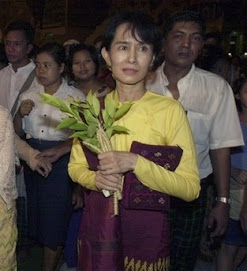


 Posts
Posts


