News & Articles on Burma Tuesday, 01 November, 2011 --------------------------------------------- Burma must make a Judgment to end civil war immediately US-Burma Detente Efforts Quietly Gather Speed Significance of Pictures in Burmese Politics Burmese fighter planes fly over near KIA headquarters Local Authorities In Kachin State Issue New Order 23 govt soldiers killed by KIA during fighting in three areas 9 Burmese soldiers killed on Myitkyina-Sumprabum Road Myanmar gets support to lead ASEAN UN official visit Myanmar for five days Govt personnel back in Wa territory to resume work Fleeing migrants lacking food, water NLD and Allies Discuss Party Registration --------------------------------------------- Burma must make a Judgment to end civil war immediately By Zin Linn Nov 01, 2011 11:48AM UTC Burma Armys full-scale offensives are becoming greater than ever in Kachin State. The fighting seems revengeful as Burmese soldiers used to commit various crimes such as looting, killing, raping and burning down the civilians villages in the front line. Actually, ordinary Kachin people are just innocent citizens of Burma and soldiers should spare their lives and properties. However, Kachin natives are singled out by the Burmese soldiers and they are not regarded as citizens of their own nation. It looks like Burma Army has been launching a racial war. In frontline areas, Burmese soldiers are committing crimes freely as there are no effective or appropriate penalties set by senior authorities. The worst and concrete evidence is that the wicked Burmese Army has used a mysterious chemical weapon in the recent offensive against Kachin rebels in Northern Burma, quoting victims suffering, Kachin News Group reported. For more than a week, Burmese soldiers used the unidentified chemical weapon in three war zones Christian Prayer Hill and Lung Zep Kawng in Ga Ra Yang village, and Shwe Nyaung Pyin village against the Kachin Independence Army (KIA) on Myitkyina-Manmaw (Bhamo) Road in Waingmaw Township. Those events were narrated by KIA soldiers, who were under attack by such poisonous gas. On October 29, Burma Army troops fired two mortar rounds of chemical weapons on the Peoples Army fighters under the KIA in Prayer Hill, said civilian fighters. Two rounds of chemical weapons were fired at us in Prayer Hill. There were seven of us present. Dark smoke billowed from the areas where the mortar shells landed, La Gun, a civilian fighter and a victim of the chemical weapon told Kachin News Group on Sunday. When the victims breathed the dark smoke, they felt extremely dizzy, found it hard to breathe, thirsty and vomiting for hours, according to one victim. The same chemical weapon was used during the week-long fighting in Lung Zep Kawng last week, La Gun said. The same day, the chemical weapon was used by the Burmese Army in Ntap Bum battle zone, near the KIA headquarters Laiza. Four KIA soldiers suffered dizzy, fell on the ground and began vomiting for a long time, said eyewitnesses. This is an act of breaking the Geneva Protocol which banned use of chemical and biological weapons in both civil and foreign conflicts. President Thein Seins government has to take responsibility for the use of such chemical weapon. Burma observers and analysts are confused over the war between KIA and Burma Army. While the president is speaking about the importance of national unity, his army has been increasing the hostilities in ethnic areas. Derek Mitchell, special U.S. envoy for Burma, said on 17 October that violence had continued against ethnic minorities in the countryside north and east and there were credible reports of continuing human rights abuses against women and children. During a visit aimed at assessing the military-dominated nations bid to the ASEAN chair, Indonesian Foreign Minister Marty Natalegawa said on Saturday he urged Burmas leaders to release more political prisoners and take greater steps to reconcile with restive ethnic groups. He also said that he expected progress in these areas before the country assumes the chair of ASEAN. Burmas democracy icon Aung San Suu Kyi made an appeal on last July 28 for political talk and an urgent ceasefire between major ethnic rebel groups Kachin Independence Organization, Karen National Union, New Mon State Party, Shan State Army and government troops. In her open letter dispatched to the new President Thein Sein, Suu Kyi offered to act as a mediator between the government and the ethnic rebels. National reconciliation cannot be accomplished by using military might. If stakeholders used the gun to solve out the disagreement, it will make disadvantage for all sides. To establish an authentic national unity, that will make safe the future of the Union, can only be accomplished through political dialogue, the open letter says. If the President Thein Sein truly wanted to recreate the country into a democratic and developed society, all the wars with respective ethnic rebels including KIA must be stopped at once. President Thein Sein should not say poverty alleviation while he has been launching civil war against ethnic groups that make the country underprivileged in the region. Hence, it is really essential for the president to end the civil war, particularly war against KIA. If Burmese troops have used chemical weapon, President must determinedly order them to stop immediately. By doing so, president has to show the country is on the right reform path. Judgment to end civil war will also achieve wide-ranging supports domestically and internationally. http://asiancorrespondent.com/68545/burma-must-make-a-judgment-to-end-civil-war-immediately/# ------------------------------------------- US-Burma Detente Efforts Quietly Gather Speed By BA KAUNG Tuesday, November 1, 2011 Two senior US diplomats are visiting Burma this week in the latest sign that Washington is stepping up its efforts to engage the country's military-backed government, which has recently undertaken a series of minor economic and political reforms apparently aimed at ending decades of international isolation. On Wednesday, the US special envoy to Burma, Derek Mitchell, will begin his third visit to the country in less than two months. During his three-day trip, he is expected to travel to Naypyidaw for another round of talks with senior government officials, and will be accompanied by the US assistant secretary of state for democracy, human rights and labor, Michael Posner, who is arriving in Burma today. Both men will meet in Rangoon and Naypyidaw with senior Burmese officials, representatives of international organizations, and civil society groups to discuss a range of issues related to human rights and reform in Burma, according to a media notice released by the US State Department. Mitchell just concluded his second visit to Burma a week ago, during which he met with Burmese Foreign Minister Wunna Maung Lwin, Lower House of Parliament Speaker Thura Shwe Mann and opposition leader Aung San Suu Kyi to discuss calls for further reforms. The new government, which took power in March following a heavily rigged election carried out by the former ruling junta almost exactly a year ago, is also expected to raise the issue of lifting sanctions imposed on the country over the past two decades in response to ongoing human rights abuses. However, the US has repeatedly said that sanctions will remain in place until the Burmese government takes serious steps to improve human rights conditions in the country, including the unconditional release of all political prisoners and an end to violence in ethnic minority areas of the country. The increased US interaction with the Southeast Asian nation comes after the Burmese government recently extended a series of overtures to the opposition, including a meeting between Suu Kyi and President Thein Sein, the release of some political prisoners, the suspension of an unpopular Chinese-backed hydropower dam and, most recently, moves to change the party registration law to pave the way for Suu Kyi's disbanded party to re-register and contest future elections. "These latest visits indicate that the United States wants to drum up the pace of change in Burma," said Maung Wuntha, a political commentator in Rangoon. Proponents of greater engagement with Burma have made increasing calls for the US to end its punitive sanctions and diplomatic isolation, which they say have made the country overly dependent on its giant neighbor, China, both diplomatically and economically. "President Obama should publicly support the changes taking place, and back up those words with actions to end the country's isolation, before hardliners who oppose reform are able to push back," wrote Burmese historian Thant Myint-U in a recent New York Times commentary that suggested lifting all restrictions that limit the United Nations and international financial institutions like the World Bank from offering Burma their technical expertise. In another recent op-ed piece, Morton Abramowitz, a former acting president of the International Crisis Group, and Tom Pickering, a current co-chair of the influential Brussels-based think tank, said that the US should elevate the status of its senior diplomat in Rangoon from charge' d'affaires to ambassador, and also urged President Barack Obama to personally acknowledge Thein Sein's efforts at the upcoming East Asian Summit if he expands his political reforms. There are, however, still several outstanding issues that could stand in the way of such gestures by the US, including ongoing conflicts in Burma's ethnic minority areas and Naypyidaw's murky relations with North Korea. US officials are not the only ones whose presence in Burma has increased expectations of a possible breakthrough in relations between Burma and its international critics. Vijay Nambiar, chief of staff to UN Secretary-General Ban Ki-moon and the provisional UN special adviser for Burma, also made a surprise visit to Naypyidaw on Monday to meet with Burmese Foreign Minister Wunna Maung Lwin for discussions about developments in Burma. His visit came on the heels of another by Indonesian Foreign Minister Marty Natalegawa, who was in Burma over the weekend to assess the country's political direction ahead of a summit by the Association of Southeast Asian Nations, where member states are expected to decide whether the country is ready to become chairman of the regional bloc in 2014. Norwegian Minister of the Environment and Development Cooperation Erik Solheim is also visiting Burma to attend a paper-reading session at the Green Growth Forum, an environmental discussion group in Naypyidaw where Nambiar gave a speech on Tuesday. http://www.irrawaddy.org/article.php?art_id=22364&page=2 ----------------------------------------- Significance of Pictures in Burmese Politics By WAI MOE Tuesday, November 1, 2011 Hanging photographs is a normal action for most human beings, but displaying pictures in Burma can have important connotations regarding who is in charge of the country or respected by its people. On Oct. 21, Burma's Lower House (Pyithu Hluttaw) discussed "whether it is right to rehang" pictures of Burma's independence hero Aung San on the walls of government offices, halls and schools, following a question from an MP to President's Office minister ex-Maj-Gen Soe Maung. According to state media, Soe Maung replied that "it has been established to hang the picture of the present head of state." However, civil servants and foreign journalists who recently traveled to Burma believe that, although Thein Sein is president and the official head of state, Than Shwe's picture still appears on the walls of government offices. Pictures of former junta supremo Snr-Gen Than Shwe can still be seen at government offices (Photo: Uzo) Shortly after Rangoon's Eleven Media Group published a news report about the Lower House discussion on Oct.25, a reader commented about recently seeing Than Shwe's picture on the wall of a school run by the Ministry of Science and Technology. A foreign journalist who recently visited Mandalay also said that he saw Than Shwe's picture hanging on the wall of government offices there. From 1962 to 1988, during the regime of the Burmese Social Programme Party, government offices, schools and other state buildings had to hang pictures of Aung San---the official martyr who was assassinated in July 1947---and late dictator Gen Ne Win, who was then head of state. Following the 1988 coup and uprising, Ne Win's pictures could still be found at government offices and institutions. However, Ne Win put a personal announcement in state-run newspapers in 1990 that his picture was to be removed from government buildings after student activists from Rangoon high schools ripped down his image from their headmasters' offices. At the time, some students in Rangoon were arrested for this act. But despite his announcement, some government offices still displayed Ne Win's picture for years afterwards. In 1997, Than Shwe's pictures began to be shown at government offices, schools and other state buildings. It has remained that way until now. Although nobody can deny that Aung San is the most well-respected hero in modern Burma, ruling generals have been uncomfortable with his picture at state buildings and in public while his daughter, Aung San Suu Kyi, developed into a pro-democracy icon over the past two decades. Aung San's pictures have not been seen at government offices since 1997, yet the Burmese public has maintained its faith and deep respect for the independence hero. But the Burmese people's desire to see Aung San's pictures at significant places throughout the country resurfaced two months ago. Many were surprised to see his image on the wall of the Presidential Palace in Naypyidaw when government television broadcasted news of Thein Sein's first talks with Suu Kyi on Aug. 19. It was not only Aung San's picture that caused a stir, but other key figures from Burmese history were also on show at Thein Sein's office. These including Gen Khin Nyunt who was removed from power in October 2004 following conflicts with his infantry colleagues, according to official sources. Putting Khin Nyunt's picture on his office wall seemed unusual to Burmese observers as, following the junta's purge of the former spy chief and his military intelligence, all references to him were removed---even his name from temples. After returning from Naypyidaw, Suu Kyi reportedly said that seeing Khin Nyunt's picture in Thein Sein's office was surprising, and that paying respect to ousted military figures was not commonly seen amongst other ruling generals. The importance of public figures has not only had an effect on Burma's politics, but also played a significant role in recent relief efforts for flood victims in middle Burma. On Oct. 29, local aid workers raised funds by selling pictures of Aung San at a tradition performance of comedians who returned from Thailand. They said that pictures of Aung San valued at more than 200,000 kyats were bought by artists and other audience members. http://www.irrawaddy.org/article.php?art_id=22365 ------------------------------------------- Burmese fighter planes fly over near KIA headquarters Category: News Published on Tuesday, 01 November 2011 01:11 Written by KNG KIA's general headquarters Laiza in eastern Kachin State, northern Burma. Burmese Air Force fighter planes made several runs on Tuesday over the strategic Ntap Bum mountain base of the Kachin Independence Army (KIA) in Kachin State, Northern Burma, eyewitnesses said. According to one eyewitness, Burmese war planes also air-dropped rations and military personnel near the mountain in the morning. A KIA officer on the frontline told Kachin News Group over telephone, "Yes, Burmese fighter planes are flying around Ntap Bum since this morning. There is no fighting between ground troops from the two sides so far". Yesterday, over 200 Burmese Army troops on the mountain withdrew to the mountainsides after they were attacked the whole day by the KIA, added the KIA officer. In geographical and military terms it is a strategic mountain because if Burmese Army troops take control of the mountain, then it will pave the way to overrun KIA-controlled Shadan Pa valley and KIA's Laiza headquarters, local people pointed out. Fierce fighting between government troops and the KIA has occurred in Ntap Bum Mountain since last weekend. On October 29, four KIA soldiers on being attacked by Burmese troops with poison gas, felt weak and lay down on the ground and continued to retch and vomit. The Burmese Army is using soft chemical weapons in the ongoing five-month civil war in Northern Shan State and Kachin State against the KIA, according to KIA soldiers, who faced the brunt of poison gas. According to KIA officials, heavy fighting will commence soon if the Burmese Army sends reinforcements to the Ntap Bum Mountain. http://www.kachinnews.com/news/2127-burmese-fighter-planes-fly-over-near-kia-headquarters.html ------------------------------------------------ Burma: Local Authorities In Kachin State Issue New Order Regulating Bible Study, Sunday School, Fasting And Prayer Tue, 2011-11-01 00:05 editor London, 01 Novembeer, (Asiantribune.com): Burmese authorities are imposing new restrictions on religious activities in Kachin State. On 14 October, 2011 the Chairman of Maw Wan Ward in Phakant Township, Kachin State sent a letter to local churches, titled Concerning Christians conducting cultural training. The letter refers to an order by the General Township Administration Department requiring Christians in Phakant Township to submit a request at least 15 days in advance for permission to conduct short-term Bible study, Bible study, Sunday school, reading the Bible, fasting prayer, Seasonal Bible study and Rosary of the Virgin Mary Prayer. A request for permission must be accompanied by recommendations from other departments, and must be submitted to the Township Administration Office. According to a press release by Christian Solidarity Worldwide (CSW) obtained a copy of the document in Burmese, and a translation, last week. Churches in Burma are already required to obtain permission for any events other than Sunday services, but this new regulation imposes further severe restrictions. CSWs East Asia Team Leader Benedict Rogers said, For many years, successive Burmese regimes have suppressed freedom of religion and imposed serious restrictions on Christians and other religious minorities. Christians and Muslims in particular have been the target of discrimination and persecution. It appears that despite changes in rhetoric, there has been no change of attitude, particularly at a local level, on the part of Burmese authorities to religious minorities. Burma is already regarded as one of the worlds worst violators of religious freedom, and is one of the US State Departments Countries of Particular Concern. To impose a requirement on churches and individuals to seek permission to read the Bible, pray, fast and hold a Sunday school is an extreme restriction and an extraordinary further violation of freedom of religion. We urge the Burmese authorities to withdraw this requirement, in Phakant Township and in any other parts of the country where it may have been issued, and to uphold freedom of religion for all the people of Burma. We also urge the Burmese regime to invite the UN Special Rapporteur for Freedom of Religion or Belief to visit the country, and conduct an independent investigation. - Asian Tribune - http://www.asiantribune.com/news/2011/10/31/burma-local-authorities-kachin-state-issue-new-order-regulating-bible-study-sunday-s --------------------------------------------- 23 govt soldiers killed by KIA during fighting in three areas Category: News Published on Friday, 28 October 2011 08:29 Written by KNG A civilian fighter of Kachin People's Army under KIA. At least 23 government soldiers were killed and more than 22 were injured during fighting in three different locations on Thursday, in Kachin State, said witnesses. Sixteen were killed and more than 22 injured during an ambush by the Kachin People's Army Thursday afternoon in southern Kachin State, local people said. At least three military horses were also killed, said witnesses. A government military column was ambushed near Ja Ing Yang, on the road to Sinbo, according to local witnesses. It was largest loss of Burmese troops this week in that area, said local people. The ambush was carried out by civilian fighters under the Kachin Independence Army, KIA officers at the Laiza headquarters confirmed. Three Burmese soldiers from the Sarhmaw-based Infantry Battalion No. 105, from the Kai Htik Post on the Manmaw (Bhamo)-Kai Htik-Nam Hkam Road were killed in the quick attack by the KIA's Battalion 1, said witnesses. Burmese soldiers responded by firing mortars at the KIA for an hour. A Kachin soldier received minor injuries, according to a KIA officer. Four Burmese soldiers from the Dawhpumyang-based Infantry Battalion No. 142 were ambushed and killed by KIA troops from Battalion 24, when government troops tried to transport rations to the frontline near Dawhpunyang, from Num Lang Village, said witnesses. The fighting continued on Friday as Burmese troops continued to fire 120 mm mortar rounds at the KIA positions, said local people. According to KIA officers, over 6,000 government troops are now deployed around the headquarters but cannot overrun Laiza because of KIA resistance. http://kachinnews.com/news/2121-23-govt-soldiers-killed-by-kia-during-fighting-in-three-areas.html ----------------------------------------- 9 Burmese soldiers killed on Myitkyina-Sumprabum Road Category: News Published on Thursday, 27 October 2011 08:22 A KIA post based in Putao district, northern Kachin State. Nine government soldiers, including military post Commander Captain Zaw Zaw, were killed on Wednesday during an attack by the Kachin Independence Army, at a frontline post on the Myitkyina-Sumprabum Road, near Sumprabum, according to sources at the frontline. Only a sergeant escaped, according to witnesses in the attack. It's was highest number of casualties for the Burma Army in the war in northern Kachin State against KIA troops from the N'Gumla-based 1st Brigade since June, KIA officers in the brigade said. Those soldiers, based near Daru Hka River, secured the river bridge. They were from the Mung Lang Shidi (Putao)-based Infantry Battalion No. 138, said local residents. A KIA soldier was killed during the fighting, added KIA sources. The KIA seized one soldier, 3 guns, 3 Kenwood R/T, one wireless transmitter and over 1,000 bullets after the fighting, said KIA officers from the KIA's Laiza headquarters. http://kachinnews.com/news/2120-9-burmese-soldiers-killed-on-myitkyina-sumprabum-road.html --------------------------------------------- Myanmar gets support to lead ASEAN Mustaqim Adamrah, The Jakarta Post, Jakarta | Tue, 11/01/2011 11:32 PM Support has grown for Myanmar's potential to chair ASEAN after Foreign Minister Marty Natalegawa visited the country last week. University of Indonesia international relations specialist Hariyadi Wirawan said Monday he always believed that a persuasive approach was the best way in dealing with Myanmar. "[Marty's] visit to Myanmar was to make sure that democratization is ongoing in Myanmar as suggested by ASEAN," he told The Jakarta Post. "Every little step Myanmar takes during that process should be appreciated." On the sidelines of his trip, Marty said Myanmar's political reforms looked "irreversible" and put the country on course to chair ASEAN, while urging the United States and the European Union to ease sanctions as the embargoes had done more harm than good in the country, Reuters reported. The US and the EU have imposed a number of sanctions on Myanmar due to a long record of human rights abuses in the country, although the EU claimed earlier this year that it had lifted some of the sanctions. "I wish to believe and I get the sense that they are meant to be irreversible," Marty said of the reforms as quoted by Reuters. "I did not get any indication that the process will stop." The ministry's director for East Asia and Pacific affairs Dewi Savitri Wahab said the minister would further discuss the results of his trip with other ASEAN foreign ministers while taking into account dynamics developing outside the regional grouping. After two decades the Myanmar government held its first elections in December last year, albeit imperfectly, as admitted by Indonesia. The new Myanmar government, however, has called for peace with ethnic minority groups, has offered easing media control, released about 200 political prisoners and has been more communicative with Nobel Peace Prize laureate Aung San Suu Kyi. Hariyadi said Marty's trip to the restive country showed that Myanmar's democracy was encouragingly developing in an ASEAN way, but that did not necessarily satisfy the US and the EU because they had stricter standards in terms of democracy and human rights values. "What the US and European countries want is instant changes in Myanmar. They will never be satisfied with small improvements," he said. Burma Partnership coordinator Khin Omar has urged Indonesia not to allow Malaysia's ASEAN chair bid to pass because reforms Malaysia had carried out were merely cosmetic. Another international relations analyst, Bonggas Adi Chandra, said he supported the Indonesian government and ASEAN should give Myanmar incentives rather than punishments. "By giving Myanmar our trust, we are actually pushing Myanmar to accelerate its improvement in democracy and human rights by 2015, when the ASEAN Community is officially effective," he told the Post. http://www.thejakartapost.com/news/2011/11/01/myanmar-gets-support-lead-asean.html --------------------------------------------- UN official visit Myanmar for five days New York, Nov 1: A top United Nations official arrived on Monday in Myanmar for a five-day visit during which he will meet with a number of Government officials and other key actors. The visit by Vijay Nambiar is at the invitation of the Government, according to a statement issued by UN Secretary-General Ban Ki-moon's spokesperson. It comes amid ongoing dialogue between the Government and Daw Aung San Suu Kyi, the pro-democracy leader and Nobel laureate who was held under house arrest for much of the past 20 years before being released last Nov, as well as the negotiations between the authorities and ethnic groups. It also follows the release earlier this month of a significant number of detainees, a move welcomed by Ban, who said he hoped the Government will ensure the early release of all political prisoners, consistent with its commitment to uphold fundamental rights and the rule of law. A new Government was established in Myanmar seven months ago, and more recently the country has received a series of high-level bilateral visits. In addition, President Thein Sein has made a pledge for Myanmar to "catch up with the changing world." Nambiar, who is Ban's Chief of Staff as well as Special Adviser for Myanmar, will hold meetings in Naypyitaw and Yangon with the Government, as well as political parties, civil society organizations and other key players, in carrying out the UN Secretary-General's good offices mandate. --IBNS http://www.newkerala.com/news/2011/worldnews-98300.html --------------------------------------------- Govt personnel back in Wa territory to resume work Tuesday, 01 November 2011 16:08 Hseng Khio Fah Around 300 of government personnel are reportedly on the way to Panghsang, headquarters of the United Wa State Army (UWSA) to resume their work in the Wa territory due to agreement reached between the two sides to send state personnel to their areas except military personnel, according to sources from the Sino-Burma border. Currently, they are reportedly stopping over at Mongyang, 102 km northeast of Shan State East's capital Kengtung, to wait for more of their people as the 300 arrivals were from only two departments said a source from Mongyang. "The said 300 appear to be only for Mongpawk sub-township (of Mongyang township), as it is considered part of Shan State East," explained an informed source. "Those working in Panghsang and elsewhere, being part of Shan State North, will be coming from Lashio." The returnees were part of the Wa request to the Burmese government when the two sides met last month, to return government personnel such as teachers and medical workers to the UWSA controlled areas as well as those working with international organizations. As for military personnel, the group said it has enough strength to guard its region. Therefore the government need not send back military personnel, according to a high ranking Wa officer. In mid March 2010, the military junta had ordered all junta personnel and NGOs working in the Wa State to return to their home bases due to rocky relationship between the two sides over Naypyitaw's Border Guard Force program. Finally both sides came to meet for the first time in September, and second time in early October and reached some agreements such as to send state personnel, to provide all Wa people citizens' identification cards and driving licenses as well as motor vehicle licenses and support 2,000 sacks of rice plus10 million kyat (about $12,500 U.S.D.) each month. The two are expected to hold a third meeting in the near future. Panghsang's ally, Mongla-based National Democratic Alliance Army (NDAA), meanwhile, says it has yet to hear anything from Kengtung. http://shanland.org/index.php?option=com_content&view=article&id=4158:govt-personnel-back-in-wa-territory-to-resume-work&catid=85:politics&Itemid=266 ----------------------------------------------- Fleeing migrants lacking food, water By MAHN SAIMON Published: 1 November 2011 A resident pulls her belongings as she wades through her flooded neighborhood in Thon Buri outside Bangkok (Reuters) Up to 1,000 Burmese detained in the Thai border town of Mae Sot after they escaped extensive flooding are struggling to access food and water, with Thai authorities accused of exploiting the thousands of migrants attempting to flee back to their home country. Reports began to emerge last week of police arresting Burmese migrants as they made their way to the border, having been displaced by Thailand's worst flooding in 70 years. Upon arrival in Mae Sot, which lies opposite the Burmese town of Myawaddy, a number were detained at the immigration lock-up. "Since there are a lot of people, there isn't enough space and food so the migrants are not given a meal or any water," said Sutthisak Runprueang Phasuk from the Thailand-based Migrant Assistance Programme (MAP), which has visited detainees over the past week. While they are permitted to buy supplies from a shop in the detention centre, Sutthisak said, most have little money and therefore are struggling to find food The majority are kept in the lock-up temporarily before being sent across the border by Thai police. Their problems don't stop there, however, with many forced to go through checkpoints run by a local government-backed Border Guard Force, which charges up to 4,000THB for re-entry. Those who cannot afford the fee return to Mae Sot, where they again face possible arrest. A female migrant worker, who worked in the construction industry in Pathum Thani province, north ofBangkok, said she came to Mae Sot in a truck operated by brokers, who charged a fee of 4,000THB. Migrants whose registration papers dictate they cannot travel outside of permitted zones in Thailand have been forced to use clandestine brokers to carry them out of flood-affected areas. The confirmed death toll from the floods now stands at 381, with two missing. Millions are attempting to flee Bangkok and surrounding provinces, with Reuters saying on Sunday that vehicles were bumper to bumper for around 12 miles on an elevated road out of Bangkok. Floodwaters have submerged an area the size of Kuwait and destroyed nearly a quarter of Thailand's rice crop. The Bangkok Metropolitan Authority says the amount of rainfall this year has been 40 percent higher than average. http://www.dvb.no/news/fleeing-migrants-lacking-food-water/18474 --------------------------------------------- NLD and Allies Discuss Party Registration By WAI MOE Monday, October 31, 2011 A key decision that could affect Burma's political future is pending as Aung San Suu Kyi and the leadership of the National League for Democracy (NLD) are scheduled to meet with their pro-democracy allies on Friday. Aye Thar Aung, a leader of the Arakan League for Democracy, told The Irrawaddy on Monday that the meeting is significant for both the NLD and its ethnic allies since they will discuss the issue of political party registration, an option that has been availed to them since Burma's Parliament passed a bill last week amending the Political Parties Registration law. Ahead of the meeting, Suu Kyi met government liaison minister Aung Kyi in Rangoon on Sunday for 55 minutes, the 13th meeting between the two and the fourth since President Thein Sein took the helm in March. According to a report in The New Light of Myanmar on Monday, Suu Kyi and Aung Kyi issued a joint-statement following the meeting saying that Sunday's discussion focused on free trade, commerce, monetary circulation, ensuring peace with armed ethnic groups, and the general conditions surrounding the granting of amnesty. Nay Zin Latt, a political advisor to Thein Sein, said Sunday's meeting between Suu Kyi and Aung Kyi showed that discussions were now focusing on wider issues and include economic and financial issues. Suu Kyi said on Sunday that her party will not discuss the issue of party registration until the law was finally approved. The amendment was passed in the Lower House last week and sent to the president for signing. "The NLD's registration depends on the law," Suu Kyi was quoted in The New Light of Myanmar as saying. "The registration is the issue we can tell [sic] only after the law is approved and enacted. When the law is approved, we will hold a meeting. According to the rules and regulations of our party, we can make [a] decision after the meeting." Some 50 seats are up for grabs in by-elections scheduled for November. Observers say the new law would allow the NLD to compete. Under the amended party registration law, a political party would only have to contest three constituencies in by-elections or general elections in order to be recognized as a legitimate party. The bill was one of three amendments passed without opposition by both Houses of Parliament recently. Asked about the amendment to the party registration law, Nay Zin Latt said the government's approach has been aimed at getting the NLD to participate in the political process by registering. He said there could be benefits for both sides---the government and the opposition. "The amendment of the law means cooperation. I see this as a good step," he said. Suu Kyi talked for the first time with President Thein Sein at the presidential palace in the capital of Naypyidaw on Aug. 19 when the pro-democracy leader traveled there for a state-run economic workshop. Hopes were high that part of the process would include the release of political prisoners, including key leaders such as Min Ko Naing, Ko Ko Gyi and other 88 Generation Student leaders, as well as ethnic leaders such as Hkun Htun Oo of the Shan National League for Democracy. However, there were only about 200 political prisoners among 6,359 prisoners released on Oct. 12 on what President Thein Sein called "humanitarian grounds." "However, more political prisoners could be released---including Ko Min Ko Naing, Ko Ko Gyi and U Hkun Htun Oo," said Aye Thar Aung. "We heard they are on the list, although I can't say the exact date." Another key amendment in the party registration law is that the clause, "Anyone convicted by a court of law is prohibited from joining a political party," will be removed. If so, many dissidents---particularly the 28 members of the 88 Generation Students group who remain behind bars serving up to 65 and a half years---could land the opportunity to become party members or even leaders if the amendment is authorized by Thein Sein. "As far as I know, my colleagues who remain in prison support Daw Aung San Suu Kyi's current political stance, including her dialogue with government officials," said Thein Than Tun, a member of the 88 Generation Students group who was released from Buthidaung Prison in western Burma on Oct 12. "They are all ready to work with her."http://www.irrawaddy.org/article.php?art_id=22359
Wednesday, November 2, 2011


Saturday, October 29, 2011
News & Articles on Burma-Friday, 28 October 2011-uzl
News & Articles on Burma Friday, 28 October 2011 ---------------------------------------- Burma Plays the Asean Card Yawdserk: Ceasefire with one must be ceasefire with others 23 govt soldiers killed by KIA during fighting in three areas Hampstead actress Emma Thompson meets Aung San Suu Kyi in Burma Political Prisoners Are Burma's Unsung Heroes Rome Film Festival Opens With Suu Kyi Biopic Suu Kyi, Zarganar to host film festival Large-scale gold mining on rivers to be shut down; panning ok Amended party registration law opens way for NLD to re-register Thailand 'protecting migrants' as water rises Myanmar police charge 7 for staging land protest 9 Burmese soldiers killed on Myitkyina-Sumprabum Road ----------------------------------------- Burma Plays the Asean Card By LARRY JAGAN Friday, October 28, 2011 BANGKOK --- Indonesia's Foreign Minister Marty Natalegawa has arrived in Burma on the start of a three-day visit ahead of next month's Asean summit in Bali where the 2014 chairmanship of the regional bloc is expected be decided. Natalegawa is going to see what political progress has been made and whether the country will be able to host the three major annual meetings associated with the chairmanship, said a senior diplomat on condition of anonymity. At these meetings, the bloc's foreign partners including the EU and the US will participate, and it is feared they may boycott if summits are hosted by Burma---many of whose leaders appear on Western sanctions lists. Natalegawa will meet Burmese President Thein Sein and other senior ministers while in the capital Naypyidaw. He is also scheduled to meet the powerful speaker of the Lower House, Shwe Mann, as well as the vice-president and the speaker of the Upper House. He is also scheduled to meet representatives of the various political parties, including pro-democracy leader Aung San Suu Kyi, before he leaves the country on Sunday afternoon. The Indonesian foreign minister recently said he wanted to get a detailed "snapshot" of developments in Burma. As part of that mission he is scheduled to meet members of the business community and civic society, notably including Burma's recently formed human rights' commission. In Rangoon he will meet several groups of businessmen and representatives of NGOs with a view to learning more about developments in agriculture, education, health and youth affairs, said a senior Indonesian diplomat. "He [the foreign minister] is also keen to learn more about the country's efforts to end the ethnic conflict," he said. The most important meeting may yet prove to be with Suu Kyi. Her views may influence whether Indonesia pushes for Burma to be given the Asean chairmanship in 2014. The fact that Natalegawa has insisted on meeting The Lady is significant in itself. The Thai Prime Minister Yingluck Shinawatra declined to do so on her recent visit to Burma---reportedly because former junta chief Snr-Gen Than Shwe, a close partner of her brother's when he was the Thai premier, refused to sanction a meeting. Thailand's former premier, Democrat Abhisit Vejjajiva---while he was the chair of Asean in 2009---was refused permission to visit Burma because he insisted on meeting Aung San Suu Kyi who was then under house arrest. When he did visit Burma a year later---no longer as head of the bloc---he dropped that condition. However, he became the second Asean leader to speak to Suu Kyi last year after she was freed from house arrest. The Indonesian foreign minister's visit is crucially important to Burma, as its leaders appear anxious to be given the Asean chairmanship as soon as possible---2014 being the first vacancy. Since his appointment as president, Thein Sein has been pushing for the chairmanship, and was disappointed---according to senior Burmese diplomats---that the Asean summit in Jakarta earlier this year deferred the decision. "Thein Sein is looking toward Asean both diplomatically and economically," a former senior Burmese diplomat told The Irrawaddy on condition of anonymity. The US special envoy for Burma, Derek Mitchell, made an unannounced visit to the country earlier this week. He met senior government officials in Naypyidaw on Monday and Aung San Suu Kyi on Tuesday morning for around 90 minutes. He then flew back to Washington, only stopping in Bangkok to change planes. He did not, as reported, earlier return via Jakarta. US views on Burma's chairmanship may determine whether Naypyidaw is appointed for 2014, the Asean Secretary General Surin Pitsuwan told The Irrawaddy in Jakarta earlier this year. If Washington were to boycott the summits because they were held in Naypyidaw, this would be a major slap in the face for the bloc---especially as it prepares to launch its regional economic zone in 2015. http://www.irrawaddy.org/article.php?art_id=22342 ----------------------------------------------------- Yawdserk: Ceasefire with one must be ceasefire with others Friday, 28 October 2011 15:46 Stephen Perraud / Hseng Khio Fah Lt-Gen Yawdserk of the Restoration Council of Shan State/Shan State Army (RCSS/SSA), generally known as SSA South says ceasefire with Shan State Army (SSA) South, should also be ceasefire with SSA North, which will bolster mutual confidence and lead the way to peaceful resolution of the country's woes. Stop fighting only in our RCSS controlled areas, but continue in SSPP's areas is cannot be accepted, Yawdserk said. Now both RCSS and SSPP are preparing to meet Burma movement for peace talks. The core of its planned proposition would be "political problems should be resolved by political means. But before holding political talks, fighting must be stop first. "As we had declared in May there is only one SSA. Therefore, if RCSS negotiates with the Burma government it means it is representing the SSPP. We both represent each other," he said. He however conceded that when it came to political negotiations, the two might choose to negotiate separately, as the SSA North is part of the 12 member alliance known as the United Nationalities Federal Council (UNFC). http://shanland.org/index.php?option=com_content&view=article&id=4150:yawdserk-ceasefire-with-one-must-be-ceasefire-with-others&catid=85:politics&Itemid=266 ----------------------------------------- 23 govt soldiers killed by KIA during fighting in three areas Created on Friday, 28 October 2011 08:29 Published on Friday, 28 October 2011 08:29 Written by KNG A civilian fighter of Kachin People's Army under KIA. At least 23 government soldiers were killed and more than 22 were injured during fighting in three different locations on Thursday, in Kachin State, said witnesses. Sixteen were killed and more than 22 injured during an ambush by the Kachin People's Army Thursday afternoon in southern Kachin State, local people said. At least three military horses were also killed, said witnesses. A government military column was ambushed near Ja Ing Yang, on the road to Sinbo, according to local witnesses. It was largest loss of Burmese troops this week in that area, said local people. The ambush was carried out by civilian fighters under the Kachin Independence Army, KIA officers at the Laiza headquarters confirmed. Three Burmese soldiers from the Sarhmaw-based Infantry Battalion No. 105, from the Kai Htik Post on the Manmaw (Bhamo)-Kai Htik-Nam Hkam Road were killed in the quick attack by the KIA's Battalion 1, said witnesses. Burmese soldiers responded by firing mortars at the KIA for an hour. A Kachin soldier received minor injuries, according to a KIA officer. Four Burmese soldiers from the Dawhpumyang-based Infantry Battalion No. 142 were ambushed and killed by KIA troops from Battalion 24, when government troops tried to transport rations to the frontline near Dawhpunyang, from Num Lang Village, said witnesses. The fighting continued on Friday as Burmese troops continued to fire 120 mm mortar rounds at the KIA positions, said local people. According to KIA officers, over 6,000 government troops are now deployed around the headquarters but cannot overrun Laiza because of KIA resistance. http://www.kachinnews.com/news/2121-23-govt-soldiers-killed-by-kia-during-fighting-in-three-areas.html --------------------------------------- Hampstead actress Emma Thompson meets Aung San Suu Kyi in Burma By Josh Pettitt, Reporter Friday, October 28, 2011 11:00 AM Hampstead actress Emma Thompson is campaigning to raise human rights awareness in Burma after meeting newly-liberated pro-democracy leader Aung San Suu Kyi. The Oscar-winning actress spoke to the democracy leader almost a year after she was freed from 15 years of house arrest. Thompson, who has campaigned for human rights in the Middle East in the past, travelled to Burma this month with her adopted son Tindy, as the country finally begins to relax its censorship laws and release political prisoners She said: "Meeting Aung San Suu Kyi was a remarkable experience. She's an extraordinary woman and with a resilient, wise, witty, dignity. "Fascinated by the arts, we talked a lot about films and books and, very perspicacious as you might imagine, about the political movement in her country, what's really happening -- very cautious but optimistic." She continued: "The phrase she used to me about what was happening now was 'it is very important that we do not proceed with indecent haste'. And I thought that was incredibly telling, redolent and right." Burma has had a military-led government since 1962. But recent elections and the appointment of a new president have seen the release of some political prisoners, the easing of censorship, and a greater sense of hope for the future. Thompson was in the country as an ambassador for Action Aid, a charity working to help women and young people in some of the country's poorest communities. http://www.hamhigh.co.uk/news/hampstead_actress_emma_thompson_meets_aung_san_suu_kyi_in_burma_1_1108641 --------------------------------------- Political Prisoners Are Burma's Unsung Heroes By Christian Papesch/IPS NEW YORK, Oct 27, 2011 (IPS) - In a move that highlighted its sub-par human rights record, the government of Burma announced Oct. 11 that it would release 6,359 prisoners, but how many of these will be drawn from the country's estimated 500 to over 2,000 political prisoners remains uncertain. The following day, Burma, officially known as the Republic of the Union of Myanmar, set free the first 200 prisoners. Among them was comedian and activist Zarganar, who was arrested in June 2008 for speaking to foreign media about the precarious situation of millions of Burmese left homeless in the Irrawaddy delta following a devastating cyclone. Five months later, Zarganar had been sentenced to 59 years in prison for public order offences. Even though international activists and organisations such as New York-based Human Rights Watch (HRW) generally appreciated the initial wave of releases, they remain critical about the actual reach of the announcement. "It is a positive step in terms of those individuals and their families, but in terms of bigger amnesties they should really release all prisoners unconditionally," Elaine Pearson, deputy director of HRW's Asia division, told IPS. "It is really quite a small step forward. These people are not bargaining chips or hostages for the military to play with. They're people who have been unjustly imprisoned." "Into the Current", a documentary by Bangkok-based American filmmaker Jeanne Marie Hallacy, portrays some of those prisoners and gives an overview of the political and social situation in Burma, a country that was under military rule from 1962 to 2011. "The most challenging aspect of the film was that we knew that we had to rely upon memory," the director said in an interview with IPS. "It was really challenging for us to find a way that we could be provocative and evoke the kind of deep emotion and passion that people experienced in prison without having visual evidence of what they actually experienced," she explained. But this lack of visual imagery also lends itself to the oppressive and alarming atmosphere of "Into the Current". By relying on statements made by former prisoners, the political terror of an oppressing regime acquires a face, a voice and a destiny. One of the thousands of prisoners who endured the cruelty of Burma's jails is Thet Moo, imprisoned for seven years for being a member of the All Burma Federation of Student Unions (ABFSU), which helped organise the 1988 pro-democracy national uprising that was violently suppressed by the military junta. In prison, "we don't know our future," Moo told IPS. "I don't know if I can get out alive or not." Not only are mental and physical punishment the order of the day for the majority of prisoners, but filmmakers like Hallacy along with journalists supporting her work in Burma also face serious daily threats. "Working inside the country is extremely difficult for journalists and media," the director, who has not been granted a Burmese visa since the late 1990s, said. "We have seen Burmese journalists who have been sentenced for 65 years for one story. And we have gotten corroborated information that they have been tortured in order to have them spill out other information about their colleagues in this underground network of media who gather information." For this reason, a lot of the material used in the film is old footage shot by Hallacy during the 1990s, secretly filmed recordings or personal statements and objects -- portraits of families, letters to friends or a song sung by a prisoner himself. "People respond to stories of individual human beings -- people who are fathers or mothers or have sisters or brothers who are in prison," Hallacy said. "They're numbed by numbers," she elaborated. "If you cite a statistic, it's meaningless to most people. But if you try to bring into focus a few of these heroes and heroines and their acts of courage it speaks on behalf of the whole." The broader image that "Into the Current" draws of Burma is a negative one, but the film's message is not completely pessimistic. At the end, protagonist Bo Kyi, a former political prisoner who is currently in exile in Thailand, finally gets to see his wife and little daughter again. Even though their family cannot yet lead a normal life in Burma, hope for a better Burma does exist, especially after last year's election of a new government. "The problem of the new government is that their bureaucracy is very slow," Thet Moo explained. "We are waiting for them to change. If they are changing, everybody would want to return to Burma." For Pearson, the second largest country in Southeast Asia still has a very long way to go. "Burma has one of the most desperate human rights situations in the world," she said. "We haven't seen the new government really putting in the effort to effect change in the country." The great white hope of Burma -- and one of the characters to which the film repeatedly refers -- is Aung San Suu Kyi, Burmese opposition politician and 1991 winner of the Nobel Peace Price "for her non-violent struggle for democracy and human rights". "The message of the film was to convey that non-violence is their path," Hallacy pointed out. "That's what will prevail change -- not vengeance, not hatred, not retribution but actual inclusion and responding to cruelty with kindness, because that's what changes people. When you change people's hearts, you change people's politics." Aung San Suu Kyi has never been in jail, but she has been under house arrest for 15 of the last 21 years. This is one of the reasons why the politician has become a symbol of opposition against oppression for many Burmese, especially those who still remain in prison for their resistance against the governing system. "We saw the release of 200 political prisoners, there is still another 1800 that remain in prison," Pearson concluded. "These are people who have criticised the government, written controversial articles in the media, participated in demonstrations. They are not people who should be in prison. They are people who should be part of the community." (END) http://ipsnews.net/news.asp?idnews=105633 -------------------------------------- Rome Film Festival Opens With Suu Kyi Biopic VOA: Posted Thursday, October 27th, 2011 at 5:55 pm A movie about the life of Burma's opposition leader Aung San Suu Kyi opened the international film festival in Rome Thursday. French director Luc Besson arrived at the opening of the film titled "The Lady" with actress Michele Yeoh who portrayed the Burmese pro-democracy icon. The Hong Kong-based actress began her career in martial arts films. Aung San Suu Kyi did not attend the festival, but she issued a statement for the occasion. She said "concepts such as truth, justice and solidarity cannot be cast off when these are often the only bastions that stand between us and the brutality of power." The Nobel Prize laureate was released last November after spending about 14 of the last 20 years in detention. The film, shown out of competition, focuses on her private life rather than politics. British actor Daniel Thewelis plays Aung San Suu Kyi's husband Michael Aris. The 15 works competing for the Marcus Aurelius prize will be presented from Friday until November 4. Among works competing for prizes are U.S. director Tanya Wexler's "Hysteria" about the invention of the vibrator in Victorian England; "Hotel Lux'' by German director Leander Haussmann; and psycho-thriller "Babycall" by Norwegian director Pal Sletaune. Hollywood star Richard Gere will receive an acting award. The festival will conclude with a screening of a restored classic movie "Breakfast at Tiffany's" to mark its 50th anniversary. http://blogs.voanews.com/breaking-news/2011/10/27/rome-film-festival-opens-with-suu-kyi-biopic/ --------------------------------------- Suu Kyi, Zarganar to host film festival By THUREIN SOE Published: 28 October 2011 Burma's independence day in January next year will be marked with the launch of a film festival organised by two of the country's leading pro-democracy luminaries, opposition leader Aung San Suu Kyi and comedian Zarganar. Billed as the Art of Freedom Film Festival, it will open on 31 December and showcase both short films and documentaries. Suu Kyi is due to present awards to the festival's winners on Independence Day on 4 January. "The main theme is the idea that art can be created only when there is freedom, and film makers are to define freedom in their piece in whichever way they see it," Zarganar, who was recently released from prison, told DVB. He added that a number of entries were also likely to focus on the day Burma achieved independence after nearly a century of British rule. "Our main focus is about freedom and it doesn't matter if they talk about history or not," he said. Also helping to organise the festival is former award-winning Burmese actor and director Kyaw Thu, whom since being banished from the film world has headed the highly-praised Free Funeral Service Society. The three will be joined by fellow film director Min Htin Ko Ko Gyi. Zarganar, who served three years of a 35-year sentence after criticising the Burmese government's woeful response to Cyclone Nargis in 2008, said he will be entering his own film focusing on the life of Thiri Thudhamma Khin Kyi, the wife of Burmese independence hero General Aung San and mother of Suu Kyi. Suu Kyi herself is the subject of French director Luc Besson's latest offering, The Lady, which stars Michelle Yeoh and which yesterday opened the Rome film festival. http://www.dvb.no/news/suu-kyi-zarganar-to-host-film-festival/18434 --------------------------------------- Large-scale gold mining on rivers to be shut down; panning ok Friday, 28 October 2011 14:02 Min Thet Rangoon (Mizzima) -- Small-scale panning for gold will be allowed on Burma's rivers and streams, but permits for large-scale mining will not be renewed when they expire in one year, according to the Directorate of Water Resources and Improvement of River System (DWRIRS). A woman gold miner pans for gold using one of the oldest traditional methods. Photo: Mizzima A woman gold miner pans for gold using one of the oldest traditional methods. Photo: Mizzima "The lifetime of gold mining permits is just one year. In the past, they could renew a permit. Now, gold mining permits cannot be renewed. So, it is not allowing gold mining [in the future']," an official from Mining Enterprise No. 2 said. In the past, the government allowed three types of gold mining along the Irrawaddy and Chindwin rivers: small-scale, medium-scale and large-scale. In September, Mining Enterprise No. 2 announced that it would not allow large-scale gold mining in the rivers, streams and creeks of Burma. But, traditional small-scale panning for gold would still be allowed. "We cannot forbid people who have to rely on traditional panning for gold from doing it. As usual, there will still be people who pan for gold by using pans and sieves, but they cannot harm the river," an official from DWRIRS told Mizzima on condition of anonymity. The government banned gold mining to prevent rivers from being damaged, according to officials. Most of the companies along the Irrawaddy and Chindwin rivers operate gold mines using machinery, and their practices can cause water pollution and harm the environment. Small-scale gold miners pay 260,000 (about US$ 360) kyat per year; medium-scale gold miner pay 35 per cent of the gold discovered; and large-scale gold miners pay 50 per cent of the gold discovered as taxes to government, an official from the Ministry of Mines said on condition of anonymity. According to environmental NGOs and other groups, in 1997, the Burmese government began giving gold mining concessions to Burmese businessmen. Land was often confiscated and villagers were denied access to upland farms. Many villagers had no alternative source of livelihood so they formed small groups and sold their land to invest in machinery and obtained gold mining permits. Traditionally villagers depended on rivers and forestlands for their livelihoods and cultural practices. The local environment has been severely affected in many areas. A report by the Burma Environmental Working Group in June 2011 said gold mining operations have drained water sources, increased soil erosion, and polluted rivers with mercury and other chemicals. Mercury is highly toxic to the environment and poses serious risks to public health. The vast majority of toxic wastes from gold extraction processes is disposed of untreated directly onto land and into waterways, effectively poisoning the soil and compromising water quality. Mercury and other toxics are biomagnifying in food chains and accumulate in the tissues of living organisms, with negative effects on flora and fauna, local biodiversity and human health. http://www.mizzima.com/business/6115-large-scale-gold-mining-on-rivers-to-be-shut-down-panning-ok.html ---------------------------------------- Amended party registration law opens way for NLD to re-register Thursday, 27 October 2011 22:32 Myo Thant Chiang Mai (Mizzima) -- Burma's Lower House of Parliament in Naypyitaw on Thursday approved a draft law that amends three clauses of the Political Parties Registration Law including cancellation of the clause that restricted serving prisoners from being a member of a political party. The amended party registration law clears the way for Aung San Suu Kyi's National League for Democracy to contest candidates in the election. Photo: Mizzima The amended party registration law clears the way for Aung San Suu Kyi's National League for Democracy to contest candidates in the election. Photo: Mizzima The existing party registration law says that a political party needs to contest in at least three parliamentary seats in an election. The amended law says that clause is not related to any new party that registers after the general election. Moreover, there was a change in the wording that all political parties must "protect" the country's Constitution. It was amended to "respect" the Constitution. "There is a difference between 'protect' the Constitution and 'respect' the Constitution. We have to respect all rules of law and the Constitution," said the NLD spokesperson Nyan Win. The amended act was approved in the Upper House on October 5 and sent it to the Lower House for approval. Observers said the amendments are designed to pave the way for the main opposition party, the National League for Democracy, to re-register as a political party. The NLD decided not to re-register to run in the 2010 election, saying there were elements in the new Constitution that were undemocratic. The amended act now awaits the president's signature to become a law. Recently, Aung San Suu Kyi, the general-secretary of the National League for Democracy, said in an interview with The Wall Street Journal that her party would consider re-registration after studying the amended registration law. Both Aung San Suu Kyi and party Vice Chairman Tin Oo were under house when the former military regime announced the election and party registration law. Political parties had 60 days to comply. There were intense debates within the National League for Democracy, which would have had to oust many of its members who were imprisoned, if it wanted to re-register as a party. The decision not to re-register led to some top party leaders breaking away from the NLD to form a new political party, the National Democratic Force (NDF). The NDF won 16 parliamentary seats in the 2010 November election. http://www.mizzima.com/news/election-2010-/6114-amended-party-registration-law-opens-way-for-nld-to-re-register.html ------------------------------------------------ Thailand 'protecting migrants' as water rises By MAHN SAIMON Published: 28 October 2011 A worker from Burma carrying her son wades through floodwaters during an evacuation from a flooded market in Bangkok (Reuters) Thailand's labour minister says the government is working to ensure undocumented migrant workers can take shelter at relief centres and safely travel back to their home countries as the flooding crisis worsens. Phadoemchai Sasomsap was visiting a migrant shelter in Nakhon Pathom province, west of Bangkok, on Wednesday. His proclamation follows reports that Burmese migrants have been subject to arrest as they try to flee affected areas in central and southern Thailand. Sein Htay, spokesperson of the Thailand-based Human Rights Development Foundation, who met with Phadoemchai at the shelter, said the labour ministry would contact migrants' "respective embassies for a form confirming their national identity and to ensure they get safe passage back to Burma". "So basically this is to protect them from getting arrested during this time of distress," he said. Thailand is currently experiencing its worst flooding in 70 years, with the death toll now standing at more than 370. Prime Minister Yingluck Sinawatra said there is a 50 percent chance Bangkok city centre will be submerged as thousands attempt to flee the capital. Sein Htay said the ministry had also directed migrant employers to return legal documents to their workers and requested that the immigration department provide an extension to those whose visas are about to expire. Thai law dictates that migrant workers are forbidden from travelling outside of the areas they were registered in, but police have now been ordered not to arrest those who flee their permitted zones to escape flooding. The Nakhon Pathom province shelter currently houses around 500 migrants, the majority fromBurma, although that figure is expected to rise as more escape Bangkok. Water levels on the Chao Phraya River, which weaves through Bangkok, today reached a record high, swamping the Grand Palace. Shops are running low on supplies as people stock in lieu of weeks of chaos. Up to three million Burmese migrants live in Thailand, making up 80 percent of the country's total migrant population, which accounts for five percent of its total workforce and seven percent of the country's GDP. The majority work in low-skilled factory jobs and without the legal safety net enjoyed by Thai nationals, resulting in lengthy struggles to access compensation for injuries and lay-offs. http://www.dvb.no/news/thailand-%e2%80%98protecting-migrants%e2%80%99-as-water-rises/18443 ------------------------------------- National / World News 7:06 a.m. Friday, October 28, 2011 Myanmar police charge 7 for staging land protest The Associated Press YANGON, Myanmar --- Police in Myanmar have filed charges of unlawful assembly against seven people who staged a peaceful protest in Yangon against land confiscation. Police said Friday that those charged included labor rights lawyer Pho Phyu, who was with more than 30 farmers who staged a sit-in Thursday in front of the government housing department. They are also charged with refusing a police order to disperse. The protest came as the outside world is watching the government's commitment to democratic reforms. The United States and other Western nations are maintaining political and economic sanctions against the repressive former ruling junta. But they have indicated they would respond positively to liberalization moves, such as a mass release of political prisoners. http://www.ajc.com/news/nation-world/myanmar-police-charge-7-1211813.html ------------------------------------- 9 Burmese soldiers killed on Myitkyina-Sumprabum Road Created on Thursday, 27 October 2011 08:22 Published on Thursday, 27 October 2011 08:22 Written by KNG A KIA post based in Putao district, northern Kachin State. Nine government soldiers, including military post Commander Captain Zaw Zaw, were killed on Wednesday during an attack by the Kachin Independence Army, at a frontline post on the Myitkyina-Sumprabum Road, near Sumprabum, according to sources at the frontline. Only a sergeant escaped, according to witnesses in the attack. It's was highest number of casualties for the Burma Army in the war in northern Kachin State against KIA troops from the N'Gumla-based 1st Brigade since June, KIA officers in the brigade said. Those soldiers, based near Daru Hka River, secured the river bridge. They were from the Mung Lang Shidi (Putao)-based Infantry Battalion No. 138, said local residents. A KIA soldier was killed during the fighting, added KIA sources. The KIA seized one soldier, 3 guns, 3 Kenwood R/T, one wireless transmitter and over 1,000 bullets after the fighting, said KIA officers from the KIA's Laiza headquarters. http://kachinnews.com/news/2120-9-burmese-soldiers-killed-on-myitkyina-sumprabum-road.html __._,_.___
Friday, October 28, 2011
News & Articles on Burma-Thursday, 27 October 2011
News & Articles on Burma Thursday, 27 October 2011 --------------------------------------- Govt Push for Peace Talks with KNU, SSA-South Amendments to Political Party Law Approved Myitsone Workers Return to China, but Beijing Still Hoping for Restart Jade or jaded? The sanctions on Burmese gems SSA outlines peace proposal Hunger strike underway in Insein prison Floods Spread to Myanmar Myanmar's release of prisoners leaves U.S. cautiously optimistic Myanmar police shut down rare protest Rangoon police disperse farmers' protest ------------------------------------------ Govt Push for Peace Talks with KNU, SSA-South By LAWI WENG Thursday, October 27, 2011 Two of Burma's main ethnic rebel groups, the Shan State Army-South (SSASouth) and the Karen National Union (KNU), are preparing to hold separate peace negotiations with a government delegation in the near future, according to sources close to the rebels. The talks will focus only on establishing Naypyidaw's plan for making peace and its sincerity to stand by any agreement, said the sources. The proposal comes at a time when government troops have launched a military offensive against Kachin rebels in northern and northeastern Burma. Before holding talks with the government delegation, the SSA-South will gather opinions from among Shan civilians and Buddhist monks, said a Shan rebel spokesman. Speaking to The Irrawaddy on Thursday, Sai Hseng Murng, the deputy spokesman of the SSASouth, said, With regard to ceasefire talks, we are going to take one more week to ask opinions and suggestions from our people. After that, we'll review the opinions before making a decision on forming a peace talk mission. Naypyidaw issued an announcement on Aug. 18 inviting all armed ethnic groups in Burma to enter into individual peace talks with the government. Sai Hseng Murng said that members of pro-government Shan militias approached the SSA-South last month carrying a proposal on behalf of the Burmese government advocating peace talks. I think the government were testing to see whether we would agree to talks, said the SSA-South spokesman. With the former government, we did not have a chance to negotiate. But we view this new government differently. The SSA-South and Burmese officials met for peace talks once before, in 2007, at the Thai-Burmese border. However, talks broke down and were never resumed. The KNU, for its part, has been fighting the Burmese army almost continuously for more than 60 years. However, Karen sources said that they were confident talks with a government delegation will go ahead though no date has yet been fixed. If they are really serious, we wish to talk with them. If they want peace, we will pursue political dialogue, said Zipporah Sein, the general secretary of the KNU. However, KNU officials maintain that they prefer to hold talks in a neighboring country, assumed by observers to mean Thailand. A source close to the KNU said that a Burmese government delegation tried to meet up with KNU officials last week in Myawaddy. A government delegation has previously met once with KNU representatives and once with the rebel New Mon State Party, though both times talks concluded without an agreement. Meanwhile, the United Wa State Army (UWSA) have deployed more troops into Wa-controlled areas on the Thai-Burmese border, according to a Shan Herald Agency for News report on Oct. 26. The Wa rebels have sent more than 30 military trucks since Sunday into Hwe Aw, the UWSA 171sts headquarters in Mongton township in southern Shan State. The military maneuver follows 171st Military Region commander Wei Xwegang saying he had received a reliable report from Burmese army sources that the SSA-South had demanded areas on the Thai-Burmese border that are currently under the control of the UWSA to be transferred to the SSA-South in exchange for peace during a recent meeting with Burmese officials. The Burmese government recently reached an agreement to uphold a two-decade-long ceasefire with the UWSA and its ally, the National Democratic Alliance Army, both of which are based in Shan State. The Irrawaddy senior reporter Saw Yan Naing also contributed to this article. http://www.irrawaddy.org/article.php?art_id=22337 ------------------------------------------ Amendments to Political Party Law Approved By WAI MOE Thursday, October 27, 2011 Burma's Lower House of Parliament passed an amendment to the Political Party Registration law on Thursday, a move that could see Aung San Suu Kyis National League for Democracy (NLD) return to the political fray. Thein Nyunt, a pro-democracy independent MP who attended the day's parliamentary session in Naypyidaw, told The Irrawaddy that the Lower House or Pyithu Hluttaw approved the bill without objection. Last week, the Upper House or Amyotha Hluttaw passed a proposal to amend three clauses of the Political Parties Registration Law. The clause titled Preservation of the Constitution will be replaced by Respect and Obedience of the Constitution. Secondly, the clause in Section 10 of the act which prohibits anyone convicted by a court of law from joining a political party will be removed. The third amendmentarguably the most significantwould scrap the current law that maintains that, to be recognized, each political party must have contested a minimum of three seats in the previous general election. The amended bill means that a political party will be recognized as long as it has contested at least three constituencies in by-elections, 50 of which are scheduled for November. NLD spokesman Ohn Kyaing said that the party has closely watched the process in Parliament, and will soon sit to decide whether the party will register. The NLD leadership will discuss it and decide, he said. In recent interview with The Wall Street Journal, Suu Kyi suggested the government is close to meeting her conditions to officially register her political organization. She did not rule out the possibility of running for office in a national vote expected in 2015. http://www.irrawaddy.org/article.php?art_id=22336 -------------------------------------------- Myitsone Workers Return to China, but Beijing Still Hoping for Restart By BA KAUNG Thursday, October 27, 2011 Nearly a month after Burma's President Thein Sein announced the suspension of the controversial Myitsone dam project in Kachin State, Chinese workers have begun returning to China, even as Beijing continues to signal its desire to resume the US $3.6 billion project in the near future. On Thursday, the ethnic Kachin Independence Army (KIA) said that Chinese workers were leaving the project site and that there were no signs of construction. Chinese workers are leaving the site through border gates in Kachin State. We also learned that the construction materials stored for the project, such as cement and fuel, are being sold to local businessmen, said KIA spokesman La Nan. But we don't know if this means the project is just suspended or canceled, he added. A similar report was made by the Rangoon-based Eleven Weekly journal this week. The suspension of the controversial hydropower project on the Irrawaddy River was seen as a move by the new quasi-civilian government in Naypyidaw to counter growing Chinese influence in the country and improve ties with the West. While the Burmese government said it acted according to the will of the people, Beijing was clearly angered by the decision and called for talks with Naypyidaw to resolve the issue. Recent reports from China, many of which described concerns about the environmental impact of the dam as exaggerated and fabricated by the Western media, made clear that Beijing remains hopeful the project will resume. On Monday, The Global Times, a Chinese government mouthpiece, described Burma's decision to suspend the Myitsone project as a move to garner short-term political gain at the expense of business, adding that the whimsical change will inevitably send troubling signals to potential investors. Apparently to contain the fallout, Burmese Vice President Tin Aung Myint Oo went to Beijing and held talks with Chinese Premier Wen Jiabao last week. During the meeting, Wen asked the Burmese government to honor bilateral agreements between the two countries and allow the successful implementation of Chinese investments in Burma. Implementing important China-Myanmar cooperative projects is in the interests of both countries, Wen was quoted as telling Tin Aung Myint Oo, according to China's state-run People's Daily newspaper, which also reported that the Burmese vice-president said that Burma valued cooperative relations and would proactively look for ways to resolve issues. According the Burmese government, the project will be suspended until 2016 when Thein Sein's presidential tenure expires. A top Burmese presidential adviser recently told The Irrawaddy that Naypyidaw will probably compensate China by granting it further economic concessions in Burma. He added that bilateral relation would not be much affected by the dam suspension because there are still many other Chinese investments in the country. Despite the suspension of the Myitsone dam, which was expected to generate 6,000-megawatts of electricity, most of it for export to China, both China and Burma expressed hopes that a strategic oil and gas pipeline from Burma's Bay of Bengal coast to China's landlocked Yunnan Province would be successfully completed. According to the China National Petroleum Corporation, which is constructing the pipeline, work on section 4 of the pipeline has begun in Shan State, and the whole project is expected to become operational by May 2013. The pipeline, with an estimated capacity of 20 million tons of crude oil per year that will enjoy tax concessions and customs clearance rights from the Burmese government, will enable China to bypass the Strait of Malacca when importing crude oil from the Middle East and Africa, cutting the shipping distance by around 1,200 km. As part of the oil pipeline project, China is also constructing a deep-water crude oil unloading port and oil storage facilities on Burmas Maday Island off the coast of Arakan Statean investment that will provide China with crucial access to the geopolitically strategic Indian Ocean, where the US is poised to increase its navy presence in the coming decade. http://www.irrawaddy.org/article.php?art_id=22338 ------------------------------------------------------ Bangkok Post Jade or jaded? The sanctions on Burmese gems Published: 27/10/2011 at 12:00 AM Newspaper section: News For centuries Burma has been prized for its high quality gemstones, and today the Burmese gems industry continues to thrive at a furious pace despite international sanctions. A Burmese worker washes blocks of jade stone, readying them for auction. The majority of Burma's jade goes to China. Conventional estimates are that up to 90% of the world's supply in rubies and 70% of premium jadeite is of Burmese origin. Long under the exclusive management of ethnic insurgents who controlled the mining areas, and black marketeers who monopolised the trade, the underworld of Burmese gems is now dominated by a myriad of newcomers. Fragile cease-fire agreements signed by Burma's central government with ethnic Kachin, Pa'O and Shan rebels in the 1990s have opened the gem mines and trade routes to other third parties. Since then, emerging state-run conglomerates, a handful of Burmese oligarchs close to the military elite, and hordes of foreign dealers have gained the upper hand in this thriving industry. Above all, trade has been boosted by an exuberant demand from jade-crazed China. Every year since 2007 new record levels in jade production and sales revenues have been reached to satisfy Chinese demand. Paradoxically, this Burmese gem boom has coincided with the imposition of "smarter" Western sanctions which have targetted Burma's lucrative mining, timber and gemstones sectors in reaction to the government's violent repression of the 2007 Saffron Revolution. During the latest 2010-11 fiscal year, Burmese jade export revenues officially topped US$1.75 billion _ a fifth of Burma's $8.86 billion total exports for that year. Production of jadeite has jumped to 46,000 tonnes, up from an average of 10,000 tonnes in the early 2000s. Organised by the state-run Myanmar Gem Enterprises (MGE), international gem emporiums are now held three times a year, mostly in the new capital Naypyidaw. The March 2011 emporium attracted over 6,500 foreign merchants and total monetary transactions reached a staggering $2.8 billion. The Burmese government granted attendees free wi-fi access and phone cards were available for $50 _ unthinkable offers at other normal times in Burma. Proceeds from gem sales during the latest special fair held in July 2011 exceeded $1.5 billion. In comparison, revenues from similar events during the 2000s stagnated between only $150-300 million. As a result of the rising source of revenue that these gemstone bonanzas are providing to the Burmese military-ruled state, international campaigns advocating a boycott of Burmese gemstones have become increasingly vocal. Western policy-makers have subsequently relied upon "targetted" sanctions against the industry. The European Union revised its legal Common Position vis-a-vis Burma in November 2007 to include a section on Burmese-origin gemstones, while in July 2008 the US Congress adopted the Tom Lantos Block Burmese JADE (Junta's Anti-Democratic Effort) Act, which was later signed into law by President George W Bush. In addition, Canada with the 2007 Special Economic Measures Act also prohibits all Burmese imports, including gems. Yet, if there is a straightforward rationale for Western sanctions, scepticism prevails regarding their on-the-ground policy relevance and impact on the circulation of Burmese gems. Indeed, since the implementation of these various laws, Burma's revenues from gemstones have continued to skyrocket. The root of this problem is due to a serious miscalculation by these Western governments. In recent years, China has become the dominant market for the global jade industry. Also, Burma's border trade, especially with China's southwestern Yunnan province, offers a credible alternative to circumvent Western trade sanctions. Consider the border town of Ruili in Yunnan province. In less than a decade, it has become one of Asia's major jade dealing centres, connected to international hubs such as Hong Kong, Taipei and Bangkok. In 2010, gem trading alone earned the town some 2 billion yuan ($300 million). A jade-oriented touristic economy is thriving. Young Chinese from Kunming and beyond are migrating to Ruili to work in shops or factories polishing Burmese raw stones into fashionable jewels. In Burma, it is estimated that there are nearly half a million people employed in this bustling industry. As with many other Burmese commodities, the dilemma of Western sanctions lies in the tension between the will to drain revenues out of the Burmese rulers' pockets without killing local indigenous entrepreneurship. Smarter sanctions were designed to address this dilemma. America's Burmese JADE Act was intended to emulate Africa's "blood diamonds" model. In 2003, the Kimberley Process was initiated to establish an international certification scheme to trace African-origin diamonds and eradicate the trade that illicitly funded civil wars, particularly in Sierra Leone and Liberia. NGOs and scholars have pushed for its extension to encompass the entire global gemstone industry. However, imposing a Kimberley Process-styled mechanism onto the Burmese gem trade is difficult, if not downright unrealistic. First, Burma's gems and jade industry is far less cohesive than its African diamond counterpart which is still dominated by a monopolistic few, headed by the De Beers consortium. In contrast, there are myriads of local miners, mid-sized companies and state-run conglomerates that are involved in Burmese gem mining, production and trade. Second, Burmese gems are exported through different transnational trading networks. Rubies are primarily exported through Thailand, though now also increasingly India, while jadestones are almost exclusively disseminated via the Chinese mainland into subsequent Chinese diaspora networks. Third, surprisingly the Burmese state still does not have a decisive monopolistic leverage over the industry, and there is no one multinational firm powerful enough to influence actors within Burma. Fourth, Burmese gems are not perceived as contributing to Burma's woes the way diamonds were in Africa. What activists relentlessly denounce is rather the profits scooped up by some Burmese individuals, although empirical numbers are difficult to find. Last, appalling working conditions in Burmese mines, including use of child labour, along with disquieting environmental issues are what have been singled out in international reports, including by Human Rights Watch. But a local gem-based economy is nonetheless prospering in Burma, promoted by local indigenous actors _ most notably the Kachin, Shan and Burmese Muslim communities _ along with other external regional buyers. Envisioning a Kimberley Process for Burma would entail concrete cooperation from all parties involved, including the traders of a business dominated by smugglers. Above all, it would require the voluntary participation of Chinese and Burmese authorities. However, the creation of an independent transnational regulation body to trace Burmese gemstones, starting with rubies, and which encourages the adoption of responsible and accountable corporate practices, especially at the local level, would be a constructive start. The US Burmese JADE Act envisioned such a mechanism, but US policy-makers have never actively pursued this. The West should further its focus on the Burmese gem industry without killing it, and disconnect it from its persistent will to punish the rulers in Naypyidaw. Renaud Egreteau is Research Assistant Professor with the Hong Kong Institute for the Humanities and Social Sciences at the University of Hong Kong. The views expressed here are solely those of the author. http://www.bangkokpost.com/opinion/opinion/263365/jade-or-jaded-the-sanctions-on-burmese-gems --------------------------------------------- SSA outlines peace proposal Thursday, 27 October 2011 11:42 S.H.A.N. Prior to the expected talks with Naypyitaw, the Restoration Council of Shan State / Shan State Army (RCSS/SSA), better known as the SSA South, says the core of its planned proposition would be "political problems should be resolved by political means." Speaking to SHAN yesterday, Maj Lao Hseng, spokesman for the movement, said there were 3 main points to present: + The resolution of all political issues in the Union by political means (as opposed to military means) + Having fought each other for so long, a certain period for confidence building is necessary + The RCSS/SSA will also like to know what role Naypyitaw has in mind for the RCSS/SSA to play in the resolution of political issues by political means "We will then discuss and decide how best to go about it," he explained. Asked whether the Shan State Progress Party / Shan State Army (SSPP/SSA), better known as the SSA North, will take part in the talks together with the SSA South, with which it had reached an agreement in May for a merger, he replied: "It will of course produce the best results, if we do it together. But it is entirely up to Wanhai (SSA North base) decision. We've been waiting since May for it to ratify the agreement. However, whether we are doing it together or separately, we will keep each other informed and will present same propositions." The SSA North is reportedly preparing to hold its annual conference to decide on the agreement soon, though no date and venue have been disclosed. Thailand and the local People's Militia Forces (PMFs), particularly the Markkieng and Homong PMFs, have been liasing between the two sides since August, according to SSA sources. The new government issued an announcement on 18 August inviting all armed movements fighting against it for peace talks. So far, it has signed ceasefire agreements with the United Wa State Army (UWSA) and the National Democratic Alliance Army (NDAA), two groups that are non-members of the 12 party United Nationalities Federal Council (UNFC). The alliance, formed in February, has rejected Naypyitaw's proposed "group wise" negotiations and instead demanded that Naypyitaw deals with it directly. The SSA North is a member of the UNFC, while the SSA South is not. http://shanland.org/index.php?option=com_content&view=article&id=4147:ssa-outlines-peace-proposal&catid=85:politics&Itemid=266 ----------------------------------------------- Hunger strike underway in Insein prison By AYE NAI Published: 27 October 2011 Fifteen political prisoners in Rangoon's Insein jail have gone on hunger strike to protest a decision not to overturn a ruling that bars the majority of prisoners from the right to have their sentences reduced. The 15 are complaining that the revocation, which has been in place for 14 years, was unfair. Until 1997, Burmese penal law entitled all prisoners, except for those on death row or serving life sentences, to small remissions, often only a few days per year. Aung Zaw Htun, spokesperson for the Assistance Network for Families of Political Prisoners, which has released a statement on the issue, said the hunger strike commenced yesterday with the prisoners refusing breakfast. Among the strikers are Nyi Nyi Htun, who is serving an 18-year sentence, Kaung Myat Hlaing, 12 years, Nyan Lin Htun, 22 years, and Zin Min Shein, who was handed a 23-year sentence. The statement also urged the UN, international community and human rights groups to pressure the government to reintroduce the regulation. The last hunger strike in Insein prison, in May this year, was dealt with harshly by prison officials. Nearly 30 inmates began refusing food a day after Burmese authorities announced a highly criticised amnesty that saw nearly 15,000 people released from jail early, but only 55 of whom were political prisoners. Ten days into the strike, at least seven inmates were placed in solitary confinement and kept there for several days until authorities acceded to a number demands focused broadly on prisoners' rights. Insein prison, which houses more of the country's 1,700 political prisoners than any other jail, was built by the British in 1871 to house around 5,000 inmates, but the current capacity is thought to be almost double that. http://www.dvb.no/news/hunger-strike-underway-in-insein-prison/18419 ------------------------------------------------- THE WALL STREET JOURNAL: October 27, 2011, 12:12 PM SGT Floods Spread to Myanmar Add Myanmar to the list of Southeast Asian countries that are getting walloped by intense flooding. Earlier this week, the United Nations Office for the Coordination of Humanitarian Affairs (UN OCHA) issued a report that flash floods in part of Myanmar have left 78 people dead or missing, with more than 35,000 people affected, 3,000 houses destroyed and a pressing need for food, shelter and other essentials. That's certainly not nearly as bad as the woes in Thailand, where an area the size of Connecticut has been inundated and Bangkok is at risk of going underwater. It may also not be as bad as Cambodia and Vietnam, which have also been struck by devastating floods in recent weeks. But Myanmar has fewer resources to deal with disasters than those countries, and given the relatively under-developed media and relief networks there, it's also often harder to get a complete picture of the damage when big storms or floods occur. Sometimes, relief workers find out much later the damage was worse than they believed. The latest flash floods occurred in the Magway, Mandalay and Sagaing regions of Myanmar, after two days of heavy rain on October 19 and 20 near the Myanmar -- Bangladesh border. Initial estimates by UN departments showed that in addition to the 3,000 destroyed houses, some 8,500 houses were also damaged to varying degrees, while other crucial infrastructure like schools, monasteries and villages were also damaged. The Magway Region, the largest of Myanmar's seven districts and home to 4.2 million people, was the worst affected by these floods. Around 26, 000 people lost their houses and their belongings, with 75% of houses flooded in the Seikphyu Township, an area which was severely affected by Cyclone Giri in 2010. In the Pauk Township, the strong winds and river current also washed away bridges and damaged roads, making it difficult to deliver aid to affected people, according to the report. Local authorities and the private sector, under the coordination of the UN, have begun emergency relief, setting up temporary camps in affected areas and providing kitchen sets, family kits and other necessities to people now displayed from their homes. Authorities have recorded the need for more essentials -- including shelter, blankets, clothes, utensils and water. A medical team was also deployed from Naypyitaw on Monday, with the Department of Health setting up temporary clinics for the displaced. At least there's some good news. Myanmar's government, which was widely criticized for its insufficient response after the devastation caused by Cyclone Nargis in 2008, has taken efforts to better its response to natural disasters, including warning citizens to evacuate and welcoming more international relief during Cyclone Giri in 2010. http://blogs.wsj.com/searealtime/2011/10/27/se-asian-floods-spread-to-myanmar/?mod=rss_asia_whats_news -------------------------------------------- Myanmar's release of prisoners leaves U.S. cautiously optimistic The Obama administration wants more reforms before economic sanctions are lifted in the Southeast Asian nation. By Paul Richter, Los Angeles Times October 26, 2011, 3:27 p.m. Reporting from Washington--- The Obama administration was encouraged by Myanmar's recent release of some prisoners under a "humanitarian" amnesty but wants to see more reforms before the U.S. considers lifting economic sanctions on the impoverished nation, officials say. The military government in the Southeast Asian nation has appeared more flexible with political opponents in major cities, but violence has continued against ethnic minorities in the rural north and east, Derek Mitchell, special U.S. envoy for Myanmar, said last week in Washington. Mitchell said there were also "credible reports" of continuing human rights abuses against women and children. "We have seen encouraging signs over time," Mitchell said, but "some things haven't changed, and we should be noting those." Myanmar, which last year ended strict house arrest for pro-democracy leader and Nobel laureate Aung San Suu Kyi, continues to fall short in key areas, U.S. officials said. Mitchell said Myanmar should release hundreds more political prisoners that human rights groups say remain incarcerated, not just the estimated 120 to 300 prisoners who were released this month. A total of 6,359 detainees were granted amnesty in a step that coincided with a religious holiday and a trip to India by President Thein Sein. Myanmar, also known as Burma, should halt a clandestine relationship with the reclusive communist regime in North Korea, Mitchell said. U.S. officials long have worried that North Korea might be trying to sell Myanmar missiles or nuclear weapons technology. Partly because of those concerns, the Obama administration has sought to build a new relationship with Myanmar, which has been ruled by the military since 1962. Over the years, the international community has repeatedly condemned the regime for widespread corruption and systematic violations of human rights and humanitarian law. Kurt Campbell, the top U.S. diplomat for East Asia, said this month in neighboring Thailand that it was "undeniably the case that there are dramatic developments underway" in Myanmar. But some pro-reform groups warned that the government has eased its harsh grip before, only to crack down again. They said the regime's motives are not always clear. Peter Manikas, Asia director of the National Democratic Institute, a nonpartisan U.S. organization that promotes democracy overseas, said experts disagree on how to interpret Myanmar's decision to abandon a hydroelectric dam project on the Irrawaddy River that China had planned. The project would have displaced thousands of people, and the move to cancel it was widely seen as a sign of a new sensitivity to public opinion. But Manikas said Myanmar officials may be trying to move the country further from China's orbit and closer to India. "We need to try to take advantage of these signs of warming," Manikas said. "But there's a danger that the entire international community is becoming unjustifiably enthusiastic. We need to approach this with some degree of skepticism." Myanmar's efforts also may be timed to encourage its selection as chair of a major regional group, the Assn. of Southeast Asian Nations. Officials say such an appointment, which could come next month but wouldn't take effect until 2014, would signal legitimacy for the regime and improve its international standing. If Myanmar does implement reforms, Washington is likely to respond with symbolic moves, including reinstating a U.S. ambassador. The United States withdrew its envoy in protest in 1990 after security forces brutally crushed a student-led uprising, killing thousands of pro-democracy demonstrators. A charge d'affaires has run the U.S. Embassy since then. paul.richter@latimes.com Copyright (c) 2011, Los Angeles Times http://www.latimes.com/news/nationworld/world/la-fg-us-myanmar-20111027,0,1618949.story ------------------------------------ Myanmar police shut down rare protest YANGON | Thu Oct 27, 2011 4:33am EDT Oct 27 (Reuters) - Police in Myanmar halted a demonstration on Thursday by about 60 landless farmers, a rare protest that tests the new civilian government's commitment to reforms after decades of brutal suppression of dissent. Riot police confiscated placards and ordered the demonstrators to leave peacefully after they staged a sit-in outside a government building in the country's biggest city, Yangon, to protest against eviction from their farmland. "We have approached parliament for help but nothing happened, so we decided to take to the street," said Pho Phyu, a lawyer and an activist who campaigns for farmers' rights. Demonstrations are rare in Myanmar, a country ruled by the military for five decades until an election last year brought in a new civilian government. The new government has recently made overtures towards the pro-democracy leader Aung San Suu Kyi, released more than 200 political prisoners and promised to pursue social and economic reforms. Previous protests over high prices in 1988 and 2007 were brutally suppressed by the military, leading to the imposition of western sanctions that have restricted development and hurt the country's economic elite. Pho Phyu said the authorities had seized about 10,000 acres (4,050 hectares) of land owned by about 1,000 farmers, who were given only small amount of compensation. "At first, they promised that joint-venture farming would be carried out between the farmers and private businessmen on these lands but nothing happened," he said. President Thein Sein has pledged to offer micro loans and price guarantees to raise living standards for millions of farmers in a country that depends on agriculture for about 40 percent of its gross domestic product. About half of the Burmese workforce is employed in the agriculture sector and the country was once the world's biggest rice exporter. But evictions are common and farmers have little money or legal recourse to launch any challenge. (Reporting by Aung Hla Tun; Editing by Martin Petty and Yoko Nishikawa) http://www.reuters.com/article/2011/10/27/myanmar-protest-idUSL3E7LR11L20111027?rpc=401&feedType=RSS&feedName=rbssConsumerGoodsAndRetailNews&rpc=401 ------------------------------------------ Rangoon police disperse farmers' protest By AFP Published: 27 October 2011 Police in Burma on Thursday broke up a demonstration of around 100 farmers protesting against the confiscation of their land, detaining three people, officials said. Led by a human rights lawyer, the demonstrators staged an early morning sit-in outside the Department of Human Settlement and Housing Development in downtown Rangoon, a government official who did not want to be named told AFP. "The leader, lawyer Phoe Phyu, and two farmers were detained for questioning," another official said. A security official said the farmers were from the outskirts of Rangoon. "They came here to protest because their farm land has been confiscated and they want their land back," he said. "Police asked them to disperse as it's not in accordance with the law." Police officers also confiscated the protesters' banners and continued patrolling the area after dispersing the demonstrators. Protests are rare in authoritarian Burma, where pro-democracy rallies in 1988 and 2007 were brutally crushed by the junta. Demonstrators must have permission from the authorities. Last month, police detained a man for holding a solo protest against a Chinese-backed dam and blocked another rally against the project, which was later suspended by the authorities in a rare response to public opinion. http://www.dvb.no/news/rangoon-police-disperse-farmers-protest/18424


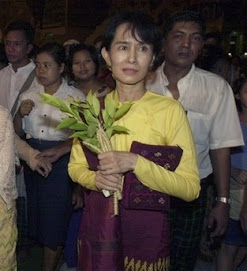


 Posts
Posts


