News & Articles on Burma
Wednesday 22 June, 2011
--------------------------------
Aung San Suu Kyi speaks
KIA Launches Targeted Urban Attacks
New Delhi Raises Security Issue with Naypyidaw
Rao meets Suu Kyi in first high-level Indian contact with her
Kachin Women slam Burma Army for using rape as a weapon of war
18 women gang-raped in Kachin state
Burmese Army Accused of Raping Kachin Civilians
Mass defections hit govt border forces
Burma pledges to rout Indian separatists
Burma chamber of commerce members have ‘dialogue’ in Sweden
-------------------------------------
Aung San Suu Kyi speaks
Editorial Desk
The Statesman
Publication Date : 22-06-2011
There are two facets of Aung San Suu Kyi’s BBC lectures that have been smuggled out of Burma, coinciding with her 66th birthday. Quite the most critical, decidedly a deviation from her hitherto non-violent struggle for democracy, is the hint that ‘it’s possible’ to change her commitment to non-violence. She has spoken as a free citizen in a country that uses a spurious brand of democracy to serve as a shambolic facade to the rule of the junta.
The icon of democracy has referred to Mahatma Gandhi, who in her reckoning is the father of non-violence, to say, “between cowardice and violence he would choose violence any time”. Indeed, Suu Kyi has drawn a fine distinction while dwelling on the rationale of non-violence.
“I do not hold to non-violence for moral reasons but practical and political reasons.” Clearly, after two decades of detention and denial of power, she is now in a position to reflect, and with a remarkable degree of mental freedom. Implicitly does she realise that the non-violent struggle for democracy has led Burma nowhere. On the contrary, it has reinforced the repression of the junta, borne out by her extended detention and the ruthless suppression of the peaceful movement by the Buddhist clergy some years ago.
Is it possible that Suu Kyi has been influenced by the Arab Spring? Notably, she has been impressed by the internet technology that has lent an impetus to the movements in the Arab world. Hence perhaps her touching faith in a violent struggle should the need arise. It is significant too that she has compared Burma’s 23-year-old movement for democracy with the jasmine revolution in Egypt and Tunisia. She has been emphatic in her assertion that “the similarities between Tunisia and Burma are the similarities that bind people all over the world who yearn for freedom.” Yet the jasmine whiff is unlikely to stir her country just yet given the divisions within the National League for Democracy.
One section has played into the junta’s hands by participating in the elections. No less crucially, the military remains firmly entrenched unlike the occupants of the rusted thrones. Nonetheless, it is the change in perception that the world must take note of. Non-violence may have reached its sell-by date in Burma. As a free citizen, Aung San Suu Kyi has spoken the language of an intrepid crusader. She has exercised what she calls her ‘right of freedom of communication’. http://www.asianewsnet.net/home/news.php?id=19555&sec=3
----------------------------------------
KIA Launches Targeted Urban Attacks
By SAW YAN NAING Wednesday, June 22, 2011
Although fighting between the Kachin Independence Army (KIA) and Burmese government troops in Kachin State has diminished in recent days, tension remains and the KIA continues to launch targeted attacks in urban areas, according to local sources.
On Tuesday night, two bombs went off at government’s buildings—a police station and an immigration office—in Myitkyina, the capital of Kachin State in northern Burma.
A police official at Police Station No. 1 in Myitkyina confirmed the explosion, but said there were no casualties. He said he believed the KIA was behind the plot.
La Nan, the joint-secretary of the KIA’s political wing, the Kachin Independence Organization (KIO), said that the bomb attacks were launched by the KIA in accordance with its policy of choosing targets where civilians would not be injured.
“The bombs went off at an immigration office and at Police Station No. 1, and no civilian was hurt. We attacked in places where we should attack. We only target the government’s important sectors,” said La Nan.
Seng Aung, a Kachin youth living in Laiza, the KIA’s headquarters on the Sino-Burma border, said that there was also an explosion last night at a bridge near Baw Hpum Yan, which is located on the route from Bhamo to Myitkyina.
In addition, the Thailand-based Kachin News Group reported that on Tuesday at midnight the KIA used mines to blow up a strategic railway bridge located on the Namkoi River between Myitkyina and Mandalay. The KIA targeted the railway because it is the main route used by the government to send reinforcements and supplies to Kachin State.
The KIA said it has not had any contact with the government following their last talks on June 19, and despite the fact that skirmishes between government troops and the KIA have died down for now, the KIA has not called a cease fire.
“We haven’t ordered our troops at the frontline to cease fire with the government troops,” said La Nan.
Meanwhile, on June 18-19, the KIA released 18 government soldiers that it arrested and detained during fighting with the government troops.
Some villagers in Maijayang Village, Momauk Township who fled home recently returned home two days ago and recommenced farming, said La Aung, a resident of Maijayang.
He said the situation has become more stable, but many villagers are still seeking refuge in Laiza.
Some 10,000 Kachin people previously fled their homes and sought refuge in Laiza and other locations on the Sino-Burma border due to the hostilities that first broke out between the government and the KIA troops in northern Burma on June 9. http://www.irrawaddy.org/article.php?art_id=21543
-----------------------------------------
New Delhi Raises Security Issue with Naypyidaw
By SAI ZOM HSENG Wednesday, June 22, 2011
During an official three-day visit to Burma, India's Foreign Minister S.M. Krishna raised the issue of border security in bilateral talks with his Burmese counterpart, Wunna Maung Lwin, on Tuesday in Naypyidaw.
According to news agency Press Trust of India, Burma reiterated its firm assurance that it will not allow its territory to be used as a base for any anti-India activities. Security cooperation has been a major part of India-Burma relations because of the long border—1,463 km—that the countries share.
One of the members of the Indian delegation was quoted by the Indian news agency as saying that “the talks were excellent, positive, constructive and forward looking.”
The delegation also reportedly congratulated Burma on holding successful elections that saw the formation of its first civilian government in decades.
Tint Swe, a New Delhi-based Burma observer, said that India is concerned Burma's growing dependence on China.
Burma's new president, Thein Sein, visited Beijing on his first overseas trip as president last month when he discussed with the Chinese government conditions for the Chinese navy to dock in Burmese ports and secure direct access to the Bay of Bengal and the Indian Ocean.
London-based The Economist reported on June 9 that China is now the country with the greatest influence on Burma, and is the biggest investor in the Southeast Asian nation's energy, dams, mines and other natural resources.
“As its economic interests have grown, China has pressed for more access to Burma’s harbours and territorial waters, to monitor the security of the new port and pipelines and to keep an eye out for pirates. But this is a neuralgic issue for a country with a deep-seated suspicion of its powerful northern neighbor,” the report said.
Tint Swe said that the Indian government is also concerned about the ongoing armed conflicts in northern Burma, and the recent outbreak of hostilities between Burmese government forces and the Kachin Independence Army.
Speaking to The Irrawaddy on Wednesday, Tint Swe said, “Kachin State borders Sagaing Division in Burma, and it is in Sagaing that the Naga insurgents who fight against the Indian army are based. The Indian government wants to apply pressure on the Naga insurgents via its military cooperation with Naypyidaw.”
Earlier this month, the Burmese army reinforced its troop strength in the Ta-nai region of Sagaing Division ahead of clashes in Kachin State. Military observers speculated that the maneuver was directed toward the Naga insurgents, the National Socialist Council of Nagaland.
Prior to his visit to Burma, the Indian foreign minister launched a press release saying that he would discuss 110 million-dollar Kaladan Multi-Modal Transit Transport Project. “We also propose to initiate a few new projects,” he said in the statement.
Several political observers have said that since India lost the opportunity to invest in the Lido highway project and the Tamanthi dam project, the Kaladan project is its last hope in Burma.
Burma’s government singed an MoU with India’s National Hydroelectric Power Corporation (NHPC) in 2004 for the development of the Tamanthi Dam on the Chindwin River in western Sagaing Division. However, Naypyidaw reneged on the deal in May with economic observers saying that the contract would soon be issued to China instead.
The 1,079-km Lido highway, or “Stillwell Road,” was built during World War II by American general Joe "Vinegar" Stillwell to supply Kuomintang forces against Japan. It passes through the towns of Shingbwiyang, Myitkyina and Bhamo in Kachin State.
However, India abandoned plans in 2009 to reopen the road that could have connected its remote northeastern states to China's Yunnan province via Burma.
According to Aung Linn Htut, a former Burmese military intelligence officer, relations between the two countries are largely based on the countries' intelligence services. In 1992, India proposed to Burma's new military junta that the two countries agree to cooperate militarily—channeling military equipment and supplies, exchanging intelligence, and initiating training programs for Burmese military officers in India.
According to Burma's state-run The New Light of Myanmar, the Indian delegation also handed over the paperwork on a 500-ton capacity food security shelter, which was built in the Irrawaddy delta under a Burma-India friendship program. http://www.irrawaddy.org/article.php?art_id=21546
------------------------------------
Rao meets Suu Kyi in first high-level Indian contact with her
Yangon, Jun 22 (PTI)
In the first high-level Indian contact with Myanmar's pro-democracy icon Aung San Suu Kyi, Foreign Secretary Nirupama Rao met the Nobel laureate here and both expressed a desire for the bilateral relationship to ''blossom and grow''.
Rao, who was here as part of the delegation of External Affairs Minister S M Krishna during his three-day visit to Myanmar that ended today, called on Suu Kyi on Monday at her residence, official sources said.
The meeting, which was not part of Rao's schedule here, lasted for an hour, during which she "felicitated" Suu Kyi on her 66th birthday which was on Sunday, they said.
"Both expressed a desire for this relationship to blossom and grow," a source said.
Asked why Krishna, who headed the Indian delegation, did not meet Suu Kyi, the sources said he had a tight schedule and that the Indian Ambassador to Myanmar, V S Seshadri, had met her earlier.
Rao's meeting with Suu Kyi was, however, kept under wraps till the Indian delegation left the country.
The sources privy to the conversation that took place between the two said that Suu Kyi recalled her days in India, including the time she spent with her Indian friends.
Suu Kyi, who was recently freed from several years of house arrest, had done her Bachelors in Political Science from Lady Sri Ram College in New Delhi from where she graduated in 1964. She also lived in Shimla prior to her return to Myanmar in 1988.The sources said Rao spoke to Suu Kyi about India's relationship with Myanmar, which recently got its first civilian government in years, and New Delhi's help to this country in various fields.
Suu Kyi, welcoming India's role as a partner in economic development of Myanmar, spoke about the need for greater people-to-people contacts, the sources said.
She also spoke about the emotional and religious ties between the two countries.
As a prisoner in her own country, locked in her lakeside home in Yangon, Suu Kyi spent 15 of the past 21 years under house arrest. She was freed in November last year.
http://www.deccanherald.com/content/170725/rao-meets-suu-kyi-first.html
----------------------------------------
Kachin Women slam Burma Army for using rape as a weapon of war
By Zin Linn Jun 22, 2011 7:48PM UTC
The Kachin Women’s Association Thailand (KWAT) released a press statement on Tuesday (21 June) denouncing Burmese government’s armed forces for using use of rape as a weapon of war in northern Burma offensive. Moreover, KWAT also demands an immediate end to the Burmese military regime’s widespread use of sexual violence in their offensive against the Kachin Independence Army (KIA). Burma.
According to the press release, at least 18 women and girls have been gang-raped by government soldiers. It happened between June 10 and 18, last week, during Burma Army assaults on KIA positions along the Sino-Burma border. Four of these women were killed after being raped. One incident was so inhumane that the victim was raped in front of her husband, who was tied up and forced to watch. Another woman died from her injuries due to gang-rape.
KWAT also said in its statement that soldiers from five Burma Army’s battalions (Light Infantry Battalion 437 and Infantry Battalions 237, 141, 142, 139 and 437) had committed rapes, in four townships in Bhamo District. Two particularly brutal incidents took place on June 18, in Dum Bung village, Mo Mauk township of Bhamo. Government soldiers from LIB 437 caught three families who had not managed to flee in time. Six women and girls were gang- raped, and 7 kids were killed cruelly. In Je Sawn village, Man Si township of Bhamo, soldiers from LIB 139 gang-raped a 7-year-old girl and her grandmother and Killed them.
According to Kachin News Group [KNG], a local source said that Burmese troops raped women and small girls and also killed small children in Dum Bung village on Ledo road in western Kachin State. They took away men from three families to use as porters as they could not escape from government troops.
On June 17 in Sinbo, where 17 Burmese soldiers from Light Infantry 141were killed in action by Kachin Independence Army (KIA) battalion 5, a woman with four children and three other girls under 20 years of age were raped by Burmese troops. Although the three girls were not killed the woman died after the incident, the source said.
Another source said a couple was tortured and the wife died after being raped in Dawhpumyang village near Myitkyina the capital of Kachin State. In addition, a KIA officer on the front line informed KNG that Burmese troops deployed in Manje (Mansi) township in southern Kachin State are arresting and killing civilians. Three Kachin residents from these areas have been killed by the soldiers.
These incidents are not random acts of violence, said KWAT spokesperson Shirley Seng, according to Shan Herald Agency for News (S.H.A.N.). The Burma Army is committing gang-rape and killing on a wide scale. It is clear they are acting under orders, Shirley Seng said.
KWAT demands that the regime immediately stops using rape as a weapon of war, ends the offensive against Kachin and other ethnic groups, and withdraws from the ethnic areas.
KWAT is also urging China to provide safe haven and humanitarian aid to those fled for their security, and to act as a go-between in the conflict.
The regime is committing atrocities on China doorstep, and destabilizing the border area, said Shirley Seng. She also said that it will be beneficial to China mediating the root causes of the political conflict of the nation en route for a genuine resolution. http://asiancorrespondent.com/58046/kachin-women-slam-burma-army-for-using-rape-as-a-weapon-of-war/
------------------------------------------
18 women gang-raped in Kachin state
By NAW NOREEN
Published: 22 June 2011
18 women gang-raped in Kachin state thumbnail
Burmese troops sit by the side of a street in Rangoon. Use of rape as a weapon of war by the Burmese army is well-documented (Reuters)
Eighteen cases of gang-rape of Kachin women by Burmese troops have been confirmed by a Thailand-based rights group in the past three weeks, but it says the total could be nearer to 30.
A statement released today by the Kachin Women’s Association Thailand (KWAT), which on Monday reported the rape of seven women, four of whom were then murdered, said that the 18 gang-rapes happened in an eight-day period between 10 and 18 June.
“Soldiers from five different battalions … committed the rapes, in four townships of Bhamo District,” the statement said. Bhamo has been the epicentre of fighting since 9 June between Burmese forces and the Kachin Independence Army (KIA).
It added that two particularly horrific incidents had occurred in two villages in Bhamo. In the first case, in Dum Bung village, Burmese troops “caught three families who had not managed to flee in time. Six women and girls were gang-raped, and seven small children killed”.
In Je Sawn village, soldiers “killed a 7-year-old girl and then gang-raped and killed her grandmother”.
While the allegations cannot be independently verified by DVB, there has been extensive historical documentation of rape by Burmese troops during military offensives in ethnic regions.
Opposition icon Aung San Suu Kyi told a summit of Nobel prize winners in May that rape in Burma is a “very real problem” and “is used as a weapon by armed forces to intimidate the ethnic nationalities and to divide our country”.
Shirley Seing from KWAT said that reports of rape had come from five locations along the route being used by the Burmese army to mobilise columns as they continue their offensive against the KIA, which has launched several counterattacks in recent weeks.
“We only reported the 18 cases we could confirm, based on accounts from refugees and porters – we learnt there were about 30 cases,” said Shirley Seng.
The fighting is estimated to have displaced around 10,000 people, some of whom have crossed into China and some of whom have travelled to the KIA headquarters in Laiza, north of Bhamo.
The KWAT statement urged China to provide aid to the refugees and mediate in the conflict.
“The regime is committing atrocities on China doorstep, and destabilizing the border area … We believe it is in China’s interest to mediate towards a genuine resolution of the political root causes of the conflict.”
http://www.dvb.no/news/18-women-gang-raped-in-kachin-state/16265
--------------------------------------------------
Burmese Army Accused of Raping Kachin Civilians
By KO HTWE Wednesday, June 22, 2011
A Kachin human rights group has accused Burmese government troops of multiple cases of rape during the recent armed conflict with the Kachin Independence Army in Kachin State, northern Burma.
In the statement released on Tuesday, Kachin Women’s Association Thailand (KWAT) claims that at least 18 female Kachins—aged between 15 and 50 years old—were gang-raped by five different Burmese Army battalions in four different townships of Bhamo District from June 10-18.
Light Infantry Battalion (LIB) 437 and Infantry Battalions (IB) 237, 141, 142, 139 and 437 committed the rapes in Momauk, Monyin, Mansi and Bhamo townships, KWAT alleges.
The statement also highlights evidence that IB 437 soldiers detained three families in Dum Bung Village of Momauk Township, gang-raped six women and girls and killed seven small children. The group also accuses soldiers from IB 139 of murdering a seven-year-old girl in Je Sawn Village of Man Si Township before gang-raping and killing her grandmother.
“I received this evidence from residents, porters and members of our group who are helping refugees in the area. We heard nearly 25 women have been raped in the war zone but 18 of them have been confirmed,” said KWAT spokesperson Shirley Seng to The Irrawaddy on Wednesday.
La Nan, joint-secretary of the Kachin Independence Organization, said that cases of rape in the area are difficult to investigate as it is currently under government control.
“The number of victims is likely to be higher than that mentioned by KWAT because there are villages that we cannot reach. We are trying to collect evidence regarding these matters,” explained La Nan.
While The Irrawaddy cannot independently verify any of these cases, the Burmese government has not yet responded to these allegations.
Roi Htoi, a young resident of Liaza, said that villagers far from the town are victims of gang rape. A local Kachin youth group, Education Economics Development for Youth, also distributed a statement on June 16 advising local residents, especially women, to move to safer places.
Another ethnic women’s group, the Shan Women’s Action Network, based in Thailand, released a report entitled License to Rape in 2002, which documented over 600 rapes and sexual assaults committed by Burmese government troops in Shan State.
In 2007, Thailand-based Karen Women’s Organization also released a report called State of Terror which documented more than 4,000 cases of abuse, rape, murder, torture and forced labor by the Burmese regime’s forces in recent years in around 200 Karen villages.
“Gang-rape has been one of the regular tactics of the military regime,” said Tin Tin Nyo, general secretary of Thailand-based NGO Women’s League of Burma (WLB), comprised of 12 Burmese women’s ethnic groups.
“Women don't create the war, but negative consequences of the conflict directly affect them with gang-rape taking place whenever there is a clash. That is why I was worried that the fighting is occurring again,” she said.
“They [military regime] say that a civilian government has now been sworn into power, but the rape cases that still take place demonstrate that nothing is different. Although the government has apparently changed, I'm sure that women are still victims of rape,” added Tin Tin Nyo.
Women's rights groups have long accused Burmese government soldiers of using systematic rape against ethnic women as a weapon and strategy to terrorize the ethnic population.
Since 1997, the Burmese regime has destroyed more than 3,000 villages and displaced over half-a-million civilians in eastern Burma, according to the Thailand Burma Border Consortium, an umbrella organization responsible for the distribution of aid at the Thai-Burmese border.
Recently, international and regional human rights groups —including the International Federation for Human Rights, Altsean-Burma and Burma Lawyers’ Council—urged the European Union to support the establishment of a UN Security Council Commission of Inquiry into crimes against humanity and war crimes committed in Burma. http://www.irrawaddy.org/article.php?art_id=21544
--------------------------------------------------
Mass defections hit govt border forces
By NAW NOREEN
Published: 22 June 2011
Troops from four Border Guard Force units in a Karen state region have mutinied as Burmese army battalions are deployed in preparation for a retaliatory offensive.
The majority of the defectors have joined the ranks of the opposition Democratic Karen Buddhist Army (DKBA), according to DKBA Colonel Kyaw Thu, while some have returned to their original Burmese army brigades.
Kyaw Thu said that the DKBA, which steadfastly refused to transform into a government-controlled border force, has been bolstered by as many as 1000 soldiers since the series of defections on 12 June.
Two Light Infantry Divisions (LID) of the Burmese army are now mobilising in the Myainggyingu region of Karen state where the renegade units are based. The Border Guard Force (BGF) 1012 was the first to break rank last month when around 500 soldiers joined the DKBA.
Reports are circulating that two more LIDs have been sent but are yet to reach the Myainggyingu, which lies around 35km from the Thai border. Each LID is made up of 10 Light Infantry Brigades which are specially trained in counter-insurgency and jungle warfare.
Kyaw Thu, who belongs to the DKBA unit led by Brigadier General Na Kham Mwe, said that the “situation was getting worse” in Myainggyingu as more Burmese army units arrive. He added that the DKBA had “special plans” for a counterattack, and would be joined by the KNLA.
Last year the government threatened force against ethnic armies that refused to transform into BGFs. Only a handful agreed, while decades-old ceasefires between the government and some of Burma’s most prominent insurgent groups have collapsed.
The recent manoeuvres by government troops mark a further escalation of hostilities in Burma’s border regions, where several groups have refused to transform into government-controlled BGFs. Fighting has raged in Kachin state over the past fortnight, while Burmese troops have also launched assaults on the Shan State Army.
http://www.dvb.no/news/mass-defections-hit-govt-border-forces/16259
--------------------------------------------
Burma pledges to rout Indian separatists
By FRANCIS WADE
Published: 22 June 2011
An Indian paramilitary searches for ULFA troops in Assam state in northeast India, close to the border with Burma (Reuters)
Indian separatists sheltering in northwest Burma will be purged and the shared border tightened to prevent arms and insurgents from crossing between the two countries, the Burmese government has told a visiting Indian minister.
Several rebel groups, notably the United Liberation Front of Assam (ULFA), are believed to have bases inside Kachin state in Burma from which they can exploit the porous border. The two countries have signed counter-terror pacts aimed at stemming cross-border movement of rebels and weapons, and Delhi has bolstered security on its side of the border, but so far little has been done by Burma.
Indian external affairs minister, S M Krishna, who is in Naypyidaw for talks with the Burmese government, was given “firm assurances” that the mountainous frontier region will not be used as a launch pad by groups like the ULFA for attacks against the Indian government, according to the Press Trust of India (PTI).
Krishna met with both the Burmese Foreign Minister Wunna Maung Lwin and Vice President Tin Aung Myint Oo. He is the first high-level Indian official to visit Burma since the new government came to power in March.
India has long been attempting to court the Burmese government, both due to the country’s sizeable energy reserves and its strategic position as a gateway to ASEAN economies. Burma is the only country in ASEAN that shares a border with India.
A gesture of closer economic relations came from Krishna in the form of 10 heavy duty rice silos designed to protect grains during natural disasters, such as the powerful cyclone that destroyed southern Burma in 2008.
According to the Kolkata-based The Statesman newspaper, bilateral trade between the two countries reached $US1.2 billion in the last fiscal year, doubling from the 12 months prior. Although India is Burma’s fourth largest trade partner, the volume still falls well behind China, which invested up to US$12 billion in the same period.
India’s campaign to build closer economic ties with Naypyidaw is seen as a wider attempt by Delhi to counter China’s growing influence in the Asia region, which will grow considerably once the China-ASEAN Free Trade Agreement starts bearing fruit. Burma is a member of the Association of Southeast Asian Nations (ASEAN) and has opened its doors to substantial Chinese investment.
But Burma is also known for its ability to play competing countries off against one another, and may be looking to economic investment from India as a countervailing force to its dependence on China, which is behind the vast majority of energy projects in its southern neighbour.
India has made moves towards developing its northeast region where four states border Burma, both to facilitate increased cross-border trade and to help boost security. The plans include the construction of a 1,500km road along the borderline, as well as 50 helipads that will allow quicker deployment of border forces to separatist territory.
The Indian government has also looked to expand on its transport routes along the border with China, also as means to more effectively deploy troops in the event of unrest. That frontier is undermanned as India’s 4.5 million-strong military focuses its efforts on the volatile Pakistan border, as well as tackling several insurgent groups.
http://www.dvb.no/news/burma-pledges-to-rout-indian-separatists/16252
---------------------------------------------
Burma chamber of commerce members have ‘dialogue’ in Sweden
Wednesday, 22 June 2011 14:42 Thomas Maung Shwe
Chiang Mai (Mizzima) - The Swedish government has confirmed that several members of the Union of Myanmar Federation of Chambers of Commerce and Industry (UMFCCI) traveled to Sweden in May as part of Swedish initiative to promote sustainable development and corporate social responsibility.
Myanmar Egress founder and Burmese newspaper and magazine publisher Dr. Nay Win Maung, one of the members of the delegation to Sweden.
Myanmar Egress founder and Burmese newspaper and magazine publisher Dr. Nay Win Maung, one of the members of the delegation to Sweden.
The delegates were visiting at the invitation of the International Council of Swedish Industry (NIR), which is funded by the Swedish International Development Cooperation Agency (SIDA).
According to a statement issued by SIDA in response to the controversy created in Sweden by the visit, the Burmese delegates were invited as part of a SIDA-funded program that NIR has embarked on that involves promoting the ‘objective to create a dialogue with industry and commerce representatives on issues such as market principles in several countries, including Burma’.
Burma continues to face trade sanctions despite elections in November 2010 that brought in a democratically elected government, one that critics claim is run behind the scenes by the military.
According to the Swedish media, Jytte Guteland, the head of the youth wing of the opposition Social Democrats, issued a press release demanding that the Swedish government explain the delegation’s visit and answer whether the visit meant that Swedish policy towards Burma had changed.
The SIDA statement indicated that the delegates were brought to Sweden to have a dialogue with NIR that ‘focused on corporate social responsibility, transparency and sustainable development’.
According to SIDA, to carry out this programme NIR has 'been in contact with reform-minded individuals in business organizations. The invitees were individual representatives of Burmese industry and commerce, known for wanting to pursue economic reforms’.
The Swedish news site Omvärlden first reported that the delegation included members of the Myanmar Chamber of Commerce. Both Omvärlden and Mizzima receive financial support from SIDA.
SIDA spokesperson Tove Silveira Wennergren told Mizzima that although representatives of the Myanmar Chamber of Commerce were included in the delegation they ‘were not invited as representatives of the Chamber, and there has been no direct contact with the Chamber as an institution’.
The Myanmar Chamber of Commerce was until recently headed by the EU blacklisted Burmese businessman Win Myint, Burma’s new commerce minister. While the chamber itself was never blacklisted by the EU, it does appear on the American sanctions list of entities that are identified and targeted for being close to the Burmese military regime.
SIDA spokesperson Silveira Wennergren declined to tell Mizzima what other organizations or businesses the rest of the delegation came from. ‘Unfortunately, due to the nature of this visit and in consideration of the security of the participants, SIDA cannot disclose detailed information about the participants and their respective affinities’, she said.
Last month, NIR director of operations Sofia Svingby told Omvärlden that the delegation included members of Myanmar Egress, a self-declared civil society organization that is a registered business in Burma and charges tuition for students to take ‘civil society’ classes at the organization’s head office located in a Rangoon hotel.
Photos of the delegation posted on the Omvärlden Web site show that Myanmar Egress founder, Burmese newspaper and magazine publisher Dr. Nay Win Maung, was part of the delegation. Nay Win Maung, who started his first magazine with the help of Ye Naing Win, son of then SPDC Prime Minister and Military Intelligence Chief Khin Nyunt, remains a controversial figure in Burmese opposition circles.
http://www.mizzima.com/news/world/5466-burma-chamber-of-commerce-members-have-dialogue-in-sweden.html
__._,_.___
Thursday, June 23, 2011
News & Articles on Burma-Wednesday 22 June, 2011


Wednesday, June 22, 2011
News & Articles on Burma-Tuesday 21 June, 2011
News & Articles on Burma
Tuesday 21 June, 2011
--------------------------------
Nobel laureate Suu Kyi to address U.S. Congress on Myanmar conditions
India Puts Security, Trade With Burma Ahead of Democracy
Krishna lands in Myanmar capital
Aung San Suu Kyi: 'Dave Lee Travis kept me going'
Suu Kyi to Address US Congressional Committee
Kachin Displaced by Conflict in Need of Food, Medicine
Letter from Laiza: High Spirits at the Kachin Rebel Headquarters
New Refugee Arrests Undermine Recent Progress
Australian media boss seeks acquittal in Myanmar
Myanmar clashes continue along border
Confusion over Kachin conflict orders
-----------------------------------------
Nobel laureate Suu Kyi to address U.S. Congress on Myanmar conditions
By the CNN Wire Staff
June 21, 2011 -- Updated 0105 GMT (0905 HKT)
(CNN) -- Nobel laureate Aung San Suu Kyi will address members of the U.S. Congress this week, a rare foray into American politics for a woman who is lauded internationally even as she struggles to be heard in her native Myanmar.
Suu Kyi will not be in Washington for Wednesday's hearing of the U.S. House of Representatives' subcommittee focused on Asia and the Pacific. But she will testify via video about conditions in her nation, including on recent elections that drew widespread criticism, U.S. Rep. Don Manzullo said Monday in a statement. Myanmar is also known as Burma.
"This hearing will highlight these sham elections and Burma's difficult road ahead," Manzullo, R-Illinois, said. "I am excited to share the videotaped testimony of (Suu Kyi) so everyone can hear of the junta's continued military offenses against ethnic groups and the dire human rights situation in Burma."
The daughter of Gen. Aung San, a hero of Burmese independence, Suu Kyi repeatedly challenged Myanmar's long-time military junta and promoted democracy over the years. Her efforts helped her win the 1991 Nobel Peace Prize, while making her a target of Myanmar's regime and leading to her decades-long detention.
Last November, Myanmar held its first elections in 20 years. The vote drew fire from critics who said it was aimed at creating a facade of democracy. The regime had refused to allow international monitors or journalists into Myanmar for the vote.
Members of Suu Kyi's National League for Democracy party were among those who boycotted the vote, describing it as a sham.
But shortly afterward, on November 13, the Nobel laureate was released from house arrest -- having spent most of the past 20 years under house arrest or in prison.
Since being freed, Suu Kyi has largely remained in Myanmar with some exceptions -- like an address last January at the World Economic Forum in Davos, Switzerland, in which she urged the world's political and business elite not to forget the people of Myanmar as they rebuild the global economy.
Earlier this month, Sen. John McCain traveled to Asia and met with Suu Kyi -- whom he called "a personal hero of mine for decades." During his talks, he said that he promised U.S. support for her efforts to promote democracy. http://edition.cnn.com/2011/POLITICS/06/20/dc.myanmar.suu.kyi/index.html
------------------------------------------------
June 21, 2011
India Puts Security, Trade With Burma Ahead of Democracy
Daniel Schearf | Bangkok
India's foreign minister is in Burma for meetings with top leaders that are expected to focus on security and trade. New Delhi says the trip, the first since a civilian government took office, is an opportunity to "further vitalize" the relationship.
S.M. Krishna’s visit is India’s first high-level engagement since the country’s military government was replaced with a nominally civilian leadership in March.
India says the two sides will discuss security cooperation as well as trade and investment.
Krishna is not scheduled to meet with opposition and democracy leader Aung San Suu Kyi, who was banned from participating in the election.
India was once a vocal Suu Kyi supporter but changed its policy in the early 1990s in order to have better cooperation with the military government.
Professor D.S. Muni at Singapore's Institute of South Asian Studies says India realized there was a heavy security cost for supporting Aung San Suu Kyi and calls for democracy in Burma.
“Certainly as a result of change in New Dehli’s policy there has been considerable cooperation on the border, for instance," Muni said. "Lot of northeast insurgencies which have been earlier taking shelter in Myanmar - the Myanmar government’s cooperation is forthcoming.”
Muni says although there is cooperation, India has not been entirely satisfied with Burma’s border security and hopes to improve communications with the new government over the issue.
Critics say Burma’s controversial November election merely gave a civilian face to continued military rule.
A quarter of all parliament seats were reserved for the military and the military party won by a landslide amid widespread reports of voter fraud and intimidation.
Muni says although India is not pushing openly for democratic change in Burma, it has engaged in quiet diplomacy on the issue.
The engagement policy has also paid off economically for both Burma and India.
Bilateral annual trade volume shot from tens of millions of dollars in the 1980s to about a billion and a half dollars last year. Muni says Burma has also discussed brokering new deals for critical energy supplies including oil.
While that remains far less than the several billion dollars of annual Chinese trade and investment, Muni says India is more worried about Chinese naval activity in the region.
"Recently there were visit[s] of the two Chinese ships," Muni said. "Now there is a Chinese ship coming to Singapore. The Chinese are setting up a port development in Sri Lanka, they're planning a port development in Chittagong [Bangladesh]. So, I think this naval activity has suddenly alerted almost anyone who has concern for security in the Bay of Bengal.”
The Indian foreign minister’s visit coincides with a visit to Burma by a delegation from the European Union.
The EU group also met with government ministers and was to meet Tuesday evening with Aung San Suu Kyi. http://www.voanews.com/english/news/India-Puts-Security-Trade-With-Burma-Ahead-of-Democracy-124279464.html
--------------------------------------------------
Krishna lands in Myanmar capital
Irish Sun
Tuesday 21st June, 2011
(IANS)
Indian External Affairs Minister S.M. Krishna Tuesday arrived in this Myanmar capital for the first high-level interaction between the two countries since a civilian government took charge in March.
Accompanied by Foreign Secretary Nirupama Rao, he flew in by a special aircraft from Yangon, the erstwhile capital from where the government shifted base in 2005. Krishna is on a three-day visit that ends Wednesday.
He will hold delegation level talks with his Myanmarese counterpart Wunna Maung Lwin, when the two sides will review pending infrastructure-related joint projects.
These includeing the Kaladan multi-modal transport system that will link India and Myanmar through a sea-river-land route, easing access to the border regions of the two countries.
The two sides will also sign agreements on developing a second industrial park in Myanmar with India's help. Krishna will also give 100 computers to Myanmar to digitalise the country's land records department.
Krishna will meet Vice President Tin Aung Myint Oo, when the two sides will discuss the security situation in the region and the means to enhance their strategic relations, Indian officials said.
On Wednesay, Krishna will meet President Thein Sein before returning to New Delhi.
The new civilian government was voted into office in the November, marking the transfer of power from the military junta headed by Senior General Than Shwe. http://story.irishsun.com/index.php/ct/9/cid/2411cd3571b4f088/id/800124/cs/1/
-------------------------------------
Channel 4 News
Aung San Suu Kyi: 'Dave Lee Travis kept me going'
Tuesday 21 June 2011
Aung San Suu Kyi: 'Dave Lee Travis kept me going' - Reuters
The Nobel Peace Prize winner, who has spent 15 years under house arrest since 1989, said the DJ's request show helped make her "world much more complete".
Asked what kind of music she used to tune into, she said: "I used to listen to all sorts of different programmes, not just classical music. I can't remember what the name of that programme... Dave Travis? Was it?"
After broadcaster Eddie Mair, who conducted the Radio Times interview, asked if she meant Dave Lee Travis, Ms Suu Kyi responded: "Yes! Didn't he have a programme with all different sorts of music?
Aung San Suu Kyi: 'Dave Lee Travis kept me going' - Getty
"I would listen to that quite happily because the listeners would write in and I had a chance to hear other people's words. It made my world much more complete."
She added: "We listen to the radio much more than the average person who's not under house arrest and we listen much more carefully because that's really our only line to the outside world.
"The first six years (under house arrest)... I could be in touch with everything... with culture, with art, with books, with music."
Mr Lee Travis presented request programme A Jolly Good Show for 20 years until 2001.
He said: "I'm not surprised that Aung San Suu Kyi listened to my show, but I'm touched she remembers it."
http://www.channel4.com/news/aung-san-suu-kyi-dave-lee-travis-kept-me-going
----------------------------------------
Suu Kyi to Address US Congressional Committee
By LALIT K JHA Tuesday, June 21, 2011
WASHINGTON — In a first of its kind, Aung San Suu Kyi, the leader of Burma's opposition National League of Democracy (NLD), will address a congressional committee to inform US lawmakers of the ground realities in Burma and her impressions of US-Burma ties.
Suu Kyi has sent the congresspersons a pre-recorded video message titled “Piercing Burma’s Veil of Secrecy: The Truth behind the Sham Election and the Difficult Road Ahead.”
Subcommittee Chairman Congressman Don Manzullo announced on Monday that the pre-recorded video message from Aung San Suu Kyi will be played to the House Subcommittee on Asia and the Pacific on Wednesday.
“This hearing will highlight these sham elections and Burma’s difficult road ahead. I am excited to share the videotaped testimony of Nobel laureate Aung San Suu Kyi—the daughter of Burma’s revolutionary hero General Aung San—with my colleagues and the public, so everyone can hear of the junta’s continued military offensives against ethnic groups and the dire human rights situation in Burma,” said the Republican lawmaker.
Manzullo is co-author with Congressman Joseph Crowley of the legislation that awarded Suu Kyi the Congressional Gold Medal in 2008, although the actual presentation of the medal has yet to take place. He has also kept pressure on the Burmese government by working annually to renew economic sanctions against them.
Washington-based US Campaign for Burma said that the timing of the hearing could not be more urgent, as Burma’s regime continues to launch military offensives against ethnic resistance groups in Burma's northern Shan and Kachin states that have driven nearly 20,000 refugees to flee to China or to go into hiding along the China-Burma border.
Additional witnesses include Aung Din, the executive director and co-founder of the US Campaign for Burma and former political prisoner from Burma, and Dr. Chris Beyrer, the director of the Johns Hopkins Center for Public Health and Human Rights and co-author of several studies on the situation of public health and human rights in Burma.
After Nov. 7 election, Manzullo said the junta’s claim of receiving 80 percent of the vote “comes from the barrel of a gun.” As the election returns were coming in to Burma, junta troops engaged in shootouts with ethnic minority forces in border areas, sending tens of thousands of refugees fleeing into Thailand, he said.
“Artillery fire even flew over the border, injuring refugees, Thai civilians and Thai soldiers on the Thai side,” Manzullo said.
Meanwhile, citing the very fact that he was allowed to visit Burma for the first time in 15 years, Sen John McCain said that was an indication that the new government formed after last year’s general election could represent a change from the past, though he came out in support of establishing a commission of inquiry into war crimes in Burma.
“This is not the time for the United States to lift sanctions,” he said. “We should also work to establish a UN Commission of Inquiry, which has nothing to do with retribution and everything to do with truth and justice for the Burmese people.”
Sharing his experience with a Washington-based think tank, McCain said that his visit to Burmese capital Naypyidaw was a dislocating experience.
“It was the first time I had been allowed to return to the country in 15 years, which is one indication that this new civilian government could represent a change from the past,” McCain said in his speech at the Center for Strategic and International Studies on Maritime Security in the South China Sea.
Another noteworthy change, he said, was the new capital of Naypyidaw. “Massive government buildings, marble-strewn palaces, brand new hotels, 18-lane highways—and the strange thing about it: no one is there.
“Ours were the only cars on the road,” he said. “The buildings were nearly empty. It was a dislocating experience. And it certainly was a sad contrast with the crushing poverty in Rangoon.
“I visited a private AIDS clinic that was overflowing with people, many orphaned children who need more care than is available. I went to a service that offers free funerals for departed souls whose families are too poor to provide their loved ones with the dignity of a decent burial. It breaks your heart, and it makes you wish the government would devote similar levels of enthusiasm and resources to the development of their nation as the construction of their capital,” he said.
McCain said from that he took from his meetings with Burma's First Vice President, the two Speakers of Parliament, and others, that “it was clear that this government wants better relations with the United States.
“I stressed that my government and I share this aspiration, and that such a feat is not impossible. After all, if the United States and Vietnam can improve relations, which I know a thing or two about. Anything is possible,” he said.
But the main point he stressed during those meetings was that any improvement of relations would need to be built on actions by both sides. The US should be willing to put every aspect of its policy on the table, and to make tangible changes that the government in Naypyidaw asks for.
“But this can only be done in conjunction with concrete actions on their part, especially those steps called for by the UN Human Rights Council: releasing all prisoners of conscience; providing the Red Cross unfettered access to all prisons; commencing a real process of national reconciliation that involves ethnic and political opposition parties, including the National League for Democracy; and guaranteeing the safety and freedom of movement of Aung San Suu Kyi,” McCain said.
Following his return from Burma, McCain has briefed the US State Department and officials of the Obama administration on his impressions about Burma and the way forward. Referring to his meeting with Suu Kyi, McCain said the reason he is hopeful for the Burmese people has a lot to do with her.
“This amazing lady remains an inspiration to her people, and to me,” McCain said.
http://www.irrawaddy.org/article.php?art_id=21534
------------------------------------------
Kachin Displaced by Conflict in Need of Food, Medicine
By SAI ZOM HSENG Tuesday, June 21, 2011
Around 2,000 Kachin war refugees who have fled recent fighting between Burmese government troops and the Kachin Independence Army (KIA) are now in need of food, shelter and medical assistance, according to relief groups.
Seven local Kachin groups are assisting the refugees and have already formed a committee to assist the fleeing villagers. The committee is responsible for distributing food and small amounts of medicine donated by other villages in the area.
People from around 60 villages have fled their homes since the fighting began nearly two weeks ago. Most are living in the jungle, while some are receiving assistance from relatives living in villages outside the conflict zone, according to Mai Ja of the Kachin Women's Association Thailand, one of the groups engaged in relief efforts near the Sino-Burmese border.
“We provide food and a small amount of medicine donated by other villages, but it isn’t enough. They are still hiding in the jungle, and many are in need of medical assistance,” said Mai Ja, speaking to The Irrawaddy on Tuesday.
“We are especially concerned about the spread of malaria, flu and diarrhea. There are already many cases of diarrhea, although no one has died from it yet,” she said, adding that there have been reports of the disease at almost every location where the refugees are staying.
Most of the refugees are from Momauk, Bhamo, Mansi and Waingmaw townships. A few are from villages near Laiza, where the headquarters of the KIA and its political wing, the Kachin Independence Organization (KIO), is located.
According to La Nan, the joint-secretary of the KIO, there are plans to build three camps for the refugees in the area controlled by KIA Brigade 3. The camps will be in the villages of U Ra Pa, Na Ya Pa and Naw Hpar in Momauk Township. All are about one day's walking distance from the conflict area.
“Right now, we are able to provide some food—basically just rice, salt and oil—and a small amount of medicine. We can’t solve all of their problems, but we will do as much as we can to help the refugees,” said La Nan.
Meanwhile, there have been reports that some refugees who crossed into China nearly a week ago have been forced to return.
“The Chinese authorities told them that fighting had stopped in their area, so they were told to go back,” said Mai Ja.
Clashes between the Burmese army and the KIA erupted on June 9, after negotiations between the two sides over a hostage situation broke down. According to a KIA statement released on Monday, the Burmese army fired the first shot.
However, according to the state-owned New Light of Myanmar, the KIA initiated the conflict. “Tatmadaw [Burmese army] columns inevitably counterattack KIA troops for their threats and armed attacks,” read the headline of a report published in the newspaper on Saturday.
On Sunday, KIA troops destroyed a Burmese intelligence outpost in Bhamo Township. Since then, the situation has been quiet but tense.
There has been no official contact between the two sides since the government sent four Kachin leaders to Laiza as intermediaries to call for a cease-fire on Friday. In response, the KIA asked the government to provide some evidence that it has ordered its army to stop firing. http://www.irrawaddy.org/article.php?art_id=21538
-----------------------------------------
Letter from Laiza: High Spirits at the Kachin Rebel Headquarters
By RYAN LIBRE Tuesday, June 21, 2011
In Laiza spirits are high. There is a vibrancy in the air and the leadership of the Kachin Independence Organization (KIO) and its armed wing, the Kachin Independence Army (KIA), talk of their options with optimism. Many civilians have huddled into churches and makeshift refugee camps just meters from the Chinese border. They have chosen this spot because they don't trust the central government not to order an attack on civilians, but know that Naypyidaw is concerned about shelling China by accident. Those left in the city don't look scared.
The Kachin are in the honeymoon stage of war. If this turns into a full-scale prolonged war, this honeymoon will fade as the realities of war and refugees grow. However, the celebratory atmosphere in Laiza is not without warrant. I have personally seen many factors, some of which are still unknown even to specialists on the topic, that give the Kachin reason to be optimistic about their position and enable them to bargain with the central government with authority. The Burmese army has no chance of quickly wiping out the KIA as they did the Kokang in 2009.
The Kachin are known to be fierce fighters, but they are not warmongers. Even now, in the excitement of renewed fighting, one of the most frequently spoken words I hear during the long civil debates among the leaders and elders is “simsa,� which means peace in their native Jinghpaw language. The Kachin are the most peace-loving, kind and tolerant people I have ever come across.
However, the Kachin cannot live peacefully without their own army under the current government. As one civilian member of the KIO's central committee told me, “There are so many gross abuses of power now, I can't image what would happen if we had no arms to create a balance.�
Naypyidaw demanded that the KIO/KIA accept the Border Guard Force (BGF) plan without addressing any of the reasons the Kachin feel they need to protect themselves. In the many talks the two sides held to discuss the BGF issue, the central government never truly negotiated. It thought it had enough weapons and power to bully the KIA to accept, but in the end was unable to get its own way, which brings us to the inevitable fighting this week.
The commander of the Burmese army's Northern Regional Command, Brig-Gen Zeyar Aung, wrote a letter to the KIO under the heading, “In response to your request [for a cease-fire],� even though the KIO had never asked for a cease-fire. Before the Kachin leaders could even begin to draft a reply, they had to decide what this example of Orwellian doublespeak was actually supposed to mean. Reading between the lines, they decided that the message from the northern commander was this: “There is no meaningful dialogue to be had with us.� After much deliberation and many drafts, the KIO replied, in part, that if the government wanted the fighting to stop, there was no need for a cease-fire. Simply stop your troops from entering our area and the fighting will cease by itself, they said.
This is proof that the central government is incapable of, and seemingly not even interested in, working toward a lasting solution to the deep-seated problems that have been with this unequal union from the very beginning. The KIO has asked China to step in and mediate the situation. But at this stage, they seem more convinced than ever that the “road map to disciplined democracy� was created to give directions to a dead end and waste time so that the central government could continue to rape the land and amass wealth and weapons.
Even though they appear to have lost all faith in Naypyidaw, the KIO/KIA still believe that peace will return to their homeland. The US, EU and UN can all do more to bring lasting peace to the Kachin and Burma. However, even combined, they have less influence over Burma than China does. What China will do is still not clear.
What the Kachin see as a solution is clear. As Gen Gam Shawng, the KIA chief of staff, told me: “If we get real state rights and a federal union, we will lay down our arms. It will be a clean and lasting diplomatic solution.�
It is equally clear to the Kachin that the Lady in Rangoon, rather than the generals in Naypyidaw, represents their best hope of achieving the permanent peace they seek. This is probably why, at a time when Laiza had been emptied of much of its population, many of those who remained, including KIO/KIA leaders such as Gen Gam Shawng and Gen Gun Maw, took precious time away from their duties to pay their respects to Aung San Suu Kyi on her 66th birthday last Sunday.
Some 150 people attended a birthday event organized by a group known as the Democratic Force, consisting mostly of students from the '88 generation. The majority were Kachin, although there were also many other ethnic groups and Burmese at the party. After the ceremony was finished, people lined up to sign a two-meter tall birthday card for Suu Kyi. Gen Gam Shawng was the first to add his name.
It is impossible to understand how the Kachin see Suu Kyi without looking at the relationship her father, Gen Aung San, had with them. It was Aung San who convinced the Kachin to join the union. They trusted his promise of a union based on equality, a promise that was betrayed by his successors. This history has forever changed Kachin State and its people, making it difficult for some Kachin to put complete trust in Suu Kyi's promises.
The fact that many now see her as a person worthy of real admiration is perhaps a signal that the KIO/KIA is willing to let go of the past and work together for the future.
Copyright © 2008 Irrawaddy Publishing Group | www.irrawaddy.org http://www.irrawaddy.org/article.php?art_id=21537
---------------------------------------------
New Refugee Arrests Undermine Recent Progress
By SIMON ROUGHNEEN Tuesday, June 21, 2011
BANGKOK - on June 7, the day after 96 Pakistani Ahmadiyah refugees and asylum seekers were freed on bail in what was hailed as a landmark new departure in Thailand's dealings with refugees, six other Pakistani asylum seekers and one refugee were arrested in Pathum Thani, north of Bangkok.
The seven were sent to Bangkok’s Suan Phlu Immigration Detention Centre (IDC), site of the high-profile June 6 release, says the UN refugee agency (UNCHR). "We are deeply concerned about these arrests that just increase the sense of insecurity that refugees and asylum seekers already feel", said Jean-Noël Wetterwald, UNHCR regional representative and coordinator for Southeast Asia.
The June 7 arrests were followed up on June 9 with the arrest of nine more Ahmadiyah asylum-seekers in Ayutthuya, with still more Ahmadiyah detained on June 15. The new arrests include children under five years old, as well as a number of Sri Lankan nationals. The Ahmadiyah are members of a minority Islamic group that is oppressed in Pakistan, where they are not recognized as Muslims and are often victims of sectarian violence.
Speaking on Monday evening at Bangkok's Foreign Correspondent's Club, Thailand National Human Rights Commissioner Niran Pitakwatchara described possible human rights violations at the IDC, such as detention conditions he depicted as crowded and unhealthy. One year ago today, Thailand assumed the Presidency of the United Nations Human Rights Council in Geneva.
Thailand has long been a destination for refugees fleeing oppression in south and southeastern Asia, and currently around 140,000 Burmese refugees are in Thailand, mostly in nine camps along the Thai-Burma border. Monday, June 20, was World Refugee Day, with Burma cited as the world's fifth-highest source of refugees with 415,700 worldwide, around 200,000 of which are Rohingya.
The Rohingya are a Muslim people numbering around one million, mostly living in northern Arakan State in western Burma. They are denied Burmese citizenship and have long been persecuted. According to Refugees International, state and army land seizures, forced labor, arbitrary arrests and extortion of Rohngya are common.
More than 40 Rohngya are detained in Suan Plu IDC, which sits close to the main banking and finance district in Bangkok. Others are held elsewhere in Thailand, some of whom have languished inside detention centers for more than two years, although negotiations are taking place between refugee rights groups and the Thai authorities for the release of the Rohingya detainees.
In early 2009, allegations that the Thai army abandoned nearly 1,000 Rohingya at sea caused international anger, prompting then newly-installed Prime Minister Abhisit Vejajjiva to say he would investigate the claims. A diplomatic cable sent from the US Embassy in Bangkok, which was released early on Tuesday, outlined that prior to March 2009, the US sought to influence Thailand's 'pushback' of Rohingya trying to enter Thailand by sea.
The American representatives, including then-Ambassador to Thailand Eric John, said they raised the issue with Thai officials and lawmakers, including PM Abhisit, resulting in what the Americans perceived to be a temporary respite in Thailand's maritime pushbacks. The cable acknowledged the role played by media coverage, including that of The Irrawaddy, in pressuring the Thai authorities to relax the pushbacks.
After the advocacy push and media coverage, the next group of Rohingya arrivals to Thailand's shores were well-treated, according to the US account. However, the Thai authorities cited their concerns that the granting of full refugee status to a party of 78 Rohingya being held at Ranong would prompt more refugees to come to Thailand in the hope of acquiring the same status and possible eventual third-country resettlement to a Western nation.
The cable mentioned US efforts to address the 'root causes' of the Rohingya problem, namely the human rights situation in Burma and Arakan State specifically. The US said it wanted Burma's fellow members of the Association of Southeast Asian Nations (ASEAN) to pressure Burma into improving conditions in Rohingya-populated regions of Burma, measures that some analysts believe would reduce the numbers of Rohingya seeking refuge abroad.
On June 9, US Assistant Secretary for Bureau of Population, Refugees and Migration Eric P Schwartz reiterated the American position that “the solution to the Rohingya issue lies in Burma.� However, it is not clear that the US can convince Burma's neighbors that Burmese Government policy toward Rohingya is the cause of their flight to Bangladesh, Thailand and Malaysia .
In early June, Bangladeshi Food Minister Abdur Razaque accused Western countries of being the root cause of the Rohingya refugee crisis, due to their pressure on his country to register more of the estimated 200,000 Rohingya. Only 28,000 are officially-recognized as refugees by Dhaka, with the rest living in dire conditions in squalid camps.
Copyright © 2008 Irrawaddy Publishing Group | www.irrawaddy.org
http://www.irrawaddy.org/article.php?art_id=21536
-------------------------------------------------
STRAITS TIMES: Jun 21, 2011
Australian media boss seeks acquittal in Myanmar
Ross Dunkley (above), co-founder of the Myanmar Times, the country's only newspaper with foreign investment, is on trial in Yangon on charges including assaulting a 29-year-old woman and giving her illegal drugs, leading to injury. -- PHOTO: AFP
YANGON - AN AUSTRALIAN newspaper boss on trial in Myanmar asked to be acquitted on Tuesday in closing arguments of a case that some observers say highlights the risks of doing business in the military-dominated country.
Ross Dunkley, co-founder of the Myanmar Times, the country's only newspaper with foreign investment, is on trial in Yangon on charges including assaulting a 29-year-old woman and giving her illegal drugs, leading to injury.
If convicted on all counts he could face up to 14 years in prison.
A verdict will he handed down on June 30, the judge announced.
'I ask for an acquittal for these charges as he didn't commit any crime,' said defence lawyer Aung Than Soe.
A public prosecutor, Mone Mone, asked the court to hand down 'an appropriate punishment,' without demanding any specific sentence. -- AFP http://www.straitstimes.com/BreakingNews/SEAsia/Story/STIStory_682251.html
-------------------------------------------
Myanmar clashes continue along border
Published: June 21, 2011 at 6:22 AM
YANGON, Myanmar, June 21 (UPI) -- A rebel army in northern Myanmar reportedly warned its troops to expect protracted fighting after clashes with government soldiers forced thousands of civilians to flee.
Religious groups, including Christian churches, in the town of Laiza in the mountainous Kachin state bordering China are caring for the refugees. Hundreds arrive daily, a report by the independent news organization Democratic Voice of Burma said.
Fighting broke out June 9 near Bhamo, around 40 miles from the Chinese border. The clashes marked the end a 15-year cease-fire between the Kachin Independence Army and the Myanmar central government.
Unconfirmed reports said at least four rebels and a number of government troops died. Several bridges also were destroyed by the KIA.
The government blamed the escalation in fighting on the KIA, a report in the state-run newspaper New Light of Myanmar said. KIA troops entered the Tarpein hydroelectric dam, a joint China and Myanmar project, and seized ammunition from security guards.
Troops were moved into the area to protect civilians and the dam, the New Light report said.
However, the KIA said fighting is a result of the breakdown of talks aimed at having KIA members join the central government's Border Guard Force, made up mainly of former rebel forces. The KIA refuses to join the BGF.
The government's policy of maintaining the BGF has been a relatively successful tactic between it and insurgents in several sensitive border areas, mainly in Kachin, in Shan state directly to the south and in Karen state, further south and which borders Thailand.
DVB also said a human rights group in Thailand said seven Kachin women were raped in separate attacks allegedly by Myanmar troops. Four of the women were subsequently killed.
All incidents were in, or close to, Bhamo where additional battalions of government soldiers have been deployed in the past two weeks to fight the KIA, the Kachin Women's Association Thailand said.
Further south, the government -- ostensibly civilian but consisting of former military leaders -- sent more troops into Karen state after sections of BGF in the state returned to their rebel group, the Democratic Karen Buddhist Army.
Last week, two battalions of government troops were sent to Myainggyingu, where BGF troops left to join the DKBA. Two more battalions arrived this week.
No fighting has been reported but the army is looking for the rebellious BGF soldiers, a commander with the Karen National Liberation Army, which is fighting alongside the DKBA, said.
Despite ruling Myanmar, formerly called Burma, for most of the years since independence was granted by the British in 1948, the military has had uneasy relations with the country's ethnic peoples along its borders.
Last November, at the time of national elections, clashes between the Myanmar army and rebels in Karen state left several dozen people dead and sent thousands fleeing into Thailand, it was estimated at the time.
Many rebel groups were pressuring their people to boycott the national elections that the junta was setting up as the first civilian poll in nearly 20 years.
Several Western leaders, including U.S. President Barack Obama, condemned the vote as a sham. The winning party was a group consisting of many of the former military rulers who resigned their commissions to run as civilians.
Also, one-quarter of seats in Parliament are reserved for military appointments, which critics say makes the government a military one in all but name.
Read more: http://www.upi.com/Top_News/Special/2011/06/21/Myanmar-clashes-continue-along-border/UPI-78371308651720/#ixzz1PvBLGMEy
---------------------------------------------
Confusion over Kachin conflict orders
By DVB
Published: 21 June 2011
The Kachin Independence Organisation (KIO) has claimed that the Burmese army’s senior command had told troops not to launch attacks on bases in Kachin state from 18 June onwards, an order that was seemingly ignored.
Former communications minister Thein Zaw, who is now a parliamentary representative in the Kachin capital of Myitkyina, has been negotiating on behalf of the government since fighting between the two sides began on 9 June. It was Thein Zaw who reportedly told the KIO, the political wing of the Kachin Independence Army (KIA), about the order.
“He sent us a letter claiming the Burmese army had ordered its troops to stop fighting as of 8pm on 18 June if we don’t open fire at them first,” said La Nang, KIO spokesperson. Despite the order, fighting continues today.
There have been doubts in recent weeks about how much authority the central government has over its frontline forces. The United Wa State Army (UWSA) said this week that President Thein Sein should exercise “more control” over troops, while shortly after the first wave of fighting began, KIA spokesperson James Lundau said he did not believe the orders to attack were coming from Naypyidaw.
Continued fighting in Burma’s northern and eastern border regions stems from the refusal of various ethnic armies to become government-controlled Border Guard Forces.
Since 9 June, clashes in Kachin state have spread, and the KIA has now mobilised all five of its brigades. The fighting has forced upwards of 10,000 to flee their homes.
Negotiations between both sides at the KIA headquarters in Laiza on 17 June were fruitless, with the KIA rejecting government proposals to rekindle the ceasefire as insincere. The following day, heavy fighting broke out in Shwebu township. One woman was killed in the crossfire.
State-run newspapers on the same day carried an article claiming the Burmese army “inevitably [had to] counterattack the KIA for their threats and armed attacks”. The KIA however maintains that it is fighting a defensive battle.
Fighting has also resurfaced in Shan state, with six battles between the Burmese army and Shan State Army occurring on 17 June alone.
http://www.dvb.no/news/confusion-over-kachin-conflict-orders/16238
Saturday, June 18, 2011
News & Articles on Burma-Friday 17 June, 2011
News & Articles on Burma
Friday 17 June, 2011
---------------------------------------------
KIO Reject Govt Ceasefire Plan as 'Insincere'
AIPMC calls for urgent peace talks in Myanmar and real action by ASEAN
China should be peacemaker to address armed-conflict in Burma
Refugees sheltered in Buddhist monastery
Prisoners from Insein Prison are taken to unknown location
EU team heads to Myanmar to test political waters
US urges Burma to end hostilities
US Vows to Continue Pressing for Burma CoI
Indian FM to visit Burma on Monday
Burma, from a German Perspective
Fall in Gold Price Fails to Spur Demand
KIO destroys 10 bridges and capture and arrest six
New Tax Law to Increase Burden on Private Sector
------------------------------------
KIO Reject Govt Ceasefire Plan as 'Insincere'
By SAW YAN NAING Friday, June 17, 2011
Representatives of the Kachin Independence Organization (KIO) held talks in Laiza on Friday with a government delegation, but rejected Naypyidaw's plan for a ceasefire agreement, said La Nan, the Kachin rebels' joint-secretary.
Speaking to The Irrawaddy on Friday following the negotiations, La Nan said that former Minister of Communications, Posts and Telegraphs Thein Zaw flew from Naypyidaw to Myitkyina, the capital of Kachin State, on Wednesday and held talks two days ago and held a meeting with members of the “Kachin Consultative Committee,” which is a steering committee of ethnic Kachins with loyalties to the former military junta.
After Wednesday's meeting, La Nan said, Thein Zaw sent four delegates led by Sin Wa to Laiza, the headquarters of the KIO, for ceasefire negotiations.
La Nan said that the delegates told the KIA that Naypyidaw wanted to call a ceasefire and end hostilities against the KIO's military wing, the Kachin Independence Army (KIA). They also said the government had ordered its front-line troops to stop firing on Kachin rebels two days ago.
However, according to La Nan, the KIO leaders refused to agree to the ceasefire after the delegates failed to produce any form of documentation, such as a letter from Naypyidaw, to confirm the government's intentions.
“We asked them for documents or letters with the signatures of officials in Naypyidaw. But, they had none,” said the KIO joint-secretary. “We told them that we would only consider a ceasefire if they could produce evidence of their sincerity.”
Despite the government delegation's claims, sources in Kachin State have told The Irrawaddy that intense clashes and exchanges of gunfire have been ongoing between government forces and the KIA.
On Friday, fighting broke out in Mohnyin Township, according to KIA sources who said that the KIA's Battalion 5 engaged government forces, killing five soldiers and wounding two. They did not report any casualties on the KIA side.
Hostilities were also reported in Tanai (also known as Danai) in northwestern Kachin State on Thursday night.
The Burmese authorities have deployed tight security at government offices in Myitkyina while passengers travelling on the Myitkyina-Bhamo road were strictly questioned and thoroughly searched at government checkpoints, local sources said.
Local government officials in the state capital summoned members of the Union Solidarity and Development Party (USDP), and told them to be on standby for army recruitment if the conflict escalates, Kachin sources said.
Meanwhile, local residents have reported that government troops have used villagers as human shields on maneuvers in Namh Kam Township in northern Shan State.
Government troops sealed two villages—Nam Lim Pa in Min Khawng Township and Tung Hung in Taw Htum Yang Township—and banned the villagers from leaving. According to Seng Aung, a KIA source in Laiza, near the China-Burma border, the government forces are employing this tactic as they intend to systematically use the villagers as human shields.
Residents of the two villages have dug tunnels and bunkers as hiding places in case major hostilities break out, he added.
Seng Aung told The Irrawaddy that some villagers who fled to Laiza said that others who tried to flee were prevented from doing so by government soldiers. Some made it by road to Laiza after lying to soldiers at checkpoints, telling them that they were farmers on their way to their fields, but headed instead to the relative safety of Laiza.
On Friday, four Kachin villagers in Man Kang village in Nam Kham Township were arrested and tortured by government troops after being suspected of having KIA loyalties, said Seng Aung.
Residents of Maijayang village in Momauk Township also reported that schools, markets and NGO training centers were closed, and that the village was on high alert fearing further attacks. Some villagers had reportedly sold off their livestock cheaply and fled to the Chinese border to seek sanctuary.
“The village is very quiet. Everyone has packed a bag and are ready to flee by day or by night,” said La Aung, a Maijayang resident.
The KIO claims that some 10,000 Kachins have become war refugees in the nine days since conflict broke out on June 9. Some have taken refuge emergency shelters in Laiza and other locations near the Sino-Burmese border, while others have gone to other areas to stay with relatives.
Some 200 have crossed into China, the KIO says. http://www.irrawaddy.org/article.php?art_id=21516
---------------------------------------
ASEAN Inter-Parliamentary Myanmar Caucus Press Statement
AIPMC calls for urgent peace talks in Myanmar and real action by ASEAN
Jakarta (June 17, 2011) – The ASEAN Inter-Parliamentary Myanmar Caucus – AIPMC
strongly condemns the decision by the Myanmar government to dispatch heavily armed
troops into Kachin State and the concomitant outbreak of fighting, which brings an end to
seventeen years of ceasefire between the government and the Kachin Independence Army
(KIA).
- We are deeply concerned about a return to war between the Myanmar army and the
KIA, says Eva Kusuma Sundari, president of the AIPMC. We call for an immediate end
to sending troops into Kachin areas and urgent peace talks between the parties.
The war in Kachin State demonstrates that the new Myanmar government, elected in a
sham election in November 2010, has not changed its ways and will continue to rule by
force rather than seek a power-sharing agreement with ethnic nationalities. There is no
progress towards democracy in the country as long as the new parliament remains unable
to act on behalf of the population, and the new government is already failing in its
responsibility to protect the people.
Recent fighting has caused internal displacement and a wave of refugees across the
border to China. Almost one thousand people have already reached the Kachin town of
Mai Jay Yang along the Kachin-China border, while another 150 people who moved into
China were forced to return. Many others had their cell phones confiscated by Chinese
police.
AIPMC calls on China to stop these forced repatriations and to provide protection to
Kachin refugees fleeing fighting. The UN High Commissioner for Refugees-UNHCR
and other international bodies must be granted access to the border areas of China and
Myanmar for the protection of civilians AND HUMANTIARIAN RELIEF.
The outbreak of fighting in Kachin State comes in addition to ongoing conflicts in Karen
and Mon areas in eastern and southern border areas with Thailand and represents an
expansion of the conflict area in Myanmar up to Kachin State and the Myanmar-China
border. Recent events are also a warning to Myanmar’s neighbours, including Thailand,
to reconsider any plans to repatriate refugees from Myanmar.
ASEAN leaders urgently need to put the border crisis in Myanmar on top of the ASEAN
agenda in order to seek an end to the conflicts in the region, and dialogue and national
reconciliation between the government, ethnic nationalities and other opposition groups.
Most importantly, Indonesian foreign minister Marty Natalegawa, in his capacity as
chairman of ASEAN, and other ASEAN leaders must now reject Myanmar’s request to
chair ASEAN in 2014.
For further comment/ media interviews with AIPMC Parliamentarians do contact Aticha
Wongwian at +66 838863494 begin_of_the_skype_highlighting +66 838863494 end_of_the_skype_highlighting (Thailand), Edmund Teoh +60123750974 begin_of_the_skype_highlighting +60123750974 end_of_the_skype_highlighting (Malaysia), Agung Putri
Astrid +62 81514006416 begin_of_the_skype_highlighting +62 81514006416 end_of_the_skype_highlighting (Indonesia, Singapore, Cambodia, Philippines)
END.
---------------------------------------
China should be peacemaker to address armed-conflict in Burma
Fri, 2011-06-17 01:25 — editor
Article
By - Zin Linn
The armed conflicts in Kachin State could cause greater insecurity along Sino-Burma border unless the President Thein Sein government takes accountability to find out a peaceful settlement. According to some analyst, agreement among pro-democracy ethnic armed groups has strengthened since Thein Sein government troops showed aggression last week.
According to Kachin News Group (KNG), the Kachin Independence Army’s 8th Battalion of Brigade 4, led by Major Lashi Naw Din hit back to the Burmese Army offensive by capturing six Burmese soldiers including a captain in Northern Shan State this afternoon. The government soldiers were encircled and under arrest without a single shot being fired by the KIA soldiers.
On the other hand, the aggressive war launched by the Burmese government causes tragic consequences for the Kachin people along the Sino-Burma border. Over 10,000 Kachin refugees run off to the China border since the beginning of civil war last three days between the Kachin Independence Army (KIA) and Burmese government soldiers in Kachin State, the Kachin News Group said.
KIO’s civil administration officer Salang Doi Pyi Sa said, “According to yesterday’s list, there are 2,291 refugees who arrived from Burmese government’s territories. There are over 300 in Ura Bum, 4,238 in Loije, over 2,000 in Man Win and over 300 in Maijayang.”
As soon as the conflict broke out this week, KIO opened six temporary refugee-camps in Laiza headquarters. China has not allowed the refugees to cross into its area. Most refugees are inhabitants of villages under government-controlled areas along Myitkyina-Manmaw (Bhamo) road, Manmaw-Loije road and Manmaw-Kai Htik-Nam Hkam-Muse road, said Doi Pyi Sa.
Meanwhile, Chinese Foreign Ministry spokesman Hong Lei told at a regular news conference in Beijing that China was giving humanitarian help to residents from Myanmar (Burma) who had fled, but he gave no details on their number or condition, Reuters News said.
"We are paying attention to the situation in Myanmar near the border area. We urge the two parties to exercise restraint and prevent the escalation of the situation, and resolve the relevant disputes through peaceful negotiations," Hong Lei said.
In the two KIO towns of Laiza and Maijayang, refugees are being provided food, sanitation and health facilities by KIO. No local and international refugee agency has arrived in the border so far, KNG reported. As said by the refugees, they escaped to the Sino-Burma border fearing of being recruited as porters by Burmese soldiers rather than the fighting.
This armed conflict between KIA and government troops is not a misunderstanding. KIA has expected the government offensive since it turned down the Border Guard Force plan of the Burmese government last year. Besides, China is building two major dams as part of a hydroelectric power plant in the armed conflict zone. As China is the key protector of Burma in the UN Security Council’s meeting, Burmese government has decided to defend the China’s investment in the Kachin region.
There have been reports that hundreds of Burmese government troops have been deploying throughout the northern Kachin State in order to protect major dams as part of a hydroelectric power plant run by the state-owned China Datang Corporation. Government has also a plan to drive out KIA forces after they refused to leave a strategic post near the hydro-power project.
Warfare started after the KIA turned down a deadline claimed by the Burmese Army to follow a complete withdrawal from the KIA’s Bum Sen stronghold in Sang Gang by Saturday, June 11th, at 12 p.m.
And a remarkable fact is that the Burmese army's well-planned offensive comes just weeks after the new President Thein Sein’s visit to China. It was also his first official state visit to reinforce his namesake civilian government's close tie with Beijing.
As a result, there is an interesting question for some observers. The question: “Did Burmese government receive a green light from neighboring China to attack Kachin Independence Army? “
If not, China must take responsibility as peacemaker addressing the armed conflict at its doorstep.
- Asian Tribune - http://www.asiantribune.com/news/2011/06/16/china-should-be-peacemaker-address-armed-conflict-burma-0
-------------------------------------------
Refugees sheltered in Buddhist monastery
Friday, 17 June 2011 09:37 KNG
Refugees by the hundreds from Katsu Yang village located between Waingmaw Township and Laiza headquarters of the Kachin Independence Organization (KIO) have sought refuge in a Buddhist monastery in Waingmaw Township, said residents.
Skirmishes between the Kachin Independence Army (KIA) and Burmese troops occurred from 3 a.m. till 5 a.m. Over 300 refugees from Ga Ra Yang, Gangdau Yang near the battle field fled to Waingmaw Township.
“A lot of war refugees have been sheltered in Waingmaw Monastery,” said a resident of Waingmaw.
Refugees who recently arrived in one of six camps in the KIO capital Laiza.
Earlier the KIO said there are more than 10,000 refugees who fled to the China border in the eight-day civil war between the KIA and Burmese troops.
The KIA’s list compiled yesterday night stated that there are 2,291 refugees in Laiza, more than 300 at KIA brigade 3 based Ura Bum-Hpyin Shan village, 4,238 refugees in Loije, over 2,000 in Manwin village and over 300 refugees in Maijayang, according to Salang Kaba Doi Pyi Sa KIO civil administration department officer.
The Burmese Army tightened security in all cities in Kachin State after the war started.
“At this moment all traffic police are carrying guns, all road, gates and bridges are manned by soldiers” said residents of Myitkyina, capital of Kachin State.
Residents are not going out after 6 p.m. because the areas are teeming with Burmese soldiers carrying guns. They are patrolling around the quarter. The whole city is enveloped in silence.
The Border Guard Force (BGF) transformed from the former New Democratic Army-Kachin NDA-K led by Zahkung Ting Ying is forcing local youths to join the army in Waingmaw Township. Ten persons from each quarter are to be enlisted after the civil war started between KIA and Burmese troops, said quarter chief from the township.
Burmese troops are recruiting young people for the people’s militia, said the source. http://www.kachinnews.com/news/1968-refugees-sheltered-in-buddhist-monastery.html
---------------------------------------
Prisoners from Insein Prison are taken to unknown location
Friday, 17 June 2011 18:39 Kyaw Kha
Chiang Mai (Mizzima) – More than 150 prisoners in Insein Prison in Rangoon were transported to an unknown location by authorities on Thursday.
Burmese prisoners walk out from the main gate of Insein Prison in Rangoon in this file photo. Photo: AFP
Burmese prisoners walk out from the main gate of Insein Prison in Rangoon in this file photo. Photo: AFP
Some observers said the government might be planning to use the prisoners as porters in its offensive against the Kachin Independence Army (KIA) in Kachin State.
Prison authorities selected the prisoners during a line-up on Thursday morning. Most of those selected were long-term prisoners. They were taken away by two trucks and guarded by armed police guards.
‘The trucks were heading east of Insein Township. There were no prison staff on the trucks, and the trucks were not prison vehicles’, said a source.
An analyst who is also an opposition political activist said, ‘According to my experience, if the authorities want them to go to work camps outside the prison, they take their bags and food. But, if they are to be used as porters, they don’t take anything. They go empty-handed’.
Normally, when prisoners are sent to work camps, prison authorities use vehicles owned by the Directorate of Prison Administration.
A person who recently visited a political prisoner in Myitkyina Prison in Kachin State said that on June 9, an estimated 100 prisoners were taken from the prison. A former official in the New Democratic Army-Kachin who lives in Myitkyina said that the Burmese government is using prisoners in its offensive against the KIA. http://www.mizzima.com/news/prisoner-watch/5441-prisoners-from-insein-prison-are-taken-to-unknown-location.html
-----------------------------------------------
Jun 17, 2011
EU team heads to Myanmar to test political waters
BRUSSELS - A HIGH-LEVEL European Union team is heading to Myanmar for exploratory talks with the country's new authorities, a senior EU diplomat said on Friday.
'This is a first stage aimed at listening to the new Myanmar authorities to gauge their mindset,' the diplomat said. 'All partners concerned by Myanmar have sent, or will be sending, missions to test the new authorities.'
Robert Cooper, special adviser to EU foreign policy chief Catherine Ashton, and EU special envoy for Burma-Myanmar Piero Fassino, could be in Myanmar as early as this weekend, another EU source said.
Myanmar's military junta handed over power in March to a nominally civilian government. That and the release last year of democracy icon Aung San Suu Kyi after the first election in 20 years sparked cautious hopes of gradual reform in Myanmar, ruled by the military for nearly half a century.
In April, European governments extended by a year a set of trade and financial sanctions on Myanmar - but opened the door to the Myanmar foreign minister as an inducement to accelerate change.
The United Nations this week announced that Secretary General Ban Ki-moon would soon name a full-time special envoy to Myanmar to encourage the government on the reform path. -- AFP http://www.straitstimes.com/BreakingNews/SEAsia/Story/STIStory_680898.html
-----------------------------------------
US urges Burma to end hostilities
The United States has urged Burma to cease hostilities in northern ethnic minority regions after deadly clashes triggered an exodus of refugees into neighboring China.
State Department spokeswoman Kelly McKellogg says the United States is "monitoring the situation carefully" in Burma.
"We call on the Burmese authorities to cease any such hostilities and begin a dialogue with opposition and ethnic minority groups towards national reconciliation," she told reporters.
Fierce fighting began a week ago near a large hydropower project being built in northern Kachin State to provide power to China, and has since spread to northern areas of neighboring Shan State.
The rebel Kachin Independence Army says thousands of people crossed into China during the fighting. It has appealed for mediation from Beijing, one of the closest allies of Burma's military-backed government.
President Barack Obama's administration in 2009 opened a dialogue with Burma , concluding that efforts to isolate the regime had failed. But the United States has repeatedly voiced disappointment with progress on democracy, human rights and other key concerns.
http://www.radioaustralianews.net.au/stories/201106/3246416.htm?desktop
------------------------------------------
US Vows to Continue Pressing for Burma CoI
By HTET AUNG Friday, June 17, 2011
The US Ambassador to the UN Human Rights Council (HRC) said that the US will continue working with its allies at the UN to seek the establishment of a UN Commission of Inquiry (CoI) on Burma, according to a statement issued on Wednesday by the US Mission to Geneva.
“Burma holds over 2,000 political prisoners and routinely violates the rights of its citizens, including ethnic minority populations,” said Eileen Chamberlain Donahoe, the US ambassador to the UN Human Rights Council, in her speech to the 17th Session of the HRC.
“The United States remains committed to seeking accountability for human rights violations that have occurred in Burma by working to establish an international Commission of Inquiry through close consultations with our friends, allies, and other partners at the United Nations,” she said.
A Burmese exile human rights group viewed the US ambassador's statement as an encouraging sign in their efforts to achieve the CoI on Burma. However, Burma’s new government rejected the recommendation for a CoI, which was first made during previous HRC sessions by the UN Special Human Rights Rapporteur to Burma, Tomas Ojea Qunitana, for possible war crimes and crimes against humanity.
“The Burmese government's representative rejected the establishment of the CoI in the sessions of the HRC,” said Aung Myo Min, director of Thailand-based Human Rights Education Institute of Burma (HREIB), who attended the Universal Periodic Review session in Geneva in June. “Also, unlike the bloc's previous policy stands on Burma, the EU countries are not united in their supports for the CoI.”
“Therefore, the US's role to initiate the CoI establishment within the UN is very important because we are now targeting to get a resolution for the CoI in the upcoming UN General Assembly,” he said.
The HREIB also saw the US commitment to a CoI as progress on the part of the Obama Administration, which first endorsed the establishment of the CoI in August 2010, but didn't have any specific plan on how to realize the commission, said Aung Myo Min.
Tun Shin, the new government's Attorney General, who attended the UPR session in Geneva, said to the council: “There were 190 recommendations on Myanmar [Burma], out of which 74 were supported, with 46 recommendations taken back to the capital for consideration and 70 recommendations which it was felt infringed on the sovereign rights of Myanmar.”
The 70 recommendations that the new government rejected included the establishment of the CoI for Burma, said Aung Myo Min.
He said that there are three possible channels to form the CoI for Burma—the HRC, the UN General Assembly and the UN Security Council (UNSC). The UNSC was able to pass a resolution to form a CoI for the human rights violations in Darfur, Sudan in 2004, and the HRC took a historic step in passing a recent resolution for a CoI on Libya.
Burmese exile activists believe that a resolution for the establishment of the CoI on Burma at the UN General Assembly is a possible option, while they believe that China will definitely block such an action in the UNSC against the new Burmese government, which is now its “strategic ally” in the region.
There have so far been 16 countries which officially supported the establishment of the CoI on Burma. They are: The Czech Republic, Australia, the United Kingdom, Slovakia, Canada, the US, Hungary, New Zealand, the Netherlands, France, Ireland, Lithuania, Estonia, Latvia, Belgium and Denmark. http://www.irrawaddy.org/article.php?art_id=21510
----------------------------------------------
Indian FM to visit Burma on Monday
Friday, 17 June 2011 19:46 Ko Pauk
New Delhi (Mizzima) – Indian Foreign Minister S.M. Krishna will visit Burma on Monday, according to the Indian Embassy in Rangoon. A senior official from the embassy said that details of the visit were not yet known.
News circulating in Burma also speculated that Burmese President Thein Sein will visit India soon.
National Coalition Government of Union of Burma (NCGUB) Information Minister Dr. Tint Swe said that the visit may be in preparation of the Burmese president’s visit.
‘Not visiting India after paying a visit to China would be unforgivable from the point of view of India’, he said.
‘The Voice’ weekly journal quoted the president’s adviser, Dr. Nay Zin Latt, as saying Thein Sein would visit India soon.
Dr. Tint Swe said that India was working on its ‘Look East’ foreign policy and its main objectives in Burma was the border issue, trade and the insurgency on the border.
‘This matter became more complicated recently’, he said. ‘War broke out in Kachin State and it could have an impact on Indian insurgents operating in Naga Hills and Sagaing Division in Burma which are adjacent to Kachin State. So this matter will be a headache for the Indian government. I assume that the Indian FM would certainly try hard to resolve this issue by alternative ways’, he said.
Minister Krishna visited Naypyitaw in December 2009; the Indian international spy agency, the Research and Analysis Wing (RAW), chief S.K. Tripathi visited Naypyitaw on April 2011.
Relations between Indo-Burma top level leaders since 2006
- Indian President Dr. A.P.J. Abdul Kalam visited Burma in March 2006.
- SPDC Vice Chairman General Maung Aye visited India in April 2008.
- Prime Minister General Thein Sein visited India in November 2008.
- Indian Vice President Shri Hermit Ansari visited Burma in February 2009.
- SPDC Chairman Senior-General Than Shwe visited India in July 2010.
-----------------------------------------------
Burma, from a German Perspective
Friday, June 17, 2011
As a leading member of the European Union, Germany is known among Burmese opposition groups for its soft stance towards the Burmese government and is assumed to have played a key role in relaxing EU sanctions against Burma last April. Since Burma installed a civilian government in March, there have been increasing exchanges between Germany and the new administration in Naypyidaw. Recently, Burma's state-run newspapers gave extensive coverage to meetings between Burmese senior government officials and German delegations, most of which were headed by Germany's ambassador to Burma, Julius Georg Luy.
In this exclusive interview with Irrawaddy reporter Ba Kaung, Ambassador Luy, who has been posted in Rangoon since September 2008, discusses EU sanctions on Burma, as well as the role of German companies alleged to be indirectly involved in Burma's suspicious weapon programs. He also offers his opinion of pro-democracy leader Aung San Suu Kyi.
Question: How would you describe your diplomatic experience in Burma and your relationship with government officials there?
Answer: For a diplomat present-day Myanmar is an interesting and professionally challenging post. The historical, political, social and economic complexities of this multiethnic country are extraordinary and hard to decipher and understand. In the last few weeks we took up the first contacts with the new government.
Q: How has the bilateral relationship evolved since Dr. Richard von Weizsacker, the former acting president of the Federal Republic of Germany, visited Burma in February of 1986?
A: Since 1986 there has not been much of an evolution. As a reaction to the political events in Myanmar unfolding from 1988 on, EU member states reduced their relations with Myanmar considerably and introduced sanctions. It is in the hand of Myanmar’s Government to improve relations through substantial reforms.
Q: What is Germany's position on last year's election and the new government in Naypyidaw?
A: Elections in Myanmar took place under very difficult conditions. The democratic opposition and parties representing ethnic minorities were massively discriminated against. The whole process was neither free, fair nor inclusive.
However, the President’s inaugural speech of March 30 contained a number of positive statements and perspectives. Yet, at the end of the day, the government will be judged by its deeds, not its words.
Q: When Burma went to the polls on Nov. 7, there were major clashes on the Thai-Burmese border between the Burmese army and a faction of a former cease-fire group. A similar situation also occurred in Shan State more recently, and fears of renewed conflict are rising in other areas. What can the outside world do to help Burma resolve its ethnic tensions?
A: There is no simple recipe to solve the ethnic conflicts which persisted from historical Burma into present-day Myanmar. They are a challenge which at least equals and is connected to the democratic challenge. Ethnic minorities need a proper and adequate participation in the political decision-making of Myanmar. Some hopes rely on the new regional and state structures, which still have to prove their actual political impact. The clue for a solution lies within Myanmar herself, and a proper process of national reconciliation would—for all sides involved—be a good and wise way to go.
Q: On May 30, you led a delegation of German foundations meeting with Burmese government ministers and the Speaker of the Union Parliament in Naypyidaw. Burma's state-run newspapers subsequently reported that Germany agreed to assist the country's social welfare programs. Does this mean that Germany is going to resume official development cooperation with the new government in Burma?
A: It is the common position upheld by all EU member states, including Germany, that the time to resume fully fledged official development cooperation has not come yet. This is very costly for Myanmar and has tangible effects: According to UN statistics, Myanmar annually receives US $6 of economic assistance per capita, whereas neighboring Laos receives $60!
Q: In a phone call with Aung San Suu Kyi in March, German Chancellor Angela Merkel called for the release of political prisoners in Burma and on June 2, she urged the Association of Southeast Asian Nations (Asean) to openly discuss Burma's human rights issues before allowing the country to take the bloc's chairmanship. Have you ever raised these issues with Burmese government officials in the country or made any public statement about them?
A: The release of political prisoners is an important political priority of the European Union and the German government. It has been and is being raised in our meetings with all our partners in Myanmar. These and other human rights questions are central issues taken up by the German government’s Human Rights Commissioner during his talks in Myanmar last week.
Q: There have been reports that you have actively argued in closed meetings that the EU should lift its sanctions against Burma. At the same time, Chancellor Merkel is urging the Burmese government to release political prisoners. Which do you think should occur first—the release of prisoners, or the withdrawal of sanctions?
A: As I said before, the release of political prisoners is an important political priority of the German government. With regard to the second part of your question, I would like to state once more: the time to lift more sanctions has not come yet. I regret however that public discussions about how to support the Myanmar people often underestimate the wide range of instruments available in the diplomatic and foreign policy toolbox. If you read the EU’s common position you will find that it does not only contain restrictions, but also encouragement, too.
Q: Leaked US diplomatic cables show that German officials, along with those of Spain and Italy, have expressed doubts about the effectiveness of EU sanctions against Burma. What role did Germany play in the EU's decision to ease sanctions in April?
A: As a matter of principle I don’t comment on leaked confidential cables. However, Germany has substantially supported the work on the most recent decision of the Foreign Affairs Council of the EU on the common position. It is a position supported unequivocally by all EU member states.
Q: The EU has imposed an arms embargo on Burma, as well as a limited ban on trade and investment, but this hasn't prevented German weapons manufacturer Fritz Werner from continuing to do business with the Burmese military. How does this work within the framework of EU sanctions? Can you tell us more about the nature and extent of these sanctions, and why you think they are too stringent?
A: To my best knowledge, the company Fritz Werner has no arms-related business in Myanmar. Anything else would not only violate the EU’s common position and be punishable accordingly, but harm as well the business and reputation of any European company considerably.
Q: Last year Al Jazeera reported that the German firm Deckel Maho Gildemeister (DMG) sent engineers to Burma to assist with the installation of specialized imported machinery in Burmese military-owned factories. Is it true, as the report claims, that German diplomats in Rangoon visited two of those factories in 2008 and 2009?
A: DMG has delivered education-related turning machines to Myanmar. The repeated visits of experts and officials give us no indication that these machines are not being used in accordance with their assigned purpose.
Q: During President Thein Sein's recent visit to China, Burma and China said that they had established a strategic relationship. What are Germany's views on the regional and international implications of China's growing influence in Burma?
A: Myanmar seems to strive for balanced relations with the region. This includes her relations with China as well. However, trade and economic relations between Myanmar and China have increased considerably over the last few years.
Q: What do you think about Burma's relationship with North Korea, and reports that Naypyidaw has nuclear ambitions?
A: Any report on developments anywhere in the world not in line with the international obligations arising out of the Non Proliferation Treaty is taken very seriously by the international community.
Q: We have heard that the German embassy in Rangoon believes that Aung San Suu Kyi should not be singled out for meetings with EU diplomats, since such an action might offend representatives of other opposition parties. What are your views on Suu Kyi's status in relation to that of leaders of parties represented in the Parliament in Naypyidaw?
A: Germany—as like other EU member states—respects the decision of political parties to participate in last year’s elections as well as the decision of other political parties not to take part. We maintain contacts with a wide range of political actors, as well as with members of the opposition, be they inside or outside Myanmar’s new institutions. Amongst them Daw Aung San Suu Kyi is an outstanding personality giving an impressive example of self-discipline, modesty, sacrifice and an untiring search for peaceful solutions. She is and will be an inspiration for many people and has her important place in Myanmar’s political development.
Copyright © 2008 Irrawaddy Publishing Group | www.irrawaddy.org http://www.irrawaddy.org/article.php?art_id=21512
----------------------------------
Fall in Gold Price Fails to Spur Demand
By NAYEE LIN LATT Friday, June 17, 2011
Despite a recent decline in the price of gold, demand for the precious metal remains weak in Burma, while the number of those seeking to sell has increased, according to sources.
One kyat-thar (16 g) of solid gold cost 675,100 kyat (US $865) in Rangoon last month. On Thursday, the price was 656,000 kyat ($841)—a drop of 19,000 kyat ($24), or nearly three percent.
“Currently, we don't have many customers in our shop, despite the fact that gold prices have gone down,” said the owner of a gold shop on Rangoon's Shwebontha Street. “Right now, there are more people looking to sell than to buy. This is unusual, because normally people would try to avoid selling at a loss.”
A sales manager from another shop said that one reason for this recent trend could be that many people are selling off their gold because they are in need of cash in hand due to a shortage of money in circulation.
An official from the Myanmar Gold Entrepreneurs Association (MGEA) suggested that this could also be the reason for sluggish sales, saying that demand for gold has not recovered despite falling prices because many potential customers are more interested in holding onto their cash than in buying gold.
The official also denied that the MGEA, which was founded in 2002 by the Union of Myanmar Federation of Chambers of Commerce and Industry and authorities from the then military regime to maintain gold-price stability, has had any role in directing recent trends.
“The MGEA neither adjusts nor manipulates gold prices in the market. There is just no demand,” said the official.
A gold dealer told The Irrawaddy that he thought lower prices would bring back buyers, but so far that hasn't happened.
“Usually, whenever prices go up, customers will sell off their gold and the market will function. Likewise, when the price goes down, demand rises and the market becomes normal. But that is not the case now,” explained the dealer.
A retired professor from the Rangoon Institute of Economics said that besides the shortage of Burmese banknotes in circulation, another factor fueling the sale of gold could be the recent weakness of the US dollar. He said that some dollar-holders may be selling off their gold because they don't want to exchange their dollars to kyat at an unfavorable rate.
“A market needs to function continuously. If selling or buying stops for any reason, there will definitely be a problem. The kyat, the main currency used inside Burma, is now going up in value, while foreign currencies are falling. So it is like people are exchanging their goods for money in order to meet their day-to-day needs,” said the professor.
Currently, one US dollar is equivalent to 805 kyat in Burma's domestic currency exchange market.
http://www.irrawaddy.org/article.php?art_id=21513
-------------------------------------------
KIO destroys 10 bridges and capture and arrest six
Thursday, 16 June 2011 21:30 Phanida
Chiang Mai (Mizzima) – The Kachin Independence Organization (KIO) said that they have destroyed 10 bridges so far to prevent heavy weapons moving closer to their front lines, captured three government soldiers including a lieutenant and arrested three civilians.
‘We have destroyed about 10 bridges but we destroyed only the bridges which were used by government troops in their offensives. This is a normal military tactic’, KIO Lieutenant Colonel Yaw Htone told Mizzima.
The KIO has destroyed wooden bridges, concrete bridges and suspension bridges in Phakant, Moemouk and Waimaw townships in Kachin State.
KIO central committee member La Nan said that the KIO arrested Lieutenant Thiha Naing a.k.a. Thet Naing Aung; Private Tun Zaw and Private Phyo Wei Aung of the Light Infantry Battalion No. 342 at near Pan Wah village in Namtu Township, Shan State, on Thursday.
Three civilians found with the soldiers were also arrested and detained, he said.
The bridges destroyed are the Nam Phat Kha stream suspension bridge connecting the Tapein hydroelectric dam in Moemauk Township; Mayanchaung bridge in Waimaw; Mali stream bridge on Waimaw-Laiza highway; Lanna stream bridge on Waimaw-Kampaiti highway; Namsar stream bridge on Tamoenye-Monsi highway in Shan State’ bridge on Phankant-Karmine-Lonekhinhighway; a bridge connecting Hopin and Namma villages on the Phakant-Gyikha highway; Namsam stream concrete bridge connecting Warazwap-Bangkok villages; the Namsamkha wooden bridge near Namsam village between Warazwap and Bangkok villages; and the Maykha River suspension bridge, 59 miles south of Chibwe Township.
Military analysts said that some earlier destruction of bridges had only limited results.
KIO and local residents said that there was a small clash between KIA and government troops about two miles from Manhsi village in Moemauk Township on Wednesday night.
Local residents said that the Burmese authorities are giving military training to convicts in Bhamo Township where minor clashes have occured. Also firefighters, policemen and people’s militia members are being provided military training in Myitkyina, the capital city of Kachin State.
Bridges destroyed
1 Nam Phat Kha suspension bridge connecting Tapein hydroelectric dams in Moemauk Township
2 Mayan Stream bridge in Waimaw Township
3 Mali stream bridge on Waimaw-Laiza highway
4 Lanna stream bridge on Waimaw-Kampaiti highway
5 Namsar stream bridge on Tarmonye-Monsi road in Shan State
6 Bridge connecting Karmi and Lonekhin in Phakant Township
7 Bridge between Hopin and Nammon village on Phakant-Gwikhar road
8 Namsan stream concrete bridge between Warazwap and Bangkok villages
9 Namsankha stream wooden bridge near Namsan village between Warazwap and Bangkok villages
10 Maykha River suspension bridge, 59 miles south of Chibwe Town
http://www.mizzima.com/special/kachin-battle-report/5435-kio-destroys-ten-bridges-and-arrest-six.html
-------------------------------------------
New Tax Law to Increase Burden on Private Sector
By KO HTWE Friday, June 17, 2011
Changes in Burma's tax laws will add to the burden on private-sector companies and their employees while sparing state-run and military-owned corporations, creating conditions that will increase the risk of future economic problems, according to experts and private entrepreneurs.
The changes, which come into effect next month, are part of an overhaul of tax policy designed to put it in line with Burma's 2008 Constitution, which abolished the Profit Tax Law that previously applied to private-sector companies.
Under the new rules, private companies and their employees who earn more than 30,001 kyat (US $38) annually will now have to pay the same income taxes as public companies. In practice, however, few state- or military-owned companies actually pay these taxes.
Privately owned companies, on the other hand, will be required to file tax returns and provide annual salary statements for each of their employees to local township revenue offices, as part of an effort to improve enforcement of tax laws.
The rate of taxation will also be higher. For example, a company or individual earning 300,000 kyat ($384) a year must now pay 30 percent in income tax, whereas under the Profit Tax Law, they only paid 20 percent.
“It is hard to call this a tax reform,” said Han Tun, a writer who focuses on tax-related issues. He said that it will be especially difficult for small enterprise to meet the new requirements.
Not only the State run newspaper New Light of Myanmar announced the procedure but also respective Township internal revenue department call meeting and urged all taxpayer to filled-in and signed in the file the return of income form and sent it to respective revenue department before June 30.
Observer said taxpayer potentially to pay more tax to the government to cover their loss because Thein Sein center government transferred 19 categories of tax to collect Region and State government.
Entrepreneurs looking forward government to enact appropriate tax for them and thought that they have to pay for tax more than previous year according to restaurant owner from Sagaing.
“I have to pay 40,000 kyats for tax. But this year I have to attach details of my income. Everybody have to pay tax because one year income is exceed than 300,000 kyats ($38.68). So it is likely that government will receive more tax and taxpayer have to pay more income tax,” said Photographer from Kyonpyaw Township from Irrawaddy division.
In the military regime tax have been collect without proper monitoring but now authorities will more concentrate on the tax and strictly enforce tax laws because of changing to democracy said official from Ministry of Finance and Revenue.
“How government arrange our health and education after taxpayer paid their tax? The collect the tax in accordance with democracy and should take responsible in accordance with democracy. So what they said democracy will be in shape,” said Tun Tun, IT shop owner from Rangoon.
“Paying the tax to our country is our duties. But government should decide appropriate tax for taxpayer,” he added.
In 1972, due to government new administration Internal Revenue Department was formed and Income Tax law has been introduce in 1974. In 1976 tax from Company, Co-operative society and state own enterprise are supervise by Income Tax law and the rest have been collect under the Profit Tax Law.
“The form from the internal revenue is very detail not like previous. It seems like they[government] don't got tax from company and more restriction on collection tax. Entrepreneur, who wish to reinvest their profit, reluctant to give their profit as a tax,” said owner of Travel and Tour agency from Bahan Township in Rangoon.
Some entrepreneur negotiated with the official from revenue department to pay the profit tax lower than actually cost are also watching the situation how to deal with the process said business man.
Rangoon based The Voice weekly journal reported top ten tax payer business group that Kanbawza Bank business group paid the highest tax in the financial year 2010- 2011. The other leading groups run by regime's back Tayza of Htoo and Zaw Zaw of Max Myanmar are not listed in the list.
One of the company, who paid tax with foreign currency which is twice than KBZ complain about the news to the official from revenue department replied that the tax they paid in dollar have been change with 6 kyats per dollar.
Burma’s Internal Revenue Department has announced a new law targeting companies for tax on Jan, however, the military-owned Union of Myanmar Economic Holdings Ltd (UMEHL) and several other government enterprises are still exempt from the regulation. http://www.irrawaddy.org/article.php?art_id=21517


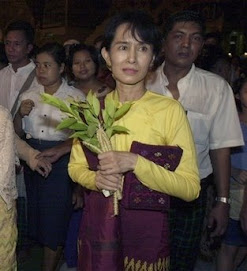


 Posts


