News & Articles on Burma
Tuesday, 11 January, 2011
-------------------------------------------------
Following Suu Kyi's Advice, Youth Network Takes Shape
Stilwell Rd to be reborn
Thais Call on Burma to Cease Artillery Fire
Parliamentary Books Sell Out on First Day
Battle continues near the Thai-Myanmar border
CNPC, Qingdao Port ink deal for Myanmar pipeline
Burma’s New Parliament Set to Meet
Burma Enacts Military Draft Law
Student army taken off US terror list
60 Rangoon Monasteries to be Relocated
--------------------------------------------------
Following Suu Kyi's Advice, Youth Network Takes Shape
By KO HTWE Tuesday, January 11, 2011
When Burmese pro-democracy leader Aung San Suu Kyi played host to a large gathering of young people on Dec. 28, she urged them to listen not only to her, but also to each other.
They seem to have got the message.
Since that meeting two weeks ago, many of the attendees have begun sharing information, using email addresses and telephone numbers they exchanged after their meeting with Suu Kyi.
Now a wide cross-section of socially engaged young people—from political parties, civil society organizations and groups representing ethnic minorities—have formed a National Youth Network that continues to grow with each passing day.
“The participants who attended the conference stayed in touch through e-mail and telephone. That's how the network got started. Now we have political parties and social groups contacting us every day,” said Myo Yan Naung Thein, the leader of a team coordinating the network's activities.
Than Min Soe, a youth member from the Union Democratic Party who joined the network along with 32 other members of the party, said the network is open to anyone who wants to join and cooperate with people who share their goals.
“We can explain the policies and opinions of our party to other network members, and they can also share information with us. We can also do social work together,” said Than Min Soe.
He added that another advantage of the network is that members need only take part in discussions that reflect their own concerns.
“We can stay away if the issues others are involved in are different from our own interests,” he said.
Than Zaw Aung, a youth member of the Democratic Party (Myanmar), said he joined the network with 16 other young lawyers because he wants to work together with them to fight injustices such as illegal land confiscation.
“We intend to increase our capacity-building so that other young people can work together for the good of the country in the post-election period. We will also try to expose injustices through the network,” he said.
Kyaw Min Hlaing, who competed in last year's Nov. 7 election as a candidate for the National Democratic Front, said that the network would benefit everybody by enabling them to share their points of view.
“We can extend our social work through the network. And since I belong to a legally registered party, I also look forward to doing political activities through the network,” said Kyaw Min Hlaing, who also belongs to a volunteer group that teaches orphans and students in Rangoon's Thanlyin Township.
“We can contact groups that are scattered all over the place,” said Wai Phyo Aung, a leading member of Mizzima Alin, a civil society organization whose members include doctors and university and technical students engaged in social work.
“We can do more social work and get to know each other better because of the network,” said Thiri, a member of the Development Association for Youth, a group that focuses on teaching orphans, the children of HIV/AIDS patients and the poor. http://www.irrawaddy.org/article.php?art_id=20505
------------------------------------------------------
ASIA TIMES: Jan 12, 2011
Stilwell Rd to be reborn
By Sudha Ramachandran
BANGALORE - Myanmar seems to have finally overcome its longstanding reluctance to reopening the historic Stilwell Road, which crosses the northwest of the country to link India with China.
Mahesh Saharia, chairperson of the Northeastern Initiative of the Indian Chamber of Commerce, describes the gains from the reopening of the Stilwell Road as "unimaginable".
The Myanmar government awarded a contract to rebuild a 312-kilometer stretch of the road running from Myitkyina in Myanmar to Pangsau Pass on the India-Myanmar border to China's Yunnan Construction Engineering Group.
The award of the contract to a Chinese company is a setback to India in its battle with China for influence in Myanmar, but the renovation of the Myitkyina-Tanai-Pangsau Pass section of the road will benefit all three countries, indeed the wider region, immensely.
The reopening of the Stilwell road could cut by 30% the cost of transporting goods between India and China, providing a boost to Sino-Indian overland trade in a few years.
Originally termed the Ledo Road, the 1,736 km Stilwell Road was built during World War II from Ledo in Assam to Kunming so that the Western Allies could supply Chiang Kai-Shek's Kuomintang forces after another route had been cut by the Japanese in 1942. It was renamed after General Vinegar Joe Stilwell of the US Army in 1945.
It winds its way from Ledo in Assam through Jairampur and Nampong in Arunachal Pradesh until it reaches the Pangsau Pass (aka the "Hell Pass") where it crosses into Myanmar. The road then weaves through upper Myanmar to reach Myitkyina before turning eastward to China where it culminates at Kunming, the capital of Yunnan province. Roughly 61 km runs through India, 1,035 km through Myanmar and 640 km in China.
After the war, the road fell into disuse. The Indian northeast and much of the road's route through Myanmar were wracked by insurgencies. Myanmar's inward-looking policy and avoidance of contact with the outside world, as well as poor relations between India, Myanmar and China, meant that none of these countries used the road.
That has now changed. Relations between the three countries have improved significantly, resulting in a revival of interest in reopening the road. However, stretches of the road, especially in Myanmar, were in poor condition or simply no longer exist.
Agreement for the renovation of the Myitkyina-Tanai-Pangsau Pass was signed in November, according to the Indian Express. The project will be undertaken as a joint venture by Yunnan Construction and Myanmar's military-backed Yuzana Group.
Of the three countries, China has been most enthusiastic about reopening the road and Myanmar the least keen. Beijing has already renovated the stretch running through China and linked it the country's superhighway network. It has also been developing other infrastructure in Yunnan, where Kunming is an increasingly important industrial center, in order to maximize gains from trade once the Stilwell Road is reopened.
Since the road runs through the insurgency-wracked Kachin region over which Myanmar's military rulers have limited control, they have been reluctant to allow the road's opening, seeing it as likely to facilitate movement of insurgents.
With the award of the contract for repairing the Myitkyina-Pangsau Pass stretch, the last obstacle on the way to reopening the Stilwell road has been removed.
India was hoping to land the renovation project, particularly as Myanmar's rulers had raised the issue with New Delhi in 2008. The loss of the contract to China has evoked disappointment in Delhi, but India too will reap the benefits of the reopened road.
The two areas that the road will link - India's northeast and China's Yunnan - are both isolated, economically backward and landlocked and the trade the Stilwell road will encourage is likely to bring in its wake economic development to these regions.
Partition of the sub-continent in 1947, severing what is now Bangladesh from India, deprived the northeast of access to its nearest port, Chittagong. Sixty years on, the region's access to the sea is about 1,600 km away - overland via a poor road and rail network and through the narrow Siliguri Corridor to Kolkata port. Goods from India's northeast headed for China or Southeast Asian countries are at present shipped via Kolkata through the Strait of Malacca and on to China.
"It takes seven days for cargo to move by road from the northeast to Kolkata, then around three to four weeks to move by sea to China," said Saharia. Cargo from the northeast transported along the Stilwell Road could reach Yunnan in less than two days.
The Stilwell Road could emerge as a preferred route for transporting goods to China from other parts of India too, given the short distance to Yunnan.
Chinese Premier Wen Jiabao during a visit to India in December said "The world is undergoing major development and changes, we should seize the opportunity and lose no time in deepening our ties."
During his visit, the countries set a new bilateral trade target of $100 billion by 2015 from the 2009-10 level of around $60 billion. At present there is a $19 billion balance in China's favor. Even if a fraction of this trade were to take place through the Stilwell Road it has the potential to improve the economies of regions en route.
Other routes run from the northeast India through Myanmar to Southeast Asia, including the Moreh-Tamu road, which links Manipur with Myanmar. India's National Highway 39, which runs from Numaligarh in Assam through Nagaland links up with this road at Moreh. The expectations of the Moreh-Tamu road have, however, not been realized as this road is closed for at least a third of the year due to strikes and civil unrest.
Construction on the Kaladan Multimodal Transit Transport Project is reported to have begun late last month. The project envisages connecting the northeastern state of Mizoram with the Bay of Bengal and is expected to be completed by 2013, giving goods from India's landlocked northeast access to the sea.
The project involves constructing roads linking Mizoram with Kaletwa in Myanmar, development of the Kaladan River as a waterway and improving the infrastructure of the port at Sittwe, capital of Myanmar's Arakan province and the point where the Kaladan River empties into the Bay of Bengal.
Thus goods from the northeast can be transported by road and river to Sittwe port from where it can be moved by sea to other Southeast Asian countries. Sittwe's importance as a port will also grow as it serves as a center for development of offshore gas fields in the area and terminal for a gas pipeline planned to run north to China.
India had been eyeing Sittwe port for several reasons, sea access for cargo from the northeast being one. Indian interest in Sittwe was also particularly high as relations with Bangladesh have at times been poor and Dhaka was reluctant to give Indian goods access to its Chittagong port.
Relations with Bangladesh have improved substantially over the past two years and Dhaka has expressed interest in allowing India to use Chittagong port as another outlet for its goods.
Access to Chittagong will no doubt reduce the commercial importance of Sittwe to India. But Sittwe has strategic importance for India as well. Besides, access to road, rail and other outlets in more countries is good for trade, Saharia said, pointing out that this “will reduce India's dependence on one country.”
Sudha Ramachandran is an independent journalist/researcher based in Bangalore.
http://www.atimes.com/atimes/South_Asia/MA12Df03.html
------------------------------------------------------
Thais Call on Burma to Cease Artillery Fire
By SAI ZOM HSENG Tuesday, January 11, 2011
The Thai authorities have sent a letter to the Burmese government through the Thai-Burmese Border Committee calling on Burma to control the firing of heavy artillery after several shells landed and exploded on the Thai side of the two countries' mutual border during clashes between Burmese government forces and a splinter group of the Democratic Karen Buddhist Army (DKBA), according to Manager, an online news service belonging to the Thai News Group.
It reported that the commander of the Royal Thai Army's Mae Sot-based No. 4 Regional Command confirmed that during the battles between the Burmese army and the DKBA Brigade 5 troops on Sunday and Monday, “many” artillery shells exploded near Mae Koking village in Thailand's Mae Sot District.
The two-day series of skirmishes involved, on one side, Burmese government forces and their allies, the DKBA, which is now incorporated into a border guard force unit under Burmese command, while on the other side, a coordinated resistance by the Karen National Liberation Army (KNLA), which is the armed wing of the Karen National Union (KNU), is fighting alongside the All Burma Students’ Democratic Front (ABSDF) and the splinter group Brigade 5 of the DKBA, according to Khin Kyaw, the secretary of the ABSDF military commission.
Speaking to The Irrawaddy on Tuesday, Khin Kyaw said, “This two-day battle was the most serious fighting in the past couple of months. They [government] attacked us powerfully with a view to decimating us if they could.”
With regard to the timing of the military operation, Khin Kyaw said, “The government announced that they will convene Parliament on Jan. 31. Before that day, they want to totally secure the situation [at the border]. They don’t want to let the DKBA [Brigade 5] attack them again as they did on Nov. 7 in the middle of the general election.”
According to an officer from DKBA Brigade 5, the two-day clash left more than 50 government troops injured while two Brigade 5 soldiers died last night at Mae Sot hospital. About 200 artillery shells were fired by the Burmese military on Sunday and Monday.
However, artillery fire ceased on Tuesday, with the exception of 11 artillery shells fired by Burmese government forces that morning, the officer said.
The regime’s soldiers carried their seriously injured troops, including one major, to Myawaddy through Mae Sot, a Thai Border Guard officer confirmed.
Clashes broke out in the areas of Waw Lay and Phaluu, forcing hundreds of local people to flee across the border to Thailand. Some of them were housed at the Mae Tao Clinic in Mae Sot while others returned to their villages on Tuesday afternoon, according to a resident from Phaluu in Kawkareik Township, Karen State.
Thousands of local people from Waw Lay and Phaluu were also forced to take refuge in Thailand on Nov. 7 when fighting erupted between Brigade 5 and Burmese government troops.
The Thai Ministry of Foreign Affairs issued a statement on Monday saying that the Thai authorities had not put pressure on the refugees to return home. Those who returned did so by their own choice, wish and desire, it said.
Meanwhile, Khin Kyaw said, the military government has expanded its troop strength in the Manerplaw area, which is the former headquarters of the KNU.
“If the government thinks that they are strong enough to defeat us, they will try to do it, for sure,” he said. “The battle continues because they are unhappy that we [ABSDF, KNLA and DKBA] have cooperated with each other.”
According to DKBA Brigade 5 claims, the Burmese army used prisoners to clear mine fields during the two-day clash.
http://www.irrawaddy.org/article.php?art_id=20504
---------------------------------------------------
Parliamentary Books Sell Out on First Day
By WAI MOE Tuesday, January 11, 2011
The main government bookstore in Rangoon sold out on Tuesday of a set of 17 legal books detailing new parliamentary laws and bylaws on the first day they were for sale.
The set of books was launched a day following the military government's announcement that it will convene the new Parliament on Jan. 31. Several government bookstores, information offices and the Public Relations Department also put the set of legal books for sale on Tuesday.
The state media announced on Monday that the 17 books detailing new laws and bylaws would be published as a matter of public information. The announcement was made alongside junta chief Snr-Gen Than Shwe’s declaration that the opening sessions of the new parliaments were to take place at 8:55 am on Jan. 31.
An official with the Sarpay Beikman Book House, belonging to the Ministry of Information, told The Irrawaddy on Tuesday that one set of 16 law books costs 2,900 kyat (approx. US $3), and that every set was sold out by early that afternoon. He said that one book was yet to hit the bookstands, but that it would do so later that day.
A Rangoon-based journalist who bought the legal books at Sarpay Beikman Book House in downtown Rangoon on Tuesday morning said she witnessed a crowd of people buying the books. “But the bookstore would only sell one set of books per customer,” she said.
Even though Burma's military junta has ruled the country with an iron fist since 1962—particularly over issues such as press freedom—many Burmese citizens have continued to show their desire for knowledge and awareness of contemporary political, economic and social issues by reading and through foreign broadcasts on shortwave radios.
In additional to the pre-parliamentary opening session, the talk of the town on Tuesday was a report stating that every citizen of Burma should do military service.
International media reported on Monday that all men between 18 and 45 and all women between 18 and 35 will be drafted under a new military conscription law.
Commenting on publishing, Nyan Win, a lawyer and spokesman for the opposition National League for Democracy (NLD), said that he had learned that new laws and bylaws had been issued by the junta in October though they were not publicly announced. He said that the NLD will soon respond to the new laws and bylaws.
Ahead of the Upper and Lower House openings in Naypyidaw on Jan. 31, officials at the administrative capital are busy preparing a reduction in government ministries, cooperating and assimilating similar ministries into one.
“Currently there are 32 ministries in the Cabinet,” said an official source who spoke on condition of anonymity. “Under the coming government, they will be reduced by up to 50 percent.” http://www.irrawaddy.org/article.php?art_id=20503
-----------------------------------------------
Battle continues near the Thai-Myanmar border
Jan 11, 2011 |
Battle between Myanmar government soldiers and ethnic karen forces have continued along the Thai-Myanmar border near Mae Sot District of Thailand's northwestern Tak Province.
The fight between the Myanmar government troops and the Democratic Karen Buddhist Army (DKBA) forces began in Monday, as the DKBA forces were laying siege to and firing shells at a base of the Myanmar government soldiers near Koh Manao area in Mae Sot; while the Myanmar soldiers heavily fired at the DKBA forces for self-defence and could block the DKBA from advancing.
As 11 shells have hit the Thai side, the Thai head of the Thai-Myanmar Border Committee (TBC) in Mae Sot has sent a letter to the TBC office in Myanmar's Myawaddy Province, urging the Myanmar soldiers to carefully aim their targets and not fire into Thailand. Innocent Thai villagers living near the border have asked Thai troops to dispose unexploded shells in their corn and bean plantations in Koh Manao for fear of possible dangers from the shells.
http://www.asianage.com/international/battle-continues-near-thai-myanmar-border-823
-------------------------------------------------
CNPC, Qingdao Port ink deal for Myanmar pipeline
Reuters
Reuters - Wednesday, January 12
BEIJING, Jan 11 - China's top oil and gas firm CNPC and Qingdao Port Group have signed a framework agreement on operating a wharf for the China-Myanmar crude oil pipeline, media said on Tuesday.
The China Petroleum Daily gave no details on the deal, though it said part of the work on the wharf in Myanmar where the oil will be unloaded had been finished in November.
The pipeline was another important energy import means for China, the report said, adding it was a "golden bridge of friendship between China and Myanmar."
The crude oil pipeline will have a total capacity of 22 million tonnes a year, while an accompanying gas pipeline will have a capacity of 12 billion cubic metre , said the newspaper, which is run by CNPC.
Both pipelines will start from the Myanmar port of Kyauk Phyu in the western state of Rakhine , then head in a northeasterly direction towards the city of Mandalay before arriving in the Chinese border town of Ruili in southwestern Yunnan province.
From there the pipelines go to Yunnan provincial capital Kunming and eventually on to the cities of Chongqing and Nanning.
CNPC, the parent of PetroChina , said in September it planned to complete the China section of pipelines from the former Burma and a related refinery by 2013, putting the pipeline a year behind schedule. [ID:nTOE68903P]
The projects will help diversify China's energy import routes, cutting its dependence on shipments via the potentially risky Malacca Strait, through which some 80 percent of the country's oil imports now pass. [ID:nTOE60D08W]
China calls this the "Malacca Strait dilemma", fearing that during a conflict, a hostile power could choke off energy supplies that are taken on supertankers through the narrow strait between Malaysia and Indonesia.
For a factbox on the pipelines, click [ID:nTOE60S06Z]
(Reporting by Judy Hua and Ben Blanchard; Editing by Ed Lane)
http://malaysia.news.yahoo.com/rtrs/20110111/tbs-china-myanmar-pipeline-21231dd.html
--------------------------------------------
Burma’s New Parliament Set to Meet
Ron Corben | Bangkok 10 January 2011
Burma’s new parliament, elected last November, will hold its first session on January 31, according to an announcement by state media made on Monday. The meeting will mark the first time a legislative body has met in the country since 1988.
The military-backed Union Solidarity and Development Party won about 80 percent of the elected parliamentary seats. The 2008 constitution allots 25 percent of the seats automatically to the military.
The military says the election is part of its plan to move to democracy and civilian rule.
But Burma’s opposition groups and the international community denounced the election as unfair because it limited the ability of opposition candidates to campaign. Many, including democracy advocate Aung San Suu Kyi, were barred from running.
Sunai Pasuk, the representative for Human Rights Watch in Bangkok, questions whether these steps by the military will bring any significant change to Burma.
"Will this bring serious improvement to a so-called opening up of the country, more democratic? It is not at all, it is not all; it’s simply formalizing the consolidation of power. It’s just a procedural formalization of the military’s domination in Burma and that’s it," Pasuk said.
Also Monday, the military said it will enact a law to allow for the draft of men and women into the armed forces.
Carl Thayer, a political scientist at Australia’s University of New South Wales, says that could see the armed forces competing for people currently working in the private sector in Burma.
"It gives the government the ability to conscript of appropriate educational or technical background, that are better needed, and women as well, for technical services. Under a volunteer army, private enterprise competes for the best talent in the country," said Thayer.
Rights groups accuse Burma’s army of using child soldiers and forcing civilians to work as human mine sweepers and porters. The army is reported to have trouble maintaining force numbers due to desertions. Under the new law, draft dodgers face prison sentences of up to five years.
The new law would also enable the army to draw conscripts from universities, often seen as a major source of dissent.
Regional analysts say the conscripted army is another method of re-enforcing military power. The military has controlled Burma since 1962. In 1990, the opposition led by Aung San Suu Kyi won elections, but the military refused to hand over power.
Aung San Suu Kyi was freed a week after last year’s election, after spending most of the past two decades under house arrest. Her opposition party, the National League for Democracy was disbanded before the November vote and has no seats in the new parliament. http://www.voanews.com/english/news/asia/Burmas-New-Parliament-Set-to-Meet-on-Jan-31-113195564.html
---------------------------------------------
Burma Enacts Military Draft Law
By AP Monday, Jan. 10, 2011
(Rangoon, Burma) — Military-ruled Burma has enacted a law that could draft men and women into the armed forces and mete out prison sentences of up to five years for draft dodgers, according to an official document seen Monday. The country currently has a volunteer army.
The law, dated Nov. 4, 2010, but yet to be made public, will come into force when proclaimed by the ruling military council, said an official gazette with limited circulation. (See pictures of the next generation of military in Burma.)
Burma's 400,000-strong military ranks among the largest in the world. Its troops are engaged in continuing conflicts with several ethnic minority groups seeking autonomy from the central government.
Some analysts say conflicts could escalate as more ethnic groups refuse to adhere to a Constitution and government they say will deprive them of even more rights than they currently enjoy. The government is set to replace the junta, possibly toward the end of this month.
The law states every male between the age of 18 and 45 and females between 18 and 35 may be drafted to serve for two years, which could be increased to five years in times of national emergencies. Both sexes are required to register at 18.
Those who fail to report for military service could get three years in prison, a fine or both, and those who deliberately inflict injury upon oneself to avoid conscription could be imprisoned for up to five years, fined or both. (See pictures of how young Burmese are trying to change their country.)
In times of national crisis the government can recruit all or some of those eligible for military service.
Civil servants, students, persons serving prison terms or those taking care of elderly parents will enjoy temporary postponement of military service but could be later called to serve. Totally exempt are members of religious orders, married women or divorcees with children and disabled persons.
Read more: http://www.time.com/time/world/article/0,8599,2041470,00.html#ixzz1AjJC8ZlX
Read more: http://www.time.com/time/world/article/0,8599,2041470,00.html#ixzz1AjJ3jSMH
------------------------------------
Student army taken off US terror list
By HTET AUNG KYAW
Published: 10 January 2011
A Burmese student army that rose to prominence following the 1988 uprising has been removed from a list of organisations deemed terrorists by the US government in the wake of the 9/11 attacks.
The All Burma Students’ Democratic Front (ABSDF) had been classed as a terrorist organisation despite the US having granted asylum to some of its members in the 1990s. Its former chairman, Htun Aung Kyaw, resides in the US, while other senior members were granted scholarships at prominent American universities.
Htun Aung Kyaw told DVB that some members, unaware they were being classed as terrorists, had asylum bids turned down, while others who already had green cards were denied citizenship.
He said the group’s name was removed from the list after former ABSDF members in the US petitioned the government.
“About 60 or 70 [former ABSDF members] signed the petition [in December] and we sent it to Human Rights First, an organisation based in Washington who had been providing us with assistance.
A meeting was held on 20 December between HRF and the Department of Homeland Security (DHS) and the group was removed from the list. Htun Aung Kyaw said that an official announcement will be made shortly by the DHS.
“This will give a moral support for our ABSDF comrades who are currently [fighting] as they are no longer seen by the world as terrorists but as freedom fighters making an effort to bring democracy to Burma.”
He added that the petition was pushed as testament to the many ABSDF members residing in refugee camps along the Thai-Burma border whose asylum requests were left pending following 9/11. “Now they will once again be given opportunities to come here to the US.”
The ABSDF has recently been engaged in fighting in eastern Karen state after joining forces with a breakaway faction of the Democratic Karen Buddhist Army (DKBA), which has been battling the Burmese army.
At its peak the student army had some 10,000 troops. It has been linked with the Karen struggle ever since its formation in the late 1980s, when thousands of students fled to the jungle and were sheltered by the Karen National Union (KNU) and its armed wing, the Karen National Liberation Army (KNLA).
The US has nerarly 50 groups on its list of foreign terrorist organisations, the vast majority of which are based in the Middle East. Only six hail from Asia.
http://www.dvb.no/news/student-army-taken-off-us-terror-list/13645
------------------------------------------
60 Rangoon Monasteries to be Relocated
By HSET LINN Tuesday, January 11, 2011
RANGOON — More than 60 Buddhist monasteries situated along the banks of the Pegu River in Thaketa Township in Rangoon are to be relocated to Shwepyithar Township in the northern suburbs of the city, according to several affected monks.
Local residents speculate that the monasteries may have been targeted by the military regime because of the active involvement of many of their monks in the 2007 Saffron Revolution.
Several monks said they believe the monasteries will be destroyed to make way for a port project and road extension financed by the Htoo company owned by Tay Za and the Yuzana company owned by Htay Myint. Both businessmen are known to be close to several military leaders and are blacklisted by Western sanctions.
The monasteries affected are situated on or close to Shukhinthar Road, which runs along the Pegu River just east of central Rangoon. Also due for relocation, according to the monks, are several highly respected religious centers, including Aung Thida, Zaytawun, Myo Ukin, Mingalayama, Thae Inngu Dharma Center and Mogok Aung Nyeinchan Monastery which run a free community clinic, and Kan Zayon Monastery, which runs free English classes.
All the Buddhist monasteries and learning centers have already been informed that they are to relocate to Wahtayar in Shwepyithar Township, according to the monks.
“Ten Buddhist learning centers and around 60 monasteries are on the relocation list,” said affected monk U Agga. “Approximately 1,500 monks reside in those monasteries.”
“Speculation about a relocation began last year, but the first proof we saw was on Dec. 27 when municipal workers, military officials and the Htoo Trading Company staff came here and took photographs and surveyed the area,” said the monk.
“The naval port, the park and the Shwe Hin Thar Hotel will be in the firing line if the project goes ahead,” said a monk from Zaytawun Monastery. “However, I have heard nothing about their relocating. Only monks have been instructed to move out.”
At Aung Thida Monastery, a representative of the more than 200 monks studying Buddhist literature there said the monks are worried about their relocating to the new site as they depend solely on alms offered by members of the public.
“All monasteries rely on donations,” a senior monk said. “But the place where we are being asked to relocate to is practically empty.”
The monks who spoke to The Irrawaddy said they do not know the exact date of the relocation, but said they will defend their religious property as new monasteries are normally devoid of furnishings and any religious paraphernalia.
“The State Sangha Maha Nayaka Committee [the state-sponsored Buddhist monks’ organization] has not called us in yet,” a monk said. “If we are told to relocate, we will contest the decision.”
The monks said they have been informed that each Buddhist learning center will be allocated a 200-foot-wide plot in Wahtayar, while each monastery will be alloted a 90-foot-wide plot at the new site.
The monks told The Irrawaddy that the authorities will not pay any compensation nor pay for any building construction or other costs.
During the 2007 Saffron Revolution, when the military attempted to raid the monasteries on Shukhinthar Road, they were confronted by Thaketa residents, resulting in the death of one local man. Ultimately, the military staged a raid against the monks with the assistance of local navy from the nearby port on the Pegu River.
http://www.irrawaddy.org/article.php?art_id=20502
Wednesday, January 12, 2011
News & Articles on Burma-Tuesday, 11 January, 2011


Tuesday, January 11, 2011
ミャンマー新議会、1月31日招集
読売新聞 1月10日(月)19時22分配信
【バンコク=深沢淳一】ミャンマー軍事政権は10日、国営メディアを通じて、昨年11月の総選挙を踏まえた新議会を首都ネピドーで1月31日に招集すると発表した。
会期中に大統領と2人の副大統領を選出し、形式的に軍政から民政へと移管する。ただ、上下両院とも軍政の翼賛政党である「連邦団結発展党」(USDP)と、選挙を経ず自動的に軍部に振り分けられる軍人枠が圧倒的多数を占めており、国際社会は、軍政体制が続くと批判している。
News & Articles on Burma-Monday, 10 January, 2011
News & Articles on Burma
Monday, 10 January, 2011
-------------------------------------------------
Burma to hold first parliamentary session in 22 years
Burma enacts military draft law
Mongla base shelled by Burma Army artillery
Thais Tighten Border Security Amid Clashes
Kachin Farmers Fight On
Unease Grows over Plans to Introduce Draft
Jailed DVB reporter in isolation cell
Burma parliament to meet January 31: state TV
Myanmar enacts 17 new laws under new state constitution
------------------------------------------------------
Burma to hold first parliamentary session in 22 years
Burma's new parliament will hold its first session in 22 years on January 31, according to state radio, an event the country's military rulers hail as one of the final steps in its self-styled "road map to democracy".
AFP : 10:00AM GMT 10 Jan 2011
Burma's 1,154 lawmakers, dominated by the junta-linked party, will meet in a massive new building in the remote capital of Naypyitaw, the brief announcement said. It will be the first parliamentary session since a 1988 meeting in the old capital of Rangoon, which the junta renamed Yangon a year later.
The ruling junta's military-backed party, the Union Solidarity and Development Party, garnered nearly 80 per cent of seats in the two-house Union Parliament in Nov. 7 polls, the country's first in two decades. The country's 14 regional parliaments will convene the same day in their respective areas, the announcement said.
"We have waited 20 years to be able to make our demands through the parliament," said Thein Nyunt, a member of the opposition National Democratic Force. "Now that the parliament is going to be convened, I hope I will be able to work for the betterment of the people and the country from within the system."
The opposition party, formed by a faction of Suu Kyi's party after it was disbanded for boycotting the polls, holds a mere 12 seats total in the national parliament.
Government opponents and outside observers have called the elections unfair and undemocratic, saying the results were manipulated to allow the military-backed party to win. http://www.telegraph.co.uk/news/worldnews/asia/burmamyanmar/8249936/Burma-to-hold-first-parliamentary-session-in-22-years.html
-----------------------------------------------------------
Burma enacts military draft law
By AP News Jan 10, 2011 4:30AM UTC
YANGON, Burma (AP) — Military-ruled Burma has enacted a law that could draft men and women into the armed forces and mete out prison sentences of up to five years for draft dodgers. The country currently has a volunteer army.
According to an official document seen Monday the law will come into force when proclaimed by the ruling military council.
Burma’s 400,000-strong military ranks among the largest in the world. Its troops are engaged in a continuing conflict with several ethnic minority groups seeking autonomy from the central government.
© 2011 The Associated Press. All rights reserved. This material may not be published, broadcast, rewritten or redistributed. Learn more about our Privacy Policy and Terms of Use.http://asiancorrespondent.com/45790/myanmar-enacts-military-draft-law/
----------------------------------------------------
Mongla base shelled by Burma Army artillery
Monday, 10 January 2011 15:07 Hseng Khio Fah
Burma Army’s artillery force, which is based in Shan State East’s Mongyawng township, has reportedly targeted and tested their weapons against one of the groups that is at loggerheads. This group is the National Democratic Alliance Army (NDAA), better known as Mongla group, according to sources from Mongla.
The incident took place on 7 January. The base that was attacked was located on Loi Parng Nao, which, at 5, 842 feet, is the second highest mountain in the Shan State. 15 155 mm artillery shells had fallen both inside and around the base. No injuries were reported on the Mongla side, an officer from the group said.
According to him, the Burma Army reportedly told the group [Mongla] a day earlier that they were going to test their weapons. The Mongla group says it did not expect the Burma Army to fire upon their base. They thought the Burma Army should not have targeted their base in the first place, if what they wanted was peace.
“It was like they intended to intimidate us,” the officer commented.
The recently used 155 mm artillery, which is said to be able to reach 24 kilometers, was reportedly brought from China, Mongla sources said.
Concerning the test, some border watchers on the Sino-Burma border commented the incident does not mean there would be a possible war; however, it could relate to some of the Mongla group’s speeches delivered on Burma Independence Day, January 4.
“The speech recalled that Burma Independence Day came from the Panglong Agreement, which was signed by different ethnic territories and Burma's representative General Aung San in order to demand Britain for independence and establish a genune federal union. But contrary to expectations, it was just artificial Independence aid an artificial union,” the source said.
Another factor that could have made the junta unhappy is that the Mongla is still said to be using the old national flag, not the new flag as stipulated in 2008 constitution.
Regarding the shooting, the Mongla made no response except to order all of its fighters to stay alert and keep an eye on the Burma Army movement.
The Loi Pangnao Mountain is an important strategic location that the two sides [Burma Army and Mongla] have been scrambling over each other for possession since September 2009. Each side is telling the other to stay off the mountain but neither is leaving. http://www.shanland.org/index.php?option=com_content&view=article&id=3402:mongla-base-shelled-by-burma-army-artillery&catid=86:war&Itemid=284
------------------------------------------------------
Thais Tighten Border Security Amid Clashes
By SAI ZOM HSENG Monday, January 10, 2011
Thai authorities have raised border security after some artillery shells fired by Burmese troops during two days of clashes with a splinter group of the Democratic Karen Buddhist Army (DKBA) exploded near a village in Thailand's Mae Sot District.
The incident will be investigated and if necessary the Thai government will issue a formal complaint to the Burmese regime through the the two countries' border committee, according to the commander of the Royal Thai Army's Mae Sot-based No. 4 Regional Command, speaking to reporters.
Around 100 heavy artillery shells were fired by Burmese troops during fighting that started at 7 o'clock this morning, with six of the shells exploding on the Thai side. Yesterday, 11 shells fired by government troops exploded near the village of Mae Koking in Mae Sot District.
A DKBA officer, speaking on condition of anonymity, confirmed that two of their troops were injured by today’s artillery fire.
The regime troops started firing heavy artillery yesterday, mainly targeting DKBA troops near the villages of Waw Lay and Phaluu in Kawkareik Township, Karen State.
Speaking to The Irrawaddy on Monday, Nan Phaw Gay, the editor of the Karen Information Center in Mae Sot, said, “Government troops carried out heavy attacks yesterday. They fired heavy artillery the whole day. We can’t confirm how many have been injured or killed yet.”
Maj San Aung from DKBA Brigade 5 said that the regime's troops were responding to the DKBA's successful guerrilla tactics, which he said have been effective against Burmese forces in the area.
“The government wants to take the Waw Lay and Phaluu areas as soon as possible,” he added.
A local resident of Phaluu told The Irrawaddy that hundreds of people from the area have fled to Thailand since yesterday and are currently at the Mae Tao Clinic in Mae Sot.
DKBA Brigade 5, led by Col Saw Lah Pwe, is the first ethnic armed group to engage in hostilities with the regime over the issue of the junta's border guard force (BGF) plan, which would put armed cease-fire groups under Burmese military command. Clashes between the DKBA and Burmese troops began on Nov. 7, 2010, the day the regime held its first election in 20 years.
According to recent unconfirmed reports, a meeting was held last Friday between Maj-Gen Thet Naing Win, the commander of the Burmese army's Bureau of Special Operation 4 (BSO-4), and DKBA leaders to negotiate an end to the current situation.
A Burmese military source said that he couldn't confirm or deny the rumor, but added that it was unlikely. “Commanding officers from the Southeastern Military Command said they don’t need to negotiate with the DKBA,” he said.
Meanwhile, a Burmese army artillery unit based in Mong Yawn Township in eastern Shan State started firing artillery near a camp of the National Democratic Alliance Army (NDAA), another armed cease-fire group that has rejected the BGF scheme, on Friday.
The unit warned on Jan. 6 that it planned to start artillery firing training on Friday, but nobody expected the shells to land so close to the NDAA camp, said an NDAA officer, speaking on condition of anonymity.
“They [the local artillery unit] can do their training somewhere else. We didn’t know that they were planning to fire shells near our camp. They fired 15 times with 155-mm shells, but they all exploded outside of our camp and no one was injured,” the NDAA officer said.
The NDAA has between 1,000 and 1,200 troops and is based in Mongla in eastern Shan State, according to exiled military observers.
The military junta has been pressuring the ethnic cease-fire groups to join the BGF scheme since April 2009. Most, however, have refused, including the United Wa Stated Army, the strongest ethnic army, with an estimated 30,000 troops, and the Kachin Independence Army, with an estimated 10,000 troops.
http://www.irrawaddy.org/article.php?art_id=20499
--------------------------------------------------
Kachin Farmers Fight On
By KO HTWE Monday, January 10, 2011
Farmers whose lands were confiscated by the Yuzana Company in Hpakant Township in Kachin State are to file an appeal to the High Court in Naypyidaw contesting the State Court decision to award them minimal compensation.
Speaking to The Irrawaddy on Monday, Kyaw Soe Lin, one of the lawyers for the farmers, said that the Myitkyina State Court on Friday ordered Yuzana to pay each farmer the sum of no more than 80,000 kyat (US $80) per acre for land seized or confiscated.
“The farmers are demanding compensation for the nearly three years that they have been unable to work on their lands,” he said. “However, they were not awarded the compensation they deserve and will file an appeal.”
The verdict affected two groups, one representing 46 farmers and the other 17 farmers. A third group of 20 farmers' lawsuit was rejected outright by the court in Myitkyina, the Kachin State capital.
Some 600 farmers were evicted from their lands between 2006 and 2008 without full compensation, and were displaced to areas far from their original homes. Several of the farmers banded together to hire legal teams which filed lawsuits in August claiming the land seizures were illegal.
Yuzana, which plans to use the land to grow tapioca and sugarcane, persuaded them to drop the case in return for payments of 80,000 kyat ($80) per acre to a maximum of 500 evicted farmers. However, of the farmers who accepted the pay-off, many are still waiting for the compensation. Most rejected the offer and filed lawsuits in 2010.
Speaking to The Irrawaddy on Monday, Pho Phyu, a lawyer who has previously represented Rangoon farmers in land seizure cases, said that the authorities were awarding lands “to wealthy persons” as part of a State policy to “industrialize agriculture.”
He added: “In fact, the authorities are helping the wealthy businessmen get richer and richer.”
There are no less than 343 land seizure cases in Rangoon Division alone where private companies have confiscated lands belonging to farmers with the help of local authorities, said Pho Phyu.
The 1963 Safeguarding Peasants' Rights Law, Section (3), states that “a Civil Court shall not make a decree or order for: a warrant of attachment for or confiscation of agricultural land; neither for employed livestock and implements, harrows and implements, other animate and inanimate implements, nor the produce of agricultural land; prohibition of work upon or entry into agricultural land; prohibition of movement or sale in whole or part or use of employed livestock and implements, harrows and implements, other animate and inanimate implements, or the produce of agricultural land.”
However, “the farmers had to vacate their land and were scolded harshly by the Company manager,” said Pho Phyu.
Recently, about 200 farmers demonstrated peacefully in front of the office of the General Administrative Department of Eastern Rangoon District against the land confiscations and demanded the return of their land by 11 private companies.
The Yuzana Company is owned by Htay Myint who is on the US sanctions blacklist because of his close ties to the junta generals. He won his Tenasserim Division constituency for the regime-backed Union Solidarity and Development Party in November's general election.
His Yuzana Company was granted 200,000 acres in the Hugawng Valley Tiger Reserve in 2006 to establish tapioca and sugar cane plantations, according to a report by the Kachin Development Networking Group. http://www.irrawaddy.org/article.php?art_id=20498
----------------------------------------------
Unease Grows over Plans to Introduce Draft
By THE IRRAWADDY Monday, January 10, 2011
RANGOON — News of the recent enactment of a military conscription law that will force young Burmese to join the armed forces or face prison sentences of up to five years is causing serious concern among the general public, according to an informal survey by The Irrawaddy.
In interviews with more than 100 Rangoon residents from various walks of life, The Irrawaddy found that around 90 percent were opposed to the imposition of mandatory military service and did not want to participate in it or allow their children to do so.
According to The Associated Press, the law, dated Nov. 4, 2010, but still not made public, will require every man between the age of 18 and 45 and every woman between 18 and 35 to serve in the military for two years, which could be increased to five years in times of national emergencies.
Those who fail to report for military service could get three years in prison, a fine or both, and those who deliberately inflict injury upon themselves to avoid conscription could be imprisoned for up to five years, fined or both, the AP reported.
“This news has been spreading since the end of December,” said one Rangoon resident, speaking on condition of anonymity. “People have been talking about it on the Internet and Facebook and are getting worried because they don't want to serve in the military.”
One reason many people are opposed to the draft, he said, is public contempt for the armed forces, which for decades has been the key to keeping the country's deeply unpopular rulers in power.
“The army has violently suppressed Burmese citizens ever since it seized state power in 1962, so people's bitterness has grown from generation to generation. Young people today witnessed violent crackdowns on protests in 1988 and 2007, so they hate the generals and curse the soldiers,” said a gold shop owner in Rangoon.
One 50-year-old mother with two sons over the age of 18 said she would not allow them to be drafted.
“I don't care what the law says, I can't send my sons to the army, not for a short time or a long time,” she said. “I believe other parents think the same way as I do, so we will all oppose it together. If we can't stop it, we will have no choice but to protest against it until we die.”
A Rangoon-based reporter told The Irrawaddy that he could not confirm with regime officials that the conscription law had in fact been enacted. He added, however, that people were taking the reports very seriously, and suggested that the new law could lead to unrest.
“People are furious at the thought that their children could be forced to join the army, which they see as cruel and violent,” he said. “They are worried about the harm that will be inflicted on their children, grandchildren and great grandchildren and will not accept this law.”
Some, however, saw the conscription law as an opportunity to forge closer ties between the army and civilians, possibly with the effect of making the armed forces more attuned to the needs of the public.
“I think we will be nearer our democratic goals when people understand military affairs. Because of the conscription law, people will become soldiers and the army will be viewed as the people's army and will no longer follow the orders of the dictators,” said an independent candidate who ran in Burma's first election in 20 years on Nov. 7, 2010.
The move to introduce conscription did not come as a complete surprise. Article 386, Chapter VIII of Burma's 2008 Constitution states that “Every citizen has the duty to undergo military training in accord with the provisions of the law and to serve in the Armed Forces to defend the Union.”
“Citizens will definitely have to serve in the armed forces in accordance with the Constitution, but we won't know how this will be implemented until after the Parliament is convened,” said a lawyer in Rangoon. “We don't know, for instance, what kind of exceptions there will be. So it's not something we need to worry about now. If it is applied too stringently, however, people will resist it.”
The regime claimed that 92.48 percent of eligible voters cast their ballots in favor of the 2008 Constitution in a national referendum held on May 10, 2008.
Related articles: Conscription in Burma Following Election?
http://www.irrawaddy.org/article.php?art_id=20497
----------------------------------------------
Jailed DVB reporter in isolation cell
By KHIN HNIN HTET
Published: 10 January 2011
A young DVB reporter recently sentenced to eight years in prison has been placed in solitary confinement in Rangoon’s notorious Insein prison.
A source close to the prison said that it was Sithu Zeya’s lack of understanding about prison customs that meant he didn’t stand to attention when the institution’s director showed up.
The director, Win Naing, had visited his block after hearing reports that political prisoners, including Sithu Zeya, were assaulted by other inmates, and some left with serious injuries.
The 21-year-old was convicted in December last year by a Rangoon township court of illegal border crossing and holding ties to an unlawful organisation. He is facing a further charge under the Electronics Act, which can result in up to 20 years in prison.
He had been arrested after photographing the damage caused by the Rangoon bombings on 15 April, which left nine dead.
Sithu’s father, Maung Maung Zeya, also a DVB reporter, was arrested a day after his son and is still awaiting a verdict, but from a high-level court which could carry a more severe sentence.
Burma was last month ranked fourth in a list of global countries that imprison journalists. Nearly 20 DVB journalists are currently behind bars. http://www.dvb.no/news/jailed-dvb-reporter-in-isolation-cell/13658
-------------------------------------------------
Burma parliament to meet January 31: state TV
* Published: 10/01/2011 at 03:30 PM
* Online news: Asia
Burma's new parliament is to convene for the first time on January 31, state media announced Monday, two months after the military-ruled country held a rare but widely criticised election.
A Myanmar soldier parades during Armed Forces Day in the country's administrative capital, Naypyidaw. The country's new parliament is to convene for the first time on January 31, state media announced Monday, two months after the military-ruled country held a rare but widely criticised election.
The two-chamber parliament will meet in the capital Naypyidaw, while new regional legislatures will convene at the same time, government-controlled television reported, quoting an order from junta chief Senior General Than Shwe.
The main army-backed party claimed an overwhelming victory in the November 7 poll -- Burma's first in 20 years -- with about 80 percent of available seats. An official final tally of results has not been announced.
Under Burma's 2008 constitution, parliament need not meet more than once a year.
One quarter of the places in parliament were already reserved for the military, which together with its political proxy will have a comfortable majority for passing laws and electing the president.
It is unclear what role Than Shwe plans for himself.
Burma, ruled by the military since 1962, has been condemned by the West for an election critics say was a sham designed to cloak ongoing army rule.
The vote was widely criticised by democracy activists and Western governments owing to allegations of fraud and intimidation as well as the exclusion of opposition leader Aung San Suu Kyi.
Suu Kyi's National League for Democracy (NLD) party was forced to disband for boycotting the election in response to rules that seemed designed to bar the Nobel Peace Prize winner from taking part.
The democracy icon has spent most of the past 20 years locked up but was freed from her latest seven-year stretch of confinement just days after the poll.
Her party won a landslide election victory in 1990 but it was never recognised by the regime.
The boycott decision deeply split the opposition movement, with a group of former Suu Kyi colleagues who disagreed with her stance breaking away to form a new party -- the National Democratic Force -- to fight the poll.
It won 16 seats after fielding 161 candidates but has complained of widespread fraud by the junta-backed Union Solidarity and Development Party.
More than 3,000 candidates took part in the election for about 1,160 seats available in the national and regional parliaments.
Two pro-junta parties together fielded about two-thirds of the candidates and the opposition was absent in many areas. http://www.bangkokpost.com/news/asia/215338/burma-parliament-to-meet-january-31-state-tv
------------------------------------
Myanmar enacts 17 new laws under new state constitution
20:33, January 10, 2011
Photo taken on March 26, 2010 shows the parliament building locates in Nay Pyi Taw, capital of Myanmar. Myanmar State Peace and Development Council (SPDC) on Monday announced the date of Jan. 31 for first parliamentary session at three levels, the state-run television reported. (Xinhua/Zhang Yunfei)
The ruling Myanmar State Peace and Development Council Monday enacted 17 new laws under the new state constitution which will come out in the form of books, the state radio and television reported Monday.
The promulgation of the laws came in a series with the announcement of the date of Jan. 31 for calling the first parliamentary sessions at three levels after the end of Nov 2010 general election.
These laws include those related to state seal, election of president and vice-presidents, union government, region or state government, self-administered region or zone government, Nay Pyi Taw Council, constitution-related tribunal, state flag, state anthem , union parliament, house of representatives, house of nationalities, region or state parliament, union judiciary, union attorney-general and union auditor-general, the report said.
The enactment of the 17 laws will provide reference for the holding of the coming first three-level parliamentary sessions in the new capital of Nay Pyi Taw.
The union parliament, made up of house of representatives, house of nationalities and region or state parliament, will elect the state's president and vice presidents.
Each level of the parliaments will consist of elected parliament representatives through Nov. 7, 2010 general election and non-elected military representatives, nominated by the commander-in-chief which account for 25 percent of the total parliamentary seats.
Source: Xinhua
Monday, January 10, 2011
News & Articles on Burma-Sunday, 09 January, 2011
News & Articles on Burma
Sunday, 09 January, 2011
-------------------------------------------------
Foreign investment will impact property market
Thai exports rise
Traders at first Sino-Myanmar expo left with heavy burden
Minister Schwarzenberg supports Burma opposition
Students circulate anti-regime posters on opening day of Kachin Manau festival
------------------------------------------------
Foreign investment will impact property market
By Kyaw Hsu Mon
January 3 - 9, 2011
THE surge in foreign investment and the accompanying rise in the number of joint ventures are likely to have a sizeable effect on the property market in the coming year, real estate professionals say.
Land in areas where development is planned, and rentals of luxury property in Yangon are both expected to boom, they say.
Business collaboration proposals expected to bear fruit in 2011 include investment in hydroelectric power projects, deep-sea port projects, road works and more.
These would have an impact in Yangon, Mandalay and throughout the country, said U Than Oo, managing director of Mandine real estate agency.
“There will be an impact on the property sector of Yangon because these projects will need offices for their staff,” he said.
The impact would extend to those parts of both upper and lower Myanmar where the projects are actually carried out, he said.
Major developments include the Dawei deep-sea port project in Tanintharyi Region and hydroelectric power projects in Mandalay Region and Kachin State.
According to local media, property prices in Dawei have jumped tenfold since the launch of the port project early last month, with the price of a detached house on the main road leaping from K20 million to K200 million within a month.
“Demand and price will continue to rise, because Dawei is a good place for Thai-Myanmar border trade. Even when the project is complete, the property boom will continue,” one Dawei resident told Popular News on December 16.
Thailand-based company Italian-Thai and the Ministry of Transportation signed the Dawei agreement last month in Nay Pyi Taw.
Since foreigners are not legally able to buy land, the surge in visits by business people and investors from Vietnam, Thailand, China, Singapore and Malaysia is also expected to stimulate the rental market.
“The rental market will grow in the coming year because living standards are very important for businesspeople who invest in Myanmar,” said U Than Oo.
Rentals have already perked up since early December, with investors prepared to pay $5000 for prime locations along Pyay and Kabar Aye Pagoda roads and downtown, said U Min Min Soe of Mya Pan Thakhin real estate agency.
“The rental sector will grow both where the projects are and in Yangon, where the headquarters will be,” he added.
The aveerage rent for a detached house with phone and internet, and reliable electricity and water supplies, has doubled in the past two years, said U Zaw Zaw, of Unity real estate agency.
"The rental charge for a building with main road frontage has doubled as foreign companies look for head offices,” he said, predicting both short-term consequences for 2011 and longer-term advantages.
But tenants also want to get what they pay for, demanding furniture, car parking, good electricity and water supplies, and high-speed internet, brokers said.
http://www.mmtimes.com/2010/business/556/biz55605.html
----------------------------------------------
Thai exports rise
January 3 - 9, 2011
BANGKOK – Thailand’s exports rose at the fastest pace in five months in November from a year earlier, government data showed in late December, easing concerns about the outlook for its economy.
Helped by strong demand for rice, Thai shipments jumped 28.5 percent from the same period of 2009, to US$17.69 billion, the commerce ministry said.
It was the 13th consecutive monthly rise and the sharpest increase since a leap of 46.3pc in June – the biggest on record.
Imports grew at an even faster pace last month, soaring 35.3pc to $17.29 billion on increased demand for fuel, the data showed.
As a result, the country posted a November trade surplus of $407.9 million, down 59.1pc from a year earlier.
In November Thailand revised up its export growth target to about 25pc in 2010, from a previous projection of 20pc.
The latest data eased concern about an economy that slipped back into technical recession with a second straight quarterly contraction in the three months to September, due to a strong baht and a weak global economy.
– AFP http://www.mmtimes.com/2010/business/556/biz55604.html
-------------------------------------
Traders at first Sino-Myanmar expo left with heavy burden
By Juliet Shwe Gaung
January 3 - 9, 2011
CHINESE companies that exhibited their products in Myanmar’s first-ever trade expo devoted to China-made goods were able to meet potential customers and pave the way for future sales. But some were unhappy that they could not sell their wares.
The expo, which attracted more than 100 Chinese companies, took place at Tatmadaw Hall on U Wisara Road in Yangon from December 15 to 18. On show in the 2700-square-metre exhibition space were transport and agricultural equipment, hardware goods and household products.
Participating companies included Shanghai Longen Power Equipment, truck maker Dong Feng and the Shandong Shifeng Group, which exhibited agricultural machinery. They are seeking to further expand trade between the two countries, which reached US$3.427 billion in the first 10 months of 2010, a 54 percent increase over the same period in 2009.
Whatever the long-term results of the expo, some companies felt a chance had been missed.
“The organisers didn’t let us sell with tax. We hoped we could sell our samples, but they insisted I had to send my equipment back,” said Mr Simon Li, business manager of Shanghai Longen, which exhibited Chinese-made generators.
But Mr Li also saw the positives and said he had made many contacts and attracted the interest of potential buyers. “We are very happy about [that aspect],” he said.
Dong Feng exhibited several vehicles, including a DFSK light truck, two town cars and five motor cycles. As they were unlicenced, however, all have to be sent back to China.
“We hoped to sell the vehicles in Myanmar. But because we didn’t get a licence, we have to send them back,” said Ko Nay Lin of Dong Feng.
YTO International, which exhibited tractors, said they understood that the aim of the expo was to encourage communication between buyers and sellers.
Shandong Shifeng Group, which showed tractors and diesel engines, also said it was satisfied, as the company has local dealers for its products.
The expo was organised by China’s Trade Development Bureau of the Ministry of Commerce and the Department of Commerce of Yunn an Province, and supported by the Union of Myanmar Federation of Chambers of Commerce and Industry. http://www.mmtimes.com/2010/business/556/biz55602.html
---------------------------------------------
Minister Schwarzenberg supports Burma opposition
Former Ambassador of the Czech Republic to Thailand met Burma opposition leader Aung San Suu Kyi in Rangoon on January 5, 2010. Jir(í Šitler delivered a letter of First Deputy Prime Minister and Minister of Foreign Affairs of the Czech Republic Karel Schwarzenberg to Aung San Suu Kyi.
In the letter minister Schwarzenberg expressed his support to Aung San Suu Kyi as well as to democratic efforts of Burma opposition in general. 05.01.2011 17:28
Aung San Suu Kyi appreciated the Czech Republic is still interesting in democracy in the world, in particular in Burma/Myanmar, even after its own democratization. According to Aung San Suu Kyi it is not a matter of course. A lot of countries with the experience of democratization do not help in such a way as the Czech Republic.
http://www.mzv.cz/jnp/en/issues_and_press/events_and_issues/press_releases/x2011_01_05_minister_schwarzenberg_supports_burma_opposition.html
------------------------------------------
Students circulate anti-regime posters on opening day of Kachin Manau festival
Friday, 07 January 2011 18:45 KNG
Kachin students circulated hundreds of anti-regime posters today in Burma’s northern city of Myitkyina, on the inaugural day of the traditional four-day Kachin Manau Festival marking the 63rd anniversary of Kachin State Day, according to student activists.
At the same time, security is increasing in the city and renewed civil war is looming between the Kachin Independence Organization (KIO) and the military regime.
student_poster_movement
Anti-regime poster was found roadside near Kachin National Manau Park in Myitkyina. Photo: Kachin News Group
About 500 copies of the A4-sized posters were scattered on the roadside using motorcycles near Kachin National Manau Park, in Myitkyina, where the Manau Festival will be celebrated until January 11, a student said.
Local eyewitnesses told the Thailand-based Kachin News Group the posters can be seen on roadsides in Shatapru, Manhkring, Tatkone, N’Jang Dung, Du Kahtawng (Du Mare), Yan Gyi Aung and Aye Yar, the main quarters of the city.
According to student activists, the posters called for the dissolution of the military government and the 2008 constitution, the unconditional release of all political prisoners, as well as ending construction of the Irrawaddy Myitsone Dam.
Naw Awng, a student activist and a leader of the All Kachin Students Union (AKSU), an underground Kachin student organization said, “On behalf of Kachin people and people of Burma, we would like to show that we totally oppose the Burmese military regime.”
Civilian activists distributed posters in Myitkyina twice last year. However, in the past, posters were most often circulated by the AKSU.
At the same time, the Kachin people are unhappy because this year’s Manau Festival is being held under the control of the Burmese military, Manau Committee sources said.http://www.kachinnews.com/news/1834-students-circulate-anti-regime-posters-on-opening-day-of-kachin-manau-festival.html
Sunday, January 9, 2011
News & Articles on Burma-Saturday, 08 January, 2011
News & Articles on Burma
Saturday, 08 January, 2011
-------------------------------------------------
Court delivers verdict in Yuzana case, appeal likely
China to Build Massive Trade Center in Thailand
Is China expending its influential power on Burma?
Burmese Banks in Dispute over Airline Ownership
Africans Refuse Burmese Rice
Burma: No ethnic autonomy under military dominated sham parliament
UNAIDS to extend aid for Myanmar HIV victims
Kachins shun junta-organised Manau festival
Pearl emporium to be held in Naypyidaw
---------------------------------------------------
Court delivers verdict in Yuzana case, appeal likely
Saturday, 08 January 2011 12:20 Phanida
Chiang Mai (Mizzima) – The Kachin State Court in Myitkyina handed down its verdict in a land confiscation class action brought by a group of farmers yesterday, ordering the Yuzana Company to compensate plaintiffs for their losses.
The 63 plaintiffs, subsistence farmers from Phakant Township in Moenhyin District, Kachin State, had lodged the class action against the company in September 2010 for confiscation of family-owned lands in 2007.
The Yuzana Company has close ties to Burma’s ruling military leaders.
The verdict was reached this evening after a panel of judges considered witness testimony.
Under the decision the company must pay compensation to the amount of 80,000 kyat (US$80) per an acre of confiscated paddy field, 60,000 kyat (US$60) per acre of crops, and 30,000 kyat (US$30) per acre of garden. In addition, farmers must be compensated an additional 150,000 kyat (US$150) for loss of home, land rights activist, Bawk Jar told Mizzima.
“The compensation rate was set by the Kachin State Peace and Development Council", he said.
However, Lamung Tang Gun, one of the plaintiffs in the case said the court’s verdict was not fair.
“We have been unemployed for three years because of the confiscation of our farmlands. We demanded 800,000 kyat (US$800) from the company as compensation, but the court awarded only 80,000 kyat (US$80)”, he said.
“We cannot accept the verdict”.
The company was accused of confiscating more than 1,038 acres (420 hectares) held by the farmers in Warazuap, Aungra, Sharuzuap, Bangkok and Namsan villages. The firm planned to grow cassava and sugar cane as cash crops.
A total of 148 farmers had originally been party to the lawsuit. However, prior to the court case, the company had offered a settlement worth only 80,000 kyat (about US$80) per an acre, resulting in a number of farmers withdrawing from the class action.
At the time, only 17 plaintiffs remained but were joined by an additional farmers experiencing severe deprivation of livelihood.
The lawsuit was initially brought against company owner Htay Myint, an MP-elect from the junta-backed Union Solidarity and Development Party. However, his name was removed as defendant, replaced by Pu Kyi, reported to be his brother, on October 12.
Bawk Jar stated: “The farmers want to get their lands back. They want fair compensation from the company”
“If the farmers launch a protest, Htay Myint will be responsible for the mess” he said.
The plaintiffs plan to file an appeal on the decision with the Naypyidaw-based Supreme Court. http://mizzima.com/news/inside-burma/4732-court-delivers-verdict-in-yuzana-case-appeal-likely.html
------------------------------------------------
China to Build Massive Trade Center in Thailand
By THE ASSOCIATED PRESS Saturday, January 8, 2011
BANGKOK — China plans to build a massive $1.5 billion commercial complex in Thailand that will enable traders to send "Made In China" goods around the world without paying pricey tariffs often imposed in the West, Thai officials and Chinese state media said.
The China City Complex is expected to house more than 70,000 Chinese traders in a sprawling 5.4 million square-foot (500,000 square-meter) facility to be built on the eastern outskirts of Bangkok, Vijit Yang, chairman of the ASEAN-China Economic and Trade Promotion Association said Friday.
China signed a free trade agreement with Southeast Asian countries in January 2010 that reduces or removes tariffs on traded goods. Passing the goods through Thailand will allow Chinese traders to avoid the tariffs imposed by the U.S. and the European Union on many of their exports, said Vijit.
The plan will also give the appearance of reducing China's trade deficit with those countries, which hit $16.8 billion with the U.S. in November and $13.6 billion with the EU.
The surplus has become an increasingly sensitive issue in the EU and the U.S., which buy the vast bulk of China's exports, prompting traders to look for other ways of penetrating those markets.
Overall, China's trade has remained robust despite the global economic crisis. Exports in November jumped 34.9 percent from a year earlier to $153.3 billion, boosted by a surge in sales to other developing economies, which are recovering from the crisis faster than the U.S. and Europe.
The China Daily said the commercial center will sell Chinese-made garments, ornaments and household items, among other things.
Thailand's Deputy Commerce Minister Alongkorn Ponlaboot traveled to China on Wednesday to woo investors, the China Daily said.
Construction is scheduled to begin in March and take 18 months to complete, said Vijit, who is overseeing the project, according to the Thai Commerce Ministry.
Thai Prime Minister Abhisit Vejjajiva is scheduled to chair a ceremony in Bangkok to officially unveil the project on Jan. 18. http://www.irrawaddy.org/article.php?art_id=20489
------------------------------------------------------
Is China expending its influential power on Burma?
By Zin Linn Jan 07, 2011 11:29PM UTC
China is to rebuild Burma’s historic “Stilwell Road”, the route from India used by British and American forces to supply Chinese troops in the battle against Japanese occupation during the Second World War, as said by Dean Nelson of The Daily Telegraph.
The Stillwell Road, starting in Ledo in Assam in Northeast India, passes through the Pangsau pass in Burma and reaches Kunming in the Yunnan province of South China. The 1726km road, which was initially known as Ledo Road, was later renamed Stilwell Road.
During World War II, the road was built by the allies and Chinese forces under the Command of US Army General Joseph Stilwell with 632km falling in China and small stretch of 61km in India. Unfortunately, the stretch of the road in Burma is not maintained and in many places the road almost disappears.
One of the trucks in the first convoy to travel over the Stilwell Road kicks up a cloud of dust as it passes through the town of Bhamo in Burma, Feb. 18, 1945. Pic: AP.
The road was named after the American general “Vinegar Joe” Stilwell by Chiang Kai-shek, China’s nationalist leader, to honour his determination to find a faster way to get more military supplies from India to Kunming.
Allied forces had been hampered after Japanese troops seized the Burma Road, and were forced to transport supplies to their Chinese allies by air over the Himalayas. U.S. army engineers started work on the 478-mile road from Ledo in Assam (now in Arunachal Pradesh), India, to Mogaung in Burma in 1942.
With the help of Chinese troops, they cut through the high Pangsau Pass as an alternative route to Burma at Mu-se in January, 1945.
According to The Daily Telegraph, the road is now to be rebuilt by the Yunnan Construction Engineering Company in a joint venture with the Burmese military-backed Yuzana Group. The deal was signed by Burmese ministers and leaders of the Yunnan Communist Party on November 22. A 194-mile stretch of road will be built from Myitkyina to the Pangsau Pass, close to the Indian border.
In August 1999, Chinese, Indian, Burmese and Bangladeshi authorities met in China’s Yunnan province and approved an agreement, known as the Kunming Initiative. It was decided to improve communications between India’s northeast and south-western China, as said by the Indo-Burma News on 22 December, 2010.
On the other hand, the New Delhi government fears that the opening up of the road will create a security threat in northeast India as the road would connect the Kachin State of Burma, which is infamous for its armed groups that also raise many North-East Indian rebels.
India is afraid the road would grant an easier route for those insurgent groups. Furthermore, it might increase the volume of illegal drugs that penetrates India from the Golden Triangle.
Meanwhile, China’s political influence, thanks to its economic success, is going up. Due to China’s military and financial support for Burma’s cruel regime, its people are facing a prospect not of peace and safety measures, but of continuing conflict and violence. For energy-hungry China, Burma’s oil and gas reserves are important as it became a regional power.
Remarkably, the “Stilwell Road” passes mostly through the Kachin State of Burma. The Kachin Independence Army (KIA), one of Burma’s strong ethnic armed groups, is in a nervous face-off with the Burmese Army following the pressure to transform into the Border Guard Force.
The KIA is constantly claiming to have autonomy. The KIA had a 16-year ceasefire with the military regime and seeks self-reliance for the Kachin people. The International Crisis Group (ICG) said that the Kachin Independence Organization (KIO) has had “basic discussions” with Beijing over the contours of a “genuine union” within Burma in which the ethnic groups would have autonomy, possibly similar to the Special Administrative Regions in China — Hong Kong and Macao.
Over the past decade, more than a million Burmese refugees and illegal migrant-workers have fled across the border into Thailand and China in order to evade the Burmese junta’s inhumane military offensives toward ethnic armed groups.
According to some observers, without resolving the ethnic autonomy issues, China’s development projects may not be completed in the allotted ttime. If China wants to promote its investments in Burma, it should not depend only on the rogue junta. Instead, it should also work with pro-democracy groups, such as the National League for Democracy and democratic ethnic groups.
Devoid of peace and stability in Burma, China’s dream of building mega-energy projects and communication courses for the South and South-East Asia market may not materialize. China may have to review its foreign relations strategy toward political oppositions in Burma. http://asiancorrespondent.com/45604/is-china-expending-its-influential-power-on-burma/
---------------------------------------------------------
Burmese Banks in Dispute over Airline Ownership
By YAN PAI Saturday, January 8, 2011
Three banks that bought Myanmar Airways International (MAI) last year are involved in a dispute over ownership of the airline, according to business sources in Rangoon.
Kanbawza Bank, which bought MAI early last year in partnership with the Cooperative Bank and the Tun Foundation Bank, has been trying to claim sole ownership of the airline since it was recently granted a permit to operate domestic flights, the sources said.
A businessman close to the Cooperative Bank told The Irrawaddy on condition of anonymity that the argument began when Aung Ko Win, a Western-sanctioned business tycoon and the owner of Kanbawza Bank, told other shareholders that he wanted to be the sole owner of MAI.
“Kanbawza Bank is the majority shareholder, followed by the Cooperative Bank. Now that the airline has obtained a new permit for domestic flights, Aung Ko Win said he wanted to manage it alone and tried to refund the others' shares,” said the businessman.
Aung Ko Win is reportedly close to Vice Snr-Gen Maung Aye, the regime's second in command.
Besides being Burma's main overseas carrier, MAI reportedly also had licenses to operate ground handling and passenger services and other airport-related businesses at the country's two international airports in Rangoon and Mandalay.
However, sources in the airline industry said that these licenses were recently given to Asia World, another company close to Burma's ruling generals. Asia World is expected to earn an annual income of US $6 million from ground handling services, the sources said.
As compensation for the loss of these licenses, MAI was granted permission to fly domestic routes, according to the sources.
The sources also said that the airlines are struggling because of a lack of passengers and difficulty buying spare parts for their aircraft due to economic sanctions imposed on them by the US and the European Union.
MAI was formed in 1993 as a joint venture between Myanmar Airways and Singapore business interests with the support of Royal Brunei Airlines. In February 2007, it was reorganized as a joint venture between Myanmar Airways, which retained 51 percent, and Hong Kong-based Region Air.
Currently, the only other Burmese airlines operating both domestic and international flights are Air Bagan and Air Mandalay. http://www.irrawaddy.org/article.php?art_id=20491
--------------------------------------------------
Africans Refuse Burmese Rice
By MYO MAUNG Saturday, January 8, 2011
A ship carrying Burmese rice was ordered to return to Burma in December after being refused docking permission in the Ivory Cost due to the unacceptable quality of the rice on board, according to a rice trader in Rangoon. Appriximately 25 percent of the exported rice was apparently broken.
This was not the first time that Burmese rice has been judged unacceptable, even to a continent as poverty-stricken as Africa.
Throughout 2010, Burmese rice exports were frequently held up at African ports, pronounced “unqualified,” and sent back to their port of origin. Sacks of rice from Burma were routinely dismissed as being wet, moldy, infested by weevils or containing too many grains that were broken to dust.
(Photo: AP)
In November, some 6,000 tons of rice exported to a country (which country?) in the Middle East were sent back, disqualified as “broken grains,” according to another rice trader in Rangoon.
Traders have said that due to an increase in the price of rice in Burma, many farmers or wholesalers mix the “good” rice with broken grains.
Burma was, until recently, selling rice at US $270-$280 per ton. The price, however, increased in the past months to $390 per ton.
The qualification of Burma’s rice exports are mostly checked by a branch of the Switzerland-based SGS, the world’s largest goods inspector.
Traders in Rangoon said that Burma’s rice exports increased dramatically in early 2009 due to greater demand from Africa and Bangladesh—mostly due to the cheap price of Burmese rice on the international market. Burma exported some 300,000 tons of rice between April and December of 2010.
In 2007-08, Burma’s rice exports amounted to a meager 358,500 tons—just 1.2 percent of total world exports that year, according to U Myint, a retired UN official and a director on the board of directors of Tun Foundation Bank.http://www.irrawaddy.org/article.php?art_id=20490
-----------------------------------------------
Burma: No ethnic autonomy under military dominated sham parliament
By Zin Linn
opednews.com
Burma has already come to an end holding its namesake polls in last November. The elections were regarded as the ugliest vote rigging show of the country's history. According to Burmese junta's 2008 constitution, the incoming legislative body will convene its first session 90 days after the Election Day (7 November, 2010) to elect a president and two vice presidents and to form a new government. So, the new parliamentary session seems to be held in last week of this January as many political analysts have speculated.
Burma celebrated its 63rd anniversary of independence on 4th January, 2011. Burma gained its independence from Britain on 4 January, 1948. But the country experienced with democracy until 1962, when the military seized power to which it has since clung.
The current military junta has emerged in 1988 after violently suppressing mass pro-democracy protests. It held a general election in 1990, but refused to recognize the results after a landslide victory by the National League for Democracy (NLD) led by Aung San Suu Kyi, who has just released from house-arrest recently. She was under detention for more than a decade and a half and freed on 13 November, 2010.
Some ethnic Shan leaders believe that the then Shan's leadership decision to depart the British colonialism on 7th February 1947 had paved the way to Burma's Independence sunshine on 4 January 1948. The decision was taken by the Shan States Council, comprising the ruling princes and people's representatives of Shan States, as Shan State was known then, at the Panglong Conference from 3 to 12 February 1947.
So, up to this day, Shan community believe they deserve autonomy as a free people. However, Burmese military regime has no attitude to allowing equal status to the ethnic nationalities of Burma including the Shans. The major disagreement between junta and the opposition NLD led by Aung San Suu Kyi is no other than to give equal category to all ethnic groups.
Latest political scenario is still blurred although a multi-party general election on 7 November has been done. In accordance with the figures pronounced by Union Election Commission (UEC), a total of 1,148 candidates representing political parties and 6 independent candidates were elected as parliamentary representatives at three levels.
The Union Solidarity and Development Party (USDP), led by Prime Minister Thein Sein, won the majority of 882 parliamentary seats or 76.43 percent out of the total1, 154 seats. The USDP is followed by the National Unity Party (NUP) with 64 seats, Shan Nationalities Democratic Party (SNDP) with 57 seats, Rakhine Nationalities Development Party with 35 seats, National Democratic Force (NDF) and the All Mon Region Democracy Party (AMRDP) each with 16 at three levels of parliament.
Meanwhile, the SNDP Chairman Sai Aik Paung told a party conference in Taunggyi in mid-December that the party has achieved extraordinary unity among ethnic Shan nationals. The December 13-15 conference set up about 180 members, including 57 winning candidates from the November 7 election, as said by the Myanmar Times December 20 - 26, 2010 Issue.
The Shan Nationalities Democratic Party won 57 of the 156 seats and the third-largest number of candidates in national and regional legislatures, after the USDP.
Simultaneously, the three ceasefire armed groups have challenged Burma Army that pressured them to transform into Border Guard Forces (BGFs). For that reason, the groups have come around declining BGF plan in order to avoid Burmese junta's oppressive strategies. The UWSA, the NDAA, and the Shan State Army-North are along with the other armed ethnic groups which are defying the military regime's demands on them to join its Border Guard Force (BGF). Actually, the junta's BGF program intended to win over the ceasefire groups through laying down their arms.
Coincidentally, the United Wa State Army (UWSA)'s political wing United Wa State Party (UWSP) has drawn another contradict proposal which includes a point to demand for a state with the Right of Self Determination from the new government, quoting UWSP sources Shan Herald Agency for News said.
The UWSP's new proposal which is to be presented to the new parliamentary government expected to be held early 2011. In the proposal, UWSP says that their armed force will remain in the Wa State to defend their independence. Although they will not secede from the Union, they will steadfastly demand for a state with the Right of Self Determination from the upcoming government, upholding a policy of non-alignment and neutrality.
The said proposal was drawn at the UWSP's 5th annual district level party congress which is being held in Mongmai, 170 km north of its main base Panghsang from 20 to 29 December. According to a Wa officer, after the December Congress, the UWSP leading party committee will send its delegation to talk with the new government on the basis of 'Opposition to War' and 'Work for Peace and Development' principle.
Subsequently, General meeting of the 3rd Central Standing Committee (CSC) of the 14th KNU Congress was fruitfully held from December 14 to 19, 2010, according to the Karen National Union (Supreme Headquarters) source. KNU adopted the four guiding principles delineated by the late heroic leader Saw Ba U Gyi. The four principles are "Surrender is out of the question", "We shall retain our arms", "Recognition of Karen State must be complete" and "We shall decide our own political destiny."
KNU says in its statement dated 23 December 2010: "As the parliament and government that would come into being according to the SPDC Road Map were for realization of the 2008 Constitution, the meeting adopted the view that instead of resolving the problems faced by Burma, it would create more insecurity and conflicts, especially in the political and military fields."
According to SPDC's 2008 constitution, the incoming legislative body will convene its first session 90 days after the election to elect a president and two vice presidents and to form a new government. However, the first issue the new government has to head on be the question of self-determination. The ethnic parties not only representing in parliament but also from outside of the legislative body have the same demand in favor of autonomy.
As the self-styled new civilian government is the rebirth of the same military itself, the ethnic autonomy seems to be out of question. Correspondingly, national reconciliation proposal by Burma's Nobel laureate has also to be faced the same destiny. Thus, people of Burma have to continue struggle for national reconciliation plus self-determination.
Obviously, Burma's military dictators have held the recent polls, not to restore freedom, justice and equality but to resume the military dictatorial power and to monopolize the country's all-out economic opportunities. http://www.opednews.com/articles/Burma-No-ethnic-autonomy-by-Zin-Linn-110107-254.html
-------------------------------
UNAIDS to extend aid for Myanmar HIV victims
English.news.cn 2011-01-08 11:08:14 FeedbackPrintRSS
YANGON, Jan. 8 (Xinhua) -- The UNAIDS will extend supply of anti-retroviral (ARV) drug for Myanmar HIV victims up to 2015 under a joint United Nations Programme on HIV/AIDS, local media reported Saturday.
About 250,000 people were infected with HIV/AIDS in Myanmar, the Voice quoted the UN organization as saying.
A total of 20,000 HIV/AIDS patients or 27 percent of 74,000 in Myanmar have been treated with ARV drug, the report said.
Myanmar has achieved a unique distinction of bringing about a gradual declination of HIV prevalence in the country over the past decade.
The country's HIV prevalence rate dropped from 0.94 percent in 2000 to 0.67 percent in 2007 and to 0.61 percent in 2009.
There are 11 local non-governmental organizations (NGO), 21 international NGOs and 7 United Nations agencies actively collaborating with Myanmar's ministry of health in responding to HIV/AIDS.
Myanmar is also actively participating in the ASEAN work program in HIV/AIDS and Mekong regional HIV/AIDS projects as well as global and regional activities initiated by various UN agencies.
AIDS is one of the priority diseases of Myanmar's national health plan and prevention and care activities for HIV/AIDS are being implemented as a national concern. http://news.xinhuanet.com/english2010/health/2011-01/08/c_13681406.htm
----------------------------------------------------
Kachins shun junta-organised Manau festival
Friday, 07 January 2011 21:58 Mizzima News
Chiang Mai (Mizzima) – Less than half the usual number of visitors attended this Manau festival commemorating Kachin State Day, which kicked off today in Myitkyina, according to festival organisers.
This year’s Manau festival will run for five days before ending on January 11.
Unlike previous years, the 2011 festival was organised under the supervision of the Burmese military regime’s northern command officers.
“There were around 800 people at the opening ceremony, much less than last year. I hope more people come and enjoy festivities tomorrow”, La Kari La Awng, head of the festival organising committee told Mizzima.
Another committee member said: “Last year visitors filled the entire grounds. But this year people are keeping away because of the heavy security presence from police, fire fighters and armed soldiers”.
“No one wants to visit, and those who did, were unhappy”.
Previous opening ceremonies have been attended by up to 4,000 people, mostly ethnic Kachins from Burma, but also from neighbouring countries.
Diplomats and tourists also usually attend the ceremony.
“Authorities reminded people over loudspeakers to enjoy the festival to drum up numbers. We saw mainly USDP party members and fire fighters. Other people included soldiers and police”, said a local resident who visited the festival today.
Besides police and soldiers, the local authorities ordered mandatory security detail from 15 fire fighters from 40 Myitkyina ward.
The number of festival goers was matched by the number of security personnel, according to another attendee.
Rev. Zong Kyang and Pastor Dau Khau from the Kachin Christian Churches inaugurated the festival at 8am with prayers.
Kachin Independence Organisation (KIO) officials, who have resisted Burmese government pressure to transform into a Border Guard Force (BGF), did not officially attend today's festivities.
Northern command leaders had only extended an invitation to them on January 4.
Military Affairs Security General Staff Officer of military affairs security, Colonel Thet Pone informed Colonel Jee Nau from the KIO liaison office in Myitkyina that while they could attend, they must appear in civilian clothes.
The Manau festival was re-branded in state-owned media this week as the ‘Union Manau Festival’, causing offense to many Kachins. http://mizzima.com/news/inside-burma/4731-kachins-shun-junta-organised-manau-festival.html
----------------------------------------
Pearl emporium to be held in Naypyidaw
Friday, 07 January 2011 21:53 Mizzima News
New Delhi (Mizzima) – A national pearl emporium is scheduled for January 11 to 13, 2011 in the Burmese capital Naypyidaw, according to the Myanmar Pearl Production and Trading Enterprise.
A similar gems emporium was held in the new capital in November 2010 where gems and pearls were sold by tender and auction.
Unsold pearl lots from the November’s emporium, as well as newly arrived lots from Pearl Island with be auctioned.
A special viewing for merchants will be arranged for January 11, while the tender process and sale by auction will commence the day after.
Sales will be in Burmese kyat.
Successful successful bidders will be announced by tender numbers using an imported electronic system.
Last year’s gem emporium resulted in the sale of 237 out of 240 lots.
http://mizzima.com/business/4730-pearl-emporium-to-be-held-in-naypyidaw.html
__._,_.___


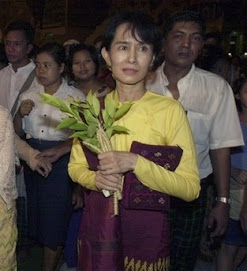


 Posts
Posts


