Publish at Scribd or explore others:
Thursday, May 7, 2009


EU-Japan call for inclusiveness in 2010 election
http://www.mizzima.com/news/election-2010/2080-eu-japan-call-for-inclusiveness-in-2010-election.html
by Mizzima News
Tuesday, 05 May 2009 20:20
New Delhi (Mizzima) - The European Union and Japan on Monday said Burma’s 2010 elections could be welcomed if it is based on an inclusive dialogue among all stakeholders in the country.
Leaders of the EU and Japan, in a joint statement released on Monday, expressed hope that the Burmese regime would tackle the country’s severe political, structural and economic problems and foster a peaceful transition to a legitimate, democratic and civilian government without delay.
The leaders also pointed out that “elections proposed for 2010 could be welcomed by the international community if they were based on an inclusive dialogue among all the stakeholders in Myanmar [Burma].”
In the context of the election, the leaders also called on the Burmese junta to release political prisoners and detainees, including Daw Aung San Suu Kyi, and to lift all restrictions imposed on political parties immediately.
The EU, which has imposed economic sanctions and travel restrictions on Burma’s military generals, extended its common position on Burma for another year in April. But it recorded its willingness to open a dialogue with the regime.
Japan, however, has not imposed any sanctions against the Burmese military regime, and continues to cooperate with Burma’s military.
The summit was chaired by Mr Václav Klaus, President of the Czech Republic, which currently chairs the European Union.
Summit leaders, in their statement, said they are willing to respond positively if the Burmese regime could provide proof of political progress and steps towards respect for human rights.
The EU and Japan also reiterated their support for the United Nations Secretary General’s special Rapporteur on the situation of human rights in Burma and called on the Burmese junta to cooperate fully with him.
Next >
Free Burma's Political Prisoners Now! FOR ACTION PLEASE
Dear Friends in the Asia-Pacific region, We are now at 286,144 signatures and counting. Thank you to those of you who have been in touch to update us on your campaign activities and petition counts. We know that many groups are small, busy and have few resources, so we really appreciate it.
FOR ACTION - PETITION COUNTS
However, we are in URGENT need of your latest petition counts and updates. If we don't get feedback from endorsing groups, then we don't make progress towards our target, it's as simple as that!
And if we don't hear about your activities, then there is nothing to put in the newsletter Pease share your counts and news with us.
FOR ACTION - EMBEDDING THE CAMPAIGN FILM ON YOUR WEBSITES
I know some of you have already done this. For those of you who haven't and would like to, here's how:
Wordpress; Click on the Embed Video button and type in the url of the film. (http://www.fbppn.net/?page_id=333)
Blogspot; If you go to the video page - http://vimeo.com/3621854 - you will see in the right hand corner a button that says "embed". Click on it and it will give you a code which you just paste into your website or blog, in the html part of the website.
Own Website; if you host your own website, just embed the code that Vimeo gives you, into the website code (as above for Blogspot)
Different websites have different programs and therefore different ways to embed films. It is possible that none of the above works and therefore we recommend you consult your website help menu, on how to embed films.
FOR INFO
a) In the next day or so we will send all endorsing groups information about our plans for after 24 May, for delivery of the petition to Ban ki-Moon and follow-up work
b) on Monday 11 May AAPP will release a new report highlighting the current bad health situation of Burma's political prisoners, made worse by the regime's systematic transfers to remote prisons. Please consider how you can use this for campaign work in your country.
With grateful thanks for everything you are doing for the campaign,
Rachel
Rachel Fleming
Campaign Co-ordinator
Free Burma's Political Prisoners Now!
www.fbppn.net
Assistance Association for Political Prisoners (Burma)
Two prominent Myanmar opposition leaders sent a joint appeal Tuesday to US Secretary of State Hillary Clinton, urging her to keep sanctions
http://democracyforburma.wordpress.com/2009/05/06/the-opposition-figures-%E2%80%94-ashin-aww-bar-sa-of-the-all-burma-monks%E2%80%99-alliance-and-tun-myint-aung-of-the-88-generation-students-%E2%80%94-said-they-signed-the-letter-in-a-hiding-place-as-t/
The opposition figures — Ashin Aww Bar Sa of the All Burma Monks’ Alliance and Tun Myint Aung of the 88 Generation Students — said they signed the letter in a hiding place as they fear they will be arrested imminently.
2009 May 6
tags: 88 students, Burma, Junta, monks, world focus on Burmaby peacerunningMyanmar opposition appeals to Clinton
May 6, 2009
Agence France Presse: Two prominent Myanmar opposition leaders sent a joint appeal Tuesday to US Secretary of State Hillary Clinton, urging her to keep sanctions on the military regime and engage regional powers.
The opposition figures — Ashin Aww Bar Sa of the All Burma Monks’ Alliance and Tun Myint Aung of the 88 Generation Students — said they signed the letter in a hiding place as they fear they will be arrested imminently.
In the letter, the two asked the United States to maintain sanctions until the junta releases political prisoners and enters “meaningful” dialogue with the opposition.
The junta has “been complaining that the US and Western nations that have imposed sanctions are making the people poor, our country underdeveloped and our economy destroyed,” they wrote in the letter.
“Let us be clear — it is the military junta and its disastrous economic policies, terror, corruption, illegal rule and mismanagement that have turned one of the richest countries in Asia into one of the least developed in the world,” they wrote.
US President Barack Obama’s administration is conducting a review of policy on Myanmar, also known as Burma, whose junta has kept democracy icon Aung San Suu Kyi under house arrest for nearly two decades.
A senior State Department official recently told Congress that the administration was not considering lifting sanctions. A prominent US senator, Jim Webb, has supported an eventual end to sanctions, saying the current approach was not working.
In the letter, the Myanmar opposition leaders supported US efforts to hold direct dialogue with the junta but said Washington needed to reach the country’s top leader, Senior General Than Shwe.
They also called on the United States to engage other nations in a solution on Myanmar including China — the junta’s main backer — and nations in the Association of Southeast Asian Nations (ASEAN).
The All Burma Monks’ Alliance and 88 Generation Students were both involved in protests in 2007 that started as rallies over the rising cost of living but escalated into the regime’s biggest threat in nearly 20 years.
At least 31 people were killed when security forces cracked down on the protesters, according to the United Nations.
Lessons for Burma from Thailand Crisis
http://burmanewscasts.blogspot.com/2009/05/lessons-for-burma-from-thailand-crisis.html
Wednesday, May 6, 2009
By PAVIN CHACHAVALPONGPUN
The Irrawaddy News
What does Thailand’s protracted political crisis tell its neighboring countries? What are the lessons to be learned from the Thai experiences? And what is the most vital message for the Association of Southeast Asian Nations (Asean), of which Thailand is a member, as the organisation moves toward a greater regional integration?
The current political stalemate in Thailand is the work of two competing networks; one that supports former Prime Minister Thaksin Shinawatra and the other the old establishment.
Thaksin is represented by the red-shirt movement which comprises the United Front for Democracy against Dictatorship (UDD), the poor in far-flung regions and underprivileged Thais. The old establishment is supported by Bangkok elite, part of the military and big business. Its notable agent is the People’s Alliance for Democracy (PAD), whose members choose to wear yellow shirts that symbolise the king’s color.
The battle between the two political networks has been ferocious. The Pattaya incident and the Bangkok inferno signalled that at least one side of the network was willing to engage in a warlike fight to undermine its opponent. In the process, leaders of both networks claimed to act for democracy. But their brands of democracy have so far failed to untie the political deadlock.
The deep turmoil in Thailand reveals certain realities which have long existed in the region. Yet, leaders in the region have pretended not to see them. This time, as Thailand found itself on the brink of becoming a failed state, a few lessons could be learned by its neighboring countries.
First, continued crisis and escalating violence imply that democracy has remained a fragile commodity. A decade ago, Thailand was praised for its rapid economic development and progressive democratisation. Today, its political domain is transformed into a battlefield between two powerful forces possessing two different ideologies.
The Thai case shows that an elected government with excessive power, living on corruption and lack of respect for human rights, can be vulnerable; that traditional power-holders must face up to modern-day reality whereby the voice of the majority is the true voice of democracy; that the military has to be depoliticised for the sake of democracy; and that violent means employed to serve political purposes only further alienate democracy.
The rise of the red-shirt movement has the potential to lead a new opinion in certain Southeast Asian states where democratic rights have been taken away from the people. Not every member of the red shirts supports Thaksin. Some have participated in the rallies genuinely for the return of real democracy to the majority of Thais.
Second, although the power struggle is a part of Thailand’s democratic evolution and this proves that the country has come a long way since the political transition in 1932, its political drama does not necessarily encourage positive changes in certain parts of the region. It could send out the wrong message.
The message, for example, that anti-government activities must not be tolerated. The message that stability is more precious than changes, or even more than democratic rights, and that challenge in all forms to the ruling regime must not be allowed. And that Western democracy is not really compatible with Asian societies, as defended by Asian leaders for generations.
In other words, the Thai conflict could have compelled illegitimate regimes elsewhere, including Burma, to tighten their grip of power for fear of public disobedience and uncontrollable situations.
Third, Asean has been led to believe that the sole major obstacle to regional integration stems from the widening gap between the more and the less economically developed members. Unless Asean closes this economic gap, regional integration will remain largely elusive.
Yet, Asean leaders have overlooked the fact that a widening political gap, in terms of different levels of democratic development, has also affected the process of regionalism. The Thai political unrest has already delayed Asean gatherings. The political storm has held back the Thai leadership in Asean. The organisation has been operating on autopilot since last year. The slow response to the global financial crisis proved this point.
However, this is not Thailand’s problem alone. The gap in the levels of democratisation in the region has so far tarnished the good works Asean has achieved in other areas.
This existing political gap has produced different mentalities and attitudes among Asean leaders as they look ahead into the future. Some are enthusiastic about Asean’s newborn regionalism. Some are using Asean as merely a symbol of their pretentious embrace of international norms and practices.
Both Thailand and Asean have a long way to go until they meet their needed objectives. Crisis in Thailand can be used to remind its neighbours that true democratisation is an extremely arduous process. But its postponement would only make this exercise even more excruciating and troublesome.
The author is a visiting research fellow at the Institute of Southeast Asian Studies, Singapore. This commentary is his personal view.
at 5/06/2009 07:57:00 PM
Myanmar opposition weighs options
http://www.atimes.com/atimes/Southeast_Asia/KE07Ae01.html
By Marwaan Macan-Markar
BANGKOK - With the hint of a general election in the air, the largest opposition party in military ruled Myanmar faces a dilemma. Should it or should it not contest the planned poll in 2010?
The uncertainty that grips the National League for Democracy (NLD) was evident in the statements that flowed from a rare meeting of its leadership during the last week of April. The NLD has opted for a wait-and-see approach about fielding candidates for next year's poll.
The party has tactfully used this pre-election summit at its headquarters to test the political waters - now that the junta has made a commitment towards parliamentary elections after 19 years as part of its "roadmap to democracy".
It was a gamble with high risks, even possible jail terms for the 150 delegates from across the country who attended. After all, the junta's oppressive sweep has forced the party to close down all its offices across the country bar one, and denied the party the right to meet as a collective for over a decade.
The regime in Myanmar has also arrested and imprisoned scores of NLD members, including those elected to parliament during the 1990 poll. No one symbolizes this more than Aung San Suu Kyi, the Nobel Peace Prize winner, who heads the NLD. The pro-democracy leader continues to remain under house arrest, now in its 13th year.
In a direct challenge to the junta's push towards the polls, the NLD's chairman, Aung Shwe, called for the "unconditional release" of all political prisoners - now over 2,100 - and freedom for Suu Kyi to pave the way for an inclusive political environment ahead of next year's country-wide elections.
Some Western diplomats, such as United States ambassador of Southeast Asian affairs Scot Marciel, believe the elections will only prove productive if all parties are allowed to participate.
"At this point it's hard to have faith," Marciel told Asia Times Online in a March interview. "Pretty much all the opposition is in prison. If the government wants to make progress politically it has to include the people - all the people. If no one else is involved, the problems will continue. What's needed is a genuine political process that's inclusive. We [the US] love elections, but not false elections. Those don't get you anywhere." (See US finger on the pulse
March 3, 2009.)
The party's two-day gathering in Yangon, the former capital, also called for a "review of the 2008 constitution" and "politically substantive initial dialogue" between Suu Kyi and Myanmar's head of state, Senior General Than Shwe, according to a NLD document.
Regarding the 2010 poll, the NLD held back from giving it any legitimacy by stating, "We need to wait and see the political party registration law and electoral law to decide whether we could participate in the election under this constitution."
"The NLD is not going to give in to the junta very easily. The party wants to hear the views of all leaders and to be able to speak in one voice when the decision is made about the 2010 elections," said Zinn Lin, an NLD member currently living in exile in Thailand. "The last time the party tried to meet was in 1998, but the authorities didn't permit that gathering. And they have been denied this right until now."
"It is uncertain what will happen to the delegates who came for the meeting, because the party's headquarters was watched by hundreds of intelligence officers and people from the special branch, taking pictures and filming it on video," Zinn Lin told Inter Press Service. "Such intimidation is proof that NLD members are not free to operate ahead of the election that the military regime wants to have next year."
The climate of intimidation NLD members face is a far cry from what it was during the months leading up to the 1990 general elections. "The 1990 elections were conducted under a free and fair situation. Political parties openly campaigned," said Win Hlaing, minister in the prime minister's office of the National Coalition Government of the Union of Burma (NCGUB), the democratically elected government in exile.
"There has been no positive change since then, after General Than Shwe's era began," he said. "There is so much hardship and intimidation. The NLD and all opposition voices are targets."
Mark Canning, the British ambassador in Myanmar, echoes such sentiments. "It remains the case that the situation in Burma [Myanmar] is characterized by the denial of freedom. It is a very, very repressive place," he said in Bangkok last week.
The junta's oppression is rooted in the outcome of the 1990 poll that shocked the military regime of the day, which had been in power since a 1962 coup. The NLD, which had been formed ahead of that poll, won a convincing 82% of the seats in the 485-seat legislature.
It was a victory fueled by local anger following 28 years of military oppression and a brutal crackdown of a pro-democracy uprising in August 1988, which saw over 3,000 unarmed protesters gunned down by troops on the streets of Yangon.
The military regime refused to recognize the results of the 1990 election, denying the opposition the opportunity to replace the powerful military government.
To avoid a repeat of such an election debacle in 2010, the junta has pushed through a new constitution with conditions that favor undiluted power of the military, including a required 25% of the seats in the upper and lower houses of the new legislature reserved for army officers.
The May 2008 referendum to approve the new constitution was mired in charges of vote-rigging and other election malpractices. The junta, however, praised the outcome, which it claimed had been endorsed by 94.4% of the voters and had a 98.1% turnout.
"The 2008 constitution makes it impossible for political parties to contest in 2010 based on their own vision," said Aung Htoo, general secretary of the Burma Lawyers' Council, based in Mae Sot, on the Thai-Myanmar border. "Chapter 10 denies parties like the NLD to set their own objectives. Under this constitution, you cannot even form a Green Party to campaign for the environment.
"I don't think that the party registration law and the electoral law that the NLD is waiting to see will improve anything," he said. "The constitution's restrictions are what matters."
(Inter Press Service)
Marwaan Macan-Markar著 バンコク、軍の支配されたミャンマーの最も大きい野党は-空気の総選挙のヒントに…ジレンマに直面する。 それはべきまたはそれ2010年に計画された投票を争うべきではないか。 民主主義(NLD)のための国民リーグを握る不確実性は4月の先週の間にリーダーシップのまれな会合から流れた声明で明白だった。 NLDは来年'の守備につく候補者についての静観的静観的アプローチを選択した; sの投票。 党は本部で如才なく-会議が"の一部として19年後に議会選挙の方の責任を作ったので政治水をテストするのにこの選挙前の頂上を使用した; democracy"への道路地図;。 それは高いリスク、出席した国からの150人の代表者のための可能な懲役の賭けだった。 結局、junta' sの圧制的な広がりはオフィスをすべて閉めるために党を全国各地から禁止し1つを、否定した党に十年の共同体として会う権利を強制した。 ミャンマーの政体はまた1990年の投票の間に議会に選ばれるそれらを含むたくさんのNLDのメンバーを、阻止し、投獄した。 誰もAung San Suu KyiのNLDの先頭に立つノーベル平和賞勝者よりこの多くを象徴しない。 民主化のリーダーは第13年に自宅軟禁の下に、今残り続ける。 junta'への直接挑戦; 投票、NLD'の方のs押し; 、sの議長"を求められるAung Shwe; 無条件release" すべての政治犯の-今2,100に-および来年'に先んじる含んだ政治環境のための道を開くSuu Kyiのための自由; sの全国的な選挙。 東南アジアの出来事Scot Marcielの米国の大使のような何人かの西部の外交官は、すべての党が加わるその時だけ選挙が生産的証明することを信じる。 " この時点でit' 信頼、"を持つ懸命のs; Marcielは3月のインタビューのアジアの時間をオンラインで告げた。 " ほとんどすべての反対は刑務所にある。 政府が進歩を行政上したいと思えば人々-すべての人々--を含まなければならない。 誰も複雑なら、問題は続く。 What' 必要とされるsは本物の政治的措置that'である; 含んだs。 私達は[米国]選挙、偽の選挙を愛する。 それらのdon' tはanywhere."を得る; (脈拍の米国指を見なさい 2009年3月3日。) party' ヤンゴンのまた"を求められる前の首都のsの2日間の収集、; 2008年のconstitution"の検討; そして" 行政上本質的な最初のdialogue" Suu KyiおよびMyanmar'間; 、NLD文書に従うShweより年長の一般的sの国家首脳。 2010投票に関して、NLDはそれに合法性を与えることからの"によって示すこと躊躇した; 私達は政党登録法律および私達がこのconstitution."の下で選挙に加わることができるかどうか決定するために選挙の法律を様子を見必要がある; " NLDは会議に非常に容易に屈服することを行っていない。 党は決定が2010の選挙についてなされるとき1つの声、"で話せるすべてのリーダーの意見を聞き、たいと思う; 言われたZinn林の現在タイの流浪に住んでいるNLDのメンバー。 " 最後会うために試みられた党は1998年、しかし権限didn'にあった; 集まるtの割り当て。 そしてそれらはこの権利の。"を今まで否定された; " それは起こる何が会合のために来た代表者に不確かである、のでparty' sの本部は映像を撮っていたりおよびビデオのそれを撮影している何百もの特別な枝からの情報部員そして人々"見られた; Zinn林は内側のプレスサービスを告げた。 " そのような強迫は軍の政体に。"が来年ありたいと思うことNLDのメンバーが選挙に先んじて作動して自由ではないこと証拠である; 強迫NLDのメンバーの表面の気候はそれが1990年の総選挙まで導く月の間にだったものからの大きな違いである。 " 1990年の選挙は自由で、公平な状態の下で行なわれた。 政党は率直に、"運動をした; 言われた勝利Hlaing、主なminister'の大臣; ビルマ(NCGUB)の連合、流浪の民主的に選ばれた政府の国民の連合の政府のsのオフィス。 " 肯定的な変更はShwe'より一般的の後にそれ以来、ずっとない; s時代は、"始まった; 彼は言った。 " そんなに困難および強迫がある。 NLDおよびすべての反対の声はtargets."である; 、ミャンマー缶詰になるの印エコーのイギリスの大使そのような感情。 " それはビルマ[ミャンマー]の状態が自由の否定によって特徴付けられること事実に残る。 それは、非常に抑圧的な場所、"非常にである; 彼はバンコクで先週言った。 junta' sの圧迫は1962年の不意の一撃以来の力にあった、日の軍の政体に衝撃を与えた1990年の投票の結果で定着する。 その投票に先んじて形作られたNLDは485座席立法府の座席の確信の82%に勝った。 それは28年間の軍の圧迫に続くローカル怒りによって燃料を供給された勝利であり、の民主化の反乱の残酷な取締りは3,000人の非武装の抗議者にヤンゴンの通りの軍隊によって見た8月1988年の撃った。 軍の政体は反対に強力な軍事政権を取り替える機会を否定する1990年の選挙の結果を確認することを断った。 2010年にそのような選挙の大失敗の繰り返しを避けるためには、会議は陸軍将校のために確保される新しい立法府の上部および下院の座席の必須の25%を含む軍隊の純粋な力を、支持する条件の新しい憲法によって押した。 新しい憲法を承認する2008年5月の国民投票は投票索具および他の選挙の不良処置の充満で陥っていた。 しかし会議は投票者の94.4%によって裏書きされ、あった98.1%生産高が要求した結果を賞賛した。 " 2008年の憲法は政党が2010基づいた自分自身で争うことを視野、"で不可能にする; 、言われたAung HtooビルマLawyers'の書記長; タイミャンマーのボーダーにMaeのSotで、基づく議会。 " 第10章は自身の目的を置くためにNLDのような党を否定する。 この憲法の下で、環境のために運動をするために緑の党を形作ることができない。 " I don' tは党登録法律および見るためにNLDが待っている選挙の法律が何でも改善すると、"考える; 彼は言った。 " constitution' sの制限はmatters."何である;
Right Group Focuses on Burmese Children
http://www.irrawaddy.org/article.php?art_id=15594
--------------------------------------------------------------------------------
Wednesday, May 6, 2009
--------------------------------------------------------------------------------
A US-based human rights advocacy group, the Watchlist on Children and Armed Conflict, called on Wednesday for the UN Security Council to protect the tens of thousands of children "who are raped, abducted and recruited as soldiers" in Burma.
The group has released a 60-page study, “No More Denial: Children Affected by Armed Conflict in Myanmar (Burma),” to mark the first anniversary of Cyclone Nargis that hit Burma in May 2008 and "to draw urgent attention to the plight of children who have been subject to heinous violations of their rights every day since the cyclone and for decades prior."
The report documents killing and maiming of children, child soldiers, rape, abduction, forced displacement, attacks on schools, denial of humanitarian access and other violations. It also charged the UN Security Council with remaining largely silent despite evidence from UN and local sources of these violations.
According to the report, children as young as nine constantly face the threat of forced recruitment by security forces, non-state armed groups and civilians, even in public places such as bus or train stations and markets.
"Approximately one in five children in the eastern conflict areas dies before reaching the age of five, often due to denial of humanitarian assistance and medical treatment by the Myanmar authorities. This rate is comparable to some the world's deadliest conflict zones, including Democratic Republic of Congo and Afghanistan," the report said.
The Watchlist on Children and Armed Conflict was formed in 2001 by a group of leading human rights and humanitarian organizations in response to the need for improved monitoring and reporting on violations against children. Today, these organizations form Watchlist's international Steering Committee.
—CARE International
—Coalition to Stop the Use of Child Soldiers
—International Save the Children Alliance
—Norwegian Refugee Council
—Women's Refugee Commission
—World Vision International
Last month, the Annual Report of the UN Secretary-General to the Security Council on Children and Armed Conflict was released. It reported that the Burmese military regime’s army and nine armed ethnic groups are still recruiting child soldiers.
The report accused both the Burmese junta and an array of armed ethnic groups, including ceasefire groups and active anti-government forces, of continuing to engage in the practice of recruiting child soldiers.
Copyright © 2008 Irrawaddy Publishing Group | www.irrawaddy.org
Regime Ignores Own Laws to Hold Suu Kyi: Rights Groups
http://www.irrawaddy.org/article.php?art_id=15595
--------------------------------------------------------------------------------
By SAW YAN NAING Wednesday, May 6, 2009
--------------------------------------------------------------------------------
Burma’s ruling regime is breaking its own laws and ignoring world opinion by continuing to detain opposition leader Aung San Suu Kyi, say members of her party and human rights groups.
On Friday, Hla Myo Myint, one of the lawyers representing Suu Kyi, traveled to the junta’s capital of Naypyidaw to receive a letter rejecting an appeal for her release, according to sources from her party, the National League for Democracy (NLD).
Kyi Win, the main lawyer working on the case, said he was unhappy with the response from the Burmese regime, which he said was against the law and lacking in fairness.
Kyi Win submitted two appeals against Suu Kyi’s detention twice last year, arguing that under Burmese law, she could not be held without charges for more than five years.
Suu Kyi has spent about 13 of the past 19 years under house arrest. Her latest period of detention began in May 2003, after she and her supporters came under attack by junta-backed thugs while traveling upcountry.
Speaking with The Irrawaddy on Wednesday, Debbie Stothard, coordinator of Altsean, a regional human rights group monitoring abuse in Burma, said the regime’s refusal to release Suu Kyi sent the message that it is completely indifferent to the rule of law.
“It’s pretty clear that the [regime] doesn’t even respect its own laws, let alone international law,” said Stothard.
She also said that the Burmese military regime would not move forward with democratic reforms unless it comes under concerted pressure from the international community, including China.
Stothard said the international community needs to be much more united and give the regime some reason to fear the consequences of failing to respond to demands for the release of all political prisoners, including Suu Kyi.
The United Nations should also put full diplomatic pressure on the rest of the international community to form a united front against the Burmese government, she added.
Bo Kyi, the joint secretary of the Thailand-based Assistance Association for Political Prisoners—Burma (AAPP), responded to the regime’s rejection of Suu Kyi’s appeal by saying that in Burma, the law serves only to further the interests of those in power.
“The law of the Burmese government is like rubber. They can bend it as they please, but we can’t use it against them because there is no rule of law in Burma. Suu Kyi’s detention and release are entirely in their hands,” he said.
The AAPP recently launched a petition for the release of all political prisoners in Burma and has so far collected more than 300,000 signatures, according to Bo Kyi.
Copyright © 2008 Irrawaddy Publishing Group | www.irrawaddy.org
Friday, May 1, 2009
ビルマ・グローバル署名キャンペーン- ―888,888の署名を集めよう!― Fw: Urgent & Special Request for Free Political Prisoners Campaign
今すぐビルマの政治囚の釈放を!
FREE BURMA’S POLITICAL PRISONERS NOW!
2009年3月13日、「ビルマ人権の日」に当たるこの日、署名キャンペーン「Free Burma’s Political Prisoners Now!」が始まりました(5月24日まで)。4月21日現在、世界5大陸32カ国で199の在外ビルマ人団体やビルマの民主化を求めるグループが参加しています。
これは、国連の播其文事務総長に対して、ビルマ軍政に全ての政治囚を釈放させることを事務総長自身が最重要課題とするよう、求めるものです。
キャンペーンでは、今年2009年5月24日(アウンサンスーチー氏の自宅軟禁をこれ以上延長できない、とビルマの法律上定められた期限)までに888,888筆の署名を集めることを目標にしています。“888888”という数字は、ビルマで過去最大の民主化運動が燃え上がり、そして軍事政権によって弾圧された1988年8月8日(ビルマ人にとっては忘れられない日です)を象徴したものです。
軍事政権が長く続くビルマでは、人権の抑圧が激しく、政治活動の自由や表現の自由はほとんどありません。その結果、現在2,100人以上の政治囚がビルマ各地の刑務所に捕らわれています。軍事政権は、昨年5月の「憲法草案に対する国民投票」など、「見せかけの民主化」プロセスを進めていますが、アウンサンスーチー氏も指摘するとおり、全ての政治囚の即時・無条件釈放がなければ、本当の民主化プロセスとはいえません。
ビルマ(ミャンマー)の人権状況・政治囚について
日本では、在日ビルマ人各団体のほか、ビルマの民主化を目指して活動するNGOが協力して、この署名キャンペーンに取り組んでいます。
政治囚の釈放には、皆さん一人ひとりの力が必要です。ビルマの民主化と政治囚の釈放を願う世界中の人びと共に、ぜひ声を上げていただきますよう、皆さまのご協力をどうぞよろしくお願いいたします。
オンライン署名に参加する
署名用紙による参加もできます
キャンペーンの詳細
期間: 2009年3月13日~5月24日
お問合せ先: fbppn.japan@gmail.com
キャンペーン本部: Free Burma’s Political Prisoners Now!(英語)
私たちも署名に賛同しています
相原久美子(参議院議員)、川田龍平(参議院議員)、近藤昭一(衆議院議員)、今野東(参議院議員)、中村哲治(参議院議員)、那谷屋正義(参議院議員)、白眞勲(参議院議員)、平岡秀夫(衆議院議員)、福島みずほ(参議院議員)、藤谷光信(参議院議員) (4月13日現在/敬称略/五十音順)
ビルマのことをもっと知ろう!
アムネスティ・インターナショナル日本 ビルマ(ミャンマー)の人権
ビルマ市民フォーラム
日本ビルマ救援センター
ビルマ情報ネットワーク
きょうのビルマのニュース
ヒューマンライツ・ナウ
--- On Fri, 1/5/09, PFB
From: PFB
Subject: Urgent & Special Request for Free Political Prisoners Campaign***
To: "Phone Hlaing"
Cc: "Arata KUMAZAWA"
Date: Friday, 1 May, 2009, 12:12 PM
Dear Burmese groups and Burmese friends in Japan,
(I may miss many groups or friends in this e-mail since I don't know their
E-mail addresses, so I would be happy if you could send forward this e-mail to
your friends or othre groups in Japan that I'm missing. Thank you.)
I am writing as I'd like to request a special favor from you.
I know some of you have already know about the Global signature campaign
" Free Burma 's Political Prisoners Now !!(organized by AAPP and FDB)
" and work so hard for the campaign here in Japan.
The petition calls on the UN Secretary General Ban Ki-moon to make it his
personal priority to secure the release of all political prisoners in Burma, as
the essential first step towards national reconciliation and democratization in
the country. The target symbolizes 8.8.88, the day the junta massacred some
3,000 people who courageously protested in Burma’s largest democracy uprising.
Besides that, in Japan, we added one more point in this letter that; calling on
"the Japanese Government" to give more pressure on SPDC to release of
all political prisoners in Burma. And we will submit the signatures that we
collect in Japan not only to the UN Secretary General Ban Ki-moon but also to
the MOFA.
As far as I know,the following organization have endorsed the campaign from
Japan.
-----------------------------
*Japanese Organizations:
People Forum on Burma ? Japan
Amnesty International ? Japan
Burma Relief Center ? Japan
Human Rights Now
Foundation for Human Rights in ASIA(FHRA)
*Burmese Organizations:
National League for Democracy ? Liberated Area ? Japan
AAPP- Japan
Democratic Party for a New Society-Japan Branch (DPNS-JPB)
All Burma Federation of Student Union (Foreign Affairs Committee) ABFSU
(FAC)"
League for Democracy in Burma (LDB)
Joint Action Committee of Burmese Community ? Japan
Burma Office Japan
-----------------------
Please find attached the press release announcing the quarter of a million
milestone, in case you haven't already seen it.
We have reached the milestone of 250,000 signatures now since the launch of the
campaign, we have only 3 weeks to go to reach the target of 888,888 signatures.
Now in Japan, many Burmese groups and Japanese NGOs are joining this campaign
and collecting signatures. But we need more support from ALL OF YOU/ YOUR
Organizations for getting to reach the target of 888,888 signatures by May
24th,2009!!!
If you have not endorsed the campaign, PLEASE PLEASE consider about it and join
us as soon as possible !
(If you would like to endorse the campaign, please let me know your
organization's name ASAP, so that I will inform the campaing head office.)
Now, every week the campaign committee tries to give an update on the number of
signatures on website or newsletter to the world, so from Japan, PFB is
collecting all the information - number of signatures from each organization and
inform the campaign committee office the total number of signature from Japan
every Thursday.
SO, I would like to ask you to let me know the number of signatures your
organization have collected every Thursday. OR you can send the signature
papers to me (PFB) or BOJ by FAX or post.
< Next deadline will be,, May 7th, 1:00pm.>
* Here is the website of this campaign and organizations which have endorsed
the campaign:
http://www.fbppn.net/?page_id=1750
* Oneline signature (Japanese version)
https://burmacampaignuk.wufoo.com/forms/aeaaaaaaaeaie/
* Download the paper (Japanese version)
http://www1.jca.apc.org/pfb/image/fbppn.pdf
* Here is the Japanese version website:
Please let your Japanese friends know this website, and ask them take action
for Burma's political prisoners !!!
http://www.amnesty.or.jp/modules/wfsection/article.php?articleid=2349
< FYI >
* BOJ is now consulting with Mr.Suematsu and is tryinf to collect signatures
from all Myamar - GIREN members.
*AI ; Kumazawa-san is also working with AI-secretariat to collecting signatures
from AI-GIREN members.
Sorry for my poor English, I hope you understand....
If you have any questions, please feel free to contace me.
As you all are aware that releasing all political prisoners is sooooo...
important.
I hope many of you join this campaign for the brave people who are now
continuing the fight for Burma in prison.
Thank you very very much for your understanding and cooperation.
Best regards,
Sayaka MIYAZAWA
PFB Secretariat
TEL; 03-5312-4817
FAX: 03-5312-4543
pfb@izumibashi-law.net
http://www1.jca.apc.org/pfb/
http://pfbkatsudo.blogspot.com/
May 2- candlelight vigil and prayer services with Burmese monk U Tha Pa ka
Dear ALL
As I e-mailed you before, there will be vigils, prayer services and other events in remembrance happening around the world this weekend, in Chiang Mai, Bangkok, Mae Sot, Tokyo, Sydney, Melbourne, New York, Washington DC, and San Francisco.
In Tokyo, I got an information that JAC will have a candlelight vigil and prayer services with Burmese monk U Tha Pa ka on tomorrow, May 2nd (3:00pm-5:00pm, in front of UN building, Shibuya). And I also heard they are calling for many Burmese groups and friends to join the event.
Please join this Global event for Nargis Survivers !!
And After that event from 5pm , Japanese singers Mr.Seiko Ito , Tomoe Sawa will have a special event for the Nargis Survivers !!
As you remember...PFB, Burmainfo, AI-Japan and Burmese groups in Tokyo had a
carity concert for Nargis Survivers last year.
The Songs performed by Mr. Ito Siko, Ms. Tomoe Sawa and Dub Master X at the
concert was released as a charity CD on April 22, 2009 and it's now on SALE
!!
Part of the proceeds from this CD will be donated to the Nargis survivors
through PFB.
They will have an in-store live music performance on May 2, 5:00pm(at Tower
Records-Shibuya,Tokyo).
As you are all aware May 2nd-3rd will mark a year since Cyclone Nargis
struck Burma. So I am very glad that Japanese singers will have an event on
this day.
Please Please come to Sibuya Tower Records at 5pm !!!!(MAP:
http://www.towerrecords.jp/store/images/map_org/0000/0000/3.jpg)
Mr.Seiko Ito is a popular Japanese writer, rapper, and TV personality, and
Ms. Tomoe Sawa is a great singer, songwriter,
pianist(http://www.comoesta.co.jp/english/index.html).
Please read the following English translation of their poetry and song.
In this CD, they called on the Burmese military regime to stop killing
unarmed monks and to begin dialogue.
On the stege of the carity concert last year, Ms.Tomoe Sawa said that I
would like to dedicate this song "The Line" to my respected pro-democracy
leader DASSK .
Here is the official website of the CD.
http://freeaungsansuukyi.blogspot.com/
The performance by Mr. Ito Siko, Ms. Tomoe Sawa and Dub Master X at the
Carity Concert for Nargis Survivers ( 17,Oct. 2008, Tokyo)
-Organized by PFB, Supported by BurmaInfo, Amnesty International-Japan,
Joint Action Committee of Burmese Community ? Japan (JAC)
http://www.youtube.com/watch?v=-uu3VYyHeIM
Thank you.
Sayaka Miyazawa
Secretariat
People's Forum on Burma(PFB) Tel: +81-3-5312-4817
E-mail: pfb@izumibashi-law.net
http://pfbkatsudo.blogspot.com/
http://www1.jca.apc.org/pfb/
**************************************************
A Poetry Reading Protesting Against Myanmar Military Regime
1. A Poetry Reading Protesting Against Myanmar Military Regime
(Poetry; Seiko Ito, Piano; Tomoe Sawa/LIVE DUB MIX by Dub Master X)
2. The Line
Tomoe Sawa
3. A Poetry Reading Protesting Against Myanmar Military Regime
instrumental What we can do now REMIX
**************************************************
A Poetry Reading Protesting Against Myanmar Military Regime
Seiko Ito
Don't threaten the unresisting monks
Don't strike the unresisting monks
Don't imprison the unresisting monks
Don't kill the unresisting monks
They live beyond the power, following a totally different law
Threatening, striking, imprisoning and killing the monks means an
overwhelming lack of understanding and an overwhelming violence to 'those
who follow a different law'
In other words, these acts will destroy others
And so we are the others, too
Don't threaten us that don't resist
Don't strike us that don't resist
Don't imprison us that don't resist
Don't kill us that don't resist
We are beyond the power, and we always do have the freedom to live under a
totally different law
Threatening, beating, imprisoning and killing us means an overwhelming lack
of understanding and an overwhelming violence to 'those who keep the freedom
to follow a different law'
In other words, these acts will destroy others
Don't destroy others
Don't destroy us as well as them
No more threatening
No more striking
No more imprisoning
No more killing
Myanmar, the military regime
Free Aung San Suu Kyi
Free Aung San Suu Kyi
We are them, and they are us
Don't refuse the dialogue
Dialogue is the only way to bridge the gap between ones and others
If we fail to bridge with each other, that's when threatening, beating,
imprisoning and killing will start
So come and talk! Don't give up the dialogue!
Communicate for the dialogue!
Freedom of speech and freedom of press exist to guard us from threatening,
beating, imprisoning and killing
Asking for communication and dialogue means blocking off the threatening,
beating, imprisoning and killing
Myanmar, the military regime
Dialogue, and no more threatening
Dialogue, and no more beating
Dialogue, and no more imprisoning
Dialogue, and no more killing
Don't refuse the dialogue!
We are them, and they are us
translation by Tomoe Sawa
*************************************************
The Line
(Tomoe Sawa )
Where's the line between love and hate
Where's the line between north and south
Where's the line between man and woman
Where's the line between you and me
There's a line, invisible line
Everywhere in this world, everyday of our lives
And it's you
To go over the line, it's easy if you try‘cause the line is you
Where's the line between war and peace
Where's the line between adult and child
Where's the line between black and white
Where's the line between life and death
There's a line, invisible line
Everywhere in this world, everyday of our lives
And it's you
To go over the line, it's easy if you try‘cause the line is you
The line is me, the line is you
There's no line, no line anymore, there's no line
***********************************************
Thursday, April 23, 2009
AP Poll: Americans high on Obama, direction of US
By RON FOURNIER and TREVOR TOMPSON, Associated Press Writers Ron Fournier And Trevor Tompson, Associated Press Writers – 26 mins ago
WASHINGTON – For the first time in years, more Americans than not say the country is headed in the right direction, a sign that Barack Obama has used the first 100 days of his presidency to lift the public's mood and inspire hopes for a brighter future.
Intensely worried about their personal finances and medical expenses, Americans nonetheless appear realistic about the time Obama might need to turn things around, according to an Associated Press-GfK poll. It shows most Americans consider their new president to be a strong, ethical and empathetic leader who is working to change Washington.
Nobody knows how long the honeymoon will last, but Obama has clearly transformed the yes-we-can spirit of his candidacy into a tool of governance. His ability to inspire confidence — Obama's second book is titled "The Audacity of Hope" — has thus far buffered the president against the harsh political realities of two wars, a global economic meltdown and countless domestic challenges.
"He presents a very positive outlook," said Cheryl Wetherington, 35, an independent voter who runs a chocolate shop in Gardner, Kan. "He's very well-spoken and very vocal about what direction should be taken."
But other AP-GfK findings could signal trouble for Obama as he approaches his 100th day in office, April 29:
_While there is evidence that people feel more optimistic about the economy, 65 percent said it's difficult for them and their families to get ahead. More than one-third know of a family member who recently lost a job.
_More than 90 percent of Americans consider the economy an important issue, the highest ever in AP polling.
_Nearly 80 percent believe that the rising federal debt will hurt future generations, and Obama is getting mixed reviews at best for his handling of the issue.
And yet, the percentage of Americans saying the country is headed in the right direction rose to 48 percent, up from 40 percent in February. Forty-four percent say the nation is on the wrong track.
Not since January 2004, shortly after the capture of former Iraqi dictator Saddam Hussein, has an AP survey found more "right direction" than "wrong direction" respondents.
So far, Obama has defied the odds by producing a sustained trend toward optimism. It began with his election.
But he is aware that his political prospects are directly linked to such numbers. If at the end of his term the public is no more assured that Washington is competent and accountable and that the nation is at least on the right track, his re-election prospects will be doubtful.
"I will be held accountable," Obama said a few weeks into his presidency. "You know, I've got four years. ... If I don't have this done in three years, then there's going to be a one-term proposition."
The AP-GfK poll suggests that 64 percent of the public approves of Obama's job performance, down just slightly from 67 percent in February. President George W. Bush's approval ratings hovered in the high 50s after his first 100 days in office.
But Obama also has become a somewhat polarizing figure, with just 24 percent of Republicans approving of his performance — down from 33 percent in February. Obama campaigned on a promise — just as Bush had — to end the party-first mind-set that breeds gridlock in Washington.
Obama is not the first president who sought to tap the deep well of American optimism — the never-say-die spirit that Americans like to see in themselves.
Even as he briefly closed the nation's banks, Franklin Delano Roosevelt spoke in the first days of his presidency of the "confidence and courage" needed to fix the U.S. economy. "Together we cannot fail," he declared.
"When Obama came in," said D.T. Brown, 39, a Mount Vernon, Ill., radio show host who voted against Obama, "it was just a breath of fresh air."
Others said their newfound optimism had nothing to do with Obama, but rather with an era of personal responsibility they believe has come with the economic meltdown.
"I think people are beginning to turn in that direction and realize that there's not always going to be somebody to catch them when things fall down," said Dwight Hageman, 66, a retired welder from Newberg, Ore., who voted against Obama.
The AP-GfK Poll was conducted April 16-20 by GfK Roper Public Affairs and Media. It involved telephone interviews on landline and cell phones with 1,000 adults nationwide. The margin of sampling error is plus or minus 3.1 percentage points.
___
Associated Press News Survey Specialist Dennis Junius and AP writer Christine Simmons contributed to this report.
___
On the Net:
Poll site: http://www.ap-gfkpoll.com
Tuesday, April 21, 2009
Gingrich slams Obama over Chavez
http://news.yahoo.com/s/politico/20090420/pl_politico/21445;_ylt=AqeDNAd_jtcoSpnvYmBKlnhg.3QA;_ylu=X3oDMTJlaHNyMmtpBGFzc2V0A3BvbGl0aWNvLzIwMDkwNDIwLzIxNDQ1BGNwb3MDNQRwb3MDNQRzZWMDeW5fdG9wX3N0b3JpZXMEc2xrA2dpbmdyaWNoc2xhbQ--
AFP Carol E. Lee Carol E. Lee – 1 hr 53 mins ago
Former House Speaker Newt Gingrich tore into President Barack Obama Monday for his friendly greeting of Venezuelan President Hugo Chavez, saying Obama is bolstering the "enemies of America.”
Gingrich appeared on a number of morning talk shows comparing Obama to President Jimmy Carter for the smiling, hearty handshake he offered Chavez, one of the harshest critics of the United States, during the Summit of the Americas.
“Frankly, this does look a lot like Jimmy Carter. Carter tried weakness, and the world got tougher and tougher, because the predators, the aggressors, the anti-Americans, the dictators – when they sense weakness, they all start pushing ahead,” Gingrich said on “Fox & Friends.”
Two Republican senators, Judd Gregg of New Hampshire and John Ensign of Nevada, joined in the criticism Monday, with Ensign calling Obama's greeting of Chavez "irresponsible."
Obama addressed such criticism before he left the summit in Trinidad and Tobago on Sunday, noting his “great differences” with Chavez and expressing concern for the Venezuelan president’s “inflammatory” rhetoric toward the United States and interference in neighboring Latin American countries
“It's unlikely that as a consequence of me shaking hands or having a polite conversation with Mr. Chavez that we are endangering the strategic interests of the United States,” Obama told reporters at a news conference. “I don't think anybody can find any evidence that that would do so. Even within this imaginative crowd, I think you would be hard-pressed to paint a scenario in which U.S. interests would be damaged as a consequence of us having a more constructive relationship with Venezuela.”
While the White House felt Obama's first foray into Latin America went well, officials seemed concerned that so-called “picture seen ‘round the world” of Obama greeting Chavez at the summit would generate such criticism back home.
The criticism is déjà vu for the Obama team. It is along the same line of what Obama’s opponents – Hillary Clinton, now secretary of State, and Sen. John McCain (R-Ariz), said of him during the campaign, that he was too willing to talk to U.S. adversaries.
Obama defended that, too, on Sunday before returning from a four-day trip to Latin America.
“We had this debate throughout the campaign, and the whole notion was, is that somehow if we showed courtesy or opened up dialogue with governments that had previously been hostile to us, that that somehow would be a sign of weakness – the American people didn't buy it,” Obama said. “And there's a good reason the American people didn't buy it — because it doesn't make sense.”
By Saturday afternoon, Chavez had gifted Obama a book critical of U.S. involvement in Latin America, the images were being replayed on television, and the White House had a new talking point: that handshakes and smiles are not enough, that actions speak louder than words.
"The smiles and handshakes and the desire of one leader to say to the president that he wants to be his friend, again is a wonderful opportunity to match actions with words," said White House Press Secretary Robert Gibbs.
But Gregg told MSNBC's Morning Joe Monday that while Chavez is "not a strategic threat,” Obama’s greeting of him is “not a good way to start your presidency."
Gingrich on NBC’s Today Show that Obama’s warm greeting of Chavez was "proof that Chavez is now legitimate, is acceptable."
And Ensign called Chavez "one of the most anti-American leaders in the entire world. He is a brutal dictator and human rights violations are very, very prevalent in Venezuela. And you have to be careful.”
Gingrich first raised the issue on Friday, the night Obama and Chavez first met at a reception.
“I think it sends a terrible signal to all of Latin America, and a terrible signal about how the new administration regards dictators,” Gingrich said on Fox, also citing Obama’s willingness to talk to Iran, his handling of North Korea and overtures to the Castro government in Cuba. “I don’t think there’s any downside to talking to him. But I think being friends, taking a picture that clearly looks like they’re buddies hurts in all of Latin America.”
AP IMPACT: Tons of released drugs taint US water
http://news.yahoo.com/s/ap/pharmawater_factories
By JEFF DONN, MARTHA MENDOZA and JUSTIN PRITCHARD,
Associated Press Writers – Mon Apr 20, 4:45 am ET
U.S. manufacturers, including major drugmakers, have legally released at least 271 million pounds of pharmaceuticals into waterways that often provide drinking water — contamination the federal government has consistently overlooked, according to an Associated Press investigation.
Hundreds of active pharmaceutical ingredients are used in a variety of manufacturing, including drugmaking: For example, lithium is used to make ceramics and treat bipolar disorder; nitroglycerin is a heart drug and also used in explosives; copper shows up in everything from pipes to contraceptives.
Federal and industry officials say they don't know the extent to which pharmaceuticals are released by U.S. manufacturers because no one tracks them — as drugs. But a close analysis of 20 years of federal records found that, in fact, the government unintentionally keeps data on a few, allowing a glimpse of the pharmaceuticals coming from factories.
As part of its ongoing PharmaWater investigation about trace concentrations of pharmaceuticals in drinking water, AP identified 22 compounds that show up on two lists: the EPA monitors them as industrial chemicals that are released into rivers, lakes and other bodies of water under federal pollution laws, while the Food and Drug Administration classifies them as active pharmaceutical ingredients.
The data don't show precisely how much of the 271 million pounds comes from drugmakers versus other manufacturers; also, the figure is a massive undercount because of the limited federal government tracking.
To date, drugmakers have dismissed the suggestion that their manufacturing contributes significantly to what's being found in water. Federal drug and water regulators agree.
But some researchers say the lack of required testing amounts to a 'don't ask, don't tell' policy about whether drugmakers are contributing to water pollution.
"It doesn't pass the straight-face test to say pharmaceutical manufacturers are not emitting any of the compounds they're creating," said Kyla Bennett, who spent 10 years as an EPA enforcement officer before becoming an ecologist and environmental attorney.
Pilot studies in the U.S. and abroad are now confirming those doubts.
Last year, the AP reported that trace amounts of a wide range of pharmaceuticals — including antibiotics, anti-convulsants, mood stabilizers and sex hormones — have been found in American drinking water supplies. Including recent findings in Dallas, Cleveland and Maryland's Prince George's and Montgomery counties, pharmaceuticals have been detected in the drinking water of at least 51 million Americans.
Most cities and water providers still do not test. Some scientists say that wherever researchers look, they will find pharma-tainted water.
Consumers are considered the biggest contributors to the contamination. We consume drugs, then excrete what our bodies don't absorb. Other times, we flush unused drugs down toilets. The AP also found that an estimated 250 million pounds of pharmaceuticals and contaminated packaging are thrown away each year by hospitals and long-term care facilities.
Researchers have found that even extremely diluted concentrations of drugs harm fish, frogs and other aquatic species. Also, researchers report that human cells fail to grow normally in the laboratory when exposed to trace concentrations of certain drugs. Some scientists say they are increasingly concerned that the consumption of combinations of many drugs, even in small amounts, could harm humans over decades.
Utilities say the water is safe. Scientists, doctors and the EPA say there are no confirmed human risks associated with consuming minute concentrations of drugs. But those experts also agree that dangers cannot be ruled out, especially given the emerging research.
___
Two common industrial chemicals that are also pharmaceuticals — the antiseptics phenol and hydrogen peroxide — account for 92 percent of the 271 million pounds identified as coming from drugmakers and other manufacturers. Both can be toxic and both are considered to be ubiquitous in the environment.
However, the list of 22 includes other troubling releases of chemicals that can be used to make drugs and other products: 8 million pounds of the skin bleaching cream hydroquinone, 3 million pounds of nicotine compounds that can be used in quit-smoking patches, 10,000 pounds of the antibiotic tetracycline hydrochloride. Others include treatments for head lice and worms.
Residues are often released into the environment when manufacturing equipment is cleaned.
A small fraction of pharmaceuticals also leach out of landfills where they are dumped. Pharmaceuticals released onto land include the chemo agent fluorouracil, the epilepsy medicine phenytoin and the sedative pentobarbital sodium. The overall amount may be considerable, given the volume of what has been buried — 572 million pounds of the 22 monitored drugs since 1988.
In one case, government data shows that in Columbus, Ohio, pharmaceutical maker Boehringer Ingelheim Roxane Inc. discharged an estimated 2,285 pounds of lithium carbonate — which is considered slightly toxic to aquatic invertebrates and freshwater fish — to a local wastewater treatment plant between 1995 and 2006. Company spokeswoman Marybeth C. McGuire said the pharmaceutical plant, which uses lithium to make drugs for bipolar disorder, has violated no laws or regulations. McGuire said all the lithium discharged, an annual average of 190 pounds, was lost when residues stuck to mixing equipment were washed down the drain.
___
Pharmaceutical company officials point out that active ingredients represent profits, so there's a huge incentive not to let any escape. They also say extremely strict manufacturing regulations — albeit aimed at other chemicals — help prevent leakage, and that whatever traces may get away are handled by onsite wastewater treatment.
"Manufacturers have to be in compliance with all relevant environmental laws," said Alan Goldhammer, a scientist and vice president at the industry trade group Pharmaceutical Research and Manufacturers of America.
Goldhammer conceded some drug residues could be released in wastewater, but stressed "it would not cause any environmental issues because it was not a toxic substance at the level that it was being released at."
Several big drugmakers were asked this simple question: Have you tested wastewater from your plants to find out whether any active pharmaceuticals are escaping, and if so what have you found?
No drugmaker answered directly.
"Based on research that we have reviewed from the past 20 years, pharmaceutical manufacturing facilities are not a significant source of pharmaceuticals that contribute to environmental risk," GlaxoSmithKline said in a statement.
AstraZeneca spokeswoman Kate Klemas said the company's manufacturing processes "are designed to avoid, or otherwise minimize the loss of product to the environment" and thus "ensure that any residual losses of pharmaceuticals to the environment that do occur are at levels that would be unlikely to pose a threat to human health or the environment."
One major manufacturer, Pfizer Inc., acknowledged that it tested some of its wastewater — but outside the United States.
The company's director of hazard communication and environmental toxicology, Frank Mastrocco, said Pfizer has sampled effluent from some of its foreign drug factories. Without disclosing details, he said the results left Pfizer "confident that the current controls and processes in place at these facilities are adequately protective of human health and the environment."
It's not just the industry that isn't testing.
FDA spokesman Christopher Kelly noted that his agency is not responsible for what comes out on the waste end of drug factories. At the EPA, acting assistant administrator for water Mike Shapiro — whose agency's Web site says pharmaceutical releases from manufacturing are "well defined and controlled" — did not mention factories as a source of pharmaceutical pollution when asked by the AP how drugs get into drinking water.
"Pharmaceuticals get into water in many ways," he said in a written statement. "It's commonly believed the majority come from human and animal excretion. A portion also comes from flushing unused drugs down the toilet or drain; a practice EPA generally discourages."
His position echoes that of a line of federal drug and water regulators as well as drugmakers, who concluded in the 1990s — before highly sensitive tests now used had been developed — that manufacturing is not a meaningful source of pharmaceuticals in the environment.
Pharmaceutical makers typically are excused from having to submit an environmental review for new products, and the FDA has never rejected a drug application based on potential environmental impact. Also at play are pressures not to delay potentially lifesaving drugs. What's more, because the EPA hasn't concluded at what level, if any, pharmaceuticals are bad for the environment or harmful to people, drugmakers almost never have to report the release of pharmaceuticals they produce.
"The government could get a national snapshot of the water if they chose to," said Jennifer Sass, a senior scientist for the Natural Resources Defense Council, "and it seems logical that we would want to find out what's coming out of these plants."
Ajit Ghorpade, an environmental engineer who worked for several major pharmaceutical companies before his current job helping run a wastewater treatment plant, said drugmakers have no impetus to take measurements that the government doesn't require.
"Obviously nobody wants to spend the time or their dime to prove this," he said. "It's like asking me why I don't drive a hybrid car? Why should I? It's not required."
___
After contacting the nation's leading drugmakers and filing public records requests, the AP found two federal agencies that have tested.
Both the EPA and the U.S. Geological Survey have studies under way comparing sewage at treatment plants that receive wastewater from drugmaking factories against sewage at treatment plants that do not.
Preliminary USGS results, slated for publication later this year, show that treated wastewater from sewage plants serving drug factories had significantly more medicine residues. Data from the EPA study show a disproportionate concentration in wastewater of an antibiotic that a major Michigan factory was producing at the time the samples were taken.
Meanwhile, other researchers recorded concentrations of codeine in the southern reaches of the Delaware River that were at least 10 times higher than the rest of the river.
The scientists from the Delaware River Basin Commission won't have to look far when they try to track down potential sources later this year. One mile from the sampling site, just off shore of Pennsville, N.J., there's a pipe that spits out treated wastewater from a municipal plant. The plant accepts sewage from a pharmaceutical factory owned by Siegfried Ltd. The factory makes codeine.
"We have implemented programs to not only reduce the volume of waste materials generated but to minimize the amount of pharmaceutical ingredients in the water," said Siegfried spokeswoman Rita van Eck.
Another codeine plant, run by Johnson & Johnson subsidiary Noramco Inc., is about seven miles away. A Noramco spokesman acknowledged that the Wilmington, Del., factory had voluntarily tested its wastewater and found codeine in trace concentrations thousands of times greater than what was found in the Delaware River. "The amounts of codeine we measured in the wastewater, prior to releasing it to the City of Wilmington, are not considered to be hazardous to the environment," said a company spokesman.
In another instance, equipment-cleaning water sent down the drain of an Upsher-Smith Laboratories, Inc. factory in Denver consistently contains traces of warfarin, a blood thinner, according to results obtained under a public records act request. Officials at the company and the Denver Metro Wastewater Reclamation District said they believe the concentrations are safe.
Warfarin, which also is a common rat poison and pesticide, is so effective at inhibiting growth of aquatic plants and animals it's actually deliberately introduced to clean plants and tiny aquatic animals from ballast water of ships.
"With regard to wastewater management we are subject to a variety of federal, state and local regulation and oversight," said Joel Green, Upsher-Smith's vice president and general counsel. "And we work hard to maintain systems to promote compliance."
Baylor University professor Bryan Brooks, who has published more than a dozen studies related to pharmaceuticals in the environment, said assurances that drugmakers run clean shops are not enough.
"I have no reason to believe them or not believe them," he said. "We don't have peer-reviewed studies to support or not support their claims."
___
Associated Press Writer Don Mitchell in Denver contributed to this report.
Wednesday, April 15, 2009
Film About Underground Reporters in Burma Captures Top Honors
http://www.voanews.com/english/2009-04-08-voa1.cfm
By VOA News
08 April 2009
A film about underground reporters who risk their lives to document political repression in Burma has turned out to be the big winner at the Full Frame Documentary Film Festival in the southeastern U.S. state of North Carolina.
Burma VJ - Reporting from a Closed Country - won in three categories at the festival, the most for any entry.
Burma VJ, which was directed by Andreas Ostergaard, captured the "Grand Jury Award." The film also won the "Center for Documentary Studies Filmmaker Award" and the "Full Frame/Working Films Award" at the three-day festival that ended on April 5.
The film festival, in the city of Durham, is an annual international event. Organizers say it is dedicated to the theatrical exhibition of non-fiction cinema.
The other films honored include Unmistaken Child, which is about the search for the reincarnation of a Tibetan mediator and Love on Delivery, a story about a woman's efforts to help Thai women find Danish husbands.
http://www.mizzima.com/news/regional/1946-burmese-oppositions-aligned-to-form-a-united-front.html
Burmese oppositions aligned to form a ‘United Front’
by Ko Wild
Tuesday, 07 April 2009 22:26
Chiang Mai (Mizzima) – Several Burmese opposition groups during a meeting last week in Thai-Burmese border had decided to form an inclusive united front to strengthen unity and consolidate.
The meeting held from April 2 to 4 was attended by representatives of pro-democracy organizations, including women’s and ethnic united fronts and the coalition government in exile.
"We badly need unity and consolidation at this juncture. We need to pave the way for setting up of a sole, unified and consolidated united front, which will be more effective. We will oppose the 2010 election, but how. So we discussed these at the meeting," Pado David Taw, Joint-Secretary (1) of the Ethnic Nationalities Council (ENC) said.
The meeting was attended by 58 delegates representing seven alliance organizations namely the 'National Council of Union of Burma' (NCUB), 'Ethnic Nationalities Council' (ENC) (Union of Burma), 'Women’s League of Burma' (WLB), 'Forum for Democracy in Burma' (FDB), 'Students and Youths Congress of Burma' (SYCB) and the 'Nationalities Youth Forum' (NYF).
The goal of the meeting was to explore and adopt a common programme for the Burmese democracy movement.
The meeting decided to form a 14-member working committee from among the delegates; to draw and adopt the basic principles for forming the alliance. But it did not set a deadline for completing these basic principles.
Pado David Taw said that one of the common programmes adopted in the meeting was the 'elimination programme' of the new 2008 constitution. This is fundamental for the implementation of democratic transition and conforms to the principle with the four-point agenda being called for by the NLD and political forces for 'reviewing the constitution'.
"In fact, the stand of our revolutionary forces is total elimination. But as for the NLD, its stand is reviewing the constitution. We concluded that it was difficult for the NLD to call for total elimination explicitly. So we added one more point in the agenda in keeping with their demand," he said.
The timing of trying to set up a single united front by merging all the seven separate alliance organizations coincides with the pressure being mounted on the oldest revolutionary group among them, the 'Karen National Union' (KNU), to enter into a dialogue with the Burmese junta by the Thai government.
But KNU Central Executive Committee member Pado David Taw said that KNU will only discuss political affairs with the regime, not territorial and economic issues so that it will not reflect on the stand and expansion of the alliance organizations.
Pado David Taw also said that the KNU delegation led by 'Karen National Liberation Army' (KNLA) Chief of Staff Gen. Mutu Saypho and comprising KNU Vice-Chairman Pado David Tarkapaw and General Secretary Naw Zippora Sein held discussions with Thai officials on Monday.
But who represented the Thai side and the subject of the meeting are not yet known.
SSA deplores clashes between DKBA, KNU
http://www.shanland.org/index.php?option=com_content&view=article&id=2528:ssa-deplores-clashes-between-dkba-knu&catid=86:war&Itemid=284
Wednesday, 08 April 2009 18:28 Hseng Khio Fah
Col Yawd Serk, Chairman of the Restoration Council of Shan State (RCSS), the political arm of the Shan State Army (SSA) South, said he was distressed to hear about clashes among the same nationality, the Karen National Union (KNU) and the Democratic Karen Buddhist Army (DKBA).
“It is not good to take personal problems into the national problems. It brings no benefit to one’s own nationality,” said Col Yawd Serk.
On 6 April, a joint force of Burma Army and DKBA attacked Waleki, a base camp of the Karen National Liberation Army (KNLA), the armed wing of KNU.
He said that the Burma Army is using two strategies to fight the KNU to be weak. One is psychological and the other is actual fighting.
On the other hand, some KNU’s officers and Thai Foreign Ministry’s officials on the same day held a meeting in Bangkok, according to the New Era Journal, 6 April.
Col Yawd Serk
The Burma Army is asking Thailand to help facilitate talks with ethnic resistance movements to join its seven-step roadmap toward national reconciliation when Foreign Minister Kasit Piromya made his two day visit to Burma on 22-23 March.
“It is good that KNU held meeting with Thailand. But I don’t think KNU will benefit on it as we all know the Burma Army is bent on walking the same trail that it is used to,” commented Col Yawd Serk.
To solve the political problems in Burma one must endeavor to solve the root cause of the problems, that is, the Panglong agreement, he said.
“SSA is always ready to hold talks with the Burma Army, but the meeting must be held in the third country and there must be observers. We must build mutual trust first,” he added.
Whoever wants to mediate must know the root cause of the political problems in Burma. The main key to change Burma into a genuine Union is based on the unity of all groups. Without this unity, nobody can help them, he said.
The junta and the SSA had agreed to hold talks on 23 May 2007 but it failed to take place when the Burma Army delegation failed to appear at the venue.
KNU accepts junta’s offer for peace parleys
http://www.mizzima.com/news/regional/1948-knu-accepts-juntas-offer-for-peace-parleys.html
by Salai Pi Pi
Wednesday, 08 April 2009 15:33
New Delhi (Mizzima) - Burma’s leading ethnic armed resistance group, the Karen National Union has accepted the offer of the Burmese military junta for peace talks through Thailand’s Foreign Minister Kasit Piromya on Monday.
Saw David Takapaw, Vice-president of the KNU on Wednesday told Mizzima that KNU had reacted positively to Kasit at the informal meeting held in Bangkok for over one hour on Monday regarding the offer of the Burmese regime for peace parleys.
“We told them (Thailand) that we have accepted the offer of the junta on peace talks, as we want to solve political problems by political means,” Takapaw said. “
However, he said the date and venue for the talks are yet to be fixed.
KNU delegates led by Takapaw and General Secretary Naw Ziporah Sein met Kasit, the facilitator for the talks between KNU and the Burmese regime, and other officials from Thailand’s Foreign Ministry in Bangkok.
During the meeting, Takapaw said, Kasit revealed the message of the Burmese Prime Minister General Thein Sein that the junta would like to hold a dialogue with the KNU for national reconciliation.
“They (Thai) informed us that Thein Sein would like to talk to us regarding national reconciliation,” he said. “He (Kasit) said he will act as facilitator.”
Last month, Thein Sein sought help from Kasit during his two-day visit to Burma to persuade the KNU to contest the ensuing 2010 election.
“If the regime is willing to solve problems peacefully, we are ready to talk,” said Takapaw, adding that the KNU will insist the regime first convene a tripartite dialogue and amend the constitution.
Meanwhile, Takapaw alleged, the Burmese Army is supporting the KNU splinter group, the Democratic Karen Buddhist Army (DKBA) in launching fresh offensives against its armed wing the Karen National Liberation Army (KNLA) in Kawkreit district in Karen state close to the Thai-Burma border. KNLA battalions have been retaliating using guerrilla tactics.
“Recently, the Burmese Army backed up the DKBA which was attacking us in Kawkreit district. We also retaliated in guerrilla warfare style,” he said.
“We (KNU and the junta) attack each other while we also talk to each other,” he added.
The KNU has held talks with the Burmese regime on five occasions previously since launching their campaign for self-determination in 1948.
The two sides were able to reach a verbal ceasefire agreement, commonly known as the “Gentlemen's Agreement," after the last round of formal talks between the KNU’s late leader, General Bo Mya, and former military intelligence chief, General Khin Nyunt, in the former capital Rangoon in 2004. The talks, however, came to a halt after Khin Nyunt was purged from the military hierarchy.
The KNU’s statement on peace efforts issued last month said, “Peace negotiations between the KNU and successive Burmese regimes have consistently failed because of lack of sincerity on the part of the regime in power.”
According to Burma’s state media ‘The New Light of Myanmar’ on April 4, Nay Soe Mya, son of the late KNU leader Gen Saw Bo Mya, led 71 Karen rebels and defected to the junta on March 30.
However, Takapaw said, among the 71 Karen who had defected to the junta, only four are from the KNLA armed group including Nay Soe Mya while the rest are civilians.
He went on to say that 71 Karen broke away from KNU as the Burmese regime, particularly Maj. Gen. Saw Htay Maung led DKBA tempted them with money.”
“It is better for KNU that such corrupt people defect” he added.
Singapore’s Shame (Chapter 2 - A culture of fear)
http://wayangparty.com/?p=7491
April 7, 2009 by admin
Filed under James Gomez, Top Story
Leave a comment
By Dr James Gomez, Author, Self-Censorship: Singapore’s Shame
EDITORS’ NOTE:
(Self-Censorship: Singapore`s Shame written by Dr. James Gomez ten years ago focuses on the political behavior of citizens and foreigners living and working in Singapore. He is currently revising his book to consider the impact of the post-internet environment. Dr. Gomez invites readers and bloggers to post their reactions, suggestions and comments to his draft chapters which will be serialized here each week.You are invited to join his
Facebook Author’s Support Group at http://www.facebook.com/group.php?gid=59118927883 and check out his blog at http://www.jamesgomeznews.com/blog). His posting last week “Introduction” can be found here.)
When it comes to discussions of political culture, a commonly phrase used is the “culture of fear”. In Singapore, a culture of fear is seen as driving self-censorship. This culture of fear is something that has been constructed by the PAP government through its historical tightening of political controls in spite of its occasional rhetoric of openness.
This deliberately manufactured fear is aimed at securing social and political control over citizens and foreign residents in Singapore. It is the reason why people become anxious about political participation and justify self-censorship because a culture of fear exists. How has this fear been created in Singapore?
The culture of fear is related to political development in Singapore. Discussions on the political development in the city-state have been reviewed from a number of perspectives over the last three decades. One
writer attributed this political conservatism to the ideological hegemony of the ruling party and to Asian values (Chua, 1996).
While another argued that the economy of Singapore was used to as tool of social control and to nurture political conservatism in the republic (Tremewan, 1994), others have suggested that the character of the middle class has something to do with this state of affairs (Rodan, 1992; Jones and Brown, 1994). The tactics of the PAP and its authoritarian character have also been identified as having explanatory potential (Rodan, 1993). Much earlier, local political scientist Chan Heng Chee had explained conservatism as a result of “politics” being absorbed into the state bureaucracy (Chan, 1975).
Former prime minister Lee Kuan Yew’s political style, together with his use of legal action at the courts, have also been proffered as contributing to the state of political conservatism here (Haas, 1999; Seow, 1994 and 1998;
Selvam, 1991; Minchin, 1986). However, the centrality of Lee’s role in Singapore politics is now being challenged on several fronts. For instance, one book that tries to map the contributions of his other colleagues (Lam
and Tan, 1999) while others include political autobiographies such as that of Said Zahari (2001 and 2007) which collectively challenge the centrality of Lee Kuan Yew in Singapore`s political history.
The contemporary structures of changes in Singapore have also been identified as shaping political conservatism in Singapore. Analyses have focused on the strategies of the PAP, the institutional restrictions against independent political expression and the reforms that have taken place to “accommodate” the demand for greater political participation (Heng, 1997; Rodan, 1997; and Lam, 1997) as well as restrictions place over the internet,
political films and public protests.
Issues concerning elections have also been considered relevant to the local political culture. One writer has provided an overall description of the Singapore electoral system and the accompanying changes over the years
(Thio, 1997) while another has focused on the failure of the electoral system in representing alternative voices (Rodan, 1996). There are also several local academics have sought to explain the general and other
elections in Singapore (Mutalib, 1992 and 1993; Singh, 1992; da Cunha, 1997). In my own PhD thesis on the impact of the internet on the electoral system, I concluded that political culture contributed in part to upholding
the electoral system in Singapore that continuously returns the PAP into power (Gomez 2008).
Some works on civil society, mainly emanating from PAP government think-tanks, seek to make a distinction between civil and political society (Ooi and Goh, 1999). Others claim that civil society will be the site of future political contestation (Tay, 1998). Implicit in local discussions on civil society is that “neutral” or “non-partisan” political culture of such groups is the preferred choice.
There are only a few studies that have directly commented on political culture and behaviour in Singapore. Most works on the Republic’s political development, if they refer to political behaviour, use the term “political
culture” (Soin Tan, 1993; Khong, 1995; Jeyaretnam, 1997), though it is not adequately explained, described or gauged. Often, it is mentioned in passing, without any depth of deliberation.
Most discussions on self-censorship have often been used in relation to the media and local media in particular. The application of the concept self-censorship has only been used in a limited way to explain Singaporean political culture. Almost none discuss its role in a post-internet environment in Singapore.
Discussion on domestic political culture often go back to the features of traditional heritage, religion, political history of the region and ethnic origins of the migrant population in Singapore. Conventional explanations often state that the nature of political conservatism on the island can be attributed to ethnic culture. Understood in rigid ethnic categories, Singapore is made up of 75% Chinese, 14% Malay, 6% Indians and 5% Others. However, such categories are increasingly becoming irrelevant as more foreigners from non-traditional sources of immigration countries such as the Burma, Nepal, Philippines, Vietnam and elsewhere settle and work in Singapore.
One piece of work that attempted an ethnic explanation was an early study, which focused on the Chinese community (Clammer, 1985). The writer argued that their large numbers in Singapore sinicised the political culture of the
Republic. Hence, the disdain that the Chinese hold for politics is reflected across the board in Singapore, he said. The writer pointed out that the majority Chinese, as opposed to the minorities, are politically conservative. He believed that this was one reason why political development in Singapore has largely mirrored the cultural conservatism of the ethnic majority. He offered as reasons, the social structure and attitudes of the Chinese community towards politics.
The PAP government has been able to manipulate and stretch this cultural argument to all ethnic communities in Singapore, in the 1990s, to sell the idea of an “Asian values” system, which tries to render democracy as a culturally Western-style alien concept. Modeled after Confucianism, Asian values instead are said to entail a belief in good government by honest men and includes a reverence for authority. As such, direct opposition is not to be encouraged; instead, consensus building is to be supported.
While arguments from ethnicity can hold some explanatory relevance, the uncritical use of ethnic explanations for political behaviour, needs to be guarded against. For instance, it is important to recognise that Singapore`s
minority communities in the broad sense of the word are generally not involved in politics. In political parties, especially opposition parties, ethnic minority community participation is small, token or non-existent. Minority communities in Singapore have essentially abandoned politics and live their daily lives as a community unto themselves.
Often the plural ethno-religious make up of the city-state is used to pre-empt political change. Pictures of ethnic strife drawn from two early riots in the Republic’s history have been well utilised in government discourse to help the citizens and foreign residents to internalise risk aversive behaviour when it comes to politics. On the basis of frailties of statehood and a narrow range of policy instruments available for ethno-centered policies, the use of culture in this way aids the retention of the existing system.
The argument from ethnic culture attempts to paint alternative views as dangerous, anti-establishment, unreflective of aspirations of the majority and as “fringe” interests. In this way, it perpetuates popular attempts to endanger and marginalise alternative views. For instance, demands for political space are often represented as the wants
of minorities. The demand for political space is frequently depicted as a concern only of ethnic minorities, the English-educated, sexual minorities, academics and eccentric elements of society. Additionally, the push for
liberal values and democracy is portrayed as the demand by a small group of people who use such ‘romantic’ notions as a strategy to gain political attention.
But the explanation via ethnicity does not clarify why political participation in other East Asian countries such as South Korea and Taiwan is large and highly impassioned. Further, it does not explain why a very
disparately constituted group of Chinese-educated, blue-collared workers and the man in the street elbowed for political space some 40 years ago in the Republic.
There is nothing inherent in Asian cultures that make self-censoring a necessary feature. Instead, much of the promotion of group solidarity and the rejection of self-assertion and individual rights are systemic of Asian one-party dominated regimes or military dictatorships such as in Burma, China, Laos, Vietnam and even Japan. Thus, there is a need to go beyond ethnic culture to look at structures to explain the political culture that is uniquely Singaporean, cutting across ethnic lines and affecting even those of other nationalities residing in the Republic. There is something deeper than ethnicity that explains the state of political culture and fear in Singapore.
Economics has also been used to explain local political behaviour. Linked to the presence of a patron-client relationship between the PAP and the majority of the voters, the economic success of the republic is said to have
created gratitude, loyalty and dependency among citizens and foreigners residing in Singapore for the ruling party. The fact is the PAP government is literally the largest employer in terms of percentage of total jobs in
the economy. This position as the lead employer includes the number of government jobs (not just civil service, but includes all quasi-government and non-government entities that receive government funds or come under some
form of government control). Add to this the percentage of total value of the stock market under state control (through Temasek, Government Investment Corporation, etc) versus that which is in truly private hands (bearing in
mind that a lot of ‘private’ owners are active participants in the patronage system).
Work in also the size of small and medium enterprises versus the size of MNCs and PAP government controlled businesses (Singapore Airlines, SingTel, etc) and this shows the link between the level of self-censorshiphow much the PAP government controls the livelihood of its citizens and foreign workers. Most people are not willing to do something to jeopardize their career or livelihood. The connection of the Republic’s economic
success to the PAP is manifested in the way individuals and groups preface remarks about politics, especially their desire for greater political participation, with accolades for the ruling party and its leaders that is
at the same time coupled with expressions of gratitude and loyalty. It is a ritual that is clearly observable at local conferences, meetings and speeches at events.
The political behaviour of the middle-class is highly relevant in any study of the nation’s economic culture. Based on it; size, some commentators note that middle-class behaviour represents the political culture of Singaporean
society. They argue that the republic’s large middle-class, whose material consumption is linked to the state, does not want to upset the status quo. This special dependency is in part supported by the people’s obsession with
material gain.
Since citizens and foreign workers alike in Singapore are motivated by the need to constantly gather material advantage and get ahead, a national trait referred to locally as kiasuism is seen as an intrinsic character of this middle class. The ruling party taps this deep-seated desire of the people for materialism and therefore continually plays the economic card for its political ends. Feelings of anxiety and uncertainty displayed by the economically dependent middle class’ whenever the ruling party raises the spectre of economic downfall have been linked to the slow rate of the democratisation process in Singapore (Jones and Brown, 1994).
Even though some have endeavoured to show that the middle class itself is complex (Chua and Tan, 1995), economic dependency has been accepted as one explanation why the Singapore middle-class does not initiate political
change. One writer speaks in terms of an ideological consensus between the PAP government and the electorate that has been based on a shared interest in economic growth (Chua, 1998). In 2008 when the mini-bond issues broke out
in Singapore following the collapse of the Lehman Brothers, the initial crowds that gathered at the Speakers Corner eventually dissipated without building on the momentum for mass political action.
But the similarity between the political culture of the elite class and the masses, arising out of a centralised and punitive political system, goes beyond economics and the citizenry. This phenomenon has also affected the
behaviour of foreign residents in the Republic and other foreigners who have dealings with the country. Those who do not publicly subscribe to this larger political culture or have actively taken part in what is seen as
antagonistic political activity have been deported or their resident, work or student permits terminated or not renewed. This larger impact of political culture reveals lacunae in theories of democratisation that
expected a course of political action from the middle-class.
Another account of political conservatism in the Republic focuses on the popular fear that the PAP will persecute any independent political expression. This fear originates from the perception that the government takes punitive action against its political opponents. In Singapore, there have been numerous examples of individuals who have challenged the political leaders of the country and suffered from detention without trial or have had defamation, bankruptcy and tax evasion suits filed against them. The challengers’ names and characters have been subjected to negative
campaigning through a compliant local press. Such examples of negative campaigning of civil society activists and various opposition politicians in the past and present stay vivid in the minds of the people and perpetuate
the fear. Memories lead opposition figures subjected to negative campaigning include Chia Thye Poh, Tan Wah Piow, JB Jeyaretnam, Francis Seow, Chee Soon Juan, and in 2006 when I contested the general elections against the PAP, I
joined the ranks of these figures as PAP objects of negative campaigning.
Fear is also due to the presence of the Internal Security Department (ISD) and its surveillance of political activities. The ISD makes its surveillance activities fairly visible, especially during opposition party activities or when political figures meet members of foreign embassies, overseas opposition politicians and civil society actors. The surveillance also covers religious activities, academic, social and theatre gatherings. Tertiary institutions such as polytechnics and universities are also monitored by handlers through student and academic informers. The public can
get a fairly detailed account of the workings of the ISD, and its detention and interrogation techniques from Francis Seow’s book To Catch a Tartor: Dissident in Lee Kuan Yew’s Prison (Seow, 1994), supplementary information
can also be found in (Tan, Gomez, 1999) and ( Hong 2009; Tan, Teo and Koh 2009).
There is also an informal culture of curiosity over each others` perceived political activity and the accompanying rumour mongering that acts as a mass surveillance device that feeds the formal surveillance network. The fear
against surveillance is so widespread that presence of the ISD is evoked even when lay people speak of politics, make telephone calls or send messages via the Internet or post articles on blogs. With the arrival of the
internet, there is a perception and acceptance that internet content is constantly being monitored by the authorities.
Further, online anonymity that features prominently in internet chat rooms and in the comment sections
of blogs is accepted as non-existent. The belief is that the PAP government and its agents have the technical and financial means to track every single anonymous online entity and that “radical” bloggers are invited out for a
chat by government agents and persuaded to moderate their stance! Adding to this, are revelations that a Singapore-based company has supplied sophisticated intelligence gathering equipment to Burma’s military-rulers that is capable of intercepting all sorts of telephone and fax messages as well as e-mail and radio communications aggravates the situation even further (2nd September, Far Eastern Economic Review 1999).
Fear has also been attributed to an underlying apprehension that the vote is not secret, that voting against the ruling party could have a negative impact on voters’ livelihood, or that any alternative political views that individuals may have might be held against them. This mind-set is prevalent among many civil servants, employees in government-linked companies, and those who see themselves as being in one way or another connected to the state for their livelihood in Singapore. Being the largest employer and financial patron on the island, the PAP government has a psychological influence over the way a significant number of the people vote during elections. In 1997, the direct threats to withhold funding for precincts voting against the PAP had an immediate influence on voter behaviour (da
Cuhna, 1997). In the last two general elections in 2001 and 2006, the PAP has turned to giving cash incentives such as Singapore Shares and other cash rebates to appeal to voter materialism.
Perceptions of a whole network of informal pressures that pulsate through the state machinery also contribute to fear. This is believed to take the form of “advice” and “pressure” put on civil servants or those in employment outside the civil service but who are nonetheless susceptible to pressure in having their actions deterred or curtailed. A frequently cited example is that immediate superiors advise their junior workers on the wisdom of
engaging in particular political activities or associating with certain individuals and their causes. Failing to adhere to such advice is viewed as courting risk in losing one’s job, being demoted, being passed over for promotion or transferred to lesser departments in the organisation.
It is easy to agree that fear caused by perceptions of the surveillance and intimidation activities of the ISD, the wrath of the service machinery plus informal government pressures can be a powerful deterrent to alternative
political activity and thought. However, ethnicity, economics and fear offered as individual explanations of a typically Singaporean political culture are not satisfactory. They do not demonstrate clearly the relationship between the political structure and behaviour, and how the two are part of a complex interdependent and mutually constitutive relationship in a dominant one-party regime. More importantly they do not reveal the dynamics of political self-censorship and the act of censoring others that are central to how this political culture manifests itself in material form. Thus other perspectives and ideas are needed to complement present understandings of how the system is constantly reproduced.
Culture is often treated as an abstract value system but it has its physical manifestation in people’s behaviour. The structural determination of a dominant Singaporean political culture and its material manifestation are
significant. Censorship should not be understood in negative terms as an “absence” or failure in political life, of what is not done, but as an active material behaviour that itself shapes events in the real world. Censorship impacts on political structure and participation and is in turn constituted by these. Simply put, the current system is responsible for facilitating the censorial behaviour one witnesses in Singapore and such behaviour in return helps keep same the structure and fear in place. Each is necessary for the other.
In such an environment how does one think of political development or reform? What is the way forward? What strategies should one adopt? In the next chapter, Singapore’s political history is briefly surveyed to
trace the emergence and character of this dominant culture of self-censorship and the act of censoring others. It shows that it is mainly in contemporary Singapore that such a censorial climate emerged - a consequence of a systematic attempt by the PAP to contain alternative political expression.
Subscribe to:
Posts (Atom)


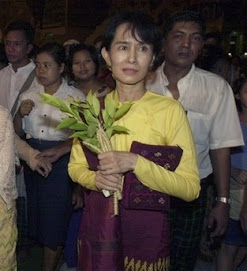


 Posts
Posts


