News & Articles on Burma Saturday, 10 December 2011 ------------------------------------------- Myanmar onslaught on Kachin rebels behind exodus US uses carrot-and-stick policy for Myanmar Ethnic wars cast pall over Burma reforms Concern about welfare of Burma's displaced people No peace talks, No humanitarian aid in Kachin State of Burma Myanmar To Effectively Promote Human Rights The Burma Road 'Humanitarian crisis' in Burma Rape Used as Military Weapon Repression continues in Burma despite signs of change China tells Kachin refugees: go home Myanmar Seeks 'Win-Win-Win' in Balancing U.S.-China Competition ----------------------------------------- The Penninsula Myanmar onslaught on Kachin rebels behind exodus Saturday, 10 December BANGKOK: Myanmars continued military offensive against ethnic Kachin rebels in the north has sent tens of thousands fleeing their home and threatens a humanitarian crisis, a campaign group said yesterday. Recent ceasefire talks between the nominally civilian government that took office in March and at least two ethnic armed groups have had some success, but tension with the Kachin Independence Army (KIA) has increased to boiling point, Refugees International said. Fighting in the decades-old conflict flared up in June in pockets of the jungle in the northern state of Kachin controlled by the KIA and its political wing, the Kachin Independence Organisation (KIO), after a 17-year ceasefire broke down. Refugees International is extremely concerned for the safety of the internally displaced persons (IDPs) that are living in various camps in KIO-controlled areas whose shelters and camps are right in between the Tatmadaw (the army) and the KIO bases, said Lynn Yoshikawa, Refugees Internationals southeast Asia advocate. The conflict in Kachin State requires both immediate humanitarian assistance and long-term assistance, she told a news conference in Bangkok, after a recent visit to Myitkyina, the state capital, and other ethnic areas. Aid agencies and sources in the area estimate between 30,000 and 40,000 people are living in makeshift jungle camps in KIO-controlled areas not accessible to many aid organisations, including the United Nations. Assistance is only possible through neighbouring China, which has publicly stated its unwillingness to host a huge number of IDPs, Yoshikawa said, urging donors to provide funds for local Kachin groups that are supporting the displaced. Fighting has intensified in the past week and refugee camps have swollen, sources from Kachin said. Its like an exodus, said an ethnic Kachin woman who works closely with aid workers and did not want to be identified. New camps are being created every day. Many are not recorded, she said in Yangon, showing detailed lists of numbers of IDPs that she and colleagues had collated. A Myitkyina resident who declined to be named because she feared for the safety of her family and herself said a gun battle had been heard in the town on the night of December 6. We hear bombs every night. We are used to it. But not gunfire, said the woman, who described herself as a freelance relief worker. She said checkpoints dotted the city of about 100,000 people and although there was no official curfew, nobody dares go out after 5.30 or 6pm. We keep hearing about arrests for no reason. Yoshikawa said it was not clear what was behind the fighting or who was ordering the army to go on the offensive. But it is not a promising sign for ethnic peace throughout the area, she said. Hillary Clinton, who last week became the first US secretary of state to visit Myanmar in more than 50 years, has urged the country to take further steps to release political prisoners and end ethnic conflicts. REUTERS http://www.thepeninsulaqatar.com/s.-asia/philippines/175194-myanmar-onslaught-on-kachin-rebels-behind-exodus.html --------------------------------------- US uses carrot-and-stick policy for Myanmar Updated: 2011-12-10 08:06 By Tao Wenzhao (China Daily) Hillary Clinton's recent visit to Myanmar, the first by a secretary of state of the United States since 1955, has drawn worldwide attention. The visit is believed to be a major step toward disseminating American values in the Asian country as part of the US President Barack Obama's "return-to-Asia" policy. The scheduled withdrawal of troops from Iraq and a similar move for Afghanistan signify Washington's intention of accelerating its "return-to-Asia" offensive on the military, political, economic and ideological fronts. The US and Myanmar have been at loggerheads for decades, reflected in US sanctions against Myanmar since 1988 when the military assumed power in the Southeast Asian country. Since then, ambassadorial-level diplomatic relations between the US and Myanmar have been downgraded to the charge d'affaires level. But despite the low-level diplomatic link, the US didn't shut out Myanmar from its strategic vision. For example, the US organized more than 20 visits by its officials to Myanmar in the past two decades, including three visits by Assistant Secretary of State for East Asian and Pacific Affairs Kurt Campbell, to maintain continuous pressure on the Myanmar government and promote US-style "democratic reforms" in the country. After the elections last November, Myanmar completed its transition from military to civilian rule and launched some reforms, including revision of the election law and release of some political prisoners - including pro-democracy leader Aung San Suu Kyi's release from years-long house arrest. Bans on some newspapers have been lifted, too. Washington sees all these as the result of its push for the US-style democracy and values. Through Clinton's visit, the US sent a clear message to the Myanmar government that it welcomes the changes and the country's transition to a democratic society. But the US still thinks, as Clinton told the Myanmar government, that the country is far from meeting the West-advocated democratic criteria and thus should continue walking on its nascent "democratic path". Besides, she also urged Myanmar to cut ties, especially military ties, with the Democratic People's Republic of Korea. Some commentators now fear that Clinton's visit could affect Myanmar's ties with China. Such worries are unwarranted, for the foundation of China-Myanmar ties is not that fragile. Myanmar was one of the first countries to recognize the People's Republic of China, and the first country to embrace the Five Principles of Peaceful Coexistence, an international relations norm agreed to by China and India in 1954. Despite having a 2,000-kilometer-long border between them, China and Myanmar agreed to settle their border issue way back in 1960, setting a good example for border disputes among other countries. As a result, the China-Myanmar border is now one of peace, friendship and cooperation, with people on both sides co-existing peacefully. As a sovereign nation, Myanmar has the right to establish and develop ties with any country it wants, including the US. But the decades-long sanctions imposed by the US and the United Nations have hurt Myanmar's economic development and compromised its people's livelihoods. Hence, it is normal and understandable for Myanmar to expect the sanctions to be lifted with the improvement of ties with the US. In return for the stringent demands that Clinton, during her meeting with Myanmar President Thein Sein, said Myanmar should fulfill, she didn't offer any substantial rewards. She only said that the US would become an observer for the Lower Mekong Initiative, a US-backed group discussing Southeast Asia's major waterway, and that Washington would support the World Bank and International Monetary Fund assessment missions to help Myanmar jumpstart its economy and make the new UN counter-narcotics and health cooperation programs a success. She also said that the dialogue with Myanmar is still in its initial phase because the US doesn't know whether the democratic process in Myanmar is irreversible and that her country would take some measures commensurate with those taken by the Myanmar government. To put them in perspective, Clinton's remarks indicate that the US will continue to wield the stick while placing a carrot in front of Myanmar. The author is a researcher at the Institute of American Studies, affiliated to the Chinese Academy of Social Sciences. (China Daily 12/10/2011 page5) http://www.chinadaily.com.cn/opinion/2011-12/10/content_14243680.htm ------------------------------------------- Ethnic wars cast pall over Burma reforms Lindsay Murdoch, Bangkok December 10, 2011 www.esuperfund.com.au Take Control of Your Super Special Offer Ends Soon. Apply Now! Burma. A mother and child receive medical aid in a jungle in the far north of Burma, where soldiers have been fighting rebels since a 17-year ceasefire ended in June. Photo: Reuters Fighting has intensified between the Burmese army and ethnic rebels nine months after Burma's President Thein Sein promised to end a ''hell of untold miseries'' that have been endured by ethnic minority Burmese groups for decades. In the latest clash this week Kachin rebels claim they killed 60 Burmese soldiers, forced 40 others to flee and had another 30 surrounded in Kachin State, northern Burma. The surge in fighting in the world's longest running civil war threatens to derail efforts by Mr Thein Sein and other reformers in his government to convince Western nations to lift economic sanctions. Advertisement: Story continues below US Secretary of State Hillary Clinton told Mr Thein Sein during her landmark visit to Burma last week that the army must end its brutal repression of ethnic minorities if the impoverished nation is to emerge from 50 years of international isolation. While the rebels' claims to have killed soldiers have not been independently verified, more than 34,000 people have been forced into refugee camps near the Chinese border as several thousand rebel fighters abandoned their bases and engaged in guerrilla tactics against Burmese soldiers, according to aid workers and human rights organisations. At least 7000 local civilians were displaced from 30 villages near the Chinese border in the first week of December alone, aid workers said. ''No international aid has arrived in those areas,'' said La Rip, an official with the Kachin Development Group. In a speech in March, Mr Thein Sein also promised to make ending conflict with ethnic groups the top priority of his government. By June, a 17-year ceasefire with Kachin rebels had collapsed after soldiers overran a rebel outpost, prompting frequent battles during which both sides have been accused of human rights abuses. During recent secret meetings in northern Thailand, government envoy Aung Min - the railways minister and a former intelligence officer - has reached out to the Kachin rebels and four other armed groups, promising to drop an earlier demand for them to become border forces under Burmese army command. Other incentives offered to the groups include economic development, freedom of travel for unarmed ethnic leaders and a national conference to seek political solutions to ethnic divisions. In a significant breakthrough, the government has reached a preliminary ceasefire agreement with the Shan State Army, one of the biggest groups, which includes the opening of liaison offices, co-operating in combating narcotics and promises of talks about an area of demarcation. The talks have further stirred excitement about Burma's future following a series of social, economic and political reforms by the government since August. Dave Mathieson, researcher on Burma for Human Rights Watch, said that while the government had the right to conduct counter-insurgency operations against rebels, years of war have produced a culture of impunity for serious crimes such as forced labour, use of child soldiers, sexual violence against women and young girls, extrajudicial executions and torture of civilians. Mr Thein Sein responded to Mrs Clinton by detailing his government's plan to end the conflicts that have raged almost since independence in 1948. Jim Della-Giacoma, South-east Asia director of the International Crisis Group, said a ''lasting solution to the problem requires going beyond just stopping the wars''. ''Multi-ethnic, multilingual and multi-religious Myanmar [Burma] can only achieve genuine national unity and reconciliation by embracing its diversity,'' he said. Burma's veteran pro-democracy leader Aung San Suu Kyi expressed strong concern over the fighting, sending a letter to Mr Thein Sein and ethnic leaders calling for ''immediate ceasefires''. Ms Suu Kyi has long advocated autonomy under a federal system for the main ethnic groups. She has called for the revival of an autonomy plan drafted in 1947 that was backed by her late father, independence hero Aung San. Grievances run deep among ethnic minorities who comprise about one-third of Burma's 55 million mostly impoverished people. The Kachin rebels led strong opposition to a $3.6 million Chinese-backed hydroelectric dam project which the government unexpectedly halted in September, removing one issue of contention. Ethnic minorities have never received direct benefits from Burma's most valuable resources found in ethnic areas, including timber, jade, gemstones, gold, silver and other minerals. Read more: http://www.theage.com.au/world/ethnic-wars-cast-pall-over-burma-reforms-20111209-1onig.html#ixzz1g8rpUssO ---------------------------------------- Radio Australia News Concern about welfare of Burma's displaced people Last Updated: Sat, 10 Dec 2011 02:18:00 +1100 An international refugee rights group says it's gravely concerned for tens of thousands of displaced people in northern Burma. Refugees International says conflict in the area is intensifying between the government's army and ethnic rebels. It says the world community must address the escalating crisis in Kachin State, bordering China. Southeast Asia Advocate of Refugees International, Lynn Yoshikawa, says there is the potential for a serious humanitarian crisis with long-term implications. She says she is extremely concerned for at least 30-thousand displaced people estimated to be living in camps in rebel-controlled areas unable to be accessed by international aid agencies. http://www.radioaustralianews.net.au/stories/201112/3388123.htm --------------------------------------- No peace talks, No humanitarian aid in Kachin State of Burma Sat, 2011-12-10 01:19 --- editor Myanmar By - Zin Linn 10, December (Asiantribune.com): Burma's namesake civilian government has been maneuvering war against the Kachin rebels incessantly, even though there are heavy casualties on its side. Starting from 9 June, the six-month long civil war claimed more than a thousand lives of government soldiers. The President Thein Sein government used to say that it has been trying to build a peaceful and developed country; in contrast the momentum of civil war is getting higher. So, the tongue of the government is not in harmony with the work of its armed forces. What is the government's goal launching the war against the Kachin rebels? Although, President Thein Sein has been speaking seriously about the national unity for several times, the wars against various ethnic groups carry on increasingly. If these wars go on in this way, the government's promises of building good governance as well as poverty alleviation seem to be in vain. Refugees International (RI), an independent humanitarian advocacy organization based in Washington, DC, recently completed an assessment of the impact of the Burma's political reform on various ethnic communities. The RI team traveled to Kachin, Karen and Mon states to meet primarily with local civil-society organizations, as well as with UN and INGO officials. The Refugees International's Lynn Yoshikawa said that during a two-week study tour in Myitkyina (Kachin state), Pa-an (Karen state) and Maw-la-myaing (Mon state) it has come across evidence of widespread human rights abuses especially in Kachin State, where the government armed forces has been fighting the Kachin Independence Organization for the last six months. The group's report appeared Friday at a press panel of Foreign Correspondents Club of Thailand in Bangkok, while international optimism on Burma's promise to political reforms has been rising. "Refugees International is really worried over the security of the internally displaced persons (IDPs), thousands of those are living in insufficient camps in KIO-controlled areas where the sanctuaries are sandwiched between the Tatmadaw (the government armed forces) and the KIO positions," said Lynn Yoshikawa, Refugees International's southeast Asia advocate. "The conflict zones in Kachin State seriously need both urgent humanitarian assistance and long-standing aid," she informed at a press conference in Bangkok, after a recent visit to Burma including Kachin state capital Myitkyina. Local sources on the ground in the Kachin state say that during past week the Kachin resistance has inflicted a large number of casualties on poorly trained Burmese government conscript troops, as the central government's offensive against the Kachin Independence Organization enters its seventh month. Reports from the frontline indicate that the Burmese army suffered significant losses in the Wuhtau Bum area, home to the headquarters of the KIA's Battalion No. 3. Reached by phone KIA officers in Wuhtau Bum claim their forces have strongly resisted the government's advance in the area, which is located in the Kachin Independence Army's Brigade No. 5. Quoting a Kachin resident in Sadung village under the control of KIA Battalion No. 3, the Kachin News Group said on Thursday that over a hundred government soldiers from Kalaw-based Light Infantry Division (LID) No. 55 were killed in skirmishing and several dozens wounded in the last 24 hours. He said that earlier in the week many more soldiers from the Magway-based Light Infantry Division No. 88 were killed in the same area, he estimated that at least two hundred Burmese soldiers had been killed in the area during the past week. Several soldiers from Kachin militia groups loyal to Burmese government were also among the dead, the villager added. As KIA has made use of guerrilla tactics, it suffered a few losses thus far. Last month representatives of President Thein Sein government and the KIO met twice for talks which have yet failed to reach a truce. The Burmese army continues sending troops to the area that seems the government wants to bring about a solution by means of military might. Aid workers in Kachin State estimated at least 30,000 people have escaped the fighting and are living in shelters with little access to international humanitarian assistance. It's a tragic that China has been unwilling to allow refugees or to let cross-border relief items to the Kachin area. According to Yoshikawa, international donors are disinclined to supply aid for cross-border operations due to the absence of the UN agencies in the area. After US Secretary of State Hillary Canton's extraordinary trip to Burma (Myanmar), observers and analysts are eager to know about how the nation will reconcile its greatest challenge to make peace with the armed ethnic groups. Recently, one ceasefire deal has been signed with the Restoration Council of Shan State / Shan State Army (RCSS/SSA), commonly known as the SSA South which has never beforehand held a ceasefire treaty with the Burmese regime. But there are many things to be done so as to build a peaceful union of Burma and the way ahead is vague and blurred, especially in the Kachin state. -Asian Tribune-http://www.asiantribune.com/news/2011/12/09/no-peace-talks-no-humanitarian-aid-kachin-state-burma ------------------------------------------- December 10, 2011 14:29 PM Myanmar To Effectively Promote Human Rights YANGON, Dec 10 (Bernama) -- Myanmar National Human Rights Commission (MNHRC) issued a statement on Saturday which falls on International Human Rights Day to effectively fulfill its mandate of promoting and protecting human rights, Xinhua news agency reported. The statement stressed that the National Human Rights Institutions (NHRIs) are an integral part of a democratic society, adding that the commission will contribute to democratisation process of the country to the best of its capacity. Myanmar, which became the 58th member of the United Nations in April in 1948, voted for the Universal Declaration of Human Rights at the United Nations General Assembly held in Paris in the same year, said the statement. The statement added that the constitution adopted in 2008 overwhelmingly by the people of the country also enshrines these fundamental human rights. Myanmar formed the 15-member MNHRC on Sept 5 this year, chaired by retired ambassador U Win Mra with other retired ambassadors and experts in different sectors as members, the statement said, adding that the commission is the first national level human rights body in Myanmar and the fifth of its kind in Asean, it added. Regarding protection of human rights, an announcement was made on Oct 4 for accepting complaints on violations of human rights. At present, the commission is planning to organise another workshop on awareness of child rights and human rights education in January in 2012 in cooperation with UNICEF in Myanmar, it added. -- BERNAMA http://www.bernama.com/bernama/v5/newsworld.php?id=633240 --------------------------------------- Outlook India.com/ south asia: myanmar The Burma Road Myanmar's clever route to integration, and India's possible role in it Pranay Sharma The image may become iconic, a visual representation of a decisive moment in the modern history of Myanmar---United States secretary of state Hillary Clinton warmly hugging Aung Sang Suu Kyi, the lady who has spent much of her political life demanding democratic freedoms and being incarcerated in answer. Since the much-celebrated embrace had the approval of the Myanmar government---though elected, it consists of several former generals---it has sparked off a furious debate: does 2011 mark the beginning of the end of Myanmar's isolation? What does the West's rapprochement with Naypyidaw mean for the region and the world? No wonder, foreign policy wonks in Delhi too are trying to foretell the future from their interpretation of Hillary's visit. They believe it expands Myanmar's foreign policy options and allows India to work with the West to check China's awesome clout in Myanmar. But there's a flip side---Washington's engagement with Naypyidaw will enable the US and its allies to seek investment opportunities in Myanmar. In such an eventuality, India is likely to lose the advantage of being among the few who do have an enviable economic presence there. Hillary's visit to Myanmar has to be seen in the context of America reinserting itself as a key player in Asia-Pacific, becoming a counterweight to a rising and assertive China, and rallying Asian countries under the banner of the Stars and Stripes. Former Indian foreign secretary Shyam Saran says, "US engagement with Myanmar will promote the diversification of that country's foreign relations. This offers the best opportunity of preventing Chinese domination of its polity and economy." Saran is candid enough to admit: "India's own capabilities are not sufficient to sustain a strong and credible countervailing presence." Perhaps views such as Saran's assume an inherent rivalry in Sino-Indian relations. But there are others who have serious doubts about the possibility of countering China's clout in Myanmar. Aloke Sen, who till recently served as India's ambassador to Myanmar, says, "It's very difficult for the US or any other country to replace China's influence in Myanmar brick-by-brick." Sen points out that former Myanmarese generals, including president Thein Sein, are both "fearlessly nationalists" and "extremely pragmatic". These generals had fought against China when Beijing was supporting the ethnic insurgents in the country. Yet, as soon as the US and its allies turned against Myanmar in 1988 following the brutal suppression of popular pro-democratic protests there, the generals had no qualms in embracing China, which was the only country willing to support them diplomatically, politically and economically. Result: an exponential rise in Chinese influence. This sense of pragmatism was evident in the positive response of Myanmarese leaders to India's overtures, willing to overlook New Delhi's aloofness in the years after 1988. The leaders were also wary of putting all eggs in the Chinese basket. Wouldn't they display the same pragmatism towards the West? The only problem, says Sen, is America's extensive wishlist on democracy. "The Americans often get caught in the eloquence of their own statements, making it so much more difficult for countries like Myanmar to match," Sen explains. Already, there are differences in perceptions about what compelled Myanmar to opt for its version of glasnost. The West believes the release of Suu Kyi, greater political freedom to people, and elections---Suu Kyi is expected to fight for one of the 50 seats still to be contested---are consequences of the sanctions the West imposed on the country and its ability to cut off investments from the imf and the World Bank. They, therefore, feel the more pressure applied on Myanmar, the greater the chances of it restoring a full-fledged democracy. Others rubbish this school of thought, saying sanctions only compounded the hardship of the people and perpetuated the status quo in the country. For instance, Myanmarese historian Thant Myint-U, author of Where China meets India, told Outlook, "The positive changes taking place now are taking place in spite of the western sanctions, not because of them, and because Myanmar is that much connected to the world, through the internet, satellite TV, and the regular travel of tens of thousands of ordinary people to places like Thailand and Singapore, making it plain that the status quo was simply indefensible." Thant says Myanmar has tried for over two decades to end its international isolation, and managed to improve its ties with many countries in the region. "In fact, the American policy of trying to isolate Myanmar has failed spectacularly and only reinforced the status quo," he says. In other words, the failure of sanctions and Chinese assertion prompted the US to rethink its Myanmar policy. The possibility of the West lifting the sanctions means many western countries will rush to invest in Myanmar. This possibility is unlikely to please India, which has several road projects and an oil exploration contract. With the Indian private sector reluctant to invest in Myanmar, New Delhi has had no choice but to depend on the public sector for executing these projects. Shoddy work and time overruns have been India's unmistakable signature. About the private sector's reluctance, Saran tells Outlook, "Currently, India's corporate sector is inhibited from investing in Myanmar because US sanctions may impact their more important US-related operations." At its recent meeting, FICCI discussed threadbare the issue of investing in Myanmar, and with the changing political climate there, exuded confidence about Indian firms entering various sectors. Others feel India might have missed the bus already. To begin with, Indian public sector companies haven't really been an advertisement for India's engineering skills. Sen provides another reason: "With the opening up of Myanmar, more countries are likely to move in; it will then become a level-playing field for all. Indian businessmen and companies may then be left with just a symbolic advantage of being Myanmar's neighbour." Symbolism provides ballast to rhetoric, but lends little weight to hard business. India needs to act with professionalism and urgency. http://www.outlookindia.com/article.aspx?279274 ---------------------------------------- Bangkok Post 'Humanitarian crisis' in Burma Published: 10/12/2011 at 12:32 AM Online news: A global campaign group expressed grave concern Friday for tens of thousands of displaced people in northern Burma, where conflict is intensifying between the government's army and ethnic rebels. A young Myanmar boy holds up a child at a camp for displaced people in the Irrawaddy Delta town of Labutta in 2008. A global campaign group has expressed grave concern for tens of thousands of displaced people in northern Myanmar, where conflict is intensifying between the government's army and ethnic rebels. Despite growing optimism over the pace of political reform in the military-dominated country, Refugees International called on the world community to address the escalating crisis in Kachin State, bordering China. "Tensions... are at boiling point with the potential for a serious humanitarian crisis with long-term implications," Lynn Yoshikawa, Southeast Asia Advocate of Refugees International, told reporters in Bangkok. She said her group was "extremely concerned" for at least 30,000 displaced people estimated to be living in camps in rebel-controlled areas, which international aid agencies are unable to access. "We feel that the evolving situation warrants particular concern from the international community," said Yoshikawa, who recently returned from two weeks in the country formerly known as Burma, including in Kachin. Burma has been riven by decades of civil war with various ethnic groups, but recent attempts to shake off its pariah state image have included bids to reach out to such guerrillas, who are fighting for greater autonomy and rights. This month a ceasefire deal was inked with one of the biggest militias still battling the regime, the Shan State Army South, and there are cautious hopes of forthcoming deals with other groups. But, although talks have been held with the Kachin Independence Organisation (KIO), "in the meantime the Tatmadaw (Burma military) is continuing to launch an offensive against the KIO", Yoshikawa said. She said rights abuses by both sides had been reported, with accusations against the Burma military including extrajudicial killings, use of child soldiers and rape. The KIO's army has allegedly used landmines and child soldiers, she added. On a landmark visit to the country last week, US Secretary of State Hillary Clinton called for nationwide peace and welcomed what she said were efforts by the regime to resolve the ethnic conflicts. "People on the ground were not so hopeful that she would achieve anything from the military side," said Yoshikawa. http://www.bangkokpost.com/breakingnews/270100/humanitarian-crisis-looms-in-burma-activists -------------------------------------------- Rape Used as Military Weapon By Preethi Nallu BANGKOK, Dec 10, 2011 (IPS) - The Burmese army has been following a policy of systematically raping women and girls to subjugate the country's rebellious ethnic minorities, according to a new report. The latest conflict between the militant Kachin Independence Army and the Burmese military reveals widespread use of rape by the military as a psychological weapon. The Kachin Women's Association of Thailand (KWAT) reports that at least 37 women were raped by state soldiers over June and July alone when the fighting erupted. Women's rights groups operating along the Thai-Burma border have documented 81 cases of rape of women and girls over the course of eight months of fighting between the Burmese army and ethnic armed forces. Of these, 36 women were killed by the soldiers. Over the last decade the Women's League of Burma (WLB), an umbrella organisation for various ethnic women's groups, has documented hundreds of cases that suggest that rape is not a by-product of war but a deliberate strategy used by the military. "By looking at the nature of violations and the worsening situation during conflict, we can say with confidence that the military is precisely using rape as a weapon against women," Shirley Seng, founder of KWAT, told IPS. "Our aim is to collect information on sexual violence to understand the root causes and to publicise it to the international community," Seng explains. Seng is the widow of the founder of the militant Kachin Independence Organisation. "Whenever rape cases happen, we get information from our partners and we also go and interview the victims and conduct our own field investigations," she said. "How do we know that rape is being used as a weapon? Because the civilians who are attacked are told this by the soldiers attacking them," said Seng. Victims of rape may be in continuing danger not only from the perpetrators, who enjoy impunity, but also from their own communities due to the social stigma attached to rape, local reports reveal. Conflicts in northern and eastern Burma that erupted between the Burmese military and ethnic armed groups in the Shan and Kachin states in March and June are reported to have led to displacement of more than 30,000 civilians. Soldiers also regularly persecute the Rohingyas who are not recognised as citizens by the Burmese government, although they have lived in western Arakan state for generations with established roots, ties and property. Stories of displacement, violence and persecution involving ethnic minority communities such as the Karen, Shan and the Kachin have been commonplace since the formation of the Burmese state in 1948 when ethnic representatives demanded autonomy. When armed groups sprang up among these minorities the government responded by heavily militarising the homelands of these remote communities. Amongst the most vulnerable in this struggle are women. Sexual violence has been a constant theme among ethnic minority communities living along the borders of the country. There are continuing reports of deliberate displacement and intimidation, with women targeted as part of a campaign to weaken the social fabric of the different ethnic groups. "I was only four years old. My mother told me that we had to run away, otherwise they would kill us," says 21-year-old Rahima, describing her flight from her home in the western Arakan state. During her flight across the country to the Thai-Burma border Rahima, and others like her, sought refuge in railway stations that were often raided by the military. She describes soldiers taking away the "attractive" women who would be returned later with obvious physical injuries but hidden mental wounds as a result of sexual violence and torture. Rahima's sister was raped by Burmese soldiers. But due to the social stigma and ostracism that would follow in the local community, no one in her family spoke about the incident. "It is very shameful in my culture to talk about rape. In my whole time there, dozens of women were taken. Not one of them ever told of what had happened," said Rahima. Narratives resembling Rahima's are common in conflict zones where evidence suggests that the military uses rape as a psychological weapon to intimidate civilians, shame the men in the community, and to 'Burmanise' these populations by mixing bloodlines. It is difficult to verify how explicit 'orders to rape' from the state military could be. But what is verifiable is that renewed conflict situations have coincided with concurrent and drastic rise in sexual violence. Seng believes use of rape is not only encouraged but also ordered by Burmese military officials. Her peer at the WLB, Charm Tong, who leads the Shan Women's Action Network, co-authored the report 'License to Kill' in 2002, which documented 173 incidents of rape and other forms of sexual violence, involving 625 girls and women, committed by Burmese army troops in Shan state. Tong continues to travel to Shan, where she and her colleagues have documented cases of pregnant women and their daughters being raped inside their homes by state soldiers raiding villages. The International Criminal Court recognises rape, sexual slavery "or any other form of sexual violence of comparable gravity" as war crimes when committed as part of a systematic practice. WLB's goal is to mobilise support for an investigation by an international body to examine the trends, patterns and extent of sexual violence perpetrated by soldiers in Burma. Tomas Ojea Quintana, United Nations Human Rights rapporteur for Burma, expressed concern over "continuing human rights abuses such as forced labour, land confiscation and rape in ethnic minority communities," and called for an independent investigation commission during a visit to the country in September. Following Quintana's visit, the Burmese government set up the Myanmar (as Burma is also known) National Human Rights Commission to "safeguard the rights of its citizens" as announced in the state run newspaper 'New Light of Myanmar'. Rights groups point out that any accountability mechanism for crimes must be followed by a remedy process and that any permanent remedy can happen only when militarisation ends in these areas. (END) http://ipsnews.net/news.asp?idnews=106173 --------------------------------------- ABC News Repression continues in Burma despite signs of change Updated December 10, 2011 11:13:00 Humanitarian organisations in Burma say they're still fighting against restrictions that prevent them from freely helping people in need. The desperately poor country has few basic services. And while there's hope that change is coming, so far there's been little improvement in people's lives. Zoe Daniel ELIZABETH JACKSON: Despite signs of change in Burma, humanitarian organisations say they're still battling government restrictions that prevent them from freely helping those who need it. Here's our South East Asia correspondent Zoe Daniel. ZOE DANIEL: It's perhaps the most basic symbol of human dignity, to be able to give and receive a proper send off from the world in the form of a funeral. But here in Burma, it's one of the many things that's been lost in repression and economic hardship - until now. "We cremate 45 to 50 bodies every single day" says Kyaw Thu, who was once Burma's most famous movie star and director. He's won two local academy awards. Now he's banned from acting by the government because of his humanitarian work. His group's delivered more than a million free funerals to the poor. "Our group's not an opposition party or political group but set up to help people" he says. "Even this kind of group like is not allowed, this is not democracy." ZOE DANIEL: Opposition leader Aung San Suu Kyi says access to the most basic rights and services for the country's people is a key motivation for bringing democracy to Burma. AUNG SAN SUU KYI: To help our country to develop its educational and health facilities, which are the basic needs of all our peoples. ZOE DANIEL: She discussed it with US secretary of state Hillary Clinton, who made an historic visit to the country earlier this month. HILLARY CLINTON: We want to see every child here given the chance for a good education, for the healthcare that he or she needs. ZOE DANIEL: Already nongovernment organisations have stepped in. Kyaw Thu's funeral service has now expanded to include adult education and a library. A free clinic serves hundreds each day; they line up from dawn to access healthcare. Yet in common with other NGOs here, the government still restricts the organisation's activities, refusing to grant official operating permits so staff risk arrest by defying the authorities. "Under the new government, people think there are many developments and changes," Kyaw Thu tells me. "But for social workers like us, there is no change at all." He says he won't act again, even if the ban is lifted. His role now is to give dignity to people - alive and dead. In Rangoon this is Zoe Daniel for Saturday AM. http://www.abc.net.au/news/2011-12-10/repression-continues-in-burma-despite-signs-of/3723942?section=world ------------------------------------------- Women in arms Sudha Menon (PERSON OF THE WEEK) 10 December 2011, 10:01 PMEven the most hardened cynic would not have remained unmoved by the biggest photo-op of the week just gone by, that of Hillary Rodham Clinton, possibly the worlds most powerful woman in terms of influence, gathering Myanmars pro-democracy leader Aung San Suu Kyi in a warm embrace. When the two met on the porch of the latters lakeside home where she has spent almost half of her life under house arrest by the military Junta, it was almost like two long-lost sisters or friends rediscovering each other. In reality, the two had only met once before the hug that grabbed worldwide media headlines at a one-to-one meeting over dinner in Kyis home, earlier that evening. Even if one grew up in the worlds largest democracy and the other in an oppressive regime where women have borne the brunt of the military rule for decades, both of them made their mark in this world with their single-minded determination. Hillary Clinton continued to have a career in law till a few days before she entered the White House as the First Lady, when husband Bill Clinton was elected President. And through her days in the White House, even when her marriage was rocked by a cringe-inducing sex scandal involving her husband, she worked consistently for the issues close to her, such as childrens rights and womens empowerment. That role continues today when she travels around the world as the 67th US Secretary of State and the first former First Lady to hold that office. Suu Kyis life has been one of struggle, largely confined to her lakeside residence where her political opponents have kept her prisoner for over 15 years. One can only imagine the trauma of a woman who was kept away from her husband and children who lived outside the country and were deprived of her care. The world waited and watched along with a silently strong Kyi when it was known in 1997 that her husband, Dr Michael Aris, was dying from cancer. The Burmese government refused to let him entry into the country and a defiant Kyi declined to travel abroad, fearing she would not be let back in. Dr Aris passed away in 1999 without meeting his wife to say his final saying good bye. Can one lifetime erase the pain of a lone woman who had to go through that torture? But Suu Kyi was made of sterner stuff, as she has shown in the years after that. Slowly but steadily and despite the fact that she has had little contact with her political supporters within Burma, her influence has been growing within and outside of her country and the ruling military dictatorship has now, finally, agreed to make changes that will set the country on the way to democracy. Hillary Clintons visit, the first ever by any US diplomat in almost 50 years, could well mark the beginning of a new era for the Burmese who are hoping things will change for the better. Will that happen soon? We dont know but going by the determined stance of the two women who stood addressing the world media, talking about their agenda for a new Myanmar, we think this could be the beginning of something bright. http://www.khaleejtimes.com/DisplayArticle08.asp?xfile=data/expressions/2011/December/expressions_December13.xml§ion=expressions ---------------------------------------------- China tells Kachin refugees: go home Friday, 09 December 2011 22:16 Phanida Chiang Mai (Mizzima) -- Chinese authorities on Friday told Kachin war refugees in La Ying in Yunnan Province to return to Burma. Four Chinese officials came to a camp located opposite Momauk Township in Kachin State where more than 2,000 Kachin refugees stay and told them to return home, according to Dwe P Sar, a civilian official with the Kachin Independence Organization (KIO) relief committee. A temporary camp for Kachin refugees who have fled from the renewed fighting by the government and Kachin Independence Army in Kachin State. Photo: Human Rights Watch A temporary camp for Kachin refugees who have fled from the renewed fighting by the government and Kachin Independence Army in Kachin State. Photo: Human Rights Watch "We replied that the villagers were just taking refuge at their relative's home for security reasons, and they would decide by themselves whether they returned home or not," said Dwe P Sar. Refugees in camps in Laiza, Mai Ja Yang and Manwin on the Sino-Burmese border now number about 45,000, he said. Friday marks six months since the fighting between the KIO and the government started. In the past six months, there were more than 800 battles between the KIO and government troops, according to the KIO. "Up until now, we've supported the refugees as much as we can. Now, the number of refugees is increasing. If we don't get international aid, we'll start to worry," Dwe P Sar said. Most of the relief aid has come from religious organizations, the Kachin in Burma and in foreign countries and businessmen. The Burmese government has not allowed help from local NGOs and international organizations, according to local aid workers. Many refugees are frustrated, said one aid worker. "They have run out of food because not enough organizations help. As time goes by, they feel upset. They don't want to stay here. So, they hope for peace. They thought that the fighting would be for a short time, but now we need to make plans for the long run," he told Mizzima. In November, the KIO and the government held peace talks, but they have failed to reach agreement. http://www.mizzima.com/special/kachin-battle-report/6267-china-tells-kachin-refugees-go-home.html ------------------------------------------- Bloomberg Myanmar Seeks 'Win-Win-Win' in Balancing U.S.-China Competition December 09, 2011, 2:26 PM EST By Daniel Ten Kate Dec. 5 (Bloomberg) -- Myanmar aims to leverage friendly relations with both the U.S. and China to grow one of Asia's smallest economies and boost incomes in the region, according to an adviser to President Thein Sein. China welcomes greater U.S. engagement with Myanmar because a wealthier neighbor would lift the economic growth of Yunnan province and other inland areas, Nay Zin Latt, one of nine advisers who meet Thein Sein "frequently," said in a Dec. 3 interview a day after Secretary of State Hillary Clinton completed the highest-level U.S. visit to Myanmar in 56 years. "I'm going for a win-win-win situation," Nay Zinn Latt said in his Yangon office. "China wants us to be more developed. Our country is the gateway to the sea from Yunnan. If we are rich, Yunnan will be rich too. If we are poor, China can only get raw materials." China's landlocked southwest province of Yunnan adjoins Myanmar. During her visit, Clinton offered a path to ease sanctions that have been in place for more than 20 years and have left Myanmar dependent on neighbors China, India and Thailand, which have poured more than $25 billion into ports, power plants, and oil and gas pipelines. Myanmar's moves to roll back more than five decades of military rule have provided the U.S. an opening to rebuild political and economic ties as President Barack Obama shifts his foreign policy focus to Asia. "It's not that Myanmar veered toward China in recent decades," said Thant Myint-U, a former United Nations official who has written two books on Myanmar. "It's that Western governments, as part of a democratic regime-change strategy, have imposed sanctions that have left the country entirely open to economic influence from just one direction." Dam Opposition Thein Sein surprised China, the U.S. and his own citizens in September when he suspended a $3.6 billion dam being built with China Power Investment Corp. The "very popular" decision was based on domestic opposition and doesn't mean other Chinese investments are at risk, Nay Zinn Latt said. "The dam is big, but it's one project among hundreds with China and cannot damage relations," he said. "The key thing is assessment. With every project, we should disclose the advantages and disadvantages. If the advantages are more and it benefits our country, we should do it." China National Petroleum Corp. is building oil and gas pipelines across Myanmar, a move that would allow it to access Middle Eastern crude without having to go through the Malacca Straits. China, Hong Kong and Thailand account for more than 70 percent of total investment into Myanmar, compared with less than one percent for the U.S., according to government statistics. Sanctions U.S. sanctions ban imports, restrict money transfers, curb aid funding and target jewelry with gemstones originating in Myanmar. Chevron Corp., based in San Ramon, California, is one of the few U.S. companies operating in Myanmar through its 2005 purchase of Unocal Corp., which invested in a gas field and pipeline prior to a 1997 ban on new investment. Thein Sein has freed hundreds of political prisoners, eased censorship and sought a dialogue with democracy icon Aung San Suu Kyi since taking office in February. Clinton said the release of another 1,000 dissidents still locked up would serve as an "important test" of his commitment to reforms. Clinton's offer on Dec. 3 to assist groups providing microcredit, health care and English-language training in Myanmar "is an indication that sanctions will be lifted," Nay Zinn Latt said. "Imposing sanctions is not so difficult but lifting them takes time." China Positive Chinese Foreign Ministry spokesman Hong Lei said on Dec. 1 his country was developing relations with Myanmar "across the board." He also said the leadership in Beijing hopes Myanmar and western countries "enhance and improve relations," a statement Suu Kyi said made her "very pleased." China's comment "shows that we have the support of the whole world," Suu Kyi said during a joint appearance with Clinton on Dec. 2 at her lakeside Yangon home, where she spent most of the past two decades under house arrest. "I'm particularly pleased because we hope to maintain good, friendly relations with China, our very close neighbor." Yunnan province has an economy twice the size of Myanmar, whose 62 million people are among Asia's poorest. China and India, which account for more than a third of the world population, share more than 3,600 kilometers (2,237 miles) of border with Myanmar. "We cannot move away from China or India, and we shouldn't move away," Nay Zin Latt said. "Our duty is to find the best way of dealing with everyone to benefit the country." --Editors: Peter Hirschberg, Tony Jordan To contact the reporter on this story: Daniel Ten Kate in Yangon at dtenkate@bloomberg.net To contact the editor responsible for this story: Peter Hirschberg at phirschberg@bloomberg.net http://www.businessweek.com/news/2011-12-09/myanmar-seeks-win-win-win-in-balancing-u-s-china-competition.html
Monday, December 12, 2011


Saturday, December 10, 2011
News & Articles on Burma-Friday, 09 December 2011-uzl
News & Articles on Burma Friday, 09 December 2011 -------------------------------------------- More Kachin Refugees Increase, Int'l NGOs Denied Access No humanitarian aid, no peaceful solution in Burma's Kachin state Open, stable Myanmar beneficial to China Humanitarian crisis brewing in Myanmar's Kachin - group Kachin Conflict Set to Intensify: Refugee Advocate Myanmar still 'true friend' of China: Top official Myanmar denies working with North Korea on atomic weapons Myanmar capital to get its first embassy Gas pipeline victims get pay-off Burma fourth top jailer of journalists Burma: How Real Is The Change? ---------------------------------------------- More Kachin Refugees Increase, Int'l NGOs Denied Access By BA KAUNG Thursday, December 8, 2011 The Burmese government continues to deny the UN and international aid organizations access to war refugees in conflict zones in Kachin State, northern Burma, where thousands of local villagers have been displaced by fierce fighting between government troops and Kachin rebels. Local relief workers estimate that there are more than 34,000 war refugees in the town of Laiza, which hosts the headquarters of the rebel Kachin Independence Army (KIA), the militia that has engaged the Burmese army for the past six months. At least 7,000 local civilians were displaced in the first week of December from 30 villages in the townships of Momauk, Waimaw and Bamaw, all of which are close to the Sino-Burmese border, as clashes intensify between the two sides, according to local aid groups. "No international aid has arrived in those areas," said La Rip, an official with the Kachin Development Group, speaking by phone from Laiza on Thursday. "I don't understand why the government is blocking aid for these refugees. As far as I know, the KIA has said it will guarantee the security of aid officials if they come here." His organization and other local Christian aid groups have been assisting the refugees in the region since hostilities broke out in June after the collapse of a 17-year ceasefire between the Burmese army and the KIA, a nationalist Kachin militia that has demanded autonomy for predominantly Christian Kachin State for decades. Nearly two months ago, Naypyidaw permitted the World Food Program (WFP) and Oxfam to distribute food to refugees in government-controlled areas of Kachin State. WFP has so far delivered food assistance to about 10,000 displaced people in Kachin State---250 tons of food making up three-month family rations, according to Marcus Prior, the organization's Asia spokesman in an interview with The Irrawaddy. "Should access improve for assessments and distributions, WFP is preparing for the possibility of an increased level of assistance," he said, but also revealed that without new funding WFP is facing a break in its food supplies for its Burma operation in February which would negatively impact its ability to respond to the situations in Kachin and southern Chin State. The Burmese government is yet to give broader access to these international organizations to attend to refugees in KIA-controlled areas. "We cook rice with bamboo shoots during the rainy season," a refugee was quoted as saying in Thursday's Eleven Weekly journal. "But now that the rains are gone and bamboo shoots are no longer available, we are living on the bark of young bamboo trees. But still, shelter and clothing are what we most need." The report also quoted a local aid volunteer in Bamaw Township as saying: "New refugee camps in the jungles were built just a few days ago. But there is still not enough space for all the refugees. Some camps have no roofs at all while some have their roofs made only with leaves." US Secretary of State Hillary Clinton, who recently visited Burma, stressed to the Burmese government leadership the importance of giving aid groups access to the conflict zones. On the other hand, there are also accusations from locals that the international aid organizations are not doing enough in this crisis. "These groups are more concerned about their relations with the Burmese government than helping and advocating for the refugees," complained a local resident in Kachin State, highlighting the difficult position of international aid groups in the country which attempt to implement their projects in a non-confrontational mode and are mostly obliged to turn a blind eye to any sensitive issue, even though it may beg humanitarian urgency. "The most effective approach appears to be through exploring needs and issues together with officials, with no confrontation and no blame, just looking for ways to meet needs together," said an interviewee who explained the relation of NGOs with the Burmese government in a 2010 research conducted by Daekin University in Australia. The situation has remained much unchanged despite the country's recent tentative political and economic reforms. And the future of the refugees looks bleak because of the ongoing armed clashes in this strategic region near the China border, and the growing numbers of displaced persons affected by the conflict. Col. Zau Raw, a KIA official in Laiza, confirmed on Thursday that fierce fighting against government units continues to date in several areas of Kachin State and northeastern Shan State. "There have been 50 armed clashes in the past week alone, and heavy fighting is still going on in Momauk Township and Sadong area in Waingmaw Township," he said. Describing the latest conflict situation, a source close to the front-line battle area wrote in an email that "Three Burma army columns comprising over 600 soldiers that have been maneuvering in the Sadong and Hkambati areas [in Kachin State] have been engaged by the KIA. Two of the columns were decimated with hundreds of casualties, and they are now retreating in complete disarray." The clashes continued despite the fact that both sides had their fourth round of peace talks late last month. Zau Raw is one of the KIA's high-ranking officials who participated in those negotiations face-to-face in China's border town of Ruili with a delegation of Burmese government ministers led by Aung Min, the minister of railways and special representative of President Thein Sein. The Naypyidaw delegation laid out a list of promises in Riuli, including economic development in Kachin State, allowing the KIA to re-establish liaison offices in urban areas, and conducting further political talks. However, Zau Raw said the promise of political dialogue is nothing other than an attempt to bring the KIA's political wing, the Kachin Independence Organization, into the fold of the military-dominated national parliament. They did not refer to the question of autonomy, Zau Raw said. However, he said that the ministers---who were all army generals before being elected for the nominally civilian government in November last year---appear to no longer enjoy substantial influence over the commanders waging the war on the ground in northern Burma. "The government army has suffered a lot of casualties in Kachin State, but does not wish to stop fighting yet, I think," Zau Raw said. "We do not know when the government ministers will talk with us again." http://www.irrawaddy.org/article.php?art_id=22623&page=2 ------------------------------------------------------- Burmese Migrants Sent for Deportation Trafficked in Thailand By LAWI WENG Friday, December 9, 2011 Four Burmese migrant workers who were among 39 persons trafficked in Thailand while being sent for deportation were released from captivity this week when police and human rights activists raided a shrimp factory in southern Thailand. Sompong Sakaew, the director of the Labor Rights Protection Network, told The Irrawaddy on Friday that the four women were rescued following a tip-off from the victims during a 3 pm raid of the shrimp factory by local police and human rights activists on December 7. "The four women will be deported soon. Now they are at the ITC (Immigration Detention Center) in Bangkok," he said. Poe Kwor, a member of the Federation of Trade Unions of Burma who was involved in the raid on the shrimp factory, said that 39 people were detained in Kamphaeng Phet province in October for illegally entering Thailand. They were detained in prison for 24 days, then for another 8 days in a Chonburi jail before being sent to the Thai-Burmese for deportation. The 39 Burmese migrants were allegedly trafficked by the Thai police and a prison car driver from Chonburi province while being transported to the border post in Mae Sot, Thailand for deportation to Myawaddy, Burma. The victims informed the human right activists that the prison car stopped at an unknown location in Chonburi Province, where four cars picked them up for trafficking. "They told us that they were divided into different groups and the police threatened them by pointing his gun, told them to get out of the prison car and forced them to get in the human trafficking agents cars," said Poe Kwor. The victims reported that the broker, an alleged trafficker who said her name was Ma Maw, is an ethnic Mon from Chonburi Province. The four women were from Rangoon and Moulmein and the broker trafficked each woman to the shrimp factory in Mahachai, Samut Sakhon Province for 11,000 baht. Of the 39 people in the prison car, 15 men were trafficked to Thai-run fishing boats in Chonburi Province, six women were trafficked to the shrimp factory in Mahachai and the fate of the other 18 persons is not yet known. The human rights activists reported that they knew where the 15 men were trafficked, but not the location of where they are currently working. They also said that two of the six women trafficked to the shrimp factory were released before the raid because their relatives paid money to the owner. The Thai anti-human trafficking group in Mahachai intends to take action against the Chonburi police officers and prison car driver who trafficked the migrants and will continue to investigate what happened to the 15 men who were sold to fishing boats and forced to work at the sea, as well as the other 18 people who have not yet been located. Human trafficking often occurs in Mahachai in southern Thailand, where there is a large fishing industry. Many Burmese migrants who have come to work in the area have been trafficked to fishing boats and forced to work at sea. According to a US report, the Thai government "reported 18 convictions in trafficking-related cases in 2010---an increase from eight known convictions during the previous year; as of May 2011, only five of the 18 convictions reported by the government could be confirmed to be for trafficking offenses." http://www.irrawaddy.org/article.php?art_id=22631 -------------------------------------------- No humanitarian aid, no peaceful solution in Burma's Kachin state By Zin Linn Dec 09, 2011 11:24PM UTC Burma's namesake civilian government has been maneuvering war against the Kachin rebels incessantly, even though there are heavy casualties on its side. Starting from 9 June, the six-month long civil war claimed more than a thousand lives of government soldiers. The President Thein Sein government used to say that it has been trying to build a peaceful and developed country; in contrast the momentum of civil war is getting higher. So, the tongue of the government is not in harmony with the work of its armed forces. What is the government's goal launching the war against the Kachin rebels? Although, President Thein Sein has been speaking seriously about the national unity for several times, the wars against various ethnic groups carry on increasingly. If these wars go on in this way, the government's promises of building good governance as well as poverty alleviation seem to be in vain. Refugees International (RI), an independent humanitarian advocacy organization based in Washington, DC, recently completed an assessment of the impact of the Burma's political reform on various ethnic communities. The RI team traveled to Kachin, Karen and Mon states to meet primarily with local civil-society organizations, as well as with UN and INGO officials. The Refugees International's Lynn Yoshikawa said that during a two-week study tour in Myitkyina (Kachin state), Pa-an (Karen state) and Maw-la-myaing (Mon state) it has come across evidence of widespread human rights abuses especially in Kachin State, where the government armed forces has been fighting the Kachin Independence Organization for the last six months. The group's report appeared Friday at a press panel of Foreign Correspondents Club of Thailand in Bangkok, while international optimism on Burma's promise to political reforms has been rising. "Refugees International is really worried over the security of the internally displaced persons (IDPs), thousands of those are living in insufficient camps in KIO-controlled areas where the sanctuaries are sandwiched between the Tatmadaw (the government armed forces) and the KIO positions," said Lynn Yoshikawa, Refugees International's southeast Asia advocate. "The conflict zones in Kachin State seriously need both urgent humanitarian assistance and long-standing aid," she informed at a press conference in Bangkok, after a recent visit to Burma including Kachin state capital Myitkyina. Local sources on the ground in the Kachin state say that during past week the Kachin resistance has inflicted a large number of casualties on poorly trained Burmese government conscript troops, as the central government's offensive against the Kachin Independence Organization enters its seventh month. Reports from the frontline indicate that the Burmese army suffered significant losses in the Wuhtau Bum area, home to the headquarters of the KIA's Battalion No. 3. Reached by phone KIA officers in Wuhtau Bum claim their forces have strongly resisted the government's advance in the area, which is located in the Kachin Independence Army's Brigade No. 5. Quoting a Kachin resident in Sadung village under the control of KIA Battalion No. 3, the Kachin News Group said on Thursday that over a hundred government soldiers from Kalaw-based Light Infantry Division (LID) No. 55 were killed in skirmishing and several dozens wounded in the last 24 hours. He said that earlier in the week many more soldiers from the Magway-based Light Infantry Division No. 88 were killed in the same area, he estimated that at least two hundred Burmese soldiers had been killed in the area during the past week. Several soldiers from Kachin militia groups loyal to Burmese government were also among the dead, the villager added. As KIA has made use of guerrilla tactics, it suffered a few losses thus far. Last month representatives of President Thein Sein government and the KIO met twice for talks which have yet failed to reach a truce. The Burmese army continues sending troops to the area that seems the government wants to bring about a solution by means of military might. Aid workers in Kachin State estimated at least 30,000 people have escaped the fighting and are living in shelters with little access to international humanitarian assistance. It's a tragic that China has been unwilling to allow refugees or to let cross-border relief items to the Kachin area. According to Yoshikawa, international donors are disinclined to supply aid for cross-border operations due to the absence of the UN agencies in the area. After US Secretary of State Hillary Canton's extraordinary trip to Burma (Myanmar), observers and analysts are eager to know about how the nation will reconcile its greatest challenge to make peace with the armed ethnic groups. Recently, one ceasefire deal has been signed with the Restoration Council of Shan State / Shan State Army (RCSS/SSA), commonly known as the SSA South which has never beforehand held a ceasefire treaty with the Burmese regime. But there are many things to be done so as to build a peaceful union of Burma and the way ahead is vague and blurred, especially in the Kachin state. http://asiancorrespondent.com/71675/no-humanitarian-aid-no-peaceful-solution-in-burmas-kachin-state/ -------------------------------------------- Open, stable Myanmar beneficial to China By Maria Siow | Posted: 09 December 2011 1643 hrs BEIJING: The improvement in ties between the United States and Myanmar has raised concerns among many in China about a potential swing in regional power dynamics. The United States is cozying up to Myanmar like never before. And many in Beijing have described this as an attempt to limit and contain China's influence in Myanmar. Others said that improved ties between the US and Myanmar would come at the expense of China's traditional close ties with its Southeast Asian neighbour. But others disagree, arguing that Myanmar's attempt to end its isolation, and its gradual and stable transformation, are in China's interest. For instance, Myanmar's reconciliation with ethnic rebels would ensure stability along the Chinese borders. Dr. Guo Xiangang, vice-president, China Institute of International Studies, said: "We shouldn't have a cold war mentality where good relations between two countries would necessarily be bad for a third party. This is no longer that sort of era. "It isn't in line with China's new security posture. China hopes to see good relations among other countries. China's deepening relations with other countries should not affect these countries from developing good relations with others." Dr Guo is also confident that China will play an even bigger economic role in Myanmar. He said: "If Myanmar opens up its economy and develops comprehensively, it will require investments and technical expertise. "China has ample funds and is seeking to invest more in other countries. As neighbors with a long history of cooperation, it's only natural that Chinese investments in Myanmar would increase." China is one of the most important sources of consumer and capital goods, and development assistance for Myanmar. It is also Myanmar's second largest foreign investor, having put in more than US$6.4 billion in the country. The investments are mainly in hydropower, oil, gas and mining, or what are generally seen as strategic sectors. China also hopes to build oil and gas pipelines across Myanmar, a move which non-government organizations say would threaten Myanmar's economic security. The construction of the pipeline would also displace thousands of people and damage the livelihoods of fishermen and farmers. It's clear that relations between China and Myanmar haven't always been trouble-free. In September this year, Myanmar suddenly stopped the construction of a Chinese-invested dam, citing environmental concerns. While in October, 13 Chinese sailors were murdered along the upper reaches of the Mekong River, prompting China to step up patrols along the river. But these incidents, according to Chinese analysts, would not fundamentally alter the long pattern of cooperation between the two countries. - CNA/ck http://www.channelnewsasia.com/stories/southeastasia/view/1170392/1/.html --------------------------------------------- Humanitarian crisis brewing in Myanmar's Kachin - group ReutersReuters -- 1 hour 17 minutes ago BANGKOK (Reuters) - Myanmar's continued military offensive against ethnic Kachin rebels in the north has sent tens of thousands fleeing their home and threatens a humanitarian crisis, a campaign group said on Friday. Recent ceasefire talks between the nominally civilian government that took office in March and at least two ethnic armed groups have had some success, but tension with the Kachin Independence Army has increased to "boiling point", Refugees International said. Fighting in the decades-old conflict flared up in June in pockets of the jungle in the northern state of Kachin controlled by the KIA and its political wing, the Kachin Independence Organisation, after a 17-year ceasefire broke down. "Refugees International is extremely concerned for the safety of the internally displaced persons (IDPs) that are living in various camps in KIO-controlled areas whose shelters and camps are right in between the Tatmadaw (the army) and the KIO bases," said Lynn Yoshikawa, Refugees International's southeast Asia advocate. "The conflict in Kachin State requires both immediate humanitarian assistance and long-term assistance," she told a news conference in Bangkok, after a recent visit to Myitkyina, the state capital, and other ethnic areas. Aid agencies and sources in the area estimate between 30,000 and 40,000 people are living in makeshift jungle camps in KIO-controlled areas not accessible to many aid organisations, including the United Nations. Assistance is only possible through neighbouring China, which has publicly stated its unwillingness to host a huge number of IDPs, Yoshikawa said, urging donors to provide funds for local Kachin groups that are supporting the displaced. FIGHTING INTENSIFIED Fighting has intensified in the past week and refugee camps have swollen, sources from Kachin told Reuters. "It's like an exodus," said an ethnic Kachin woman who works closely with aid workers and did not want to be identified. "New camps are being created every day. Many are not recorded," she said in Yangon, showing detailed lists of numbers of IDPs that she and colleagues had collated. A Myitkyina resident who declined to be named because she feared for the safety of her family and herself said a gun battle had been heard in the town on the night of December 6. "We hear bombs every night. We are used to it. But not gunfire," said the woman, who described herself as a freelance relief worker. She said checkpoints dotted the city of about 100,000 people and although there was no official curfew, "nobody dares go out after 5.30 or 6 p.m. We keep hearing about arrests for no reason." Yoshikawa said it was not clear what was behind the fighting or who was ordering the army to go on the offensive. "But it is not a promising sign for ethnic peace throughout the area," she said. Hillary Clinton, who last week became the first U.S. secretary of state to visit Myanmar in more than 50 years, has urged the country to take further steps to release political prisoners and end ethnic conflicts. (Editing by Alan Raybould and Jonathan Thatcher) http://in.news.yahoo.com/humanitarian-crisis-brewing-myanmars-kachin-group-122354704.html ---------------------------------------- Kachin Conflict Set to Intensify: Refugee Advocate By SIMON ROUGHNEEN Friday, December 9, 2011 As armed clashes intensify, many more locals in Kachin State become refugees. BANGKOK --- The conflict in Kachin State is set to get worse after already displacing tens of thousands of civilians, many of whom rely on support from local aid groups desperately in need of international assistance, according to a leading advocacy group for refugees. "Tensions between the government and KIO [Kachin Independence Organization] have reached boiling point," said Lynn Yoshikawa of the US-based Refugees International (RI), who recently concluded a fact-finding trip to the war-torn state. Yoshigawa, who said that the Burmese Army appears likely to attack the KIO's headquarters in Laiza, near the Sino-Burmese border, estimated that around 30,000 internally displaced persons (IDPs) have been caught in the crossfire. "Most of the IDPs do not want to flee, and generally wait until the last minute to leave their homes," she said. While the Burmese government has relaxed restrictions on aid agencies and NGOs operating inside the country as part of its recent reforms, the World Food Program has so far only been granted access to government-controlled areas. The KIO and local aid groups are the main source of assistance to Kachin refugees living outside government-held territory, and RI said that international aid should be provided via these Kachin organizations, given government restrictions on aid to conflict zones in the state. Yoshigawa noted that despite being "pleasantly surprised" when Burma's President Thein Sein suspended the controversial Chinese-backed Myitsone dam project in Kachin State in September, "the impact of the suspension has been diluted" by the ongoing Burmese Army offensive. Fighting in Kachin State started on June 9, ending a 17-year-old ceasefire between the Burmese military and the Kachin Independence Army, the armed wing of the KIO. "There is a real sense of grievance among ordinary Kachin," said Yoshikawa, "Many people are asking 'why now?'" RI recently conducted fact-finding visits to Kachin, Karen and Mon states to assess the impact of recent political reforms on relations between the Burmese government and ethnic minorities. http://www.irrawaddy.org/article.php?art_id=22630 --------------------------------------------- Myanmar still 'true friend' of China: Top official Published on Dec 9, 2011 YANGON (AFP) - Myanmar's new army-backed government reassured China on Friday that its recent diplomatic overtures to the United States (US) would not affect relations with its traditional ally. 'Myanmar is a good neighbour of China. We are also a true friend,' lower house speaker Shwe Mann told Ambassador Li Junhua in Yangon after China donated computers for Myanmar's new parliament. 'The People's Republic of China gave much advice and assistance to Myanmar when we did not have a regular relationship with the US. China also truly stood by Myanmar's side in the international community,' added the former general, considered one of the most powerful members of the current regime. Secretary of State Hillary Clinton visited Myanmar last week in the highest-level US visit in more than half a century - a trip seen as part of Washington's efforts to counter China's growing influence in the region. http://www.straitstimes.com/BreakingNews/SEAsia/Story/STIStory_743133.html ------------------------------------ Myanmar denies working with North Korea on atomic weapons December 9, 2011 4:54pm YANGON - Myanmar denied it had been cooperating with North Korea on nuclear weapons technology, the first time it has commented on speculation that the two internationally ostracized states might be working together to build atomic weapons. The denial follows a landmark visit just over a week ago by Hillary Clinton in the first trip by a U.S. Secretary of State to the country in 55 years, setting the stage for rapprochement with Myanmar after decades of isolation from the West. The weekly Pyi Myanmar quoted parliament speaker Thura Shwe Mann as telling reporters after he met Clinton last week that Myanmar did not have any cooperation with North Korea on nuclear technology. It was the first time a top official has publicly commented on the issue. "During my visit to North Korea as a general, we signed a Memorandum of Understanding on cooperating between the two armed forces. It was not on nuclear cooperation as is being alleged," the weekly quoted the 64-year-old Shwe Mann as saying. "We studied their air defence system, weapons factories, aircrafts and ships. Their armed forces are quite strong so we just agreed to cooperate with them if necessary," said Shwe Mann, who had been number three in the former military government. He is thought to have led a high-level delegation to North Korea in late 2008. Exile media published documents and pictures relating to the visit in 2009. During her brief visit, Clinton urged Myanmar's new leaders to end illicit contacts with North Korea, which has long been trying to build a nuclear arsenal and for which it had been heavily sanctioned by the international community. --- Reuters http://www.gmanetwork.com/news/story/241222/news/world/myanmar-denies-working-with-north-korea-on-atomic-weapons --------------------------------------------- Myanmar capital to get its first embassy Published: Dec. 9, 2011 at 6:28 AM YANGON, Myanmar, Dec. 9 (UPI) -- Bangladesh will be the first country to move its embassy from Yangon to the new city and capital Naypyitaw, Myanmar's official newspaper said. Bangladeshi Prime Minister Sheikh Hasina, on an official three-day visit to Myanmar, formerly called Burma, unveiled the foundation stone at the site chosen for the construction of the embassy, the New Light of Myanmar reported. The country's junta pronounced Naypyitaw, around 200 miles north of Yangon, as the capital in November 2005, although the site wasn't given an official name until March 2006. The planned inner city with its wide, and mostly empty boulevards, is still being constructed and is home to many of the former ruling military leaders. The surrounding countryside and its towns and villages that make up Naypyitaw have a population of around just less than 1 million, a 2009 report said. In August, Russian media announced that a Russian firm had won a contract to construct 30 mile of subway lines, the first for the Asian country. The expansive layout of the inner city has enabled military leaders to present large military parades. However, the diplomatic corps has been slow to move from Yangon, formerly called Rangoon and a historic port city. An official from Naypyitaw Municipality told The Irrawaddy news Web site this month that 120 sections of land have been reserved for foreign embassies. The official said China, India, Saudi Arabia and Russia will be moving their embassies from Yangon. Hasina's visit to Myanmar is the first by a Bangladeshi prime minister in eight years and she reportedly discussed increased trade, including the purchase of natural gas, with Myanmar officials. Trade between Myanmar and Bangladesh was $137 million this year. Bangladeshi and Myanmar ministers said they want to boost that to around $500 million annually within the next several years, the Irrawaddy report said. But the two countries also must resolve the issue of 220,000 Rohingya people, Muslims from Myanmar, sheltering in refugee camps in Bangladesh. They fled rebel fighting with Myanmar's army and also ethnic discrimination in their native Arakan state in Myanmar. A report in the Daily Star newspaper in Dhaka, capital of Bangladesh, said an agreement had been reached between Myanmar President Thein Sein and Hasina for Myanmar to repatriate the refugees. The agreement depends on verification of refugee status by third parties, including the U.N. High Commission for Refugees that has been monitoring the Rohingya situation. No date for repatriations to start was given in the Daily Star report. Read more: http://www.upi.com/Top_News/Special/2011/12/09/Myanmar-capital-to-get-its-first-embassy/UPI-51011323430080/#ixzz1fxnxG5Su ------------------------------------------ Gas pipeline victims get pay-off By FRANCIS WADE Published: 9 December 2011 Government authorities in Shan state have begun a compensation scheme for locals forced off their land to make way for the highly lucrative, albeit controversial, trans-Burma Shwe gas pipeline that will cut through the state before entering China. Up to 86 households in villages close to Namkham township near the China border have received the first batch of payments, according to the Shan Herald Agency for News, which reported that one acre of confiscated farmland near to the town could earn as much as $US18,500 in compensation. The figure appears an usually healthy one for Burma, but the cost for number of closed factories and a severance package for redundant workers may be included. The scheme is being mirrored over the border in China, locals claim, although Chinese authorities are offering substitute land as well as a four-figure sum. The pipeline is key to China's future energy needs, particularly its southwestern Yunnan province which has lagged behind the rest of the country in terms of development. Oil and gas uploaded in the town of Kyaukphyu on Burma's western coast, and which are set to account for six percent of China's total energy needs when the project comes online in 2013, are destined for a refinery in Kunming. Consistent with the majority of major energy projects in Burma, huge controversy has surrounding the pipeline. The Shwe Gas Movement, which has campaigned against the project, estimates that around 15,000 people in 20 townships along the route will be directly affected. On Maday Island, where a ceremony was held amid great pomp to mark the start of construction in 2009, around 2,900 people have or will be evicted from their homes. Resentment of the project is also high among civilians: a report in March by EarthRights International (ERI) found that from a pool of 100 men and women interviewed clandestinely in Shan state, not a single one was in favour of the development. South of Namkham lies the township of Hsipaw, also through which the pipeline will travel. Heavy fighting erupted in the region in March as Burmese troops attempted to drive out Shan rebels resistant to the pipeline. Shortly after fighting ceased, trucks laden with pipeline parts were seen leaving the Chinese border town of Jegao towards Hsipaw. China is desperate for the passage through Burma that the Shwe pipelines provide, given its traditional route for oil cargoes from Africa and the Middle East runs through the Straits of Malacca, a congested strip of water beneath Singapore that is heavily patrolled by US warships. Its energy demands are rising at nine percent each year and it will soon exhaust its own oil supplies, meaning speedy construction of the project is crucial. In April Beijing offered the Burmese government $US6 million to build hospitals in towns along the pipeline route in return for Burmese authorities upping the pace on finishing the venture. http://www.dvb.no/news/gas-pipeline-victims-get-pay-off/19121 ------------------------------------------ Burma fourth top jailer of journalists By NAY THWIN Published: 9 December 2011 Despite tentative signs that Burma's media environment is opening up, the criminalisation of independent media is ongoing, and the government remains one of the world's top jailers of journalists, a recent report warns. The New York-based Committee to Protect Journalists had warned prior to US Secretary of State Hillary Clinton's visit last week that heaping praise on the President Thein Sein administration was undeserved in light of the continued incarceration of journalists like Sithu Zeya, a young reporter for DVB who is serving an 18-year sentence. "Sithu's sentencing underscores the many contradictions between Thein Sein's recent reform rhetoric and the still harsh on-the-ground reality for Burma's independent reporters," its senior Southeast Asia representative, Shawn Crispin, wrote. "While his civilianized government has talked up the need for more openness and press freedom, his regime still oversees one of the most repressive media environments in the world." CPJ lists Burma is having 12 journalists behind bars, although that figure does not include the eight DVB reporters whose name has been withheld by the organisation. Iran leads the table with 42 in detention, followed by Eritrea with 28 and China with 27. The CPJ count places Burma in the fourth spot. "The message they are trying to give is that journalists can follow news but only up to a certain point, and once that line is crossed, they will be severely punished," says Toe Zaw Latt, Thailand Bureau Chief for DVB. He said that the government would have a hard time convincing its critics that it is reforming unless media workers are freed. With several amendments to media laws having been enacted in recent months, the time would ripe to release them, he added. Crispin warned however that the loosening of draconian restrictions on the media is "easily reversible", particularly the lifting of a blockade on independent news websites. He said "the concession is at best marginal considering less than 1% of the population has access to the Internet". Moreover, it comes at a time when surveillance of internet users has been expanded, "including the installation of closed-circuit cameras, screen-capture programs and keystroke logging software, in public Internet cafes across the country". The head of the Rangoon-based Yangon Media Group, Ko Ko, has similar feelings. He believes that although "the situation is much improved", a lot more needs to be done to ensure a free media. He said a promising sign was that no journalists had yet been arrested by the new government, although Sithu Zeya's sentence was extended by a decade in September, well into Thein Sein's tenure as president. http://www.dvb.no/news/burma-fourth-top-jailer-of-journalists/19117 ------------------------------------- Burma: How Real Is The Change? AnalysisWritten by: IPCS December 9, 2011 By Medha Chaturvedi A section within the international community believes there has been a series of positive changes in every plausible field in Myanmar. Is the government in Myanmar finally having a change of heart? What are these changes and how far will they succeed in repairing Myanmars reputation internationally? Will they bring any positive changes to the economy of the country? Are these changes just perception due to a freer media in Myanmar? Most importantly, will the people of Myanmar gain from these changes? President Thein Sein, with his efforts to make Myanmar more liberal and bring much needed political and social reforms to the country, is now being seen as a catalyst for a brighter future. The new liberal policies are aimed at not only drawing out the country politically and socially, but also improving its situation economically. What are the economic developments? An interesting development has been the acceptance of Myanmars candidature for the Chair of ASEAN in 2014 by all member countries. This brings the hope for a new surge of liberal reforms in rejuvenating Myanmars economy which is presently hanging on tenterhooks. A leadership role in a regional grouping which includes the two regional giants, India and China, can be a big plus for Myanmars foreign policy as well. Myanmars Gross Domestic Product (GDP) is almost US$ 43 billion, and is growing at the rate of 2.9 per cent. This is the lowest growth rate in the Greater Mekong Sub-Region and in sharp contrast to its post independence prospects when Myanmar was the largest rice exporter in the world and produced 75 per cent of the worlds total teak production. Myanmars economy started dwindling after the military takeover by Gen Ne Win in 1962 and his subsequent policy of Burmanization which led to a near-closed economy. However, in recent months, there has been an upward swing in Myanmars overall economic situation with its currency, the Kyat, becoming 25 per cent stronger due to capital inflows since the beginning of 2010. It is likely to become even stronger with the relaxation of economic restrictions on the country in the coming few months. Foreign investments to the country have also increased substantially since 2009, and with more trading partners and less trade restrictions to and from Myanmar, commerce is expected to improve. Moreover, President Seins government has been taking steps to reach a compromise on the decades-long ethnic conflict in the most mineral and natural resource-rich areas of the country. This signals the coming of a better security environment for protection of vital investment establishments. A sign of better economic conditions and banking reforms can also be judged by the installation of modern ATMs in the cities of the country at a rapid pace. Also, under the incumbent government, Myanmars factory workers can now form unions. This is the first time that such an allowance has been made to them since 1962 and has been widely welcomed. This would give them a chance to liaise with the senior management of the industries and put forward their demands, thereby assisting in the improvement of their wage structure and standard of living. Freedom of speech and expression? On the freedom of speech and expression, there are indications of a freer media. In fact, Ko Ko Hlaing, chief political adviser to President Thein Sein, was quoted in a Reuters article saying that a new media law is in the making which will replace the indiscriminate censoring of every song, book, cartoon and planned piece of art. He further added that the new law will reflect guaranteed freedom of expression, so, no censorship, but, there will be a more open monitoring system in place for censoring objectionable cultural and religious matter. Restrictions on some important news websites and channels have also been lifted, which were banned in 2007 at the time of the Buddhist monks protests in Yangon. Even parliamentary proceedings are now being recorded and some portions are being aired on the national network. Aung San Suu Kyi herself hosted a film festival in Yangon, titled Films of Freedom and was interviewed by a leading business magazine which was carried as a two-page special. It was not censored much and was widely circulated. The government has also set up a Human Rights Commission, and the parliament has approved a law giving people the right to protest in a controlled environment. The positive attitude of the civilian government in Myanmar appears to be the harbinger of political, social and economic upliftment, and there is sufficient optimism to see these developments as credible because they are being initiated from within the country. Myanmars media is opening up, giving way to more detailed reports emerging from even the frontier regions. As a result, the international community is able to see and analyze the developing situation in Myanmar more accurately. With the economy also looking up, the countrys prospects may be improving. The isolation that Myanmar has faced for decades may be on its way out, giving way to the hope for a stable, democratic system. Medha Chaturvedi Research Officer, IPCS email: medha@ipcs.org http://www.eurasiareview.com/09122011-burma-how-real-is-the-change-analysis/?utm_source=feedburner&utm_medium=email&utm_campaign=Feed%3A+eurasiareview%2FVsnE+%28Eurasia+Review%29
Monday, November 28, 2011
News and Articles on Burma-Sunday, 27 November 2011-uzl
News and Articles on Burma Sunday, 27 November 2011 ----------------------------------------- Genba lining up rare Myanmar visit More boat people to flee Burma Sex workers trafficked in front of police Myanmar wants 'regular relationship' with US Myanmar human rights commission welcomes Clinton visit Yangon: From stately city to crumbling symbol of isolation US engagement with Myanmar Burma: Suu Kyi starts registering her party while by-election is still undecided Bangladesh and Myanmar adopt action plan to curb drug pedalling ----------------------------------------- Sunday, Nov. 27, 2011 Genba lining up rare Myanmar visit Kyodo Foreign Minister Koichiro Genba is considering visiting Myanmar late next month to speak with Myanmar President Thein Sein, government sources said Saturday. If the trip goes ahead, Genba is expected to urge Thein Sein to make greater efforts toward democratization, while conveying Japan's readiness to assist Myanmar's economic development Genba also intends to meet with Myanmar democracy icon Aung San Suu Kyi during his trip, the sources said. If Genba visits Myanmar it would be the first time a Japanese foreign minister has traveled to the country since Foreign Minister Yoriko Kawaguchi's trip to Yangon in August 2002. Japan welcomed Myanmar's inauguration of a civilian government in March and the recent release of political prisoners. U.S. Secretary of State Hillary Rodham Clinton plans to make a rare trip to Myanmar on Wednesday. Prime Minister Yoshihiko Noda and Thein Sein met earlier this month in Indonesia, on the sidelines of summits involving the 10-member Association of Southeast Asian Nations and its dialogue partners. Noda told Thein Sein that he welcomes Myanmar's positive steps toward national reconciliation and democratization, and that Japan will continue to support Myanmar's transition to democracy and its economic development. It was the first meeting of its kind in two years. Tokyo also has expressed readiness to launch consultations on new official development assistance programs for Myanmar. Japan has frozen all official aid to Myanmar, other than humanitarian aid, since 2003, when Suu Kyi was placed under house arrest. She was freed last November. http://www.japantimes.co.jp/text/nn20111127a2.html ----------------------------------------- More boat people to flee Burma Lindsay Murdoch, Bangkok November 28, 2011 - 12:00AM REFUGEE advocates expect a new wave of "stateless" Rohingya asylum seekers to attempt perilous sea voyages in rickety boats from ports in Bangladesh, raising concerns about how they will be treated if they land in Thailand. A boatload of 92 Rohingya fleeing persecution in Burma's border regions has been handed over to the Thai army near a fishing port north of the resort island of Phuket. Three years ago the Thai army was behind a then secret policy of casting Rohingya adrift, causing hundreds of deaths. Advertisement: Story continues below One group of almost 100 was pushed back out to sea in an engineless boat with little food or water. The policy was exposed after photographs of asylum seekers in distressed conditions on boats and beaches were published worldwide. Following international condemnation of the policy, immigration officials began to handle groups of Rohingya who landed in Thailand earlier this year. But the handing over of the latest asylum seekers to the army indicates a reversal of the policy. The whereabouts of the boys and men who waded ashore last Thursday after apparently scuttling their boat is unknown. A photograph published on the Phuke-tWan website showed them crammed into the back of an army truck. The Rohingya, a Muslim minority group, usually attempt the voyages during the "sailing season" between November and April when conditions on the monsoon-prone Andaman Sea are tranquil. They are trying to reach Malaysia, where an estimated 50,000 Rohingya live. Some are also expected to chance their luck with people smugglers to try to reach Australia. Human Rights Watch says that for more than 30 years the Rohingya have faced extra-judicial killings, forced labour, religious persecution and restrictions of movement by Burmese authorities. As many as 300,000 have fled to neighbouring Bangladesh, where they live in primitive and squalid conditions in makeshift refugee camps. Bangladesh does not give them official resident status or work papers. An estimated 800,000 Rohingya remain in Burma, primarily in western Arakan state and Rangoon where their citizenship is not formally recognised. The Rohingya are descended from a mix of Arakanese Buddhists, Chittagonian Bengalis and Arabic sea traders. Their leaders have not been included in preliminary peace talks with other ethnic groups in Burma's border areas, some of which have small armies that have been fighting the Burmese for decades. Hillary Clinton is due to travel to Burma later this week in the first visit to the isolated and impoverished country by a US secretary of state for 50 years. US envoys have told Burma's military-dominated government that economic sanctions would not be lifted until the Burmese army ended its repression of ethnic groups despite the government appearing to have embarked on a path of economic and political reform. Read more: http://www.theage.com.au/world/more-boat-people-to-flee-burma-20111127-1o1bu.html#ixzz1ev6pfoJG ---------------------------------------------- The Bangkok Post Sex workers trafficked in front of police BURMESE WOMEN AND GIRLS LURED INTO PROSTITUTION IN CHANTHABURI MASSAGE PARLOURS Published: 27/11/2011 at 12:00 AM Newspaper section: News Many of the Burmese women rescued from a prostitution ring in Chanthaburi earlier this month had been lured under the noses of local police. On Nov 9, Chanthaburi police and officials from the Department of Special Investigation (DSI) raided Marina massage parlour on Tha Chalaeb Road in downtown Chanthaburi. Police rescued 67 ethnic Shan women from Burma, 37 of whom were under the age of 18. They have now been entrusted to the care of the Social Development and Human Security Ministry. Pol Lt Col Komvich Pathanarat, director of the DSI's human trafficking prevention and suppression centre, said he was tipped off last month by a women's rights organisation that girls and women from Burma had been tricked into working as prostitutes at the massage parlour. The organisation said that even though it had alerted local police to the problem, little progress was made so it asked for help from the DSI. Pol Lt Pol Komvich said after the information had been verified, he and Chanthaburi police had worked out a plan to rescue the workers. He said on Nov 9 he posed as a visitor to the massage parlour and found the Burmese women as described. Police then raided the massage parlour and removed the workers, who were believed to have been trafficked. The officer said he was looking for a 16-year-old girl called Aey after her aunt asked police and the DSI through anti-human trafficking networks in Burma to find her. He said the girl, along with two friends from Burma, were lured into the sex trade by a human trafficker six months ago. The trafficker made arrangements for them to cross the border at Chiang Rai's Mae Sai district, where they were picked up by a Thai man. Pol Lt Col Komvich said initial checks have found that four influential people are behind the human trafficking networks in the North. Women who have been lured go through a "trial" at massage parlours in Chanthaburi. If they pass this trial, they will then be sent to work in Bangkok. He said the DSI is tracking down those behind the network. After being rescued, Aey told police that she and her friends were taken to the massage parlour in Chanthaburi and stayed with other women who had also been lured into the job. They were prohibited from leaving the parlour's compound and those who could not work without good reason would have 3,000 baht deducted from their wages every day, she said. http://www.bangkokpost.com/news/local/268062/sex-workers-trafficked-in-front-of-police ------------------------------------------- Myanmar wants 'regular relationship' with US Sunday, 27 November 2011 09:18 Naypyidaw: Myanmar wants a "regular relationship" with the United States, a senior official in the military-dominated country said on Friday, days before a historic visit by US Secretary of State Hillary Clinton. The signal of a desire for warmer diplomatic ties came as democracy leader Aung San Suu Kyi's opposition party took its first step towards a return to mainstream politics in the latest indication of reform in the isolated nation. Shwe Mann, the speaker of the lower house of Myanmar's parliament, welcomed the first trip by a US secretary of state to the country in 50 years and said Suu Kyi would be embraced by the army-dominated legislature. Myanmar, ruled for decades by a repressive junta and shunned on the world stage, has seen promising changes since an election last year brought to power a nominally civilian government. US President Barack Obama said Clinton's visit, which will begin on Wednesday, is aimed at boosting what he called "flickers" of progress in the the country. Former general Shwe Mann, regarded as one of the most powerful men in the current regime, said better ties with Washington would not mean worse relations with China, Myanmar's largest foreign investor and key ally. "We have no regular relations between the United States and Myanmar. In reality, we want to have a regular relationship," he told reporters in the capital Naypyidaw, in his first-ever news conference. "The road is open for better relations between the two countries." Myanmar's new administration has surprised many observers with a series of reformist moves, including holding talks with Suu Kyi, passing a law giving workers the right to strike and releasing around 200 political prisoners. "I think there will be more changes and developments in politics in the future," Shwe Mann said. Suu Kyi's National League for Democracy (NLD) applied to officially re-register as a political party on Friday, paving the way for the Nobel laureate to stand for office for the first time. The NLD, which was officially disbanded after boycotting much-criticised parliamentary polls in November 2010, plans to contest upcoming by-elections, where 48 seats will be up for grabs. Party officials have said Suu Kyi is likely to stand, though she has yet to confirm this and no date has been set for a vote. Shwe Mann, also one of the leading figures in the junta that kept Suu Kyi under lock and key for most of the last two decades, said if the 66-year-old were elected to the lower house, he would "welcome her cheerfully". Jim Della-Giacoma, South East Asia Project Director at the International Crisis Group, said the NLD's return to the fray was a "significant landmark". "The NLD obviously has a particular and special place, historically in terms of the opposition and in particular in relation to the international community," he told AFP. Obama announced Clinton's November 30 to December 2 visit only after a call to Suu Kyi. Washington maintains economic sanctions against Myanmar and has long pressed for a range of reforms, including the release of political detainees. The US has pursued a policy of tentative engagement with Myanmar in recent years and is thought to be keen to boost its influence in Southeast Asia to counter China's rise. Shwe Mann insisted stronger ties with America would not affect its relationship with its giant northern neighbour. "There is no reason to have worse relations between Myanmar and China when Myanmar and US relations get better," he said. Myanmar's rulers froze work on an unpopular Chinese-backed dam project in September, earning a public rebuke from Beijing, but they have since been keen to stress their commitment to its second-largest trading partner. Beijing has helped shield Myanmar from the impact of Western sanctions with trade ties, arms sales, and through its position as a veto-wielding permanent member of the UN Security Council. AFP http://www.thepeninsulaqatar.com/s.-asia/philippines/173936-myanmar-wants-regular-relationship-with-us-.html ---------------------------------------- Myanmar human rights commission welcomes Clinton visit Nov 27, 2011, 3:47 GMT Yangon - Myanmar's National Human Rights Commission on Sunday welcomed an upcoming visit by US Secretary of State Hillary Rodham Clinton as a push to build democracy in the once pariah-state. 'The commission hopes that the first visit of the US secretary of state in 50 years will pave the way for promoting bilateral relations and provide positive impulses towards the building of a democratic society in the Republic of the Union of Myanmar,' the commission said in the pro-government newspaper The New Light of Myanmar. The commission was established in September, after a visit by UN Special Rapporteur Tomas Ojea Quintana who urged the government to do more to protect human rights. The 15-member panel includes government officials and academics. Its establishment was hailed as one of the positive steps taken by President Thein Sein, who was elected in November 2010. 'The country is at a critical juncture in its efforts to build a democratic society by enhancing national unity, economic prosperity, and the promotion of human rights for its people. The support and encouragement by the international community would certainly contribute to this process and must be welcomed,' it said. Myanmar was under military dictatorships during 1962-2010. It has one of the world's worst human rights records, especially for its treatment of ethnic minorities who have been waging decades-old insurgencies against central government rule. The ethnic minority issue is one of several on the agenda for Clinton, who will arrive in the capital Naypyitaw on Wednesday. She is scheduled to hold talks with Thein Sein and other officials on Thursday, before flying to Yangon for a dinner with opposition leader Aung San Suu Kyi. On Friday, she will hold official talks with Suu Kyi, the 1991 Nobel laureate who has spent 15 of the past 21 years under house arrest. Suu Kyi was released from detention on November 13, 2010, days after the election won by the pro-military Union Solidarity and Developemnt Party. http://www.monstersandcritics.com/news/asiapacific/news/article_1677643.php/Myanmar-human-rights-commission-welcomes-Clinton-visit ------------------------------------------- The Korea Times: 27-Nov-2011 US engagement with Myanmar By Nehginpao Kipgen On Nov. 18, U.S. President Barack Obama said he will send Secretary of State Hillary Rodham Clinton to Myanmar (Burma) next month. His announcement is a manifestation of improved diplomatic engagement between the two nations. When Clinton begins a two-day visit from Dec. 1, it will be the first visit by top U.S. diplomat in half a century. As it moves forward with a new level of diplomacy, some important questions need to be pondered. What has triggered this new level of U.S. engagement toward a country it once branded as an "outpost of tyranny?" Does it have the potential of ending over six decades of ethno-political conflicts in this Southeast Asian nation? While some observers, mostly activists, argue that it is too early to embark on such a bold initiative, others believe that it is important to seize a political opening in the reclusive country. The two most important priorities of the Myanmarese government in international relations, in recent years, have centered around legitimacy and recognition. In pursuing these objectives, the immediate goal of Nay Pyi Taw was to convince the collective leadership of the Association of Southeast Asian Nations (ASEAN) of its sincerity, and to urge the U.S. government to ease sanctions, if not lift them. Nay Pyi Taw's diplomatic efforts have positively paid off, and therefore, 2011 can be considered the most successful year of diplomacy in recent Myanmarese history. Washington's new level of engagement is augmented by the 19th ASEAN Summit's unanimous agreement to award Myanmar the 2014 chairmanship of the regional bloc. In 2006, Myanmar had to forego its rotating ASEAN chair because of intense pressure from rights groups and the international community, particularly the U.S. government. Some ASEAN members were also concerned that giving chairmanship to Myanmar would tarnish the regional body's international image. There is a good reason to be cautiously optimistic on the recent developments in Myanmar and as Obama stated, there have been "flickers of progress" in the past few weeks. The greater question now is whether the Myanmarese government has a genuine intention for true democracy and national reconciliation. A number of tangible political developments have driven a shift in U.S. foreign policy. Among others, the advice and recommendations of Aung San Suu Kyi and her National League for Democracy (NLD) have played an important role in this development. Besides visits by the U.S. special envoy Derek Mitchell, both Obama and Clinton personally spoke to Suu Kyi and consulted her on how America should move forward with its engagement policy. Suu Kyi and the NLD leadership support Washington's engagement approach. Since her meeting with President Thein Sein on Aug. 19, Suu Kyi has toned down her rhetoric against the Union Solidarity and Development Party-led (USDP) government, paving the way for political reconciliation. The NLD is now prepared to re-register its defunct political party and Suu Kyi and her party members are expected to contest in the upcoming by-election. Anyone who pursues an in-depth study of Myanmar's history should understand the root cause of its decades-old problems. U.S. strategists and policymakers must understand that all major ethnic minorities in Myanmar fight against the central government in one way or another. It must be noted that ethnic Karens began fighting against the government in 1949. What has compelled ethnic minorities to take up arms against the central government is a fundamental question that needs to be addressed for Myanmar to achieve peace and stability. During the diplomacy stages before the country's independence, General Aung San was fully aware that a unified Myanmar could not be established if equality was not guaranteed for all ethnic nationalities, who were ruled under different administrative units by the British colonial administration. In his attempt to clear the lingering doubts and suspicions of the British government and the frontier leaders, Aung San made a historic remark by stating that: "If Myanmar receives one kyat, you will also get one kyat." This assurance was the basis on which the Union of Myanmar was formed at the Panglong conference in February 1947. With the assassination of Aung San and his colleagues in July 1947, the dream of equality or autonomy disappeared in Myanmar's politics. Myanmar's first post-independence civilian government of Prime Minister U Nu failed to address the minorities' concern, and successive military governments have attempted to forcefully suppress it. While the reconciliation between NLD and USDP is an important step, emphasis must now be given to the fundamental political problem. Democracy for one majority group alone cannot solve Myanmar's political imbroglio. Several decades of military operations have been unable to solve Myanmar's minority problems, and nor should they be a means to an end. One most viable way to integrate ethnic minorities is to end military offensives against them, and begin a political dialogue based on mutual respect and a constitutional guarantee of equality for all citizens. The U.S. should continue to set the benchmark for normalizing relations with the Myanmarese government. Nay Pyi Taw's commitment to democratization needs to be irreversible and should be demonstrated by releasing all remaining political prisoners; the government must be able to tolerate political dissent and respect the rights of every citizen to express opinions without fear. When she travels to Nay Pyi Taw and Yangon for a fact finding and policy assessment, Clinton should underscore the need for addressing the problems of ethnic minorities. Because of her wide acceptance by minorities, Suu Kyi can play an important role in restoring mutual trust between the government and ethnic minorities. Only when the country's minority problems are resolved, can there be an end to over six decades of political conflict in Myanmar. The advantage the U.S. government has on Myanmar is crucial for national reconciliation. Nehginpao Kipgen is a researcher on the rise of political conflicts in modern Myanmar and general secretary of the U.S.-based Kuki International Forum (www.kukiforum.com). Contact him at nehginpao@gmail.com. http://www.koreatimes.co.kr/www/news/opinon/2011/11/137_99621.html --------------------------------------- Yangon: From stately city to crumbling symbol of isolation November 27, 2011 YANGON, Nov 27 There are no skyscrapers in Yangon. No gleaming shopping malls. Certainly no subway system. Its rutted sidewalks are laced with treacherous holes and broken slabs of concrete. Myanmars former capital and biggest city is a crumbling monument to almost half a century of isolation and mismanagement at the hands of generals who took power in a 1962 coup and ruled with an iron first until a nominally civilian parliament opened in March this year. The city that US Secretary of State Hillary Clinton will visit this week wasnt always that way. In the early 20th century, the country then known as Burma was one of Asias richest nations and a shining part of the British empire. Imposing Victorian buildings rose on the waterfront of the capital. Department stores sold goods imported from Europe. Crowds packed into majestic cinemas with grand names such as the Palladium and Excelsior. After seizing Yangon in 1852 and anglicising its name to Rangoon, Britain developed the area into its administration base, building law courts, parliament buildings, shady parks and botanical gardens. Rangoon University, founded in 1878, became one of Asias premier universities. The city was laid out by many of the same British urban planners who helped to design another strategic British colony, Singapore. Its public services and infrastructure rivaled Londons. Rangoon was ravaged during the Japanese occupation in World War Two, but still retained much of its imperial grandeur when it was granted independence by Britain in 1948. But independent Burma was plagued by insurgencies and the military took over in a 1962 coup. A disastrous Burmese Way to Socialism adopted by the then-leader, General Ne Win, led to sweeping nationalisation and global isolation. Today, chronic power outages and deteriorating buildings are constant reminders of decades of troubles. Yellow and orange diesel generators, some as big as buses, are ubiquitous, symbols of a failing power grid behind the city of about 5 million people that accounts for a quarter of Myanmars economic activity. Sometimes the power is cut and sometimes its regular. Were used to it, said 71-year-old Abdullah Mingala, an ethnic Indian Burmese who was born and raised in Yangon and who makes a living renting out a pickup truck and a sedan as a taxi. The best thing about the city is its weather and people. The weather is not too hot and everyone is simple and friendly and open. PARIAH Myanmar has not had a record of being simple or friendly. The United States and Europe imposed sanctions in the years after the junta refused to hand power to the winners of a 1990 election and threw hundreds of democracy activists in jail. Thousands of activists were killed. Continued human rights abuses over the years sealed the countrys pariah status. Aid from organisations such as the World Bank and International Monetary Fund ended. Investment from the West dried up. The government moved the capital to the interior, a new city called Naypyitaw, in 2006. Signs of Myanmars isolation include a dearth of major international brands, save a few Asian consumer goods and computer manufacturers such as Hitachi and Samsung. There are no Coca-Cola or Heineken signs in Yangon. Instead, billboards proudly advertise made-in-Myanmar goods such as Sunday Coffee Mix and Tea Mix, Wellman Vitabiotics Supplements, Fresh Up toothpaste and Denim mens care products. Beer stations, Yangons humble answer to the pub, sell cold Myanmar beer on tap for 600 kyat (RM2.43) a glass. On the streets, booksellers throw plastic tarpaulin over sidewalks stained with rust-red betel nut spittle and offer used titles such as Frederick T. Woods 1961 book Current English Usage. One even had the March 30, 1992, issue of Newsweek for sale, a youthful Bill Clinton on the cover with the headline Can He Beat Bush? At Cherry Mann, a restaurant in Yangons Chinatown thats been serving the community for 42 years, customers sit at fold-out tables in the street on a cool night and tuck into curried meat and fried pratha flat bread. Its hard to say if business conditions now are good or bad or improving. Theyre okay. They could be better, said Htat Kyo, a restaurant employee, as he prepares cheques. U Thu Myint, a 77-year-old former professor of Burmese history, said he was forced to retire from his job at a state university at the age of 64, a year before he would have been eligible to collect his pension. Life is a struggle, he says. He spends his days shuffling around Myanmars holiest of shrines, the dazzling, gold-domed Shwedagon Pagoda, where he offers visitors facts about the stupa, its history as the anchor of Yangon and the principles of Buddhism. He asks for cash donations. The cost of living is very high now. One kg of rice went from 1,000 kyat a few months ago to 1,500 kyat now, he said. I may move back to my place of birth and become a monk next year. WRECKING BALL But Myanmars economic stunting has one silver lining: it may have saved once-stunning landmark colonial-era buildings in Yangon from the wrecking ball. A riverside grid of streets that forms the downtown area, a colonial vestige in and of itself, is full of buildings constructed when the country was one of Britains most-prized colonial crown jewels from the mid-1800s to the mid-1900s. The US$300 (RM959.22)-a-night Strand Hotel, opened in 1901 and refurbished in 1995, is an example of what many buildings could be, with marble floors, lazy ceiling fans and dark wood paneling. Some locals fear the new governments recent eagerness to end its isolation could threaten stately but time-worn structures that are reminders of Yangons former glory. A sense of urgency to protect the architectural heritage appears to be growing. There has been outcry in recent weeks, for instance, in Myanmars flourishing private newspapers over comments by a well-heeled businessman and member of parliament that the derelict, red-brick former colonial government complex known as the Secretariat might be turned into a hotel. The complex that occupies an entire city block is abandoned, overgrown with weeds and surrounded by a fence to keep the public out. Some consider it beyond repair, yet it holds a place in history as the site where revered General Aung San, the father of Nobel peace laureate Aung San Suu Kyi, was assassinated in 1947. In recent weeks a feeling of cautious optimism has begun to infect the slow-moving city as the nominally civilian government that took office eight months ago shows signs of embracing reforms and engaging with the world, as illustrated by Clintons three-day visit from Wednesday, the most prominent by an American since before the 1962 coup. We are all talking about it, said Abdullah Mingala. We are all hopeful. Reuters --------------------------------------------------- Burma: Suu Kyi starts registering her party while by-election is still undecided Sat, 2011-11-26 03:28 --- editor Article; By - Zin Linn Burmese people are highly concerned about the issue of releasing political prisoners in Burma. President Thein Sein's remark in Bali giving serious cause for concern. Speaking to Burmese journalists in Bali, Thein Sein said that he did not agree with the assessment that Burma has been holding several political prisoners, repeating previous military junta's usual complaint, that Burma only lockups prisoners who violated relevant laws. In his remarks reported by Radio Free Asia Burmese service and Democratic Voice of Burma, Thein Sein said, "We punished the prisoners since they violated the law. In our prisons, there are lots of people due to breaking the law. So if we give favor some of them by using the term 'prisoner of conscience', then it will be unfair for the other inmates." The authorities transferred some important political prisoners in mid-November. Well-known student leader Min Ko Naing was transferred from a far-off prison in Shan State to notorious Insein Prison in Rangoon. But next day, he was transferred to Thayet Prison which is 350 km - north of his place of origin Rangoon. Moreover, Buddhist monk U Gambira was transferred from Kale Prison in northern Burma to Myaungmya Prison in the Irrawaddy Delta and a prominent female prisoner of conscience Nilar Thein was transferred from Thayet Prison to Thayarwaddy Prison in Pegu Division. Leader of Shan Nationalities League for Democracy (SNLD) Khun Htun Oo has been transferred from Putao prison in Kachin State to Taung-ngu's prison in middle Burma. The transfers carried out after the government-appointed Human Rights Commission appealed President Thein Sein to grant official pardon to Burma's lingering prisoners of conscience. The appeal was made public in an open letter published in a state-run newspapers on 12 November. However, the letter also urged the president that if he thought some prisoners were not appropriate to be released for reasons of keeping peace and stability, he should allow them transferring to prisons close to their families. Consequently, there are now assumptions that prisoners like Min Ko Naing and Khun Tun Ooo who have now been transferred from remote prisons to prisons closer to their hometown will not be released anytime soon. Most people think that after ASEAN agreed its chair to Burma in 2014, President Thein Sein seems breaking his promise to release all political prisoners right away. In addition, the momentum of civil war in Kachin State has been increasing hysterically. People throughout the country are against this war since numerous casualties from both sides were citizens of Burma. As a result, many people do not have trust in Thein Sein government as a sincere administration that guaranteed good governance. In such a moment, Burma's opposition party the National League for Democracy (NLD), led by Nobel Peace Prize laureate Aung San Suu Kyi, submitted its application to Union Election Commission Friday to reregister to contest in forthcoming by-election. Twenty-one senior members as party founders, including Suu Kyi, Tin Oo and Win Tin made the submission in the capital, Naypyitaw, a spokesman for the NLD said. Although the international community has hailed the NLD's decision as an essential gesture of rapprochement between the government and the opposition party, some anti-military dissidents are reluctant to support the NLD's risking political stance. NLD's application to return to the political tussle came days before the arrival of US Secretary of State Hillary Rodham Clinton, scheduled to visit Burma next week. Clinton travels to Burma from Nov. 30 to Dec. 2, during which she will be meeting top officials of the Burmese government and opposition leaders including Aung San Suu Kyi of the National League for Democracy. Meanwhile, according to Democratic Voice of Burma, Lower House Speaker Thura Shwe Mann welcomed the NLD's return to parliament politics, after it was dissolved earlier this year for boycotting the 2010 elections. As said by a journalist, Shwe Mann said he welcomes her on behalf of the People's Parliament if she was planning to compete for it. Nevertheless, the lower house speaker said today in a press briefing in Naypyidaw that three months' notice needed to be given before the polls are held. Since no notice has yet been made, would-be candidates can guess there will be no by-elections for at least three months. The uncertainty of political prisoners' release and the inattention of ethnic war in Kachin State provide evidence that current government is still dragging its feet for genuine change. For that reason, some people are worrying for the future of the NLD led by charismatic leader Aung San Suu Kyi who has decided to enter parliament so as to work together with the military-dominated Thein Sein government. However, one good thing is that majority of people believe in Suu Kyi's honesty and sacrifice and they also have a clear choice of supporting the NLD as people's party. So, people consider the upcoming by-elections as the most important point for entering into a new era. - Asian Tribune - http://www.asiantribune.com/news/2011/11/25/burma-suu-kyi-starts-registering-her-party-while-election-still-undecided -------------------------------------------------- Latest Update: Sunday27/11/2011November, 2011, 12:32 AM Doha Time Bangladesh and Myanmar adopt action plan to curb drug pedalling By Mizan Rahman Dhaka Bangladesh and Myanmar have adopted a seven-point action plan to fight cross-border drug pedalling, putting emphasis on preventing smuggling of aphrodisiac drug Yaba and poppy cultivation, official sources said yesterday. A two-day meeting between officials of narcotics and law enforcement agencies of the two neighbouring countries in Myanmar's Yangon city yielded the seven-point action plan that suggested intensified cross-border surveillance on the south-eastern frontier. "We have adopted a seven-point action plan at the two-day meeting held in middle of this month with Myanmar to stop smuggling of sex-stimulating Yaba and poppy cultivation," said Khandker Mohammad Ali, director general of Department of Narcotic Control. Officials familiar with the development said the action plan includes regular exchange of information on drug related crimes and drug dealers, increased security surveillance on the Naaf river that separates the two countries and the common coastlines. They said the agencies concerned agreed in the meeting to intensify co-operation in spearheading the anti-drug campaign including prosecuting the suspects. "The two sides decided to demolish the poppy plantation on both the sides of the frontier and the Yaba producing factories in Myanmar," the narcotics department chief said. Ali led the Bangladesh delegation comprising police, Rapid Action Battalion, Border Guard Bangladesh, Coastguard, Customs, ministries of home and foreign affairs while Myanmar police chief Major General Kawa Kawa Thun led the Myanmar delegation. The meeting mainly discussed checking smuggling of drugs, especially Yaba and heroin in line with the agreement inked between the two countries in 1994. In the 1990s, Yaba was being smuggled into Bangladesh from Chiang Mai province in Thailand via Myanmar. Yaba is generally produced in a round pill form. It is brightly coloured in red, orange or lime green and carry logos such as "R" or "WY". It is small and round, roughly 6mm in diameter and packed inside a regular drinking straw for easy trafficking or in a reusable 'mint' container. http://www.gulf-times.com/site/topics/article.asp?cu_no=2&item_no=472327&version=1&template_id=44&parent_id=24


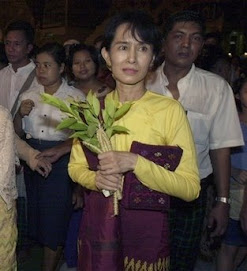


 Posts


