News & Articles on Burma
Saturday, 15 January, 2011
-------------------------------------------------------------
China strikes deal with Burma to guarantee oil supply
FMs address South China Sea, Myanmar issues
Will Tavoy be Burma’s Shenzhen?
Myanmar aims to privatize most state-owned businesses
Conscription and Parliament, the new weapons of the military junta
-----------------------------------------
China strikes deal with Burma to guarantee oil supply
China has put the final piece of its energy supply jigsaw in place, signing a deal with Burma that will make it impossible to choke off Beijing's oil supply.
By Malcolm Moore, Shanghai 9:00PM GMT 14 Jan 2011
In a move that was described as a "golden bridge of friendship", Burma's ruling junta has given Beijing permission to build and operate a wharf on Burma's west coast to receive tankers arriving from Africa and the Middle East and then pump their cargo overland to southern China.
The new facility, at the deep sea port at Kyauk Phyu, is the culmination of decades of planning by Beijing to safeguard its energy supply.
Currently, as much as 80 per cent of China's imported oil and gas is forced to pass through the Strait of Malacca, a narrow bottleneck between Malaysia and Indonesia.
With an Indian naval base on the Andaman and Nicobar islands at the mouth of the straits, and with a large US Navy presence in the region, China has fretted for years that its trade and energy routes are vulnerable to a blockade.
Hu Jintao, the Chinese president, warned in 2003 that some "big countries" were attempting to "control the transportation channel at Malacca".
In response, China has crafted a strategy known as the "string of pearls", a chain of naval bases across the Indian Ocean that could protect its tankers in case of emergency. These bases include Gwadar in Pakistan, Chittagong in Bangladesh and Hambantota in Sri Lanka.
In addition, China has patiently courted the Burmese junta, sending an estimated £800 million worth of tanks, fighter jets and weapons to its southern neighbour during the 1990s to prop up the regime.
After signing a trade agreement in 1988, China has also helped to rebuild Burma's roads and railways and even sent People's Liberation Army advisers to provide guidance and expertise.
Last year, Hu Jintao pledged unconditional support to the Burmese regime, telling Than Shwe, one of Burma's most senior generals, that China's policy "will remain unchanged regardless of changes of the international situation".
In return, the Burmese junta has granted access to its rich natural resources and is now allowing China to make use of Burma's key geographical position on the Indian Ocean.
After China's tankers reach the deep sea port at Kyauk Phyu, oil and gas will be pumped through twin 500-mile pipelines to the province of Yunnan. The station will be operated by China National Petroleum Corporation, the country's largest oil company, and Qingdao Port, the ninth-largest port operator in the world.
The pipelines, which are already under construction, should be able to carry a daily maximum of 440,000 barrels of oil and 400 billion cubic feet of gas when they are completed in 2013.
In addition, China plans to build thousands of miles of new railways to connect the southern Chinese city of Kunming with ports across Burma and South East Asia, including Yangon, the former Burmese capital. Not only will China's partnership with Burma help safeguard its own energy supply, but it will also give Beijing a key strategic advantage over Japan and South Korea, who also rely on the Strait of Malacca for part of their energy supplies.
http://www.telegraph.co.uk/news/worldnews/asia/china/8259551/China-strikes-deal-with-Burma-to-guarantee-oil-supply.html
-----------------------------------------
FMs address South China Sea, Myanmar issues
Abdul Khalik and Andi Haswidi, The Jakarta Post, Lombok | Sat, 01/15/2011 4:18 PM | Headlines
A | A | A |
Indonesia is attempting to lead ASEAN to solve the region’s two most high-profile political and security issues — democracy in Myanmar and the overlapping sovereignty claims in the South China Sea — during its chairmanship this year.
As foreign ministers of the 10-member grouping kick off their three-day retreat here Saturday, the dispute around the Spratly and Paracel Islands in the South China Sea and democracy in Myanmar will draw most of their attention.
Foreign Ministry’s director general for ASEAN affairs Djauhari Oratmangun said Indonesia was also keen to play a role as a broker in finding solutions to disputes in the South China Sea, one of the world’s key hotspot that has become a stage for China and the US to showcase their power in the Asia-Pacific region.
During the Lombok meeting, the ASEAN working group on the South China Sea would report to ASEAN senior officials on the results of its meeting with the Chinese delegation in Kunming, China, last December. China, Vietnam, Taiwan, Brunei, Malaysia and the Philippines have sovereignty claims in the resource-rich territory, while Indonesia does not.
While many expected the China-ASEAN meeting on the South China Sea to settle the problems, officials expressed pessimism about the mid-level meeting, which they said did not have the capacity to solve such a big issue.
The working group, in fact, only worked to clarify guidelines within the so-called declaration of codes of conduct (DOC) on the South China Sea that has existed for years.
“We haven’t agreed on the guidelines as there are still differences between China and ASEAN on the perceptions of the goals of the meeting. Actually, we are still trying to close that gap and creating
guidelines, which can evolve into codes of conduct that can be used to keep the area peaceful,” Djauhari said Friday.
Foreign Minister Marty Natalegawa said earlier that under Indonesia’s chairmanship, dialogue between ASEAN and China on the dispute would continue, with the hope that all parties could develop codes of conduct on how to jointly manage the area and settle the problem of claims to the sea.
“However, in the final analysis, it is the claimant states themselves that have to solve the claims problem bilaterally in accordance with international law,” Marty said.
Meanwhile, Myanmar Foreign Minister U Nyan Win is scheduled to brief ASEAN counterparts on the country’s progress in executing its roadmap to democracy after it completed its general elections to elect members of parliament late last year.
Indonesian diplomats said the Myanmar issue was nearly resolved as no matter how deficient the process, the country had conducted a general election and Indonesia hoped the issue could be resolved during its chairmanship this year.
“ASEAN wants to declare the Myanmar issue settled once and for all this year. But first Myanmar must form a government that is inclusive based on their own constitution, which specifies that anyone
can hold a position within the government, including those that did not join the election,” the ministry’s director for ASEAN political and security affairs Ade Padmo Sarwano said Friday.
http://www.thejakartapost.com/news/2011/01/15/fms-address-south-china-sea-myanmar-issues.html
----------------------------------------------------
NEWS ANALYSIS
Will Tavoy be Burma’s Shenzhen?
By HTET AUNG Saturday, January 15, 2011
Looking to the example of its northern neighbor, Burma is seeking to become Asia's next miracle economy by establishing a special economic zone (SEZ) in the southern port city of Tavoy. The plan, which will see an estimated US $8 billion pumped into the project by Thai investors, is to revive Burma's moribund economy by following the model of Shenzhen, the first SEZ created as part of Chinese paramount leader Deng Xiaoping's sweeping economic reforms in the late 1970s.
Interest in the project has grown steadily since May 2008, when the foreign ministers of Thailand and Burma signed a memorandum of understanding on the sidelines of a regional gathering in Singapore. It took another step forward in November of last year, when Burma's ruling military regime reached a final agreement with Italian-Thai Development PCL, the Bangkok-based company that was awarded the contract to carry out the project.
“Than Shwe said he wanted this project to be like the Shenzhen economic zone,” Italian-Thai president Premchai Karnasuta said at the time, referring to the Burmese junta's top general, Snr-Gen Than Shwe.
But despite speculation that this could finally be the first step toward real prosperity in Burma, questions remain about the viability and likely long-term impact of the Dawei Development Project, as the Tavoy SEZ is officially known.
Although it is impossible at this stage to say whether Tavoy stands any real chance of matching Shenzhen's success, we can at least ask if the Burmese project meets the same conditions that helped turn Shenzhen into a platform for transforming China's economy.
As Hongyi Harry Lai, a research fellow at the National University of Singapore's East Asian Institute, has noted, Shenzhen's development was far from smooth. But it ultimately overcame its many problems through a combination of factors, not the least of which was radical change within China's government.
By looking at Lai's 2006 paper, “SEZs and Foreign Investment in China: Experience and Lessons for North Korean Development,” and other academic studies of China's SEZs, we can get a better sense of the challenges that lie ahead for the Tavoy SEZ and determine whether it is indeed set to become the answer to Burma's economic woes.
Administrative Reform
The first hurdle facing China's SEZs was the country's command economy, which was built on a system of centralized political control. To attract foreign investment, the administrative mechanism had to be radically reformed to reduce red tape in the SEZs, as well as fight corruption and provide strong incentives to foreign investors.
As steps toward improving Shenzhen's administration, the local government was downsized and the number of officials was cut by 65 percent, including a reduction in the number of vice-mayors from seven to three. Three different departments responsible for economic policies became accountable to the mayor, who became the most authoritative person in the SEZ.
Following last year's election, Burma will also undergo changes in its administrative structure, introducing a new bicameral Parliament and a civilian government headed by a president. However, it will be interesting to see whether the new government will initiate the radical changes needed to fight the deep-rooted corruption and incompetent bureaucratic governance that have resulted in decades of economic stagnation despite huge revenues from the sale of offshore natural gas to Thailand.
As Italian-Thai's Premchai said, if Burma's generals want to see a China-like economic success at home, they will have to take bold step to change the current economic management of the country, which at present only benefits a handful of senior military leaders, their families and their cronies.
The Importance of Geography
Geography was obviously a major consideration when Tavoy was selected as the site of Burma's first SEZ. As a deep-sea port on the Andaman Sea coast, it is well-suited to serving as a regional transport and industrial hub, linking the rest of mainland Southeast Asia with the oil wells of the Middle East and the markets of the European Union.
In this respect, Tavoy clearly follows the example of the SEZs of China, which were also carefully chosen to exploit geographic advantages. As Lai observed of China's four SEZs: “Shenzhen is adjacent to Hong Kong, Zhuhai is connected to Macao by land, and Xiamen is close to Taiwan. … Shantou is located between Hong Kong and Taiwan. All of them are coastal cities and have access to seaports. They were in advantageous positions to expand trade with developed economies.”
Unlike the Chinese SEZs, however, Tavoy has only one strong economy in close proximity—that of Thailand. But even though it is far ahead of Burma in terms of economic development, Thailand is still behind many other countries in the region. Hong Kong, Taiwan, Singapore and Malaysia all have stronger economies, and their interest in the Tavoy SEZ is still uncertain. Japan and South Korea, meanwhile, have yet to show any interest at all.
It seems, in fact, that the chief beneficiary of the Tavoy SEZ could end up being Thailand itself. A dual railway and highway link between Bangkok and Tavoy would increase the importance of the Thai capital in facilitating trade in the Mekong region, while plans to build an oil refinery and coal-powered electricity generating plant in Tavoy would ease environmental pressures on Thailand's heavily industrialized Eastern Seaboard.
To be of any real advantage to Burma's economy, the Tavoy SEZ would need to be connected to the rest of the country. However, as it stands, the only link between Tavoy and Rangoon, Burma's former capital and still its main commercial center, is a poorly maintained highway with very limited transport capacity.
Sociocultural Bonds
The success of the Chinese SEZs was partly due to their social and cultural ties with their neighbors. Businessmen based in Hong Kong, Taiwan and Macao were able to successfully navigate many of the problems they faced when they set up operations in the SEZs because they could communicate in their own language and in many cases had personal ties to the regions where they were doing business. As Lai noted: “Many overseas Chinese came from Guangdong and Fujian (the two provinces within which the SEZs are located) ... had become successful entrepreneurs, yet had strong sentimental bonds with their Chinese home towns.”
In Tavoy, however, it is a very different story. Thais and Burmese have historically regarded each other with mistrust. And although there are an estimated two million Burmese living in Thailand, they are unlikely to play any role in easing tensions that could easily arise. The vast majority belong to an exploited underclass of economic migrant workers eking out a living in industries shunned by Thais, with no capacity to invest in their homeland.
One potentially positive effect of the Tavoy SEZ, however, is that it could lower cross-border tensions by drawing many of these migrants back to Burma, just as the SEZs reduced the need for Chinese migrants to illegally enter Hong Kong. But for this to happen, workers would need to be given wages at least equivalent to what they could earn in Thailand.
Infrastructure Building
At the outset, China faced another challenging task: building modern infrastructure, including transportation, communications and a world-standard banking system. The recruitment of human resources was crucial to running the SEZs, demanding many energetic, innovative and educated young Chinese.
Recalling Shenzhen's past situation, Lai wrote: “The city also desperately needed talent, capital, infrastructure, and office buildings. ... From 1979 to 1983, the number of engineers grew from two to 732.” In such a short time, the Chinese government was able to overcome all these challenges.
The creation of the Tavoy SEZ will present the same problems, but on a far greater scale. Burma lacks not only decent infrastructure but also the human resources it will need to build it. Most skilled professional positions will likely be filled by Thais or other foreigners, while Burmese will do most of the unskilled work. Indeed, the abundance of cheap Burmese labor is one of the main attractions for Italian-Thai, which has said it will need “tons of workers” to complete the project, which will be carried out over the next 10 years in three overlapping five-year phases.
Although it is possible that many Burmese skilled laborers will be nurtured by the SEZ over the next 60 years that Italian-Thai holds the lease over the 250 square kilometer project area, the current shortage of properly educated Burmese—a legacy of the regime's past long-term closures of universities and continuing failure to raise educational standards—will hamper Burmese companies looking to get in on the action. This could easily translate into a permanent disadvantage for local businesses and force Burmese workers to remain in low-tier positions.
Political Stability
Another significant factor contributing to the success of the Chinese SEZs is the political stability not only of the SEZ areas but also of the whole country. Unlike China, however, Burma has encountered political instability both in major cities and in the frontier areas over the past 20 years.
Ethnic Mon and Karen armed resistance groups are still active in the area around the transnational railway and highway link that will be set up between Thailand and Burma. Despite the regime's success in reaching cease-fire agreements with more than a dozen ethnic armed groups over the past two decades, many of these are now in doubt due to the junta's pressure to transform the groups into Border Guard Forces under Burmese military command.
Apart from this instability, Burma is also currently facing economic sanctions imposed by the United States and the European Union which are not likely to be lifted in the near future. In this situation, potential investors will have to carefully weigh the risks of investing in the Tavoy SEZ.
The Disadvantages of the SEZs
The factories that Italian-Thai will build in Tavoy SEZ include a steel mill, a fertilizer factory, a 4,000 MW coal-fired power plant and a petrochemical complex, including oil and gas storage facilities, an oil refinery, a gas separation plant and a combined cycle power plant.
In Thailand, there has been significant resistance to the construction of such factories on the grounds that they are known to cause a wide variety of serious environmental and health problems. Rather than address these concerns, however, Thai companies now see the Tavoy SEZ as way of avoiding them.
“By moving to Burma, [Thai companies] can leave behind the environmental problems of Map Ta Phut and Rayong courts,” said a recent editorial in The Bangkok Post.
Even Thai Prime Minister Abhisit Vejjajiva has acknowledged this as a major consideration behind the decision to move to Tavoy. “Some industries are not suitable to be located in Thailand. This is why they decided to set up there,” he said in a recent television address.
Apart from the environmental issue, another major concern is the impact on local people. Land confiscation, forced relocation of residents from the SEZ area and the loss of farmers' livelihoods due to the transformation of arable land into a massive industrial zone are just some of the issues that will result from the establishment of the Tavoy SEZ.
These problems also exist in China's SEZs, with predictable consequences: “In 2004, the [Chinese] government admitted to 74,000 riots in the countryside, a seven-fold jump in ten years,” wrote Bhaskar Goswami in his paper, “Special Economic Zones: Lessons From China.”
According to Italian-Thai, 3,800 households will have to move to make way for the Tavoy SEZ. It has not said how this mass relocation will be carried out, but in Burma, forced relocation and land confiscations without compensation are considered the norm.
Like other major overseas business partners of the Burmese regime, Italian-Thai will be exposed to international condemnation if it does not act to ensure that such abuses do not take place in Tavoy. However, given its motives for pursuing the project in the first place, it may be unrealistic to expect that it will take its responsibilities in this area seriously.
Copyright © 2008 Irrawaddy Publishing Group | www.irrawaddy.org
http://www.irrawaddy.org/article.php?art_id=20531
--------------------------
Myanmar aims to privatize most state-owned businesses
Skeptics think the privatization effort is designed to make sure that most of the nation's business assets will be sold cheaply to people closely associated with government officials.
Source: AHN Reporter: Linda Young
Location: Yangon, Myanmar Published: January 14, 2011 12:04 p.m. EST
Topics: Government, Privatization, Politics, Business, Economy, Business And Finance, Parties And Movements
Myanmar, formerly known as Burma, plans to privatize 90 percent of state-owned industrial businesses, according to local news outlets.
However, it is not known if the percentage refers to the number of businesses or to revenue figures.
The secretive military junta government began selling off some state-owned businesses last year, shortly after the nation's first elections in 20 years. It sold about 250 state-owned businesses including movie theaters, warehouses, gas stations and port facilities on the Yangon River. The buyers were reportedly close associates of government officials.
Many observers think government officials want to sell as many state-owned businesses as possible before a new parliament is formed. Although the elections were not viewed as free and fair, civilians won a significant amount of power.
Deputy minister of industry Khin Maung Kyaw was quoted in local media as saying the sell-off was in order to put Myanmar in line with other democratic nations.
However, skeptics think the privatization effort is designed to make sure that most of the nation's business assets will be sold cheaply to people closely associated with government officials in the current regime in order to ensure the assets and wealth remain in their hands.
Read more: http://www.allheadlinenews.com/articles/7021713678?Myanmar%20aims%20to%20privatize%20most%20state-owned%20businesses#ixzz1B7GxPSW5
------------------------------------------------
Myanmar: India: Burmese dissident:
Conscription and Parliament, the new weapons of the military junta
The dictatorship has introduced military service for adult males and females. A law drawn up before the elections on Nov. 7, but only made public in recent days. On January 31 the first sitting of the Chambers, the new "armed wing" of the junta in power for over 20 years. The institutional ...
Friday, January 14, 2011
New Delhi - The Burmese military junta has recently drafted a law providing for compulsory military service for men and women, without distinction. It was also fixed the date of the first session of Parliament - the result of the November 7 elections - scheduled for Jan. 31. The political framework is evolving in Myanmar, but power remains in the hands of the military junta, which represses all forms of democratic change. Little hope for change remains, for those who want to peacefully defeat the regime "from within".
On these latest events we have sought the opinion of Tint Swe, a member of the Council of Ministers of the National Coalition Government of the Union of Burma (NCGUB), composed of refugees from Myanmar who fled after the 1990 elections won by the National League for Democracy, and never recognized by the junta. He fled to India in 1990 and since December 21, 1991 Tint Swe has lived in New Delhi, he is responsible for information on Asia South and East Timor in the Council.
The Burmese military regime has recently made a couple of important pronouncements. One of them was the so-called law which could draft all males between over men and women into military service. Nobody knows exactly why such a law was kept away from public eyes for two months and it is also bizarre that it was signed before the election held in 2010 because the Parliament is just about to convene.
The Union Solidarity and Development Party (USDP) got 259 out of 330 seats i.e. 78.48% in the Pyithu Hluttaw (House of Representatives) and 129 out of 168 seats i.e. 76.79% in the Amyotha Hluttaw (House of Nationalities). Those numbers are to be added by 25% selected army parliamentarians. So there is no question of possible rejection to any new law in the forthcoming parliament.
Before the National Service in Military (NSM) has been in practice but applied only for medical doctors. Out of the fresh MBBS and BDS degree holders some of them were inducted into military service for exact three years. They had to undergo a month-long basic military training at the Medical Corps Center. Regrettably it was found that majority of recruited doctors showed no signs of interest in army and 90% of them left after the term. Moreover the Tatmadaw (Army) had been short of physicians and dental surgeons because all Universities and schools were repeatedly shut down following after the 8888 student-led uprising. Then the military regime invented the Defense Services Medical Academy in 1992 providing early stipends and exclusive facilities only for them.
According to the Human Rights Watch, Burma has the largest number of child soldiers in the world. In 2002 there was a report named "My Gun was as Tall as Me: Child Soldiers in Burma" and in 2007 a new report was titled "Sold to be Soldiers: The Recruitment and Use of Child Soldiers in Burma."
In October 2006 the State Peace and Development Council (SPDC) handed over a list of 17 complaints of child recruitment to the International Committee of the Red Cross (ICRC). In March 2007 the UN General Assembly adopted a resolution on Burma, expressing grave concern at the continuing recruitment and use of child soldiers and strongly urging the regime to put an immediate end to the practice. In April 2007 the UN Security Council working group on children and armed conflict placed the situation of children affected by armed conflict in Myanmar on its agenda.
In February 2007 a Supplementary Understanding was signed by the SPDC and the International Labor Organization (ILO), which has been monitoring rampant forced labor practice in Burma. It provides for a complaint mechanism which allows the citizens to bring cases of forced labor under ILO Convention 29 Concerning Forced Labor to the ILO liaison office in Yangon. Since then ILO office in Rangoon is busy.
The public become aware of three military related laws, which were signed by SPDC chairman on 4th November 2010 and printed in the government gazette on 17th December 2010. According to the Peoples Military Service Act (SPDC Law # 27/2010) all males from 18 to 35 and all females between 18 and 27 years of age can be drafted into military service for two years. The ages for professionals are up to 45 for men and 35 for women for three years service. This new scheme is not only meant for emergency situation because they all could be called again when emergency arises.
So the new law will help to recruit soldiers at will. But for what purpose! The observers predict that more young Burmese will be leaving the country to escape from three years imprisonment if they fail to serve in the armed forces. They will do so because they dislike military service as the regime has severely damaged the integrity of once reputed Burma Army. They also do not think it is right while no possible foreign aggression is perceived and only ethnic armed groups are under attack and being escalated after the recent election.
So far there have been five million Burmese living or working in other countries. Twenty years ago before this military junta seized the power, for Burmese citizens going abroad was a luxury item and only political dissidents crossed the borders with Thailand, India, Bangladesh and China to seek shelter. The prediction that the election held on 7th November 2010 would not halt or stop refugee and migrant workers outflow is proved correct and an inventive category of Burmese in exile is coming up that is to evade military service made by law. As the junta foresees such an eviction the Act says that the order will be delivered either into the parson’s hand or his or her relatives’ hands.
The more controversial one is the new Reserved Forces Act (SPDC Law # 28/2010) signed three days before the election in 2010. The retired army personals have to serve in the reserved armed forces for next five years and they can retain the same military titles and uniforms and promotions and demotions are possible. The Commander-in-Chief of the Defense Services can also extend that officer’s additional military service more years. So those who are loyal to C-i-C can be the permanent soldiers and the generals from the SPDC will be there forever.
The date for parliaments which will be met at 8:55 AM on 31st January 2011 was also broadcast on 10th January. Next morning 17 manual booklets for parliaments were also sold at government shops but an elected representative failed to buy a copy after 45 minutes in a long queue. Although the official price of a set is 2300 Kyat but it needs to pay 8500 Kyat (US$10) at road-side shops.
Apart from the USDP, other parties do not receive any official information on the date for parliaments. In three different levels of Assemblies there will be 1046 elected legislators added by a quarter of that number appointed by Chief of Army will be meeting then. But the list of military representatives is yet to be announced.
Those who will be in the Pyithu Hluttaw (House of Representatives) and in the Amyotha Hluttaw (House of Nationalities) can correctly guess that they will have to go Naypyitaw. But Region and State parliament representatives have no idea where they have to make debates and laws.
One parliamentarian who was also elected in 1990 election said, "We have waited for two decades to make our demands through the parliament. Now that the parliament is going to be convened, I hope I will be able to work for the good of the people and the country from within the system." He is from the National Democratic Force (NDF).
Many observers continue making mistake that NDF which won only 8 seats in the Pyithu Hluttaw, 4 seats in the Amyotha Hluttaw and 4 seats in the Regions and States Parliament is the sister party of the National League for Democracy (NLD) which did not contest in the election held in 2010. The NDF is totally different from the Party for National Democracy (PND) which was purposely formed before 1990 election for fearing of dissolution of the NLD. When Aung San Suu Kyi received the leaders of NDF on 30th December, it was mere social or personal and no politics was discussed during an hour long meeting.
If not euphoria there are optimistic viewers who hoped for better life and condition after the election. However those optimists have seen no release of prisoners, no relaxation at all and more censorship instead since after the much-criticized election. So they have to look forward to convening the parliament and formation of the new government. Will they be lucky?
The restrictions for parliamentary conducts have been made known. Any protest staged within parliament is liable to two years of imprisonment. It is meant particularly for non-USDP representatives: 66 in the Pyithu Hluttaw, 107 in the Amyotha Hluttaw, 886 in the Regions and State Parliaments and 29 ethnic representatives.
Some distant observers think that USDP is a pro-junta party. In fact it is more than a sister party but the identical twins. So all policies and practices will be exactly the same as those of the SPDC era. The Burmese people cannot expect any improved livelihood and the neighbors cannot hope for enhanced cross-border relations. Yes there will be civilians and ethnic peoples in sitting. But …
The epic Ramayana, “Life and journey of Rama” is the most read and repeatedly performed elegantly not only in the Hindu majority countries such as India and Nepal but also in the Buddhist countries like Burma, Thailand and Sri Lanka as well as in Muslim Indonesia.
Though the play performed in different countries and on different theatres, all characters Rama, Sita, Ravana and Hanuman and etc. have to act the same. Yes on a larger stage more followers of Hanuman and those of Ravana can be seen. But all have to act accordingly. So a new stage has been set in Burma to perform the old drama. http://www.speroforum.com/a/46727/Myanmar--India---Burmese-dissident-conscription-and-Parliament-the-new-weapons-of-the-military-junta?utm_source=feedburner&utm_medium=feed&utm_campaign=Feed%3A+speroforum%2Fnroq+%28Spero+News%29
Sunday, January 16, 2011
News & Articles on Burma-Saturday, 15 January, 2011


Saturday, January 15, 2011
News & Articles on Burma-Friday, 13 January, 2011
News & Articles on Burma
Friday, 13 January, 2011
-------------------------------------------------------------
Than Shwe Chooses Next President—Himself
Ethnics Seek Vice-President Nomination
Burma Army to set up more battalions on the Thai-Burma border
Burmese Bank Rumored on Verge of Bankruptcy
Security Tightened in Search for Militants, Dissidents
Escaped prisoners say Burmese Army using them as human mine sweepers
The Show in Burma is coming up
Burma to privatise 90% of its companies - report
The Suu Kyi effect: A new age of quiet defiance
Suu Kyi fights for party’s existence
MYANMAR: Addicted to poppy farming
SNLD: Insurrections in Burma is junta creation
Burma’s first parliamentary assembly and the question of self-determination
Release of Suu Kyi May Boost Tourism
--------------------------------------------------------------
Than Shwe Chooses Next President—Himself
By THE IRRAWADDY Friday, January 14, 2011
Burma's military junta strongman, Snr-Gen Than Shwe, has reportedly drawn up a draft outlining his lineup of the future ruling hierarchy, some two weeks ahead of the opening session of Parliament on Jan. 31, according to sources in Burma’s administrative capital, Naypyidaw.
Than Shwe has reportedly penciled himself in as President of the Republic of the Union of Myanmar.
However, the junta’s No.2, Vice Snr-Gen Maung Aye, is reportedly set to retire from office for reasons of ill-health.
The military regime's Secretary-1 ex-Gen Tin Aung Myint Oo is reported to be one of two vice presidents. The junta’s No.3, ex-Gen Shwe Mann is to be appointed as the Chairman of the Union Hluttaw [parliament], one of the most powerful posts under the 2008 Constitution.
And Prime Minister Thein Sein, who is also the chairman of the junta’s proxy party, the Union Solidarity and Development Party (USDP), will hold onto the party leadership position, the sources said.
Lt-Gen Min Aung Hlaing, the current Joint-Chief of Staff (Army, Navy, Air Force) is reportedly set to become the Commander-in-Chief, while Maj-Gen Soe Win, the Chief of the Bureau of Special Operations-6, is to be appointed Deputy Commander-in-Chief.
Lt-Gen Myint Aung, who was reportedly in line to be Commander-in-Chief of the Armed Forces, will now take the position of Minister of Defense, while Lt-Gen Ko Ko, who was said to be in line to be Deputy Commander-in-Chief, is now set to become the Minister of Home Affairs.
Despite the authenticity of the leaked information and the reliability of its sources, The Irrawaddy cautions that any speculation of the divisions of power in Burma is very difficult to ascertain as every and any decision can be taken, modified or reversed at any time by one man, the dictator Than Shwe.
In late August, an extensive military reshuffle took place when several older military generals were replaced with younger ones, starting with the military’s third-highest ranking position of Joint-Chief of Staff. At that time, the junta’s top two generals, Than Shwe and Maung Aye, reportedly resigned from the military. Later, they appeared in public still in military dress and addressed as Commander-in-Chief and Deputy-Commander-in- Chief of the Armed Forces.
However, military sources in Naypyidaw said Than Shwe reportedly told his spiritual leaders and close friends and relatives in July that he wanted to take a rest from leading the country. His wife Kyaing Kyaing disagreed that he should retire and argued that he still had “a lot of work to do for the country.”
“What we know is that he is not fit and needs to rest,” said a military source. “But his family won't let him—especially his wife, his daughters and his favorite grandson. They simply can't face losing power.”
The official added: “You have to understand that our leadership prides himself on being unpredictable.”
http://www.irrawaddy.org/article.php?art_id=20528
-------------------------------------------------------
Ethnics Seek Vice-President Nomination
By KO HTWE Friday, January 14, 2011
Six ethnic political parties that won seats in November's general election will meet on Saturday in Rangoon with a view to establishing a unified approach in calling for equality and self-determination in the new Parliament.
The parties will also discuss a proposal to nominate an ethnic representative as vice president in both or either of the houses to be submitted to the Electoral College, according to several ethnic party leaders.
“Our nomination will be in line with the rules of the Constitution,” said Aye Maung, the chairman of the Rakhine National Democratic Party (RNDP). “We would like to propose an ethnic representative to be Minister of State, but that simply won't happen.”
The six parties that will meet include the All Mon Regions Democracy Party, the Chin National Party, the RNDP and the Shan Nationalities Democratic Party (SNDP), said Sai Saung See, the vice-chairman of the SNDP.
He said the ethnic parties wish to nominate one representative that will stand before each House—the Pyithu Hluttaw (Peoples' Assembly) and Amyotha Hluttaw (Nationalities Assembly)—which each hold a duty to elect one vice-president as two of the three members of the Electoral collage.
The other Electoral College vice-president will be selected by the 25 percent of Parliamentary seats held by military appointees.
“We believe the chief ministers of each state should appoint a representative from the ethnic minorities,” said Saung See.
Some of the 14 regional and state chief ministers have already been selected, and the six parties will discuss a nomination for the position of Chief Minister of State, he added.
However, said Aye Maung, it seems the chief ministers will be representatives with an ethnic background appointed from the Union Solidarity and Development Party.
Although representative from the Phalon-Sawaw Democratic Party cannot attend the meeting, they have said they will stand by the decision made by the parties on Saturday, said the party chairman, Khin Maung Myint.
Burma’s Parliament will convene on Jan. 31 for the first time in 22 years. Both the Upper and Lower Houses (the Amyotha Hluttaw and the Pyithu Hluttaw), as well as the 14 regional and state parliaments, will commence sessions at 8:55 am in Naypyidaw, according to state media reports. http://www.irrawaddy.org/article.php?art_id=20527
--------------------------------------------------
Burma Army to set up more battalions on the Thai-Burma border
Friday, 14 January 2011 13:43 Hseng Khio Fah
The Burma Army is reportedly going to set up a new town and 3 more battalions in Shan State East's Mongton Township bordering with Thailand's Chiangmai province, where the United Wa State Army (UWSA) and the Shan State Army (SSA) 'South' are active, according to local sources.
The location of the new town will be at Monghta village tract, west of Mongton, 44 kilometers north of Chiangmai's Wiang Haeng district. This project was announced when Brig-Gen Than Htun Oo, Commander of the Triangle Region Command, visited the areas recently, said Mongton residents.
"He [the commander] told that Monghta village will be developed into a town and will place at least 3 permanent battalions there and urge people to relocate there," a resident said. "No one gave him [the commander] any response on that day 12 January."
According to him, a plot of land will be sold at Kyat 45,000 (U $ 50). The commander was reported to have arrived in the area since 11 January and was still said to be touring in their bases along the Thai-Burma border until yesterday.
A Thai-Burma border watcher analyst on the subject of the planned project that the military junta is likely to block the route of the UWSA fighters because Monghta, where the project will taken place, is positioned between operational areas of UWSA's 778th Brigade and 772nd Brigade and also serves as the gateway to the anti-Naypyitaw Shan State Army (SSA) 'South" base Loi Taileng.
"It will be easy for them [the junta] to watch over all the movements not only of the Wa but also the SSA fighters if they can hold this point plus Thai army activities," he said.
A similar project was also reported to be constructed in Shan State South's areas between the Shan State Army (SSA) North bases in the west and United Wa State Army (UWSA) bases in the east, in December. It was the installation of artillery and infantry units in areas where the two groups [SSA 'North' and Wa] that are at loggerheads with the junta are active.
Currently, the number of reports of the Burma Army's expansion in the ethnic states, especially in armed groups controlled areas, has increased.
Nevertheless, many think that there as yet any sign of a major operation, but believe it will be after a new government is installed. The first session of Burma's new parliament will be convened on 31 January. http://www.shanland.org/index.php?option=com_content&view=article&id=3411:burma-army-to-set-up-more-battalions-on-the-thai-burma-border&catid=86:war&Itemid=284
--------------------------------------------
Burmese Bank Rumored on Verge of Bankruptcy
By YENI Friday, January 14, 2011
Cooperative Bank, Burma's second-largest privately owned financial institution, is fighting for its survival as depositors rush to withdraw their savings amid rumors that the bank's owner is involved in a business dispute with a crony of one of the ruling regime's most powerful generals.
According to Rangoon-based business sources, the bank's reserves have dwindled to almost nothing, and its chairman, Khin Maung Aye, is struggling to secure credit from other banks to stay afloat.
Among the banks that Khin Maung Aye has turned to are Kanbawza Bank, owned by Aung Ko Win, a close associate of Vice Snr-Gen Maung Aye, the Burmese junta's second in command, and Myawaddy Bank, owned by the military-run Union of Myanmar Economic Holdings Limited.
“None of them will lend him anything. We are very concerned that Cooperative Bank is on the verge of collapse because of its extremely weak financial position,” said a source close to the banks.
However, there have also been reports that some of Burma's senior leaders have stepped in to prevent the failure of the bank. Specifically, former Gen Thein Sein, the country's prime minister, and former Maj-Gen Tin Htut, the minister of the Co-operatives and patron of the Cooperative Bank , who are said to be close to Khin Maung Aye, are believed to have intervened on the bank's behalf.
The same reports added, however, that Khin Maung Aye remains under pressure, with some other leading generals pushing for his resignation as the bank's chairman and as the secretary general of the Myanmar Bank Association.
According to Burma's Central Bank, Cooperative Bank held around 35 billion kyat (US $42 million) in deposits before the crisis. However, sources said that depositors began quietly withdrawing their money from the bank in mid-December after it was rumored that Khin Maung Aye was on bad terms with former Lt-Gen Thiha Thura Tin Aung Myint Oo, the regime's secretary 1 and Trade Council chairman.
Sources said that Khin Maung Aye's troubles started when he complained late last year about Tin Aung Myint Oo's decision to give licenses to Asia World, a company owned by his business associate Tun Myint Naing (aka Steven Law), the son of former drug lord Lo Hsing Han, to operate ground handling and passenger services at the country's two international airports in Rangoon and Mandalay.
Tin Aung Myint Oo has also recently awarded several other major contracts to Asia World, including for construction of hydro-power plants, jetties in Rangoon port, airports, and roads and bridges.
“Khin Maung Aye openly asked Tin Aung Myint Oo to give the ground handling and passenger services licenses to MAI [Myanmar Airways International], which is partly owned by Cooperative Bank,” a source said, adding that this prompted the regime's secretary 1 to urge some action against Khin Maung Aye in meetings with other top generals in Napyidaw.
According to business sources, the Trade Council has been pushing Khin Maung Aye to sell Cooperative Bank's shares in MAI and hand control of the airline to Kanbawza Bank, which bought the former national airline early last year in partnership with Cooperative Bank and Tun Foundation Bank. Meanwhile, Khin Maung Aye's construction company, Kaung Myanmar Associates Construction, has also lost contracts to build state guest houses in Naypyidaw.
As Khin Maung Aye's fortunes continue to plummet, business people are watching the market closely to see what impact all of this is having.
One effect so far, according to business sources in Rangoon, has been a rise in demand for gold, as businessmen who have withdrawn their money from Cooperative Bank buy the precious metal for safekeeping.
“Demand has immediately jumped up,” said the owner of a gold shop in Rangoon. “When I ask the customers, I found that many were businessmen who had withdrawn their money from Cooperative Bank.”
The price of gold in the Rangoon market on Friday was 634,500 kyat ($761.70) per kyat-thar (0.036 ounce).
Another reason for the increased demand for gold, said some observers, was that many business people are buying it as a hedge against a further decline in the value of the US dollar against the kyat. One US dollar is currently selling for 833 kyat.
Yan Pai and Aung Thet Wine also contributed this article.
http://irrawaddy.org/article.php?art_id=20526
-------------------------------------------------
Security Tightened in Search for Militants, Dissidents
By THE IRRAWADDY Friday, January 14, 2011
The Burmese authorities have tightened security at border checkpoints and increased nighttime screening of households in the former capital Rangoon in an attempt to track down dissidents and militant anti-government activists.
At least 10 police checkpoints have been set up on the road from the restive border town of Myawaddy in Karen State to the country's largest city, Rangoon. Sources said that at no less than four of these checkpoints, passengers were ordered off buses, searched and questioned by a combined force of police, military intelligence and immigration officials.
The number of checkpoints has also increased in Chin, Kachin and Shan states on roads to border-crossings to India and China, according to local sources.
“Passengers coming from the Indian and Chinese borders were mostly checked for illicit drugs,” said a bus driver. “Those coming from the Thai border were checked to see whether they were political dissidents or members of armed groups, or just migrant workers.”
Rangoon residents reported that nighttime checks of households, family members and guests have recently increased.
“No one dares to receive a guest without a national identity card. The guest must be registered at the local quarter authorities,” said a Rangoon resident, adding that he heard that the military government has a plan to digitize national identity cards to make it easier for the security forces to track down dissidents.
Those heading by road to the capital, Naypyidaw, were checked at least once and their national identity cards were scrutinized, military sources said. Even relatives visiting family members at the military headquarters in Naypyidaw were checked en route, they said.
“The security forces have been provided with a list and photographs of those wanted by military intelligence,” said a member of the Vigorous Burmese Student Warriors, a militant group blamed by the Burmese regime for a deadly bombing campaign conducted during last April's water festival in Rangoon.
The group has neither claimed responsibility nor rejected the regime's allegations. In a recent interview with The Irrawaddy, the senior member of the group said that it will increase attacks against the Burmese military government in the form of urban warfare.
In a related development, an anti-personnel land mine exploded in Kawkareik Township in Karen State on Friday, seriously injuring at least 15 bus passengers, including four military personnel. The renegade Brigade 5 of the Democratic Karen Buddhist Army is suspected of planting the device on the road. http://irrawaddy.org/article.php?art_id=20525
-----------------------------------------
NEWKERALA.COM
Escaped prisoners say Burmese Army using them as human mine sweepers
London, Jan 14 : Three prisoners who managed to escape from the clutches of the Burmese Army have claimed that military junta in Myanmar is using about 600 prisoners as human mine sweepers along the country's border with Thailand.
The Telegraph quoted the three prisoners, as saying that as prisoners did not possess money to bribe their jailers to avoid forced military service, they were being sent to the frontier to act as 'porters carrying ammunition'.
"We had to carry ammunition, equipment and food for the soldiers. The worst thing is that they used prisoners to clear minefields ahead of their advance. There were many prisoners who were injured by the landmines after they were forced to walk ahead of the soldiers. We ran away because we didn''t want the same thing to happen to us," one of the escaped prisoners said.
According to a human rights group, these prisoners suffered serious injuries as they were forced to walk ahead of troops across mined land.
The Burmese military regime regularly tortures its opponents, attacks rebel villages and uses rape as a weapon of war, reports said.
--ANI http://www.newkerala.com/news/world/fullnews-124134.html
-----------------------------------------------------
The Show in Burma is coming up
By Dr. Tint Swe
The Burmese military regime has recently announced on 4th November, the enactment of a law under which all males between 18 and 45 and all females between 18 and 35 years of age can be drafted into the armed forces. While there is no doubt of a shortage of volunteers to join the Army, nobody knows why such a law was kept away from the public for two months. It is also strange that it was enacted on the eve of the Parliament session that is scheduled to convene on January 31, 2011.
The bill would not have been rejected by the parliament as the Union Solidarity and Development Party (USDP) has 259 out of 330 seats i.e. 78.48% in the Pyithu Hluttaw (House of Representatives) and 129 out of 168 seats i.e. 76.79% in the Amyotha Hluttaw (House of Nationalities). In addition there are 25% selected army parliamentarians. What was the hurry then?
Even earlier, the National Service in Military (NSM) was in practice but enforced only for medical doctors. Out of the fresh MBBS and BDS degree holders some of them were inducted into military service for three years. They had to undergo a month-long basic military training at the Medical Corps Center. Regrettably it was found that the majority of recruited doctors showed no signs of interest in army and 90% of them left after the term. Moreover the Tatmadaw (Army) had been short of physicians and dental surgeons because all Universities and schools were repeatedly shut down following the 8888 student-led uprising. Then the military regime started the Defense Services Medical Academy in 1992 providing stipends and exclusive facilities for them.
According to the Human Rights Watch, Burma has the largest number of child soldiers in the world. In 2002 there was a report named “My Gun was as Tall as Me: Child Soldiers in Burma” and in 2007 a new report was titled “Sold to be Soldiers: The Recruitment and Use of Child Soldiers in Burma’ appeared.
In October 2006 the State Peace and Development Council (SPDC) was handed over a list of 17 complaints of child recruitment by the International Committee of the Red Cross (ICRC). In March 2007 the UN General Assembly adopted a resolution on Burma, expressing grave concern at the continuing recruitment and use of child soldiers and strongly urging the regime to put an immediate end to the practice. In April 2007 the UN Security Council working group on children and armed conflict placed the situation of children affected by armed conflict in Myanmar on its agenda.
In February 2007 a Supplementary Understanding was signed by the SPDC and the International Labor Organization (ILO), which has been monitoring rampant forced labor practice in Burma. It provides for a complaint mechanism which allows the citizens to bring cases of forced labor under ILO Convention 29 Concerning Forced Labor to the ILO liaison office in Yangon. Since then ILO office in Rangoon is busy.
Hence the new law will help to recruit soldiers at will. But for what purpose! The observers predict that more young Burmese will be leaving the country to escape from five years imprisonment if they fail to serve in the armed forces. They will do so because they dislike military service as the regime has severely damaged the integrity of once reputed Burma Army. They also do not think it is right when no possible foreign aggression is perceived and conflict will be only internal, with the possibility of ethnic groups rising against the regime particularly after the recent elections.
Five million Burmese are living or working in other countries. Twenty years ago before this military junta seized the power, for Burmese citizens going abroad was a luxury and only political dissidents crossed the borders with Thailand, India, Bangladesh and China to seek shelter. The prediction that the election held on 7th November 2010 would not halt or stop refugee and migrant workers outflow is proved correct and a new group of refugees evading the mandatory conscription is bound to grow.
The parliaments will meet at 8:55 AM on 31st January 2011 as per an official broadcast on 10th January. On 11 January the booklets on Rules and Regulations for parliaments were also sold but an elected representative failed to buy a copy even after standing for 45 minutes in a long queue.
Apart from the USDP, other parties have not received any official communication on the date for parliaments. he list of military representatives is yet to be announced.
Those who will be in the Pyithu Hluttaw (House of Representatives) and in the Amyotha Hluttaw (House of Nationalities) can correctly guess that they will have to go Naypyitaw. But Region and State parliament representatives have no idea of the location where they have to make debates and laws.
One parliamentarian who was also elected in 1990 election said, “We have waited for two decades to make our demands through the parliament. Now that the parliament is going to be convened, I hope I will be able to work for the good of the people and the country from within the system.” He is from the National Democratic Force (NDF).
Many observers continue making the mistake that NDF which won only 8 seats in the Pyithu Hluttaw, 4 seats in the Amyotha Hluttaw and 4 seats in the Regions and States Parliament is the sister party of the National League for Democracy (NLD) which did not contest in the election held in 2010. The NDF is totally different from the Party for National Democracy (PND) which was purposely formed before the 1990 election for fear of dissolution of the NLD. When Aung San Suu Kyi received the leaders of NDF on 30th December, it was more social or personal and no politics was discussed during that meeting.
Optimists, who hoped for better life and conditions after the election, have seen no release of prisoners, no relaxation and on the contrary, experience more censorship after the much-criticized election. So they have to look forward to convening the parliament and formation of the new government. Will they be lucky?
The restrictions for parliamentary conduct have been made known. Any protest staged within parliament is liable to two years of imprisonment. It is meant particularly for non-USDP representatives: 66 in the Pyithu Hluttaw, 107 in the Amyotha Hluttaw, 886 in the Regions and State Parliaments and 29 ethnic representatives.
Some observers consider that USDP is a pro-junta party. In fact it is more than a sister party but identical twins. So all policies and practices will be exactly the same as those of the SPDC era. The Burmese people cannot expect any improved livelihood and the neighbors cannot hope for enhanced cross-border relations.
To sum up, a new stage has been set in Burma to perform the old drama.
Dr. Tin Swe is an elected member of Parliament from Burma from the NLD now living in F-15, Vikas Puri, New Delhi and can be reached at his mobile- 981-000-3286, e-mail drswe01@gmail.com http://www.eurasiareview.com/analysis/the-show-in-burma-is-coming-up-13012011/
-----------------------------------------------------
14 January 2011 Last updated at 04:06 GMT
Burma to privatise 90% of its companies - report
By Mark Gregory BBC News
The Burmese government may be planning a dramatic change in the way the country's economy is managed.
According to a report in local news media, the government intends to privatise 90% of state-owned enterprises by the end of this year.
If true, it would mark a major shift in policy for the country, which recently held its first election in 20 years.
Until fairly recently it has been the most rigidly state-dominated economy in Asia after North Korea.
So is the report credible? Hard information on economic policy in Burma is almost impossible to obtain.
The notoriously secretive government rarely speaks to Western media.
But within that context, the latest report appears reasonably well sourced.
The reputable Burmese business news magazine Biweekly Eleven quotes the deputy minister for industry, U Khin Kyaw, as saying the government plans to sell most state enterprises into private hands within the next few months.
Politics
Observers say the main motivation for this dramatic policy shift would be political not economic.
Burma recently had a general election - the first in two decades - which, while by no standard free or fair, is leading to a change of generation in the leadership.
One theory is the privatisation programme provides a kind of golden parachute for those exiting power.
This suggests that most of the privatised assets will be acquired at knock-down prices by people who have had positions in government, and by their families and friends.
"I think what's really going on is there's going to be a bit of a firesale, if you like, of these assets to people closely connected to the current regime," said Sean Turnell, a professor of economics at Macquarie University in Sydney, Australia.
"And really the motivation for them is making sure this wealth remains in their hands, regardless of what happens to the political situation," Mr Turnell said.
In fact Burma has already moved towards liberalising what has been one of the most state-dominated economies in Asia.
More than 100 government-owned enterprises, including petrol stations and port facilities, were sold off within the last 12 months.
China has emerged as the main buyer for Burma's plentiful exports of gas, gems and other natural resources in recent years.
But observers say sensitivities about national sovereignty make it unlikely that the Burmese authorities would allow Chinese firms to acquire outright ownership of privatised assets.
http://www.bbc.co.uk/news/world-asia-pacific-12188585
-------------------------------------------------------
The Suu Kyi effect: A new age of quiet defiance
Two months after her release, Burma's most famous dissident is inspiring a shift among protesters
By Phoebe Kennedy in Rangoon
Friday, 14 January 2011
Aung San Suu Kyi, centre, opens the National League for Democracy's HQ in Rangoon
Her release brought joy and a rare glimpse of hope to the long-suffering people of Burma. Now, two months after democracy heroine Aung San Suu Kyi was freed from house arrest, the euphoria has faded, but hope remains.
On the surface, little has changed. After a November election boycotted by Ms Suu Kyi's National League for Democracy (NLD) party and decried as rigged by other opposition politicians, the Burmese junta is pressing ahead with its plans to create a "discipline-flourishing democracy".
A new parliament will convene at the end of January with the ruling generals firmly in control. A quarter of the seats in the two-house Union Parliament are reserved for military nominees. Of the seats contested in the election, 80 per cent went to the junta's proxy, the Union Solidarity and Development Party. http://www.independent.co.uk/news/world/asia/the-suu-kyi-effect-a-new-age-of-quiet-defiance-2184290.html
-----------------------------------------------
Suu Kyi fights for party’s existence
By AGENCE FRANCE-PRESSE
Published: 14 January 2011
Democracy icon Aung San Suu Kyi appealed to Burma’s Supreme Court Thursday, the latest in a string of legal wranglings over the dissolution of her political party before last year’s elections.
The Nobel Peace Prize winner’s National League for Democracy (NLD) was disbanded for boycotting the military-ruled country’s first election in 20 years in response to rules that seemed designed to bar her from taking part.
“We submitted our special appeal to the Supreme Court in [the capital] Naypyidaw this afternoon. We are waiting for their reply,” said Nyan Win, one of Suu Kyi’s lawyers and a party spokesman.
Suu Kyi, a co-founder of the NLD, was released from more than seven years in detention on 13 November, a few days after the rare election in which the junta-backed party claimed overwhelming victory.
Shortly after her release, the court refused to hear her lawsuit against the junta for dissolving the NLD. She had unsuccessfully filed an earlier suit with the Supreme Court aimed at preventing its abolition.
Court verdicts in the military-ruled country rarely favour opposition activists, and a series of appeals by Suu Kyi against her house arrest – before it expired in November – were rejected.
The NLD was founded in 1988 after a popular uprising against the military junta that left thousands dead. Two years later the party won elections in a landslide but the results were never recognised by the regime.
http://www.dvb.no/news/suu-kyi-fights-for-partys-existence/13707
-------------------------------------------
MYANMAR: Addicted to poppy farming
Source: United Nations Office for the Coordination of Humanitarian Affairs - Integrated Regional Information Networks (IRIN)
Date: 13 Jan 2011
SHAN STATE, 13 January 2011 (IRIN) - Poverty and lucrative profits make poppy cultivation increasingly attractive to farmers who would otherwise produce legal crops to feed their families and make a living, say experts.
"More of the rural poor continue to be drawn into participating in the illicit drug trade as a last means of finding money to feed their families," Jason Eligh, Country Representative for the UN Office on Drugs and Crime (UNODC) Myanmar, told IRIN.
Shan State, 400km north of the capital, Yangon, between Myanmar, Laos and Thailand, produces more than 90 percent of all opium in Myanmar, an estimated 35,000 tons in 2010, according to UNODC.
UNODC is the only international agency directly involved in supporting different crops in poppy cultivation areas, with three agriculture projects in southern Shan State trying to reach 100,000 people. However, much more needs to be done to stop farmers from reverting to opium production, said Eligh.
"UNODC wants to see a strong alternative development response, one that includes market access, community mobilization, access to credit, improved technology and better overall infrastructure in rural areas."
Cash crop
In 2010, a higher proportion of farmers' income came from poppies than in previous years, reversing a trend of steady decline in the past six years.
Between 2003 and 2009, the proportion of total household income from poppies fell from 70 to 20 percent, according to a December 2010 UNODC report. [ http://www.irinnews.org/Report.aspx?ReportID=91358 ]
In 2010, however, high prices paid for poppy in Myanmar and low food security throughout the country meant income from the seed contributed to 43 percent of total household income in Shan State, the report stated. About a quarter of the state's population was involved, estimate aid agencies.
Though prices at source (farm-gate) for poppy fell marginally in 2010 from 2009, opium overall remained lucrative at US$305 per kilo. Poppy farmers can earn 13 times more money cultivating poppies than rice, making poppies the cash crop of choice for most, based on the UNODC report.
Farmers forced out of poppy cultivation are having problems growing other food to survive. "I grow enough vegetables to keep my family going, but that is all," U Tin Kyi told IRIN.
U Tin Kyi grew poppy seeds to supplement his income until authorities destroyed his fields two years ago. Like many of his neighbours in this hilltop village, U Tin Kyi has little extra income. "The fuel cost to get to the market outweighs any profit I would make from selling vegetables," he told IRIN.
Eradication efforts
Poppy cultivation continued to rise in Myanmar in 2010, despite an official 15-year drug elimination plan developed in the late 1990s. In 2009, the authorities initiated the final five-year phase of this plan.
Government figures claim 8,268 hectares of poppy-cultivating land were eradicated in 2010, a 102 percent increase on the previous year.
But other groups calculate that Myanmar's poppy cultivation area and yield actually increased during this period.
"In 2010 we estimate that there [was] 20 percent more area under opium poppy cultivation, a 46 percent increase in average opium yield, and a 17 percent increase in the number of households involved in domestic opium poppy cultivation," said Eligh of UNODC.
In northern Shan State, in 2008, government figures showed 25 percent of poppy fields were destroyed, but a 2010 report [ http://www.womenofburma.org/Report/PoisonedHillsFinal.pdf ] by Palaung Women's Organization (PWO), an NGO based in Mae Sot along the Thai-Myanmar border, stated only 11 percent of poppy fields had been eradicated.
Government anti-drug teams were only destroying easily visible poppy fields and filing false eradication data to the police headquarters, the report said. At the same time, farmers were forced to pay taxes to continue growing poppies.
In Mantong village in northern Shan State, PWO estimated the government collected approximately $37,000 in poppy taxes in 2008. A selection of IRIN reports are posted on ReliefWeb. Find more IRIN news and analysis at http://www.irinnews.org
Une sélection d'articles d'IRIN sont publiés sur ReliefWeb. Trouvez d'autres articles et analyses d'IRIN sur http://www.irinnews.org
This article does not necessarily reflect the views of the United Nations or its agencies. Refer to the IRIN copyright page for conditions of use.
Cet article ne reflète pas nécessairement les vues des Nations Unies. Voir IRIN droits d'auteur pour les conditions d'utilisation.
http://www.reliefweb.int/rw/rwb.nsf/db900SID/JDUN-8D49AW?OpenDocument
-------------------------------------------------------
SNLD: Insurrections in Burma is junta creation
Thursday, 13 January 2011 15:52 Hseng Khio Fah
Shan Nationalities League for Democracy (SNLD) met with Paul Grove, the senior Republican aide on the Senate Appropriations subcommittee for foreign operations to stress the fact that insurrections in Burma, which have taken place for over six decades now, is intentionally created by the ruling military junta. They constitute one of its ways to keep and expand its power, according to the party’s spokesperson, Sai Leik.
“We explained to him [Mr Grove] about Burma’s problems and asked him to help us,” Sai Leik said.
In its meeting on 11 January, SNLD explained to Senator Grove that the reason Burma’s problem cannot be solved is not due to problems between Burmese people and ethnic nationalities, as the ruling junta wants the international community to believe.
“The reason is it [the military junta] doesn’t want to hand over its power to a people-elected government. It then finds ways to make people unhappy with them [the military junta] until the people could not bear it and resisted,” said Sai Leik. “This is why insurrections have not ended yet.”
Without the uprisings, the junta would not have a proper reason to show the international community why it keeps controlling the country. For instance, it claims that ethnic areas have no peace and stability even though the junta contributes to this lack of peace and stability.
“They are taking advantage of the situation to control the country. In order to end the instability, there must be a tripartite dialogue,” a SNLD secretary told Mr Grove.
To make the tripartite dialogue a reality, Daw Aung San Suu Kyi and National League for Democracy (NLD) must propagate the principles of democracy and federalism among the people, which the non-Burma ethnic parties will have to propagate each among its own people. Both must then propagate them among the military until its lower ranks and officers push the top brass to open dialogue with the democratic and ethnic movements, he said.http://www.shanland.org/index.php?option=com_content&view=article&id=3410:snld-insurrections-in-burma-is-junta-creation&catid=85:politics&Itemid=266
------------------------------------------------
Burma’s first parliamentary assembly and the question of self-determination
Fri, 2011-01-14 01:53 — editor
* Article
By - Zin Linn
Burma’s new legislative body is to convene for the first time on January 31, nearly two months after the military-ruled nation held a widely denounced election, the military junta’s media announced on last Monday. The new parliament, it is expected, will honor the final steps of its so-called seven-step roadmap to democracy.
The two-chamber national parliament will meet in the capital Naypyidaw, while new regional legislatures too will convene at the same time, government-controlled television reported, quoting an order from junta chief Senior General Than Shwe.
The new parliament was elected in polls held last November, which was criticized as sham by the opposition parties, including the Nobel Peace Prize laureate Aung San Suu Kyi, who was recently freed from house arrest. The vote was widely alleged by democracy activists and Western governments as of fraud and bullying as well as barred the opposition leader Aung San Suu Kyi and her party from participating.
According to a brief announcement by junta’s media, the country’s 1,154 lawmakers will assemble in a gigantic new building in the remote capital of Naypyitaw. It will be the first parliamentary session since a 1988 assembly in the old capital of Rangoon (Yangon).
The ruling junta’s military-backed party, the Union Solidarity and Development Party (USDP), claimed more than 76 percent of seats in the two-house of the Union Parliament in November 7 polls, the country’s first in two decades.
According to new laws announced by head of the junta in November, members of parliaments will not be permitted the freedom of expression if their presentations jeopardize national security or the unity of the country. Any protest inside the parliament is carrying a punishment of up to two years imprisonment. Anyone apart from lawmakers that enters parliament while it is in session has to face a one-year prison term.
The election results give surety that the military, which has ruled Burma since 1962, will continue to exercise power.
A quarter of the seats in parliament were already reserved for the armed forces, which together with its political proxy USDP will have a happy majority for passing laws and electing the president. Under the junta’s 2008 constitution, parliament need not meet more than once a year. Dissatisfaction is spreading all through the society due to the flawed electoral process.
Up to now, it is unclear what function Than Shwe plans to play for his role.
The country’s last elections in 1990 were overwhelmingly won by the opposition party led by Aung San Suu Kyi. The military refused to hand over of power and locked up Aung San Suu Kyi for most of the past 21 years, and released her a week after the controversial elections. Her Party has been disbanded and has not been allowed sitting in the proposed new parliament. She was under detention for more than a decade and a half and was freed on 13 November, 2010.
Simultaneously, the three ceasefire armed groups have challenged Burma Army that pressured them to transform into Border Guard Forces (BGFs). For that reason, the groups have come around declining BGF plan in order to avoid Burmese junta’s oppressive strategies. The UWSA, the NDAA, and the Shan State Army-North are along with the other armed ethnic groups which are defying the military regime’s demands on them to join its Border Guard Force (BGF). Actually, the junta’s BGF program intended to win over the ceasefire groups by laying down their arms.
Coincidentally, the United Wa State Army (UWSA)’s political wing United Wa State Party (UWSP) has drawn another contradictive proposal which includes a point to demand for a state with the Right of Self Determination from the new government, quoting UWSP sources Shan Herald Agency for News said. The said proposal was drawn at the UWSP’s 5th annual district level party congress which is being held in Mongmai, 170 km north of its main base Panghsang from 20 to 29 December.
The UWSP’s new proposal which is to be presented to the new parliamentary government planned to be held on 31 January, 2011. In the proposal, UWSP says that their armed force will remain in the Wa State to defend their independence. Although they will not secede from the Union, they will steadfastly demand for a state with the Right of Self Determination from the upcoming government, upholding a policy of non-alignment and neutrality.
Subsequently, at the meeting of the 3rd Central Standing Committee (CSC) of the 14th KNU Congress was successfully held from December 14 to 19, 2010, according to the Karen National Union (Supreme Headquarters) source. KNU adopted the four guiding principles delineated by the late heroic leader Saw Ba U Gyi. The four principles are “Surrender is out of the question”, “We shall retain our arms”, “Recognition of Karen State must be complete” and “We shall decide our own political destiny.”
KNU says in its statement dated 23 December 2010: “As the parliament and government that would come into being according to the SPDC Road Map were for realization of the 2008 Constitution, the meeting adopted the view that instead of resolving the problems faced by Burma, it would create more insecurity and conflicts, especially in the political and military fields.”
As the self-styled new civilian government is the rebirth of the same military itself, the ethnic autonomy seems to be out of question. Correspondingly, national reconciliation proposal by Burma’s Nobel laureate has also to be faced the same destiny. Thus, people of Burma have to continue struggle for national reconciliation plus self-determination.
Obviously, Burma’s military dictators have held the recent polls, not to restore freedom, justice and equality, but to resume the military dictatorial power and to monopolize the country’s all-out economic opportunities.
However, the first issue the new government has to decide the question of self-determination. The ethnic parties are not only representing in parliament they also demand for autonomy even outside the parliament.
- Asian Tribune - http://www.asiantribune.com/news/2011/01/13/burma%E2%80%99s-first-parliamentary-assembly-and-question-self-determination
--------------------------------------
Release of Suu Kyi May Boost Tourism
By THE ASSOCIATED PRESS Friday, January 14, 2011
INLE LAKE, Shan State — The boatman turns off the engine and lets his long boat glide along Burma's Inle Lake, as foreign tourists soak in the stunning scenery of villages built on stilts dotting the shorelines of the massive freshwater lake ringed with picturesque mountain ranges.
Ngae Ni, 35, graduated as a chemist more than a decade ago but he became a boatman because he could not get a better job in Southeast Asia's only military-ruled nation and one of its poorest. He earns up to $250 a month ferrying foreigners around the lake.
Sunset in Inle lake. (Photo: David Townsend)
"I hope that ... more tourists will come here. They should really see the poverty in our country with their own eyes," he said during a recent trip, flashing a smile with his betel nut-stained teeth.
He may get his wish. The release of pro-democracy leader Aung San Suu Kyi from house arrest in November appears to be opening the way for more tourists by easing concerns that visiting the country is a signal of support for Burma's military dictatorship.
Suu Kyi herself, in an interview with The Associated Press shortly after her release, said large group tourism wasn't encouraged, but "individuals coming in to see, to study the situation in the country might be a good idea."
International activist groups, which have long called for a tourism boycott, have followed Suu Kyi's lead and softened their stance, now only asking that tourists snub package tours and cruise ships, which are often operated by government cronies.
Colorado-based Asia Transpacific Journeys, which specializes in custom journeys and small group trips to Asia, said bookings to Burma have surged 150 percent since November compared to a year ago, as more travelers now feel more comfortable visiting the country.
Even before Suu Kyi's release, the tourism issue long divided activists both inside and outside Burma.
Supporters of a boycott believed tourism dollars sent the wrong signal and helped fund a government that still holds some 2,000 political prisoners. But others argued that tourism gave the isolated Burmese a rare opportunity to connect with the outside world, and that visitors give moral and sometimes even financial support to communities in need.
Also, the government is less involved in tourism than in the past, with many state-owned hotels and other tourism assets sold to private investors in the past decade.
Burma, however, remains a relatively remote destination for most, and no one expects an overnight tourism boom.
Suu Kyi's release isn't likely to draw Americans in large numbers, partly because Asia isn't high on their travel list and many consider the country dangerous following the military's violent crackdown on in 2007, said Douglas Shachnow, head of the Florida chapter of the Pacific-Asia Travel Association.
"The release is just not a big issue," he said. "There are other more long-standing factors that will ... (limit tourism to) all but the most interested, inquisitive, open-minded travelers with the financial wherewithal."
Still, tourism has been growing for several years, if from a small base.
Arrivals to Burma surged 34 percent to 212,500 in the first nine months of last year and may hit a record of 300,000 for all of 2010, according to the Bangkok-based Pacific-Asia Travel Association. Asians make up about two-thirds of the arrivals, Europeans 22 percent and Americans only 8 percent.
The total is a far cry from the 14 million who visit neighboring Thailand every year, the 4 million who go to nearby Vietnam, and the 2 million each to Cambodia and Laos.
Burma tourism revenue hit $196 million in 2009, almost double what it was in 2002, the Pacific travel association said. Tourism isn't a main revenue earner for the government, compared to the billions the junta makes from natural resources such as timber, jewels, oil and natural gas.
Some of the country's tour operators are hoping for a bumper year with new hotels set to open this year. Burma also joined with Cambodia, Vietnam and Laos last year in a campaign to encourage tours combining their countries.
The sector is hampered by a string of issues including poor infrastructure, limited tourism facilities and difficulty in getting visas. Many areas, especially along the country's border, are closed to tourists. The Internet is unreliable and credit cards are useless due to international sanctions, making it a hard-cash country.
In December, travel operators preparing for the busiest time of the year were dealt a blow when the government suspended the operations of private airline Yangon Airways in a move seen as politically motivated. The carrier's owner is linked to a fractious ethnic minority group.
Despite the impediments, Burma appeals to travelers with its spectacular landscape and wide offerings from ancient Buddhist monuments to jungle trekking, bucolic villages and beach holidays.
One of its key attraction is Bagan, one of the world's most remarkable archaeological sites where more than 2,000 ancient Buddhist temples and stupas dot the vast dusty plain. Others include Inle Lake, home to Ngae Ni's Intha tribe, famed for their unique one-leg rowing technique and floating vegetable gardens.
Bernard Dufour, 62, from Reunion Island off the coast of Madagascar, said he had skipped Burma in the past but decided to visit in November with his wife on friends' recommendations. He said he made sure to support local residents and avoid state-run facilities.
"It's a beautiful country. I don't feel it's wrong to visit as long as I am not supporting the government," he said as he sat cross-legged on the dusty floor of a small meditation cave nestled in a hillock near Inle Lake during a jungle trek.
According to government data, there are some 6,000 licensed tour guides and companies as well as more than 600 hotels and accommodation across the country. But in a country where a third of the population lives below the poverty line, many villagers are increasingly depending on tourism to supplement their income.
Many young people learn English and other foreign languages to become part-time tourist guides. Children as young as 6 are often seen at major tourist spots, hawking souvenirs to foreigners.
Jan Zalewski, analyst with London-based research house IHS Global Insight, said Burma is much more open today than it was two decades ago, suggesting that further engagement—including investment in tourism—could lead to a further opening-up.
"By supporting private ventures such as small guesthouses, as well as a fair degree of exposure to the Burmese people, such tourism could indeed contribute to the development of a population which might be able to provide stronger checks and balances to the policies of the government," Zalewski said.
Foreign travelers have engaged and touched many poor communities along the way.
A new one-story school block opened in a village nearby the meditation cave in late 2009, sponsored by a Japanese couple. Some 100 tribal children now no longer need to trek for an hour to school.
In their former school, teachers appeal for donation. The names "Mama Oo and Mama Judy from Australia" were scrawled on a small new whiteboard that contrasted with the bare crumbling facilities, reminding the children to thank their benefactors who had donated books, pencils and rice.
About two dozen children, ages 6 to 10, dutifully perform a medley of English nursery rhymes and local songs for foreign visitors, swaying their hips and clapping their hands as they dance while standing on old wooden chairs.
---------------------------
Aung San Suu Kyi Seeks to Revive Her Party
By THE ASSOCIATED PRESS
RANGOON — Pro-democracy leader Aung San Suu Kyi is seeking to revive her political party in military-run Burma by launching an appeal to the Supreme Court of a ruling that upheld its banning, her lawyers said Thursday.
Suu Kyi, who freed from house arrest in November, has sent her team of lawyers to the capital of Naypyitaw to submit the appeal, said one of the lawyers, Nyan Win.
The legal move appears to be largely symbolic, since Burma's courts invariably adhere to the junta's policies, especially on political matters. Previous appeals by Suu Kyi to the courts, on matters such as her detention, have been shunted aside or dismissed.
A similar appeal in November to restore the National League for Democracy was dismissed. The party lost its legal status because it failed to reregister in order to take part in general elections that month, claiming the balloting would be neither free nor fair.
The elections were swept by a party close to the ruling military junta, and the opening session of the new Parliament is scheduled for Jan. 31.
Nyan Win told earlier told reporters that the state Election Commission does not have the authority to dissolve the NLD, which was registered under a previous party registration law. Suu Kyi's party won a landslide victory in the last election in 1990, but was not allowed to take power by the military.
The 65-year old Nobel prize laureate has spent 14 of the past 20 years under house arrest. Her last period of detention lasted seven years.
Copyright © 2008 Irrawaddy Publishing Group | www.irrawaddy.org
http://www.irrawaddy.org/highlight.php?art_id=20523
Friday, January 14, 2011
News & Articles on Burma-Thursday, 13 January, 2011
News & Articles on Burma
Thursday, 13 January, 2011
-------------------------------------------------
Hydropower attracts big investment in Myanmar
Freed Myanmar democracy icon seeks to revive party
Conscription Law Likely to Drive More Youths out of Burma
Armed conflict threat looms large in Burma
Industrial projects boon to real estate in Burma
Myanmar To Privatise 90 Per Cent Of State-Owned Industries This Year
Can Indonesia turn Asean into a global player?
NLD to donate rice, water pipes to famine victims
Myanmar enacts military draft law for men, women
Thais Barred From Entering Into Myanmar For Safety
------------------------------------------------------
Myanmar Times: January 10 - 16, 2011
Hydropower attracts big investment in Myanmar
By Juliet Shwe Gaung
ONE-THIRD of the total foreign investment in Myanmar went into the hydropower sector during the first seven months of the 2010-2011 fiscal year, and hydropower represented the second-largest investment sector, according to official figures.
Figures from the government’s Central Statistical Organisation show that from April to October 2010, foreign investment in the power sector reached US$5.03 billion. Total foreign investment in all sectors during the period was $15.9 billion.
Investment in hydropower was second only to oil and gas, which amounted to $9.8 billion, while the mining sector stood in third place with investment totalling $990 million during the period.
In 2010 a total of seven memoranda of understanding (MOU) and memoranda of agreement (MOA) were signed between investors and the Department of Hydropower Planning under the Ministry of Electric Power (1).
In February, the government signed an MOA with China for implementation of a 1400 megawatt (MW) hydropower project on the upper Thanlwin (Kunlong) River in Shan State. An MOU was also signed between China and the Htoo Group of Companies for construction of a coal-fired thermal power plant in Yangon.
In April, an MOA was signed with Thailand and China for implementation of the 1360MW Hutgyi hydropower project in Kayin State, and the following month an MOU was signed with China for construction of the 520MW Mawlite hydropower project and a Kalewa coal-fired power plant, both in Sagaing Region.
July saw the signing of an MOA with China for a 1055MW Ngaw Chan Hka hydropower project in Kachin State.
China and Thailand signed another MOU with the government in November for the 1400MW upper Thanlwin (Ming Long) project in Shan state. Other agreements were signed in the same month for the 520MW Shwe Li (2) and 280MW Belin hydropower projects in Shan state.
There are currently 16 hydropower stations and one coal-fired power plant operating in Myanmar. The most recent to open was the Yeywa hydropower project in Mandalay Region, the first dam built in the country using roller compacted concrete construction techniques. Opened on December 15, it has the capacity to generate 790MW of power.
The 75MW Shwegyin hydropower project is about 80 percent complete and is one of 10 projects due to be completed in 2012. Altogether these projects will generate 1656MW, in addition to the 2100MW currently generated for the entire country though hydropower.
A former official from the Ministry of Electric Power (1) said Myanmar was unable to exploit all the identified hydropower resources on its own, so it had signed joint-venture agreements with neighbouring countries like Thailand, China and Bangladesh for implementation and export of power.
The joint-venture projects not only generate foreign exchange revenue during the concession period, but also increase the country’s overall power generation, because the agreements entitle Myanmar to 10-15pc of the annual electricity generated from the power stations free of charge, he said.
http://www.mmtimes.com/2011/business/557/biz55702.html
----------------------------------------------------
Freed Myanmar democracy icon seeks to revive party
AP
YANGON, Myanmar – Pro-democracy leader Aung San Suu Kyi is seeking to revive her political party in military-run Myanmar by launching an appeal to the Supreme Court of a ruling that upheld its banning, her lawyers said Thursday.
Suu Kyi, who freed from house arrest in November, has sent her team of lawyers to the capital of Naypyitaw to submit the appeal, said one of the lawyers, Nyan Win.
The legal move appears to be largely symbolic, since Myanmar's courts invariably adhere to the junta's policies, especially on political matters. Previous appeals by Suu Kyi to the courts, on matters such as her detention, have been shunted aside or dismissed.
A similar appeal in November to restore the National League for Democracy was dismissed. The party lost its legal status because it failed to reregister in order to take part in general elections that month, claiming the balloting would be neither free nor fair.
The elections were swept by a party close to the ruling military junta, and the opening session of the new Parliament is scheduled for Jan. 31.
Nyan Win told earlier told reporters that the state Election Commission does not have the authority to dissolve the NLD, which was registered under a previous party registration law. Suu Kyi's party won a landslide victory in the last election in 1990, but was not allowed to take power by the military.
The 65-year old Nobel prize laureate has spent 14 of the past 20 years under house arrest. Her last period of detention lasted seven years. http://news.yahoo.com/s/ap/20110113/ap_on_re_as/as_myanmar_suu_kyi
-------------------------------------------------------
Conscription Law Likely to Drive More Youths out of Burma
13 January 2011: The new decree recently issued by Burma's ruling military junta obligating every citizen over the age of 18 years to enter military service will likely cause more young people to flee the country, the Chin Human Rights Organization (CHRO) has warned.
According to a new law enacted by the ruling State Peace and Development Council (SPDC) on November 4, and entered into the official gazette on December 17 last year, young men and women between the ages of 18 and 35 are required to serve in the Burmese military for at least two years. Failure to perform military service is punishable by imprisonment of up to three years.
But the new decree is likely to cause more youths to flee the country to avoid being forcibly called to serve in the military.
Salai Bawi Lian Mang, Executive Director of Chin Human Rights Organization (CHRO) said, "When enforced, this new measure will almost certainly cause an exodus of more youths out of Burma as we have seen in the pre-election period, in which dozens of young people fled to India from Chin State to avoid conscription into the militia forces."
According to CHRO, several dozen youths from southern Chin State's Paletwa Township fled to India in January of 2010 when the Burmese army tried to forcibly enlist them for the militia service.
Other incidents of forcible conscription involving minors and high school students were reported by CHRO from Matupi Township.Two army deserters recently interviewed by the CHRO said that they were drafted in 2007 before they were only 16 and 17 respectively by troops from Burma Army Light Infantry Battalion (304) stationed at Belkong village of Maupti Township. CHRO also reported that since June 2009 as many as 1,160 youths were conscripted into the militia service in the Matupi Township area.
Young people are more likely to be called to perform mandatory and unpaid work, as well as, targeted for conscription into the army and militia services. In Chin State, these measures have caused the forced migration of people, especially the youths, out of Chin State. More refugees in neighboring countries are young people under the age of 35. http://chinlandguardian.com/news-2009/1160-conscription-law-likely-to-drive-more-youths-out-of-burma.html
---------------------------------------------------
Armed conflict threat looms large in Burma
By Zin Linn Jan 12, 2011 8:49PM UTC
The inauguration of the Pathein-Monywa road built by Public Works of the Ministry of Construction took place at the pavilion near Kankalay Junction in Kyaunggon Township on January 11, with an address by Burma’s Prime Minister Thein Sein.
Thein Sein underscored peace, stability, national unity and national development as key necessities for democratization.
In his speech, he said, “Before long, Hluttaw (Parliament) sessions will be held to form Union government, R e g i o n / S t a t e governments, self-administered zone leading bodies along with a check and balance system for three pillars, namely legislative, executive and judicial sectors. Community peace, stability, national unity and national development are requirements of democratization. So, these requirements are to be fulfilled all the more in such a transitory period.”
Meanwhile, conflicts between the junta’s armed forces and ethnic Karen armed units have been continuing along the Thai-Burma border near Mae Sot in Tak Province of northwestern Thailand. As 11 shells have struck into the Thai side, the Thai head of the Thai-Burma Border Committee (TBC) in Mae Sot has sent a letter to the TBC office in Burma’s Myawaddy district urging the Burmese soldiers to cautiously seek their targets in order to avoid firing into Thailand.
Although Thein Sein highlighted the importance of peace and stability, the military junta has enacted a law that could draft men and women into its army and mete out prison sentences of up to five years for draft dodgers, according to an official document.
The law, dated Nov. 4, 2010, but yet to be made public, will come into force when proclaimed by the ruling military council, said an official gazette with limited circulation. The law says that every male between the age of 18 and 45 and females between 18 and 35 may be drafted to serve for two years, which could be increased to five years in times of national emergencies.
Without any external threats, the Burmese army has been expending its strength over 400,000 soldiers and is one of the strongest in the region. Its armed forces have been engaging in ongoing conflicts with several ethnic rebel groups seeking self-determination since 1948.
According to Irrawaddy News, the Burmese regime has been reinforcing its troops in several areas where ethnic armed groups that did not follow the border guard force (BGF) plan are based, according to ethnic sources. Armed reinforcements have been reported in southern Karen State and in central and southern Shan State in eastern Burma since early December last.
Sporadic armed clashes has been going on in recent weeks between the junta’s troops and armed ethnic groups such as the Karen National Union (KNU), the Democratic Karen Buddhist Army (DKBA) Brigade 5, the Shan State Army–North (SSA-North) and Shan State Army-South (SSA-South).
According to a report by the Thailand-based Kachin News Group (KNG), the junta also began dispatching fresh troops and munitions in Kachin State in late November.
KNG said eye witnesses had confirmed that a number of vehicles carrying military supplies arrived in Bhamo Township in Kachin State on November 30 from Mandalay. They said that the military trucks continued to Laiza, close to the Kachin Independence Organization (KIO) headquarters which is on the Sino-Burmese border. The KIO is the second largest ethnic armed group in Burma with some 10,000 fighters. It is also one of the ethnic rebels that denied the junta’s BGF policy.
Several analysts believe conflicts could rise as more ethnic armed groups refuse to abide by the junta’s new constitution. Also, the ethnic groups think the incoming namesake civilian government will leave them even without basic rights that they currently have.
In state-run media, the junta also condemned the Second Panglong Initiative or National Reconciliation forum raised by democracy icon Aung San Suu Kyi and some prominent ethnic leaders as an unnecessary approach.
The nation risks a return of armed conflict as a result of denial of a true federal system in the 2008 Constitution drawn by the incumbent military junta.
http://asiancorrespondent.com/46003/armed-conflict-will-return-after-new-government-shaped-in-burma/
-------------------------------------------------
Industrial projects boon to real estate in Burma
PRSEA | Jan 13, 2011 |
Foreign-invested cooperation projects in Rakhine state Sittway, Tanintharyi region’ s Dawei and Sagaing region’s Monywa have raised Burmese real estate prices as the market anticipates localised socio-economic booms, the Xinhua News Agency has reported.
In Sittway, a project on construction and operation of a 120- million-USD multi-modal transit and transport facility, covering the port, waterways and road infrastructure, connecting the Sittway Port in Myanmar with the Indian state of Mizoram is under construction following a framework agreement signed between India and Myanmar in 2009.
In Dawei, a deep seaport, industrial zone and road and rail link to Thailand in southern Tanintharyi region is in the initial stages of implementation under a framework agreement signed between Thailand and Myanmar in November 2010.
The project represents the first ever special economic zone in Myanmar and completion is targeted for 10 years in three phases.
The project, which costs 13 billion U.S dollars, specifically includes construction of Dawei Deep Seaport, buildings for shipyard and maintenance work, establishment of zone, petrochemical industries, oil refinery, steel plant, power stations and Dawei-Bangkok motor road and railroad and laying of oil pipeline along the motorway and railroad.
A total of 25 vessels ranging from 20,000 to 50,000 tons will be able to berth at 22 wharves simultaneously and 100 million tons of goods will be handled a year with the deep seaport made up of the south port and the north port.
An area of 250 square kilometers has been designated to build a zone comprising two heavy industrial zones, one medium heavy industrial zone and one light industrial zone.
A power station that can generate 4,000 megawatts will also be built for the whole project.
Moreover, the 170 kilometers each long motor road and railroad that will link Dawei deep seaport to Myanmar-Thai border will be built phase by phase.
The road will reach the Greater Mekong Sub-region Southern Corridor that leads to Vung Tau and Quy Nhon of Vietnam through Sisiphon of Cambodia via Bangkok, Thailand, according to the port authorities.
On completion the port and its road and rail links will facilitate the movement of trade along the South East Asia east-west corridor and south from China’s eastern provinces along a high-speed rail link through Lao PDR; the construction of which is currently being negotiated by the Thai and Chinese governments.
Foreign investors in Thailand have already expressed interest in the Burmese port as an alternative to Thailand given pressures on the existing eastern seaboard infrastructure, more stringent environmental regulations and uncertain political risks. http://www.property-report.com/site/industrial-projects-boon-to-real-estate-in-burma-11067
--------------------------------------------
January 13, 2011 12:52 PM
Myanmar To Privatise 90 Per Cent Of State-Owned Industries This Year
YANGON, Jan 13 (Bernama) -- Myanmar has planned to privatise 90 percent of state-owned industries during the year, leaving the remaining 10 percent to be held back by the government, China's Xinhua news agency cited the local Biweekly Eleven News' report Thursday.
The move is to be made in line with the coming change of government after the general election, Deputy Minister of Industry-2 U Khin Maung Kyaw was quoted as saying.
In addition to the state-owned industries, other state-owned properties such as motor vehicles, enterprises, fuel-filling stations, buildings, land plots, recreation places, roads, bridges and ports are being privatised, said private companies.
According to the report, during 2010, 110 state-owned economic enterprises, 32 buildings, 246 fuel-filling stations, eight wharves along the Yangon Port and port areas have been sold under competitive bidding system.
During this year, other state-owned industries, economic enterprises and properties in regions and states will also follow suit, the report added.
-- BERNAMA http://www.bernama.com/bernama/v5/newsworld.php?id=556319
-------------------------------------------
REGIONAL PERSPECTIVE
Can Indonesia turn Asean into a global player?
By Kavi Chongkittavorn
The Nation: Published on January 10, 2011
For the record, 2011 will be an exciting year for Asean - based on the must-do list the new Asean chair has vowed to accomplish at regional and international levels. In its second week, Indonesia has taken the chair with a confidence and relish rarely witnessed in Asean's over four-decade history, coupled with a blueprint to push the grouping into the global limelight. Jakarta's enthusiasm has already drawn praise from the secretary-general of Asean, Dr Surin Pitsuwan, who complimented the chair's preparedness to be "engaged, proactive, using the Asean platform to enhance Asean's profile in the global arena".
Last week, Indonesian Foreign Minister Marty Natalegawa outlined three major tasks the Asean chair will tackle - to make tangible progress towards the Asean Community, to establish "dynamic equilibrium" between Asean and the major powers and, finally, to ensure Asean can be a peacemaker in a complex world. Indeed, it will be a tall order as the chair has to overcome existing divergent views and entrenched positions held by Asean members. That is easier said than done. For instance, the previous chair, Vietnam, faced great difficulty in garnering the grouping' s common position on global issues. Indonesia's Permanent Representative to Asean, Ambassador I Gede Ngurah Swajaya, understood the dilemma well and was succinct in saying the efforts of promoting a united Asean in a community will require Asean's collective voice, assets, diplomatic networks and constructive solution-oriented mindset.
Inevitably, the most tangible progress in achieving the Asean Community remains the promotion and protection of human rights in Asean. Under its chair, Indonesia hopes the Asean Intergovernmental Commission on Human Rights (AICHR) will be more effective in fulfilling its mandate, reflecting the members' commitment to respect human rights. One immediate task is to agree on the guidelines of modality, which is a euphemism for terms of procedure - the term turned down by AICHR's conservative members last year.
Dr Sriprapha Petcharamesree, Thai representative of AICHR, said it was time that AICHR deliver after more than a year of preparation and meetings. She reiterated that the new chair can provide the much-needed impetus and direction on human rights protection. This year, AICHR plans to deliberate on the draft Asean Human Rights Declaration. However, without the guidelines, AICHR activities and the utilisation of its US$200,000 fund, it cannot begin. The protection of migrant workers' rights, on which the Philippines and Indonesia are very keen, will also be high on the agenda. At this juncture, it is hard to say if Asean can agree on the legally binding documents on this sensitive issue as some members oppose the idea.
Truth be told, all Asean members have problems with human rights records, including the chair. But the way each nation chooses to handle them will mark the grouping's departure from the past. So far, Thailand, the Philippines and Indonesia remain open and tolerant to international enquiries, which continue unabated to pressure for more transparency and access. On its own, AICHR does not have the mandate to investigate alleged human rights abuses or write-up annual reports on individual member countries.
But the best practice from these three countries and others could in the long-run serve as role models and subsequently impact on the culture of non-interference and result in better human rights cooperation and protection. The continued appeal from academics and civil-society organisations to end the non-interference principle and opt for collective responsibility is unattainable at the moment.
In addition, what Jakarta can do to make Asean more people-centred is to promote the stakeholders' participation. Indonesia is well-positioned to do so due to its active civil-society sector with more than 25,000 organisations of myriad interests and purposes. As a moderate and secular Muslim country, Indonesia continues to be the fulcrum of inter-faith dialogue forums, essential not only to Asean but the broader global community as well. For instance, the interface between the Asean leaders and civil society groups could be brought back to fit into the slogan of people-centred community-building in Asean. In 2008, Thailand did its fair share by encouraging the Asean-based civil groups to contribute their input. However, lack of mutual trust and uncompromised views and less-than friendly encounters from both sides derailed long-term engagements.
Beyond the region, a more consolidated and unified Asean is a prerequisite to engage major powers of the world. This year will witness how Asean tackles its multiple relations with the US, Russia, China, Japan and India. The first expanded East Asia Summit scheduled at the end this year and will set forth the tone and level of their engagements. Indonesia has already come forward pushing the EAS as the forum for discussion of strategic issues at both global and regional levels, similar to the US position. Other Asean members prefer a more encompassing forum, involving pertinent global issues including economics and science and technology. Key security and political issues such as nuclear non-proliferation, maritime cooperation and safety navigation, human trafficking, climate change and the Korean Peninsula will definitely top the EAS agenda.
The future of Asean's role in the global community as envisaged by Natalegawa is intricately linked to the outcome of the association's effective engagement with these dialogue partners and the broader community. He believes the role would serve as the vanguard for the promotion of democratic values, human rights and tolerance at the global level. Interestingly, both Indonesia and the US share similar concerns and agenda. They are the core to trans-Asia Pacific cooperation for the time being, due to their respective chairing of economic groupings. Washington will host the Asia Pacific Economic Cooperation leaders meeting in Hawaii later this year.
The two nations must work in tandem to ensure that healthy cooperation will continue at all levels. The Indonesia-US relations, further boosted by President Barack Obama's brief visit last November, will play a pivotal role in defining the parameter of future cooperation in the region and the overall US policy. Among the Asean membership, Indonesia has the most extensive diplomatic relations with the global community. This year, Jakarta will establish new diplomatic relations with 21 countries, reaching all UN members, except for Israel.
Despite all the above-mentioned strengths, Indonesia inherits a weakness: its reservations about economic integration with Asean. It has asked for a one-year delay in the Asean-China free-trade agreement through emergency exit clauses related to general commitment. Obviously, domestic adjustments and improved competitiveness of local industries are essential to improve Indonesia's economic profile and respect within Asean. To ensure its sustainability, the newly found intellectual leadership within the grouping must be rooted in all areas. Otherwise, its ambitious plan to shape Asean's future well beyond the Asean Community in 1,451 days would be hampered. http://www.nationmultimedia.com/2011/01/10/opinion/Can-Indonesia-turn-Asean-into-a-global-player-30146030.html
---------------------------------------
NLD to donate rice, water pipes to famine victims
Source: Mizzima News
Date: 12 Jan 2011
Chiang Mai (Mizzima)––The National League for Democracy (NLD) will donate rice and water pipes to famine victims in villages in four townships in Chin State.
Rat infestations in August 2010 lead to widespread crop destruction and a severe food shortage in about 120 villages in Mindat, Matupi, Paletwa and Kanpetlet townships in southern Chin State.
NLD General-Secretary Aung San Suu Kyi met with Pu Van Lian, the chairman of the NLD (in Chin State), on January 10, and she promised to donate rice to famine victims in Paletwa and Kanpetlet townships.
In the meeting, Pu Van Lian told Suu Kyi that some people in Mindat and Thantlang townships also did not have enough food. NLD leaders are now discussing how much they can help those townships, said Ohn Kyaing, an NLD information committee member.
'They said there was a water shortage in Falam Township. There is a stream on the mountain about five miles from Falam. So, to get water, they need to lay water pipelines. That's why they asked us to donate water pipelines', said Ohn Kyaing.
Pu Van Lian said that water pipes with a diameter of two inches (about 5.08 centimeters) cost about 6 million kyat (about US$ 6,000), according to Ohn Kyaing.
Chin National Party's chairman Pu Zozam said, 'I'm very glad to hear that Aung San Suu Kyi will donate rice to the victims. I would like to urge her to donate to us in the future, too. All villages have suffered water shortages'.
The Chin National Party contested in the 2010 election and won a total of nine parliamentary seats .
Last month, Suu Kyi, members of the Committee Representing the People's Parliament and independent candidates who contested in the recent national elections donated food and shelter valued at 20 million kyat (about US$20,000) to Cyclone Giri victims in Arakan State.
The NLD, with the help of independent donors, businessmen and international organisations, has donated food and money to cyclone Nargis and Giri victims, people living with HIV and political prisoners. In early January, the NLD also organised a trade fair in and the profits will be donated to aid political prisoners and people living with HIV.
"We support many patients who live with HIV, and we will receive more patients in our HIV centre. We have to struggle in order to be able to help people', Ohn Kyaing told Mizzima. ?
There are about 130 HIV patients in the NLD's Thukha Yeikmyone Centre, managed by NLD central committee member Phyu Phyu Thin, in South Dagon Township in Rangoon. http://www.reliefweb.int/rw/rwb.nsf/db900sid/VVOS-8D2NG6?OpenDocument
--------------------------------------------
Associated Press Featured Article
January 12, 2011
Myanmar enacts military draft law for men, women
By Associated Press ,
YANGON, Myanmar (AP) — Military–ruled Myanmar has enacted a law that could draft men and women into the armed forces and mete out prison sentences of up to five years for draft dodgers, according to an official document seen Monday. The country currently has a volunteer army.
The law, dated Nov. 4, 2010, but yet to be made public, will come into force when proclaimed by the ruling military council, said an official gazette with limited circulation.
Myanmar's 400,000–strong military ranks among the largest in the world. Its troops are engaged in continuing conflicts with several ethnic minority groups seeking autonomy from the central government.
Some analysts say conflicts could escalate as more ethnic groups refuse to adhere to a Constitution and government they say will deprive them of even more rights than they currently enjoy. The government is set to replace the junta, possibly toward the end of this month.
The law states every male between the age of 18 and 45 and females between 18 and 35 may be drafted to serve for two years, which could be increased to five years in times of national emergencies. Both sexes are required to register at 18.
Those who fail to report for military service could get three years in prison, a fine or both, and those who deliberately inflict injury upon oneself to avoid conscription could be imprisoned for up to five years, fined or both.
In times of national crisis the government can recruit all or some of those eligible for military service.
Civil servants, students, persons serving prison terms or those taking care of elderly parents will enjoy temporary postponement of military service but could be later called to serve. Totally exempt are members of religious orders, married women or divorcees with children and disabled persons. http://topnews360.tmcnet.com/topics/associated-press/articles/2011/01/12/134225-myanmar-enacts-military-draft-law-men-women.htm
--------------------------------------------
January 12, 2011 16:21 PM
Thais Barred From Entering Into Myanmar For Safety
BANGKOK, Jan 12 (Bernama) -- Thai nationals have been prohibited from any cross-border travel at a checkpoint in Thailand's northwestern Tak Province after a former Thai political candidate was detained by the armed Democratic Karen Buddhist Army (DKBA) while crossing the border into the Myanmar side for his business, Thai News Agency (TNA) reported.
Tak Governor Samart Loyfah said on Wednesday that Thai people have been temporarily barred from travelling out of or into the Thai-Myanmar border in Tak Province for their safety--following the arrest of the former Thai political candidate of the Ruamjai Pattana Party, Kriangsak Bhumrungroj, who is also a Thai Public Health Ministry retiree, by the DKBA militants before the Thai authorities successfully negotiated for his release Tuesday evening.
Samart noted that Thai border police and military forces have intensified security measures in Tak's five districts bordering Myanmar--amid escalating warfare between Myanmar government troops and the breakaway karen forces.
-- BERNAMA http://www.bernama.com/bernama/v5/newsworld.php?id=556085
__._,_.___


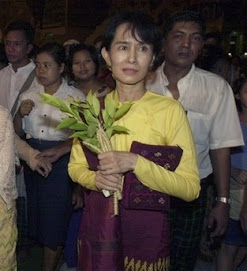


 Posts
Posts


